Before sunrise at the San Bernardino Depot last week, Metrolink and California Operation Lifesaver delivered an urgent safety message to commuters: know the blue-and-white emergency signs at railroad crossings before seconds matter.
The outreach, held in partnership with California Operation Lifesaver’s
Emergency Notification System Sign Awareness Day initiative, highlighted the signs posted at every railroad crossing. The signs include a phone number and unique crossing identification number that help railroad dispatchers quickly locate an emergency, notify nearby train crews and, when necessary, stop rail traffic through the area.
The message comes weeks after a San Bernardino Line train struck an unoccupied vehicle on the tracks in Fontana. No
By Manny Sandoval
efore a disaster strikes, Debra Williams wants Inland Empire residents to understand one thing: resilience begins long before the emergency alert, evacuation order or knock at the door. It begins with trust.
injuries were reported. Officials also pointed to a widely seen 2022 incident near Pacoima, where a small plane crash-landed on railroad tracks before being struck by an approaching train. The pilot was pulled to safety before the collision.
Marty Jimenez, a California Operation Lifesaver board member and Metrolink public safety and environment manager, said many riders and drivers pass the signs
That message shaped the ninth annual Ark of Safety Community Resiliency Summit, hosted June 25 by Building Resilient Communities at the Roman Catholic Diocese of San Bernardino. The annual convening brought together faith leaders, health care advocates, educators, nonprofit professionals, public agencies and community organizers focused on strengthening the region’s ability to pre-
pare, respond and recover before, during and after times of crisis.
For Williams, founding CEO of Building Resilient Communities, disaster preparedness is not just about go bags, emergency water or evacuation plans. It is about the barriers that leave some communities more vulnerable before a wildfire, earth-
Metrolink, cont. next pg.
PHOTO MANNY SANDOVAL Tracks at the San Bernardino Depot underscore Metrolink and California Operation Lifesaver’s safety message urging the public to recognize Emergency Notification System signs before a track emergency occurs.
PHOTO MANNY SANDOVAL
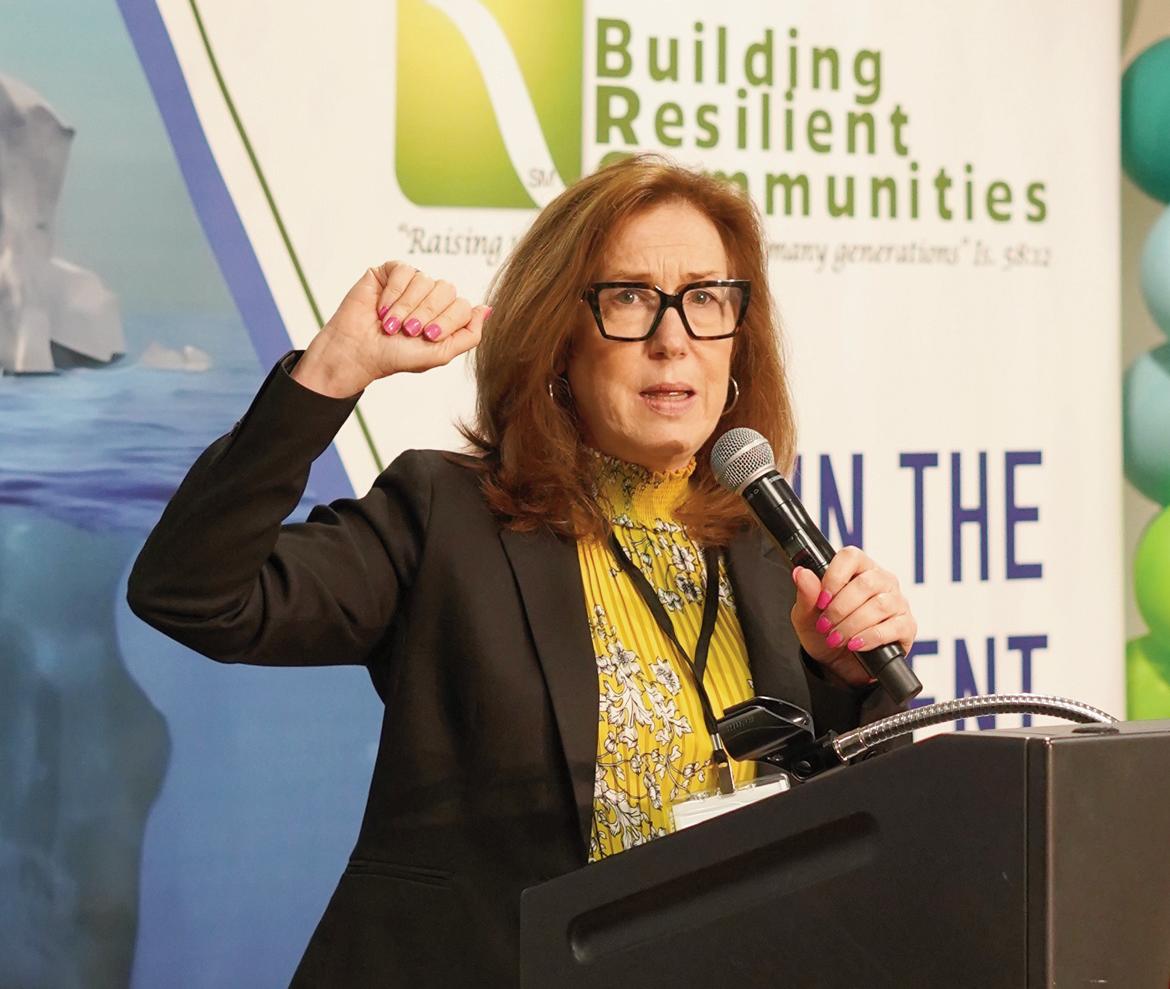
Michelle Decker, CEO of the Inland Empire Community Foundation, delivers the keynote address during Building Resilient Communities’ ninth annual Ark of Safety Community Resiliency Summit at the Roman Catholic Diocese of San Bernardino on June 25.
PHOTO MANNY SANDOVAL
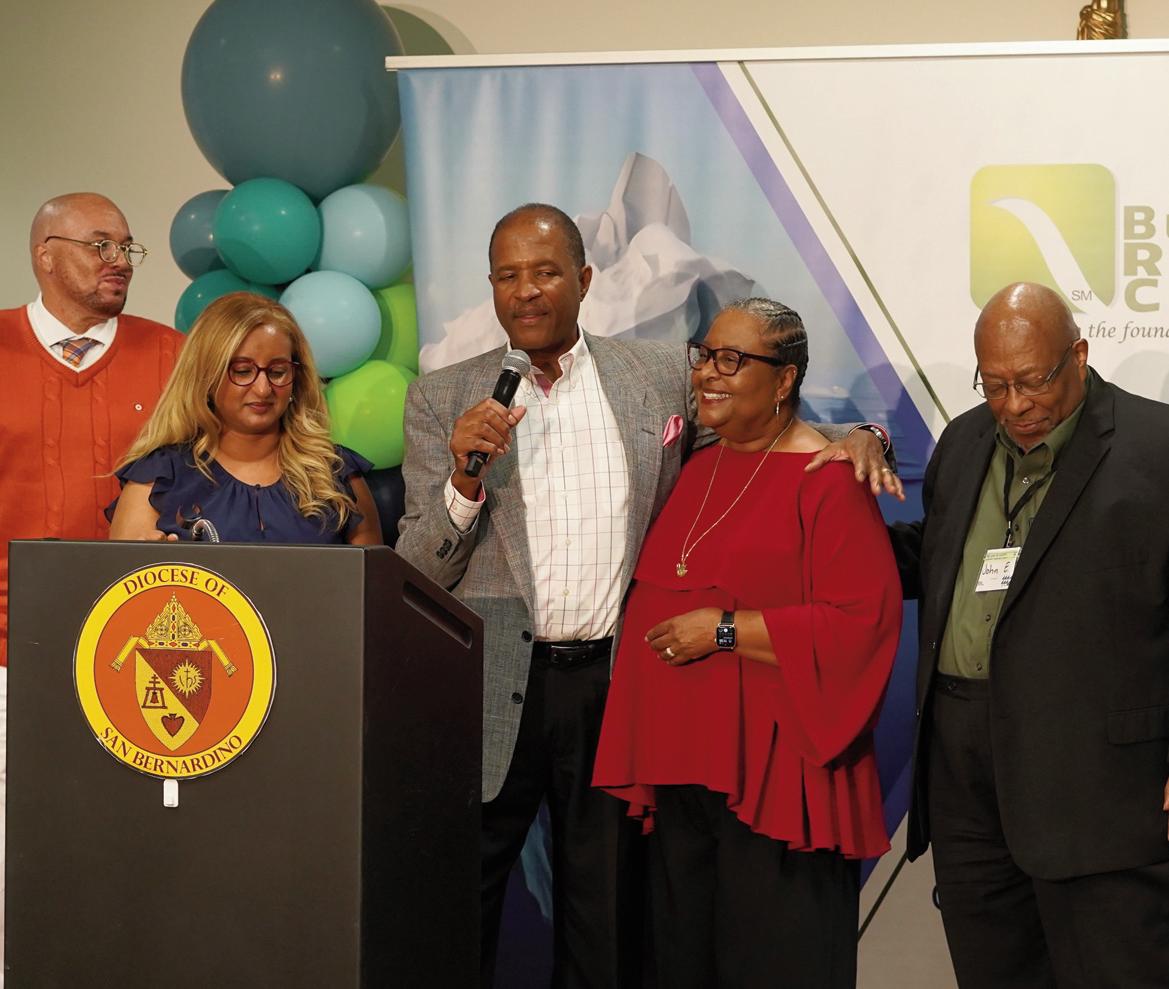
Debra Williams, founding CEO of Building Resilient Communities, second from right in red, at the ninth annual Ark of Safety Community Resiliency Summit, which brought Inland Empire leaders together around disaster preparedness, equity and resilience.
PHOTO MANNY SANDOVAL
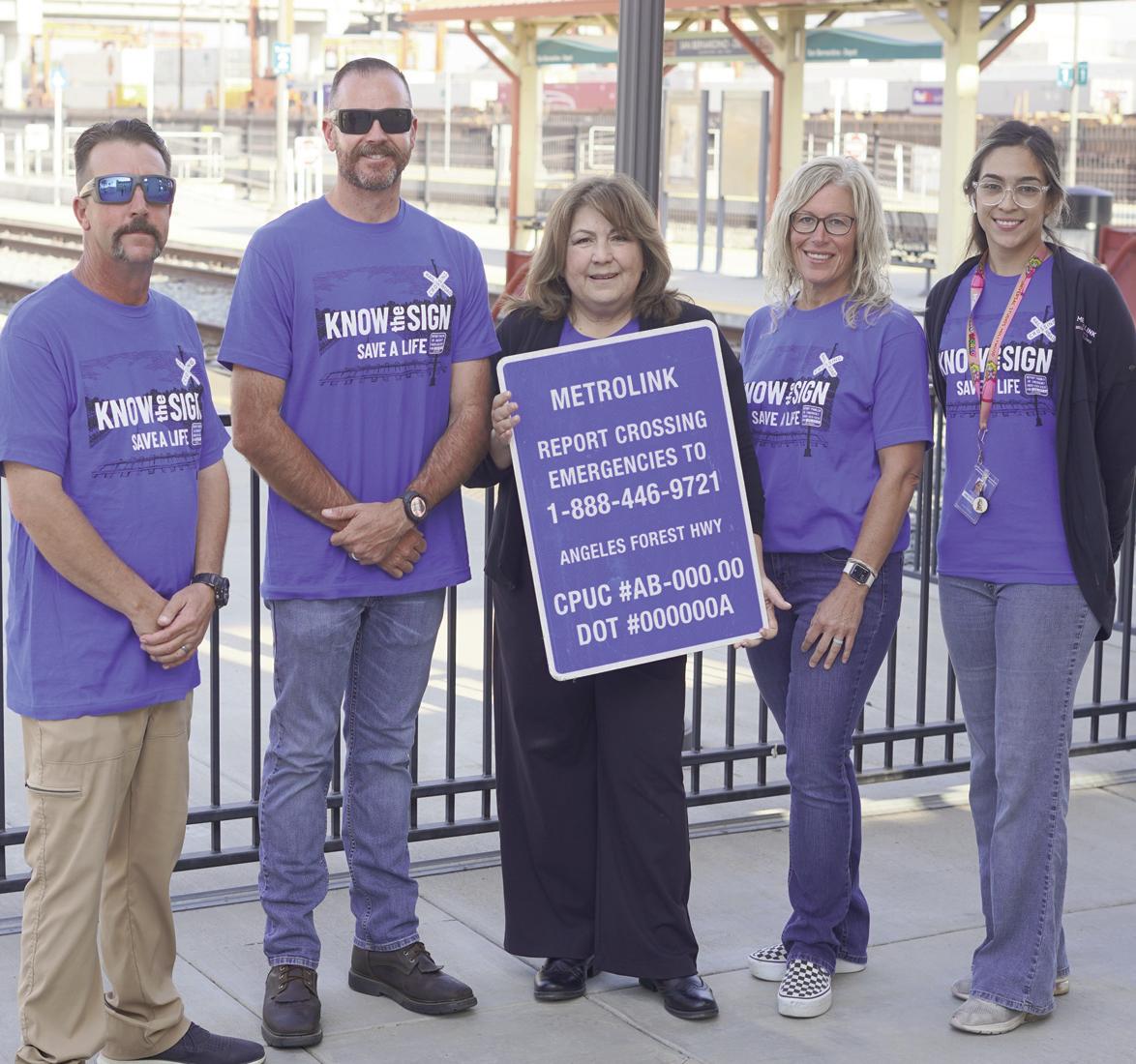
Marty Jimenez, center, displays a blue-and-white Emergency Notification System sign at the San Bernardino Depot, where Metrolink and California Operation Lifesaver urged riders to use the posted phone number and crossing ID to report track emergencies.
Metrolink (cont.)
- without realizing they can help prevent a tragedy.
“We want to make people aware that there is a blue and white sign, an emergency notification sign at each and every grade crossing,” Jimenez said. “If they ever needed to notify the railroad or they saw something that was important to call the railroad about, they would know how to do it.”
Jimenez said the signs are especially important when a vehicle is stuck on the tracks, a crossing gate appears to be malfunctioning or someone sees another emergency near the railroad.
“The quicker they can report an emergency to the railroad, the quicker we can do something to avoid the tragedy,” she said.
The ENS phone number is staffed 24 hours a day. When callers provide the crossing identification number listed on the sign, railroad personnel can identify the location and respond more quickly.
“Once they call, they’ll be able to identify the location where they’re at because the information will be on the ENS sign, and then they can share what they’re seeing,” Jimenez said.
For the 2026 ENS Sign Awareness Day event, Metrolink and California Operation Lifesaver selected the San Bernardino Depot because of its rider activity and to reach another part of Metrolink’s service area. The San Bernardino Line has an average weekday ridership of 6,054, according to Metrolink’s Fiscal Year 2026 Q2 Fact Sheet.
Jimenez said the outreach began around 4:30 AM, when commuters were already arriving on the platform.
“Our riders were here on the platform,” she said. “They were surprised to see us in our blue and white shirts. So it does attract attention, and they know that we’re here for a purpose.”
Many riders, she said, had seen the signs before but did not know
what they were for.
“They don’t always know,” Jimenez said. “Some said, ‘Oh no, I didn’t know it was there,’ or ‘I’ll start paying attention to it.’ Others said, ‘Oh, I’ll look now’ or ‘Is that what that’s for?’”
Jimenez urged drivers approaching railroad crossings to stay alert, make sure traffic has cleared and never enter the crossing unless there is enough room to get completely across.
“We don’t want anybody to stop on the track,” she said.
For pedestrians, Jimenez said the message is just as direct: railroad tracks are private property, and the only safe and legal place to cross is at a designated crossing.
“We discourage people from taking shortcuts on the tracks, being on the tracks themselves, because not everyone is aware that the trains are wider than the tracks,” she said.
The safety campaign comes as Metrolink prepares for Fourth of July holiday travel. On Friday, July 3, Metrolink will operate a weekend schedule on the Antelope Valley, Orange County, 91/Perris Valley, San Bernardino, Inland Empire-Orange County and Ventura County lines, along with Arrow service. The Riverside Line, which does not operate on weekends, will not be in service.
Metrolink’s $10 SoCal Day Pass will offer unlimited rides throughout its sixcounty system on the day of purchase. Up to three children 17 and younger ride free on Saturday and Sunday with a paying adult.
Jimenez said riders and residents can find additional rail safety information at metrolinktrains.com and through California Operation Lifesaver.
“If they hadn’t noticed before, notice that blue and white sign at a grade crossing,” Jimenez said. “That information can help save lives.”
Disaster Preparedness (cont.)
- quake, flood, pandemic or public health emergency ever begins.
“Helping people get prepared for a disaster was not enough,” Williams said. “If you think about an iceberg, what we had been doing was above the surface, but the real problems are below the surface. It’s those barriers that are causing people not to be resilient.”
Williams said the Ark of Safety summit grew out of the COVID-19 pandemic, the murder of George Floyd and a broader realization that the region could not talk about preparedness without also talking about inequity.
“Disasters don’t cause inequities, but they definitely highlight them and expose them,” Williams said.
Throughout the day, participants engaged in workshops, panel discussions and networking opportunities centered on practical, people-focused strategies to advance safety, equity and resilience across Riverside and San Bernardino counties.
The summit’s keynote speaker, Michelle Decker, CEO of the Inland Empire Community Foundation, urged attendees to think beyond crisis response and toward the systems that determine whether people can thrive.
“If you’re not paying attention to the Inland Empire, you’re actually not paying attention to the future of California,” Decker said.
Her keynote, “Weaving for Resilience: IECF’s Work and Journey,” highlighted the foundation’s work across climate, health, housing, economic development and educational equity. Decker said the region cannot afford to keep relying on temporary fixes for long-standing problems.
“I don’t think we want Band-Aids anymore,” Decker said. “I think we’re done with Band-Aids. We’re done with whack-a-mole.”
Decker pointed to the Vital Conditions Framework for Thriving, which looks at the conditions people need to live healthy and stable lives, including housing, transportation, meaningful work, education, safety, belonging and a thriving natural world. She said 41% of Inland Em-
Community News
The City of San Bernardino Animal Services Department is proud to announce Shane’s War 2026, a large-scale, four-day adoption event dedicated to finding loving homes for shelter pets and giving hundreds of animals a second chance at life.
The event will take place Thursday, June 25 through Saturday, June 28, from 10:00 a.m. to 4:00 p.m. at the San Bernardino City Animal Shelter, located at 333 Chandler Place in San Bernardino.
“Our shelter is caring for hundreds of animals who deserve the opportunity
pire residents are thriving, leaving 59% struggling or suffering.
“That is my North Star,” Decker said. “The question becomes, what would it take to move 41% to 61% as quickly as possible?”
For Williams, one answer is trusted messengers.
During the pandemic, she said Building Resilient Communities worked with faith leaders and houses of worship to share accurate information and reach residents in places where they already felt safe. In Black churches, vaccination clinics were held near fellowship halls and after services, allowing people to receive care in familiar spaces.
“People in the community need to see people who look like them,” Williams said. “Go to where the people are. Don’t make them come to you.”
She recalled one woman who nearly died from COVID-19 and later arrived at a vaccination clinic physically shaking with fear. Williams said she prayed with the woman, sat with her and helped distract her as she received her first dose. When it was time for the second shot, Williams changed her schedule so she could be there again.
“That’s the kind of trusted messenger that we need to have boots on the ground in the community,” Williams said. “Whether it’s COVID or anything else.”
Speakers and participants also addressed overlapping regional challenges, including poor air quality, wildfire smoke, health care access, immigration fears, insurance issues, renters without coverage, seniors living alone and residents who rely on medical devices during power outages.
Williams said residents living along freeway corridors and near warehouses often face greater health risks, especially when wildfire smoke adds to existing pollution. She said those communities must be included in decisions that shape their health, safety and future.
“If you’re not at the table, you’re on the menu,” Williams said.
She also warned residents not to assume government agencies will be
able to arrive immediately after a disaster.
“People think it won’t happen here. It won’t happen to me,” Williams said. “If it does, FEMA and the government are going to come and save me. That is not true.”
Williams said households should prepare go bags for their homes and cars, keep important documents ready, store emergency water, plan for pets, prepare backup power for medical devices and keep enough food and essentials to shelter in place for 10 to 14 days.
“Even if you’re not completely prepared, having some level of preparation is going to be better than none,” Williams said.
The summit also spotlighted the Inland Equity Grid, a regional effort to map nonprofits, faith-based organizations, public services and other resources so communities can better coordinate during crises.
Decker said true resilience will require networks, not isolated organizations.
“It is not going to be one person,” Decker said. “We have to be able to activate millions of people. It is not going to be one organization. There must be thousands of organizations.”
Williams said the work ahead depends on breaking down silos between nonprofits, elected officials, public agencies and faith communities.
“We’re the boots on the ground. We’re the trusted messengers,” Williams said. “We have the ear of the community, of the residents. If you have ideas, talk to us. You need to talk to us.”
Participating organizations included Building Resilient Communities, the Roman Catholic Diocese of San Bernardino’s Office of Emergency Operations Collaborative, the California Air Resources Board, the Public Health Alliance of Southern California, the Eastern Coachella Valley Community Steering Committee, the Inland Empire Community Foundation, HARC and Cintas First Aid & Safety.
Learn more about Building Resilient Communities here: brcus.org.
to be seen, loved, and adopted,” said Jasmine Glover-McNamara, Director of Animal Services. “Shane’s War is about bringing our community together to create second chances and save lives. Every adoption opens space to help another animal in need.”
Shane’s War brings together rescue organizations, community partners, volunteers, sponsors, and animal advocates in a united effort to increase pet adoptions, raise awareness about pet homelessness, and support lifesaving animal welfare initiatives. Founded by animal advocate Shane Smith, Shane’s War is a nationwide rescue and adoption campaign that partners with local shelters to reduce euthanasia rates, combat animal cruelty, and
help vulnerable animals find permanent homes. The campaign serves as a reminder that every animal deserves compassion, hope, and the opportunity for a better future. Throughout the four-day event, visitors will have the opportunity to meet hundreds of adoptable dogs, puppies, cats, and kittens looking for loving families. The event will also feature participation from rescue partners, music, community organizations, and special adoption goody bags available while supplies last. For more information about Shane’s War, adoption requirements, or available pets, visit SBCityPets.org or follow the City of San Bernardino Animal Services Department on social media at @SBCityPets.
Public Safety
CAL FIRE and Local Partners Unite to Promote Fireworks Safety and Maintain Zero Tolerance for Illegal Fireworks
By CAL Fire
CAL FIRE reminds all Californians that there is zero tolerance for illegal fireworks, which includes the sale, purchase, possession, transportation, or use of any device that does not carry the State Fire Marshal–approved “Safe and Sane” seal.
This year, CAL FIRE partnered with local Sacramento-area fire departments, law-enforcement agencies, and Shriners Children's to host a regional fireworks-safety press conference, highlighting the dangers posed by illegal fireworks, the risks associated with purchasing them online or from unlicensed sellers, and the importance of community vigilance.
Fireworks purchased online, shipped from out of state, or bought from unlicensed sellers or stands are illegal and often extremely dangerous. Only fireworks sold through permitted “Safe and Sane” fireworks booths in approved communities within California are legal to purchase.
Possessing or using illegal fireworks or using any type fireworks in communities where they are prohibited can result in fines of up to $50,000 and up to one year in jail.
Illegal fireworks include:
Metal Core Sparklers
Skyrockets
Bottle rockets
Roman candles Aerial shells
Firecrackers
Sparklers
Any devices that explode, launch into the air, or move on the ground in an uncontrolled manner
“Each year we continue to see how illegal fireworks—especially those bought online or shipped into California—pose a major risk to our communities,” said Chief Daniel Berlant, California State Fire Marshal. “By partnering with our local Sacramento-area agencies and our burn-prevention partners, we are sending a unified message: purchasing fireworks online or outside of licensed ‘Safe and Sane’ booths is illegal, danger-
ous, and contributes to injuries and destructive wildfires.”
Soman Sen, MD, Assistant Chief of Burns at Shriners Children's Northern California, emphasized the devastating impact a fireworks-related burn injury can cause. "Every year, we see firsthand the life changing burn injuries caused by fireworks,” Dr. Sen said. “We always urge families to keep children away from any type of fireworks and ensure that only responsible adults are using legal fireworks -- even then, exercising caution to prevent harm.”
For a safe and enjoyable Fourth of July, Californians are urged to know and follow their local fireworks laws. Many communities prohibit all fireworks, while others only allow “Safe and Sane” fireworks sold through permitted booths.
The safest way to celebrate is to leave fireworks to the professionals. Attend a licensed public fireworks display conducted by trained pyrotechnic operators licensed by CAL FIRE – Office of the State Fire Marshal.
Animal Cruelty Investigation Leads to Arrest and Felony Charges
By Rialto PD
On Saturday, June 20th, 2026, at approximately 4:15 p.m., officers from the Rialto Police Department arrested Tracy Bolton in connection with a disturbing animal cruelty investigation that resulted in the death of a long haired Chihuahua dog named Prada.
After killing the dog, Bolton concealed evidence of the crime by disposing of Prada's body in a dumpster near the scene. Investigators subsequently recovered the animal's remains and developed evidence that led to Bolton's arrest.
Investigators determined that Bolton intentionally killed Prada, his estranged wife's dog, by hanging the animal from a door and repeatedly striking it with a hammer. As a result of the injuries inflicted during the attack, Prada died. Following an extensive investigation, officers arrested Bolton and booked him into the West Valley Detention Center. Bolton, who is a convicted felon, is currently being held in custody on $1,000,000 bail.
The San Bernardino County District Attorney's Office has formally filed charges against Bolton for violations of California Penal Code Section 597(a) (Animal Cruelty) and Penal Code Section 12022(b)(1) (Personal Use of a Deadly or Dangerous Weapon).
The Rialto Police Department investigates thou-
sands of criminal incidents each year. Based on the facts uncovered during this investigation, this case stands among the most disturbing acts of cruelty our investigators have encountered. The deliberate torture and killing of a defenseless animal is reprehensible, and we are committed to ensuring those responsible are held fully accountable.
The abuse and needless killing of defenseless animals is a crime that will not be tolerated in our community. The Rialto Police Department remains committed to aggressively investigating incidents of animal abuse and pursuing every available avenue to hold offenders accountable.
Individuals who intentionally harm animals should understand that these crimes will be thoroughly investigated and presented for prosecution.
Chief Mark P. Kling stated, “The facts of this case are deeply disturbing. Animals are often among the most vulnerable members of our community, and acts of cruelty against them will be met with a vigorous law enforcement response. We are grateful for the work of our investigators and the San Bernardino County District Attorney's Office in bringing this case forward.”
Anyone with additional information regarding this case is encouraged to contact the Rialto Police Department. Anonymous tips may be submitted through WeTip at (800) 782-7463.
Rialto Council Approves 2026-27 Budget, Issues Conditions for Internal Staffing
By Christopher Salazar
The Rialto City Council approved the city’s fiscal year 2026-27 budget on June 23, adopting a spending plan that projects a General Fund surplus while directing staff to reduce the city’s reliance on contract services.
Although the city’s finances remain strong, growing frustration over staffing prompted the council to freeze half of the contract services budget until December while staff works to recruit fulltime city employees.
The adopted budget projects a roughly $2.8 million General Fund surplus and an estimated $75.3 million unrestricted General Fund balance, according to staff reports and presentations. The projected $175.86 million in General Fund revenue for fiscal year 2026-27 represents about a 6.5% increase over the revised 2025-26 budget.
Finance Director Scott Williams told the council the proposed budget was built around “reasonable estimates of revenues and expenses,” and that the city is “in a good place” because of the council’s “intentional decisions” to strengthen the city’s economic base and maintain budget discipline. He noted that the city’s strongest revenue sources remain property tax, sales tax and utility users tax, which together account for more than three-quarters of the General Fund’s revenue.
Following Williams’ presentation, Mayor Pro Tem Ed Scott questioned the city’s continued spending on contract services in public works and developmentrelated services.
“This council and the former council have given very clear direction that we want to slow down contract services and hire employees to replace individuals who are contract employees,” Scott said. “That clearly is not happening.”
Scott proposed limiting contract service budgets to 50% of their approved amounts until staff returns in December with a report detailing recruitment efforts to fill those positions with city employees.
Williams said that was “certainly feasible.”
Mayor Joe Baca Sr. told Inland Empire Community News that he supports expanding the city’s permanent workforce where long-term staffing needs exist, but said contract employees remain necessary for temporary or specialized projects.
“Sometimes you need contract employees for short-range projects that need to be done,” Baca said.
Councilmembers Andy Carrizales and Edward Montoya Jr. echoed Scott’s reservations over contract workers. Even so, Carrizales, building off Scott’s praise and appreciation for staff after heated budget discussions, thanked finance personnel for distilling a lengthy budget document into an accessible briefing.
“Thanks for the presentation,” Carrizales said. “Very well put together with all the essentials — I know these things can be as thick as a binder.”
Carrizales voiced support for the proposed staffing requests in parks and recreation, public works, police and fire, including additional fire personnel and future plans for a fire training tower.
The council ultimately approved the budget with Scott’s proposed amendments, including converting a part-time Police Department custodian position into a full-time role and requiring public works and developmentrelated services staff to return in December with an update on hiring efforts before accessing the remaining contract service funds.
Later in the meeting, the council unanimously approved an amendment to the 2025-26 budget, allocating $1,160,417 to repair the fire station headquarters at 131 S. Willow Ave. following a May 2024 car crash that damaged the building’s interior.
The council awarded a construction contract to R Dependable Construction Inc. for restoration of the station’s living and kitchen areas, repair of the fire sprinkler system and related interior improvements. The city’s insurance carrier has confirmed about $905,000 in undisputed reimbursement toward the repair work while discussions continue over additional recoverable costs.
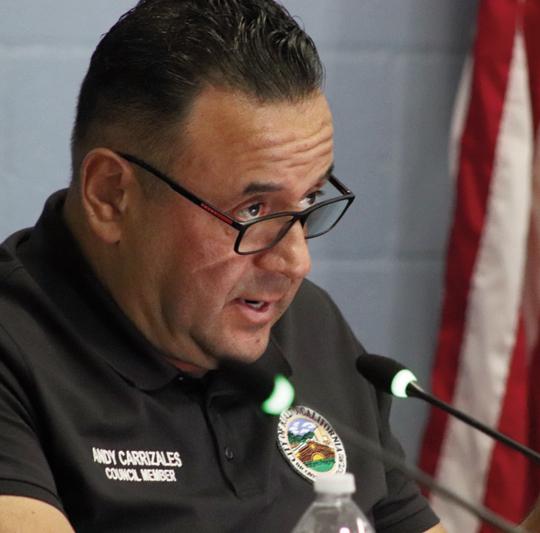
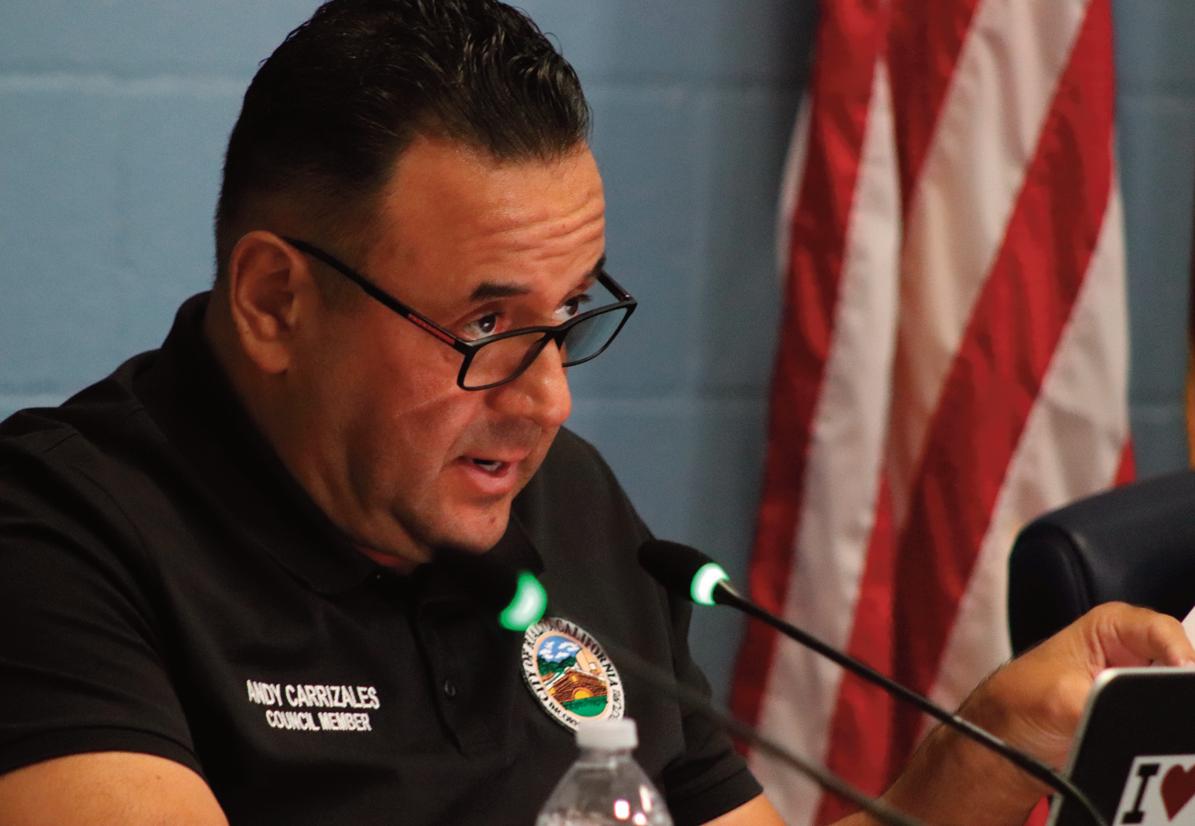
PHOTO CHRISTOPHER SALAZAR Councilmember Andy Carrizales thanks finance personnel and voices concern over city staffing.
ECHEVARRIA ECHEVARRIA
MAYOR OF FOR COLTON
Judith Valles sits for a 2022 IECN and KVCR interview, where San Bernardino’s first Hispanic mayor reflected on her family’s fight against segregation at a local cemetery and Perris Hill Plunge, experiences she said later shaped her push to bring a pool and plunge to Nunez Park on the city’s west side.
By IECN Staff
Judith Valles, San Bernardino’s first Hispanic mayor and a longtime educator, college president and community leader, has died, city officials announced.
Valles, a San Bernardino native and the daughter of Mexican immigrants, served two terms as mayor from 1998 to 2006. Her election marked a historic milestone for the city and reflected the growing civic leadership of Latino communities across California.
“Mayor Valles was a trailblazer and a change maker,” San Bernardino Mayor Helen Tran said. “Her passion, tenacity and refusal to take no for an answer
helped get so many things done to improve San Bernardino and her many other endeavors.”
During her tenure, Valles championed neighborhood revitalization, economic development, historic preservation, youth programs and public safety. City officials credited her with restructuring San Bernardino’s Economic Development Agency, helping reduce city debt, expanding neighborhood associations and supporting projects that encouraged civic engagement.
Valles also helped bring a swimming pool to Nunez Park on the city’s west side, providing accessible recreation for local families, and led efforts to renovate historic areas throughout San Bernardino.
Beyond City Hall, Valles built a career rooted in education and public service. She served as a teacher, college administrator and college president, using those roles to expand opportunities for students and strengthen community involvement.
City officials said Valles’ legacy will continue to inspire residents, students and public servants across San Bernardino and beyond.
“The City of San Bernardino is grateful for Dr. Judith Valles’ decades of leadership and service,” the city said in a statement.
“Her vision, compassion and unwavering commitment to improving the lives of others remain an enduring part of our city’s history.”
Judith Valles, San Bernardino Trailblazer and First Hispanic Mayor, Dies
PHOTO MANNY SANDOVAL
Preschool University Graduation Showcases Early Learning Pathway for Inland Empire Families
By Manny Sandoval
Preschool University, a licensed child care program of the YMCA of the East Valley, is positioning itself as more than a preschool in Redlands.
The program serves children from 18 months to 5 years old, offers financial aid for qualifying families and draws parents from across the Inland Empire, including Redlands, Highland, San Bernardino, Fontana, Colton, Riverside, Mentone, Loma Linda and surrounding communities.
For working parents, staff said, the location can also be a practical option even if they do not live in Redlands. Some families use Preschool University because it is near work or along their commute.
Inside the classrooms, early learning often begins with something simple: a child pouring beads into a cup, touching a new texture, painting a picture or learning the words to describe a feeling.
For staff at Preschool University, those moments are not just play. They are part of the foundation children build before kindergarten.
“I think a big misconception about early learning, or preschool in general, is that they’re just playing — that it’s just babysitting,” said Andrea Guevara, associate executive director for licensed child care. “Yes, they’re playing, but there’s a lot of learning happening while they’re playing here.”
IECN visited Preschool University on June 22 and toured the learning facility, where classrooms were filled with sensory activities, group play, art stations and hands-on learning areas designed to support children at different developmental stages.
Preschool University has operated as a licensed child care program at its current Redlands facility since 2000, according to Guevara, who has worked there for 11 years. The YMCA offered different child care programs before that, but the license marked the beginning of the current Preschool University model at the site.
Today, the program includes eight classrooms with environments designed around different learning interest areas. Guevara said those spaces support cognitive development, physical development, language, science and early learning skills.
A typical day, she said, is never exactly the same.
“It’s busy, it’s fun, and there’s a lot of
learning happening,” Guevara said. “There’s excitement, and there are tears, because for many children this is their first experience away from loved ones.”
That transition is one of the most important parts of early childhood education, staff said. Preschool University focuses on helping children feel secure, build routines and begin engaging with other children and adults outside their families.
“In order to learn, you have to feel safe in your space,” Guevara said. “We start that from day one by being welcoming, learning their names and teaching them how to be kind to others.”
The program’s approach emphasizes hands-on learning. Children use sensory activities, textures, colors, art, pretend play and group activities to build language and problem-solving skills.
“We use the five senses throughout the day because children learn through those first-hand experiences,” Guevara said.
In one classroom, children filled and emptied cups of beads. Guevara said the repetition can have a calming effect while also giving children a chance to practice sharing, imagination and vocabulary.
“For some children, those sensory activities can be calming,” she said. “But some of them took it to another level. They started saying, ‘Look, I’m baking a cake.’”
Social-emotional learning is also central to the program. Guevara said that often begins with helping young children identify and express “big feelings.”
“At that age, it can be difficult for children to express themselves appropriately when they don’t know how,” she said.
“So for us, it’s about giving them the words and the language.”
For longtime teacher Susanna Serrato, who has been with the program and its related YMCA child care work for 29 years, that social-emotional foundation is one of the most important parts of preparing children for school and life.
“Kids need to master their social-emotional skills in order to be successful in other areas,” Serrato said.
Serrato first became connected to early childhood education as a parent volunteer when her son was in Head Start. She later began working as an aide, took classes and earned teaching permits. Her own son also spent time in YMCA child care programs.
“I could leave my child in their care and know that he was going to be taken care of,” Serrato said. “I feel that the Y made a positive impact on my own son.”
She said children learn to make friends, solve problems, trust adults and engage with others. Over the years, she has seen families return with younger siblings and former students come back years later.
One former student, she said, returned around the time of his high school graduation to recreate a photo he had taken with her when he graduated from Preschool University — a moment Serrato said reflects the lasting relationships built inside the program.
For Serrato, that long-term connection is part of what makes Preschool University meaningful for families.
Asked what she wants families to know about Preschool University, Serrato said the answer is simple.
“This is a nurturing, safe place for all,” she said.
That sense of safety was echoed by Vernesha Brown, a parent who spoke with IECN on June 26 after watching her daughter graduate from Preschool University at The Redlands Y in downtown Redlands.
Brown’s daughter, who spent two years in the program, was one of 39 children who accepted preschool diplomas during the ceremony, which drew about five dozen parents and family members.
The graduation featured student performances, including a DJ set by two students. Graduates walked to the microphone to share what they want to be when they grow up, with answers ranging from ballerina, princess and “muscle man” to doctor, firefighter, nail technician and YouTuber.
“Oh, my God, I was so blessed. I was absolutely elated,” Brown said after watching her daughter walk across the stage. “It was everything that I was hoping for.”
For Brown, the ceremony marked a major milestone after an emotional start at Preschool University.
“She did not want to go. She was crying up a storm, and I was crying too — just not in front of her,” Brown said of her daughter’s first drop-off.
But Brown said her daughter’s teacher immediately reassured her.
“They made me feel like, ‘Mom, you’re doing the right thing. We’ve got you. If we need you, we’ll call you,’” Brown said. “They have always made me feel
very comfortable.”
Brown said financial assistance also made a meaningful difference for her family. She said the application process was easy, and she received an answer in about a week.
“I would say the community itself has been my favorite part,” Brown said. “The school, the financial assistance, the free events — it feels like a family. They can tell me anything, and we work together.”
For Brown, finding the right child care setting was especially important because both of her children are autistic.
“Finding proper child care is very important,” she said. “Stepping into the YMCA was amazing. Letting them know my financial struggles at the time, and having them be open to helping us, has meant the world to me.”
Program Director Deidra Gregory said Brown’s experience reflects why communication between families and staff is important, especially when children may need additional support.
“All we ask is for families to be transparent,” Gregory said. “If you’re transparent, we can help you get the resources. I want success for the child.”
Guevara said Preschool University works with children with differing abilities and sometimes coordinates with outside support providers, including ABA therapists. Staff also use developmental tools to help identify where children are and whether they may need additional support.
“It’s about inclusion,” Guevara said. “We have seen how that inclusion changes our classroom communities.”
For preschool families, financial aid may be available through subsidized slots and YMCA scholarships. Guevara said the YMCA contracts with the California Department of Education and California Department of Social Services for subsidized slots based on income, family size and need. YMCA scholarships are supported through funds raised by the organization’s community campaign.
The YMCA also operates licensed afterschool programs on nine elementary school campuses in Redlands. Guevara said those programs run Monday through Friday until 6 p.m. and provide homework support, team projects and social-emotional skill-building for working families.
For Guevara, the goal is for families to see Preschool University as a place where children can feel safe, build confidence and develop a love for learning before they take their next step.
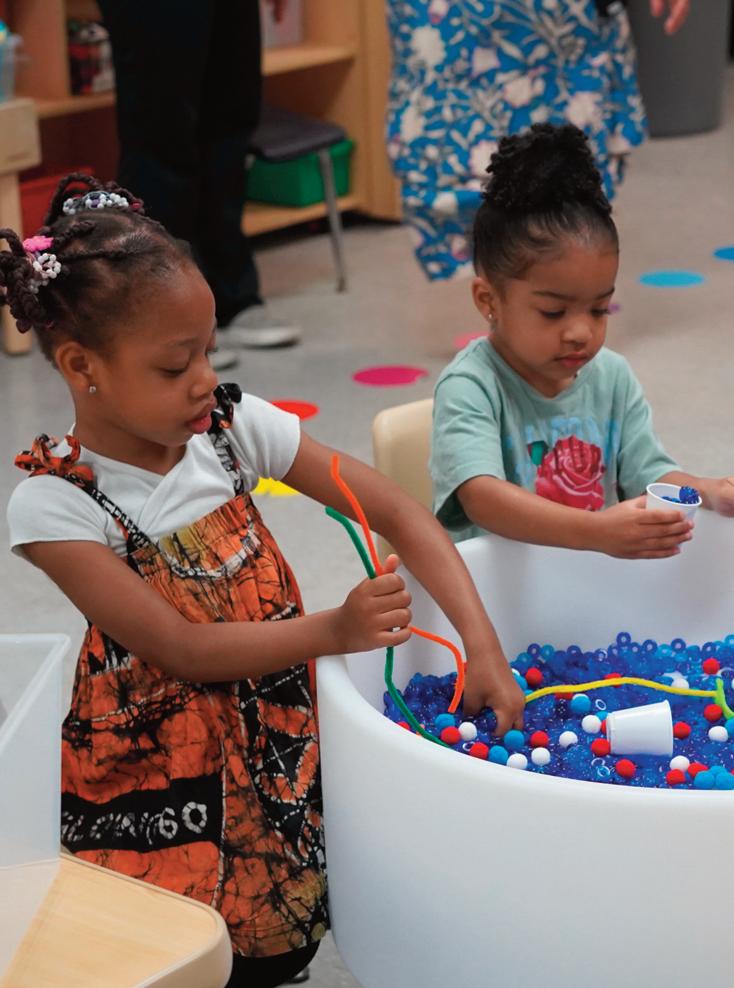
PHOTO MANNY SANDOVAL Preschool University students play a sensory bead activity on June 22, reflecting the program’s hands-on learning.
PHOTO MANNY SANDOVAL Graduates line up in blue caps and gowns before entering the ceremony, which drew five dozen parents and families.
PHOTO MANNY SANDOVAL Vernesha Brown, far left, celebrates with her child after Preschool University’s June 26 graduation ceremony.
PHOTO MANNY SANDOVAL A child paints during IECN’s June 22 visit, where creative activities are used to support early learning and self-expression.
This Fourth of of
This Four This Four This Four th of July print edition was made possible through the support of th of July print edition was made possible through the support of th of July print edition was made possible through the support of sponsors who believe in local journalism and the communities we serve. sponsors who believe in local journalism and the communities we serve. sponsors who believe in local journalism and the communities we serve.
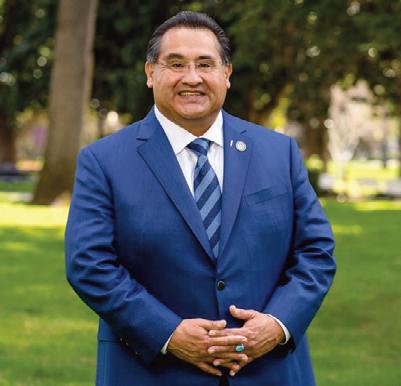
James C. Ramos
Assemblymember, 45 district th Website: a45.asmdc.org
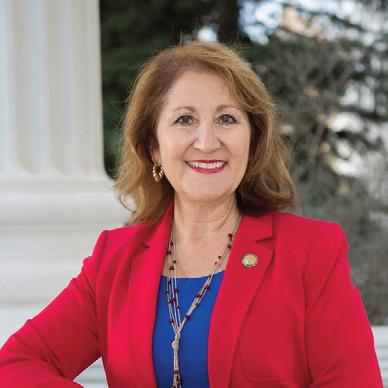
Eloise Gómez Reyes
California State Senator, 29th District
Need help with a state agency?
Call or visit: (909)888-5360
sd29.senate.ca.gov
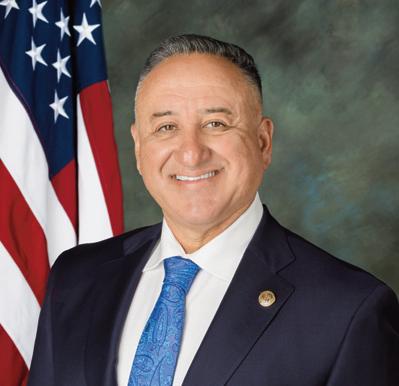
Joe Baca Jr.
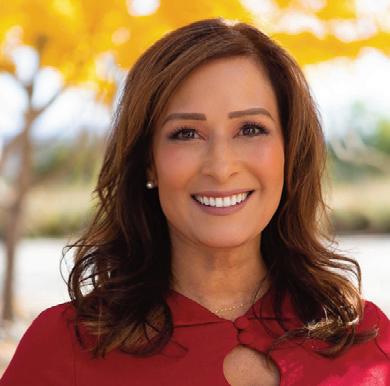
Rosilicie Ochoa Bogh
California State Senator, 19th District
Phone: (909) 335-0271
Website: sr19.senate.ca.gov
“We are here to help!”
Diana Z. Rodriguez
Chancellor, San Bernardino Community College District
Website: SBCCD.edu
San Bernardino County 5th District Supervisor, Vice Chair