John Echevarria still remembers the moment public service first became real to him.
He was just a child at a career day in San Bernardino when police officers, a dispatcher and a police canine arrived for a demonstration. What stayed with him was not only the uniform or the dog, but the way the officers carried themselves and spoke about serving the communities where they lived.
“I was very inspired by the professionalism of the officers and the dispatcher that came to our school that day,” Echevarria
said. “I learned that most officers live within the city they serve. A lot of them give back to the community where they grew up and they’re proud of that.”
Decades later, Echevarria is a Colton councilman, San Bernardino police lieutenant, husband, father of four and candi-
Mayoral Bid, cont. next pg.
PHOTO MANNY SANDOVAL
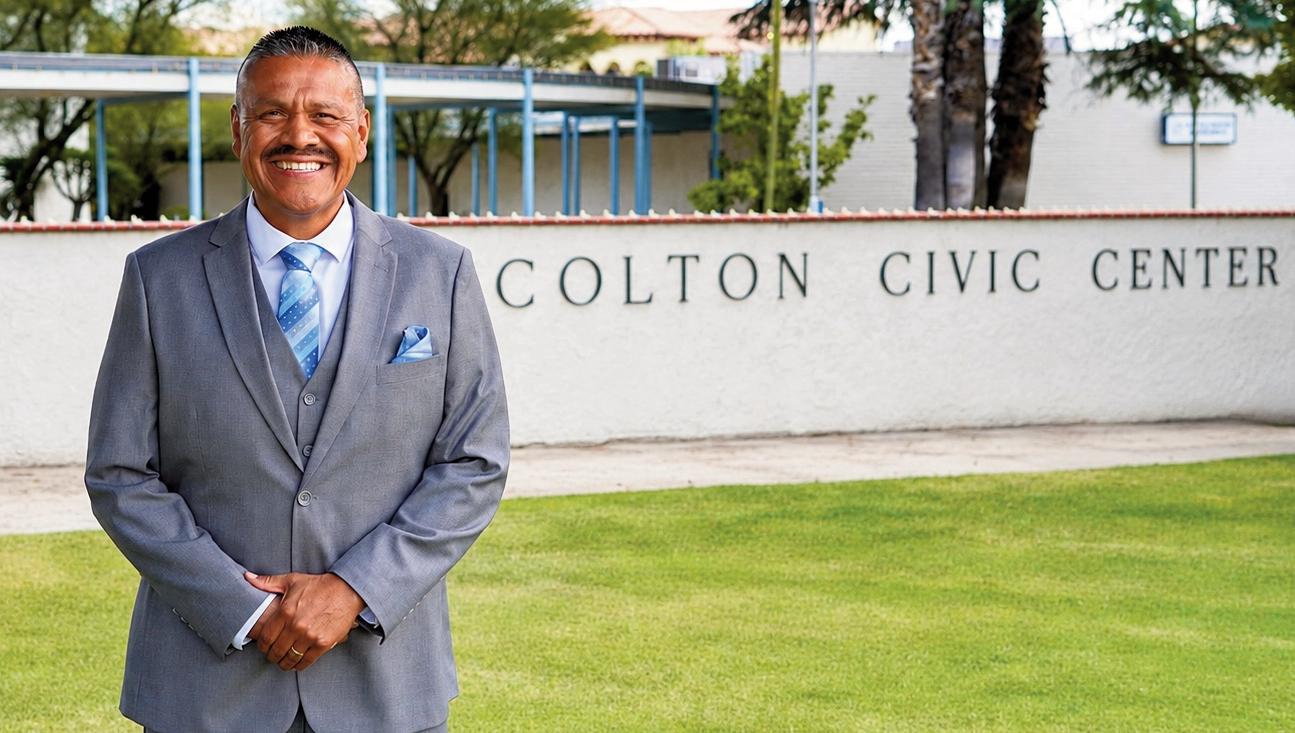
Councilman John Echevarria stands outside the Colton Civic Center as he launches a people-first mayoral campaign shaped by public
working-class roots and a vision for a more responsive city government.
PHOTO RICH CORRAL
Colton High School salutatorian Jared Ramirez addresses the Class of 2026 during the school’s graduation ceremony on May 26.
PHOTO RICH CORRAL Colton High School graduates sit together on the field at Memorial Stadium as the Class of 2026 prepares to receive their diplomas.
PHOTO RICH CORRAL
Members of Colton High School’s Class of 2026 walk into Memorial Stadium before the start of their graduation ceremony.
PHOTO RICH CORRAL
Colton High School graduate waves to classmates and guests during the Class of 2026 graduation ceremony.
Mayoral Bid (cont.)
- date for mayor in the city’s Nov. 3, 2026, general election.
His campaign comes at a defining moment for the city, as Colton continues facing issues familiar across the Inland Empire: housing affordability, traffic, public safety, small business retention, aging infrastructure and residents who want a more responsive local government.
For Echevarria, the campaign is also deeply personal.
At 16, his sister, Teresa Echevarria, was killed in 1995 at age 18. At the time, he said he was uncertain about his future and did not yet know what direction his life would take. Seeing police officers, firefighters, paramedics, hospital staff and court personnel respond to the tragedy changed how he viewed public service.
“I was on a different path,” Echevarria said. “I didn’t know what I wanted to do with myself. And it was, again, inspiring to see the professionalism by the officers, by the firefighters, by the paramedics as they handled the incident.”
That experience, he said, helped push him toward law enforcement and later civic leadership.
Raised in the housing projects on the westside of San Bernardino by a single mother, Echevarria said his childhood included financial hardship, welfare, food stamps and periods of instability. He said he never met his father and learned early to work, study and defend himself.
“My mom had to drop-out in high school,” Echevarria said. “So we figured out how to do our homework on our own with our siblings.”
He attended Alessandro Elementary, Wilson Elementary, Martin Luther King Middle School, Golden Valley Middle School, Cajon High School and Colton High School. Before and during his school years, he worked as a field laborer picking oranges, grapes, lemons and limes, and later worked at car washes, including Center Point Car Wash in Colton.
“There, I learned more hard work and improved my Spanishspeaking skills, and I learned how to budget my money,” he said.
After graduating from the police academy at 19, Echevarria became a police cadet in Upland and completed more than 250 ride-alongs. He was hired by the Upland Police Department on his 21st birthday.
“The chief of police came in and swore me in on a Sunday in front of my late mother and my late brother,” Echevarria said. “Right after the swearing, I went to my first roll call and off to the
streets at 21 years old.”
He joined the San Bernardino Police Department in 2002 and has held numerous assignments, including patrol, canine, SWAT, crisis negotiations, field training, detectives, community affairs, public information and district command. In 2024, he was promoted to lieutenant and became Western District commander.
Echevarria has been recognized for his public safety work, which includes receiving the Life Saving Award, Officer of the Year, Unit Citation, and Meritorious Service.
Echevarria holds an associate degree in administration of justice from San Bernardino Valley College, a bachelor’s degree in criminal justice from Cal State San Bernardino and a master’s degree in public administration from California Baptist University.
He was first elected to the Colton City Council in 2020, representing then-District 5, and was later reelected to represent District 4. He has also served as a Planning Commissioner and Mayor Pro Tempore.
Echevarria said his approach to local government begins with the residents.
“We have an organizational chart here in the city of Colton,” he said. “At the very top of it is the citizens of Colton. It’s not the mayor. It’s not the city council. It’s not any other elected, and it’s not the city manager. The people are first.”
If elected mayor, Echevarria said his priorities would include public safety, customer service and community success. He said public safety extends beyond police and fire to include lighting, streets, traffic engineering, potholes, city services and reliable utilities.
“When people talk about public safety, they think police, they think fire,” Echevarria said. “But I’m also talking about all city employees. This is a team effort.”
He said housing affordability would also be a focus.
“I want to see more affordable housing being built,” Echevarria said. “I want to be able to attract that and bring it over, and I want to keep it affordable.”
During his time on the council, Echevarria said one of his proudest accomplishments was supporting a cost-of-living increase and emergency pay adjustments intended to help retain city employees, including police officers, firefighters and utility workers.
“We had to take measures to give them that increase benefitswise and pay-wise to keep them here in Colton,” he said. Echevarria also said Colton must improve the experience for
small businesses and developers trying to open or expand in the city, particularly when it comes to staffing, permitting and communication.
“I myself have heard complaints about the process and the length of time it takes to get things done,” he said. “We can do better.”
He said supporting small businesses goes beyond attending ribbon cuttings.
“By helping those small businesses, you’re helping the family, you’re helping that business stay afloat, and you’re producing jobs here in our city,” Echevarria said.
Outside City Hall and the police department, Echevarria helped launch the Colton Run Club, which he said became the city’s first known running club in decades. The club has grown to about 25 steady members and organized a March 2026 5K that drew more than 1,000 registered runners, with about 750 participating on race day.
“I did some research and Colton hadn’t had a run club since the ’70s,” Echevarria said. “All it took was some leadership and the drive to bring the community together.”
He and his wife, whom he met in 1999 and married in 2001, have four children. Echevarria said Sundays are family days, while Fridays and Saturdays are often reserved for Colton events, meetings, service requests, and community outreach. He can be seen most weekends coaching hundreds of student athletes throughout the city.
Echevarria said his life story is one he often shares with students, especially those facing hardship.
“I let them know that I sat in some of their shoes,” he said. “I know what it is like to have a single parent or a deceased parent or other problems in the household and to never give up in life, to follow your dreams, to chase your dreams.”
As he seeks Colton’s mayoral seat, Echevarria said voters should see him as accessible and rooted in the city’s future.
“I think my biggest asset that I bring to this city is I’m a very personable representative,” Echevarria said. “I’m a very humble, hardworking person.”
He said his campaign is built around the same qualities that have shaped his life: service, discipline, community and persistence.
“I’m very passionate about the leadership here in Colton,” Echevarria said. “The citizens of Colton are very hardworking people. They are working families, and the mayor’s role should be someone who’s just as excited and as energetic as they are.”
San Bernardino County UPK Programs Help Children Build Confidence Before Kindergarten
By Manny Sandoval
More San Bernardino County families may now qualify for free or low-cost early learning programs as California expands transitional kindergarten and local education leaders work to connect parents with options before their children enter kindergarten.
San Bernardino County Superintendent of Schools is promoting universal pre-kindergarten, or UPK, as a way to help families understand the early education choices available from birth to age 5, when children’s brains are developing most rapidly.
Heather Smith, director for early education and development with San Bernardino County Superintendent of Schools, said UPK is not one program. It is an umbrella of early learning and care options that can include transitional kindergarten, state preschool, Head Start, Early Head Start, licensed family child care providers and care from family, friends and neighbors.
“Universal pre-kindergarten is really an avenue that we are using to help families recognize what their choices are so that they can choose a setting that is best for them and their child,” Smith said.
Those choices matter, because many families, particularly in underserved communities, have not always known what programs were available or have faced barriers such as cost, transportation and work schedules.
“Historically, our families, particularly in underserved communities, haven’t necessarily known what their choices are,” Smith said. “Sometimes they were aware of choices, but there were barriers to accessing them.”
Transitional kindergarten, or TK, is offered through local school districts and is free for 4year-olds. Smith said it can be an especially helpful option for families with older children already attending the same elementary school.
Other early learning options may also be available at no cost or at a reduced cost, depending on the program and a family’s eligibility. Smith said state preschool, Head Start, Early Head Start and some family child care providers may offer subsidized care.
“With universal pre-kindergarten, there are more options for families that they might be surprised they qualify for,” Smith said.
The county’s role, Smith said, is to help families understand those options and build stronger connections between early learning providers and the K-12 school system. Historically, those systems have often operated separately.
“It really is a community lift,” Smith said. “We’re really looking at building the infrastructure, which has historically not happened, in terms of how early learning and care is connected to the TK or K-12 system.”
Under the UPK model, families may use one program or combine several depending on their schedules, income, transportation needs, language preferences and child care needs. A family might enroll a child in TK during the school day and use a family child care provider or expanded learning program before and after school.
Smith said that flexibility is important because each family’s needs are different.
“It really looks at creating a system that allows families to make choices for their kids so that they best meet their needs,” Smith said.
Early learning can also support children who speak more than one language or are learning English. Smith said some local elementary schools offer duallanguage immersion programs beginning in TK, while family child care providers, state preschool, Head Start and Early Head Start programs may offer different levels of language support depending on the needs of the family and the community.
Smith said the early years are critical because children’s brains develop most rapidly from birth to age 5.
“This is the perfect time for kids to be exploring, learning language and literacy skills, early numeracy and building all of those skills that they build in early learning and care programs,” Smith said.
But kindergarten readiness, she said, does not mean forcing young children into formal academics too soon.
“A lot of times, our families think being ready for kindergarten means kids have to be reading and writing and knowing their letters and all their numbers,” Smith said. “Kindergarten readiness is really not about pushing academics down. It’s about helping kids feel safe in a new environment, feel confident and feel connected to the adults and children in their learning environment.”
Read the full story at IECN.com.
Becerra
Reps.
Aguilar, Chu and Gomez Visit Adelanto ICE Facility Amid Hunger Strike Over Conditions
Community News
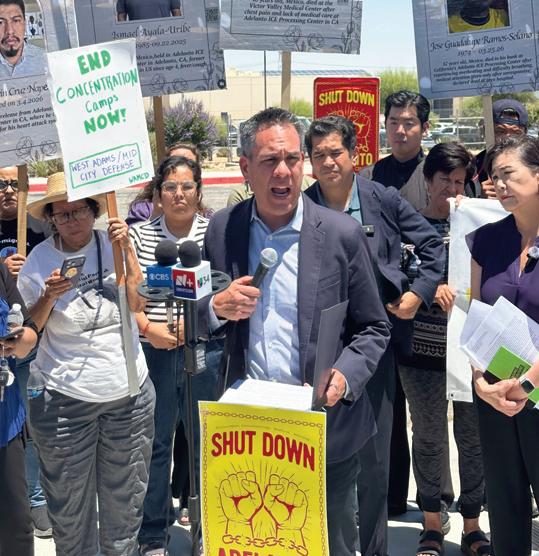
On June 1, Rep. Pete Aguilar (CA-33), Rep. Judy Chu (CA-28) and Rep. Jimmy Gomez (CA34) visited the Adelanto ICE Processing Center in San Bernardino County, California, to meet with detainees participating in an ongoing hunger strike and assess conditions inside one of the nation's most troubled immigration detention facilities.
The Members met with detainees who launched a hunger strike on May 19, 2026, to protest unsafe and inhumane living conditions inside Adelanto's Desert View Annex. Hunger strikers have demanded the removal of mold, access to clean drinking water, adequate food, and timely medical care for individuals with chronic health conditions. Detainees have also reported being forced to rely on expensive commissary purchases to supplement inadequate food provided by the facility and have organized an economic boycott in response.
Rep. Chu has conducted oversight of the Adelanto
facility for more than a decade and has repeatedly called for its closure due to documented concerns regarding medical neglect, unsafe conditions, and detainee deaths.
"For more than a decade, I have called for the closure of Adelanto, and today's visit made clear why that call is as urgent as ever," said Rep. Chu. "The detainees we met with described horrific, unacceptable living conditions that no human being should ever have to endure. The problems at Adelanto are not new, and they are not isolated. They are the result of years of neglect that have continued despite repeated warnings, congressional oversight, and detainee deaths. Adelanto has had countless opportunities to change and has failed time and again. It is time to shut down this facility once and for all."
“The Trump administration has tried to block congressional oversight and hide the inhumane conditions at immigrant detention facilities like the Adelanto ICE Processing Center, but Democrats have fought for transparency to bring attention to what’s happening be-
By Manny Sandoval
Democratic gubernatorial candidate Xavier Becerra said California should restore investments in arts, culture, music and science programs, telling Inland Empire Community News that children need creative opportunities that help expand their minds beyond traditional classroom instruction.
Becerra made the comments May 27 during a half-hour virtual interview hosted by American Community Media as part of its California Gubernatorial Race Series, held days before the Tuesday, June 2, primary election. The interview, moderated by ACoM Associate Editor Pilar Marrero, gave community and ethnic media reporters a chance to question Becerra on immigration, health care, affordability, housing and other statewide issues.
IECN asked Becerra about California’s per capita arts funding, citing figures that place the state at about 80 cents per person and 35th nationally, compared with states such as Florida at about $2 per capita.
“I’ve not seen those statistics, so I can’t comment on them directly,” Becerra said. “But what I will tell you is this: One of the things that lets our children grow, be successful and become tremendous assets to our country is when we let their brains flourish.”
Becerra said arts, entertainment, music and science programs are central to helping children explore, learn and develop beyond traditional classroom subjects, particularly those from disadvantaged families who may not otherwise have access to those resources.
“I believe we have to restore the investments in our arts and culture, and the music programs and science programs that let our kids explore well beyond just the three R’s,” Becerra said. “I am absolutely fully invested as the future governor to make sure that our children have an opportunity to expand their minds.”
hind closed doors,” said Rep. Aguilar. “We heard the truth today from detainees about the dangerous, unsanitary and unlivable conditions at this facility, and what they’ve been subjected to is nothing short of cruel. House Democrats will keep fighting for accountability and we won’t give ICE and Border Patrol another cent until their chaos and brutality are reined in and real reforms are in place.”
"Today, I heard directly from detainees who say they have exhausted every other avenue to raise concerns about the conditions they face inside this facility," said Rep. Gomez. "Members of Congress have a responsibility to investigate these allegations and ensure the American people know what is happening inside. When people are willing to put their own health on the line just to be heard, that's a sign that something is deeply wrong. No one should have to starve themselves to get basic dignity, medical care, or have their concerns taken seriously."
Read the full article at IECN.com.
The June 2 primary includes 61 candidates for governor, though statewide attention has focused on a smaller group. On the Democratic side, that includes Be-
cerra, Tom Steyer, Katie Porter, Matt Mahan, Tony Thurmond and Antonio Villaraigosa. On the Republican side, Steve Hilton and Riverside County Sheriff Chad Bianco have drawn major attention. Under California’s top-two primary system, the two candidates who receive the most votes, regardless of party, will advance to the November election.
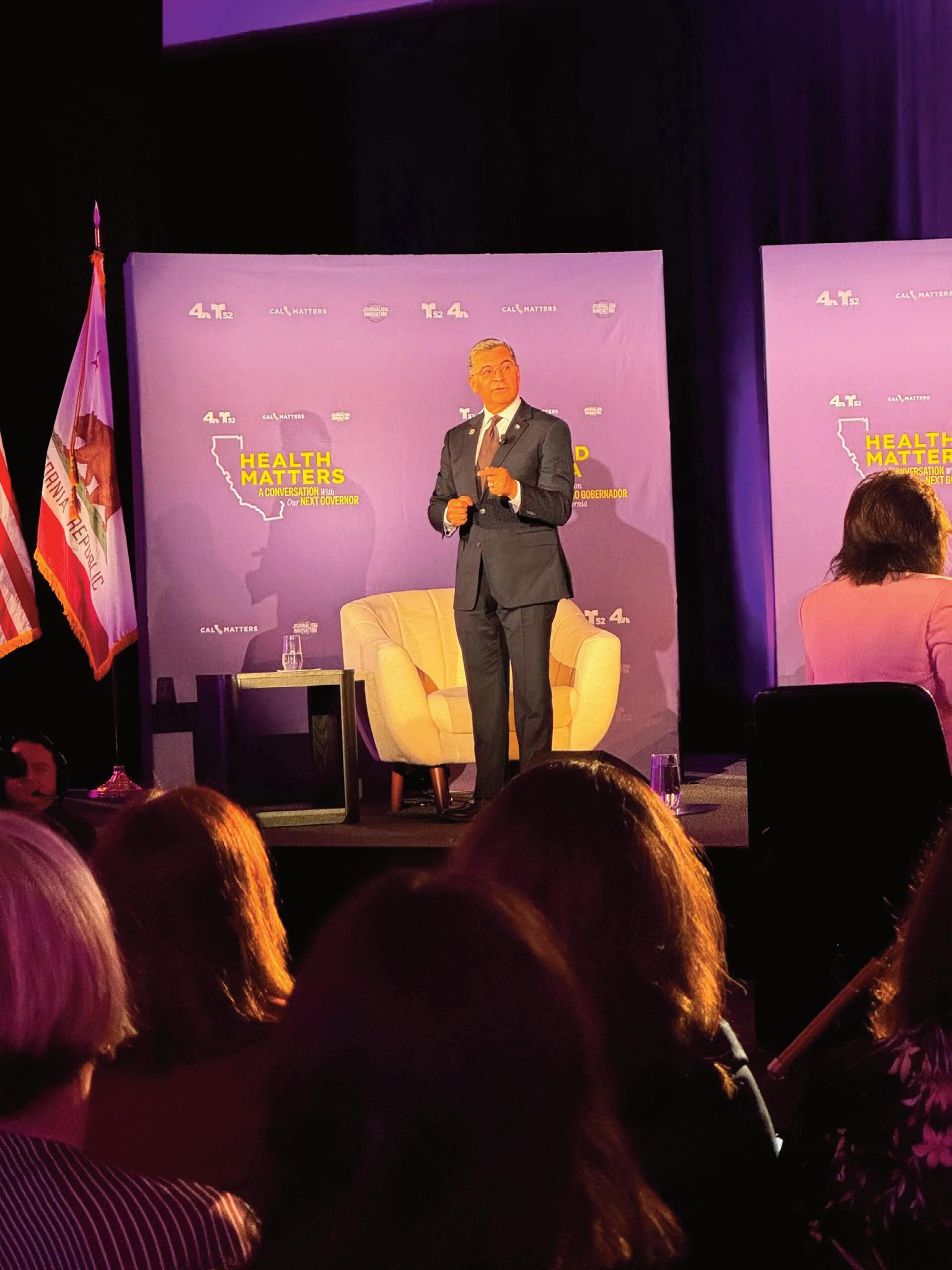
The May 27 interview was the second time in recent months IECN covered Becerra in an Inland Empire election setting. In November 2025, Becerra appeared at UC Riverside during Health Matters: A Conversation with Our Next Governor, a nonpartisan forum that drew more than 300 Inland Empire residents and focused on health care, taxes, the economy, homelessness and federal-state relations.
At that forum, Becerra framed the Inland Empire’s struggles around a broader failure to reward work, saying his father was a construction worker and his mother was a clerical worker who were able to buy a home, send four children to college and retire with dignity in California.
“Today, young families can’t do that,” Becerra said at the November forum. “If I’m governor, they will.”
That theme carried into the May 27 interview, where Becerra thanked community media outlets for reaching families he said are often overlooked by mainstream media.
“We need to have those voices of communication, the network that gets out to our communities that often don’t have access to all sources of media,” Becerra said.
Becerra, who served as U.S. Secretary of Health and Human Services from 2021 to 2025 and previously as California attorney general and a member of Congress, framed his campaign around working families and restoring a sense of possibility in the state.
Read the full story at IECN.com.
This article is part of IECN’s election coverage and does not constitute an endorsement of Becerra or any candidate in the governor’s race.
Obituary
Born February 12, 1950 - Entered into rest April 25, 2026
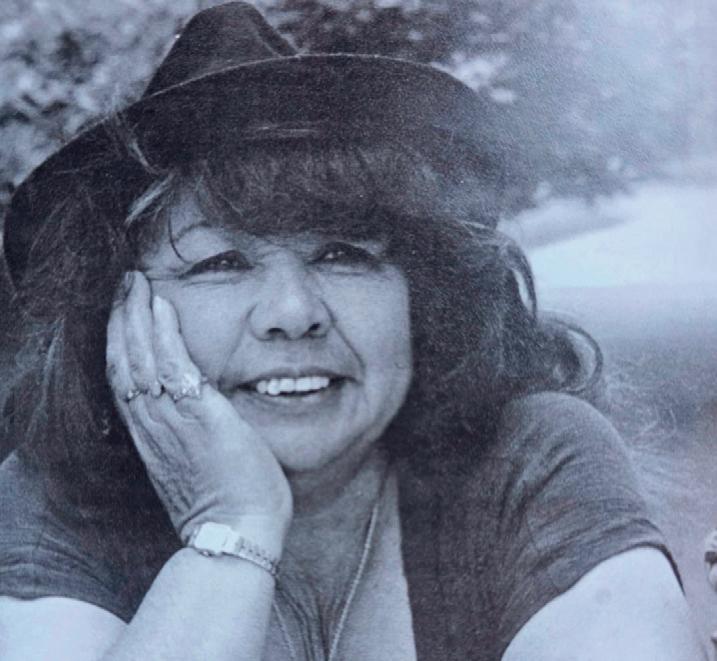
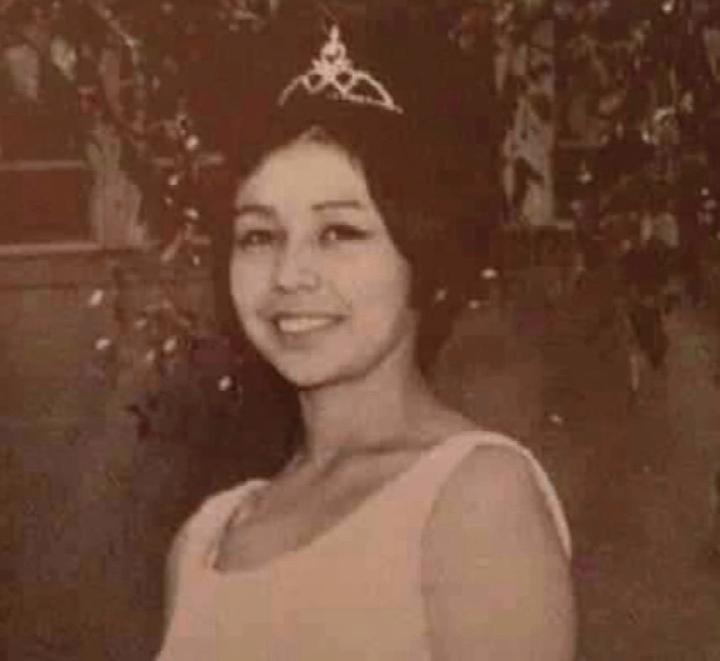
It is with great sadness that we announce the passing of our dear mom, Olivia Mejia, on April 25th, 2026. “Livie” was born on February 12th, 1950 and raised in Colton, California. She later moved to Highland, where she lived for many years, before returning to her hometown. She lived a full life and lovingly raised her 5 children with absolute strength and perseverance.
Olivia was preceded in death by her spouse George P. Gonzales, her parents Ernest and Florence Trujillo, and her sisters, Toni Marie Guillen and Patty Ann Berver.
She is survived by her children Debbie (Chuy), Danny (Lisa), Diane (Curtis), David (Nori), and Danielle (Carlos). She had 17 grandchildren and 15 great-grandchildren who she loved with ALL of her heart. Olivia also had many nephews, nieces, cousins, friends and family who meant the world to her.
Memorial services will be held on June 11, 2026, from 9 am-11 am, at Aaron’s Burial Services located at 1525 N. Waterman Ave., San Bernardino, CA 92404, followed by interment of ashes at 11:30 am at Montecito Memorial Park, located at 3520 E. Washington Ave., Colton, CA 92324.
Rivers
Olivia A. Mejia
SANDOVAL
Xavier Becerra speaks during the Health Matters gubernatorial forum at UC Riverside on Nov. 7, 2025, where Inland Empire Community News later interviewed him on issues facing California and the Inland Empire.
Singh Law HQ Founder Warns $32.5 Million Uber-Backed Measure Could Limit Accident Victims’ Recovery
San Bernardino County Supervisor Asks to Censure County’s Elected AuditorController/Treasurer/Tax Collector
By Aidan McGloin, CalMatters
San Bernardino County Supervisor Dawn Rowe asked for a motion to censure or remove elected auditorcontroller/treasurer/tax collector Ensen Mason last Tuesday. Mason is on the ballot, facing off against challenger Ryan Hutchison.
“We have heard Mr. Mason make a lot of accusations directly to the media, as well as on social media, which I don’t believe at all to have merit or truth in them. Can we bring back an item for the board to consider censure or removal?” Rowe asked County Counsel Laura Feingold.
The Board of Supervisors has not voted on the issue, and the agenda for the next meeting has not been released.
Mason told CalMatters last week that he believed speakers at recent Board of Supervisors meetings were put up to attack him by an unknown political group.
The Sun’s Beau
Yarbrough first reported the claims. Those speakers claimed that Mason’s dual roles as elected auditor-controller/treasurer/tax collector and owner of a private CPA firm were improper.
The Board of Supervisors opened an investigation into Mason that will not be concluded by the election. Reports of the investigation were used in Hutchison’s campaign mail. No formal accusations or evidence of improper behavior have surfaced, with the comments on the topic focusing on a perceived conflict of interest.
The investigation was halted by Mason’s request to delay the investigation until after the election, a request he later revoked, according to both Feingold and Mason.
Rowe’s request to agendize a censure vote came after the board voted down Mason’s request to obtain county funds for independent legal counsel to defend himself in the investigation. Feingold told the board that Mason was not entitled to independent legal counsel because he was representing
By Manny Sandoval
Aproposed Uber-backed ballot measure that has not yet qualified for California’s November 2026 general election ballot could reshape how automobile accident victims recover medical expenses, secure legal representation and pursue claims after crashes.
As of June 1, the measure was still pending signature verification by the California Secretary of State, meaning it remains a contender for the November ballot but has not yet been certified for voters to decide.
Singh Law HQ founder and principal attorney Saloni Singh is urging Californians to pay attention now, warning that the proposal could affect far more than rideshare passengers.
Uber has promoted the initiative as the “Protecting Automobile Accident Victims from Attorney Self-Dealing Act,” but the California Attorney General’s official title describes it as a measure that “limits automobile accident victims’ recovery of medical expenses and fees their attorneys may receive.”
For Singh, that distinction is central to understanding what voters may eventually be asked to decide.
“They’re calling it Protecting Accident Victims,” Singh said. “But the California Attorney General looked at it and gave it the real title: limits automobile accident victims’ recovery of medical expenses and fees their attorneys may receive.”
According to CalMatters, the proposed initiative would require automobile accident victims to retain 75% of any settlement they receive, limit how much may be awarded for medical expenses and raise the burden of proof for recovering those expenses. The measure would also restrict certain financial relationships between law firms and health care providers.
himself personally, rather than the county.
Prior to the vote, Mason told the Board of Supervisors that any discussion of the case in open session would be a violation of the Brown Act because they would be discussing the possibility of a lawsuit. If they did do so, Mason said, they would need to release the full report to him. Last Monday, Feingold emailed Mason saying that the report, once finished, might not be released to him.
“That report is subject to the attorney-client privilege, which may only be waived by the Board (of Supervisors),” she wrote.
In a video on Mason’s new YouTube channel and a public letter posted on a new campaign website, Mason said he has been targeted because he was opposed to the structure of a county employees’ benefit trust.
This article was first published by CalMatters.
Uber has argued the proposal is needed to protect crash victims from attorneys and medical providers it says inflate costs and take too much from settlements.
“Californians deserve a system that prioritizes victims over ambulance lawyers, and that’s exactly what this measure does,” Nathan Click, a spokesperson for Uber’s campaign, told CalMatters.
Singh, whose Riverside practice focuses exclusively on personal injury cases, said voters should understand that the proposal is not limited to Uber rides or rideshare-related crashes.
“This does not just apply to Uber rides,” Singh said. “This applies to anyone who gets hit by a car while driving, bicycling, or walking as a pedestrian anywhere in California.”
Singh said the measure should also be viewed in the broader context of passenger safety and corporate accountability. She said Uber should be directing more resources toward stronger background checks, passenger safeguards and meaningful accountability for reported sexual assaults involving rideshare passengers.
“Uber has a sexual assault problem,” Singh said. “There is a sexual assault reported in an Uber every eight minutes. That’s the reality passengers are facing.”
Instead, Singh said, Uber is spending millions on a measure that she believes could make it harder for injured Californians to obtain legal representation and medical treatment after a crash. CalMat-
ters reported that Uber has put about $32.5 million into its effort since last fall, while opponents, including attorneys and medical providers, have committed tens of millions of dollars to fight the proposal and support competing measures.
Singh said her chief concern is that limits on attorney fees and medical recovery could discourage attorneys and health care providers from taking serious injury cases, particularly when cases are expensive, complex or involve long-term treatment.
“If attorney fees and medical recovery are capped that low, your attorney has no incentive to take your case,” Singh said. “Your doctor has no incentive to treat you.”
She said serious injury cases can involve thousands, and sometimes hundreds of thousands, of dollars in medical expenses, damages and long-term care. If the financial structure no longer supports those cases, Singh said, accident victims may be forced to face insurance companies without the legal or medical support they need.
“You’re left alone against an insurance company and their team of attorneys,” Singh said.
Opponents of the proposed measure have raised similar concerns, arguing that the initiative could limit access to legal representation and medical care for crash victims. Medical providers have also organized against the proposal, saying it could make some doctors less likely to treat uninsured or underinsured patients injured in automobile accidents.
The measure is separate from California’s June 2 statewide direct primary election. In San Bernardino County, polls are open from 7 a.m. to 8 p.m. Tuesday, June 2, the final day to vote in person or return a completed mail ballot. Voters in the county may vote at any polling location.
Vote-by-mail ballots must be postmarked no later than June 2 and received by the Registrar of Voters within seven days after the election. Voters mailing ballots on Election Day are encouraged to request a hand-stamped postmark from a postal employee inside a United States Post Office. Completed mail ballots may also be returned to an official drop box or any polling place by 8 p.m. Tuesday.
While voters will not decide the Uberbacked proposal during the June primary, Singh said the measure deserves attention because of its potential statewide effect on accident victims, attorneys, doctors and anyone who uses California roads.
“So vote no on this measure,” Singh said. “Protect your right to legal representation. Protect your right to medical care after an accident.”
Singh’s warning is rooted in her work representing injured Californians in personal injury matters, including motor vehicle accidents, slip-and-fall cases and other injury claims. She founded Singh Law HQ to provide personal, attentive and client-focused representation to people navigating the aftermath of an injury.
A UC Riverside graduate, Singh earned her Juris Doctorate from Western State College of Law in Irvine. Her background includes work at an immigration clinic, a mid-sized personal injury firm and a workers’ compensation defense firm, experience she said helps her anticipate the tactics insurance companies use and counter them on behalf of injured clients. Singh serves clients in English, Punjabi and Hindi.
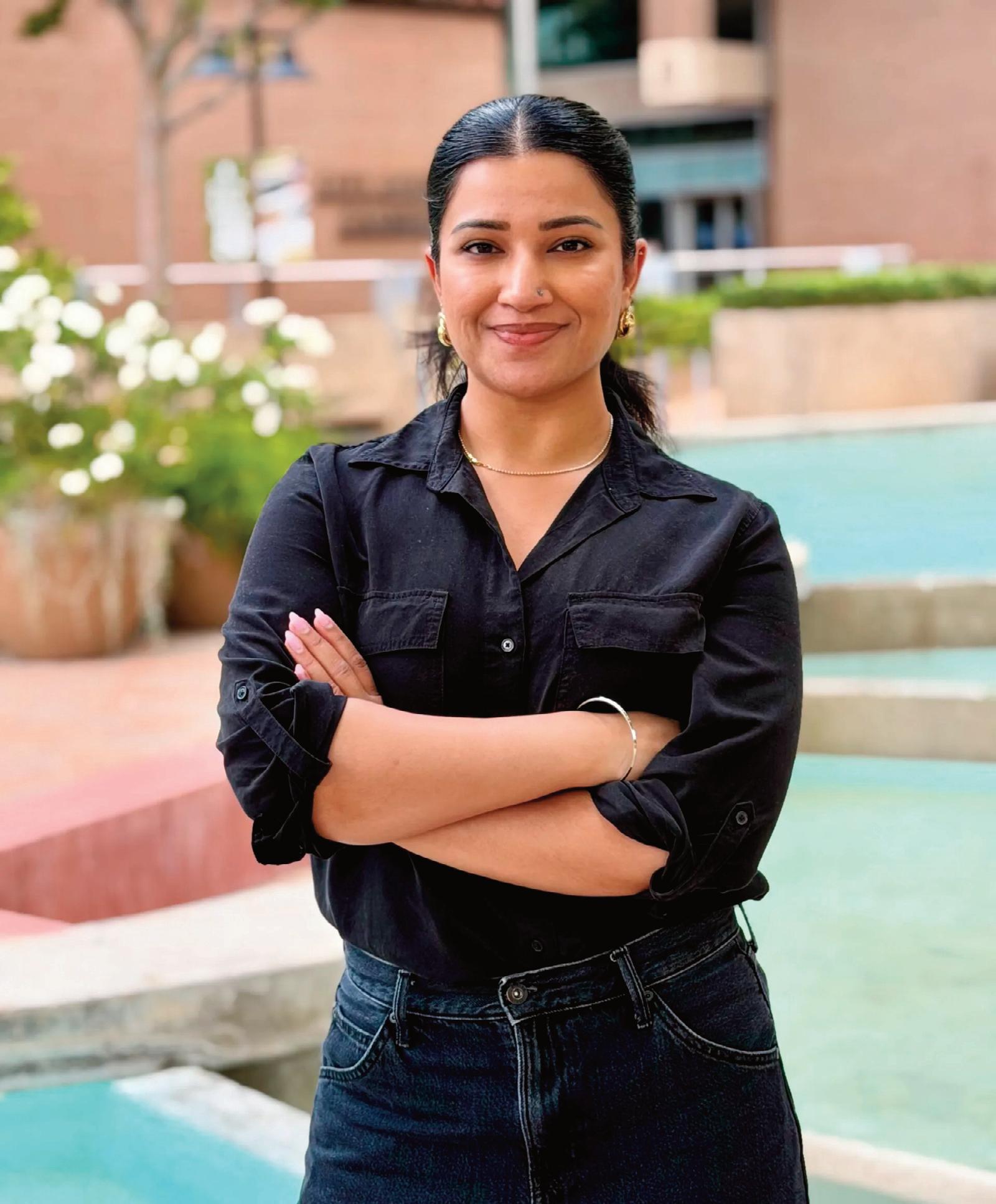
PHOTO MANNY SANDOVAL
Singh Law HQ founder and principal attorney Saloni Singh is warning Californians that an Uber-backed ballot measure could limit accident victims’ medical recovery and legal representation.