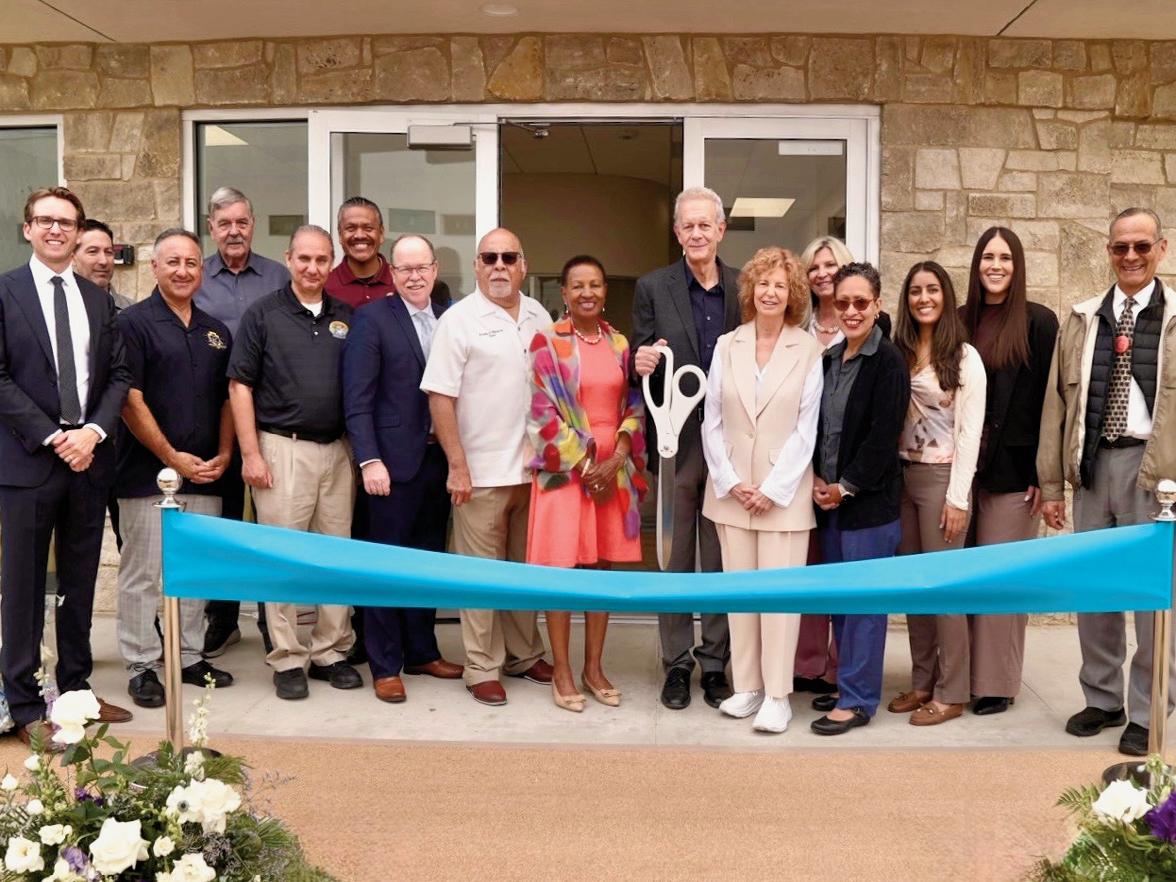
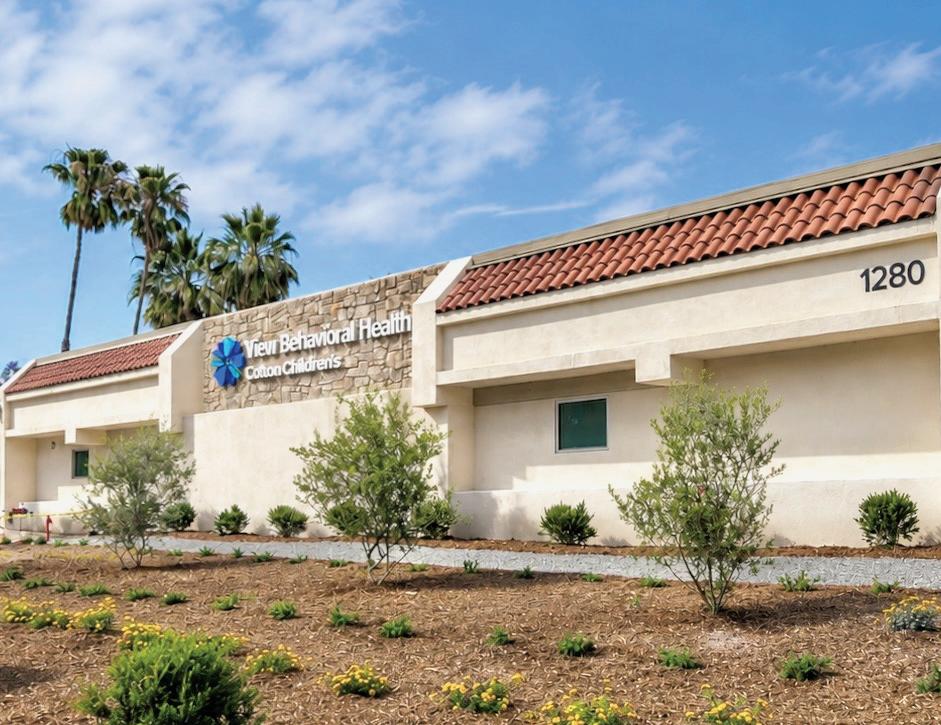
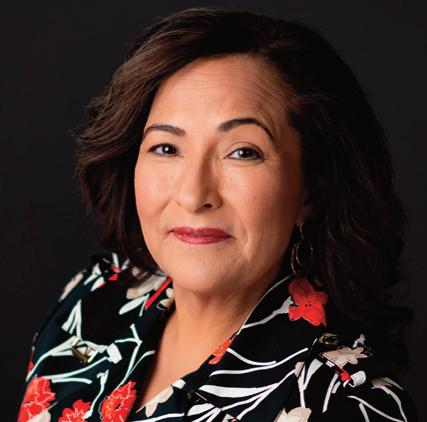
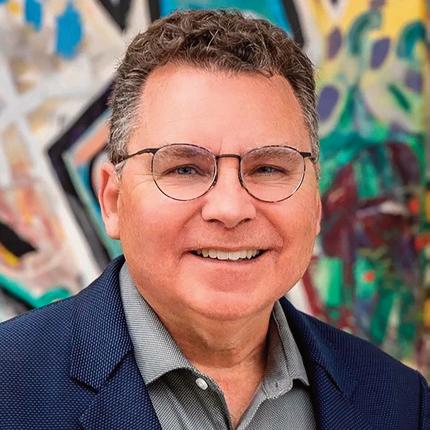
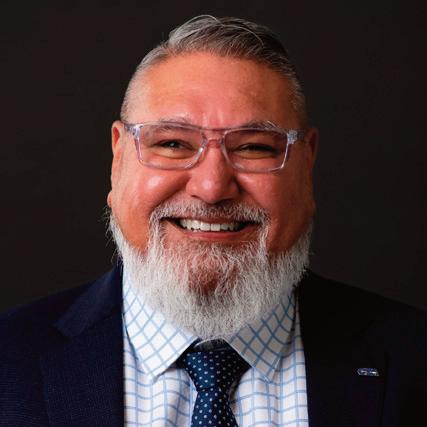
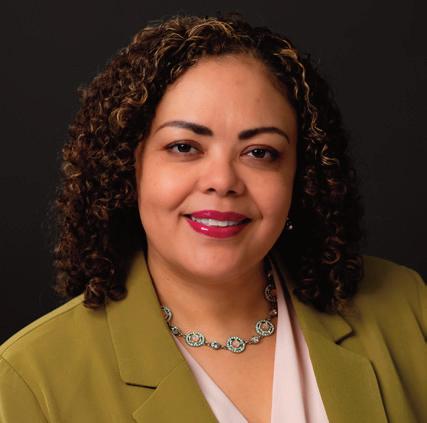
View Behavioral Health (VBH), a southern California-based behavioral health organization, announces the completion of View Behavioral Health Colton Children’s (VBHCC), a new 52-bed inpatient Psychiatric Health Facility for children and adolescents. VBHCC is the largest facility of its kind in the Inland Empire and will more than double the region’s inpatient psychiatric bed capacity for individuals
under 18 as a statewide, multiyear shortage persists. The milestone was celebrated at a ribbon cutting ceremony today with San Bernardino County Supervisor Joe Baca, Jr. and City of Colton Mayor Frank J. Navarro in addition to leaders of University of California, Riverside (UC Riverside) School of Medicine and UC Riverside Health.
“California’s inpatient psychiatric bed capacity for children and adolescents is severely limited and unevenly distributed, and we must do all that we can to increase
access to behavioral health resources for these future generations,” said Jack Stephens, CEO of View Behavioral Health. “This facility will expand the Inland Empire's total inpatient psychiatric bed capacity for this population by more than 55% and help address the broader statewide shortage of beds.”
According to the California Hospital Association, there were 7.6 inpatient psychiatric beds per 100,000 children/adoles-
Community News
In a milestone that reflects a century of commitment to student success, the San Bernardino Valley College Foundation awarded more than $882,000 in scholarships — the most in its history — at its annual scholarship ceremony on May 7, 2026. The record-breaking award comes as SBVC celebrates its centennial year, marking 100 years of expanding access to higher education in the Inland Empire.
A total of 638 SBVC students received scholarships in the 2025-26 academic year, including funding from the two-year pilot ValleyUp2CSUSB program for students committed to enrolling at Cal State San Bernardino. The record scholarship total follows the Foundation’s most successful fundraising event in college history: the Centennial Gala on March 27, which raised more than $1 million. In addition to the scholarship awards, the Foundation distributed over $20,000 in other student support.
“Your college community is proud of you. Tonight is not the end of your journey – it is a reminder of what you have already overcome and what you are still capable of achieving,” said Foundation Executive Director Michael Layne.
The ceremony showcased the resilience and determination of SBVC’s student body. Many recipients juggled work, family obligations, and other challenges while attending classes. Mercie Ramirez, who is
PHOTO VBH
PHOTO ANGEL CASTILLO
PHOTO VBH
Behavioral Health (cont.)
- cents across California in 2017 (latest available data) and the minimum necessary number is 50 beds per 100,000 children/adolescents. Even further, CHA found that only 15 counties statewide have inpatient psychiatric beds for individuals under age 18 and 23 counties have none.
“Addressing behavioral health remains one of our region’s greatest needs. This new facility expands access to critical psychiatric care for children and adolescents and will provide healing, support, and hope for families across the Inland Empire,” said San Bernardino County Supervisor Joe Baca, Jr.
VBHCC is a 24,000 square foot, one-story facility featuring four inpatient units, indoor and outdoor recreation areas, dining rooms, admitting suites, and staff areas. Unique in the industry, the facility features primarily single occupancy rooms and has been designed with colors, finishes, and other features that create a welcoming, healing, and supportive space for patients.
“The opening of View Behavioral Health Colton Children’s comes at a critically important moment for the Inland Empire,” said Dr. Lisa R. Fortuna, Chair of Psychiatry and Neuroscience at the UC Riverside School of Medicine. “This new inpatient psychiatric health facility represents an important investment in the health and well-being of our communities. It expands capacity for both child and adolescent behavioral health care and creates new opportunities for stabilization, treatment, recovery, and hope for patients and families close to home.”
Working collaboratively to expand behavioral health resources in the Inland Empire, VBH has established a medical staffing partnership at VBHCC with UC Riverside, School of Medicine at VBHCC. Through this partnership, UC Riverside’s medical staff and faculty, including physicians and advanced practice providers in psychiatry and internal medicine, will work alongside VBH employees to provide the patient care.
“The opening of View Behavioral Health Colton Children’s represents more than a new facility. It reflects a shared commitment to expanding access to compassionate, high-quality mental health care for children and adolescents across Inland Southern California,” said Deborah Deas, MD, MPH, Vice Chancellor for Health Sciences and the Mark and Pam Rubin Dean of the UC Riverside School of Medi-
cine. “Through our partnership with View Behavioral Health, the UCR School of Medicine is proud to help build a stronger, more responsive behavioral health system by providing physicians, advancing clinical excellence, and preparing the next generation of healthcare leaders to serve our communities with expertise, equity, and empathy.”
VBHCC is the first facility to be completed as part of VBH’s new three-building behavioral health campus in the City of Colton. The campus will also include an adjacent 72-bed inpatient Psychiatric Health Facility for adults and an outpatient facility with programs for all age groups.
VBH will pursue a combination of California Department of Healthcare Services (DHCS) Licensing, Lanterman-Petris-Short (LPS) Designation, and The Joint Commission accreditation for the campus. With a planned completion in 2027, this campus will greatly strengthen the behavioral health system in San Bernardino County.
“We commend and welcome View Behavioral Health Colton Children’s and also the future expanded behavioral health campus,” said City of Colton Mayor Frank J. Navarro. “This partnership will turn previously vacant industrial buildings into much needed centers of care for children, adolescents, and adults in need of mental and behavioral health services.”
With the completion of construction, the VBHCC team will now begin a comprehensive licensing and accreditation process through the State of California, San Bernardino Department of Behavioral Health, The Joint Commission, and other agencies that would allow VBH to begin admitting patients later this summer.
“The opening of the View Behavioral Health Colton Children's marks an important step forward in improving access to compassionate behavioral health care for the community today and for generations to come.” said Dr. Timothy Collins, CEO of UC Riverside Health. “We are proud to stand alongside View Behavioral Health in this work, and excited about what we can build together moving forward.”
VBH’s project team included Uprite Construction, Sign Imaging, Pineapple Furniture, and Uno Furniture, among others. VBHCC is located at 1280 E Cooley Drive, Colton, CA 92324.
SBVC Foundation (cont.)
- graduating with an associate’s degree in liberal arts and transferring to Cal State San Bernardino, spoke about navigating the foster system, homelessness, domestic violence, and being a working parent before enrolling at SBVC.
“Thank you, San Bernardino Valley College, for not only being the biggest lifeline I have ever had but also for going above and beyond it,” Ramirez said.
SBVC President Gilbert J. Con-
treras connected the record scholarship milestone to the college’s centennial legacy of serving students who need it most.
“We know how much it means to our students to have financial support to pursue their dreams,” Contreras said. “As we fulfill our ancestors’ dreams, it takes time and money – especially for students who are low-income, firstgeneration, and balancing many responsibilities for family and home. That is my story as well. I know how much financial aid means. I know how much schol-
arships mean.”
Top scholarship funders include Yuhaaviatam of San Manuel Nation, the Foundation for California Community Colleges, the Jay Pritzker Foundation, Chuck Obershaw and the Obershaw family, and Southern California Edison.
For more information about the SBVC Foundation, visit sbvcfoundation.org.
San Bernardino Arts Collaborative Presses Candidates on Creative Economy, City’s Future
By Manny Sandoval
For Michael Segura, the question facing San Bernardino’s candidates is bigger than homelessness, public safety or City Hall dysfunction.
It is whether the city’s next leaders understand that arts, culture, identity and economic development are inseparable from San Bernardino’s quality of life.
The San Bernardino Arts Collaborative is hosting two candidate forums this week at the Garcia Center for the Arts, pushing candidates to discuss how the creative economy can shape the city’s future. A mayoral forum was held Tuesday, May 26, and a Ward 1 forum is scheduled for Thursday, May 28.
Both forums are being held at 6 p.m., with doors opening at 5:30 p.m., at the Garcia Center for the Arts, 536 W. 11th St. IECN Copublisher Denise Berver is moderating both events.
The forums come less than a week before San Bernardino’s June 2 primary election, when voters will decide races for mayor and several City Council seats. If no candidate receives more than 50% of the vote, the top two candidates will advance to a November runoff.
Segura, executive director of the Garcia Center for the Arts, said the forums grew out of ongoing work by the San Bernardino Arts Collaborative to develop a cultural district and policy agenda based on community input.
“We’ve been working on the cultural district in the city,” Segura said. “We have been collecting community input and were able to push out a policy agenda based on that input and the work we have been doing since last summer.”
The collaborative includes San Bernardino Generation Now, the Garcia Center for the Arts, Arts Connection, Creative Grounds, Three Little Blue Byrds, Westside Story, the National Orange Show, Relicore, the San Bernardino Arts Association, Semilla Sibs and Future First.
Segura said the work has pushed arts organizations, cultural leaders and small businesses further into
civic engagement, particularly as they seek city support for arts and culture.
“How do these folks see the creative economy?” Segura said. “Do they understand what the creative economy is? How are they really envisioning the future of San Bernardino’s arts and culture?”
Unlike other candidate forums that have largely centered on homelessness, safety and council conflict, the Arts Collaborative forums are focused on how culture, creativity and identity fit into broader questions of economic development.
For Segura, those issues are directly connected. “The creative economy intersects with a lot of other social issues,” Segura said. “That’s where we’re interested in trying to make the forum a little different and unique from what other forums usually discuss.”
The Arts Collaborative’s mayoral forum follow last week’s North End Neighborhood Association mayoral forum at the Arrowhead Country Club, where candidates focused heavily on homelessness and divisions on the City Council.
Mayor Helen Tran defended the city’s progress on homelessness, saying San Bernardino declared a state of emergency in February 2023 and has since reported a 24% decrease in the unhoused population during the most recent point-in-time count.
“There is still a lot more work ahead, but we have to continue improving the process of how we work collaboratively between the city, county, nonprofits and organizations,” Tran said.
Amy Malone, a mayoral candidate and owner of a communications firm, challenged the city’s current approach, saying encampments remain visible across San Bernardino and businesses continue to deal with the impacts.
“We need to start working right now to utilize some of the properties that we already own, repurpose those properties, refurbish them, put some beds in there, bring in wraparound services and get our homeless off the street,” Malone said.
Ronnika Ngalande called for an audit of homelessness funding and said the city should focus more directly on measurable outcomes.
“We need to start paying based on results,” Ngalande said. “How many people are we actually able to house? How many people are we actually able to help?”
Ivan Garcia said the city needs to work more closely with outreach teams and service providers, while Rick Avila called for a large homeless services site on the outskirts of the city. Former Mayor John Valdivia criticized what he described as wasted taxpayer dollars and called for broader regional collaboration with the county and neighboring cities.
Candidates also addressed City Hall divisions. Tran said San Bernardino’s council-manager form of government requires a strong working relationship with the city manager, while Malone, Ngalande, Garcia, Avila and Valdivia each argued that the next mayor must take a more active role in bringing elected leaders together.
The Arts Collaborative forums are designed to move the conversation into another area of civic life that Segura said has long been overlooked: how the city invests in its own cultural identity.
Segura said San Bernardino has historically lacked stable support for arts and cultural funding. He pointed to historic buildings, murals, public art, vacant spaces and downtown cultural spaces as assets that need investment and protection.
“You can just look around the city,” Segura said. “You’re seeing historic buildings burned down. So how are we protecting historic sites? How are we defining the creative economy here, and how are we supporting artists, makers, thinkers and creatives who can innovate space?” He said places such as Creative Grounds, Three Little Blue Byrds, the former Barrio Fuerza and downtown galleries have helped bring people into the city’s core, but have had limited access to city-backed support systems or capital.
Read the full story at IECN.com.
Inside San Bernardino’s National Orange Show Sports Center Horse Racing Experience
By Manny Sandoval
The National Orange Show Sports Center offers one of San Bernardino’s more distinct weekend experiences: live simulcast horse racing, affordable admission, a full bar, shareable food and the kind of familiar crowd that makes the venue feel both entertaining and communitydriven.
IECN visited the sports center on May 22 to see what a casual afternoon could look like with $25 cash. The result was a low-cost outing built around horse racing, drinks and the energy of a longtime entertainment space that continues to draw regulars and first-time visitors.
Located at 930 South Arrowhead Ave., Gate 10, the National Orange Show Sports Center is open Fridays, Saturdays and Sundays. Admission is $5, cash only, and guests can enter free after 5 p.m.
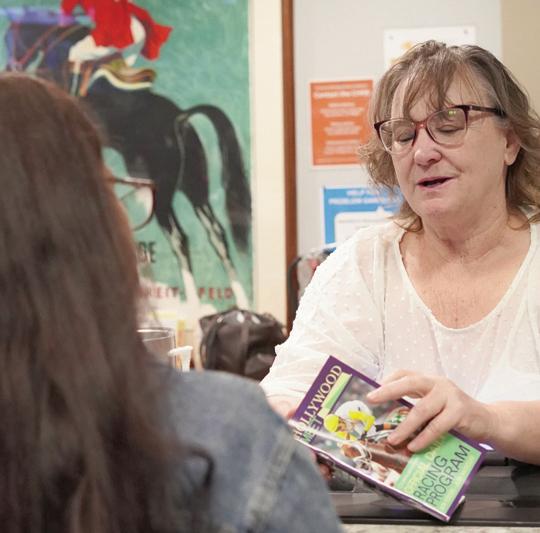
After paying admission, IECN headed to the betting window and placed an $8 wager on Belmont at the Big A before stopping at the bar, where a Coors Light and Modelo were each $5. Mixed drinks are also available, with top-shelf liquor priced at $8.
The visit also included the Long Shot Sampler Platter, prepared by Five Star Gourmet’s Chef Bernardino. The $30 platter (which was comped) includes six wings, jalapeño poppers, onion rings, taquitos and cheese fries, making it large enough to share with a small group. The chicken and potato taquitos stood
out during IECN’s visit, and the platter helped make the afternoon feel less like a quick stop and more like a full weekend hangout.
Alan Conrad, National Orange Show director of production and marketing, said the sports center sees some of its strongest energy during major racing events. The Kentucky Derby brought more than 400 people to the venue, while the Preakness drew roughly 200 to 225 guests, he said. Attendance tends to grow when Triple Crown stakes are on the line, especially when a Kentucky Derby winner continues into the next race.
Conrad said the atmosphere is part of what makes the Sports Center stand out, especially during major race days when guests lean into the tradition and excitement of horse racing.
“It’s a pretty cool little experience,” Conrad said, noting that some guests wore Kentucky Derby hats and dressed for the occasion during the venue’s Derby event.
The sports center is expected to draw another strong crowd for the Belmont Stakes on June 6, the third and final leg of the Triple Crown series, while Del Mar’s 2026 season begins July 17 and runs through Sept. 7, with a second meet scheduled Nov. 6-29.
The National Orange Show Sports Center is open Fridays and Saturdays from 10 a.m. until the last race, with food and bar service beginning at 11 a.m. On Sundays, it opens at 11 a.m. until the last race. Guests should check Facebook and Instagram for schedule changes.
Rivers
PHOTO MANNY SANDOVAL
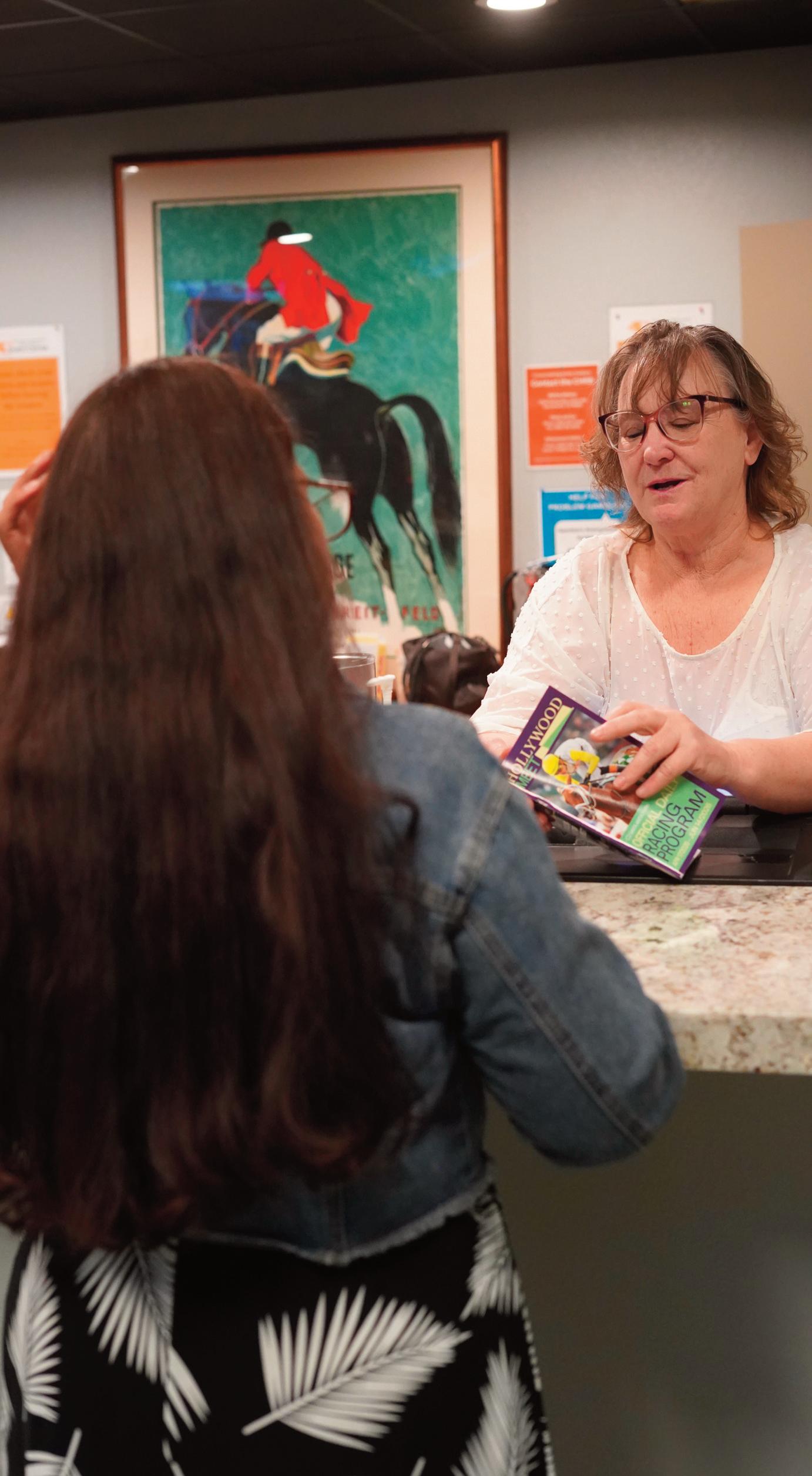
A friendly National Orange Show Sports Center employee walks IECN co-publisher Denise Berver through the betting process during IECN’s May 22 visit to the San Bernardino venue.
PHOTO MANNY SANDOVAL
The $30 Long Shot Sampler Platter, prepared by Five Star Gourmet Chef, includes wings, jalapeño poppers, onion rings, taquitos and cheese fries, offering guests a shareable food option at the National Orange Show Sports Center.
15
Inland Empire Nonprofits Honored at State Capitol as California Nonprofits of the Year
Community News
IHelen Tran Results
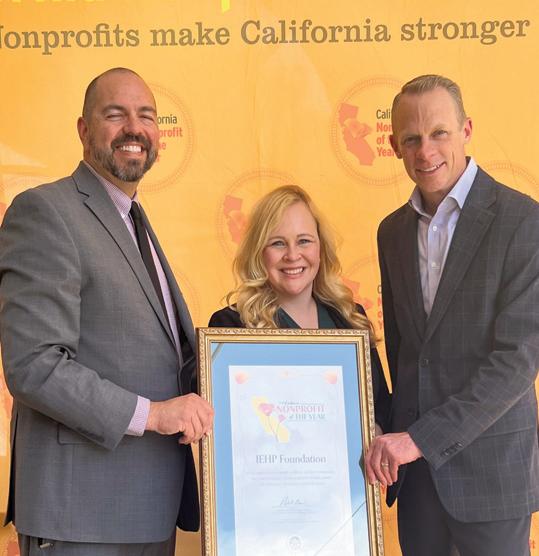
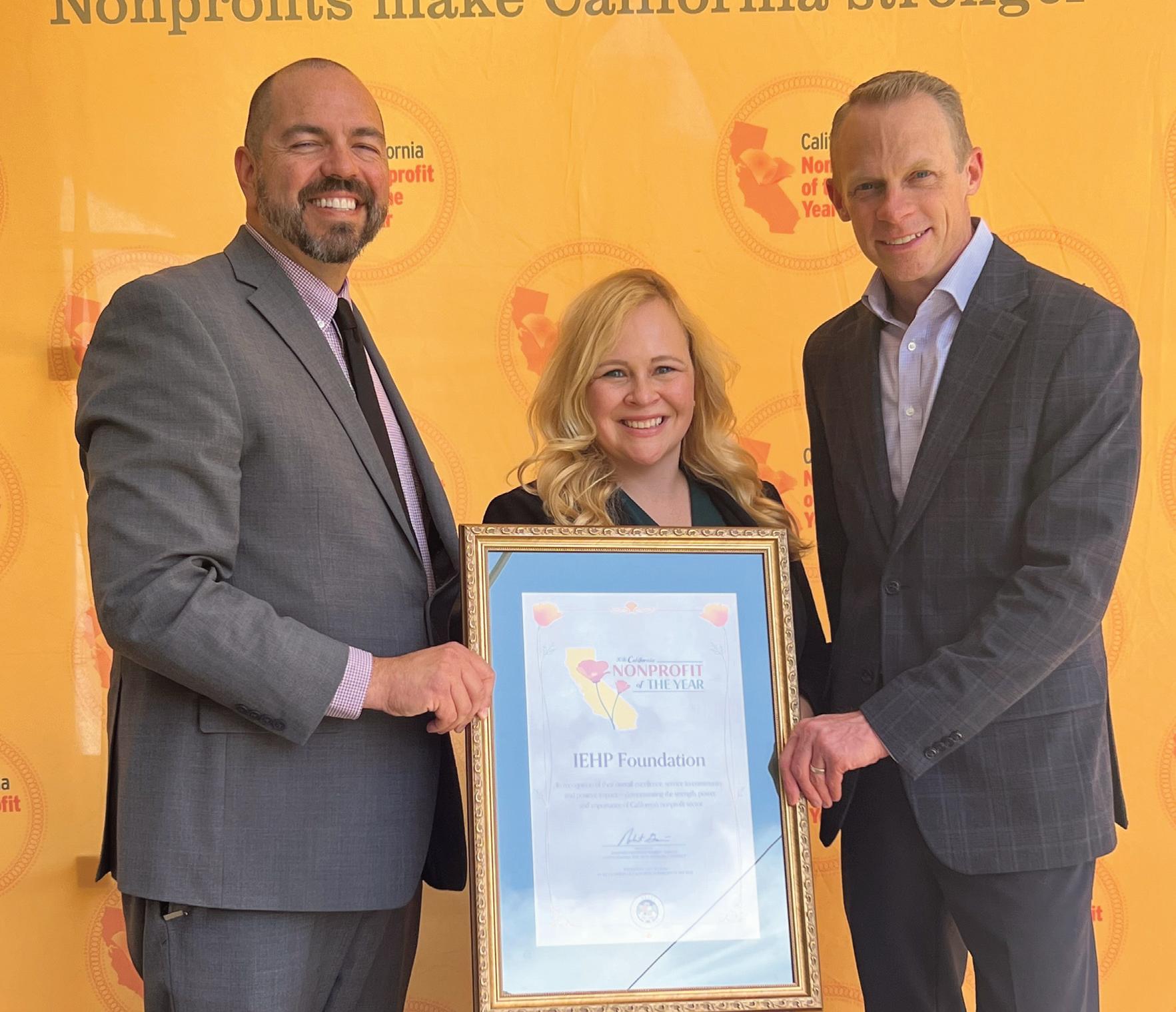
EHP Foundation has been named a 2026 California Nonprofit of the Year by Assemblymember Robert Garcia (District 50), joining 14 other Inland Empire organizations recognized at the State Capitol for their service to local communities.
Hundreds of nonprofits from across California were celebrated at Wednesday’s annual Nonprofit of the Year ceremony, which provides each California state legislator with the opportunity to recognize a nonprofit organization doing outstanding work in their district.
Now in its eleventh year, the California Nonprofit of the Year initiative is sponsored by CalNonprofits in partnership with the state Senate and Assembly Select Committees on the Nonprofit Sector.
“It is an incredible honor for IEHP Foundation to be recognized by Assemblymember Robert Garcia as Nonprofit of the Year for District 50,” said Greg Bradbard, CEO of IEHP Foundation. “It is even more meaningful to be honored alongside so many of our community partners that are working with us to address challenges across the Inland Empire and to ultimately make Vibrant Health a reality for all residents.”
IEHP Foundation strengthens the region’s nonprofit sector by providing resources, capacitybuilding support and funding to community leaders working to improve health outcomes for Inland Empire families. Several fellow honorees have partnered with the Foundation or received grants to advance community health initiatives.
“I am proud to recognize IEHP Foundation as our 2026 Non-
profit of the Year for their continued commitment to improving the lives of families across the Inland Empire,” said Assemblymember Garcia. “Their investment in nonprofit organizations, leadership development, and programs addressing the social determinants of health is helping strengthen the long-term wellbeing of our region. Their work reflects what it means to be a true community partner by expanding opportunities and ensuring Inland Empire families have the resources they need.”
The Inland Empire, California Nonprofits of the Year include:
• District 19 Senator Rosilicie Ochoa Bogh has honored New Hope Village
• District 23 Senator Suzette Martinez Valladares has honored Antelope Valley Blue Star Mothers Chapter 14
• District 29 Senator Eloise Gómez Reyes has honored Family Assistance Program
• District 31 Senator Sabrina Cervantes has honored Inland Counties Legal Services
• District 32 Senator Kelly Seyarto has honored Michelle’s Place Cancer Resource Center
• District 34 Assemblymember Tom Lackey has honored Today’s Woman Foundation
• District 36 Assemblymember Jeff Gonzalez has honored Coachella Valley Rescue Mission
• District 45 Assemblymember
James C. Ramos has honored Common Vision Coalition
• District 47 Assemblymember
Greg Wallis has honored Carol’s Kitchen
• District 50 Assemblymember
Robert Garcia has honored IEHP Foundation
• District 53 Assemblymember
Michelle Rodriguez has honored Just Us 4 Youth
• District 58 Assemblymember
Leticia Castillo Jurupa Valley Adopt a Family
• District 60 Assemblymember
Dr. Corey Jackson has honored CART (Center Against Racism and Trauma)
• District 63 Assemblymember
Natasha Johnson has honored Animal Friends of the Valleys
• District 71 Assemblymember
Kate Sanchez has honored RSM Cares
These nonprofits reflect the Inland Empire’s diversity, serving communities in health and wellness, youth development, housing and homelessness, family support, legal advocacy, military families and animal welfare.
“We are grateful for the work of all the selected Inland Empire nonprofits and want to extend our congratulations for this well-deserved recognition,” said Geoff Green, CEO of the California Association of Nonprofits. “Nonprofits are among our country’s most trusted organizations and an integral part of civil society. There’s likely never been a more important time to lift up the contributions nonprofits make within the communities they serve.”
Nonprofits are often recognized as problem-solvers, innovators, and advocates, as well as a significant economic force.
According to the upcoming “Causes Count 3.0” report by CalNonprofits, the sector is now California’s third-largest employer, with about 1.5 million employees. The state’s 110,000 public charities collectively generate over $430 billion in annual revenue.
PHOTO IEHP FOUNDATION
Assemblymember Robert Garcia, Deanna Hendrick and IEHP Foundation CEO Greg Bradbard celebrate IEHP Foundation’s recognition as a 2026 California Nonprofit of the Year for its work supporting community health across the Inland Empire.
CLASS OF 2026 Congratulations
By Manny Sandoval
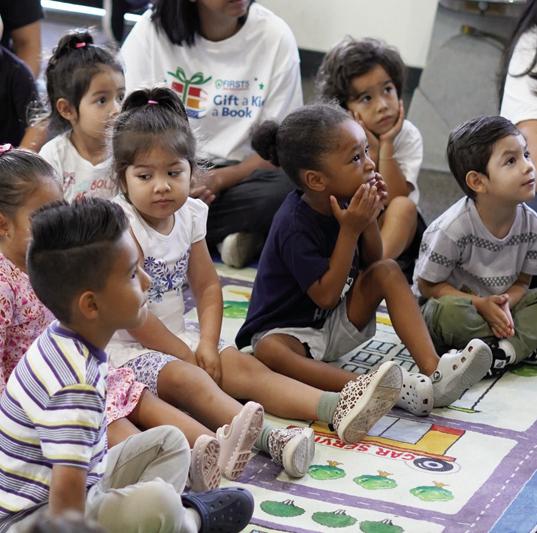
More San Bernardino County families may now qualify for free or low-cost early learning programs as California expands transitional kindergarten and local education leaders work to connect parents with options before their children enter kindergarten.
San Bernardino County Superintendent of Schools is promoting universal prekindergarten, or UPK, as a way to help families understand the early education choices available from birth to age 5, when children’s brains are developing most rapidly.
Heather Smith, director for early education and development with San Bernardino County Superintendent of Schools, said UPK is not one program. It is an umbrella of early learning and care options that can include transitional kindergarten, state preschool, Head Start, Early Head Start, licensed family child care providers and care from family, friends and neighbors.
“Universal pre-kindergarten is really an avenue that we are using to help families recognize what their choices are so that they can choose a setting that is best for them and their child,” Smith said.
Those choices matter, because many families, particularly in underserved communities, have not always known what programs were available or have faced barriers such as cost, transportation and work schedules.
“Historically, our families, particularly in underserved communities, haven’t necessarily known what their choices are,” Smith said. “Sometimes they were aware
of choices, but there were barriers to accessing them.”
Transitional kindergarten, or TK, is offered through local school districts and is free for 4-year-olds. Smith said it can be an especially helpful option for families with older children already attending the same elementary school.
Other early learning options may also be available at no cost or at a reduced cost, depending on the program and a family’s eligibility. Smith said state preschool, Head Start, Early Head Start and some family child care providers may offer subsidized care.
“With universal pre-kindergarten, there are more options for families that they might be surprised they qualify for,” Smith said.
The county’s role, Smith said, is to help families understand those options and build stronger connections between early learning providers and the K-12 school system. Historically, those systems have often operated separately. “It really is a community lift,” Smith said. “We’re really looking at building the infrastructure, which has historically not happened, in terms of how early learning and care is connected to the TK or K-12 system.”
Under the UPK model, families may use one program or combine several depending on their schedules, income, transportation needs, language preferences and child care needs. A family might enroll a child in TK during the school day and use a family child care provider or expanded learning program before and after school.
Smith said that flexibility is important because each family’s needs are different.
“It really looks at creating a system that
allows families to make choices for their kids so that they best meet their needs,” Smith said.
Early learning can also support children who speak more than one language or are learning English. Smith said some local elementary schools offer dual-language immersion programs beginning in TK, while family child care providers, state preschool, Head Start and Early Head Start programs may offer different levels of language support depending on the needs of the family and the community.
Smith said the early years are critical because children’s brains develop most rapidly from birth to age 5.
“This is the perfect time for kids to be exploring, learning language and literacy skills, early numeracy and building all of those skills that they build in early learning and care programs,” Smith said.
But kindergarten readiness, she said, does not mean forcing young children into formal academics too soon. “A lot of times, our families think being ready for kindergarten means kids have to be reading and writing and knowing their letters and all their numbers,” Smith said. “Kindergarten readiness is really not about pushing academics down. It’s about helping kids feel safe in a new environment, feel confident and feel connected to the adults and children in their learning environment.”
Smith said high-quality early learning environments should focus on safety, playbased learning, conversation, exploration and social development. Children should have opportunities to ask questions, talk with adults and peers, build with blocks, use manipulatives and develop curiosity.
Those experiences help children build
confidence before kindergarten, she said. “Kindergarten can be so overwhelming for children who haven’t had any early learning experiences,” Smith said. “Those programs allow them to build their social skills, learn how to make friends, recognize their needs and build their confidence before they go to kindergarten.”
The county has also seen new partnerships emerge between school districts and early learning providers. Smith pointed to Rim of the World, where preschool-age and TK-age children had been on a waiting list because of limited early learning opportunities in the mountain community.
San Bernardino County Superintendent of Schools worked with the district and Head Start partners to help establish a Head Start program on an elementary school campus, Smith said. A similar model is also being used in Trona.
“The school districts can’t do it on their own,” Smith said. “UPK has provided a structure to allow them to do that and encourage them to do that, because in the end, all of the kids are all of our kids.”
Smith said the county is also working with three school districts in partnership with First 5 San Bernardino to help develop community school structures that include families with children ages 0 to 5. The goal, she said, is to help families find support before kindergarten, whether they need early learning programs, developmental resources or referrals.
“We really want our families to know that they don’t have to navigate this alone,” Smith said. “Taking that first step into exploring what’s available could be life changing for kids and families in our communities.”
San Bernardino County UPK Programs Help Children Build Confidence Before Kindergarten
Anuncio político pagado
Richard Barrera Superintendente Estatal de Instrucción Pública
A MÁS TARDAR EL 2 DE JUNIO
¡RICHARD BARRERA PONE A NUESTROS ESTUDIANTES PRIMERO!
RESPALDADO POR
Más de 310,000 miembros de la Asociación de Maestros de California saben que Richard Barrera es el mejor candidato para el puesto.
“Richard Barrera luchará contra los recortes presupuestarios que provocan despidos de maestros y aulas superpobladas”.
Eva Ruiz maestra de primaria miembro de la junta directiva California Teachers Association
“Richard Barrera apoya el aumento de personal de salud mental para atender las necesidades de nuestros estudiantes y comunidades”.
Jesse Aguilar maestro de secundaria miembro de la junta directiva California Teachers Association
“Richard Barrera cree que las escuelas deberían enseñar destrezas del mundo real para trabajos del futuro”.
Maritza Ávila profesora de secundaria miembro de la junta directiva California Teachers Association
Richard Barrera ha dedicado su vida a luchar por nuestros estudiantes. Como presidente del Distrito Escolar Unificado de San Diego, ha convertido uno de los distritos más grandes de California en uno de los de mejor desempeño del país al trabajar con los maestros para invertir en los estudiantes y las aulas.
Como superintendente estatal, Richard Barrera dará prioridad a los recursos destinados a apoyar a nuestros estudiantes, como los programas de salud mental y las clases con menos alumnos.
Anuncio pagado por California Teachers Association Independent Expenditure Committee. No autorizado por un candidato ni por un comité controlado por un candidato.