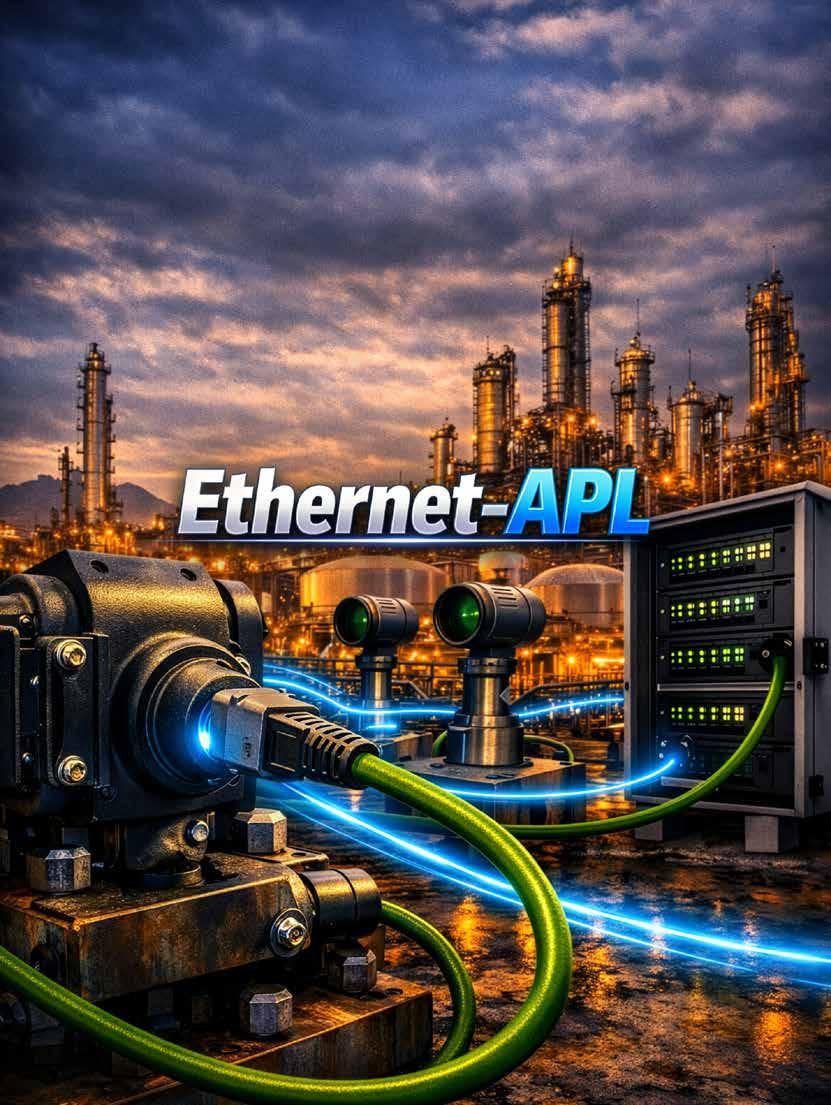
Ethernet APL enables consistent communication with Ethernet down to the field level. This is why Ethernet APL is the empowering factor for IIoT in process automation. In the framework of the Ethernet APL project, Phoenix Contact supports the realization of a two-wire Ethernet solution that meets user demands. Are you interested in Ethernet APL? Don’t hesitate to contact us for more information and advice.
❯ For additional information, visit phoenixcontact.com/ethernet-apl
Factories today are evolving into digital ecosystems where sensors, controllers, and analytics platforms communicate in real time. The Industrial Internet of Things (IIoT) demands seamless connectivity from the field level to the cloud.
Ethernet-APL (Advanced Physical Layer) has emerged as a cornerstone technology, not just another protocol, but a standardization standard that unifies industrial networking under a single, globally interoperable framework. It bridges the gap between legacy fieldbus systems and modern Ethernet architectures, enabling high-speed, secure, and power-efficient communication even in hazardous environments.
For decades, industrial communication has been fragmented. Fieldbus technologies such as PROFIBUS-PA, FOUNDATION Fieldbus, and HART each served specific niches, creating complexity in integration and maintenance. Ethernet-APL addresses this fragmentation by standardizing the physical layer for Ethernet communication over two - wire cables, the same infrastructure used by legacy systems. Manufacturers can upgrade without overhauling plant wiring, preserving investment while gaining Ethernet’s speed and flexibility.
Ethernet - APL builds on the IEEE 802.3cg standard for 10BASE-T1L, enabling Ethernet communication up to 10 Mbit/s over a single twisted pair. It supports distances up to 1,000 meters and delivers power and data over the same two wires, simplifying installation and reducing cost.
Standardization is the invisible foundation of industrial progress. Ethernet - APL harmonizes physical connectivity, safety, and data accessibility under one umbrella. In the smart factory of the future — where AI, edge computing, and autonomous control converge — Ethernet-APL provides the infrastructure for seamless integration. Its standardized approach ensures that devices from different generations and vendors can coexist and evolve together. Ethernet - APL is more than a technical innovation; it is a standardization milestone that redefines how factories communicate and operate.
By merging Ethernet’s universality with industrial reliability, it delivers a unified platform for the modern factory, a solution that will support safety, scalability, and digital intelligence for decades to come.
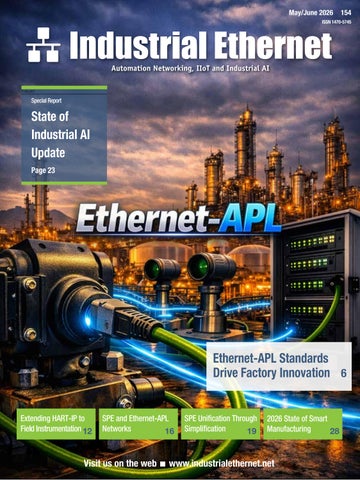
Check out our cover story starting on page six to discover how industry experts see the emergence of Ethernet-APL as we move into the future, and how it will make good on the promise of this significant new technology. on the factory floor.
Al Presher

The next issue of Industrial ethernet magazine will be published in May/June 2026. Deadline for editorial: May 15, 2026 Advertising deadline: May 15, 2026
Editor: Al Presher, editor@iebmedia.com
Advertising: info@iebmedia.com
Tel.: +1 585-598-6627
Free Subscription: iebmedia.com/subscribe Published by IEB Media Corp., 1247 Anthony
Joint Industry Perspective from the Industrial Security Harmonization Group (ISHG).
The Industrial Security Harmonization Group has released a joint industry perspective highlighting a critical truth in industrial cybersecurity. Secure communication is not determined by protocols alone, but by how they are deployed and managed in real-world environments.
The ISHG—comprising leading industry organizations including the FieldComm Group, ODVA, OPC Foundation, and PROFIBUS & PROFINET International—collaborates regularly to align security concepts across Ethernet and non-Ethernet communication protocol technologies. Their shared mission is to reduce complexity for end users and promote consistent, effective cybersecurity practices in industrial automation systems. Industrial communication protocols serve as the backbone of modern automation, enabling seamless connectivity between devices, systems, and applications across both process and factory environments. However, many widely used protocols were originally developed without cybersecurity as a primary design consideration.
The ISHG’s joint work challenges the simplistic binary classification of protocols as “secure” or “insecure.” Instead, it emphasizes a more practical and realistic approach: Security is context-dependent: It relies on how protocols are configured, where they are deployed, and the surrounding operational environment.
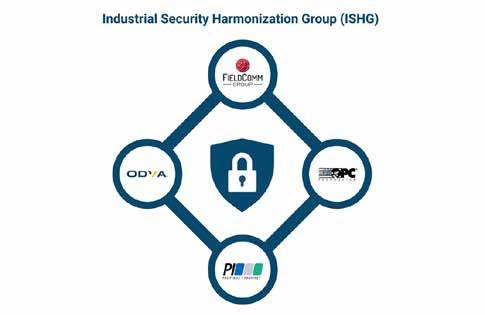
The ISHG’s joint work challenges the simplistic binary classification of protocols as “secure” or “insecure.” Instead, it emphasizes a more practical and realistic approach.
Built-in security features not sufficient alone: Even advanced protocols require correct implementation and maintenance. Compensating controls are essential : Network architecture, segmentation (zones and conduits), monitoring, and physical safeguards play a critical role, especially for legacy and non-Ethernet systems.
This deployment-focused perspective aligns closely with emerging regulatory expectations, including those outlined in the EU Cyber Resilience Act (CRA) for hardware and software products and NIS2 for entities and organizations for operations.
Industrial Security Harmonization Group
EtherCAT meets IEC 62443 / CRA requirements for Security Level 2 without modifications.
A report and certificates from UL Solutions, following testing in accordance with IEC 62443, confirm the ETG’s statements: EtherCAT technology already meets the requirements for systems exposed to cyber attacks corresponding to Security Level 2 without any modifications. In its European version IEC 62443, the international standard for cybersecurity of industrial control systems, will also form the basis for the European Cyber Resilience Act. Furthermore, the investigations show that no hardware changes are necessary for higher security requirements—with targeted software enhancements, higher security levels can also be achieved based on the EtherCAT system.
UL mapped all 100+ System Requirements
(SR) of IEC 62443-3-3 to three typical EtherCAT systems with different threat scenarios and evaluated the degree of compliance achieved by EtherCAT.
“We at UL Solutions were delighted to work with an industrial protocol which has security capabilities and enablement-by-design as well as hardware implemented security, which is second-to-none in the category of industrial protocols”, says Alexander W. Koehler, S&S Principal Security Advisor for Cybersecurity at UL Solutions. “IT and OT-security have not been best friends in the past. IT security requirements have often been driven by typical short product lifecycles of office worker equipment, which contrast with industrial equipment with long lifecycles. In
consequence there are still many products in the industrial field without or weak security built in, labelled as legacy products. EtherCAT is a positive exception here.”
Dr. Guido Beckmann, Chair of the Technical Committee of the EtherCAT Technology Group: “The results of the extensive investigations confirm the ETG’s assessment: EtherCAT already provides a high level of cybersecurity protection for industrial applications today. The tested and documented features and measures form the basis for the recommendations and specifications we are developing for manufacturers and users of EtherCAT devices.”
EtherCAT Technology Group
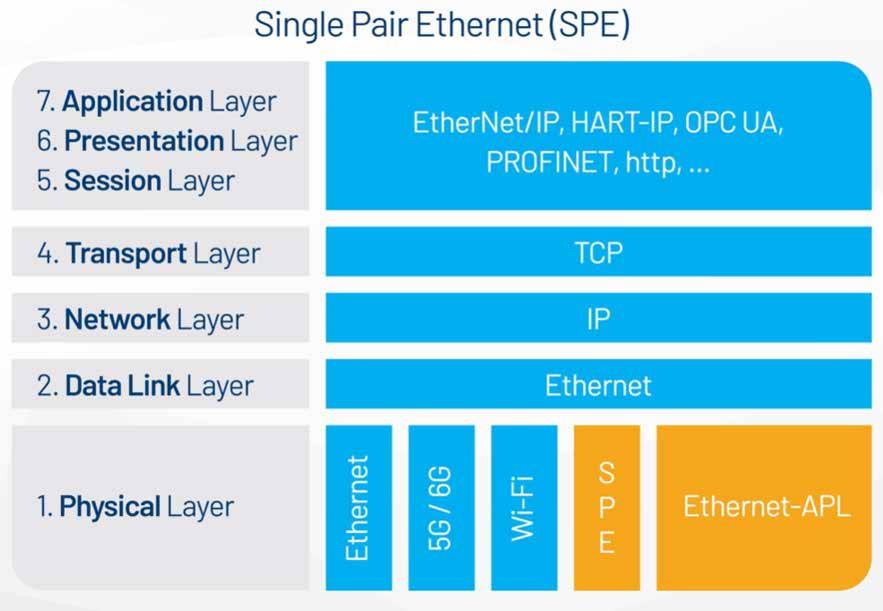
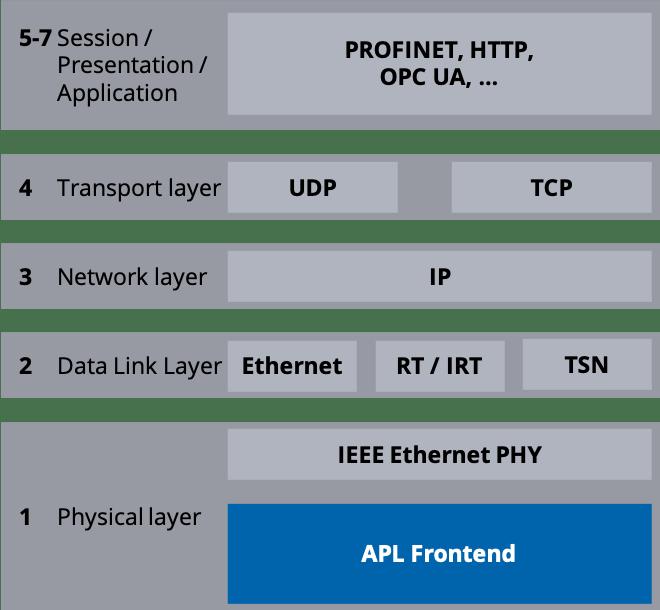
Ethernet-APL (Advanced Physical Layer) has emerged as a pivotal standardization standard, providing a common physical layer that brings Industrial Ethernet all the way to the field and technology innovations that will help unlock new opportunities for industrial digitalization in the automation industry.
“Ethernet-APL and Single Pair Ethernet establish a unified Ethernet infrastructure that enables seamless digital communication from enterprise systems down to field-level sensors and actuators. By extending Ethernet into industrial and process environments, these technologies eliminate traditional barriers between IT and OT networks and enable direct, end-to-end Ethernet communication across the entire automation architecture," Peter Lutz, Director Field Level Communications, OPC Foundation.
ETHERNET - APL IS BECOMING A UNIFYING standard that delivers new levels of connectivity, scalability and digital intelligence that is positioning modern factories for the next generation of industrial innovation.
Built on the IEEE 802.3cg 10BASE - T1L standard, Ethernet-APL supports 10 Mbit/s communication over distances up to 1,000 meters and delivers both power and data over two wires. Its intrinsic safety features allow deployment in hazardous areas, making it suitable for oil, gas, chemical, and pharmaceutical environments where explosion protection is essential.
But the real strength of Ethernet-APL lies in its broad ecosystem. Supported by PI, ODVA, FieldComm Group, and the OPC Foundation,
and adopted by major vendors, it offers broad industry interoperability.
In this spedial report, Industrial Ethernet magazine reached out to industry experts to get their perspectives on the current state of the technology and what promises to be a bring future.
Standardized and secure connectivity offering vendor-independent semantic interoperability across all levels of a factory or process plant.
According to Peter Lutz, Director Field Level Communications for the OPC Foundation, Ethernet-APL and Single Pair Ethernet (SPE)
establish a unified Ethernet infrastructure that enables seamless digital communication from enterprise systems down to field-level sensors and actuators. By extending Ethernet into industrial and process environments, these technologies eliminate traditional barriers between IT and OT networks and enable direct, end-to-end Ethernet communication across the entire automation architecture.
“While SPE and Ethernet-APL provide the physical Ethernet connectivity infrastructure, OPC UA and OPC UA FX, together with other Ethernet-based protocols, define the interoperable communication and data exchange framework,” Lutz said.
SPE and Ethernet-APL support long cable distances as well as power and data transmission over a single wire pair, making

them highly suitable for scalable Industry 4.0 and smart manufacturing environments. And Ethernet-APL further extends SPE technology specifically for process automation environments, including hazardous areas and intrinsically safe applications.
As a result, manufacturers benefit from simplified architectures, easier device integration, reduced gateway requirements, and direct connectivity between the shop floor, enterprise systems, edge platforms, and cloud-based analytics applications. Unified Ethernet infrastructures also improve access to real-time operational and diagnostic data, supporting predictive maintenance, digital twins, and AI-driven optimization initiatives.
“The combination of Ethernet-APL, SPE and OPC UA is particularly powerful because it enables not only standardized and secure connectivity, but also vendor-independent semantic interoperability across all levels of a factory or process plant,” Lutz said. Lutz said that OPC UA Companion Specifications ensure that data maintains a consistent meaning from source to destination, enabling seamless integration between field devices, controllers, edge systems, MES platforms, and cloud applications.
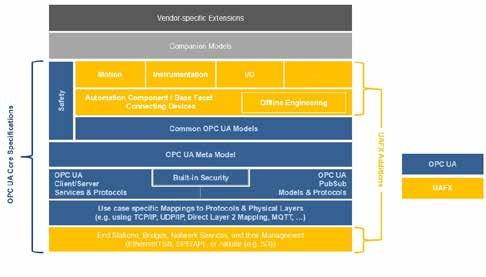
OPC UA FX extends the established OPC UA framework with deterministic, real-time communication capabilities required for industrial control and automation applications. While traditional OPC UA primarily focused on secure interoperability and information exchange between systems, OPC UA FX extends these capabilities down to the field level, enabling synchronized and secure controller-to-controller and controllerto-device communication.
Key technical benefits include simplified network architectures, reduced reliance on gateways and protocol converters, lower installation and maintenance costs, faster commissioning, improved interoperability, scalable communication, and seamless IT/ OT integration. In addition, unified Ethernet infrastructures support more flexible production models, software-defined automation, and improved operational visibility across distributed manufacturing environments.
The EIMK-T1L SPE Media Converter enables long- distance IP communication over single-pair cabling, making it a reliable solution for bridging traditional Ethernet networks with T1L infrastructure.
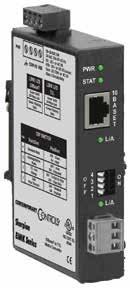
• Supports 10 Mbps full-duplex transmission up to 1 km
• Reuse existing serial cabling in retrofit applications
• Supports link passthrough for RSTP and auto-negotiation
• Plug-n-play functionality
• UL and c-UL Listed for Control Panels
• 24V AC/DC, DIN-Rail Mounting

OPC UA with its built-in security mechanisms also strengthen industrial cybersecurity by supporting standardized security architectures, encrypted communication, authenticated device access, and alignment with industrial cybersecurity frameworks such as IEC 62443.
“SPE developments are critical for the adoption of OPC UA and OPC UA FX because they provide the physical Ethernet infrastructure required for end-to-end industrial connectivity. SPE reduces cabling complexity and installation costs while extending Ethernet directly to field devices,” Lutz said.
Higher bandwidth supports real-time transmission of operational data, diagnostics, video streams, and AI-driven analytics applications. Combined with Ethernet TSN, SPE also enables low-latency and synchronized communication required for machine control, robotics, and motion applications.
In addition, SPE supports flexible and scalable architectures across discrete manufacturing, process automation, and hybrid production systems. This accelerates IT/OT convergence and enables unified communication between devices, controllers, edge systems, cloud platforms, and digital twins.
“At the same time, adoption is expected to progress gradually, particularly in brownfield environments where legacy fieldbus and analog systems will continue to coexist with Ethernet-based architectures for many years. As a result, hybrid integration strategies and migration paths will remain important during the industry transition phase, Lutz added.
Lutz said that OPC UA is already strongly adopted across many industrial sectors as a standard for interoperable industrial communication. With SPE, Ethernet-APL, and OPC UA FX, these technologies are now extending further into areas traditionally dominated by legacy fieldbus and analog communication systems.
Early adoption is expected in industries with strong digitalization requirements and high operational complexity, including chemicals, pharmaceuticals, oil and gas, food and beverage, energy, automotive, and advanced manufacturing. Typical applications include process automation, modular production systems, machine connectivity, predictive maintenance, asset management, and real-time production optimization.
Certification is essential for successful
system integration because it ensures interoperability, cybersecurity compliance, deterministic performance, and reliable multi-vendor communication. Strong certification programs reduce engineering complexity, minimize compatibility risks, lower commissioning costs, and accelerate deployment across heterogeneous automation environments.
“Over the next 1–3 years, Ethernet-APL standardization is expected to gradually accelerate Ethernet adoption in process industries as manufacturers modernize legacy fieldbus and analog systems while maintaining hybrid architectures during transition phases,´ Lutz said.
Initial adoption will primarily focus on new installations and modernization projects in industries such as chemicals, pharmaceuticals, oil and gas, food processing, and energy. Key benefits include simplified integration, improved diagnostics, reduced infrastructure complexity, and direct access to real-time operational data.
“Long term, Ethernet-APL \together with OPC UA FX and TSN is expected to enable highly digitalized and interoperable
process plants with deterministic and secure communication from cloud to field level. This foundation will support modular automation, predictive maintenance, digital twins, AI-driven analytics, and more flexible production systems while reducing engineering complexity through standardized multi-vendor interoperability,” Lutz said. “Ultimately, unified industrial Ethernet standards are expected to form the communication foundation for scalable software-defined automation and data-centric manufacturing architectures.”
Already successfully deployed in production environments and interest growing globally.
Dr. Al Beydoun, ODVA President and Executive Director, said that the new Unified Ethernet Standard (Ethernet APL and SPE) will unlock new opportunities for industrial digitalization in the automation industry.
“The Ethernet-APL Joint Working Group, a collaborative effort between FieldComm Group, ODVA, OPC Foundation and PI (PROFIBUS & PROFINET International), worked together
with industry partners to develop the robust, long-reach (up to 1000m), 10 Mbit/s Ethernet Advanced Physical Layer (APL) designed for process automation,” Beydoun told Industrial Ethernet magazine recently.
“An extension for Ethernet-APL (10BASET1L) was recently announced that includes Power Class B to support devices up to 1.16 W, which has been specified and incorporated into the second edition of IEC TS 63444,” Beydoun added. “A new specification has also been introduced to contribute to the standardization of Single Pair Ethernet (SPE), as defined by IEEE 802.3. This SPE specification (10BASE-T1L, PoDL) includes Power over Data Line (PoDL), appropriate power classes, and the definition of suitable connectors.”
He said that the APL enhancement will allow for more complex, multifunctional Ethernet devices to be used in hazardous environments and the new SPE specification will enable cost effective Ethernet devices to be used in discrete, non-hazardous factory environments such as automotive and packaging.
According to Beydoun, Ethernet-APL and SPE unlock industrial digitalization by extending high-speed, IP-based Ethernet connectivity
directly to field devices over long-distance, two-wire cables. Power and data are available on one cable, with APL for hazardous and SPE for non-hazardous areas. APL and SPE bridge the gap between OT and IT environments by enabling direct, transparent Ethernet communication from field devices to the cloud. Faster communication and increased bandwidth allow for monitoring of device health and predictive maintenance to improve uptime. Additionally, APL allows for the re-use of existing two-wire Type A fieldbus cables, although testing is required for confirmation. The APL and SPE specifications support industry-standard protocols including EtherNet/IP, HART-IP, OPC UA, and PROFINET that ensures many different device options and prevents vendor lock in. Together, APL and SPE make digital transformation possible via Ethernet powered smart instruments and devices that are easy to commission and provide multiple process variables and diagnostics to improve production processes.
Beydoun said that new specifications that allow for additional capabilities and expansive application coverage of automation industries across process, hybrid, and discrete are
“Ethernet-APL builds on the SPE standard 10BASE - T1L by defining a complete and application-ready physical layer—covering power, cables, connectors, hazardous area protection, installation rules, and conformance testing—supported by a comprehensive engineering gui de," -- Raj Rajendra, portfolio sales specialist, Siemens Industry.
important to acceptance of SPE overall. An example of this is the EtherNet/IP In-Cabinet specification that utilizes 10BASE-T1S and a flat cable to connect contactors, push buttons, and motor starters via Ethernet to the network.
EtherNet/IP In-Cabinet enables quicker installation times via reduction in wiring, which is also beneficial from a sustainability perspective. Furthermore, newly available diagnostic information for the simplest of devices will make troubleshooting much easier. EtherNet/IP In-Cabinet will also enable additional asset information and parameterization capability, automatic node topology discovery, and plug and play device replacement. The connection of devices with the smallest physical footprint and most limited hardware resources devices to the EtherNet/IP network can help reduce incidents of unplanned downtime, improve the efficiency of existing assets. and reduce the need for secondary lower-level networks.
Beydoun said that heavy process industries such as chemical and oil & gas will see significant benefits from Ethernet-APL due to the intrinsic safety advantages afforded by 2-WISE (2-Wire Intrinsically Safe Ethernet). 2-WISE allows APL to be used in hazardous areas up to Zone 0/1 and eliminates complex safety calculations by setting predefined electrical limits based on device usage.
Hybrid markets such as food and beverage and pharmaceutical that have hazardous production areas will also see significant value from adopting Ethernet-APL. Additional industries such as woodworking, metalworking, mining, and recycling can also potentially
benefit from Ethernet-APL due to the hazardous airborne dust, fumes, and/or particulate matter that can be generated during manufacturing, processing, and material handling.
“It’s important to note that each standard development organization in the Joint Ethernet-APL Working Group can test a devices Ethernet-APL physical layer and will accept the test results from any other organization,” Beydoun said. “This cooperation ensures a high standard of quality and physical layer interoperability while also streamlining the device development process to provide system integrators and end users with a broad choice of field devices. ODVA offers conformance testing for EtherNet/IP over Ethernet-APL, EtherNet/IP over SPE, and EtherNet/IP In-Cabinet devices.”
Beydoun said that Ethernet-APL has already been successfully deployed in production environments and interest is growing globally. Training sessions for end users have been taking place in Asia, Europe, and North America to meet the demand for education on this new technology. New Ethernet-APL devices are currently in development and in the next couple of years we will see a shift from early adoption to mainstream users as the incremental value and ease of use of Ethernet within field devices becomes clear.
“Plants that run on Ethernet-APL will be able to have will take advantage of quick and efficient commissioning with communication established automatically on power up, have newfound insight into device health, and be able to support more powerful and efficient devices that monitor multiple process
variables,” Beydoun said.
“Enhancements are also underway that will improve the speed to 100Mbit/s for 2-wire Ethernet applications (100BASE-T1L) making Ethernet-APL even more powerful and capable of handling multifunction process devices with increased onboard processing capabilities in the future.”
Power, cables, connectors, hazardous area protection, installation rules and conformance testing.
According to Raj Rajendra, portfolio sales specialist at Siemens Industry, IEEE Single Pair Ethernet (SPE) standards enable Ethernet communication at various speeds and distances for many applications including vehicles, manufacturing, buildings, data centers, and process automation.
“Ethernet-APL builds on the SPE standard 10BASE - T1L by defining a complete and application-ready physical layer—covering power, cables, connectors, hazardous area protection, installation rules, and conformance testing—supported by a comprehensive engineering guide,” Rajendra said. “It also standardizes terminals, connectors, and even connection order, making installation simple and consistent for process industry deployments.”
“The Unified Ethernet Standard, encompassing Ethernet APL and SPE, is revolutionizing
industrial digitalization by bridging the data gap between operational technology (OT) and information technology (IT),” Rajendra said. “This enables seamless, end-to-end IP communication from field devices to the cloud, fostering real-time insights and simplified architectures.”
“It's foundational for the Industrial Internet of Things (IIoT), allowing massive connectivity and power over data line (PoDL) for efficient device integration. This enhanced data flow empowers data-driven decision-making, supporting predictive maintenance, optimized processes, and better energy management,” Rajendra said.
Furthermore, the standard future-proofs industrial networks with higher bandwidth, improved cybersecurity, and greater flexibility. Ethernet APL offers intrinsic safety and long reach for hazardous environments, while SPE provides compactness and cost-effectiveness for widespread device connectivity. In essence, it's simplifying industrial networks and accelerating the adoption of smart factories.
Rajendra said that the Unified Ethernet Standard (Ethernet APL/SPE) unlocks critical innovations for smart manufacturing. It enables hyperconnected, autonomous production systems by providing granular, real-time closed-loop control, allowing machines to communicate directly and adapt instantly.
It fosters ubiquitous edge intelligence, allowing devices to perform local analytics and make immediate decisions, reducing latency and enabling distributed control. This standard facilitates true digital twin realization and synchronization by feeding high-fidelity, real-time data to virtual replicas, leading to advanced predictive maintenance and process simulation.
Furthermore, it supports flexible and reconfigurable manufacturing through simplified "plug-and-play" integration, crucial for mass customization and rapid line changes. Finally, it enhances worker safety and humanrobot collaboration by enabling dynamic safety zones and intuitive interfaces. This standard is the foundation for adaptive, resilient, and truly smart factories.
“The significance of SPE technology developments, potential bandwidth improvements, and support for a range of factory connectivity options is paramount for the widespread acceptance of these standards,” Rajendra said.
He said that SPE developments are gamechangers for the "last meter" of connectivity. Its cost-effectiveness, compact cabling, simplified installation, and PoDL make it economically viable to connect vast numbers of
simple sensors, which is crucial for ubiquitous IIoT. Without SPE, connecting these devices via Ethernet would be too expensive, hindering adoption.
“Potential bandwidth improvements are essential for future-proofing. While current SPE speeds suffice for many tasks, the inherent scalability of Ethernet ensures the standard can meet future demands from high-resolution vision, edge AI, and complex control, assuring manufacturers that their long-term investments are secure,” Rajendra said.
“Finally, supporting a diverse range of factory connectivity options (APL for process, SPE for discrete/edge, traditional Ethernet for higher levels) is critical for versatility. This comprehensive approach allows manufacturers to deploy the optimal Ethernet physical layer for each specific application, replacing fragmented fieldbuses with a unified, IP-based network. This flexibility and completeness are indispensable for broad industrial acceptance,” he added.
Rajendra said that the Unified Ethernet Standard (APL/SPE) will see significant adoption across various sectors. Process industries (Oil & Gas, Chemical, Pharma) will embrace Ethernet APL for hazardous areas, long distances, and intrinsic safety, replacing legacy fieldbuses. Discrete manufacturing (Automotive, Machine Building, Logistics) will rapidly adopt SPE
for cost-effective, compact connectivity of countless sensors and actuators, enabling hyper-connectivity for IIoT. Additionally, building automation and even transportation will leverage SPE's benefits.
Certification efforts are absolutely critical for successful system integration and widespread acceptance. They ensure interoperability between devices from different vendors, reduce risk and complexity for integrators by guaranteeing tested components, and build trust and confidence for end-users. Certification fosters a healthy, competitive market and simplifies maintenance, making the promise of a truly unified, seamless industrial network a reality.
“The Unified Ethernet Standard (APL/SPE) is poised for broad adoption across diverse industries, as stated in the previous response,” Rajendra concluded. “As brownfield modernizers are upgrading old systems, greenfield innovators building new smart factories, machine builders integrating advanced connectivity, and system integrators implementing these solutions increasingly adopt Ethernet APL, it will speed up the entire commissioning process and simplify data movement from the plant floor to edge and cloud analytics systems.”
Al Presher, Editor, Industrial Ethernet
HART-IP is expected to play a major role in accelerating Ethernet-APL adoption because it provides the industry with a familiar and proven migration path to Ethernet-based architectures.

WITH THE EMERGENCE OF ETHERNET-APL, industry has an opportunity to take a technology it already knows, uses, and trusts — HART — and extend it into modern Ethernet architectures without fundamentally changing operational workflows or engineering practices.
A special thank you to Paul Sereiko, Director of Marketing and Product Strategy at FieldComm Group for providing insights into this technology opportunity via this Q&A.
Industrial Ethernet: What is one specific area with Ethernet-APL where the new standards will create unique technical value?
Sereiko : One of the most important opportunities for Ethernet-APL is extending
HART-IP directly to field instrumentation. This gives process manufacturers a practical path to modern Ethernet-based architectures while preserving the familiarity, reliability, and installed-base advantages of HART technology.
HART remains the most widely deployed communications protocol in the process industries, with more than 50 million installed devices worldwide. By combining HART-IP with Ethernet-APL, plants can move native HART communications onto high-speed Ethernet networks that extend directly into hazardous and intrinsically safe environments.
The result is a major improvement in performance and operational visibility. Engineers gain dramatically faster
commissioning, real-time diagnostics, remote configuration capabilities, and continuous access to richer device and asset health data. The performance difference is substantial. Specialized features that require large file transfers could take hours using traditional HART communication but can be completed in roughly one second using HART-IP over Ethernet-APL. HART-IP enables product deployment of specialized higher bandwidth products in the same ecosystem as the traditional measurement products.
Another important advantage is flexibility. Existing HART devices, WirelessHART monitoring networks, and next-generation HART-IP field instruments can coexist within
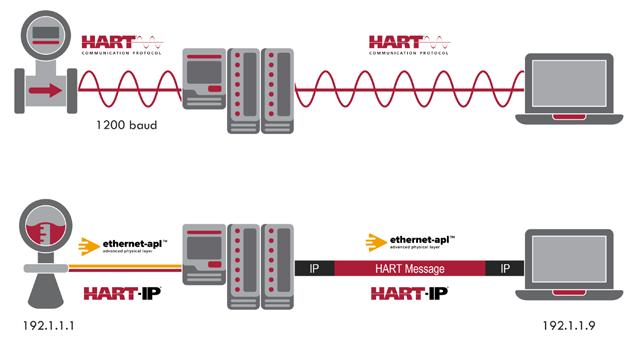
Figure 1: At 10 Mbit/s, HART-IP over Ethernet-APL can transfer a 1 MB file in approximately one second. The same transfer over traditional HART 4–20 mA communication would take roughly 2 hours and 25 minutes, demonstrating the dramatic performance advantage of Ethernet-APL.
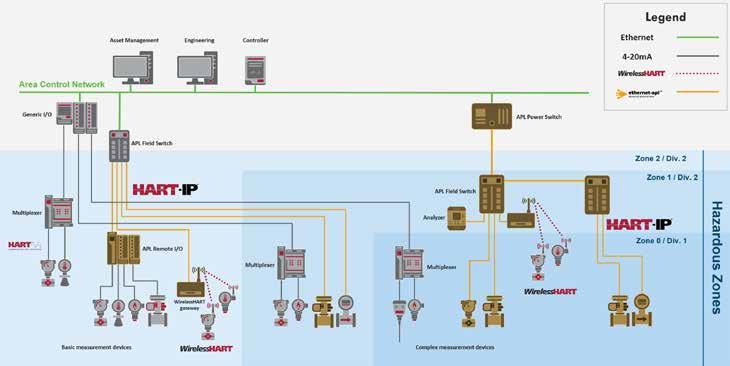
the same Ethernet infrastructure. This creates a scalable field-to-cloud architecture that supports predictive maintenance, monitoring and optimization initiatives, and broader industrial digitalization strategies.
Industrial Ethernet: What technical features and benefits provide a more advanced solution?
Sereiko : HART-IP over Ethernet-APL provides a more advanced approach by moving native HART communications onto standard Ethernet infrastructure directly at the field level. HART-IP encapsulates standard HART commands into IP packets, allowing field instruments, WirelessHART gateways, remote I/O systems, and asset management applications to communicate using modern Ethernet networking practices.
Ethernet-APL provides the physical Ethernet infrastructure that allows this communication to operate reliably in process automation environments, including hazardous and intrinsically safe areas. Using Ethernet-APL power switches and field switches, plants can deploy scalable trunk-and-spur Ethernet architectures that support both power and high-speed communications over a simple two-wire cable.
The operational benefits are significant. Plants gain dramatically faster commissioning, improved diagnostics, remote configuration capabilities, real-time device visibility, and access to richer operational and asset health data. Higher bandwidth also enables support for more data-intensive applications and nextgeneration field devices.
Cybersecurity is also substantially improved. The latest HART-IP specification supports
modern security best practices for Ethernetbased industrial protocols, including TLS/DTLS encryption, authentication, audit logging, and syslog capabilities aligned with IEC 62443 initiatives. HART-IP security also aligns with recommendations developed through the Industrial Security Harmonization Group (ISHG). Another advantage is deployment flexibility. Existing HART infrastructure and WirelessHART systems can continue operating alongside new HART-IP over Ethernet-APL deployments, allowing plants to modernize using familiar
HART workflows and engineering practices.
Industrial Ethernet: How is this technology different from what has been available in the past?
Sereiko: Historically, HART communication operated primarily over point-to-point 4–20 mA analog loops with a low-bandwidth digital overlay used for configuration, calibration, and basic diagnostics. While extremely reliable and widely adopted, these architectures were not designed for continuous high-speed data
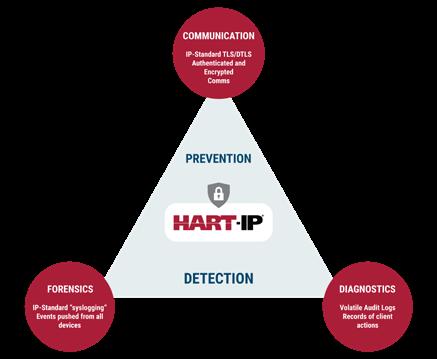
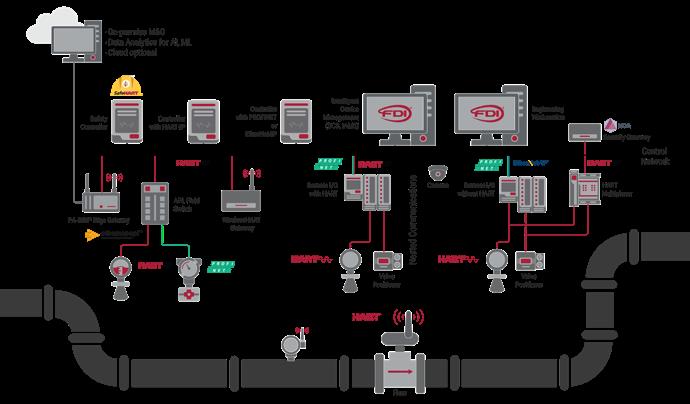
access, large-scale analytics, or modern IT/OT integration strategies.
HART-IP over Ethernet-APL changes this model by moving native HART communications directly onto Ethernet networks at the field level. Instead of relying heavily on protocol converters, serial interfaces, or multiple overlay networks, HART-IP encapsulates standard HART commands into IP packets that travel across Ethernet-APL infrastructures using standard APL Ethernet switches and networking practices.
This creates a far more scalable and unified architecture. Devices can communicate directly with control systems, asset management platforms, analytics applications, cloud infrastructure, and cybersecurity systems using standard Ethernet technologies.
Another major difference is performance. Ethernet-APL provides 10 Mbit/s full-duplex communication directly to field instruments, enabling dramatically faster commissioning, remote configuration, firmware updates, and access to significantly richer diagnostic and asset health information compared to traditional HART communication speeds. Importantly, plants gain these advantages while continuing to use familiar HART tools, workflows, and engineering knowledge.
Industrial Ethernet: How is Ethernet-APL an enabling technology to make this new solution possible?
Sereiko : Ethernet-APL is the enabling technology that allows HART-IP to extend securely and efficiently all the way to fieldlevel instrumentation in process automation environments. Traditional Ethernet was never
designed for hazardous areas, intrinsically safe installations, long cable distances, or powered two-wire field devices, which historically limited Ethernet deployment in the field.
Ethernet-APL is an enhanced physical layer for Single Pair Ethernet (SPE) based on 10BASE-T1L technology, as defined in IEEE 802.3. It enables both power and 10 Mbit/s full-duplex Ethernet communication over a single two-wire cable for distances up to 1,000 meters, including hazardous and intrinsically safe environments, extending Ethernet connectivity directly to field-level industrial devices.
This creates the network foundation for HART-IP to operate directly at the field level using standard Ethernet infrastructure and Ethernet-APL switches rather than relying heavily on gateways or protocol converters.
Another important advantage is that Ethernet-APL is protocol agnostic. HART-IP can coexist alongside PROFINET, EtherNet/IP, OPC UA, and other industrial Ethernet protocols on the same infrastructure. This allows plants to standardize on a unified Ethernet architecture while supporting a wide range of field devices and applications.
The higher bandwidth and Ethernet connectivity also enable support for more dataintensive devices such as analyzers, thermal imagers, and industrial video cameras operating over the same network infrastructure.
Industrial Ethernet: How does this solution contribute to the impact of Ethernet-APL?
Sereiko: HART-IP is expected to play a major role in accelerating Ethernet-APL adoption because it provides the industry with a familiar
and proven migration path to Ethernet-based architectures.
HART-IP itself is not new technology. It has been commercially deployed in process automation products for more than a decade, most commonly within WirelessHART gateways. In those applications, WirelessHART field devices communicate wirelessly to a gateway, which assembles the data into HART-IP packets and transports it over Ethernet networks to control systems, asset management platforms, and analytics applications.
Over the next one to three years, the industry has an opportunity to take a technology it already knows, uses, and trusts — HART — and extend it into modern Ethernet architectures without fundamentally changing operational workflows or engineering practices.
Many applications are using HART-IP today through WirelessHART gateway deployments, reducing both technical and operational barriers to adoption. In addition, many suppliers already support HART-IP in commercial products, making the transition to Ethernet-APL significantly easier than deploying entirely new networking approaches.
This familiarity is expected to help accelerate deployment of scalable, secure, field-tocloud architectures supporting predictive maintenance, monitoring and optimization initiatives, and broader industrial digitalization efforts across process and hybrid industries.
Paul Sereiko, Director of Marketing and Product Strategy, FieldComm Group Learn More

The best of both worlds ... the in-depth technical features our readers expect, but now also a daily blog with the latest product news and industry updates.
The Industrial ethernet magazine has been rebranded Industrial Ethernet, but it's still the only publication worldwide dedicated to Industrial Ethernet automation and machine control networking, the IIoT and Industry 4.0. The difference is a deepened focus on a daily blog to deliver more and deeper content (more product news, industry updates and technology focus) to keep our readers fully informed ... while also delivering the Industrial Ethernet magazine they have come to expect.
In the age of AI-driven manufacturing, data quality matters as much as data availability. Single Pair Ethernet and Ethernet APL provide the physical layer foundation that factory networks need to keep pace with the computational and analytical capabilities being deployed above them.
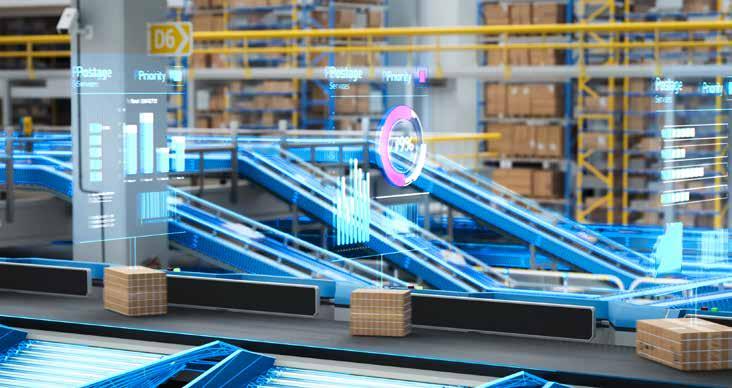
SMART MANUFACTURING HAS REACHED A tipping point. As digital transformation initiatives expand across factories and process plants, the limitations of traditional industrial networks have become increasingly visible, especially at the field level. While enterprise and control networks have largely standardized on Ethernet and IP technologies, the last mile of automation—sensors, actuators, and field instruments—has remained fragmented by legacy fieldbuses, gateways, and protocol conversions.
Two technologies are now changing that reality: IEEE 802.3 Single Pair Ethernet (SPE) and Ethernet APL (Advanced Physical Layer).
IEEE 802.3 SPE enables high performance Ethernet connectivity in space constrained and sensor dense environments, making it ideal for discrete manufacturing, infrastructure, and intelligent edge applications. In parallel, Ethernet-APL extends Ethernet into hazardous and long distance process applications, supporting intrinsically safe operation and cable lengths up to 1,000 meters using a two
wire Ethernet connection. Combined, SPE and Ethernet APL form a complementary, standards based approach to extending industrial Ethernet.
This convergence is about extending – not replacing – Ethernet. SPE and Ethernet-APL are rapidly becoming foundational for smart manufacturing use cases such as asset health monitoring, predictive maintenance, and scalable Industrial Internet of Things (IIoT) deployments.
For decades, industrial automation architectures were built for reliability and determinism rather than data accessibility. This led to layered communication models: fieldbuses at the sensor level, Industrial Ethernet at the control level, and IT networks for analytics and enterprise systems.
While functional, this approach presented several challenges, including:
• Limited bandwidth and rigid data models
that restrict diagnostics and monitoring
• Complex gateways and protocol conversions that add latency and ongoing maintenance burden
• Separate cabling infrastructures for power and communication
• Difficulty scaling networks to support large numbers of sensors and IIoT devices
• High costs associated with fiber deployment or cabinet dense architectures
SPE and Ethernet APL address these challenges together by collapsing network layers, reducing infrastructure complexity, and delivering native Ethernet connectivity directly to field devices, regardless of environment or distance.
SPE is not a single protocol but a family of Ethernet physical layers within IEEE 802.3, optimized for different distances, data rates,
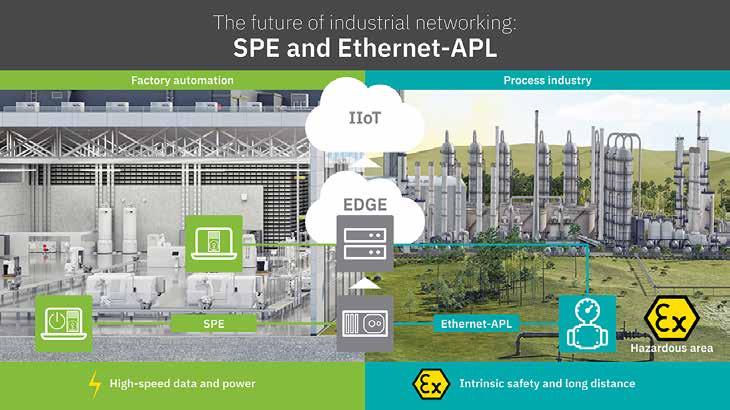
and application requirements. Ethernet APL builds on this foundation—specifically 10BASE T1L—and adds the requirements necessary for process automation, including intrinsic safety and long distance operation.
What unifies SPE and Ethernet APL technologies is their ability to transmit Ethernet over one twisted pair of copper wires, rather than the two or four pairs traditional Ethernet requires.
Key technological characteristics include:
• Long cable reaches—up to 1,000 meters for SPE (10BASE T1L) and Ethernet APL
• Easy retrofit of existing infrastructure by keeping the existing cabling in place
• Power over Data Line (PoDL) for SPE and engineered power profiles for Ethernet APL
• Native Ethernet/IP communication, compatible with existing IT and OT system
Together, SPE and Ethernet APL are uniquely capable of extending Ethernet deeper into industrial environments than ever before.
Native Ethernet Connectivity at the Device Level SPE allows OEMs to integrate true Ethernet and IP communication directly into field devices, rather than terminating connectivity at a controller or gateway. Sensors, actuators, drives, and intelligent modules can become first class Ethernet nodes—simplifying system architectures and enabling direct access to
data for controllers, edge platforms, and cloud systems. The higher throughput and lower overhead allow faster sampling rates and the convergence of several sensors into a single package.
Unified Power and Data Delivery
With Power over Data Line (PoDL), SPE enables OEMs to deliver power and data over the same single twisted pair cable. Eliminating separate power connectors reduces wiring complexity, minimizes assembly steps, and lowers the risk of installation errors in the field (Figure 2).
SPE supports Ethernet communication over distances of up to 1,000 meters, depending on the standard, without requiring repeaters or intermediate switches. For OEMs designing larger machines or systems, this simplifies product architectures and reduces the number of external components required to support Ethernet connectivity.
Compact SPE interfaces, including IP20, M8, and M12 variants, allow OEMs to significantly reduce connector size and cable bulk compared to traditional Ethernet. This enables smaller enclosures, denser PCB layouts, and lighter devices. These advantages are especially valuable in space constrained designs. Lower System and BOM Costs Compared to Fiber By leveraging copper based single pair cabling
rather than fiber, OEMs can reduce the cost and complexity associated with optical transceivers, specialized connectors, and assembly processes. Over large production volumes, these savings scale quickly, supporting more competitive pricing while maintaining Ethernet performance and interoperability.
Because SPE is standards based Ethernet, OEM devices can support advanced capabilities such as network based firmware updates, detailed diagnostics, continuous condition data, and secure communication. OEMs can move beyond hardware only differentiation and support value added services, such as predictive maintenance, remote monitoring, and lifecycle optimization.
SPE and Ethernet APL deliver both power and data over a single twisted pair cable across distances far exceeding traditional Ethernet’s 100 meter limit. This allows installation of sensors, actuators, and monitoring devices along long conveyor systems, pipelines, process units, utility corridors, or distributed production areas without additional power wiring, gateways, or intermediate cabinets. The result is faster deployment, reduced infrastructure cost, and greater flexibility in device placement.
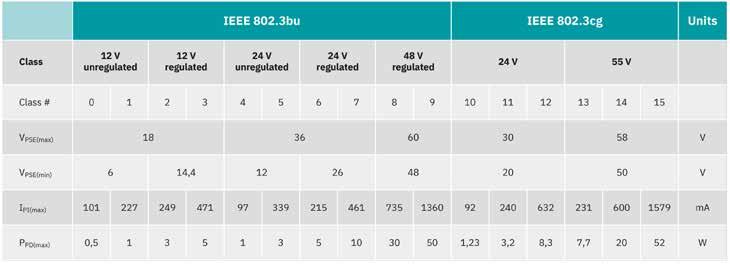
This chart explains the technical specifications for different PoDL classes.
Compared to fiber Ethernet, SPE and Ethernet APL cabling are significantly easier to install and terminate in the field. No fiber splicing, polishing, or optical testing is required, so standard industrial electricians can complete installations without specialized tools or training. Copper-based cable is also more robust than fiber, which has a glass or plastic core that can break. This reduces integrator’s labor costs, minimizes scheduling risks, and shortens commissioning timelines—particularly in remote or harsh industrial environments.
Simplified cabling architecture means fewer connectors, fewer active components, and fewer potential points of failure. SPE and Ethernet APL connected devices are directly addressable over Ethernet, enabling remote diagnostics and faster fault isolation. For example, Ethernet diagnostics can identify failing field instrumentation in a hazardous area or a motor sensor on a production line before it causes unplanned downtime.
Single pair cabling significantly reduces material usage, cable tray congestion, and installation effort. In large industrial networks with hundreds or thousands of field devices, these reductions translate into substantial cost savings over the entire system lifecycle. In retrofit scenarios, SPE and APL can often leverage existing cables.
Because SPE and Ethernet APL are based on open Ethernet standards, new sensors and devices can be added incrementally as operational needs evolve. Facilities can expand condition monitoring, energy management, or quality tracking initiatives without redesigning or replacing their existing communication
infrastructure.
Ethernet APL extends these same Ethernet principles into the most demanding industrial environments, particularly where intrinsic safety and long distance connectivity are non-negotiable.
Ethernet APL is based on IEEE 802.3cg 10BASE T1L Single Pair Ethernet, but it adds a standardized physical layer profile specifically designed for process automation. This profile incorporates intrinsic safety (Ex i) requirements, engineered power concepts, and topology rules that allow safe Ethernet deployment in hazardous areas, down to Zone 0 or Class I, Division 1.
Historically, process plants have relied on 4–20 mA and fieldbus technologies to meet explosion protection requirements. While reliable, these systems severely limit bandwidth and data accessibility. Ethernet APL removes this trade off by delivering 10 Mbps, full duplex Ethernet and power over a two wire cable, over distances of up to 1,000 meters, while maintaining intrinsic safety.
Instruments in hazardous areas can now provide continuous access to process variables, secondary parameters, and rich device diagnostics without gateways or protocol conversions. Maintenance and reliability teams gain visibility that was previously impractical, enabling asset health monitoring and predictive maintenance in areas where manual inspection was once the norm.
Ethernet-APL can integrate seamlessly with analytics platforms, MES systems, and cloud based asset management tools. Because of this, it can support initiatives such as NAMUR Open Architecture (NOA) and Open Process Automation (O PAS).
Ethernet APL is a process industry extension of SPE, delivering Ethernet where
safety, distance, and harsh conditions have historically been barriers.
The factories of the future will not be defined solely by automation but by data fidelity, speed, and continuity from sensor to software. As artificial intelligence, machine learning, and digital twin technologies move from pilots into production, industrial networking requirements are changing fundamentally.
As factories evolve, there is a clear trend toward converged IT/OT networks. Maintaining parallel networks for control, monitoring, asset management, and analytics adds cost, complexity, and cybersecurity risk. SPE and Ethernet APL support a single, standards based Ethernet infrastructure capable of carrying control traffic, diagnostics, and analytics data simultaneously—creating a consistent data fabric from field device to digital twin.
In practical terms, convergence enables:
• Faster sampling and richer datasets for AI models
• Real time synchronization between physical assets and virtual twins
• Closed loop optimization where analytics insights can influence operations immediately
• Scalable architecture that supports incremental digitalization rather than disruptive upgrades
In the age of AI driven manufacturing, data quality matters as much as data availability. SPE and Ethernet APL provide the physical layer foundation that factory networks need to keep pace with the computational and analytical capabilities being deployed above them.
Nick Sandoval, SPE Technology Evangelist, Phoenix Contact USA
Single Pair Ethernet is gaining momentum thanks to further standardization and a growing cross-vendor ecosystem. Increasing SPA is being used in greenfield applications but it requires a greater understanding of SPE standards to help ensure compliance and interoperability with devices and equipment.
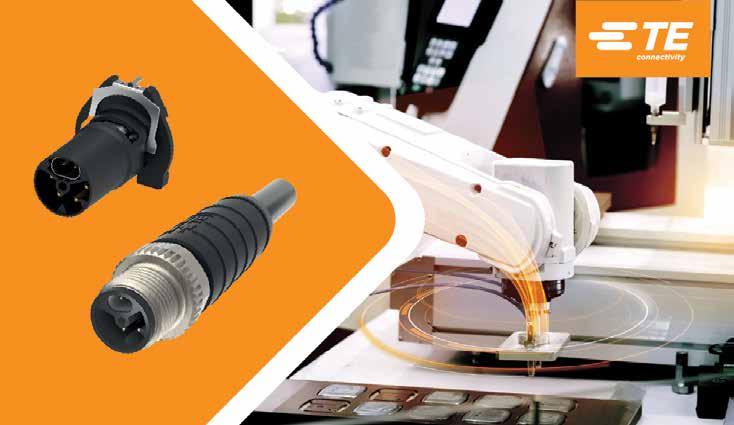
POWER OVER DATA LINE (PoDL) AND SPE hybrid solutions, where a single cable transmits data and power simultaneously, simplify architectures and offer greater freedom in device design. Integrating native Ethernet communication into IT infrastructures without protocol conversion reduces the Bill of Materials (BOM) for infrastructure parts, helps enable faster installation and lowers overall costs.
In industrial environments, SPE components are establishing latest scalable, IP-based automation architectures that are based on a global Ethernet ecosystem and are already prepared for Time-Sensitive Networking (TSN), cybersecurity, and converged IT/OT networks.
Unification through standardization – this is how recent developments in SPE could be described. What was once a proliferation of many different mating faces has now given way to a universal standard that gives users many advantages and can help
overcome inhibitions to the digitalization of factories and warehouses. The use of the same SPE interface in accordance with IEC 63171-7 and IEC 61076-2-117 (M12 to M40 hybrid) significantly expands the scope of application. IEC 63171-7 Edition 2 (ED2) defines connector faces for M8, M12, hybrid, and IP20 device interfaces.
When it comes to interconnectivity between devices and systems, SPE offers completely new possibilities. The new standards can accelerate the market introduction of SPE technologies, reduce complexity, support end-to-end Ethernet, and improve sustainability as less copper cable is used. Furthermore, the SPE ecosystem continues to grow, which already drives further practical applications.
Many use cases show that only SPE can help to fully exploit the potential of many applications. To assess the status of integration, you need to distinguish between open systems (PLCs, I/Os) and
closed systems (e.g. mobile robotics). SPE solutions are available for both types as explained in more detail below.
Overall, most suppliers of SPE components and systems understand that it is important to establish a growing ecosystem, help in enabling users to choose from a wide range of interesting SPE products and benefit from them. This includes SPE field devices, switches, network components, and cabling solutions with corresponding connectors. TE Connectivity (TE) is also driving the adoption of new standards so their comprehensive SPE ecosystem can emerge.
The new version of IEC 63171-7 (Edition 2) is a significant step in the further development of industrial connectivity and the faster introduction of Industry 4.0. TE's active SPE network components support both M8 and latest M12 connectors. SPE is
considered the next step towards end-to-end IP-based communication architectures down to the field level, as it can connect entire production sections, and will also play a vital role in future warehouse logistics. As a single, open, scalable Ethernet-based network within an automation system, SPE helps reduce the complexity and cost of connectivity.
Greenfield applications are
Currently, SPE integration is focused on greenfield applications, as these offer a low-risk entry. Greenfield integration refers to an SPE project that is developed from scratch and is not based on existing systems, devices, or infrastructure. Intralogistics stands out in particular here: Driven by the ongoing trend automation, SPE can be implemented with relatively low risk, as
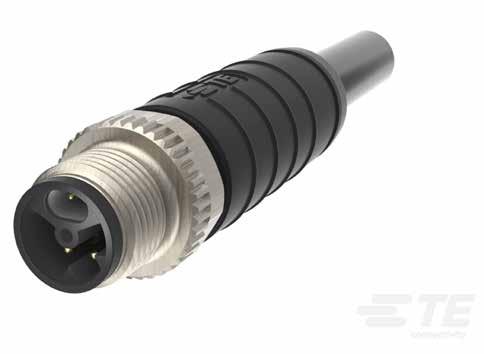
SOURCE: TE CONNECTIVITY
many projects are being newly developed. Industries with a lower level of digitalization, such as process and factory automation, are also beginning to adopt SPE. The need to modernize infrastructures and introduce future-proof technologies is accelerating initial implementations in these environments. In factory automation, the demand for data-driven automation is growing rapidly, while at the same time, existing Ethernet structures in factory plants and shop floors are reaching their physical and economic limits when it comes to implementing digitization strategies.
Hybrid SPE technologies are predestined for automation applications, especially in closed systems, such as stationary and mobile (autonomous) robotics. Thanks to its dimensions, an M12 hybrid connector can transmit higher voltage and current than a smaller M8 connector, help in enabling it to power more powerful devices.
TE‘s latest compact SPE M12 hybrid connectors support the transmission of high-speed data and unprecedented current levels via a single cable. This makes this connection technology highly suitable for robotics systems and drives, as well as for future IIoT applications in automation technology. In particular, it supports the trend towards miniaturization as e. g. cobots, industrial robot arms, end-of-arm
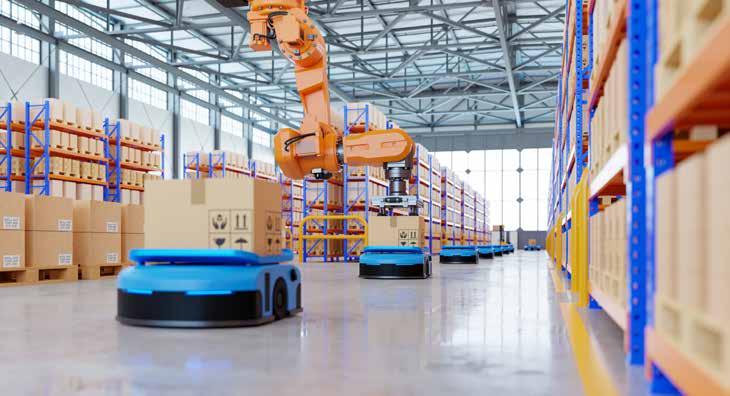
Many use cases show that SPE is required to fully exploit the potential of many applications – in particular, it supports the trend toward miniaturization, which can be important in cobots, industrial robot arms, and end-of-arm tooling (EOAT).
tooling (EOAT), sensors, and image processing systems can achieve greater performance in the conventional M12 form factor without requiring more space.
SPE has only a single twisted pair of wires, resulting in very compact connectors and cables. This helps to allow for smaller housing, more compact installations, and lighter mobile applications in robots, conveyor belts, and drag chains. SPE is also suitable for integration into closed (standalone) systems, such as automated guided vehicles (AGVs) and autonomous mobile robots (AMRs), providing both power and data connectivity for subsystems such as servo motors, LiDAR sensors, and encoders.
In contrast, SPE also offers many advantages in open and decentralized systems, such as controllers, I/O modules, and control cabinets. The integrated design helps simplify complex cabling, helps to avoid
cable clutter, and reduce installation costs, even with high transmission power. With TE's SPE solutions, engineers can implement M2M communication with virtually no data loss, decentralize computing power, and transfer data to the edge more efficiently and transparently.
Conventional M12 connectors are limited regarding power and data transmission. Existing hybrid connectors according to IEC 61076-2-113 standard deliver only 2 x 6 A and 100 Mbit/s, restricting high-power devices and fast data exchange. This makes it difficult to meet the requirements of Industry 4.0. These barriers are to be overcome by the IEC 63171-7 ED2 standard and corresponding products that extend existing SPE standards to the M12 hybrid
• Simplification and miniaturization: Fewer cables and connectors
→ enhanced design and easier maintenance
• Future-ready: Supports TSN, IIoT, and AI-driven automation
→ ready for smart factories and warehouse logistics
• Reliability: IP67 protection supports durability in harsh environments
→ reduces the risk of failure
• Cost efficiency: Less installation effort, fewer components
→ reduced total cost of ownership
• Scalability: Seamless integration from sensors to cloud systems
→ supports Industry 4.0 architecture
format.
The latest SPE M12 hybrid connector from TE consistently implements this approach. It offers a high degree of interoperability between devices even from different manufacturers due to standardized mating faces.
The latest SPE M12 hybrid is an industrial connector that combines data and power transmission in a single interface. It supports high-speed data transmission up to 1 Gbit/s and helps enabling real-time communication at data rates 10 times higher than in previous industrial applications. The 2 x 8 A power supply supports the operation of power-demanding components up to approximately 1 kW.
TE’s M12 hybrid connectors are used to integrate powerful field devices into the network and transfer high data volumes in real time to the control (PLC) or the cloud. The SPE hybrid connectors in M12 format help enable about 30% more power and 10 times faster data rates for real-time communication and advanced protocols, significantly reduces the need for gateways and fieldbus couplers. TE has developed the connector for harsh environments and designed it to be highly robust with IP67 protection rating.
Manufacturers of devices, systems, and equipment can gain a competitive edge with SPE – and the perfect time is now. Developers
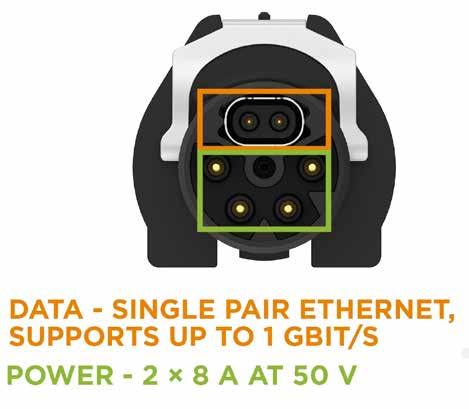
M12 hybrid connectors according to IEC 63171-7 standard support high-power devices with highspeed data rates of up to 1 Gbps (600 MHz) and power classes up to 9.6 kW, 16 A and 600 V.
and designers can incorporate the standardized and future-ready SPE M12 interfaces into their designs, increasing planning reliability and reducing development costs.
Since SPE is still uncharted territory for many manufacturers and users, consulting plays an important role in this connection technology. For example, a hybrid power scenario or multidrop facility requires vastly different approaches and solutions than other environments. While SPE can offer additional features and benefits, it is important for facilities to understand their needs, limitations,
and goals when considering SPE technology and determining whether it can offer a return on investment (ROI) for their application.
When implementing SPE technology for networked devices in industrial applications, there are two types of integration: brownfield and greenfield. Brownfield integration refers to an SPE network that is built to work with existing devices, equipment, or other resources. Standard Ethernet is often already in place, and a plant may already have
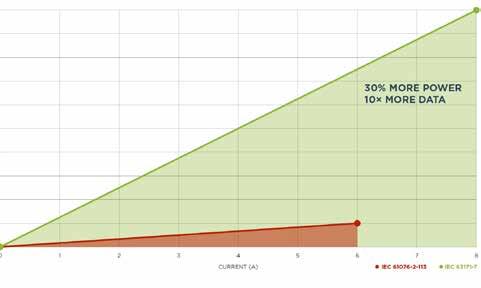
TE’s latest SPE M12 hybrid connectors help enable about 30% more power and 10 times faster data rates for real-time communication and advanced protocols.
SOURCE: TE CONNECTIVITY
resources that can be used for SPE, including cables, connectors, and controls.
It’s important to take an inventory of the existing equipment because some can be reused when installing SPE technology. This can reduce the level of investment and setup time for installation. However, legacy systems, missing components, and highly customized subsystems can increase integration complexity and involve implementation risk.
A greenfield integration poses completely different questions than a brownfield integration since there are no existing connections or controls to consider. Greenfield integration requires a larger investment upfront to install the proper sensors and controls for connectivity. In addition, a greater understanding of SPE standards is needed to help ensure compliance and interoperability with devices and equipment.
It is also necessary to develop a comprehensive plan for deploying the SPE infrastructure, including cable routes, termination points, and network topology. Distance limitations, cable routing requirements, and potential sources of interference in industrial environments must be taken into account. Only then can the appropriate SPE cables be selected based on application requirements, along with SPE-enabled devices and components, such as sensors, actuators, switches, and controllers.
It is important to help ensure that the devices support the desired communication protocols and are interoperable within the SPE network. If necessary, it is advisable to find out whether Power over Data Line (PoDL) functionality is required for the application. PoDL supports devices to receive power over the same cable used for data transmission, simplifying wiring and reducing installation costs.
Robust network management tools and a network configuration plan – including IP addressing, VLANs, and network segmentation – can help fine-tune performance, security, manageability and troubleshoot issues. Fundamentally, an SPE infrastructure should be designed with future scalability and flexibility in mind, help in allowing for easy expansion and adaptation to evolving technology requirements and business needs.
Manuel Rüter, senior principal of technology, standardization and consortia and Ivan Ruiz Stubelj, senior manager global product management, TE Connectivity.
Learn More
New Cisco research details how Industrial AI is moving into physical operations. The report provides a datadriven view into how industrial organizations are adopting AI, challenges companies face and the emerging opportunities as AI becomes embedded in physical systems, infrastructure and workflows.

CISCO HAS ANNOUNCED THE RELEASE OF ITS latest annual industrial research report, the State of Industrial AI Report, examining how critical infrastructure like factories, utilities, and transportation systems are accelerating their direct deployments of AI.
The report provides a data-driven view into how industrial organizations are adopting AI, the challenges they face as AI moves into live operations, and the opportunities created as AI becomes embedded in physical systems, infrastructure, and workflows.
• Two thirds of industrial organizations have moved to active AI deployments in live operational environments.
• Network readiness and security posture are cited as the primary factors shaping how quickly and safely organizations scale AI across connected assets, machines, and sites.
• Strong IT/OT collaboration correlates with greater confidence in scaling AI, more stable network infrastructure, and stronger emphasis on cybersecurity.
The double-blind global study surveyed more than 1,000 operational technology (OT) decision makers across 19 countries and 21 industrial sectors. The findings show that AI is now delivering measurable operational benefits in use cases such as process automation, automated quality inspection, predictive maintenance, logistics, and energy forecasting. However, many organizations are increasingly constrained by readiness gaps in networking infrastructure, cybersecurity, and IT/OT operating models as AI shifts into real time, production grade use in physical environments.
"Industrial AI is moving from experimentation into production, where AI systems sense, reason, and act in the real world,” said Vikas Butaney, SVP/GM of Secure
Routing and Industrial IoT at Cisco. “At this stage, success is no longer determined by models alone, but by whether networks, security, and teams are ready to support AI at the edge, in motion, and at scale. The research shows that organizations confident in scaling AI are those treating infrastructure, cybersecurity, and IT/OT collaboration as foundational, not optional.”
The survey shows industrial AI has moved from a future consideration to active deployment, with 61% of organizations now using AI in live industrial operations where performance, reliability, and security have direct physical consequences, and 20% reporting scaled, mature deployments. Across manufacturing, transportation, and utilities, AI is powering machine vision, robotics, mobility, and safety critical operations.
Cybersecurity concerns
signi cantly limiting AI adoption by creating a “trust de cit” and introducing new, complex
Most organizations plan to increase AI spending (83%), and nearly nine in ten expect meaningful outcomes within the next two years (87%). Yet as adoption accelerates, many are struggling to sustain and expand deployments, with readiness across network infrastructure, security, and skills increasingly determining whether AI can scale consistently across core physical environments.
Infrastructure readiness is emerging
as a primary determinant of scale. As AI becomes embedded in machines, sensors, vision systems, and autonomous operations, organizations face rising demands for reliable connectivity, wireless mobility, predictable latency, edge compute, and power, making network readiness a gating factor for physical AI deployments.
Other key findings include:
• 97% expect AI workloads to impact their
industrial network requirements
• 51% of organizations expect AI workloads to increase connectivity and reliability requirements in their industrial networks
• 96% say wireless networking is essential to enabling AI
Cybersecurity is shaping both the pace and confidence of AI adoption. As AI expands connectivity and data flows across industrial environments, security remains the top
As
to scale. At the same time, organizations increasingly view AI as part of the solution, with a majority expecting AI to strengthen monitoring, detection, and operational resilience.
• 98% say cybersecurity is foundational for AI-ready infrastructure
• 40% cite cybersecurity as the biggest obstacle to scaling AI
• 85% expect AI to improve their
IT/OT collaboration is proving critical to operationalizing AI at scale. Organizations with closer collaboration between IT and operational teams report greater confidence in expanding AI, more stable networks supporting physical operations, and a stronger emphasis on cybersecurity as a baseline requirement, underscoring the need to build the skills required for scalable AI adoption.
• 57% report some level of IT/OT collaboration
• 43% report limited or no collaboration
• 47% of organizations with limited IT/OT collaboration cite network instability as a top operational challenge to scale AI
The State of Industrial AI Report is based on data from a global survey of more than
For most organizations, AI adoption begins as a productivity and cost-ef ciency initiative –establishing a practical foundation for broader transformation over time.
adoption is characterized by ef ciency-focused use cases, with AI widely deployed to support process
and throughput
1,000 operational technology decision makers, conducted by Cisco in association with Sapio Research.
Survey respondents were from 19 countries and across 21 industry sectors, representing a range of industries including manufacturing, transportation/logistics, energy/utilities and more. The report aggregates findings from decision-makers at companies with annual revenues of more than $100 million.
In a recent blog post, Samuel Pasquier, VP, Product Management for Cisco Industrial IoT Networking said that "the real challenge isn’t about trying to turn every engineer into a hybrid IT/OT expert. It’s about building the kinds of teams where everyone brings their own specialty to the table to work together."
"Picture a busy automotive plant. OT teams are hands-on, keeping the production line
organizations plan to expand AI into resilience-focused use cases.
running, fixing conveyor belts, adjusting machinery, and making sure everything operates smoothly," Pacquier said. "Meanwhile, IT manages the secure flow of images from AI-powered inspection cameras and delivers real-time analysis."
He added that the same dynamic plays out in utilities. OT teams manage the grid and respond to emergencies, but it’s IT’s analytics and cybersecurity that keep operations resilient. If that partnership is missing,
As cybersecurity becomes more critical to AI adoption, organizations increasingly view AI as part of the solution—not just a source of new risk. AI is being applied to strengthen detection, monitoring, and response across industrial environments.
expect AI to improve their cybersecurity capabilities.

Organizations are moving toward AI-capable industrial network infrastructure. Sustained AI impact is determined by the readiness of the network on which it runs.
Network evolution:
1 2 3
Reliable wired and wireless connectivity with suf cient power, bandwidth and coverage to bring assets and data online.
critical data can go unnoticed, and systems become vulnerable. Yet many organizations still struggle to bridge the gap between IT and OT. Survey responses show that when this collaboration is missing, businesses miss out on the full potential of AI and automation.
From Readiness to Results
"We’ve seen just how far industrial AI has come, but now it’s time to raise the bar and ask, “what’s next?” The State of Industrial
Predictable latency, network segmentation and edge compute capabilities that support real-time AI workloads.
AI Report digs into this question," Pasquier added. "The findings are clear: it’s not just about smarter machines; it’s about building the right network, protecting data, and making sure worker safety is never left behind."
Finally he added, "Think of it like an espresso machine: if the system isn’t properly set up and the internal pipes aren’t clean, you won’t get that balanced brew. The pressure, temperature, and clear lines all have to work in sync. AI is no different. Even the most
A uni ed, secure IT/OT network architecture that delivers consistent policy, visibility and cybersecurity across environments.
19
advanced AI needs a reliable, secure, and wellmaintained network to work at its best. If the network isn’t properly set up or maintained, the AI’s results won’t live up to its potential."
View the complete blog post, Industrial AI: Progress, Pressure, and the Path to Scale, by clicking here,
State of Industrial AI provided by Cisco Download Report
90% of manufacturers say digital transformation is now essential, According to New Global Study. 2026 State of Smart Manufacturing Report shows manufacturers scaling AI, strengthening operations and focusing on measurable outcomes.


THE 11TH ANNUAL “STATE OF SMART MANUFACTURING” report has been released by Rockwell Automation. The global study of more than 1,500 manufacturers across 17 countries shows a shift in industry focus as manufacturers are no longer debating whether to adopt digital technologies, but how to execute, scale and deliver measurable value from them.
The report reflects an inflection point for the industry, as many manufacturers
move beyond experimentation and toward broader deployment of digital capabilities. Fewer organizations are operating in pilot mode, while more report active use of smart manufacturing technologies to support day-to-day operations.
The study found that 90% of manufacturers now say digital transformation is essential to staying competitive, reflecting its evolution into a baseline business requirement.
“Across the industry, manufacturers are
Equipping people for a more adaptive intelligent
he skills that define
systems become par t of nalytical skills remain boration are rising er way: 40% of in the past year
facing more complexity and pressure than at any point in the last decade,” said Blake Moret, chairman & CEO, Rockwell Automation.
“What stands out in this year’s research is not just the challenges, but how leaders are responding - by making digital transformation a core operating priority. The organizations that are seeing results are those that connect technology, people and processes to turn insight into better decisions, stronger performance and greater resilience.”
Key findings from 2026 State of Smart Manufacturing report
Manufacturers are moving from pilots to scale: 6 in 10 manufacturers (59%) report actively using smart manufacturing technologies to support operations, while only 18% remain in pilot mode, marking the decline of the pilot-heavy phase that dominated previous years.
AI is becoming the engine of industrial advantage: One-third of operations (34%) are AI-augmented today, supporting functions such as quality, cybersecurity and process optimization. Manufacturers expect more than half of operations to be AI-supported by 2030, reinforcing AI’s role as a core operational capability.
Operational intelligence is now a competitive divider: While organizations continue to collect growing volumes of data, only 43% is being used effectively,
highlighting execution — not data availability — as a constraint on performance.
Cybersecurity is an operational reality: Nearly half of manufacturers (46%) experienced at least one cyber incident in the past year, reflecting rising exposure as operations become more connected and autonomous. Secure, integrated IT/OT architectures are now foundational to scaling AI and advanced automation.
The report also finds that manufacturers are targeting transformation investments toward measurable outcomes – improving quality, reducing cost, lowering operational risk and increasing overall equipment effectiveness. One-third of operating budgets remain dedicated to industrial technology, signaling sustained, execution-focused investment rather than short-term experimentation.
The 2026 State of Smart Manufacturing Report draws on more than a decade of global research to highlight the capabilities shaping modern industrial operations, including
intelligence, resilience, adaptability and workforce transformation.
This report analyzes feedback from 1,560 respondents across 17 of the top manufacturing countries representing roles from management through C-suite and was conducted by Sapio Research in association with Rockwell Automation.
The survey sampled from a range of industries including Consumer Packaged Goods, Food & Beverage, Automotive, Semiconductor, Energy, Life Sciences, and more. With a balanced distribution of company sizes with revenues spanning $100 million to over $30 billion, it offers a wide breadth of manufacturing business perspectives.
The complete 2026 “State of Smart Manufacturing” report is available here.
10BASE T1L is an IEEE 802.3cg Ethernet physical layer specification that enables 10 Mbps, full duplex communication over single twisted pair cabling for distances up to 1 km. It reduces cabling complexity while supporting long-distance connections and retrofit applications.
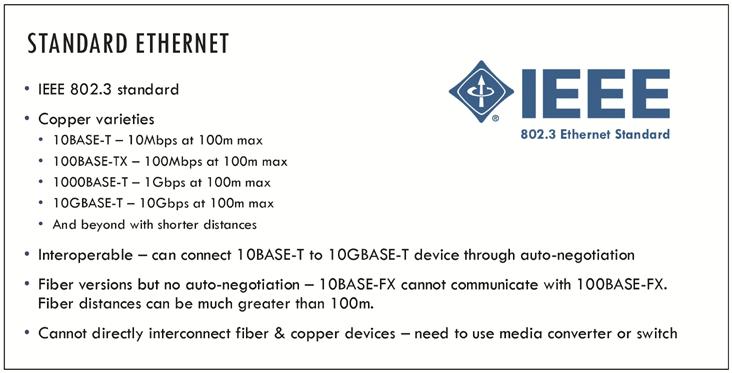
The IEEE 802.3 standard offers a variety of copper varieties, interoperability and fiber versions, but no auto-negotiation.
ETHERNET HAS LONG BEEN THE BACKBONE of industrial and building automation networks, but distance has traditionally been a limitation. Conventional copper-based Ethernet is typically limited to 100 meters, often requiring switches, fiber links, media converters, or gateways to reach controllers, sensors, and actuators distributed across large facilities.
A newer standard, 10BASE T1L (T1L), enables long distance, IP based networking over a single twisted pair of copper wires. Unlike standard Ethernet, which requires two or four wire pairs, T1L extends Ethernet’s reach while preserving familiar networking tools and protocols.
Published by IEEE in 2019 and incorporated into the IEEE 802.3 2022 standard, T1L defines a physical layer that supports 10 Mbps, full-duplex Ethernet communication over distances up to 1 km using Single-Pair Ethernet (SPE).
T1L enables both data and power transmission over a single twisted pair, simplifying cabling. Its extended reach makes T1L ideal for retrofit and long-run applications.
Older Ethernet standards, such as
10BASE-T, 100BASE-TX and 1000BASE-T, require specific types of cable, CAT-5, CAT-5e, CAT-6, etc. 10BASE-T1L offers greater flexibility, as it can operate over a wide range of single-pair cables. However, the distance between devices can be affected by cables with higher insertion loss. It may be possible to reuse existing cables, such as those used for RS-485 communications.
• 10 Mbps full duplex Ethernet
• Distances up to 1 km over copper
• Communication over a single twisted pair
• Native IP communication
• Polarity insensitive wiring
• More cable options than 10BASE-T, 100BASE-TX or 1000BASE-T
• Support for industrial environments, including intrinsically safe installations
Unlike standard Ethernet, which requires two or four wire pairs, T1L simplifies cabling while extending reach by a factor of ten. Higher speed Ethernet standards, such as 100BASE TX, 1000BASE T, or 10GBASE-T, offer higher
bandwidth but are limited to 100 meters. At 10 Mbps, T1L delivers speeds roughly 100 times faster than typical a RS-485 network, while operating over distances comparable to legacy fieldbus systems.
Standard Ethernet devices use autonegotiation to automatically determine the optimal mutually supported communication speed and duplex mode (half or full). This allows 10BASE-T devices to communicate with 100BASE-TX, 1000BASE-T, 10GBASE-T, etc.
In contrast, T1L operates at a fixed 10 Mbps full duplex and does not perform speed or duplex negotiation with the 100BASE-TX, 1000BASE-T, 10GBASE-T devices.
T1L devices support operation at 1.0 Vpp or 2.4 Vpp to accommodate varying link lengths and power requirements. These voltage levels can be configured or negotiated between T1L devices.
• 1.0 Vpp is used for intrinsically safe environments, such as oil and gas.
• 2.4 Vpp enables maximum distance (up to 1 km), depending on cable quality. The lower voltage can reduce maximum
distance on some cables compared to 2.4 Vpp, but higher quality cabling often maintains full reach.
Note: In some implementations, extended distance can be achieved by configuring both T1L devices to operate at 2.4 Vpp.
Standard Ethernet and T1L operate on different physical layers, so they cannot connect directly. A media converter can be used to interconnect these two networks.
A 10BASE-T to 10BASE-T1L media converter allows standard Ethernet devices to communicate over long single-pair links.
Unlike Ethernet switches, which store and forward frames (entire messages), media converters typically forward data bit-by-bit at the physical layer, reducing the delay through the interconnecting device.
The Contemporary Controls EIMK T1L media converter complies with IEEE 802.3-2022 and enables full duplex, 10 Mbps, communication between 10BASE-T Ethernet and 10BASE-T1L networks. Its 10BASE-T port can be connected to any standard copper Ethernet device (100BASE-TX, 1000BASE-T, etc.).
• The built-in microcontroller provides protection against brownouts and voltage fluctuations in the field.
• Four external DIP switches for configuring advanced features:
• Link Passthrough: Propagates link status between ports for fault detection and provides support for BMS devices in RSTP ring topologies.
• T1L Line Voltage: Selects 1.0 Vpp or 2.4 Vpp operation.
• Auto-negotiation: Configures T1L link behavior.
• Extended Mode: Enables longer distances when used in matched pairs.
T1L supports both new and retrofit applications because it can operate over both legacy wiring and standard Ethernet cables, such as Cat5e or Cat6, combining the advantages of Ethernet with the flexibility and extended reach of fieldbus and serial networks.
Many factories contain existing two-wire cabling originally used for MS/TP, Modbus, LON, or other legacy fieldbuses. In most cases, this wiring can be reused for T1L, allowing upgrades from legacy serial networks to IP-based networks without replacing existing infrastructure. Building and factory owners benefit from lower installation costs and faster upgrades that require less downtime.
Though existing cabling can often be
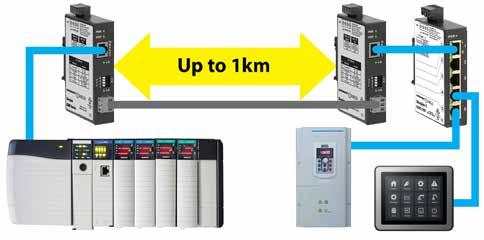
reused, whether full distance is achievable depends on factors such as cable type and quality, insertion loss, operating voltage, and environmental conditions.
While traditional Ethernet requires additional infrastructure, such as switches or gateways to exceed 100 meters, T1L eliminates this limitation.
Because T1L is part of the Ethernet standard, it carries IP traffic natively. Protocol translation or gateways are not required because IP runs directly over T1L just
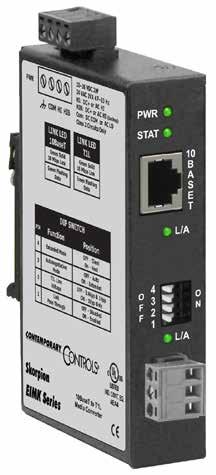
as it would over standard Ethernet networks, such as 10BASE-T, 100BASE-TX, 1000BASE-T, etc. Controllers, sensors, and actuators that previously used non-IP fieldbuses can now be upgraded to Ethernet-based versions to participate fully in IP networks over long distances. T1L also enables seamless integration with IT networks, without the need for a secondary fieldbus layer, making cloud connectivity for data analytics and predictive maintenance easier.
T1L effectively replaces the cabling layer, using one pair instead of four, while preserving Ethernet functionality, retaining IP compatibility, simplifying architecture, and reducing installation costs.
In summary, T1L extends Ethernet to the edge of building and industrial networks by enabling long-distance IP-based communication over a single pair of wires. It allows the reuse of existing wiring while extending network reach and improving network scalability. When used with a media converter, T1L provides seamless connectivity between standard Ethernet and T1L networks, enabling migration from legacy systems to modern IP infrastructure.
T1L provides support for:
• Up to 1,000 m reach (vs. 100 m for standard Ethernet)
• A variety of cables, including reuse of existing cabling
• Simplified wiring (single-pair vs. multipair)
• Native IP communication and routing
• Modbus TCP and other Ethernet protocols, including IP routing and security
• RSTP for network redundancy
Harpartap Parmar, Director of Product Management, Contemporary Controls . Learn More
The dawn of physical AI in manufacturing, requiring training if intelligent machines to perceive, reason and act in the physical world, is poised to transform how goods are made. Bridging the gap between AI research and the demands of a real factory will depend of the development of a high-performing ecosystem.
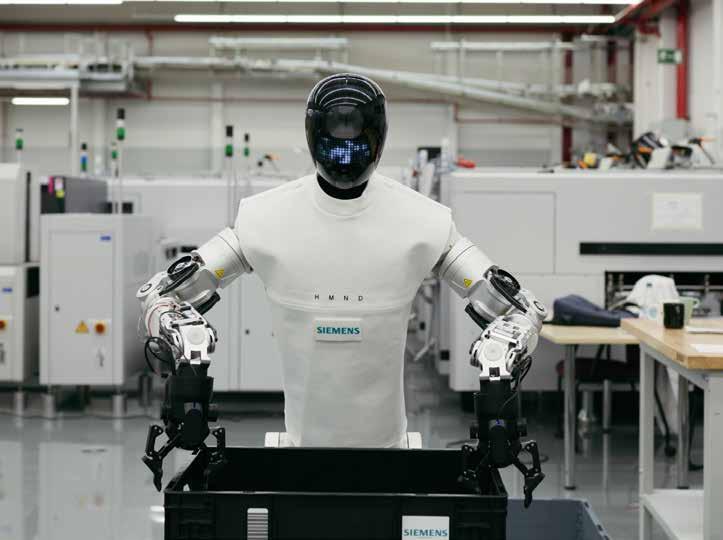
SIEMENS AND HUMANOID ARE BRINGING
Physical AI to the factory floor with the goal of deploying humanoid robots in industrial operations in conjunction with NVIDIA technology.
• Siemens’ and NVIDIA’s strategic partnership is to build fully AI-driven, adaptive manufacturing sites that deliver real-world milestones with testing of humanoid robot at the Siemens factory in Erlangen, Germany
• HMND 01 Alpha is purpose-built for industrial environments with advanced manipulation capabilities
• Siemens Xcelerator offers a factorygrade scalable portfolio for industrial integration
• NVIDIA accelerates simulation and development for faster deployment
Siemens and Humanoid has announced a landmark milestone in the journey to bring physical AI from vision to industrial reality. Humanoid’s HMND 01 wheeled Alpha humanoid robot, built using the NVIDIA physical AI stack, has been successfully tested in operations at Siemens’ electronics factory in Erlangen, Germany, performing autonomous logistics tasks. This builds on the Siemens and NVIDIA strategic partnership, announced at CES, to build
the world's first fully AI-driven, adaptive manufacturing sites.
The dawn of physical AI in manufacturing
Physical AI - the discipline of training intelligent machines to perceive, reason and act in the physical world - is poised to transform how goods are made.
Bridging the gap between AI research and the demands of a real factory requires a high-performing ecosystem: world-class AI compute and simulation, a proven robotics platform, and the deep industrial automation infrastructure to tie it all together.
The HMND 01 Alpha robot was deployed in Siemens' logistics operations, where it autonomously executed tote-handling tasks - picking, transporting and placing containers for human operators.
All target performance metrics were met, including a throughput of 60 tote moves per hour, uptime exceeding 8 hours, and autonomous pick-and-place success rates above 90 percent.
A humanoid robot's true value is in becoming a fully integrated, collaborative asset on the shop floor. That means real-time data exchange with production systems and other Autonomous Guided Vehicles, synchronized workflows with other machinery and human operators, and adaptive behavior that responds dynamically to changing conditions. Without this deep integration, even the most sophisticated robot remains an isolated feature.
Siemens provides this critical layer through its Siemens Xcelerator portfolio, from a comprehensive digital twin to AI-enabled perception, to integrated control and PLC-robot interfaces, along with fleet management, industrial communication networks and high-performance drives. Together, these technologies form the digital backbone and automation infrastructure that help to ensure humanoid robots operate efficiently and in concert with the broader factory environment. The outcome is a factory-grade model for deploying humanoids in any industrial setting.
Humanoid has integrated NVIDIA's full physical AI stack into the HMND 01 platform, including NVIDIA Jetson Thor for edge compute, NVIDIA Isaac Sim for simulation and NVIDIA Isaac Lab for reinforcement learning and policy training.
The result is a dramatic compression of development timelines. Simulation-first hardware design has also enabled the team to optimize actuator selection, joint strength and mass distribution virtually, cutting prototype development from a typical 18–24 months to just 7 months.
“Factories of the future demand robots that can perceive, reason, and adapt autonomously alongside human workers, tackling the labor shortages and operational complexity that traditional automation struggled to handle," said Deepu Talla, vice president of Robotics and Edge AI at NVIDIA. "With Siemens providing the industrial integration backbone and
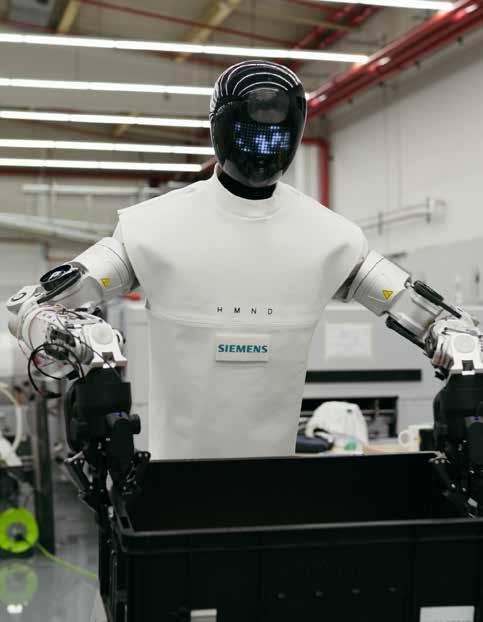
Humanoid deploying NVIDIA's full physical AI stack - from simulation-first training to real-time edge inference - this deployment paves the way for humanoid robots meeting real production targets on a live factory floor."
Humanoid, a UK-based AI and robotics company, developed the HMND 01 Alpha, a humanoid robot purpose-built for industrial environments.
Combining an omnidirectional wheeled mobility platform with advanced manipulation capabilities, powered by KinetIQ, a proprietary AI framework, the HMND 01 is engineered to work in humancentric spaces, adapting to diverse tasks
and handling complex actions.
“Our mission is to create humanoid robots that perform not only in controlled lab settings, but also in real-world factory environments, handling meaningful industrial tasks. Our collaboration with Siemens and NVIDIA gives us a powerful advantage by combining NVIDIA’s leading AI infrastructure, simulation tools, and frameworks with Siemens’ deep industrial expertise and integration capabilities,” said Artem Sokolov, CEO and Founder of Humanoid. “Together, we’ve proven that humanoid robots are ready for real-world industrial deployment.”
Technical article by Siemens . Learn More
Industrial AI is advancing rapidly, but progress often slows once AI moves beyond pilots and into production. The reasons are known: infrastructure readiness, cybersecurity risk and system complexity. But recent research also shows organizations are now deploying AI in live environments, rather than experimenting in isolation.

INDUSTRIAL AI IS MOVING FROM PROMISE to practice. Across manufacturing, transportation and utilities, organizations are deploying AI to improve productivity, reduce costs and strengthen operational resilience. Recent global research shows that a majority (61%) of industrial organizations are now deploying AI in live environments, rather than experimenting in isolation.
Yet for all this momentum, only a minority (20%) have reached truly scaled, mature adoption. The technology is advancing rapidly, but progress often slows once AI moves beyond pilots and into production. The reasons are known: infrastructure readiness, cybersecurity risk, and system complexity. But beneath these technical challenges lies a more fundamental constraint; one rooted in how people work together.
Industrial AI sits at the intersection of two disciplines with very different histories. IT teams are trained to manage networks, data, security and digital platforms. OT teams are experts in industrial processes, safety, reliability and real - time operations. Both bring essential capabilities, but neither can scale AI alone.
AI does not replace this division of expertise; it amplifies it. As AI systems connect more assets, move decisions closer to operations, and increase reliance on data, the need for coordination grows. When IT and OT operate in silos, organizations struggle to deploy AI confidently in production, regardless of how advanced the technology may be.
Survey research based on the responses of 1,000 industry leaders show that while many organizations report some level of
IT/OT collaboration (57%), a significant proportion still operate with limited or no meaningful cooperation (43%). Fully converged teams remain rare. This is not because leaders don’t recognize its value, it’s because building combined IT/OT skill sets in individuals is difficult, and often unrealistic.
Expecting individuals to master both IT and OT disciplines is rarely practical. The combined skill set is unusual by nature. What matters far more is enabling collaboration, creating environments where IT and OT teams can bring their full expertise to the table and work toward shared outcomes.
Organizations that enable this kind of collaboration report higher confidence

Adoption of Physical AI is a human challenge as much as a technical one. It requires trust, shared language and aligned incentives. It also requires leadership that frames AI not as an IT project or an OT experiment, but as a joint operational capability.
in their ability to scale AI. They also experience greater network stability and place stronger emphasis on cybersecurity as a foundational requirement, rather than an afterthought. In contrast, organizations with segregated teams are more likely to experience instability, slower deployment, and elevated risk.
This is a human challenge as much as a technical one. It requires trust, shared language and aligned incentives. It also requires leadership that frames AI not as an IT project or an OT experiment, but as a joint operational capability.
As AI expands connectivity and data flows, cybersecurity concerns rise sharply: 40% of organizations cite cybersecurity as the single biggest obstacle to scaling industrial AI, and 48% identify security and segmentation as their top networking challenge. Organizations with stronger IT/OT collaboration are more likely to recognize these risks early and address them collectively.
Where silos persist, risk is often fragmented. OT teams may prioritize
availability and safety, while IT teams focus on security controls and compliance. Without collaboration, trade-offs are harder to manage, and AI deployments remain constrained to lower - risk environments. By working together, teams can design systems that balance security with operational continuity, a prerequisite for deploying AI in production environments where failure is not an option.
Organizations that struggle to scale AI often hesitate not because the technology is unproven, but because ownership is unclear. Who is accountable when an AI - driven system affects operations? Who responds when performance degrades or security alerts appear?
Organizations further along in their AI journey tend to address these questions through shared governance and clearer accountability across IT and OT. This does not require structural overhaul, but it does require agreement on common goals: uptime, safety, resilience, and performance.
Over time, this collaboration also supports
workforce readiness. Skills shortages remain a barrier, cited by 34% of organizations overall, but this drops to 27% among more mature AI adopters, suggesting that experience and collaboration help close the skills gap over time.
Industrial AI will continue to advance. Models will improve, and platforms will evolve. But the ability to deploy AI comfortably in production will depend just as much on people as on technology.
Ultimately, realizing the full potential of Industrial AI requires dismantling silos so that IT and OT teams can bring their distinct competencies to a shared table. The goal is not to engineer a rare breed of hybrid superworker, but to forge truly connected teams. By seamlessly combining digital agility with operational rigor, these unified teams are the true engine for turning AI’s promise into sustained, everyday impact.
Samuel Pasquier, VP, Product Management, Cisco Industrial IoT Networking . Learn More
Edge-optimized Ethernet switches incorporate best practices from IT (information technology) without compromising operation technology (OT) performance or introducing complexity, enabling organizations to turn data into better processes, systems and outcomes.
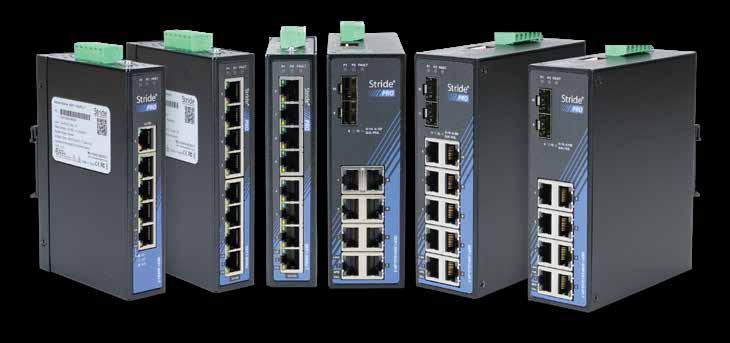
IN MODERN MANUFACTURING AND AUTOMATION systems, the distinctions between operational technology (OT) and information technology (IT) digital networking are increasingly blurring. OT implementations originally used networks to control physical processes and machinery, while IT has long focused on managing electronic data in business environments. Advances in analytics, driven by artificial intelligence (AI), are accelerating the convergence as OT data is desperately needed by IT-centric resources, creating new opportunities for operations of all sizes. Now there is more common ground than difference for these approaches, as both seek to leverage data and maximize its potential.
Thoughtfully designed and selected hardware can help build the bridge between these two domains in a manner that satisfies the goals and requirements of the entire organization. This means prioritizing solutions that:
• Enable secure data sharing between the plant floor and enterprise
• Support industrial protocols alongside IT standards
• Provide visibility without compromising determinism
• Reduce complexity without sacrificing resilience
Of course, this is sometimes easier said than done. OT personnel may believe that IT doesn’t understand what is needed to implement a robust and deterministic network, while IT staff may deem OT as lacking deep enough knowledge about properly configuring managed switches to interface with corporate networks. Furthermore, for many industrial organizations, both OT and IT resources and expertise are limited, making a fully-managed network infrastructure cost-prohibitive and difficult to support.
With this in mind, a new class of industrial edge switches have emerged—devices that skillfully bridge the gap between unmanaged OT hardware and a fully-managed, configurable IT-administrated Ethernet-based network infrastructure, with features such as simple plug and play options.
IT typically segments networks for security reasons and to minimize unnecessary traffic to destinations that don’t require it. Typically, IT accomplishes this using a port-based virtual local area network (VLAN) philosophy
across highly-managed switches. OT networks are segmented for similar reasons using unmanaged switches and dedicated physical connections to implement a robust and deterministic network, especially for devices like remote input/output (I/O) that can generate tremendous multi-cast traffic with programmable logic controllers (PLCs), and for human-machine interfaces (HMIs) connected to multiple PLCs.
At the edge where IT and OT networks converge (Figure 2), a hybrid approach using industrial edge switches is increasingly the preferred option. Industrial edge switches are built with withstand the industrial environment and with specific features to help ensure seamless data transmission of OT data throughout the organization, without the complexity that requires an entire IT department to support. Some industrial edge switches may be referred to as lean or lightly managed, and will still require a degree of software configuration. However, another category called an unmanaged+ switch can provide the essential OT capabilities, with simple DIP-switch configuration.
For convenient and reliable industrial use, edge switches should be DIN-rail and panel
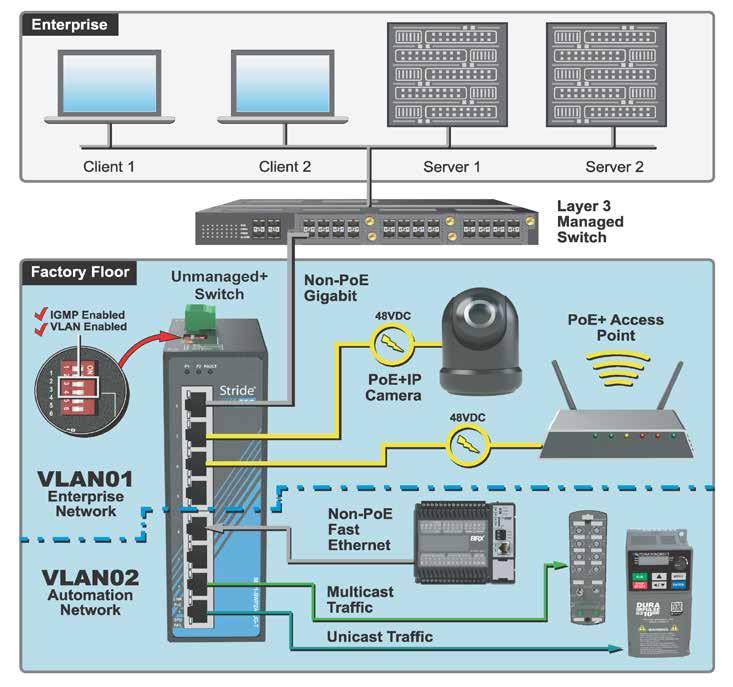
mountable with IP30 metal housings, able to withstand extreme temperature ranges, and readily powered by 24 VDC. Perhaps most importantly, they require significantly better immunity to electrical noise and surges than commercial-grade switches with superior models offering redundant power inputs with industrial surge, spike, and reverse power protection.
An example of an industrial edge switch providing advanced features yet only requiring DIP-switch configuration is the Stride PRO Unmanaged+ Ethernet Switch from AutomationDirect (Figure 1). This series consists of smart, industrial switches specifically developed to interface with equipment such as PLCs, HMIs, and variable frequency drives (VFDs), while maintaining
consistent cycle times for control data even under heavy I/O traffic. Unmanaged+ switches make it simple to upgrade legacy serial communications to Ethernet protocols so data can be easily shared and analyzed.
Unmanaged+ switches deliver the right amount of intelligence to secure and optimize common industrial protocol traffic—without requiring IT-level expertise to configure. For easiest implementation, designers should consider unmanaged+ switches with rapid provisioning technology to simplify set-up, eliminating the need for software, configuration files, and IP addressing. Instead, key features on the unmanaged+ switch are enabled by toggling a DIP switch setting. Troubleshooting is equally streamlined, since OT teams have direct access to diagnose
issues without relying on support from or coordinating with IT. In this way, uptime is maximized, unlike traditional managed switches where access is often restricted for security reasons.
As the boundaries between IT and OT dissolve, industrial edge switches increasingly utilize IT strategies to help secure and optimize network traffic. The leading unmanaged+ switches incorporate features including:
Fast/Gigabit Ethernet and SFP
Communication speed is a growing consideration for industrial networks. Designers should look for unmanaged+ edge switches support varying connector types, including copper RJ, fiber
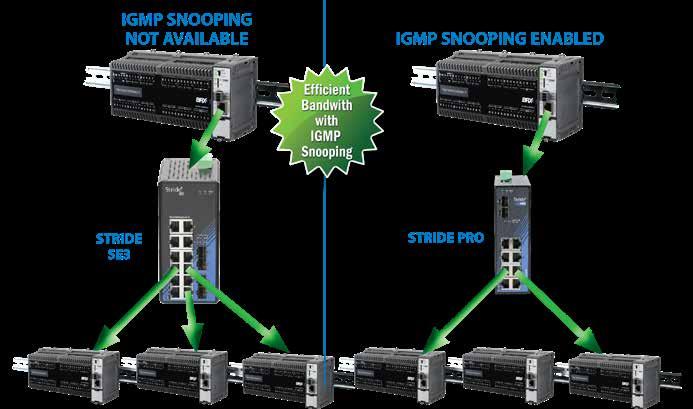
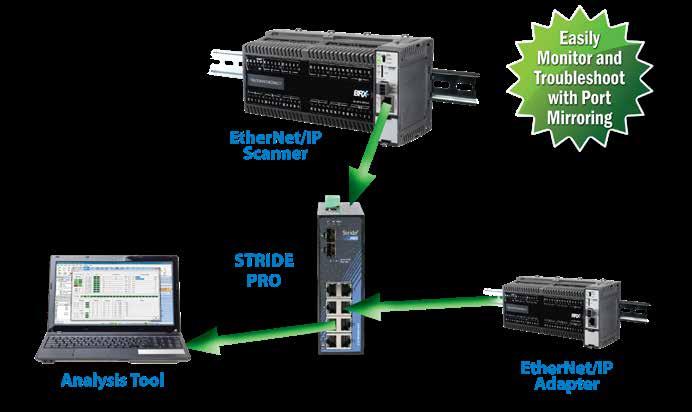
optic, and small form-factor pluggable (SFP). Fast Ethernet (100Mbps) is quite common for industrial devices, although an increasing number are capable of Gigabit (1000Mbps) or faster speeds. Fiber optic cabling enhances reliability in harsh and noisy industrial environments since the cables are immune to electrical and magnetic interferences as well as induced voltage transients, and it greatly increases networking distances, allowing more
devices than ever to communicate on the same network.
More industrial switches now support PoE technologies (PoE, PoE+, PoE++), delivering both power and Ethernet communication over a single cable. This reduces material and labor costs during commissioning and simplifies moves, adds, and changes as the network matures.
Depending on the model, unmanaged+ switches can supply up to 240W at 48 VDC. Many models, like the Stride PRO, also auto-detect PoE-enabled devices, further simplifying provisioning.
Quality of service (QoS) is used to prioritize time-sensitive control data, while broadcast storm protection (BSP) limits network traffic to help maintain network reliability and
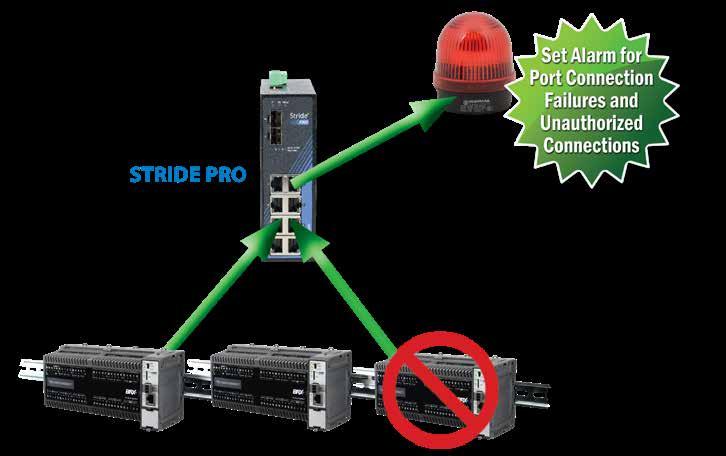
Figure 3a, 3b, 3c: Unmanaged+ switches like the Stride PRO from AutomationDirect allow OT teams to troubleshoot the control network using traditional IT tools like IGMP snooping (3a) and port mirroring (3b) along with more OT-focused options such as port disconnect alarms (3c), without IT support.
prevent network issues from interrupting critical automation processes. Unmanaged+ switches are tuned to prioritize industrial protocols such as EtherNet/IP, PROFINET, Modbus TCP, and others.
Network bandwidth is automatically optimized by enabling IGMP snooping to ensure multicast traffic is sent only to specific ports. When IGMP snooping is activated, the switch listens to traffic, directing data to specific physical ports that require and subscribe to the information. This prevents a device from sending unnecessary data to all connected devices, regardless of whether the information is relevant (Figure 3a). IGMP snooping protects sensitive industrial equipment from too much data and prevents unnecessary network congestion, ultimately improving efficiency.
Utilizing unmanaged+ switches with port-based VLANs allows for the creation of isolated broadcast domains by assigning each physical port to a specific VLAN. This approach provides a flexible, cost-effective architecture that is easier to manage than physically segmenting the network with multiple managed switches.
An excellent tool for troubleshooting and analysis, port mirroring provides real-time
visibility to network traffic without the need to interrupt operations. Port mirroring sends a duplicate stream of data between selected devices to a designated monitoring port on a laptop or diagnostic tool (Figure 3b). This helps quickly identify suspicious activity, unauthorized devices, and echo requests that can interrupt automation controls.
Quickly identify hardware issues—including broken cables, unplugged connectors, or failed devices—by utilizing port disconnect alarms. This proactive monitoring feature speeds up troubleshooting by pinpointing physical network problems, especially when paired with visual signaling via a hardwired tower light or PLC/HMI alarm (Figure 3c).
Today, there are more reasons than ever to prioritize the integration of IT and OT to enable data sharing between plant and enterprise, by supporting industrial protocols alongside IT standards. In the current business environment, better processes, systems, and outcomes create a significant competitive advantage, and leveraging insights across IT and OT networks can help tip the scales. Everything from remote diagnostics to machine learning, AI agents, and even off-line analytics requires a practical and reliable network
infrastructure. IT and OT networks that share a common infrastructure and policies are most successful at consistently and efficiently providing visibility without compromising determinism while exchanging data.
Unmanaged+ edge switches were designed to accelerate scalable integration in an affordable manner, providing a practical way to simplify what has historically been complicated, while increasing resilience. Network utopia is neither a single product nor standard. Rather, it is an ecosystem where:
• IT gains visibility into operations without disrupting them
• OT gains access to enterprise intelligence without sacrificing uptime
• Security is built in, not bolted on
• Performance is engineered, not assumed This utopia is no longer unachievable. In environments where IT and OT networks are successfully integrated, data flows seamlessly where it needs to, machines communicate efficiently, and systems are protected from security threats. Most importantly, organizations make smarter decisions because information moves securely from the plant floor to the boardroom.
Damon Purvis, LC Product Manager Automation Direct.
Specifying the wrong switch for your environment means corrosion, thermal failure, signal loss and unplanned downtime. The best Industrial Ethernet switches need to exceed the demands of the world's harshest industrial environments, from oil refineries to offshore platforms to smart-factory automation cells.
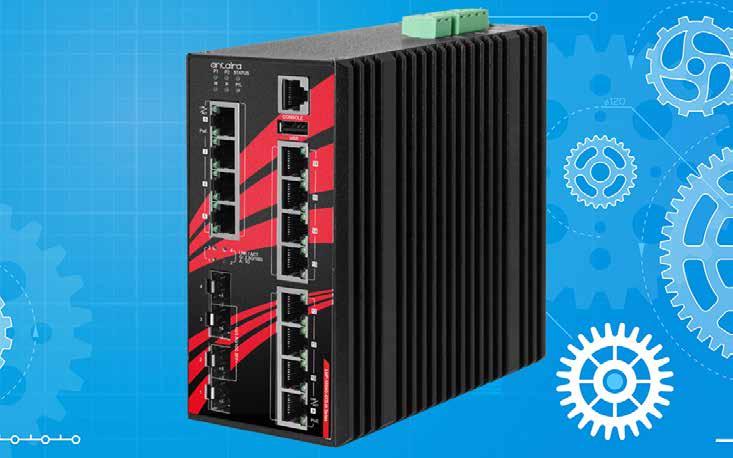
The Antaira LMP-1604G-4XS-bt-T is a Gigabit Ethernet industrial switch embedded with twelve
maximum of 90W/port, and four SFP+ slots for fiber connection
ANTAIRA TECHNOLOGIES BREAKS DOWN TEN mission-critical capabilities that separate industrial-grade switches from commercialgrade compromises — and why it matters on the plant floor
When a network failure means halted production or compromised safety, "good enough" connectivity is not an option. Industrial Ethernet switches keep critical networking infrastructure online across environments that would destroy commercial hardware in days.
Antaira Technologies, a global leader in industrial networking solutions, presents this engineering guide to help plant managers, systems integrators, and OT engineers specify, deploy, and operate industrial Ethernet switches with confidence.
At its core, an industrial Ethernet switch bridges every device on the plant floor — PLCs, sensors, cameras, HMIs — into a unified, communicating network. Multi-port architectures support simultaneous connections at scale, and managed variants enable remote configuration so operators can monitor and adjust without stepping foot on the floor.
Where commercial switches top out at 100 meters, fiber-optic-enabled industrial switches extend connectivity to several
miles. Remote assets, outlying substations, and geographically distributed facilities can be unified into a single manageable network without signal degradation or repeater chains.
Variable-frequency drives, motors, and high-voltage lines generate electromagnetic interference that corrupts data on copper runs. Industrial switches feature hardened EMI shielding and support fiber optic cabling, an inherently immune medium, ensuring clean, error-free data transmission in the noisiest environments.
04.
Standard commercial hardware fails below 0°C or above 50°C. Antaira industrial

switches operate reliably across -10°C to 70°C standard ranges, with extendedtemperature models rated from -40°C to 75°C, engineered for foundries, coldstorage logistics, outdoor substations, and arctic deployments alike.
05. Corrosion Protection
Chemical plants, wastewater treatment facilities, and marine installations expose equipment to corrosive agents that eat through standard enclosures. Antaira switches are available with IPC-A-610-compliant conformal coating, sealing internal circuitry against moisture, salt fog, and chemical exposure before corrosion can cause downtime.
Heavy machinery, compressors, and transportation platforms generate constant mechanical stress. Antaira switches are designed to MIL-STD vibration and shock specifications, with DIN-rail mountings and solid-state construction that maintain secure connections and uninterrupted data flow in high-vibration environments.
07. IP-Rated Rugged
Dust ingress and moisture infiltration destroy unprotected electronics.
Industrial switches are housed in hardened metal enclosures rated to IP30, IP40, or IP67 depending on the application, keeping internal components clean and dry whether deployed in a dusty quarry, a humid greenhouse, or an outdoor junction box.
PoE-capable switches deliver both data and power over a single Ethernet cable, eliminating separate power runs to IP cameras, wireless access points, VoIP phones, and smart sensors. The result: faster deployment, reduced cabling costs, and centralized power management with per-port control from the switch.
For straightforward point-to-point connectivity where traffic management is not required, unmanaged industrial switches offer immediate, zero-configuration operation. Cost-effective and field-proven, they are the right tool for isolated machine networks, legacy equipment integration, and budget-conscious deployments that still demand industrial-grade durability.
Managed industrial Ethernet switches deliver VLAN segmentation, QoS prioritization, SNMP monitoring, RSTP/ring redundancy, and remote CLI or web-GUI configuration. Purpose-built for complex OT architectures, they allow engineers to isolate traffic, enforce security policies, and achieve sub-50ms network recovery, all from a central console.
Industrial Ethernet switches are not a commodity — they are load-bearing infrastructure.
Specifying the wrong switch for your environment means corrosion, thermal failure, signal loss, and unplanned downtime.
Antaira Technologies engineers every product in its switching portfolio to exceed the demands of the world's harshest industrial environments, from oil refineries to offshore platforms to smart-factory automation cells.
Technical article by Antaira Technologies Learn More
Smart manufacturing is defined by continuous change. Production processes evolve, automation deepens and connectivity demands increase. Networks that are fragile or rigid struggle to keep pace. Networks designed for resilience and adaptability, by contrast, become enablers of long-term operational performance.
IN SMART MANUFACTURING ENVIRONMENTS, connectivity is no longer a supporting utility. It is an operational dependency. From mobile workforces and scanners to automation, sensors, video and robotics, modern production workflows rely on network performance that is continuous and predictable. Downtime leads to lost revenue, missed deadlines and disrupted supply chains. On top of that, the network also needs to perform in demanding, harsh conditions.
Factories, warehouses and logistics hubs are unique environments for connectivity. Industrial motors and equipment can generate interference, layouts change, assets move constantly, and facilities often include dense metal racking and high ceilings. These realities mean the goal is no longer just coverage, but reliable connectivity in environments that are inherently hostile to wireless signals, where tolerance for disruption can be extremely low.
The reality of connectivity on the factory floor
Smart manufacturing networks must support a wide range of devices and use cases: mobile
handhelds, tablets and workstations, fixed sensors and cameras, and increasingly, autonomous vehicles and automation systems moving across large and complex spaces. Industry 4.0 initiatives are further accelerating automation and interconnectivity, increasing both the volume and criticality of network traffic.
A further complication is the diversity of device capabilities. Many industrial environments include a long tail of operational technology that remains bandwidth-constrained and highly sensitive to interference. Designing access networks that can support modern workloads while continuing to accommodate legacy devices is essential for real-world deployments.
A common mistake in industrial connectivity projects is treating wireless as a standalone upgrade. In practice, access networks must be designed as integrated systems where wired and wireless resilience work together. Operations depend on high - availability
performance end-to-end, not just at the radio layer.
On the wired side, eliminating single points of failure is critical. Legacy infrastructures often rely on a single uplink or power source for critical systems. As automation becomes more central to production, these weaknesses become costly risks. Designing redundancy into the foundation through multiple paths, resilient power and intelligent traffic rerouting helps ensure continuity when components fail.
Scalability is equally important. As more devices, data sources and automated systems come online, insufficient bandwidth at the access or aggregation layers can quietly constrain performance. Planning sufficient headroom and applying traffic prioritisation and segmentation helps networks support growth without repeated redesign.
Access switching plays a pivotal role in this balance. It sits at the intersection of power delivery, segmentation and expansion. Networks that cannot adapt to increasing power demands or growing device density often force premature upgrades. Scalable, modular designs allow organisations to
expand connectivity capabilities in line with operational needs, rather than ahead of them. The role of fibre - based architectures in future-proofing industrial networks
Smart manufacturing environments typically rely on a robust wired backbone to connect production zones, aggregation points and edge systems over long time horizons. Fibre-based architectures are widely used in industrial settings to support high-capacity, long-lived distribution layers, while allowing access infrastructure to evolve as requirements change.
From a future-proofing perspective, the value of a fibre-rich design lies in architectural separation. Stable backbone connectivity can be maintained over time, while access layers are adapted incrementally as production layouts change, automation increases or device density grows. This approach also supports clearer zoning between production lines, warehouses, safety systems and administrative areas, each with distinct performance and risk profiles.
Importantly, fibre-based approaches do not require overbuilding. When paired with scalable access layers, capacity can be added where and when it is needed, aligning investment with operational demand rather than speculative growth.
Wireless connectivity is often the most visible element of smart manufacturing networks, but speed alone rarely determines success. Industrial environments are defined by interference, mobility and constant change. Wireless networks must perform reliably amid dense metal infrastructure, electromagnetic noise and continuous asset movement.
Design considerations therefore extend beyond floor-level coverage. Warehouses and logistics facilities are vertical environments, and wireless designs must account for movement up and down, and across multiple levels. Thoughtful planning, appropriate placement and designs that adapt to changing conditions are essential for maintaining consistent connectivity.
Mobility adds further complexity. As autonomous systems and mobile assets move across large spaces, roaming behaviour becomes a critical factor. Even brief interruptions can halt automated processes. Wireless evolution must therefore focus on reducing disruption during movement and improving resilience in challenging radio conditions.
As wireless standards advance, newer capabilities offer improvements in capacity, latency and reliability. However, these benefits are only realised when wireless upgrades are aligned with the underlying wired infrastructure. Increased wireless performance places greater demands on switching, power delivery and uplink capacity. Without coordination across layers, bottlenecks simply
shift rather than disappear.
Compatibility also remains crucial. Few manufacturers can refresh all devices at once. Access networks must support mixed generations of equipment, allowing organisations to modernise at a controlled pace without disrupting operations.
In industrial environments, the true cost of a network is revealed over time. Initial deployment costs are only part of the equation. Uptime, adaptability and operational effort ultimately determine value. Networks designed for longevity prioritise flexibility. Modular architectures allow components to be upgraded independently, avoiding large-scale replacements. Clear separation between backbone, access and wireless layers makes it easier to align investment with actual need rather than projected demand.
Operational simplicity is another critical cost factor. Manufacturing and logistics sites are often geographically distributed, and dedicated IT staff may not be present everywhere. Centralised management, proactive monitoring and intelligent analytics reduce the burden of troubleshooting, helping teams address issues before they affect production. Over time, this visibility lowers support costs and increases confidence in the network as a core operational system.
Security must be treated as part of resilience rather than an afterthought. As IT and operational systems converge, networks increasingly carry both business data and operational controls. Segmentation, role-based access and continuous monitoring help ensure that connectivity supports innovation without increasing exposure to risk.
Across industrial environments, the strongest outcomes tend to come from designs that prioritise resilient foundations before advanced features, favour modular expansion over bespoke complexity, and embed visibility and control from the outset.
That means eliminating single points of failure in the wired foundation, building in bandwidth headroom and segmentation and ensuring wireless access is engineered for the physical realities of industrial operations, including interference, vertical coverage and mobility. It also means using monitoring and management capabilities to reduce operational load and applying security controls that reflect the growing convergence of IT and operations.
Smart manufacturing is defined by continuous change. Production processes evolve, automation deepens and connectivity demands increase. Networks that are fragile or rigid struggle to keep pace. Networks designed for resilience and adaptability, by contrast, become enablers of long-term operational performance.
Future-ready access infrastructure is not about chasing every new technology. It is about aligning wired foundations, wireless design and operational management with the realities of industrial environments and the lifecycle demands of critical operations so connectivity can scale alongside the factory floor and continue delivering value as requirements evolve.
Raj Rajani, Director PLM, RUCKUS Networks.
Learn More
Reducing downtime risk in hybrid OT environments is a priority, even as legacy Common Industrial Protocol (CIP) networks still anchor thousands of production lines worldwide.
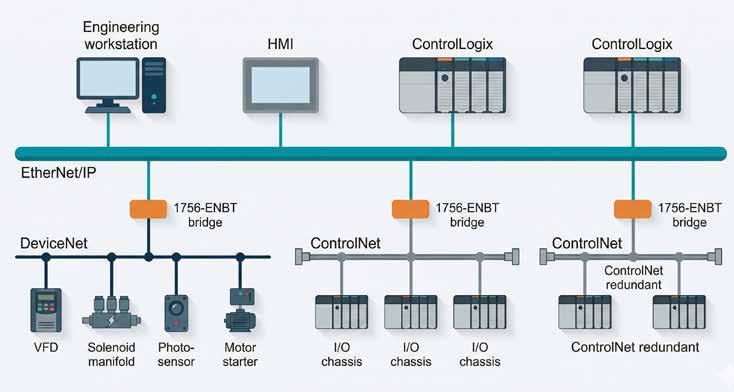
DEVICENET AND CONTROLNET STILL ANCHOR thousands of production lines worldwide. Before migration becomes unavoidable, maintenance teams can materially reduce unplanned downtime through disciplined baselining, physical-layer verification, a tight spares policy, and rigorous change control.
The Problem in Plain Terms
Walk into a mature discrete-manufacturing plant almost anywhere in the world and you will find the same picture: a modern Ethernet/IP or PROFINET backbone carrying supervisory traffic, and beneath it, quietly running the actual production, a patchwork of DeviceNet and ControlNet segments that have been in service for fifteen years or more. These legacy Common Industrial Protocol (CIP) networks were never retired. They were wrapped.
The reasons are well understood. Full protocol migration means re-engineering I/O topologies, revalidating safety
“Legacy CIP segments rarely fail outright. They degrade — and the degradation shows up as unexplained downtime long before it shows up on a scanner log.”
interlocks, retraining maintenance crews, and accepting a production outage that most plant managers cannot justify while the existing network is, technically, still running. The result is a hybrid architecture that works until the day it does not.
The failure modes are not dramatic. They are slow, intermittent, and expensive: a scanner that drops a node once per shift; a ControlNet segment whose NUT margin has eroded below recommended thresholds; a DeviceNet trunk where the 24 V power budget has been stretched across one too many drop lines. None of these will trigger a protective stop on a good day. On a bad day they compound.
Three factors keep DeviceNet and ControlNet alive long past what the original roadmap predicted. First, asset longevity: drives, valve banks, weigh modules and motor starters specified in the mid-2000s still meet their process duty. Second, the
integration cost of mixed-vintage PLCs — a working program in a ControlLogix or SLC platform is rarely refactored without a compelling reason. Third, and most often underestimated, institutional memory: the electricians and technicians who commissioned the network know where the terminators are, which drop is flaky in summer, and which node number was skipped. That knowledge is not in the documentation.
Field data from audits across food-andbeverage, automotive, pulp-and-paper and mining sites shows a consistent pattern.
The symptoms that precede a legacy-CIP production stop are almost always physicallayer issues that a protocol-layer tool cannot see. Specifically: shield continuity broken at a panel re-termination; trunk length extended during a line modification without recomputing budget; terminators of the wrong impedance fitted during a maintenance window; power-supply drop exceeding the V/A budget for the active device count.
These issues do not generate hard faults. They generate CRC counters that tick upward, retries that lengthen scan times, and occasional node disappearances that are logged and forgotten. Classic correlation:
in every audited plant where legacy CIP was a top-three downtime contributor, the maintenance team had no baseline reference for what “healthy” looked like on that network.
The single most useful action a maintenance team can take on a legacy CIP network is not migration, not redundancy, not a managedswitch refresh. It is to measure the network once, carefully, while it is running well, and keep the record.
A useful baseline captures, for each segment: node inventory with firmware
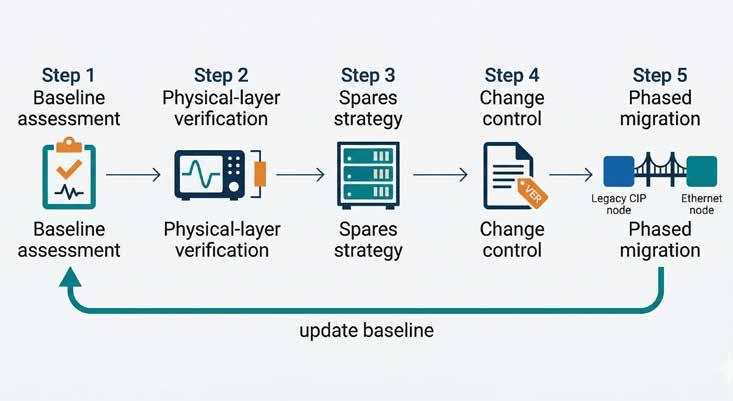
Figure 3 — A practical framework for legacy-CIP reliability. Sequential workflow: baseline assessment → physical-layer verification → spares policy → change control → phased migration. Each block feeds into the next and loops back to the baseline record.
revisions; physical topology including trunk length, drop lengths, terminator locations and power-tap positions; signal quality metrics (NUT on ControlNet, signal margin and error counters on DeviceNet); and a traffic profile at steady state. None of this requires exotic instrumentation. It requires discipline and a Saturday.
The value is asymmetric. When the line stops at 02:40 on a Tuesday and the question is “did something change?”, a baseline answers it in minutes. Without the baseline, the team is troubleshooting a moving target under production pressure.
Legacy CIP media is forgiving up to a point, then it is not. Four practices separate sites that run for a decade on the same infrastructure from sites that do not. Treat the physical layer as a controlled asset: every re-termination, every added drop, every power-supply swap is a change that must be recorded against the baseline. Verify terminators by part number, not by presence.
Keep trunk and drop lengths inside specification even when temporary cabling is pulled for a trial run; temporary becomes permanent faster than anyone expects. And budget power explicitly: DeviceNet in particular tolerates marginal current for a long time before it creates a problem for the application.
Spares for legacy CIP are no longer stocked by most distributors. Plants that operate DeviceNet scanners, ControlNet modules and 1756-series bridges should maintain a spares policy that acknowledges this: identify the critical modules per line, hold tested spares on site, and verify annually that the spare works — not just that it is in the cabinet.
Change control is the partner discipline. Many intermittent faults traced to legacy CIP originate in a change that was made correctly but was not documented: a drop rerouted around a new conveyor, a node address reused after a scrapped machine, a power tap added without adjusting the supply. A change log that ties every physical modification to the baseline turns a four-hour investigation into a five-minute lookup.
Migration from DeviceNet or ControlNet to EtherNet/IP is eventually unavoidable, but it does not have to be a single project with a single shutdown. The pragmatic path is segment-by-segment: identify the legacy segment with the highest downtime contribution, plan its migration into the next scheduled maintenance window, validate in parallel where possible using bridges or gateways, and cut over when the new
segment has demonstrated equivalent or better signal quality against a fresh baseline. This approach respects two realities. Production will not stop for the convenience of the network plan. And migration budgets are almost always approved in increments, not in lump sums. A documented, measured, segment-level plan survives budget cycles that a big-bang proposal does not.
Plants that apply these four disciplines — baseline, physical-layer control, spares and change management, phased migration — consistently report a reduction in legacynetwork unplanned downtime in the range of 30 to 60 percent within the first year, without capital expenditure on replacement hardware. The gain is operational, not technological. The equipment is already in place; what changes is the rigor with which it is managed.
Legacy CIP is not the enemy. Unmanaged legacy CIP is. For every plant that will eventually migrate to an all-Ethernet topology, there are several more where the installed base will carry production for another decade. The work of the next five years is to make that decade predictable.
Darwin Anastacio, partner and industrialnetwork engineer, Solaris Network Solutions.
Learn More
Robotronic and Mitsubishi Electric aim to strengthen pharmaceutical supply chain and cut medicine lead times with new ‘smallest’ automated palletising cell. Faster production is required to shorten lead times and cope with the ever-increasing demand.
A LOW-FOOTPRINT AUTOMATED PALLETISING cell developed by Robotronic in partnership with Mitsubishi Electric is designed to help the pharmaceutical industry overcome recordhigh shortages across Europe.
Swiss-based Robotronic has partnered with Mitsubishi Electric’s Factory Automation EMEA division for more than two decades. Now, the two organisations are collaborating together on a new low-footprint cell to help the pharmaceutical industry overcome recordhigh shortages across Europe in recent years for medicines ranging from children’s cough syrups through to antibiotics and even cancer treatments.
The growing demand, which has impacted patient treatment and quality of life, has led the European Medicines Agency to increasingly focus on one of the main causes of shortages: manufacturing and quality issues with the aim of ultimately strengthening the fragile pharmaceutical supply chain.
Mike Weber, founder of Robotronic, said that faster production is required to shorten lead times and cope with the ever-increasing demand.
“We are a Swiss company concentrating on machine building with robotic applications for the pharmaceutical industry, including everything from de-nesting and re-nesting, through to de-traying, re-traying, and palletising," Weber said. "We have specific expertise in vial and pre-filled syringe handling, offering solutions that deliver maximum efficiency with a small footprint, and enabling pharmaceutical manufacturers to rise to the challenges in their supply chain.”
One of the key challenges for Robotronics is compliance. “Pharmaceutical consistency is about more than quality,” Weber said. “It is also about regulatory compliance and safety.”
He continued: “To get the required productivity, we need two robots working very closely together at high-speed, but we also need the assurance that the delicate products being handled will not be damaged in the process.”
The Robotronic choice is Mitsubishi Electric, specifically the FR series, a highly flexible robot with compact arm sizes that is equipped with SoftTouch technology.
The result is a small footprint automation solution with increased productivity for handling pallets as small as 120cm x 80cm.
A long-standing automation partnership between a Swiss machine builder and one of the world’s leading manufacturers of industrial robots is aiming to help transform the pharmaceutical supply chain in Europe with the launch of what is believed to be the ‘smallest’ automated palletising cell for vials and pre-filled syringes.
Most importantly, the FR series has built-in compliance control that offers soft touch capability that delivers zero product damage with no glass-to-glass contact, no broken glass and is easy-to-clean.
“The challenge was to have two robots operating side by side in a confined environment without compromising speed or precision,” Weber said. “With Mitsubishi Electric’s help, we have two robots driving at full speed within millimetres of each other with no possibility of collision. This enables our cells to process up to 600 products a minute, without really challenging the robots.”
He concludes: “The relationship between Robotronic and Mitsubishi Electric is a true technological partnership – a combination of deep pharmaceutical process expertise allied to best-in-class robotic technology. Together, we believe we can develop machines that can shorten lead times and create a more robust pharmaceutical supply chain.”
Stefan Knauf, Division Manager at Mitsubishi Electric Factory Automation – German Branch, added: “The biggest challenge was enabling
Robotronic to safely and continuously operate two robots side-by-side in a confined environment, without compromising speed or precision. Our FR series robots with additional servo axis perfectly matched their requirements to deliver high throughput from a small footprint.
“The unique, built-in compliance control also allows the robots to gently handle glass vials without the risk of damage. Ultimately, in pharmaceutical production, consistency isn't just about quality, it is about regulatory compliance and safety. Our relationship with Robotronic is a true technological partnership. Mike and his team bring deep pharmaceutical process expertise and we bring robotics innovation.”
To watch a video case study of the partnership in action, click below.
Application report by Robotronic and Milsubishi Electric.
Siemens powers DrinkPAK’s expansion with advanced automation and digital technologies by offering manufacturing and infrastructure technologies coupled with financial services to optimize DrinkPAK’s Fort Worth facility operations.
SIEMENS IS COLLABORATING WITH DRINKPAK, one of North America’s largest canned beverage manufacturers, to automate its new, state-of-the-art manufacturing facility in Fort Worth, Texas. Through a unique combination of advanced automation, smart infrastructure and tailored financial solutions, Siemens helps DrinkPAK scale its operations, maintain industry-leading reliability, maximize energy efficiency and enable sustainable decisionmaking.
DrinkPAK has a North American network of facilities where it batches, fills, tests, warehouses and distributes drinks for global beverage brands at speeds of up to 3,000 cans per minute. The company’s two current facilities, in Santa Clarita, California and in Fort Worth, Texas, are the largest canned contract manufacturing facilities in the United States. With the addition of the company’s third facility in Philadelphia, Pennsylvania, set for early 2027, this coast-to-coast network provides DrinkPAK’s customers with access to the largest, fastest, and most flexible canned manufacturing assets in the world.
“Partnering with Siemens gave us the flexibility to scale rapidly while investing in energy-efficient automation,” said Brian Aster, chief strategy officer, DrinkPAK. “Their industry knowledge and tailored financing solutions have been critical to our growth and long-term success.”
Siemens delivers a unique combination of financing, building infrastructure and digital automation solutions, including the integration of BRAUMAT, a scalable process control system designed for the brewing and beverage industry, positioning the company to support DrinkPAK in achieving optimal efficiency.
BRAUMAT automates recipe-based production to ensure consistent quality and efficient operations. It integrates advanced automation components like Programmable Logic Controllers (PLCs) and Human Machine Interfaces (HMIs), offering real-time monitoring and reporting, and supports secure, scalable development for both small and large producers.
In Fort Worth, Siemens provided a comprehensive suite of energy infrastructure and integrated automation solutions, including switchboards and metering, that both power the plant’s critical operations
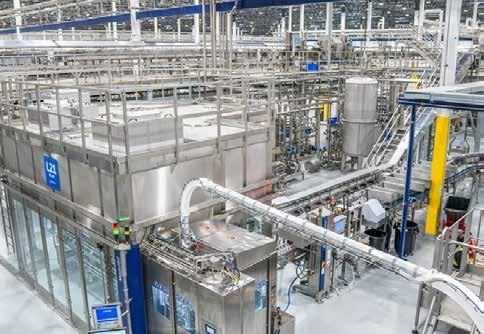
Siemens is collaborating with DrinkPAK, one of North America’s largest canned beverage manufacturers, to automate its new, state-of-the-art manufacturing facility in Fort Worth, Texas.
and allow for intelligent power monitoring to ensure reliable, high-output performance and energy efficiency.
“Innovation isn’t just about technology –it’s about how the right technologies work together to solve business challenges. Our collaboration with DrinkPAK unites advanced automation, intelligent infrastructure and flexible financing to create a truly integrated solution,” said Chris Stevens, president, Siemens Digital Industries. “By enabling DrinkPAK to automate complex logistics, maximize uptime and scale efficiently, Siemens turns the promise of digital transformation into measurable results: greater efficiency, reliability, and safety for our customers.”
In addition, DrinkPAK integrated Siemens advanced automation components, including PLCs and HMIs, into its Automatic LaserGuided Vehicle (AGV) systems. These systems are supplied by DrinkPAK’s intralogistics partner, E80 Group, to automate pallet movement throughout the warehouses and support truck loading and unloading operations.
Siemens technology plays a critical role in ensuring this automation runs smoothly and reliably. Siemens’ PLCs handle critical control
and communication functions with each AGV, ensuring precise coordination with sensors, drives and safety systems. The HMIs provide operators with clear, intuitive visibility into system performance, diagnostics, and status updates to minimize downtime and enable predictive maintenance.
“This project demonstrates the power of combining technology with tailored financing. Our role is to make innovation accessible, supporting DrinkPAK with solutions that align investment with performance, and enable scalable, sustainable growth,” said Oleg Rakitsky, Head of Siemens Financial Services Commercial Finance Americas.
By leveraging Siemens’ proven industrial automation platform, DrinkPAK benefits from a system that is highly integrated, scalable and easy to maintain. The consistency and interoperability of Siemens’ hardware across the plant floor ensures seamless coordination between vehicles, warehouse systems and production lines, translating to greater efficiency, higher reliability, and safer operations.
Application report by Siemens Learn More
The latest additions to the SensoControl Controller family deliver faster response times and higher accuracy while bringing measurement to a new state-of-the-art level.
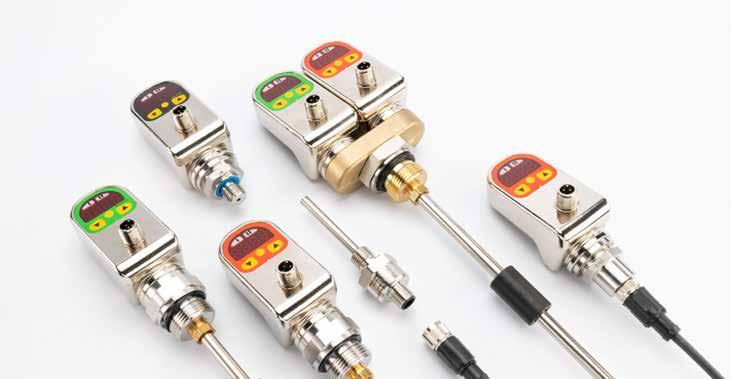
The extended SensoControl controller family includes four variants covering a wide range of pressure, level, temperature and process monitoring tasks.
Parker Hannifin has announced the expansion of its SensoControl portfolio with a new generation of controllers and switches, further strengthening its position in intelligent monitoring and control for fluid power and industrial applications within automotive industrial manufacturing, off-road machinery for agriculture and power generation.
Designed and manufactured in Germany and backed by more than 20 years of SensoControl product heritage, the new, updated controller family delivers faster response times, higher measurement accuracy and robust IP67/ industrial design to support more stable, efficient and reliable systems in demanding environments.
“The latest SensoControl Controller Family delivers faster response times and higher accuracy and brings measurement to a new state-of-the-art level”, said Konstantin Reichtner, product manager at Parker Hannifin. “With IO-Link on every version and a new 0–10 V option, we give our customers a modern, flexible platform that simplifies integration and supports global machine concepts.”
The extended SensoControl controller family includes four variants – SCLTSDI, SCLSDI, SCTSDI and SCTSDI-Modular – covering a wide range of pressure, level, temperature
and process monitoring tasks, from compact standalone use to modular, scalable system designs. All variants share a standardized platform with VDMA-based menu navigation, harmonized parameter structures and IO-Link as standard, making it easier for OEMs and end users to implement consistent, future-ready architectures. In parallel, the additional 0 –10 V output option ensures straightforward integration into established analogue systems, while the robust, industrial-grade design across the entire range enables reliable operation in diverse applications and markets worldwide.
SCLTSDI is a combined digital level and temperature switch with IO-Link, multiple probe lengths up to 1000mm and analogue (0–20/4–20 mA) plus the new 0–10 V output option for highly flexible tank monitoring. This makes it particularly suitable for industrial and mobile hydraulic tanks where both level and temperature must be monitored precisely in a single compact device. SCLSDI is a digital level-only switch with IO-Link, various installation lengths and optional analogue/0–10 V output, providing a costefficient, easy-to-integrate solution when temperature is measured separately – for example in distribution, OEM machinery and power generation reservoirs where simple, reliable level detection is key.
SCTSDI is a digital temperature switch with an integrated probe in several lengths, IO-Link and fast, precise temperature monitoring for direct installation in the process. Its robust industrial design helps ensure stable operation in applications such as air and gas compressors, industrial machinery and automotive test stands where accurate, dynamic temperature control is essential. SCTSDI-Modular is a modular temperature switch for PT1000 sensors, offering a wide temperature range, a compact IP67 housing and IO-Link connectivity for robust, decentralized temperature control. This modular approach supports flexible integration into agricultural and mobile equipment, as well as distributed thermal management in power generation and larger industrial systems.
With this extended SensoControl controller family, Parker Hannifin underscores its role as a trusted partner for OEMs and end users seeking reliable, scalable and easy-tointegrate monitoring and control solutions. Customers benefit from a proven, Made-inGermany platform that combines long-term heritage with modern connectivity and standardization.
Parker Hannifin
TwinCAT CoAgent translates natural language into machine commands for physical AI. MX-System Designer offers a web-based engineering tool that supports the planning of control cabinet-free automation systems.
The integration of physical AI marks a paradigm shift in the manufacturing industry. Establishing a direct link between AI models and deterministic control technology allows machines to do more than just process static commands – it helps them create contextspecific, autonomous responses to sophisticated requirements. Using the AI tool TwinCAT CoAgent and an audio interface for voice commands, Beckhoff illustrates how simple and intuitive collaboration between humans and machines will be in the future, allowing users who are not programming specialists to perform complex automation tasks.
This scenario will be shown as a fully integrated industrial application at Hannover Messe. The ATRO modular industrial robot system, which is programmed and controlled using TwinCAT CoAgent for Operations using voice commands, will take center stage here. Based on the Model Context Protocol (MCP), the control system acts as an intelligent agent that translates human speech into machine commands, orchestrates path planning, and performs diagnostic tasks. The physical AI application will be showcased using a fun approach: the exhibit will play chess against visitors.
With tools such as TwinCAT CoAgent and TwinCAT Machine Learning Creator, Beckhoff already offers an ecosystem that facilitates this new era of automation. The tools support machine builders throughout the entire life cycle – from code generation in engineering through to error analysis during operation.
Beckhoff’s MX-System Designer is a web-based engineering tool that supports the planning of control cabinet-free automation systems. This tool can be used to configure actuators, I/O modules, drive technology, and power supply in a structured manner and to complete a technical evaluation of key aspects of the electrical system design ahead of time during the planning stage.
With the MX-System, Beckhoff has redefined the hardware architecture of machine automation so that it is control cabinet-free. The MX-System Designer now supplements this architecture with a planning tool that maps and technically evaluates the electrification of control cabinet-free machines in a structured manner ahead of time in the initial stages of the project phase. Machine builders can use
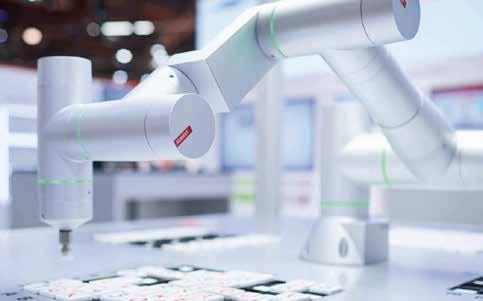
TwinCAT CoAgent translates natural language into machine commands and enables intuitive control of complex mechatronic and Physical AI systems.
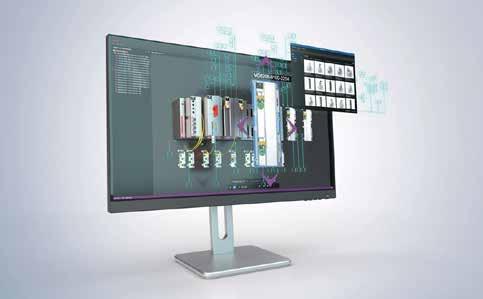
MX-System Designer from Beckhoff offers a web-based engineering tool for structured planning to support the planning of control cabinet-free automation systems.
it to model and validate the electrification of modular systems – from energy supply to connected peripherals.
The MX-System Designer is not a conventional product configurator. As such, it is not designed to support the selection of individual components but rather to facilitate structured planning of the electrical architecture of a machine. First, actuators, motors, and sensors are defined based on the machine function. This in turn defines drive module, I/O module, and communication
interface requirements. After this, how these functions are distributed to baseplates and how the energy supply is structured are determined. Rather than a control cabinet, it is the entire electrification of the machine that is planned – from energy supply through power and I/O levels and beyond to connected peripherals.
Learn More
New BRS-5G solution from Belden aims to deliver deterministic wireless communication, supporting seamless expansion and synchronization for advanced factory automation.
Belden Inc. has presented a potentially groundbreaking demonstration of what it claims is the world’s first 5G industrial switch specifically designed for use on the factory floor. The BRS-5G industrial switch, powered by Qualcomm Technologies, was unveiled as a concept at Hannover Messe last week, the world’s leading trade fair for the manufacturing industry.
In industrial settings, reliable communication is crucial. Private 5G technology, known for its extremely dependable and fast connections, now brings this level of precision to wireless factory operations. This means manufacturers could easily add more sensors and machinery to their existing facilities without the expense and hassle of installing new cables. The solution is designed to ensure that critical factory devices communicate instantly and smoothly, meeting the strict demands for quick responses and perfect timing, especially for synchronizing complex machinery.
The centerpiece of this demonstration is the BRS-5G, the world’s first 5G industrial switch. This innovative switch builds upon
Belden’s trusted Bobcat Rail Switch (BRS) technology, integrating advanced 5G capabilities through a collaboration with Qualcomm Technologies. It’s designed to work seamlessly with all major industrial communication standards, supporting compatibility across diverse factory equipment. Visitors at Hannover Messe saw a live conveyor belt system showcasing how sensors and drives communicate flawlessly in real-time, powered by a dedicated private 5G network.
The Snapdragon® X72 5G Modem-RF System with industrial features is a key component, making it possible for industrial Ethernet to operate directly over 5G networks. This crucial technology transforms industrial Ethernet over 5G from a concept into a practical, ready-to-deploy solution for the first time, opening new possibilities for factory connectivity.
“The BRS-5G industrial switch represents a significant leap forward for industrial automation,” said Vinod Rana, VP, Global Products. “By combining Belden’s proven industrial networking expertise with cutting-edge 5G technology, we’re
delivering a solution that not only simplifies factory expansion but also ensures the ultra-reliable, real-time communication that modern manufacturing demands. This switch, supporting all major industrial protocols, is a testament to our commitment to empowering industries with the most advanced and flexible connectivity solutions.”
“Our collaboration with Belden is bringing the power of 5G directly to the factory floor,” said Jeff Arnold, VP & GM, Auto Telematics and Consumer/Connectivity, IE-IOT. “The Snapdragon® X72 5G Modem-RF System with industrial features is at the heart of this innovation, enabling native Ethernet over 5G and making this groundbreaking technology a practical reality for industrial applications. This collaboration underscores our dedication to driving the next generation of industrial connectivity, offering manufacturers unprecedented flexibility and performance.”
Belden
Learn More
Siemens Industrial AI Suite and WinCC Unified now offers general availability with enhanced cybersecurity, IEC 62443-4-2-certified security functions and air-gapped operation for critical infrastructures.

SOURCE: SIEMENS
the “Smart Systems Verified – Platinum” certification, evaluating six key categories: connectivity and interoperability, control and automation, digital experience, functional value, resilience, and cybersecurity.
The Industrial Information Hub has been fundamentally expanded. The data management solution enables bidirectional data flow: data models can now be synchronized in parallel between edge devices and central IT systems in both directions. This opens up new IT/OT integration scenarios. In addition, the new version of the Industrial Information Hub is available on ARM-based devices such as the SIMATIC IOT2050, which can, for example, be operated on battery power, with LTE-based wireless networking planned for a future release.
Siemens has announced significant expansions to its Industrial Edge ecosystem, accelerating data and AI integration and releasing enhanced cybersecurity functionalities. These enable a seamless integration of IT and Operational Technology (OT) environments, optimize processes and reduce operational disruptions.
“Siemens Industrial Edge is evolving into a comprehensive platform that combines AI, security and ecosystem innovation,” says Dr. Horst J. Kayser, CEO Factory Automation at Siemens Digital Industries. “This gives our customers greater operational flexibility, simplified IT/OT integration and certified security for critical operations – all from one scalable platform.”
The Industrial AI Suite, based on Industrial Edge, is now generally available. It simplifies the entire AI lifecycle and enables embedding industrial AI via a complete infrastructure, easily scaling AI models and managing them across locations. The Industrial AI Suite supports a wide range of AI-based applications such as predictive maintenance and visual inspection to reduce downtime and sustainably increase production quality. In the latest version, the Industrial AI Suite also enables significantly more effective AI model retraining by allowing customers to combine image data with production data
from MES systems or controllers.
The Industrial AI Suite, based on Industrial Edge, is now generally available.
Monitoring and data acquisition with SCADA systems is now possible in a decentralized manner via Industrial Edge: WinCC Unified is now generally available, and WinCC Open Architecture is now available as an Edge App and for the virtual PLC (SIMATIC S7-1500v).
Industrial Edge Management version 2.0 combines a redesigned, more user friendly and efficient user interface with enhanced data management and security for distributed infrastructures. At the same time, the platform now supports additional hypervisors such as OpenShift and Hyper-V, enabling Siemens Industrial Edge to be operated flexibly on existing IT infrastructures. Siemens thus bridges the requirements of both the IT and OT worlds.
IEC 62443-4-2-certified security functions for critical infrastructures, including air-gapped operation in which systems are physically isolated from external networks, are targeted for release in the second half of 2026 and are expected to provide enhanced cybersecurity. The high security and data management capabilities have been independently confirmed. Testing institute UL Solutions has awarded Siemens Industrial Edge and the virtual PLC
Thanks to energy-efficient operation, this also means edge applications can be implemented at locations without permanent power supply. These innovations are particularly relevant for decentralized SCADA applications in logistics, water and waste management, or for renewable energy.
New partner solutions are also expanding the Industrial Edge ecosystem. Together with 36Zero Vision, MVTec and Basler, solutions are being developed in the areas of machine vision and quality inspection. From AI-driven defect detection and no-code image processing to modularly deployable image processing and analysis functions, companies can integrate machine vision use cases into manufacturing in a scalable manner.
OnLogic is joining the Industrial Edge ecosystem to deliver powerful capabilities in the harshest industrial environments. Through the compatibility of OnLogic’s rugged industrial PCs with Siemens Industrial Edge, the partnership brings secure, centrally managed digitalization to Oil & Gas, challenging manufacturing environments, and remote edge locations that require high-performance computing in the field.
Siemens Digital Industries
Learn More
Latest evolution of Gridscale X provides a unified platform and shared digital foundation, enabling utilities to run their grid closer to technical limits.
Siemens has announced the next evolution of its Gridscale X platform at the Grid Software Summit in Amsterdam. Gridscale X provides the digital foundation for utilities to manage their grids at greater speed, and complexity at scale. Siemens also unveiled the next generation of PSS E on Gridscale X, introducing advanced AI-powered, agentic capabilities to the transmission planning software.
As utilities face rising demand and growing system complexity, both transmission planning and grid operations are being pushed beyond the limits of traditional approaches. Electrification, data centers, and AI-driven industries are scaling faster than anticipated, while renewables are injecting volatility that traditional grids cannot absorb. Meeting these challenges requires true system operations. A unified grid model and digital twin enables system-wide visibility to actively manage flexibility, reduce operational risks and operate grids closer to their technical limits with confidence – laying the foundation for autonomous, resilient grids.
“Gridscale X is the integral digital backbone that bridges long-term planning and real-time operations to enable true system operations,” said Sabine Erlinghagen, CEO of Siemens Grid Software. “The platform can support selfdeveloped applications, enabling utilities to migrate their own applications onto Gridscale X to run and scale them on a shared grid
model, integrating their innovations directly into system operations workflows. We are delighted that this has already been deployed by Alliander in The Netherlands.”
Dutch network operator Alliander, a strategic partner of Siemens, is the first utility to integrate its custom-built applications directly into the platform. Since announcing the partnership in 2024, Alliander has expanded medium-voltage grid coverage from 65 percent to 100 percent, migrated 85 applications onto Gridscale X, and achieved a 30 percent leaner IT landscape. This demonstrates how a shared digital backbone can unlock grid capacity, reduce complexity, and scale at speed.
Extending the same platform and shared grid model principles into transmission planning, Siemens has taken a major step toward unlocking the future of agentic transmission planning, unveiling the next generation of PSS E on Gridscale X. The software introduces new AI-powered capabilities that deliver the speed, transparency, and scalability required for resilient, sustainable, and autonomous grids. By combining proven simulation with domain-specific AI-automation and a new user experience, the software accelerates planning studies and workflows, expands team capacity, and improves decision-making end
to end. Supported by over 2000 open APIs with automation capabilities, Gridscale X PSS E enables seamless integration, powerful automation, and the foundation for digital twin-based planning.
The latest release directly supports data center and large load integration scenarios, enabling planners to assess, prioritize, and respond to connection requests with significantly greater speed and transparency. A redesigned, cloud-native user experience streamlines workflows and automation for connection studies, cutting response times by up to 50 percent and helping transmission operators manage surging demand while maintaining system reliability.
“For more than 50 years, PSS E has been widely regarded as the benchmark for transmission planning, trusted by planners around the world,” added Erlinghagen. “We are incredibly proud to build on that foundation with the next generation of PSS E. By introducing AI-powered, agentic capabilities and a modern user experience, we are giving planners the tools they need to tackle growing complexity, work faster under increasing time pressure, and lead the next era of transmission planning with confidence.”
Siemens
SOURCE: SIEMENS
Learn More
Wireless I/O modules offer dual-band Wi-Fi connectivity to link sensors and actuators to control networks.
Acromag announced new BusWorks® NTW Series Wireless I/O modules. These units expand the popular NT Ethernet I/O family with secure Wi - Fi connectivity for remote monitoring and control applications. The NTW Series enables engineers and system integrators to connect sensors and actuators to control systems without running network cabling for applications where wiring is difficult or costly. Each NTW module combines Acromag’s proven NT modular I/O architecture with dual-band 2.4 GHz and 5 GHz Wi-Fi communication based on IEEE 802.11 a/b/g/n standards.
NTW communication modules support a full range of NTX expansion I/O modules, allowing users to append additional channels or signal types. Up to 64 I/O points can be managed over a single IP address. Available I/O options include discrete I/O, analog voltage or current, and temperature, enabling customized signal mixes at each installation point.
NTW models include an Ethernet RJ45 port, allowing units to be daisy-chained when a wired connection is preferred or available. This hybrid approach gives users flexibility to deploy wired or wireless networking as application requirements evolve.
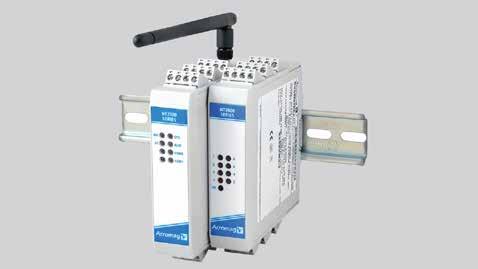
The NTW Series supports common industrial Ethernet protocols including Modbus TCP/ IP and EtherNet/IP, along with peer-to-peer communication. NTW modules also support IIoT connectivity, including OPC UA and MQTT, with a built-in RESTful API for integration with modern data systems.
Security features include WPA3 Wi - Fi
security, TLS 1.2 with PKI and X.509 certificate management, and AES 256-bit encryption to help protect data transmitted over wireless networks.
GT8A slim electronic timer relay saves control panel space and provides multiple functions.
IDEC Corporation has added two new GT8A series slim electronic timer relays to their comprehensive timer relay product line. The small form factor and extensive capabilities of the GT8A make it an excellent choice for new, retrofit, or replacement applications.
250V AC or 24V DC at 16A resistive load, depending on the model.
The GT8A is available in both one-contact single pole double throw (SPDT) and two-contact, double pole double throw (DPDT) versions, and the contacts can handle up to
At just 17.5mm wide, and using direct DIN rail mounting without needing a socket, the GT8A requires less footprint space and can be installed more quickly than conventional devices, especially in applications where a combination of products would otherwise be needed to perform the function. The compact form factor helps users optimize limited control panel space, and this direct integration makes it easy to install, wire, and replace the relay. Ten timing functions—on delay, on for a set interval, flicker (starting off), flicker (starting on), off delay, single shot, once at a set interval, on and off delay, cyclical, and pulse—cover a variety of operational needs. In addition, ten timing ranges and ten time settings, including permanently on or off, let users choose operational timings ranging from 0.1 seconds up to 10 days. Configuration is easy to perform using three rotary selector switches, each of which is inset to prevent inadvertent operation.
IDEC Corporation Learn More
Single-cable technology for data and power, up to 12 Gbit/s over distances up to 12 meters.
Rosenberger is expanding its portfolio with HySpeedVision (HYV), a hybrid connector solution for machine vision systems in automation and robotics. The system combines power and data transmission in a single interface and is available as a PCB connector as well as a cable assembly. Typical application areas for this hybrid connection solution include robotics, automation, quality control, security, and medical technology.
At the heart of this approach is the consistent reduction of interfaces. Instead of separate lines for power supply and data transmission, HySpeedVision enables a singlecable solution. This reduces cabling effort, saves installation space, simplifies integration, and simultaneously increases system reliability – especially in dynamic applications.
HySpeedVision supports high-speed serial protocols such as GMSL™ (versions 1–3), FPD-Link™, APIX® , ASA Motion Link, and USB. Additional protocols are available upon request. With GMSL3, data transfer rates of up to 12 Gbps are achieved over distances of up to 12 m.
Unlike Ethernet-based solutions, these technologies use deterministic point-to-point connections, ensuring minimal latency and
high process reliability. These characteristics are particularly relevant for applications where image data is used directly to control machines and robots.
HySpeedVision is designed for use under demanding conditions and meets requirements
such as drag chain compatibility and torsional strength.
DEFEM mesh trays for greater efficiency and flexibility in cable routing.
Automation specialist LÜTZE has expanded its cable solutions portfolio with DEFEM mesh trays as a versatile and practical solution for structured cable routing in industrial applications. The system is suitable for wall mounting, floor and ceiling installations and can be flexibly adapted to a wide range of installation situations.
A key advantage of the DEFEM mesh trays is their high degree of adaptability: bends, risers and reducers can be formed on site from standard-length elements. This eliminates the need for numerous prefabricated accessories, simplifies planning, reduces inventory, and significantly speeds up installation.
DEFEM mesh trays are available in 4 different surface treatments, from electro-galvanized and hot-dip galvanized versions to stainless steel V4A and V2A. They are manufactured with high-quality, uniform welds and comply with the Norsk Veritas offshore standard.
LÜTZE offers a comprehensive range of DEFEM mesh trays in widths of 53 – 622 mm, in various heights and for special applications, as well as extensive accessories, e.g. for Cat. 5/6 installations. The trays also feature the
unique DEFEM B1 and B2 tabs, which prevent the tray from moving horizontally or during installation. The design of the mesh trays is consistently focused on safety and userfriendliness. Specially shaped, rounded wire ends as well as smooth and robust welding points ensure reliable protection for both
installers and cables. At the same time, the rugged design guarantees high mechanical load-bearing capacity in daily use.
LÜTZE
New PSRcompact safety relays from Phoenix Contact offer efficiency and higher safety levels. The XT product range has been extended to include terminal blocks with a nominal cross-section of 4 mm².
A new generation of PSRcompact safety relays from Phoenix Contact offer compactness, efficiency and safety up to SIL 3 and PL e.
Phoenix Contact is further extending its portfolio of safety relay modules with the new PSRcompact safety relay. The product family provides up to five enabling current paths in one space-saving housing. This makes the devices ideal for use in modern machine building and systems manufacturing concepts.
The PSRcompact devices are compatible with all relevant sensor types including emergency stops, safety doors, and light grids. A special feature is the extended operating temperature range of up to 60°C, which also makes the components suitable for use in harsh environments. The products can be installed easily and efficiently thanks to the Push-in connection technology. No additional software is required for commissioning the safety relays. The modules are ready for immediate use without any further effort. The Digital Twin 4 Industry Code allows users to call up specific product information quickly and easily. This code is located directly on the device for scanning.
In the field of functional safety, PSRcompact is an economical and intuitive solution. The safety relays are TÜV-certified up to SIL 3 or PL e and are also suitable for retrofit projects.
New terminal blocks from Phoenix Contact offer a nominal cross-section of 4 mm² and enable consistent, tool-free wiring for conductor cross-sections from 0.34 to 25 mm².
Phoenix Contact is extending its XT product range to include terminal blocks with a nominal cross-section of 4 mm². This enables consistent, tool-free wiring for conductor cross-sections from 0.34 to 25 mm².
The new feed-through terminal blocks have all the advantages of the innovative Push-X technology: They enable the wiring of all conductor types, whether rigid or flexible, even without ferrules. The factory pre-tensioned contact spring ensures ease of use and makes connecting particularly easy. The clear visual and acoustic identification of the conductor connection ensures additional safety and clear handling.
The orange actuating push button allows for easy release of the conductor and pre-tensioning of the spring. With a nominal current of 32 A and a nominal voltage of
The PSRcompact devices are compatible with all relevant sensor types.
New feed-through terminal blocks have all the advantages of the innovative Push-X technology.
500 V, the XT 4 terminal blocks are ideal for manual and automated wiring processes. Phoenix Contact therefore provides a complete solution for wiring different conductor cross-sections – quickly, safely, and efficiently.
Phoenix Contact Learn More
Siemens has launched the Eigen Engineering Agent, its purpose-built AI for automation engineering, and it is now generally available.
Piloted with over 100 customers across 19 countries, the Eigen Engineering Agent is now generally available. Unlike generic AI tools, the Eigen Engineering Agent operates inside real engineering systems, with full awareness of each project’s context and constraints. With this understanding, it is able to execute automation engineering tasks like PLC coding, Human-Machine-Interface (HMI) visualization, and device configuration, while meeting industrial standards for correctness, safety, and reliability.
Agent is bringing purpose-built AI to industrial automation engineering. SOURCE:
As industrial innovation cycles tighten and shortages of skilled engineers persist, the Eigen Engineering Agent frees engineers to focus on higher-level system challenges, without compromising accuracy or reliability. It completes AI-powered workflows two to five times faster than manual alternatives, with up to 80 percent higher solution quality and 50 percent greater engineering efficiency.
“As demand outpaces capacity, automation engineering is becoming a bottleneck,” said Vasi Philomin, Executive Vice President and Head of Data and AI at Siemens. “Manufacturers are under pressure to deliver increasingly complex systems faster, while skilled engineering resources remain constrained. With the Eigen Engineering Agent, we are delivering automation logic that meets each customer’s standards, so engineers can take on more complex projects, faster. This product signals a fundamental shift from AI that makes suggestions to AI that actually completes work. In industrial environments, this difference determines the value AI can create.”
While advancements in AI have shown promise, off-the-shelf AI tools produce broad suggestions that engineers must manually translate to their specific projects. This process introduces errors and often takes as long as doing the work from scratch. To minimize risk, automation engineers need tools that understand their project context and conform to their organization’s specific standards.
The Eigen Engineering Agent seamlessly connects to TIA Portal, Siemens’ Totally Integrated Automation engineering platform, giving it complete contextual understanding of every assigned project. It references the project’s data structures, blocks, parameters, and component relationships, so it can deliver immediately usable outputs tailored to what engineers are actually building – even on
legacy or undocumented systems.
This contextual understanding also transforms onboarding. A large automotive line builder found that new engineers spent weeks learning project structure and component relationships before they could contribute. With the Eigen Engineering Agent, new team members could query the project directly. A request like “Show me all blocks controlling Station 3” returned an immediate, accurate response. As a result, onboarding time dropped from weeks to days.
Before presenting results to the engineer, the Eigen Engineering Agent validates all outputs. It breaks down complex tasks, executes them step by step, evaluates its own performance against the project’s requirements, and iterates until the work is ready for review. This is the difference between broad AI suggestions and automation logic tailored to each customer’s environment.
“The connection of the Eigen Engineering Agent to our TIA Portal is another step toward our vision of ‘automating automation.’ By enabling goal-driven, agentic engineering workflows, we’re eliminating repetitive effort for automation engineers while significantly increasing their productivity. This marks an important shift for our customers from manually executing tasks to orchestrating outcomes across the entire engineering workflow,” said Rainer Brehm, Chief Technology Officer and Chief Operating Officer for Automation at
Siemens Digital Industries.
The Eigen Engineering Agent takes its name from the German word “eigen.” While the word translates to “one’s own,” engineers know it best through concepts like “eigenvalues”, which are properties that remain constant even as everything around them transforms. As the AI landscape transforms rapidly and physical AI matures, the Eigen Engineering Agent is designed to be that constant: a steady source of intelligence, rooted in Siemens’ industrial heritage and capable of carrying out real work.
Siemens piloted the Eigen Engineering Agent with over 100 companies in 19 countries. U.S.-based Prism Systems used the Eigen Engineering Agent to create, modify, and import SCL code, reducing the process to seconds. “Tools like ChatGPT showed us how powerful AI can be, and engineers quickly recognized their potential,” said John Elias, President at Prism Systems. “The challenge has been bringing that capability into real industrial workflows. Siemens’ latest tools help close that gap, allowing us to apply AI in a way that truly supports engineering and automation.”
Siemens
Visit Website

The best of both worlds ... the in-depth technical features our readers expect, but now also a daily blog with the latest product news and industry updates.
The Industrial ethernet magazine has been rebranded Industrial Ethernet, but it's still the only publication worldwide dedicated to Industrial Ethernet automation and machine control networking, the IIoT and Industry 4.0. The difference is a deepened focus on a daily blog to deliver more and deeper content (more product news, industry updates and technology focus) to keep our readers fully informed ... while also delivering the Industrial Ethernet magazine they have come to expect.