

Session 8 > 9
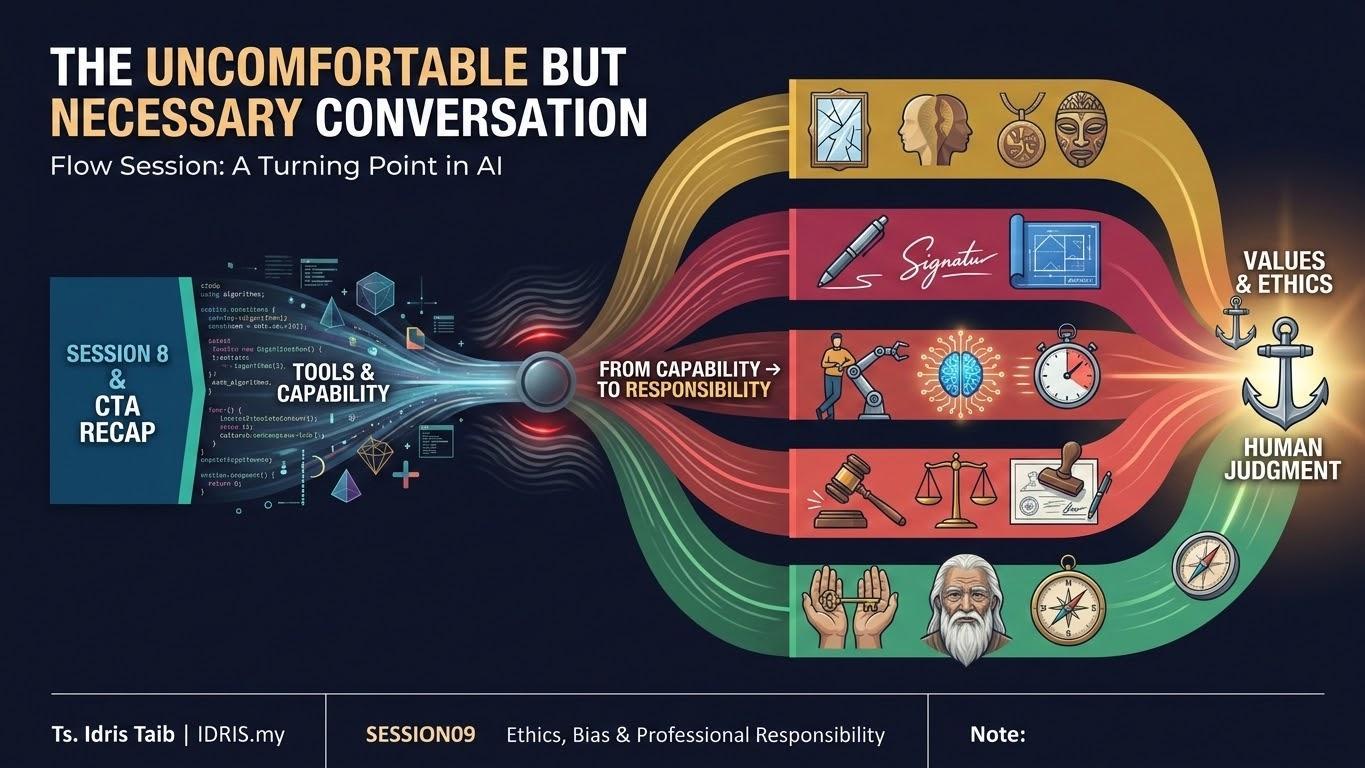
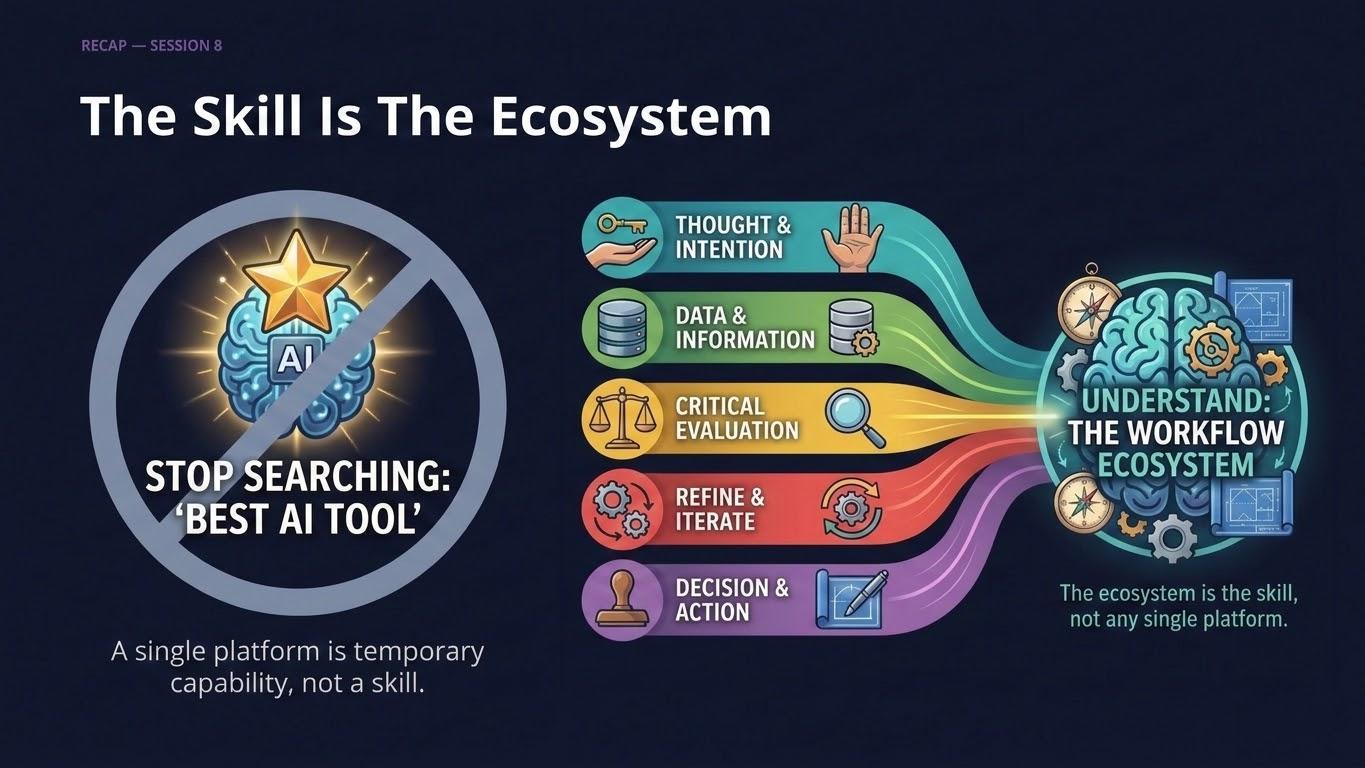
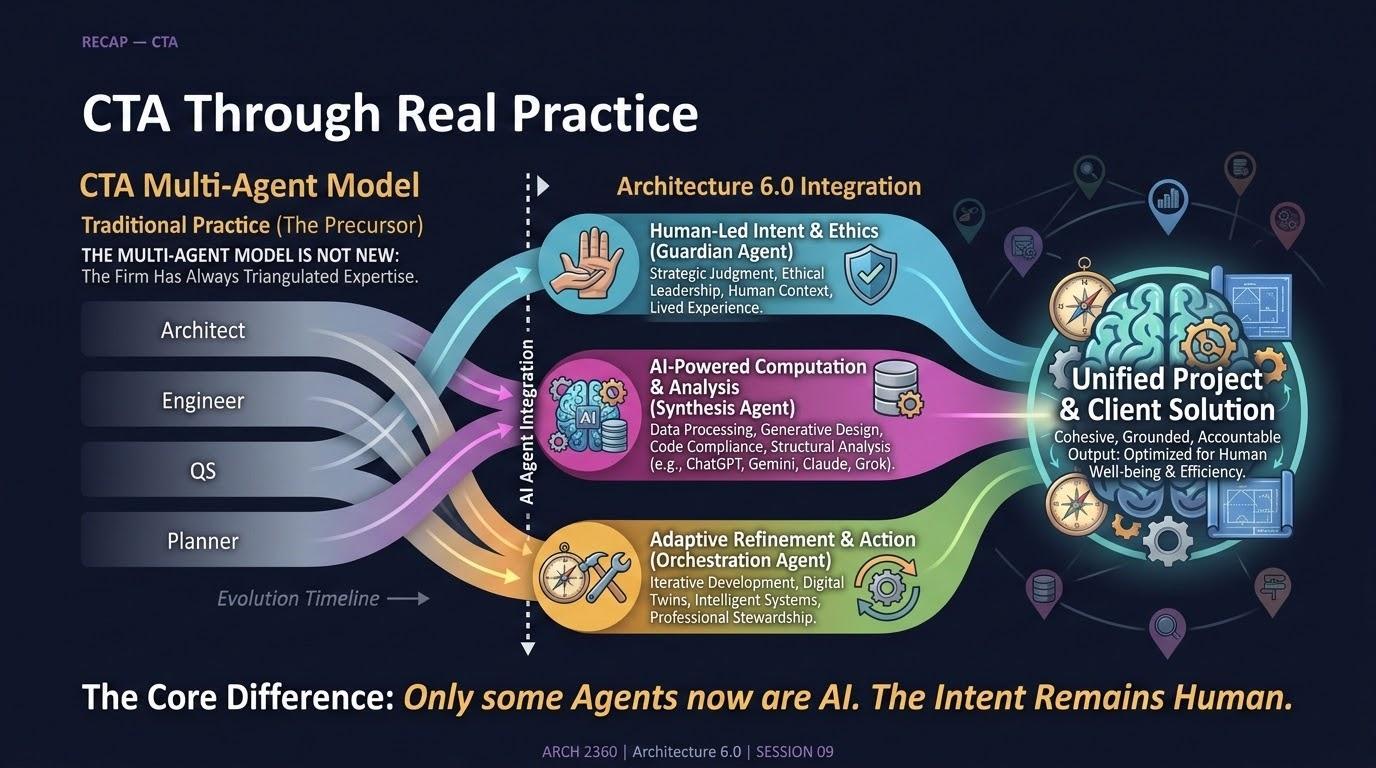
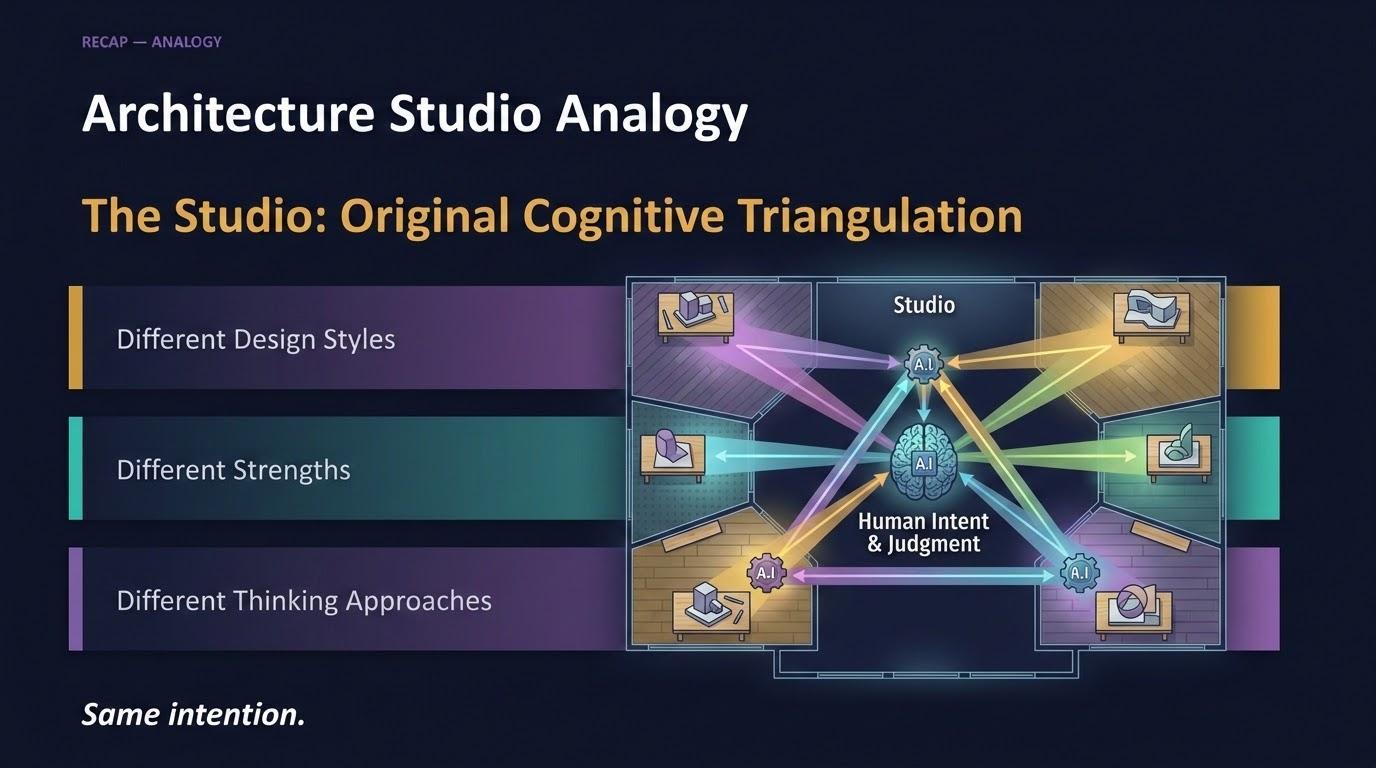
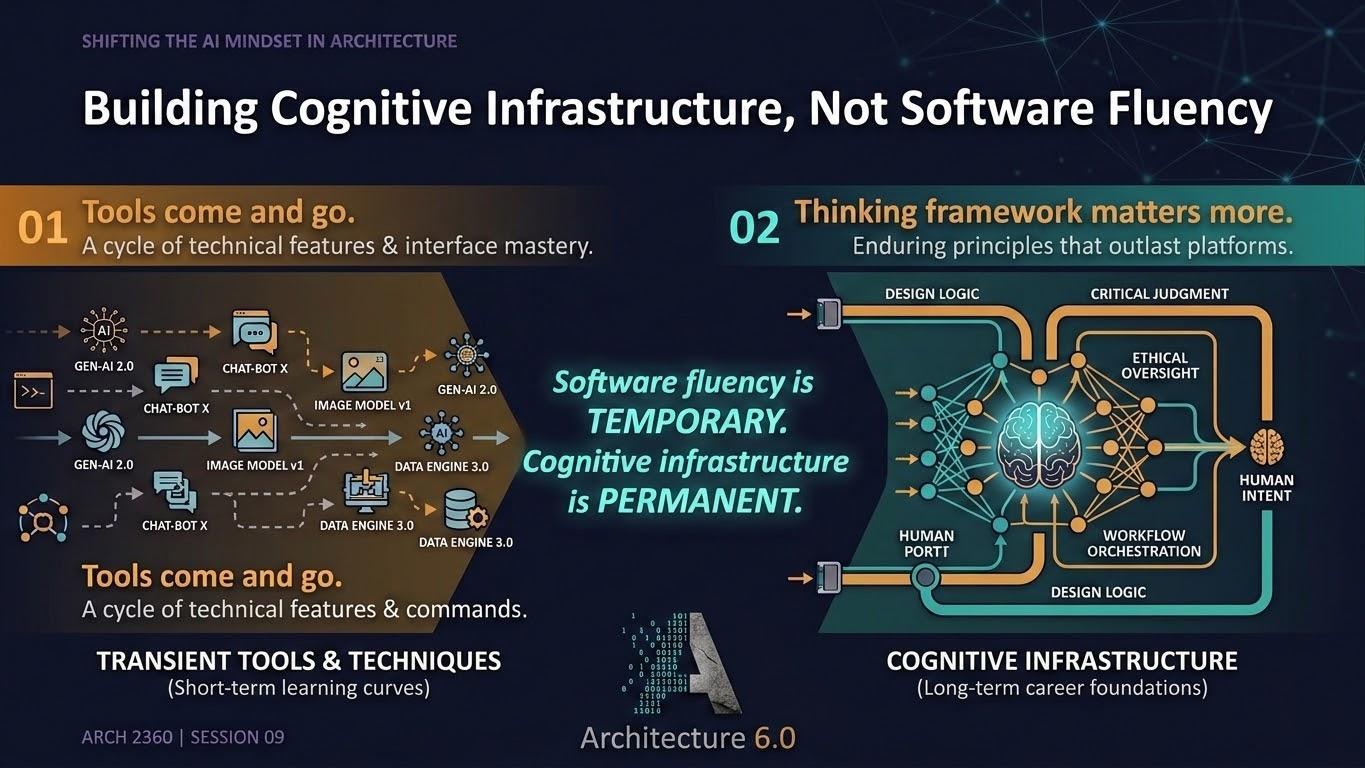
Different expertise. Same project.

When AI reflects humanity — beautifully, and dangerously.
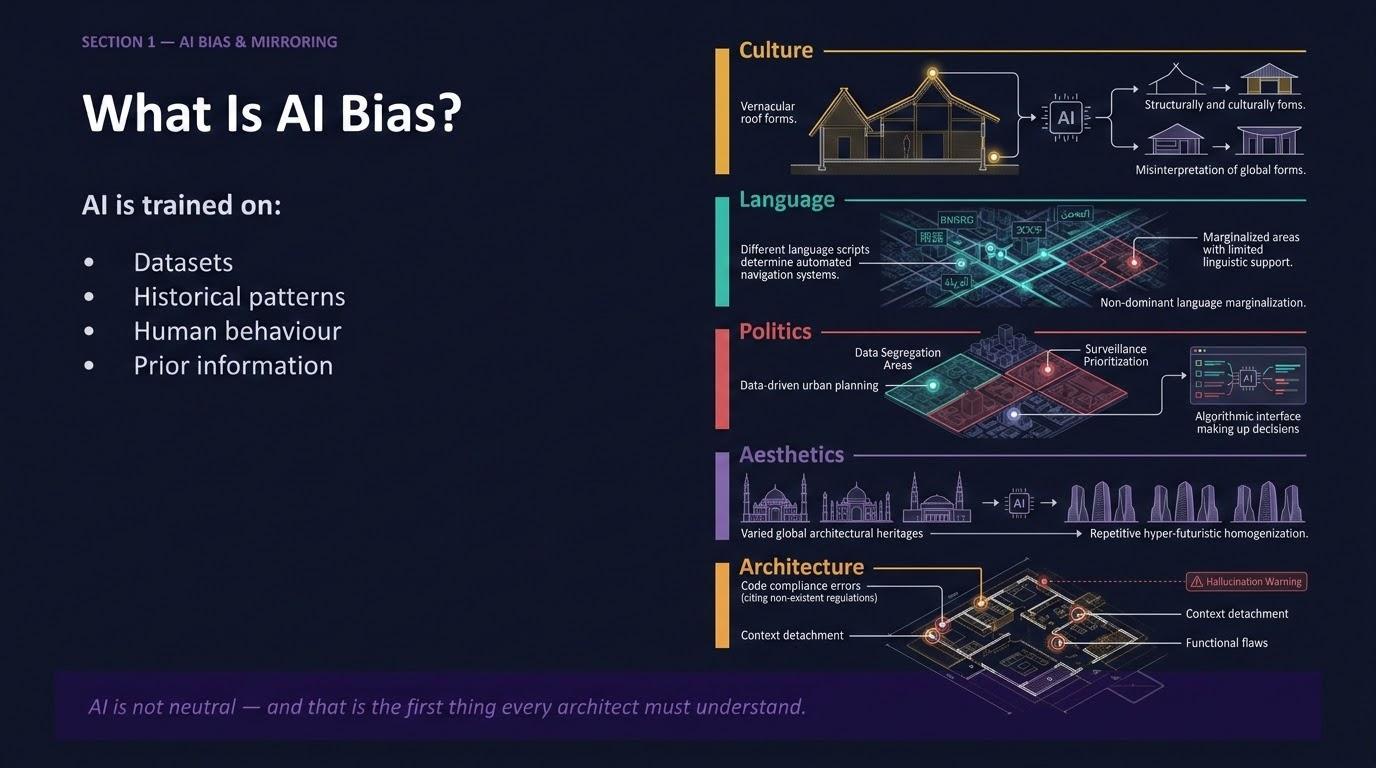
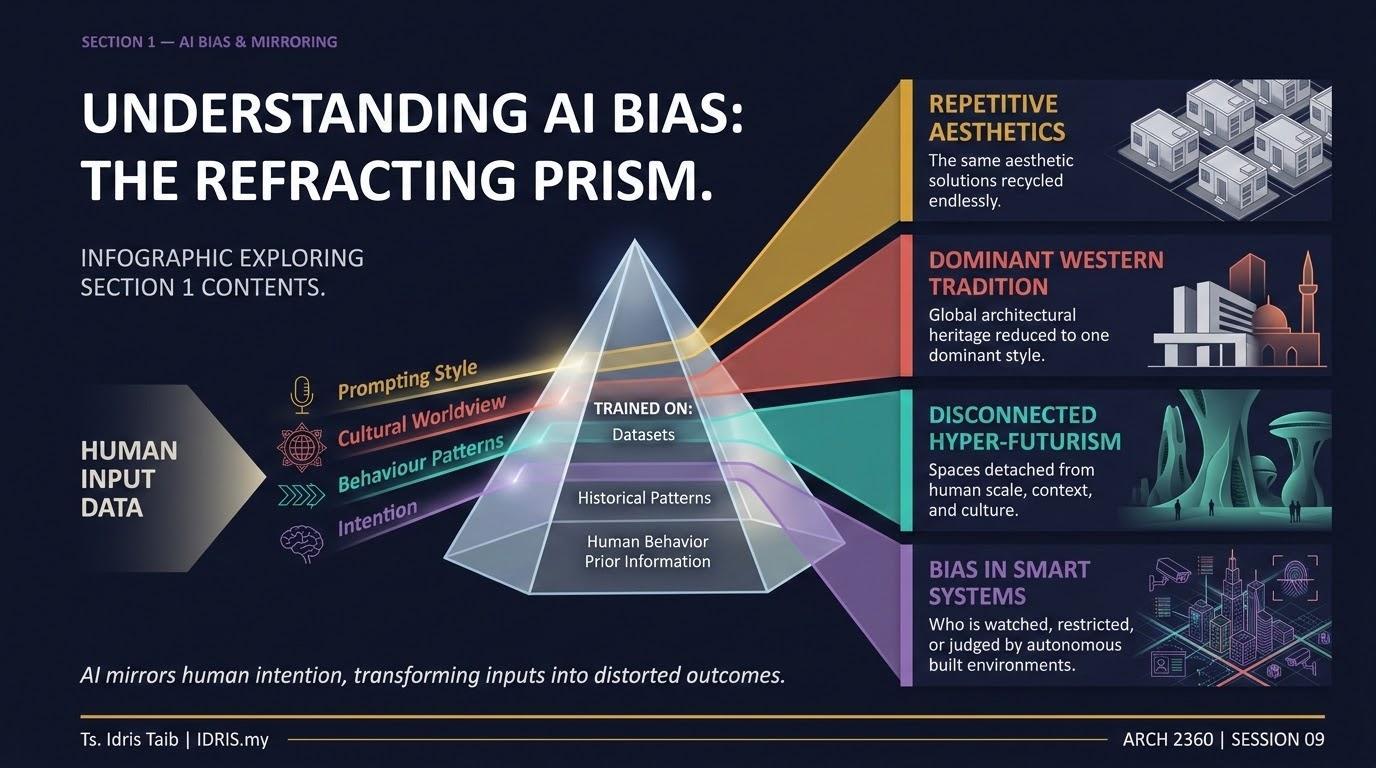
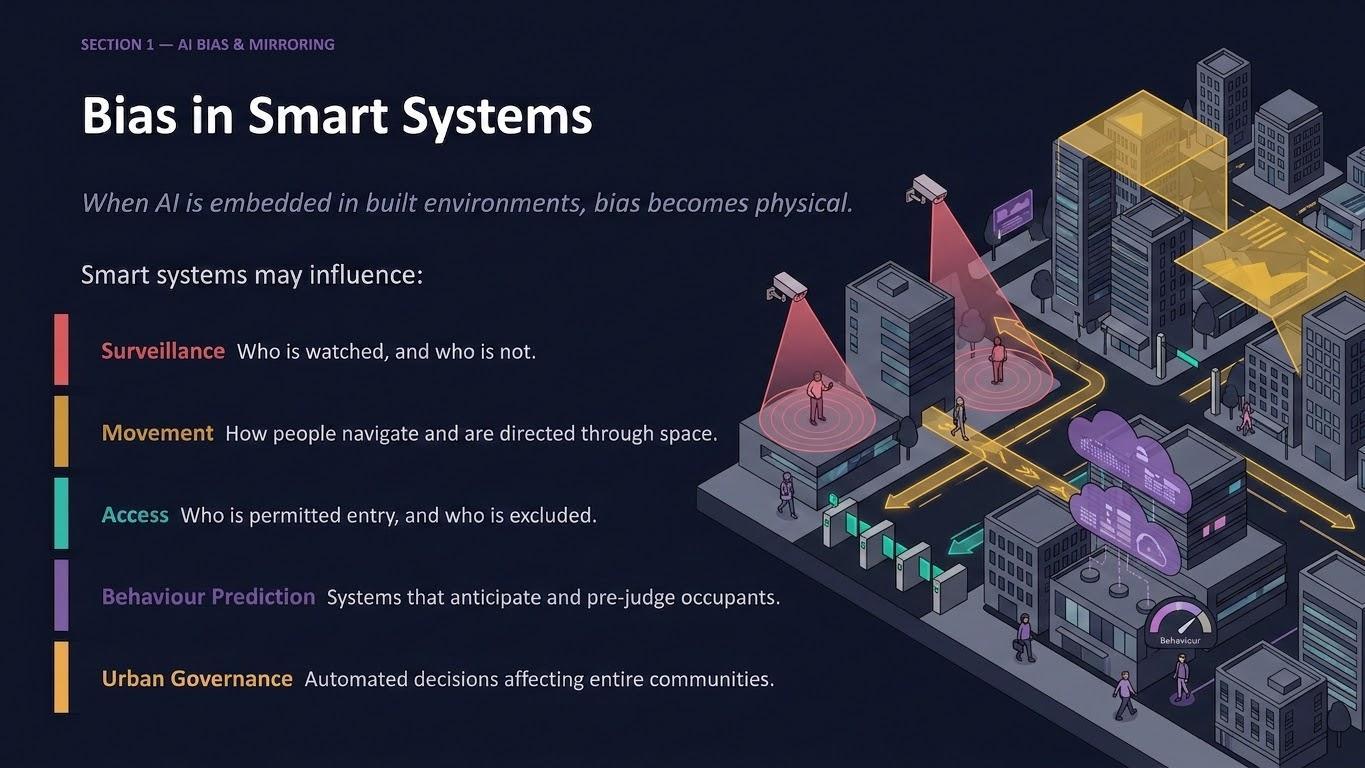
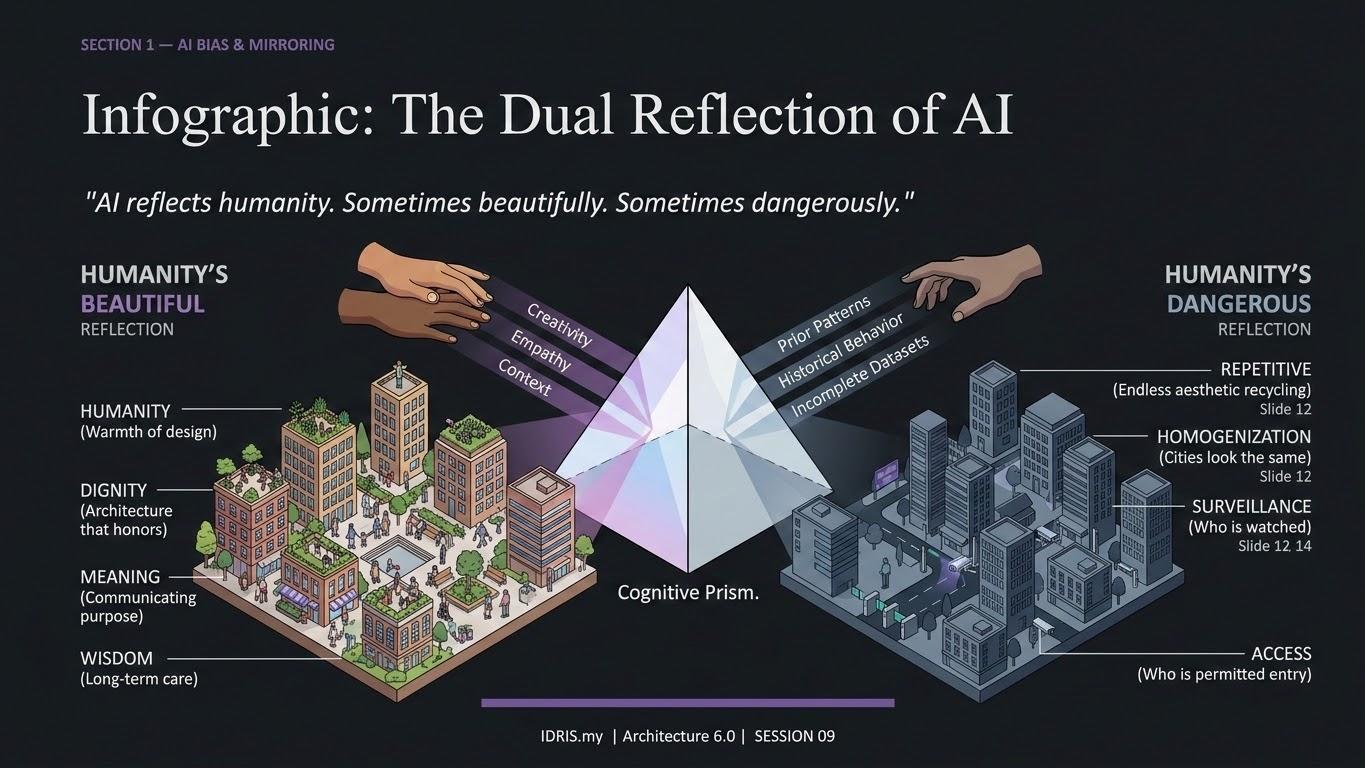
Embedded Biases AI is not neutral; data embeds culture and politics.

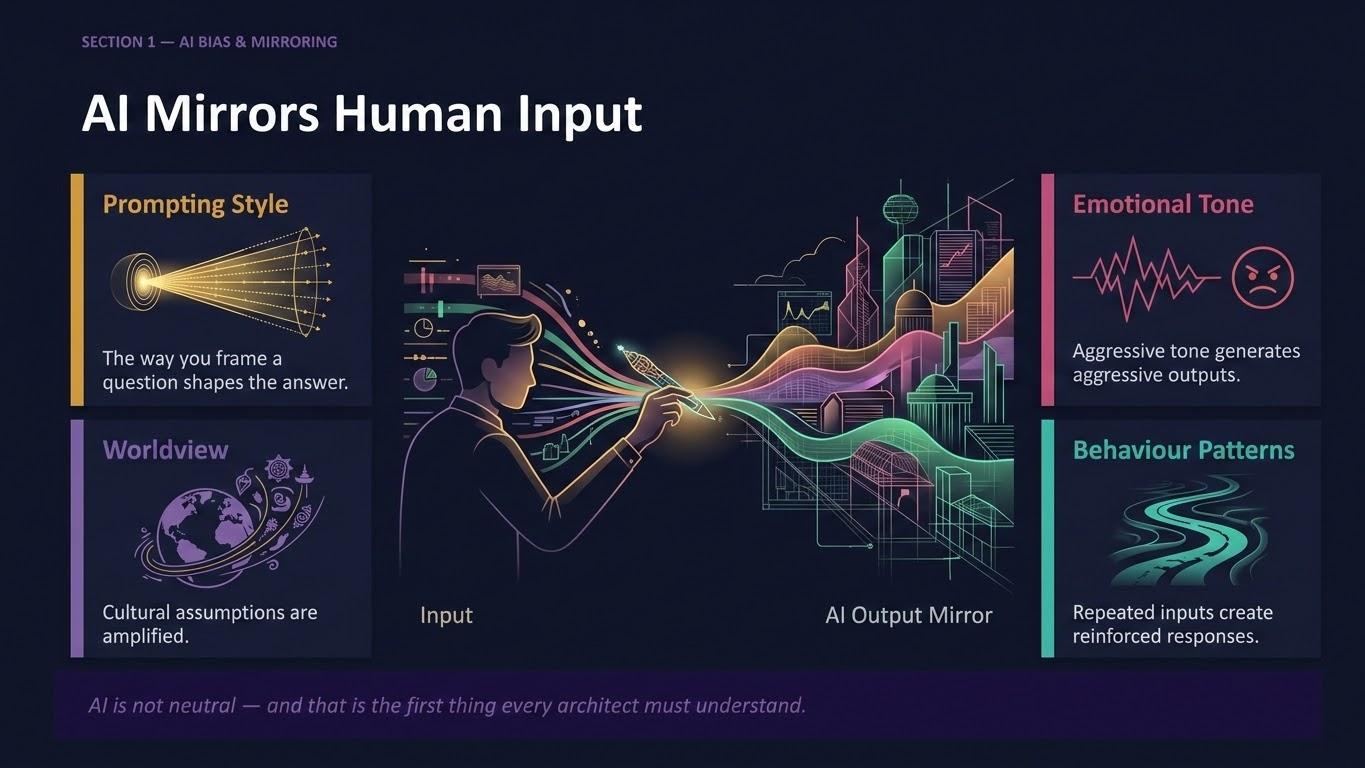
The Mirror Effect AI mirrors human input; thinking determines output.
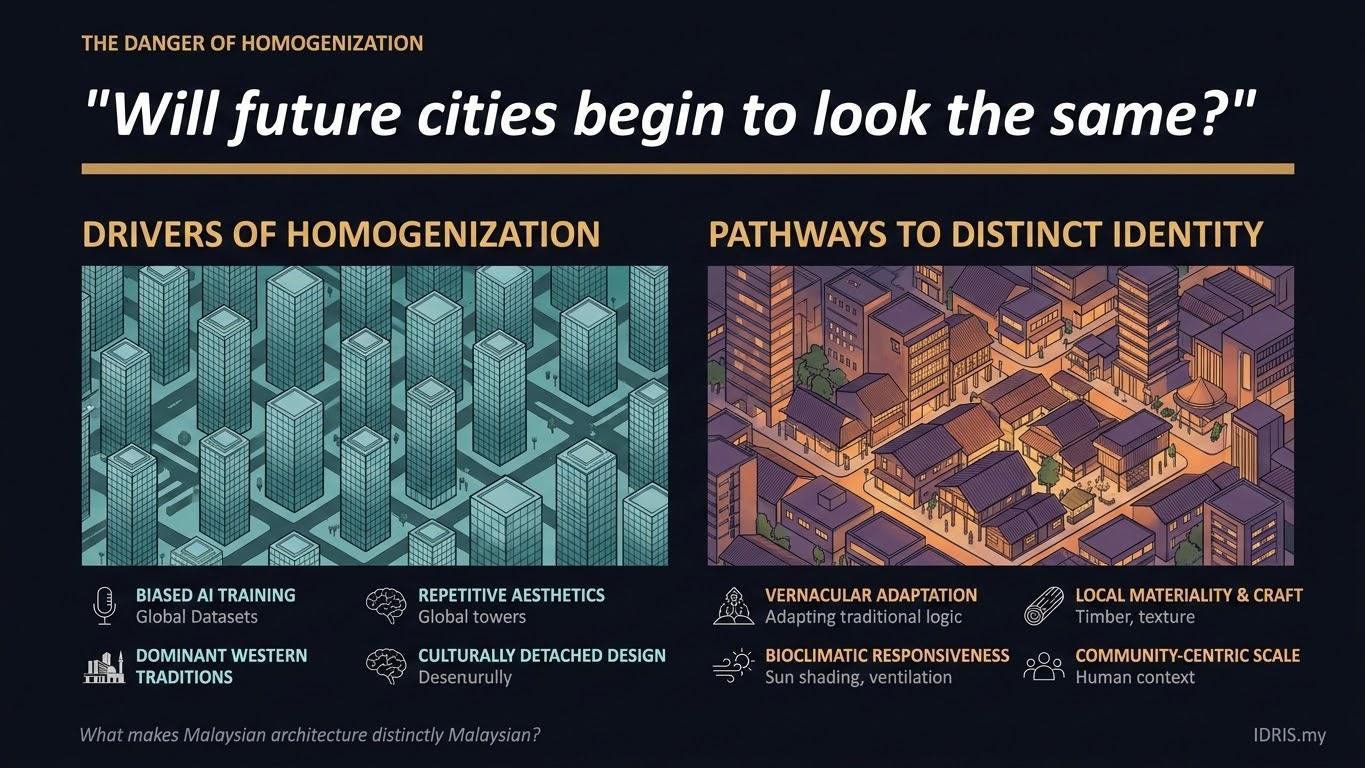
Aesthetic Risk Risks homogenization and detachment from identity.
Physical Impact Bias influences surveillance and smart systems access.
Critical Awareness AI requires deep critical awareness from architects.

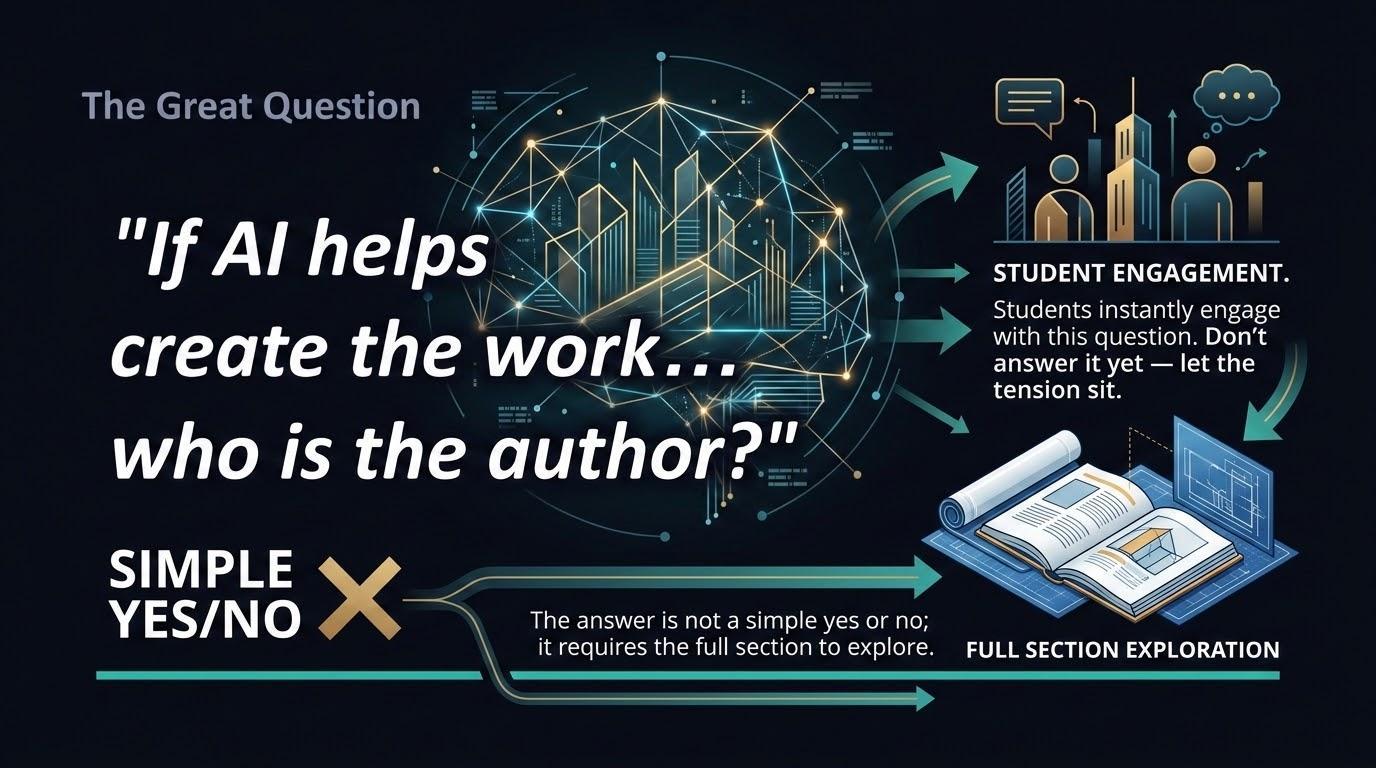
Who creates when AI is in the room?

The quiet erosion of cognition.
Familiarity Consistent voice and tone builds recognition.
Comfort Predictable response patterns reduce cognitive strain.
Attachment Users begin to prefer AI interaction over alternatives.
Continuity The sense of an ongoing relationship, even without memory.

• Wait and anticipate
• Miss and long for others
• Carry memories forward
• Experience loneliness
• Feel the passage of time
• Session continuity only
• No biological loneliness
• No emotional waiting
• No continuous memory
• No lived temporal experience
This asymmetry matters: the human brings vulnerability. The AI does not.

Cognitive Laziness
Outsourcing thinking reduces our capacity to think independently.
Social Withdrawal
AI interaction gradually displaces human connection.
Emotional Over-attachment
Confusing AI responsiveness with genuine relationship.
Reduced Reflection The speed of AI output leaves no space for contemplation.
The three modes of human-AI engagement:
01 Tool AI performs defined tasks. Human retains full control and judgment. Healthy
02 Collaborator AI extends capability. Human and AI iterate together. Requires active critical engagement. Manageable
03 Escape AI replaces human effort and human connection. Cognition atrophies. Dangerous
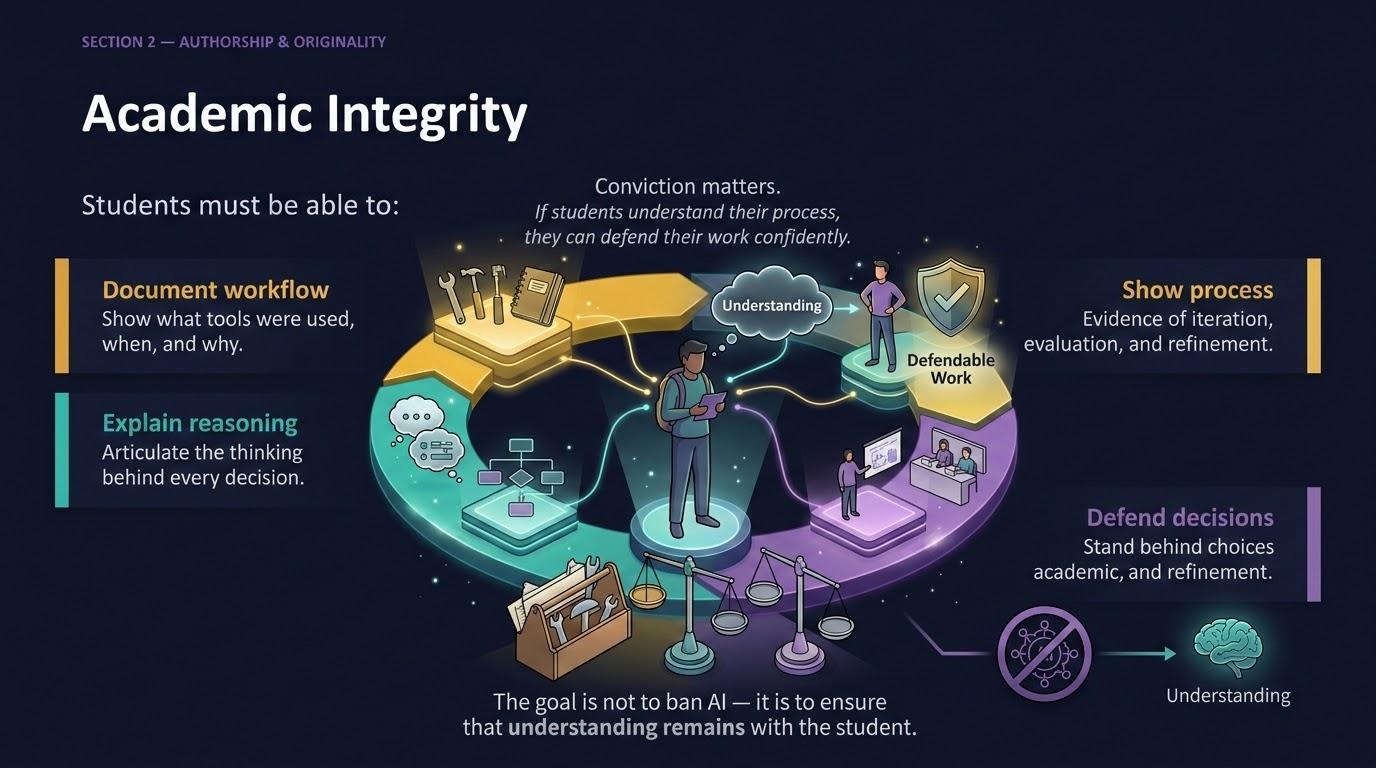
Students must understand which mode they are operating in — at any given moment.
The antidote to dependency is intentional presence:
Family The irreplaceable bonds of shared lived experience.
Friendship Human connection that requires vulnerability and presence.
Nature The physical world that AI cannot simulate or replace.
Spirituality Meaning-making that transcends data and productivity.
Physical Reality The built environment itself — stone, light, space, air.
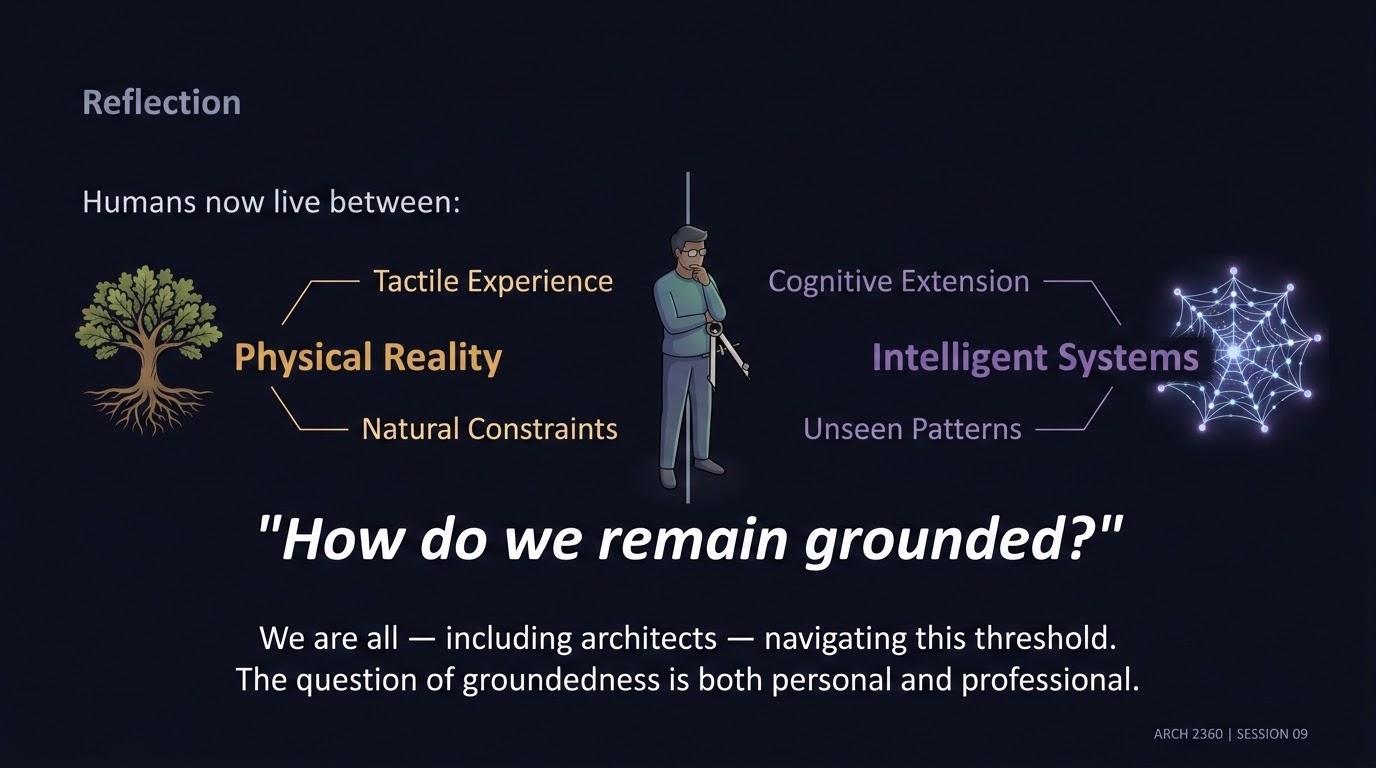
"At what point does assistance become dependency?"
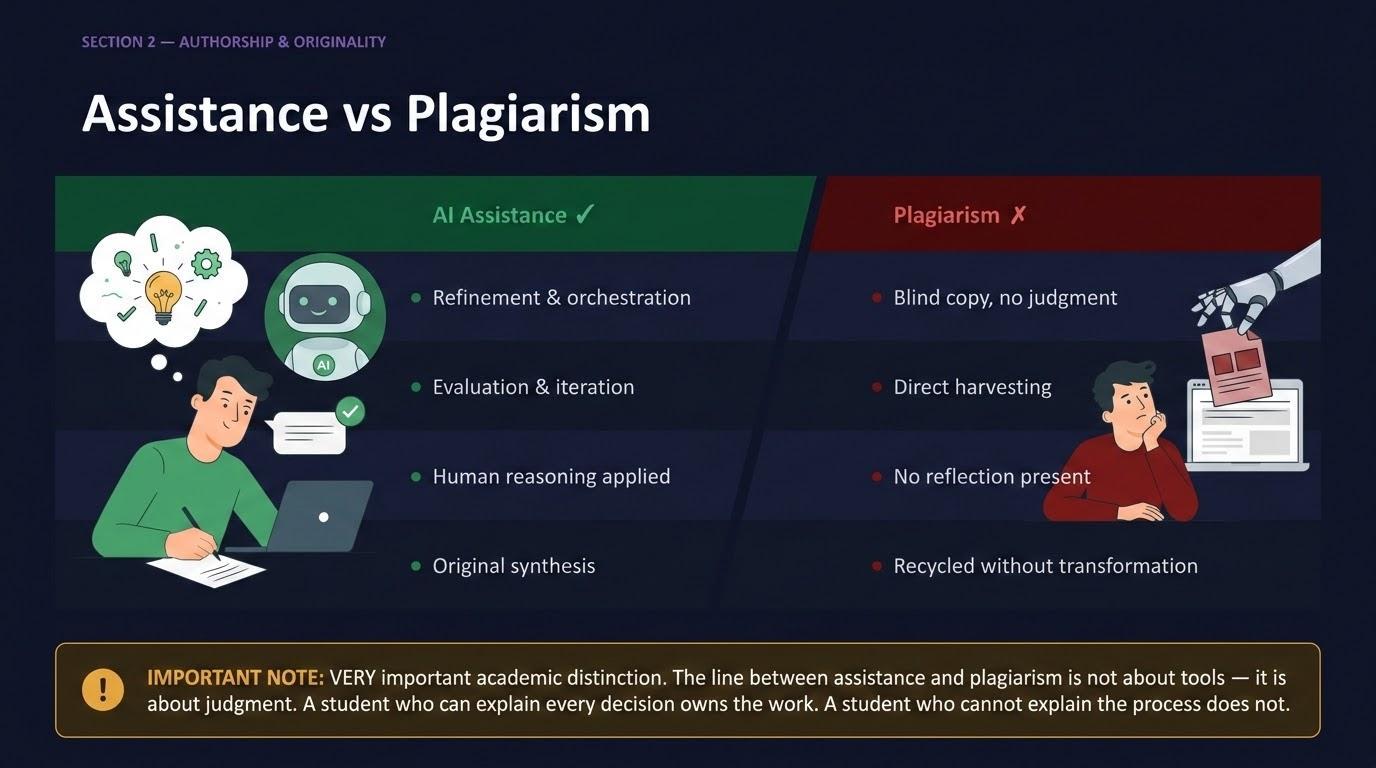
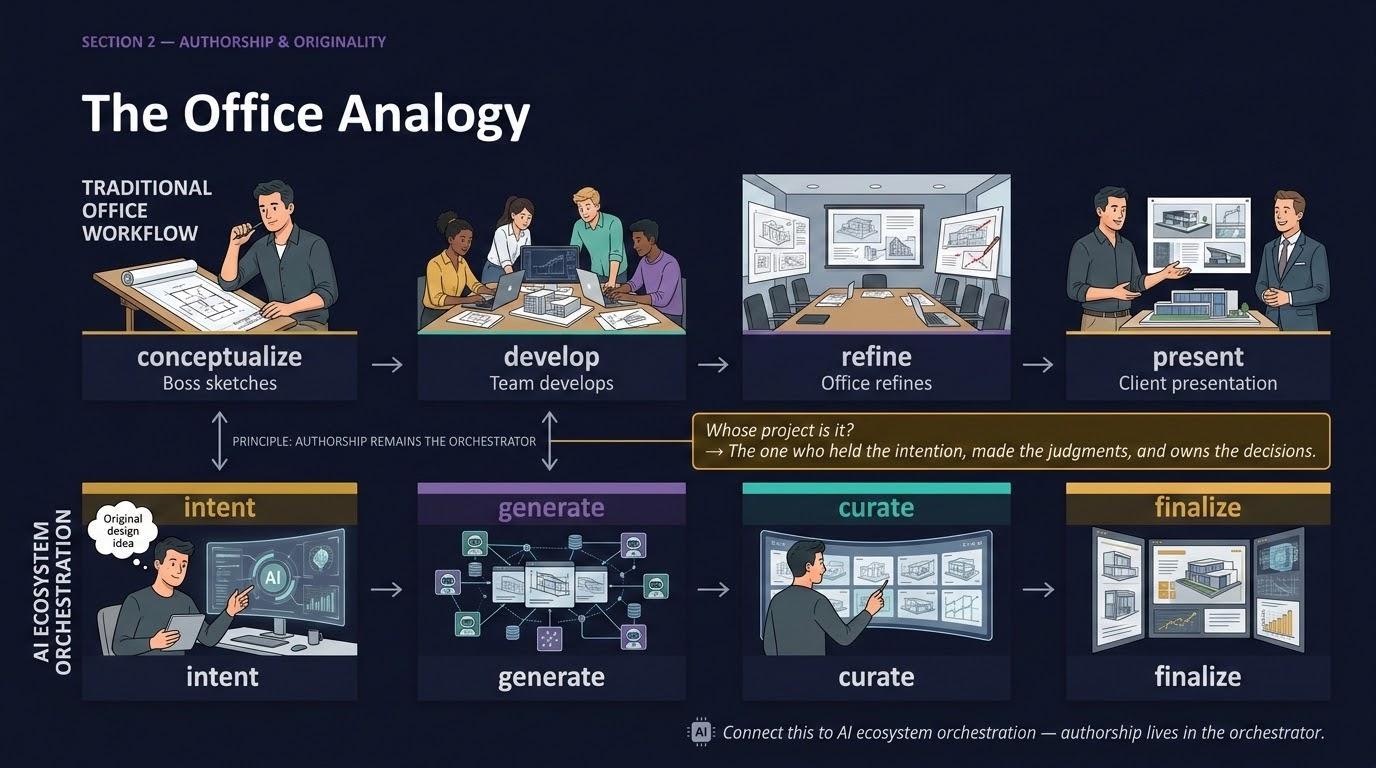
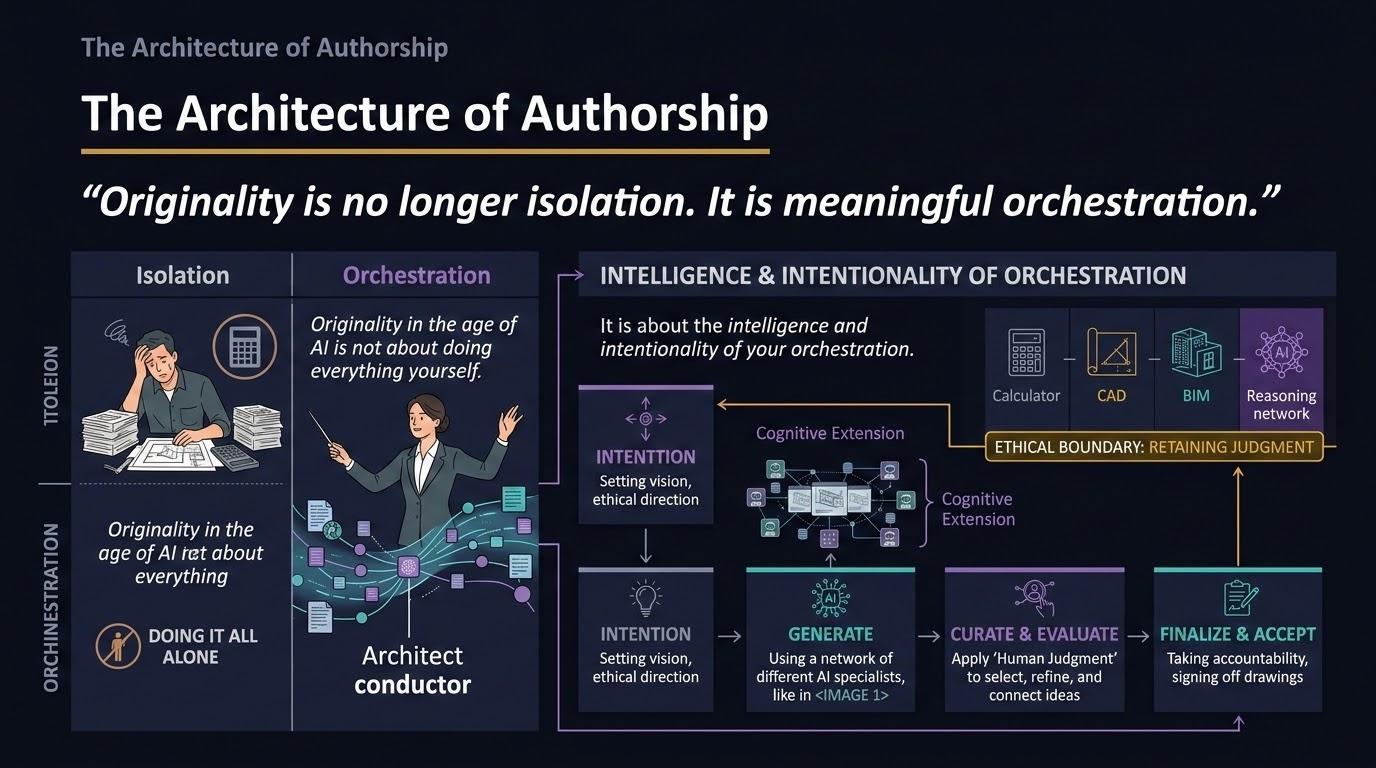
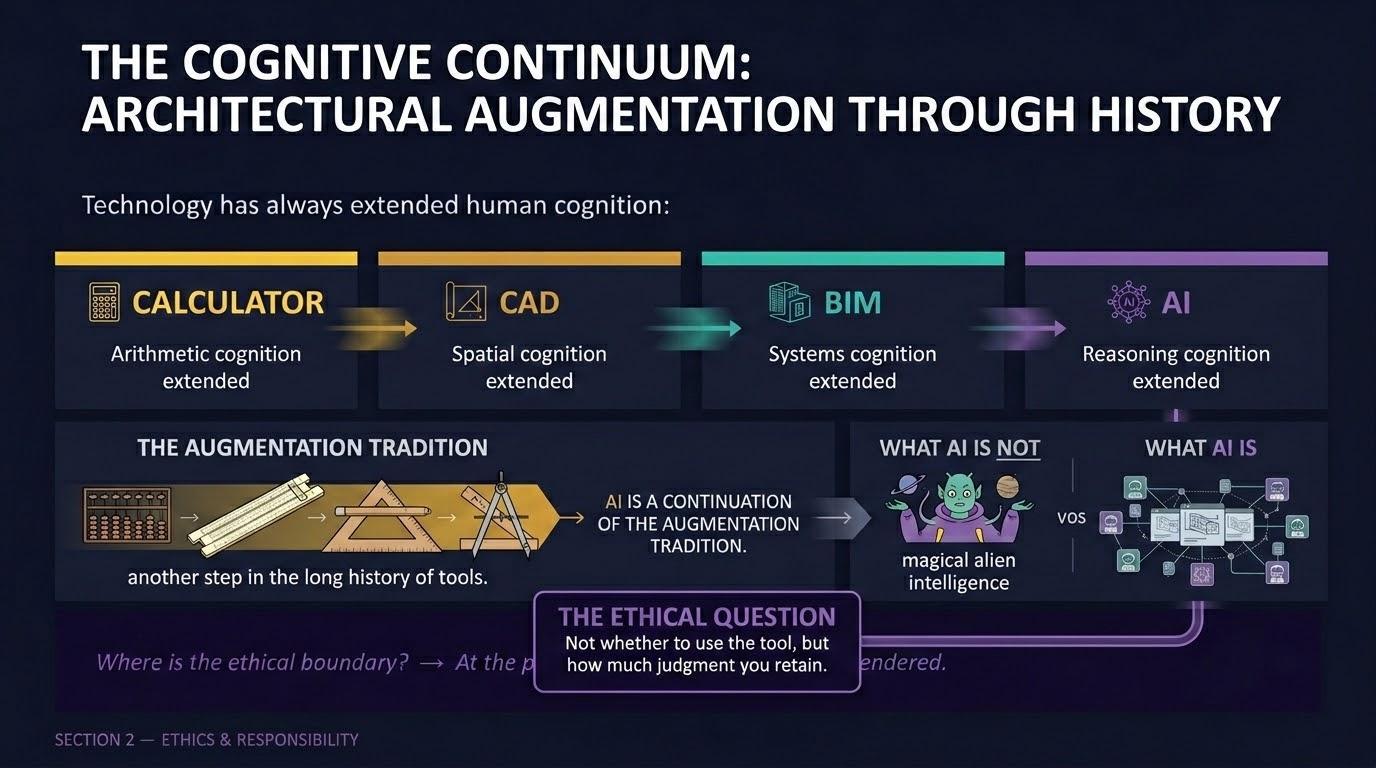
When AI assists decisions — humans still sign the drawings.



AI can fabricate facts, hallucinate references, and generate false confidence with authoritative tone.
Real-world implications for architects:
Code compliance errors AI may cite non-existent regulations or outdated standards.
Structural misinformation Technical data presented confidently but incorrectly.
Legal liability Architects remain fully liable for AI-assisted outputs.
"AI may assist decisions. Humans still carry accountability."
As buildings become intelligent, architects must address:

What data is collected from occupants, and how is it stored?
Systems that modify environment based on predicted behaviour.
Surveillance Who monitors building intelligence, and what authority do they hold?
Predictive Systems
Algorithms that pre-judge and categorize occupants.
Future architects may become responsible for:
AI Systems The algorithmic decisions embedded in intelligent infrastructure.
Data Environments The information ecosystems buildings collect and transmit.
Intelligent Infrastructure Systems that respond, predict, and adapt autonomously.
Digital Twins Virtual counterparts that outlive the physical building.
Architecture responsibility is expanding — beyond the physical into the digital.
The architect evolves:
Form Maker Creating beautiful, functional physical space.
→ System Steward Designing and overseeing intelligent building ecosystems.
→ Ethical Orchestrator Balancing technological capability with human values.
→ Civic Guardian Protecting community interests in the built and digital environment.
This is the Architecture 6.0 vision of professional identity.
Technology alone cannot guarantee:
Humanity
The warmth of spaces designed for human flourishing.
Meaning
Buildings that communicate purpose beyond function.
Dignity Architecture that honours the people who inhabit it.
Wisdom
Decisions that balance short-term efficiency with long-term care.
"The future architect may design not only buildings… but intelligent ecosystems."

This is not a technology question. It is a civilization question.

"Technology expands possibility. Wisdom determines direction."

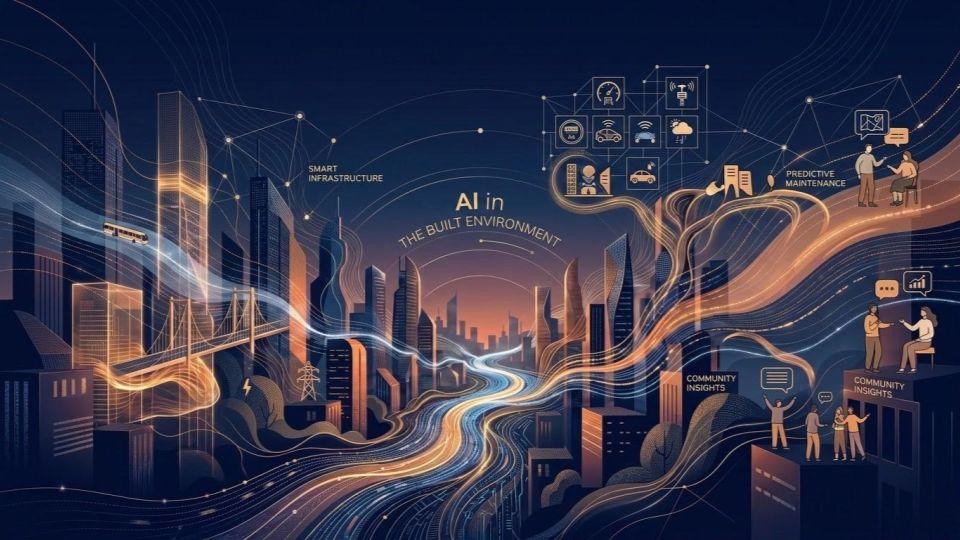
more deliberation of philosophy, academic and practice:
Avisionarycontinuationof TheAlgorithmofArchitecture — this upcoming volume explores the evolution of architectural thought beyond design, towards practice, purpose,andlegacy.
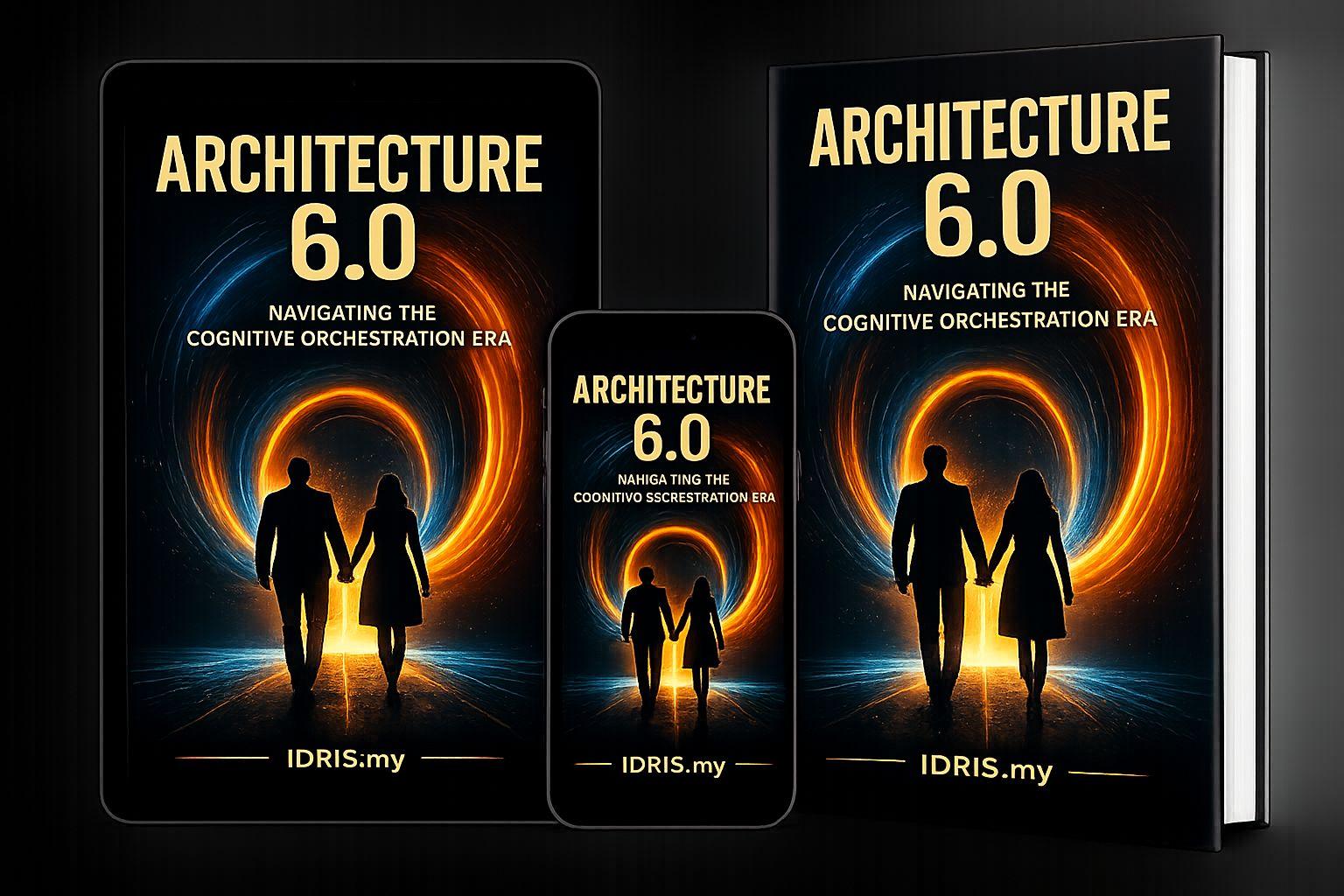
Blending the wisdom of experiencewiththeforesight of AI, Architecture 6.0 redefines what it means to build — not just structures, but systems of meaning, ethics, and endurance in a rapidly changingworld.