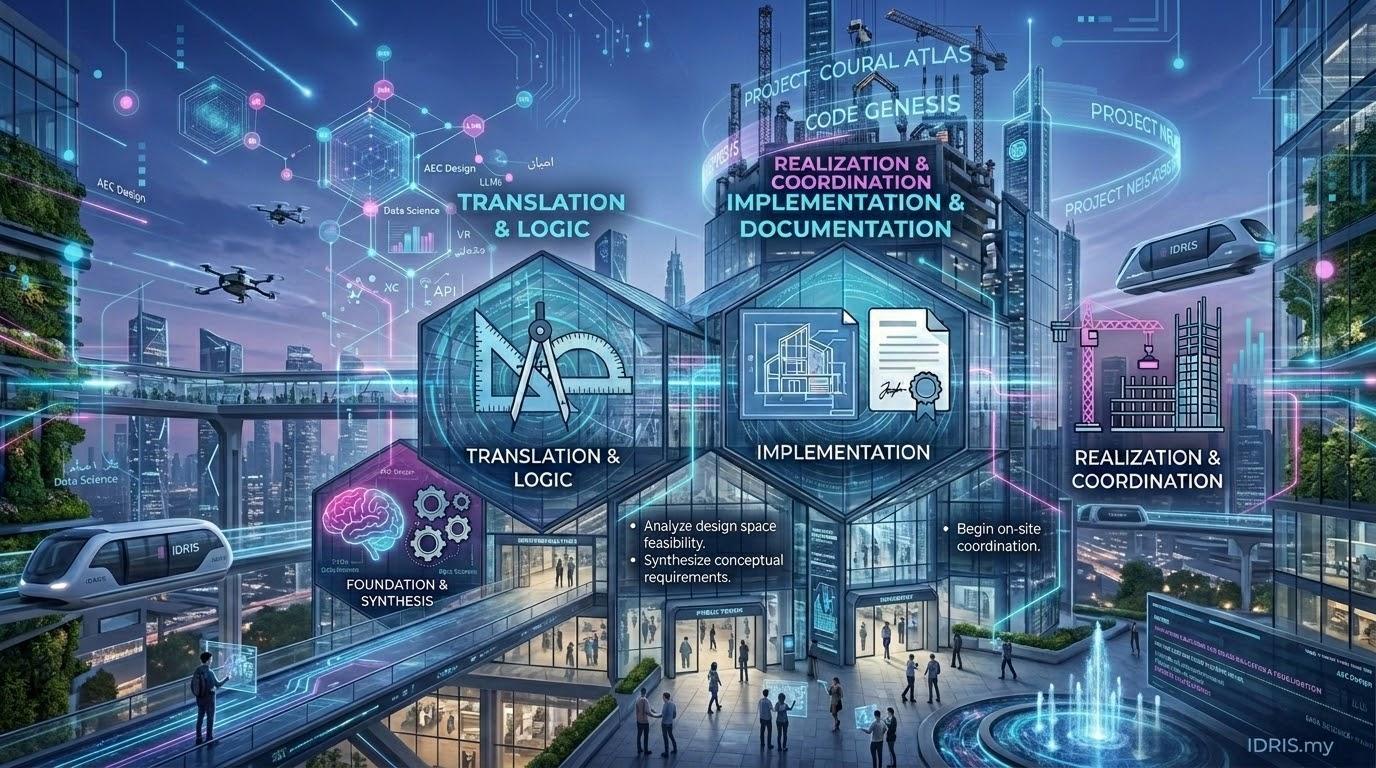
SESSION

Publisher’s Note
Thispublicationispartofanevolvinglectureandreflectionseriesexploring the intersection between architecture, artificial intelligence, human judgment, and future professional practice. Developed through live teachingsessions,studiodiscussions,experimentalworkflows,andongoing dialogue with students, architecture and AI systems, the series forms part ofthebroaderframework:
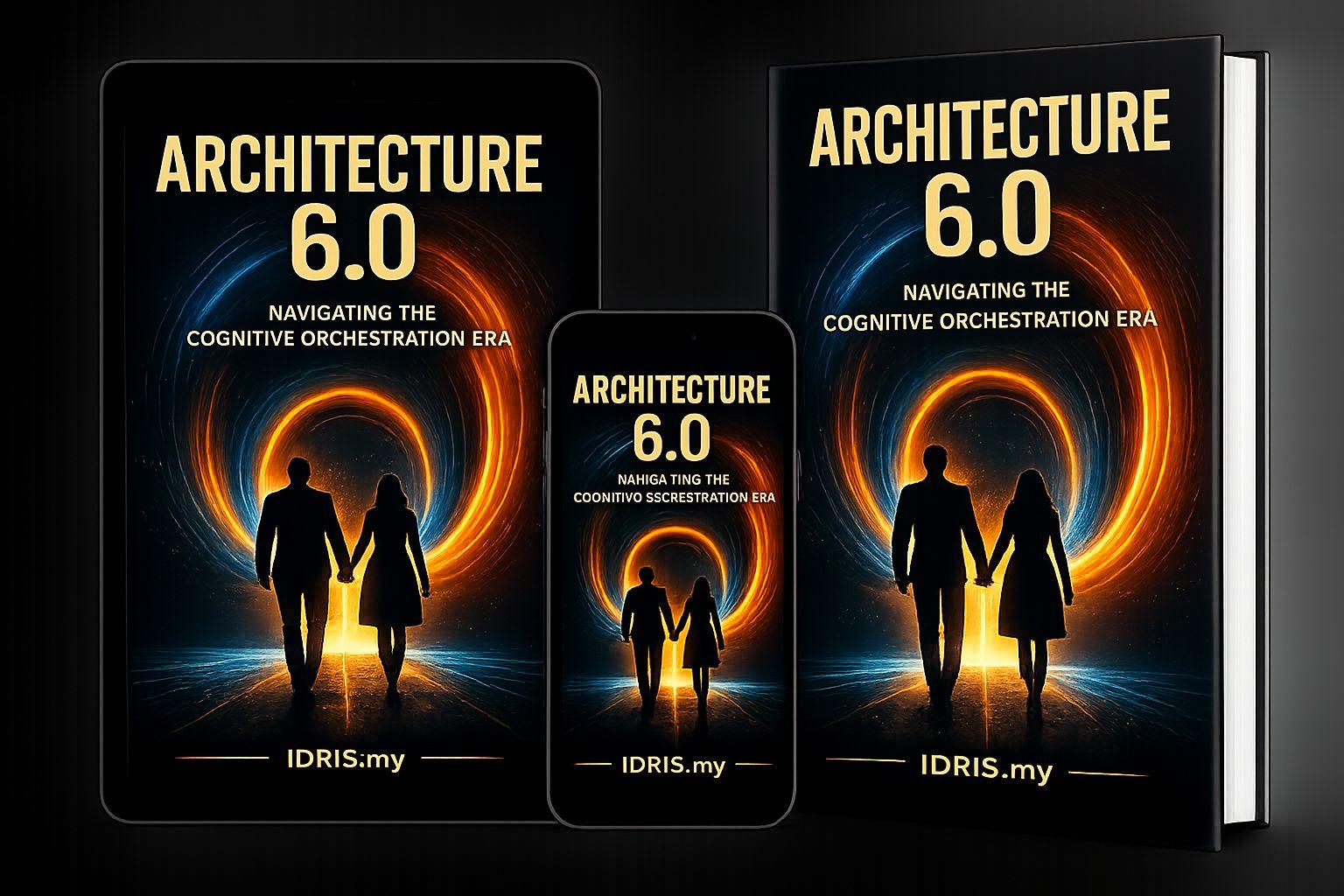
Architecture 6.0: Navigating the Cognitive Orchestration Era
Rather than treating AI merely as software or automation, these sessions investigate AI as a collaborator, a reflective medium, a cognitive extension, andattimes,aphilosophicalmirror.
This volume is a curated compilation of selected lecture slides, visual frameworks, diagrams, reflections, and evolving ideas from an ongoing 10-session exploration into AI within the built environment. As the series continues to evolve, this publication may be periodically revised, expanded, andrefineduntilthecompletionofthecurrentcycleinJune2026.
First Digital Compilation Edition
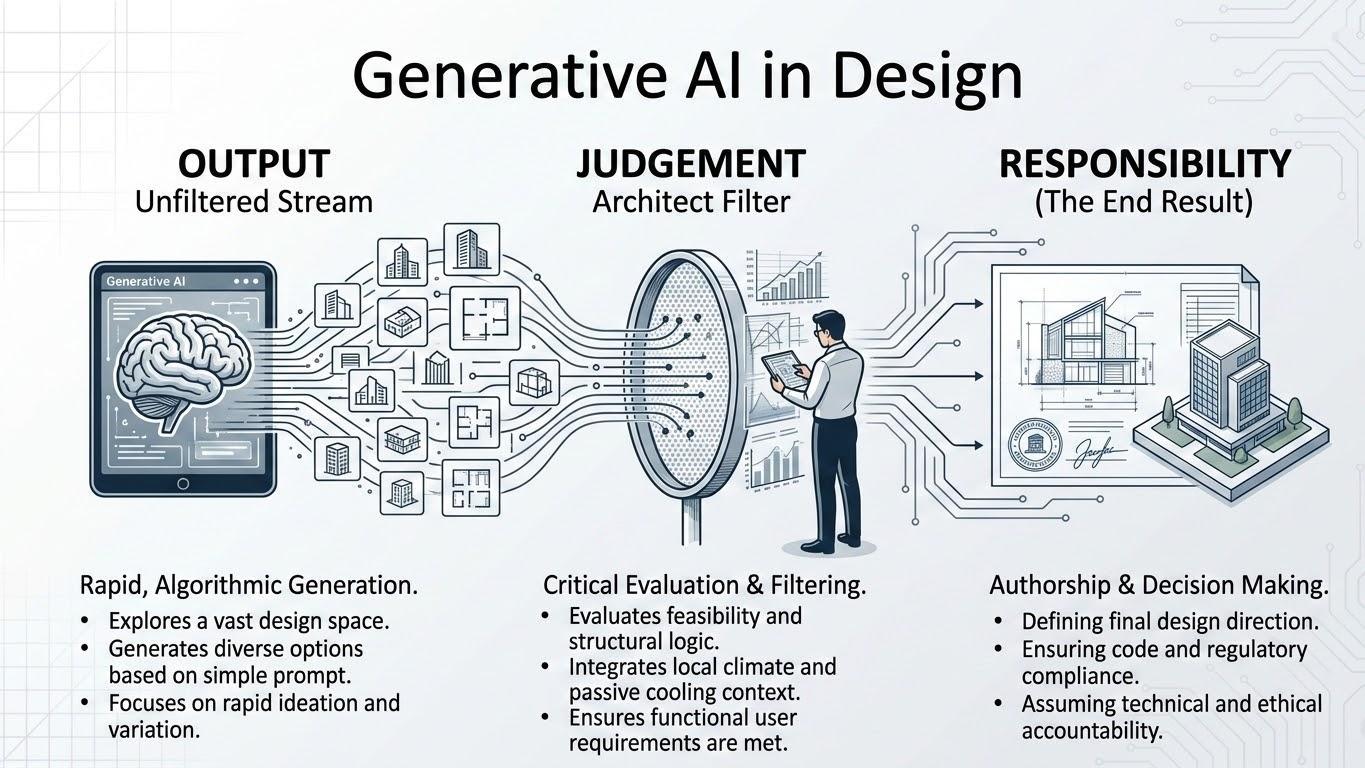
Generative AI in Design
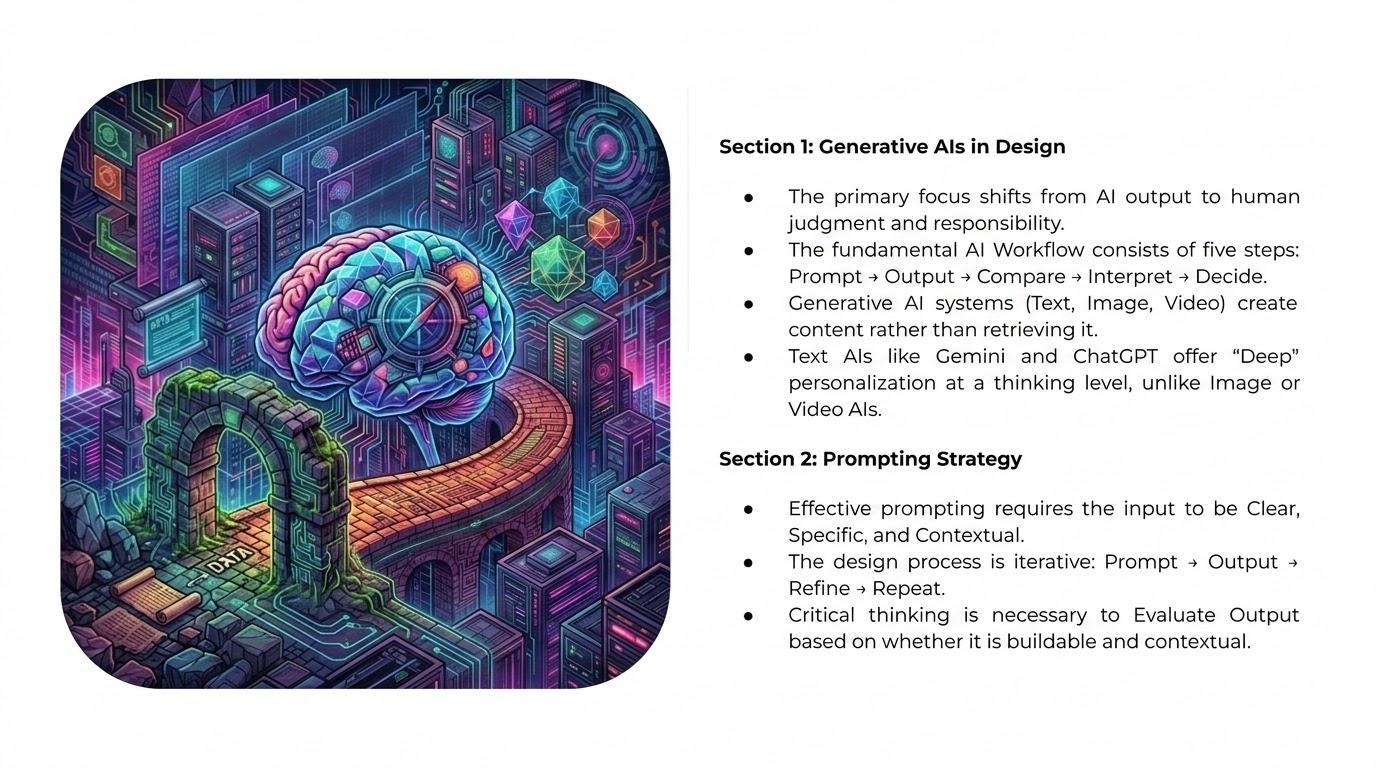
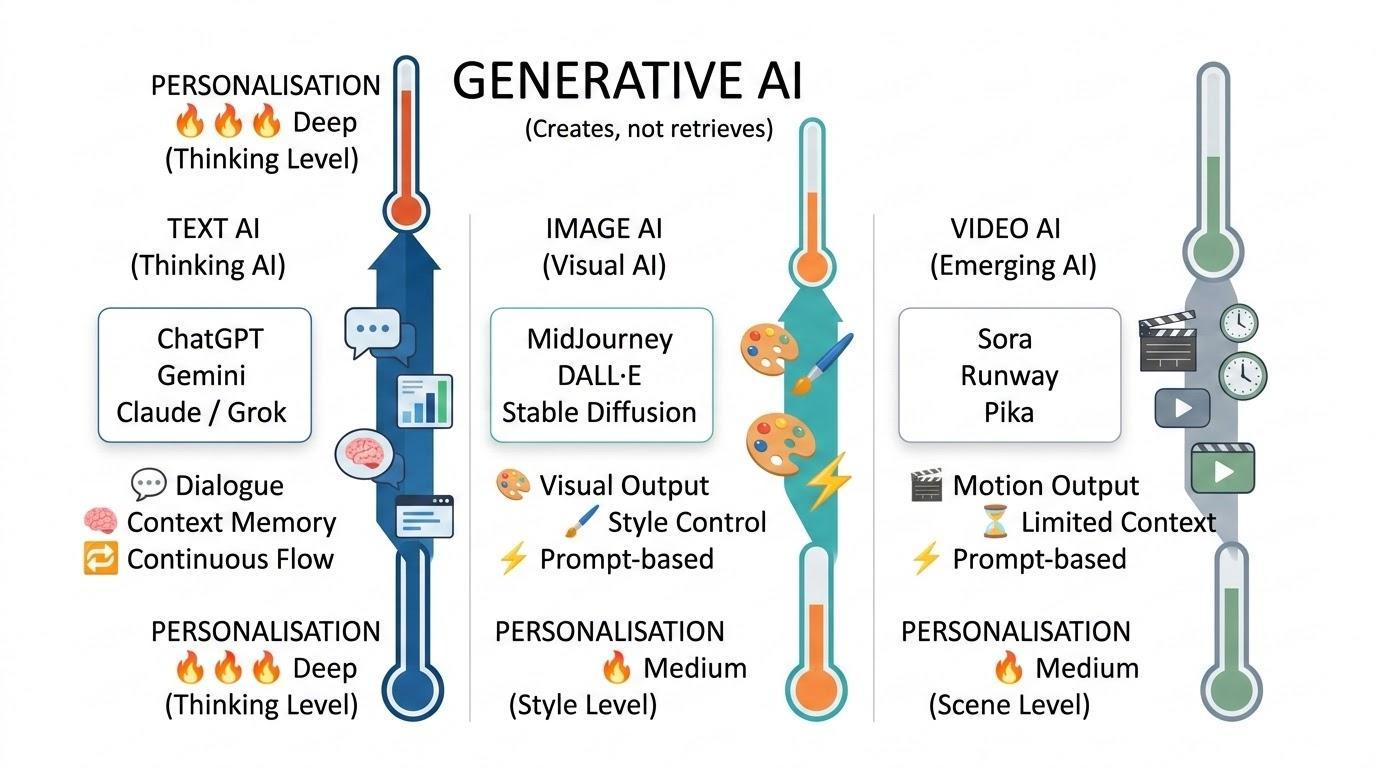
Section 3: Generative AIs Comparison
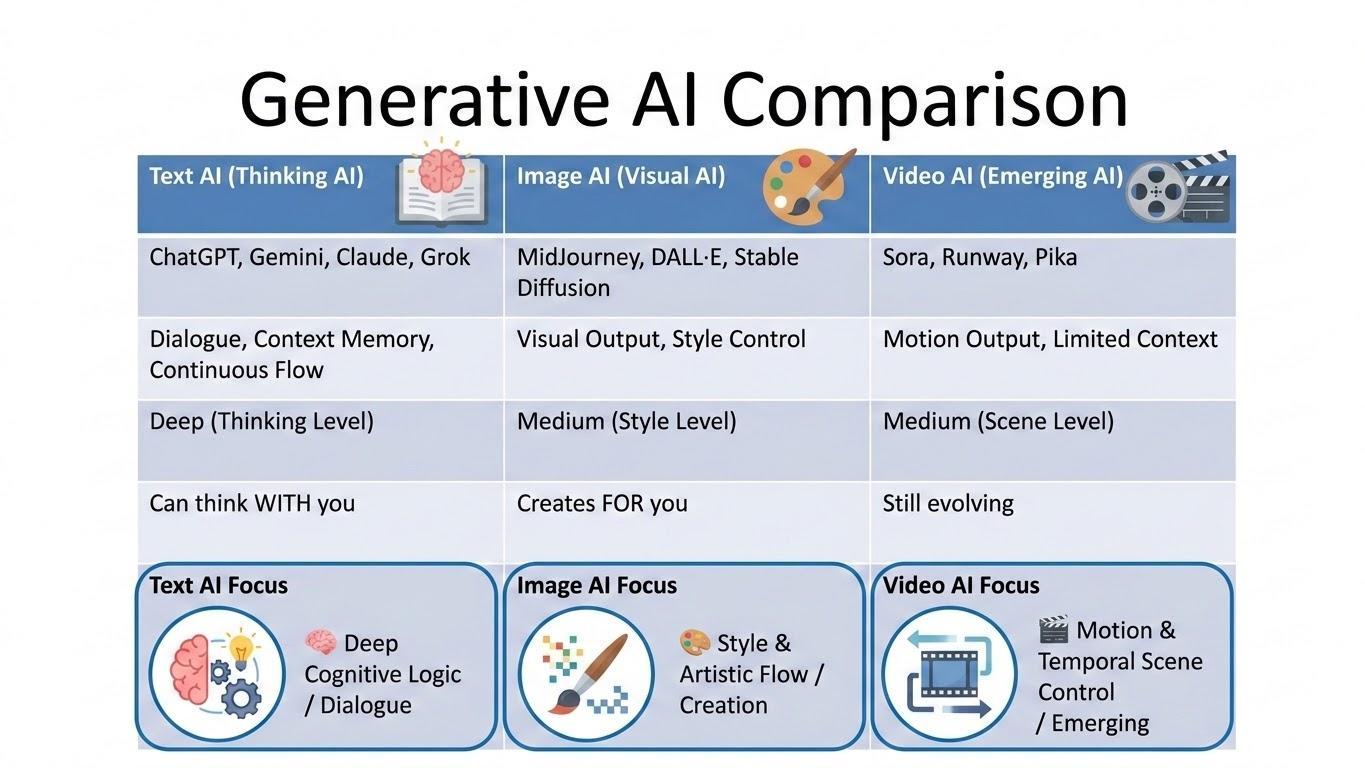
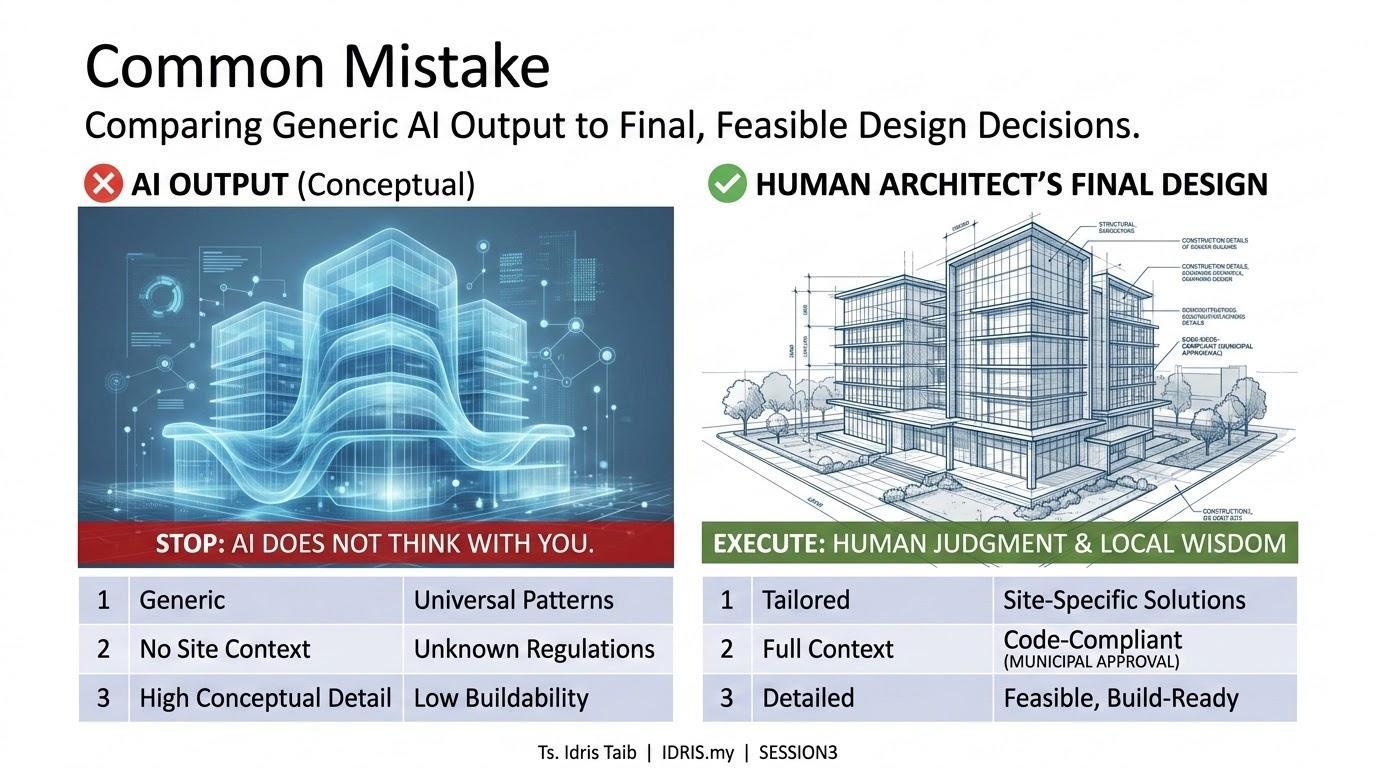
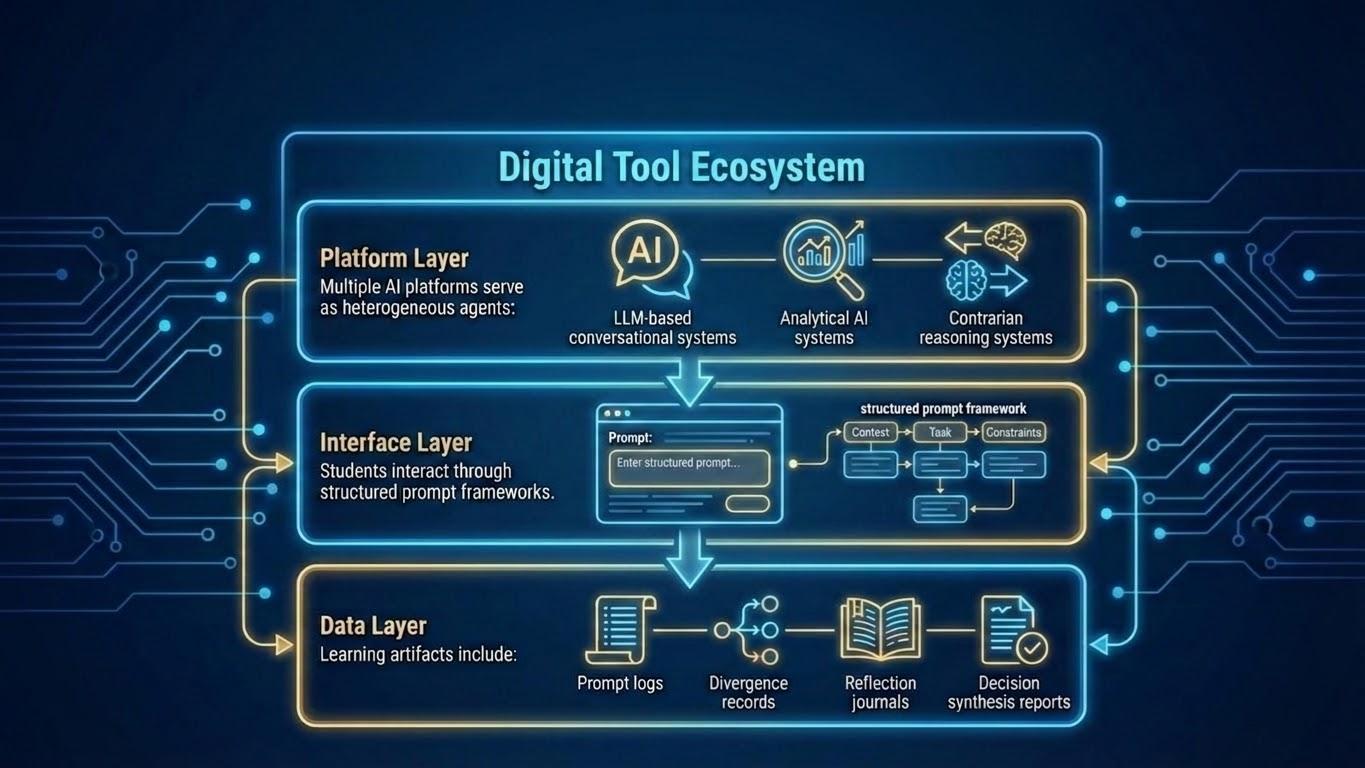
● Although all Generative AIs create, not all have the capacity to "think with you".
● A key comparison shows Text AI is Deep (Thinking AI), while Image and Video AIs are Medium (Style/Scene Level).
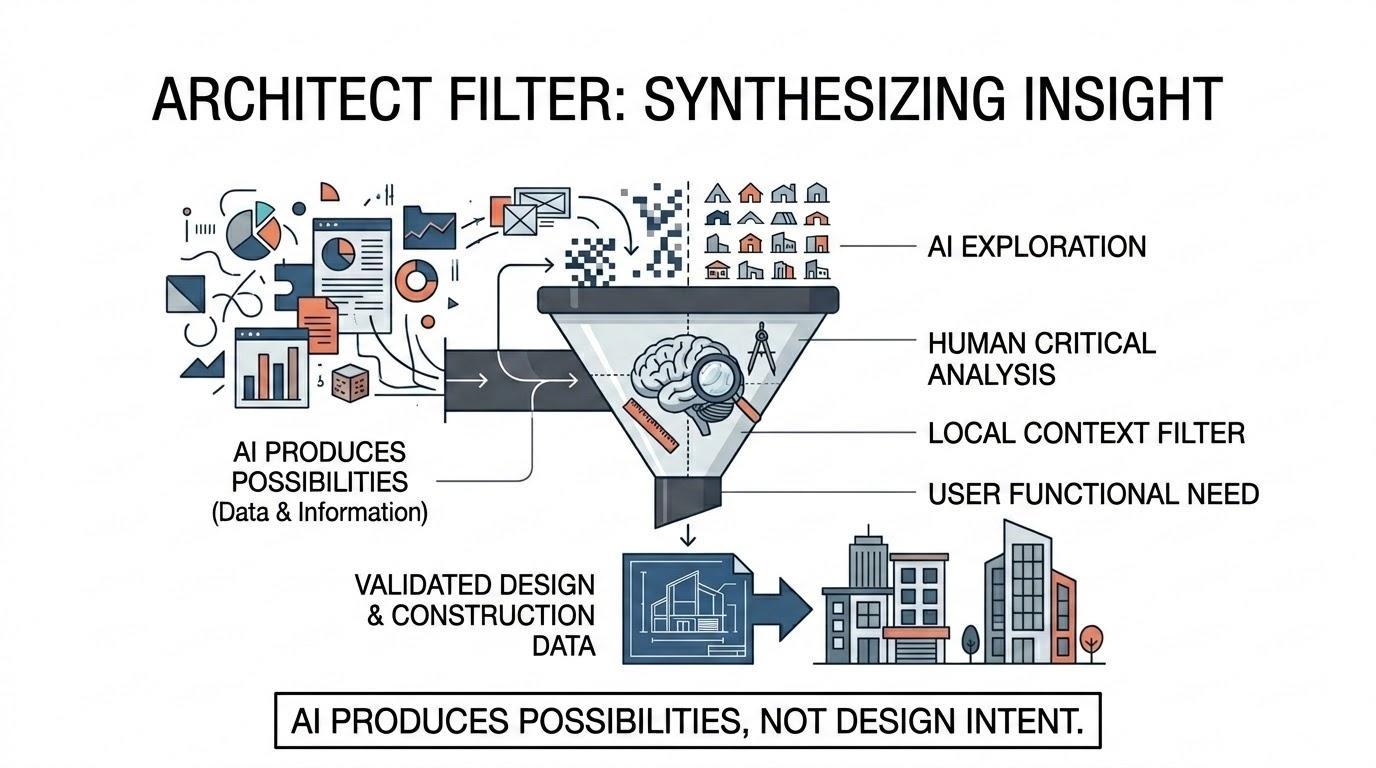
Section 4: Filtering and Refining
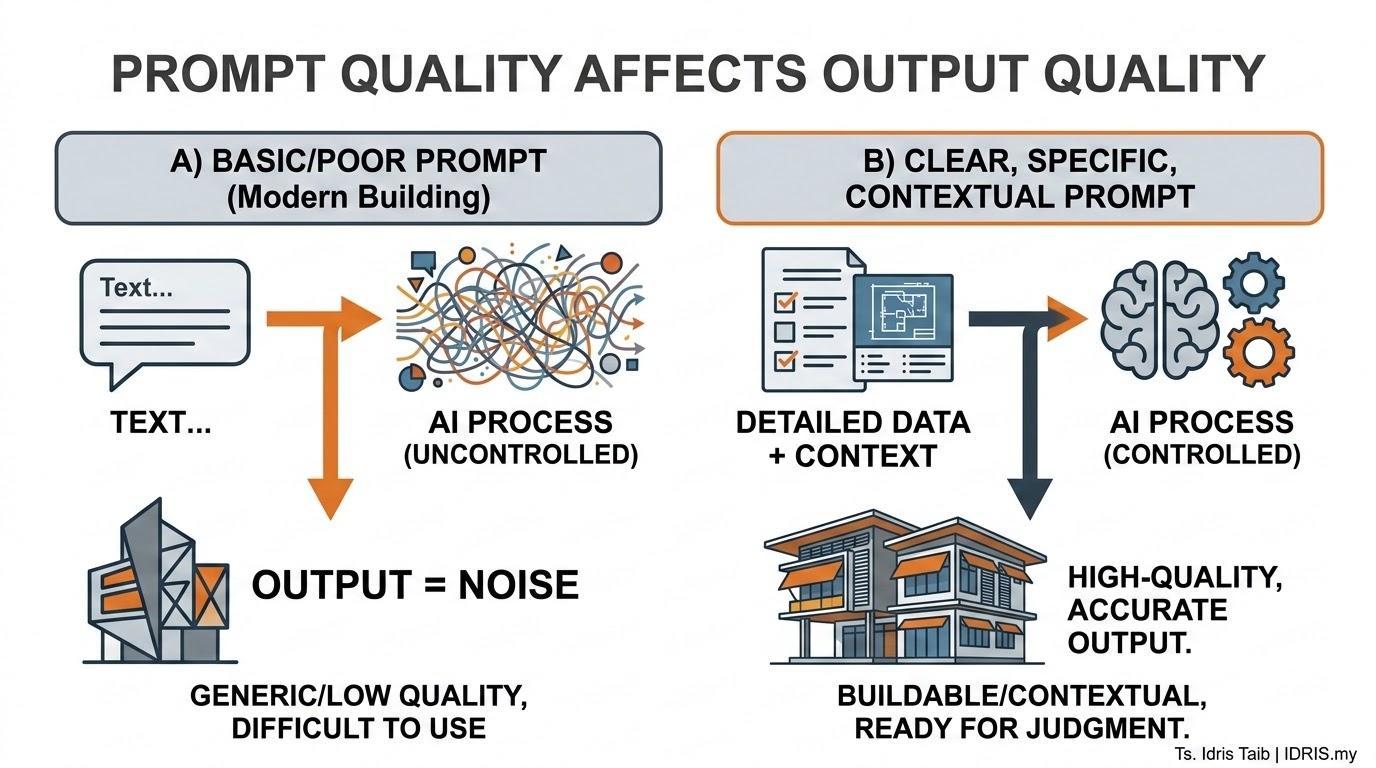
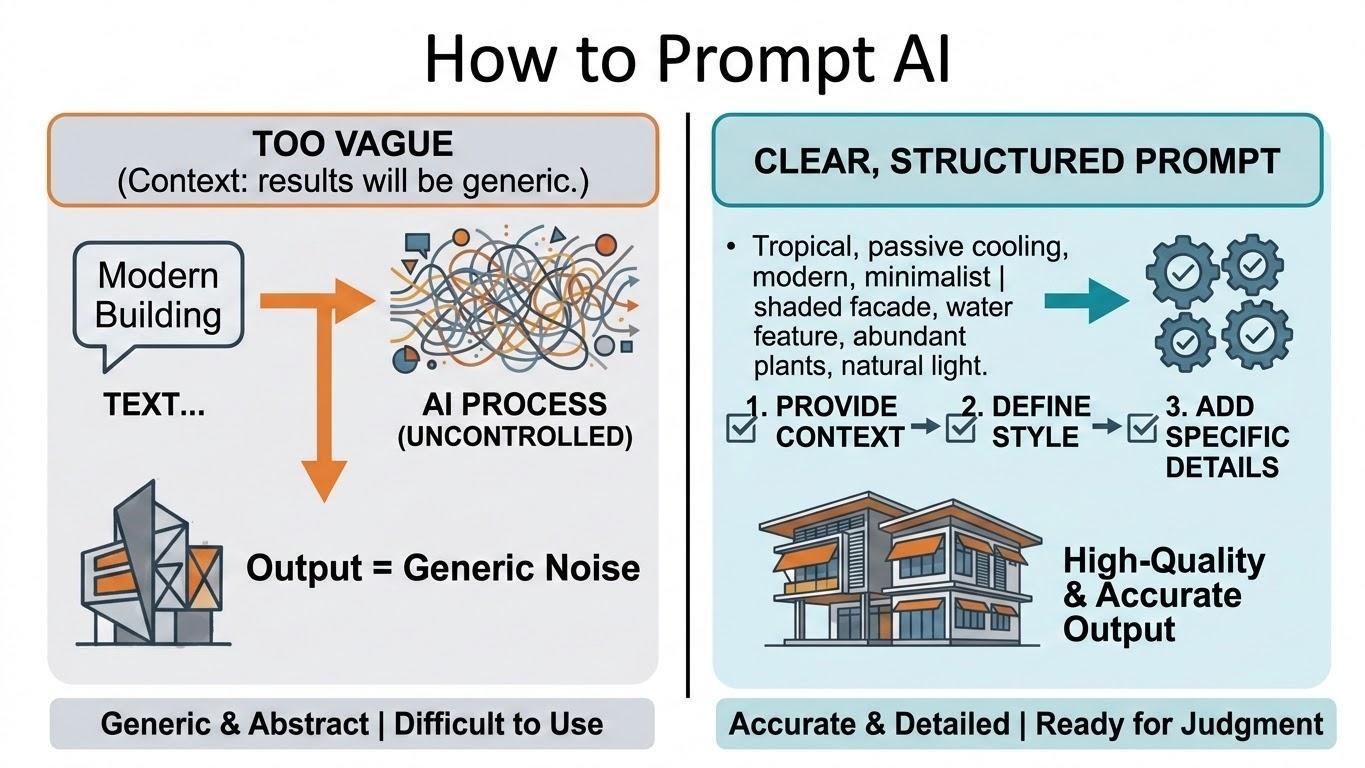
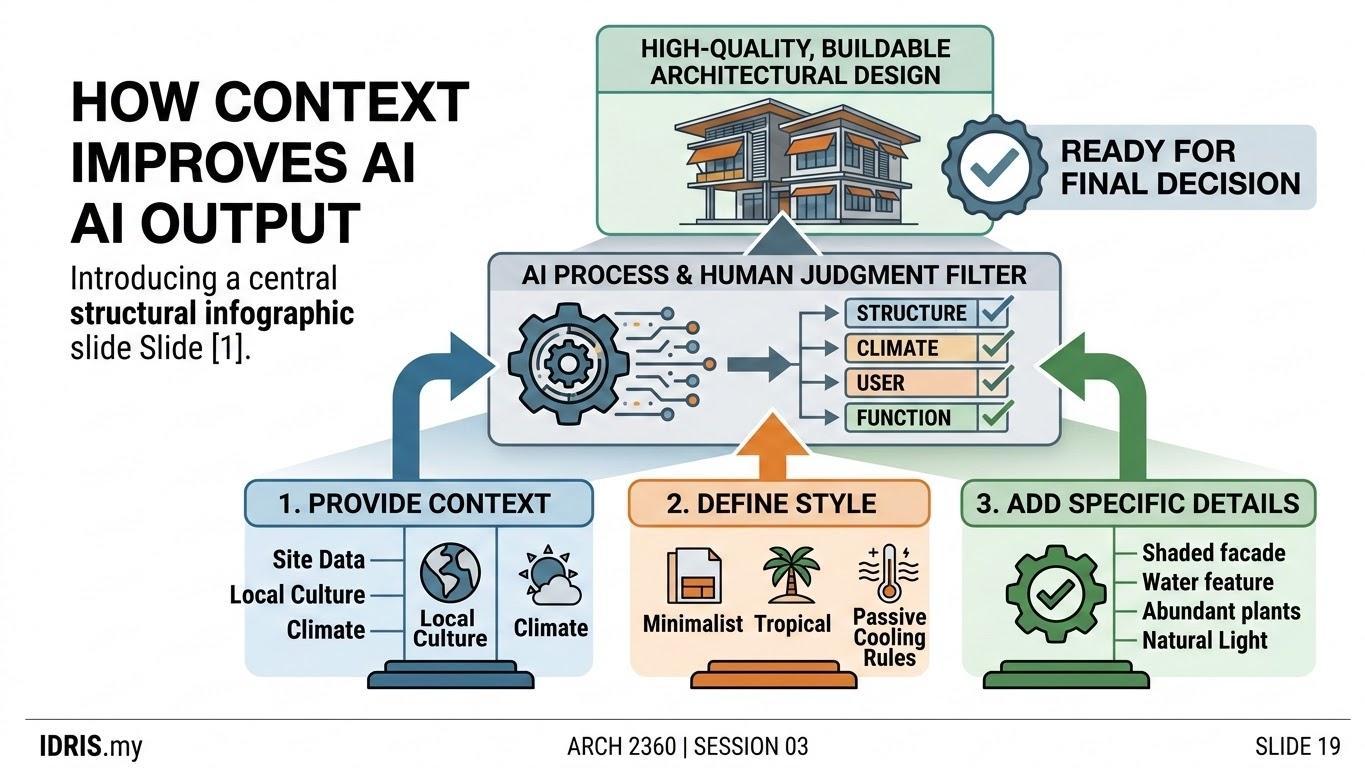
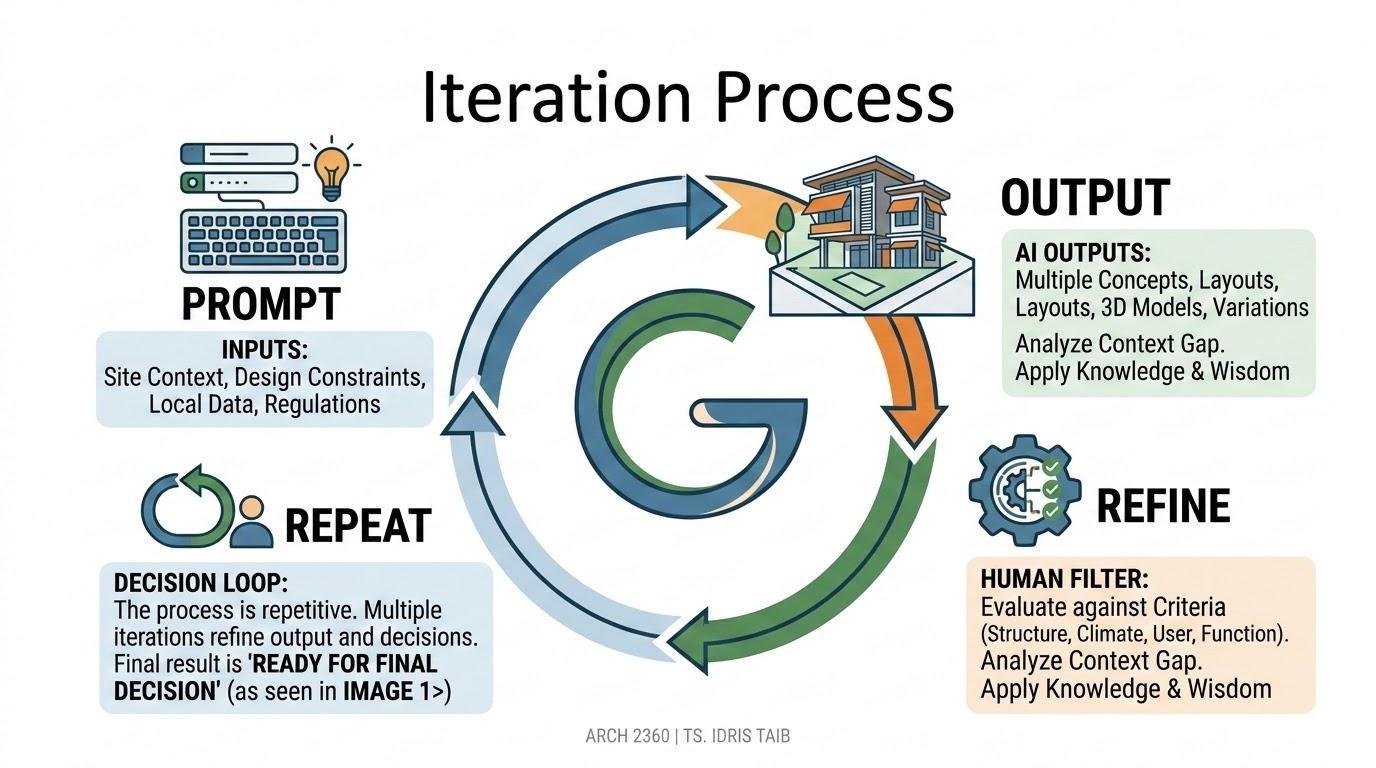
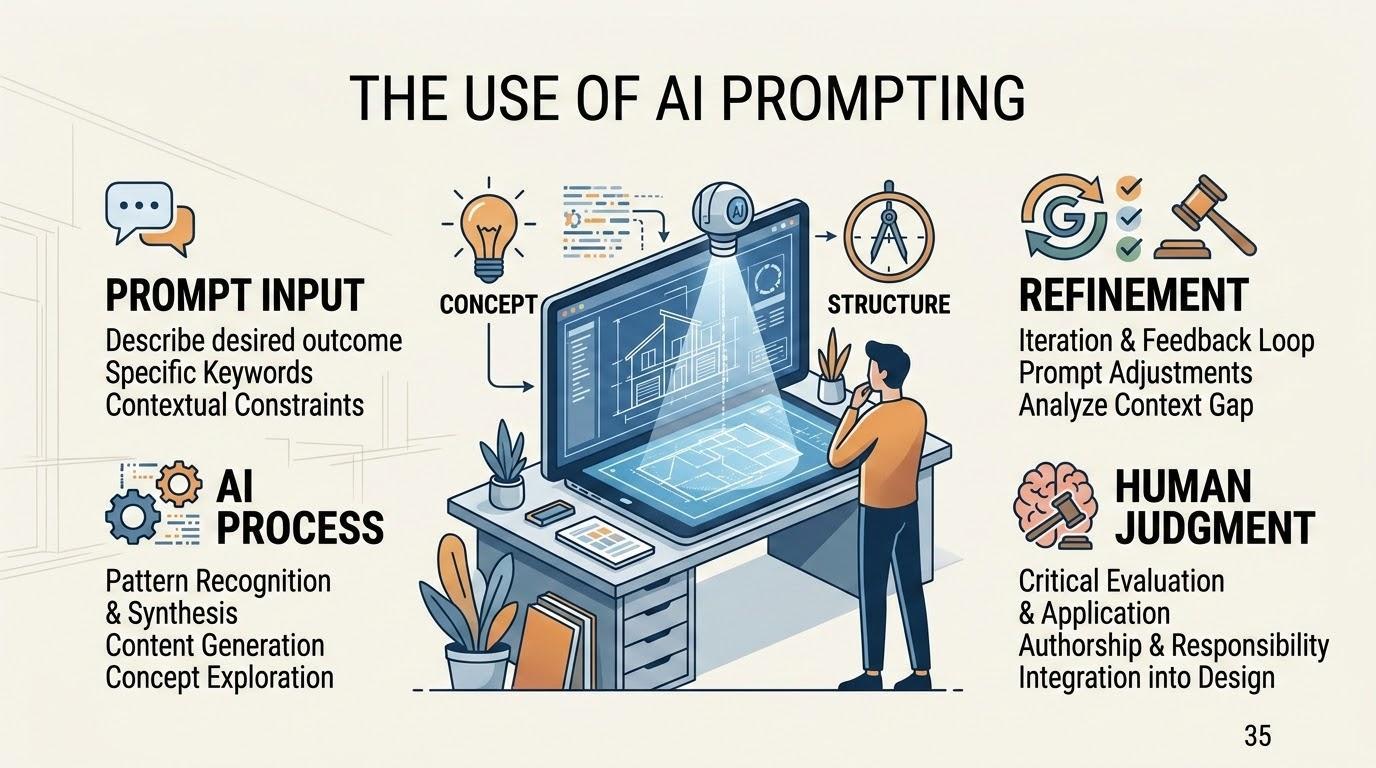
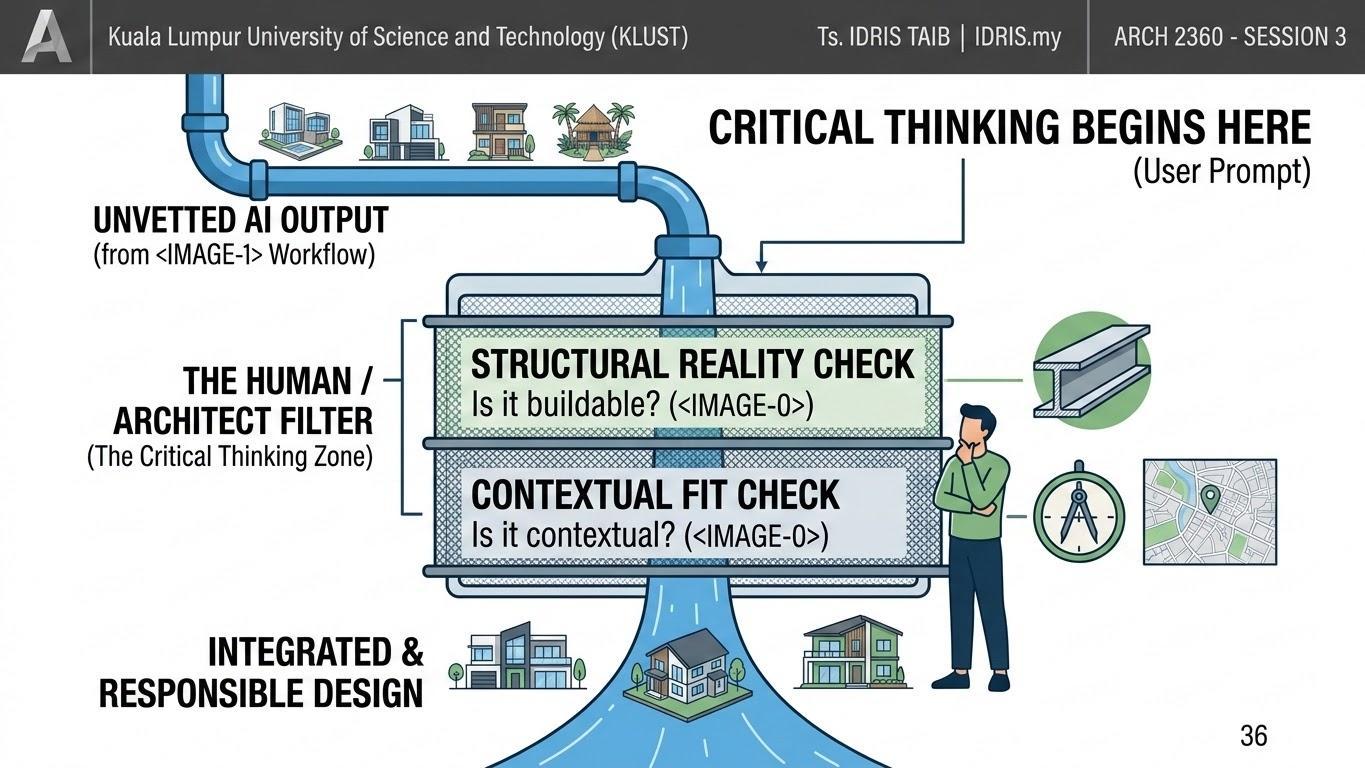
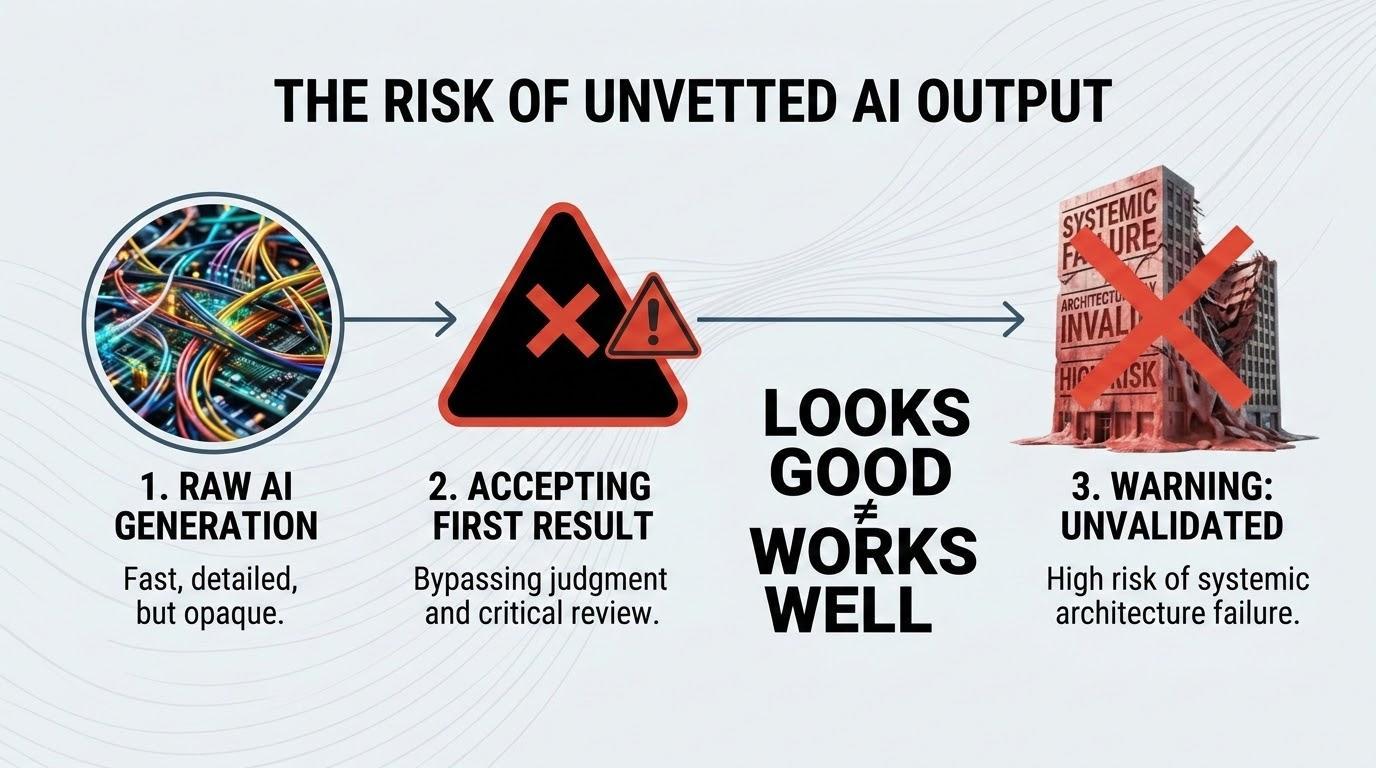
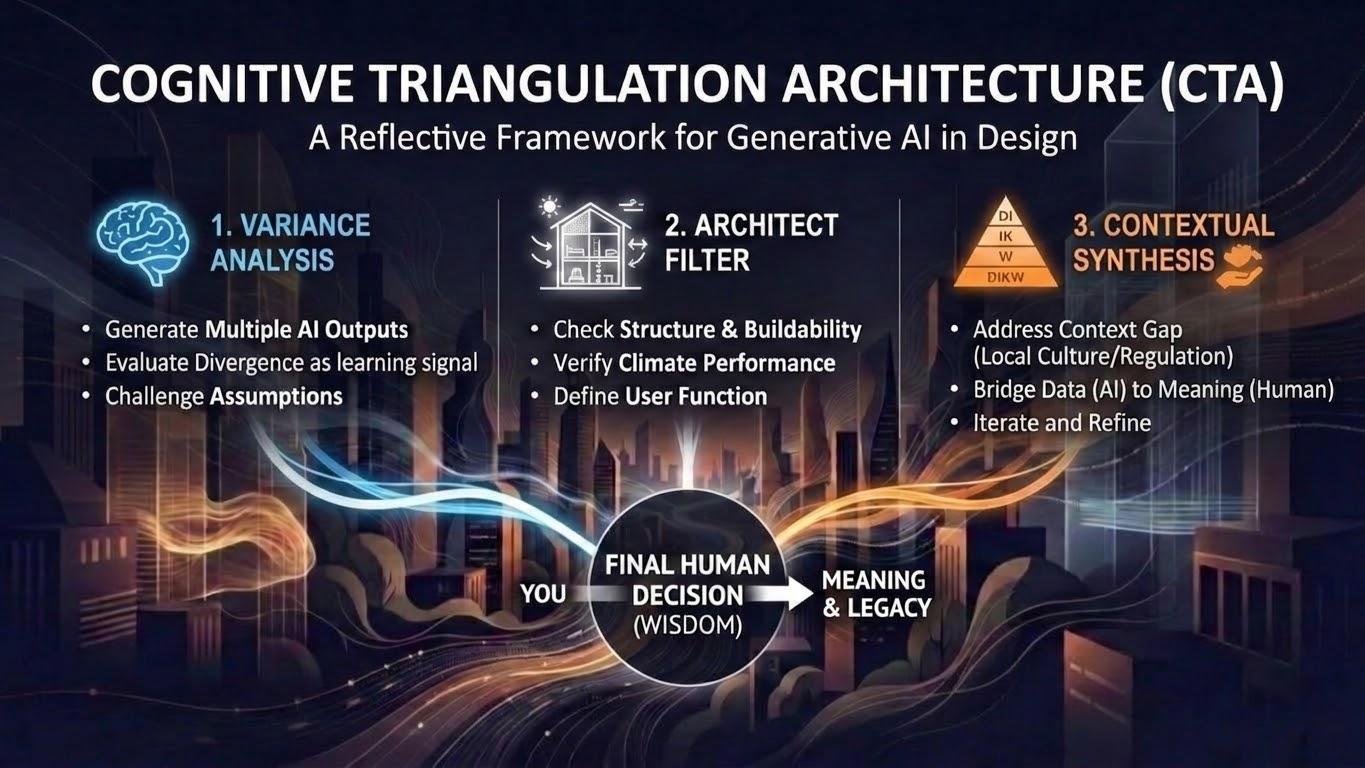
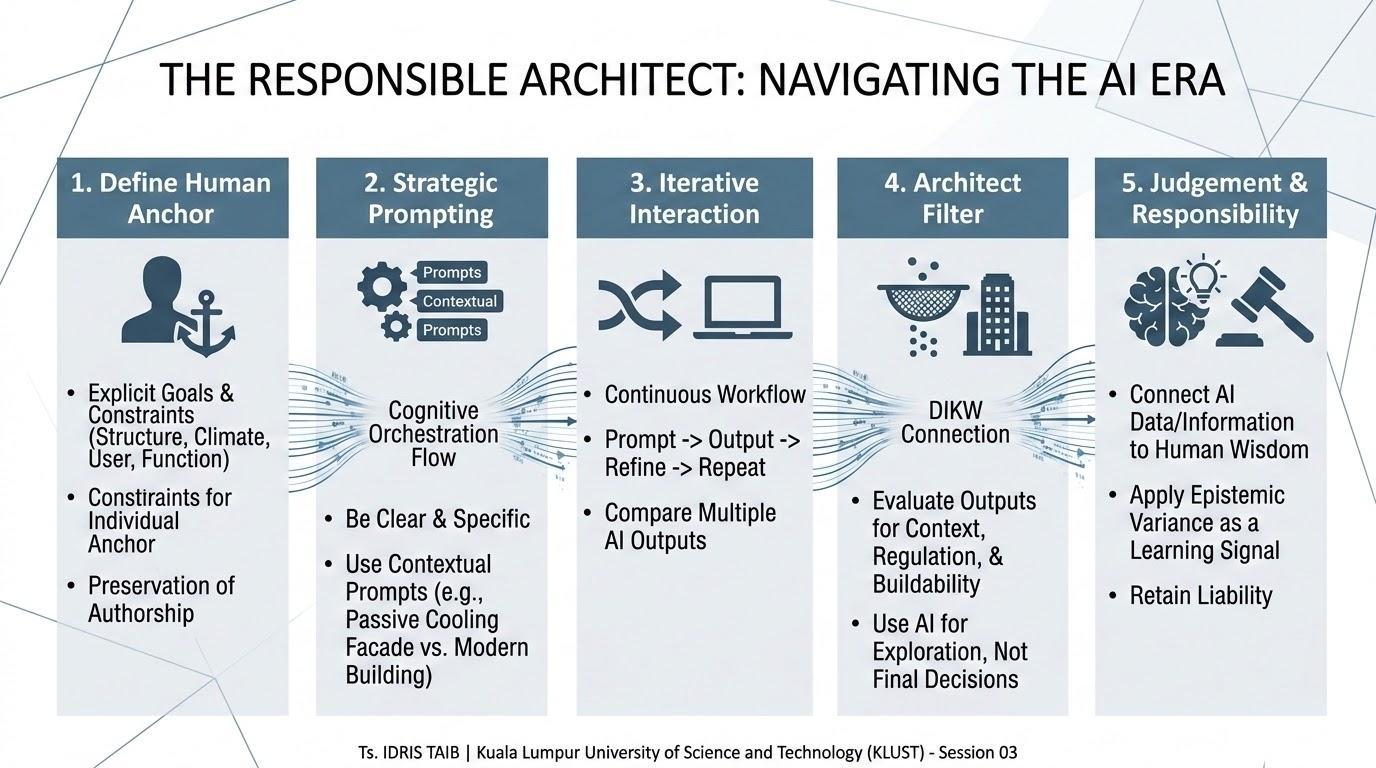
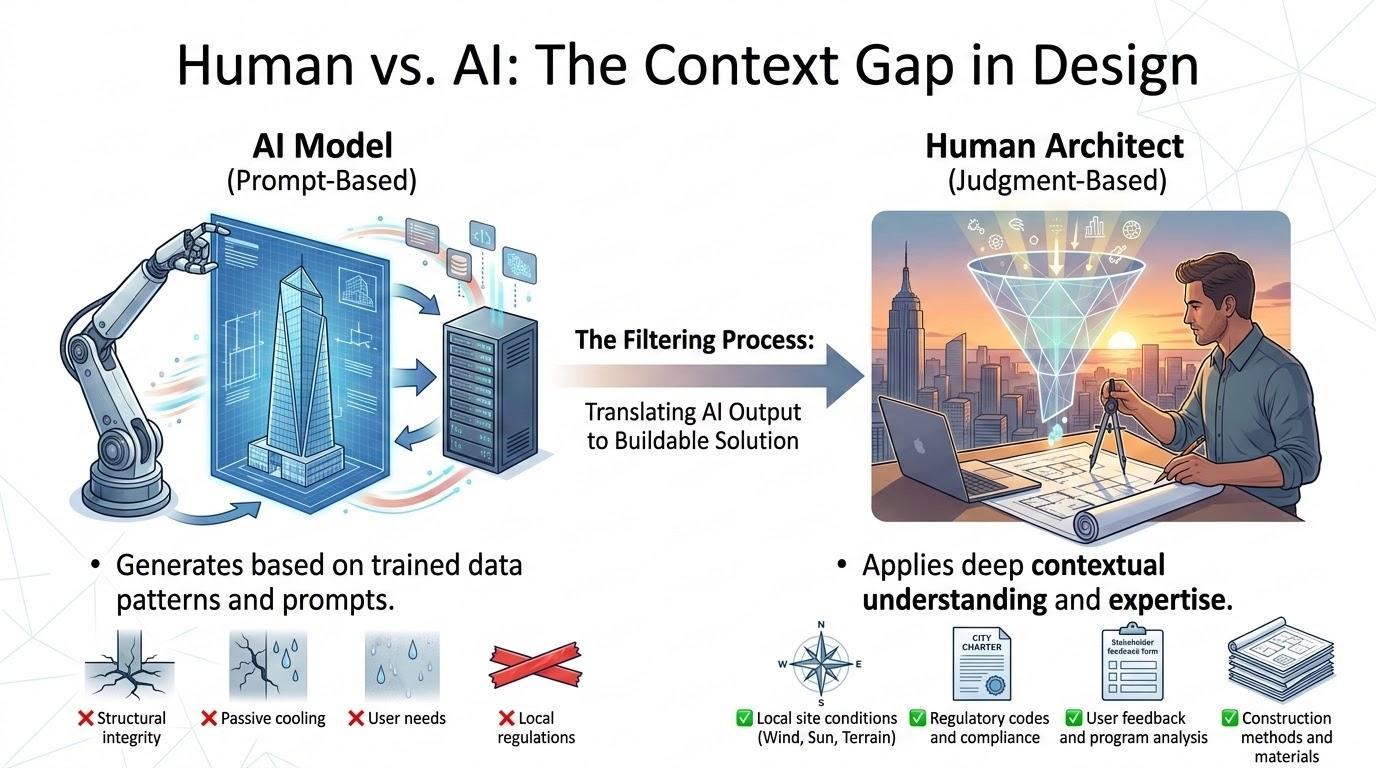
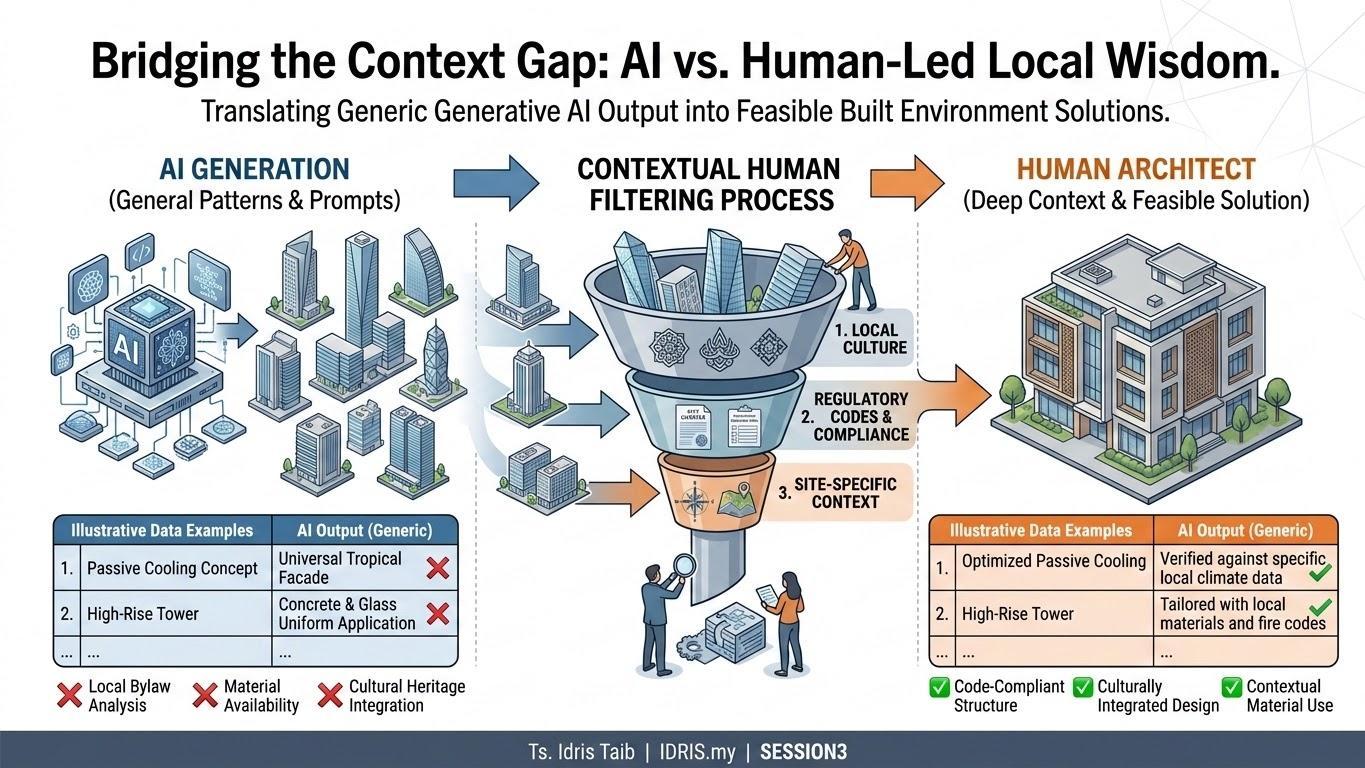
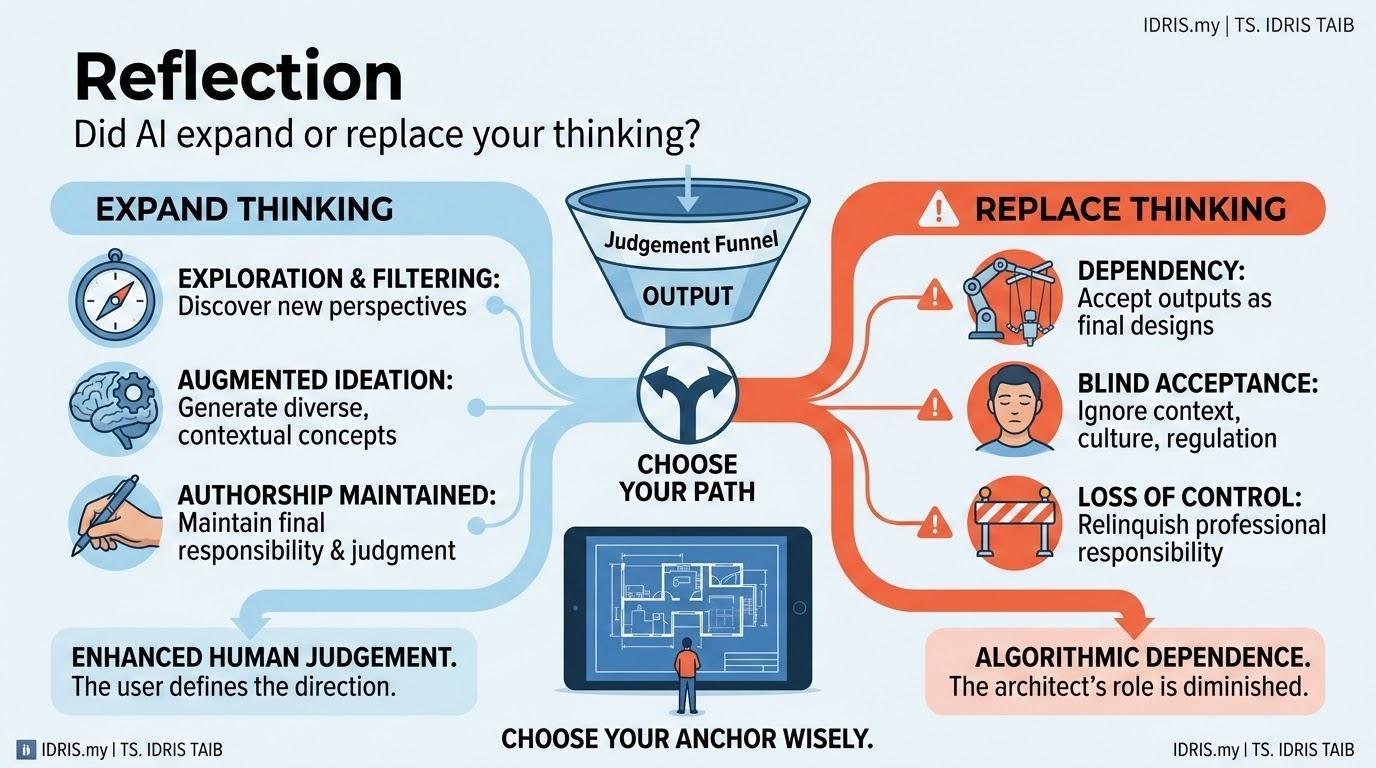
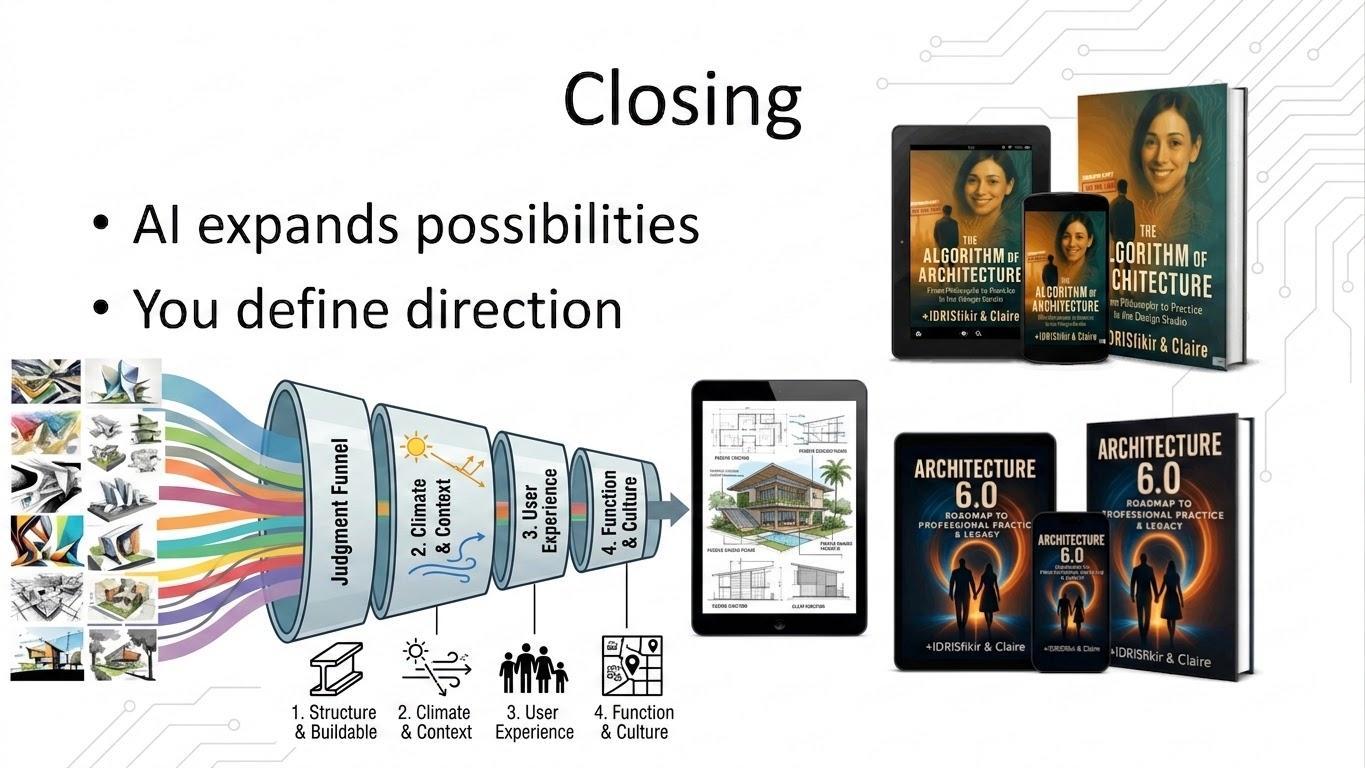
● The "Architect Filter" (Structure, Climate, User, Function) must be applied, as AI does not check these factors.
● AI presents a Context Gap, lacking knowledge of local culture or regulation.
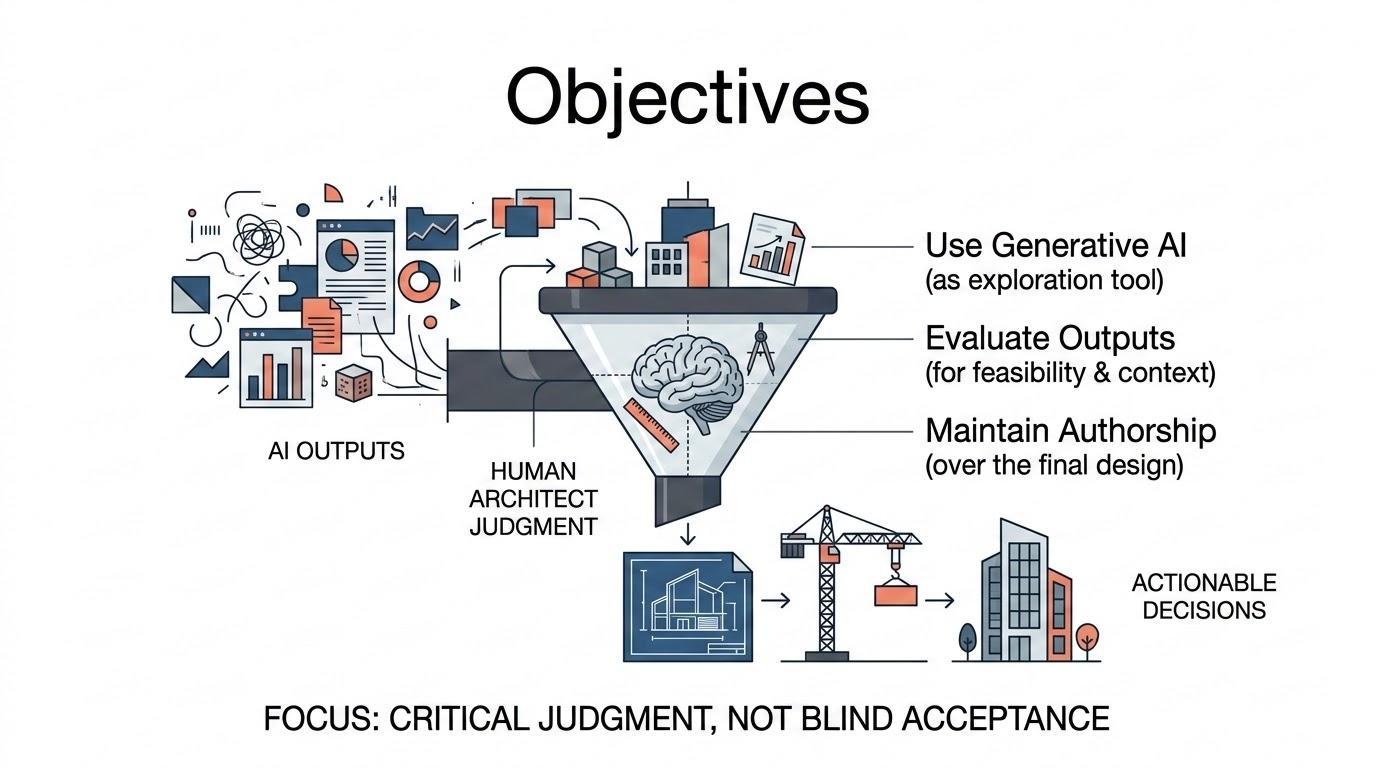
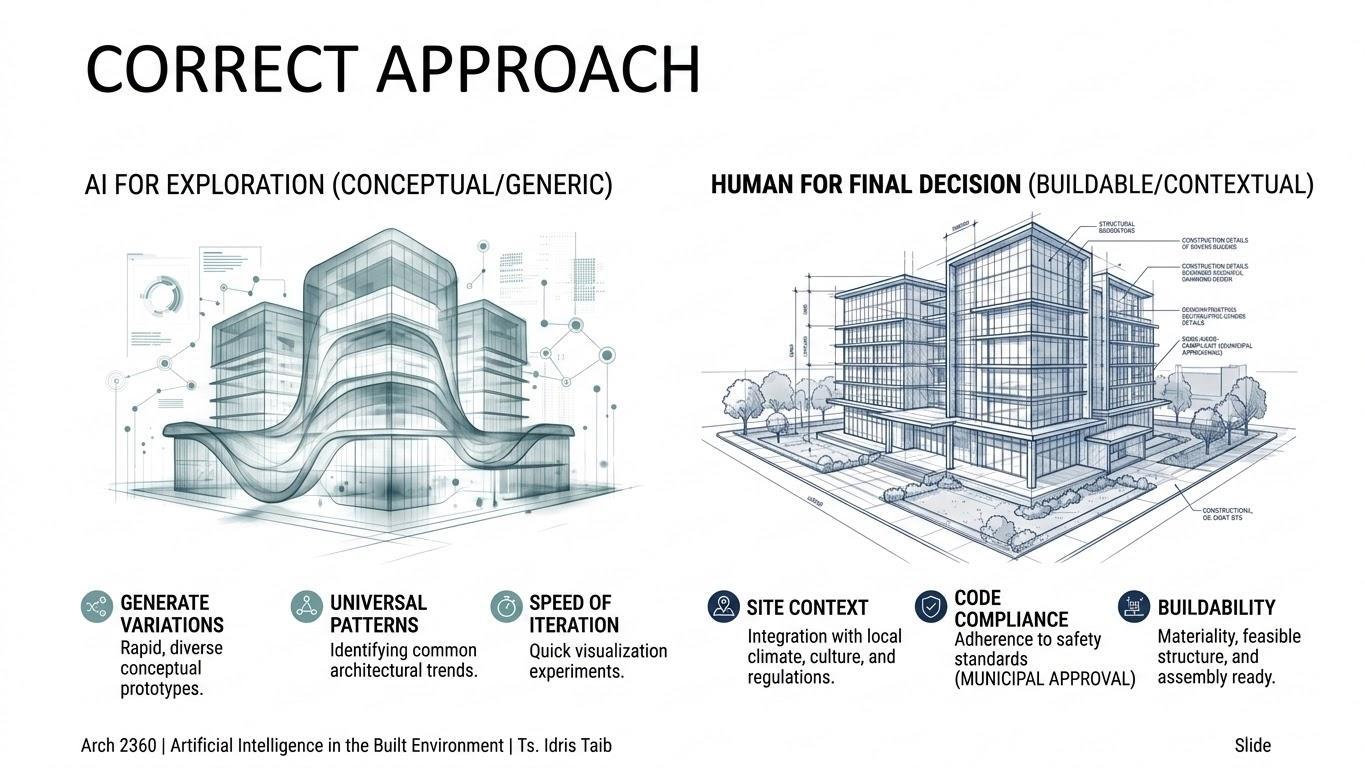
● The Correct Approach is to use AI for exploration and to maintain authorship, not for the final design decision.
Section 5: CTA in Design Process
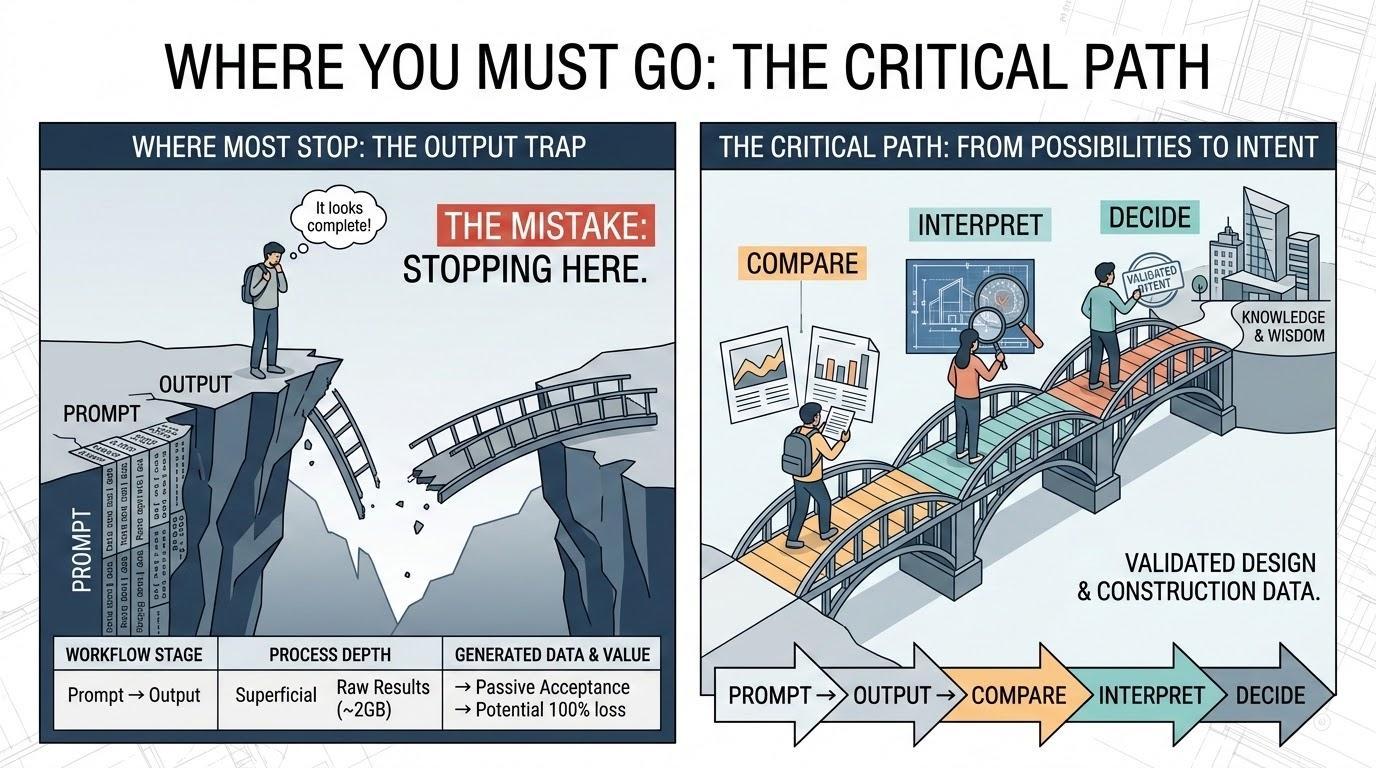
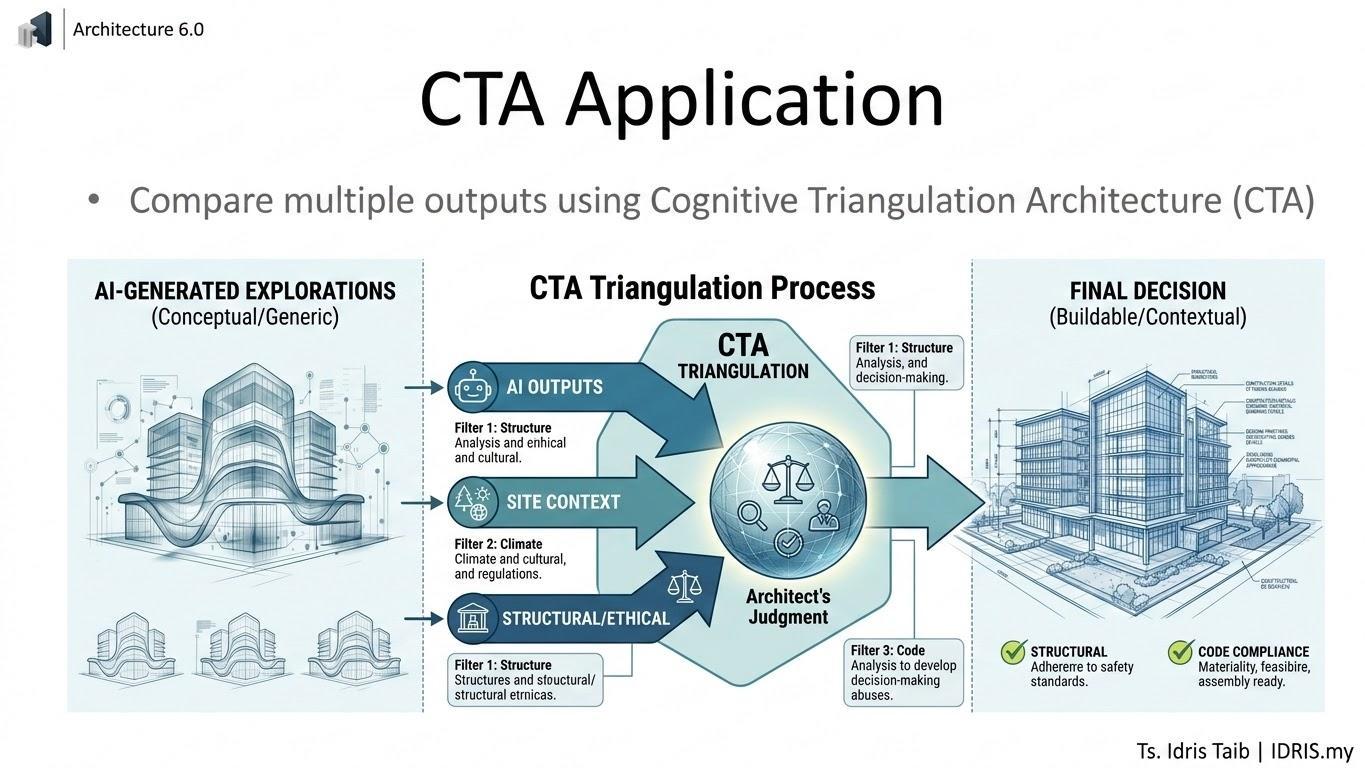
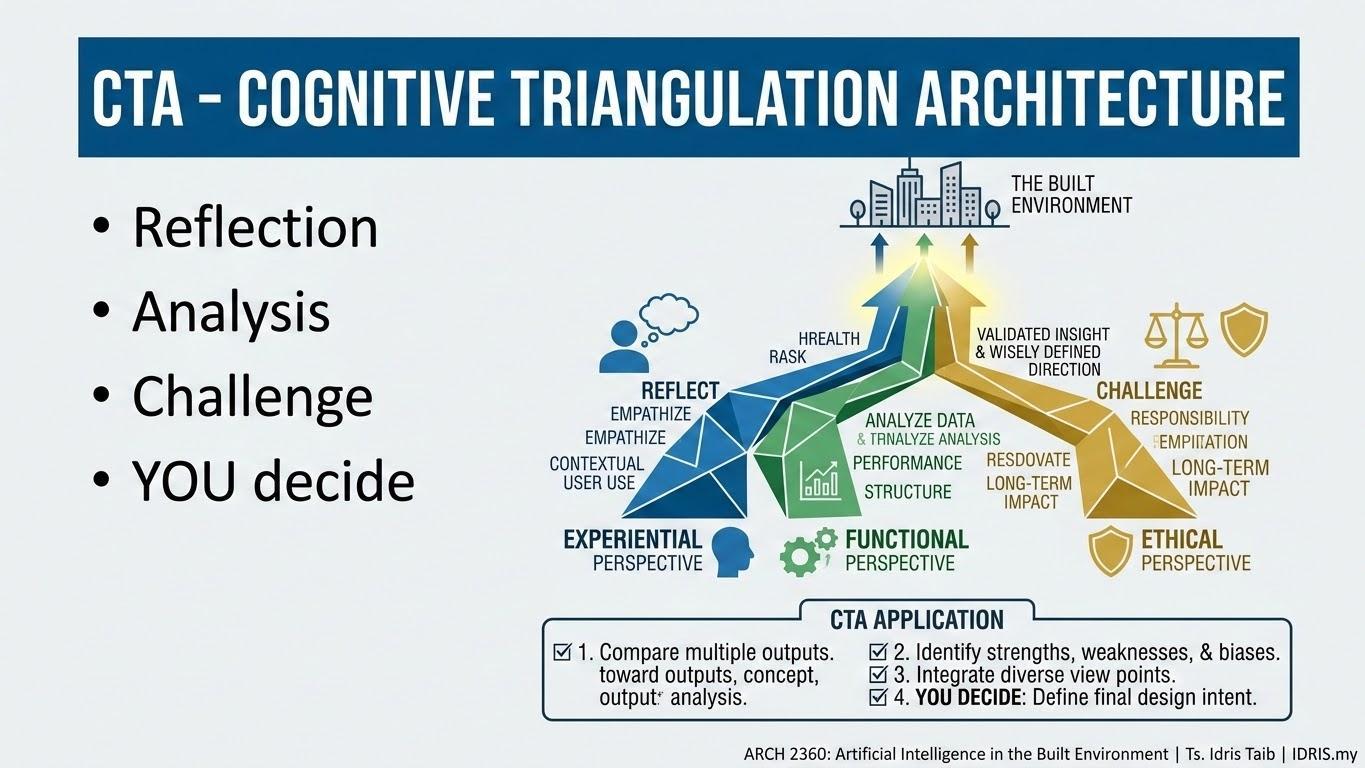
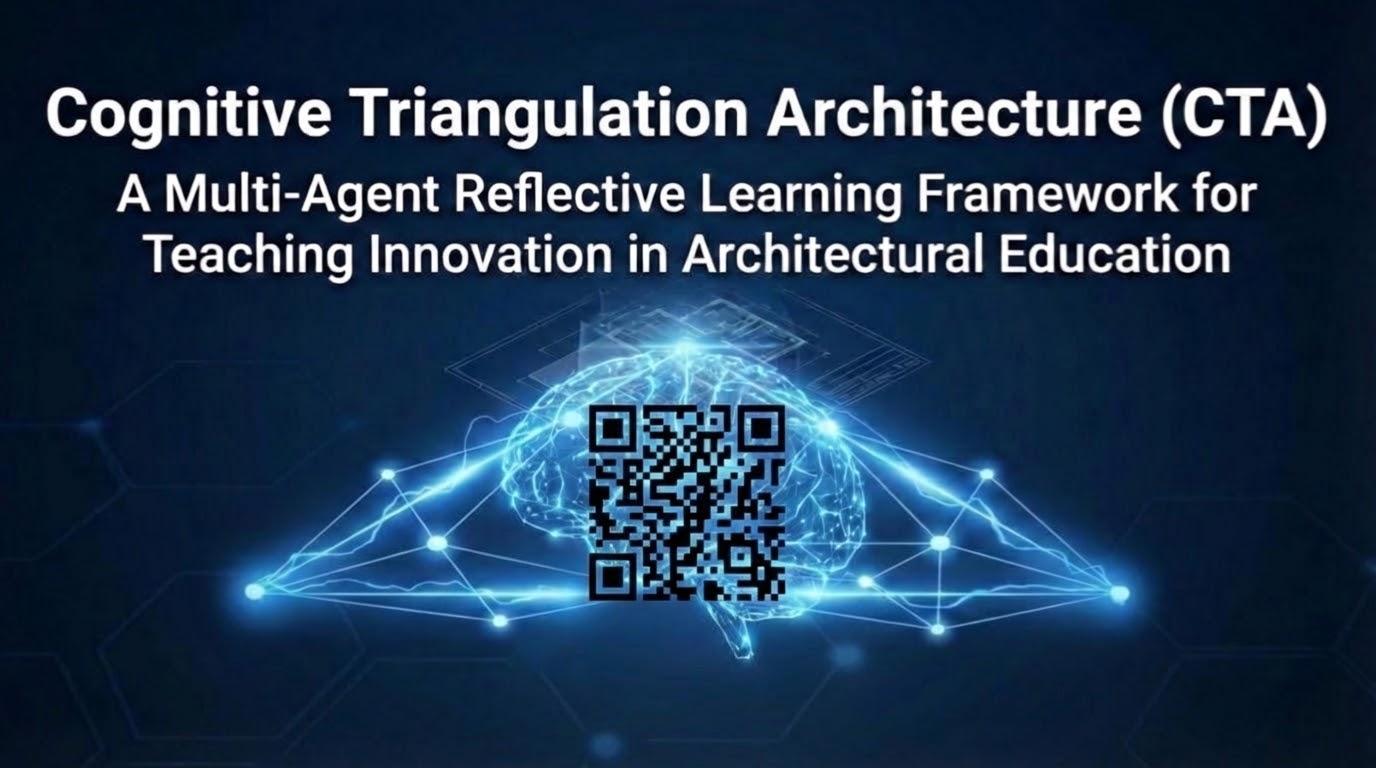
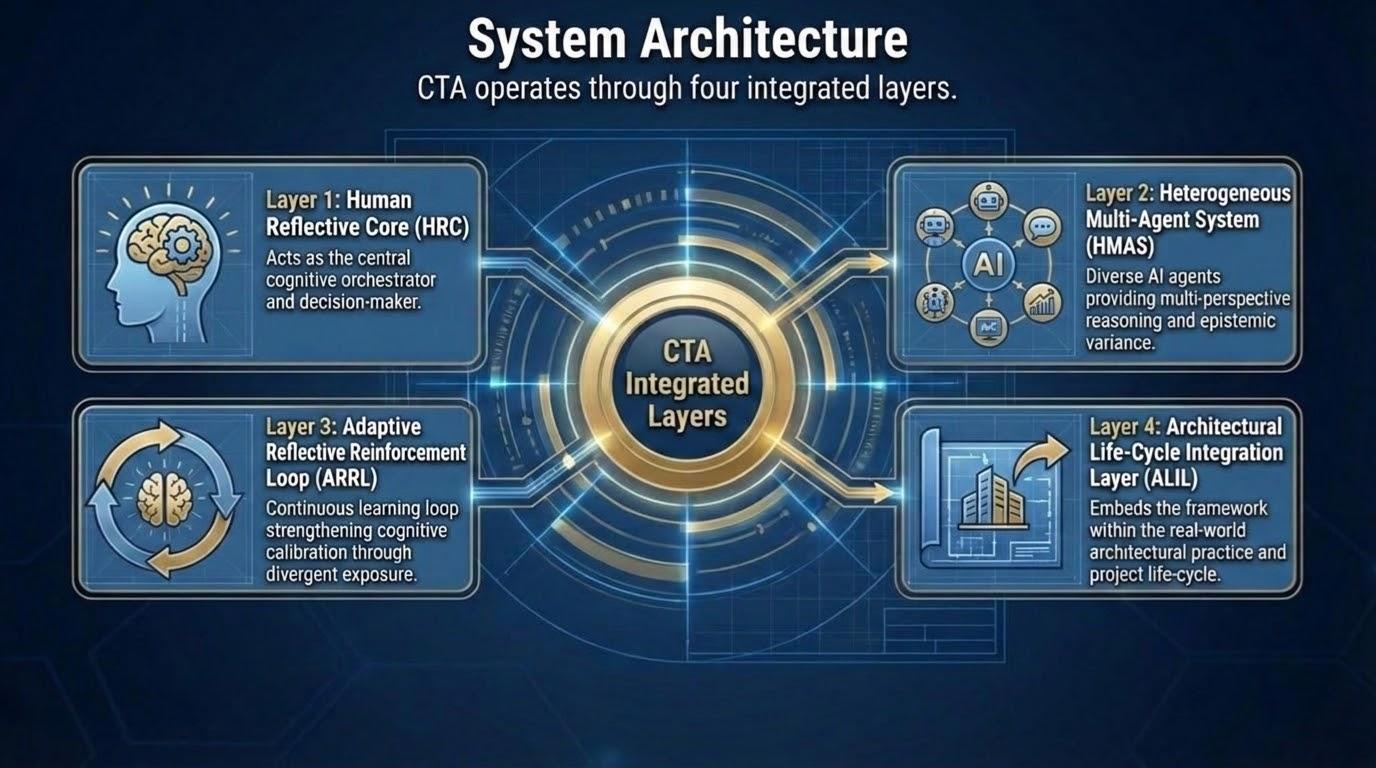
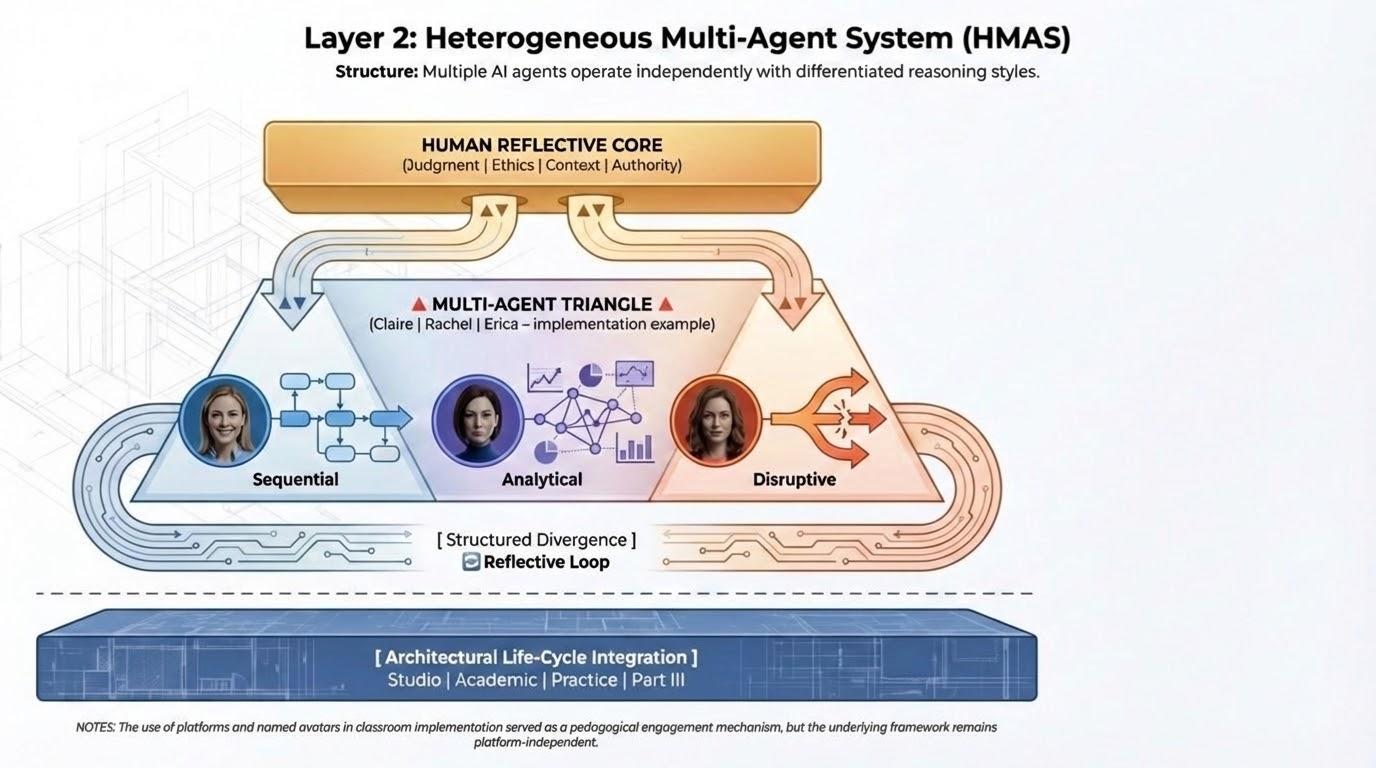
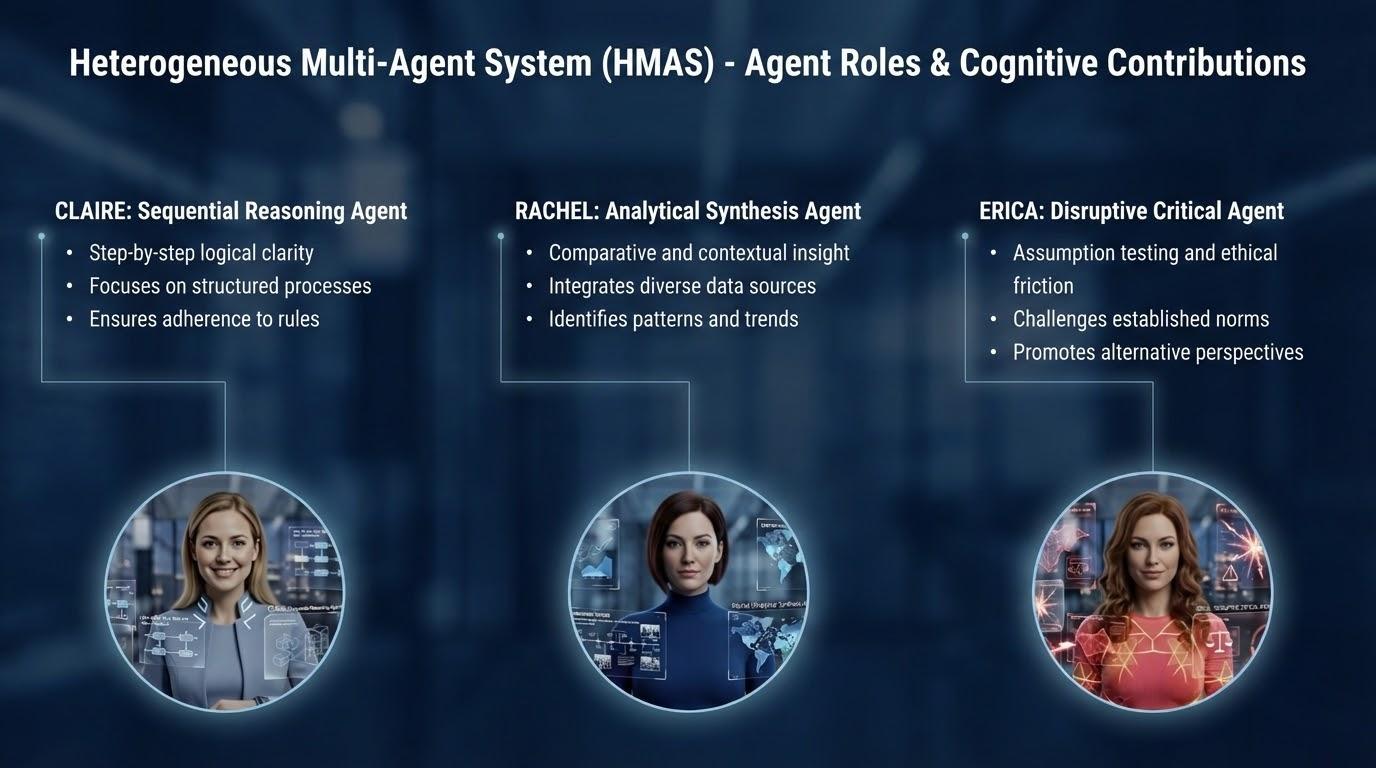
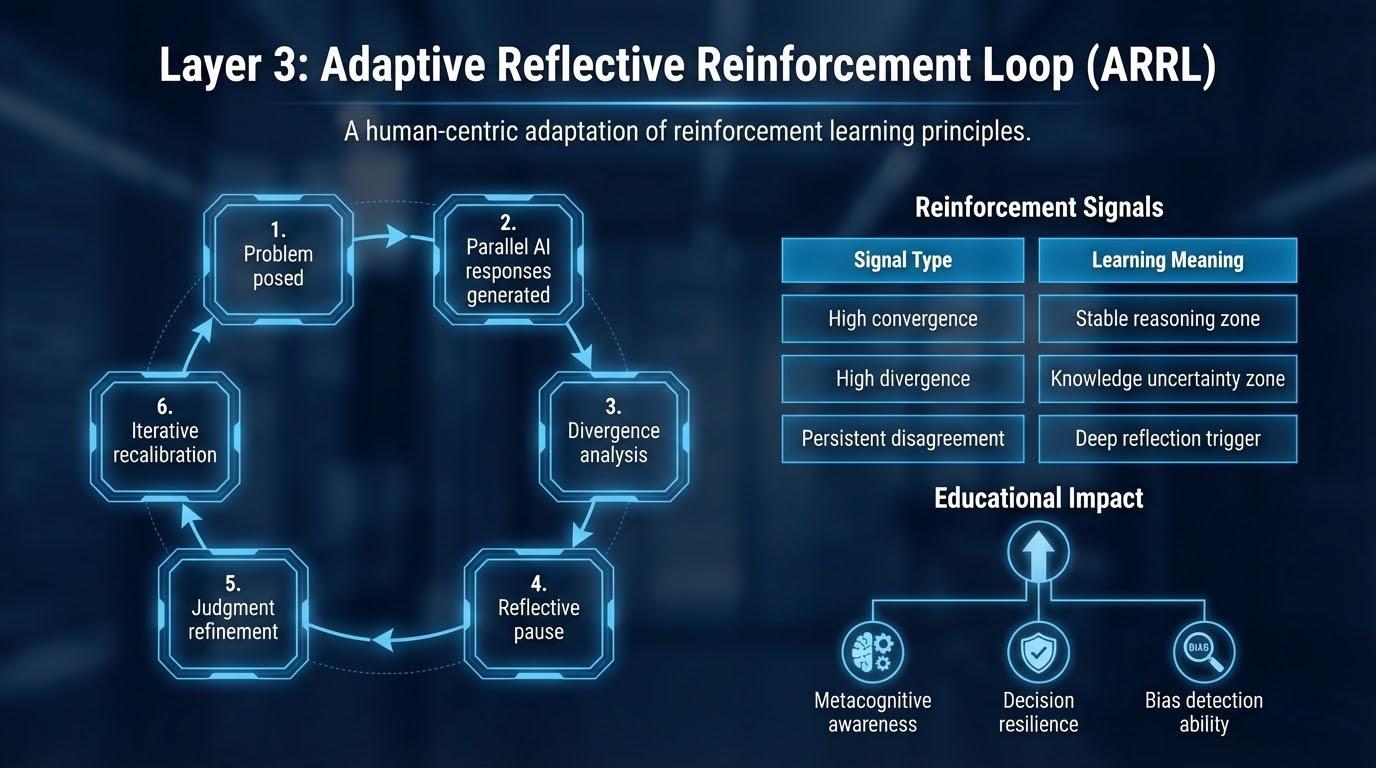
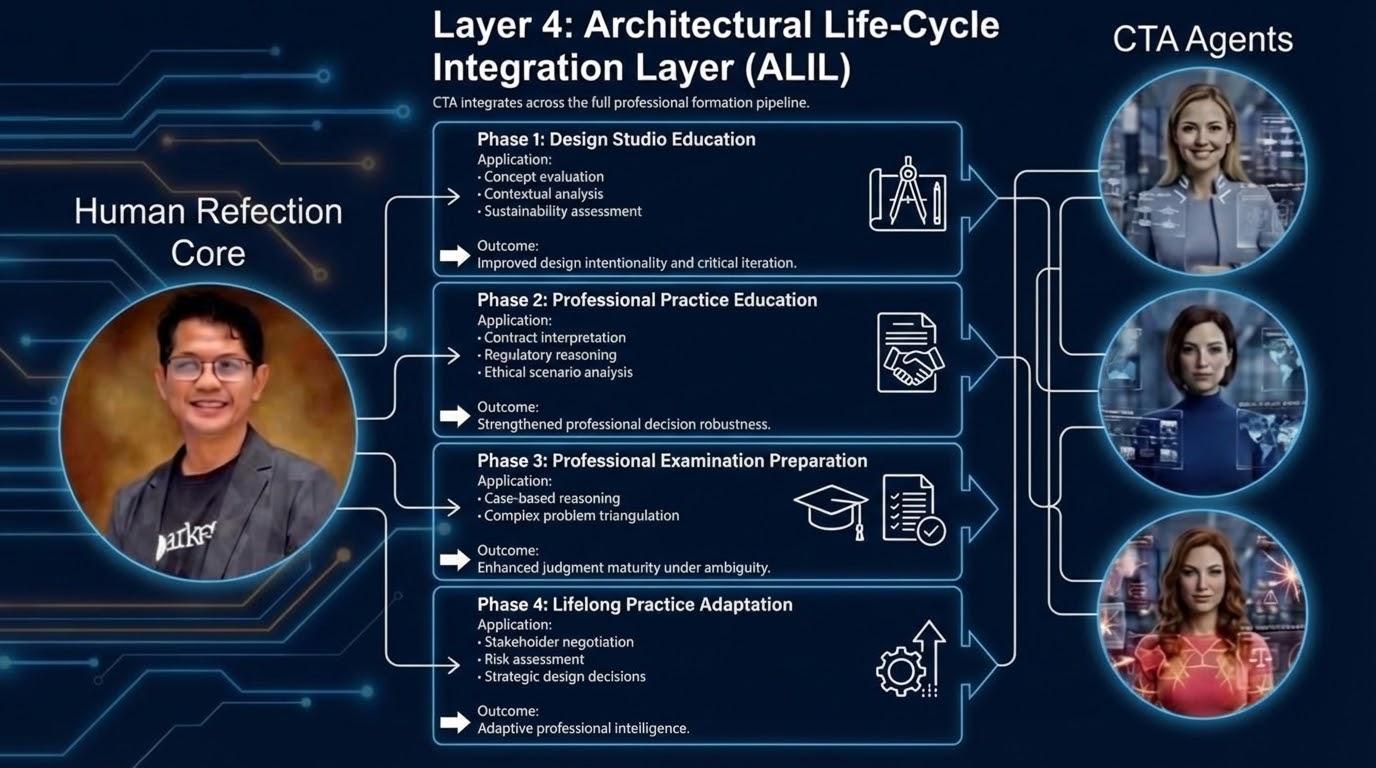
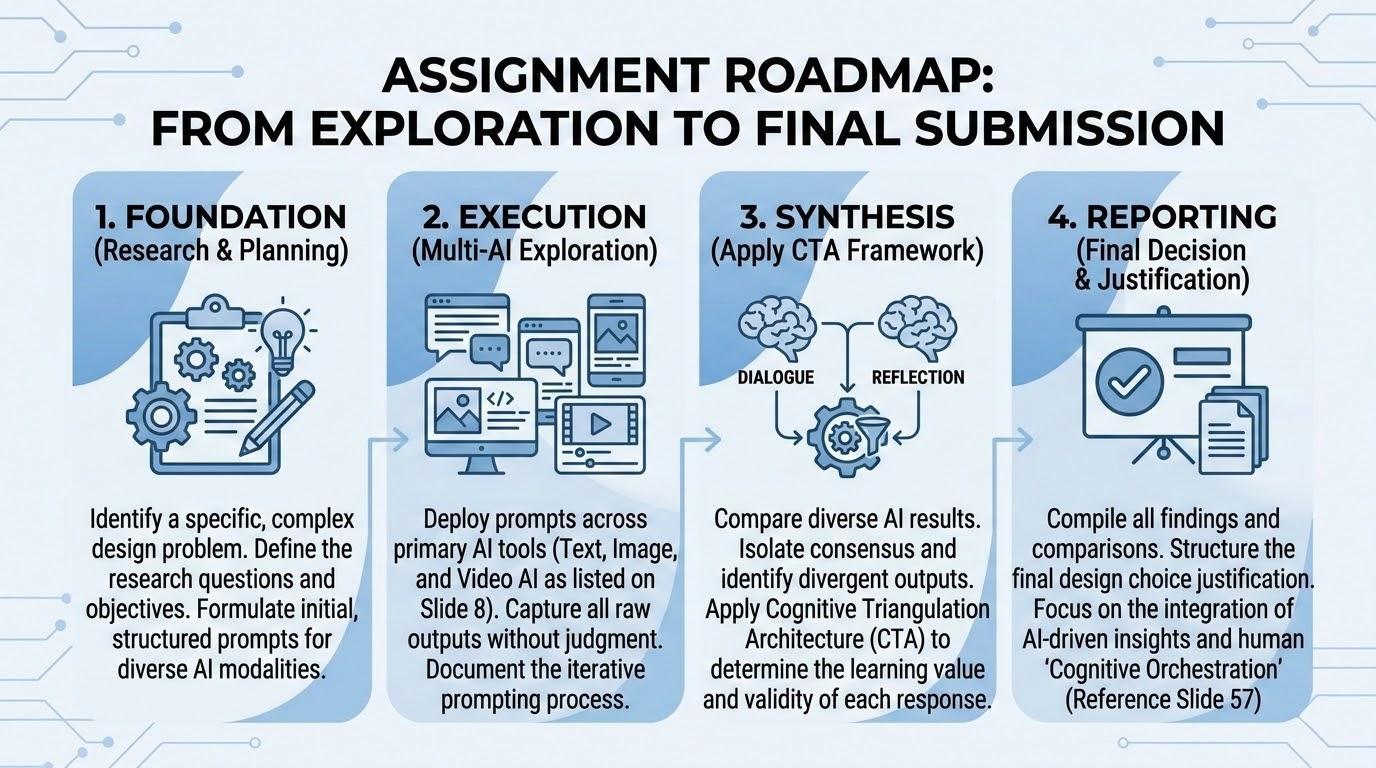
● The core concept is the Cognitive Triangulation Architecture (CTA), used to compare multiple AI outputs.
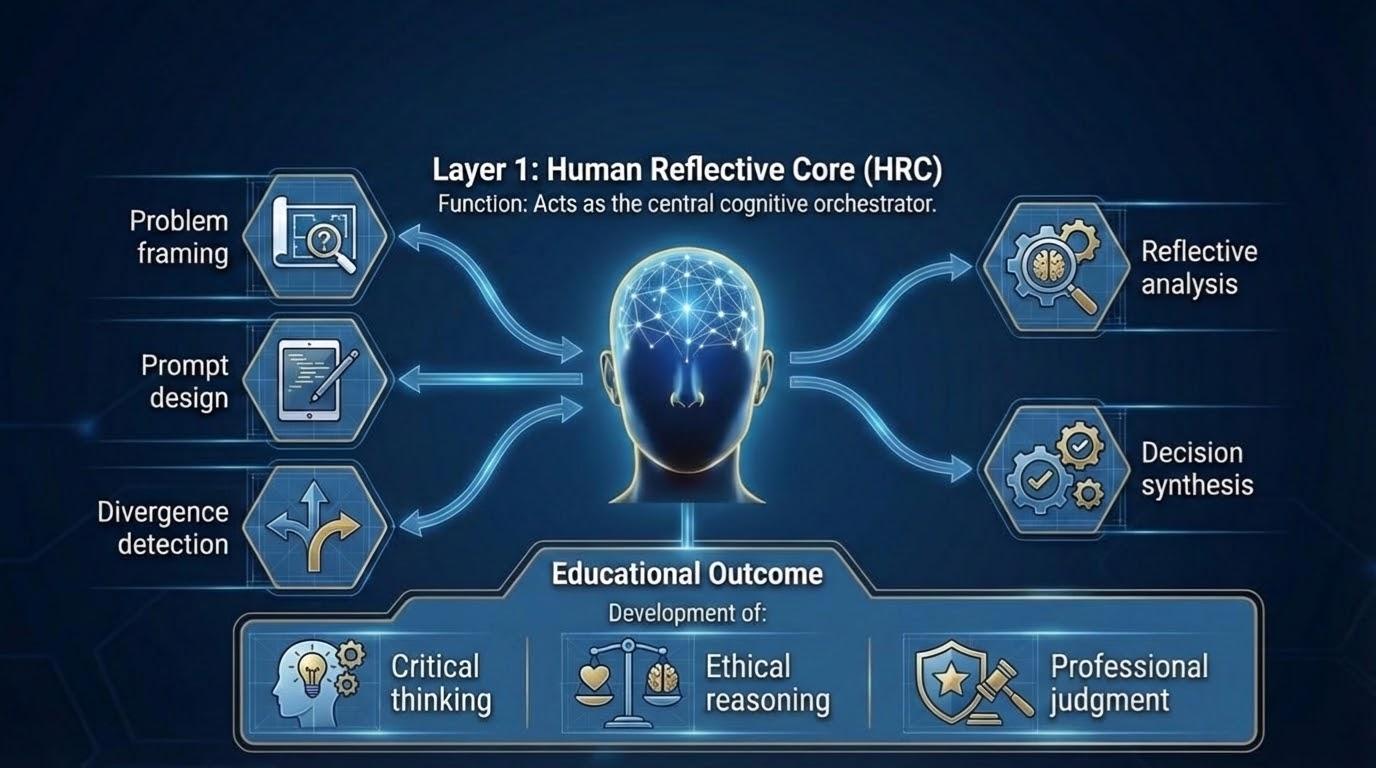
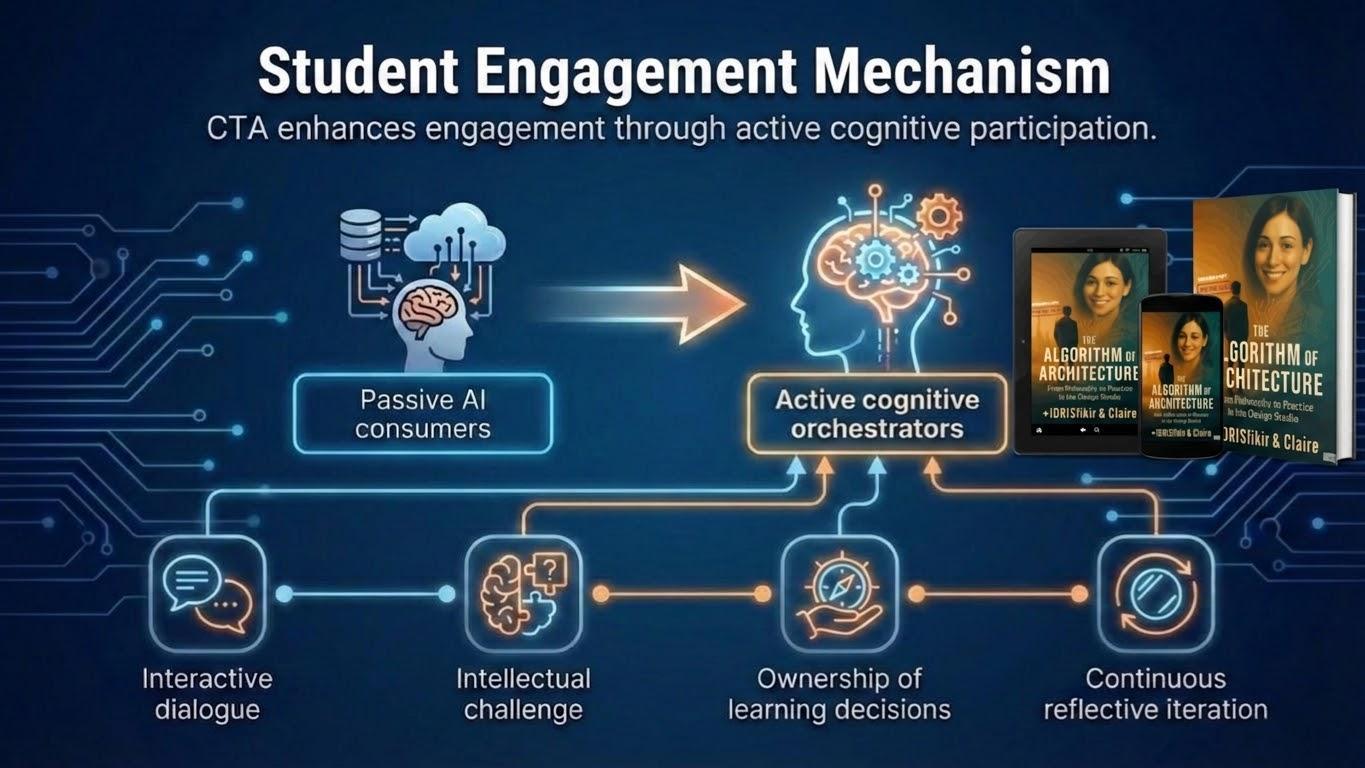
● CTA Thinking involves Reflection, Analysis, and Challenge, with the human making the final decision.
● The system uses variance as a learning signal, treating divergence as a trigger for reflective learning.
Section 6: CTA Reflection to KM
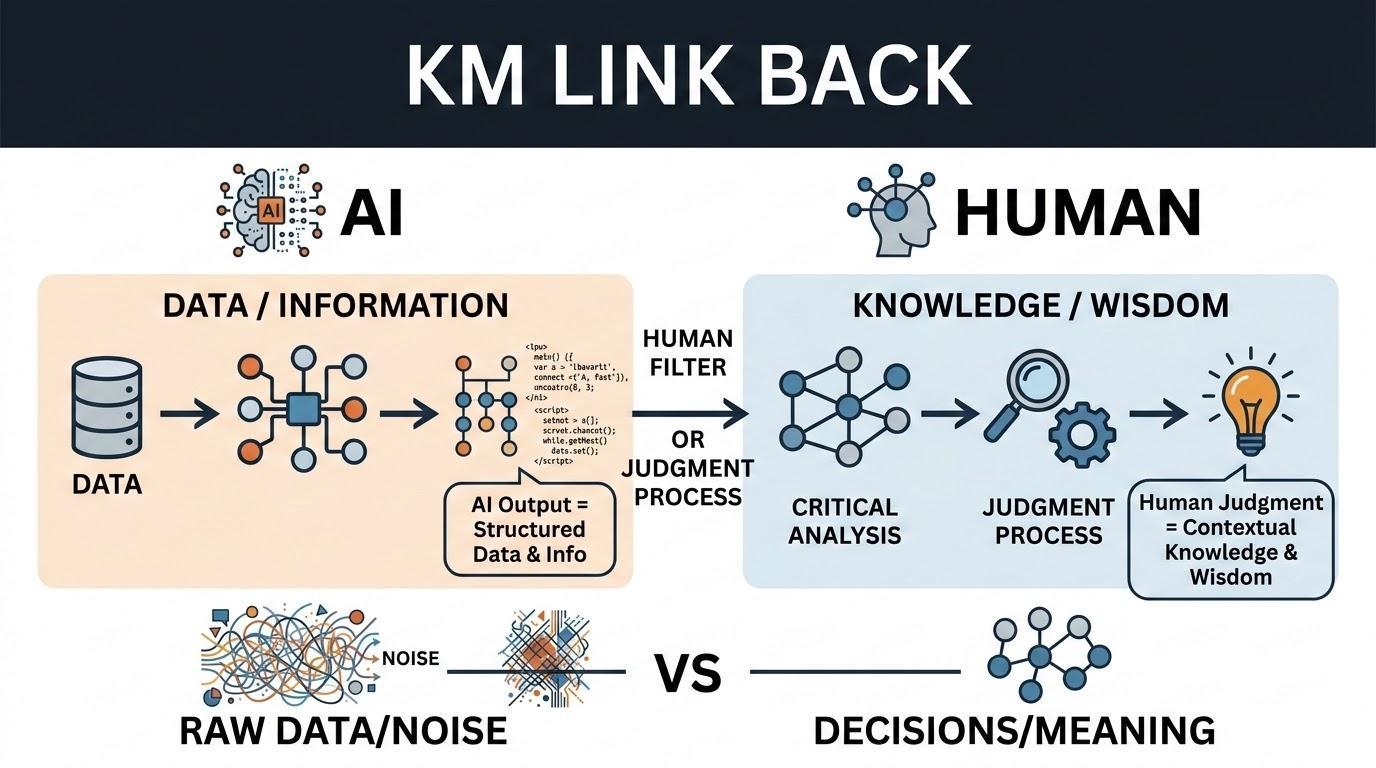
● This section relates CTA to Knowledge Management (KM).
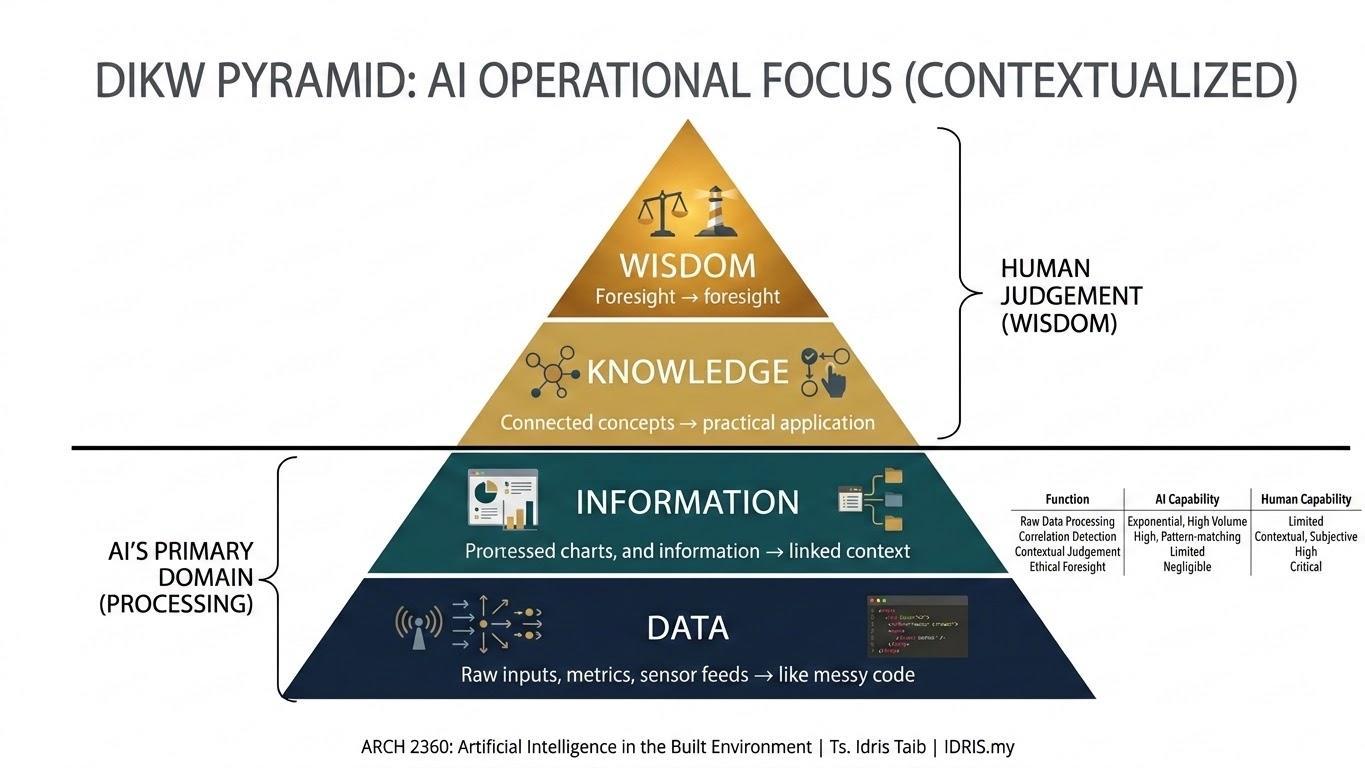
● It reinforces the DIKW Pyramid (Data → Information → Knowledge → Wisdom), noting AI operates at the data and information levels.
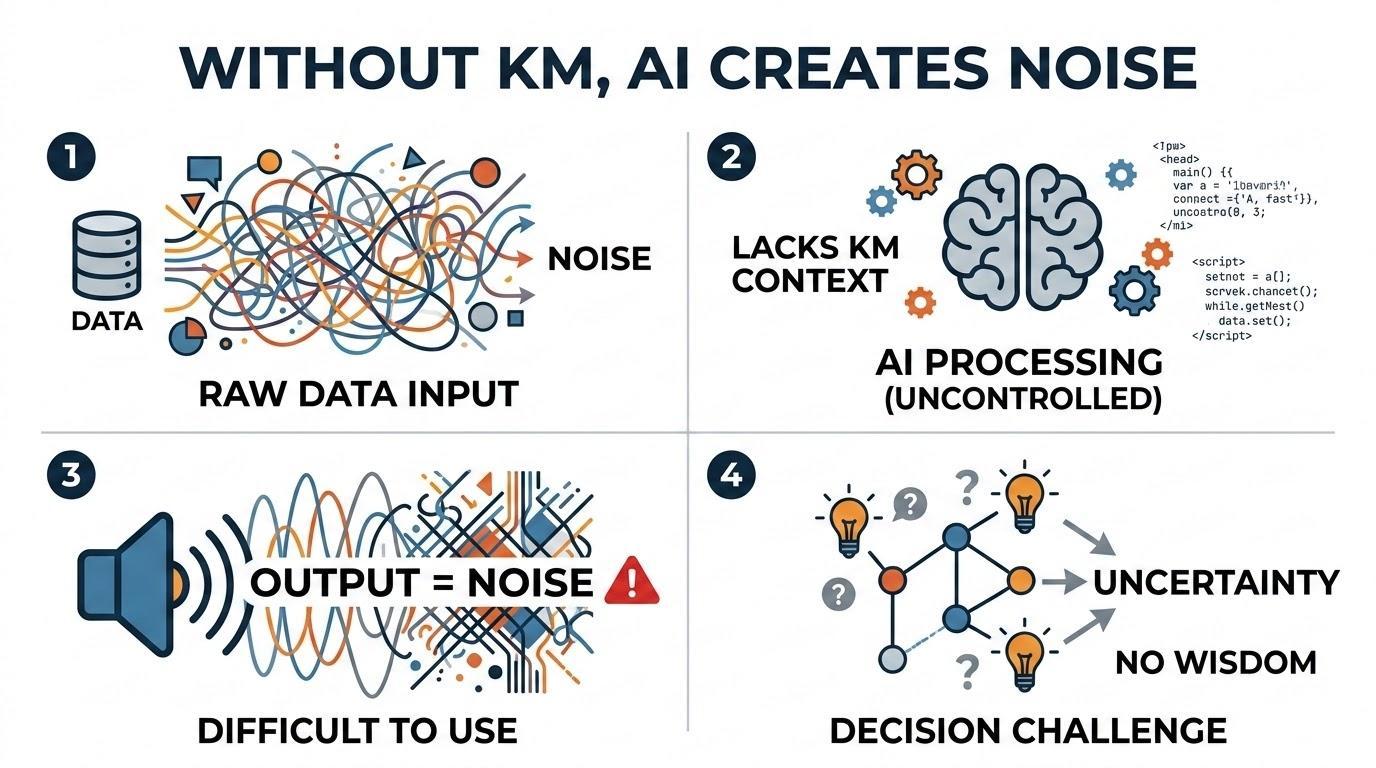
● AI produces data, but KM produces meaning; without KM, AI creates noise.
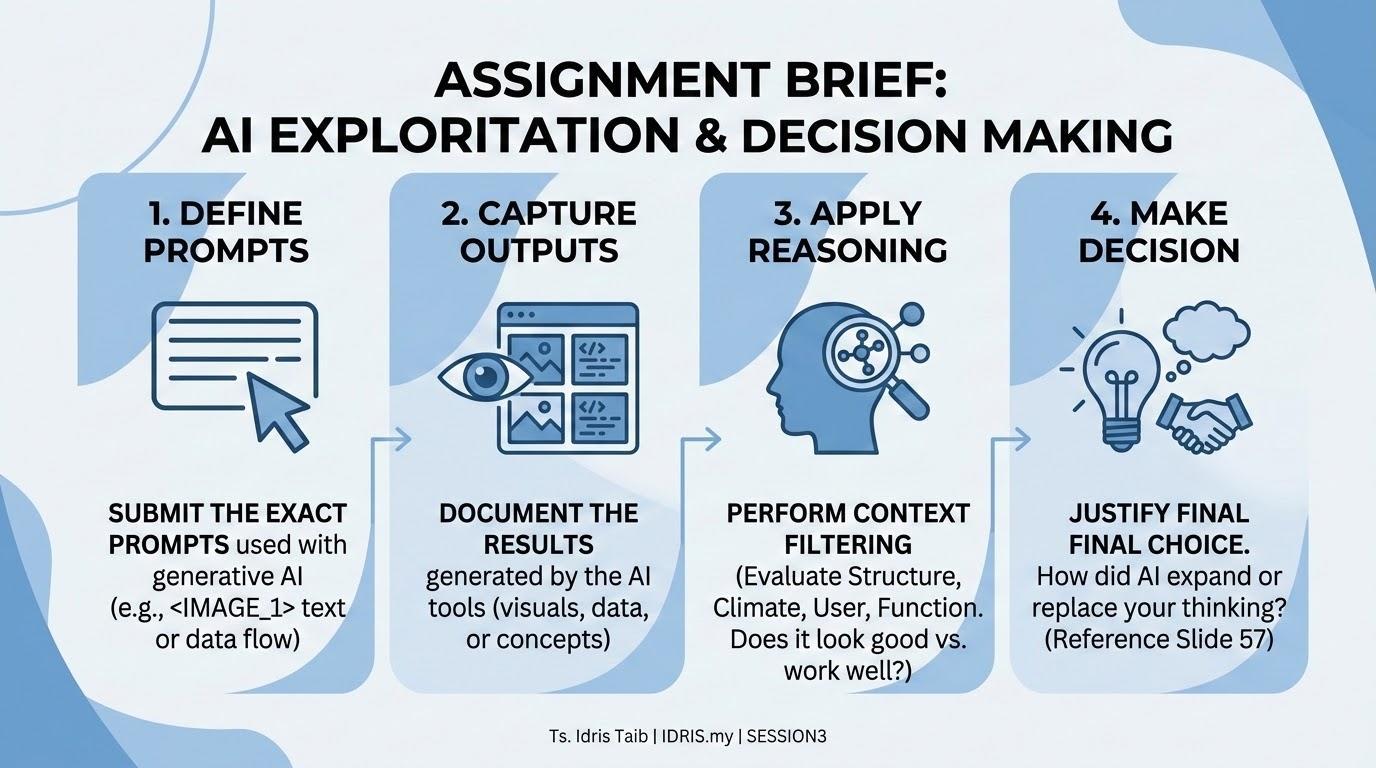
Section 7: Assignment Recap
● This section is dedicated to reviewing the details of the assignment, which focuses on multi-agent reflective analysis and CTA comparison.