IDRA GLOBAL
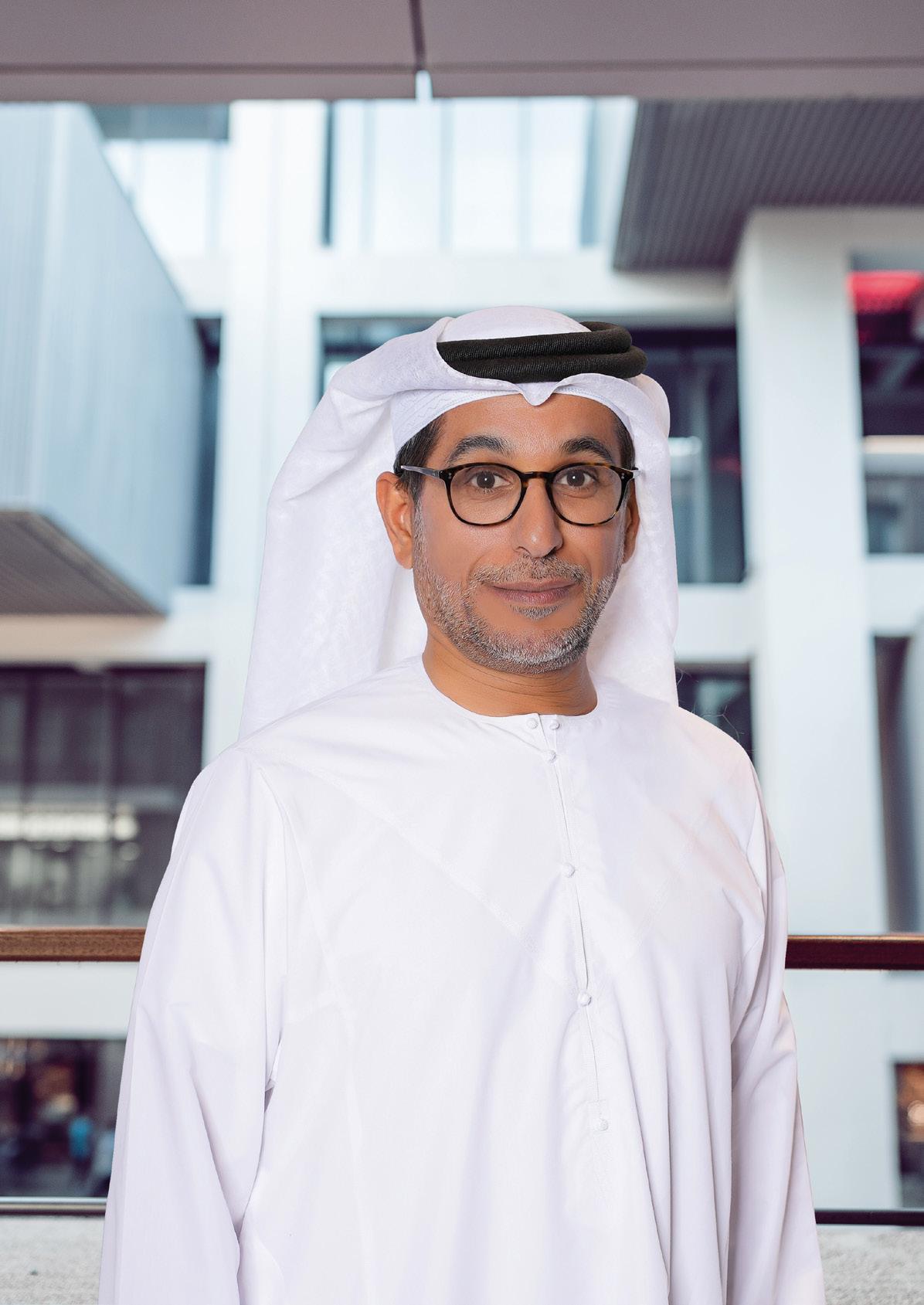
In Conversation
Mohamed Saif Al Suwaidi

MESSAGE FROM THE SECRETARY GENERAL
MESSAGE FROM THE PRESIDENT
COVER STORY:
IDRA: IN CONVERSATION WITH H. E. MOHAMED SAIF AL SUWAIDI. DIRECTOR GENERAL, ADFD ON THE ABU DHABI GLOBAL WATER PLATFORM AND MOBILIZING USD 2 BILLION FOR GLOBAL WATER SECURITY
EXECUTIVE VIEWPOINTS
ʞ MAKING BREAKTHROUGHS MORE BANKABLE. THE POWER OF PROOF IN WATER FINANCING
ʞ HOW DIGITAL OPTIMISATION AND AI CAN DRIVE INVESTOR CONFIDENCE IN WATER INFRASTRUCTURE
ʞ DELIVERING BANKABLE WATER PROJECTS IN PRICE-SENSITIVE MARKETS
ʞ WATER FOR DEVELOPMENT: TURNING WATER SECURITY INTO OPPORTUNITY
ʞ FROM TRAINING TO IMPACT: HOW SAUDI WOMEN ARE STRENGTHENING DESALINATION PERFORMANCE
ʞ TEN YEARS OF TAKING WATER RISK OFF THE TABLE
IDRA Global Connections is published quarterly. The views expressed in articles contributed to IDRA Global Connections are not necessarily the views of the International Desalination And Reuse Association. IDRA assumes no responsibility for unsolicited manuscripts and/or artwork.
ʞ SAVE THE DATE SEVILLE 2027
ʞ IDRA WELCOMES PROFESSOR NIDAL HILAL
ʞ IDRA STRENGTHENS GLOBAL PARTNERSHIPS ACROSS TWO CONTINENTS
ʞ YLP COMMITTEE GAINS MOMENTUM ACROSS WEBINARS, COMPETITIONS, AND GLOBAL ENGAGEMENT
ʞ INBO-IDRA-IWRA CALL FOR CASE-STUDY CONTRIBUTIONS
ʞ IDRA BOARD NOMINATION AND ELECTION PROCESS TO OPEN IN MAY 2026
ʞ APPLICATIONS OPEN: DR. K.C. CHANNABASAPPA MEMORIAL PHD SCHOLARSHIP 2026-2027
ʞ IDRA SEEKS HOST AGENCY FOR 2026-2027 FELLOWSHIP PROGRAM
ʞ IDRA PARTNERS UPCOMING EVENTS
INDUSTRY NEWS
ʞ EPA LAUNCHES WATER REUSE ACTION PLAN 2.0, SHARPENING FOCUS ON INDUSTRY, DATA CENTERS, AND ENERGY
ʞ RESEARCH CENTER SPOTLIGHT: UCI'S WATER-ENERGY NEXUS CENTER
ʞ IDRA WELCOMES NEW MEMBERS
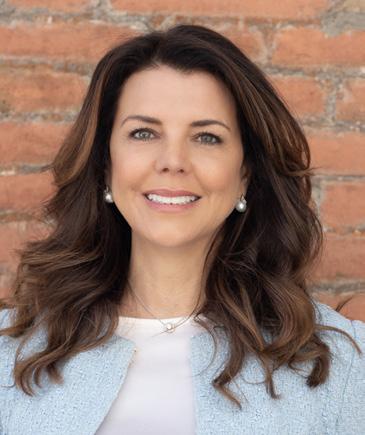
From Words to Water
In the last edition of Global Connections, I wrote that 2026 would be a year of action, not declarations. That what was needed was not more commitments for 2030, but delivery in 2026.
I am pleased to say: we are delivering.
A Running Start
In January, IDRA was represented at the High-Level Preparatory Meeting for the 2026 United Nations Water Conference in Dakar, Senegal, where we engaged directly with government leaders, multilateral institutions, and civil society on the six interactive dialogue themes that will shape the December conference in Abu Dhabi.
In February, IDRA partnered with the Arab Fund for Economic and Social Development and the World Bank Group to convene a landmark Roundtable on Financing Water Projects in Arab Countries in Kuwait City. Over two days, governments, sovereign funds, development finance institutions, and private sector leaders came together around the policy frameworks, blended finance mechanisms, and country-level deal discussions needed to unlock capital for water infrastructure across the MENA region.
In March, we curated and moderated two high-level panels at the WateReuse Symposium on scaling water reuse globally and driving industrial sustainability, with panelists from the World Bank, Stantec, AECOM, Xylem, Aquatech, Acciona, Medisun, and the Pacific Institute.
Later that month, I had the privilege of representing IDRA at the 43rd UN-Water Meeting at IFAD headquarters in Rome, the largest-ever gathering of UN-Water Members
and Partners. The agenda centered on the UN System-wide Strategy for Water and Sanitation and final preparations for the December UN Water Conference. For IDRA, being in the room for these discussions is not a formality. It is how we ensure that desalination and water reuse are represented in the frameworks that will shape global water policy for the next decade.
This year has also brought a series of important policy and institutional developments that signal a decisive shift toward unconventional water resources, resilience, and integrated planning. Among them are the World Bank’s new Future Water initiative, the U.S. EPA’s updated National Water Reuse Action Plan, California’s State Water Plan 2028 Advisory Board process, Senate Bills 72 and 659, and the California Water Plan Roadmap for 2028–2033, and the ADFD Davos announcement for the 2 Billion Global Water Platform.
Another encouraging signal of innovation momentum came with the recent announcement of the semifinalist teams for the XPRIZE Water Scarcity competition. The initiative is helping accelerate breakthrough technologies and scalable solutions across desalination, reuse, treatment, efficiency, and decentralized systems. What is especially important is not only the technologies themselves, but the growing recognition from investors, governments, philanthropies, and innovators that solving water scarcity requires the same level of urgency, creativity, and global collaboration that we have seen in energy and climate innovation over the last decade.
Taken together, these initiatives reflect a growing international recognition that desalination, water reuse, digital water systems, climate-resilient infrastructure, and innovation ecosystems are no longer peripheral solutions — they are becoming central pillars of national water security strategies.
This momentum is not happening in a vacuum. According to the IDRA Desalination and Reuse Handbook 2025–2026, produced with Global Water Intelligence, installed desalination capacity has grown by 40% since 2020, while global water reuse capacity has surged by 52% over the same period. The market is entering its fastest growth phase in history. The demand is undeniable.
Under the leadership of the IDRA Academy Hub, we are launching a platform that reflects the depth of expertise across our community, ensuring that knowledge is passed on, structured, and accessible to the professionals who will lead this sector in the decades ahead.
We are actively seeking expressions of interest from lecturers and subject matter experts. If you or a colleague has expertise in desalination, water reuse, digital water management, brine management, energy optimization, AI applications, or related fields, we want to hear from you.
Growing Our Global Network
IDRA’s partnership footprint continues to expand. This quarter, we signed a Memorandum of Understanding with The Water Center at the University of Pennsylvania focused on mentorship, graduate research, career pathways, and collaborative programming — an initiative we view as an important bridge between academia and implementation.
Separately, IDRA has joined the Advisory Council of the Water Environment Federation’s Water-AI Nexus Center of Excellence, strengthening engagement around the intersection of artificial intelligence, digitalization, and advanced water management.
We also entered into a Supporting Partners agreement with University Mohammed VI Polytechnic (UM6P) in Morocco, linking the IDRA World Congress 2026 with UM6P’s International Water Research Institute and helping deepen research collaboration across Africa and the MENA region.
These partnerships are not symbolic. They are part of a deliberate effort to connect policy, finance, research, technology, and workforce development into a more integrated global water ecosystem.
November and December: A Convergence of Two Important World Water Gatherings
The IDRA World Congress 2026 will take place from 1–5 November in Riyadh, hosted by the Saudi Water Authority under the patronage of the Ministry of Environment, Water and Agriculture. I want to thank our Saudi partners for their extraordinary commitment to making this a landmark Congress.
The Kingdom’s leadership in desalination, water reuse, and integrated water management is unmatched, and we are deeply grateful for the partnership, the ambition, and the hospitality.
The program spans a peer-reviewed four-day, four-track technical program, an SWA-IDRA Global Regulator Summit, a Thought Leadership Summit, three-, day thematic ProgramAcademy courses, plant tours, Young Leader initiatives, and our industry awards, bringing together participants from more than 60 countries under the theme: Driving Global Water Sustainability Through Innovation.
If you have not yet registered or booked your accommodations, now is the time.
Then, just weeks later, the 2026 United Nations Water Conference will convene from 8-10 December in Abu Dhabi, co-hosted by the UAE and Senegal. This is only the second UN Water Conference since 1977, and IDRA, as a UN-Water Partner, will be actively engaged across its six interactive dialogue themes.
Two transformative gatherings. Both in the GCC — the region that has done more than any other to demonstrate what is possible when water is treated as a national priority.
Save the Date: Seville 2027
Looking further ahead, I am pleased to announce that the IDRA Summit on Water and Climate will take place in October 2027 in Seville, Spain, under the patronage of the Regional Government of Andalusia.
This builds on the General Collaboration Protocol we signed with President H.E. Juan Manuel Moreno Bonilla at COP29 in Baku in November 2024, and on the success of the International Water Reuse High-Level Symposium hosted in Seville in May 2025.
Strengthening Leadership and Governance
As IDRA continues to expand its global engagement and strategic partnerships, we are also focused on strengthening the leadership and governance structures that will guide the association into its next phase of growth. I am pleased to announce that the nominations process for the IDRA Board of Directors is now officially open.
We encourage qualified and committed leaders from across the global desalination, reuse, finance, technology, policy, academic, and industrial communities to participate in shaping the future direction of the association. As our sector evolves rapidly, ensuring diverse international representation and multidisciplinary expertise within IDRA’s leadership has never been more important.
Additional information regarding the nominations process, timelines, and eligibility criteria will be circulated to members shortly.
This Edition of Global Connections
I am honored that this edition features a cover story with H.E. Mohamed Saif Al Suwaidi, Director General of the Abu Dhabi Fund for Development. ADFD’s launch of the Abu Dhabi Global Water Platform — a USD 2 billion initiative targeting water and food security in developing countries — is exactly the kind of bold, scaled commitment our sector needs.
I would also like to thank every contributor to this edition. Global Connections continues to grow as a platform for the diverse voices and perspectives that make our community so rich.
The water sector is entering a defining period. The technologies exist. The financing discussions are accelerating. The policy frameworks are beginning to align. The partnerships are forming.
The question is no longer whether transformation is possible.
The question is whether we can move fast enough to deliver it.
With gratitude, Shannon McCarthy Secretary General
The world needs $7 trillion in water infrastructure investment by 2030 (World Bank, Scaling Up Finance for Water). Less than 2% of annual water spending comes from the private sector. Tariffs cover just 70% of water service costs (OECD). Only 1% of global climate-tech investment is directed toward water solutions (World Economic Forum).
These are not new numbers. But they should be shocking every time we read them. Because what they describe is not a funding problem. It is a credibility problem. The water sector has not yet convinced the world that it is investable at scale.
Consider the comparison with energy. Over the past decade, the energy transition has attracted trillions in private capital through clear regulatory signals, standardized risk frameworks, and
returns that institutional investors can model with confidence. Solar and wind moved from subsidized experiments to bankable assets because the enabling environment was built around them.
Water has not had that moment. Not because the technology is unproven, it is. Desalination, water reuse, advanced treatment, digital optimization: these are mature, deployable solutions. The problem is that the policy and regulatory landscape remain fragmented; tariff structures rarely reflect the true cost of water, and the risk-return profile of water projects is difficult for private capital to assess.
A January 2026 report put the global water infrastructure gap at 6.5 trillion euros (World Economic Forum, University of Cambridge, ACEA:

Bridging the 6.5 trillion Euro Water Infrastructure Gap). But it also made the case that the sector has struggled for every euro invested in water infrastructure. Global economies gain 1.30 euros in gross value added and create 31.8 jobs per million invested. Water infrastructure is not a cost. It is a multiplier. Until we make that case convincingly, capital will continue to flow elsewhere.
In my last message, I wrote about divergence in how the world governs water reuse. The financing picture is equally fragmented. In the MENA region, sovereign wealth funds and development finance institutions are actively seeking investable water projects, but the bankable pipeline is thin. In the United States, the $8 billion per year in federal water infrastructure funding provided through the Infrastructure Investment and Jobs Act expires in September 2026, with reauthorization uncertain.
IDRA is not a bank. We are not regulators. But we are uniquely positioned to convene the
conversations where policy meets capital. The technology is ready, but institutional willingness to commit capital at scale depends on regulatory certainty that does not yet exist in most markets. The IDRA World Congress in Riyadh this November, followed by the UN Water Conference in Abu Dhabi in December, presents a rare window. Two global gatherings, one month apart, where the financing conversation can move from diagnosis to action.
Sincerely,
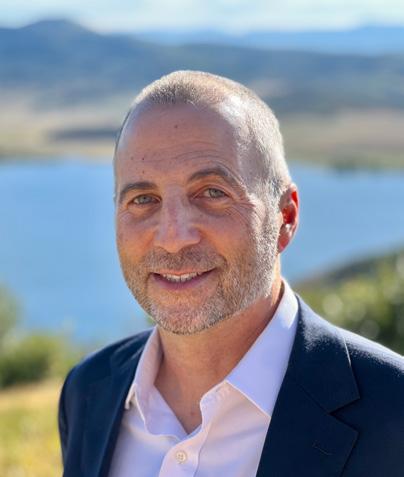
Jon Freedman
IDRA President Term 21
Director General, Abu Dhabi Fund for Development, on the Abu Dhabi Global Water Platform and mobilizing USD 2 Billion for Global Water Security.
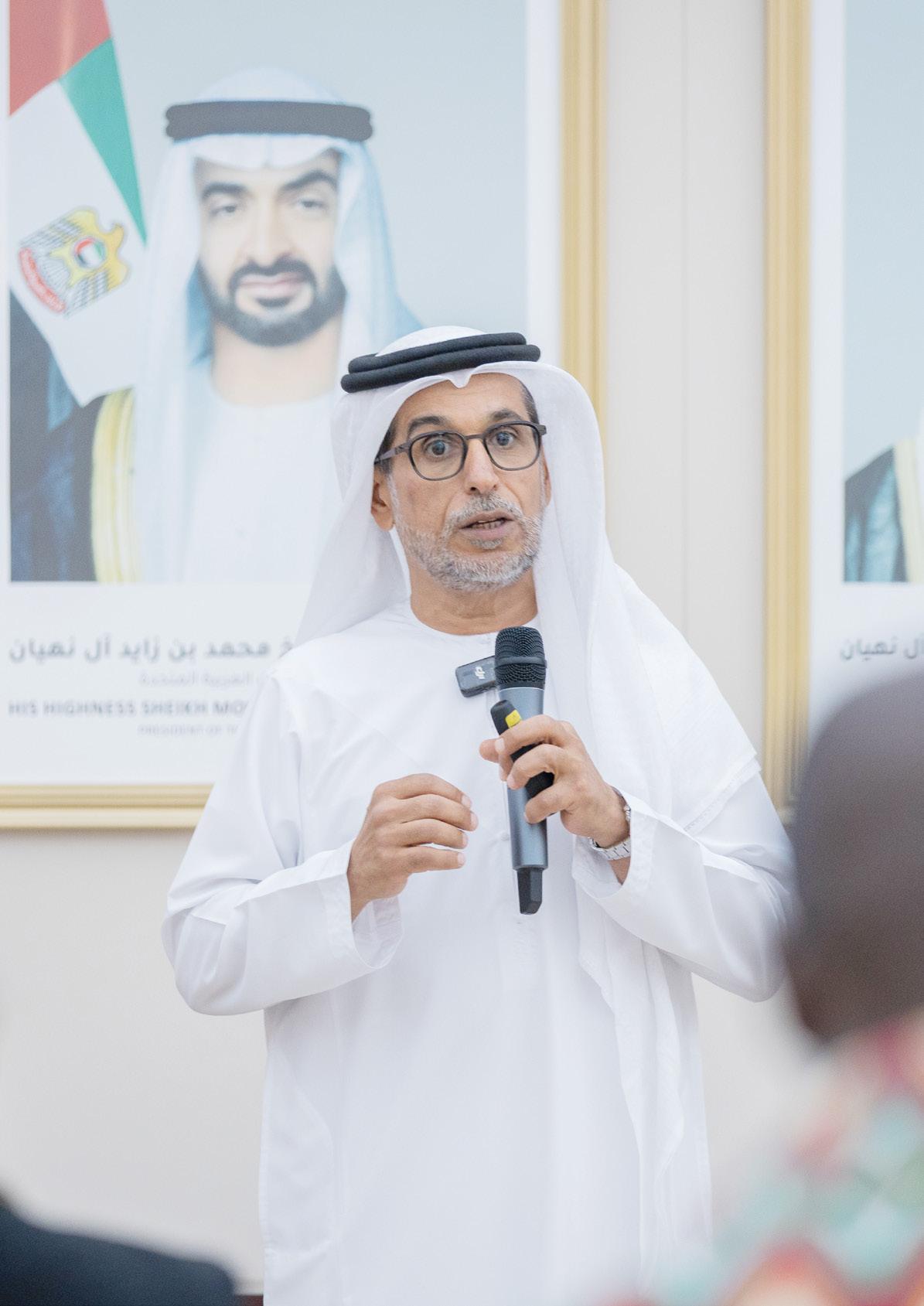
Q: The Abu Dhabi Global Water Platform represents a significant commitment: USD 2 billion to be mobilized for water projects worldwide. What led ADFD to make water a strategic priority at this moment?
A: Water security has become one of the defining development challenges of our time. Rapid population growth, climate change, and increasing pressure on natural resources are widening the gap between water demand and supply, particularly in developing countries. Addressing this challenge requires not only technological solutions but also sustainable financing mechanisms capable of accelerating implementation.
The launch of the Abu Dhabi Global Water Platform reflects ADFD’s commitment to supporting global development priorities through impactful and forward-looking initiatives. Water security is closely linked to
food security, economic stability, and public health, which makes it a fundamental pillar of sustainable development.
Through this platform, we aim to mobilize USD 2 billion in financing by working alongside international partners to expand access to clean water, strengthen resilience, and enable innovative solutions in the water sector. It is a strategic step in advancing ADFD’s mission of delivering sustainable development impact while contributing to global efforts aligned with the United Nations Sustainable Development Goals.
Q: The Platform targets 10 million beneficiaries. What does success look like, and how will you measure impact beyond the numbers?
A: Reaching 10 million beneficiaries is an important milestone, but success extends
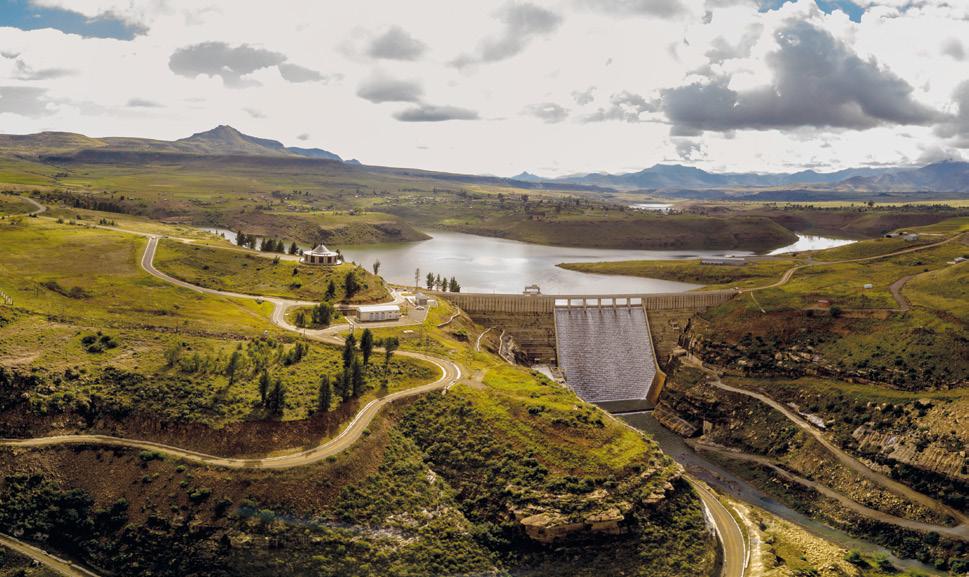
far beyond that figure. Our objective is to create sustainable systems that continue to deliver value to communities for decades.
At ADFD, we assess impact through several dimensions. These include improved access to safe and reliable water supplies, enhanced water infrastructure resilience, and the long-term sustainability of projects from both operational and financial perspectives. We also look at how projects strengthen local capacity, stimulate economic activity, and contribute to environmental sustainability.
Ultimately, success will be measured by whether communities are able to maintain secure access to water, improve quality of life, and support long-term development outcomes.
At ADFD, we look for projects that demonstrate clear development impact, reliable demand, and well-defined governance structures.
Q: The world faces a massive gap between water infrastructure needs and available funding. From your perspective at ADFD, what is blocking capital from flowing to water projects at the scale required?
A: Many water projects face structural barriers such as regulatory uncertainty, limited cost recovery mechanisms, or insufficient institutional capacity. These
factors can create perceived risks that discourage private investors or make projects difficult to finance at scale.
Development finance institutions play an important role in bridging this gap by providing concessional financing, derisking mechanisms, and technical support that can strengthen project viability. We can help unlock larger flows of capital into the water sector by creating more predictable frameworks and improving project preparation.
Q: What makes a water project “bankable” in ADFD’s assessment?
A: A bankable project is one that combines strong technical design with sound financial and institutional foundations.
At ADFD, we look for projects that demonstrate clear development impact, reliable demand, and well-defined governance structures. Financial sustainability is also critical, including realistic cost structures, long-term operational planning, and a clear framework for maintenance and management.
Equally important is alignment with the development priorities of the beneficiary country. When projects are supported by strong government commitment and effective regulatory frameworks, they are far more likely to achieve long-term success.
Q: Water tariffs are often politically sensitive. How does ADFD approach projects where the pricing environment is challenging?
A: Water is a basic necessity, and affordability must always be considered alongside financial sustainability. In many developing markets, tariffs alone cannot fully support the cost of infrastructure development.
In these situations, development finance institutions can play a critical role by structuring financing in ways that make projects viable while maintaining accessibility for communities. This may include concessional loans, blended financing models, or partnerships with governments and international organizations.
Our focus is to support solutions that balance economic viability with social responsibility, ensuring that projects remain sustainable without compromising access for vulnerable populations.
Q: The Platform mentions diverse financing instruments. How do you decide which instrument fits which situation?
A: Each water project operates within a different economic, regulatory, and institutional environment, which is why flexibility in financing is essential.
Through the Abu Dhabi Global Water Platform, we utilize a range of instruments including development financing, private sector investment support, export financing, guarantees, and equity participation. The selection of these tools depends on the project’s structure, risk profile, and development objectives.
Our goal is to design financing solutions that align with both the needs of the project
and the priorities of the beneficiary country while encouraging greater participation from international partners and private investors.
Q: How is technological innovation changing the investment case for water projects?
A: Innovation is transforming the economics of water infrastructure. Advances in desalination, water reuse, and resource management technologies are improving efficiency, reducing energy consumption, and lowering operational costs.
These improvements are strengthening the investment case for water projects by making them more financially sustainable and scalable. At the same time, digital monitoring systems and smart water management solutions are enabling operators to optimize performance and reduce waste.
Supporting the adoption of these technologies is an important component of the Water Platform, as innovation will be essential to meeting future water demand.
Q: Desalination costs have fallen dramatically over the past two decades. Does that open doors to projects that would previously have been unfeasible?
A: Absolutely. The reduction in desalination costs has significantly expanded the possibilities for countries facing severe water scarcity.
Technological advancements, improved energy efficiency, and economies of scale have made desalination more accessible and viable in a wider range of contexts.
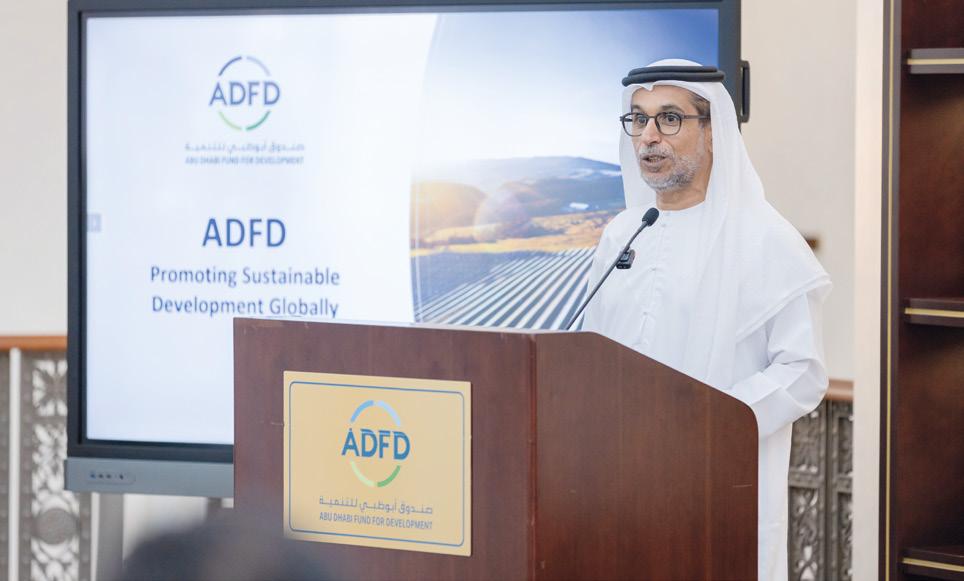
This has allowed governments and development partners to consider projects that were previously considered financially challenging.
However, desalination is only one component of a broader water strategy. Integrated approaches that include reuse, conservation, and efficient resource management remain essential to achieving long-term water security.
Q: Who needs to be at the table to make the Platform successful?
A: Addressing global water challenges requires a truly collaborative approach. Governments, development finance institutions, private sector partners, technology providers, research institutions,
and international organizations all have important roles to play. Each brings a different perspective and capability to the table.
The Abu Dhabi Global Water Platform is designed to serve as a collaborative framework where these stakeholders can align resources, share knowledge, and cofinance projects that deliver meaningful and sustainable impact.
Q: How do you see the roles of development finance institutions, private investors, and governments in closing the global water investment gap?
A: Each stakeholder plays a key role in closing the global water investment gap. Governments are responsible for establishing enabling policy
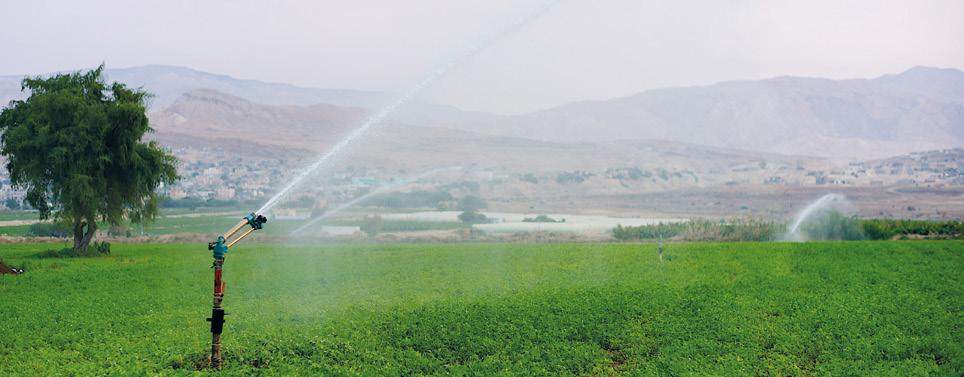
environments and long-term national water strategies. Development finance institutions help catalyse investment by providing concessional financing and mitigating risk. Private investors contribute capital, technical expertise, and operational efficiency.
Through effective collaboration, these stakeholders can develop scalable solutions that help close the global water investment gap.
Q: How does the UAE’s experience shape ADFD’s approach?
A: The UAE has transformed its water sector through strategic investment, technological innovation, and longterm planning, developing world-class infrastructure that ensures a reliable water supply for its population. This experience demonstrates that ambitious goals can be achieved when policy, innovation, and investment are aligned. It also underscores the value of integrating advanced technologies with sustainable resource management.
These lessons continue to guide ADFD’s approach as we support water development projects in partner countries, fostering sustainable and impactful solutions worldwide.
Q: What lessons from the UAE’s water journey are most transferable to developing countries?
A: One key lesson is the importance of long-term planning. Water infrastructure requires sustained investment and clear national strategies that extend beyond shortterm cycles.
Another important lesson is the value of innovation. The UAE has consistently invested in advanced technologies to improve efficiency and sustainability. Collaboration has been essential. Partnerships between government entities, the private sector, and international organizations have enabled the development of robust and resilient water systems.
Q: Where do you see the greatest untapped opportunities for water investment globally?
A: Significant opportunities exist in regions where population growth and climate pressures are intensifying water challenges. Investments in desalination, water reuse, and modern water distribution systems offer strong potential, particularly in rapidly developing economies. There is also growing potential in smart water management technologies that improve efficiency and reduce losses. We can create sustainable systems capable of supporting longterm economic and social development by combining infrastructure development with innovative solutions.
Q: If we are speaking again in five years, what would you hope the Abu Dhabi Global Water Platform has achieved?
A: In five years, we hope the platform will have successfully mobilized the targeted investment and supported a portfolio of impactful projects that expand access to safe water for millions of people. Beyond financing, we also hope the platform will have strengthened international cooperation in the
water sector and accelerated the adoption of innovative technologies.
Ultimately, our ambition is for the Abu Dhabi Global Water Platform to serve as a catalyst for global collaboration in addressing one of the most pressing challenges of our time.
Q: What message would you give to the global water industry about partnering with development finance institutions like ADFD?
A: The scale of the global water challenge requires collective action.
Development finance institutions like ADFD are committed to working with partners across the public and private sectors to deliver impactful and sustainable projects. By combining financial resources, technical expertise, and innovation, we can accelerate solutions that expand access to water and strengthen resilience.
We encourage stakeholders across the global water industry to collaborate with us in advancing initiatives that contribute to sustainable development and improve the quality of life for communities worldwide.
By Ms. Ayesha Al Ateeqi, Executive Director of The Mohamed Bin Zayed Water Initiative
The world has entered an era of global water bankruptcy1. In many regions, rivers and aquifers are being drawn down faster than nature can replenish them, while systems built for a different and more forgiving climate are being pushed beyond their limits. There is now little dispute that water scarcity is a systemic risk to food systems, economic prosperity, and global stability.
The widening gap between water demand and supply is both measurable and alarming. By 2030, global demand is projected to exceed sustainable supply by up to 40%,2 and the UN has warned that water scarcity could displace 700 million people.3 These signals point to a hard truth that incremental progress utilizing existing tools will not close the gap at the pace required. Breakthrough water technologies will therefore be needed, and an array of promising ideas are in the pipeline. However, the unfortunate reality right now is that not enough of these innovative solutions are making it from the lab to deployment in the real world, in large part due to financing challenges.
Global capital is seeking opportunities that combine measurable impact with predictable performance.
At first glance, this seems counterintuitive. Water is increasingly recognized as a structural economic and development challenge, yet the sector remains chronically underfinanced relative to the scale of need. However, global capital is seeking opportunities that combine measurable impact with predictable performance. Too often, the limiting factor for breakthroughs in water technology is not a lack of interest or capital, but a shortage of proven and deployment-ready opportunities that can be assessed quickly and replicated widely.
This financing challenge is a bottleneck that is often overlooked. In relation to water, ingenuity alone does not offer immediate impact at scale. Adoption can be slowed by long operating cycles, fragmented demand, cautious procurement, and the high
consequences of failure. Understandably, utilities, regulators, and investors all need proof that a solution will perform reliably in real-world conditions and over time. When that data is unavailable or incomplete, even the most promising technologies can struggle to move beyond the pilot phase.
In this way, rigorous and reliable testing can be the hinge between technological promise and deployment at scale. Utilities need confidence that performance will hold across changing source-water conditions, operating environments, and maintenance realities.
Regulators need assurance that risks are understood and managed. Investors need repeatability, credible risk allocation, and a clear path to a financial return or cost recovery.
This is one area where blended finance can play a decisive role. When public, philanthropic, and private capital are aligned, they can absorb early risk, build evidence,
and unlock larger pools of financing for deployment, especially in underserved communities in water-scarce regions. Catalytic capital can support independent verification, field demonstrations, rigorous monitoring, and project preparation. These are often treated as side costs, when in fact they are essential steps on the path to financing and deployment.
Now obviously, proof that a technology works is only part of the puzzle. Deployment models must also reflect long-term operating realities. Many water-scarce communities cannot absorb high ongoing costs. Financing that supports installation without sustainable affordability may deliver projects, but not durable outcomes. Stronger structures are designed from the start around what operators can run, communities can afford, and systems can maintain. However, in the absence of reliable evidence of a technology’s real-world performance, the entire process grinds to a halt before any of these issues even get to
the table. In this way, proof of performance is necessary but not sufficient to clear a path to financing and deployment.
Reliable proof of a technology’s potential can be generated in a variety of ways. At the Mohamed bin Zayed Water Initiative, we have placed particular emphasis on challenges, competitions and performance-based pathways as part of a broader strategy to enable and accelerate real-world deployment. To date, our flagship programs include the five-year, $119 million XPRIZE Water Scarcity competition that aims to transform the reliability, affordability and sustainability of seawater desalination technologies, and the approximately $2 million, UAE-based Al Miyah Challenge for Agriculture (the first in a series of competitions focused on specific sectors), both designed to test and advance scalable solutions in water-scarce environments.
Technology competitions that require real-world demonstration can reduce uncertainty quickly and credibly. When designed well, competitions can compress years of questions into a clear performance record. Demonstration-based structures strengthen validation, build performance records, and improve readiness for adoption and follow-on financing. In fact, XPRIZE research suggests that under the right conditions, every $1 invested in a prize can unlock $60 in measurable social and economic impact. 4

These initiatives are taking place against the backdrop of rising international awareness of the scale and the urgency of the threat posed by water scarcity. The run-up to the UN Water Conference 2026, being co-hosted by the UAE and Senegal, has the potential to be a clear inflection point in the global effort to address this challenge. It can move the sector from promises to projects by connecting financing tools to real deployment pathways. Progress will not come from technological innovation and ingenuity alone. It will come from

Ayesha Al Ateeqi is a Executive Director at the Mohamed bin Zayed Water Initiative, United Arab Emirates. Ayesha Al Ateeqi serves as the Executive Director of the Mohamed bin Zayed Water Initiative. Established in 2024, the Initiative is part of the UAE’s efforts to address global water scarcity, working towards promoting accessible, affordable and sustainable water for all. It focuses on raising awareness of water scarcity to elevate its prioritization on the global agenda, the development and application of breakthrough technologies, and deploying solutions to water-stressed communities.
Ayesha served as a senior member at the Economic and Energy Affairs Unit at the Executive Affairs Authority, a specialized government agency mandated
building stronger pipelines for the most promising technologies, rigorous platforms for demonstration and testing, credible delivery plans, and new financing models built around proven performance.
When capital aligns with verified performance, more breakthrough water technologies have the potential to make the leap from promising innovation to measurable impact. That is the shift this moment demands.
to provide strategic policy advice to His Highness Sheikh Mohamed bin Zayed Al Nahyan, President of the United Arab Emirates. Prior to leading the Initiative, for 14 years Ayesha provided independent research, advisory and project management support to the Chairman of the Executive Affairs Authority on matters related to domestic and international economic and energy policy. Prior to this role, Ayesha worked within the sustainability space in the UAE, where she built her career.
Ayesha holds a master’s degree in strategic and security studies from the UAE National Defence College, an MBA in global leadership from UAE University, and a bachelor of education from the Higher Colleges of Technology, UAE.


Accelerating bold solutions to tackle water scarcity.
XPRIZE WATER SCARCITY
The winning team will reliably and most sustainably generate at least one million liters of potable water daily (1,000 m3/ day) from seawater at the lowest cost over the course of 1 year, demonstrating scalability for global impact.
The winning team will demonstrate a novel material and/or method that can sustainably and cost-effectively treat seawater to potable water quality, using any salt-water separation technique, with an operational lifetime of 10 years or more. ourse of 1 year, demonstrating scalability for global impact.
Aqua Membranes
Aquatech Global R&D Team
BioHtoO B Saudi Arabia
Blue Carbon
BlueBrine Project96
Deentropy (Aquatrino)
DESAL4ALL
Desolenator
ECOPEACE
FEDCO
FLOCEAN
Graphene Enhanced Reverse Osmosis
USA
Norway
NoPo Water B India
Ocean Reviver A USA Oceanwell A USA
OCP-IWRI Water Pioneers A Morocco
Oneka Technologies A Canada
OsmoPure Technologies B USA
PlasmaPure B Qatar
Pure Blue Tech
SGMEMACE
The Water Bridge B Australia
Water Innovation Alliance
Explore the teams advancing breakthrough approaches to water scarcity at xprize.org/water.

By Mr. Joaquim Beleza, Managing Director, DouroECI
Across emerging and mature markets alike, investors are increasingly familiar with the structural fundamentals of the sector: stable demand, long-term concessions, and strong alignment with public policy priorities. Yet deployment of capital continues to lag behind need due to perceived operational, performance and governance risks that remain difficult to quantify and manage over time.
This gap is becoming more pronounced as utilities operate under mounting pressure: climate variability is altering supply reliability, urban systems are expanding faster than networks can adapt, and ageing infrastructure continues to underperform – often due to limited visibility rather than poorly designed.
In this context, the discussion is shifting. The question is not only how water infrastructure is investable, but also how to make its performance measurable, transparent, and predictable enough to meet investor expectations.
This is where digital optimisation and Artificial Intelligence are fundamentally changing the equation - as a means of converting operational complexity into actionable, decision-grade intelligence via reducing uncertainty, improving asset performance, and ultimately strengthening the bankability of projects.
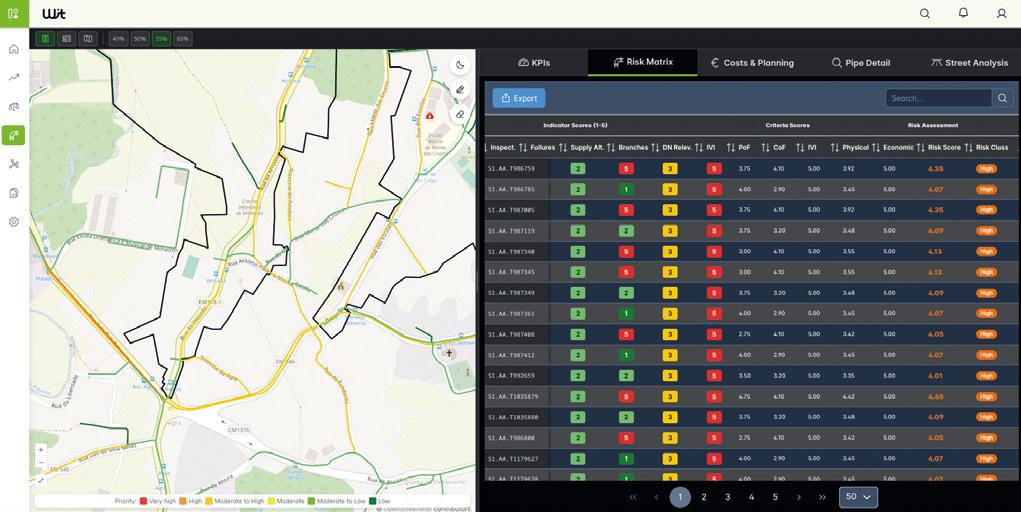
Utilities or companies like us - DouroECI, collect vast volume of operational data, yet the challenge remains context, usability and trust. In practice, this means that data that cannot be interpreted, validated, or translated into operational decisions does little to improve performance or reduce risk.
What is changing today is not only the availability of the data, but our ability to structure it into clear, integrated and ‘Explainable Intelligence’ format. This represents a more disciplined and system-level approach to data – one that enables utilities to move beyond fragmented
information towards a more reliable understanding of how their assets perform in real conditions.
In this context, AI has become a vital tool to translate this complex data more effectively. Specifically, the implementation of tools such as Explainable AI (xAI) is particularly relevant. Unlike traditional black-box models, xAI enables decision makers and operators to understand not only what is happening in the system but also why. This distinction and clarity are critical in infrastructure environments where decisions carry financial, operational and regulatory consequences.
Drawing on Monica Rogatti’s principles and the data hierarchy of needs, the journey begins with organized data but must evolve-through exploration, transformation, and actionable
insights-to deliver trusted, understandable knowledge that empowers users.
This progression - from data to explainable, decision-grade intelligence - is what ultimately links operational performance to financial confidence. For an investor, this clarity is paramount. When decision-making is supported by transparent, context-rich data, operational risks are significantly mitigated, uncertainty is reduced, risks become more measurable, and infrastructure assets become significantly more bankable.
Water infrastructures must be understood as an interconnected systems (including extensive networks) that require continuous adaptation to meet shifting societal and
environmental expectations, or as Helena Alegre would call them, living systems.
Concept is not new, as Donella Meadows, in Thinking in Systems already described a system as more than the sum of its parts - an adaptive, dynamic network oriented towards results. This is what we are managing: intricate, even if beautiful, water systems.
Achieving this level of understanding requires deep asset transparency. The integration of digital twins - dynamically updated virtual representations combining sensor networks with physics-based and data-driven models - allows us to test interventions, simulate scenarios and assess outcomes before field deployment. This provides a level of visibility that was previously unavailable, allowing decisions to be made with greater confidence and reduced risk.
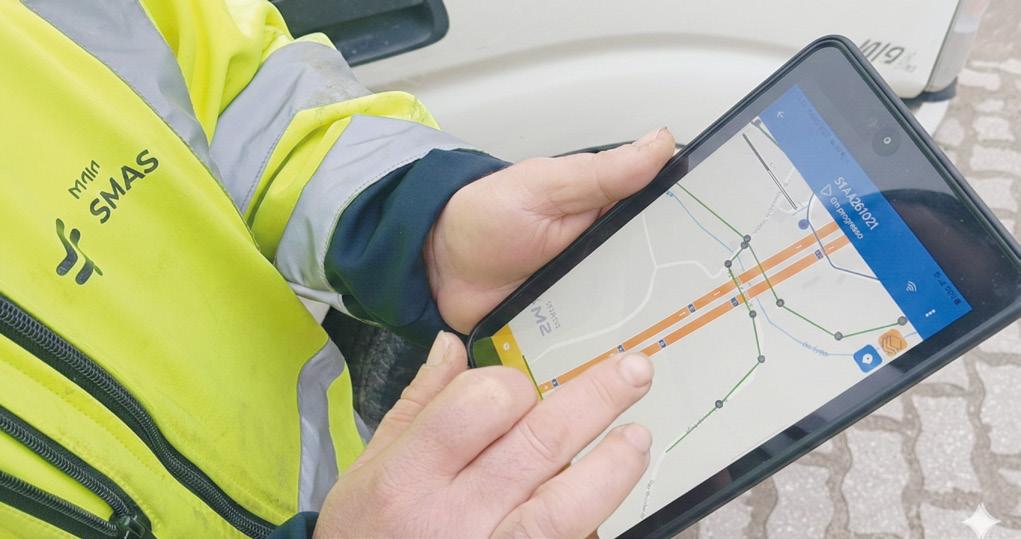
This system-level situational awareness is particularly important for optimizing operations, for example reducing Non-Revenue Water (NRW). Utilizing smart sensing for early warning systems and AI-supported advanced control gives utilities the flexibility to address operational inefficiencies proactively.
For investors, NRW is a direct measure of financial and operational health. By leveraging digital tools to trace and eliminate physical and commercial losses, having more direct
control over data and contextual indicators, developers can prove that the infrastructure preserves value over its lifecycle, turning a reactive maintenance cost into a proactive driver of confidence.
Interoperability and the Pace of Digitalisation
As technology continues to evolve at an interesting pace, it is natural to question how we adapt and at what pace.
we must take immediate advantage of available technologies that can benefit us in the short term, relating them to our strategy and short-term goals, and focusing on what translates to tangible, actionable results.
The reality is that we must balance this approach by working at different speeds. On one hand, we sometimes need to move slowly, thoroughly understanding network dynamics and figure out how to improve the data we are working with, as well as the challenges we are addressing. On the other hand, we must take immediate advantage of available technologies that can benefit us in the short term, relating them to our strategy and short-term
goals, and focusing on what translates to tangible, actionable results.
A cornerstone of this dual-speed approach is interoperability. For a holistic vision to materialize, different software systems and infrastructure silos must work together seamlessly to create real value. Furthermore, we must maintain flexibility in our projects and governance. Regulators, policymakers, and operators must remain open to change, as the future will inevitably bring new challenges and require highly adaptable solutions.
Despite the profound capabilities of digital tools, the success of any transformation
ultimately depends on people. The most enriching professional experiences in digitalization occur when working from the ground, involving the staff and managers who run the infrastructure daily.
There is often significant initial resistance: operators may be reluctant to use new applications or alter the routines they are accustomed to. However, benefits become undeniable when managers know what results they can get and operators are involved in the process, acknowledging what they can bring to the table.
Digital transformation is not purely a technical exercise; it necessitates robust workforce development. Empowering our
human workforce is essential to responsibly interpret digital outputs and mitigate the risks of over-reliance on automated systems. A skilled, engaged workforce combining human oversight with digital capabilities builds the operational resilience that investors demand.
Unlocking capital for water infrastructure depends on our ability to demonstrate that these systems are reliable, transparent, future-proof and resilient over time.
By combining digitized systems, robust strategies - be it asset management, non-revenue water reduction, or othersand a deeply engaged human workforce that is knowledgeable about the inputs and outputs of their work, we can create a holistic ecosystem of asset transparency.
This integrated approach optimizes operational performance but also serves as the ultimate driver of bankability, giving global investors the confidence they need to fund the water infrastructure of tomorrow.
Joaquim Beleza is Co-Founder and Managing Director of DouroECI - Water Management, where he leverages over 20 years of experience in the water and sanitation sector to drive innovation and sustainability. His work focuses on transforming water utilities and the water cycle through advanced engineering, technology, and data-driven solutions, ensuring operational excellence and alignment with the future of water resources.
At DouroECI, Joaquim oversees the integration of cutting-edge in-house technology with comprehensive water management, delivering end-to-end support to governments, municipalities, and utilities across the world. His work spans water, wastewater, and stormwater systems, emphasizing sustainable,

efficient, and strategic management. His expertise includes software development and implementation, infrastructure asset management (IAM), hydraulic modeling, and business intelligence.
Prior to DouroECI, Joaquim led strategic projects for a holding company managing water and wastewater utilities, driving business growth through operational improvements and technology adoption. He has contributed to conferences and publications on water utilities technology, strategic asset management and non-revenue water reduction, and holds an Advanced Program in Economics and Management for Water Utilities, an MSc in Environmental Engineering, and a degree in Biology.
By Mr. Rami Ghandour, Chief Executive Officer, Metito Utilities
Water infrastructure development has never been straightforward, but the conditions facing the sector today are more complex than those of a generation ago. Population growth, rapid urbanization, climate stress, and decades of underinvestment in networks are converging at the very moment when many governments have the least fiscal room to respond. The need is urgent, resources are constrained, and water must remain affordable, reliable, and sustainable. In this context, ensuring the resilience of water treatment systems and the continuity of essential service delivery is becoming an equally critical priority.
These pressures are particularly visible across emerging markets in Asia, the Gulf, and Africa, where water treatment capacity and water reuse infrastructure must be developed or expanded at scale while tariff structures continue to reflect social and political realities as much as economic ones. Such constraints cannot simply be wished away. The viable path forward lies in structuring projects in ways that acknowledge those realities while still delivering reliable, resilient, and financially sustainable infrastructure.
Achieving this outcome requires rigorous structuring from the earliest stages of project development. In nearly three decades of delivering concession and public–private partnership (PPP) projects across these markets, one lesson has remained consistent: projects reach financial close when the fundamentals—revenue predictability, balanced risk allocation, and contractual clarity—are addressed properly from the beginning. They are the foundation of bankability. Sophisticated lenders and equity investors are not deterred by challenging markets. They are deterred by uncertainty.
When water systems function, they ease stress across food, health, displacement, and local governance.
PPP frameworks have proven particularly effective in this context. They allow governments to retain strategic ownership and regulatory oversight while drawing on private
capital, technical expertise, and operational discipline that public balance sheets alone cannot always provide. Where such clarity is absent, success becomes far less likely.
Saudi Arabia stands out as one of the structured examples of how this can be implemented at a national level. Through Vision 2030 and the National Water Strategy, the Kingdom has established a systematic framework for private participation in water infrastructure development. Sharakat (formerly The Saudi Water Partnership Company) has played a central role in this transformation by providing the institutional architecture through which long-term concessions can be developed with the consistency and transparency required by international lenders and investors.
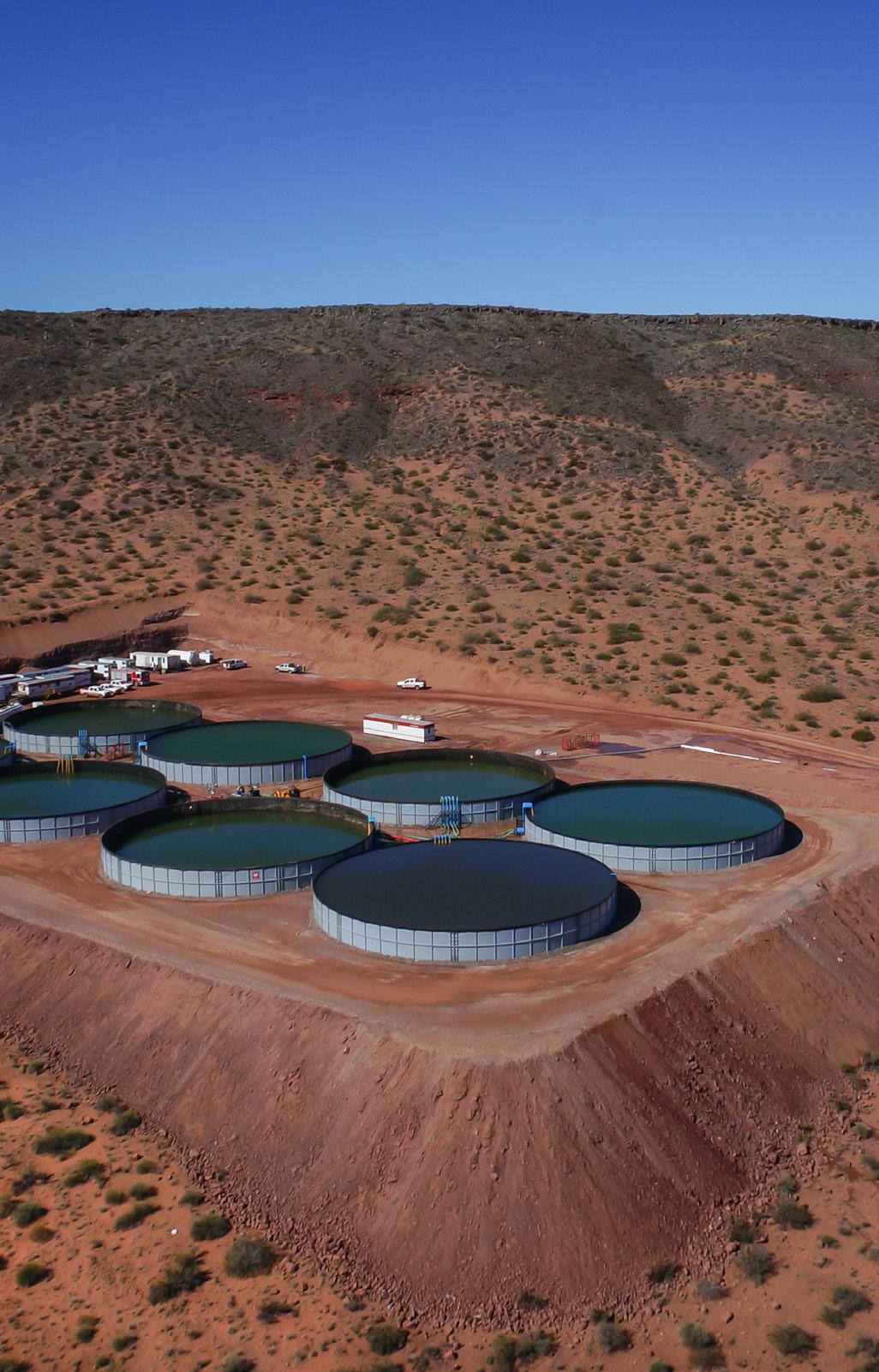
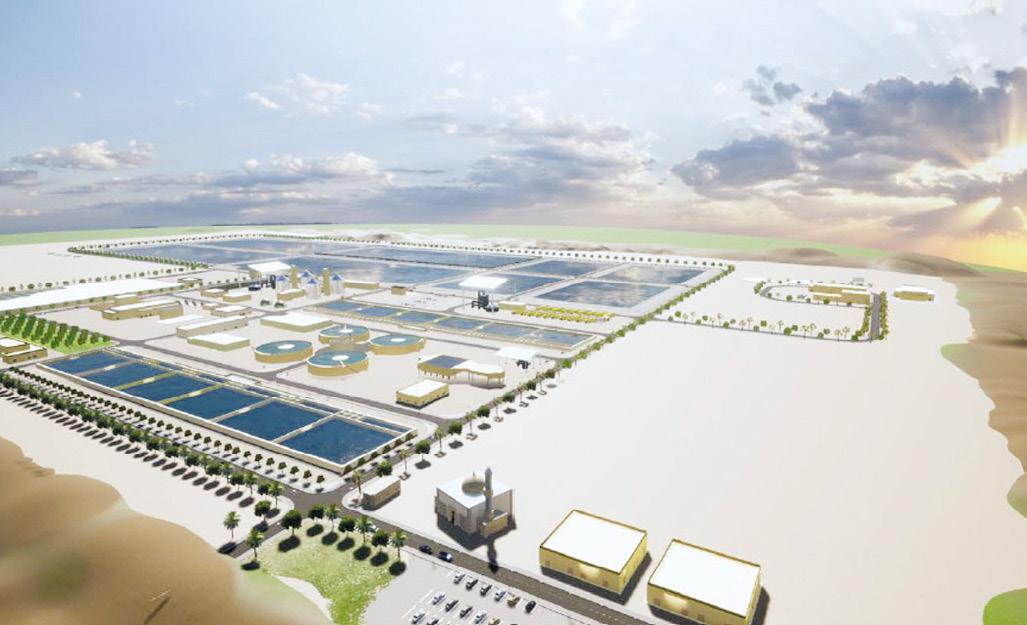
The Dammam Independent Sewage Treatment Plant, Saudi Arabia’s first wastewater ISTP, illustrates how this approach translates into practice. Developed by a consortium of Metito Utilities, Mowah, and Orascom Construction under a 25-year BOOT concession, the facility serves close to one million residents and treats 200,000 m3/day of wastewater with capacity designed to scale to 350,000 m3/day. The applied technology choices were deliberate - focused on improving operational efficiency, reducing long-term energy and operating costs, and strengthening the facility’s resilience. In price-sensitive markets, infrastructure must be designed to deliver reliable and sustainable performance throughout the full life of the asset.
From a financing perspective, what ultimately matters is confidence that the infrastructure will continue delivering reliable service over the long term. Investors are therefore drawn to projects where contractual frameworks, operational capability, and system resilience are built in from the outset. In many emerging markets, bankability is not simply about financial structuring; it is about demonstrating that infrastructure can perform reliably, efficiently, and sustainably over decades.
From years of experience delivering water infrastructure projects across
Rami Ghandour is the CEO of Metito Utilities, which he founded in 2007 as an independent entity within the Metito Group, focused on the investment, development, and long-term operation and maintenance of water and wastewater concessions. Since then, he has led the company in delivering transformative infrastructure projects around the world — including pioneering the first public-private partnerships (PPPs) in the sector as a first-to-market entrant in ten different countries.
A strong advocate for ethical business practices and sustainability, Rami has aligned Metito Utilities’ corporate social responsibility initiatives with its broader mission of promoting economic development and environmental stewardship,
different markets, one lesson stands out: the quality of the partnership matters as much as the quality of the contract itself. Water infrastructure assets operate over decades, and governments and private operators will inevitably face circumstances that no concession agreement can fully anticipate—tariff pressures, demand shifts, regulatory changes, and climate events. Projects that weather these pressures successfully are those where public and private stakeholders remain aligned around long-term service delivery.

ensuring meaningful impact on the communities the company serves. He has also introduced innovative financing structures to deliver the most cost-effective solutions for clients and partners.
Rami joined the Metito Group in 2004, following a diverse career that included roles as a process engineer and project manager at Bechtel in London, and as a management consultant with the Boston Consulting Group in New York.
He holds an MBA in Finance and Entrepreneurial Management from the Wharton School, as well as MEng, MA, and BA degrees in Chemical Engineering from the University of Cambridge.
By Dr. Mary M. Matthews, Global Water Lead at United Nations Development Programme and UNDP Senior Programme Manager to UN-Water
Water is too often treated as a sectoral issue, something to be managed by utilities, ministries, and engineers. But water is far more than that. It helps determine whether agriculture can survive drought, whether cities can grow sustainably, whether industry can remain productive, whether health systems can cope, and whether communities can withstand climate shocks without facing greater fragility. Water is not only a resource. It is a development accelerator and, in many contexts, a systems stabilizer.
This is why UNDP approaches water not as a stand-alone technical challenge, but as a core development priority. Our global water portfolio exceeds US$2.5 billion and spans more than 160 countries, reflecting the scale at which water now intersects with climate, nature, governance, livelihoods, health, local development, and economic resilience. Because water touches every dimension of sustainable development, UNDP works across the Sustainable Development Goals and across the whole of government at country level, engaging not only ministries responsible for water, but also those responsible for planning, finance, agriculture, energy, environment, local governance, and crisis response. That whole-of-government approach is essential because water outcomes are rarely determined by infrastructure alone. They are shaped by
institutions, public finance, policy coherence, and the capacity to deliver across systems.
The future of development will depend increasingly on how countries manage water scarcity
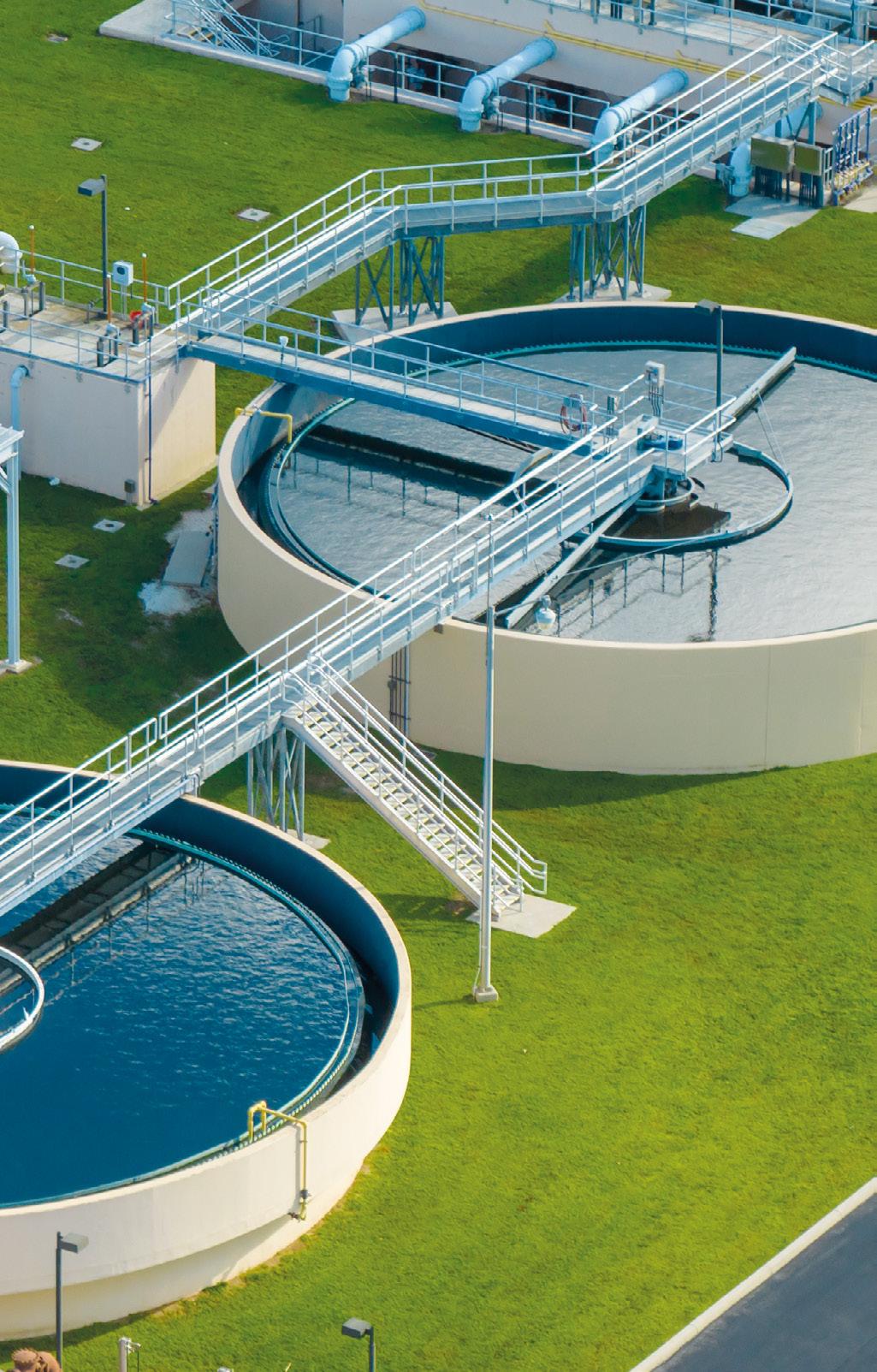
This perspective is especially relevant across the Gulf, the wider Arab region, and many other water-stressed parts of the world. The future of development will depend increasingly on how countries manage water scarcity, climate pressure, and rising demand. Climate change is already altering rainfall patterns, intensifying droughts and floods, accelerating salinization, and placing growing pressure on groundwater, food production, and urban services. Water therefore sits at the center of climate adaptation. Countries cannot adapt successfully without more resilient water systems, stronger water governance, and more diversified water portfolios. Whether the challenge is protecting communities from drought, strengthening food systems, or safeguarding cities and economies against disruption, water is one of the first places where climate impacts are felt and one of the most strategic places to respond.
This is also why infrastructure must be understood as part of a wider system. Desalination, water reuse, decentralized treatment, smart monitoring, renewable energy integration, and circular water approaches are no longer niche options. In many contexts, they are central to the future of water security. But strong assets alone do not guarantee strong outcomes. Long-term success depends on the system around the asset: governance, regulation, tariff design, institutional coordination, energy efficiency, financing, public trust, and local capacity to operate and maintain services over time. This is where UNDP adds value. We help countries build the enabling environment that allows water investments to deliver lasting development returns rather than remain isolated technical achievements.
In practice, UNDP helps countries move from projects to systems. That includes supporting policy reform, strengthening institutions, identifying priority investments, developing finance-ready pipelines, and linking water decisions to broader goals such as livelihoods, food security, resilience, jobs, and social stability. It also means helping countries use water more productively and strategically. Water for development is not simply about increasing supply. It is about increasing the economic, social, and resilience value of every unit of water through better allocation, stronger governance, reduced losses, reuse, demand management, and more integrated planning across sectors.
Innovation is central to this agenda, but it must be understood broadly. It includes technology: digital tools, data systems, smarter networks, wastewater reuse, lower-energy treatment approaches, and renewable-powered systems.
It also includes innovation in governance, public policy, financing, and service delivery. In many countries, the most important breakthrough is not a new technology alone, but a better way to govern resources, align incentives, mobilize finance, or connect proven solutions to national systems. The global challenge is not a shortage of pilots. It is the shortage of pathways to scale. UNDP is increasingly focused on that question: how to identify practical solutions, test them in context, and support their replication and upscaling through national and local institutions.
Sophisticated lenders and equity investors are not deterred by challenging markets. They are deterred by uncertainty.
This systems perspective becomes even more important in fragile and crisis-affected settings. Water is often one of the first sectors in which fragility becomes visible and one of the most strategic sectors through which stability can be rebuilt. Reliable water access supports health, reduces pressure on communities, sustains local enterprise and agriculture, and helps restore confidence in public institutions. In these contexts, water is not only a humanitarian necessity. It is part of the architecture of resilience and recovery. When water systems function, they ease stress across food, health, displacement, and local governance. That is why water can serve simultaneously as a systems stabilizer and a development accelerator.
There is also a growing opportunity for stronger partnerships between development actors, governments, and the water technology and finance community. Gulf leadership is increasingly important in this space. The Abu Dhabi Fund for Development has a long record of supporting sustainable infrastructure in developing countries, including strategic water investments. More recently, the Abu Dhabi Global Water Platform has signaled an even stronger commitment to advancing water and food security, expanding access to clean water, and promoting innovative solutions and partnerships. That leadership matters. The future of water security will require not only capital for infrastructure, but also catalytic partnerships that connect finance, innovation, and country-level implementation.
For UNDP, this is where the real opportunity lies: helping translate strategic investment into lasting transformation. The strongest results
Dr. Mary M. Matthews , is the Global Water Lead at United Nations Development Programme and UNDP Senior Programme Manager to UNWater, where she coordinates the largest water portfolio in the UN system, spanning over 160 countries. With more than 20 years of experience in environmental governance, she specializes in water as a driver of climate resilience, economic
come when infrastructure finance is paired with stronger institutions, improved governance, smarter planning, innovation uptake, and delivery models that can be replicated and sustained. That is how desalination, reuse, and other advanced water solutions become part of something larger than a single project. They become part of a broader development pathway that supports adaptation, resilience, economic opportunity, and social stability.
Ultimately, water for development is not just about producing more water. It is about what secure, well-governed, climate-resilient, and productively used water makes possible. In a world of rising climate impacts and growing pressure on societies and economies, water is not peripheral to development. It is one of the clearest routes to making development more resilient, more inclusive, and more durable. Getting water right is not only a technical imperative. It is a development imperative.
development, and stability. Dr. Matthews leads global efforts on water innovation, partnerships, and plays a central role in advancing the UN System-Wide Strategy on Water and Sanitation. Her work focuses on translating water security into scalable development outcomes across diverse country contexts.

By Mr. Turki Alshehri. Regional Vice President for the GCC and Country Manager, Saudi Arabia at ENGIE
Saudi Arabia is steadily expanding its desalination capacity to meet rising water demand, while placing equal emphasis on building the skilled workforce required to operate and sustain these assets over the long term. Aligning technical capability with infrastructure investment is essential to ensuring reliable and efficient water production across the Kingdom.
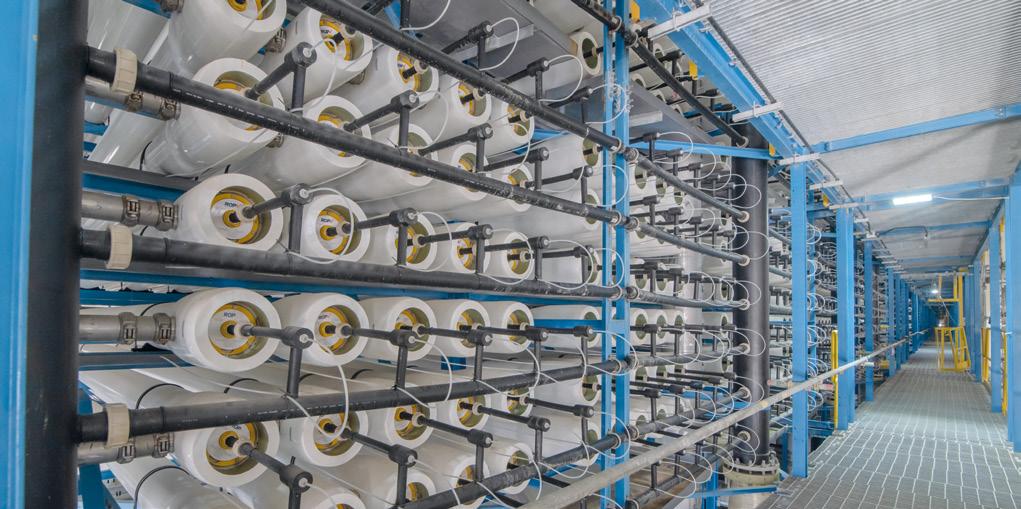
Against this backdrop, the RO Ladies programme, a specialized training and employment initiative developed with industry stakeholders and supported by ENGIE, was created to strengthen local operational capability in reverse osmosis desalination. Since its launch, the programme has evolved into a clearly defined pathway, from training into live operational roles, establishing a direct link between technical learning and practical application.
“Developing local operational capability is a key priority as the Kingdom continues to scale its desalination capacity,” says Turki Al Shehri, Country Manager for Saudi Arabia. The unique reverse osmosis desalination
training program designed exclusively for Saudi women, demonstrates how targeted training can translate into tangible operational outcomes - enabling a new generation of skilled operators to contribute directly to plant performance and long-term water security.”
Originally designed to equip Saudi women with the technical and practical skills required to work in desalination, the programme is now delivering visible results as participants move into active operational roles. This transition from training to deployment is increasingly evident across ENGIE-operated facilities in the region, reflecting its growing operational impact.
At Jubail 3B, Asrar Almasradi’s experience reflects this progression – from capability-building into full operational integration. Now a Control Room Operator, Asrar monitors plant performance, manages system alarms, and works closely with field teams to maintain safe, stable, and efficient operations. Over time, her role has expanded to include operational decision-making and
technical troubleshooting, marking a clear transition from trainee to a trusted member of the operations team.
Asrar’s interest in the sector was shaped by a strong scientific foundation, a personal interest in water sustainability, and early exposure to desalination operations. The programme offered a pivotal opportunity to transform this interest into hands-on experience in a highly complex industrial environment, where theoretical knowledge had to be applied quickly within a complex, real-world Operations environment.
At Yanbu, Ebtehal Alrehaili offers a further example of this transition into operational responsibility. Now a Control Room Operator at Yanbu-4, Ebtehal monitors plant systems, tracks process parameters and alarms, and coordinates with field operators to maintain safe and efficient operations. Within two years of joining the programme, she was
promoted to her current role and granted Designated Person Authority, reflecting the level of technical competence and accountability. Her responsibilities have grown to include real-time operational decision-making and crisis management. These capabilities were built progressively through on-the-job training and sustained hands-on exposure to plant environment.
Beyond technical capability, the programme has strengthened confidence, communication, and problem-solving skillsall essential to sustaining reliable plant performance and responding effectively to operational demands. This development is now translating into visible impact, with participants actively contributing to operational continuity and resilience across desalination facilities.
At a sector level, initiatives such as reverse osmosis desalination training for women in
Saudi Arabia contribute to strengthening the long-term resilience of the desalination workforce. By enabling greater participation of women in technical and operational roles, the programme expands the available talent pool while supporting national localisation and water security objectives.
The programme offers a clearly defined and structured career pathway within a highly specialized sector, enabling long term professional progression and operational readiness.
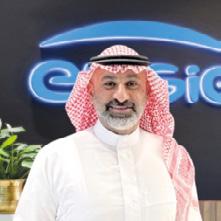
Turki Alshehri is the Regional Vice President for the GCC and Country Manager, Saudi Arabia at ENGIE, leading the company's business and investment portfolio in the Kingdom with a value of more than 30 billion Saudi riyals ($ 8 billion) and a workforce of more than 2,000 employees. Al Shehri is responsible for ENGIE’s vast business that covers renewables, desalination, conventional power, green hydrogen, gas storage, and smart city applications. ENGIE is a major contributor to the Country’s vision through foreign direct investments, local job creation, and knowledge transfer
Alshehri has held several executive leadership positions in the government and private sectors, during which he employed his insights and expertise in energy systems and analysis, renewable energy
As Saudi Arabia advances its water and sustainability agenda, ENGIE continues to align infrastructure development with human capital investment, recognizing that long-term operational performance depends as much on people as on assets.
For desalination operators scaling assets at pace, sustained investment in training and capability development is no longer optional. It is a core requirement for operational resilience, continuity, and long term water security across the Kingdom.
sources, energy strategies and policies, integrated resource supply planning, market regulations, cogeneration, and efficiency enhancements.
Alshehri has contributed to the energy transition in the Kingdom by heading the Renewable Energy Project Development Office (REPDO) at the Saudi Ministry of Energy.
Alshehri started his career at Saudi Aramco in 2002, where he worked for nearly a decade, during which he assumed several positions that culminated as the Head of Power Investments.
Alshehri holds a B.Sc. in Electrical Engineering from the University of South Florida, USA.
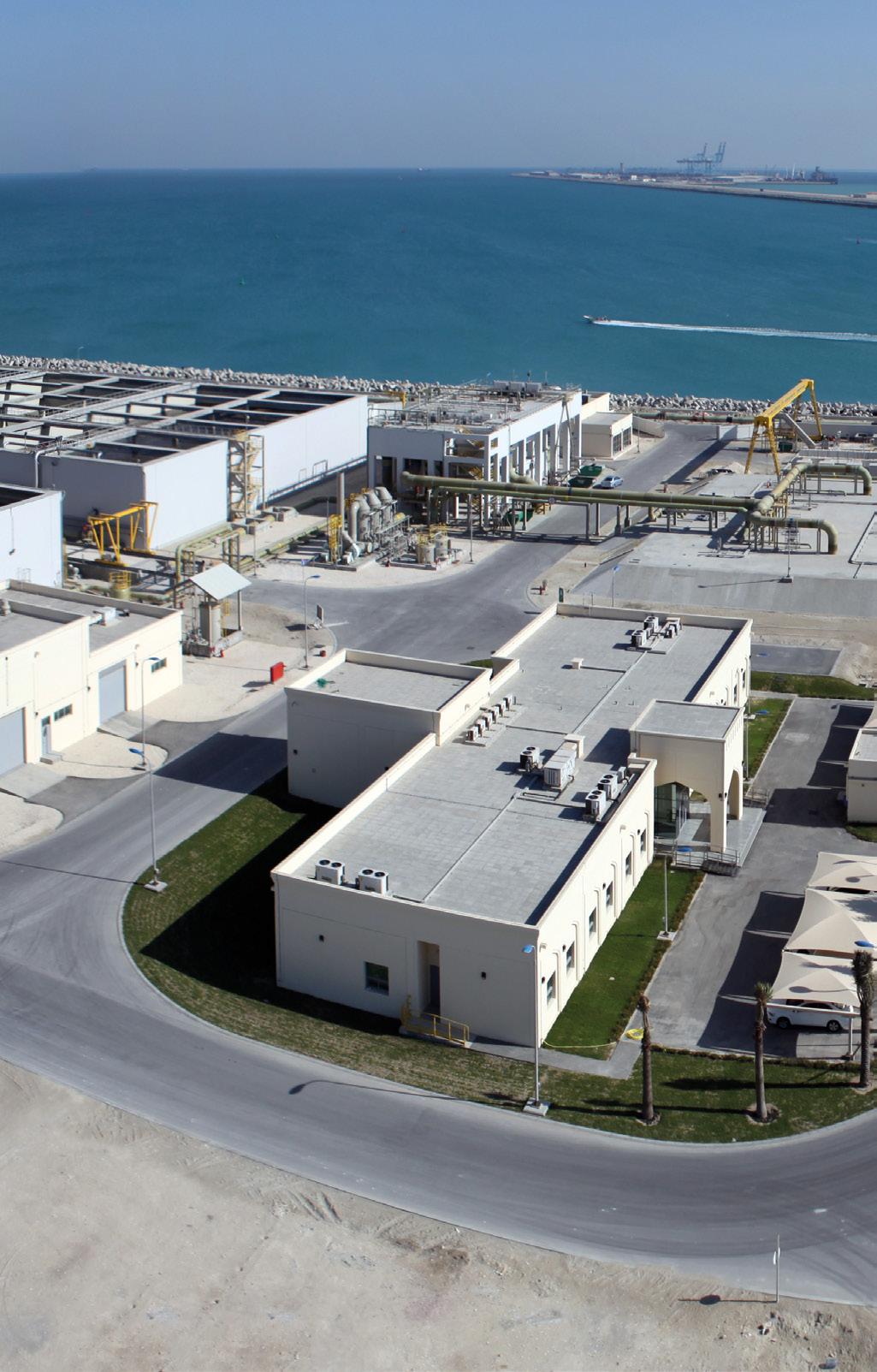
IDRA interviews Carlos Cosín, CEO of Almar Water Solutions, on the company's first decade, the strategic pivots that shaped it, and what comes next.
Q: Almar turns ten this year. Looking back at 2015, what convinced you the market needed another water platform, and what did you think was missing from the players already operating?
A: What convinced us was the gap between how critical water had become and how few players were equipped to take real responsibility for it across its full life cycle. Water shapes economic growth as decisively as any resource. It underpins industrial production, urban expansion and energy systems, and its strategic importance keeps rising. The pressure on water systems from scarcity, regulation, climate variability and demand is intensifying, and the challenge is no longer simply to deliver supply. It is to guarantee reliability, resilience and performance over decades. Many players were equipped for one part of that equation. Very few were structured to carry the whole thing. That was the space we set out to occupy.
Q. Starting a water infrastructure business with no operating portfolio is a genuinely tough proposition. What did the first few years actually feel like, and where were you most exposed?
A: Difficult, and exposed almost everywhere. Advanced water systems sit at the complex end of infrastructure. They demand significant upfront capital, sophisticated engineering and contracts designed to last decades. We had an experienced team and the long-term commitment of our sole shareholder, Abdul Latif Jameel, but no references. Every project had to be earned from first principles. Capital was committed well before revenues materialized, and risks often only became visible during construction or early operation. The exposure was financial, technical and reputational at the same time. You learn very quickly that in this segment, mistakes are costly and credibility is slow to build.
Q: You made a strategic pivot early on, away from pure greenfield development. What forced that decision, and how contested was it internally?
A: The decision was driven by what the market was telling us. Greenfield projects alone meant long gaps between wins, lumpy revenue and limited proximity to clients. We needed something that compounded. So we
widened the lens. We started growing through M&A, added brownfields to our target list, and invested in regional services platforms that would give us reach, client access and recurring operations. It was not a soft pivot. It meant changing how we deployed capital and how we defined success. But the logic was clear, and the team aligned around it because the alternative was a much slower and more fragile path to scale.
Q: You've said the regional platforms changed the company. Can you be specific about what they taught you that greenfield development could not?
A: They taught us how water actually behaves inside a client's operation, day to day, under real constraints. Working alongside industrial clients, where water is mission-critical to
production and compliance, exposed us to a different level of operational responsiveness. It sharpened our technical understanding, improved our risk assessment and lifted our margins. It also built credibility in a way single projects never could. When you operate assets and respond to real-world constraints, you learn things that flow directly back into how new infrastructure should be designed and financed. That feedback loop is the part you cannot replicate from a development desk.
Q: You're now signaling a move into waste management, hydrogen production and mineral recovery. That's a significant widening of scope. What's the strategic thread connecting those choices, and where is the risk of overreach?
A: The thread is environmental services. The same logic that took us from water
development into operations took us into adjacent areas such as waste management, through platforms like Ecoprial. The next investment cycle will see us explore waste, hydrogen and mineral recovery as the second evolution of our strategy. The ambition is to become a full environmental services player. The risk of overreach is real in any diversification, which is why we are doing it from a position of operational maturity rather than opportunism. We move into adjacencies where our existing capability, client relationships and contract experience give us a genuine right to play. Where they do not, we partner.
Q. Almar runs two quite different businesses in parallel: long-term infrastructure and industrial services. Most companies struggle to do both well. How do you keep the tension between them productive?
A: By treating them as two pillars of the same proposition rather than two separate businesses. Long-term infrastructure gives us stable contracts and disciplined capital allocation. Industrial services give us innovation, technology adoption and higher value creation. The tension is productive when each side feeds the other. Operations inform development. Development creates the assets that services then run and optimize. The discipline is in not letting either side dominate the culture. We have built the organization around the experience that accumulates when both are operating well, across geographies, clients and contract structures.
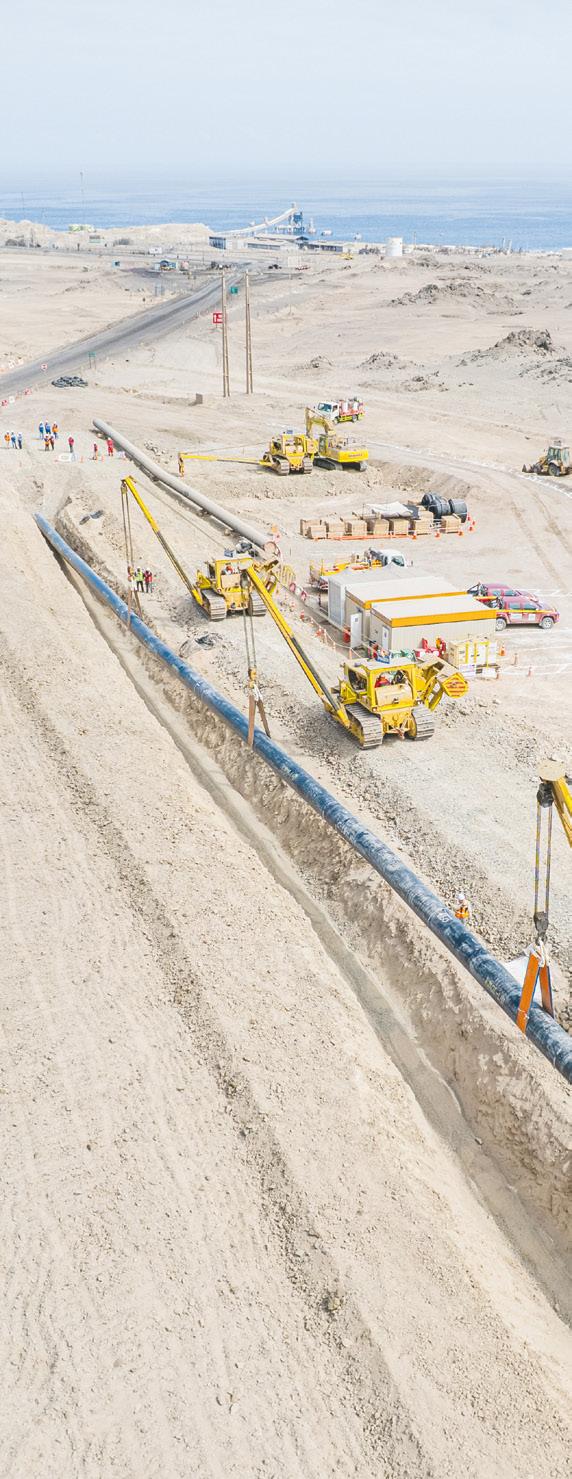
Q: You operate flagship systems with your own teams rather than outsourcing. That's a deliberate cost and risk choice. What's the case for it, and where is the limit?
A: The case is that performance is the proposition. We are signing contracts that run for decades, with clients for whom water affects business continuity, regulatory exposure and competitiveness. Outsourcing performance-critical activities introduces a layer of risk we are not willing to carry, and frankly nor are our clients. We run major long-term projects for clients such as Antofagasta Minerals in Chile and Saudi Aramco in the Kingdom of Saudi Arabia, all developed with a clear understanding of long-term performance. The limit is geographic and operational. We do not insource for the sake of it. Where regional partners or specialized providers add genuine value, we use them. But we do not subcontract the parts that determine whether the system actually performs.
Q: Technology in water tends to be over-marketed. How do you separate the tools that genuinely change outcomes from the ones that just sound good in a pitch?
A: By judging technology against the system, not against itself. Advanced treatment processes, digital monitoring and optimization tools only deliver when they sit inside the right commercial structures and operating models. A clever piece of kit on the wrong contract, or running on the wrong operational
assumptions, will not move the needle. We deploy technology where it improves a measurable outcome: reliability, efficiency, water recovery, energy use, lifecycle cost. If it does not move one of those, it is decoration. That filter keeps us honest.
Q: The phrase "taking water risk off the table" is a strong claim. What does it actually mean in practice for a client signing a 20 or 25 year contract?
A: It means we carry the complexity so they can focus on their core business. For an industrial client, water risk shows up as production downtime, regulatory exposure and unpredictable cost. By taking responsibility for development, financing, operation and long-term performance, we absorb that complexity into a contractual structure the client can plan around. They get water that performs, on terms that are stable. That is how the larger contracts with top-tier industrial clients have come through. It is also why those relationships tend to deepen rather than churn.
Q: The water sector is moving into a phase you've described as having low tolerance for execution risk. What does that mean for smaller or newer entrants, and is consolidation inevitable?
A: It means the bar is rising. Clients are less willing to take a chance on unproven operators, financing structures are more demanding, and regulatory frameworks are tightening. In that environment, platforms with
proven operating capability and deep client relationships are increasingly favored. I would not say consolidation is inevitable, but the gap between players who can credibly carry long-term performance risk and those who cannot will widen. Smaller and newer entrants can still play, particularly in specialist niches, but the center of gravity is shifting toward integrated platforms.
Q: If the first decade was about building capability, what does scaling it responsibly look like in practice over the next ten years? What are you deliberately not going to do?
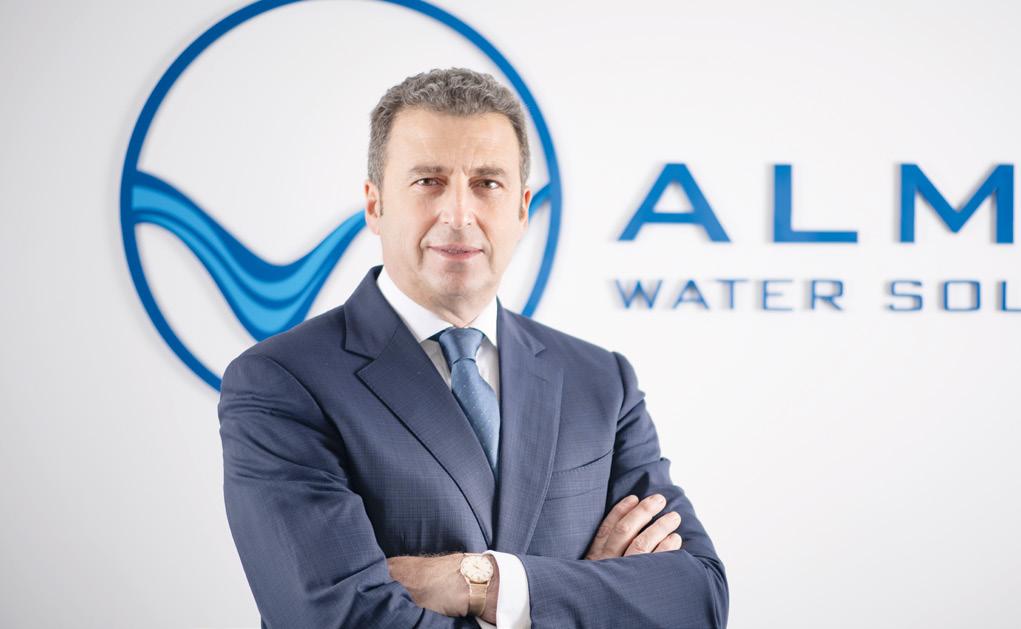
Mr. Cosín is currently the Chief Executive Officer and Chairman of the Board of Almar Water Solutions, where he leads the strategic management and global growth of the company. Under his leadership, and backed by its main investor Abdul Latif Jameel, Almar Water Solutions has expanded its international presence, focusing on sustainable water infrastructure and innovative water management solutions.
With over 30 years of experience in the water sector, Mr. Cosín has been involved in the development of desalination, wastewater treatment, and water reuse projects worldwide, for both municipal and industrial clients. Throughout his career, he has closed major contracts under EPC (Engineering, Procurement and Construction) and BOT (Build, Operate and Transfer) models as CEO of Abengoa Water among other managing positions.
A: Scaling responsibly means choosing depth over reach. We are not trying to be the largest by capacity. We are trying to be the partner of choice for those who cannot afford to get water wrong. That means a selective client base, contracts where we can genuinely deliver, and growth that compounds capability rather than dilutes it. What we are not going to do is chase volume for its own sake, take on projects that do not fit our operating model, or stretch into geographies where we cannot run the assets to our standard. The discipline of saying no is part of how this next phase has to be managed.
He holds a degree in Agricultural Engineering from the Polytechnic University of Madrid. In addition to his role as CEO, Carlos Cosín has held prominent industry positions, including serving as President of the International Desalination and Reuse Association (IDRA) from 2019 to 2022, and as President of the Center for Water & Climate Adaptation at IE University (2022–2025), where he has promoted academic initiatives aimed at training the next generation of water professionals, emphasizing the critical role of education in addressing water sustainability and climate challenges.
Since June 2021, Mr. Cosín also serves as an Investment Committee Member at Community Jameel, an independent global organization advancing science and innovation to help communities thrive in a rapidly changing world.

Saudi Arabia’s Desalination Journey, 1907–2000
Before the pipelines, before the mega-plants, before the Guinness World Records, there was a single machine pulled from the sea. The story of how Saudi Arabia became the world’s largest producer of desalinated water begins not with a masterplan, but with a shipwreck on the shores of Jeddah.
Jeddah in 1907 was a walled port city on the Red Sea, bleached white by the sun and permanently short of water. What rain fell evaporated almost immediately. There were no rivers, no lakes, no reservoirs. Freshwater came from shallow wells and ancient cisterns, and there was never enough. Every year, the problem got worse, because every year the ships kept coming. Jeddah was the gateway to Mecca, and tens of thousands of pilgrims passed through its harbour each year on their way to perform the Hajj. They arrived thirsty, and the city could barely provide for its own residents, let alone the faithful arriving from across the Muslim world.
That year, a vessel ran aground off the Jeddah coast. Among the wreckage was a coal-fired condensing machine, the kind used aboard military and merchant ships to produce freshwater during long ocean crossings. Someone had the idea to haul it ashore and set it to work on dry land. It was one of the earliest known uses of desalination technology onshore in what is now Saudi Arabia.
The people of Jeddah called it al-Kandasa, their rendering of the English word condenser. The name entered Arabic and it stuck. According to a 2014 report by the General Secretariat of the Gulf Cooperation Council, the original equipment had been installed by a Dutch company. Other sources point to a grounded Ottoman or military vessel. The details are contested; the significance is not. For the first time, the Red Sea was being turned into drinking water on the Arabian shore.
The machine was crude and its output was small. Within two decades it had broken down for good. But it planted an idea that would take root across the entire century that followed: that in a land without freshwater, the sea itself could be the solution.
By the mid-1920s, Abdulaziz bin Abdulrahman Al Saud had conquered the Hijaz and was building a nation. Among the many demands of statehood, water was the most elemental. The old Kandasa was
failing, and the need was growing. Jeddah’s wells were brackish. The pilgrim numbers were rising. And for a ruler whose legitimacy rested in part on his custodianship of the Holy Cities, the inability to offer arriving pilgrims a reliable supply of clean water was more than an inconvenience. It was a crisis of obligation.
By 1928, two modern distillation units built by the Scottish engineering firm Weir Westgarth had been installed at Jeddah, using a submerged tube process with a combined output of 135 cubic meters per day.
In 1926, King Abdulaziz ordered new desalination equipment. By 1928, two modern distillation units built by the Scottish engineering firm Weir Westgarth had been installed at Jeddah, using a submerged tube process with a combined output of 135 cubic metres per day. It was a modest volume by any modern standard. But it represented something new: a deliberate, state-directed investment in manufactured water. The Kingdom was less than a decade old, and already its rulers understood that water security and national survival were the same thing.
This connection between water and pilgrimage would shape Saudi desalination policy for the next hundred years. The Hajj was not merely a religious occasion; it was the single largest recurring logistical challenge on the Arabian Peninsula. Serving it required water at scale, reliably, every year. Long before the language of water security entered the international development lexicon, Saudi Arabia was living it.
The story of oil and water in Saudi Arabia is inseparable. The historian Michael Christopher
Low has observed that it was while searching for reliable water supplies near Jeddah that oil was first discovered in the Kingdom. And it was oil revenue, particularly after the price surges of the early 1970s, that would fund the construction of desalination infrastructure at a scale no other nation had attempted.
But between the 1928 Weir Westgarth units and the oil-funded mega-plants of the 1980s, there were four quiet decades in which Saudi Arabia slowly, incrementally, built the institutional foundations for what was to come. Small distillation plants were constructed through the 1950s, serving coastal towns. Then, in 1965, a decisive step: the establishment of the General Directorate for Desalination of Saline Water within the Ministry of Agriculture and Water. For the first time, desalination had its own government department.
What followed was a rapid sequence of firsts. Al Wajh and Duba, two small Red Sea towns, received the Kingdom’s first purpose-built desalination plants in 1969. Jeddah got its own plant in 1970. Al Khobar, on the Arabian Gulf coast, followed in 1973. Within four years, the Kingdom had operational desalination capacity on both coasts. The question was no longer whether Saudi Arabia could desalinate at scale, but who would lead the effort.
The answer was Prince Mohammed bin Faisal bin Abdulaziz, the eldest son of King Faisal. He had been educated in the United States, begun his career managing Riyadh’s airport, and held positions at the Saudi Arabian Monetary Agency. He was not, on paper, a water engineer. But water had shaped his childhood. Growing up in the 1930s and 1940s, he had lived through the droughts and shortages that defined life on the Arabian Peninsula before oil wealth transformed it. He spoke often of the old condenser on the Jeddah waterfront, and the precariousness of a society that depended on machines pulled from shipwrecks for its drinking water.
In 1965, Prince Mohammed was appointed director of the Saline Water Conversion office. By 1974, when a royal decree established the Saline Water Conversion Corporation as an independent government entity, he became its founding governor. The SWCC was given an extraordinary mandate: to desalinate seawater and deliver it, via pipelines if necessary, to every region of the Kingdom. It was to be a national system, not a collection of coastal plants.
Prince Mohammed’s ambition was not confined to the Kingdom. Within months of becoming governor, he was carrying the Saudi desalination story to the international stage. On 15 July 1975, he

delivered a luncheon address at the National Water Supply Improvement Association conference in Key Largo, Florida, laying out his vision for desalination in the Kingdom and the world. NWSIA was one of the precursor bodies to what would become the International Desalination Association, and Prince Mohammed’s appearance marked the beginning of a deep and enduring relationship between Saudi Arabia and the international desalination community.
Under Prince Mohammed, domestic expansion was ferocious. By the time he resigned in July 1977, twenty-eight major projects were completed or under way. The academic Michael Christopher Low, who has studied the prince’s legacy in detail, has described this period as the birth of the “Saltwater Kingdom,” with Jeddah as its epicentre. Prince Mohammed went on to found the Faisal Islamic Bank and become a pioneer of Islamic finance. But perhaps his most enduring contribution was the institutional architecture of the SWCC, a framework robust enough to support decades of expansion after his departure.
He was also, it should be said, a man of bold ideas. In the late 1970s, he proposed towing Antarctic icebergs to the Saudi coast to supplement freshwater supplies. He established a company for the purpose, Iceberg Transport International, and presented the scheme at a conference in London in October 1977. It attracted global headlines, considerable scepticism, and a feasibility study. It never happened. But it captured something real about the mentality driving Saudi water policy in this era: nothing was too ambitious, because the alternative, a nation without water, was unthinkable.
The 1980s were when the scale became staggering. The SWCC adopted multi-stage flash distillation as its workhorse technology, and the plants it built were not small. Al Jubail Phase I, commissioned in 1982 on the Arabian Gulf coast, was the first major desalination plant in the world to use fully titanium-tubed evaporators, a materials
breakthrough that dramatically extended equipment life in the corrosive, high-salinity conditions of Gulf seawater. Built by Sasakura and Mitsubishi Heavy Industries, Jubail would grow through successive phases into the largest single desalination complex on earth.
Think about that for a moment. A country was manufacturing its own water from the sea, then pumping it nearly 500 kilometers inland to keep its capital city alive. This was not supplementary supply. This was the primary water source for a national capital.
But the real engineering audacity of this era was not on the coast. It was in the desert between Al Jubail and Riyadh.
Saudi Arabia’s capital sits in the interior of the peninsula, more than 450 kilometres from the nearest sea. There are no rivers connecting it to anything. By the early 1980s, Riyadh was growing fast, and it needed water that the surrounding geology could not provide. The SWCC’s answer was the Riyadh Water Transmission System: twin pipelines stretching 467 kilometres across open desert from the Jubail desalination complex to the capital. Completed in 1983, designed by ILF Consulting Engineers, it was the world’s first closed high-pressure water pipeline system. It pumped 830,000 cubic metres of desalinated seawater per day across terrain that offered nothing but sand and heat. To keep the water moving required six pumping stations and 430 megawatts of power.
Think about that for a moment. A country was manufacturing its own water from the sea, then pumping it nearly 500 kilometres inland to keep its capital city alive. This was not supplementary supply. This was the primary water source for a

national capital. It is hard to think of a comparable infrastructure story anywhere in the world.
While the SWCC was laying pipelines across the desert, Saudi professionals were also helping to build the institutional architecture of the global desalination industry. The relationship that Prince Mohammed had initiated with his 1975 NWSIA address was deepening.
In the early 1980s, the global desalination community was fragmented. Two rival organisations, the International Desalination and Environmental Association (IDEA) and the Water Supply Improvement Association (WSIA), competed for the same small audience, running parallel conferences and splitting the industry’s attention. By 1983, key figures from both sides were talking seriously about a merger. The man who co-chaired the committee charged with making it happen was a Saudi: H.E. Isam Jamjoom, then President of IDEA. After months of negotiation, including sessions that ran past three in the morning, the two bodies agreed to dissolve themselves into a single new organisation. On 1 January 1985, the International Desalination Association came into existence. Jamjoom served as interim President of the IDA Board and chaired its inaugural World Congress in Bermuda that November. Beside him was another Saudi, Dr. Adil Bushnak, a Jeddah-born engineer and desalination entrepreneur, who was elected Vice President and would go on to become IDA’s President from 1987 to 1989, the first Arab to lead the association.
It was a pattern that would hold for decades. Saudi Arabia was not just the world’s largest desalination market; it was providing leadership to the international institutions that supported, promoted, and advanced the industry as a whole. That dual role, builder at home and leader abroad, is one of the distinguishing features of the Saudi desalination story.
By 1985, the SWCC had built 24 plants along both coasts, from Haql on the Gulf of Aqaba to Farasan Island in the south, and from Al Khafji to Al Khobar
on the Gulf. Daily production had reached 1.82 million cubic metres. By the decade’s end, it exceeded 2.17 million. Saudi Arabia was, by a wide margin, the world’s largest producer of desalinated water.
The Kingdom was also looking beyond thermal technology. In January 1979, the SWCC had commissioned the world’s largest seawater reverse osmosis plant at Jeddah, a 12,000 cubic metres per day facility using newly developed spiral-wound thin-film composite membranes to treat the Red Sea’s notoriously saline water. It was a signal that Saudi Arabia intended to lead in membrane desalination as well. The cost data from Jeddah confirmed what many in the industry suspected: reverse osmosis could beat MSF on both capital and operating costs. That finding would reshape the global desalination market over the next two decades.
By the year 2000, the transformation was complete. A country with no natural freshwater to speak of was producing over a billion cubic metres of desalinated water annually and supplying roughly 60 per cent of its drinking water from the sea. The SWCC’s pipeline network rivalled that of any oil company. Its plants powered cities, served pilgrims, and sustained an economy that had grown beyond anything the founders of the Kingdom could have imagined.
It is tempting to attribute all of this to oil wealth, and oil was certainly the enabling condition. But
money alone does not explain it. Other oil-rich states invested heavily in desalination; none matched Saudi Arabia’s scale or institutional depth. What distinguished the Saudi approach was something harder to replicate than revenue: a consistent, decades-long political commitment to treating water as a matter of national survival. From King Abdulaziz ordering two distillation machines for Hajj pilgrims in 1926, to the SWCC pumping seawater across hundreds of kilometres of desert to keep Riyadh alive, the through-line is the same. Water was never optional. It was existential.
And the Kingdom built more than infrastructure. Prince Mohammed’s 1975 address to NWSIA, Isam Jamjoom’s role in founding IDA, Adil Bushnak’s presidency of the association: Saudi Arabia was not merely consuming desalination technology at scale, it was helping to build the international institutions that advanced the industry for everyone. That dual commitment, builder at home and leader abroad, is the inheritance the twenty-first century would have to work with. The model that delivered it, state-led, thermal-dominated, and powered by hydrocarbons, was about to face pressures that even its architects could not have anticipated: a population heading towards 40 million, sustainability targets that demanded a break from fossil fuels, and a Vision 2030 that reimagined the role of private capital in every sector of the Saudi economy, including water. That story is the subject of Part 2.
Part 2: "Vision 2030 and Beyond: Saudi Water in the 21st Century" will be published in the Summer Edition of IDRA Global Connections.
Sources and Acknowledgements
This article draws on historical documentation from the Saudi Water Authority (SWA); The Magic of Water, The Journey of Desalination in the Kingdom of Saudi Arabia (SWA/King Abdulaziz Foundation for Research and Archives); Saudipedia water resources entries; the SWCC Chronicle; the Pulitzer Center’s The Cost of Freshwater in the Arabian Gulf investigation; the GCC General Secretariat’s Desalination in the GCC: The History, the Present & the Future; academic research by Michael Christopher Low (University of Utah); ILF Consulting Engineers; the UNESCO Encyclopedia of Desalination and Water Resources (DESWARE); and IDRA specifically Leon Awerbuch former IDRA President.
Sustainability Through Innovation, IDRA World Congress convenes experts, decision-makers, and innovators to showcase the latest technologies, promote sustainable water development, and support global development goals.
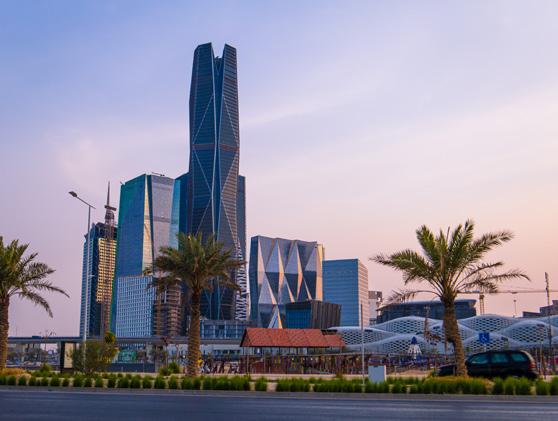


November 1-5, 2026
The IDRA World Congress is six months away. Preparations are accelerating. And if you work in desalination, water reuse, or the broader water economy, this is the week you need to be in the room.
Installed desalination capacity has grown 40% since 2020. Global water reuse capacity has surged 52% over the same period. The market is entering its fastest growth phase in history, and the conversations needed to sustain that growth are reaching a critical juncture. From November 1-5, 2026, the people driving those conversations will be in Riyadh.
This is the first time the World Congress has been held in the Kingdom of Saudi Arabia, the world's largest producer of desalinated water and home to one of the most ambitious national water transformation programs on the planet. This is your chance to visit a country that is building water infrastructure on an unprecedented, national scale.
IDRA has spent the first months of 2026 in the rooms where water policy and capital meet: an IDRA financing roundtable with the Arab Fund and the World Bank in Kuwait City, high-level panels at the WateReuse Symposium, and direct engagement in the UN Water High-Level preparatory process ahead of the 2026 UN Water
Conference in Abu Dhabi, launch of the US EPA Water Reuse 2.0 strategy. All of that work feeds directly into what will happen in Riyadh.
The Congress is where the threads come together. Where the people shaping policy meet the people building solutions. Where the researchers presenting breakthrough work sit alongside the developers deploying it. Where the financing conversations of February become the investment partnerships of November.
The Congress will be held at the King Faisal Congress Center, InterContinental Riyadh, bringing together a comprehensive program including breakout technical and thematic sessions, pre-congress workshops, the first annual SWA-IDRA Global Regulator Summit, a Desalination Hackathon, two exhibition halls, and award programs and social events, all under one roof.
The Technical Program spans four days and four parallel tracks, built by a global Technical Program Committee led by IDRA Board members and SWA Officers. Extended abstracts were submitted earlier this year, and the committee is deep in the review and selection process. Every paper is peer-reviewed. The quality bar is high. This is where serious work is presented to the people who can act on it.
The Thematic Program addresses the strategic, policy, and financing dimensions that sit above and around the technical work. Sessions will draw directly on IDRA's 2026 engagements on water financing, reuse governance, AI and Water, risk and resilience, centralized and decentralized systems, and the UN-Water dialogue process.
The First Annual SWA/IDRA Global Regulator Summit, organized by the Saudi Water Authority and the International Desalination and Reuse Association, is a major new addition and a highlight of this first edition. Regulators and policymakers from around the world will gather to discuss the governance frameworks, harmonization pathways, and regulatory clarity needed to scale desalination and water reuse globally. If you care about the rules of the game, this is where they will be debated.
The Thought Leaders' Summit convenes a wide net of global influencers, youth, senior executives from utilities, the private sector, finance, legal, project development, and technology for candid, high-level discussion on the commercial and strategic challenges facing the global water community.
2nd Edition of the Global Desalination
Hackathon for Sustainable Water Solutions: building on the previous edition, and in collaboration with ACWA, the Hackathon is designed to bring together high-potential talent and multidisciplinary teams to develop practical, scalable, and technically sound solutions that can move beyond concept stage into real-world application.
IDRA Water Academy Hub: A global learning platform bringing together the sector’s leading practitioners to deliver technical masterclasses, share real-world operational expertise, and shape the future of water professionals.
The IDRA Young Leaders Program Initiatives run throughout the week, reflecting IDRA's deep investment in the next generation.
The exhibition floor is the commercial heartbeat of every World Congress. This edition's floorplan is published and spaces are filling. The exhibition prospectus is available for download on the Congress website, and companies looking to position themselves in front of decision-makers from over 60 countries should secure their preferred location now.
Exhibition enquiries: exhibits@idrawater.org
The IDRA Industry and Sustainability Awards Program is open for nominations. Eleven categories across two streams recognize the most innovative and impactful achievements of the past two years, from public-private partnerships and breakthrough desalination technology to the most resilient city and the lowest carbon footprint in desalination.
Awards will be presented at the IDRA World Congress Gala Dinner. Only active IDRA members may submit nominations. Full details and the nomination form are at idraworldcongress.org/ idra-awards. The deadline is 15 June 2026.
The IDRA World Congress 2026 has already secured commitments from leading organizations across the sector.







IDRA is grateful for the confidence and commitment of each of these partners. Additional sponsorship opportunities remain available. Contact the Congress team for the full prospectus at sponsorships@idrawater.org.
Registration for the IDRA World Congress 2026 is now open at idraworldcongress.org. Early registration is strongly encouraged. Whether you are a researcher presenting work, a developer scouting opportunities, a regulator shaping policy, or a technology provider looking to connect with clients from every continent, this is the event that brings the entire value chain into one place for one week.
IDRA members benefit from preferential rates, and special rates are available for students and delegates from developing countries. Do not wait. The Program is filling, the exhibition is booking, and November will arrive faster than you think.
The Congress is not only about what happens in session. Some of the most important conversations happen over coffee, at lunch, or on the margins. The social Program includes a pre-Congress welcome reception, the Congress Gala Dinner and Awards ceremony, and a closing luncheon and Technical Program awards ceremony. These are the events where partnerships are formed, ideas
are tested informally, and the relationships that drive the sector forward are built.
Just weeks after the Congress concludes, the 2026 United Nations Water Conference will convene in Abu Dhabi from 8 to 10 December, co-hosted by the UAE and Senegal. This will be only the second UN Water Conference since 1977. Two landmark gatherings, one month apart, in the same region, with deeply overlapping communities. For the global water sector, November and December 2026 may be the most consequential weeks in a generation.
The IDRA World Congress 2026 is for people who build water, fund water, regulate water, and research water. It is for the engineers, the policymakers, the investors, and the next generation. It is for anyone who believes that water security is not an abstract goal but an urgent, practical, achievable mission.
Riyadh. November 1 to 5. The global water community will be there. Will you?


Over 300 abstracts. 48 countries. 184 organizations. 64 reviewers. The peerreviewed technical program for the IDRA World Congress 2026 is coming together, and the numbers tell a story of genuine global reach.
The technical program has always been the backbone of the IDRA World Congress. It is where the science meets the engineering, where operational lessons are shared openly, and where the research shaping the next decade of desalination and water reuse is presented, challenged, and refined by peers. For the 21st edition in Riyadh, that tradition continues at a scale that reflects the growth of the sector itself.
The call for extended abstracts closed earlier this year and the response underscores the global appetite for this Congress. Over 300 submissions have been received from 184 organizations across 48 countries. That geographic spread is significant. It means the program will reflect not just the established desalination markets of the Gulf, Europe, and North America, but also the rapidly growing reuse and treatment sectors in Asia, Africa, and Latin America, where water stress is intensifying and the demand for practical, deployable solutions is most urgent.
Every submission is being evaluated through a rigorous peer-review process overseen by a panel of 64 expert reviewers drawn from across the global water sector. The Technical Program Committee, responsible for shaping the overall program architecture, is co-chaired by five distinguished professionals from both industry and the host nation:
Mohammed Al Sheikh, Deputy President for Local Content and Strategic Partnerships at the Saudi Water Authority; Constanze Simmermacher, Global Principal for Desalination and Membrane Treatment at Jacobs; Marshall Davert, Executive General Manager, Pre-Contracts at Abergeldie Complex Infrastructure; Jantje Johnson, Founding Partner of OrangeBoat and Secretary of the IDRA Board; Yvan Treal, Commercial Coordination Director at SUEZ Engineering and Construction; and Hoon Hyung, CEO of NanoH2O and IDRA Second Vice President.
Together with the broader committee, they are building a program that balances technical depth with practical relevance, ensuring that the work presented in Riyadh speaks to both the research frontier and the operational realities of delivering water infrastructure at scale.
The program is structured around six themes that reflect the full breadth of the sector's current priorities.
1.Research and Innovation covers the fundamental science driving the next generation of desalination and reuse technologies, from advanced membrane materials and novel separation processes to emerging approaches in brine management and resource recovery. Specialised topics include:
1.1 Material Selection for Robust and Efficient Systems
1.2 Advances in Membrane Science and Technology
1.3 Engineering Optimization in the Design and Process of Seawater and Brackish Desalination and Water Reuse Plants
1.4 Intake and Outfall Systems
1.5 Pre-Treatment and Post-Treatment Systems
1.6 Novel Approaches and Case Studies in Desalination and Water Reuse
2.Circular Water Economy and Net Zero, Environmental Sustainability and Climate Adaptation addresses the intersection of water infrastructure and the broader sustainability agenda. As the sector faces increasing pressure to decarbonize, reduce environmental footprints, and contribute to circular economy objectives, this theme will showcase the projects, policies, and technologies leading the way. Specialised topics include:
2.1 Water Footprint Assessment
2.2 Stewardship and Protection of Water Sources
2.3 Advances in Closed Loop Water Systems
2.4 Zero Liquid Discharge, Brine Management, Valorization and Resources Recovery
2.5 Sludge Treatment and Disposal in Desalination and Wastewater Reuse
2.6 Long-Term Environmental Impacts of Brine Discharge and Mitigation Measures
2.7 Environmental Impact Assessments in Water Projects
2.8 Water-Related Environmental Solutions in Oil and Gas Industry
real-time water quality monitoring, this theme reflects one of the fastest-moving areas in the sector. Specialised topics include:
3.1 Smart Infrastructure and Metering
3.2 Water Usage Optimization
3.3 Data-Driven Decision Support
3.4 Machine Learning, Artificial Intelligence, Big Data, Digital Twins
3.5 Smart Water Management in Water Treatment Systems and Water Distribution Networks
3.6 Digital Technologies for Non-Revenue Water Reduction, Leak Detection, and Asset Management
3.7 Cybersecurity, Data Governance, and Privacy in Water Systems
4.Energy and Energy Efficiency focuses on the critical relationship between water production and energy consumption. With desalination historically energy-intensive, the drive toward renewable-powered desalination, energy recovery systems, and process optimization is central to the sector's future. Specialised topics include:
4.1 Solar, Wind, Wave, Salinity Gradient, Hydropower, Gravity-Based Systems
3.2 Geothermal Water Treatment and Applications
4.3 Nuclear Power (Fission and Fusion) in Water Treatment
4.4 Improvements in Hybrid Renewable Projects
4.5 Mega Projects Leveraging Renewable Energy for Water Sustainability
4.6 Breakthroughs in Energy Recovery and Renewable Integration
3.Digital Transformation and Artificial Intelligence examines how AI, machine learning, digital twins, and smart sensing are reshaping how water systems are designed, operated, and optimized. From predictive maintenance to
4.7 Energy and Chemical Efficiency Optimization in Desalination
4.8 Clean Energy and Hydrogen Transition for Decarbonization
4.9 Realizing Carbon Neutral/Reduction in Water Sector
5.Direct and Indirect Potable Reuse Regulations addresses the governance and regulatory frameworks that will determine how quickly potable reuse can scale globally. With jurisdictions from California to the European Union advancing new regulatory pathways, this theme is as much about policy as it is about technology. Specialised topics include:
5.1 Water Quality and Public Health: Addressing Trace Organics (PFAS/PFOS, Pharmaceuticals, EDCs), Micro- and Nano-plastics, and Other Contaminants of Emerging Concern (CEC)
5.2 Indirect versus Direct Potable Water Reuse
5.3 Cost-Effective Detection and Measurements of CECs
5.4 Regulations and Permitting: Differences Across and Within Countries
6.Project Implementation, Success Stories and Lessons Learned is where the real-world experience lives. Case studies, operational insights, commissioning challenges, and the practical knowledge that comes from building and running water infrastructure in diverse conditions around the world. Specialised topics include:
6.1 Seawater Desalination
6.2 Water and Wastewater Reuse for Industry and Irrigation
6.3 Industrial Water Treatment (Microelectronics, Mining, Pharmaceutical, Oil & Gas, Chemicals)
6.4 Food and Beverage Sector Water Innovation
6.5 Building Water Security for Cities and Rural Communities
6.6 Other
The technical program runs across four full days in four parallel tracks, giving delegates access to a dense, varied schedule that allows them to move between themes according to their interests and expertise. Accepted authors will present their work to an audience of scientists, engineers, policymakers, utility leaders, developers, and technology providers from over 60 countries.
Technical program awards will also be presented during the Congress, recognizing the highest-quality contributions.
A peer-reviewed technical program of this scale is the product of hundreds of hours of volunteer work by committee members, reviewers, and session chairs. It represents the collective knowledge of a global community that is growing rapidly, both in size and in the sophistication of its work.
For delegates considering whether to attend, the technical program alone makes the case. This is where the most important research and operational insights in desalination and water reuse will be presented this year. If your work touches this sector, this is the room to be in.
The full technical program will be published on idraworldcongress.org in the coming months.
The IDRA World Congress 2026 in Riyadh will bring together the global desalination and water reuse community for five days of knowledge exchange, collaboration, and forward-looking dialogue. Among the highlights of the event will be the presentation of the IDRA Industry and Sustainability Awards, recognizing the organizations, utilities, and projects that are setting new benchmarks in the fight against water scarcity.
Now in preparation, the Awards program honors outstanding contributions made over the past two years, spotlighting innovation, leadership, and real-world impact across the water sector. Winners will be announced at the IDRA World Congress 2026 Gala Dinner in Riyadh.
IDRA is calling on its members to put forward nominations for individuals and entities whose work deserves recognition on the global stage. The nomination window closes on 15 June 2026, so now is the time to act.
Nominations can be submitted by IDRA members only. However, the nominee does not need to hold IDRA membership.
To nominate, send the following to awards@ idrawater.org:
✓The name of the nominee
✓The specific award category
✓A supporting statement (up to 800 words) explaining how the nominee exemplifies the spirit of the award, along with references
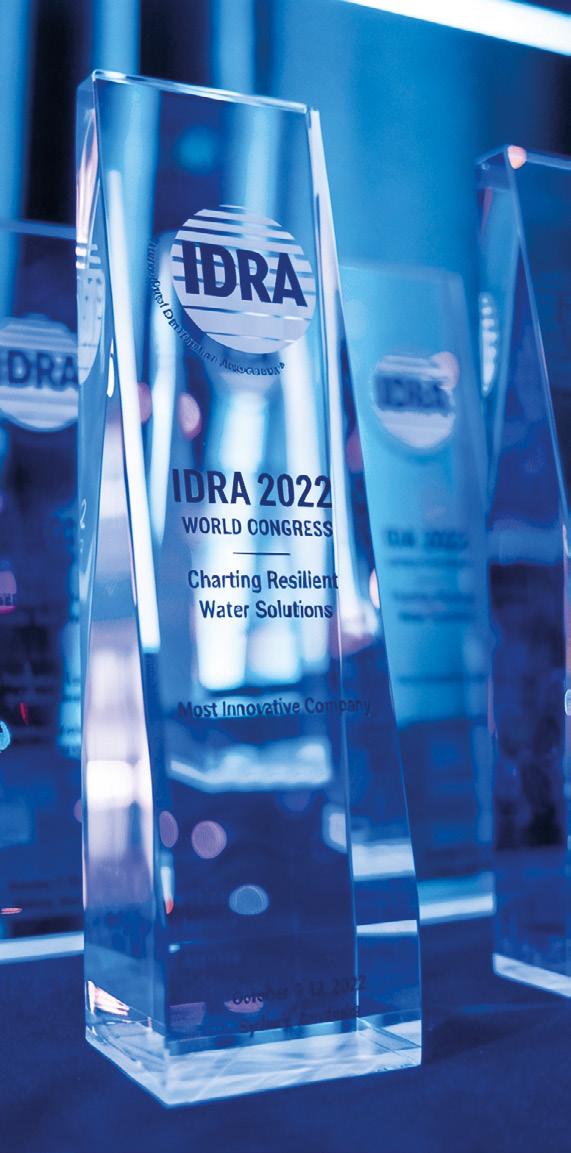
The program spans two streams, each designed to capture a different dimension of progress in the water sector.
INDUSTRY AWARDS
1.The Excellence in Public-Private Partnership Award
2.The Pinnacle of Innovation Award for Most Innovative Utility in Water Management
3.The Breakthrough Innovation Award for Most Innovative Company, Utility, or Agency in Desalination Technology
4.The Visionary Leadership Award for Most Progressive Disruptive Policy in Water Reuse
5.The Excellence in Water Reuse Performance Award
SUSTAINABILITY AWARDS
1.Excellence Award for Most Resilient City
2. Most Innovative Water-Energy Nexus Project
3. Global Sustainability Leadership Award for Best Implementer of UN SDG 6: Water for All
4. Lowest Carbon Footprint in Desalination Award
5. Resilience in Action Award for Circular Water Resources
6. Corporate Social Responsibility (CSR) Excellence Award
A distinguished panel has been assembled to oversee the evaluation and selection process for the 2026 Awards.

Dr. Shamma Al Malek Strategic Planning Sector Executive Director (Acting), Department of Energy Abu Dhabi

Prof. Shadi W. Hasan Director, Center for Membranes and Advanced Water Technology; Professor, Chemical and Environmental Engineering Khalifa University

Prof. Glen Daigger Professor of Engineering Practice, Department of Civil and Environmental Engineering University of Michigan

Dr. Hubert Fleming CEO TurnClear

Dr Amy Childress Dean's Professor of Civil and Environmental Engineering and Director of the ReWater Center University of Southern California
The Awards program is one of the most visible ways IDRA recognizes leadership and progress across the global water community. If you know of an organization, utility, project, or initiative that has made a meaningful difference over the past two years, this is your opportunity to ensure their work is celebrated on the world stage.
Nominations close 15 June 2026. Submit yours to awards@idrawater.org

















Your WC26 Congress Pass includes:
• Full access to the thematic and technical program across five days
• The official Welcome Reception, Gala Dinner & Awards Ceremony, and networking events.
• The exhibition floor with leading technology providers from across the global water sector
PURCHASE YOUR CONGRESS PASS HERE


From Dakar to Rome, Kuwait City to Los Angeles, IDRA has been at the center of global water dialogue in the opening months of 2026.
The first quarter of 2026 has seen IDRA engage at the highest levels of international water policy, finance, and technical collaboration. Across four countries and five major engagements, IDRA's leadership has helped shape conversations on water security, reuse policy, development finance, and the preparatory process for the 2026 United Nations Water Conference.
UN WATER CONFERENCE HIGH-LEVEL PREPARATORY
|
26-27 January 2026
IDRA Secretary General Shannon McCarthy represented the association at the High-Level Preparatory Meeting for the 2026 United Nations Water Conference, held at the Abdou Diouf International Conference Centre (CICAD) in Dakar, Senegal.
The meeting was a critical milestone in the lead-up to the UN Water Conference, which will take place 8-10 December 2026 in Abu Dhabi, co-hosted by the UAE and Senegal. Representatives from governments, UN entities, international and regional organizations, global financial institutions, civil society, youth, Indigenous Peoples, academia, and the private sector
gathered to discuss the six interactive dialogue themes that will form the centerpiece of the December conference: Water for People; Water for Prosperity; Water for Planet; Water for Cooperation; Water for Multilateral Processes; and Investments for Water.
The day before the high-level meeting, the One-Day Stakeholder Meeting: Enhancing Action through Collaboration, convened by the UN Department for Economic and Social Affairs (UN DESA), provided an inclusive platform for stakeholders to contribute to the Dakar process.
IDRA's participation underscored the vital role that desalination and water reuse technologies play in achieving global water security and advancing UN Sustainable Development Goal 6. Secretary General Shannon McCarthy presented the role of non-conventional water resources in IWRM, showcasing reuse and desalination case studies from around the globe, and engaged with government representatives, international organizations, and water sector stakeholders to ensure that innovative water solutions remained central to the preparatory agenda
and that the perspectives of the desalination and reuse community were reflected in the process moving forward.

9-10 February 2026
IDRA, in partnership with the Arab Fund for Economic and Social Development (AFESD) and the World Bank Group, convened a landmark Roundtable on Financing Water Projects in Arab Countries at the Arab Fund headquarters in Kuwait City.
The two-day event brought together governments, multilateral institutions, and private sector leaders to accelerate investment in water security across the Middle East and North Africa. Discussions focused on PPP frameworks, blended finance strategies, risk allocation structures, and the regulatory clarity needed to mobilize capital at scale. A distinctive feature of the Roundtable was its use of country-level deal rooms, matching specific national water infrastructure demand with investment-ready solutions and financing partners.
Secretary General Shannon McCarthy noted IDRA's commitment to ensuring the momentum from the Roundtable translates into bankable projects, stronger partnerships, and lasting water security for the region. Board President Jon Freedman highlighted the Roundtable's focus on the enabling environment, emphasizing that policy frameworks and regulatory clarity ultimately determine whether capital flows into water infrastructure.
The three co-organizing institutions pledged to maintain momentum through follow-up initiatives and continued collaboration toward the IDRA World Congress 2026 in Riyadh, November 1-5.
9-10 March 2026
IDRA curated and hosted two high-level panel discussions at the 2026 WateReuse Symposium, bringing together global thought leaders to address critical challenges and opportunities in water reuse.
Panel 1: Scaling Water Reuse Globally: Best Practices and Effective Regulations
Monday, 9 March | 10:00-10:55 AM
On Monday, 9 March, IDRA Secretary General Shannon McCarthy co-moderated "Scaling Water Reuse Globally: Best Practices and Effective Regulations" alongside WateReuse Association Executive Director Bruno Pigott. The panel explored the regulatory frameworks and best practices needed to scale water reuse solutions across diverse global contexts, with panelists John Hanula, Senior Vice President of Innovation at Stantec; Simon Baker, Vice President and Wastewater Market Sector Lead at AECOM; and Chris Arnold, Major Projects Director USA North America Infrastructure at Acciona.
Panel 2: Driving Industrial Sustainability: Global Insights on Water Reuse
Tuesday, 10 March | 2:00-2:55 PM
On Tuesday, 10 March, "Driving Industrial
Sustainability: Global Insights on Water Reuse" turned to the industrial challenge, moderated by Veronica Garcia Molina, Senior Director at Xylem and IDRA Board Member. The panel examined how industrial sectors worldwide are embracing water reuse as a cornerstone of their sustainability strategies, with panelists Fleming Bjoernslev, Senior Vice President Market Development at Aquatech; Diego Aritio García, Project Director and Technical Leader at Acciona; Sun Kim, CEO of Medisun; and Jason Morrison, President of the Pacific Institute.
These sessions reflected IDRA's strategic commitment to fostering global collaboration on water reuse policy and practice, and to positioning reuse as an essential component of the global response to water scarcity.
24-25 March 2026
IDRA Secretary General Shannon McCarthy represented the association at the 43rd UN-Water Meeting, held at the headquarters of the International Fund for Agricultural Development (IFAD) in Rome. This was the largest-ever gathering of UN-Water Members and Partners, with proceedings overseen by Alvaro Lario, UN-Water Chair and IFAD President, and a keynote address from the UN Secretary-General's Special Envoy on Water.
The two-day meeting focused on implementation of the UN System-wide Strategy for Water and Sanitation and preparations for the 2026 UN Water Conference in Abu Dhabi. The Interactive Dialogue co-chairs, now confirmed for all six conference themes, presented their draft concept papers and reviewed initial consultations following the Dakar preparatory meeting in January. Delegates
also discussed the third edition of the UN SDG 6 Synthesis Report 2026, due to be launched at the July High-level Political Forum on Sustainable Development. The meeting concluded with a call for stronger coordination and deeper partnerships to accelerate delivery on water as a catalyst for progress across the 2030 Agenda.
IDRA's presence at this meeting ensures that desalination and water reuse are represented in the global policy frameworks being shaped ahead of December. The 44th UN-Water Meeting will be held in Rome from 1-2 October 2026.
IDRA's engagement across these five events reflects the association's expanding role in global water governance, finance, and technical collaboration. The momentum built in the first quarter of 2026 will carry forward into the year, the Global Water Summit 2026, AWS Summit, and the Singapore International Water Week, where IDRA will lead a high-level panel discussion titled “Securing Global Water Futures: Scaling Desalination and Water Reuse Through Innovation and Partnerships.” Co-hosted by IDRA and the Singapore Water Association, this high-level session will explore how desalination and water reuse can be scaled globally to address growing water scarcity and climate risks. Featuring participation from leading private-sector innovators, the discussion will highlight policy frameworks, public-private partnerships, and next-generation technologies that are accelerating deployment. Onwards to the UN SDG 6 meeting, WEFTEC, the 44th UN water meeting, WETEX, and the Sharakat Seminar.
Lastly, we cannot forget the IDRA World Congress 2026 in Riyadh (1-5 November) and the 2026 United Nations Water Conference in Abu Dhabi (8-10 December) representing a once-in-a-generation convergence for the global water community.
For more information on IDRA's activities and upcoming events, visit idrawater.org

IDRA is pleased to announce the IDRA Summit on Water and Climate, taking place in Seville, Spain, in October 2027, under the patronage of the Regional Government of Andalusia. The Summit marks the next major milestone in a partnership that has been steadily building since 2024 and will bring the global water community to one of Europe's most ambitious reuse jurisdictions at a moment when the link between water security and climate action has never been more urgent.
The Summit builds directly on the General Collaboration Protocol signed by IDRA Secretary General Shannon McCarthy and Andalusian President H.E. Juan Manuel Moreno Bonilla at COP29 in Baku on 20 November 2024. The agreement established a framework for advancing sustainable water management through non-conventional water resources, and set out a shared ambition to position Seville as a global hub for water reuse. A dedicated coordinating committee was established at the time of signing to oversee implementation, align programming, and ensure that the partnership would deliver lasting value to the international water community.
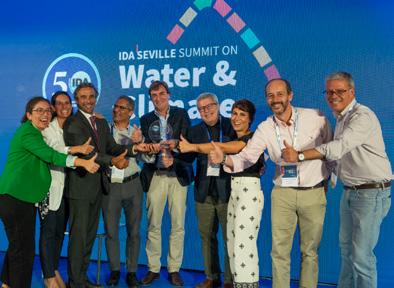
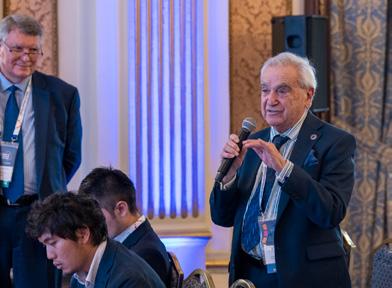
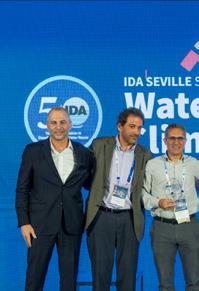
The partnership is anchored in substance. Andalusia's Law 3/2023 on Circular Economy has written water reuse into regional statute, requiring administrations to plan for reclaimed water use, efficient wastewater treatment, and biodiversity conservation. The law also obliges large private water users whose discharges exceed one cubic hectometre per year to treat and reuse at least half of that volume. Reclaimed water is promoted for agricultural, industrial, recreational, and environmental purposes, including saline intrusion control, aquifer recharge, forest irrigation, and the maintenance of wetlands and minimum flows.
In short, Andalusia has moved from aspiration to regulation, and the Summit will showcase what that looks like in practice.
The second Water and Climate Summit on International Water Reuse, held in Seville in
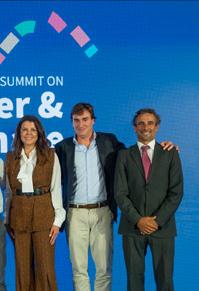

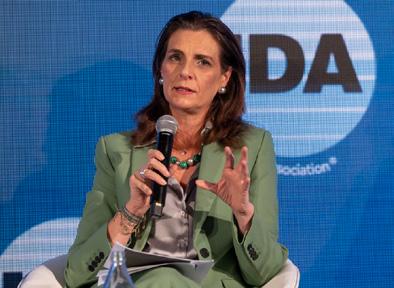
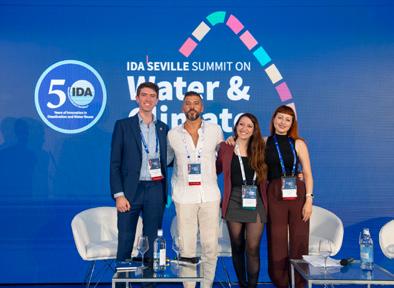
May 2025 under President Moreno Bonilla's patronage, marked the opening chapter of the partnership. The Symposium convened ministers, utility leaders, researchers, and industry pioneers to share the Andalusian model and exchange lessons with reuse leaders from across the Mediterranean, the Gulf, and the Americas. It confirmed Seville's standing as a meeting point for serious conversations about non-conventional water resources, and laid the groundwork for the larger convening to come
That momentum carried into Reykjavík, where Minister Ramón Fernández-Pacheco joined the IDRA Water and Climate Summit in October 2025. His presence was warmly welcomed and deeply appreciated, reaffirming Andalusia's active role in the partnership and its commitment to bringing regional leadership to the global stage.
The theme of the 2027 Summit reflects a reality the sector knows well: climate is, in practical
terms, a water crisis. Longer droughts, saline intrusion into coastal aquifers, shifting rainfall patterns, stressed groundwater, and rising agricultural demand are all climate impacts expressed through water. Desalination and reuse are no longer niche solutions. They are central pillars of climate-resilient water systems, and the Summit will treat them accordingly.
Andalusia is a fitting host for that conversation. The region has lived the climate-water nexus for years and has built an institutional response around circular economy principles, reclaimed water incentives, and sustained infrastructure investment.
The IDRA Summit on Water and Climate will feature a high-level ministerial segment anchored by the Regional Government of Andalusia, technical sessions spanning reuse for agriculture, industry, urban amenity, and environmental restoration, a dedicated climate track examining how reuse and desalination underpin climate-resilient water systems, and site visits to Andalusian reuse infrastructure. As with every IDRA convening, the program will bring regulators, operators, researchers, and financiers into the same room to work on the same problem.
Full program, venue, and registration details will be announced in the months ahead. For now, save the date.
IDRA Summit on Water and Climate, October 2027, Seville, Spain Under the patronage of the Regional Government of Andalusia
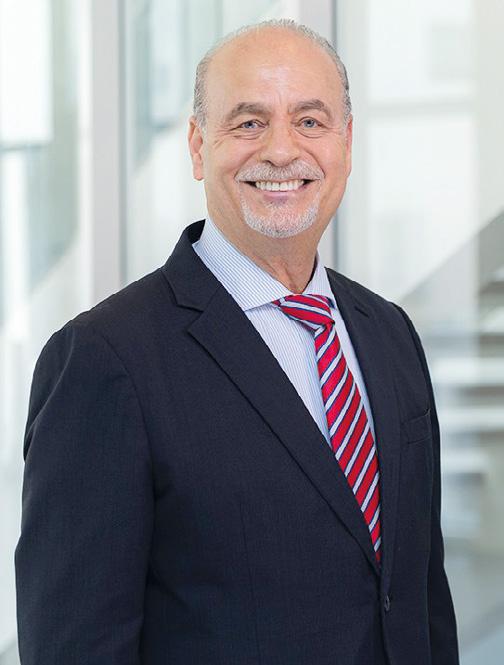
One of the most influential researchers in the history of desalination and membrane science as Special Advisor
The International Desalination and Reuse Association (IDRA) is pleased to announce the appointment of Professor Nidal Hilal, Director of the NYUAD Water Research Center and Global Network Professor at New York University, as Special Advisor to IDRA.
Professor Hilal is one of the most influential researchers in the history of desalination and
membrane science. Ranked first globally in nanofiltration and membrane distillation by Google Scholar metrics, second in reverse osmosis, and among the top 10 desalination researchers worldwide, he has authored more than 600 peer-reviewed publications, supervised 48 doctoral students and over 80 postdoctoral fellows, and is the most cited lifetime author in the journal Desalination.
His distinctions include:
ʞ Kuwait Prize for Applied Science, awarded by the Emir of Kuwait (2005)
ʞ Doctor of Science (DSc), University of Wales, for outstanding research in water processing and membrane science (2005)
ʞ Menelaus Medal, Learned Society of Wales, for excellence in engineering and technology (2020)
ʞ GPID Global Prize for Innovation in Desalination, Advanced Water Production Technologies (2024)
ʞ Clarivate Highly Cited Researcher (2022 and 2024), top 1% of researchers globally
ʞ Fellow of the Royal Society of Chemistry (FRSC)
ʞ Fellow of the Institution of Chemical Engineers (FIChemE)
ʞ Fellow of the Learned Society of Wales (FLSW)
ʞ Chartered Engineer (CEng) and registered European Engineer (Eur Ing)
His pioneering use of atomic force microscopy (AFM) to design and optimize membranes for complex separations has produced a
series of firsts in the field, including the development of the smallest AFM colloid probe reported in the literature, the first direct measurements of interactions between live cells and membrane surfaces, and the first industrial-scale reverse osmosis module in the United Arab Emirates.
"Professor Hilal's contributions to membrane science and desalination research are unmatched," said Shannon McCarthy, Secretary General of IDRA. "His appointment as Special Advisor strengthens IDRA's capacity to bridge fundamental research and real-world water solutions. His expertise, and his commitment to mentoring the next generation of water scientists, align perfectly with IDRA's mission."
Professor Hilal stated, "It is a privilege to join IDRA as a Special Advisor. I am committed to advancing research in water technologies, a field essential to the future of humanity."
IDRA's Board of Directors includes leaders from the public and private sectors, academia, and finance, representing a global network of more than 60 countries. The Association fully supports the UN Water Action Agenda, driving innovation and integration across the global water community. Established in 1973, IDRA holds UN ECOSOC and UNFCCC status, is a partner of UN Water and the FAO WASAG Program.

IDRA has entered 2026 with three new partnership agreements that extend the Association's reach into leading academic institutions, research centers, and cross-sector initiatives on both sides of the Atlantic and into North Africa. Together, they reflect a strategic focus on connecting IDRA's global industry network with the universities, professional bodies, and convenings that are shaping the next generation of water sector leadership and the next frontier of water sector innovation.

IDRA and The Water Center at Penn have signed a one-year collaboration agreement, effective April 2026 through March 2027, to formalize cooperation across mentorship, graduate research, careers programming, and corporate engagement.
Signed by IDRA Secretary General Shannon McCarthy and Water Center Executive Director
Howard Neukrug, P.E., the agreement opens the door for IDRA to propose and mentor a Master of Environmental Studies Capstone project, participate in the Water Center's annual Careers in the Water Industry event in October, and take up a Silver level seat on the Water Center's Corporate Roundtable.
In return, the Water Center receives complimentary non-profit membership to IDRA, representation at the IDRA World Congress 2026 in Riyadh, and reciprocal event access across both organizations' programs. Both parties will also explore how IDRA's mentorship programs
can connect with the Water Center's Regional Network Collaborative for Water Leadership.

IDRA has also entered into a Memorandum of Understanding with University Mohammed VI Polytechnic (UM6P) in Morocco as Supporting Partners, strengthening the link between the IDRA World Congress 2026 and UM6P's International Water Research Institute (IWRI) Water Day initiative.
The partnership reflects a shared commitment to advancing sustainable water resource management, with a particular focus on desalination and water reuse. Under the agreement, both parties will support each other's events through promotional activities, knowledge exchange, and active participation, including IDRA's contribution to the International Water Research Institute (IWRI) Water Day program and UM6P's promotion of the IDRA World Congress 2026. The collaboration aims to foster greater engagement across the global water community and reinforce the importance of innovation, education, and capacity building in addressing water challenges.

IDRA has also signed a Memorandum of Understanding with the Water Environment Federation (WEF), joining the Advisory Council
of the Water-AI Nexus™ Center of Excellence. Described as a first-of-its-kind global collaboration, the Water-AI Nexus is anchored by founding leaders including WEF, Amazon, Leading Utilities of the World, and The Water Center at the University of Pennsylvania, and operates under a dual mission: ensuring AI infrastructure uses water as efficiently as possible ("Water for AI"), and harnessing AI capabilities to solve pressing water scarcity and management challenges ("AI for Water").
Through the MoU, IDRA and WEF will jointly promote best-practice applications of AI in the water sector, co-develop thought leadership, coordinate on events and marketing, and share resources and content across their respective networks. IDRA's participation brings the global desalination and reuse community into a conversation that is rapidly becoming central to the future of water sector planning, infrastructure, and workforce development.
The three agreements share a common thread: connecting IDRA's members with the institutions, organizations, and initiatives that are educating, researching, and convening the next wave of water sector leadership. As the sector enters its fastest period of growth in decades, and as artificial intelligence begins to reshape how water is managed, financed, and delivered, these partnerships help ensure that IDRA and its members remain at the center of the conversations that matter most.
By: Ms. Mariela Cuartucci, Mr. Jan-Hendrik Imholze and Ms. Mariam Ouda

The IDRA YLP Committee continues to build on its strong foundation, further advancing its initiative to empower emerging professionals in desalination and water reuse. With a globally diverse team spanning academia, industry, and policy, the committee remains committed to fostering collaboration and innovation in addressing the critical challenge of global water scarcity.

Ms. Mariela Cuartucci
Business Developer, Logisticon Water Treatment Netherlands

Ms. Mariam Ouda PhD candidate, Khalifa University, Abu Dhabi United Arab Emirates

Mr. Jan-Hendrik Imholze
Desalination Expert, Fichtner GmbH & Co. KG Germany
Under the leadership of Dr.-Ing. Jan-Hendrik Imholze, Mariela Cuartucci, and Dr. Mariam Ouda, the YLP Committee has significantly expanded its activities and global reach
over the past year. The YLP successfully delivered two high-impact technical webinars, each addressing key priorities for the future of desalination. The first focused on high-recovery reverse osmosis (RO) systems, discussing advancements in maximizing water recovery. The second explored decarbonization in desalination, including case studies on renewable energy integration and CO2 capture. Both sessions attracted strong global participation and facilitated meaningful technical dialogue. In addition to its technical programming, the YLP hosted a global networking event, bringing together young professionals from across regions to exchange ideas, build connections, and discuss emerging challenges in the water sector.
A major milestone for the committee was its active contribution to the IDRA 2025 Reykjavik

Summit on Water and Climate Change, where the YLP conceptualized and launched the NextWave Start-up Competition. This global initiative attracted applications from over 30 startups across more than 15 countries. A distinguished judging panel composed of senior industry leaders from leading international organizations was assembled in collaboration with IDRA. The competition marked a significant step in positioning the YLP as a platform for accelerating breakthrough ideas and supporting emerging talent worldwide.
Looking ahead, the YLP Committee is continuing to expand its portfolio of activities. Additional webinars are already in development, with an upcoming session featuring leaders from across the globe targeting young professionals navigating
their careers in the water sector. A second networking event is also under preparation. The committee is actively preparing for its engagement at the IDRA World Congress 2026 in Riyadh, where dedicated YLP sessions and activities will provide opportunities for knowledge exchange and industry integration for young professionals.
Through its growing list of initiatives, including technical webinars, global competitions, networking platforms, and engagement at international conferences, the YLP Committee continues to strengthen the global community of emerging leaders in desalination and water reuse. Individuals under the age of 35 with an interest in participating in the Young Leaders Program are encouraged to connect with IDRA for further information.

IDRA is co-publishing a major new handbook with INBO (International Network of Basin Organizations) and IWRA, providing practical guidance to basin organizations and public decision-makers on diversifying the water resources mix at basin level. It will be announced at the IDRA World Congress 2026 in Riyadh and formally published at the 11th World Water Forum in March 2027.
IDRA is leading two chapters: reuse of treated wastewater, and seawater and brackish water desalination. We are writing these chapters in-house, but we need strong case studies to sit alongside the text.
We are looking for member-contributed case studies in three priority areas where our existing material is thinnest:
1. Brine management and mineral recovery. Projects demonstrating zero liquid discharge, brine valorization, or lithium, magnesium or salt recovery at scale.
1. Basin-level integration. Case studies where desalination or reuse has been embedded in a wider basin water strategy alongside surface water, groundwater, demand management, and reuse.
Other relevant submissions will be considered, but these are where the handbook most needs member input.
Each case study will be presented as a one-page "box" in the handbook. We need:
ʞ A short summary of the project or program
ʞ Key data points (capacity, cost, energy, recovery rates, population served)
ʞ One or two copyright-free images
ʞ Lessons learned from implementation
You will be credited as the contributor, with visibility at launch events.
30 May 2026. Send proposals to communications@idrawater.org
1. Mega-city and high-density urban water management. How large coastal or inland cities are planning desalination and reuse at population scale, including integration with urban infrastructure.
The International Desalination and Water Reuse Association's Nomination Period for the IDRA 2026-28 Term 22 Board of Directors is scheduled to commence on May 18, 2026.
Opening of Nomination Period
Deadline to Nominate
Voting Opens for 2026-28 Term 22
Voting Closes for 2026-28 Term 22
Online Ballot Results Certified by Third-Party Ballot Agency and approved by Member and Election Committee
Results Announced and Posted
Board Transition
To qualify, candidates must have been active IDRA members since July 1, 2025, to be eligible to stand for election. The IDRA Board is a working board with several standing and special committees. Candidates should have strong industry knowledge, an understanding of IDRA’s mission, Constitution, and Bylaws, and be available to dedicate considerable time to their duties should they be elected. Directors are expected to attend two board meetings annually, actively participate in IDRA’s programs, events, and committees, and undertake special assignments.
May 18, 2026
July 6, 2026
July 14, 2026
September 2, 2026
September 5-10, 2026
September 15, 2026
November 5, 2026 – IDRA World Congress, Kingdom of Saudi Arabia
To be placed on the ballot, candidates must have been:
1. Selected by the Membership & Elections (M&E) Committee.
2. Self-nomination is also accepted.
3. Proposed by letter or petition by at least five Class I and II members or their designated representatives from the same region.
4. Submit a written request to the M&E Committee to be considered for election and be sponsored
by at least Five Class I and II members or their designated representatives.
5. Candidates must: (a) be prepared to serve the desalination and water reuse community rather than espouse the particular interest of any single entity; (b) maintain confidentiality on the business of the Board, agree to non-compete; (c) avoid prejudiced judgments on specific issues, and (d) have a good standing within the desalination and water industry.
Regional Representation has been defined by the proportion of active Class I and II members in good standing in each region. Twenty-one (21) directors may be elected to the Board of Directors, and each region may have at least one and no more than seven. Based on the membership numbers, the regional allocation of Directors for the 2026 election is as follows:
Directors are elected by the IDRA Class I and II members through the E-Ballot online voting platform. The Membership and Elections Committee asks that each candidate provide:
ʞ A high-resolution photo
ʞ Short Biography – Max 150 Words
ʞ Brief description of what they intend to contribute to the Association
ʞ Signature on Board Governance and Confidentiality Agreement
Ballots will be sent to all active members via E-Ballot on July 14, 2026, to commence voting. IDRA Members will be able to log in and vote electronically. Voting will close on September 2, 2026. Results will then be certified and approved for posting on the IDRA website ( www. idrawater.org ) on September 15, 2026. An email bulletin will be sent out announcing the elected directors. The transition of the Board will take place on November 5, 2026, at the IDRA World Congress 2026 in the Kingdom of Saudi Arabia.
From May 18th to July 6th, Members can send nominations to IDRA via communications@ idrawater.org with the following subject: Nomination for Term 22 IDRA Board of Directors.
Self-nomination is also accepted and can be sent to communications@idrawater.org



Supporting the Next Generation of Water Innovation Leaders
The International Desalination and Reuse Association (IDRA) is pleased to announce that applications are now being accepted for the Dr. K.C. Channabasappa Memorial PhD Scholarship for the 2026-2027 academic year.
This prestigious scholarship honors the legacy of Dr. K.C. Channabasappa, a pioneering advocate for membrane technology and desalination innovation, by supporting doctoral students who are advancing research in desalination and water reuse.
The Dr. K.C. Channabasappa Memorial PhD Scholarship provides up to $10,000 USD to support promising doctoral candidates pursuing groundbreaking research in desalination or water reuse. The grant is designed to ease the financial burden of doctoral studies, with funds distributed in installments as recipients make progress in their research.
This scholarship represents more than financial support—it's an investment in the future of sustainable water solutions and an opportunity to join a global community of water sector leaders and innovators.
We're seeking passionate, driven candidates who demonstrate both academic excellence and leadership potential in the water sector. Ideal candidates will have completed their undergraduate studies in science or engineering and gained acceptance into a doctoral program focused on desalination or water reuse.
All applicants must be active IDRA members, reflecting our commitment to fostering long-term engagement within the global water community. We're particularly interested in candidates who can articulate a clear vision for their career path and demonstrate how their research will contribute to addressing water scarcity challenges.
To apply, candidates should submit a completed application form along with official academic transcripts and a statement of purpose that outlines their research interests and career aspirations within the desalination and water reuse sector.
Applicants are also asked to provide four letters of recommendation, including at least one from an active IDRA member in good standing. These letters help our selection committee understand not only your academic achievements but also your potential to make meaningful contributions to the field.
Application Deadline: 1 June 2026
Scholarship Recipient Announcement: 31 July 2026
The application form is available on the scholarship page of IDRA's website at idrawater.org. For questions or assistance with your application, please contact the IDRA Education, Scholarship and Fellowship Committee at info@idrawater.org and EASG@idrawater.org .
Dr. K.C. Channabasappa served as Acting Assistant Director of Saline Water Conversion and Chief of Membrane Processes at the Office of Water Research and Technology (OWRT) within the U.S. Department of the Interior. Throughout
his career, he was a passionate champion for membrane technology, playing a pivotal role in securing funding for critical advancements that continue to benefit the water sector today. When Dr. Channabasappa passed away unexpectedly during his tenure at OWRT, the desalination community felt his loss deeply. In response, colleagues and admirers established this scholarship to ensure his vision and dedication would continue to inspire future generations.
Created in 1984 following the merger of the International Desalination & Environmental Association (IDEA) and the Water Supply Improvement Association (WSIA), the scholarship has supported numerous doctoral students over the decades, helping to cultivate the innovative thinking and technical expertise needed to address global water challenges.
Today, the scholarship continues to serve as a testament to Dr. Channabasappa's enduring impact on the field and IDRA's commitment to nurturing the next generation of water sector leaders.
We encourage all eligible candidates to apply and join us in continuing Dr. Channabasappa's legacy of innovation and excellence in desalination and water reuse.
For more information, visit idrawater.org or contact info@idrawater.org and EASG@ idrawater.org
Considered one of the industry’s most prestigious honors, the IDRA Fellowship Program recognizes individuals for exceptional professional achievement and a strong commitment to advancing desalination and water reuse. The program promotes education and global knowledge exchange among industry professionals.
The Fellowship Award provides recipients with a unique opportunity to spend six weeks with a host agency —a highly respected public utility or research organization—working alongside peers in the desalination and water reuse sector. Fellows gain firsthand insight into the host agency’s operations, strategies, and policies, while host agencies benefit from the Fellow’s expertise, experience, and exposure to global best practices.
Past IDRA Fellowship host agencies include the University of Alberta, Canada; University of Arizona West in the USA, Public Utilities Board (PUB), Singapore’s National Water Agency; the Saline Water Conversion Corporation (SWCC) in Saudi Arabia; Water Corporation and Murdoch University in Western Australia; the U.S. Bureau of Reclamation; the Ministry of Electricity & Water in Kuwait; and the Public Authority for Electricity and Water (PAEW) in Oman.
IDRA is currently seeking a Host Agency for the 2026–2027 Fellowship Program. Organizations interested in hosting a six-week Fellowship attachment are invited to contact easg@idrawater.org and education@ idrawater.org for program guidelines and additional information by June 1, 2026.
GLOBAL WATER SUMMIT 2026
IDRA Participating
18-20 May 2026
Madrid, Spain
OZWATER
IDRA Partner
26-28 May 2026
Brisbane, Australia
2026 INDUSTRIAL WATER SOLUTIONS
IDRA Partner
8-10 June 2026
Chicago, Il, United States
SINGAPORE INTERNATIONAL WATER WEEK
IDRA and Singapore Water Association Business Forum
Securing Global Water Futures: Scaling Desalination and Water Reuse Through Innovation and Partnerships
Thursday, 18 June 12:00-1:00 PM Room Oasis, B2
15-18 June, 2026
Singapore Expo, Singapore, Singapore
AWS 10TH GLOBAL WATER STEWARDSHIP FORUM
A4WS
IDRA Participating
23-24 June 2026
Edinburgh, Scotland

WEFTEC 2026
IDRA Participating 26-30 September 2026
New Orleans, Louisiana
THE 44TH UN-WATER MEETING
IDRA Participating 1-2 October 2026
Rome, Italy
SHARAKAT FORUM 2026
IDRA Participating 18-19 October 2026
Riyadh, Kingdom of Saudi Arabia
WETEX 2026
IDRA Participating 20-22 October 2026
Dubai, UAE
IDRA WORLD CONGRESS 2026
DRIVING GLOBAL WATER SUSTAINABILITY THROUGH INNOVATION 1-5 November 2026
Riyadh, Saudi Arabia
UN 2026 WATER CONFERENCE
IDRA Participating 8-10 December 2026
UAE
THE 16TH GULF WATER CONFERENCE
IDRA Partner Date TBC
Muscat, Osman
A renewed US federal framework puts industrial reuse, AI infrastructure, and energy production at the centre of national water strategy, building on the 2020 plan with 200 partners now active across 76 actions.
On 16 April 2026, the US Environmental Protection Agency (EPA) launched the Water Reuse Action Plan 2.0 (WRAP 2.0), a renewed federal framework to accelerate water reuse across American industry, technology, and energy sectors. The announcement was made at EPA Headquarters by Administrator Lee Zeldin, alongside Deputy Administrator David Fotouhi, Assistant Administrator for Water Jessica Kramer, congressional representatives, and industry stakeholders.
WRAP 2.0 builds on the original Water Reuse Action Plan launched in 2020, which was the first nationwide framework of its kind in the United States. The initial plan brought together 86 partners around 37 strategic actions. Six years on, the updated platform reports 200 partners working on 76 actions, with more than 200 resources developed for the reuse sector, and interagency coordination now codified into federal law.
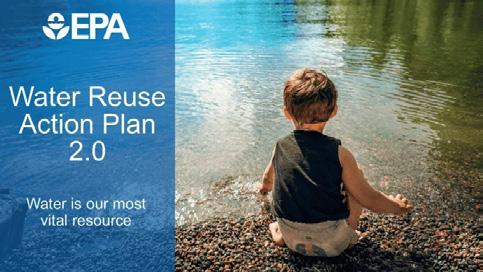
WRAP 2.0 is organized around three high-impact initiatives:
1. Supporting Reuse for Resurgent Domestic Industry, covering component fabrication (such as bottles and batteries), finished products including food, beverage and automotive manufacturing, and agricultural production.
2. Water for the US Technology Revolution, focused on microchip and memory fabrication and data center cooling.
3. Unleashing American Energy Dominance, targeting electricity generation and energy development, including opportunities to treat wastewater for beneficial reuse.
Unlike a regulatory mandate, WRAP 2.0 is structured as a collaborative partnership model. The EPA has stated that states and local leaders retain primary authority over how water reuse is implemented in their jurisdictions, with the federal role centred on coordination, technical support, and the sharing of best practice.
Several new actions stand out for IDRA members working across the reuse value chain:
• A decision-making framework for water reuse in food and beverage production (Action 5.12), drawing on lessons from industry practitioners who have already implemented reuse projects.
• Support for states on recycled water in industrial and data center cooling applications (Action 3.10), with the EPA working to compile permitting best practice so states can more readily authorize reuse for data centers.
• A GIS-based mapping tool for the power sector (Action 5.11), enabling users to identify alternative water sources geographically suited for reuse by power plants.
• Rural reuse funding , with USDA Rural Utilities Service programs being streamlined to support water reuse projects in rural communities (Action 6.7).
For the global desalination and reuse community, WRAP 2.0 reflects a trend IDRA members will recognize from other regions: reuse is increasingly framed not only as a drought response, but as critical infrastructure for industrial competitiveness, digital economies, and energy security. The explicit link drawn between reuse and AI-related water demand, particularly for microchip fabrication and data centre cooling, mirrors conversations already underway in the Gulf, Singapore, and parts of Europe. The announcement also reinforces the value of multi-stakeholder frameworks. With partners now spanning federal agencies, state regulators, industry, and technology companies, WRAP 2.0 offers a working model of how national reuse strategies can be structured around voluntary commitments rather than top-down mandates.
• EPA press release: EPA Launches Water Reuse Action Plan 2.0
• WRAP 2.0 Booklet (PDF)
• WRAP Online Platform
• Partner with EPA on water reuse

In April, the University of California, Irvine's Water-Energy Nexus Center named two new Fellows from industry: Nikolay Voutchkov and José Jimenez. The appointments extend a Fellowship roster that has been quietly accumulating influence across research, teaching, and industry practice.


At the University of California, Irvine, the Water-Energy Nexus Center has spent more than a decade making the case that the most useful research on water happens in close company with the people running the plants.
In February 2024, the inaugural WEX Fellow, Daniel Nolasco, was elected to the U.S. National Academy of Engineering, cited for his decades-long argument that wastewater treatment and water reclamation should be understood not as remediation but as climate mitigation infrastructure. By late 2025 he had returned to UCI as Adjunct Professor, teaching a graduate course on the carbon and energy


footprint of water and wastewater systems, a senior practitioner now folded back into the Center's classroom.
Nolasco's trajectory captures something distinctive about WEX, which was founded at UCI to study the water-energy nexus and is led by Director Diego Rosso of the Civil and Environmental Engineering Department. The Center's model rests on three pillars: collaborative research with utilities and equipment vendors, professional training delivered to working practitioners, and a Fellows program that translates senior industry expertise into sustained engagement with faculty and graduate students.
Other threads have similar reach. Associate Director Sunny Jiang was selected as lead researcher for a Water Research Foundation study on SARS-CoV-2 in wastewater, co-funded by the Bill & Melinda Gates Foundation, at the height of the pandemic. The wastewater surveillance methods developed in her lab have continued to mature, anchored by sustained partnerships with utilities including the Sanitation Districts of Los Angeles County, the Irvine Ranch Water District, and the Orange County Water District. Wastewater surveillance, once a pandemic-era improvisation, is now a permanent feature of public health infrastructure across much of the world. WEX is among the U.S. research teams that helped move it there.
The Center has also gone deep on the digitization of water operations. WEX Fellow Imre Takács of Dynamita has become a regular presence at UCI; in February 2026 he returned for a two-week lecture series on dynamic process modeling and a half-day NAWI workshop on digital twins in water reclamation, hosted by the Orange County Water District. The workshop sat on the same continuum as the Center's two-year DOE-funded partnership with Oak Ridge National Laboratory on data analytics for water reuse: an attempt to move sensor data, dynamic models, and digital twins from research curiosity to deployable utility tooling.
It is against this backdrop that the WEX Center announced, in April, the appointment of Voutchkov and Jimenez to the Fellowship.
Voutchkov will be a familiar name to the IDRA community. His career in the design and analysis of desalination systems spans multiple continents and decades, and his published work has shaped how the technology is taught and practiced across the sector. His collaboration with the WEX Center predates the formal Fellowship, with sustained engagement that has yielded numerous joint publications with UCI faculty and students. The appointment brings dedicated desalination expertise into a Fellows group whose strength has so far skewed toward wastewater and reuse.
Jimenez complements that profile. A wastewater process engineer with almost thirty years in biological treatment, he has pioneered work on comammox in low dissolved-oxygen activated sludge operations and on AvN advanced ammonia aeration control. His ongoing collaboration with WEX students spans multiple themes in biological treatment and process control.
The two appointments, taken together, round out the Fellows roster across the desalination-to-reuse continuum, the same continuum that increasingly defines the investment and research priorities reshaping the global water sector.

Baker Hughes (NASDAQ: BKR) is an energy technology company that provides solutions to energy and industrial customers worldwide. Built on a century of experience and conducting business in over 120 countries, our innovative technologies and services are taking energy forward – making it safer, cleaner and more efficient for people and the planet.
BW Elara is a joint venture between BW Offshore and BW Group, delivering a new generation of floating desalination infrastructure. The company is focused on addressing global water scarcity by making clean water accessible through scalable, rapidly deployable solutions. Leveraging proven offshore engineering and advanced water treatment technologies, BW Elara extends the boundaries of conventional desalination. Its ready-built, modular units are designed to bridge the gap between emergency water supply and permanent infrastructure. These floating systems harness seawater to support cities and industries facing water shortages, infrastructure delays, or sudden demand spikes. Engineered for mobility, energy efficiency, and fast deployment, BW Elara’s solutions are particularly suited for remote locations, high-demand regions, and disaster response scenarios. By combining maritime expertise with world-class engineering, BW Elara provides flexible, resilient water supply when and where it matters most.


COSIDER Canalisation is a construction subsidiary of the COSIDER Group, one of Algeria's leading industrial conglomerates. Founded in 2004, the company has become a recognised major player across four core domains of infrastructure development: oil and gas pipeline transport, hydraulic works, electrical energy transmission, and seawater desalination. In each field, COSIDER Canalisation has replaced what was once an exclusive dependence on foreign operators, establishing Algerian expertise as a credible and competitive force on the national market. The company's most recent and fastest-growing area of activity is seawater desalination, managed by the dedicated Water Desalination Division established to respond to Algeria's urgent national water security priorities. This division was built specifically to support the government's National Emergency Water Program and has rapidly evolved into a fully autonomous, vertically integrated unit. To date, COSIDER Canalisation has constructed ten desalination plants across Algeria, making it the country's undisputed leader in this field.

Q Hydrogen is a revolutionary technology company, using proprietary science backed by nearly three decades of R&D to develop sustainable, actionable, hydrogen energy solutions. The company IP Portfolio utilizes the same base technology for applications in desalination and water purification. The Q Hydrogen mission is to create a world where everyone on the planet has access to clean energy. As the company continues to scale, the next phases of expansion include this core technology within advanced water solutions, further broadening their impact on global sustainability.
FirstLine Global is a world leader in the design and manufacture of pressure vessels (FRP) for reverse osmosis membrane systems.
With over 50 years of combined experience in FRP pressure vessel engineering and design, FirstLine has established itself as a global benchmark in the production of high quality RO membrane housings and cartridge filter housings.
The company holds ASME (Sec.X), CE, NSF 61, SGS and ISO9001,14001,45001 and 50001 certifications, offering a full product range covering diameters from 2.5 and 16'' and operating pressure up to 2,000 PSI. Its engineering team, drawn from the prestigious Harbin Institute of Technology, focuses its R&D on high polymer composite materials - technology typically reserved for aerospace and military applications.
With over 50 technical patents and exports to more than 60 countries, FirstLine has supplied over one million membrane components to international standards. Its motto, First in Quality, reflects an unwavering commitment to excellence in the water treatment industry.


KeenSen was established in Xiangjiang New Area, Hunan Province in 2008, focusing on the research and development, production, sales, and application services of reverse osmosis and nanofiltration membranes, membrane components, and membrane treatment systems. It is a national high-tech enterprise, one of China's "little giants", a national "green factory", and a "manufacturing champion enterprise" for industrial reverse osmosis membrane components in Hunan Province.
KeenSen has built an industry-leading automatic production line for membrane sheets and membrane components with an annual output of 23 million square meters. The company has two major series of membranes and membrane components, reverse osmosis and nanofiltration, with over 100 specifications and models. It has obtained international NSF certification and 67 invention patents, and can provide customers with one-stop services throughout the entire lifecycle, including membrane product selection, membrane system application, technical services, water quality analysis and testing, fault diagnosis, maintenance and operation.

Xylem is a global water technology provider helping our customers solve the world's toughest water challenges across utility, industrial, commercial, and residential markets worldwide. Over the last 100+ years, their unique combination of innovative products and services, proven expertise, and unmatched customer support have been helping to create a more water-secure and resilient world. Across the water cycle, their innovative solutions use less energy, reduce operating expenses, and support sustainability efforts.
In just a decade, Xylem has grown from a pump manufacturer to a leading global water solutions partner. Today, Xylem is leading the way in water with more than 23,000 diverse colleagues around the world, serving customers in more than 150 countries and achieving revenues of $8.6B, by collaborating with and empowering customers and communities to build a more water-secure world.