No.150 / JULY2026
AccountanCY
PRUS
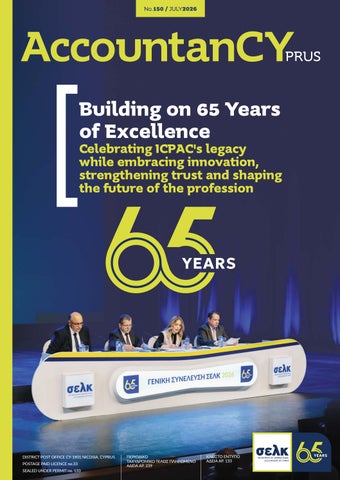
Building on 65 Years of Excellence
Celebrating ICPAC's legacy while embracing innovation, strengthening trust and shaping the future of the profession
DISTRICT POST OFFICE CY-1901 NICOSIA, CYPRUS POSTAGE PAID LICENCE no.33 SEALED UNDER PERMIT no. 133
ΠΕΡΙΟΔΙΚΟ ΤΑΧΥΔΡΟΜΙΚΟ ΤΕΛΟΣ ΠΛΗΡΩΜΕΝΟ ΑΔΕΙΑ ΑΡ. 239
ΚΛΕΙΣΤΟ ΕΝΤΥΠΟ ΑΔΕΙΑ ΑΡ. 133
SITE TOUR
ICPAC'S POSITION IN THE PUBLIC CONSULTATION
MONITORING & COMPLIANCE In 2024, ICPAC launched a new "Monitoring & Compliance" tab on its website, providing easy access to a wide range of compliance-related resources. This includes Compliance Circulars, Guides, information on sanctions & restrictive measures, training materials, templates, and more. The new section aims to support members and the public by centralizing all compliance information in one convenient location.
ICPAC ISSUES TECHNICAL CIRCULARS FOR THE TECHNICAL SUPPORT OF ITS MEMBERS. The technical circulars of ICPAC aim at informing the members as regards changes or amendments of regulations and procedures relating to the accounting/auditing profession, which stem either from ambiguities or omissions that are identified during accounting or auditing work, or from harmonisation directives of the European Union for the accounting/auditing profession. Find the most recent technical circulars sent to the members below.
WHAT IS CPD? Continuous Professional Development (CPD) is the learning and development activity that you will do throughout your ICPAC membership. CPD will provide you with the knowledge and skills required to perform your day-to-day job in your chosen professional role, as well as to enhance your employability for the future.
FIND MORE …
www.icpac.org .cy
THINKING AHEAD
Andreas Papadatos GENERAL MANAGER OF ICPAC
F
65 Years of Trust. Shaping Tomorrow Together.
or the Institute of Certified Public Accountants of Cyprus (ICPAC), our 65th Annual General Meeting was a moment to reflect, celebrate achievement and inspire renewed ambition.
For sixty-five years, ICPAC has stood at the forefront of the accountancy profession in Cyprus. It has witnessed the country’s economic transformation, supported businesses through periods of growth and uncertainty, and helped build a profession recognised for its integrity, competence and commitment to the public interest. The Institute’s journey is, in many ways, intertwined with the story of modern Cyprus. This year’s AGM is particularly meaningful for me personally. Having recently assumed the role of General Manager, I consider it a privilege to join an organisation with such a distinguished history and an even more exciting future. During my first months at ICPAC, I have had the opportunity to meet many members, volunteers, staff, and stakeholders. What has impressed me most is not only their professionalism, but also their unwavering commitment to the Institute and to the values that define our profession.
FOR SIXTY-FIVE YEARS, ICPAC HAS STOOD AT THE FOREFRONT OF THE ACCOUNTANCY PROFESSION IN CYPRUS. IT HAS WITNESSED THE COUNTRY’S ECONOMIC TRANSFORMATION, SUPPORTED BUSINESSES THROUGH PERIODS OF GROWTH AND UNCERTAINTY, AND HELPED BUILD A PROFESSION RECOGNISED FOR ITS INTEGRITY, COMPETENCE AND COMMITMENT TO THE PUBLIC INTEREST.
It is this sense of purpose that gives me confidence for the future. The world around us is changing at an extraordinary pace. Artificial intelligence is redefining the way we work. Sustainability reporting is reshaping corporate accountability. Global tax reforms, digitalisation, cybersecurity, geopolitical developments and increasing regulatory complexity continue to transform the environment in which our members operate.
3 - ACCOUNTANCY CYPRUS - JULY 2026
THINKING AHEAD
THAT RESPONSIBILITY EXTENDS BEYOND SUPPORTING TODAY’S MEMBERS. IT ALSO MEANS INSPIRING TOMORROW’S PROFESSIONALS. ATTRACTING TALENTED YOUNG PEOPLE TO ACCOUNTANCY, INVESTING IN LIFELONG LEARNING AND EQUIPPING OUR MEMBERS WITH THE SKILLS REQUIRED FOR THE FUTURE ARE AMONG THE INSTITUTE’S MOST IMPORTANT PRIORITIES
Yet if there is one lesson that history teaches us, it is that the accountancy profession has always evolved. Our relevance has never depended on resisting change, but on embracing it responsibly. Today’s accountant is far more than a preparer of financial information. Accountants are trusted advisers, strategic partners, business leaders and guardians of transparency. They help organisations navigate uncertainty, create sustainable value and maintain public confidence. As the business landscape evolves, so too must our profession—and ICPAC must continue to lead that evolution.
That responsibility extends beyond supporting today’s members. It also means inspiring tomorrow’s professionals. Attracting talented young people to accountancy, investing in lifelong learning and equipping our members with the skills required for the future are among the Institute’s most important priorities. Technical excellence will always remain our foundation, but tomorrow’s professionals will also need digital capabilities, critical thinking, adaptability and leadership. As we celebrate sixty-five years of achievement, we should also recognise that our greatest strength has always been our people. The success of ICPAC has
4 - ACCOUNTANCY CYPRUS - JULY 2026
6 5 Y E A R S O F T R U S T. S H A P I N G T O M O R R O W T O G E T H E R
been built by generations of members who gave their time, knowledge, and expertise in service of something greater than themselves. It has been strengthened by dedicated Councils, committees, volunteers, and staff who believed that a strong profession contributes to a stronger economy and a better society. To each of them, we owe our sincere gratitude. At this point, I would like to personally thank the former General Manager of ICPAC, Mr. Kyriakos Iordanou, for his significant and long-standing contribution to the Institute. His involvement in the development and modernization of the organization was substantial and left an important institutional mark on ICPAC's journey. Looking ahead, I believe three enduring ambitions should define the next chapter of ICPAC. First, to remain the trusted voice of the profession, advocating constructively on behalf of our members and contributing meaningfully to public policy and economic development. Second, to become an increasingly modern, agile, and member-focused Institute—one that embraces technology, continuously improves its services, and responds proactively to the profession's changing needs.
These ambitions cannot be realised by the Institute alone. They require collaboration, openness, and a shared sense of responsibility. They require every member to play a part in shaping the future of our profession. Our 65th Annual General Meeting is therefore not simply a celebration of longevity. It is a celebration of trust—the trust our members place in the Institute, the trust society places in our profession, and the trust we must continue to earn every day. As I begin my journey as General Manager, I do so with humility, enthusiasm, and optimism. I look forward to working alongside our President, Council, committees, members, staff, and partners as we build on the remarkable legacy of the past sixty-five years while embracing the opportunities of the decades ahead. The profession has never stood still. Neither has ICPAC. Together, let us honour our legacy, embrace innovation and shape a future worthy of the generations that will follow.
Third, to ensure that Cyprus continues to be recognised internationally as a jurisdiction distinguished by high professional standards, transparency and quality, supported by an accountancy profession that enjoys global respect.
5 - ACCOUNTANCY CYPRUS - JULY 2026
SPECIAL
ANNIVERSARY EDITION ADVERTISING ORDER FORM YEAR 2026 TO: EDITOR OF “ACCOUNTANCY CYPRUS” We wish to book the following advertisements in the “Accountancy Cyprus” Journal:
Colour 2026 fixed price per 3 issue €
April 1
July 1
Oct 1
Back cover (size Α4)
2100
700
700
700
Inside front cover (size Α4)
1800
600
600
600
Inside back cover (size Α4)
1500
500
500
500
Advantage pages 3 και 5 (size Α4)
1200
400
400
400
Inside pages
900
300
300
300
Any inside page:
Special Prices More than one advert in the same issue you will be entitled with
30% discount the second one and 50% discount the third one.
Name: ...................................................................................................................................................................................................................... Position:.................................................................................................................................................................................................................. Company:.............................................................................................................................................................................................................. Address:................................................................................................................................................................................................................. ...................................................................................................................................................................................................................................... E-mail: .................................................................................................................................................................................................................... Telephone: ..................................................................................................................................................... Fax: ......................................... Signature: ............................................................................................................... Date:............................................................................... 1. Please mark with an X any quarter as appropriate 2. The above prices do not include VAT Contact Person Constantina Achilleos THE INSTITUTE OF CERTIFIED PUBLIC ACCOUNTANTS OF CYPRUS 11 Byron Avenue, 1096 Nicosia info@icpac.org.cy P.O.Box 24935, 1355 Nicosia, Cyprus www.icpac.org.cy Telephone: +357 22 870030, Fax: +357 22 766360
CONTENTS ACCOUNTANCY CYPRUS ISSN 1450-2380 The Institute Council Odysseas Christodoulou - President Andreas Andreou - Vice President Eleni Pyrgou (Secretary)
Members
Andreas Avraamides, Marios Demetriades, George Hadjineophytou, Stavros Ioannou, Constantinos Kallis, Savvas Kleitou, Eliza Livadiotou, Ioanna Nicolaidou, Nicolas Shiakallis, Spyros Spyrou, Nicos Stavrou, Afxentis Zemenides
General Manager Andreas Papadatos
Address
11 Byron Avenue, 1096 Nicosia, Cyprus
Mailing Address
P.O. Box 24935, 1355, Nicosia, Cyprus Tel.: +357 22870030 Fax: +357 22766360 Ε-mail: info@icpac.org.cy www.icpac.org.cy
Design and Pagination Maria Stylianou The publication is prepared by RedwolfOgilvy 8 Ilioupoleos Street Tel: +357 22252522 Fax: +357 22767970 E-mail: info@redwolfogilvy.cy www.redwolfogilvy.cy
10-19
ICPAC news
A summary of the Institute’s most important recent initiatives, announcements, and activities • Annual Training for ICPAC Mentor Programme Mentors • ICPAC Presents White Paper on Family Business Governance • ICPAC Celebrates 65 Years of Service to the Profession • Tree Planting Initiative Supports Urban Green Spaces in Lakatamia • Promoting Financial Literacy through an Open Event in Larnaca • ICPAC Leadership Meets with the Ministers of Labour and Energy • ICPAC Signs Memorandum of Understanding with Cyprus Integrity Forum • ICPAC and IMA Sign Memorandum of Understanding • New Strategic Partnership between Cyprus and India through
20-41
COVER STORY
ICPAC Annual General Meeting: 65 Years of Service, Looking Ahead with Confidence
42-45
Highlights from the 5th ICPAC Mediterranean Finance Summit ICPAC MEDITERRANEAN FINANCE SUMMIT
46-49
INTERVIEW
Odysseas Christodoulou: ICPAC's 65-Year Legacy of Credibility – A Compass for Cyprus 2030
50-51
BUSINESS & ECONOMY
Coaching: A Powerful Tool in Uncertain Times
Accountancy Cyprus is published quarterly by the Institute of Certified Public Accountants of Cyprus and is sent free to all members of the Institute as well as to many other persons, companies, and organizations.
52–55
INTERVIEW
Andreas Papadatos: “ICPAC’s 65-year legacy carries a responsibility for the next 65 years”
56–61
BUSINESS & ECONOMY
Growth, Opportunity and the Real Measure of Economic Progress
62–63
BUSINESS & ECONOMY AI in Finance: The 92% Problem
64-65
BUSINESS & ECONOMY Global ACCA Survey
66–68
TAXATION
Forensic Accounting Investigation
70–73
BUSINESS & ECONOMY
The Other Side of Instant Responsiveness
74–75
SUSTAINABILITY Equality at work
76–78
IFAC News
IC PAC N E WS
Annual Training for ICPAC Mentor Programme Mentors
O
n 13 March 2026, the annual training session for the mentors of the ICPAC Mentor Programme was held once again, reaffirming the Institute of Certified Public Accountants of Cyprus (ICPAC)’s ongoing commitment to supporting the professional development of its members. The training was delivered by Ms Marilena Siakalli Maroudia, who provided mentors with practical guidance and valuable insights aimed at further enhancing their mentoring capabilities and ensuring the continued quality and effectiveness of the programme.
THE PROGRAMME IS OFFERED FREE OF CHARGE TO ICPAC MEMBERS AND MEMBERS OF THE ICPAC CFO SOCIETY, PROVIDING VALUABLE SUPPORT TO PROFESSIONALS SEEKING TO ADVANCE THEIR CAREERS, STRENGTHEN THEIR SKILLS AND SUCCESSFULLY NAVIGATE TODAY’S EVOLVING BUSINESS ENVIRONMENT.
Launched in 2019, the ICPAC Mentor Programme has grown into a well-established professional mentoring initiative, currently bringing together 24 experienced mentors from across the profession. The programme is offered free of charge to ICPAC members and members of the ICPAC CFO Society, providing valuable support to professionals seeking to advance their careers, strengthen their skills and successfully navigate today’s evolving business environment. Participants benefit from continuous guidance by experienced professionals, gaining practical advice, developing the skills required to manage complex professional situations, and enhancing their communication, collaboration, and self-confidence. The programme also supports participants in strengthening their professional profile and improving their visibility within the job market, contributing to the development of Cyprus’ wider professional ecosystem.
10 - ACCOUNTANCY CYPRUS - JULY 2026
ICPAC NEWS
ICPAC Presents White Paper on Family Business Governance
T
he Institute of Certified Public Accountants of Cyprus (ICPAC), through its Corporate Governance and Business Ethics Committee, in collaboration with the ICPAC CFO Society, presented its White Paper on Family Business Governance at an event hosted by PwC Cyprus in Nicosia.
Executive Management. Emphasis was placed on the importance of establishing clear governance structures and procedures, engaging independent advisors, and implementing timely succession planning to ensure the long-term stability and success of family businesses.
The event attracted significant interest from professionals, business executives and members of the wider business community, highlighting the growing importance of corporate governance as a key driver of sustainability, growth and successful succession planning in family-owned businesses.
The discussion that followed explored the contemporary challenges and opportunities facing family businesses in an increasingly dynamic business environment, where adaptability, transparency and strategic leadership have become more important than ever.
The presentation focused on the White Paper's three core pillars: Family Governance, Board of Directors, and
Through initiatives such as this, ICPAC continues to promote best practices in corporate governance while supporting the resilience and competitiveness of Cypriot businesses.
THE DISCUSSION THAT FOLLOWED EXPLORED THE CONTEMPORARY CHALLENGES AND OPPORTUNITIES FACING FAMILY BUSINESSES IN AN INCREASINGLY DYNAMIC BUSINESS ENVIRONMENT, WHERE ADAPTABILITY, TRANSPARENCY AND STRATEGIC LEADERSHIP HAVE BECOME MORE IMPORTANT THAN EVER.
11 - ACCOUNTANCY CYPRUS - JULY 2026
IC PAC N E WS
ICPAC Celebrates 65 Years of Service to the Profession
T
he Institute of Certified Public Accountants of Cyprus (ICPAC) proudly celebrated 65 years of continuous contribution to the accounting and auditing profession, marking an important milestone in its longstanding commitment to professional excellence and the advancement of Cyprus' economy and business community. During the celebration, ICPAC President Mr Odysseas Christodoulou, together with the Institute's newly appointed General Manager, Mr Andreas Papadatos, cut the anniversary cake, symbolising the continuation of ICPAC's journey of professionalism, progress and dedicated service to its members. Joined by the ICPAC team, the occasion reflected the collective effort that has shaped the Institute over the past six and a half decades, strengthening the profession and reinforcing Cyprus' position as a trusted international business and professional services centre.
The 65th anniversary provided an opportunity to acknowledge the valuable contribution of everyone who has played a role in ICPAC's development throughout the years. Guided by its core values of quality, transparency and professional excellence, ICPAC remains committed to investing in the future of the profession and supporting the challenges and opportunities of a rapidly changing world.
THE 65TH ANNIVERSARY PROVIDED AN OPPORTUNITY TO ACKNOWLEDGE THE VALUABLE CONTRIBUTION OF EVERYONE WHO HAS PLAYED A ROLE IN ICPAC'S DEVELOPMENT THROUGHOUT THE YEARS.
12 - ACCOUNTANCY CYPRUS - JULY 2026
ICPAC NEWS
Tree Planting Initiative Supports Urban Green Spaces in Lakatamia
A
s part of its ongoing Corporate Social Responsibility (CSR) and sustainability initiatives, the Institute of Certified Public Accountants of Cyprus (ICPAC) participated in a tree-planting event at the Lakatamia Linear Park, in collaboration with the Municipality of Lakatamia, contributing to the enhancement of urban green spaces and environmental protection. A total of 47 trees were planted with the participation of members, partners, and their families, demonstrating the positive impact that collective action can have in creating a more sustainable and environmentally friendly future. The initiative once again reflected ICPAC's commitment to promoting environmental responsibility and sustainability, recognising that even small actions can create meaningful long-term benefits for society and the natural environment. The active participation of children and families made the event particularly meaningful, helping
A TOTAL OF 47 TREES WERE PLANTED WITH THE PARTICIPATION OF MEMBERS, PARTNERS, AND THEIR FAMILIES, DEMONSTRATING THE POSITIVE IMPACT THAT COLLECTIVE ACTION CAN HAVE IN CREATING A MORE SUSTAINABLE AND ENVIRONMENTALLY FRIENDLY FUTURE.
younger generations appreciate the importance of environmental protection and community involvement. ICPAC remains committed to supporting initiatives that promote environmental sustainability and contribute to building a greener, healthier, and more sustainable future for all.
13 - ACCOUNTANCY CYPRUS - JULY 2026
IC PAC N E WS
Promoting Financial Literacy through an Open Event in Larnaca
A
s part of its commitment to enhancing financial literacy across society, the Institute of Certified Public Accountants of Cyprus (ICPAC) organised an open event entitled "Understanding Everyday Finance" at the Youth Makerspace Larnaka. The event attracted children, students, young people, and adults, offering an engaging and interactive learning experience focused on practical financial knowledge and everyday money management. Primary school children participated in a hands-on workshop delivered by Junior Achievement Cyprus, where they explored key concepts of financial management and entrepreneurship through interactive activities. Secondary school students were introduced to the accounting profession, gaining valuable insight into career opportunities and the skills required in today's professional environment.
THE EVENT ATTRACTED CHILDREN, STUDENTS, YOUNG PEOPLE, AND ADULTS, OFFERING AN ENGAGING AND INTERACTIVE LEARNING EXPERIENCE FOCUSED ON PRACTICAL FINANCIAL KNOWLEDGE AND EVERYDAY MONEY MANAGEMENT.
Adult participants attended presentations and discussions on personal finance and everyday financial management in collaboration with CFA Society Cyprus. Through initiatives such as this, ICPAC continues to invest in improving financial literacy and empowering society through education and knowledge.
14 - ACCOUNTANCY CYPRUS - JULY 2026
ICPAC NEWS
ICPAC Leadership Meets with the Ministers of Labour and Energy
T
he leadership of the Institute of Certified Public Accountants of Cyprus (ICPAC) held a series of high-level meetings with the Minister of Labour and Social Insurance and the Minister of Energy, Commerce and Industry, reinforcing the Institute's ongoing dialogue with the Government on matters affecting the accounting, auditing and financial services sectors, as well as Cyprus' broader economic development. During the meeting with the Minister of Labour and Social Insurance, discussions focused on labour market challenges, particularly the shortage of highly qualified professionals within the professional services sector. Special attention was given to procedures for employing professionals from third countries and to the need for a more flexible and competitive framework that would enable Cypriot businesses to respond effectively to evolving market demands.
DURING THE MEETING WITH THE MINISTER OF LABOUR AND SOCIAL INSURANCE, DISCUSSIONS FOCUSED ON LABOUR MARKET CHALLENGES, PARTICULARLY THE SHORTAGE OF HIGHLY QUALIFIED PROFESSIONALS WITHIN THE PROFESSIONAL SERVICES SECTOR.
15 - ACCOUNTANCY CYPRUS - JULY 2026
ITCHPI A NC K IN N EGWASH E A D
THESE MEETINGS REAFFIRMED THE IMPORTANCE OF CLOSE COOPERATION BETWEEN PROFESSIONAL BODIES AND THE GOVERNMENT IN ADDRESSING CURRENT CHALLENGES AND FOSTERING A STABLE, COMPETITIVE AND SUSTAINABLE BUSINESS ENVIRONMENT.
Broader reforms affecting the business and professional environment were also discussed, with ICPAC presenting well-founded recommendations and reaffirming its role as a trusted institutional stakeholder on matters relating to economic development and competitiveness. In a separate meeting, the ICPAC leadership met with Minister of Energy, Commerce and Industry Mr Michalis Damianos, and the Ministry's Director General, Mr Kyriacos Iordanou. Discussions centred on transparency, accountability and strengthening audit mechanisms within the hydrocarbons sector, an area of strategic importance for the Cypriot economy.
and high professional standards in supporting good governance and strengthening confidence in sectors requiring enhanced oversight and accountability. These meetings reaffirmed the importance of close cooperation between professional bodies and the Government in addressing current challenges and fostering a stable, competitive and sustainable business environment. ICPAC remains committed to supporting initiatives that promote growth, transparency, innovation, and the long-term resilience of the Cypriot economy.
ICPAC highlighted the valuable contribution the profession can make through its expertise, experience,
16 - ACCOUNTANCY CYPRUS - JULY 2026
ICPAC NEWS
T
ICPAC Signs Memorandum of Understanding with Cyprus Integrity Forum
he Institute of Certified Public Accountants of Cyprus (ICPAC) signed a Memorandum of Understanding (MoU) with the Cyprus Integrity Forum, marking the beginning of a strategic partnership dedicated to promoting transparency, professional integrity and good governance. The MoU was signed by ICPAC President Mr Odysseas Christodoulou and Cyprus Integrity Forum Acting President Ms Elena Tanou, reflecting the shared commitment of both organisations to fostering a more transparent and accountable business environment in Cyprus.
THE PARTNERSHIP WILL FOCUS ON JOINT EDUCATIONAL INITIATIVES, AWARENESS CAMPAIGNS, AND PROFESSIONAL EVENTS PROMOTING INTEGRITY, ETHICAL BUSINESS PRACTICES, CORPORATE GOVERNANCE, AND ANTI-CORRUPTION AWARENESS.
The partnership will focus on joint educational initiatives, awareness campaigns, and professional events promoting integrity, ethical business practices, corporate governance, and anti-corruption awareness. Emphasis will be placed on knowledge sharing and the development of initiatives that strengthen compliance, transparency, and accountability across the business community. Through collaborations of this nature, ICPAC continues to play a leading role in promoting the highest standards of professionalism, ethics, and governance in Cyprus.
17 - ACCOUNTANCY CYPRUS - JULY 2026
IC PAC N E WS
T
ICPAC and IMA Sign Memorandum of Understanding
he Institute of Certified Public Accountants of Cyprus (ICPAC) and the Institute of Management Accountants (IMA) signed a Memorandum of Understanding (MoU) during the 5th Mediterranean Finance Summit, reinforcing their shared commitment to international collaboration and professional development within the accounting and finance profession. The agreement was signed by ICPAC President Mr Odysseas Christodoulou and Mr Alain Mulder, Head of Europe at IMA. The MoU establishes a framework for closer cooperation in areas including professional education, knowledge exchange, joint conferences, training programmes and research initiatives focused on the future of the profession.
The MoU further reinforces ICPAC's strategic commitment to international engagement, innovation and the continuous advancement of the profession, while strengthening Cyprus' position as a regional hub for professional and financial services.
THE MOU ESTABLISHES A FRAMEWORK FOR CLOSER COOPERATION IN AREAS INCLUDING PROFESSIONAL EDUCATION, KNOWLEDGE EXCHANGE, JOINT CONFERENCES, TRAINING PROGRAMMES AND RESEARCH INITIATIVES FOCUSED ON THE FUTURE OF THE PROFESSION.
Through this strategic partnership, both organisations aim to strengthen international connectivity for their members while supporting lifelong learning and the continued development of a modern and resilient financial ecosystem. Commenting on the agreement, Mr Christodoulou stated: "The signing of this Memorandum of Understanding with IMA represents an important milestone in strengthening ICPAC's international presence and collaboration. This strategic partnership creates new opportunities for knowledge exchange, professional development, and skills enhancement for our members in an increasingly dynamic global environment."
18 - ACCOUNTANCY CYPRUS - JULY 2026
ICPAC NEWS
New Strategic Partnership between Cyprus and India through ICPAC–ICAI MoU
T
he Institute of Certified Public Accountants of Cyprus (ICPAC) announced the signing of a Memorandum of Understanding (MoU) with the Institute of Chartered Accountants of India (ICAI), one of the world's largest and most influential professional accounting bodies. The agreement was signed during the official visit of the President of the Republic of Cyprus to India, marking an important step towards strengthening professional and business relations between the two countries. The MoU was signed in India by Mr Chrysilios Pelekanos, President of the Cyprus–India Business Association, who was authorised by ICPAC President Mr Odysseas Christodoulou to sign on behalf of the Institute as part of the official Cypriot delegation. ICAI is the statutory body representing Chartered Accountants in India and plays a leading role in the development and regulation of the accounting profession internationally. The agreement establishes a comprehensive framework for cooperation covering knowledge exchange, best practices, professional education and continuous training, joint educational initiatives, conferences and institutional events. During the visit, meetings also took place with H.E. Mr Manish Manish, High Commissioner of India to Cyprus, reaffirming the strong bilateral relationship and the significant opportunities for expanding cooperation between the two countries.
The agreement forms part of ICPAC's broader strategy to strengthen Cyprus' international profile as a competitive centre for professional services.
THE AGREEMENT WAS SIGNED DURING THE OFFICIAL VISIT OF THE PRESIDENT OF THE REPUBLIC OF CYPRUS TO INDIA, MARKING AN IMPORTANT STEP TOWARDS STRENGTHENING PROFESSIONAL AND BUSINESS RELATIONS BETWEEN THE TWO COUNTRIES.
19 - ACCOUNTANCY CYPRUS - JULY 2026
COVER STORY
ICPAC
ANNUAL GENERAL MEETING:
OF SERVICE, LOOKING AHEAD WITH CONFIDENCE
20 - ACCOUNTANCY CYPRUS - JULY 2026
W
ith a clear focus on the challenges and opportunities shaping the future of the accounting and auditing profession, the Institute of Certified Public Accountants of Cyprus (ICPAC) held its Annual General Meeting, while also celebrating 65 years of continuous contribution to the economy, entrepreneurship and public life of Cyprus
21 - ACCOUNTANCY CYPRUS - JULY 2026
COVER STORY
22 - ACCOUNTANCY CYPRUS - JULY 2026
ICPAC ANNUAL GENERAL MEETING: 65 YEARS OF SERVICE, LOOKING AHEAD WITH CONFIDENCE
Message from the President of the Republic During the General Meeting, the Minister of Finance, Mr Makis Keravnos, delivered the address of the President of the Republic of Cyprus, Mr Nikos Christodoulides. In his message, the President congratulated ICPAC on its 65th anniversary and acknowledged the vital role the profession plays in supporting the economy, enhancing transparency and strengthening confidence in the country's business environment. He also praised the Institute's contribution to advancing key reforms and maintaining Cyprus' international credibility as a modern and competitive business centre.
23 - ACCOUNTANCY CYPRUS - JULY 2026
COVER STORY
Andreas Papadatos:
A Vision for the Next Chapter In his first address as Director General of ICPAC, Mr Andreas Papadatos reflected on the profound changes taking place globally, noting that technological progress, artificial intelligence, evolving regulatory requirements and geopolitical developments are reshaping the profession. "The future of our profession will not be determined solely by technology. It will be defined by our ability to remain the most trusted advisor to businesses and the State in an increasingly complex environment," he said. Mr Papadatos stressed that today's professionals are increasingly called upon to act as strategic advisors, providing guidance and reliable solutions in an environment of constant change. "The new era calls for organisations that are more agile, more digital and more outward-looking. It requires organisations that do not merely adapt to change but actively help shape it," he noted.
24 - ACCOUNTANCY CYPRUS - JULY 2026
ICPAC ANNUAL GENERAL MEETING: 65 YEARS OF SERVICE, LOOKING AHEAD WITH CONFIDENCE
Odysseas Christodoulou:
Celebrating 65 Years of Contribution ICPAC President Mr Odysseas Christodoulou reflected on the Institute's long-standing journey and its contribution to Cyprus' economic and institutional development over the past six and a half decades. He noted that ICPAC has evolved into one of the country's most respected professional organisations, making a meaningful contribution to economic policy, taxation, corporate governance and financial reporting. "The completion of sixty-five years since ICPAC's establishment marks an important milestone for both the Institute and our profession. It provides an opportunity to honour those who have served ICPAC throughout the years and to reflect on our responsibilities towards future generations of professionals," he said. He also underlined the importance of continuing reforms, strengthening the competitiveness of the Cypriot economy and responding effectively to the opportunities and challenges created by technological advances and the evolving international economic landscape.
Honorary Award Presented to Kyriakos Iordanou in Recognition of His Contribution to ICPAC
service with ICPAC with evident emotion, describing the recognition as a deeply meaningful moment in his professional journey and acknowledging the collective effort of all those with whom he worked throughout his tenure.
Looking to the Future As it celebrates 65 years of continuous service, ICPAC reaffirmed its commitment to supporting its members, contributing actively to public dialogue, and strengthening the competitiveness of the Cypriot economy. Building on a strong legacy, a clear vision and a strategic focus on innovation, education and international engagement, the Institute enters a new chapter, ready to embrace the challenges and opportunities that will shape the future of the profession and the country's economy.
A particularly memorable moment of the event was the presentation of an honorary award to Mr Kyriakos Iordanou, former Director General of ICPAC and current Director General of the Ministry of Energy, Commerce and Industry. The commemorative award recognised his many years of dedicated service and his decisive contribution to the Institute's growth, modernisation and institutional strengthening. During his tenure, he played a key role in enhancing ICPAC's profile and influence, leaving a legacy for the organisation. Visibly moved by the recognition, Mr Iordanou expressed his sincere appreciation for the honour, thanking the Institute’s leadership, colleagues and members for their gesture. He reflected on his years of
25 - ACCOUNTANCY CYPRUS - JULY 2026
COVER STORY
ICPAC Announces its New Board of Directors The Institute of Certified Public Accountants of Cyprus (ICPAC) has announced the composition of its new Board of Directors, following the conclusion of the statutory proceedings of the Institute's 65th Annual General Meeting. At its inaugural meeting, the newly elected Board reappointed Mr Odysseas Christodoulou as President of ICPAC and Mr Andreas Andreou as Vice President.
AT ITS INAUGURAL MEETING, THE NEWLY ELECTED BOARD REAPPOINTED MR ODYSSEAS CHRISTODOULOU AS PRESIDENT OF ICPAC AND MR ANDREAS ANDREOU AS VICE PRESIDENT.
As part of the Annual General Meeting, Mr Constantinos Kallis and Mr Marios Demetriades were re-elected to the Board of Directors for a new term of office.
26 - ACCOUNTANCY CYPRUS - JULY 2026
ICPAC ANNUAL GENERAL MEETING: 65 YEARS OF SERVICE, LOOKING AHEAD WITH CONFIDENCE
Board of Directors The new ICPAC Board of Directors comprises:
Odysseas Christodoulou President
Andreas Andreou Vice President
Eleni Pyrgou Secretary
Andreas Avraamides Member
Constantinos Kallis Member
Nicos Stavrou Member
Stavros Ioannou Member
Savvas Kleitou Member
Eliza Leivadiotou Member
Marios Demetriades Member
Spyros Spyrou Member
Avxentis Zemenides Member
Nikolas Siakallis Member
George Hadjineophytou Member
Ioanna Nikolaidou Member
Commenting on the new Board's appointment, ICPAC President Mr Odysseas Christodoulou thanked his fellow Board members for their trust and reaffirmed the Institute's commitment to advancing and enhancing the accounting and auditing profession, strengthening the competitiveness of the Cypriot economy, and upholding the highest standards of professionalism, quality, and ethics. As ICPAC celebrates 65 years of continuous service, the Institute remains firmly committed to its mission of serving the public interest, supporting its members and contributing meaningfully to the development of a modern, transparent and internationally respected business environment in Cyprus.
27 - ACCOUNTANCY CYPRUS - JULY 2026
COVER STORY
Interactive Quiz Engages Members During ICPAC's 65th Anniversary
As part of the celebrations marking ICPAC's 65th anniversary, the Institute introduced an innovative and interactive initiative, inviting members and guests to participate in a quiz featuring questions about ICPAC's history, activities, and contributions over the past six and a half decades.
THE INITIATIVE ATTRACTED CONSIDERABLE INTEREST AND ENTHUSIASTIC PARTICIPATION, ADDING AN ENGAGING AND INTERACTIVE ELEMENT TO THE EVENT WHILE CELEBRATING THE INSTITUTE'S RICH HERITAGE AND LONGSTANDING CONTRIBUTION TO THE PROFESSION AND THE CYPRIOT ECONOMY.
28 - ACCOUNTANCY CYPRUS - JULY 2026
ICPAC ANNUAL GENERAL MEETING: 65 YEARS OF SERVICE, LOOKING AHEAD WITH CONFIDENCE
Networking Event at The Garden Concludes ICPAC Annual General Meeting on a High Note
Following the Annual General Meeting, a networking reception was held at The Garden, providing attendees with an excellent opportunity to connect in a more informal and relaxed setting. Members, guests, and stakeholders from across the profession gathered to exchange ideas, strengthen professional relationships, and reflect on the discussions of the day. The event created a vibrant and welcoming atmosphere, encouraging meaningful dialogue and interaction among participants. Set in a lively environment, the evening offered a fitting conclusion to the AGM proceedings, combining professional networking with an enjoyable social experience.
29 - ACCOUNTANCY CYPRUS - JULY 2026
COVER STORY
30 - ACCOUNTANCY CYPRUS - JULY 2026
ICPAC ANNUAL GENERAL MEETING: 65 YEARS OF SERVICE, LOOKING AHEAD WITH CONFIDENCE
31 - ACCOUNTANCY CYPRUS - JULY 2026
COVER STORY
Makis Keravnos: Strengthening Economic Resilience Remains the Government's Highest Priority Addressing the 65th Annual General Meeting of the Institute of Certified Public Accountants of Cyprus (ICPAC) on behalf of the President of the Republic, Minister of Finance Mr Makis Keravnos underlined the vital role of the accounting profession in supporting economic resilience, competitiveness and sustainable growth. He described ICPAC as a valued partner of the Government in shaping policies that strengthen the Cypriot economy, noting that resilience, competitiveness and sustainable development remain the cornerstones of the Government's economic strategy. According to the Minister, the Government's foremost priority is to further enhance the resilience of the Cypriot economy through prudent fiscal management, the gradual reduction of public debt and the strengthening of fiscal reserves, ensuring the flexibility required to respond effectively to both external and domestic challenges. A second strategic objective, he explained, is the transition to a more sustainable and competitive economic model. To this end, the Government continues to promote the digital transformation of the economy, encourage innovation, and create an attractive environment for high-value-added investment. Mr Keravnos also highlighted the importance of accelerating the green transition, reducing Cyprus' dependence on imported fossil fuels and strengthening the country's energy autonomy through the development of renewable energy sources and energy storage infrastructure. Recent global developments, he
ACCORDING TO THE MINISTER, THE GOVERNMENT'S FOREMOST PRIORITY IS TO FURTHER ENHANCE THE RESILIENCE OF THE CYPRIOT ECONOMY THROUGH PRUDENT FISCAL MANAGEMENT, THE GRADUAL REDUCTION OF PUBLIC DEBT AND THE STRENGTHENING OF FISCAL RESERVES, ENSURING THE FLEXIBILITY REQUIRED TO RESPOND EFFECTIVELY TO BOTH EXTERNAL AND DOMESTIC CHALLENGES.
noted, have demonstrated the need for greater energy diversification and enhanced energy security. The Minister further stressed that inclusive growth remains a key policy objective. The Government, he said, continues to implement targeted measures to support vulnerable households facing the rising cost of living, strengthen the middle class and promote initiatives that create more and better-quality employment opportunities. Referring to the tax reform introduced at the beginning of 2026, Mr Keravnos described it as a flagship reform that contributes directly to all of the Government's strategic priorities. He acknowledged the accounting profession's contribution to its development, noting that the reform enhances Cyprus' competitiveness, supports economic growth, promotes a fairer distribution of the tax burden and safeguards the sustainability of the country's public finances.
32 - ACCOUNTANCY CYPRUS - JULY 2026
ICPAC ANNUAL GENERAL MEETING: 65 YEARS OF SERVICE, LOOKING AHEAD WITH CONFIDENCE
He also reaffirmed the Government's commitment to simplifying and digitally upgrading public services for taxpayers while reducing the administrative burden on businesses through targeted reforms. Despite a challenging international economic environment, Mr Keravnos noted that Cyprus has emerged as one of the strongest-performing economies in the European Union. "Through responsible governance and fiscal discipline, Cyprus has turned the page," he said. He pointed to the country's strong economic performance over the past three years, with GDP growth reaching 3.8% in 2025, significantly above the EU average. He also highlighted the rapid expansion of the high-tech sector, as well as continued growth in investment funds, green and sustainable development, and professional and financial services.
The Minister added that Cyprus continues to enjoy near-full employment. At the same time, public debt is expected to decline to around 50% of GDP by the end of the year, representing one of the largest reductions recorded in the European Union. At the same time, reforms and investments implemented under the Recovery and Resilience Plan have strengthened key sectors of the economy and created favourable conditions for sustained growth in the years ahead. He also noted that Cyprus' banking sector remains in a strong position, supported by robust capital ratios. Although non-performing loans on banks' balance sheets have fallen significantly, he acknowledged that NPLs within the real economy remain at relatively high levels. Concluding his address, Mr Keravnos reaffirmed the Ministry of Finance's commitment to working closely with all stakeholders, including the professional services sector, to develop effective solutions to the challenges facing Cyprus and to support the country's long-term economic prosperity.
33 - ACCOUNTANCY CYPRUS - JULY 2026
COVER STORY
Andreas Papadatos: The Future of the Profession Will Be Defined by Trust, Agility and Innovation In his first address as General Manager of the Institute of Certified Public Accountants of Cyprus (ICPAC), Mr Andreas Papadatos outlined his vision for the future of the Institute and the accounting profession, emphasising the need for agility, innovation and strategic leadership in an increasingly complex global environment.
professional judgement, ethics, strategic thinking and advisory capabilities.
Addressing the 65th Annual General Meeting, Mr Papadatos noted that he assumes his new responsibilities at a time of unprecedented change, as technological advances, artificial intelligence, evolving regulatory requirements, geopolitical uncertainty and shifting market expectations continue to reshape the profession.
"The new era," he noted, "requires organisations that are more agile, more digital and more outward-looking. It requires organisations that do not merely respond to change but actively contribute to shaping it."
He stressed that, while technology is transforming the way accountants and auditors work, the future of the profession will ultimately depend on its ability to remain the most trusted adviser to businesses and policymakers. "The future of our profession will not be determined by technology alone. It will be determined by our ability to remain the most trusted advisers to businesses and policymakers in an increasingly complex and rapidly changing world," he said. Mr Papadatos described artificial intelligence as the most significant technological development to affect the profession in decades, noting that while automation is transforming routine processes, it is simultaneously increasing the importance of
He emphasised that adapting successfully to this new environment requires continuous learning, a modern mindset and organisations capable of responding quickly to change.
A key priority, according to Mr Papadatos, is the continuous enhancement of the member experience through greater use of technology, improved services and modern digital infrastructure. He also highlighted the importance of lifelong learning, professional development and access to specialised knowledge, describing these as essential elements for maintaining the profession's competitiveness. Emphasis was placed on attracting and supporting the next generation of accountants and auditors. Mr Papadatos observed that young professionals have different expectations from previous generations and seek organisations that offer purpose, flexibility, opportunities for growth and a modern organisational culture. He stressed that ICPAC must continue to evolve to meet these expectations while maintaining the trust and credibility that define the Institute.
34 - ACCOUNTANCY CYPRUS - JULY 2026
ICPAC ANNUAL GENERAL MEETING: 65 YEARS OF SERVICE, LOOKING AHEAD WITH CONFIDENCE
A KEY PRIORITY, ACCORDING TO MR PAPADATOS, IS THE CONTINUOUS ENHANCEMENT OF THE MEMBER EXPERIENCE THROUGH GREATER USE OF TECHNOLOGY, IMPROVED SERVICES AND MODERN DIGITAL INFRASTRUCTURE. HE ALSO HIGHLIGHTED THE IMPORTANCE OF LIFELONG LEARNING, PROFESSIONAL DEVELOPMENT AND ACCESS TO SPECIALISED KNOWLEDGE, DESCRIBING THESE AS ESSENTIAL ELEMENTS FOR MAINTAINING THE PROFESSION'S COMPETITIVENESS.
35 - ACCOUNTANCY CYPRUS - JULY 2026
COVER STORY
36 - ACCOUNTANCY CYPRUS - JULY 2026
ICPAC ANNUAL GENERAL MEETING: 65 YEARS OF SERVICE, LOOKING AHEAD WITH CONFIDENCE
Looking beyond Cyprus, he reaffirmed the importance of strengthening the country's position as an international business and investment centre. While recognising the strong reputation of Cyprus' professional services sector, he noted that increasing international competition requires continuous investment in quality, professional excellence and specialisation. Mr Papadatos also underlined the importance of ICPAC maintaining an active and constructive role in public policy discussions. Referring to the Institute's contribution to the recent tax reform, he said it demonstrated the value that a professional body can bring when it combines technical expertise with institutional credibility and strategic vision.
During his address, Mr Papadatos paid tribute to former Director General Kyriacos Iordanou, acknowledging his longstanding contribution to the Institute's development and modernisation and recognising the lasting legacy he leaves behind. Concluding his remarks, Mr Papadatos expressed confidence that ICPAC is well positioned to enter a new phase of growth and development, building on its strong history, institutional credibility and commitment to excellence. "ICPAC possesses a proud history, strong credibility, and solid foundations. The challenge for our generation is to transform this enduring strength into even greater momentum for the future," he concluded.
He further highlighted the profession's broader contribution to society, emphasising that transparency, good governance, accountability and economic stability remain fundamental responsibilities of professional accountants and auditors, particularly at a time when public confidence in institutions is increasingly being tested.
37 - ACCOUNTANCY CYPRUS - JULY 2026
COVER STORY
Odysseas Christodoulou: ICPAC Marks 65 Years of Contribution with a Vision for the Future The President of the Institute of Certified Public Accountants of Cyprus (ICPAC), Mr Odysseas Christodoulou, highlighted the Institute's six-and-ahalf decades of contribution to the Cypriot economy and outlined the priorities that will shape the future of the profession, addressing the 65th Annual General Meeting. Reflecting on ICPAC's 65-year journey, Mr Christodoulou described the anniversary as an important milestone, providing an opportunity to honour those who have contributed to the Institute's development and to reaffirm its commitment to future generations of professionals. He noted that since its establishment in 1961, ICPAC has evolved alongside the Republic of Cyprus, making a significant contribution to the country's economic development, institutional modernisation and international reputation. From supporting the reconstruction of the economy following the events of 1974 to helping restore confidence during the financial crisis of 2013, the profession has consistently stood alongside businesses, investors and society during periods of major challenge. Today, with 6,164 members and more than 2,000 students participating in the Joint Examination Scheme with ACCA, ICPAC has established itself as
one of Cyprus' leading professional organisations. Mr Christodoulou welcomed the growing participation of women in the profession and the increasing interest among young people in pursuing a career in accountancy. Turning to the economy, he noted that Cyprus continues to demonstrate strong resilience despite ongoing geopolitical uncertainty and international economic challenges. He welcomed the country's sustained economic growth, prudent fiscal management and successive sovereign credit rating upgrades, while emphasising that continued reforms, sound institutions and fiscal responsibility remain essential to safeguarding the country's competitiveness. Mr Christodoulou also highlighted the importance of the 2025 tax reform, describing it as one of the most significant reforms undertaken in recent decades. He noted that ICPAC actively contributed to the process by submitting well-founded recommendations and working closely with stakeholders to help shape a modern tax framework that strengthens competitiveness, supports business growth and responds to international developments. He further referred to the enactment of the Law on the Determination of Financial Reporting Standards, under which ICPAC was designated as the competent authority for setting the Financial Reporting Standard for Small and Medium-sized Enterprises. He described
38 - ACCOUNTANCY CYPRUS - JULY 2026
ICPAC ANNUAL GENERAL MEETING: 65 YEARS OF SERVICE, LOOKING AHEAD WITH CONFIDENCE
this development as a significant vote of confidence in the Institute's expertise and its longstanding commitment to serving both the public interest and the profession. Addressing the rapid pace of technological change, Mr Christodoulou stressed that artificial intelligence and digital transformation are reshaping the accounting profession, making continuous professional development, lifelong learning and investment in digital capabilities more important than ever. He reaffirmed that strengthening ICPAC's digital infrastructure and supporting members in adapting to technological change remain strategic priorities. Highlighting the importance of the professional services sector, he noted that it remains one of Cyprus' key export industries and a major contributor to employment, investment and economic growth. Beyond
its economic impact, he emphasised the profession's vital role in promoting transparency, accountability, sound corporate governance and investor confidence. Mr Christodoulou also underlined ICPAC's growing international presence through its cooperation with organisations including ACCA, ICAEW, CIFA, CIPA, Invest Cyprus and CyFA, as well as the recent Memorandum of Understanding signed with the Institute of Chartered Accountants of India, creating new opportunities for collaboration between Cyprus and India. He also referred to the Institute's broader contribution to society, highlighting initiatives aimed at promoting financial literacy and strengthening public understanding of financial matters, particularly among younger generations.
39 - ACCOUNTANCY CYPRUS - JULY 2026
COVER STORY
ADDRESSING THE RAPID PACE OF TECHNOLOGICAL CHANGE, MR CHRISTODOULOU STRESSED THAT ARTIFICIAL INTELLIGENCE AND DIGITAL TRANSFORMATION ARE RESHAPING THE ACCOUNTING PROFESSION, MAKING CONTINUOUS PROFESSIONAL DEVELOPMENT, LIFELONG LEARNING AND INVESTMENT IN DIGITAL CAPABILITIES MORE IMPORTANT THAN EVER.
40 - ACCOUNTANCY CYPRUS - JULY 2026
ICPAC ANNUAL GENERAL MEETING: 65 YEARS OF SERVICE, LOOKING AHEAD WITH CONFIDENCE
Concluding his address, Mr Christodoulou paid tribute to the founders, former Presidents, Board and committee members, staff, and thousands of professionals who have contributed to ICPAC's success over the past 65 years. He also expressed his appreciation to former Director General Kyriacos Iordanou for his longstanding service to the Institute and welcomed the new Director General, Andreas Papadatos, wishing him every success in his new role.
and responsibility, while continuing to invest in the next generation of accountants and supporting the sustainable development of Cyprus' economy. "As we celebrate this important anniversary, we do so with confidence in the future. Building on a strong legacy and guided by the fundamental principles of our profession, ICPAC will continue to serve the public interest, support its members and contribute to the continued progress of Cyprus," he concluded.
Looking ahead, the President reaffirmed ICPAC's commitment to upholding the profession's core values of competence, integrity, independence
41 - ACCOUNTANCY CYPRUS - JULY 2026
BUSINESS & ECONOMY
Shaping the Future of Finance Highlights from the 5th ICPAC Mediterranean Finance Summit
T
he 5th ICPAC Mediterranean Finance Summit, organised by the Institute of Certified Public Accountants of Cyprus (ICPAC), the ICPAC CFO Society and QUBE Events, took place on 21–22 May 2026 at the Parklane Hotel & Resort in Limassol. Bringing together more than 300 senior finance executives, Chief Financial Officers and business leaders from Cyprus and the wider region, the Summit once again confirmed its position as one of the leading gatherings for finance professionals in the Eastern Mediterranean. Over the course of two days, participants explored the major trends, challenges, and opportunities shaping the future of finance while exchanging ideas, experiences, and best practices with internationally recognised experts and industry peers. Now in its fifth consecutive year, the Summit has evolved into a well-established platform for strategic dialogue, professional development, and cross-border collaboration. As the role of finance leaders continues to expand beyond traditional financial management, the conference provided a timely forum for discussing how organisations can respond to an increasingly complex and fast-changing global environment.
Navigating an Increasingly Complex Business Landscape The 2026 programme focused on many of the issues currently transforming the finance profession. Sessions explored geopolitical uncertainty, macroeconomic developments across Europe, artificial intelligence, digital resilience, cybersecurity, strategic risk management and the rapidly evolving role of finance leadership.
Throughout the conference, speakers highlighted how today's finance professionals are expected to balance financial performance with strategic decision-making while helping organisations navigate regulatory change, technological disruption and growing economic uncertainty. The discussions reinforced the importance of agility, innovation and forward-looking leadership as organisations adapt to an increasingly interconnected global economy.
Opening the Summit The conference opened with welcoming remarks from Odysseas Christodoulou, President of ICPAC, and Andreas Papadatos, General Manager of ICPAC, who welcomed delegates and emphasised the importance of continuous professional development and international collaboration in supporting the future of the profession. They highlighted the growing significance of creating opportunities for finance professionals to exchange knowledge, share practical experience, and engage in meaningful dialogue on the challenges and opportunities shaping today's business environment. The opening keynote address was delivered by Haris Hambakis, Deputy Chief Executive Officer of Eurobank Limited, who provided a comprehensive overview of the current macroeconomic environment within the European Union. His presentation examined the geopolitical developments affecting regional financial markets, the outlook for the banking sector and the broader economic forces influencing business confidence and investment across Europe.
42 - ACCOUNTANCY CYPRUS - JULY 2026
SHAPING THE FUTURE OF FINANCE
BRINGING TOGETHER MORE THAN 300 SENIOR FINANCE EXECUTIVES, CHIEF FINANCIAL OFFICERS AND BUSINESS LEADERS FROM CYPRUS AND THE WIDER REGION, THE SUMMIT ONCE AGAIN CONFIRMED ITS POSITION AS ONE OF THE LEADING GATHERINGS FOR FINANCE PROFESSIONALS IN THE EASTERN MEDITERRANEAN.
Insights into the Future of Finance One of the central themes of this year's Summit was the transformation of the finance function and the expanding strategic role of finance leaders within modern organisations. Stelios Georgakis, General Manager of the Central Bank of Cyprus, presented the practical implications of the Digital Euro, explaining how its introduction could influence payment systems, financial institutions and the wider economy. His presentation offered delegates valuable insight into one of the most significant developments currently shaping the future of financial services in Europe. Participants also heard from Jamie Lyon, FCCA, Head of Skills, Sectors and Technology at ACCA, whose keynote presentation, Career Paths Reimagined – Future
of Work in Finance and Accounting, explored how technological innovation, automation and changing workforce expectations are reshaping careers within the profession. His presentation examined the new competencies increasingly required of finance professionals, highlighting the growing importance of digital capabilities, adaptability, strategic thinking and lifelong learning in an environment where technology continues to redefine traditional finance roles.
Global Perspectives on Leadership and Governance The second day of the Summit opened with a fireside chat moderated by Stelios Marathovouniotis, Editorin-Chief of en.philenews, Phileleftheros Media Group,
43 - ACCOUNTANCY CYPRUS - JULY 2026
BUSINESS & ECONOMY
Meanwhile, Fabian Wedam, Vice President Controlling at OMV Petrom Group, demonstrated how large multinational organisations are developing financial data literacy at scale, enabling finance teams to make better use of data and analytics to support informed decision-making and improved organisational performance.
Practical Perspectives from Industry Leaders
featuring Professor James Ker-Lindsay, who shared his analysis of the global macroeconomic outlook for 2026. The discussion considered the geopolitical developments expected to influence international markets and examined the implications for businesses operating within an increasingly uncertain global landscape. The programme continued with presentations from leading international experts focusing on governance, leadership, and organisational performance. Peter Van Veen, Director of Corporate Governance at ICAEW, discussed the expanding responsibilities of today's Chief Financial Officer, emphasising that finance leaders are increasingly expected to contribute to strategic planning, organisational governance and long-term value creation, in addition to their traditional financial responsibilities.
Alongside the keynote presentations, the Summit featured a series of engaging panel discussions that brought together senior executives and finance leaders from a broad range of organisations. Representatives from Hermes Airports, PepsiCo, DP World, Printec Group, KPMG Cyprus, Deloitte, PwC Cyprus and the State Health Services Organisation (SHSO), among others, shared practical experiences and perspectives on the opportunities and challenges facing today's finance function. The discussions addressed a wide range of topics, including digital transformation, regulatory developments, operational resilience, talent management and the growing expectations placed upon finance leaders to contribute strategically to organisational growth and long-term sustainability. By combining diverse perspectives from both the public and private sectors, the panel sessions encouraged meaningful dialogue and provided delegates with practical insights that could be applied within their own organisations.
44 - ACCOUNTANCY CYPRUS - JULY 2026
SHAPING THE FUTURE OF FINANCE
Creating Opportunities for Meaningful Networking Networking remained an integral part of the overall conference experience. Dedicated networking breaks, coffee sessions, and structured one-to-one meetings throughout both days created valuable opportunities for participants to exchange ideas, strengthen existing professional relationships, and establish new connections with colleagues, business partners, and industry experts. These informal interactions complemented the conference programme by encouraging collaboration and the sharing of practical experience among professionals facing similar challenges across different industries and jurisdictions. On the evening of 21 May, the ICPAC CFO Society hosted a traditional Cypriot dinner at Agios Epiktitos Tavern, offering delegates the opportunity to continue conversations in a relaxed and informal setting. The evening brought together participants around authentic Cypriot cuisine and hospitality, creating an atmosphere that encouraged genuine interaction beyond the conference environment. For many attendees, the dinner proved to be one of the highlights of the Summit, reinforcing the importance of professional networking in building lasting relationships within the regional finance community.
A Collaborative Effort Reflecting on the continued growth of the event, Lilly Pavlou, Executive Director of QUBE Events, said: "The Mediterranean Finance Summit has evolved into one of the region's most recognised gatherings for finance and accounting professionals. QUBE Events is proud to collaborate with ICPAC and the ICPAC CFO Society year after year in delivering a platform that promotes knowledge sharing, professional collaboration, and meaningful dialogue on the future of the profession." The continued success of the Summit was made possible through the support of a strong network of partners and sponsors, including ACCA, ICAEW, IMA, AXIA Search, Scope Cyprus, KPMG, Deloitte, PwC Cyprus, Eurobank Limited, NetU Group, MDS Cyprus, TFI Ecommpay, Positive Group, Reconcilio and Fyorin, with Cyprus Airways serving as the Official Airline Partner. Media support for the event was provided by Insider and philenews.com.
Looking Ahead Bringing the conference to a close, Stavros Kattamis, Chairman of the Administrative Committee of the ICPAC CFO Society, reaffirmed the importance of bringing together the finance community to address the issues that matter most to organisations today. He noted that finance leaders continue to operate in an increasingly demanding environment characterised by rising operating costs, regulatory complexity, rapid technological change and evolving stakeholder expectations. Against this backdrop, events such as the Mediterranean Finance Summit provide an invaluable opportunity for professionals to exchange knowledge, challenge conventional thinking, and develop practical approaches to the issues shaping the future of the profession. The successful staging of the 5th ICPAC Mediterranean Finance Summit once again demonstrated the event's growing significance as a leading regional platform for thought leadership, collaboration and professional development. By bringing together internationally recognised speakers, business executives, finance leaders and industry experts, the Summit continues to strengthen dialogue across the profession while promoting innovation, knowledge sharing and strategic thinking. As organisations continue to navigate an increasingly dynamic economic and technological landscape, the Summit remains committed to supporting finance professionals with the insights, perspectives and connections needed to lead confidently through change. With each successive edition, the ICPAC Mediterranean Finance Summit further reinforces its role as a flagship event for the finance and accounting community, contributing to the advancement of the profession in Cyprus and across the wider Eastern Mediterranean region.
45 - ACCOUNTANCY CYPRUS - JULY 2026
INTERVIEW
ICPAC's 65-Year Legacy of Credibility – A Compass for Cyprus 2030
A
few days after the 65th Annual General Meeting of the Institute of Certified Public Accountants of Cyprus (ICPAC), its President, Odysseas Christodoulou, spoke to Politis at a time when the Cypriot economy is being called upon to adapt to an environment of geopolitical uncertainty, technological developments and growing demands for competitiveness. In this interview, he reflects on ICPAC's 65-year journey, discusses tax reform, artificial intelligence, Cyprus' international reputation and the country's vision for the decade ahead.
CYPRUS' READINESS FOR A NEW ERA Odysseas Christodoulou ICPAC PRESIDENT
We are living through a period of geopolitical uncertainty, technological disruption, and significant reforms. How prepared do you believe the Cypriot economy is for this new era? The Cypriot economy has repeatedly demonstrated its resilience and ability to adapt. We saw this after 1974, we saw it again following the crisis of 2013, and we continue to see it today. Despite the international challenges, the country has strong foundations and significant advantages. Where we need to focus our efforts is on improving productivity, embracing technology, attracting talent, and continuously upgrading our institutions. I am optimistic that Cyprus can not only adapt to this new era but also make the most of the opportunities it creates.
46 - ACCOUNTANCY CYPRUS - JULY 2026
ICPAC'S 65-YEAR LEGACY OF CREDIBILITY – A COMPASS FOR CYPRUS 2030
FROM 1961 TO THE PRESENT DAY, ICPAC HAS BEEN CLOSELY ASSOCIATED WITH THE ECONOMIC DEVELOPMENT OF CYPRUS. MEMBERS OF THE PROFESSION HAVE STOOD ALONGSIDE THE ECONOMY DURING EVERY CRITICAL PERIOD IN THE COUNTRY'S MODERN HISTORY, FROM THE RECONSTRUCTION FOLLOWING 1974 TO THE FINANCIAL CRISIS OF 2013 AND THE CHALLENGES OF TODAY'S RAPIDLY CHANGING ENVIRONMENT.
65 YEARS OF ICPAC This year's ICPAC Annual General Meeting was particularly significant as it marked the 65th anniversary of the Institute. What does this milestone mean? The completion of 65 years is a particularly important milestone for ICPAC, its members, and the professional services sector. It provides an opportunity to reflect on the journey we have travelled, the challenges we have faced, and the contribution we have made to shaping a modern and credible economic environment. From 1961 to the present day, ICPAC has been closely associated with the economic development of Cyprus. Members of the profession have stood alongside the economy during every critical period in the country's modern history, from the reconstruction following 1974 to the financial crisis of 2013 and the challenges of today's rapidly changing environment.
THE LEGACY OF CREDIBILITY
Credibility is tested during difficult times, and it is precisely then that our profession has consistently demonstrated its value. This is also the greatest legacy that we have a responsibility to safeguard for future generations.
TAX REFORM AND ITS IMPORTANCE ICPAC played an active role in the tax reform. How do you assess its significance for the economy? The tax reform is one of the most significant institutional and economic reforms undertaken in recent decades. As ICPAC, we participated actively throughout the process, submitting well-documented recommendations and proposals. We believe that the new tax framework enhances transparency, provides greater certainty for businesses, and strengthens the country's competitiveness. At the same time, it further reinforces Cyprus' position as a credible international business and investment centre.
If you had to identify the most important legacy of this 65-year journey, what would it be?
THE NEXT MAJOR CHALLENGE
Without any doubt, credibility.
Following the tax reform, what do you believe is the next major challenge for the Cypriot economy?
The trust enjoyed by the profession today should never be taken for granted. It is the result of decades of hard work, high professional standards, and an unwavering commitment to quality and transparency.
I believe the next major challenge is productivity and the country's competitiveness in an environment that
47 - ACCOUNTANCY CYPRUS - JULY 2026
INTERVIEW
is constantly evolving. Cyprus cannot compete solely based on cost. It must compete by focusing on quality, innovation, technology, and human capital. Investment in knowledge, digital transformation, talent attraction, and the creation of a stable business environment will largely determine the country's growth path in the years ahead.
STRENGTHENING THE FINANCIAL REPORTING FRAMEWORK The Financial Reporting Standards Law was recently enacted. What does this development signify? This is a particularly important institutional development for ICPAC and the profession in general. Entrusting the Institute with the responsibility of establishing the Financial Reporting Standard for Small and Medium-sized Entities is tangible recognition of the expertise and credibility that ICPAC has built over the years.
At the same time, it reflects the confidence that the State places in the profession and further strengthens the Institute's institutional role in the economic life of the country.
ARTIFICIAL INTELLIGENCE AND THE FUTURE OF THE PROFESSION Artificial intelligence is already transforming the way organisations operate. How is it affecting the accounting and auditing profession? Artificial intelligence is one of the most significant technological developments of our time and is already changing the way businesses operate and decisions are made. For our profession, it creates important opportunities to improve productivity, data analysis, and the quality of services provided, while at the same time requiring new skills and continuous professional development. Technology can enhance the work of professionals, but it cannot replace judgement, experience, integrity, or accountability. The greatest opportunities will belong to those who invest early in adaptation and lifelong learning.
PROFESSIONAL SERVICES: A KEY PILLAR OF THE ECONOMY How important does the professional services sector remain for the Cypriot economy today? The sector continues to be one of the key pillars of our economy. It is supported by a strong and diverse ecosystem of professionals and firms that make a substantial contribution to economic growth, employment, and the attraction of investment. Licensed audit firms generate combined annual revenues approaching €700 million, highlighting the sector's significance. Beyond the financial figures, however, its real contribution lies in strengthening trust, transparency, and the overall stability of the economy.
48 - ACCOUNTANCY CYPRUS - JULY 2026
ICPAC'S 65-YEAR LEGACY OF CREDIBILITY – A COMPASS FOR CYPRUS 2030
EXPANDING ICPAC'S INTERNATIONAL PRESENCE ICPAC continues to invest in its international presence. What are your main priorities in this area? Internationalisation is a strategic priority for the Institute. Through partnerships with international organisations and professional bodies, we aim to further strengthen Cyprus' position as an international business and investment centre. The recent signing of a Memorandum of Understanding with the Institute of Chartered Accountants of India (ICAI) is a characteristic example of this strategy. It creates significant opportunities for the exchange of expertise, the development of joint initiatives, and the strengthening of professional and business relations between Cyprus and India.
SAFEGUARDING CYPRUS' INTERNATIONAL REPUTATION Cyprus continues to work towards strengthening its international reputation. Do you believe the country has fully restored its credibility? Credibility is not something that is achieved once and for all. It is an ongoing process that requires consistency, professionalism, and commitment to high standards. In recent years, Cyprus has taken significant steps in the right direction by strengthening its regulatory framework, enhancing transparency and reinforcing its supervisory mechanisms. However, in today's demanding international environment, there is no room for complacency. The best response to these challenges is to continue implementing reforms while maintaining high standards of professionalism and corporate governance.
A VISION FOR CYPRUS 2030 How would you like to see Cyprus by 2030 as an international business and investment centre? I would like to see Cyprus emerge as a leading regional hub for modern, innovative, and trusted professional services. A country that fully embraces technology,
artificial intelligence, and the digital economy, while preserving its comparative advantages. I would also like to see an economy that attracts high-quality investment, creates opportunities for young people and further strengthens its links with international markets, including China, India, the Middle East and Europe. I believe the next five years will be decisive in shaping Cyprus' position on the international stage. The decisions we make today will determine the country's competitiveness for many years to come.
THE CHALLENGES AHEAD What are the greatest challenges facing the economy today? We are living through a period of profound geopolitical, economic, and technological change. Uncertainty, increasing compliance requirements, cybersecurity, and sustainability are shaping a new business environment. Under these conditions, the quality of our institutions, credibility, and adaptability become even more important. Cyprus must continue investing in knowledge, innovation, and competitiveness.
A PERSONAL MESSAGE AFTER 65 YEARS What is your personal message following ICPAC's 65-year journey? Trust is not inherited. It is earned every day. That has been the foundation of our journey since 1961, and it will continue to shape the years ahead. In a world that is constantly changing, credibility remains our strongest asset.
49 - ACCOUNTANCY CYPRUS - JULY 2026
BUSINESS & ECONOMY
Coaching: A Powerful Tool in Uncertain Times motivations and goals. However, the use of coaching skills by all employees in all conversations can improve communication, collaboration, and team performance. Research has shown that frequent use of these coaching skills is related to enhanced employee engagement and working alliance, or partnership. Considering environmental uncertainty, the use of coaching skills can bring about a greater exchange of viewpoints and deeper understanding, including the challenge of assumptions and resulting information. This enhanced dialogue can also affect a greater exchange of the state of the organization in specific divisions or departments, along with capabilities and flexibility to adapt to a rapidly changing environment. As information and viewpoints are exchanged through the enhanced dialog with coaching skills, interpretations and potential ramifications can be explored, evoking awareness in new areas, developing a shared understanding, and potentially building ideas together during the dialog. Coaching skills include the development of goals and accountability for actions toward those goals. In an organizational setting where coaching skills are taught and encouraged, this can lead to a shift in culture, a coaching culture where everyone explores ideas and desires greater mutual understanding.
Joel A. DiGirolamo VP RESEARCH & DATA SCIENCE, INTERNATIONAL COACHING FEDERATION
F
or organizations to succeed in turbulent times, they must focus intensely on situational awareness and adaptability. Attention must be maintained on the external environment, the internal state of the organization, the interpretation and ramifications of these elements, developing a shared understanding of the situation, and ultimately designing actions for shortand long-term adaptations. We frequently think of coaching in terms of a one-to-one professional relationship between a coach and client. The professional coaching relationship is a private space where coaches can work with clients to explore deep
The Return on Investment (ROI) of Coaching When organizations discuss return on their investments, this is usually thought of in monetary terms. An investment in coaching for an organization may be no different. Professional coaching is a financial investment and can provide substantial monetary returns when individuals, teams, and divisions enhance revenue, productivity, efficiency, and more. Fundamentally, these returns come through changes in individual coaching client attitudes and behaviors as well as enhanced team coaching client performance. Similarly, when managers,
50 - ACCOUNTANCY CYPRUS - JULY 2026
COACHING: A POWERFUL TOOL IN UNCERTAIN TIMES
leaders, and all employees use coaching skills to listen well and explore deeply in discussions, collaboration is enhanced, often resulting in improved production and processes, which ultimately results in improved financial performance. Research has also shown that access to professional coaching and the enhanced working relationship between employees in an organization that uses coaching skills can enhance employee retention, providing additional returns on the coaching investment. Gains from professional coaching can often be difficult to quantify when they result in shifts in strategic direction, subtle changes in behavior, improved hiring, and more. In these cases, an organization can assess the qualitative gains from coaching and work from there to evaluate how great that return is. Each organization has a different mix of gains from coaching and must explore what elements are most important for them. Some organizations have gone so far as to offer professional career coaching to all employees and have experienced enhanced performance, higher overall job satisfaction, improved readiness for future roles, and improved leadership skills as a result.
Coaching Enhances Resilience & Adaptability Professional coaching is unique in that it is the only personal and professional development modality that encourages individuals to explore deeply within themselves. As coaching clients work through initial goals, they subsequently tend to shift the focus or topics of their coaching based on what they have learned about themselves and their relationships to other individuals. Their explorations often help them to learn the current edges of their capabilities. Knowing these boundaries and the value of stretching oneself beyond those boundaries can help them to be more resilient. Many times, this resilience comes from the reframing of a negative experience into a positive learning experience, building resilience and adaptability. As individuals become better acquainted with their limits or boundaries, they are more likely to prevent burnout and the buildup of stress. In addition, as individuals work with professional coaches in fields such as health and wellness, the coaches can share knowledge and wisdom to accelerate the learning. Fundamentally, coaches follow the direction in which clients want to go while facilitating growth to the greatest extent possible. Coaches will offer knowledge or experience when they feel the client is ready for it and allow the client to choose what to do with that information. Professional coaching encourages and challenges individuals to investigate new ways of communicating, working together, and leading. In this respect, coaching
can be considered a one-to-one learning modality which encourages experimentation and a trial-and-error approach. As leaders can try new approaches and gain knowledge in and between coaching sessions, they can quickly enhance their leadership skills and hone their style of leadership to be more effective and natural to them. In summary, professional coaching and the use of coaching skills by all employees in an organization in general can help to build collaborative relationships for everyone. This can enhance dialogue that, in turn, enhances learning and creates effective strategies and responses in times of uncertainty. Doing so aligns everyone in the organization and helps to ensure that the organization works as effectively as possible in the short term and increases the chances for success in the long-term.
References DiGirolamo, J. A. (2025). A reflection on coaching: Bringing us up to date and a look ahead. The International Journal of HRD, Practice Policy and Research, 9(1), 61–67. https://doi. org/10.2478/ijhrd-2025-0007 DiGirolamo, J. A., & Tkach, J. T. (2019). An exploration of managers and leaders using coaching skills. Consulting Psychology Journal: Practice and Research, 71(3), 195–218. https://doi.org/10.1037/cpb0000138 Jackson, P., & Bachkirova, T. (2025). Do we really know what we’re trying to achieve? An investigation into the real content of coaching conversations. International Journal of Organization Theory & Behavior. https://doi.org/10.1108/ IJOTB-03-2025-0073 Lawrence, P., & Whyte, A. (2014). Return on investment in executive coaching: A practical model for measuring ROI in organisations. Coaching: An International Journal of Theory, Research and Practice, 7(1), 4–17. Randstad RiseSmart, & International Coaching Federation. (2025). The 2025 coaching report. Randstad RiseSmart & International Coaching Federation.
51 - ACCOUNTANCY CYPRUS - JULY 2026
INTERVIEW
“ICPAC’s 65-year legacy carries a responsibility for the next 65 years”
T
he new General Manager of the Institute of Certified Public Accountants of Cyprus speaks to Forbes in his first interview
Andreas Papadatos ICPAC GENERAL MANAGER
The 65th anniversary of the Institute of Certified Public Accountants of Cyprus (ICPAC) comes at a pivotal moment for the accounting and audit profession. Artificial intelligence, increasingly demanding compliance frameworks, tax reforms, and a rapidly evolving global environment are reshaping the way professionals and businesses operate. Against this backdrop, Andreas Papadatos recently assumed the role of General Manager of ICPAC. In his first interview since taking office, and just days after the Institute’s milestone Annual General Meeting, he speaks to Forbes about the future of the profession, the challenges facing the Cypriot economy, and the role of an institution that has been at the heart of the country’s economic development for more than six decades.
You assumed your duties as General Manager of ICPAC in May. What was your first impression of the Institute, and what are your key priorities? What stood out to me from day one was the level of trust and credibility that ICPAC has built over time. It is an institution with a meaningful presence in Cyprus’s economic and professional landscape and a respected voice on issues that shape both the economy and the broader business environment. At the same time, I am taking on this role at a time when the profession is evolving faster than ever. Technology is transforming the way we work, compliance requirements are becoming increasingly complex, and businesses are seeking greater expertise and added value from the professionals who advise them.
52 - ACCOUNTANCY CYPRUS - JULY 2026
“ICPAC’S 65-YEAR LEGACY CARRIES A RESPONSIBILITY FOR THE NEXT 65 YEARS”
My priorities reflect these realities: supporting our members in navigating change, strengthening professional development, embracing the opportunities created by technology, and ensuring that ICPAC continues to serve as a trusted partner for government, business, and society.
You are taking over the leadership of ICPAC during a period of significant change for the profession. How do you approach this challenge? The profession is undergoing a profound transformation, yet I have the privilege of inheriting an institution with strong foundations, credibility, and a respected role within the business community. That achievement is the result of the collective efforts of many people over the years, as well as the significant contribution of Kyriacos Iordanou, who served ICPAC for more than 23 years and played a defining role in strengthening its influence and public standing. I would like to publicly express my gratitude for his longstanding contribution to both the Institute and the profession. Our challenge today is to build on that legacy while preparing ICPAC for the opportunities and demands of the next decade. Institutions with lasting impact are built through the efforts of successive generations. My ambition is to ensure that ICPAC continues to evolve, innovate, and remain at the forefront of developments shaping the future of the profession.
time and helped build a profession founded on trust, credibility, and excellence. Today, it is our responsibility to make decisions that will stand the test of time for future generations. That is why I often say that ICPAC’s 65-year legacy carries a responsibility for the next 65 years.
What was the key message of this year’s Annual General Meeting?
ICPAC celebrated its 65th anniversary this year. What does this milestone represent?
The message was clear. The profession has every reason to approach the future with confidence.
ICPAC has played a pivotal role in shaping the modern accounting and auditing profession in Cyprus. Throughout its history, it has invested in continuous professional education, regulatory oversight, ethics, and alignment with international standards.
We are living through a period of unprecedented change. Technology is transforming business models, regulatory expectations continue to rise, and firms are operating in an increasingly complex environment.
In recent years, the Institute has responded proactively to the growing demands of the global environment through specialised training, certifications, and quality assurance mechanisms covering AML, sanctions, and regulatory compliance. As we celebrate this anniversary, we recognise what has been achieved. More importantly, we look ahead. The people who established ICPAC in 1961 could not have imagined what Cyprus would look like 65 years later. Yet they made decisions that stood the test of
Yet change also creates opportunity. It opens the door to new services, new capabilities, and new ways of creating value for clients and businesses. The Annual General Meeting provided an opportunity to reflect on our achievements while engaging in an honest discussion about the challenges ahead. The takeaway was straightforward. Sustained investment in knowledge, quality, and people remains the profession’s strongest competitive advantage.
53 - ACCOUNTANCY CYPRUS - JULY 2026
INTERVIEW
Significant investments have been made in technology, talent, and specialised expertise. What is required now is a mindset of continuous learning and constant improvement. Change no longer arrives every decade. It is continuous and accelerating. The professionals who will thrive in the years ahead will not necessarily be those with the largest resources, but those who continue investing in knowledge, adapt quickly, and view evolving requirements as opportunities to enhance the value they provide.
What do you see as the greatest opportunities and the most significant risks for the Cypriot economy over the next five years? Cyprus has faced international scrutiny in recent years regarding transparency and compliance. How different is the picture today? Significant progress has been made. The profession has invested heavily in training, technology, internal controls, and governance frameworks. Compliance is no longer viewed as a theoretical obligation or a box-ticking exercise. It has become an integral part of how professional firms and institutions operate and a fundamental component of their culture. In parallel, supervisory frameworks, quality assurance processes, and compliance requirements have been substantially strengthened. ICPAC has consistently invested in educating its members on AML, sanctions, and regulatory developments, while also enhancing professional oversight and quality assurance mechanisms. Of course, credibility and compliance are not destinations. They are ongoing commitments. Continuous improvement and adaptation are essential. However, when comparing the profession’s level of maturity today with where it stood only a few years ago, the progress is undeniable. Credibility is built through consistency, transparency, and long-term commitment, and I believe meaningful strides have been made in that direction.
Requirements relating to AML, sanctions, ESG, and tax compliance continue to grow. How prepared is the profession to respond? The regulatory environment is becoming increasingly demanding, but the profession has demonstrated remarkable adaptability over the past several years.
The Cypriot economy is at an important crossroads, with significant opportunities for growth alongside challenges that require strategic thinking and timely adaptation. The greatest opportunities lie in technology, innovation, and the attraction of high-quality investment. In recent years, Cyprus has successfully attracted companies and investors operating in high-value sectors, creating jobs, transferring expertise, and broadening the country’s economic base. Equally important is Cyprus’s human capital. The country benefits from highly skilled professionals, a strong entrepreneurial culture, and deep expertise in professional and financial services. If we continue investing in education, knowledge, and digital skills, we can further strengthen our international competitiveness. At the same time, geopolitical uncertainty, changes in the international tax and regulatory landscape, and growing competition for investment require constant vigilance and adaptability. If there is one lesson from the Cypriot economy’s performance over the past quarter-century, it is that the country performs best when it invests in quality, adapts early to change, and capitalises on emerging opportunities. The challenge now is to convert today’s momentum into a sustainable competitive advantage through reform, innovation, and continued investment in people.
After more than 25 years in the profession, what motivated you to take on the leadership of ICPAC at this stage of your career? After more than 25 years in the profession, I felt it was the right moment to take on a role with broader
54 - ACCOUNTANCY CYPRUS - JULY 2026
“ICPAC’S 65-YEAR LEGACY CARRIES A RESPONSIBILITY FOR THE NEXT 65 YEARS”
responsibility and a wider impact on both the profession and the economy. ICPAC offered me the opportunity to apply the experience I have gained throughout my career within an institution that plays an important role in shaping Cyprus’s professional, business, and economic landscape. The profession has played a defining role in my own journey, and I felt that I had reached a stage where I could give something back to an institution that has contributed so much to its members and to the country more broadly. As your career progresses, your understanding of responsibility and contribution evolves. The opportunity to serve an institution representing thousands of professionals and to contribute to issues that affect not only the profession but also the wider economy was the decisive factor in my decision.
How is artificial intelligence changing the accounting and auditing profession? A few years ago, discussions focused largely on automation. Today, we are talking about tools capable of analysing vast volumes of data in real time and generating insights that previously required significantly greater resources and effort. This is already transforming the way accounting, and audit firms operate, and its impact will only grow stronger in the years ahead. What technology cannot replace, however, is professional judgement, experience, and accountability. A tool may identify a trend or detect an anomaly, but it cannot fully understand the business context, exercise professional judgement, or assume responsibility for an opinion or recommendation. That is why I believe the future will not necessarily belong to the largest organisations. It will belong to those who learn faster, adapt more effectively, and harness technology in the smartest way.
What skills will define the accountant of 2030? Technical expertise will remain essential, but it will no longer be enough on its own. Professionals will need digital fluency, business acumen, analytical thinking, strong communication skills, and, above all, adaptability. In a world where information is increasingly accessible, real value will come from the ability to interpret that information, apply sound judgment, and translate insights into better decisions.
I WOULD LIKE TO SEE AN ICPAC THAT IS EVEN MORE OUTWARDLOOKING, MORE CONNECTED TO ITS MEMBERS, AND MORE ACTIVE IN SHAPING PUBLIC DIALOGUE AROUND THE ECONOMY, ENTREPRENEURSHIP, AND THE PROFESSION.
The professionals who stand out will be those who successfully combine expertise, technology, and judgement.
What is your vision for ICPAC in 2030? I would like to see an ICPAC that is even more outwardlooking, more connected to its members, and more active in shaping public dialogue around the economy, entrepreneurship, and the profession. An institution that continues to invest in knowledge, quality, and professional development. An institution that remains a benchmark for credibility and professional excellence while staying agile enough to adapt to changing market conditions and emerging needs. Above all, I would like to see an ICPAC that has played a meaningful role in preparing the next generation of professionals for the future.
What personal principle would you like to define your tenure? Throughout my career, I have had the privilege of working alongside many successful individuals. If there is one characteristic they all shared, it was not that they knew everything. It was that they never stopped learning. I believe the same principle applies to institutions. ICPAC’s 65-year journey is a source of pride, but it is also a reminder that no success is permanent, and no institution can rely solely on its past achievements. Every generation is called upon to contribute its own chapter to the story. Our responsibility is to prepare the profession for a world that is changing faster than ever before and to ensure that ICPAC continues to serve as a benchmark for trust, quality, and professional excellence for decades to come.
55 - ACCOUNTANCY CYPRUS - JULY 2026
BUSINESS & ECONOMY
Growth, Opportunity and the Real Measure of Economic Progress Creating Prosperity While Expanding Opportunity
Today, sectors such as information technology, fintech, and advanced business services are no longer emerging industries but integral pillars of the country's economic model. This transformation did not happen by accident. It was driven by deliberate policy choices, sustained private investment, and an outward-looking economy that embraced international entrepreneurship, innovation, and competitiveness.
Socratis Ioakim DIRECTOR, INK.COM
O
ver the past two decades, Cyprus has undergone one of the most significant economic transformations in its modern history. An economy once heavily dependent on tourism, construction, and professional services has evolved into a far more diversified business environment that attracts international investment, technology companies, and highly skilled professionals from around the world.
Despite this progress, one criticism continues to dominate public debate. Periods of strong economic growth, it is often argued, primarily benefit those who are already wealthy. It is an argument that resonates in many countries, particularly at a time when households face rising living costs and housing affordability has become an increasingly pressing concern. Yet this perspective raises a more fundamental question. Should the success of an economy be measured by the fortunes of its wealthiest citizens, or by its ability to create opportunities, generate employment, and improve living standards across society? Ultimately, that is the benchmark that matters. Economic policy should not be judged solely by how much wealth is created at the top, but by whether prosperity becomes increasingly accessible to those willing to participate. Cyprus provides a compelling example of why this distinction matters. The country's recent economic development has undoubtedly produced new challenges, particularly in housing, infrastructure, and the cost of living. These issues deserve serious attention and require thoughtful policy responses. At the same time, however, they should not obscure the broader picture. The Cypriot economy today is
56 - ACCOUNTANCY CYPRUS - JULY 2026
GROWTH, OPPORTUNITY AND THE REAL MEASURE OF ECONOMIC PROGRESS
THE ECONOMIC IMPACT IS VISIBLE ACROSS MULTIPLE DIMENSIONS. ACCORDING TO RECENT LABOUR MARKET DATA, CYPRUS HAS REDUCED UNEMPLOYMENT TO AROUND 4%, PLACING IT AMONG THE STRONGEST-PERFORMING LABOUR MARKETS IN THE EURO AREA. EMPLOYMENT HAS SURPASSED 510,000 PEOPLE, REFLECTING AN ECONOMY THAT CONTINUES TO CREATE OPPORTUNITIES ACROSS A BROAD RANGE OF INDUSTRIES. THESE OUTCOMES ARE NOT SIMPLY STATISTICAL ACHIEVEMENTS.
more diversified, more resilient, and considerably more competitive than it was fifteen or twenty years ago. The debate, therefore, should not be framed as a choice between recognising economic success and acknowledging its shortcomings. Both realities can coexist, and effective policymaking depends on understanding them together.
Looking Beyond the Skyline No city illustrates Cyprus's economic transformation more vividly than Limassol. For many observers, its skyline has become the defining symbol of the country's recent development. High-rise buildings, premium residential projects and international
corporate headquarters have reshaped the urban landscape, while rising property prices have fuelled understandable concerns about affordability. Housing has become one of the most significant social and economic challenges facing Cyprus, particularly for younger households seeking to purchase or rent their first home. These concerns are genuine and should not be underestimated. Yet focusing exclusively on the visible symbols of investment tells only part of the story. Behind the new developments lies a much broader economic transformation that has fundamentally altered the structure of the local economy. International businesses have created thousands of direct and indirect jobs,
57 - ACCOUNTANCY CYPRUS - JULY 2026
BUSINESS & ECONOMY
generating demand for legal, accounting, financial, consulting, educational, and other professional services. Local suppliers, small businesses, and entrepreneurs have also benefited from increased economic activity, demonstrating how investment often creates value that extends well beyond the companies making the original investment. The expansion of Cyprus's technology ecosystem provides perhaps the strongest illustration of this shift. International companies such as Wargaming, XM, Exness, FxPro, ASBIS, and many others have established substantial operations on the island, helping transform technology into one of the country's fastest-growing sectors. Their presence has attracted highly skilled professionals from across the world while creating rewarding career opportunities for Cypriot graduates in software development, digital finance, cybersecurity, engineering, and business services. The long-term value of these investments extends far beyond corporate
profitability. They contribute to knowledge transfer, strengthen the country's human capital, and enhance the competitiveness of the wider economy. The economic impact is visible across multiple dimensions. According to recent labour market data, Cyprus has reduced unemployment to around 4%, placing it among the strongest-performing labour markets in the euro area. Employment has surpassed 510,000 people, reflecting an economy that continues to create opportunities across a broad range of industries. These outcomes are not simply statistical achievements. They represent households supported through stable employment, young professionals choosing to build careers at home rather than abroad, and businesses investing with confidence in Cyprus's long-term prospects. They also generate the public revenues that ultimately finance education, healthcare, infrastructure, and social policy.
Looking Beyond Wealth Accumulation It is entirely natural that successful entrepreneurs, founders, and investors become wealthier when the businesses they build succeed. That has been a defining feature of every dynamic market economy. The more important question is whether the process of wealth creation generates broader economic benefits that extend beyond shareholders and business owners. In Cyprus, there is growing evidence that it has. Economic expansion has strengthened employment, encouraged entrepreneurship, and diversified the country's productive base. It has created opportunities for highly skilled professionals, supported thousands of small and medium-sized enterprises, and increased the fiscal resources available to the state. Public debate sometimes focuses primarily on how much wealth successful individuals have accumulated, while paying less attention to how many people have improved their own economic circumstances because of broader business activity. A healthy economy should not be viewed solely as a mechanism for distributing existing wealth. It is equally a system for creating new wealth through innovation, investment, and productive enterprise. The more effectively an economy performs that function, the greater its capacity to raise living standards across society.
The Foundations of Sustainable Prosperity Cyprus's economic progress is best understood in the context of the challenges it has overcome. Little more
58 - ACCOUNTANCY CYPRUS - JULY 2026
GROWTH, OPPORTUNITY AND THE REAL MEASURE OF ECONOMIC PROGRESS
than a decade ago, following the financial crisis of 2013, the country's priorities were fundamentally different. The national debate was not about how to redistribute wealth but about restoring confidence, safeguarding businesses, and preventing a prolonged period of economic decline. Preserving employment, rebuilding the banking system, and attracting investment became essential objectives. The recovery that followed was neither immediate nor effortless. It required fiscal discipline, structural reforms, and the gradual restoration of confidence among businesses, investors, and international markets. Those years demonstrated a simple but important principle. Sustainable prosperity can only exist when an economy can create value, attract capital, and generate productive employment. This lesson remains just as relevant today. Every modern economy relies on a productive private sector to finance the public goods that society expects. Schools, hospitals, transport infrastructure, pensions and social protection are funded through economic activity that generates income, profits and tax revenues. Wealth can certainly be redistributed through fiscal policy, but redistribution alone cannot expand an economy's productive capacity. Lasting improvements in living standards depend on businesses that invest, innovate, and compete successfully in international markets. Without those foundations, there is ultimately less wealth available to support both public services and social cohesion.
A Labour Market That Has Been Transformed One of Cyprus's most significant economic achievements has been the remarkable recovery of its labour market. Following the financial crisis, unemployment reached levels that placed enormous pressure on households, businesses, and public finances. Today, the picture is fundamentally different. According to the latest European Commission forecasts and labour market data, unemployment has fallen to around 4%, placing Cyprus among the strongestperforming labour markets in the euro area. At the same time, employment has continued to expand, with more than 510,000 people participating in the workforce. These figures reflect much more than statistical improvement. They demonstrate an economy that has regained its ability to create employment across a diverse range of industries. The challenges facing employers have consequently changed. In many sectors, the issue is no longer a
CYPRUS'S ECONOMIC PROGRESS IS BEST UNDERSTOOD IN THE CONTEXT OF THE CHALLENGES IT HAS OVERCOME. LITTLE MORE THAN A DECADE AGO, FOLLOWING THE FINANCIAL CRISIS OF 2013, THE COUNTRY'S PRIORITIES WERE FUNDAMENTALLY DIFFERENT.
shortage of available jobs but a shortage of suitably qualified people to fill them. Businesses operating in technology, financial services, professional services, tourism, and construction increasingly compete for skilled employees, while investment in education, professional development, and workforce training has become more important than ever. Such conditions are characteristic of economies experiencing sustained expansion rather than economic contraction. They also illustrate how structural transformation changes the policy agenda. The priority is no longer simply creating jobs. It is creating better jobs that deliver higher productivity, stronger wage growth, and greater longterm competitiveness. Low unemployment, however, should never be interpreted as evidence that every challenge has been resolved. Employment alone does not guarantee affordability, social mobility, or rising living standards. Housing costs remain under pressure, productivity growth must continue to improve, and wage growth needs to keep pace with the changing structure of the economy. These challenges are real, but they are fundamentally different from those Cyprus faced little more than a decade ago. The debate has evolved from preserving employment to improving the quality of economic opportunity, and that represents significant progress.
Growth Must Become More Inclusive Acknowledging the success of recent economic growth does not require overlooking the challenges that have accompanied it. Rapid expansion inevitably creates new pressures, particularly in small and highly open economies. Cyprus has experienced rising demand for housing, increasing pressure on urban infrastructure, and growing competition for skilled labour. These developments have contributed to higher living costs,
59 - ACCOUNTANCY CYPRUS - JULY 2026
BUSINESS & ECONOMY
especially in areas that have attracted substantial international investment. Such concerns are entirely legitimate and deserve thoughtful, evidence-based policy responses. The appropriate response, however, is not to discourage investment or reduce economic dynamism. Instead, it is to ensure that growth becomes increasingly inclusive. This requires expanding the supply of housing, improving planning procedures, investing in transport infrastructure, strengthening education, and enhancing labour productivity. It also requires policies that encourage innovation across businesses of every size, enabling more companies to move towards higher-value activities and better-paid employment. Inclusive growth should therefore be understood as the next stage of economic development rather than an alternative to it. Competitive economies create prosperity most successfully when they combine openness with opportunity.
The Role of Taxation in a Growing Economy Discussions surrounding taxation have become increasingly prominent across advanced economies, particularly during periods of elevated inflation and rising living costs. There is broad public support for ensuring that profitable sectors contribute fairly to public finances, and taxation remains one of the principal tools available to governments for funding essential public services and reducing inequality. These objectives are both legitimate and necessary within every modern economy. The broader economic question, however, extends beyond taxation itself. Fiscal policy can influence the distribution of income and wealth, but it cannot substitute for the drivers of long-term economic growth. Sustainable prosperity depends on productive investment, entrepreneurship, technological progress, and continuous productivity improvements. These are the forces that expand an economy's capacity to create employment, generate higher incomes, and produce the tax revenues upon which public services ultimately depend. International experience consistently demonstrates that governments strengthen their fiscal position most effectively when economic growth broadens the overall tax base rather than when policy focuses exclusively on redistributing existing wealth. Successful economies therefore seek balance rather than extremes. They maintain fair, efficient, and predictable tax systems while preserving an environment that encourages investment, innovation,
and business expansion. The objective is not simply to maximise tax revenue in the short term but to create the conditions under which businesses continue to invest with confidence, employees continue to develop valuable skills, and productivity continues to improve. These are the foundations upon which sustainable public finances and rising living standards are built.
Wealth Creation and Shared Prosperity Economic policy is often presented as a choice between growth and fairness. The most successful economies demonstrate that these objectives are mutually reinforcing rather than mutually exclusive. Long-term prosperity depends on creating wealth and ensuring that its benefits are widely shared. The critical question is not whether governments should pursue both objectives, but how they can strike the right balance without undermining the conditions that make economic success possible in the first place.
60 - ACCOUNTANCY CYPRUS - JULY 2026
GROWTH, OPPORTUNITY AND THE REAL MEASURE OF ECONOMIC PROGRESS
Economic history offers a remarkably consistent lesson. Countries that have achieved sustained improvements in living standards have done so by encouraging investment, supporting entrepreneurship, embracing innovation, and continuously improving productivity. These are the forces that generate higher wages, stronger public finances, and greater social mobility. Redistribution can influence how existing wealth is allocated, but only productive economic activity determines how much new wealth is created. Wealth creation and redistribution are therefore not competing concepts. They are complementary stages of the same economic process, and the sequence matters. For a small, open economy such as Cyprus, this distinction is particularly important. With a limited domestic market and intense international competition for investment and talent, future prosperity will depend on maintaining an environment that remains attractive to businesses while continuously strengthening the country's institutional quality. Competitiveness today is determined by far more than taxation or operating costs. It increasingly depends on regulatory certainty, an efficient judicial system, digital infrastructure, highquality education, research, innovation, and the ability to attract and retain highly skilled professionals. These factors will define Cyprus's competitiveness over the coming decade far more than any single fiscal measure. The country's next phase of economic development should therefore focus on quality as much as quantity. The challenge is no longer simply to attract investment, but to attract investment that creates greater value, encourages innovation, and raises productivity across the wider economy. Equally important is ensuring that Cypriot businesses, particularly small and medium-sized enterprises, have the capacity to participate in this transformation through digitalisation, internationalisation and investment in people. A stronger economy is ultimately built not only by large multinational companies but by an ecosystem in which businesses of every size are able to innovate, compete, and grow.
Measuring Success More Effectively The most meaningful measure of an economy is not whether a small number of individuals have become wealthier. It is whether a growing number of people can improve their own economic prospects through education, employment, entrepreneurship, and innovation. Prosperity should be measured by the opportunities available to society rather than by the
financial success of its most visible participants. By this measure, Cyprus has made substantial progress. Over the past two decades, the country has evolved into one of the Mediterranean region's most competitive service-based economies. International investment has diversified the productive base, exports of professional and business services have expanded significantly, public finances have strengthened, and employment has reached levels that would have seemed unattainable little more than a decade ago. According to the European Commission, Cyprus is expected to continue growing at a pace above the euro area average while maintaining one of the strongest fiscal positions in the European Union. These achievements provide a far stronger platform from which to address the structural challenges that remain. Those challenges should not be underestimated. Housing affordability, productivity growth, demographic change, digital transformation, and climate resilience will shape the country's economic agenda for years to come. Addressing them successfully will require long-term thinking, institutional reform, and close cooperation between government, the private sector, academia, and civil society. None of these objectives can be achieved through economic growth alone. Equally, none can be achieved without it. Ultimately, the purpose of economic policy should not be to discourage success but to expand opportunity. A dynamic economy should reward enterprise, innovation, and responsible risk-taking while ensuring that more people are able to participate in the prosperity that growth creates. The strongest societies are those that combine competitiveness with inclusion, economic freedom with social responsibility, and private initiative with effective public institutions. That balance is neither automatic nor permanent. It requires sound policy, capable institutions, and a long-term commitment to reform. Cyprus has already demonstrated that it can adapt, recover and reinvent its economic model in response to changing global conditions. The challenge now is to build on that success by moving beyond the debate over who has benefited the most from growth and focusing instead on how future growth can become broader, more productive, and more sustainable. That is the real measure of economic progress, and it is the foundation upon which Cyprus can continue building a more prosperous and resilient future.
61 - ACCOUNTANCY CYPRUS - JULY 2026
BUSINESS & ECONOMY
AI in Finance: The 92% Problem Phil Demetriou CEO, POSITIVE GROUP, AND THE MANTLE RESEARCH TEAM
I
n late 2025, the American Institute of CPAs and the Chartered Institute of Management Accountants asked 1,446 senior finance leaders whether they expected artificial intelligence to be the most transformative technology trend in accounting and finance over the next two years. Eightyeight per cent said yes. Asked next whether their own organisation was "very well prepared" to manage that trend, eight per cent said yes. That preparedness gap is the story of AI in finance in 2026. In our reading of the evidence, it is a governance problem rather than a technology one. Most finance teams we work with cannot name which of the four very different technologies their AI vendor is selling them. Without that vocabulary, no procurement question, no audit question, and no internal control sits on stable ground. The first is classical machine learning: statistical models trained on historical data to predict a number or classify an observation. Two decades old in regulated finance. Fraud detection and cash forecasting live here. The second is document AI: vision-and-language models that read invoices, receipts and contracts. Best-in-class deployments touch over 99% field-level accuracy and have moved more than half of B2B invoices to touchless processing. The third is generative AI. It produces fluent text in response to a prompt. It does no arithmetic and consults no facts; it composes the most plausiblesounding next sentence given the words it has just seen. Useful for drafting; unreliable for arithmetic, citation, and any factual claim not grounded in a quotable source.
62 - ACCOUNTANCY CYPRUS - JULY 2026
AI IN FINANCE: THE 92% PROBLEM
The fourth is agentic AI: a generative system connected to the rest of the stack so it can not only answer but act. Gartner has predicted that more than 40% of such projects will be cancelled by the end of 2027, failing on governance rather than capability. A finance organisation that says it is "adopting AI" without naming which of the four it means is not yet ready to govern any of them. Each category carries a different evidence base. Generative AI, the one most often confused with the others, has a well-documented accuracy floor on finance work. The FailSafeQA benchmark found leading commercial models hallucinating on up to 41% of compliance-relevant prompts. The FinanceQA work sharpens the point: a model that is 80% accurate on financial questions is not 80% useful. It is zero per cent useful if your materiality threshold is five per cent. That shape of model can be deployed against drafting or exception triage, where a human reviews the output before it touches the system of record. It cannot be deployed unsupervised against the general ledger. The regulatory calendar is closing in on the question. Articles 9 to 15 of the EU AI Act become fully enforceable on 2 August 2026, with credit scoring and related finance applications named explicitly as high-risk. The Digital Omnibus, agreed in principle on 7 May 2026, would defer most of those obligations to December 2027 if formally adopted before the original trigger. Plan for both paths; the August date applies in the meantime. The territorial reach catches any AI output used in EU markets, regardless of where the provider sits.
Three questions cut through the noise. Which of the four categories are we using, and where? Map the answer onto a list of finance processes. A team that cannot name the category for a given deployment is not yet in a position to govern it. What is our measured accuracy baseline on our own data? Not on a vendor demo. Not on a public benchmark. On real transactions and real documents from your business. What does each system get to decide without a human in the loop, and what does it not? Write the boundary down before the first incident, not after. It should track the materiality and reversibility of the action, not be generic to the system. The 92% are not behind because they lack capability or budget. They are behind because they have not yet decided what, specifically, AI is allowed to do in their function. The work of being prepared is to make that decision well.
The full brief, with three further governance questions, the build-versus-buy argument, and the regulatory calendar through November 2026, is available at mantle.eu/library/ai-in-finance-may-2026.
63 - ACCOUNTANCY CYPRUS - JULY 2026
BUSINESS & ECONOMY
Finance Professionals Are Driving Social Change Across Europe, Global ACCA Survey Finds
A
ccountants and finance professionals across Europe are no longer confined to managing numbers and financial data. They are increasingly playing an active role in advancing sustainability and social responsibility, with nearly one in three (27%) saying they are already contributing to addressing environmental and social challenges through their professional role.
Lefki Panteli MEMBER ENGAGEMENT MANAGER, ACCA.
This trend is expected to strengthen in the years ahead, with almost half of respondents (49%) identifying environmental and social responsibility as a key factor when choosing an employer. These findings come from ACCA's Global Talent Trends 2026 report, the largest international talent survey in the accounting and finance profession, which gathered insights from more than 11,000 professionals across 160 countries, including nearly 1,500 respondents from Europe, among them professionals from Cyprus.
The views expressed are her own.
The Role of Accountants Is Evolving The findings demonstrate that the role of accounting and finance professionals is undergoing significant transformation. Today's professionals are increasingly expected to balance financial performance with sustainability, social impact, and the effective use of technology.
64 - ACCOUNTANCY CYPRUS - JULY 2026
FINANCE PROFESSIONALS ARE DRIVING SOCIAL CHANGE ACROSS EUROPE, GLOBAL ACCA SURVEY FINDS
THE FINDINGS DEMONSTRATE THAT THE ROLE OF ACCOUNTING AND FINANCE PROFESSIONALS IS UNDERGOING SIGNIFICANT TRANSFORMATION. TODAY'S PROFESSIONALS ARE INCREASINGLY EXPECTED TO BALANCE FINANCIAL PERFORMANCE WITH SUSTAINABILITY, SOCIAL IMPACT, AND THE EFFECTIVE USE OF TECHNOLOGY.
Key Findings Among the survey's most significant findings are: • 68% consider an organisation's reputation for social responsibility and human rights an important factor when choosing an employer. • 63% express concerns about the use of artificial intelligence algorithms in recruitment and hiring processes.
Speaking at the Mediterranean Finance Summit, organised by the Institute of Certified Public Accountants of Cyprus (ICPAC) in Limassol, Jamie Lyon FCCA, Global Head of Skills, Sectors and Technology at ACCA, presented the survey findings and highlighted the growing desire among accountants to create positive societal impact through their work.
• 54% want their work to have a meaningful social impact. • 51% report that work-related pressures have negatively affected their mental health. • 49% want their future professional role to contribute to addressing climate change and environmental challenges. • 45% expect their next career move to be outside their current organisation. • 38% believe that collaboration across different generations in the workplace presents a challenge, while younger professionals demonstrate stronger entrepreneurial ambitions and a greater willingness to change careers. • Nearly half (49%) are dissatisfied with their current level of remuneration due to increasing cost-of-living pressures. The findings suggest that today's finance professionals are looking for far more than career progression and competitive salaries. Increasingly, they are placing greater emphasis on sustainability, social impact, wellbeing, and the overall quality of working life.
Jamie Lyon FCCA, Global Head of Skills, Sectors and Technology at ACCA "It is particularly encouraging that many professionals say they are already actively contributing to this agenda through their current roles. This demonstrates that the accounting and finance profession continues to evolve and broaden its impact," he said. For more information, visit ACCA Global Talent Trends 2026.
65 - ACCOUNTANCY CYPRUS - JULY 2026
TAXATION
Finance Forensic Accounting Investigation false invoicing, and the falsification of accounting entries. Whereas, a Fraud Investigation is the process of examining financial records, transactions, and evidence to detect, analyze, and prove whether fraud or other financial misconduct has occurred, often for legal, regulatory, or dispute-resolution purposes. The purpose of this article is to inform the reader about the basic stages and principles of a forensic accounting investigation. It presents, on a high level, the approach to be undertaken by organizations during an internal investigation.
Benefits of fraud investigations Organizations conduct internal fraud investigations aimed at assisting in the detection of improper or unethical conduct, in the identification of those responsible, in stopping ongoing fraud, and in, ultimately, deterring any future misconduct.
Kyriacos Charalambides PARTNER, STRATEGY & TRANSACTIONS AT DELOITTE
F
inancial fraud is the deliberate act of deceiving or misrepresenting financial information, transactions, or assets to gain money, avoid losses, or mislead others; common examples include accounting fraud, where financial statements are falsified, investment fraud such as Ponzi schemes, insurance fraud through false claims, credit card fraud using stolen card details, and embezzlement, where someone steals money entrusted to them. Other examples include appropriation of assets, fictitious transactions,
Fraud investigations may also be of assistance in estimating any losses incurred because of a fraud that was not detected promptly, quantifying future exposures, supporting the recovery of misappropriated funds or assets, mitigating any wider legal, operational, and reputational consequences, and identifying as well as remediating internal control environment weaknesses. Those are the weaknesses that enabled the fraud to go on undetected and happen in the first place.
Fraud Investigation Methodology A fraud investigation is a structured, legally permissible way to investigate warning signs, indications, or allegations of fraud from the moment of first suspicion until final resolution. It is often the case that full facts are unclear initially; as a result, the investigator, be it an internal auditor or any other adequately trained
66 - ACCOUNTANCY CYPRUS - JULY 2026
F I N A N C E F O R E N S I C A C C O U N T I N G I N V E S T I G AT I O N
HE PURPOSE OF THIS ARTICLE IS TO INFORM THE READER ABOUT THE BASIC STAGES AND PRINCIPLES OF A FORENSIC ACCOUNTING INVESTIGATION. IT PRESENTS, ON A HIGH LEVEL, THE APPROACH TO BE UNDERTAKEN BY ORGANIZATIONS DURING AN INTERNAL INVESTIGATION.
professional, follows a step-by-step process that begins with broad information and gradually narrows down to specific details, documenting evidence and the thought process along the way. The ultimate target/goal is to find out what happened, who was involved, and what actions or improvements may be needed.
Triangulation / Multi-perspective Approach In a fraud investigation, the investigator must stay objective, avoid jumping to conclusions, and attempt to triangulate any hypotheses made and considered. The investigator must gather evidence of the suspected fraud while also testing whether the facts and outcome may be supported by alternative explanations. Specifically, triangulation in a fraud examination refers to verifying a suspicion (i.e., a hypothesis) using multiple independent sources so reliance is not placed on just a single piece of evidence, but on multiple perspectives that are also being tested. For example, to uncover a potentially fake vendor, you match invoices and payments (accounting records) with proof of delivery/ service (operational records) and external checks like
vendor registration/address/bank details. Alternatively, for expense fraud, the investigator may compare the employee’s claim, receipt authenticity, and card/bank transaction logs. Any mismatch between these sources is a major indicator of potential fraud risk. This balanced approach reduces the risk of rushing to judgments or conclusions and helps ensure that multiple reasonable scenarios have been considered. This multi-perspective approach is also crucial for any subsequent legal action taken as a result of the investigation, as the standard of evidence in courts differs. For example, fraud must be proven beyond a reasonable doubt in criminal court, and usually by clear and convincing evidence (sometimes preponderance of the evidence) in civil court, which demonstrates a proposition is more likely true than not true.
Fraud Response Plan and Investigation Planning When indicators of misconduct arise, management must act promptly, as the initial response can significantly influence the overall outcome. Accordingly,
67 - ACCOUNTANCY CYPRUS - JULY 2026
TA X AT I O N
organizations are advised to establish a fraud response plan as a clear and practical framework outlining the appropriate actions to take when fraud is suspected. Although such a plan does not prescribe every step of a full investigation—given that each case presents unique circumstances—it helps ensure a consistent and effective response, mitigates risk, and enhances the likelihood of a successful resolution. Moreover, a well-defined plan demonstrates to employees and stakeholders that leadership treats fraud prevention and response with the utmost seriousness. A fraud response plan, typically, outlines how concerns should be reported, who will perform the initial assessment, how key decisions will be made, how to preserve important records/evidence, and how actions will be documented. It is often the case that a fraud response plan also includes a standard form for reporting fraud incidents. All in all, a fraud response plan is a documented, step-by-step procedure an organisation uses to detect, investigate, contain, report, and remediate suspected fraud. It also includes when to involve legal, HR, auditors, regulators, or law enforcement in the process. Without a fraud response plan, organizations often respond in an uncoordinated way, waste time and resources, ultimately leading to greater damage, both monetary and non-monetary. Once it is decided that an allegation will be investigated, those responsible should develop a detailed investigation plan with input from all relevant team members. This planning should start early and possibly be adjusted along the way as the investigation continues and new facts or evidence emerge. Because every fraud investigation is unique, the plan should be shaped by the specific circumstances, but it helps to begin with a standard checklist reviewing what is known, defining objectives, identifying who must be kept informed, setting scope and timelines, considering law enforcement involvement, assigning roles and tasks, addressing operational issues, outlining the course of action, ensuring the necessary resources are available, and preparing the organization for the investigation.
Evidence handling When managing an incident, the persons conducting the investigation must ensure that the alteration of the collected evidence is prevented and that the integrity and confidentiality of the information and/ or documentation collected as part of the forensic investigation is maintained. It is necessary to isolate and secure physical and digital data, record all evidence
in detail, and apply appropriate controls. From the moment evidence is sourced or received in a forensic accounting or fraud investigation, its chain of custody must be maintained so it can be utilized in court proceedings. Chain of custody refers to both the process and the keeping of written records, like physical inventory controls, that show who had possession of an item, when they had it, where it was stored, how it was transferred, and what was done with it. Chain of custody records help prove the authenticity of evidence and that the evidence has not been altered during the time period that has passed from initial collection/ sourcing until presentation in court. To establish this, examiners/investigators should document every time evidence is received or leaves their control, ideally with a memo that states what was received, when, from whom, and where it will be kept, and they should record any later handovers in the same way. Each item should also be uniquely identifiable later. An example of this could be initialling and dating evidence, using a discreet mark for original business records, or sealing it in an envelope that is then initialled and dated.
Reporting After the fraud examiner/investigator gathers and reviews the evidence and prepares a findings report, results must be shared with the appropriate persons. These people can be management, the board of directors, or an audit committee of the entity. A fraud investigation report/findings report explains what the examiner/investigator did, what they found, and sometimes what they recommend as next steps. Next steps should be actionable; as a result, the appropriate decision-makers should be informed. When reporting, the examiner/investigator must be clear/concise, accurate, and neutral (unbiased), bearing in mind that the findings report may be read or used by a diverse set of persons, including employees, lawyers, suspects, victims, witnesses, juries, judges, and even possibly the media. The conclusion section of an investigation report summarizes the findings by stating whether each allegation is substantiated, unsubstantiated, or inconclusive. It must clearly link the final determinations to the collected evidence and credibility assessments without introducing new information. Sources 2017 - CFE - SM 1.pdf (Fraud Examiners Manual 2017)
68 - ACCOUNTANCY CYPRUS - JULY 2026
69 - ACCOUNTANCY CYPRUS - JULY 2026
BUSINESS & ECONOMY
The Other Side of Instant Responsiveness
A
late-night email. A message during the weekend. A phone call at lunchtime. A “quick” question that should take only two minutes.
Most of us have experienced situations like these, and taken individually, they may seem insignificant. When they recur, however, they create a reality in which professionals feel they must remain constantly available not only during working hours but at almost every hour of the day. Technology has made communication easier and faster, enabling us to work from different locations, collaborate instantly, and deal with issues without having to be in the same office. Yet, alongside this convenience, a new expectation has emerged: because we can respond, perhaps we are also expected to do so.
Constantina Achilleos COMMUNICATION OFFICER ICPAC
Gradually, availability has become confused with professionalism, speed with effectiveness, immediate responses with responsibility, and constant connectivity with commitment. The true cost of this culture is not always immediately visible. It accumulates over time, affecting not only employees’ personal lives, but also their mental health, wellbeing, relationships and, ultimately, the quality of their professional work. Even when a message does not require an immediate response, seeing it appear on a screen can be enough to interrupt our rest or concentration. A professional may be at home, spending time with family or taking part in a personal activity, yet a single email can mentally transport them back to the office. They begin thinking about the response, the deadline, the client, or the problem that needs to be resolved.
70 - ACCOUNTANCY CYPRUS - JULY 2026
THE OTHER SIDE OF INSTANT RESPONSIVENESS
TECHNOLOGY HAS MADE COMMUNICATION EASIER AND FASTER, ENABLING US TO WORK FROM DIFFERENT LOCATIONS, COLLABORATE INSTANTLY, AND DEAL WITH ISSUES WITHOUT HAVING TO BE IN THE SAME OFFICE.
The World Health Organization recognises excessive workloads, limited control over one’s work, job insecurity and generally poor working environments as risks to mental health. It also estimates that depression and anxiety result in the loss of approximately 12 billion working days worldwide every year, at a cost of around one trillion US dollars in lost productivity. Behind these figures are real people who struggle to sleep, concentrate, remain present with their families or regain a sense of satisfaction from their work. In the accountancy and audit profession, where accuracy, attention to detail and professional judgement are critical, fatigue is not merely a personal concern. It can affect the quality of work, increase the likelihood of mistakes and lead to decisions being made too hastily.
The human mind and body need time to truly decompress. We need periods during which we are not in a constant state of alert, waiting for the next message, the next request, or the next crisis.
Constant availability, therefore, is not necessarily an indication of high performance. On the contrary, it may contribute to lower-quality work, reduced concentration and deeper emotional exhaustion.
When this disconnection does not take place, tension can become such a normal part of everyday life that employees may stop recognising it altogether. Difficulties with concentration, irritability, sleep disruption, emotional exhaustion and a gradual loss of interest in work may begin to emerge.
In recent years, many organisations have invested in wellbeing initiatives. They offer stress-management seminars, well-being days, exercise programmers, meditation applications or talks on mental health. All these initiatives can be useful. They cannot, however, deliver meaningful results when the everyday working environment continues to generate constant pressure, excessive workloads, uncertainty and an expectation of permanent availability.
This does not mean, of course, that every demanding day leads to a mental health problem. Every profession includes periods of increased pressure. When that pressure becomes permanent, however, and employees are not given the time to restore their energy, the cost becomes very real.
There is little value in encouraging employees to look after their mental health while, at the same time, they feel required to respond to messages at all hours. It is not enough to speak about work-life balance when the workplace culture rewards those who remain constantly connected.
71 - ACCOUNTANCY CYPRUS - JULY 2026
BUSINESS & ECONOMY
Genuine wellbeing is not a one-off initiative or an additional employee benefit. It is reflected in the way work is organised. It involves clarity of roles, realistic workloads, the fair allocation of responsibilities, opportunities for rest and effective communication. It also means creating an environment in which employees feel able to speak when they are struggling, without fearing that they will be perceived as weak, negative or incapable. The concept of happiness at work is often misunderstood. It does not mean that every working day must be enjoyable, that there will be no pressure, difficulties or disagreements, or that the workplace must be transformed into a place of entertainment. Happiness at work is something deeper and more meaningful. It is connected to a sense of purpose, opportunities for growth, healthy relationships, recognition and the belief that our work has value. It is also connected to trust, autonomy and the feeling that we do not need to remain constantly defensive or prove our worth daily. Conversely, even a well-paid job can cause profound dissatisfaction when people feel that they have no control over their time, that their voice is not heard or that they must prove their commitment by remaining permanently available. Employee happiness is not a luxury, nor is it a “soft” issue that concerns only the human resources department. It is an essential element of a healthy and sustainable organisation. In today’s working environment, we often assess effectiveness based on how quickly someone responds. Those who reply immediately are considered organised, willing and reliable. Those who need more time may be perceived as slow or less committed. Yet the best professional response is not always the fastest one. It is the response that is based on accurate information, takes account of the relevant risks and is given after careful consideration. A professional who is constantly interrupted by emails, messages and telephone calls finds it difficult to dedicate time to tasks that require deep concentration. They may respond to many different issues without making meaningful progress on the most important matters. At the same time, constantly switching from one pending task to another place is a psychological burden on employees. The brain does not have enough time to complete one process before being required to move on to the next. This increases fatigue and reinforces the feeling that, regardless of how much a person works, the work is never truly finished.
Digitalisation can bring significant benefits in terms of productivity, flexibility and workplace safety. European research, however, has also highlighted that, when it is not implemented with appropriate planning, it may reduce employee autonomy and increase work intensity, cognitive demands and other psychosocial risks. The issue, therefore, is not to reject technology. It is to use technology in a way that serves people, rather than keeping them in a permanent state of alert. There are, of course, situations that require an immediate response. There are deadlines, critical issues and periods of increased pressure. This is part of the reality of professional life. The problem begins when everything is presented as urgent. When every email requires an immediate response, every request is treated as a priority and every delay is viewed as a problem, professionals lose the ability to distinguish what is genuinely important. A permanent sense of urgency creates anxiety and leads to a reactive way of working. Instead of planning our day and setting priorities, we move from one request to another. When this becomes a permanent condition, employees may begin to operate mechanically. They may gradually lose interest and come to view their work as an endless series of problems that they must simply manage before it is too late. Many “urgent” matters do not arise because they were unpredictable. They arise because there was insufficient planning, unclear delegation or ineffective communication. Employees’ constant availability should not be used as a solution to organisational weaknesses. A message sent outside working hours may not be accompanied by an expectation of an immediate response. The recipient, however, is not always in a position to know this. Particularly when the message comes from a manager, an employer or an important client, it can create silent pressure to respond immediately.
72 - ACCOUNTANCY CYPRUS - JULY 2026
THE OTHER SIDE OF INSTANT RESPONSIVENESS
Even when we write, “There is no need to reply now,” frequently sending messages during periods of rest gradually establishes a pattern of behaviour. Employees begin to feel that they must constantly check their phones so that they are not perceived as uninterested or uncooperative. Eurofound research on the right to disconnect found that approximately 45% of the employees who participated believed that out-of-hours communication negatively affected both their work-life balance and their health and wellbeing. The negative impact was greater among employees aged between 25 and 39, an age group in which many people are required to combine professional development with increased family responsibilities. The issue also affects employees with family or other caring responsibilities. The feeling that they are unable to be truly present either at work or in their personal lives creates guilt in both areas. Constant availability therefore becomes an informal rule that no one has officially introduced, but that many people nevertheless feel obliged to follow. An important element of mental wellbeing is psychological safety: the ability of an employee to express concern, admit that they do not know something, ask for help or explain that their workload is no longer manageable. In such an environment, employees do not need to pretend that they are always well or capable of handling everything. They are able to speak at an early stage, before pressure develops into a crisis. This is particularly important in professions with high levels of responsibility, where exhaustion can affect judgement and increase the likelihood of error. Psychological safety does not mean a lack of standards, expectations or accountability. It means that difficulties can be discussed without fear and that employees are able to request support, reconsider their priorities and protect both themselves and the quality of their work. Having boundaries does not mean being indifferent or refusing to take responsibility. It means recognising that consistent, high-quality performance also requires time for rest.
work. Protecting personal time does not mean that someone lacks ambition. Asking for clearer priorities does not mean that someone is unable to manage pressure. On the contrary, understanding and communicating our boundaries is an important part of psychological resilience. People who know when they need to stop are more likely to maintain their energy, interest and quality of work over the longer term. The culture of availability is shaped to a great extent by the behaviour of people in positions of responsibility, as their actions establish patterns for the entire team. A manager may send a late-night message believing that the employee will read it the following day. When this happens repeatedly, however, it can create the impression that work never truly stops. Leaders do not need to act as therapists or attempt to diagnose employees’ mental health. They do, however, need to listen without judgement, know where professional support can be found and consider whether the working conditions themselves may be contributing to the problem. Promoting mental health means better planning, clearer deadlines, a more realistic allocation of work and clear communication about which matters are genuinely urgent. It also means allowing employees to disconnect without feeling that they must justify themselves, because respecting personal time does not reduce professional responsibility. On the contrary, it strengthens trust. Change is not only the responsibility of organisations. It also concerns the way each of us manages our own availability. We need to recognize the signs of fatigue, establish boundaries and seek support when we need it. Commitment does not mean being constantly present or responding immediately to everything. It means responsibility, quality and clear judgement. A healthy organisation does not limit itself to wellbeing initiatives. It creates conditions in which people can work, develop and progress without becoming exhausted. Mental health and wellbeing in the workplace are a shared responsibility of employees, leaders and organisations.
Not responding to a non-urgent message late at night does not mean that someone is not committed to their
73 - ACCOUNTANCY CYPRUS - JULY 2026
SUSTAINABILITY
Equality at work and new labour rules in focus at ICPAC conference Experts analyse the latest legislative changes, equal pay obligations, parental rights and ESG practices shaping the future of workplaces in Cyprus and public sector officials to discuss the practical implications of recent labour reforms and the growing importance of equality, transparency and sustainability in the workplace. Labour Relations Officer Panagiota Arnou presented the legislative framework introduced between 2022 and 2025, which transposes the EU Work-Life Balance Directive into Cypriot law. She explained that the legislation significantly strengthens the rights of parents and caregivers by expanding parental leave, introducing paid paternity leave regardless of seniority, and providing care leave, force majeure leaves and the right to request flexible working arrangements. Ms. Arnou highlighted that each parent is entitled to parental leave, with extended provisions for parents of children with disabilities, single parents and families affected by bereavement. Fathers are entitled to two consecutive weeks of paid paternity leave, while employees caring for relatives may also benefit from dedicated leave provisions. She also underlined the legal right of eligible employees to request teleworking, flexible schedules or reduced working hours, with employers required to examine such requests within specific deadlines.
Niki Christofi MEMBER OF THE CORPORATE SOCIAL RESPONSIBILITY COMMITTEE OF ICPAC, BUSINESS MENTOR AND ENTREPRENEUR, TAX CONSULTANT
W
orkplace equality, labour rights and the latest legislative developments were at the centre of the second part of a conference organised by the Institute of Certified Public Accountants of Cyprus (ICPAC) in collaboration with the Ministry of Labour and Social Insurance. Held in Nicosia and Limassol, the conference brought together accountants, lawyers, business executives, academics
Emphasis was placed on the National Certification Body for the Implementation of Good Practices on Gender Equality in the Working Environment. The initiative encourages organisations to adopt measures that promote equal opportunities through either the "Best Practice" certification or the more comprehensive "Equality Employer" certification. Examples include mentoring programmes for women, leadership development initiatives, equality committees, childcare support, flexible work arrangements, reintegration programmes following long-term absence and lifelong learning opportunities.
74 - ACCOUNTANCY CYPRUS - JULY 2026
E Q U A L I T Y AT W O R K A N D N E W L A B O U R R U L E S I N F O C U S AT I C P A C C O N F E R E N C E
The issue of equal pay was examined by Labour Relations Officer A' Yiota Kambouridou, who presented the main provisions of the European Union's Pay Transparency Directive (2023/970) and the obligations it introduces for employers. She explained that equal pay for work of equal value has been a fundamental principle of European law for decades, while the new directive introduces additional transparency requirements aimed at reducing the gender pay gap. Employers will be expected to establish genderneutral salary structures and job evaluation systems, provide salary information during recruitment, avoid asking candidates about previous earnings, and ensure employees have access to information on remuneration criteria. For larger employers, additional reporting obligations will apply. Organisations employing 100 or more people will have to report gender pay gap data periodically, justify unexplained pay differences of 5% or more and implement corrective measures where necessary. Ms. Kambouridou also presented support initiatives being developed by the Ministry of Labour, including digital job evaluation tools, employer training programmes and practical guidance for designing transparent remuneration systems. Gender equality legislation was analysed by Labour Officer A' Alexia Hadjikoumi, who outlined the legal framework governing equal treatment in employment and vocational training in Cyprus. She noted that equality before the law is constitutionally protected and reinforced through national legislation harmonised with key European directives. Ms. Hadjikoumi explained that the law prohibits direct and indirect discrimination, harassment, sexual harassment and discriminatory practices throughout employment. She stressed that pregnancy and maternity receive special legal protection and that any less favourable treatment on these grounds constitutes unlawful discrimination. Employers are required to implement preventive measures, adopt codes of conduct and ensure safe reporting mechanisms, while victims have access to several protection bodies, including Equality Inspectors, the Ombudsman and the Labour Court.
Senior Labour Relations Officer Xenios Mamas focused on two important legislative reforms concerning wage protection and transparent employment conditions. Under the amended Wage Protection Law, salaries should generally be paid through bank accounts, while employers are required to issue payslips within five working days and maintain payroll records for six years. Deductions from wages are permitted only under specific legal conditions or with written employee consent. The legislation also strengthens inspection powers and extends liability to company management in cases of non-compliance. Mr. Mamas also presented the Transparent and Predictable Employment Terms Law, which obliges employers to provide employees with detailed written information regarding employment conditions from the beginning of the employment relationship. The legislation also strengthens employee protection against unfair treatment, safeguards workers who exercise their legal rights and establishes clearer rules regarding changes to employment contracts and multiple employment. The conference concluded with a presentation by Panos Dimitriou, Head of Corporate Social Responsibility at Together Cyprus and ESG specialist, who linked workplace equality with the broader sustainability agenda. He argued that corporate social responsibility should not be viewed merely as compliance with legislation but as a strategic approach that strengthens organisational resilience, employee wellbeing and long-term competitiveness. Referring to the United Nations Sustainable Development Goals, he highlighted the importance of Gender Equality, Decent Work, Reduced Inequalities, Strong Institutions and Partnerships as key pillars of sustainable business development. Mr. Dimitriou concluded that equality is no longer simply a social objective but an essential business priority, noting that organisations embracing inclusive workplace practices are better positioned to attract talent, strengthen trust and meet the increasingly demanding ESG expectations of investors, regulators and society.
75 - ACCOUNTANCY CYPRUS - JULY 2026
I FA C N E W S L E T T E R
IFAC News • IFAC and SAICA to Co-Host 2028 World Congress of Accountants in Cape Town, South Africa – The International Federation of Accountants (IFAC) and South African Institute of Chartered Accountants (SAICA) have announced the World Congress of Accountants (WCOA) will be held in Cape Town, South Africa, in November 2028. Recognized as the accountancy profession’s premier global gathering, WCOA is a bi-annual event that brings together representatives of the profession from jurisdictions around the world to strengthen the accountancy community through shared learning, collaboration, and relationship-building. • Onset of Mandatory Sustainability Requirements Begins to Impact Global Reporting, Study by IFAC, AICPA and CIMA Finds – The report The State of Play: Sustainability Disclosure and Assurance (Six-Year Trends and Analysis, 2019–2024) was recently published by the International Federation of Accountants (IFAC), the American Institute of CPAs (AICPA), and the Chartered Institute of Management Accountants (CIMA). This report represents the sixth annual review of sustainability reporting and assurance practices among major companies operating in G20 jurisdictions.
IFAC Research and publications
• The PACT Framework • The State of Play: Sustainability Disclosure and Assurance
Recent articles
• Private Equity Investment in Accountancy • Stability, Security, and Purpose: The Secret to Attracting Generation Z • Why Human Judgement Matters • From Commitment to Action: Six Practical Steps for Government Climate Disclosure IFAC’s News Page: Please save for your continuous reference, IFAC’s news page. The news page will feature the latest updates and publications released by IFAC. IFAC’s Knowledge Gateway: Please save for your continuous reference IFAC’s Global Knowledge Gateway for insights, resources, and tools from leading voices in accountancy and business.
76 - ACCOUNTANCY CYPRUS - JULY 2026
I FA C N E W S L E T T E R
Ethics • IESBA launches Surveys for postimplementation reviews of NOCLAR Standard and the restructured code — The International Ethics Standards Board for Accountants (IESBA) launched two stakeholder surveys as part of its Post-Implementation Reviews (PIRs) of the provisions of the Code addressing Responding to Non-Compliance with Laws and Regulations (NOCLAR), and the Restructured Code. The surveys aim to assess whether the NOCLAR provisions and the Restructured Code are achieving their intended objectives by identifying benefits and implementation challenges, and to inform any actions the IESBA may need to take in response. A respective snapshot providing short, non-technical overview of this project was also released. • IESBA releases guide on proportionality of the IESBA Code — The IESBA has released a guide to its approach to proportionality in the ethics and independence standards in the IESBA Code. The publication entitled “Proportionality of the IESBA Code” aims to support all professional accountants, and especially small and medium practices (SMPs), in understanding how the Code maintains a universal high ethical bar while employing proportionality mechanisms embedded in its design. • IESBA’s targeted Ethics Code update on Firm Culture and Governance — The IESBA decided to proceed with targeted update to the International Code of Ethics for Professional Accountants (including International Independence Standards) (the Code) to address Firm culture and governance, following a decision on the way forward by the International Ethics Standards Board for Accountants (IESBA) at its June 2026 board meeting in New York. A respective snapshot providing a short, non-technical overview of this project was also released.
77 - ACCOUNTANCY CYPRUS - JULY 2026
I FA C N E W S L E T T E R
Visit IESBA’s news page to stay up to date with developments around the area of ethics. Audit • IAASB seeks feedback on proposed revisions to ISRE 2410 to strengthen interim review engagements — The International Auditing and Assurance Standards Board (IAASB) released for public consultation an Exposure Draft that proposes revisions to International Standard on Review Engagements (ISRE) 2410, Review of Interim Financial Information by the Independent Auditor of the Entity’s Annual Financial Statements. The proposed revisions represent the first comprehensive review of the standard since its issuance in 2005. These proposed revisions reflect changes in the global environment and improvements to the audit and assurance model made over the last two decades. • IAASB releases new ISSA 5000 materiality FAQs to support consistent, effective application in sustainability assurance engagements — The IAASB has released a new Frequently Asked Questions (FAQ) publication to support implementation of the International Standard on Sustainability Assurance (ISSA) 5000, General Requirements for Sustainability Assurance Engagements. The FAQs focus on the application of materiality in sustainability assurance engagements and are intended to promote consistent understanding and effective application of the concept under ISSA 5000.
Public Sector • IPSASB Proposes Improvements and Narrow Scope Amendments to IPSAS Standards for Comment — The International Public Sector Accounting Standards Board (IPSASB) has issued Exposure Draft (ED) 95, Improvements to IPSAS Accounting Standards – Volume 10, and ED 96, Definition of an Operation and Recognition of Acquired Liabilities and Contingent Liabilities (Amendments to IPSAS 40) for public comment. These proposals form part of IPSASB’s ongoing work to maintain high-quality, globally relevant public sector accounting standards. • IPSASB Seeks Public Input on Enhancing the Presentation of Financial Statements — The IPSASB released a Consultation Paper (CP) seeking views on strengthening how financial information is presented in public sector financial statements. The project represents a significant step toward developing a new International Public Sector Accounting Standard (IPSAS Standard) to replace IPSAS 1, Presentation of Financial Statements, which was issued in 2000. • IPSASB Proposes Guidance to Strengthen Materiality Judgments — The IPSASB has released Exposure Draft (ED) 97, IPSAS Practice Statement, Making Materiality Judgments for public comment by August 28, 2026.
78 - ACCOUNTANCY CYPRUS - JULY 2026
79 - ACCOUNTANCY CYPRUS - JULY 2026
VISION
“A model professional body, recognized by the state and the society as the primary stakeholder for the accountancy profession and the economy in general, instilling confidence, credibility and value”.
11 Byron Avenue, 1096 Nicosia, Cyprus Tel.: +357 22870030 Fax: +357 22766360 Ε-mail: info@icpac.org.cy www.icpac.org.cy