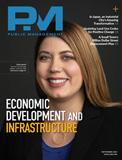
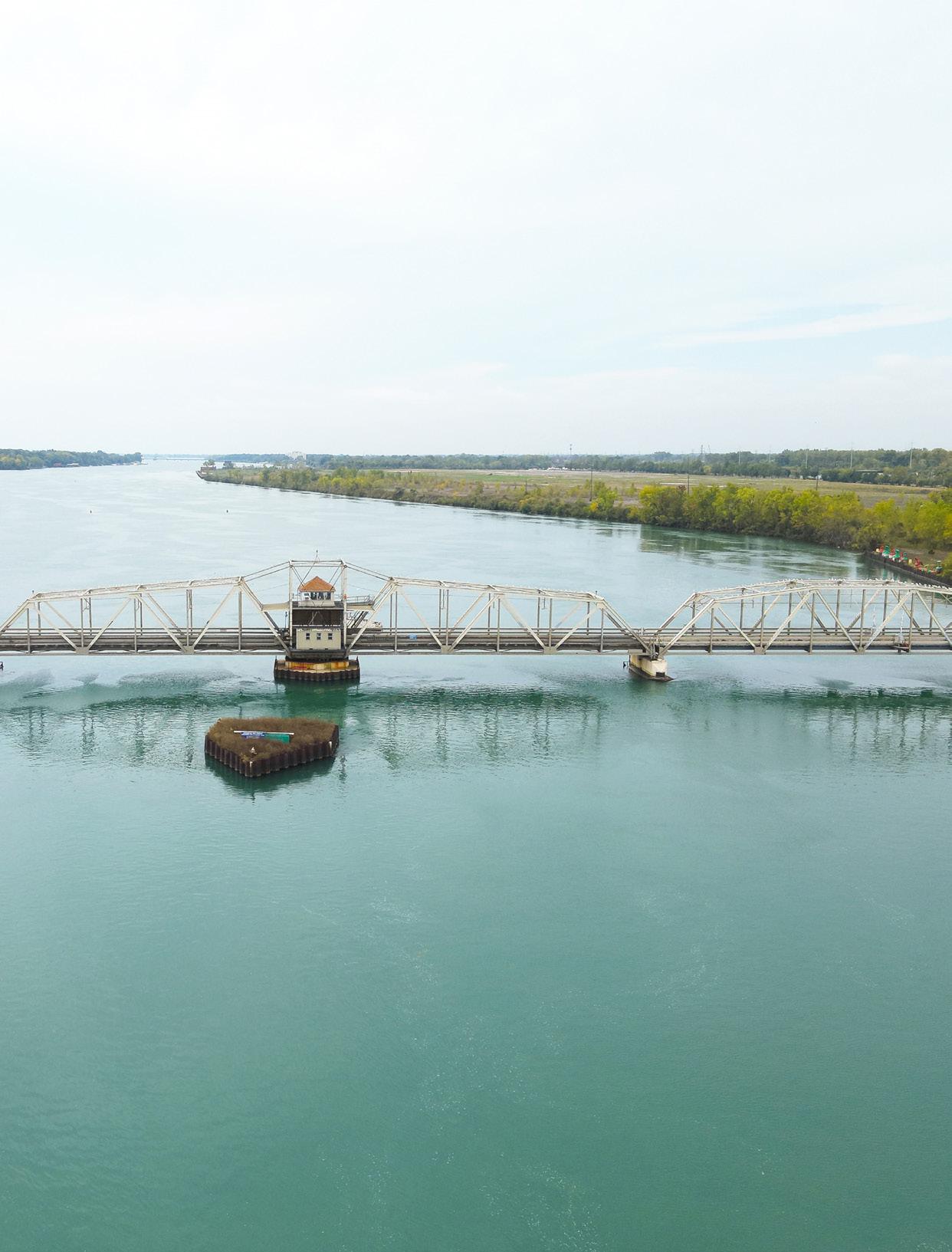
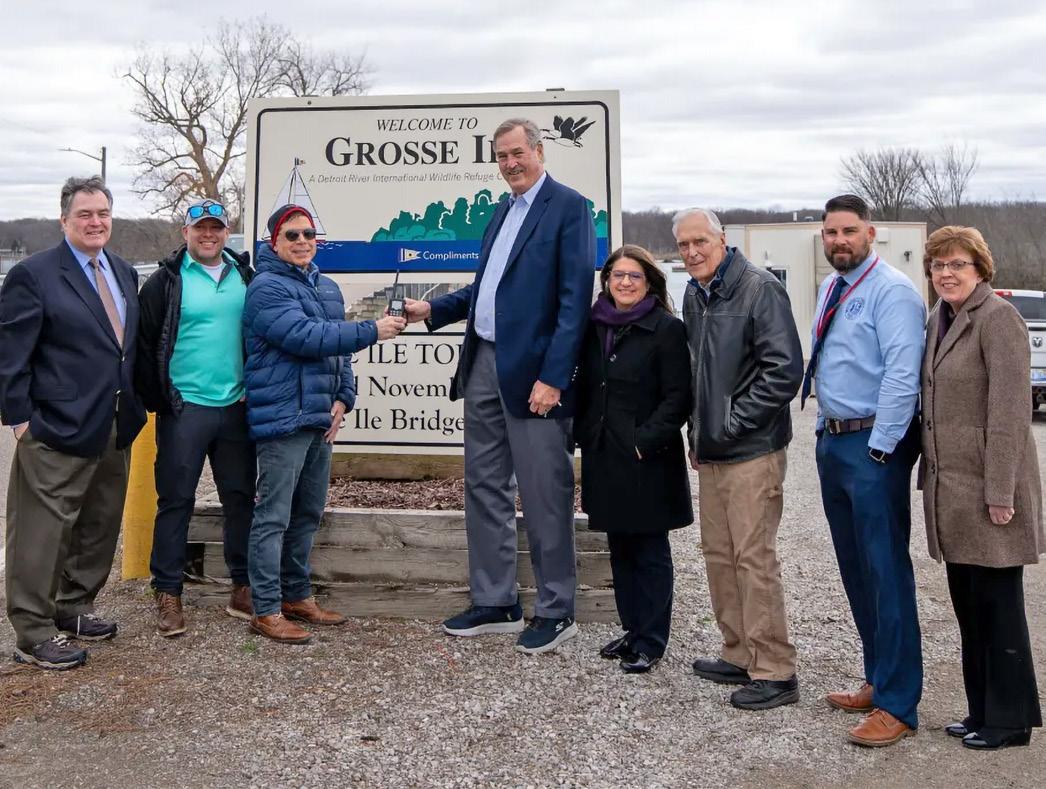
Grosse Ile Toll Bridge in southeast Michigan Read more on page 24.
Building for the Next Century 16 When Underground Infrastructure Fails 20 Deciding to Purchase Critical Infrastructure 24
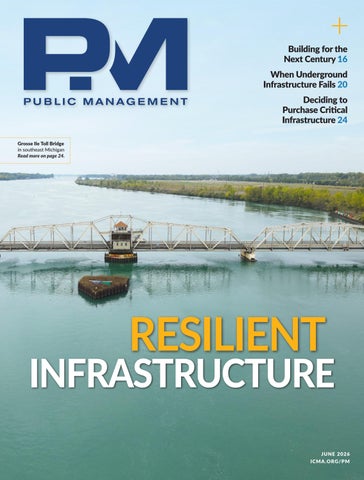
Grosse Ile Toll Bridge in southeast Michigan Read more on page 24.
Building for the Next Century 16 When Underground Infrastructure Fails 20 Deciding to Purchase Critical Infrastructure 24

In celebration of the 25th anniversary of ICMA’s Credentialed Manager program, we’ll be acknowledging each author that holds the credential with this gold icon ICMA-CM in each issue of 2026.
Resilient Infrastructure:
Building for the Next Century
Optimizing operations, deploying integrated solutions, and guarding fiscal soundness.
Mandi Cody, JD, AICP, ICMA-CM and Martin Boyd, PE 20
When Underground Infrastructure Fails
Preserving trust during an unusual watermain emergency.
Kim Keller and Jacque Smith
Buying an Aging Bridge to Keep an Island Community Connected
Why our township chose to purchase critical infrastructure—and what it took to make it happen.
Derek Thiel
Public Trust Is Infrastructure
Using data and technology to build confidence in government decisions.
Quisha Light
Mobility Infrastructure for an Aging Population: Lessons from Japan
How cities can build demographic resilience and keep older residents connected.
Fernando Ortiz-Moya, PhD, and Sarah Sieloff, AICP
Collaboration Without Boundaries: How Regional Partnerships
Strengthen Communities
In Maricopa County, Arizona, working together across jurisdictions leads to exponential regional benefits beyond what individual agencies can achieve alone.
Dawn Marie Buckland
A small initiative that began as a project tracker has become a major shift in improving efficiency and better data-driven decision making across the city.
Alence Poudel
Strategic Plan Implementation:
Off the Shelf and Into Action
Research-backed insights into how local governments can move from vision to execution, turning strategic plans into measurable results.
Demetrius Bynes, Christina Cornwell, Doug Ferrall, Stone James, Myles Tucker, and Lisa Wilson
48
Building a Resilient Career Infrastructure
A cross-generational text conversation between two SheLeadsGov Committee members
Traci Leach, ICMA-CM and Jessica Whitley


2 Executive Director’s Corner Resilient Infrastructure
4 Ethics Matter!
Defending the Right to Make the Wrong Decision
8 Connections
Balancing Leadership and Family
10 Assistants and Deputies
Everything the Light Touches Is In Your Job Description
12 Member Spotlight
From Fellowship to Leadership
52 Community Engagement
Keeping Advisory Commissions on Track
56 Future of Professional Management Fund
“Why I Give to the Fund” with Jim Malloy
58 Local Gov 250
Stewarding Democracy with Your Municipal Code
60 Professional Services Directory
International City/County Management Association 16
Resilience is not a fixed destination, but an ongoing practice of adapting, investing, and leading for the future.
BY JULIA D. NOVAK, ICMA-CM

JULIA D. NOVAK, ICMA-CM is executive director of ICMA.
More than a decade ago, I convened local government thought leaders to talk about how the conversation in our communities was changing. In earlier years, much of the focus was on being “green.” Then the conversation evolved to sustainability. Over time, it became clear that local government leaders also needed a broader frame—one that accounts not only for environmental stewardship, but also for fiscal strength, organizational capacity, and the ability to respond to disruption. That frame is resilience. Today, resilience shapes how we think about nearly every aspect of public service. It applies to people, institutions, finances, and infrastructure. For local governments, resilient infrastructure means more than maintaining roads, bridges, water systems, and public facilities. It means planning, investing,
International City/County Management Association icma.org June 2026
ICMA has moved!
Our new address: 660 N Capitol St NW Suite 700, Washington, DC 20001

Public Management (PM) (USPS: 449-300) is published monthly by ICMA (the International City/County Management Association) at 660 North Capitol St NW, Suite 700, Washington, DC 20001. Periodicals postage paid at Washington, D.C., and at additional mailing offices. The opinions expressed in the magazine are those of the authors and do not necessarily reflect the views of ICMA.
COPYRIGHT 2026 by the International City/County Management Association. All rights reserved. Material may not be reproduced or translated without written permission.
REPRINTS: To order article reprints or request reprint permission, contact khansen@icma.org
SUBSCRIPTIONS: U.S. subscription rate, $60 per year; other countries subscription rate, $155 per year. Printed in the United States. Contact: 202/289-4262; subscriptions@icma.org.
POSTMASTER: Send address changes to Public Management, ICMA, 660 North Capitol St NW, Suite 700, Washington, DC 20001.
ARTICLE PROPOSALS: Visit icma.org/writeforus to see editorial guidelines for contributors.
For more information on local government leadership and management topics, visit icma.org.
Public Management (PM) icma.org/pm
ICMA
660 North Capitol St NW Suite 700 Washington, DC 20001
EDITORIAL: khansen@icma.org
ADVERTISING SALES: Natalie Matter Bellis The YGS Group natalie.matterbellis@ theygsgroup.com 717-580-8184
ICMA MEMBER SERVICES: 800.745.8780 | 202.962.3680 membership@icma.org
Creating and Supporting Thriving Communities
ICMA’s vision is to be the leading association of local government professionals dedicated to creating and supporting thriving communities throughout the world. It does this by working with its more than 13,000 members to identify and speed the adoption of leading local government practices and improve the lives of residents. ICMA offers membership, professional development programs, research, publications, data and information, technical assistance, and training to thousands of city, town, and county chief administrative officers, their staffs, and other organizations throughout the world.
Public Management (PM) aims to inspire innovation, inform decision making, connect leading-edge thinking to everyday challenges, and serve ICMA members and local governments in creating and sustaining thriving communities throughout the world.
and managing in ways that help communities withstand stress, recover from disruption, and adapt to what comes next. As disasters become more frequent and costly in many places, that work has become increasingly urgent.
This month’s issue of PM is devoted to resilient infrastructure and the many dimensions of that work. The articles that follow explore how local government leaders are optimizing operations while protecting fiscal soundness, responding to infrastructure failures in ways that preserve public trust, making bold decisions to sustain community connections, using data and technology to strengthen confidence in government, planning for demographic change, and building regional partnerships that expand capacity beyond any single jurisdiction. Together, they remind us that resilience is not a single project or asset. It is a way of leading, planning, and governing for the long term.
PRESIDENT
Michael Land*
City Manager Coppell, Texas
PRESIDENT-ELECT
Andy Pederson*
Village Manager
Bayside, Wisconsin
PAST PRESIDENT
Tanya Ange*
County Administrator
Washington County, Oregon
VICE PRESIDENTS
International Region
Meighan Wark
County Administrative Officer
Huron County, Canada
Lungile Dlamini
Chief Executive Officer
Municipal Council of Manzini, Eswatini
Jānis Lange
Chief Executive Officer
Riga City Municipality, Latvia
For local governments, resilient infrastructure means more than maintaining roads, bridges, water systems, and public facilities. It means planning, investing, and managing in ways that help communities withstand stress, recover from disruption, and adapt to what comes next.
Midwest Region
Jeffrey Weckbach* Township Administrator Colerain Township, Ohio
Cynthia Steinhauser*
Deputy City Administrator Rochester, Minnesota
Cori Burbach*
Assistant City Manager Dubuque, Iowa
Mountain Plains Region
Pamela Davis
Assistant City Manager Boulder, Colorado
Sereniah Breland
City Manager Pflugerville, Texas
Penny Postoak Ferguson*
County Manager Johnson County, Kansas
Northeast Region
Steve Bartha*
Town Manager Lexington, Massachusetts
Brandon Ford
Assistant Township Manager
Lower Merion Township, Pennsylvania
Kristy Rogers*
Town Manager Milton, Delaware
I often hear people dismiss a promising idea because it comes from a community that is much larger or smaller than their own. But the most useful practices are useful precisely because they can be scaled and adapted to different contexts. This month’s issue offers examples of resilience in action—from fiscal sustainability and infrastructure failure response to mobility for aging populations and the role of public trust in community strength.
Public trust may seem less tangible than roads, water systems, or transit networks, but it, too, is part of what makes a community resilient. This issue offers a broader view of infrastructure and reminds us that resilience is not a fixed destination, but an ongoing practice of adapting, investing, and leading for the future. I hope you find practical insights and solutions and I look forward to listening as this conversation continues to evolve.
Southeast Region
Eric Stuckey City Administrator Franklin, Tennessee
Chelsea Jackson
Deputy City Manager
Douglasville, Georgia
Justin Smith
Assistant City Manager Pelham, Alabama West Coast Region
Nat Rojanasathira*
Assistant City Manager Monterey, California
Elisa Cox*
City Manager
Rancho Cucamonga, California
Katie Koester* City Manager
Juneau, Alaska
* ICMA-CM
Managing Director, Lynne Scott lscott@icma.org
Brand Management, Marketing, and Outreach
Senior Managing Editor Kerry Hansen khansen@icma.org
Senior Editor Kathleen Karas kkaras@icma.org
Graphics Manager Delia Jones djones@icma.org
Design & Production picantecreative.com
Correction
On page 50 of the May issue, Tate White’s job title should have been listed as “deputy director of the Portland Bureau of Planning and Sustainability.”
Why professional managers must respect elected officials’ authority— even when they disagree with a decision.
BY KEVIN DUGGAN,
ICMA-CM
It is likely that most members of ICMA are familiar with the Code of Ethics and its requirement that we defend the core principles of the council-manager form of government by resisting the infringement of political considerations into what should be impartial professional decisions.
Specifically, Tenet 10 states: “Oppose efforts to interfere with professional responsibilities by consistently executing official duties, policies, and processes with an unwavering commitment to unbiased public service.” Additionally, Tenet 11 states: “Manage all personnel matters with fairness and impartiality.” I note Tenet 11 in addition to Tenet 10 since attempted political interference in personnel matters is, unfortunately, an all too common challenge faced by managers.
But are we just as attentive to ensuring that the rightful policy-making power of elected officials isn’t excessively limited by our own actions or those of our staff? Are we as quick to defend the policy-making authority of elected officials as we are to defend our managerial authority?
It is difficult to draw a clear line between where administrative/managerial authority ends and policymaking authority begins. And while there are some gray areas, there are also clear distinctions between the two. While we ask our elected officials to restrain themselves from involvement in purely administrative/ management matters, are we as careful in restraining ourselves and our staff from wandering into policy matters that are the purview of elected officials?

KEVIN DUGGAN, ICMA-CM
is a senior advisor for ICMA; former director, ICMA West Coast Region; and former manager of Mountain View, California (kcduggan@ katesbridge.com).

Tenet 5 speaks to the role of professional managers to “submit proposals” (i.e., make recommendations when appropriate) and provide facts and professional advice. Tenet 6 acknowledges that elected officials are accountable to their communities for the decisions that they make. And Tenet 7 requires that members refrain from political activities that undermine public confidence in professional administrators.
While elected officials should take our professional opinions into account when making decisions, they are not obligated to follow them. We may find that frustrating, but it is their right.
Why can it be difficult at times to restrain ourselves from wandering inappropriately into the policy-making arena? First of all, as previously noted, the boundary between administration and policy making is not always clear. Second, managers do inevitably have an impact on policy decisions through the information provided and the recommendations made. Third, managers and their staff often care deeply about
community at large, or society in general. Managers and staff members can naturally have strong feelings and opinions on matters coming before their elected bodies. These can relate to strong personal beliefs or professional knowledge, training, and experience. Personal beliefs and value systems are part of who we are but are not to be substituted for the value judgements of elected officials. And while elected officials should take our professional opinions into account when making decisions, they are not obligated to follow them. We may find that frustrating, but it is their right.
Of course, your ultimate choice is to “move on” if you find yourself working for a governing board who you feel doesn’t value your advice or whose decisions are inconsistent with your professional and/or personal values.

governing boards deliberations by subtleties in regard to how the issue is presented.
It can be extremely challenging to deal with the reality of the governing body making decisions that we believe are unwise for the organization, the
Even when we view some decisions by elected bodies as unwise, they have the right to make them, with the electorate being the final arbiter of the appropriateness of their decisions.
One of the most telling examples of a manager being able to accept with grace a decision he did not agree with was a manager I knew early

Don't just dream about the future of local government.

Come and build it at the 2026 ICMA Annual Conference in Long Beach.
OPENING SESSION/KEYNOTE SPEAKER:


OPTIMIST AUTHOR LEADERSHIP EXPERT
LEADING WITH PURPOSE:
Creating an Inspirational Culture in City and County Government
SCAN BELOW:


New Member Discount! Registration & Housing Opens June 10 @ 12:00 PM ET
Save 50% off your first-year membership fee!


Do inefficient processes clog up your day and interfere with meaningful resident service? Register now for the ICMA Innovation Bootcamp led by renowned public sector innovator Brian Elms. Sign up to secure your spot today!
Registration and Housing Open June 10 at 12:00 PM ET
conference.icma.org
ACAO Masterclass Series, Session 3:
Leading from the ACAO Position
June 2 | Webinar
The Current State of Student Debt and Forgiveness
June 4 | Free Webinar
The Pulse of the 2026 Community: Leveraging Geolocation to Navigate
Shifting Resident Behaviors
June 9 | Free Webinar

A Budgeting Guide for Local Government
June 11 - 24 | Training Series
Working with Elected Officials: Stories from the Trenches
June 16 - 30 | Training Series
A Day with ICMA | Issaquah, Washington
June 17 | In-Person Meeting
Leading Into the Future, Session 3: Turning Resident Priorities Into Policy
June 25 | Webinar
Transform your community’s resource allocation with ICMA’s certificate program, “Modernizing Budgeting: A Transformational Shift to Priority-Based Budgeting,” led by Chris Fabian of Tyler Technologies. This hands-on course teaches you to move from line-item budgeting to a program-focused approach aligned with community priorities. Secure your spot today!

For a full listing of events and details, visit icma.org/events. Shop all courses at learning.icma.org.
Remembering to never lose sight of the ones who matter most.
BY KYLER J. BROWER
Growing up, I always knew my dad had an important job. As a city manager, he was responsible for helping communities function, solving complex problems, and supporting elected officials and staff in delivering the services residents rely on every day. To my friends, it was an unfamiliar title. To me, it simply meant someone who kept a community running smoothly.
What I didn’t fully understand as a child was how deliberately he balanced that responsibility with something even more important: being a husband and father.
My father has spent nearly 30 years in local government, serving communities in Georgia, Florida, California, and Utah. Despite the demands of the profession, he has always been fully present for his family. As the family grew, he regularly attended school programs and concerts, coached sports leagues, joined us for school lunches on Thursdays because they always served a Thanksgiving-style meal he loved, and made time for adventures that created lasting memories.
Just as important, when he came home at the end of the day, the challenges of the office stayed there. We did not hear about political conflict, budget pressures, or personnel issues. Instead, we experienced his presence, consistency, and the clear message that while his work mattered deeply, his family mattered even more.


KYLER J. BROWER is assistant town manager of Colonial Beach, Virginia.
At the same time, he never separated us from the meaning of public service. He brought us to council meetings so we could see local democracy in action and encouraged us to volunteer at community events. One of my first jobs was helping clean the town hall building while he served as city manager of Santa Clara, Utah. It was a simple task, but it taught me about taking pride in public spaces and having respect for those who serve behind the scenes. Through these experiences, we learned that exceptional service is not about title or recognition; it is about care, commitment, and community.
Today, nearly three decades into his career, my father continues to serve in local government as the city manager of Heber City, Utah. Somehow, I have followed in his footsteps, working in local government as the assistant town manager for Colonial Beach, Virginia. Now married and beginning to build my own family, I face many of the same challenges he did: long hours, competing priorities, and the constant pull between professional responsibility and personal presence.
The difference now is perspective. As someone in the profession, I have the greatest mentor I could ask for— someone who has truly been there and done that. I am grateful for the opportunity to discuss challenges, make decisions, and work through moments of uncertainty with someone who understands the job at its core. I also hope, perhaps for his sake as much as mine, that he finds it as rewarding as I do to share experiences and reflect on the similarities in the challenges we each face.
Now, sitting on the other side of the table, I better understand the discipline it takes to give your best at work while remaining fully present at home. My father’s example reminds me that exceptional service to a community does not require sacrificing family. Caring for your family strengthens your ability to lead, grounds decision-making, sharpens perspective, and reinforces why public service matters in the first place.
As local government professionals, we pride ourselves on dedication, resilience, and service. Those qualities are essential. But so is remembering to step away, be present, and invest in the people who support us. Because long after the meetings end and the office lights are turned off, it is our families who remain, and they are ultimately our most important responsibility.


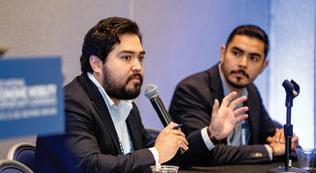

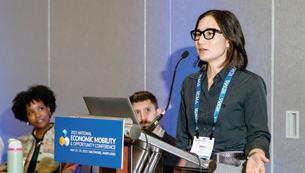
The National Economic Mobility and Opportunity (EMO) Conference is a field-building gathering for those working to create communities where every resident can thrive. Join local practitioners, national thought leaders, and other key stakeholders for this three-day event addressing pressing issues in:
• Community development • People-centered economies
• Housing affordability • Transformational technology
Registration is just $75 and a room block is available through July 28 or until full, so don’t wait to secure your spot at the best rate!
To view the complete event program, visit emoconference.org


A role where no task is too big, too small, or too unexpected.
BY ZACHARY NELSON
When I first started brainstorming about the topic I was going to write about, I came up with the idea of the duality of the assistant chief administrative officer (ACAO) position. Originally, I wanted to take a semi-humorous approach and talk about how you may be in high-level legal strategy meetings, and an hour later, you’re washing dishes in the breakroom because they were piling up.

ZACHARY NELSON is assistant borough manager of Pottstown, Pennsylvania.
That contrast felt relatable and, honestly, pretty representative of the role. But something happened while I was writing this—several local issues arose all at once. Naturally, my job came first, and writing this article had to take a backseat. My time and attention quickly shifted toward finding solutions and helping manage the situation at hand. At the height of it, I did think to myself, “I am not having a great time right now. How am I supposed to write a fun article about being an ACAO?!” Then it hit me: one of the best characteristics of an ACAO—which, coincidentally, also goes with my original theme—is the ability to pivot. In local government, pivoting is essential. Things change very quickly. Emergencies happen. Public
opinion can flow like the wind. Being able to shift gears in a moment’s notice is crucial to being successful. And it is never more important than at the ACAO level. As an assistant, you’re not the big dawg, but you’re still overseeing much of the organization and operations. Your hands are in everything. Do you need to do some research that may affect how money is allocated to project? Yep. Do you need to make sure the meeting room is ready for the next public forum? Yep. Do you need to make sure the TV in the entryway is on the correct setting to have the slide show of announcements running for the public to see? (Even though, let’s be honest, no one is reading them.) This one is a little personal but…yep!
The range of responsibilities for an ACAO is vast. Multiple times a week, I think to myself, “what is this job?!” There is no true way to prepare for this position until you are in it. There was a meme that I wanted to include of an animated father and son looking out over the African sunset with the caption, “Everything the light touches is in your job description,” (but there is a mouse in Florida that has some terrifying lawyers).

When trying to explain the job to family and friends, I often compare it to being an assistant coach. You are still drawing up plays, reinforcing fundamentals, and deliberating about strategy and direction. But you are also making sure the players have all their gear, listening to parents’ concerns, and hearing players’ frustrations. For any team—or any local government—to be successful, it needs someone willing to serve as that conduit between strategy and day-to-day operations.
This is where the skill of pivoting is essential. There are 100 things happening in every municipality at any given moment. As an effective ACAO, you must be able to set down what you’re doing and switch to a completely new task. As a personal example: It’s a Friday. You have some free time so you’re planning on catching up on the FOIA requests. Then you get word that there is a massive fire happening in a densely populated part of town. Time to put on
the emergency management hat and get to work.
Pivoting is not always about emergencies, though. Sometimes, it’s about communication. Another example would be that council is enacting a new program, and you are the person to roll it out to the public. Naturally, there are naysayers. To properly convey the benefits of the program, you will have to learn how to say the same thing in vastly diverse ways so that you can connect to the audience and get their buy-in.
This “duality of responsibility” and the necessity of being able to pivot is not unique to local government. It exists in every sector. We are all bound by technologies, trends, boards, and so on. The key difference is that local government’s “customer base” can be very fickle. You are never truly sure what you will walk into day to day, heck even hour to hour. They tend to flow with the breeze and in order to make it all work, you better as well.
CivicPlus helps you simplify accessibility compliance with solutions that combine automation, expert insight, and continuous monitoring.


BY JESSI FINLEY
For more than two decades, the ICMA Local Government Management Fellowship Program (LGMF) has served as a vital bridge between academic preparation and professional practice. Designed to address both workforce gaps and leadership development, the program continues to prove its value—not only to emerging professionals but also to the communities they serve.
In a recent ICMA Member Spotlight conversation, the LGMF program lead and several participants reflected on how the fellowship is transforming careers and organizations alike.
“The LGMF program was created as a way to provide recent MPA and MPP graduates with crucial early career experience,” explained David Lang, senior program manager for career advancement at ICMA.

The fellowship’s inception in 2004 was in response to a looming challenge: a wave of retirements paired with a shortage of experienced candidates ready to step into leadership roles. At the same time, many highly qualified graduates struggled to land their first professional opportunity.
“The fellowship is essentially a win-win for all those involved,” Lang reflected. “Recent graduates find meaningful full-time employment, and host communities fill critical staffing gaps with highly qualified individuals.”
Now more than 20 years in, the LGMF program has produced more than 450 alumni, many of whom return as hosts, contributing to what Lang describes as a “self-sustained ecosystem” of mentorship and professional growth.
For Scott Andrews, CEO and county manager of Doña Ana County, New Mexico, the value of the program is clear. “I believe that the LGMF program is a natural win-win

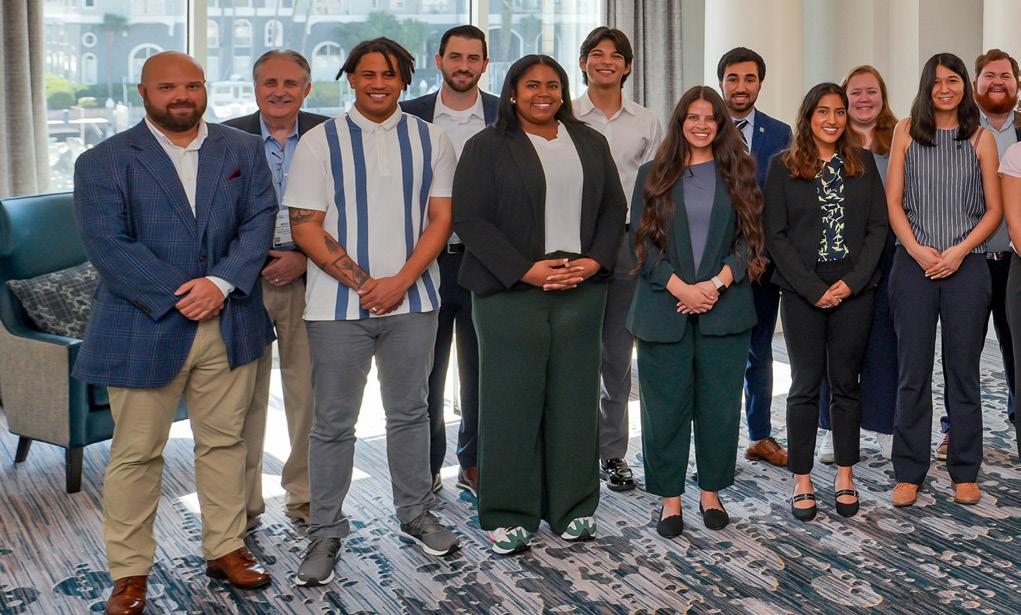
scenario. It provides growth opportunities to both the fellows as well as the organizations that inherit these growing leaders.”
Andrews has hosted fellows for more than a decade across multiple organizations, consistently bringing the program with him as he advances in his own career. He credits fellows with bringing “fresh perspective, energy, and a desire to learn and contribute.”
At Doña Ana County, that impact has been tangible. “Daniela quickly climbed from serving as our fellow to becoming the leader of our housing area,” Andrews said of Daniela Andrade, LGMF fellow and housing manager of Doña Ana County. “She may have come to us as a fellow, but she will lead and make an amazing assistant county manager in the very near future.”
Andrews also highlighted LGMF fellow Melissa Ochoa’s versatility, from launching a youth commission to contributing to the county’s first two-year budget cycle. “It has been a complete joy watching both of these rock stars grow,” he beamed.


For fellows themselves, the program offers more than exposure; it delivers real-world responsibility and influence.
Melissa Ochoa entered the fellowship with a clear goal of transitioning from state to local government to make a more direct impact. “The LGMF allowed me to gain hands-on experience and explore multiple departments,” she noted. “The most valuable part has been learning from the executive level.”
One of Ochoa’s proudest accomplishments was helping to establish a youth commission for local high schools. “I helped design and create a program that introduces the students to local government and allows them to voice their opinions on policies that impact them.”
Andrade brought extensive international experience to the fellowship, having worked in Ecuador’s government for eight years. For her, the program provided a pathway into the U.S. council-manager form of government. “I realized that the ICMA path offered a way to make technical, evidence-based decisions at the highest level of government.”
Her impact was immediate and significant. Within months, Andrade transitioned into a leadership role as housing manager, where she helped establish the county’s first housing department. “We successfully added the creation of a community land trust, projected to provide permanently affordable housing for approximately 800 households,” she said. Andrade also emphasized the importance of working directly with elected officials. “It provided a masterclass in navigating the political-administrative interface.”
Beyond fellowship placement, ICMA itself plays a critical role in supporting participants’ development. “Having the opportunity
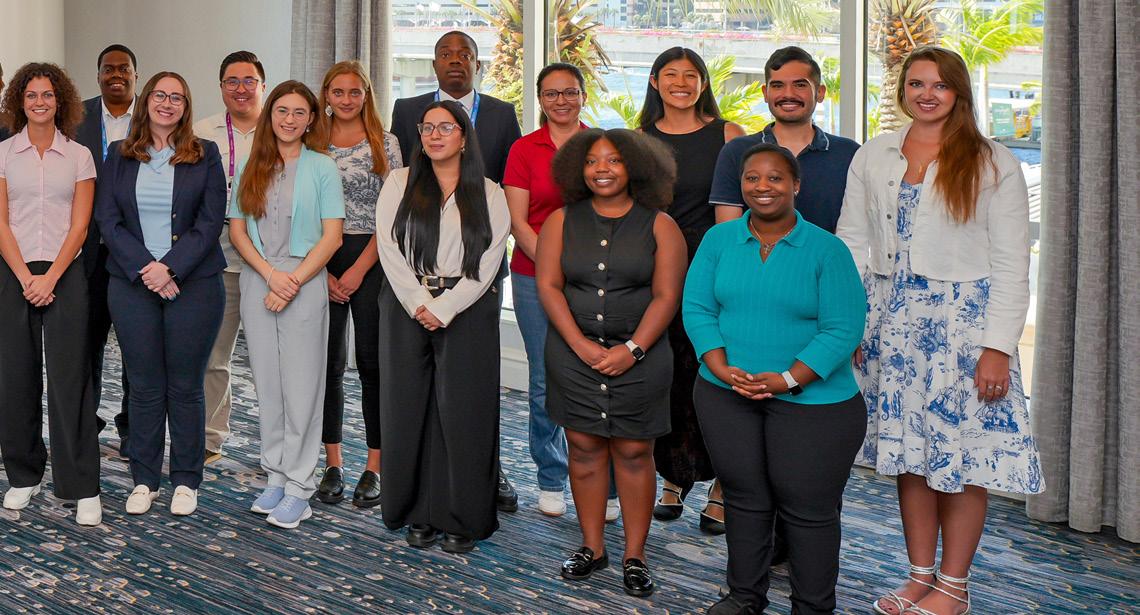
to go to the ICMA Annual Conference is a huge deal,” said Ochoa. “This is the best conference to attend, especially for networking and having meaningful conversations.”
Both fellows highlighted the importance of mentorship, networking, and access to national insights. “For a manager, having access to that collective intelligence is invaluable,” Andrade said, referencing ICMA’s webinars, publications, and professional community.
Andrews echoed this sentiment, reflecting on his own career journey. “I met amazing mentors that I still maintain relationships with many years later,” he reflected. “I have worked hard to pay it forward.”
For local governments considering participation, both Lang and Andrews offer a clear message: get involved. “I would absolutely recommend the fellowship program,” Andrews said. “It is a fantastic way to bring high-quality, youthful talent to your community.”
Lang reinforced the mutual benefits. “As a host, you have the opportunity to recruit some of the best and brightest graduates,” he said. “And as a fellow, you have access to ICMA’s membership and professional networking.”
When asked to define the fellowship in a single sentence, each participant pointed to its unique ability to combine responsibility, mentorship, and impact. “LGMF is special because of the connections that fellows make,” said Ochoa.
“It transcends traditional internships,” added Andrade, “placing emerging leaders into high-impact roles where real responsibility meets direct executive mentorship.” For Andrews, the answer was even more direct: “It is what is right with government.”
As communities navigate increasingly complex challenges, the need for the next generation of skilled, ethical, and forward-thinking leaders has never been greater. Programs like the ICMA LGMF are not just filling positions, they are shaping the future of the profession.
As Lang concluded, “The success of LGMF is thanks to the support and advocacy of members, combined with dedicated, curious, and hard-working fellows.” For ICMA members, the message is clear: investing in emerging leaders isn’t just beneficial, it’s essential.
For those interested in learning more about the LGMF program, whether as a future host or fellow, contact David Lang at dlang@icma.org or careers@icma.org.
For a deeper look at how the fellowship is shaping careers and communities, hear from these members firsthand by viewing the full ICMA Member Spotlight interview on YouTube.









For over 50 years, we’ve supported public service professionals with retirement solutions tailored to their needs. Moving forward we’ll be expanding our mission: offering not only workplace retirement plans, but new ways to deliver on the needs of our customers by supporting individuals and their families as their financial lives change. At MissionSquare, you don’t have to choose between scale and service. We are, and will remain, a company that prides itself on delivering outstanding service, effortless technology, and quality investments.
For more information, visit www.missionsq.org

Optimizing operations, deploying integrated solutions, and guarding fiscal soundness.
BY MANDI CODY, JD, AICP, ICMA-CM & MARTIN BOYD, PE

What do we mean by resilient? Merriam-Webster defines resilient as “(a) capable of withstanding shock without permanent deformation or rupture, and (b) tending to recover from or adjust easily to misfortune or change.” In infrastructure policy, the American Society of Civil Engineers (ASCE) defines resilience as the ability to plan, prepare for, mitigate, and adapt to changing hazardous conditions to enable rapid recovery and return to functionality—accounting for interdependencies across sectors.
While resilience conversations often center on designing for extreme weather, our experiences as a former city manager and consulting engineers to public utilities in smaller communities in the southeastern United States suggest that the ability to maintain and modernize aging infrastructure is an equally urgent challenge that should be included in the resiliency discussion.
Drinking Water: C-
Wastewater: D+
Hazardous Waste: C
Energy: D+
C = Fair to good condition but shows general signs of deterioration and requires attention. May be in good working order but may require maintenance or upgrades to meet current and future demands.
D = Poor condition reflecting a significant level of deterioration and general signs of failure. Considered “at risk.”
America’s infrastructure is improving—but only modestly—and key utility sectors commonly owned and operated by local governments continue to receive grades in the C and D range. In ASCE’s 2025 Report Card for America’s Infrastructure, drinking water remains at C-, wastewater at D+, energy at D+, and hazardous waste improved to C.1
Across all 18 categories, ASCE estimates $9.1 trillion is needed between 2024 and 2033 to reach a state of good repair, with an anticipated funding gap of roughly $3.7 trillion even if current federal investment levels continue. In 2024, the National League of Cities City Fiscal Conditions Report noted that finance directors’ confidence in their city’s ability to meet budgetary needs has historically fluctuated with the availability of one-time federal support.2 As extraordinary levels of ARPA and other pandemic-era federal support are ending, 61% of respondents reported some level of concern in their city’s ability to meet budgetary needs: slightly
(28%), somewhat (16%), moderately (10%), and extremely (7%).
Against this backdrop, we propose a three-prong strategy that can be implemented at the local level to strengthen resilience in critical infrastructure: optimize operations, deploy integrated solutions, and guard fiscal soundness.
Optimizing operations means continuously improving efficiency, reliability, productivity, and cost effectiveness without compromising quality or safety. Practically, this involves an asset management program, clear operating standards, key performance indicators (KPIs), and routine review of workflows, staffing, procurement timelines, and operating expenses to identify where risk can be reduced, value increased, and resiliency enhanced.
Benchmarking operations against a mandated or desired set of standards and/or KPIs is the starting point. For drinking water and wastewater utilities, minimum benchmarks include permit compliance, renewal requirements, and adherence to state and federal rules. In Georgia, for example, the Water Stewardship Act framework requires many public water systems to complete annual water loss audits, implement a water loss control program, set individual water-supply efficiency goals, and demonstrate progress.
Utilities can also pursue higher levels of recognition and best practice alignment through professional programs. The Georgia Association of Water Professionals sponsors annual awards programs, including “water plant of the year” and “water reclamation facility of the year” that use published criteria to recognize operational excellence.
Internal benchmarks such as response time to work orders, emergency repair frequency, overtime hours, and energy usage can also be utilized to optimize operations while also aligning with broader community performance and sustainability goals. For example, according to the EPA, drinking water and wastewater treatment plants are frequently the largest energy consumers for municipal governments, often accounting for 30–40% of the total municipal energy demand. EPA goes on to suggest that as much as 40% of the total operating costs of a drinking water system can be energy. Therefore, optimizing the treatment process can support broader community goals of reducing energy consumption and greenhouse emissions (created by energy production) while also optimizing operations in water and wastewater treatment plants.
Optimizing operations also provides opportunities for automation and implementing “smart” systems that yield multiple compounding benefits, such as incorporating AI to provide real-time data that can be utilized to constantly tune systems, inform preventive maintenance, and improve labor productivity. Other benefits of optimization include extending asset life, deferring capital replacement, stronger compliance performance, improved protection of public health and the environment, and increased system reliability and resilience.
ASCE describes infrastructure as an interconnected “system of systems.” When one part underperforms, cascading impacts can appear elsewhere. However, these impacts may go unnoticed if parts of the system are managed or funded separately.
A clear example is nonrevenue water (NRW). Bluefield Research reported in 2025 that nearly one in five gallons (19.5%) of treated drinking water in the United States is lost before reaching customers or is improperly billed, resulting in more than $6.4 billion in uncaptured revenue annually. Bluefield also estimates that about 87% of total water loss is driven by real losses such as leaks and pipe bursts.
When a community bills wastewater service based on metered water sales, NRW can “punish” a system twice: (1) production and treatment costs rise for water that never produces revenue, and (2) wastewater revenues decline when billed water volumes are understated.
Integrated solutions explicitly quantify these cross-system effects so projects can be evaluated based on lifecycle costs and avoided risks—not only on the narrow cost of a single repair.
No longer should we ask if we can afford to fix the leaky pipes or replace old, uncalibrated or non-working water meters. Rather, we should recognize the impact of leaky pipes or old water meters on increased costs and failures across the system (production, treatment, emergency repairs) and deploy an integrated solution that addresses the root of the issue. Integrated solution planning can also accelerate supply solutions. In parts of Georgia facing rapid growth and emerging water scarcity, one client community is pursuing a “One Water” approach that coordinates water, wastewater, and reuse strategies across jurisdictions to optimize the entire water cycle operations, from making the drinking water and delivering it to their customers to collecting it and reclaiming it as drinking water for future generations.
Resilience ultimately requires financial capacity. The Government Finance Officers Association recommends that governments prepare and maintain a long-term financial plan that projects revenues, expenses, financial position, and external factors at least five years into the future—and longer where debt financing and/or utility rate setting is involved. The plan should be reviewed annually and updated as assumptions change.
We recommend starting with a financial report card for each enterprise system (e.g.,
Continuous cycle increases risk, cost, and threat to public and environmental health and safety, reducing system resiliency.
Working capital insufficient to detect and repair leaks to eliminate water loss
Water treatment plant must treat more water than sold to accommodate for water loss
Increased production and distribution cost
Repair of leaky pipes led to increased earned revenues, which allowed for additional investments made in system that contribute to goals and enhanced resiliency.
Meter replacement and repair
Increase in earned revenue reinvested into system
Decreased production and distribution cost
Return on investment realized
water and wastewater). At a minimum, this should track revenues, expenditures, net position (reserves), and core ratios such as the operating ratio, debt service coverage ratio, and capital condition indicators. From that baseline, scenario planning can test the impacts of required
capital projects, integrated solutions (including expected returns on investment), debt capacity constraints, and rate/ affordability targets. The traditional playbook of repeated rate increases and incremental debt issuance is increasingly constrained by affordability concerns,
Asset Management
Operational Assessments
Energy Audits
Performance Metrics
Workforce Skill Development
Automation and Technology
• Reduced labor and production cost
• Improved performance
• Greater reliability
• Improved regulatory compliance
• A more resilient future
political tolerance, and debt limits. The American Water Works Association’s 2025 State of the Water Industry Survey underscores these pressures: financing for capital improvements is the sector’s top challenge and only 41% of utilities report feeling very or fully able to cover costs through rates and fees.3
We see clients reach or exceed allowable debt limits before completing essential or mandated projects. For some, this has meant forgoing essential projects; for others, it has presented questions of how to achieve or maintain regulatory compliance. And for others still, loan dollars have stopped flowing mid-project, putting the client in jeopardy of contract violations and liabilities with no tolerable financial solutions in sight.
Guarding fiscal soundness through transparent metrics and scenario planning helps
System of Systems Lens Identify Interdependencies and Correlations
Interdependency ROI
Integrated Planning
• Strengthen resilience
• Return on investment
• Multi-jurisdictional solutions
• Addresses “root” of issue
communities prioritize investments that reduce long-term operating costs, improve reliability, and maintain compliance while creating predictable implications for customers and governing bodies.
Subject matter experts and technical staff can:
1. Move from reactive projects to system-wide integrated solutions.
2. Assess operations for optimization opportunities.
3. Quantify return on investment and prioritize projects that improve service and reduce operations and maintenance cost.
4. Implement best practices, technology, training, and succession planning.
5. Connect the dots—tell the story of risks avoided and outcomes achieved.
Long-term Planning
Scenario Forecasting
Rate/Affordability Planning
Debt Policy Alignment
• Long-term fiscal health achieved
• Debt managed
• Affordable rates
• Essential projects, high priorities, and integrated solutions funded
Finance staff can:
1. Prepare fiscal health indicators.
2. Develop budget and debt scenarios that include both planned projects and cost uncertainty.
3. Evaluate feasibility, affordability, and long-term impacts.
4. Validate return on investment assumptions.
5. Monitor trends and recommend revenue/ expenditure alternatives.
Building resilient infrastructure for the next century requires shifting from reactive repairs to intentional operations optimization, integrated system-of-systems planning and solutions development, and long-term financial planning. With disciplined benchmarking and transparent scenario planning, local governments can
strengthen resilience, protect public health and the environment, and improve fiscal sustainability of infrastructure even in challenging funding environments.
ENDNOTES AND RESOURCES
1 https://infrastructurereportcard.org/
2 https://www.nlc.org/resource/cityfiscal-conditions-2024/
3 https://www.awwa.org/state-of-thewater-industry/
MANDI CODY, JD, AICP, ICMA-CM is a former city manager and principal and senior consultant of Momentum Results, LLC.
MARTIN BOYD, PE, is president of Carter & Sloope, Inc. Consulting Engineers.


BY KIM KELLER AND JACQUE SMITH
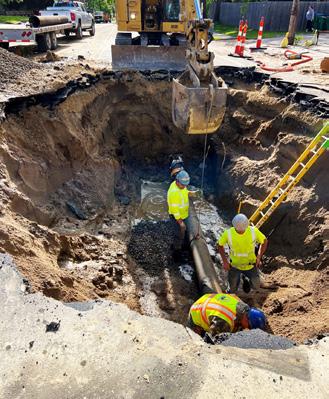
Early one morning in May 2022, public works crews in St. Louis Park, Minnesota, responded to what initially appeared to be a routine watermain break. Within hours, it became clear the situation was anything but routine.
Residents discovered contaminated water emerging through basement floor drains. Some found several feet of water in their
homes. Personal belongings, appliances, flooring, and mechanical systems were damaged. In some homes, the contamination rendered the basement temporarily uninhabitable. By the end of the day, 54 homes had been impacted.
Two weeks later, as many of these residents were in the midst of or finishing repairs, the same section of watermain ruptured again, affecting a
significant number of the same homes.
For St. Louis Park, the incident quickly evolved from a typical infrastructure repair into a complex emergency involving property damage, public trust, and community recovery.
The experience offers valuable lessons for municipalities worldwide about responding to infrastructure failures while maintaining public trust.

Minnesota.
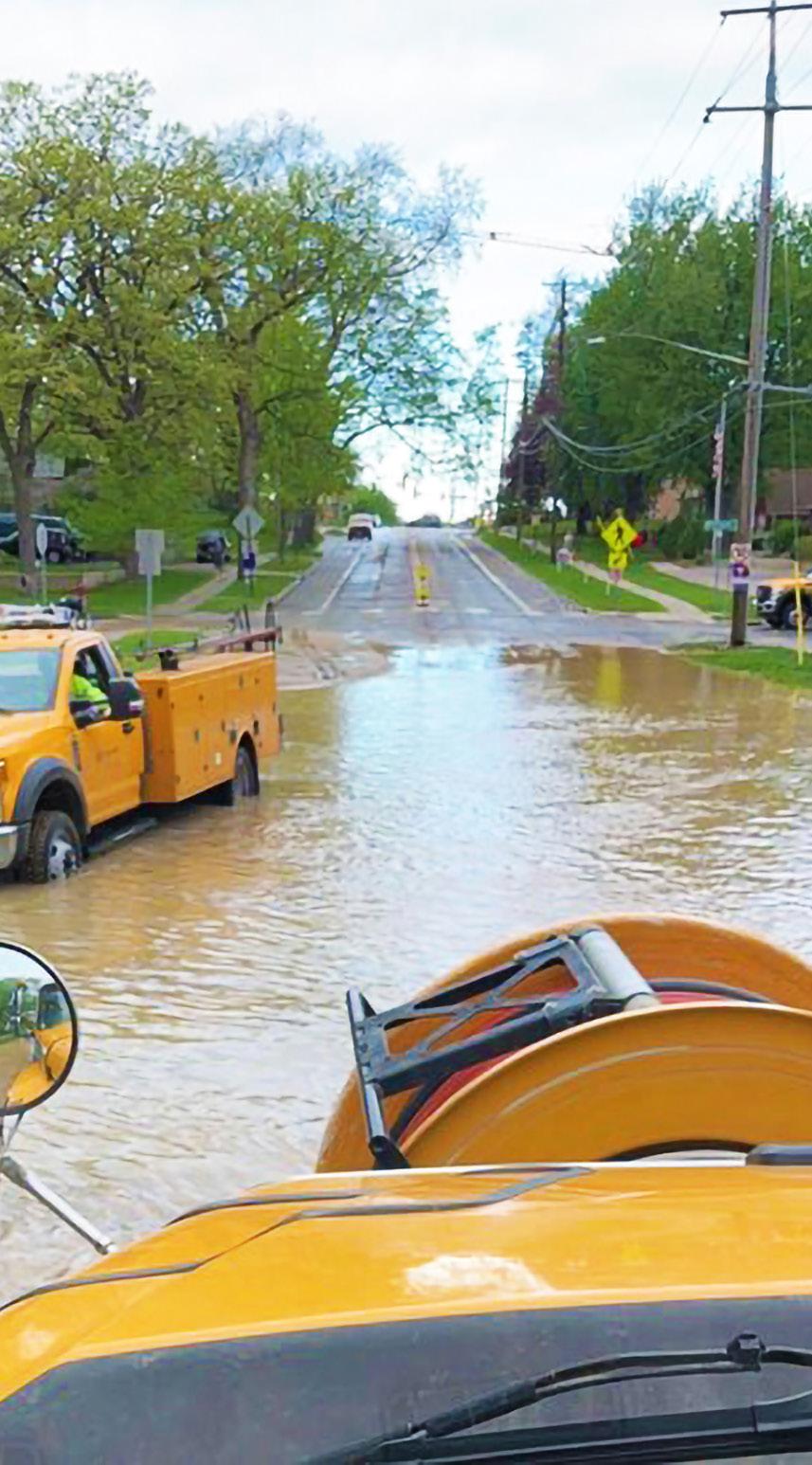
Unusual Infrastructure Failure Communities across the nation and in Minnesota are faced with the challenge of addressing aging infrastructure. A 2022 Minnesota Infrastructure Report Card reported that “much of Minnesota’s infrastructure is aging and reaching the end of its expected lifespan.” St. Louis Park is no different, with most of the public infrastructure constructed before 1960. Most watermain breaks result in water flowing to the surface and are quickly spotted and fixed, with little or no damage to properties. The St. Louis Park incident was different. Instead of rising to the surface, the escaping water from a 12” pipe entered a nearby sanitary sewer main. This allowed the escaping water to travel through sanitary sewer pipes and into homes, eventually emerging through basement drains. The situation repeated itself two weeks later when the same pipe broke again and water once again entered many of the same homes via sanitary sewer pipes.
The nature of the failures raised immediate questions from residents: Was the repair not completed to standards? Was nearby construction on private property responsible? Could additional failures occur? Answering those questions became central to restoring public confidence.
Rapid Information
Escalation: In emergency situations, early situational
awareness can significantly influence response decisions. In this case, it took several hours before staff and city leadership fully realized the scope of the damage from the initial watermain break. This led to an important lesson learned: the importance of minimizing the time and steps required to escalate information from field crews to leadership.
Supporting
Immediately: In addition to repairing the watermain, the city provided immediate, direct assistance to affected residents. Services included:
• Garbage collection and debris removal, including delivering large bag dumpsters for disposal of damaged items.
• Contractors to inspect and restore sewer service connections.
• Help coordinating cleanup and sanitation.
These practical supports helped residents begin recovery quickly.
While staff managed the operational response, elected officials focused on being present in the community by visiting homes, listening to residents, and helping to relay information back to city leadership. This visible presence helped reinforce that the city was taking the situation seriously.
Due to the unusual circumstances, including community suspicion that vibrations from nearby construction on private property had caused the
breaks, the city retained an independent engineering consultant to investigate the failures. To increase trust in the results, St. Louis Park invited affected community members to identify representatives to be involved in the process. The city committed to full transparency with the results.
Ultimately, the insurance investigation found the city was not legally liable, while the engineering investigation determined that the repair had been completed to industry standards and the breaks resulted from pipes weakened by corrosive soils.
Although the investigation clarified the technical cause of the failures and the city’s transparency in the review process helped restore trust, residents still faced ongoing disruption, financial hardship, and heartbreak. For the city, the question became not only what it was legally obligated to do, but also what it should do to support the community.
Some homeowners discovered their insurance policies did not fully cover the damage. Others faced cleanup delays or difficulty finding contractors willing to work in contaminated basements. Irreplaceable family mementos and heirlooms were lost.
St. Louis Park had previously purchased the highest level of municipal liability insurance available, providing up to $40,000 in coverage per affected property. However, it quickly became clear that damages in many homes would exceed that amount.
City leaders concluded that helping residents recover would serve a clear public purpose: restoring safe living conditions and helping the neighborhood recover more quickly.
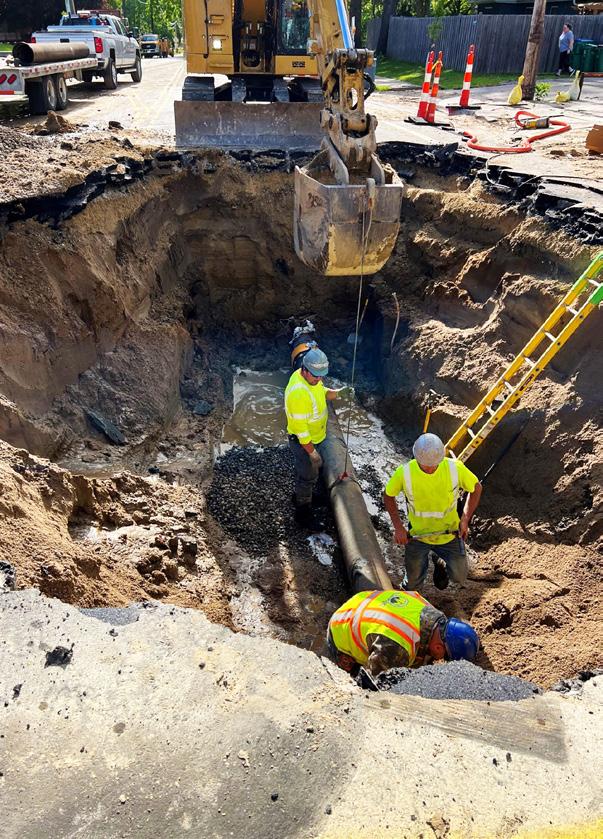
The city council ultimately created a reimbursement program to help cover eligible expenses beyond what residents received from their homeowner’s insurance and the city’s insurance coverage. The reimbursement program required homeowners to sign a liability waiver to receive funds and to help the program meet public purpose requirements. Thirty-two property owners accessed the program. The total cost to the city was approximately $1 million, or about $31,000 per household.
While the financial response helped stabilize property owners and showed residents that the city would stand with them in hardship, restoring trust required more than financial compensation. It required centering the people
who were affected by this very disruptive incident and ensuring they were heard and supported throughout the process.
City officials held multiple community meetings and council meetings to explain what had happened and to hear directly from residents.
At early meetings, many residents expressed frustration and fear. Some worried about the safety of their homes, while others were dealing with insurance challenges or delayed repairs. Media picked up on the story quickly and coverage of the breaks lasted for several nights.
Rather than focusing immediately on technical explanations, city leaders listened. Providing space for residents to share their experiences and concerns proved essential for rebuilding trust.
The city adopted a strategy of frequent communication through a dedicated webpage, email distribution list, community meetings, council reports, and direct mail. Every update—no matter how small—was shared. While the volume of communication required significant effort, the transparency helped rebuild trust and reduce misinformation.
Additionally, some residents had difficulty navigating the insurance process and needed extra support to restore their homes to be safe and to meet building codes. Others were dealing with physical or mental health issues that complicated their ability to cope with this event. The city partnered with a county social worker in these situations, providing extra support and ensuring all residents had safe and secure homes.
1. Listen first, explain later. In the early stages of an emergency, residents need space to express frustration and concern. Listening first helps build credibility and allows officials to better understand community needs.
2. Overcommunicate. Frequent communication—even when there is little new information—helps reduce rumors and demonstrates transparency. Silence quickly erodes trust.
3. Focus on residents and recovery, not media coverage.
Even when a city responds effectively, media coverage will likely highlight the negative aspects of the situation. Maintaining focus on recovery rather than reacting to coverage can help keep efforts on track. Respond to the media with accurate and timely information, but remember that affected residents are your primary concern.
4. Use external expertise. Engaging third-party experts for claims administration and technical analysis can provide both expertise and perceived neutrality. This can increase confidence in the response.
5. Recognize the human impact. Infrastructure failures affect more than pipes and pavement. Residents may face emotional stress, financial hardship, and disruption to daily life. Providing access to social services and mental health resources can be an important part of recovery.
As the emergency response concluded, city staff turned their attention to how existing infrastructure planning could be bolstered or rethought to help avoid a similar incident in the future. Results of that analysis included piloting new technology to measure pipe wall thickness in selected project areas and a vulnerability assessment of the city’s underground infrastructure system. The assessment evaluated both:
• The likelihood of watermain and stormwater failures.
• The potential impact of failures in different locations.
Prior to this review, the city relied on break history to inform its capital improvement planning. Now, the vulnerability study results have been folded into the city’s capital improvement planning process.
To help all residents better understand how water and sewer systems function and how the city prioritizes infrastructure investments, the city created and mailed a special four-page edition of its community newsletter focused entirely on underground infrastructure. Visit bit.ly/3Vr0i4E or scan the QR code to see an online PDF version of this newsletter.

Infrastructure failures are inevitable in aging systems. What matters most is how communities respond when they occur.
In St. Louis Park, the 2022 watermain breaks were a difficult and disruptive event for residents. Yet the response ultimately strengthened the city’s approach to infrastructure management and resident communication.
The experience reinforced the importance of proactive infrastructure planning, transparent communication, and a response that recognizes both technical and human dimensions of infrastructure failures. Perhaps most importantly, it demonstrated that maintaining public trust during an emergency requires more than repairing what’s broken.
As evidence of this, one affected resident who had been one of the most vocal critics during the emergency sent a heartfelt thank-you a year later. In part, it said, “You all listened and took action, and YOU MADE THINGS RIGHT. You listened to angry, traumatized, and grief-stricken citizens. And you listened gracefully, tactfully, and you didn’t bark back...your willingness to pave new roads and come up with a reimbursement program unlike any other before changed our life.”
KIM KELLER is city manager of St. Louis Park, Minnesota.
JACQUE SMITH is communications and technology director for St. Louis Park, Minnesota.


BY DEREK THIEL
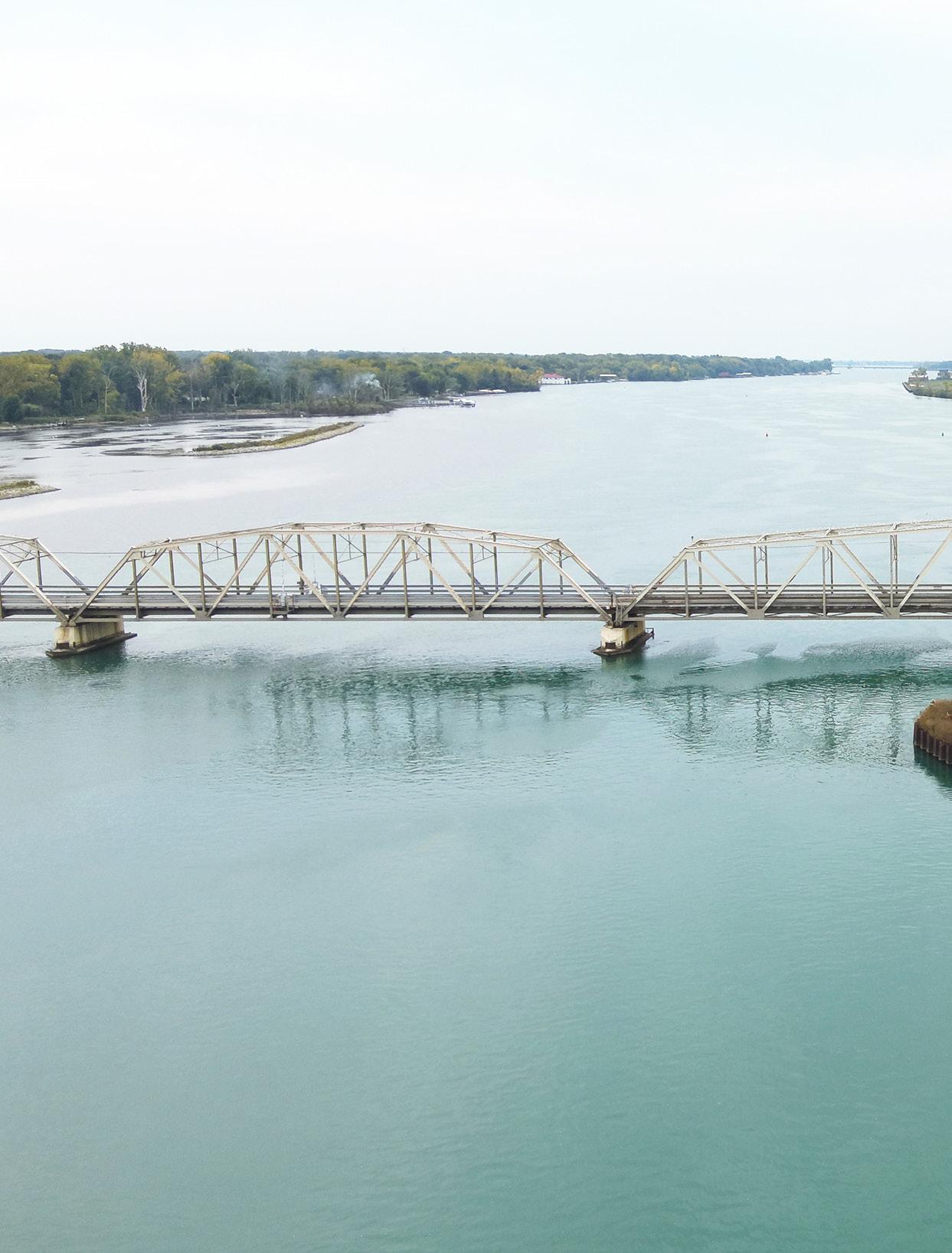
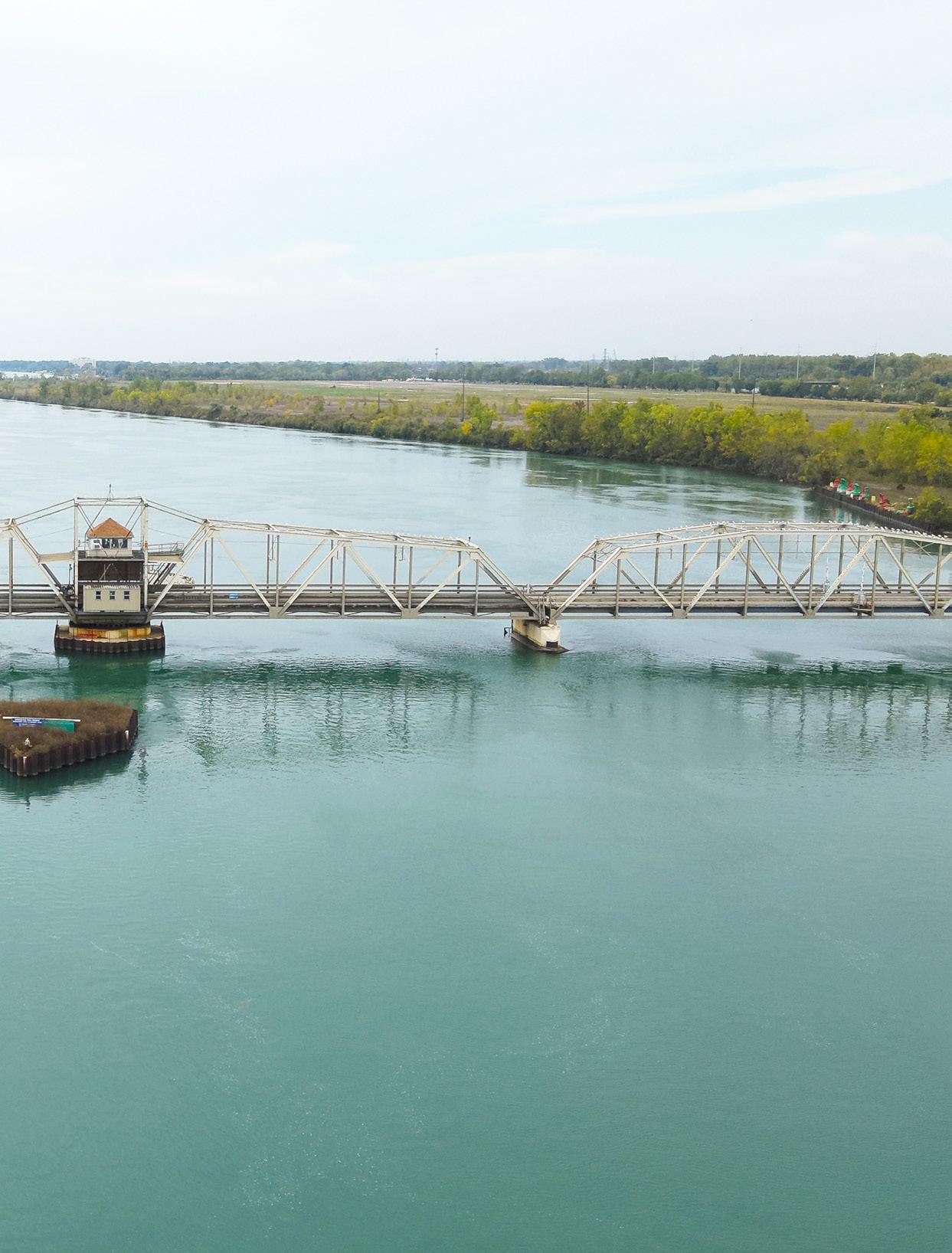
Grosse Ile Township, located in southeast Michigan, is a unique community. Its heritage, identity, and character originate from the fact that it is surrounded by water, an island community approximately nine miles long and a mile and a half wide.
The township is connected to the mainland by two bridges. One bridge, privately owned and operated, is a 304 ft. toll bridge built in 1913. The other, owned by the county and built in 1873, is a 340 ft. railroad bridge that
was eventually converted to vehicular traffic.
Both structures present reliability issues because of their age and have recently experienced reduced load capacity allowances, making delivery of goods and services to the island difficult. As a result of the instability of access, residents consistently ranked concerns about the bridges as one of the highest priority issues for the township to address.
In 2022, the township was approached by the owner of the Grosse Ile Toll Bridge
about possible township interest in purchasing this privately owned bridge. Understanding the importance of this critical piece of infrastructure and the priority the community places on reliable access to and from the island, elected officials and township administration felt obligated to review the possible purchase of the bridge.
But how does a local government go about buying a bridge? The township had to methodically, collaboratively, thoroughly, and through detailed organization and
research develop its own game plan. To make sure all the bases were covered, the township broke the issue into five questions:
1. Legally, Can We Own and Operate a Bridge?
When approached with the idea, the township first had to determine the legal ability to purchase the structure. Because the bridge resided in two jurisdictions (the township of Grosse Ile and the city of Riverview) an analysis was performed by the township’s legal counsel, to
Why our township chose to purchase critical infrastructure— and what it took to make it happen.
navigate the complexities of the township owning property and operating an enterprise fundinanothercommunity
Additionally,because townshipsinMichigando notownroads,anewlaw hadtobecraftedbyGrosse Ileforconsiderationby thestateofMichigan.This requiredthetownship’sstate representativeandsenator tosponsorlegislation.The townshipwasrequiredtotestify beforetheMichiganHouseof RepresentativesandSenateto adoptalawallowingGrosseIle to ownandoperateatollbridge.
2. What Is the Condition of the Structure?
Once it was determined that Grosse Ile could legally own and operate the bridge, the township needed to assess the condition of the structure.
More than a century old, the structure had seen its share of repairs and upgrades, especially after being struck by freighters in 1965 and 1992.
As with any major investment, you want to bring in the experts, especially with a $13,500,000 price tag! The
township contracted with an engineering firm that specialized in bridges, who was tasked with conducting a complete engineering and condition assessment. Their review allowed Grosse Ile to understand the condition of the bridge, identify any short- and long-term capital needs, and develop a capital improvement schedule to ensure the reliability and safety of the structure for the next 30 years. This information would be used later to develop the proposal to the residents.
3.Can We Afford to Own It and How Would It Be Funded?
The bridge was being operated as a toll bridge, so the township contracted with a consulting firm to review 20 years of the previous owner’s operational finances. This analysis was used to determine various options for how the township could afford to purchase, operate, maintain, and perform capital improvements on the bridge. Using this information, the township crafted a unique business design that
combined revenue from tolls with millage funds to satisfy the following:
• The original purchase price of $13,500,000.
• $8,000,000 in future engineering costs.
• $40,000,000 in needed capital improvements.
• $8,000,000 in annual operation expenses. This hybrid model, which relies on both toll and tax revenue, was intended to provide equity. The model balanced the cost between regular users of the bridge, non-resident users, and those who only rely on it for the insurance it provides when the county bridge closes for oft-needed repairs.
All of the previously mentioned work occurred prior to the big hurdle, which was to ask the community if they wanted to purchase the bridge. The township developed an extensive education campaign including informative videos, FAQ documents, news articles, mailers, real-time responses to resident questions, and meetings with nonprofit and other community groups.
The goal was to provide information to the public about what ownership of the bridge by residents would mean financially,
operationally, etc. Ultimately, in November 2024, the voters of Grosse Ile approved the purchase with 73% of the community supporting the ballot initiative.
Work on the purchase of the bridge—a very heavy lift for a community of only 10,750 residents—spanned two separate township boards and took place over the course of approximately four years. The current work involves the engineering of those capital improvements that were promised, including development of the financial
design that was expressed and organization of the operations in an efficient and effective manner.
The township also established a resident-run commission to ensure the public has a say in the management of their asset. The expectation of the residents should always be to hold the community’s representatives to the plan
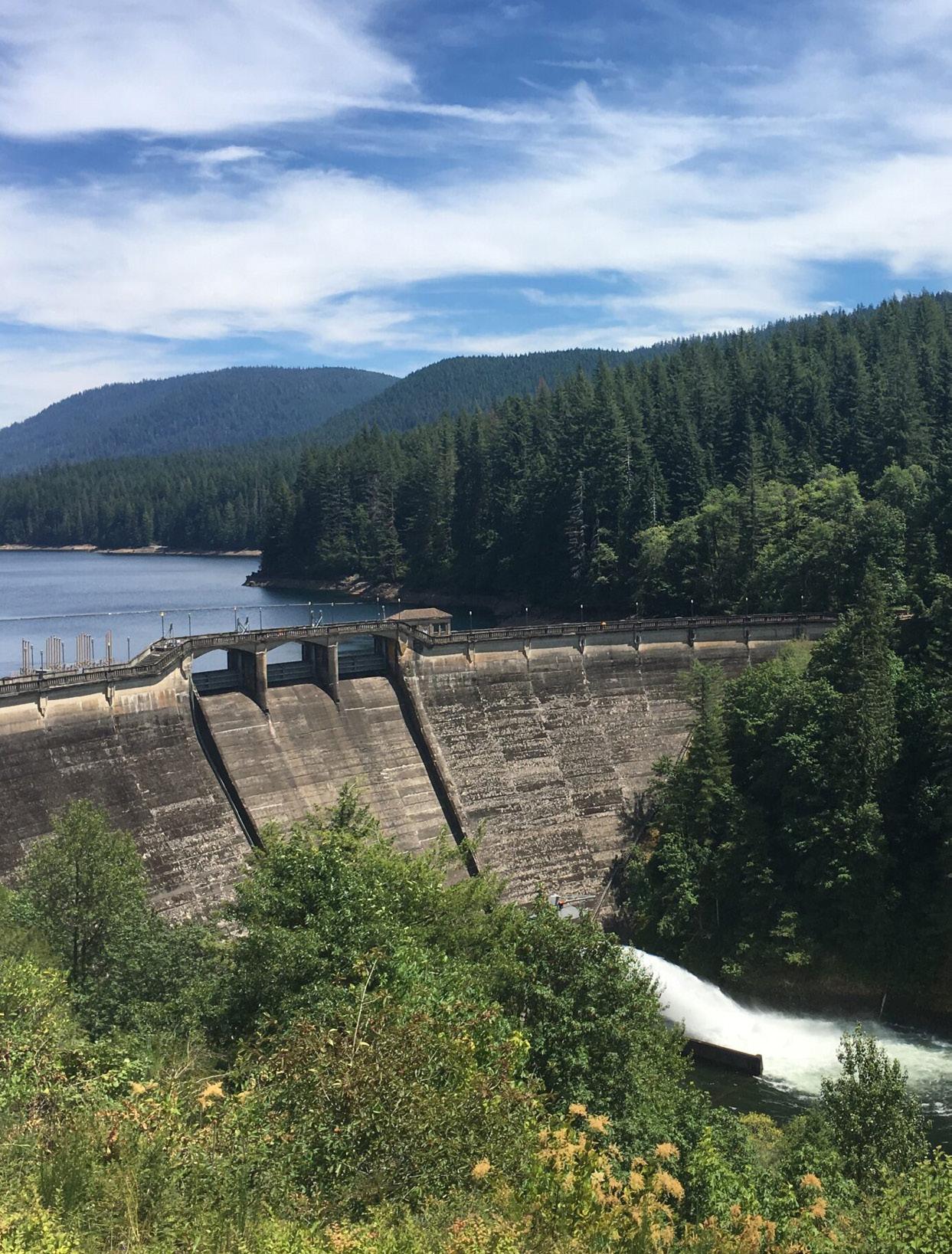
Winter 2022: Township approached about toll bridge purchase. Non-disclosure agreements signed by all parties.
Winter 2022 – Spring 2023: Review of legalities of township bridge ownership.
Spring 2023: Review of bridge company’s financials and review of options for financing bridge purchase and operations.
Summer 2023: Analysis of financing options for bridge procurement and capital improvement financing.
Fall 2023 – January 2024: Township solicits and approves firm to perform a complete engineering analysis of the bridge, along with a short- and long-term capital improvement needs lists with cost estimates.
Spring 2024: Legal research determines a new state law is required to permit the township to own a bridge. Township works with legislators to develop a state law that would permit the acquisition.
June 2024: Township officials testify before Michigan legislators regarding adoption of law (P.A. 126 of 2024) allowing townships to purchase, own, or operate a public service facility.
July 2024: Engineering report presented to township for review.
August 2024: Ballot language approved by township board to request a resident vote on the bridge purchase.
August – October 2024: Township undertakes public education campaign with voters regarding purchase proposal.
October 2024: P.A. 126 of 2024 signed into law. Township solicits and receives funding for environmental assessments.
November 2024: Ballot request and voter approval of purchase.
Winter 2025: Environmental assessments complete.
February 2025: Bond series #1 for $21.5 million to purchase bridge and finance upgrades and repairs.
February – April 2025: Township solicits bids and hires firm to engineer, bid, and manage bridge upgrades and repairs.
April 2025: Bridge purchase finalized and township takes possession.
February 2026: Design plans 70% complete.
Anticipated:
June – July 2026: Solicit bids for bridge work.
July 2026: Bond series #2, estimated at $40 million.
January 2027: Construction commences.
April 2028: Construction complete.

outlined by them leading up to the vote. Their decision to support this initiative was based upon it, and to depart from the design presented would be a violation of the public trust.
In local government, we’re often challenged with finding innovative ways to address the public’s demand for services and the need for safe and sufficient infrastructure. Our experience in Grosse Ile shows that anything is possible when you craft public policy that addresses your residents’ concerns and priorities. Developing a clear game plan, leveraging the
assistance of professionals, effectively communicating information to the public, allowing residents to stay involved in the project, and following through on the expectations laid out to the public were all critical steps in our process. Our hope in sharing our experience is that it will benefit other communities managing their own unique infrastructure challenges.
DEREK THIEL is township manager and DPS director of Grosse Ile, Michigan.

BY QUISHA LIGHT

Local governments are making some of the most complex infrastructure decisions, often under increasing financial pressure and public scrutiny. Investments must balance regulatory requirements, longterm system reliability, and growing affordability concerns.
While the technical case is often clear, public confidence in how decisions are made is not. Residents are asking not only what cities and counties are building, but whether those decisions are transparent, equitable, and trustworthy.
Public trust is not a byproduct of good decisions. It must be built with the same discipline and intention as infrastructure itself.
Historically, utilities earned trust through reliability. Today, that is no longer sufficient. Trust is shaped by how decisions are made, how clearly they are communicated, and how consistently organizations demonstrate accountability. When trust is not built intentionally, even well-designed investments can face resistance.
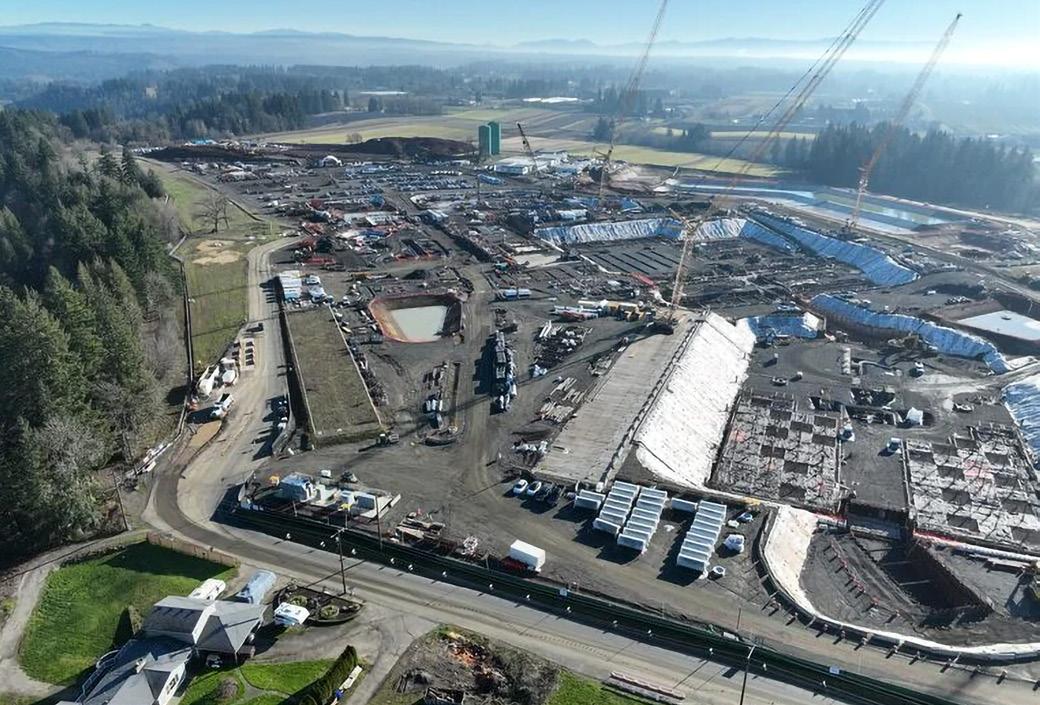
In Portland, this became clear during conversations about a $2 billion filtration project. While the technical need was well established, the conversation extended beyond engineering. Leaders were responding to concerns about affordability and what rising costs would mean for residents.
At the heart of it, city leaders and residents were asking whether the project was necessary and whether more affordable alternatives existed. Those were the visible questions.
Beneath those questions was a deeper concern for some residents: whether they could absorb rising costs and what that might mean for their financial security and their ability to remain in their homes.
The filtration conversations reinforced an important lesson: when infrastructure decisions intersect with people’s financial security and daily lives, they are judged not only by technical merit, but by whether people understand them, see their impact, and trust how they were made. Even when the tradeoffs are difficult, people are more willing to accept them when they understand the value and see how decisions connect to their lives. In this environment, public trust must be built intentionally, with the same discipline, investment, and design as the infrastructure itself.
To build trust intentionally, it must be designed into how decisions are made and communicated. That includes making tradeoffs visible, even when the public is not directly involved in every decision, because leaders must be able to clearly explain and stand behind them. When utilities establish consistent processes for evaluating strategies, documenting assumptions, and applying governance, they are better equipped to answer difficult questions with clarity.
In practice, the Portland Water Bureau uses advanced analytics tools to support the water main replacement program. These tools allow
engineers to evaluate multiple investment scenarios and assess tradeoffs among risk, cost, and system performance.
By leveraging GIS-based modeling, engineers can analyze thousands of data points, including pipe age, material, and leak history. The model narrows the field of potential projects, allowing staff to focus on the most critical segments. From there, a human lens is applied, incorporating professional judgment, operational knowledge, and equity considerations. Technology enhances clarity and efficiency, while human decision-making ensures outcomes reflect community priorities and are more likely to be understood and trusted.
This approach shifts decisionmaking from presenting a single answer to demonstrating
Infrastructure decisions are judged not only by technical merit, but by whether people understand them, see their impact, and trust how they were made.
tradeoffs. Leadership teams can evaluate how strategies affect long-term costs, reliability, and risk. By making tradeoffs visible and documenting assumptions, cities and counties create more transparent processes that help residents understand not only what decisions are made, but why.
Residents experience infrastructure not only through major investments, but through everyday interactions such as billing, communication, and customer service.
In Portland, planning for Advanced Metering Infrastructure (AMI) and a customer engagement portal prompted a shift in how customers will engage with their
utility. Rather than focusing solely on deploying technology, leaders have prioritized how it will be introduced and experienced.
Planning has incorporated asset, customer, and equity data to shape how the deployment of AMI will be phased. This allows the utility to consider not only operational readiness, but customer readiness. In some areas, early deployment can provide immediate benefits. In others, additional preparation is needed, particularly where there are financial constraints or a digital divide.
This work has involved close coordination with community partners and intentional communication design. Language, outreach strategies, and engagement tools are being designed to reflect the diverse needs of Portland’s

communities. We understood that if customers experienced value first, they would be more likely to trust the data, the technology, and the investment behind it.
For example, the customer engagement portal focuses on making it easier for customers to manage accounts and understand usage in practical terms. By delivering value early, even before full AMI deployment, the utility can begin building confidence in the system.
Customers are more likely to trust new technology when it improves their experience in clear ways. Rather than overwhelming customers with data, the focus is on delivering a service experience that is intuitive and responsive.
Affordability is another area where trust is critical. Traditional assistance programs often require customers to seek help after they have fallen behind, creating barriers and delays.
The Portland Water Bureau’s Smart Discount pilot explored a proactive approach. Using billing and payment data, the program
identified customers showing early signs of financial stress and offered assistance before balances reached crisis levels.
The results revealed something deeper than data alone. Many customers who were struggling did not view themselves as eligible for assistance or did not feel comfortable asking for help. Some customers declined assistance because they believed others needed it more, underscoring how perceptions of fairness, dignity, and awareness influence customer decisions. These insights suggest that when customers better understand available support and barriers to access are reduced, they may be more willing to engage earlier and take steps to stabilize their accounts.
Affordability programs must be designed with both financial impact and customer experience in mind. Data can support earlier and more effective interventions, but only when used transparently and with clear safeguards.
Governance as the Foundation of Trust Building trust through data and technology is not just about
Because trust is not built in a single decision or moment; it is built through how decisions are made again and again.
The lessons from these efforts extend beyond any single project. They point to a broader shift in how governments must approach infrastructure and technology.
the tools themselves. It is about how decisions are made, who is involved, and how consistently and easily those decisions can be explained.
In Portland, this has required a deliberate shift in how we approach governance. Rather than treating governance as a separate layer, we have embedded it into our day-to-day decision making. That means creating shared expectations for how data is used, how assumptions are validated, and how different perspectives are brought into the process.
When engineers evaluate asset data, it is not the final answer, it is the starting point. When new technology is introduced, we consider not only how it performs, but how it will be experienced by customers. And, when we design affordability programs, we think carefully about how data is used so that it supports customers without compromising their trust.
This approach creates consistency. It allows us to stand behind our decisions, explain them clearly, and demonstrate that they are not arbitrary. Over time, that consistency becomes something people can rely on.
Trust should be treated as a design requirement, not an outcome. Data governance should be developed alongside technology adoption. Technology investments should be connected to customer outcomes. Like infrastructure, trust must be intentionally designed, built, and maintained through the systems, decisions, and experiences that shape public confidence over time.
Cities and counties will continue to face complex decisions. The challenge is not only to build and maintain physical systems, but to build and sustain public trust.
Residents may not see the systems behind infrastructure decisions, but they will experience the outcomes: clearer communication, more transparent decisions, and more responsive services.
Local governments that design trust into their decisions are not only building infrastructure, they are strengthening the foundation of public confidence that makes everything else possible.
QUISHA LIGHT is the interim director of the housing bureau for Portland, Oregon.

In a city or county manager’s mind, the term resilience might trigger an immediate association with climate change or extreme weather. But resilience to social and demographic forces, including social aging, is equally important for local economic and social wellbeing.
In 2022, people over 60 made up 10% of the global population. That figure is projected to double by 2050, to 20%.1 Globally, lifespans are also increasing, although significant gaps remain between countries and even within cities. In 1900, average life expectancy was 32 years. In 2021, it was 71.2 In many countries, average life expectancy extends well beyond this average, creating multiple classes of older adults, sometimes referred to as young old, old-old, and oldest old, all with varying functional capabilities and needs.
BY FERNANDO ORTIZ-MOYA, PhD, AND SARAH SIELOFF, AICP
Social aging will reshape how we work, move, care for one another, and design our cities. Demographic resilience emphasizes the impacts these changes will have on socioeconomic development and individual well-being, and to achieve demographic resilience, cities and counties need to plan for these shifts. For example, aging will raise fiscal pressures on pension and healthcare systems, result in shrinking workforces, and reshape patterns of housing demand. It will also generate deeply spatial pressures that are location-specific. How (and whether) older adults can move through their communities shapes their access to care, essential services, and social connection, which research shows are all critical for seniors’ health and well-being.3 As older populations continue to grow, their access to mobility will also influence community vitality and economic health.
In an aging world, demographic resilience is a shared goal across cities and countries, and learning through peer exchange is critical. Japan, which is facing more rapid and advanced social aging, can provide a useful point of reference for local governments worldwide facing similar challenges.
Japan is also widely regarded as one of the world’s leading countries for public transport. Its metropolises, some of them home to tens of millions of people, are structured around dense webs of trains, subways, and buses that make car-free daily life not only possible, but preferable. An extensive railway network connects Japanese cities, covering more than 15,500 miles across the country’s four main

islands. The main high-speed Shinkansen (bullet train) line stretches 900 miles along the Pacific coast, from Hakodate on the northern island of Hokkaido to Kagoshima, at the southernmost tip of the southern island of Kyushu, via Tokyo, Nagoya, Kyoto, and Osaka, servicing more than 60 million people. Trains run on extremely reliable timetables, with only minimal average delays. They are also safe and clean.
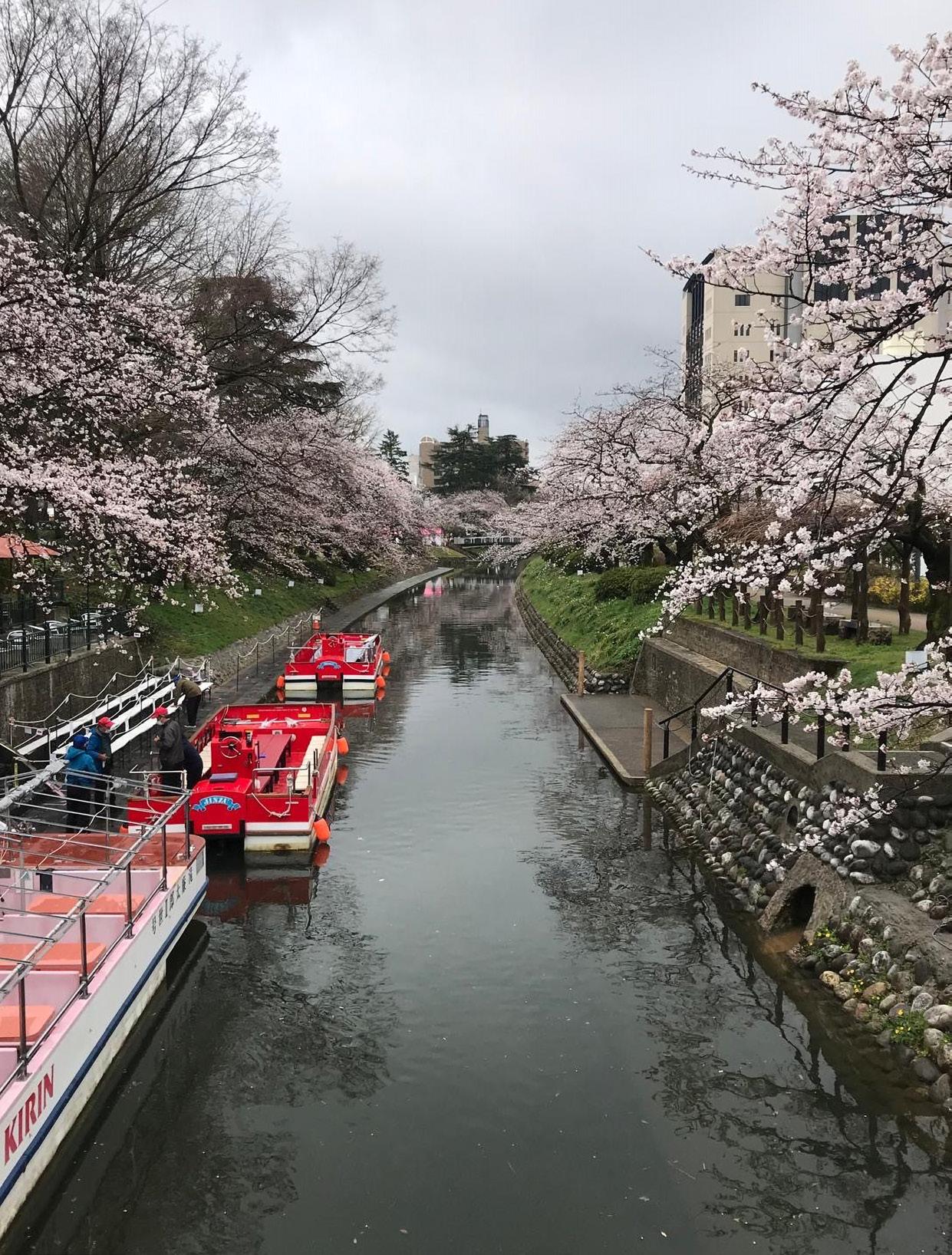
Yet, step outside Japan’s large metropolises and transit options plummet. In Japan’s smaller cities and rural communities, infrequent, if not absent, trains and buses force people to rely on private cars. Combined with the country’s often mountainous topography, this can pose particular challenges for older people. Faced with this reality, local governments are rethinking their approach to mobility and urban design.
Population aging is already reshaping everyday local
mobility needs and will do so for years to come. Older residents, however, are not a single user group: capacity to drive and functional abilities vary widely and change over time and often intersect with disability, income constraints, caregiving roles, and digital exclusion. In practice, inadequate services, difficult transfers and access to vehicles, unclear information, or cashless-only ticketing can hinder a door-to-door trip and compound isolation.4
For an older person relying on public transit, going to the doctor or to a friend’s house isn’t always one easy trip, and a seemingly simple errand can quickly become an obstacle course of physical and logistical hurdles. Walking to a transit stop can be challenging if pavement is uneven, slopes are steep, or there are no places to rest. Public transport presents its own set of issues: services may be infrequent or crowded, while the stations and vehicles themselves often feature high steps, confusing cashless-only ticketing machines, and a lack
of accessible restrooms. When these barriers compound, many older residents have no choice but to stay home, accelerating a cycle of social isolation and attendant physical and mental health impacts. In an aging society, therefore, cities and counties need to rethink how to address friction points of the entire door-to-door journey. Private vehicles are not a panacea for transit gaps. For older people on average, age-related declines in vision, reduced physical flexibility, and slower cognitive processing speeds make driving more dangerous. This overall decline increases the chances of road accidents. Seniors’ crash fatality risk skyrockets after age 70, turning roads into unintended hazards, not only for them but also for other vehicles and pedestrians.5 In the end, lack of accessible transportation options forces many older people to choose between safety (giving up driving) and independence. What key aspects should cities/counties consider when designing demographically
resilient transport systems that also support and empower older residents? Focusing on variation in functional abilities, as opposed to chronological age or how to accommodate an ideal but elusive average user, requires paying special attention to the first and last mile, which frequently present significant hurdles. Every person starts and ends every journey as a pedestrian, which makes sidewalks core transit infrastructure. But this is still not enough if destinations, from home to essential services and amenities, are too far away. True accessibility relies on spatial planning to reduce trip lengths and concentrate facilities along transport networks.
In Japan, social aging is progressing more rapidly than in other countries. People aged 65 or older represented almost 30% of its population in 2024, a figure that is among the highest in the world and is continuing to rise annually. Compounding mobility challenges, many of these older people also live alone. By 2050, 10.8 million Japanese seniors are projected to live alone, of whom 65% will be 75 or older.6 In many rural and peripheral areas, older adults now outnumber younger cohorts, and local mobility gaps are deepening. With an aging and smaller population comes a shrinking tax base, fewer transit users, and a severe labor shortage of bus and taxi drivers. Altogether, this leads private transit operators to cut unprofitable routes while local governments struggle to finance services: between fiscal years 2008 and 2023, more than 14,291 miles of bus lines and
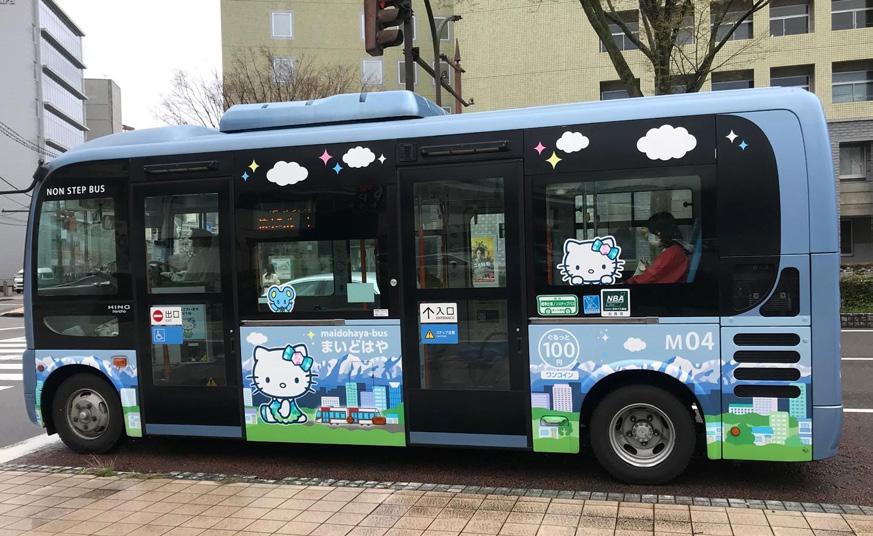
more than 372 miles of local railways were decommissioned in Japan.
Because of this lack of transit, driving becomes a last lifeline connecting older adults to essential services and social activities—even as age-related decline makes it dangerous. For example, more than half of Japan’s 2,678 traffic fatalities in 2023 involved senior drivers, the number of whom has increased by 250% from 2003 to 2023.7 Policy has attempted to respond in several ways.
Since 1997, Japanese law has required drivers over 75 to display a designated elderly driver emblem on their car.
(Drivers between 70 and 74 are encouraged to display it if a health condition could affect their driving.) Additional cognitive testing is required for drivers over 75 who are seeking license renewals. Even so, driving remains a risky endeavor for older drivers in Japan and around the world.8
Japan’s mobility gap emerges from the confluence of demographic and economic factors. In shrinking rural areas, lower (and diminishing) population densities result in a more spatially dispersed pattern that is harder to serve, in part
due to higher per capita costs of service. At the same time, transit tends to concentrate in larger population hubs, often farther away from rural and predominantly older households. This creates a vicious cycle in which fewer and more spread-out passengers result in lower fare revenues, triggering service reductions in frequency and span. This makes transit less useful, which only exacerbates further demand loss. Overall, these patterns accelerate car dependence at a time when many older residents need to or would prefer to be driving less.
Dr. Christopher Hood, professor at the University of Cardiff and an expert on Japanese transportation systems, notes that Japan is investing heavily in automated vehicles, in no small part due to demographic resilience concerns. In the future, transportation could look very different due to the advent of both AI and automated vehicles. “Going forward, if you have… 50 driverless cars that can communicate with each other and drive literally just a few inches away from each other because of AI, all going in a line at 100 kilometers an hour, that’s
a train without being a train, and they’re not restricted to being on a railway line or staying connected,” he reflects.
Technology, however, hasn’t reached this stage today. Local governments are left grappling with a daunting spatial challenge: how to provide essential mobility to an aging population that may be spread over large distances.
City Development in Toyama Toyama City realized that it is not possible to address the mobility needs of an aging and scattered population with better public transit alone. Instead, local officials decided to unscatter the city.
With an area of more than 745 square miles and a population of 413,938 in 2020, where three in ten residents are over age 65, Toyama is the bringing together transport and land-use policy as the premier implementation example of the Japanese government’s compact city model. By concentrating housing, commerce, and public services along transit, the city is building dense central hubs and halting suburbanization. This approach yields environmental, economic, and social dividends.
Environmentally, it preserves natural landscapes by curbing sprawl, reduces energy consumption, and curtails car dependency. Economically, shrinking the city’s functional footprint controls the increasing costs of infrastructure and service delivery, ensuring a fiscally sound future even as the local tax base declines. Finally, on a social level, this model allows older adults to age safely in place, surrounded by walkable amenities, accessible medical care, and easy mobility.
Toyama uses Japan’s traditional kushi-dango—a sweet made of small round rice dumplings (dango) skewered on a wooden stick (kushi)—as a metaphor for the urban structure developed under the compact city plan. The kushi are the high-frequency public transit corridors while the dango are residential and commercial zones clustered around transit stops.
Translating this metaphor into an actionable strategy required reconfiguring both the transport network and land-use regulations. The backbone of the compact city approach is the multi-modal transport network, combining rail, tram, and high-frequency bus corridors— the skewers. This included repurposing a declining railway line into a light rail transit (LRT) system and upgrading infrastructure to reduce friction points, such as connecting the south-north tram lines under the main station viaduct.
The dango are defined as walkable catchment areas extending 500 meters from rail stations and 300 meters from bus stops. To populate these multi-nuclear hubs, the city relies on inducement rather than strict anti-sprawl regulations. Land-use policy naturally pulls
development inward by offering housing subsidies and upgraded service levels. Importantly, placing essential services in the dango reduces the travel burden for elderly residents, making it easier for them to maintain their independence without relying on cars. By physically clustering activities, this model has the added benefit of fostering community formation and, therefore, mutual support networks among residents.
Toyama offers the Odekake (loosely translated, “going out”) pass to residents aged 65 and over to encourage outings at a highly discounted flat rate of 100 yen ($0.65) per ride. The Odekake pass can be used for trips from residential areas to the city center on participating services within a defined area and outside peak hours to avoid crowding regular commuter routes. The city emphasizes that the pass functions less as a simple transit subsidy and more as a public health intervention, simultaneously sustaining downtown vitality while keeping older adults active and out of their cars.
For those living outside the kushi-dango focus area, Toyama is introducing AI-optimized on-demand transportation. In peripheral districts, the city is replacing rigid underused community buses with fleets of multi-passenger vans that have no fixed timetables or routes.
Residents can now request a ride via a smartphone app or phone call, and an AI algorithm calculates the most efficient realtime routing to pick them up. To maintain equitable access, the cost structure reflects the city’s broader social goals: general rides cost 200 yen ($1.30), but in pilot areas, the fare is subsidized to 100 yen ($0.65) for residents aged 65 and older.
The case of Toyama illustrates how cities can approach demographic resilience by first acknowledging community development challenges that are intensifying with aging and population decline. Based on this reality, the city started by considering what kind of urban structure is realistically achievable, formulated basic policies, and then proceeded with rebuilding infrastructure, proving that infrastructure follows demographic reality, not the other way around.
To do so, Toyama positioned its compact city development within its top-level plan, including the comprehensive plan and welfare-related policies. Because spatial planning, transport, and welfare departments share the same top-level comprehensive plan, the city broke traditional bureaucratic silos. Ultimately, Toyama highlights that demographic resilience isn’t achieved by buying better transit equipment, but by aligning the entire government to reshape the city’s hard and soft infrastructure around the realities of its aging residents.
Other countries will eventually follow Japan’s demographic trajectory. Many goals and best practices are already clear, such as designing mobility systems to keep older people connected with family, friends, healthcare, and services. While specific transit modes—from LRTs to buses, or AI-powered on-demand services—might change as technology evolves, the underlying strategy remains the same: holistic thinking bringing together spatial, transport, and welfare planning.
Demographic resilience requires proactive alignment between different departments to reshape the city, including its physical footprint, infrastructure, and service delivery, to ensure residents can age with dignity and independence.
ENDNOTES AND RESOURCES
1 United Nations. (2022). “World Population Prospects 2022: Summary of Results.” https://www.un.org/ development/desa/pd/sites/www.un.org. development.desa.pd/files/wpp2022_ summary_of_results.pdf
2 Saloni Dattani, Lucas Rodés-Guirao, Hannah Ritchie, Esteban Ortiz-Ospina, and Max Roser (2023). “Life Expectancy.” https://ourworldindata.org/lifeexpectancy Life Expectancy - Our World in Data
3 World Health Organization (2007). Global Age-Friendly Cities: A Guide.” https://www.who.int/publications/i/ item/9789241547307
4 Lamanna M, Klinger CA, Liu A, Mirza RM. (2020) “The Association between Public Transportation and Social Isolation in Older Adults: A Scoping Review of the Literature.” Canadian Journal on Aging / La Revue canadienne du vieillissement. 2020;39(3):393-405. doi:10.1017/ S0714980819000345
5 US Centers for Disease Control (2006) “Older Adult Drivers.” https://www.cdc. gov/older-adult-drivers/about/index.html 6 Nippon.com. (Nov. 24, 2024) “Single Elderly to be 20% of Japanese Households by 2050.” https://www.nippon.com/en/ japan-data/h02201/
7 Government of Japan Cabinet Office. (June 2024) “FY2023 Status of Traffic Accidents and Current State of Traffic Safety Measure. FY2024 Plans Regarding the Traffic Safety Measures (White Paper on Traffic Safety in Japan 2024) (Outline).” https://www8.cao.go.jp/koutu/taisaku/ r06kou_haku/english/pdf/wp2024.pdf
8 World Economic Forum. (Dec. 12, 2024). “What an ageing world can learn from Japan’s campaign to get seniors driving safely.” https://www.weforum. org/stories/2024/12/japan-senior-driversafety/
FERNANDO ORTIZMOYA, PhD, is an assistant professor at the Waseda Institute for Advanced Studies, Waseda University in Japan.
SARAH SIELOFF, AICP, is an urban planner at Haley & Aldrich in Bellingham, Washington.



In Maricopa County, Arizona, working together across jurisdictions leads to exponential regional benefits beyond what individual agencies can achieve alone.
BY DAWN MARIE BUCKLAND

Local governments operate in an environment defined by rapid growth, rising service expectations, workforce constraints, and fiscal pressure. At the same time, many of the challenges communities face— transportation, water resources, public safety, disaster response, economic development, revenue administration, and environmental quality—extend well beyond jurisdictional boundaries. No single agency can effectively address these issues alone.
In Maricopa County, Arizona, regional partnerships expand capacity, improve efficiency, and strengthen outcomes for residents. By aligning around shared priorities, agencies accomplish collectively what would be difficult— and often impossible— independently.
and Coordination Councils of governments are among the most visible
examples of regional collaboration nationwide. In Maricopa County, the Maricopa Association of Governments (MAG) brings together 28 cities and towns, three Native nations, the Arizona Department of Transportation, Maricopa County, and Pinal County to address local issues that require coordinated regional action.
MAG coordinates transportation planning,
We work together best when we begin with shared outcomes rather than jurisdictional boundaries.
environmental and air quality planning, and human services planning across one of the fastestgrowing metropolitan regions in the United States. By providing a neutral forum where leaders align priorities, communities share data and make long-term infrastructure decisions that transcend political boundaries. Coordinated planning reduces duplication and ensures systems connect seamlessly across jurisdictions.
Collaboration also enables progress in areas where individual jurisdictions have limited influence. In 2025, seeking to achieve measurable improvements in regional air quality, MAG (along with state and local officials) met with the U.S. Environmental Protection Agency and worked with local universities to conduct a groundlevel ozone research study addressing pollution transported from outside the region. Ozone does not adhere to jurisdictional boundaries. Regional coordination—combined with
federal engagement and scientific expertise—was essential to developing a viable plan to identify scientifically sound and policy-relevant actions that can help reduce the portion of ozone under regional control.
Economic development is often framed as competition, with cities vying for employers and tax base. In Maricopa County, jurisdictions recognize that regional success strengthens every community.
Through partnerships with the Greater Phoenix Economic Council (GPEC), cities collaborate to attract major employers to the region rather than competing internally. When companies evaluate expansion opportunities, they assess labor markets, infrastructure capacity, transportation networks, and quality of life at a regional scale— not by municipal boundaries.
The investment by Taiwan Semiconductor Manufacturing
Company (TSMC) in north Phoenix illustrates this dynamic.
TSMC Arizona’s first three fabrication facilities represent a $65 billion investment and are projected to create approximately 6,000 direct high-tech jobs, along with tens of thousands of construction and supplier positions. According to GPEC, the first three fabs are expected to generate approximately $1.4 billion in tax revenue to Arizona over 13 years and nearly $33 billion in total economic output.
Although located within one jurisdiction, the ripple effects extend across the region—from workforce housing demand and retail growth to supply chain expansion and infrastructure investment. Managing growth at this scale requires coordinated workforce development, higher education alignment, transportation planning, and utility infrastructure across multiple jurisdictions.
Collaboration is equally impactful in smaller communities. The city of Apache Junction, in partnership with the town of Queen Creek, Pinal County, Central Arizona College, the Arizona Commerce Authority, and LG Energy Solution, launched a Future48 Workforce Accelerator focused on battery manufacturing training. By positioning government, education, and industry around workforce development, Apache Junction is creating pathways to high-quality jobs tied to regional advanced manufacturing growth.
The benefits extend beyond a single city. Surrounding communities such as Queen Creek and Gilbert are positioned to see increased workforce participation, housing demand, and related business activity. Collaboration is not reserved for large metropolitan projects.

Smaller communities, by coordinating strategically, generate regional impact. When jurisdictions compete against one another for investment, each community may see wins and losses. When cities collaborate—aligning incentives and positioning their strengths as complementary— they expand opportunity. Rather than redistributing growth within a region, collaboration attracts new investment and multiplies its impact. The result is not incremental gain, but exponential progress.
Shared Transit Systems
Mobility is inherently regional. Residents experience transportation as interconnected networks rather than city-specific systems.
Valley Metro demonstrates how cities jointly fund and govern transit services that support workforce mobility and economic development across the metropolitan area. Coordinated planning allows participating jurisdictions to expand connectivity while integrating transportation investments with regional growth.
Shared Infrastructure and Capital Investment
Some of the most significant examples of collaboration
involve capital-intensive infrastructure. When jurisdictions partner on major facilities, they achieve economies of scale, distribute financial risk, and strengthen long-term resilience.
Water and wastewater treatment plants illustrate this approach. By coordinating design, financing, and operations, jurisdictions improve regulatory compliance, share technical expertise, and build systems sized to meet regional demand.
The Greenfield Water Reclamation Plant in Gilbert reflects this model in practice. Jointly owned by the cities of Gilbert and Mesa, the facility serves their residents and those of Queen Creek through an intergovernmental agreement. Shared governance and cost allocation allow participating jurisdictions to collectively manage wastewater treatment while advancing long-term water sustainability in an arid region.
Counties and cities also collaborate on major public facilities such as detention centers and jails, reducing duplication and maintaining consistent operational standards.
Regional recreational facilities offer another example. Large parks, coordinated trail systems, and multi-use
recreational complexes frequently serve residents from multiple jurisdictions. Lake Pleasant Regional Park reflects coordinated leadership between Maricopa County and the city of Peoria, with the county operating the park and providing public safety services while Peoria supports surrounding infrastructure and adjacent development. Through shared planning and operational alignment, communities create seamless regional destinations that would be difficult to develop independently.
These shared investments illustrate how coordinated capital planning can improve efficiency, distribute financial risk, and enhance service delivery across jurisdictions.
Public safety partnerships expand service capacity and improve regional coordination. In several communities, the Maricopa County Sheriff’s Office provides contracted law enforcement services to municipalities that may not have the resources to operate full police departments independently.
The public safety fusion center operated by the Mesa Police Department
strengthens coordination by pooling analytics and investigative intelligence in real time. Through collaboration with neighboring East Valley agencies—including Gilbert, Chandler, Scottsdale, Apache Junction, and Queen Creek—departments share data and crime trends across jurisdictional boundaries. This approach enhances situational awareness and allows agencies to respond more effectively to criminal activity that does not stop at city limits.
The collaborative public safety model emerging in Arizona is also gaining national recognition through organizations such as the National Real Time Crime Center Association, headquartered in Scottsdale. The association brings together law enforcement agencies, technology leaders, and public safety professionals from across the country to share best practices, training, and operational strategies related to real-time crime centers and coordinated response systems. Its focus on development, innovation, collaboration, and education reflects many of the same principles driving successful partnerships in Maricopa County. By creating networks for agencies to share information, technology, and lessons learned, the organization helps communities of all sizes strengthen situational awareness, improve response coordination, and accelerate investigative outcomes.
Through the Maricopa County Integrated Criminal Justice Information System, justice system partners further support data sharing and operational efficiency across law enforcement and judicial agencies.
Disasters do not respect jurisdictional boundaries. Unified planning, shared training exercises, and interoperable communication systems strengthen response capabilities during highpressure situations. Through its emergency management program, Maricopa County collaborates with municipalities, public safety agencies, healthcare partners, and state and federal entities to coordinate preparedness, response, recovery, and mitigation efforts.
Arizona’s Mutual Aid Compact (AZMAC) formalizes this collaboration by providing a mechanism for resource sharing, operational coordination, and reimbursement during emergencies. Standardized procedures allow agencies to rapidly deploy personnel and equipment across jurisdictions, while clarified financial and liability provisions reduce administrative uncertainty.
Importantly, AZMAC extends beyond traditional disaster response, incorporating cyber-related mutual aid provisions that recognize the growing importance of digital resilience in local government operations. As a signatory to AZMAC, Maricopa County has supported other counties and the Arizona Department of Emergency Management during times of disaster. The results of this collaboration are real. Most recently, during the Gila County floods in October 2025, Maricopa County Emergency Management sent three staff members for weeklong deployments to Gila County’s Emergency Operations Center to provide
incident command support during the response and recovery phases of the disaster. Additionally, Maricopa County sent staff to the state Emergency Operations Center supporting the state’s response efforts in Logistics and Planning roles under this AZMAC support request. This agreement allows for sharing of staff and resources to partners when a single jurisdiction is unable to meet the local demands due to the emergency.
Collaboration extends to core fiscal systems as well. The Maricopa County Assessor’s Office operates within an interconnected framework that includes cities, school districts, special taxing districts, the Arizona Department of Revenue, the County Treasurer’s Office, and the County Recorder’s Office.
Accurate property valuation depends on timely data exchange and coordinated statutory interpretation across agencies. Cities rely on assessed valuations to forecast revenues and plan infrastructure investments. School districts depend on reliable tax bases to support educational funding. The recorder processes property transactions that affect valuation records, while the treasurer administers billing and collection.
Through coordinated processes and shared data systems, these partners maintain a transparent and predictable property tax structure. While less visible than large infrastructure projects, this collaboration provides the revenue foundation that supports essential public services across the region.
The same principles that drive regional partnerships connect communities nationwide. Within ICMA, committees bring together representatives from local governments to collaborate on shared challenges and exchange best practices. The ICMA Governmental Affairs and Policy Committee provides a forum for evaluating proposed federal actions and assessing their impacts on local communities.
Collaboration is defined not by size, but by mindset. We work best together when we begin with shared outcomes rather than jurisdictional boundaries, build trust before agreements, and recognize complementary strengths instead of competing for short-term advantage. By investing in shared systems and coordinated planning, communities position themselves for sustainable growth and resilience.
Residents do not measure success by which jurisdiction delivered a service. They measure it by whether their community is safe, prosperous, and well-managed.
When agencies collaborate rather than compete, the region thrives—and the impact extends far beyond what any one community could accomplish alone. Government can provide exceptional service. Collaboration ensures that it does.
DAWN MARIE BUCKLAND
is executive director of the Assessor’s Office of Maricopa County, Arizona.

BY ALENCE POUDEL
A small initiative that began as a project tracker has become a major shift in improving efficiency and better data-driven decision making across the city.
The city of Sugar Land, Texas, has always believed in innovation and trailblazing. As a growing city in the Houston region with around 115,000 residents, we manage a large and complex portfolio of capital projects across water, wastewater, drainage, mobility, parks, and public facilities. With limited staff and increasing demand, we needed a better way to see how we track staff project workload and allocate resources not only transparently but also efficiently and effectively. Instead of turning to expensive platforms or outside consultants, our engineering team built a simple but powerful tool in-house. This resource allocation and workload dashboard connects directly to our GIS database for capital projects, allowing us to assign projects and forecast staff capacity for five years into the future. Because the GIS system was already in place and licensed, creating the centralized database came at no additional
cost. The database now serves as the centralized source of all project-related information, from project status and funding to construction photos. Project managers update their projects through a single portal, and those updates feed directly into the centralized database. From there, the data is displayed in different views for leadership, staff, stakeholders, and residents, eliminating duplicate work and making updates easier to manage. Residents can see nearby projects, timelines, progress photos, and future plans, while staff and leadership have the detailed views they need for planning and oversight. The result is greater efficiency and stronger public trust built through transparent and data-driven decisions.
Our previous approach relied on PDF books and spreadsheets. It worked, but it did not help us plan ahead or adjust quickly when priorities
shifted. We couldn’t easily answer questions like:
• Is the project assignment fair for each engineer or project manager?
• Do the engineers and project managers manage their project effectively?
• Will we have enough staff for upcoming years due to projected increase in capital improvement plan (CIP) projects?
• When will we hit capacity?
• Do we need to fill vacancies and when is the best time to do so?
• Will it overload anyone? We needed a better way to see the full picture and make decisions before problems arose. At the time, we still found the answers, but mostly through conversations, quarterly meetings, and one-onone check-ins with supervisors. Those methods do work, and we still use them today. The difference is that we have made the process more agile, efficient, and data driven. The goal was not to replace our system. It was to give it a new brain.

How Does the Resource Allocation and Workload Forecast Tool Work?
Each capital project in Sugar Land is tracked in our GIS database. That system stores the location, type, budget, timeline, and other relevant project information. To help plan workloads, we assign each project a score based on its complexity and stage of delivery. The scores range from 0.1 for a simple project to 3.0 for a highly complex one. Those project workload scores are linked to the assigned project manager and inspector based on their experience, skillset, and nature of the job. This allows the dashboard to calculate each staff member’s total workload and identify when capacity is reached.
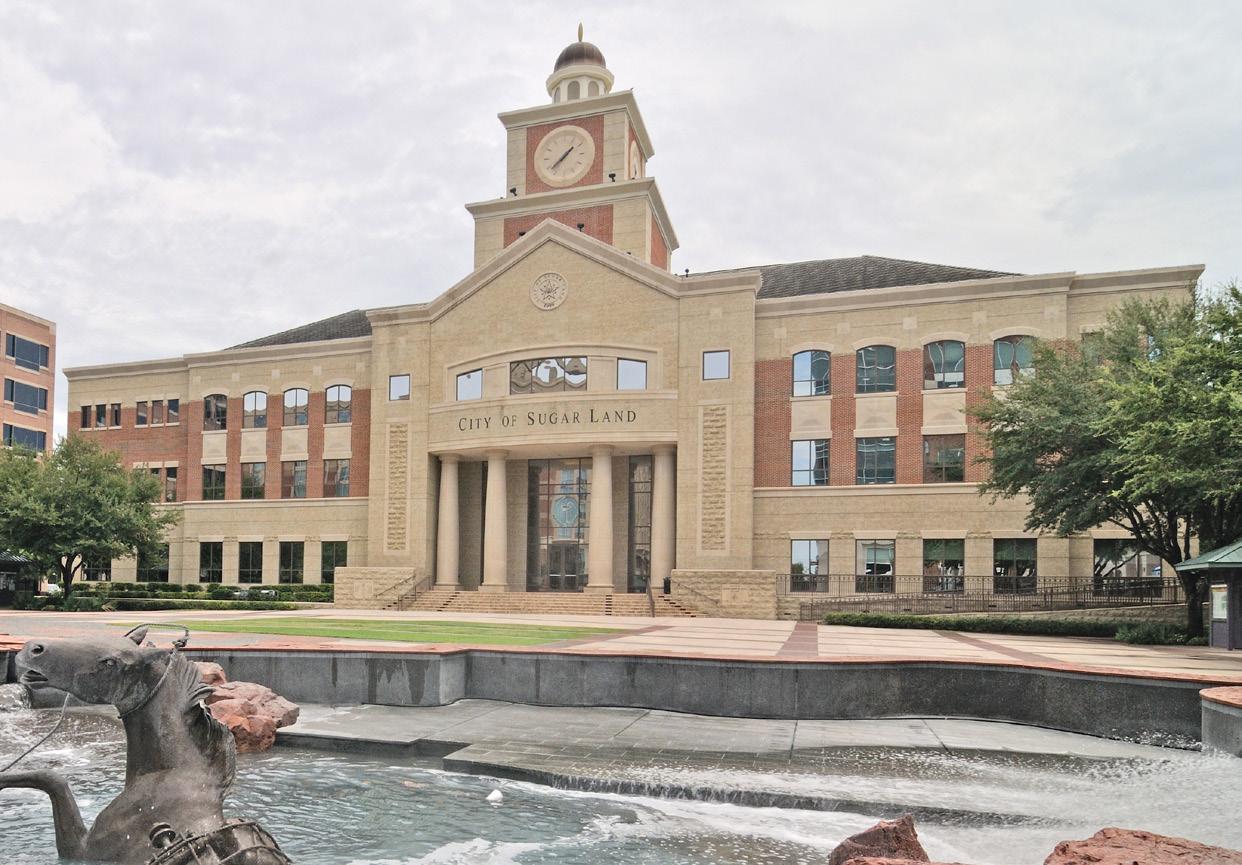
The dashboard puts all of these elements together in one easy-to-use visual platform. It shows who is doing what, when, and for how long. It highlights when someone is over capacity and when there is capacity to take on more. The dashboard updates daily, so forecasts are always current. It shows patterns, like when too many projects start at the same time. This helps us even out the workload and keep delivery on track.
The figure below shows a conceptual forecast from our workload dashboard. The lines represent a staff member’s projected workload over the next five years. The view makes it clear when staff will exceed capacity and when there is capacity to take on more projects. By spotting the trends early, leadership can plan project delivery,
balance assignments, prevent burnout, and make data-driven staffing recommendations.
Before, when a small project (such as a storm inlet replacement) came up midyear, we scanned spreadsheets, checked skills and timelines, and
checked with project managers to see if they could take it. It took time and some back-andforth. But now, the tool shows real-time capacity by person, including work that is already assigned but not yet started. The city engineer and assistant
city engineers can see who has capacity for more projects and when. We can assign the project in minutes now. The system emails the selected project manager with the scope, schedule, links, and contacts so they can start right away.
When the city prepared for the $350 million general obligation bond election in 2024, we utilized the tool to analyze our team’s capacity so that we could clearly communicate to the public if additional staff would be needed or not. The results indicated that we will be able to manage the additional workload without hiring additional staff. The dashboard helped us develop a plan to ensure staff could deliver those additional projects without delay. It also allowed us to time the start of projects in a way that avoided burnout or bottlenecks.
Instead of guessing, we could point to data. That helped build trust with leadership and backed up our staffing recommendations with facts. The dashboard gave us a common language for communicating about workload.
• Project managers save about four hours a month on updates. Across the team, the savings add up to hundreds of hours each year.
• The resident story map received more than 1,000 views in the first year.
• Ninety-five percent of projects now post monthly updates on time.
• Leadership uses the forecast to sequence starts and avoid overlapping.
• There is no duplicate entry for project managers. One update feeds every view.
The idea and early design began in spring 2023. We defined the data schema and scoring scale in the same period. A small pilot
ran in summer 2023 with a few project managers. The current version of the dashboard was ready in spring 2024 and the department adopted it in March 2024. We tuned the scoring rules that summer and added filters and summary cards based on feedback. By late 2024, the practice was part of our regular budget and staffing conversations.
The same GIS information used to manage internal work is shared with the public. Our CIP story map lets residents see where projects are happening, what stage they’re in, what’s next, and how to report issues or concerns. Updates come directly from project managers. This makes residents feel informed. It also builds accountability. If something slips, it’s visible.
Trust comes from showing your work, and we have seen that when people understand the process, they are more likely to support funding for future improvements.
We didn’t hire a firm to build the dashboard. We did it ourselves using tools we already had and people who knew the work. This saved money and made change management easy since the team initiated the change. It also helped staff build new skills.
Since launching the dashboard for capital projects, other departments have asked for similar tools. A small initiative that started as a project tracker has become a shift toward improving efficiency and better datadriven decision making across the city.
Trust comes from showing your work, and we have seen that when residents understand the process, they are more likely to support funding for future improvements.
Our experience shows that local governments don’t need a big budget or a big team to make real impact. If your data is centralized and your staff is willing to try new ideas, you can build tools that make the work easier and more efficient.
Cities can start small by mapping their projects and giving each project a simple workload score. Then leverage existing tools like Excel or Power BI or GIS to build an analytical dashboard that conveys the story. The last step would then be to publish multiple views that provide necessary information to the staff, stakeholders, leadership, and residents. The win isn’t the software. The win is keeping data current, accurate, and using it to make decisions.
The city of Sugar Land isn’t a tech company. We’re a city. We built this because we care about working smarter and serving our residents better. The change came from inside our organization. As our city manager says, “We want make our residents’ life better than they can imagine.”
• Start simple: A small, clean schema beats a perfect one you never finish.
• One portal: Enter data once, publish many views.
• Lock the scoring rules early, then tweak quarterly.
• Protect privacy. Use roles internally, use generic labels in public.
• Make the update cadence sacred. Monthly works.
• Celebrate small wins. A saved hour here and there builds momentum.
Sugar Land’s workload tracker isn’t just another dashboard. It’s something we use every day to have better conversations and make smarter decisions. It helped us spot issues before they became problems. It helped staff pace their workload instead of burning out. And most of all, it helped us earn trust from our team, leadership, and the residents. That’s the kind of quiet innovation local governments are capable of when we build tools that actually reflect how we work.
The success of this work comes from the team effort of the Sugar Land engineering department. Special thanks to executive director/city engineer Jessie Li, PhD, PE; assistant city engineers Jonathan Braun PE, CFM and Robert Wilson, PE, CFM; and our team members Melanie Beaman, Carla Barrios, EIT; Huy Ton, PE; and Paola De La Torre. Their input helped turn a vision into working tools that are now used every day.
ALENCE POUDEL is a senior engineering manager for Sugar Land, Texas.

Are you hiring? Today’s public finance candidates want more than a job description. They want to understand the full opportunity: how they can contribute, what the organization is like, and how they’ll fit with the team.
Tell the full story by sharing:
Workplace culture and priorities
By providing greater transparency, you can reduce mismatches, improve applicant quality, and make more confident hires. . . . . .
Immediate projects and challenges
Team structure and supervisor info Team supervisor info
Work environment/flexibility options
Advancement opportunities



BY DEMETRIUS BYNES, CHRISTINA CORNWELL, DOUG FERRALL, STONE JAMES, MYLES TUCKER, AND LISA WILSON
Strategic planning is widely recognized as a critical management practice within local government, intended to provide organizational direction, align resources with community priorities, and enhance institutional performance. Despite its widespread adoption, local government officials alike have noted a recurring challenge: many strategic plans fail to progress beyond formulation, resulting in limited operational impact.
The development of a strategic plan requires substantial investments of
time, financial resources, and staff capacity. However, the successful execution of these plans often proves more difficult than their creation.
Local government executives must navigate competing interests from elected officials, employees, and residents while simultaneously translating high-level goals into actionable initiatives. This frequently produces a disconnect between strategic intent (“what”) and administrative practice (“how”), undermining implementation fidelity and long-term outcomes.
During their participation in Leadership ICMA,
the authors undertook a research project to examine this implementation gap through a local government–informed lens, drawing on empirical data collected from municipalities and counties across the United States. A structured survey yielded 59 responses representing a diverse range of community sizes, governance models, and organizational capacities. Respondents included jurisdictions with populations under 10,000 (12%), between 10,001 and 50,000 (44%), and over 50,001 (44%), providing broad representation across small, mid-sized, and large municipalities and counties.
This diversity reinforces the universality of the implementation challenge across institutional frameworks.
Survey findings further indicate that while reported implementation success increases with organizational scale—71% among small municipalities, 81% among midsized municipalities, and 88% among large municipalities— no category demonstrates complete consistency in translating strategic plans into sustained operational practice.
These results suggest that access to resources alone does not fully account for implementation effectiveness, pointing instead to structural, cultural, and managerial factors.
Data collection focused on local government experiences with strategic planning processes, including methods of stakeholder engagement, internal alignment, and
performance monitoring. The survey instrument captured both quantitative measures and qualitative insights, enabling a multidimensional analysis of barriers and
1.
Survey Respondents — Community Population
enabling conditions associated with implementation.
Collectively, these findings highlight that strategic planning challenges are not isolated to specific community sizes or governance forms but represent a systemic issue within local government administration. Accordingly, this project positions strategic planning not merely as a technical exercise but as an organizational change process requiring sustained leadership commitment, cross-departmental coordination, and clear accountability mechanisms. By synthesizing local government perspectives and empirical data, this study aims to contribute to the applied literature on public sector management while offering evidenceinformed strategies for local government managers seeking to strengthen the connection between strategic vision and operational execution.
Community engagement emerged as the most frequently cited determinant of successful implementation. When asked what respondents would repeat in their next strategic planning process, community engagement was the single, strongest theme (49%), as it is “robust, phenomenal, and essential” to legitimacy and buy-in.
Community “buy-in” creates plans that consist of actionable tasks with results that are locally relevant. Engagement not only builds community trust, but fosters a sense of shared ownership for outcomes and ensures community accountability. The strategic plan is the community
statement for the needs of the future. A vast majority (82%) of respondents regularly or occasionally hired a consultant. This overwhelming response indicates that consultants are a trusted resource to enhance process creditability and facilitation quality.
Nearly half of respondents (48%) indicated that they would increase or improve community engagement in their next planning process, indicating that broader inclusion and moving beyond more formal processes worked best. Expanding engagement beyond traditional form meetings through online surveys (56%) and public meetings (53%) ranked highest. As one respondent noted, “I’ve seen consultants set up where people already congregate, such as the fairgrounds, farmers markets, or parks. Rather than people attending a stuffy meeting, they can participate in normal daily life.”
Over one-third of respondents (36%) emphasized that facilitated workshops or charettes worked well, suggesting that deeper engagement is especially valued when time and capacity allow. “Our most effective strategies have been when we’ve engaged in multi-meeting charrettes with feedback loops where the public begins the first meeting with a blank slate of what can be done in the future, and works with staff and consultants over [a number of] meetings to design solutions. [This is] followed by feedback on those plans at the next meeting and a refined vision for the future over a series of meetings over three to six months.”
The findings indicate that community engagement strengthens long-term
implementation. Feedback loops continue the conversation and ensure that the plan’s vision and direction remain vibrant over time. These findings suggest that community engagement is not merely a procedural component of plan development, but a structural determinant of implementation success.
Another consistent theme across the survey data was that without accountability, strategic plans are unlikely to be successful. Respondents repeatedly emphasized that measurable goals, defined ownership, and ongoing reporting are what distinguish plans that are implemented from those that sit on the shelf.
One of the strongest indicators of success was the alignment of departmental goals with the strategic plan. Approximately 90% of respondents reported that departmental goals are tied to their strategic plan. When goals align with the day-to-day realities of departments, they translate from abstract priorities into actionable work.
The importance of measurable objectives was reinforced through repeated references to reporting and dashboards. Respondents highlighted the value of establishing key performance indicators, publicly sharing progress, and maintaining transparency, the goal of which is to reinforce accountability and build trust with elected officials, staff, and the community. One respondent explained that if they could change their process, they “would establish more formal implementation milestones and performance dashboards at the outset to track progress consistently across departments.”
Clarity and simplicity also emerged as essential components of measurable planning. Over one-quarter (27%) of respondents highlighted the importance of keeping plans concise and focused, cautioning that overly complex plans “crumble under their own weight.”
Measurable goals are most effective when they are limited in number, clearly defined, and easily understood across the organization. Although, 39%
of respondents would change the way they managed goals and accountability in their next strategic plan creation, showing that although 90% of organizations implement goals, there is much work to be done to improve their measurement and reporting.
Tying budgets and employee performance reviews to the strategic plan also showed positive correlations with plan success. However, these factors did not appear to be primary drivers. Instead, they likely reflect organizational capacity and maturity. Organizations that integrate budgets and performance systems into their strategic plans are often those already implementing multiple best practices.
Measurable goals and objectives are essential to effective strategic planning. Clear ownership and realistic reporting transform plans from aspirational documents into actionable work plans. The evidence suggests that when accountability systems are embedded throughout the process, strategic plans are far more likely to be implemented successfully.
Survey respondents consistently emphasized that embedding the strategic plan into organizational culture was essential for sustained implementation. While the first two focus areas touch on engaging the community and establishing shared understanding of how the plan will be measured, survey respondents noted prominently the equal importance of embedding the adopted plan into the government organization’s culture. Without internal buyin from a government’s elected officials and staff, a plan is unlikely to be implemented.
Nearly a quarter (24%) of respondents said that they found adequate internal employee engagement in the strategic planning process beneficial. This group highlighted the positive impact of staff ownership in successful implementation. One respondent stated that employees who “feel they create[d] the plan...have the most buy-in.”
Additionally, a similar number (28%) said they would increase their staff involvement if conducting another strategic plan. Several survey respondents noted that a weak point in prior strategic planning was improper weighting between community or consultant input over the thoughts of their staff. Specifically, a survey respondent found that employees who could not “casually under[stand]” their role in the strategic plan were less likely to successfully implement it.
Figure 4.
As a subset of staff engagement, a vast majority of respondents (73%) reported their successfully implemented strategic plans were tied to their community’s budgeting process. To this end, 20% of overall respondents listed budget alignment as the single most important factor in strategic plan implementation. Inclusion of the plan in budgeting provided both tangible reporting processes and timelines. Conversely, 37% of respondents said that a lack of formalized reporting processes had or would have negatively impacted their ability to implement a strategic plan.
Finally, elected official buyin was likewise identified as beneficial to strategic plan buyin. While seemingly intuitive, respondents widely noted that including elected officials in the process from cradle to grave provided trust, transparency, and accountability to the process. Conversely, several respondents commented that administrators should avoid scoping the strategy on staff needs alone, instead leaving room for the priorities of the elected officials.
In addition to the three main focus areas for strategic plan implementation identified by the survey, two additional overarching findings came to light. While it may seem intuitive, the survey highlighted that well-resourced communities have more success implementing their strategic plans than those with less available staff and funds. While it is likely that access to consultants and dedicated staff are beneficial factors, they are not required for successful implementation. Findings suggest that smaller jurisdictions may benefit from prioritizing community engagement, defined measurement criteria, and organizational integration.
Second, respondents made clear that election cycles play a major, unavoidable factor. While some newly elected officials simply require an orientation to the existing plan to support continued implementation, others may have run against existing efforts. Electoral shifts may disrupt continuity, particularly within strong-mayor systems.
Strategic plan implementation ultimately hinges on three fundamentals: engagement, measurable accountability, and cultural integration. While simple, each must be treated with care and kept in sight throughout the creation of a strategic plan and, hopefully, its successful implementation.
DEMETRIUS BYNES is director of human resources for Statesboro, Georgia.
CHRISTINA CORNWELL is director of emergency management for Laurel, Maryland.
DOUG FERRALL is assistant county administrator of community services for Calhoun County, Michigan.
STONE JAMES is city manager of Twentynine Palms, California.
MYLES TUCKER is support services manager for Needham, Massachusetts.
LISA WILSON is county administrator of Sauk County, Wisconsin.
The authors were participants in the 2025–2026 Leadership ICMA Cohort.

BY TRACI LEACH, ICMA-CM AND JESSICA WHITLEY

Jessica Whitley: Hey Traci! I am so excited to work on this interview with you!

Traci Leach: Hi Jess! Same here! First things first, though…tell me a little about you!
JW: I started at the borough of State College as an ICMA Local Government Management Fellow (LGMF) in 2023 and was promoted to my current role of assistant to the borough manager in spring 2025. I started with a BFA degree and went back for my MPA originally on a nonprofit track, so I definitely did not expect to end up in local government, haha! What about you?
TL: I’ve served three communities in Texas, all established mid-sized cities. I was promoted up through the ranks as traditionally as it comes: MPA program to assistant to the city manager to assistant to deputy. I’m one of those folks who does not want to be a city manager, so I’m at a place in my career that I love. Hoping to have interviewed for the very last time as I head into my 28th year of local government service. (My very first budget included funding for the Y2K event!)
JW: Wow, it sounds like we will have an interesting interview! I think we have some really interesting perspectives here— three years in the field versus 28 years. Let’s go through some questions about developing resilient career infrastructure.
What is the one skill that every local government professional should have in their arsenal?
TL: Hands down, it’s being an effective storyteller. The average attention span has shrunk from about 2.5 minutes in 2004 to about 45 seconds in 2023. This is extremely important in the context of the job interview, where interviewers can’t scroll past your response to get to the next question, but they’re definitely not listening unless you really hook them. Sharpening your skills as a storyteller to synthesize the most important information and share those experiences concisely and with impact is a critical skill. I highly recommend the Moth method for anyone seeking to become a better storyteller.
JW: I totally agree. Effective writing is also a key skill for the reasons you mentioned! In my experience, creating memos that clearly and effectively communicate staff analysis and policy recommendations are key. Your leadership team is reading multiple high-stakes documents throughout the day, and effective writing ensures the analysis and recommendation are understood quickly and clearly. Purdue University has great memo guidelines.
What do you wish you knew on day one that you know now?
TL: That effective networking isn’t just inane small talk and it’s not transactional. Networking in the spirit of giving is a critical structural member for your career, sticking with the infrastructure theme. We all have value that we can add to someone else’s experience, whether that’s introducing them to another colleague who can help, volunteering your time to mentor, or sharing an experience that can guide a colleague to a solution. This mindset of giving to others fits into the natural mindset of so many of us in public service. We just don’t think of networking in the context of giving. I highly recommend Adam Grant’s book Give and Take for anyone seeking more information about how to be a giver to enhance your life and career.
JW: I would remind myself that I don’t have to have all the answers on day one. When I started as an LGMF, I was overwhelmed by the knowledge gap. I had little experience in the field, so I hopped onto any available projects to expand my knowledge base. Jumping in headfirst allowed me to learn the systems for finance, grant reporting, community engagement, etc. There was no way for me to understand all aspects of my workplace on day one, and that’s okay. But asking the right questions and giving myself grace would have helped me be less stressed for day two!
TL: At this point in my career, a skill that is essential to my own continued learning and leadership is curiosity. After so many years accumulating knowledge, it’s easy to become complacent in what you know and you may find yourself on auto-pilot. At the rate at which things are changing, staying curious guarantees that you stay in lock-step with the movement of the profession. What does this look like day to day? For me, it has meant overcoming technology complacency to explore the emerging technologies that are impacting our work and our communities. And, in this context, it doesn’t mean that I have to be the SME for emerging technology. It means that I’ve got to ask the right questions to challenge our SMEs and trust the younger professionals who are leading the way for our organization.
JW: That is an excellent point. It sounds obvious but communication is a skill I use in a variety of ways. When I am managing projects across regional partners, communication becomes key to ensuring progress. When working internally, my communication style determines whether staff feel comfortable approaching me with ideas and concerns.
Which credentials do you feel are essential?
TL: When I began my career, the graduate degree, and specifically the MPA, was the gold standard of credentials to punch your ticket to play the game. I only knew one path to advance to the city manager’s chair: get into an MPA program, roll an internship into a full-time gig, then move up to assistant to the city manager, then deputy/assistant city manager, and then finally a city manager position. That’s how everyone I knew did it, but that’s not true today. Because each community and each council has their own unique set of values and priorities that they want from their city management team, there’s not one credential that outweighs others when it comes to deciding how to grow professionally. City councils and hiring boards want to know that you are invested in you and have a genuine desire to continue learning. Staying current and growing your network are the real value of things like specialized certifications, CPM certifications, or executive management programs.
JW: I totally agree. An MPA/MPP will assist in understanding the fundamentals of local government and allow you to gain a plethora of skills, such as budget building, economic decision making, policy analysis, research, and more. Joining your state association and ICMA can help build your network and professional knowledge. Ultimately, you don’t need a specific background to enter the field; you need to exemplify public service values through your professional journey.
What are the best lattice-building skills and experiences?
JW: Assisting in the budget process allows you to build your communication, research, presentation, and analytics skills. The budget serves as a cross-departmental document and a key public document outlining the municipality’s goals. The budget cycle highlights departmental priorities and their connection to the organization’s mission and values. My first budget cycle was illuminating. I assisted from development to adoption, and those skills built into higher organizational responsibilities.
TL: I 100% agree with your observations about the importance of the budget! I would also add that any project or special assignment that stretches your “boardsmanship” skills at strategic times in front of the council is worth your time. Exposure to boards and community engagement hone your communication skills in all the ways that matter: navigating conflict, creating consensus, listening to understand, and honing your formal presentation style/presence.
What role do mentorship and community play in building career infrastructure?
TL: I know I would not be in the role I’m in now if not for outstanding mentors that shared their guidance along the way. I had city managers who included me in the weekly city manager-ACM meetings so that I had exposure to the decision-making and thought processes that happened behind the scenes. I had colleagues who invited me to regional state association meetings. At this point in my career, I am much more focused on being like these mentors than I am advancing my own career. I see the young women in my organization and in my professional circle, and I’m inspired to do whatever I can to pay it forward.
JW: In a similar vein, the only reason I am in local government is through mentorship and a growing community. Some advice that has stuck with me is “seek mentorship from those who you want to be.” Find your mentors in the field by searching for someone who exemplifies characteristics you admire. Find leaders you respect and pick their brain. Networking at conferences can help you find mentors willing to assist you in your journey. Leaders in the field are open to sharing their expertise, and early career professionals can set themselves up for success by soaking up that expertise. I often reach out to my colleagues in the field, many of whom I have met through the ICMA network. At the end of the day, community is the root of success in your professional life just as it is in your personal life.
What are some methods for gaining experience in the field while avoiding burnout?
TL: Hot take coming for avoiding burnout! Over my 27-ish years of local government service, one of the most important pieces of advice I ever received is that the communities we serve aren’t “ours.” They belong to the residents and the city council elected to represent them. Taking the perspective that “It’s not my city (INMC)” has been extremely helpful to balance the emotional investment in the work that I do. At the end of the day, my responsibility is to implement the will of the council in service to the community. “INMC” is prominently displayed on my whiteboard to serve as a reminder on days that don’t go as planned. Adopting this perspective hasn’t lessened my connection to the communities I served, nor has it diminished how I feel about my work. What it has done is give me a more resilient mindset and help preserve my sanity, which is a win for everyone!
JW: I think it’s important when you’re first starting out to get exposure to as many projects as possible, while respecting your own boundaries. I would say to fill your “plate” with a variety of projects, but keep the size of your plate in mind. Finally, develop professional boundaries up front and be clear that although you’re a team player, you have a capacity limit just like everyone else. I think being flexible regarding evening meetings and other projects can be a great sign of teamwork, but offer those clear boundaries when you enter a workplace so there is no confusion.
TL: Great stuff, Jess! So, even with our different perspectives, I was surprised that we had quite a bit of consensus around the big ideas. Clearly, we both saw communication, mentoring, and the strategic “yes” as key infrastructure pillars for a resilient career, even though we’d go about building those skills a little differently. Staying curious with a growth mindset will also take you a long way toward reaching your career goals.
JW: I agree. There are many pathways for development and advancement in the field. The tools discussed serve as a great way to build career infrastructure regardless of your experience. And when we share our career “toolset” with each other, it seems we all benefit in creating a stronger infrastructure.
TRACI LEACH, ICMA-CM is deputy city manager of Coppell, Texas.
JESSICA WHITLEY is assistant to the borough manager of State College, Pennsylvania.


JAN PERKINS, ICMA-CM , is vice president of Raftelis, a local government management consultant and facilitator, retired city manager, and a believer in good government and in the city management profession. (jperkins@raftelis.com)

ROD GOULD, ICMA-CM , is senior advisor of Raftelis, chairman of the board of HdL Companies, a former ICMA Executive Board member, retired city manager, consultant, and supporter of all those who toil in local government service. (rodgould17@ gmail.com)

NANCY HUNTCOFFEY is city manager of Beverly Hills, California. (nhuntcoffey@ beverlyhills.org)
A field guide to building effective advisory bodies— and how to fix them when they go off the rails.
BY JAN PERKINS, ICMA-CM , ROD GOULD, ICMA-CM , AND NANCY HUNT-COFFEY
Cities and counties have benefited from appointed resident advisory commissions and boards for more than a hundred years. For many municipalities, these advisory bodies are an essential feature of civic engagement, actively involving residents with subject matter interests and expertise in the process of governing.
These appointed bodies can span a wide range of topics and issues. They can work through detailed and complex issues or programs, freeing the elected body to focus on providing policy direction. Most commissions and boards are exclusively advisory to the elected bodies. But some, such as planning commissions and architectural review boards, also have quasi-judicial authority on land-use applications. Commissions and boards serve important functions in local policy and programs.
Members of these advisory bodies can also serve as a pipeline for elective office as vacancies occur. Local residents can learn processes of local government from the “inside” by serving on a board or commission.
Some local governments have as few as a half dozen commissions or boards and others can have 15 or more. Regardless of the number, optimizing their time and value is important to the elected officials who appoint them, to the board and commission members themselves, and to the staff who support their work.
But what happens when advisory bodies go off the rails? The following are seven scenarios that can happen:
1. The commission or board meanders off into issues and policies of little interest to the elected body.
2. Conflicting personalities or individual hobbyhorse projects lead to in-fighting among commissioners.
3. The commission or board becomes an advocacy body and criticizes elected officials and/or staff publicly and becomes a political platform for those seeking elected office.
4. Attendance declines and quorums become difficult on the advisory body because their recommendations are rarely sought or heeded by the elected officials.
5. Members of the commission or board have private discussions or meetings and make decisions in violation of open meeting/sunshine laws.
6. Commissioners or board members begin to give unreasonable direction to the staff outside their role, do their own research, or ask for a budget to hire consultants of their own since they say they cannot rely on staff.
7. Individual elected officials provide direction or feedback to commissioners or board members that influences the work plan of the advisory group. What can city and county governments do to get the best out of their appointed boards and commissions? Here are some steps that can help:
Conduct annual training. Regular training on mission, roles, protocols, legal guidance, and expectations can help all advisory body members be and do their best on behalf of the local government. If you have support from your elected body, consider making attendance mandatory, which can help with accountability. The training should include:
• Purpose and role of the commissions.
• Reporting structure, role, and limitations on use of staff resources.
• Open meeting laws, conflict of interests, proper handling of public records, and ethics.
• Meeting protocols and expected norms of behavior of advisory body members.
Establish a clear mission. Each board and commission should have a written, clear statement of its purpose—its reason for existence. This is the strategic link between their work and what the elected body will be doing with the advice received. The work it does should remain focused on this mission. An elected body liaison may be helpful in reinforcing the mission and work plan of the advisory body.
Be intentional about recruitment and selection. There should be well-established guidelines for recruiting, vetting, and selecting commissioners and

board members. Generally, the city or county should seek applicants widely and value those representing different aspects of the community served, as well as those with interests and expertise on the subject commission or board. Getting the right mix of commissioners or board members can greatly enhance effectiveness. Term limits should be addressed and criteria established for removing a commissioner or board member if they miss too many meetings or conduct themselves inappropriately as representatives of the larger organization.
Be clear on the role. Most boards and commissions are advisory. In most cases, they do not make decisions but rather give their best advice to the elected body. Having a clear understanding of this— and that the elected body may or may not take the advice offered—is important to the effective functioning of the advisory board. Consider creating a handbook or guide that documents the role, policies, and expectations. Clarify the role of staff. Staff support the advisory boards and commissions but are not directed by them. Staff report through supervisors and ultimately to the city manager, county administrator, or executive. Staff typically create agendas and supporting documents, but rarely do work outside of that limited arena on behalf of an advisory board.
If you have support from your elected body, consider making attendance mandatory, which can help with accountability.
Have a work plan. Provide guidance to the board/ commission on what they will be working on for the year (or multiple years), in line with the mission. The work plan should match what is needed by the elected body and what the staff can feasibly support. It can be helpful for the elected body to approve the work plan. Boards and commissions do not operate independently outside the bounds of the mission and expectations of the elected body.
Establish norms of behavior. City and county governments typically have a set of norms or a code of ethics that is expected of governing body members and staff, which should apply to all board and commission members. Ensure these members know and understand expectations regarding how they behave toward the
public, each other, and staff. This should also include being clear on who speaks for the commission and under what circumstances. There should be a mechanism in place to make corrections if commissioners act outside of norms and protocols.
Provide guidelines for being on camera.
Particularly if the board/commission meeting is being shown on camera (televised or via Zoom), provide guidelines for members to follow and train them in being “camera-ready.” The guidelines should address issues such as eating or drinking at the dais, speaking clearly into the microphone, paying attention, and other behaviors.
Establish meeting protocols. Ensure that the board/commission chair understands and follows Robert’s Rules of Order or other protocols expected by the city/county government. This involves speaker time limits, how to conduct public processes, motions and seconds, how to deal with disruptors, and other specifics. Practice continuous improvement. This comes in a variety of forms:
• Implement a “sunset review” every five years (or other interval) to require an evaluation of the continuing need for each advisory body, how they are organized, whether there is duplication of effort, if staff time is being used appropriately, and other factors.
• Review practices and protocols for streamlining opportunities. Are meetings running long? Are
members prepared? Can some staff reports be reduced or eliminated?
• Are there online or in-person training or conferences that would benefit commissioners/board members? If so, consider enrolling or sending some each year.
• If feasible, involve the elected body in the continuous improvement process. If updates or changes are identified, it can be difficult for staff to implement them alone. By gaining consensus from and involving the elected body in the process, change can sometimes happen more easily.
Practice routine care and feeding. Volunteer members of a city or county’s advisory bodies should be shown appreciation each year for their service to the local government. The elected body and executive staff can highlight each board’s or commission’s contributions for the year at an informal reception, luncheon, or other venue.
Boards and commissions can add valuable resident perspectives and enhance an elected body’s decision making. They can serve as a community leadership pipeline and increase the knowledge base about local government among a set of dedicated volunteer residents. Clarity of mission, roles, and protocols helps make the best use of the time volunteered by these appointed advisory bodies.

Professional management isn’t a given—it’s a standard we have to protect every day.
Since 1986, the Future of Professional Management Fund has been the frontline defense for the council-manager government. As we celebrate this milestone, our goal is to raise $151,000 this year to fuel the advocacy and education that build the future of our profession. Your support ensures professional management remains the gold standard.
icma.org/donate
Scan to learn more and to donate!


“As a retiree, donating to the Fund keeps me connected to a profession and career that I valued deeply and remain committed to supporting.”
As the Fund turns 40 in 2026, we’re connecting with donors—both individuals and organizations—about why they give, their hopes for the future of the profession, and how the Fund can support that vision. This month, we spoke with Jim Malloy, ICMA-CM, ICMA past president, life member, and Massachusetts senior advisor.
What inspired you to become a donor to the Future of Professional Management Fund?
Initially, it was the launch of the Life, Well Run campaign. The videos were exceptionally compelling and reinforced my pride in our profession and what we quietly accomplish every day. I firmly believe current managers owe a debt of gratitude to our predecessors who built and strengthened our profession. Repaying that debt requires active investment to ensure the profession continues to thrive well into the future. I began regularly donating to the Life, Well Run campaign in 2012; the Fund for Professional Management in 2011; and ICMA’s Future of Professional Management Fund in 2017. I continue a monthly donation to this fund as a retired manager.
As an active manager, being a sustaining donor meant honoring those who came before me and recognizing their contributions not only to their communities but to the profession as a whole. It also allowed me to remain meaningfully engaged in ICMA’s work during times when my professional responsibilities limited my direct involvement. As a retiree, continuing as a sustaining donor keeps me connected
to the profession and a career that I valued deeply and remain committed to supporting.
What advice would you give to younger professionals entering local government about supporting the Fund and professional management?
I would encourage them to reflect on how the profession developed and the central role that ICMA has played—and continues to play—in advancing and protecting the profession. Start with a manageable contribution, make it automatic, and increase it over time. Consistent, broad-based participation creates a stable and reliable base that allows ICMA to plan strategically and act effectively. There is also extensive information on ICMA’s website and staff at ICMA can clearly demonstrate where they have made an impact and other initiatives currently underway.
How do you envision the future of the council-manager form of government in the face of political and social change, and what are your hopes for the Fund given these challenges?
Local government has always been on the front lines between citizens and government. Residents can directly access
their local officials, call the manager, or walk into their local city or town hall in ways fundamentally different than state and federal government offices. As politics becomes more divisive, local governments increasingly absorb public frustration. This often extends to challenges to the form of government itself, because it is the most accessible level of government for public engagement, regardless of whether it is the true source of concern.
The decline of local journalism and rise of social media further complicate public understanding. This is where ICMA plays a critical role. My hope is that the Fund is robustly and reliably funded, so ICMA does not have to choose when and where to engage, but instead has the capacity to act early, decisively, and wherever support is needed.
How do you see the role of ICMA evolving in the next decade in terms of advocacy and education around professional management given challenges of public awareness?
Historically, ICMA has often been placed in a reactive position when the profession was challenged. The Life, Well Run campaign was a positive effort to define the profession and communicate its value directly to residents. ICMA should revisit that model, evaluate why it faded, and identify strategies that can be sustained
and expanded. The focus should be on developing durable, modern programs that empower local government managers to clearly communicate the value of professional management to their communities in a positive, consistent, and visible way.
What impact do you believe the Fund has had on communities that adopted or retained the council-manager plan?
The impact has been substantial and well-documented, particularly in communities where the council-manager form has been considered or challenged. ICMA’s involvement has provided expertise, credibility, and timely support that has helped communities make informed decisions and, in many cases, initiate and preserve professional management.
Since 1986, the Future of Professional Management Fund has been the frontline defense for the council-manager government. As we celebrate this milestone, our goal is to raise $151,000 this year to fuel the advocacy and education that build the future of our profession. Your support ensures professional management remains the gold standard. Visit icma.org/ fund40 to donate, and thank you for your support!

Guiding your community forward with clear and accurate ordinances.
BY GENERAL CODE
For 250 years, local governments have served as the most immediate expression of American democracy. Long before national conversations reach headlines, local officials are responding to resident concerns, shaping policy, and translating community values into action through legislation. That work does not end when an ordinance is adopted. In many ways, it begins there. Municipal codes are more than collections of local laws. They are the operating framework of local governance. And maintaining them is one of the most important acts of civic stewardship local leaders can perform.
As communities reflect on 250 years of local governance, it is worth remembering that democracy has always required attention at the local level. From colonial town meetings to contemporary council chambers, local governments have translated collective values into enforceable rules that shape our daily lives.
Each amendment, each reorganization, each clarification is part of that ongoing story. Maintaining a municipal code is not simply administrative upkeep. It is the preservation of a living record of community priorities and decisions.
Stewardship ensures that future leaders inherit laws that are coherent, accessible, and reflective of the communities they serve.
When a code is outdated or fragmented, the opposite occurs. Conflicting provisions create uncertainty. Obsolete references undermine credibility. Amendments adopted over time may never be fully integrated, leaving staff to reconcile inconsistencies manually. What should be a reliable guide becomes a source of confusion. Local democracy depends on clarity. And clarity requires maintenance.
in Practice
Civic stewardship is often associated with fiscal responsibility or long-range planning. Code maintenance deserves the same strategic framing as it operates across three essential dimensions.
Accuracy and Integrity: Incorporating amendments promptly, eliminating redundant provisions, and correcting internal conflicts preserve the integrity of local law. Even small inconsistencies can carry significant legal and operational consequences. A disciplined approach to supplementation and periodic recodification ensures the code reflects what the governing body has actually adopted.
Accessibility and Transparency: Democracy functions best when laws are visible and understandable. Today, accessibility extends beyond physical copies stored at city hall. It includes searchable digital platforms, intuitive organization, and compliance with web accessibility standards. When residents can easily find and interpret local law, trust in government increases.
GENERAL CODE, founded in 1962, is a member of the International Code Council’s Family of Solutions.
The Code as Democratic Infrastructure Streets, water systems, and public buildings require upkeep to function safely and effectively. Municipal codes are no different. They provide structure and clarity for everything from zoning and development to public safety, procurement, housing standards, and administrative procedures.
When a code is organized, current, and internally consistent, it strengthens fairness and predictability. Staff can administer regulations efficiently. Elected officials can make informed decisions. Residents and businesses can understand their rights and responsibilities. The rule of law becomes visible and accessible.
Responsiveness to Change: Communities evolve. State and federal mandates shift. Emerging issues, whether related to housing supply, technology, environmental resilience, or economic development, require regulatory adaptation. A code that is routinely reviewed and updated allows local governments to respond thoughtfully rather than reactively.
Together, these practices transform code maintenance from a technical task into a leadership responsibility.
It is not common practice for jurisdictions to intentionally allow their codes to fall behind. More often, competing priorities and limited resources push
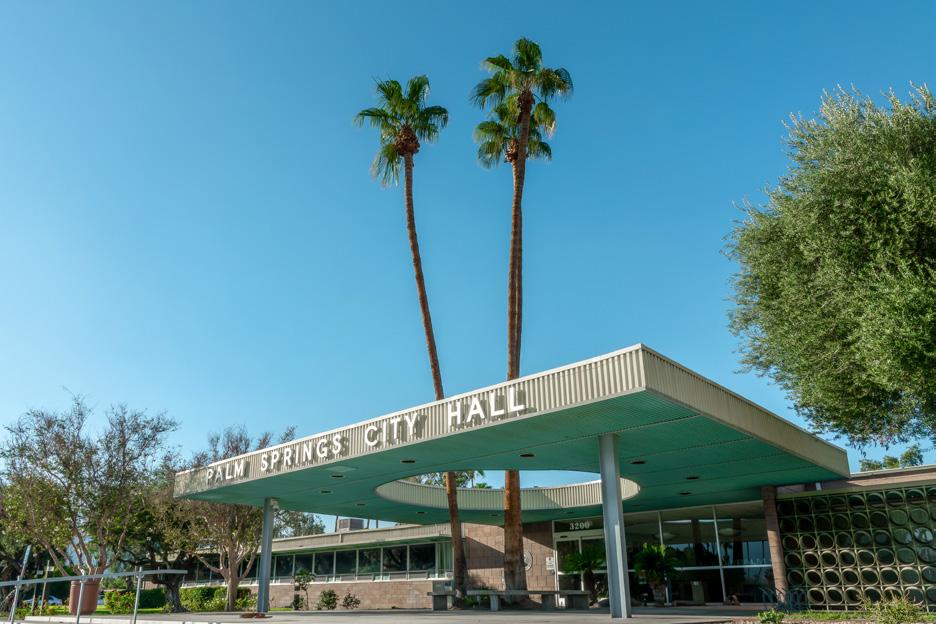
maintenance to the margins. Over time, however, deferred updates compound.
Outdated cross-references or conflicting sections may create legal exposure. Staff may spend valuable time interpreting or reconciling language rather than implementing policy. Developers and business owners may encounter delays as questions about applicability arise. Residents may struggle to understand requirements, leading to frustration and diminished confidence in their local government.
Inconsistent enforcement, real or perceived, can further erode trust. When laws are unclear, application becomes uneven. The result is not simply administrative inefficiency; it is weakened democratic legitimacy. Proactive maintenance is far less costly than corrective action.
For city and county managers, code health should be viewed as a core management function. It intersects with risk management, operational efficiency, economic development, and community engagement.
Establishing regular supplementation schedules, defining workflows for ordinance integration, and assigning clear responsibility for code oversight are foundational management practices. Periodic comprehensive recodification provides an opportunity
to reorganize, clarify, and modernize structure, often yielding long-term efficiencies.
Just as infrastructure assets are tracked and assessed, municipal codes benefit from a systematic “health check.” Warning signs may include frequent staff reliance on informal interpretations, repeated confusion about applicability, multiple standalone amendments awaiting integration, or references to outdated statutes and agencies.
Addressing these signals early preserves institutional knowledge and supports continuity through transitions in leadership.
In moments of celebration, it is natural to focus on milestones and achievements. Yet the durability of local government over 250 years has rested not only on visionary leadership, but on disciplined, day-to-day management.
Updating a municipal code may not command headlines. It rarely draws public ceremony. But it is one of the clearest demonstrations that local government takes its responsibility seriously by maintaining clarity, fairness, and transparency in the laws that guide community life.
Democracy is not self-executing. It is stewarded. And in cities, towns, and counties across the country, that stewardship is written, carefully and continuously, into the pages of the municipal code.
In collaboration with other local government associations, ICMA is commemorating America’s 250th anniversary by celebrating the “democracy at the doorstep” facilitated by cities, counties, regional councils, and tribal governments. Learn more at localgov250.org