Michele Lieberman, ICMA-CM, CPM County Manager, Alachua County, Florida NACA’s 2026 County Administrator of the Year
Read more on page 10.
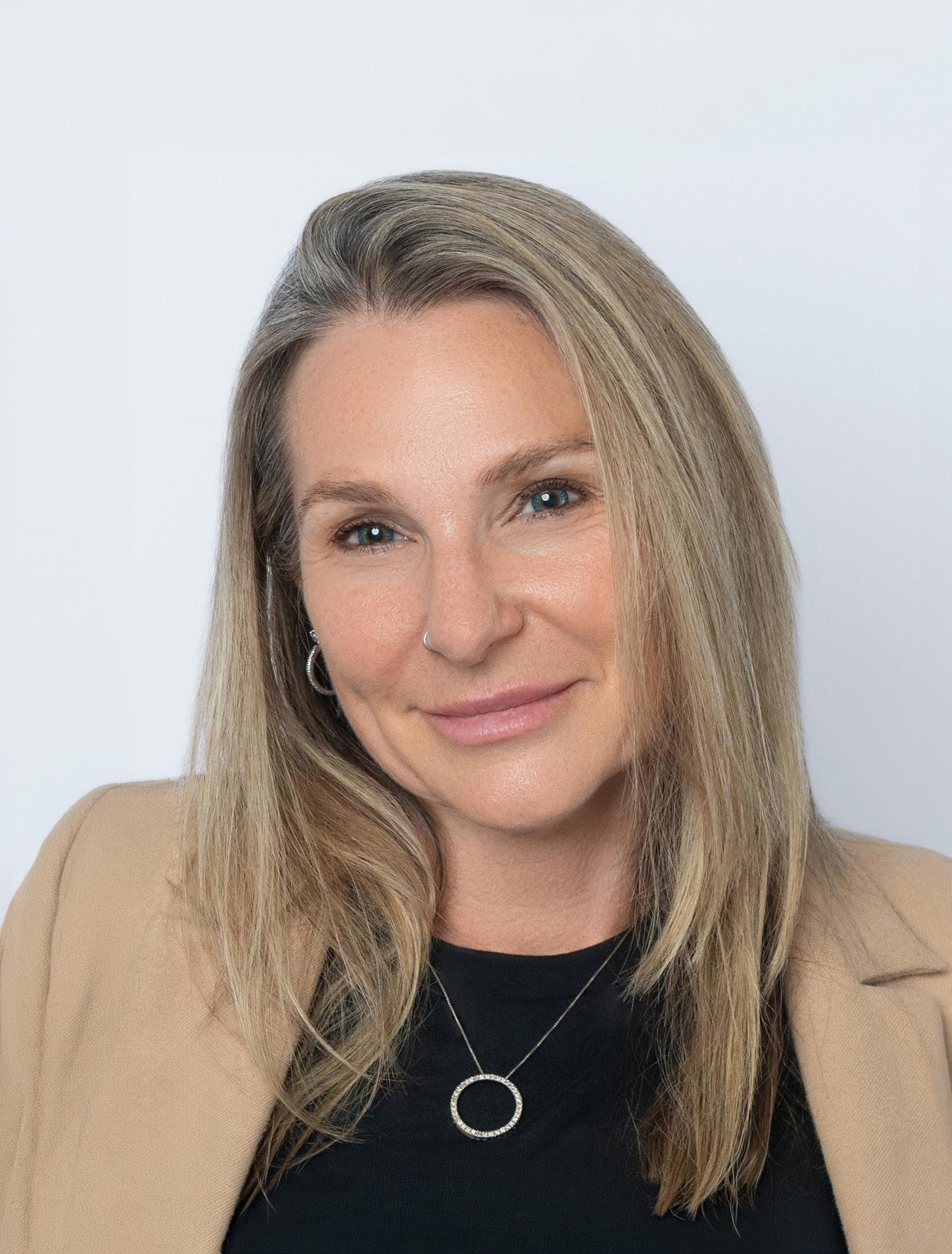
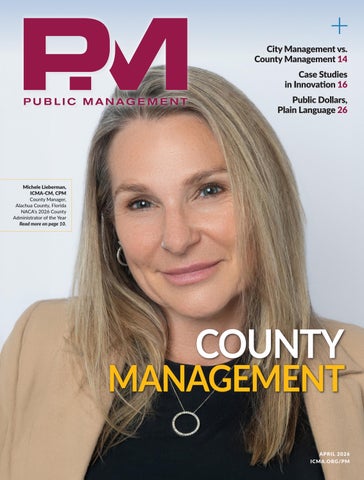
Michele Lieberman, ICMA-CM, CPM County Manager, Alachua County, Florida NACA’s 2026 County Administrator of the Year
Read more on page 10.
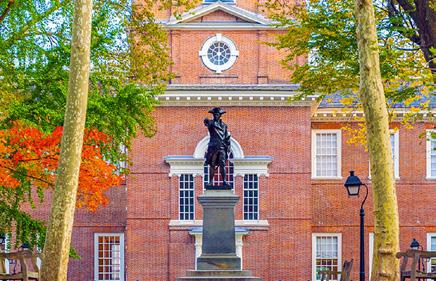
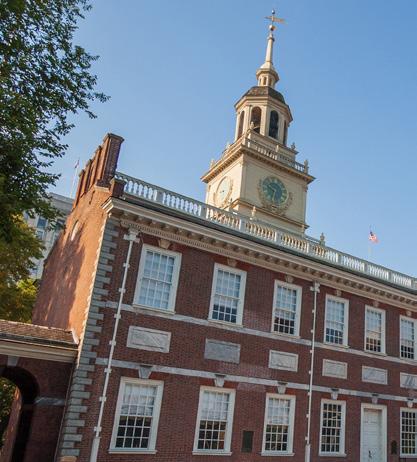
MAY 13-15, 2026 | PHILADELPHIA, PENNSYLVANIA
As polarization rises, ethical leadership matters more than ever. Join local government leaders in Philadelphia this May for networking, education sessions, and workshops celebrating the nation’s 250th anniversary. You’ll gain practical strategies and tools to lead high-stakes meetings, manage scrutiny, and rebuild community confidence. Save $100! Register by March 30!
General Session Keynote

Building a Civic Renaissance in Your City or County
Alexandra O. Hudson Founder of Civic Renaissance and author of The Soul of Civility: Timeless Principles to Heal Society and Ourselves
Other Session and Speaker Highlights
Solve Tough Problems, Build Real Trust: Reimagining Public Engagement with Citizens’ Assemblies
Valerie Lemmie Senior Advisor for State and Local Government at the Kettering Foundation

Reclaiming Civic Trust: New Models for Fiscal Transparency and Engagement
Chris Morrill Executive Director/CEO for the Government Finance Officers Association (GFOA)

14
City Management, County Management—
Not So Similar After All
Understanding the differences and similarities promotes appreciation and cooperation.
Daryl Delabbio, ICMA-CM and Al Vanderberg, ICMA-CM
18 Case Studies in County Innovation
How counties are using practical innovations to improve resident outcomes
Kenneth Wilson, ICMA-CM and Michael B. Colbert
26
Public Dollars, Plain Language
How one county made financial information accessible for the average resident Bridgette M. Gransden
30
One-on-Ones with Your Elected Officials
How to really make them count
Jan Perkins, ICMA-CM and Tamara Letourneau, ICMA-CM
34
Ensuring Accessible and Autism-Friendly Parks, Services, and Destinations
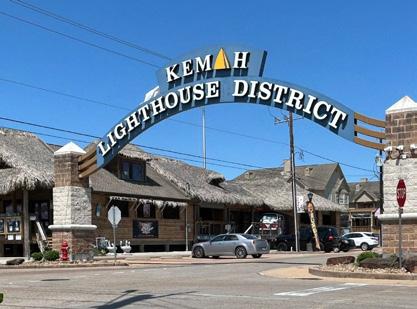
Advancing neurodiversity equity and inclusion in Kemah, Texas Cesar Garcia, ICMA-CM
4
International City/County Management Association

2 Executive Director’s Corner Appreciation for Counties and Those Who Manage Them
4 Ethics Matter!
The Shot Heard ‘Round Town Hall
8 Commentary In Praise of Counties
9 Snapshot Counties at a Glance
10 County Leadership
Announcing NACA’s 2026 County Administrator of the Year
12 Women in Leadership
Betsy Keller, ICMA-CM, Chosen as El Paso Hall of Fame Inductee
38 Assistants and Deputies Storytelling Through Podcasting
40 Next Generation
In celebration of the 25th anniversary of ICMA’s Credentialed Manager program, we’ll be acknowledging each author that holds the credential with this gold icon ICMA-CM in each issue of 2026. 42
Empowering Future Civic Leaders through the 2026 Judy L. Kelsey Scholarship
42 Local Gov 250
The Responsibility of a More Perfect Union
46 Future of Professional Management Fund
“Why We Give to the Fund” with the Texas City Management Association
48 Professional Services Directory
BY JULIA D. NOVAK, ICMA-CM
Local government in the United States is remarkably diverse. From cities and towns to townships, villages, boroughs, and special districts, communities organize themselves in ways that reflect their history, geography, and needs.
Counties sit at the center of this ecosystem,1 bridging state policy and local service delivery. They are both familiar and complex—serving rural, suburban, and urban communities alike—and they play an essential role in the strength and success of our profession.

JULIA D. NOVAK, ICMA-CM is executive director of ICMA.
County governments are the primary service provider for roughly half of the U.S. population, yet no two counties look exactly the same. Some serve millions of residents across vast metropolitan regions; others cover wide geographic areas with small populations and limited tax bases. This variation is not a weakness—it is a defining feature of county government. Counties must continuously adapt to differences in scale, governance structure, and community expectation, all while delivering core services that residents rely on every day.
That need to adapt is where innovation becomes central to county government. Counties often operate where
International City/County Management Association
icma.org
April 2026
ICMA has moved!
Our new address: 660 N Capitol St NW Suite 700, Washington, DC 20001
Public Management (PM) (USPS: 449-300) is published monthly by ICMA (the International City/County Management Association) at 660 North Capitol St NW, Suite 700, Washington, DC 20001. Periodicals postage paid at Washington, D.C., and at additional mailing offices. The opinions expressed in the magazine are those of the authors and do not necessarily reflect the views of ICMA.
COPYRIGHT 2026 by the International City/County Management Association. All rights reserved. Material may not be reproduced or translated without written permission.
REPRINTS: To order article reprints or request reprint permission, contact khansen@icma.org
SUBSCRIPTIONS: U.S. subscription rate, $60 per year; other countries subscription rate, $155 per year. Printed in the United States. Contact: 202/289-4262; subscriptions@icma.org.
POSTMASTER: Send address changes to Public Management, ICMA, 660 North Capitol St NW, Suite 700, Washington, DC 20001.
ARTICLE PROPOSALS: Visit icma.org/writeforus to see editorial guidelines for contributors. For more information on local government leadership and management topics, visit icma.org.
challenges are most visible and most complex—public health, human services, justice systems, infrastructure, and emergency response. Whether responding to workforce shortages, implementing new technology, or redesigning service delivery models, counties are frequently at the forefront of practical innovation. They innovate not for recognition, but out of necessity—finding new ways to serve residents efficiently, equitably, and sustainably. At the same time, counties demonstrate extraordinary resilience. Economic cycles, natural disasters, public health emergencies, and demographic change test local governments regularly. Counties must respond quickly, coordinate across jurisdictions, and maintain continuity of service even when resources are strained. Their ability to absorb shock, recover, and improve reflects the professionalism and commitment of county managers and staff. Resilience is more than bouncing back—it’s about learning, adjusting, and emerging stronger.
Counties also differ from cities and other local governments in important ways. Their service portfolios are broad, their governance structures varied, and their stakeholder environments are complex. Counties work
Public Management (PM) icma.org/pm ICMA
660 North Capitol St NW Suite 700 Washington, DC 20001
EDITORIAL: khansen@icma.org
ADVERTISING SALES: Natalie Matter Bellis The YGS Group natalie.matterbellis@ theygsgroup.com 717-580-8184
ICMA MEMBER SERVICES: 800.745.8780 | 202.962.3680 membership@icma.org
ICMA
Creating and Supporting Thriving Communities
ICMA’s vision is to be the leading association of local government professionals dedicated to creating and supporting thriving communities throughout the world. It does this by working with its more than 13,000 members to identify and speed the adoption of leading local government practices and improve the lives of residents. ICMA offers membership, professional development programs, research, publications, data and information, technical assistance, and training to thousands of city, town, and county chief administrative officers, their staffs, and other organizations throughout the world.
Public Management (PM) aims to inspire innovation, inform decision making, connect leading-edge thinking to everyday challenges, and serve ICMA members and local governments in creating and sustaining thriving communities throughout the world.
with elected officials who may represent wide and diverse constituencies. They collaborate with municipalities, special districts, and state agencies—often simultaneously.
Despite these differences, our members who serve in counties share a common foundation with all professionally managed local governments: a commitment to ethical leadership, effective management, and service to the public. This was formally acknowledged by the ICMA membership in 1991 when we voted to change our name to be inclusive of counties, becoming the International City/County Management Association. That shared foundation is why counties are so integral to our professional organization. The recognition of counties within our profession affirmed what county managers already knew—that innovation, professionalism, and excellence thrive at the county level.
ICMA members “affiliate” with one another in smaller communities that allow people with unique shared
PRESIDENT
Michael Land*
City Manager Coppell, Texas
PRESIDENT-ELECT
Andy Pederson*
Village Manager
Bayside, Wisconsin
PAST PRESIDENT
Tanya Ange*
County Administrator
Washington County, Oregon
VICE PRESIDENTS
International Region
Meighan Wark
County Administrative Officer
Huron County, Canada
Lungile Dlamini
Chief Executive Officer
Municipal Council of Manzini, Eswatini
Jānis Lange
Chief Executive Officer
Riga City Municipality, Latvia
Midwest Region
Jeffrey Weckbach*
Township Administrator
Colerain Township, Ohio
Cynthia Steinhauser*
Deputy City Administrator
Rochester, Minnesota
Cori Burbach*
Assistant City Manager
Dubuque, Iowa
Mountain Plains Region
Pamela Davis
Assistant City Manager Boulder, Colorado
Sereniah Breland
City Manager Pflugerville, Texas
Penny Postoak Ferguson* County Manager Johnson County, Kansas
Northeast Region
Steve Bartha* Town Manager Danvers, Massachusetts
Brandon Ford
Assistant Township Manager Lower Merion Township, Pennsylvania
Kristy Rogers* Town Manager Milton, Delaware
experiences and aspirations to connect. For our county members, that space is the National Association of County Administrators (NACA). We appreciate the opportunity this creates for county leaders to share experiences and to recognize their colleagues.
Earlier this year, NACA established the County Administrator of the Year award in honor of former county administrator David J. Krings. Michele Lieberman, ICMA-CM, county manager of Alachua County, Florida, is the first recipient of this inaugural award. We congratulate Michele and appreciate NACA’s commitment to lifting up members who contribute to our profession.
As you read this month’s articles, remember that best practices are scalable and adaptable. The idea itself may not be directly transferrable, but it is important to ask yourself what could be adapted to the context of your own jurisdiction. Every community is different, regardless of the underlying legal basis for the local jurisdiction. The challenge of professional management is to identify how to take the idea and adapt it to your community.
As we continue to elevate innovation and resilience as core themes of our work, counties offer compelling examples of both. Their experiences strengthen our collective knowledge, their challenges sharpen our professional skills, and their successes demonstrate the value of professional management.
Recognizing counties is not simply about structure or scale—it is about honoring the leadership that makes local government work.
1 With notable appreciation for the exceptions that prove the rule: Louisiana is divided into parishes rather than counties. Alaska is divided into boroughs and census areas, not counties. In Connecticut, counties exist on paper for statistical purposes, but do not function as local governments. In Rhode Island, they exist in name only but have no governing authority. In Virginia, you live in a city or a county, but not both.
Southeast Region
Eric Stuckey City Administrator Franklin, Tennessee
Chelsea Jackson
Deputy City Manager
Douglasville, Georgia
Justin Smith
Assistant City Manager Pelham, Alabama
West Coast Region
Nat Rojanasathira*
Assistant City Manager Monterey, California
Elisa Cox*
City Manager
Rancho Cucamonga, California
Katie Koester* City Manager Juneau, Alaska
* ICMA-CM
Managing Director, Lynne Scott lscott@icma.org
Brand Management, Marketing, and Outreach
Senior Managing Editor Kerry Hansen khansen@icma.org
Senior Editor Kathleen Karas kkaras@icma.org
Graphics Manager Delia Jones djones@icma.org
Design & Production picantecreative.com
250 years later, the work of self-governance continues.
BY STEVE BARTHA, ICMA-CM
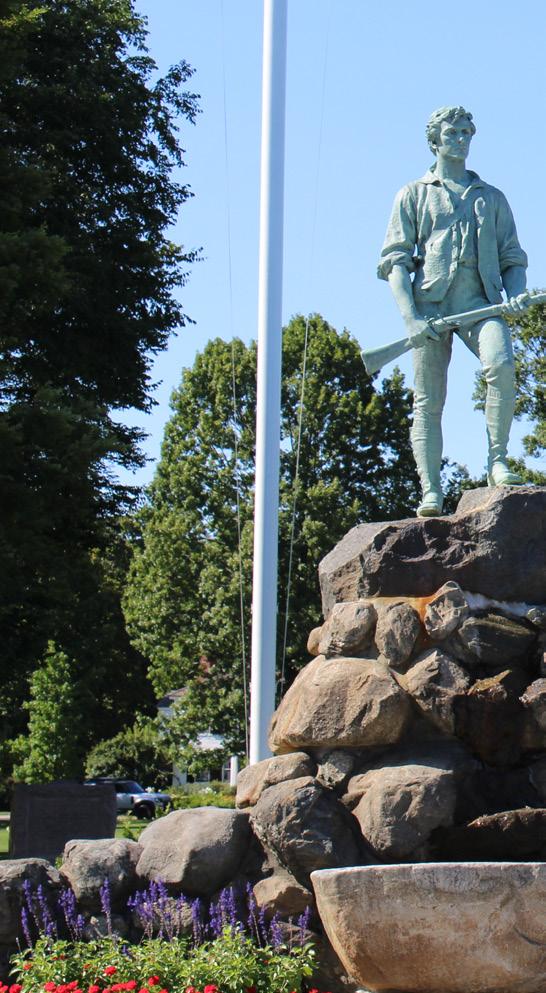
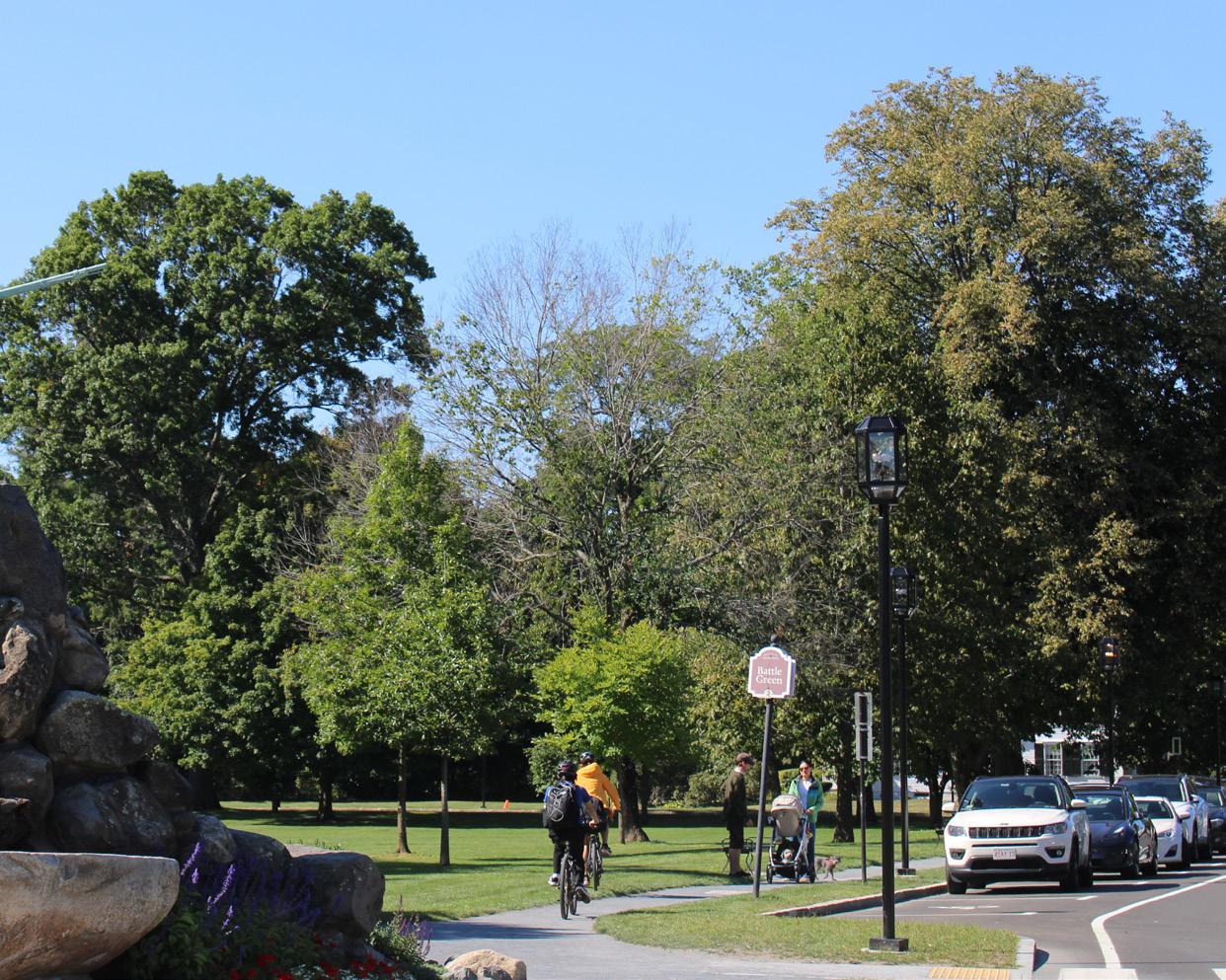
On April 19, 1775, a small band of colonial militiamen (the Minutemen) stood on Lexington Green at dawn, outnumbered and outgunned, facing the most powerful military force on Earth. (And if you’ve never attended the annual reenactment, you’re missing out!) Nobody knows who fired first— historians have been arguing about it for 250 years. What we do know is that something remarkable happened there: ordinary people, chosen by their neighbors, stood up for the idea that government must be accountable to the governed.
As America prepares to mark its 250th birthday, it feels right to pause and ask what those Minutemen were really fighting for. Not in the abstract, but in the context of daily life: the kind of democracy you find at a town meeting (our New England colleagues know what that means; for the rest, read on), a budget review, or a planning board hearing—the kind of meetings we government nerds have spent a century quietly attending.
ICMA Ethics Director Jessica Cowles pitched the idea for this article to me in December. She and I come to this work, appropriately, from the same starting point: an undergraduate classroom at Michigan State University’s James Madison College (JMC) of Public Affairs. (Go Green!) We both studied political theory and constitutional democracy within a few years of each other, and only crossed paths years later through ICMA. A coincidence that says something either about the value of a good political theory education or about the remarkably small world of public administration. Possibly both.

What Tocqueville Saw
Alexis de Tocqueville (a rock star in the JMC political theory program) arrived in America in 1831, just 56 years after Lexington, and spent nine months trying to understand what made this democratic experiment tick. (If only Bill and Ted could transport him to 2026…) He had a gift for identifying things Americans themselves took for granted. Among his most enduring observations:
“It is not the administrative but the political effects of decentralization that I most admire in America. In the United States, the interests of the country are everywhere kept in view; they are an object of solicitude to the people of the whole Union, and every citizen is as warmly attached to the general interest of his country as he is to his own. He takes pride in the glory of his nation; he boasts of its success, to which he conceives himself to have contributed; and he rejoices in the general prosperity by which he profits. He has some understanding of these things, and he loves his country for all these reasons.”
—Alexis de Tocqueville, Democracy in America, Volume I (1835)
Tocqueville’s insight was not that America had a great federal government; it was that Americans had learned
to govern themselves locally, and that this habit—this daily practice of democracy—was what made the larger project possible. He saw something that a lot of people in a lot of eras have seemingly forgotten: democracy is not a spectator sport. It requires practitioners.
This is where the ICMA Code of Ethics enters the picture—not as a compliance document, but as a statement of democratic purpose. The Code’s very first tenet (my favorite) opens with a declaration: “We believe professional management is essential to effective, efficient, equitable, and democratic local government.”
Read that again: effective, efficient, equitable, and democratic. Not effective and efficient instead of democratic. Not democratic or equitable at the expense of effectiveness. All—together—as a unified professional obligation. The framers of the Code seemed
to understand—and our profession has reaffirmed ever since—that a technically brilliant local government that doesn’t serve democratic values has missed the point entirely.
What does that commitment look like in practice? It looks like making budget documents genuinely readable. It looks like holding community meetings at times when working families can attend (or offering them virtually). It looks like serving the best interests of all community members (tenet four) equitably and without discrimination. It looks like presenting council, or select board, or county commission, etc., with honest analysis even when the honest answer is politically inconvenient.
The Code also calls on members to respect and uphold democratic principles. At a time when those principles are being discussed, debated, and defined from every direction, local government managers are in a unique (and increasingly uncomfortable) position: we are neither partisans nor bystanders. We are stewards of the
process itself — obligated not to any outcome but to the integrity of the system by which communities reach their own outcomes.
Here are a few additional facts about Lexington that don’t always make it into history books. The town meeting form of government that existed in Lexington in 1775 still exists today. The citizen town meeting members of Lexington (189 to be exact, with 21 elected to staggered three-year terms from each of nine precincts) still gather, debate, argue, debate some more, and then vote on local matters in a tradition of direct democracy that is nearly as old as the country itself.
The select board—a title so wonderfully archaic it practically demands a tricorn hat—continues to oversee town affairs alongside a professional town manager backed by an incredible senior management team. Captain John Parker, who commanded the militia on the Green that April morning, had been selected to lead by his neighbors. He was not appointed by a distant authority; he was chosen by the people who would stand beside him.
Local government is where democratic habits are formed and sustained. It is where residents learn that their voice has weight, that showing up matters, that the decisions made in modest municipal buildings affect the texture of daily life. Tocqueville understood this. The authors of the ICMA Code understood it. And every manager who has sat through a contentious public hearing at 11 o’clock on a weeknight, committed to letting every voice be heard before the vote, understands it in a very immediate (and probably caffeinated) way.
Democracies decay when their small but vital daily practices erode—when people stop believing their participation matters, when the work of governance feels remote and opaque, when the distance between resident and decision grows imperceptibly wider, and when civil discourse becomes neither civil nor much of a discourse.
We are democracy’s quiet custodians. Not its authors, not its defenders in any dramatic sense, but its day-today keepers. We make sure the meeting notice goes out on time, the public comment period is real rather than performative, the staff report tells the truth even when the truth is complicated. These small things stack up, cumulatively, to form the foundation upon which the entire enterprise sits. Take care of the little things, Emily Dickinson told us, and the big things take care of themselves.

Those assembled on Lexington Green in 1775 were not ideologues. They were farmers, tradesmen, and neighbors—people with a practical, personal stake in the question of who governs. They understood something that has not changed in 250 years: that selfgovernance is not a condition you achieve and then maintain passively. It is a practice, and it requires people who take it seriously.
The ICMA Code of Ethics exists because this profession made a collective decision, more than a century ago, to take it seriously. To commit, formally and publicly, to something larger than organizational efficiency or career advancement: to the idea that professional local government management is, at its core, a democratic act. Two hundred fifty years after the shot heard ‘round the world, the work continues—at town meetings, city councils, and county commissions; in budget meetings and planning offices; in every community where a professional manager and an elected body are trying, together, to get it right. While the Green has gotten a good deal quieter, the stakes are no less real.
In-Person Workshop
Tapping into Your Primal Intelligence: Better Decision-making in Uncertain Environments
June 4–5, 2026 • Columbus, Ohio

Join us for a two-day, in-person workshop based on Angus Fletcher’s bestselling book, Primal Intelligence, and learn to unlock the “storythinking” powers unique to the human brain: intuition, imagination, and common sense.
Walk away with the tools to:
• See the Future Faster: Recognize patterns before they become crises.
• Navigate Volatility: Maintain clarity in high-stakes environments.
• Lead Innovation: Solve challenges that data alone cannot address.
Register by May 15.
Local Government Reimagined Conferences
April 8 | The AI Edge | Orlando, Florida
May 13 | Democracy and the Public Trust | Philadelphia, Pennsylvania
Effective Supervisory Practices
April 9 | Training Series
Leading in Turbulence
April 15 | Free Coaching Webinar
Improving Your Jurisdiction’s Development Review Process
April 16 | Webinar
Leading into the Future Series, Session 1: Breaking Into Local Government
April 21 | Webinar
Operational Excellence: How AI Dash Cams Deliver ROI for Local Governments
April 22 | Free Webinar
AI Myth Busting: From Misconception to Measurable Impact—A Practical Guide for Public Sector Leaders
May 6 | Free Webinar
The Current State of Student Debt and Forgiveness
May 7 | Free Webinar
Leading Into the Future Series, Session 2: Building Resilience for Challenging Times
May 13 | Webinar
For a full listing of events and details, visit icma.org/events. Shop all courses at learning.icma.org.
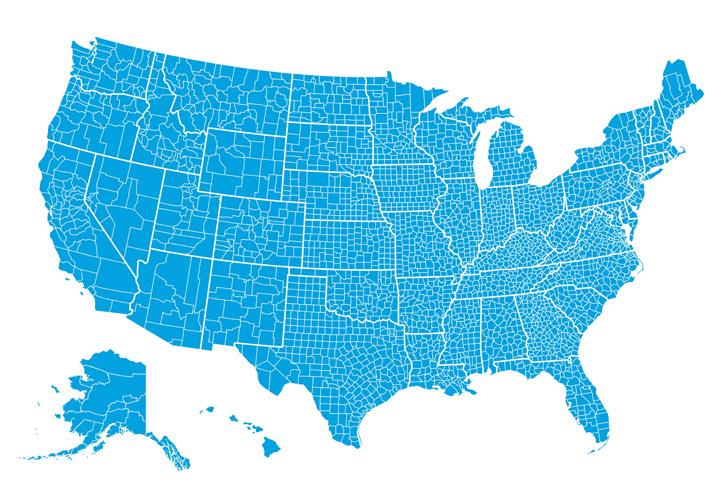
The 3,069 counties in the United States represent the best of public administration and local government excellence.
BY DR. IAN M. COYLE, ICMA-CM
I was in an “early in my profession” job, working for a village government in New York. In New York, a village is a separate government within a town, which is within a county. Equivalent to a small city from a local government structure, but sits from a physical and legal/structural boundaries perspective within the town—the donut hole to the town’s donut.
We had some oft-challenging dealings with the town on a few issues and it bred animosity with some on the respective boards. I needed help with a grant and, through my research, noted the county would likely be helpful, to which a village board member commented, “Oh God, no, they’re worse than the town!”
My next job, a few years later, saw me moving from village to county administration. From police, water, volunteer fire, public works, and codes (and that’s about it) to public defense, a hospice program, mental health services, and a nursing home that relies on the county government for the livelihood and care of 266 residents—oh, and all of the other core local government services that one would expect to operate at the municipal level.
This small commentary is in praise of counties.

Counties have been called the “default” of local governments—the Big Brother and the local government that operates the “offices of unfunded requirements.” They have unique qualities and often large boards, more than 20 people sometimes, and local elected official department heads, such as the sheriff and county clerk. Per the pun above, usually, counties have more mandated services (social services, health, criminal justice, education, transportation, and so forth) than their other local government peers.
Counties certainly range in size. The National Association of Counties considers the largest county by land area in the lower 48 to be San Bernardino County, California, at 20,105 square miles and the smallest to be Arlington County,
Virginia, at just 26 square miles. The 3,069 counties in the United States represent the best of public administration and local government excellence. In fact, counties—of all the types of local governments in the country, from villages to towns to cities to boroughs—oversee the most expansive, complex, diverse breadth of services and programs in the entire spectrum of local government. Residents, tourists, businesses, and all types in between trust counties because they are the backstop. They are the safety net. They are the provider of the last resort. They provide cradle-to-grave, true life-cycle services from A to Z. Emergency management? Check. Jail operations? Check. Economic development? You bet. Meals on wheels? Yes, believe it or not. Emergency medical services? Yes, and this is a growing area of service for many counties. Public health clinics? Yes—remember us during the pandemic? And, perhaps most importantly, think about how and where and through what mechanisms democracy at its core is most often exercised here in the United States. At the voting booth, with elections administered by county Boards of Elections. (Elections are usually administered at the county level, though in some New England and Midwestern states, this duty falls to cities or townships.)
Including both internships and formal job placements, I have worked in city, town, village, public authority, county, state, and federal government positions. In my consulting work, I have consulted with scores of local governments of all types and sizes. Counties are indeed a special group, and I am proud of my county service and pleased that PM is dedicating an issue to celebrate the amazing work of these dedicated public servants.
3,069
Total number of counties in the United States
Counties employ more than 3.6 million public servants
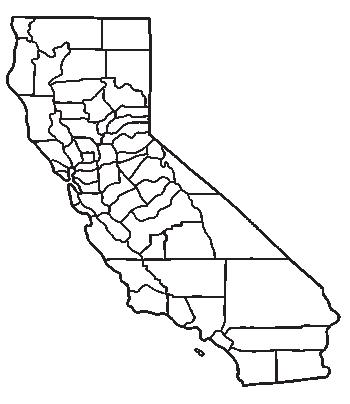
Largest county in geographical size: San Bernardino County, California (20,105 square miles)
Number of counties with more than 1 million residents (which accounts for 30% of the U.S. population)
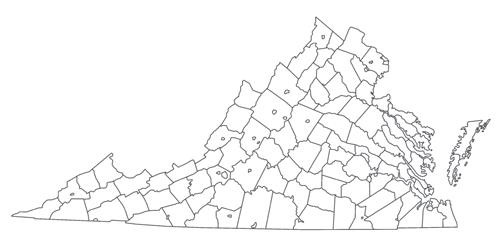
Smallest county in geographical size: Arlington County, Virginia (26 square miles)


Source: National Association of Counties (NACo), naco.org
Washington: The most common name for a U.S. county (found in 31 states)
Jefferson: The second most common name for a U.S. county (found in 26 states)
A prestigious county management award honoring the legacy of David J. Krings
BY BETSY C. KELLER, ICMA-CM
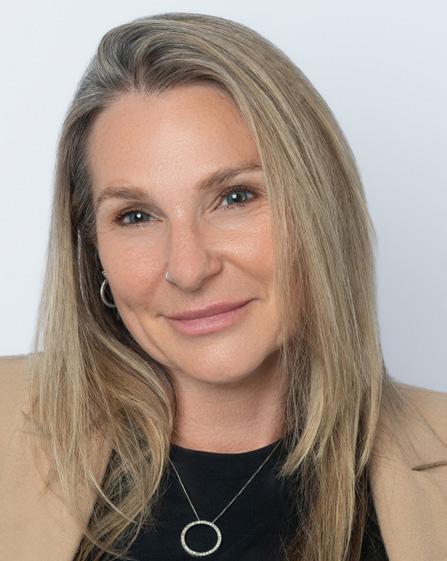
On behalf of the National Association of County Administrators, I’m proud to announce the recipient of the 2026 David J. Krings County Administrator of the Year Award is Michele Lieberman, ICMA-CM, CPM, in recognition of her exemplary service and enduring contributions to county government and the county management profession.
With more than two decades of local government experience, Michele currently serves as county manager of Alachua County, Florida, having previously served as Alachua County attorney. Nominated by peers and colleagues, she was evaluated through a rigorous, peer-driven review process and chosen for consistently embodying the values that defined the award’s namesake, David J. Krings—integrity, humility, professionalism, and service above self.
The County Administrator of the Year Award is a tribute to his enduring legacy. Throughout his distinguished career, Dave exemplified the highest ideals of public service and an unwavering commitment to community. He served as both ICMA president (2003–2004) and NACA president (1986–1987). His influence on county administration and local government continues to inspire generations of leaders.

BETSY C. KELLER, ICMA-CM is chief administrator of El Paso County, Texas, and president of the National Association of County Administrators for 2025–2026.
County administration is at its best when it remains firmly focused on people—and Michele Lieberman exemplifies that standard every day. Through her leadership, integrity, and unwavering commitment to ethical public service, she has not only strengthened her organization but elevated the profession as a whole.
I have had the pleasure of collaborating with Michele through her leadership in advancing professional development across our associations, and I have seen firsthand her dedication to mentoring others and building strong, capable leaders.
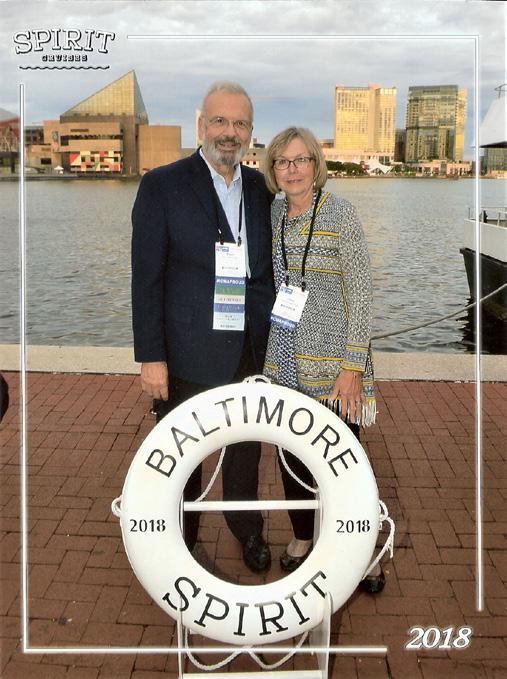
This award is generously made possible by his wife, Christine, and their daughters. Amy Krings, one of his daughters, reflected on how much the award would mean to her father. “My dad took great pride in his profession. He cared deeply for his colleagues. My mom, sisters, and I remember him counseling his fellow administrators in good
times and hard, as they navigated challenging decisions or opportunities. He would have been exceptionally honored and humbled to know that an award celebrating excellence in public service bears his name. Our family is sincerely grateful to ICMA and NACA for honoring his work and legacy in this meaningful way.”
The award, conferred by the NACA Executive Board, recognizes an outstanding county administrator whose service has been judged by peers as exemplary and impactful. The recipient embodies the values Dave held dear, serving as a beacon of leadership, mentorship, advocacy, ethics, expertise, and thought leadership. Nominees are evaluated on their consistent leadership in management associations, their dedication to mentoring peers and young professionals, advocacy for underprivileged populations, and their commitment to ethical public service. The award also honors those who have developed recognized expertise and advanced the
profession through writing, research, and active participation in professional forums.
Tanya Ange, county administrator of Washington County, Oregon, NACA West Coast regional vice president, and ICMA past president, remarked, “County government plays a critical role in strengthening communities, and our profession depends on leaders who are committed to integrity, ethical service, and putting people first. This award is an important way for us to recognize peers who exemplify those values—leaders who mentor others, uphold the ICMA Code of Ethics, and actively contribute to the advancement of county administration. As both an ICMA past president and a NACA board member, I believe it is essential that we continue to celebrate excellence within our profession and honor the individuals whose leadership elevates county government and inspires the next generation.”
The recipient of this distinguished award is invited to attend the ICMA Annual Conference, where the award ceremony will be held during the County Administrator Idea Exchange. The award includes a $1,500 scholarship to support ICMA Annual Conference attendance and continued professional engagement.
Eligibility for this prestigious honor requires a minimum of seven years of service as a county administrator/manager, with nominations accepted from peers and colleagues. The rigorous selection process ensures that the awardee truly reflects the spirit and memory of David J. Krings.
Learn more about the award at countyadministrators.org/ awards. Learn more about the ICMA Voluntary Credentialing program at icma.org/icma-voluntary-credentialing-program.
A consummate leader in county management and advocate for her profession, Betsy is truly deserving of this great honor.
BY LORENA RODRIGUEZ
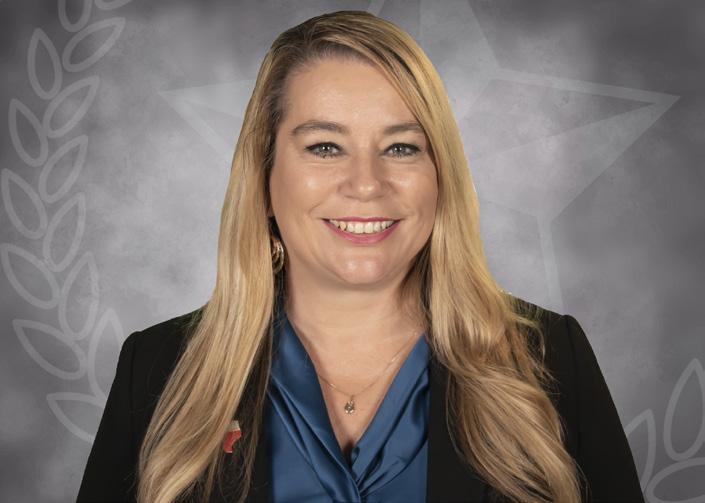
Betsy C. Keller, ICMA-CM, has been selected as the El Paso Commission for Women’s 2026 Women’s Hall of Fame inductee for her work in public service. Betsy has served as chief administrator of El Paso County, Texas, since 2008. In addition, she enjoys giving back to her profession. She is president of the National Association of County Administrators and serves as chair of ICMA’s global engagement committee.

LORENA RODRIGUEZ
serves as chief aide for El Paso County, Texas, and is the co-vice chair of ICMA’s SheLeadsGov Committee.
It is an absolute privilege to recognize Betsy, a leader whose dedication to her community and team is nothing short of extraordinary. She leads with a rare blend of empathy and strength, proving every day that compassion and decisiveness are not opposing forces, but powerful partners in meaningful leadership. Her commitment to the well-being of her team members extends far beyond policy or conversation. She intentionally cultivates an environment where people feel valued, supported, and empowered to prioritize their health. She checks in with sincerity, advocates for balance, and ensures that success is never achieved at the expense of personal well-being. Because of her, her team feels seen, not just as professionals, but as people.
She is a passionate champion for women in leadership and the advancement of female voices. Through mentorship, advocacy, and deliberate action, she creates pathways for women to grow, lead, and thrive. She celebrates their achievements, encourages their confidence, and models the courage it takes to step into leadership with authenticity. Her influence has strengthened not only individual careers, but the broader culture of opportunity and inclusion around her.
Within the community, her presence is both steady and impactful. She leads by example, consistently demonstrating integrity, accountability, and generosity.
Her professional accomplishments are significant, yet what distinguishes her most is the way she carries them, with humility and purpose. She understands that leadership is not about title, but about responsibility and service.
Equally inspiring is her unwavering commitment to her family. She speaks openly about the importance of being present, protecting time with loved ones, and honoring personal boundaries. She reminds those around her that self-care is not indulgent, it is essential. By living these values authentically, she gives others permission to define success in a healthier, more balanced way.
She has shown that it is possible to lead with excellence while remaining deeply grounded in love, community, and well-being. Her example is powerful, her impact is lasting, and her leadership is something to be deeply admired and celebrated. With all the qualities Betsy embodies, it is no surprise that the El Paso Commission for Women has bestowed upon her this great honor.
The National Association of State Procurement Officials (NASPO) is the nation’s leader in public procurement, driving excellence for its members through diverse programs, resources, and initiatives.
Learn more about ICMA’s partnership with NASPO at naspo.org.
ICMA is the leading organization for those committed to creating and sustaining thriving communities throughout the world—and seeking the right solutions to make it happen. Learn more at icma.org/strategic-partners.

Understanding the similarities and differences promotes appreciation and cooperation.
BY DARYL DELABBIO, ICMA-CM AND AL VANDERBERG, ICMA-CM
The word diversity immediately suggests differences in gender, race, ethnicity, age, religion, etc. However, there is also a great deal of diversity in forms of local government. Shortly after making the
transition from city to county government, we noticed our colleagues speaking to us very loudly and slowly, while our new county administration colleagues viewed us with some suspicion.
In all seriousness, increasing numbers of professional managers are transitioning between cities, villages, townships, and counties. This transition was the major impetus behind the decision of Michigan’s ICMA affiliate to change its name in 2001 to the Michigan Local Government Management Association (which evolved into the Michigan Municipal Executives in 2016).
As former city managers turned county administrators, we (like many of our colleagues who have done the same) are in a unique position to provide
commentary on the similarities and differences in the varying forms of local government.
In many cases, cities rarely interact with counties and seem to think them to be like large cities. Of course, the old saying, “where you stand depends on where you sit” is applicable; we have found that city and county roles and operations can be both similar and significantly different. Historically, the county was the basic unit of government. Thomas Jefferson wrote that the best method of maintaining
a republican government is to establish counties, divided into wards (townships). Virginia and Massachusetts were divided into counties early in their respective histories, and most other colonies followed suit. Development of county government and the subdivision of townships into six-square-mile units in Michigan can be traced to the Northwest Ordinances adopted in 1785 and 1787.
In 1796, Wayne County was established as the first Michigan county by the acting governor of the territory and included almost all of what eventually became Michigan and portions of Ohio, Indiana, Illinois, and Wisconsin. As lands were settled, additional counties were established.
There are three possible configurations of county government in Michigan:
• County commission.
• County commission with a controller.
• County commission with an elected county executive. Counties that use the first configuration may choose to appoint a county administrator, controller, or administrator/ controller to perform administrative duties. In the county controller form of governance, state law delegates certain accounting functions from the county clerk and treasurer to a controller.
Like cities, villages, and townships, counties are enabled constitutionally and statutorily to carry out a variety of functions and tasks, which allows the local government to reflect the values and policies of its residents. Accordingly, many governments provide different discretionary services depending upon the composition of the
governing body, past practice, and tradition.
In some instances, constitutional or statutory language authorizing an action is permissive; it merely allows counties to do something if the governing body elects to do so. In other cases, the language is stricter, requiring or mandating a county to perform or fund a certain activity. Occasionally, there is an element of delegation: a state department is authorized to perform a function, which it delegates to a county through contract or administrative rule. Cities were formed where large numbers of houses were built and inhabitants united through incorporation to make public improvements. Cities in Michigan get their authority from charters adopted per the provisions of the Home Rule Cities Act, while Wayne County is the only county in Michigan with a charter. However, like cities, counties are creatures of the state, struggling with the some of the same issues: unfunded mandates, collective bargaining and Act 312 arbitration, loss of state shared revenues, and of course, competition for limited resources.
Nonetheless, there are differences in what counties and cities are and what they do. City services are often physical and visible and serve all the residents within the corporate limits of the city. Water filtration and distribution, sewer collection and treatment, street maintenance, leaf pickup, and garbage collection are examples of this. Counties serve in many ways as administrative arms of the state.
We should learn about the structure of governments we’re not familiar with. All too often, we put up fences instead of developing greater understanding and cooperation.
The two functional areas that generally receive the bulk of county financial resources and staffing are human services (health and community mental health, in particular) and justice (including corrections, adjudication, and enforcement). Due to the nature of these services, many residents do not receive direct aid from large portions of a county’s budget. For instance, in Kent County, these two functional areas receive $481.7 million of the $654.6 million 2026 operating budget, or 73.59%.
Correctional facilities and court systems (district court, family court, probate court, and circuit court) also serve small subsets of the population in any given year. Thus, counties are not large cities or, as some might suggest, big townships. Counties are designed to deliver statutorily defined, mandated services and have the option to provide other services at the countywide level.
Perhaps the largest misconception about counties in Michigan is that county road commissions are part of county government. In many counties, road commissions are separate organizations
with their own funding mechanism (Act 5l), financial and accounting mechanisms, and human resources systems, and are not part of the broad county organization. What is surprising to many of our colleagues in local government is that the roles of county commission chair and county administrator differ significantly from those of mayor and city manager. While in cities it is the mayor or manager that serves as the chief administrative or executive officer, in counties without a county executive, the roles of the commission chair and administrator are somewhat limited. (In Michigan, only Bay, Oakland, and Wayne counties have elected county executives.)
In many cities, the norm for most is that the mayor is elected on an at-large basis and represents the broader constituency of the community. In counties, the commission chair and vice chair are selected by their peers on the board of commissioners, so in terms of constituency, the commission chair represents the district from which he/she was elected, not the entire county.
Each type of government has its purpose and adds to the diversity of our governmental structures.
But the effectiveness of any individual is based upon the strengths that individual brings to office. Leaders in any form of government may be either effective or ineffective based upon their individual skills and personalities. When considering the size and complexity of a county organization, county administrators have a rather limited sphere of control. County administrators have less interaction with the public than their city counterparts. Our “constituencies” in many instances are the line departments and agencies of the county. We are responsible for appointed finance, human resources, information technology, and facilities management directors, who in turn provide services to other county departments.
In some instances, the health department director, public works director, and parks director report to the administrator, and in other instances, they report to a board or commission, which may have policy-making powers. Elected officers (clerk, register of deeds, treasurer, sheriff, drain commissioner, prosecutor) are held accountable to the electorate. Thus, counties can be viewed as more of a confederation of governments and as such, the county administrator often functions more as a facilitator/leader than the traditional “directive” leader.
This isn’t to suggest that leadership and management isn’t a function of the county administrator. As managers or administrators, we all deal with people. We are still leaders. Our primary goal is to ensure that services are delivered to our constituencies—whether other departments or the public— in a professional, effective, and efficient manner. Our experience in city management supports the concept that successful managers typically manage more by facilitation and collaboration than by the exercise of raw power. Due to the prescribed administrative structure, these facilitation and collaboration skills are drawn on more heavily at the county level.
The political makeup of county government is quite different than most city governments. In Michigan, county officials, including the board of commissioners and countywide elected officers, are elected on a partisan basis. District, probate, and circuit court judges are elected on a nonpartisan basis. This is true in all 83 counties in Michigan. Michigan townships are also governed by a partisan board. However, less than a handful of the 276 cities in Michigan hold partisan elections; they are generally governed by nonpartisan elected boards.
The concept of partisan politics conjures negative images for some. There are

examples of communities where nonpartisan elected councils and commissions behave in a much more partisan manner than partisan councils and commissions. The particulars of local political situations seem to dictate the degree of partisan behavior much more than the label of a body being “partisan” or “nonpartisan.” In our experience, the voting of Kent County’s 21-member board of commissioners has been based more on shared values than political party affiliation most of the time.
Understanding differences and similarities promotes appreciation and cooperation. As county officials we have worked much more closely with township governments and have learned more about this form of government as well. Though we remain committed to professional local government management, we strongly support the notion that managers of different forms of local government should learn
about the structure of governments that they are not familiar with. All too often, we put up fences instead of developing greater understanding and cooperation. Each type of government has its purpose and adds to the diversity of our governmental structures.
DARYL DELABBIO, ICMA-CM spent 40 years in local government, most recently as county administrator/controller for Kent County, Michigan, from 1998 until 2017. (djdelabbio@gmail.com)

AL VANDERBERG, ICMA-CM is county administrator/ controller for Kent County, Michigan. He serves as Midwest vice president on the National Association of County Administrators Board of Directors. (al.vanderberg@ kentcountymi.gov)


For over 50 years, we’ve supported public service professionals with retirement solutions tailored to their needs. Moving forward we’ll be expanding our mission: offering not only workplace retirement plans, but new ways to deliver on the needs of our customers by supporting individuals and their families as their financial lives change. At MissionSquare, you don’t have to choose between scale and service. We are, and will remain, a company that prides itself on delivering outstanding service, effortless technology, and quality investments.
For more information, visit www.missionsq.org
BY KENNETH WILSON, ICMA-CM
Periods of fiscal uncertainty test the budgeting practices of any government. For Franklin County, Ohio, our response has been to lean into strategic planning, anchoring annual budget decisions to clearly defined priorities and a long-term financial forecast that keeps both leadership and agency partners aligned. This is
especially important when the fiscal picture is unclear.
Franklin County is one of Ohio’s most dynamic jurisdictions. Home to Columbus, the state capital and county seat, we serve a diverse population across a broad range of socioeconomic backgrounds, races, ethnicities, and educational levels. Our
economy draws from trade, finance, education, healthcare, and government contributing to steady growth while also requiring an adaptive approach to public finance.
Franklin County’s budget structure reflects its layered governance. A three-member board of commissioners functions as the county’s
taxing, budgeting, and purchasing authority, setting overall allocations while independent agencies determine how their funds are spent. Eight additional elected officials manage their respective offices as required by Ohio law, overseeing areas ranging from building and zoning to human

services, employment, and economic development.
An appointed county administrator handles dayto-day operations and leads budget development in partnership with the office of management and budget (OMB)—a structure designed for both accountability and responsiveness as the county continues to grow.
The 2026 budget marked a notable inflection point. For the first time in over a decade, Franklin County faced the need for budgetary reductions, driven by the expiration of pandemic-era federal support, concerns about an economic slowdown, and uncertainty surrounding future state and federal policy.
Despite these challenges, county administration developed a budget that aligns with the commissioners’ strategic priorities, defined by six core principles. These principles help clarify why the
county offers certain programs, their value to residents, and their benefits to the community. We have also worked to streamline budget documents to make them clearer and highlight key services.
In 2024, county leadership fine-tuned the strategic goals associated with each core principle. Each principle now has a vision of what we aim to achieve, specific objectives for investment, and core values that guide our work. As Franklin County continues to grow, this strategic direction ensures we remain committed to serving every resident every day.
A central tenet of the county’s budget philosophy is efficient, responsive, and fiscally sustainable governance. Franklin County has maintained triple-A bond ratings from both Moody’s and Standard & Poor’s—a reflection of the disciplined financial management that underpins its long-term strategy.
Stewardship also means forward-looking investment: transitioning to electric vehicles to reduce operating costs, developing a workforce that mirrors the community it serves, and supporting a sustainable network of local service providers. These deliberate strategies protect the county’s financial position over time.
Franklin County has made public transparency a structural commitment. Budget briefs for all 35 county agencies are posted on the county’s website, offering residents accessible detail on revenues, expenditures, staffing, and program highlights. Throughout the year, OMB analysts monitor agency adherence to appropriation levels and performance targets, shifting the budget from a static document into an active management tool.
The annual update of the long-term financial forecast

serves a similar function, identifying emerging revenue and expenditure trends early enough to inform decisions before they become constraints.
The budget process in Franklin County kicks off each spring. After a first-quarter review, the OMB updates the long-term financial forecast, guiding agencies when the budget instructions are released. Each of the 35 agencies outlines their strategic initiatives and performance measures in their strategic business plans, working with the OMB to align their programs with the board of commissioners’ core principles.
During the summer, agencies submit their budget requests, and OMB staff meet with them to review past expenditures and determine the resources needed for the upcoming year. In the fall, OMB prepares budget briefs and presents them to county administration, which formulates recommendations for each program to ensure effective resource use. This culminates in a budget proposal that the board of commissioners reviews. After a series of hearings, the board makes revisions and votes to adopt the budget in December.
The process does not guarantee that every request will be funded. What it does provide is a shared framework grounded in strategic priorities and long-term fiscal guidelines that brings county administration, elected officials, and independent boards into alignment around a common set of goals. In an uncertain fiscal environment, that clarity has proven to be a practical and durable asset.
BY MICHAEL B. COLBERT
In the United States, the intersection of mental health, substance use, and the criminal justice system has become a growing public health challenge. According to the Substance Abuse and Mental Health Services Administration, nearly 44% of people held in local jails and 37% of those in state or federal prisons report having a mental health disorder, rates far higher than those seen in the general population. As a result, jails across the country have increasingly become de facto mental health facilities, often without the infrastructure or clinical resources needed to support recovery.
Montgomery County, Ohio, is no stranger to this reality. As behavioral health needs have risen locally, especially since the COVID-19 pandemic, county leaders have been working to address how best to respond in a system historically designed for detention, not treatment. The Montgomery County Board of County Commissioners (BCC) is taking a significant step forward, constructing a nearly $20 million behavioral health unit within the county jail.
The project represents more than a physical renovation. It reflects a shift in philosophy: recognizing that addressing
behavioral health needs is essential to public safety, staff well-being, and long-term community stability.
Behavioral health challenges in Montgomery County have been growing for years, and the pandemic only added to that pressure. Inside the jail, that reality is felt daily. Since 2019, behavioral health needs in the Dayton region have increased by 26%, and nearly a quarter of the Dayton region’s adult population is affected by mental illness, according to the Greater Dayton Area Hospital Association.
Too often, individuals experiencing mental health or substance use crises enter the justice system because there are few immediate alternatives. The new behavioral health unit strengthens existing services within the jail. While detox services, suicide-prevention measures, medical care, and intake procedures are currently provided, consolidating these resources into a dedicated space will allow for more effective management and coordination. The improved location and design will enhance oversight, efficiency, and continuity of care.
“We know these improvements will increase the safety of inmates and staff, and that’s why we are working to get this right,” said Commission President Carolyn Rice. “This project is the result of years of planning, community input, and expert guidance. It represents a thoughtful, balanced solution to a complex challenge.”
The groundwork for this project was laid almost a decade ago. In
2017, the BCC established an independent justice committee, bringing together voices from civil rights organizations, law enforcement, the judiciary, health care, academia, and faith communities. The group examined jail operations and conditions, sharing findings with the broader community.
“This project is about people, our neighbors, our families, and our community,” said Commissioner Mary A. McDonald. “By creating a safer and more supportive

environment in the jail, we are not only protecting staff and inmates but giving residents a better chance to get the support they need.”
A 2019 report by a jail consultant highlighted challenges related to capacity, operations, and facility conditions. A full jail replacement had been recommended, with an estimated cost of over $170 million. Like many agencies at the time, county leaders were facing pandemic-related budget pressures and chose to focus on practical, targeted solutions. That shift led to the idea of creating a dedicated behavioral health task force.
In 2023, the task force got to work. Made up of experts in health care, law enforcement, the courts, and community leadership, they came to a clear conclusion: the jail needed a dedicated behavioral health
unit to better support a growing inmate population.
“Montgomery County has been addressing behavioral health and addiction challenges for years, including the impacts of the opioid epidemic,” said Commissioner Judy Dodge.
“This behavioral health unit is another tool we can use to support that effort.”
Approved in September 2023, the behavioral health unit project will convert 226 general population beds into a behavioral health and medical wing, expanding medical capacity from 12 beds to 112. Montgomery County has been able to fund this project without tapping critical general funds or requesting additional levies. A combination of American Rescue Plan Act dollars and opioid settlement
funds is making this project possible. Construction began in October 2025 and is expected to be completed by mid-2027.
But county leaders emphasize that the behavioral health unit is only one piece of a broader strategy. Montgomery County is also investing $1.3 million in opioid settlement funds into the behavioral health safety net portal, a tool designed to improve care coordination across health systems, the justice system, and behavioral health providers.
Behavioral health care doesn’t stop at the jail door. This approach helps ensure people receive support when they enter the system and continue to receive care as they transition back into the community.
Since 2019, the BCC has invested more than $6.6
million in jail improvements, including HVAC upgrades, security enhancements, and critical infrastructure repairs. The new behavioral health unit takes that approach a step further, showing that supporting behavioral health is a responsibility shared by the whole community.
“The challenges we see in our community are often reflected inside our jail,” said Sheriff Rob Streck. “This unit will allow us to address those needs more effectively and offer a path toward lasting recovery.”
Across the United States, communities are rethinking how jails handle behavioral health. Montgomery County is taking a thoughtful approach built on collaboration, data, and above all, compassion. At its core is a simple but powerful idea: public safety works best when we treat people like people.

A practical, community-based justice strategy to reduce system strain while strengthening public trust
BY KENNETH WILSON, ICMA-CM
For many residents, an outstanding misdemeanor warrant is not the result of serious criminal behavior. It often traces back to something far more ordinary—a missed court appearance, an unpaid fine, or a notice that never arrived in the mail.
Yet that single unresolved issue can quietly close doors: to employment, to housing, to legally driving to work or school. It can also pull individuals deeper into the justice system at significant cost to them as well as the local government system.
In Franklin County, Ohio, leaders asked a simple question: What if resolving low-level warrants were easier, safer, and less expensive for everyone?
The result is the Tap in Center, a monthly, appointment-based initiative that allows residents with eligible non-violent misdemeanor warrants to resolve their cases without fear of arrest. Launched in fall 2024, the program reflects a growing shift among counties toward practical, communitybased justice strategies that reduce system strain while strengthening public trust.
Commissioner Erica C. Crawley first encountered the model at the 2024 National Association of Counties Annual Conference. After visiting St. Louis County, which had implemented a similar program, she returned home convinced Franklin County could adapt the concept for its own community.
“This isn’t about punishment,” Crawley said. “It’s about accountability, dignity, and giving people a real opportunity to move forward.”
Under the leadership of the Franklin County office of justice policy and programs, the county worked with its municipal court, public defender’s office, city attorney’s office, and other partners to design a localized version. The aim was straightforward: resolve low-level warrants efficiently while connecting participants to stabilizing services.
A defining feature of the Tap in Center is where it operates. Sessions are held
at branches of the Columbus Metropolitan Library rather than at courthouses.
The decision was deliberate. For many individuals, walking into a courthouse with an outstanding warrant can trigger fear and avoidance. Libraries, by contrast, are familiar and trusted civic spaces. They reduce psychological barriers and signal that the event is designed to help, not punish.
Sessions run in the late afternoon and evening to accommodate working residents. Participants must call ahead to confirm eligibility and schedule an appointment. The program is limited to non-violent, lowlevel misdemeanor and traffic cases in Franklin County Municipal Court. While felonies and violent offenses are currently excluded, stakeholders are actively exploring whether low-level, non-violent felony warrants could be incorporated going forward.
At the event, attorneys work to recall warrants and reschedule cases. The no-arrest policy for eligible participants is explicit and foundational. Without
it, participation would be compromised.
The Tap in Center is structured as more than a warrant-clearing program. It functions as a coordinated service hub.
Alongside court representatives and defense attorneys, residents can connect with child support enforcement, the Ohio Bureau of Motor Vehicles, Legal Aid of Southeast and Central Ohio, and job and family services. Community organizations, including Make a Day, Hope Dealers, and Mt. Carmel Homeless Outreach further extend the center’s reach, providing on-site food trucks and transportation to remove barriers for at-risk residents, including those experiencing homelessness. Together, these partners offer assistance with driver’s license reinstatement, benefit applications, child support questions, and when eligible, record sealing or expungement—all at no cost.
“An unresolved warrant can quietly erode opportunity,” Crawley said. “Resolving it can open doors almost immediately.”

This integrated approach reflects a core insight: a missed court date is often a symptom of instability, not criminal intent. Addressing the legal issue without addressing related barriers limits long-term impact.
Mike Scarberry experienced that dynamic firsthand. While
in recovery and working to rebuild his life, he had a nonviolent warrant that created constant uncertainty. Every traffic stop felt risky; every job application was complicated. He was hesitant to attend, reluctant at what he was walking into.
“I was nervous,” Scarberry said. “From my
experience, you know what warrants mean.”
But after hearing from someone he trusted, he scheduled an appointment. At the event, his warrant was lifted and his case was dismissed in a single visit. He also connected with county agencies to address a child support issue and begin the
process of reinstating his driver’s license. Today, he is employed and owns his own car.
“It’s safe,” he said. “If something from your past is blocking you, just go.”
For counties seeking to rebuild trust in justice systems, testimonials like Scarberry’s often carry
more influence than formal outreach campaigns.
The Tap in Center aligns with what Franklin County calls a “smart justice” framework, strategies designed to reduce recidivism, limit unnecessary incarceration, and lower system costs.
The alternative to proactive resolution is costly. Arresting someone on a low-level warrant consumes law enforcement time, jail capacity, court resources, and public defender staff hours. It can destabilize employment and housing, increasing the likelihood of future system involvement.
By contrast, recalling warrants in a structured community setting reduces administrative burden and preserves public safety resources for higher-risk cases. It also addresses court backlogs of outstanding warrants more efficiently.
Commissioner Kevin L. Boyce emphasized the long-term perspective. “Reducing recidivism and finding solutions for justiceinvolved residents has long been a priority for Franklin County. The Tap in Center supports residents who may not even realize they have an outstanding court order.”
The initiative is funded through a federal justice assistance grant, a flexible funding stream often used for evidence-based justice innovations. In Franklin County, that same grant also supports respite housing and fatherhood programming, reinforcing a coordinated strategy rather than isolated interventions.
The premise is straightforward: reduce fear, increase access, and people will show up to resolve their obligations.
The Tap in Center model offers several practical lessons for local governments considering replication: Leverage trusted infrastructure. Community spaces like libraries or recreation centers lower participation barriers and signal that the program is designed to help, not punish. Make eligibility and guarantees explicit. A transparent no-arrest policy for qualifying participants is essential to building trust and driving turnout.
Coordinate across agencies. Legal resolution alone rarely stabilizes residents. Integrating workforce, licensing, child support, and benefits services increases long-term impact.
Use existing grant streams. Justice assistance grants and similar federal funding can provide startup support without requiring new local revenue.
Secure judicial partnership. Courts and stakeholders must be willing to recall warrants outside traditional courtroom settings. Without that
cooperation, the model cannot function.
Franklin County has framed much of its policy agenda around expanding opportunity in workforce development, housing, and economic mobility. The Tap in Center extends that framework into the justice system.
Commissioner John O’Grady summarized the philosophy. “This initiative provides a compassionate pathway to resolve legal issues, opening doors to employment, education, and housing. It empowers individuals to make positive contributions.”
At its core, the Tap in Center reflects a reframing of low-level warrants. Rather than treating them solely as enforcement matters, the county views them as solvable administrative barriers, barriers that, once removed, allow residents to participate more fully in the local economy and civic life.
The premise is straightforward: reduce fear, increase access, and people will show up to resolve their
obligations. When they do, government must be prepared to respond with efficiency and respect.
Early results suggest that approach is working. Since launching in fall 2024, approximately 95% of participants seeking a warrant set-aside through the Tap in Center have been successfully accommodated—a meaningful signal for residents seeking stability and for a justice system working to reduce warrant backlogs without expanding incarceration.
For counties nationwide confronting similar challenges, Franklin County’s experience offers a replicable model grounded in partnership, practicality, and measurable system benefit.
KENNETH WILSON, ICMA-CM is county administrator of the Board of Commissioners for Franklin County, Ohio.
MICHAEL B. COLBERT is county administrator of the Board of County Commissioners for Montgomery County, Ohio.



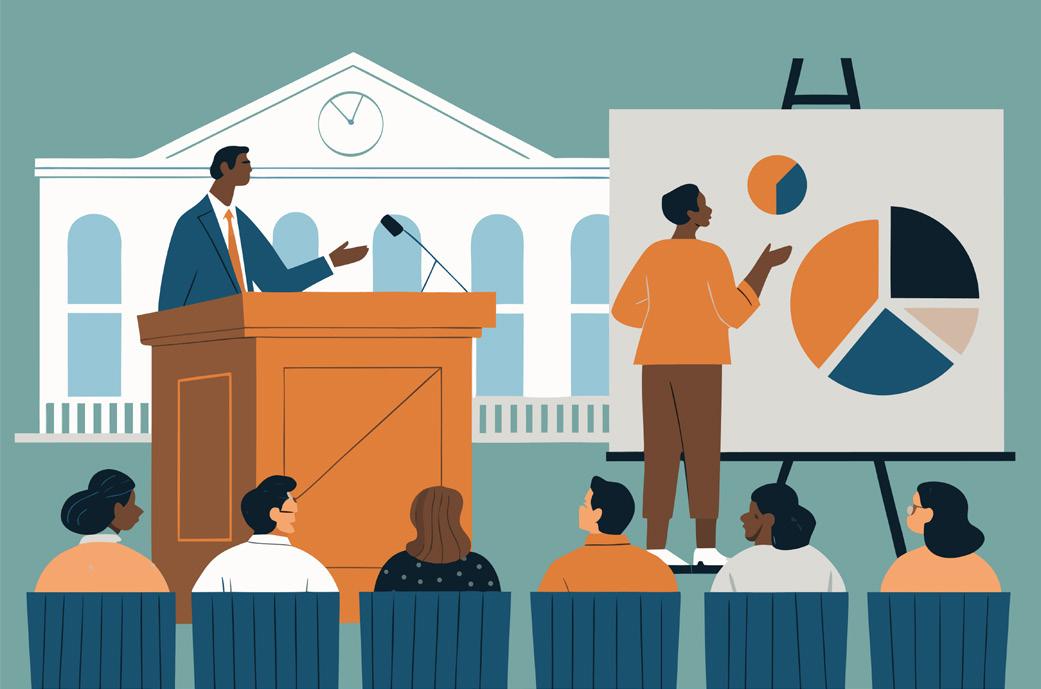
BY BRIDGETTE M. GRANSDEN
How one county made financial information accessible for the average resident
How many of your residents pick up your annual audited financial statements and read them cover to cover? As a former certified public accountant known for saying “accounting is fun,” I would love to believe the answer is hundreds. A more realistic guess is zero.
During my tenure as administrator, I have made a concerted effort to educate the public about what county government does—and how local government finances work. It’s no secret that many people aren’t exactly sure what counties do. Part of that outreach includes a strong focus on our financial information. Both the budget and audited financials can be daunting when you are not familiar with governmental accounting. Over the past eight years, we have taken steps to support that effort— educating residents, increasing engagement, and simplifying complex financial information. Two of the most effective tools have been our onepage budget snapshot and our popular annual financial report (PAFR).
Budget Snapshot at a Glance
In 2018, we issued our first budget summary, which we refer to as our budget snapshot. This double-sided, one-page document graphically depicts general fund revenue and
helped simplify our annual budget, we also began exploring ways to make our audited financial information more accessible.
When I attended a Government Finance Officers Association (GFOA) conference in 2016, I went to a session on popular annual financial reports (PAFRs). The idea immediately caught my attention. A PAFR is designed to take information from the annual comprehensive financial report (ACFR) and present it in a format that is easier for the public to understand.
intrigued me, I quickly wrote it off as something my team and I didn’t have the discretionary time to put together.
Fast-forward to 2020 and a global pandemic, which eliminated in-office work for most people. It also reduced the number of fellowship opportunities for students working toward their master of public administration (MPA) degree. I received an email from GFOA announcing a partnership with Engaging Local Government Leaders (ELGL) to provide virtual internship/fellowship expenditures, including millage details for the general fund and other special millages. The charts and percentages help readers understand what we do and how much we do. Residents are also reminded of our mission and that all three branches of government are represented at the county government level.
The budget snapshot also includes high-level demographic information, workforce data, county facilities, and the primary programs we offer. A small section highlights potential budget challenges for the coming year— another opportunity to educate residents. Most importantly, it’s a resource that elected officials and our management team can share to start conversations, answer questions, demonstrate transparency, and continue educating the public about county government.
The Evolution of our Popular Annual Financial Report While the budget snapshot
A simple one-page summary of your budget can go a long way in helping residents understand how local government operates.
GFOA established their PAFR award program in 1991 to encourage state and local governments to create clear, user-friendly reports that make financial information more accessible to residents and others who may not have a background in public finance, while recognizing governments that do an especially good job communicating that information. The PAFR submission process is very similar to GFOA’s certificate of achievement for excellence in financial reporting, though less complex. Although the idea of creating this document
opportunities for these MPA students. Local governments interested in creating their own PAFR could apply for a fellow and the only cost was that of filing the completed PAFR with GFOA. I applied immediately.
We were quickly matched with a student interested in local government who also aspired to become an attorney. My finance director and I began reviewing county PAFRs that had received GFOA certificates of excellence. There was no need to reinvent the wheel when strong examples already existed. Our fellow knew very little about government
The key is to start with transparency and gradually build communication tools that make financial information accessible to everyone.
financials at first, but she was a quick learner and eager to try new things. She even introduced us to new software that helped pull the entire document together, making it a learning experience for all of us.
We submitted the PAFR for GFOA review for the year ending 2019. The review process felt like it took forever. We waited with bated breath for either the “I’m sorry” email or the one that began with “congratulations.” I am happy to say that our 2019 PAFR did receive the certificate of excellence and so has each PAFR we have submitted since then. Our fellow continued to work on this project through the development of the 2020 edition, after which she devoted her focus to law school. I am not sure I would have ever kicked off this project without that opportunity.
Since 2021, each PAFR has been designed by a local marketing company with input from the Midland County finance and administrative teams, and every year we try to improve the document. Our elected officials and commissioners use this tool when engaging with other local units of government and constituents.
Receiving the certificate of excellence from GFOA is also a point of pride for the staff and board members. In 2023, only 100 counties of the 3,069 counties in the United

States received this certificate of excellence—50 in the small county category and 50 in the large county category. You can find more information on the PAFR award program at gfoa.org/pafr-award.
For counties interested in improving how they communicate financial information, the process does not have to start with a complex
or resource-intensive project. A simple one-page summary of your budget can go a long way in helping residents understand how local government operates. From there, tools like a PFAR can build on that foundation by translating detailed financial information into a format that is easier for the public to read and understand. The key is to start with transparency and gradually
build communication tools that make financial information accessible to everyone.
We understood that making a deliberate effort to educate the public about what county government does—and the finances that support it—would come with a cost. But if we didn’t see the value in communicating about our programs and services, why would anyone else? In the context of our overall annual expenditures, the investment has been well worth it. Graphic design for the two documents averages about $4,000 per year, with printing costs around $1,500. Since 2018, the total investment has been just over $27,000—less than 0.1% of our annual general fund budget. The goodwill and trust built with residents, however, are invaluable.
To view Midland County’s 2024 PFAR and latest budget snapshot, visit: icma.org/articles/ pm-magazine/public-dollarsplain-language.
BRIDGETTE M. GRANSDEN, CPA, CGFM, is administrator/ controller of Midland County, Michigan.

Gain insight you can apply back home with 80+ CPE-accredited sessions.
Strengthen your professional network and leave with new perspectives you can put to work.
Turn insights into action for your organization and community.
For 120 years, GFOA members have shaped the future of public finance. At #GFOA2026 we’ll build on that legacy. Join us to LEARN , CONNECT, and LEAD the future of government finance. Register at GFOA.ORG/CONFERENCE .
BY JAN PERKINS, ICMA-CM AND TAMARA LETOURNEAU, ICMA-CM
As the chief executive, your days are packed with staff meetings, reports, agenda preparations, countless emails, and solving a myriad of problems. But one of the most important ways for you to spend your time is tending to your relationship with each of your governing body members.


They rely on you for information, advice, constituent problem solving, and just being an ear for their frustrations. Your city council or board has only a few direct reports, and you are the one in charge of the organization. It is essential that you pay close attention to what they need, how they are looking at issues, and how you can help them be effective in their policy role. That takes time, and investing the time in these relationships is extremely beneficial.
No doubt you have a variety of ways of keeping your governing body informed so they hear about important issues from you first before they read about it in the paper. Typical methods are “the city managers weekly report” on Friday, phone calls about big emergency responses going on in the community by police and fire departments, staff reports on major projects, and emails and texts on individual constituent matters. These are all vital, yet they are not enough to build your relationship with your elected officials. For that, there is no substitute for in-person, face-to-face communication through the one-on-one meeting.
By having a regular, scheduled meeting with each of your elected officials, you can listen, share, observe body language, clarify assumptions, and truly connect. These opportunities are critical to your success as the executive leader and the success of your governing body. It reinforces the teamwork approach that is so essential to good government and effective governance.
“With 17 different individuals cycling
through my sevenmember council over five challenging years as Gilbert’s city manager, regular one-on-ones were absolutely critical to my success. I was able to quickly build trust and establish working relationships with new councilmembers as we navigated major decisions like a $650 million water treatment plant project, launching our first ambulance service, managing explosive growth in a community of 300,000 residents, and raising the sales tax rate for the first time in 24 years to fund $700 million in critical infrastructure.”
—Patrick Banger, city manager, Glendale, Arizona
The expectation that individual meetings between the chief executive and all members of the governing body should be a standard norm. The chief executive should have this as a regular part of his or her orientation of new elected officials. Right after an election, these one-on-one meetings should be set up.
Get Them on the Calendar (and Keep Them There): Consistent scheduling is key. These can vary between weekly to two weeks to monthly, but a regular schedule is the key. Standard practice is
every two weeks, with a weekly meeting with the mayor or chair to review agendas and prepare for various meetings or ceremonial duties.
Come Prepared: Develop a list or agenda for each meeting. Some items will be common to all (e.g., upcoming agenda items, major projects), while others may be unique to their specific interests or district needs. Ensure all members receive the same core information, but tailor the discussion to their individual priorities. Do ensure that you are not giving information to some and not all. The principle of treating all of them equally is essential.
Make it Convenient for Them: Your councilmembers are volunteers or part-time elected officials with busy lives. If a member is hesitant or refuses to meet, be flexible. Offer to meet for breakfast or lunch, or go to their office or a convenient location. The goal is to remove any barriers to participation.
“I have found my weekly council one-on-ones to be of paramount importance for my success as a manager. It is a weekly fivehour commitment, but that time is very important to build

Benefits to the Chief Executive
Builds Relationships: Goes beyond transactional, informational communications to build trust and rapport.
Checks Assumptions: Offers a regular opportunity to ask questions, head off or correct misunderstandings, and foster solid understanding by both the chief executive and elected official.
Information Sharing: Provides an in-person avenue beyond the written information to explain the thinking behind the work that the organization is doing and to hear and learn how individual councilmembers view that information.
Deepens Understanding: Helps the chief executive get to know what matters to the elected officials, how they view issues, what will be important for staff to do in preparing analytical work, and what may surface at council meetings.
Preparation for Governing Body Meetings: Provides time to answer questions and avoid being surprised at the meeting by issues that could be dealt with in other ways. It helps staff be as prepared as possible for their presentations to the council or board. It reinforces a teamwork approach.
Benefits to Your Elected Officials
Provides Valuable Information: The elected official receives timely updates and context on critical issues, helping them respond to constituents and prepare for meetings.
Shares Perspectives: A scheduled opportunity to voice concerns, share insights, and offer points of view that are best discussed in private.
Builds Relationships: Open dialogue in a private setting can strengthen the working relationship and collaboration with the chief executive.
Guards Against Isolation: Supports their success as part of the larger policy body through ensuring they have informal opportunities for dialogue.
Preparation for the Public Meeting: Enables elected officials to be ready for the meeting, get questions answered in advance (even if they will ask them again at the meeting), and surface concerns. Helps to not surprise staff.

and strengthen my relationships with each councilmember both professionally and on a human level. I strategically utilize these meetings to communicate how I am approaching my leadership and management of the organization and discuss major policy issues that will have community impact. Listening is key. These meetings provide me insight of where my individual councilmembers are on their priorities and what matters most to them that I can then share with my team.”
—Alex
Khojikian, city manager, San Mateo, California
Perils of Neglecting One-on-Ones
The absence of regular oneon-one meetings creates significant risks:
between the elected body and the organization.
Unwritten Messages:
Some sensitive topics or nuanced discussions cannot and should not be put in writing. They require direct conversations. These vital interactions are lost without in-person meetings.
If you are struggling with your governing body members and are not having one-onones with them, by introducing these individual meetings you may find your relationships turning around for the better.
connect, build the relationship, and learn what is important to your elected officials. Don’t always rely on simply replying to an email. Sometimes a direct phone call is far more effective for clarifying an issue, understanding the “why” behind a question, or addressing a concern with nuance that the written word can’t convey.
Information Gaps:
Governing body members miss out on crucial updates and context, leaving them ill-equipped to respond to constituent inquiries, making wrong assumptions, or not participating effectively in public discussions. This can cause the elected officials (as well as staff) to be frustrated, and when that happens, they may well blame the city/ county manager for lack of information or “skewing” the information.
Erosion of Trust: Without dedicated face-to-face time, the vital relationship between the city/county manager and the governing body can wither, replaced by transactional exchanges that lack depth and trust. Over time, this can lead to mistrust of the chief executive, which bodes ill for the organization as well as for the executive’s future.
Isolation: Governing body members can feel isolated, leading to a sense of detachment. This can create a “us versus them” problem
“Over the course of my career, the council/ manager one-on-one meetings have been fundamental. The councilmembers appreciate them; my staff appreciate them because they know I will relay information or harvest questions from them to be better prepared; and I appreciate them for the value of establishing and maintaining those vital relationships.”
—Sherilyn Lombos, city manager, Tualatin, Oregon
In addition to the one-on-one meetings, the chief executive should constantly be looking for ways to connect with governing body members. Great ways are the standard methods previously noted, such as weekly reports, informational emails, or texts about emergency responses.
But other ways are also important, such as picking up the phone and sharing some information or asking a question—anything to
The world of local government is a dynamic one. Conditions change regularly. The elected body is expected by their constituents to know what is going on. They need to be kept informed and the chief executive is the one to do that. Effective communication is the bedrock of success.
While information can be shared through reports and emails, the personal, dedicated one-on-one meetings with your elected officials are essential in building relationships, checking assumptions, learning, and avoiding or correcting misunderstandings. Make these one-on-one meetings with your elected officials a priority, make them regular, and make them count! You will be a more effective leader for doing that.
JAN PERKINS, ICMA-CM is a former city manager in two California cities and currently vice president of Raftelis, serving cities, counties, and special districts.
TAMARA LETOURNEAU,

ICMA-CM is an experienced city manager, currently serving as city manager for Laguna Niguel, California.

BY CESAR GARCIA, ICMA-CM
My participation in the 2025 cohort of ICMA’s Leadership Institute on Race, Equity, and Inclusion provided the opportunity to develop a capstone project in service to my city of Kemah, a coastal city of approximately 1,800 residents southeast of Houston. In my capstone, I propose a framework to ensure equitable access to green spaces, public spaces, events, and city services— especially for neurodiverse and autistic residents—by embedding universal design, cultural responsiveness, and autism inclusion into city planning and programming.
Kemah’s population is approximately 64% nonHispanic White, 22% Hispanic/ Latino, 3.4% Black, and 4.8% Asian, with smaller proportions of other groups.1 About half of the city’s residents live within a 10-minute walk of a park— below the national median of around 74%. Reduced access among Black (54%) and Native American (100% but small sample) populations suggests disparities.
Staff diversity has increased. With the hiring of both the first Hispanic
city administrator and first Hispanic police chief in January 2025, the city staff breakdown now matches or exceeds the diversity of the city with minorities in every department and women strongly represented in leadership positions citywide. The practice of having correlating demographics between city staff and its residents leads to better communication and understanding. Although to many it may seem like a small circumstance, but it increases staff/resident relatability.

Kemah is currently implementing its Parks and Open Space Master Plan (established in April 2024), which involves community workshops, surveys, pop-up events, and site assessments on accessibility, safety, and cultural relevance.2 Kemah is developing a new 57-acre nature facility
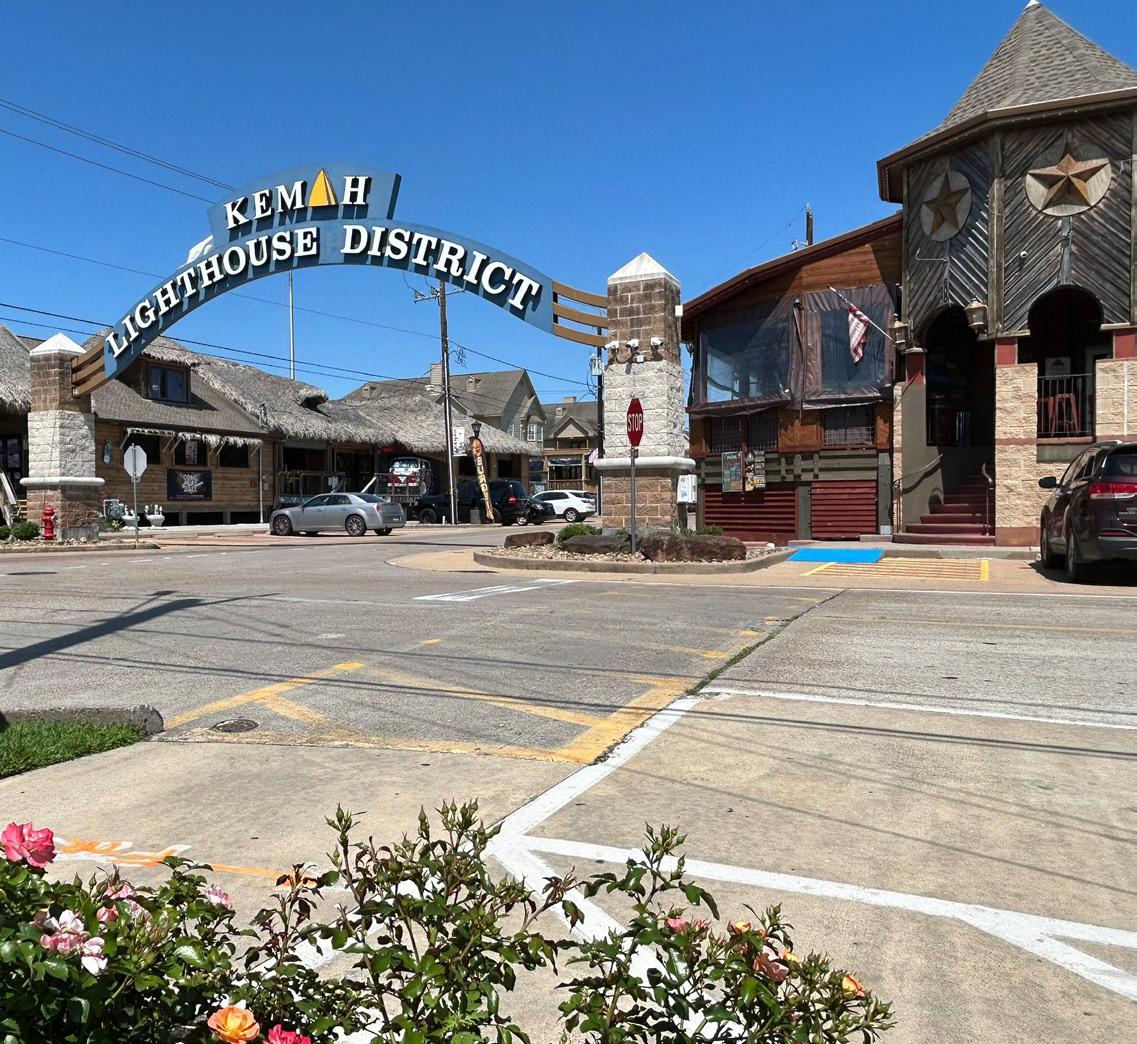
(the 57 Acre Park) with walking trails, pavilions, playgrounds, and an outdoor learning center. Construction began in June 2024 and the first two phases of 11 were complete by summer 2025, using approximately $832,000 in public funds.3
Additionally, Kemah has now adopted a linear park plan that it has named Gateway Park in honor of its Gateway
to the Bay moniker. The park will feature native plants, green stormwater initiatives, and an ADA accessible trail that extends over one mile and includes trailheads and rest stops. The park culminates with a boat ramp and entertainment area where family-friendly and neurodiverse-friendly community events will take place.
Another recent highlight is the renovation of Foster Park, which includes an ADA walking path and the addition of an accessible playground and swings. Plans for future park space additions will include further ADA developments and sensory-friendly installments.
Kemah is working hard to follow in the footsteps of Jonesboro, Arkansas, which became the first Autism Certified City in America in 2016 through the International Board of Credentialing and Continuing Education Standards (IBCCES).4
To transform Kemah into an autism-friendly city that ensures racial and gender equity and universal accessibility across parks, recreation, events, destinations, and city-run services. This vision values community codesign and responsive planning.
1. Equity and Accessibility Audit
• Expand on existing park evaluations by assessing physical accessibility; sensory impacts (noise, crowds); signage (multilingual and visual); restrooms; shade; seating; and sensory-friendly zones.
• Conduct audits for civic buildings and municipal services using universal design and disability justice frameworks.
2. Community Engagement
• Establish advisory groups, including BIPOC caregivers, school leaders, autistic individuals, disability advocates, and multilingual residents.
• Hold focus groups, “walk-throughs,” and participatory design sessions at parks like Cien Park, Foster Park, 57-Acre Nature Facility, and Gateway Park.
3. Autism-Friendly Park and Service Standards
• Introduce sensory-inclusive infrastructure: quiet zones, visual schedules, pictogram signage, tactile wayfinding.
• Plan sensory-friendly events (e.g. quiet evenings, low-stimulus programming).
• Train police department, local businesses, Boardwalk staff, and municipal staff in autism awareness, disability justice, and cultural humility.
4. Pilot and Scale in Underserved Areas
• Prioritize underserved neighborhoods in park upgrades following the “10-minute Walk to a Park” model.
• Retrofit one park (e.g. Cien Park or proposed 57-Acre Park) as a full autism-equity model with built-in sensory and neurodiverse friendly features.
5. Policy Integration and Sustainability
• Embed equity and neurodiversity standards into city code and Parks Master Plan updates.
• Support with an ongoing equity and disability inclusion task force to review budgets, design projects, and monitor outcomes.
Measurable
Park Access Equity
Use and Satisfaction
Event Participation
Staff Competencies
Policy Changes
Increasing percentage of residents within a 10-minute walk to a park to ≥70%.
Pre-visit and post-visit surveys measuring park use and city visits by neurodiverse visitors.
Number of autism-friendly events and attendance by neurodiverse families.
Training completed by staff, pre-training and post-training knowledge assessment.
New city policies referencing equity and autism inclusion embedded in planning of future developments.
Jonesboro’s 75,000-resident population, schools, and local businesses have worked together to drive their pursuit of inclusivity.
Other cities have begun to follow suit with autism-specific initiatives. In 2017, Cherry Hill, New Jersey, became the first township to require autism training for all of their police officers. In 2019, Miami Beach, Florida, launched Autism Access Miami, a partnership with local organizations to make the city a more welcoming place for people with autism by providing sensory-friendly events and activities. Closer to Kemah, in 2020, Plano, Texas, launched Autism Friendly Plano, which provides training to local businesses and community members on how to better serve individuals with autism.
As for Kemah, all city staff have completed autism training, and our police department has begun requiring the same training for all of our officers. Our next task is having certain city staff complete the Certified Autism Travel Professional (CATP) program.
Achieving the Autism Certified City designation may seem like a daunting task, but there are several ways in which other cities can follow Jonesboro’s example and create a more inclusive environment for individuals with autism. Here are a few steps that we have begun to take.
1. Partner with local organizations: One of the keys to Jonesboro’s success was its partnership with local organizations, including schools, businesses, and healthcare providers. By working together,

these organizations were able to share resources and expertise to create a more comprehensive approach to autism/ neurodiverse inclusiveness.
2. Conduct thorough training: The IBCCES certification process requires extensive training for city employees, local businesses, and community members on autism awareness, understanding, and acceptance. Providing this training is essential for creating an environment that is truly welcoming and supportive of people with autism.
3. Create sensoryfriendly spaces and events: Sensory-friendly spaces and events are an important component of an Autism Certified City. By making adjustments to lighting, sound levels, and other environmental factors that can be overwhelming for individuals with sensory sensitivities, cities and partnering businesses can create a more comfortable environment for people with autism.
4. Implement safety measures: Safety measures such as emergency responder
training are crucial for ensuring the safety of individuals with autism in emergency situations. By taking these steps and following Jonesboro’s example of collaboration and commitment to inclusivity, other cities across the country can also become Autism Certified Cities. Learn more at ibcces.org/ autism_certified_city.
Kemah is a popular tourist destination due to its enticing restaurants and attractions, so accessibility is being taken into account in those locations as well. The Kemah Boardwalk, the city’s main entertainment district, boasts wheelchairfriendly pathways, elevator access, accessible restrooms, and even a quiet room for neurodiverse visitors. However, gaps remain in sensoryinformed signage, multilingual information, staff training, and structured autism-friendly events. One step we’ve taken when planning large events is arranging for quiet zones during louder days. Our hope is to have the Boardwalk and other local businesses also
officer of this situation as they approach the car.
consider becoming IBCCES Accessibility Card locations. Accepting this card streamlines accommodations for those with neurodiverse deficiencies. The Boardwalk and neighboring restaurants have joined our efforts by providing autism and neurodiversity training for staff and scheduling special days and times for autism/neurodiverse population attendance. Local businesses, such as salons and barbers, are also completing similar training.
Texas has launched a Driving with Disability Program that focuses on improving the interaction between law enforcement and drivers with disabilities that have unique communication needs. Texans now have the option to disclose that they have a “communication impediment” on the front of their driver license or state ID and when registering their vehicle through the DMV. This will alert the trained officer that the individual is deaf, hard of hearing, or may be slower to respond. There is now a sticker that can be affixed to the rear window of a vehicle to alert an
Following this lead, Kemah is working with the Governor’s Committee on People with Disabilities on convening a Sensory Accessibility Taskforce to explore opportunities to support and promote sensoryfriendly practices across Texas communities. The goal of the taskforce is to identify priorities and discuss how Texas can build toward broader sensory-friendly community designations. The hope is to explore the potential of Kemah becoming the first sensoryfriendly city in the state and to create a standard for others in the state, nationally, and globally to emulate.
Kemah has developed a clear path for expanding equitable access for individuals with autism and neurodivergence in the city’s parks, public spaces, events, and services. With ADA improvements and training underway, along with growing community partnerships, the city is building the capacity needed to serve residents and visitors more effectively. By pairing these efforts with targeted outreach and measurable outcomes, Kemah is on its way to achieving autismfriendly city certification.
1. https://www.census.gov/quickfacts/ kemahcitytexas
2. https://www.mendcollaborative.com/ our-work/kemahparksplan
3. https://www.houstonchronicle.com/ home/article/Pavilions-walkways-part-ofambitious-plans-for-17255173.php
4. https://ibcces.org/autism_certified_city/
CESAR GARCIA, ICMA-CM is city administrator of Kemah, Texas.

Our podcast has helped me build relationships with elected officials, connect with residents, and deepen partnerships with core service agencies. to highlight votes, policy debates, and competing priorities. What residents do not often hear are the formative experiences that led someone to run for office. In our first season, each councilmember joined me for a conversation about their personal journey. We talked about childhood influences, career paths, mentors, setbacks, and defining moments in the community.
BY RICH LEE
When I was appointed assistant city manager for the city of South San Francisco in 2023, I expected and wanted the role to stretch me.
I anticipated long nights reviewing staff reports, complex policy discussions, budget strategy, and organizational leadership challenges. What I did not fully anticipate was how central community connection would become to my work.
I wanted to humanize local government and create space for stories that do not always surface in council chambers or staff reports.
Moving from municipal finance into city management shifted my perspective. My work was no longer primarily focused on internal systems and fiscal stewardship. It increasingly required outward engagement.
I found myself in community meetings, meeting with nonprofit leaders, attending neighborhood events, and listening to residents share their experiences. I began to realize that relationship building was not a secondary part of the job. It was foundational.
Podcasting became an unexpected bridge.
The tone was reflective rather than political. Listeners learned why one councilmember felt called to serve after immigrating to the United States. They heard about family values that shaped public service. They gained insight into how lived experience influences policy perspectives.
It reinforced an important leadership lesson: Trust grows through familiarity and shared understanding.

RICH LEE is assistant city manager of South San Francisco, California.
What began as a creative interest rooted in my background in music and audio recording evolved into a strategic tool for connection. The “City of South San Francisco Podcast” (ssfca.gov/our-city/southsan-francisco-podcast) allowed me to sit across the table from elected officials, residents, and nonprofit leaders for unhurried conversations. Those conversations deepened my understanding of the community I serve and strengthened relationships that continue to shape my work as assistant city manager.
With the support of the city manager and encouragement from a councilmember who had expressed interest in the idea, we launched the podcast with a simple goal. I wanted to humanize local government and create space for stories that do not always surface in council chambers or staff reports.
We began with our elected officials. Council meetings tend
In the second season, we turned the microphone outward. We featured a father who lost his young daughter to cancer and worked with the city to recognize Childhood Cancer Awareness Month each year. His conversation was heartfelt and deeply moving. It reminded listeners that policy decisions often emerge from personal loss and perseverance.
I interviewed an autistic chef and author who competed in the World Food Championships, reinforcing that the city is welcoming and inclusive. I spoke with the commander of the local Veterans of Foreign Wars post to support the city’s outreach efforts for the rededication and relocation of its veterans memorial. I invited elementary and middle school students to share their perspectives during career day, giving hope and inspiration that the future is bright with the next generation.
These episodes shifted the dynamic. The podcast was no longer simply a way for residents to understand city hall. it became a way for city hall to better understand the community. I learned directly from residents about their challenges, aspirations, and pride in South San Francisco. Those conversations informed how I think about programs, partnerships, and communication strategies.

Local government can sometimes feel transactional. A permit is issued. A complaint is logged. A project is approved. Podcasting created space for something more relational.
Through a regional leadership development program, I began examining the broader network of organizations that support our residents. A former city manager taught me that while local government can do many things, they cannot do everything. Cities often partner with nonprofit partners to deliver essential services. Yet many community members are unaware of those partnerships.
experience as a parent of a special needs child. She said the interview with the AbilityPath CEO deeply touched her and she shared the podcast with all her friends and family. A colleague mentioned how powerful and moving the interview was with the father sharing his journey as a parent of a child with cancer. Internally, a fellow staff member shared how the interview with the commander of the local VFW post provided key information regarding veterans benefits as he navigated the system for his veteran father. Personally, I built stronger relationships with nonprofit leaders who are critical partners in advancing community well-being.
Those relationships now extend beyond the podcast studio. We collaborate more easily. There is a shared understanding that began with a conversation and a microphone.
Podcasting works because it feels human. It allows for depth in a way that short public comments and written summaries often cannot. Listeners hear tone and emotion. They hear pauses, reflection, and sometimes laughter. That authenticity builds trust.
From a practical standpoint, the barriers to entry are relatively low. Basic recording equipment is accessible. Distribution platforms are straightforward. What matters most is intentionality. A podcast should serve a purpose aligned with your organization’s mission.
I did not anticipate that podcasting would become part of my leadership toolkit. Yet it has become one of the most meaningful aspects of my role.
The next phase of the podcast focused on core service agencies. We invited leaders from the YMCA Community Resource Center, which administers the city’s emergency rental assistance program. We spoke with AbilityPath about services for individuals with developmental disabilities. We featured the Peninsula Conflict Resolution Center and discussed how mediation strengthens neighborhoods.
These conversations were impactful and meaningful. I spoke with a resident earlier this year about her
For us, that purpose is connection.
If you are considering a podcast, begin by identifying who you are trying to reach. Think about the voices that are not currently represented in your traditional communications.
Align conversations with civic milestones and initiatives to maintain relevance. Prioritize authenticity over perfection. Most importantly, approach the microphone with curiosity. The goal is not to promote. The goal is to listen and learn.
I did not anticipate that podcasting would become part of my leadership toolkit. Yet it has become one of the most meaningful aspects of my role. It has helped me build relationships with elected officials, connect with residents, and deepen partnerships with core service agencies. Local government has always been about community. Podcasting simply offers another way to strengthen it.
At its heart, public service is about connection. Sometimes all it takes to begin is a conversation.

DAVID LANG is senior program manager of membership and career advancement at ICMA (dlang@icma.org).
BY DAVID LANG
Join us in congratulating this year’s scholarship recipients, Rachel Boward and Melissa Ochoa.
ICMA is excited to announce Rachel Boward and Melissa Ochoa as the recipients of the 2026 Judy L. Kelsey Scholarship. Named in honor of Judy Lyn Kelsey, a pioneer of professional local government management and a longtime ICMA member, the scholarship is designed to support the professional development of the next generation of women leaders in local government. Each year, the scholarship is awarded to up to two fellows of ICMA’s Local Government Management Fellowship (LGMF) program, which places recent MPA/MPP graduates in full-time paid positions in local governments across the country.
Rachel and Melissa were both identified as emerging local government leaders through a review panel composed of LGMF program alumni. ICMA hopes they will continue to pursue a fulfilling career in public service and one day mentor the generation that comes next.
Rachel Boward

Rachel currently serves as an LGMF fellow with Loudoun County, Virginia, where she plays a vital role in enhancing local government operations. Since the start of her fellowship in July 2024, Rachel has worked across eight departments on more than 12 separate projects, working diligently to develop data-informed strategies, streamline processes, and advance initiatives that ensure inclusive, evidence-driven decision-making.
During her first rotation, Rachel drafted the 2024 International Business Attraction Strategy for the department of economic development, formulating 18 strategies backed by extensive data analysis and research. In her rotation with the legislative team, Rachel assisted in reviewing nearly 2,500 bills during the 2025 Virginia General Assembly session to support the county’s legislative priorities.
During her time with the department of library services, Rachel created and administered a secret shopper program across Loudoun’s 10 branch libraries, ultimately presenting an array of branch-specific and systemwide areas of strength and opportunity to the library director. She developed a
formula with 12 key variables to optimize library staffing. Rachel also completed a rotation with the office of equity and inclusion, assisting with the formulation and tracking of departmental equity impact plans, including the creation of a new Power BI dashboard.
Rachel holds an MPA degree from the University of Connecticut, where she served as treasurer of UConn’s ICMA student chapter. During her first year, she completed a graduate assistantship focused on public budgeting research. In her second year, she interned with the town of Windsor, working on the creation and implementation of the Clean and Green Windsor spot adoption program, data analysis and visualization for possible implementation of speed and red light cameras, and finalization of Windsor’s FY 2025–30 capital improvement program.
Rachel is proud to be included among the ranks of past Judy L. Kelsey Scholarship recipients. The scholarship will assist her in continuing to pursue her mission to implement data-driven solutions to improve the effectiveness, efficiency, and inclusivity of local governmental service provision. She is excited to apply the knowledge and skills she has gained during her fellowship as she continues to progress forward in her local government career and, hopefully, one day serve as a model and mentor to future women in local government.

Melissa is a dedicated public servant currently serving as the LGMF Fellow for Doña Ana County, New Mexico, where she focuses on improving operational processes and evaluating how departments contribute to both the organization and the broader community. In this role, she works at the intersection of strategy and service, ensuring that internal improvements translate into meaningful public impact. Her current projects reflect this balance: enhancing the human resources assessment process, analyzing departmental budget requests to ensure alignment with the county’s strategic priorities, designing and developing a youth commission for high school students, and
establishing a local chapter of Women Leading Government. Through these efforts, Melissa aims to strengthen community relationships, increase transparency, and foster a collaborative workplace culture that supports innovation and growth.
Melissa’s path to local government began at the University of Arizona, where she earned both her bachelor’s degree and MPA. While in school, Melissa immersed herself in advocacy work with a nonprofit organization dedicated to expanding access to higher education. For half of each year, she organized events and spoke with students about the importance of affordable colleges to build grassroots to support the organization’s mission. During the legislative session, her focus shifted to policy, and she spent months at the Arizona state capitol, meeting with legislators from both chambers to discuss bills affecting college affordability and student safety and success. These experiences deepened her understanding of how policy decisions shape people’s everyday lives.
After a year and a half in advocacy, Melissa transitioned into state government, joining the office of strategic planning and budgeting as a budget analyst. She gained firsthand insight into how public resources are allocated and how agency funding decisions ripple across communities, particularly at the municipal level. This experience became a turning point in her career. Seeing the tangible effects of budgeting on local services clarified her professional direction and solidified her
commitment to working in local government, where she felt she could make the most direct and visible difference.
Beyond her professional responsibilities, Melissa is a passionate advocate for women pursuing careers in public service. When she learned about the Judy L. Kelsey Scholarship, she was inspired by its mission of women supporting women in local government leadership. Being selected as a recipient was both an honor and a motivation to continue striving toward excellence. In her application, she wrote, “I am determined not only to become a city or county manager, but to be a well-prepared, ethical, and effective one,” a statement that continues to guide her professional journey.
Melissa believes that the foundation of a meaningful career, especially in public service, is a commitment to learning, integrity, and continuous improvement. As she builds her experience, she remains focused on growing as a leader who values collaboration, thoughtful decision-making, and community trust. With a strong sense of purpose and a dedication to service, she looks forward to a long career contributing to effective, responsive local government.



EVELYN RACETTE is an assistant professor and MPA coordinator at Grand Canyon University, and faculty advisor of the university’s ICMA student chapter.
As the United States approaches its 250th anniversary, the question is not only what has been built, but what will be sustained.
BY EVELYN RACETTE
As the United States approaches its 250th anniversary, reflection often returns to its founding ideals. For generations, local governments have carried founding ideals into everyday life. Through professional administration and ethical practice, they have sustained the American experiment. This work is formative, shaping how communities learn responsibility, limits, and the meaning of self-government. It shapes how communities understand responsibility, limits, and the meaning of self-government, and it continues to evolve as local governments take on a broader role in strengthening opportunity and civic life.
The American experiment began with a claim that was both philosophical and practical. The Declaration of Independence grounded rights in a creator and established government as their protector. The Constitution then constructed a system designed to channel power, limit ambition, and preserve liberty over time. In the Federalist Papers, the framers confronted a central challenge: how to design institutions that could endure ordinary human weakness. Rather than trusting virtue to hold, the framers relied on structure to secure it. What they did not fully articulate was how those principles would be carried out in a community. The Constitution defines authority, but it does not manage
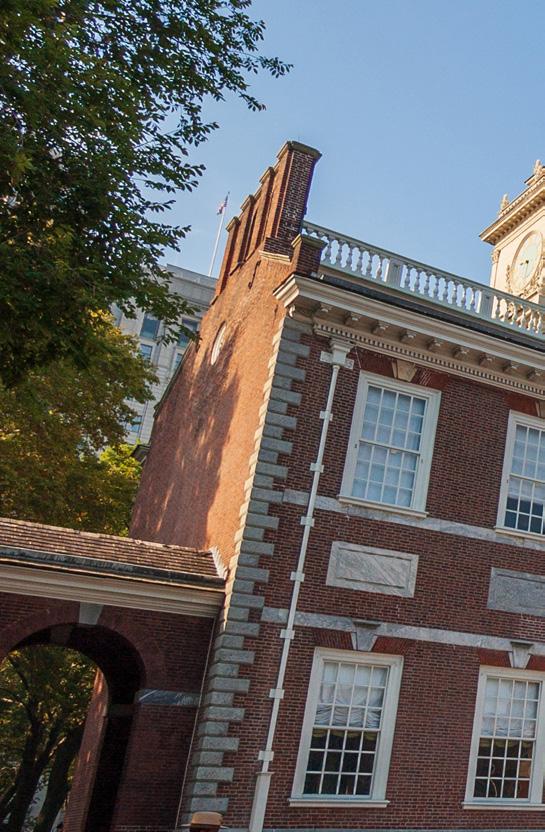
water systems, maintain infrastructure, respond to crises, or determine land use and community growth.
That has been the work and responsibility of local government all along. This was not an omission, but an assumption that the durability of the republic would depend on the capacity of communities to govern themselves well. Because local governance existed before the nation itself, the framers assumed that communities would continue to carry the practical work of governing.
Local government is where the promises of the American system are tested. Residents encounter the government through the systems that support daily life. Water, public safety, infrastructure, and community services shape whether institutions are experienced as reliable and fair. Over time, those experiences build confidence or invite doubt. Because of this, local government carries a responsibility that extends beyond operations. It gives substance to the idea of
Independence Hall in Philadelphia, Pennsylvania. In 1787, Independence Hall hosted the Constitutional Convention, where the U.S. Constitution was debated, drafted, and ratified.
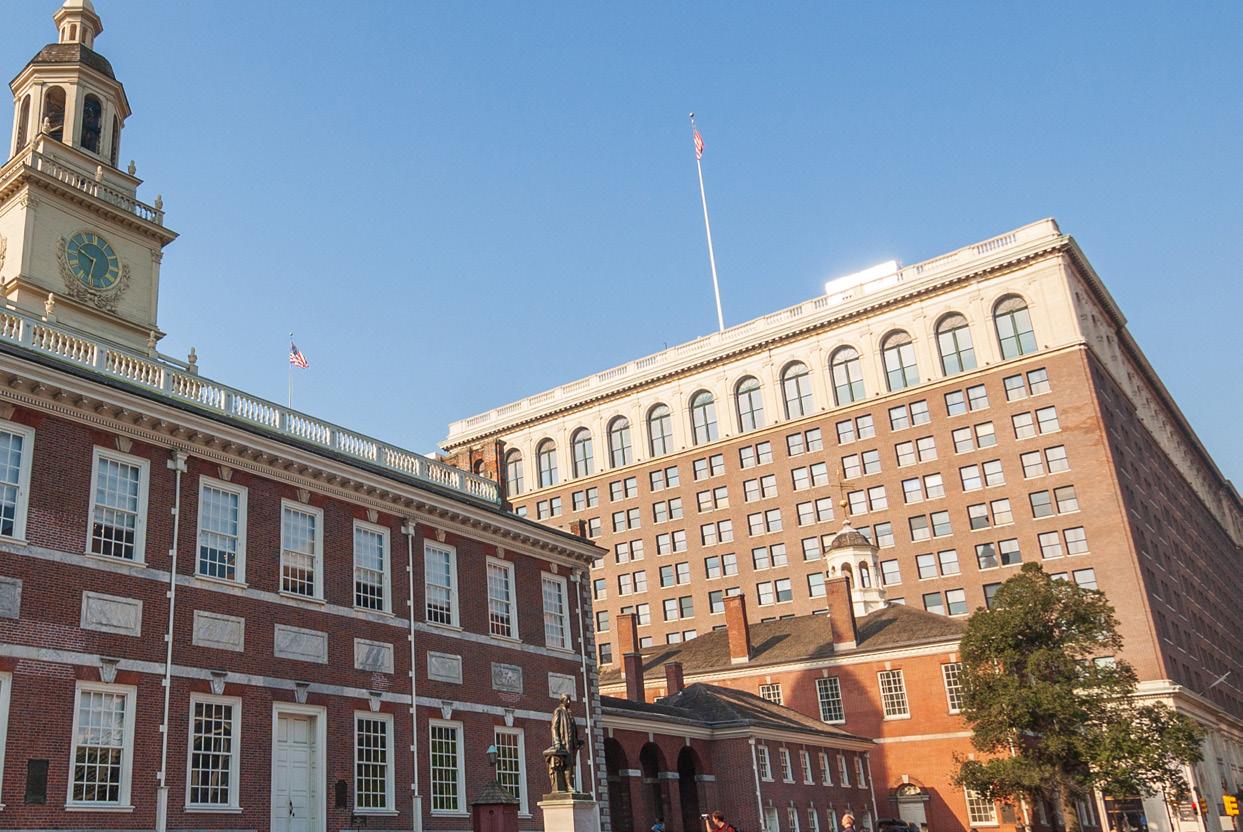
self-government. It demonstrates whether institutions can function in a way that is both consistent and responsive to the community’s needs. In this way, local government makes governance credible. To sustain that trust over time, local governments require structures that support both accountability and competence.
As the United States urbanized, the limitations of early local governance became clear. Growth exposed weaknesses in administrative capacity and raised concerns about corruption and patronage. Reformers responded with a structural question: how do you keep democratic accountability while building administrative capacity? The goal was to preserve democratic accountability while strengthening administrative effectiveness.
The council-manager form of government emerged from this effort. Elected officials retained responsibility for policy direction while professional managers assumed responsibility for implementation. This model reflected a deeper understanding of governance. Representation alone was not sufficient. Effective government requires competence, continuity, and discipline. The council-manager form created conditions that sustained those qualities over time. In doing so, it helped establish professional local government as a field grounded in expertise and committed to longterm outcomes. Even the strongest structures still depend on how authority is exercised in practice.
The work of local government extends beyond service delivery and contributes to the formation of citizens. Through budgeting, planning, and public engagement, communities encounter the realities of shared decision-making. Known limits and competing priorities make tradeoffs visible, and people see that decisions affect others and that responsibility is shared.
Over time, these experiences shape how people understand self-government. They reveal that freedom involves responsibility and that participation requires more than preference. Local government provides the context in which these lessons are learned, shaping how individuals engage in a system that depends on cooperation and accountability. That shared experience now extends into a broader question about opportunity and long-term well-being.
It also shapes the baseline conditions that make opportunity realistic rather than rhetorical. Decisions about land use, infrastructure, public safety, and basic services influence whether families can access jobs, whether neighborhoods remain stable, and whether businesses can grow with confidence. When local institutions are competent and trustworthy, they reduce friction in everyday life and expand what residents can reasonably plan for. When they are inconsistent or unresponsive, the costs show up in time, money, and diminished hope. In this way, local government becomes a quiet architect of long-term well-being by sustaining the public conditions that allow people to flourish.
The American Dream has long rested on the belief that individuals and families can move forward through effort, responsibility, and access to opportunity. That belief assumes that opportunity can be expanded or constrained by the conditions in which people live. Local government has always helped shape those conditions. Through infrastructure, housing, public safety, and community services, it has created the foundation on which communities function.
There is growing recognition that local government’s work includes responsibility for long-term outcomes. Economic mobility, stability, and community well-being are influenced by decisions made at the local level. This reflects the same foundational challenge identified by the framers, which is how to design institutions capable of sustaining a free society over time.
Recent work on economic mobility and opportunity has brought this into sharper focus. Research continues to show that place matters, and the neighborhood in which a child grows up can shape longterm outcomes. That same body of work also underscores the civic importance of dignity and belonging. When people experience stability, safety, and genuine access to opportunity, they are more likely to see themselves as part of civic life. Local government helps form these conditions through how services are delivered, whether public spaces are accessible, and whether institutions respond in ways residents recognize as fair and attentive.
That sense of belonging supports civic engagement. Individuals who feel connected to their community are more likely to participate in decision-making and contribute to its future. Across the country, local governments are aligning their work with these outcomes. Partnerships with schools, workforce programs, and community organizations are expanding access to opportunity. Efforts to strengthen financial literacy and connect residents to education and employment pathways reflect a broader understanding of the role local government plays.
That task has become more complex as the operating environment changes. Technology has reshaped how services
are delivered and how residents engage with institutions, and expectations for responsiveness have risen accordingly. Yet communities still depend on local government for stability and for the management of essential systems that cannot pause while the context shifts.
Professional local government provides continuity under these conditions. The council-manager form supports steady administration while allowing for adaptation, and it keeps long-term stewardship in view while meeting immediate needs. In a changing environment, that combination is not just helpful; it is the core of institutional resilience.
The American experiment has always required more than the founding documents. It has required institutions capable of carrying those ideas into practice and people willing to take responsibility for their continuation. From the beginning, the nation’s framework rested on a belief that freedom could be sustained through structure and responsibility, grounded in something higher than individual will. Rights were understood as endowed by a Creator, and government was designed to secure them. The daily work of making that system real, however, has always depended on local institutions.
In cities and counties across the country, self-government becomes tangible. It is shaped through decisions about resources, priorities, and the common good. It is sustained through the steady work of administration and the participation of those who live within it.
Over time, that work has expanded. Local government has not only maintained essential services, but has taken on a broader responsibility for the conditions that shape opportunity, dignity, and belonging. The strength of a community is reflected in whether people are able to participate in and contribute to its future. This is the ongoing work of a more perfect union. It is carried forward through public servants and engaged residents who are willing to take responsibility for the communities they inhabit.
As the United States approaches its 250th anniversary, the question is not only what has been built, but what will be sustained. The answer will continue to be found in the steady work of local government and in a shared commitment to carry forward what has been entrusted to us. Recognizing the weight of that responsibility, and the quiet but essential work carried out every day in communities across the country, it is fitting to pause and acknowledge those who have sustained it with a toast.
To the United States, as it nears 250 years:
To a nation founded on the conviction that rights come from our Creator, and that liberty can endure when power is bounded and responsibility is shared.
To the framers who understood that freedom would require structure, and to the generations who have carried those principles into public life.
And to local government managers: Professional management sustains what communities rely on most, even when expectations rise and resources tighten. It keeps essential systems reliable, makes hard choices visible, and holds the long view in the midst of immediate demands. It protects the public trust through competence, steadiness, and restraint.
May you continue to lead with integrity, protect the public trust, and steward the communities you serve well. And may your work, carried out in city and town halls and county offices across the country, help sustain the next chapter of a more perfect union.
In collaboration with other local government associations, ICMA is commemorating America’s 250th anniversary by celebrating the “democracy at the doorstep” facilitated by cities, counties, regional councils, and tribal governments. Learn more at localgov250.org.

In honor of the America 250 celebration, Local Gov 250 and the National Academy of Public Administration recently announced their list of 250 government champions.
These champions are recognized and celebrated as exceptional individuals, from all levels of government, who make a significant impact in their work in cities, counties, regional councils, states, and the federal government. They exemplify “democracy at the doorstep” through dedication, innovation, and the highest sense of public service.
The honorees will be recognized May 12, 2026, in Philadelphia, Pennsylvania. View the full list at localgov250.org/champions. ICMA extends a hearty congratulations to the 250 government champions. Listed below are those who are ICMA members.
Arizona
George Flores
Shannon Portillo
California
Alexander Fung
Magda Gonzalez
Pat Martel
Colorado
Kathleen E. Hodgson
Florida
Carlos Baia, ICMA-CM
Alexander Diaz, ICMA-CM
Jorge M. Gonzalez, ICMA-CM
Philip Harris
Georgia
Bill Bruton Jr.
Dr. Joe Pennino
John Amos Ward III
Illinois
Ghida Neukirch, ICMA-CM
Phillip Green
Phil Kiraly, ICMA-CM
Iowa
Jeffrey Pomeranz
Kansas
Robert Layton
Maryland
Tanisha Briley
Gayon Sampson
Massachusetts
Michael Herbert
Michigan
Jane Bais DiSessa
Danielle Mahoney
Mark Wollenweber, ICMA-CM
Minnesota
Daniel R. Buchholtz, ICMA-CM
Zach Walker, ICMA-CM
Missouri
Kim Nakahodo
Tammy Queen
David Warm
Nebraska
Chris Anderson
Nevada
Jeff Dorocak
Stephanie Garcia-Vause, ICMA-CM
New Jersey
David G. Brown II
Justin A. Riggs
Matt von der Hayden, ICMA-CM
North Carolina
Lee Worsley
Sue Schwartz
Ohio
Katie Eviston
Oregon
Tanya Ange, ICMA-CM
Sarah Medary, ICMA-CM
Pennsylvania
Amrinder Singh
Jeffrey Stonehill, ICMA-CM
Adam K. Thiel, ICMA-CM
Tennessee
Micah Wood
Texas
Austin Bleess, ICMA-CM
T.C. Broadnax, ICMA-CM
David Gray
Opal Mauldin-Jones
Rick Weise
Virginia
Christopher D. Hively, ICMA-CM
India Adams-Jacobs, ICMA-CM
Washington
David Goldman
Wisconsin
Andy Pederson, ICMA-CM
“Becoming a contributor is an act of institutional stewardship— an authentic way of paying it forward.”
As the Fund turns 40 in 2026, we’re connecting with donors—both individuals and organizations—about why they give, their hopes for the future of the profession, and how the Fund can support that vision. This month, we spoke with Dan Johnson, past president of the Texas City Management Association (TCMA), ICMA and TCMA life member, and TCMA distinguished member.
Why is it important to you that your state association supports the Fund?
The emergence of the reform-based council–manager plan of local governance and administration was a national movement. Texas was active in this effort from its beginning and has been a shining example of the positive impacts of effective professional local government management. Texas city management is part of an international professional community, and like other professions, we are reputationally connected by title and duty.
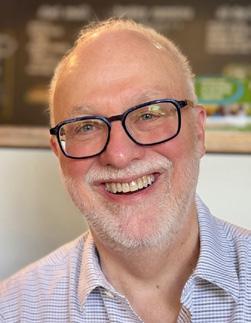
TCMA once explored and established a short-lived state foundation but soon realized that the care and administration of such an operation were not well suited to a state-level association’s staffing structure. The remaining TCMA foundation balance was contributed to the ICMA Foundation/Fund.
All governance institutions are likely to be challenged at some point, often by non-local actors using non-local examples and rationales. Such challenges may include data-driven arguments requiring thoughtful, research-based responses. They are also likely to be well-funded and
amplified through “borderless” social media and national media channels. A nationwide ICMA Foundation, with dedicated staff resources, is far better positioned to administer funds and direct spending for effective advocacy and educational purposes.
How do you see ICMA’s advocacy role evolving given the challenges of public awareness?
I strongly support a sustained research and data-gathering effort to quantify the value proposition of the council–manager plan. We must be able to demonstrate that professionally managed cities deliver superior service and outcomes compared to other forms of local governance. Metrics such as bond ratings, ACFR recognitions, ISO fire ratings, infrastructure quality indices, and similar indicators should be gathered, studied, and regularly updated to validate that communities benefit from professional management. Continued and visible partnership with the National Civic League (NCL) is important to ensure the NCL remains viable and continues its support for the council–manager plan through the model charter program.
What impact do you believe the Fund has had on communities that adopted or retained the council–manager plan?
I read retrospective accounts showing the ICMA Fund’s support playing a strategic role in helping communities adopt or sustain professional management structures. The Life, Well Run campaign’s content is a great example of good messaging: well-prepared with simple examples and narrative to explain the role of the professional manager, the delivery of local government services, and ICMA. I often use a summation of the video script’s key messages:
• How to “help elected officials translate policy and vision into results.”
• Unity of authority, not divided gridlock.
• Professionalism/formal training.
• Continuity through election cycles.
• Objectivity.
• Separates policy and administration(for the most part).
What would you say to someone considering a donation to the Fund but unsure of its impact?
Many of us begin our public administration careers in a “consuming” mode—using the resources, associations, institutional structures, and networks already in place to jump-start our professional development. That is entirely appropriate and a true benefit.
But how are these systems sustained? Through membership, yes—but more deeply through investment of time and resources. These efforts move us from “consumer” to “contributor.” The ICMA Future of
Professional Management Fund is uniquely positioned to augment our professional association. The Fund amplifies individual contributions and becomes a true “force multiplier”:
• Financially—It amplifies contributions through sound investment and fiscal stewardship.
• Emotionally—It fosters a sense of unity around a common purpose and provides affirmation and gratitude.
• Strategically—Funds are directed toward research, education, and initiatives designed for maximum impact. Becoming a contributor is an act of institutional stewardship—an authentic way of “paying it forward” so that future professionals will have the same opportunities and support that you received. It is a sustaining, mature act and a practice of personal and professional stewardship. Supporting the ICMA Future of Professional Management Fund is one such contribution.

To celebrate the Fund’s 40th anniversary, we have a bold ask for sustaining a bold profession.
As top donors to the Fund, state associations represent a critical partner in advancing and protecting council-manager government.
In the spirit of healthy competition, we are launching a State Association Challenge!
The Fund seeks 100% participation (any amount donated) from all of ICMA’s state association partners, enlisting members in your state to donate or sign up for the $40/month recurring gift.
Check out the State Leaderboard at icma.org/fund40.



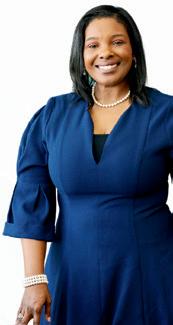












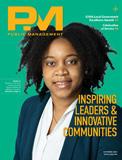






Join Savi and ICMA on the first Thursday of every month for a webinar designed for local government employees and HR leaders. See how Savi streamlines Public Service Loan Forgiveness (PSLF) enrollment and helps employees navigate student debt with confidence while giving HR leaders a meaningful financial wellness benefit that strengthens recruitment, retention, and workforce stability. Enhance your benefits strategy and empower your employees’ financial future. Scan the QR code below to register.
PSLF applications have been accepted since 2020