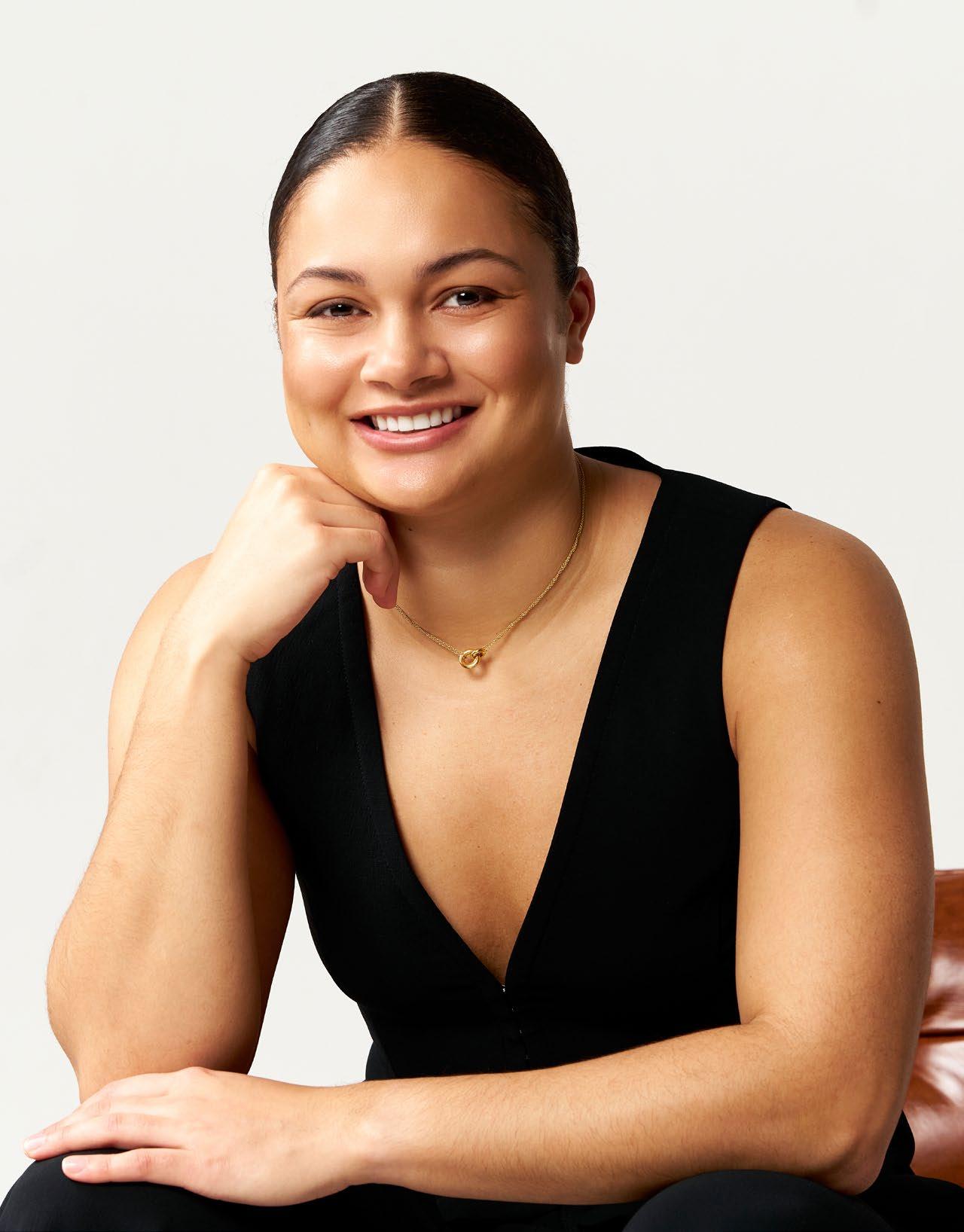
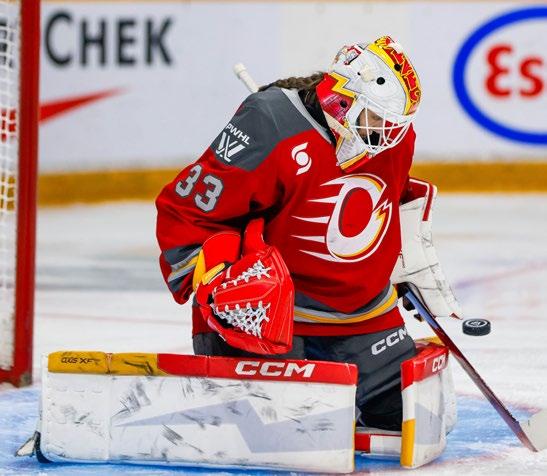
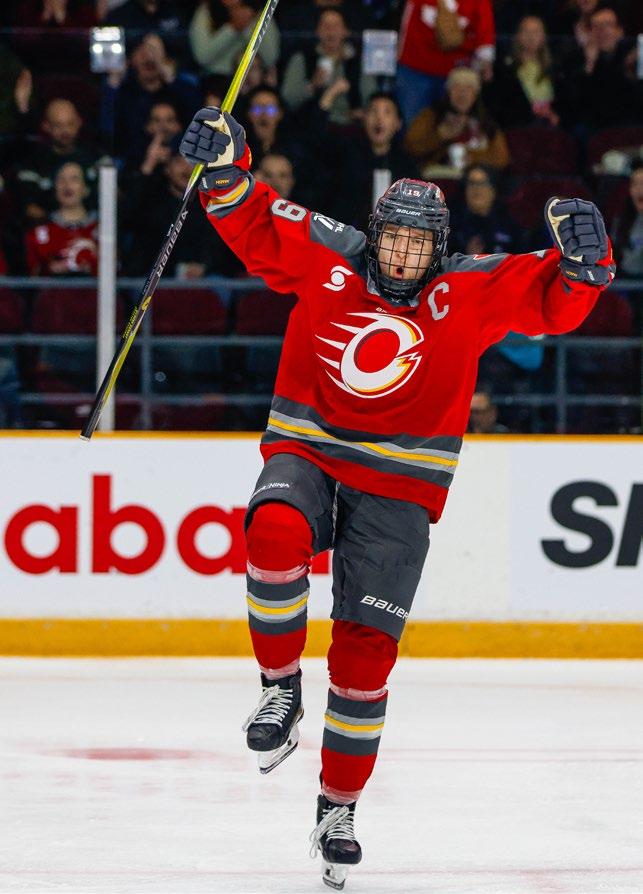
DANIELLE MARMER IS BUILDING SOMETHING NEW IN BOSTON
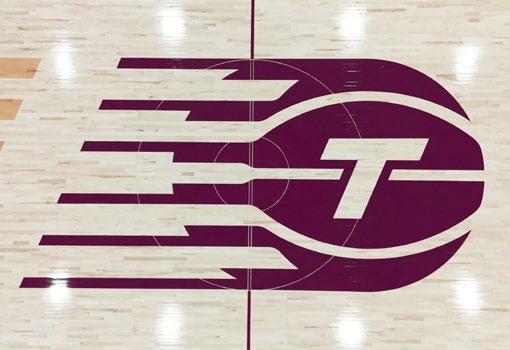
THE TORONTO TEMPO HAVE ARRIVED!
Simplicity
TACTILE BASKETBALL GRIP
ADD TO YOUR LINEUP:
CUSTOM NAMEBARS
Spring always brings a moment to step back and look at where things are headed –and right now, women’s sport is moving in a big way.
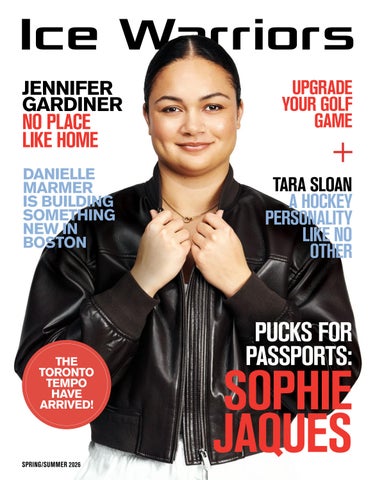
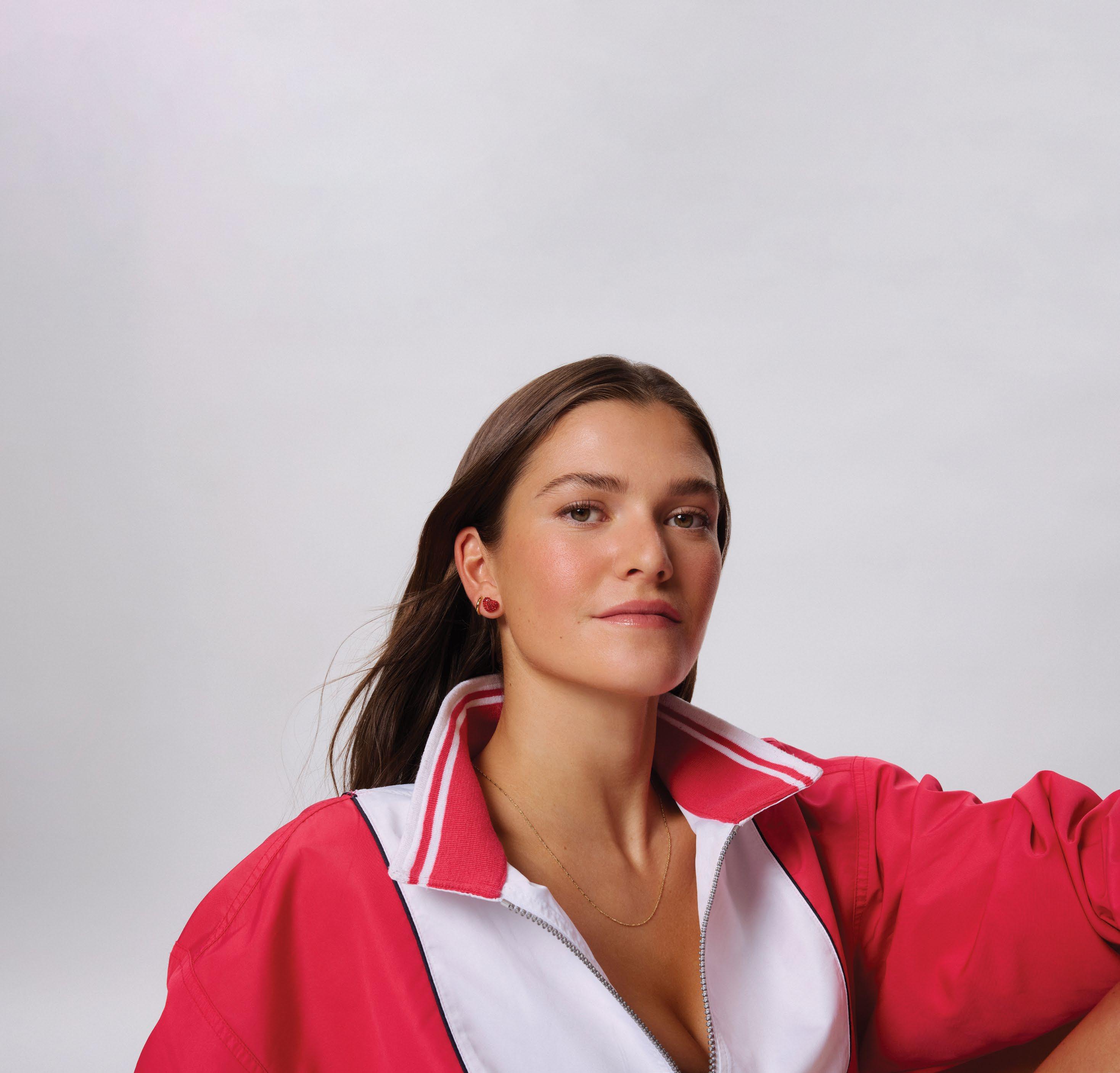
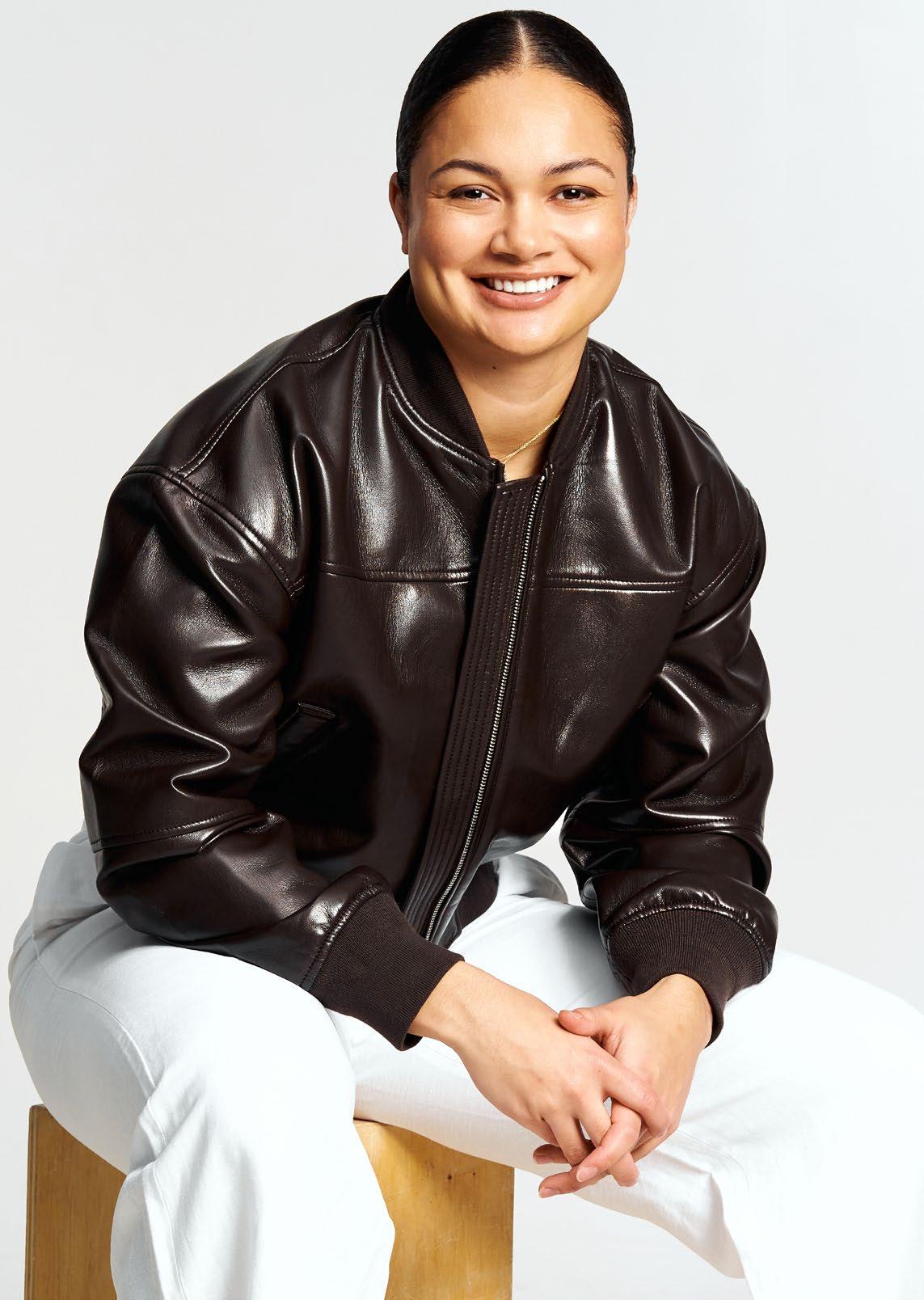
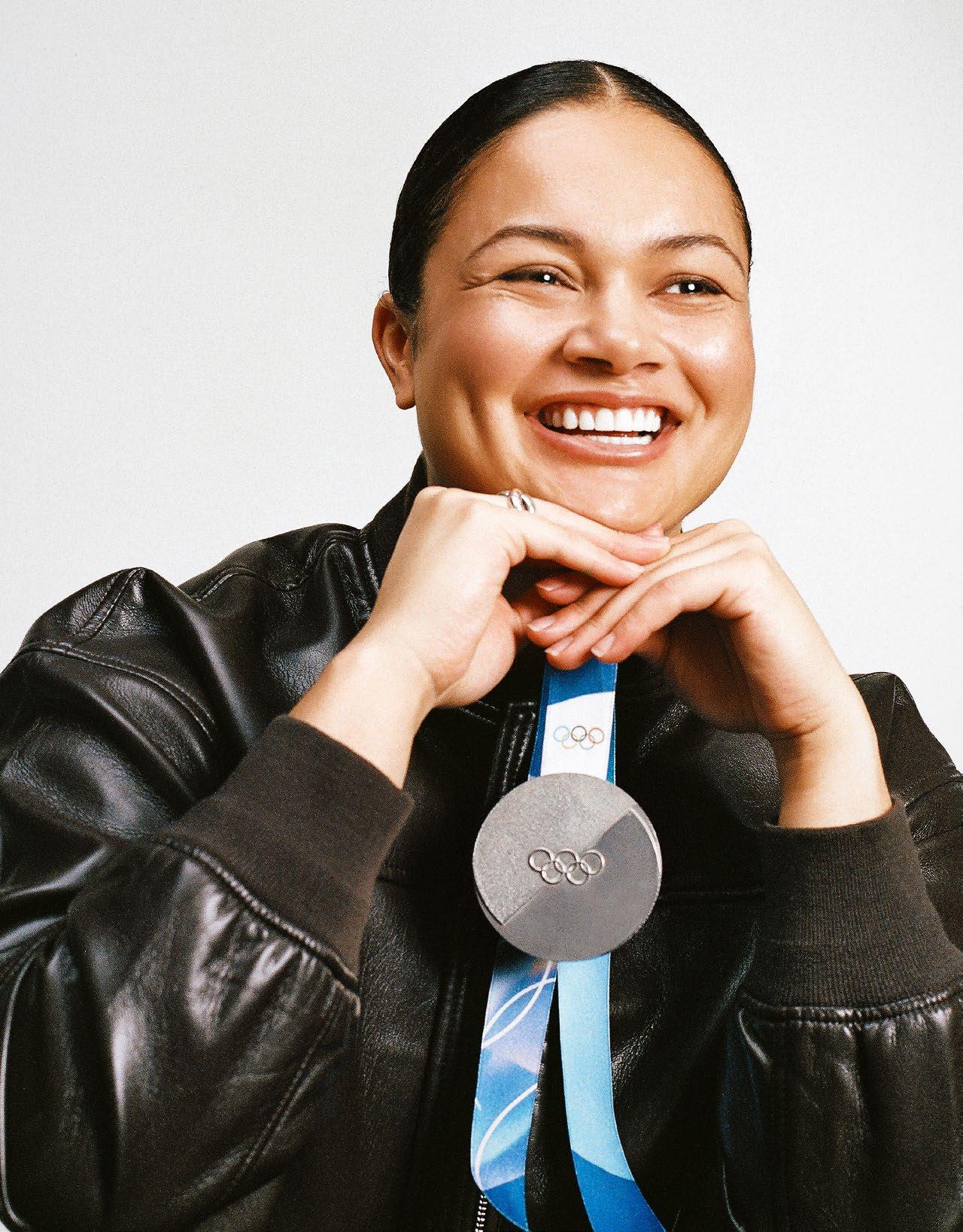
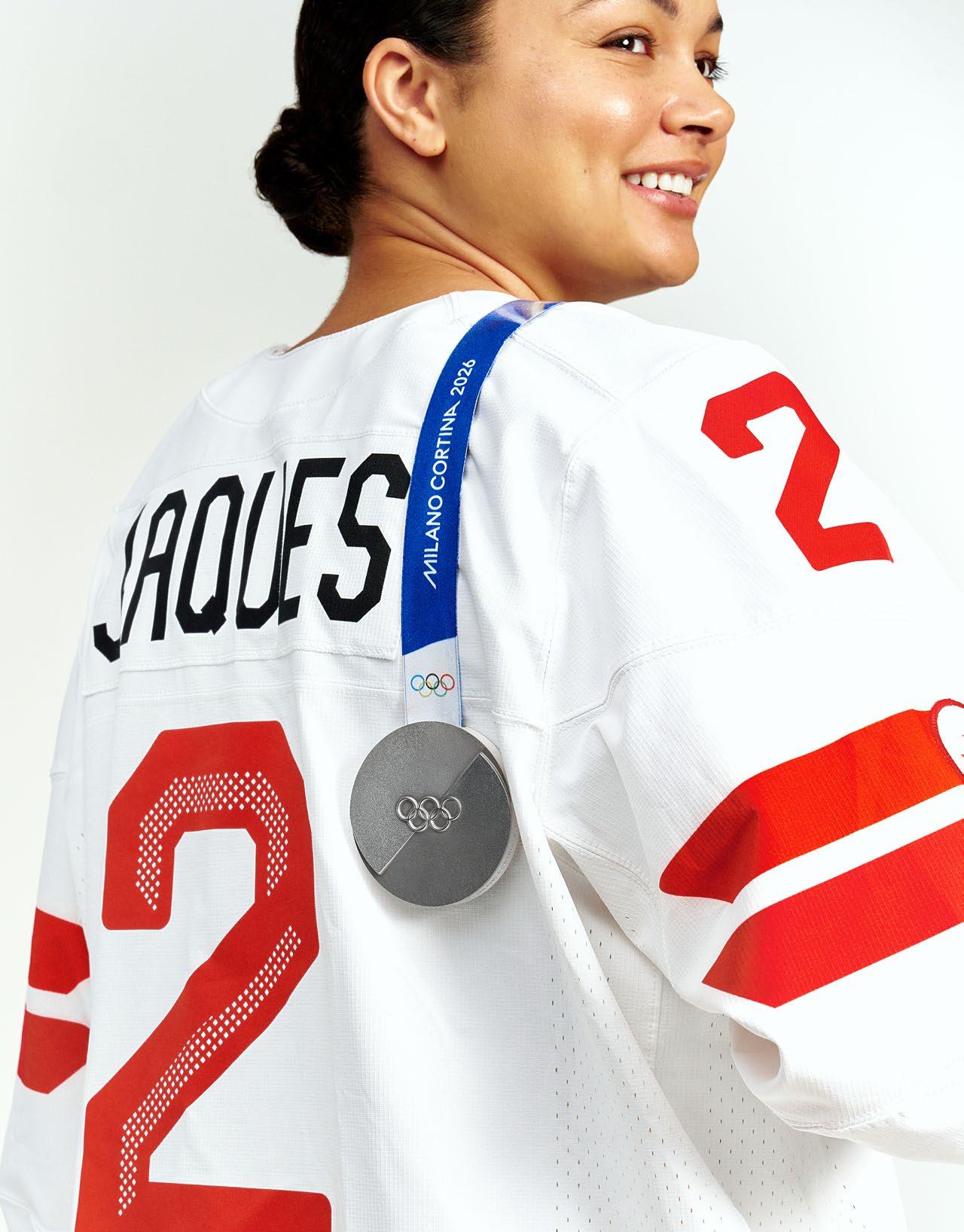
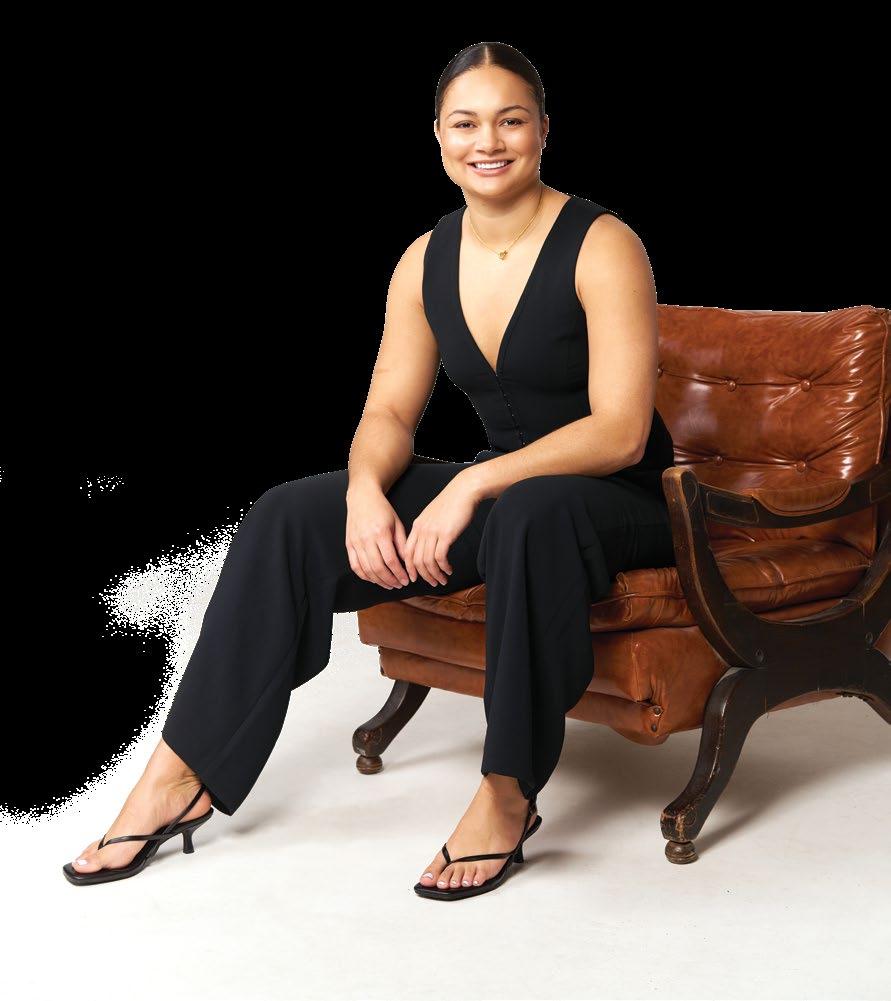
We’re proud to feature Sophie Jaques on our cover this issue. What stands out about Sophie isn’t just her ability, it’s how complete her game is and the consistency she brings every night. She represents a generation of athletes who are raising the bar and making it clear that the women’s game isn’t “growing” – it’s already here.
Over the past few months, that’s been impossible to ignore. The PWHL continues to show what’s possible with packed arenas and real momentum behind the league. Closer to home, the recent Toronto Tempo WNBA franchise is another major step forward, creating a new level of visibility and opportunity for athletes in this market.
And it’s not just hockey or basketball. The launch of the Northern Super League is pushing professional women’s soccer forward in Canada, and we’re seeing similar movement with the growth of women’s baseball leagues and other emerging pathways. Across sports, the message is consistent – there is a future here, and it’s expanding quickly.
That matters for every young athlete coming up today. The path is more visible, more attainable, and more exciting than it’s ever been.
At Ice Warriors, that’s what we aim to reflect – highlighting the athletes, the stories, and the progress that continue to shape the landscape.
Thank you to everyone who continues to support and be part of this community.
Enjoy the issue.
SINCERELY,
THE NEW REFILLABLE PARFUM
GOLF GAME
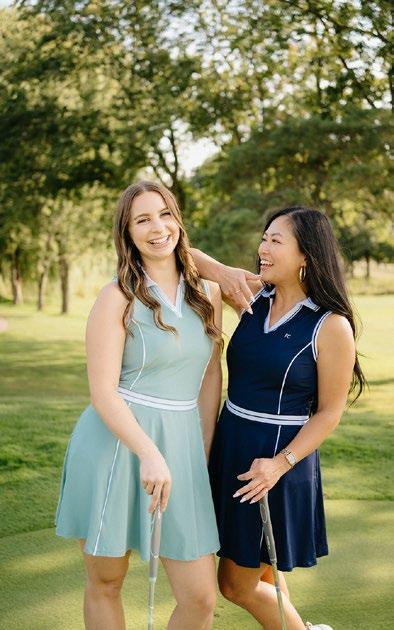
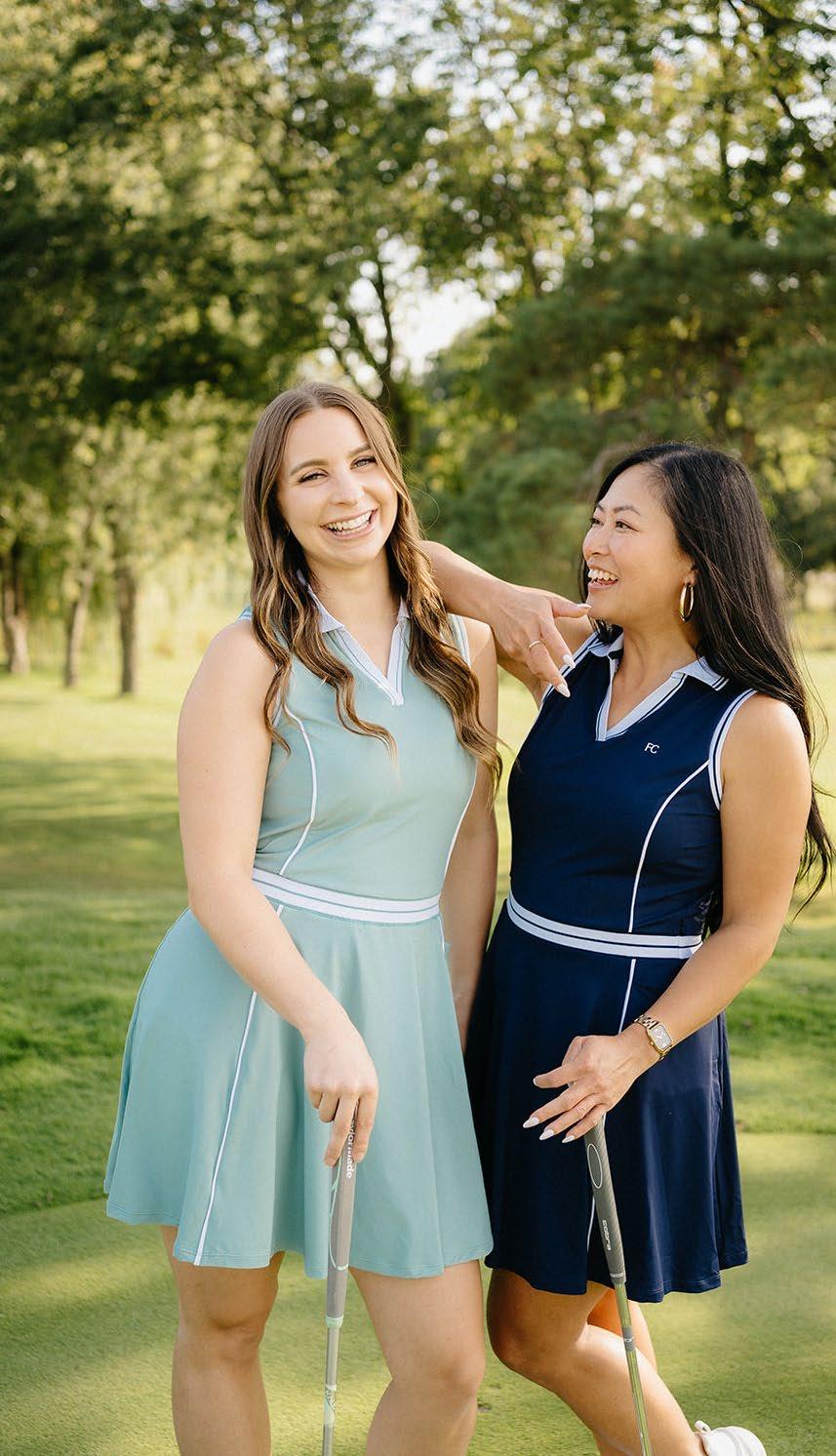
For women, by women! Upgrade your golf swag with the latest in golf apparel from Fore Chicks and feel confident on the course.
OPENING FACEOFF
Check out the latest surrounding women’s hockey and the WNBA’s newest team.
Your guide to the ultimate weekend in Boston. LAST CALL Playoff
FEATURES
PUCKS FOR PASSPORTS
Cover athlete Sophie Jaques talks about travel, balance, and life beyond hockey this off-season.
28
THE INAUGURAL SEASON
Here is what you need to know about the Toronto Tempo.
24
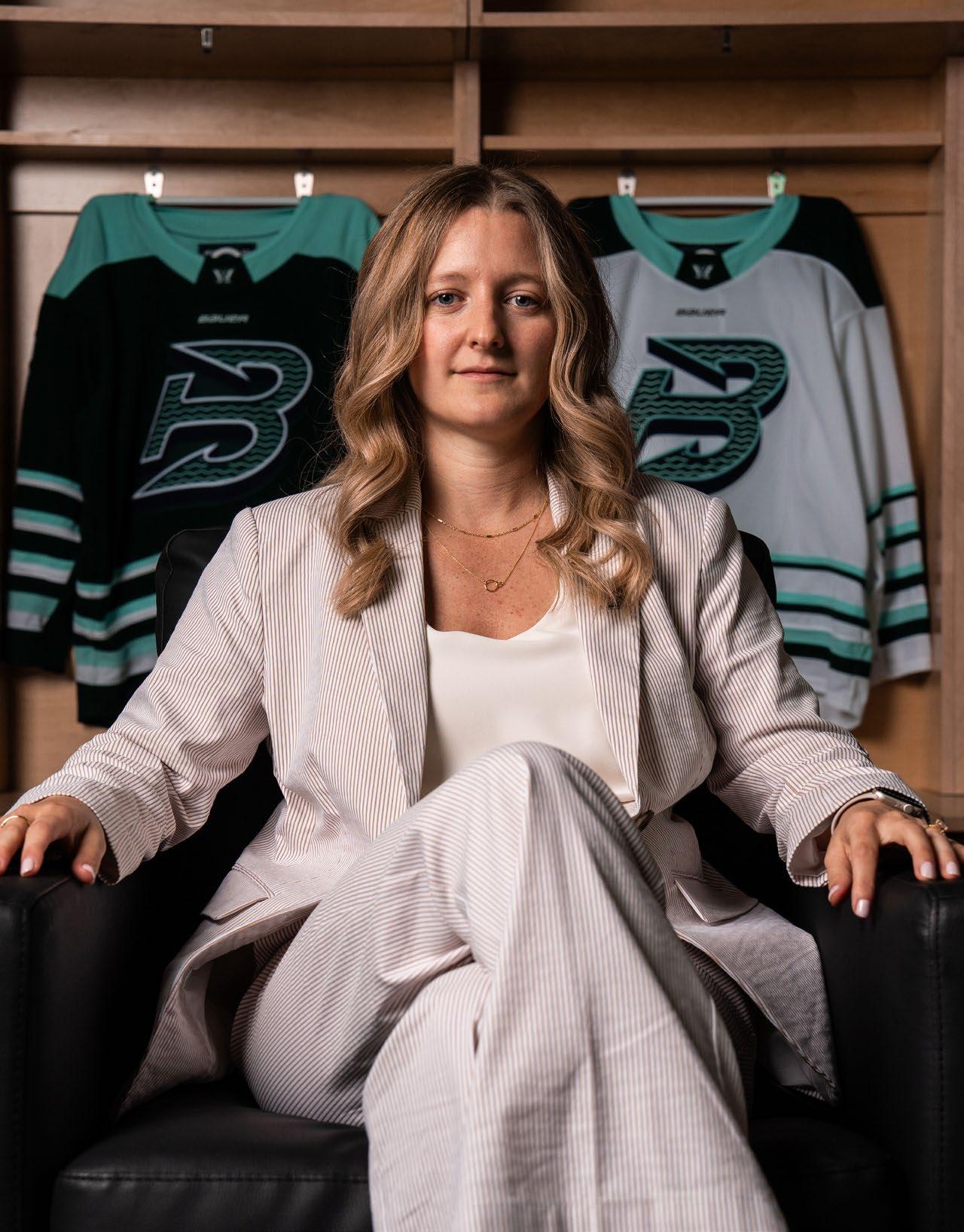
BUILDING BOSTON
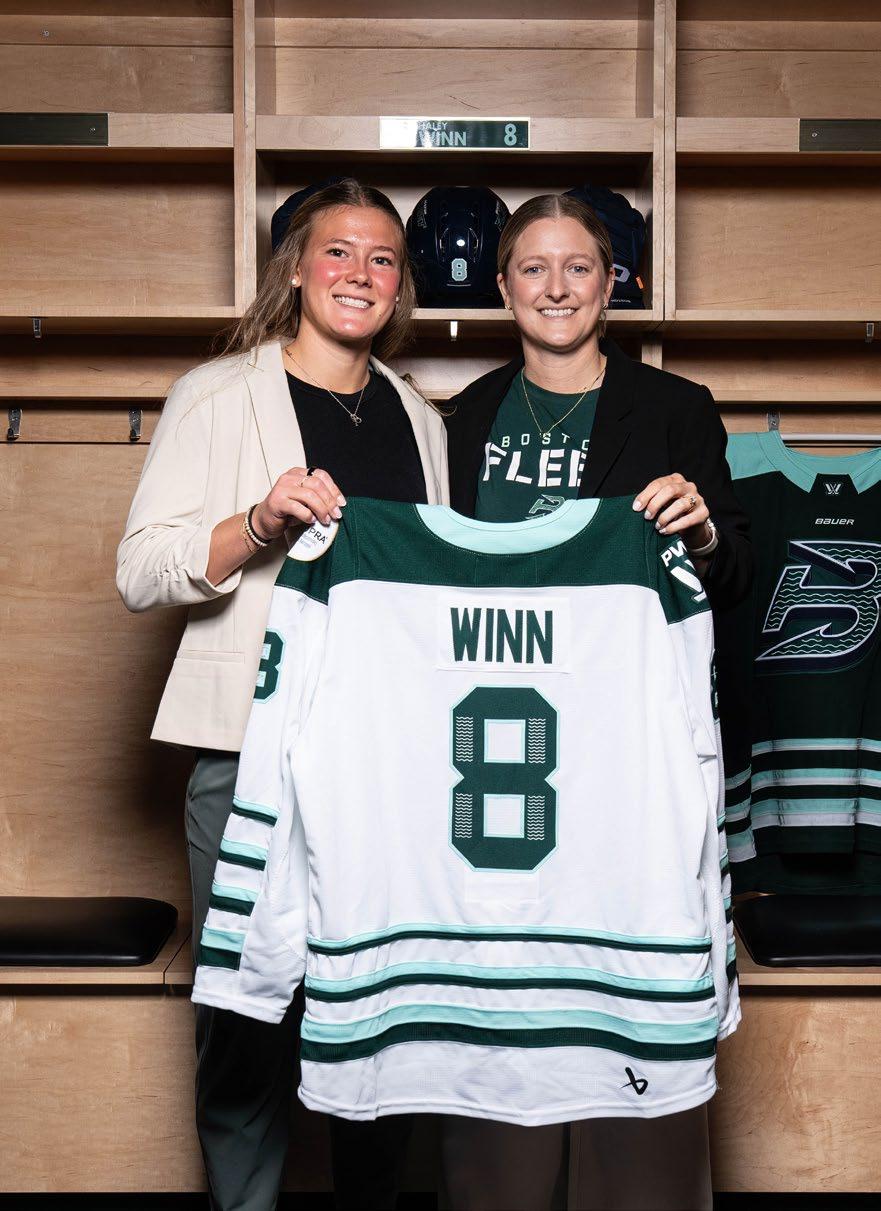
Fleet GM Danielle Marmer on leadership, culture and what women's hockey is becoming.
40
LIKE NO OTHER
Tara Slone talks about unique path into hockey and why hockey is such an important part of his career and her life.
NO PLACE LIKE HOME
Jennifer Gardiner is back in Vancouver and loving it!
PRESIDENT
EDITOR-IN-CHIEF
VICE PRESIDENT
VICE PRESIDENT, BRAND
LEAD DESIGNER
VICE PRESIDENT, FINANCE
DIRECTOR OF SALES
SR. WRITER
CONTRIBUTING WRITERS
AMY KNOWLES
DAVID PAGNOTTA
DALLAS KNOWLES
DANIJELA GRBAVAC
STEPHANIE PAGNOTTA
MIKE JACKSON
PATRICIA NAPOLEONE
JOLENE LATIMER
VICTORIA MATIASH
TANYA MEILLEUR
COURTNEY NIELSON
CONTRIBUTING PHOTOGRAPHERS
NICOLE DE KHORS
BRAULIO ROCHA
GETTY IMAGES
PWHL
ADVERTISING INQUIRIES
PUBLISHED BY
CONTACT INFORMATION
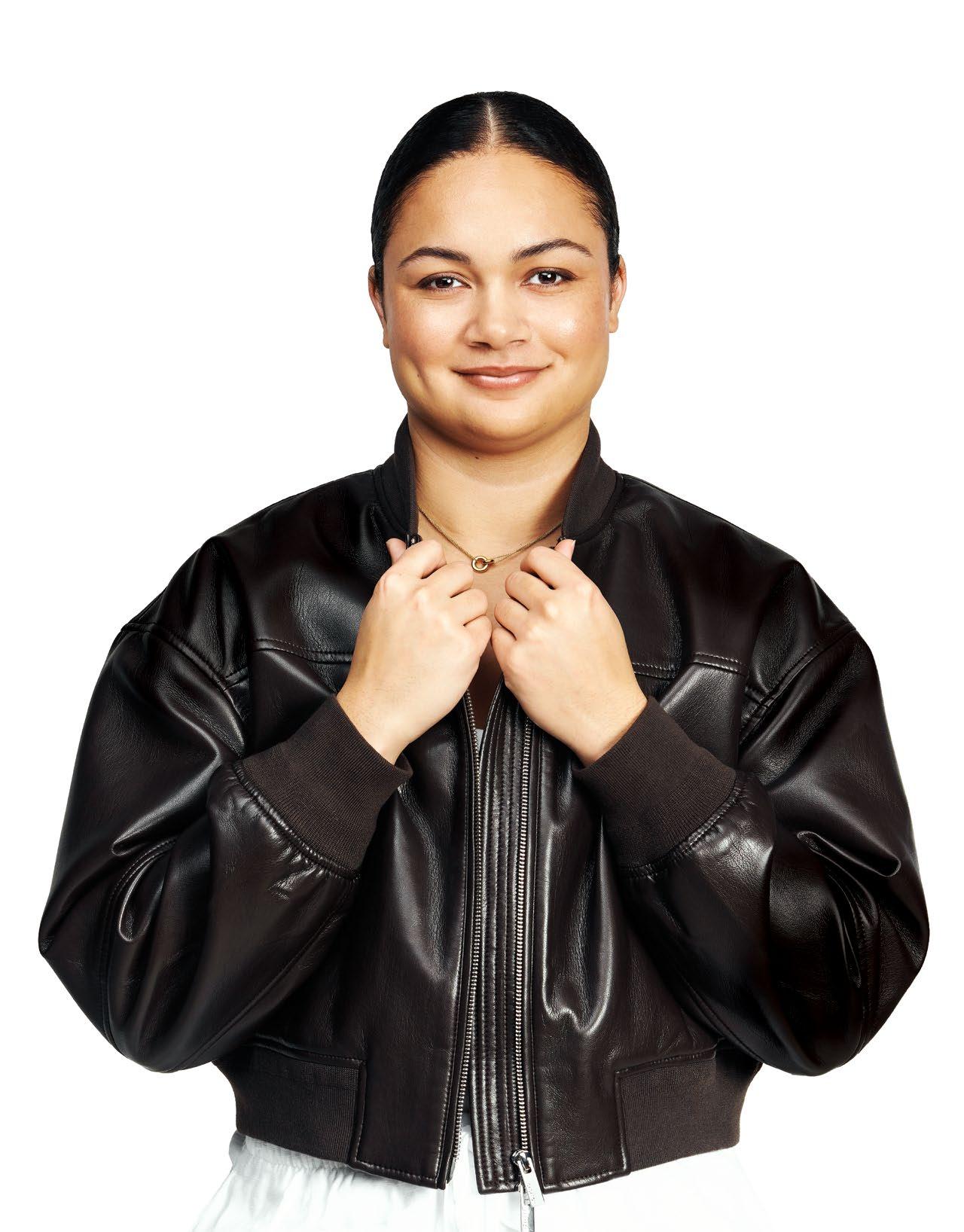
Cover: Sophie Jaques, Vancouver Goldeneyes
Photographed by Nicole De Khors
Hair & Makeup by Joanne Parks
Wardrobe courtesy of Aritzia
Ice Warriors is published four times per year.
No part of this publication may be copied, duplicated or reprinted without the expressed written consent of the Ice Warriors Media Group.
The views and opinions expressed by the contributing writers do not necessarily reflect those of the Ice Warriors Media Group or its staff.
SALES@THEICEWARRIORS.CA
ICE WARRIORS MEDIA GROUP
MAGAZINE@THEICEWARRIORS.CA
Annual subscription rate: $24.95
Single copy cover price: $7.95
Subscriptions available at www.theicewarriors.ca
Ice Warriors™ is a registered trademark. Printed in Canada
Smart detection meets unstoppable suction. The Shark PowerDetect Auto-Empty Vacuum adjusts power on the fly and empties itself, so you never miss a move.
$749.99
Power through every stain –inspired by the unstoppable athletes of the PWHL. Engineered for those who expect excellence—on the ice and t home. .99
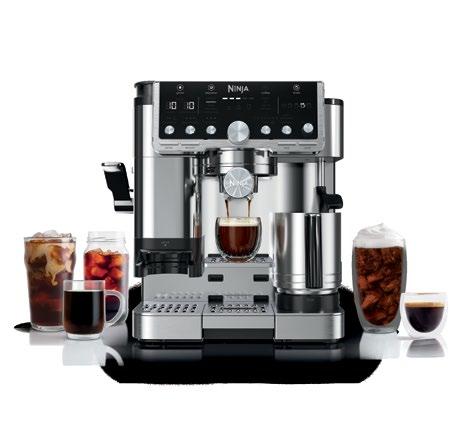
From first puck to final pour, the Ninja Espresso Machine brings barista-level precision home — rich flavor, smooth finish, zero compromise.
From quick weeknight wins to game-day feasts, the Ninja Crispi Pro powers through every cook with pro-level precision and nextlevel crisp results.
$349.99
$999.99
YEARS HISTORY
May 15, 2026, marks the 30th anniversary of Canada’s first national women’s under-19 team.
Led by captain Nicole Beare, Team Canada played in a three-game series against Team USA in Lake Placid, New York, July 6-10, 1996.
The roster boasted several talented athletes, including four-time Olympic gold medalist and Hockey Hall of Famer Caroline Ouellette, sixtime Olympic medalist in speed skating Cindy Klassen, and Olympic gold medalist and Hockey Hall of Famer as a builder, head coach Danièle Sauvageau.
They did not realize it at the time, but that national under-19 program became a stepping stone for young women to develop their game at a higher level and gave Canadians another outlet to play the game they love.
“This marks another step forward for high performance programming and an investment in our future in international women’s hockey,” said then-Canadian Hockey Senior V.P. of Hockey Operations Bob Nicholson, 30 years ago.
The numbers tell one story, but the momentum behind the Professional Women’s Hockey League tells an even bigger one.
In just its third season, the PWHL is not only growing but showcases record-breaking crowds to surging global viewership and continues to carve out its place on the international stage.
This season marked a major milestone, with the PWHL surpassing 1.1 million fans in total attendance for the first time. On average, 9,300 fans packed arenas each game, an increase of 28 percent, while more matchups moved into NHL venues, from the inaugural season.
In the United States, history was made at Madison Square Garden, with 18,006 fans breaking the previous record set in Seattle’s Climate Pledge Arena. But even that was eclipsed in Montreal, where 21,105 fans created the largest crowd ever for a women’s hockey game, surpassing the league’s own inaugural sellout at Scotiabank Arena.
THE PWHL’S RISE IS ESPECIALLY SIGNIFICANT GIVEN THE LANDSCAPE IT ENTERS.
It stands as the first major women’s professional league of its kind to launch in over a decade, following the WNBA in 1997 and the National Women’s Soccer League in 2013. Streaming audiences have
surged, with YouTube viewership
HISTORY CONTINUES TO BE MADE
77% RISING WITH WITH AT CLIMBING
BY: COURTNEY NIELSON
season over season. The game now reaches 96 million homes worldwide, spanning more than 100 countries.
Major international moments continue to drive interest in the professional league. The 2026 Olympic gold medal game between the United States and Canada drew 5.3 million viewers, skyrocketing to 7.7 million in overtime.
ON THE ICE, INDIVIDUAL MILESTONES CONTINUE TO STACK UP.
Minnesota’s Kelly Pannek became the first player to reach 30 points in a single season, finishing
The Victoire set the standard for team success wins, while Ann-Renée Desbiens and Boston Fleet’s Aerin Frankel shared the single-season wins record with Frankel also setting a benchmark of eight shutouts in a single season.
More player names are bound to enter the history books, and achievements will continue as the PWHL’s rapid growth and competitiveness carry on into its third season. It’s only getting started.
The newest addition to the WNBA quickly got a taste of the league’s competitiveness, going 0-2 in its opening preseason matchups.
The Toronto Tempo played their first-ever game in the W on April 29 against the Connecticut Sun, who endured a difficult 2025 season due to injuries and an offseason overhaul of their starting core, but still came away with an 83-78 win.
TURN PRESEASON TO
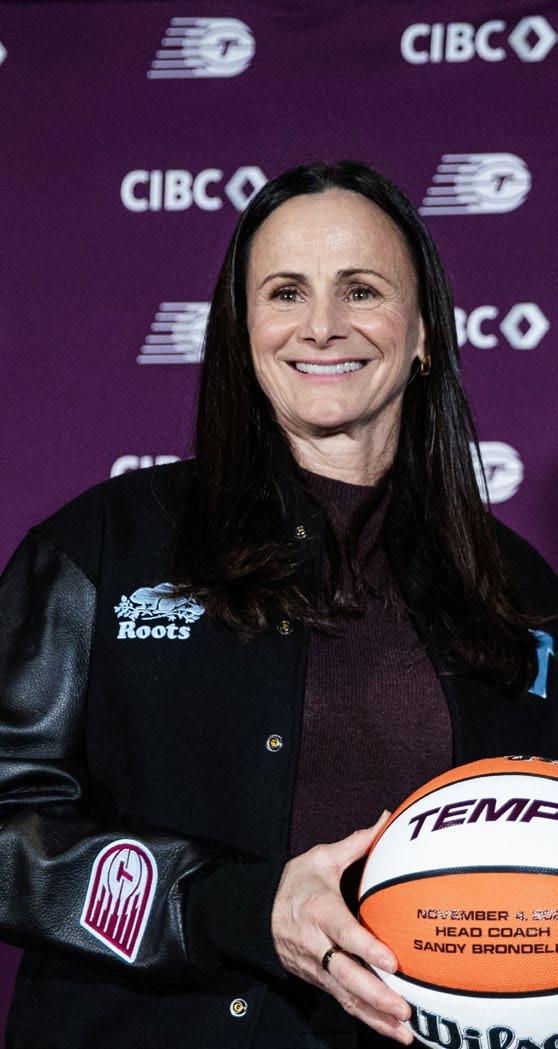
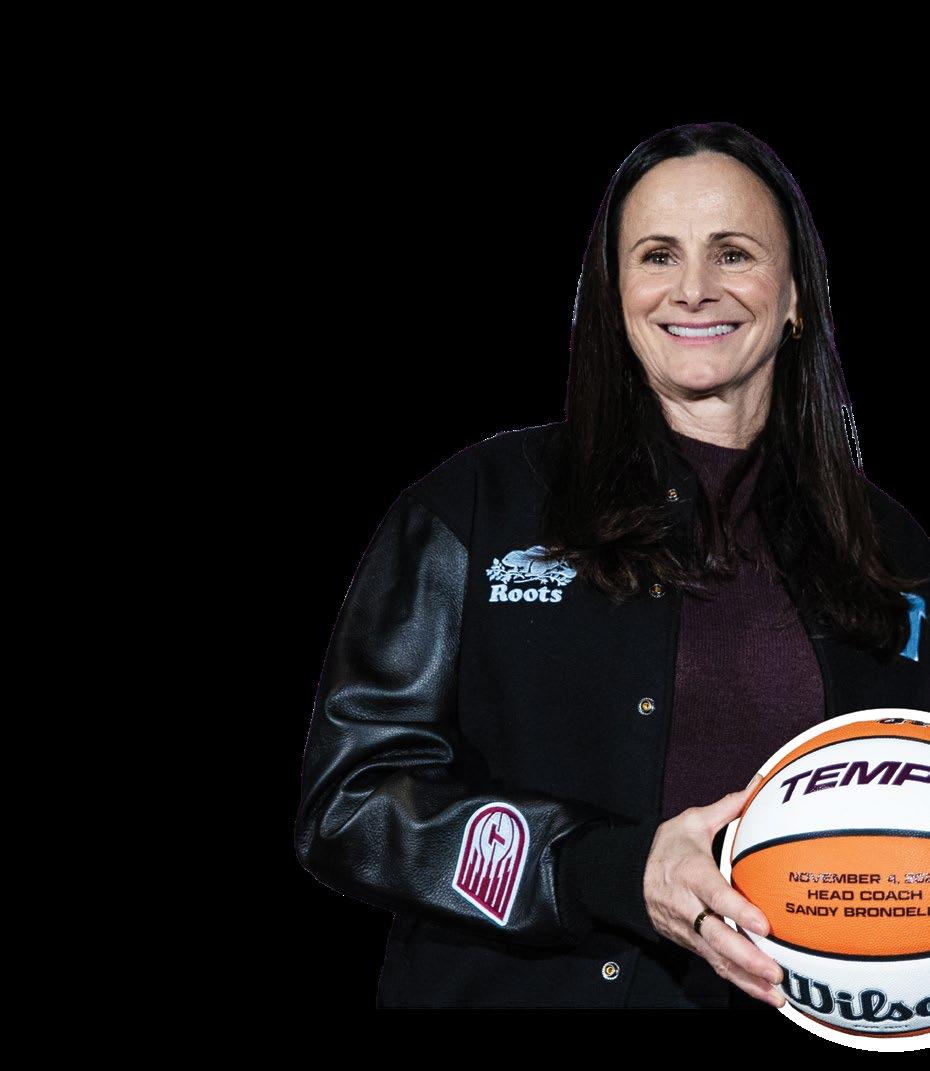
In the Tempo’s case, the team was quickly assembled, bringing together veterans, rookies, and international talent under the guidance of championship-winning head coach Sandy Brondello.
The Minnesota Lynx were next on the slate. Toronto opened its final preseason game with a lineup featuring Kiki Rice, Lexi Held, Kia Nurse, Nyara Sabally, and Temi Fagbenle, falling 73-66.
AROUND
It’s not the scoreboard that matters, but the identity the team is trying to build, with chemistry and stronger playmaking expected to develop over the course of the season.
BY: COURTNEY NIELSON
The Tempo opened its regular season at Coca-Cola Coliseum on May 8 at 7:30 p.m. against Rice’s former teammate Lauren Betts and the Washington Mystics.
SPORTS HEAVEN YOUR GUIDE TO THE ULTIMATE WEEKEND IN BOSTON
BY JOLENE LATIMER
here are cities that do sports well, and then there’s Boston, where sports feels less like entertainment and more like identity. A weekend here isn’t just about catching games. It’s about stepping into a culture that expects excellence, celebrates history and still manages to feel intimate and unexpectedly charming.
Book a few things like the right hotel, a couple of games, one or two dinners you actually care about, and the rest tends to fall into place in Boston. It’s compact, walkable, and just busy enough that you never feel like you’re wasting time figuring it out.
If you’re planning a weekend anchored in women’s hockey, even better. The schedule gives your trip a backbone. Everything else becomes the in-between.
Here’s how to do it properly:
WHERE TO STAY
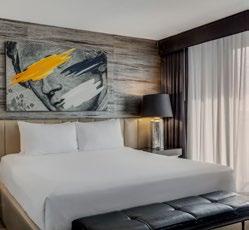
Ditch the car and take advantage of Boston’s walkability by staying central to the action. The Revere Hotel Boston Common is a great choice near Boston Common, close to the Theatre District, and an easy route to TD Garden and the North End. It keeps the weekend simple. No long commutes. That matters when you’re moving between games and dinners and don’t want to think too hard about how to get anywhere.
WHERE TO EAT
In the North End, book a table at Trattoria Il Panino. It’s exactly what you’ll want after a full day; classic Italian, a busy dining room, and a table that puts you right into the rhythm of one of the city’s most iconic neighborhoods. From there, the night takes care of itself. Walk, stop for espresso, linger longer than you meant to.
For something completely different, make time for Ama at the Atlas. The menu leans bright and flavourforward, with dishes that feel fresh and a little unexpected compared to the rest of the weekend. It’s a good daytime stop for something lighter, relaxed, and an easy reset between games.
WHERE TO DRINK
Start your girls’ night at The Irving inside the Lenox. It’s quiet, polished, and the kind of place that works at the beginning of the night. Get a proper cocktail, a seat at the bar, and enjoy a slower pace before everything else picks up. The vibe is considered without being formal.
For something more specific to Boston, go to Bleacher Bar. It sits beneath the stands at Fenway, with a direct view into the ballpark. Even when there’s no game on, it’s worth it for the setting alone.
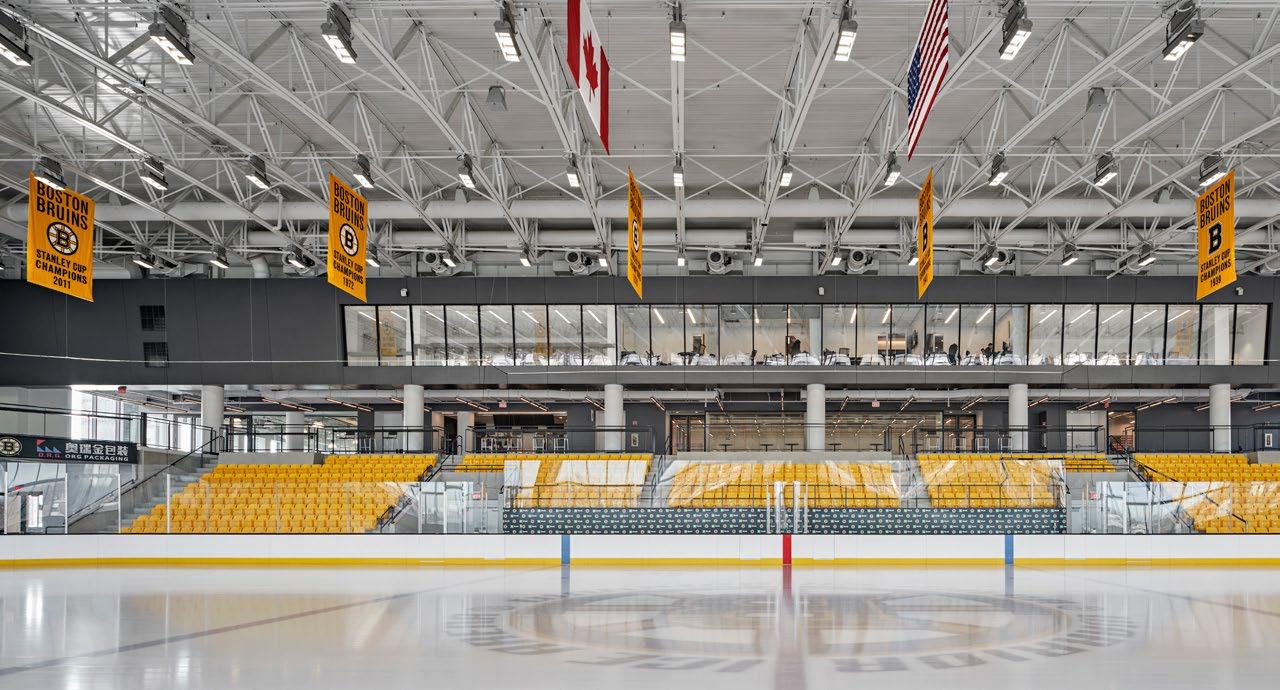
SEE THE FLEET ON HOME ICE
The Boston Fleet are one of the most exciting teams in the PWHL right now, and the home atmosphere reflects it — energetic,
engaged, and easy to get caught up in. In one of the league’s smaller venues, almost every seat feels close to the action.
It’s also one of the easiest ways to see stars like Megan Keller and Aerin Frankel up close, coming off their standout Olympic run.
DON’T MISS TD GARDEN
While you’re in town, take the opportunity to see one of Boston’s most iconic venues: TD Garden.
There’s something here for every kind of sports fan, whether it’s the atmosphere of a Boston Bruins game, the pace of a Boston Celtics night, or a behind-the-scenes look at the Boston Sports Museum and Heritage Hall, which offers a deeper sense of the city’s history through its teams and athletes.
Even if you’re only in the building once, it gives you a clear read on what sport means in Boston and why it sits at the centre of the city’s identity.
STEP INSIDE AN ICON
Don’t settle for a quick walk-by of Fenway Park, this storied ballpark deserves your full attention.
Book a tour and take the time to see it properly. You’ll step out onto the field, climb up to the top of the Green Monster, and sit in the press box looking out over the park. It’s a different perspective than a game day and you’ll get to feel the full weight of this monument to the game and its history.
Fenway carries a different kind of weight, and the tour lets you experience it properly, without the noise or rush of game day.
For women, by women, Fore Chicks is a fresh golf apparel brand that where women can feel confident on the course. With golf season upon us, explore these five hot items from Fore Chicks before you head over to the clubhouse.
LUXE LINKS DRESS
1. A flirty, feminine golf dress designed for movement and confidence. Featuring a flattering silhouette and subtle back slit for breathability, this best-selling piece blends performance with effortless, everyday style.
$89.99 CAD
WEEKENDER SET (VEST + SHORTS)
2. A relaxed, elevated set designed for comfort on and off the course. Featuring a sleeveless zip vest and tailored shorts, it offers effortless style and versatility from post-round lounging to everyday wear.
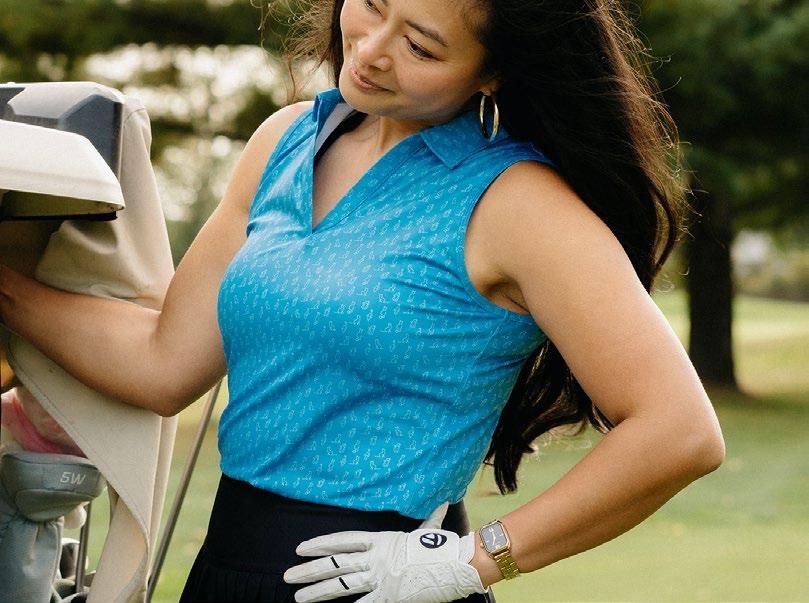
3. A classic golf staple with a subtle twist. Designed with delicate all-over cat prints, this performance polo adds personality while maintaining a clean, elevated look and a comfortable, course-ready fit.
4. A signature Fore Chicks graphic that captures the humour of the game. Designed for golfers who know the feeling, this relaxed-fit long sleeve tee brings personality to both oncourse and off-course style.
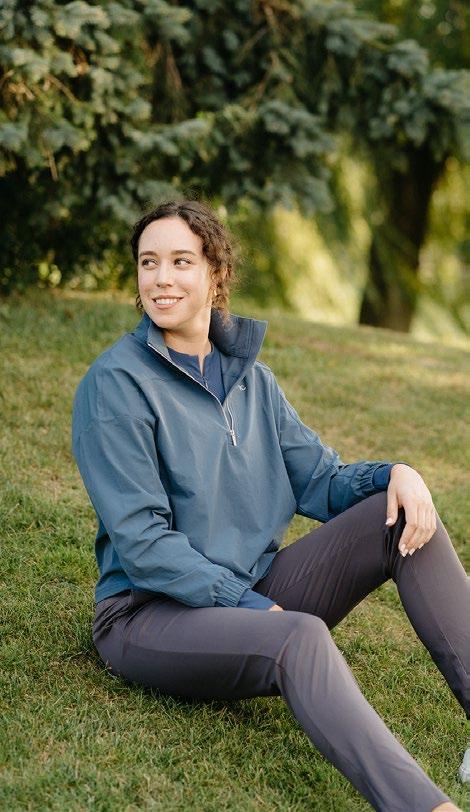
5. A lightweight, fully waterproof layer designed for unpredictable rounds. Featuring a sleek quarter-zip design with pockets, it keeps you dry while maintaining comfort, movement, and style on course.
BUILDING SOMETHING NEW IN
DANIELLE MARMER ON LEADERSHIP, CULTURE AND WHAT WOMEN’S HOCKEY IS BECOMING
BY JOLENE LATIMER
past 2 a.m. in Seattle, and Boston Fleet general manager Danielle Marmer was still at the rink. She wasn’t signing a player or negotiating a trade. Instead, the head of the organization was doing something far more foundational: unloading equipment.
“My job on the road is to make sure that I’m putting out fires,” she said. “I’m not operational… we have athletic trainers who need to be on, we have coaches who need to be on… If I’m tired the next day, it’s okay.”
That mindset – step in, solve the problem, keep things moving – has come to define Marmer’s approach to leadership. It shows up in the quiet, unglamorous moments, but also in the decisions that shape a team: how a roster is built, how leadership evolves, and what kind of culture takes hold.
We caught up with Marmer to talk about all of it – leadership, identity, and what it takes to build something that lasts in a league still finding its footing.
IW: Talk about a breakout year, not just for the Fleet but for individual players on your team. Did you ever think you’d have an athlete on Saturday Night Live, and what was your reaction when Megan Keller got the call from 30 Rock for that opportunity?
Marmer: With Keller, that meant getting on a plane at 5:00 am to go to SNL. I told her to go, and I told her you need to go to the after parties.
You had a fan event after the Olympics where Megan Keller refused to leave until every fan had been through the line. What did that say to
you about her leadership?
We were the ones trying to cut the line… and Megan Keller said, ‘No, if the people are here, I’m going to stay and meet them. I don’t care how long it takes. She got through every single person. I can’t think of any other pro athlete at her level, with her accomplishments and her resume who would say that.
When you think about leadership, how much of it is something you can identify early versus something that develops when a player is put in the position?
I think we sometimes miss it. We assume someone can’t lead just because they haven’t had to yet.
“When you have someone like Hillary Knight… you just defer. It’s whatever Hillary wants… (Megan) wasn’t always going to speak up, because Hillary was going to.
I don’t know if she necessarily knew how she was going to be a leader… but you remove Hillary from it, and then Megan gets to evolve… and she’s become an incredible captain in a pretty short amount of time. I think that’s a miss on all of us to think that that wasn’t in there the whole time.
How much of your job is evaluating talent versus evaluating people – how they fit, how they lead, how they impact a room?
You’re dealing with people… you’re not just moving assets around. There’s a core that you’re investing in, this is our identity as a Fleet. And then it’s the complementary pieces that you’re always trying to upgrade on. But it’s hard, because you’re thinking about how someone fits, what they bring to a room, not just what they do on the ice.
Your path to this role wasn’t linear. How has that shaped how you lead?
I had a lot of self-doubt along the way. It was like, I can’t do this – whether it was working in the NHL (as a scout with the Boston Bruins) or even earlier. I didn’t see people who looked like me in those roles, and I didn’t always feel like I belonged.
I don’t think any of us can be fully objective in how we evaluate ourselves
and what our capabilities are. So, you need people who are going to speak really highly of you and advocate for you, because that’s the only way I’ve gotten anywhere. That’s something I think about a lot now, because I’ve been on the other side of that.
How does that influence how you work with your own staff?
I want everyone to know that this might be your dream job today, but it doesn’t mean it’s going to be your dream job in five years. And whenever that time comes, I want to be the first person to help you get to whatever that next thing is.
I tell them, I want you to wear grass off so that when someone calls me, I can say you’ve got to hire this person. That’s how I’ve gotten any opportunity I’ve had – people speaking highly of me and advocating for me – and I think that’s part of leadership too.
What feels different about this league, from a leadership and culture standpoint?
I think we have such a gift in that we’re adults watching a league start, so you can really see people grow into being ambassadors for the game.
And it’s interesting because every player takes on YOU CAN SEE HOW THEY CHOOSE TO REPRESENT THE SPORT, HOW THEY CHOOSE TO SHOW LOVE FOR IT, AND HOW THEY INSPIRE PEOPLE.
that responsibility in such a different way. For a long time, women were told you’re role models before they were told they’re professionals. And now there’s this shift where they’re still role models, but they’re also getting to define what that means for themselves. And I think that’s really important for where the game is going.
When you zoom out, what do you want the Fleet to represent within that?
It goes back to that core. These are players we believe in, players we want to build with long term, players who represent what we want this team to be.
That becomes your identity. And once you have that, everything else – how you play, how you lead, how you connect with people – starts to build off of that.
What have you noticed about how Boston has embraced women’s hockey – and what makes it a good place to travel to for fans who want to watch this league right now?
I think what surprised me is that our fans aren’t necessarily the same people who are going to men’s professional sports. It’s a really different fan base… everybody wants let’s have a great time, it’s a welcoming space. For people who want a place to feel a part of something and haven’t felt like they fit in, it’s a really cool environment where people are just really excited to be there.
TORONTO THE
BY COURTNEY NIELSON
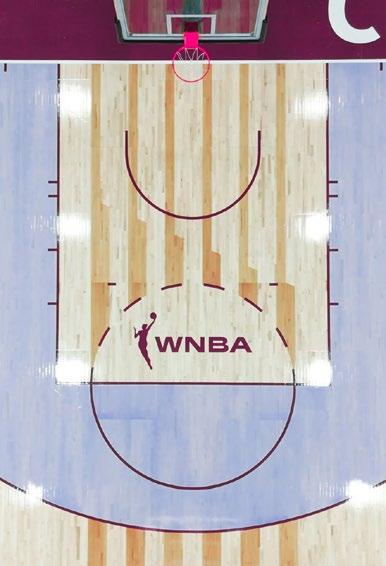
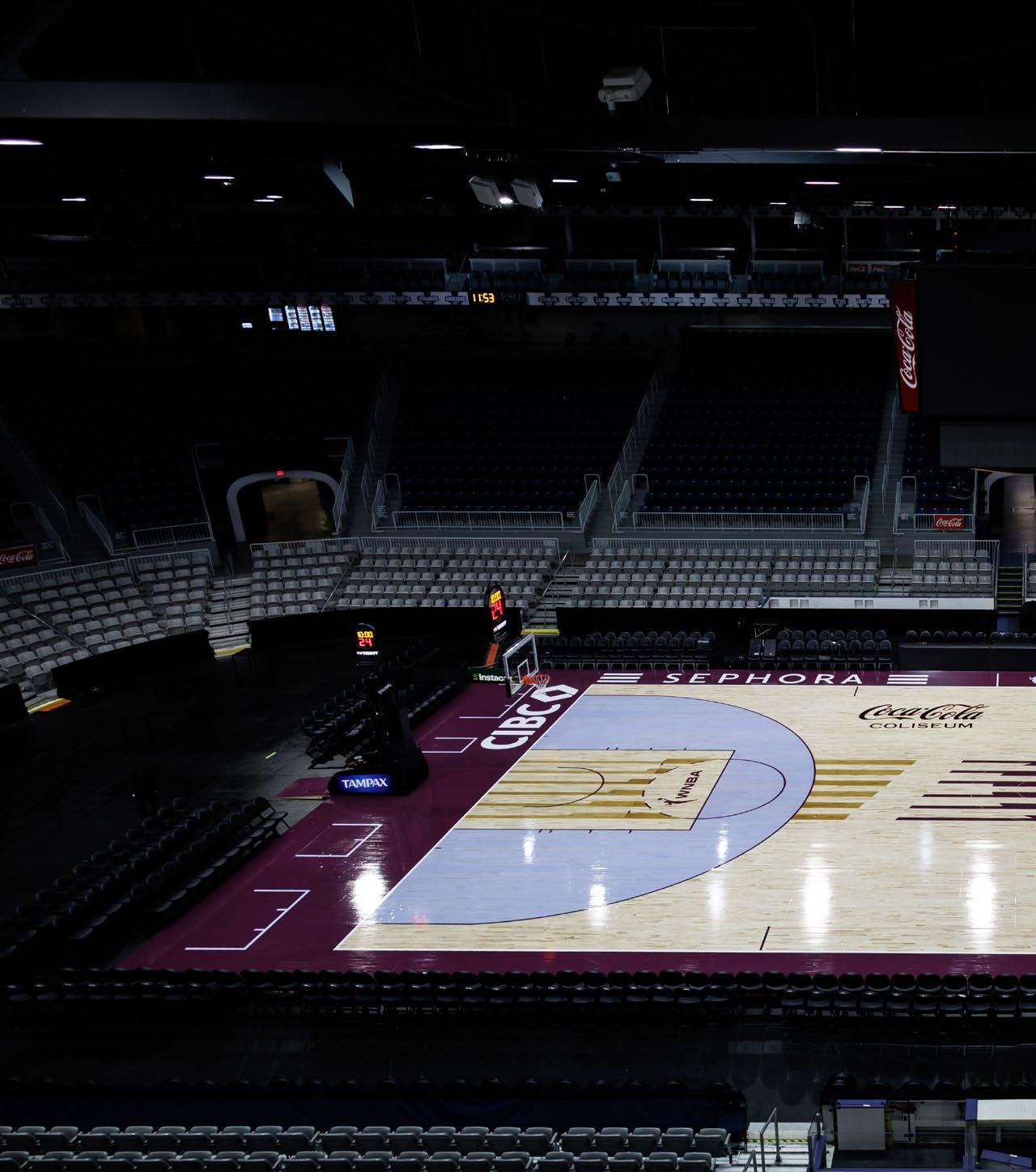
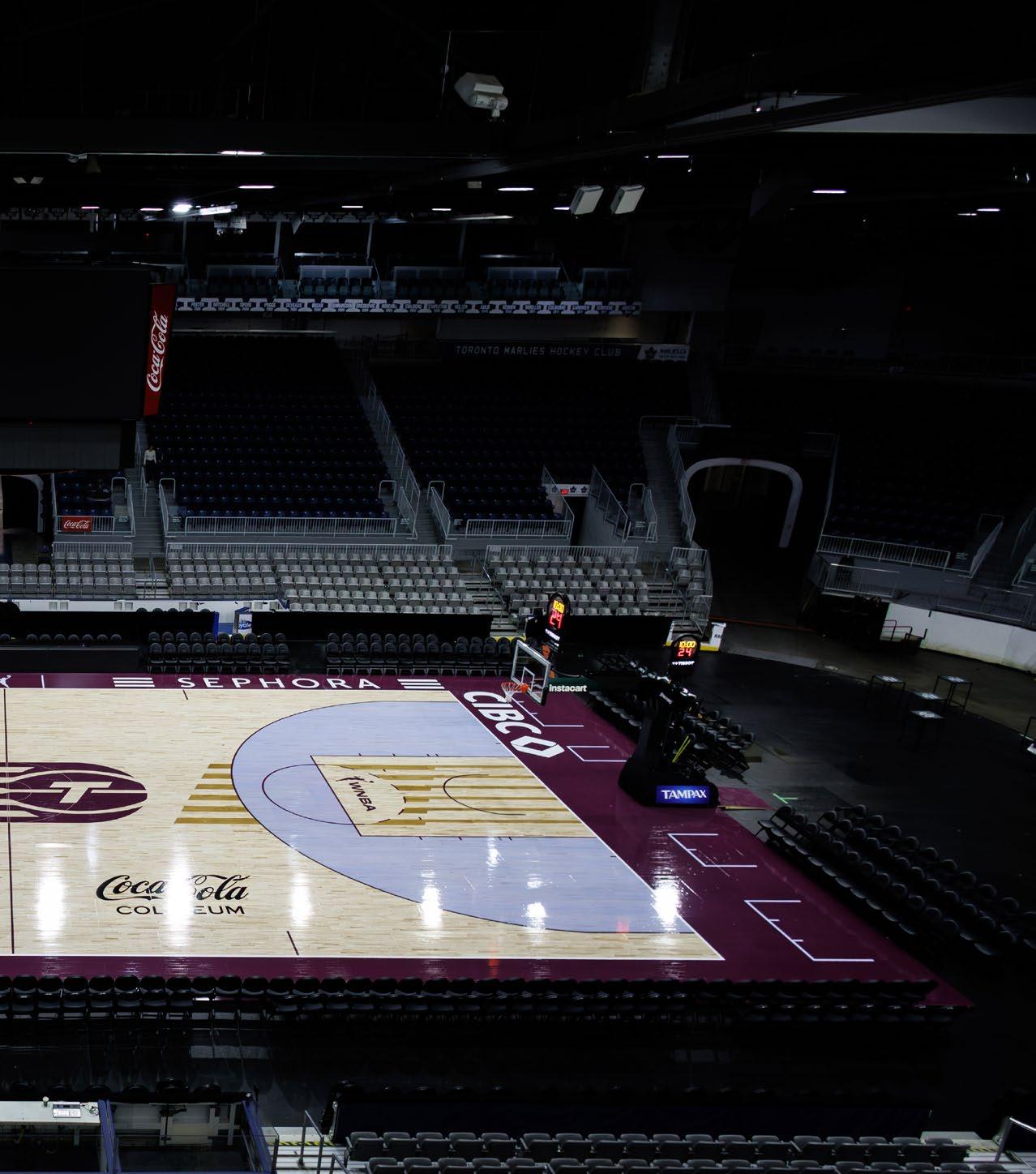
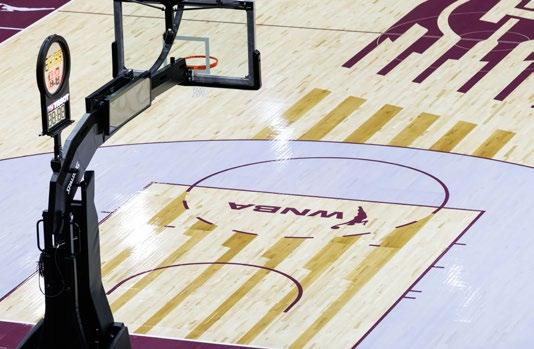
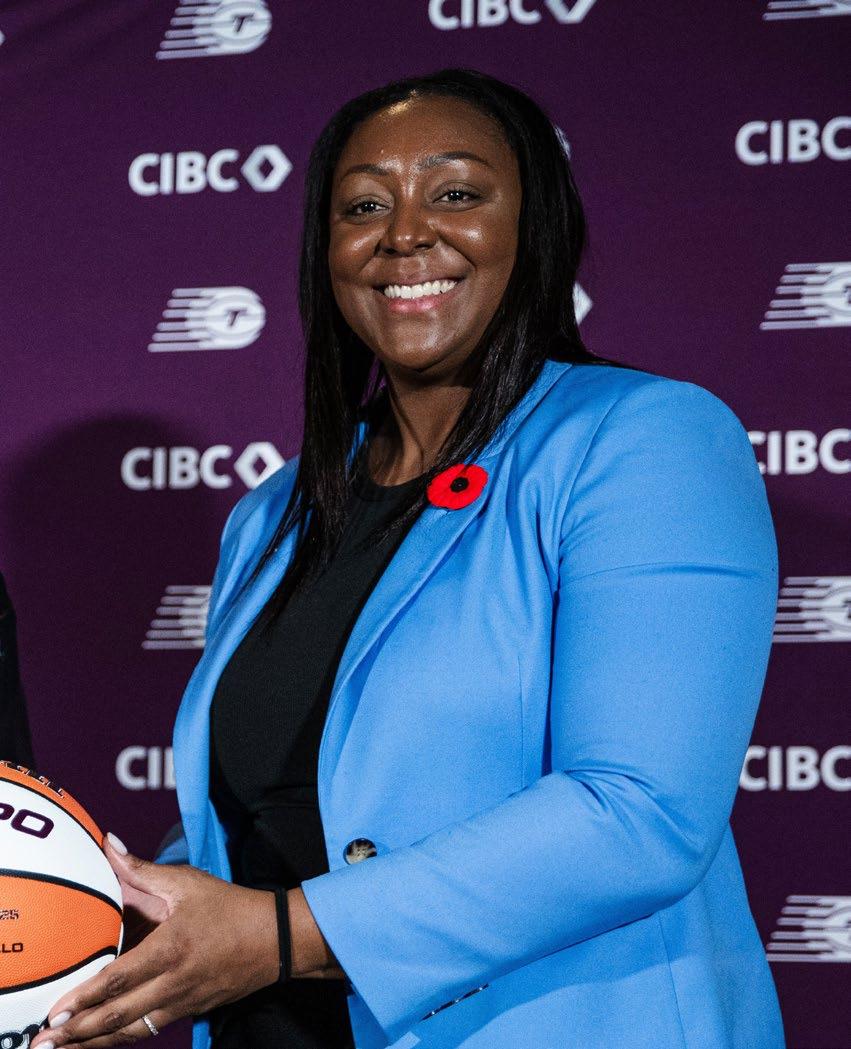
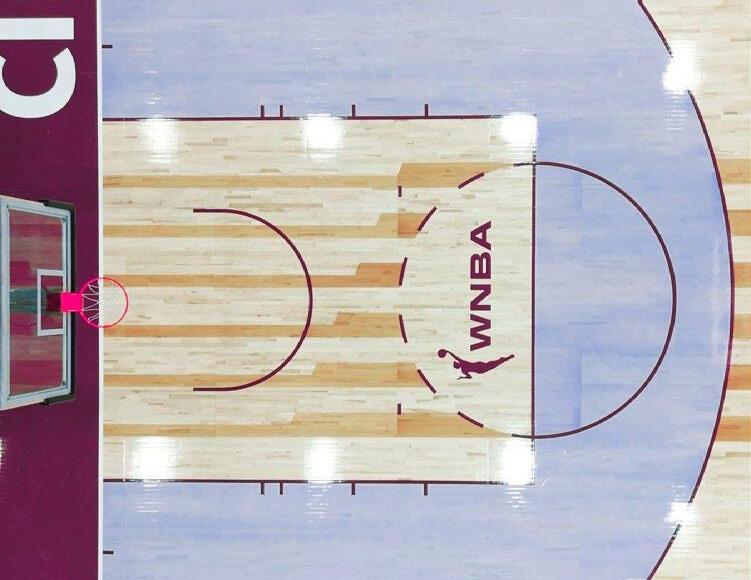
fter the franchise was announced in 2024, the day had finally arrived for Toronto Tempo fans, who would officially watch the team in action on April 29. The WNBA continued to make history, as its first Canadian-based team took the court at Coca-Cola Coliseum, which seated 8,500, on May 8.
But that is not the only arena that will have hosted the Tempo. Over the 44game season, Scotiabank Arena hosted three games, while two were played at the Bell Centre in Montreal, before the team headed west to Rogers Arena in Vancouver.
Off the court, the ownership group includes former world No. 1 tennis player Serena Williams, former Toronto Raptors president Masai Ujiri, and Montreal Canadiens coowner Geoff Molson.
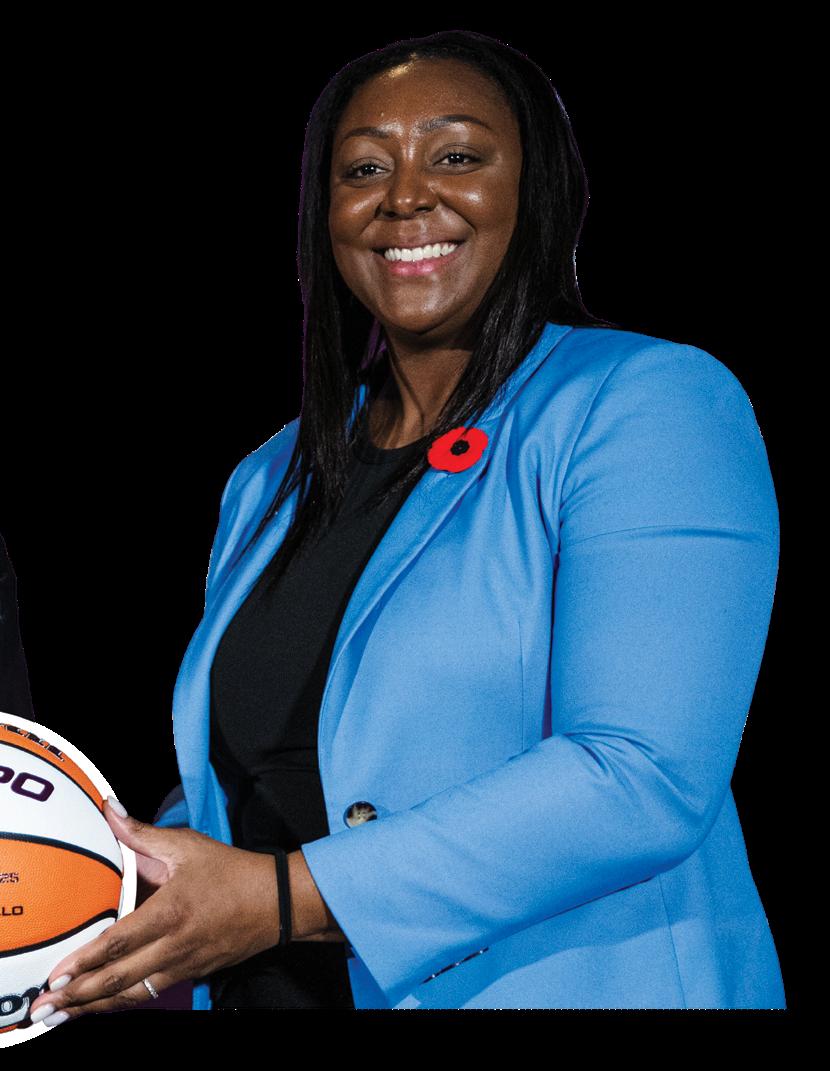
On the sidelines, head coach Sandy Brondello, an All-Star in the WNBA’s 1999 inaugural season and a three-time Olympian with Australia, leads the team as one of the league’s most respected figures.
Assisting her is associate head coach and spouse Olaf Lange, a 2024 champion with the New York Liberty and part of the Chicago Sky’s 2021 title run. The staff also includes assistants Ciara Carl, Brian Lankton, Carly Clarke, who joined in March 2026 after working with the TMU Bold, and Sadie Edwards.
HAVING LED THE PHOENIX MERCURY TO A TITLE IN 2014, EARNING COACH OF THE YEAR HONOURS, AND GUIDING THE NEW YORK LIBERTY TO THE 2024 CHAMPIONSHIP. SHE ALSO COACHED THE WNBA ALL-STAR GAME IN 2018 AND 2025.
The roster began taking shape on April 3, starting with the expansion draft, which added 11 experienced players. This was followed by the 2026 WNBA Draft, where the team selected four rookies: Kiki Rice, Teonni Key, Saffron Shiels, and Charlise Dunn.
SANDY BRONDELLO
During the expansion draft, the team added key talent to build a competitive foundation, blending veteran leadership with international experience and emerging rookies.
Marina Mabrey (Connecticut Sun) brings scoring ability, while Nyara Sabally (Liberty) is expected to anchor the interior as the starting centre. Julie Allemand (Los Angeles Sparks) made history as the franchise’s firstever draft selection and is projected to lead as the primary point guard.
With 11 players from the expansion draft – eight of them international – the Tempo also welcome Canadian Olympian and WNBA All-Star Kia Nurse, a native of Hamilton, Ontario, who signed as a free agent following the draft.
With a mix of Canadian stars, collegiate standouts, and international talent, the Tempo have assembled a competitive and determined group that could enter the championship conversation even in the early stages of the franchise.
MONICA WRIGHT ROGERS
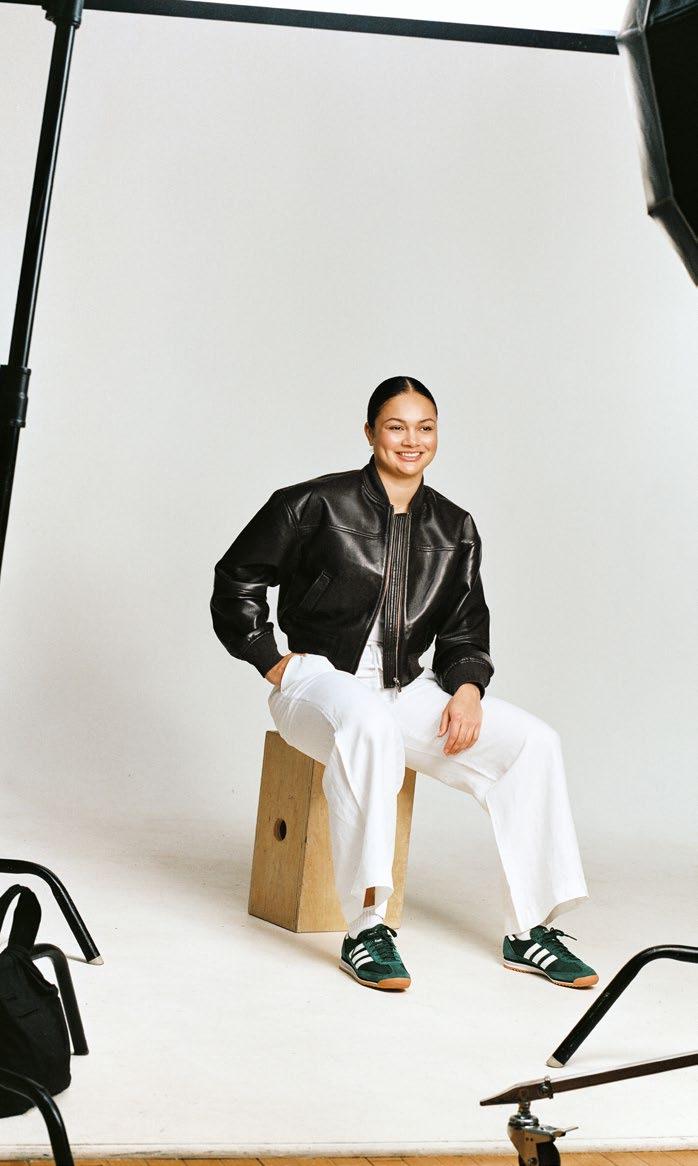
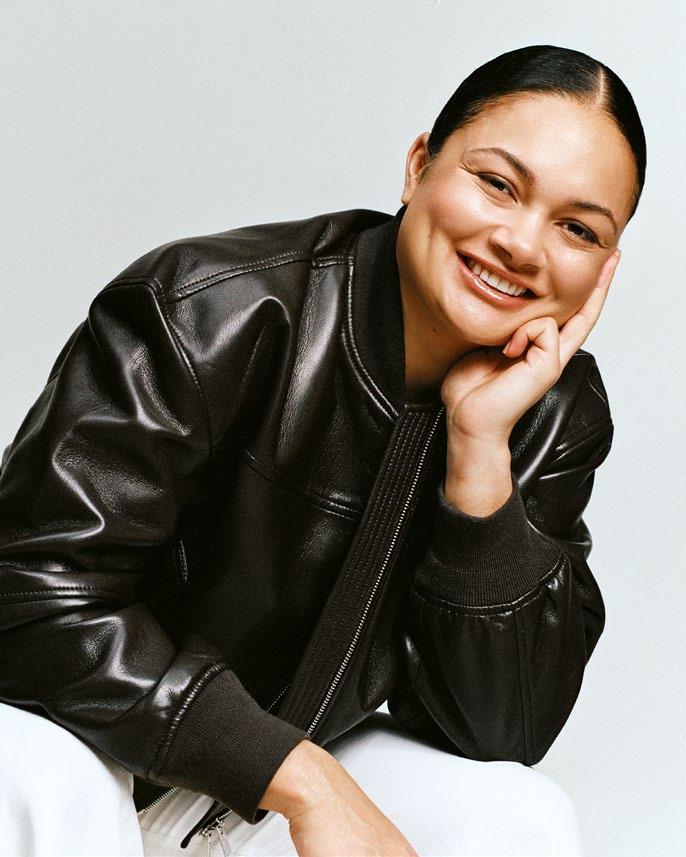
PHOTOGRAPHY BY NICOLE DE KHORS HAIR & MAKEUP BY JOANNE PARKS
P P T P S I A U R S C A S K D S R O N R F G T O
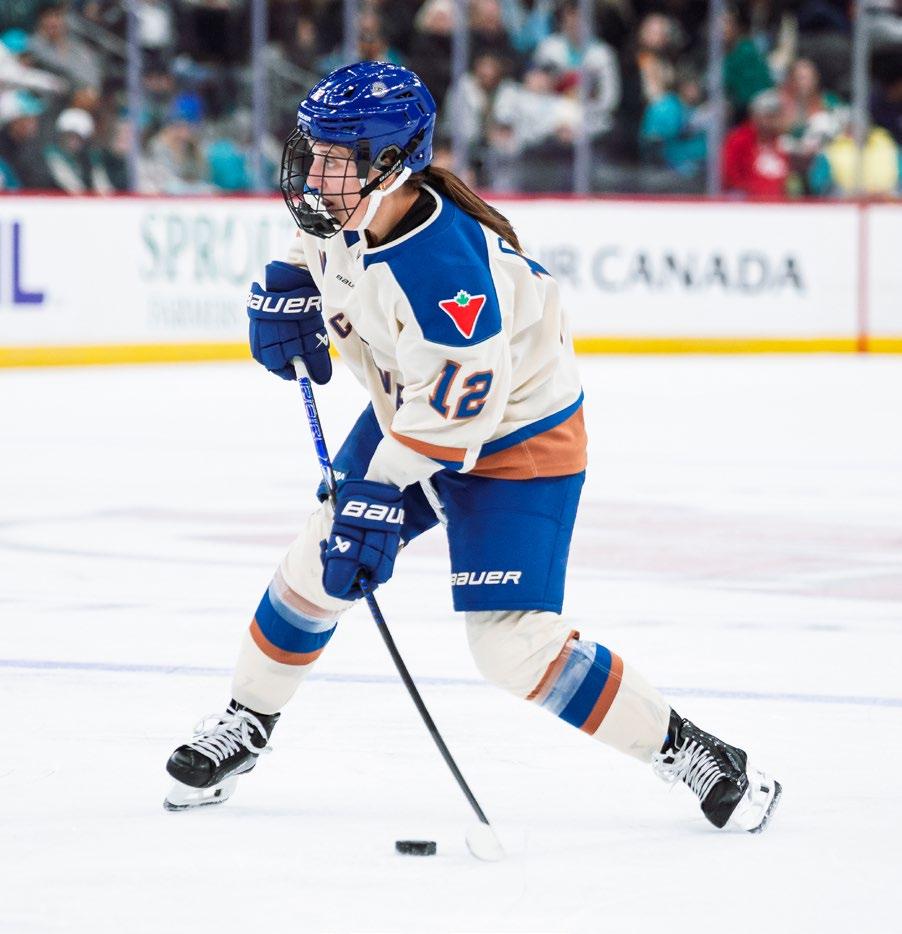
SOPHIE JAQUES
ON TRAVEL, BALANCE, AND LIFE BEYOND HOCKEY THIS SUMMER. BY JOLENE LATIMER
ophie Jaques was speaking from her apartment, just coming off an 18-game Goldeneyes roadtrip — the kind that can make even a travelloving soul like hers crave a few days at home to do laundry and settle back into a routine. In that rare pause, she was beginning to recalibrate.
For Jaques, that pause has started to mean something new. Just three seasons into the PWHL, she is learning what it looks like to have a real offseason — not just a break, but time that belongs to her.
“I think having a summer is sort of still a new feeling for a lot of people in women’s hockey,” she said. It’s a shift that has come with the rapid evolution of women’s professional hockey. Seasons are longer. Travel is heavier. The stakes are higher. And when it ends, there’s finally space — not just to recover, but to figure out what life looks like outside the rink.
Jaques is still figuring that out. But she knows where it starts.
GOLF WAS NEVER ABOUT PERFECTION.
Jaques laughs when she talks about her game. She calls herself a “scramble player,” someone who can contribute in a group but isn’t chasing consistency shot-to-shot. Her driver, she admits, is still a work in progress.
“My driver, for some reason, is just my Achilles heel,” she said. “A lot of times you’ll catch me teeing off with an iron and just trying to roll with that.”
That’s not really the point. Golf, for Jaques, has always been
about being outside — about slowing things down, about spending time with people she doesn’t always get to see during the season. Her grandfather introduced her to the game when she was young, giving her a small set of toy clubs.
Now, it’s something she returns to whenever she can. Evening rounds are her favorite, especially when the sun hangs just long enough to stretch a few more holes into the day.
“I like always playing an evening nine holes,” she said. “When it’s still warm out, like just a nice sunset round.”
She plays with her dad. With friends. Sometimes with teammates, depending on where she is. Last summer, she found herself in a group that included NHL star Cale Makar.
“I feel like we golf very similarly. Very calm, composed,” she said. But she’s just as likely to go back to a smaller course near where she grew up in Toronto, one she still knows by heart.
“It’s the one that holds a special spot for me,” she said.
That balance — between new experiences and familiar ones — shows up everywhere in Jaques’ life.
Long before golf became part of her routine, she spent her summers playing lacrosse.
She stayed with it into high school, holding onto it as long as she could before hockey demands made it harder to keep both. She doesn’t talk about it as something she gave up. She talks about it as something that helped shape her.
“I think playing different sports is very important,” she said. “It develops all skills, and it translates well.”
The idea is simple, but it runs counter to the pressure many young athletes face now — to specialize early, to commit fully, to optimize every hour for one path. Jaques sees it differently.
“I would say 100% put your kid in
a different sport,” she said. “I think it helps you improve in different areas.”
It’s not just about skill development. It’s about perspective. About learning how to be part of a team in different ways. About having something that feels like a break, even when you’re still competing.
That sense of balance has become more important as the demands of hockey have grown.
IF GOLF IS HOW JAQUES SLOWS DOWN, TRAVEL IS HOW SHE EXPANDS.
She traces it back to the pandemic, when a long-awaited trip to Europe with a close friend finally came together. They spent a month backpacking, moving from place-toplace with no real urgency beyond seeing what they could.
It changed how she thought about time.
“I got to see a ton of places and fall in love with different countries,” she said. “Since then, every year I’ve taken a trip to Europe.”
Her trips have become a fixture of her offseason, but they’re rarely about checking destinations off a list. More often, they’re built around people.
She has visited a teammate in Alaska, hiking glaciers and going on fishing trips that felt a world away from the rink. She has traveled through Scandinavia, moving from Norway to Sweden to Finland with teammates who showed her what those places looked like from the inside.
In Switzerland, she was invited into a teammate’s home, where her family cooked a traditional meal after a day spent hiking through the Alps.
“That was one of my most memorable trips,” she said.
The pattern is consistent: go where someone else already belongs, and see it through their eyes. It’s a different kind of travel — less
"IT’S THE ONE THAT HOLDS A SPECIAL SPOT FOR ME..."
"I GOT TO SEE A TON OF PLACES AND FALL IN LOVE WITH DIFFERENT COUNTRIES..."
about escape, more about connection.
Jaques still doesn’t love living out of hotels during the season. She prefers to travel light, to keep things simple, to avoid the feeling of constantly being in transit.
“I like carry-on travel, not big suitcase travel,” she said.
But the idea of movement itself doesn’t wear on her the same way it might on others. Even during the season, she finds ways to make it feel intentional.
On off days, she explores, meets up with former teammates, finds new restaurants or returns to familiar ones. This summer, her plans are already mapped out.
Portugal. Spain. A Formula 1 race in Barcelona, a shared interest she and her boyfriend have leaned into over the past few years. After that, she’s traveling with Team Canada teammate Emma Maltais. The two will explore a mix of museums, food and whatever else they find along the way.
“She’s terrible at navigating,” said Jaques with a laugh. “So I just have to make sure I do that for her and we’ll be all good.”
It’s not just about going somewhere. It’s about having something to look forward to that isn’t tied to hockey. That’s where the reset comes in. By the time she starts training again, the approach is measured.
There’s a period of doing very little — walks, light activity, letting her body recover. Then a gradual return to structure: strength work, agility, eventually getting back on the ice.
THE GOAL ISN’T TO RUSH IT. IT’S TO AVOID BURNOUT BEFORE THE SEASON EVEN BEGINS.
“With how long our seasons are, you don’t want to be starting too
quick in the summer and going too hard,” she said.
It’s a mindset that reflects the bigger shift in her career — from chasing the next opportunity to managing a long-term path. That perspective carries into what she’s building off the ice, too.
In Vancouver, Jaques helped launch a program that brings young girls of color to professional games, many of them for the first time. They watch together, talk afterward and get a chance to see themselves reflected in the sport in a way that hasn’t always been possible.
“IT’S JUST MAKING THEM
FEEL WELCOME AND KNOW
THAT THIS IS A PLACE WHERE WE WANT THEM,”
she said.
The work is part of a broader effort she’s been involved with since leaving college, one focused on growing the game and making it more accessible through Women of Colour Hockey Collective.
For Jaques, the impact is immediate. “It’s seeing the smiles on their faces,” she said. “Seeing the confidence it gives them.”
She remembers what it felt like to be one of the only players who looked like her growing up. She understands how quickly that can shape how someone sees themselves.
“Representation does matter,” she said. “If they can see it, they can dream it.”
The pace will pick up again soon. The schedule will fill. The movement will start over. But for now, there’s space — for a round of golf, for a trip, for something that has nothing to do with hockey.
Jaques is still figuring out what to do with that space. She knows, though, what it’s meant to give her.
“It’s really easy for hockey to just consume your life,” she said. “I like to have a variety of different things… it helps me be focused and be my best when I am at the rink.”
"IF THEY CAN SEE IT, THEY CAN DREAM IT."
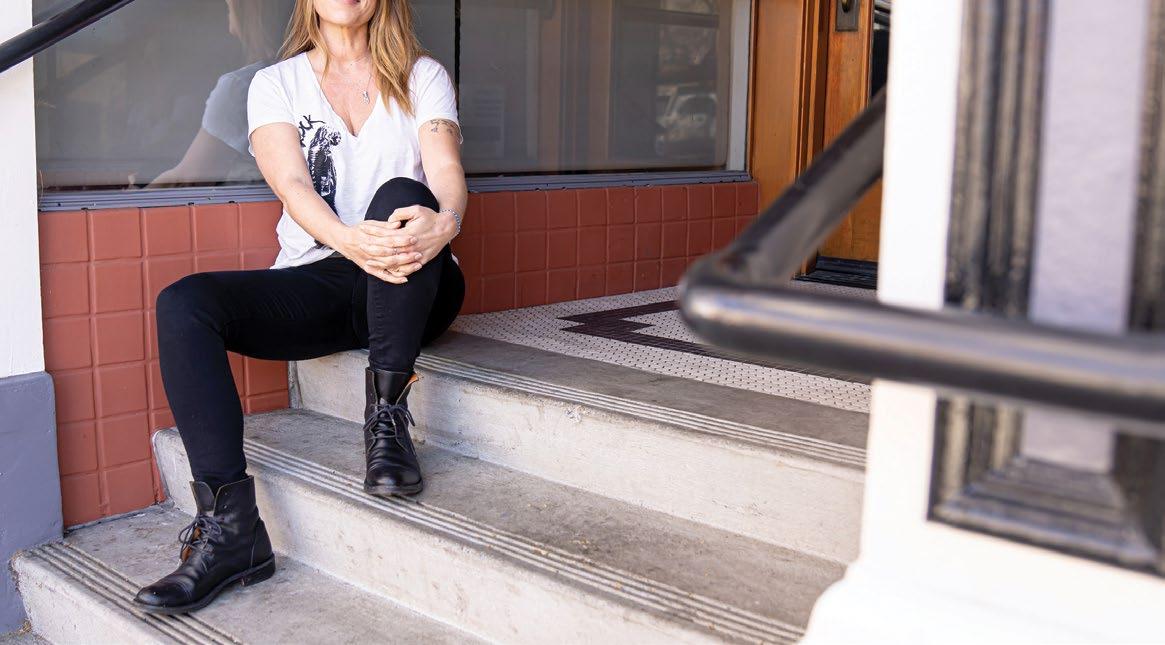
TARA SLONE
PERSONALITY LIKE NO OTHER
BY DAVID PAGNOTTA
GROWING UP IN NOVA SCOTIA, TARA SLONE DIDN’T HAVE AS MANY OPPORTUNITIES TO LACE UP THE SKATES AS PERHAPS SHE MAY HAVE LIKED, BUT HOCKEY WAS, AND STILL IS, AN IMPORTANT PART OF HER CAREER AND HER LIFE.
Tara to discuss her music and broadcast career, her affinity for the sport, core memories and the growing women’s game.
she formulated a career in music, moving to Toronto to pursue her goals, hockey always seemed to be in the background. As fate would have it, hockey pulled up to the front door and Tara was able to embrace it and champion a path on and off the ice, and in and out of the locker room in her own way. We sat down with
IW: The Olympic game always really catapulted the women's game and put it in a totally different spectrum. Now, obviously we have the PWHL, but what are some highlights that you've seen over the years from the Olympics specific to the women's game that really kind of stood out to you over these, however many years that you've, you've tuned into it.
Slone: I do think it is about this rivalry. Like, of course we all want more
parity and that's been fun to watch and see, you now how many players we can name because we see some of them in the PWHL and, you know, just we see strong play from other countries and that's just going to keep on growing. But yeah, the Olympics, I think for Canada has been able to create at least a little bit of a star system for these players who are so deserving of it.
So, you know, for me, some of the women's finals have been, you know, the 'where were you when' moments, you know, just remembering like being at in 2014, being at the gym I went to in Calgary and like everything came to a stop and like everybody was
watching. So it's just managed to provide those moments. But I think, you know, what we're seeing now is just, it's so great because there is this amplification due to the Olympics and then it's not gonna fall off. The bump will be experienced and it will hopefully ride into the PWHL and also just knowing that these women can continue to play beston-best all the time and that there's now a young generation of young girls and boys who will never know, hopefully, never know a world without a women's professional league. And that to me is like really, like it makes my heart sing.
What's one of your first memories of attending a women's game, whether it's hockey or another sport or whatnot, and what kind of stood out to you the most from it?
You know, it probably wasn't until like the CWHL because when I was growing up, I mean, I'm old... like I grew up in White Hill, Nova Scotia; girls wore figure skates, boys wore hockey skates. And of course, you know, I would have seen some like stuff at Dalhousie University or Concordia, but I don't think I went to like a women's game probably until I saw some of that professional league. It hits you in the heart just a little bit differently. I think, you know, especially because for me, it just wasn't a thing, it wasn't an aspiration.
SO WHAT ALWAYS HITS ME IS WATCHING THE YOUNG GIRLS AND YOUNG WOMEN IN THE STANDS AND SEEING THEIR IDOLS ON THE ICE AND THAT SEEING THEMSELVES REFLECTED. THAT'S WHAT STOOD OUT TO ME, YOU KNOW, EARLY ON AND IT STILL STANDS OUT TO ME TODAY.
Were there other sports that you'd watched growing up that — tennis, golf, women's soccer or anything like that - that kind of you gravitated to a little bit or just kind of waiting until...?
No, I mean, I wish I could say yes. I think it's a matter of exposure and that's always been sort of the argument for making sure that there are women's sports available to watch. You can play them all you want, but if it's in a vacuum and nobody's seeing it, and I mean, quite frankly, it wasn't that long ago that you wouldn't see any women's stats on the landing page of Sportsnet or TSN. Just starting to be able to consume the WNBA regularly, even though it's been around for 25 years. I mean, tennis, think that's always been enthralling. And yeah, I mean, I think (tennis) helps shape the idea of what an athlete is and how powerful a woman's body can be. But in terms of team sports, no. I wish I was an early adopter, but it just wasn't even in my sphere.
And now women sports are everywhere — not just hockey, but the Toronto Tempo is starting in May as part of the WNBA. There's a lot more access everywhere, especially online and with the PWHL growing, added two more teams, they're going to be growing again. What have you seen from the, from the PWHL in its first few years that's really kind of stood out
the most to you? What stood out to me is the culture, the atmosphere at PWHL Games. I mean, granted, I've only been to games here in Toronto, but my understanding is it really feels the same everywhere. It really feels like a community. It is really LGBTQ+ friendly. And I don't know, it's because I think these players have spent their lives... they have so much appreciation for the people who came before them -- so many of them give back in so many ways and have made themselves accessible. So there's also like, I feel like a different relationship between fans and players -- there's an accessibility, you can give them high fives, you can say hi. I mean, trust me, as I'm sure you know, like fans also, you know, they'll root against you and they'll hate you. The boos when Brita Pearl comes on the ice when Minnesota is in town, like it's for real. So it's not all like, you know, it's not all sickly sweet, but there is a community and there is a joy and an accessibility and price wise too, right? It means you can bring your whole family, which is incredible.
And the other thing that at least we've noticed is the athletes utilizing social media to really show their personalities a lot more. And the NHL guys are slow to this, but that's a whole different culture/breed, to an extent, they haven't really been, you know, exploiting their personalities in the
right way, whereas I find that the athletes in the PWHL have been able to do that utilizing social media more to their advantage. And, you know, as a performer for yourself and with SiriusXM, you can, people get to see your personality a lot more. Whereas for hockey players, the helmet's always on. So, just your thoughts on how these athletes are taking advantage of social media in order to show everybody who they really are.
Yeah, I mean, I'm sort of guessing at the why. I do think again, it's a different culture coming up. I think that the culture of sort of team versus everything and silence and kind of like keep your, it's not about your personality, it's about the whole. And of course, somehow these women have managed to balance. Of course it's about the team, they love each other, and take care of each other as much as any teammates. But somehow it just hasn't made them afraid to sort of show who they are. I think there's also been a necessity, right? Again, these women don't make NHL salaries, even though they are getting paid at this point a living wage. So it's to their benefit also, you know. Like Sarah Nurse, I have, I can't tell, I don't know how much Sarah Nurse brings in, but I feel
pretty confident in saying that her PWHL salary is a pretty small sliver of what she earns because she has so many endorsements and she aligns herself with products and businesses that she really believes in. So I think that there's also the women's players are not afraid to show their political stripes or, you know, sort of be asking for social justice. They haven't been trained. The personality hasn't been trained out of them. And I mean, I say that as a blanket statement, it's not fair because there's plenty of personality in NHL dressing rooms. But yeah, I think it's a combination between like necessity, you know, being the mother of invention and also just having a little bit more of a broad-minded culture.
So, growing up in Montreal and Nova Scotia, the hockey connection obviously is strong there, but also your career and how that took off into the music industry. I know you've been asked this a million times, but how did that come about and how did enter that world?
Well, never in a million years did I think that hockey would be a career for me, but I did grow up like many other Canadian kids watching hockey on Saturday
nights. I watched with my dad. My family's from Montreal, so we were Habs fans and it was a real bonding experience. I happened to be young at just the right time. I remember the '86 Cup and Mats Naslund was like by far my favourite player and it was the only time I was allowed to swear openly, which was fun. But that was always just sort of my pastime, something I liked to do. I will add that I also had a Montreal Canadiens puffy coat in high school, which I wish I still had. I guess I can't wear it now, but, but the music, but music was always my focus and what I thought would, I would do with my career.
So, I studied classical music in school. I also worked at ‘Sam the Record Man’ all through high school. So initially I thought I was going to be an opera singer, but that did not go as planned. And then, I moved to Montreal to go to school, I joined a rock band and then I actually moved to Toronto to pursue sort of theater and film and ended up joining Joydrop and that sort of took off.
It feels like such a long story because it's just like my career has been long, which is amazing. So yeah, two albums with Joydrop and a solo album. And then it stint on a reality show. And really it was the reality show that kind of, you know, where the fork in the road occurred and TV came my way. So I started in entertainment and then I really wanted to steer my career towards sports when
I really started to do TV in earnest and it was clear that's where I was going to reside. I don't know, you say you have to be good to be lucky or lucky to be good. I feel very fortunate because I just, I happened to be working at breakfast television in Calgary; I had met Scott Moore, who at the time was the president of Sportsnet. It was just a series of events and I happened to be around and on his radar when Hometown Hockey was born. For me it was a very intentional, like that's a show I want to be involved in. And I maneuvered my way into it.
Did you have a say in how things were kind of pieced together or produced with hometown hockey?
Yeah, we all did. I mean, it was the most collaborative TV experience I've ever had. We were kind of left to our own devices. We were obviously on the road; we have had our own group of producers. I mean, it was a pretty giant machine, but in terms of the content, when it came to researching the stories, we were very intentional about making sure that we weren't just telling stories about white men. Because of course you can always find an NHL alumnus somewhere. You have to dig a little deeper for some of the other stories. So yeah, best teamwork. Like it was an incredible eight seasons and it was our decision to also do a land acknowledgement before
every broadcast, which I think we were the first. So yeah, we're very, very, very proud of everything we were able to feature.
And now with your work with SiriusXM and the San Jose Sharks, how are those experiences going? You mentioned, we talked about personalities earlier, you've got a couple on the Sharks there with Will Smith and Macklin (Celebrini). How's that duo doing? They're hilarious. They're, mean, when you see them just hanging out, you remember that they're children. I don't say that pejoratively, but like they're kids, but when it comes to hockey, they take it really, really friggin seriously.
THIS IS MY FOURTH SEASON WITH THE TEAM. WE KNEW LAST YEAR WHAT WAS COMING, BUT I'M NOT SURE THAT WE KNEW IT WAS GOING TO HAPPEN SO FAST. AND SO IT'S JUST BEEN REMARKABLE. THE TANK, I CAN'T HEAR MYSELF THINK, IT'S SO LOUD. I THINK THE REST OF THE SEASON IS ENTIRELY SOLD OUT.
just such a feel good story, and of course, rightfully Macklin is a generational talent and Will is incredible, but there's a lot of other pieces to this puzzle that have been just really fun to watch. I think like the Toffoli's, collectively... if the Sharks ever win anything, I think Cat Toffoli gets the team building award, because
they've really been such a galvanizing force. Tyler's obviously a veteran, but that family, they're the ones who invite people over and make sure that the team's hanging out together and having fun. Ryan Reaves has been incredible. You know, he's sort of come to life there and really see his value. These players that maybe you didn't think would be, you know, such an asset and they are. And so it's a really nice locker room to be part of.
And your SiriusXM Show, how's that going?
I have a weekly show called No Filter, which is a woman's focused show. And then once a month I do
a pop culture panel show, called 'No Offense, But.' So it's, it's fun and it exercises is a different part of my brain and my skill set. So it's been a nice compliment. You know, it's nice to be able to do a little bit of everything.
Cool. Well, I'm going to leave it off of this. What would you like to see next for the women's game of hockey and the PWHL and whether it's now or a couple years or whatnot, how would you like to see the immediate evolution take place for the league and the game?
Well, I don't know if this is going to be a popular opinion, but it is my own. I
do think it can be a little hard to find. I appreciate that they have different deals with different networks and it makes it viable, but I think it would be great if there was a broadcaster where you always knew where to find it. I would love if they would, you know, pair it on Saturdays, have a Saturday night game, you know, give it the sort of Hockey Night in Canada treatment or Hockey Afternoon in Canada treatment. So that's why I would just sort of like it to be more universally accessible, you know, to view remotely.
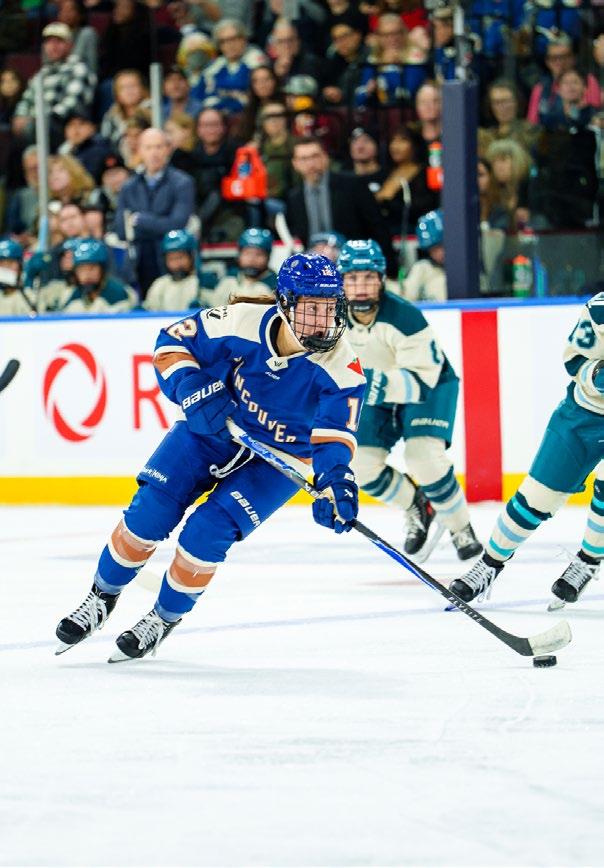
JENNIFER GARDINER’S BACK IN VANCOUVER, AND LOVING IT
BY JOLENE LATIMER
here’s a moment that keeps coming up this season for Jennifer Gardiner.
The Surrey, B.C. native looks up from the ice in Vancouver and sees it every game: friends, family, familiar faces dotting Pacific Coliseum, the new home of the Vancouver Goldeneyes, where almost every section holds someone she knows. After playing out east for the Montreal Victoire last season, where her loved ones were mostly limited to watching along on the broadcast, it’s a shift she’s not taking for granted.
And it’s part of something bigger: a new team, a growing fan base, and a version of women’s hockey on the West Coast that, until recently, didn’t exist.
We caught up with Gardiner to chat about what it means to have a home crowd behind her, living in Vancouver, and this moment in hockey.
IW: What has it been like playing in front of a home crowd this season?
Gardiner: It’s something that never really gets old. Every time we step onto the ice at the Coliseum, it feels
special. Even for players who aren’t from Vancouver, there’s something about knowing the building is yours — your logo at centre ice, your home base, your space to train and play. That’s not something women’s hockey has had very often. For me personally, having family and friends in the crowd every night means everything. Before this, most of my hockey life was out east, and it wasn’t always easy for people to watch. Now, to have them in the building — and to reconnect with people who have been part of my journey — that’s been really special.
How many family and friends ask you for tickets each game?
(Laughing) The real ones have bought season tickets.
Have you been surprised by the level of support?
I think there’s always that question — are people going to keep coming back? And our fans have answered that. They’ve shown up every game. It’s not easy to be a season ticket holder or to come out consistently, especially if things aren’t perfect in the standings, but they’ve been there for us night in and night out. You really feel that as a player. It’s not just a crowd — it’s a community, and I think everyone on our team knows how lucky we are to have that in Vancouver.
When did it all feel real for you?
Our home opener.
There was so much buildup — from signing in Vancouver, to the draft, to the jersey and name release — and then finally, on November 21, we were playing a game. To skate out as a full team, in front of our fans for the first time, and then win in overtime, it was pretty special. I was hearing from people all over the West Coast who were either in the building or watching from home. Just seeing how far that moment reached — that’s when it really hit.
Did the Olympic break disrupt anything, or did it add to the momentum?
I think everyone is used to switching roles —
whether you’re going to a national team or staying back, you just adjust and then switch back when you return. If anything, it helped. The group in Vancouver had time to train and bond, and when we came back, we just picked things up again.
And from a fan perspective, I think it created even more excitement. Our first game back had been almost six weeks since the last home game, so there was a lot of energy in the building.
For people who haven’t been, what stands out most about Vancouver?
The landscape. You don’t really find another city that has everything —
JENNIFER GARDINER
ocean, mountains, lakes. That’s what people here are proud of. A lot of the team is here during the season, so they miss the peak summer months, but we’ve still tried to take advantage of it when we can. We’ve gone to Granville Island, gone snowshoeing up Seymour. There’s always something to do outside.
Do your teammates look to you to show them around?
Definitely. The local girls have taken that on a bit. We’re actually trying to convince everyone to stay after the season this year, into the summer, because that’s when Vancouver really shines. We’re like, “You have to stay — we’ll go hiking, swimming, all the classic B.C. things.” It’s too good not to experience properly.
What does an ideal day off in Vancouver look like?
Most of us live close to downtown, so it’s pretty easy to get around. A lot of it is just being outside — walking the seawall, biking around Stanley Park, grabbing lunch at Granville Island. Some girls will take the SeaBus over from North Van to meet up. It’s simple, but that’s kind of the best part of it. Even when it rains, people still go out. You just get used to that.
How does this team compare to your experience last year in Montreal?
Last year, I stepped into a team that already had an identity. Everything was established. This year
A lot of players have seen leagues come and go, so we know what we’re building matters for the future”
in Vancouver, we’ve been building it from scratch. That’s been a huge opportunity — to decide what we want this team to look like, what we want it to be. We also have a really experienced group. Even our “rookies” have years in the game, and that’s helped us find a balance where everyone brings something different.
What does it mean to be part of this moment in
sports history in the city?
It’s really special. To play professionally in your home city is something you don’t really expect — especially in women’s hockey on the West Coast. From the beginning, we made a pact as a group to build something we were proud of. There’s also a sense of responsibility. A lot of players have seen leagues come and go, so we know what we’re
building matters for the future.
What’s the focus heading as you close out the season and look toward summer? Every game matters in this league. It’s competitive — any team can win on any night. We feel like we’re finding our identity, and if we keep taking care of the details, the standings will sort themselves out.
PLAYOFF HOCKEY LIVES WITHIN OTTAWA AS PWHL GROWS
BY DAVID PAGNOTTA
he Ottawa Senators’ postseason may have come to an abrupt end, but the Ottawa Charge are breathing playoff hockey back into the city.
The PWHL postseason got underway on April 30, with the Charge facing the Boston Fleet, and the vibes inside the Canadian Tire Centre have been high.
Women’s hockey, across the board, has taken the sports’ spotlight and with expansion on the horizon to another four cities, the game is growing, the energy is rising and markets like Ottawa are benefitting from the outstanding play of the
athletes on the ice.
Ottawa has been leaning on its core group, which highlights Brianne Jenner, Emily Clark, Jocelyne Larocque and Gwyneth Philips. The star-power throughout the PWHL is climbing with new talent entering the mix and the power of this summer’s PWHL Draft is a big reason why the League is expanding to 12 teams for the 2026-27 season.
While we are likely to only see one new team in Canada via this upcoming round of expansion, the expectation that Hamilton, Ontario, will be next in line for a club is increasing. Edmonton, Calgary,
Halifax and Quebec City will likely have to wait before landing a PWHL franchise.
In the United States, Detroit and Denver are considered frontrunners, but don’t be surprised if cities like Pittsburgh, San Jose, Las Vegas, Los Angeles, Chicago or Buffalo enter the equation.
Seeing the growth in Ottawa emphasizes not only the sustainability of the PWHL but the Charge’s footprint in the community, itself. The team is there to stay and with a new provincial rival on the way, the game is only getting better.