INUIT CIRCUMPOLAR COUNCIL GREENLAND
OCEANS & INUIT KNOWLEDGE HUNTERS’ AND FISHERS’ KNOWLEDGE ON ENVIRONMENT, LIVELIHOOD, AND MARINE MANAGEMENT AROUND PIKIALASORSUAQ - SUMMARY REPORT
FOREWORD
Inuit have lived and thrived across our Arctic homelands for time immemorial. With knowledge developed on sea-ice, lands, waters, animals, and ecosystems accumulated through generations, Inuit hold invaluable and specialised skills and wisdom about each region we continue to occupy. The intimate relationship Inuit have with all living and non-living beings in nature form an important foundation in our understanding of nature management. We are inseparable from nature, and all management is thus about us.
Taking the first steps to implementing these recommendations, the governments of Kalaallit Nunaat and Canada signed a Letter of Intent in 2023. For Inuit Circumpolar Council it is important that the communities of the region, and the knowledge Inuit hold, are integral to the initiative every step of the way. Having gathered and conveying Inuit Knowledge on the Kalaallit Nunaat side, this report is therefore an important component of the continued work to implementing the Pikialasorsuaq Initiative.
Generations of Inuit, now living on each side of a state border, have identified the North Water Polynya as a special area. It is highly important to the production of biodiversity beyond the region, affecting not only the inhabitants of the region, but also our broader societies. The many Inuit names for the area and the phenomena underscore its importance. For Inuit in Canada, it is known as Sarvarjuaq, for Inughuit on the Kalaallit Nunaat side as Ikeq and Aniggoq.
Impacted by climate change, long- and short-range pollution, increased industrial activities in the Arctic, the pressure to the area’s ecosystems is tangible. The Pikialasorsuaq Initiative is thus vital to ensuring a management that upholds the right of Indigenous Peoples. It has become globally known and celebrated for its foresight and ambition. It is our hope that this report will serve as a tool to better understanding of the area’s significance, and the value of Inuit Knowledge to its protection.
Inuit Circumpolar Council (ICC) have named our initiative the Pikialasorsuaq Initiative, Pikialasorsuaq meaning the great upwelling. With the initiative, the aim is to establish an Inuit-led Management Regime across the state border between Kalaallit Nunaat (Greenland) and Canada, a recommendation by the Pikialasorsuaq Commission established by ICC. An ambition that requires two nations engage, and a people living across a state-border to re-establish the lost bonds and unity. The recommendations of the Pikialasorsuaq Commission also include identification of the area to include not only the polynya but a holistic approach to understanding its significance for Inuit, as well as the establishment of a free travel zone.
December 2025 Sara Olsvig Chair, Inuit Circumpolar Council
1
OCEANS & INUIT KNOWLEDGE HUNTERS’ AND FISHERS’ KNOWLEDGE ON ENVIRONMENT, LIVELIHOOD, AND MARINE MANAGEMENT AROUND PIKIALASORSUAQ - SUMMARY REPORT
INUIT CIRCUMPOLAR COUNCIL GREENLAND
2 Extremely narrow path to and from Hiorapaluk
3
This report reflects the knowledge and perspectives of the hunters and fishers who attended the workshops, open meetings, and interviews. This document should be cited as Pikialasorsuaq Workshops: Inuit Hunters’ and Fishers’ Knowledge and Perspectives on Environment, Livelihood, and Marine Management around the North Water Polynya – Summary Report. 2025. Nuuk, Greenland.
2025, Inuit Circumpolar Council Kalaallit Nunaat, all rights reserved. This report or any portion thereof may not be reproduced or used an any manner whatsoever without the prior permission of Inuit Circumpolar Council Greenland. The Indigenous Knowledge, inclusive concepts and information derived from the knowledge sources in this report remains the collective intellectual property of the contributing authors who provided such information.
This report can be downloaded for free at https://inuit.org
This work is supported by the World Wildlife Fund Canada and the World Wildlife Fund Denmark. The opinions, findings, and conclusions or recommendations expressed are those of the authors and do not necessarily reflect the views of the World Wildlife Fund.
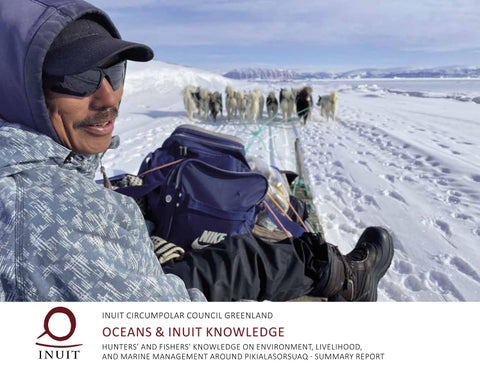
The cover graphic design was done by iCICERO, Graphic design Report design and layout was done by iCICERO, Graphic design. Front Page Photograph: Qalasaq Sadorana on the ice from Qaanaaq. All photos in this report are credited to the Inuit Circumpolar Council Greenland. The workshops were co-designed by Victoria Qutuuq Buschman, Axel IngemannJeremiassen, and the workshop participants. The workshops were facilitated by Axel Ingemann-Jeremiassen. The report was prepared by Victoria Qutuuq Buschman and Axel Ingemann-Jeremiassen.
Inuit Circumpolar Council Greenland Ceresvej 7 Allafik 2 Nuuk 3900 Greenland https://inuit.org
4
ABOUT THE INUIT CIRCUMPOLAR COUNCIL
Since the Inuit Circumpolar Council (ICC) was founded in 1977, ICC has flourished and grown into a major international Indigenous Peoples’ Organization representing approximately 180,000 Inuit of Alaska, Canada, Greenland, and Chukotka (Russia). ICC holds Consultative Status II with the United Nations Economic and Social Council and is a recognized Indigenous Peoples Organization with consultative status with numerous UN specialized agencies and bodies (i.e., registered observer for multiple UN treaties and conventions). ICC is a Permanent Participant of the Arctic Council, has observer status at the Intergovernmental Panel on Climate Change, and permanent consultative status at the International Maritime Organization.
Haviggivik, 2025
ICC strives to strengthen unity among Inuit of the Circumpolar; promote Inuit rights and interests at the international level; develop and encourage long-term policies that safeguard the Arctic environment; and seek full and active partnership in the political, economic, and social development of the Circumpolar North. The ICC represents the interests of Inuit, and we have offices in four Arctic regions – Alaska, Canada, Greenland, and Chukotka. We are one people, in a single homeland, across four countries. ICC receives its mandate from a General Assembly held every four years. At the Assembly, delegates approve a declaration that is the international organization’s mandate for a four-year term.
R USSIA
5
15
CHUKOTKA Anadyr
Greenland Sea Provideniya
Chukchi Sea
Uelen
Bering Sea
BERING STRAIT
Arctic Ocean
NORTHWEST ARCTIC NORTH SLOPE
YUKONKUSKOKWIM
Beaufort Sea
U . S. A .
K AL AAL L IT NUNAAT GR EEN LA N D
. S.A U. ADA N CA
IN
UV
IA
Baffin Bay
LU
IT
SE
TT
LE
M
EN
TR
EG
IO
N
Labrador Sea
Inuit Circumpolar Council, 2017. Prepared by Agata Durkalec. Basemap from the Atlas of Canada Reference Map Series produced by Natural Resources Canada, 2008.
NUNAVUT
Kilometres
Scale 1 : 9 000 000 0 90 270
90
Azimuthal Equidistant Projection
NU
NA
CA N ADA NU
IK NAV
FOOD SOVEREIGNTY AND SELF-GOVERNANCE:
INUIT ROLE IN MANAGING ARCTIC MARINE RESOURCES
TS
IA
VU
T
450
6
ABOUT ICC’S PIKIALASORSUAQ WORK
In September 2013, the Inuit Circumpolar Council Greenland hosted a workshop in Nuuk at which representatives from communities around Pikialasorsuaq (the North Water Polynya) met to discuss the polynya and to explore shared concerns and aspirations for this region. This meeting confirmed a strong regional interest in a bilateral dialogue about the future of the polynya. The 2013 workshop participants recommended both at the meeting and in the ensuing report that a commission be constituted to conduct consultations in Nunavut and Kalaallit Nunaat (Greenland) communities closest to Pikialasorsuaq to continue this discussion and assess strategies aimed at safeguarding this region, including for harvesting interests, for future generations.
Since the conclusion of the Commission’s work, the bilateral discussions between Canada and Kalaallit Nunaat have continued, and have thus far resulted in the signing of a letter of intent between Canada and Kalaallit Nunaat. The workshops detailed in this 2025 report were designed in response to the continued interest among community members to have Inuit voices at the heart of the work on the design, establishment, and development of the Pikialasorsuaq area. The knowledge, experiences, and perspectives shared in this report are intended to help shape the future of the Pikialasorsuaq.
The resulting Pikialasorsuaq Commission was established for three years, from 2016-2018, and was headed by an International Commissioner, a Canadian Commissioner, and a Greenlandic Commissioner. Their work resulted in a report that included three primary recommendations:
1 Establishment of a management regime, with a management authority led by Inuit representatives from communities in the Pikialasorsuaq region, an Inuit Management Authority (IMA).
2 Identification, in consultation with the communities in and adjacent to Pikialasorsuaq, of a protected area comprised of the polynya itself and including a larger management zone that reflects the connection between communities, their natural resources, and the polynya.
3 Establishment of a free travel zone for Inuit across the Pikialasorsuaq region.
7
TABLE OF CONTENTS
Acknowledgements.................................................................................................9 Qujanarujussuaq!................................................................................................. 10 Section 1: Introduction......................................................................................... 11 Key Themes and Concepts................................................................................... 13 Key Messages........................................................................................................ 14 Section 2: Workshop Methodology..................................................................... 16 Community Selection....................................................................................... 16 Knowledge Holder Recruitment...................................................................... 18 Workshop Design............................................................................................. 19 Equitable and Ethical Engagement.................................................................. 20
Section 4: The Main Messages............................................................................. 32 Regarding Traditional Economies..................................................................... 32 Regarding Wildlife Management and Regulations.......................................... 34 Regarding Marine Management...................................................................... 42 Regarding International Regulations............................................................... 44 Regarding the Impacts of Climate Change...................................................... 46 Regarding Our Indispensable Hunting Companions – Qimuttut..................... 48 Regarding the Use of Qaannat......................................................................... 50 Regarding the Role as Hunters and Fishers in Sustaining Families................. 52 Regarding Changes in Inuit Values and Traditions........................................... 54 Conclusion............................................................................................................. 56
Supplementary Interviews............................................................................... 20 Section 3: About the Communities..................................................................... 23 Hiorapaluk........................................................................................................ 23 Qaanaaq........................................................................................................... 25 Haviggivik......................................................................................................... 27 Upernavik......................................................................................................... 29 Kullorsuaq......................................................................................................... 31
LIST OF FIGURES, TABLES AND BOXES Box 1. What is Inuit Knowledge?........................................................................... 11 Box 2. Who are Kalaallit and who are Inughuit?................................................... 12 Box 3. Map of the Five Workshop Locations......................................................... 17 Box 4. What was Tusarniaaneq?............................................................................ 19 Table 1. P articipants by Community. Fourty-two hunters and fishers participated in five organized workshops held across communities in North Greenland.................................................................................. 18 Table 2. I ndividual Interviews by Community. Fifteen hunters and fishers participated in supplementary interviews across the five workshop communities, plus an additional interview from a hunter from Qeqertat................................................................................................... 20
8
QUOTES FROM THE WORKSHOPS
People are not the masters, only animals are. Only when the animals arrive are we able to go hunting. We can’t even plan to go hunting tomorrow, or hunt in a particular way. As long as there is nothing to hunt, we won’t hunt, and only when the animals come can we hunt in the way we always have.
•
The school here had two small qajaqs when we were children, so the students could learn to use them. We were taught by a hunter and sometimes we went quite far from the shore.
•
The descendants of the great qajaq hunters have been politically dismantled.
Even today, we cannot live without our dog teams and sleds, as it is reliable for everything.
•
•
It is important that we talk to each other, that we share our perspectives… even if it hurts, we have to discuss it openly in order to achieve something together.
In a successful beluga or narwhal hunt in October, hunters are able to get new engine or even a new boat, so everyone feels happy during the fall.
•
•
When I first started hunting, the elder hunters told me not to hunt more than you can handle in a day.
When we grew up, it was common to help our community members, as my parents liked to give and share. Even to people we are not related to, every time they caught something they shared some portions of it.
•
•
Back then, qajaq hunters would gather outside after they had returned, and told about the days events… by listening to their stories and trying to keep it in my mind, I learned a lot. This is the way I have learned to hunt by qajaq, by listening to the other hunters who would gather.
My father told me never to follow old tracks, to make your own, so you can hunt well. My father’s words were so powerful it has remained in my mind. Powerful words from a strong and experienced hunter, which he had learned from his ancestors and passed on to us, even though it had never been written down, since it is the right thing to do. Teaching us right from wrong, so we can learn it and can take over our heritage for our children.
9
ACKNOWLEDGEMENTS
Fourty-two Inuit Knowledge Holders, primarily hunters and fishers, participated in the workshops. Below is a list of those who attended: Aaqqiunnguaq Qaerngaaq – Qaanaaq Abraham Karlsen – Upernavik Erneeraq Aronsen – Upernavik Eqilana Sadorana Simigaq – Qaanaaq Gustav Simigaq – Qaanaaq Hans Jensen – Kullorsuaq Hans Rosing – Upernavik Ikou Oshima – Hiorapaluk Ilannguaq Hendriksen – Hiorapaluk Isamu Oshima – Hiorapaluk Jens Peter Løvstrom – Upernavik Johan Jensen – Upernavik Lars Jensen – Kullorsuaq Markus Hansen – Qaanaaq Martin Hjort – Upernavik Mikkel Kristiansen – Qaanaaq Nathaniel Jensen – Kullorsuaq Natuk N. Kristensen – Haviggivik Niels Hansen – Upernavik Niels Miungi – Qaanaaq Niels Petersen – Upernavik Nukappiannguaq Hendriksen – Hiorapaluk
Ole Jensen – Kullorsuaq Ole Kristensen – Haviggivik Ole Nielsen – Haviggivik Ole Petersen, “Angutinnguaq” – Upernavik Otto Danielsen – Kullorsuaq Otto SImigaq – Qaanaaq Paulus Olsen – Kullorsuaq Paulus Simigaq – Qaanaaq Peter Aronsen – Kullorsuaq Peter Avike – Hiorapaluk Peter Petersen – Qaanaaq Poul Suersaq – Haviggivik Qaerngâk Nielsen – Haviggivik Qalaseq Sadorana – Qaanaaq Qillaq Qaerngâq – Kullorsuaq Qulutat Qvist - Qaanaaq Qumangaapik Qvist - Qaanaaq Rasmus Jørgensen – Upernavik Sakæeus Hendriksen – Hiorapaluk Tukummeq Peary – Qaanaaq
10
QUJANARUJUSSUAQ!
A special thanks to the KNAPK President Nikolaj Jeremiassen for his support of these workshops, and for his enduring support of Kalaallit Nunaat’s hunters and fishers and the value of their knowledge. Thanks to Avannaata Kommunia (Municipality), especially the municipal staff from Hiorapaluk (Siorapaluk), Qaanaaq, Haviggivik (Savissivik), Kullorsuaq, and Upernavik for their help and understanding of this important work. Additionally, the logistics of these workshops wouldn’t have been possible without the support of the school staff in Haviggivik and Kullorsuaq, including the help from Mequ Jensen and Birgitta Kamman. Thanks also to the support of Enok Jakob Angiina and Hans Bendt Jensen for technical assistance, and least not Jenny Nielsen, Karline Fly, and Dora J. Nielsen for nourishing the workshop participants with their preparation of food and refreshments. Hunters from Haviggivik correct a map of the Pituffik area. L-R: Poul Suersaq, Ole Kristensen, Ole Nielsen, hunter’s wife Natuk N. Kristensen, and Qaerngâq Nielsen.
11
SECTION 1: INTRODUCTION
In 2023, ICC Kalaallit Nunaat received funds to support the co-development of a series of workshops with Inuit hunters and fishers in five communities near Pikialasorsuaq, the area between Kalaallit Nunaat (Greenland) and Nunavut that is also known in English as the North Water Polynya. These workshops were designed with a focus on sharing Inuit Knowledge, experiences, values, and perspectives in relation to hunters’ and fishers’ livelihoods around Pikialasorsuaq. This report shares those insights and discussions. The communities of Qaanaaq, Hiorapaluk (Siorapaluk), Haviggivik (Savissivik), Upernavik, and Kullorsuaq were engaged in the project and a total of 42 hunters and fishers from these communities participated in the workshops. Through these conversations, we learn about their use of marine areas, their individual and community-wide economies, and the ecosystems and biodiversity between Kalaallit Nunaat and Nunavut. The hunters and fishers placed particular emphasis on marine mammals, birds, fish, and whales, as well as how their use of these species and their livelihoods depend on how they have been affected by climate change, governance, and globalization in recent years.
Box 1. What is Inuit Knowledge? ICC offers the following definition for Indigenous Knowledge: Indigenous Knowledge is a systematic way of thinking applied to phenomena across biological, physical, cultural and spiritual systems. It includes insights based on evidence acquired through direct and long-term experiences and extensive and multigenerational observations, lessons and skills. It has developed over millennia and is still developing in a living process, including knowledge acquired today and in the future, and it is passed on from generation to generation. Under this definition, IK goes beyond observations and ecological knowledge, offering a unique “way of knowing.” This knowledge can identify research needs and be applied to them, which will ultimately inform decision-makers. There is a need to utilize both, Indigenous and scientific Knowledge. Both ways of knowing will benefit the people, land, water, air and animals within the Arctic. Inuit at times may refer to their knowledge as Indigenous Knowledge, Inuit Knowledge, or Traditional Knowledge. The definition provided above is understood by ICC to apply to all three terms. In Kalaallisut, the term we used in these workshops is Inuit Ilisimasaat. This report chooses to use the term “Inuit Knowledge” in respect of the hunters and fishers who contributed to this report in Inuit dialects (Inuktun and Kalaallisut), as they prefered the use of the term “Inuit Knowledge,” in their own languages.
12 Qalaseq Sadorana, Qumangaapik Qvist, and Panigpak Daorana on the way from Hiorapaluk to Qaanaaq – May 2024.
Box 2. Who are Kalaallit and who are Inughuit? Across Inuit Nunaat, there are many unique, distinct regions with their own dialects of Inuit languages and their own cultural practices. Kalaallit, representing the largest group of Inuit in Kalaallit Nunaat, are generally considered West Greenlandic Inuit and have many speakers of the national language, Kalaallisut. Inughuit belong to a small number of communities in the high north of Avanersuaq (high North Greenland) and have their own dialect of Inuit language called Inuktun. This report chooses to refer to Inughuit communities in their Inuktun names rather than their official Kalaallisut names in respect of Inughuit self-determination and distinct culture. Of note, Inuktun is not standardized and does not have official spellings, so in this report, Siorapaluk is written as Hiorapaluk (though it can also be found written as Hiurapaluk), and Savissivik is written as Haviggivik. Qaanaaq, another Inughuit community, is spelled the same in both Kalaallisut and Inuktun.
13
KEY THEMES AND CONCEPTS
The open meetings were facilitated using guiding questions that can be grouped under five key themes:
Marine Ecology: health, behavior, and seasonal occurrence of marine species
Research Governance: Inuit engagement, co-production of knowledge, use of Inuit Knowledge, and validation of scientific findings and publications
Marine Governance: effective collaboration with and among authorities and national organizations, visibility and access to municipal politicians and national lawmakers
Wildlife Management: harvesting quotas, hunting and fishing regulations, access to markets
Traditional Economies: community-wide economic challenges, individual income and salary challenges, role of local livelihoods
14
KEY MESSAGES
• Hunters and fishers are deeply reliant on traditional economies contemporary harvesting continues to be a mix of personal use and commercial activities, and hunters and fishers are strongly engaged in the market for Inuit foods and products to support their families. • Inuit continue to observe evidence of climate change impacts - changes in wind patterns, proliferation of hummocked ice that challenges navigation by dog sled, climate-related challenges to traditional food preparation, long-term lack of sea ice coverage that can last over a year rather than a single season, and recession of local glaciers and inland ice, among other observations. • The observed changes across nature and the environment threaten critical species populations, health, behavior, normal occurrences, patterns and cycles – including for species that Inuit intimately depend on such as seals, whales, and polar bears. • The culmination of environmental changes, contemporary economic pressures, and government-imposed management decisions threaten the ability of hunters, fishers, harvesters, and traditional craftspeople in ensuring the intergenerational exchange of Inuit Knowledge – exchange which relies on an enduring connection between people, place, and all living things. • Likewise, imposed hunting and fishing regulations challenge Inuit values which have always supported cooperative harvesting, the sharing of Inuit Knowledge, and a focus on the collective community - now disrupted by an increasing focus on individual decision making with ensuing competition and issues of physical safety.
• The demands of a the cash economy highlight the continued cultural and economic importance of Inuit livelihoods – balancing the preservation of Inuit culture, knowledge, and practice is often mentioned in contrast to the rising cost of living for necessities (home, energy, phone, gear) and challenged by reliable access to markets for Inuit foods and products. • Government-imposed management decisions are sidelining wildlife management approaches that are based on Inuit Knowledge – these approaches rely on community-wide sharing of knowledge on hunting grounds, traditional rules and laws that govern traditional hunting practices such as the use of kayaks, and reliance on appointed leaders that decide when to hunt, how much to hunt, and when to process the animals, among other traditions that ensure the health of all people, places, and living things. • While traditional economies remain central to Inuit communities, there is a notable decline in interest in Inuit foods among younger generations, which compromises physical and cultural health and wellbeing. • The impacts of marine and coastal development challenge Inuit selfdetermination, as communities have little control over increased shipping and foreign traffic, cruise ship tourism, unwanted natural resource extraction, and the impacts of abandoned infrastructure – all of which adversely impact communities, ecosystems, and important species. • Inuit survival highlights the creativity, ingenuity, innovation, and adaptive capacities of our People and the value and use of Inuit Knowledge in decision making – time is not standing still and neither are we.
15
• Communities call for improvements to research governance through more open, transparent, and cohesive consideration of ecosystems and species of importance, ensuring an approach guided by the community and through a co-production of knowledge – including the ability of Inuit to make decisions on which institutions and organizations are involved, what questions to prioritize, which species to focus on, how Inuit Knowledge is exchanged and used, with the involvement of Inuit Knowledge Holders selected by the community, with equality among academic and non-academic contributors, through honesty, and with Inuit validation of the narrative and scientific findings contained in publications and academic articles.
• Communities feel their perspectives, needs, and livelihoods are overlooked by the government and management authorities – and call for structural changes in their engagement with each Ministry, municipality, and research institution to improve relationships, with more openness and availability from the authorities, with new agreements on how to share and use Inuit Knowledge, and important information, updates, and outcomes to be shared publicly to all communities through pamphlet, TV, and radio. • Need for improving understanding across our own People, government, and national institutions for the value of maintaining and promoting Inuit culture, traditions, knowledge, and values.
Hunters Poul Suersaq and Ole Kristiansen in Haviggivik, 2025.
16
SECTION 2: WORKSHOP METHODOLOGY
Community Selection ICC convened workshops in five communities: Qaanaaq, Hiorapaluk (Siorapaluk), Haviggivik (Savissivik), Kullorsuaq, and Upernavik. While previous work under the Pikialasorsuaq Commission in Kalaallit Nunaat had focused primarily on its northernmost communities, these workshops aimed at securing slightly broader participation from communities dependent on the shared resources of the Pikialasorsuaq. This broader inclusion of other community perspectives in North Greenland reflects the recognition that many species Inuit depend on for hunting and fishing pass between Pikialasorsuaq and other areas of Kalaallit Nunaat.
Thus, this report necessarily reflects a diversity of Inuit perspectives. In some communities, hunting for seals, walruses, narwhal, beluga, muskox, or polar bears may form the foundation of the local traditional economy, while in others, longline-based fishing for Greenland halibut during winter and summer serves as the main livelihood. The issues raised within the workshops vary by community, recognizing that what is prioritized in one area may be less important in another. Perspectives are not always uniform even in smaller communities. The workshops therefore aimed at finding the deeper commonalities and collective messages across the five communities.
17 Box 3. Map of the Five Workshop Locations
18 Knowledge Holder Recruitment Before visiting the communities, ICC reached out to existing contacts in each of the communities to identify Inuit Knowledge Holders that might be interested in discussing the project. All invited workshop participants received daily honoraria and warm meals. The honorarium is essential in ensuring that the hunters and fishers are compensated for their potential loss of income while in the workshops, replacing what they might have earned that day from hunting or fishing, but it is also in recognition for their expertise and for taking the time and care to entrust their knowledge to all the workshop participants.
To ensure that Inuit elders and youth would also be able to exchange their knowledge and experiences, the project sought Inuit Knowledge Holders across the generations. While the vast majority of participants were men, women were also invited to participate as there are some female hunters and fishers, and important knowledge of resource quality, use, and preparation is shared across the genders. The three female hunters were very inspirational and contributed important insights to this work.
Many Inuit Knowledge Holders were interested in participating. Beyond the selected Knowledge Holders, who were given speaking priority and honoraria, the workshops were made public to the remainder of the community.
Workshop Locations
Number of Knowledge Holders
Community Population (2025)
Days Met
Men
Women
Age Range of Participants
Qaanaaq
10
656
2
8
2
28-71
Hiorapaluk
7
38
1
7
0
20-77
Haviggivik
6
48
2
5
1
20-83
Upernavik
10
1,067
2
10
0
35-71
Kullorsuaq
9
444
2
9
0
55-74
Total
42
-
9
39
3
20-83
Table 1. Participants by Community. Fourty-two hunters and fishers participated in five organized workshops held across communities in North Greenland.
19 Workshop Design In speaking about this project with Inuit Knowledge Holders, we used the Kalaallisut (West Greenlandic language) word tusarniaaneq, which can loosely be translated to “coming together to hear from one another.” We have chosen to use the term “workshop” in English, because the aim was to listen to one another, provide the space to express views and priorities, and help direct the discussion to address the issues most important to each community and their families. Several topics related to hunting and fishing were presented each day, and discussions included current affairs, experiences, and potential improvement to regulations and laws. Each morning, the participants would gather together to begin discussions on pre-selected topics and would then continue the discussions in smaller groups. During the smaller groups, participants chose the issues they wanted to discuss in depth. When the facilitator reconvened the small groups, the hunters and fishers presented their discussion topics and key points. The workshops were recorded by consent, and photos, notes, presentations, annotated illustrations, and other explanations were collected from the Knowledge Holders. Maps were also central to the discussions with many hunters and fishers taking interest in explaining through spatial indications, and when helpful, the workshop facilitator also presented data with visuals, including maps of Pikialasorsuaq.
While the Inuit Knowledge Holders are collectively credited in this report, the Inuit knowledge and experiences documented here are not attributed to any particular individuals. There are, however, several short vignettes about the Knowledge Holders in this report to give a more intimate look at the people and communities behind this project.
Box 4. What was Tusarniaaneq? In Greenlandic tradition, tusarniaaneq was a calling of the community to “gather and listen.” An individual would shout ‘tusariarlinngooq’ and everyone would make a circle for the announcement or dispute. If it were a dispute, it would be settled by a drum duel in which each drum dancer would sing a verse about the other until nothing was left to be said, and everyone would judge who has won the dispute through laughter. This was the Greenlandic Inuit judicial system of the past, and the current government consultation process is based on this. While we used the word tusarniaaneq in Kalaalisut in the context of this project, we chose to translate tusarniaaneq as “workshop” in English, rather than “consultation,” in recognition for how Inuit have questioned the ethics and equity of consultation processes used across other parts of Inuit Nunaat.
20 Equitable and Ethical Engagement Of note, some Inuit Knowledge and other information shared within the workshops was deemed too sensitive to report on in this document. As Inuit Knowledge is the collective intellectual property of Inuit, it was the responsibility of ICC to ensure this knowledge remains safe from being misconstrued and misused. ICC considers this an important aspect of the ethical and equitable engagement of Inuit Knowledge Holders. The rights of Indigenous Peoples “to maintain, control, protect and develop their cultural heritage, traditional knowledge and traditional cultural expressions, as well as the manifestations of their sciences, technologies and cultures,” and “to maintain, control, protect and develop their intellectual property over such cultural heritage, traditional knowledge, and traditional cultural expressions,” are affirmed by under Article 31 of the UN Declaration on the Rights of Indigenous Peoples. While these inherent rights are affirmed by under international law and conventions, there are neither formal processes nor accountability mechanisms for the inclusion of Inuit Knowledge in decision-making within Kalaallit Nunaat. This is also true in the misuse of Inuit Knowledge by organizations, institutions, and associations from around the world. As Inuit Knowledge should be used to further Inuit priorities as identified by Inuit Knowledge Holders, these issues of misunderstanding and misuse were heavily considered in evaluating what information would be included in this report.
Supplementary Interviews Alongside the workshops, we conducted supplementary interviews with some of the workshop participants and some Inuit Knowledge Holders that were unavailable on the days the workshops were convened. Interviewees were selected based on their knowledge and experience of the five key themes. In total, we conducted 15 recorded interviews with individuals from various communities, spanning different ages and across the different livelihoods. All interviewees receieved honoraria and agreed to be quoted and have their knowledge additionally reflected in this report. Community Interviews
Number interviewed
Hunters
Fishers
Retired Elder
Qaanaaq
3
3
0
1
Haviggivik
1
1
0
1
Hiorapaluk
1
1
0
1
Qeqertat
1
1
0
1
Upernavik
4
0
4
2
Kullorsuaq
5
5
0
2
Total
15
11
4
8
Table 2. Individual Interviews by Community. Fifteen hunters and fishers participated in supplementary interviews across the five workshop communities, plus an additional interview from a hunter from Qeqertat.
21
Karl Olsen (85) is the oldest interviewee. Of all his siblings, he is the only one remaining. He is knowledgeable about the history of Kullorsuaq and the surrounding areas, having made his livelihood through hunting and fishing. He recounts all the way back to his childhood that he has never been sick a day in his life, which he attributes to his diet of kalaalimernit (Inuit foods) - he doesn’t eat any storebought or imported foods. He shares that hunting used to be a reliable livelihood in Kullorsuaq, but nowadays fishing for Greenland halibut has become more common. While there were times in the past that the hunting for beluga and narwhal was good, their presence has become less consistent, which he indicates are signs of changes in nature, sea ice, and climate. He also mentioned that in his time, subsistence and selfsufficiency was more common, whereas now the focus has shifted more towards the demands of the cash economy.
22
Preparing to leave for Hiorapaluk - Qaanaaq, May 2024
23
SECTION 3: ABOUT THE COMMUNITIES
This report includes community descriptions from each of the places we held workshops, specific to the understandings and observations that the Knowledge Holders shared in the meetings. Each description is unique and highlights the most important issues the hunters and fishers are facing. Hiorapaluk In Kalaallit Nunaat’s northernmost communities, hunting has been a livelihood for many generations. In Hiorapaluk, it is remembered how people used to hunt polar bears by qimusserneq (dog sledding) all the way north to Umimmaat Nunaat (Ellesmere Island) in Nunavut, and in that region some lands and islands have their own names in the distinct Inughuit dialect, Inuktun. However, in recent years, due to tighter regulations and stricter monitoring of borders, hunting polar bears in that area has ceased. Nevertheless, because hunting remains an indispensable way of life, people wish to return to hunting in those regions.
Toward the north as far as Etah, and to the east and south, there are good hunting grounds for little auks and seals, narwhals, walruses, and polar bears, while other seabirds are also taken for subsistence uses. The coast around Hiorapaluk and its surroundings, with its fjord-like landscape, are suspected to contain various fish species not yet fully known. Occasionally, many dead redfish surface and some of the fish have large shrimp in their stomachs. In winter, dog sledding has long been a common practice, and the thick sea ice serves as a highway in all directions. In summer, people hunt narwhals with small boats. The elders remember the use of snares made of sealskin rope for hunting Arctic hares, as their skins were once sewn into boots to keep feet warm. The method of catching little auks to make fermented foods was once widely practiced but has now largely fallen out of use.
24
Hunters from Qaanaaq looking over maps during the workshops, 2024
25
Qaanaaq The administrative hub of the region and the most populous, students from surrounding communities come here to attend boarding school, and people are increasingly relocating here. Longline fishing for halibut has become the primary livelihood. However, increased bycatch of large sharks in fishing nets is damaging and sometimes destroying the fishing gear, and the sharks also eat the fish caught in the nets. The hunting of narwhals and walruses on the sinaaq (floe edge) remains important, particularly in spring. It provides some income and is a good source of meat. While some people now use snowmobiles, qamutit (dog sleds) are still widely used. Tourism is growing, and some hunters offer dog sled tours. Inuit harvesting practices such as collecting eider duck eggs have declined due to management regulations requiring specific handling. Previously, seals and whales were considered highly important catches, but younger generations seem to find them more difficult to handle than previous generations, and Inuit food preparation, preservation, and fermentation methods appear to be losing favor to simpler freezing methods that make the meat available to be sold at the fish and wildlife processing stations.
26
Watching the sled dog race in Haviggivik, 2025
27
Haviggivik As Haviggivik is located in close proximity to the U.S.-owned Pittufik Space Base, access is limited for those born outside Haviggivik and Qaanaaq area part of Avannaata Kommunea (municipality). A special permit must be obtained from Kalaallit Nunaat’s ombudsmans office. Currently, there are 48 residents, and hunting is the primary livelihood. Due to the lack of fish and wildlife processing stations, some hunters have relocated, particularly to Qaanaaq. As only skins from ringed seals are sold in Haviggivik, they are sent to Qaqortoq by plane in the winter and by ship in the summer. Since the closing of the halibut processing station in 2013, they have not had access to one. Although halibut can easily be caught for personal use anywhere you put your longline, hunters and fishers cannot make a livelihood off them. Current laws and quotas interfere with Inuit hunting practices that have been long-maintained in the region, such as restrictions to the hunting of subadult polar bears for use in children’s essential cold-weather clothing. Additionally, in recent years, bears have become harder to hunt because they are found closer to communities, which is an unfamiliar situation with no prior occurrences. Belugas, seals, polar bears, and particularly narwhals, have been the main targets of hunting, and are often hunted using qamutit (dog sleds) during the winter months.
The weather and ice conditions have changed due to climate change, with a lot of maniilarsuit (hummocked ice) appearing and variable winds that make it impossible to hunt, so travelling has become more difficult. Hunters have noticed that occurrences of narwhals and belugas have declined and that their hunting success has also declined when compared to earlier years, with less income as a result. The importance of qimuttut (sled dogs) is crucial, and boats are also used when water is ice-free. However, when outboard motors become defective, it is not possible to fix them since there are no professional mechanics in the community and travelling by boat is thus challenged.
Qaerngâq Nielsen (82). Qaerngâq was born in Haviggivik in 1942 and still lives in the same community. His father, Angutilluarsuk, came from the Upernavik area, and his mother Oline, originated from Nunavut and had no family name. Qaerngâq has been a hunter for all his life, like his ancestors. He finds speaking Inuktun much stronger and more effective for him than speaking Kalaallisut. Qaerngâq was born in a time when all Inuit were hunters, and his mother sewed all their clothes with the skins of the animals that his father had caught. As he grew up, he became aware that he knew how to hunt, and is still learning Inuit hunting practices as a way to survive the environment and his livelihood as a hunter. He recalls that as a child he would cry very loud beg his father to let him accompany him when he was leaving, and this is how he often went out hunting with his father. He is a very experienced polar bear hunter. One of the many Inuit practices he learned is how to split a polar bear skin, depending on how many hunters participated in the kill, as there are unwritten Inuit rules that have been maintained since as long as he can recall. Also for the meat.
28
Fishers from Upernavik, October 2024
29
Upernavik Fishing for Greenland halibut, selling seal skins, and narwhal hunting are important sources of livelihood here. Birds are hunted seasonally, and polar bears are occasionally caught when permitted. The hunters and fishers are organized under associations such as KNAPP (local chapter of the Greenland National Hunters and Fishers Association) and UAPAP (Association of Fishers and Small Vessel Operators in Upernavik), both affiliated with KNAPK (the Greenland National Hunters and Fishers Association). Longline fishing for Greenland halibut is the primary means of income, with several different fish processing stations located in the community. In recent years, even outside normal molting periods, the seal skins have declined in quality and value, often being too damaged or lacking too much fur to be used for tanning. Occasionally, seals are found that are unusually skinny and quickly sink after being shot. Sea ice coverage has decreased in duration, and in some years, ice is entirely absent.
introduction of narwhal hunting quotas, cooperation between Upernavik and its surrounding communities has declined. Instead, competition has increased, with hunters convening where narwhals are reported by radio and several hunters reported in our workshops an increase in conflicts arising from hunters all seeking to secure the first shot. Before quotas, it was common to hunt cooperatively, with the most experienced hunter leading the decision on when, where, and how many whales to catch Historically, belugas would appear in front of Upernavik in May, but they are no longer seen — likely due to increased maritime traffic. Narwhals also used to appear in spring, but are now observed to be present year-round. However, due to limited quotas, they are quickly hunted to the allowed limit as many hunters still depend on them for both personal use and commercial purposes. Polar bears have become more common near towns in recent years. When quotas for hunting polar bears are met, special permits are sometimes issued, particularly in cases where the bears pose a threat to the community.
Increased boating activity, made more costly by fuel expenses, has economic implications for these communities. Cooperative hunting has traditionally been a well-established practice, emphasizing shared effort and equitable distribution. Information on shared hunting grounds was openly communicated, and mutual respect prevailed regardless of individual participation. However, following the
Rasmus Jørgensen (40) lives in Upernavik and had once trained as a carpenter. He left carpentry and became a fisher, specifically a line fisher for Greenland halibut. It’s not an easy job, but he prefers it because he enjoys “a hardworking lifestyle.” He also hunts whales when he can, as they provide a good income.
30
Kullorsuaq Workshop, October 2024
31
Kullorsuaq Kullorsuaq is the northernmost community in the Upernavik district and has fewer than 500 residents. The majority of working people make their living from hunting and fishing. There are two local associations for fishers and hunters: Puisi and KNAPP. During the workshop, hunters expressed a shared concern about environmental changes. Of note on the changing landscape around Kullorsuaq, the Knowledge Holders shared that all of the nearby glaciers are receding and the sermersuaq (inland ice) is continually retreating. Greenland halibut fishing is an important livelihood for the fishers, but recently, longline fishing has turned up less fish. The hunters and fishers have observed that as narwhals are becoming increasingly abundant, they scare off the halibut. The hunters often sell sealskins, but since there is no freezer facility, they are stored in a shipping container. If the shipping container is full and the ship hasn’t arrived to empty it, no further sales can take place. When halibut are caught, they can be sold to the market, but only when there is room left in the fish processing station’s freezer.
The hunters and fishers recall that until 1979, outboard motors were prohibited, so hunters historically hunted narwhals using only the qajaq. In the past, everyone hunted by qimusserneq (dog sledding) in winter and by qajaq in summer. Hunters would reach as far north as Qimusseriarsuaq in pursuit of narwhals. However, due to increasing regulations, there is more competition to catch narwhals. Only the most aggressive hunters, those who dare to put themselves within the crossfire, are able to secure the first shot, leading to disagreements that can challenge the mutual respect among hunters. In the past, before there were catch limits, people used small motorboats to drive narwhals into fjords and hunt them together. Catches were shared communally, and the local leader would decide when enough had been caught and when processing should begin. Everyone contributed, and the harvest was distributed accordingly.
32
SECTION 4: THE MAIN MESSAGES
Regarding Traditional Economies Key Notes • Small-scale hunting and fishing are respected, full-time employment options in Kalaallit Nunaat that support both subsistence and access to Inuit foods across the country. • Our traditional economies support Inuit harvesting practices, allow for access to Inuit foods both locally and across Kalaallit Nunaat and provide income for families to meet the basic needs of contemporary life outside of urban centers. • Securing strong traditional economies requires the support of government and management authorities • Many hunters and fishers continue to call for changes to the imposed management systems, including to quotas and other restrictions
Inuit continue to hunt, fish, and harvest a wide variety of species on land, water, and ice. Hunting and fishing were once done only for family and community subsistence, but as Greenlanders continue to step into new workforces and industries, the desire for Inuit foods and products has persisted. This desire for Inuit foods and products has aided in the formalization of traditional economies around hunting, fishing, harvesting, crafting practices such as sewing and carving, and additional Inuit practices. For example, seal and polar bear skins, and products made from these furs, can be purchased across Kalaallit Nunaat, and Inuit foods that come from narwhal, beluga, seals, muskox, caribou, and a variety of fishes, can be purchased in grocery stores. Even caribou hearts and fermented seal oil can be found, when available, in the freezer section.
Fish and wildlife are widely available to fish and hunt in North Greenland throughout the seasons and contribute greatly to personal harvesting and food security throughout the year. However, a lack of reliable markets severely limits the necessary cash economy required to meet basic, modern needs such as home, utilities, phone bills, and equipment to live safely and comfortably in remote areas. In the workshops, Inuit Knowledge Holders from all five communities raised a strong desire for stable economic opportunities and reliable markets for Inuit foods and other products. They especially emphasized the need to ensure access to year-round fish and wildlife processing stations within the communities, as some communities rely only on hunting and fishing for cash income, with very few alternative employment opportunities. The fish and wildlife processing stations can also become overloaded and reach their storage capacity quickly, resulting in fishers being unable to use their quotas for Greenland halibut despite ample numbers of fish available to catch. These uncertain conditions are challenging for hunting and fishing families and their close relatives, and many hunters and fishers shared their desire to see a change. The inability to meet basic needs impacts the household’s and community’s ability to function. The hunters and fishers expressed the need for elected officials and the responsible authorities to be more available, and in some cases, called for changes to how fish and wildlife quotas are managed and allocated.
33
Children making their own meal in Haviggivik - February 2025
34
Regarding Wildlife Management and Regulations Key Notes • Inuit Knowledge alone was once responsible for the sustainable use and management of Inuit resources, including for all lands, waters, and species across Inuit Nunaat. • Inuit management practices continue to be rooted in Inuit Knowledge. • Inuit management practices are often sidelined by government-imposed approaches, which challenges the passing on of this Inuit knowledge and related Inuit values to future generations.
Inuit continue to hunt, fish, and harvest a wide variety of species on land, water, and ice. In the past, Inuit Knowledge alone guided the management and harvest of fish and wildlife, which contributed to hundreds of years of sustainable use of Kalaallit Nunaat’s wild living resources. Inuit continue to actively manage a variety of species, and biodiversity more broadly, through Inuit management practices, though these are increasingly sidelined by government-imposed approaches. Most Inuit Knowledge Holders in the workshops believe that the wildlife regulations and quota system are unnecessary, as they see the relationships between all species and Inuit as reciprocal and self-sustaining within the ecosystem.
Inuit management approaches for all species have been guided by Inuit Knowledge for thousands of years. Traditionally, each community would identify a leader amongst the hunters who was the most experienced and successful hunter for a particular species. The leader’s job was to ensure that hunting occurred in line with Inuit values, including that the community only took what was needed, that all people and animals were treated humanely, fairly, and respectfully, and that there were enough remaining whales to carry on the population. Once the hunt was completed, the leader then had to ensure that the animals and all their parts were distributed back to the hunters and communities in line with the Inuit values of sharing, generosity, equity, care for others especially those who cannot care for themselves, and other judgements that ensured the community fully benefitted from the hunt. This Inuit management approach is still practiced today, but it is increasingly sidelined by government-imposed management approaches that include mechanisms such as quotas and restrictions on hunting seasons, among others. These government management approaches challenge cooperative hunting, the intergenerational passing on of Inuit Knowledge, and Inuit management approaches such blocking the fjords with nets. Of high importance is the need to recognize that government-imposed management strategies have shifted the focus from the community’s collective benefit to individual gain.
35
In many communities, the management authorities regularly assess hunting and fishing conditions with a particular focus on gathering information from the hunters and fishers on their personal economies and livelihoods. This often includes an assessment of which species are most commonly harvested, and any anomalies or impacts of environmental change. Aside from species-specific management assessments, pricing and market access conditions are also discussed, including the differences between the costs of fuel, equipment, and other necessary items relative to income. Notably, there are wide disparities between annual earnings and selling prices, with unstable incomes contrasted against continually rising costs of goods, making subsistence and commercial harvesting increasingly difficult. These conditions are also considered in discussions of quotas and hunting and fishing moratoriums. In this regard, the hunters and fishers in our workshops frequently raised issues concerning restrictions on fish and wildlife through the annual quota system. Among the hunters’ and fishers’ most pressing concerns is that they are not being heard by those in power such as elected officials and government ministers. This has led to a feeling of being overlooked and unimportant, and created a sense of disregard by broader society. Throughout the workshops, the hunters and fishers highlighted four species of particular importance to subsistence and our traditional economies. Each of these species is explored below. The Inuit Knowledge shared through the workshops reflects the deep understanding Inuit have for these species, and how hunting and fishing regulations continue to challenge Inuit management approaches.
Fisher Lars Jensen in Kullorsuaq, in front of the landmark for which Kullorsuaq is named, “the Big Thumb,” October 2024
36 Narwhals and Belugas Key Notes • Inuit communities, narwhal, and beluga are intimately connected. • Special attention and respect is given to hunting narwhal and beluga because of their intelligence, family structures, and wary nature, and how Inuit interact with them is guided by Inuit Knowledge. • Hunters are noticing new body shapes and behaviors, indicating possible population shifts, and visits from narwhals that are believed to belong to a Nunavut population not previously seen.
Narwhals and belugas are considered essential and irreplaceable species in all communities. When caught, the meat and mattak (whale skin with blubber) are shared, and just one narwhal can benefit an entire community. At certain times of the year, not only do families benefit from successful hunts, but the entire community also benefits, and all community members share in the harvest regardless of their participation in the hunt.
Narwhals and belugas are hunted with care due to their recognized intelligence. Inuit know that narwhal and beluga communicate and coordinate using behavioral cues. Inuit also know that all whales often behave like families, with a leader guiding them to feeding grounds and familiar seasonal locations. It is known to Inuit that the first whale to appear alone along the sinaaq (floe edge) is the ningiorsuaq (an old female). The ningiorsuaq is usually a post-reproductive female who has spent many years in the sea and acts as a protector of the group and guides the other whales to good feeding grounds and along seasonal migration routes. After her brief appearance, she disappears, and only after some time do the others arrive. If the ningiorsuaq were caught, the others might not appear, and so hunters give generous space to this whale. Inuit Knowledge also guides people to remain silent and avoid making noise near the sinaaq to avoid alerting the whales. Whales, when alarmed, are known to flee beneath the ice and remain hidden for a long time before resurfacing. Children, for example, are kept on sleds and not allowed to play on the ice when whales are spotted to avoid alarming them. Hunters, already prepared with harpoons from the sinaaq or on qaannat (kayaks), would caution children from running on the ice, saying things like “the ningiorsuaq is over there – don’t run too much.” The ningiorsuaq is believed to be the most experienced and acts as a leader to guide the other whales. If she were scared off, the others would also flee, complicating and possibly ending the hunt. This behavior is reflected in hunters’ careful planning and respect for the animal, as they would say, “don’t scare the ningiorsuaq away.”
37
As for belugas specifically, Inuit recall that they typically migrate northward past the town of Upernavik in the spring, though since 2000, they have been harder to access by boat as environmental changes have pushed their migration routes farther offshore. Belugas are known to travel with calves during the spring migration. In the past, during October and November, they would normally head south, but in recent years, their patterns have become more irregular and unpredictable compared to previous decades. Narwhals, in contrast to belugas, are more consistently seen around Upernavik year-round due to their tendency to surface for air more frequently. Hunters have noticed increasing variation in narwhal appearances, with some being shorter and having differently shaped fins, possibly indicating distinct populations or subspecies. Some narwhal groups are more numerous than before and travel with calves, but strict hunting quotas mean hunters must stop hunting prematurely. Since 2010, hunters have noticed an increase in the local narwhal populations around Upernavik, and attribute this to unnecessarily low quotas and a more frequent absence of sea ice. However, the growing narwhal population has negatively affected subsistence and small-scale commercial fishing, especially for halibut.
Narwhals, which are highly valued for their subsistence and commercial purposes, feed mainly on halibut, but they are also known to eat other fish and shrimp. Scientific studies have shown that a single narwhal generally consumes 20–30kg of halibut per day, depending on its size, amounting to up to 60 tons annually. Female narwhals, in particular, can eat up to 35kg of halibut in a day. As the narwhal population continues to grow, they consume more halibut. Inuit know that balance in nature in foundational to ecosystem health. The rebound in the local narwhal populations has led to concerns over the size of halibut stocks, and thus opposition to the government-imposed narwhal quotas. Hunters and fishers are aware that even a single narwhal entering a halibut-rich fjord can quickly reduce the local halibut population. In Haviggivik, people have recently observed new narwhal behavior, referring to them as “Canadian narwhals.” The hunters there believe that these whales occasionally migrate from Nunavut, which accounts for their differences in behavior from local narwhals. For example, they don’t flee as quickly, allow closer approach despite noise, and seem less shy. Sometimes, even when shots are fired, these narwhal remain close, unlike local narwhal that typically react more strongly. Additionally, these “Canadian” narwhals are generally larger and broader, with slightly different body proportions, looking heavier and stockier than the local population. There is no issue with selling mattak across Kalaallit Nunaat as it is always in high demand across communities. However, the meat, which is heavier, is often dried and turned into nikku (a kind of Inuit jerky) to preserve the large volumes and make it better available to the market. Having excess meat compared to mattak has prompted calls for new and better distribution solutions from the small communities to help eliminate any possible waste.
38 Polar Bears Key Notes • Inuit continue to rely on polar bears for meat, which is eaten, and fur, which is used in clothes and for other cold-weather applications. • Sled dogs have to be specially trained to hunt polar bears on the ice over multi-day journeys. • Inuit Knowledge allows hunters to identify the polar bear’s sex, age, and health indicators even when they are not being hunted. • Inuit note an increase in the number of polar bears in the region, leading to close encounters and public safety concerns. • The communities call for the reform of polar bear management, including changes to the quotas and other hunting restrictions.
Inuit have a deep respect for polar bears. Particularly in Avanersuaq, people depend on the bears for food and necessary cold-weather clothes such as pants made from their fur. In many communities, polar bears are still hunted by qimusserneq (dog sledding). This involves multi-day journeys across the sea ice in small groups of hunters. Qimuttut (sled dogs) are essential and are trained specifically for polar bear hunting. Each hunter has their own unique qimusserneq commands and methods, which allows them to keep their dogs entirely under their control. These multi-day hunting trips are crucial for the process, and the hunters travel far enough that it is not uncommon to encounter hunters from other communities while out on the sea ice. The hunters emphasized that each trip is different, including the conditions and successes.
Polar bears usually behave shyly and can be difficult to see on the ice. They can climb even steep or tall icebergs using their claws, moving gracefully and powerfully. Healthy bears try to avoid both people and dogs and will flee when possible. The hunters can often identify the bear’s sex and approximate age, whether it’s a mother, a cub, or an adult, and assess whether it’s healthy, fat, or thin just from its tracks. Typically, it is the dogs, not the hunter, that first detects a polar bear, unless it has already been sighted from afar on the sea ice. Sometimes the ice is full of large, flat areas, but when it is broken up by ilulissat (icebergs), it makes spotting difficult. When hunting, most Inuit choose to shoot the bears in the cervical spine or the heart, for a very quick, clean, and humane kill. The polar bear meat and hide are the most important parts of the harvest. Other parts are set aside as dog food or stored for personal and household use. Sometimes a single bear produces so much meat that it cannot be carried on a single sled. One hunter remembered trying to step into the paw prints of a bear with size 43 boots and couldn’t fully fill the tracks even with twice the size of the boot. While polar bears remain an important source of food and fur amongst communities in Avanersuaq, Inuit call attention to the growing population and its risks for public safety. While there was likely a depletion of the polar bear populations in Kalaallit Nunaat during the colonial period when polar bear pelts were a significant export to Europe, the recent resurgence in polar bear populations that Inuit note have resulted in close contact and life-threatening situations around Inuit communities.
39
Throughout the workshops, the Knowledge Holders shared that more than a decade ago, it was extremely uncommon for polar bears to wander in the communities. However, in recent years, an increasing number of polar bears have been in close contact with people. A 71-year-old hunter from Aappilattoq recalled that in his childhood only one polar bear hunt took place in close proximity to the community and emphasized that polar bears were not commonly seen or heard of near the communities back then. Another 66-yearold hunter similarly said he had no memories or stories of polar bears near communities during his childhood and youth, as such events simply didn’t occur in his time. Knowledge Holders noted that even attempts to scare off polar bears have become less effective. For instance, firing warning shots has little to no effect in deterring bears. The bears have approached storage facilities and houses, likely searching for food, even posing a threat to people and dogs. The Knowledge Holders expressed an understanding that this change is caused by an increase in the polar bear population while also recognizing that diminishing sea ice, shorter ice seasons, and climate change could also be contributing factors.
A hunter and fisher from Upernavik shared an experience of encountering a polar bear while setting longlines on the ice. The fishers attempted to scare it off by firing into the air, and at first the bear retreated. But when it returned, even after firing nearby, it was not deterred. Alarmed, they called the municipal office for permission to shoot it. Upon killing the bear, they found it had been previously injured in one of its shoulder blades and was possibly sick, perhaps having been attacked by another bear. Such sudden encounters, close escapes, and life-threatening incidents are becoming increasingly common across the region. Hunters who have caught polar bears for most of their lives know especially that they are intelligent and strong and can feign death when being hunted. Their strong builds and personalities pose a unique threat to public safety. In light of the growing issue, the current quota and related hunting restrictions are considered unacceptable. The current management regulations are widely criticized and seen as excessive, representative of misunderstandings of the role of polar bear hunting in Inuit communities, and in need of reform. The Knowledge Holders shared that the communities feel that they lack support for their concerns and for Inuit hunting practices in general.
40 Greenland Halibut Key Notes • Greenland hablibut are important for both Inuit subsistence and as the primary traditional economy in some communities, including Upernavik. • The traditional economy for Greenland halibut is limited by infrastructure capacities and stock reductions from whale feeding behavior. • Fishers who contributed in the workshop unanimously called for an increase in narwhal and beluga quotas in recognition of the relationship imbalance between whales and halibut.
Longline fishing for Greenland halibut is an important livelihood, providing a good source of nutrient-rich and culturally appropriate foods for the community as well as additional seasonal income. While halibut fishing can be carried out year-round in some areas, most fishers harvest them on the winter sea ice by dog sled, or in the summer from motorboats. Longline fishing and bait preparation are time-consuming and physically demanding, and the lines are often set far from the shore. Fishers avoid leaving lines in the water too long to prevent the halibut from spoiling or being eaten by sharks. Despite the effort needed to fish halibut and the high prices the filets are sold at in the international market, fishers do not considered them a particularly profitable species because of the comparatively low rates they are paid for their catch.
The communities’ fish and wildlife processing stations have freezers to store the fishers’ catch throughout the year, but these freezers can only be emptied in the summer months when barges can travel through open water. It is not possible to sell halibut to the processing stations when the freezers are at capacity, even when there is remaining quota. Some communities have multiple fish and wildlife processing stations which may offer different, competitive prices, benefitting the fishers. Many fishers and hunters identify the high number of narwhals and belugas in the region as the reason for a drastically reducing halibut stock. When even one whale appears in the fjords they drive away the halibut, reducing longline catches. Since both people and whales consume halibut, an imbalance in the management of whales is seen as one barrier to the growth of the traditional economy, while another barrier lies with the infrastructure constraints of freezer capacity. Many fishers are very vocal about their dissatisfaction with the current whale quotas and see this issue as an unnecessary pressure on their livelihoods and potential incomes. For this reason, the fishers who participated in these workshops unanimously called for increases in narwhal and beluga quotas.
41
Hunter Qumangaapik Qvist travelling from Qaanaaq to Hiorapaluk, May 2024
42
Regarding Marine Management Key Notes • More ship traffic in the region means disturbance for fish and wildlife and disruptions to hunting and fishing activities. • The municipalities and communities should be more involved in the control of visiting ships, including for tourism, commercial shipping, and military. • Visitors to the region and to the communities should be briefed on applicable laws, local customs, and necessary guidelines, including on which areas and times of the year to avoid travel. • Possible improvements could include requiring an Inuk guide or controller on all vessels operating in the region, requiring the disclosure of visitors and their activities well ahead of time, and the possible use of enforcement officers to deter conflicts and misunderstandings with visitors near hunting and fishing areas.
The Knowledge Holders expressed a desire for improved monitoring of foreign vessels operating in Kalaallit Nunaat’s waters. Particularly during summer months, the increasing number and more frequent presence of cruise ships, yachts, and at times, even military vessels and aircraft behaving without community oversight is viewed unfavorably. The hunters and fishers note that it is unsettling when unknown vessels or parties suddenly appear while they are out harvesting. This has also included instances where researchers have reportedly arrived in the communities without prior notice, which is seen as disrespectful to their work and livelihoods.
The reason this is seen as unfavorable is primarily cited as disruption to hunting and fishing activities, as increased ship traffic for tourism, research, or military activity disturbs fish and wildlife and their migration routes, feeding grounds, and breeding areas. Outsiders do not know which areas need special attention or protective measures. Additionally, the Knowledge Holders expressed that lawmakers, municipalities, and other responsible authorities are insufficiently engaged and need to play a more active role in managing marine traffic in close cooperation with Inuit as rightsholders in the region. The Knowledege Holders desire stricter control of visitors to their communities and regions, and for outsiders to be briefed about which areas and times of the year should be avoided to prevent disturbances to normal fish and wildlife behavior. One suggested improvement is to have an Inuk guide or controller on board during all coastal travels throughout Kalaallit Nunaat. Before entering the country, these visitors should be briefed on the applicable laws, local customs, and necessary guidelines before travel in the region is allowed to proceed. Another suggested improvement includes that the visitors disclose their activities and the community be properly informed, well in advance, to avoid unnecessary surprises. Ideally, visits would occur with the knowledge of all relevant authorities and in an informed and consultative manner. If visitors have deeper inquiries, there should be a clear and direct path for questions and requests for information. Where laws or requirements are unclear, the Knowledge Holders expressed their desire for new legislation that would be enforceable, especially at the municipal level. Lastly, several Knowledge Holders suggested using wildlife enforcement officers in commonly used harvesting areas, which could help prevent misunderstandings with visitors such as tourists or researchers, and may even help settle any disputes among hunters and fishers.
43
Haviggivik, 2025
44
Regarding International Regulations Key Notes • International restrictions on the selling of remains and products from EU protected species impact the ability of Inuit to sell and trade goods internationally. • Access to the international market is directly tied to Inuit rights to subsistence harvest. • Kalaallit Nunaat and Nunavut should work closer together to address international treaties and conventions that impact Inuit hunting, fishing, harvesting, and ability to trade.
The Knowledge Holders frequently referenced the impact of international agreements, such as the EU regulations on protected species, that have reduced the ability to sell the remains or traditional crafts from polar bear pelts and walrus and narwhal tusks. While hunting these species once brought both subsistence and commercial benefits, new restrictions have made it nearly impossible to export many species legally. The hunters emphasize that this issue is directly tied to Inuit rights to subsistence harvest. International regulations must recognize this way of life and be willing to work with Kalaallit Nunaat’s traditional economies. The Knowledge Holders expressed frustration that cultural practices are being treated as criminal or environmentally harmful, even though Inuit hunting, fishing, and harvesting practices are sustainable. To comply with international laws, some hunters now have to document and tag the origin of each tusk or pelt, including their name, community, and the animal’s provenance. These bureaucratic requirements have added stress and reduced opportunities to make sales abroad. The hunters called for closer cooperation especially between Greenlandic authorities and Inuit authorities in Nunavut to push for fairer policies and recognition of Indigenous rights within the international treaties and conventions that impact Inuit.
45
Qaanaaq Workshop, May 2024
46
Haviggivik, 2025
Regarding the Impacts of Climate Change Key Notes • Inuit have observed many indicators of climate change over recent years, including to land, water, ice, and numerous species. • Climate change has made hunting, fishing, harvesting, and safe navigation more challenging. • Dramatic changes to biodiversity, including in fish and wildlife behaviors and normal life cycle processes, are challenging but Inuit Knowledge continues to evolve and communities continue to adapt.
All workshops highlighted the impacts of environmental and climate change on Inuit and the ecosystem, noting that things are not as predictable as they once were. In many places, seasonal sea-ice duration has shortened and when the ice does form, it is thinner and less stable. This makes travel by dog sled or boat, particualrly in winter, much more difficult and dangerous. Significantly, across the marine area between Upernavik and Hiorapaluk, sea ice formation has declined significantly compared to previous years. The freeze-over happens later and melts earlier, and sometimes the water does not freeze at all. Inuit occasionally stash food and equipment out on the land, and several of the places the hunters and fishers bring their supplies to have been recently mapped due to the retreat of glacial ice, revealing new islands, fjords, and lands that were previously unseen. This has also had implications for hunters, fishers, and marine traffic, as there is generally a lack of nautical maps and bathymetry for these new locations.
47
Changes in sea ice dynamics have impacted the occurrences and behaviors of fish and wildlife, including in their known feeding grounds, migratory routes, and other life-cycle habitat selection. Inuit Knowledge must continue to evolve to understand these changes and new environmental patterns. Some changes have been so drastic that for some communities, this has meant seasonally shifting from hunting to fishing when wildlife become more difficult to access with the lack of sea ice. Hunters have also expressed concerns about observed changes in salinity and known ecosystem dynamics such as marine food chains. For example, in Haviggivik, hunters have noticed that there are more crustaceans than before, and when stormy weather prevents regular collection from fishing nets, seals that become entangled are often eaten by crustaceans, sometimes in their entirety. Crustacean predation causes a decline in sealskin quality, which can lead to economic hardships in Haviggivik, particularly because the halibut fishery has remained closed for over ten years. In Upernavik, hunters are sometimes forced to discard seals they’ve caught because they can see that the animals are unhealthy and potentially sick, making them unfit to eat, even for the qimuttut (sled dogs). Additionally, it’s becoming more common for seals to be unusually thin, have patchy fur, or molt prematurely, making their skin unusable for sewing clothes or any other purpose. These indicators of health decline for seal species and the broader ecosystem are seen regardless of the season and are not limited to any specific seal species. There is no obvious cause for what is contributing to the decline in seal health, but many communities are concerned and would like to learn more. Where qimusserneq (dog sledding) is no longer possible, hunters must rely on boats, which are more expensive due to fuel costs. Under these circumstances, the financial costs related to hunting and fishing often outweigh the benefits of subsistence and commercial harvesting, especially when the quotas are too small or the prey are no longer consistently where they have always been. Despite the challenges that they face, many hunters and fishers feel they cannot give up their way of life. For some, it is central to their identity and role as a provider for the family and community.
Haviggivik, 2025
48
Regarding Our Indispensable Hunting Companions – Qimuttut Key Notes • Qimusserneq (dog sledding) remains an integral part of life for Inuit in North Greenland. • Qimuttut (sled dogs) take time and effort to take care of, but are more reliable than snowmobiles in bad weather. • Qimusserneq is food security. • Hunters raise and train their dogs very well, to the point that they are easily controlled through complex commands and can even save a hunter when in distress. • The Inuit relationship with qimuttut is sometimes misunderstood by outsiders, and even vilified, but hunters know they are extremely valuable and a critical part of a hunter’s way of life and livelihood.
Inuit hunters have, for millenia, considered qimusserneq (dog sledding) indispensable, especially for traveling long distances when hunting in severe weather and for pursuing wildlife. Qimusserneq gives Inuit the ability to camp anywhere regardless of distance or weather conditions by ensuring the provision of adequate equipment and food. It is a vital and irreplaceable part of life in some communities, even where snowmobiles are now common. For hunters and fishers, whose livelihood depends on transportation, qimuttut (sled dogs) are more reliable than snowmobiles, especially in unpredictable weather. In recent years, climate change has altered sea ice conditions in some areas, making qimusserneq more limited, but it remains essential in North Greenland.
The tasks of raising and teaching qimuttut (sled dogs) are not easy. The necessary nutritious meat for dog food and related supplies such as sleds, harnesses, and other necessary tools demand effort and time to provide and maintain, but the qimuttut remain immensely valuable. Unlike motorboats, qamutit (dog sleds) do not require fuel, enabling long journeys when qimuttut are in good condition. Since there are no fuel expenses, dogs are generally very well cared for, and breeding is prioritized to ensure young sled dogs are trained early. Experienced hunters train their teams so well that the qimuttut can rescue the hunters in times of trouble because they are accustomed to consistent routines and commands. The hunters develop their own commands for their qimuttut to maintain authority over their dogs, and do not share these commands with other people. The dog teams typically include an ittoqut (lead dog) and often a second-in-command ningioqut, which are well-trained and responsive to verbal commands and sounds to keep them obedient and reliable. The dogs are also trained to communicate among themselves, learn pack behavior, and work together since each dog has its own personality and learning style. In North Greenland, qamutit (dog sleds) are especially large to accommodate long journeys and heavy loads, sometimes supporting the travel of entire families, and therefore also require many qimuttut. In Upernavik and its surrounding communities, sleds are not quite as large but are still considered of normal size, and the qimuttut used are capable of long-distance travel and extended trips, even when unplanned. Even with the increasing hunting regulations and management approaches on fish and wildlife, qimuttut remain a dependable source of food security. Some dogs are trained specifically for polar bear hunting. It is not always the ittoqut that is unleashed first to pursue and tire the bear, as some dogs show exceptional focus and ability in polar bear hunting. Qimuttut trained to hunt polar bears become especially tough and are generally more muscular. They are occasionally fed polar bear meat, which aids their persistence for the hunt once they’ve caught the scent of a bear. Several hunters noted that there continues to be misunderstandings from outsiders about qimuttut and the role of qimusserneq in contemporary Inuit communities. This has upset many hunters. Besides polar bears, qimuttut are also commonly used for seal and walrus hunting.
49
Haviggivik, 2025
50
Regarding the Use of Qaannat Key Notes • Hunting by qajaq (kayak) is considered quite specialized and is broadly admired. • Learning qajatorneq (kayaking) includes learning hands on from family and close relatives as well as learning through observation and stories. • Passing on qajatorneq is challenged by environmental and climatic changes, government-imposed wildlife regulations that limit hunting opportunities, and shifts in lifestyles across the generations. • Many hunters maintain that qajatorneq is a critcal aspect of Inuit survival.
Qaannat is the Kalaallisut plural for qajaq (kayak). One of the elder Knowledge Holders (73) we interviewed recounted that during his school years in Kullorsuaq, the students were regularly taught qajartorneq (kayaking) as part of their education. At times, they would go on overnight trips to the east, sleeping outside and learning techniques for paddling and rolling. It is customary that each hunter has all the proper tools, crafted and adjusted to fit their own body using personal measurements. His fellow Knowledge Holder (69) shared that his own father had measured his thighs and feet in a ceremonial manner to build a qajaq for him. He was congratulated for starting life as a hunter and they celebrated his transition to being a provider by hosting a feast for the community.
Young hunters learned to harpoon wildlife from a kayak first, a technique for hunting narwhal and beluga that is still practiced today. A narwhal, beluga, or walrus must be harpooned from a qajaq with a tether so as not to lose the animal. If the animal is not killed by the first strike, then the hunter must quickly end its life. This kind of hunting technique is not easy even for the most experienced hunters and has to be carefully learned. A successful hunt by qajaq is not just about personal skill, as all necessary tools must be properly crafted and carefully maintained. Usually a father trains his children, but it isn’t uncommon for a relative or neighbor to take on the role of instructor when needed. Most Knowledge Holders noted that while hands-on teachings are often provided, it is also important to learn by observing and listening to others. Stories shared by experienced hunters while socializing are remembered and used as instruction. Highly skilled hunters are admired and seen as particularly talented, which often lends itself to gaining companions along travel routes, especially at sea. Although it is challenging, younger hunters learn through persistence, often requiring initial assistance and repeated practice. Groups of brothers or close friends train together, rarely using many words. They explain by demonstrating and repeating techniques in their usual hunting grounds. In recent years, this type of hunting has become less frequent in some areas due to environmental and climatic changes, leading to a decline in use. In the past, a qajaq would be built with the skin of a large seal, such as a ringed seal, but today canvas is more commonly used. Previously, women sewed the qajaq skin and the men would tighten it on and oil it with seal oil. When the qajaq was completed, the hunter would host a feast. All tools had to be hand-made and regularly used.
51
A decline in qajartorneq has challenged related terminology and expressions, some of which have since fallen out of general use. Additionally, the relationships between fathers and children and the shared interests across generations have also changed. While environmental and climate change has been a major driver, government-imposed hunting restrictions and generational shifts in livelihoods and priorities have also contributed. Today, hunters in North Greenland must choose whether or not to take up qajatorneq, as hunting by qajaq is seen to have limited profitability and fewer people possess the skills to build and use qaannat, and such hunting practices are becoming rarer across communities.
Unlike in West Greenland, where qajatorneq is often a sport, in North Greenland, it is fundamentally linked to survival. Hunting by qajaq allows wildlife to be approached and caught without alarming them. Some hunters do not use any other sea transport than the qajaq, and one Knowledge Holder shared, “we cannot live without qajartorneq.”
Fishers in the Upernavik Workshop discussing local fishing areas, October 2024
52
Regarding the Role as Hunters and Fishers in Sustaining Families Key Notes • Hunters and Fishers are providers and help ensure economic stability for small communities. • Hunters, Fishers, Harvesters, and Craftspeople are protectors of Inuit values and Inuit Knowledge. • They seek more engagement and understanding from government, institutions, associations, and others to ensure that small communities are not being neglected. • They call for the development of opportunities between hunters, fishers, tourism and research to diversify their earning possibilities. • The Knowledge Holders prioritized reestablishing open-border hunting and fishing rights between Kalaallit Nunaat and Nunavut to facilitate Inuit Knowledge exchange and reconnect families.
Inuit hunters and fishers are providers to their families, their communities, and for Inuit across Inuit Nunaat. While the role of subsistence hunting is widely acknowledged across Inuit Nunaat as a pillar of our culture, language, food security, and way of life, the particular economic stability that hunters and fishers provide their communities in Kalaallit Nunaat has been acknowledged less. Hunters and fishers are also protectors of Inuit values and knowledge, having learned from past generations, teachings, and Inuit technologies. They possess deep knowledge of nature, fish and wildlife, ecosystem function, and resource use through their knowledge and experiences on the land and are an integral source of the intergenerational knowledge sharing that keeps Inuit Knowledge alive and strong. The Knowledge Holders bring their understandings and expertise to all discussions related to Inuit Nunaat while they simultaneously acknowledge that learning is a life-long process.
For these reasons, they strongly desire that the Greenlandic government further seeks to understand their valuable role as providers and Inuit Knowledge Holders, and should listen and actively engage with them. They express frustration that elected officials, institutions, associations, and interest groups are often too far removed and disconnected from the smaller communities, leading to a feeling of being neglected within society. Instead, the hunters and fishers seek a more visible presence, active engagement, and participation within these entities. Moreover, many families seek to expand their income opportunities by additionally hosting tourists, researchers, or those interested in wilderness experiences during certain seasons. Some hunters and fishers have already tried this on a small scale and wish to see it organized and supported more formally through public initiatives. The hunters and fishers emphasized that they benefit from having diverse economic opportunities, rather than relying soley on the income from a single species for their everyday necessities. This diversity helps ease the burdens of everyday life and can offer stability to families who continue to live on subsistence resources and through traditional economies. There is also a strong desire to strengthen old ties and collaboration with our Inuit neighbors in Nunavut. Across Pikialasorsuaq, the hunters and fishers want to re-establish the cross-border hunting and travel practices that ended in the early 2000s due to the global shift in stricter border regulations. Some families have relatives in nearby Inuit communities in Nunavut and aspire to rekindle these relationships and continue to learn from one another. The communities are highly anticipating the possibility of future exchanges around Inuit Knowledge of hunting, fishing, harvesting, sewing, and other crafts.
53
54
Regarding Changes in Inuit Values and Traditions Key Notes • Inuit values are at the center of Inuit practices and are passed down through the generations as part of Inuit Knowledge. • Due to environmental change and modernization, some Inuit knowledge and terminology is becoming less used, such as around skin sewing and hunting. • Inuit values and Inuit Knowledge must be strengthened among the younger generations.
Throughout these workshops, we aimed to engage Knowledge Holders across the generations, including youth and elders. One of the findings from this approach is the clear evidence that Inuit practices and Inuit values have changed markedly across generations and over the years. Within only a few generations, hunting methods and practices have changed significantly, with some tools, weapons, behaviors, and customs previously used during hunting under threat of falling out of use. These include such practices as using traditional meat storages and cache areas, cooperatively driving beluga whale into fjords during hunting, the materials used in qajaq skins and their accessories, the use of qajaq for hunting beluga and narwhal, and the custom that the first person to spot an animal is guaranteed a portion of the animal. Another example is the celebration of a young hunter’s first catch, which used to be a community-wide, respected event. With the introduction of government-imposed hunting restrictions, this tradition has become difficult to uphold and is rarely practiced in the same way anymore. It has also been common to share the harvest from all species with relatives and neighbors in the community based on what and how much was caught, without any monetary considerations. Until only several years ago, families rarely worried about lacking money as long as they had enough food and supplies stored to last throughout the year because preserved and dried Inuit foods provided food security. However, in recent years, monetary income from traditional economies
and the sale of Inuit foods have become a part of daily life. To keep up with living expenses, most hunters and fishers express that they have to sell the majority of their harvests. Elders especially remember a time when living without worrying about money was common. Whether a hunter or fisher caught something that day or had nothing at all, there wasn’t much to worry about because there was always a way to gather food. As the seasons turned, families would move between the ice and the land to hunt and gather their cached supplies. Before the ice melted, they often continued their journey to other hunting grounds based on the seasonal availability of fish and wildlife. As they provided for themselves and their communities year-round, they relied little on far away places and things as they also made their own clothes and tools and had little need to earn money. During our workshops, the hunters and fishers noted that subsistence hunting is no longer sufficient to maintain a family because the contemporary demands for home, equipment, and bills cannot be addressed through subsistence alone. Engaging in the traditional economies to obtain money is seen as an unavoidable necessity. While people still use skins for a variety of cold-weather applications, the use of the material is declining. Contributing factors include limitations from hunting regulations, difficulties with transporting skins, and the loss of Inuit Knowledge and specialized skills from generation to generation. The number of people who can still prepare and sew large varieties of skins and for various purposes is notably declining. The Inughuit Knowledge Holders additionally shared that changes in hunting practices have also led to losses of Inuktun terms and expressions, some of which are now either unfamiliar to everyday speakers or rarely used as they are no longer part of the common language used in hunting.
55
Elders in the workshops raised concerns that fundamental Inuit values, which are passed down through the generations alongside Inuit Knowledge, are at risk of falling out of use. New barriers introduced by external pressures, such as government restrictions and changing societal norms challenge long-standing practices in shared responsibility, cooperative hunting, the sharing of harvests, and respect and care for nature. Though these values were once commonly acknowledged, the elders are concerned that they are becoming less practiced and are often shared through Inuit stories rather than through action. A community that shows strong Inuit values is one in which tasks are taken seriously, done truthfully, and with strong commitments to community life. People help each other and work together, and everyone has responsibilities and expected contributions. Everyone speaks in turn, never interrupts, and the entire community helps to raise the children. Grandparents, aunts, uncles, older cousins, and neighbors participate in raising the children, thereby helping pass
Sitting down for a meal of polar bear meat, rice and curry in Haviggivik - February 2025
on Inuit Knowledge, Inuit values, and Inuit traditions, customs, and practices through guidance and shared experiences. This shared responsibility and cooperation contributes to a sense of community safety. Hunting tools, cache sites, and supplies are treated respectfully, never stolen or vandalized so that families will not fear losing them. In a community with strong Inuit values, even without written rules or laws, the community functions with ease and cohesion. As these values have been inherited from our ancestors, no one violates them. The elders continue to be concerned that Inuit values are weakening and urge for more discussions and conversations on how to ensure these values are strong among the younger generations. For many of the older Knowledge Holders, the major shifts in everyday life that have arisen from the environmental, social, and economic changes of the times feel unsettling and hard to accept.
56
CONCLUSION
The Pikialasorsuaq Workshops on Inuit Knowledge, livelihoods, and marine management facilitated greater understanding of Inuit perspectives, needs, and priorities around the Pikialasorsuaq region. As discussions around the future of Pikialasorsuaq continue bilterally between Canada and Kalaallit Nunaat, ICC is pleased to support Inuit Knowledge Holders in sharing their vision for a future in which Inuit remain strongly rooted and central to decision making in the region. There remain many challenges and barriers for Inuit communities that require attention. Environmental and climatic shifts are altering the physical landscapes and seascapes across Inuit Nunaat, and how species respond to these shifts is still being explored. Our Knowledge and our practices are ever evolving and adapting. Inuit Knowledge is needed to identify, observe, and address these changes, and ensure that any decision making in the region is using this Knowledge to further Inuit priorities, foster Inuit self-determination, and center Inuit leadership. While there are many remaining challenges and future vulnerabilities, Inuit communities remain strong in part because hunters are fishers continue to tie the communities and generations together. In continuing to bring these voices to the table, we are centering a future for Inuit. Our Knowledge, values, and experiences define who we are. Any work around Pikialasorsuaq must reflect us as Inuit.
Inuit Circumpolar Council Greenland Ceresvej 7 Allafik 2 Nuuk 3900 Greenland https://inuit.org