I C A R U S MAGAZINE

© Trinity Publications 2026
FOREWORD
Dear Reader,
There are a few different things that make this issue of Icarus special to us, and hopefully to you. It’s the last issue of the 76th volume, the last of this academic year, our last as Editors. For a decent portion of students it’s the last issue of their time at Trinity, including Eileen and Gwen, who will now be joining the circus and entering a witness protection scheme, respectively. More pressingly, it features a memorial tribute to the late Merrily Harpur, who began editing Icarus sometime in the year 1971 – so intense was the blaze of creative genius emanating from the Icarus team that year that not even her co-Editor, Margaret, can quite pin down the timeframe of its burn. What remains clear, however, is that the issue they produced, Issue 61 - with every last page illustrated by Merrily down to the Fred Hanna ad - not only holds up to modern standards but blows them away entirely. It has been a real challenge to make 76.3 worthy of the editor it pays tribute to.
This is also the first themed issue of Icarus to appear in print [we think - citation needed?]. We chose the theme, ‘Legacy’, to tie together our tribute to Merrily with the personal circumstances informing our perspective as we stared down the barrel of our final issue. And while our own legacy as editors may extend no further than the invoices which attest to the time Gwen submitted the wrong address and had the entire print run of Issue 1 delivered to Trinity College, South Dakota – to this day no one is quite sure how she avoided a subsequent term in the blood-stained labyrinth under House Six where bad Editors are sent to make penance for their sins, but we suspect it has something to do with the witness protection scheme – our contributors have brilliantly articulated this theme in their art. Reflecting on the things that people leave behind when they go, from fancy dress costumes to affected mannerisms, the works within this issue have exposed the manifold things a legacy can be: a promise, an omen, a spectre, a gift, a blessing, a protector, and others.
People panic when something is ending: all the things left undone, all the things we might still do if we hurry, appear with ghostly clarity once we can see the window of opportunity shutting before us. In fact, a pundit more cynical than us might suggest that all the flourishes around this issue emerged directly from the id of the Editors, from their desperation to stave off assimilation into the anonymous ranks of former Icarus editors that by now must number a couple hundred strong, rather than from any desire to
produce a better issue for the Icarus readership. But as we draw towards the end of this foreword, this volume, this experience, we are endeavouring to stay calm and meet the future head-on. After all, whatever we are, whatever we become, there will always be something more behind us, if not in front.
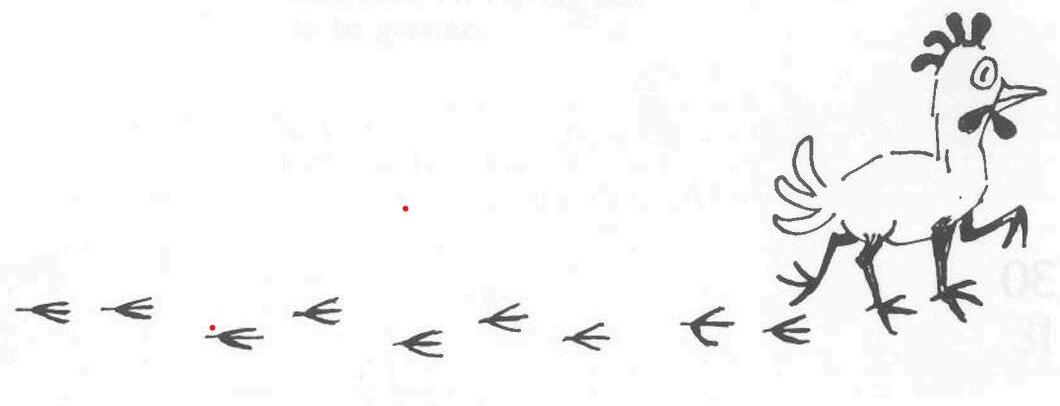
May you leave footprints in the road wherever you go,
Gwen & Eileen
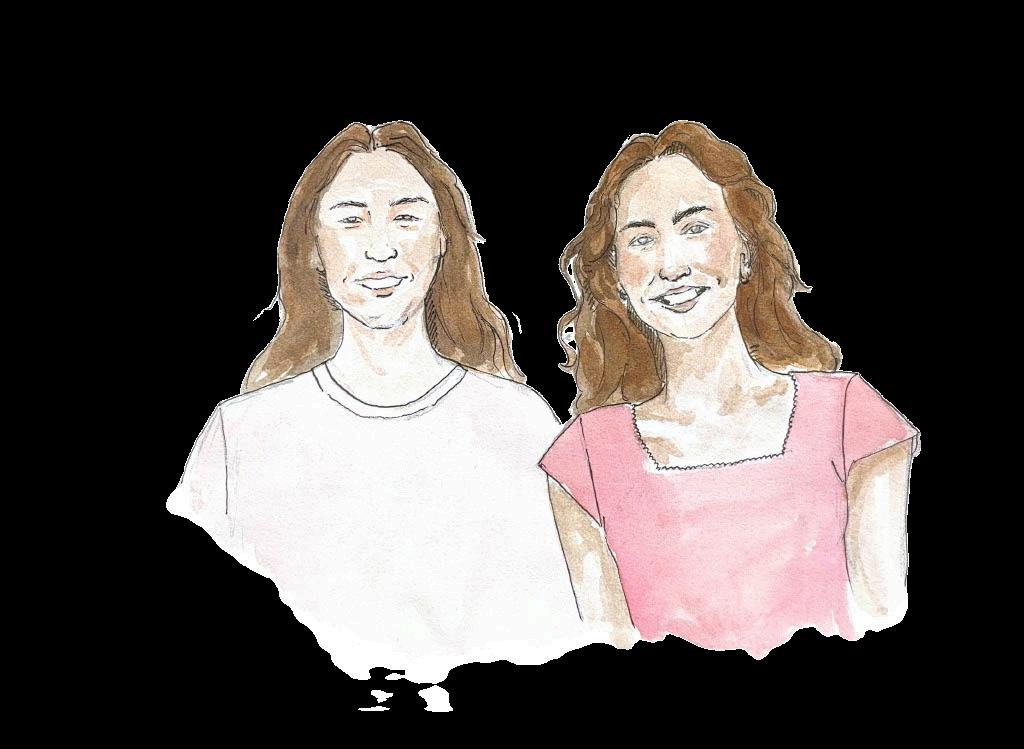
Portrait of the Editors by Niamh Coady
God, Again.
Coveted Desire
cruinneas
Hometown Heroes
Blue Apparition
At the Acid Bath
Untitled
The IRJSC's Urgent Report
Cycling
concrete face
[After the race is done you want to touch]
Release Point
Ella Flynn
Maggie Kelly
Kate Redmond
Renz Iurino
Masha Lyutova
Jack Briody
Cat Lee
Flora Leask Arizpe
Matthew Flanagan
Maximillian Evans-Schmid
Fern Abramson-Slater
Renz Iurino
WOLF AND HIS APPEARANCE IN THE BOOK OF KELLS
Keeper, I Thought I Saw You
Tsunami Now
Disorder
merely players
Eternal Vigil
Still Life with Dead Birds
Bunbeg Shipwreck III
Mark Lawlor
Éabha Calnan
Selim Ün
Gavin Jennings
Eli Cotan
Louise Van Oel
Yixiao Kong
Alice Weatherley
Henry James
My Brother, The Impressionist
Acedia
MATRIARCH WITH A WIKIPEDIA PAGE
Diptych
The Deer Woman
Thoughts on Death While Pumping Breast Milk At 3am
Women sitting by the lake in Lecco, Italy.
Untitled
Places My Grandchildren Have Seen
Produce
29% Extra Free Sonnet for Dublin
What Remains
Emma Sunnyduck
Maggie Kelly
Niamh O’Farrell-Tyler
Mathilda Gross
Esme Dunne
Jessica Magee
Elisabetta Panzera
Claire Heskett
Noa Askat
Eileen Grant
Gwenhwyfar Ferch Rhys
Bella Brooks

Telling Detail
The Scent Archive
Hallucinating Childhood
On Merrily's Life and Work
On Editing Icarus with Merrily
Silence
The Arrangement
Vona Groarke
Vona Groarke
Bhanu Kapil
James Harpur
Margaret Hickey
James Harpur
Merrily Harpur
God, Again. by Ella
Flynn
A space for the sun to soften and the blue sky to colour with light and shadow. A bed with the Dylan choir playing over.
A Sunday afternoon, a fresh canvas and a finger paint of freckles settling down. A seat on the pew next to you. Both of us watchers, friends in that, And I realised darling, That we had never sat next to each other for an hour
In the peaceful silence, light of day, thumbs twiddling.
By the time I was out of the shower three hours later I was thinking of becoming a Catholic again
Just to get to sit like that.
Just to get to touch the watch and hold the wait and get the sudden to the stomach shock of remembering.
I'd build the Church.
Bare hands and a skill issue– I’d learn darling, Every guild on the earth if it came down to it.
And well, except some god made the building, They labour in vain who build it.
Never would have done half the things I do, If it weren't for you.
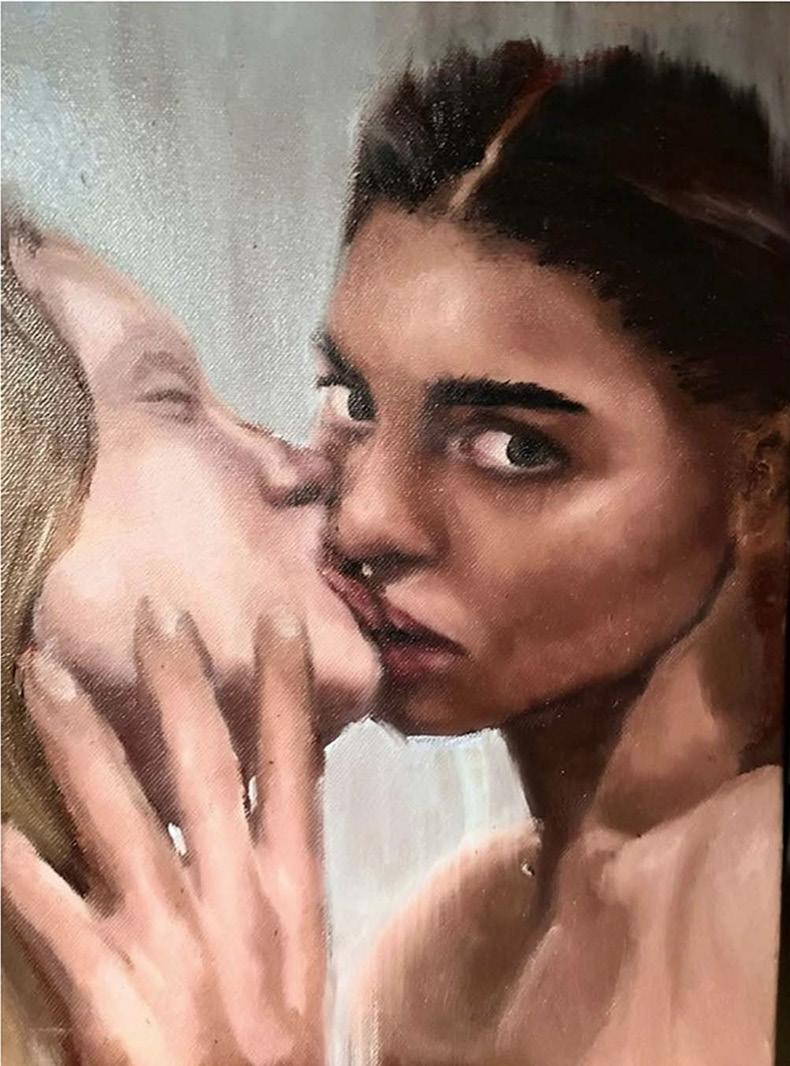
Coveted Desire by Maggie Kelly
cruinneas by Kate Redmond
an oidhreacht na teanga í foirfeacht?
má ligim uaim botún an bhfuilim fós i mo ghaeilgeoir? má úsáidim mo ghuth féin an í mise i mo bhreagadóir? an í todchaí na teanga a stair? nó ‘bhfuil an todchaí mé fhéin is mo chanúint cathrach?
cruinneas by Kate Redmond
is the legacy of the language its perfection? if a let slip a mistake am i still then a gaeilgeoir? if i use my own voice do i become then a liar? is the future of the language it’s past? or is the future myself, with my canúint of the city?
*gaeilgeoir = irish speaker
*canúint = the form of the language spoken in a certain region
Note: This translation is not direct, and some of the phrases do not carry the exact same meaning in both languages.
Hometown
Heroes by Renz Iurino
We go out jaywalking home from town. You point upwards as we catch the curb at 6th, the rhinestone stars blinking above our eyes, and I swear the satellites outline distances past heaven, halos of cicadas, that hazy sound washing the sidewalks, the neon sign outside Rabbits, a window across the street framing bodies in motion, above the pavement, some speechless rendition on the silver screen, the bar’s overheads signaling closing hour, the flood of the crowd gone home now, the projector spins Main Street’s burnt image, and angels alight, stumble home.
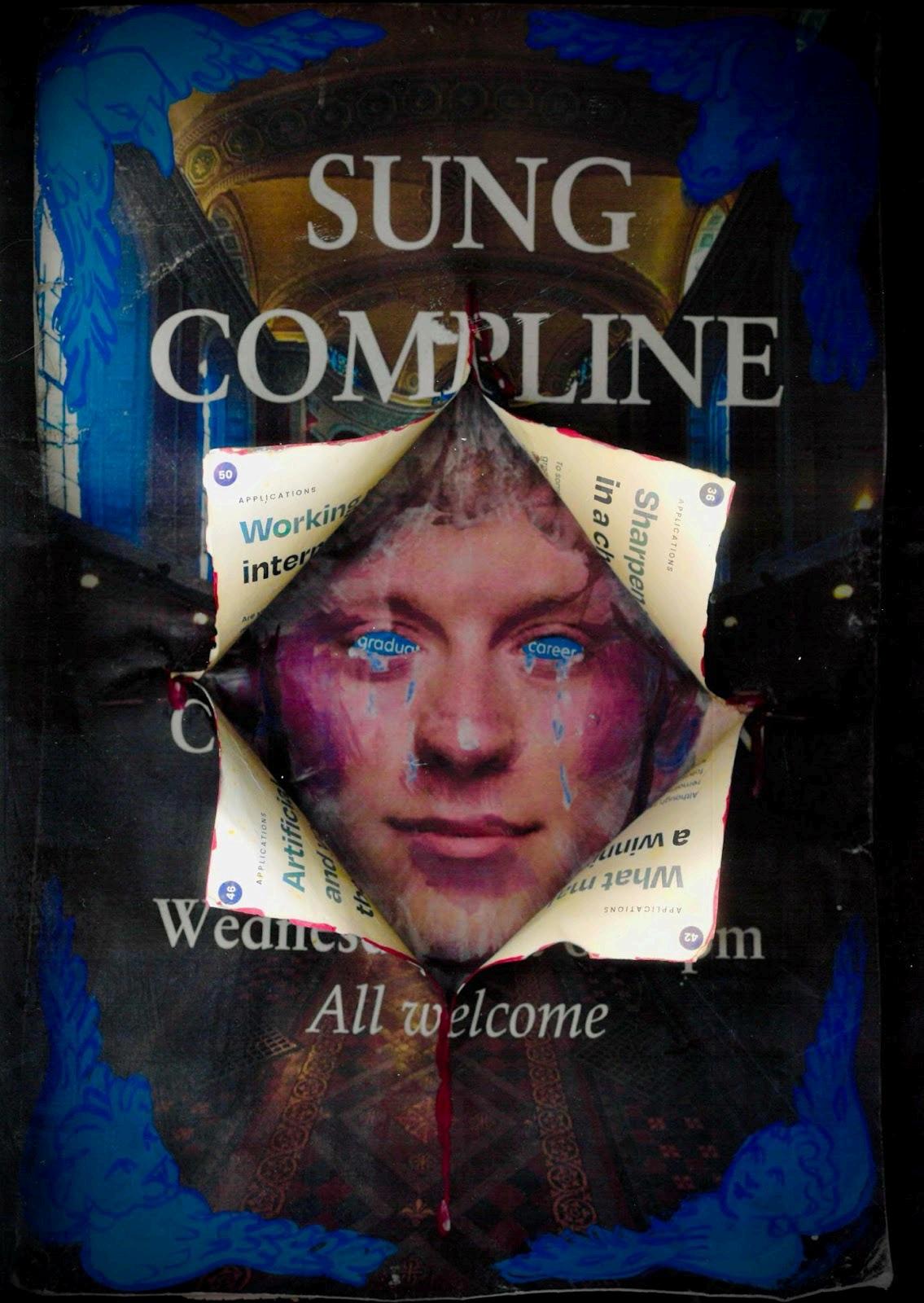
Blue Apparition by Masha Lyutova
At the Acid Bath by Jack
Briody
Ferric chloride etches
Scant antennae on top of the GPO
As quick as chemicals work, The automated, broadcasting Febrile city is forming. Her arms are bare to the shoulder, She’s sweating. She is sweating. But the other workers are too in their cowslip dresses
And they’re cranking big wheels that pump out little pamphlets, Or bent into some printing press
Tinkering textual innards
Grunting politely and calling for tools. A bead drops from her brow and sets the acid bath rippling –Nelson’s pillar standing shakily.
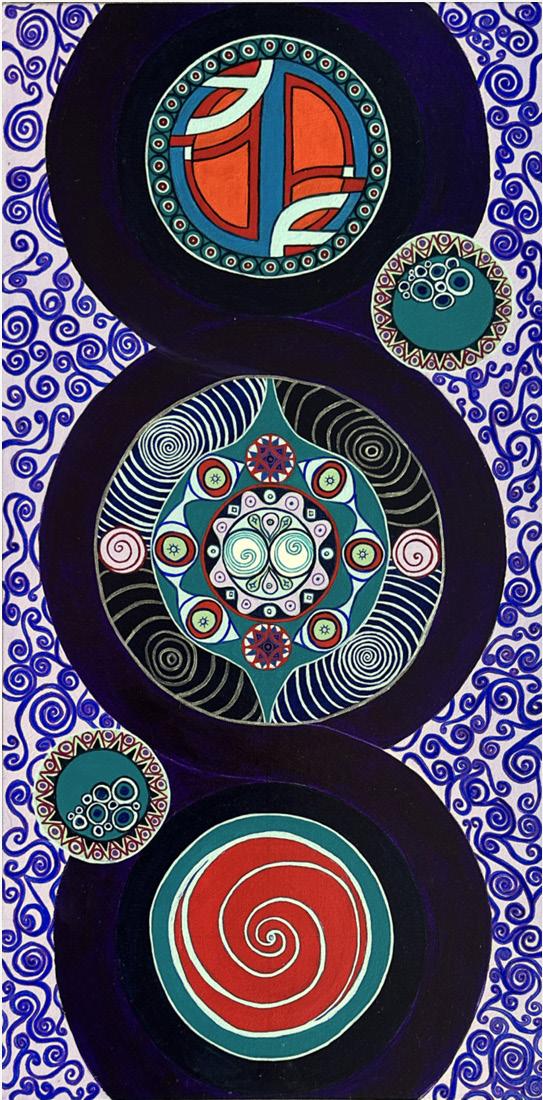
Untitled by Cat Lee
The IRJSC’s Urgent Report
by Flora Leask Arizpe
The School for John Studies (formerly known as Johnology, called by autodidacts and renegade groups, variously: Johnistics, John Thought, Johnomatics, and Johnism, unified by the IRJSC [International Research for John Studies Centre] in two-thousand and eight, to foster more cohesion and fraternity within John Studies, as well as prevent echolalic migraines) has reached a crisis point in the past few months, its various disciplines and the scholars within them finding an impassible barrier to their life-work in studying John actions and events, John futurology, John statistics, and John linguistics, among others.
While John history remains an ample field which merits much probing, and is subject to the healthy changes of methodology which occurs as such fields evolve and develop (e.g. the introduction of microhistories, the study of individual human lives who have affected John’s life in some way, family genealogy, etc), and John folklore is an imaginative and fecund branch which delves into the deep, mythological past of John’s life (the two of which – history and mythology – must not be mistaken for one another [although interdisciplinary fields are opening up debate on the matter, with postcolonial John studies beginning to question the role of the enlightenment in creating the idea of an objective ‘history’ of John in opposition to a ‘mythology’]) – while these two remain relevant, as the chair of the IRJSC points out, even they are in danger if there is no more John with which to make history or create new myth.
For that is the nature of the problem.
To the, what can only be called existential, dismay of the good scholars who have chosen as their subject of research John Magorian, the subject himself is found missing – as the chair of the IRJSC pointed out (somewhat oxymoronically). John is nowhere to be seen – which is nothing short of a miracle, given the almost omnipresent surveillance conducted by contemporary John studies, those modern souls who have decided to focus on emerging sciences such as biometric data collection and Artificial John Intelligence. These sciences are nothing if not rigorous; the number of times the subject takes part in activities such as rhinotillexis or onanism are meticulously recorded, along with measurements of duration and the collection of resulting effluvia – much to the consternation of the older and more traditional schools who believe that John, like the Almighty, must be allowed his mysteries.
Despite the recording equipment, the video surveillance, the constant tailing, the teams of forensics whose job it is to enter a room after the subject has left, to comb it for any
lost objects (for the IRJSC travelling exhibition of John relics), hairs, nail clippings, and any other genealogically constituted detritus – despite this, John has managed to, in the words of Svetlana Järvet (a well-respected figure within the community of John philosophy and author of the well-regarded tomes The Anti-John and A Thousand Johns) ‘leg it’.
The escape can only have occurred in the dead of night, when only the nocturnal activities team, the pallid and owl-like polysomnogramists, are present to monitor vitals, REM activity, and any other notable nocturnal activity1.
Whatever the reason for this unfortunate event, the School now finds itself in an awkward situation, the object of study having vanished into thin air. There have been debates as to the ethical possibilities and ramifications of creating an AI John, which has experts divided: some saying it is perfectly possible and reasonable in the absence of the real John, while others arguing that a simulated John would not only be catastrophic, but a blasphemous insult to all and any John studies. What the School can take solace in, however, is that the previously thought to be completely average qualities of their subject can now be put to question, and therefore the whole scholarship justified – their focus now being channelled in full force towards solving the problem of how a man, who previously displayed no supernormal activities at all, managed disappear as if by magic.
1The sexologists no longer monitor nights since the termination of a romantic interest in early 2022, during which his lover (for lack of a better term – John etymologists still trying to figure out what, exactly, constitutes a situationship), a neurotic Scottish veterinarian called Deirdre McCabe, suffered from an acute psychological breakdown and had to be treated for paranoia at St. Mary’s Hospital, after complaining that she “felt as if she were being watched” whenever she was with John. McCabe and Magorian’s relationship is without the scope of this report, but for a full account and timeline please see the bibliography. Griselda Koch has recently published an excellent fictionalised account of the relationship in Let a Thousand Electronic Flowers Bloom (2025) with Obelisk Press.
Cycling by Matthew Flanagan
“Ah c’mon, it’s like riding a bike”, you say –which just tells me you have never cycled home hungover, headfirst into a gale-strong wind, saddle set just a bit too low, each tiny wibble-wobble a promise that you’ll meet the ground one day, tires just that little bit flat so you feel the rough profile of tarmac mapped into your arse with each push, every pothole the possibility of a puncture, your loose jeans getting all greasy and caught in the chain that hates to leave its link with gear teeth meaning you’re always one set too high or too low for current elevation, every metal vestige that whips by causing a rising of your testicles, tightening your ventricles as they cut too close to leave your legal space, which might all be fine if your breaks worked, but they don’t, and instead your front wheel ticks over one too many times at each stoplight, leaving you too far out and exposed to a junction: sweaty, alone and desperately backpedalling like a duck on a balance beam to some place where you’re told you’ll be safe. Will you, though? You know everyone at the traffic light can see you, right?
“It’s like riding a bike, you’ll be grand” – as if your experience is some miracle to make mine any easier.
Fuck you and your bicycle.
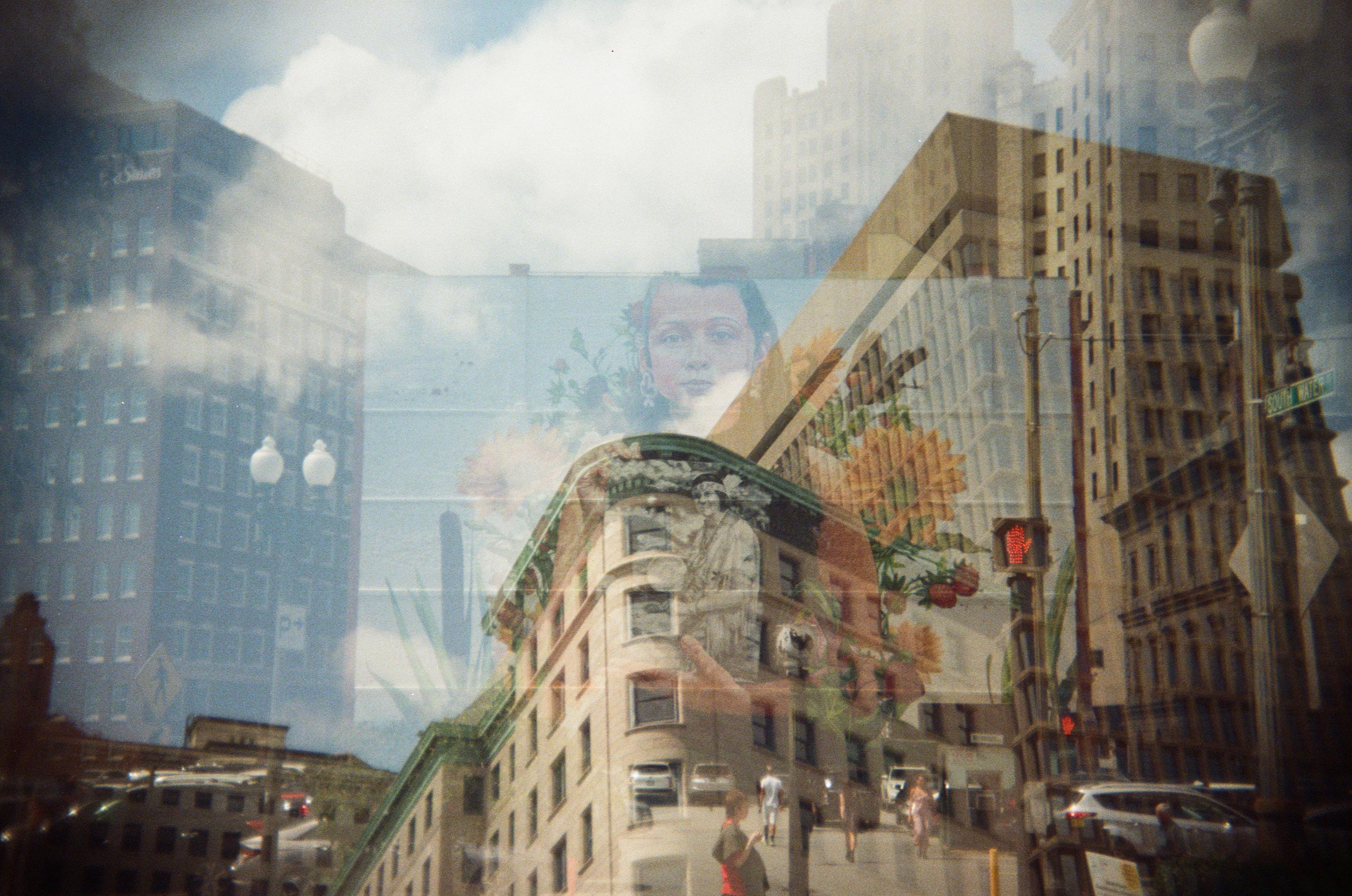
concrete face by Maximillian Evans-Schmid
[After the race is done you want to touch] by
Fern Abramson-Slater
After the race is done you want to touch the cars their blackened steaming tire stacks your body soft and sun-red leaking sweat spilled past the gates out onto the track at first
you got the cheap seats on the straight then crept to hug the corners pressed against the fence the wind blasting your face you witnessed the crash craved the big action and you got it
now as you run your hand along the scraped up tire along the sleek rear wing there is no rush the car is still and small it seems just like a curled up dog and you feel dumb
some pilgrim who set out to touch the bones of a long dead saint hoping they’d still heal.
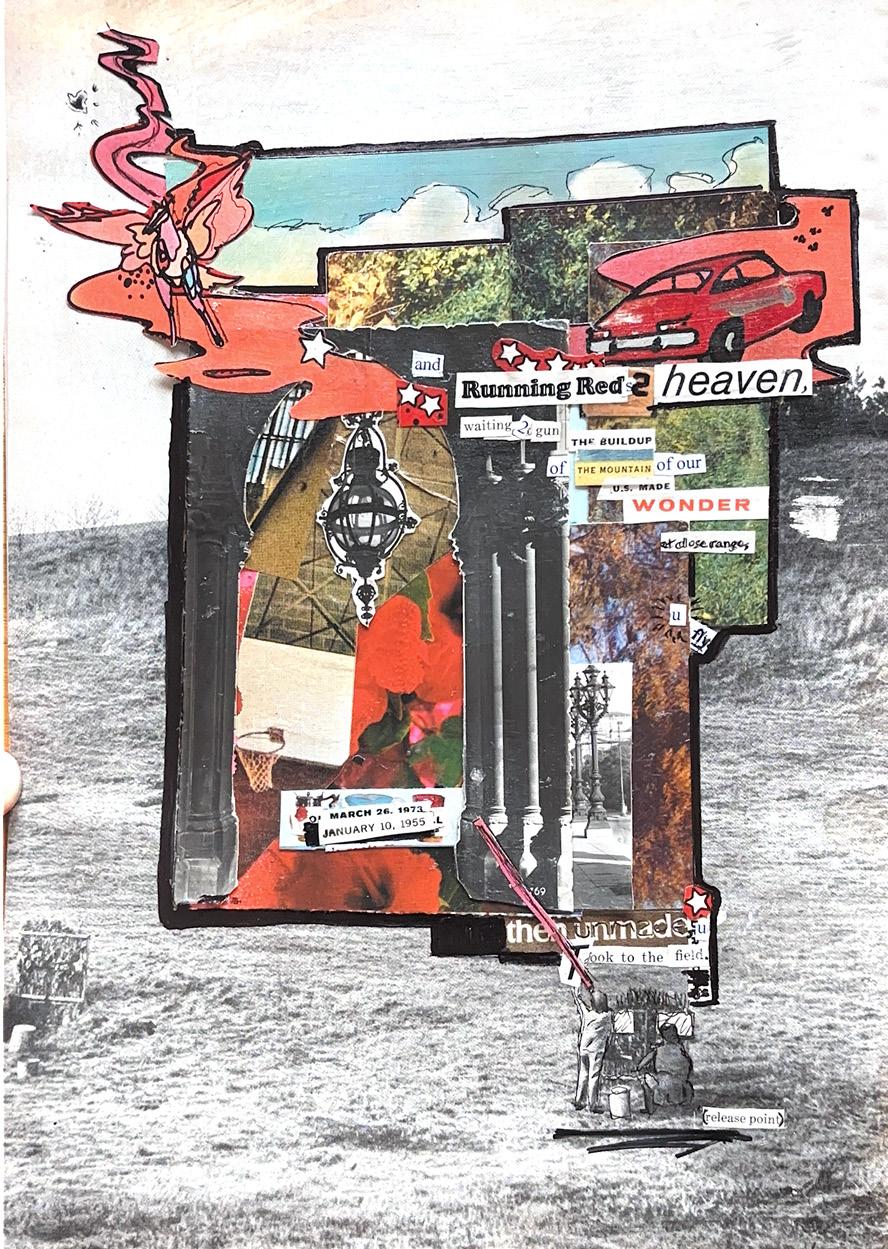
Release Point by Renz Iurino
WOLF AND HIS APPEARANCE IN THE BOOK OF KELLS
by Mark Lawlor
I am a scoundrel, a blue and green wolf, who pads over words, tongue out, left leg first.
Apostles between my toes. Christ’s words are becoming flesh all around me
the flesh of me, flesh I can wolf down. But my mouth is empty and my tongue knows it.
I bloom here, curve, lure you I flow with the word.
The uncoiling scroll of work happens in my body. I come here out of a head
remembering Ardross. You see I do remember things -
The woad people chased you half - brother Full necked, ardent, you have time to share a smile
Instead, I am unfriendly, a token wolf, not quite there, a blue print, a stamp with perforations.
The whole of me embellished on calf skin. Is it any wonder I have my tongue out?
Keeper, by Éabha Calnan
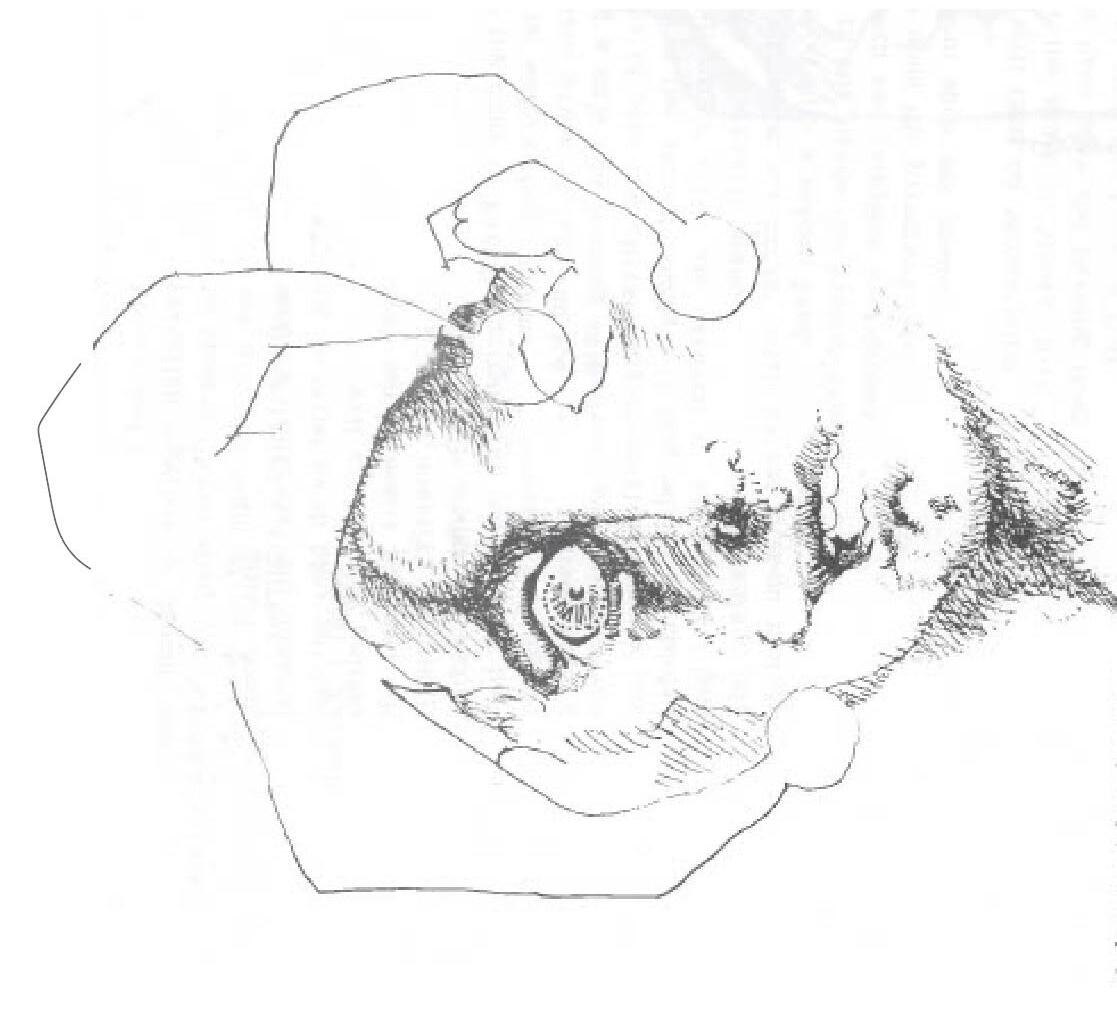
I'd answer everything in such a way as to talk about lighthouse mercury, its noxious pool on which the Fresnel lens1 spins to let us see the things we want to see. And you'd be a good keeper, I think, humming along untrodden paths of barnacle sharp, shaving it off of smooth blue hard, this would be your earthly habit. Up there, you'd hum a tune of needle-thin air, swallowing it back against a roof of mildew, ridged and swollen-swell and release, you'd write me a letter almost ruined by ink-leak - the precarity of its legibility letting the words speak out of themselves and into the sea's laboured breath, fall deep. I would write you back, asking how you cope in and on the edge of it all. I’d laugh a little, I’d wrap my words in little laughs, reboant and rising with her breath, bellowing before ease and all but a whisper, wet. It would somehow climb, cold, and up my legs - glass teeth softened so as not to cut the hands of the French, you’d have told me, I’d have known. But I don’t, and they are sharp, sharper, now pain-bliss embodied, our bodies join prism-like, like lapsing into language of concentricity, we refract.
1Invented in the 19th century by French physicist, Augustin Jean Fresnel, the lens consists of hundreds of concentric, prism-like rings of glass, creating a narrow and intense beam through a combination of refraction and reflection.

I Thought I Saw You by
Selim Ün
Tsunami Now by Gavin Jennings
I watch him sleep with his hat on. He lies as loose as the fabric of his armchair. He lets me have the mattress. He sleeps in his suit, between two of his commissions. The room is full of them. The only space not occupied by one of his large sculptures is taken up by his armchair and my mattress. Every few months, a new piece finds impossible space on the floor for itself to sleep. A spear of sunlight finds me and wakes me up. There are no clocks in the house, Gerard says that the seagulls wake him. They do, calling for him through the window that cannot close. They remind him of the river, and so he rises and moves towards the door seconds after he shakes off his sleep. He passes me without a word. He’ll speak to me later when he comes home with what he found from the river.
I head downstairs after an hour. I weave a path through all of Gerard’s pieces. He works a regular job, heading out at seagulls’ call to the dregs of the Liffey to collect washed-up refuse. He turns his finds into sculptures. One of many, around the city, who have now pulled on their Wellington boots to wade through thin mud to find copper cylinders, scalpels, pacifiers. He’ll drag something home at lunchtime, dripping in thick brown water. He’ll wash it. Sometimes, when washed, it won’t turn out to be as promising as it had looked in the river, and he’ll shove it in our refuse room as a reminder of his failure. Recently, the refuse room has grown smaller with all of Gerard’s failures. Bossman is not happy. Gerard has been at his entry-level position for twenty years now, which frustrates me, considering how great his work is.
Gerard makes sure to weld and glue everything in situ, so that when it comes to painting his creations, which he does in the evenings, he cannot move the piece for fear of it collapsing back into pieces. The more delicate and cumbersome the painting process is, the happier Bossman becomes. I live for the day that I cannot move out of bed, surrounded by Gerard’s art, embraced. His last finished creation was the traffic-cone dodecagram, which took him three years. It was a great effort, and took up the entire second-floor landing of the stairwell. I smile as I squeeze past it every morning and every evening. That was nearly six months ago. Nothing in six months. Every day, Gerard brings home something he doesn’t believe in. He throws it in the refuse room without even cleaning it, sometimes. But they have to bring something home from the river, that’s the rule. He can only work on one thing at a time, that’s another rule, so there’s no hope of him regaining momentum by producing two smaller pieces one after the other.
We talk in the evenings, usually after he has tossed the limp item in the refuse room.
We don’t acknowledge it anymore. Instead, we talk about anything else. His moustache is too long. His black suit is now brown with the months of dirt that has collected on him in layers. After he comes home this evening, we talk about his friend Arlo. He tells me that Arlo managed to find a coffin last week. Gerard is convinced that he would have made better use of the coffin himself. I sit at the kitchen table and look across at him, as he mutters frustratedly at the square inch of vacant floor. The table itself has a sculpture so big on it, that I have very little room for my dinner plate. It is a green fire extinguisher with a stationary swivel-chair base. When he sits down opposite me like this, I can only see his hat move when he speaks. He struggles off to his armchair upstairs. I sit there in silence for a couple of minutes. I get up, suddenly motivated, and charge out the door onto the dark street.
Middle Abbey Street is wet, and my feet react unhappily to the change in feel. It has been a week since I went outside. Usually, I spend all day inside, cleaning the dust off of Gerard’s pieces every few hours to keep them ready, just in case anyone like Bossman came around. I never feel the need to go outside. Here, now, I start looking for something for Gerard, something for his next project. I feel a need to contribute, to be part of the art, not just to make his cornflakes in the evening. I move on to O’Connell Street. I turn left and run all the way up to Parnell Street. I don’t know what it is that I’m looking for exactly, until I see it. It is on Capel Street, as I’m catching my breath, that I spot a wide metal U-shape in the middle of the street. People stroll by like it isn’t almost spanning the entire width of the street. As I get closer, I see that it’s made from three metal bars, bent into what appears to be a hammock frame. I stroke the rusted limbs. I flick my nail against it to hear its high-pitched response. I pick it up and start dragging it behind me. Sometimes it catches on a divot in the tarmac. The banshee screech of the metal on the ground makes everyone turn and watch. Sometimes it catches on my long grey nightdress. I look back at it as I walk down O’Connell Street, seeing how the red lights from stopped cars make it look like a murder weapon, a bloody sabre. I walk all the way to Ha’penny Bridge. I push the metal frame over the metal riverside railings. The metal on metal produces its best sound yet. I give it one last heave, letting it drop into the water, letting it float eastwards to sea. It won’t reach the sea, however, nothing has reached the sea in years. It moves quickly down the river and I know it will be washed up in the morning gunk.
*
At around half past ten in the morning, I hear a great screech coming up Middle Abbey Street to number Forty-Seven. Gerard sings like Ronnie Drew over the sound, and I run outside to greet him. It’s a bright spring day, and he tells me that he found this hammock frame glinting in the muck. It’s a gift from God, he says. He smiles and kisses my forehead. I pick up the other end, and we both carry it in the door. I leave the
the front door open to let the spring air clear the dust away for me. We drag it, with difficulty, into the refuse room, since there is no space for it elsewhere. It catches on many different things as we find it some space. We leave it down and stare at it, hands on hips, smiling. He tells me all of his possible plans for it as he rubs a cloth along the hollow steel. He says that he can see a big threaded tapestry between it. He sees a crescent moon, if he stands it up sideways. Maybe, he jokes, he’ll use it as a hammock after all, so that he doesn’t have to sleep in the armchair anymore. I leave to grab him a cup of tea. When I come back up, he has taken out other items in the refuse room, and he is putting them to use with this new project. Bit by bit, by giving these other items a purpose, he undoes all the failures of the past half-year.
He works in there all night, and strolls out the door at six the next morning without a minute of sleep and with all the energy of the coursing river. He returns an hour later with two curved wooden beams that he adds to the tops of the hammock frame’s U. The two beams come from a barstool that he and Arlo found on the banks, and split between them, taking what they needed. Gerard jokes that he might have to take apart the armchair next, if it meant getting the piece right. He spends all afternoon on the street outside, spray-painting this work-in-progress with his shirt off and his hat pulled over his eyes. He gets paint all over himself, and I watch from the doorway. He has settled on what the piece will become. He tells me that he is making a new version of the rota fortunae, the cycle of life. It will be grand, decorative, meaningful, and it will make Bossman very happy. It will include images from all of history, from all over the world. He will even include a portrait of Bossman himself. He will use the same teal and orange colourway that decorates the façade of our home, Forty-Seven Middle Abbey Street. He was given the home by Bossman, who wanted someone stationed amidst the storefronts in the commercial side of town. Our front has been painted in orange and teal swirls, like a tsunami, as Gerard says.
I go upstairs to find a piece that Gerard requested from the refuse room. I walk up the stairs slowly, the journey taking much longer with the weight of the day’s excitement. When I walk into the refuse room, however, I find a fox sitting in the corner among the junk. I start back, and we are staring at each other. It must have slinked in while the door was open. I slowly grip a long piece of metal that sticks up beside the door. I hold it up, as if it were an appropriate weapon. The fox is sitting up and observing me neutrally. It is comfortable, sat on a mucky wooden palette. I slowly approach it. The fox hasn’t blinked. I raise the metal bar as I step towards it again, about to strike. I think about how this animal could make the centrepiece of Gerard’s masterwork. It could optimise Gerard’s vision. This fox could have a greater purpose than any fox ever had before. Gerard would know how to put it to good use. I close my eyes, envisioning its body spread across the middle of Gerard’s wheel, and I bring the metal rod down with a
crash. I open my eyes to find the fox gone, scampering out the door and down the stairs. Gerard calls out from the front door, to see if everything is alright.
*
Gerard didn’t come back the next day. I thought that he must have got stuck, struggling to find the right piece in the river, or maybe he went out with Arlo for a drink. By eleven at night I was pacing up and down the stairs, interrupted by Gerard’s works. I wait for hours in the kitchen. I take Gerard’s wheel piece inside, as it had started raining. All through the night, I dust the other pieces, stepping over the wheel piece which I had left by the door, blocking the hallway. I sit in Gerard’s armchair, something I had never done. It is irritating. It is something you could never sit comfortably in. Something is always sticking into your back. I change nightdresses just to have something to do. I watch the streets from the upstairs windows. No one walks the streets. I turn around, and I walk by one of Gerard’s pieces: a tastefully painted Celtic cross gravestone. I see another piece on the wall, a painting Gerard had done of the White Ship Disaster. I wonder if Gerard is finally dead. I think about the time he brought my mattress back for me, he cleaned it right away.
At two in the afternoon I hear a knock at the door. Arlo stands a few steps away from the door, and I have to duck around the wheel piece to see him. He tells me that Gerard had been found in the river that morning by the other workers. One of them wants to bring it home to work his body into one of their pieces. Bossman loves the idea. I am relieved. A proper sendoff. I tell Arlo to tell Bossman that he can get the white tarp ready to wrap around the house, that I’m prepared to move out of Forty-Seven Middle Abbey Street as soon as he needs me to.
Disorder by Eli Cotan
merely players by Louise
Van Oel
He tests the consistency of supermarket lemons with one hand and ponders the night ahead. there are so many ways for him to make death interesting. endless choice, really. a sigh (what might he yearn for? his mother? a drink?), a groan (recall ecstasy, audience, how ephemeral it turns out to be), eyes upcast to the sky (blaming, beseeching, crying for an end to this) . . .
it all boils down, in the end, to something very simple. why me? why now?
later, the stage lights burn his skin as he makes his choices. the cross is solid and comforting at his back. his wrists ache. he exhales.
they are continuing to trial ever more comfortable ways to tie him up. the initial polyester ropes gave him welts. red-raw wrists at curtain-up the next day give the game away, blatantly letting slip where he’ll end up by the end of the night. everyone knows, but it would not be a play if they didn’t all agree not to for ninety minutes.
judas suggests they nail him to the wood for real, but the propsmaster isn’t in the mood and asks curtly for serious suggestions from the room.
the next night, they use ropes fashioned from satin-soft stockings the colour of his skin. at last, he’s not in pain anymore. he surprises himself by shedding a perfect tear as he dies.
he shares a dressing-room with judas. the theatre’s limitations in size mean that even the principals must bunk up; such is the state of the arts.
by way of conversation, as they’re getting undressed, judas asks him what the difference is between a cross and a crucifix. it’s an important question, after all. it’s only the second one that scares off vampires, so you’ve got to know.
he laughs. he admits he had to look that one up himself a while ago. it’s a crucifix when there’s some representation of jesus nailed to it. it’s a cross when it’s just the bare piece of wood, sans any human being.
ah. so I suppose, judas says, that it’s not so much the sight of the cross but of the dying
man that strikes fear into the hearts of the immortal.
that’s the thought that plays through jesus’s mind the next time he dies. he loses focus for a moment, breaks into a small smile, and hopes he saves himself by making it look beatific. the director tells him not to do that again. it didn’t work, she says.
judas takes a sick day.
upon his return, he doesn’t speak beyond the bare minimum. it’s unsettling, and they both give a worse performance. the last supper is almost a disaster. every time they lock eyes, jesus feels sick to his stomach.
the following four nights he has the dressing room to himself and plays across from the understudy.
when judas returns, the dressing room remains quieter than it was. jesus asks him if everything is all right. no, he says, but I can’t talk about it at work. I’m not allowed to look like I’ve been crying until act two.
something shifts in his character. he was a classic, vitriolic judas before, which is not to say he hadn’t given a singular performance every time, but something in him now exudes a sadness to the core. even in their fiercest scenes, he gives the impression that he’s grieving what will happen in advance.
the director commends him. it’s excellent; it really works.
several weeks on, as they’re about to head home, jesus finally breaks and demands to know what the hell has been going on. the force of his worry makes it come out angry.
he realizes he has stepped too close to his partner. judas takes a breath, hesitates, holds his gaze for a long moment, holds it until it hardens. jesus lowers his eyes; quickly steps back, embarrassed, not quite knowing in what way.
judas doesn’t break until they emerge from the theatre into the bracing night. the icy wind sets their eyes to watering before he starts to speak.
what do you say when someone tells you they’re dying?
there are no words that work, here, in this gap.
[you hold, and are held, and that’s all. in the absence of why, you’re left with how.]
they cannot manage to go back to normal.
the critics love it.
stage periodicals effusively praise the depth to the relationship between them. the actors really seem to have found their stride, they write; between them they make love and loss palpable things. it’s anguish. it’s magnificent to watch.
this piece shall be spoken of for decades, they vow. for ever, perhaps. theatre is an ephemeral art, but impressions like this live on beyond the production itself.
certain things reverbrate.
each night both continue to die, quietly, frantically.
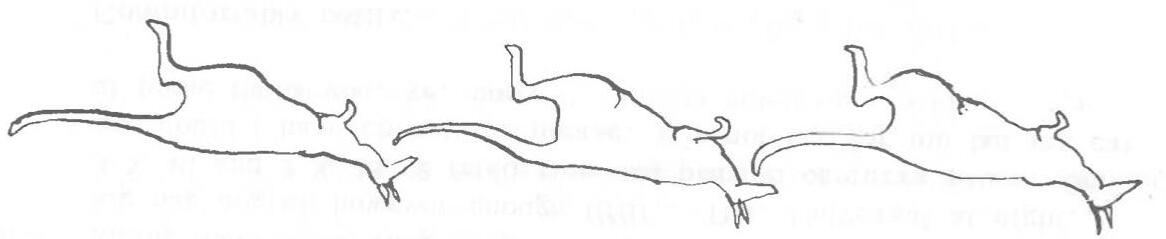
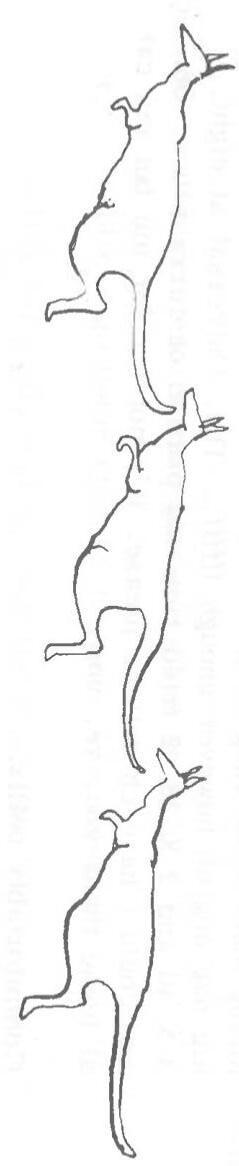
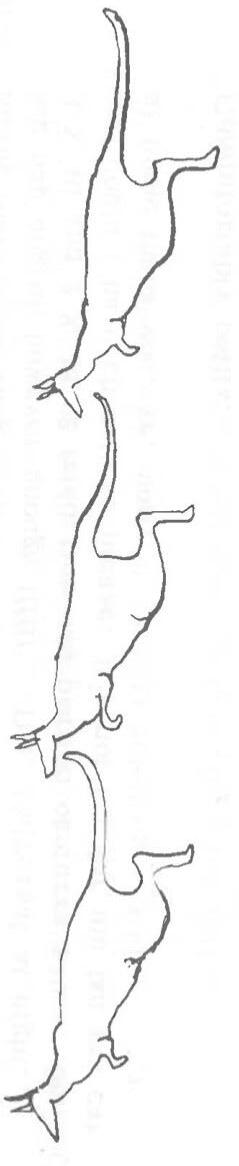
Eternal Vigil by Yixiao Kong
Still Life with Dead Birds by
Alice Weatherley
after Christian Luycks (1623 – c.1675)
Before the stiff flock, standing: blank eyes affixed to bodies seek me and swallow my sympathy; court me with limp wings; sing a resigned and silent song. A horde of once-prey, now-preyed painted bright, mainly unmutilated, game dressed up for dinner; organs
not mauled, feathers undisrupted, only beat, bundled. The carcass I’d like to be is twirling from the wall, suspended in muddy post-bloodsport air separate
from the rest; cast in different shadow, still dead, still disrespected, still conquered and gone but levitating, at least.
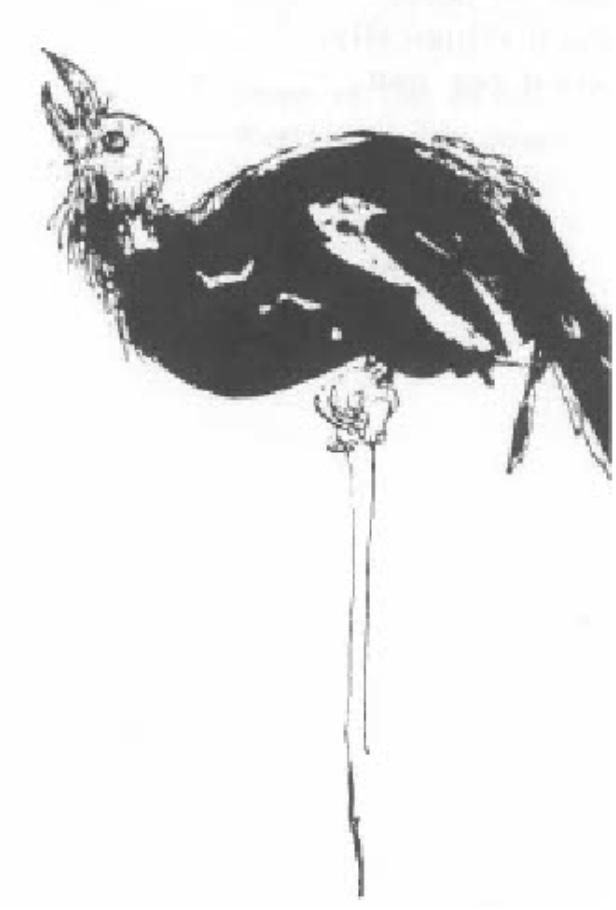
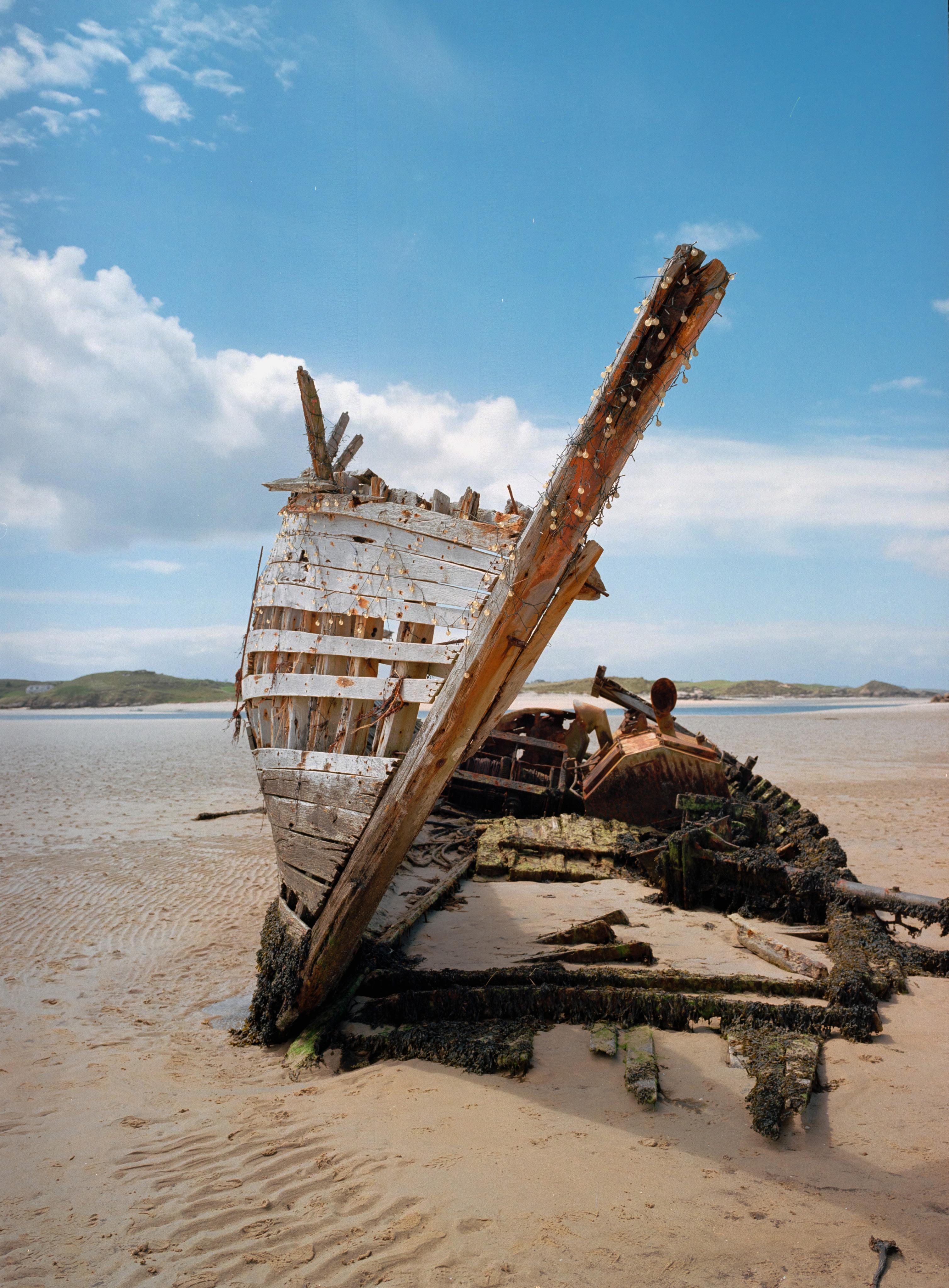
Bunbeg Shipwreck III by Henry James
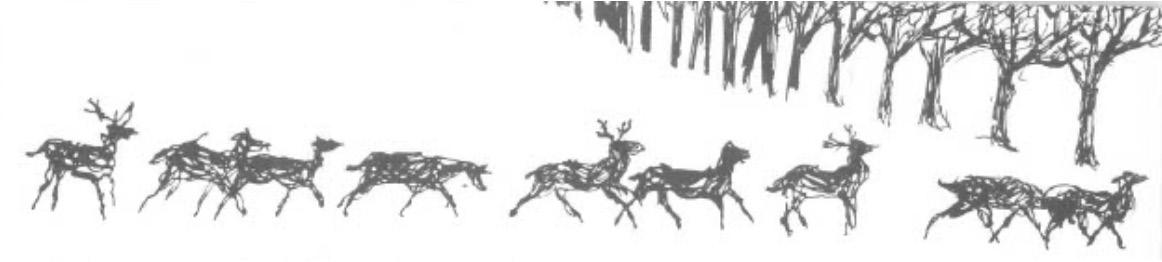
My Brother, The Impressionist by Emma Sunnyduck
That final time I hear her voice won't be the hour before her death, after salts on the roads are hauled all the way home, any hard-earned lessons slipping fast, now, fast. No, that will be when my brother forgets her precise turn of phrase or when my brother forgets her accent, her stresses; round on the vowels but flat on the phone. Or maybe it will be those minutes before the wake when we're all late again for being presentable. I get on at him for not tucking his shirt at the back while I’m unheeled, still only one eye mascaraed. Just watch now. He can't help it.
“Ah, lads, will ye ever come on!”
Said on an intake of breath and eyes to heaven, no habit of a moment to think about it, the laugh between us for as long as we've lived, that dialect of old Ireland we didn't inherit and a haste that we did and I'll take my hands from yanking his tie and
Our mother will cease to speak.
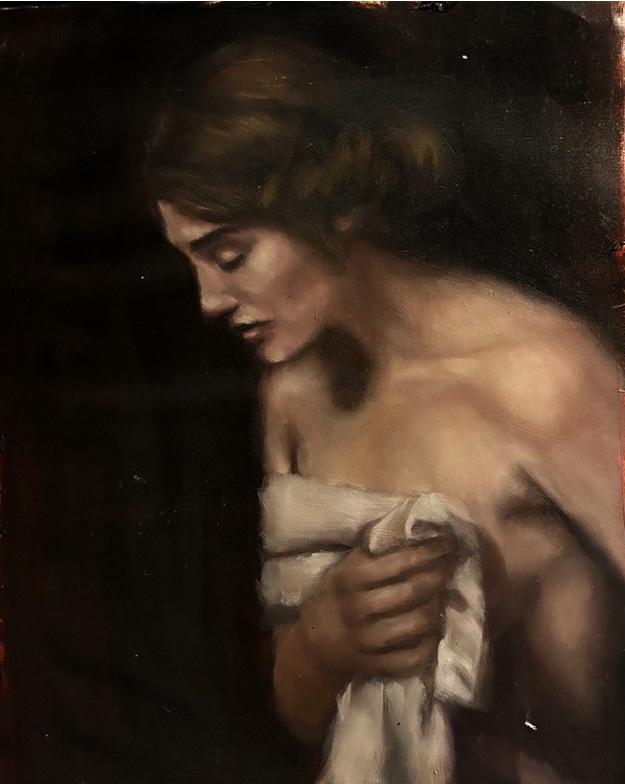
Acedia by Maggie Kelly
MATRIARCH WITH A WIKIPEDIA PAGE
by Niamh O’Farrell-Tyler
Oh Nazarene, serene in your flowered chair
With your stamp on the letters of my dreamsHow strange and lovely it must be to become a memory alive. The blue angel on the mantle spreads stars over your life
Where you, in the old house, tell us stories of what we could and should and will be. Years from now, in the morning church, grief will down us like a bad cold But right now I don’t know or care; I’ll come visit you again. Your birthday cards and crumpled notes, the smell of the holiday house in Ardmore, Where you with a long stick and a keen eye
Judge sandcastles and award old buttons - I swear I smelled the sea in the room where you died
Where we played your favourite records until I had to leave you there, Too full of love to watch it happen. I went home and crafted the creature out of clay that I called grief - oh you would have loved her, oh how she would have loved you, And collected you in unmade clumsy hands to carry you to rest. Oh Nazarene, I prayed for you that night I thought of you every day through that long and bitter winter. The last time we spoke
And I knew we never would again I started to carry God in me when you could not speak His name. I did not understand your ending, without anger or regret, Just your lax hand on the bed, tired and at peace. Now I feel you every time I write the things you showed me how to love. In the holy space you struck for me, Showed with a steady hand to light my way, You are walking the bleak grey strand at old Ardmore - smooth stick in hand, wind whipping your patterned skirt
Watching the eastern coast to offer a shrewd remark - and in this precious place my summer is not over; things have only just begun. How marvellous to live for you, When you are never gone.
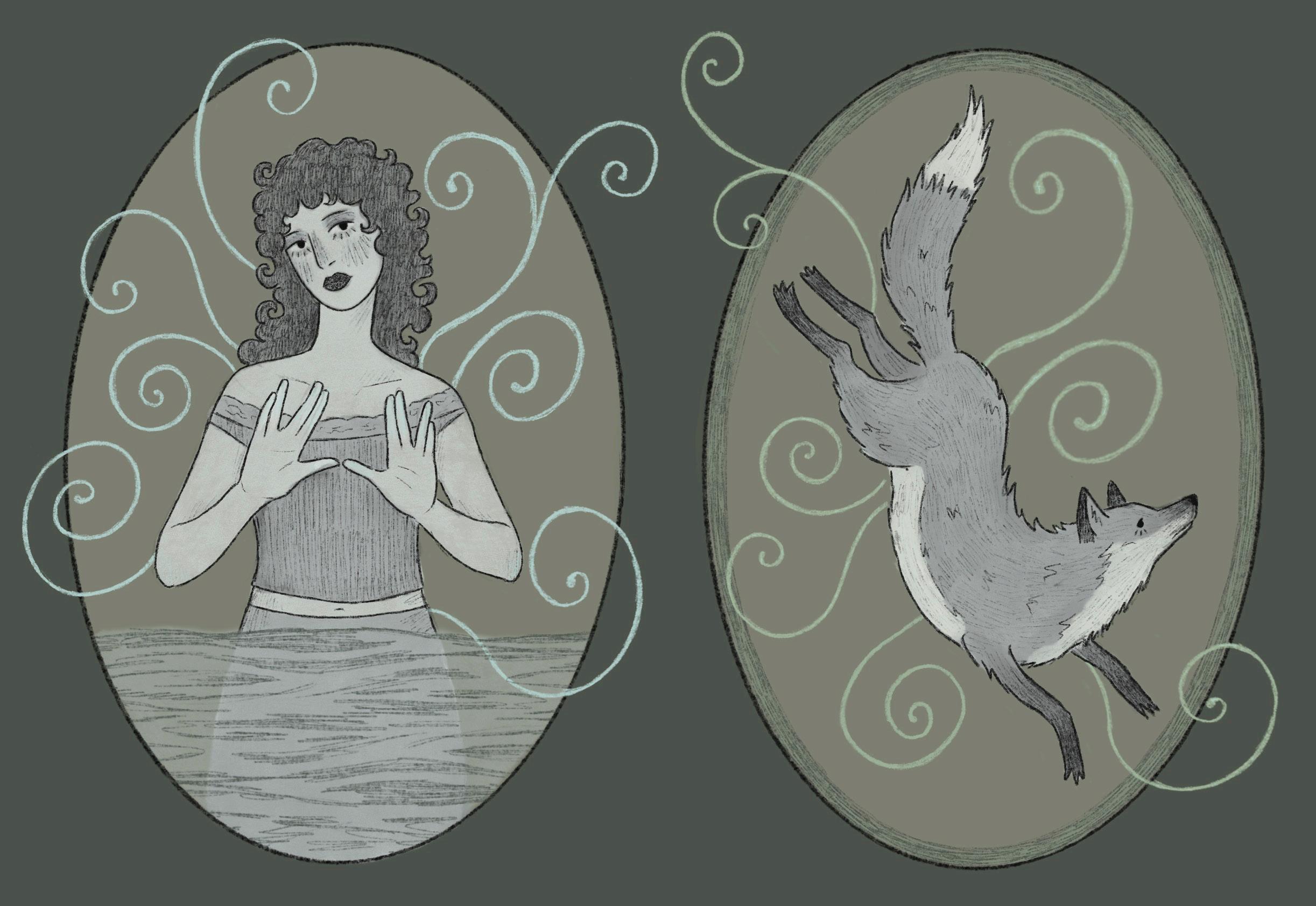
Diptych by Mathilda Gross
The
Deer Woman by Esme Dunne
A storm ravaged the land for days, severing trees from their roots and grating rocks in their beds and screaming down chimneys. Humans locked their doors and lit fires, but the others had to find shelter amongst the storm, in forests and thickets.
Too tired to walk and too humble to speak, she retreated to the earth. But the storm, stronger than her will, forced her into the open air where her feet cut and body battered. She closed her eyes and imagined defying the bitter wind, who, hoping to force itself upon her, would lose sight of her as she changed entirely. Standing on all fours, her spine curved and legs splayed and head threw back as her bones broke inside her. Launched onto two feet, her thick fur shed into thick skin. Her muscles twitched and twisted, pulled in every direction. She opened her eyes to find herself alone with the wind and began to run. As in a dream, her mind moved faster than her legs. This borrowed body did not belong to her, but it would allow her to last the night.
Arriving to a lodge on the edge of the forest, she thumped her fists against the door until it opened. His broad frame, unwithered by age and almost the width of the doorway, ushered her into the house. He looked purposefully into her eyes, as if searching for something. She was expected to speak.
I was hiking and got caught in the storm. Might I shelter here for a couple hours?
Without a word the man began to ascend the stairs to his left. At the end of a poorly lit corridor he showed her to a modest room with only a bed and a chest. Atop the chest a small mirror rested, and in the small mirror, she saw a human body. It was naked. The soft curves of a breast, waist, and stomach glimpsed back at her, almost glowing in the moonlight.
Take whatever you need from the chest. You are welcome to join us downstairs by the fire. Third door on the left.
Covering her body for the very first time, she adorned herself in layers upon layers, unsure how many were considered appropriate. Newly dressed, she felt her way through half-darkness, padded softly down the stairs, and counted one, two, three doors. She fit her hand around the metal doorknob and twisted tightly. The dark hallway flooded with soft light and her wide eyes adjusted as she emerged into it. Smiling politely, she counted one, two, three sons, a woman, and the older man she had already met. They gathered around the fire on the far side of the room, cradling mugs of hot tea, sipping slowly, and inviting her to join them. Cautiously she moved towards them and sat in the empty chair.
It was only then she realised her surroundings. Family portraits centred around bleeding men. An audience of severed heads and skulls across the wall. Every ornament made of bone: the chandelier, candlesticks, fire poker. She threw her eyes to her feet, only to find them resting on a rug made from skin. A graveyard from floor to ceiling. It was the woman who spoke.
Sometimes I worry it’s too much, but the boys are so proud, and the antlers are so beautiful… does your father hunt?
She raised her head and shook it slowly. The man spoke now.
Deer are alert animals, so you’ve got to make them feel safe, like you’re not even there. And once you kill them, you’ve got to skin em n gut em. You want to gut an animal as soon as possible, n be careful not to puncture the stomach or bladder. If you do that you risk infecting the whole carcass.
The sons began to exchange stories, recounting the first time they ambushed a woman, dragged her lifeless body home, ran their hands over her skin and pulled a knife down her centre. Her intrigue overcame her terror; here she sat, in Orion’s hands, shy by nature but emboldened by her disguise, listening to boys boast of murder. For some time this went on, the sons each hoping to beat his brothers and impress the stranger who arrived on their doorstep. Deer or human, she was a prize. The eldest brother spoke of stalking a woman for almost the whole day, only to spook her. As she darted through the wood, he shot her through the neck. They all stood over her, watching the grass blacken with her blood and listening to her quietly moan a deep, soft hum, her eyes longing for compassion in theirs. One of the men suggested they put her out of her misery and shoot her again. The right thing to do. But no one moved, transfixed by her pain, deciding instead to watch her slip, slowly, behind the veil.
The woman had removed herself to prepare dinner and now returned to announce it was ready. With three hunters at her heel, she walked to the table.
I hope you like venison dear— Venison?
Deer! Venison stew, my mother’s recipe.
The stench of the bowl placed in front of her turned her stomach. As the family shoveled the venison onto spoons, licked their lips and chewed intently, she picked up
her spoon and by its dent, fished out a carrot. She drifted in and out of conversation, speaking only when spoken to. Once the family had finished eating, and she pushing her flesh around, she excused herself from the table, padded back to her bedroom through that half-darkness, crawled onto the bed and lay atop the covers. Here she dreamt of the forest, of light that dabbles through leaves, of ripples born from treading on water and the quiet echo of wind flying through branches. In the morning she awoke, resentful of the ceiling above her, and rolled off the bed. As she took a step, she felt the weight of the thud as she heard it. Hooves on floorboards. In longing for herself, she had shed the borrowed body.
The room seemed smaller now, and smaller still as she panicked. Racing back and forth, the sound of her hooves alarmed her further. In the midst of her horror, she knocked the small mirror in which she had seen that naked human body, and it smashed. Looking out towards the forest, she wondered if she could dream herself home.
When she turned around, the old man was in the doorway. They both stood; still, silent. He looked into her eyes intently as he had the night before, although he needn’t search for anything now. She was as she appeared. Holding his gaze, her wide doe eyes defiant, she ran — four legs beneath her and strong in desperation. Rising onto her hind legs, she towered over the man and struck him in the chest.
*
The sons stood quietly in the courtyard, separated by the corpse. One by one they bowed towards the headless body, taking turns to drag the knife between the skin and muscle until the animal was bare. When they were finished they stood, a pile of hind to their left, a pile of meat to their right. The woman they had hoped to seduce almost spectral. They had her. Human or doe or dead, she lay naked at their feet. And they didn’t even have to undress her.
*
The day the storm passed the family decided to feast in celebration and gratitude for their good fortune. Almost ceremonially they opened the shutters and windows to let the light pour in and stagnant air clear. The five of them worked all afternoon, cooking and cleaning and laying the table. Finally evening came and they came together, each of their plates adorned with a freshly butchered steak. The man sat at the head of the table, his family laughing around him. Directly above him, caught in a stream of light, a new ornament on the wall.
Our doe. Meat in the mouth of the huntsman.
Thoughts on Death While Pumping Breast Milk At 3am
by Jessica Magee
So, say an aneurysm or a stroke. what would be left of me for you? 6oz frozen breastmilk in the fridge Bus tickets, diaries, bits and fluff, photos from the years of fancy dress. That time I went as a Ball of Yarn, woolly rainbows round a wire frame. A Snow Monkey in faux-fur, hot but not. A painted Violin on a skincoloured bodysuit, my arm drew the bow across a bestringed belly. A Hot Air Balloonist, baby, with a 10-foot helium balloon. You can have the costumes, infanta, growing girl, you who are left. Your retroussé nose aged one and some; there I am, that will do. My yellow dressing gown will live on, surely. And some sleepy, half-remembered me in the quiet chambers of your heart, maybe.
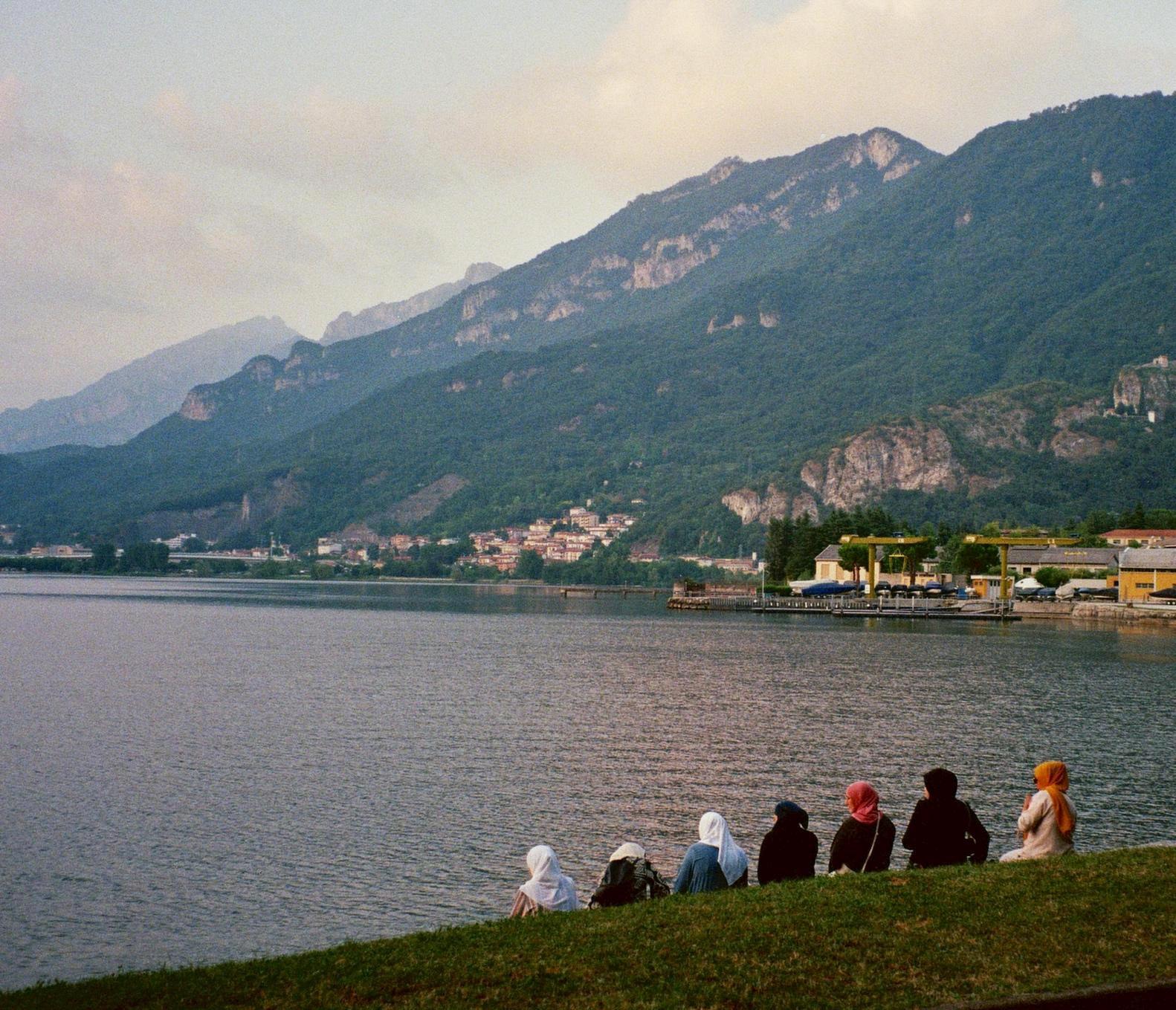
Women sitting by the lake in Lecco, Italy. August 2024. 400 ISO film.
by Elisabetta Panzera
Untitled by Claire Heskett
My mother and I have twin thumbs.
It’s our own little party trick–to hold our opposite hands up next to one another and marvel at their indistinguishable natures–a game at once endlessly trivial and unspeakably important. We find the matching creases on our palms and the identical crescents of our nails. She traces all the ways she finds her own iterations unsightly, with a bitterness that has been both learned and taught, while I linger on this evidence of our mirrored beings. On the fact that, in some later year, I will hold my own two hands together and feel infinitely grateful that I see someone besides myself.
When I was much younger, there were visits to a nursing home and a woman who shared this feature. Sometimes we sat and watched hummingbirds through a window; flickers of life and colour in an otherwise sterile place, made up of missing details and halfways. We’d sit quietly in the dissonance, watching blurs of teal and pink flit and fly beyond the gray.
She couldn’t hold on to my name–one of many in the shuffled deck of children and grandchildren and great-grandchildren–and in the intervening years, I seem to have lost sight of her face. I remember her hands, though: elegant and agile, stained blue with age, and busied by deadheading her chrysanthemums. Sometimes, the blooms fell away from her blade in bright and bloody hues, her fingers too consumed by memory to recognise that they decapitated still-living flowers.
And I remember crying when we heard the news, but mostly because it scared me to know that someone could be so suddenly gone. The ritual narrowed, then–reproductions of a set of fingerprints existing in only our iterations. And I wonder what she sees in our shared knuckles and veins; something given and regiven, maybe. Or only us two, and the other things we share.
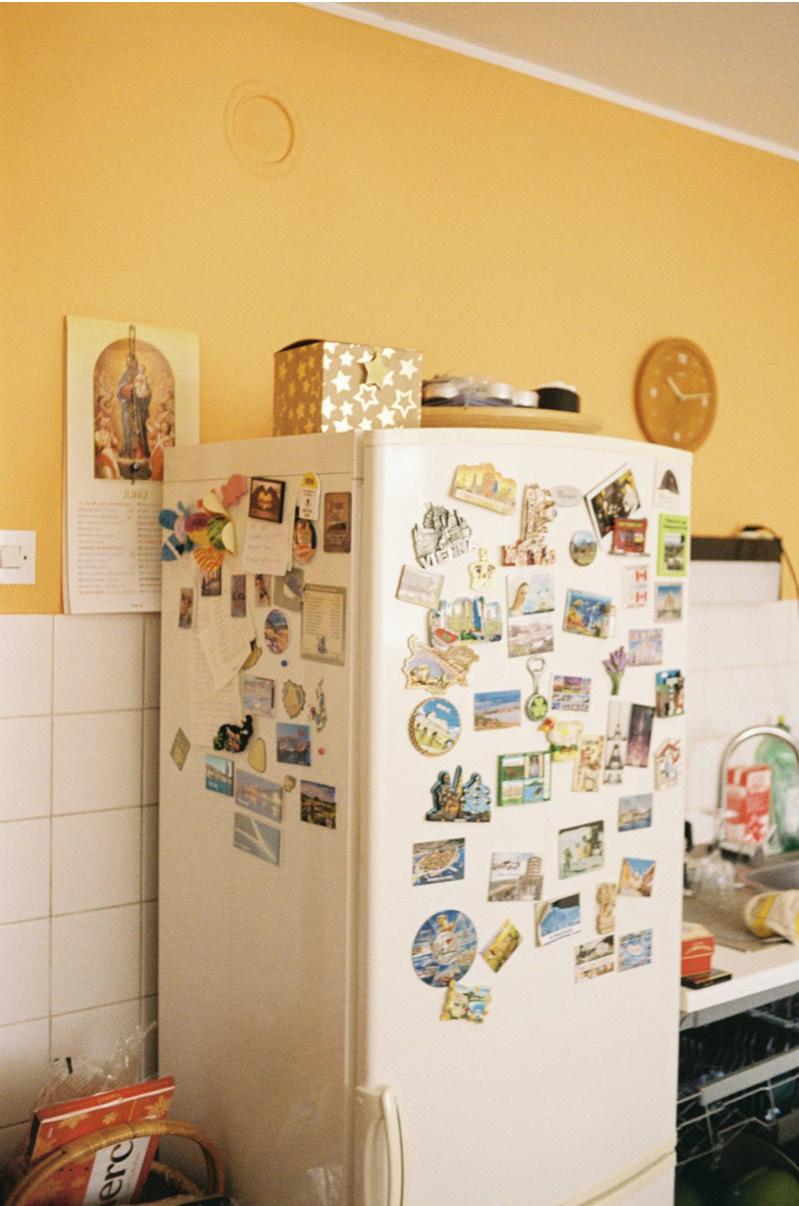
Places My Grandchildren Have Seen by Noa Askat
Produce by Eileen Grant
My father eats grapes by the handful. One time when they were rolling around his palm all wet and globular I told him the sheen reminded me of teary eyes. He smiled, considering the thought. “Pops had green grape eyes.” I nodded. Then, lacking grace, he shoved the fruit in his mouth and shook the moisture off his hand.
Pops worked on a farm before anyone called him Pops. He was called Bill, or Billy, or William if he was bad. Someone’s little brother driving a tractor in the rain. He never complained. When I think about him there I picture his skin paler than I’d ever seen it, his accent thicker. He woke up to milk cows then cycled to school, racing with one of his many brothers. They never wore helmets, they bickered the whole way; if they ever fell, laughter was the only consequence. It’s hard to imagine his smile without those hard-won crow’s feet or his hands free of sun spots. As a child I reasoned Pops must have been a messy eater, I told him to wipe the chocolate off of his hands. He said he had very big freckles and they would never go away. I must have looked confused. He pointed at a scar on his wrist, explained that when he was a boy there were mean priests in schools instead of teachers. A priest gave him that mark, he said, and it grew as he did. “Things like that stay with you forever.” He reached for my little hand then, wrapped it between both of his. Years later I grasped his frail hand in the same way while I watched him struggle to recall my face. I sang for him, towards the end, he sang along, always one for words. By then his eyes were perpetually watery; he did not have the strength to blink back tears. The last time I saw him, he looked right at my father to say “You make the sun shine.” His eyes had never gleamed so green. “I love you bunches” was dad’s response.
Nanny and I glanced at each other then, our quivering smiles postponing ugly sobs ripe to burst. I kept composure until my father’s breath hitched in his throat and I dissolved, lashing rain on my grandmother’s shoulder. She rubbed my back and handed her son a glass of water; I could tell the water belonged to her. No ice, with a lemon wedge. Nanny is peculiarly particular in some ways, lenient in others. She wanted to be called Granny, but her first grandchild couldn’t get the word out. From what I’ve heard, she didn’t spend long correcting the baby, just embraced her new title. More of a nurturing connotation, maybe more youthful. Suits her well. Like the lemon. Bright and sweet, only mildly acidic. When I was young I assumed her hair was always blonde, that golden hue a natural result of her vivacity. She laughs like she’s done it all her life, smiles without thinking about it, tells stories just for the sake of making conversation. And she sings too, I think that’s why I do. When I moved to Ireland I started singing in pubs because it felt almost like a family party. Nanny sings with sincerity, no matter the occasion. Her time-worn vocal chords imbue any song with rich melancholy. Melodies I’ve inherited from her are my favourite. I sing them where she cannot and I tell everyone who listens that my grandmother is from Kilkenny, that’s why I’m here. Once a bartender saw me aglow watching the musicians play, he
brought me a drink to warm up my throat. Cloves and honey with a lemon wedge. Golden like Nanny’s hair, like her voice, like her. I took a sip, a breath, the sun in through the window.
Grandma’s kitchen has a glass wall facing the backyard so the afternoon sun warms the table before dinner. Whenever I stayed at her house as a kid it was summertime, we went to Disneyland and the beach and my mother wore her hair in natural waves. The time difference meant I woke up early every morning, waiting impatiently for Grandma to stir. I’ve never been good at waiting. Grandma kept nectarines in a bowl on the table; I ate them well before ripeness, enjoyed the crunching sound. Tearing through white flesh to reach the red interior, I assumed the fruit bled as a result of my unrelenting appetite. One morning I ate the whole bowl just to stave off anticipating the sound of Grandma’s slippers shuffling across the kitchen floor. She let me try them on before my feet could fill them out. Now we share shoes despite the fact that I’m six inches taller than her. Mary Janes to wear to church—I loved them so much she let me keep them. Last time I came to visit she told me “I have shoes just like those!” That Sunday I beheld a portrait of Jesus on the wall, saw Him touching His sacred heart, and could only think about how much it looked like a nectarine pit. I remembered believing the pit was the central organ of the nectarine, noting the blood when I bit too close to the core. I wanted to tell Grandma, but I didn’t know how. Certain topics are difficult to broach when she smiles at me all crinkly and saccharine. I have always wanted to ask about her husband, have never been able to form a proper question. He died right before I was born. I only know little things about him. I know he loved grapefruit.
“He ate one with his breakfast every morning.” My mother often coaxed me into trying new things by offering a prospective role model. Grandpa was a good man; there is a plaque in the church in his honour, with his name and life story and his welcoming grin. I asked my mother what’s so special about grapefruit and she told me about all of the vitamins inside. I asked her what made the vitamins different and she told me how they help all of the parts of my body stay healthy. I wondered aloud how Grandpa could have died if he loved grapefruits so much. Mom was still for a moment, considering the thought. She said sometimes love isn’t enough, but that doesn’t mean we shouldn’t try. So I tried. I took the serrated spoon that fit so well in my little hand and I tasted the grapefruit and it was horribly bitter. I must have made quite a face, eyes closed, lips puckered, because my mother laughed out loud without hesitation. When I looked up I found a single tear trailing down her smiling face. She used her thumb to wipe grapefruit juice off of my chin, then took the spoon back and scooped a bite for herself. “Some people coat it with sugar,” she said, digging in, “to make it sweeter.” But when she ate the spoonful it seemed sweet enough, the way she beamed in my direction, gleaming teeth masking tears poised to fall. And looking at her, eyes wet with life, I thought I might like to try again.
29% Extra Free Sonnet for Dublin by Gwenhwyfar Ferch Rhys Matthew 16:26
The whole world in a city’s like a gauze strip all outstretched: in a texture thread from absence, they spot niches to invest. So when they spoke of networking, they should've stressed the net, though I haven’t tread the city over, just as City as it gets;
seen names duel on each street corner, dispute who's lost in each translation, cause there's resonance to the double-beat when the heart's a transplantation. And Trinity was grafted on, which leads me right to Grafton, where you'll lose hope there at Bewley’s, but in time you'll spot the bastion
'cause there's a whole cosmos in Moore street mall, and accents to the streets - although the DART may hit the bullseye, without the rings it's not complete. So all along the coast we'll join the Partied search for public housing though there’s yet homes enough in Dublin to house this riot that they’re rousing.
You privatise the citadel, we'll privatise your death, you can sell tickets to this graveyard but no one's buying your hot breath. For what profit can the whole world be to the ones who lose their souls?: the thing about a transplant's that it never leaves you whole;
but we've Trailed these paths too often now to need your guided tours, so less than whole we may be, but in time, more ours than yours.
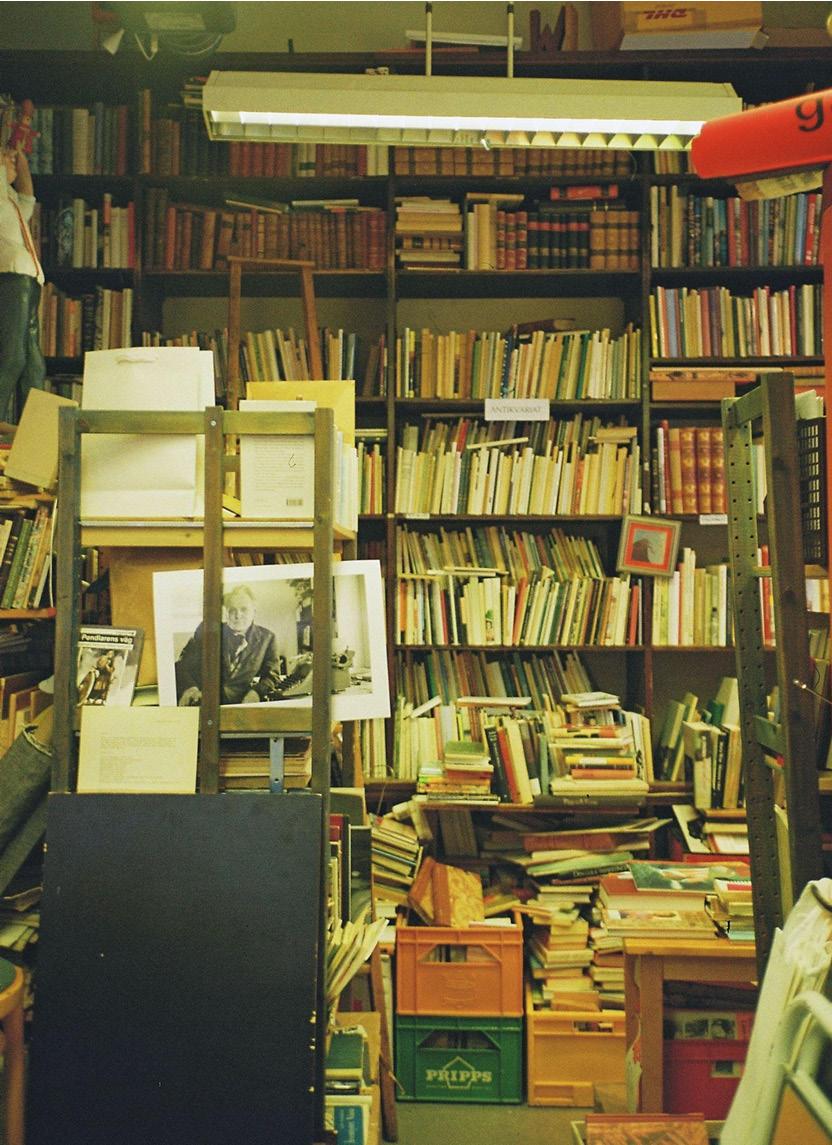
What Remains by Bella Brooks
VONA GROARKE
Telling Detail by Vona Groarke
Think of this poem (if you think of this poem) as
a Tessina camera in one cigarette in a box of Parliaments;
a Minox seamed in a thin, red tie peeping through one polka dot;
a Beaulieu R16 pressed up against a 1mm pinhole in the bathroom grout;
an F-21 behind an ordinary button on an ordinary-looking coat;
a Totschka in the base of a watering can you can half-fill with water, to look real;
an Exakta 500 in a tree trunk, bird-house, thermos, wristwatch, briefcase, sugar cube, table leg, door-handle, wall-plug, fountain pen;
a Robot Star 50 in a black clutch bag you press with your elbow
to trigger the spring to record the proof, to bag the evidence.
The
Scent Archive by Vona Groarke
If I tell you that in East Germany the Stasi had interrogees sit on squares of cloth to be labelled, stashed, and presented to the noses of bloodhounds specifically trained to sniff out these malcontents / deviants on future marches or demonstrations would that make you question perhaps the page in your hand right now?
BHANU KAPIL
Hallucinating Childhood by
Bhanu Kapil
Excerpted from Incubation: A Space for Monsters published by Prototype Press
1 ‘A monster hallucinates; a cyborg has a more sexual agenda. It is sexual to mate with surfaces. It is sexual to write in the café like an émigré.’ Oh, shut your face. It is something else to gag. It is something else to leave in a bad, magical way. The removal of a person, abruptly, from a set of conditions, is complicated for the soul. Did you ever feel that? You, not Laloo. I am writing to you, a writer. As a child, in the space before writing, did you suffer when you went to other people’s houses? Did you feel their homes to be superior to your own with its backward-seeming margarines and vinegars for preserving then cooking vegetables and animals? Were you born a cyborg into a house of brutal monsters who bickered over everything from feeding schedules to sleeping ones? Or did you, as the years passed, have the growing sense that you were a citizen born to non-citizens, a category made of soap and glass? For example, could I ask if it ever seemed to you that, in the hospital, you had been taken from the wrong incubator by an exhausted, starving nurse twenty-one hours into a forty-eighthour shift? There is something about a monster that is formulated in these hours or days just after birth; a crossed or normal birth that, either way, is connected to a profound confusion deep in the routines of transference. The nurse transfers you from the arms of your birth parent to a basin to a kind of rectangular, high-wired dish. This is the incubator where hands in purple latex gloves massage you through a flexible, transparent wall, encouraging the circulation in your limbs. Gradually, you pink up, because all touch is good, even for Laloo, who went home with cyborgs. ‘Is Laloo a cyborg or is she a monster?’ Laloo means red. It is a Punjabi nickname of the sort given to children and abandoned, in most cases, when the child is grown, sprouting hair and dripping blood all over the white, 1970s shag carpeting which extends diabolically into the bathroom and even the kitchen.
2 Pre-life: a wavering image on the screen like a comma in the hospital. Cars extend that pre. A monster gets in the car in the parking lot then gets out to wait for the next one, breaking it down for herself. The human action. Like a sentence. Very bad. Like a girl, she is coming into feeling and so the numbness she has in cars is both an obstacle to love, whether that is the love of a person or of one’s country, and a boon. Like a coat. Here I am speaking of hitchhiking, which is the future. How a girl keeps going, far from buttered toast for breakfast and freezing rain lit from within by amber streetlights on winter mornings. That switching combination of indigo and yellow which she looks for wherever she goes. Asters and goldenrod along the highways of upstate New York. ‘Look it.’ Or what?
3 Like umbrellas with their alternating, elongated triangles of colour. ‘Here.’ Fatty handed me a hundred-dollar bill as Daddy and Robert were fussing with the truck, strapping my suitcase on the bed with orange cables. Slipped it out of her apron
with the sweetest smile I ever saw. I loved her. I loved them. Technically, at the age of twenty, I was not an adult female yet. Adults drink beer to excess, with lemon wedges in it. Robert was a bit boring, but I loved him too. Patsy Cline on the radio, which you never got in the pre-pre, which was England.
4 I am writing to you because it is private and separate, like thinking.
5 ‘Cyborgs are built for assimilation into households and factories.’ Am I boring you? Do you want some coffee? ‘You adapt to them and they learn how to ask questions, verifying your answers before responding further. In horror films, you can’t always tell if it is a cyborg or if it is a person, whereas monsters are always identifiable as such by their long black hair and multiple arms, retracted into the torso during lovemaking and hitchhiking, because even monsters fall in love, want to make a go of it. Endless reproduction is boring.’ The milk’s in the fridge. I wrote ten Laloos, then killed them down.
6 My friend, it’s 12:06 p.m. I have to stop writing now and go to work. Writing is thinking. I don’t like to think of you hitch- hiking because you are such a vulnerable figure in your Edwardian outfits. Please tell me my future. Your vulnerability as a writer makes you so open to astral images, the ones refracted from that other place. Reading palms or in your practice of hypnosis, an industry which supports your writing in an economic sense, do you ever frame these integrative images as destinies? I switch off when I hear the word destiny. Dear friend, where did I go? Where am I going? When you read my palm, it’s as if you are hypnotising my biology. Does a reader hypnotise a writer as much as the other way, the normal way, around? That is separate. Tell me. What made it possible for me to live in a township? Will I touch and be touched at the ten points of momentary clarity in the day, one for each waking hour, like the others in their housing units? These are questions I have had since childhood. ‘Shut your stupid face before I shut it for you.’
7 An image from childhood for Laloo: I see a body, outlined against the barracks, coming down towards the beach. Her gestures are slowed-down, full of streaming whites. With precision and infinite gentleness, she places a red tongue into the foam. Red kelp dried in the sun higher up on the beach. This is a tongue she is holding in her hands, separate from her mouth. A seal curves its neck to look at her and then stays, its dark head bobbing in place. They stare at each other in the moonlight, which is the pre-animal space with no technology as yet for communicating between worlds. No exchange of fluids or bodies at the centre of text. Nothing. No delicious hospital with its complex routines of health, of bringing people back from the edge of something.
8 A monster refuses her life and that is why I can only write to you. You were the one who said, on your last visit, over a plate of almond biscotti and Assam tea: ‘The more you refuse life, the more you write. This is writing.’ I tore that piece of paper and sellotaped it to my front door, next to the photograph of the woman streaming reds, the image of obeisance she offers to casual visitors.
9 Here in the childhood, at the limit of the house, what is she doing? I see her
stepping out of her body and I don’t like that at all. Her skin. Her skin was perfect and now it’s all stretched out. Silver marks on brown skin, like a pregnancy. I could not stop her from giving birth to herself if I tried. Sometimes she leaves and does not come back, slamming the door. Sometimes she conceals a pregnancy, though she’s nine years old. Sometimes she is real, and they take her to the hospital against her wishes when she complains of a terrible stomach-ache.
10 A monster refuses to wait for the midwife, the surgeon, her mother, interns, or the nurse, Fidelia, who has a needle and believes in Jesus with his company of angels. The needle is left, drooling, on the white sheet; the nurse returns with bandages to f ind an empty hospital bed, which she refills, in moments, with a brief eh to an orderly. I know what the nurse’s name is because she told me when she brought me some tea from the machine. Exhausted, I was waiting forever.
11 Here: ‘I came into the rushing softness intact. Then I was not what I was in those first broken days with their sorries. Sorry, sorry, sorry, sorry, sorry, please forgive me.’ You wrote those words to me a long time ago and I kept them as an emblem of someone’s effort to return to life regardless of their skills. I stuck them on the door. Those from you. You are my human contact. From the snowfields marked with copper circles, as seen from above: I write to you, a kind of discourse, in my notebook. Are you a woman? Were you a girl? I forgive you. Look, I am writing these notes to you on JetBlue, flying east over the heart of your country. If you are white, then were you pink, back then, in your childhood? Is pink a preliminary shade of red? Are you a red wife? I’m sorry. It doesn’t sound right. Please forgive me.
12 No. Progress the biology. What is a streaming girl? ‘A monster refuses childhood with its berries and goes.’ A go is what you have. In this scene, a childhood or Christmas scene with its reds and greens against a white background, the girl says no to the local festival. As the adults feast upon lavish displays of tandoori chicken and deep-fried bread, she slips out of the hall into the real England. There, though she is very young, nine maybe, or ten, already menstruating yet dressed in a sequined, little girl’s salwar- chemise, she gets in her dad’s Ford Cortina and pulls the clutch. T he car gags then coughs then goes. Because of the wet snow, nobody notices, not even the police, when she drives to the end of the street then takes a left. By the time she reaches Dover with its scone and jam emporiums and holding centres, complete with their certified interpreters, she’s exhausted. She’s no longer what a person could call a girl or even British. Mistakenly, she’s detained. ‘Cat got your tongue, love?’ After a few weeks, they ship her across the Channel on a train, which makes her panic, think about going home and say, ‘Sorry, I said I’m sorry, I’ll never do it again,’ but it’s too late. In this sense, in silence and a sort of intense confusion, she takes revenge upon the idea of childhood, with its inescapable structures and customs, and escapes.
13 I said: ‘What is a monster?’ You said: ‘Anybody different.’ I thought that was so amazing and I wrote it down in my notebook, in which I have been writing to you. Tearing out the pages as I go.
MERRILY HARPUR
April 2, 1948 - December 4, 2024
On Merrily's Life and Work by
James Harpur
Merrily and Trinity were made for each other. At college she fell under the spell of teachers such as Brendan Kennelly, David Norris and a very youthful Eiléan Ní Chuilleanáin. She remembered having a profound epiphany during a lecture by Brendan: sitting in a packed lecture theatre, she suddenly felt at one with herself and the universe, and at the same time had a flash of intuition that of all the hundred or more students in the theatre, Brendan was going to ask her the first question. Of course he looked up, scanned the rows of seats and duly picked her out. For her this was a confirmation that she was in the right place, at the right time, ready to transform. She sloughed off her mousey, timid, introverted teenage self and changed her style of dress and haircut: she made friends, got herself a boyfriend, drank and smoked for the first time; she became fully engaged in student and Dublin life. Almost too engaged — on one occasion she and three tipsy Trinity accomplices ‘borrowed’ an after-hours Dublin city bus and careened around the streets until the Guards intervened.
Merrily followed a grand Harpur tradition of causing mayhem at Trinity. Our uncle Douglas Harpur set off a flock of doves during a theology lecture in the 1930s; a little later our father Brian was sent down for having a woman in his room. When he claimed that it was only his cousin, no one was quite sure whether this made it better … or worse. After the bus incident Merrily began channeling her exuberance into Icarus instead, which she co-edited with her best friend, Margaret Hickey. The cartoons she illustrated it with were her first published work. And she caused a stir when she went to the Elizabethan Society Garden Party in 1968, wearing a stuffed hen as a hat, commemorated by a photo in the Irish Times the following day.
Merrily left Trinity in 1971 with the confidence and imagination she would utilise for the rest of her life. She returned to England and began working as a picture restorer in rural Herefordshire. However, after a few years her life changed radically when a London cartoon agent started touting her cartoons to Fleet Street. Before long, Punch magazine, the Guardian, Times and Telegraph were publishing her work.
Her cartoons were known for their spiky drawing style and satirical wit. In one Punch cartoon, a puzzled husband, just home from work, gazes at a note from his wife on the kitchen table, which says: ‘Your dinner is still in the realms of my imagination.’
Merrily bought a flat in London, held dinner parties, adopted a tortoise, and her fame and fortune accelerated; the London Times offered her a diary column; she appeared on BBC Radio 4’s Start the Week. She published books, including Unheard of Ambridge,
which featured the imagined lives of the non-speaking characters of the BBC radio soap The Archers. The world was Merrily’s oyster. Then, in 1987, at the height of her popularity, she gave it all up. She abandoned her London life, almost overnight, and reinvented herself. She migrated to Ireland and the remoteness of Toormore, near Schull, in West Cork. There, in a cottage by the sea, overlooking Roaringwater Bay, she carried on her cartoon work via a fax machine, earning just enough to give her time to indulge in her passions, especially Irish traditional music.
She became friends with members of the folk band, The Chieftains, especially Matt Molloy, the flute player, and wrote sleeve notes for his CDs. She even taught herself how to play the spoons to join in sessions. In fact it was Matt Molloy, a Roscommon man, who told her that if she really wanted to experience rural Ireland, then the place to go to would be his native county. So off she went and, within a fortnight, had bought an old cottage on the side of Sliabh Bawn mountain near Strokestown.
Reconfiguring the cottage in her own imagination, she built a large wooden art studio, that she ironically called the cricket pavilion. She kept peacocks and hens alongside her tortoise. She planted roses and hedges, and a druid’s grove of 12 oak trees, and made asparagus beds. Most impressively of all she planted a full-sized labyrinth, with a hazel tree at the centre, the tree of knowledge, a leaf from which you had to pluck to prove you had reached the centre. Local school kids still go to that maze for an annual outing.
She also began to involve herself in the local community, and became committed to raising the profile of Strokestown to slow the migration of its young folk to the big cities. She and a friend came up with the idea of a poetry festival, and the first of these duly took place in 1999. The festival reached its height in 2007 when Seamus Heaney himself came along and read from his latest book.
In 2003 Merrily decided to change her life yet again. It was as if her daimon had told her she had fulfilled her destiny in Roscommon and it was time to move on to enrich yet another community. She moved back to England, this time to rural Dorset and the village of Cattistock. There, drawn to the landscape of sweeping hills and lone trees, she was able to focus on her first love: painting. Before long she had galvanised the artists in the village to form what she cheekily called ‘Tate Cattistock’. In the meantime, she wrote books on Mystery Big Cats (about the sightings of big cats in England and Ireland); and she organised a ‘fox festival’ for the village. In her final years she joined the local church. She was a woman of faith and pestered the local vicar to use the beautiful King James version of the liturgy, and to light candles at certain services. She organised fundraisers for the church roof. In her funeral eulogy she was quoted as saying: ‘When people have children they hope to bring them up as best they can to ensure that they go through
life making the world a better place. But if you don't have any children it’s up to you to make the world a better place if you can.’
Trinity was the starting point for her to make the world a better place, and when I was the Writer-in-Residence here in 2023, one of her great pleasures was to hear my stories of her old college. She loved Trinity, and Trinity did her proud. And I like to think that she did Trinity proud as well. An early riser and enthusiast of life, Merrily was also pragmatic, wise, and kind (she devotedly looked after her ninety-year-old aunt, Daphne Harpur, in Schull). It was a terrible sadness when she passed away on 4 December, 2024. I had seen her a couple of weeks before, but had to return to Dublin. I told her not to die before I returned, otherwise, I said, ‘I’ll haunt you!’. She laughed at this, but she was true to her word: when I returned and went straight to her nursing home, I spent twenty minutes with her in silence, before she gently slipped away. To her younger brother, by nine years, Merrily was more than a sister – she was a wise spirit guide, enthusiastic, encouraging, and always seeing the possible in what seemed the impossible. Her whole way of life was creative and generous, and at times of missing her I remind myself that I was incredibly lucky: whereas some people got to meet her only for an hour or so, I had had more than 60 years of her loving kindness.
On Editing Icarus with Merrily by
Margaret Hickey
Was it during the Hilary term or the Trinity term that Merrily Harpur and I took on the joint editorship of Icarus? It’s hard to say, because in 1971 we were flighty and disorganised, and yet in love with poetry. In those years young people were experiencing an exhilarating surge of change, from the student rising in Paris to the Vietnam protests and the Woodstock festival across the Atlantic.
Merrily and I (each born in England, but with Irish fathers) had arrived in 1967 to read solo English – Language and Literature – and while, in our first term, we were studying Blake, Keats and Beowulf, that same year the Liverpool poets Adrian Henri, Brian Patten and Roger McGough were wowing our generation. Thom Gunn was a big influence, and Ted Hughes, greatly idolised, had just brought out Crow.
There had been a hiatus in bringing out the magazine in the previous year or so, because it was up to the editors to raise funds by getting advertisers to stump up and also by selling the magazine. But when she took on something, Merrily never flinched. Most of our sales were in Front Square, but we were so proud of our Icarus that we ventured into wild territory, to the UCD campus, where they had newly moved from Harcourt Street. The natives of the other university were friendly, I’m pleased to confirm. One of them took us to the pub and asked us what we were having. For a laugh, we said, ‘Two pints of Guinness, please. Each!’ And he obliged!
Working from our garden flat in Dartmouth Square, we gathered in poems from two revered members of the English Department – Brendan Kennelly and Eiléan Ní Chuilleanáin – and we giggled at juxtaposing the names Jonathan de Courcy Wheeler and Ted Gup in our contents list. Notable among the other contributors was the late Anthony Glavin, and Daniel Reardon, who gave us several poems featured in his first collection for the Gallery Press – In the Lion House. I’m still proud of the calibre of work showcased in that Issue 61.
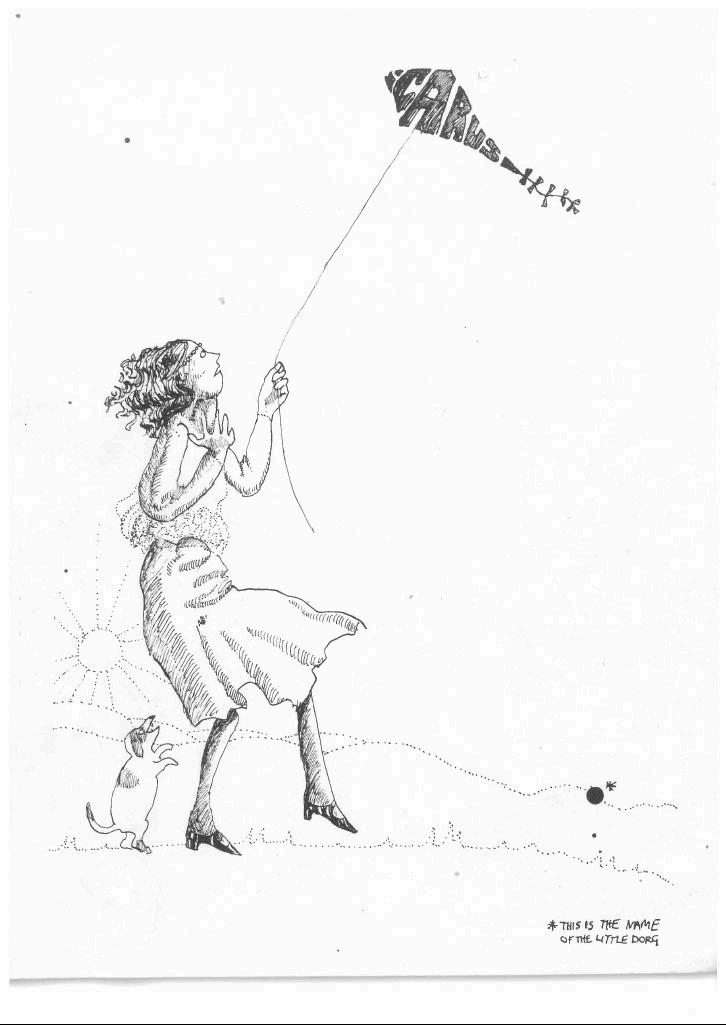
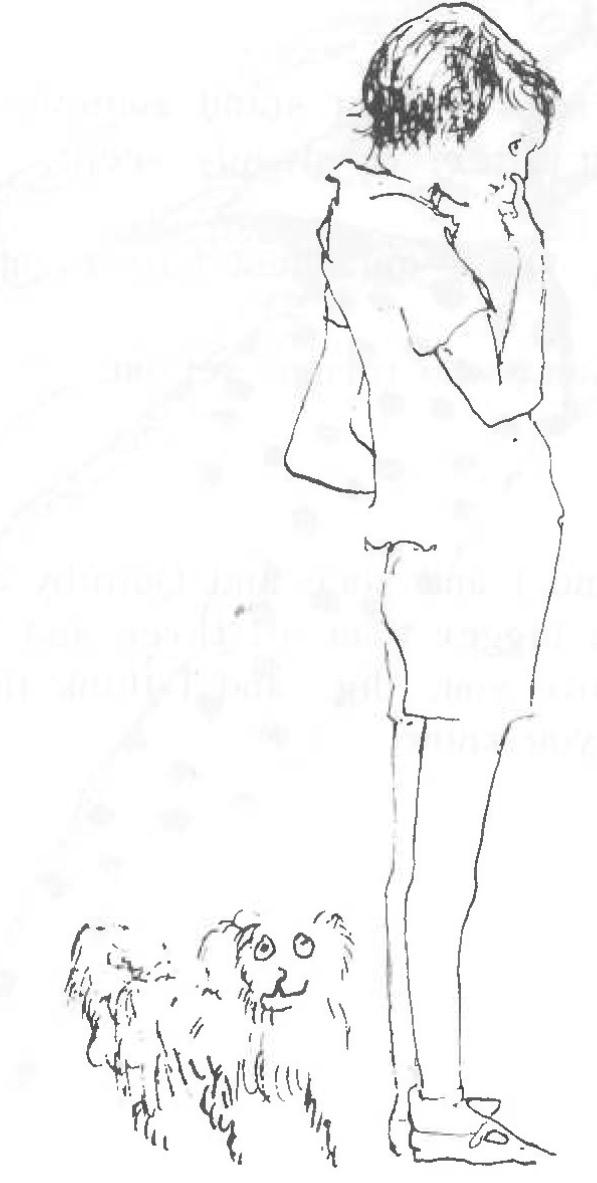
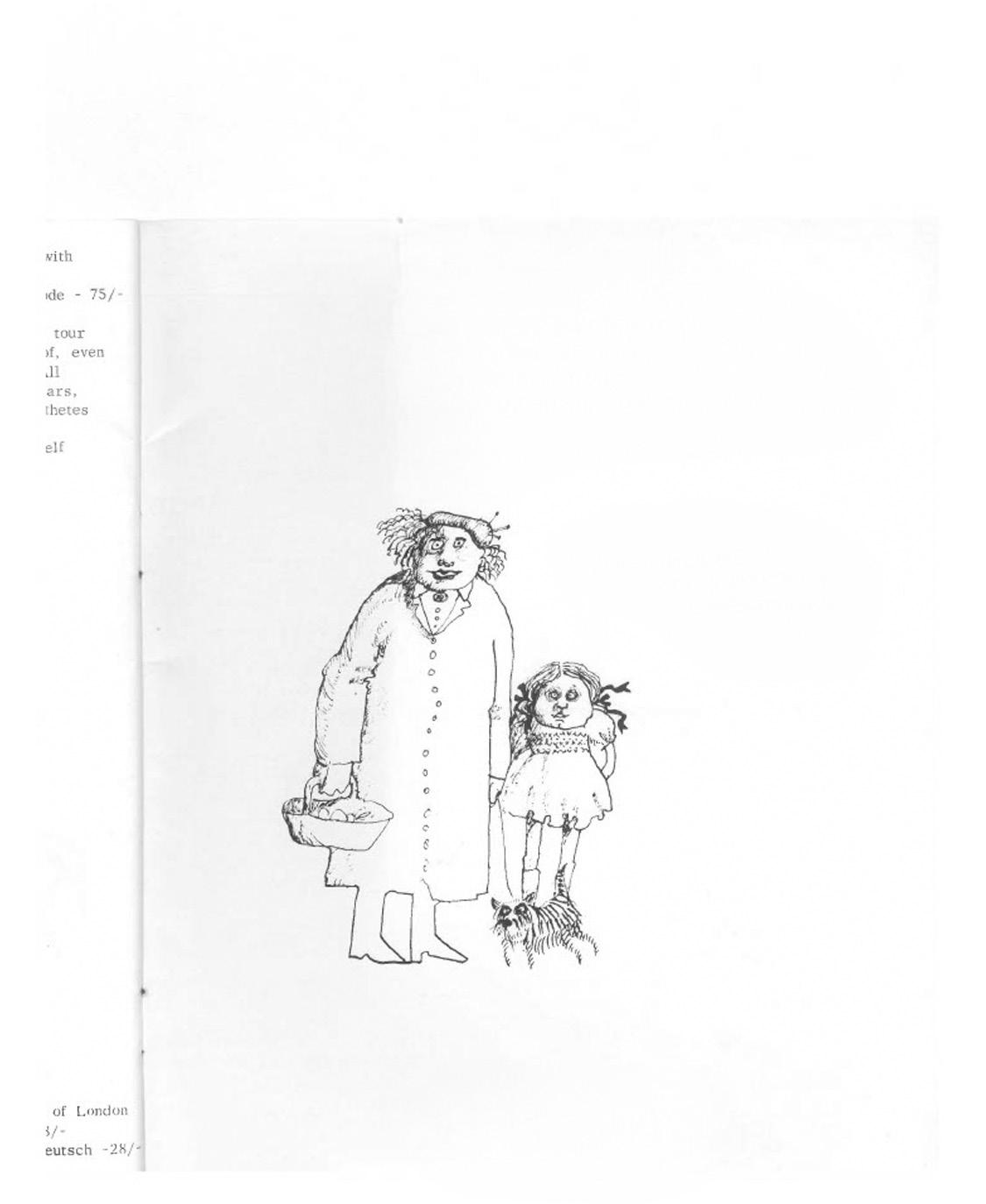
What makes this iteration of Icarus stand out above all others, though, are the illustrations that Merrily drew. Although she was a fine poet herself, she didn’t submit any verse, but her wit and whimsical humour jump out from the page. At the dining room table, she sat, and her imagination and hand worked in harmony. The image she drew for the Hodges Figgis advertisement is one they are mad not to use today. Likewise the illustration for Fred Hanna, where a mother out shopping and her rather sinister little girl both commend the literary feast you’ll find in the bookshop. And when her pen dropped an ink blot on the cover illustration, she just turned the mistake on its head and made a joke of it, by indicating it was the name of the little dog. Spot.
Yes, it was a manual typewriter we used. We were very low-tech. But that particular issue of Icarus is a joyful thing and I’m proud that it sold in large numbers to our fellow students, who would normally be concerned to spend on the essentials, such as drink.
We flew close to the sun, but somehow got back to earth without singeing our wings. Fifty-five years on, it’s as fresh as the day we launched it.
I’m very pleased to see that the current editors of Icarus are certainly keeping up the high standards we aimed for.
Silence by James Harpur
(4 December, 2024, for my sister Merrily)
You’d better stay alive till I return
In two weeks’ time. Or else I’ll haunt you! She laughed, re-shrinking to the bones
Her flesh had papered smooth.
The fortnight felt as long as summer: I watched the flicker of an eyelash, and dropped Sweet whisperings in her ear –
Impromptu babble, malaprop.
A change of rhythm, shortening breath, A gurgle, as from a sink – I called the nurse
Who looked at me, and nodded. Death
Was still unsayable; she took her pulse
Then left me – guardian of that gentle smile –
To place my hand above her wisps of hair
As if it were a baby’s fontanelle.
Lost for words I said the Lord’s Prayer
My breath increasing
As hers grew sparser, intervals
Of silence growing in between us.
Afterwards, for twenty minutes I beheld her corpse –
O little sea horse washed up on a sheet! –
The slits of whites of eyes – a glimpse
Of how life loses colour, irreverently.
A nurse dressed up in red to be an elf
(A different Christmas costume every day) –
Looked in and signalled ‘Tea?’, and went.
The silence hadn’t come: I had to wait
Next morning when I fetched her things,
The bed now smooth, neatly made. I packed her glasses, watch and ring And drove back through the rain
The wipers clearing tears at source
But not the thought that at the last
The only words are silence; and with that thought
The silence came to pass.
The Arrangement by
Merrily Harpur
This was the poem that won Merrily the K250 International Poetry Prize, which she received in Killarney in 2004.
It was new territory for me: fields without gates; grave slabs of turloughs coming and going; nothing fixed but your steadying grip as I climbed the slates and stones
to view your father's and his neighbours' farms, boned with walls. Silence but the calls of sheep strewn like erratics. The limestone skulls flinched
beneath my weight - the wall spoke, cleared its throat in clucks and clicks that passed from joint to joint like a long generation of doubtful aunts.
We neither spoke nor unclenched our hands. Moved by our affinity I stood stock still until the new arrangement had been understood.
You showed me the way in to that country, how to unfold each ingress like a trousseau, re-dress the wall the other side.
I learned the fragility of boundaries; no stone too big to lift, none too light to stand; I skimmed the abacus of pebbles for infill, labouring
to conjugate walls to sieve but not deny the wind, to make a mosaic of shadows, windows for wrens, to tell cobble from rubble with a collector's eye,
to detail the stonecrops and trefoils; to know the jam and flow of seasonal enclosures; and in autumn a dazzle of understanding, as meadows revert to mirrors.
I found out how congruence might endure a lifetime and grow as close as alternating knuckles, as easily re-built; cloistering lambs, disestablishing gales.
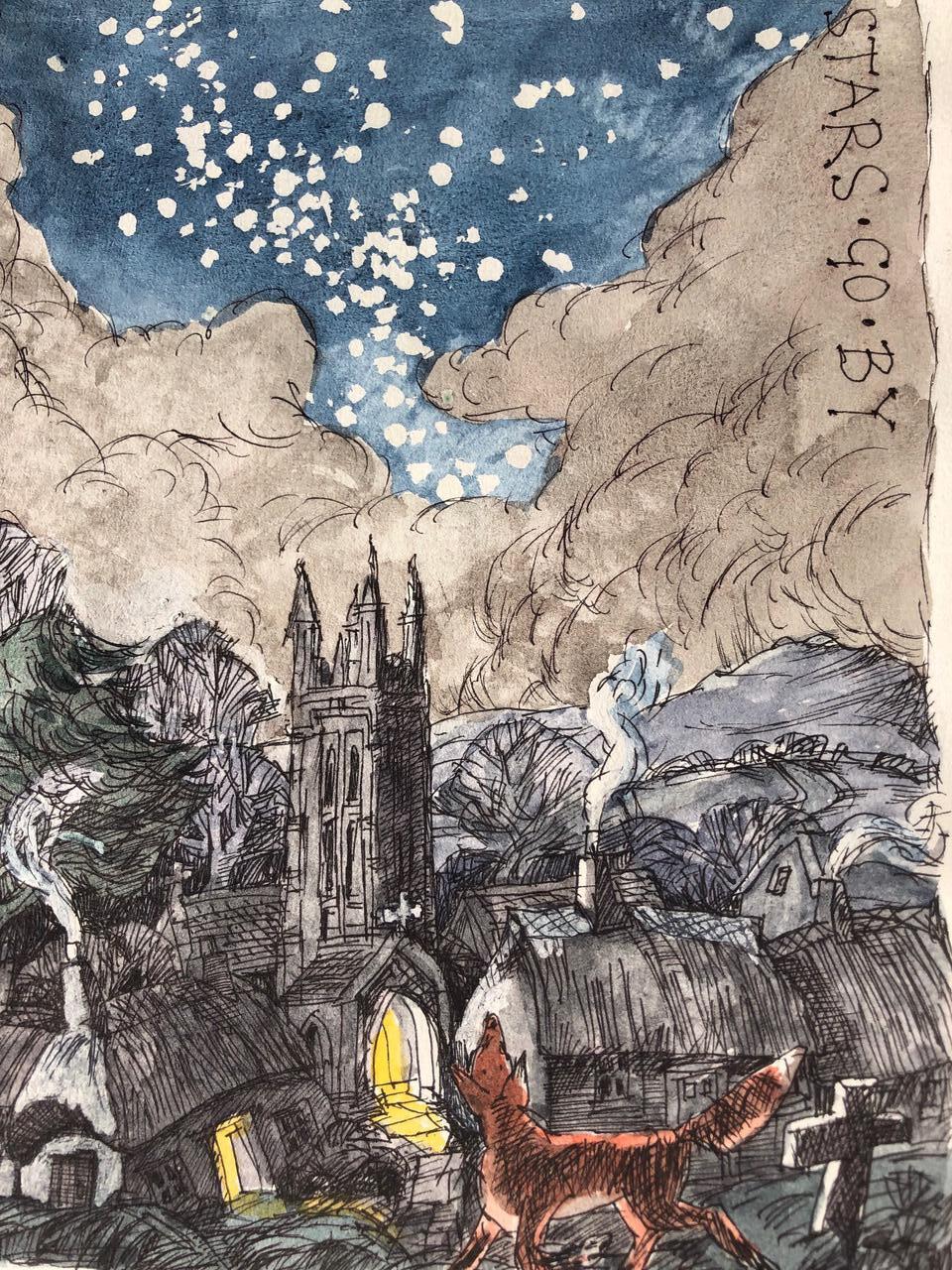
Christmas Card Illustration by Merrily Harpur
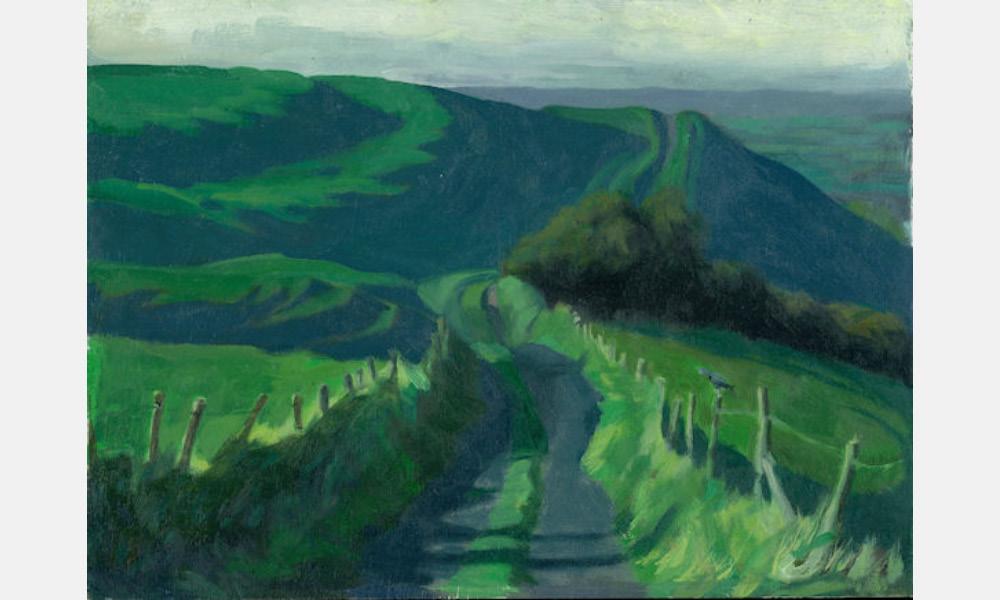
Fields in Dorset by Merrily Harpur
CONTRIBUTORS
FERN ABRAMSON-SLATER had a dream in which she flew last night. She has two rabbits.
NOA ASKAT is always trying.
JACK BRIODY owes a lot to Nasa Hadizadeh.
BELLA BROOKS wouldn't trade one stupid decision for another five years of life.
ÉABHA CALNAN would like to speak to a poet, please.
NIAMH COADY loves Ireland and her friend Eileen.
ELI COTAN is believed by many to have been an alien.
ESME DUNNE is not as dark & twisted as you might imagine from reading her fairy tale. She loves ravioli & dreams of sleeping in a really soft bed in the middle of the forest (she's a taurus).
MAXIMILLIAN EVANS-SCHMID once frequented the IFI. He misses their 5 euro under-25 tickets dearly.
MATTHEW FLANAGAN has plucked a morning sunbeam from the mist, folded it into a pinwheel and presented it to the swan as a peace offering.
ELLA FLYNN left then, with a dream and no map. She never stopped thinking about any of it.
MATHILDA GROSS was named on a cemetery and goes through lip balm too fast.
CLAIRE HESKETT will be remembered for (REDACTED).
RENZ IURINO is a 3rd year visiting student from Tucson, Arizona.
HENRY JAMES was last seen developing film in the darkroom at Trinity. If his house caught on fire, he always said he would grab his negatives first.
CONTRIBUTORS
GAVIN JENNINGS is yet to have some crispy realisation.
MAGGIE KELLY had frequent breakdowns and poor relationships—but at least used that as material for paintings and drive to be an academic weapon. Screw you anyone who's done me wrong. Thanks for the motivation!
YIXIAO KONG believes that if life had subtitles, it would be much easier to understand.
MARK LAWLOR is alive.
If you have to call FLORA LEASK ARIZPE, do it twice.
CAT LEE used to be knowing. Now she knows.
MASHA LYUTOVA avoids her crush. The man in her head is so much better than the one in the room, and she sees no reason to ruin it.
JESSICA MAGEE has had cold feet the entirety of her life.
NIAMH O'FARRELL-TYLER is a writer, actor, and theatre-maker. Most pressingly they are a semi-professional dyke.
ELISABETTA PANZERA is remembered for her well-meaning yet unpleasant character.
KATE REDMOND is perpetually in motion.
EMMA SUNNYDUCK perpetually eulogised herself online in case her life became of interest. It's only a matter of time.
SELIM ÜN notices things he probably shouldn’t. He keeps them anyway. This was a mistake.
LOUISE VAN OEL leaves behind a loving family, a childhood rock collection, and a mysterious puff of glitter still blowing on the wind somewhere through the gusty streets of Dublin.
ALICE WEATHERLEY sincerely hopes Middlesbrough have been promoted to the Premier League by the time this issue is out.
FEATURED WRITERS & ARTIST
This issue is dedicated to MERRILY HARPUR who was, and is now … everpresent at all Icarus launches – past, present and future. Merrily created this issue’s cover and other artwork interspersed throughout.
JAMES HARPUR’s books are widely unavailable at all good bookshops.
MARGARET HICKEY can sing My Darling Clementine in Latin.
Despite fifteen books and being Ireland Professor of Poetry, VONA GROARKE’s two favourite words remain 'Final Reductions'.
BHANU KAPIL eats crisps in bed.
EDITORS
GWENHWYFAR FERCH RHYS will return one day, in the hour of Icarus magazine’s greatest need. Await the heralding of her messianic return @gwen.fr_writes.
EILEEN GRANT has been quoted as saying: “Maybe the real Icarus was the friends we made along the way.”
DESIGN EDITOR
ANTONIA DIAS is so glad you asked.