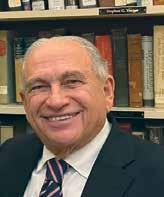
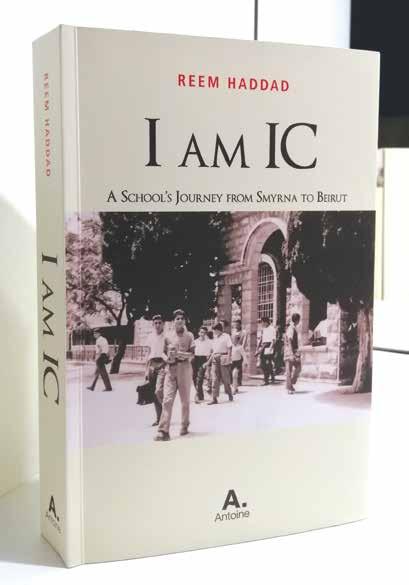
IMAD TAHER: 37 Years on the Board, Mission Accomplished
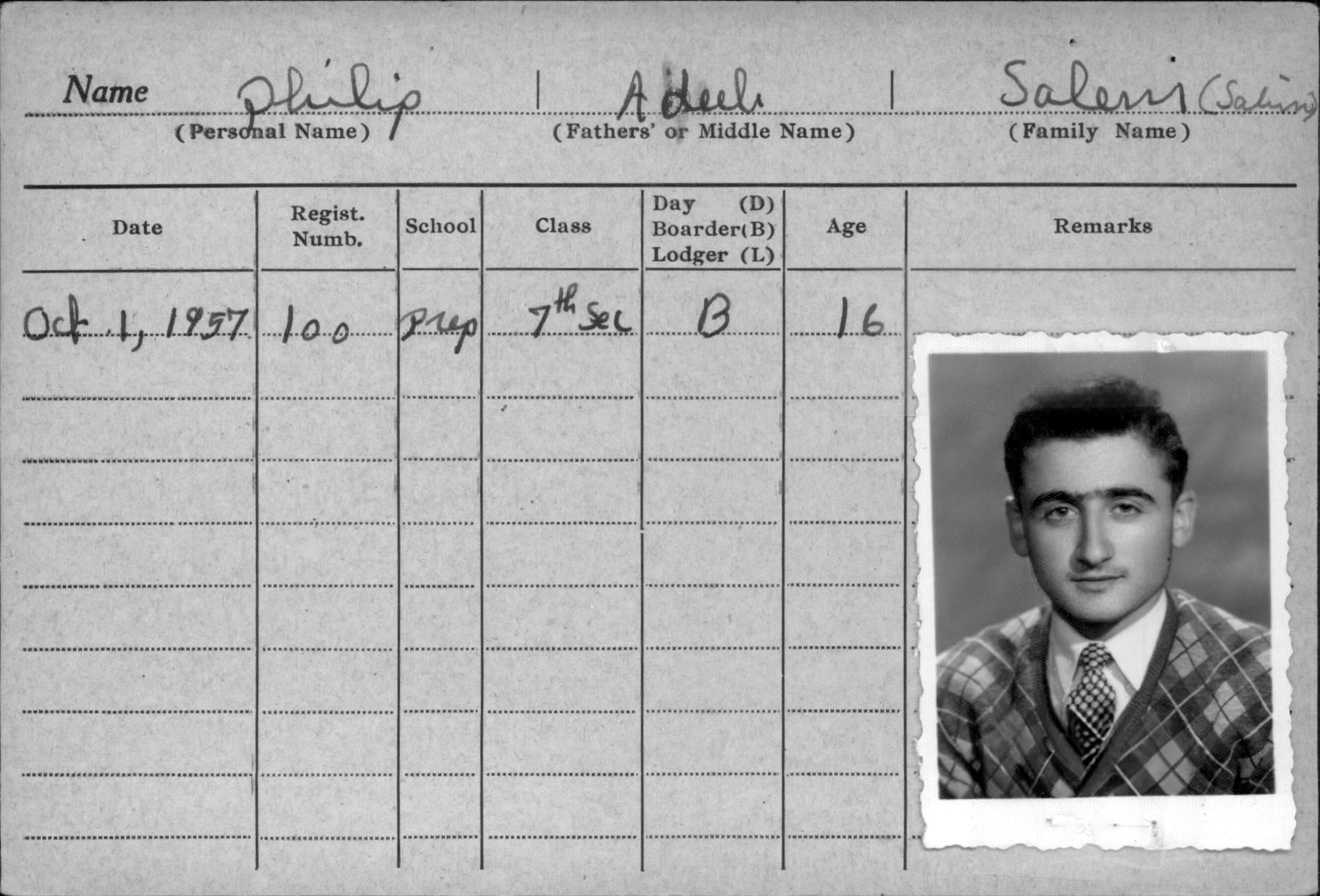
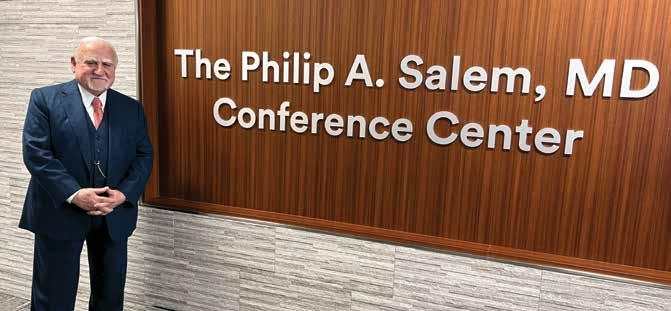
HEALING WITH HEART: The Life and Legacy of Dr. Philip A. Salem
IC ALUMNI MAGAZINE
Message from the President
Message from the Vice President for Major Gifts and Interim Director of Alumni & Advancement
When Everything Changed: The First Days of War
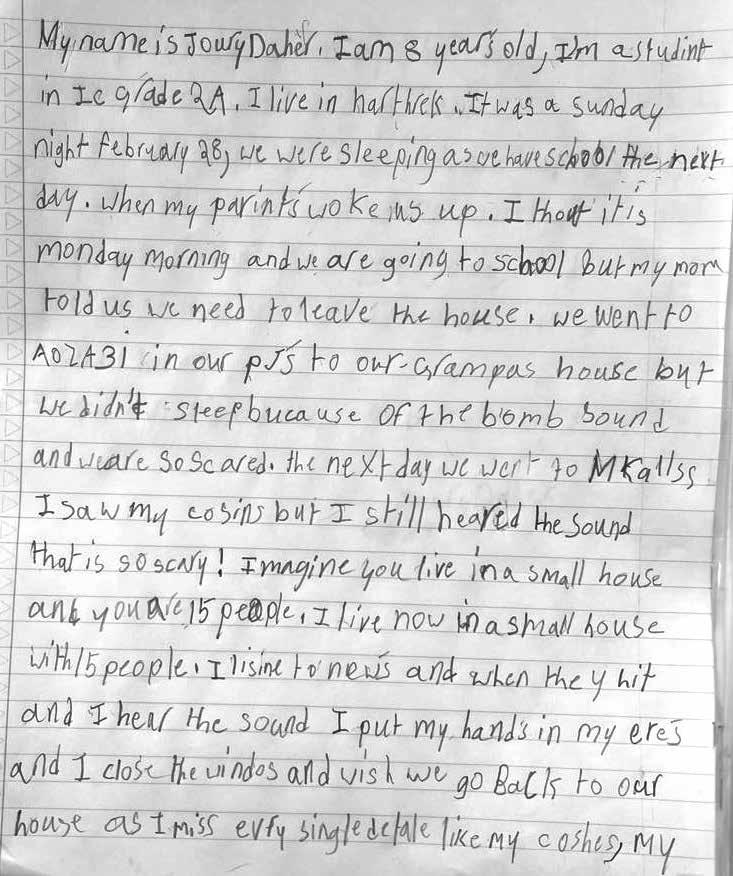
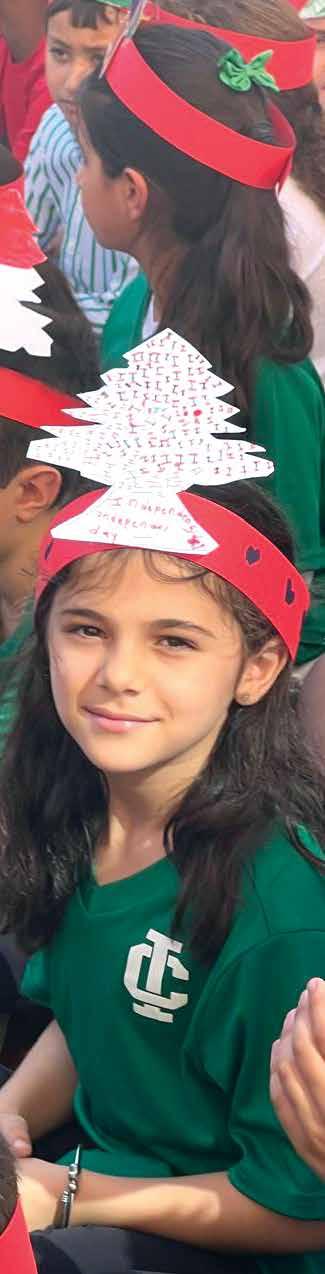
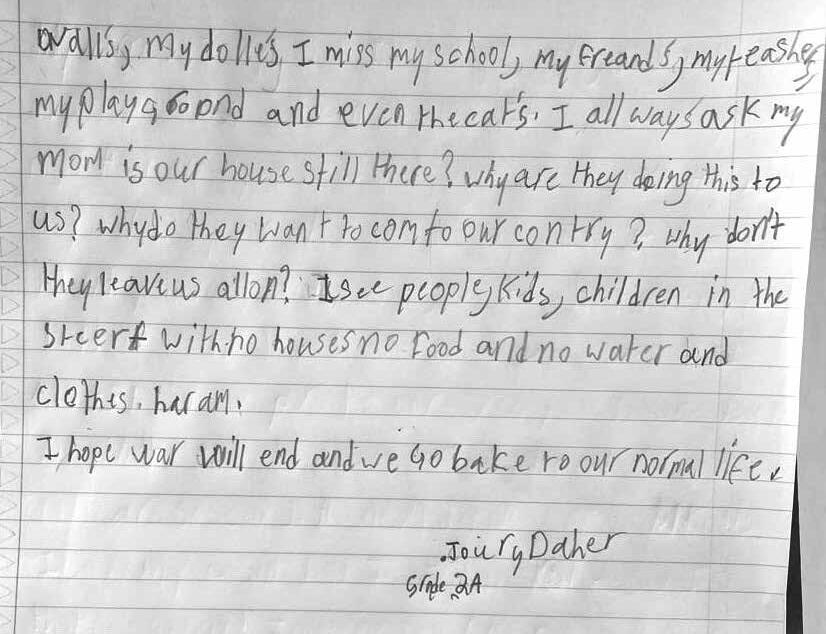
The Day We Left Home by Joury Daher, grade 2A
And So They Stayed: IC Expats Amid Conflict
Supporting Communities Through Service, Education, and Solidarity
AGC Peer-to-Peer Tutoring: Teaching Through War
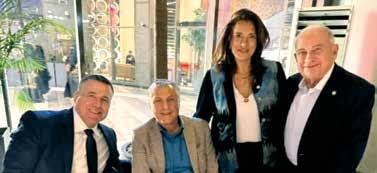
Imad Taher:
37 Years on the Board, Mission Accomplished
EDITOR/WRITER: Reem Haddad | LAYOUT: Tala Tabbara
PHOTOS: Mazen Al Sabbagh
COVER PHOTO CREDIT: Diego Ibarra Sanchez
Board of Trustees
Donald J. Selinger, Chairman
Imad Taher, Vice Chairman
Frederik O. Crawford, Treasurer
Bayard Dodge, Secretary
Gerrit Keator, Assistant Secretary
Selim A. Bassoul
Wael O. Bayazid ‘70
Patrick Chalhoub ’75
Healing With Heart: The Life and Legacy of Dr. Philip A. Salem
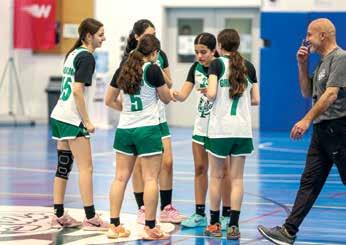
Alo, Pilates, Matcha
IC WHISH FITNESS CENTER
Power. Performance. Possibility.
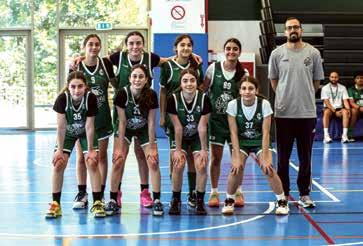
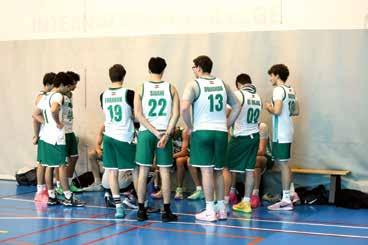
Athletics season 3!
Dinners & Events
Alumni Updates
In Memoriam
Walid Daouk ‘76
T.M. (Mac) Deford
Dr. Samer Doughan ‘83 (Ex-Officio)
Amal A. Ghandour
Melissa Gordon
Marylana Saadeh Helou ‘04
John Khabbaz
Marwan A. Marshi ‘79
Dr. Safwan Masri
John G. McCarthy, Jr.
Christopher McGrath
Maher Mikati ’98
Mirna B. Noujaim
Mouhamad Rabah Ian Reed
Matthew A. Reynolds
Mutaz Sawaf ‘69
Talal K. Shair ‘83
Dr. Rabih Shibli
Maya Tohme (Nassar)
Message from the President
As I reflect on another successful academic year, I would like to thank our students, faculty, staff, parents, trustees, and alumni for their trust and unwaveing support. Despite the challenges we faced, including periods of uncertainty and temporary school closures, the IC community remained united, demonstrating the strength and spirit that define the College.
At IC, we remain committed to providing an educational experience that extends beyond academics. Guided by our EPIC Goals - Excel Academically, Promote Wellbeing, Inspire Service Learning, and Champion Leadershipwe strive to nurture students who are curious and compassionate to make impactful contributions to their community and the world.
This year brought many accomplishments. Our continued partnerships with leading educational organizations strengthened both teaching and student wellbeing. Students thrived through rigorous academics, service-learning opportunities, exceptional extracurricular and athletic programs continue to strengthen leadership and personal growth.
We also continue to invest in our campuses, with significant enhancements to our Ain Aar
and Ras Beirut facilities, creating modern and inspiring spaces where students can learn, collaborate, and lead.
Our 2025–2026 theme, Unlock Your Potential , was reflected in the remarkable achievements of our students and the dedication of our faculty and staff, who worked each day to help every learner discover and develop their unique gifts.
As we look ahead, our 2026–2027 theme, From Potential to Performance , builds upon that foundation and challenges us to take the next step. Together, we will continue to cultivate a culture of excellence where every member of the IC community is empowered not only to reach their potential, but to demonstrate it each and every day.
To our alumni, thank you for remaining an integral part of the IC family. Your continued engagement and support inspire our students and strengthen the legacy of IC.
I look forward to staying connected as we continue to build on IC’s tradition of excellence for generations to come.
Sincerely, Tobin I. Wait President
Trustees Emeriti
Makram N. Alamuddin ‘61
Anwar Al Mulla ‘63
Mohamad S. H. Al Soleiman ‘59
Khalid Al-Turki ‘61
Mona Bawarshi ‘67
Said S. Darwazah ‘76
Peter H. Gerard
Anthony Jones
Aida Reed (Luce)
William H. Turner
Richard Ward
Administration
Tobin Wait – President
Moufid Beydoun ’64 - Vice President for Major Gifts, Interim Director Alumni and Advancement
Talal Jundi ’86 - Vice President and Chief Financial Officer
Michael Murphy - Vice President for Administrative Services
Dr. Mahmud Shihab - Vice President for Educational Services
Hanan Loulou Ouri - Chief of Staff
School Leadership
Zeina Abou Khalil Achkar - Principal, Early Childhood and Elementary School Ain Aar
Maya Chebaro ’05 - Principal, Middle School Ras Beirut
Dr. Michael Caleb Earnest - Principal, High School
Kathleen Khayatt - Principal, Elementary School Ras Beirut
Lara Kmeid Al Alam - Principal, Middle School Ain Aar
Dr. Ghada Madhoun Yafi Sabeh ’97 - Principal, Early Childhood Ras Beirut
Message from the Vice President for Major Gifts and Interim Director of Alumni & Advancement
IC continues to move forward throughout this unstable period. We shifted to online learning when necessary, and returned to face-to-face teaching whenever possible. Despite the challenges, IC maintains continuity for our students, and each time we reopened, students returned to campus and resumed their studies with a sense of stability. We also observed that other schools began adopting similar approaches as they evaluated their own return to in-person learning.
In January, we held reunions in Jeddah and Riyadh. This was followed by a visit to Dubai. These meetings brought together alumni and friends and reflected the strength of the school’s wider community and its continuing connections across the region.
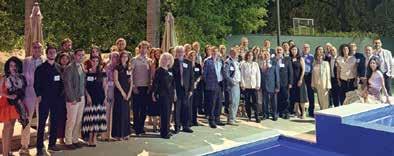
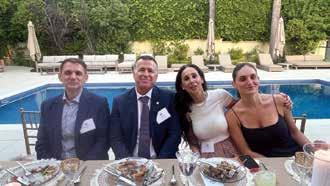
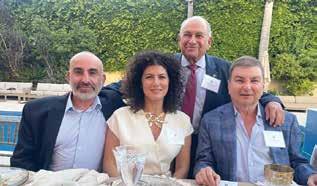
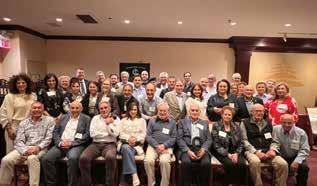
Any concerns that war might disrupt the planned trips later in the year were quickly dispelled when we continued with a full series of gatherings across several cities in the United States, including Miami, Los Angeles, the Bay Area (San Francisco), New York, and Washington, DC.
At each location, IC President Tobin Wait and I were met with genuine warmth and generosity, which left a strong impression on us. It was especially meaningful to reconnect with so many members of the IC community, and to hear directly about their continued connection to the school. Many of you took the time to attend these events, take part in conversations about IC’s progress and future direction, and share your perspectives on the qualities of its students. These gatherings were not limited to formal events; many naturally extended into personal meetings and visits that further strengthened these ties.
Throughout these visits, it was clear how strong the IC network remains, and how deeply people continue to care about supporting the school’s mission, even in a year marked by uncertainty.
We remain deeply grateful for the continued support that allows us to maintain a high standard of education during this difficult and volatile period. Thanks to your support, we reached our year-end financial target. As always, contributions support financial aid, scholarships, and improvements to school facilities, all of which are essential to our work.
On behalf of the Board, administration, faculty, staff, and students, I sincerely thank you.
Best regards, Moufid Beydoun ‘64
WHEN EVERYTHING CHANGED: THE FIRST DAYS OF WAR
This record of the first weeks of the 2026 war was written to preserve what cannot be captured by headlines or statistics. Beyond numbers and dates are people making real-time decisions, carrying responsibility, uncertainty, and fear while trying to hold daily life together and keep IC going.
It brings together personal stories from our personnel offering insight into their lives and emotional experiences during this time. It is not a political account or a complete history, but a reflection of the choices and strains involved in maintaining learning and continuity through instability.
This is not IC’s first crisis. From its early days in Turkey to Beirut, it has endured the 1922 Smyrna fire, World War I, World War II, the Lebanese Civil War, multiple Israeli wars, COVID, financial crises, and more.
It has survived for one reason: a dedicated board of trustees, the administration, faculty, and staff who kept coming to work and refused to let the school go.
At its core, this is a story of endurance, of people as much as an institution.
This chronicle is dedicated to all those who kept IC’s doors open and continued working despite the war.
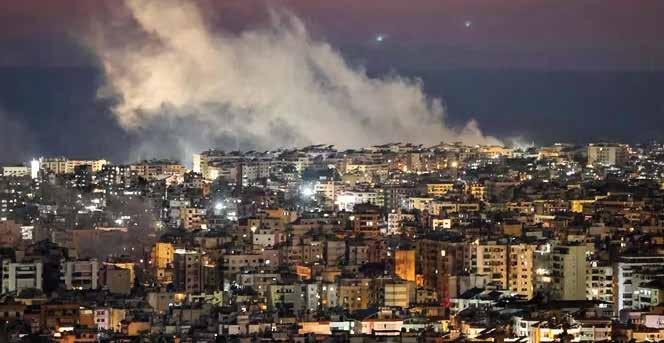
Israel launched airstrikes across Dahieh, South Lebanon, and the Bekaa Valley, following retaliation linked to the killing of Iranian Supreme Leader Ayatollah Khamenei. Evacuation orders for 50 southern villages triggered mass displacement, with families fleeing in cars and on foot through gridlocked roads. Many sought shelter in schools, mosques, parking garages, and along Beirut’s coastline. Monday, March 2, 2026, 2:30 am.
TOBIN WAIT
IC President, Ras Beirut
Tobin Wait grabbed his phone. Not again, he thought. It buzzed and dinged nonstop as he tried to reach principals and coordinate across the school. Information moved fast, from one call to the next.
Do they open today? Stay closed? Move online? Cancel altogether? The questions came one after another, with no space between them.
Three thousand people were on campus on any given day. Students, teachers, staff. In the mornings and afternoons, even more. Parents arriving, drivers at the gates. Constant movement, constant exposure.
Then Lebanon, 2024. Wait had barely arrived when the
attacks began. No experience of war, but no choice. People looked to him, and he had to act.
He stayed steady and led the school through it. It ended. Or so it seemed.
He returned to the calls. He had learned not to drift. The moment focus slipped, decisions slowed. Here, that was not an option.
He needed a clear mind.
Yes, he consulted colleagues and officials who knew more about war than he did. But in the end, the responsibility sat with him.
The lives of IC staff, students, and faculty depended on his decisions.
STEPHANIE WAIT, Well Being Coordinator, Ras Beirut
Stephanie Wait woke to explosions, close and unfamiliar, enough to pull her from sleep. “What was that?” she whispered.
For a moment, she tried to make sense of it. Sleep blurred into uncertainty. Then the phone started going off.
It was around one or two in the morning. Her
mind reached for something ordinary, almost absurd.
Her husband was already on his phone. Calls kept coming. Something had happened. The night was no longer quiet. She stayed awake, tense, as the hours passed without sleep.
TALAL JUNDI, Vice President and Chief Financial Officer, Mazraa
Talal Jundi woke with a start. What is happening? His family was visibly shaken. He had long learned to control his emotions. Calm and disciplined, he did not let fear take hold.
His thinking shifted. Is this short-term or longterm? How close to Beirut will it get?
HANAN LOULOU OURI, Chief of Staff, Raouche
Hanan heard them too. “Here we go again,” she thought, dejected. “Another war. Another wave of destruction.”
Thousands would be displaced, killed, or left in constant fear. Life would be put on pause once again.
Her mind, which had been focused on the
A few hours later, he went to school as usual. As part of the leadership team, he had to assess the situation and decide what came next.
As an accountant, his mind worked in clear steps. Absorb the shock. Understand what happened. What is the contingency plan? What comes next? Every decision was measured. Panic had no place.
school’s plans just a day earlier, suddenly went blank. There was no way to know how events would unfold or what might come next.
MOUFID BEYDOUN
Vice President for Major Gifts, Interim Director Alumni and Advancement, Dubai/Ain El Tineh
It was unreal. Moufid Beydoun had just arrived in Dubai on the morning of February 28 for an IC Suhoor reunion to be held that week and to visit with his daughter.
As soon as he landed, his daughter’s message appeared on the phone: The United States and Israel launched a massive joint military operation targeting Iran. Dubai has just been hit. War had started.
The airport was silent. His flight had been the last to land before closure.
That night, a rocket fell near his daughter’s home. She and her children rushed to the garage and stayed until morning. Beydoun moved among them, calming them. The planned fundraising event had to canceled. The days in Dubai passed in tension, broken only by brief donor meetings.
Beydoun sighed. An IC graduate of 1964, he had lived through this before.
In 1958, civil war broke out. US Marines landed in Lebanon. The crisis ended with a settlement.
In 1967, the Six-Day War. Lebanon was not directly affected but everyone painted their windows blue. Early reports of victory quickly gave way to defeat. In 1968, he left for Columbia University as Beirut entered a period of growth. And later returned in 1973.
In 1975, civil war erupted. A year later, he moved his business to New York and returned in 1981.
In 1982, Israeli forces invaded Beirut as the city was engulfed in fighting.
In 1990, the war ended, but its consequences lingered. He started with IC in 2003 and lived through 2006 and 2024 wars.
What would the 2026 war bring?
MIRA EL ROZ, Ras Beirut Early Childhood Arabic Teacher, Jnah
Like everyone else, El Roz, her husband, and her son jumped at the sound of explosions. “It’s the Dahieh,” El Roz thought. “Not here in Jnah.”
The three gathered in front of the television. Her two sons, studying in the US, stayed on the phone with them.
The noise from nearby Dahieh grew louder. Her husband grew increasingly worried. He owns four schools in the area, four schools that had shut down the previous year. They
had only just reopened. Income had just begun to return.
He looked at her. Should they leave?
But El Roz refused. Not again. Not this time. Leaving her home again felt impossible.
No. They stayed. IC sent out messages. No school today.
They remained in front of the television, trying to drown out the sound of war outside.
OMAR SHMAITILLY, Athletics Director, Ashrafieh
Omar Shmaitilly was the first to jump out of bed and rush to the balcony. From his Ashrafieh home, he could see smoke rising over parts of Dahieh.
He started calling colleagues. Is everyone ok?
He already knew there would be no school the
TIMA MRAD, Office and Logistics Manager, Dahieh
Tima Mrad drifted into sleep, grateful for a brief moment of rest after caring for her ailing elderly mother. Her sister was still awake. Her brother had already gone to bed. It was an ordinary night.
Then the strikes hit.
Loud and close, they shook the house and snapped her awake. It was not just the explosions, but the screaming in the building. Panic was already spreading.
“Get up, Tima. Get dressed. Quickly. Get Mom,” screamed her sister.
Mrad grabbed her clothes and ran to her mother’s room.
“Mama, get up. We are under attack,” she cried.
“No,” her mother said.
“Mama, please. They’re bombing us. We have to leave.”
Another explosion hit, closer. Her mother, startled, sat up. Mrad wrapped a robe around her, grabbed her medicine bag, and guided her toward the elevator as the building trembled.
Outside, chaos. People fighting over the elevator, shouting, waiting. No time.
“Close it! I need to take my mother down!” Mrad shouted. The elevator arrived. She pushed her mother inside, knowing it was unsafe, but eight flights of stairs were impossible.
next day. Or the next. Any suspension of classes would also affect the Athletics program.
Shmaitilly sighed.
Not again.
Outside, strikes continued. Gunfire echoed. Neighbors flooded the streets. They reached the car, but the wheelchair would not fold. Mrad forced it in open and jumped into the car.
They could not move. Traffic had collapsed in every direction. They were trapped, exposed, with nowhere to go. Meanwhile, Mrad was on the phone with her family in Aitaroun, a borderline village in the south, urging them to leave immediately. Much of the village had been destroyed in 2024, yet some had stayed. Among them, her sisters and their families. “Leave!” yelled Mrad down the phone. “Leave!”
She turned her attention back to her efforts to get out of Dahieh. A five-minute drive took more than two hours. They eventually reached her brother’s home in Barbour. The area’s residents stopped them at the building’s entrance until her brother intervened.
It was now 4:30 am.
After settling her mother, Mrad turned to her family in Aitaroun, near the border. They had refused to leave at first. Then evacuation orders came. Panic followed.
A convoy of six cars, about thirty people, heading north.
MAHMUD SHIHAB, Vice President for Educational Services,
It was almost suhoor. Mahmud Shihab rose to prepare a small meal for himself and his fourteen-year-old son, Mohamad. Then explosions echoed through Hamra.
The teenager grabbed his phone, scrolling, searching, his face changing by the second. For a moment, Shihab just watched him. During the 2024 war, Mohamad had not cared about the news. Now he followed everything. My son has grown, suddenly Shihab realized. Shihab gently took the phone away. “Not now. We are safe. We wait for morning.”
Ras Beirut
The phone rang. It was Tobin Wait. Other principals were already on alert.
Messages flooded in. Zoom meetings stretched into the morning. Decisions came quickly. Open, close, or go online.
A week earlier, news of strikes in Iran had come. That week, he had his team check systems, review resources, and test readiness. Face-to-face learning remained the goal, but they had to be prepared.
We are ready, he thought.
But ready for what?
YEHYA SHREIM, Security Guard, Dahieh
Yehya Shreim was at home in Haret Hreik after iftar with his wife and two young daughters when news broke that Hizbullah had fired missiles at Israel.
“We need to leave now,” his wife said. “They will retaliate.”
Shreim shook his head. “No, they won’t.”
Shooting woke them a few hours later. His wife ran to the girls. Shreim gathered them and followed her downstairs. Outside, chaos. Neighbors fleeing, many still in pajamas. They got into the car and inched through traffic as explosions began.
Traffic was gridlocked, but they eventually made it out of Dahieh.
Where to go?
Up, he thought, and drove toward Baabda. After hours, they stopped near the Presidential Palace and sat in silence.
Two hours later, he drove again, down to the Corniche in Ain El Mreisseh, where hundreds had gathered.
They parked and waited.
The girls fell asleep. His wife followed.
Shreim stayed awake, watching the sun rise, not knowing where to go.
One struck just feet away. Shreim swerved, steady at the wheel. His family clung to each other in silence.
MARIAM ABOU DAHER, Secondary School Teacher, Dahieh
Mariam Abou Daher was shaken awake by her mother. She blinked, disoriented. They had only just gone back to bed after suhoor.
“They are bombing,” her mother cried. “We have to go.”
Explosions came, then gunfire. Abou Daher jumped up and followed her family outside. There was no time to change. They ran downstairs. Her IC bag was already by the door; she grabbed it and moved.
Outside, they split into two cars. Abou Daher drove one with her father and sister. Her mother drove the second with her brother and uncle.
The neighborhood had collapsed into chaos. People flooded the streets, screaming, banging on car windows, begging for rides. Motorcycles cut through the crowd. Vans moved inch by inch, overloaded.
Gunfire cracked overhead, forcing movement through the gridlock. No one knew where they were going, only that they had to leave.
“Take us with you,” people shouted through her window.
Both cars crawled forward, staying close. They were heading to the Chouf mountains, their summer house.
Then the network collapsed. Calls dropped. Her mother’s car vanished from view.
By the time Abou Daher reached the Chouf, she saw nothing behind her. Where was her mother?
Minutes passed. Then an hour. Panic gripped her. Finally, the car appeared.
“Thank God,” she thought, holding her mother tightly.
HIAM SOUFAN, Housekeeper, Dahieh
Hiam Soufan was jolted awake as her son ran into the room.
“The Israelis are attacking,” he shouted. Soufan jumped up, woke her husband, and ran to her daughter’s room. More strikes were coming. Panic had already spread through the building. People were screaming outside.
She grabbed a coat. Her daughter did the same. Her husband refused to move. Soufan gave up and turned to her children.
There was no time left. They ran downstairs. Her son was already dressed; she and her daughter were still in pajamas.
“Where do we go?” she shouted.
They had no car. The streets were already jammed with fleeing traffic. Strikes continued as people ran in all directions.
They pushed through the crowd and walked until they reached the Lebanese University campus. The gates
Tuesday, March 3
were open. They passed through into Hadath. “Now what?” Soufan asked.
A van passed, and they climbed in. Traffic was frozen. The driver took back roads through unfamiliar streets.
After half an hour, they were still in Dahieh.
“We are not getting anywhere,” she shouted. They got out and continued on foot, heading north. Streets were packed with fleeing families. Strikes echoed in the distance, but the panic did not stop. They had been walking for three hours.
Near City Center Mall, a taxi finally passed. She waved it down. It took them to her mother-in-law’s house in Ain el Mreisseh. It was 6 am.
Her husband was missing. Her calls went unanswered. Then finally, he called. He was safe, sheltering at ACS, where he worked as a guard.
Israeli airstrikes intensified across Beirut’s southern suburbs, southern Lebanon, and expanded to Sidon. Homes, infrastructure, and rescue centers were hit, killing at least 50 people and forcing mass displacement.
IC: Closed, along with all schools across Lebanon.
TIMA MRAD
Mrad was still on the phone with her family, tracking their convoy as it moved out of Aitaroun. Hours passed. Ten, maybe fifteen, maybe more.
They were stuck in traffic that barely moved. No bathrooms, no rest, no space. Just a line of cars inching forward, then stopping again.
After hours, they reached the Khaldeh highway. It had been 34 hours since they left. Where to next?
Mrad kept searching for shelter. Some places were too
expensive. Others refused to accept displaced families. Rejection followed rejection. Exhaustion set in. Eventually, three apartments were secured in the mountain areas. By the time her family arrived, they had been in the car for almost 40 hours.
Mrad gathered blankets, food, clothes, and heaters for the cold.
Only when they were safe and warm did she allow herself to rest.
Airstrikes hit vehicles near Beirut airport highway, killing three. Additional strikes targeted the southern suburbs. Israeli forces also advanced into several southern towns, including Kfar Kila, Houla, Kfar Shouba, Yaroun, and Khiam.
IC: Closed to face-to-face learning, shifted to synchronous online learning. Wednesday, March 4
Another day in the car, waiting, not knowing what would come next. Another night followed the same way. By then, schools had begun opening to the displaced. He looked at his daughters. They would not cope in a crowded setting. His eldest had severe ADHD, and his youngest was autistic. Both struggled with change and overstimulation. They needed somewhere quiet. But
where?
They moved from place to place, each time being turned away or priced out.
Finally, a hotel in Tabarja offered him a monthly rate. It was basic, with only a small gas stove for cooking.
From there began his daily commute to IC.
YEHYA SHREIM
Thursday, March 5
Israeli forces issued evacuation orders for southern Beirut before heavy airstrikes struck the capital’s outskirts. In Mashghara, four civilians, including two children, were killed during iftar. Ground forces expanded in southern Lebanon with armored deployments near the border and strikes in Marjayoun. Civilian casualties rose past 1,200.
TOBIN WAIT
Tobin Wait barely slept. Every sound, every detail, ran through his mind. It always came back to the same number: more than 3000 people entering IC’s gates. It was actually more. Nearly 3,700 students and 800 employees. When he calculated it fully, it was 4,600 people at any given time.
He carried that number with him. The weight of it, constant and unrelenting.
MOUFID BEYDOUN
A Middle East Airlines flight from Dubai finally opened, detouring through Cyprus, Egypt, Saudi Arabia, and Oman.
TALAL JUNDI
Just do it. Just adapt, he thought. It was a difficult call, but his view was simple: the school still had to function. Move forward, no matter what.
Sixteen years of civil war as an IC student had taught him that. There was no internet, no online learning. You came to class, or you did not learn. IC stayed open most of the time, even when he traveled from near the Green Line, where danger was constant, and missiles were unpredictable.
He still remembers nights of heavy fighting, studying by candlelight. Difficult years, but like many IC students then, he adapted.
MIRA EL ROZ
As she was teaching her online class, she felt a heavy weight on her chest. A painful one. Nothing she could do would lessen the pain. The Israeli military, via its Arabic-language spokesperson Avichay Adraee, issued an urgent evacuation order for the entirety of Beirut’s southern suburbs, including areas near Jnah. Evacuation warnings were in effect. Her sister and her family in the
He consulted widely before deciding. It wasn’t a vote. Ten said open, four said close. That didn’t decide anything. He wanted to understand: were families comfortable? Did they trust the school? Was there a plan?
He knew very well that whatever he decided affected them all. Tomorrow, the school would open or it would not. That was the call.
There was no softening it.
After hours on the tarmac, the plane took off. Five hours later, he landed in Beirut.
Now the principle remained the same. A crisis was a crisis. You dealt with it. The tools changed, but the mindset did not.
This time, though, it felt different. Larger than 2024, with no clear end in sight.
IC meant a great deal to him. He is not only the CFO, but also an alumnus and an IC parent. He has spent most of his life here.
It was never just a job.
building next door had left their home. Her neighbors had fled.
Finally, El Roz relented. The usually 10-minute ride to her mother’s house in Ras Nabaa, took three and a half hours. Early the next morning, she insisted on returning home. And they did.
Weekend escalation
Friday, March 6:
Airstrikes on Beirut’s southern suburbs and Tyre have killed at least 217 people and injured 798 since Monday, with major damage, displacement, and rising fears of a wider ground invasion.
March 7: Strikes intensified across Beirut and the south, with evacuation orders in Tyre and south of the Litani.
March 8: Heavy strikes continued, including in Beirut, as casualties rose and displacement increased.
March 9: Strikes continued across Dahieh, including targets linked to Hezbollah’s financial network. IC: Closed for Teacher’s Day.
March 10: Israeli strikes hit Beirut’s southern suburbs and southern Lebanon after evacuation warnings, with around 760,000 displaced since March 2. Strikes also hit Al-Qard al-Hasan sites, while Tyre suffered heavy damage under evacuation orders south of the Litani River.
IC: Open for face-to-face learning.
TOBIN WAIT
He had been on a Zoom call with a school head in the Gulf, in Saudi Arabia. The man said it casually, almost in passing, that they were at war.
Wait stopped him.
No. You are not at war.
A few missiles hitting your country is not the same thing. Do not confuse the two.
What Lebanon was living through was something else entirely. What their families were living through. Their teachers. Their staff.
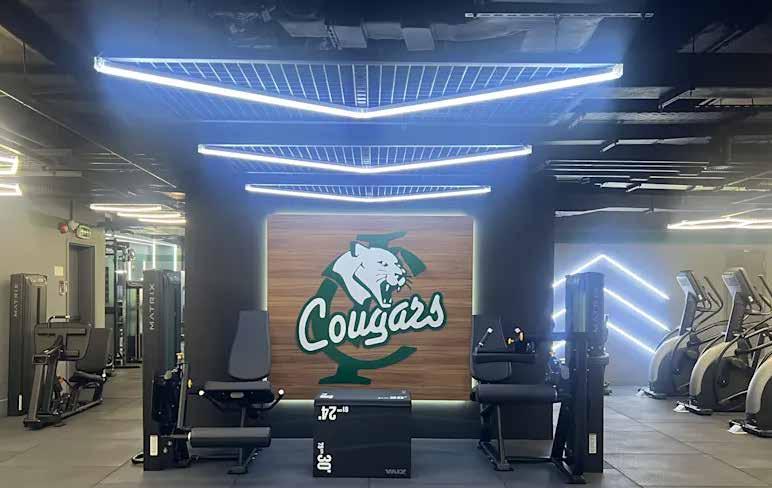
At least there was one small bright spot, the Fitness
MARIAM ABOU DAHER
Her iPad! Thank God she had grabbed her school bag by the door. At the time, she had no idea why she picked it up. There was nothing else really. Maybe she just felt she needed to take something. In hindsight, a set of clothes would have been useful before she ran out in her pyjamas and slippers.
Still, now she was grateful. She could continue her
Center. It was not just about exercise. It offered a brief escape from the pressure outside.
It had opened just in time. Students, faculty, and staff could step in, move, and for a short while feel a sense of control when everything else felt uncertain.
Completed only days before the war began, it was modern and well-equipped. Wait had also reserved specific hours for faculty and staff, while students used it during PE classes under supervision.
For him, it became something more than a facility. It was a space to reset, even briefly, amid uncertainty.
online classes. Her upper-level students needed to finish the math curriculum before the upcoming school and government exams.
There was no WiFi in her Chouf home. She fumbled with her phone and managed to create a hotspot for her iPad.
The lessons began. Five hours straight.
In the end, it felt like a welcome pause.
Israeli airstrikes hit central Beirut, including Aisha Bakkar and Ramlet al-Baida, and continued heavy bombardment of Dahieh, killing at least seven and injuring 21, while 64 were reported killed nationwide in a single day and displacement reached around 800,000 with families sheltering in schools, tents, and Camille Chamoun Sports City Stadium.
March 11
IC: Open for face-to-face learning.
TOBIN WAIT
By now, the message was clear. Do not go in. Stay off the roads.
He made the calls. People who understood movement and risk. He kept in touch with General Security, the US embassy, ACS, and various trusted sources, piecing together fragments that never formed a full picture.
Missiles no longer fell somewhere distant. They hit buildings,
neighborhoods, and apartments where IC families lived. He called affected families one by one. He had no answer for them. Just presence.
We are here. We will help. Whatever you need.
And still, it came back to the same thing. Uncertainty. That was what wore him down.
Nothing compared to war. Nothing.
TALAL JUNDI
Jundi entered Thomson Hall. His shoes echoed through the empty corridors. Only the business team and the president’s office on the top floor were occupied. War or no war, 800 families depended on his office. Not just for salaries, but for salaries on time. The pressure was constant: staff safety, cash flow, bills, and continuity. His team had always delivered. Through the 2019 Lebanese Revolution, the Port explosion, COVID, the 2024 war, and now again. They stayed late when needed, processing salaries even in dangerous conditions. Fear was not part
MARIAM ABOU DAHER
Abou Daher arrived at the Ras Beirut campus and finally exhaled after the hour-and-ten-minute drive. The road from the Chouf to Beirut had been hit at times, so she drove cautiously, keeping distance from other vehicles, especially vans and motorbikes. She glanced at her outfit. New again. She had to shop again. She had only just rebuilt her wardrobe after her building was destroyed in the 2024 war.
of the equation.
If the business office did not function, suppliers went unpaid, and IC would not receive fuel, water, or essentials. So they continued. So did he.
For him, it was all about planning. Nothing could be left to the last minute. Cash flow, tuition, schedules. Every contingency had to be considered.
It was never just about salaries. Salaries came at the end of a long chain. Each step before it mattered.
Only one room had remained then: her parents’ bedroom, seemingly hanging in midair. They had hired someone to retrieve a surviving suitcase with documents and money using a hoist.
It was luck. The rest of the home was gone. The strike had come on the last day of the war.
March 12
Israel launched coordinated strikes across central Beirut for the first time, hitting Bashoura and Zokak al-Blat, alongside heavy bombardment of Dahieh.. Evacuation orders pushed displacement north to the Zahrani River. IC: Closed to face-to-face and online learning.
TOBIN WAIT
Thinking back to when he applied for the job, it felt unreal now. Kuwait had been quiet and predictable. Lebanon had seemed calm, welcoming. No talk of war. Well, he thought, I am here. There are no coincidences. For him, coincidences did not exist. Everything had purpose, even if it was not yet clear.
STEPHANIE WAIT
The Wellbeing Center was on the verge of a grand opening. After nearly two years of work, Wait’s vision was finally complete. It should have been a moment of celebration, but instead it arrived quietly.
The center was created for students who felt overwhelmed and needed a place to step away, breathe, and reset. Wait had seen it everywhere: anxiety, distraction, loneliness in crowded rooms, students drifting through breaks. Teachers could not meet every need. Sometimes, a pause was enough.
Even we adults struggled to focus for long stretches. Students moved from one enclosed space to another, with no real place to release tension.
He believed he was meant to be here in a time like this, so people would know someone was present. He would only leave if the call came with a clear order: get your things, leave now. Until then, this was where he had to be.
The center offered soft seating, cushions, rocking chairs, swings, and small fidget items. Quiet music. Simple breathing exercises. Nothing complicated, just space to reset.
It was her pride and joy. The room had been transformed completely: cushions on the floor, low lighting, a soft green glow she called a healing light. Students gravitated to it. Teachers did too, though they rarely had time to stay. She knew it could do good. That was why she did this. But now, that purpose felt distant. Now it felt like something else entirely.
HANAN LOULOU OURI
Outside the president’s office, at her desk, Ouri feels it just as strongly. She is not the final decision-maker, but she has stood beside every IC president for 28 years, as eyes, ears, and first line of support.
Recently appointed Chief of Staff, she works with senior leadership, coordinates principals and vice-principals, and liaises with trustees to ensure decisions are carried out
MAHMUD SHIHAB
What about official exams? Shihab worried deeply for the students. The International Baccalaureate, French Baccalaureate, and Advanced Placement exams were still going ahead despite the chaos, the culmination of years of study.
IB exams were especially vulnerable. Papers arrived as locked packets, but with airports closed and mail disrupted, there was no guarantee they would reach schools on time. The French Baccalaureate and AP faced similar issues,
effectively. She also handles staff concerns and grievances. It is a role she has grown into over decades. But nothing prepared her for how war has changed it. Every decision now carries consequences she cannot fully see. Every plan feels exposed to forces beyond control.
The pressure is constant.
though AP offered a rare second summer session for displaced students.
Teachers and students were caught in the same uncertainty. Some educators had their travel plans for training canceled, cutting off support opportunities. Students accepted to foreign universities faced another risk: without passports or safe travel routes, they might not be able to leave at all.
The pressure of it all was overwhelming.
Israeli forces dropped leaflets over Beirut urging Hezbollah’s disarmament, styled as a mock newspaper with QR codes. Warplanes shook the campus, sending IC students into panic as they were dismissed. Strikes hit buildings, vehicles, and medical facilities, killing paramedics and health workers. A strike hit a parked car in Jnah.
March 13
IC: Open for face-to-face learning.
STEPHANIE WAIT
The jet flew overhead, making Wait jump. A loud bang followed, close enough to shake Hamra. It was pick-up time. Students screamed. Parents looked up, startled.
One mother holding her son was trembling. She tried to speak, but couldn’t.
Wait stepped closer. “Are you OK?” The woman shook her head.
Wait guided her into the Wellbeing Center. “Come sit,” Wait said gently.
Wait helped the mother into a chair and gave the boy
OMAR SHMAITILLY
He had to cancel all the events. So much had been planned over months. The calendar was full. He and his students had been building toward this moment since the beginning of the year. This was when everything was meant to come together.
Now, one by one, Shmaitilly began striking them off. Each cancellation landed heavily, another piece of the season gone:
• Lebanese League
• Ministry of Education events
• Antonine tournaments
• Lebanese Basketball Cup
something to hold. She was trying not to cry. Her son kept repeating that he wanted to go home. Wait continued speaking gently. Gradually, the mother steadied and, reassuring her son, left the Center.
In that moment, Wait’s purpose for the Wellbeing Center became clearer: A space for anyone who needed to breathe.
The challenge now was making sure people knew it was there, especially older students who had not yet learned to use it.
• NESAC Season Three (Badminton, Track & Field | Egypt and Abu Dhabi travel)
The impact went beyond students. Coaches, many of whom were paid per session, lost their income overnight. The shutdown spread across the system.
Still, there was hope for the Alton Reynolds tournament. Surely the war would end before then.
March 14–15 (Weekend escalation)
March 14: Israeli airstrikes hit Beirut’s southern suburbs after evacuation orders as ground clashes intensified near Naqoura with tank advances.
March 15: Heavy strikes across Dahieh and southern Lebanon, along border build-up, damaged health facilities and drove rising casualties and displacement.
March 16
TOBIN WAIT
Israel announced limited ground operations in southern Lebanon, expanded strikes in Beirut, and displacement surpassing one million amid warnings against returning south. IC: Closed to face-to-face learning. Online learning continued.
That Monday, he decided to close classes. He needed to test everything and ensure every security system worked. He trusted the plans, but preferred caution. It was an online day to check announcements, radios, and backups, and to make sure nothing had been missed. Measure twice, cut once. One mistake could cost everything.
MOUFID BEYDOUN
Moufid Beydoun was growing increasingly unsettled. Looking back on the year, he felt cautious pride. The year had started well, one of the best openings in years. Donors were generous, new connections promising, and plans for travel and programs already underway.
But the war changed everything. A crisis sometimes creates opportunity, but not this time. The country was in turmoil,
HANAN LOULOU OURI
What about the June graduation and the teacher celebration? Ouri could not stop thinking about them. She was in charge of both, including honoring retirees and staff with 25 or 35 years of service. Normally, these events happened in March, but now even starting felt impossible. Every hour brought new uncertainty.
Some preliminary work had been done. The venue was booked, and she had begun reviewing honorees. Graduation
March 17
His greatest concern was always the youngest students, in the early years. They would not know what to do in an emergency. He walked evacuation routes and pick-up points, rehearsing each step in his mind. He trusted the principals’ plans, but still checked them.
He could only rest once systems worked and every contingency was covered. Caution came first.
and priorities had shifted.
“Be careful when you ask for donations,” he told his fundraising team. People had other concerns now. Education mattered, but life came first.
A wrong call at the wrong time could feel inappropriate or even callous. Many donors had families displaced, farms destroyed, and businesses stalled.
was set for mid-June, with the teacher celebration planned afterward using the same setup. Now the gala was canceled, and she had to find alternatives.
Even with the venue secured, nothing was certain. Conditions were changing daily, and large gatherings felt increasingly risky. Every decision added pressure, and every day brought more uncertainty.
Israeli armored forces advanced deeper into southern Lebanon, widening operations, as heavy airstrikes hit Beirut’s southern suburbs.
IC: Open for face-to-face learning.
MAHMUD SHIHAB
Amid the chaos of war, Shihab faced a stark choice: push forward or pause entirely. The decision was to slow things down and focus on what could be done online. In-person sessions, consultations, and workshops with international experts were condensed, sometimes to a single intense hour. Some sessions were moved to next year. Holding on to some structure, Shihab continued preparing
for the instructional coaching conference in the US in September, hoping the work would outlast the turmoil. Then something outside his window pulled him away. He parted the green curtains and looked out. A mother pigeon and her chick stood on the windowsill, watching him. He went still. A faint smile crossed his face. Above, the MK hummed loudly and without pause.
March 18
Israeli airstrikes destroyed a 10-story building in Beirut’s Bachoura district after a brief warning, killing at least six and injuring dozens, while additional strikes hit Zokak al-Blat and Basta. IC: Closed face-to-face. Synchronous online teaching and learning continued.
TIMA MRAD
Mrad could feel it immediately, the way people looked at her in her new adopted neighborhood. Displaced. The word sat in their eyes, heavy with judgment. She fought back tears of anger. She had already lost everything.
Her home in Aitaroun was gone. Her village, gone. Her childhood memories, gone. Even the cemetery where her
MIRA EL ROZ
father was buried had been damaged. She would never visit him again. The olive grove she had planted and cared for herself was gone too. And now even her home in Dahieh might be next.
She had nothing to do with this war. She never asked for it.
Ignoring the eerily quiet neighborhood, now devoid of its residents, El Roz went online to her preschool students. Very few people remained in her area. Although down the road, there were several displaced families, hoping against hope that they had found a safe haven in Jnah. Only her family and one other household were still in her building. More determined than ever, she was not leaving her home. Was she doing the right thing? Her son, Ryan, in IB1, seemed just as determined to stay. It’s funny, she thought, looking at her almost-grown son, I am taking my strength from him now.
March 19
Israeli air raids killed at least four in southern Lebanon, as strikes expanded into central Beirut and damaged health facilities.
IC: Closed face-to-face, with synchronous online teaching and learning continued.
MARIAM ABOU DAHER
This was supposed to be Abou Daher’s best time of her life. She was a soon-to-be bride, planning her dress, the wedding, the food, flowers, souvenirs, everything she had once imagined growing up. And marrying the man she had loved for seven years. The wedding was planned for the summer, though no date was fixed.
But now, none of it. Even the home they were constructing in their Chouf village had come to a halt, as workers and
March 14–15 (Weekend escalation)
suppliers arrived from Dahieh.
With a heavy heart, she and her fiancé postponed the wedding to next summer.
She turned back to her online students. It was about them now. There was still a lot to cover. She wanted them to do well, to reach university.
March 20: Strikes hit southern Lebanon, damaging bridges and the only functioning southern hospital, worsening the crisis as deaths and displacement rose.
March 21: Strikes targeted Dahieh and southern Beirut after evacuation orders, while clashes intensified in Khiam amid worsening weather and displacement.
March 22: Strikes hit border areas, destroying homes and intensifying clashes in Bint Jbeil and Marjayoun, as displacement passed 1.2 million.
March 23: Strikes hit the Qasmiyeh Bridge and Beirut’s outskirts as civilians sheltered through storms and displacement neared 1.1 million.
March 24: Strikes hit border villages, Beirut’s southern suburbs, and other civilian areas, with casualties surpassing 1,000 dead and 3,000 injured.
March 25: Strikes targeted Dahieh and southern Lebanon under new evacuation orders, with deaths exceeding 1,094 amid continued mass displacement.
All she wanted was to go home. She got up early and took a taxi to collect her belongings.
She lived on the fifth floor with no elevator. She went up and down repeatedly, grabbing whatever she could find: clothes,
books, her daughter’s laptop, anything within reach. There was no plan, no clarity, only urgency and fear driving every movement.
The MK hovered above.
HIAM SOUFAN
TIMA MRAD
Mrad woke up to thunder and rain. Her first thought was her home, her new closets, her carpets. I have to go back, she thought. She remembered her sister opening all the windows before they fled. Without thinking, she got dressed and drove to Dahieh.
The neighborhood was empty, a ghost town. Some buildings were damaged. Rubble scattered in the streets. A few people were still collecting belongings. Then two sonic booms shook the area, and panic spread. People ran back to their cars.
She kept going. The thought of her closets pulled her forward. She reached her apartment, unlocked the door with shaking hands, and went inside. The building was silent. She rushed
March 26
to close the windows, then paused and opened them slightly again. The silence felt worse than the noise.
On impulse, she watered the plants.
Then she left.
She ran back down, drove out of Dahieh, and later faced her family’s disbelief.
“Did you bring anything back?”
Nothing.
Somewhere between Aitaroun and Dahieh, everything had blurred into survival.
Israeli airstrikes targeted the southern outskirts of Beirut early Friday morning without prior warning.
IC: Open for face-to-face learning.
He noticed the gray hair at the barber’s. Not age, he thought. He had never imagined going through something like this. Once was enough. Twice felt impossible.
He and Stephanie had discussed it more than once. Staying in Lebanon was a shared decision. Their children wanted them back, but they chose to remain. There were warnings to leave. He took them seriously, but did not see his life as more important than anyone else’s. Teachers, staff, and guards were all in it together.
He came from a place where war was not part of daily life. This was his greatest challenge. What people in Lebanon endured should not be normal anywhere. The fear felt unnatural.
Still, IC felt like more than duty. It had become home. Back
MAHMUD SHIHAB
Shihab was deeply flattered. ASCD had invited him to speak at its Orlando conference in a thought leader session, where global experts share ideas shaping education. ASCD, long associated with figures like Danielson, Tomlinson, and McTighe, had recently merged with ISTE to form ISTE+ASCD International. He sat on its Advisory Group. It was a significant honor.
For him, it meant contributing to both organizations, keeping learning at the center while using technology to enhance it. The conference was fully booked, with flights, hotel, and
March 27
in Kuwait, people used to ask if he was going home or to the mall. Home had once been California. Now it was Lebanon. At first, he had not understood it. Then he saw it in the school’s life: Days full of activity, sports, clubs, scouts. IC was not just a school but a community that held people together. That was what made him believe in it. IC was a beacon, not just for Beirut, but for Lebanon. It sent a message: we can keep going. Teachers, students, and families felt that hope, and so did he.
Now more than ever, he felt it clearly. With privilege came responsibility, a duty to step forward when it mattered most. No regrets. None. He loved it here. Even now, their presence held a fragile thread of stability in the chaos.
registration already arranged. Yet the thought of leaving his family and school felt unbearable. How could he step away while everything around them was unraveling? Maybe the war would end by then. It had to.
He looked around his office, subdued. Like many in his generation who grew up in Lebanon, his youth had been shaped by war. He had never wanted his children to face the same, yet now he felt more determined than ever to protect and support them.
Israeli airstrikes hit Nabatieh and Beirut’s southern suburbs, with damage in Tyre, as displacement passed one million and the death toll since March 2 rose above 2,080, prompting UNHCR to warn of a humanitarian catastrophe.
IC: Open for face-to-face learning.
Ouri worried about the foreign hires. For them, this was all new. She had to guide them in real time, making sense of uncertainty with no end.
The strain pressed on her minute by minute. She found
herself holding the phone, about to tell someone to move to safer areas, then stopped mid-sentence. What if the place they went to was hit?
TOBIN WAIT
HANAN LOULOU OURI
STEPHANIE WAIT
Wait noticed the shift immediately. What had once been a place of everyday stress and restlessness had become something heavier. The challenges were no longer just school stress, but the fear and uncertainty coming from outside. Some students had been displaced, others had witnessed it, and all were carrying it in different ways. She adapted the Wellbeing Center. It was no longer only for students. Teachers needed it too. They had become a steadying presence in classrooms, and supporting them helped sustain that stability for everyone else. Even brief moments in the space gave them room to reset.
MOUFID BEYDOUN
The yearly IC gala was canceled. What had been planned for early June as a moment of celebration and support now felt impossible. Even if the war ended tomorrow, the aftermath would remain: over a million displaced, thousands injured or dead. Families without homes would need help for years. He also talked about his planned fundraising trip to the United States in May. He has already planned events and one to one visits to major donors from the east to west coast
MARIAM ABOU DAHER
Her mother had hidden her car keys again! She was terrified that her daughter was driving the dangerous highway. But Abou Daher had caught on. She woke up extra early and searched the house until she found them. Then she slipped
of the country. Will alumni and IC friends keep giving? Well, why not, he thought. IC remained constant. Its doors stayed open, a steady anchor in chaos. It gave him leverage with donors and a reason to keep asking for support. Many IC families were also struggling, with job losses, closures, and shrinking income. They needed financial aid. Committed donors could still make a difference.
out, got into her car, and made it to class just on time. She was thrilled to be back on campus. To see her students, to teach them face to face. She was just as determined to come as her mother was to hide her car keys.
CAROLE JABRE OBEID, Director, Curriculum and Instruction, Lebanese Program
Carole Obeid paused as she thought about the workshop she had been trying to attend all year. This was her fourth attempt. Each time, something had intervened. The first time, school responsibilities took priority. The second, her visa did not arrive in time. The third, the workshop reached capacity before she could secure a place. Now, finally, everything was in order. The hotel was booked, her registration confirmed, her suitcase packed. She had been looking forward
YEHYA SHREIM
to it—eager to deepen her understanding of cognitive coaching and bring that expertise back to her campus. The work mattered to her. But just as she was about to leave, the situation grew more volatile. Travel was still possible, but increasingly risky, and the school, prioritizing the safety of its faculty, did not allow travel under such circumstances. Once again, the workshop would have to wait.
Shreim ventured back to Haret Hreik despite the heavy bombardment the day before. They needed clothes, shoes, jackets, and schoolbooks, so he took the risk. The scene felt like something out of an apocalyptic film. Destruction everywhere. The buildings next to his were flattened. By some miracle, his building was still standing, though part of the apartment was damaged. He grabbed what he could and left quickly.
OMAR SHMAITILLY
It happened. The heaviest and saddest moment in this war for him: the cancellation of the Alton Reynolds tournament, one of the most important events in the athletics calendar. It usually brought together more than 25 schools and over 300 games across badminton, basketball, volleyball, and football. Students and coaches prepared for it all year. Training,
In the lobby, he paused. “Here, pussycat,” he called, as he always did when he and his eldest daughter came down to feed the neighborhood cat. His daughter adored this cat and had asked him earlier to buy food and feed it. And so he did. He finally spotted it behind the entrance door. It lay still, a piece of shrapnel in its side. His heart sank. He never told his daughter. He couldn’t.
planning, anticipation, everything built toward it. For students, it was more than competition. It was exposure, connection, experience. It was the first time the tournament had been canceled since COVID.
It hit him hard.
March 28: Israeli strikes killed three journalists in Jezzine and hit Beirut’s southern suburbs, with civilian casualties in Saksakiyeh and Qlaileh amid growing displacement.
March 29: IRGC warnings triggered regional alerts and a shift to remote learning at AUB, LAU, IC, and ACS, while a UN peacekeeper and paramedics were killed in southern Lebanon.
March 30: New strikes hit Beirut’s southern suburbs as displacement surpassed one million, and total casualties since early March exceeded 2,000 dead and 6,000 injured.
March 31: Strikes on Beirut’s southern suburbs and the south killed at least seven, including near Tyre, as UNIFIL peacekeepers were also killed, and displacement remained high. An Israeli naval strike targeted a convoy of vehicles in the Jnah area of Beirut on Tuesday night, setting several cars on fire and causing loud explosions heard across the capital and its suburbs.
IC: Closed to face-to-face learning, with synchronous online learning continuing.
MIRA EL ROZ
The apartment shook violently. One strike. Two strikes. Three strikes. Everything around her seemed like it was in slow motion. The noise was deafening. Suddenly Mira saw her son and pulled him into a tight hug. Her husband rushed to them. “What time is it?” she thought. Two a.m., maybe three. They had been asleep. Ryan was still awake.
The strikes did not stop. They came one after another, relentless, urgent. The building itself felt under attack, the walls trembling as if they might give way. Time broke apart. Seconds stretched into something unbearable. There was no sense of beginning or end, only impact after impact.
Her life, her family’s lives, felt suspended on a thread that
Epilogue
In the wake of Iranian threats to target American universities in the region, IC shifted fully online, and Easter break began soon after. The school remained open for essential staff on April 8. That day, around 50 Israeli jets carried out a coordinated 10-minute strike wave on over 100 targets across Beirut, the Bekaa, and southern Lebanon, dropping roughly 160 munitions and killing around 300 people. Beirut was hit across Haret Hreik, Ghobeiri, Bachoura, Zokak al-Blat, Basta, Corniche al-Mazraa, Ain al-Mreisseh, and Ramlet al-Baida, in what Lebanon called “Black Wednesday.” All IC staff and personnel were accounted for. A 10-day ceasefire brokered by the United States between Lebanon and Israel came into effect at midnight on April 16. That same day, IC reopened its doors for both face-to-face and online learning. On Monday, April 20, classes and activities resumed normally, with school buses back in operation. With a fragile, mediated ceasefire in place since April 2026, cross-border tensions have eased but not fully ceased. Israel continues to attack Hezbollah targets and civilian areas in south Lebanon with air strikes and shelling, but has generally refrained from hitting Beirut and the northern Bekaa Valley. Hezbollah continues to attack Israeli forces in south Lebanon, albeit at a reduced rate compared to before the ceasefire, and has ceased striking civilian targets in Israel.
Tobin Wait: With this fragile “ceasefire” in place, Tobin Wait continues to closely follow daily news developments. Moufid Beydoun traveled to the United States for a longawaited trip to fundraise and attend IC reunions.
Talal Jundi is completing his last year at IC.
could snap at any moment. She felt her son, usually so strong, shiver in her arms. The apartment kept shaking. Then, as suddenly as it began, the violent shaking stopped. Silence followed, heavy and unreal, broken only by the rising sound of ambulance sirens as they rushed in to take the dead and the injured. It was now morning.
Early Years Principal, Ghada Madhoun, was suddenly on the phone. “Do not teach online today.”
Al Roz insisted she could still manage, but ultimately she was convinced to take the day off.
And still. Still. She refused to leave her home.
Hanan Loulou Ouri has started preparations for the 2026 class graduations.
Mahmud Shihab remains closely engaged with developments in education.
Miriam Abou Daher still commutes daily from the Chouf. Since fleeing her home, she has not returned to her apartment in Dahieh.
Mira El Roz remains in her apartment, though the strain of recent events weighs heavily on her. The trauma of the strikes in Jnah left her with a sharp pain in her chest that took nearly 25 days to subside. Even so, she is resolved to stay in her home.
Tima Mrad returned to her apartment in Dahieh, though her family remains the only one in the neighborhood to have returned. At night, their windows are the only ones lit, flickering against rows of darkened buildings. Their bags still sit by the door, never fully unpacked, ready to be grabbed at the first warning of another missile strike.
Carole Jabre Obeid finally got the opportunity of attending a workshop abroad.
Omar Shmaitilly was greatly relieved when, in April, a decision was made to proceed with the Alton Reynolds Tournaments, albeit on a smaller scale.
Yehya Shreim continues searching for a permanent home for his family. His apartment in Dahieh lies within one of the area’s most dangerous red zones.
Hiam Soufan continues to live in the cramped quarters of her mother-in-law’s house.
Stephanie Wait is once again welcoming students of all ages to the Wellbeing Center.
THE DAY WE LEFT HOME
by Joury Daher, grade 2A
AND SO THEY STAYED: IC EXPATS AMID CONFLICT
On the morning of March 2, when life should have been ordinary, the MK surveillance drone hums overhead, and explosions reverberate occasionally through the glass. Displaced families camp a few miles from campus, yet lessons continue at IC.
Michael Murphy, Vice President for Administrative Services, sits in Thomson Hall, aware of the sounds outside but focused on his work. “Now my priority is how I can support the school,” he said. “The first night was jarring.”
Explosions and gunfire woke him. From his high-floor apartment, he saw flashes and tracers in the sky. “It was unnerving, but I wasn’t scared,” he recalls. He checked on his toddler, Emma, fast asleep, a small mercy in the chaos. His wife, Lauren Bowers, the Director of Curriculum and Instruction for the American and IB Program, was abroad.
He quickly coordinated with colleagues and the president, confirming protocols and safety updates. As a newcomer, he focused on procedures related to parent communication, online learning, and emergency response.
This was his first experience of war. When he visited the campus the previous January before accepting the job, the country had seemed peaceful.
Since MEA had not canceled its flights in March, he traveled with Emma to bring his wife back to Beirut.
It wasn’t a light decision, but they came back.
“I feel the responsibility of being a mother,” said Bowers. “You make decisions for your child and hope they are the right ones.”
Unaware of it all, little Emma simply wants to be at school. So yes, they came back.
“I wouldn’t be proud of myself as a leader if I left at the first opportunity while the community was in crisis,” said Murphy.
In their flat in the same building, high school principal Caleb Earnest and his wife, Purity Odhiambo, an elementary PE teacher, were also discussing the situation. Earnest was largely unfazed.
After three years at the International School of Kabul from 2009 to 2012, little rattled him. Lockdowns, IEDs, and security procedures were routine. “We hoped for peaceful years here,” he said of Lebanon, “but in the international world, you accept the unknown.”
For Odhiambo, it was different. Six
months pregnant, this was her first experience of war.
“Some days are hard, some are calm,” she said. “It’s mixed.” The first night was frightening. “If we were both panicking, I don’t think we’d still be here.”
For his part, their eight-year-old son, Joshua, seems to have taken it all in his stride.
Advised by the embassy to leave, they stayed. “This is our life and work,” Earnest said. “We’re staying.”
In a nearby building, secondary school teacher David Lanza reflected on his decision earlier that year to leave IC after five years and move to an international school in Taiwan. The posters of Lebanon on his walls suggested it was not an easy transition. “I love it here,” he said. “I have a good life and good friends.”
It was not how he imagined his final year, but he is staying until the end without hesitation.
A global politics and history teacher, Lanza’s interest in Lebanon began long before he arrived. As a child, he memorized maps and capitals, but the 2006 war first drew his attention to the country.
When he moved to Lebanon in 2021, he felt a sense of familiarity. Three years later, war erupted. He briefly left the country but quickly felt out of place. “There was no one who understood what was happening in Lebanon,” he said, and so he returned.
This time, he is determined to stay. “It’s still not nice to hear the sounds,” he said. “But this is where my life is.” His family urged him to leave. “No,” he said simply. “I am not leaving.”
This war is not Ain Aar Middle School teacher Sherry Atta’s first. She arrived in Beirut just before October 7.
An American with Egyptian roots, she grew up in the United States and spent summers in Egypt. “The first month I was here was amazing,” she said. “I loved everything about Lebanon.” Then, came October 7, 2023, and foreign hires were told to leave. She went to Egypt to teach remotely while her students remained in class. “It didn’t feel right,” she said. “I didn’t want them to think I had just left.”
She returned a month later.
Since then, she has lived through cycles of uncertainty. Sleep is light, and small noises make her check her phone instantly. She moved to Ain Aar to ease family concerns, closer to campus but more isolated from her life in Ras Beirut.
“I really love it here in Lebanon,” she said. “I have my life, my friends, my activities, and my students.”
And so she stayed.
Richard Bampfylde, Director of Outreach Program, also moved up to the mountains. Not new to IC or Lebanon, he had worked at the school for several years before returning earlier this year.
“I thought the previous war had resolved some issues and there would be longer-term peace,” he said. “Hamra was starting to recover, and things felt like they were picking up again.”
His family in the UK, some with roots here, support his decision to stay, asking only that he be careful.
“I will stay in Lebanon side by side with colleagues, and there’s work to be done with the relief campaign.”
Boualem Maizia, Director of Curriculum and Instruction for the French Program and Head of the French Baccalaureate Program, did not hear the explosions that fateful night. He learned that the war had begun the next morning. True to his calm nature, he took it in his own way. He has been in Lebanon since 2021 and has already lived through the 2024 war. He was not particularly alarmed then, and he was not now. He checked the French embassy advisories. IC remained open, and as long as it did, he chose to stay in Ras Beirut, near campus. He could not imagine leaving the school. Had it closed or asked people to leave, he would have gone, but that moment never came, and for that he was grateful.
He had once been told that Lebanon is a place you either love or leave, with no middle ground. For him, the choice was clear. He loved it and felt at home.
So, like the rest of the expats, he stayed. And here, they remain.
SUPPORTING COMMUNITIES THROUGH SERVICE, EDUCATION, AND SOLIDARITY
In response to the displacement crisis affecting thousands of families across Lebanon, the Responsibility Unit and Outreach Program mobilized a comprehensive humanitarian and educational response in partnership with the Ministry of Education and Higher Education (MEHE), the Ministry of Social Affairs (MOSA), municipalities, NGOs, and public school partners.
The humanitarian response was led by IC Responsibility through AGC, CAS, and CCSL initiatives, while the Outreach Program and AGC concentrated on ensuring educational continuity and meaningful learning opportunities for affected students.
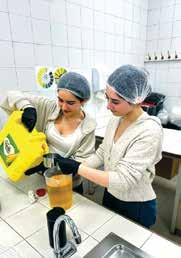
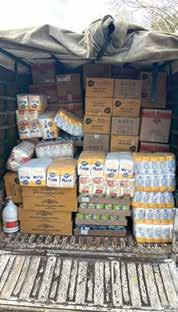
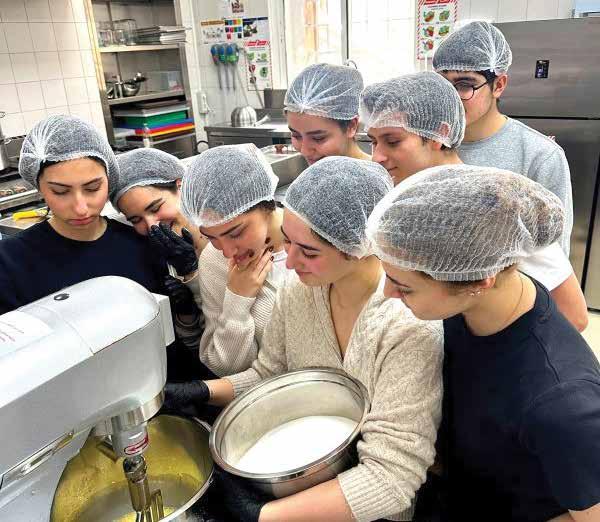
One of the most impactful initiatives has been the IC Community Kitchen, which continues to prepare and distribute cold meals and sweets to vulnerable communities. Working alongside partner organizations including Souk El Balad, Ahla Fawda, the Lebanese Food Bank, the Order of Malta, and Men Beb La Beb, the initiative has reached more than 3,900 beneficiaries across Beirut and South Lebanon.
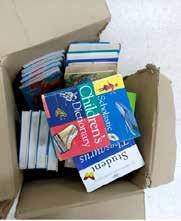
Recognizing the importance of literacy and access to educational resources, IC Outreach provided three boxes of Arabic storybooks and 19 boxes of library materials to Shakib Arslan Public School as well the families sheltering in Baskinta. These resources benefit the school’s 562 students and contribute to fostering a culture of reading and learning.
Community solidarity was also evident through a large-scale collection drive organized by CCSL and supported by parents’ committees. Essential supplies and storybooks were collected across both the Ain Aar and Ras Beirut campuses and distributed to more than 500 families in Beirut, particularly those supported by Ahla Fawda and Offre Joie shelters. A special Ain Aar delivery to the Baskinta public school shelter supported an additional 70 displaced families.
AGC PEER-TO-PEER TUTORING: TEACHING THROUGH WAR
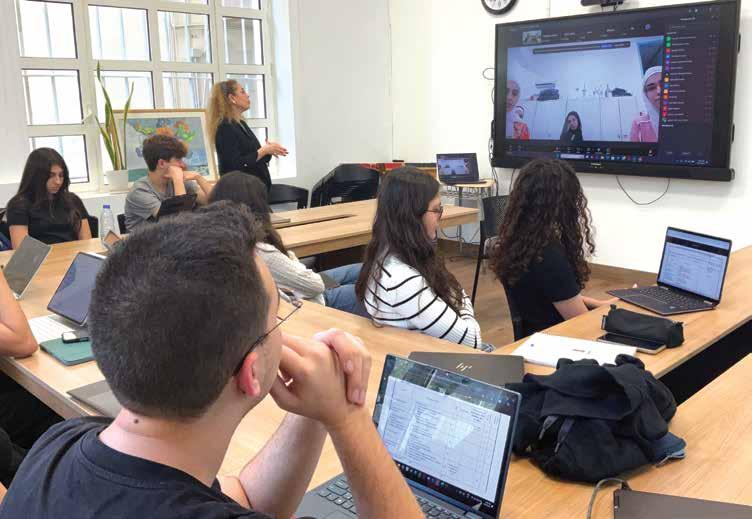
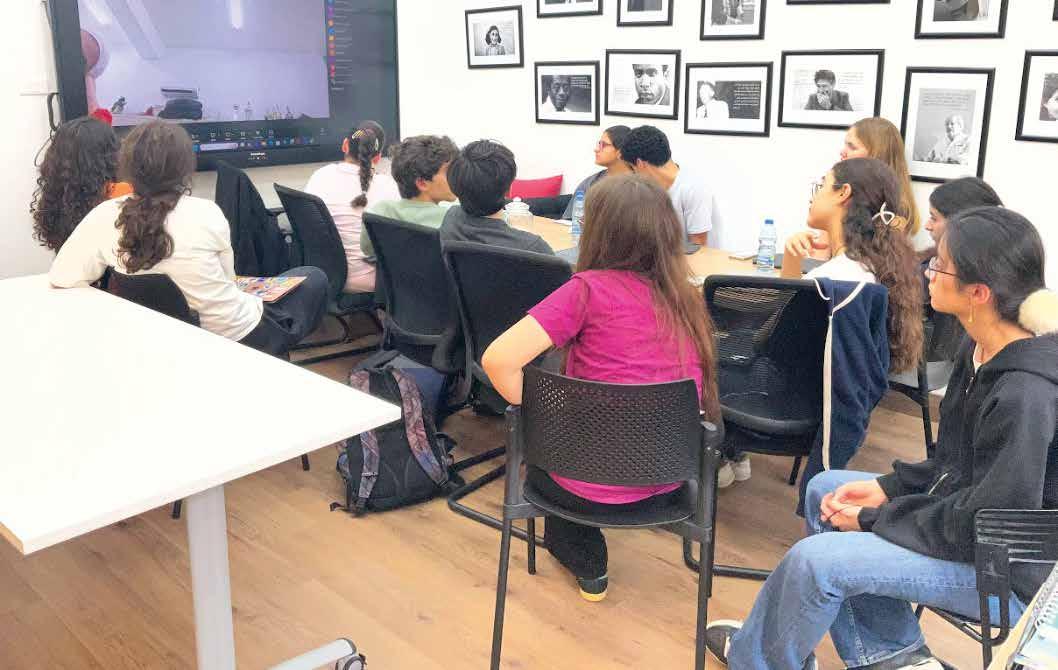
IC’s Ali Ghandour Center (AGC)1 had a choice: watch students lose access to education, or act.
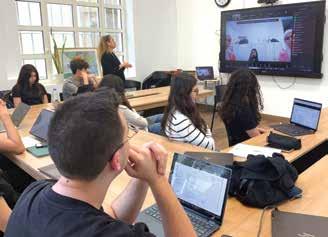
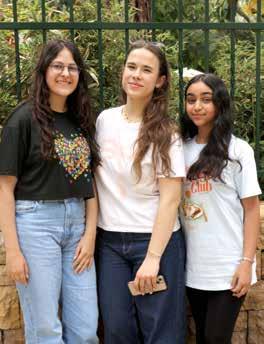
They acted. All 40 grade 10 AGC students now keep learning alive through peer-to-peer tutoring.
In a country where education has long been a national strength, war has stripped away access to learning. Public schools and vulnerable communities are hardest hit, with classrooms now shelters for thousands of displaced students.
“ We didn’t know what we were going into; Each student has a different level.”
Each of the 40 AGC students is assigned one student. It is not simple. How do you teach someone close in age what you are still learning yourself? How do you read their level through a screen, hold their attention in real time, and keep engagement alive across distance and disruption? These are questions usually reserved for teachers, not high school students still finding their way through their own studies.
But AGC students were up to it.
The peer-to-peer program began last year following the war through a collaboration between NAFDA schools (a movement for social transformation through education) and IC’s Ali Ghandour Center. It paired AGC students with learners from two partner schools, Maarouf Saad Official Secondary School and City Modern School, both affected by displacement and conflict, offering peer support in English, math, and digital skills.
This year, as continued disruptions to schooling persisted, AGC students shifted their sessions online and expanded the partnership to two additional public schools: Deir Kifa Public School in South Lebanon whose students are all displaced, and René Mouawad Public School in Beirut, which is currently serving as a shelter while students continue learning online. Introductory sessions were held in person at IC last year and conducted online this year. These included icebreaker activities and student level assessments. IC also provided laptops to support students’ continued participation and learning.
For Sima Hibri, Grade11, peer-to-peer tutoring was an immediate choice, as it felt familiar and reflected what she already did informally in daily life.
“Whenever my friends need help, I’m the one they come to,” she said.
Before tutoring began, students prepared materials including lesson plans, slides, modules, and exercises. The first real challenge came when they met the students they would work with.
“We didn’t know what we were going into,” she said. “Each student has a different level.”
After each session, students document progress in structured reports.
“We filled in an Excel sheet,” she said. “What we covered, how they responded, and the challenges.”
But the structure only tells part of the
story. The real shift, she said, was in how teaching actually works when it is no longer top-down.
“We weren’t coming to teach them,”
prepared explanations in favor of live interaction.
“We ask them questions on the spot,” she said. “And if they don’t know, we guide them.”
“ I think when they feel comfortable, they learn better; And because I was a public school student, I know how to do that.”
she said. “We were coming to help them. We grow together.”
That idea was tested in practice. Language barriers, attention gaps, and inconsistent engagement often disrupted the flow of sessions. Tutors had to adjust in real time, abandoning
Over time, she said, the experience changed how she sees learning itself.
“I learned patience and understanding,” she said. “I appreciate more what I have.”
The experience looks different for Malak Bou Said.
At 15, she is part of the AGC scholarship student cohort and comes from a public school in Aley. She only moved to IC this year. She describes the transition as intense but formative. One of the biggest changes, she said, was learning how to understand and adapt to different people.
That ability became especially meaningful when she joined the peer-to-peer tutoring program. Like the others, Malak was paired with
a learner from a partner school. Connecting with her students came naturally. She understood them.
“I know exactly what they need,” she said. “I know what they struggle with.”
She adjusts her explanations, simplifies when needed, and often shifts between formal instruction and a more direct, conversational style.
For her, the goal is not just academic improvement, but trust.
“I think when they feel comfortable, they learn better,” she said. “And because I was a public school student, I know how to do that.”
The most unusual case is Maya Ibrik.
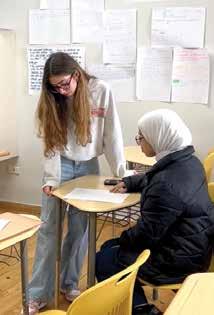
Unlike the others, her tutoring is face-to-face. Maya is 15, in Grade 10, and also part of the AGC scholarship student cohort. She herself is living in a school with the displaced. Yet, she is not displaced.
Her home in Sidon was not damaged by the war, but her family made a decision that changed their way of life. As her mother is the school principal hosting displaced families, the Ibrik family moved into the school, living in a classroom alongside them to be present when needed.
“I don’t mind at all,” said Maya. “It is our duty to be there to serve and help.”
Like the other AGC participants, she
tutors a younger student in math. But her teaching does not stop there. After sessions, she helps younger children at the shelter, including preschool and elementary students, in a classroom set up by her mother.
For Maya, education is no longer separated from life. It is happening inside it.
Three stories out of 40.
All 40 students helping to keep learning alive during the war.
Sometimes, one school is enough to show what resistance looks like.
At IC, it is education.
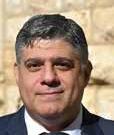
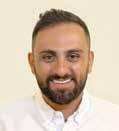
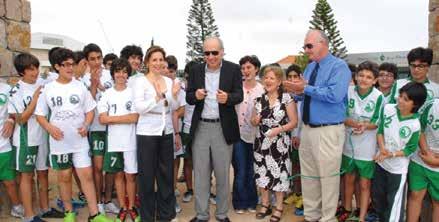
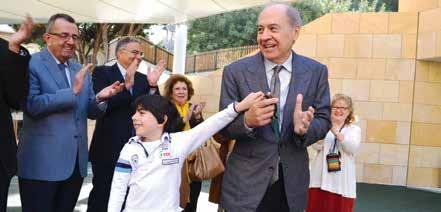
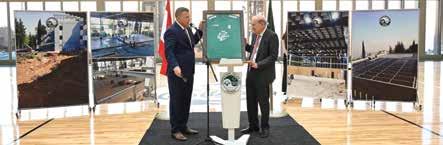
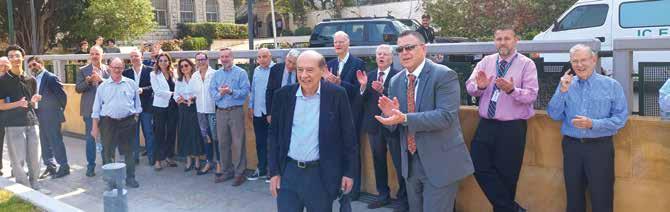
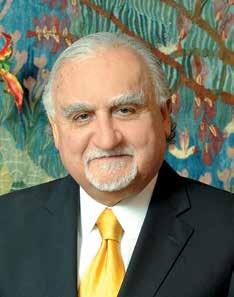
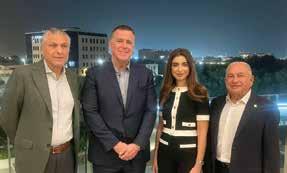
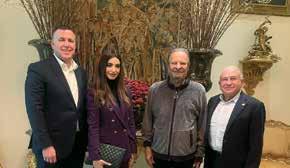
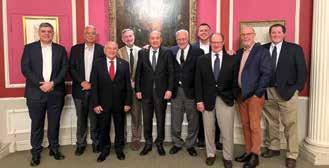
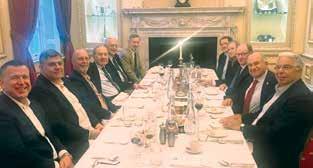
IMAD TAHER: 37 Years on the Board, Mission Accomplished
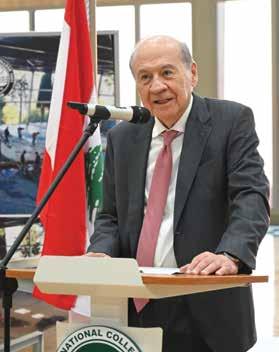
IC Vice Chairman Imad Taher was in Nigeria on business when his sister called.
“IC is looking for you,” she told him. “They want to talk to you.”
IC? He had graduated years earlier and was now running his own civil engineering company. A donation, probably, he thought.
Curious, Taher called the number she gave him. On the other end was then IC president Gerrit Keator, who went straight to the point.
“Imad, would you like to join the Board?” he asked.
Caught off guard but intrigued, Taher answered, “Sure.”
“Then send us your CV.”
That was the beginning of his involvement with IC’s Board of Trustees. He was officially inducted on April 27, 1989, and is now retiring from the Board after 37 years.
He had little idea then that he would play a defining role in IC’s history, especially during one of its most transformative chapters: securing ownership of the Ras Beirut campus.
The story begins in 1937, when IC merged with AUB’s Preparatory School, which had been allocated space on the AUB campus in 1912, with plans for “three new buildings on the bluff of the west campus.”
That bluff would later become IC’s Ras Beirut campus. In 1956, when IC and AUB separated, IC was expected to vacate the campus by 1980. But the school had expanded and could not move. It attempted relocation twice, to Meshref in 1975 and Bshamoun in 1978, but both campuses were attacked, forcing a return to Ras Beirut each time. Tensions with AUB grew.
Enter Imad Taher in 1989.
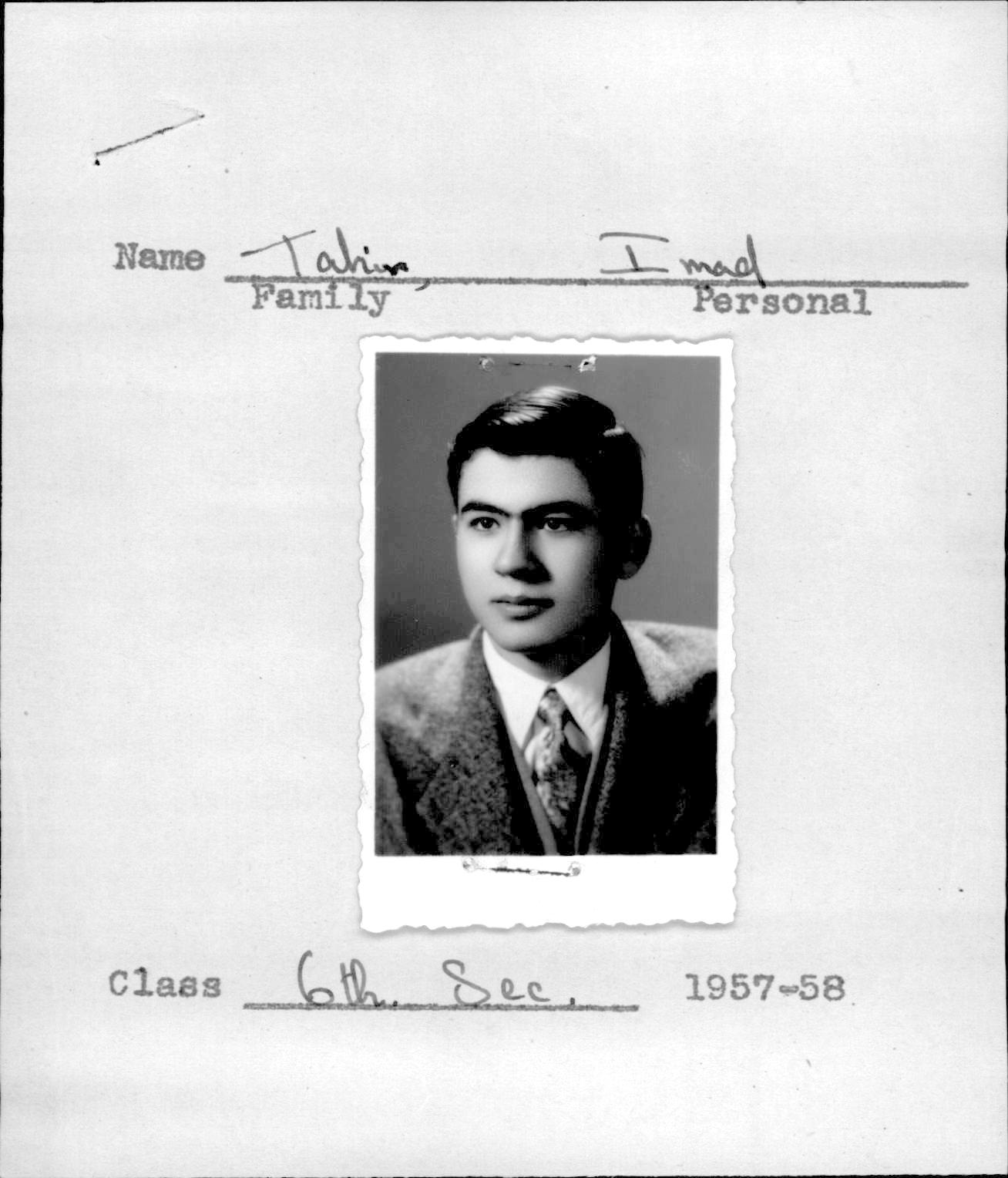
Born in Nigeria to Lebanese parents, he grew up between two worlds. His father had built a textile business in Nigeria. Taher spent his early years in Lebanon, first as a boarder at al Ahliah School and later at IC, where, as he recalls, “everybody was equal. There was no talk of sects or money.”
That sense of diversity stayed with him for life.
Encouraged by teachers like Huntington Bliss, he went on to MIT, earning both a bachelor’s and a master’s degree in civil engineering before returning to Lebanon and founding a construction company in 1968. He later expanded into Nigeria and other countries in Africa.
At IC, he became the head of the Board’s Building and Grounds Committee but quickly discovered its limitations. The school did not own its campus. “We couldn’t even move a door without AUB’s permission,” he recalled.
Expansion meant improvisation. “We used containers as classrooms. IC was stuck,” he said.
Relations with AUB remained strained. Taher and fellow board member Fouad Maalouf ‘56 tried repeatedly to reopen dialogue, but IC was still expected to leave.
For the third time in its Beirut history, IC tried again to move. Land was scouted and plots earmarked, but every attempt fell through. Prices were too high, and IC simply did not have the funds.
There was only one option left: to purchase the campus from AUB. It was a long shot, but Taher raised the idea with then IC president Robert Ober.
“There’s really no other way out,” he told him. Ober agreed and wrote
to AUB president John Waterbury to explore the possibility of a sale.
Maalouf and Taher made their case: with 2,500 students on site and no viable relocation, evacuation was impossible. “Either we continue staying rent-free as we are, or you sell us the campus,” they said.
After lengthy deliberations, led by Chairman Bill Turner, AUB agreed to negotiate. It was 2001. After decades of deadlock, the process finally began. It was the first crack in a long wall.
Talks continued, at times heated, with AUB holding to one valuation and IC to another. Then, in the early 2000s, real estate prices suddenly surged. Taher held his breath. Would AUB raise its asking price? It did not. The price remained unchanged. Discussions carried on.
AUB initially sought to exclude the football field from the sale. “Out of
the question,” argued Taher. “What’s a school without a football field?” AUB acquiesced.
A second hurdle followed: AUB required approval of all future plans and drawings. Taher refused, saying it would defeat the purpose of owning the campus. Chairman Bill Turner asked him to find a way forward.
Taher proposed a solution. Accompanied by IC President Art Charles, he met with AUB Vice Chair Tom Morris, Trustee Bill Carson, and AUB President Waterbury at Marquand House. IC would selfregulate its construction, with internal guidelines that addressed AUB’s concerns without restricting development.
The proposal was accepted. Meanwhile, Chairman Bill Turner and Trustee Richard Ward, coordinated from New York with AUB trustees as the slow process dragged through meetings and correspondence.
Then, in 2009, after a decade of negotiations, the breakthrough came: IC would purchase the Ras Beirut campus.
Taher signed on behalf of IC, and AUB President Peter Dorman signed on behalf of the university.
With those signatures, the Ras Beirut campus passed, in full legal force, into IC’s hands.
A chapter that had stretched across generations, uncertainty, and negotiation came to an end in a single stroke of a pen. After 73 years in Beirut, International College finally had a home of its own.
Still riding the wave of euphoria, Taher quickly got to work. However, he first had to wait until he and fellow board member Walid Daouk ‘77 negotiated a $30 bridge million loan. In 2014, they secured a second bridge loan to finance the construction of the Middle School and Preschool. To repay these loans and move forward with the construction of the rest of the campus, IC launched a highly successful capital campaign, led by Moufid Beydoun ‘64 , which received broad support from the trustees, major donors, parents, and alumni.
Finally, Taher’s vision for modern IC facilities was within reach, beginning with the elementary school. Flansburgh Associates of Boston was commissioned to design the new campus plan, and ground was broken in 2010. In 2013, the Hisham Ezzat Jaroudi Building and the Talal and Maha Shair Building were inaugurated, while Reynolds Hall was handed back to AUB. Imad Taher himself cut the ribbon.
In 2019, IC completed the Ziadeh Sawwaf Preschool and Mikati
Family Middle School buildings, again with advice from Flansburgh Associates. Despite financial pressures, the lower campus was completed on time, and the heritage structure was preserved. Work then shifted to Ain Aar, where playgrounds and facilities were upgraded and three classrooms converted into a 160-seat auditorium.
Attention then turned to Ain Aar’s aging gymnasium, a deteriorating steel structure. Instead of renovation, Taher led a full redesign with architect Rachid Karam. In 2025, the new gymnasium was completed and widely praised. Taher was pleased to hear IC President Tobin Wait describe it as “the most beautiful court in Lebanon.”
Alongside the campuses’ physical development, Taher also served on the Board’s Educational Policies Committee, working closely with trustee Amal Ghandour, the committee’s chairwoman. Together, they collaborated on admissions, leadership
development, strategic planning, issues of favoritism and bullying, financial aid, and the expansion of arts and music programs. “She did a fantastic job,” he said.
Today, as Taher steps down from his role as Vice Chairman, he looks back with a quiet sense of completion.
“I was so focused on IC and devoted so much of my time to it,” he said, a commitment driven by his love for his old school and his sense that he was building something lasting for its legacy. He then added with a laugh, “In fact, my son offered to pay me if I would devote as much time to my own company as I do to IC!”
It was a long, historic journey. What began as a phone call in Nigeria grew into a 37-year mission.
And now, that mission has come to an end. A lasting legacy remains. Taher’s enthusiasm, energy, and loyal commitment will continue to shape IC for years to come.
HEALING WITH HEART: The Life and Legacy of Dr. Philip A. Salem
Dr. Philip Salem ‘58 did not simply practice oncology. He transformed it. Over six decades, he developed new treatments for advanced metastatic cancer, identified a link between recurrent intestinal infections and cancer, and helped redefine cancer care.
Yet when asked what matters most, he does not begin with science but with love and care.
“Science is the backbone of medicine, but knowledge alone is not enough to cure patients,” he said.
He recently published a book, “Defeating Cancer: Knowledge Alone Is Not Enough”, reinforcing his view that cancer care depends on both scientific rigor and a deeply human approach.
When asked how he rose to prominence, with centers in his name, fourteen books, and major awards to his credit, he speaks not of ambition but of three women: his mother, his wife, and a friend.
Born in Bterram, a small village in El-Koura, Salem was one of seven children. He completed his final year of school at IC in 1958 before entering AUB. He excelled in literature and philosophy and considered pursuing the latter.
It was his mother’s illness that led him to medicine. She suffered from recurrent kidney stones, and as a child he watched her endure severe pain and complications. He promised her he would become a doctor so he could care for her. He set aside philosophy then, but after graduating from medical school in 1965 and beginning his residency at AUB, he returned to it, believing the two disciplines were deeply connected, especially in oncology. The way he saw it, medicine should be guided by a philosophical framework.
His mother recovered the same year he entered medical school, leaving him with a quiet sense of frustration that she never needed his care as a physician.
After completing his training in the United States, Salem returned to Lebanon in 1971 as assistant professor of medicine at the AUB Medical School, where he became the university’s first full-time cancer physician and established its cancer research unit, and its first regional oncology fellowship program. He focused equally on clinical work and teaching, encouraging students to question and think rather than simply listen.
“The primary objective of education is not the
transfer of knowledge from teacher to student, but the training of the mind,” he said.
“Medical professors must remain active in research to ensure the highest standard of patient care.”
When the civil war broke out in 1975, he stayed, continuing to teach and train doctors while helping develop oncology in Lebanon and the Arab world.
It was during these years that Salem made a key discovery: recurrent gastrointestinal infections, if left untreated, could progress to cancer. He was among the first to describe Immunoproliferative
Small Intestinal Disease (IPSID), recognizing infection as a major cause of cancer.
“Now in 2026, we have learned that infection is the cause of 30 percent of all cancers,” he said. “This is extremely valuable information because it means that if we diagnose these diseases early and treat them with antibiotics, we can prevent 30 percent of cancers.”
In 2005, the Nobel Prize in Physiology or Medicine was awarded to Drs. Barry J. Marshall and J. Robin Warren for linking H. pylori to ulcers and stomach disease. Their work was built on IPSID research
conducted by Dr. Salem and his team 15 years earlier.
The Cancer Journal, then one of the most prestigious oncology journals in the US, devoted a special issue in October 2005 to Salem’s work, featuring his research on the cover and underscoring its foundational role. A month after the Nobel announcement, the Nobel Committee also acknowledged earlier contributions in the field, particularly Salem’s IPSID research.
Beyond his research, Salem emerged as a leading figure in cancer education and organizations across the region.
At AUB, Salem held senior leadership roles in Lebanese and regional cancer organizations including the Lebanese Cancer Society, the National Unit for Cancer Research, and the Federation of Middle East Cancer Organizations. He also remained deeply committed to education, training hundreds of physicians, leading conferences, and serving on international advisory and editorial boards. His greatest achievement, he stated, was training 23 physicians, twenty of whom joined MD Anderson and several of whom became leaders in cancer research worldwide.
By then, Salem was married with three children, raising a family in war-torn Beirut. He loved Lebanon deeply and had no intention of leaving. A militia threat forced his departure, and within a week, he and his family relocated to Houston in January 1987.
In the US, he joined MD Anderson Cancer Center, now ranked the world’s leading cancer institution. Already a full professor of medicine, he became Director of Cancer Research at St. Luke’s Episcopal Hospital in 1991 and founded the Salem Oncology Center in Houston.
In recognition of his contributions, St. Luke’s established a cancer research chair in his name in 2010, followed four years later by an annual Oncology Lecture bearing his name.
His crowning achievement was ICTriplex, an innovative combination of immunotherapy, chemotherapy, and targeted therapy. It has been presented twice at the American Society of Clinical Oncology Breakthrough Conference, first in 2024 in Japan and again in June 2026 in Singapore. The
approach is gaining momentum as a leading option for treating advanced disease, with reported cases showing 54 percent complete remission and some patients remaining cancer-free after five years.
The recognition that followed reflected the scale of his influence.
On January 29, 2026, Baylor College of Medicine honored him by naming its conference center after him, recognizing his lifelong contributions to medicine and humanity and calling him a “legacy cancer doctor” at the dedication.
It was then that he reflected on the third woman who shaped his life: his wife.
“I’ve been married to Wadad for 53 years, and she is still my bride,” he said. “She has been my inspiration, my support, and my greatest friend. Without her, I would not have been here tonight.”
Now, at 85, he reflects on a lifetime of treating patients. Did he ever fail? Yes. Did he give up? Never.
“I have learned a great deal from failure; most importantly, I have learned humility,” he said. “Humility helps you work with others to achieve big things. You have to keep trying. There is always something you can do for the patient.”
In addition to medicine, Salem is a Renaissance intellectual and writer on Lebanese and Arab affairs. He has established two centers in Beirut: The Philip Salem Center for Lebanese Political Studies at the University of Saint Joseph and The Philip Salem Academy for Lebanese Heritage at the Lebanese American University. He is committed to defending both humanity against disease and Lebanon’s sovereignty and independence.
For him, medicine, culture, and leadership form one vision: Lebanon has the foundations for greatness but lacks leadership.
“The most important message I have for the Lebanese is never to lose hope.”
ALO, PILATES, MATCHA
The thing about Kinda Adra ‘96 , better known as Kinda B Canada, is that she is easily annoyed. Not slightly annoyed, but properly, deeply annoyed. By what? Almost everything. Fake people annoy her. Pretentiousness annoys her. Nouveau riche culture annoys her. Young women dressed head to toe in showy, expensive outfits irk her.
Now, it so happens that Adra is a born comedian. At some point in her youth, she mastered the art of making people laugh. But her comedy comes with a twist: sarcasm.
One day last year, she became increasingly annoyed by the endless social media posts of Lebanese women in Alo yoga outfits, heading to Pilates studios in their perfectly coordinated neutral activewear, then spending considerable time sipping expensive matchas. Every moment, naturally, is filmed and posted for their equally obsessed followers to admire, envy, and imitate.
One night, on her burgeoning social media page, she lay in bed and posted her message for the day: “Alo, Pilates, Matcha. Alo, Pilates, Matcha,” in her biting comic tone, mocking the army of look-alike Gen Z women.
The next day, an avalanche of likes and subscriptions came pouring in. The “Alo, Pilates, Matcha” clip didn’t just go viral; it took on a life of its own. Within weeks, it had become a trending sound on over 30,000 TikToks, spreading far beyond her expectations and even finding its way into nightclubs abroad.
It was certainly not what Adra intended, but her viral slogan became the defining template for a new, perfectly packaged lifestyle. It sparked a wave of controversy in the media and, more than likely, in sociology classrooms too: had people abandoned individuality? Had society become artificial? Had everything been reduced to aesthetics?
It may seem counterintuitive, but the mocking actually created a new trend and boosted sales. Marketing professors suddenly had the perfect case study to showcase: how a single social media post could boost sales almost overnight. Clothing brands quickly reshaped their advertisements into short videos of ideal daily routines. Cafés and fitness studios followed suit, adding ceremonial matcha to their menus as Gen Z increasingly saw it less as a drink and more as a lifestyle marker.
For Adra in Canada, the reaction came as a surprise, but with her laissez-faire attitude, she took it all in stride. “Yeah,” she said. “I heard it caused quite a bit of controversy.”
And that was that. She had already moved on, turning her attention to her next daily dose of comic satire. It all began unintentionally. In 2018, she immigrated to Canada with her husband and three children. In Lebanon, she was a teacher, but teaching jobs in Canada require different qualifications. A forced stay-at-home mother, she found herself bored. She decided to find a new career. A deep admirer of psychology, life coaching fascinated her. She began her studies and had just launched her new path when COVID hit.
Locked at home and isolated, her extroverted nature struggled. One day, she noticed her teenage daughter dancing in front of her phone.
That was her introduction to TikTok.
She got into it quickly. Something clicked: frustration, sarcasm, observation. Within days, she had figured out how it worked and began posting her own videos, reacting to her perceptions of the absurdities of Lebanese society in her own sharp, comic way.
It became an outlet for everything that annoyed her. She said it out loud and threw it into the world. She didn’t really talk about what she liked, only what irritated her. She had no plans for success, not even a hope of followers. Yet followers began to trickle in.
Ideas continuously flowed. She notices things the moment she steps outside, catching details others miss. Her reactions are instant, and so are her posts. It feels less like content creation and more like an ongoing internal monologue made public.
Nothing is polished or planned. At first, she wasn’t
even creating original content, just reacting, commenting, and stitching videos together with quick, sarcastic takes. What stood out to her were not individual moments, but patterns: the same behaviors, the same performances, repeating again and again. And well, they annoyed her.
But why?
“Things make me angry,” she said. “So I guess it turns into being annoyed at the smallest things.”
Her anger began many years earlier, with her parents’ divorce. It deepened in middle school, when classmates mocked her weight, her clothes, her appearance. It followed her into Lebanese society, where her mother’s friends would casually urge her to lose weight, to look better, to marry. “But,” she said, “if IC taught me anything, it was that I can do whatever I set my mind to.”
So she did. Kinda B Canada became her voice. She dissected the contradictions of Lebanese society. Years of frustration poured out. Once it started, there was no stopping it.
Being outside of Lebanon gave her space. Distance gave her permission. With over a million followers and a reach of 11 to 18 million, she had clearly struck a nerve.
She admitted that it could be rough sometimes. “I know, I know,” she said. “I am working on softening it. Not changing it, but take the edge down. Keep the honesty and lose some of the bite.”
Despite critics who take her comments personally, and some pressure to shut the page down, Adra will not.
She isn’t fully sure what her work has become. Not regret, not pride either. Just something she started that kept growing on its own.
To access, Kinda Adra, Life Coach: https://mykindacoaching.com/
To follow: @kinda_b_canada
IC WHISH FITNESS CENTER POWER. PERFORMANCE.
IC is proud to announce the official opening of its new IC Whish Fitness Center, a major step forward in promoting health, strength, and well-being across our school community.
The center was officially inaugurated in June during a ceremony attended by members of the IC community, representatives of both the former and current Ras Beirut Parents Committees, the Younes family, our wellness partner and principal donor, Jad Koussa ‘00, his brother Toufic Koussa ‘03, and the WHISH team. The Koussa brothers have made contributions to the school’s annual fund, scholarship fund, and the endowment fund established in 2024. This year, in addition to their gift for the IC Whish Fitness Center, they also generously supported the Alton Reynolds Tournaments, further strengthening athletics and student life at IC.
Students were among the first to experience the facility during their Physical Education lessons, stepping into a space filled with energy and excitement. They explored the different training zones, from strength and cardio equipment to functional training areas, and discovered new ways to move, train, and challenge themselves.
With guidance and supervision, students focused on proper technique, posture, and safe equipment use, gaining valuable insights into injury prevention and effective training habits.
Thoughtfully designed with both function and aesthetics in mind, the space reflects a commitment
POSSIBILITY
to quality and performance. Its layout supports a smooth training experience, while its bright, clean environment creates an inviting atmosphere for users of all levels.
Equipped with the latest Matrix Fitness MX technology, the facility offers a full range of cardio equipment including treadmills, ellipticals, stationary bikes, and hybrid bikes. The strength training area provides comprehensive coverage of all major muscle groups, with a dedicated freeweight zone for functional and progressive training.
This new facility strengthens IC’s PE curriculum, supports lifelong fitness habits, and provides opportunities for conditioning, rehabilitation, teamwork, discipline, and personal goal setting.
JadKoussa’00,AbirBawarshi‘98,TobinWait
JR. NBA BOYS
FANTASIA LEBANESE BASKETBALLCHAMPIONSHIP -
LEBANESE EVANGALICAL SCHOOL (LES) BASKETBALL CHAMPIONSHIPVARSITY BOYS BACK TO BACK CHAMPIONS
FRIENDLY GAMES FOR AIN AAR AND RAS BEIRUT MIDDLE SCHOOL STUDENTS
DINNERS and EVENTS
Kicking off 2026, our alumni gatherings in Jeddah on 15 January and Riyadh on 19 January provided a wonderful opportunity for alumni to reconnect, exchange ideas, and strengthen ties within the community, as well as meet with IC president Tobin Wait and the Advancement Team.
JEDDAH
From LtoR:TobinWait,MohamadAlZameli‘81,YasmeenMaktabi‘93, Moufid Beydoun ‘64
From L to R: Mohamad Al Zameli ‘81, Tobin Wait, Lara Temsah ‘04, Moufid Beydoun ‘64
RIYADH
From L to R: Yasmine Barry , Tarek Mallas ‘90, George Oueijan ‘90, Roy Baladi‘01,MohamadAlJaroudi ‘09,DanyaTaha‘11,LamisBallan,Osmat Awar ‘02, Wael Hathout ’01
An alumni gathering in Miami brought together about 25 participants, hosted by Salah Izzedine ’65 at Texas de Brazil. May 14, 2026
L
R:
From
to
Labib Gholmieh ’93, Haya Gholmieh, Rania Turk ‘91, Mohamad Elachi ‘97
From L to R: Majd Ouri ‘18, Suheil Haidar, Jad Issa ‘19, Talal Dandashli ‘19, Khaled Bouchebel ‘19
From L to R: Moufid Beydoun ‘64, Lara Temsah ‘04, Tobin Wait
LOS ANGELES
Over 60 guests gathered for a dinner kindly hosted by Mohamad ’80 and Hania ‘92 Ahmar at their home in Beverly Hills.
May 20, 2026
BAY AREA
On May 22, 2026, more than 45 alumni gathered in the Bay Area for an event hosted at Tannourine restaurant in San Mateo.
From L to R: Mohamad Ahmar ’80, Tobin Wait, Hania Ahmar ’92, Jina Ahmar
From L to R: Shawn Jahshan, Jibran Jahshan ’82, Maya Kreidieh, Lana Kreidieh’97, Tobin Wait, Phyl Petrakian, Raja Petrakian ’82, Khaled Nasr ’76, Christina Nasr
From L to R: Ziad Zakaria ’89, Rania Turk ’91, Moufid Beydoun ’64, Nafeh Sibai ’75
From LtoR: MoufidBeydoun’64,AbbasalHage’79,ClaudiaHaoui, Amer El Hage ’73, Rania Turk ’91, Roxanna El Hage
From LtoR: MarwanDakroub’05,WaelBarakat’03,YahiaBeydoun ’00, Hadi Tinawi ’22, Carl Fakhir ‘23
WASHINGTON DC
From L to R: Maria Attasi, Jessica Azar, May Chalhoub, Walid Chalhoub’96,MoufidBeydoun’64,CarolZakka,YvonneAbdulBaki, Nizar Zakka ’85, Sharif Khanj
From LtoR: TobinWait,RalphAnavy’58
From L to R: Claudia El Hage, Claudia Haoui, Amina Haoui ’73, KamalObeid’73,LouayOwani’73,HananOwayni,AmerElHage ’73, Roxanna El Hage
A warm dinner gathering, graciously hosted by Walid ’96 and Hala Chalhoub at their home, brought together over 80 guests.
May 30, 2026
From LtoR: RaniaTurk’91,RolaFakhoury‘03,MoufidBeydoun ’64, Hala Chalhoub, Walid Chalhoub ‘96
LONDON
An Enduring Legacy: The Imad Taher Gymnasium at IC Ain Aar
On June 8, 2026, on the eve of the IC Board Meeting in London, a dinner honoring Imad Taher was hosted by Board Member Fred Crawford at the Caledonian Club. During the evening, Chairman of the Board, Don Selinger thanked Mr. Taher for his many valuable contributions to IC. Chairman Selinger paid tribute to Mr. Taher’s outstanding contributions to IC over the years, and the Board announced the their decision to name the Ain Aar school gymnasium the “Imad Taher Gymnasium” in recognition of his longstanding service and dedication to the school.
From LtoR: DrMahmoudShihab,WalidDaouk’77,MoufidBeydoun
L to R:
Dr.
UPDATES ALUMNI
Nicolas Khairallah sent the following photo:
May 13, 2026, monthly gathering of IC group. Classes of 1960 & 1961
From L to R: Nadim Afeich, Jean Claude Sacy, Malek Mahmassani. Souheil Metni, Gaby Gharzouzi, Nicolas Khairallah, Nabil Abboud, Sami Nasr
With our beloved professor Jibran Massoud’50
From L to R: Nicolas Khairallah, Naji Bigdache ‘60 and Ghassan Youssef a friend of IC
Khalil Shalabi says that he and his family are now empty nesters in Austin, Texas, having moved there from New York with their three children in 2014. Their youngest son, Liam, is now a freshman studying engineering at Texas A&M.
Rula Haddad Norregaard led the interior design collaboration with VIP Attractions, which recently received the Priority Pass Excellence Award. The project earned recognition for delivering an exceptional guest experience through an innovative, hospitality-focused design that elevated both traveler comfort and atmosphere. It was an honor to contribute creatively to a space that has now received international recognition. Rula Co founded her interior design firm, Design Cie, and has worked on many VIP lounges in Jamaica and high-end residential projects worldwide.
’64, Matt Reynolds, Imad Taher, Don Selinger, Tobin Wait, Bayard Dodge, Ian Reed, Chris McGrath
From
Tobin Wait,
Mahmud Shihab, Ian Reed, Imad Taher, Don Selinger, Matt Reynolds, Chris McGrath, Rebecca McGrath, Bayard Dodge, Moufid Beydoun ’64, Walid Daouk ‘77
Hussein M. Dajani: After more than two decades working across marketing, customer experience, digital transformation, and AI-enabled innovation in the Middle East and beyond, Hussein Dajani is grateful for a journey that has taken him through organizations such as Publicis, WPP, Virgin Mobile, Red Bull, Nissan, Deloitte Digital, and most recently Petromin Corporation. Over the years, he has had the privilege of leading regional transformation programs, building customer experience and digital marketing teams, launching AI-driven initiatives, speaking at industry events, and contributing to the marketing and customer experience community across the region. He also sits on the Advisory Boards of the CMO Council and CXPA, is a World AI Council Member, a Global AI Ambassador to the UAE with GAFAI and the Global Council for Responsible AI, is a certified Chief AI Officer, and is a Reputation Risk Advisory Council Member with the Global Situation Room and a Reputation Capital Council Member with Earned First.
On a personal note, he is happily married to Nayla and is blessed with a beautiful three-year-old daughter, Naya. They are also excited to be expecting their second baby girl soon.
This year also marks a new chapter for him and his family. In July 2026, he will be relocating to Riyadh to join Adobe’s first official office in the MENA region as Regional Director of Partner Marketing, Middle East.
“I look back at my time at IC with deep appreciation. The values, friendships, discipline, and sense of community I gained there continue to shape who I am today, both personally and professionally,” he said.
20
Mohamad Tassabehji is a civil engineer who works for Suffolk Construction, a large general contractor based in Boston. His team manages schedules as part of the project controls function; he reviews project schedules to identify delays and risks and works to provide predictive analytics to project teams. “This year,” he writes, “Ekira Merhej ’21 joined my team as a Construction Planning Analyst, so the team now has two generations of IC students working together. Now all that is left is to convince our cafeteria at work to introduce IC’s famous Hollandi sandwich!”
international medical graduates. His training focused on general obstetrics and gynecology, minimally invasive gynecologic surgery, and robotic surgery.
Throughout his journey in the United States, he trained and worked at several prestigious academic medical centers, including the University of Illinois, the Georgetown University Hospital, and the Wakeforest Hospital. These experiences allowed him to gain advanced expertise in women’s health, minimally invasive gynecologic surgery, and robotic surgery while working alongside internationally recognized physicians and surgeons.
In addition to his medical training, he earned a Master’s degree in Healthcare Administration from EHESP in France and a Master of Public Health degree from ESA in Beirut.
Today, he serves as an Assistant Professor of Obstetrics and Gynecology at the Lebanese American University- Rizk Hospital. He chose to return to Lebanon to serve his country and community, especially at a time when robotic surgical technology is expanding in the region. He is proud to be among the few American board-certified OB/GYN physicians practicing in Lebanon and the Middle East.
As he reflects on his journey, he realizes how deeply International College shaped his life. To him, IC was never simply a school, it was a home that nurtured ambition, discipline, integrity, resilience, leadership, and excellence. The unwavering support of its teachers, administration, and leadership played a defining role in helping him believe that no dream was too ambitious and no goal was beyond reach.
He remains profoundly grateful to the educators and mentors at IC whose dedication, guidance, and belief in their students continue to inspire generations of alumni around the world.
The values instilled at IC accompanied him throughout every stage of his journey from Lebanon to the United States, from medical school to academic medicine, and from training in world-renowned institutions back to serving his homeland. For him, IC’s impact extended far beyond academics. The school cultivated in him a sense of responsibility, compassion, global perspective, and commitment to service. International College is not only an added value to Lebanon, but a remarkable institution whose impact extends far beyond its borders. Across multiple countries and continents, IC alumni continue to contribute meaningfully in medicine, science, business, engineering, academia, public service, and many other fields. Wherever IC alumni go, they carry with them the values, excellence, and leadership instilled by the school.
More than a decade after graduation, he still considers his years at International College among the most meaningful and formative periods of his life, and he remains deeply honored and grateful to always be part of the IC family. “My years at IC marked one of the most transformative chapters of my life and laid the foundation for the academic, professional, and personal journey that followed,” he writes.
Dr. Bassel Abouzeid, after graduating from IC, received a full merit scholarship to attend the Lebanese American University for his pre-medical undergraduate studies, followed by another scholarship to pursue his medical degree. After medical school, he matched into Obstetrics and Gynecology residency training in the United States, one of the most competitive specialties, particularly for
Marc E. Mardelli, MD finished his residency in Ophthalmology in 2024 from the University of MissouriKansas City and passed his boards and became American Board Certified in Ophthalmology. He then went to Columbia University Harkness Eye Institute in NYC where he completed in June 2026 a fellowship in Vitreoretinal Surgery.
In Memoriam
It is with deep sorrow that we share the passing of the following members of our community:
Omar Azar ’12 - Dec. 2025
Tawfik Kaylani ’68 - Jan. 2026
Maya Dada ’93 - Jan. 2026
Edward Khoury ’87 - Jan. 2026
Samer al Labban ’90 - Jan. 2026
Jad Said Al Hassan ’74 - Jan. 2026
Maya Tabib ’97 - March 2026
Imad Salim El Turk ’65 - April 2026
Bana I. Hilal ‘69 - June 2026
IC faculty and staff extend their heartfelt condolences to the families during this difficult time.
Nabil Abdel-Malek’54
Nabil Abdel Malek was an outstanding IC student, then a lawyer, and later a highly respected and formidable legal opponent to many of the old crowd of seasoned officers. He showed the same determination and resilience during the health problems that struck him while still comparatively young.
A Doctor of Law, and on his mother’s side a grandson of the seasoned Druze lawyer Sheikh Bahige Takieddine, who served umpteen times as a Member of Parliament and as a Minister in several governments, Nabil was in truth both a kind man and a fierce opponent to other legal experts in such a profession of top brains. Yet he remained highly respected by one and all.
He also mastered, to the topmost level, all three languages in general use in Lebanon. His wife, Hana Salam, was also a doctor in her own field of specialization, as are their three learned daughters, one of whom has already reached doctoral level in the legal profession.
Nabil will be greatly missed by relatives, friends, and colleagues alike. He was an exceptionally faithful, truthful, and much-loved young friend. He passed away in January 2025, only a year ago.
Among the relatively small number of dear old friends, and as a relative too, Nabil ranks among the most loved and respected. His smiling face and unfailing kindness will always remain vivid in my memory and will count among the friends I miss most deeply at my eighty-eight years of age.
A truly exceptional friend, greatly loved and respected by one and all, and one who will be sincerely and enduringly missed.
With my huge respect, Elie A. Sehnaoui ‘56
Former IC Trustee, incl. Emeritus over 41 years until 2012
International College
P.O. Box 113-5373, Beirut, Lebanon.
Tel. 961 1 367420/33, Email: alumni@ic.edu.lb
305 East 47th Street, 10th Floor, New York, NY 10017