Can Imerys biofuel feedstock pretreatment solutions help you get ahead?
CYNERSORB®, CELITE® AND HARBORLITE®
Our range of mineral filter aids and filterable adsorbents improve throughput rates and allows dirtier fats and oils to meet feedstock specifications of renewable diesel, biodiesel and other oleochemical plants.
Where preparation meets opportunity.
ANY QUESTIONS?
Contact us at: www.imerys.com marketingna@imerys.com Linkedin/@imerys
ADVERTISERS:
For advertising sales please call 218-745-8347, email editor@biobased-diesel.com or visit our website at www.biobased-diesel.com.
EDITOR AND PUBLISHER:
Ron Kotrba editor@biobased-diesel.com
GRAPHIC DESIGN: Doug Conboy
Raised Brow Productions
MAGAZINE PRINTING: Century Publishing
COVER PHOTO:
Expanded milled perlite from Vicksburg, Michigan. Imerys’ perlite filter aids are characterized by their lightweight, jagged structure.
PHOTO: IMERYS
Biobased Diesel® is published by RonKo Media Productions LLC. Subscriptions are free of charge to those in the United States and Canada. To subscribe, visit biobased-diesel.com and fill out the contact form in the website footer. For subscribers outside the United States and Canada, a digital version of the magazine will be emailed. For those located outside the United States and Canada who wish to have a print version of Biobased Diesel® mailed, please email editor@ biobased-diesel.com with the request. A nominal postage fee may be required. For mail correspondence, write to:
RonKo Media Productions PO Box 86 Warren, MN 56762
By Brad Crawford
By Amelia Reid and Kristina Thompson
Karen Potratz
MAX PRODUCTION
What a difference a few months—and policy clarity—can make for this industry. When I put together the winter issue of Biobased Diesel® late last year, the U.S. biobased diesel market was struggling. Biodiesel producers seemed to endure the worst of the hardship after the blenders tax credit expired Dec. 31, 2024. Meanwhile, its replacement—section 45Z—has been in an endless holding pattern, unconscionably low 2023-’25 renewable volume obligations (RVOs) under the Renewable Fuel Standard curtailed production and stifled growth, RVOs for 2026-’27 were neither known nor finalized, and how U.S. EPA would deal with waived gallons from small-refinery exemptions (SREs) was anyone’s guess. To put it bluntly in a G-rated sort of way, the market was an excrement show.
Then, in early February, the U.S. Department of the Treasury and Internal Revenue Service issued long-awaited proposed rules for the section 45Z clean fuel production credit—nearly four years after it became law in the Inflation Reduction Act of 2022. In late March, EPA finalized RVOs for 2026-’27 with
renewable diesel from 1.7 to 1.5—putting it on equal footing with biodiesel—while specifying SAF EV values at 1.5 and the biobased naphtha EV at 1.4.
When EPA announced the RVOs in late March, it said U.S. biodiesel and renewable diesel production and use will need to increase by over 60 percent to meet the historic volumes. A month after the final volumes were released, Donnell Rehagen, CEO of Clean Fuels Alliance America, said the new RVOs marked a turning point for the clean-fuels industry. “For the first time, we are hearing widespread discussion of max production across the industry,” he said. One of those plants currently running at full capacity is Western Iowa Energy in Wall Lake, Iowa. “Now we can confidently plan and budget,” said WIE President Brad Wilson.
After covering these fuels and markets for more than 20 years, I have learned a few things along the way. This industry is resilient. The people behind it are strong. Its roots run deep and its branches rise high and wide. While it is drought-tolerant, water and nourishment are needed to thrive. We just got our
Renewable Diesel and SAF News Briefs
Projects around the world move from construction to operation.
Par Pacific’s Hawaii Renewables LLC joint venture with Mitsubishi Corp. and Eneos Corp. began commercial operations in April at its Kapolei refinery in Hawaii. The company first announced the 61-million-gallon-per-year (mgy) project in April 2023. The unit is designed to produce up to 60 percent sustainable aviation fuel (SAF) but if market conditions are supportive, yield can be shifted to more than 90 percent renewable diesel. Pretreatment technology was provided by Lutros LLC [BBD]
Calumet’s Montana Renewables subsidiary completed a turnaround and its MaxSAF® 150 expansion in March and April. Operation of its MaxSAF 150 system in Great Falls began in early May. The project significantly expands SAF production on-site from 30 mgy to between 120 mgy and 150 mgy. Montana Renewables received a $1.44 billion loan guarantee from the U.S. federal government to expand SAF capacity to 300 mgy by 2028. [BBD]
Polish multinational oil company Orlen began operating its new USD$220 million, 300,000-ton-per-year (tpy) renewable diesel plant in Płock, Poland, in late May. The company first announced the project in 2021. The facility can process rapeseed oil, used cooking oil (UCO) and blended feedstocks. The commissioning of the plant increases Orlen’s total biofuel production capacity to approximately 700,000 tpy, with plans to expand the output to 1.1 million tpy by 2030. [BBD]
Repsol recently started up its new USD$151 million, 200,000 tpy renewable diesel facility at its Puertollano Industrial Complex in Ciudad Real, Spain. The new capacity adds to the 250,000 tpy of hydrotreated biofuels produced at its Cartagena plant in Spain. This is the first time on the Iberian Peninsula that an oil-refinery unit was converted to process biobased feedstocks like UCO. The new unit will use renewable hydrogen from waste-based biogas. Repsol also produces SAF from organic waste at the Puertollano site. [BBD]
Bangchak Group is now operating Thailand’s first commercial production of SAF from a new standalone unit at Bangchak Phra Khanong Refinery, the company announced in May. Bangchak Group has also created an ecosystem around UCO covering collection, feedstock management and conversion into SAF and renewable diesel. The first SAF export was scheduled to take place May 19. [BBD]
Acelen Renewables announced in May a USD$1.5 billion investment to begin construction of its biorefinery in Bahia, Brazil. A portion of this amount is financed by a consortium supported and led by HSBC and the World Bank International Finance Corp., bringing together 10 national and international financial institutions. The company first announced plans to convert its Mataripe Refinery to produce hydrotreated biofuels three years ago. With operations scheduled to begin in 2029, the plant will have the capacity to produce 264 mgy of SAF and renewable diesel. [BBD]
Kenya Airways and Rubis Energy Kenya recently signed an agreement to develop the first dedicated SAF refinery in Africa. The 32,000 tpy Nairobi-based project will utilize modular technology from Dragonfly to process UCO, animal fats and
other feedstocks, and it will be located near Jomo Kenyatta International Airport to integrate with existing infrastructure. [BBD]
LanzaTech has selected North Sea Port in Ghent, Belgium, as the site for what it is calling Europe’s first commercialscale alcohol-to-jet (ATJ) SAF facility using the LanzaJet ATJ process. LanzaTech confirmed the imminent submission of the environmental-impact assessment scoping notification with Belgian authorities, marking a de-risking milestone on the project’s path toward final-investment decision (FID). At over half a billion dollars, the project is being scaled to produce 79,000 tpy of SAF and 9,000 tpy of renewable diesel. [BBD]
Shaphargroup announced in April its plans to deploy Honeywell UOP’s Ecofining™ process technology for its flagship SAF facility at the Port of Rotterdam in the Netherlands The facility will be designed to produce 200,000 tpy of SAF. [BBD]
The government of Queensland in Australia is strengthening fuel security with USD$17.8 million investment and streamlined approvals to develop renewable diesel at Ampol’s Lytton refinery. The funding will support modification of Ampol’s diesel hydrotreater to coprocess conventional diesel with biobased feedstocks. The project will initially be capable of producing up to 5.28 mgy of renewable diesel from 2028. Construction is expected to begin by mid-2027. [BBD]
Petrobras has selected Honeywell UOP’s ethanol-to-jet (ETJ) process technology for project development at its Replan refinery in São Paulo, Brazil. Once approved, the project will deliver up to 420,000 gallons per day of SAF, representing the first large-scale ETJ initiative in Latin America [BBD]
Evonik has launched a new generation of high-performing isodewaxing catalysts that significantly enhance the production of high-quality fuels and lubricants. The new catalysts incorporate Zeopore’s proprietary mesoporized zeolite technology. They enable refiners and renewable fuel producers to increase valuable product yields while improving overall fuel quality and process efficiency. [BBD]
The U.S. exported nearly 50,000 barrels (2.1 million gallons) per day of renewable diesel and other biofuels—a category that includes SAF—in the second half of 2025, about 20 percent of the combined production for those fuels, according to the U.S. Energy Information Administration. About half of these exports went to Canada, with the rest mostly going to Europe. In comparison, the U.S. exported 13 percent of fuel ethanol production and 7 percent of biodiesel production in the same period. [BBD]
Polish multinational oil company Orlen began operating its 300,000 tpy renewable diesel plant in Płock, Poland, in late May.
PHOTO: ORLEN GROUP
Biodiesel and Marine Biofuel News Briefs
U.S. biodiesel industry starts recovery, B20 and B50 developments, and B100 use expands in marine vessels.
Iowa’s biodiesel industry is largely back up and running, buoyed by long-awaited federal Renewable Fuel Standard renewable volume obligations (RVOs) and the 45Z clean fuel production credit. The industry had been battered by prolonged policy uncertainty, depressed margins and a difficult operating environment. Western Iowa Energy in Wall Lake, Iowa, is among the producers feeling the momentum. The 45-million-gallon-per-year (mgy) plant employs 30 workers and is running at full capacity. The facility completed a $30 million expansion project in 2024. President Brad Wilson said the release of the RVOs came as a genuine relief after years of uncertainty. “Now we can confidently plan and budget,” he said. “We’re still trying to dig out of a hole, but we’re very happy with what’s happened. Last year we would have killed to break even. Now we have some margins built in. It’s a great turnaround.” [BBD]
Fresno, California-based Eslinger Biofuels, a 5 mgy vertically integrated biodiesel producer, recently struck a five-year, $48 million offtake and credit-monetization deal with STX Group. The producer plans to expand into renewable diesel and sustainable aviation fuel (SAF) production in 2028 while maintaining full B100 output. The expansion will add 12 mgy to 15 mgy of renewable diesel and SAF production capacity. [BBD]
Maas Companies has been appointed to conduct a courtordered sealed-bid auction for two former Hero BX biodiesel refineries located in Clinton, Iowa, and South Roxana, Illinois This auction follows a federal court order placing the assets into receivership following liquidity issues. The deadline for the sealedbid auction is June 18. [BBD]
Rhoads Energy has broken ground on new infrastructure at a fuel-distribution hub in Rapho Township, Pennsylvania, that will expand the region’s access to biodiesel. Slated to open in late July, the new infrastructure will pump 100 percent biodiesel directly from rail cars to tanker trucks. The company secured a USDA grant to help fund a portion of the construction. Last year, Rhoads Energy announced that it would exclusively deliver Bioheat® fuel to thousands of homes. [BBD]
ASTM has approved an updated D396 heating-oil specification to include biodiesel blends up to B50. The revision passed through ASTM’s rigorous consensus-balloting process with no objections. The approval reflects years of collaboration among Clean Fuels Alliance America, the National Oilheat Research Alliance, leading equipment manufacturers and other stakeholders. [BBD]
Effective April 1, the minimum biodiesel blend required to qualify for Illinois’ state sales-tax exemption increases from B17 to B20, representing the final phase of bipartisan legislation passed in 2022. The policy exempts qualifying biodiesel blends from the state’s 6.25 percent sales tax. [BBD]
“The State of Sustainable Fleets 2026 Market Brief” authored by TRC Companies indicated that more than half of annual fleet survey respondents now report using renewable diesel or biodiesel, with B99 biodiesel adoption expanding in 2025. [BBD]
Results from a 2025 biodiesel quality report from Germany’s AGQM demonstrate that biodiesel produced by its members in Germany and Austria meets the highest quality standards. A total of 67 samples with 1,273 test parameters were analyzed, with the acceptance limit being exceeded in only two cases. [BBD]
Amidst global geopolitical dynamics impacting rising energy prices, the government of Indonesia is accelerating the implementation of the mandatory B50 program to address surging crude-oil prices. The government has targeted the nationwide use of B50 to begin July 1. [BBD]
Chimbusco Pan Nation completed the largest single B100 marine biodiesel bunkering operation ever recorded in China by delivering 2,500 metric tons of B100 marine biodiesel to a vessel in Hong Kong, setting a new national record. The operation was completed by CPN’s bunker tanker Guo Si [BBD]
Scan Global Logistics is expanding its collaboration with Hapag-Lloyd by leveraging the shipping giant’s Ship Green solution, which is based on the use of second-generation biofuels derived from waste and residue-based feedstocks. The physical book-and-claim approach, based on the mass-balance principle, allows customers to claim verified emission reductions independently of the physical shipment. [BBD]
In partnership with Wilson Sons and Ferroport, Vast Infraestrutura has performed the first refueling with Be8 BeVant® biofuel in a tugboat at Porto do Açu, Brazil. BeVant is an advanced biodiesel with a high degree of purity that can be used at 100 percent concentration. It is a green-dyed, additized, doubledistilled methyl ester. Vast Infraestrutura said the testing advances concrete initiatives for the decarbonization of port operations. [BBD]
Drax Group’s Handymax carrier MV Ultra Yorkshire operated by Ultrabulk recently completed its first transatlantic voyage from Baton Rouge, Louisiana, to Liverpool, U.K., with a cargo of over 29,000 metric tons of biomass pellets for rail transport to Drax Power Station. The vessel’s journey was powered by B100. [BBD]
With an improved federal-policy landscape, Western Iowa Energy in Wall Lake, Iowa, is running at full capacity.
PHOTO: JENNA ROSE, IOWA BIODIESEL BOARD
Turning Biodiesel Storage Issues into a Problem of the Past
Benecor’s end-to-end approach to fuel storage and dispensing reduces risk, shortens timelines and delivers a higher level of confidence for customers adopting biodiesel.
By Brad Crawford
Benecor is an industry leader in diesel exhaust fluid (DEF), diesel and renewable fuel storage and dispensing equipment. From our manufacturing facility in Fenton, Michigan, we design, engineer and deliver complete fueling solutions tailored to the unique needs of each customer.
Founded in 2005, Benecor has built its reputation on innovation, particularly in DEF and fueling systems across commercial, industrial and retail markets. With sales, engineering, technical service and manufacturing all handled in-house, we maintain full control over quality and performance. Fuel storage and dispensing systems are not just part of what we do—they are our singular focus. That specialization combined with a hands-on, entrepreneurial approach continues to position Benecor as a trusted partner and industry resource, frequently sought out by leading committees and associations.
Solving Biodiesel Storage, Dispensing Challenges
As commercial fleets transition to higher biodiesel blends— and in some cases B100—fuel storage and dispensing infrastructure must evolve accordingly.
We were approached by the largest biodiesel producer in the world to develop a practical, field-ready solution capable of addressing these challenges. Leveraging two decades of experience designing heated and insulated DEF systems, we applied proven engineering principles to biodiesel—validating requirements, identifying risks and developing systems purpose-built for real-world conditions.
Why Biodiesel Storage Requires a Different Approach
Biodiesel introduces several critical variables that differ from petroleum diesel:
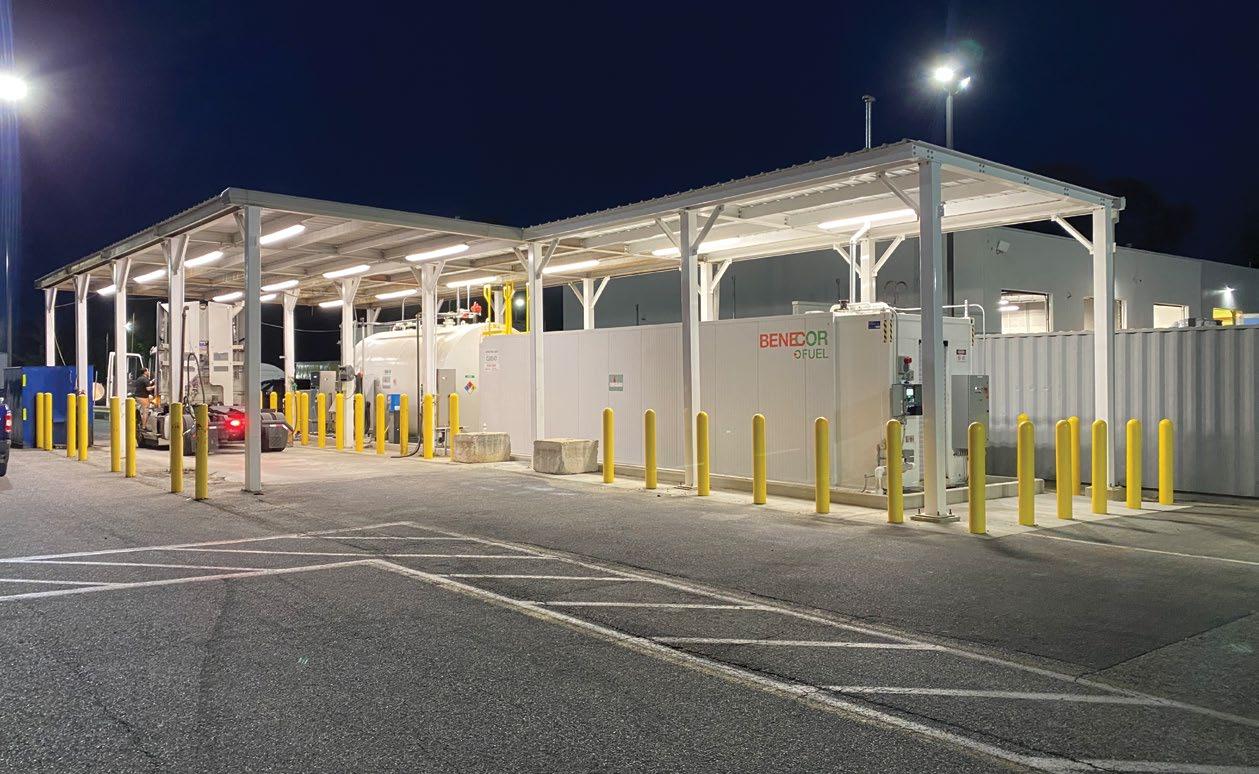
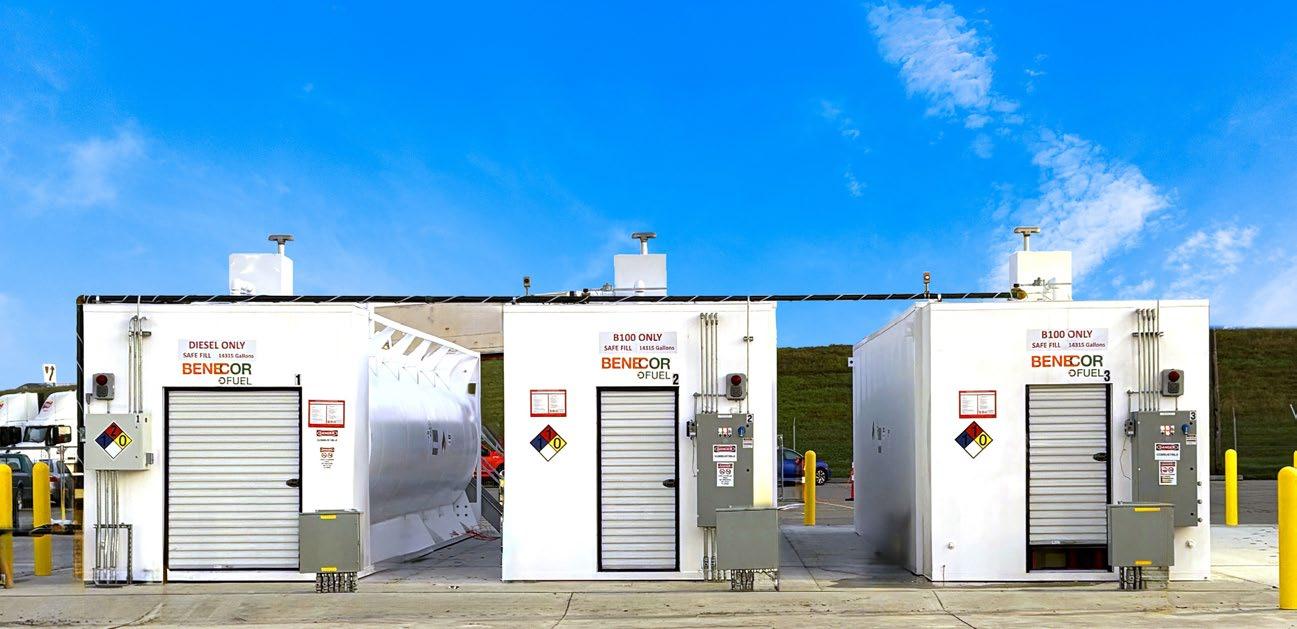
Benecor systems are designed to simplify installation while maximizing performance. PHOTO: BENECOR INC.
• Temperature sensitivity: Higher cloud points require consistent heat management to prevent gelling.
• Material compatibility: Contact with certain metals (copper, brass, lead, tin, zinc) can accelerate fuel degradation.
• Seal integrity: Incompatible elastomers can swell, leading to leaks and system failures.
• Water and microbial growth: Biodiesel’s hygroscopic nature increases the risk of contamination and fuel breakdown.
These factors demand a system-level solution—not just component-level adjustments.
Engineering the Solution
Benecor’s approach focused on designing a complete, integrated system rather than modifying existing diesel infrastructure.
We engineered heating and insulation strategies for aboveground steel tanks across multiple configurations, ensuring fuel remains within optimal temperature ranges. Material selection was equally critical—utilizing black steel, stainless steel and aluminum, along with Viton seals and O-rings to maintain fuel integrity and system longevity.
Dispensing systems were also redesigned. Standard diesel dispensers often struggle in colder environments, so we incorporated heated components throughout the dispensing chain—from tank to nozzle—ensuring consistent flow and performance.
The result is a fully engineered system that performs reliably in demanding environments while protecting fuel quality from storage through dispensing.
Engineered Systems Built for the Field
Benecor systems are designed to simplify installation while maximizing performance. In many applications, our solutions can be deployed as plug-and-play systems, significantly reducing field labor and installation time.
Factory-integrated features include:
• Insulated tank systems.
• Thermostat-controlled heating (tank, piping and dispenser).
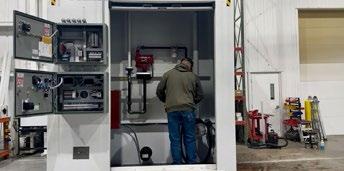
• Prewired power and control panels.
• Integrated tank monitoring and compliance systems.
• Submersible pumping systems.
• Onboard or remote dispensing configurations.
These systems are engineered holistically ensuring every component works together seamlessly. The result is improved reliability, reduced installation timelines and lower total project costs.
Additionally, Benecor offers flexible system configurations, including double-wall polyethylene tank options for certain applications. These systems can provide a cost-effective alternative to steel while maintaining performance in controlled environments.
Aboveground Vs. Underground Storage Considerations
Selecting between aboveground storage tanks (ASTs) and underground storage tanks (USTs) plays a significant role in biodiesel performance and lifecycle cost.
USTs offer protection from temperature fluctuations and ultraviolet (UV) exposure, which can help stabilize fuel. They are more susceptible, however, to water intrusion and microbial growth—two critical concerns for biodiesel.
ASTs, on the other hand, provide greater accessibility for inspection, cleaning and maintenance. When paired with proper heating and insulation, AST systems offer a practical and cost-effective solution, particularly for fleet applications where uptime and serviceability are priorities.
From a cost and deployment perspective, AST systems typically offer faster installation, lower upfront costs and the added benefit of relocatability—making them an attractive option for many operations.
The Benecor Process: From Concept to Commissioning
What sets Benecor apart is not just the equipment but the process behind it. Every project follows a structured, collaborative approach designed to deliver precisionengineered solutions tailored to real-world conditions. This endto-end approach reduces risk, shortens timelines and delivers a higher level of confidence for customers adopting biodiesel.
Consultation
We begin by understanding the full scope of your operation— fuel type, climate conditions, regulatory requirements, site constraints and long-term goals. This ensures the solution is built around your application, not adapted after the fact.
Engineering, Design
Our in-house engineering team develops a fully customized system, optimizing performance, efficiency and compliance. Every detail—from material compatibility to thermal management—is carefully considered.
3D Concepting, Visualization
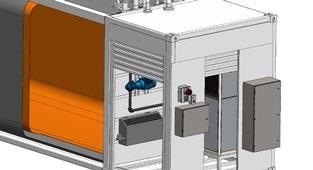
Before manufacturing begins, customers receive detailed 3D renderings of their system. This step ensures alignment, eliminates surprises and allows for refinement prior to production.
Systems Integration, Manufacturing
Unlike pieced-together field systems, Benecor solutions are fully integrated at the factory. Pumps, controls, heating elements and monitoring systems are engineered and assembled as one cohesive unit—ensuring quality, compatibility and performance.
Logistics,
Delivery
Our team coordinates the safe and efficient delivery of fully assembled systems, minimizing on-site complexity and ensuring readiness upon arrival.
Installation, Commissioning
We support installation through start-up and commissioning, ensuring systems are fully operational and optimized from Day One.
Proven in Real-World Applications
Benecor’s engineered biodiesel systems are actively supporting operations across North America.
We have deployed solutions at private-fleet facilities, government operations and retail-fueling environments, each with unique requirements and performance expectations.
Notable installations include:
• Fleet-fueling systems supporting major brands such as PepsiCo, where reliability and uptime are critical to daily logistics operations.
• Multiple municipal and federal government entities across the U.S., where compliance, safety and durability are paramount.
• Retail-fueling deployments at Pilot locations, including sites in Dallas and Iowa, supporting the expansion of biodiesel availability in high-traffic commercial corridors. These installations demonstrate the versatility of Benecor systems—performing across climates, applications and fuel types.
Looking Ahead
As biodiesel adoption continues to grow, the importance of proper storage and dispensing infrastructure cannot be overstated. Poor system design can lead to fuel degradation, operational inefficiencies and increased maintenance costs.
Benecor’s engineered approach transforms these challenges into opportunities—delivering reliable, efficient and
future-ready fueling systems that support the continued growth of renewable fuels.
With the right infrastructure in place, biodiesel storage challenges can truly become a problem of the past. Whether you’re upgrading existing infrastructure or building a new fueling solution, Benecor is ready to deliver a system designed to perform.
Author: Brad Crawford Director of Engineered Fuel Systems Benecor
248-437-4437 brad.crawford@benecor.com
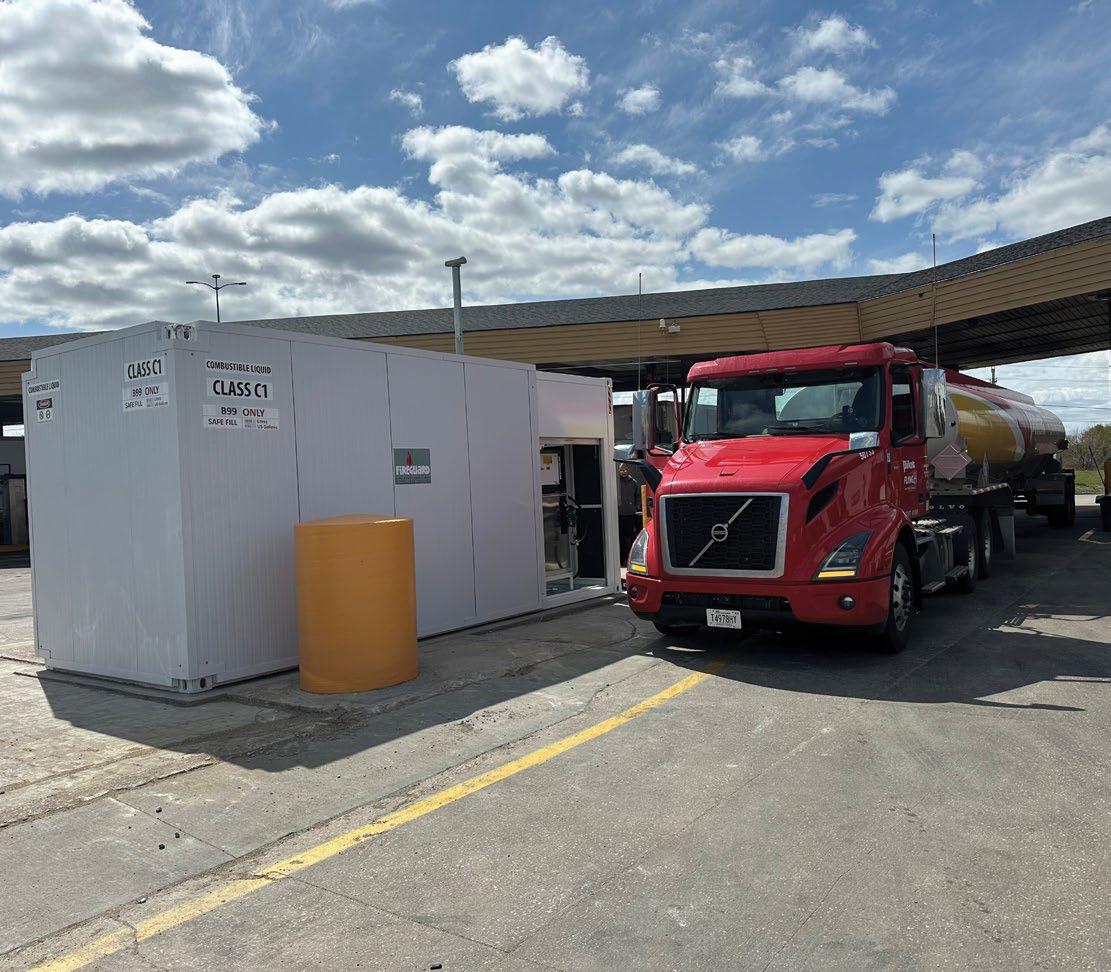
Benecor’s B99 system opened at Pilot’s Urbandale, Iowa, location in May 2025. PHOTO: BENECOR INC.
Built to Keep Your Trucks Moving— and Your Sustainability Goals on Track
Your fleet depends on reliability—and your fueling system should too.
Benecor delivers turnkey biodiesel fueling systems designed for efficiency, performance, and seamless integration into your operation. Support renewable fuel use, reduce emissions, and keep your fleet running strong.
THE RESULT?
√ Faster, more efficient fueling
√ Scalable systems for growing fleets
√ Reliable, all-weather performance
√ Lower emissions with renewable biodiesel
√ Progress toward your sustainability goals
Optimizing Renewable Diesel Production with Advanced Pretreatment
Solving feedstock challenges with diatomaceous earth and perlite.
By Amelia Reid and Kristina Thompson
As the 2026 Renewable Fuel Standard quotas come into full effect, biofuel refineries are under pressure to ramp up production while maintaining peak operational efficiency. Feedstock variability, however, is a hindrance to optimal throughput. As feedstock blends evolve to meet new regulations and economic realities, producers must manage a wide spectrum of inconsistent contaminant profiles. These fluctuating inputs can contain unpredictable levels of phospholipids, soaps and polyethylene that can quickly “blind” filters and halt production. For modern refineries, the solution to this volatility lies in advanced-pretreatment strategies using high-performance mineral filter aids and innovative filterable adsorbents like Celite®, Kenite®, Harborlite® and CynerSorb®
The 2026 RFS Mandate: A Race for Throughput
The U.S. EPA’s RFS program has set the bar high for 2026, demanding higher renewable volume obligations (RVOs) than ever before. For refiners, these quotas demand maximum throughput. In the world of renewable diesel, throughput is often dictated by the pretreatment stage. Unlike traditional petroleum, renewable feedstocks are biological and inconsistent. If a refinery cannot process these feedstocks at scale, they risk falling short of their blending mandates and facing significant financial penalties.
The primary threat to this throughput is filter blinding. When processing waste fats and oils, contaminants ranging
from phospholipids and soaps to polyethylene and trace metals can quickly form a thin, impermeable layer over filters. This “blinding” causes pressure to spike and flow rates to plummet, forcing frequent shutdowns for cleaning. To survive in the 2026 regulatory environment, refineries and feedstock pretreaters must move away from reactive maintenance and toward proactive filtration chemistry.
Power of Pretreatment with Perlite, DE
Imerys has developed mineral-based filter aids and filterable adsorbents specifically designed to solve the unique operational challenges facing the biofuels market. The goal of diatomaceous earth (DE) and perlite filter aids in the advanced-pretreatment stage is to create a porous and permeable filter cake that can trap high volumes of contaminants without sacrificing flow.
DE remains the gold standard for high-clarity filtration. Composed of the fossilized remains of diatoms, DE possesses an intricate, honeycomblike structure. This unique morphology provides a massive internal surface area that is highly effective at capturing microscopic solids suspended in liquid. By removing these elements during pretreatment, DE protects the expensive downstream catalysts used in the hydrotreating process, extending their lifespan and ensuring the final fuel meets rigorous standards.
As feedstocks become “dirtier” and more viscous, however, perlite becomes a powerful part of the mineral toolkit. Perlite is a volcanic glass that, when heated, expands to many times its original volume. Imerys’ perlite filter aids are characterized by their lightweight, jagged structure. This makes them exceptionally effective at handling gelatinous contaminants found in recycled waste oils. Perlite creates a bulky, incompressible filter cake that maintains high porosity even under the high-pressure conditions required to move thick tallow or used cooking oil (UCO) through a system. Because perlite is lighter than DE, it also offers a density advantage, often requiring less material by weight to achieve the same volume of filtration.
Adjustable Permeability, Dosage for Feedstock Variability
In the volatile biofuels market, the ability to pivot between different feedstocks without significant mechanical reconfiguration is a competitive advantage. Diatomite and perlite filter aids provide this agility through adjustable permeability and variable dosage rates. Because waste-based feedstocks like UCO and tallow vary significantly in contamination levels, a one-size-fits-all filtration approach can lead to inefficiencies or potential system failure.
By selecting specific grades, producers can dictate the porosity of the filter cake, ensuring that even the most viscous, impurity-laden oils maintain a steady flow. The flexibility extends to real-time dosage adjustments to the body feed. When sensors or lab results detect an uptick in aggressive contaminants, operators can immediately increase the dosage of mineral aid to create a more rigid cake that prevents these particles from slowing production cycles. Conversely, for cleaner batches, reducing the dosage minimizes material costs and waste volume. This control allows refineries to maximize their throughput and protect downstream assets, providing the operational resilience needed to meet aggressive 2026 quotas while processing the widest possible variety of low-cost, high-impurity feedstocks.
Minerals Engineered for Biofuels: The Imerys Portfolio
Imerys’ innovative approach to feedstock pretreatment addresses the industry’s evolving needs through a comprehensive suite of tailor-made filtration solutions. Leveraging over a century of expertise, Imerys helps plant operators navigate complex business constraints and optimize system performance. Our extensive portfolio includes DE filter aids Celite® and Kenite® as well as perlite-derived Harborlite®. By providing the necessary flexibility to manage varying contaminant
Diatoms from Quincy, Washington.
PHOTO: IMERYS
profiles across a wide range of permeability requirements, these solutions effectively reduce wastedisposal costs while ensuring maximum clarity.
The portfolio is further enhanced by CynerSorb®, a unique family of filterable adsorbents designed to overcome the limitations of conventional pretreatment. CynerSorb employs a multilayered removal strategy: a DE substrate for superior solid-liquid separation, a silica-gel layer to adsorb soluble contaminants, and chelating chemistry to transform impurities into filterable species. By eliminating the poor filtration functionality of traditional adsorbents, contaminants can be removed without excessive waste. These improvements can lead to substantial annual cost savings, potentially reaching six to seven figures for some facilities, offering a promising financial outlook. Systems utilizing high-permeability CynerSorb® can
decrease total powder-dosage rates by 50 percent or more. This reduction leads to significantly higher yields, fewer filter cycles and a dramatic decrease in waste cake, providing the operational resilience required to meet aggressive production targets.
The Imerys Advantage: World-Class Technical Support, Partnership
While high-performance minerals are the foundation of successful pretreatment, the complexities of modern biofuel refining require more than just a drop-in product. They require a partnership. Imerys distinguishes itself in the global market through a robust technical-support infrastructure that bridges the gap between mineral science and industrial application. For biofuel and feedstock producers, Imerys provides a deep bench of scientists, application engineers and filtration specialists who work directly with plant personnel to customize solutions. This technical support begins with comprehensive feedstock characterization and lab-scale testing. Given the extreme variability of modern feedstocks, Imerys specialists
Expanded milled perlite from Vicksburg, Michigan. PHOTO: IMERYS
CynerSorb® from Lompoc, California. PHOTO: IMERYS
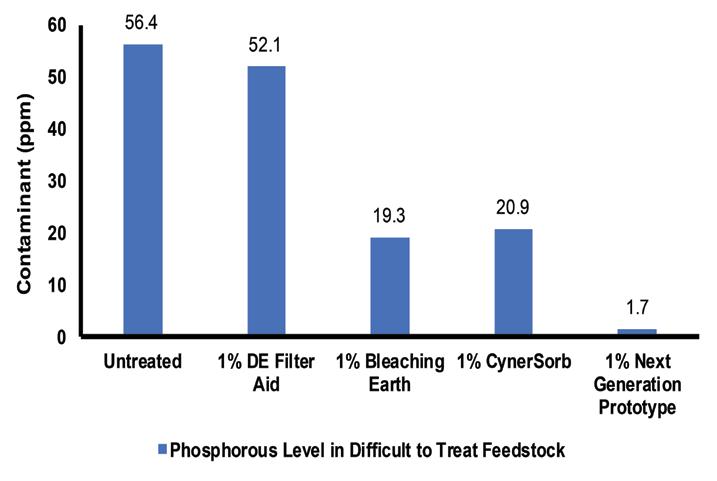
Encouraging results in lab-scale trials.
SOURCE: IMERYS
conduct detailed filtration tests to determine the optimal filter-aid blend for a specific facility’s unique contamination profile. This prevents the costly trial-anderror approach that many refineries suffer when switching to lower-quality oils. By simulating plant conditions in the lab, Imerys can recommend the precise combination of filter aids to achieve the desired flow rate and clarity at the lowest possible dosage.
At the Imerys Technology Center in Johns Creek, Georgia, scientists are engineering the next generation of CynerSorb® to target one of the industry’s toughest hurdles— advanced phosphorus removal. Developed in direct response to urgent requests from market players struggling to eliminate forms of phosphorus notoriously resistant to traditional chemical and physical methods, this project highlights the Imerys R&D philosophy. We don’t just supply minerals—we collaborate hand-in-hand with our partners to pioneer solutions for their most pressing technical challenges.
Beyond the lab, application engineers visit refineries to analyze the entire filtration circuit from the precoat tanks and body-feed systems to the filter presses or leaf filters themselves. During these audits, they identify mechanical bottlenecks, calibrate dosing equipment and train operators on how to adjust filter-aid ratios in response to changing feedstock indicators. This ground-level support is critical for maintaining high-speed production cycles. If a refinery experiences an unexpected spike in pressure or a decline in clarity, Imerys’ global network ensures that technical expertise is available to diagnose the issue quickly. In an industry where a single day of downtime can cost hundreds of thousands of dollars, the value of having a dedicated technical partner cannot be overstated.
The success of the renewable diesel industry hinges on the ability to turn waste oils into high-quality energy. Changing feedstock blends is inevitable, but the operational risks they pose are manageable. Through the strategic use of Imerys minerals, refiners can overcome the threat of filter blinding, protect their downstream assets and maximize throughput. In doing so, they do more than just meet RFS quotas—they build a resilient, efficient and truly renewable future for global transport.
To survive in the 2026 regulatory environment, refineries and feedstock pretreaters must move away from reactive maintenance and toward proactive filtration chemistry. “
Moisture and microbial contamination are common culprits.
By Karen Potratz
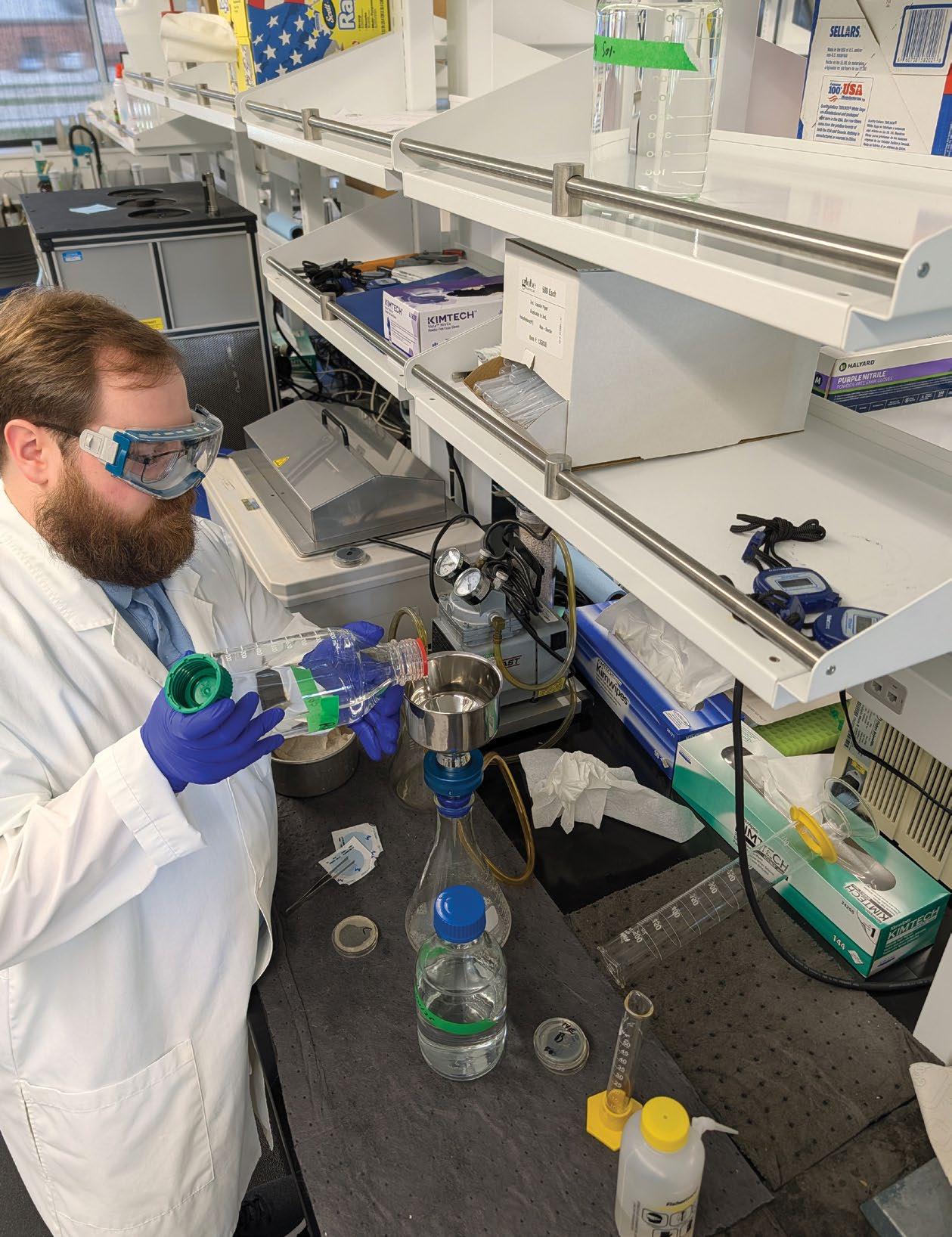
Carter Smith, a laboratory technician at Iowa Central Fuel Testing Laboratory, prepares to test a fuel sample for microbial growth.
PHOTO: IOWA CENTRAL FUEL TESTING LABORATORY
Plugged filters. Sluggish acceleration. Gunky tanks. Too often, biodiesel unfairly takes the blame for these and other fuel-performance issues. In truth, high moisture content and microbial contamination in a fuel tank are the most common causes of fuel problems—whether in biodiesel or any other liquid fuel.
“Microbial contamination in diesel fuel has become more common with the adoption of ultra-low sulfur diesel,” points out Pete Probst, technical director of the Michigan Advanced Biofuels Coalition. “That’s because sulfur has antimicrobial properties and previously acted as a natural deterrent to microbial growth in fuel. But regardless of the type of fuel, it’s important for fuel suppliers and users to become educated on the hazards of contaminants and how to prevent and mitigate problems.”
Diagnosing fuel-quality issues can be like a crime-scene investigation, says Don Heck, director of the Iowa Central Fuel Testing Laboratory in Fort Dodge, Iowa. As an independent lab, ICFTL runs fuel-performance tests for most of the nation’s biodiesel producers, providing third-party verification under the BQ-9000 program. The lab also evaluates petroleum diesel, ethanol and other liquid fuels, as well as biofuel feedstocks.
“Whenever we get a sample for testing with a complaint of poor-quality fuel, our first recommendation is to test for moisture and microbial content,” Heck says. “These have the biggest impact on engine operations and fuel efficiency— much more than cetane, viscosity, cloud point or any other parameters we test fuel for.”
Microbes such as bacteria, molds and fungi are ever-present in the environment, making it virtually impossible to prevent them from entering fuel, Heck says. At high concentrations, these organisms can plug filters. Small microbial particles that pass through the filters can wear out fuel injectors. These issues are not unique to biodiesel blends.
Water, Microbes Go Hand in Hand
“Microbes are living organisms and can’t function without a source of water,” Heck says. “Therefore, microbial contamination in fuel is almost always associated with water in the storage tank.”
Water can contaminate fuel-storage tanks through leaks in tank walls, hoses or nozzles, or during fuel loading and dispensing. When temperatures fluctuate, moisture inside the tank can condense into water droplets that provide a medium for microbial growth. Water contamination by itself causes engine-performance issues and promotes corrosion in fuel systems. In winter, entrained water can freeze and form ice crystals that may clog fuel filters and lines.
When Water Causes Problems
Fuels commonly contain small amounts of entrained water— microscopic droplets that are suspended in the fuel. Even a freshly cleaned tank can have as much as 60 parts per million (ppm) of entrained water in the fuel. At low levels, entrained water remains in suspension, is dispensed with the fuel and disperses harmlessly during fuel combustion.
Typically, diesel fuel can hold entrained water up to 200 ppm to 250 ppm. Biodiesel has slightly higher water-holding capacity, especially at blends of B11 to B20 and higher.
“Trouble starts when entrained moisture reaches above 200 ppm to 250 ppm,” Heck says. “At higher levels of moisture
content, water falls out of suspension in the fuel and creates a layer of free water at the bottom of the tank. That’s where microbes start to grow.”
ASTM specifically addresses water and particulate-matter contamination with the D2709 “Water and Sediment Test,” which allows a maximum of 500 ppm for water and debris combined. The Karl Fischer test is another, more sensitive method for measuring entrained-water content that allows action before major problems occur.
Fuel Sampling Best Practices
Proper sampling is key to accurate testing for water and microbial contamination. Because free water settles to the bottom of the tank, it’s important to collect fuel samples from the tank bottom. A Bacon Bomb tank-sampling device is specially designed for that purpose. Clean and disinfect your sampling equipment with alcohol to prevent crosscontamination or false positives.
Visual observation can deliver a simple but not 100 percent accurate indication of fuel quality. Fill a clean jar or beaker with fuel and let it settle. The ASTM D4146 “Visual Inspection Procedures” method is the industry-standard test for visual clarity of diesel fuel at the point of delivery. High-quality fuel should be clear with good color. A cloudy fuel sample could be a sign of water and/or microbial contamination.
In extreme cases, the sample will settle into three distinct levels, with free water at the bottom, a microbial mat above the water and fuel settling to the top.
“If the sample looks bad, it probably is,” Heck says. “However, it’s important to realize that even a sample that appears to be clear and bright can have microbial growth. The only way to know for sure is to culture the fuel and see what grows.”
ASTM D6974 Test Process
ICFTL and other laboratories use the industry-standard ASTM D6974 method to measure microbial content in liquid fuel. The D6974 test involves running fuel samples through two separate filters that are then placed on two different culture plates to measure colony-forming units.
An incubated filter shows multiple contaminants in a submitted fuel sample, most likely molds, bacteria and yeasts.
PHOTO: IOWA CENTRAL FUEL TESTING LABORATORY
One of these plates carries a culture medium optimized for growth of bacteria, such as E. coli. The medium on the other plate is optimized for growth of “mycologia”—a general term that encompasses species of yeasts, molds, fungi and other microbes. Based on the amount of microbial growth on the culture plate, lab technicians can determine the severity of contamination.
Biocides, Antiwater Agents
If microbes are detected, use a fuel-specific biocide treatment to kill the microbes. Most biocides are broad spectrum and are designed to kill all types of microbes. Consult with your fuel distributor for product recommendations. If possible, have the supplier apply the biocides during fuel delivery so the treatment can be evenly distributed throughout the tank. If applying biocides yourself, use caution as they are typically very toxic. Follow the manufacturers’ instructions and wear proper personal-protection equipment when handling these chemicals. After biocide treatment, expect to change fuel filters frequently as dead microbial material is caught in the filter.
Other additives are available to increase the fuel’s waterholding capacity—preventing the presence of free water that fosters microbial growth. Heck advises against using additives as a “band-aid” approach to fuel problems.
“I’ve seen a tank go from bad to worse by using too many additives that end up in a messy sludge,” he says. “In severe cases of contamination, it’s best to drain and clean the entire fuel system.”
Don’t Overlook Filters
Fuel-filter evaluation is an often-overlooked step in fuelperformance troubleshooting. If you experience ongoing filter plugging, Heck recommends sending in the filter for testing, not only the fuel.
Materials caught in a fuel filter might include microbial sludge, diesel waxes, oxidized fuel or polymer structures from accumulated additives. These are scraped off the filter and tested in the lab.
“The filter often represents the ‘smoking gun’ of fuel problems,” Heck says. “A fuel sample may only represent a gallon of fuel, but a fuel filter represents the residues and contaminants from thousands of gallons of fuel. This concentrating effect can make fuel analysis much more efficient and tell us a lot about what is happening in that fuel.”
Regular Fuel Maintenance
Once fuel problems are resolved, Probst recommends looking at tank bottoms every six months to ensure the fuel is free of water. It’s a good idea to test for microbial activity anytime free water is found.
Many suppliers offer fuel testing to customers at no charge. The Michigan Advanced Biofuels Coalition provides testing assistance to biofuels users in Michigan.
“Besides regular fuel testing, also keep an eye out for rust, cracks or any other tank imperfections that could become entry points for water and microbes,” Probst says.
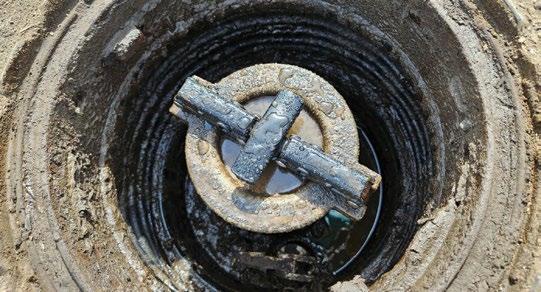
Probst encourages operators to inspect and clean the fill-port spill bucket and lid during monthly inspections of underground storage tanks (USTs). The fill-port lid has a seal that helps keep out water, but often it becomes degraded and allows contaminants to enter. (See Photo 1.)
“I’ve seen a lot of cases where the fill-port spill bucket is full of dirt, fuel, water and other debris,” Probst says. (See Photo 2.) “The spill bucket is designed to capture small fuel leaks that can occur while filling the UST. A plunger allows spilled fuel to enter the tank. Any contaminants present in the bucket can get past the plunger valve and go right into the fuel tank.”
This area should be kept clean and dry at all times.
In conclusion, realize that any type of fuel tank can become contaminated. Best practices for fuel handling and storage are the same with biodiesel as with other liquid fuels. Biodiesel remains a readily available, drop-in solution for diesel fleets and operators looking to reduce their carbon footprint and improve sustainability.
For more information about biobased diesel fuels, visit miadvancedbiofuelscoalition.com or email contact@ miadvancedbiofuels.com.
Photo 1: The fill-port lid seal on this underground storage tank is heavily degraded and needs replacement to help keep water and other contaminants out of the spill bucket.
PHOTO: MICHIGAN ADVANCED BIOFUELS COALITION
Photo 2: This fill-port spill bucket had a loose plunger valve allowing dirt, water and microbes directly into the fuel below.
PHOTO: MICHIGAN ADVANCED BIOFUELS COALITION
From Waste to Fuel: Powering Biodiesel, Renewable Diesel and SAF
The rendering industry is the infrastructure that makes large-scale waste-to-fuel conversion possible.
By Jimmy Andreoli II
Every day, at hundreds of thousands of restaurants, commercial kitchens and grocery stores, an essential resource is generated that most people throw away without even thinking about it: used cooking oil (UCO), grease and fat trimmings that can be used to create renewable fuels.
At first glance, these materials may seem like ordinary waste. In reality, they are part of a distributed domestic energy supply chain that is already operating in every community across the country providing environmental and economic benefits while simultaneously supporting consumers and national fuel security.
For nearly 100 years, Baker Commodities and the rendering industry have been quietly building the infrastructure that supports the renewable fuels industry, creating energy from what America had for dinner last night.
By converting UCO, grease and inedible animal byproducts into feedstocks for advanced biofuels like biodiesel, renewable diesel and sustainable aviation fuel (SAF), renderers form the
backbone of a supply chain that works in conjunction with the food supply instead of cannibalizing it.
And while demand for renewable fuels continues to grow, the most important question is not how much fuel can be produced, but rather where will the feedstocks come from and is the infrastructure behind them strong enough to support long-term growth?
Behind-the-Scenes Infrastructure for Renewable Fuels
While policymakers, investors and the press will focus on the refining process and end products, the infrastructure to collect feedstocks for renewable fuels is often overlooked.
Maintaining a predictable refining process means maintaining the availability of consistent, spec-ready feedstocks. But producers should understand this necessary part of the supply chain rather than assuming the collection of UCO and grease will always be able to provide what’s required at scale.
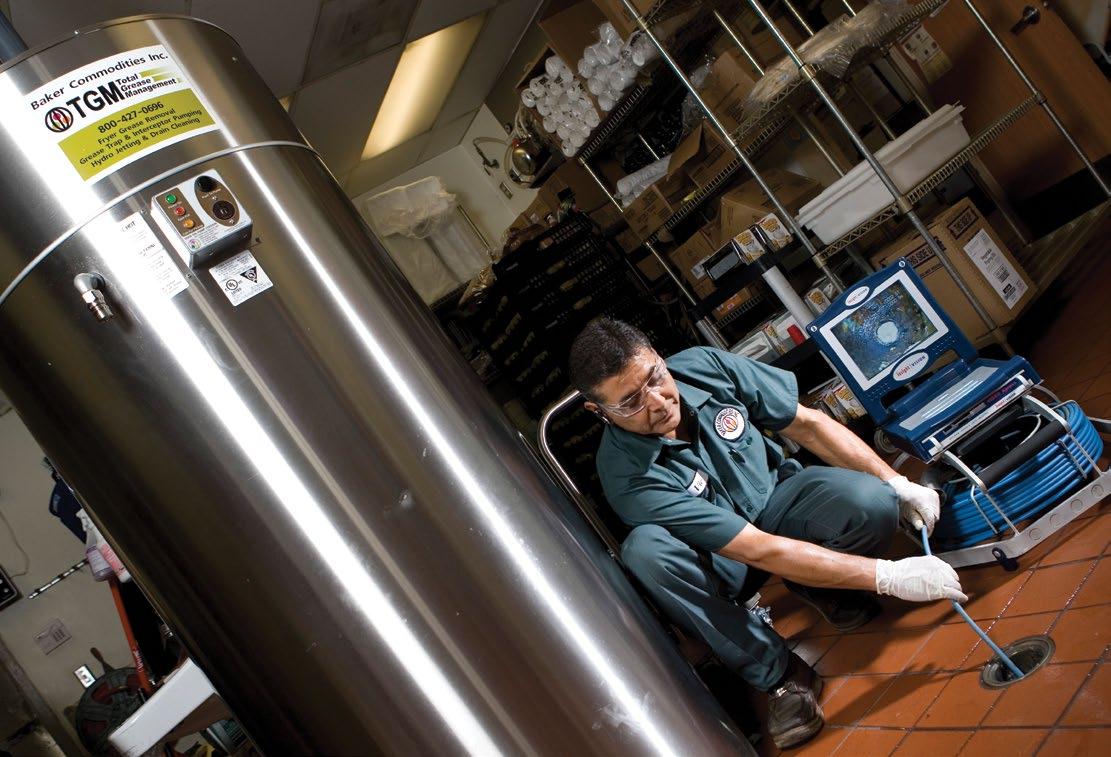
PHOTO: BAKER COMMODITIES
Fortunately, policymakers are beginning to recognize the importance of waste-based feedstocks, which contribute to a circular economy while supporting numerous other economic sectors.
Designed to incentivize domestic biofuels producers to make fuels with the lowest carbon emissions possible, policies like the section 45Z clean fuel production credit create tax incentives that privilege the use of waste-based domestic feedstocks including UCO and tallow because of their exceptionally low carbon-intensity (CI) scores. And recent changes to state-level incentives, like California’s Low Carbon Fuel Standard, prioritize waste-based feedstocks citing concerns that the wrong tax incentives could push farmers to plant crops for fuel instead of for food.
While the consumption of food will continue as long as people inhabit the Earth, creating a steady supply of UCO, grease and recovered fats that can be collected and repurposed, the availability of cheap, crop-based virgin feedstocks is less certain—not to mention the effect those feedstocks can have on the food supply.
The Food Vs. Fuel Debate
Epitomizing that concern, one of the most often-heard debates in the renewable fuel industry is the “food vs. fuel” debate. Waste-based feedstocks are the only segment of the renewable fuels landscape that sidesteps this altogether.
UCO, grease and animal byproducts have no effect on the food supply, while virgin-oil feedstocks can come with public-
relations trade-offs including land use, crop allocation and price pressures that can ripple across the food supply.
By contrast, UCO and recovered fats are already part of a completed lifecycle. They’ve been produced and consumed so, without this process, they would otherwise be discarded. Redirecting them into fuel production doesn’t displace food— instead, it adds value to something that already exists while helping prevent carbon and greenhouse-gas emissions that could result from sending these materials to a landfill.
In policy discussions, rendering offers a clear path to expanding renewable fuel production without triggering the same concerns tied to food supply and agricultural needs. In the public conversation, it’s a straightforward story: turning waste into energy without taking anything off the table.
How the Rendering Industry Collects Feedstocks
While most readers of Biobased Diesel® understand feedstocks, the infrastructure and resources needed to produce them reliably at scale is less well known.
The collection of UCO, grease waste and fat trimming takes constant coordination with restaurants, butchers, grocery stores, farmers and other commercial kitchens. Each of these generates different types of fats, oils and greases with varying volumes, quality and collection needs. Managing this variability requires both operational expertise and deep experience in handling different types of waste.
PHOTO: BAKER COMMODITIES
Additionally, personnel and labor resources are in constant demand so they can physically visit these locations to collect the waste material.
Once these materials are collected, they are upcycled into consistent, specification-ready feedstocks that can be used in the refining process. According to the California Air Resources Board, UCO is considered one of the lowest CI feedstocks available, often falling below 20 gCO2e/MJ depending on processing and transportation inputs, when compared to petroleum diesel at over 90. At Baker, we strive to recycle feedstocks to provide the best and lowest impact to our environment.
The infrastructure needed to make this happen was built over decades and has no replacement system. It represents years of investment, operational knowledge and a physical presence in local markets. From marketing activities to fielding calls to scheduling pickups, this complex and wide-reaching network is in constant motion. All of this happens while managing a waste stream that might otherwise end up in sewers or landfills and is instead turned into a valuable resource.
Domestic Rendering Infrastructure, Energy Security
As supply chains undergo increasing scrutiny, and domestic energy independence becomes a policy requirement, rendering networks are a strategic national asset that doesn’t get enough attention.
UCO and recovered fats are generated, collected and processed domestically. This happens in every city and town in the country and creates an intrinsically resilient supply chain that is less prone to shocks and bottlenecks.
This distributed, local network is a major advantage. Unlike feedstock categories that rely on imports, recovered fats and oils are a byproduct of everyday domestic activity. This makes the supply more stable, more predictable and less exposed to geopolitical changes.
Policymakers who are focused on energy security should look closely at the rendering infrastructure as it’s as equally important as refining capacity and pipeline networks.
Additionally, domestic sourcing means that supply-chain emissions are minimized when compared to other sources of fuel often shipped from across the world.
Environmental Benefits of Rendering
On the environmental side, rendering provides three connected benefits. First, it keeps fats, oils and grease out of local wastewater systems where they can cause real damage. Grease blockages in the sewer systems frequently rupture pipes and drive maintenance costs up. Greases at wastewater-treatment plants cause problems for the treatment process and can create environmental issues downstream when they are discharged. That’s one of the reasons why the U.S. EPA actively pushes wastewater operators to enforce stricter collection of grease and fats prior to entering sewer systems at all.
Second, rendering turns waste into valuable commodities. We upcycle these materials into usable feedstocks like tallow, yellow grease and brown grease. On the other hand, sending these items to the landfill only serves to move the problem while wasting inputs that could have been used.
Third, rendering helps reduce carbon and greenhouse gases by preventing organic decomposition in landfills and by supplying some of the lowest-CI feedstocks available today.
If the goal is to lower lifecycle emissions, rendering is one of the most practical tools already in place.
Rendering Is Essential to the Growth of Renewable Fuels
As the renewable fuels industry continues to grow, it is essential that the rendering industry continues to grow with it. Policymakers, investors and the press have an opportunity to help ensure the availability of waste-based feedstocks for biodiesel, renewable diesel and SAF is met.
The rendering industry is the infrastructure that makes largescale waste-to-fuel conversion possible. The more support, investment and incentives that can be poured into the industry, the better the U.S. will be positioned for energy independence.
This industry was built on the understanding that waste is a resource. The next step is to ensure the systems that collect and process waste receive the attention and investment needed to grow and continue producing at scale. In doing so, we will be able to further support the domestic economy, national security and the environment.
Recognizing rendering infrastructure as a strategic asset will help the U.S. strengthen renewable fuel production, reduce dependence on imported feedstocks, protect local communities from waste burdens and turn everyday domestic byproducts into a long-term energy advantage.
Author: Jimmy Andreoli II Assistant Vice President, Public Relations/Legislative Affairs Baker Commodities 323-268-2801
pr@bakercommodities.com
PHOTO: BAKER COMMODITIES
Beyond Detection
How Otodata’s new dashboard feature helps UCO collectors measure and map theft.
By Eric Wise
My article in the Winter 2026 edition of Biobased Diesel® described how Otodata is making tank telemetry accessible to used cooking oil (UCO) collectors of every size. Since then, Otodata has rolled out a new dashboard feature that deserves its own conversation, one that addresses a quiet but persistent problem in UCO operations—the inability of telemetry data alone to distinguish a legitimate collection from a theft. Now, a simple classification tool turns tank telemetry into theft insight.
The new feature is straightforward in concept but powerful in practice. When a tank’s level drops, Otodata’s dashboard now allows collectors to flag the event as either a valid collection (one performed by their own company) or a theft (one performed by someone else). It’s a small piece of interface with significant implications—because for the first time, collectors can not only detect drawdown events, but also categorize, count and analyze them.
For an industry where theft losses are typically estimated rather than measured, that distinction matters.
The Limits of Pure Telemetry
Tank telemetry is excellent at detecting what is happening inside a tank: rising or falling levels, sudden drops and
gradual fills. What it cannot do by itself is explain why those changes happened.
Consider a typical scenario. A monitor reports that a tank dropped from 80 percent full to 35 percent full overnight. Was that one of the company’s trucks running an emergency pickup that wasn’t on the official route? Was it a contracted hauler completing a service on the company’s behalf? Or was it an unauthorized truck siphoning oil from the tank under cover of darkness?
Telemetry cannot answer those questions on its own. Even GPS-enabled monitors—which can confirm whether a device has moved, but not who moved it—leave gaps. The signature of a theft and that of a legitimate collection often look nearly identical from a sensor’s point of view: a fast, large draw on the tank.
The result is that collectors have historically had to choose between two imperfect approaches. They could treat every unexplained drawdown as a possible theft, which generates noise and false alarms. Or they could ignore drawdowns that didn’t match an obvious red flag, which allows real thefts to slip past unrecorded. Neither approach produces a reliable picture of how much theft is actually occurring.
Closing the Loop: Valid Collection or Theft?
Otodata’s new classification feature closes that loop by combining the strength of telemetry—real-time event detection—with the irreplaceable value of human knowledge: the dispatcher or operations manager who can confirm whether an event matches the day’s actual collection activity.
When a drawdown event appears in the Otodata dashboard, the user is presented with a simple option: Was this collection yours, or wasn’t it? With a single click, the event is tagged. Over time, those tags accumulate into a running ledger of every drawdown the system has ever seen, sorted into legitimate activity on one side and confirmed theft on the other.
This is exactly the kind of data that has been missing in UCO operations. Most collectors today track theft anecdotally—a driver mentions an unexpectedly empty tank, an account manager hears a complaint from a restaurant about an unfamiliar truck, a steady producer suddenly produces much less. Anecdotes are useful, but they can’t add up to numbers. They don’t reveal trends or appear in reports.
The Otodata classification feature changes this by quietly building a list that does add up to numbers. And once collectors have numbers, they can start making decisions based on evidence.
From Suspicions to a Theft Profile
Once classification data accumulates, collectors start to see things like:
• Which specific sites are being hit repeatedly, even when individual incidents seemed isolated.
• Which geographic areas concentrate the most theft activity.
• What days and times are likely for theft.
• How theft volume changes seasonally or against UCO market prices.
• Whether theft is rising or falling year over year.
This kind of information is the practical foundation for prevention. A single stolen tank is a frustration. A documented pattern of three or four thefts at the same restaurant cluster, all on Sunday nights between 2 a.m. and 5 a.m., is a signal that can drive a real response—whether that means installing additional security, adjusting collection schedules, coordinating with neighboring collectors or providing credible information to local law enforcement.
Without measurement, theft prevention is reactive. With measurement, it becomes strategic.
Beyond the Restaurant: Monitoring Bulk Tanks at the Plant
One thing that sets Otodata apart in the UCO-monitoring space is its support for the large bulk tanks that sit at collector facilities. Most monitoring vendors in the industry focus exclusively on the restaurant side—the smaller tanks behind kitchens—and leave the plant side unmonitored or handled by a different system entirely. Otodata covers both with the same platform.
For theft tracking, that capability matters more than it might first appear. With monitors on both the restaurant tanks and the bulk tanks at the plant, collectors can begin to reconcile the two ends of the chain. The system can show how much UCO
left a route’s restaurant tanks on a given day and how much actually landed in the plant’s receiving tanks that evening. Meaningful discrepancies—beyond what is reasonable for intruck residue or measurement variance—become visible.
That opens a second front for theft accountability. Restaurant-side classification catches unauthorized collections at the source. Bulk-tank reconciliation catches losses that occur in transit: skimming, unrecorded transfers or errors in receiving paperwork. Together, the two layers give collectors something the industry has rarely had—a defensible measure of total UCO loss across the entire operation.
Bigger Implications: Insurance, Law Enforcement, Supply Chain Trust
Quantified theft data has value well beyond internal operations. Collectors who experience meaningful theft losses often discover that their ability to recover those losses—through insurance claims, civil action or law-enforcement engagement— depends heavily on documentation. Vague reports of “ongoing theft” are difficult to act on. Detailed, time-stamped records of specific incidents with confirmed volumes and locations are far more credible.
The classification feature also supports the broader push for transparency across the biobased diesel value chain. Renewable diesel and biodiesel producers increasingly need confidence in the chain of custody for the feedstocks they purchase. Collectors who can demonstrate not only how much UCO they recovered, but also how rigorously they tracked anomalies in that recovery, have a credibility advantage that can matter at the negotiating table.
The Right Time for Better Theft Data
UCO is more valuable today than it has ever been, and the financial incentive for theft has scaled along with it. At the same time, downstream buyers are demanding more rigorous documentation, and operating margins for collectors are under continuous pressure from labor and fuel costs.
In that environment, the ability to track theft accurately is no longer a curiosity—it is part of running a serious modern UCO operation. Otodata’s new classification feature gives collectors the tool they need to do that tracking with minimal effort, building on the telemetry investment they have already made.
Detection has been solved. Now collectors can begin to do something arguably more valuable: measure, understand and ultimately reduce the theft they have always known was happening but could never quite count.
Author: Eric Wise Vice President of Commercial Solutions Otodata Inc. 412-779-9998
ewise@otodata.com
Get accurate level data to detect theft and optimize efficiency, all for one low monthly
No Upfront Cost
Get our super accurate radar monitor for no money down.
Free On-Site Install
We’ll drive out to every site and install our monitor for you free of charge. Dashboard Setup
We’ll set it up for you! Just sit back and watch the data flow in.
Reduce Catalyst Costs and Economize Your Biodiesel Process
With nearly 25 years of experience building and optimizing biodiesel production facilities, CPMICrown can help your plant maximize savings and yields as production ramps back up.
By Nicole Durch
Operating a biodiesel plant profitably can be challenging given the complexity and ever-evolving regulatory environment. In early 2026, the industry awaited key policy developments. In February, the U.S. Department of the Treasury released proposed rules for the section 45Z clean fuel production credit after the biodiesel blenders tax credit (BTC) expired at the end of 2024. Additionally, in late March, the U.S. EPA issued renewable volume obligations (RVOs) under the Renewable Fuel Standard program, which are at historic levels. Furthermore, the EPA said it was reallocating 70 percent of the waived gallons from 2023-’25 that were granted in its smallrefinery exemption (SRE) decision in August 2025.
While policy clarity is now in sight, the uncertainty biodiesel producers experienced the previous 18 months forced difficult decisions to shut down or run far below prior-year production levels. Iowa represents roughly 20 percent of U.S. biodiesel production capacity. The amount of Iowa biodiesel produced in 2025 was 244 million gallons, down by 31 percent from the previous year. The 244 million gallons represent roughly 60 percent of the total biodiesel production capacity for the state, suggesting many of the facilities operated at reduced capacity— and some may not have operated at all.
When margins are thin, projects that help reduce operating cost with a quick payback are important. Conversely, when
CPM|Crown’s innovative ACRE process maximizes reaction equilibrium and contact time between the methanol, sodium methoxide and refined oil. PHOTO: CPM|CROWN
improved margins coupled with record volume requirements follow a prolonged period of policy and economic uncertainty, reducing operating costs can help biodiesel producers recover that much faster.
Catalyst usage and energy consumption are part of any biodiesel production process. Reducing these operating expenses helps boost long-term success for biodiesel producers.
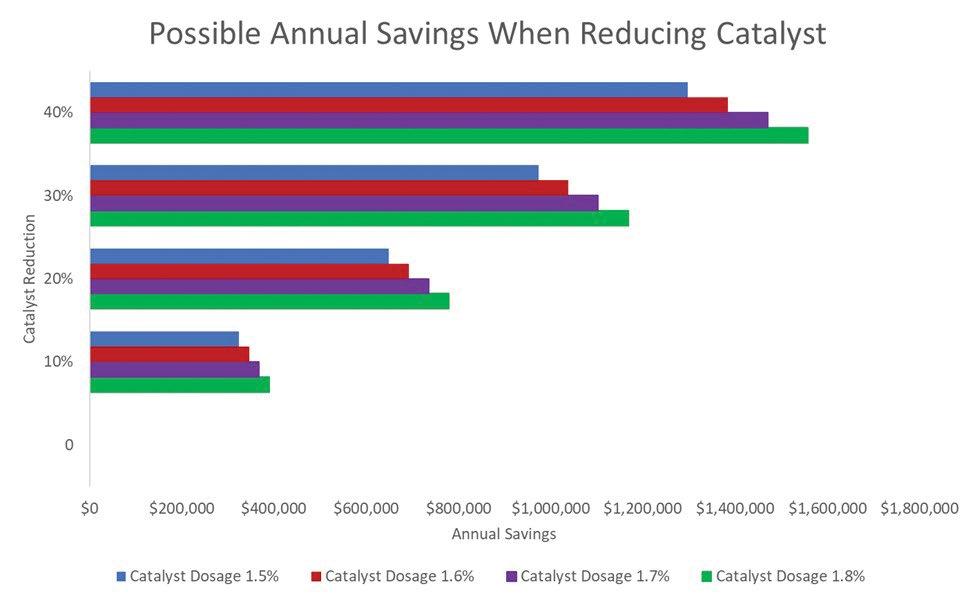
Maximizing the utilization of catalyst to its fullest extent is one of the most effective ways to reduce operating costs in a biodiesel plant. Sodium methoxide is a commonly used catalyst. Assuming prices ranging from 63 cents a pound to 82 cents a pound for sodium methoxide, reducing catalyst usage by 20 percent for a plant utilizing 500 metric tons per day of feedstock, a $660,000 to $880,000 annual savings can be achieved. Additional assumptions in this calculation include 350 operational days per year with methanol prices at $1.49 per gallon and a hydrochloric-acid (35 percent) cost of 23 cents per pound.
CPM|Crown offers an innovative process—Advanced Catalyst Reduction and Economization—that maximizes reaction equilibrium and contact time between the methanol, sodium methoxide and refined oil, resulting in significantly higher utilization of the catalyst. The ACRE process reduces the amount of acid required to neutralize the catalyst after the reaction step and provides a higher purity of glycerin with less salt content.
Biodiesel purity has become an important parameter in countries implementing higher blend ratios. In 2023, Brazil increased the blending mandate for biodiesel from 10 percent to 12 percent with the intent to increase the blend by 1 percent annually to achieve 15 percent by 2026. The South American country surpassed
Assumptions: Capacity, 500 metric tons per day feed operated 350 days a year. Catalyst cost, 62 cents a pound. Methanol cost, $1.49 per gallon. Hydrochloric-acid (35 percent) cost, 23 cents a pound.
SOURCE: CPM|CROWN
When margins are thin, projects that help reduce operating cost with a quick payback are important. “
this goal and increased the biodiesel mandate to 15 percent in 2025. With the increase in biodiesel blending, the allowable monoglyceride content in the biodiesel went from 0.7 percent in 2023 to 0.5 percent in 2025.
There are several solutions for removing monoglycerides including crystallization combined with filtration, distillation or driving the esterification reaction to further completion. Of these options, driving the reaction toward completion can provide the best yield with the least energy expenditure.
Strategically placed heat exchangers can increase heat recovery, reducing steam usage in biodiesel production. This can provide additional value in regions where the cost of producing steam is high due to water limitations or increased energy prices. Modeling tools can be used to identify and optimize heat recovery. Trusted equipment suppliers can also provide this capability.
Author: Nicole Durch Sales & Business Development Manager
CPM|Crown 651-894-6025
nicole.durch@cpm.net
The biodiesel regulatory environment has been challenging and it is improving. Investment in reducing operational costs can have a quick payback and result in improved future margins, reducing the impact of evolving regulations.
CPM|Crown has a proven process for biodiesel production with one of the lowest total costs to operate. Dozens of such facilities have been built globally since 2002, resulting in continual improvements to the process and contributing to an ever-growing knowledge base. Work with a team of experts today to aid in success for tomorrow. Work with Crown’s team of experts and LifeCycle360™ support services to improve your operations today.
Improving Renewable Diesel Pretreatment Filtration with HighPermeability Silica-Gel Adsorbents
High solids loading and rising differential pressure can make bleaching filtration the throughput-limiting step in renewable diesel pretreatment. Sorbsil® R60F improves filtration rate while maintaining phosphorus and total-metals control vs. activated bleaching earth, with measurable yield benefits from lower spent-cake oil retention.
By Miguel Monsanto and Arnold Wong
Feedstock pretreatment is a critical step in renewable diesel production, using degumming and bleaching to remove catalyst poisons from crude fats, oils and greases before hydrotreating. During bleaching, adsorbents reduce metals, phosphorus and other trace contaminants via adsorption and filtration to meet hydrotreater-catalyst specifications. Silica-gel adsorbents such as Sorbsil® are selected where operators need both consistent contaminant control and strong filterability.
Filtration as the Bottleneck
In renewable diesel pretreatment, filtration capacity is often the practical bottleneck: rising differential pressure,
frequent cake discharge and short cycle times can limit throughput while increasing labor and wastehandling costs. Sorbsil® R60F is a high-permeability silica-gel adsorbent engineered to maintain contaminantremoval performance while enabling higher filtration rates and longer filter cycles.
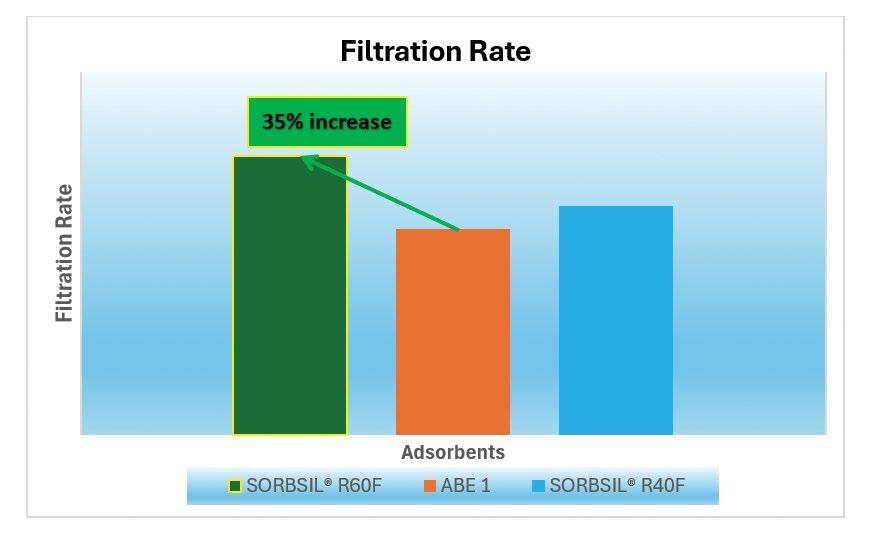
In laboratory testing vs. activated bleaching earth (ABE), Sorbsil® R60F delivered a 35 percent higher filtrate rate (Figure 1). At the same time, the data presented below show that equivalent phosphorus and total-metals reduction can be achieved at a lower dosage rate, reducing catalyst-poison carryover to downstream hydrotreating.
Performance Data: Phosphorus, Metals Control at Lower Dosage Rate
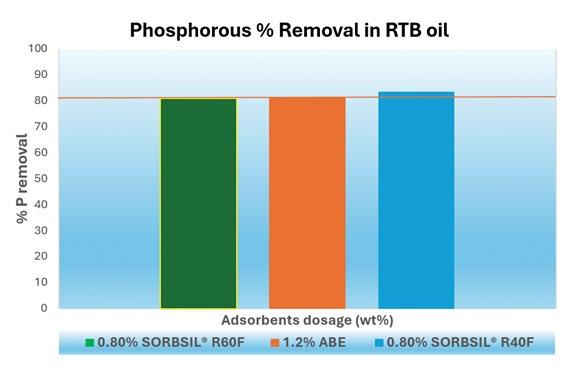
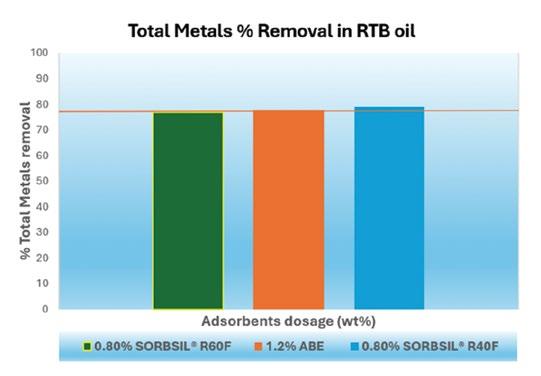
In ready-to-bleach (RTB) oils, performance data indicate that Sorbsil® R60F achieved contaminant reduction comparable to ABE at a lower dosage rate: 0.8 percent for Sorbsil® R60F vs. 1.2 percent for ABE for both phosphorus and total metals (Figures 2a and 2b).
The following is a summary of the test conditions:
In addition to throughput, spentcake oil retention is a direct yield lever. Under the dosage conditions shown, Sorbsil® R60F exhibited approximately 1.5 kilograms (kg) of oil loss per metric ton (MT) of oil produced, compared with approximately 4 kg/MT for ABE. Lower oil retained in the cake reduces product loss and lessens the volume burden associated with disposal.
Operational Takeaways
For operating teams, the decision typically comes down to how an
Figure 1: Filtration rate comparison for Sorbsil® R60F vs. ABE in laboratory testing.
SOURCE: PQ CORP.
adsorbent affects filtration capacity, yield, waste generation and downstream catalyst protection. Practical takeaways associated with high-permeability silica-gel adsorbents such as Sorbsil® R60F include:
• Higher permeability supports longer filter cycles and higher effective filtration capacity, reducing interruptions for cake discharge.
• Comparable phosphorus and total-metals removal at lower dosage rates vs. ABE, helping protect downstream hydrotreating catalysts.
• Lower solids addition can reduce filter-cake generation, decreasing waste handling and disposal costs.
• Lower oil retention in spent cake helps improve overall yield and reduces value loss to waste.
• In many applications, operation without body feed is possible, simplifying dosing and improving filterability.
• Reduced catalyst poisons in pretreated oil can extend catalyst run length and stabilize unit performance in renewable diesel service.
Conclusion
For renewable diesel pretreatment trains constrained by filtration capacity, high-permeability silica gel offers a practical lever to increase run time and stabilize operations without trading off contaminant control. In RTB oils, Sorbsil® R60F demonstrated phosphorus and total-metals reduction comparable to ABE at a lower dosage rate (0.8 percent vs.
Authors: Miguel Monsanto Product Development Manager, Global Silicas PQ Corp. miguel.monsanto@pqcorp.com
1.2 percent) while also reducing spent-cake oil retention (approximately 1.5 kg/MT vs. 4 kg/MT). Taken together, these outcomes indicate a pathway for higher effective throughput, improved yield and a lower waste-handling burden— supporting longer and more consistent hydrotreating-catalyst performance. In practice, the best fit is confirmed through a short plant trial that tracks filter differential pressure and cycle time alongside dosage rate, cake generation/oil retention, and outlet phosphorus/metals vs. catalyst-performance targets.
For renewable diesel pretreatment trains constrained by filtration capacity, high-permeability silica gel offers a practical lever to increase run time and stabilize operations without trading off contaminant control. “
Arnold Wong Global Marketing Director, Global Silicas PQ Corp.
arnold.wong@pqcorp.com
Figures 2a-2b: Phosphorus removal and total-metals removal vs. dosage rate for Sorbsil® R60F compared with ABE in RTB oil.
SOURCE: PQ CORP.
Improving Renewable Diesel Processing
Improving Renewable Diesel Processing
Sorbsil® Silica Adsorbents Are Key
Sorbsil® Silica Adsorbents Are Key
Sorbsil® high adsorption capacity for many impurities, including metals and phosphorous compounds.
Sorbsil® high adsorptiion cappaccity for many impurities, includiing metals annd phosphorous compoundss.
Ideal for use in renewable diesel and biodiesel processing for the pre-treatment of oils, fats and waste products, such as UCO, to extend catalyst life and minimize catalyst consumption.
Ideal for use in renewable diesel and biodiesel processing for the pre-treatment of oils, fats and waste products, such as UCO, to extend catalyst life and minimize catalyst consumption.
Sorbsil® silica hydrogels also aid in the post-treatment "polishing" of products.
Sorbsil® silica
Advantages of Sorbsil® Silicas
Cost-Effectiveness
Decrease cost by increased operational throughput with lower oil losses
Impurities Removal
Effectively remove impurities, such as phosphorus and metals, at lower dosages
Quality
High purity and reliable product with a global supply network
Technical inquiries can also be directed to: oilprocessing@pqcorp.com www.pqcorp.com
"Biobased Academy® is an excellent way to expose professionals to the environmental, health, safety, and operational benefits of transitioning to biobased products that are better for our health and perform as well, or better, than traditional products."
Sarah Mark, BCFP, BCPP
Fleet
& Facilities Manager
Assistant Director of Public Works
City of Moline, Illinois
The HEFA Feedstock Crunch Is Coming for SAF
Is alcohol-to-jet the easy answer?
By Mathias Bøje Madsen
Aviation is critical infrastructure for global connectivity and economic growth—but it is also one of the hardest sectors to decarbonize. Sustainable aviation fuel (SAF) has emerged as the leading solution. Driven by expanding regulation, particularly in the EU, SAF demand is rising fast, placing growing pressure on feedstock supply and accelerating the need for alternative conversion pathways. As the hydroprocessed esters and fatty acids (HEFA) pathway meets supply bottlenecks, alcohol-to-jet (ATJ) is increasingly looking like a viable, bankable addition.
Demand to Outpace HEFA
Feedstock Availability
To date, HEFA remains the only commercialized SAF production pathway. It works by converting lipid-based feedstocks such as used cooking oil (UCO) into drop-in jet fuel, leveraging existing refinery assets across a wide range of feedstock suppliers. This model was already proven for renewable diesel and is now being scaled even further to accommodate a growing demand for SAF.
Even though novel feedstocks such as intermediate crops are being introduced to this pathway, the math speaks for itself: The HEFA pathway will reach a feedstock-supply crunch causing market players to look for alternatives. Among a wide range of innovative pathways to SAF, one of them stands out in particular as the natural choice after HEFA.
ATJ: The Most Cost-Effective Alternative to HEFA
ATJ benefits from an already established supply chain for ethanol production and distribution while providing the most
cost-effective alternative to HEFA. Worldwide existing SAF producers have come to the same conclusion and are positioning themselves for ATJ to become the dominating pathway for the future of SAF.
While refiners seek to grow their SAF business, new players are also entering the market. In an era of geopolitical uncertainty, ethanol producers are actively looking to diversify—and SAF is predicted to be their most attractive growth opportunity. Built in record time and known for their entrepreneurial drive, ethanol producers have a strong track record of innovation, with U.S. producers in particular delivering consistent year-on-year productivity gains.
In recent years, reducing the carbon intensity (CI) has been another key focus area, and various initiatives are being explored. Improving farming practices while introducing carbon capture and storage are seen as key levers in increasing the value of ethanol and making it more attractive as a feedstock for SAF. All these initiatives are placing ATJ in the front row for future SAF production.
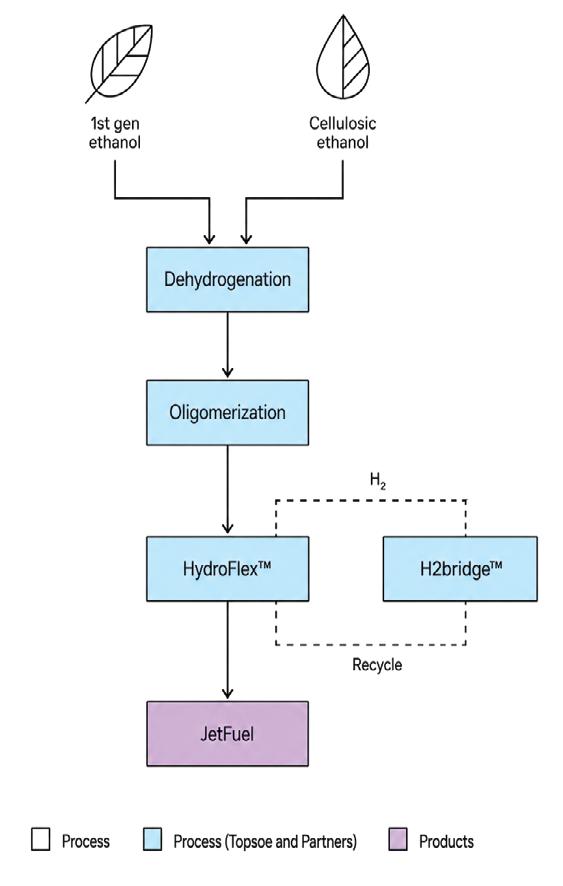
ATJet™ Powered by Proven HydroFlex™, H2Bridge™ Solutions
ATJet™, a solution from Topsoe, was specifically designed to deliver competitive levelized cost of SAF from ethanol by maximizing SAF yield while minimizing capital expenditure (capex). The solution integrates three core components: ethanol-to-ethylene (ETE) conversion, oligomerization, and the established HydroFlex™ and H2Bridge™ technologies already in commercial use for SAF production.
The first step in the ATJ process is dehydration of ethanol into ethylene—a well-established technology in the chemicals industry, where bioethylene serves as a building block for polymer production. For ATJet™, this step is delivered in partnership between Topsoe and leading ETE technology providers, combining complementary competencies to offer a reliable and cost-effective integrated solution.
While bioethylene has value in polymer production, the ATJ pathway directs it toward SAF through selective oligomerization. Catalyst selectivity at this stage is critical for maximizing SAF yield. The oligomerization platform integrated into ATJet™ draws on extensive experience in refinery catalyst development.
A key design principle of ATJet™ is minimizing complexity and cost across the integrated solution. H2Bridge™ addresses
one of the more significant cost drivers in SAF production by recycling coproducts to generate renewable hydrogen on-site, removing the need to import green hydrogen. This integration of hydrogen and fuels processing reflects a broad track record in commercializing such combined systems.
Many ATJ Projects in Countries Importing, Exporting Ethanol
ATJ projects are emerging globally, with activity concentrated in countries that either produce or import ethanol for SAF production. Ethanol output has grown significantly in markets like Brazil and India, historically driven by gasoline blending, and producers are increasingly looking to SAF as an alternative demand outlet to sustain industry growth.
Projects vary considerably in scale and setup. Many are fast-paced and innovative, often located adjacent to existing ethanol plants to capture operational synergies, with SAF capacities sized accordingly. Others, typically led by refiners, take a more centralized approach, importing ethanol from multiple sources into a single large facility. This model offers economies of scale but must balance investment and transportation costs as well as CI impact.
The ATJet™ process can be configured to suit both approaches. Key design variables—including feedstock origin, plant scale and site conditions—are optimized to achieve competitive levelized cost of SAF. Regulatory frameworks and incentive structures also differ significantly by region: Whether ethanol is used domestically in the U.S. or exported from Brazil to Japan, understanding the local business case is essential to arriving at the right process design for each project.
Higher Fuel Prices Increase Focus on Energy Diversity, Security
Jet-fuel prices have doubled amid the Middle East conflict and Strait of Hormuz disruptions, with European airports facing potential supply shortages. The crisis has thrown Europe’s dependence on imported fossil fuels into sharp relief. For many, it is a wake-up call—and an opportunity to accelerate investment in domestic SAF capacity, strengthening energy independence and security while advancing decarbonization. This is particularly pressing for defense, where aviation is central and supply-chain control is increasingly critical in a deglobalized world.
Agricultural residues could be a cornerstone of European SAF supply. Europe’s farmland holds significant potential for cellulosic ethanol production, with a growing number of technology suppliers and project developers working to unlock it. Crucially, agricultural residues are already ReFuelEU aviation-compliant and can be converted into ethanol and onward to SAF at a competitive cost.
The opportunity is clear—connecting European farmers to aviation customers and domestic defense needs through a truly local supply chain. As the push for energy independence intensifies, this is a chance Europe cannot afford to miss.
The Value of a Trusted, Experienced SAF Partner
Working with a technology and catalyst provider like Topsoe allows those exploring ATJ to harvest decades of experience in catalyst development, hydroprocessing and hydrogen technology. As both a licensor and catalyst provider, Topsoe works closely with refiners, ethanol producers and project developers across the full project lifecycle, from feasibility and process design through to commissioning and operations.
This breadth of experience across feedstocks, regions and project configurations means that regardless of project setup, the relevant expertise and technology are available to optimize the ATJ process for the lowest levelized cost of SAF. For those looking to evaluate or advance an ATJ project, Topsoe is positioned to provide the technical and commercial insight needed to move from concept to commercial production.
Author: Mathias Bøje Madsen Business Development Manager Topsoe mabm@topsoe.com
DESTINATION NET ZERO
Countries dependent on crude oil imports to produce jet fuel face growing supply uncertainties. Diversifying aviation fuel production with sustainable aviation fuel (SAF) strengthens energy security. This creates new opportunities for refineries. Our proven technologies enable quick-start SAF production from a wide range of feedstocks, supporting both energy resilience and the decarbonization of aviation. Join Destination Net Zero. Get
Reiter USA
Trading Software Consulting
Sell your UCO effortlessly with our streamlined trading system and network of buyers.
Safeguard your client data while complying with regulations.
Expert guidance to grow a grease business, from licensing and regulations to operational best practices.
Fully Automate Your Biodiesel Operation from Feedstock to RINs
Most biodiesel compliance teams are still managing RFS, LCFS and ISCC obligations across disconnected systems, manual spreadsheets and siloed data—leaving them exposed to data challenges, mistakes, credit miscalculations and audit risk. Rimba eliminates that exposure entirely for biofuel producers, fuel offtakers and feedstock aggregators.
By Timothy Daniel
Biodiesel producers today face a compliance environment that is more demanding, more data-intensive and less forgiving than ever before. The U.S. federal Renewable Fuel Standard, California Low Carbon Fuel Standard, International Sustainability and Carbon Certification, section 45Z and the EU Renewable Energy Directive (RED III) each requires continuous tracking, precise documentation and audit-ready records across a supply chain that spans dozens of handoffs— from feedstock origin to final renewable identification number (RIN) credit submission. Most operations are still managing this across disconnected systems, manual spreadsheets and siloed data sources. The exposure that creates is real: invalid credits, RIN clawbacks and regulatory penalties that no operation can afford.
Rimba is a data platform to simplify managing sustainable feedstocks and biofuels—connecting every data source across your operation into an automated and traceable workflow. Today, Rimba reduces data workload by up to 80 percent.
The Problem Rimba Solves
Compliance and certification for biofuels is not a documentation problem—it is a data-infrastructure problem. Scale tickets live in one system, bills of lading (BOLs) in another. Feedstock-sustainability certificates in email threads, thousands of BOLs and sustainability declarations each month are received in spreadsheets or PDFs, and each piece of data has to be entered manually into an Excel sheet or enterprise resource planning (ERP) system. When a verifier asks for data, your team spends days reconciling what should have been connected from the start.
Every disconnected handoff between teams internally is a potential gap—and in the RFS and LCFS programs, gaps have caused penalties such as invalid credits, credit clawbacks and regulatory exposure. Rimba closes those gaps by acting as the connective layer across your entire operation, from the first weight ticket at feedstock intake to the final compliance report submitted to governing bodies like ISCC, U.S. EPA or California Air Resources Board.
What Rimba Automates for Biodiesel Operations
Rimba connects to the systems your team already uses (e.g. SAP, NetSuite, Aveva, Ignition, SharePoint, Hobo Link, and other SCADA systems/data historian) and builds automated data workflows on top of them.
At the feedstock level, Rimba extracts data from PDFs, images and even handwritten notes. Users just need to upload such documents into the platform, and it automatically pulls the relevant data. Data that is incorrect or missing would be flagged for the user to review and correct. Next, Rimba takes that data and populates your reporting template/Excel sheet while providing the link to the source document. The result is full traceability with the level of granularity that ISCC, RFS and LCFS auditors require.
One of North America’s largest renewable diesel producers and an active participant in the biofuel markets is using Rimba to bring automation to its feedstock supply-chain data management. With Rimba’s platform, the compliance teams can trace feedstock provenance, quickly validate data, reduce reconciliation time and strengthen their position in ISCC, LCFS and RFS credit markets.
On the regulatory side, Rimba monitors RFS-compliance metrics continuously against EPA requirements, aggregating and validating production and feedstock data across siloed systems, flagging discrepancies and generating audit-ready RIN reports automatically. For ISCC, data is handled through automated mass-balance calculations across multiple feedstock streams to ensure compliance with EU RED III requirements. Rimba also checks incoming sustainability declarations (SD) against the ISCC certificate database to ensure SD validity.
Beyond compliance reporting, Rimba connects directly to SCADA systems to ingest emissions data in real time for airpermit monitoring, flagging exceedances before they become violations. Its report-generation module replicates any existing Excel compliance template—with formulas, formatting and
data validation preserved—and populates it continuously with live data ready to download in Excel or CSV for regulatory submission. Across all of this, real-time alerts and daily planthealth monitoring detect data gaps the moment they occur.
Built to Work with What You Already Have
With Rimba, you do not have to replace your existing systems. It integrates with them. Whether your production data lives in Ignition, your enterprise data in SAP or NetSuite, your operational documents in SharePoint or your field data in Hobo Link, Rimba pulls it all into a unified compliance workflow automatically. The result is a single source of truth across your entire biofuel operation, accessible through web-based dashboards, email summaries and downloadable Excel reports.
What Producers Actually Gain
The business case for Rimba is straightforward. Traceability and accounting violations carry significant financial and operational consequences such as invalid RINs, credit clawbacks and potential permit issues that disrupt operations. LCFS credit miscalculations can result in material financial losses. ISCC audit failures put certification, customer trust and market access at risk.
Justin Kennard, the director of development and compliance with Morrow Renewables, says Rimba’s responsiveness, attention
workflows and compliance needs. Rimba’s AI-driven tools have improved our operational efficiency, increased our confidence in reporting and analytics, and meaningfully reduced the potential for human error. Rimba has quickly become a critical part of how we manage and trust our data.”
As blending mandates tighten and regulatory scrutiny intensifies, managing biodiesel compliance across multiple feedstock origins, production sites and regulatory frameworks simultaneously demands infrastructure that goes far beyond what spreadsheets and disconnected systems can deliver. The gap between producers with automated compliance infrastructure and those without will only widen. Rimba closes that gap.
For biodiesel producers operating in a market where a single data gap can unwind months of compliance work, Rimba provides the infrastructure to stay ahead—complete feedstock visibility, automated reporting across RFS, LCFS, ISCC and beyond, and an audit trail that is always ready when it matters most.
Author: Timothy Daniel CEO, Rimba 979-661-9462
Continuous data validation. Audit ready reports.
US EPA’s Bold New Course for the Renewable Fuel Standard
With long-sought policy certainty now in hand, time has come to reclaim the growth vision adopted years ago.
By Donnell Rehagen
The biodiesel, renewable diesel and sustainable aviation fuel (SAF) industry is enjoying a rare level of policy certainty. After a year of waiting for rules on the Renewable Fuel Standard and section 45Z clean fuel production credit, we now have clear signals that support our production capacity, feedstock investments and continued growth.
It’s easy to say that U.S. EPA set final 2026-’27 RFS volumes at historic levels—more than 60 percent higher than the 2025 volume. But more than that, for the first time EPA prioritized farm security, rural economic prosperity and energy independence as the program’s primary goals.
Clean Fuels has always argued that the RFS biomass-based diesel volumes should be set to drive growth in the biodiesel and renewable diesel sector. In 2020, our organization came together and endorsed a vision to grow from roughly 2 billion gallons to 6 billion gallons of production by 2030. EPA’s 2026 RFS volumes will require just over 6 billion gallons of biomassbased diesel for this year—and provide room to continue growing in 2027.
EPA set final volumes that exceed the industry’s unified request for 5.25 billion gallons for 2026. In the end, the agency chose final volumes directly in line with the production and feedstock supplies that our industry agreed were achievable.
The agency listened to industry and carefully considered the investments U.S. companies made in both fuel production and feedstock supplies. The industry has built as much as 7 billion gallons of clean-fuel production capacity. And the soybean-processing industry has built capacity for as much as 2.7 billion bushels—approximately 60 percent of what U.S. farmers grew in the past market year.
In one of the most significant changes from past rules, EPA acknowledged that feedstock availability is not a limiting factor for the clean-fuel industry. The agency concluded that U.S. supplies of vegetable oils and animal fats can grow if the RFS continues to support investment. EPA calculates that the volumes will drive annual increases in the use of soy, canola and animal fats from the U.S. and Canada, along with some imported tallow and animal fats from elsewhere.
But more importantly, EPA recognized that if it once again chose minimal annual biomass-based diesel volumes, “it would reduce many of the positive impacts expected to result from the volumes we are finalizing in this rule.”
Low biomass-based diesel volumes like those set in 2025 needlessly sacrifice the RFS program’s energy and farm security benefits—along with environmental improvements and consumer savings.
EPA determined the rule will establish a stable, more reliable domestic market for U.S. crops and generate $10 billion in new economic opportunity and over 100,000 goodpaying jobs for rural communities. Much of that anticipated growth—$7.7 billion and 26,000 jobs, EPA estimates—will be associated with the biomass-based diesel industry.
Those jobs and economic impacts would be a significant increase from Clean Fuels’ current estimates of economic impact and job creation associated with biomass-based diesel production.
EPA’s rule is both an opportunity and a challenge for the entire clean-fuel value chain. We have to acknowledge—as EPA did—that 2025 was a down year. But we need to do more than just recover now. We need to thrive and resume the growth path we established in 2024.
Data from EPA and other federal agencies always lags behind by a few months, but signs are emerging that fuel generation and feedstock use are increasing. Biodiesel, renewable diesel and SAF production all increased in March, according to EPA data—biodiesel in particular achieved the highest monthly production volume in more than a year. Soybean-oil use in biomass-based diesel again topped 1 billion pounds for the month of February.
We need to work hard to ensure that there is continued growth and opportunity for both biodiesel and renewable diesel producers as well as for all feedstock producers. EPA’s rule envisions both biodiesel and renewable diesel producers running at 90 percent or higher capacity utilization in 2026. That’s a tall order—but it is achievable.
The policy certainty we’ve asked for is in our hands. We must reclaim the vision we adopted years ago. After all, it included growth to 15 billion gallons by 2050—with new markets in rail, shipping and heating, and developing additional oilseed crops to expand feedstocks. Now more than ever, it is imperative we are as bold in our purpose as EPA’s new direction for the RFS program.
Author: Donnell Rehagen CEO, Clean Fuels Alliance America
800-841-5849 drehagen@cleanfuels.org
Chart a cleaner course.
Biodiesel and renewable diesel can lower greenhouse gas and particulate matter emissions today in your marine fleet’s existing fueling systems.
Better. Cleaner. Now!® cleanfuels.org
What Do Tylenol, Tequila and Technology Have in Common?
If you utilize one of these properly, then you shouldn’t need the other two.
By Dani Charles
Before this year’s Fastmarkets Biofuels and Feedstocks Americas 2026 conference in Chicago, Illinois, in early May, we ran a pre-event survey across the industry—feedstock collectors, traders, refiners, technology vendors, logistics providers, and oil and energy companies—and asked a deceptively simple question: “Can you prove it?” Specifically, “Can you prove where your feedstock came from, what attributes it carries, and what programs it qualifies for, without rebuilding the chain of custody from a tangle of Excel sheets and email threads?”
We let respondents grade their own paper. Even with that latitude, the results were uncomfortable. Only about half placed themselves in the audit-ready tier. Nearly a third put themselves in commercial-exposure or structural-risk territory. The weakest dimension by a clear margin—robustness across regulatory regimes, the single quality this business cannot function without—averaged 3.5 out of five. In a heavily regulated market, a 3.5 is exposure and risk: the kind most companies do not want, and few can afford to carry.
I have come to call this challenge the “Three Ts”: Tylenol, tequila and technology.
Tylenol is the structural headache built into the business. The biofuel market is global: A single shipment may need to qualify under dozens of overlapping regulatory regimes. Each has its own rules for mass balance, data custody, auditing and feedstock classification. Some attributes stack. Some are mutually exclusive. None of them care if you are tired. Every shipment is a multidimensional optimization problem disguised as a routine sale. Hence the painkiller.
Tequila is what comes after the painkiller stops working. Most of this work is still being done in spreadsheets, with PDFs emailed between counterparties and reconciled by hand. Copy-paste across systems. Conservative allocation, because nobody can see what is actually long or short until the period closes. Audit prep that takes weeks of manual data assembly. A chief financial officer asking, reasonably, whether margin is being left on the table—and no quick way to answer them. After enough cycles of this, the question is no longer whether the process is sustainable. It is which bottle is closer.
So that is the bad news. Here is the good news: Artificial intelligence (AI) is here—finally, and in a meaningful way.
Technology has stopped being a buzzword in 2026 and started doing actual labor. Consider what a properly built compliance platform looks like now. It looks like a system that ingests, decides, generates and reconciles without waiting for a human to drag a file from one folder to another. AI agents copied on emails read incoming sustainability declarations
(SD) the moment they arrive, parse every field whether the SD lands as a PDF, CSV, an Excel file, or somebody’s scanned screenshot, and match each document against open transactions automatically. AI generates new SDs in any counterparty template, at scale, with no human typing. AI reconciles uploaded data against your positions, flags anomalies and updates mass balance across every scheme you participate in—autonomously. Set the assignment rules once— first-in first-out (FIFO), greenhouse-gas (GHG) optimization, country of origin, EU Renewable Energy Directive Annex IX-A versus IX-B—and the system allocates sustainability against contracts without anyone touching a spreadsheet. Real-time position management replaces end-of-period reconciliation— long-short visibility by scheme and by carbon intensity happens continuously, not quarterly. Optimal allocation across mutually exclusive programs happens automatically, not by intuition. Work that used to take an analyst a week now takes 10 minutes, and every action carries a timestamped audit trail. Audit prep that used to take a fortnight now occurs with the click of a button. None of this is hypothetical. The technology exists, it works, and it is in production today.
The deeper point is that traceability is no longer a backoffice function. Today, traceability is tradeability. The value of a renewable molecule is no longer defined by its physical properties. It is defined by its attribute stack—origin, carbon intensity, scheme eligibility—and by your ability to prove all of it on demand. The companies that win the next decade will be the ones whose compliance is real-time, agentic, and auditready by default.
The pre-event survey told us—in the gentlest possible language—that the industry is not there yet. The technology is. The fix is not to work harder. It is to digitize, automate and let AI carry the load.
Keep the Tylenol and the tequila around if you like. But if you choose your technology wisely, you should not need them.
Author: Dani Charles Co-founder, Veriflux 720-838-7233 dani@veriflux.io
Are you tired of scattered across multiple systems? Manually reconci ling multiple site-specific EPA, LCFS, CFR, and ISCC ledgers? Keeping track of biomass attestations, SFWCs, SDs, PoSs, CFR declarations and more? Are you worried about proof of RIN eligibility? 45Z CI calculations? LCFS pathway verification? UDB connectivity? Do you wish you could have a single interface for all your traceability and sustainability needs? Automate ass ignment and allocation of materials and products? Validate addresses? Manage inventory and what products qualify in which markets? Auto-report to UDB? Imagine preparing for audits in minutes versus days and we eks!
WHY SETTLE FOR LESS? WHEN YOU CAN HAVE
Filtration Best Practices
By Zachary Galberd
As facilities move into the summer months and production volumes ramp up, filtration systems are often pushed harder and run more frequently. This increase makes it especially important to revisit filtration best practices and ensure systems are operating at peak efficiency. When properly managed, filtration is not merely a routine process—it is a strategic component of operational performance that directly affects throughput, product recovery and overall plant reliability.
Successful filtration consistently rests on three key pillars: proper filter cleaning, effective use of precoat and body feed, and selecting the right grade of filter aid. When these elements are aligned, filtration systems run longer, clearer and more efficiently.
Clean Filters: The Starting Point for Performance
Every effective filtration cycle begins with clean filters. After each run, filters should be opened and thoroughly cleaned to remove residual solids from the filtration surface. Any residue left behind reduces available filtration area and restricts flow, which can result in higher starting differential pressures at the beginning of the next cycle. Elevated pressures shorten cycle length and ultimately reduce the volume of finished product recovered.
While many filtration systems are equipped with automated sluicing or cleaning mechanisms, these systems often require supplemental manual cleaning to be fully effective. Deposits can remain embedded in filter cloths or screens, particularly after long runs or heavy solids loading.
Pressure washers are a valuable tool for this purpose, provided they are used with care. Excessive pressure or holding the nozzle too close to the filter surface can cause rips or tears in the filter septum, leading to inconsistent performance or premature replacement. When used correctly, however, manual pressure cleaning restores filtration capacity and provides a clean foundation for the next production cycle.
Precoat: Protecting Equipment, Improving Clarity
Once filters are clean, the filtration process begins with the precoat phase. Precoating involves applying a thin, even layer of filter aid to the filtration septum before process liquid enters the system. This step plays a critical role in protecting equipment and ensuring stable filtration performance.
First, the precoat acts as a protective barrier, shielding the septum from abrasive or fouling solids contained in the incoming slurry. Without this protective layer, solids can lodge directly in the filter media, causing plugging, uneven flow or long-term damage.
Second, precoat provides immediate clarity at startup. Introducing unprotected filters to dirty liquid can front-load the septum with fines, resulting in cloudy filtrate and unstable differential pressure. A properly formed precoat prevents these issues and allows the filtration process to reach steady-state conditions more quickly.
Finally, precoat contributes to more efficient cleanup and cake discharge. A clean, uniform precoat layer promotes good cake release, allowing the spent cake to discharge cleanly when the filter is opened. This reduces downtime between cycles and simplifies maintenance.
Body Feed: Extending Cycles, Maximizing Yield
After precoating, the next phase is body feed. During this stage, small, controlled amounts of filter aid are continuously introduced into the slurry being filtered. Although sometimes overlooked, body feed is a powerful tool for maintaining filtration performance throughout the cycle.
One of the primary benefits of body feed is reduced cake resistance. Process solids alone tend to compact and restrict flow as the cake builds. By incorporating filter aid into the cake structure, body feed keeps the cake open and porous, allowing liquid to pass through more easily. This results in longer cycle times, improved flow rates and more consistent filtrate clarity.
Selecting the Right Filter-Aid Grade
The third and final pillar of filtration success is choosing the appropriate grade of filter aid. This decision should begin with a clear understanding of the solids being removed from the process liquid, particularly their average particle size and distribution.
Filter-aid grades are typically selected based on Darcy permeability, which defines how easily liquid flows through the media. Coarser grades offer higher permeability and faster flow rates but retain larger particles. Finer grades provide tighter particle removal but operate at slower flow rates due to increased resistance.
Optimizing filtration often requires balancing these trade-offs to meet production and clarity requirements. In some cases, additional optimization can be achieved by using different grades for precoat and body feed or by adjusting application rates to better suit process conditions. These refinements can significantly improve efficiency.
A Proactive Approach to Filtration
As production levels rise, filtration systems should not be treated as static utilities but as dynamic processes that benefit from regular evaluation and adjustment. By maintaining clean filters, applying thoughtful precoat and body-feed strategies, and selecting the proper filteraid grades, operators can reduce downtime, improve yields and protect critical equipment.
Author: Zachary Galberd
Southeast Regional Sales Manager
Dicalite Management Group Inc. 678-896-8117 zgalberd@dicalite.com
Boost Your Bio-Based Diesel Success with Dicalite!
Looking for premium filtration solutions for your FAME, HVO, or SAF operations? Dicalite has you covered! Our complete range of DE and Perlite filter aids is designed to optimize your production and deliver exceptional results.
Paper bags, bulk bags | Tank trucks, rail, or export containers—your choice!
With 17 facilities across North America and Europe—including 5 mining sites and 12 processing hubs—we’re ready to deliver directly to your plant, quickly and reliably.
Partner with Dicalite Management Group— the trusted name in industrial minerals. Your success starts here!
Contact Gary Smith today! 208-409-8661 | gsmith@dicalite.com | Dicalite.com
We Keep You Running: A Model for Proactive Aftermarket Support
Teikoku USA’s service model is based on five distinct and integrated pillars that work together to ensure reliability, efficiency and long-term performance.
By Jon Burns
As the bioenergy industry deals with sustained headwinds, whether it be energy costs or feedstock quality and supply, organizations are pressed to cut costs and reduce waste to combat operating-margin pressure. In this environment, equipment downtime can prove to be more than an inconvenience, but instead a major setback to a company’s performance. Teikoku USA is thus focusing on service excellence, which is key to keeping our customers operating while taking advantage of a product that offers the highest level of safety.
Plant operations and maintenance teams across biofuels and similar industries would agree that rotating equipment— particularly pumps—are the single biggest factor disrupting their up time. Oftentimes, pump manufacturers rely on component failures to provide predictable aftermarket activity. In the case of canned-motor pumps, given the fluid-film journalbearing design, failures are dramatically reduced and are often tied to one-time process upsets.
Traditional service models have long relied on a reactive approach: Equipment fails, a service call is made and repairs follow. While this approach addresses immediate problems, it does little to prevent them in the first place. Forward-thinking service organizations are now shifting toward a proactive philosophy, one centered on anticipation, prevention and continuous support.
Teikoku’s service model is built on a single guiding objective: to keep our customers running reliably. Rather than waiting for failures to occur, we have developed five distinct and integrated pillars of our service model that work together to ensure reliability, efficiency and long-term performance.
The first pillar is Rapid Response. Speed remains critical, even in a proactive model. When issues arise, customers need immediate support. Our Rapid Response capability combines a web-based customer portal with streamlined manufacturing and service processes to significantly reduce lead times. Customers can quickly submit requests, access information and initiate service actions, while our internal systems ensure that parts and solutions are delivered as efficiently as possible. This approach minimizes disruption and reinforces confidence when time matters most.
Proactive Support, the second pillar of the service model, begins in the field. Our dedicated service team conducts routine equipment assessments, identifying potential issues before they escalate into failures. These on-site evaluations provide customers with expert insight into the condition of their equipment along with actionable recommendations. By addressing small concerns early, we help customers avoid costly repairs and unexpected downtime.
Our third pillar is Predictive Maintenance. Beyond observation lies data-driven foresight. Our Predictive Maintenance methodology requires the use of performance data, operating conditions and historical trends to determine when service is required long before a breakdown occurs. This allows maintenance to be scheduled at optimal times, reducing unnecessary interventions while ensuring equipment remains in peak condition. The result is a smarter, more efficient maintenance strategy that aligns with real-world usage.
Consistency and transparency are essential for long-term asset management. Our fourth pillar, Electronic Reporting Tools, provides a comprehensive digital record of each piece of equipment throughout its lifecycle. From initial installation to ongoing service history, the goal is to allow customers access to detailed reports that support better decision-making and future planning. This centralized information becomes a powerful resource for managing performance and reliability over time.
The final pillar of our proactive model is Monitoring and Continuous Visibility. Through advanced monitoring tools, customers can track the real-time health of their equipment. Key performance indicators and condition data are made accessible, enabling users to detect changes and respond before issues develop into failures. This level of insight empowers customers to take control of their operations with confidence and precision.
Together, these five service pillars represent a fundamental shift from reactive repair to proactive partnership. By combining rapid-response capabilities with preventive, predictive and datadriven tools, we move beyond simply fixing problems. Rather, we work to anticipate and mitigate them. In doing so, we not only protect our customers’ equipment but also strengthen their bottom line, improve reliability and build lasting trust by keeping our customers running strong.
Teikoku is the world’s largest manufacturer of sealless, emission-free canned-motor process centrifugal pumps, with manufacturing and design capabilities in the U.S., China, India and Japan, along with subsidiaries and service centers located in major global markets. Teikoku has positioned itself to exceed customer expectations in both service and production of its stateof-the-art pumping technology.
Author: Jon Burns Director of Service Business Teikoku
USA Inc. 713-983-9901 jburns@teikokupumps.com
Transforming Compliance Challenges into Credit Opportunities
New true-up and deficit mechanisms under California’s LCFS are reshaping credit risk, rewarding conservatism and penalizing operational drift.
By Brad Pleima and Alicia Jones
California’s Low Carbon Fuel Standard has moved into a more disciplined phase. Following amendments adopted in 2025, the program now features a steeper carbon-intensity (CI) reduction trajectory, the transition to California GREET 4.0 modeling and, most significantly, a formalized true-up and deficit obligation structure with a fourtimes (4x) penalty for CI exceedances.
For renewable diesel and biobased fuel producers, this is not a cosmetic update. It is a structural recalibration of risk. Whereas previously credit exposure was largely tied to production volumes and benchmark trajectories, the revised framework now links financial outcomes directly to verified operational performance. CI management is no longer an annual reporting exercise but rather a balance-sheet variable.
The regulatory shift comes after several years in which credit generation consistently outpaced deficit creation. As fuel supply diversified and low-CI pathways expanded, the credit bank accumulated at pace, exerting sustained downward pressure on prices.
The California Air Resources Board’s response was deliberate. The amended rule tightens the CI-benchmark curve, expands the program to 2045 and introduces an automatic acceleration mechanism designed to respond to the credit oversupply and banks built over the past several years. Recent quarters have already shown deficits beginning to narrow the surplus gap and third-quarter (Q3) 2025 was the first quarter since 2022 where deficits outpaced credit generation.
Beginning with the 2025 Annual Fuel Pathway Report, verified operational CI scores are compared to previously certified-pathway CI values. Two outcomes are now possible.
If operational CI improves compared to the certified-pathway CI, then additional credits are issued at 1x. Producers effectively “true up” the delta between reported and verified performance. This true-up would not occur until after the AFPR is verified by a third-party verifier. If operational CI worsens compared to the certifiedpathway CI, then over-generated credits
are invalidated (1x) and a 4x deficit obligation applies to the variance.
In practical terms, that means a fivefold exposure relative to the original overgeneration. At current market values, even modest CI drift can translate into sixfigure impacts. Importantly, the penalty is not a cash fine paid to CARB. Credits must be retired from circulation, and the pathway holder bears the market cost of acquiring and surrendering those credits if insufficient balances are held.
The direction from CARB is clear: Do not operate at a CI score worse than the existing certified-pathway CI. The program now expects active CI understanding and management and incentivizes producers to take a conservative approach with credit generation.
The shift from CA-GREET 3.0 to 4.0 introduces updated electricity-emission factors, minor changes to fossil-fuel intensities, expanded applicability of Tier 1 pathways and technical revisions for dairy, swine and landfill-gas projects.
Model-driven CI adjustments tied solely to the transition are exempt from clawback provisions. Operational variability, however, remains fully exposed. For renewable natural gas (RNG) facilities, ethanol plants and renewable diesel producers alike, the primary risk vector is day-to-day plant performance and using ongoing operational data to determine actual CI.
CI variance can arise from routine operational realities such as increased electricity use, changes in feedstocktransport distances or maintenancerelated flaring events. Under the revised framework, such deviations
are no longer absorbed quietly into future modeling. They are monetized. A facility operating slightly above its certified CI for multiple quarters may face a compounded deficit obligation, particularly if credit prices rise between generation and compliance settlement.
CARB provides one risk-management lever: the margin of safety (MOS). Prior to AFPR verification, pathway holders may elect to apply a CI buffer above their verified operational value. If subsequent CI exceedance falls within that buffer, the 4x deficit penalty is avoided. The trade-off is delayed credit realization. Overly conservative MOS selection reduces near-term revenue but mitigates downside exposure.
In volatile operational environments, particularly for facilities with high startstop frequency or variable feedstock characteristics, MOS may function as an insurance mechanism against unforeseen exceedance. But being too conservative will have credit and cashflow impacts, as the true-up period will not occur until the following year after annual AFPR verification. For example, an under-generation of credits from a conservative MOS in Q2 2026 would not see true-up credits until Q3 or Q4 2027.
The introduction of true-ups and deficit obligations strengthens program integrity. Overgeneration risk is curtailed, credits are retired in cases of exceedance and performance accountability is sharpened. In doing so, CARB is signaling that the next phase of the LCFS will reward operational precision.
For renewable diesel and biobased fuel producers, the implication is straightforward: CI is no longer a static modeling output. It is a managed financial parameter. Those who treat it accordingly will navigate the tightened regime with limited disruption. Those who do not may find the 4x penalty mechanism an expensive lesson in operational governance.
Alicia Jones Compliance Consulting Director EcoEngineers
515-985-1260
clientservices@ecoengineers.us
Global Markets Run On Certainty. What’s Standing Between
Your Fuel and the World?
RSB certification is a trusted standard for compliance across global markets. We’re one of the few approved to deliver it.
Developed through a rigorous, multi-stakeholder process, Roundtable on Sustainable Biomaterials (RSB) certification satisfies compliance requirements under the European Union Renewable Energy Directive (RED), the UK Renewable Transport Fuel Obligation (RTFO), and the Carbon Offsetting and Reduction Scheme for International Aviation (CORSIA) for sustainable aviation fuel (SAF), while also verifying social and environmental integrity across your entire supply chain.
To get RSB certification, you need the right verifier.
EcoEngineers and LRQA’s global team of experts provides independent audits, certification services, compliance verification, and gap analyses with regulated and nonregulated sustainability standards. We have conducted life-cycle analyses for more than 1,000 fuel pathways and related products and performed over 1,500 audits supporting biofuel and GHG claims.
Our teams provide practical, market-ready guidance throughout the certification process, supporting efficient audits, complex supply chains, and multisite operations while maintaining credibility with regulators and fuel buyers.
Whether you’re pursuing certification for the first time or switching from another system, it’s easier than ever when you work with us.
Partner with EcoEngineers and LRQA to unlock new market opportunities.
Ready to export? Let’s get you certified.
Talk to our RSB assurance team: clientservices@ecoengineers.us
The New RVOs Are Set to Support US Biodiesel Industry Recovery
With biodiesel becoming more competitive against crude oil due to geopolitical price pressures, demand for secure, locally produced inputs is expected to grow.
By Fabio Tufano
Last year was certainly a challenging one for the biodiesel industry. Since early 2025, the U.S. biodiesel sector has navigated an uncertain landscape. Production fell sharply as regulatory changes reduced incentives and left producers unclear on who qualified for credits or how they would be calculated. With unpredictable economics, many facilities scaled back output or shut down altogether.
For years, strong economics encouraged the sector to blend above renewable volume obligations (RVOs) under the federal Renewable Fuel Standard. The downturn came when tax credits changed and the 45Z framework was introduced without clear rules, as producers could no longer model margins with confidence. Geopolitical tensions added further pressure. Tariffs and disruptions to the global supply chain increased risks, amplifying the impact of uncertain economics. This is now set to change.
A Turning Point for the Biodiesel Market
In March, the U.S. EPA announced ambitious new RVOs for 2026-’27. These record-high RVOs will increase required blending of biodiesel, renewable diesel, advanced biofuels and cellulosic fuels. Combined with clearer guidance on the 45Z tax-credit eligibility, the new rule offers producers greater predictability and encouragement to ramp up production. This regulation is expected to help steer the market back toward growth, and as producers prepare to respond, the reliability of local partners will matter more than ever.
Why Local Catalyst Production Matters
As the market prepares for renewed growth, producers will seek partners who can match the pace of rising RVOs and provide stability in an unpredictable global climate. The past year has shown how quickly supply chains can be disrupted by tariffs, geopolitical tensions and shipping delays—making imports far less reliable. For producers, this level of volatility is not sustainable.
An important raw material used in biodiesel production is the catalyst sodium methylate. The catalyst is essential in the production of biodiesel, where it helps achieve the highest possible yield. In the transesterification process, triglycerides from vegetable oils, used cooking oils and other fat-based waste react with methanol to form fatty acid methyl esters (FAME)—the chemical name for biodiesel. Without a catalyst to accelerate the reaction, it would proceed very slowly or not at all. By ensuring it runs nearly to completion, the catalyst makes biodiesel production both efficient and cost-effective, turning waste materials into valuable renewable energy.
Domestic sodium-methylate supply is therefore essential to maintaining consistent production. Shorter transport distances reduce exposure to global disruptions, while established logistics networks in the U.S. provide greater flexibility as demand shifts. In a market where producers may need to ramp up output quickly to meet higher blending requirements, reliable and local access to catalysts is critical.
Meeting Sodium Methylate Demand Reliably
Evonik is strongly committed to the global biodiesel industry, supporting decarbonization and a more sustainable world. With four active production sites in the U.S., Germany, Argentina and Singapore, Evonik’s sodium-methylate production network covers the main biodiesel-producing regions.
Over time, the need for secure, localized supply will only grow. Mandates are rising across all regions as countries seek to reduce dependence on fossil diesel and strengthen energy security. With biodiesel becoming more competitive against crude oil due to geopolitical price pressures, demand for secure, locally produced inputs is expected to grow further. By producing catalysts in the regions where biodiesel demand is expanding, Evonik helps ensure that producers have access to the materials they need—without the risks associated with import routes.
In the U.S., Evonik’s local production site is located in Mobile, Alabama. With strong logistical infrastructure, including transloading terminals in the main biodiesel production areas and the capacity to accommodate significant shifts in demand, Evonik offers producers reliability and flexibility as the market scales. The company’s track-and-trace delivery system adds an additional layer of assurance and transparency, providing secure end-to-end visibility across every shipment.
As the regulatory landscape stabilizes and production is expected to increase, the industry is entering a new phase of opportunity. Evonik is ready to support that momentum by offering biodiesel producers a combination of local and global presence, capacity and reliability as they move forward.
Author: Fabio Tufano Alkoxides Product Line Director for Biodiesel
Evonik 331-666-8235
fabio.tufano@evonik.com
Growth in renewable fuels like biodiesel is unstoppable. So are your partners at Evonik – with reliable supplies of alkoxides to keep your biodiesel business up and running. And targeted technical support when and where you need it. With production facilities in all major markets, we’re never far away. Let’s talk about boosting your business in this key source of renewable energy.
Let’s talk about what Evonik can do for you. Evonik Catalysts. Let’s make a difference.
Are you interested in learning more? Please contact us at:
Evonik Corporation
Phone +1 331 666-8235
fabio.tufano@evonik.com evonik.com/catalysts
The Ups and Downs of Our Time
Legislation to roll back diesel-emissions regulations advancing through Congress is not in the public interest.
By Allen Schaeffer
Finally, it happened. After months of labor, U.S. EPA delivered a robust growth-oriented renewable fuels policy setting biobased fuels on a path to take over about 10 percent of the total distillate-fuel pool by 2028.
Kudos to all of us that pushed so hard for so long to get it done, especially growers’ groups and Clean Fuels Alliance America. It was a team effort. Now it is time to deliver.
The biobased fuel growth trajectory comes at an interesting time as war with Iran has crimped global oil supply through the Strait of Hormuz, raising traditional U.S. fuel prices to record levels—with diesel fuel spiking at over $7 a gallon in California. High fuel and fertilizer prices are hitting farmers hard at the worst possible time as planting season is underway. More biofuels in the fuel pool can help mitigate some of the price shocks of petroleum diesel at the pump but producing that fuel now faces those same challenges. It’s like rain when the sun is shining.
Engine manufacturers are experiencing their own bout of stormy weather, having to defend technology that has been proven for 15-plus years and the success story of cleaner air and engines that are more powerful and fuel efficient. A decade and a half ago, a new emissions-control technology was introduced to achieve tightening EPA emissions standards that required a 90 percent reduction in emissions of nitrogen oxides (NOx). That technology—known as selective catalytic reduction (SCR)—is now standard on all heavy-duty diesel trucks and about half of all farm equipment. It’s an active system that requires replenishment of diesel exhaust fluid (DEF), which is 32 percent aqueous urea, at a rate of around 2 percent to 3 percent based on fuel consumption. Beyond the clean-air benefits, it yields greater fuel economy and better performance as well.
A little over a year ago, concerns from truckers and farmers about problems with SCR and DEF systems made their way to EPA. The systems are designed such that if DEF has not been refilled, it triggers a fault within the emissions-control system, and a progressive series of measures (inducements) kick in. Progressive dashboard-warning lights ultimately end with engine-power derating or inability to start until repaired. These measures are insurance policies to protect the engine and ensure it achieves EPA-certified emissions levels. SCR systems rely on a series of sensors to ensure the presence and quality of DEF and the real-time NOx emissions downstream in the exhaust—in other words, to confirm whether the system is truly reducing emissions.
Failures of sensors and other issues can ultimately result in the untimely derating of engines or shutdowns altogether. EPA responded with two sets of guidance for manufacturers
(August 2025 and March 2026) to make adjustments in their compliance strategies for both new and existing engines and equipment. This will eliminate the most aggressive inducements and give significantly more time for farmers to refill DEF or to diagnose and repair a problem. The most recent guidance relieves manufacturers from having to use DEF quality sensors, which were identified to be a leading source of the reported problems.
Just as manufacturers are adjusting their compliance strategy, Congress gets involved. Hearings were held and now multiple pieces of legislation are in play. These range from a measure to eliminate DEF requirements in extremely cold climates put forth by Sen. Dan Sullivan, R-Alaska, to a bill from Rep. Victoria Spartz, R-Indiana, which eliminates emissions standards from farm equipment altogether—now included in the House-passed farm bill.
It’s a 9-1-1 moment. With much invested in clean air and greater sustainability, eliminating engine-emissions standards is not in the public interest.
Fuels interests and engine makers have had their differences over the years, but they have ridden out many difficult policy challenges together—ultra-low sulfur diesel fuel and some early biodiesel mandates come to mind. But the two industries have come closer over the past decade thanks in large part to the quality commitment of the biodiesel industry and customer demand for more sustainable fuels. More manufacturers outwardly embrace biobased diesel fuels and, as John Deere has recently announced, higher blends of those fuels (B30), which send a strong signal about that relationship.
The fate and future of engine makers and fuel producers are inextricably linked. More sustainable engines using more renewable fuels lifts us up. Policies that diminish sustainability and clean air take us downward. The path is now more uneven than ever, much like the weather—one minute it is sunny and the next it is pouring rain. The only thing we can do is dress appropriately.
Author: Allen Schaeffer Executive Director Engine Technology Forum 301-668-7230
aschaeffer@enginetechforum.org
Iowa Biodiesel Board Approaches 20 Years as a Champion of Biodiesel
The organization has cemented and proven its important role in the livelihood of Iowa’s soybean farmers and biodiesel producers alike.
By Dave Walton
Next year, the Iowa Biodiesel Board will celebrate its 20th anniversary—two decades of showing up, speaking up and fighting for a market that matters enormously to Iowa soybean farmers and biodiesel producers alike. That milestone is worth pausing on, not just to mark the calendar but to understand what the organization actually does, why it exists and what the biodiesel industry in Iowa looks like because of it.
Founded in 2007 by the Iowa Soybean Association, IBB was built on a straightforward premise: Iowa soybeans need a dedicated, expert advocate in the biodiesel space. The soybean checkoff— the farmer-funded mechanism that drives soy promotion and research—provides a significant share of IBB’s funding. That relationship is central to how IBB operates and why it delivers results.
A Market Worth Defending
Biodiesel is one of the most valuable markets Iowa soybean farmers have. In 2024, the biodiesel industry supported roughly $1 per bushel in soybean value in Iowa and contributed approximately $598 million in overall economic value to the state, according to a study by Clean Fuels Alliance America. Nationwide, biobased diesel supports an estimated 10 percent of the value of every bushel grown in the U.S. Iowa leads the nation in biodiesel production, and soybean oil is the feedstock of choice for many of the state’s plants. That geographic and agronomic alignment—Iowa soybeans crushed nearby, the oil converted into fuel, the value staying close to home— is the kind of supply-chain integration that farm organizations dream about. Protecting it is protecting farm income. It has not been without challenges. Three Iowa biodiesel plants have closed in recent years, a reminder that market leadership is never guaranteed. The plants that remain need the right environment and the right advocates to survive difficult economic cycles.
Checkoff Dollars at Work— and Multiplied
One of the more compelling aspects of IBB’s funding model is how efficiently it uses checkoff investment. Producer members—the biodiesel plants themselves—contribute meaningful dues and resources to IBB alongside the checkoff dollars from ISA. That means soybean-checkoff dollars directed to IBB are multiplied by industry dollars, amplifying Iowa’s biodiesel-education efforts.
The return on that investment shows up in real-world wins. The IBB played a central role in the Governor’s Biofuel Access Bill of 2022, widely considered the most comprehensive state biofuels legislation in the country. The bill doubled Iowa’s biodiesel production tax credit, created first-in-the-nation retailer incentives for B30 blends and expanded the Renewable Fuels Infrastructure Program. It passed the Iowa House 81-13 and the Iowa Senate 42-3, a margin that reflects the broad coalition IBB helped assemble.
IBB also drove advocacy that grew the Iowa Renewable Fuels Infrastructure Program from $10 million to $14 million annually, funding cost-share grants for biodiesel dispensers and terminal infrastructure—fastening biodiesel into the retail-fuel landscape for years to come.
Communications That Punch Above Our Weight Class
IBB’s communications program is another area where the organization consistently overdelivers. A Meltwater analysis of media mentions shows total
editorial reach growing from 28.4 million in 2022 to 357 million in 2025, with the cumulative total approaching 1 billion impressions. For a state trade organization of IBB’s size, that kind of reach is remarkable. Its rapid, credible outreach helps keep biodiesel’s value visible and its reputation intact during turbulent times.
A Voice for Iowa on a National Stage
As the nation’s top biodiesel-producing state, Iowa has an outsized stake in how federal policy develops. The Renewable Fuel Standard, the 45Z clean fuel production credit and the carbon-intensity methodologies used by federal programs all directly impact the economics of Iowa’s plants and the soybean-oil market they sustain. The IBB and its members help foster the strong support of every member of Congress from Iowa, a leading delegation on renewable fuels.
Now that U.S. EPA has finalized the highest renewable volume obligations (RVOs) in history, states with strong policies and active production capacity stand to capture proportionally more of that value.
As IBB approaches its 20th anniversary, the case for what it does is written into the landscape of Iowa’s biodiesel industry. The wins are real, the market is significant and the checkoffbacked expertise is specialized.
We look forward to a year of celebrating all that we have accomplished—and moving onward to the next 20 years.
Author: Dave Walton
Vice President, American Soybean Association Director (Retired), Iowa Biodiesel Board 563-506-0646 waltonagseed@yahoo.com
Green Energy Biofuel’s Grease4Profit campaign recovers valuable biofuel feedstock and generates revenue for environmental-service providers.
By Ron Kotrba
Green Energy Biofuel LLC has a message for environmental companies that provide services for restaurants, food manufacturers and other producers of fats, oils and grease (FOG): Turn your high-overhead, low-margin grease-trap cleaning and high-waste emergency pump-and-dump operations into greater revenue-generating businesses with minimal effort and little to no investment.
The vertically integrated grease collection, processing and organics-recycling company based in South Carolina and serving much of the eastern half of the U.S. is ready to assist environmental-services companies in achieving this through its Grease4Profit campaign.
“The reality is, many of these companies are already doing the work and paying for waste disposal, including their grease,” said BioJoe Renwick, Green Energy Biofuel’s co-founder and head honcho. “We can provide an alternative option to just throwing everything away.”
Renwick recently was asked to teach at the 2026 Water & Wastewater Equipment, Treatment & Transport event in Indianapolis, Indiana, where he gave a presentation on the company’s Grease4Profit enterprise.
“You don’t need to invest millions of dollars to make money in the grease game,” Renwick said. “We can help you make an additional $10,000 to $20,000 a month, but you’ve got to be willing to do something different than just throwing it in a hole.”
Environmental companies that provide emergencyresponse services to clients can locate a mobile or stationary holding tank on their site to store recovered oil and grease instead of hauling it to a solidification spot and landfilling the
material. These so-called “waste streams” may have a high oil content and very little actual “waste.” Moreover, the reduction in disposal fees for the service provider and the sale of dewatered oil and grease collected can add up to thousands of dollars per job.
For companies interested in exploring this revenuegenerating opportunity, Green Energy Biofuel is willing to assist them with logistics and setting up tanks as needed.
“And then they can just call me when they have a full tank of grease,” Renwick said. “It really just takes the bare minimum effort. You’d be surprised. Everybody pumps and dumps. It’s so commonplace in the industry. When I tell people about this, some of them act like I’m crazy. They say, ‘Oh, you can’t make a living doing that. How long have you been doing this?’ When I tell them 18 years, they’re blown away.”
If companies aren’t willing to make an attempt at disposing of the water and keeping the grease, however, then Renwick said they shouldn’t expect to get paid. “No one makes money on water,” he said.
Many firms already have a process in place to capture this material and separate the water out, according to Renwick, but many still choose to throw it away. “Just call me next time,” he said. “It’s so simple and there’s no heavy investment and no permitting. Anyone can park a tanker with wheels on their property and put material inside it—with no permit, almost nationwide. Of course, check with your local authorities first.”
Renwick said even if environmental-service companies aren’t interested in working with Green Energy Biofuel in the win-win Grease4Profit endeavor, it would behoove them to at least start with reconnaissance on all of their accounts to measure what they have.
After investing more than $1 million of private capital in the business last year alone, and after years of expanding and improving its operations, Green Energy Biofuel is on a mission to find every pound of waste it can to max out its oversized grease-processing capabilities.
“I want to get the word out that we are hungry for people’s waste,” Renwick said. “We can do way more than we’re doing, and we need more. Green Energy Biofuel has never been more ready for action than right now in this given moment. If you have access to greasy wastes, we are just a phone call away.”
Author: Ron Kotrba Editor, Biobased
Diesel® 218-745-8347 editor@biobased-diesel.com
BioJoe Renwick, right, at the GEB booth during the 2026 Water & Wastewater Equipment, Treatment & Transport Show in Indianapolis, Indiana, in February.
PHOTO: GREEN ENERGY BIOFUEL LLC
THE FASTEST GROWING THE FASTEST GROWING THE FASTEST GROWING RECYCLER IN THE SOUTHEAST RECYCLER IN THE SOUTHEAST RECYCLER IN THE SOUTHEAST We provide seamless FOG collection and We provide collection We provide seamless FOG collection and recycling. We don’t just haul waste; we recycling. just haul we We don’t just haul waste; transform it into green energy transform it into transform green We GET PAID FOR YOUR UCO, GET PAID FOR YOUR GET PAID YOUR UCO, YELLOW, AND BROWN GREASE YELLOW, AND BROWN GREASE YELLOW, AND BROWN GREASE
Secure your competitive advantage with CPM|Crown’s continuous process Liquids Pilot Plant.
Innovate and optimize your oils and fats processing by partnering with Crown. Our Global Innovation Center and first-of-its-kind Liquids Pilot Plant offer renewable fuel (renewable diesel/ HVO, SAF and biodiesel pretreatment), edible oil and oleochemical companies access to a continuous process for testing, validating, scaling and commercializing any feedstock into highvalue products. The Liquids Pilot Plant is backed by Crown’s unmatched expertise, technology and Lifecycle360™ single-source support services. Conduct real-world testing on traditional oilseeds, emerging oilseeds and waste oils in a confidential, risk-free environment.
Lead the liquids processing industry with total confidence in your investment.