FITNESS | NUTRITION | HEALTH | Mind-Body | FAMILY WELLNESS | community | FINANCIAL
complimentary
The Crossings:
Staying Social as Seniors See page 11
INSIDE: The “Gentle Art” of Brazilian Jiu-Jitsu Prevention Is the Best Treatment Hope for the Holidays
NOVEMBER/DECEMBER 2015
TXHWMagazines.com
bs ghw a h w | TWa Eb Ll eL No Ef SCSo n t e n t s Nutrition
Senior Focus
Retirement Is Bliss? 9 Staying Social As Seniors
11
Health
NOVEMBER/DECEMBER 2015
I Want to Be Healthy... Ugh! What Do I Eat? 13 “Y” and How to Stay Fit During the Holiday Season 15 Prevention Is the Best Treatment 16 Is There a Natural Cure for My Digestive Problems? 17 Skin Health 18 Why Are You Still Smoking? 19 Health Q&A 31
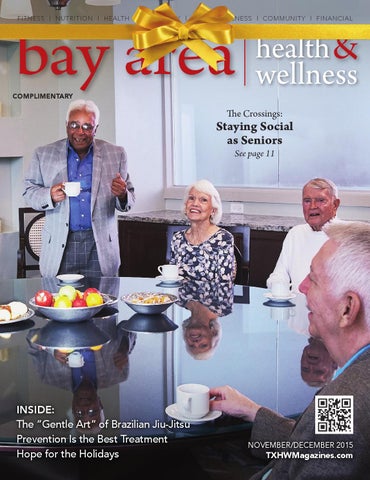
On The Cover: Khaled Hashmy, Joni Dusenbury, Bill Busenbury, Lewis Ray. Photo by Khary Dixon Photography. Above: Johnnie Ray, Jean Steward, Dick Steward. Photo by Khary Dixon Photography. www.kharydixon.com and https:// www.facebook.com/KharyDixonPhotography
Financial Naughty or Nice?
23
25
Family Wellness Hope for the Holidays
26
Mind-Body What Is the Role of Spirituality in the Healthcare Setting? 27 The Festival of Sukkot 28
Fitness PILOXING Barre: Sleek, Sexy and Powerful 5 Iliotibial Band Syndrome 6 The “Gentle Art” of Brazilian Jiu-Jitsu
Sugar Smart 22 Health Matters…. Even During the Holidays Sassy Wraps 24
Community Kid’s Corner 8
Benefits of Handwashing
21
Giving Back During the Holidays Seeing a Need…. Making a Difference! 30
29
Bay Area Health & Wellness Magazine | November/December 2015 3
bs ghw a h w | fWr Eo LmL tNhEeS eSd i to r Growing up, the holidays were a magical time. We looked forward to the beautiful china that was set on the Thanksgiving table, the Danish Christmas breakfast, and performing the holiday plays we spent endless hours creating. Why did we care so much about what was done during the holidays? Because it was a Tradition! A tradition is “something that comforts us and makes us feel grounded-regardless of what’s caving in around us.”1 When we think of traditions, we think of holidays and the special things we do to celebrate together with the people we love. However, some of the best and most important traditions are celebrated daily. These daily traditions do not have to be complex or expensive, but they do have to be consistent (or they wouldn’t be traditions). “Celebrating a tradition with somebody says ’I love you’ or ’you’re important to me’-with actions, rather than just words.”2
Daily Traditions That Build Relationships
Have you considered that reading with a loved one and spending meal times together as a family is a tradition? One of my favorite times of the day was when either my Mom or Dad would sneak away from my other siblings and climb into my bed, pull the covers up, and read with me. We would always read, but a lot of the time it ended up in laughter and talking about the day’s events. It was my time to spend with my parents. “Reading aloud is one of the most effective ways to model language and improve language skills. In addition, reading with a child has also been shown to improve emotional and social development. It is a time when the child can form appropriate bonds of love and attachment.”3 As a family, we also spent dinnertime together. My parents were very diligent in creating this time for us. In a world of fast food and busy schedules packed with activities, it is hard to slow down long enough to eat together as a family. However, having mealtimes together is probably the most natural of all the traditions because everyone needs to eat and we’ve been doing it in social groups throughout time. “A telephone survey of almost 2000 teenagers indicated that frequent family dinners To Visit Us were associated with decreased risk for smoking cigarettes, on Facebook: drinking alcohol, and smoking marijuana. Family mealtimes can be seen as a positive context for emotional and physical well-being among youth. These shared repeated rituals help to stabilize families and form a sense of tradition and structure.”4 It is never too late to start new traditions, or to “restart” old traditions that have dwindled over the years. Try it, it is worth the effort! And your family might like it!
Pay Tribute with Tradition by Jan Denise
1
Pay Tribute with Tradition by Jan Denise
To Visit Our Website:
2
Zuckerman’s research is published in the Journal Archives of Disease in Childhood
3
4 Family Dinner Meal Frequency and Adolescent Development: Relationships with Developmental Assets and High-Risk Behaviors,” Journal of Adolesent Health, Volume 39, Issue 3
Sincerely,
Camille Olson
Camille Olson, B.S., Editor Bay Area Health & Wellness Magazine (832) 323-3020
For information on advertising or other inquiries, visit our website at www.txhwmagazines.com or call us at 832.323.3020 Bay Area Health & Wellness Magazine | 549 N. Egret Bay Blvd. | League City, TX 77573 The publisher is not responsible for the accuracy of the articles in Bay Area Health & Wellness Magazine. The information contained within has been obtained from sources believed to be reliable. Neither the publisher nor any other party assumes liability for loss or damage as a result of reliance on this material. Appropriate professional advice should be sought before making decisions. ©Copyright 2015.
bsghw ahw |
FITNESS
sghw |
H E A LT H
sghw |
FINANCIA
sghw |
MIND & B
PILOXING Barre
By Kim Thomas We’ve all been there. Grudgingly heading to the gym for yet another spinning class or session with our personal trainer. Sometimes your workout routine just gets old and you lose your enthusiasm. This is actually the best time to try something new and change things up. Not only will you break out of the workout plateau by “shocking” your body with some new challenges, but you will also renew your excitement for exercise by tackling something outside of your normal routine. I recently became certified to teach an exercise class in something that I had never even heard of, PILOXING® Barre. Comprised mostly of a muscle-burning combination of Pilates and Boxing, PILOXING is described as “an interdisciplinary system of two extremes, which blends the best of Pilates, Boxing and Dance movement into a high-energy, high intensity interval workout. PILOXING is performed barefoot with weighted gloves, to burn maximum calories, increase cardiovascular stamina, heart health and muscle tone. PILOXING uniquely intertwines the power, speed and agility of boxing with the targeted sculpting and flexibility of Pilates, and the grace and fluidity of dance to present a branded style workout uniquely its own.”* By incorporating the Barre into the workout, you are able to engage the muscles on a deeper level by allowing you to take your movements (squats, lunges, etc.) through a deeper and more dynamic range of motion, resulting in greater results. The motto of PILOXING is “Sleek, Sexy and Powerful!” Sleek is the represented in the Pilates movements, Sexy is the Dance aspect of the workout, and Power can be found in the explosive Boxing moves. “Sleek, Sexy and Powerful refers to the true essence of women as a result of engaging in
About the Author
Sleek, Sexy and * Powerful sghw |
F A M I LY
sghw |
C U LT U R E
sghw |
WELLNESS
activities, e.g., Pilates, Boxing and Dance, which builds a positive self-image.”* Many women enjoy PILOXING because it allows them to gain strength, speed and endurance without compromising their graceful, feminine side. The boxing element also provides a valuable self-defense quality that women can certainly appreciate. “Why not put Sleek and Sexy in Powerful? In PILOXING you have the power of Boxing, yet you will feel feminine by incorporating the gracefulness of Pilates.”* I did experience this firsthand during my training class. It was rewarding and refreshing to feel those large quad and shoulder muscles burn without using heavy weights, for a change. As a spinning and boot camp instructor, who has very little experience with Pilates, I was fully expecting to feel like one of the dancing hippos from Fantasia during this training class! Much to my surprise, I didn’t need to have an abundancy of rhythm to get the most out of a PILOXING Barre workout. The Pilates moves are very basic and highly repetitive, almost always utilizing the barre as external support to initiate more muscle engagement. The boxing moves are also basic, consisting mainly of punches and kicks, but explosive for maximal impact. “PILOXING Barre is a 45-minute class and must include: 2 Boxing Blocks, 4 Pilates Blocks, and 1 Arm Blast Block.”* Blocks are “segments of choreography, inspired by Boxing, Pilates, or upper body sculpting and toning exercises.”* When the grace, fluidity and balance of Pilates are combined with the power, speed and agility of boxing, the result is an intense muscle and calorie burn. And yes, I did feel the burn the next day! But that familiar feeling is always welcome, ensuring that I had a workout that worked!
Kim is an AFAA certified Group Fitness Instructor and Schwinn certified Indoor Cycling Instructor at the South Shore Harbour Fitness center, where she has taught since 2011. Kim has competed and placed in three half marathons and finished fourth place (in her age group) in her first full marathon. As a mother of two busy boys, she understands the need for balance between home and hobbies. She is a native of Syracuse, New York, and graduated from the State University College at Oneonta with a bachelor’s degree in English.
*PILOXING® BARRE Instructor Training Manual, Viveca Jensen
Bay Area Health & Wellness Magazine | November/December 2015 5
bsghw ahw |
FITNESS
sghw |
H E A LT H
Iliotibial sghw | F I N A N CBand IAL Syndrome sghw | MIND & BODY By Dr. David Redding
sghw |
F A M I LY
sghw |
C U LT U R E
sghw |
WELLNESS
6 www.txhwmagazines.com
If you are a runner, cyclist, or weight train with any regularity, you have probably experienced lateral thigh, knee and/or hip pain. It can come on quietly, without a lot of warning, but with enough neglect, it can stop you from doing almost everything, including walking without a cane or crutch. An Olympic sprinter entered my office on crutches one day with a set of MRI films under her arm. She asked About the Author me to read them and “find” the meniscus tear that she knew Dr. David Redding, with she must have. The Ortho connected to the team had informed Pro-Fit Sports Therapy, has her that he and the radiologist examined the films and found practiced in Friendswood for nothing wrong with the knee itself. I asked her to describe the over 20 years. In addition pain and she said it felt like there was a knife sticking through to chiropractic, he is Master Level certified in Active the joint from side to side when she weight bared. Further Release Technique. He questions revealed that she had been training with heavy uses a blended approach to squats, deadlifts, and sprint work, including bounding and therapy that incorporates his plyometric drills. When I palpated her quad, the outside, or knowledge in sports injuries, lateral side, from the knee up felt like a beaded necklace dynamic stretch therapy, acupuncture, cold laser therapy under her skin and she came straight up from a lying and Rock Taping. position with a panicked look on her face. She said that it was the most awful pain she had ever felt and that she thought that it was because of her “meniscus” injury. I smiled and said, “I don’t need to read your films; I think I know what your problem is: I.T. Band syndrome.” The next few minutes were the longest minutes she could remember, but she walked out of my office with her crutches under her arm. What is the I.T. Band? The devil, according to some people, for sure. But it’s really just a band of fascia, or specialized connective tissue, that runs along the lateral side of the thigh from the pelvis to the lower leg at the knee joint. It helps to stabilize the lateral knee and is a lateral stabilizer of the pelvis. It has connection with the Tensor Fascia Lata muscle, which, as its name claims, tenses the fascia on the lateral side of the leg. I.T. Band syndrome is classified as an overuse injury. When the fascial tissue rubs over the femoral condyle and compresses into the quadriceps and hamstring during movement, friction ensues and adhesions develop, which shorten and tighten the band, accounting for the pain that is felt by the patient during activities of walking, running, and cycling. Patients who see me for this condition comment on how painful the home remedy of foam rolling is because they are compressing the I.T. Band and the adhesions into the femoral bone. I might suggest just sticking yourself in the eye with a sharp stick if you’re into that kind of pain! ( Just Kidding!) When symptoms are acute, nothing you do to fix it will feel good. But proper therapy does require restoring relative motion between the I.T. Band and the quad and hamstring, as well as releasing any tension in the Tensor Fascia Lata and surrounding glute tissues. Several treatments may be necessary when the condition is acute, but ignoring the early symptoms by eating NSAIDs (nonsteroidal anti-inflammatory drugs) will not serve you well in the long run. (No pun intended.) Foam rolling, regular massages, stretching, and ice baths are all great preventatives. Other therapies that really get to the root of the problem quickly are, Active Release Technique, Fascial Stretch Therapy, Acupuncture, Rock Tape and addressing any foot biomechanics issues that may be adding to the mechanical stress. Women have a higher percentage of occurrence, due partly to the wider angle of the female pelvis. Some patients may also find that Chiropractic adjustment to restore pelvic function is pivotal for complete resolution of Iliotibial Syndrome.
Bay Area Health & Wellness Magazine | November/December 2015 7
bsghw ahw |
FITNESS
sghw |
H E A LT H
sghw |
FINANCIAL
sghw |
MIND & BODY
sghw |
F A M I LY
sghw |
C U LT U R E
sghw |
WELLNESS
” t r A e “Gentofl Brazilian Jiu-Jitsu The
About the Author Danny Duckworth, with his wife Carrie, owns and instructs at Advantage BJJ Martial Arts & Fitness. He has over 11 years of experience in multiple Martial Arts, has an Associate’s Degree in Computer Science, and is Certified in Health IT. BJJ Martial Arts & Fitness is located off the Beltway in Pearland.
By Danny Duckworth When I started down the Brazilian Jiu-Jitsu path, or BJJ, I had no idea that everything about me was going to change. Not only did I lose weight and become the strongest I have ever been, but I also saw my family grow stronger than I could have imagined. Most people know about BJJ from Ultimate Fighting Championship (UFC), but many don’t realize that it is so much more than just a selfdefense art. Jiu-Jitsu means “Gentle Art,” a philosophy that has as much importance as the physical side of the art. To me, it’s the community that makes Jiu-Jitsu so addicting and life changing. I’ve never met so many healthy, humble and peaceful people in one industry as I have in BJJ. I can literally find a BJJ gym anywhere in the world and meet new friends in one visit. BJJ gives you such a newfound respect for people and life that you learn how to focus on being better every single day in everything you do in your life. From being a better co-worker, running your company more efficiently, raising your kids more effectively, and eating healthier, to simply appreciating day-to-day life more. All of this while learning how to control your body in ways that will simply amaze you. This is what we call “Living the Jiu-Jitsu Lifestyle!” The basic concept for the physical aspect of Jiu-Jitsu is to incorporate control and leverage to neutralize the aggressor by using a series of chokes and joint locks, called submissions. Certain techniques aren’t necessarily applied with brute strength alone, but with the correct positioning and direction of force. In most BJJ positions, it’s important to keep the muscles contracted and under control to maintain proper balance so that you can’t be moved easily. Good Jiu-Jitsu practitioners can always recognize and exploit the gaps of space and bad posture. During training and competition, all submission holds are applied in a measured and progressive manner so that there is plenty of time to “tap out” before any damage is caused. A student applying a submission will always release the hold immediately to ensure the opponents safety. This method of training ensures that BJJ remains, arguably, the most effective martial art because all of the techniques used can be practiced regularly against a fully resisting opponent so the student is well aware of how his mind and body will react in a genuine confrontation, which allows for confidence in the practiced techniques. The rate of injury in BJJ competition is substantially lower than the injury rates reported for taekwondo, judo, wrestling, football, cheerleading and MMA competitions and concussions are extremely rare. You can start learning BJJ as early as age 4. The last belt rank (red belt) requires you to be at least the young age of 67 years old and have progressed through the entire belt system prior to receiving the final red belt. There are currently 44 Students who have receive a red belt in the system today. According to Renzo & Royler Gracie, the red belt is reserved “for those whose influence and fame takes them to the pinnacle of the art.” It is awarded in lieu of a ninth and tenth degree black belt. If a practitioner receives his or her black belt at 19 years old, the earliest they could expect to receive a ninth degree red belt would be at the age of 67. Brazilian jiu-jitsu red belt holders are often addressed within the art by the title “Grandmaster.” Not so surprisingly, females are probably the fastest growing demographic in the art, and for good cause; it’s one of the best, if not the best, forms of self-defense for women. In fact, many gyms now host female-only classes. Self-defense and confidence building are not the only benefits. Students can eliminate anywhere from 750 to 1500 calories in one class! As a beginner, you’ll make a lot of mistakes, but, as with anything else, you’ll become more and more comfortable with time and practice. You can learn Jiu-Jitsu and see what the lifestyle is all about at the family-owned Advantage BJJ Martial Arts & Fitness located off Pearland Parkway and Beltway 8. Our goal is to teach and motivate our clients to learn greater self-control and fulfillment in all aspects of life. 8 www.txhwmagazines.com
W E LOL RN FE O S CS U S bs ghw a h w | SENI
Retirement Is Bliss? By Dr. Rick Miller, Ph.D, LMFT With mixed emotions, you finish packing up your things from your office and carry the box with you to your boss’s office, where you turn in your office keys. It all seems so surreal; you have been working for decades, but today is your last day at work. After a quick goodbye to your colleagues, you walk out to your car and officially begin your retirement. Now what? After being in the workforce for so many years, you are about to experience the biggest change in your life since you graduated from high school or became a new parent. What is it going to be like spending most of each day with your spouse? For decades, spouses have spent most of each day apart, with at least one spouse working full-time outside the home. Suddenly, you are both at home, all day, nearly every day. What do these changes mean for your marital relationship? As a university professor, I have been doing research on mid-and later-life couples for over 30 years, including looking at relationships during the transition to retirement. Here is what I have learned: First, most couples will not experience a significant change in the quality of their
relationship. The research shows that most couples who are happy before they retire remain happy post-retirement. Likewise, couples that struggle pre-retirement will likely struggle after they retire. Even though retirement will bring about huge changes in couples’ daily About the Author Dr. Richard B. Miller is a routines and schedules, the basic, core dynamics of the relationship Professor in the School of (how couples “dance” together) remain relatively unchanged. The Family Life at Brigham patterns of communication, styles of managing conflict, and patterns Young University. His of expressing affection and appreciation will remain constant, despite research focuses on the importance of healthy marital changes in how they spend each day together. In short, the routine relationships on societal changes, but the basic relationship dance doesn’t. well-being and on marital Second, although the overall quality of the marriage after relationships in mid- and later-life. He is also a licensed retirement will generally reflect its pre-retirement quality, the marriage and family therapy, actual adjustment can sometimes be difficult. For example, wives and he maintains a private of newly retired husbands often struggle with what has been called practice. the “husband underfoot syndrome,” where wives become annoyed when their husbands open the refrigerator for the 12th time before lunch hoping, apparently, that something new has magically appeared since they last looked 10 minutes ago. This annoyance, though, is usually minor and subsides over time as they adjust to their new circumstances. Third, housework matters. Or I should say that husbands’ involvement in housework after they retire matters because it has a significant influence on their wives’ satisfaction with the marriage. When husbands step up the work that they do around the house, their wives are more likely to perceive that their husbands are supportive. These wives have a sense that the relationship is fair, which leads to them feeling good about the relationship. Finally, the great majority of older couples enjoy retirement. The research shows that most post-retirement couples like each other, and they enjoy spending time together. With fewer stresses in their lives and fewer demands on their time, they are at the stage of life where they can enjoy more leisure time together. Bay Area Health & Wellness Magazine | November/December 2015 9
The Wait’s Over. We’re open and we’re ready for you.
Now’s the time! Get yourself a wow-worthy senior living lifestyle, with maintenancefree residences, convenient services and amazing amenities. Plus, we’re the Bay Area’s only Life Care community — so you can have the smartest plan for cost-managing your retirement lifestyle with built-in long-term health care, financial security and predictability.
NOW OPEN. Call 1.866.814.9472 to find out more.
A H E A LT H Y L I V I N G C O M M U N I T Y
A N M RC H E A LT H Y L I V I N G C O M M U N I T Y
255 N. Egret Bay Blvd. • League City, TX 77573 • 1.866.814.9472 • mrcthecrossings.org
W E LOL RN FE O S CS U S bs ghw a h w | SENI
Staying Social As Seniors
The Unlimited Benefits of Belonging to a Community By Abe Zimmerman Life is full of chapters. Some of these are more inclusive than others. There’s a time in our lives when we’re required to socialize, regardless of our interest. The kids are in school, we’re participating in neighborhood potlucks, spending time with family and having lunch with friends. We’re in groups like the PTA, church, or civic groups, coaching baseball or dance. As we age, however, things can change without us realizing it. The kids are grown, the neighbors have moved, and we just don’t seem to have lunch with our friends quite as often. Initially, having fewer social obligations seems like a treat. But over time, it can hinder our health and wellness. Lack of social interaction often leads to isolation. According to Ken Dychtwald of AgeWave, the majority of seniors spend up to 40 hours per week watching television, many times due to lack of purpose and social obligations. A 2012 study from the University of California-San Francisco concluded that those who spend less time with others are more likely to develop health problems as they age. In other words, there’s a science to socialization. In fact, that study found people identifying as lonely had a 59 percent greater risk of declining health than their more social counterparts. On the flip side, people with social ties — regardless of their source — live longer than people who are isolated. And people who have a close network of ties with other people seem to maintain better
health. Dr. Kenneth Pelletier of the Stanford University Center for Research in Disease Prevention says, “A sense of belonging and connection to other people appears to be a basic human need — as basic as food and shelter. In fact, social support may be one of the critical elements distinguishing those who remain healthy from those who become ill. The amount of social support you enjoy also appears to have an impact on biological processes, such as neuroendocrine responses, immune responses, and changes in blood flow.”1 Having a social network as you age DOES matter. About the Author Abe Zimmerman is the It’s a very real predictor of health and wellness. Marketing Director at The good news is that sense of community doesn’t have to end The Crossings, open now just because you’ve graduated from the demands of socialization. at 255 N. Egret Bay Blvd. in League City. He can be As an older adult, there’s now opportunity to enjoy a sense of reached at 1.866.814.9472 or community without the same level of responsibility you may azimmerman@mrcaff.org. have felt in your younger years. Now is the time to truly enjoy the fruits of your labor! Senior living communities are a place to discover this sense of belonging. The great thing about a senior living community is that there are endless opportunities for socialization. You can get to know others in the fitness center or the dining room. There are clubs and groups for just about every personal interest, so it’s easy to find someone who enjoys the same things you do. The best testimony for advantages of socialization within senior living communities most often comes from those who live there. They consistently share stories of their Tai Chi classes, bridge games, museum outings, or the fabulous food and camaraderie at the lunch table. It’s also important to remember that maintaining independence is just as important as socialization. As with any chapter of our lives, we need to balance the interaction and purpose of activity with the freedom of choice and time for ourselves. The sense of community offered with independent living services gives the best of both worlds, providing one-stop service for truly living the “golden years.” But being social isn’t mandatory. Certainly a senior living community can be a wonderful place for those who enjoy the virtues of solitude. In most cases, however, the balance is there. It’s about having the freedom to choose, but having encouraging neighbors helps with expanding horizons. The science doesn’t lie. Rediscovering your potential to make friends and spend time with them may hold the key to happiness for many wonderful years to come. Call 1.866.814.9472 or visit mrcthecrossings.org for more details. Mind/Body Health: The Effects of Attitudes, Emotions, and Relationships. Karen, Hafen, Smith, Frandsen.
1
Bay Area Health & Wellness Magazine | November/December 2015 11
Toughest Kemah 10K
ACU HEALTH FAIR Advantage BJJ Martial Arts Open House
12 www.txhwmagazines.com
I Want to Be Healthy... Ugh! What Do I Eat? By Dr. Angela Dagley
bs ghw ahw |
F I TAN HE LTEHS S
s ghw |
H E A LT H
s ghw |
FINANCI
s ghw |
MIND &
About the|Author s ghw F A M I LY Dr. Angela Dagley received
We all realize that food plays a very important role in our health. There is no question that proper diet and nutrition can prevent and often treat disease. But how do you know where to begin? Many foods that we find today in the grocery store are inflammatory to the body. High inflammation in our bodies leads to many of the chronic diseases that we are battling today. For example, depression, ADHD, borderline diabetes, infertility, fibromyalgia, irritable bowel disease, and autoimmune diseases are at an all time high. Do you suffer from any of these conditions? Or do you know someone who does? You can see why understanding how certain foods effect your body is so crucial! The correct information allows you to start making changes in your food choices so you can become healthier and feel better! Let’s look at some key foods…
her degree of podiatric
medicine|at Dr. s ghw C William U LT U R E School College of Podiatric Medicine in Chicago, IL. She has been practicing WELL wellness since the fall of 2014 under the guidance of Dr. Patrick Flynn, founder of The Wellness Way. She lives in Nassau Bay with her husband and two boys.
s ghw |
NES
Fats: First of all, eating fats doesn’t make you fat. However, eating bad fats will make you chronically sick. Bad fats, such as hydrogenated and partially hydrogenated oils, trans fats and rancid vegetable oils are linked to cellular congestion leading to cancer, chronic fatigue and neurotoxin syndrome. Good fats are essential to hormone production, cancer prevention, brain development and mental clarity. Generous amounts of high quality fats are very important to support a healthy immune system. Some examples of good fats are avocado, raw nuts and seeds, coconut oil, grapeseed oil, olive oil, eggs, butter or ghee. Choose organic, grass-fed, free range, raw (for nuts, seeds and cheeses), cold pressed and no hormone fat sources as much as possible. Dairy: Haven’t we always heard “Milk does a body good?” The facts are quite the contrary. The assumption is that milk promotes healthy bones. However, studies have shown that it does not reduce fractures and, in fact, it may even increase fracture rates. In actuality, countries with the lowest milk consumption also have the lowest risk of osteoporosis and fractures. Also, milk has been linked to increased cancer rates. Dairy milk increases the hormone insulin-like growth factor, or IGF-1, and this hormone can increase growth of cancer cells. Dairy is also a well-known cause of acne and increases the risk of Type 1 diabetes. Millions around the world suffer digestive distress because of lactose intolerance. Allergies, asthma and eczema all may be other symptoms triggered by dairy consumption. Great dairy alternatives include coconut milk, almond milk, cashew milk and hemp milk. Grains: There are entire books written about the inflammatory and negative effect of grains and gluten on the body. Sensitivity to inflammatory grains or a gluten allergy lead to high inflammation and can cause symptoms including depression, chronic fatigue, headaches, menstrual/fertility issues, metabolism problems, thyroid problems, sinus infections, cold sores, intestinal and stomach problems, osteoporosis, skin rashes, obesity and autoimmune diseases. The problem with modern day grains is that they are processed very differently than in the past. When grains are processed today, they are chemically treated with bleach products to make them look pure and pretty (the same is done with table salt). These chemicals are not good for our bodies! Gluten today is also preserved with formaldehyde - a known carcinogen. These processing methods result in high inflammation in the body, causing normal tissues to become damaged. Good grains include organic brown rice, quinoa, and millet. As you can see, food choices are VERY important to our health. I urge you to begin your journey to wellness today. Commit to getting healthier. You are worth it! Your family is worth it! Our goal at the Wellness Way is to empower people with the knowledge and tools they need to make healthy choices. I encourage you to attend one of our complimentary seminars to find out more about the Wellness Way approach. Bay Area Health & Wellness Magazine | November/December 2015 13
bs ghw ahw |
F I TAN HE LTEHS S
1. Plan | H A LT H Do you know where you’re traveling? Find out where theEnearest gym is and what they have to offer. Just as you plan activities and destinations to do while on vacation, plan on exercising. Make it part | FINANCI your vacation. YMCAs are nation-wide and also located throughout the globe. If you pay for a membership at your local YMCA, many | during M I Nyour D & Ys will honor that and grant you access to their facility entire stay. The Texas Association of YMCAs now offers a reciprocal membership program. Use your Houston area YMCA membership | F A M I LY at any Y in the state for free.
s ghw s ghw s ghw s ghw
“Y” and How to
Stay Fit During the Holiday Season By Alicia Martinez, Healthy Living Director, YMCA of Greater Houston – Perry Family YMCA
As soon as the temperature begins to drop to the mid-80s in Texas, we know Fall has finally approached and the holiday season is around the corner. Many of us get excited about the boots, layers of clothing and jackets that are soon to display our seasonal fashion sense. However, some of us will use the thicker layered clothing to hide the extra bulge that we haven’t managed to lose all year. The holiday season brings upon us obligations that influence how we handle everything else, including our workout routine. It brings visits from friends and family, vacations, and what many of us look forward to – holiday foods! With the craziness of family, shopping and end-of-year workloads, each day has us asking How do I find time to exercise, and most importantly, how do I say no to all of the pumpkin spice flavored foods? “Y” staying fit is worth the effort? According to the National Institute of Child Health and Human Development (NICHD) and the National Institute of Diabetes and Digestive and Kidney Diseases (NIDDK), the holiday weight gain per individual averages 0.8 to 1.8 pounds per year. That doesn’t sound too frightening, but consider that over a course of 5 to 20 years. The math has us gaining up to 40 pounds! When you find yourself wanting to skip out on exercising, consider this. Exercise releases all of those feel-good hormones (endorphins) that help us feel great and release physical and mental stress. Exercising increases the chemical in your brain that can moderate the brain’s response to stress. It also allows us to sleep at night after tackling the holiday rush. Exercise has also been found to help control addictions. This applies to eating and the desire to eat EVERYTHING at a holiday party. We can’t forget about how great we want to look and feel when we attend that New Year’s Eve party! Keep this in mind, along with these 6 ways to stay motivated and fit, and you will be sure to maintain, and most likely, lose pounds during the holiday season.
s ghw
2. Organize a Monthly Schedule | C U LT U R E Because we know that the holidays are busy and chaotic, take the time to organize a monthly workout schedule. Yes, plan your workout | Wit isEaLpart LNES for the entire month and “pencil” it in on the calendar. Now of your holiday agenda.
s ghw
3. Dress for Success Use your rest day to wash and organize your clothes for the week. Your gym clothes are just as important as the clothes you choose to wear to work. Prepare your gym bag each night to include everything you need for the next day. Heading out of town? Organize your wardrobe to include enough pieces for your entire stay. 3. Time Management Are you a late sleeper and find yourself rushing in the morning? Do you get home from work and have to handle family obligations? This is where managing your time is crucial. If sleep is what’s most important to you, schedule your workouts in the afternoons/evenings. Workout in the early mornings or before family obligations/activities tie you up for the rest of the day. Most gyms are accommodating to the busy adult. YMCAs may open as early as 4:30 am and close as late as 10 pm. 4. Get with Friends Having visitors or visiting others during the holiday season? What better time to go to the gym and have some fun! Instead of planning to do a workout on the treadmill, look at your gym’s group exercise schedule. Recruit your relatives and friends to try the Zumba or Spinning class with you. As a member of the YMCA, you are welcomed to bring guests. YMCAs are also accommodating for the entire family by giving you and your guests access to their Child Watch and other programs. Check the Y’s registration policy to see what your guests need to bring – valid ID or Driver’s License, and show up at least 15 minutes before class to be fully prepared. A group exercise class is fun bonding and will give you something to laugh about at dinner time – Who knew Aunt Beth had those dance moves?! 5. Remind Yourself of the Ultimate Goal Write your “smart” goal on a piece of paper and stick it to your bathroom mirror, or take a picture of it and use it as your phone/ computer’s screen saver. This will be a constant reminder to stay focused and motivated. A “smart” goal should be realistic and attainable. The holiday season is not a time to set a goal to lose 25 pounds! If you find yourself being unsuccessful after several weeks, consider a personal trainer. Ask your gym to recommend someone and look to see what holiday specials they may be running. Bay Area Health & Wellness Magazine | November/December 2015 15
About the Author
Prevention
Is the Best Treatment
Dr. Abdul Moosa is a family physician with focus on preventive Medicine in La Porte, TX, serving the Bayarea for 24 years. He is the associate clinical professor, Family Medicine for Baylor College of Medicine, Houston and UTMB, Galveston. He also is the Medical Director at Bayshore Advanced Wound Center in Pasadena and Lymphedema & Wound Care Institute in Clearlake. He recently opened a second medical office in Friendswood.
By Dr. Abdul Moosa Society needs to think differently when it comes to healthcare. Most people wait to see a doctor when something bothers them. As the old adage goes: an ounce of prevention is worth a pound of cure. This should be the new mantra. As a Family Physician for the past 23 years, I have grown older with my patients and have seen how preventive measures help people live a healthier lifestyle. With the advent of newer technology, advanced lab tests, and access to more comprehensive genetic information, we can personalize healthcare physicals to identify potential diseases and chart a new course. According to the American Heart Association (AHA), about 750,000 people will have a heart attack each year, with 250,000 being repeat attacks. In 2010, the AHA published 7 Essentials for heart health that would prevent 80% of heart attacks! Five of those were lifestyle changes: do not smoke, keep BMI <25, 150 minutes of exercise a week, diet with less sugar, more fish and vegetables, less than 3/4 tsp. salt/day, and increased fiber rich grains. The current blood work done in routine physicals does not address inflammation. This is the root cause in the majority of heart attacks. In fact, a study done by Cleveland Heart Institute shows that an increase in one particular inflammatory marker indicates a 30% increase in the risk of heart conditions in the next 3 years! Because I have preventive knowledge and kept up with the latest studies, these are the rules I have lived by: 1. Diet/Food: Studies have shown that the Mediterranean diet, with reduced salt intake and avoidance of sugary drinks reduces the incidence of heart attacks, strokes and certain cancers. Recent studies show even diet drinks may increase the incidence of cancer 2. Exercise daily for about 40 minutes. Try to get 10,000 steps a day. 3. Sleep: Try to get around 7 hours of sleep. If you snore or have sleep apnea, the risk of heart attack or stroke is doubled. 4. Hydration: 75% of U.S. population is dehydrated. We need to avoid excess caffeine drinks, which cause this problem for the sake of giving us energy. Whereas proper diet, exercise and adequate sleep will give you natural energy. Our bodily functions and the repair of tissues are impaired by a lack of water. 5. Vitamins and supplements: There is much debate about the benefits of vitamins. I believe in taking them because we do not get enough in our diet. Vitamin deficiencies can lead to problems. Very low vitamin D has been shown to increase the risk of certain cancers and dementias. Low B12 causes fatigue, memory problems and nerve damage. Personalized pharmaceutical grade vitamin supplementation is the best choice rather than one size fits all and they have to be taken at certain times to help the body. Prescription medications can also deplete the body of certain vitamins. This is the only body you have and taking care of it from an earlier age will reap benefits in the “golden years.� Having the right physician who can spend quality time listening to your concerns, ordering the customized tests based on your history and fully explaining the results makes for a better partnership. We need to take back the true doctor-patient relationship, which is the cornerstone of MDVIP (value in prevention). Call us to start a healthier life. 16 www.txhwmagazines.com
bs ghw ahw |
Is There a Natural Cure for My Digestive Problems? s ghw | By Dr. Serge Gregoire More than 95% of Americans suffer from a variety of issues affecting the digestive tract, such as gas, bloating, constipation, IBS, Crohn’s disease, acid reflux, among others. The gut is naturally permeable to very small molecules in order to absorb these vital nutrients present in food, such as vitamins and minerals. But once these tight junctions get broken apart, you can have a “leaky gut.” When your gut is leaky, things like toxins, microbes, undigested food particles, and more can escape from your intestines and travel throughout your body via the bloodstream. Your immune system marks these “foreign invaders” as pathogens and attacks them. This is the basis of several health conditions, such as autism and auto-immune disease. Christine, a young woman in her 20s, came to my office several years ago desperately looking for help. She had seen the best gastroenterologists but nobody could figure out what was causing her issues. When we met, she complained of constant digestive discomfort. Specifically, she had bloating and gas every time she ate. Occasionally, she had very bad acid reflux and she struggled with constant constipation, alternating with diarrhea. Her mom affirms that her issues started when she was a baby. The different specialists were puzzled by her lack of response from various medications. As a matter of fact, she had tried virtually every medication that could help, with no success. Some doctors she met believed that her problems were not real and wanted to prescribe anti-depressants. Christine’s situation had been going on for 2 decades and it seemed that every food was a trigger.
After conducting different tests at Mind Body Solutions, it was determined that a problem in her small intestine was the primary reason for her discomfort. Specifically, she was suffering from leaky gut syndrome. In Christine’s case, her body was attacking every single food she ate. We put her on a whole food diet, asking her to avoid the foods from the FODMAP (Fermentable Oligo-, Di-, Mono-saccharides and Polyols) list, and we did a highly specific detox of the gut in order to get rid of all the toxins, candida and parasites that were causing the leaky gut syndrome. (FODMAPs are short chain carbohydrates, disaccharides, monosaccharides and related alcohols that are not easily absorbed in the small intestine.) Once we put her on that program, all of Christina’s digestive problems improved and disappeared. Today she enjoys a painfree life with her family and friends!
F I TAN HE LTEHS S H E A LT H
s ghw |
FINANCI
s ghw |
MIND &
s ghw About the Author|
F A M I LY
Dr. Serge Gregoire is a clinical nutritionist. He received his doctorate degree CU LT U R E from McGill University in Canada. And later completed a 7-year postdoctoral Wtraining ELLNE at Harvard Medical School where he studied the impact of fat as it relates to heart disease. He has authored a book on this topic that is awaiting publication. He holds an advance certification in Nutrition Response Testing from Ulan Nutritional Systems in Florida and is a certified herbalist through the Australian College of Phytotherapy. His goal is to help others take responsibility for their own health and thereby achieve great health and vitality.
s ghw | s ghw |
Bay Area Health & Wellness Magazine | November/December 2015 17
bs ghw ahw |
F I TAN HE LTEHS S
s ghw |
H E A LT H
s ghw |
FINANCIAL
s ghw |
MIND & BODY
s ghw | s ghw | s ghw |
Skin Health By Dr. Lindsey Hunter-Ellul
Gone are the days when bathing in the sun with baby oil and iodine were thought to give you that “healthy glow.” We now know that the number one cause of skin F A M I LY cancer and skin damage is exposure to ultraviolet light (UV) from the sun. As a About the Author dermatologist, I frequently encounter patients asking how they can protect and improve Dr. Lindsey Hunter-Ellul C U L T U R Etheir skin after years of previous sun damage. There are a variety of products on the is a native Houstonian market available to combat those wrinkles and sun spots, but the most important and a Board Certified thing that you can do for your skin is apply a daily broad spectrum sunscreen. Dermatologist currently practicing at Clear Lake WELLNESS The term “broad spectrum” means that the sunscreen protects skin from harmful Dermatology (clearlakederm. UVA and UVB rays from the sun, which contribute to wrinkles, sun spots, skin laxity, com) in Webster, Texas. She is and skin cancer. Sunscreens with “physical blockers,” such as mineral-based Zinc a graduate of UT Austin and Oxide and Titanium Dioxide are best, however, there are a variety of sunscreens UTMB School of Medicine and Dermatology with over with “chemical blockers,” such as Avobenzone, Oxybenzone, and others that are 20 publications in medical also effective. Many products have combinations of both physical and chemical journals and books, and is an blockers. In general, most dermatologists recommend the mineral-based sunscreens, emerging leader in her field. as they have proven to scatter and reflect UVA/UVB rays, whereas the chemicalIn practice, her specialties revolve around skin cancer, based products absorb and dissipate UV rays. Chemical-based sunscreens can be skin surgery and general skin irritating to sensitive skin patients and have been known to cause allergic reactions. health for pediatric and adult Reapplication of your sunscreen is essential no matter how high the SPF (Sun patients. Protection Factor) is. “Water Resistant” sunscreens only last about 40-80 minutes on the skin, and sunscreen sprays must be rubbed in after application to be effective. I generally recommend using at least a 40 SPF water resistant sunscreen to my patients, with regular reapplication if they plan on being active outdoors. EltaMD® and Neutrogena® are among my favorite brands of sunscreen. So what else can you do about the sun damage that you already have and how else can you prevent further signs of photoaging? Let’s talk about retinoids, antioxidants, and other products. Retinoids, which are Vitamin A derivatives, have been shown to help promote collagen regeneration, improve fine lines and wrinkles, and improve the skin’s texture and appearance of sun spots. There are both prescription strength and non-prescription strength retinoids and your dermatologist or other skin care professional can discuss the benefits of the various strengths and products available to determine which product will most benefit you. Antioxidants are a hot topic in skin care, as studies have recently shown they help even skin tone and pigmentation and lessen the appearance of fine lines and wrinkles by neutralizing free radicals generated from pollution, UV rays, and other factors. Many consumers do not apply an adequate amount of sunscreen, and may only be blocking a portion of the free radicals created by UV exposure. This can be countered by daily application and/or ingestion of various antioxidants. Examples include: Vitamin C (L-ascorbic acid), Vitamin E (alpha-tocopherol), Green Tea Extract, and Polypodium leucotomos Extract, to name a few. While oral antioxidants may be of benefit to the body, it is difficult to ingest a sufficient quantity for them to be effective in the skin. Polypodium leucotomas (HeliocareTM) is the exception, and has been shown to have high protective and reparative activity in the skin, guarding the skin against premature aging and sun damage. SkinCeuticals® offers a great selection of topical anti-oxidants for all skin types. Topical growth factors, like Tensage®, peptides and many other products, in addition to a variety of lasers and other non-invasive and minimally invasive procedures can also help improve your skin’s vitality and restore brilliance. The number of products and treatment options available can be overwhelming, but no matter what your regimen is, it must contain a daily sunscreen!
18 www.txhwmagazines.com
bs ghw ahw |
F I TAN HE LTEHS S
Why Are You Still Smoking? s ghw | H E A L T H By Dr. Nicholas Howland The dangers of cigarette smoking to our health are widely known. As smoking increased in this country during the 20th century, a devastating epidemic of health issues was left behind. Marketing campaigns and legal battles have been effective in decreasing smoking here in the US, but the habit continues to rise in developing countries throughout the world. Secondhand smoke (SHS), interestingly enough, has been shown to be just as dangerous to our health as it is to those around us. Several times a week, I have a discussion with my patients about the dangers of smoking prior to surgery. Nicotine in any form—chewed, smoked, inhaled, absorbed—will cause the blood vessels in the body to constrict, making it difficult for oxygen to be delivered to the tissues. This makes healing a wound very difficult, and hence, surgery, very dangerous. In my discussions with patients, I have to advise them that secondhand smoke is just as dangerous, and that surgery will be more risky with a higher chance of complications if they are exposed to any secondhand smoke. Secondhand smoke (SHS) is defined as the involuntary exposure of smoke from the smoking of others. There are thousands of carcinogens present in SHS. Just some of the dangerous toxins that can be ingested or even absorbed through the skin include nicotine, benzene, and carbon monoxide. Benzene is directly linked to several forms of cancer. Sometimes, as adults, we feel that we are above hazards to our own health—we even consciously choose to accept risk and engage in dangerous behavior. But what is SHS doing to those around us? Here are just a few of the effects that SHS has on children:
s ghw |
FINANCI
• Increased risk of premature birth or stillborn birth | MIND & • Increased risk of sudden infant death syndrome (SIDS) • Cough, wheezing, asthma, other | F A M I LY About the Author respiratory illnesses Dr. Nicholas Howland • Decreased lung growth and graduated with a BA in development | C U Lfrom TURE Business Administration • Increased risk of heart disease the University of Utah. He then completed his medical • Higher rates of ear infection, oral degree from |UTMB. W EHeLis L N E S cavities, and childhood cancers currently a 4th year plastic These are just SOME of the dangers surgery Resident at UTMB. we are passing on if we smoke around Dr. Howland is fluent in Russian, and avid golfer, our children, or if we put them in an reader, and father of two environment where there is smoking. beautiful children. And what about those e-cigarettes and “vape-ing” that is now so popular? Even the vapor from these contains nicotine, as well as several carcinogens. Because e-cigarettes are so new, the risks are still being studied and the impact on health has yet to be determined. Smoking and secondhand smoke is STILL a problem today, even as the rates of smoking in this country have decreased dramatically in the last 20 years. This is a brief reminder, but an important one nonetheless. Avoid smoking and stay on top of your health and the health of your children!
s ghw s ghw s ghw s ghw
We work
together to help you
GROW
(281) 317-7326
INDIVIDUAL, COUPLE & FAMILY THERAPY As a group of professional therapists, we specialize in individual, couple, and family therapy in the Bay Area: Friendswood, Clearlake, League City and surrounding areas.
www.southshorefamilies.com 549 N. Egret Bay Blvd #300, League City Bay Area Health & Wellness Magazine | November/December 2015 19
bahw |
K I D ’ S C O RNER
Benefits of Handwashing About the Author
Dr. Ragini Miryala owns and operates PediSTAT child/ teen urgent care, an afterhours and weekend clinic for youth. She completed all of her Pediatrics training at UTMB Galveston and has been serving the Houston/ Galveston area since 2008.
By Dr. Ragini Miryala Handwashing is the best defense against germs. The Centers for Disease Control and Prevention (CDC) says that regular handwashing with soap could save more lives than any vaccine or medical treatment. Not only will it help keep your child (and you!) healthy, it will also help prevent the spread of infectious illnesses to others. Washing hands lowers the risk of having diarrhea and developing intestinal infections, an important benefit, particularly for children. Diarrheal disease is one of the leading causes of death in children under 5 throughout the world because contact with the bacteria in fecal matter can cause serious illnesses. However, proper handwashing before meals and after going to the bathroom can significantly lower exposure to the germs that cause stomach infections. Handwashing also decreases your child’s chances of developing an acute respiratory infection. The pathogens that cause respiratory complications are commonly found on surfaces and hands. Kids are constantly touching and rubbing their faces, so it’s very important for them to wash these germs off their hands. Illness-causing germs can enter the body through the eyes, nose and mouth. The spread of bacterial eye infections, like conjunctivitis, or pink eye, can be greatly reduced with regular handwashing. This irritating eye condition causes eye pain, itching, light sensitivity and discharge. It is spread in many ways, with the most common being through contact. Proper hand washing is extra important for kids in a school or group child care setting. Make sure your child’s teacher or caregiver promotes frequent handwashing, as it is the first line of defense against the spreading of the common cold, meningitis, bronchiolitis, the flu, hepatitis A, and most types of infectious diarrhea. Handwashing is an easy and efficient way to lessen the chances of these illnesses and chronic inflammations—leading to better nutrition intake, more energy available for growth and development, and better attendance at school. Encouraging children to wash their hands at appropriate times will help to ensure that this practice becomes a lifelong habit.
Research for this article was done by Skyler Gregg, a Clear Creek High School Student, who is currently doing an internship with Dr. Miryala.”
According to the Centers for Disease Control, the proper way to wash your hands is: • Wet your hands with clean, running water (warm or cold), turn off the tap, and apply soap. • Lather your hands by rubbing them together with the soap. Be sure to lather the backs of your hands, between your fingers, and under your nails. • Scrub your hands for at least 20 seconds. Need a timer? Hum the “Happy Birthday” song from beginning to end twice. • Rinse your hands well under clean, running water. • Dry your hands using a clean towel or air dry them.
The most critical times for hand washing are before preparing food and after going to the bathroom. • Only 20% of people wash their hands before preparing food. • Less than 75% of women and less than 50% of men wash their hands after going to the bathroom. • Every time a toilet is flushed with the lid up, a fine mist containing bacteria such as E. Coli and Staph is spread over an area of 6 square meters. The area around sinks in public bathrooms is 90% covered in such bacteria.* Bay Area Health & Wellness Magazine | November/December 2015 21
bs ghw ahw |
F IUTTN N RIETSI S ON
s ghw |
H E A LT H
s ghw |
FINANCIAL
s ghw |
MIND & BODY
s ghw |
F A M I LY
s ghw |
C U LT U R E
Sugar Smart
s ghw |
WELLNESS
Dr. Mohamed Shalaby is a nationally recognized board certified and fellowship trained cardiologist with 20 years of experience in cardiovascular medicine. For more information or to consult with Dr. Shalaby, visit his website, www.drshalaby.com or call 281.956.7070.
By Dr. Mohamed Shalaby
The news about Americans and sugar is not so sweet. On average, the American diet contains about 22 teaspoons of sugar every day! The American Heart Association (AHA), recommends that no more than half of your daily discretionary calorie allowance comes from added sugar. (These are calories available after meeting your nutrient needs). For women, that is about 6 teaspoons a day, and 9 teaspoons of sugar per day for men. Sugar is linked to cancer, non-alcoholic fatty liver disease, insulin resistance, metabolic syndrome and type 2 diabetes, high cholesterol, heart disease and obesity in both children and adults. Excessive sugar intake is also linked to dangerous levels of cholesterol (LDL), increased plaque deposits in arteries, and has been linked to breast and colon cancers. This sugar overload crisis – much of it stemming from hidden added ingredients – is harming our health in many ways. Sneaky Sugary Ingredients Humans are wired to enjoy the taste of sweets. So when a food is not considered sweet enough, the food industry often adds sugar to sell more of their product. Here are just a few of the many common foods hiding added sugars: Drinks - Did you know that Americans are consuming almost 500% more soft drinks that were consumed in the 1940s? It is estimated that almost half of the sugar we consume today comes from the things we drink, such as soft drinks, energy drinks, and various kinds of fruit drinks. When in doubt, drink water!
Tip . . .
S alad Dressings – The biggest sugar culprits are low-fat versions. Try using vinegar and oil with a squeeze of fresh lemon instead of store bought salad dressings. Ketchup and Tomato Sauce – Sugar is often added to counter their acidity. Up to one-third of their content can be sugar! Peanut Butter – One of the reasons you love it is because it’s loaded with sugar. Sugar content varies by brand, so compare labels. Yogurt – This healthy snack contains added sugar for flavor. Opt for plain yogurt, then add fresh fruit or honey to sweeten naturally and add extra nutrients. Breakfast Cereals – Have a look at the ingredient list of your favorite breakfast cereal and you will see that most of them are loaded with sugar. Canned Soups and Vegetables – Almost anything in a can has added sugar to extend shelf life. And then there’s all that equally unhealthy sodium in canned foods. Best to choose fresh. Healthy Granola Bars – Don’t be fooled by the name. Though these may contain healthy fiber, nuts and raisins, they also contain lots of different types of sugar. For a healthier snack, eat fruit or a handful of nuts. Sugar and Heart Health Fructose, the sweet molecule in sugar, is seven times more potent than the glucose portion of sugar, forming oxygen radicals, leading to higher rates of cell damage and death, and contributing to chronic diseases like type 2 diabetes and heart disease. In general, sugar speeds along your cell’s aging process.
Sugar is incredibly harmful, addicting, and it is everywhere! Learn the many names of sugar, so you can identify them while carefully reading food labels. Some include: high fructose corn syrup, dried cane syrup, invert sugar, molasses, sucrose, brown rice syrup, honey and maple syrup. These may be listed multiple times on a label, indicating there is more sugar in that item than you think! 22 www.txhwmagazines.com
About the Author
bs ghw ahw |
F IUTTN N RIETSI S ON
s ghw |
H E A LT H
s ghw |
FINANCIAL
s ghw |
MIND & BO
s ghw F A M I LY About |the Author
As a Personal Wellness Chef at Heartful Earth Cuisine, Anisha Anand C Ustrives L TtoU R E inspire and empower people to promote their health and wellness with W food. E LAnisha, LNES who studied Nutrition for Health Promotion and Disease Prevention at UCSF, has also completed the Nutritional Leadership program with Dr. Joshua Axe, and the Culinary Rx program with the Rouxbe Cooking School, in partnership with the Plantrician project. She is also a member of the United States Personal Chef Association (www.uspca.com). Follow Heartful Earth Cuisine at https://www.facebook.com/ HeARTfulEarthCuisine. Blog: https:// heartfulearthcuisine. wordpress.com/. Pinterest: https://www.pinterest.com/ HeartfulCuisine/
s ghw | s ghw |
Health Matters….
Even During the Holidays By Anisha Anand
chemicals called phytonutrients. Phytonutrients serve various functions in plants, such as protecting the plant’s vitality. For example, some phytonutrients protect the plant from UV radiation while others protect it from insect attack. Not only do phytonutrients award benefits to the plants, but they can also provide benefits to those who enjoy plant food. 6. Think outside the box! Holiday cooking is all about traditions and family recipes; sometimes we can make our family recipes more nutritious and nourishing. If your recipes can be improved nutritionally by swapping a few ingredients, then be creative and try something new! An example of this might be substituting regular mashed potatoes for Purple Pumpkin Seed Mashed Potatoes. In my recipe, the purple potatoes add phytonutrients or flavanoids while the pumpkin seed oil and pumpkin seeds add an extra rich, nutty flavor layer and provides a boost of zinc, which helps with immunity. We can all use a boost to our immunity during flu season and the busy holidays.
The holidays are a time of giving, a time to be surrounded by loved ones, in person and in spirit, and of course, a time of feasting and sharing food! Food doesn’t just nourish our bodies; it also feeds our soul. The connection we have to the food we eat, the preparation of that food, and even the way we consume it are all part of the nourishment process. We enjoy preparing our food together, and enjoy eating it over a table filled with laughter and love. This helps elevate meal time from a quick body recharge to a feast for the body, mind and spirit. Food and food aromas create new memories and also bring back old memories. No matter how busy our holidays and lives get, it’s good to find some time to focus on staying well. Here are my top six ideas and tips to help you stay on track during this holiday season: 1. Always eat mindfully. Take the time to sit down, take the time to chew, savor and breathe, be present and enjoy your food. If you are indulging, then eat guilt-free! Feeling guilty ruins the moment and takes away from your satisfaction and digestion. 2. Meet your farmer. Consider a family shopping trip to the farmer’s market to enjoy some fresh air and pick up fresh, local, in season produce. It is more nourishing and tastes more flavorful when you cook with local, fresh produce. 3. Plan, Prep! Plan, Prep! When we are hungry, we grab what is in front of us, so why not always have some nourishing food available? Take the time, even if it is only a couple of hours every week, to prepare and stock up on some healthy snacking options. In doing so, you Pumpkin Seed le rp u P have some nutritious choices for when you are too es Mashed Potato hungry to prepare something. 4. Don’t scrap those scraps. Save all your vegetable scraps (Anthocyanins and any turkey or other meat bones. Simmer your way d and peeled lk and potato roaste le rp oes pu m add almond mi diu e 1 me give th potat to good health with vegetable or bone broths. You can Mash potato, nutrients that ll. Top yto we ph x tami or po d t ids oil an swee are flavono pumpkin seed titute orange always freeze batches in glass jars for making soups or , you may subs s s and serve. lor oe ed co se tat le po kin rp t mp pu ee pu their with some es, orange sw nutrient find purple on adding to vegetable and rice dishes later. tty flavored, toes if you can’t Carotenoids) Enjoy this nu d lle ca ids k or a no ac r flava food as a sn 5. Think color. Consider adding different colored will have othe milk) dense comfort milk (or dairy d on alm s on 4 tablespo vegetables to every dish you cook at home. Plantside dish. mpkin seed oil 1 teaspoon pu s based whole foods provide a wide variety of natural kin seed ndful of pump A ha er to taste Salt and pepp
Bay Area Health & Wellness Magazine | November/December 2015 23
S
bs ghw ahw |
F IUTTN N RIETSI S ON
s ghw |
H E A LT H
s ghw |
FINANCIAL
s ghw |
MIND & BODY
s ghw |
F A M I LY
s ghw |
C U LT U R E
s ghw |
WELLNESS
About the Author
Sassy Wra ps
Sassy Wraps
The Perfect Holiday Appetizer By Darlene Staheli
Makes 8-1 0 Wraps 4-5 med ium-size d collard 1 small leaves contain e r hummu 1 cup w s hole-gra in brow 2 carrot n rice s, cut in to matc 1 red be h s t ic k sized p ll peppe ieces r, thinly 1 avoca s li c e d do, slice d 1 jicama , peeled and slic 1 mang ed o, peele d and slic 1 cucum ed ber, slice d 1 small beet, pe eled and 2 tables sliced th poons c in ilantro, c hopped
“I want to gain weight and feel heavy this season”... said no one. EVER! Yet that’s one of the things that seems to happen year after year. Well, not anymore. This year, enjoy real food without a lot of expense or fuss, the kind of food that tastes amazing, and is guilt free. It’s one of the best gifts you can give yourself and others. These little Sassy Wraps just might be the best use of your time, money and ingredients. They taste fabulous! They’re easy to make, inexpensive, beautiful, healthy, can be made in advance, are totally customizable, fun and did I mention easy? Sassy Wraps are also little nutritional powerhouses. They’re filled with super delicious, antioxidant, phytonutrient ingredients snuggled up together and wrapped in one of the most nutrient dense foods, the collard leaf. “Collards are loaded with calcium, and their absorption fraction (the percentage that your body can use) is actually higher than that of milk. In addition to calcium, collard greens are rich in iron (helps blood cells carry oxygen from the lungs to body tissues), beta-carotene (an antioxidant with strong cancerfighting properties), fiber (helps prevent colon cancer and remove blood cholesterol), and protein (required for building, maintaining, and repairing body tissues).” * There’s a secret step to getting a collard leaf to wrap and not break. Actually, there are two. The first is to turn the leaf upside down and ‘fillet’ the large part of the stem with a knife. Starting around the middle of the leaf, run the blade horizontally along the stem cutting the bulky part away. The second step is to steam the leaves for a minute in boiling water, then place them in a bowl of cold water so they’ll stay soft, but not overcook. Now they’re ready to be dried off with a paper towel and you’re ready to roll! 24 www.txhwmagazines.com
Darlene Staheli is a board certified Holistic Health Coach and a professionally trained Health Supportive Chef. Upon completing her Health Coach training program through the Institute of Integrative Nutrition, (NYC) she received her board certification through the AADP. She furthered her education by enrolling in the Natural Epicurean Academy of Culinary Arts. (Austin TX) While there, she was trained in Macrobiotic, Ayurvedic, Vegan, Vegetarian, Raw and Living foods. She completed her training by working with Rip Esselstyn and ‘Engine 2’. She works with her husband, Jim Staheli, D.O., an Integrative and Functional medical doctor.
ce: Sassy Sau peanut butter
sauce tamari p u m c iu 2 / d 1 low so rup spoons aple sy 2 table m e r u p spoons 2 table juiced flakes 1 lime, pepper d e r n o spo d 1/4 tea t water mus an ons ho o of hum epared l p s fu le n o b r 2 ta rge spo of the p
ction rop a la le grain of who iddle se mble: D ieces To asse around the m ad a spoonful 2 to 3 p he d e ll r d a a p s d n a d e e th an for t spr af. Drop hummus and redients. Now le d up r a ll e co ing r th n bring rice ove ped and sliced he filling, the nd tight, t brown a p e er the cho ides ov n so it’s all nic te. each of old the two s w ing pla o v r d e p s o F a t ! t n e r o h a t p e g ld n fu little rran d fo ding a tom an lf and a ther, ad ur body the bot ito. Slice in ha e g o t g in urr t yo everyth like a b one gif uce, stir hat’s it! This is a s e h t e T ! To mak er, if needed. season ing this at p w p e a r r o w m for nk you will tha
bahw |
Naughty or Nice? By James Brockway
FIN A N C I A L
About the Author James Brockway, of Brockway Realty, has been representing home buyers and sellers throughout the Clear Lake and Houston area since 1992. He is a Certified Residential Specialist (CRS), an Accredited Buyer Representative (ABR), and a Certified International Property Specialist (CIPS).
The purchase or sale of a home can be daunting, with plenty of bumps in the road, but occasionally there are pleasant surprises. In the spirit of the season, I’ve listed some of the more memorable naughty and nice deeds my clients and I have come across in the home buying process. Naughty: You sign your paperwork, collect the keys to the house and as you carry your spouse over the threshold, you are greeted with mounds of trash. It turns out the sellers were just as anxious as you were about the sale, so anxious that they packed their belongings and fled, hoping you wouldn’t mind taking twenty or thirty bags worth of their trash to the curb for them. Nice: On the other hand, as you walk into your new home, you are pleasantly surprised that Mr. Clean has taken care of business. The house has been professionally cleaned! Naughty: As you test out all of the new gadgets, you go to what once was the programmable thermostat panel only to realize that the sellers loved it as much as you do, so much that they dismantled it and took it with them. Nice: During contract negotiations, you lost the battle over the chandelier, but after closing, you realized that the seller left you a gift and didn’t take it after all. Naughty: The seller took all of the garage door opener remotes and now you have to buy and program new ones. Nice: The seller left all of the appliance manuals, the builder information book and detailed information about the house, including a personal “Welcome Home” note. Naughty: The buyer’s lender didn’t tell the title company or your agent the day before closing that they determined they needed to extend closing. You took the day off, showed up at the title company and realized you were stood up. Nice: While you were vacationing in Toronto, the title company arranged for a closing agent to meet you at your hotel so you could close remotely. Naughty: The homebuilder says they have a central vacuuming system, which is the tipping point that entices you to buy this home versus another similar home. After you decide to put down $5,000 of earnest money, you visit the upgrade selection center and are told that this option is no longer available. Nice: You’ve decided to look at new construction one more time and you arrive when they are having a promotion worth $10,000 of upgrades. Naughty: The agent for the home you want to see won’t return calls to set up the appointment. Your agent tells you a few days later that the home you were interested in is now under contract. Nice: A friend of a friend tells you of a home in her neighborhood about to go up for sale and you buy it before it’s listed. Here’s hoping that all of your home shopping experiences are nice! Bay Area Health & Wellness Magazine | November/December 2015 25
bs ghw ahw |
FAI TMIL N EYS W S ELLNESS F
s ghw |
H E A LT H
s ghw |
FINANCIAL
s ghw |
MIND & BODY
s ghw |
F A M I LY
s ghw |
C U LT U R E
s ghw |
WELLNESS
About the Author
Holidays
Hope for the By Alyssa Baker, LMFTA
A young couple is snuggled up by the fireplace as they watch their children open presents, smile, and laugh. There is snow falling, sweaters, Christmas pajamas, hot chocolate, candy canes, cookies, hugs, kisses, and even tears from such loving gifts and sentiments. This is the image that we see everywhere around the holiday season. Although we are inundated with this vision of the holidays, I have never really experienced it. Is this actually the typical family? When we expect to celebrate the holidays in this way, are we all being set up for disappointment? What if we spent this holiday season free of expectations? What if we were truly present with our friends, family members, and even ourselves? What better way to spend this time of year than being centered and at peace with who we are? The holidays can be especially difficult when families experience divorce, loss of a loved one, or financial stress. Even positive changes can disrupt our vision of the “perfect” holiday season. Adult children may not be able to make it home, whether due to professional obligations or the forming of new traditions with their own family. No matter the circumstances, it is important to increase flexibility and embrace the following core values, especially at this time of year. Gratitude Research has repeatedly shown how gratitude combats symptoms of depression and loneliness. Gratitude can be expressed with your loved ones or even with strangers. If you are feeling lonely, with a hole in your heart this holiday season, sharing your presence and gifts with those in need will fill even the emptiest of spaces. Tipping your waiter a little extra, writing a thank-you note to your mail carrier, or even making a sweet treat for your co-workers can be small ways of expressing gratitude. 26 www.txhwmagazines.com
Alyssa Baker is a licensed Marriage and Family Therapist Associate. Along with practicing at the South Shore Center for Couples and Families, she works as a Behavioral Specialist as a part of an Integrative Medicine fellowship with UTMB Family Medicine in Galveston. Alyssa has experience working with individuals, couples, families, and groups with a variety of stressors; including, mood disorders, chronic medical conditions, substance abuse, and relational struggles.
Peace Stress is a killer around the holidays. Where is the “peace” in running from store to store and traveling to six different holiday dinners? Find peace this season by spending time in your spiritual life. Find time to relax and unwind by taking a bubble bath, enjoying a hot drink, and cozying up with a good book or movie. The gift of peace is the best gift we can give ourselves, our families, and our friends this holiday season. Joy When is the last time you felt truly joyful? Maybe it has been a while. Even if your year did not turn out the way you wanted, you still deserve the time and space to feel joy. Experiencing joy has to be very intentional. You may not be much of a social butterfly, but if you are looking for joy this season and having trouble finding it, gather the courage to call an old friend or attend a holiday party at work. My wish for you this holiday season: May your gingerbread cookies be a little deformed. May your Christmas carols be out of tune. May you have a “snow day” (or “ice day”) that prevents you from working. May your old memories chip away into new ones. May your child throw a tantrum (if you don’t throw one first) that makes you quit shopping. May your traditional holiday movie be a funny one. May you take a vacation to somewhere warmer...even if it’s hiding under the covers. May you find gratitude, peace, and joy in these moments and more.
bs ghw ahw |
FITN MIN DE - BSOSD Y
s ghw | H E A L T H What Is the Role of Spirituality in the Healthcare Setting? s ghw | F I N A N C I A L By Dr. Victor S. Sierpina
s ghw |
MIND & BOD
Spirituality and religious beliefs may seem like an inappropriate | the F Author A M I LY About topic to discuss in the health care setting. Perhaps such conversations Dr. Victor Sierpina is are best held by a pastoral counselor, clergy, or the hospital chaplain. currently the director Patients and their families always have some value system in place, of|the C Medical U LStudent TURE Education Program at whether based in traditional religious structures, personal spirituality, UTMB, Galveston. He or some philosophy of life. It is often helpful to elicit these beliefs in is |a WD WandELaura L L Nell NESS order to understand a person’s support system, how and why they make Nicholson Family Professor health care choices, and how they might affect palliative care or endof Integrative Medicine, and also a Professor in Family of-life choices. Medicine. He is a University One model for addressing spiritual belief systems has been developed of Texas Distinguished under the auspices of the John Templeton Foundation and is taught Teaching Professor. His to health professionals through the George Washington Institute of clinical interests have long included holistic practices, Spirituality in Health. It is called FICA. This is a rather straightforward wellness, lifestyle medicine, approach that allows a neutral, non-threatening, and supportive approach mind-body therapies, to inquiring about the patient’s beliefs. FICA is an acronym for: acupuncture, integrative Faith and Belief. A question like, “Do you consider yourself spiritual oncology, nutrition, and nonpharmacological approaches or religious?” can open up rich dialogue on personal values and to pain. beliefs. Importance. A physician or health provider might ask, “What importance do your faith or beliefs have related to your health.” Community. “Are you part of a spiritual or religious community?” This helps determine the support system. Address in care. “How would you like me, as your healthcare provider, to address these issues?” They may not want to go any further at this time, but at least we now have permission to enter into this level of conversation. In my experience, patients are eager and open to discuss spiritual beliefs with their doctor, yet most physicians feel uncomfortable initiating such discussions. By normalizing this kind of conversation and including it in the routine intake history with a patient, it becomes a matter of record and, with practice, easier to discuss. This requires more than dutifully recording the patient’s religious affiliation in the medical record. It also helps to avoid making the patient feel like they are at death’s door, as their doctor is suddenly talking about their belief system or religion. Of course, healthcare professionals must be cautious not to proselytize their own religious beliefs on patients and to be diligently mindful of any conscious or even unconscious bias about someone of a different faith or spiritual belief than their own. We are there to explore the patient’s support system, to understand how they process the mysteries of life, and how they make decisions. If a patient and provider share the same religious outlook, patients often feel reassured by discussion, prayer in the office, sharing scriptures of relevance, and the like. Be attentive for “faith flags,” like religious symbols, certain verbal expressions, religious jewelry, T-shirt mottos, reading materials, even tattoos, as these might give a clue to a patient’s spiritual orientation and thus occasion a deeper discussion. In his landmark book, Victor Frankl, a Jewish psychiatrist and death camp survivor, observed that even under the horrific conditions of the concentration camp, those who held onto some kind of personal goal, hope, or meaning for their life frequently survived. Often, those right next to them without such a spiritual construct were the first to die. Without hope, without meaning, without spirit, the body shuts down. Our goals as health providers are to value our patients as human beings, mind, body, and spirit; to relieve both physical and metaphysical suffering; and to offer love, support, and caring on as many levels as the patient is ready to accept. Spirituality belongs in the clinical setting for these reasons.
s ghw s ghw s ghw
Bay Area Health & Wellness Magazine | November/December 2015 27
bs ghw ahw |
FITN MIN DE - BSOSD Y
s ghw | H EFestival A LT H The
of Sukkot
By Rabbi Stuart s ghw | FFederow INANCIAL
s ghw | M I Nchange D &andBtheOtemperature DY As the leaves cools down, Houston’s Jewish community prepares to
celebrate seven of their nine major religious calendar holidays. Starting in August with Tish’a B’Av and ending Chanukah, | Fwith AM I LY or the Festival of Lights, in December, it is a time of spiritual growth and self-reflection for over 140,000 Jewish people residing in Texas. The Festival of Sukkot, which is celebrated 5 days after Yom Kippur, is one of the most joyful of | Cand U Lis Tdescribed U R Ein Leviticus 23:33-43. It is often referred to as the Season of Rejoicing. all holidays, Sukkot is the last of the three pilgrimage festivals and has great and historical significance. The word “sukkot”| itself W Emeans L L “booths,” N E S Sand refers to the dwellings that are “lived” in during this holiday. It commemorates the forty years that the children of Israel wandered in the desert, when the children of Israel lived in temporary shelters. The 7 days of celebration are a time of gratitude and a reminder to remember and enjoy the great blessings of life. As individuals self-reflect on how to make their lives meaningful; they also spend time being “one” with God and their family, as they work together to build the sukkah.
s ghw s ghw s ghw
Building the Sukkah In honor of the holiday, Jews are commanded to dwell in their temporary shelter, called a sukkah, as did the children of Israel. The commandment to “dwell” means that they must spend as much time as possible, eating and sleeping in the sukkah. The sukkah must have at least two and a half walls that are covered, and it can be any size. The roof must be made up of the material called sekhakh, which is something grown from the ground that is cut down. An example of this would be tree branches, bamboo, reeds, or sticks. These are placed in a manner that rain can get in and that the stars can be seen. Building the sukkah is a time of family unity and great fun. In many ways, it is similar to decorating the Christmas tree in a Christian household. There is much thought, creativity and effort that goes into making it perfect. The Four Spices During the Festival of Sukkot, Jews are commanded to take four plants and use them to “rejoice before the Lord.” The four spices are etrog (citron, which is a fruit like a lemon), a palm branch, two willow branches (aravot), and three myrtle branches (hadassim). These branches are bound together and the citron is held separately. These are used in reciting a blessing to God as it is waved in all six directions (east, south, north, west, up and down). This is done to acknowledge that God is everywhere.
28 www.txhwmagazines.com
About the Author Rabbi Stuart Federow came to Houston in 1989 and served as the Executive Director of the Hillel Foundation of Greater Houston until 1995. He earned his undergraduate degree in Psychology and Religious Studies from Brown University and received his ordination from the Hebrew Union College - Jewish Institute Religion.
Giving Back
During the Holidays By Tanisha Hicks
The holidays are a great reminder of all that we are blessed with and all that we can share with others. It’s no wonder that so many of us turn our attention to volunteering and community service around this time of year. We have put together a list of several area food banks and organizations that see an increased need during the holiday season. If you are hoping to teach your family the value of service, consider starting with one of these places that could use extra help. A hands-on lesson can speak volumes to a child. Conversations about sharing what we have with others are important, but imagine having that conversation while scooping rice and beans into bags at Clear Lake Baptist Church’s Food Pantry. Or while on a drive to collect food barrels for Interfaith Caring Ministries. The impact this will have on their little hearts creates a memory that can inspire service for the rest of their lives. Many of these places need donations of food and toiletry items, but they could also use workers. Contact the organizations below for details on how you can get involved. A Few Local Food Banks 1. Clear Lake Baptist Church Food Pantry serves hundreds on Monday and Thursday mornings. Call 281-954-4367 to see how you can help. 2. St. Mary’s Catholic Church Food Pantry serves those in need on Wednesday and Thursday mornings. Call 281-332-3030 to inquire about service opportunities within the Food Pantry. 3. Interfaith Caring Ministries Food Pantry volunteers do everything from answer phones to data entry to picking up the red collection barrels located throughout the service areas. Call 281-332-3881 to get details on ICM volunteer opportunities. 4. League City United Methodist Church Mobile Food Distribution Ministry provides food for neighbors in need with a truck that visits twice a month throughout the year. To volunteer, call the church office at 281332-1557.
bahw | 5. Galveston County Food Bank (located in Texas City) has volunteer opportunities for individuals and groups ranging in age from 5 to 105! Volunteers can help in the warehouse, reclamation room and in Client Choice Food Mart. This is hands-on experience that puts volunteers directly in contact with clients coming to the Food Bank for assistance. The Food Bank also needs help with clerical work, marketing and special events (including the Santa Hustle 5k and Half Marathon). Please call Natalie at 409-945-4232, so she can help you help others.
C O MM U NI T Y
About the Author Tanisha Hicks is a “retired” Chemical Engineer. She spent 6 years working for United Space Alliance and SpaceHab before retiring. Currently, she spends most of her days playing with her two girls, writing and planning events for Macaroni Kid League City/Clear Lake, a local website highlighting family friendly events and activities. leaguecity.macaronikid.com.
Other Ways to Get Involved 1. Bay Harbour Methodist Church in League City – My Body and Soul Toiletry Pantry collects and distributes basic care items and baby care items to those in need. Call 281-334-1100 for more information about donating to the pantry. 2. St. George’s Episcopal Church in Texas City is home to the Garden of Hope. Church members and Blocker Middle School students maintain this organic teaching garden, but families in the community are welcome to join the upcoming workdays on Saturday, November 7 and Saturday, December 5, both from 10 a.m. – 12 p.m. Some of the harvest of the garden is donated to the Galveston County Food Bank, and some is sent home with the students to feed their families. For more information about participating in a Garden of Hope work day, call Pastor Robin at 409-945-2583. 3. The Plant a Seed ~ Feed the Need Community Garden at St. Christopher Episcopal Church (League City) is a donation garden providing fresh organic produce to the food pantry at Interfaith Caring Ministries. Wednesday morning work days are 9-11 a.m. and 2nd Saturday of each month 8 a.m.-12 p.m., weather permitting. Call the church office, 281-332-5553, to learn about volunteer and memorial gifting opportunities. 4. Host a charitable party. Have you noticed the trend in children’s birthday parties with a charitable goal? Parents and kids alike are enjoying parties that don’t involve bringing gifts for the guest of honor, but instead honor their charity of choice. You may not have any birthdays that fall within the holiday season, but there are sure to be lots of holiday parties! Consider adding a charitable goal to one of your holiday parties, whether it’s a class party at school, a company party, family get together or neighborhood bash. Instead of exchanging gifts (that none of us really need), bring gifts for a chosen charity. Bless a food pantry, toiletry pantry or even animal shelter by having everyone purchase and bring gifts with a purpose. Shift the focus from getting to giving, and just enjoy being with the people you love. Bay Area Health & Wellness Magazine | November/December 2015 29
bahw |
C O MM U NI T Y
Seeing a Need….
Making a Difference! By The Clear Lake Islamic Center
The Muslim American Society (MAS), along with the Clear Lake Islamic Center, has seen a need in the Bay Area and joined together to serve the community. On the last Saturday of each month, volunteers from MAS and CLIC pick up bags of food from Kroger and deliver these to families in need. It is the goal to reach 600 families a year by giving out 1200 bags of food. Melvin LeBlanc, director of the MAS GIVE program said, “The people are very happy and thankful for the food. They are really surprised when we tell them it is provided by the local Muslim community. We often get comments like, ‘I didn’t know there was a Muslim community around here.’” The MAS GIVE program has provided the Muslim community with an opportunity to engage and interact with neighbors in an honorable event. The partnership with Kroger to prepare food bags is outstanding. “When we start giving out the food, the word spreads quickly and within 45 minutes, 200 bags of food are in the hands of our neighbors,” Melvin LeBlanc shares. This program also provides a venue for youth to come together and serve the community. It is important for the Muslim community to continue to be involved in this type of activity, which helps support other non-profit organizations. Melvin LeBlanc reflects, “I think the greatest impact is with the Muslim brothers and sisters, especially our youth, that have a chance to represent Islam to the local community in a positive manner.” 30 www.txhwmagazines.com
bs ghw ahw |
F I TAN HE LTEHS S
s ghw |
H E A LT H
s ghw |
FINANCI
s ghw |
MIND &
s ghw |
F A M I LY
Answer:
s ghw |
C U LT U R E
In the scheme of all the consequences of periodontal (gum) disease, none seem more connected than diabetes. Periodontal disease is an inflammatory process, hence the swollen red gums and the bleeding upon cleaning of those tissues. The inflammatory response is not just a localized event, but is systemic, which results in the whole body responding to this infection. This reaction is mitigated by C-reactive protein. This protein causes many problems systemically. In other words even though the infection is in your mouth, the consequences are bodywide.
s ghw |
WELLNES
:: HEALTH Q&A Question:
There is a lot of talk about our oral health being tied to our general health. If this is true, is there a connection between gum disease and diabetes? by Dr. Chet Hawkins
In one study with hundreds of participants, one group tried to control their blood sugar levels with traditional methods, alone, while the other group, in addition to the blood sugar therapy, had their periodontal disease treated with normal treatment procedures. Naturally, the latter group had not only the greatest response, but also the longest lasting results. It was an amazing study, substantiating a link between periodontal disease and diabetes. We know that having diabetes increases the risk of having periodontal disease. Because diabetes patients don’t heal very well, this leads to an advancement of the disease. Both diseases must be treated because of the complex relationship between them. Many physicians will not treat their diabetic patients without first controlling periodontal disease. They know that success will only be realized if the patient’s oral health is optimized. Dr. Chet Hawkins is one of only 2,000 dentists around the world who have earned the honor of being a Master in the Academy of General Dentistry (MAGD). He has also been awarded a Fellowship in the American College of Dentists (FACD) by his peers. Dr. Hawkins received advanced training from the L.D. Panky Institute.
Community
INVOLVEMENT
What’s Your Question? Do you have a question that needs to be answered? Ask our local experts and editorial board! Please submit your question to bahwmagazine@gmail.com. Please include your name and email address. Don’t worry, we will keep you anonymous in the magazine!
Bay Area Health & Wellness LOVES hearing from you! We are always looking for: • Pictures of YOU involved in community events: high school games, competitions, programs, fairs, community parties, fundraisers • Comments of what you love about the magazine • Dates of events that we can put on our community calendar Please send all submissions by the first of the month to bahwmagazine@gmail.com or mail to 549 N. Egret Bay Blvd, League City TX 77573. Bay Area Health & Wellness Magazine | November/December 2015 31
32 www.txhwmagazines.com