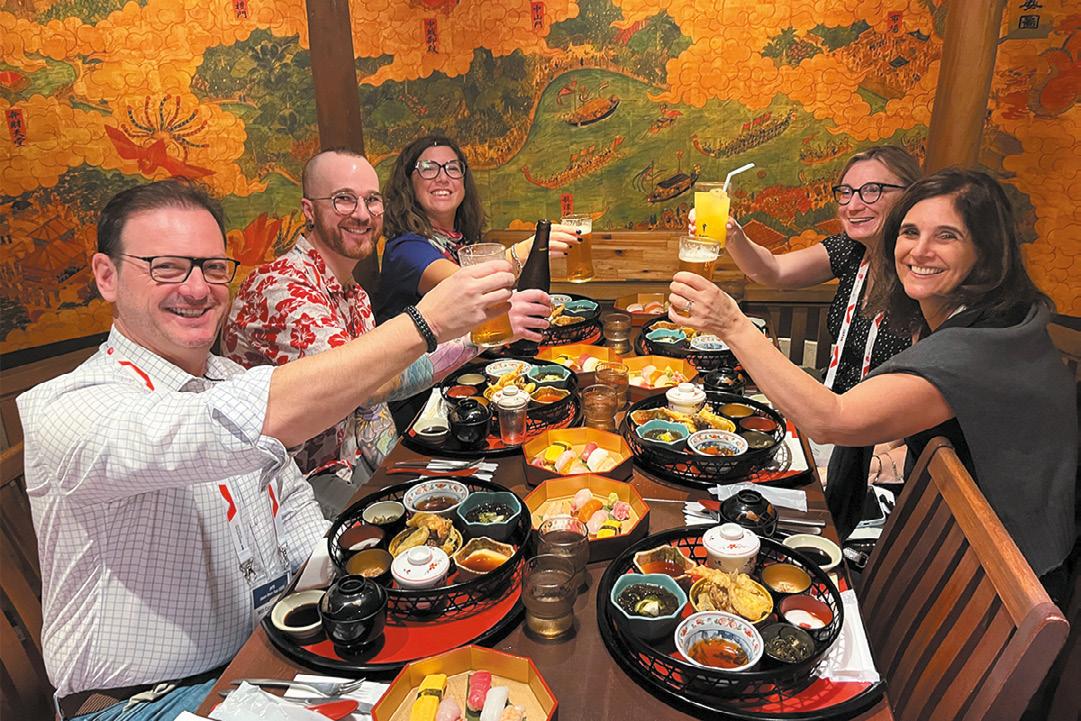
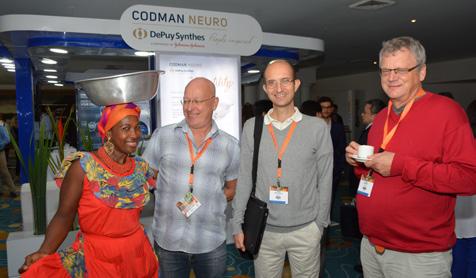
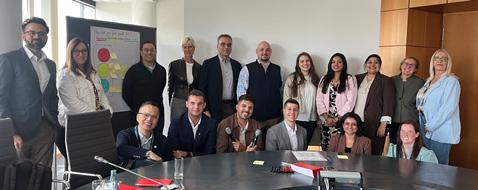
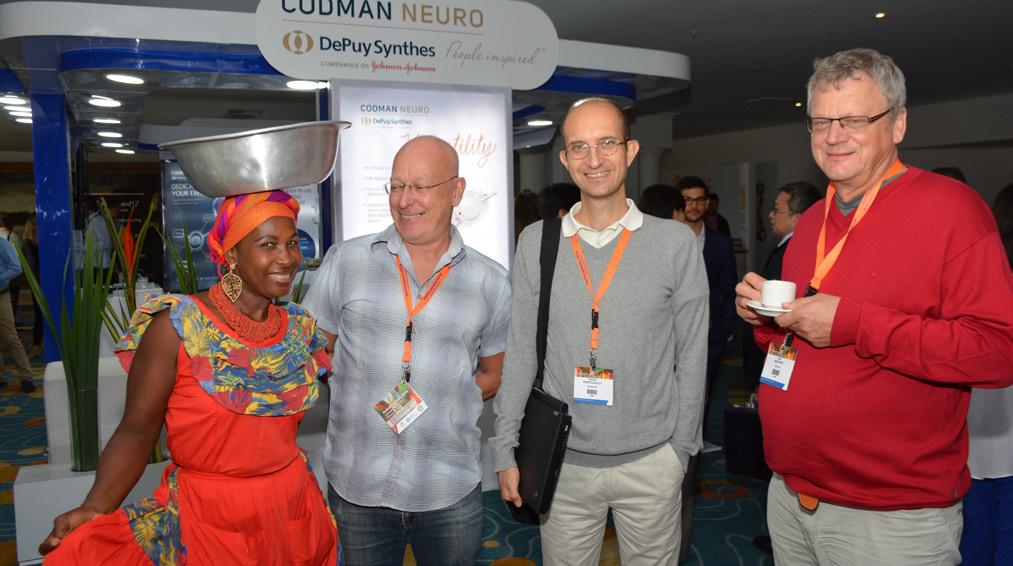
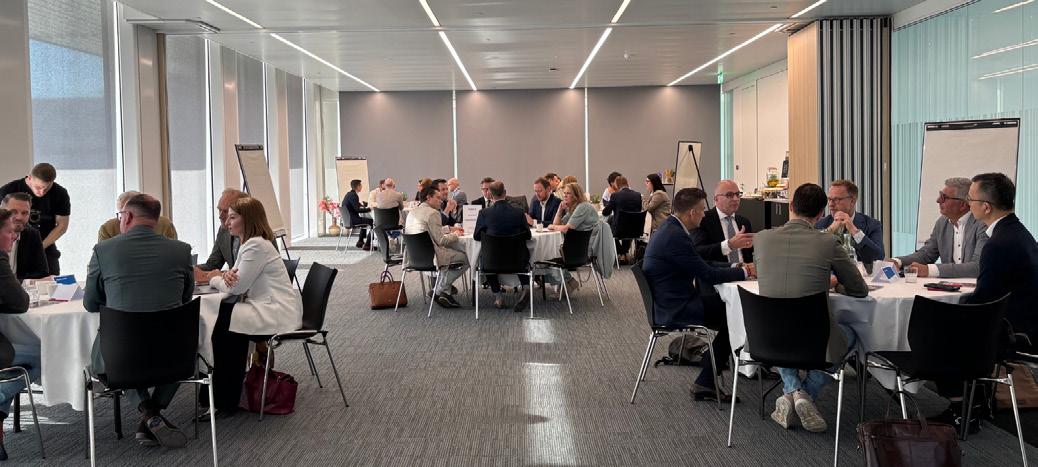
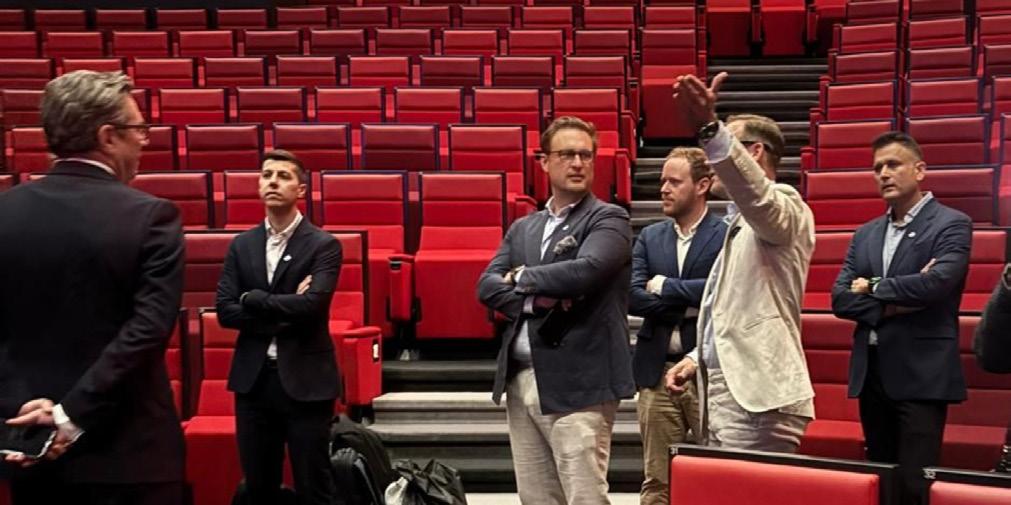
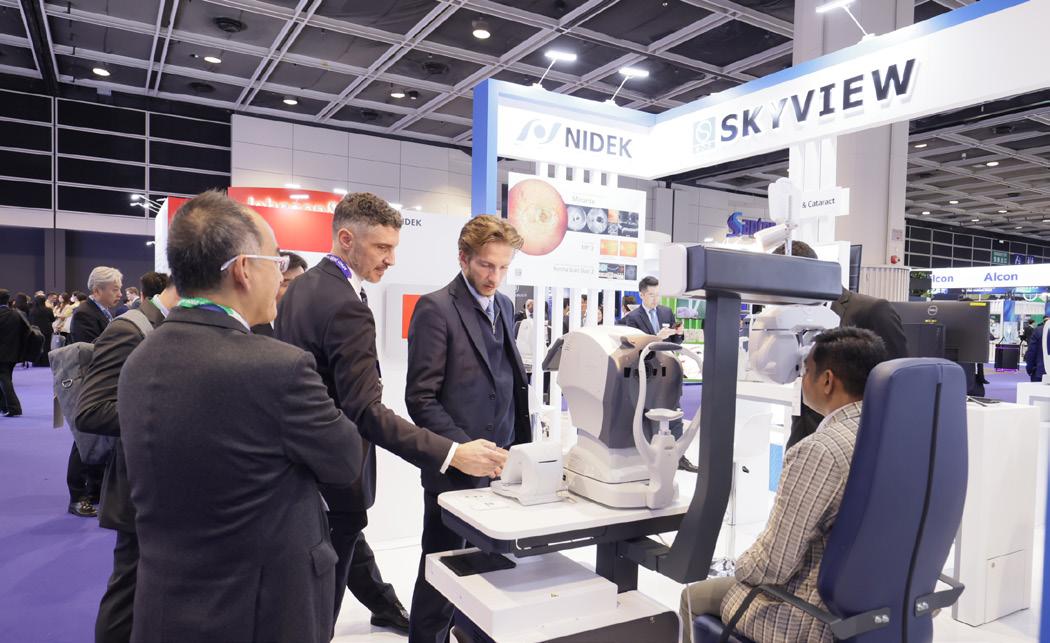
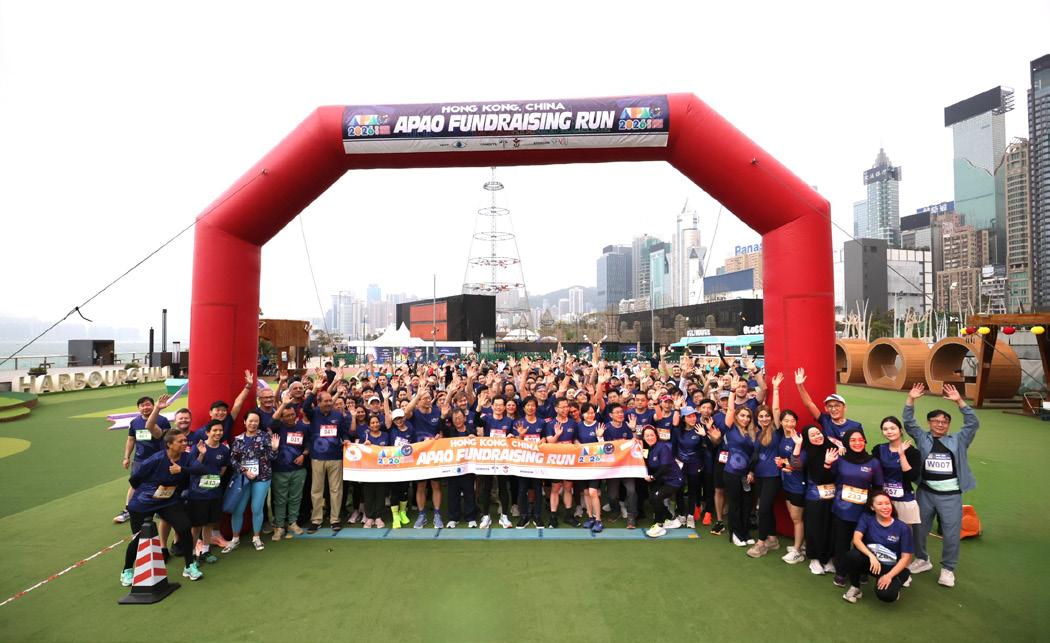
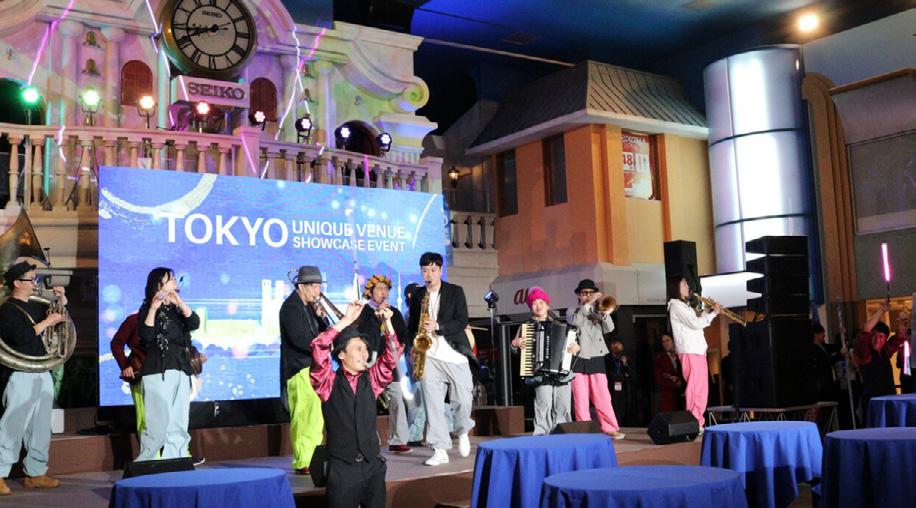
NTO hosted the Japan Study Tour in December 2025, inviting key meeting professionals from the International Association of Professional Congress Organisers (IAPCO) for a firsthand look at the diverse destinations, facilities and experiences Japan can provide.
The program featured two different courses: one to the southern islands of Okinawa plus Chiba Prefecture (just to the east of Tokyo), and another to the north-central prefectures of Niigata and Yamagata. Both highlighted Japan’s capacity to host conventions of any scale, featuring world-class facilities, distinctively Japanese event venues, and authentic regional cultural experiences.
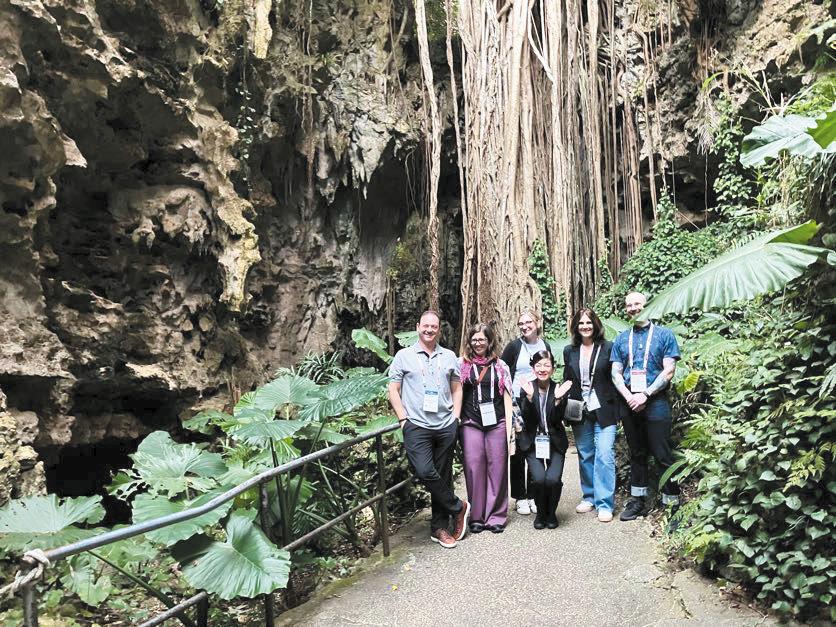
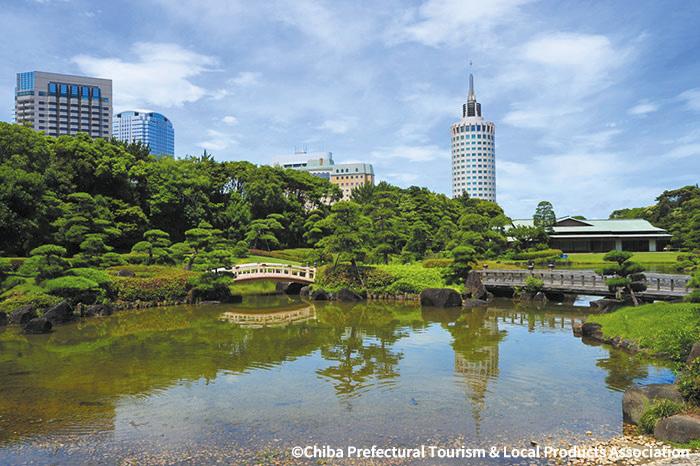
Participants from IAPCO joined the first course and inspected major conference venues such as the Okinawa Convention Center and Chiba’s Makuhari Messe —both capable of accommodating large-scale conferences. The group also visited Mihama-en, a traditional Japanese garden located adjacent to the convention center in Chiba. In Okinawa, the Valley of Gangala—a dramatic limestone cave used as a unique reception venue—captivated participants with its striking natural setting.
Throughout both study tours, participants experienced the diversity of offerings across Japan, as well as the warm hospitality the country is known for.
“We discovered the small details that make hosting a conference in Japan a truly unique experience,” said one participant. “It’s not just about venues: it’s about the meticulous attention to hospitality, the seamless integration of tradition and innovation, and the cultural authenticity that elevates every moment. These elements transform an event into an unforgettable journey for participants.”
The Japan Study Tour is part of JNTO’s efforts for global meeting planners to experience firsthand what Japan can provide.
Japan Study Tour 2026
The next study tour is scheduled for late November to early December 2026 (specific dates to be confirmed). Applications will be accepted from July 2026. If you are interested, please contact one of our JNTO MICE specialists below for more information.
JNTO MICE specialists
If you’re considering holding an event in Japan, or are interested in the Japan Study Tour 2026, please feel free to reach out to these MICE experts at your local JNTO office:
Exploring Okinawa's Valley of Gangala, itself a unique venue for MICE events.
Leading Through Change: Building Resilient Leaders
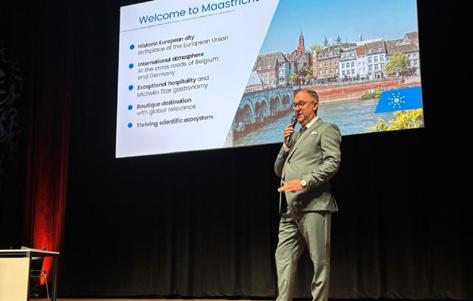
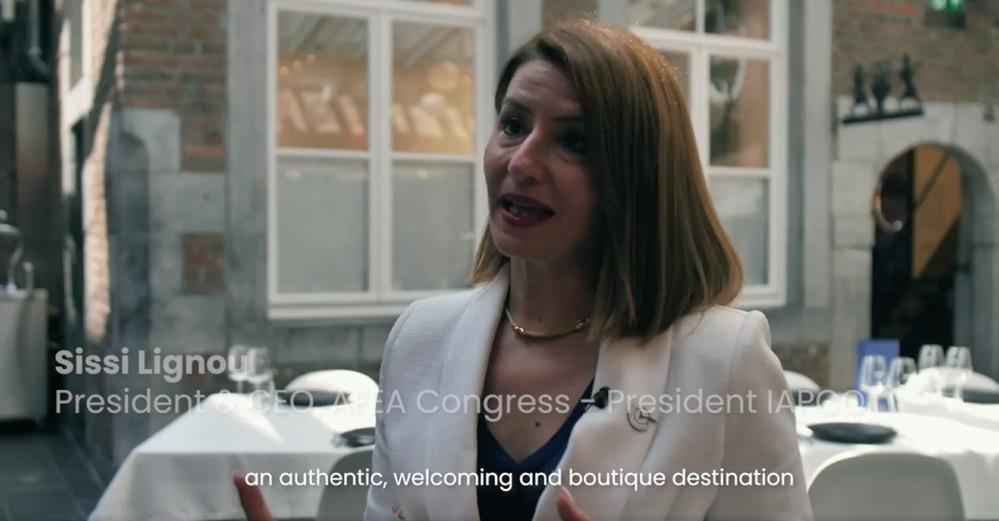
Having just returned from a dynamic week across two destinations, IMEX Frankfurt and Maastricht, where IAPCO Leadership and Community delivered excellence across all strategic pillars – advocacy, education, community – one key message that remains strongly with me is the power of resilience.
In recent times, our world has faced significant uncertainty and unrest, which has had – and continues to have – a growing and measurable impact on international meetings and conferences, placing our industry once again in a period of considerable challenge and distress. In these times, our industry can serve as a catalyst when leading through change and disruption, creating the ideal platform where people, ideas and decision-making come together. It fosters a strong environment for human connection, collaboration, innovation and a forward-thinking mindset.
Never before has there been such an urgent need for highlevel international dialogue and the vision to drive collective action. This is exactly what business events inspire, and one of the thousand reasons why our industry is so important.
Last week was a testament to this strength, but also a milestone in IAPCO history, as the energy surrounding all activities and achievements centred on one key message: there is an important priority to establish a unified global place leadership strategy, designed by all key players and stakeholders, that will position the meetings industry as an essential partner in addressing the complex challenges facing our world today.
There is a clear need to build resilient leaders who will drive this vision and enable change. IAPCO’s role in this journey, and in showcasing how IAPCO-accredited PCOs, Partners and Community can support associations, destinations and participants in navigating with agility and care, is of course instrumental.
This issue offers a deeper look into this strength, our industry’s strength. I encourage you to dive into our content and enjoy the read.
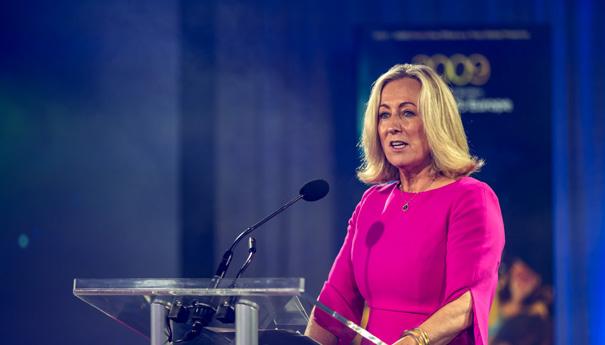
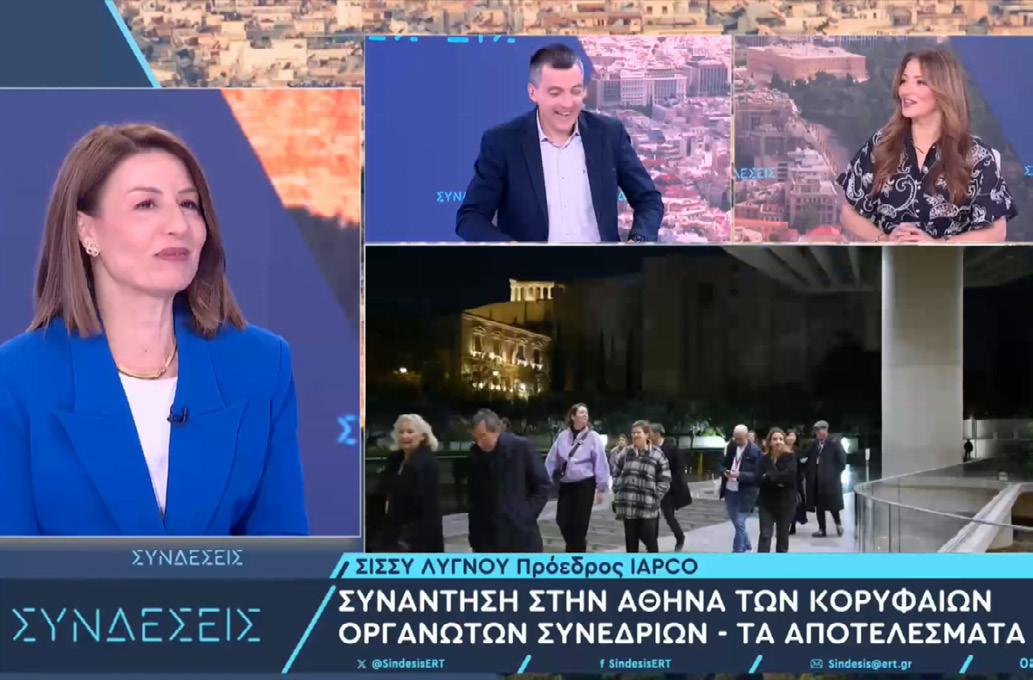
Sissi Lignou President, IAPCO
As I reflect on the past few months across our global industry, one thing has become increasingly clear: collaboration has never been more important. In an environment shaped by economic uncertainty, geopolitical complexity and rapidly evolving expectations, the meetings and events industry is strongest when organisations come together with a shared purpose and a willingness to align.
I was both honoured and humbled recently to be re-elected to the Board of the Joint Meetings Industry Council (JMIC). Representing IAPCO within this important global forum is a responsibility I take seriously, particularly at a time when advocacy, alignment and industry-wide cooperation are essential to strengthening our sector’s voice and long-term impact.
A recent collaborative session between JMIC and the Events Industry Council (EIC), held at IMEX in Frankfurt, further reinforced the importance of partnership across associations and organisations. The discussion focused not only on advocacy and industry impact, but also on how we can work together to build a more environmentally sustainable industry and demonstrate measurable value to governments, destinations and society.
No single organisation can address the opportunities and challenges facing our industry alone. However, by working together, sharing knowledge, aligning messaging and supporting one another, we can build stronger partnerships, amplify our collective voice and create the conditions for meaningful progress.
At IAPCO, we remain fully committed to this collaborative approach, as recently demonstrated through the support of PCMA, ICCA, IFES, AMCI and AIPC in our Socio-Political Survey. I believe the future success of our industry will be built not in isolation, but through partnership, trust and shared ambition.
This issue of The PCO builds on one of the most popular themes explored during the Annual Meeting and General Assembly Athens 2026 Dialogues, carrying forward the spirit and legacy of the AM&GA. Within these pages, you will find inspiring examples from the LATAM and Caribbean region, as well as from across the wider global community, showing how collaboration, advocacy and shared action continue to strengthen our industry and help shape its future.
Martin Boyle CEO, IAPCO
Editor: Martin Boyle (pco@IAPCO.org)
Message from the President 03 and CEO
Leading Through Change: Building Resilient Leaders
IAPCO at IMEX Frankfurt 2026 18
Driving Advocacy, Education and Global Connection
Upcoming Education and Events 40 Dates for your diary for education, networking and professional development provided and supported by IAPCO.
Education
IAPCO x Leading Centres of 15 Europe Workshop 2026: Strengthening Leadership Through Collaboration in Munich
Returning to where it all began: 16
IAPCO EDGE Auckland turns 10
IAPCO at IMEX Frankfurt 2026 22
Spotlight: #UnlockingEducation in Action
Winner: 24
IAPCO Innovation Award 2026
Celebrating Innovation in the Meetings Industry
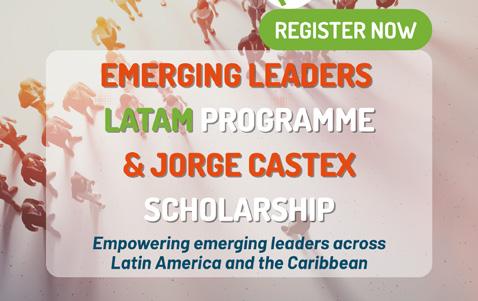
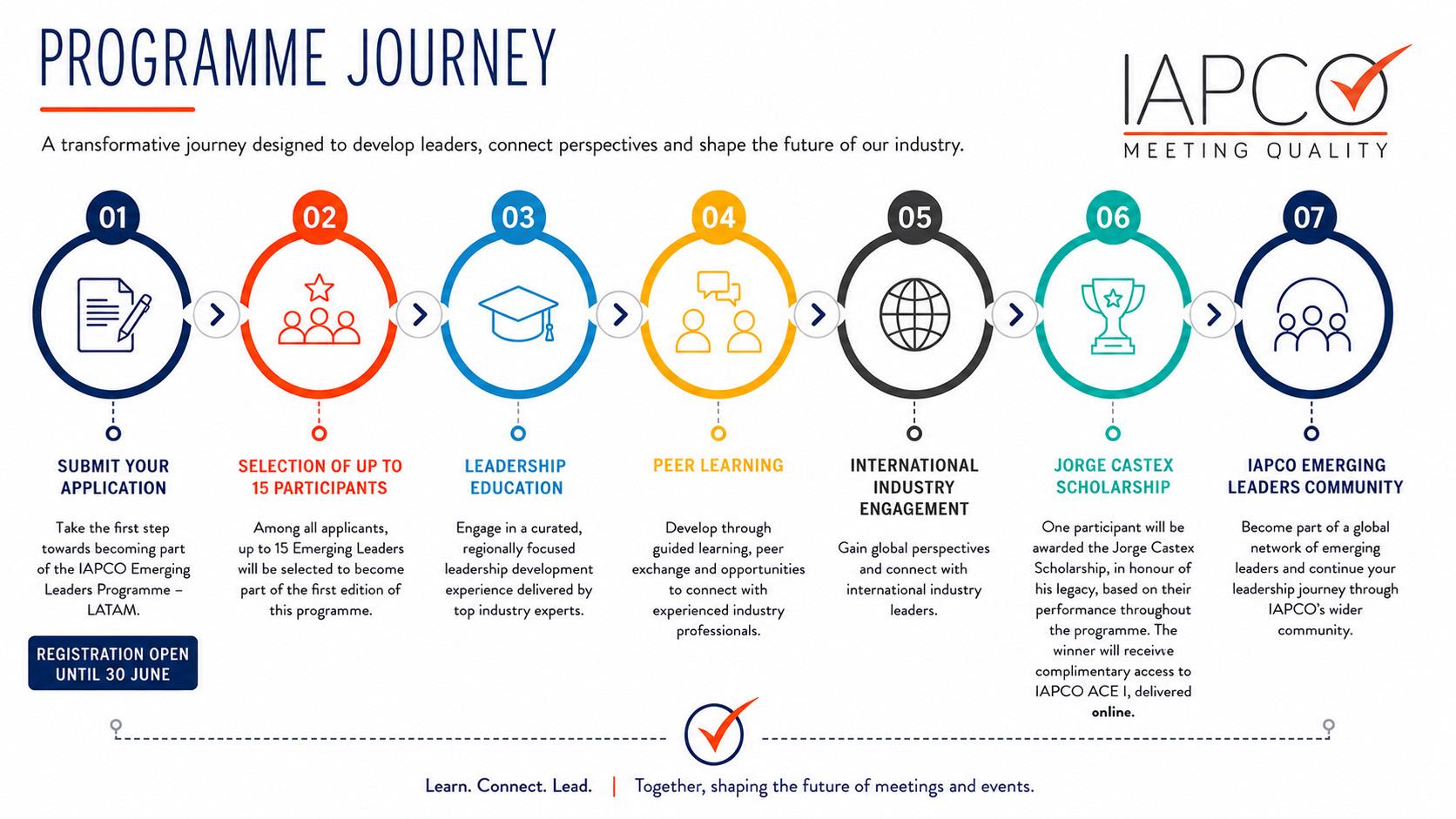
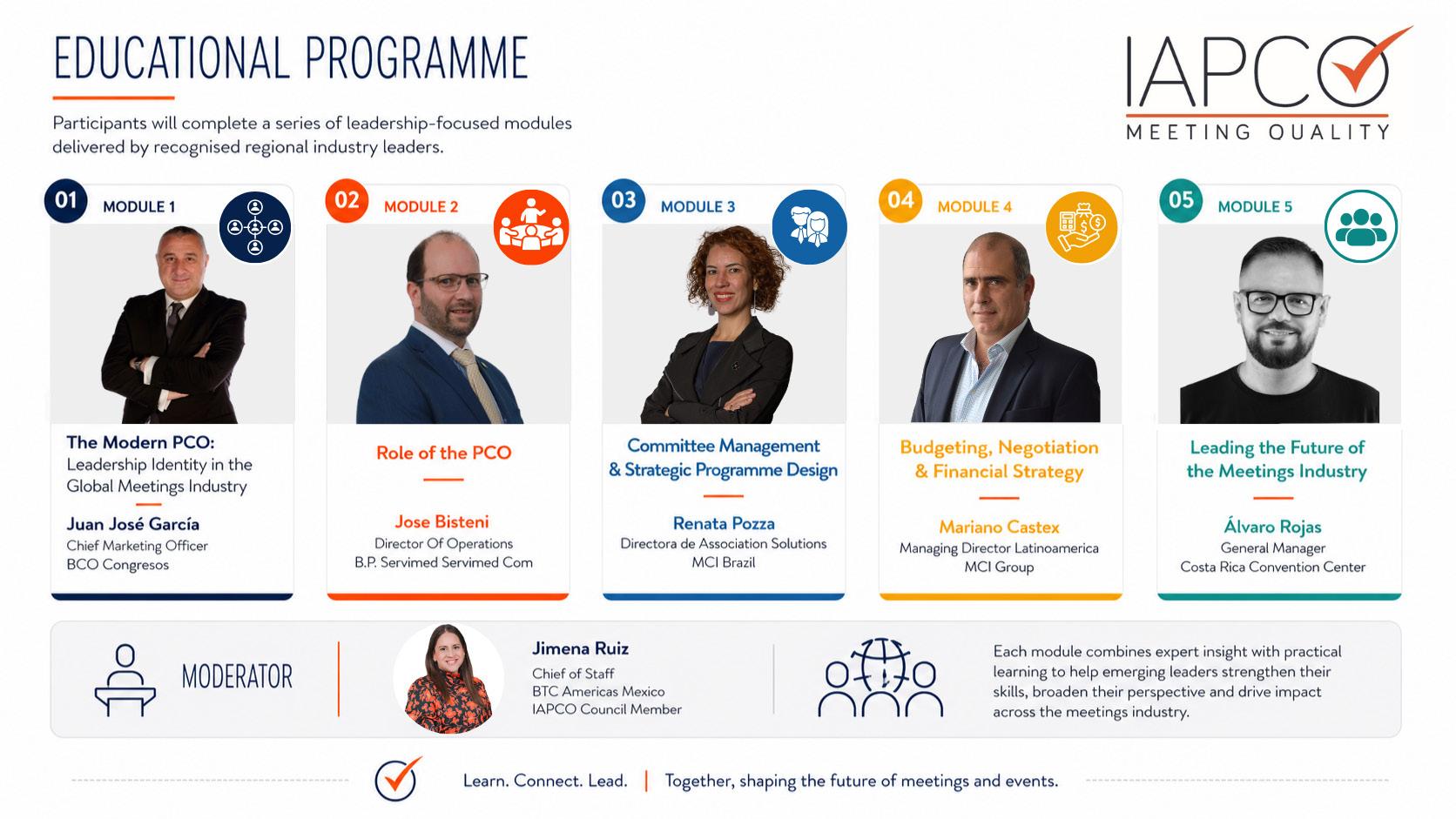
IAPCO and FIEXPO Launch New 42 Leadership Pathway for Emerging Talent in Latin America and the Caribbean
Community
IAPCO Council Meets in Maastricht: 33 Unlocking Excellence Through Collaboration
Welcoming New & Returning 46 Members & Partners
Advocacy
IAPCO at IMEX Frankfurt 2026 20
Spotlight: #UnlockingAdvocacy in Action
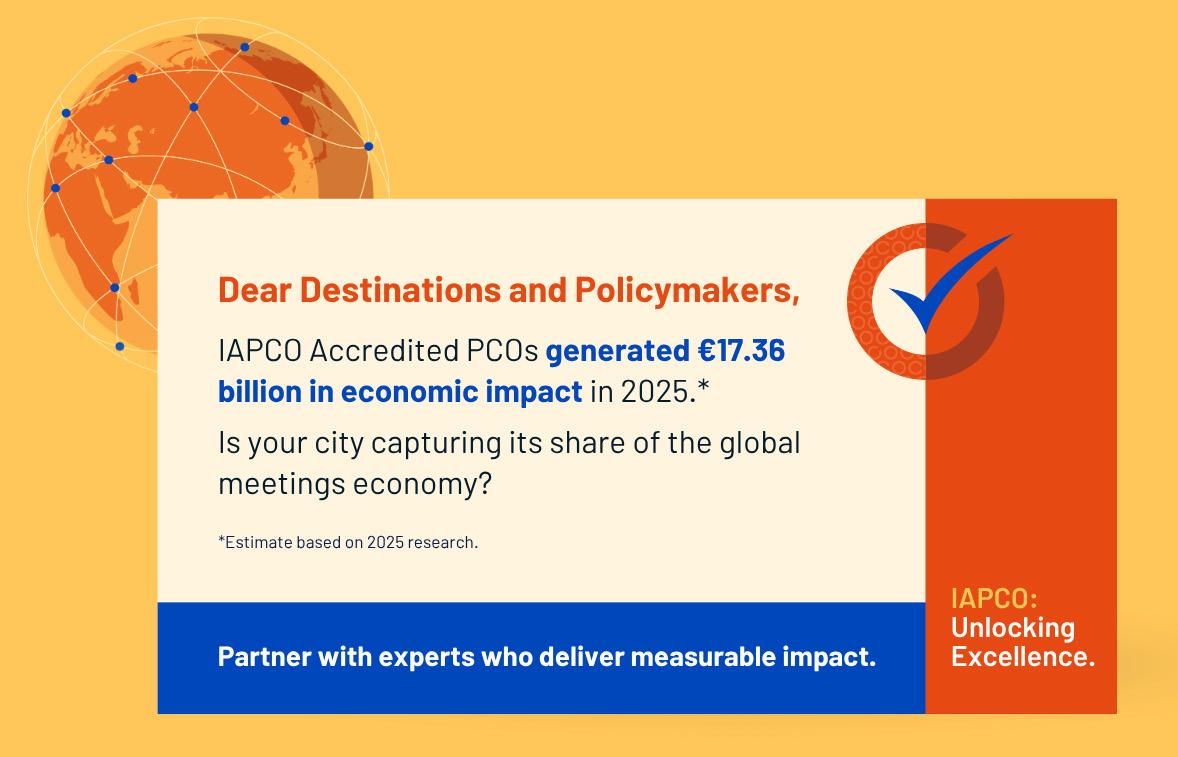
IAPCO PCOs deliver €17.36 billion 21 in economic impact as global meetings industry evolves
IAPCO at the European Association 26 Summit 2026 in Brussels
Dear Destinations and Policymakers 27
Dear Destinations. 28 Dear Associations. Real Impact.
Leading with Purpose: 31 How IAPCO President Sissi Lignou is Championing Our Industry
The Iceberg Amplifies IAPCO’s 32 Global Advocacy Message
EMERGING LEADERS PERSPECTIVE
AI Is Not Magic Anymore: 23 Green Light, Red Flag or something in between?
Feature in the Issue #124 Edition 3 (2026) of the PCO!
Theme:
Innovation & Agility: Staying Ahead in an AIDriven World
As client expectations shift from 'deliver my event' to 'move my mission,' the Professional Congress Organiser is evolving from logistics provider to strategic value partner.
This issue examines how PCOs are redesigning services, skills, and commercial models to meet tomorrow’s needs, blending insight, experience design, technology, and stewardship to create stronger value for clients, communities and the wider meetings industry.
Regional Feature: APAC
The upcoming edition of The PCO will shine a spotlight on the dynamic APAC region.
We invite IAPCO members, clients, partners, and collaborators from across Asia-Pacific to contribute news, updates, case studies, and stories that reflect the region’s distinctive strengths, innovations, and influence within the global meetings and events industry.
Let us highlight the creativity, agility, leadership, and evolving landscape shaping the future of meetings across APAC.
Deadline for all contributions: 22 June 2026
We welcome submissions from all our members from around the world.
Editorial support is provided to non-English speakers.
Send your contributions for the next edition to pco@IAPCO.org
destination supports for site inspections, bid support and programme enhancement. www.meetinireland.com learn more!
Autism Europe Congress 2025: Championing Inclusive Event Design
Redefining Inclusive Conferences and Delivering Lasting Legacy
When the 14th Autism Europe International Congress took place at the Royal Dublin Society (RDS) from 11–13 September 2025, it represented far more than a major international conference. With over 1,800 delegates and an economic impact of €3.45 million, the event delivered significant benefits to Ireland’s business events sector and wider visitor economy. One of it’s most powerful impacts, however, lies in how it redefined inclusive event design at scale.
Hosted by AsIAm, Ireland’s Autism Charity, the Congress set a new benchmark for co-creation, accessibility and inclusivity in international events. Supported by Fáilte Ireland, Keynote PCO and the Royal Dublin Society, it created a blueprint already influencing how large-scale conferences are planned and delivered across Ireland.
Co-creating Inclusion from the Start
From the earliest stages of planning, the Congress was developed in close collaboration with the Autistic community, with AsIAm becoming the first Autistic-led organisation to host the Autism Europe Congress. The theme – 'Quality of Life: Research, Policy and Practice' – was selected following a Europe-wide consultation, ensuring relevance to lived experience alongside academic and policy priorities.
Autistic leadership was embedded throughout the programme, with a majority Autistic scientific committee and speaker cohort. All contributors were provided with clear guidance to ensure autism-affirming content, reinforcing dignity, authenticity and respect at every stage. This cocreation approach ensured the Congress was not only a research forum, but a lived example of inclusive design in action.
Partnership with Fáilte Ireland and Structured Accessibility
The Congress formed part of an intentional impact project between AsIAm, Fáilte Ireland and Keynote PCO, delivered with #Meet4Impact focused on defining and measuring the societal impact of hosting the event in Ireland. Inclusive Event Design was selected as a core focus area, aligned with Fáilte Ireland’s ambition to position Ireland as a world-class destination for all visitors, regardless of ability or circumstance.
Ahead of the event, Fáilte Ireland’s Inclusive Tourism team worked closely with organisers to apply its Business Access Checklist – Accessible & Inclusive Tourism'. This checklist assessed event readiness and identified practical improvements across pre-travel information, communications, venue access and customer service, providing a structured and scalable approach to accessibility.
A sensory walkthrough of the RDS, undertaken by AsIAm, Keynote PCO and Fáilte Ireland, assessed the venue from the perspective of Autistic delegates. This process identified potential sensory challenges and informed a range of targeted measures, including:
• Dedicated quiet spaces accessible to all delegates
• Clear wayfinding supported by accessible signage and advance visual guides
• Quiet registration options, including early and low-stimulus registration
• Outdoor areas and mobile sensory spaces to support movement and regulation
• Step-free access across all key zones, accessible parking, two-tiered registration desks and staff trained in assistance-animal etiquette
These measures proved transformational for delegates and for the venue itself.
Measured Impact and Delegate Experience
Pre- and post-event surveys demonstrated the tangible impact of this design approach.
Before the Congress:
• 72% felt that previous conferences which they had attended prior to AEC 2025 had not considered sensory differences
• 59% reported uncertainty due to lack of advance information at previous conferences which they had attended
• After the Congress:
• 71% felt their sensory needs were clearly considered at the Autism Europe Congress 2025
• 73% said advance visitor information reduced unpredictability at this congress
These results show that inclusive design enhances participation, reduces stress and strengthens engagement — clear insights for future organisers and destinations.
Digital Inclusion and Universal Design
Digital accessibility was another priority. The Congress website and app underwent an accessibility audit. The app was used by over 1,600 delegates, and provided schedules, maps, quiet room information, prerecorded guides and live updates.
Real-time translation and captioning, powered by Wordly, supported international attendees, neurodivergent participants and visual processors. Delegates could engage with content from outside plenary spaces, maintaining control over their environment without losing access.
Workforce Inclusion and Culture Change
Inclusivity extended to the event workforce itself. Staff and volunteers played key roles onsite, reinforcing representation and shaping an atmosphere of understanding. All RDS staff received in-depth training on sensory, communication and judgement barriers, ensuring support was delivered with empathy and confidence.
Delegate feedback highlighted feeling safe, understood and reduced the pressure to mask — for many, a rare experience at a large international event.
Legacy for Dublin and Ireland
The Congress took place as Dublin continues its journey to become the world’s first Autism Friendly Capital City, led by AsIAm and Dublin City Council. It served as a global showcase for this ambition and demonstrated what an autism-friendly major event can achieve.
Its impact extends beyond the three-day programme. Partners report lasting changes to training, venue operations, event design and staff awareness. Learnings from the intentional impact project will inform best practice across Ireland’s tourism and events sectors, supporting both the Autism Innovation Strategy 2024–2026 and Ireland’s Business Events 2030 Strategy.
The Autism Europe Congress 2025 demonstrates how intentional design, collaboration and lived experience can transform a conference into a powerful model of accessibility at scale — showing that inclusivity is not an optional feature, but a mindset that can meaningfully shape events, communities and society.
Fáilte Ireland www.meetinireland.com
Leading Through Change: From Resilience as a Buzzword to Resilience as a System
In today’s meetings industry, resilience is often discussed, frequently quoted and rarely defined.
Yet, in a market shaped by constant disruption, compressed timelines and evolving expectations, resilience can no longer remain an abstract concept. It must become a leadership system
During a recent IAPCO General Assembly, I had the opportunity to facilitate a working group on this topic. What emerged was not a theoretical framework, but a collection of very real concerns, tensions and practical insights from leaders navigating complexity every day.
What leaders are really facing
The discussion started with a simple but powerful question: ‘What worries you most right now?’
The answers were immediate and consistent:
• Increasing pressure on time and delivery
• Teams stretched across priorities and roles
• Difficulty balancing innovation with operational excellence
• The challenge of integrating new technologies – especially AI – without losing clarity of purpose
One point stood out: AI is not the biggest challenge. Understanding how to use it meaningfully is
Resilient leaders are not those who adopt technology faster, but those who apply it with critical thinking, clarity and intention
Resilience starts with decision-making
A recurring theme in the conversation was decision-making. Not speed alone – but clarity.
Resilient leadership means:
• Empowering people to take decisions
• Framing problems clearly before solving them
• Creating alignment across teams quickly
One participant shared a simple but powerful practice: short, focused alignment meetings with directors – followed by cascading conversations within teams. Because in times of change, unclear decisions cost more than wrong ones
People are not just an asset. They are the system
If there was one unanimous agreement in the room, it was this: People are the most important asset of recovery and growth
But this comes with a shift in responsibility for leaders. It is no longer enough to manage talent. We must create the conditions for talent to evolve
Key ideas that emerged:
• Smaller, more agile teams (no more than five people) enable speed and accountability
• Time is as critical as talent – protecting it is a leadership responsibility
• Leaders must actively create opportunities, not just assign tasks
Resilience is built when people are given space to:
• learn
• experiment
• leave – and even come back stronger
This last point sparked strong agreement: ‘If they leave, let them come back.
A resilient organisation is not one that prevents movement, but one that welcomes growth – even when it happens outside its boundaries
From hierarchy to opportunity creation
Another tension emerged around leadership generations. Senior leaders often carry experience rooted in ‘the old way’, while younger talent brings new expectations, speed and mindset. The role of leadership is not to choose between the two – but to bridge them.
This means:
• opening doors instead of protecting structures
• creating new paths instead of forcing predefined ones
• enabling reverse mentorship and continuous learning
Resilient leaders are not gatekeepers. They are system designers of opportunity.
Communication: Simplicity is a strategic choice
One of the clearest messages from the group was framed in three words: Alignment – Simplicity – Communication
In complex environments, leaders often respond with more processes, more layers, more information. Resilient leaders do the opposite:
• they simplify
• they clarify
• they communicate with intention
Because complexity does not require more noise. It requires more meaning.
The mindset shift: From control to curiosity
Perhaps the most important shift discussed was not structural, but cultural. Resilient leadership is rooted in mindset:
• curiosity over certainty
• questions over answers
• commitment and passion over control
Leaders must remain alert, able to listen and willing to challenge their own assumptions. Because resilience is not about resisting change. It is about navigating it continuously
From reaction to momentum
The final takeaway from the session was clear: Resilience is not built in moments of crisis. It is built in everyday leadership choices.
Through:
• clear roles and responsibilities
• empowered teams
• intentional communication
• and the courage to create new paths
Organisations can move from reacting to change … to generating momentum through it
A final thought
Resilience is no longer a soft skill. It is a system. A system built on people, clarity and the ability to adapt without losing direction. And perhaps most importantly, a system that recognises that leadership today is not about having all the answers, but about creating the conditions where the best answers can emerge.
Patrizia Semprebene Buongiorno, AIM Group International
Beyond Greenwashing: ESG Governance and Managerial DecisionMaking in Reputational Risk Management
In a business environment shaped by disruption and rising sustainability expectations, ESG has become central to corporate strategy. However, alongside this shift, organisations face a growing leadership challenge: ensuring sustainability claims are credible, consistent and resilient under scrutiny.
A key risk is greenwashing – the misalignment between communicated sustainability commitments and actual practices. This gap can quickly escalate into reputational crises, undermining trust and legitimacy. As consumers evolve into ‘prosumers’, they increasingly shape brand narratives in real time, intensifying accountability pressures.
This raises a leadership question: how can organisations manage reputational risk while ensuring ESG governance supports authentic sustainability?
Greenwashing as a systemic leadership challenge
Greenwashing is increasingly understood as a systemic issue rooted in organisational misalignment rather than just communication failure. It can emerge from weak coordination, inconsistent processes or pressure to meet external expectations. While sometimes unintentional, it reflects fragmented decisionmaking.
External scrutiny has intensified through regulation, social media and employee activism, all of which accelerate the exposure of inconsistencies. Together, these forces highlight a core leadership requirement: resilience depends on alignment across strategy, operations and communication.
ESG governance and resilient decision making
The relationship between sustainability and firm performance remains debated (Jensen & Meckling, 1976; Eccles et al., 2014). Companies that embed sustainability effectively treat ESG as a governance system rather than a reporting function. This includes board level responsibility, integration into strategic decisions and linking performance to long term value creation.
Stakeholder engagement and transparency are central, with organisations increasingly relying on non-financial indicators to improve accountability and reduce information gaps. Evidence suggests ESG integration can enhance reputation, risk management and stakeholder trust, particularly in reputationsensitive sectors.
Leadership capability: Sensemaking in complexity
A key leadership capability is sensemaking – interpreting complexity and translating it into coherent decisions. Leaders who develop this ability can detect early misalignment, test assumptions and ensure communication reflects operational reality. This reduces the risk of disconnect between intent and execution – a core driver of reputational crises.
Insights from practice: ESG as a preventive system
Insights from Antonella Nalli, sustainability and ESG governance expert at Triumph Group International, show how ESG
governance can function as a concrete preventive mechanism. Nalli emphasises that sustainability must be evidenced rather than declared: ‘You have to prove it … generic declarations are no longer accepted.’ Data driven monitoring acts as an early warning system, identifying inconsistencies before they escalate. A telling example is the internal correction required around the use of the term ‘benefit corporation’ in Triumph Group's communications – a small inaccuracy that nonetheless risked misleading stakeholders, illustrating how reputational risk often originates from accumulated inconsistencies rather than deliberate misconduct.
However, communication must remain aligned with substance, as overstated claims risk undermining credibility.
Managing reputational risk and organisational response
When misalignment occurs, transparent responses are more effective than defensive ones, allowing organisations to learn and adapt. As Nalli identifies, organisations typically face a choice between two approaches: a defensive response, based on denial or technical justification, and a transparent one, based on acknowledging mistakes and revising processes.
The latter not only preserves credibility but transforms critical situations into opportunities for improvement, supported by strong internal communication and leadership involvement. Reputational risks typically stem from accumulated inconsistencies rather than isolated failures (Delmas & Burbano, 2011), reinforcing the importance of prevention through governance and coordination.
Conclusion: Leading through alignment and accountability
Greenwashing is not only a communication issue but a leadership and governance challenge rooted in organisational coherence. In fast-changing environments, resilience depends on aligning strategy, operations and communication through strong ESG governance.
Effective leadership requires systems thinking, data-driven decision-making and the ability to interpret complexity early. ESG should therefore be viewed not as a communication tool, but as a core element of resilient leadership and strategic risk management.
Maya Carella
Undergraduate Student in Public and Corporate Communication
Sapienza University of Rome Exchange Student at Erasmus University Rotterdam
Antonella Nalli
Sustainability Manager
Triumph Group International SpA Benefit Corporation
Paola Padovani
Business Development Director BU Congress & Association
Triumph Group International SpA Benefit Corporation
Leading Through Change Latin America What Latin America taught me about resilience
From a Zika outbreak in Cartagena to two congresses now taking shape in Brazil, the lessons I have learned about leading through disruption did not come from a textbook. They came from the field.
In 2016, I was responsible for the International Hydrocephalus Annual Meeting, held in Cartagena, Colombia. Three months before the event, the WHO declared Zika a Public Health Emergency of International Concern. Then a series of hurricanes disrupted flight connections from the US East Coast – our second-largest delegate market. Registrations froze. The scientific committee was anxious. The pressure to relocate was real.
We did not relocate. We delivered the congress. Attendance was lower than projected, but the event ran, the science was presented and the community came together in one of the most atmospheric cities in Latin America. That experience – and two congresses now in preparation in São Paulo and Curitiba – has shaped everything I think about resilient leadership in this region.
Cartagena: What we actually did
The situation in brief:
The Zika WHO advisory directly affected our community: neurosurgeons meeting to discuss hydrocephalus, were facing the issue both professionally and personally. At the same time, the hurricanes removed reliable US flight routing. Delegates were waiting to see what we would do.
Relocating at that stage would have caused more disruption, broken commitments to our local partners and would send exactly the wrong signal about how Artion operates under pressure. So, we worked out solutions instead.
We communicated clearly and frequently – sourcing guidance directly from WHO and local health authorities, not filtering it. We found alternative routing for affected delegates through airline partners. We brought a local medical advisor on site. And critically, we redesigned parts of the programme to maximise the value of a smaller, more focused gathering rather than treating reduced attendance as a failure.
The delegates who came were highly motivated and influential. Networking density was, paradoxically, higher than it might have been at a larger event. We did not discover this by accident – we designed for it once we accepted the reality of our projections.
‘When a situation is developing, silence from the PCO is not neutrality. It is a message. And it is usually the wrong one.’ Valentini Amarantidou, Artion Conference and Events
Three lessons I am taking to Brazil
Local partners are not vendors – they are co-leaders. In Cartagena, the local organising committee knew things I could not know from Thessaloniki: which contacts to call, which workarounds existed, how to communicate in a way that reassured rather than alarmed. I worked with them, not around them. In Brazil, I am investing in those relationships earlier and more deeply, because Brazil's regulatory environment demands local legal and fiscal expertise that no amount of general PCO experience can substitute.
Crisis communication must outpace the news cycle. In 2016, social media was amplifying anxiety faster than science could calibrate it. The delegates who stayed were largely the ones we had reached quickly and consistently. The ones who cancelled were often those we had reached too late. That changed permanently how I think about communication under uncertainty.
A smaller attendance is not a failed congress. But this requires active reframing – of the scientific committee, of sponsors, of delegates –before the event, not after. The framing shapes the outcome.
What this region asks of leaders
Latin America is not a difficult destination. It is a demanding one. The difference is important. Demanding means it asks more of you – in preparation, in relationships, in the speed and honesty of your decisions. The return on that investment, when the work is done properly, is a congress that exceeds what delegates expected and a client relationship that lasts.
My advice to PCOs considering Latin America is straightforward: build your local relationships before you need them. Communicate with delegates early and honestly. Act on incomplete information rather than waiting for certainty that will not arrive in time. And do not let the complexity of a destination become a reason to underestimate what it can offer.
Cartagena in 2016 was one of the most demanding events of my career. It was also one of the most rewarding. I expect São Paulo and Curitiba to be the same.
Valentini Amarantidou, Partner and Director of Development, Artion Conferences & Events, Thessaloniki
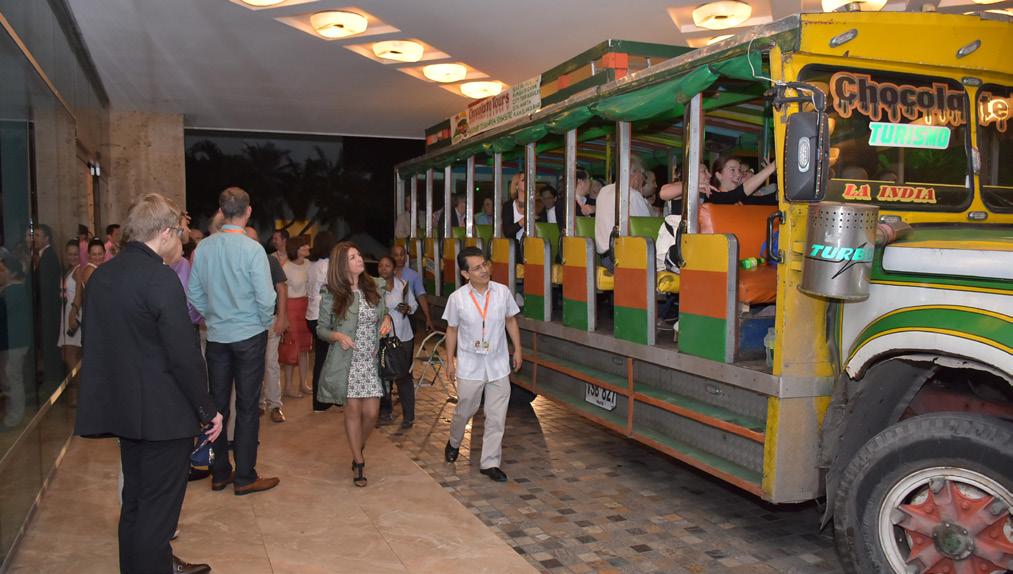
Pictures from the branding and the social events of the Hydrocephalus Annual Meeting 2016, Cartagena, Colombia
Clarity Under Pressure: How Leaders Build
Resilience in Congress Management
Change in international congress management rarely comes alone. It arrives through disruption, tight timelines and rising expectations. Imagine the final days before a major congress. A keynote speaker cancels. Within hours, the programme must be reshaped, rooms reassigned, technical setups adjusted and participants informed. At the same time, communication increases and decisions cannot wait. In these moments, performance is not only about execution, but about leadership.
In high-pressure environments, resilience is not a fixed trait. It is influenced by how work is structured, how responsibilities are defined and how decisions are made when information is incomplete. Teams are able to act when the conditions around them are clear enough to support action.
Resilience in congress environments depends on how clearly responsibilities, decisions and communication flows are defined when time is limited. This clarity allows teams to move forward even in changing and uncertain situations.
In practice, organisations that prioritise resilience invest in preparing their teams for these moments. They see resilience as a skill that can be learned and strengthened through experience and training. At Congrex, this is part of how teams are developed. Employees take part in regular resilience workshops that focus on practical skills. These include managing stress during intense phases, staying focused over longer periods and communicating clearly under pressure. This shared approach supports consistency in delivery across complex congress environments.
Every congress involves many connected decisions, from programme design and speakers to logistics and on-site delivery. In many cases, the challenge is not a lack of information, but the need to move forward while details are still evolving. Clear roles, defined escalation paths and aligned priorities help support this process.
Key foundations of leadership-enabled resilience
Resilient organisations reduce friction by building clarity into how they work. Teams are more effective when:
• Every important decision has a clearly defined owner
• Escalation paths are known and documented
• Priorities are aligned and visible across the team
Information plays a supporting role, but only when it enables action. More information alone does not improve decisions. When structures are clear, decision-making becomes faster and more consistent, even under pressure.
Practical takeaways for leaders in congress management
Effective leadership in congress environments depends on a few consistent principles. Responsibilities should be defined early, so teams can act without delay when time is limited. In complex situations, prioritising what matters most is more effective than trying to resolve every detail before acting.
Short alignment before action helps reduce misinterpretation and improves coordination. Decisions are often made with incomplete information. In these situations, clarity of ownership is more important than completeness of information. Once decisions are made, they should be communicated quickly and clearly. Resilience is supported when teams are given clarity, stability, and the ability to continue moving forward under pressure.
In congress management, disruption is part of the operational reality. What distinguishes effective organisations is not the absence of disruption, but the ability to create clarity quickly and maintain momentum when conditions change.
Leonie Trogus Congrex Switzerland Ltd
Beyond the Programme: Why Relationships Are the Real Deliverable
CPO HANSER SERVICE applied the Fraunhofer Innovation Ecosystem Strategy Tool at its team meeting – and discovered that the programme was not the point
Every congress starts with a programme. But the most valuable thing that happens at a congress rarely appears on it. At CPO HANSER SERVICE, we have been quietly asking ourselves this question. As a professional congress organiser with over forty years of experience, we know how to fill a room and a timetable. We are comfortable thinking in programme slots, session chair and logistics. But at our most recent annual team meeting, we chose to try something different.
We introduced the Innovation Ecosystem Strategy Tool, developed by the Fraunhofer Centre for Responsible Research and Innovation (CeRRI) at Fraunhofer IAO. The tool maps the players in any given innovation ecosystem – assigning roles, resources and relationships – and makes visible what is often left implicit: who benefits from collaboration, what each actor contributes and where value is actually created.
A different lens on a familiar format
Using the tool as a structured exercise, we did not focus on what CPO does in isolation. Instead, we asked: who are the actors in our ecosystem? Which roles do we play: orchestrator, connector, knowledge broker? Which roles are currently missing? And where could collaborative formats unlock value that remains untapped?
‘Instead of discussing service offerings, the conversation moved to relationships – to trust, and to the question of what we and our clients actually co-create.’
The shift was immediate. Isolated programme items gave way to a discussion of relationships, mutual dependencies, and longterm value. For the first time in some years, the room talked less
about what we deliver and more about what we build – together with clients, associations and partners – over time.
Relationships over programme slots
For PCOs, the implications are practical as well as philosophical. Scientific congresses are, at their best, moments of collective knowledge creation. Speakers, delegates, sponsors, associations, industry partners and host institutions are all actors in an innovation ecosystem. Yet too often they are managed as isolated programme elements – booked, briefed, and optimised separately.
The Innovation Ecosystem Strategy Tool invites you to draw these connections explicitly. It helps a team see who plays which role, where dependencies lie and how meeting formats – panels, workshops, side events, networking sessions – could be designed not just to deliver content, but to cultivate sustained ecosystem relationships and lasting co-creation.
What we took away
The session produced no new strategy document or rebranded service offering. What it produced was a different quality of conversation – one rooted in co-creation, long-term thinking and shared value. We believe that is exactly the kind of conversation the meetings industry needs more of.
Inge Hanser, Managing Director of CPO HANSER SERVICE: ‘A very useful tool that works well for events. Please feel free to contact Nico or me at any time for further information.’
Nico
Lindemann, Chief Technology Officer (CTO), GLOBIT GmbH, the conference software subsidiary of CPO HANSER SERVICE GmbH
Meet the art of bringing people together.
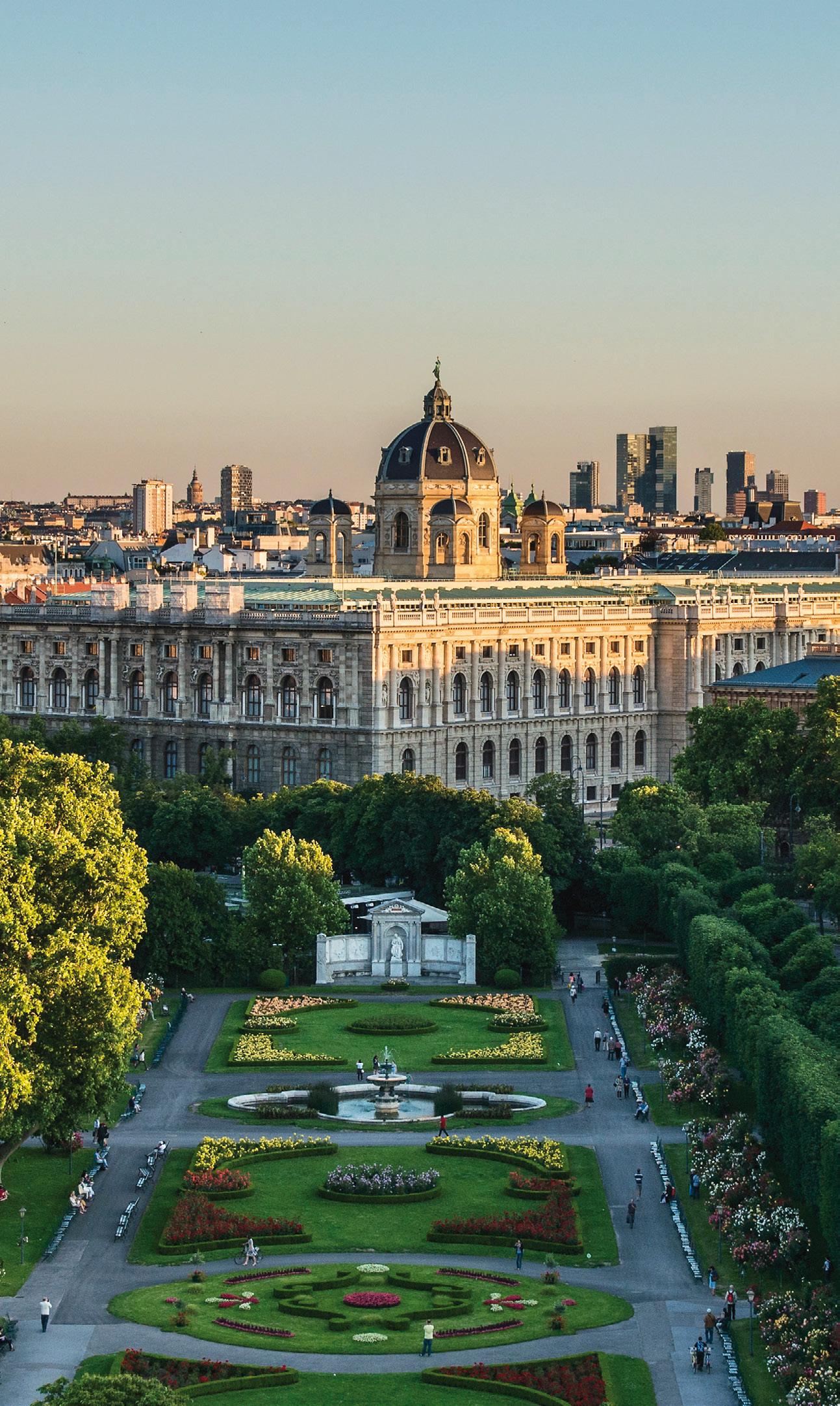
Meet Vienna.
Vienna impresses with its excellent (meeting) infrastructure, short distances, high quality of service and outstanding cultural offerings. The city combines tradition and modernity –historical flair in a smart, livable city.
Centrally located in the heart of Europe, Meeting Destination Vienna is easy to reach with numerous direct flights. Once here, guests enjoy a walkable city center, an efficient public transport system, and a wide choice of hotels and venues to suit every need. meeting.vienna.info
IAPCO x Leading Centres of Europe Workshop 2026: Strengthening Leadership Through Collaboration in Munich
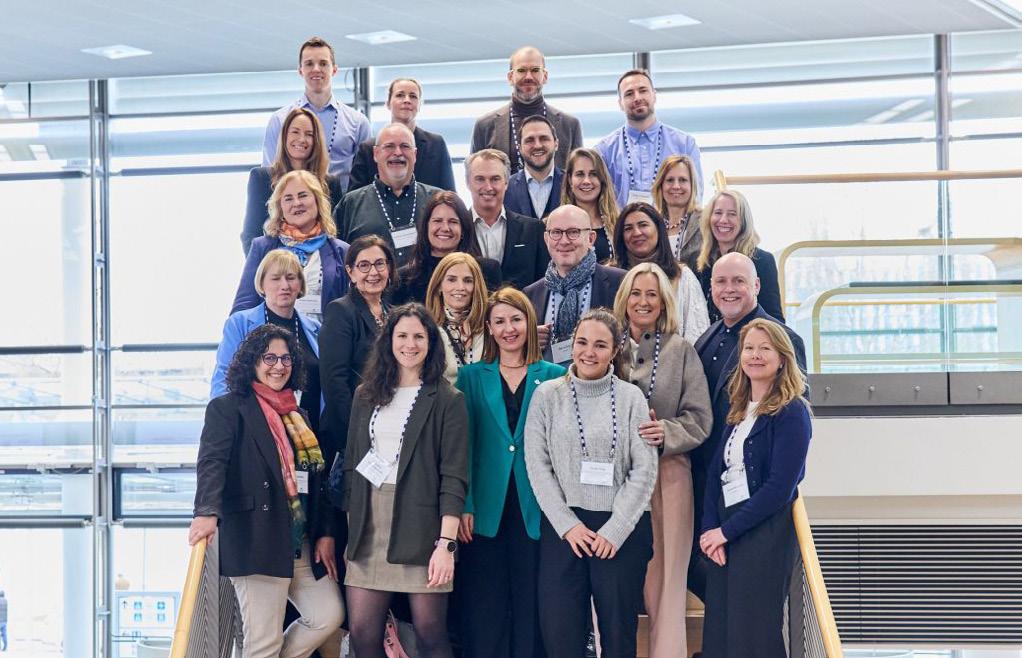
In a meetings industry defined by constant change, the ability to negotiate, influence and build trusted relationships has become just as important as operational expertise. That was the focus of the fourth edition of the IAPCO x Leading Centres of Europe Annual Senior Leaders Workshop, held this year in Munich and designed exclusively for members of both organisations.
More than simply a professional development programme, the workshop reflected a partnership that has evolved steadily over the past three years through joint business models, shared strategic initiatives and a mutual commitment to strengthening leadership across the global meetings industry.
Bringing together senior leaders from across the sector, the Munich gathering created a dedicated space for dialogue, collaboration and capability-building at a level rarely possible within larger industry events. This year’s theme, ‘Negotiating and Influencing Skills,’ focused on one of the industry’s most valuable – and often underestimated – leadership capabilities: the ability to navigate complex conversations, build alignment and create stronger relationships with clients, colleagues and partners.
Guiding participants through the programme were Andrew McFarlan and Colin Harper of Pink Elephant Communications whose sessions combined practical frameworks with highly relevant real-world scenarios. Rather than approaching negotiation as a transactional skill, the workshop explored influence as a long-term leadership capability built on trust, communication and understanding. The result was a highly interactive environment where participants were encouraged not only to learn new techniques, but to reflect on how those approaches apply within the increasingly complex realities of association and congress management.
Representing IAPCO, President Sissi Lignou and Sofia Laddaji, Community Engagement and Partnerships Manager, joined colleagues and partners throughout the programme. During her presentation, Lignou highlighted the importance of the longstanding collaboration between IAPCO and Leading Centres of Europe, emphasising a shared ambition to advance excellence in the meetings industry through education, professional development and strategic cooperation.
What continues to distinguish the workshop is its focus on seniorlevel exchange. Beyond the formal sessions, the programme offered opportunities for candid discussion about leadership challenges facing the sector, from evolving client expectations and organisational resilience to the need for stronger international partnerships in an increasingly interconnected industry.
Munich itself provided an ideal setting for those conversations. Hosted by Messe München and supported by the Munich Convention Bureau, the workshop balanced structured learning with opportunities for meaningful connection and informal exchange among peers.
As the partnership between IAPCO and Leading Centres of Europe continues to develop, initiatives such as the Annual Senior Leaders Workshop demonstrate the growing importance of collaborative leadership development within the meetings industry. At a time when organisations are being asked to adapt faster, communicate more effectively and lead through uncertainty, investing in senior leadership skills is no longer optional – it is essential.
For participants, the few days spent in Munich were not simply another industry gathering. They were an opportunity to step back from day-to-day pressures, challenge assumptions, strengthen professional relationships and return with practical insights that will shape conversations and decisions long after the workshop concluded.
Returning to where it all began: IAPCO EDGE Auckland turns 10
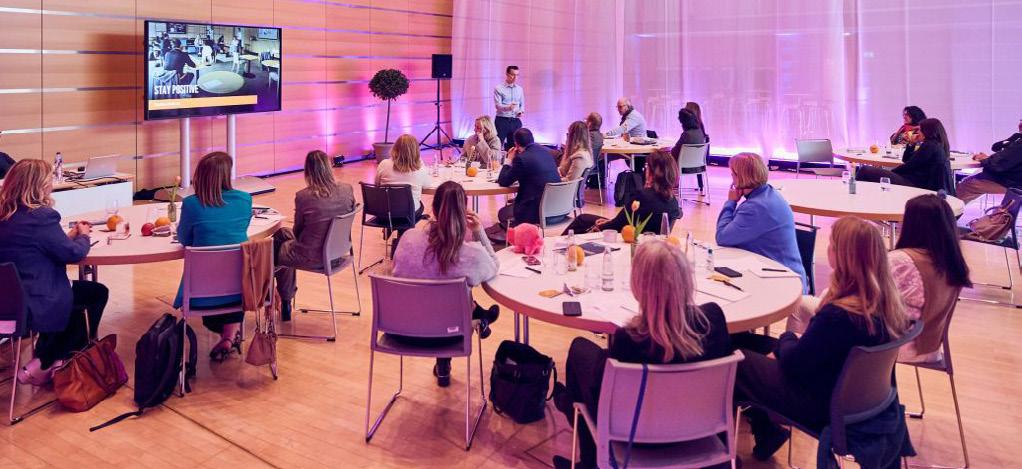
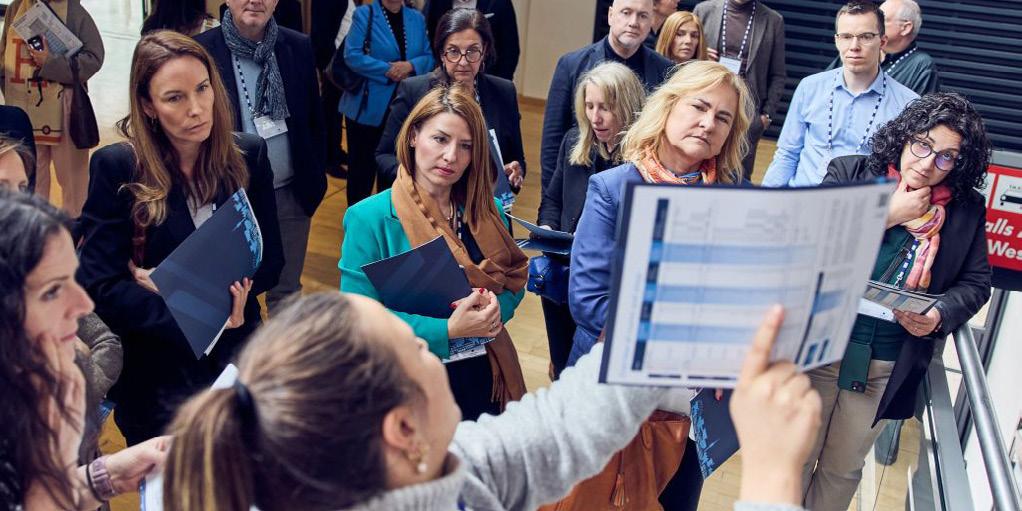
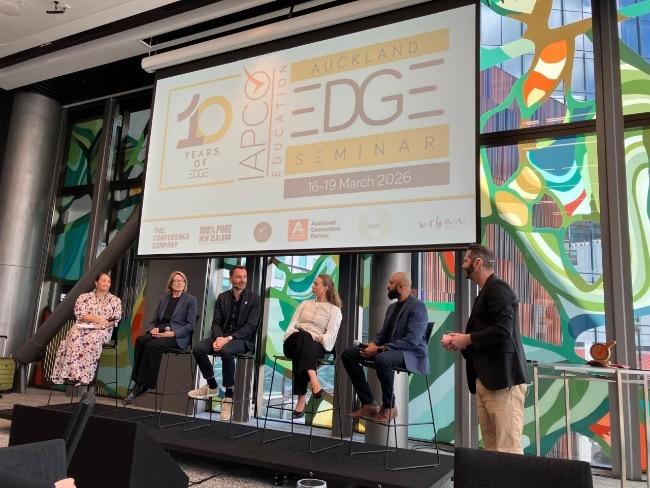
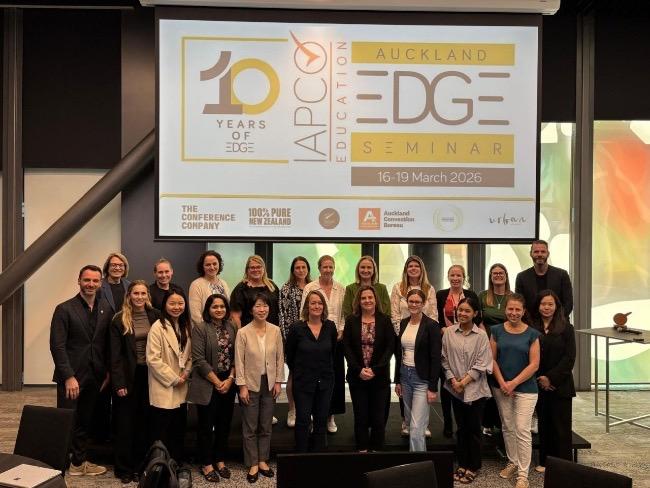
Returning to Auckland a decade after the first IAPCO EDGE seminar was delivered, this APAC EDGE marked a moment of reflection and renewed purpose. From 16–19 March 2026, meeting professionals gathered to exchange ideas, challenge perspectives and reconnect with what underpins excellence in conference delivery.
Hosted at the newly opened New Zealand International Convention Centre (NZICC), the programme balanced structured learning with open, informal discussions. Ideas emerged through conversation, differing perspectives and the shared experiences that defined the week.
Auckland with its unique blend of culture, creativity and strong sense of Manaakitanga, the spirit of hospitality that defines how guests are welcomed, encouraged participants to step outside familiar frameworks and engage in conversations that were both reflective and forward-looking.
Shaped by global expertise
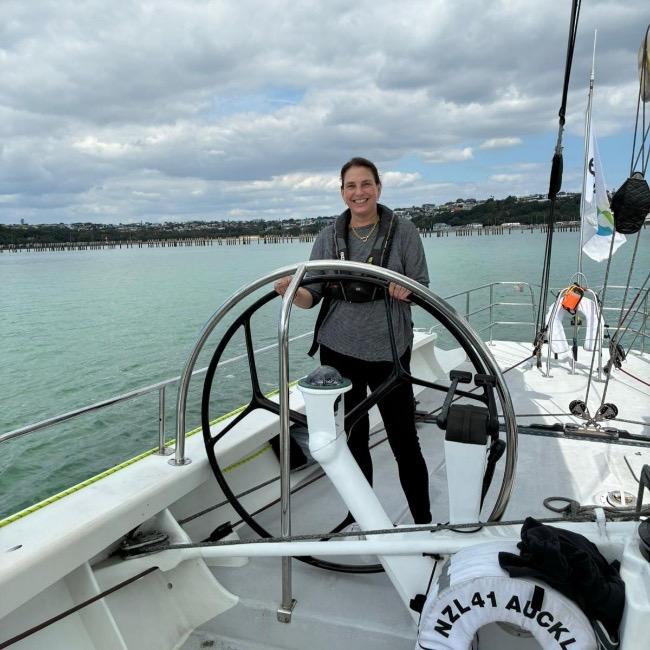
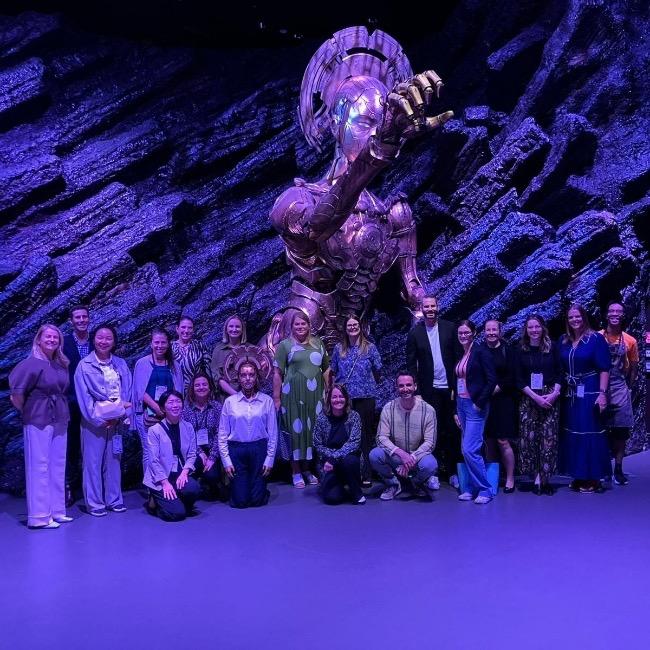
A Cultural Welcome at NZICC set the tone for EDGE, followed by curated experiences including lunch aboard Peretū 2, an America’s Cup sailing experience, visits to the All Blacks Experience and Wētā Workshop, and shared dining at some of the city’s most celebrated venues.
However, the programme guided by IAPCO’s expert faculty, is where participants engaged with content that was both strategic and practical, leaving with a renewed confidence, fresh perspective and a stronger sense of connection to a global professional community.
The programme featured contributions from:
• Mathias Posch, IAPCO Past President
• Jan Tonkin, IAPCO Past President
• Stephen Noble, IAPCO Chair of the Training Academy
• Craig Muller, Co-Founder and Director of Uno Loco
• Alana Bicknell, Director of Sales at New Zealand International Convention Centre
• Ken Pereira, Manager at Auckland Convention Bureau
• Penelope Ryan, Global Manager Business Events at Tourism New Zealand.
events, including On the EDGE: The Forces Shaping the Future of Business Events; From Protocol to Partnership: Working with Indigenous Cultures in Meaningful Ways; and Beyond Impact: The New Era of Responsible Conferences. Together, they equipped participants with practical tools and fresh perspectives to take back into their organisations.
As the programme progressed, the focus shifted towards application and future thinking, with sessions covering financial fitness, risk management, partnerships, sponsorship and leadership. A dynamic industry panel brought these perspectives together before the seminar closed with final reflections and farewell drinks, reinforcing the collaborative spirit that defines EDGE.
On the success of EDGE Auckland, Stephen Noble, Chair of the IAPCO Training Academy, said:
'On behalf of IAPCO’s Training Academy, I’m incredibly proud of the success of the EDGE Auckland Seminar. The calibre of education, the openness of shared experiences, and the genuine engagement between participants have made this a truly impactful programme.
'EDGE continues to demonstrate the power of bringing our global community together to learn, challenge perspectives, and grow professionally. My sincere thanks go to our outstanding speakers for their insight and generosity, and to our valued supporters whose commitment makes initiatives like this possible.'
A community built over a decade
“It was brilliant catching up with familiar faces and welcoming new colleagues to our network. I attended the first IAPCO EDGE in Auckland 10 years ago.
The IAPCO team put together an outstanding programme,
packed with fresh ideas that we're excited to implement in our business. Networking was amazing as always and it was great
As always, it was the people who defined the experience; a reminder that at the heart of EDGE is not just education, but a global community committed to excellence.
Thank you to everyone who contributed on stage, behind the scenes and in the room.
IAPCO at IMEX Frankfurt 2026
Driving Advocacy, Education and Global Connection
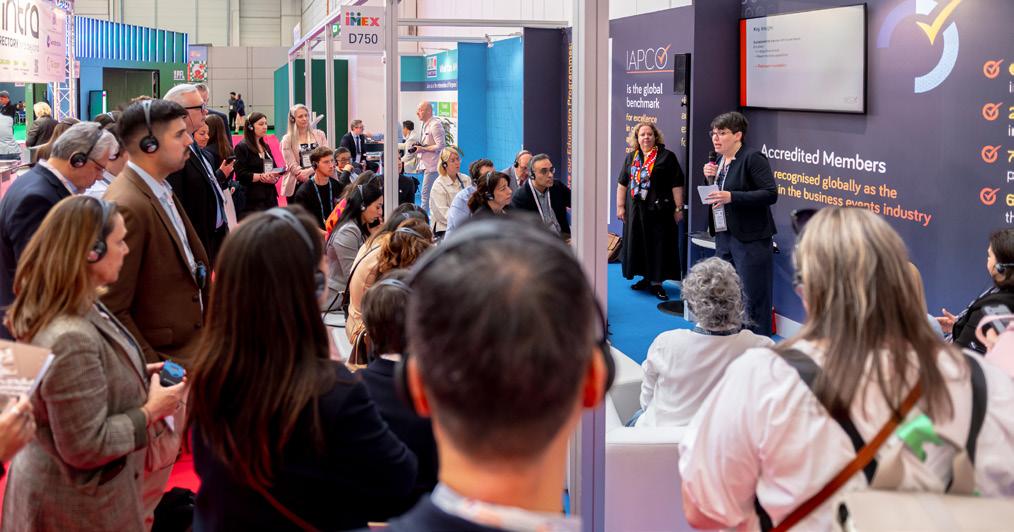
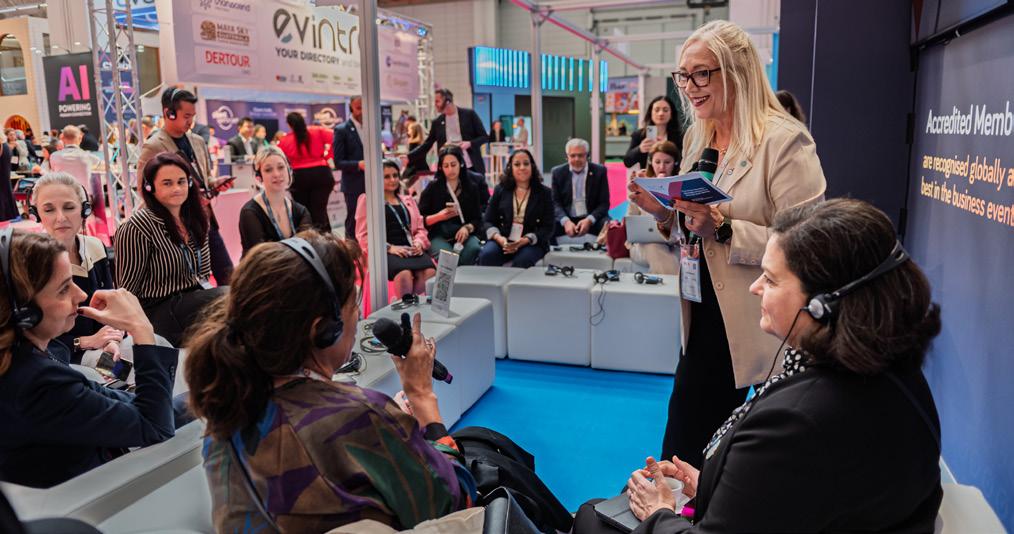
IAPCO’s participation at IMEX Frankfurt 2026 once again reflected our commitment to advocacy, education, collaboration and global community engagement across the meetings industry.
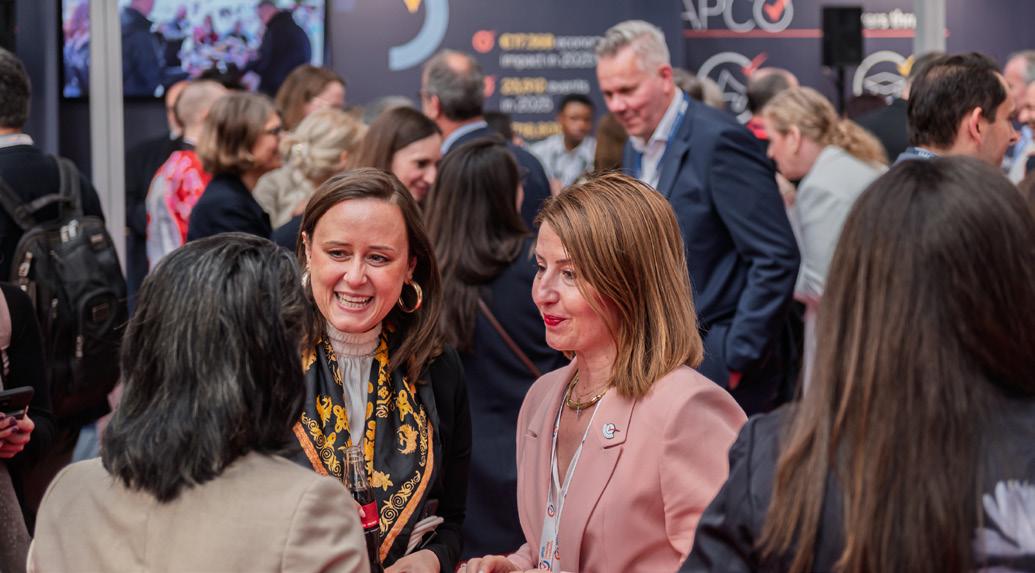
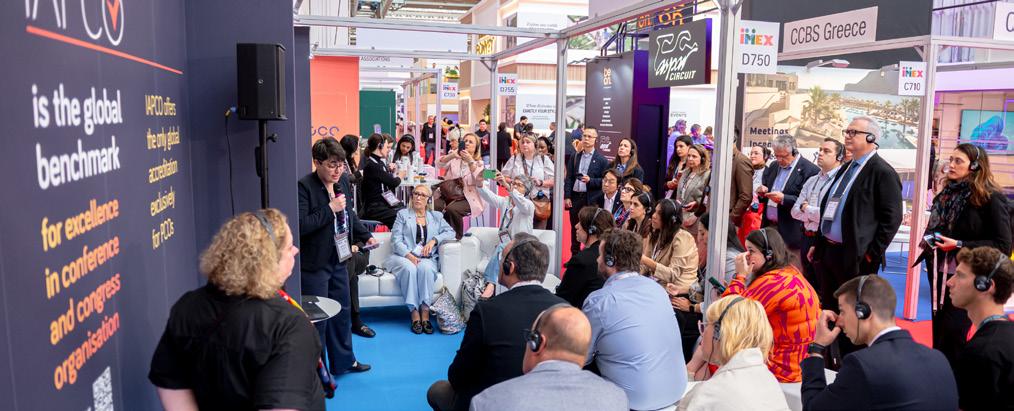
With a strong presence throughout the show, IAPCO welcomed a record-attended Hosted Buyer Group of forty-two participants from across our global membership community, while the IAPCO HQ team, Council and members actively participated in industry discussions, networking opportunities and strategic meetings throughout the week.
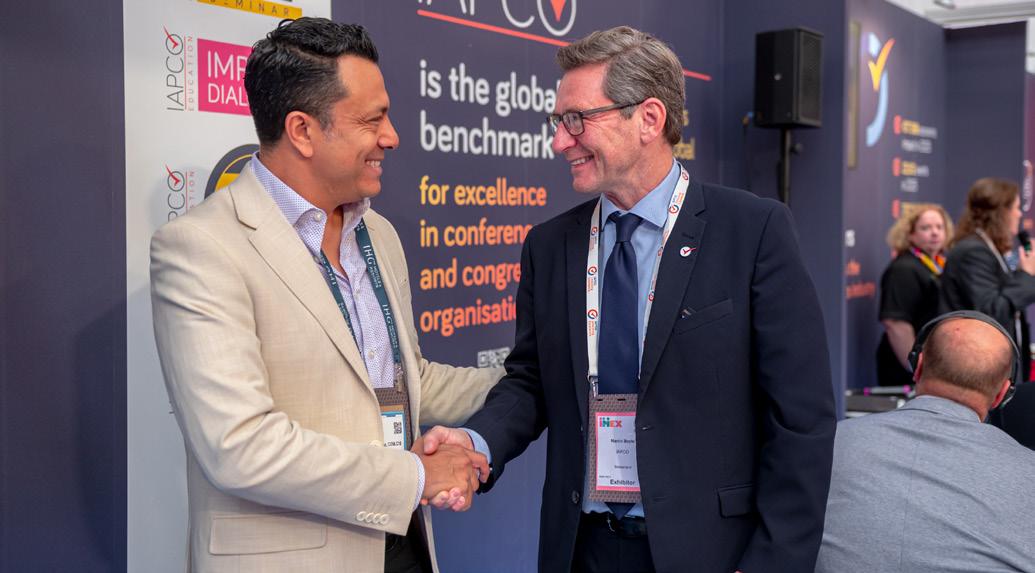
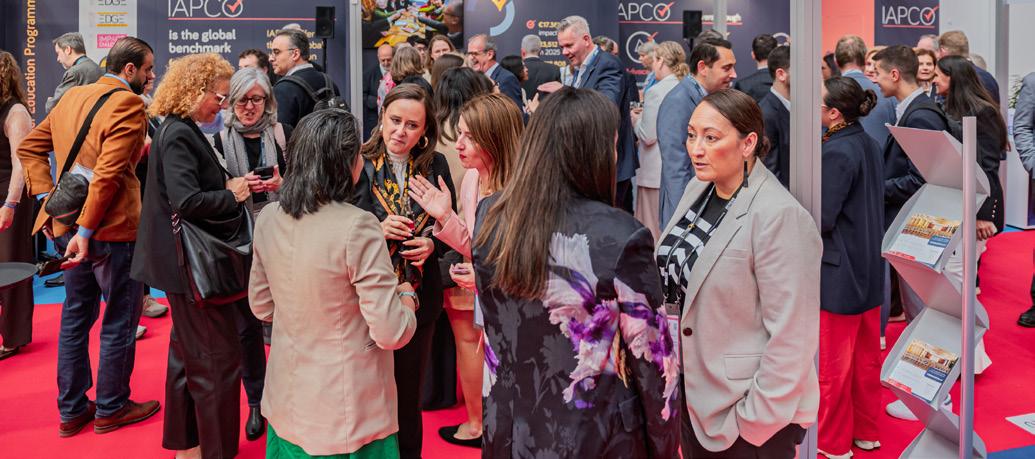
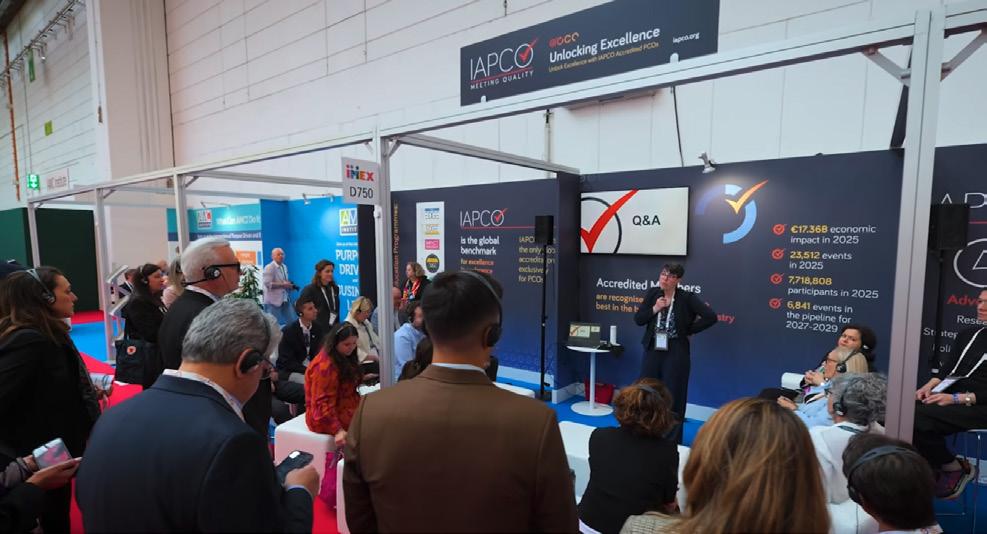
At the heart of IAPCO’s presence was our dedicated stand, shared with strategic partner AMCI, which buzzed with vibrant energy, meetings, education sessions, networking and partner engagement across all three days of the show.
Relive the highlights
Join IAPCO President Sissi Lignou and CEO Martin Boyle in our IMEX Frankfurt 2026 after-movie, and revisit a dynamic week of advocacy, education, community and global connection.
Click below to watch as we continue #UnlockingExcellence.
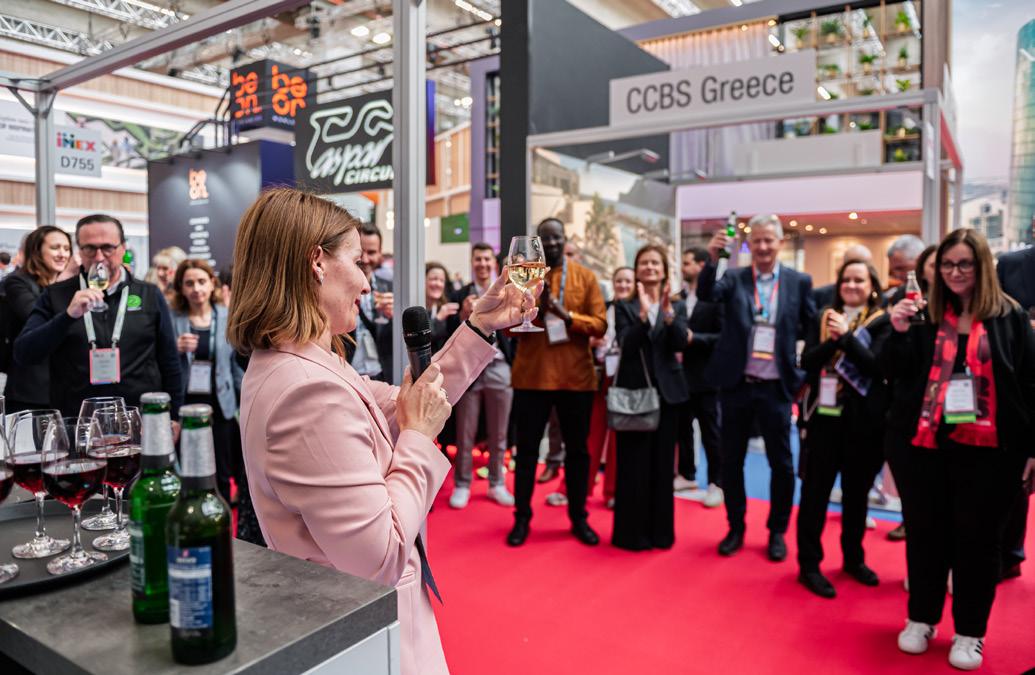
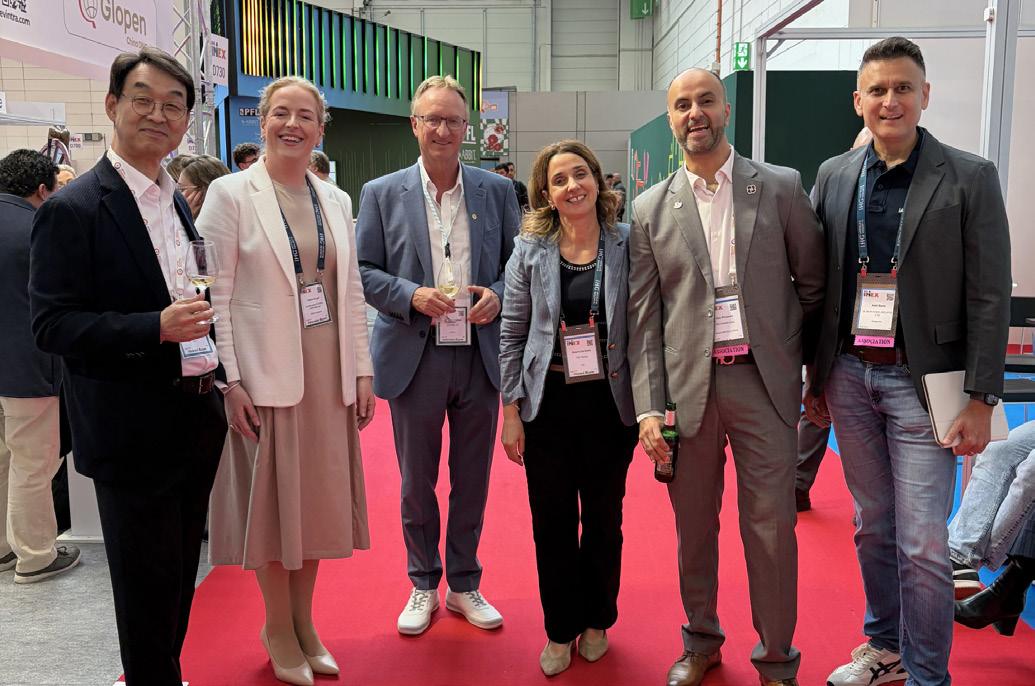
Strengthening the global community Community remained a key focus throughout IMEX. The IAPCO Members and Partners Drinks Reception created strong momentum for the global IAPCO community, bringing together members, partners and wider industry stakeholders in a spirit of collaboration and connection.
Throughout IMEX, IAPCO facilitated access to a number of exclusive partner-hosted events and engagements, including social events hosted by Business Events Australia, Destination Toronto, Dubai Business Events, Frankfurt Convention Bureau & Messe Frankfurt, Guadalajara Convention & Visitors Bureau and Hong Kong Tourism Board.
Hosted Buyer destination presentations from Japan National Tourism Organization (JNTO), Türkiye Tourism Promotion and Development Agency (TGA) and Vienna Convention Bureau also created valuable opportunities for partners, members and Hosted Buyers to connect, strengthen relationships and generate meaningful business opportunities across the global meetings industry.
IAPCO Ambassadors were also active on site at IMEX, helping amplify IAPCO’s voice, champion our value and strengthen connections across the global meetings community, including Ambassadors Chair Ginevra de Bellis (OIC Group, Italy), Dr Markus Preussner (INTERPLAN Congress Meeting & Event Management AG, Germany), Ajay Bhojwani (MCI Group, Middle East and Africa), Amit Saroj (IA-Meetings, India), Chris Oh (MCI Group, South Korea) and Claire Smyth (Conference Partners, Ireland).
Advocating for industry impact
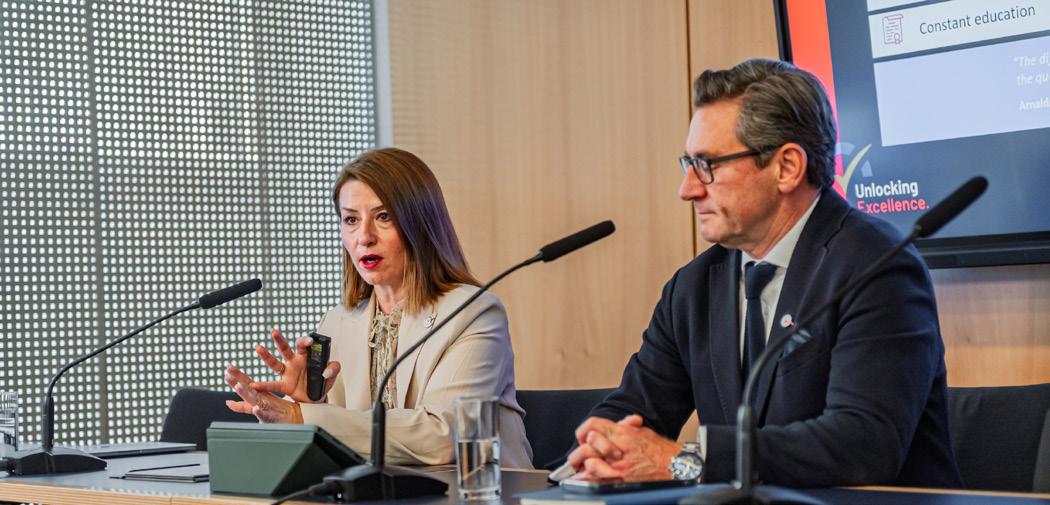
Advocacy continued to play a central role in IAPCO’s IMEX presence. IAPCO President Sissi Lignou and CEO Martin Boyle participated in Association Focus and Association Social on Monday ahead of the official show opening, before officially presenting the findings of the new Global Socio-Political Impact Survey during IAPCO’s Press Conference on 20 May, alongside updates on the 2025 Annual Member Survey and the launch of the Dear Destinations campaign. See more on page 26.
IAPCO also contributed to the Place Leaders Forum, with Sissi Lignou and Martin Boyle continuing to advocate for the value, resilience and long-term impact of the global meetings industry.
Importantly, IAPCO’s voice was strongly represented at the highest levels of global industry strategy during IMEX week. As a Board Member of both EIC and JMIC, Martin Boyle participated in strategic board meetings and attended the JMIC Press Conference ahead of the forthcoming release of JMIC’s updated Global Manifesto for the Business Events Industry – a major framework to which he has contributed significantly, helping ensure the role, impact and value of PCOs are firmly reflected in the industry’s global narrative and future direction.
Unlocking education and excellence
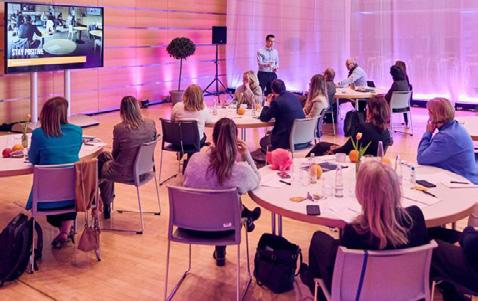
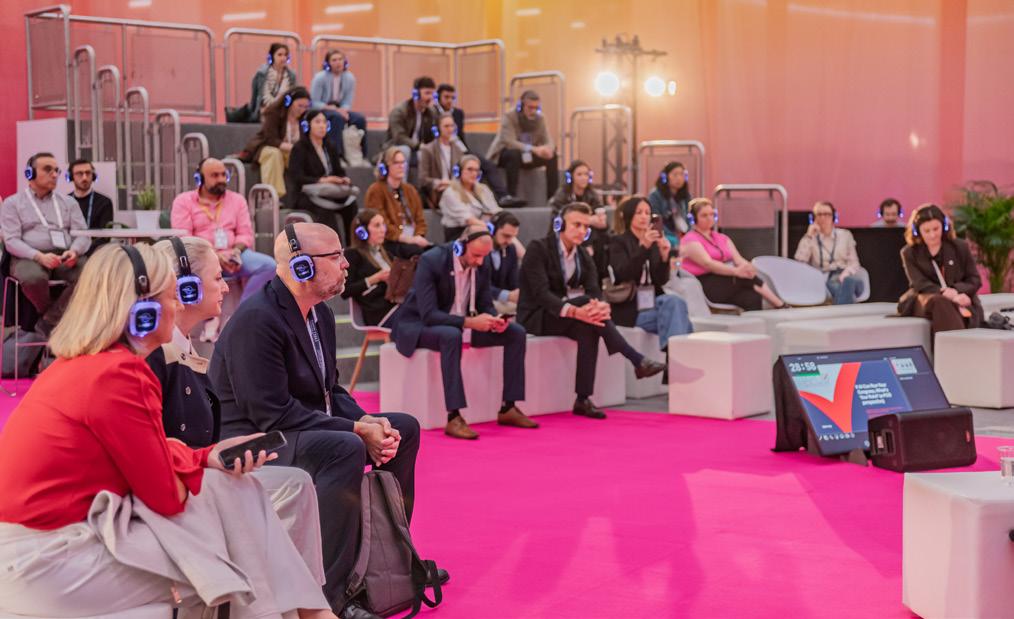
Education also remained central to IAPCO’s IMEX activities. The IAPCO Training Academy delivered a series of sessions carrying the IAPCO Seal of Excellence, while the pre-IMEX IAPCO x AMCI Emerging Leaders Workshop brought together participants for practical discussions around AI, leadership and the evolving role of the PCO in a rapidly changing environment. Explore more in the following pages.
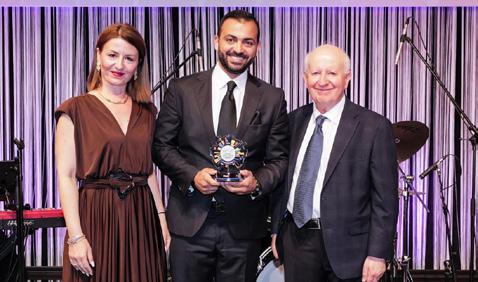
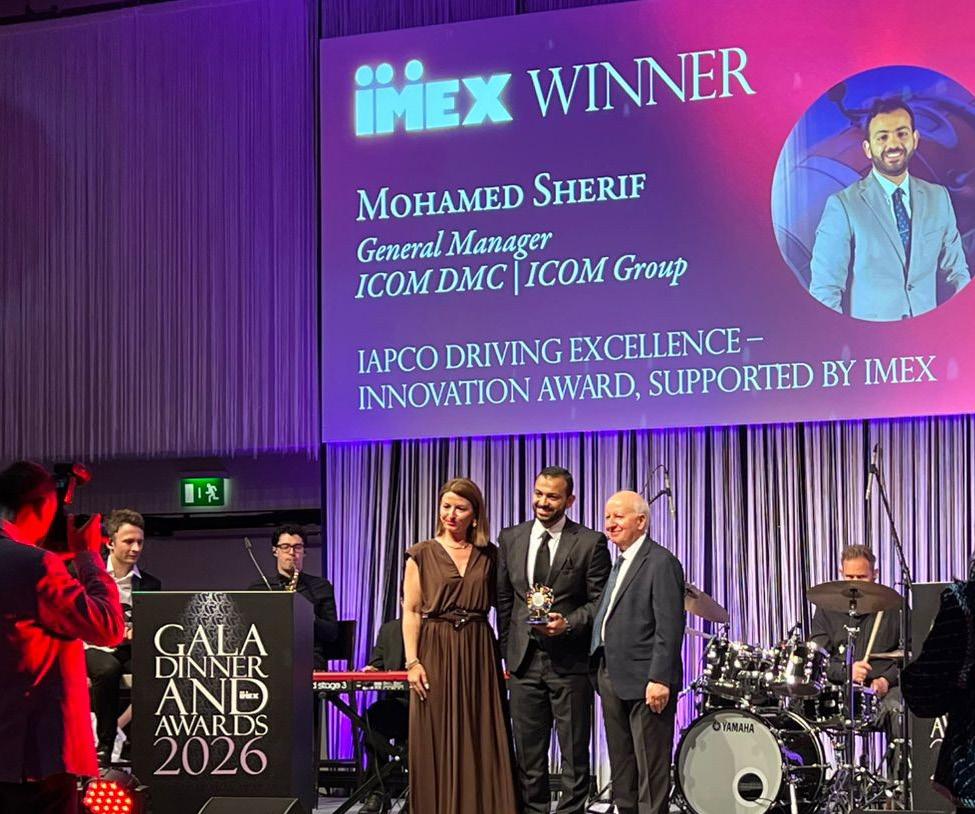
IAPCO also presented the IAPCO Innovation Award 2026, supported by IMEX, to Mohamed Sherif of ICOM DMC | ICOM Group during the IMEX Gala and Awards, celebrating excellence and forward-thinking practice within the global meetings industry. See page 24.
Special thanks to all members, partners, speakers and stakeholders who contributed to another dynamic and impactful edition of IMEX Frankfurt as we continue #UnlockingExcellence across the global meetings industry.
IAPCO at IMEX Frankfurt 2026 Spotlight: #UnlockingAdvocacy in Action
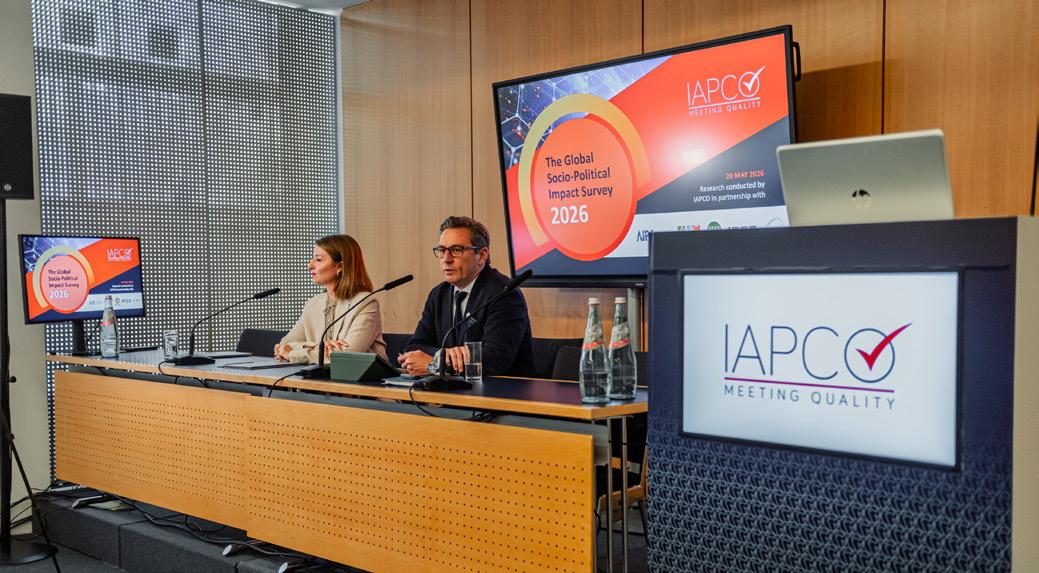
A key highlight of IAPCO’s participation at IMEX Frankfurt 2026 was the official release of the 2026 Global Socio-Political Impact Survey, announced by IAPCO President Sissi Lignou and CEO Martin Boyle during IAPCO’s Press Conference on 20 May.
New IAPCO research reveals growing impact of global instability on meetings and conferences.
Officially announced today during IAPCO’s Press Conference at IMEX Frankfurt 2026, new research shows geopolitical uncertainty is now a central factor in international event planning – driving travel disruption, higher costs and a growing number of cancellations, relocations and shifts in destination choice.
The findings come from the 2026 Global Socio-Political Impact Survey, led by IAPCO and conducted in partnership with five leading global business events associations –AIPC, AMC Institute, ICCA, IFES and PCMA. The survey gathered responses from 130 organisations worldwide. It offers a timely snapshot of how instability is influencing decision-making across the full event lifecycle, from destination selection and risk management to delegate travel and international participation.
Geopolitical instability becomes a core planning concern
A notable shift is the extent to which global conflicts are now shaping the ability to plan or host international meetings. In 2026, 73.84% of respondents reported that global conflicts had impacted their work, up from 53.92% in 2025. The near 20 percentage-point increase indicates geopolitical instability has moved from a background risk to a core planning consideration, affecting destination choice, risk management approaches and the confidence of organisers and attendees alike.
Sissi Lignou said geopolitical instability is now directly affecting the exchange of knowledge that conferences enable, and that IAPCO Accredited PCOs are helping stakeholders navigate the uncertainty with agility and care.
Operational pressures continue to rise
Operational impacts are rising: 65.38% reported travel disruptions (up from 41.67% in 2025) and 58.46% reported reduced international participation. Cost pressure is increasing too, with 48.46% reporting higher costs for clients and/or participants.
These pressures are driving changes: 33.07% have cancelled, postponed or relocated events (or withdrawn participation) due to safety or instability, while 42.31% have proactively shifted locations away from regions perceived as unstable.
Government policy adds a new layer of planning risk Policy is also affecting planning: 59.32% said US government policies enacted in 2025–2026 are impacting meetings planned for 2026–2028, citing funding restrictions that limit expert travel and visa/ immigration barriers for participants, staff and speakers.
Professional expertise becomes more critical
Martin Boyle said the research reflects what PCOs are seeing daily and highlights that, amid growing complexity, the role of the IAPCO Accredited PCO is more important than ever.
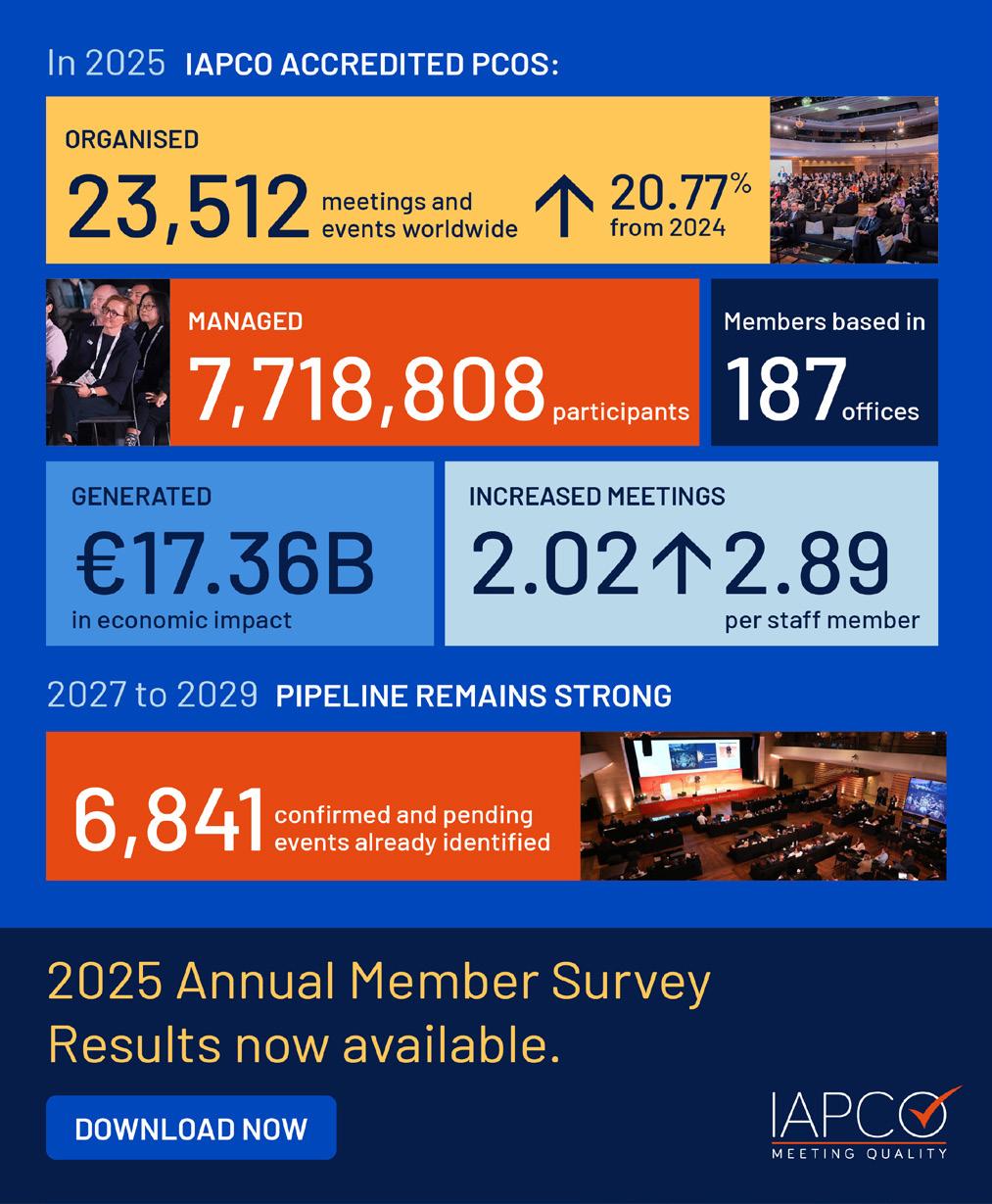
In 2025, IAPCO Accredited PCOs organised 23,512 meetings and events, managed 7,718,808 participants across 187 office locations, and generated €17.36 billion in economic impact.
IAPCO says the results reinforce the need for stronger advocacy, reliable data and deeper collaboration, and that it is working with Accredited PCOs, Strategic Partners and destinations to quantify impacts, strengthen contingency planning and champion the value of international meetings.
Boyle added that when conflict, policy and instability restrict participation, the effects extend beyond events limiting research visibility, idea exchange and collective progress.
The survey underscores the importance of resilience, preparedness and professional expertise across the meetings and events sector.
Download the full report
IAPCO President Sissi Lignou and CEO Martin Boyle at the IAPCO Press Conference at IMEX Frankfurt 2026.
IAPCO PCOs deliver €17.36 billion in economic impact as global meetings industry evolves.
Global Meetings Industry Day 2026 highlights the scale, agility and future opportunity of the IAPCO community
On Global Meetings Industry Day 2026, IAPCO is proud to share the results of its 2025 Annual Member Survey, revealing the scale, strength and strategic value of its global community of IAPCO Accredited Professional Conference and Congress Organisers (PCOs).
In 2025, IAPCO Accredited PCOs organised 23,512 meetings and events worldwide, up 20.77% from 2024. Across 187 office locations, they managed 7,718,808 participants and generated an economic impact of €17.36 billion.
These figures reflect far more than activity alone. They show the enduring value of professionally organised meetings to drive knowledge exchange, support economic growth, advance sectors and connect communities around the world.
Martin Boyle, CEO of IAPCO, said the results demonstrate both the strength of the profession and its ability to evolve.
'On Global Meetings Industry Day, this report gives us an important opportunity to recognise the extraordinary work of IAPCO Accredited PCOs across the world. The scale of what they deliver is significant, but what matters most is the impact behind those numbers. These meetings create opportunity for sectors to advance, for communities to connect, and for destinations to benefit professionally, socially and economically.'
The survey also points to a market that is changing shape. While the number of meetings delivered has increased, the average size of events has reduced. Participant numbers per event have fallen from 408 to 328, while average economic impact per event has also declined. At the same time, members are delivering more with leaner permanent teams, with meetings per staff member increasing from 2.02 to 2.89.
For Boyle, that signals a profession that is becoming more agile, efficient and responsive in a complex environment.
'What we are seeing is not a weaker market, but a more adaptive one. Our members are delivering more meetings, often with smaller formats and leaner teams, while maintaining the quality, professionalism and trust that IAPCO Accreditation represents. That speaks to the resilience of our community and its ability to respond to change without losing sight of excellence.'
The forward pipeline also remains encouraging. From 2027 to 2029, members already have 6,841 confirmed and pending events. Further, a significant proportion of confirmed future business still has no venue or destination attached, creating valuable opportunities for destinations, convention bureaux, venues and strategic partners to engage early and influence outcomes.
IAPCO President, Sissi Lignou, added: 'One of the most important signals in this year’s data is that the future
pipeline remains strong. There is real opportunity ahead for our industry, particularly for destinations and policymakers who want to unlock opportunity for their cities. The IAPCO Dear Destinations and Policymakers campaign, which officially launched today, highlights these opportunities.
'It is a timely reminder that this sector continues to plan ahead and realise value, even against a backdrop of ongoing complexity.'
Alongside the survey findings, the report also features case studies that bring the numbers to life. Spanning healthcare, science, education, accessibility, advocacy and global policy, they demonstrate the breadth and depth of the IAPCO community’s work across regions and sectors.
'From Liverpool to Ljubljana, Cape Town to Sydney, Florence to Dublin, our case studies show how IAPCO members deliver far more than well-run meetings. They create platforms for progress, engines for economic impact and legacies that extend far beyond the closing session.
'The case studies in this report are impressive, but they are only the tip of the iceberg,' Boyle added.
'Every year, across every region, IAPCO members deliver work of extraordinary range and value. They are connecting experts, advancing research, supporting communities, strengthening destinations and continuing to raise the standard of professional conference organising worldwide.'
On Global Meetings Industry Day 2026, the report stands as both a celebration of what the IAPCO community already delivers and a clear statement of intent for the future.
'IAPCO Accredited PCOs remain the global benchmark for quality, trust and excellence in conference delivery,' Boyle said. 'This report reinforces not only what our community achieves at scale, but why that work matters.'
Download the full report
IAPCO at IMEX Frankfurt 2026 Spotlight: #UnlockingEducation in Action
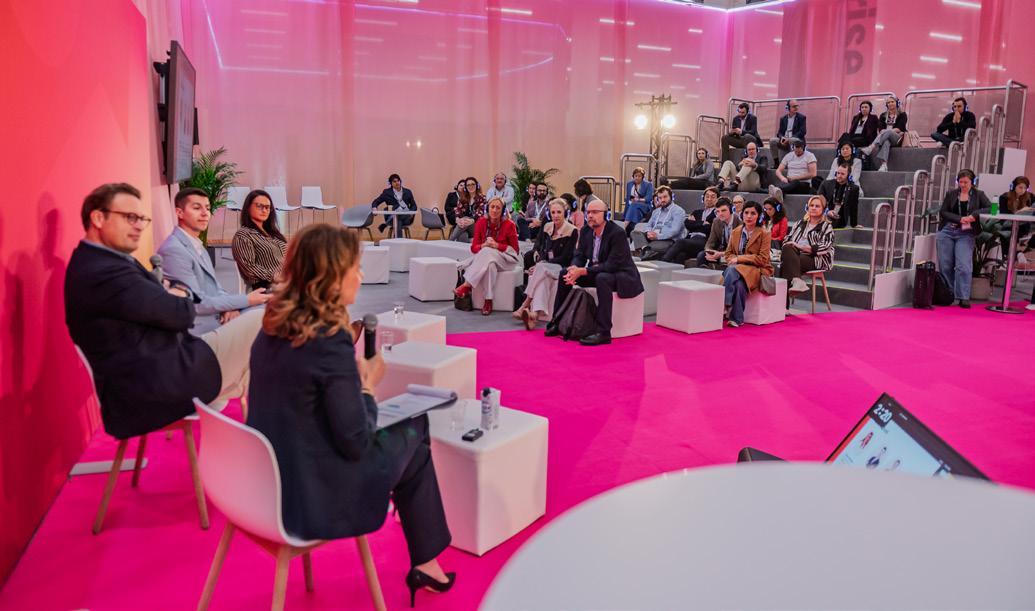
At IMEX Frankfurt 2026, IAPCO brought the #UnlockingEducation philosophy to life through highimpact education sessions carrying the IAPCO Seal of Excellence. Building on key themes first explored during the AMGA Athens 2026 Dialogues, the programme continued the conversation around some of the meetings industry’s most relevant topics, from AI and the evolving role of the PCO to sustainability, leadership resilience and wellbeing.
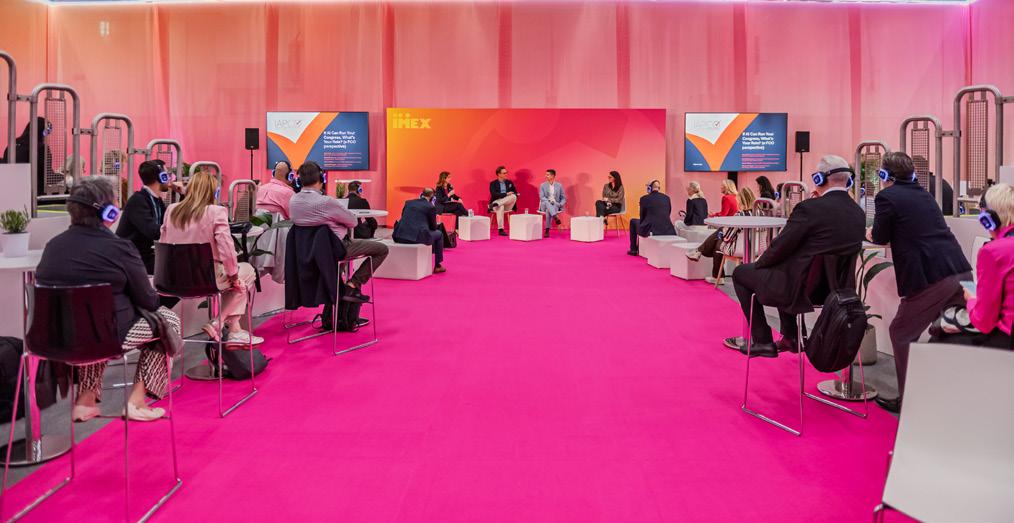
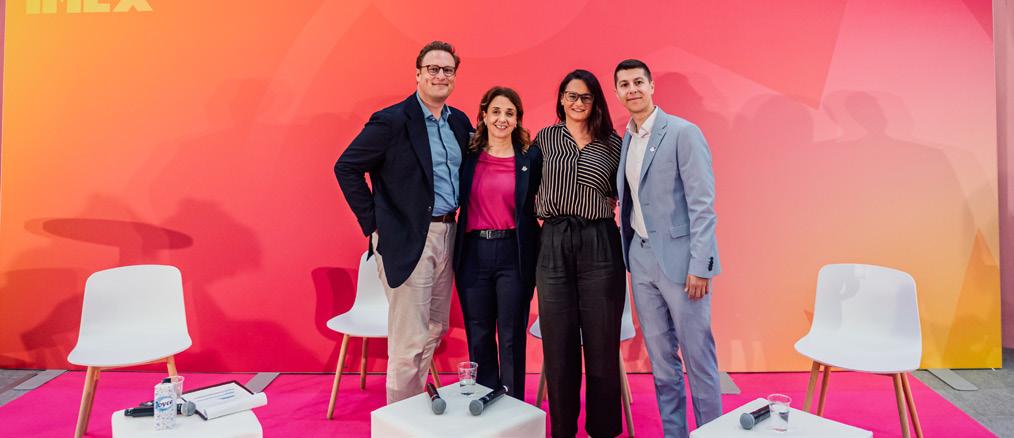
A key highlight was the IAPCO Education Session ‘If AI Can Run Your Congress, What’s Your Role? A PCO Perspective,’ featuring Benoît Dubuisson (Downtown Europe | Europa Group, IAPCO Council Member), Alexandros Terzis (ERA Congresses & Events, IAPCO Co-Opted Council Member), Nicole Walker GAICD (Lightning Bolt Consulting), moderated by Ginevra De Bellis (OIC Group, IAPCO Council Member) The session examined where human judgement remains irreplaceable as AI takes on more operational tasks, and how PCOs can evolve into trusted strategic advisors.
At the IAPCO Stand, Ludivine Simon (K.I.T. Group GmbH) led the Pop-Up Education Session ‘Beyond Greenwashing: Managing Large-Scale Stakeholder Sustainability from Voluntary to Collective Action.’ Drawing on K.I.T. Group’s ISO 20121-certified delivery of the IUCN World Conservation Congress 2025, the session explored how
PCOs can embed collective climate accountability across stakeholders, workstreams and supplier relationships. This session was supported by IAPCO Sustainability Partner Business Events Australia and covered by IAPCO Service Provider Partner Snapsight.
The second Pop-Up Education Session, led by led by, Galit Shimshoni (Ortra Ltd.), focused on ‘The Inner Journey – Strengthening Your Mental Well-Being.’ The session invited leaders to recognise the hidden costs of highfunctioning exhaustion, identify early signs of burnout and set boundaries that hold under pressure. Participants left with a practical 3-2-1 Leadership Resilience Toolkit to support wellbeing, leadership culture and sustainable performance. This session was covered by IAPCO Service Provider Partner Snapsight.
A special thank you to all speakers, participants and partners who contributed to these inspiring sessions and helped continue #UnlockingExcellence across the global meetings industry.
AI Is Not Magic Anymore: Green Light, Red Flag or something in between?
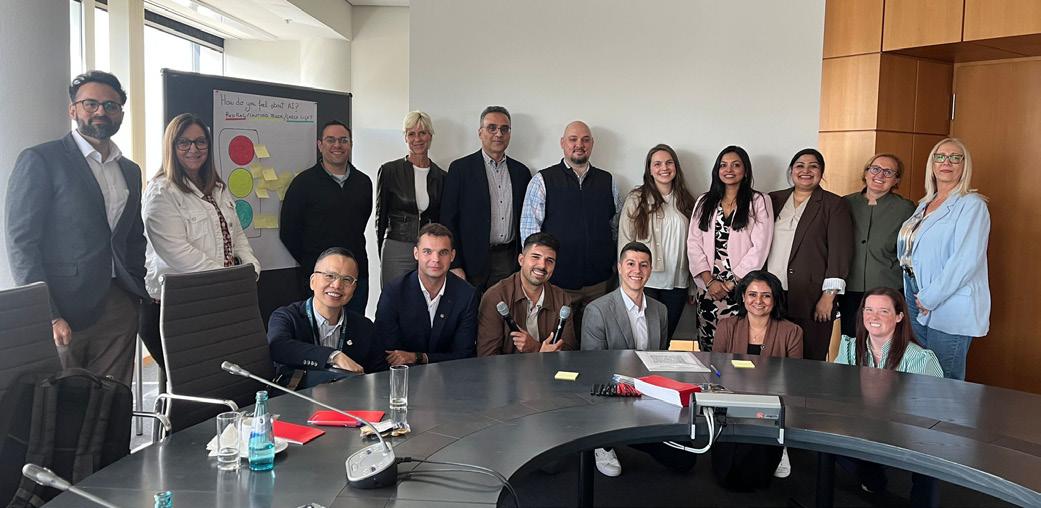
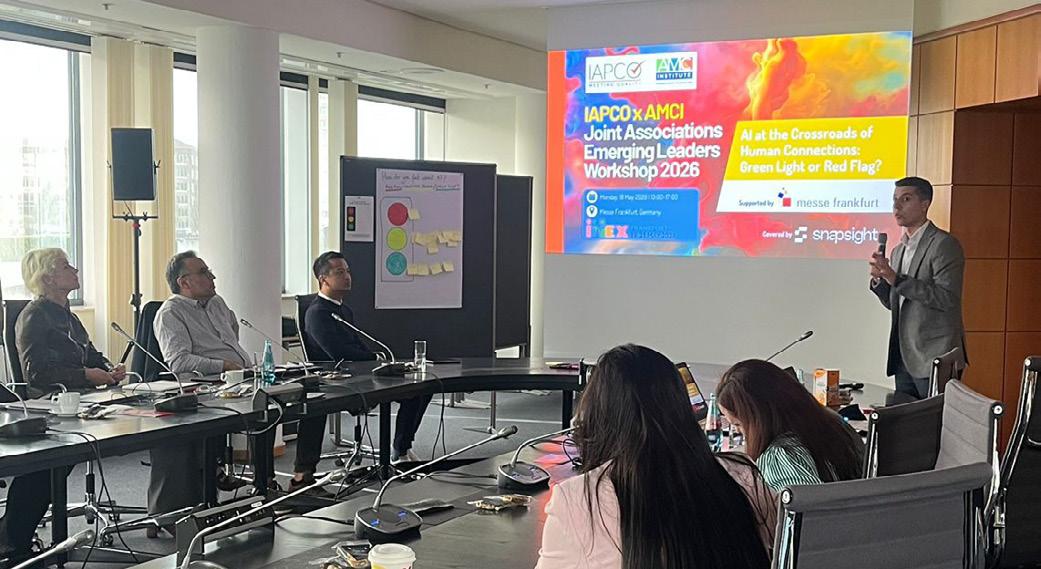
The day before IMEX Frankfurt, the IAPCO & AMCI Emerging Leaders Workshop brought together members from both associations to tackle a question event professionals can no longer avoid: how should we really work with artificial intelligence?
The workshop, titled ‘AI at the Crossroads of Human Connections: Green Light or Red Flag?’, was designed as a practical, scenario-based learning experience. The session was co-developed by the IAPCO Training Academy and IAPCO Emerging Leaders Committee Chair Alex Terzis, in collaboration with AMCI, to help participants explore not just what AI can do, but how it should be used in real operational environments. Sponsored by Messe Frankfurt and covered by Snapsight, the workshop focused less on debating whether AI is good or bad and more on creating space to test judgement under pressure. Special thanks were extended to Messe Frankfurt for supporting the initiative, and helping create and environment for open industry discussion ahead of IMEX.
Because in the meetings industry, the real question is rarely only ‘Can this be done?’ More often, it is ‘Should this be done this way, with this information, in this context?’
From positions to perspectives
The workshop started with a traffic-light exercise. Participants positioned themselves according to how they viewed AI. Green represented opportunity. Yellow represented caution and responsible use. Red represented concern, scepticism or the need to stop and think.
The exercise revealed an important reality: people are approaching AI from very different starting points. Some already use it daily, while others remain cautious about trust, privacy, accuracy and responsibility.
Three speakers then framed the discussion through the same traffic-light logic. Jonathan Easton, Cofounder and VP Design at Gevme, explored AI’s opportunities for workflow support, content capture and knowledge sharing. Jeanne Sheehy, Chief Marketing Officer at Bostrom, focused on guardrails, human review and responsible use. Bambis Charalambous, Operations Manager ERA Congresses & Events, challenged participants to think about risk, confidentiality, false confidence and accountability.
These were not fixed positions. They were lenses to test in practice.
From talking about AI to testing it
Participants then worked through realistic congress scenarios: a keynote speaker cancelling, travel disruption creating email overload, sponsor requests outside the agreed rules and reporting under time pressure. Each group had to decide where AI could help, use it for a task, review the result critically and assign a green, yellow or red verdict. The exercise showed AI’s practical strengths. It could organise information, generate starting points, summarise content and help structure decisions under pressure. Most groups landed naturally in yellow territory: AI could help, but only with human oversight.
Then came the stress-test round
The discussion shifted when groups exchanged outputs and reviewed each other’s work by asking a simple question: what could go wrong? In most cases, the verdict became more cautious. The issue was not whether AI produced something useful, but whether the result could be trusted in a live congress environment.
That became one of the workshop’s strongest lessons. Under pressure, AI can provide speed and a sense of control. But distance often reveals risks that are less visible in the moment.
The privacy question
One of the most serious conversations focused on data privacy. Participants questioned not only how AI could support their work, but what information should ever be entered into these systems. In congress and association management, teams regularly handle client information, financial data, scientific content and sponsor discussions. The workshop highlighted that AI adoption is not just about capability. It is about trust and governance Professionals need to understand where goes, who can access it and whether clients would be comfortable with that use.
Final word
By the end of the workshop, the traffic-light board had not shifted dramatically, but participants’ thinking had become more precise. Some moved from green towards cautious yellow. Others became more aware of the operational and ethical risks involved.
The workshop’s conclusion was clear: AI works best in high-trust congress environments when treated as an operational assistant, not as a substitute for judgement. AI is not magic anymore. AI can support the process. Humans still own the consequences
Alexandros Terzis IAPCO Emerging Leaders Committee Chair & Co-Opted Council Member Event Coordinator, ERA Congresses & Events
Celebrating Innovation in the Meetings Industry
WINNER!! 2026 IAPCO Innovation Award 2026
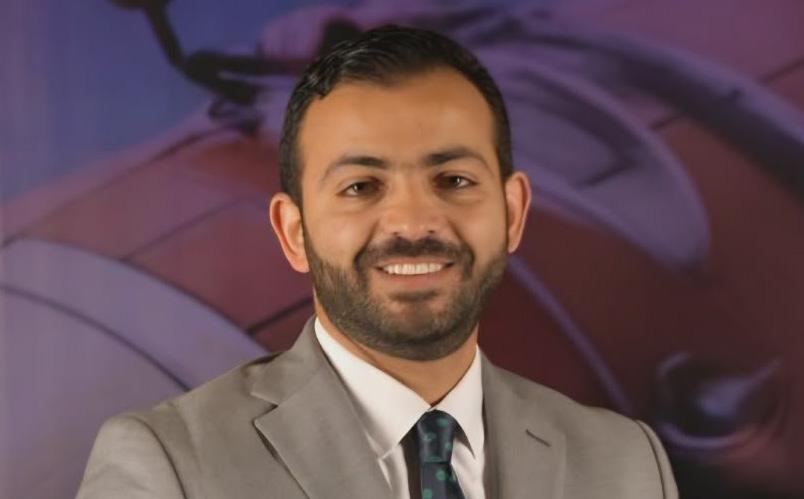
IAPCO has named Mohamed Sherif, General Manager at ICOM DMC (a subsidiary of ICOM Group), as the winner of the IAPCO Driving Excellence Innovation Award 2026. Sherif was recognised for leading a transformation of delegate transportation at CardioAlex 2025 through a data-driven smart mobility solution.
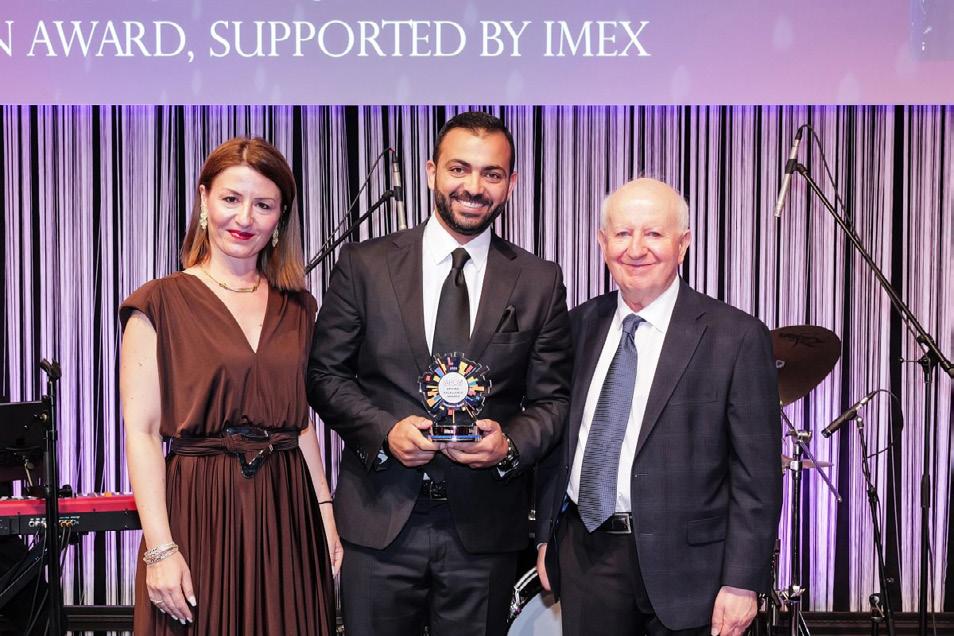
Supported by IMEX, the award celebrates individuals and teams who challenge conventional approaches and deliver practical improvements for organisers, venues and attendees. The award was presented by IAPCO President Sissi Lignou during the IMEX Gala Dinner in Frankfurt, acknowledging Sherif’s leadership in moving transportation from a fixed schedule model to a more responsive, data-led operating approach.
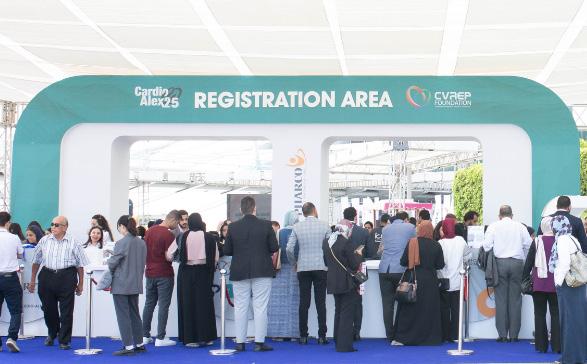
Sherif’s award-winning work was implemented at CardioAlex 2025 in Alexandria, Egypt – an international medical congress hosted at the Bibliotheca Alexandrina and attended by thousands of healthcare professionals. As many events expand across multiple hotels and off-site locations, organiserrun transport can quickly become one of the most complex parts of the delegate journey, with knockon impacts for cost control, service quality and sustainability.
Working with a cross-functional operations and technology team at ICOM Group, Sherif introduced a smart-shuttle model built around live demand signals and real-time operational visibility. Instead of allocating dedicated vehicles to fixed hotel routes, the approach
enables organisers to adapt capacity and routing during the day, helping reduce wasted mileage while keeping wait times and crowding under control during peak periods.
At CardioAlex 2025, the redesigned operation supported transport across eighteen hotels while significantly reducing the number of vehicles required over the three-day programme, demonstrating that service levels and sustainability goals can be advanced together. IAPCO noted the project’s practical value for other large congresses looking to improve the delegate experience, increase operational resilience and cut unnecessary emissions through better planning and real-time coordination.
IAPCO President Sissi Lignou with IAPCO Innovation Award 2026 winner Mohamed Sherif, General Manager, ICOM DMC, ICOM Group, and IMEX Chairman Ray Bloom at the IMEX 2026 Gala & Awards Ceremony
Winning Nomination
Name of Winner: Mohamed Sherif
Winner Job Title: General Manager, ICOM DMC (subsidiary of ICOM Group)
Company: ICOM Group (ICOM DMC)
Country: Egypt
Outline of the challenge
CardioAlex is one of the most logistically demanding medical congresses in the region, with thousands of delegates, hotels spread across Alexandria, and a three-day programme that demands high precision in ground transportation. Despite the conference's prestigious reputation, the traditional model was simple and deeply flawed. A dedicated bus was assigned to each hotel, running point-to-point routes on a fixed schedule, with fleet size determined by estimation rather than accurate data. Buses sat idle. Routes overlapped. Fuel burned needlessly. The carbon footprint was indefensible. The ground logistics team escalated this formally to senior management as a critical sustainability and operational risk.
The Outcome
Mohamed Sherif led ICOM Group in redesigning transportation through the CardioAlex Smart Shuttle System, built on real-time data and integrated fleet management. The system replaced static allocations with a round-robin rotation model using a smaller, continuously circulating fleet across multiple pickup points. It introduced three connected layers: a delegate-facing app using GPS to identify the nearest pick-up point and provide real-time estimated arrival times; a driver application supporting dynamic route sequencing and live vehicle management; and a centralised dashboard enabling live tracking, passenger-load visibility and rapid operational intervention. In 2025, CardioAlex served eighteen hotels and 1,600 rooms while reducing deployments to forty-seven buses over three days – 47.8% fewer than 2023 and 44% fewer than 2024 – without compromising delegate experience.
Conclusion
Beyond environmental gains, the initiative delivered significant cost savings in vehicle hire, fuel, and driver logistics, resources that can be reinvested into scientific programming and delegate experience.The sustainability impact is direct and measurable: fewer vehicles on the road means lower fuel consumption, lower emissions, and a meaningfully reduced carbon footprint per delegate, values that are not peripheral to CardioAlex, but central to its identity.
CardioAlex 2025 Conference
Mohamed Sherif, General Manager at ICOM DMC | ICOM Group, winner of the IAPCO Driving Excellence Innovation Award 2026
IAPCO at the European Association Summit 2026 in Brussels
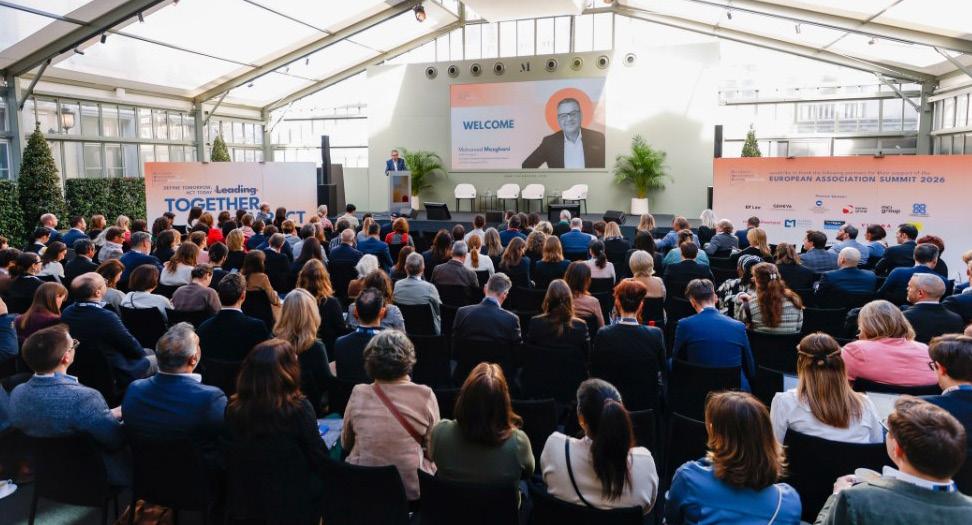
At the European Association Summit 2026, organised by ESAE – European Society of Association Executives in Brussels on 26 March, IAPCO CEO Martin Boyle represented IAPCO’s global community at a time of strong momentum for collaboration and advocacy across the association sector. Bringing together association professionals from across Europe, the Summit provided a timely platform for reflection on the future of association leadership, influence and longterm impact. It also created valuable opportunities for engagement with industry colleagues and partners, including IAPCO Past President Ori Lahav and Destination Partners from Geneva Convention Bureau and Vienna Convention Bureau
Alongside the Summit, Martin also joined the visitbrussels fam trip, with visits to leading venues and hospitality partners, offering further insight into Brussels as a destination for international association meetings. IAPCO extends its thanks to ESAE, visitbrussels, and all hosts and partners who contributed to such a valuable and inspiring experience. See more.
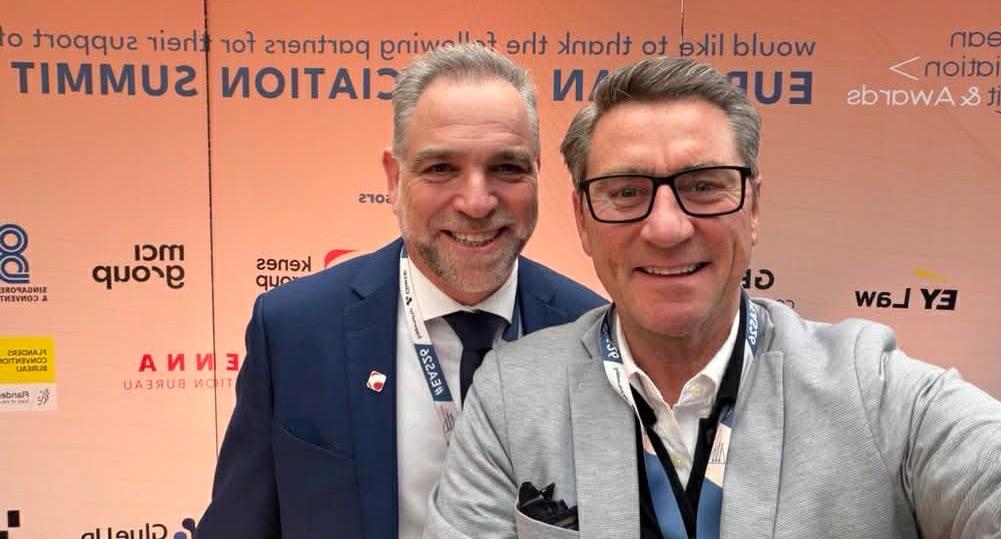
IAPCO CEO Martin Boyle with IAPCO Past President and Kenes Group CEO Ori Lahav
Destinations compete globally to secure high-value international conferences, and the difference often comes down to who you partner with.
In the next phase of our Unlocking Excellence campaign, we turn our focus to the partners shaping where global events land: destinations, convention bureaux, venues and government stakeholders.
Unlocking Excellence continues with the launch of Dear Destinations, our latest campaign speaking directly to convention bureaux, venues, government agencies and destination leaders about the power of meetings and conferences to drive economic, social and cultural outcomes for cities.
What will we be doing?
Launched in May 2026, Dear Destinations builds on the success of our Dear Associations campaign, to speak directly to destinations and policymakers. It will be activated across digital channels, PR, editorial, member assets and key industry events.
Through a combination of data, case studies and real-world examples, the campaign showcases both the scale of opportunity and the role IAPCO members play in unlocking it.
IAPCO members are central to the campaign’s success, as they are to all IAPCO advocacy initiatives. Through dedicated member assets and exclusive campaign content, members are empowered to amplify the message across their own networks, engage with campaign activity and contribute case studies that evidence the tangible impact of their work worldwide.
Campaign Messaging
Dear Destinations and Policymakers,
Destinations wanting to unlock opportunity for their cities understand the power of meetings and events.
Leading destinations of the world choose to work with IAPCO members to deliver impact.
In 2025, IAPCO Accredited members delivered over 23,512 conferences globally, generating more than €17.36 billion in economic impact, supporting local economies and advancing industries worldwide.
Looking ahead, a strong pipeline of global events is already building, with many still to secure a destination or venue, creating a valuable opportunity for destination leaders and policymakers to engage early and influence outcomes for their city.
IAPCO members operate at the intersection of associations, destinations and industry, working alongside convention bureaux, venues and governments to align events with strategic priorities. This includes supporting policy objectives and positioning business events as a tool for long-term destination development.
Underpinned by rigorous accreditation standards, IAPCO members deliver consistency, governance and quality assurance, ensuring complex events are executed to the highest standard while protecting the reputation of host destinations.
Beyond delivery, their role is increasingly strategic: facilitating knowledge exchange, connecting global expertise with local industries and contributing to lasting economic and societal outcomes.
As a global network, IAPCO provides destinations with access to a powerful ecosystem of associations, decision-makers and industry leaders, influencing where events, and their associated economic value, are directed.
IAPCO is a gateway to global opportunity. Your key to quality. IAPCO: Unlocking Excellence
Check out the Dear Destinations campaign
Dear Destinations. Dear Associations. Real Impact.
IAPCO’s Dear Destinations and Dear Associations campaigns continue to highlight the transformative impact of IAPCO Accredited PCOs, the associations they support, and the destinations they collaborate with.
Through outstanding collaboration, innovation, and measurable results, these partnerships are advancing the meetings industry and creating lasting value for communities around the world.
Explore the latest case studies below to discover how IAPCO Members are driving meaningful impact— with more inspiring success stories to come.
IAPCO Member: Convin
Client: Greek Rheumatology Society
Event: Mediterranean Journal of Rheumatology
Date: Ongoing (since 2015)
Location: Athens, Greece
From print to global impact: Convin delivers the Mediterranean Journal of Rheumatology
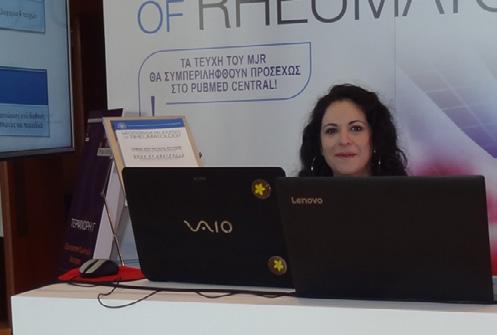
Since 2015, Convin has partnered with the Greek Rheumatology Society to develop and manage the Mediterranean Journal of Rheumatology (MJR) – an international, peer-reviewed, platinum open-access online journal dedicated to advancing evidence-based research in rheumatic diseases.
Originally established as a printed, Greek-language publication, MJR underwent a strategic transformation to become a fully digital, English-language journal with a global readership. Convin was entrusted with this transition, drawing on its long-standing relationship with the Society and its expertise in digital scientific publishing. Today, MJR serves healthcare professionals worldwide, providing free and unrestricted access to high-quality clinical and translational research..
Testimonial
'The Editorial Board of the MJR and Convin have worked together, step by step, to achieve each major milestone needed for a scientific journal’s success, beginning from proper copyediting and layout, to transformation into a fully English-language journal, to maintaining a successful social media presence, obtaining a subscription to a major peer-review platform (Clarivate ScholarOne), increasing reach and article influx, increasing the Journals’ rejection rate, and finally, acquiring the MJR’s first JCR Impact Factor of 1.4 in 2025, a major feat for a first entry.
The Editorial Board of the MJR and Convin will continue to work together and will keep striving to see the MJR excel in quality and reach. I would not hesitate to recommend Convin for their editorial and publishing services.'
Theodoros Dimitroulas
Professor of Rheumatology, School of Medicine, Aristotle University of Thessaloniki, Greece
Editor-in-Chief, Mediterranean Journal of Rheumatology www.mjrheum.org
Dear Associations...
You have a message waiting at Iapco.org
See more
IAPCO Member: MCI Australia
Client: Space Industry Association of Australia (SIAA) and International Astronautical Federation (IAF)
Event: 76th International Astronautical Congress (IAC 2025)
Date: 29 September – 3 October 2025
Location: Sydney, Australia
An interstellar collaboration – Advancing the global space conversation at IAC 2025
IAC 2025 in Sydney put Australia at the centre of the global space conversation in one of the most complex and ambitious global congresses ever staged in the region. Delivered by MCI Australia with SIAA, IAF, the Australian Space Agency and the NSW Government, the event brought the world’s space community together to explore the latest advancements in space science, technology, policy and innovation. As only the fifth IAC held in the Asia-Pacific, it strengthened regional leadership, showcased the power of space-enabled services and elevated Australia’s role on the world stage. The project’s success was recognised with the IAPCO Driving Excellence Award for Collaboration, celebrating exceptional partnership, innovation, and delivery at scale.
Testimonial
‘MCI’s leadership in project management, stakeholder coordinatio, and onsite delivery ensured a seamless and memorable congress. Their multidisciplinary team – spanning event design, marketing, sponsorship, logistics and guest services – formed a powerhouse that navigated complexity with agility and precision. With stakeholders spanning government, industry, academia and community groups, MCI fostered a collaborative environment where all voices were heard, valued and respected. Their inclusive approach ensured alignment with the congress’ overarching vision, balancing multiple priorities with diplomacy and clarity. This stakeholder stewardship was instrumental in maintaining momentum, resolving tensions and delivering a unified, world-class event. MCI’s professionalism, creativity and operational sophistication have set a new benchmark for excellence in PCO services. I am deeply grateful for their partnership and immensely proud of the results we achieved together.’
Lisa Vitaris
MBA GAICD Director, IAC 2025 Sydney Space Industry Association of Australia www.iac2025.org
See more
Find all the published Case Studies here
If you are an IAPCO Member, Destination Partner or a client of an IAPCO Member, we invite you to share your success stories and showcase the impact of collaboration across our industry.
As part of the next phase of IAPCO’s advocacy activity, we are looking for case studies that demonstrate how IAPCO PCOs work together with clients, associations and destinations to deliver meaningful outcomes and lasting value. Some submissions may also be featured across multiple IAPCO campaigns.
Details on how to submit your case study are available on the Member Hub here*
We encourage all IAPCO Members to get behind this initiative, share it with your teams and clients, and help amplify the message across our community.
Member access only. Non-members: please contact IAPCO.
Dear
Destinations and Policymakers,
You have a message waiting at Iapco.org
IAPCO Collaboration Award Winner 2025
Milano Cortina 2026 – Building the Accommodation System Behind an Olympic Event
AIM Group International supported the Milano Cortina 2026 Foundation in the operational management of the Winter Olympic Games across multiple districts in Italy, coordinating logistics, accommodation and on-site activities.
The project included more than 1,200 accommodation facilities, 26,000 guaranteed rooms and 375,000 managed room nights for athletes, staff and stakeholders.
See More
50 years of ICS – A Look Back and Ahead (see Members News on page 56)
Leading with Purpose: How IAPCO President Sissi Lignou is Championing Our Industry
Advocacy is most effective when it is consistent, visible and grounded in real industry practice. Over recent weeks, IAPCO President Sissi Lignou has brought that approach to three arenas: mainstream media, destination-led forums and peer-topeer industry dialogue. The objective for each was the same – making the case for professional meetings as essential economic and societal infrastructure, and ensuring that the expertise of IAPCO members is represented whether decisions and perceptions about our sector are shaped.
On 12 May, Lignou appeared live on Greece’s national television channel, ERT, to reflect on the success and impact of the IAPCO Annual Meeting & General Assembly 2026 in Athens. The interview went beyond a retrospective of a strong annual meeting: it translated the work our community delivers every day into language that resonates outside the industry. Lignou highlighted the significant value international meetings bring to host destinations – spanning economic contribution and global visibility, but also the less easily measured outcomes that matter just as much, such as knowledge exchange and the long-term international positioning that comes from convening the right people around the right issues. For members, the message was equally clear: advocacy must be anchored in today’s realities. During the discussion, Lignou also addressed the current geopolitical climate and its impact on international events, including travel disruption, rising costs, reduced participation and security concerns. By acknowledging these pressures in a national broadcast, she reinforced a practical point that many of us are navigating with clients and stakeholders: confidence in the value of meetings can – and should – coexist with realism about risk, cost and delegate decision-making. The interview offered valuable national visibility for IAPCO and served as
a timely reminder that collaboration and resilience are not abstract ideals; they are operational necessities for ensuring the continued strength and relevance of the global meetings community.
Advocacy also happens in the rooms where strategy is debated and partnerships are formed. Representing IAPCO at This is Athens – Agora 2026 Lignou helped advance the conversation on our industry’s value and impact, recognising the vital role destinations play in professional meetings and events. As part of the programme, she joined Vasiliki Dalla, Head of Business Development at This is Athens – CVB, for the panel ‘From Vision to Reality: Shaping the Experience.’ The session focused on what it takes to move from aspiration to execution: aligning a destination’s vision with the operational expertise of PCOs and the purpose-driven agendas of associations, so that events are not only won and delivered, but experienced in ways that generate lasting value for communities, sectors and society.
A similar thread ran through Lignou’s participation at the HAPCO & DES Annual Meeting (29–30 April), where IAPCO’s perspectives were shared within a wider professional community of congress organisers and destination event specialists. In her remarks, she presented key highlights from the IAPCO 2026 Athens Annual Meeting & General Assembly and drew insights from the IAPCO Annual Member Report – bringing member experience and evidence into the broader industry conversation. She also contributed to discussions on destination narratives, stakeholder alignment and the distinct – but interconnected –roles that PCOs, associations and ambassadors play in shaping successful international events. This included moderating ‘Synching Voices Shaping Perceptions | Aligning Destination Narratives with Stakeholder Expectations’ and joining ‘Shaping Collaboration: Associations, Ambassadors and PCOs – Different Roles, One Goal,’ alongside industry stakeholders including Paola Padovani of IAPCO member Triumph Group.
Taken together, these engagements show advocacy as a continuum – from public-facing storytelling that strengthens the licence to operate, to professional dialogue that improves how we collaborate and deliver. They also reflect a deliberate effort to keep IAPCO visible where it matters: in national media that shapes perception, in destination platforms that influence pipelines and in association and PCO forums where practice and policy intersect. For members, there is a direct line between this visibility and the credibility of our profession: when the impact of meetings is articulated clearly, and when the roles of organisers are understood, it becomes easier to protect standards, secure stakeholder alignment, and make the case for quality-led delivery. As we look ahead, the message remains consistent –advocacy is not a single campaign, but an ongoing responsibility, powered by member expertise and strengthened every time we show, with evidence and integrity, what well-designed meetings make possible.
The Iceberg Amplifies IAPCO’s Global Advocacy Message
What does it take for policymakers to truly understand the value of association meetings?
A new video feature from IAPCO Media Partner
The Iceberg spotlights IAPCO’s 'Dear Associations' campaign and the role of PCOs in strengthening advocacy for the global meetings industry.
Filmed during an exclusive interview with IAPCO President Sissi Lignou in Athens in 2025, and featuring footage from the IAPCO Annual Meeting & General Assembly in Athens in 2026, the video brings together perspectives from Sissi, IAPCO Council Member Giulia Sarri, IAPCO Past Presidents Sarah Markey-Hamm and Ori Lahav, as well as Haris Doukas, Mayor of Athens
The AM&GA Opening Session was honoured by the presence of both Mrs Olga Kefalogianni, Minister
Click video to watch
of Tourism of Greece, representing the Prime Minister of the Hellenic Republic, and Haris Doukas, Mayor of Athens. Their participation underscored the importance Athens and Greece place on the global meetings industry, recognising its far-reaching economic, societal and intellectual impact.
The conversation highlights the vital role of PCOs, the social and economic value of the meetings industry, and how association leaders from healthcare, science, technology, trade and academia can help destinations and policymakers better understand the true impact of association meetings.
This video forms part of IAPCO and The Iceberg’s strategic partnership to raise awareness, strengthen advocacy and champion the value of the meetings industry globally.
IAPCO Council Meets in Maastricht: Unlocking Excellence Through Collaboration
After an exceptionally active and impactful week at IMEX Frankfurt, IAPCO’s leadership convened in Maastricht for the first official in-person meeting of the newly formed IAPCO Council, hosted by the Maastricht Convention Bureau. The gathering brought together destination leaders, venue partners and industry experts to align on strategic priorities and the future direction of the global meetings industry.
The meeting focused on reviewing progress across IAPCO’s core pillars – advocacy, education, partnership development and engagement. Discussions centred on professional excellence, thought leadership, accreditation, research and initiatives advancing sustainability, inclusion, ESG and AI integration across the sector.
A key theme was the industry’s evolving geopolitical and economic landscape, and the need for greater resilience, collaboration, and knowledge-sharing within the global IAPCO community.
A dedicated stakeholder advocacy session connected MECC Maastricht, local government representatives, venue partners, and policymakers to strengthen regional collaboration and reinforce Maastricht’s role as a leading destination for international events.
The session also highlighted emerging opportunities and challenges shaping the future of business events, including AI, talent development, long-term industry impact, and the growing importance of collaboration across associations, destinations, policymakers, and strategic partners.
Participating organisations included UMC Maastricht, Maastricht University, Brightlands Maastricht Health Campus, Castle Med, Municipality of Maastricht, Maastricht Convention Bureau, Brightlands Chemelot Campus, Oostwegel Collection, Closely Hub Maastricht, Van Oys Maastricht Retreat, Brightlands Smart Services Campus, Province of Limburg, IGI Group, Palacio Euskalduna Bilbao, Visit Zuid-Limburg, ASM and Maastricht UMC+.
Beyond the formal programme, Council members explored Maastricht through curated site visits, networking opportunities and immersive local experiences that showcased the city’s culture, hospitality and congress expertise.
Highlights included visits to Château Neercanne and Thiessen Wijnkoopers, offering valuable insight into Maastricht’s distinctive character and appeal as an international meetings and congress destination.
The Maastricht Council Meeting strengthened alignment and momentum across IAPCO’s leadership as the organisation prepares for key global engagements, including FIEXPO Latin America, IMEX Las Vegas, ICCA Congress, IBTM World and future Council meetings throughout the year.
IAPCO extends sincere thanks to Maastricht Convention Bureau for delivering an outstanding programme and exceptional hospitality. Maastricht provided the ideal setting for strategic dialogue, collaboration and meaningful connections, demonstrating the vital role destinations play in unlocking excellence across the global meetings industry. A special thanks goes to MECC Maastricht for hosting the stakeholder engagement session, and to all partners and venues who helped make the Maastricht experience such a success.
Watch the Highlights Video below: Relive the key moments, conversations and experiences from the IAPCO Council Meeting in Maastricht.
Aligned, energised and future-focused, the IAPCO Council remains committed to advancing IAPCO’s mission of Unlocking Excellence across the global meetings industry.
Highlighting LATAM
IAPCO Members, Ambassadors and Partners Driving Leadership, Innovation and Growth
Latin America continues to play an increasingly important role in the global meetings and events industry. Across the region, associations, destinations, event organisers and industry partners are navigating change with resilience, embracing innovation and creating new opportunities for professional development, knowledge exchange and economic growth.
As part of our commitment to showcasing the global reach and impact of the IAPCO community, each issue of The PCO highlights a different region of the world. Through the voices of our members, ambassadors and partners, we explore the trends, challenges and opportunities shaping local markets and influencing the future of our industry.
In this issue, we turn our attention to Latin America, a region characterised by its diversity, entrepreneurial spirit and growing influence within the international meetings landscape. From evolving association congress models and changing attendee expectations to leadership development and emerging talent, the region offers valuable insights for event professionals worldwide.
The following pages feature perspectives from two of IAPCO's Latin American Ambassadors, Renata Pozza of Brazil and Mariano Castex of Argentina, who share their expertise, experiences and vision for the future of the meetings industry across the region.
The Ambassador | Spotlight
Featuring the LATAM IAPCO Ambassadors: Renata Pozza (Brazil) and Mariano Castex (Argentina)
The Ambassador Spotlight is a recurring feature in The PCO dedicated to showcasing the expertise, leadership and industry perspectives of IAPCO Ambassadors from around the world.
As trusted representatives of IAPCO within their regions, Ambassadors help strengthen industry connections, promote best practices and champion professional development across the global meetings community. Through their personal journeys, thought leadership and industry insights, they provide a valuable window into the challenges, opportunities and innovations shaping their markets.
In this inaugural Ambassador Spotlight, we hear from two leading voices from Latin America who share their perspectives on resilience, transformation and the future of association meetings, congresses and conventions across the region.
Meet the | Ambassador
Renata Pozza Brazil Executive Director of Association Solutions, MCI Brazil
Passionate about the association sector, Renata Pozza has more than twenty years of experience in the events and association industry, working with national and international organisations across a wide range of sectors. She is also a frequent speaker at MICE industry events.
Her work focuses on strengthening association performance through market intelligence, revenue
diversification and governance, with a strong emphasis on redesigning congress models, improving audience engagement and adapting to changing market expectations.
An active advocate for the advancement of the association community, Renata serves as a regional ambassador for IAPCO, and plays a key leadership role in Conecta Associações, promoting dialogue around professionalisation, innovation and collaboration among industry peers.
Renata Pozza
Latin America: Association Congresses and Exhibitions in a Changing Market Industry Perspective by
Latin America is a region full of energy, diversity and opportunity, but it is also a region that requires a very local understanding. With more than 650 million people and over twenty countries, it cannot be treated as one single market. Each country has its own culture, economic reality, level of digital maturity, business habits and political environment. For association congresses and exhibitions, this makes the region both complex and very attractive.
In many Latin American countries, the annual congress is still the strongest product of an association. It is often the main moment of connection with members, the most important source of revenue, and the platform where the association shows its relevance to the sector it represents. For many professional associations, especially in healthcare, technology, agribusiness, finance and education, the congress is more than an event. It is where the community recognises itself.
At the same time, the association events market in Latin America is changing fast. Participants are no longer looking only for scientific or technical content. They want experience, networking, practical learning, access to innovation and a real sense of belonging. Sponsors are also changing their expectations. They want more visibility, but also more targeted engagement, stronger data, better audience interaction and clearer return on investment.
This creates pressure on traditional congress and exhibition models. In the past, a strong programme and a good exhibition area were often enough. Today, PCO needs to be more consultive in creating the full participant journey, the congress cannot be seen as an isolated annual moment. It needs to become part of a broader platform of education, community, business development and yearround engagement.
Another important change is competition. After the pandemic, many sponsoring companies started investing more in their own events, creating direct channels with the same audiences that associations traditionally bring together. This does not reduce the importance of association congresses. Associations still have strong credibility, independence and authority in the sectors they represent. But it does mean that congresses and exhibitions need to be more intentional, more innovative and more connected to the real needs of their communities.
Local adaptation is also essential. A format that works well in Europe or the United States may not work in the same way in Brazil, Mexico, Argentina or Colombia. Language, pricing, payment methods, sponsorship models, travel costs and local business culture all influence the success of an event. In Latin America, relationships are especially important. Trust, proximity and long-term partnerships are often as important as the commercial proposal itself.
There is a strong opportunity for associations that are willing to evolve. Latin America has growing demand for education, certification, professional development and spaces where industries can connect. Congresses and exhibitions can play a central role in this process, but they need to move beyond tradition. They must deliver content, experience, community and measurable value.
For me, the future of association events in Latin America will belong to the organisations that understand one key point: our region does not need copied models. It needs adapted strategies, strong partnerships and events that truly reflect the culture, challenges and ambitions of each market.
Leadership in Focus
A Conversation with Renata Pozza: Leadership, resilience and the future of association events in Latin America
What does effective leadership look like to you, when change is so often on the immediate agenda?
For me, effective leadership is about understanding people and having a clear sense of where the market is moving. Staying close to trends, innovation and new technologies is important, of course, but that is only part of the job. The real value is in knowing how those changes will actually play out in each country, considering its culture, economic context, level of digital maturity and the way people do business.
In Latin America, this is essential. A trend does not impact Brazil, Mexico, Argentina or Colombia in the same way. Each market has its own cultural layers, economic strength, technology access, business habits and level of maturity. Good leadership is not only about seeing what is coming. It is about understanding what that change means for each context, each client, each team and each community.
A resilient leader needs to connect strategy with reality. That means being open to change, but also being practical enough to adapt it to the market you are really working in.
In your leadership role, what do you do to stay resilient during times of uncertainty, and how is this shared with your team?
Resilience is one of the most important soft skills in the PCO market. We work with uncertainty all the time. Plans change, clients change, sponsors change, markets change, and teams need to be ready to adapt quickly.
For me, resilience becomes stronger when the team trusts the leader and understands the direction. I try to work with as much transparency as possible. I share plans, goals, strategies and challenges with the team, so everyone understands the game we are playing and the role they have in it.
When people only receive orders, they may follow. But when they understand the strategy, they can contribute, adapt and build solutions together. This is what helps a team move through uncertain moments with more confidence.
What experience in your role has been most formative in building your resilience and your leadership skills?
The pandemic was the most formative period for me as a leader. It tested our industry deeply and changed many dynamics in the congress and association market.
One important change was that many sponsoring companies, from different sectors, started to create their own events. As a result, they invested less in some association congresses and, in some cases, began to compete for the same audience. I am not questioning the legitimacy or strength of these corporate events, because associations still carry very strong authority and credibility in the fields they represent. But in practical terms, this created real impact on resources, sponsorship and audience attention.
At that moment, I had to adjust our business strategy as a leader inside a PCO. After that, I also had to support many associations in reinventing their congresses and exhibitions, helping them remain attractive in a new environment where participants were asking for a different kind of experience.
This also pushed us to go deeper into consulting for the association market, supporting associations in creating new business models. Reinvention always includes mistakes and learning, but this period was one of the most important moments of resilience in my career.
What role does purpose or organisational mission play in sustaining resilience during difficult moments?
Purpose is what keeps people connected when the situation becomes difficult. In moments of pressure, uncertainty or change, technical plans are important, but they are not always enough. People need to understand why the work matters. In the association market, this is very powerful because associations are connected to communities, professions, science, education and social impact. A congress is not only an event. It can be a platform for knowledge, advocacy, professional development and transformation.
When the team understands the mission behind the work, resilience becomes more natural. It gives meaning to the effort, especially when things are complex. Purpose does not remove the difficulty, but it helps people continue with more clarity and commitment.
How do you create consistency in leadership when different parts of the organisation are experiencing change at different speeds?
Different areas of a company will always absorb change at different speeds. When we add the fact that people from different generations, with different personal interests and life moments, are working together, it becomes almost like a large race track.
It can feel like everyone is on the same road, but moving at very different speeds. Some people are still in first gear, trying to understand the change. Others are already driving a Formula 1 car. Leadership, in this context, is about creating clarity: making sure people understand where we are going, why we are going there, and how each person contributes to the journey.
Not everyone will continue on the team. But those who stay will start to align their pace, understand the direction and move forward together.
In no more than 10 words, what is good leadership for you?
Inspiring people, giving ownership and standing by them.
With the upcoming launch of the IAPCO & FIEXPO
Jorge Castex Scholarship Programme and the shift towards recognising ‘Emerging Leaders,’ how do you see leadership development evolving in Latin America, and what impact could initiatives like this have on the region?
I see leadership development in Latin America becoming more structured, more visible and more connected to the global meetings industry. The region has strong talent, but many professionals still need more access to state of art education, mentoring and global networks.
Initiatives like the IAPCO & FIEXPO Jorge Castex Scholarship Programme can have an important impact because they create a bridge between local potential and international opportunity. They help bring more visibility to the knowledge, creativity, resilience and leadership that already exist across Latin America.
For me, this is especially meaningful because leadership in Latin America is often built in complex environments, where professionals need to be adaptable, resourceful and close to their communities. These are qualities that the global industry needs more and more.
Meet the | Ambassador
Mariano Castex
Argentina
Managing Director, MCI Argentina and LATAM
Mariano R. Castex is an experienced leader in the congress and convention industry, with a career spanning over three decades. Currently serving as the Managing Director for MCI Group in Argentina and Latin America, he oversees client resources exceeding $5 million annually, focusing on international congresses, activations, and corporate events. Castex has played a pivotal role in highprofile events, including the G20 preparatory meetings and major global conferences like the World Congress of Cardiology and the World Gas Conference.
He has held significant leadership positions, including Vice President of the Buenos Aires Convention & Visitors Bureau and President of the ICCA Latin American Chapter. Castex also served as the President of the Organising Committee for the ICCA World Congress in Buenos Aires in 2015. His educational background includes studies at IAE Business School and Universidad Argentina de la Empresa, and he is a member of various professional associations such as IAPCO and ICCA.
With a proven track record in event management and strategic communication across Latin America, Castex continues to shape the future of international congresses and corporate events in the region.
Industry Perspective by Mariano Castex
The Latin American Congress and Convention Market: Resilience, Transformation and Opportunity
In recent years, the Latin American congress and convention market has demonstrated a remarkable capacity for resilience and adaptation. Following the unprecedented impact of the pandemic, the MICE industry not only recovered, but also entered a phase of transformation that is redefining its value proposition.
Today, Latin America stands out as a steadily growing market, driven by the recovery of corporate travel, the increase in international events and the strengthening of infrastructure in key destinations such as Mexico, Brazil, Colombia and Argentina. Forecasts confirm this trend: the regional market is expected to continue expanding in the coming years at meaningful growth rates.
However, this growth is neither uniform nor free of challenges. Macroeconomic conditions, political volatility and structural differences among countries remain decisive factors in the decision-making process of PCOs and international associations. This requires industry players to develop more flexible, collaborative and strategic models. One of the main transformations is the shift in the nature of events. It is no longer only about bringing attendees together, but about creating meaningful experiences. Successful congresses are those that combine relevant content, high-value networking and experiential design that creates real impact for participants and sponsors. This
evolution is strongly influenced by new generations that prioritise authenticity, sustainability and purpose.
In this context, technology plays a central role and another key factor is the growing importance of sustainability. Although the region is still at an earlier stage compared with more mature markets, demand for responsible events is increasing, driving new practices in logistics, venues and programme design.
Finally, Latin America offers a competitive advantage that is difficult to replicate: its ability to create authentic experiences, with a strong cultural identity, recognised hospitality and a natural creativity that translates into unique proposals. This combination positions the region not only as a destination, but as a strategic partner for global associations and corporations.
In summary, the congress and convention market in Latin America is at a point of increasing maturity, where the key will not only be growth, but differentiation. If we are able to integrate strategy, innovation and collaboration, we will be the ones leading the next stage of the industry’s development in the region.
Leadership in Focus
A Conversation with Mariano Castex: Leadership, resilience and building opportunity through change
Mariano Castex of MCI draws on practical leadership insights to look at how leaders and organisations can build resilience during periods of uncertainty and change.
What does effective leadership look like to you, when change is so often on the immediate agenda?
In the region and country where I’ve worked since 1985, change (and constant change) is nothing new. I’d say resilience simply comes with being an entrepreneur. With that in mind, effective leadership for me is about staying one step ahead of the economic and social ups and downs we experience in the region – while also empowering the team. In my experience, what works best is:
• Giving people the freedom to create and take initiative.
• Not punishing well-intentioned attempts – if something doesn’t go as planned, we treat it as a learning opportunity.
• Planning. Keeping a clear direction, even when the change agenda is immediate.
In your leadership role, what do you do to stay resilient during times of uncertainty, and how is this shared with your team?
For me, it starts with understanding, internalising and accepting that change is simply part of the deal. It’s not always our fault – and it’s not always something we can control. At some point, you even learn to enjoy the fact that you get to start again.
What experience in your role has been most formative in building your resilience and your leadership skills?
Honestly, it’s been the day-to-day reality: leading through repeated economic challenges, shifting client expectations and teams that need clarity while everything is moving underneath them. And one key point: what impacts us also impacts our clients, so part of our energy has to go into understanding them better and helping them achieve their goals. When they do, we do too. Over time, you learn to stay calm, focus on what you can control and make decisions with incomplete information. That repetition is what built my resilience and my leadership: keeping perspective, communicating early and moving forward without waiting for ‘perfect conditions’.
What role does purpose or organisational mission play in sustaining resilience during difficult moments?
Purpose is what keeps you steady when the numbers, the noise or the uncertainty get loud. When the team is tired or anxious, mission gives you a shared ‘why’ that’s bigger than the moment. It helps you prioritise, make trade-offs and remind everyone that we’re not just reacting – we’re building something that matters.
How do you create consistency in leadership when different parts of the organisation are experiencing change at different speeds?
I try to be consistent on the things that shouldn’t change: values, expectations and how we communicate.
In no more than 10 words, what is good leadership for you?
Clear direction, empowered teams, calm decisions and relentless learning.
With the upcoming launch of the IAPCO & FIEXPO Jorge Castex Scholarship Programme and the shift towards recognising ‘Emerging Leaders’, how do you see leadership development evolving in Latin America and what impact could initiatives like this have on the region?
I believe new (and younger) leaders need to see institutions as a real source of value: a place where you can learn, discover global trends and network. Because, ultimately, you don’t grow on your own: professional development accelerates when you share standards, best practices and a community. In that sense, associations like IAPCO are a great opportunity and a very practical space to build those capabilities and project them regionally and internationally.
Initiatives like the IAPCO & FIEXPO Jorge Castex Scholarship Programme can have a real multiplier effect: they open doors to training and international communities, raise the bar for professionalisation and help retain talent in the region by giving people a reason and a platform to grow here.
Both Renata Pozza and Mariano Castex highlight the importance of investing in the next generation of industry professionals. Through education, mentorship, international collaboration and stronger regional networks, Latin America is creating new pathways for emerging leaders to develop their skills, expand their perspectives and strengthen their global connections.
Their perspectives reinforce a common message: the future of the meetings industry will be shaped by professionals who embrace change, champion innovation and remain committed to building strong, connected communities.
This focus on future talent continues in the following pages (44–46) with the official announcement of the IAPCO-FIEXPO Emerging Leaders Programme – LATAM and the Jorge Castex Scholarship Programme, two initiatives designed to support, recognise and elevate the next generation of meetings industry leaders across Latin America and the Caribbean.
Emerging Leaders and the Future of Latin America Looking Ahead FUTURE LOADING
JUNE 2026
17–19 June 2026
Upcoming Education and Events
Dates for your diary for education, networking and professional development provided and supported by IAPCO.
IAPCO heads to Thessaloniki, Greece, for the ICCA Mediterranean & France-Benelux Chapter Meeting from 17–19 June 2026.
IAPCO President Sissi Lignou will take the stage in a panel discussion, bringing the voice of IAPCO’s global community and insights from the Global Socio-Political Impact Survey Update 2026 to an audience of key stakeholders, potential members, and partners.
IBTM Americas 2026
IAPCO will join IBTM Americas 2026 on 19–20 August, connecting with members, partners and stakeholders in the region while championing the global value of the meetings industry.
IAPCO will also actively contribute to the event’s education programme, with Jimena Ruiz, IAPCO Council Member and Training Academy Regional Representative for LATAM, participating as a speaker and sharing insights on key industry topics.
Stay tuned for further details on IAPCO’s participation and additional announcements coming soon.
40th CityDNA Summer School 2026
The 40th CityDNA Summer School will take place in Dijon, France, from 24–28 August 2026.
IAPCO is proud to continue its long-standing collaboration with CityDNA in delivering high-level education and supporting excellence across the meetings industry.
On Wednesday, 26 August at 11:00, IAPCO Council Member Giulia Sarri, Head of Service Design, AIM Communication | AIM Group International, will lead the session 'PCOs: The Power of Partnership.'
The session will explore the role of Professional Congress Organisers in delivering successful events and building effective partnerships with associations, destinations and venues.
Hosted EDGE Tokyo (JNTO) 2026
Japan National Tourism Organisation will host the IAPCO Hosted EDGE Seminar in Tokyo, Japan, on 27-28 August 2026.
Led by IAPCO Training Academy faculty Stephen Noble, General Manager of The Conference Company and Chair of the IAPCO Training Academy, and Mathias Posch, President and Partner of International Conference Services Ltd and former IAPCO President, the two-day seminar will equip Japan’s meetings and events professionals with practical insights, tools and best practices to strengthen industry capabilities and remain competitive in a global marketplace.
Arabian Travel Market 2026
IAPCO will be participating in Arabian Travel Market 2026, engaging on site with stakeholders, members and partners while representing the global value of the meetings industry.
ATM 2026 is now rescheduled to 14–17 September at Dubai World Trade Centre.
IAPCO and FIEXPO Launch New Leadership Pathway for Emerging Talent in Latin America and the Caribbean
IAPCO and FIEXPO have launched the IAPCO x FIEXPO Emerging Leaders Programme – LATAM and Jorge Castex Scholarship, a new initiative designed to support rising talent across Latin America and the Caribbean. Announced at the FIEXPO Latin America 2026 Gala Dinner in Costa Rica, the programme highlights a shared commitment to strengthening the future of the meetings and events industry in the region.
Sponsored by FIEXPO and delivered through the IAPCO Training Academy, the programme will bring together up to fifteen emerging leaders from PCOs and Destinations. Participants will take part in online learning, mentorship, collaboration opportunities and engagement with international experts, helping them build practical leadership skills, stronger networks and a broader global perspective.
The curriculum will cover topics such as governance, stakeholder leadership, budgeting, negotiation and the evolving role of the modern PCO. At the heart of the initiative is the Jorge Castex Scholarship, named in honour of the former IAPCO President and Training Academy Chair whose legacy in professional development continues to shape the global meetings industry.
Registrations opened this week and the inaugural programme begins in July. For professionals across Latin America and the Caribbean, the launch marks an important investment in regional capability, leadership excellence and long-term industry resilience. Stay tuned for more highlights from IAPCO’s participation at FIEXPO Latin America 2026.
Officially announced by IAPCO CEO Martin Boyle during the FIEXPO Latin America 2026 Gala Dinner at the InterContinental Hotel Costa Rica last night, the programme represents a significant investment in the future of the region’s meetings industry.
Martin Boyle, CEO of IAPCO
‘The long-term sustainability of the global meetings industry depends on how deliberately we cultivate leadership across generations. Emerging leaders must be integrated into governance, strategy and decision-making. Latin America and the Caribbean continue to demonstrate growing capability, influence and innovation within the global meetings industry. This programme provides a structured pathway to nurture talent, strengthen regional capacity and connect emerging professionals with the international meetings community. By investing in emerging leaders today, we are strengthening the long-term resilience, professionalism and global influence of the meetings industry across Latin America and the Caribbean.’
Arnaldo Nardone, Director of FIEXPO Exhibitions Group
‘FIEXPO is proud to partner with IAPCO to bring the FIEXPO & IAPCO Emerging Leaders Programme to Latin America and the Caribbean. We are especially honoured that the scholarship bears the name of Jorge Castex, an IAPCO past President, a great advocate for professional development in LATAM and around the world, and one of the most influential figures in the history of our industry who continues to inspire many of us. This initiative reflects our shared commitment to strengthening the meetings industry through collaboration, leadership excellence and regional impact. By combining FIEXPO’s regional platform and IAPCO’s global expertise, we are creating lasting opportunities for professionals across Latin America and the Caribbean while honouring Jorge Castex’s enduring contributions to our sector.’
Jimena Ruiz, IAPCO Council Member and IAPCO Training Academy Representative for Latin America
‘At IAPCO, education is central to our mission to advance professional excellence and strengthen the global business events industry. We are committed to delivering learning opportunities that respond to the distinct needs of each region, equipping professionals with the knowledge, skills and networks needed to thrive. Latin America and the Caribbean are home to extraordinary talent, innovation and ambition. By combining IAPCO’s global education expertise with the strength of our regional network and strategic partnerships, we are creating a practical learning journey that equips professionals with the skills, confidence and international perspective needed to advance their careers and contribute to the future of our industry.’
Stay tuned for more highlights from IAPCO's participation at FIEXPO Latin America 2026.
A Transformative Leadership Journey
The IAPCO & FIEXPO Emerging Leaders Programme has been designed to develop future leaders, connect perspectives and strengthen the meetings industry across Latin America and the Caribbean.
Through education, mentorship and international engagement, participants will gain the skills, confidence and networks needed to shape the future of our profession.
About the programme
Through a structured educational journey, participants will gain access to practical learning, mentorship, collaboration opportunities and engagement with industry leaders from across the international meetings community.
Programme at a Glance
Region: Latin America and the Caribbean Participants: Up to 15 Emerging Leaders Programme Start: July 2026
Format: Online Education
1 Scholarship: For one programme participant
Delivered by: IAPCO Training Academy
Who Should Apply?
Emerging professionals working within:
• Professional Congress Organisers (PCOs)
• Destination Management Companies (DMCs)
Ideal Candidates Want To:
• Develop leadership capabilities
• Expand professional networks
• Gain international exposure
• Strengthen strategic skills
• Contribute to the future of the meetings industry
Meet the Faculty
Led by the IAPCO Training Academy, the FIEXPO-IAPCO Emerging Leaders Programme – LATAM brings together an exceptional faculty of recognised industry leaders from across Latin America.
Learning from Industry Leaders
Participants will complete five leadership-focused modules delivered by recognised regional experts through the IAPCO Training Academy.
The programme combines strategic insight with practical learning to help emerging leaders broaden their perspectives and drive impact across the meetings industry.
Representing PCOs, convention centres, destinations and industry organisations, faculty members have been selected for their expertise, leadership experience and contribution to the advancement of the meetings industry.
The Jorge Castex Scholarship
Named in honour of Jorge Castex, IAPCO Past President, former Chair of the IAPCO Training Academy and one of Latin America's most respected meetings industry leaders, the Jorge Castex Scholarship celebrates a legacy of leadership, education and professional excellence.
Widely recognised as a foundational figure in the development of the modern PCO profession, Jorge's commitment to professional development continues to inspire meetings professionals across Latin America and around the world. The scholarship honours this legacy while creating opportunities for future leaders to continue building on his contribution to the industry.
The IAPCO & FIEXPO Emerging Leaders Programme – LATAM will bring together up to 15 emerging leaders from across the region in a structured educational journey delivered through the IAPCO Training Academy. Through online education, mentorship, collaboration opportunities and engagement with international industry leaders, participants will develop the skills, confidence and networks needed to contribute to the future of the meetings industry.
At the conclusion of the programme, one outstanding participant will be awarded the Jorge Castex Scholarship, recognising their commitment, leadership potential and engagement throughout the programme.
Continuing a Legacy
Mariano Castex, Managing Director of MCI Argentina & LATAM and IAPCO Ambassador, reflects on the scholarship programme launched in honour of his father, Jorge Castex, and its role in supporting emerging leaders across Latin America and the Caribbean.
View Mariano's reflection in the accompanying video.
A Shared Vision for the Future
Arnaldo Nardone, Director of FIEXPO Exhibitions Group, reflects on the partnership between FIEXPO and IAPCO, the significance of honouring Jorge Castex through the scholarship programme, and the shared commitment to strengthening leadership, professional excellence and regional impact across Latin America and the Caribbean.
View Arnaldo's reflections in the accompanying video.
Learn. Connect. Lead.
The future of the meetings industry depends on investing in its people. The IAPCO & FIEXPO Emerging Leaders Programme – LATAM and the Jorge Castex Scholarship are creating a pathway for the next generation of leaders to grow, collaborate and make a lasting impact across Latin America and the Caribbean.
Get Started Today
Welcoming Our Newest IAPCO Member
We are proud to officially welcome Bros Group as the newest Accredited Member of the IAPCO community. Their accreditation marks an important milestone for the organisation and reflects the continued growth and strength of our global network. We are grateful for the trust our members place in us and for the shared commitment to excellence that unites our community worldwide.
Bros Group has been delivering professional congress and event management services since 1996, establishing itself as a trusted international partner for associations, institutions and corporate clients.
Headquartered in Istanbul, with offices in London and Singapore, Bros Group supports global collaborations across Europe, Asia and beyond, offering comprehensive solutions for in-person, virtual and hybrid events. Over nearly three decades, we have successfully delivered thousands of events across five continents, ranging from large scale international medical congresses to specialised scientific meetings and high-level corporate gatherings.
At the core of Bros Group lies a simple belief: every event is unique. We are committed to developing tailored, detail-oriented solutions that align with each client’s objectives, while ensuring a seamless and engaging experience for all stakeholders.
Becoming a member of the IAPCO marks a significant milestone in our journey. We are proud to join a global community that sets the benchmark for quality,
integrity and innovation in congress organisation. We look forward to actively contributing to the IAPCO network, engaging in its educational programmes, and upholding the highest professional standards in every project we undertake.
‘Joining IAPCO is a long-awaited milestone for Bros Group. We are thrilled to be part of a community that defines excellence in the industry, and we look forward to both contributing to and growing within this distinguished global network,’ said Cem Tuncel and Burcin Tuncel, Managing Partners and Cofounders, Bros Group
We extend a warm welcome to BROS Group and look forward to collaborating as we continue to drive #UnlockingExcellence across the global meetings industry.
NEW MEMBER – BROS GROUP
Welcoming back Rwanda Convention Bureau
IAPCO Welcomes Rwanda Convention Bureau Back as Destination Partner
IAPCO has announced the return of the Rwanda Convention Bureau (RCB) as a Destination Partner, a move designed to strengthen collaboration between convention bureaux and accredited PCOs worldwide.
Rwanda’s rejoining of the IAPCO Destination Partner community signals a renewed commitment to international cooperation and to the continued development of the meetings and events sector across Africa, at a time when destinations are increasingly focused on long-term economic and knowledge-exchange legacy from business events. By connecting convention bureaux with IAPCOaccredited PCOs, destinations can strengthen bid competitiveness, access wider global networks and support consistent delivery standards for organisers and delegates.
Strategically located in the heart of Africa, Rwanda has rapidly established itself as a leading meetings destination. The country is ranked third in Africa for international association meetings, according to ICCA 2024. With growing international connectivity and experience hosting major global events, Rwanda continues to position itself as an accessible option for international congresses and large-scale business events.
Commenting on the renewed partnership, Sissi Lignou, President of IAPCO, said: ‘We are delighted to welcome Rwanda Convention Bureau back to the IAPCO Destination Partner community. Rwanda continues to demonstrate strong ambition and capability as a global meetings destination, and its reengagement with IAPCO reinforces the importance of collaboration in strengthening the international meetings ecosystem. By reconnecting with our global network, Rwanda is well positioned to expand its global reach, support its local PCO community,
and contribute to the continued advancement of professional congress organisations across the region.’
Janet Karemera, Chief Executive Officer of the Rwanda Convention Bureau, said the bureau was ‘thrilled to rejoin IAPCO’s partnership programme’, describing it as ‘a platform that has been instrumental in promoting Rwanda to the global meetings and events community. This partnership not only strengthens our connections with planners around the world but also opens up meaningful opportunities for our local Professional Conference Organisers and industry stakeholders to grow, learn and share in global best practice. Being part of the IAPCO community reflects our commitment to delivering world-class experiences for organisers and delegates, and to strengthen Rwanda’s position within the international business events industry.’
RCB supports organisations across the event journey, from early-stage bidding and venue support through to on-the-ground coordination. The renewed partnership will help further elevate Rwanda’s global profile and attract business events that generate longterm economic value alongside knowledge exchange.
WELCOME BACK – RWANDA
New Partner...
Welcoming Our Service Provider Partners
We are pleased to welcome DSV as an IAPCO partner, strengthening global logistics and freight forwarding support for the meetings and events community.
DSV’s worldwide network and professional logistics solutions will help support the successful delivery of events across international destinations.
We look forward to working with DSV to bring further value and expertise to the IAPCO community and the wider industry.
Returning Partner...
IAPCO is delighted to welcome back fielddrive as our returning global on-site event technology Partner.
fielddrive supports associations and event organisers in delivering seamless event experiences through advanced on-site technology, integrating with 150+ leading registration platforms and CRM systems, including Cvent, HubSpot, Salesforce, Swoogo and RainFocus.
With more than 2,000 events delivered across 50+ countries, fielddrive brings proven global expertise to the meetings and events industry.
RETURNING
A THOUSAND REASONS TO AND EVEN MORE TO STAY!
Rwanda brings together world-class venues, warm hospitality, rich culture, and unique experiences that spark ideas, connections, and collaboration. With visa on arrival for all nationalities and seamless connectivity, it is an ideal choice for your next business event.
Resilience by Design What the 7th International Women Summit Reveals About Leading Through Change
In the meetings industry, resilience is still too often misunderstood as a reaction to difficulty. In reality, the stronger test of leadership is not how an organiser responds when disruption arrives, but how deliberately resilience has already been built into the event itself, into its narrative, its planning structure, partnerships, communications and its ability to remain relevant as expectations evolve.
That distinction matters. Across the global meetings and congress landscape, leaders are navigating compressed timelines, more discerning audiences, increased stakeholder complexity and a growing expectation that events must deliver not only experience, but meaning, utility and legacy. In that environment, resilience is not a soft quality. It is a leadership system.
A compelling illustration of that system in practice can be found in the 7th edition of the International Women Summit, held on 15 April 2026 in Cairo and organised by Expand (a member of ICOM Group). Far from functioning as a conventional oneday gathering, the summit was positioned as a purpose-driven platform designed to convene women leaders, experts, and change-makers around a more strategic mission. Under the 2026 theme, ‘Legacy Reimagined: The New Era of Egyptian Women’, the event reflected an intentional effort to combine strategic content, partnership-building,and disciplined execution in a way that created both dialogue and visibility.
The event’s objective is essential to understanding its relevance for the wider PCO community. The International Women Summit is Expand’s flagship platform dedicated to women’s leadership, empowerment and cross-sector dialogue in Egypt. Over time, it has evolved into a recognised convening point for conversations around inclusive leadership, professional growth, entrepreneurship, innovation, wellbeing and cultural identity, within a format intentionally designed to convert visibility into opportunity.
That framing matters because it moves the summit beyond awareness and into platform-building, which is where resilient event leadership becomes most visible.
The 2026 edition also carried institutional significance through its patronage. It was held under the patronage of the Egyptian Ministry of Tourism and Antiquities, represented by the Egyptian General Authority for Tourism Activation, and the National Council for Women. This was not merely ceremonial support. It reinforced the summit’s positioning within Egypt’s broader social and economic development agenda and gave the event greater legitimacy as a platform operating at the intersection of public dialogue, leadership development and national relevance.
To appreciate the leadership challenge of the seventh edition, it is necessary to look at the platform’s legacy. Between 2019 and 2025, the first six editions established the International Women Summit as an annual space for convening female leaders, professionals, entrepreneurs, and advocates across Egypt and beyond. Across those editions, the summit recorded 2,500 attendees, 220 speakers and thought leaders, thirty-seven sessions, and twenty-eight workshops. But the strategic value of those figures lies less in scale alone and more in what they represent, consistent authority, sustained purpose and a growing expectation that each new edition must not simply repeat the last, but advance it.
That is where resilience became a leadership question rather than an operational one. By its seventh edition, Expand was no longer launching a promising property. It was stewarding a platform with emotional weight, public recognition and a more demanding stakeholder environment. The challenge was to protect the summit’s established identity while elevating its relevance for a new phase of audience expectations and public discourse. The team had to translate the 2026 theme into a programme that felt both strategic and emotionally resonant, while ensuring the event remained inclusive, current and differentiated in an increasingly crowded empowermentfocused landscape. At the same time, they had to navigate (main logistical or thematic challenge), respond to (audience engagement or outreach challenge), and manage (production, venue and timing challenge).
For PCOs, that scenario is familiar. Mature event brands are often tested not by lack of visibility, but by the pressure of continuity. Audiences expect evolution without fragmentation. Sponsors seek relevance without dilution. Partners want visibility, but not at the expense of coherence. Resilient leadership, in this context, is the discipline of making clear choices under pressure so that the event grows sharper rather than more crowded.
Expand’s response offers a useful model. First, the team anchored the entire edition around a single thematic logic ‘Legacy Reimagined: The New Era of Egyptian Women’ was not treated as a slogan layered on top of programme. It became an organising principle that aligned stage content, partnerships, communications and audience experience around one coherent editorial direction. In practice, this kind of narrative clarity is one of the most practical forms of resilience. It reduces internal friction, improves decision-making and helps diverse stakeholders move in the same direction.
Second, the summit demonstrated a human-centred design approach in the structure of its programme. Rather than relying only on inspirational storytelling, it offered a multi-layered agenda
that balanced headline discussions with practical value. Sessions covered women in governance and enterprise, health and wellness, AI and cybersecurity, cultural identity, economic legacy, leadership mindset, art, CSR, beauty and health conversations.
The design principle here is important. Resilient leaders understand that today’s attendees are not just seeking atmosphere or prestige. They want relevance to their personal and professional realities, and they want content that respects both ambition and complexity.
Third, Expand used partnerships strategically rather than decoratively. The 2026 edition included collaborations with organisations such as UN Women Egypt, the Centre for Entrepreneurship and Innovation at the American University in Cairo, and the Women Entrepreneurs Network Egypt. These partnerships widened the summit’s network effect, strengthened credibility and enabled broader program diversity. The first-time formation of the Summit Advisory Board added another layer of resilience. By bringing influential female leaders from different sectors into the planning logic of the platform, Expand moved the summit toward stronger institutionalisation and more future-facing governance. This is a point the industry should take seriously. Resilient events are rarely built by operational excellence alone. They are strengthened by shared intelligence, relevant voices and governance structures that help the platform think beyond one edition at a time.
The communications strategy also deserves attention. Expand amplified the 7th International Women Summit across its official social media channels as part of a broader digital awareness approach, then extended the conversation through post-event blog and social storytelling. That matters because purposeful technology in event leadership is not only about apps, platforms, or production tools. It is also about using modern communications systems to extend relevance beyond the venue itself. In this case, digital amplification helped transform a one-day summit into a longer-cycle community conversation, giving the event more shelf life and stronger public visibility.
The outcomes show why this matter. The 7th edition brought together 450 attendees and more than thirty speakers. It featured seven panel discussions, two keynote sessions, two fireside chats, two heritage story and spotlight talks, and five workshops. It also generated a significant communications footprint through fourteen publication PRLs, thirty social media coverages, and media coverage by two TV channels. More importantly, the summit deepened its institutional credibility through patronage and partnerships, broadened public visibility through integrated media and social storytelling and strengthened its role as a platform with continuing value beyond the event day itself. These are not just event metrics. They are proof points that resilient leadership can deliver both strategic and measurable outcomes.
Female Guest voices from the summit reinforce the human dimension of that leadership model. Lamis Negm, CSR and Sustainability Strategist described the summit as ‘a powerful
space to reflect on the evolving role of women in the workforce, highlighting the energy in the halls and the collective sense of ambition and progress’. Passant Fouad, Chief Marketing and PR Officer at Valmore Holding noted that the event brought empowerment to life in ‘a very real and relatable way’, through honest conversations that reflected what women experience and aspire to achieve. Nahla Mokhtar, L’Oréal Egypt Communication and Sustainability Director pointed to the summit’s focus on selfbelief, confidence and embracing change, while Yasmine Helaly, Advisory Board Member at ESLASCA emphasised the message that real progress remains possible through persistence and courage. Together, these voices suggest that resilient leadership is felt not only in smooth execution, but in whether participants experience the event as relevant, honest and enabling.
This perspective is echoed in Dr Ahmed El Chal, ICOM Group and Expand Chairman reflection on the summit’s wider significance, ‘We believe that successful events should do more than gather people in one place. They should create dialogue, unlock opportunities, and leave a meaningful legacy. The International Women Summit 2026 is a strong example of that vision in action. Through Expand, we were proud to support a platform that brought together attendees with diverse backgrounds and remarkable group of speakers, partners and leaders to shape important conversations around women’s leadership, health, innovation, culture and entrepreneurship’.
For the wider IAPCO community, the deeper lesson is clear. Resilience should not be treated as a crisis capability activated only when plans are under threat. It should be embedded much earlier, in the clarity of the event purpose, the adaptability of the team, the intelligence of stakeholder design, the coherence of the communications model and the willingness to evolve legacy platforms without stripping away their identity.
The 7th International Women Summit offers a useful case from the MENA context because it shows resilience in its more mature form. Not as recovery, not as improvisation, but as design. It demonstrates that when leadership is clear, human-centred and strategically integrated, change does not have to weaken an event. It can sharpen it.
That may be the more important benchmark for the meetings industry now. The future will not reward organisers who simply endure disruption. It rewards those who build event platforms capable of absorbing change while continuing to generate trust, relevance and momentum.
By a member of ICOM Group
Hong Kong – Leading East-andWest Dialogue on Medical Sciences
Hong Kong has proven to be the preferred destination for an expanding range of leading medical conventions to maximise their global impact. High-profile congresses on Ophthalmology, Oral and Maxillofacial Surgery and Chest Pain Centres held in the first four months of 2026 have set the scene for a continuous flow of nearly a dozen regional and international medical sciences conferences convening in the city this year. Among them, the Asian Federation of Cytology Societies Conference 2026 in May and 2026 World Cancer Congress in September will be landing in Hong Kong for the first time.
These events are geared up to achieve more, backed by Hong Kong’s strengths built upon the city’s strategic focus on making healthcare a key pillar of the innovation economy, world-class universities and rich talent pool, the unique role as a bridge between the Chinese mainland and the world, as well as premier infrastructure and capacity as the World’s Meeting Place.
Marilyn Tham, General Manager of Mega Events, MICE & Cruise of the Hong Kong Tourism Board (HKTB), said, ‘Hong Kong’s leading edge in medical sciences coupled with the city’s world-class venues and destination appeal have enabled notable success for internationally significant medical events. The robust lineup reflects event organisers’ confidence in Hong Kong as a premier hub for advancing global exchanges on medical sciences.’
Setting Ground-breaking Benchmarks in Hong Kong
Notably, Hong Kong’s super-connector advantages in bridging Chinese Mainland and the world underpinned the success of the 41st Asia-Pacific Academy of Ophthalmology Congress (APAO 2026) held in February and the 15th China Chest Pain Centres Congress (CCPCC 2026) held in April.
APAO 2026, which returned to Hong Kong for a record fifth time, attracted over 100 leading ophthalmologists from the Chinese Mainland to the mix of 11,000 industry professionals from 111 countries and regions. Together, they deepened academic exchange and explored future-shaping technologies for improving eye care outcomes.
CCPCC 2026, branded as Chinese Mainland’s largest conference on chest pain centres, picked Hong Kong as the first city outside the mainland to extend its global reach. Some 3,000 healthcare professionals and policymakers from Hong Kong, the Chinese mainland, countries from the Belt and Road Initiative and beyond were brought together to explore cutting-edge healthcare innovations, AI-assisted clinical decision-making and intelligent emergency response systems.
Importantly, CCPCC 2026 made use of Hong Kong as the launchpad for the world’s first ‘International Standards on Chest Pain Centre Construction and Accreditation’ spearheaded by the Chinese mainland, underscoring Hong Kong as a valuable window to showcase mainland taking global leadership.
Reassuring One-stop Event Support
Conducive one-stop support from the HKTB helps win the confidence of event organisers. Through its Hong Kong Convention Ambassador (HKCA) programme that brings together local and mainland industry leaders and academia, as well as a tightly knit network with international event organisers, the HKTB works closely with event decision-makers to lay the groundwork for successful events. APAO 2026, CCPCC 2026 and a number of other trail-blazing conventions are the results of close collaboration between the HKTB and HKCAs.
Leading Through Change
When resilience becomes a leadership system
There was a time when, in the meetings industry, being resilient meant reacting quickly. Today, that is no longer enough.
Change has become structural. Compressed timelines, evolving expectations and increasingly complex communities are reshaping the way events are conceived and delivered. In this context, resilience is not about endurance, but about direction. The question, therefore, is no longer how to absorb uncertainty, but how to use it. Across the industry, a clear shift is emerging: resilience is evolving from a reactive capability into a true design principle. It is reflected in decision-making processes that must leave room for uncertainty without losing clarity. In teams, increasingly built to adapt, and in the way events are designed, as dynamic environments in constant transformation.
At OIC Group, this approach has developed over time. Founded over fifty years ago by a pioneering female figure in what was then an emerging industry, the organisation has navigated multiple phases of economic, social and cultural transformation. Continuity, in this sense, has never meant stability, but relevance. And if there is one place where resilience becomes tangible, it is within teams. The most effective organisations today are those able to bring together different speeds of thinking: experience, which provides depth, and new perspectives, which challenge it. Not as a contrast, but as a working condition, intersecting worlds that evolve together. Of course, this is not always an easy balance, it requires openness and a leadership style willing to distribute responsibility. But it is also what allows organisations to move forward without losing momentum. It is about transforming resilience from an individual trait into a form of collective intelligence.
Events as human systems
As we know, at the same time, the very nature of events is changing. What was once centred on content and logistics is now increasingly about how people experience, interpret and move through these spaces. This is particularly evident in scientific congresses, where the boundary between knowledge transfer and lived experience is becoming increasingly blurred. In several recent projects, for example, programme design has been rethought to encourage more direct forms of exchange, bringing clinicians and patients closer together, or reshaping how complex topics are shared and discussed.
These examples highlight something deeper: events are not neutral platforms, they are spaces where priorities are defined, where certain themes are legitimised and where (often implicitly) it is decided what deserves attention and what does not. Every choice, from programme design to services, contributes to building meaning. And it is precisely in this responsibility that the quality of an event is measured today.
Shifting expectations
At the same time, certain expectations are becoming more explicit. Wellbeing, work-life balance, inclusivity – these are no longer external considerations. They are conditions that shape access, participation and ultimately the perceived value of an event.
This translates into design choices that are increasingly people-oriented, addressing both small and fundamental needs. In some contexts, for example, this means integrating childcare services or creating space for conversations around mental wellbeing within highly specialised congresses. Clear signals of how priorities are evolving!
Beyond labels: Sustainability and inclusion in practice
A similar dynamic applies to sustainability and diversity, equity and inclusion. The more these themes enter the industry’s vocabulary, the greater the risk that they remain superficial. The real challenge is embedding them into practice, within supply chains, content, panel composition and design decisions.
What is emerging is a shift that is less top-down and more distributed. Not only structured strategies defined at leadership level, but fluid processes shaped by teams and the communities involved.
Leadership must remain deeply human
Looking ahead, resilience will remain a key capability in the meetings industry, but its meaning will continue to evolve. Because what is changing is the very nature of the communities that events bring together: more diverse, more aware, less willing to accept rigid or hierarchical models. In this context, leadership can no longer be limited to organising or directing. It must be able to read social dynamics, interpret implicit needs and hold together multiple differences.
Remaining human, then, is not a ‘soft’ quality, it is a critical competence. It means recognising that every event is a temporary social space, with its own balances, tensions and possibilities for inclusion or exclusion. It means understanding that people do not participate only for content, but also to recognise themselves, to be seen, to find their place within a community.
Designing events, therefore, also means working within these dynamics, creating real conditions for access and participation. And this is where leadership changes its nature: in the ability to enable new contexts and to build shared meaning. And perhaps this is what resilience looks like today: not resisting change, but knowing how to exist within it, together.
Sara Pirola, Communication Officer and CSR Manager, OIC Group
Tokyo Unique Venue Showcase Event Held at KidZania Tokyo
On 20 January 2026, TOKYO UNIQUE VENUE SHOWCASE EVENT hosted by the Tokyo Convention and Visitors Bureau (TCVB) was held at KidZania Tokyo. Congrès Inc. was responsible for planning and overall event management operations.
For this event, KidZania Tokyo was reserved exclusively for the occasion and transformed into a special MICE venue. Through a wide variety of presentations – including an opening performance, interactive establishment programmes, cutting-edge MICE technology experiences and a participatory parade – the event showcased new possibilities for utilising unique venues.
This report introduces the initiatives of the showcase event, for which our company served as the PCO in charge of planning and proposals, as a reference for those considering attracting and hosting MICE events, as well as utilising unique venues in MICE.
AIM Group International: 65 Years of Engineering Relationships. From
Historic Heritage to AI, the Future Is
Impact-Driven
Sixty-five years are not merely a passage of time, but proof of a strategic agility capable of navigating eras and markets. Founded in 1960 by Enzo Buongiorno, AIM Group International celebrates today an anniversary that redefines the concept of 'meeting': no longer just an event, but a catalyst for economic, scientific and social growth.
Born in the excellence of medical-scientific communication, AIM Group has evolved into a global ecosystem with thirteen offices across Europe and a clear mission: to transform the complexity of international markets into tangible opportunities for companies, institutions and professional communities.
To mark this milestone, the Group presents the monograph '65 Fragments of the Future – A Journey Looking Ahead.' This editorial project goes beyond retracing the company’s history, using memory as a compass for innovation. The volume is accompanied by an immersive video that challenges the conventions of traditional corporate storytelling: through the integration of Artificial Intelligence technologies, archival images are brought back to life, creating a visual bridge between the founder’s legacy and new frontiers of digital engagement.
Kuoni Tumlare Congress has been appointed as Professional Congress Organiser for the 3rd European Fluid Dynamics Conference, which will take place in Zürich from 30 August to 3 September 2027.
The conference is organised by ETH Zürich Department of Mechanical and Process Engineering under the auspices of European Mechanics Society, with Filippo Coletti serving as conference chair.
Around 1,200 delegates from the international fluid dynamics community are expected to attend. The scientific programme and related activities will be hosted across two main venues: Kongresshaus Zürich and Park Hyatt Zürich.
The successful bid was supported by Zürich Convention Bureau, whose contribution played an important role in securing the conference for the destination.
INTERNATIONAL CONFERENCE SERVICES
50 years of ICS – A Look Back and Ahead Kuoni Tumlare Congress appointed for EFDC3 in Zürich
A fifty-year milestone in the professional congress industry is rare. Organisations that reach it have weathered economic cycles, geopolitical shifts, a global pandemic and a fundamental reimagining of what events are for. ICS is one of them. This February, ICS marked its 50th anniversary at ICS Connects 2026 in Vancouver–a compact, purposeful week that blended insight with celebration and brought clients directly into the conversation. The programme moved from executive updates and practical workshops to communal moments: a keynote on the future of AI, a session on mental health foundations, department-level brainstorm labs and the Quick Pitch Challenge where new ideas were tested in three minutes. Evenings carried the same energy, from an intimate client dinner at Hawksworth to an Aurora-themed ICS@50 reception at the Vancouver Convention Centre. The atmosphere was warm rather than ceremonial, with soft northern-light colours and conversations that felt more like a reunion than a formal anniversary.
What stayed with us were the smaller snapshots: colleagues swapping notes over the “Eggcellent Kickoff” breakfast, teams crowding around whiteboards and the programme’s reflections from Claire Smith, Nicola McGrane, Franziska Kaltenegger and Iain MacKay–each offering a different lens on leadership, partnership and the evolution of ICS in the industry.
DID YOU KNOW? APP DOWNLOADS
80%
On average, 4 in 5 delegates in your congress will have the app installed. DON’T COMPRISE. MAKE IT COUNT.