







































Academic Members



























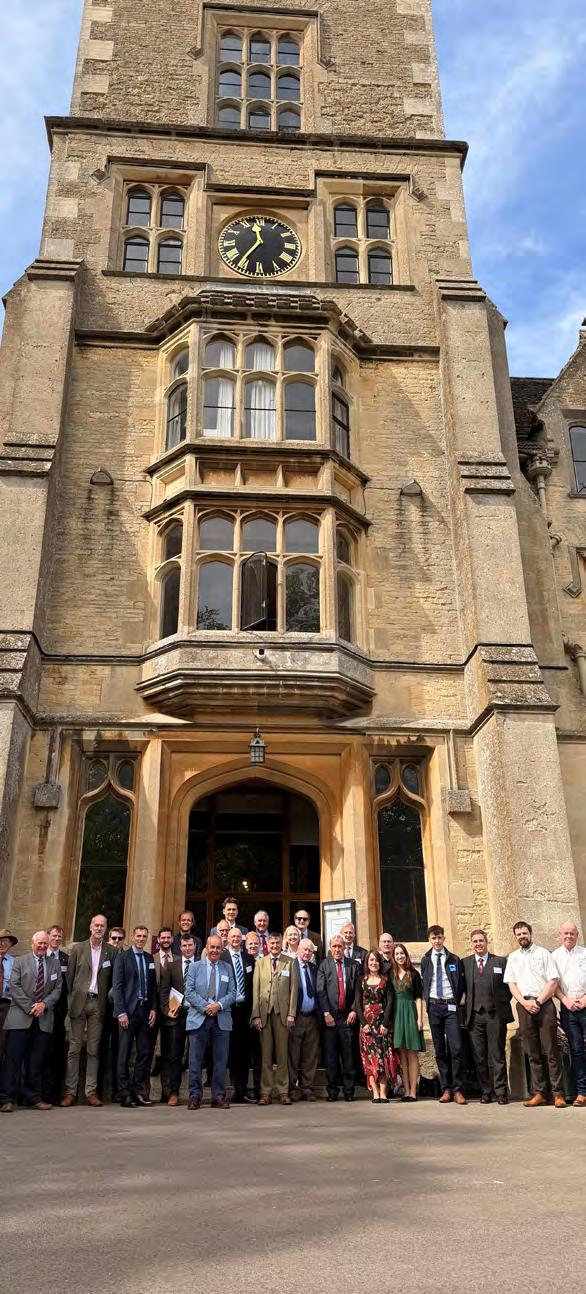
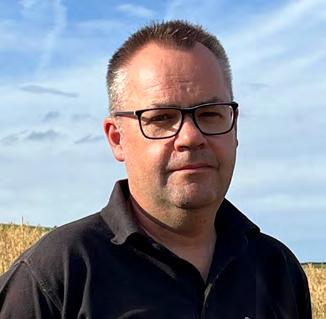
One of the privileges of being editor is attending the IAgrE Awards ceremony. This year was no exception, with the opportunity to celebrate the achievements of Institution members and hear from eminent speakers. Enjoy the occasion from p18.
As we warmly welcome Kit Franklin to the President’s chair you can find out a little more about his history and plans for this office from p26.
Another initiative is Perspectives on p28 where Chartered IAgrE member Ray King makes the case, with the long view on Start-ups, a fascinating take.
Its been a long time since I first visited the National Fluid Power Centre in Worksop, and the first impressions have stuck with me. With dedicated facilities and high end professional training, supported by and for industry, there is nowhere quite like it. Read all about a key IAgrE Commercial member from p34.
I hope that you find this insight into the world of agricultural engineering as interesting as I did.
Hon FIAgrE ARAgS Editor
If you are an existing Associate Member you have the option to upgrade to Member grade providing you have completed 5 or more years in a relevant career.
However, if you prefer, you can remain as an Associate Member for as long as you wish.
For more information please see:
IAgrE View is now available on the website under the Media Centre.
Drawing on the collective expertise of IAgrE’s membership, IAgrE View provides a credible and authoritative voice to inform leaders, policymakers and advisers on key sector issues. These one-page Position Briefs offer clear and concise insights into how professionals within the IAgrE community can drive innovation and advance technology across priority subject areas.
The latest IAgrE View welcomes the UK Governments Land Use Framework for England, recognising the progress made through previous consultations and national discussion. IAgrE strongly supports a data-driven, strategic approach to land use decision-making, particularly in light of the increasing and competing demands placed upon it.
or contact Alison at membership@iagre.org.
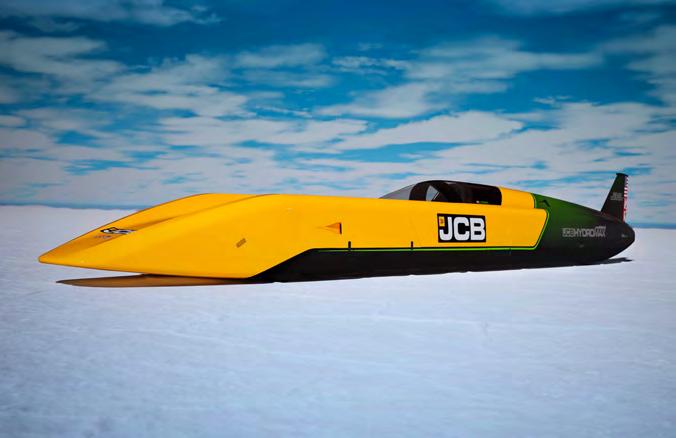
British engineering giant JCB is targeting a new land speed record with a 32-foot car powered by its own hydrogen engines.
The Staffordshire-based manufacturer, which employs more than 20,000 people worldwide, has spent five years developing hydrogen internal combustion engines as part of a £100 million investment. JCB diggers powered by the technology have just started rolling off production lines.
Now, exactly 20 years after rewriting the record books with the JCB Dieselmax car, the company is returning to the Bonneville Salt Flats in Utah to attempt a new speed record – this time using hydrogen power.
In August 2006, JCB Dieselmax, driven by Wing Commander Andy Green OBE, set a world diesel land speed record of 350.092 mph – a record that still stands. In August this year, Green will once again take the wheel, driving the hydrogenpowered JCB Hydromax. The JCB-led project is being supported by Prodrive and Ricardo.
JCB Chairman Anthony Bamford, who has spearheaded the company’s hydrogen programme, said: “Britain has a proud heritage of setting speed records and, as a British company, I’m excited to challenge for a new one using hydrogen. This is not just about speed – it’s about showcasing the world-class engineering talent we have here in the UK and the robustness of our new hydrogen engines.
“JCB Dieselmax was always a bit of an unusual idea – but it proved a point. Putting an advanced engine into a land-speed car showed the world what it could do in a way a digger never could. It’s the same thinking with hydrogen today. If
you’re serious about emissions, you have to be serious about hydrogen – and a land-speed project is the perfect way to prove it.”
He added: “As for the speed, we’re aiming for with JCB Hydromax – we intend to beat 350 mph.”
Andy Green, the fastest man on earth at 763.035mph and the only person to break the sound barrier on land, said: “Twenty years ago, JCB took two of its diesel engines, sprinkled some magic engineering dust on them and put them into a racing car. We raced the JCB Dieselmax up to an astonishing speed - and a new FIA world record - of just over 350 mph. Today, that car is still the fastest diesel-engined vehicle in history. Now we’re going back to the Bonneville Salt Flats, spiritual home of the World Land Speed Record, with JCB’s new hydrogen engines.
“The ‘JCB Hydromax’ car is lighter, more powerful and faster than its predecessor of 20 years ago. Once again, we’re going to show the world just how good British engineering and technology really is. This August we’re going to
smash the hydrogen-powered vehicle record in the world’s fastest (and most exciting!) zero-emissions vehicle. I can’t wait.”
Testing will begin in the UK before the team heads to Bonneville SpeedWeek, the world’s leading land speed racing event, where competitors from around the globe gather to chase records on the vast Salt Flats. JCB Hydromax will run with two production-based hydrogen engines, producing a combined 1,600 bhp. SpeedWeek is run by the Southern California Timing Association (SCTA), which governs and verifies official class records at the event.
The team will then remain at Bonneville to pursue officially recognised world records under the Fédération Internationale de l’Automobile (FIA), the global governing body for motorsport.
JCB has a long history of pushing the limits of speed. In 2019, the JCB Fastrac tractor was crowned the world’s fastest tractor at 135.191 mph, while in 2014 the JCB GT set the world record for the fastest backhoe loader at 72.58 mph.
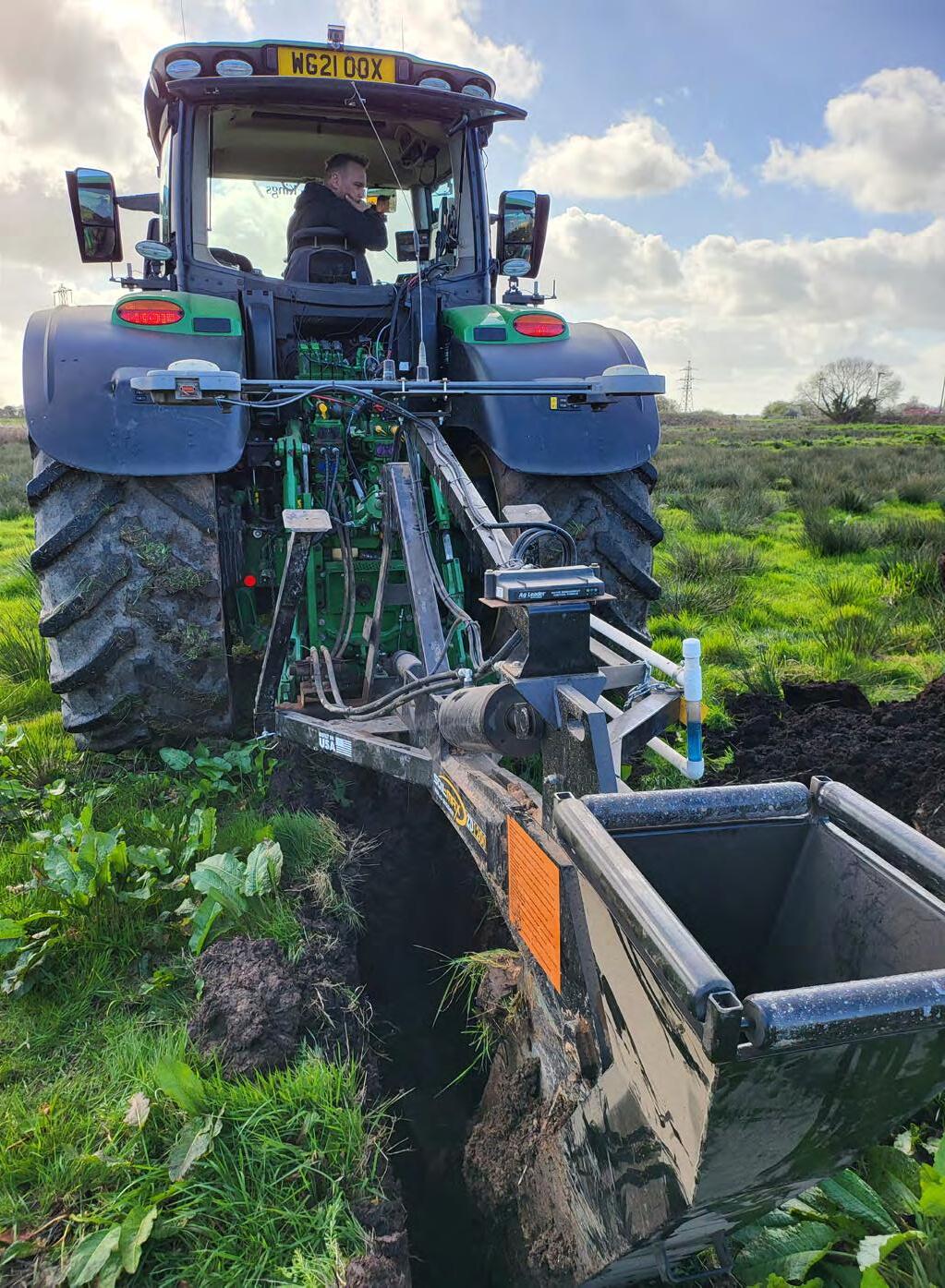
A pioneering on-farm trial in Pawlett, Somerset is exploring whether biochar-based underground drainage systems could help protect peat soils, improve water management and reduce carbon emissions from farming.
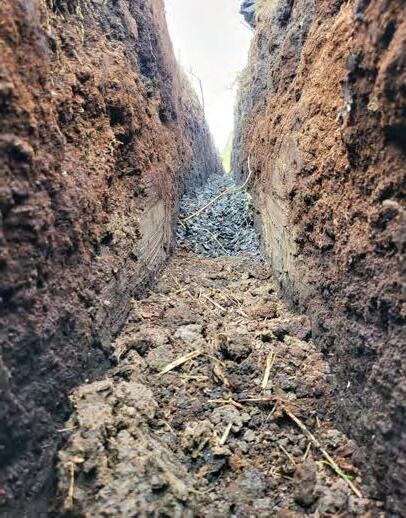
The BioFlow Phase 2 project, led by second-generation farmer Will Barnard, is testing whether conduits of biochar installed beneath peat soils can regulate water movement while locking carbon into the ground long term. The project is being funded through the ADOPT programme, a Defra-backed initiative delivered by Innovate UK to fund farmer-led innovation projects.
Based on the Somerset Levels and Moors, the trial focuses on one of the UK’s most environmentally sensitive agricultural landscapes. Peat soils are naturally waterlogged and rich in stored carbon, but when drained they begin to decompose, releasing significant quantities of carbon dioxide into the atmosphere.
BioFlow Phase 2 aims to investigate whether biochar, a stable form of charcoal, could provide a practical alternative to conventional drainage methods by allowing water to move through the soil without accelerating peat degradation.
Will, who farms on the Somerset Levels, said the project grew from concerns about the long-term resilience of both farming and the landscape itself.
“I wanted to make sure the next generation would still have the opportunities I had growing up farming here. Looking at the way
the landscape was changing, it became clear we needed to think more holistically about how we manage water, soils and farming systems if we want them to remain viable for hundreds of years to come.
“The Somerset Levels are incredibly special, but once peat soils dry out, they stop holding water and the soil erodes away. BioFlow started with a simple question: could we create a system that helps manage water while protecting the peat itself?”
The project follows an earlier phase which demonstrated that the mole draining biochar works and that water could successfully move through underground charcoal channels. The second phase is now assessing performance in greater detail, including practical installation methods and longer-term impacts on soil function and water retention.
The farmer-led structure and focus on innovation excited Will about the ADOPT funding.
“What appealed to me about ADOPT was that it recognised farmers as innovators. Farmers spend their lives solving practical problems, but we don’t always see ourselves as being part of research and development.
“ADOPT created the space to take an idea from the farm gate and test it properly, while still keeping the work grounded in real farming conditions.”
ADOPT, which stands for Accelerating Development of Practices and Technologies, supports practical farmer-led trials designed to improve productivity, sustainability and resilience across the agricultural sector. Grants for projects costing £50,000 to £100,000 are available for collaborative projects involving farmers, growers and foresters, alongside free support through the ADOPT Support Hub.
BioFlow Phase 2 is one of a growing number of projects exploring innovative approaches to sustainable land management and climate resilience through farmer-led research.
Explore these and more ADOPT-funded trials at
Although, sitting here in late May with temperatures barely scraping double figures, it does not feel much like summer just yet. I am still refusing to put the heating back on — partly because the oil tank is low, and partly because the price of oil certainly is not!
Energy costs remain a major pressure point across the economy, and agriculture is no exception. Ongoing instability in the Middle East continues to keep fuel markets volatile, and we are seeing that feed directly into farm businesses. Fertiliser, chemicals, transport and machinery running costs all feel the knock-on effect when fuel moves.
Despite that, there are still reasons for cautious optimism in the machinery sector. Sales of tractors and equipment have held
up well in several areas, which is encouraging for manufacturers and dealers as we head through the growing season. Confidence remains sensitive to input costs, but the market is proving more resilient than many expected.
Spring is always a highlight in the IAgrE calendar with our annual awards, and this year we were lucky enough to host them at the Royal Agricultural University in Gloucestershire on a rare sunny day.
What always stands out is the breadth of achievement on display. From student projects through to world-leading engineering and applied research, it is a reminder of just how much talent we have in our sector. This year’s winners again reflected a strong mix of UK and international excellence across machinery design, livestock and arable systems, and emerging technologies.
Just as important are the volunteers who keep IAgrE running at branch level. Their work organising events,
technical visits and member activities often goes unseen, but it is absolutely fundamental to what we do as a professional body.
The student awards deserve a special mention. We had strong entries from a range of colleges and universities, with some new names among the winners. These moments matter more than we sometimes realise — for many students it is their first real interaction with senior industry figures, and that recognition can have a lasting impact on their confidence and career direction.
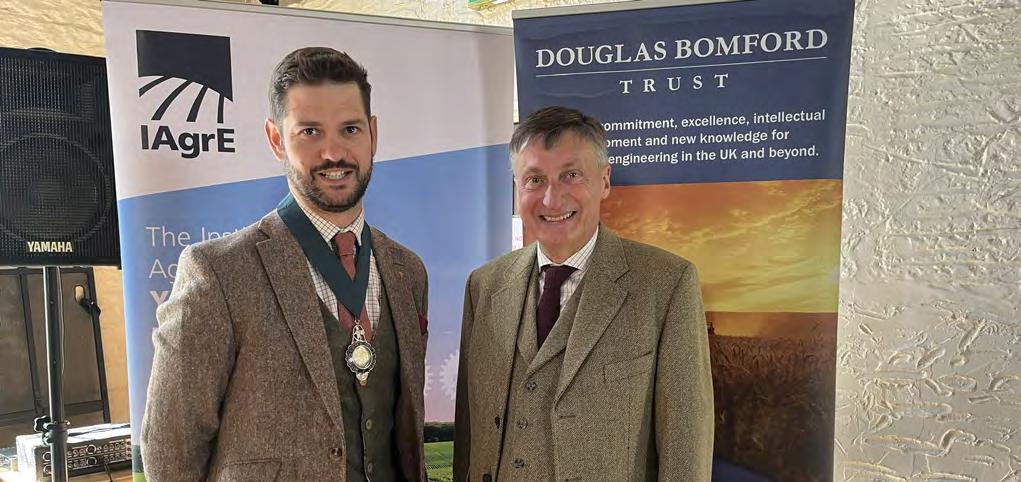
At the AGM, the Presidency formally passed from Dr Mark Moore to Kit Franklin. I want to personally thank Mark for his energy and commitment over the past two years, and warmly welcome Kit into the role.
Mark gave a clear and thoughtful overview of IAgrE’s progress during 2025 and the priorities ahead. I would also like to congratulate Graham Higginson on becoming President-Elect, and thank all members who took part in the process.
Members may already be aware of the formation of the Society of Agriculture (SocAg), following the merger of the Institution of Agricultural Management (IAgrM) and the British Institute of Agricultural Consultants (BIAC).
Alongside this, discussions are continuing across several professional bodies — including IAgrE — on the potential creation of an Agricultural Assembly. The aim would be to develop a clearer route towards Chartered status for agriculture, awarded through recognised professional institutions.
This is an important conversation for our sector. Members will shortly receive a survey asking for views on whether Chartered status would add value. I would strongly encourage everyone to respond — your input will help shape what happens next.
In March I attended the Northern Ireland branch AGM and delivered the President’s address. It was a great opportunity to meet members and have open discussions about the sector.
Northern Ireland has a strong base of agricultural machinery manufacturing, and I was able to visit several members including SlurryKat, NC Engineering and Redrock. Each is doing impressive work in design and fabrication and contributes significantly to the wider industry.
I also visited CAFRE’s Greenmount Campus in Antrim. The facilities are excellent, particularly in landbased engineering, and students clearly benefit from a very practical learning environment. It does, however, raise a concern that there is still no degree-level agricultural or land-based engineering provision in Northern Ireland, despite strong industry demand for graduates.
My thanks to Peter Verhoeven and the CAFRE team for their time and hospitality.
Back at IAgrE, we are putting the final work into our new website and app. This is a significant step forward and long overdue. The new platform is built primarily for mobile use and should give members a far clearer and more streamlined experience.
It also brings our membership database fully into the back-office system, which is a big operational change for the Secretariat team. There is a lot going on behind the scenes, but the end result will be a more efficient and user-friendly service.
It is also encouraging to see membership continuing to grow, with increasing interest in professional registration. Thank you to all new members joining us — I hope you find real value in the network, technical content and professional support IAgrE provides.
Finally, thank you to those who have already renewed subscriptions. Paying by annual direct debit saves £10 (£5 for Technician grade) and reduces admin costs. It is also worth remembering that professional subscriptions are tax deductible, so members should make full use of that where possible.
For any queries, please contact Jo at finance@iagre.org.
Charlie Nicklin CEO, IAgrE ceo@iagre.org
Eight engaging musings to write, so where should I start?
I suppose at the beginning!
The first duty of my presidency was to host the annual awards at the Royal Agricultural University in my hometown of Cirencester, where the medieval tithe barn, adorned with vintage farm equipment, certainly provided a fitting setting. I know from personal experience, that to be recognised by the IAgrE is great honour and this year’s recipients were certainly worthy. From awards for cutting edge, disruptive processes in the fertiliser industry, through hard working branch members and exceptional students, to an engineer who made the leap from aerospace to Ag Eng, I know the citations will make some fascinating reading from page 18.
It is tradition for the President to give an address at the Awards but with a personal link to the RAU through past attendance of dyslexia support lessons as a teenager, it seemed more fitting to hand over the slot to an expert about neurodiversity in Engineering. I am very grateful to Beverley Gibbs who gave a truly insightful talk, not only discussing the prevalence of neurodiversity in engineering and agriculture, but also highlighting the strength brought to our field by this diversity and some practical ways of being inclusive to these neurological traits. From the conversations over lunch the subject certainly resonated with members present – read more from page 18.
Coincidentally Beverley recently wrote a blog discussing the “Missing Story” of UK Engineering (well worth a read), just as we are launching IAgrE “Perspectives” initiative. Perspectives will give professional members the opportunity to explore topics pertinent to the current and future Agricultural
Engineering sector building the modern story of our membership. The output from the initiative will be genuinely “multi-channel” with a feature article in Landwards, followed by a lunchtime lecture, Landwards podcast and supporting social media highlights. Through this approach, we hope the story of contemporary Ag Engineering will be shared far and wide.
It is fantastic to be able to point you all to page 28, where Vice President Raymond King CEng has put pen to paper for the first perspective, examining the role of start-up businesses, I am sure you will all find this an insightful read.
As well as providing engaging content for members, the initiatives are firmly aimed at building greater understanding of our broad community and its importance, helping us in our efforts to grow membership.
My thanks go to the Council, whose discussion at its last meeting helped shape this initiative and identify what topics could be explored over time. We already have some brilliant engineers lined up to contribute and, if you would like to take part, please do contact the secretariat.
Please do get behind this initiative by sharing the content whenever you see it - the wider we spread these stories, the stronger the voice and visibility of agricultural engineering will become.
While I am discussing voice and visibility, I would also

encourage you to look out for IAgrE Position Briefs. These are concise, focused responses to industry, political and policy announcements, highlighting where Agricultural Engineering expertise and skill sets should be embedded in development and delivery of initiatives across agriculture, engineering and technology.
A legacy of Past President Mark Moore, the position briefs will be circulated directly to key stakeholders and hosted on our website.
I will end by congratulating newly confirmed President Elect Graham Higginson. I am sure he will bring a drive around student membership to the role. As President, Mark Moore brought real passion for increasing visibility of the profession, and with engagement and recruitment firmly in my own sights, I believe this has created a strong natural synergy and lined up smooth transitions between presidencies.
Kit Franklin
This month, Biosystems Engineering journal will again be supporting the European Society of Agricultural Engineers (EurAgEng) Conference in Turin, Italy. As part of our support for the conference and the society, Biosystems Engineering will present awards to recognise outstanding papers that have been published in the journal over the past two years (2024 and 2025 published articles). The society and conference are Euro-centric (as indicated in the name), but the outreach is global. The Biosystems Engineering journal is of course international, with a global reach as well, and all published papers were considered, regardless of origin. As a journal, we believe it is important to recognise excellence in publishing within our community, and EurAgEng provides a perfect opportunity to celebrate publishing achievements with the global biosystems engineering community.

total there were 407 published articles in 2024-25 to be considered for an award. The 407 articles were divided in groups of approximately 50 papers (along Volume lines) and each group was independently assessed by four editors. Each editor identified one paper from the group of 50 as ‘the best in group’ and each editor assessed at least two groups.
The ‘best in group’ papers nominated by the editors were then collated into a ‘long’ list, which comprised 24 papers (some papers received nominations from multiple editors). In a second round of reviewing, the three Senior Editors then individually scored these 24 papers based on the novelty of the engineering science, the quality of the presentation of the work and the quality of the discussion (and relevance to engineering applications). The scores were summed and the top 10 papers selected as a shortlist. This shortlist was then sent to the Editorial Team for a third round of reviewing.

the journal considers to be worthy of an Outstanding Paper Award (OPA).
However, the intent of this article is NOT to spoil the surprise before the awards are announced in Turin. Instead, it is to share with you the details and some information on the shortlist of papers that were ultimately considered for an OPA. Unfortunately, only three of the shortlisted papers will be recognised in Turin, but this does not discount the efforts of the academics that were put onto the shortlist. The shortlist also highlights the diversity of methods and domains that are published in Biosystems Engineering.
For Landwards readers, details of the shortlisted papers are given in the table below. Of the ten shortlisted papers, half were from European institutions, and
nominated, but the remaining papers demonstrated the diversity of work published in this journal, including machine-learning approaches to fish feeding, lowtech scalable cooling solutions, advanced modelling of soil-root composites, bioreactor modelling and lab-on-chip approaches to understanding pathogen behaviour. Several of these have been highlighted in earlier editions of Landwards (Biosystems Engineering section) but it is not possible to provide a detailed overview of all of them here. However, the table does provide active links for those papers that are open access (unfortunately, a few are not available unless you have a subscription). Readers are encouraged to have a look at the papers to see what is exciting the editorial team.
The final results will be announced at EurAgEng, and shortly afterwards shared with the IAgrE community. Will you agree with the editors?
Authors Title
Defraeye, T.; Schudel, S.; Shrivastava, C.; Motmans, T.; Umani, K.; Crenna, E.; Shoji, K.; Onwude, D.,
Dequeker, B.; Šalagovič, J.; Retta, M.; Verboven, P.; Nicolaï, B.M.,
Kang, L.; Zhang, Y.; Kaçira, M.; Van Hooff, T.,
Du, Z.; Cui, M.; Xu, X.; Bai, Z.; Han, J.; Li, W.; Yang, J.; Liu, X.; Wang, C.; Li, D.,
Burusa, A.K.; Scholten, J.; Wang, X.; RapadoRincon, D.; van Henten, E.J.; Kootstra, G.,
Ma, H.; Wen, W.; Gou, W.; Lu, X.; Fan, J.; Zhang, M.; Liang, Y.; Gu, S.; Guo, X.,
Ma, X.; Yu, Z.; Liu, M.; Wang, J.; Su, Q.; Zhang, J.; Xie, J.; Wang, T.,
Han, L.; Wilson, B.; Magner, J.,
Manduca, G.; Zeni, V.; Casadei, A.; Tarasco, E.; Lucchi, A.; Benelli, G.; Stefanini, C.; Romano, D.,
Demotes-Mainard, S.; Autret, H.; Pradal, C.; Le Gall, J.; Guérin, V.; Leduc, N.; Combes, D.; Renaud, C.; Chelle, M.; Bertheloot, J.,
The charcoal cooling blanket: A scalable, simple, self-supporting evaporative cooling device for preserving fresh foods
A biophysical model of apple (Malus domestica Borkh.) and pear (Pyrus communis L.) fruit growth
CFD simulation of air distributions in a small multi-layer vertical farm: Impact of computational and physical parameters
Harnessing multimodal data fusion to advance accurate identification of fish feeding intensity
Semantics-aware next-best-view planning for efficient search and detection of taskrelevant plant parts
3D time-series phenotyping of lettuce in greenhouses
Mechanical properties and critical state characteristics of maize root-soil composites at different soil depths
Non-ideal continuously stirred bioreactor model for multi-media denitrifying processes
Unveiling host-seeking behaviour in entomopathogenic nematodes via lab-on-achip technology
Simulating light quantity and quality over plant organs using a ray-tracing method to investigate plant responses in growth chambers
Country DOI
Switzerland https://doi.org/10.1016/j.biosystemseng.2023.12.001
Belgium https://doi.org/10.1016/j.biosystemseng.2024.02.003
USA
https://doi.org/10.1016/j.biosystemseng.2024.05.004
China https://doi.org/10.1016/j.biosystemseng.2024.08.001
the Netherlands https://doi.org/10.1016/j.biosystemseng.2024.09.018
China https://doi.org/10.1016/j.biosystemseng.2025.01.004
China https://doi.org/10.1016/j.biosystemseng.2024.12.014
USA https://doi.org/10.1016/j.biosystemseng.2025.104129
Italy https://doi.org/10.1016/j.biosystemseng.2025.104159
France https://doi.org/10.1016/j.biosystemseng.2025.104256
The Joint CIGR–EurAgEng World Congress 2026 is set to bring together some of the world’s leading researchers, engineers and industry professionals for what promises to be one of the key agricultural technology events of the year.
Taking place in Turin, Italy, the congress will focus on the theme “Emerging Technologies and Innovation in Biosystems Engineering”, highlighting the latest developments in precision farming, automation, robotics, artificial intelligence and sustainable agricultural systems.
The event is expected to attract delegates from across Europe and beyond, providing a major platform for knowledge exchange and collaboration between academia, manufacturers, researchers and the
wider agri-tech sector.
With a packed programme of plenary sessions, technical workshops, networking opportunities and technical tours at the Politecnico di Torino, attendees will gain insight into the innovations shaping the future of modern agriculture.
For professionals involved in agricultural engineering, machinery development, precision farming and research, the congress represents a valuable opportunity to explore
new technologies, discuss industry challenges and connect with international experts driving change across the sector.
Further information and registration details are available via the official congress website.
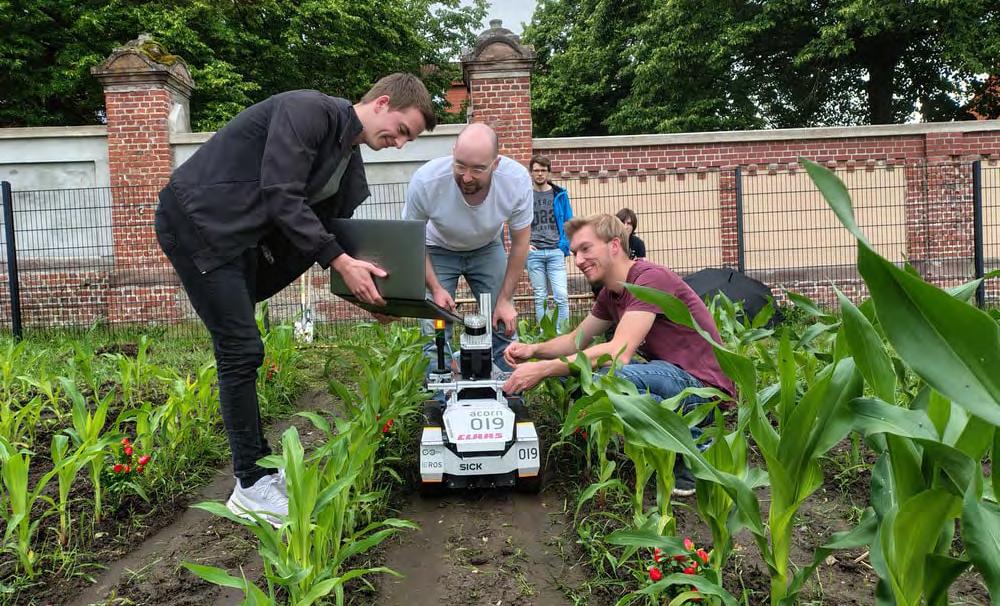
Sponsored by EurAgEng, The Field Robot Event 2026 is shaping up to be one of the most exciting showcases of autonomous agricultural technology in Europe next year, bringing together students, researchers, engineers and agri-tech innovators from across the globe.
Taking place from 16–18 June 2026 at the International DLG Crop Production Centre in Bernburg, Germany, the event will run alongside DLG Feldtage, creating a major platform for the future of field robotics and precision agriculture.
The competition focuses on real-world agricultural challenges, with university teams designing and testing autonomous robots capable of navigation, plant detection, mapping and precision field operations under genuine outdoor conditions.
Beyond the competition itself, the event offers valuable insight into how robotics, artificial intelligence and automation are rapidly transforming modern crop production. Visitors and delegates will have the opportunity to see cutting-edge robotic systems operating live in the field while engaging directly with the next generation of agricultural engineers and technology developers.
The freestyle challenge is also expected to highlight some of the sector’s most creative innovations, giving teams the freedom to demonstrate original concepts and
future applications for autonomous farming systems.
As labour pressures, sustainability targets and precision farming demands continue to increase, events such as the Field Robot Event provide an important glimpse into the technologies likely to shape the future of agriculture.
Further details can be found via the official Field Robot Event website.
component suppliers and applied research organisations to discuss the latest developments in automation, robotics, autonomous machinery, AI, precision agriculture and sustainable powertrain technologies. More than 60 technical presentations are expected across the two-day programme.
Key themes for 2026 include autonomous vehicles and machine safety, electric drives, harvesting technologies, sensors, digital simulation, weed control technologies and agricultural data systems.
UK agricultural engineers, researchers and machinery development specialists are being encouraged to save the date for the 83rd International Conference on Agricultural Engineering, LAND. TECHNIK AgEng 2026, taking place in Dresden, Germany, on 10–11 November 2026.
Organised by VDI Wissensforum in cooperation with EurAgEng and the VDI Max Eyth Society, the conference is widely regarded as one of Europe’s leading technical forums for agricultural engineering innovation.
The event will bring together experts from academia, agricultural machinery manufacturers,
Find out more about EurAgEng
Taking place at the Maritim Hotel and International Congress Center Dresden, the conference also provides extensive networking opportunities for engineers, OEMs, researchers and technology developers from across the global agricultural engineering sector.
The conference has long been recognised as a major international meeting point for agricultural engineers and has historically served as a showcase for emerging machinery and technology trends ahead of major industry exhibitions.
Further information, registration details and the call for papers are available via the official LAND. TECHNIK AgEng 2026 website.

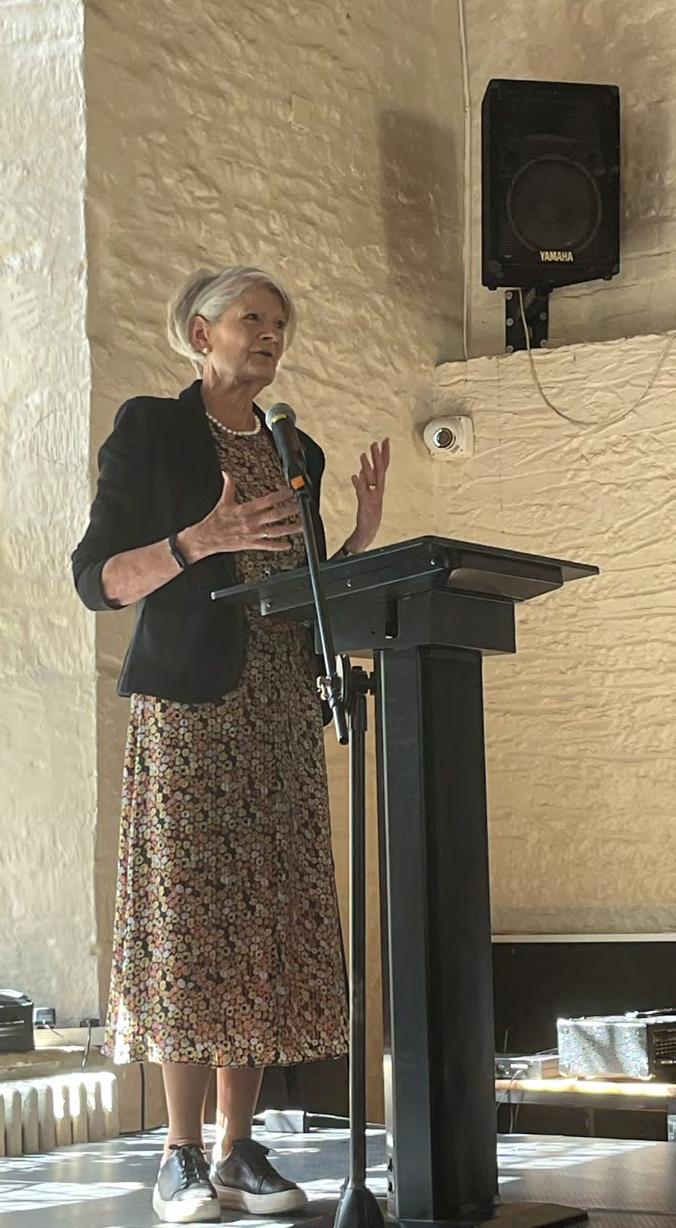
Dame Fiona Reynolds
Dame Fiona Reynolds, chair of the Governing Council of The Royal Agricultural University (RAU) Cirencester, welcomed Institution members and guests to a campus with a long-standing focus on land use and land management, established in 1845 and now extending its international activities.
Dame Fiona outlined the strategic context in which engineers were operating, characterised by competing pressures on rural land for housing and energy infrastructure, escalating production costs linked to energy and fertiliser prices, growing food insecurity, and the increasingly evident impacts of climate change and biodiversity loss, including the decline of pollinators. She reported widespread frustration among farmers and landowners, who often felt unheard despite the emergence of a national land use framework, Defra’s Environmental Land Management (ELM) scheme and a proposed 25-year roadmap for farming.
Within this framework, Dame Fiona identified agricultural engineers as pivotal to delivering practical, scalable solutions. She highlighted their contributions to precision farming, soil compaction reduction, soil restoration and carbon sequestration, as well as the deployment of advanced monitoring technologies such as drones. Innovation in weeding, harvesting, milking and the systems analysis of complex landscapes was shown to underpin more resilient and integrated land-use systems. As farmer clusters and landscapescale collaborations develop, they increasingly depend on agricultural engineers’ expertise to design and implement sustainable, high-performance systems that reconciled food production with climate and nature objectives.
Dr Beverley Gibbs is Director and Professor of Engineering Education Leadership at the Dyson Institute of Engineering and Technology. She addressed delegates on the strategic importance of neurodivergent talent within their sectors. She argued that agriculture and engineering are already powered by “minds that think differently” – people who excel at hyper-focus, systems thinking, pattern recognition, and real-time problem solving in complex, uncertain environments.
Dr Gibbs began by distinguishing neurodiversity (natural variation across the population) from neurodivergence*(individuals whose cognitive profiles differ significantly from the norm and meet thresholds of functional impairment across multiple life domains). She challenged two common myths: that “we’re all a bit neurodiverse” and that conditions such as ADHD and autism are overdiagnosed. Citing UK data, she noted long waiting lists, high levels of non-disclosure at work, and particular underdiagnosis in adults, women, and technical professions where people often “mask” effectively.
Drawing on her own late ADHD diagnosis, she highlighted how diagnosis provides a map rather than a label: helping individuals understand why some tasks feel impossible despite effort, and how to design work around strengths rather than deficits. She stressed the strong **heritability** of many neurodivergent conditions, moderated by environmental factors such as maternal health and early-life exposures.

Dr Beverley Gibbs
For agriculture, Dr Gibbs referenced a **Farmers Weekly** survey indicating that 36% of people working in farming consider themselves neurodivergent—more than double national estimates— with many reporting impacts on communication and stress. She argued that farming and engineering effectively *select for* neurodivergent strengths: visual thinking, intuitive system modelling, rapid fault diagnosis, and sensitivity to subtle changes in animals, machinery, or environmental conditions. The example of autistic livestock behaviour expert **Dr Temple Grandin** illustrated how sensory sensitivity, reframed as a capability, can transform industry practice.
Central to her message was the social model of disability: people are often disabled less by their brains and more by environments
designed for someone else. Using dyslexia across different languages, she showed how design (e.g. orthography, communication norms, assessment practices) can either amplify or mitigate difficulty.
Dr Gibbs concluded that cognitive diversity is a strategic asset, not a “nice to have”. Inclusive design— clearer communication, predictable routines, good information in advance, and strength-based delegation—improves performance, innovation, retention, and well-being for all staff. Her invitation to agricultural engineers is to start “making the invisible visible” by asking people what they need, to do their best work, and design farms, workshops, and offices around the real minds already in the sector.
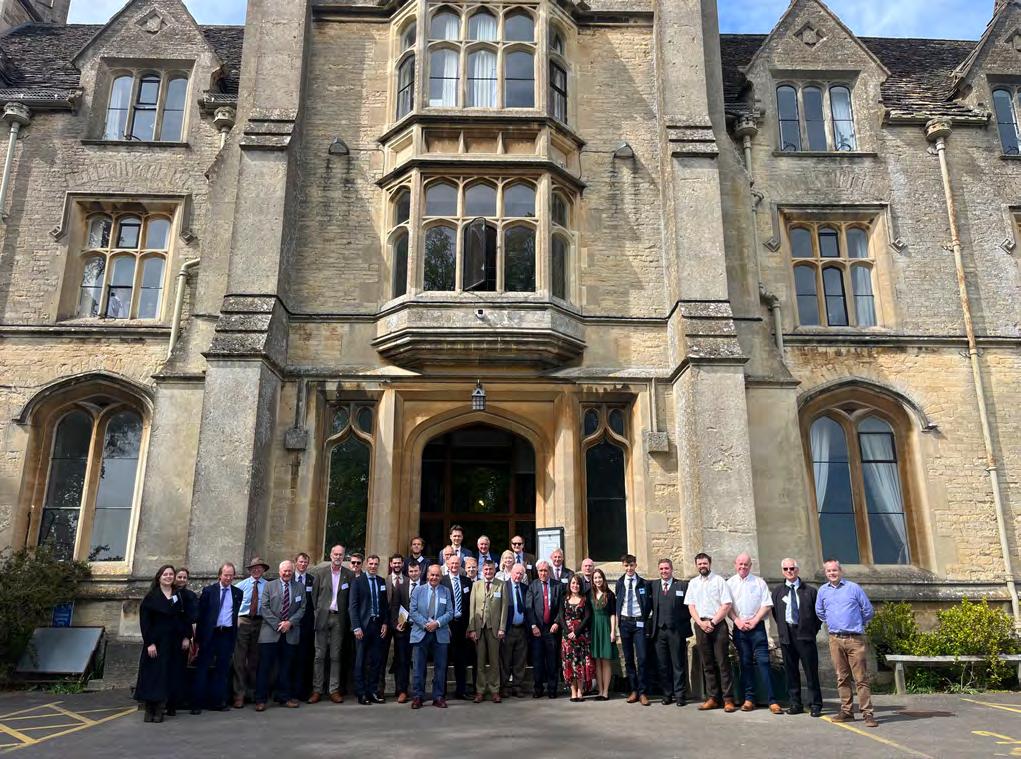
The 2026 IAgrE Awards were held at the Royal Agricultural University in Cirencester, bringing together engineers, researchers, students and industry professionals from across the land-based sector. The event celebrated the innovation, leadership and technical expertise continuing to shape modern agricultural engineering.
Opening the ceremony, reflections were made on the long-standing rivalry between Harper Adams and the RAU, with humorous memories of student antics from decades earlier, before thanks were given to the university for hosting the event.
The ceremony began with the Student Awards, recognising the next generation entering the profession. IAgrE highlighted the importance of supporting young engineers, particularly as agriculture continues to face challenges around sustainability, food production, labour shortages and technological change.
Although there were no entries for the Student Safety Award, the importance of safety within agriculture was strongly emphasised, particularly following another difficult year for accidents and fatalities across the sector.
The CNH Undergraduate Award, together with a £250 prize, was presented to Bedwyr Davies from Harper Adams University for his BEng project investigating the effects of separate hydraulic reservoirs on oil contamination in tractors. The work was praised for addressing a practical issue affecting machinery reliability and maintenance.
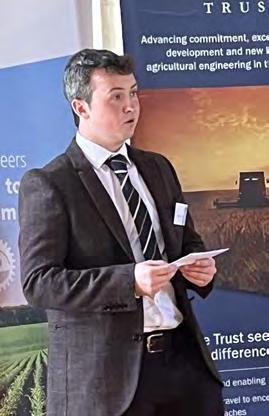
The CNH Postgraduate Award and £500 prize went to Barny Pickford from the University of Nottingham for his MEng project examining powertrains for agricultural vehicles. The judges recognised the relevance of the work as the industry explores electrification, alternative fuels and future machine power systems.
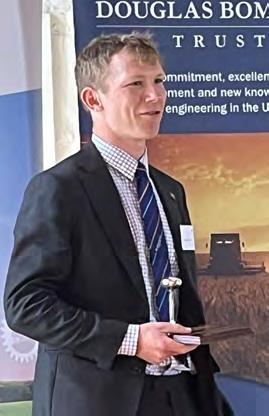
A Highly Commended award was also presented to Emelia O’Connell from Sparsholt College for her study comparing the economic, environmental and social differences between family-run and commercial dairy farming systems.
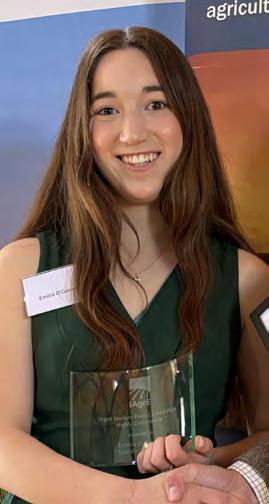
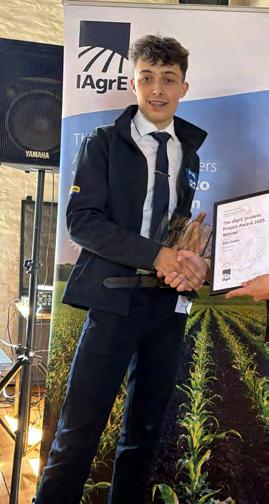
The IAgrE Student Project Award was presented to Kien Evans from Coleg Sir Gar for designing and building a side-shifting headstock for a tractor loader. Judges particularly commended the combination of engineering design and practical fabrication skills demonstrated within the project.
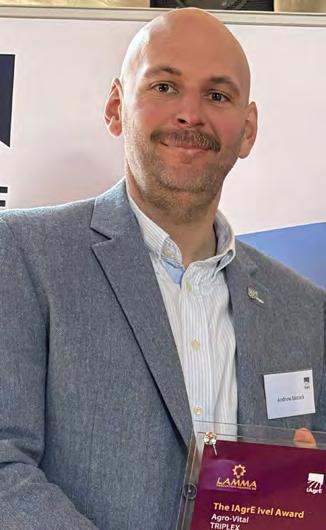
Attention then turned to the IAgrE Ivel Award, recognising innovation displayed at the LAMMA Show. Named after the first Britishdesigned and built tractor, the 2026 award was presented to Agro-Vital for its Triplex Crop Nutrition System. Andrew Sincock attended to receive the award on behalf of the company.
The ceremony then moved on to the Douglas Bomford Paper Award. The award recognised Peter Demeyer and Tomas Norton for their research paper on livestock building ventilation, published in Biosystems Engineering. Their work contributed valuable insight into improving animal welfare, energy efficiency and environmental performance within modern livestock systems.
The Institution Meritorious Awards followed, recognising individuals who had given exceptional service to IAgrE through branch activities, committee work and volunteering.
The first award went to David Clare, who had supported the Wrekin Branch since joining Harper Adams University as Senior Lecturer in Electronics and Mechatronics. His organisation and commitment to branch activities were widely praised.

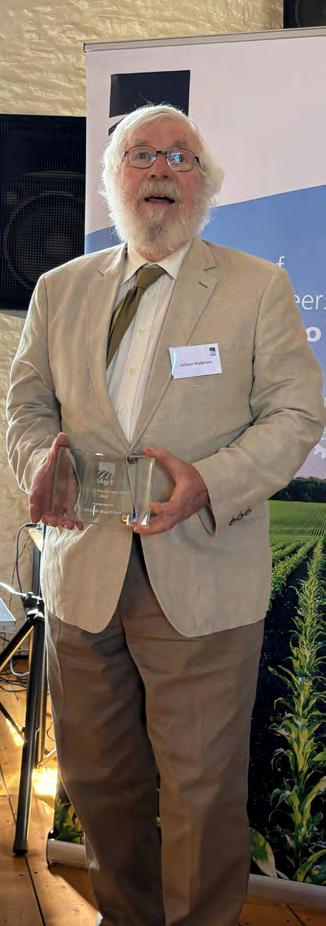
The second award was presented to William Waddilove, recognising decades of service to the West Midlands Branch and his dedication to preserving the heritage of agricultural engineering through the Pioneering Technology Special Interest Group.
The third Meritorious Award went to Mike Whiting for his contributions to the Western Branch and his wider support of IAgrE through Council and advisory activities. His expertise in machinery standards, safety and technical event organisation had earned significant respect throughout the industry.
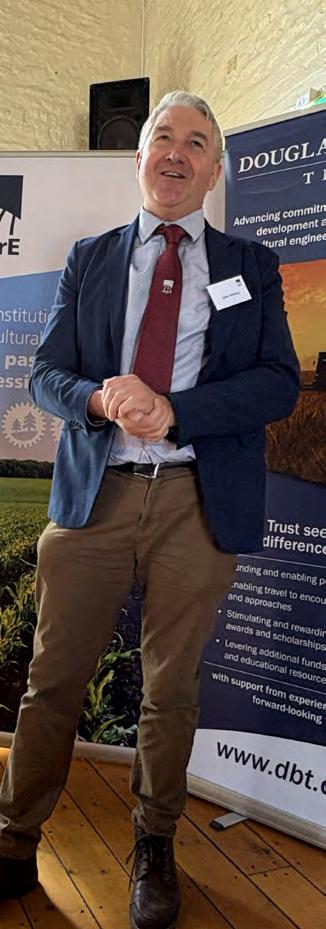
The ceremony then moved on to the President’s Awards, recognising engineers who had made outstanding progress within agricultural engineering and associated industries.
The first President’s Award was presented to Adrian Hackfort of
AGCO. Internationally recognised for his expertise in precision farming technologies, Adrian had led developments in automation, connectivity and diagnostics systems across AGCO brands. He had also become a leading figure within the Agricultural Electronics Foundation, helping advance ISOBUS compatibility and agricultural data exchange systems.
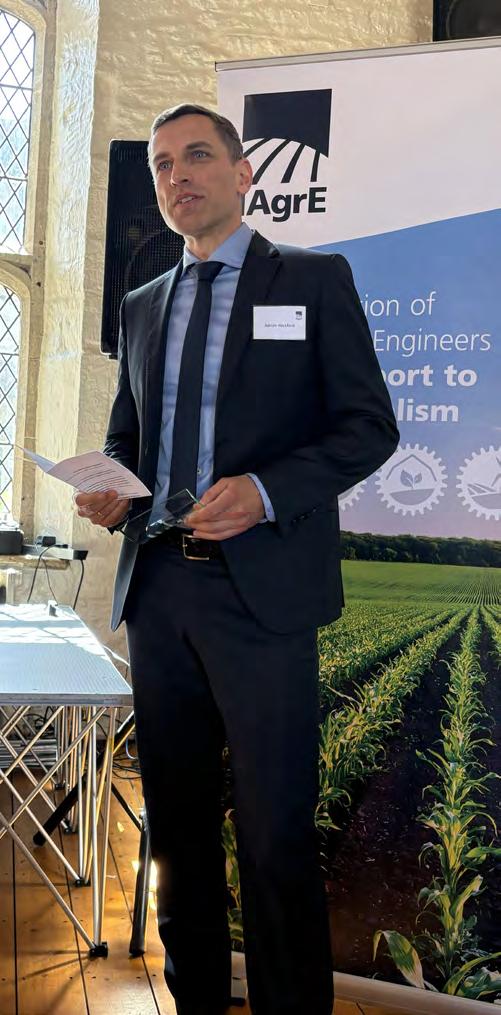
A second President’s Award was presented to Andrew Tingey of Househam Group. Originally trained in aerospace engineering, Andrew had rapidly progressed within agricultural machinery design, eventually becoming Head of Engineering and Production. Among his achievements was the redevelopment of a crop sprayer that became the lightest 3,000-litre machine in its class.
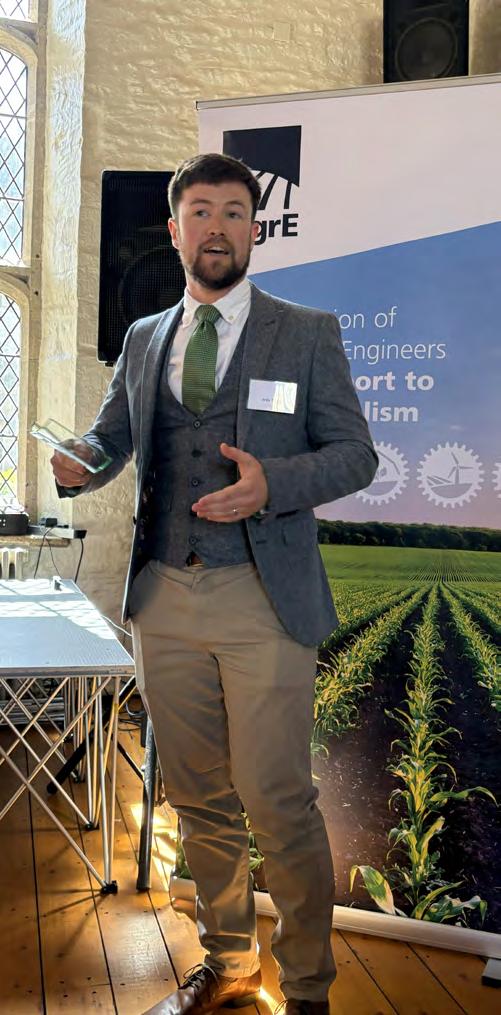
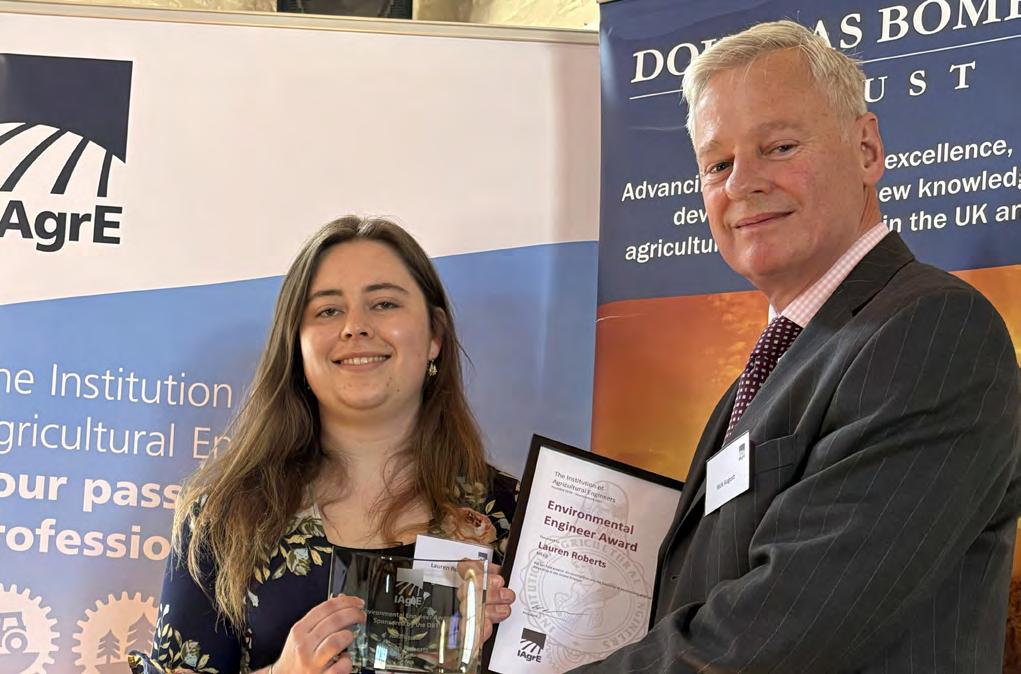
The Environmental Engineer Awards, sponsored by the Douglas Bomford Trust, recognised contributions to environmental improvement within agriculture.
The individual award was presented to Lauren Roberts, an MEng student at Harper Adams University, for her work on mechanising wildflower seed harvesting. Originally submitted as a student project, the work impressed judges with its combination of practical engineering and environmental benefit.
The Environmental Engineer Team Award went to Dio Antille and his team from CSIRO Agriculture and Food in Canberra, Australia. Their four-year research project investigated the role of Controlled Traffic Farming in reducing
greenhouse gas emissions from intensive grain production systems. The work demonstrated significant environmental benefits through
improved soil management, reduced emissions and greater efficiency in fertiliser and water use.

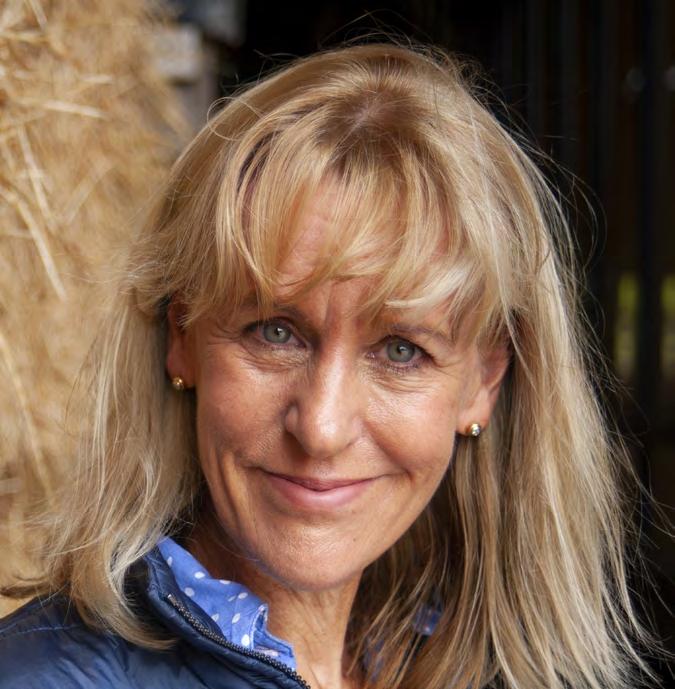
The Institution’s Award of Merit was presented to Baroness Batters of Downton in recognition of her distinguished contribution to agriculture. As former President of the National Farmers’ Union, she had guided the sector through Brexit, Covid-19 and the war in Ukraine, while continuing to champion profitable and sustainable farming. Her later government review into farm profitability strongly promoted innovation, research and collaboration across the agricultural sector.
A sustained contribution
The final presentation of the ceremony was the Sustained Contribution Award, presented to Nick August. A Cotswold farmer and early pioneer of precision agriculture and Controlled Traffic Farming in the UK, Nick had spent many years promoting sustainable farming systems, environmental stewardship and research
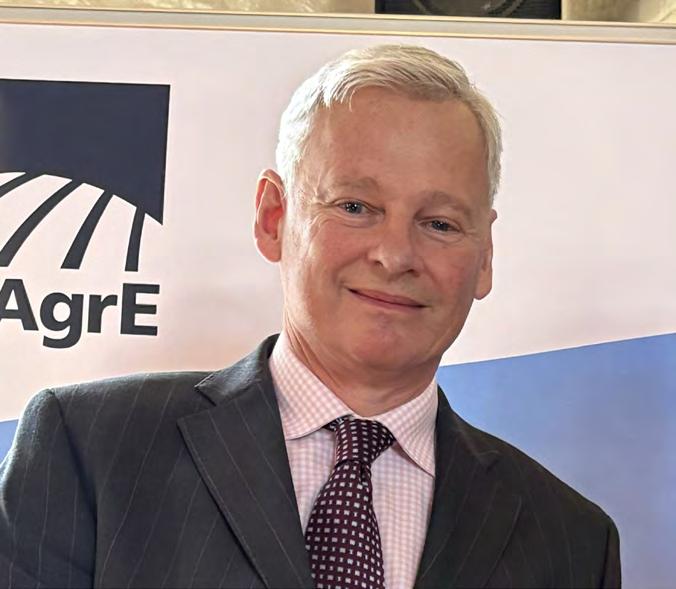
collaboration. His work with the North East Cotswold Farmer Cluster had also helped develop one of the UK’s largest farmer-led nature recovery projects.
The awards concluded with congratulations to all recipients and thanks to sponsors, organisers and attendees .
To read the full winners citations scan below:
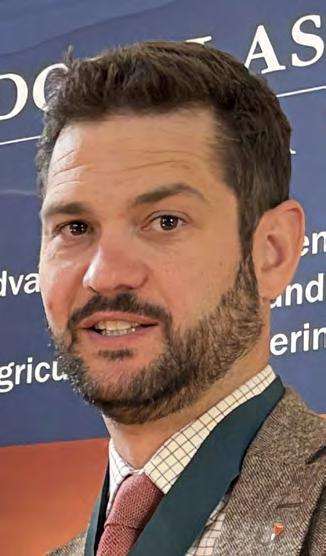
The Institution of Agricultural Engineers’ new President, Kit Franklin, brings to the role a rare mix of academic insight, practical farming experience, and a long-standing passion for agricultural engineering. Raised on a family farm near Cirencester, Kit’s early interests in design and engineering led him to Harper Adams University, where he studied agricultural engineering and later joined the staff as a researcher and lecturer. He became widely known for leading the Hands Free Farm project, the world’s first crop grown using only autonomous machines.
Now, as President of the Institution, Kit’s focus is firmly on the next two years – and on ensuring the Institution is fit for the next ninety.
Kit is clear that he intends to be a hands-on President. With a portfolio career – working part-time
for Harper Adams, contributing to international university collaborations, supporting the family farm, and podcasting about ag engineering and agri-tech – he does
not have a traditional nine-to-five job. He sees this flexibility as an opportunity to work closely with the secretariat, supporting them in practical ways and helping to turn ideas into actions.
One of Kit’s key priorities is improving how members find and connect with each other.
The Institution has over a thousand members, many doing highly specialised and interesting work across the full spectrum of agricultural engineering – from soil, water and drainage through to AI, data, machinery, and hydraulics. Yet, as Kit notes, it can still feel “a bit sticky” to locate the right person or expertise within that network.
With the Institution’s new website due to launch, Kit is determined that it should deliver on its promise: a more effective way for members to discover and contact one another. He has explicitly tied this to what he wrote in his presidential election statement two years ago and
is keen to see that commitment through, making sure the new digital tools genuinely enable better networking.
Kit is also frank about the challenge of slowly declining membership. While the Institution is not on the brink of running out of members, he is conscious that, left unchecked, current trends could threaten its long-term future.
His response is to focus on growth and inclusion:
Actively reaching out to the agri-tech community, where many professionals do not yet see the Institution as their natural home, despite working squarely in agricultural engineering.
Using modern communication channels, particularly LinkedIn, to share members’ stories, highlight their work, and showcase the diversity of roles within ag engineering.
Developing and promoting the “Perspectives” branding to give members a platform to express their views and insights to a wider audience.
Another strand of Kit’s agenda is ensuring that agricultural engineers are around the table when policy is made. Under his leadership, the Institution will work to produce timely, non-partisan responses to key policy announcements from government and bodies such as Defra.
The goal is not to be overtly political, but to remind decisionmakers that agricultural engineering expertise is essential whenever
they seek to change how land is managed, food is produced, or technology is deployed on farms.
Alongside this, Kit is determined to address the pipeline of future agricultural engineers. He wants the Institution to play a more active role in encouraging young people into land-based and ag engineering courses in colleges and universities, complementing existing initiatives such as “We Are Land Based.” For Kit, this is about helping more young people have the same “lightbulb moment” he did when he discovered agricultural engineering as a meaningful, creative, and impactful career.
Across all of this, Kit’s message is simple: the Institution is an open door. He wants members – and those who might become members – to bring their ideas, their concerns, and their enthusiasm, and to help shape the future of agricultural engineering together.
Kit was recently interviewed for the Landwards Podcast, which is available on your usual podcast platform or via the Institutions YouTube Channel


Start-up businesses are nothing new in the agricultural machinery sector, almost every well-known brand came about because of an individual starting and building a company. IAgrE Executive Board member Ray King, gives the long view.
manufacturers and other brands to support scaling the business. Delivering some ground-breaking patented technologies such as the three point linkage system, draught control and integrated hydraulics on tractors. Making farming safer and the results more consistent.
John Deere was started in the 1830s by a man of the same name with a trailblazing steel mouldboard plough, crucial for Midwestern farmers to till the prairie soil.
Digging in the dirt
years the excavation market was dominated by cable actuated machines powered by steam. While there were innovations in the technology for the most part, these machines did not change in their basic layout or design.
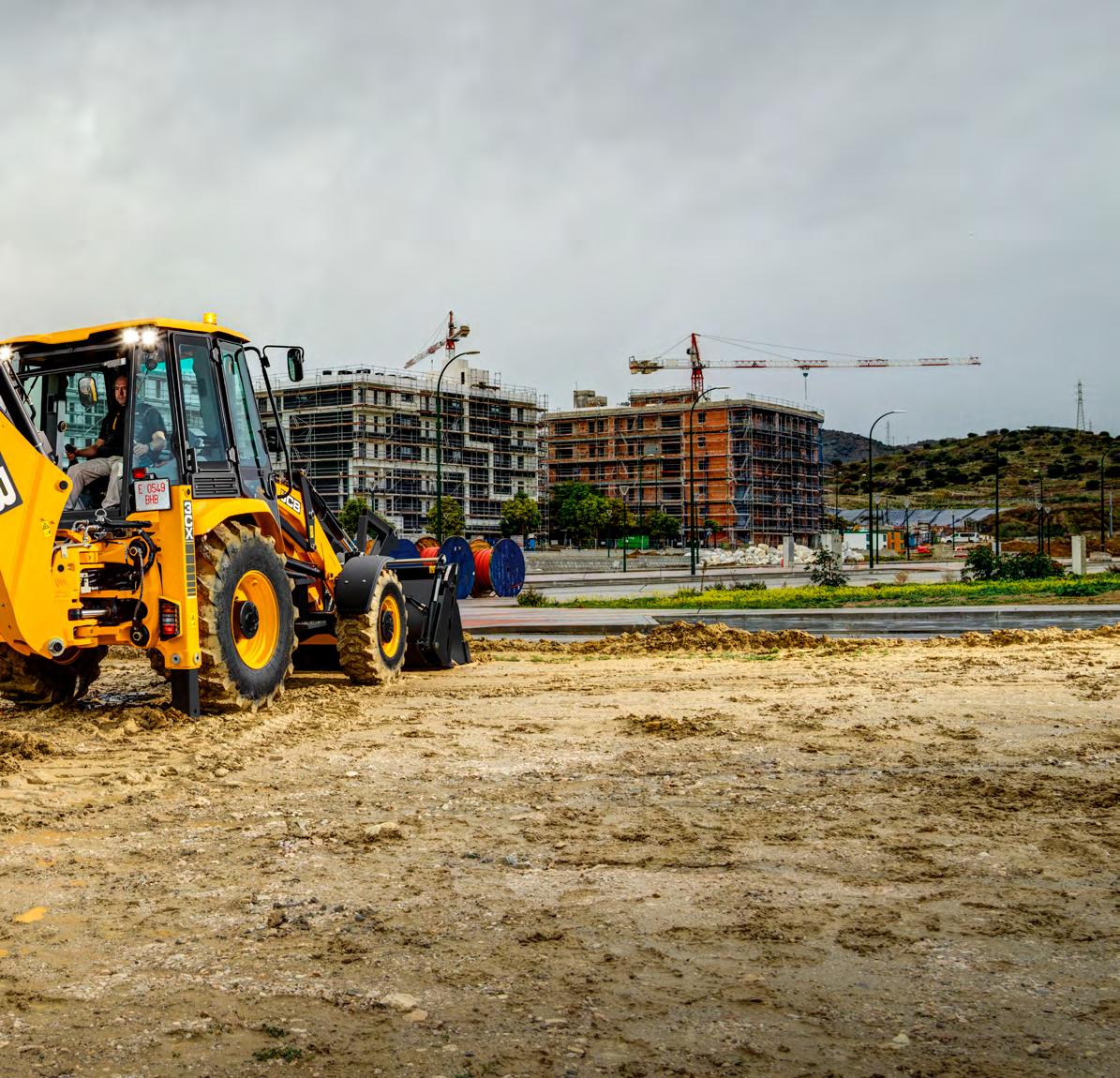
After the Second World War, the machinery manufacturing start-up JCB, became a very early pioneer of hydraulic and backhoe excavation machinery, now ubiquitous on construction sites all
over the world.
These hydraulic machines were weaker, slower and less efficient than cable operated machinery. Mining and excavation contractors did not take these machines seriously, at ¼ of a cubic yard of earth moving capacity compared to the 4 cubic yards of the existing cable excavators.
Backhoe excavators were however more versatile, manoeuvrable and accurate than cable operated machinery.
Winding the clock forwards to today and hydraulic power is the dominant technology for most earthmoving equipment and names that dominated the cable shovel market; Bucyrus-Erie, Marion Power Shovel Company and Priestman Brothers are consigned to the history books.
In recent times much has been written about agritech and the term start-up has become ubiquitous with venture capital funding, “shiny offices in Shoreditch” and failed products.
As history shows, start-ups play a crucial role in the farming technology ecosystem. When thinking about the role of start-ups it is important to think about some of the limitations that established businesses face, such
as pre-existing management structures and incentives that are predicated on making existing processes and products more efficient, rather than thinking more deeply about shifting paradigms through adopting new technologies.
Organisations with a large market share can innovate new products, what is hard (often impossible for them to do) is kill the “golden goose”, even if it is for the greater good of the organisation.
This is one area where start-ups can really shine, they have no existing revenue stream to destroy, they have no existing management structure to worry about and they aren’t wedded to a business model.
In this capacity, start-ups can be disruptors of the status quo, acting in the market to push innovation and explore new ideas that existing manufacturers are unwilling to. Even in mere existence start-ups can apply the pressure the market needs to innovate and evolve.
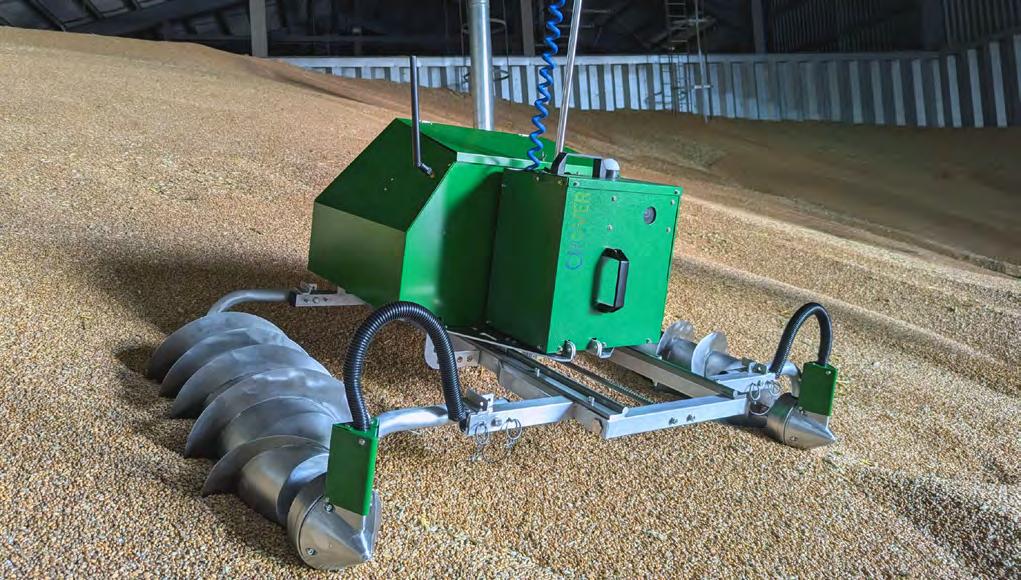
Start-ups also offer opportunities for new talent to enter the market and sector. As new technologies are developed new skill sets are required. The rise in robotics and autonomy in agriculture has seen increased demand for software developers,
sensing and electronics specialists.
With start-ups often leading the way with new paradigm-shifting technologies, the opportunities to work at the “bleeding edge” are often to be found working for these companies.
In agriculture new roles created by start-ups can be the “gateway drug” for those outside the farming sector. Offering a taste for the exciting and rewarding career paths that would otherwise not be available to them with a traditional firm that might place more emphasis on sector specific experience than a scrappy start-up.
It is no secret that start-ups often fail (agricultural technology start-ups are no exception). While the company may fail and investors lose money, the skills and talent are not lost, with individuals often rising like phoenixes in start-ups and established businesses alike putting their experience to use, pushing the boundaries of innovation.
While there is no denying that investors can be left out of pocket, it is worth considering the context of this funding, many institutional investors and Venture Capitalists (VCs) operate a strategy called the “power law”, investing in numerous fledgling businesses expecting most to fail with a tiny few returning huge multiples of their original outlay. Perhaps this approach has gone too far in the agritech sector and led to agritech start-ups getting a bad reputation?
While agricultural machinery is on aggregate a huge global market, in reality it is disparate, divided niches that are much smaller, representing specific crops and geographies. This makes it hard for agricultural based start-ups to hit a market big enough to provide the “outsized returns” VCs look for when allocating cash.
Many start-ups are not VC funded and, in the UK, certainly, where VC funding is not the norm, the vast majority are backed by founders’ own blood, sweat, tears and cash, alongside grant funding from government bodies like Innovate UK.
This arguably can lead to more focused product development where budgets are tight and founders are laser focused on outcomes. Keeping cash tight may also lead to less of a reputation for “shiny offices in Shoreditch” as start-ups are forced to base themselves where rent is cheap, often on farms in a corner of a shed or next to a slurry lagoon. Thus, putting themselves right at the heart of the
farming operation that they intend to support alongside the day to day struggles of their customers. In some cases, farmers become innovators and founders themselves building the technology and businesses that they need but cannot find in the market.
In short, agriculture needs technology start-ups, to challenge the status quo, bring about new paradigms and put pressure on existing manufacturers to innovate. Farming also needs start-ups to attract fresh talent into the sector and to free up locked up investment that would otherwise find a home in other sectors. No less important however are the existing big brands and manufacturers that can deliver at scale providing the products that farmers need for the here and now.
And remember many of the big companies of today were the start-ups of yesterday…
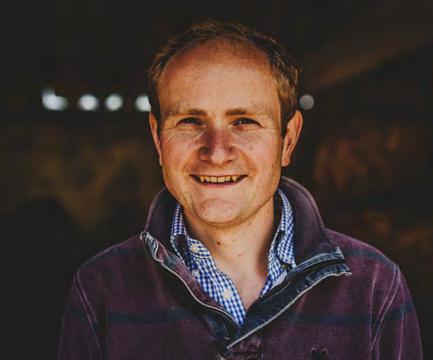
Raymond (“Ray”) King is a Chartered Engineer and founder of Flynt Technology, a UK-based engineering consultancy that helps entrepreneurs and AgTech businesses develop products from concept to market. The company works on areas such as product design, hardware development, grant funding and CE/UKCA compliance.
Practice: 50 years and counting Phil Metcalfe
Principal Consultant Phil Metcalfe joined RSK Group company ADAS while studying for his master’s degree in agricultural engineering, never imagining that he would build a career with the business spanning more than 50 years.
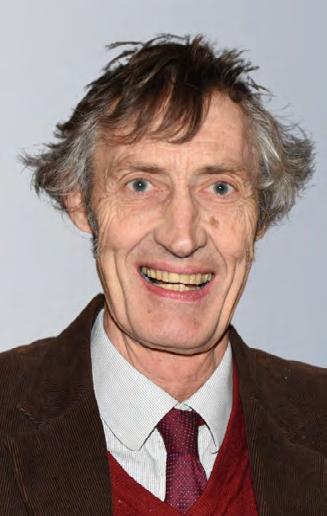
Having always been interested in cars and engineering, Phil first pursued a degree in mechanical engineering before entering the aeronautical industry. However, after a year, he realised agricultural engineering would provide a better opportunity to specialise in a field that combined practical engineering with real-world applications. While studying for his master’s degree, a fellow student working as an adviser at ADAS encouraged him to apply for a role with the company.
Initially, Phil intended to gain experience before returning to support his family’s farming business. Instead, he found a career filled with opportunities as ADAS expanded its work across the land-based industry. Over time,
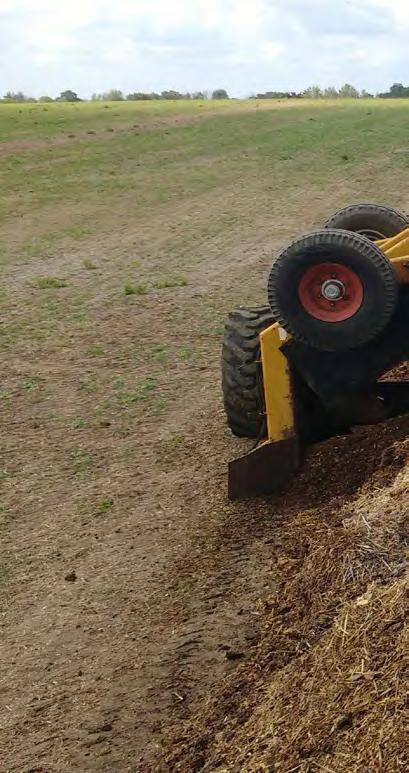
the business diversified into waste management, energy and land-use projects, creating new challenges for engineers to solve.
“Engineering is all about solving problems,” Phil explained. “As opportunities emerged in waste processing and composting for recycling to land, we developed systems and strategies to meet environmental regulations and reduce pollution in major catchments.”
ADAS has since become a recognised provider of farm infrastructure and livestock manure advice for farmers across England through catchment-sensitive farming initiatives.
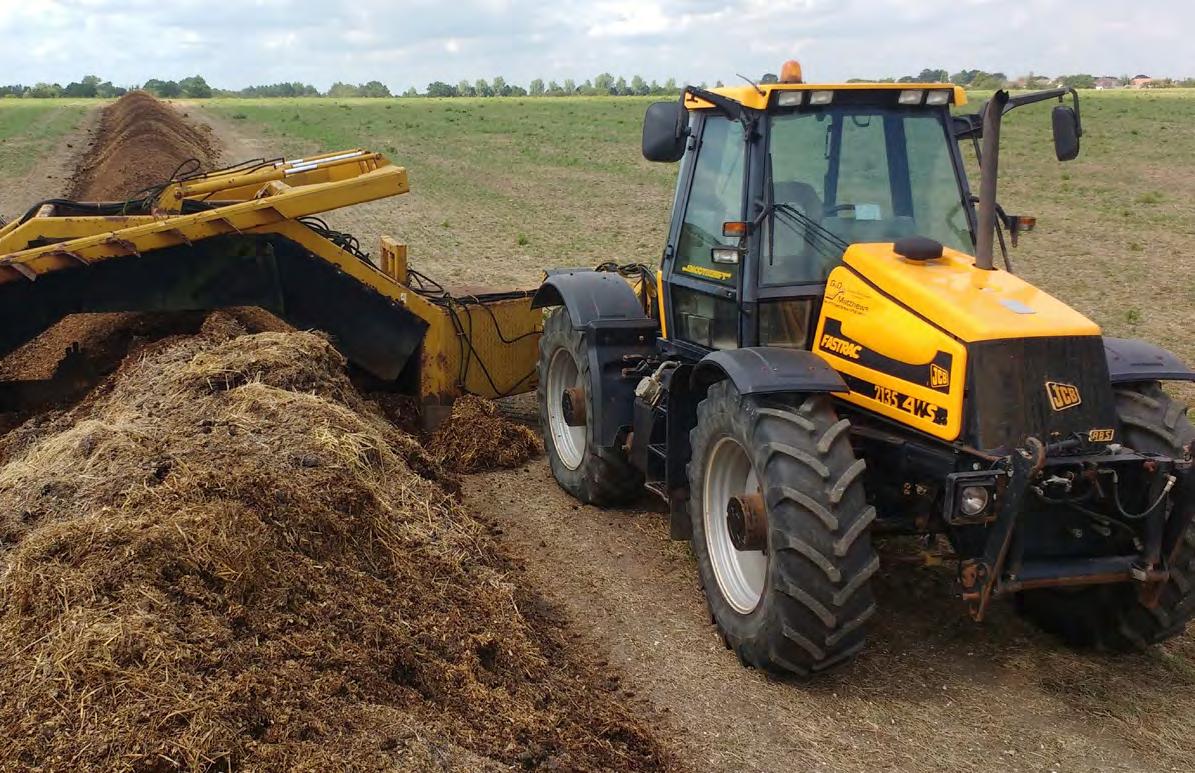
Phil’s agricultural engineering expertise has been applied across a wide range of projects throughout his career. He has worked on life cycle analysis for composting systems, energy and carbon comparisons for organic farming, and projects focused on energy auditing and renewable technologies. The adaptability of engineering skills, he said, has allowed him and his colleagues to respond to changing industry demands and create services that are now key parts of the business.
Reflecting on how agriculture has evolved over the last five decades, Phil highlighted the transformation of technology within the industry. As a student, he researched digital data acquisition using hand-soldered binary counters. Today, advanced
digital systems are central to modern farming operations. “Now we have touchscreens in tractor cabs, and machinery can be guided within millimetres using GPS,” he said.
Phil also noted how priorities within agriculture have changed over the years. When he joined ADAS, the focus was on boosting food production during a period of rising fuel costs. Today, engineers are increasingly focused on addressing climate change and reducing emissions associated with food production and land management.
Among the highlights of his career, Phil points to the people he has worked with, the extensive training he has received and the
international projects he has led. In 1994, he assembled the first ADAS-led contract for the European Union, delivering agricultural extension projects overseas. This later led to consultancy work for the World Bank on recycling farm and village waste in countries including Romania, Turkey, Serbia and Russia to help reduce pollution entering the Danube and Black Sea.
For anyone considering a career in agricultural engineering, Phil recommends developing a strong grounding in engineering and applied sciences, remaining adaptable and building professional networks through organisations such as the Institution of Agricultural Engineers.
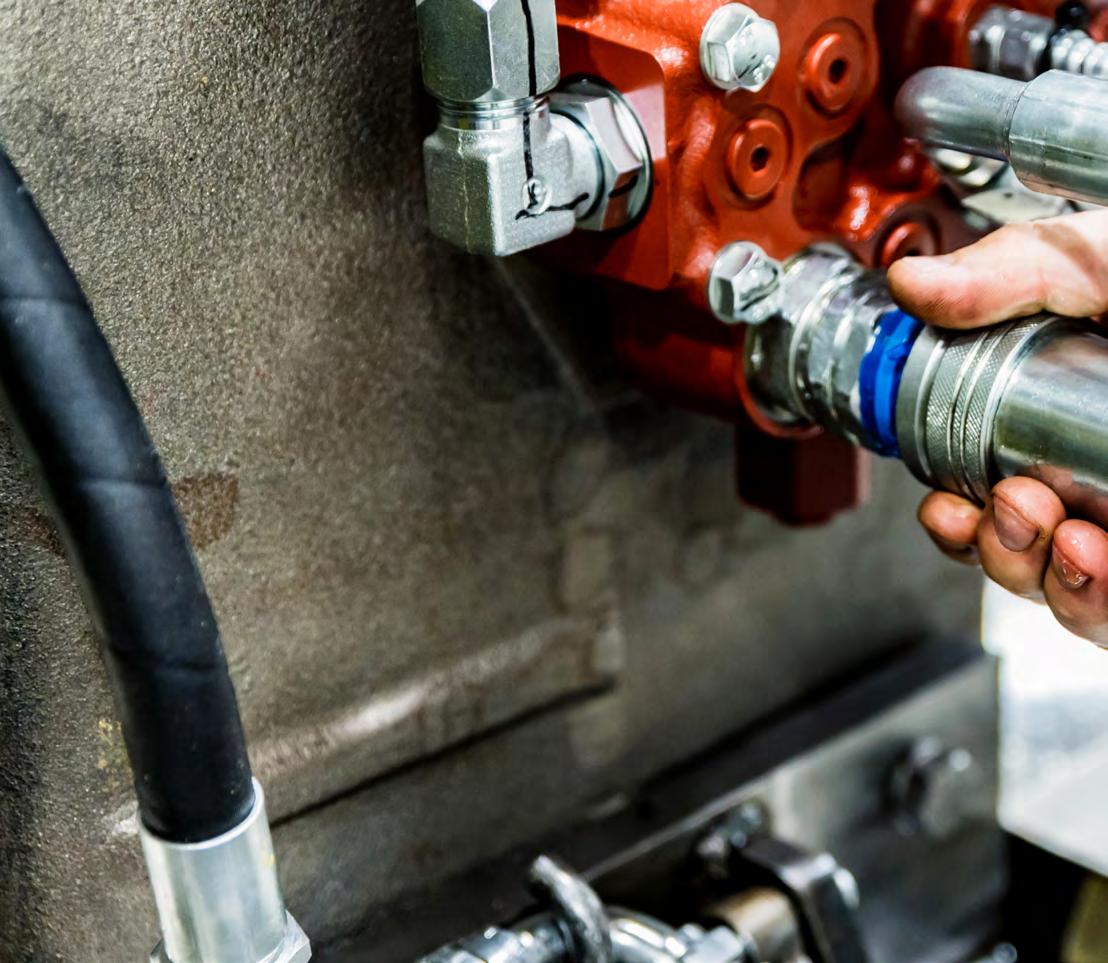
For agricultural engineers, few disciplines are as important — or as underestimated — as fluid power. Modern tractors, combines, sprayers, balers and telehandlers rely on increasingly sophisticated hydraulic, electro-hydraulic and pneumatic systems to deliver productivity, efficiency and precision control. In the UK, one organisation has spent decades developing the specialist skills needed to support those technologies across industry: IAgrE Commercial member, the National Fluid Power Centre. Andy Newbold finds out more.
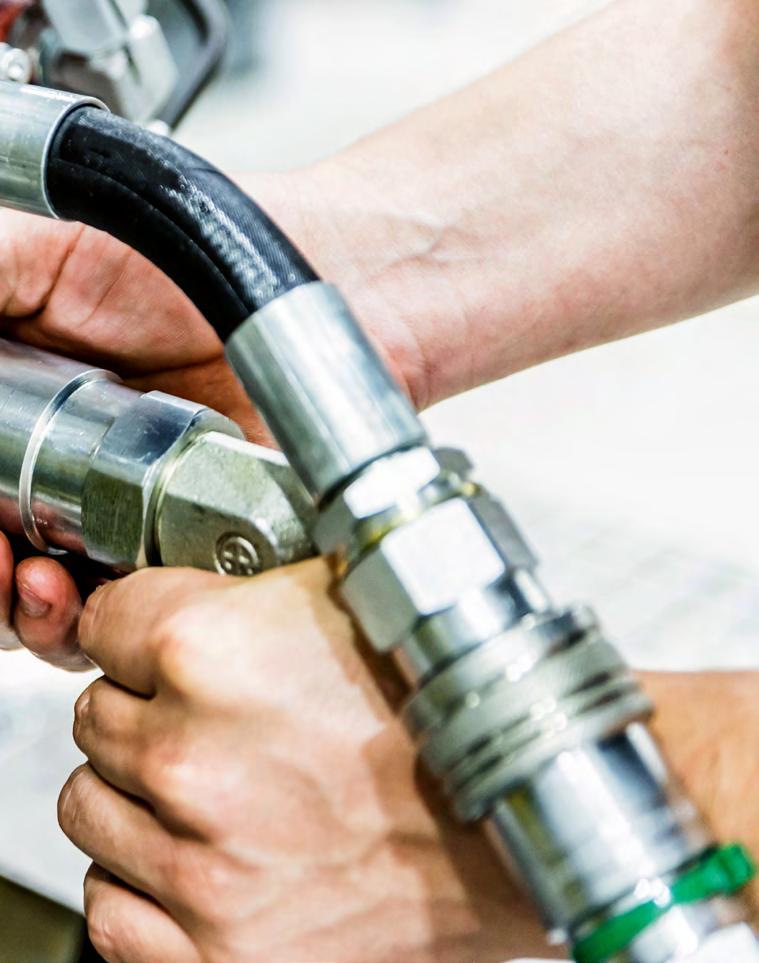
Based in Worksop, Nottinghamshire, the NFPC has become one of Europe’s leading specialist training providers for hydraulics, pneumatics, electro-hydraulics and integrated systems engineering. The organisation works with more than 300 companies across over 27 industrial sectors and is widely regarded as the UK benchmark for competence-based fluid power training.
Agricultural engineering has been closely connected to the NFPC story from the beginning.
Although the centre originally emerged from mining engineering education in the 1970s, its expertise quickly expanded into agricultural machinery as hydraulic systems became central to farm mechanisation. According to the NFPC’s own historical timeline, the organisation was already delivering bespoke training in the early 1980s for manufacturers of pea viners, potato harvesters, balers and carrot harvesting equipment.
The origins of the NFPC can be

traced back to 1974, when John Savage began teaching mining hydraulics courses within the Mining Engineering Department of North Notts College. At a time when hydraulic systems were rapidly evolving, John recognised the need for practical, industry-focused training rather than purely academic engineering education.
By 1982, demand for bespoke hydraulic training had increased significantly. Local agricultural engineering company Farmech requested specialist support for self-propelled pea viners, leading to further collaborations with FMC in Norfolk and other agricultural machinery manufacturers including Shelbourne Reynolds and Market Rasen Engineering. This proved to be a turning point, exposing the team to the growing complexity of mobile hydraulics outside mining applications.
In 1984 the organisation evolved into the North Notts Fluid Power Centre, operating commercially with dedicated training staff and technical facilities. Throughout
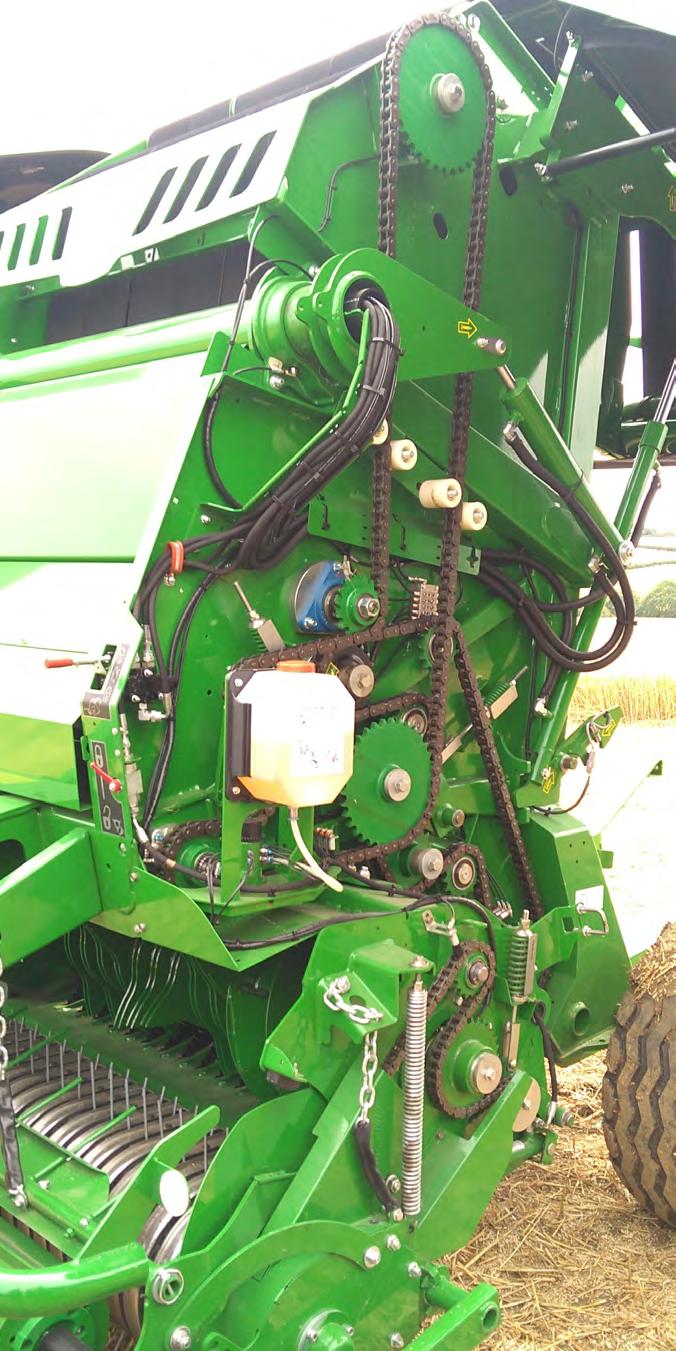
the 1980s and 1990s, the centre steadily built a reputation for practical, hands-on technical education, working not only with agriculture but also marine engineering, waste management, quarrying, offshore energy and heavy industry.
A major milestone came in 1988 with the formation of the NFPC Advisory and Strategic Planning Group. By bringing together hydraulic manufacturers, OEMs and end users, the centre ensured that its training remained aligned with real-world engineering demands. Over time, major international companies began supplying equipment, expertise and technical support to the centre. Today the advisory group includes more than 60 national and international businesses.
The move toward becoming a national centre accelerated during the late 1990s. Following discussions with industry partners and the British Fluid Power Association (BFPA), plans were developed for a dedicated purpose-built training centre. In 1998, the organisation formally adopted the name National Fluid Power Centre.
Since then, the NFPC has expanded continuously. The organisation now operates three fully equipped technical centres containing more than £4 million worth of industrial training equipment supplied by industry partners. The facilities support training across hydraulics, pneumatics, electro-hydraulics, sensors, control systems and predictive maintenance technologies.
One of the NFPC’s most significant
achievements has been its role in competence-based qualifications. The centre is a BFPA-certified CETOP education provider and remains the only UK organisation able to offer CETOP competence qualifications at Levels 1, 2 and 3. CETOP — the European Committee for Fluid Power — establishes internationally recognised standards for hydraulic and pneumatic engineering competence.
For agricultural engineers, this focus on practical competence is particularly relevant. Farm machinery has evolved dramatically over the past two decades. Load-sensing hydraulics, CANbus communication, proportional valve control, ISOBUS integration and electronic diagnostics are now standard across many machines. The skills required to maintain and troubleshoot these systems increasingly overlap with industrial automation and advanced mobile hydraulics.
Recognising these trends, the NFPC has expanded heavily into electro-hydraulics and applied electronics. In 2023, the organisation became the first provider in both the UK and Europe to launch the CETOP FPE1 qualification in Fluid Power Applied Electronics. The qualification focuses on the interaction between hydraulic and electronic systems — an area of growing importance in precision agriculture and modern mobile machinery.
Today the NFPC offers a broad portfolio of training aimed at engineers, technicians, maintenance personnel and designers. Courses range from introductory hydraulics through to advanced proportional control, contamination management, accumulator safety, electro-pneumatics and systems diagnostics. The centre also delivers bespoke manufacturer-
specific training programmes either on-site or at Worksop.
Mobile hydraulics remains one of the organisation’s core specialisms. During the late 2000s, increasing demand from companies such as JCB, Caterpillar and Komatsu drove significant investment into mobile hydraulic training systems. That expertise translates directly into agricultural engineering applications, where mobile hydraulic efficiency, reliability and fault-finding capability are critical to machine uptime during harvest and seasonal operations.
Another important area is contamination control and oil analysis. Hydraulic contamination remains one of the leading causes of premature component failure in agricultural machinery. The NFPC established a dedicated oil analysis laboratory in 2006, supported by Pall Industrial Hydraulics, enabling trainees to understand filtration, fluid condition monitoring and contamination management in practical settings.
In recent years, the organisation has also embraced predictive maintenance and sensor technologies. Through participation in the UK government-backed Skills Accelerator Project, the NFPC upgraded training rigs with advanced sensors, health monitoring systems and control technologies designed to reflect modern industrial and mobile equipment.
The agricultural sector is increasingly affected by the same pressures shaping wider engineering industries: skills shortages, technological complexity and the transition toward smarter, electronically controlled machinery. Against that backdrop, the NFPC positions itself not simply as a
training provider, but as a specialist engineering competence centre supporting workforce development across the UK.
In April 2025, the organisation celebrated its 25th anniversary as the National Fluid Power Centre, marking a quarter century under the NFPC name and more than 50 years since John Savage first began teaching hydraulics in Nottinghamshire. The anniversary event brought together customers, suppliers and engineering professionals to recognise the centre’s contribution to UK engineering skills development.
For agricultural engineers, the NFPC represents more than a conventional training organisation. Its development mirrors the evolution of modern agricultural machinery itself - from mechanically controlled systems to highly integrated electro-hydraulic platforms requiring multidisciplinary engineering expertise.
As farm equipment continues to advance toward automation, precision control and intelligent diagnostics, organisations such as the NFPC are likely to play an increasingly important role in developing the specialist technical skills the sector demands.
Further information on courses, qualifications and technical training can be found here.
The accelerating pace of agri-robotics is no longer in doubt. What is less certain is whether the UK can convert technical promise into safe, profitable and widely adopted practice on farms. Andy Newbold reports.
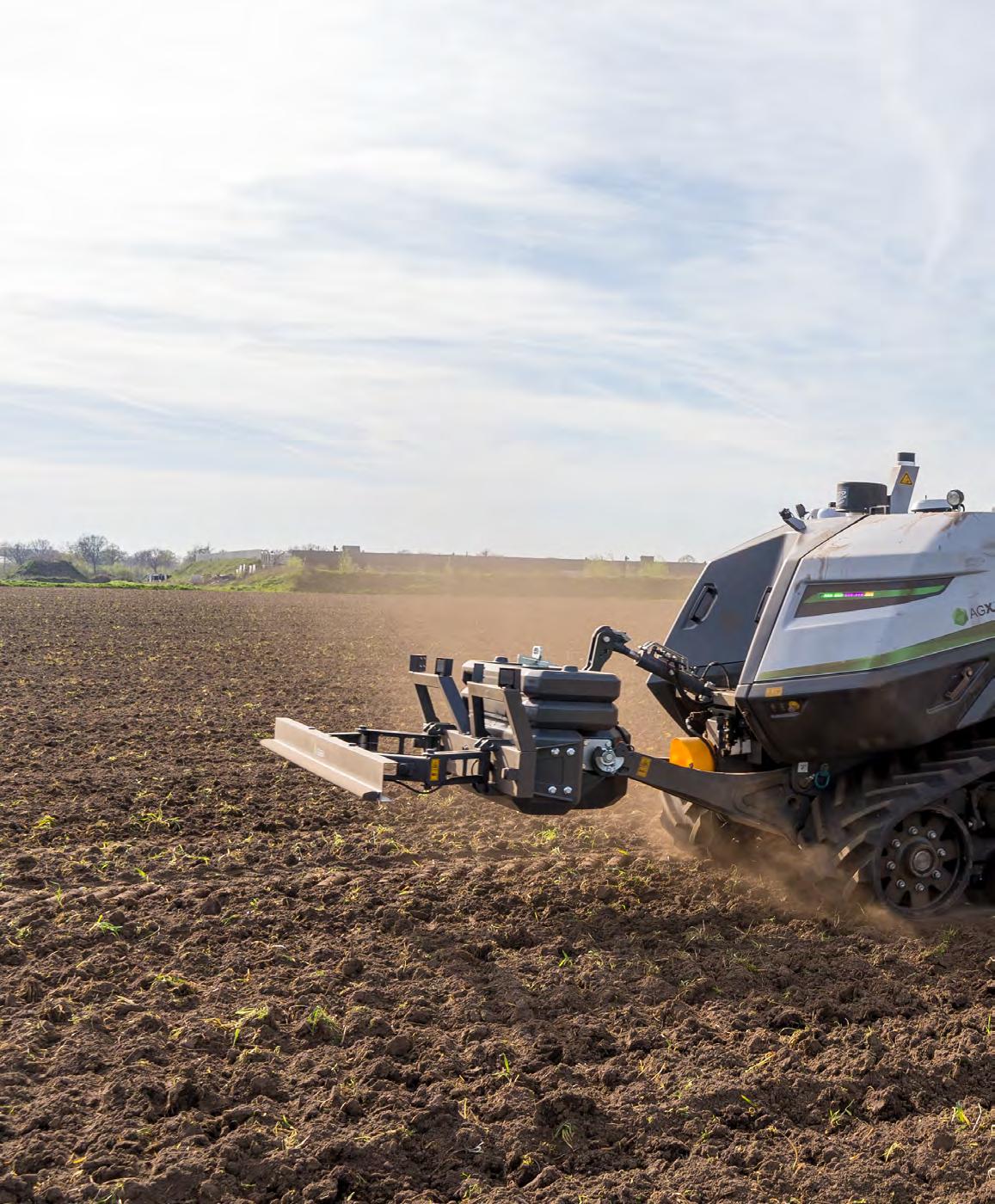
That question sat at the heart of a recent ARRNet / UK Agritech Centre workshop at Harper Adams University. This brought together engineers, farmers, researchers, standards specialists and policymakers to examine what’s holding the sector back – and what needs to change. The programme combined evidence-rich presentations with on-farm experience and a clear ambition: to give the UK a coherent route to mainstream agricultural robotics.
Jack Blowers, Knowledge Exchange Manager at the UK Agritech Centre, opening the event, framed it plainly. The project aims to bring clarity to a complex regulatory landscape, showcase the first outputs from
several focused work packages, and use these insights to influence not just technical practice but agricultural politics and investment decisions across the sector.
For many Landwards readers, the barrier to adopting robotics is less about enthusiasm and more about capability and confidence. That was borne out in the training and skills work presented by Mark Rutter of Harper Adams University.
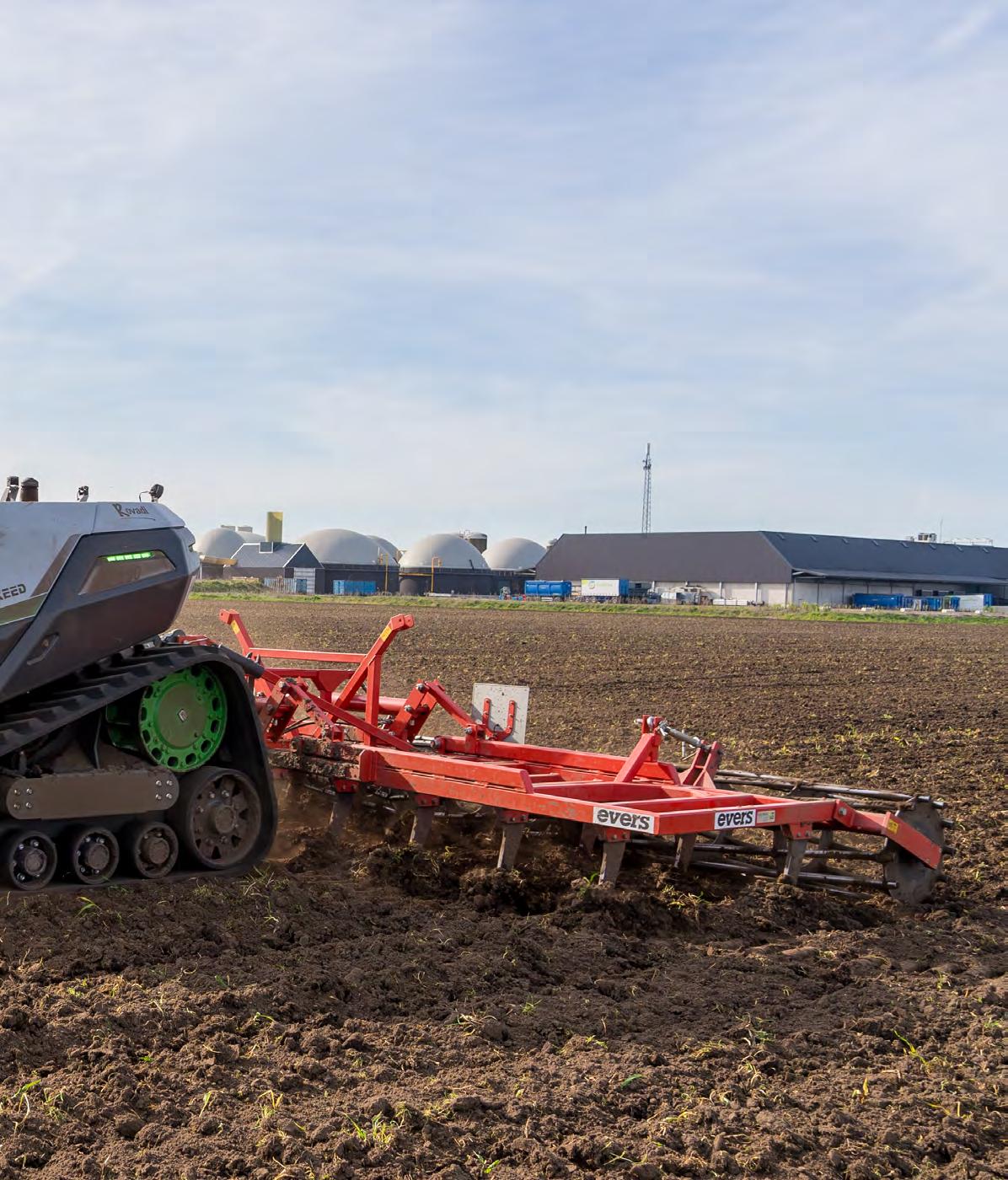
His team surveyed 198 organisations across the agri-robotics ecosystem – from farmers and advisers to developers and training providers – receiving 26 detailed responses. The numbers are modest, but the message is clear:
Around two-thirds of respondents identified a shortage of suitable training as a key barrier. Cost is an issue, but basic discoverability is just as important: prospective users often do not know what is available, who it is for, or how it fits their needs.
When asked what they actually wanted, respondents pointed overwhelmingly towards hands-on, practical
training. Approximately 80% favoured in-person, practical sessions over purely online content. That is a striking reminder that robotics is experienced through field conditions, not only PowerPoint.
Safety training is another concern. Safety awareness and mitigation ranked very highly in user priorities, yet only about half of current training provision covers these topics adequately. Provision is also skewed heavily towards crop robotics, leaving clear gaps around livestock and mixed systems.
For engineering professionals, the implication is straightforward: there is a growing demand for
structured, practice-oriented training that blends engineering fundamentals, safety, regulation and real-world deployment.
“A lack of accessible training is now a major brake on progress”
Mark Rutter HAU
Training alone will not build trust. Farmers, insurers and regulators also need robust, comparable evidence of how robots perform in the field. That was the focus of work presented by Professor Elizabeth Sklar, who has been developing simple, standardised test procedures for agricultural robots.
Her team’s approach is pragmatic. They have defined nine example tests, grouped into four categories:
• Unmanned ground-based (UGB) control
• Robotic vision
• Safety (for example, human and obstacle detection)
• Robotic manipulation (such as handling delicate crops like strawberries)
These are not hypothetical exercises. The tests are designed to be repeatable, transparent and rooted in realistic horticultural and arable conditions. Demonstration videos showed robots identifying people, livestock and obstacles, executing turning tests and performing manipulative tasks, with an emphasis on repeatability and stability of performance.
Crucially, Sklar’s team has also taken robots out to a “Working Robots Day” on farm. Feedback from that event was revealing. Participants widely agreed that

robotics will be needed to address future labour and productivity challenges, and many expressed strong interest in further involvement and training. Interestingly, cost was not perceived as the single dominant barrier. More pressing were issues around trust, ease of deployment, and the simplicity (or otherwise) of integrating robots into existing operations.
For agricultural engineers, there is a clear opportunity here: to help shape and adopt standardised tests that allow equipment to be evaluated – and compared – on a dependable, engineering basis.
If testing is about proving capability, regulation and standards are about establishing the rules of the game.
Presentations by UK ATC head of robotics and automation Eliot Dixon and LIAT’s Simon Parsons laid bare a simple fact: the UK has no dedicated legislation for autonomous agricultural robots. Instead, manufacturers and operators navigate a patchwork of general workplace safety law and generic machinery standards that were never designed with autonomous vehicles in mind.
Existing agricultural standards focus on traditional machinery. Industrial robotics standards are oriented around factory environments and collaborative robots. For SMEs developing small, field-based platforms, the resulting standards landscape is fragmented, complex and difficult to interpret. The risk is that uncertainty either slows innovation or pushes it into regulatory grey areas.
Internationally, the UK is not leading. Japan and China already have more specific provisions around agricultural robotics, while the EU is moving forward with the AI Act and regulations for autonomous driving systems. The United States, with its lighter regulatory environment, is on a different path again.
The response proposed at the workshop was notably pragmatic. Rather than calling for a raft of new rules, the project has developed a 10-year regulatory and standards roadmap for lighter-weight agricultural robotics. The emphasis is on:
• Clarifying which existing regulations and standards apply in which contexts.
• Identifying the most pressing gaps – particularly around autonomous operation, AI validation and cybersecurity.
• Producing early guidance documents and best-practice material to help innovators interpret and apply the rules.
• Creating training modules and machinery-type-specific guidance tailored to real agricultural scenarios.
Standards such as BS 8646 are already being revised to incorporate aspects of AI and cybersecurity. There is also growing attention to responsibility chains: where liability sits between robot manufacturers, integrators, finance companies and end-users.
The key message for engineers is that good standards and regulation can become an enabler rather than a brake – provided they are clear, proportionate and aligned with market.
While much of the workshop concentrated on technical and regulatory detail, Dr Mark Matthews, special advisor - foresight and impact, UKATC reminded the audience that these sit within a much wider innovation ecosystem.
Technology Readiness Levels (TRLs) remain widely used, but Matthews argued that they capture only part of the story. A robot can be technically mature and still fail in the market if users cannot adopt it, if the regulatory environment is unclear, or if the business case is unproven. He highlighted a complementary adoption readiness framework – originally developed in the US energy sector – which considers regulatory conditions, resource maturity, market acceptance and overall value proposition.
In agri-robotics, this leads to the idea of a second valley
of death: between an impressive prototype in a trial field and a robust, supportable product operating reliably across many farms and seasons. Bridging that gap requires more than engineering excellence. It demands appropriate finance, retrofit strategies for existing equipment, credible business models, and supportive policy that recognises both technical and adoption readiness.
For members of IAgrE, this is a familiar but important reminder: success is not only about building machines that work, but building systems that can be bought, maintained and trusted.
Taken together, the workshop’s sessions describe a sector on the cusp of rapid change. There is strong momentum in UK agri-robotics, a growing community around ARRNet and the AgriTech Centre, and clear alignment on the importance of training, testing and standards.
But the conclusions should also resonate with Landwards readers:
• Engineers are central to defining and delivering meaningful tests and standards that reflect realworld conditions.
• Professional training and CPD in safety, robotics, AI and regulatory literacy will be increasingly important.
• Engagement with policy and standards bodies can help ensure frameworks are proportionate, clear and innovation-friendly.
If those elements can be aligned, the UK has a genuine opportunity not only to adopt agri-robotics, but to shape how it is done – safely, profitably and at scale.
This report covers the latest activities supported by the Douglas Bomford Trust
The biennial AgriFood Charities Partnership (AFCP) Student Forum was held on 18th March 2026 at Rothamsted Research, Hertfordshire. The event was attended by a number of students funded by the Trust, giving oral presentations as well as exhibiting posters.
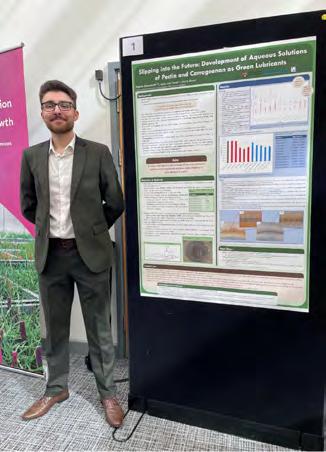
To quote Aaron “Overall, compared to the 2024 Forum, this year was more engaging for me, having to deliver a platform presentation in addition to just a poster, as well as having more exciting and developed work to showcase.” Editor’s note: please see Aaron’s article in Spring 26 Edition of Landwards
Aaron Ainsworth gave a presentation titled “Slipping into the Future: Development of Aqueous Solutions of Pectin and Carrageenan as Green Lubricants”. Aaron’s presentation covered his PhD research into the effectiveness of a range of water-based lubricants, formed from two plant-based substances (pectin and carrageenan) already used in the food industry as thickeners.
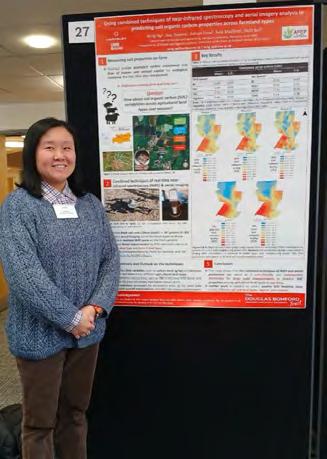
Wing Ng gave a presentation on her PhD research titled “Using combined techniques of nearinfrared spectroscopy & aerial imagery analysis in predicting soil organic carbon properties across farmland types”. Wing enjoyed the experience “It was really a great opportunity for networking amongst all the participated students funded by AFCP and their supervisors with charity trustees. It also
helped improve my presentation, communication and interpersonal skills in front of such a large delegate group”.
Oral presentations were also given by Callum Lennox, University of Lincoln “Towards a Standard Method for Evaluating the Effectiveness of Spot Spraying Systems”, and Edwin Toreveyi, Harper Adams University on “Potential for Pre-Harvest Prediction of Potato Tuber Physiological Disorders” on their PhD research.
Herbert Kumwenda, Harper Adams University; Scott Ewing, University of Glasgow; Georgie Fletcher, University of Lincoln; Thomas Greenham, University of Nottingham; Seda Keles, University of Oxford; and Sito-Obong Udofia, Hartpury University all funded by the Trust, presented posters.
Further details can be found at:
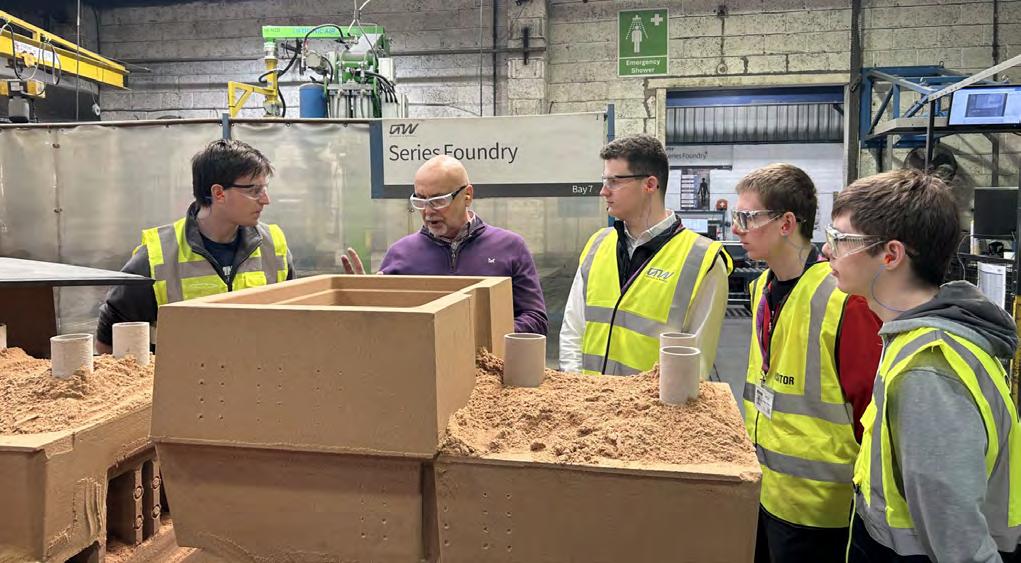
In February 2026, members of the Harper Adams Engineering Society visited Grainger & Worrall, Shropshire for a day visit showcasing the research carried out by a global leader in aluminium sand casting.
The day began with an introduction to the business, its history, and its approach to engineering innovation. The presentation highlighted the company’s role in producing complex components for well known automotive and performance brands, while maintaining a very down to earth and personal atmosphere.
“I was impressed by their wide range of products and their broad project portfolio.”
The group were then taken on a guided tour through the foundry, workshops, and design office. “The tour, which took us through each stage of the manufacturing process, was both impressive and eye opening. The facilities were clean, well-organised, and designed around precision and quality, leaving a strong impression on everyone.”
“To finish the visit, we took part in a group activity that encouraged teamwork and problem-solving. It was a great way to round off the
day and allowed us to engage with the company’s engineering mindset in a more hands on way.”
“We would like to thank everyone at Grainger & Worrall for taking the time to host us and for making the visit so engaging and informative. We would also like to thank the IAgrE, the Douglas Bomford Trust, Lely, Storth, and Husco for their continued support in enabling opportunities like this for members of the Harper Adams Engineering Society.”
The Douglas Bomford Trust is a UK charity dedicated to advancing the application of engineering and physical science to agriculture, horticulture, and forestry. It supports education, research, and innovation to promote sustainable food systems, environmental protection, and the development of new mechanical or technical capabilities in land-based industries.
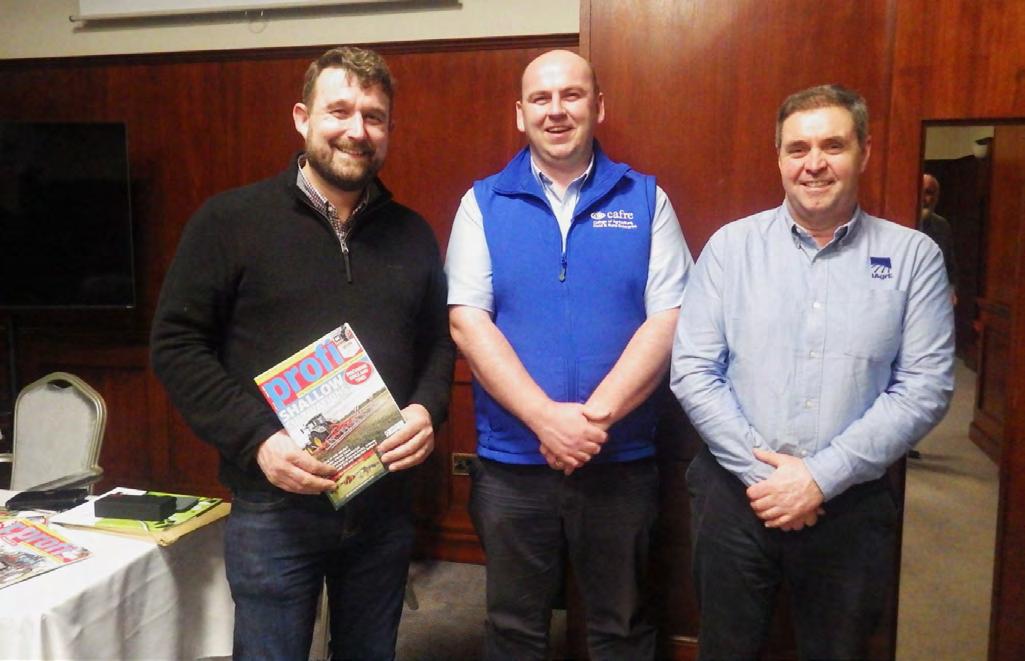
Mervyn Bailey, editor of profi International gave members an engaging overview of how the title has developed, what makes it distinctive, and how it continues to serve readers in a rapidly changing media landscape.
profi, meaning “professional” in German, was launched by Landwirtschaftsverlag in 1989 and has built a reputation for technical journalism, machinery tests and practical buying guidance for both new and used equipment. The English edition has been published since 1996, with Kelsey Media
holding the UK licence since 2017. Close links with the German parent edition remain important, with translated features of shared interest appearing regularly.
What sets profi apart is its strong emphasis on engineering-led assessment. Mervyn explained that it is the only monthly magazine dedicated to scientifically testing and evaluating tractors, harvesters and other agricultural machinery while also advising readers on machinery selection and use. The magazine produces 13 issues a year, including 12 monthly editions
and a Harvest Special.
Mervyn grew up on a family farm in County Wexford and graduated from Harper Adams University with an HND in Agricultural Engineering in 2001. After working on other farming publications, he joined profi International in 2009. Today he oversees both the print and online editions, contributes reports himself, and works closely with freelance writers and colleagues on the German edition. He described his role as more investigative than generalist, reflecting the magazine’s detailed and analytical style.
Regular sections in profi include:
• News on new machinery launches and major show highlights.
• Tests offering detailed technical comparisons of machines and systems.
• Driving Impression reports from practical field use.
• Used Machinery guidance, workshop features and reports from specialist farms and contractors.
• Livestock and equipment coverage linked to practical husbandry and machinery operation.
A particularly interesting part of the discussion was the magazine’s testing programme. Mervyn outlined how profi works with the German DLG test centre to carry out precise tractor performance assessments through its well-known “Powermix” process. PTO output, drawbar performance, braking and fuel efficiency are measured under controlled conditions, with results converted into figures that
help farmers compare real-world operating costs across a range of field tasks.
Transport performance is also assessed at different speeds and loads, alongside mixed-work scenarios designed to reflect tasks such as baling or muck spreading. DEF (AdBlue) consumption is included as part of the analysis. Subscribers can access both current and archive material, including decades of test reports, making the publication a valuable technical resource as well as a monthly magazine.
The meeting then moved into wider discussion on publishing, reader behaviour and the reporting of machinery performance.
Mervyn noted that many long-standing readers still value the convenience and pace of print, while younger audiences increasingly expect digital access and the ability to search past content quickly on mobile devices. Clear, concise summaries remain important for both groups.
IAgrE members are entitled to a discounted profi subscription.
Scan below for details:
Mervyn acknowledged that AI can be useful for summarising broad topics, but stressed that technical journalism still depends on accurate reporting, careful interpretation and precise language, especially when covering complex machinery or new product developments.
Discussion of user reports highlighted the challenge of balancing operator experience, machine design and maintenance history when judging performance. Mervyn said practical feedback is valuable, but must be interpreted carefully, particularly where reliability concerns may relate as much to setup, servicing or operator familiarity as to the machine itself.
The meeting was informative, lively and well received, and it concluded with thanks to Mervyn Bailey for travelling to speak to the branch and for sharing insight into the rigorous editorial approach that has made profi such a respected source of agricultural machinery journalism.

Stone Walling: Craft, Judgement, and Longevity- An online talk by David Norris – Tuesday 14 April

Dry stone walling
David Norris delivered a wide-ranging and highly engaging online talk on dry-stone walling, presented to the West Midlands Branch on Tuesday 14 April. Rather than following a conventional lecture format, the session was structured around a series of pre-submitted questions, allowing David to explore both the practical and philosophical aspects of this traditional craft.
David began by outlining his personal journey into dry stone
walling. After a previous career in the corporate world, he felt compelled to pursue a more hands-on and fulfilling occupation. Discovering dry stone walling, he found that formal training opportunities were scarce, although he eventually located a mentor who introduced him to the craft. Quickly becoming immersed in the work, David established his own business building and repairing dry stone walls. Over time, he realised that he missed the training and team-development elements of
his former career, which led to the founding of the OXFORD Dry Stone Academy. For over eight years, his two ventures — Lovedrystone and OXFORD Dry Stone Academy — have operated in parallel. Throughout the talk, David’s enthusiasm was unmistakable. He openly acknowledged that some might regard him as a “dry stone wall evangelist” and expressed a desire to see dry stone walls used far more widely. While he suggested that the technique could theoretically be used to construct
a house, he admitted that his wife had drawn the line at living in one, noting with humour that it would likely be rather draughty.
The historical context of dry-stone construction formed an important part of the discussion. While dry stone walls are commonly associated with Iron Age landscapes, David identified some of the earliest known examples at Skara Brae on Orkney, a Neolithic settlement dating back approximately 3,000 years. This, he explained, underlines both the longevity and effectiveness of the technique when executed well.
When asked about suitable materials, David explained that almost any stone can be used, provided it is not in the form of rounded pebbles. Importantly, dry stone walling is not regulated in the way many other building trades are. There are no strict “rules,” and as a result, the success or failure of a wall depends largely on the judgement and skill of the builder.
This emphasis on judgement was echoed in the discussion on foundations. Unlike brick walls, which are rigid and reliant on concrete footings, dry stone walls only require well-compacted ground. Their inherent flexibility allows them to accommodate minor ground movement. However, particular care is needed in locations such as stream banks, where drying and wetting of the ground can cause instability. In such circumstances, experience and judgement are as important as technical skill.
Regional variation was another recurring theme. Many drystone walls in the UK were built generations ago, with styles and techniques passed down locally. The profile of a wall is often dictated by the stone available in that area, resulting in distinctive regional character.
One of David’s strongest positions
concerned the use of mortar. By definition, he argued, a dry-stone wall contains no mortar. Mortared walls are rigid structures designed not to move, whereas dry stone walls rely on flexibility to remain stable. Mixing the two approaches compromises the advantages of both. In particular, the use of lime mortar was discussed; while it may speed up construction, its eventual breakdown can lead to wall movement and premature collapse. The partial introduction of cement mortar was identified as especially problematic, often resulting in stone being forced away from the mortar and initiating failure.
The importance of capping stones was also highlighted. Some form of capping is essential to secure the top of the wall, with the simplest and often most effective method being the use of large stones spanning both faces. As elsewhere in the structure, the use of mortar at the top was strongly discouraged.
Concerns about vibration, particularly for roadside walls, were addressed by focusing on stone connectivity. Vibration causes movement, and the solution lies in good construction rather than additional materials. The use of through-stones — which tie the two faces together — can significantly improve robustness in such locations.
When discussing wall failure, David was clear that collapse is rarely caused by storms. Instead, it usually results from poor connectivity between the two faces, inadequate footing, or inappropriate repairs. In regions such as the Lake District and Yorkshire, the widespread use of large through-stones creates particularly robust walls. Elsewhere, success depends heavily on the builder’s ability to knit the structure together effectively.
Dry stone walls generally perform very well in extreme temperatures,
provided they are well built. Their ability to drain water through the structure reduces damage from freeze–thaw cycles. Problems arise when soil is allowed to accumulate within the wall, as this reduces friction and can lead to failure.
The talk also explored the extrapolation of dry-stone techniques to buildings. While elaborate structures can be created and even house-sized forms are theoretically possible, limitations such as wind permeability and modern building regulations make dry stone less practical than contemporary materials for most buildings.
In closing, David emphasised that a dry-stone wall built on well-compacted ground, using good technique, sound judgement, and appropriate materials, should last for hundreds of years. Additional discussion touched on topics including wildlife benefits, variation in stone hardness even within a single quarry, the work of the Dry-Stone Walling Association, and the potential pitfalls of incorporating earth or hedging into wall cores.
The talk provided a compelling blend of technical insight, historical perspective, and personal passion, reinforcing dry stone walling as a resilient, adaptable, and enduring craft.
For more info please see:
In February, the Wrekin Branch welcomed Dave Ewing CEng MIMechE for a fascinating talk on additive manufacturing (AM). Dave spent much of his career at Renishaw, the Gloucestershire engineering company that has been at the forefront of metal additive manufacturing, and his presentation explored the technologies and applications that have pushed engineering boundaries over the past decade.
Renishaw’s roots lie in precision measurement. The company’s touch-trigger probe became an industry standard for co-ordinate measuring machines and helped drive manufacturing digitisation. This led to the development of high-precision rotary encoders capable of resolving angular position to just 0.25 arc-seconds (around 0.00013°). Such accuracy is used in demanding applications, including the rudder systems of Ben Ainslie’s America’s Cup racing yachts.
Dave’s work focused on laser powder-bed fusion (LPBF), a metal AM process in which a laser fuses successive 20-micron layers of metal powder. Operating in an argon atmosphere to prevent oxidation, the process effectively performs micro-welding thousands of times to build a component layer by layer. Different materials present different challenges: titanium is particularly well suited to AM, while aluminium and especially copper are more difficult to process.
The real advantage of additive manufacturing lies in its ability
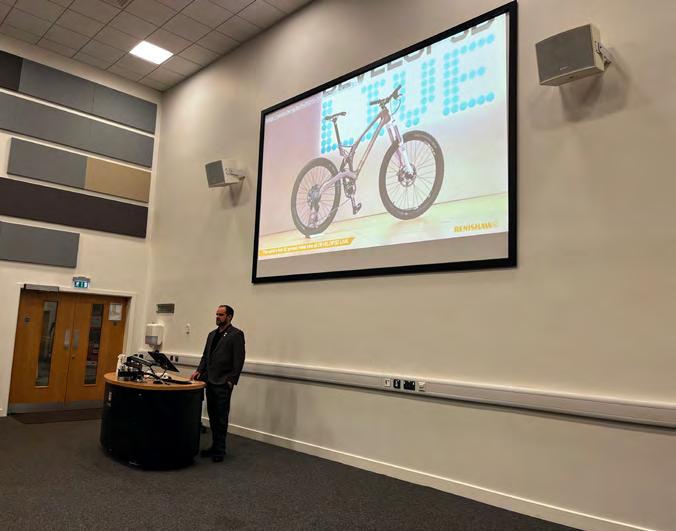
Dave Ewing presenting
to create shapes impossible to produce conventionally. Internal cooling channels, lattice structures and highly optimised load-bearing forms can all be produced in a single component. Using topology optimisation software, engineers define loads and constraints, allowing algorithms to generate structures that often resemble bird bones – achieving maximum stiffness with minimum weight. Dave highlighted work with Empire Cycles, which produced one of the first 3D-printed bicycles using these principles.
He also described his own patented work to improve laser control. By combining conventional galvanometer mirrors with piezoelectric actuators, laser motion
could be controlled more accurately, improving build quality. Monitoring reflected light from the melt pool also allows real-time quality assurance during production.
Applications included America’s Cup hydrofoils and the McMurtry Spéirling electric car, where lightweight AM components contributed to record-breaking performance.
For agricultural engineers, the principles discussed – lightweight design, topology optimisation and integrated functionality – offer valuable insight into how future machinery could be made more efficient. The Wrekin Branch is grateful to Dave Ewing for an exceptionally informative evening.
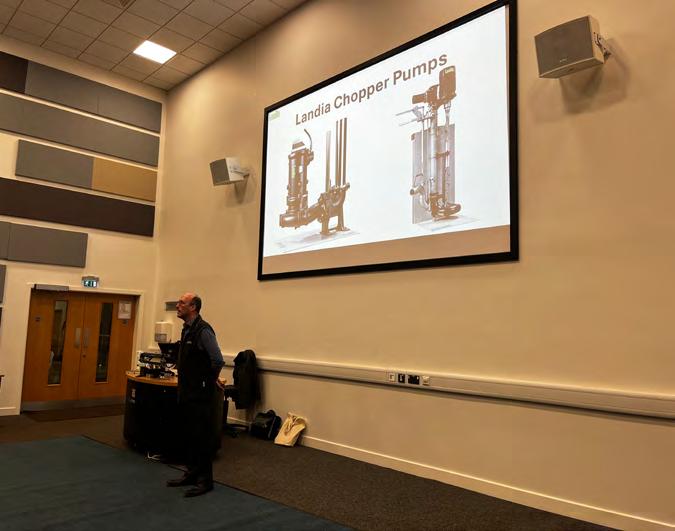
In March, the Wrekin Branch welcomed Howard Burton, Technical Sales Engineer, and Gary Warton, Head of Sales at Landia, to the Harper Adams lecture theatre. Landia is a Danish company with nearly a century of experience in slurry handling and pumping technology. Given the scale of livestock production, slurry management is a major challenge; the slurry produced by UK cattle and pigs in a single day would fill around forty 3,000m³ stores.
Landia’s origins date back to the 1930s when founder Christian Oelgaard developed the chopper pump to overcome a common problem: foreign objects such as rags and gloves blocking conventional pumps. Knives
mounted on the impeller shaft cut material before it enters the pump chamber, while shear bolts protect the system if an immovable object is encountered. The chopper pump remains a core product today.
Mixing is equally important. Left undisturbed, slurry separates into a floating crust, a watery middle layer and heavy sediment at the bottom, making pumping difficult. Since the 1960s, Landia has supplied propeller mixers to maintain a uniform consistency. Direct-drive mixers operate at high speed and suit thinner slurry, while gear-driven models run at lower speeds with larger propellers for thicker material. Routine maintenance is relatively straightforward, although abrasive materials such as sand increase
wear. For these conditions, Landia offers hardened “hard parts” pumps to extend service life.
For pig units with multiple slurry pits, Landia has developed a portable Trolley Mixer. The mixer can be moved between pits and used before emptying to restore a uniform, pumpable consistency, avoiding the need for a dedicated mixer in every pit.
The company’s technology also plays an important role in anaerobic digestion (AD) plants. Temperature sensors can be used to monitor mixing effectiveness, as a wellmixed digester should maintain a consistent temperature throughout. Landia also uses computational fluid dynamics (CFD) modelling and lithium tracer testing to validate mixing performance in new installations. Similar pumping and mixing systems are employed in wastewater treatment and a range of industrial applications.
The presentation concluded with a discussion of corrosion and variable-speed drives. Stainless steel is now recommended for slurry-contact components due to the corrosive nature of slurry gases, while variable-speed drives can be used to compensate for propeller wear and optimise performance.
This was an informative and engaging talk on an oftenoverlooked area of agricultural engineering. The Wrekin Branch would like to thank Howard and Gary for an excellent evening.
Fellow
Dr Marcelo Precoppe (Wrekin)
Member
Mr Thomas Mellor (South Western)
Mr Tom Carnell (Western)
Mr David Land (South East Midlands)
Associate Member
Dr Ernest Afriyie (Scotland)
Mr Charles Cooper (East Midlands)
Mr Kane Williams (Wrekin)
Mr Nirmal Thomas (South Eastern)
Mr Alex Osborne (South Western)
Affiliate
Mr John Watson (Scotland)
Mr John Sheehy (Ireland)
Mr Adrian Hackfort (Germany)
Technician
Mr Matthew Johnson (South Eastern)
Mr Liam Earwicker (Southern)
Mr Thomas Stevenson (East Anglia)
Fellow
Dr Diogenes Antille (Australia)
Ms Marion Pearson (East Midlands)
Member
Mr John Watson (Scotland)
Students
Lincoln College
Tony Bourne
Harper Adams University
Sebastian McEwan
Nathan Griffin
Oliver Slack
Alexander Whitehouse
Connor Taylor
Russell Harries
“Engineering circular biosystems infrastructure: Nature-based solutions (NbS) for resilient on-farm wastewater reuse”
Professor Kiran Tota-Maharaj is Professor and Chair of Water Resources Management and Infrastructure at the Royal Agricultural University. A Chartered Engineer and Fellow of the Institution of Civil Engineers and the Institute of Water, his work focuses on sustainable hydrosystems and the Water-Energy-FoodEcosystems nexus. He specialises in designing circular biosystems infrastructure and nature based solutions for resilient water reuse, with research spanning constructed wetlands, sustainable drainage systems, decentralised wastewater treatment and solar-powered irrigation.
With experience across academia and industry, he connects water, energy and environmental engineering with practical on-farm applications. His expertise includes resource recovery, emerging pollutants and climate-adaptive water management. Working across the UK and the Caribbean, he brings an international perspective to decentralised infrastructure projects and continues to advance environmentally restorative, future-ready agricultural systems.
14/07/2026 - 1pm-2pm (Online via Zoom)
George Bill Hubert Johnsen
Oliver Keighley
Ayush Mistry
Leo Edwards-Cox
Llion Price
Charlie Offland
Oliver Lee
William Clark
William Martin
Benjamin Harding
Tristen Brown
Christopher Rowlands
George Moody
CEng
Mr Chris O’Donoghue (Ireland)
IEng
Mr Alex Lowe (West Midlands)


Register through
IAgrE now:
t: +44 (0) 1234 750876
e: membership@iagre.org
w: www.iagre.org
launched in partnership between the Institution of Agricultural Engineers (IAgrE) and the Society for the Environment is the new grade of Registered Environmental Practitioner (REnvP).
This is a huge step forward to ensure high standards of professionalism and proven competence are met by those working to enhance and protect the environment across every sector.
This registration is timely and relevant for agricultural engineering and the associated technology sectors and the intention is that professionals in the industry will apply. The industry includes many different disciplines which need people to apply a professional approach and the Registered Environmental Practitioner grade is ideal for this.
Why should I register?
• Improve your career and salary prospects
• Stand out from the field
• Join a network of dedicated professionals
• Demonstrate your competence and skills.
Although the standards are high, IAgrE makes the process simple.
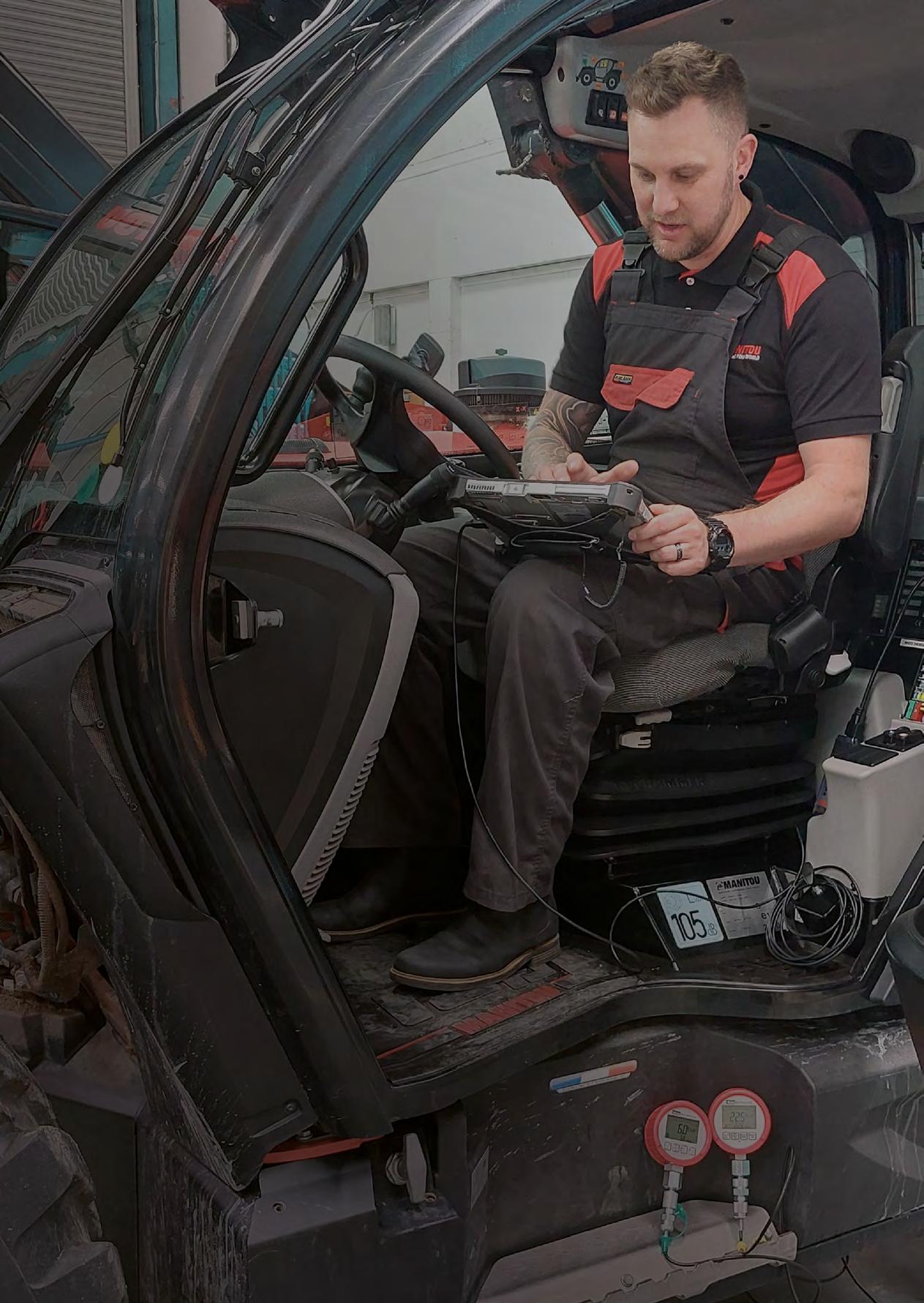
Technical presentations
eNewsletters
Access to Landwards journal
Networking opportunities
Competitions & awards
Local branches
Careers guidance & Jobs and much more
A listed technician with the Institution of Agricultural Engineers demonstrates a high quality of education and training, compliance to our code of professional ethics and commitment to continual learning. In addition to displaying your professional identity, you get lots of other benefits, as above. simply complete the online application form Visit iagre.org for details