
































Academic Members























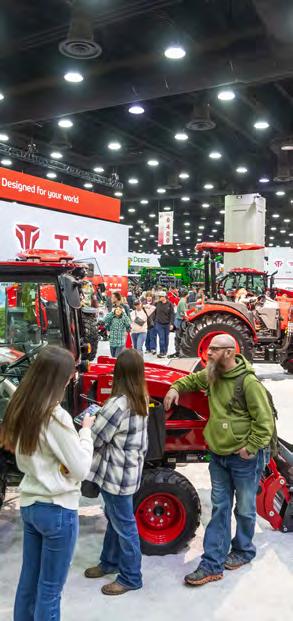
President Elect Kit Franklin attended the National Farm Machinery Show in Kentucky p32

The first daffodils are in flower now, the snowdrops seem to have been up for weeks and the grass is growing, it must be spring. The first piece of engineering of the year, the lawn mower can’t be far behind.
I always look forward to this time, as we get past the grind of winter and the evenings are drawing out. So, I have enjoyed drawing together this edition.
A theme of safety has appeared via several articles in this edition, with the excellent report from Mike Whiting on Novembers IOSH Rural Industries Community Growing Safely Conference in Warwick on page 22. Alongside Alan Plom’s call to remember that Farm Safety Week rightly, shouldn’t just be a week on page 26.
We travel afar with a couple of pieces, one from retiring member Jim Ward detailing how Agricultural Engineering has been the cornerstone of his African career (page 28) and IAgrE President Elect Kit Franklin’s thoughts on the US agricultural machinery scene from page 32.
There has been frantic activity with the secretariat over the last few months finalising the new look Landwards. We hope you like it? Enjoy the read.
Editor Andy Newbold Hon FIAgrE ARAgS
If you are an existing Associate Member you have the option to upgrade to Member grade providing you have completed 5 or more years in a relevant career.
However, if you prefer, you can remain as an Associate Member for as long as you wish.
For more information please see:
Three IAgrE members are standing for election as Institution President for the 2028-30 term.
They are, Bruce Grieve FIAgrE, Graham Higginson IEng REnvP FIAgrE and Raymond King CEng MIAgrE
Please exercise your right to vote as a member of IAgrE.
Voting opened on Tuesday 3rd March 2026 at 12 noon
You can discover more about each candidate and find the voting link on the IAgrE website, please scan the QR code.
or contact Alison at membership@iagre.org.
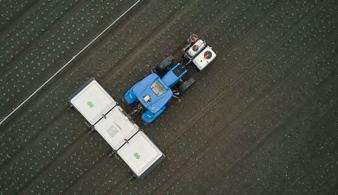
Classifying pixels between green and brown is easy because the contrast between green plants and brown soil is high. But what about green-on-green, the pinnacle of weed control? Ecorobotix’s Plant-by-Plant AI Technology can make that distinction based on different factors such as size, shape, texture, shading and more.
Ecorobotix has revolutionized crop care by bringing very advanced technology into the field with the ultra-high precision (UHP) spot sprayer ARA, and its value is built on AI, precision, and the definition of the spray spot applied to the target.
It applies plant protection products only where they are needed, and this process is driven by AI. Equipped with cameras that capture live images of the field, these images are AI analysed and processed. Because the contrast between green plants and brown soil is high, it is relatively easy to classify each pixel as either green
or brown. The resulting segmented image becomes a binary mask of green and brown pixels. This corresponds to a map where each green pixel is sprayed. This green-on-brown algorithm technology can be used to control weeds on fallow land or before sowing.
Within the green pixels, the AI can distinguish weeds from crops, not only based on size but also on leaf shape, texture, position and number, as well as green shading. This technology relies on machine learning and dedicated algorithms trained for specific crops. In simple terms, field images are manually labelled plant by plant and classified as either weeds or crops. The raw image and the expected result are then provided to a computer, which identifies features and combinations of features to build patterns that allow it to recognise and classify every object in the image.
Notice is hereby given that the eightieth Annual General Meeting of the Institution will be held on Monday 27th April 2026 at 12 noon online via Zoom
1. To receive and consider the minutes of the seventy-ninth AGM held on 7th May 2025 online.
2. To propose as an Ordinary Resolution: “That the Annual General Meeting authorises the Trustees of the Institution to review members’ subscriptions and to make such adjustment, if any, as may be required with effect from 1 January 2027”.
3. To receive and consider the Annual Report for the year ending 31 December 2025.
4. To receive and consider the Accounts for the year ending 31 December 2025.
5. To announce nominations for election to Council for the 2026/27 Session.
6. To re-appoint Landers Accountants Ltd, registered auditors, as reporting accountants and to authorise the Executive to fix their remuneration.
By Order of the Trustees
Charles Nicklin, Chief Executive and Secretary
20th February 2026
NB: ALL PAPERS WILL BE AVAILABLE ON THE IAGRE WEBSITE
AUK consortium led by McArthur BDC, aims to support a reduction in dairy sector emission in excess of 1.5 Mt CO2e annually, with a value approaching £400m, by cutting methane emissions and replacing soya bean meal with innovative
experiments and on farm trials, underpinned by an environmental life cycle assessment and economic analysis.
“Methane from dairy cows is a major contributor to agricultural emissions. The InFaba Project will
and managing director of McArthur BDC.
Consortium members alongside McArthur BDC are Processors and Growers Research Organisation (PGRO), Scotland’s Rural College (SRUC), Muller UK & Ireland and
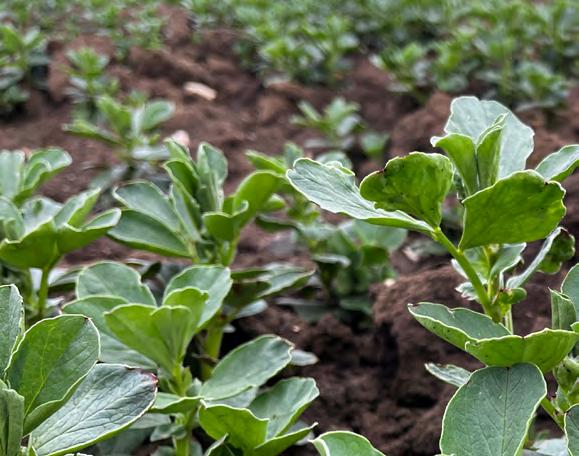
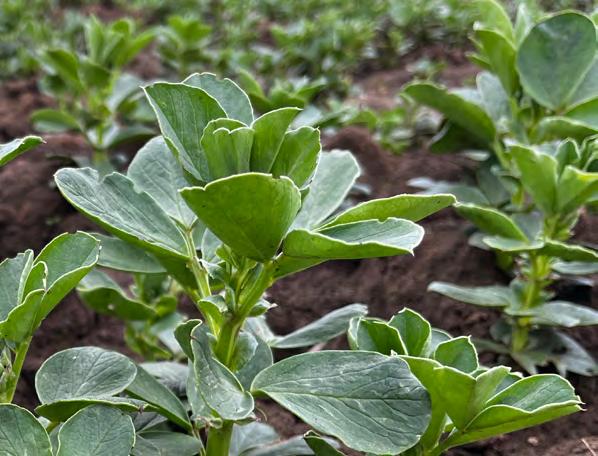
Farming Futures R&D Fund: Low Emission Farming Competition. The three-year programme will develop and test two novel faba-based feed ingredients designed to reduce methane output while reducing the UK’s dependence on imported soya bean meal:
1. A tannin-rich faba bean coproduct from the feed sector will be assessed for its ability to influence rumen fermentation and reduce methane production.
2. A heat-treated faba bean, processed to deliver more digestible protein and replace a significant proportion of imported soya bean meal in dairy diets.
inclusion of pulses in arable rotations will not only reduce emissions but will also boost soil health, improve water quality and support biodiversity, at the same time as increasing the UK’s food security by reducing our dependence on imported soya bean meal.
“We have ambitious targets for scope 3 emissions reduction and opportunities like this could be a big step in the right direction,” said Phil Scott, Retail Group Manager, Muller UK & Ireland. “Working with our farms gives us a direct route to test and scale this innovation, based on a 100% natural plantbased product, with the potential to cut emissions without compromising
industry emissions. Exploratory work, conducted by SRUC, showed that the naturally occurring tannins in a faba bean co-product may alter the fermentation process and reduce methane formation, but little research exists in this area.
“Our role within InFaba will be to combine lab studies with on-farm trials to measure reductions in methane output and improvements in how efficiently cows convert feed into milk,” said dairy nutrition scientist, Professor John Newbold from SRUC.
UK dairy farming also consumes 15% of the UK’s imported soya bean meal; its excellent nutritive properties are offset by a high
It doesn’t seem 5 minutes since typing the last piece for Landwards in late October. As always there has been plenty of activity in the world of agricultural engineering, and where better to see technology on display than Germany and the Agritechnica exhibition.
On the weekend before the show I attended the VDI Landtechnik AgEng2025 conference, along with Editor Andy Newbold and a couple of IAgrE members. I have attended the English speaking conference previously and I continue to be a little disappointed to see zero UK involvement in this, despite plenty of UK manufacturers and tech providers exhibiting at the actual show.
The conference attracts speakers from around the world, including Canada, US, China and India, but is of course dominated by Europe, and particularly Germany.
For those that haven’t been to the conference I highly recommend it, it pretty much covers everything you can think of in our sector from latest thinking in machinery design and precision technique’s to robotics and farm data management.
It is of little surprise that both the conference and the exhibition had
a strong focus on automation and precision techniques, especially from an implement perspective, which is the bit that does the work.
There were some great examples of making tillage equipment more suited to autonomous use, with Kuhn showing an array of blockage and tine loss sensors, which I also thought would be great for manually driven machines, let alone driverless.
Apart from a handful of electric machines I didn’t see a great deal of attention paid to alternative fuels, which confirms my thoughts that diesel, in one form or another will be around for a good few years yet.
Chinese manufacturer Zoomlion exhibited some interesting hybrid drives on their large combine, replacing hydraulic motors, gearboxes, belts and pulleys with electric drives, which drew a lot of attention. Hybrid diesel electric drive also formed the basis of their large tractors, which certainly look well
engineered and destined to take on European manufacturers. If you’d like to hear more about the show and conference we have recorded a Landwards Podcast on the subject, available on the website and our YouTube channel, along with lots of other interesting material.
Closer to home, and at the start of the year is of course the UK’s premier ag machinery show, LAMMA. Seeing lots of shiny kit from the big OEM’s was not on my list after being at the German show!
Not being drawn to the big corporates allowed me to focus more on companies with a UK engineering base. There are a multitude of UK manufacturers churning out UK engineered equipment, be it cultivation, sprayers, hedge cutters, etc. which also means plenty of opportunity for future engineers. There were also some great examples of technology on display to float the boat of
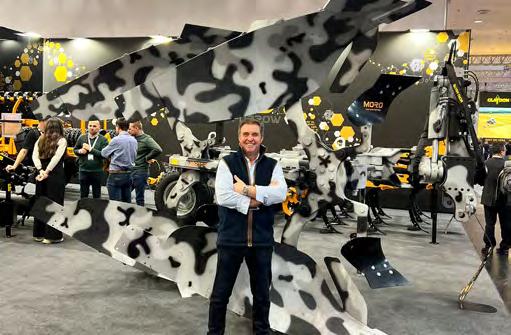
robotics and software engineers. My LAMMA attendance is also in a formal capacity as I am involved in judging the Machine of the Year and also the IAgrE Ivel Award which is given to the overall best innovation in the show.
My old colleagues in Staffordshire received the Machine of the Year for the new 6000 Series Fastrac, which has some great innovative features on it like its twin receiver steering guidance and the central tyre inflation systems, and I wish them success with the product.
Interestingly our Ivel Award went to something a little different, my fellow judges and I unanimously chose to award it to Agro-Vital for their innovative new Triplex on-farm crop nutrient blending system. The system uses up to date crop and soil data to produce a fertiliser package tailored for individual crops. The goal is to increase nutrient use efficiency and ensure optimal plant performance,
all the while reducing the environmental impact.
Sophisticated agricultural systems and equipment needs well trained scientists, engineers and technicians to enable it all to function effectively. IAgrE’s membership spans all of these areas with members working in all aspects of industry, education and research.
I was honoured recently to attend the graduation of the first cohort of service technicians coming through the CNH Apprenticeship scheme at Writtle and say a few words about the sector.
Its great to see the young technicians proudly receive their certificates at the Basildon plant in front of their employers, CNH staff, lecturers and parents!.
At the other end of the spectrum, I presented to a group of Master’s
Degree Apprentices studying Soil Science who worked for organisations such as the Environment Agency, DEFRA and ADAS; such is the diversity of our industry.
From an operational perspective we continue to be very busy on the membership front and it’s been great to see an influx of new members and people looking at pursuing professional registration.
I’d like to personally thank you for joining and hope you find the networking and content we have on offer of interest. We continue to have very well attended events, but if there is something in particular you’d like us to focus on then please don’t hesitate to drop me a line.
Finally, many thanks for those that have paid their 2026 subscriptions, we hope you continue to enjoy the content on offer.
Charlie Nicklin CEO, IAgrE ceo@iagre.org
President’s musings from Dr Mark Moore
Where did the last 2 years go? I cannot believe this will be my last musings as President of the Institution of Agricultural Engineers. It only seems like yesterday that I was taking over the presidency from Steve Constable, and now I am about to pass the reins to Kit Franklin.
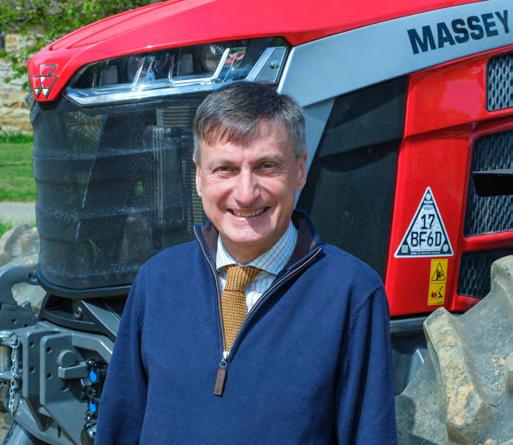
When I reflect, the IAgrE has proven a stable force in a climate where a tremendous amount has happened to our industry. The uncertainty caused by elections in the US, Europe and UK has adversely impacted confidence amongst farmers, and consequently we have been living through a decline in agriculture, which in turn has had a negative knock-on effect on the farm machinery and technology sector.
To try and plot a way forward the UK government commissioned Baroness Minette Batters to produce the Farming and Profitability Review, which was published in December 2025 and looked at the short, medium and long-term actions required to strengthen UK farming profitability. The review shows that farmers and growers are feeling first hand the impacts of volatility, extreme weather and rising input costs. Combine this with the lack of clarity on finances and policy it is no wonder many farmers are starting to question the viability of their farming business. However, the review concluded that farmers are deeply committed to their farms and producing high quality, affordable food, while taking care of the environment and nature. The UK government is yet to publish its response to the review, and it will be interesting to see out of the 57 recommendations which ones they support and implement.
I sense the commitment emphasised by the Farming and Profitability Review also exists amongst agricultural engineers as we continue to innovate to ensure farmers have the tools to produce more food using efficient profitable farming practices. The review stressed the importance of research and innovation to increase levels of productivity, and recommended collaboration across various organisations to ensure technology delivers real value at farm level. It’s comforting to know that our last two Landwards conferences are very much aligned with these recommendations. If you recall, we discussed the need to collaborate to build integrated systems and to embrace innovation like artificial intelligence to assist farmers to become more efficient and profitable.
At this year’s Oxford Farming Conference, the Environment Secretary Emma Reynolds provided an update on policies such as the Sustainable Farming Incentive. Frustratingly there was no mention of technology or innovation and how engineering can facilitate many of the policies she outlined in her speech. I think this sums up the challenge agricultural engineers face.
However, this challenge is not new. In 2011 the IAgrE made a formal request to Sir John Beddington for agricultural engineering to be included in the Foresight Report on the Future of Food and Farming, because we felt it had been overlooked. Sir John agreed and commissioned the IAgrE to produce an annex to his main report. When I revisited the recommendations the IAgrE made back in 2011, they are still very much relevant to the discussion today. So how do we move the agenda forward and have more impact? The answer is not necessarily entirely in our control as we are relying on others to invite us to make contributions to strategies that decide the future direction of farming and agriculture. But we do have control over the things we say and do. We must therefore continue to raise awareness within the food chain and amongst policy makers of the positive impacts we are making to a resilient and profitable food supply.
Over the past two years I have realised it is important the IAgrE continues to promote externally the skills and knowledge that exists within the membership. I have also learnt the Institution and its members command a great deal of respect and authority to speak on topics linked to agricultural engineering and innovation.
I have used my affiliation to gain access to leadership groups and organisations outside of my normal day-to-day activities as Director, Government Affairs for AGCO, and I would encourage all of us to use the IAgrE to promote the things we do and the successes we have.
It takes time to build influence but given the need to feed a growing population, I sense we are in a good position as many stakeholders in the food chain look to us to design and create the solutions they need. I am sure if we keep highlighting our skills and knowledge, we will be invited to contribute rather than have to ask to participate. As I have said many times – we are the natural systems integrators within the food chain.
It therefore just leaves me to say it’s been a privilege to serve you all as your president and I am confident with the guidance of Kit Franklin we can continue to build success both internally and externally. In the meantime, let’s keep working together to raise the profile of the IAgrE and its membership.
Dr Mark Moore FIAgrE, IAgrE President 2024-2026
Over the past three months (November 2025 – January 2026), Biosystems Engineering published 2 volumes.
Our publisher (Elsevier) corrected the publication of 2 volumes in September by omitting a December issue this year.
From the two published volumes, there were 28 Research articles, 1 Review, 1 Short communication and 1 Expert opinion (a new type of article for our journal).
The following two articles, one from each volume, have been chosen to illustrate the diversity of work in the journal.
Biosystems Engineering
Volume 260, November 2025, 104302
Assessing thermal comfort for day-old broilers: A novel thermal stress index using computer vision
Cui Gao, Özge Günaydın, Mina Mounir, Hilke Willemsen, Fien Vanlerberghe, Eduardo Romanini and Tomas Norton
Division Animal and Human Health Engineering, Department of Biosystems, KU Leuven, Heverlee, 3001, Belgium
Research and Development, Petersime NV., Olsene, B-9870, Belgium
Highlights
• Introduced behaviour-based indices for assessing thermal comfort in day-old chicks.
• Integrated convex hull area and temporal behaviour to improve CI accuracy.
• TSI detected extreme heat and cold stress more effectively than AI or CI.
• Developed efficient workflows for analysing night vision and thermal videos.
Thermal stress (heat and cold stress) poses a significant challenge to day-old broilers during temporary posthatch storage before transportation. This study presents a computer visionbased approach for automatic assessment of flock-level behavioural responses.
Two behavioural indices were developed: an improved Cluster Index (CI) that incorporates convex hull area and temporal variability to quantify aggregation under cold stress, and a Temperature Stress Index (TSI) that integrates CI with an Activity Index (AI) to capture responses to thermal stress.
Chicks were exposed to cold-to-hot and hot-to-cold temperature changes and imaged using thermal and night vision cameras. The day-old chicks were highly sensitive to external temperature changes, especially heat stress. Chicks exhibited intense movement under heat stress (detected by AI) and aggregation (huddling) under cold stress (detected by CI).
Images were segmented with machine-learning methods and linear mixed models showed significant
temperature effects on all three indices: CI increased significantly under cold conditions, while AI increased significantly in hot conditions.
The TSI effectively detected both extreme hot and cold stress, outperforming AI or CI alone.
Refinement of the CI algorithm, originally developed for older birds, and developing the TSI through integrating CI with AI, enabled a more comprehensive detection of both heat and cold stress and improved the reliability of behavioural measurement in day-old chicks.
Despite the initial investment in cameras and computing, this non-invasive and camera-compatible method was cost-effective compared with continuous manual monitoring or invasive physiological assays, enabling timely detection of thermal stress in day-old chicks.
Ultimately, the method supports improved thermal management during early post-hatch stages, promoting better welfare, lifetime productivity, and economic efficiency.
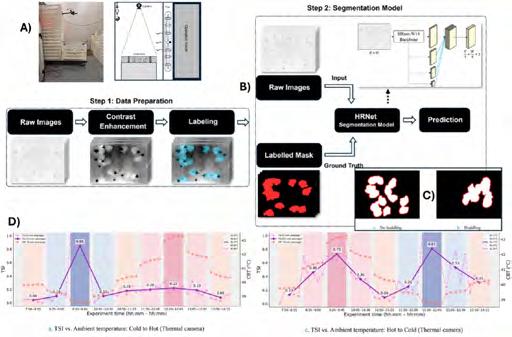
Fig. A: Actual photo and schematic of the set up of the monitoring system (thermal and night vision cameras and fans) relative to boxes containing chicks. B: Flow diagram of the image processing pipeline to enable predictions. C: Examples of the segmentation of chicks showing differences in their spatial distribution (huddling) in response to higher or lower optimal temperatures D: Plots showing changes in temperature over time and subsequent changes in core body temperature (CBT) of chicks and the predicted Temperature Stress Index (TSI) (based on imagery).
Biosystems Engineering
Volume 261, January 2026, Article 104326
Data-driven worker activity recognition and efficiency estimation in manual fruit harvesting
Uddhav Bhattarai, Rajkishan Arikapudi, Steven A. Fennimore, Frank N. Martin, Stavros G. Vougioukas
Department of Biological and Agricultural Engineering & Department of Plant Sciences, UC Davis, CA, 95616, USA
Crop Improvement and Protection Research Unit, U.S.D.A. Salinas, CA 93905, USA
Highlights
• Picking carts recorded real-time harvest data during manual strawberry harvesting
• CNN-LSTM recognised worker activity with high accuracy (F1>0.97).
• Estimated picker efficiency and tray fill time by analysing extensive harvest data.
Manual fruit harvesting is common in agriculture, but the amount of time pickers spend on non-productive activities can make it very inefficient. Accurately identifying picking vs. non-picking
activity is crucial for estimating picker efficiency and optimising labour management and harvest processes. In this study, a practical system was developed to calculate the efficiency of pickers during commercial strawberry harvesting. Instrumented picking carts (iCarritos) were developed to record the harvested fruit weight, geolocation, and iCarrito movement in real time. The iCarritos were deployed during the commercial strawberry harvest season in Santa Maria, CA.
The collected data was then used to train a deep neural network to classify a picker’s activity into “Pick” and “NoPick” classes. Experimental evaluations showed that the model showed promising activity recognition performance and recognition results were used to compute picker efficiency and the time required to fill a tray.
Analysis of the season-long harvest data revealed that pickers spent, on average, 75.09% of their total harvest time actively picking strawberries, with the remaining 24.91% attributed to non-picking activities.
The average tray fill time was found to be 6.85 min. The developed system provides a practical solution for monitoring automated worker activity in commercial strawberry fields. When integrated into commercial harvesting, the proposed technology can enable automated monitoring of worker activity and provide producers with detailed data on picker efficiency to aid producers in optimising overall harvest efficiency.
The publicly released annotated dataset further contributes to advancing research in this area.
Researchers from the UK Agri-Tech Centre and Rothamsted Research have identified a high-tech method to detect the grey field slug or Deroceras reticulatum.
Their discovery paves the way for both automated in-field monitoring and the development of novel, precision slug control strategies, including the use of biocontrols and biorationals.
In a paper published this week, the researchers describe their studies which explored the potential of multispectral and fluorescence imaging to detect slugs. Results
showed that multispectral imaging can be used to identify D. reticulatum and differentiate the pest from common agricultural field-surface materials. They found that as few as five wavelengths were sufficient for slug detection including from the UV (365 nanometer or nm), blue (405 and 450nm), green (570nm) and NIR (880nm). Fluorescence imaging failed to detect a slug-specific signal.
The paper brings together data from two Innovate UK funded projects – SlugBot and SLIMERS – which were supported through the SMART and Defra’s Farming Innovation Programmes, respectively. Their work focused
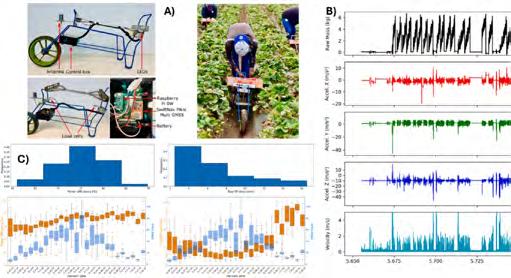
Fig. A: Instrumented traditional picking cart (iCarrito) with a GNSS antenna, load cells, control box, and status LEDs. Load cells support the metallic platform that carries picking trays. The tray weight is measured solely with load cells. Interior of the control box, showing the SwiftNav Piksi Multi GNSS receiver, Raspberry Pi 0 W microcomputer, and battery power supply is also shown. A worker harvesting strawberries using an iCarrito (shown on right). B: Examples of the data recorded by the iCarrito, showing (top) mass of picked strawberries over time (as trays are filled and then removed) as well as associated movement data (acceleration and velocity in different directions). C: Data are used, with machine-learning methods, to predict picker efficiency and tray filling time. Histograms show the overall distribution of both variables, while the box plots shows daily distributions of both variables relative to the daily number of trays harvested (light blue boxes)
on the grey field slug, one of the most economically significant slug pests and a major cause of crop damage.
Historically, farmers have monitored slugs using traps or visual observations, however, these manual approaches are labour intensive and reduce the scope of monitoring. Automated slug detection could provide more detailed insights into slug populations and support the development of precision slug control strategies.
Technical lead for the SLIMERS project, Dr Jenna Ross OBE (UK Agri-Tech Centre), said: “This exciting piece of work brought together a fantastic multidisciplinary team to develop a game-changing solution for improved monitoring of pestiferous slugs.
“By identifying these unique wavelengths of light, we can start to use these data to develop real world applications
for improved slug monitoring and subsequent control.”
SLIMERS – Strategies Leading to Improved Management and Enhanced Resilience against Slugs – is a three-year £2.6M research programme involving more than 100 farms and seven partners.
The CIGR–EurAgEng 2026 Conference in Torino, Italy from 24 - 26 June, will address the full breadth of agricultural and biosystems engineering, reflecting the sector’s rapidly evolving technical, environmental and societal challenges.
The programme is structured around a set of multidisciplinary themes that provide a framework for scientific papers, technical contributions and applied research. Submissions are encouraged across single disciplines as well as cross-cutting and integrated approaches.
Core themes include water, soil and land resource engineering, with a focus on precision irrigation, soil sensing, carbon management, erosion control and climate-resilient systems, alongside digital twins for land and water modelling. Rural buildings, infrastructure and development will cover smart barns, controlled-environment livestock systems, manure management,
green construction and the wider social and economic dimensions of rural resilience.
Machinery, mechanisation and smart equipment systems will explore electrification, autonomy, mechatronics, fleet management, and human–machine interaction, while energy and bio-based innovations will examine renewable energy, biogas, biomass conversion and circular bioeconomy solutions. Postharvest systems and food chain engineering will address storage, logistics, automation, traceability and food safety.
The conference will also feature strong representation in crop production and animal husbandry
engineering, AI and digital transformation, and climate change and environmental impact, including emissions mitigation, life-cycle assessment and ecosystem engineering. Circular economy and complex systems thinking will highlight closed-loop systems and waste-to-value technologies. Education, extension and workforce development form a dedicated theme, emphasising safety, skills, digital learning and industry–academic collaboration. Optional special tracks will address ethics, inclusion, entrepreneurship and policy interfaces, alongside a dedicated PROMEDRICE workshop focused on engineering in rice production.
Together, these themes underline the conference’s role as a platform for advancing engineering solutions for sustainable, productive and resilient agri-food systems.
Full details and how to register are here:
The 23rd Field Robot Event will take place as part of the DLG-Feldtage, 16 - 18 June 2026 at the DLG Crop Production Centre, Bernburg, Germany.
Attention agricultural engineering students — the Field Robot Event (FRE) 2026 offers a prime opportunity to engage with the future of autonomous systems in farming. FRE is Europe’s leading demonstration and competition platform for agricultural robots and autonomous machines.
The event brings together researchers, manufacturers, farmers, and students to witness and test real robotic platforms solving real-world agricultural challenges. Autonomous navigation, crop sensing, robotic weed control, swarm systems, and automated harvesting solutions will be on display across multiple live demonstration arenas and test fields. Whether your interest lies in robotics, sensors, AI integration,
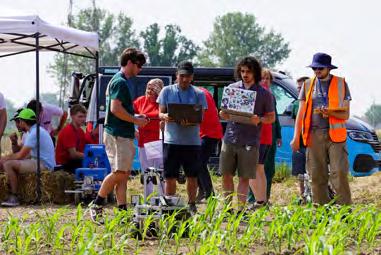
control systems, mechatronics, or field automation, FRE is designed to showcase how multidisciplinary engineering drives innovation in agriculture.
For students, this is more than a technology showcase — it’s a chance to connect with leading industry players and academic innovators from across Europe. You can see cutting-edge research translated into working machines, discuss engineering problems and solutions with developers, and explore pathways into research, postgraduate study, or industry roles focusing on automation and smart farming.
Organisers encourage student participation not only as spectators but as active contributors. Consider attending with project partners,
proposing to present your own work, or using the event as inspiration for final-year projects and dissertations.
FRE 2026 is a unique environment to broaden your engineering perspective, build professional networks and deepen your understanding of how robotics will shape agriculture’s future. Mark your calendars and plan your visit — the autonomous farm of tomorrow awaits.
See here for more information

IAgrE student member Aaron Ainsworth is currently studying for a PhD in Mechanical Engineering at the University of Birmingham. His work is supported by the Douglas Bomford Trust.
Lubricants are the lifeblood of machines. They facilitate the proper function of moving components by reducing friction and wear – without them, the life expectancy of many systems would approach zero.
An estimated 23% of global energy is consumed because of overcoming friction and replacing worn parts [1]. Despite their crucial
role, 85-90% of lubricants are derived from non-renewable fossil fuels [2].
As much as half of all waste oil ends-up in the environment, where it can cause adverse damage to an ecosystem – 1 kg of mineral oil can contaminate 1 million kg of fresh water [1].
If our reliance on petroleum-derived
oils continues it will only serve to the detriment of agriculture. The water and soil pollution they will cause will increase water scarcity, diminish crop yields, and further reduce the amount of arable land across the globe. The United Nations estimates that around a quarter of the world’s land has already been degraded due to human activity. In turn, said degradation can increase soil greenhouse gas emissions,
cause additional food shortages, as well as raise crop price volatility [3].
This would only be compounded by the price of crude oil, something that has only increased and become more volatile with time. A trend that is likely to continue as global supplies deplete.
Efforts persist to combat pollution and reduce reliance on petroleum. Perhaps most well-known is the move towards electrification in passenger vehicles and industrial equipment.
While there are developments being made in the field of sustainable lubrication, public awareness of them and their potential impact on the agricultural sector remains low.
Bio-lubrication and vegetable oils
Bio-lubricants are broadly defined as oils with significant bio-based carbon content and are at the forefront of potential mineral oil replacements. They can be anything from vegetable and algal oils to animal fats and water-based lubricants. The global market for bio-lubricants stood at $2.95B USD in 2024 and is projected to reach over $5B USD in 2030 [4].
Compare this to the mineral oil market of the same time, which was valued at over twice as much (around $6.4B USD) and is projected to surpass $8.3B USD in 2030 [4]. The bio-lube market exhibits a much greater compound annual growth rate (13.7% versus 4.6%), showcasing that this is very much a growing sector.
Bio-lubricants are seeing more adoption and development as many become more environmentally conscious and more stringent regulations on oil products (particularly disposal of them) come into play.
Vegetable oils are any oil extracted
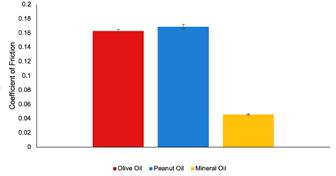
Chart 1 - Showing the average coefficient of friction produced across all tests from these veg oil candidates and a mineral base oil for comparison
from seeds or other parts of plants. Oil-bearing produce like oilseed rape, sunflowers and olives are commonplace across Europe today; they are of course most often grown with the food sector in mind. It is critical however, that if veg oils are to see mass adoption, they do not impinge on existing food sources. Nonedible veg oils like that of
Jatropha avoid this, however this also puts pressure on the food chain by taking-up valuable land. Solutions which rely on the waste of food crops are much more sympathetic to other issues in land use.
Recent research at the University
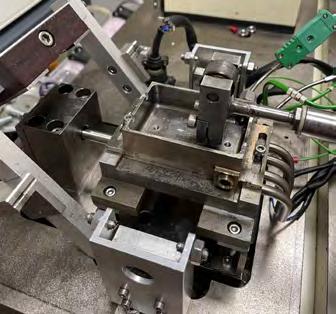
of Birmingham, with support from the Douglas Bomford Trust, sought to investigate two common veg oils under extreme conditions.
Olive and peanut oil, plus a mineral base oil, were used to lubricate a steel ball-and-plate contact. This was done at an elevated temperature, under high load, and at high speed for over half an hour – indicative of heavy-duty diesel engine conditions.
The results shown in the graph (Chart 1, p19) demonstrate the much higher friction exhibited by the two veg oils over the mineral base oil. It is clear natural veg oils are unsuitable for such harsh conditions as they breakdown. Chemical modification (e.g. esterification) or additives can remedy this. Work continues to be done on their applicability for light-duty uses. Besides vegetable oils,what other options are available?
Waste valorisation as an alternative
Waste valorisation is the process of regenerating value from waste products by recycling them into something new. In this case, viable lubricants. Of particular interest to the agricultural sector is the recycling of material such as animal waste, chaff and other lignocellulosic material that would otherwise be composted, burned, or fed to livestock.
This could open-up a new sustainable revenue stream for farmers.
Crop waste management presents a problem for growers year-on-year. On average, around 80% of harvested food crops is waste and millions of tons are produced annually [5]. Crop residues such as sugar cane bagasse, fruit pomace, and nut shells have all shown potential as bio base oils when mixed with water or other veg and synthetic oils.
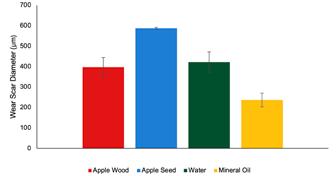
Chart 2 - Comparing the average wear scar diameter generated because of the reciprocating wear tests, for both the apple- derived lubricants, water and a mineral base oil. Error bars represent one standard deviation
Oil can be directly extracted from these substances, with cashew nut shell oil, or isolated chemicals from the waste can be used as a base for a bio-lubricant, such as pectin from citrus peel.
Perhaps the largest challenge waste biomass has to overcome is its competition: biochar.
Biochar is a lucrative resource that can be easily produced from crop residues and has myriad uses from soil additives to stock fodder.
A similar study to that of the veg oils was conducted at the University of Birmingham, looking into the potential of water-based lubricants from waste products.
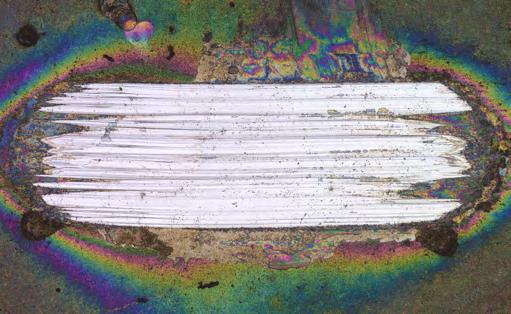
An experiment examined the tribological performance of aqueous solutions produced from apple seeds and apple wood trimmings. These were compared to pure water and a mineral oil for steel-on-steel reciprocating tribological tests.
Unsurprisingly, the apple-derived lubricants paled in comparison to the mineral oil, however results showed the apple wood solution improved over pure water in terms of reducing wear, demonstrating some potential.
The graph above compares the average size of the wear scar generated on the steel ball for each of the substances.
The bio-lubricant sector is comparatively small when compared to its petroleum counterpart but shows growth in the near-future. This presents a range of opportunities for the agri-sector, whether it be new oil crops or innovative ways to recycle farm waste.
Ultimately, the long-term aim is a circular economy in which farm waste is recycled into renewable, biodegradable lubricants for use on the very farms they came from. Here at the University of Birmingham, endeavours progress towards new and feasible lubrication solutions with each passing day. While initial results seem lacklustre compared to the oil status quo, candidates tested thus far demonstrate significant potential and can be improved with modifications.
Moving forward, research here will continue to evaluate the viability of a range of agricultural byproducts, aiming to reduce pollution and make more of waste.
[1] M. A. Ijaz Malik, M. A. Kalam, M. A. Mujtaba, and F. Almomani, “A review of recent advances in the synthesis of environmentally friendly, sustainable, and nontoxic bio-lubricants: Recommendations for the future implementations,” Environmental Technology & Innovation, vol. 32, p. 103366, Nov. 2023,doi: 10.1016/J. ETI.2023.103366.
[2] A. Hamnas and G. Unnikrishnan, “Bio-lubricants from vegetable oils: Characterization, modifications, applications and challenges – Review,” Renewable and Sustainable Energy Reviews, vol. 182, p. 113413, Aug. 2023, doi: 10.1016/J.RSER.2023.113413.
[3] United Nations Environment Programme, “Land Degradation,” Global Environment Facility, Jul. 27, 2021. Available: https://www.unep.org/gef/focal-areas/land-degradation Grand View Research, “Biolubricants Market (2025 – 2030),” grandviewresearch.com, 2025.Available: https://www.grandviewresearch.com/industry-analysis/ biolubricants-industry
[4] Grand View Research, “Mineral Oil Market (2025 – 2030),” grandviewresearch.com, 2025. Available: https:// www.grandviewresearch.com/industry-analysis/mineral-oil-market
[5] M. R. Patel and N. L. Panwar, “Biochar from agricultural crop residues: Environmental, production, and life cycle assessment overview,” Resources, Conservation & Recycling Advances, vol. 19, p. 200173, Nov. 2023, doi: 10.1016/J.RCRADV.2023.200173.
Aaron Ainsworth is currently studying at the University of Birmingham for his PhD in mechanical engineering. He is a student member of the IAgrE and his work is sponsored by the Douglas Bomford Trust.
With support from Dr Iestyn Stead and Prof Karl Dearn, his research focuses on tribology – the study of friction and wear – specifically the sourcing, development, and testing of sustainable lubricants primarily for use in the agricultural industry.
Dr Iestyn Stead is an Assistant Professor in Mechanical Engineering specialising in condition monitoring of complex systems. His doctoral research focused on the development of novel lubricants for cryogenic zero emission engines for the food chain. Currently his projects include using sound and vibration to determine complex friction and wear mechanisms and design for biologically based wastewater treatment.
Professor Karl Dearn is an Engineer with over twenty years of industrial and academic experience in Mechanical Engineering. Karl is an expert in mechanical design and tribology, and his research focuses predominantly on making mechanical components and devices achieve higher levels of efficiency and performance. His work uses design methodologies founded on the fundamental principles of mechanics.

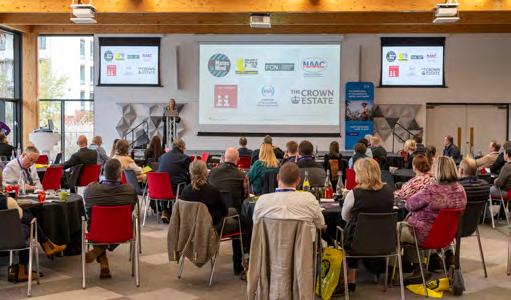
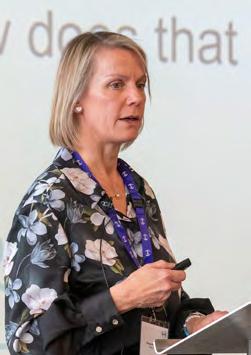
The IOSH Rural Industries Community’s recent Growing Safely conference, held at the University of Warwick’s Conference Centre, brought together around 100 practitioners and professionals working across agricultural safety, including many from the land-based engineering community. Mike Whiting reports.
The event, captured in an episode of the Landwards podcast, highlighted an emerging consensus: technology can enable safer farming, but culture, education and mental health ultimately determine outcomes.
Don’t be unlucky
Opening the conference, Farm Safety Foundation Manager Stephanie Berkeley set the scene for the day. The images used for the groups Farm Safety Week illustrated yellow wellies becoming ‘accident statistics’ due to work transport activities, livestock husbandry or falls from height. The aim was to emphasise the 13th year of the annual event with the subliminal message ‘don’t be unlucky’. There is no easy way to talk about these terrible incidents and their effect on families. Stephanie delivers a powerful and engaging session with the team’s passion for influencing cultural change across the industry.
IOSH stands for the Institution of Occupational Safety and Health, the world’s leading chartered professional body for safety and health professionals. Based in the UK, it sets standards, provides training, and offers qualifications (such as Managing Safely) to improve workplace safety culture and reduce risks globally.
Mental health and the ‘Accidental Counsellor’
Mental health ran as a strong theme throughout the conference. Sam Downie from charity Mates in Mind, part of the Agri Wellbeing Alliance, outlined support for sectors with elevated mental health and suicide risks, including farming.
Her focus was on those who “go up the farm track” – vets, engineers, bank managers, inspectors and service technicians – who often become “accidental counsellors” simply by being trusted regular visitors.
Sam emphasised three essentials for these professionals:
1. Knowing how to initiate a conversation when you’re worried about someone.
2. Understanding that you don’t have to “fix” the problem – listening is powerful in itself.
3. Being able to signpost farmers and family members to appropriate support.
She also stressed the need for these visitors to monitor their own well-being when they carry others’ worries home.
For more information scan the QR code;
New IOSH president Richard Bate, delivering his first public address to the agricultural and rural industries community, set the tone with a sobering statistic: rural industries represent roughly 1% of the UK workforce but account for more than 20% of workplace deaths. He described this as “catastrophic” and argued that the sector must move beyond quoting numbers to changing behaviours, particularly through education.
Drawing on his background as both a paramedic and safety professional – and his own childhood on a Welsh sheep farm – Richard stressed the importance of engaging children early with farm safety.
He recounted challenging a farmer who was riding a quad with two children on the front. The defensive response – “mind your own business” – illustrated how ingrained cultural norms can undermine safety, even when the risks are obvious.
Richard also warned that modern parenting can leave children with fewer real-world experiences of managed risk. Without that exposure, they miss the chance to build judgement and resilience. For him, the challenge is to strike a balance: protecting young people without insulating them from every form of risk that teaches them how to think and act safely.
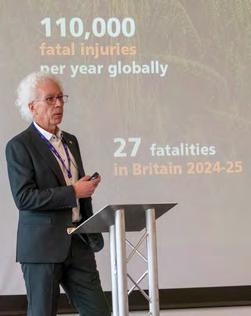
Richard urged the sector to be “brave” in talking about environmental change, acknowledging that climate discussions can polarise opinion. Whether you attribute it to cycles or climate change, he argued, changing weather patterns are already affecting output, work patterns and crop growth – and therefore the risk landscape for engineers and operators.
He also underlined the value of speaking the language of your audience—literally and figuratively. Referencing a previous IOSH event in North Wales that had to be delivered partly in Welsh to truly engage attendees, he linked safety impact directly to cultural fit and communication style.
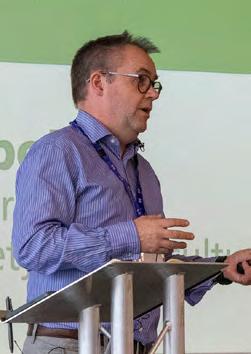
Technology moves at pace, and we must exploit all opportunities to keep people safe with new equipment and systems. Andy Newbold, Secretary General of the European Society of Agricultural Engineers provided an up-to-date summary of where we are on this journey.
Be prepared for the long haul, the first rudimentary commercial autonomous system was for a wire guide kit controlling an orchard grass cutting tractor in 1970.
Multiple factors are influencing decision making, such as available labour, climate change and most importantly legislative guidance.
Throw into the mix the competitive marketplace with manufacturers watching each other on ‘who goes first’ with a new concept.
Indications are that taking an existing tractor design to a fully autonomous specification, whilst maintaining the traditional fully compliant and comfort laden cab is one solution. Enabling the driver to set the prime mover and implement combination to work in autonomous mode, with the operator taking control for movements on the public highway.
Whilst fully robotic platforms are becoming more common place in arable, livestock and horticultural sectors. Effective communication between hardware units will be essential to monitor machine performance and invoke a safe shut down when required.
For agricultural engineers, some of the most relevant content came from sessions on AI, agri-tech and predictive maintenance, including a contribution from John Deere.
Speakers explored how data from connected machines can inform safer decisions about when and how to operate equipment, identify emerging faults and reduce exposure to dangerous situations.
However, both conference chair Mike Whiting and session speaker Andy Newbold cautioned against viewing technology as a safety solution in isolation. They argued that technology is an enabler; real gains come from how people interact with it, embed it into systems of work and adapt behaviours on the ground.
With support from IOSH’s in-house events team and strong collaboration with the Health and Safety Executive (HSE) via principal inspector Wayne Owen, the Growing Safely conference demonstrated the value of bringing engineers, safety professionals and mental health advocates into the same room.
The message for agricultural engineers was clear: the future of safe, productive farming will be shaped as much by culture, communication and wellbeing as by the next generation of machinery and digital tools.

Several speakers at the conference were interviewed on the day, listen to the podcast here:
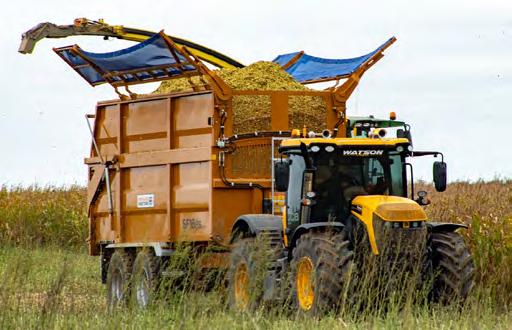
For agricultural engineers, whose designs, specifications and advice directly shape how work is done on farms, the messages behind the campaign should be fundamental to professional practice, not an annual reminder. Alan Plom MIAgrE writes.

For agricultural engineers, whose designs, specifications and advice directly shape how work is done on farms, the messages behind the campaign should be fundamental to professional practice, not an annual reminder. Alan Plom writes.
In IAgrE’s Lunchtime Lecture of 15 July 2025, Alix Morley, Farm Safety Specialist at the Farm Safety Foundation (Yellow Wellies), set out the themes of the 13th UK and Ireland Farm Safety Week and challenged us to ask:
“How can I, and my organisation, actively help reduce deaths, injuries and ill health on farms?”
The need is stark. Agriculture employs about 1% of the GB workforce (≈462,000 people) yet accounts for 17% of all worker deaths (HSE 2023/24). Over the past five years, an average of 24 farmers and farm workers, plus around 5 members of the public, have died each year. Since April 2025 alone, more than 28 people have already been killed. Annually, there are 18,000 non-fatal injuries and 10,000 cases of work-related ill health.
These are not “tragic accidents”. They are mostly predictable, repeatable events arising from well-known hazards: vehicles and machinery, falls from height, livestock, contact with equipment and power systems, poor maintenance, fatigue, and inadequate planning or supervision. There is no “magic bullet” – but there is a clear engineering and management challenge.
Yellow Wellies’ research links risk-taking behaviour, fatigue and mental wellbeing. Farm related suicides are estimated at around double the number of on-farm incident deaths each year. Regulation and enforcement are necessary but not sufficient. A lasting shift in safety performance requires cultural and behavioural change from within the industry, supported by those who influence practice at the “sharp end” –including engineers.
IAgrE members span education and training, design and manufacture, sales and support, advisory work and the wider supply chain. That reach gives the agricultural
engineering community leverage:
• Designing-out hazards and reducing opportunities for misuse or bypass of safety systems.
• Specifying guarding, ergonomics, stability, access, lighting and control systems that make the safe way the easy way.
• Using data to inform risk assessment, maintenance regimes and retrofit improvements.
• Embedding safety thinking in student projects, CPD and procurement decisions.
Yellow Wellies operate on a very small budget with notable impact:
• 19 national awareness campaigns, generating around 10,000 media pieces.
• Practical training for 30,000+ young people across 46 landbased colleges and universities, increasingly using VR tools.
• 100 ATV operator training bursaries, each with a helmet supplied – vital given that ATVs are now among the leading causes of on-farm fatalities, where helmet use would have prevented many deaths.
• The annual “Mind Your Head” mental health initiative.
IAgrE is strengthening its role through:
• A revitalised Health and Safety Special Interest Group and web resources to share good practice.
• Regular coverage of safety topics in the Business Bulletin and Student Newsletter.
• A long-standing Student Safety Project Award, now supported by the Farm Safety Foundation, to recognise innovation in safer design and operation.
Agricultural engineers are uniquely placed to convert awareness into practical, engineered risk reduction. The challenge is to ensure that Farm Safety Week principles are applied continuously – in every design decision, specification, training session and advisory visit – so that safer farming becomes the default, not the exception.
Jim Ward reflects on his career and 43 years membership of the Institution of Agricultural Engineers.
Ijoined as an Associate Member in 1982, a 2nd year City and Guilds student at Reaseheath. I discovered that everyone there, even a lecturer, is called ‘love,’ in Northern England.
Tractors were always at the heart of my work: from wrestling with the jammed gearbox on a Chinese clone MF135 in Zambia, operating our trusty “mule” David Brown at Rycotewood to taking three-point linkage strain gauge readings on a County as we pulled a deep ripper.
I cut my teeth lying underneath farm machinery in muddy farmyards in Dorset and Somerset. I vividly remember replacing bearings on muck spreaders, towed into the workshops frozen solid, then as the space heater worked, the contents would thaw and drip onto your head during the repair. A proper baptism into the industry.
As a student I drove tractors for contractors in the Southern Counties, making silage on steep fields during the long summers of the late 70s, and remember the rapid admonishment of a cab full of chopped wet
grass and silaid, if you weren’t quick enough drawing alongside the self-propelled forage harvester with the next empty trailer.
I returned home to Africa for my ‘year in industry’ getting dusty and sunburnt delivering new John Deere 4040 haulage tractors to the newest sugar mill and maintaining farm equipment all over rural Swaziland. Servicing a tractor at one of the prison farms, I sensed that I was being watched, and turned round nervously,
to find myself surrounded by several hardened convicts on field duty, standing silently and gazing with interest at this young man servicing their tractor. I completed that service remarkably swiftly.
After college and a spell at a small dealership, I was recruited in UK and returned to Swaziland, joining a 47,000t pineapple estate, supervising crop spraying with 5000L tankers, ground sensing radar, and variable
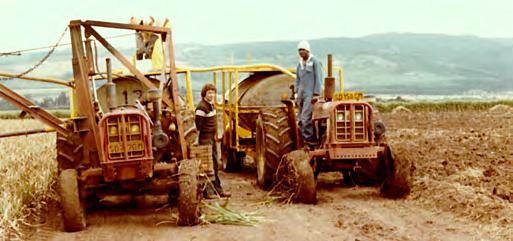
hydrostatic transmissions. Later we relocated and I managed land prep and harvesting operations for some 450,000 tons of irrigated sugar cane each season, bundle, whole stick, and some chopped cane.
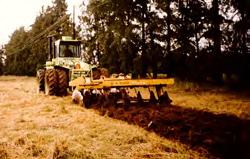
Land prep equipment got bigger too, with yellow equipment, and magnificent Steiger Bearcats for heavy cultivation - what a glorious sound. We did road rehabilitation and civils, building storage dams, sidings, and loading platforms. We bush cleared and deep ploughed with a D7 and push piled sand from the Komati river to be used on step canals and block work
My career then transitioned into road transport. During
1989, I became a regional technical manager for a transport company, and then relocated to South Africa in 1998. I completed a Henley MBA in 2002, complementing subsequent roles as Division Technical Manager, then GM Technical for a 1,300-truck logistics group, and eventually MD Technical Services for a larger, listed company.
I initially worked for a decade in operations, but then moved back into technical management, moving to Head Office and becoming involved in specifications and new equipment for a wide range of products, including day olds and poultry, a difficult cargo in high ambient temperatures that brought me full circle and back in touch with the Institution and its expertise network.
The Institution helped to arrange several valuable meetings and interviews during some overseas
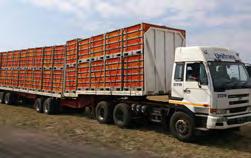
trips, attending trade fairs, meeting industry leaders, inspecting chick transporters and visiting poultry processing farms and plants in UK, Spain, and France.
Settling in Johannesburg, I was tasked with the design and commissioning of large-capacity chick trailers. We built a dozen of these, using powerful transport refrigeration units, solar panels, deep-cycle tail lift and extraction fan batteries, 3 phase booster fans and live data tracking. Early versions of these LCTs were written up in an article that Landwards published.
I helped design new drop-deck catching trailers to maximise module capacity, and, in response to global competition within BRICS, and burgeoning demand within the 28-million-chickens-per-week poultry industry, made further visits to Ireland, France and Canada. This led to the importation of Moffett M9 forklifts, modified to unique South African specifications, as well as a wide range of specialized equipment.
Through it all, tractors and land prep remained an abiding fascination. To this day, will always pull off the freeway to watch a properly set up tractor and plough working in the flat maize lands of the Free State. After turning 60, following three difficult years as MD Technical Services, I retired, and we moved to Howick, in the lovely Natal midlands.
It saddens me that during my career I have known four youngish men who committed suicide, all working in this or related industries. The pressures inherent in this industry should never be underestimated and we owe it to younger members to always remain vigilant for early signs of serious depression.
I consulted to the transport sector for a few years, and in 2023 began writing a regular column for the magazine Focus on Transport and Logistics.
In my semi-retirement, we built a small greenhouse to grow vegetables. My current exposure to Agricultural Engineering, consists of an old ride-on mower and sundry hedge trimmers, mowers, and chainsaws all requiring maintenance and servicing.
I began working as a student in 1978, and stopped full time work in 2019 and am grateful for all that Agricultural Engineering has provided, a broad-based
technical background and solid grounding that led to greater things. I am grateful to God for my four decades of membership and the close friends I have made along the way.
In 2019 I had written and published a book set in Swaziland, The Homecoming a novel concerning a family in which a key character is a welder who settles and works in the agricultural sector in Swaziland, and then wrote the sequel The Reckoning in 2020.
A final novel in the trilogy is written, currently in final edit.

To purchase ‘The Homecoming’ from Amazon click the link
James H Ward jimwardconsulting@gmail.com
IAgrE President Elect Kit Franklin writes.
I sit to write this having just returned from the 60th annual National Farm Machinery Show in Louisville Kentucky, so it seems sensible to start by reflecting upon what I saw!
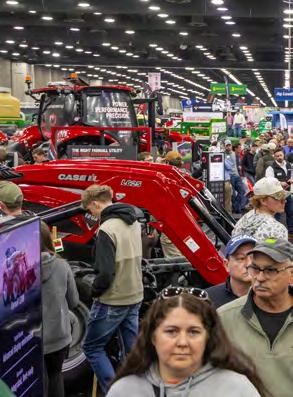
In size it matches up well to LAMMA, now settled into its NEC home and sadly like LAMMA it seems to have lost support from most of the large OEMs, with many being represented by regional dealerships. There was, however, a great showcase of smaller manufacturers and representation from the UK with Teagle and JCB (I may have missed others!).
I was joined at the show by my father and brothers, who work in farming and construction, and a few things stuck out to us. Firstly, the prevalence of equipment related to conventional (small) bales; from newly launched double chamber balers (three models on offer) to multiple bale accumulator machines, whilst there was only one large baler on display. From our perspective this seems very antiquated with “big” bales having been the norm in the UK for many years. After some questioning the justification given was the large scale of equine and small farm market, who favour small bales and are prepared to pay a premium for them – now that is no different than in the UK just that the scale is huge. The
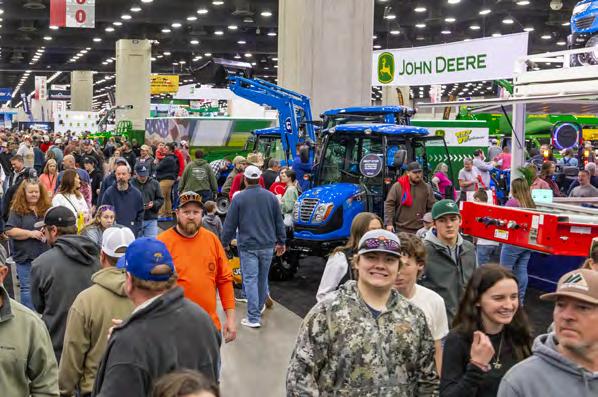
second major difference was the prevalence of crop conveying and bin storage systems, again a technology which has seen a downward trend in the UK in favour of barn-based storage but that is still ubiquitous here.
My analysis of these things goes back to JCB and the prevalence of telehandlers on UK farms. These versatile machines have not broken through in USA farming where tractor loaders and skid steers are sovereign, as such their endlessly useful and enabling abilities are missed; rapidly loading grain lorries from multipurpose grain storage barns rather than single use silos, and moving large bales, are just two examples. Discussing this on the Brash Ag podcast, my co-host Raymond King (IAgrE Vice President and CEng) highlighted how important systematic thinking is for farming and how one key technology can send huge ripples into the industry.
Since the New Year I have also been out to California and Washington state to meet with specialty crop
growers. The common agricultural pressures were expressed; shrinking labour availability and rising production costs, set against low market prices. This was most visible in Washington where collectively 1000s of hectares of apple orchards are unharvested and left to rot this year in order to minimise losses. Is there a greater place for Ag Engineering to act on these systemic issues? Could we be on the brink of a new technology (possibly automation) tipping the system back into balance? I certainly think so and we must keep highlighting the importance of Ag Engineers and what we can offer agriculture as it shapes to face the future.
My time at the Mississippi State Agricultural Autonomy Institute will soon be over, and I will be back to the UK ready to accept my term as IAgrE President where I plan to keep the momentum of Mark Moore, promoting our broad but specialist sector outside our own walls.
This years LAMMA show was surprisingly buoyant, and a visit was rewarded with insights into some of the latest home grown and international innovations.
Triplex, a cutting-edge crop nutrition technology, has been recognised as Overall Innovation of the Year with the prestigious IAgrE Ivel Award at the LAMMA Innovation Awards.
The new technology was launched at the show by Agro-Vital and Andrew Sincock, Managing Director said “Receiving the Supreme Champion award at LAMMA has truly been an unexpected and humbling moment. To have our work recognised in this way is a
testament to the dedication and passion of the team behind Triplex.”
He explains that Triplex is designed to deliver precise, sustainable, and tailored nutrient applications based on farm-specific data, ensuring crops receive exactly what they need for optimum productivity.
“With increasing pressure on farmers to balance environmental accountability with crop performance, nutrition must be approached differently,” he says.
The Triplex system was developed in the Netherlands through extensive research and
collaboration between Agro-Vital’s team of agronomists, engineers, and data scientists.
The machine works by feeding in soil or sap analysis data from individual farms, allowing it to create bespoke, adaptable nutrition products that are tailored to specific crop needs and field conditions. Mr Sincock explains that one of the key benefits of Triplex is its rapid turnaround time.
“Once the farm-specific data is analysed, the system can create a tailored fertiliser programme in as little as 48 hours, allowing farmers to act quickly and efficiently.
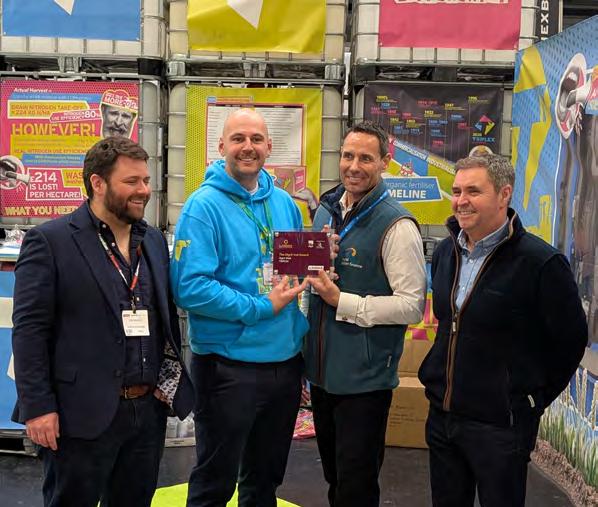
“These bespoke foliar fertiliser products are then delivered on farm in IBC containers, ready to be applied.
“The speed of implementation is crucial, especially during key planting or growing periods, when timely nutrient applications can make a significant difference to crop performance,” he says.
There has already been rapid adoption of the technology in the Netherlands following successful pilot trials, with promising results from early UK trials conducted ahead of the 2026 season.
The IAgrE Ivel Award is made for the best new product or environmental innovation at LAMMA. Awarded by a panel of judges at LAMMA and the awardee invited to receive the Award at the IAgrE Awards Day.
This years awards will take place:
Wednesday 29th April
Royal Agricultural University, Cirencester
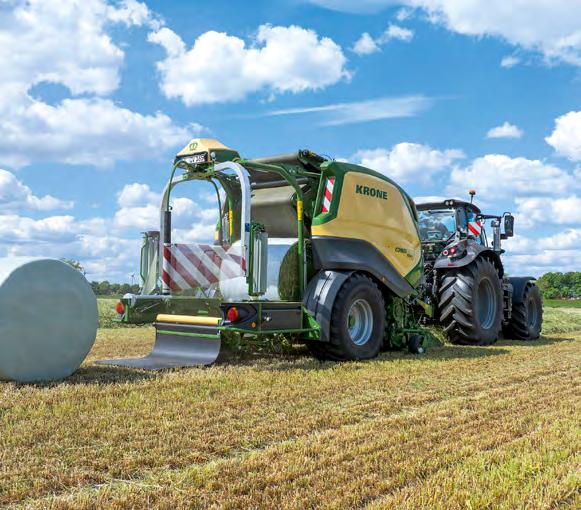
The judges were looking for a piece of grassland kit, machinery or technology that provides advancement or innovation inside the grassland/forage sector. This includes: Field machinery, including mowers, tedders, rakes, balers, wrappers, bale handling or any
machinery or technology that is specific to the life-cycle of grass production.
The Krone CombiPack HDP CV165 XC is a high-performance balerwrapper designed for farmers and contractors needing reliable,
efficient silage, hay, and straw baling within tight weather windows.
Developed with user input, it prioritises throughput, serviceability, and operator comfort. Key features include hydraulic drawbar adjustment, a camless pickup with adaptive hydraulic tine control, and an integral cutting rotor that delivers clean, consistent chopping with reduced power demand.
Its robust Hardox rotor, 41-knife system, and high-density single-belt baling ensure excellent forage quality. With fast twin-arm wrapping, large film storage capacity, and durable driveline components, the machine can achieve around 90 bales per hour with high, uniform bale density.
The criteria for this award is to celebrate innovation within agricultural manufacturing. The machine can be made anywhere in the world, but it must be sold in the UK and Ireland, and released after 1st February 2025,
and must not have been shown at LAMMA before, even as a prototype.
Machines include: Tractors, materials handling, harvesters, self-propelled sprayers, crop protection.
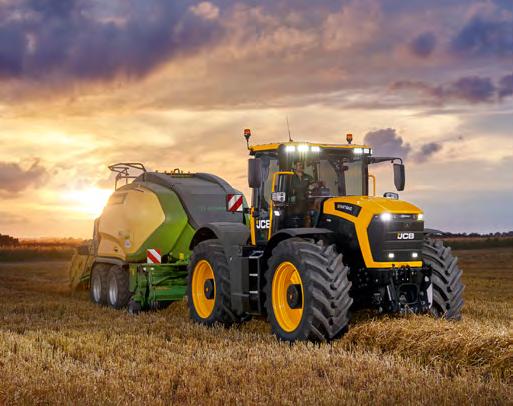
The all-new JCB 6000 Series Fastrac targets the 250–330 hp sector, bridging the gap between the 4000 and 8000 Series.
Available in two models (6260 & 6300), it combines high-speed
capability (road legal at 66 kph) with exceptional ride comfort thanks to all-round suspension and near 50:50 weight distribution.
Features include four-wheel steering with five modes, truck-standard all-round disc brakes with ABS, a versatile full-length chassis for multiple implements, and a rear deck supporting 5,000 kg.
Designed for professional farmers and contractors, the 6000 Series delivers agility, versatility, reduced soil compaction, lower emissions, and enhanced productivity, making it ideal for year-round field and transport operations.
It’s been a busy few months, especially November, for DBT trustees. Trust Technical Secretary David White CEng CEnv FIAgrE reports.
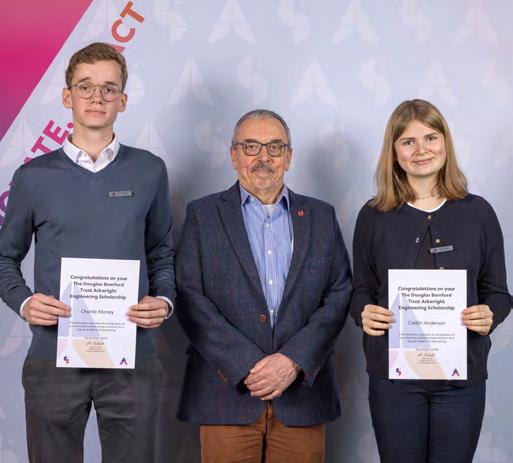
On 4th November 2025, DBT trustee, John Baines, attended the Arkwright Networking Event (North) at Leeds City Museum. This was the second of two events, bringing together Arkwright Engineering Scholars (AES), alumni, mentors, and sponsors. The
day was attended by approximately 55 of this year’s intake of AESs (16–18-year-olds). It provided an opportunity to meet two of the students sponsored by the DBT in person, Caitlin Anderson and Charlie Money. The DBT is currently sponsoring 9 students, 5 (2025-27) and 4 (2024-2026).
In November, nineteen students studying agricultural engineering and a member of staff from Coleg Sir Gar undertook a study tour, funded by the DBT, to Germany. On Day 1, the group was hosted by Krone, Werlte. After an introductory presentation, the group had a comprehensive tour of the factory finishing with testing of final products. The group felt it was an excellent start to their study tour.
Days 2 and 3 were spent at Agritechnica. As well as looking at standard agricultural machinery, the group explored new and innovative technologies. The main focus on the second day was the Young Professionals Day aimed at people at the beginning of their career. Together with presentations and panel discussions the day enabled the group to expand their knowledge and make contacts. A full report of the study tour can be found on the DBT website.
On the 18th November, the Board of Trustees held their AGM and a General Management Meeting at Harper Adams University. After the standard term of 6 years, trustee Clive Blacker (AgAnalyst Ltd, and Director of Agrivation Ltd) retired. Thank you, Clive for everything you have done for the Trust. The Board welcomed new trustee, Andy Newbold (Director of Farmsmart Publishing Ltd, editor of Landwards, and farmer). The Board also met Mrs Chris Keeping, the Trust’s new Finance and Administration Officer. At lunchtime, trustees met a number of staff and students supported by the DBT.
On Wednesday 19th November, DBT chair Nick August attended an AgriFood Charities Partnership (AFCP) half day conference “What is the future of farming? What is our role in it?” held at The Royal Veterinary College, London. Nick was one of the presenters and gave a presentation about the DBT and its activities. The DBT is a member of AFCP and was one of its founding members.
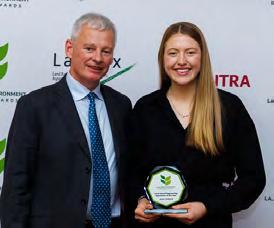
On 27th November 2025, Nick attended the Land-Based & Environment Learner (LBEL) Awards Ceremony (a partnership between LANTRA and LANDEX) held at The National Conference Centre, Birmingham. The event was hosted by Kate Humble, TV Presenter and farmer. For the first time, the DBT sponsored the Agricultural Engineering Learner of the Year Award. The winner was Anna Welland studying at Anglia Ruskin University (Writtle College).
Scan this code to see the full German study tour report
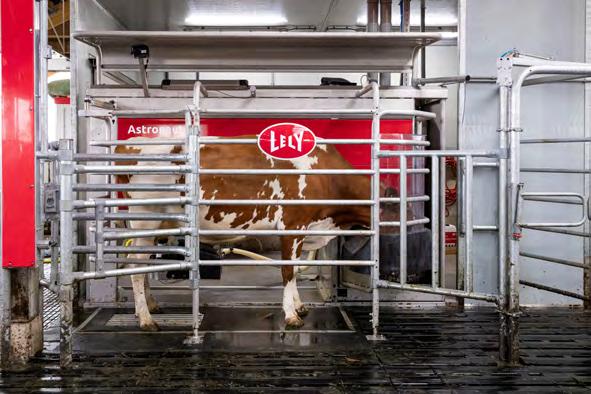
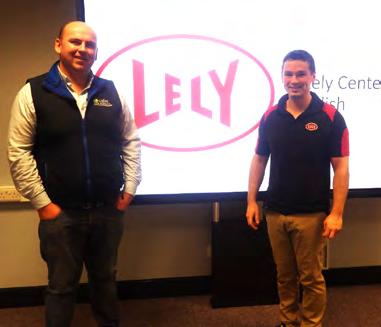
Robotic systems in modern dairy farming were the focus of a recent meeting of the Northern Ireland branch of Institution of Agricultural Engineers, where members heard from Jacob Irwin of Lely Center Eglish on the rapid adoption and technical evolution of automated livestock technologies.
Mr Irwin, who supports sales
and technical operations for Lely equipment across Northern Ireland and Co Donegal, outlined how robotics is reshaping labour use, animal welfare and system efficiency in dairy production.
Following his graduation in agriculture and business studies from Harper Adams University, he gained hands-on experience on large beef and dairy farms
in Australia and New Zealand before returning home to join the family business.
At the centre of the presentation was the Lely Astronaut robotic milking system, which Mr Irwin described as a major driver of structural change in dairy
farming. Robotic milking is now widely adopted to address labour shortages, improve work-life balance, and enable more cow-centric management.
Around 20% of Northern Ireland dairy farms now use robotic milking, with performance levels of approximately 170 milking’s per robot per day becoming typical.
Globally, more than 39,000 Astronaut units have been installed since the platform’s launch in 2018. The latest Lely Astronaut A5 incorporates a range of advanced sensing, automation and data-driven management tools designed to improve reliability, milk quality and animal health.
Key engineering features include laser-guided cluster attachment using camera positioning, a hybrid robotic arm with air-cushioned electric actuation to absorb shock loads from animal movement, and individual teat cup removal based on real-time milk flow measurement.
Integrated milk sensors continuously monitor yield, conductivity and somatic cell count, providing early warning of sub-clinical mastitis and other health issues.
Cow preparation is fully automated, with dry rotary brushing to remove contamination and stimulate milk let-down, followed by targeted disinfection to minimise cross-infection risk.
A free-entry cow traffic system allows animals to decide when to be milked, supporting natural behaviour patterns and improving throughput consistency.
Mr Irwin emphasised that system reliability depends as much on service infrastructure as on hardware design. Lely operates a
24/7 support model across three regional service areas, with local teams providing remote diagnostics and on-farm intervention when required.
In Northern Ireland alone, the service operation includes more than 20 trained engineers supported by product specialists and a dedicated service manager.
From an engineering economics perspective, most Astronaut units are farmer-owned, with new installations typically costing £150,000–£160,000 per robot. Centralised compressor units, capable of supporting two robots, offer cost efficiencies where herd size allows.
The presentation also covered the Lely Vector robotic feeding system, which uses an automated kitchen, overhead grab crane and electrically powered mixer wagon to deliver small, frequent rations around the clock. Guided by ultrasonic and inductive sensors, the system
monitors feed height, tidies the feed face and records distribution and intake data for ration management analysis. More than 20 Vector units are now operating on Northern Ireland farms.
Closing the meeting, IAgrE Northern Ireland branch chairman Peter Verhoeven thanked Mr Irwin for an informative and technically detailed presentation, highlighting the growing role of agricultural engineers in designing, integrating and supporting increasingly complex livestock production systems.
This article has been edited, the full version is available here:
Members and guests of the Northern Ireland branch of the Institution of Agricultural Engineers recently attended an engaging and technically detailed presentation from Glendale Tree Services, a family-run forestry and arboricultural contracting business based in Co Antrim.
Founded in 2004 by Stewart and Kirstie Cameron on their family farm near Randalstown, the business began as a diversification project alongside a 50-cow dairy herd. Initially focused on hedge and tree maintenance for local customers, demand for the service grew rapidly. By 2005, a strategic decision was taken to exit dairy farming and concentrate fully on developing the
contracting operation, reflecting a clear example of diversification driven by market opportunity rather than subsidy support.
By 2009, forestry contracting had become the core activity, prompting significant investment in specialist machinery and skills. Stewart Cameron retrained and qualified as a professional tree surgeon, with these competencies extended across the workforce. Today, Glendale Tree Services employs 15 staff, including two of the Camerons’ sons and other family members, providing a wide range of arboricultural and forestry services. These include tree felling and pruning, hedge maintenance, stump removal, site clearance, forestry
contracts, biomass chipping, firewood production and a 24-hour storm damage call-out service.
Central to the operation is a modern mechanised harvesting system designed to handle both standing timber and storm-damaged trees. The fleet includes a Komatsu 931 XC six-wheel-drive harvester, equipped with a long-reach boom and harvester head that allows felling, de-limbing and length-controlled cross-cutting to be completed from within the cab. This is supported by a Komatsu 855 eight-wheel-drive forwarder,
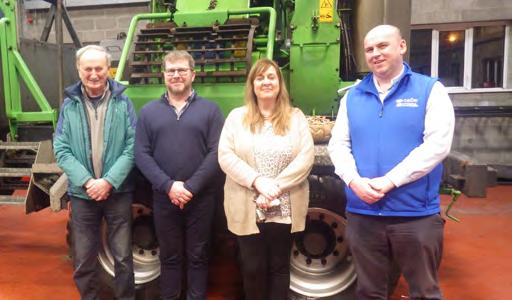
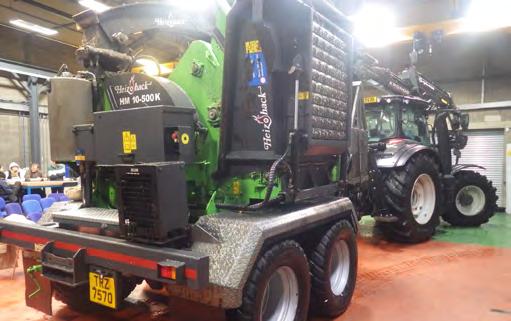
Chipper with intake folded for transport
capable of transporting up to 14 tonnes of timber over difficult terrain using its centre-steer articulated chassis and integrated crane.
Under favourable conditions, the system can process up to 180 tonnes of standing timber per day. Output falls to around 100 tonnes per day when dealing with windblown trees, where manual chainsaw work is often required to remove tangled branches and soil contamination increases wear on cutting equipment. Service intervals typically range from two to four days, depending on soil abrasiveness. GPS-based monitoring of machine location and performance is increasingly used as a management and logistics tool.
A particular highlight of the meeting was the opportunity to inspect Glendale’s mobile biomass chipping system. The PTO-driven chipper is powered by a Valtra T255 forestry-specification tractor, delivering around 280 hp. The tractor is equipped with a long-reach
crane and grab, reversible operator station, 30-speed transmission and a high-capacity closed-centre hydraulic system producing up to 200 litres per minute.
The tractor tows a Heizohack HM-10 500 chipper, capable of processing timber up to 500 mm in diameter at outputs of 60–90 cubic metres per hour. Features such as auto-load sensing, removable and sharpenable blades, and an adjustable discharge spout contribute to both productivity and operator safety.
All non-merchantable timber is utilised for firewood, biomass fuel or composted woodchip mulch. Woodchip demand remains strong, with Glendale operating its own drying system using a heated airflow floor powered by a biomass boiler fuelled with site-produced material.
The business now benefits from active involvement of the next generation, including a harvesting
manager with a first-class forestry degree from Bangor University. Former farm buildings have been repurposed for forestry operations, and 27 acres of land have been planted with mixed tree species for future harvesting.
The presentation concluded with thanks from the IAgrE Northern Ireland branch chairman, Peter Verhoeven, and appreciation to CAFRE Greenmount Campus for hosting the event. The meeting offered a valuable insight into how advanced engineering, skilled operators and strategic planning underpin modern forestry contracting.
This article has been edited, the full version is available here:
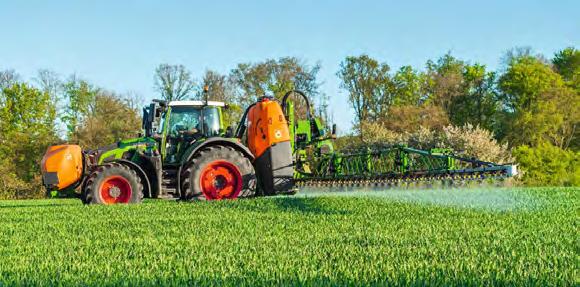
Members of the Western Branch of the Institution of Agricultural Engineers recently attended a well-received technical workshop delivered by the team from Amazone, providing an in-depth update on the company’s latest precision farming systems and ISOBUS-enabled machinery.
With a reported 2025 turnover of €850 million, Amazone manufactures around 70% of its products in-house across seven European production sites. Plough production was reintroduced in 2016 following the acquisition of the Vogel and Noot facility in Hungary. The workshop marked the company’s first return to the
Western Branch since 2014 and followed closely after two silver medals at Agritechnica 2025.
Nigel Jones, Richard Amphlet and Tom Sheppard delivered a hybrid presentation using workshop facilities, followed by practical walk-rounds of three machines drawn from the Amazone range. The session opened with a discussion of the challenges associated with soil management for crop establishment. Emphasis was placed on the variability of soils, seasons and cultivation systems, and the need for flexible machinery specifications that allow targeted soil movement, moisture conservation and effective weed
stimulation within increasingly narrow weather windows.
Amazone’s approach spans no-till through to full inversion cultivation, supported by integrated fertiliser and crop protection systems. Attention then turned to solid fertiliser application, where the heterogeneous nature of fertiliser granules presents challenges for spreading accuracy. The mySpreader App was demonstrated, offering in-field support either through a database of fertiliser characteristics or via the EasyCheck function, which analyses photographs of granules collected on field mats and suggests machine setting adjustments.
A ZA-TS 4200 fertiliser spreader was presented, coupled to a mid-sized John Deere tractor. Its kidney-shaped spread pattern allows up to 128 part-width sections, enabling precise control in irregular fields and accurate application across working widths of up to 54m. ArgusTwin radar sensors monitor fertiliser trajectory, adjusting disc speed hydraulically in real time, while WindControl sensors compensate for wind speed and direction. Electric agitators run at low speed to protect fertiliser integrity, and corrosion-resistant marine-grade components reduce maintenance requirements.
The second machine showcased was the Precea 4500-2CC precision drill, designed for
high-value crops. Engineering features include an optimised centre of gravity, reduced weight to lower horsepower demand, and consistent air pressure to ensure accurate seed singulation. Straight seed delivery tubes eliminate the need for blockage sensors, while infrared sensors confirm seed placement via the ISOBUS terminal. Tool-free disc changes and a large fertiliser hopper were highlighted as contractor-friendly features. The FertiSpot system was reported to deliver up to a 25% reduction in fertiliser use without yield penalty, through accurate root-zone placement. CurveControl maintains seed spacing accuracy during turns, even at working speeds of up to 15 km/h. Machine performance is independently verified by a DLG APPROVED test certificate.
Completing the demonstration was a rear-mounted 24m boom sprayer
with front tank. Parallelogram suspension reduces shock loads during high-speed fieldwork and road transport. AmaSelect CurveControl automatically selects nozzle combinations on curves to avoid over or under application, while the mySprayer App enables nozzle diagnostics and tank volume calculation. Spot spraying functionality allows integration with weed maps to reduce chemical and water use, with technology shared across mounted, trailed and self-propelled platforms.
The session concluded with discussion of Amazone’s investment in AgXeed, underlining its commitment to autonomous machinery development. Record attendance reflected strong interest in the practical engineering detail presented, and the branch expressed appreciation for a highly informative and engaging evening.
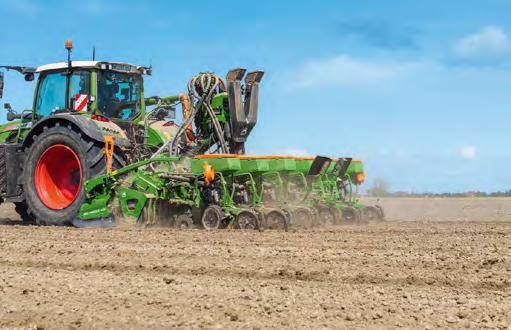
The Wrekin Branch of the Institution of Agricultural Engineers continued its 2025/26 technical programme with an evening devoted to land drainage and trenching engineering. The well-attended meeting featured two complementary presentations: an agronomic and practical overview from Rob Burtonshaw, Nuffield Farming Scholar and Director of Farm Services Ltd, followed by a deep dive into trenching machinery design by Fred Clarke, Technical Director at Mastenbroek.
Rob Burtonshaw opened by reminding attendees of the fundamental objective of drainage engineering: maintaining healthy soil structure. Ideally, productive soil should comprise roughly 25% air, 25% water and 50% mineral and organic matter. Effective drainage ensures sufficient pore space for root respiration and microbial activity, while avoiding prolonged
waterlogging that restricts crop growth.
Tracing the origins of modern drainage, Rob highlighted the introduction of mass-produced clay tiles in 1845, which triggered what he described as “the great Victorian infrastructure project no one talks about”. The Public Money Drainage Act of 1850 enabled widespread investment, with around £21 million
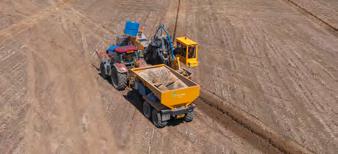
lent to farmers by 1880 – equivalent to approximately £1.9 billion today. During the Second World War alone, some 2 million hectares of land were drained, much of it by hand, with clay pipes laid across extensive field systems. Although public incentivisation declined from the 1980s onwards, interest in drainage has revived since the exceptionally wet conditions of 2012.
Rob emphasised that drainage maintenance remains critical, even if it involves “miserable” winter field inspections. Walking land to identify blocked ditches, locating and clearing outlets, and checking culverts were identified as priority tasks, as culvert failure is often the weakest link in drainage systems. He advised engineers and contractors to work from confirmed “as-built” plans rather
than original proposals, cautioning against digging deeper than historic installations. Tools such as Google Earth can assist in identifying old drain lines, particularly during late spring when crop growth highlights underlying patterns.
Roots – especially from willow trees – were highlighted as a major cause of failure, with one recent example involving 38m of drain destroyed. When systems require replacement, GPS-enabled tractors and modern grade control systems now assist surveying and installation, although Rob noted that these are not inherently more accurate than well-set laser systems.
Looking ahead, Rob highlighted environmental opportunities linked to drainage, including woodchip bioreactors designed to reduce nitrate losses. Widely adopted in the US – with significant investment by Iowa State – these systems are now being trialled in the UK at Harper Adams University.
Fred Clarke then outlined the engineering behind modern trenching machinery. Founded in 1965, Mastenbroek began by adapting Dutch drainage machines for UK conditions and has since expanded into utilities, offshore energy and specialist civil engineering sectors.
Speed and soil compatibility are key design drivers. Fred explained that V-plough systems can install up to 10 km of pipe per day in suitable soft soils, while chain trenchers typically achieve 3–4 km per day but perform better in stony or abrasive conditions.
Beyond agriculture, Fred showcased several extreme applications, including a US flood defence project requiring an 812mm wide slurry wall trench up to 15m deep. The custom-built 150-tonne machine, powered by twin Volvo
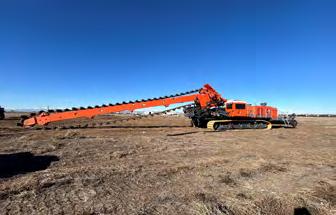
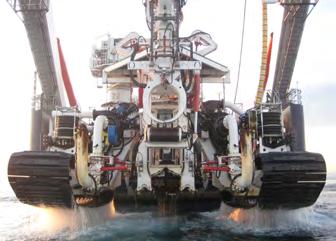
Penta engines delivering 1,500 hp, completed the 8,800 ft installation in just three months after three previous contractors had failed.
Offshore trenching projects were equally impressive, with machines designed to bury live oil pipelines up to a mile below sea level. These systems are pressure-compensated, employ water-jet cutting, and incorporate ROV docking stations to operate reliably in extreme environments.
From Victorian clay tiles to high-power, deep-trenching machines operating offshore, the evening provided a fascinating perspective on how drainage engineering has evolved. The Wrekin Branch thanked both speakers for delivering an informative and technically engaging session that resonated strongly with agricultural engineers.
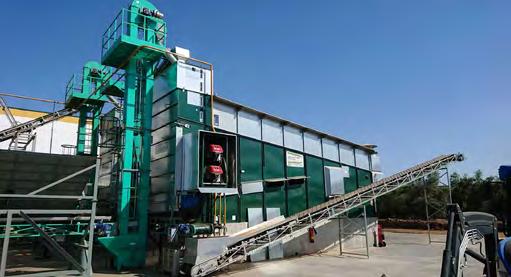
The Wrekin Branch continued its 2025/26 technical talk series with an evening dedicated to modern crop-drying technology.
James Shaw, Technical Sales Engineer at Alvan Blanch, traced the company’s history, explored the physics of drying, and showcased the remarkable diversity of materials now processed through their systems—from wheat and barley to seaweed and cannabis.
A British manufacturer with global reach
James opened with the story of Alvan Blanch, a UK-based engineering firm whose origins lie
in early cascade dryers, threshing equipment, and grain cleaners. For the domestic market, the company still supplies many grain drying units. However, around 85% of the firms output now sails to Africa and the Middle East where the demand is usually for large turnkey installations, incorporating drying, handling and processing.
All manufacturing remains in the UK, a strategic choice that allows for bespoke engineering and tight quality control. This comes with challenges - competing with lower-cost regions, managing seasonal demand spikes - but it also enables the flexibility required for specialist projects. To compete with overseas manufacturing the firm has invested
in automated manufacturing processes, including an automated welding system, similar to those used in car manufacturing operations.
James provided an overview of the main drying systems used across agriculture.Tower dryers, common across Europe, offer a simple gravity-fed continuous process but struggle with wet or dirty grain, which can “stream” down the sides and dry unevenly.
Fragile crops such as rice and beans suffer breakage due to tumbling.
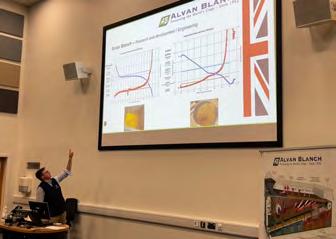
Batch drum dryers recirculate material using augers, which can damage grain and are therefore rarely used for commercial cereals.
Underfloor drying offers a practical option as the space can be used as a shed when not drying, but issues with over-drying the lower layers is common. These limitations set the stage for Alvan Blanch’s own innovations in continuous-flow drying.
Double flow dryers –continuous drying for granular crops
The Double Flow (DF) continuous dryer is designed for granular crops such as wheat, barley, oats, and other combine-harvested materials. There is no practical limit on incoming moisture content and compatibility with a wide range of heat sources—including waste heat, biomass boilers, diesel engines etc.
Most units are static, but mobile versions exist for markets such as Canada and Australia for large contracting operations. In the UK, wheeled units are most often purchased to navigate planning restrictions.
Conveyor flow dryers –engineering for the unusual
The Conveyor Flow Continuous Dryer handles the materials that defeat traditional systems: cannabis, seaweed, medical waste, straw, maize, and even household waste. Capacities range from 2 to 100 tonnes per hour.
Its defining feature is the louvered drying bed, originally patented by Alvan Blanch. Air is pushed through angled louvres that prevent material blowback while gently lifting the crop, reducing conveyor wear and eliminating the clogging issues seen in woven-belt systems. Dust and chaff are aspirated away, removing the need for pre-cleaning and reducing fire risk—particularly important for oily, dusty crops such as sunflower.
The system is highly controllable, with adjustable bed speed, bed height, fan speed, and heat input. Optional moisture-measurement ducts allow closed-loop control of the conveyor speed. The dryer can also switch between crops with minimal downtime, a major advantage for cooperatives and multi-crop processors.
James discussed the practical constraints of dryer design. A key constraint is that the systems should fit on an open container for shipping. Despite this, Alvan Blanch try to avoid modular systems, opting for the durability of a single unit. Altitude also plays a role: drying efficiency drops by roughly 1% for every 100 metres above sea level due to reduced air density.
Many African installations sit above 1,000 metres, requiring larger fans, higher temperatures, or longer residence times. Energy efficiency is a major focus.
Internal heat recovery provides 5–15% savings, while external recirculation systems and insulation packages offer further gains— particularly in cold climates where drying may occur at –20°C.
Alvan Blanch frequently develops systems for materials no one has dried before. Their test facility allows engineers to characterise new crops and wastes, determining airflow, temperature, and mechanical handling requirements. James shared examples such as hibiscus processing for African exporters transitioning from traditional tarp drying to systems capable of meeting European standards.
The Wrekin Branch is most grateful to James Shaw for an evening that was technically rich and engaging, offering an insight into the engineering required to dry almost anything the agricultural world can produce.
Member
Mr Willard Zendera (Zimbabwe)
Mr Richard Scott (East Midlands)
Miss Amy Harley (Wrekin)
Associate Member
Mr Samuel Nieto (Wrekin)
Mrs Vasanthiny Puvanatharssan (East Midlands)
Affiliate
Mr Kalu Udonsi (East Midlands)
Mr Rannoverng Yanac (Peru)
Technician
Mr William Byrne (East Anglia)
Mr Ashley Cook (South Eastern)
Student
Harper Adams University
Issac Tipson
Oliver Lloyd
Jack Ellis
Kirstin Johnson
Matthew Forbes
George Godbert
Dylan Shapcott
Benjamin Cunningham
Madeline Gaughan
Thomas Morgan
Lily Dolloway
Joshua Polley
Benjamin Kirkpatric
Hubert Shute
Henry Cobb
Addy Horwood
Newton Lord
Samuel Waugh
Daniel Jones
Matthew Duncan
Oliver Higgins
Harry Gentle
Peter Hodson
Kyle McCrea
Munster Technological University
Andrew Comiskey
James McCarthy
Aaron Hickey
Darragh McMahon
Luke Cunningham
Cathal Bourke
Diarmuid Commane
John O’Connor
Sean Stenson
Mark Deane
James MacLoughlin
Keele University
Kimberley Pearson
Cranfield University
Benjamin Crouch
Sharareh Norouzi
Keltoum Bouizgma
Chandrika Panchadi
Chiamaka Adinnu
CAFRE
Jack Speer
Tom Wilson
Scott Coulter
Ryan Lynd
James Henry
Emily Scott
Matthew Fegan
Joe McNicholl
Enya Parke
Cameron McDonald
James Irons
Noah Meekin
Peter Hamilton
Matthew Tweed
Dylan McKendry
Oliver Lyons
Sam George
Stephen Lowry
Ben Moan
Adam Wylie
Mark Murphy
Eoin McConville
University College Dublin
Wei Wang
Brunel University London
Yihang Feng
Strathclyde University
David Bowman
Reaseheath College
Silas Eccleston
Molly Mills
Adam Rushton
University of Nottingham
James Cameron
Coleg Sir Gar
Oliver Jones
Dylan Vaughan
Tomos Thomas
Rhys Jones
Ifan Davies
Dan Jones
Glyn Bevan
Thomas Richards
William Thomas
William Morgan
Emyr Evans
Will Davies
Aled Jones
Mabon Harvey
Iestyn Griffiths
Daniel Marklew
Caision Rees-Jones
Jack Tanner
Elis Evans
Ieuan Evans
Max Lynch-Wilson
Owain Lewis
Lloyd Richards
Will Godden
Tudur Gerorge
Max Benton
Josh Phillips
Ronnie Godden
Ioan Williams
Ifan Thomas
Dafydd Jones
Osian Evans
Dainton Breen
Aron Davies
Gethin James
Dylan Lewis
George Thomas
Berwyn Thomas
Kien Evans
University of Cambridge
Dimitrios Paparas
ARU Writtle
Daniel Whitfield
Charlie Moverley
Charlie Stone
University of Birmingham
Giles Pickford
Leeds College of Building
Tom Allsebrook
Open University
Grace Plastow
Mr Patrick Butler (West Midlands)
We have recently learned of the death of the following members and we send our condolences to their family and friends:
Mr Stephen Watson AIAgrE – Mr Watson joined the Institution as an Affiliate Member in October 2015. He was a valued member for just over 10 years.
Mr Cedric L Hill IEng MIAgrE – Mr Hill joined the Institution as an Associate Member in June 1957. He transferred to Member grade in January 1969 and went on to gain his Incorporated Engineer registration in January 1977. He was a long standing valued member of the Institution with 68 years of membership.
SOCIETY FOR THE ENVIRONMENT
CEnv
Mr Athanasios Mandis (South Eastern)
Mr Sean Blaney (Northern Ireland)
60 years
years
years
years
Name
Edward Southcombe CEng FIAgrE 13 January 2026
William Waddilove IEng CEnv FIAgrE 02 March 2026
Jonathan C A Henry AIAgrE 01 February 2026
Allan J Cochran IEng MIAgrE 01 February 2026
Quentin L Dawson MIAgrE 01 February 2026
Keith J Hawken CEng FIAgrE 01 February 2026
Ian Moore IEng MIAgrE 02 February 2026


launched in partnership between the Institution of Agricultural Engineers (IAgrE) and the Society for the Environment is the new grade of Registered Environmental Practitioner (REnvP).
This is a huge step forward to ensure high standards of professionalism and proven competence are met by those working to enhance and protect the environment across every sector.
Register through IAgrE now:
t: +44 (0) 1234 750876
e: membership@iagre.org
w: www.iagre.org
This registration is timely and relevant for agricultural engineering and the associated technology sectors and the intention is that professionals in the industry will apply. The industry includes many different disciplines which need people to apply a professional approach and the Registered Environmental Practitioner grade is ideal for this.
Why should I register?
• Improve your career and salary prospects
• Stand out from the field
• Join a network of dedicated professionals
• Demonstrate your competence and skills.
Although the standards are high, IAgrE makes the process simple.
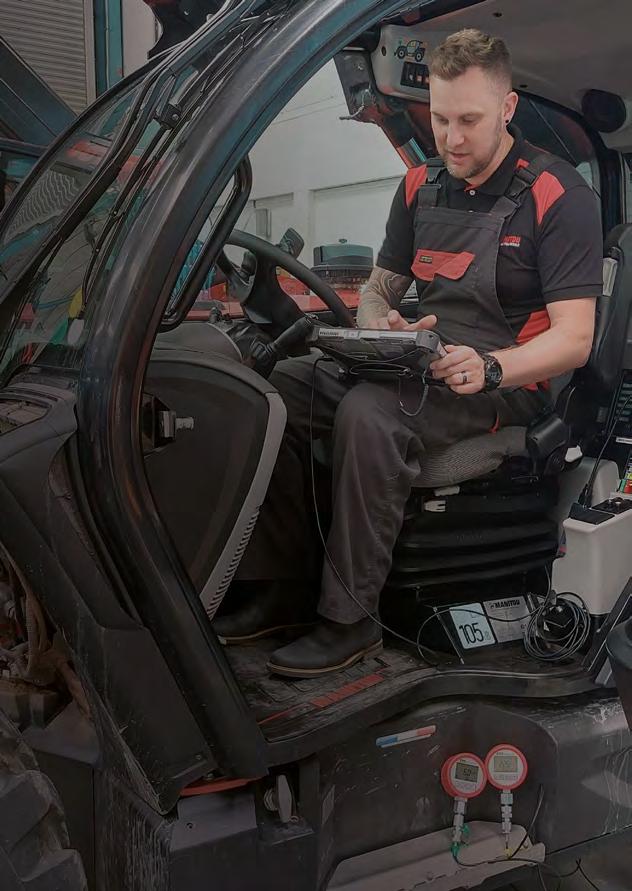
Technical presentations
eNewsletters
Access to Landwards journal
Networking opportunities
Competitions & awards
Local branches
Careers guidance & Jobs and much more
A listed technician with the Institution of Agricultural Engineers demonstrates a high quality of education and training, compliance to our code of professional ethics and commitment to continual learning. In addition to displaying your professional identity, you get lots of other benefits, as above. simply complete the online application form Visit iagre org for details