CE FOREWORD
As we move into the summer period, there is a strong sense of momentum across the Irish Holstein Friesian Association and within our wider dairy breeding community. The past year has reinforced both the resilience of IHFA members and the importance of the work we do together in supporting profitable, sustainable, and internationally respected dairy farming.
Irish breeders continue to demonstrate leadership in genetic progress. Advances in genomic technology, combined with the depth and quality of data generated on Irish farms, are strengthening the reliability of breeding decisions and accelerating gains in fertility, milk solids, health and longevity.
We are seeing increasing demand for traits that improve longevity and ease of management, such as good udders, locomotion and teat length. This is coming from pedigree and non-pedigree herds alike. We continue to work with ICBF and others to further understand these traits and how they fit in national breeding programmes.
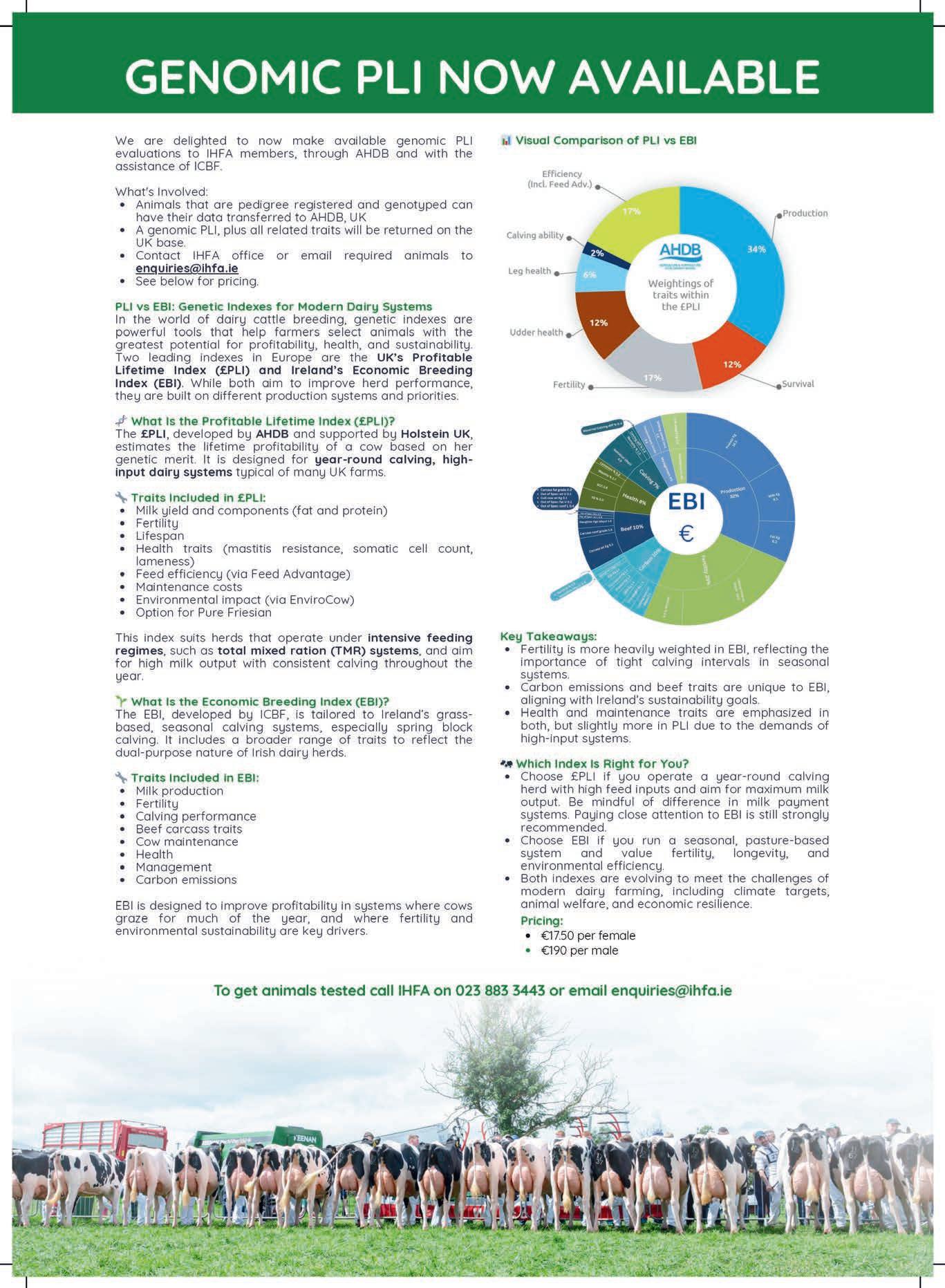
The development of the PLI genomic service is a significant step for those that operate a farm and breeding system that differs widely from the farm model that underpins the EBI. This offers an alternative evaluation system that may suit some breeders better. While EBI continues to be of huge importance, we are delighted to further support the full range of breeding goals in IHFA member herds.
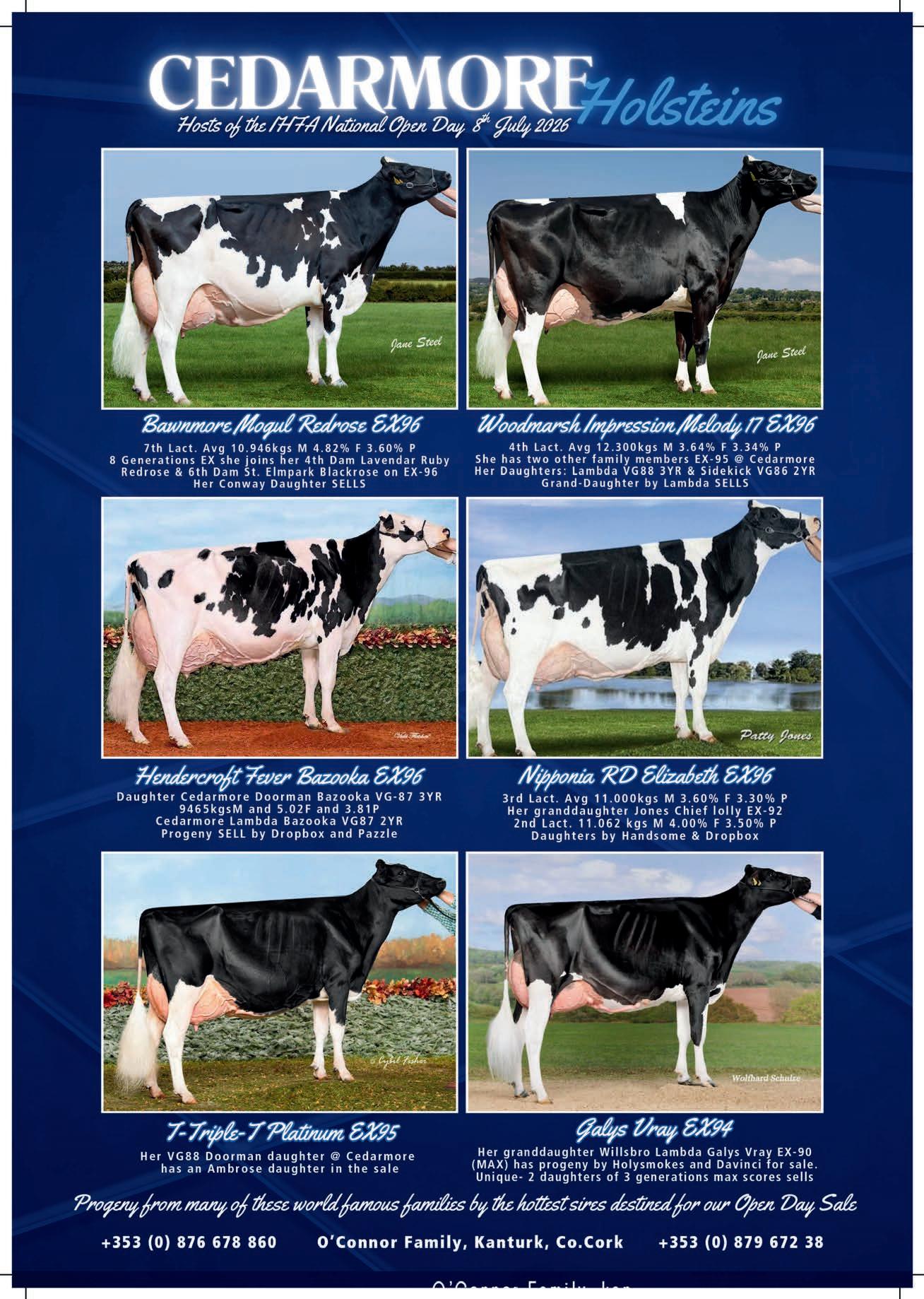
This Summer is a huge opportunity to promote our breed. Our National open Day will be hosted by the O’Connor family in Kanturk, one of the most impressive herds and farms in Ireland. We also have six tremendous Focus Farms this year who will all participate in on-farm events later in the year. This all adds to the huge amount of local club events and shows and adds up to a superb showcase for IHFA.
As we look ahead to the second half of the year, IHFA will continue to invest in services, communication and innovation that support members in a changing landscape. By staying focused on excellence in breeding and by working together, we can ensure that Irish Holstein Friesian genetics remain competitive, credible and in demand at home and internationally.
I would like to thank you for your continued support and wish you and your families a safe and productive summer.
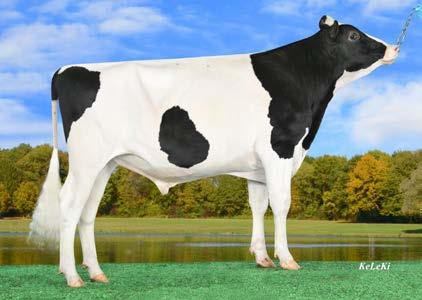
Townlineacre Hanans London TL
Milk Fat Depression in Irish Dairy Cows
Why
butterfat still pays, why it falls, and how to respond
Why butterfat matters
Butterfat remains a major commercial driver on Irish dairy farms. Milk is paid largely on an A+B-C basis, where processors pay for kilograms of fat and protein and deduct a volume charge. Protein is usually the more valuable component, but fat still makes up a large part of final milk value. For spring-calving herds, this matters most when butterfat falls during peak milk supply.
What counts as milk fat depression?
Milk fat depression, or MFD, is more than a low butterfat test. It is best understood as a reduction in milk fat concentration or fat yield while milk yield remains normal or may even increase. Protein often holds closer to expectation. Irish field work has commonly used repeated bulk-tank fat at or below 3.3%, with protein at or above 3.2%, as a practical herd-level warning sign. Other definitions use fat below about 3.2%, or a fall of more than 0.4 percentage points lasting 10 days or more.
Irish seasonal pattern
The Irish context is important because not every late-spring fat drop is true MFD. Historic Irish herd analyses found that around 10% of herds had bulk-tank fat below 3.3% and around 40% were below 3.6% during April to June. MFD can occur anytime from April to September. Teagasc reported a 0.44 percentage-point reduction in national milk fat from spring to summer in 2023.This timing is commercially painful because it coincides with high milk volume.
Devenish Milk Solids Booster
Devenish have designed an innovative product which is designed to significantly enhance milk solids. This product is very effective in reducing the impact of MFD. Devenish Milk Solids Booster is composed of four products each having significant enhancing effects on both butterfat, milk protein and total milk solids output. Devenish Milk Solids Booster when used in line with their definite guidelines has also shown significant cow fertility benefits with increased conception rates and reduced embryo deaths. Significant cow health benefits have also been reported on many farms.
On-Farm Results: Farmer A and Farmer B
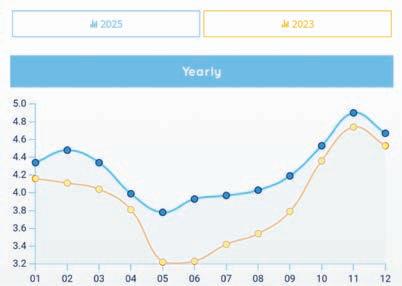
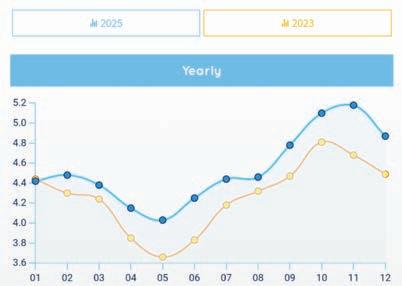
The graphs below show responses obtained on Irish family farms when Devenish Milk Solids Booster was included in these farmer’s concentrates at 80 g/cow/day in 2025 and the graph highlights that butterfats remained significantly higher throughout 2025. The graph clearly shows MFD occurring in 2023 and the typical seasonal variation in butterfat when Devenish Milk Solids Booster was not included.
Figure 1. Farmer A monthly butterfat pattern. Orange shows 2023; blue shows 2025.
Figure 2. Farmer B monthly butterfat pattern. Orange shows 2023; blue shows 2025.
Points to note from the graphs
Both herds show a clear spring trough, with butterfat lowest around April to May. Farmer A shows a sharper 2023 dip, followed by recovery from late summer into autumn. Farmer B holds butterfat higher overall, but still shows the same seasonal spring pressure. Both farmers included Devenish Milk Solids Booster in 2025 and obtained significantly higher butterfats and kgs of milk solids.
Farmer A
Farmer B
Why MFD happens
True diet-related Milk Fat Depression is caused by altered rumen biohydrogenation. Under certain nutritional conditions, particularly low effective fibre, high concentrate feeding, high starch intake, or elevated unsaturated-fat supply, rumen fatty-acid metabolism can shift away from the normal biohydrogenation pathway and towards the trans-10 pathway. This results in increased production of specific intermediates, most notably trans-10, cis-12 conjugated linoleic acid. These intermediates directly inhibit de novo fatty acid synthesis in the mammary gland, reducing butterfat production.
The outcome is classic milk fat depression: milk yield may be maintained, but milk fat percentage and milk fat yield fall.
Irish grazing herds add another layer of complexity. Lush leafy grass, high unsaturated-fat intake, selective grazing, and low rumen pH may all contribute in some herds. Also, time of year and herd fat genetics explain much of the recurring spring-summer pattern. Low butterfat at grass should not automatically be treated as a simple fibre shortage.
Diagnosis: warning signs to check
Repeated bulk-tank fat at or below 3.30%, especially where protein remains close to expectation.
Milk yield holding steady while butterfat falls.
A fat-to-protein ratio below 1.0, which can suggest low rumen pH or subacute ruminal acidosis risk.
A high fat-to-protein ratio above about 1.4 in fresh cows, which points more toward ketosis or negative energy balance than classic MFD.
Prevention and response
Prevention starts with stable rumen function and good grassland management. Teagasc guidance for grazing cows points to roughly 32-36% NDF in the diet dry matter, with 33-35% particularly important where grass is in deficit. If grass is short or weather limits intake, high-quality silage may be more useful than token long fibre.
Protect grass intake and avoid sudden diet changes. Review concentrate rate, starch source, and feeding pattern; rapidly fermentable starch can increase risk in some herds.
Use high-quality silage where grazing intake is restricted.
Breed for stronger fat PTA so the herd starts from a higher butterfat baseline.
Role of Devenish Milk Solids Booster
Devenish Milk Solids Booster can be considered within this wider framework. This is a seventh-generation product and is well proven at farm level. Devenish recommend its use in specific situations as part of a programme in enhancing milk solids, improving cow fertility and cow health.
Typical butterfat increases of +0.3 (0.2-0.5) percentage points.
Typical protein increases of +0.12 (0.05-0.3) percentage points.
Typical ROI ranging from 1.75:1 to 3.75:1. The product should be used as a targeted nutritional tool, as part of a nutrition programme.
Bottom line
Butterfat is margin. When it falls, first identify whether the herd is experiencing normal seasonal decline, true nutrition-driven MFD, or another health or energybalance problems. Consult our nutritional team for the best advice for your farm.
For more information contact:
Dr Morgan Sheehy 086 8276506
Jack Hogan 087 9822975
Mike Frawley 087 259 8417
Ciaran Conway 087 2671202
Ryan McPolin +44 (0)7436039709
James Scott +44 (0)7469391330
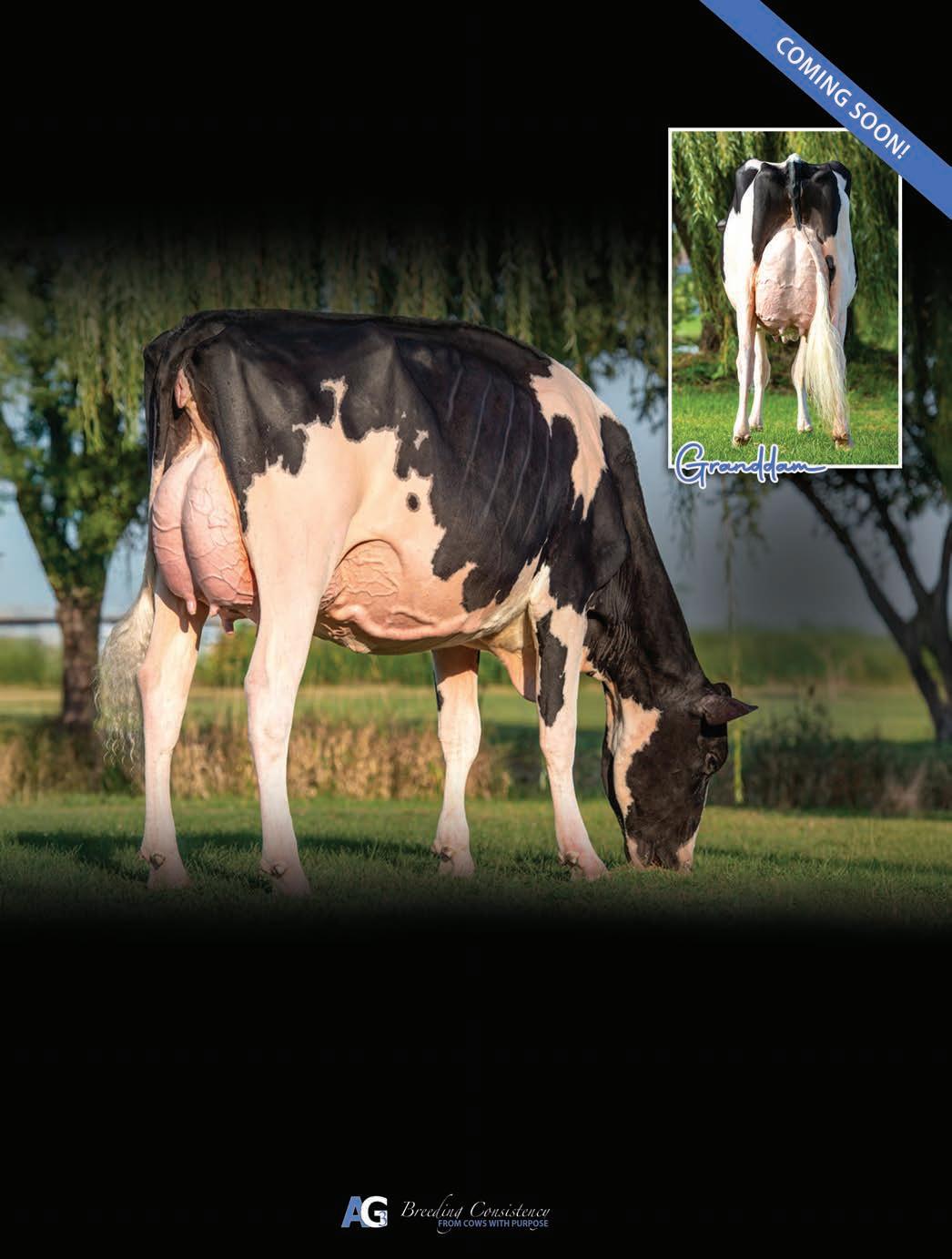
Comestar Doorman O'Katrysha
Erbacres Snapple Shakira