Build, Buy, or Partner for Success
The GBS Leader’s Agentic AI Playbook
Discover how your business should be thinking about AI agent deployment and how best to use this pivotal tech to unlock real process autonomy.




Discover how your business should be thinking about AI agent deployment and how best to use this pivotal tech to unlock real process autonomy.
How to tap into agentic AI is one of the biggest business debates in the world right now. And while the tech is already showing up everywhere, from customer service to day-to-day research, there are few areas where it stands to make a bigger impact than within Shared Service Centers (SSCs) and Global Business Services (GBS).

For GBS leaders, the promise is clear: intelligent agents that can automate complex, cross-functional processes and cut costs in the process. But with a hundred options on the table, and an ever louder debate around whether companies should build or buy their AI agents, the real question becomes: What’s the best way to deploy an agentic solution for your business?
In this white paper we explore that question in-depth, highlighting when it makes sense to build, when you should buy, and why this tech matters for GBS. We also provide practical tips, tools. and a decision framework so that you can make the best deployment decision to suit the needs of your business.
Truly autonomous process automation is a goal businesses have pursued for decades. In Shared Services and GBS in particular, technologies like optical character recognition (OCR) have played a long-standing role in processes like invoice processing, speeding up turnarounds but never quite delivering on the promise of truly touchless automation.
The reason is that these technologies still can’t easily handle exceptions to their rules-based logic. In other words, faced with a challenge like missing data, the transaction grinds to a halt while the problem is sent to a human worker to resolve. These limitations mean that, at best, businesses can automate parts of a core process — a few steps in Procureto-Pay (P2P) or Order-to-Cash (O2C) — but never the full process end-to-end.
A gentic AI changes the narrative, opening up a pathway to true, touchless, end-to-end automation. Instead of siloed automation steps working within rigid rulesets, with agentic, back-office process automation becomes truly seamless. Thanks, in large part, to the unique characteristics of the technology.
AI agents can:
• Handle exceptions autonomously, performing better with exposure and training
• Adapt to changing workflows and process steps in real time
• Learn and update their workflows in light of new information, including predictive routing
• Interact with human workers using natural language
• Integrate steps across entire processes, speeding up handoffs and data validation
• Check and update master data, flags, and approvals in real-time
What these capabilities mean for GBS leaders is a complete rethink of how and where automation is used, how success is measured, and how back-office functions are run. But this is also where things start to get tricky for the build or buy debate.
Because agentic systems are so complex, at least under the hood, surface-level solutions like a “wrapper” on an LLM fall far short of delivering the true value of agentic tech, especially for complex, multi-layered processes. Instead, companies looking to harness real value need to think carefully about how they plan on deploying this tech, how they measure success, and what the most cost-effective strategy looks like.
For many companies, the question of how to implement agentic AI for process automation is hotly debated: Build a solution internally, along with the expertise and maintenance requirements that entails? Buy an existing solution that may not entirely meet your business needs? Or take a hybrid approach, partnering with a vendor to build agentic tools tailored to your unique processes?
Often, the debate centers on cost and short-term ROI. But better questions for business leaders to ask might be: How do we deploy a solution that scales across our combined process landscape? And how do we ensure it delivers value across complex, interlinked, integrated processes?


There’s no question that agentic AI can deliver real value for the companies that deploy it successfully, or that a largely autonomous system places an enterprise head and shoulders above the competition in terms of speed, efficiency, and cost savings. But there’s still plenty of ambiguity around how to invest in agentic AI solutions. In this section, we run through the three main options available to GBS leaders: build, buy, or strategically partner with a vendor. Figure 1 highlights the cases where it makes sense to build, versus when you should buy or partner with a vendor:
Decision matrix: where build, buy, and hybrid win
Deploying agentic AI is not one size fits all. 95% of homegrown AI initiatives fail because organizations overinvest, underplan, or spend more time budgeting for AI than analysing fit. It’s an easy task to solve.
1. Scale your use case on all dimensions
2. Plot it on the matrix
3. Follow the recommendations for your quadrant
“95% of internal AI build fail” + warning signs:
• “Our developers will do it”
• Underestimating maintenance costs
• No plans for model drift
• Missing compliance expertise
• 18-24+ month timelines
Figure 1: When to consider a build, buy or hybrid deployment
Mission-critical + Specialized expertise required
E.g.: expense processing, vendor onboarding, order entry
NOTE
• 99%+ accuracy required
• Complex exception handling
• Enterprise-wide scalability
Mission-critical, but org wants involvement
E.g.: PO matching, credit decisions, vendor onboarding
NOTE
• Partner provides core platform
• Internal team customizes
Use cases seem simple but hide complexity
E.g.: PO creation, order entry, expense categorization
NOTE
• Simple on the surface, hidden complexity
• Ensure long-term resources
Non-critical tasks – org use own AI team
E.g.: meeting notes, email drafts, report generation
NOTE
• Non-mission critical tasks
• Strong internal AI capability
• High tolerance for errors
When considering a build versus buy approach many businesses miss a key factor: The hidden complications beneath the surface of their agentic deployment idea. Automating invoice processing, for example, may seem straightforward. The agent pulls data from an invoice, matches POs, checks against policy documents, sends it to a centralized repository, and then allows people to access that data with natural language queries. But underlying this process is a world of complexity. How does the agent handle exceptions? How are errors tracked? Compliance? The list goes on (Figure 2).
Governance layers: what you see vs what you maintain

Business tasks & outcomes
Operational quality & orchestration
Compliance, security, organizational resilience order confirmation match




















match
Deploying a working agentic solution also isn’t simply “one and done”. If you build your own process-handling agents, you need to also factor in the ongoing costs of maintenance, the cost of a service desk, the expense of scaling, how to integrate the solution across complex GBS workflows that incorporate multiple systems, and, of course, how all of this impacts ROI.









Failure to consider these points is the reason that so many AI initiatives fail in the earliest stages. In their 2025 State of AI in Business Report, MIT points out that 95% of AI pilots fail, often because of poor planning, a flawed rollout, or the lack of a solid integration strategy1.
So when should you consider building? As Figure One shows, building can be a viable strategy when:
1. You have a strong internal development team




2. The process you’re building for is not mission-critical
Under those circumstances, you can afford to experiment, make mistakes, and fail in your initial trials. Building also gives you full freedom to design a solution that performs exactly the way you want. This makes sense if you have very specific custom use cases, for example, a specific way of validating master data that isn’t covered by a standard solution. But it could also make sense to partner with a proven vendor that’s willing to take on the challenge of building to your use case.
1 State of AI in Business 2025
When the process you’re trying to automate is business-critical but you lack in-house AI expertise, buying in a solution is often the best option. There are currently a range of agentic AI vendor solutions on offer, many geared towards exactly the types of processes GBS teams most need to automate. For example: invoice processing, expense management, customer and employee onboarding.
Some vendors also offer solutions aimed at the entire parent process, automating all steps within a larger P2P or O2C framework from end to end, and can therefore scale up deployments as needed.
The key points to be aware of when you’re considering buying a solution are:
1. Is this process mission-critical (i.e., is failure an option?)
2. Does automating this process require specialized expertise (and do we have that in-house)?
If your processes require a high degree of accuracy, come with complex exceptions, or need to be rapidly scaled up from an initial pilot to an enterprise-wide implementation, buying a solution is often a good option. Especially in cases where you need to prove rapid ROI to executive sponsors. By buying, you skip the costly (and time-intensive) development phase, along with the potential financial blowback when solutions fail or aren’t fit for purpose. A good pre-built solution also addresses many of the integration issues companies face when building systems themselves, like how to give the agentic system access to your ERP, CRM and databases.
With all of that said, not all vendors are capable of delivering turn-key answers to GBS automation. If your processes are highly specific to your organization, or require extensive adherence to compliance or security standards, you’ll need to evaluate options carefully. Alternatively, consider building a custom solution or partnering with a vendor that has the expertise to do so.
Finally, if you need custom solutions but lack the time to develop them or have restricted expertise, consider a strategic vendor partnership. This might look like working closely with the vendor team to develop a bespoke solution that meets your requirements. Or, it could mean the vendor sending a forward-developing engineer to help build out a customized solution based on their existing architecture.
This kind of partnership can be a great way to tackle niche cases or pain points that are unique to your process landscape and therefore impossible to address with existing agentic solutions.
Vendors also often have detailed subject-matter expertise across a wide range of processes, allowing them to quickly pivot and adapt a solution, or to develop novel tech and concepts to meet specific needs.
Note, however, that partnering with a vendor doesn’t completely eliminate the risk of failure. There’s still a chance that the solution won’t pan out as intended and that the vendor will need to start from scratch. But, because they have a higher level of expertise with agentic solutions, a good vendor will often be able to work through issues much faster than your own team could by themselves.

There are a number of common issues businesses face as they work towards GBS process autonomy. Common stumbling blocks include:
Poor Alignment with Business Objectives: Ultimately, the goal of your agentic process deployments should be to generate better business outcomes. Which is why it’s surprising that many enterprises still go into AI pilot projects without a clear idea of what they’re working towards. This can be an especially big risk in the build scenario, with teams often building creatively, but without aligning their ideas to what benefits the broader business.
Solution: Ensure your team (internal/external or both) understands the end-goal of automation, including the exact metrics and KPIs that will be used to measure success. Then, once your agentic solution is up and running, conduct regular evaluations to ensure it’s meeting those KPIs.
Poor Data Governance: Data governance is another key issue. If the information your agentic system is accessing is inaccurate, it doesn’t really matter how “well” the agents perform their tasks — the results still won’t be businessrelevant. Part of the problem is the complexity of building and maintaining integrations to relevant data sources. This should be factored in, whether you’re building a solution from scratch or evaluating vendor offerings for fit.
Solution: AI agents can be used in structuring and maintaining data. Once again, these can either be built internally or sourced from a vendor, but in either case, they should be designed to enhance data governance at all levels.
Poor Security and Compliance Performance: Maintaining compliance and appropriate security measures is an additional challenge, especially for those in highly regulated industries. This becomes even more complex as you scale, deploying agents across geographic areas and verticals. And given the financial and reputational impacts, few businesses can afford to get it wrong.
Solution: In a build scenario, ensure your base layer architecture supports the necessary compliance requirements. Then, build process-specific solutions on top of that layer, ensuring everything needed is already enforced. If you’re buying, evaluate vendors carefully for compliance, including with region-specific requirements. If partnering, ensure your requirements are mapped directly onto any new project undertaken with your vendor.


There are three additional major factors to consider in the build versus buy debate:
1. How complex is the outcome you are hoping to automate?
If your only requirement is an internal chatbot that needs to access your process or training guidelines to answer questions, it may be possible to build a solution internally. It might still be a tall order for an inexperienced team, but the business impact of failure is likely low. This is also true of low-level, low-complexity, low-variance tasks, like drafting basic status reports, which could easily be handled by an “AI agent” that’s just a UI/UX wrapper around ChatGPT.
For something like answering customer queries, however, the stakes are a little higher and you need more guardrails in place. This, in turn, introduces higher complexity, the risk of failure, and additional time and money. By the time you get to a process like order management, things become even more complicated — with more dependencies and bigger risks.
A good way to think about this is in terms of a scale from 0 to 10. A simple chatbot might be 0 on the scale. An endto-end P2P process? Likely a 10. Especially when you factor in the compliance, security, and business criticality factors highlighted in Figures 1 and 2. As that complexity goes up, the scale shifts from build towards buy.
2. How mature is your development team? And do they have the expertise to tackle the agentic solution you have in mind?
This can be a tricky point for teams to assess internally, especially when they have some success rolling out an initial test run using low or no-code tools. In most cases, however, unless your core business is building agentic AI solutions, your team won’t have the experience needed to build a fully functional agentic automation system that can handle the kinds of issues and exceptions that typically crop up in GBS processes.
And even where you do have successes, you may find they don’t translate or scale to a broader process or across geographic bounds. Getting all of that right requires careful planning and an honest assessment of inhouse capabilities, especially as solutions become more bespoke or complex. Alternatively, consider partnering with a vendor that can help you realize your idea.
3. How complex is the infrastructure you need to build around your solution?
A final consideration is the complexity of the infrastructure you need to build to support your automation solution. This ties back to point one, but now we’re talking about all of the systems that need to be in place to support your ongoing automation. Whose job is it to monitor and fix integration issues? Or update compliance?
As these requirements become more stringent, the cost and time associated with maintaining your solution go up. And you may eventually find yourself with a lowperformance agentic system that never achieves the ROI you imagined in the first place.
If you don’t have a plan for handling these issues, buying or partnering is almost always the better choice. Especially when you factor in that it then becomes the vendor’s responsibility to ensure the correct support is in place.
With new free AI tools coming to market every day, there’s a growing trend towards “DIY AI” — the idea that with a no-code platform and a bit of time invested, anyone can build a functional AI agent. That may be true when you’re building a chatbot to answer internal questions, or an AI assistant that keeps your calendar upto-date. But is it the case for an AI solution intended to span an entire organization-wide process, like O2C? Or for an agent expected to autonomously execute high-volume finance or HR transactions: under audit, at scale, across legacy systems?
The truth in most cases is that these simplified deployments can’t crack process autonomy at scale, especially for complex, interrelated GBS processes. And trying to use this kind of tool to do that might leave you believing agentic is all “AI hype”.
As you navigate the decision to build or buy, it’s useful to keep in mind which processes will bring the highest value when automated. Most GBS teams already know this to some degree from their existing automation of processes like accounts payable (AP). Other areas where automation is already a familiar part of the landscape include additional processes in P2P and many of the processes in O2C.
Many of the current solutions used for these processes are straightforward and rules-based, leaning on tools like optical character recognition (OCR) or robotic process automation (RPA) to automate invoice capture and other key steps. Exception rates for these solutions are often still high, however, and most teams are painfully aware of the headaches this causes in terms of everything from missed payment windows to lengthy, manual exception-handling processes.

Here’s where agentic AI really starts to add value. Using a thoughtfully-deployed agentic system, GBS teams start to see a massive uptick in the degree of truly touchless automation in common processes like AP. In other words, those processes run end-to-end without needing any manual intervention. In some cases, agentic systems are delivering touchless automation rates over 95% — a huge jump from the 20-30% often seen for systems like RPA2 .
At the same time, agentic systems are tackling problems that older automation technology simply can’t touch. For instance, automating the entire O2C superprocess, consisting of sales and accounts receivable (AR). Or taking P2P from start to finish with only a limited need for human oversight.
A caveat: Not all agentic systems are delivering these kinds of results. As discussed in earlier sections, performance is highly tied to factors like system integration, data integrity and accessibility, implementation strategy, and the technical know-how of the team deploying the solution. But, under ideal circumstances, businesses are seeing large returns on agentic investments.
2. Agentic Process Automation: Beyond The ‘Happy Path’ Problem
The highly autonomous, reasoning nature of AI agents means that this tech is suitable for more than just perfecting the “usual suspects” in GBS processes. Increasingly, agentic vendors are moving towards creating highly specialized AI agents for tackling each pillar of GBS: from O2C and P2P to Hire-to-Retire (H2R) and Record-to-Report (R2R). Value
What companies deploying this tech should therefore be aiming for in the long run is more than just automating a few process steps or segments of super processes. Instead, agentic offers the possibility to automate the full 360° of business support processes — essentially creating a full digital twin of back-office teams (Figure 3).
A unified System of Action where processes, tools, and teams work in concert
Any Transaction
Any Language
Any Format
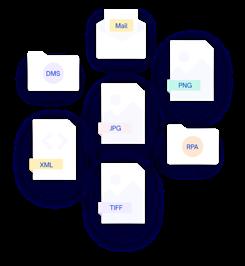
Order Confirmation Invoice Processing Expense Management
Employee Inquiries Employee Onboarding Absence Certificate Management
Any System Any Workflow Any Situation Cash Application Customer onboarding
Audit Support
Lease Contracts*
Keeping this goal in mind, the issue of “Build or Buy” becomes even more crucial. Deploying an agent across a single subprocess may be viable. But when it comes to harnessing the full power of the technology across an entire vertical, the expertise needed and development time may stretch into months or years. For most businesses, those timelines are simply not competitive, and it may make more sense to buy a solution or partner with an experienced vendor for a more rapid deployment.
Why are you considering deploying agentic for your company? Is it simply to “improve the speed of automation”? Or have you got an eye on the greater value this tech contributes in the long run?
Using agentic AI, businesses are already starting to see a host of gains beyond just automation. The reality of this technology for GBS leaders is that it reshapes the core value drivers the function brings to the table. Importantly, the ability to automate a process end-to-end also means that the value being delivered by automation can be measured where it actually matters: not in terms of single process steps, but at the end of the process chain where a business-relevant result is delivered.
The impact of these changes is that GBS moves from its traditional role as a cost center to being a growth enabler and partner that boosts business value across the board (Figure 4).
Focus on Strategic Business Partnering and Analysis...
• Proactive, forward looking decision-support
• Decision making participant
• More advanced analytical skills-sought after by BUS
• Translation of financial goals into operating plans • Basic analytical skills -reactive and historical
• Dual focus-GAAP and business units • Transaction processing
Closing
Increased focus on pro-active and forwardlooking support for business decisions
Increased focus on generating business insights on performance
Continued focus on financial reporting based on historical and financial information
Decreased focus on transactional processing and coordination
A core challenge for GBS managers has always been ensuring knowledge retention as employees retire. Traditionally, this has meant creating extensive documentation or training replacements while established employees are still with the company. This is often a haphazard process, with a lot of the detail getting lost in translation.
With agentic systems, knowledge is retained permanently in a single system capable of storing and cross-referencing data while also interpreting nuance to answer questions. With no siloes, no loss of key information, and no cost associated with lengthy training. Instead, as new employees come on board, finding out what they need to know becomes a simple matter of typing a question into a natural language interface.
Another big shift from the way GBS has traditionally operated is in terms of how operations are scaled — something that would have traditionally been handled by adding headcount. As companies move towards a more competitive “AI-first” approach, the headcount solution becomes less viable. Instead, managers are asked to “do less with more,” and agentic systems fit into this paradigm perfectly, solving many traditional scaling issues at the same time as reducing the requirement to hire new employees (Figure 5).


Manual touchpoints still dominate workflows:
• Invoice approvals across business units
• Claims processing requiring validation steps
• Underwriting depending on tribal knowledge
Anchors weighing down your process:
• Fragmented systems - more errors
• High cost per transaction
• Constant onboarding of transactional support staff
• Missed SLAs and slower decision-making
Hypatos Agentic AI introduces:
• Self-optimizing document workflows
• Predictive routing based on claim type, geography, value, urgency
• Intelligent underwriting document capture and validation
• Integrated logic to update master data, flags, and approvals in real-time
5: Next-gen agentic GBS blends humans & Al coworkers
This full spectrum of value is what GBS leaders should be keeping in mind as they navigate the build, buy, or partner debate. A common reaction to agentic is to take the short view: “How does this technology help me right now?”
While proving immediate value is important, focusing on it too narrowly can miss the point. A fully integrated agentic system delivers more than just short-term gains. It can completely shift the way GBS supports the business and move the GBS team towards strategic partnership.
The approach? Build or buy for single processes now. But keep the bigger picture in mind as you make those initial agentic deployments.
Do compliance, audit, or brand-risk concerns require third-party guarantees?
Is the process business-critical, requiring the lowest possible risk of failure?
Do you lack a mature data science & LLM Ops team?
Does your industry have complex security and compliance requirements?
Is a built solution likely to come with a high cost of ownership, given support and maintenance requirements?
Is rapid ROI (< 6 months) critical to executive sponsors?
Will the solution need to scale across geographies & ERPs within a year?
Are the workflows you need to automate typical or standardised?
Do you lack the time or skills to build custom solutions internally?
As the previous sections highlight, the considerations GBS leaders must factor into their agentic deployments are often extensive. And many of these influence the decision to build, buy, or partner. Table 1 below provides a simple checklist for determining the best course of action given your requirements.
Are you targeting multiple interconnected processes (e.g., end-to-end P2P or O2C automation)?
Will your agentic system rely on complex, cross-system integrations (ERP, CRM, data lakes)?
Is your agentic system likely to need complex support infrastructure (integration management, compliance updates, help desk)?
Is rapid deployment and proven reliability more valuable than customization?
Do you have limited data governance maturity or fragmented datasets?
Do you need a solution that facilitates GBS knowledge retention?
Do you need to expand operations rapidly, without adding headcount?
Mostly “Yes” = Buy or Partner
Mostly “No” = Building may be an option
Questions highlighted in blue indicate business critical points of failure. Consider buying or partnering if you answered “Yes” to these points, even if most answers are “No”. Does your internal development team lack agentic AI expertise?
As Table 1 shows, for most businesses, the best initial approach is to buy in agentic capabilities. From that starting point, however, it often makes sense to take a hybrid approach: Building out lightweight extensions or bespoke logic on top of the initial specialized platform, either internally or with the help of a vendor partner. This keeps the solution flexible to meet business needs, without the business needing to reinvent the core agentic engine.
As a GBS leader, the decision around whether to build, buy, or partner for agentic deployment is probably one of the most impactful ones you’ll make in the coming years. Making smart agentic deployments today sets your company up for long-term success, while also future-proofing the GBS team as a driver of business value, rather than a cost center.
As a leading provider of agentic AI solutions, Hypatos aims to help GBS leaders make this outcome a reality. Our expert team has partnered with hundreds of enterprises worldwide, offering deep expertise on how to use agentic across the full spectrum of GBS processes — from P2P and O2C, to H2R and R2R. That ranges from helping teams get started quickly with ready-made agents to supporting them in scaling and customizing solutions to meet changing requirements.
Hypatos’ easy-to-work-with AI agents are designed for teams of any level of experience, and can be customized conversationally through a natural language interface. This nocode approach empowers your team to modify agents on the fly, keeping pace with a changing process landscape.
The Hypatos platform (Figure 6) is also designed to support all major integration, compliance, and security requirements. That includes supporting teams through both their existing and emerging needs by:
• Regularly monitoring and building towards new compliance requirements,
• Maintaining up-to-date security certifications,
• Building out a robust network of partnerships with legacy automation and workflow solution providers to support integration with legacy systems.

Hypatos’ AI platform is built on an AI Agent-native foundation, delivered at enterprise-grade
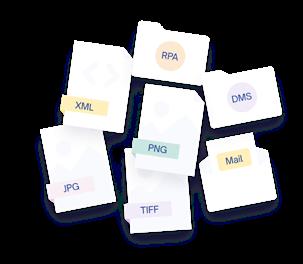
• Invoices
• Sales orders
• Customs documents
• Deliver notes
• Etc (50+ use cases) as
• Image
• XML, JSON, etc
• Word, Excel
• Scan
AI Agent Studio
HITL
Validate agent outputs and provide feedback
AI Agent Framework
Context data
capture & ingest
Agent library
Prebuilt, specialized AI Agents & actions ready to deploy
Intelligent pipelines and data stores for historical & master data
LLMs
Foundational models
Tools
Agent builder
Build & run AI Agents via prompts, LLMs, workflows
A toolset for core use cases (e.g. database access, coding)
RAG
Hypatos Insights
Document & process automation analytics, monitoring, reporting and diagnostics
Source prep & retrieval (e.g. tax, accounting content)
Self-hosted and proprietary models

Processed transactions fully processed learning data for AI
Structured document and process data is delivered into core systems with connectors and add-ons
Integration layer
Ingests transactional documents and connects to ERP, CRM, and workflow systems for 2-way communication with native add-ons, specific connectors or with custom API integrations
• E-Invoicing (incl. government portals)
• API/MCP from
By taking this approach, Hypatos helps you ensure that the decisions you make today translate into a tangible competitive advantage – one that captures the real strategic potential of agentic AI beyond the hype. And that helps you to maximize the value this technology delivers for years to come.
Ready to get started with agentic AI? Our Build versus Buy workshops help you conduct the initial assessment around how to roll out this pivotal tech, including identifying priorities and estimating your ROI with confidence for either route. Or, if you’re considering a vendor partnership, download our free guide to Choosing an Agentic Process Automation Partner

Build your GBS OS Scan to start
Hypatos is a leader in agentic process automation, modernizing global business services with AI co-workers. Our AI Agents streamline the back office, cut costs, and accelerate growth. Trusted by large enterprises across Europe and North America, we enable fully AI-driven operations,100x faster transactions processing and 75% fewer errors.