YOUR MS JOURNEY MAP
2
Diagnosis
1
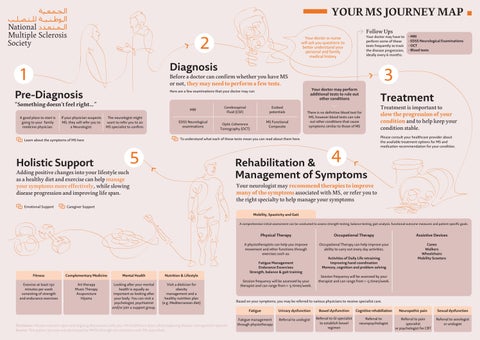
Before a doctor can confirm whether you have MS or not, they may need to perform a few tests.
Pre-Diagnosis A good place to start is going to your family medicine physician.
If your physician suspects MS, they will refer you to a Neurologist.
The neurologist might want to refer you to an MS specialist to confirm.
Learn about the symptoms of MS here
Holistic Support
Adding positive changes into your lifestyle such as a healthy diet and exercise can help manage your symptoms more effectively, while slowing disease progression and improving life span. Emotional Support
5
Your doctor may have to perform some of these tests frequently to track the disease progression, ideally every 6 months:
MRI
Cerebrospinal Fluid (CSF)
Evoked potentials
EDSS Neurological examinations
Optic Coherence Tomography (OCT)
MS Functional Composite
Treatment
There is no definitive blood test for MS, however blood tests can rule out other conditions that cause symptoms similar to those of MS
To understand what each of these tests mean you can read about them here.
• MRI • EDSS Neurological Examinations • OCT • Blood tests
3
Your doctor may perform additional tests to rule out other conditions
Here are a few examinations that your doctor may run:
“Something doesn’t feel right…”
Follow Ups
Your doctor or nurse will ask you questions to better understand your personal and family medical history
Treatment is important to slow the progression of your condition and to help keep your condition stable. Please consult your healthcare provider about the available treatment options for MS and medication recommendation for your condition.
4
Rehabilitation & Management of Symptoms
Your neurologist may recommend therapies to improve many of the symptoms associated with MS, or refer you to the right specialty to help manage your symptoms
Caregiver Support Mobility, Spasticity and Gait A comprehensive initial assessment can be conducted to assess strength testing, balance testing, gait analysis, functional outcome measures and patient specific goals.
Fitness
Complementary Medicine
Mental Health
Nutrition & Lifestyle
Exercise at least 150 minutes per week consisting of strength and endurance exercises
Art therapy Music Therapy Acupuncture Hijama
Looking after your mental health is equally as important as looking after your body. You can visit a psychologist, psychiatrist and/or join a support group.
Visit a dietician for obesity management and a healthy nutrition plan (e.g. Mediterranean diet)
Disclaimer: Please maintain open and ongoing discussions with your MS healthcare team when exploring disease management options. Source: This patient journey was developed by NMSS through consultations with MS specialists.
Physical Therapy
Occupational Therapy
Assistive Devices
A physiotherapists can help you improve movement and other functions through exercises such as:
Occupational Therapy can help improve your ability to carry out every day activities.
Canes Walkers Wheelchairs Mobility Scooters
Fatigue Management Endurance Excercises Strength, balance & gait training Session frequency will be assessed by your therapist and can range from 1 -5 times/week.
Activities of Daily Life retraining Improving hand coordination Memory, cognition and problem solving Session frequency will be assessed by your therapist and can range from 1 -5 times/week.
Based on your symptoms, you may be referred to various physicians to receive specialist care. Fatigue Fatigue management through physiotherapy
Urinary dysfunction
Bowel dysfunction
Cognitive rehabiliation
Neuropathic pain
Sexual dysfunction
Referral to urologist
Referral to GI specialist to establish bowel regimen
Referral to neuropsychologist
Referral to pain specialist or psychologist for CBT
Referral to sexologist or urologist