





Students use adjectives to talk about school and people’s feelings and reactions.
Target language
• Key language: boring, quick, exciting, busy, careful, difficult, easy, slow, terrible
• Additional language: pottery, bowl, brave
• Review: school, school subjects
Materials
• Flashcards: 5, 6, 10–12 (Sally, Scott, Robert, Alex, Eva); 15–23 (adjectives)
Warmer
• Ask students what subjects they have on their schedule today. Ask which their favorites are. Ask students if they have started any new subjects this year. Build a mind map on the board of the school subjects.
SB10. ACTIVITY 1
Look, think, and answer. Listen and check.
• Tell students to open their Student’s Books to page 10. Show page 10 on the whiteboard and elicit who they can see (Scott and Sally). Introduce Alex, Robert, and Eva using the flashcards. Review all five character names by sticking the flashcards on the board, pointing to the cards in turn and saying, e.g., Hello, Alex. Point to the flashcards again. Students say Hello, (name) for each one.
• Students read the activity instruction and the four questions. They discuss their answers and predictions in pairs. Don’t give the new vocabulary at this stage.
• Play the Audio for students to listen and check. Elicit complete sentences.
Key: 1 The children are at school. 2 Scott and Alex are in the art class. 3 Sally likes math. 4 Eva’s playing basketball.
8
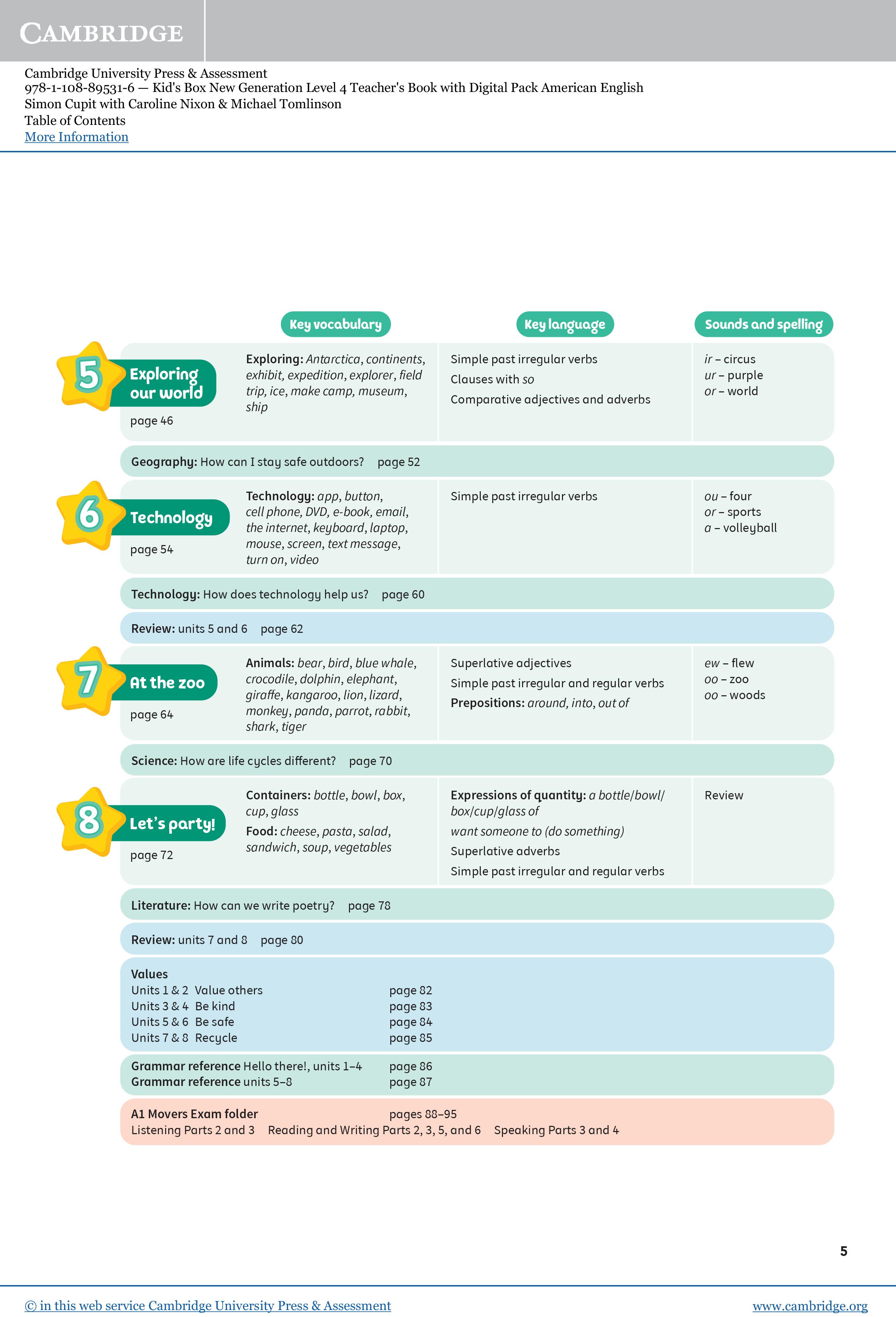
Narrator: Scott and Alex are in their art class. They’re making bowls, and they can’t stop. They’re busy. Scott: Oh. My bowl’s terrible!
Narrator: Alex is careful and slow. His bowl’s good.
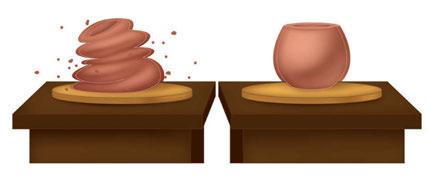
Narrator: Sally and Robert are in their math class. Sally’s very happy because she loves math and thinks it’s easy. Robert doesn’t think math is easy. He thinks it’s difficult.
Robert: Ugh. I can’t do this math problem. It’s difficult.
Sally: Come on, Robert. You can do it. It’s easy.
8–9
Robert: Ugh.
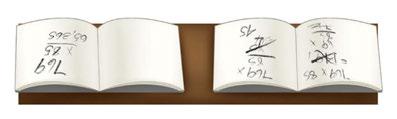
Narrator: It’s 73 to 72. What an exciting game! Eva has the ball, and she’s running with it. Eva’s quick. The boy’s slow. Girl: Ugh! This is really boring. I don’t like basketball.
SB10. ACTIVITY 2
Listen and match.
• Focus students on Activity 2. Students work in pairs and try to do the matching. Play the example to check students understand the activity. Then play the rest of the Audio for them to listen and match. Check with the class.
Extra support Hold up pairs of adjective flashcards for students to choose from when matching.
• If time, use Consolidation activity (T104): Spelling game
Key: 2 a, 3 f, 4 c, 5 b, 6 g, 7 d, 8 h, 9 i
9
1 Be careful with those glasses, Stacy! / I am being careful.
2 What was the movie like? / It was really boring.
3 What’s 397 and 79? / Oh, I don’t know. That’s difficult.
4 What was the soccer game like? / It was really exciting!
5 Come on, Mary. Don’t be so slow. / I’m not slow!
6 What’s 2 and 2? / That’s easy. It’s 4.
7 Can I talk to you? / No, sorry. I’m busy
8 The bus is coming. Be quick!
9 The weather’s terrible! / Oh, no! Look at our food.
SB10. ACTIVITY 3
Ask and answer.
• Read the example speech bubbles with the class. Then put students in groups to ask and answer the question. Remind them to use adjectives to give reasons.
• Encourage students to share their ideas with the class and find out what is the most popular school subject or activity
Extra challenge Challenge students to find a partner who likes the same thing and for the same reason.
• If time, use Extension activity (T105): Make a wordsearch.
WB10. Answer Key, see page T96
• Stick adjective flashcards on the board. Number them 1 to 9. Elicit the words. Say, e.g., I have a lot to do. I’m very …
Students say the correct number flashcard and the word. Repeat for the other adjectives.
Students write a text about a teacher and complete a questionnaire with a friend.
Target language
• Key language: adjectives, simple present, descriptions
• Review: comparative adjectives, colors, school subjects, like, have, very
Materials
• Flashcards: 15–23 (adjectives)
• Back to school word cards: Teacher Resources (adjectives)
• Write some school subjects as anagrams on the board. Students race to unscramble the words and write them correctly. Take a vote for students’ favorite subject.
SB11. ACTIVITY 1
Read and say the names.
• Tell students to open their Student’s Books to page 11. Show page 11 on the whiteboard and focus students on Activity 1. Ask a student to read the activity instruction and do the first one as an example. In pairs, students take turns reading the descriptions aloud and saying the names of the children. Check with the class using open pairs.
Key: 2 Zak, 3 Yasmin, 4 Daisy, 5 Jordan
SB11. ACTIVITY 2
Make sentences and say “true” or “false.”
• Students use the example speech bubble to write four sentences about the children in Activity 1. They include some false information. In pairs, they take turns reading their sentences and saying True or False.
SB11. ACTIVITY 3
Read and correct the text.
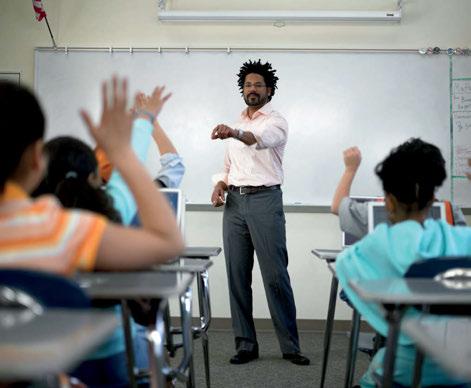
• Focus students on Activity 3 and elicit what they can see (a picture of a teacher at work and a child’s piece of writing about the teacher). Elicit the name of the teacher (Mr. Harrison) and the subject he teaches (math). Ask a student to read the activity instruction aloud and check understanding. Do the first word (busy) as an example with the class.
• Students work individually and unscramble the words. Assign three reading questions: Where is the school? Are his classes boring? Why do the children like his classes? Students read to find the answers. Check with the class (in a big city; no, they’re exciting; because they’re not difficult).
Extra challenge Students write the corrected text in their notebooks.
Key: busy, slow, boring, exciting, difficult, easy, careful
SB11. ACTIVITY 4
Write about one of your teachers.
• Using the list of subjects from the Warmer, help students choose a teacher to write about. Make sure it’s a teacher they like. Remind them to use the model in Activity 3 to help them and to use the adjectives to talk about the classes and their teacher’s work.
Extra support Monitor students as they write their drafts. When you have checked their work, they can write a final version on paper. If space, you can display the texts to decorate classroom walls.
• If time, use Consolidation activity (T105): Our teachers.
WB11. Answer key, see page T96
• If time, use Extension activity (T105): Comparing answers.
• Stick the adjective flashcards and the word cards on the board. Call volunteers to come to the board and match them.
• Students group the adjectives according to the number of syllables (do this as a class if necessary).
Key: One syllable = quick, slow; Two syllables = easy, boring, careful, busy; Three syllables = exciting, terrible, difficult
1 Read and say the names.


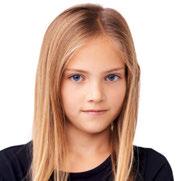

1 This child likes being busy with a lot of homework. His hair is straight and black, and he has glasses.
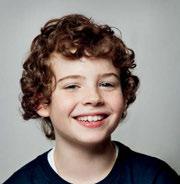
2 This child loves art and is careful when he’s painting. He has short curly brown hair.
3 The child with straight blond hair is very brave. She loves reading to her class.
4 This child with glasses thinks math is exciting. Her hair is brown and curly.
5 This child with short straight blond hair thinks music is difficult.
2 Make sentences and say “true” or “false.”
The child with curly hair and glasses thinks math is boring. False.
3 Read and correct the text.
My teacher
This is Mr. Harrison. He’s my math teacher. He works in a school in a big city. He’s very sbyu because he has a lot of work. There are 28 children in my class. His classes aren’t wols or grinbo, they’re very ecgitxin. We like his classes because they’re not ftlcuidfi. It’s yase to learn a lot of new things with him. Mr. Harrison is very fclareu when he writes, but I’m not!
4 Write about one of your teachers.
Vocabulary: adjectives





He’s the teacher who’s talking to Mrs. Star. Mr. Newton.
She’s the woman who’s wearing the long green skirt. He’s the man who’s carrying the truck.

Students use relative clauses with who.
Target language
• Key language: relative clauses with who, descriptions
• Review: adjectives, school subjects, prepositions, school show, He’s/She’s called , over there, He’s/She’s the one
Materials
• Warmer: Four large pictures of people (two men, two women) showing clothes and appearance
• Colored pencils (one set per student)
Warmer
• Put the four pictures on the board. Number them 1 to 4. Review descriptions by playing a guessing game, e.g., Who has long dark hair? Who’s wearing a black jacket? Who’s carrying a newspaper?
SB12. ACTIVITY 1
Look, think, and answer. Listen and check.
• Tell students to open their Student’s Books to page 12. Show page 12 on the whiteboard. Elicit who they can see and where they are. Ask a student to read the activity instruction aloud and others to take turns reading the four questions. Students compare their answers and predictions in pairs, looking for clues in the picture.
• Play the Audio for students to listen and check. Elicit complete sentences.
• Extra support Write the teachers’ names on the board. Elicit the subject each one teaches and what they’re doing. Play the Audio again if necessary. Focus on the target structure, e.g., Mr. Burke is the man who’s singing. He’s the P.E. teacher.
Extra challenge Elicit other sentences from students. They copy them into their notebooks.
• If time, use Extension activity (T105): Word race.
Key: 1 They are at the school show. 2 She’s talking to Mr. Newton, the math teacher. 3 Miss Flower is the music teacher. 4 Mr. Turner is the art teacher.
10
Scott: Hey! The school show’s really exciting, Dad.
Mr. Star: Yes, it is, and it’s good to see your teachers. Who are they all?
Scott: Well, the man who’s talking to Mom is my math teacher. He’s called Mr. Newton.
Mr. Star: Oh. Is the man who’s singing your music teacher?
Scott: No, he’s Mr. Burke, our P.E. teacher. Miss Flower’s our music teacher. She’s the woman who’s wearing the long green skirt. They do the after-school club.
Mr. Star: The after-school club? What’s that?
Scott: It’s a new club where we can do a lot of exciting things on Thursday afternoons. … And can you guess who my art teacher is?
Mr. Star: Oh, Scott, that’s difficult. Is it the woman who’s playing the guitar?
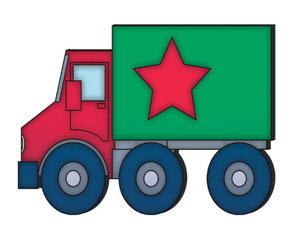
Scott: Ha ha. Very funny, Dad. No, that’s Mrs. Robinson, our English teacher. Our art teacher’s over there. He’s the one who’s carrying the truck.
Mr. Star: Is his name Mr. Strong? Ha ha.
Scott: No, Dad. His name’s Mr. Turner.
SB12. ACTIVITY 2
Play the game.
• Clean the board. Focus students on Activity 2, the Study Box and the example speech bubbles. They play the game in pairs. Student A looks at the picture, and Student B closes his/her book. A makes statements to test Student B’s memory, as in the example. After one or two minutes, students swap roles.
• If time, use Consolidation activity (T105): In our class.
WB12. Answer Key, see page T96
• See if students remember the pictures from the Warmer. They say, e.g., Number 1’s the woman who’s carrying a purse. She’s wearing red shoes. Show the pictures to check.
Students practice relative clauses using who and sing a song. Target language
• Key language: relative clauses with who, present progressive question forms
• Additional language: playground
• Review: relative clauses with who, present progressive, actions and activities, clothes, adjectives, school subjects, foods, and drinks
Warmer
• Write the names of about six students on the board and write a piece of unique information about each one, e.g., He’s wearing black pants. Say Tell me about (name) to elicit, e.g., (Name)’s the boy who’s wearing black pants. Repeat for the other names on the board.
SB13. ACTIVITY 1
Read and match.
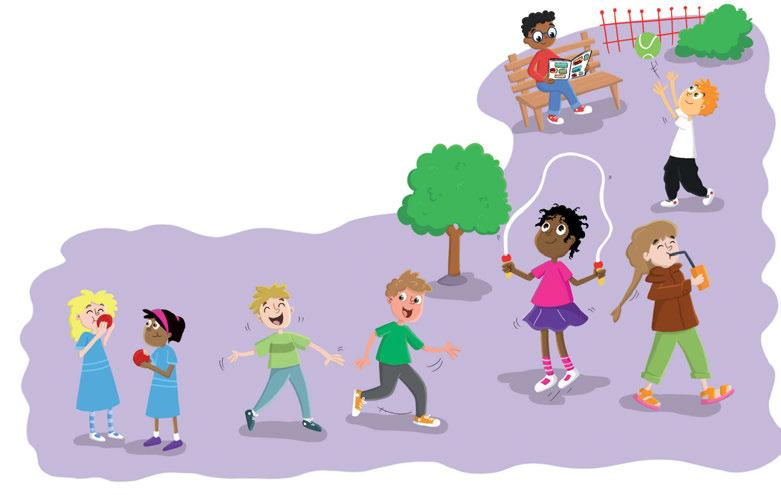
• Tell students to open their Student’s Books to page 13. Show page 13 on the whiteboard. Elicit what they can see (a playground) and what some of the children are doing. Ask a student to read the activity instruction aloud. Check understanding using the example. Students work in pairs, taking turns reading the statements and matching them to the children in the picture.
Extra support Check with the class, using open pairs: one student reads a statement aloud and another says the letter
Extra challenge Focus on the use of They’re … who are … by eliciting examples in the classroom, e.g., Teacher: Tell me something about (name) and (name). Students: They’re the girls who are sitting at the front. Make other similar statements. Students then elicit statements from the class.
• If time, use Extension activity (T105): Hobbies.
Key: 2 f, 3 a, 4 c, 5 e, 6 b
SB13. ACTIVITY 2
Choose a child. Ask and answer.
• Turn the activity into a guessing game. Say I’m looking at a boy in the picture. Can you guess? Students ask questions as
in the speech bubble on the left. Repeat for girl. Practice two or three more times. Students do the activity in pairs, taking turns guessing.
SB13. ACTIVITY 3
Read and say the letter. Listen and check.
• Focus students on Activity 3. Ask a student to read the instruction aloud. Check understanding. Students read the text and match who’s speaking with one of the pictures. They check in pairs. Play the Audio. Pause after each teacher’s section and elicit the letter and the name.
Key: 1 a, 2 c, 3 d, 4 b 11
As in Student’s Book
SB13. ACTIVITY 4
Sing the song. Do karaoke.
• Play Song track 11 again for students to join in as a class.
Extra challenge Make groups of four. Tell groups to practice singing the Song. They sing the first and last verse as a group and individually sing one teacher’s verse each. They do an appropriate mime for each school subject as they sing.
• Instruct students to close their books and stay in their groups. Tell students that this time they will hear the Song without the words; the karaoke version. They should try to remember the words and actions as they listen. Play the Song and help students to remember the words and actions as necessary.
11–12
As in Student’s Book
WB13. Answer Key, see page T96
• If time, use Consolidation activity (T105): Playground games.
Ending the lesson
• Students sing the Song again.
1 Read and match.
1 They’re the boys who are laughing.
2 She’s the girl who’s drinking orange juice.
3 He’s the boy who’s wearing a red sweater.
4 They’re the girls who are wearing blue dresses.
5 She’s the girl who’s jumping rope.
6 He’s the boy who’s throwing a ball.
Is it the boy who’s reading a comic book? No, it isn’t.
The
It’s quick, not slow. Run, jump, and skip, Go, go, go!
I teach English.
I teach math. It’s easy to
But if it’s wrong, Don’t be sad.
I teach art.
We can paint and draw. Careful with the paint, Don’t get it on the wall!
The classroom’s where you learn. The classroom’s where we teach. A lot of exciting things To do in our school week.
L o c k ’s s o u n d s a n d s p e l l i n g
13 1 Watch the video. Watch again and practice.
2 Circle the stressed syllables. Say.


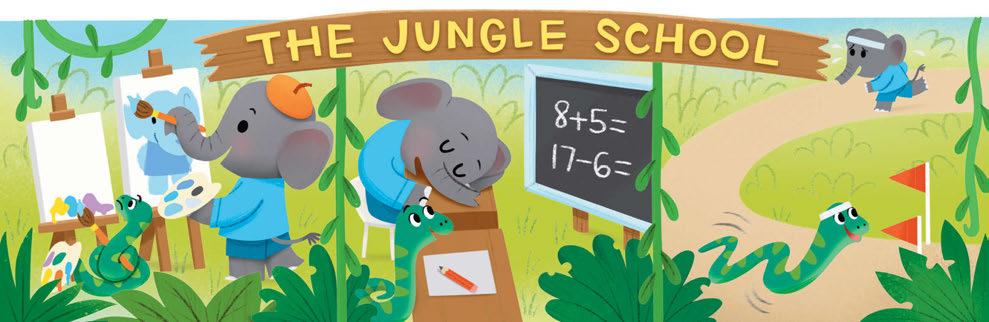
Art is easy for Elephant, but difficult for Snake.
3 Say and guess.
Math is exciting for Snake, but boring for Elephant.
In P.E., Snake is quick, but Elephant is slow.
He’s doing math, and it’s difficult. The elephant?

Students identify and practice word stress in familiar words.
Target language
• Key language: adjectives: quick, slow, exciting, boring, easy, difficult
• Review: school subjects, animals
Materials
• paper
Warmer
• Elicit a list of school subjects and write them on the board. Choose one, and mime an action related to it (e.g., mime painting for art). Ask students What am I doing? And then have them guess the subject. (You’re painting. It’s art.) Have students mime and guess other subjects in groups.
Presentation
• Show page 14 on the whiteboard. Focus students on the image of The Jungle School. Give each pair a piece of paper. Ask them what animals they think go to The Jungle School and which animal would be the teacher. Have them write their ideas. Then ask them to write three subjects they think the animals would do at school. In pairs, students decide what subject each animal would do and what they think of it, e.g., The tiger is good at math and thinks math is easy. Tell students they are going to watch a Video to find out about The Jungle School, and see if their ideas were similar.
Extra challenge Have students mingle and compare their ideas.
SB14. ACTIVITY 1
Watch the video. Watch again and practice.
• Students watch the Video. Ask Which animals go to The Jungle School? What subjects do they study? How do they feel about them? Students tell you as much as they can remember from the Video. Check how similar the Video is to students’ ideas at the beginning of class.
13
Voice: easy, difficult, exciting, boring, quick, slow.
Lock & Key: Art is easy for elephant, but difficult for snake. Math is exciting for snake, but boring for elephant. In P.E., snake is quick, but elephant is slow.
Presentation Plus: Unit 1
Audio 13 Digital Flashcards Practice Extra
SB14. ACTIVITY 2
Circle the stressed syllables. Say.
• Students watch the Video again. Tell students to open their Student’s Books to page 14. Focus students on Activity 2 and say the sentences on the page together. Clap on the stressed syllable in each of the adjectives.
• Write the adjectives on the board. Students say the adjectives again and clap on the stressed syllable. Tell students to circle the syllables in their books.
Extra challenge Divide the class into two groups, A and B. A says the adjectives and B claps on the stressed syllables. Then groups swap roles.
• If time, use Extension activity (T105): About my friends.
Key: easy, difficult, exciting, boring, quick, slow
SB14. ACTIVITY 3
Say and guess.
• Point to the example on the whiteboard. In pairs, students take turns making other sentences following the same sentence frame.
Extra support Monitor the activity and give more examples if necessary: He’s/She’s playing sports and he’s/she’s quick. Make sure students are stressing the correct syllables in the adjectives.
Extra challenge Pairs play the game with another pair. They award points for each correct guess.
• Say difficult and prompt the class to clap the stressed syllable. Focus on the Show what you know Box. Point to the word stress pattern for difficult
• Students complete the table with the other adjectives according to their word stress pattern.
• If time, use Consolidation activity (T105): Adjectives.
Key: Column 1: slow, quick; Column 2: easy, boring; Column 4: exciting, amazing
WB14. Answer Key, see pages T96–97
• Stand students in three lines. Call out the adjectives from the unit and tell students to jump forward for every syllable and clap on the stressed syllable (e.g., busy = two jumps forward, and clap on the first syllable).
• Teacher Resources: Unit 1, Downloadable Workbook Teaching Notes
• Teacher Resources: Unit 1, Downloadable Workbook Audio Script
• WB86 and SB86 – Grammar reference 1
• T105 – Extension activity: About my friends
• T105 – Consolidation activity: Adjectives
Students read a story and review language from the unit.
Target language
• Key language: no problem, detectives, very busy, interesting, naughty
• Review: school, school subjects, comparative adjectives, colors, like, have, very
Materials
• Flashcards: 13–14 (Lock and Key); 15–23 (adjectives)
Warmer
• Show the Lock and Key flashcards and review what students remember about the characters. Students say, e.g., They’re the detectives who always do silly things. Review who Danny is. Tell students that Lock and Key are going to Danny’s school to talk about their job. Elicit what they think happens.
SB15.
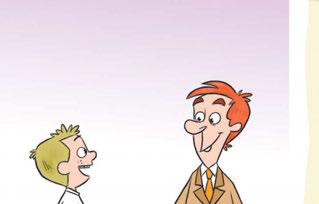
• Show page 15 on the whiteboard. Focus on the first small frame and elicit who they can see (Danny) and what day he’s talking about (Thursday).
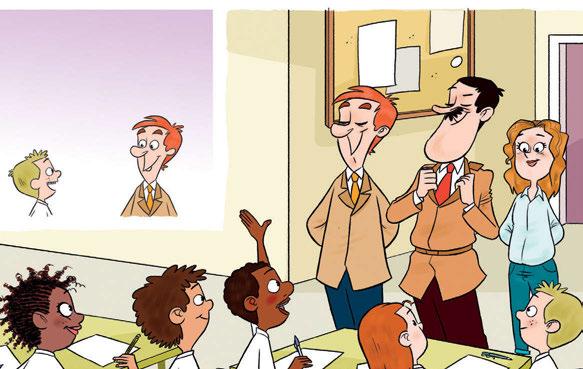
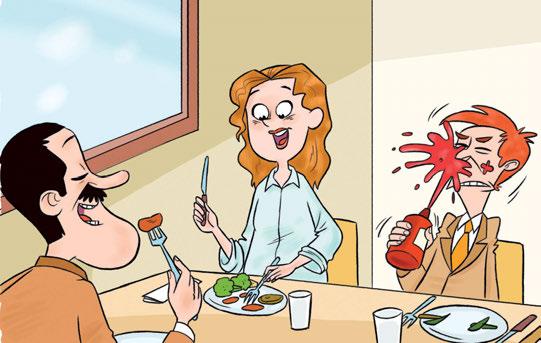
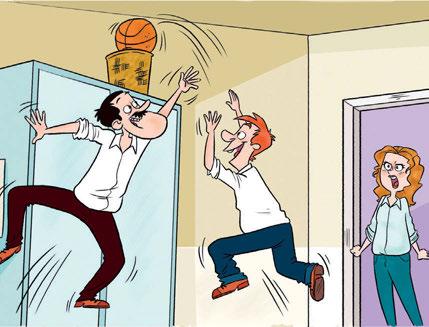
• Watch the Video with the class. Tell students to see if their predictions from the Warmer are correct. They check in pairs. Then check with the class (Lock scares the children, Key spills some sauce, they play basketball and get in trouble with the teacher).
• Play the Video again. Pause after each frame for students to repeat. Check general comprehension by asking, e.g., Who are Lock and Key eating lunch with? What does she ask them? Is it Key who sees the basketball? What does the teacher say when she finds them? Are they naughty?
SB15. ACTIVITY 1
What do Lock and Key do at Danny’s school? Say three things.
• Tell students to open their Student’s Books to page 15. Students read the story again and find three things Lock and Key do. Put them in groups to share ideas. Students should say the number of the frame in the story where Lock and Key do each thing.
Extra support Put students in teams. Say a line from the story. Students say the corresponding frame number to win a point.
Extra challenge With students in teams, call out a frame number. The first team to tell what Lock and Key do in that frame wins a point.
Key: 1 Lock and Key talk about their work with students (frames 1 and 2). 2 They eat lunch with Danny’s teacher, and Key spills some sauce (frame 3). 3 They play basketball and make the teacher angry (frame 5).
• If time, use Extension activity (T105): Role play
WB15. Answer Key, see page T97
• If time, use Consolidation activity (T105): What I can do. 14
• Ask students which chant or song they’d like to do again from the unit. Do it together to end the lesson.

Do

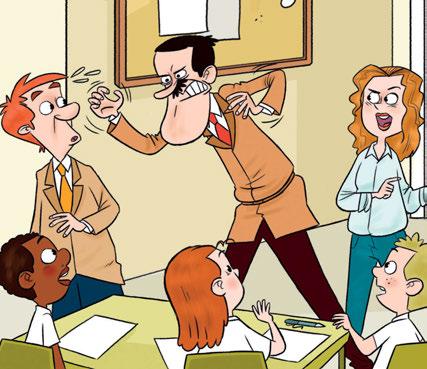
Oh, yes. We catch people who do naughty things.

Well, thank you, Mr. Lock and Mr. Key. OK, children, it’s lunchtime.
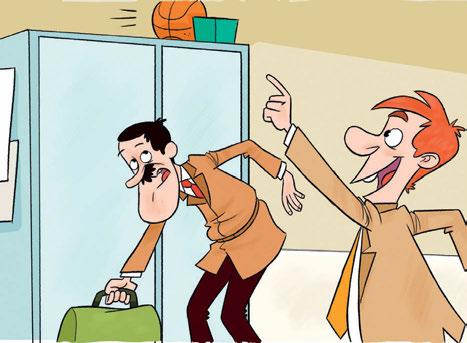
OK, Key. I think we have everything now. Let’s go back to the office. Look! There’s a basketball. Let’s play a quick game!
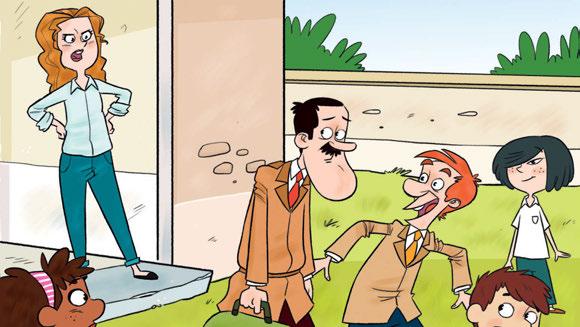

o w c a n w e u s e p a i n t?
paint?
15 1 Listen and read. Which artist’s style was new?
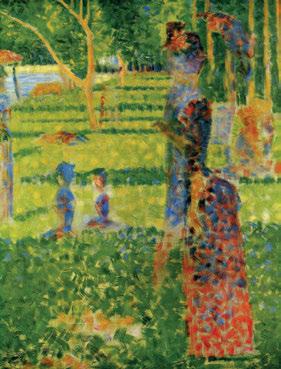
The Couple is a painting by Georges Seurat, a French artist. He invented a style of painting called pointillism. The artist uses small dots and dashes of color to paint a picture. You need to look at the painting from far away to see the image clearly.
I like the painting because it makes me feel relaxed. It reminds me of a warm summer morning.
The Frame is a painting by Frida Kahlo. She was a famous artist from Mexico. She liked to paint self-portraits –paintings of herself. Frida looks confident in the painting. She has beautiful flowers in her hair. There are also bright, colorful flowers and birds around her. They are traditional images from old Mexican stories.
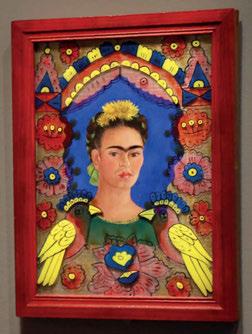
The painting makes me curious about Frida Kahlo and her life in Mexico. I want to learn more about her!
2 Read again and complete the notes for Frida Kahlo.
Artist: Georges Seurat Frida Kahlo
Painting: The Couple
Style: pointillism
Description: a painting that uses dots and dashes
Feeling: relaxed
3 Which painting do you prefer? Why?
Art: How can we use paint? | creative thinking
DIDYOUKNOW…?
In “drip” artwork, artists drip paint instead of using a paintbrush.
Students describe two paintings of different styles of art and say which painting they prefer and why.
Target language
• Additional language: attractive, pointillism, self-portrait, dots, dashes, style, description, image(s), bright, colorful, confident, relaxed, curious, traditional, drip
• Review: painting, paint, paintbrush, artist, flowers, birds
Materials
• Warmer: Two marker pens
• Extension activity: Four pictures of different artwork: self-portrait, pointillism, drip, and abstract.
Warmer
• Ask students to form two rows in front of the board. Give each team a marker pen. Call out the topic word (Art) and ask teams to write words they associate with art on the board. After writing a word, each student hands the pen to the next person on their team. The game continues until you say Stop. The team with the most words is the winner. (Example words: paint, paintbrush, painting, artist, paints, picture, draw, crayons, colors, create, pencil, paper, etc.)
Presentation
• Say Open your Student’s Books to page 16, please. Show page 16 on the whiteboard. Ask students to look at the two paintings. Ask Do you know these paintings? Who painted them? Elicit and write ideas on the board.
SB16.
Watch and answer.
• Read the question at the top How can we use paint? Elicit brief descriptions of the paintings on the board.
• Watch the Video for students to answer the question.
• After watching the Video, elicit more descriptions of the pictures on the board.
SB16. ACTIVITY 1
Listen and read. Which artist’s style was new?
• Tell students they’re going to read about two well-known artists from the modern-art era. Explain that modern art shows different styles created by artists who try new ideas with art.
• Play the Audio. Students listen and read about the two artists. After reading, check their ideas from the Presentation activity. Discuss the colors and images they see in the paintings.
• Discuss the question. Elicit that Seurat “invented” a new style of art.
Key: Georges Seurat
15
As in Student’s Book
SB16. ACTIVITY 2
Read again and complete the notes for Frida Kahlo.
• Focus students on Activity 2. Point to the Seurat picture in the reading text. Ask Who is the artist? What’s the name of his painting? What style of art does he use? Check that students understand the meaning of the headings in the chart, such as style and description.
• Put students into pairs to do the activity. Check answers as a class.
Extra challenge Ask students why they think the artists gave the paintings their names. For example, Frida Kahlo’s painting shows her picture surrounded by a colorful frame of flowers and birds, so she named it The Frame.
Key: Artist: Frida Kahlo, Painting: The Frame, Style: self-portrait, Description: a painting of the artist by the artist, Feeling: curious
SB16. ACTIVITY 3
• Put students into pairs to discuss the paintings and say which one they prefer. Ask them to say why they prefer the painting, e.g., the colors the artist uses, the style of art, the scene in the painting. Invite volunteers to share their opinions with the class. Encourage students to say how they feel when they see the painting.
• If time, use Extension activity (T105): Talk about art
Did you know …?
• Point to the painting in the box. Ask How did the artist paint this? Read the information in the box as a class. Ask students to focus on the way the colors look. Elicit the meaning of drip. If it helps, mime the action. Ask students if they like the style.
• Ask students to close their books. Ask students to draw two columns in their notebooks with the headings Georges Seurat and Frida Kahlo. Write words and phrases from the lesson on the board, e.g., The Frame, pointillism, dashes of color, confident, curious, etc. Ask students to write the words or phrases in their notebooks under the correct column. Review by asking students to call out Georges or Frida when you say each word or phrase.
Students describe different pieces of art and say how the paintings make them feel.
Target language
• Additional language: abstract, rectangle, thick, calm, peaceful
• Review: lines, shapes, square
Materials
• Pictures of three paintings representing the following styles: self-portrait, pointillism, and abstract art
• Photocopiable 1
Warmer
• Display pictures of three different paintings on the classroom walls: one self-portrait, one pointillistic painting, and one abstract painting. Play some relaxing music, if possible, and ask students to walk around the class to view the paintings. Ask them how each painting makes them feel.
• Ask students to share ideas in pairs to find out if they had the same feelings. Invite volunteers to share their ideas with the rest of the class.
SB17. ACTIVITY 4
Read the description. What do you see when you look at this painting?
• Say Open your Student’s Books to page 17, please. Focus students on Activity 4. Ask them to look at the painting and describe what they see. Accept all reasonable responses, such as colors, shapes, lines, etc.
• Give students time to read the text. Help with vocabulary if needed, but encourage students to use context to understand any unfamiliar words.
• After students read the text, ask them to describe the painting again. Elicit the type of painting (abstract) and the colors and shapes the artist uses.
Extra challenge Ask students if they agree with Samir’s comparison of the painting to a big colorful window, or if they have a different idea. Then ask if they like the painting. Find out their reasons why or why not.
• If time, use Consolidation activity (T105): Styles of art
SB17. ACTIVITY 5
Underline the descriptive adjectives in Activity 4.
• Focus students on Activity 5. Read the sentence in the Learning to write Box and ask students to repeat the words in bold. Ask What kinds of words are these? (adjectives). Tell students to read the description in Activity 4 again, and underline the adjectives that describe the painting.
Extra support Talk about the painting again using the adjectives that students underlined, e.g., ask students if the painting makes them feel calm and peaceful.
Key: bright, thick, black, big, colorful, favorite, calm, peaceful
ACTIVITY 6
Ask and answer about the painting. Complete the table.
• Explain to students that they are going to talk to a partner about the painting in Activity 4 and then write a description of another painting and say how they feel about it.
• Focus students on the table in Activity 6. Emphasize that they are going to talk and write about their personal interpretation and opinion of the paintings. Point out that for the last question in the table students need to think of another painting or style of art that they like. Students can use this idea as preparation for the Writing task in the Workbook.
• Students work in pairs to complete the chart and discuss the information. Encourage students to ask questions. Then invite volunteers to share their ideas with the class.
WB16. Answer Key, see page T97
Extra support For extra support with the Writing task, visit Teacher Resources on Cambridge One.
WB17. Answer Key, see page T97
• Use Photocopiable 1 from Teacher Resources.
• Tell students to draw a picture. It can be of anything they want and they can add color or leave it as a simple pencil drawing. It can be a drawing of people or recognizable objects, or it can be more “abstract,” using shapes and colors, etc. Encourage students to use their imagination.
• Students work in pairs. They swap their drawings and describe them to their partner, e.g., It’s a self-portrait. It has thin black lines. It shows a happy face.
4 Read the description. What do you see when you look at this painting?
A description of CompositionwithRed,Blue,andYellow
This painting is by a Dutch artist named Piet Mondrian. It is abstract art. It doesn’t show people or objects. It uses lines, shapes, and bright colors to make a picture. In this painting, the artist uses thick black lines to make squares and rectangles. It reminds me of a big colorful window. Some of the shapes are painted red, blue, and yellow. They are my favorite colors because they make me feel calm and peaceful. by Samir Ali
5 Underline the descriptive adjectives in Activity 4.
Ready to write:
Go to Workbook page 16.
Learning to write: Learning to write: 1
Descriptive adjectives
There are also bright , colorful flowers and birds around her.
6 Ask and answer about the painting. Complete the table. Do you like the painting? Why or why not? What does it remind you of? How does it make you feel?
What is an example of a painting or a style of painting you like? Why?
Make a classroom gallery.