【學生課本 Level Starter】Shining Lights Level Starter Student's Book
UNIT 1
We’re all different!
page 7
UNIT 2
My people
page 15
UNIT 3
Let’s eat!
page 23
Question words
Possessive adjectives
Present simple: be
this, that, these, those Possessive ‘s Have(n’t) got
there is / are, there isn’t / aren’t is there / are there questions, much, many, a lot of
UNIT 4
Games, games, games!
page 31 can for ability like, love, don’t mind, etc. + ing forms
UNIT 5
Every day’s a new day!
page 39
UNIT 6
What on earth are you wearing?
page 47
UNIT 7
People in the past
page 55
UNIT 8
Let’s go on a journey!
page 63
UNIT 9
Awesome animal life
page 71
UNIT 10
City life
page 79
Favourite things and activities
Numbers 0–20
Describing things
Family members
Describing people
Reading Part 4
Reading: Think outside the box: Welcome to my world! By Danny
Writing Part 6
Listening Part 3
Reading: Blog posts
Reading: Think outside the box: The Addams family
Reading Part 5
Writing: An email
Listening Part 1
Food, drink and containers
Numbers 20–100
Sports and games
verbs
Sports and games nouns
Present simple and adverbs of frequency
Present simple questions
Present continuous
Present simple and present continuous
Past simple: be
Past simple: regular verbs (positive)
Past simple: irregular verbs (positive)
Past simple: negatives and questions
Comparative adjectives Superlative adjectives
must and have to, mustn’t and don’t have to
Infinitive of purpose
Stress in sentences with the verb be
Pairs of words with and
Reading Part 2
Listening: Think outside the box: An interview
Listening Part 3
Speaking Part 1
Writing: A message
Listening: A conversation
Reading: An article
Speaking: Part 1
Reading: Think outside the box: Mind sports
Reading: Part 1
Writing: A blog post
Daily routines
What’s the time?
Transport and travel
Clothes
Rooms and objects in the home
Jobs Time expressions
The world around us Adverbs
Word stress / syllables in words
Listening: Part 5 can / can’t
Reading Part 2
Reading: Think outside the box: How do they get to school?
Speaking Part 2
Writing: A social media post
Listening Part 2 /s/, /z/ and /ɪz/ with present simple endings
Reading: An article
Reading: Think outside the box: House clothes – by Carrie Morgan
Reading Part 4
Writing Part 6
Listening Part 5
Reading Part 3
Reading: Think outside the box: Women’s football is back!
Writing Part 7
Listening Part 2
Reading: A blog post
Reading Part 5
Listening: Think outside the box: An interview
Writing: An email
Listening Part 4
Animals
Describing feelings
Reading Part 3
Reading: Think outside the box: Do animals really laugh?
Writing Part 7
Listening Part 1
Places in the city
Weather words
Reading Part 1
Reading: Think outside the box: Unusual towns
Speaking Part 2
Writing: A blog post
Listening Part 4
Vowel sounds: /æ/, /uː/ and /ɜː/
Past tense regular endings: /t/, /d/ and /ɪd/
Long and short vowels: /ɔː / /e/ and /ʊ/
Word stress: comparatives and superlatives
Silent consonants
STEAM investigations page 88 Grammar reference and practice page 98 Pair work page 108 Irregular verbs page 111
Oracy ChallengeLife competencies
Working with other students
Showing your partner that you are listening
Asking questions
Asking for more information
Asking for clarification
Talking about ideas with other people
Making sure that people can hear you
Presenting a poster
Showing interest
Giving a presentation
Speaking slowly and clearly
Using body language and making eye contact
Asking for people’s opinions about your ideas
Taking turns
Giving opinions
Saying what you think
Agreeing and disagreeing
Asking follow-up questions
Answering questions
Building an argument
Planning what you want to say
Giving reasons for your answers
Inviting people to give their opinion
Making suggestions
Working together
Being positive about each other’s ideas
Using connectors
Digital Classroom: Practice Extra
I want to find out more about the people in my class.
I want to know more about the food I eat.
Creative thinking: preparing for creativity
Critical thinking: evaluating ideas and arguments
It’s good to do new things!
Learning to learn: developing skills and strategies for learning
Creative thinking: generating ideas
Collaboration: encouraging effective group interaction
Critical thinking: evaluating ideas and arguments
Digital literacy: using tools and creating digital content
Emotional development: empathy and relationship skills
It’s important to learn about people in the past.
Critical thinking: solving problems and making decisions
Creative thinking: implementing ideas and solving problems
Critical thinking: evaluating ideas and arguments
Critical thinking: solving problems and making decisions
Learning to learn: developing skills and strategies for learning
Critical thinking: evaluating ideas and arguments
Critical thinking: evaluating ideas and arguments
Emotional development: empathy and relationship skills
Critical thinking: understanding and analysing ideas and arguments
Critical thinking: evaluating ideas and arguments
Creative thinking: generating ideas
Learning to learn: developing skills and strategies for learning
Science Why are we all different?
Science How can I cook safely?
Animals are very important for people and the planet. We need to understand why.
Creative thinking: implementing ideas and solving problems
Emotional development: empathy and relationship skills
Emotional development: empathy and relationship skills
Digital literacy: using tools and creating digital content
Technology, Engineering How do I keep dry?
Science, Maths What did people in the past think about the stars and the solar system?
Science, Arts What do animals need to live?
Student’s Book
STARTER
McKeegan Helen Tiliouine
David
UNIT 1 WE’RE ALL DIFFERENT!
LEARNING AIMS
Skills: talk and write about ourselves, ask people questions
Grammar: learn and practise question words, possessive adjectives and the present simple of be
Vocabulary: learn and practise words for people’s favourite things and activities, numbers 0–20 and adjectives to describe things
Critical thinking: find out about your classmates
Exam practice: Reading Part 4, Writing Part 6, Listening Part 3
FAVOURITE COLOUR: blue
THE CHALLENGE
I want to find out more about the people in my class. You will:
• Stage 1 Think: think about what information you want to find out.
• Stage 2 Prepare: write a questionnaire.
• Stage 3 Develop: ask your questions.
• Stage 4 Present: tell the class about your classmate.
FAVOURITE MUSIC: rock
FAVOURITE FOOD: chocolate
FAVOURITE MONTH: June
FAVOURITE DAY: Saturday
FAVOURITE DRINK: mango juice
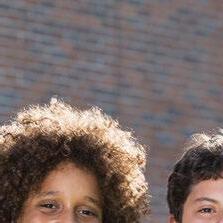
1 Look at the photo. In pairs, discuss the questions.
1 Where are the people?
2 How old are they?
2 Watch the video. Where is Kasia from? Where is Trevor from?
FAVOURITE CITY: Paris
Think
Work in pairs. Discuss the questions.
1 What is important to know about your classmates?
• their name yes / no
• how old they are yes / no
• their favourite music yes / no
• things they do at the weekend yes / no
2 Think of five or six more things to ask about.
VOCABULARY
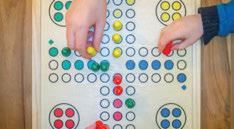
1 1.1 Write the words under the photos. Listen, check and repeat. band bike board game camera cinema comic book cycling film guitar hiking online gaming party
2 01 Watch the video again. What are Kasia and Trevor’s favourite activities?
3 Read the text in Exercise 4 quickly. What is the girl’s name? Where is she from? Each question has only one correct answer.
5 Work in pairs. Ask and answer questions about your favourite things. What’s your favourite music / film / band / board game / comic book / online game?
NUMBERS 0–20
TIP
Hi, my name’s Ana! I’m 13 years old, and I live in Berlin. My favourite sport is cycling, and I go to school on my (1) every day. At the weekends, I go to watch (2) at the cinema with my friends. I also take great photos with my new (3) . This is a photo of me in my favourite place in my house!
4 Read the text again. For each question, choose the correct answer. 1 A comic B bike C
6 1.2 Write the numbers next to the words. Then say the numbers in the correct order. Listen, check and repeat. three seven nine one ten zero four two six five eight seventeen twenty eleven nineteen fourteen twelve fifteen eighteen sixteen thirteen
7 Work in pairs. Say a number. Your partner writes it. Then your partner says a number and you write it.
READING A CONVERSATION
1 Look at the photos of Ben and Rosa. Do you think the sentences are true or false? Why?
1 Ben plays the guitar.
2 Rosa’s favourite colour is blue.
2 Read the text in the box below. Answer the questions.
1 Who is new at the school?
2 Are Rosa and Ben in the same class?
3 Where is the school?
Rosa is a new student at Ben’s school. Ben and Rosa are both in Class 8C. Their school is in Bristol, in England.
3 Read Ben and Rosa’s conversation quickly and check your answers to Exercise 1.
4 1.3 Read and listen to the conversation. Answer the questions.
1 How old is Rosa?
2 Where is she from?
3 What is her favourite band?
4 How old is Ben?
5 Where is he from?
6 What is his favourite colour?
STRETCH! Work in pairs and follow the instructions.
• Student A: Find photos of Rosa’s city and information about it.
• Student B: Find photos of Ben’s city and information about it.
• Tell each other what you find out.
What’s your number? Hi, I’m Ben! What’s your name? Rosa
I’m in Bristol because of my mum’s new job at the university.
A boy and a girl from Class 8C. His name is Leo and her name is Claire. Yes, I’m in a small school band.
Great! Welcome to our school! And welcome to my city, Bristol! How old are you? Why do you like them?
12. And you?
Their music is fun and beautiful. Where are you from?
I’d like to hear some of it. But first, can I ask one thing?
Cartagena, in Colombia. Is that your guitar in the photo? What?
Your favourite colour is red, right?
My favourite band is called Rancho Aparte. Really? Who’s in the band with you? Yes, it is! What’s yours?
Ben Online
GRAMMAR
QUESTION WORDS
1 Complete the questions from Ben and Rosa’s conversation.
1 ’s your name?
2 are you from?
3 old are you?
4 ’s in the band with you?
5 do you like them?
2 Choose the correct answers to complete the rules in the grammar box.
Question words
We use question words at the 1 end / beginning of questions.
We use 2 what / how / who with old to ask about people’s age.
Grammar reference and practice page 98
3 Go to the digital activities.
4 Write the question words.
1 is your favourite actor?
2 is she from?
3 do you like that band?
4 old is he?
POSSESSIVE ADJECTIVES
5 Complete the sentences from Ben and Rosa’s conversation.
1 Welcome to school!
2 name is Leo and name is Claire.
3 favourite band is called Rancho Aparte.
4 music is fun and beautiful.
6 Complete the rules with the words in the box. her his our their your
Possessive adjectives
The possessive adjectives for I, you, she, he and it are my, 1 , 2 ,
3 and its
The possessive adjectives for we, you and they are 4 , your and 5 .
Grammar reference and practice page 98
7 Go to the digital activities.
8
Write the correct possessive adjective in each conversation.
1 Hi, name’s Evin.
Hello, Evin. I’m Gary.
2 Who’s that? name’s Paul. He’s my friend.
3 Who’s your favourite singer? Taylor Swift. songs are really good.
4 That’s my pet mouse. What’s name?
5 We like this class, and we like teacher! Great!
6 These are my cats!
Oh, what are names?
9 Work in pairs. Ask and answer questions. Then write three sentences about your partner.
My name’s Lucy. What’s your name?
Her name’s Lucy.
Working with other students
What is important when you work with other students?
We listen to each other and let people speak. We …
Prepare
1 Work in groups of three or four. Remember to work together!
2 Look at the things you want to know about your classmates from Stage 1.
3 Decide how many questions you want in your questionnaire.
4 Write the questions for your questionnaire.
HOW IS UNIT 1 SO FAR?
Welcome to my world! By Danny
My name is Danny and I am 12 years old. I’m from York. York is a beautiful city in the north of England. It’s not very big, but it’s very old. My favourite films are Enola Holmes 1 and 2. My favourite actor is in them. His name is Louis Partridge. My favourite band is Imagine Dragons. Their music isn’t boring; it’s fun!
My friend’s name is Rob. Our favourite activities are online gaming and cycling. Rob’s new bike is expensive and very fast. My old bike is cheap and slow! Rob and I are in class 7B at school. Our school is small, and all our teachers are nice.
When Rob and I talk, we often use sign language. We also both have cochlear implants, so we can hear our teachers and our classmates. At home with my family, I use sign language because my parents are deaf, too. Rob and I also use sign language at parties with loud music. Sign language is very important for lots of people, and it’s very important for me! Can you spell your name in sign language?
READING A BLOG POST
1 Look at the photo. What activity can you see?
2 1.4 Read and listen to the blog post. Answer the questions.
1 Where is Danny from?
2 What is his friend’s name?
VOCABULARY
DESCRIBING THINGS
3 Read the blog post again. Complete the information. Danny’s favourite …
4 Work in pairs. Use a dictionary to find the meaning of cochlear implant, sign language and deaf.
1 1.5 Write the correct adjective for each photo. Listen, check and repeat.
2 Which adjectives in Exercise 1 are opposites? big / small
Work in pairs. Think about things that are important or beautiful. Do you and your partner think the same?
GRAMMAR
PRESENT SIMPLE: BE
1 Watch the grammar vlog. What is Lara’s brother’s name? What is their favourite board game?
6
Put the words in the correct order.
1 from / They / Italy / aren’t / .
2 he / your / Is / friend / ?
3 not / I / in England / am / .
4 your / fast / bike / Is / ?
5 my / Are / in / you / class / ?
2 Look at the examples from the grammar vlog. Complete the rules in the grammar box.
• I am 12 years old.
• Lucas is 12.
• We are at the same school.
• I’m not!
• Lucas is not in class 7A.
• Parties aren’t fun.
• Is it Scrabble?
• Are parties fun?
am are before is not
Present simple: be
In positive sentences, we use I 1 , you are, he/she/it 2 , we/you/they
3 . In negative sentences, we add 4 . In questions, the verb be is 5 the subject.
Grammar reference and practice page 98
3 Go to the digital activities.
4 Choose the correct answers to complete the sentences.
1 It / He is an expensive camera.
2 I / We are in Class 7C.
3 You / She are my friend.
4 They / It are beautiful.
5 He / I am your friend.
6 She / They is from Egypt.
5 Write sentences with contractions (’).
Example: You are in my class. You’re in my class
1 We are in Mexico.
2 I am not ten.
3 They are our friends.
4 He is our teacher.
5 It is not cheap.
6 You are not old.
6 Spain / My sister / in / is / .
7 PRONUNCIATION Go to the digital pronunciation activity.
8 Complete the conversations.
1 A: Are you 13?
B: No, I’m , I’m 12.
2 A: Is your guitar expensive?
B: Yes, it
3 A: Scrabble your favourite board game?
B: No, it
4 A: you my friend?
B: Yes, I !
9 Work in pairs. Ask and answer questions with be Yes, I am. / No, I’m not, I’m …
Are you 14?
10
Lara and Lucas are twins. Think about being a twin. Work in pairs. How many good and bad things can you think of?
DIGITAL CLASSROOM
PRACTICE EXTRA UNIT 1
CHALLENGE
Develop
1 Choose someone in a different group to interview.
2 Ask your classmate the questions in your questionnaire.
3 Write down the answers. 1 2 3 4
WRITING
AN EMAIL
1 Imagine a new online friend. Fill in the information about your new friend.
• Name:
• Age:
• City/Country: ,
• Favourite activity, music, film: , ,
2 Read the email from your new friend. Complete the email with information from Exercise 1.
EXAM TRAINING WRITING PART 6
Hi your name,
My name’s and I’m years old. I’m from , in is a beautiful
My school’s small and my lessons are fun. My favourite activity is . My favourite music is , and my favourite film is
What are your favourite things?
Write soon,
3 Match the items in the email plan (1–6) to the phrases from the email (a–f).
Email plan:
1 Start the email.
2 Give information about my town/city.
3 Give information about my school.
4 Give information about my favourite things.
5 Ask a question.
6 End the email.
a What are your favourite things?
b is a beautiful
c Write soon,
d My school’s small and my lessons are fun.
e Hi … ,
f My favourite activity is … . My favourite music is , and my favourite film is
4 Read the exam task in Exercise 6. How many things do you need to write about in your email to Sam?
5 Look at the email in Exercise 2. Underline the sentences which can help you to write your email.
EXAM TIP
In your answer, always write about the three things in the exam task.
6 You have a new online friend called Sam. Write an email to Sam.
Tell Sam about:
• your town or city
• your school
• your favourite music. Write 20 words or more.
7 Read your email again and check your work. Use these questions to help you.
1 Is there information about:
• your town or city?
• your school?
• your favourite music?
2 Is there a good start and end to the email?
3 Is the spelling and grammar correct?
8 Now work in pairs. Read each other’s emails and give feedback. Use the questions in Exercise 7 to help you. Make a note of your partner’s feedback and write a second draft of your email.
STRETCH! Write an answer to the email in Exercise 2.
Present
1 Tell the class about your classmate.
• Talk for around one minute.
• Answer other students’ questions.
2 Listen carefully to other students. Ask a question if you want. 1 2 3 4 CHALLENGE
Inbox
LISTENING
A CONVERSATION
1 Work in pairs. Look at the photo. Who is in the photo?
2 1.6 You will hear Rosa talking to her classmate, Anatol. Listen to the first part of their conversation. How many names of countries do you hear? Which countries are they?
3 Look at the exam question below. Listen again and read the script. Choose the correct answer. Why are the other answers wrong?
1 Where is Anatol from?
A Poland B England C Colombia
Anatol: Hello!
5 Listen again and check your answers.
Rosa: Hi! What’s your name? I’m Rosa, from Colombia. It’s my first day at your school.
Anatol: Really? I’m Anatol, from Poland.
EXAM TRAINING LISTENING PART 3
EXAM TIP
Rosa: Oh, so like me, you aren’t from England. In Listening Part 3, there are always two people having a conversation. They talk about question 1 first, then question 2, etc. You always hear everything twice in the Listening exam.
4 1.7 Now listen to the rest of the conversation. For each question, choose the correct answer.
2 What are Rosa’s favourite books about? A sport B music C animals
3 Anatol’s bike is A new. B beautiful. C expensive.
SELF-ASSESSMENT: UNIT 1
How confident do you feel about:
• talking about your favourite things and activities?
• using question words?
• using the verb be?
• talking about yourself and other people?
• asking people questions about themselves?
• planning ideas before you write?
• showing you are interested when you listen?
What was your favourite part of Unit 1? Tell your partner.
ORACY
Showing your partner that you are listening
When your partner says something, use words like Oh / Really? / Great! to show that you are interested. Look at them and smile.
6 Look at the script in Exercise 3 again. Underline the words that Rosa and Anatol use to show that they are interested. Check your answers in pairs.
STRETCH! Work in groups of three or four. Choose a book to read or a film to watch. Next week, tell each other what you think about the book or the film. Remember to show that you are interested!