1 Write the missing letters to complete the words and phrases.
1 c t y d v e
2 s s
3 t p l s
4 u n
5 o w d
6 o k s
7 p n z e
8 r l
9 l l f s
10 r d l
2 Complete the sentences with the words and phrases from Exercise 1.
1 Too many people make a place
2 An area of the city with no cars, where people walk, is a .
3 Shops, libraries or sports centres near where you live are
4 The buses or trains to an area are .
5 A town or city is a(n) area.
6 A village in the country is in a(n) area.
7 The edge of a town or city is the
8 People, shops and restaurants from many countries make an area
9 A road or area with houses and flats is .
10 The areas around a town or city where people live are called the
3 Choose the correct answers to complete the text.
When I was a child, we lived in a 1 rural / residential area near the centre of a big city. There were good
2 local facilities / outskirts, but not a lot of places for children to play. Our neighbourhood was
3 culturally diverse / overcrowded – in my school there were children from all over the world – and it was a great place to live. It was fun being a teenager there, but when I was 14, we moved to a big country house in a 4 pedestrian zone / rural area, a long way from my secondary school. The
5 transport links / suburbs here are terrible, so I can’t go out to meet my friends easily. It’s so boring here! I definitely prefer the excitement of living in an 6 urban / outskirts environment.
4 STRETCH! Complete the sentences with a word related to the word in bold.
1 A person who lives in a residential area is called a
2 The suburbs can also be described as areas of a town or city.
3 If an area of the city is overcrowded, we say it suffers from .
4 The verb to describe creating a pedestrian area is
5 A culturally diverse place can also be described as having cultural .
READING
1 Which of these things would you expect to read about in a review of holiday accommodation? the bedrooms the breakfast the host the location local facilities
2 Read the reviews of B&Bs on page 5. Which reviewer seems the most satisfied?
3 Read the reviews again. Copy and complete the table.
Name of hostMarisaTerry and Ann Lorraine and Jennifer
Location
How was/were the host(s)?
Local facilities
Bedroom / Bathroom Breakfast
BED AND BREAKFAST USA STYLE USA STYLE
Right in the heart of NYC
Tony
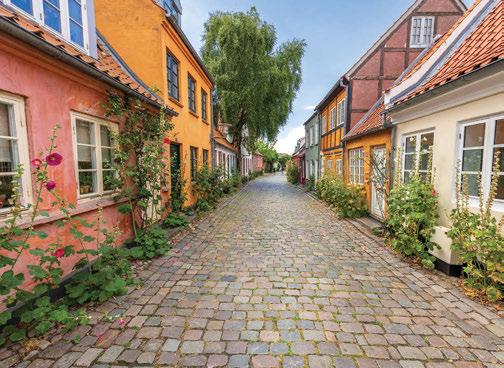
If you are looking for somewhere to stay right in the heart of New York City, I recommend Marisa’s apartment in Brooklyn. This urban neighbourhood is sometimes a bit overcrowded and noisy, but you feel all the excitement of NYC, and it has great shops and good transport links to all the sights in Manhattan. The bedroom is small but comfortable, and the shared bathroom is clean. The continental breakfasts were good, and Marisa and her cats were really friendly. She had great recommendations for cheap places to eat, and of course, because she lives in a culturally diverse neighbourhood, there’s lots of variety!
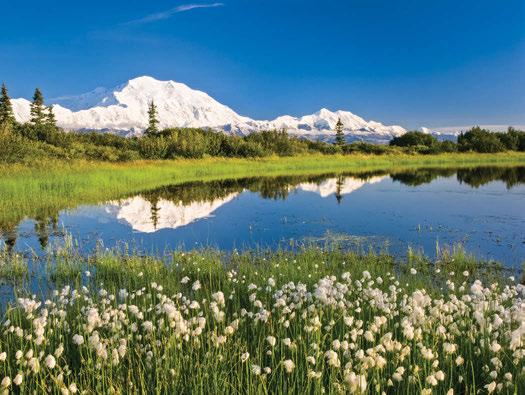
Denali Dome Home in Alaska is the perfect rural bed and breakfast. The house design is unusual, the bedrooms are large and comfortable, with en-suite bathrooms, and the home-cooked breakfasts are delicious. Hosts Terry and Ann are very welcoming, and always willing to explain about this part of Alaska – the Denali National Park is close by. If walking gets boring, they suggest activities like horse riding, rafting or quad biking! The B&B is on the outskirts of a small town with restaurants, shops, and a gas station. We rented a car to get around, though there are buses to the National Park. We had a fantastic stay, and we’re hoping to go back again next year.
Beautiful location
Wesley B
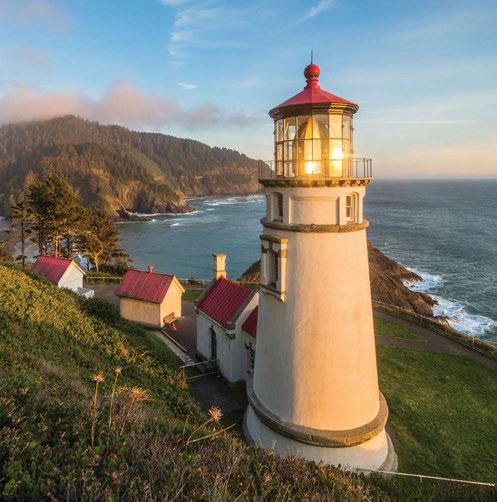
Being in a remote, rural location on the Pacific coast of Oregon, Heceta Lighthouse Bed and Breakfast is really beautiful. You don’t sleep in the lighthouse, but in the lightkeeper’s house nearby. (The lighthouse still works, we visited it.) Lorraine and Jennifer, the charming hosts, provide comfortable rooms, with old-fashioned furniture to match the 1894 house. We shared a bathroom with another room. I fell asleep listening to the sound of the ocean, and in the morning ate a seven-course (!) breakfast, with fresh, local food, which was delicious but too much for me to eat. There’s also a guest’s kitchen (the nearest town has good food shops), as well as sitting rooms to spend the evening chatting, reading or playing games. Lorraine and Jennifer are knowledgeable about local history, and really make you feel at home. It’s a fantastic B&B.
4 Complete the sentences with the words in bold in the reviews.
1 If you are happy to do something, you are to do it.
2 The person who looks after a lighthouse is called a
3 When a place is a long way from towns and cities, we say it is .
4 Americans call the fuel they put in their cars , not petrol.
5 If a meal has seven different plates, one after another, it’s called a meal.
Alice The perfect rural B&B
GRAMMAR
PRESENT SIMPLE AND PRESENT CONTINUOUS
1 Choose the correct answers to complete the text.
We 1 move / ’re moving to a new house next week. At the moment I 2 look / ’m looking through all my clothes and books to see what to take with me, and what I can get rid of. Some of my clothes
3 are / are being too small, and I 4 don’t need / am not needing books from primary school. My problem is I 5 never throw / ’m never throwing anything away, so my room is full of stuff! Tomorrow I 6 go / ’m going to a charity shop to give them some of the things that I 7 don’t want / ’m not wanting anymore.
be construct go not know need wait work
You 1 a lot of hard work and determination to build your own house. My cousin 2 a wooden eco-home at the moment. He 3 on it every weekend and sometimes I 4 and help him. It’s very slow, and at the moment he 5 for more money from the bank so he can buy materials. I 6 how he keeps smiling, but he 7 an architect, and this is his dream project!
PRESENT PARTICIPLE CLAUSES
4 Put the words in order to make sentences.
1 an / the / Waiting / Amal / saw / bus, / accident / for
2 to / game / Nancy / a / played / Wanting / video / relax,
3 buying / The / an / a / is / woman / actress / coffee
2 Write sentences using the words. Use the correct form of the verb.
1 The museum / have / a lot of interesting objects
2 The twins / have / a birthday party / tomorrow
3 Some rich people / own / houses / all over the world
4 My mum / work / from home / today
5 your neighbour / build / an extension / on his house / ?
6 Tommi / not tidy / his room / very often
4 catching / six / train / I’m / leaving / at / the
5 cakes / were / you / some / coming, / got / Knowing / I
6 saving / painted / Piet / the / money / himself, / a lot of / house
5 Complete the sentences with the present participle form of the verbs in the box.
break bring look practise realise star t
1 Sifan won the race, the world record.
2 for his phone, Felipe found his lost student card.
3 a lot, Amaya’s piano playing improved dramatically.
4 We’ve decided to see the film at seven o’clock.
5 he was lost, Rob phoned his friend for help.
6 Leo has bought a house in Barbados, the number of houses he owns to six.
MODIFYING COMPARATIVES AND
SUPERLATIVES
6 Put the words in order to make sentences.
1 This / than / is / a / comfortable / sofa / that / more / one / lot
2 exciting / getting / series / more / and / This / more / is
3 house / the / is / His / far / in / street / by / oldest / our
4 bigger / Their / media / bigger / social / getting / and / following / is
5 slightly / I / colour / looks / think / here / better / in / this
7 Complete the second sentence so that it has a similar meaning to the first sentence, using the words in the box. Write two or three words.
bigger bit deal more older
1 My flat is 100 m2, your flat is 98 m2 Your flat is a than mine.
2 Every year you have to pay more to rent a flat. It gets expensive to rent a flat.
3 The first exam was quite easy, but this exam was really hard. This exam was a great than the first one.
4 The number of people in the village is increasing as people move from the city. People are moving to the village from the city, so the population is getting .
5 My school bag gets heavier every year! I get, the heavier my school bag gets!
8 Complete the dialogue with comparative and superlative phrases. Use the correct form of the words in brackets.
A: Which house is your favourite?
B: Well, this one is by 1 . (far, cheap) And it’s quite big.
A: Not really, it’s 2 than this one. (slightly, small)
B: Yes, and it’s 3 , too. (lot, old)
A: True! And 4 a house is, it is to look after. (old, expensive)
B: Do you like this one?
A: Oh, yes! Every time I look at the photos, it gets 5 . (pretty, pretty) How much is it?
B: Actually, it’s 6 than I remember. (deal, expensive) But I do like it.
A: Me too. This is getting 7 ! (and, complicated)
9 STRETCH! Read the text and find eight mistakes. Correct the mistakes.
Every summer I’m going to visit my grandparents in the country. They living in a tiny village and their life is a lot quiet than mine in the city. My grandfather is growing vegetables, and my grandmother keeps goats. I learned how to milk the goats last year. Watch my grandma do it, it looked easy, but it was a slightly more difficult than I expected. This summer she teaches me how to make cheese from their milk. The longer I stay there, I feel the more relaxed. When I leave school, I’m going to live in the country and make cheese.
VOCABULARY COMMUNITY AND CONNECTION
1 Complete the lists with the words in the box. belong bond gather genuine identify with interact meaningful network obligation par ticipate in
2 Choose the correct answers to complete the text.
Every summer, thousands of twins 1 gather / genuine in Twinsburg, Ohio, USA, for the Twins Days Festival. For many it’s a great opportunity to create a social 2 network / obligation. At the festival, twins 3 interact / belong with other twins, and they 4 identify / participate in many social events. Many twins say that they have a special 5 bond / obligation, and the relationship with their twin is the most 6 meaningful / identify one they have. In fact, Twinsburg has several sets of identical twins who met at the festival and later got married! Maybe that’s not so strange, because who can 7 identify / participate with you and your twin’s relationship better than other twins?
WRITING
AN EMAIL
1 Read the task. Then read the email below. Where does Kirsten live?
You have received this email from your English-speaking friend, Lucas.
Inbox 2 Messages
From: Lucas
Subject: Family celebrations
Can you help me with a class project? My class has been talking about different kinds of family celebrations in different countries. Can you tell me about one in your country which is important to your family? What does it celebrate? How does your family celebrate it?
Write soon, Lucas
Inbox 3 Messages
Hi Lucas, Lovely to get your email! The project sounds interesting. Let me help you!
Here in Sweden, Midsummer, in June, is a popular family celebration. It celebrates the longest day of the year, when it doesn’t get dark all night. It’s a great time for a party and, for me, it’s by far the best celebration we have. For Midsummer, my whole family comes together at my grandparents’ house, in a beautiful rural area near Stockholm. Because the party celebrates nature, it takes place in the garden.
Leaving the city early, we all arrive by 11 am and help with the preparations. We pick wildflowers to decorate the tables, set up the music and prepare the food. We’re planning the food at the moment. There will be fish, summer fruit like strawberries, and many other delicious things! The party starts with lunch and carries on all night! I love the way all the generations of our family get together to eat, dance and share our lives. It’s important to feel we all belong together, and it creates a genuine bond every year. We always look forward to it.
I hope that’s useful. Write back and tell me how your project goes.
Love, Kirsten
2 Read the email again. Does Kirsten answer all the questions Lucas asks? Write the answers.
1 What is the celebration and where is it?
2 How does the family celebrate it?
3 Why is it important to Kirsten’s family?
3 LANGUAGE FOCUS Read the email again and complete the table below.
Informal phrasal verbs in bold in the email that match these more formal words and phrases:
1 gathers
2 is held
3 reunite
4 participates in 5 continues
6 anticipate with pleasure
7 organise
4 Read the task in Exercise 6. Plan your email and make notes for each paragraph.
1 OPENING phrase
2 PARAGRAPH 1:
A short opening paragraph, referencing the email you received
3 PARAGRAPH 2/3:
One or two main paragraphs, answering the writer’s questions. Say which country you are from.
4 PARAGRAPH 4:
A short final paragraph
5 CLOSING phrase
5 Before you write your email, note down any phrasal verbs or other informal language you can use.
TIP
When planning the ideas for your email, also think about vocabulary like phrasal verbs that you can use to write in an appropriate informal style.
2
6 You have received this email from your English-speaking friend, Fiona. Write an email to Fiona. Use the information in your notes to write the email. Write 140–190 words.
Inbox 5 Messages
From: Fiona
Subject: Cultural celebrations in your country
Can you help me with a class project? My class has been talking about cultural celebrations in different countries. Can you tell me about one in your country which your family celebrates? What is the cultural celebration? How does your family celebrate it?
Write soon, Fiona
SELF-EVALUATION
Check your writing:
Content: Have you answered all the questions?
Communication: Have you explained your ideas clearly so the reader can understand?
Organisation: Have you followed the paragraph plan?
Language: Have you used an informal writing style and vocabulary?
LISTENING
1 Where do you like spending time with friends when you’re not at school? Make notes.
2 The listening task focuses on the reason each person gives for their choice of favourite place. Underline the words in these sentences that indicate a reason.
1 I love playing paddle tennis because it’s a great way to keep fit.
2 It’s a really relaxing place, which is why I like it so much.
3 It’s a great place to go as you never get bored.
4 I always find nice clothes there. That’s why it’s my favourite.
5 I think the best thing about it is that all the food is homemade.
6 Everyone there is so friendly and that’s what makes it special.
TASK LISTENING PART 3
3
1.1 You will hear five short extracts in which teenagers are talking about their favourite place to spend time with friends. For questions 1–5, choose from the list (A–H) the reason for their choice. Use the letters only once. There are three extra letters which you do not need to use.
A No one expects you to buy any drinks.
B Spending time outside is good for my mental health.
C There are a lot of inexpensive shops to look round.
D Being a fan makes me feel like I’m part of the team.
E My friends and I do what we like and don’t bother anyone.
F It’s like being at home when I’m there.
G I can take part in team sports there.
H I can get myself something special I can afford.
Speaker 1 1
Speaker 2 2
Speaker 3 3
EXAM TIP 4
Speaker 4 4
Speaker 5 5
When you listen, pay attention to functional language which points to the speaker’s reason for choosing that place.
Are your own experiences similar to any of these teenagers? In what ways?
PEOPLE SAY WE ARE LOSING OUR SENSE OF COMMUNITY.
1
THINK
I’m working with:
Brainstorm!
Why are we losing our sense of community?
2
PREPARE
People in my group:
The community/group we have chosen to look at is:
Issues they face:
How can we research these issues and possible solutions?
I need to finish my research by: Day Month
Two or three communities / groups that I know something about:
Tips for Think
Don’t reject any ideas at the brainstorming phase. Write them all down.
Tips for Prepare
Discuss these questions:
Where can we look for solutions?
Who will research what?
When do we need to finish this research?
My issue to research and find possible solutions for is:
3 DEVELOP
Tips for Develop
Make sure everyone feels comfortable with their task.
Help other students if they get stuck.
Plan
Equipment / Media I could use in the presentation: computer, phone, photos, projector, recording, other
We shared our research. Our main findings are: The issue(s) we decided to present:
The most effective solution(s):
Tasks for my group
NameTask
4 PRESENT
Tips for Present
Look at your notes, but don’t read every word – look at the class, too.
After the presentation
Questions / Feedback from the class:
Does everyone know what they’re doing? ✓ ✗ Do we know which order we are presenting in? ✓ ✗ Have we got everything we need? ✓ ✗
Things I did well:
Things I want to improve:
Draw a face to show how you feel.
SELF-EVALUATION
I can …
• identify problems in community groups and source possible solutions.
• actively participate in brainstorming to generate ideas.
• assess and prioritise important issues and solutions.