Learning in Years 11 and 12
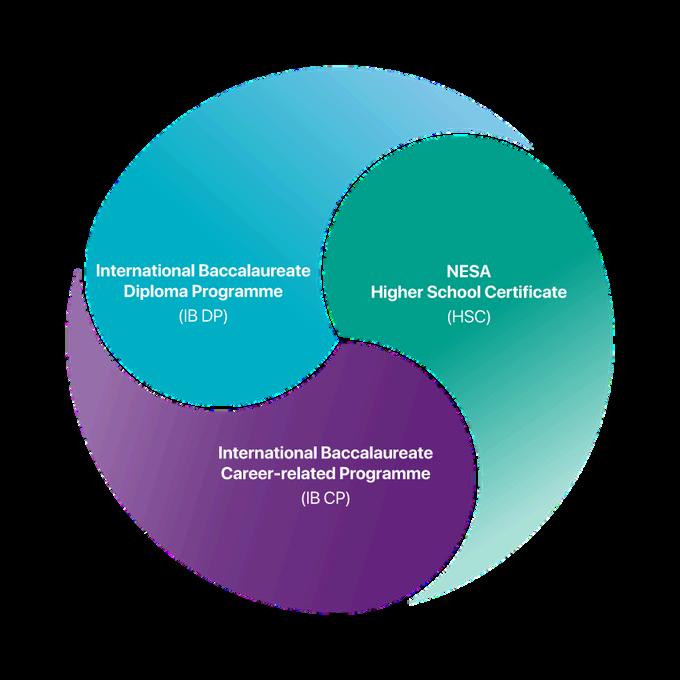
The final two years of school open up pathways to future possibilities for further study and career aspirations for each student. At Hunter Valley Grammar School we offer three (3) pathways to graduation:
• the Higher School Certificate (HSC),
• the International Baccalaureate (IB) Diploma Programme and
• the IB Career-Related Programme.
All three equip students for the next stage of their life journey, whether this is university study, the world of work or a combination of both. Our goal through the course selection process for Years 11 and 12 is to work in partnership with families to ensure students choose a pathway that matches their passions and talents, prepares them for the rigours of university study or the workplace, and maximises their potential for success.
Although a successful academic journey in the final years of schooling will involve significant and sustained hard work, students typically find their senior years satisfying and personally rewarding. School is, of course, about much more than the subjects taken; the most successful students are those who remain or become fully involved in the life of the School, whether it be through sport, cultural activities, service and/or social opportunities.
We know that student engagement, motivation and success is enhanced when young people enjoy greater agency in how, what, where and when they learn. We know that learning outcomes for students are broader than final numbers and qualifications, and that students of this generation will experience more frequent career and job changes. We know that adaptability, skills and competencies are fast becoming more desirable for employers than content mastery. Exhibiting flexibility and agility in both learning and work environments, collaborating with partners, understanding differences, being curious and embracing technological capabilities will continue to grow in significance.
We take pride in providing considered advice to ensure that individual students are able to select the pathway and courses which most appropriately reflect their abilities, interests and aspirations. This brochure provides a broad overview of the three pathways available to HVGS students, complementing the more detailed pathway-specific handbooks shortly available to parents and students. We look forward to partnering with parents and students through the pathway and course selection journey.

The IB DP promotes a holistic, inquiry-based, and internationally-minded approach to education, fostering lifelong learners and responsible global citizens. It provides a rigorous and comprehensive curriculum that aims to develop well-rounded individuals, equipped with the knowledge, skills, and values needed to make a positive impact in the world.
DP students foster a deepening sense of social justice and responsibility to embrace their dynamic futures in an ever-changing world. They seek greater focus on learning skills and adaptability; with access to more information than any generation before, they aim to critically and creatively navigate this volatile space with thought and purpose.
DP students study subjects from six (6) subject groups to ensure learning remains holistic and each subject is a two-year course. The IB Diploma ensures students are prepared for the rigours of tertiary study while engaging in deep, inter-disciplinary thinking. The programme also has students engage in Creativity, Activity and Service, complete an Extended Essay and undertake a course exploring the Theory of Knowledge.
The DP addresses the intellectual, social, emotional and physical wellbeing of students, and is widely respected by universities around the globe. DP graduates are sought after by the top universities and may be offered guaranteed places in undergraduate courses in different systems prior to receiving their final results. Students undertaking the DP receive an ATAR equivalent score and IB Diploma score.
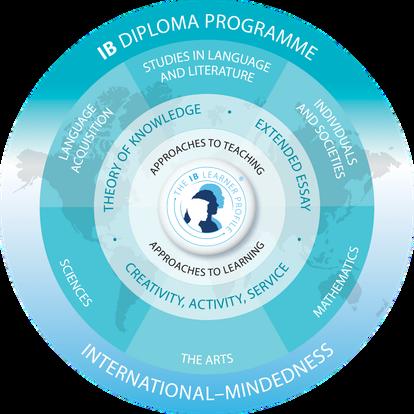
The DP consists of two major components:
Students select a subject from six subject disciplines (Language and Literature, Language Acquisition, Mathematics, Sciences, Individuals and Societies, and the Arts). There is some flexibility to double up on a discipline and this will be discussed through the course selection process.
Students select three subjects which are studied for 150 hours (called a Standard Level subject - SL) over the two years, and three subjects which are studied for 240 hours (called a Higher Level subjectHL) over the two years, thereby allowing them to spend more time studying their stronger subjects in more depth.
There are three (3) components, which comprise the DP core.
Theory of Knowledge (TOK):
Is designed to develop a studentʼs critical thinking and analytical skills. It helps students to understand how knowledge is constructed in each of their subjects i.e. how we know what we claim to know.
Students complete a 4,000-word essay in a Higher Level subject of their choice addressing a research question which they devise in collaboration with their supervisor.
The Extended Essay: Creativity, Activity and Service (CAS):
The students are involved in activities which help them to understand the importance of living a balanced life. The activities are often interwoven and develop creative thinking, physical exertion contributing to a healthy lifestyle, and helping others through unpaid voluntary work. CAS is not formally assessed.
Characteristics of the Diploma Programme:
Provides for voice and choice in breadth and depth of study. Encourages students to become confident, independent learners.
Provides a broad, rigorous study pattern, where students study a subject from each of the curriculum areas, thus increasing breadth of academic engagement and opportunity. This can be particularly important for students who are still undecided about their future careers and tertiary studies.
Is an international qualification recognised by leading universities around the world. Develops globally minded graduates through a focus on international mindedness and intercultural understanding.
Links subjects through the Theory of Knowledge component so that students make connections between their subjects, rather than studying them in isolation.
Provides two levels (HL & SL) of study in each subject so that more time can be devoted to the studentʼs stronger subjects, hereby balancing breadth with depth of learning.
Has equal standing for all subjects; there is no scaling of subjects when calculating a studentʼs ATAR.
Diploma Programme: Type of Learning
Multi-disciplinary & disciplinary
Global focus
Collaborative
Experiential
Personal & Independent Inquiries
Academic and practical
Diploma Programme: Type of Learner
Critical and creative
Service mindset
Deep thinkers
Inquirers and curious
Independent
Good habits and routines
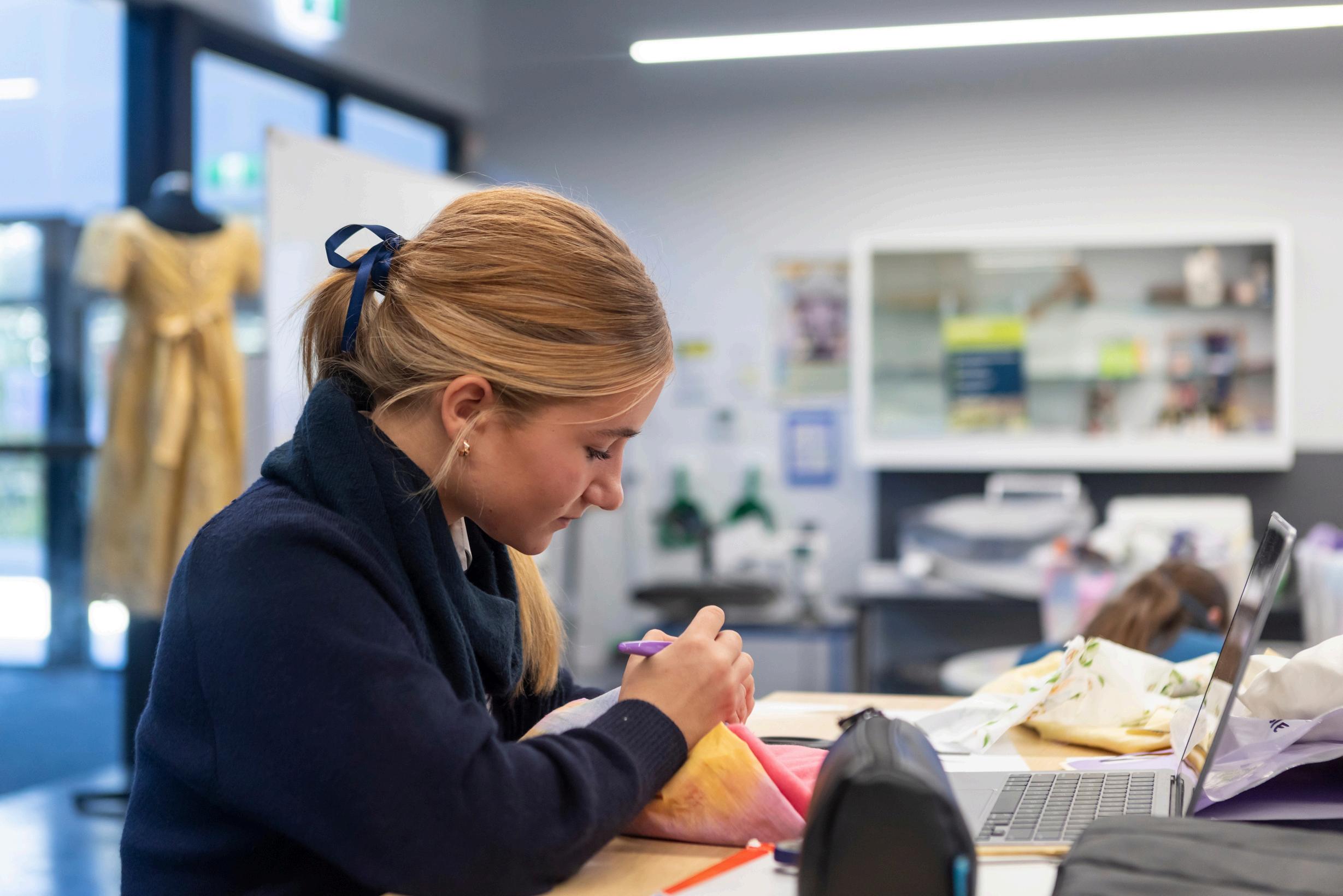

The Career-related Programme (CP) is a flexible and innovative pathway designed to cater for a studentʼs specific career interest and passion. For those students who prioritise voice, choice and agency in what, how, where and when they learn, the CP supports those who have already chosen the career pathway they intend to pursue beyond school. The CP frames their learning around that particular career focus and supports them to be career-ready as soon as they graduate from HVGS.
The CP provides a wide choice of subjects to match a studentʼs passion or interests, whilst also reducing the number of academic Diploma Programme subjects studied to just two. The CP Core engages students in learning that complements their career-related studies via the Personal and Professional Skills (PPS) course, Community Engagement experiences with its focus on service learning, Language and Cultural Studies, and the examination of ethical issues in their target industry through a student defined Reflective Project.
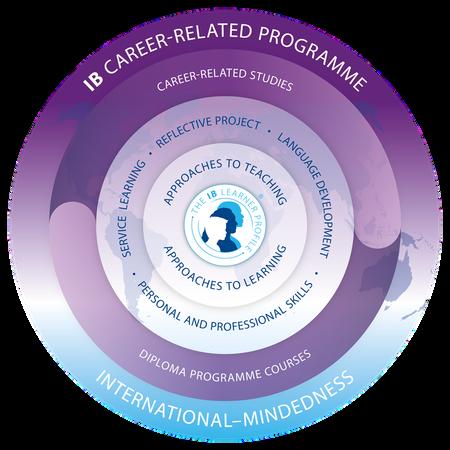
The CP consists of three main components, including:
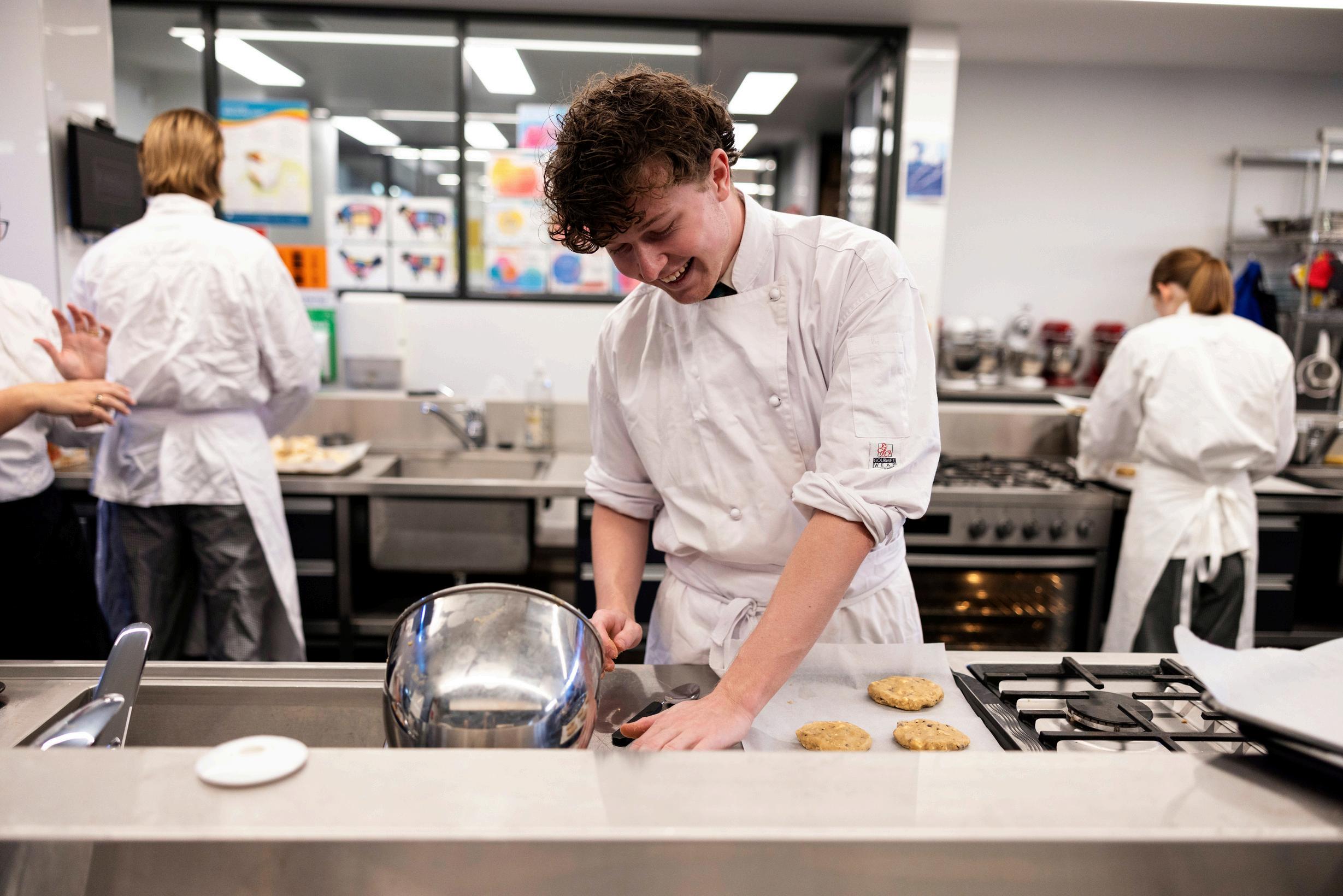
Students will undertake an Australian Vocational and Education course leading to a Certificate II or III depending on the course chosen. HVGS will offer internally a choice of Certificate II in Hospitality (Kitchen Operations), Certificate II in Primary Industries (Agriculture), Certificate III in Early Childhood Education and Care, or Certificate III in Fitness. Students can alternatively apply to undertake a course at TAFE within the CP framework, aligned with their career focus, subject to certain conditions.
Students are required to undertake two courses from the IB Diploma Programme. For all CP students at HVGS, the study of DP Language and Literature is required (HSC English equivalent). Students may then select one other Diploma Programme subject.
The CP Core
The core of the CP consists of:
Personal and Professional Skills course:
Designed to develop attitudes, skills and strategies to be applied to personal and professional situations/contexts now and in the future. Minimum of 90 hours over two years.
Community Engagement:
Students will undertake community service-learning experiences, linked to their career studies, to develop and apply personal and social skills in authentic situations.
Reflective Project:
Students identify, analyse, discuss and evaluate an ethical dilemma associated with an issue from their career-related studies.
Language and Cultural Studies:
Students will develop an awareness of the impact of culture and language on effective communication in the workplace and produce a portfolio to document their learning. This course is not formally assessed by the IB, however the School reports to the IB on studentsʼ successful completion of this component of the Core.
Characteristics of the Careers-related Programme:
Supports students to undertake studies in their chosen career pathway, thereby making them career ready as soon as they graduate Year 12.
Affords students the time to develop their work-related skills by integrating all aspects of the programme to complement their career-studies.
Deepens studentsʼ career-associated academic knowledge by engaging in fewer, targeted IB Diploma subjects in their academic program.
Builds 21st century skills to accommodate the changing world of work and facilitates industry networks whilst at school to provide a competitive edge in future employment.
Provides students with varied opportunities to undertake career-associated activities, such as community service experiences. Such initiatives further credential graduates for employment and highly effective engagement in a changing workforce.
Engagement with ‘real worldʼ learning partners and learning opportunities ensures students are well positioned to seek employment in their chosen industry or pursue further professional learning upon graduation.
Career-related Programme: Type of Learning
Both on and off campus learning
Community engagement/service component
Workplace competencies a focus
Practical
Collaborative
Reflective with personal inquiries
Mentoring from adults at school and beyond
Career-related Programme: Type of Learner
Critical and creative
Keen to explore their interest/passion
Service mindset
Enjoys connection with industry/networks
Prefers learning portfolio to sitting examinations
Becoming independent
The NESA Higher School Certificate (HSC) is the state-based credential awarded to students who successfully complete Years 11 and 12 in New South Wales, the final results for which, like the IB Diploma Programme, are used by UAC to calculate an ATAR.
The HSC Testamur is awarded to students who have fulfilled all eligibility requirements. To be eligible, students must meet NESA HSC course completion expectations and sit for the statewide HSC examinations in the minimum number of applicable units.
The HSC is a broadly recognised, local credential that provides a foundation for students entering tertiary study, vocational training or employment.
Year 11 Preliminary HSC students must undertake at least twelve (12) units of study. This must include at least two (2) units of English and at least four subjects.
Students must satisfy completion of the program before submitting any work for Year 11 courses, and the tests to receive their HSC credential.
HSC: Minimum Standards
Year 12 HSC Students must undertake at least ten (10) units of Board Developed courses. This must include at least two (2) units of English.
At least four (4) subjects are required, and no more than seven (7) units of Science courses may be included. From 2025, more than one VET course may now be included in the ten units that contribute to the ATAR.
Characteristics of the Higher School Certificate:
One benefit of this challenging program of study is the variety in course selection, and the opportunity to specialise in key subject areas, such as the Sciences, or across a variety of available English elective courses.
A number of subjects provide additional Extension unit courses to enable students to specialise at a higher level e.g. History Extension, Mathematics Extension, Science Extension etc.
The final two years of school are distinctly separated into Year 11 and Year 12 programs of study. Students may elect to reduce their subject load for Year 12 at the end of the Year 11 program (e.g. from 12 units down to the minimum HSC load of 10 units).
The HSC includes an internal assessment component worth 50% in each subject. Performance in the final external HSC Examination contributes 50% of the final mark, and this examination result is used to moderate the internal assessment marks registered with NESA by each school.
For the calculation of a studentʼs ATAR, UAC uses HSC results to undertake a course scaling process, whereby results are scaled according to cohort performance in subjects. Raw HSC marks for each course are compared and standardised to a common mean and standard deviation (spread of marks), after which, individual raw marks are scaled.
Students may also undertake a cumulative program of study in Years 11 and 12, spreading their HSC credential and unit loads over more than the traditional two years.
Higher School Certificate: Type of Learning
Disciplinary and knowledge driven
Inquiry
Experiential
Real world context
Structured, content focus
Academic and practical
Higher School Certificate: Type of Learner
Critical and creative
Analytical
Deep thinkers
Goal oriented
Organised
Self-motivated
Rebecca Butterworth
Principal
e: principal@hvgs.nsw.edu.au
Nick Jolliffe
Head of Curriculum (Years 11-12)
e: jolliffen@hvgs.nsw.edu.au
Melissa Riley
Head of Senior School/Deputy Principal
e: rileym@hvgs.nsw.edu.au
Chris Wyatt
Head of Curriculum (Years 7-10)
e: wyattc@hvgs.nsw.edu.au
Kelly-Ann Sackey
Director of Teaching and Learning
e: sackeyk@hvgs.nsw.edu.au
Mark Miles
Head of Stage 5 (Years 9-10)
e: miliesm@hvgs.nsw.edu.au
Fletcher Williamson
Head of Futures and Careers
e: williamsonf@hvgs.nsw.edu.au
Kent Burgin
Head of Year 10
e: burgink@hvgs.nsw.edu.au