2025 ANNUAL REPORT

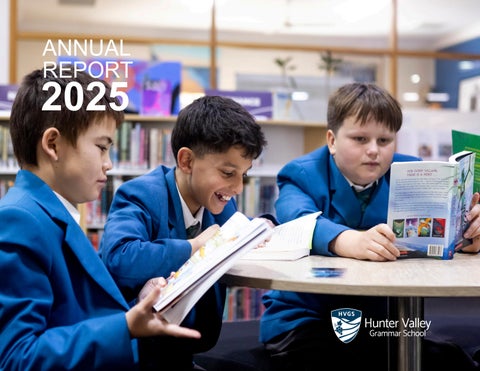

As we reflect on 2025, Hunter Valley Grammar School’s 35th birthday, it is with great pride that we acknowledge all that has been achieved by our amazing students, our highly skilled, dedicated and committed staff, and our school community.
2025 was the third year of our Strategic Plan, Future Directions 2023 - 2028, and we continue to make strong progress towards our Envisioned Future. Some of this year’s key highlights include:
In addition to the many academic achievements across 2025, we saw our amazing students participate in numerous musical performances and sporting events. All of these events highlighted the strength of the HVGS community, the school’s learning programmes in action and the courage and talents of our students.
2025 Endeavour Trips and School Camps included Year 10 and Year 11 students travelling to Fiji, Vietnam, Thailand, the Great Barrier Reef, Central Australia and Jindabyne. These trips were an incredible experience for our students and focussed on the learning pillars of challenge, service, leadership and connection.
During 2025 we completed the MMG Community Survey. The input into the survey by our students, staff and community provided valuable insights integral to our ongoing decision making and was very much appreciated.
The data from the survey demonstrated the quality and value placed on the trip and co-curricular programmes at HVGS, as well as the importance of our continued strong focus on student and staff welfare and wellbeing.
2025 saw the formal establishment of our Parents and Carers Association (PCA) and we are very grateful for the contributions, insights and support provided to the HVGS Community by the PCA.
Our 35th birthday celebrations across the year, starting with the Community Picnic and ending with the HVGS Legacy Luncheon, were a great success and saw many stories shared and many members of our community enjoying the opportunity to connect.
2025 saw continued investment in intercultural training and development for students, staff and the board of directors to further strengthen inclusion and belonging.
An important initiative in 2025 was the establishment of our Staff Consultative Committee, further enabling input from staff on a range of important matters that impact our HVGS team.
HVGS is committed to maintaining and creating an infrastructure that enables high-quality teaching and learning, is human-centred by design and in implementation, and is sustainable for the future.
2025 saw the completion of Cameron Centre works that included replacement of the roof, replacement of the flooring and upgrades to equipment, providing an enhanced environment for our students, staff and community. The Kindergarten Outdoor Learning Space was opened in 2025 and provided a wonderful learning environment for our youngest students.
While delivering on our Strategic Plan, HVGS continues to demonstrate very strong governance and remains in a sound financial position, enabling continued investment to meet the future needs of our students, staff and school community.
Our Principal, Rebecca Butterworth, has continued to lead HVGS in line with our values and with an unwavering focus on enabling our students to achieve excellence and thrive in an environment where our staff are flourishing in a School that is human-centred and sustainable by design. On behalf of the HVGS community, we offer our heartfelt thanks to Rebecca, the Executive Leadership Team, and to all of our dedicated teachers and professional and operational staff. A special thank you is extended to the long serving staff members who have retired from HVGS in 2025. You have all left an amazing legacy and we are very grateful for all your commitment and dedication over many years.
During 2025 we farewelled Director Gillian Geraghty from the HVGS board. Gillian made a valuable contribution to the board during her time as a Director, particularly as Chair of the Asset Management Committee and we wish her every success for the future.
2025 saw us welcome Director Kate Stefan to the HVGS board. Kate, a current parent, brings valuable skills and expertise in alignment with our Board Skills Matrix. We are grateful to have the benefit of Kate’s experience on the HVGS Board.
The full Board and Board Committees, with the exception of the Board Succession Committee, each have eight scheduled meetings a year with additional ad-hoc meetings held as circumstances require. The Board Succession Committee meetings align with our requirements for new Directors.
All directors invest time in professional education specifically relevant to their role as a Director of HVGS. Our Directors are volunteers, and I am deeply grateful for their selfless contributions, commitment and dedication to HVGS. I have the privilege of working with Board members who are always well prepared, thoughtful, caring and collaborative in their decision-making.
In early 2026, we will welcome Director Anne Holz to the HVGS board. Anne, a current parent, brings valuable skills and expertise in alignment with our Board Skills Matrix.
We are grateful to welcome Anne’s experience on the HVGS Board.
Our HVGS board is made up of the following Directors:
• Mrs Kristine Littlewood
• Dr Ken Dobler, Deputy Chair and Chair of Board Succession Committee
• Ms Jodi Stapleton, Chair Risk and Compliance Committee
• Mr Mark Williams, Chair Finance Committee
• Mr Cain Beckett, Chair of the Asset Management Committee
• Mr Owen Logan
• Ms Kate Stefan
• Ms Anne Holz (2026)
• Mrs Michelle McPherson, Chair
On behalf of the HVGS community, I express our thanks for the contributions of all members of the Board during 2025.
The conclusion of the May 2026 AGM, where this Annual Report will be considered, will see the retirement of Mrs Kristine Littlewood. Kris has made an extraordinary contribution to HVGS as a Director for 26 years, including 4 years as Deputy Chair of the Board and 20 years as Chair of the Board. Kristine Littlewood is one of the original investors in HVGS and has been involved since Foundation in 1990 and for that HVGS will be forever grateful, as HVGS would not be the school it is today without the benefit of Kristine’s wisdom and leadership.
On behalf of the HVGS community I would like, in this report, to thank Kristine Littlewood for her extraordinary contribution to HVGS. HVGS will take the opportunity during 2026 to recognise and thank Kris more fulsomely.
Hunter Valley Grammar School is in good hands with the leadership of our Principal, her team, and the governance of our Board.
Michelle McPherson Board Chair
Hunter Valley Grammar School
Hunter Valley Grammar School is an independent, co-educational day school located in the Hunter region of New South Wales. As an International Baccalaureate (IB) World School, and the only school in Australia offering all four IB programmes, HVGS fosters curiosity, critical thinking, creativity and a global mindset to deliver rigorous learning programmes that ensure students become adults who can thrive in a complex world. The school caters to students from three years of age through to Year 12, which means students can “grow up” in a connected and supportive community on one campus. HVGS offers a broad curriculum that balances academic excellence with personal growth and holistic development. With an Early Years Centre, Junior School and Senior School set on one site and on spacious grounds, the campus features modern facilities and a supportive environment designed to foster learning, creativity, and community spirit.
The student body at HVGS is known for its diversity and inclusiveness, welcoming students from a wide range of cultural, social, and economic backgrounds. Students are encouraged to participate in a variety of co-curricular activities, including sports, music, performing arts, and leadership programs. This approach helps nurture well-rounded individuals who are confident, resilient, and prepared to contribute positively to both their local community and the broader world.
The school places a strong emphasis on its motto “Success through Endeavour” and “Values for Life”, which are reflected in the conduct and achievements of students and staff. Students at HVGS grow through extensive opportunities for leadership and service; challenges that move them out of their comfort zone; and enduring connections which transcend conventional boundaries.
Hunter Valley Grammar School promotes the values for life education for each student which embraces their intellectual and emotional development, encourages pursuit of excellence in all areas, and develops in students the desire to become lifelong learners with a desire to grasp life’s opportunities. We do this within a learning community that lives its values and provides each student with a range of quality educational and developmental experiences.
• Respect
• Responsibility
• Compassion
• Citizenship
• Optimism
• Courage
• Gratitude
• Integrity
In 2028 Hunter Valley Grammar School will be known as the school of choice where students achieve excellence because they feel safe, secure and a strong sense of belonging within the community. Students will have the competencies that enable them to be agents of change, and diverse pathways to excellence from which to choose.
At HVGS students will thrive because staff are flourishing in a school that is humancentred and sustainable by design. HVGS students will be known as outwardly focused global citizens who are actively engaged in their local community and prepared for the challenges and opportunities the future holds.
At the end of 2025, 1152 students were enrolled at Hunter Valley Grammar School.
Our dedicated staff provide quality learning experiences and a focus on academic rigor, inclusion, leadership, service and personal development. The International Baccalaureate (IB) Programmes at HVGS draw on school-wide pedagogy to develop global citizenship skills. In 2024, HVGS was authorised to offer the IB Diploma Programme, making us the only four programme IB school in Australia. HVGS endeavours to meet the needs of all students with learning support and targeted gifted and talented programs.
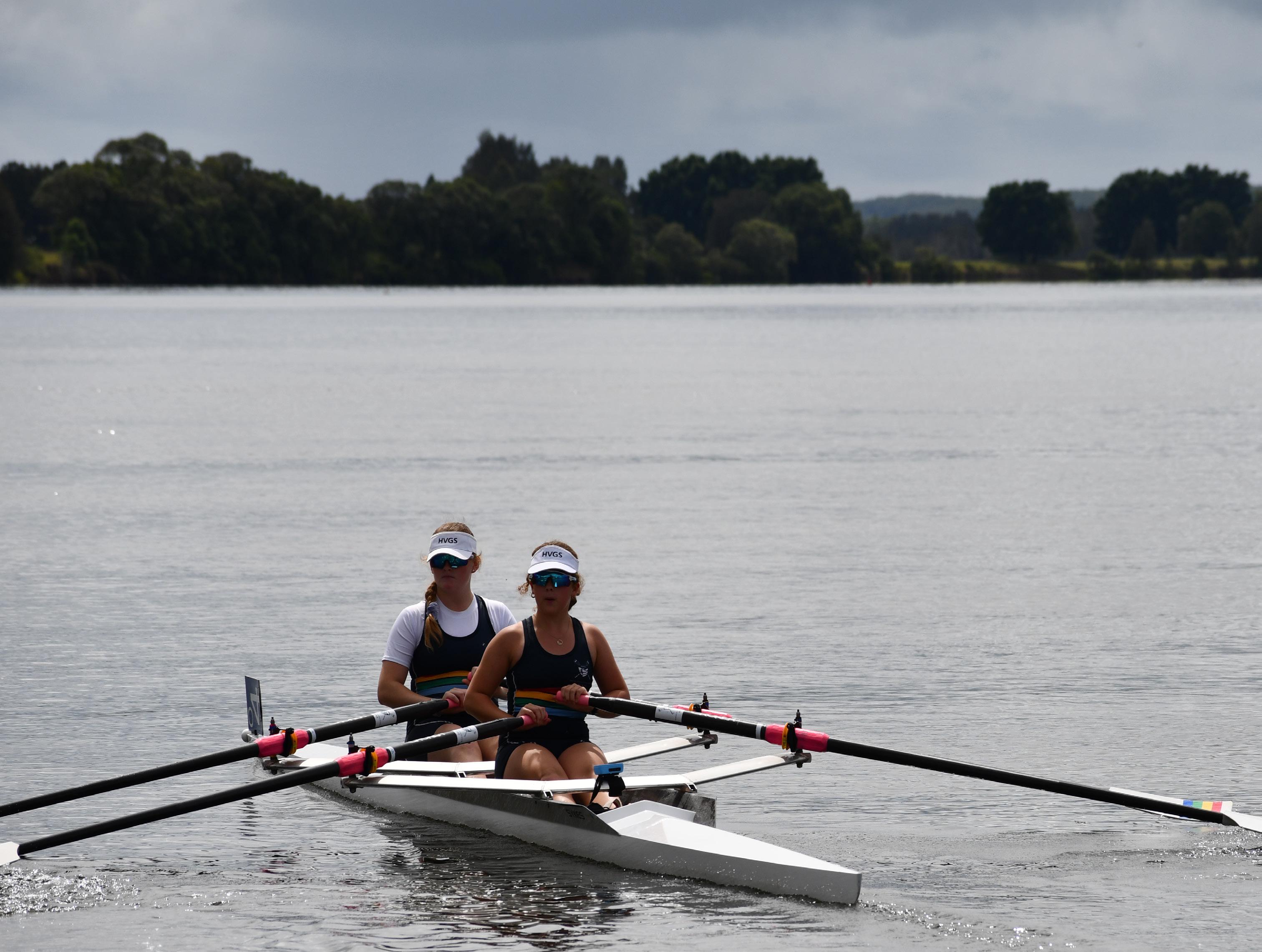
Sprawling across an expansive 32-acre park-like campus, our lush, green and abundant environment embodies space and growth. The school’s learning and social spaces are environments of possibility; purposefully designed to foster the knowledge and skills required for future-focused workplaces. HVGS also has a Rowing Facility on the banks of the Hunter River.
The HVGS working farm at South Maitland is home to show steer, alpacas, pigs, lambs, calves and goats! Senior students visit the farm regularly for agriculture lessons and the HVGS Cattle Team prepare their steer for showing. A second agriculture plot located on the main school campus includes raised research plots, a commercial glasshouse and a poultry farm.
HVGS graduates consistently rank highly against many academic benchmarks, with students routinely gaining entry to their first choice of university course or postschool option. The School extends students’ learning by offering comprehnsive Experiental Learning and exciting Co-curricular Programs. The School also offers scholarships to internal and external students, including a unique set of tertiary scholarship for graduates.
The 2023-2028 HVGS strategic plan, Future Directions guides the school’s areas of focus and strategic priorities. HVGS Priority Areas include: Excellence in Holistic Education, Connected and Flourishing Community, Inclusion and Belonging and Humancentered and Sustainable Systems.
A commitment to maintaining high standards of excellent in learning across academics, social emotional learning, vocational studies, arts, sports and service. HVGS values the whole student and is committed to providing innovative learning pathways that prepare students for the while engaging their passions and challenging them to be global citizens who seek to make a different in their world.
2025 priority areas:
• Implementation of the IB Diploma with the first cohort of students.
• Undertake the International Baccalaureate Organisation (IBO) self-study process as part of the external evaluation of HVGS’ implementation of the Primary Years, Middle Years and Career-Related programmes as a means of supporting improvements in learning and teaching as well as reflective practice amongst staff.
• Implement new NESA curriculum in ways that are collaborative, aligned with the HVGS Principles of Learning, and that support innovation at HVGS.
• Implement Endeavour Trip Programme (Year 10 and 11).
• Develop criteria for high-quality overseas trips/tours that are aligned with the HVGS definition of experiential learning, the HVGS motto and the HVGS values for life.
HVGS strives to be a community that fosters local and global connections where students, alumni, staff and parents feel connected to a shared purpose and identity. HVGS aims to build a culture of authentic collaboration across the School community and with local and global communities.
2025 priority areas:
• Continue to build a strong culture of collaboration by embedding cognitive coaching, ongoing reflection on intercultural competencies and restorative practices into “ways of working” amongst staff at HVGS.
• Develop a structure and terms of reference for a Parents and Carers Association that reflects the school’s values, mission and motto.
• Support current and future parent and student understanding of the learning programs at HVGS.
A commitment to building systems and structures that ensure everyone is cared for, valued and recognised for their unique identities and experiences.
2025 priority areas:
• Review behaviour management practices and behaviour levels in line with positive behaviour and restorative principles, guided by the Real Schools Project implementation.
• Refine the HVGS Uniform.
A commitment to maintaining and creating and infrastructure that enables high-quality teaching and learning, is human-centred by design and in implementation and is sustainable for the future. HVGS recognises that sustainable systems look after our environment, are financially responsible and future-focused, support the wellbeing of the community, and reflect the culture and values of the School. HVGS understands that simple and intuitive systems are key to a thriving community.
2025 priority areas:
• Deepen staff engagement and sense of agency by developing and implementing a Staff Consultative Group with clear terms of reference.
• Implement the Professional Growth Cycle with all staff.
• Develop designs for additional Junior School general learning areas to support enrolment growth.
• Design a new farmhouse in line with flood mitigation strategies.
• Implement a Cybersecurity Strategy and Roadmap, that is ISO aligned, marks out HVGS as a leader in this space and includes refinements of Cyber Security Critical Incident response at the school.
• Implement strategies that support enrolment growth at HVGS to better meet the demand for student places.
The HVGS areas of focus for 2025 are detailed in the 2024 Community Report and achievements for 2025 are outlined in the report of that same year.

In line with the School’s strategic focus on inclusion and belonging, the following initiatives took place in 2025:
• The School developed a Behaviour Response Continuum, founded on principles of respect, accountability and restorative practice. Working in partnership with consultant Marion Walsh-Gay (Real Schools), teachers and students practised using affective language, positive priming and restorative conversations to solve conflict and address social issues in a responsible, respectful manner. Through the use of restorative circles and past-presentfuture interactions, students are empowered to become problem-solvers, who take ownership for their actions and work as agents of change in the school community. A school-wide wellbeing referral process was implemented to record, monitor and analyse student behaviours, wellbeing and academic needs across the School. Provision of support plans, response plans, personalised learning plans, communication plans and counselling sessions provided tailored support for students, in alignment with their needs.
• Wellbeing programs were taught across the School on a weekly basis, focusing on competencies of self-awareness, self-management, social awareness, relationship skills and responsible decision-making. Evidencebased programs included Grow Your Mind, UR Strong, Zones of Regulation, Respectful Relationships, Drug and Alcohol education, Amazing Me, Tomorrow Man Tomorrow Woman, Burn Bright, Leadership Workshops, Anti-Bullying and CyberSafety programs. Students were taught to take responsible action at each stage of their social, emotional and physical development.
• As an IB World School, student agency is a central tenet of our curriculum and school culture. In 2025, student voice was amplified through initiatives such as: student interview panels for recruitment of leadership positions in the School, student-led playground initiatives and clubs, students as mentors, buddies and coaches, the Grammar Grapevine student-led podcast, and student-led social action initiatives. At Presentation Days, students were recognised for taking meaningful action and engaging in service to support others, within and beyond the School community. Strategies such as affective language, positive priming, circle architecture and reflective interactions were used to empower students to develop emotional literacy, resilience, ownership of their behaviour and conflict resolution skills. Restorative interventions with students focused on respectful language, anti-racism practices, and navigating social media.
• Leadership skills and responsibility were fostered through student leadership roles, as well as the structures of the Senior School Student Council and the Junior School SRC. Student representatives took responsibility for listening to their peers, developing school improvement initiatives, leading school events, and developing outreach initiatives to support local and global causes.
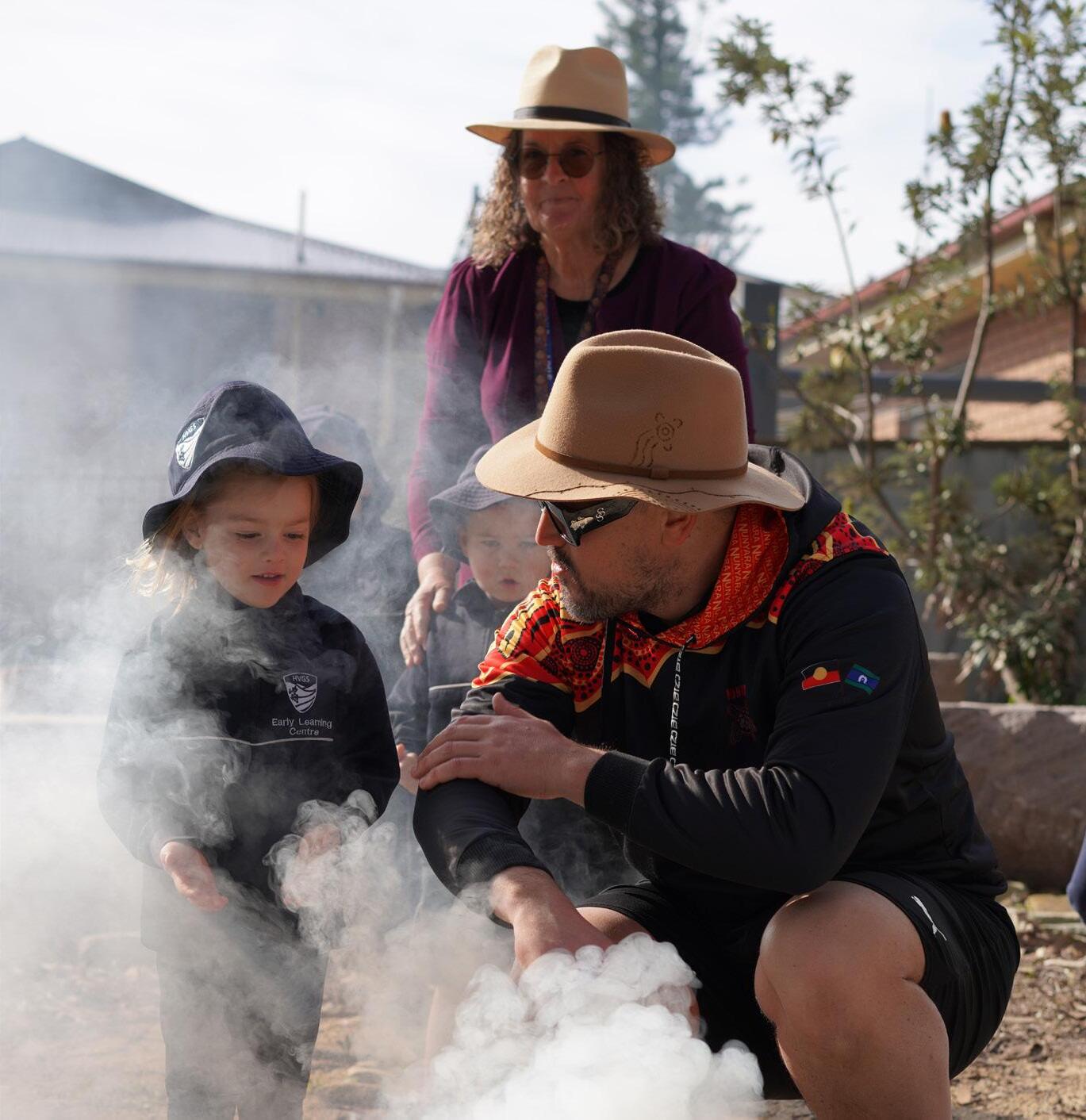
• The school continued to implement its Reconciliation Action Plan (RAP), led by the Head of Aboriginal & Torres Strait Islander Education in consultation with a working party of staff and students. AECG student leaders delivered Acknowledgements of Country (at school and public events), developed class-based Acknowledgements of Country, and supported staff to develop culturally grounded literacy and numeracy programmes. Staff and students engaged in deep listening, cultural learning, partnerships with Aboriginal and Torres Strait Islander artists, authors, sportspeople and speakers, excursions on Country, and multiple initiatives to Care for Country. Students and staff received Wanay KuwayKuway Awards (hosted by the Maitland AECG) for cultural leadership, academic and sporting achievements, and impact as ‘deadly educators’.
• The School continued its partnership with Professor Eeqbal Hassim as part of a strategic focus on intercultural understanding. Parents, staff and students engaged in workshops to develop deeper understandings of learner and learning identity, ways to broaden access to education (by analysing structural and pedagogical barriers to inclusion, and redesigning curriculum accordingly). Parents, staff and students held open dialogue about multilingualism, cultural identity, anti-racism and anti-bulling strategies, to create a culture that is respectful, adaptive and responsive to cultural diversity.

NATIONAL ASSESSMENT PROGRAM FOR LITERACY AND NUMERACY (NAPLAN)
Hunter Valley Grammar School participated in the 2025 National Assessment Program for Literacy and Numeracy (NAPLAN) for Years 3, 5, 7 and 9. Achievement for students in each year group was reported across specified skill categories in numeracy, reading, writing, spelling, grammar and punctuation.
The reporting format consists of a 4-level proficiency scale. These “represent a challenging but reasonable expectation of what students at each level know and can do at the time of the NAPLAN testing”.
Descriptions of these 4 levels of proficiency are:
• Exceeding: The student’s result exceeded expectations at the time of testing.
• Strong: The student’s result met challenging but reasonable expectations at the time of testing.
• Developing: The student’s result indicated that they are working towards expectations at the time of testing.
• Needs additional support: The student’s result indicated that they did not achieve the learning outcomes expected at the time of testing. They are likely to need additional support to progress satisfactorily.
Further detail, in addition to the following tables, regarding the performance of Hunter Valley Grammar School in the National Assessment Program for Literacy and Numeracy may be found on the My School website at www.myschool.edu.au.
Year 3
In 2025, 74 students in Year 3 sat their first NAPLAN tests.
Year 5
In 2025, 77 students in Year 5 participated in the NAPLAN tests
Year 3
Year 5 % Meeting or Exceeding Expectations (Strong and Exceeding levels)
Year 7
In 2025, 112 students in Year 7 participated in the NAPLAN tests.
Year 9
In 2025, 113 students in Year 9 completed their final NAPLAN tests.
Year 7 Year 9
TABLE 1 Compares
TABLE 2 Compares
Year 3 Year 5
TABLE
Compares
Year 7 Year 9
In 2025, 88 students sat examinations for the HSC at HVGS. Of these, 86 students were eligible for the award of the Higher School Certificate, with 2 students completing a pathway/partial pattern of study.
There were 56 mentions on the Distinguished Achievers List, with 36 different students awarded the distinction (approx. 40% of the cohort). Student achievement at Band 5/6 level (or equivalent) reflects 50% of all HSC results across all courses, whilst student achievement at Band 4+ (or equivalent) reflects 89% of all results achieved across all HSC courses.
Four different students (approx. 5% of graduating cohort) undertook a vocational or trade training course provided externally.
Two students completed Agriculture: Primary Industries SBAT Certificate II courses, one student completed a Retail Services course via TAFE NSW, and one student completed studies in Animal Care via TAFE NSW.
• Total students from the 2025 cohort eligible for an ATAR = 86
• Total number of students offered a University place in NSW/ACT for Semester 1 intake 2025 through UAC = 68.
The remaining students have either accepted direct entry University offers independent of UAC, have elected to join the workforce, have accepted offers to study interstate or overseas, or have plans unconfirmed.
The majority of our 2025 HVGS graduates have proceeded to study selected tertiary degrees locally at the University of Newcastle in 2026. The most popular fields for further education continue to be in the Health Sciences; Business; Arts; Agriculture, Environmental Studies & Rural Sciences; Psychology; Law; and Science & Engineering.
University
Approx % of students
University of Newcastle 50
Sydney University 10
University of New South Wales 10
Charles Sturt University 5
University of New England 5
Macquarie University 5
University of Technology Sydney 5
Other 10
The accreditation status of all teaching staff responsible for delivering the curriculum is detailed in the table below.
At our school we embrace all backgrounds for our staff and students.
HVGS staff are committed to providing an effective learning environment for all students and are highly qualified to fulfil their designated roles. HVGS does not require staff to disclose their indigenous status at any stage during their employment with the school, however staff may voluntarily disclose their Aboriginal and/or Torres Strait Islander status. There are six (6) Aboriginal and/or Torres Strait Islander staff members at HVGS.
Please note, the data below is as at 31 December 2025 and excludes casual employees.
The attendance rates of students from Kindergarten - Year 12 in 2025 are detailed in the table below.

HOW THE SCHOOL MANAGES STUDENT NON-ATTENDANCE
Hunter Valley Grammar School monitors, records and retains daily attendance for all enrolled students by keeping an attendance roll for each class.
Staff members with responsibility for a class identify and record student absences consistently.
Any unexplained absence from class or from school is followed up appropriately with the student and/or their parent/carer.
Where a student’s school or class attendance is poor, the school contacts parents and carers in an appropriate manner.
When unsatisfactory attendance is identified, the concern and any actions taken are recorded on the student file, as appropriate.
The following School policies are available on the Hunter Valley Grammar School website: here.
• Bullying Prevention and Intervention Policy
• Behaviour Management and Discipline Policy
• Child Safe Policy
• Complaint Management Policy
• Enrolment Policy
• Procedures for Handling Allegations of Staff Misconduct and Reportable Conduct
The School’s Annual Reports are available on the School’s Publications page via this link.
Click here to view the 2024 Annual Report.

In 2025, Hunter Valley Grammar School participated in the MMG Education School Survey to gather comprehensive, community-wide feedback from parents, students, and staff. The survey provides benchmarked data on overall school satisfaction, academics and learning, wellbeing, and school operations. Data included quantitative ratings and comments.
Students in Years 6-12 undertook the survey, and it was open to all parents and staff. Survey participation rates were high, demonstrating strong community engagement. 48% of parents from ELC to Year 12 completed the survey, 92% of students from Years 6-12 and 75% of staff.
Identified in the survey data were the following top five reasons parents choose HVGS:
• Quality of teaching - 97%
• Focus on student wellbeing - 94%
• Facilities and resources - 92%
• Balanced education - 92%
• Academic standards - 91%
Identified in the survey data were the following top five reasons students value their experience at HVGS:
• Quality of teaching – 93%
• Focus on student wellbeing – 79%
• Facilities and resources – 89%
• Balanced education – 88%
• Academic standards – 94%
Identified in the survey data were the following top five reasons staff value HVGS:
• Quality of teaching – 97%
• Focus on student wellbeing – 92%
• Facilities and resources – 89%
• Balanced education – 96%
• Academic standards – 91%
Overall satisfaction with HVGS (Kindergarten to Year 12) was 82% for parents and students, 2% above benchmark. For staff overall satisfaction was 80%. In the Junior School overall satisfaction was at 84%, 2% above benchmark. Overall satisfaction with the Early Years Centre 92%, 7% above benchmark.
Parent affinity and loyalty to HVGS was rated as high, with staff loyalty rated as very high.
The reputation of HVGS was 5% above the benchmark for staff and 1% above for parents.
Teachers were identified by both parents and students as a major strength at HVGS.
Academic programmes were rated in the very high band overall by parents and staff, and in the high band by students (2% above benchmark).
The “about right” emphasis placed on academic programmes was 4% above benchmark for students and 4% above for staff.
Students’ sense of autonomy was 3% above benchmark, relatedness 2% above and competence 1% above. This is a positive reflection of students’ sense of efficacy and connection to HVGS.
Counselling and support services were rated as strengths by parents and staff. Parents whose children accessed counselling reported 84% satisfaction, compared to the 79% benchmark.
Overall parent satisfaction with student wellbeing was very high and above benchmark at 80%, likewise for the statement that “HVGS provides a safe and caring environment for my child”. Students were 2% above benchmark for this statement. In the Junior School overall satisfaction with student wellbeing was 85% (6% above benchmark) and in the Senior School this was 80%.
School Community and Belonging
Parents, students, and staff reported a strong sense of community, belonging, trust, and safety.
Senior School mentoring programmes were rated highly by parents and students.
Experiential Learning and Co-curricular Programmes
Students rated the range of opportunities available as a key strength.
Co-curricular non-sport programmes which include performing arts and academic enrichment co-curricular activities were rated 3% above benchmark for staff and 4% above benchmark for parents.
Co-curricular sport was rated as 3% above benchmark by Junior School parents at 77% satisfaction, 4% above benchmark for Year 7-8 parents (78% satisfaction) and 6% above for Years 9-10 (80% satisfaction). Overall, the co-curricular sport programme at HVGS was 2% above benchmark with a 77% satisfaction rating at the time survey results were received.
Across Years 3-10 the percentage of students participating in school trips or camps was between 90-100%, with overall parent satisfaction at 84% (89% in Years 3-6). 86% of parents believe camps and trips at HVGS build resilience and challenge their children to grow and learn.
Facilities and resources were rated 2% above benchmark, with 90% satisfaction with maintenance of gardens and grounds for staff and parents, and 88% satisfaction (89% staff) for campus feel and aesthetics. The school canteen (Meeting Place and Treetops) received an 89% rating from parents and 84% from staff.
Staff were asked a series of questions related to psychosocial hazards and based on the data HVGS falls into the low hazard category and performed 1% better than other like schools. HVGS is seen as a safe working environment for staff where they have autonomy. Workplace relationships were rated as very high (80%) at HVGS.
Staff retention is strong at HVGS with the number of staff working at HVGS for 15 or more years 6% above other like schools.
The 2025 Community Report includes 2026 annual development goals that reflect key areas of focus emerging from the MMG survey data.

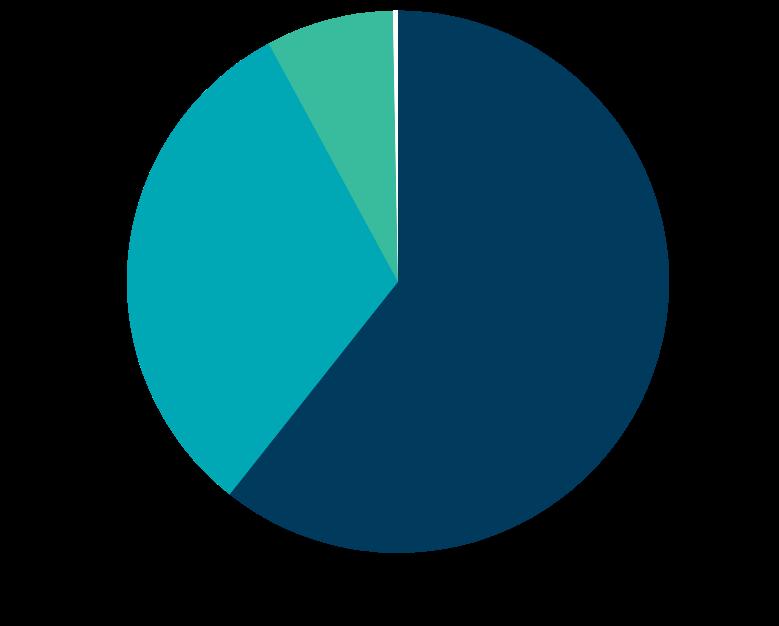
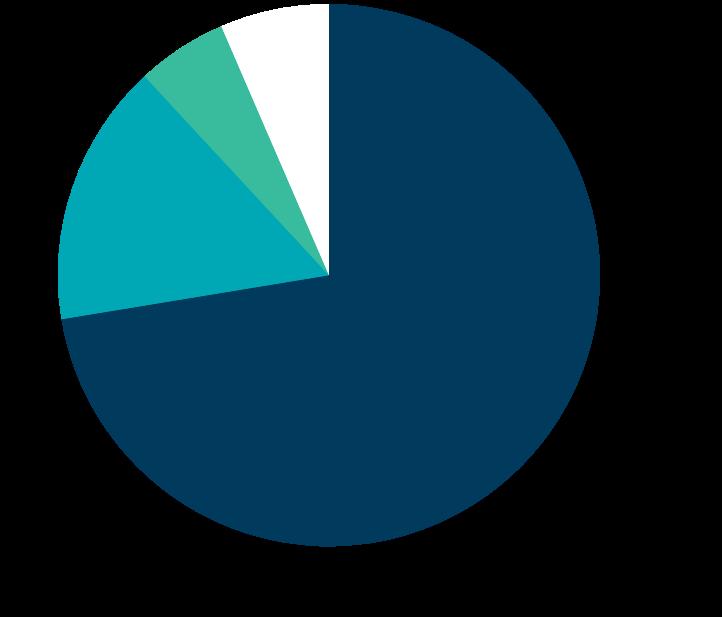
Information taken from the Financial Questionnaire and does not include Trading Activity from the Early Learning Centre, Uniform Shop and Canteen.
Hunter Valley Grammar School will maintain the relevant data and will comply with reporting requirements for NESA. The Annual Report will be provided to NESA via RANGS online and be available for public disclosure on the School’s website from June 30, 2026. Copies can be provided for those who cannot access the internet.