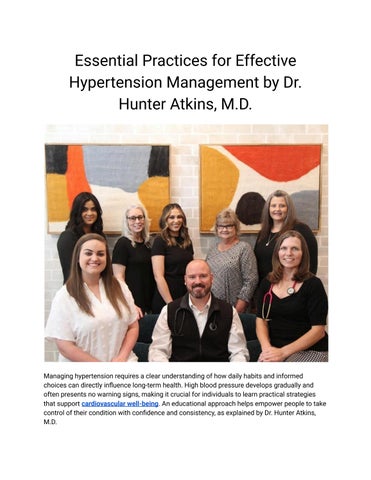
Essential Practices for Effective Hypertension Management by Dr. Hunter Atkins, M.D.

Managing hypertension requires a clear understanding of how daily habits and informed choices can directly influence long-term health. High blood pressure develops gradually and often presents no warning signs, making it crucial for individuals to learn practical strategies that support cardiovascular well-being An educational approach helps empower people to take control of their condition with confidence and consistency, as explained by Dr Hunter Atkins, M D
A foundational step in managing hypertension is adopting a heart-healthy diet. The DASH (Dietary Approaches to Stop Hypertension) eating plan is highly recommended because it emphasizes nutrient-rich foods such as fruits, vegetables, whole grains, lean proteins, and low-fat dairy products Minimizing sodium intake is equally important, as salt encourages fluid retention, which raises blood pressure Learning to read nutrition labels and preparing meals at home can help individuals make informed dietary decisions.
Physical activity is another essential component of hypertension management. Engaging in at least 150 minutes of moderate exercise each week strengthens the heart and improves circulation Activities like brisk walking, swimming, or cycling are practical and accessible options for most individuals Understanding the value of movement encourages consistent participation, helping reduce both blood pressure and overall cardiovascular risk.
Stress management also plays a key role in controlling hypertension. When the body experiences ongoing stress, it produces hormones that temporarily elevate blood pressure Over time, this can contribute to chronic high readings Incorporating techniques such as deep breathing, meditation, mindfulness, or yoga teaches the body to relax and supports emotional well-being. Quality sleep further enhances stress reduction, making it important for individuals to establish healthy sleep routines.
Medication adherence remains a critical aspect of controlling hypertension for those prescribed treatment Learning why medications are necessary and taking them exactly as directed prevents dangerous fluctuations in blood pressure Setting reminders and maintaining open communication with healthcare providers ensures the treatment plan stays effective and responsive to individual needs.
Regularly monitoring blood pressure at home provides valuable insight into how lifestyle habits and medications are working Tracking readings helps individuals identify patterns and share meaningful information with their healthcare team
By understanding these best practices and applying them consistently, individuals can effectively manage hypertension, protect their heart health, and improve their overall quality of life