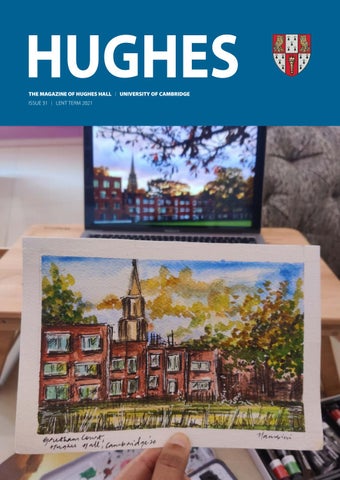
HUGHES THE MAGAZINE OF HUGHES HALL | UNIVERSITY OF CAMBRIDGE ISSUE 31 | LENT TERM 2021
IN THIS ISSUE
Introduction
Leading through unpredictability – The President reveals how Hughes Hall is a college still full of surprises 1
Dear alumni and friends
Maintaining strategic momentum 3 The Digital Education Futures Initiative at Hughes Hall
4
‘Chaff seemed inevitable’
6
Reinventing the library
8
‘Even COVID couldn’t stop us from celebrating our registration!’ 10 Café culture à la COVID
12
Developing novel antibody drugs 14 A distant future has arrived
17
The PHG Foundation – horizonscanning 18 The 2020 Hughes Hall Photography Competition 18 Make an even greater difference 19 ‘You’re still on mute!’
20
Life-transforming new scholarships at Hughes Hall 22 Ways of giving
24
Staying in touch
25
Photo credits On the cover Hamsini Marada (2018, Law); this page Jean-Luc Benazet; p 1 Laurel PowersFreeling, Governing Body Fellow; pp 2 (students), 10 and 11 (all except porters’ selfie), 12, 13 Sarah Langford, Communications Manager; p 2 (rainbow) Felix Rochlitz (2020, Economics); p 16 Amy Sly; p 19 Chisomo Zimphango (2020, Medical Sciences); p 21 (entrance) Jedidiah Koh (2020, Computer Science); p 21 (pumpkins) Kilian Bartsch (2018, Engineering); p 23 (student) Jessa Belle Garibay (2020, Conservation Leadership); p 25 Barghav Bharadwaj (2020, Economics)
Despite the long dark winter still ahead of us and COVID-19 stalking us at every turn, the remarkable development of different ways of doing things evolves. The widespread advances of digital literacy and innovative alternatives for everything – learning, shopping, meeting, socialising, making art and music and so much more – continues. The dislocation to some people’s lives has been unthinkable, but wherever I look, efforts to bring everyone along have been heartening. There is still no alternative to giving our grandparents or grandchildren a hug, but the need to persevere and to look after each other has never been so willingly supported. Isolation, loneliness and anxiety have been features of living through the pandemic and, for many people, it has been hard to manage. The Cambridge community of Hughesians, with support from the college and our many unsung heroes looking after students, is a study in community building. There have been huge amounts of extra work for many of our colleagues and by doing it they have made a true difference. The wider community of Hughesians worldwide has done its part to help with financial contributions, volunteering time and giving moral support. Through our social media we have been able to give you frequent news about the many Hughesians on the frontlines of the battle against COVID-19 worldwide in a wide range of settings. In this issue of Hughes we have tried to capture just a few of the stories coming out of this extraordinary year.
Sometimes we overlook the fact that under the crushing burden of the pandemic, learning and researching goes on. At Hughes Hall progress on our academic and research translation agendas continues apace. I hope you will enjoy reading about some of the achievements over the last half year and that you will continue to send us your news of professional accomplishments and family events for inclusion in our next issue. With thanks from all of us in Cambridge and wishing you a healthy 2021. Yours
William J Conner By-Fellow and Director of Institutional Advancement
1
HUGHES HALL: FOCUSING ON OUR VISION
LEADING THOUGH UNPREDICTABILITY
The President reveals how Hughes Hall is a college still full of surprises It is too early to be entirely reflective about the pandemic and what it has meant for us all – personally, professionally and politically – as the landscape is constantly changing. As I write, there is a tangible sense of renewed hope and anticipation, from effective and affordable vaccines and treatments emerging around the world to closer knit, supportive communities pooling resources. This introduction to Hughes does, however, provide an opportunity for some reflection about how we have led our community through a time of such unpredictability. Scenario planning As the pandemic gathered pace, we chose not to attempt to predict the future, but to acknowledge and lead by maintaining focus on our vision: to position Hughes Hall for the post-crisis period by weathering the storm and
“
we have offered a rich, if different, educational experience
regaining strategic momentum on our major initiatives. We resolved to do this by providing the best possible student education and experience in spite of social distancing, while operating within our means. As part of our crisis recovery work in late Spring, we created several scenarios to aid our strategic planning. These ranged from rapid recovery to global depression. Our base case for planning, six months on, has proved pretty accurate: ‘…with practice, the college gets smarter at responding to change. Disruption is ongoing as we repeatedly transition from a recovering and more relaxed campus environment to dealing with new pockets
of isolating students, homeworking and strict social restrictions…but careful planning, the prioritisation of our students’ experience and welfare, and prudency allow us to weather the storm.’ What we didn’t predict, however, is that college catering, cleaning and portering would be able to remain ‘open for business’ every day during the pandemic; that we would avoid mass redundancies; that we would fill our accommodation; and that we would attract more students this academic year than ever before, from all over the world. These are not small achievements. And we were ready throughout to open up more and faster and would
2
have done so if there had been no serious second wave. Rising to the challenges We were confident that our different college communities would rise to the challenge and they have done so to an extraordinary degree. Our staff team has worked harder and more flexibly than ever, and with a dedication beyond that which I could have asked for. Our porters, for instance, have delivered nearly 3,000 parcels in the first six weeks of term. You will meet some of these ‘college heroes’ in this issue – there are many more.
HUGHES HALL: FOCUSING ON OUR VISION
“
our staff team has worked… with a dedication beyond that which I could have asked for
Our students are running Zoom socials and cooking meals for their isolating housemates. They have shown stoicism and selflessness in the face of restrictions on socialising – their experience has not been what they would have anticipated when they applied to Cambridge. But I truly believe that Hughes Hall has been a safe place to be and that we have offered a rich, if different, educational experience. I am extremely proud of them all. I am particularly moved by the experiences of those seniors who continue to make very real contributions to the fight against COVID-19, and our students who are on the frontline in hospitals, laboratories and classrooms. I have played a part in the wider crisis efforts by sitting on the University’s
COVID-19 Gold Team, helping to coordinate the responses of 31 colleges and over 150 departments. There is yet another ‘first’ for the college. Our alumni, too, have risen to the challenge. Our COVID-19 emergency appeal attracted the greatest number of donations of any Hughes Hall campaign, ever. Alumni in 29 countries and spanning the ages between 23 and 89 responded to our appeal. We are extremely grateful: your generous donations have made an immense difference. Thanks to you, we have been able to help a high number of our students through the crisis, and to make a very real and positive difference to their Cambridge experience. If I’m honest, I probably could have predicted that one.
Dr Anthony Freeling President
3
HUGHES HALL: PEOPLE, PROJECTS, PARTNERSHIPS
Maintaining strategic momentum Hughes Hall remains focused on strategic areas where it can span the academic and external worlds to make a real difference – often through The Bridge initiative. Despite COVID-19, we are making significant progress: appointing key people, advancing projects and consolidating partnerships.
Deputy Director appointed at Hughes Hall Centre for Climate Change Engagement In Hughes 30, we described how an outstanding gift of £4.5 million would enable the HHCCCE to scale up its work with companies. We are delighted to announce that Emily Farnworth has accepted the role of Deputy Director of the Centre. Emily is a leading expert on the implications of climate change for business, having spent more than 25 years working in the field in both the UK and globally. She led the World Economic Forum’s work on climate action, which included the Climate Governance Initiative, and helped establish networks for non-executive directors around the world to lead this discussion in the boardroom. She has led research, campaigns and communications strategies aimed at creating systemic change in the way businesses manage climate risk and decarbonise operations.
to the non-executive corporate community, supporting the transition to a net-zero economy and adaptation to climate risk, to protect asset values over the long term. The Centre also hosts Chapter Zero, the Directors’ Climate Forum, whose members sit on the boards of over half the biggest UK listed companies. The Centre forms part of The Bridge, Hughes Hall’s wider project on translating research into real-world impact.
‘We are entering a time that requires radical collaboration across all disciplines,’ Emily says. ‘Building on the academic excellence at Cambridge creates a huge opportunity to accelerate the emerging low carbon economy alongside creating a more resilient and sustainable society.’
Julie Baddeley, Director of the HHCCCE and Chair of Chapter Zero, comments, ‘Emily’s expertise and experience will significantly increase the Centre’s impact and reach. As well as directing our work with Cambridge academic experts, she will oversee the global secretariat for the Climate Governance Initiative, which currently has 20 Chapters emerging around the world with Chapter Zero in the UK leading the way.’
The HHCCCE works with experts in the University to bring the latest research
Dr Emily Shuckburgh, Director of Cambridge Zero, adds, ‘I am excited to
Emily Farnworth work with Emily and the HHCCCE to support the close cooperation between academia, business and policymakers that is needed to respond to climate change and accelerate the global transition to net zero.’ This appointment is another move in the University’s growing focus on the urgent climate change agenda, both through initiatives such as Cambridge Zero and the University’s net-zero ambition.
4
HUGHES HALL: PEOPLE, PROJECTS, PARTNERSHIPS
The Digital Education Futures Initiative at Hughes Hall More than ever, COVID-19 has highlighted the urgent need for research into ‘future education’, an education that responds to the challenges and potential of new information and communications technology. The pandemic has led to a massive and sudden increase in the use of online education but online and other digital technologies do not necessarily support doing the same things as before – they have many limitations compared to face-to-face education, but they also offer new possibilities. In Hughes 29, before the pandemic had really taken hold globally, Professor Rupert Wegerif outlined a proposed institute for future education, supporting research that could be a catalyst for change and sharing best practice. This has now been renamed DEFI – the Digital Education Futures Initiative. DEFI works with partners in industry, policy and practice to explore the possibilities that digital technology opens up for education. It is both a centre for close-to-practice research and an initiative to create a new institute at Cambridge to serve as a global hub and thought-leader in this area. A dynamic team has been created, based at The Bridge at Hughes Hall, who will drive the exploration of the educational possibilities that digital technology opens up and take projects forward. With Rupert as the director, exciting discussions are ongoing between DEFI and potential partners. While DEFI would never be an uncritical advocate for the use of more education technology, it will serve as a catalyst for innovation, developing new models of education
and rigorously investigating their implications and potential impact.
PEOPLE Dr Louis Major – Principal Researcher A Senior Research Associate at the Faculty of Education, Louis works on digital futures projects with Rupert and Dr Sara Hennessy, a Hughes Hall Governing Body Fellow. He is interested in how digital technology can enable new models of education and the development of future skills such as dialogue and creativity. His work in the Faculty includes: Principal Investigator of the Epic Games funded Gaming to Development project (G2D: 2020–21): stimulated by the narrowing difference between the ‘real’ and ‘virtual’ world, particularly in the wake of COVID-19, G2D explores how real-time 3D tools can support young people to develop important future skills. Co-Investigator and Project Manager of the Virtual Internships Project (VIP: 2019–21): see ‘Some DEFI projects’ opposite. Member of the EdTech Hub’s research team led by Sara: this examines how culturally appropriate uses of technology can lead to better learning outcomes for children in low-income countries.
As Principal Researcher for DEFI, Louis has responsibility for developing and leading research projects and impact initiatives. In-progress work includes collaborating with industry funders ARM and Epic Games to create an Innovation Lab, researching issues like the educational impact of collaborative online gaming. He is also leading on horizon-scanning and future-scoping activities to inform practitioners and policymakers about how digital technology may enable new educational possibilities for the benefit of all. Genevieve Smith-Nunes – Media and Communications Lead Taking on the role of Media and Communications Lead at DEFI, Genevieve is a PhD student in creative computing education in the Faculty of Education and a member of Darwin College, and also a lecturer in computer education and consultant for many bodies including the UN. ‘As an educator (and artistic producer) the role of digital is more important than ever since COVID-19,’ Genevieve explains. ‘The loss of face to face meant I had to alter my teaching style to ensure students feel connected and part of the student community. My PhD research has had to flip to a completely virtual development and delivery which alters more than the logistics. I am investigating teaching coding through ballet; now the ballet
5
HUGHES HALL: PEOPLE, PROJECTS, PARTNERSHIPS
components will have to be a fully digital, augmented reality piece. This is exciting but a little sad as it was not my initial design. During the pandemic, access to conferences, workshops, talks and fellow researchers has exploded wide open due to affordable video conferencing, chat tools and more. This access to work and research that otherwise would have been closed to me is a beautiful digital gift, but comes at the heavy price of COVID-19.
Genevieve wearing the Emotiv© Insight EEG headset – a wireless device for recording brainwaves which is part of her PhD research
I believe DEFI can provide the interconnected network that is urgently needed for the current disparate voices researching and working in digital education futures.’
Jude Hannam – DEFI Project Administrator ‘The early scoping work I have done has made me even more aware of the fast-paced developments in the digital education field,’ Jude says. ‘It is exciting that The Bridge at Hughes Hall will be a part of coordinating, translating and disseminating research in this crucial educational sector.’
Elizabeth Hughes believed: ‘We sow for a distant harvest.’ DEFI is speeding up that harvest with 21st century technology.
SOME DEFI PROJECTS AND PARTNERSHIPS DEFI hopes to serve as a network and forum for research on digital innovation in education going on across Cambridge. In addition to the Innovation Lab already mentioned, which we hope will offer research experience to a number of Hughes Hall students, we propose several large-scale design experiments in new models of education. These include:
of Education in Camden (part of the London transformation) and with Lesson Study, which has helped to transform education in Kazakhstan, amongst other places. Pete is working on this with Sara, who has extensive experience with inquiry-based teacher professional development. Cambridge OWL
CLRX: a global classroomlearning research exchange Hughes Hall’s Classroom Learning Research Exchange (CLRX) aims to fill an identified gap in the current international education policy-practice-research ecosystem by stimulating, curating and interrogating high-quality, teacherled classroom and learning research. This is based on Dr Pete Dudley’s successful work as Head
The Cambridge Open Web of Learning (OWL) will be a type of social-media platform dedicated to education, but a new kind of education. Children will be taught dialogue skills and practise them through authentic encounters with their global peers, collaborating across boundaries. By equipping young people with the research skills to find practical solutions to global and local challenges, and developing
enterprise and leadership skills, Cambridge OWL will prepare them to overcome challenges together. Virtual Internships Exploring how to engage young people in areas of low social mobility with the world of work is a critical challenge. Phase one of this project has been successfully conducted with support from BT and Huawei. We now have a method of providing simulated role-play experience of working together as a group of interns to solve real world challenges posed by an enterprise, getting advice via video from real workers in that enterprise and producing products that the enterprise then assesses. The intention is to take this idea to scale with a global platform to marry schools looking for links with enterprises who want to work in schools.
6
HUGHES HALL: OUR FIRST PUBLIC APPEARANCE
‘Chaff seemed inevitable’ In the second of her series of articles based on the fascinating material in the archives of Hughes Hall, Dr Jean Lambert writes about Miss Hughes, the Founding Principal, and the college’s first ceremonial occasion – which failed to go according to plan. 19 October 1895 was the eve of the official opening of the new college building, now known as the Margaret Wileman Building. Staff and special guests gathered in the lecture room and library for the presentation of a portrait of Miss Hughes. Dr Sophie Bryant performed the unveiling. As co-author, with Miss Frances Buss, of the initiative to found an institution in Cambridge to train women graduates for the teaching profession and a former lecturer of the college, Dr Bryant was an appropriate choice. The portrait was a gift to the college from past and present students. It commemorated their Principal’s personal support to her trainees and her ‘devoted and untiring efforts on behalf of education and the training of teachers’. Ten years earlier, Elizabeth Hughes had just completed her degree at Newnham College, Cambridge. At the age of 34 she was chosen to undertake the responsibility for establishing, maintaining and developing the Cambridge Training College (CTC) for Women Teachers, which eventually became Hughes Hall. The CTC was initially housed in Crofton Cottages, in Newnham Croft, Cambridge. By 1895, a decade of ‘struggles and much hard work’ had
Elizabeth Phillips Hughes (1851–1925), Founding Principal of CTC from 1885 to 1899. She had a first class honours in Moral Sciences at Cambridge (1884), the only one awarded that year, and an Hon LID University of Wales (1920). Hughes Hall was renamed in her honour in 1949. The portrait now hangs in the Pfeiffer Room, alongside those of other former presidents. culminated in a ‘permanent home’ for the college. Securing the Wollaston site to build a new college was not only a great achievement but also marked the beginning of a new phase, one
offering opportunities for long-term expansion. After 1895, this meant raising sufficient funding for an additional wing in the new building to house a further 50 students, while at the same time covering a substantial financial deficit.
7
HUGHES HALL: OUR FIRST PUBLIC APPEARANCE
In a most amusing way Years later, Miss Hughes reflected on ‘the many and great difficulties that tried even my optimism’. Little wonder that in the commemorative portrait and in other surviving images of her, Miss Hughes’s demeanour is rather stern, forbidding perhaps – 19thcentury conventions for photographic portraits notwithstanding. Certainly, she has a commanding presence. Yet student testimonials confirm her warmth, friendliness and pastoral concern for their wellbeing. And it should not be assumed that she lacked a sense of humour, playfulness even. The visual record represents only part of the picture; her own perspective on things quite another. A striking example of this is her account of the ‘function’ to celebrate the opening of the new building. Miss Hughes writes that ‘we’ have always been ‘somewhat natural and unconventional’ and that ‘our first appearance in public was characteristically so’. I leave her to relate how ‘the small amount of ceremonial that we had intended fell through in a most amusing way’. The marquis and the marquee We had intended that the Council etc., should receive the Marquis of Ripon in an impressive manner in the entrance-hall, and that a stately procession should be formed of governing body and students, which would sweep through the marquee and onto the platform! That was what we intended. The reality was very different. So many people were crowding into the marquee that Lord Ripon was detained in his carriage for a short time, while
Crofton Cottages with the commemorative blue plaque celebrating Hughes Hall’s 125th anniversary a despairing but amused Principal
Miss Hughes’s vision of ‘sowing for a
struggled to clear the hall, aided and abetted by several energetic members of the Council. With infinite difficulty, the speakers were taken into the sittingroom, and then despairing reports reached us that the marquee was quite full, and a dense mob filled the entrance.
distant harvest’ had started to bear fruit, but she was wise enough to accept that a harvest cannot be gathered in without some degree of chaff.
Fortunately, Lord Ripon had spent the morning with us, and was not quite a stranger, so laughingly I asked permission to guide him through the back part of the premises, out of the side entrance, across the lawn, and then governing body and speakers had to get down, as best they could, the grassy steep slope, and enter the tent by a hole in the back! We had intended giving the speakers plenty of extra cream and hot cakes in the Library at the end of the meeting. Alas! When we reached it, we found it swept and garnished by the hungry horde which passed through it. The Principal had made many virtuous resolutions that she for once would try to be dignified, but somehow the funny side of things was so unusually funny that chaff seemed inevitable, and she caught herself more than once running over the grass.
Jean Lambert Dr Jean Lambert is the Honorary Archivist and a Life Fellow and Tutor at Hughes Hall. She has research interests in early modern English Literature and its intersection with a range of 16th and 17th century discourse, including politics and educational philosophy and practice. Her latest book is Teachers in Early Modern English Drama: Pedagogy and authority. She is currently researching the religion and culture of the Diocese of Ely in the 17th century.
8
HUGHES HALL: A CALM PLACE TO STUDY
Reinventing the library Kate Arhel, the recently appointed Librarian at the beautiful Edwin Leong Library, found she had to ‘run before she could walk’ when she took up her position in July. Rewriting the role Even before starting my new job I discovered it was not so much learning the role as rewriting the role.
distancing, important though those were. Every aspect of the library, from logistics and computer systems to how we buy books and enable students to access core texts, had to be considered.
Unfortunately it wasn’t possible to overlap with the outgoing Librarian at Hughes Hall, and so it was left to my deputy, Catherine Munford, to ‘train me up’. She has been fantastic. The main challenge, though, was how to keep the true ‘Cambridge learning experience’ alive in a time of disruption. How could we ‘reinvent’ the library to make it work under COVID-19 conditions, ensuring that it still offered an effective place to work and study? It wasn’t just a case of physical and social
In my previous job I’d already worked on pandemic risk assessments and contingency plans and so I was able to bring that experience to Hughes Hall. Making the library safe My team worked fast and really hard to reconfigure the library to make it COVID-secure. The Edwin Leong Library is a muchloved learning space. It’s light and airy with lots of windows, modern tables
and comfortable chairs – a relaxing friendly place to do some serious study. Our risk assessment had to consider infections from staff, surfaces, equipment, computers and other library users. We calculated the number of students who could use the library safely at any one time. John Horwood, our Head of Facilities, turned up armed with a 2m measuring stick to enable us to work out how to maximise the use of the space. The maintenance team were brilliant and provided custom-built Perspex screens for us. We’ve changed the infrastructure, instituting a desk-booking system to regulate occupancy levels, systems for monitoring track and trace, and zero-
9
HUGHES HALL: A CALM PLACE TO STUDY
“
As a second year PhD student I have always found the Edwin Leong Library to be the best place to study in Cambridge… I particularly appreciate the hard work the team has done to make the library the last to close during the March lockdown and one of the first to reopen in July, after making all the necessary changes. Joseph Zhao (2018, Land Economy)
contact borrowing to support students who are self-isolating. We created a new library intranet site on Moodle, the University’s virtual learning environment, so that library staff can swiftly upload new information and pages themselves – vital as the pandemic safety procedures keep altering. Unable to offer matriculating students physical tours, we’ve uploaded introductory videos on the library and how to use it; FAQs; opening times; click and collect services; and the desk-booking system. The site also points students to ebooks and how to access them, which, somewhat surprisingly, is a common obstacle. With Dr Carole Sargent and Dr Corinne Roughley, two of our Deputy Senior Tutors, we are organising online chats and sessions on study skills, including one on academic writing. Securing student wellbeing Risk assessment in terms of staffing means we can’t open 24/7 at the moment. However, we are very conscious that our students can be desperate for a change of scene from their rooms and, for those with families
at home, a place where they can work uninterrupted. We have managed to provide 24/7 student study spaces elsewhere in the college. In the library, there are still 9000 actual physical books available to be borrowed, and members can still browse, still work, and still talk to us. We even have a selection of recreational reading if anyone wants to distract themselves from COVID-19 – or their studies – with a gory whodunnit.
Going forwards, our intention is to continue to support our students’ learning with excellent resources and excellent customer service. Their wellbeing is equally important, and here it’s the little touches and welcome diversions that can make a big difference. These often include sympathetic chats, colouring sheets and virtual jigsaws to encourage students to take a break – and lots of events involving cake!
Try out the library’s virtual jigsaws: www.jigsawplanet.com/HughesHallLibrary/hughes-hall-library Library Facebook page: www.facebook.com/Hughes-Hall-library-Cambridge-145465642201180 Amazon Affiliate: support your college’s library by making purchases from Amazon via the link below. A proportion of every purchase made via the link will be remitted to the college by Amazon. You pay no extra on your purchase. https://amzn.to/39UuQpz
10
HUGHES HALL: SUPPORTING STUDENT WELLBEING
‘Even COVID couldn’t stop us from celebrating our registration!’ On a rare visit to college early last term, Sarah Langford, Communications Manager, talked to some very happy – and very international – household groups of new postgrad students. Several were just out of quarantine; all of them were celebrating their registration (matriculation was virtual this year) and delighted to be exploring the college. Most of our international students had to spend two weeks inside their rooms upon arrival in Cambridge and agreed it had not been easy. For many, it was a very real test of psychological strength as well as being physically frustrating. One summarised what many may have felt: ‘I was optimistic at first, but it soon became apparent that it was tougher than I thought.’ Support from college staff and some MCR virtual events were invaluable. The students were looking forward to meeting others and getting to know the University and the beautiful city around them.
Hughes admissions team: from left, Helen Graham and Emily Boyd registering students
‘Even COVID couldn’t stop us from celebrating …Since my arrival at Hughes Hall everyone has been really sweet. The catering team worked tirelessly to ensure that there was hot food every day. Thank you to them, the porters and the College Nurse for looking after and guiding us so well.’ Asees Kaur (2020, Law) ‘Although it was clearly tough to be isolated for 14 days, I was grateful for the support I received from college personnel. They even brought a vacuum cleaner and cleaning products to my room so I could continue in the Japanese tradition of tidiness and cleanliness!’ Household group: from left, Asees Kaur from India, Alice Dale from Australia, Anna Tse from Hong Kong and Yuriko Kobe from Japan
Yuriko Kobe, (2020, Machine Learning and Machine Intelligence)
11
HUGHES HALL: SUPPORTING STUDENT WELLBEING
‘Everyone is so nice and helpful. The porters are very professional and they helped me with the tons of parcels I received. The cafeteria staff are also super nice. My first week at Hughes has been absolutely fantastic.’ Kenny Kwok (2020, Law)
The tutorial team ready to register students: from left, Chloë Bevan and Monica Kelly
“
I am proud of the good-natured and selfless way in which our students are conducting themselves. I wish them all the very best for their time with us after a difficult start. Dr Anthony Freeling, President
As always, a cheery welcome from the porters: from left, Head Porter Jonathan Aveling and Tim Anderson, Porter
‘The extremely helpful and responsive staff did their best to make my quarantine as comfortable as possible. The housekeeping and catering staff were prompt to respond to any query or request I had.’ Pranav Verma (2020, Law)
‘Regular updates from Hughes Hall and social networking events organised by the student MCR team were stupendous. Hughes Hall truly is the most friendly college in Cambridge. The actions of the staff speak louder than any words. I express my heartfelt gratitude.’ Household group: from left, Pranav Verma and Aditya Manubarwala from India, and Kenny Kwok from Hong Kong
Aditya Manubarwala (2020, Law)
Café culture à la COVID Opening a start-up hospitality business sounds an absurd proposition in these uncertain times, but that’s precisely the objective that Stephen Risley, the Hughes Hall Food and Beverage Manager, and his team were set. When Hughes Hall decided to create a temporary drink and snack venue to support the main dining hall catering operation, it was a daunting challenge. What’s more, the time frame for achieving this was short. It was a challenge that Stephen and his team were eager to meet. ‘The proposed venue was a marquee erected on the lawn – not your usual café environment. Fortunately we were given permission to combine this space with the Suzanne Ziegler Garden Room which now lends its name to the café. We had two weeks to set-up with the added pressure to
open as quickly as possible. I wanted to provide a café/bar operation that will become an important hub in the college, a friendly place where our students can safely meet, study and grab and go,’ Stephen outlines his ideas. ‘We focused on quality combined with value for money, serving food with an emphasis on healthy options – including plant based, ethnic and vegan. We also wanted to cater for various dietary requirements while at the same time offering a traditional café experience with cakes and pastries.’ Stephen’s team has been highly supportive with some, like Sarah
Peters, the Catering Assistant, offering to work extra voluntary hours during the set-up period. Sarah has had experience of a wide range of University catering venues, and was very keen to be involved. Cost-effectiveness was an essential requirement. With this in mind the team has used existing equipment and furniture from other areas of the college that are not currently being used. ‘Recycling, reinventing and repurposing has been the order of the day,’ Sarah explains. ‘We are using our imagination with displays to keep costs to a minimum. Our lavish mini-bar area is constructed from wooden claret boxes...’
13
HUGHES HALL: SUPPORTING STUDENT WELLBEING
Thanks to the hard work of the team and other members of the Hughes Hall community, the Suzanne Ziegler Garden Room Café was opened on 1 October. So how’s it going? ‘The opening weeks have been challenging with restrictions on those able to use the café, social distancing in the marquee and lots of rain to further dampen our spirits!’ Jaime Pineda the Assistant Front of House Supervisor says. ‘Despite all of this we have had some encouraging feedback and remain very optimistic for the long term future of a Hughes café.’ The shared vision is to make the café inclusive for all, to create an environment that is welcoming and sociable, that every Hughes Hall member and, when possible, their guests will be able to enjoy safely.
The current menu includes good coffee, tea and other drinks, local cakes that have a homemade appeal and others that are gluten free, breakfast selections such as pastries and croissants, and plenty of fresh fruit. Aided by Hughes Hall Head Chef David Stannard and his kitchen team, the café is trialling a range of different foods including hot and cold snacks. Striving to build a strong customer base for a catering operation takes imagination, flexibility and resilience – not to mention very tight financial management and sheer determination. ‘We are all fully focused on the moment and are taking one step at a time, finding out what works and what doesn’t. We are aiming to establish an interesting and reliable product offer, and to build up our
“
recycling, reinventing and repurposing has been the order of the day
students’ trust and confidence, ‘ says Stephen. ‘It’s still a work in progress, led by demand and feedback. The whole team has immense pride in the café and want to ensure that it is not merely a temporary idea. My vision is that one day this will be the best University café in Cambridge and something that Hughes can be really proud of.’
14
HUGHES HALL: REIMAGINING THE FUTURE
Developing novel antibody drugs From a PhD in Molecular Biology at Hughes Hall to co-founding a biotech company in Singapore and trialling innovative cancer therapies in partnership with Cancer Research UK, the career of Jerome Boyd-Kirkup, Chief Scientific Officer at Hummingbird Bioscience, epitomises the transformative work Hughes Hall alumni are doing all over the world. From London to Cambridge to Shanghai to Singapore After an undergraduate degree at Imperial College London Jerome BoydKirkup (2005, Molecular Biology) came to Cambridge to do his PhD. ‘With no experience of a collegiate environment,’ he explains, ‘I wanted to meet likeminded postgrad students to share work and social experiences with, and the profiles of people at Hughes Hall seemed very similar to mine. My years at the college delivered on what I had hoped. I was surrounded by fantastic people. The variety of postgrads at Hughes made it a great base and place to hang out. I remember my time there very fondly. The lasting friends I made have been very supportive throughout my career.’
After finishing his PhD in 2010, Jerome wanted to explore options and spent a few months travelling around Asia. There he was struck by the energy and investment going into technology and biotech at a time when the West was struggling. Taking advantage of the exciting opportunities available he began a post-doc at the Max Planck partner institute for computational biology in Shanghai, an important hub of Asian biotech science. ‘It was great to be involved in the young biotech industry. I transitioned to working with an interdisciplinary group trying to build a big picture view of human disease, looking at the system as a whole. Working this way with a range of people including physicists, computer scientists and molecular biologists proved to be a fantastically productive way to understand and solve problems.’ An opportune time At Shanghai, Jerome connected with his co-founder of Hummingbird Bioscience, who shared his belief in ‘solving the problem by solving the whole system’. This was a very different way of thinking: applying tools from a range of areas to drug discovery and development. In 2015 they founded Hummingbird Bioscience in Singapore. ‘We built a platform – our Rational Antibody Discovery Platform – for discovering new antibody drugs, which would be impossible using traditional methods. Working with physicists, immunologists, geneticists, and even animal biologists, we wanted
to know how and why the system goes wrong, and then how we could design and develop precise and effective antibody drugs to solve it.’ The research at Hummingbird attracted both significant investment and interest. Its first project for a potentially transformative new antibody drug for cancer is entering clinical trials in 2021, in partnership with Cancer Research UK. ‘We were fantastically privileged that the deeply experienced team at Cancer Research UK saw the potential of the therapy we have been working on. The funding and management support provided by Cancer Research UK allows us to progress a potentially transformative new cancer therapy into patients as quickly and safely as possible. This allows Hummingbird to keep our focus on developing more desperately needed drugs against new targets using our platform.’ ‘My work has led me back to Cambridge, a key centre for drug development, in part due to the networks I developed whilst studying at Hughes Hall. Many of the people I met at Cambridge were outstanding in the scientific field, and we were still in touch.’ Jerome is optimistic about the future. ‘This is a very opportune time to be working in bioscience. The vast amount of new data, such as genomics, transcriptomics and proteomics,
15
HUGHES HALL: REIMAGINING THE FUTURE
recorded over recent decades, allows us to work in an agile and efficient way, as the tools we use are also available at a manageable cost. In many ways, biology networks are akin to today’s
social networks, where technology has revolutionised the way we interact. Through big data and advancing technology, we’re investigating how proteins “socialise”. Our potential ability
Overcoming drug resistance Hummingbird’s novel antibody, HMBD-001, targets the HER3 receptor, which when activated through binding to other cancer-associated proteins, turns on a strong signal that causes cancer cells to grow and divide. This activation is common in multiple solid tumours, and also seen when cancers develop resistance to existing cancer therapies. HMBD001 is the only anti-HER3 antibody in development that binds to the most critical region involved in HER3 activation, turning off this signal completely. If successful, this new antibody could be used in the treatment of multiple cancers and be effective against drug resistant cancers. Hummingbird’s antibody is distinct from other anti-HER3 agents currently in development, because
it blocks all mechanisms through which HER3 can be activated. This overcomes an intrinsic mechanism that has prevented previous HER3 therapeutics from working effectively. Dr Nigel Blackburn, Cancer Research UK’s director of drug development, said: ‘We’re thrilled to be working with Hummingbird to fast track such a promising new antibody, through one of the most difficult stages of drug development. For many people with cancer, targeted treatments can work in the short term, but drug resistance sometimes leads to the eventual return of their tumour. We hope this antibody may be able to overcome a key mechanism of drug resistance and help us find new lasting ways to tackle the disease.’
to gain understanding of problems and predict solutions is unprecedented.’ ‘Looking to the future, I hope that the tools and platforms we are building revolutionise our understanding of human disease. These are exciting times to be part of the biotech industry. At Hummingbird, we want to expand beyond oncology to infectious diseases, and our hope is that our platform will really make a difference to those who need it. Looking back, it’s fascinating to see how the pieces that led to where I am today fit together – and it all started when I was surrounded by great people and great ideas at Hughes.’
For more information see: www.hummingbirdbio.com
Hummingbird’s COVID-19 response programme In early November, Jerome contacted Hughes with some previously confidential information. ‘Like many people, organisations and countries,’ Jerome said, ‘we started 2020 with a very different set of goals and objectives than what we’ve ended it with. Since February, we’ve been working day and night in collaboration with our partners in Singapore and the USA on a COVID-19 response programme. We’ve developed what we believe will be an important treatment option. In October
we received authorisation from the Singapore Health Sciences Authority (HSA) to initiate clinical trials for our experimental SARS-CoV-2 antibody therapy, HMBD-115 (also known as SC31). Trials are now ongoing. HMBD-115 is a potent SARS-CoV-2 neutralising antibody for the treatment of COVID-19. Pre-clinical data has demonstrated significant therapeutic benefit for HMBD-115 in multiple models of COVID-19. After treatment, the circulating infectious virus was dramatically lowered and the inflammatory immune responses associated with life-threatening
systemic disease were greatly reduced, which together prevented lung damage and significantly improved survival. Normally it takes three to five years to get a drug into clinical trials. Thanks to everyone’s hard work and commitment we’ve done it in eight months. We’re really proud – indications are that HMBD-115 is robust, safe and strong candidate for antibody therapy. It offers an important treatment option, particularly for at-risk patients who may respond poorly to a vaccine.’
16
HUGHES HALL: REIMAGINING THE FUTURE
17
HUGHES HALL: REIMAGINING THE FUTURE
A distant future has arrived Dr Kevin Walsh (1991, PGCE and 2014, MEd) teaches physics and astronomy at Westminster School, London, and is also Director of the Westminster China Schools Project, and Professor of Physics Education, Shaanxi Normal University, Xi’an, China. Here he describes how lockdown has stampeded the development of blended learning in his school. In Isaac Asimov’s story The Fun They Had (set in 2157), a young girl, Margie, learns from a friend that in the distant past, teachers ‘had a special building and all the kids went there’. For Margie, who, like all other children is taught individually at home by a robot, this is a very difficult thing to believe. Of course, Asimov is not the only writer who has attempted to envisage the concept of child education in the future, but this particular aspect, that of the place, the special building for education, is an especially resonant one for these times. I spent Lockdown Part 1 teaching all my classes from my desk at home. It was a most interesting and enriching experience. Yes, I really mean that. I was fortunate that all of my students were old enough and, it seems, motivated enough, to cooperate with the enforced virtual education that we had to develop almost overnight. For an entire term, not one lesson was abandoned and attendance was phenomenal. Whilst this might not, alas, have been the case at all schools, being presented with this challenge certainly made me, a physics teacher for the past 28 years, revisit the fundamentals of my trade. I was forced to examine, in unprecedented (for me) detail precisely what it was I wanted my students to be learning and how I was going to enable that in a virtual environment.
The nuances of the classroom The remarkable thing was the subtlety of it all. Naturally, there were plenty of obvious drawbacks due to the lack of physical space – practical work was not possible, demonstrations were limited, surprise tests lost their impact. However I discovered that the nuances of the classroom were what made the biggest difference. Perhaps I should not be so surprised by this, as the whole of society now reflects on those little things that humans – as social animals – require in order to properly thrive. It was a tough term but, thankfully, it was a successful one and we were able to do more than just tread water. Genuine educational progress was made. As many in the world of education are saying, we have found ourselves thrust further up the learning curve into scenarios we thought very distant. This has proven to be beneficial. Quieter students come alive in breakout rooms. I am even able to offer an evening online surgery for those struggling with their homework, as long as they are prepared to wait until I’ve finished my dinner. And nobody’s dog eats an exercise book. Having now become experts in a range of virtual platforms, my students and I will continue to use this technology alongside the ‘traditional’ practices.
Yes, we are now deep into the land of blended learning and it is an exciting place to be. The communication, simulation, administration and examination of my subject are now all being done, to some extent, online. There is no doubt that the quality of the teaching and learning experiences can be all the better for it. A particularly pleasing spin-off has been the move to a ‘less-paper’ (not yet paperless) system in which exercises are administered electronically so that both I and my students have portable and easily retrieved records of completed work – a gift on parents’ evenings and environmentally friendly too. I will almost certainly have to replace my tablet stylus before my bottle of red ink runs dry. Will we ever abandon the physical, ‘real’ side of the work? I don’t think so. When we returned to the classrooms at the beginning of the new academic year, I greeted my students with enthusiasm. In spite of their suspicion, this was genuine happiness at seeing them again with no hint of Pink Floyd’s ‘dark sarcasm’. Even in a future that is no longer so distant, I am sure that we will never lose the ‘special building’ that Margie wondered about. The times they are a-changing, but schools are here to stay.
18
HUGHES HALL: REIMAGINING THE FUTURE
The PHG Foundation – horizon-scanning The PHG Foundation is a non-profit policy think tank that is part of the School of Clinical Medicine. In this article, PHG highlights some of its recent projects. Our mission is to help good science make healthcare better, faster, working with health professionals, researchers and policy makers to explore the impacts of emerging technologies on health, with a particular focus on genomics. We enjoy a close relationship with Hughes Hall, including counting Dr Anthony Freeling as a valued trustee. One of our functions is horizonscanning to review innovative new technologies and their potential policy impact. Our previous work on the promise of RNA vaccines, the implications of personal data sharing and the potential of pathogen genomics for infectious disease control has proved prescient in the light of the coronavirus pandemic. We continue to review the particular opportunities
genomics offers for understanding and managing infectious and noncommunicable disease threats. In 2020 a five-year collaborative EUfunded breast cancer risk stratification research programme (B-CAST) culminated with our report examining current public health and policy discourse around personalised breast cancer prevention. This sets out the policy actions needed to ensure all women can benefit from the latest breast cancer research. With funding from the Information Commissioner’s Office, we produced comprehensive legal guidance on what the General Data Protection Regulation (GDPR) means for genomic data sharing – important for both research and medical practice. With a new ten-year government strategy for genomics and health in place, our focus remains firmly on
the many related developments in this area, always with an eye to what they might mean for the future of healthcare. Current projects include more on the use of polygenic scores to assess disease risk, while our latest report explores the opportunities posed by citizen-generated sources of data for improved disease prevention and health promotion.
PHG Foundation publications are freely available to download at: phgfoundation.org
The 2020 Hughes Hall Photography Competition With COVID-19 restrictions in place throughout Michaelmas Term, we reintroduced the Hughes Hall Photography Competition as a chance for staff, students and seniors to get creative and have fun. The three categories for submissions – Academia and Study, Hughes Views and Community at Hughes – received a tremendous response, capturing the spirit of Hughes in different ways. This issue includes several of the
submissions; you can see more on the college’s social media and website. Thanks to everyone who took part and congratulations to all our winners.
Crematogaster ants climbing a macaranga tree, by Patrick Brechka (2017, Zoology), winner of the Academia and Study category and overall best photo
19
HUGHES HALL: THE HARDING CHALLENGE FUND
Make an even greater difference In 2019 the University announced the Harding Challenge Fund to enhance the impact of your generosity and multiply the power of your donation for the benefit of Hughes Hall students. Double the impact of your gift Made possible by the £100 million gift from David and Claudia Harding, the Harding Challenge Fund will double gifts from new donors and those who have not given recently, in order to support the students in greatest need across the University. Who would benefit from your gift? Your donation will still go entirely to benefit students at Hughes Hall in the area that you have chosen to support. The matching funds unlocked by your gift will be directed to support undergraduate students in the greatest need across collegiate Cambridge, including Hughes Hall. The matching funds are distributed based on college wealth and undergraduate student numbers. This means that for Hughes Hall the benefit to the college is amplified.
How exactly does the Harding Challenge work? To qualify, the donation must be made towards student life, education or wellbeing, such as through our Student Support fund or Scholarships. Please contact us if you are unsure whether the area of support you are interested in will be accepted for the Harding Challenge Fund. This academic year the scheme is open to donors in three different categories: t hose who have not given to Hughes Hall or another college or the University before those who made their last donation before 31 July 2018 t hose who made their first donation between 1 August 2019 and 31 July 2020.
Gifts of up to £100,000 will be matched pound for pound by the Harding Challenge Fund. An outstanding opportunity This is a once in a generation offer to multiply your support to the students who need it most. Please take advantage of the Harding Challenge Fund and multiply the power of your donation by giving to student support at Hughes Hall.
The Student Support fund is a top priority for the college, allowing us to offer grants to students struggling to complete their research or to afford vital resources due to unexpected financial difficulties. For information on how to make a gift see ‘Ways of Giving’ on page 24 or contact us at development@hughes.cam.ac.uk
20
HUGHES HALL: REIMAGINING ALUMNI RELATIONS
‘You’re still on mute!’ When Jack Clarkson joined the Alumni Relations and Development Team in March during full lockdown, he had to rethink the role of Alumni Relations and Events Officer. Building a sense of community – online My arrival at work on my first day consisted of opening up my laptop on a desk in my living room. Starting a new job usually means finding out where the staff room is and how to use the office printer (invariably more of a challenge than it should be). Instead I was sitting at home faced with a novel dilemma. How do we continue to build a sense of community amongst our alumni in a time of social distancing, no inperson events and restricted travel? The first opportunity to try something different came soon afterwards. By July, the admissions process was going full steam ahead, albeit ‘virtually’. We seized the opportunity to connect offer-holders with alumni, Admissions Tutors and Directors of Studies via our ‘Insight Zoom’ sessions. These proved to be a real success. Our alumni volunteers were great, answering all sorts of questions about life in Cambridge and covering topics such as the food, cycling, the weather, accommodation, studying and making friends. These insights had a really positive impact on our offer-holders, many of whom would
never have been to the UK, let alone Cambridge itself, and certainly not in the middle of a global pandemic. In summer, we started planning for Michaelmas Term. That felt bizarre as I had only been in college physically a handful of times. Any alum, anywhere In September our annual Alumni Festival lecture took place entirely online for the first time in its 30-year
history. Dr Sara Hennessy gave a fantastic presentation on the topic of Dialogue, educational technology and learning. On the day we were joined by 175 people from all over the world – one of our greatest ever number of alumni event attendees. Next, we held online ‘gatherings’ for our alumni groups in the UK, Singapore and Hong Kong. These enabled our alumni to catch up with the college, through an update from
HUGHES HALL: REIMAGINING ALUMNI RELATIONS
21
“
I enjoyed feeling part of the college again and I’m hoping that virtual alumni events will continue as an alternative option for those who are unable to get to Cambridge. An alumna
our President, Dr Anthony Freeling, and with each other. While we weren’t able to recreate the social buzz of an in-person event, it again proved to be a successful way of connecting with our international community. Throughout Michaelmas Term we scheduled further virtual engagements – an education event, the famous Music Café, a series of themed seminars on the impact of COVID-19, an inspiring talk from the Hughes Hall Centre for Climate Change Engagement and Christmas Carols from the City of London celebrated with our alumni all over the world.
Socialising on Zoom can be stilted – not to mention hearing the dreaded ‘you’re still on mute’ – and online events will certainly not be a permanent replacement for our in-person events. However, the pandemic has also brought to light some of the positives of online alumni activity – particularly that any alum, anywhere, with an internet connection can attend. Not everyone can make it back to Cambridge and we want Hughesians all over the world to continue to feel part of this amazing community.
Along with the rest of the team, I’m very much looking forward to meeting more of you in person when we are able to do so. In the meantime, I’d be delighted to hear from you with your thoughts, suggestions, news or event ideas. Email me, Jack Clarkson, at development.admin@hughes.cam.ac.uk
22
HUGHES HALL: ALUMNI SUPPORTING STUDENTS
Life-transforming new scholarships at Hughes Hall Three new law-related scholarships have been set up at Hughes Hall, thanks to the generosity of our alumni.
Jack Merritt Scholarship for MPhil in Criminology This scholarship has been kindly provided by alumni and friends who responded to our appeal in memory of Jack Merritt. Jack was a Hughes Hall alumnus who lost his life in a terrorist attack while working to help prisoners. An award of £7,500 will be offered each year, for the next five years, to a Hughes Hall student from a Widening Participation background, selected in conjunction with the Institute of Criminology.
The Patrick and Linda Yip Scholarship for LLM or PhD in Law Patrick Yip (2010, Law) explains why he has set up an annual scholarship for fully or partially self-funded students to study law at Hughes Hall. As an affiliated student in law from 2010 to 2012, Hughes Hall provided me with the opportunity to study at one of the top law schools in the world. I learned so much during my time in Cambridge that my life was forever changed for the better.
My wife and I decided to set up the Patrick and Linda Yip Scholarship so that more people can benefit from the same quality educational experience that I received at Hughes Hall. The pandemic has made that desire all the stronger, given the unprecedented impact it has had on the finances of so many students and colleges. My hope is that this scholarship will encourage more eligible students to apply to Hughes Hall and enable them to study law.
I consider myself very fortunate that the college accepted me ten years ago (thanks, in particular, to the late Professor John Hopkins). I have since been blessed with a rewarding career, in not insignificant part owing to my education at Hughes Hall. My endowment of this scholarship is but a small token of my gratitude for what Hughes Hall has done for me.
23
HUGHES HALL: ALUMNI SUPPORTING STUDENTS
Liam Mooney Scholarship for LLM Liam Mooney (1994, Land Economy) and Managing Director of Blue Pencil, relates what compelled him to set up his scholarship at Hughes Hall. When I studied at Hughes Hall between 1994–1996, I received support by way of a scholarship. Without it, I might not have been able to benefit from everything that Hughes Hall and the University have to offer. My time at Cambridge has had an immense impact on my life. First and foremost, I studied at what I believe to be the leading university in the world. This subsequently opened
up huge opportunities for me in terms of my career. Second, I was fortunate enough to be a Rugby Blue, playing in the 1994 and 1995 Varsity Matches. Not only was this a fantastic experience, but again, it opened up opportunities for me that I would not otherwise have had. Studying at Hughes Hall gave me a fantastic platform to help build my career and business around the legal services industry. This is something for which I will always be very grateful. Funding is so much harder to come by nowadays and I would like to do my bit. Quite simply I set up the scholarship because I want to ensure
other talented law students who do not have the financial means to do an LLM will have the same opportunity as I did. Having said all of this, the biggest thing for me is a sense of pride that I studied at such an historical institution. No one can ever take that from you.
Opening doors Scholarships are transformative for students, opening doors for those who would not otherwise have the financial means to study at university. They are also transformative for Hughes Hall, helping us to attract students from all backgrounds, united by their passion for their subjects and their huge intellectual potential. This diversity
enriches our vibrant community and raises our academic standing. The growing number of scholarships we are able to offer is made possible thanks to the generosity of alumni and friends of the college who have donated towards our scholarship funds over the past decade.
Find out more about the scholarships available here: www.hughes.cam.ac.uk/study-withus/scholarships If you would like to discuss supporting a scholarship at Hughes Hall please contact development@ hughes.cam.ac.uk
24
HUGHES HALL: SUPPORTING YOUR COLLEGE
Ways of giving In these tough times, help us to safeguard Hughes Hall for generations of students to come by making a gift via our online donation form at www.hughes.cam.ac.uk/gift Hong Kong: we have set up the Hughes Hall Hong Kong Limited account, which ensures that we are able to accept donations via bank transfer in a tax efficient manner. Please contact us for details. USA: for alumni resident in the USA we would advise your gift to be made to Cambridge in America (www.cantab. org), indicating that you wish to direct your gift towards Hughes Hall. Canada: for charitable donations to be tax-deductible from Canada, the University of Cambridge will prepare a receipt acceptable to the Canadian tax authorities which will be forwarded to the donor. Europe: Hughes Hall is a registered beneficiary of the Transnational Giving Europe (TGE) Network,
which means that you can make a donation to the college and claim your local tax benefits. We are currently able to accept donations from TGE Partners in Spain, Germany, Italy, Greece and France. To make a donation please contact the TGE partner in your country of tax residence. For more information visit www.transnationalgiving.eu/donate
participate in Give As You Earn (GAYE) and Payroll Giving, which allows you to make a tax-free donation directly from your UK salary or pension. Your employer may also match your donation, which could double the value of your gift to Hughes Hall at no extra cost to you. Contact your HR or charity department at work to find out more.
Other ways of giving
Volunteering: during the pandemic the college has had to adapt swiftly, exploring virtual ways of engaging with our global community. In doing so, the support of alumni volunteers from around the world has been invaluable. If you would like to offer your expertise – whether delivering a workshop or hosting a networking event – we would be delighted to hear from you. Please contact the Alumni Relations and Development Office to discuss how you can help.
Leaving a legacy: by remembering Hughes Hall in your will, you will be able to safeguard the college for future generations. We understand that you may wish to keep your decision private, but if you do choose to inform us that you have included Hughes Hall as a beneficiary in your will, we would like to recognise your generosity during your lifetime through membership of our legators’ circle ‘The Marsh Marigolds’. Find out more at www.hughes.cam.ac.uk/ leaving-a-legacy Corporate matched giving: many companies enable their employees to
Our thank you Regular gifts, of any size, are the bedrock of our fundraising. Every year we will recognise all those who have made a gift in the previous financial year through our donor roll, published in the Easter Term edition of Hughes.
We also value the lifetime giving of our loyal donors, recognised through our Giving Circles: T he Gild: supporters who have given £1,000+ T he Elizabeth Hughes Circle: supporters who have given £5,000+ T he President’s Circle: supporters who have given £25,000+
If you would like to make a transformational gift to the college, the Alumni Relations and Development Office would be delighted to advise you on the naming opportunities available and how you can direct your support to maximise its impact.
25
Staying in touch News request for Hughes We would love to hear your news over the year for the members’ news sections in our 2021 Easter Term edition of Hughes. To make sure we can feature as much news as possible please keep your message to no more than 100 words. Send your news to development@ hughes.cam.ac.uk or Alumni Relations and Development Office, Hughes Hall, Cambridge CB1 2EW. Deadline for news for the next Easter Term issue will be Monday 22 March 2021. How we communicate with you Make sure that you do not miss out on receiving college news and invitations to events. We have updated the Keep in Touch page on our website to make it easier than ever for you to update us with your preferred contact details. Please visit www.hughes.cam.ac.uk/ homepage/alumni/keep-in-touch
How would you like to receive your next copy of Hughes? You can read or download Hughes on our website at www.hughes.cam.ac.uk/ homepage/alumni/hughes-magazine If you would like to amend how you receive your copy of the magazine, please contact us.
Your Alumni Relations and Development team William J Conner By-Fellow & Director of Institutional Advancement development.director@hughes.cam.ac.uk
Jennifer Williams Connect with Hughesians in your area We have alumni groups all round the world, run by our dedicated alumni volunteers. These groups organise local events, provide professional networking and mentoring opportunities, and the chance to socialise and make lifelong friendships. You can see all our established groups at www.hughes.cam.ac.uk/homepage/ alumni/alumni-groups Can’t find a group near you? Why not set up your own? Contact development@hughes.cam.ac.uk to explore how we can connect you with alumni near you.
Deputy Development Director development.deputy@hughes.cam.ac.uk
Claire Dickens Senior Development Officer development.officer@hughes.cam.ac.uk
Andrew Dunn Development Officer (Data & Giving) development.data@hughes.cam.ac.uk
Jack Clarkson Development Officer (Alumni Relations & Events) development.admin@hughes.cam.ac.uk
Let us know what you think We are proud that so many Hughesians choose to stay in touch once their time at the college is over and we want to make your alumni experience as positive as possible. That’s why we have launched the Hughes Hall Alumni Survey 2020/21, which offers a chance for you to shape our future events, communications and volunteering strategies. If you haven’t already completed the survey, please visit www.hughes.cam.ac.uk/alumni-survey-2020-21/
SOME FUTURE EVENTS Due to COVID-19 we have had to postpone all our in-person alumni events for the foreseeable future. We will be following public health guidance and regularly reviewing this decision throughout 2021–22. Follow our social media channels and website (see below) to stay up to date with our plans and to find out more about all the events listed below.
ONLINE EVENTS Digital Education Futures Initiative (DEFI) launch 21 January
Alumni Coffee and a Chat 17 February
DEFI, a key new project in the Hughes Hall Bridge, is described on pages 4–5. This public launch includes distinguished speakers Andreas Schleicher of the OECD, Dr Mmantsetsa Marope until recently Director of the International Bureau of Education at UNESCO, and Professor Rupert Wegerif of DEFI.
This event is for alumni from all over the world to come together and enjoy a coffee and a chat.
The 2021 Richard Berg Rust Lecture – Angles to Angels: converting the north 25 January We would be delighted to welcome you to the 2021 Berg Rust Lecture, held annually in memory of our former Development Director, Richard Berg Rust. This year Dr Charles Moseley, Life Fellow and Lecturer in the Faculty of English, explores how Northumbrian monasteries became centres of Christian scholarship with a spiritual influence reaching deep into Europe. AI as a Tool for Government and Charities 27 January Hughes Hall alumnus, Joao Lobato (2010, Latin American Studies), a former social researcher, now works to bring the benefits of AI to charities, governments and the public sector. In this talk he explains how more organisations can look to AI as a solution to some of the challenges caused by COVID-19. Education Subject Area Event: Exploring Dialogic Education 28 January Hosted by the Hughes Hall Education Seniors Group, this seminar-style session examines the importance of dialogic education as a pedagogical tool.
Other events to watch out for in 2021 Seniors’ Spotlight Series – Dr Ajith Parlikad The second in our Seniors’ Spotlight Series which gives Senior Members the chance to explore topics that they feel passionate about. Dr Ajith Parlikad, Governing Body Fellow and Senior Lecturer in the Department of Engineering, will be discussing his work to assist Addenbrooke’s to manage its patient flow during the COVID-19 pandemic and how his work prior to the pandemic was modified to help the hospital in its time of need. Seniors’ Spotlight Series – Dr Martin Steinfeld The next in our Seniors’ Spotlight Series, hosted by Dr Martin Steinfeld, Governing Body Fellow and Lecturer at the Faculty of Law. He explores the legality of the COVID-19 lockdown. Professor Mary Buckley in conversation with Megan Hunter Join Senior Member, Professor Mary Buckley, as she chats with Hughes Hall Associate and author, Megan Hunter. Megan has recently published her second novel, The Harpy, a fierce tale of love, betrayal and revenge.
If you have a suggestion for an online event do get in touch with the Alumni Relations and Development Office.
Alumni Relations and Development Office Hughes Hall University of Cambridge Cambridge CB1 2EW
CONNECT WITH HUGHES FOR ALL THE LATEST NEWS AND VIEWS
FLIIX www.hughes.cam.ac.uk
T: +44 (0) 1223 334895 F: +44 (0) 1223 330666 E: development@hughes.cam.ac.uk
EDITOR: JOSEPHINE WARRIOR CONTRIBUTORS: THE HUGHES HALL COMMUNITY DESIGN: CANTELLDAY.CO.UK