“FIT matters. This is our moment.” “The future of education looks like FIT.”
— PRESIDENT JASON S. SCHUPBACH
FROM THE EDITOR
IT’S BEEN AN EVENTFUL few months: In January, Jason S. Schupbach became FIT’s seventh president. His FIT FUTURE//FORWARD strategic planning initiative promises to elevate the college into the world’s preeminent laboratory for creative careers.
And in October, the Joyce F. Brown Academic Building, FIT’s first since the ’70s, opened on West 28th Street, expanding and modernizing the campus with stunning architecture and cutting-edge technology. Also known as “the JFB,” the new building is a thrilling capstone for Dr. Brown, who transformed FIT into a global leader in her record-breaking 27.5-year tenure as president.
These two once-in-a-generation events are shaping the college’s future. And so the Hue editors devoted this issue to a forward gaze. “The World of AI” explores how FIT is bringing new technology into the classroom and how creatives are using it. “Curves Ahead” showcases innovative and eye-popping mannequins for Kim Kardashian’s body-positive Skims brand, whose retail footprint is expanding rapidly. And “Old and Improved” covers the growing practice of upcycling garments instead of buying new ones—because a sustainable future means less waste and more high-quality, thoughtful design.
But our journey into the future doesn’t end there; more stories await you inside. Perhaps you will find some inspiration for your own future—and, as always, we hope it intertwines with ours.
FIT’s new Joyce F. Brown Academic Building creates compelling reflections from
angle. Cover and intro photos by Smiljana Peros.
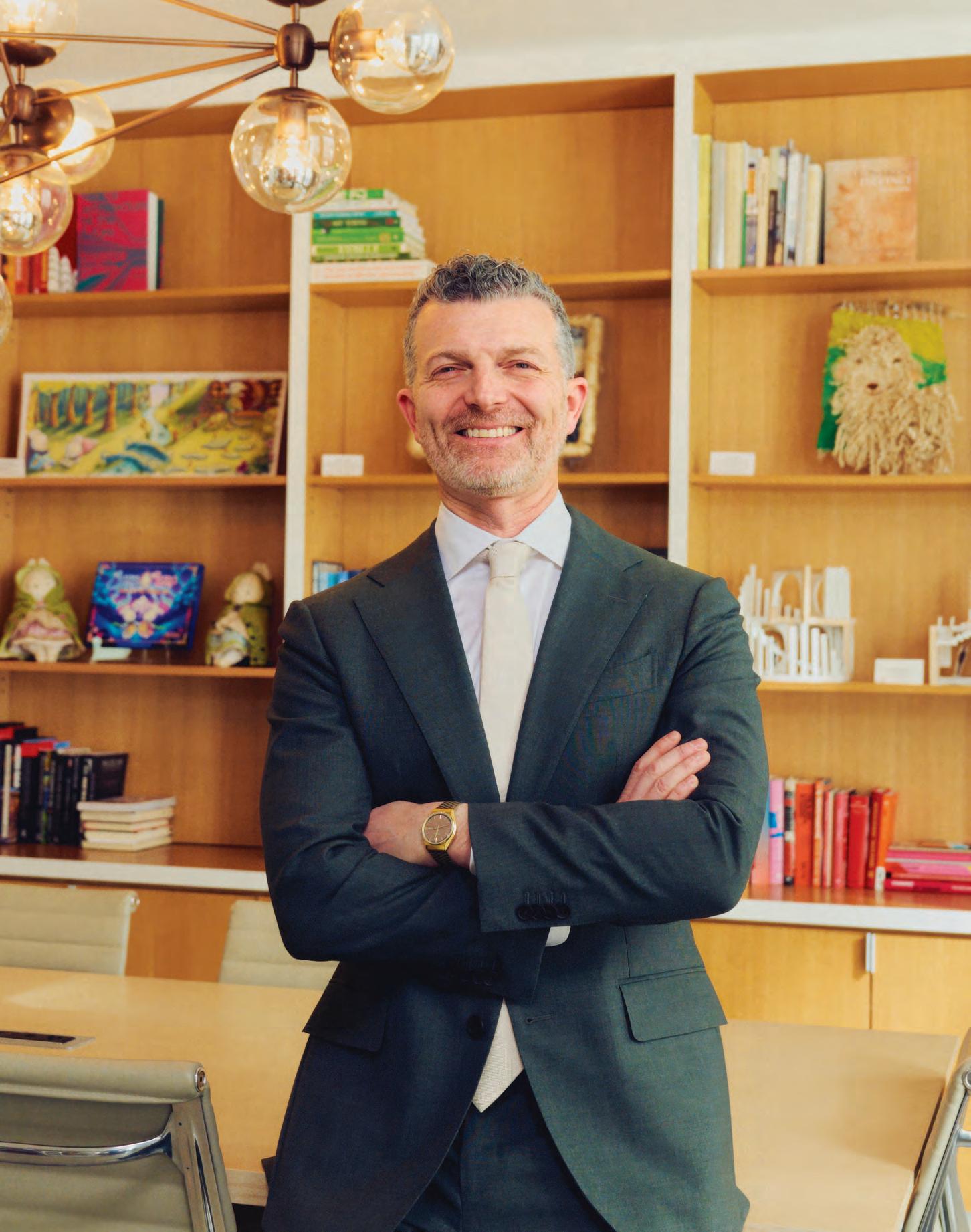
Jason S. Schupbach in his new office in the Joyce F. Brown Academic Building.
This Is Our Moment
JASON S. SCHUPBACH, FIT’S SEVENTH PRESIDENT, IS LEADING THE COLLEGE INTO THE FUTURE
it is a time of
great change in the creative economy and higher education.
Disruptors like artificial intelligence, political and social pressures, and changing market dynamics are coming to FIT’s doorstep at a rapid pace.
Jason S. Schupbach, who became the college’s seventh president in January, welcomes the challenge.
Schupbach is a dynamic and passionate presence who has devoted his career to helping creatives succeed. He has plenty of experience navigating politics and creating policy for design industries and the arts in city, state, and federal roles, culminating with seven years as director of Design and
Creative Placemaking programs for the National Endowment for the Arts. Schupbach believes FIT is uniquely positioned to come out stronger on the other side of the current disruptions.
“FIT is the best creative and creative-business school in the world. Other colleges and universities are twisting themselves in knots to look more like FIT,” he says, referring to the college’s flexible, affordable learning options—from weekend bootcamps to bachelor’s and master’s degrees—with a hands-on education that can’t easily be replaced by AI.
BY JONATHAN VATNER
“We are already great we’re number one in so many things. I want to build on those strengths.”
“The future of education,” Schupbach says, “looks like us.”
There’s still work to be done, though, and Schupbach has a plan. When he was director of The Design School at Arizona State University, the largest and most comprehensive design school in the U.S., he led an ambitious initiative to redesign its approach for the 21st century. Now he’s planning a similar evolution for FIT.
His framework is FIT FUTURE//FORWARD, a strategic planning process that will combine viewpoints and ideas from across the college community and from industry to transform FIT into the preeminent “laboratory for creative careers in the 21st century.”
The process will begin with deep listening, asking questions both internally and with the industries that FIT serves: What do the creative industries need right now? How can we be a better partner to them? And what are the future structures, initiatives, and curriculum we should build to better serve our students, faculty, and staff?
“We are already great—we’re number one in so many things,” Schupbach says. “I want to build on those strengths. I believe in collaborative leadership, so we will work collectively to make FIT even better.”
Already, he has an inkling of what the next iteration of FIT will look like: more industry partnerships and even more flexible learning, including accelerated certificate programs tailor-made for employment at individual companies. A search is underway for a Chief Marketing Officer, who will promote FIT’s strengths to the world. Schupbach also wants to put an even stronger emphasis on the college’s many important initiatives, including its accessibility, sustainability, and civility programs.
“FIT is one of the few publicly funded creative and creative-business colleges in the U.S., and the only one in a world cultural capital. As a builder and coalition founder, I am ready to work on what is next. FIT has a public responsibility not only to be a great partner to creative industries in NYC and around the globe, but also to help lead their future. We will claim our rightful spot as an epicenter of innovation in the global creative economy.”
His passion for public education was instilled in his childhood. His father got into Washington University but could not afford to go. Fortunately, a full-ride scholarship was available to a Missourian who did not live in St. Louis or Kansas City. That anonymous gift changed the course of their family history: Schupbach’s father ultimately became a dermatologist, which helped make Schupbach’s career possible. So, FIT’s mission of accessibility doesn’t just speak to him, it sings.
“The access that FIT can provide, the opportunity for people to lift up themselves and their entire family, it’s one of the main reasons I’m here,” Schupbach says. Affordability is more than a buzzword here: Annual in-state tuition begins at approximately $5,500. “Put that number on the side of the building!” he exclaims.
That rousing pride in the college’s value brings Schupbach back to his core belief: that higher education can still be transformative for all. These may be uncertain times, but FIT’s new president is certain about our future, together.
“FIT matters,” he says. “This is our moment.”
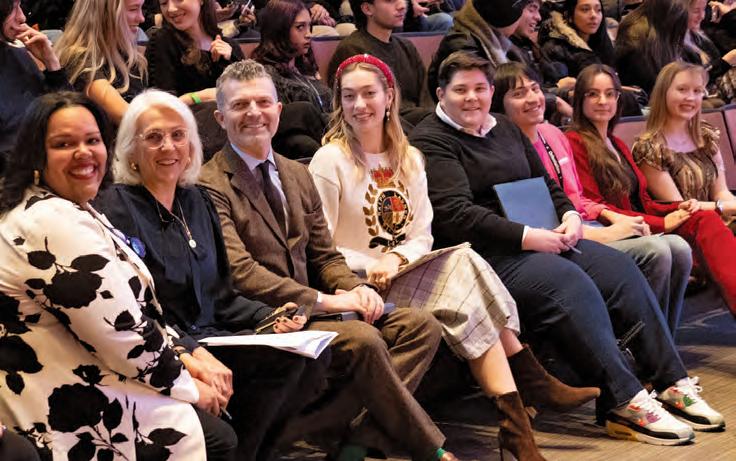
Pesident Schupbach received an enthusiastic welcome at Student Orientation in January. FRONT ROW, FROM LEFT: Corie McCallum, assistant vice president for Student Success and dean of students; Yasemin Jones, interim vice president for Academic Affairs; Schupbach; Isabella FitzSimmons, president of the FIT Student Government Association and student trustee; Meaghan Davis, associate director of Leadership and Civic Engagement; and students Max Alvarado, Sarah Guadagnino, and Sydney Harmon.
The President’s Picks
Schupbach calls himself a cultural “omnivore,” enjoying a broad range of music, movies, and books with a profound appreciation for artistic genius. Here are some favorites:
On his playlist: “I’m obsessed with Geese, just like everybody else right now. My ultimate favorite artist is probably Bjork.”
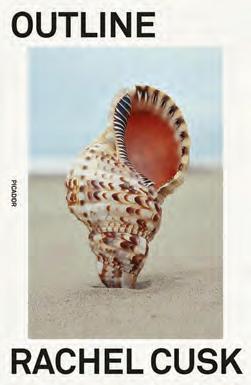
Best book he’s read recently: Outline by Rachel Cusk
Best thing he’s streamed recently: Andor (“The fashion is astounding.”)
Favorite movie of 2025: One Battle After Another (see p. 34)
Best restaurant meal of his life: Quintonil in Mexico City (“a break-the-bank, couldn’t-afford-anything-else-for-a-month experience”)
Favorite Broadway show: Oh, Mary!
(“I saw Jinkx Monsoon, my favorite drag queen, and I saw the original with Cole Escola.”)
Bagel order: Pumpernickel with scallion cream cheese
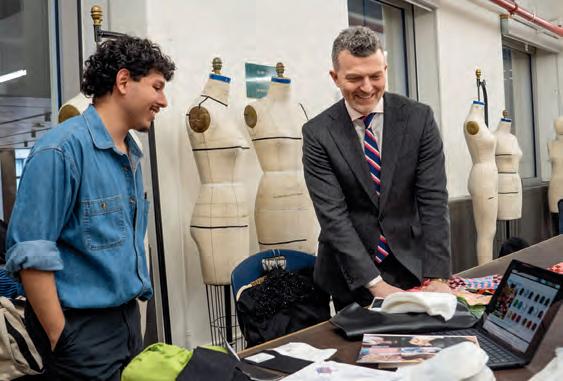
Schupbach decorated his office with student work. The rainbow pillow on the sofa, however, was created by his former roommate Ashish Gupta, now known as “the King of Sequins,” for whom Schupbach helped produce an early fashion show.
Schupbach’s strategic plan promises to turn FIT into “the laboratory for creative careers in the 21st Century.”
AN ARCHITECTURAL GEM, M,
BY JONATHAN VATNER AND ALEX JOSEPH
Rising majestically over West 28th Street, the Joyce F. Brown Academic Building, named for FIT’s outgoing president, is the college’s first in nearly half a century. For decades, the campus’ architecture presented a fortresslike Brutalist cement façade to the city. The new golden, glass-fronted structure, designed by SHoP Architects, offers fresh access to FIT and transforms a once sleepy neighborhood corridor into a destination.
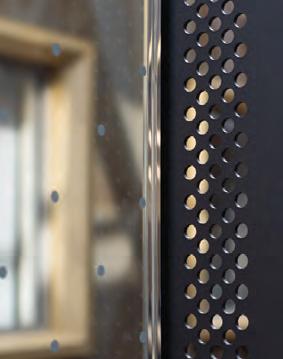
RIGHT: In contrast to the rest of FIT’s architecture, which is dominated by Brutalist concrete, the new building’s glass façade intrigues passersby. “This idea of transparency became the key,” project architect Bill Sharples says. The glass is punctuated with anodized aluminum “fins” that rhyme with the Feldman exterior. When SHoP won the 2003 NEA competition to design the building, the firm was relatively unknown. “FIT and Mitchell Park in Greenport, Long Island, were two significant projects because we won them so early in our career,” Sharples says. “They really impacted our approach to process and design.”
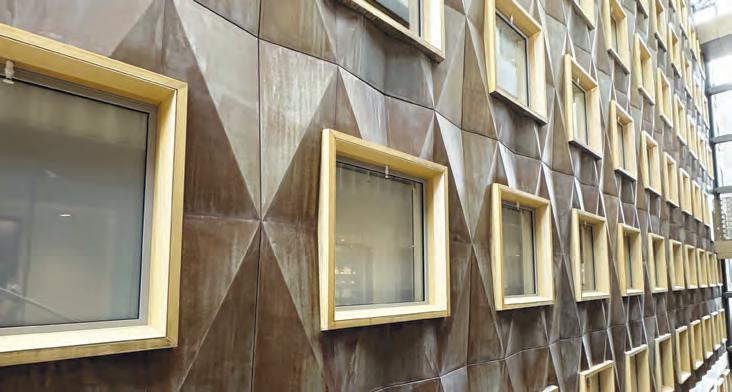
LEFT: Architecture buffs love the Marvin Feldman Center, FIT’s first building, named for the college’s fourth president. “It’s a building you dream about,” Sharples says. Its origami-like exterior panels are crafted from Alcoa aluminum—
material said to have been originally intended for WWII aircraft—and finished in “Architectural Brown, 4020,” a hue developed specifically for the building. According to Alcoa promotional materials, the color was designed to
“capture the feeling of forward thinking.” The façade greets students as they ride the grand escalator, and it oversees the fifth-floor student commons like a friendly giant. In the morning light, the metal explodes with color.
Exterior: Chris Payne; Feldman façade: Smiljana Peros
“This building is an investment in the future,” Dr. Brown said at the ceremony to open the building on October 23. “I knew that our students deserved a place to belong. A place that was inspiring and conducive to learning. A place that would make them want to be inside and to learn how to apply their talents in order to fuel the industries and to expand the creativity of New York.”
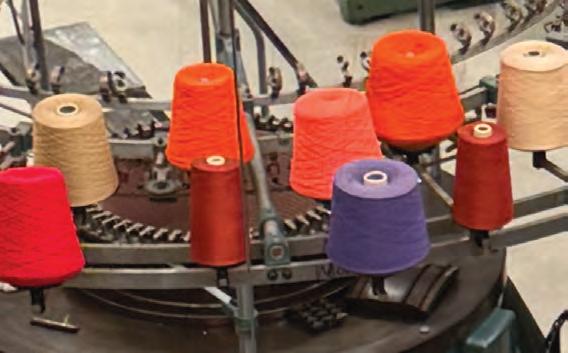
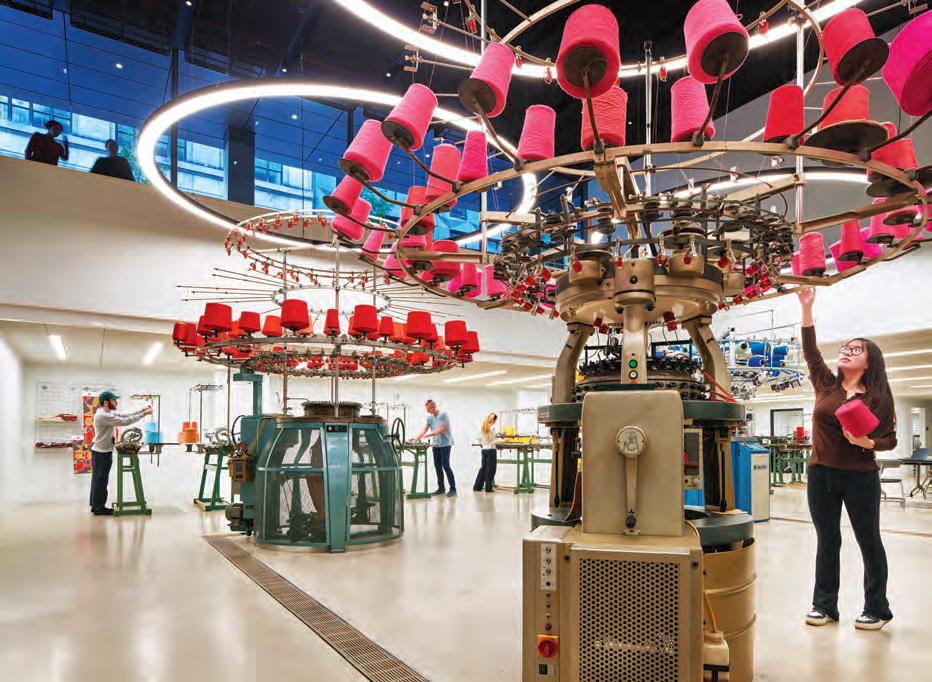
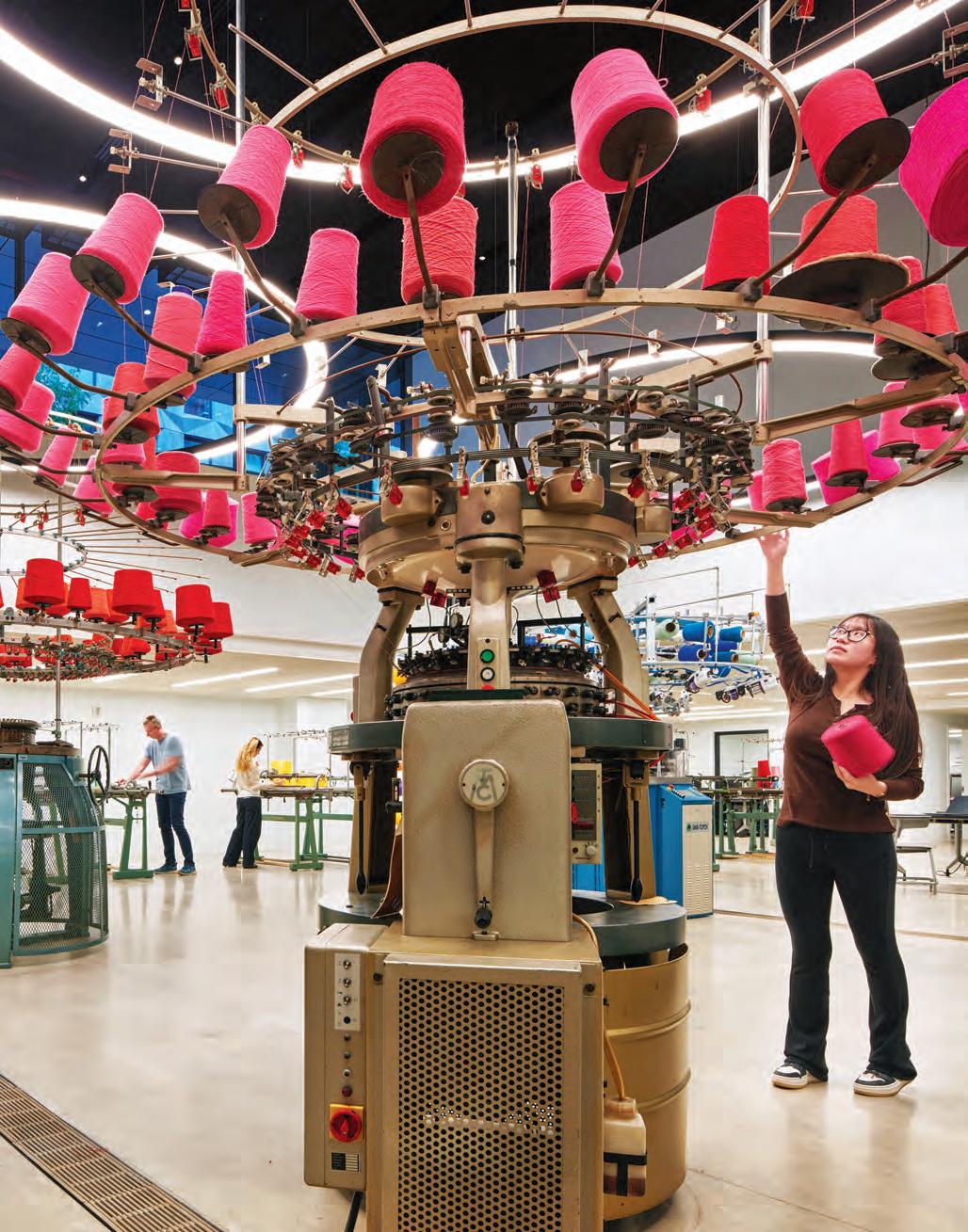
The new 10-story edifice comprises 24 smart classrooms, the 138-seat Bob Fisch Presentation Hall, a sleek row of administrative offices, the largest campus knitting lab in the country, and a glorious two-story, full-floor student commons. Energy-efficient lighting and climate control, natural construction materials, rooftop solar panels, and more green touches put the building
Sharples wanted the new building to o er passersby a view into the process of making. A new double-height knitting lab, once hidden in
FIT’s basement, is one of the centerpieces of the design. Each circular knitting machine in the space is haloed by a custom light fixture.
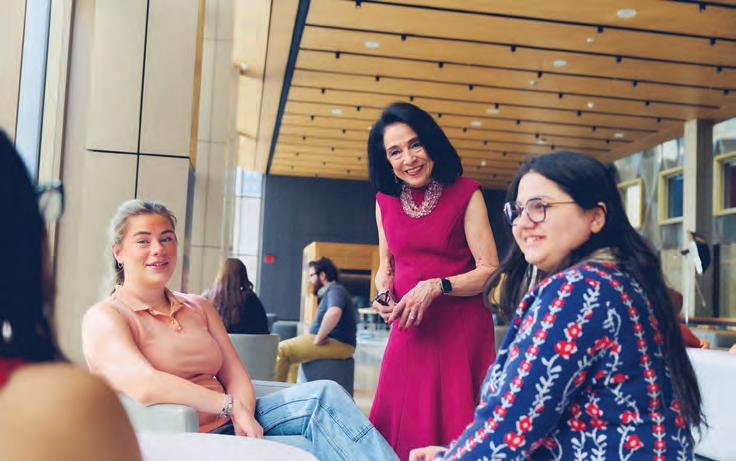
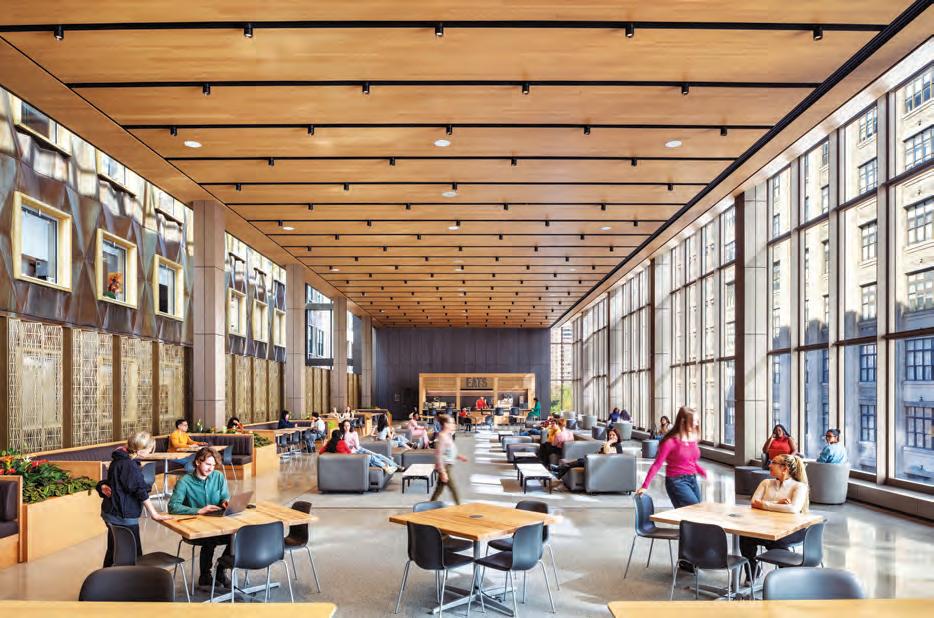
From the start, Dr. Brown (ABOVE) insisted on creating a student commons worthy of their talent and ambition. The spectacular fifth-floor gathering space answers that call in grand style. The fullfloor lounge features
20-foot ceilings, giant windows looking out on West 28th Street, a snack bar, and a sta ed library kiosk. As soon as the building opened, students flooded the space to chat, study, collaborate, and create. “It lifts your spirits to see it,” Dr. Brown says.
“The lounge feels clean and open, and I love all the windows. The food is so good—there’s beignets!”
DARIA YOUNG
Advertising and Marketing Communications student
on track to receive LEED Gold certification. However, Bill Sharples, the partner at SHoP who oversaw the project, says its most sustainable aspect stems from the original concept: “We took the most underutilized piece of the campus and turned it into an incredibly valuable academic experience.”
The structure incorporates FIT’s Feldman Center, completed in 1959, in a remarkable way. Clad in panels of aluminum tessellated to resemble fabric, Feldman, Sharples says, “is architecture that gets into your subconscious.”
The new building uses the old one as its fourth wall, creating both a dramatic backdrop and, in the connective space between the two structures, a soaring, 15-foot-wide cathedral-like atrium. While absolutely contemporary, the new building reframes and reinvigorates the past.
Creators of the futuristic, organic Barclays Center in Brooklyn and the terra cotta and brass exteriors of the skyscraper at 111 West 57th Street, SHoP specializes in work that arrests attention
while acknowledging its surroundings. “We think about not only ‘place-making’ but also ‘place-keeping,’” Sharples says.
The winner of a 2003 National Endowment for the Arts design competition, the long-awaited building is also a testament to Dr. Brown’s vision and fortitude. “When I arrived at FIT, I said that when I leave, I want everyone to know I’ve been here,” she said. “I think I achieved that.”
One of the signal concepts of SHoP’s original plan was a one-way express escalator connecting the lobby of the adjacent Feldman Center to the new building’s fifth-floor student commons.
Connecting the buildings that way proved infeasible, but the escalator, now located entirely within the new building, offers passengers a peek into myriad learning spaces on the scenic ride up to the commons.
“As a commuter, I really like how there’s a place to lounge. During finals, I was here every night for hours.”
JULIETA BERROCAL Communication Design student
Learning methods change as technology evolves, so the building’s 24 classrooms were designed for flexibility. Plans for a computer lab were revised, since most work can now be done on laptops.
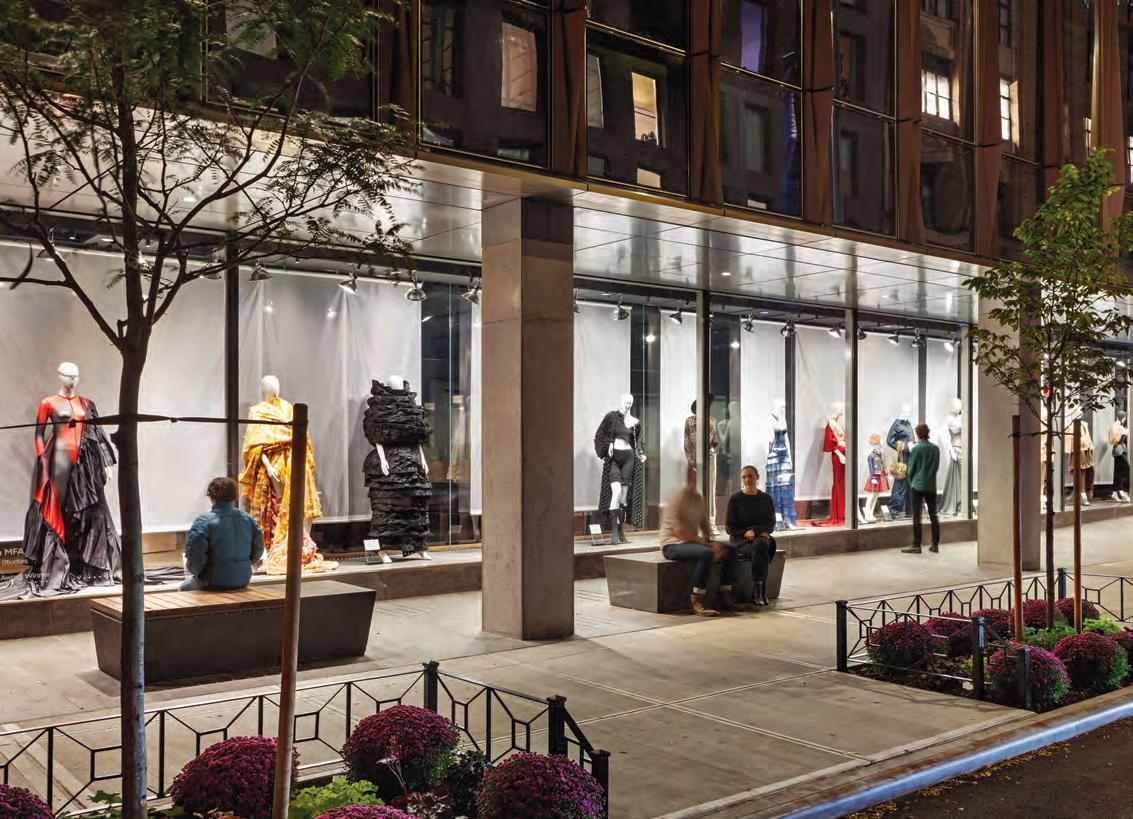
RIGHT: An important element of SHoP’s vision for transparency are vitrines throughout the building for exhibiting student work. Collectively, the 25 glass display cases showcase all of FIT’s academic divisions.
Here, a street-front window display celebrates garments by Fashion Design MFA graduates and Critic Award–winning looks by Fashion Design AAS graduates, alongside an installation about the Textile Development and Marketing department’s Farm to Fabric initiative. The displays will be rotated every semester.
“The new building is really cool, so much natural light and such an amazing student public space.”
REVA PATEL Advertising and Marketing Communications student
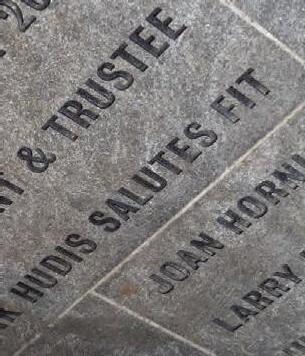
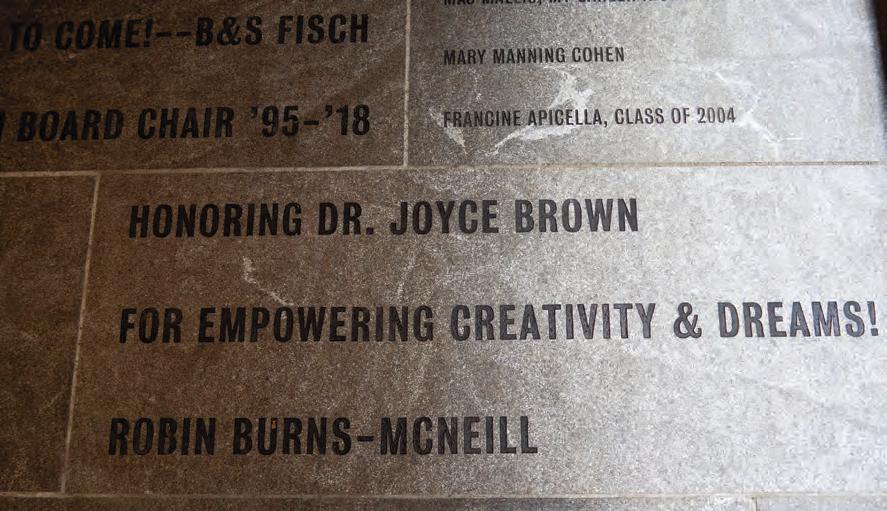
LEFT: For those who want to leave their mark on the new building and support student learning, the FIT Foundation is offering three ways to give. Donors can inscribe their names on the pavers leading up to the entrance or on a special donor wall to be engraved in the lobby, or they can name
any of the learning and gathering spaces in the building. Already, the building features the Bob Fisch Presentation Hall, the Leonard and Evelyn Lauder Gallery, and the Larry Leeds Student Lounge.
Visit fitnyc.edu/ makeyourmark to learn more.
FIT ALUMS LEAD A NEW GENERATION OF UPCYCLERS
New and
New and
Upcycling is one of the fastest-growing trends in fashion, projected by industry analysts to exceed $11 billion in sales by 2029. We spoke to four FIT alumni and faculty leading the shift away from disposable fashion and toward the sustainable reinvention of existing garments. More than just a triumph of circular fashion, their work provides bespoke treasures at every price point.
BY WINNIE McCROY
Improved Improved r
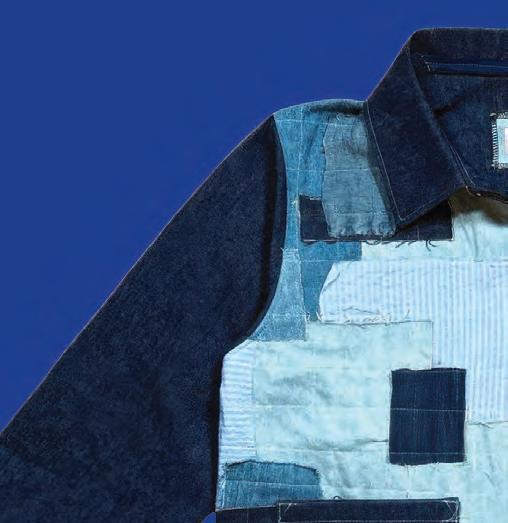
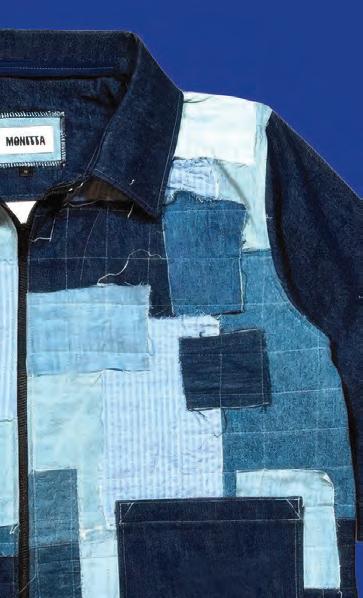
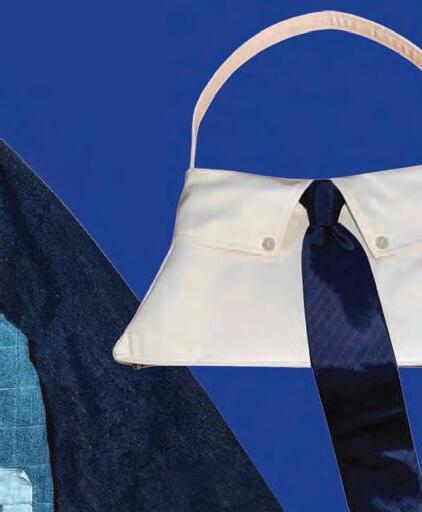
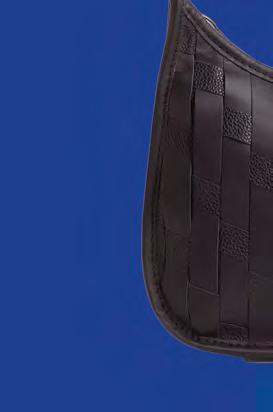
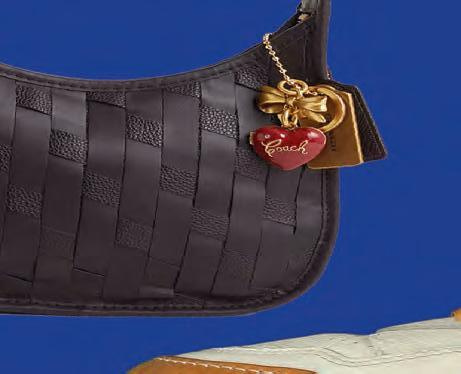
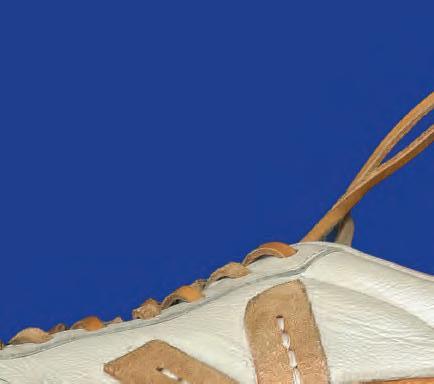
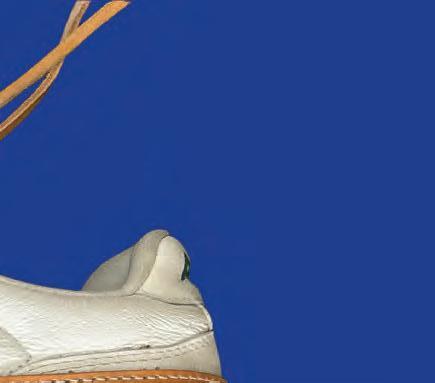
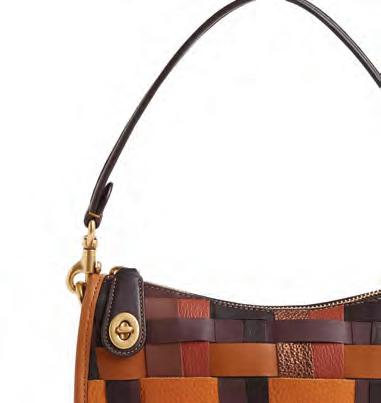
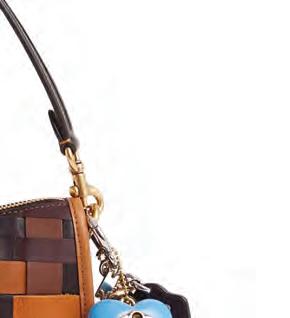
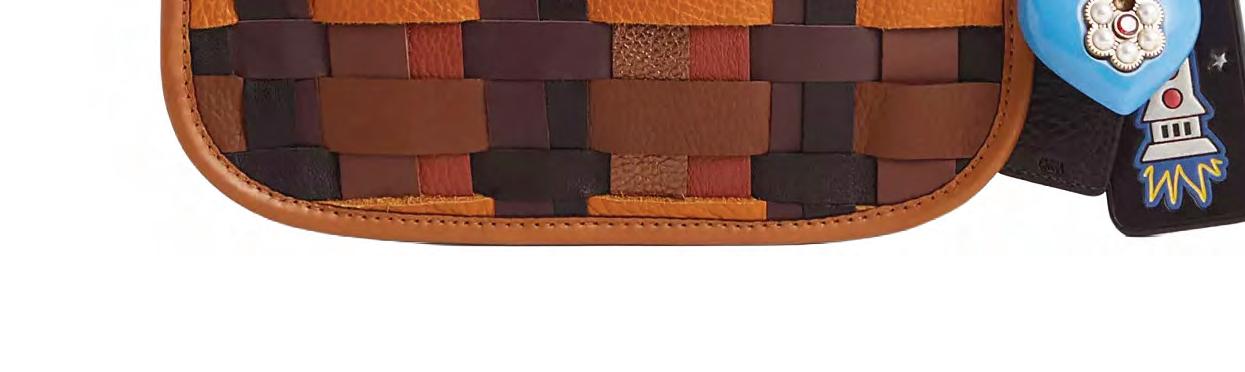
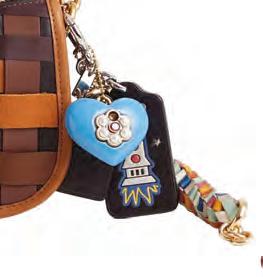
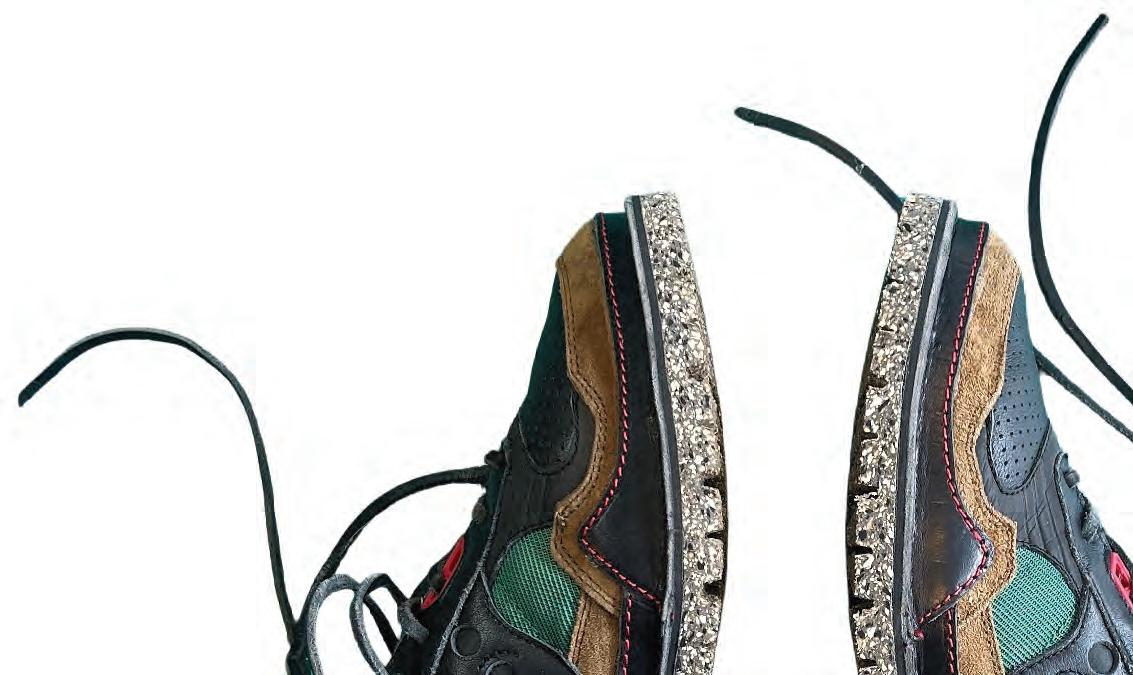
CLOCKWISE FROM TOP LEFT: A jacket made from jeans by Naia upcycler Monetta Collective, a handbag made from a shirt and tie by Naia upcycler Zito, reimagined sneakers by Cobbler Bushwick Co., and a Remade Coach handbag by Andrew Kaefer.
When luxury leather goods brand Coach says its products are made to last, they mean it: Their Coach (Re)Loved program is devot ed to refurbishing, reimagining, reusing, and recycling preloved and damaged Coach products, so they don't become waste. The program has been so successful that in 2024, the (Re)Loved Workshop earned Gold-Level TRUE Zero Waste certification, meaning that over 90% of the workshop's materials are diverted from landfills and repurposed by the workshop's artisans.
In Coach’s North Bergen, New Jersey, workshop, Andrew Kaefer, Footwear and Accessories Design ’25, and other apprentices upcycle extra inventory, bags returned for store credit, and the occasional vintage item. Their work is divided into four (Re)Loved categories:
• Upcrafted bags —otherwise good-quality items damaged during embossing, or needing a new flap woven or small flaw covered with a custom patch or pin. “These are almost ready to sell, but we add new life,” says Kaefer.
• Vintage bags, some sourced from eBay and more than 50 years old. Apprentices recondition and repaint them, then add vintage hardware.
• About half of Coach upcycles are Restored: “returned bags or extra inventory that has nothing wrong with it; we just clean it up and resell it at a discount.” Coach moves about 1,300 of these monthly.
• The Remade category is the smallest, but Kaefer’s favorite. It’s the most circular part of Coach upcycling, in which apprentices cut up damaged bags to create small leather goods like wallets, trays, puzzles, tiny ottomans, and chess sets. These end up at Coach’s flagship jewel-box Fifth Avenue store or Hudson Yards shop; five upcycled bags were recently sent to a store opening in Kyoto.
(Re)Loved items are highly sought after. Kaefer notes, “People go crazy when we re-release merchandise not available on the website for 20 years. We just did bags with chains and charms created from old pins, and they sold out in a few hours.” Coach also creates different upcycled “story” items monthly, like Halloween bags or New York City Subway motif bags, painted by hand in a 15-hour process. “People who appreciate craftsmanship are purchasing them,” says Kaefer.
COBBLER BUSHWICK CO.
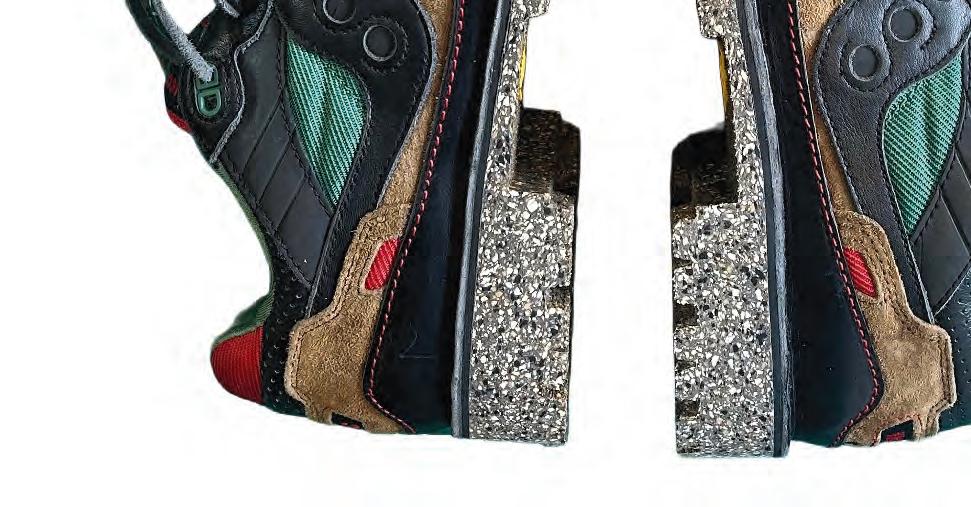
Tucked away in Cobbler Bushwick Co., a bustling storefront that’s half shoe store/half coffee shop, Sungwoo Roh, Accessories Design ’05, builds durable, stylish, sustainable shoes. After 15 years toiling for big designers, Roh says her “body and spirit were resisting.” So she followed her heart and the emerging sustainability trend, and by 2021, she’d set up shop to save old sneakers from landfills, upcycling them for a second life on the street. Eschewing “cheaper and cheaper” production values, Roh instead sourced high-quality used leather footwear and, along with her talented craftsman brother, gave them a second life by adding new vegetable-tanned leather and Vibram soles. The resulting one-of-a-kind shoes are very popular—especially among sneakerheads, who don’t hesitate to pay hundreds of dollars for rare releases and are happy to dole out the same for a custom upcycle of their beloved kicks.
She collaborates with companies like Veja, Adidas, Cueva, and New Balance to upcycle shoes from their storeroom to resell. It’s one more opportunity to bring awareness to sustainability and craftsmanship. In her effort to promote upcycling more broadly, Roh leads three-day workshops teaching participants how to cobble new shoes out of old.
E-commerce comprises 80% of Roh’s business, but thanks to a collaboration with a former colleague turned business partner, Cobbler Bushwick has become a vibrant spot to grab a coffee and pastry as well. Sometimes Roh even serves as a barista; she loves connecting with locals. Cobbler Bushwick is not a repair shop; Roh refers folks seeking repairs to nearby cobblers, but will occasionally do a freebie for a local senior.
“I’m happy, even though I work more than before,” says Roh. “Sharing my work with individuals and meeting people is very fulfilling.”
NAIA
In September, Miloni Sheth, Advertising and Marketing Communications ’15, launched Naia, an online redesign platform that connects individuals with designers to upcycle their old clothing. Sheth recruited the designers, each of whom has a different specialty, on Instagram. She designed a visual interface for them, manages orders, launches drops, and handles shipping and logistics.
Studies show that people wear 20% of their clothes 80% of the time. This fact prompted Sheth to try and shift consumption. Rather than getting that dopamine hit from shopping, consumers can get excited about working with one of Naia’s 16 designers to cocreate a new garment from something they already have. “It’s a mindset shift for people to see their existing clothes as something new,” she says.
But it’s not a new way of doing things for Sheth. Growing up in India, she spent a lot of time in her designer mother’s workshop, watching the artisans be resourceful with whatever scraps of fabric they could get. Sheth redesigns her own clothes; she even upcycled her own wedding dress from her sister’s gown.
“But these days, upcycling is a choice, and not about scarcity,” she says. “Consumers and Gen Z want to wear clothes that reflect their values” of individuality, authenticity, and self-expression.
Customers can dip a toe into the Naia experience via smaller, more affordable services, like patching or dyeing. “The beauty of upcycling
is that sometimes you don’t need a dramatic project, just a mend, a dye, or a hand-painted patch,” which she says, “instantly elevates a garment, not just by covering damage but by adding personality and character.”
Sheth’s circular redesign platform allows customers to upload photos of their garments, then gives tips to move from inspiration to action. It’s even possible to take a photo from a website, paste the URL into Naia, and have a designer reverse-engineer the garment, using pieces from the customer’s own closet.
Sheth says their clientele are people who “value story and craftsmanship over trends,” explaining that Gen Z customers seem obsessed with dyes and patches, and clients in their mid30s and 40s tend to redesign sentimentally valued items, like grandma’s dress or dad’s hunting jacket.
Naia designers also create and sell already upcycled items that showcase their style and spark customers’ creativity. Sheth says she hopes to expand this part of the business, even doing it at scale with designer brands, much like the “fun collection [of $7,500 dresses] Miu Miu did at a very high price point—that was a good example of how brands can engage.”
“If you need something new, instead of buying from some website, look in your closet and send us something to redesign,” says Sheth. “Focus on the three R’s: repair, refresh, reinvent—and apply them to anything. You can look good, feel good, and do good for the planet at the same time.”
CLO3D
Upcycling is gaining momentum as a major category of fashion, and Andrea Diodati, assistant professor of Fashion Design, helps put it within her students’ reach by teaching digital upcycling using fashion design software called Clo3D.
“It’s exactly like real life, but you can iterate many different designs before you cut into anything,” she says. Designing via Clo3D offers the ability to customize an item and show your customer how it will turn out before they commit, because “with upcycling, you have only one chance; you can’t reorder an old garment.”
The software digitally simulates the physics of each textile, accurately reproducing the drape. Designers can create a virtual version of an existing item and refine it prior to getting out the shears. The software is available at tiered price points, including a student rate of $25 a month.
Clo3D is ideal for made-to-order upcycles since, Diodati says, “there could be many interpretations of a sketch, but a 3D model is going to be very accurate in depiction, and there’s much less room for error and misunderstandings.”
UPCYCLING 101
Reimagining and repurposing garments isn’t just for the pros. Here are some tips from our experts for DIY remaking at home.
Anything can become a bag. Coach upcycler Andrew Kaefer ’25 challenges folks to “go outside the box of what you think you can upcycle.” He recalls an FIT sustainability project (AT RIGHT) which he turned old overalls into a shoulder bag, embroidering the fabric and using the straps as its handle. “You’d be surprised how wide jean legs can be; you can make them into a big bag,” he says, adding, “Any tote bag is basically just a box sewn on three sides.”
Hide stains with homemade dye. Don’t want to throw out quality leather shoes over a few stains? Sungwoo Roh of Cobbler Bushwick Co. says you can dye them yourself—using coffee! Brush them with a shot of espresso and let it dry overnight. Make it darker with multiple coats, or soak shoes for a deep dye.
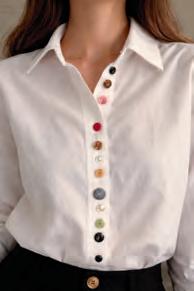
Lean into the art. “Look at your clothes differently, as fabrics or a canvas, to see the possibilities,” says Miloni Sheth of Naia. Add similar but mismatched buttons to elevate a dress shirt (ABOVE). Or reinforce a seam with a contrasting thread. She also suggests upcycling overlooked pieces like blankets and quilts, “which are amazing because of the images and patterns on them.”
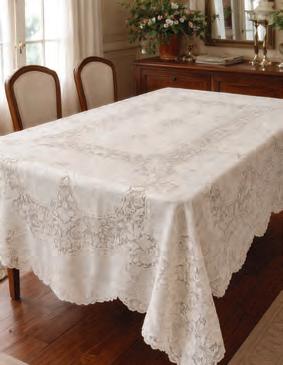
Look for flat fabrics. Assistant Professor Andrea Diodati says, “My favorite things to upcycle are tablecloths and napkins, which you can make into an easy kimono or summer top. I especially like upcycling crocheted items.” —W.M.
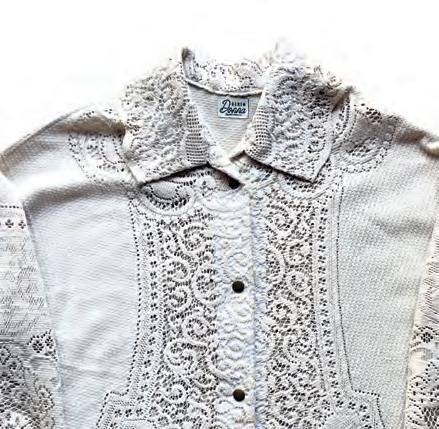
FROM TOP LEFT: Kaefer created this Remade Coach handbag by weaving together strips of leather from damaged bags; upcycled West NYC x Saucony sneakers from Cobbler Bushwick; a jacket created by Naia upcycler Denim Donna from a tablecloth; Clo3D helps designers know exactly where to cut old pieces.
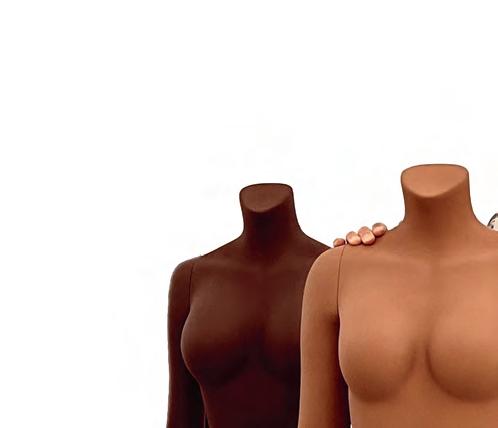
FIT ALUMNI DESIGNED CURVACEOUS MANNEQUINS
FOR KIM KARDASHIAN’S SHAPEWEAR BRAND, SKIMS
BY RAQUEL LANERI
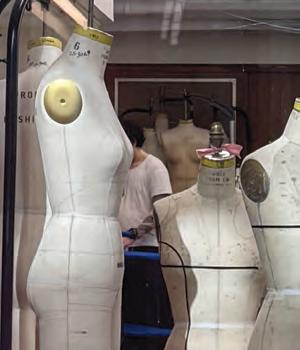
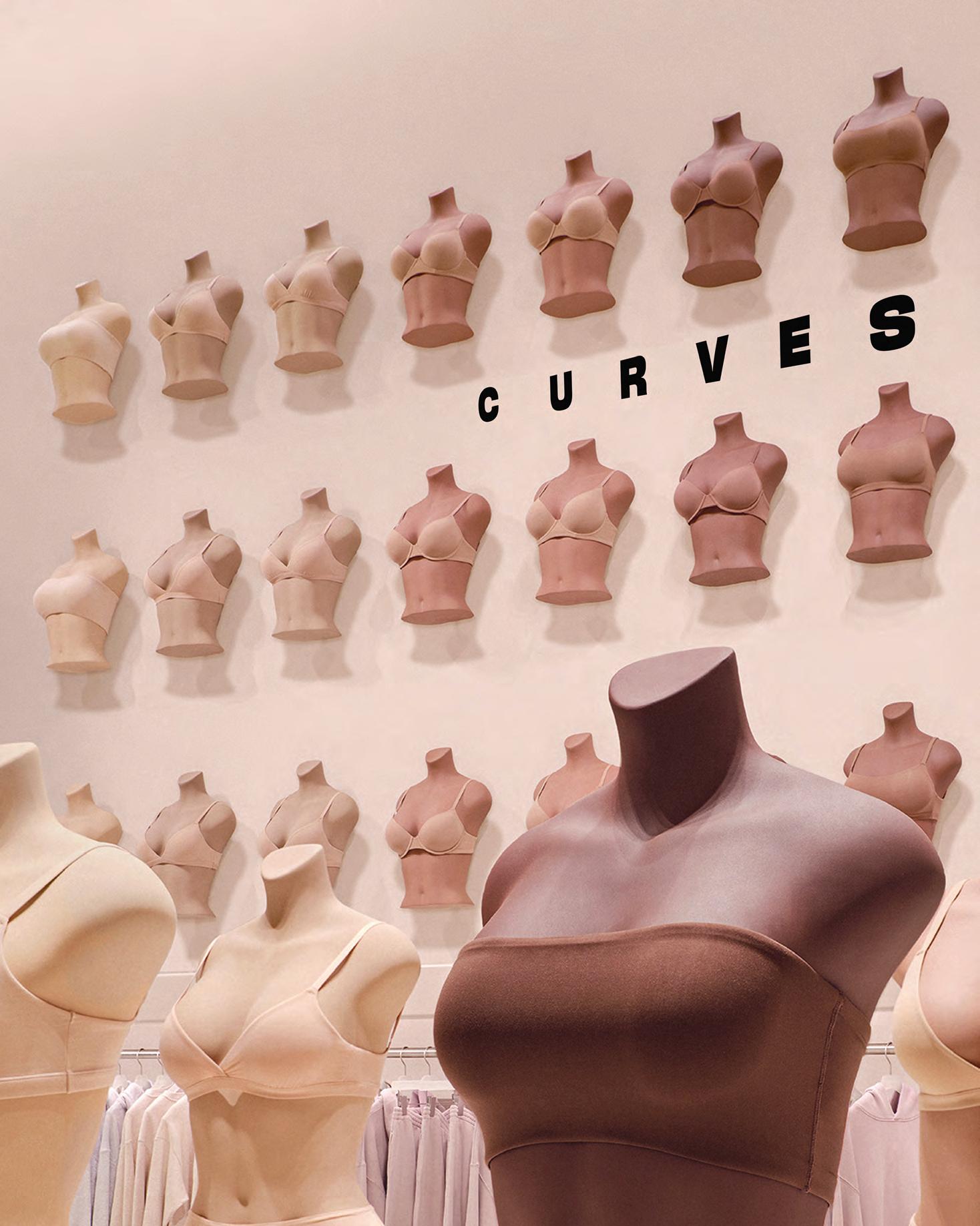
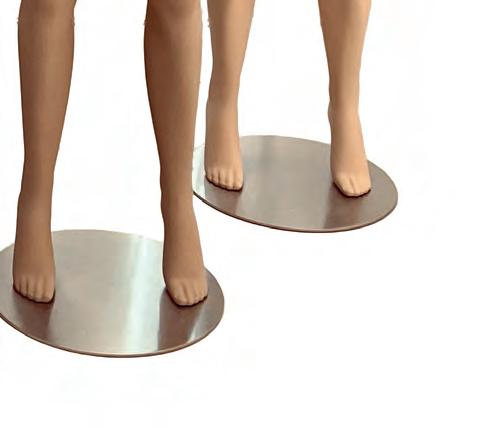
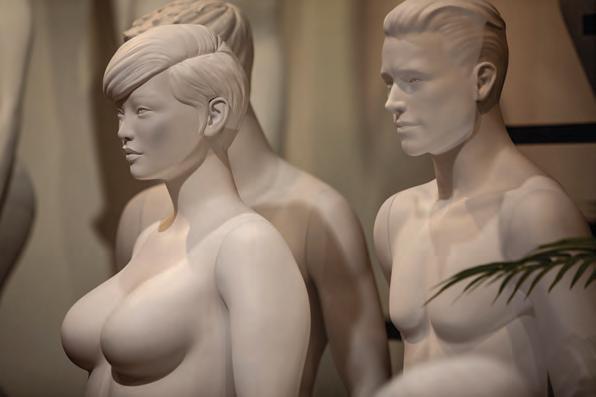
In 2024, Skims, the shapewear brand started by Kim Kardashian, was preparing to open its first store, in Washington, D.C., and it needed mannequins. Special mannequins.
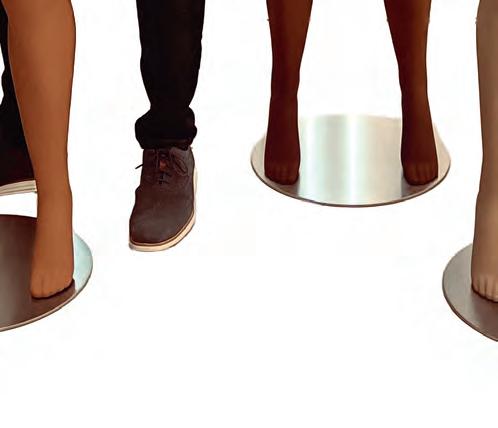
In came Glenn Sokoli, vice president of creative and marketing at Bernstein Display, which specializes in custom mannequins and fixtures for companies from Ralph Lauren to JC Penney, Carolina Herrera to Telfar. The Skims mannequins, however, presented a unique challenge.
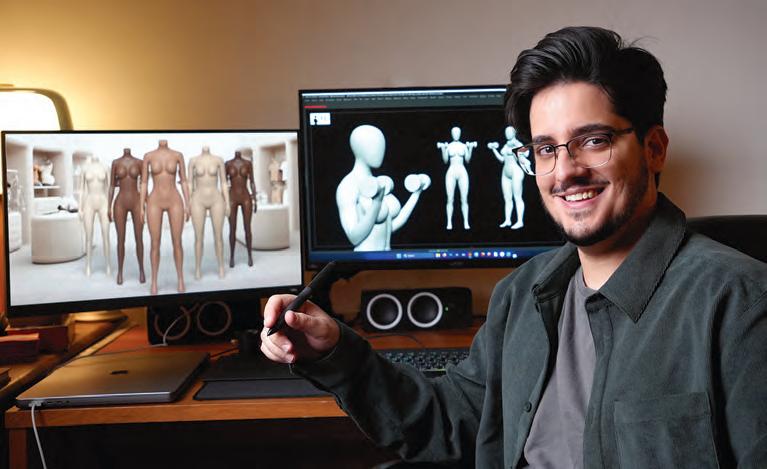
“It was the most different mannequin I’ve ever worked on,” says Sokoli, Visual Presentation and Ex hibition Design ’90 and assistant professor of Spatial Experience Design. He and Paulo Reis, Computer Animation and Interactive Media ’19, who sculpts all of Bernstein’s forms on his computer, toiled for a year to get the dramatic proportions and finish just right.
Mannequins are never one-size-fits-all. Each brand requests its own specific aesthetic, its own idea of the ideal body. JCPenney won’t go lower than a size 6, for example, while Carolina Herrera prefers its models super-tiny—“almost a double-zero,” Sokoli says. Levi’s sometimes uses gender-neutral mannequins for its baggy, layered looks, though the company has asked Sokoli for one with a more ample bottom to showcase the denim label’s latest figure-hugging style.
“Everything is customized,” Sokoli says. “We’re working on several projects now, and every one of the body types is different.”
Retailers and brands frequently adapt mannequins from Bernstein’s core collections to suit their specific identities. Currently, many request poses that interact with a store’s architecture—appearing to tumble alongside an escalator or lean against a doorway. While these adaptations are highly specialized, they typically begin with an existing Bernstein line as Skims was different. Sokoli initially thought a recent Bernstein collection called Every Girl would work for Skims’ stretchy bras and figure-hugging briefs. Developed in 2019, at the height of the body-positivity movement, Every Girl had more real-world physiques: a smaller top and and curvier bottom, or more natural breast shapes. (He says the pendulum began swinging the other way even before the popularity of GLP-1S and other weight-loss drugs,
Mannequin wall: Rafael de Cárdenas; ballerina: Glenn Sokoli
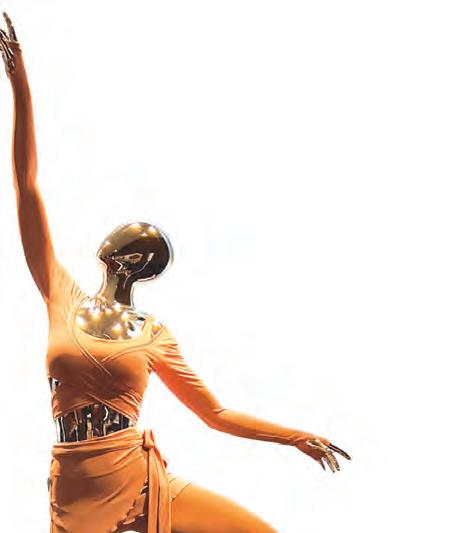
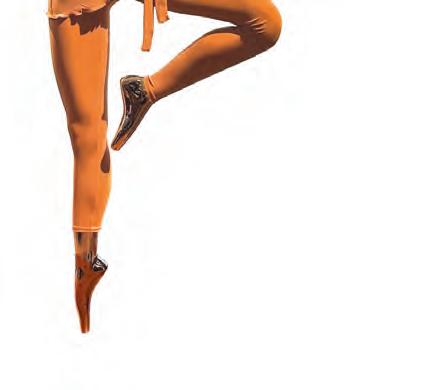
This custom ballerina mannequin debuted at the Skims shop at Selfridges in London.
with retailers increasingly asking for smaller, more waifish looks.)
For a mannequin displaying ready-to-wear, fit isn’t a huge issue: One can make adjustments. But for intimates, it is paramount.
But when he put the Skims shapewear on the mannequins, the fabric bunched and pulled. For a mannequin displaying ready-to-wear, fit isn’t a huge issue: One can make adjustments. But for intimates, it is paramount. A natural breast forms to the bra, since it’s soft tissue, Sokoli explains. A mannequin’s breast, obviously, does not move, so its shape must fit perfectly into the bra cup. “It’s very technical.”
Sokoli and Reis, then, had to start from scratch. Every time they develop a new mannequin, they look through hundreds of photos and illustrations of the human body in various poses and with vari ous physiques. “Even though the mannequin might be very abstract, we still need it to look somewhat realistic,” Reis says. “It needs some anatomical design underneath everything.”
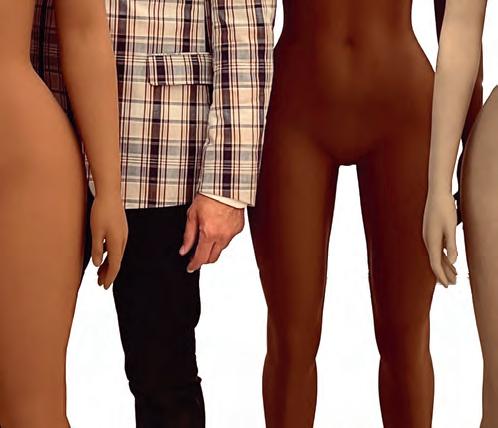
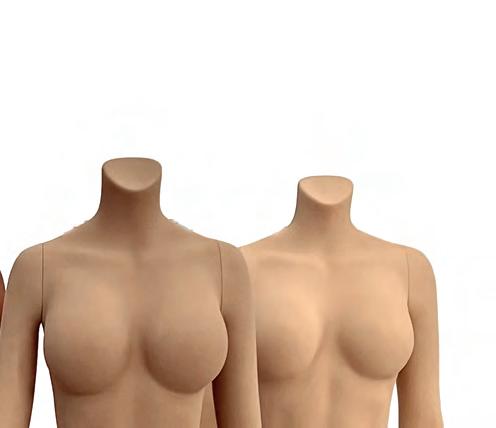
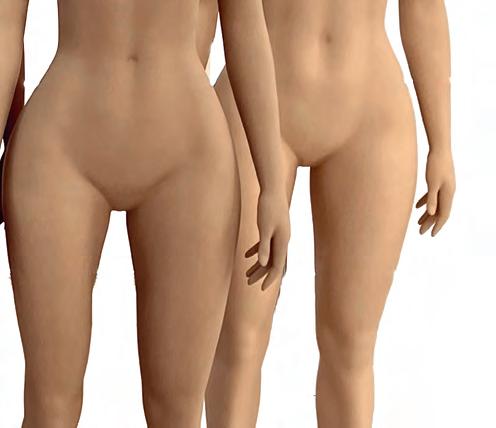
They cobbled together a body—taking the thighs from one model, the stomach of another, with Reis sculpting it on the computer—but Skims still thought it wasn’t shapely enough and gave the duo a different set of measurements. “I went back to my program to start sculpting the mannequins based on those, and I was like, ‘Wow! This is wild!’” Reis recalls. The measurements the brand included for a size 6 had a double-D bust, a waist so small it could be a size 4, and unusually ample hips. The extreme hourglass shape reminded Reis of Kim Kardashian. “I was like, ‘Okay, I’ve got to switch my strategy here and start using the Kardashians as my reference,’” he says. “They loved it.”
“It’s not exactly based on Kim’s body, but it is the body type,” Sokoli clarifies. “It is a very small waist, but it’s really accentuating curves: the butt, thighs, hips, and the bust.”
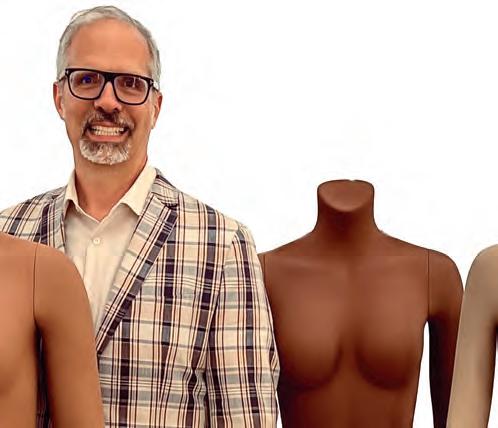
None of the mannequins have heads, but all have a va-va-voom waist-to-hip ratio that evokes the company’s famous founder. Even the male manne quins don’t conform to the standard shape—a 30- or 32-inch waist; Skims’ swole versions have a 36, with finely articulated muscles.
Once Skims approved the new renderings, the mannequins were 3D printed and shipped. The team at Skims dressed each one to see how the clothes fit and responded with requests for modifications. Sokoli finalized the color palette (which needed to correspond with Skims’ neutral tones), oversaw
Glenn Sokoli with the busty, hippy mannequins he designed for Skims.
Courtesy of Glenn Sokoli
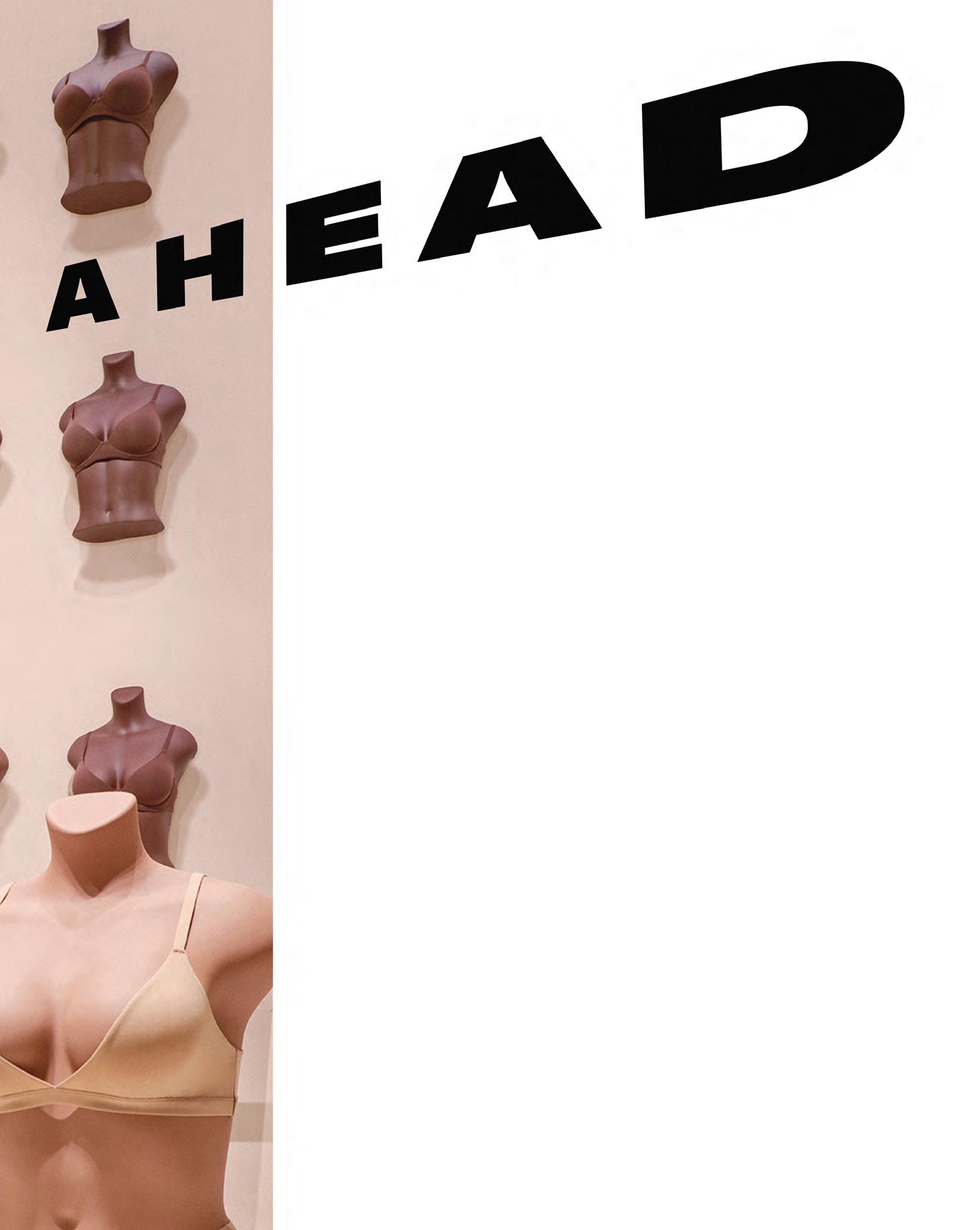
paint finishes (Sokoli settled on a velvety gloss called “Floss”), and addressed any tricky technical issues, like how to mount a dozen busts to a wall in the store. “We basically do everything,” Sokoli says.
The process never stops. Bernstein also came up with a line of more muscular models for a collaboration with Nike, now on display at both Nike and Skims stores, featuring buff bodies jumping rope and doing calf stretches. They recently added a ballerina to the mix. Skims now has 22 stores, with plans to open at least 10 more in Israel alone in 2026, and more on the way.
“They’re so much fun to work with, because they’re constantly developing new things,” Sokoli says of Skims. Reis agrees. “It’s really been one of my favorite projects,” he says. “Usually brands have a strict guideline of what they want the mannequin to look like, and it just ends up blending in with the environment.” Skims—despite all the technical demands—challenged them to create something that stands out.
“I just love how cute our mannequins are,” Kim Kardashian recently said on Instagram. “I wanted our product to be seen on as many body types as possible.”
Sokoli thought Bernstein's Every Girl line might work as a starting-o point, but in the end, the Skims mannequins had to be designed from scratch.
Paulo Reis sculpted the Skims mannequins on his computer.
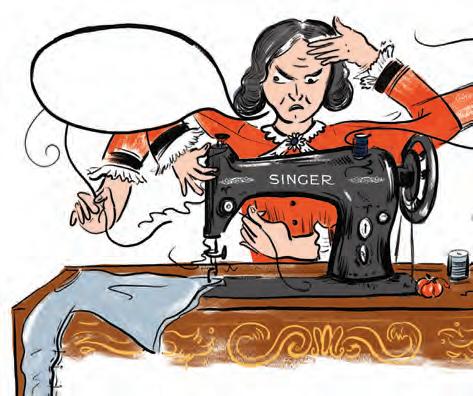
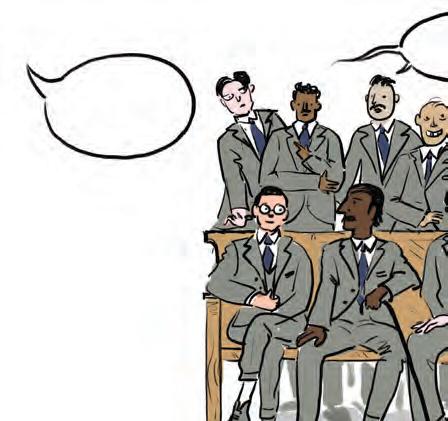
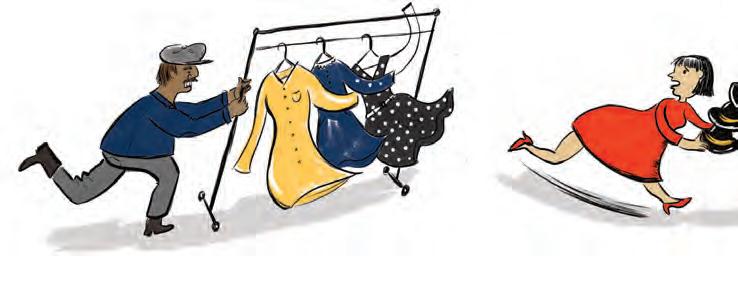
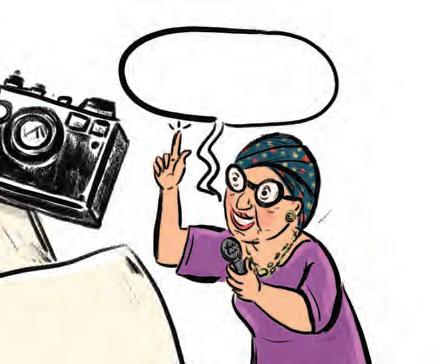
This year marks 250 years since the American Revolution—and, along with it, the birth of American fashion. This comic depicts pivotal moments in our nation's fashion history.
You’re vearing zat to ze inauguration?
Art by Diana Schoenbrun, Illustration MFA '16
Historical consultant: Natalie Nudell, adjunct assistant professor of History of Art
George Washington chose a simple brown coat for his inauguration in 1789. It set the tone for the American republic, rejecting monarchical symbols and fashions.
How the heck do I thread this thing?
A devastating fire at the Triangle Shirtwaist factory in 1911 killed 146 garment workers, mostly Italian and Jewish immigrants. In response, the International Ladies’ Garment Workers’ Union pushed for stronger labor rights.
Who wore it better?
Brooks Brothers, the oldest American apparel brand still in existence and the creator of the first mass-produced suit, was founded in 1818.
Ge ge Washington
Singer’s sewing machine, debuting in 1851, was not the first home sewing machine, but it was the most popular.
I
I’ve struck gold!
I’ve struck gold! You’ve struck gold!
In 1853, Levi Strauss, a German Jewish immigrant, began selling denim pants to prospectors in the American West, with an important innovation for durability: the rivet. Half the world’s population today wears jeans.
In an effort to improve working conditions, the Garment Center was moved in the 1920s and early 1930s to its current location, between 34th and 42nd Streets, from its previous downtown location. During WWII, production ramped up to make uniforms, laying the groundwork for mass manufacturing.
Marie Antoinette
Levi Strauss
Betsy Ross
Gloria Vanderbilt (early developer of designer jeans)
did!
FOR IMMEDIATE RELEASE
I lived to 100—and didn't waste a minute!
In1943,Eleanor Lambert createdPressWeek,theprecursor to New York Fashion Week ... AND she founded the CouncilofFashionDesigners ofAmerica(CFDA)in1962... AND co-founded the Costume Institute(MetMuseum),the MetGala,theInternationalBest DressedList,theCotyAwards, and New York Fashion Week. She devotedherlifeto promoting Americandesigners—andchanged fashion as a result.
In 1944, the Fashion Institute of Technology was founded. The college became an essential talent source for the creative industries.
A shocking 1982 Calvin Klein underwear ad in Times Square changed American fashion advertising. Klein ’63, along with Donna Karan and Ralph Lauren, led a generation of designers who redefined American sportswear.
The Battle of Versailles, organized by Eleanor Lambert in 1973, was a fashion showdown between France and America. The American designers won. Stephen Burrows ’66, Halston, and Anne Klein stunned the audience with their exciting presentations.
In the 1980s,
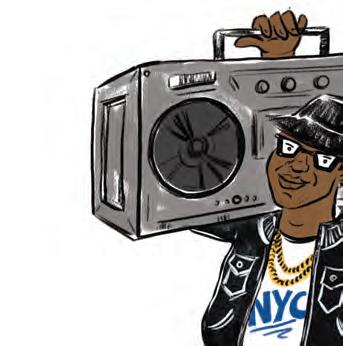
hip-hop culture took street style— jeans, sneakers, hoop earrings, fancy nails, and bling—and transformed it into high fashion.
Sorry, you’re not on the list.
When New York Fashion Week moved to Bryant Park in 1993, shows became media spectacles, and New York City became a major player on the global scene.
The most important thing is to be true to yourself and your vision.
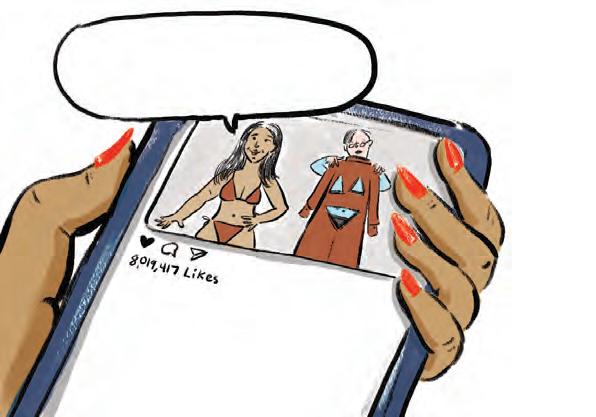
The era of social media influencers is reinventing fashion, as the industry has become a battle of likes and follows. This brown fabric used to be in a coat worn by George Washington! #hot #bikini #style
Oh my!
excuse-moi!
Eleanor Lambert
Marie Antoinette
designed by Stephen Burrows
designed by Anne Klein
designed by Halston
The World of
How new technology is changing our work, culture, and education
BY ALEX JOSEPH
Love or hate artificial intelligence, it’s here. Our creative processes, the way we do business, and even education itself are all being upended in various ways. But there’s that ‘T’ in FIT, and our community is embracing this new technology through student contests, coursework, and intellectual queries. Despite the rumors, it’s even providing jobs to alumni. Are you using AI in your career? Let us know at hue@fitnyc.edu.
Prompts and Circumstance
Students push their creative limits by designing with AI
Planning a promotional campaign? Just log in to ChatGPT and give it your prompt, right? Actually, it’s not so simple.
In the fall, Christie Shin and C.J. Yeh, professors of Advertising and Digital Design, organized a contest on campus. The brief: Use artificial intelligence to create a social media post promoting a holiday of your choice. Open to all current students, the competition also served as the midterm for Shih and Yeh’s class, AI-Assisted Design. “We teach students to use AI ethically,” Yeh says. “AI is an assistant, not a replacement” of human beings.
“These tools are now standard across the design fields our students will enter once they graduate,” Shih says. “We’re preparing them for work.”
Industry judges chose contest winners based on the criteria of concept, original contributions, and design and storytelling. These two winning student projects demonstrate how this new technology informs the creative process.
“THE RED IMPOSTER”
In this one-minute cartoon by Yuqing Liu, Art Market Studies MA, a bemused Santa Claus finds himself in a room full of monsters. (He arrived on Halloween by mistake.) A veteran user of virtual 3D modeling software, Liu says the newer tools saved her time, but execution still took three full days. “AI helped
me realize my vision, but it’s still surprisingly labor heavy.”
She used image generator Midjourney to create the characters, then colorcorrected them in PhotoShop.
Next, she brought them into Flora, a tool that streamlines AI project workflows; the platform helped Liu maintain a consistent plaster-and-acrylic aesthetic. Her prompt for the above image:
“A whimsical, toy-like Santa Claus figure carrying a large, polka-dotted green sack over his shoulder. Nebulous, dreamlike quality, like a miniature set. Big pink moon in the background. Sky in dark blue. The ground beneath Santa is textured and uneven, suggesting a
Liu created the monsters in Midjourney, then, to create the image of the dinner table, above, prompted Flora: “Front view of a long table, ten monsters seated at a table wearing disturbing Halloween costumes. Grotesque dishes and cakes that look like organs on the table. Dishes in jelly textures. Dark background. Top light.”
fantastical, otherworldly landscape. Everything in acrylic or plaster textures to create a surrealist feeling.”
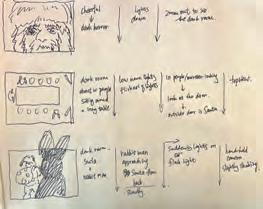
Liu plotted her narrative with a hand-drawn storyboard.
BLOOM YOUR WAY
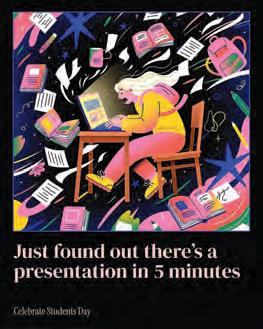
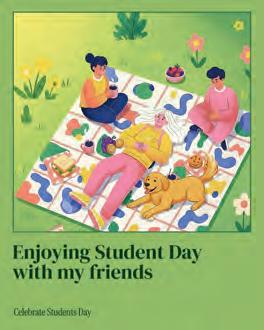
Originally from Argentina, Cecilia Garcia Pizales, Advertising and Digital Design, chose Student’s Day, a holiday particular to her home country, when colleges close to honor a key historical figure in the country’s education system.
Pizales’ campaign encourages the audience to “celebrate what makes you you.” She used six different AI programs plus Premiere Pro and Photoshop for the project. “The concept is mine,” she says. “I’m not letting AI come up with it. I see myself as the creative director.”
ABOVE: With the tool Figma Make, Cecilia Garcia Pizales designed an interactive element for the post: A quiz asks about each student’s personal style and uses the results to generate a flower (perfected in PhotoShop). She used an oldfashioned whiteboard to work out the formula for this process. “It’s not about using AI for the sake of using AI,” she says, “but about using the tools that help you get where you want to go faster while maintaining quality.”
BELOW: Pizales uploaded mood board images from Pinterest into Flora (which helped her set and maintain a consistent style) and ChatGPT (to help craft her prompts). She asked Flora to generate images of three relatable student moments plus a call to action for an Instagram post, then assembled the images into a simple, accessible video and tweaked it with Premiere Pro. The AI program ElevenLabs helped her create and tweak the video voiceover and sound.
AI Means Business
Funded by SUNY,
faculty create an AI-powered retail analysis tool
In 2024, when Shelley Kohan, professor of Fashion Business Management, was preparing a course about retail business, she ran into a snag. She wanted students to be able to compare the financials from companies that submit their 10-Ks (aka annual reports) to the Securities and Exchange Commission (SEC). The problem: There is no standardized language for how companies report profits and losses (P&L). “Every company can use their own terminology when reporting to the SEC,” says Calvin Williamson, professor of Mathematics. “What’s ‘total revenue’ to one company is like ‘net sales’ to someone else.”
Accounting and bookkeeping firms can standardize P&L nomenclature, often for prohibitive fees. But Williamson realized that an AI known as an LLM, or Large Language
Model, could do this job more easily. With the help of a SUNY innovation grant, he and Kohan built a GitHubhosted site to provide the specific comparisons Kohan needed, using the LLMs Gemini, DeepSeek, and ChatGPT. The site allows students to contrast and analyze data from 54 companies using 10-Ks from the years 2018–2024.
The site is an OER, or Open Educational Resource, meaning it can be used by anyone, for free. The project team also included Ajoy Sarkar, assistant chair of Textile Development and Marketing, and two faculty members from SUNY Oneonta.
In 2025, the team received a second SUNY grant, with the goal of using AI to make the site more interactive. Working with five students who received stipends, the team is employing “agentic” AI (which can act independently with minimal
Putting AI to Work
This alum creates AI solutions for IBM, and uses the technology in her own work The World of
human oversight) this time.
Among the achievements of the revised project: Students can now easily translate P&L data from different countries, because AI agents can translate currency. In the past, each company’s 10-K had to be downloaded and its data entered manually. With the update, AI agents can peruse, select, and upload that data from PDFs themselves.
It’s unusual to find FIT students who write software code, Williamson says. But AI allows students to “vibe code”: They can tell the AI what they want a program to do, and the bot will code it for them, then
revise it based on prompts. “Traditionally, when building a website, a client asks a designer to create the visual design, and then a web developer writes the code to make everything work,” says Souyen Young, a Fashion Business Management student who’s working on the project. “Now, with chatbots and LLMs, I can do both parts myself.”
As a product designer in IBM’s Chief Information
Office, Kathleen O’Brien helps create AI-powered solutions for IBMers through the company’s “Client Zero” initiative. IBM then uses these internal success stories to show clients what’s possible with AI.
O’Brien designs digital products that boost
productivity across IT support, procurement, and other areas. “I’ve worked on AskIT, a chatbot that handles up to 80 percent of IBMers’ requests for IT support—from password resets to hardware and software access requests,” she says.
Typically the sole designer on cross-departmental
teams, O’Brien increasingly relies on AI in her work— from analyzing user interviews to generating realistic content for design prototypes. “Rather than replacing creativity, AI amplifies it,” she explains. “With AI handling repetitive tasks, I can spend more time with users and deepen my technical expertise.”
Student Souyen Young vibe-coded an intuitive interface for a Fashion Business Management project.
What is art? With the rise of AI-generated content, we face this centuries-old question with new urgency. On my recent sabbatical, I developed a course in technology and ethics to explore how AI relates to human flourishing. Examining the central question of what differentiates art from non-art can not only help us understand whether or not this new AI generated media counts as art, but also what it does (or does not) add to human life.
Twentieth-century artists repeatedly challenged assumptions about art: Must artists execute their own visions by hand? Does craft matter, or only the final result? By revisiting several of these provocations, using concepts from an esoteric branch of philosophy called aesthetics, we can contextualize the new technology and its role in art-making and viewing. As for whether these objects are art, I leave the final judgment to you.
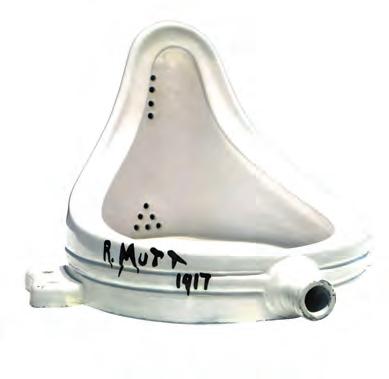
FOUNTAIN
Marcel Duchamp, signed by artist as “R. Mutt,” 1917, replicated 1964, repurposed urinal. Tate Modern.
Marcel Duchamp’s Fountain, an ordinary urinal signed with
Can AI Be Used to Make Art?
By Assistant Professor lucy collins payne , who teaches philosophy in the Department of Social Sciences
definition of art. Rejecting the tradition of crafting beautiful works, the artist merely signed this “ready-made” object and submitted it for exhibition. A forerunner of the “conceptual turn” in art beginning in the mid-20th century, Fountain showed that art can be an idea, transcending physical or visual characteristics. Fountain suggests that what we accept as art depends more on whether it’s accessioned into an institution than the work’s intrinsic properties. A facsimile of Duchamp’s piece is currently displayed at the Tate Modern. (The original was lost.)
his canvases. In a similar way, the AI artist of today submits a prompt, and relinquishes some control over what is produced.
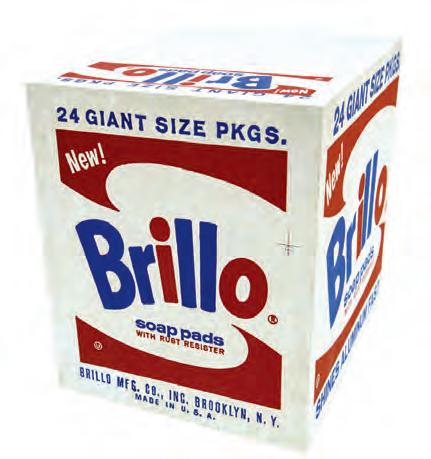
BRILLO BOX (SOAP PADS)
Andy Warhol, 1964, polyvinyl acetate and silkscreen ink on wood, 17 1/8 inches by 17 inches by 14 inches. Gift of Doris and Donald Fisher/MoMA.
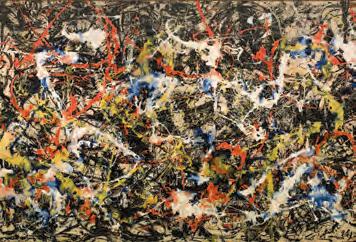
CONVERGENCE
Jackson Pollock, 1952, oil on canvas, 93.5 by 155 inches.
the pseudonym “R. Mutt,” provoked its audience with questions about the
Abstract Expressionism, a movement that began in the 1940s, required theoretical context to be understood; the painting alone wasn’t enough. Some saw this as a turning point where ideas mattered more than craft. Under this lens, any object or form of media that prompts philosophical inquiry—even an AI project—is indeed a work of art. The chaotic drips in Jackson Pollock’s work appear to defy all intention, and Pollock embraced an element of chance in creating
Andy Warhol’s Brillo Box sculptures pushed Duchamp’s provocation further by introducing what philosophers call the “indiscernibility problem”: If two objects look identical— Warhol’s replicas and the actual commercial boxes on supermarket shelves—what makes one art and the other not? Where Duchamp selected an existing object and recontextualized it, Warhol fabricated replicas of mass-produced goods. Both artists demonstrated that institutional framing—the gallery, the museum—can transform an object’s status. But Warhol’s appropriation of recognizable consumer imagery pointed toward a practice central to much contemporary art and AI-generated work: transforming existing visual material through recontextualization.
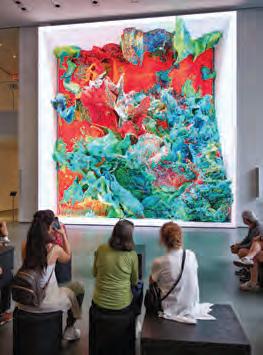
UNSUPERVISED — MACHINE HALLUCINATIONS
Refik Anadol, AI-generated images on a screen, 2022. MoMA.
If we accept Warhol’s and Duchamp’s assertions that art is whatever curators put in a museum or gallery, then our
question about AI is answered. In 2022, the Museum of Modern Art exhibited Refik Anadol’s AI-generated work Unsupervised. Anadol used a program to scan all publicly available images of works owned by MoMA and “remix” them into a constantly mutating swirl. Not all viewers were pleased; critic Jerry Saltz referred to it as a “half-million dollar screensaver.” Still, the piece leads to fascinating questions about what counts as craft, and whether or how originality matters.
AI generated work may be accepted intellectually as art, but many questions remain: What is the role of art in human life, and can art produced by an AI prompt fulfill that role? If a disembodied machine generates our art, can it produce the emotional catharsis Aristotle claimed was central to the role of art? Or can it evoke the empathetic response that Tolstoy said was necessary for art? Even if AI art meets our definitional criteria, is it ultimately good art? In time we will see, but I have many doubts.
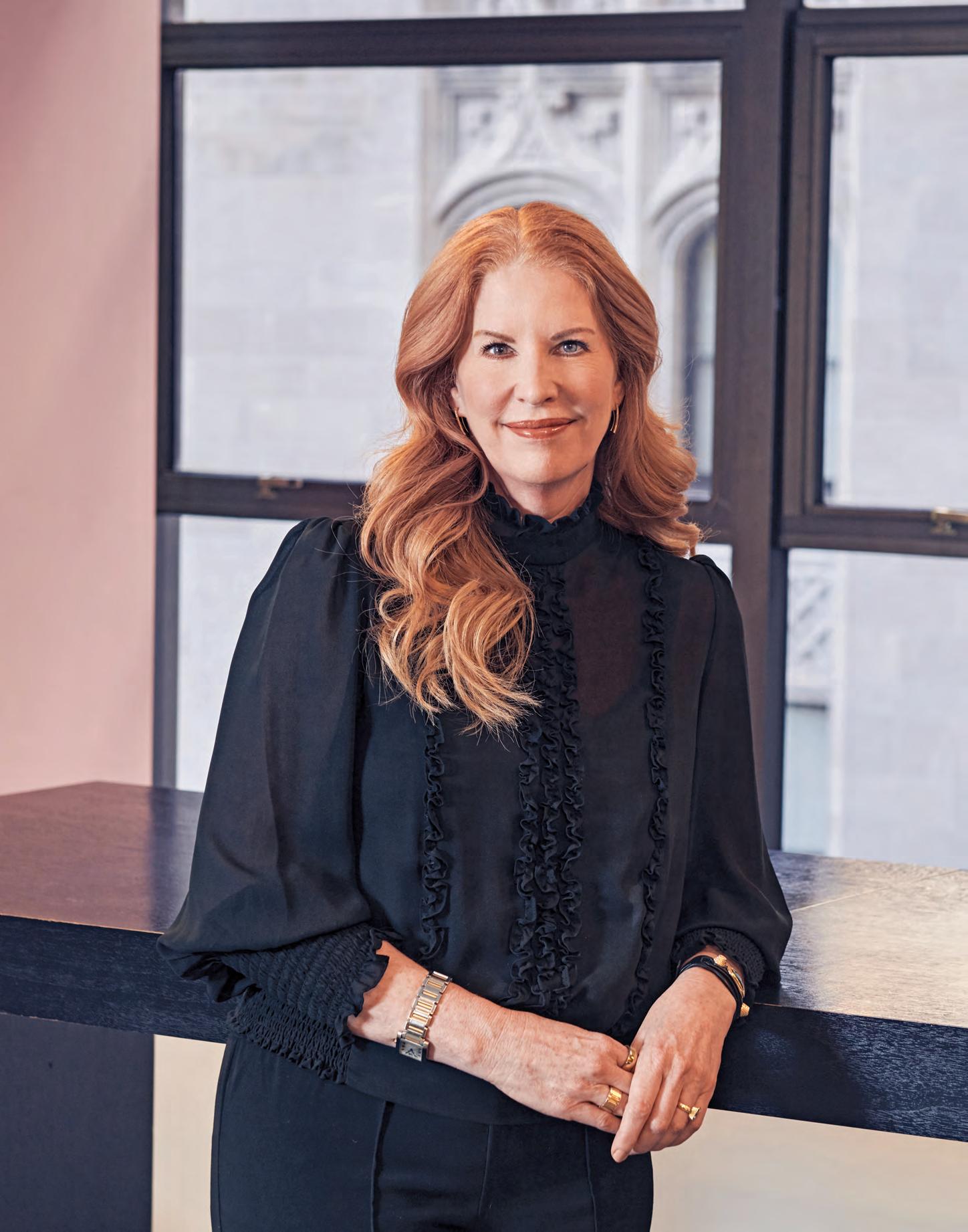
Molly Taylor in Rue Gilt Groupe's Madison Avenue offices.
The Is
PRICE RIGHT
Molly Taylor ’88 jumped from luxury retail to off-price a decade ago —and hasn’t looked back
BY IRINA IVANOVA
In an ever-changing fashion economy, one of the few sure things is the steady expansion of the discount aisle. Off-price retailers have exploded in popularity, capturing an ever-larger share of the retail landscape.
“Off-price is the place to be,” says Molly Taylor, Fashion Buying and Merchandising ’88. An Idaho native, Taylor completed her AAS in one whirlwind year that included a tearful separation from her family at a women’s boardinghouse, attending the senior ball at West Point, and turning 21 to much disbelief from New York bartenders, who had never seen an Idahoan enter the premises. (They would say, “Can’t you pick a better state to have a fake license from?” she recalls.)
After graduation, she worked at The Bon Marché, a department-store staple in the Pacific Northwest, then rose through the retail ranks at Macy’s and Nordstrom before jumping to Nordstrom Rack in 2014, where she launched its Canadian presence and its digital vehicle, rack.com. Following stints at Century 21 and Saks Off Fifth, Taylor is now senior vice president of merchandising for apparel and designer at Rue Gilt Groupe, the industry leader in the luxury off-price segment.
Its two main platforms, Gilt and RueLaLa, run ten flash sales a day for an engaged group of members. But keeping a perfectly curated selection of Jimmy Choo pumps and Celine bags is no easy feat. First, there’s running the numbers—understanding which products will sell at how big of a discount, and whether that will be profitable for the platform. “It’s a very mathy thing,” Taylor says of merchandising. “People think buyers are glamorous and the product always wins, but you have to have the economics in order to make it work.”
And unlike a traditional buyer, who might place orders a season or even a year ahead of time, off-price buyers operate on very short timelines and choose from already existing goods—and sizes, styles, and quantities.
“There’s a lot of scrappiness to it,” she says. “We will buy for next week, we’ll buy for next month, we’ll buy for the month after that. It’s this constant, dynamic, assortment-building as you go.”
Often, that means buying everything a designer has to sell, “the good with the bad,” known as a “take all” offer. That might mean signing a deal with a designer known for shoes and bags and being saddled with their apparel, children’s wear, and belts; or getting more merchandise than you expected and scaling back elsewhere to compensate; or pulling together multiple teams for an all-hands-on-deck push to close the deal, ship everything quickly, and sometimes manually sort the merchandise when it arrives, all mixed up in boxes with no scan code. “It can be a mess, and we say ‘yes’ in order to have access to those products,” she says.
It’s easy to draw shoppers with discounts; much harder is wooing brands to provide that merchandise because, unlike in full-price luxury retail, “designers don’t need to sell to you.
“The best brands want to sell to a Saks or a Nordstrom; they don’t necessarily want to sell them off-price and have a markdown footprint out there.” That’s where relationships are crucial: “The way we get the best offers is by having the best relationships, so that brands call us first.”
For the brands that make that call, Rue Gilt can offer a very engaged customer. “Our best customers shop with us nine times a month. It’s incredible, the frequency,” Taylor says.
Relationships are also important for Taylor in her role as an FIT Foundation trustee and a member and former co-chair of the Alumni Advisory Council. She’s constantly thinking about how to broaden the college’s connections with both alumni and industry.
“I lived on the West Coast pretty much my whole career, and I didn’t have any outreach or any connection with FIT,” she says. Soon after she moved to New York in 2019, a lunch meeting with a vendor who happened to be on the FIT Foundation board turned into an invitation to serve. “The opportunity to be reconnected with FIT, give back, and be around these very cool people, was tremendous. I still pinch myself.”
Taylor’s passion for people extends to her home life as well. She cooks to relax and frequently plays host. When she spoke with Hue, she had just hosted neighbors for dinner the previous weekend and was preparing to host houseguests the upcoming one. (On the menu: fancy fish and chips [made with roasted potatoes] and lasagna from a family recipe.)
“The common thread, whether it relates to my work at FIT or in the industry, is people,” she says. “I have found my voice, and it’s through people, and it’s through relationships.”
AJust Call Her
The alumna star of One Battle After Another knows what you think of her name
BY ALEX JOSEPH
Just Call Her
JP
ctor and hip-hop artist Shayna McHayle knows her stage name can be triggering, though it was never meant to be. She came up with it in 2009, while she was a Fashion Merchandising Management student—a punk with a bright-red mohawk and a serious thrift-store habit. “You could really get a bunch of dope things for $20,” she recalls, and she soon had more fuzzy animal prints than she knew what to do with.
Inspired by those finds (and by Josie and the Pussycats and the Pussycat Dolls) she went home after class one day and posted a short Myspace video announcing her new name: Junglep**sy, now frequently shortened to JP. “It was literally three seconds,” she says. “And it changed my life forever.”
Director Paul Thomas Anderson loved the name so much he wrote her into the script for One Battle After Another JP plays Junglep**sy, a member of a far-left revolutionary group. In the bank heist scene, JP leaps onto a counter and shouts, “This is what Black Power looks like!” Remembering the filming, she laughs: “That day, I was like, ‘Girl, go up there and do it like you do it at your shows.’” Costar Regina Hall said, “You killed that.” Saturday Night Live referenced the iconic moment in a sketch. For now, acting is just a sideline for JP, a musician with three critically praised studio albums and even more mixtapes, all independently
released. She says the music just happened: “I had no interest in being in the spotlight. I love listening to music, but I never thought to make a career out of it. It was just something I enjoyed doing with my friends.” After she’d guest appeared on a few pals’ tracks, she started to build an online presence. “People would ask, ‘When are gonna make your own music?’” Then she had a bad breakup. “I’m like, ‘I’m not gonna sit and cry. I’m gonna write a song.’” That 2012 ditty, “Cream Team,” was discovered and reposted by Erykah Badu. Fourteen years later, JP’s songs have been licensed for everything from Broad City to HBO’s Insecure. Her videos intrigued mumblecore auteur Andrew Bujalski, who hired her for his 2018 indie flick Support the Girls, and Anderson cast her after seeing her open for the Australian band Tame Impala.
While accepting the Golden Globe for Best Screenplay, Anderson thanked her by name. Abbreviated to JP, that is.
JP
OPPOSITE PAGE: JP liberating migrants as a member of the group French 75 in One Battle After Another.
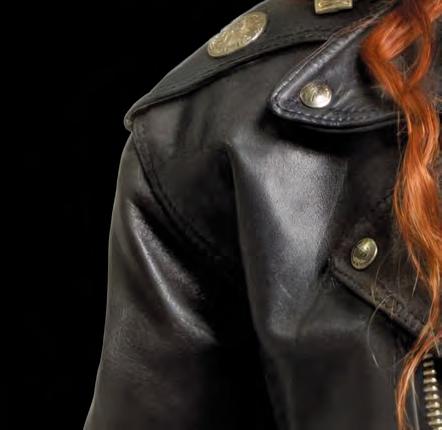
RIGHT: Pam Zuckerman, who served in FIT’s Career and Internship Services, was an early JP supporter and gave her this leather jacket, which she still wears.
THE
Tanya Meléndez-Escalante , Museum Studies: Costume and Textiles ’04, senior curator of Education and Public Programs at The Museum at FIT, born in Mexico, received $100,000 for her work
VIEW FROM OUR CORNER received for her work promoting Latin American talent.
Natalie Nudell, adjunct assistant professor of Fashion Design, born in Canada, received $50,000 for her work preserving U.S. fashion history.
Four From FIT Win
VILCEK PRIZES
The prestigious Vilcek Foundation Awards recognize contributions from immigrants in the arts and sciences. Past recipients include Henry Louis Gates Jr., Edwige Danticat, and Marcus Samuelsson. This year, remarkably, four FIT faculty and alumni won Vilcek Awards.
his visual storytelling that centers Latin American and immigrant
Diego Bendezu, Photography ’15, born in Peru, received $50,000 for
Peter Do, Fashion Design ’14, born in Vietnam, received a $100,000 prize for his unique and versatile clothing designs.
GREAT AMERICAN SONGBOOK BEHIND THE
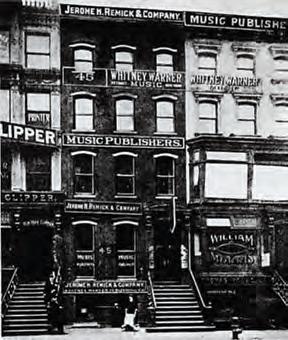
Fun fact: FIT’s campus is located steps from the birthplace of American popular music. Tin Pan Alley, on West 28th Street, was home to a cluster of music publishers that launched the careers of the best composers of the early 20th century—Irving Berlin, George and Ira Gershwin, Jerome Kern, and Cole Porter, to name a few. Performers could browse sheet music in the storefronts, where the composers could often be found arranging and auditioning the songs on upright pianos.
“What’s typically referred to as the ‘Great American Songbook’ is actually, to a great extent, the ‘28th-Street-Between-Broadwayand-Sixth-Avenue Songbook,’” says Daniel Cooper, adjunct associate professor of American History. He adds that most of the composers were Jewish, and that the melodies share a resemblance with Jewish liturgical music, along with jazz, ragtime, and classical compositions.
On the first day of his course MU203: Survey of American Music, Cooper plays Gershwin’s “Rhapsody in Blue.” As the course proceeds, students learn more about the song and its composer, who was from Brooklyn and sold his music in Tin Pan Alley. —J.V.
Hundreds of alumni descended upon the campus October 17–19 for the second annual Alumni Weekend. Alumni sold their crafts in an outdoor bazaar and partied down in a re-creation of Binsky’s, a once-hopping club in the college’s basement. Speakers included Joe Zee, Advertising and Communications ’92, journalist, stylist, and producer;
Darshan Gress, Fashion Buying and Merchandising ’96, former Project Runway stylist, with Stitch; Lenora Brooks, Fashion Design ’10, 3D fashion tech consultant; and Lindsay Alexander, Advertising and Marketing Communications ’06, brand content studio team lead for Mars.
Alumni Weekend, a New Tradition
Julie LaPlaca, Advertising and Marketing Communications ’07, former producer of The Bachelor; and Project Runway contestant Yuchen Han, Fashion Design MFA ’19. This fall’s Alumni and Family Weekend, Oct. 23–25, will welcome not just alumni and their families but also students and faculty to participate in a packed roster of education, networking, and fun.
The music publishers that made up Tin Pan Alley, then and now. The buildings became historic landmarks in 2019.
HUE Q
ONE QUESTION FOR AN FIT COMMUNITY MEMBER
I CONTACT
A STUDENT IN FIRST PERSON
Heaven Cluesman
ANNE MILLER, NP
director of Student Health Services
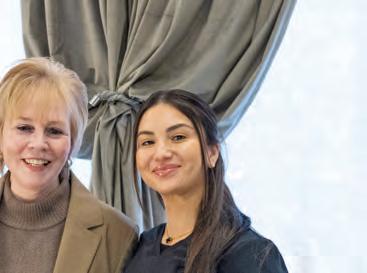
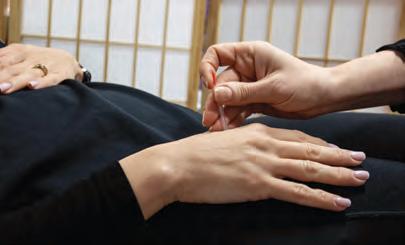
Q: Why does Health Services offer alternative therapies like massage and acupuncture?
A: When I became director in 2006, I saw so much anxiety among students. I thought, “How do we get these students to chill out?” I hired an acupuncturist, and right away she was fully booked. We didn’t even have to market it. We expanded to a part-time massage therapist, and now we have two.
I brought in a cosmetologist for skincare issues like acne and eczema. She has great moisturizers. She’ll also look at whatever products the students are using and tell them whether they’re good quality.
Gabby, our nutritionist, works with students with eating disorders, weight issues, diabetes, and irritable bowel. But she also helps students eat a balanced diet. She advises students how to eat well on the run, and she does cooking demonstrations for putting together a fast, healthy meal.
Complementary approaches like these make the Health Services environment feel less clinical, and that’s important. They may be the first point of contact for students who might be hesitant to seek traditional medical care.
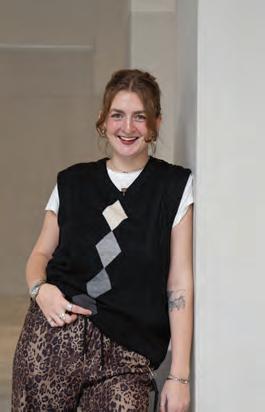
Footwear and Accessories Design ’27
Q: How did you develop your sense of style?
A: My grandmother was a true Western woman, a modern-day cowgirl. She drove trucks across the country for 40 years. She wore cowboy boots every day, structured leather bags, belts, and classic western-style jackets. Nothing was overly styled or precious; everything had a purpose and a story. She died when I was 10, but her style influenced how I
approach both personal style and design. I am drawn to strong silhouettes, tactile materials, and functional yet expressive pieces. And I love cowboy boots. I love the history behind Western footwear and how the roots go back to Indigenous tribes and Mexican vaqueros. I visited FIT thinking I’d go into Fashion Business Management, but after I took a tour with Sarah Mullins, chair of Footwear and Accessories Design, I applied for that major. Learning how to make shoes had always been a dream of mine, and it was the perfect place to focus on craftsmanship, construction, and material exploration.
Ashley Thomas, massage therapist; Anne Miller; and Raquel “Rocky” Similio, acupuncturist.
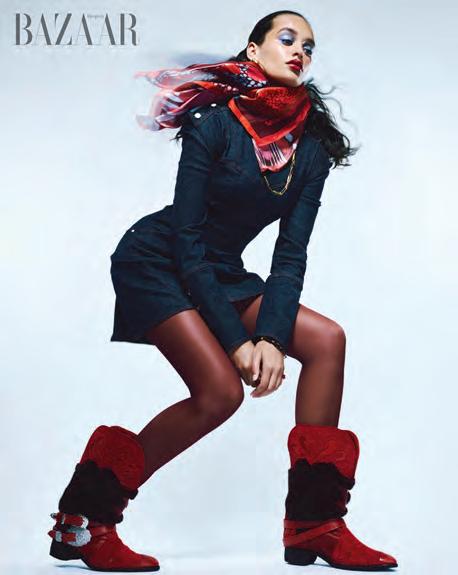
Heaven Cluesman styled this editorial that ran in Harper’s Bazaar Vietnam using boots she had designed for a competition sponsored by Saga Furs. They are made of red leather, suede, and ethically sourced mink fur. “The design was inspired by my grandmother and by the Finnish word rajaton, which means ‘limitless.’”
NEWS & INSIGHTS
Jinbae Park assistant professor of Interior Design
Who needs a store to buy products when you can easily go online? In my class Design History, Theory, and Criticism, I teach that a store needs to be an experience.
The SoHo Prada flagship, designed by Rem Koolhaas, pushed the envelope of interior design when it opened in 2001 by bringing theater to shopping. Entertainment might be fun, but good theater upgrades your experience by challenging your values and shifting your perceptions.
At the Prada store, the latest collection is displayed up front, and then there’s a huge cylindrical glass elevator that takes you downstairs. It tells you this is not just a clothing store; it feels like a high-tech company.
Behind the elevator, a long sculptural ramp called The Wave connects the main floor to the basement; they hold music performances and film screenings there. That’s the climax of the theatrical experience.
Years before smartphones, the fitting rooms had digital devices that would email pictures of you in the clothes to help you decide. They took something ordinary and made it an event.
The Best Interior in Retail Bringing Ikat to Opera
The younger generation may not be able to afford Prada’s products, but once they see that the space is great, there’s a much higher chance they will recognize the brand and make a purchase one day. —As told to Jonathan Vatner
Jinbae Park is the author of numerous books about design, including Design and Film (Design House, 2001) and, with coauthor Howard Blanning, One Thousand Breakfasts (Para Books, 2014)
A faculty member wins a prestigious award for innovative costume designs
DANIEL JAMES COLE, adjunct assistant professor of Fashion Design-Art, won the 2024 Costume Society of America (CSA) Costume Design Award. This honor recognizes Cole’s inventive work on the 2022 production of the Richard Strauss (1864–1949) opera Ariadne auf Naxos, staged by Arizona Opera.
The complex plot of Ariadne requires three clearly defined costume schemes. “Three different worlds must contrast but coexist,” Cole says. “The reality of the wealthy man, seen in the below-stairs kitchen/pantry realm; the world and visual language of the commedia dell’arte troupe; and the elegant theatricality
of the opera company.” Originally composed as a companion piece to Molière’s play Le Bourgeois gentilhomme (1670), the opera is typically set in the 17th century; however, for this production, the director and Cole set the action in 1912, the year the opera premiered.
The shift presented a creative challenge for Cole, who has taught courses in world textiles and costume design. Researching the period through paintings and other sources, he discovered that ikat fabrics were becoming fashionable in imperial Russia and Western Europe. Commedia Harlequins typically wear diamonds on their costumes, but Cole decided
to let ikat designs “do the work of the diamonds.” For silhouettes, he took inspiration from Emilie Louise Flöge (1874–1952), a Viennese avant-garde dress designer the common-law wife of painter Gustav Klimt.
Cole coauthored The History of Modern Fashion (Laurence King, 2015), and has written articles about American fashion. He designed costumes for the summer 2025 production of Sweeney Todd for Opera Maine. —Alex Joseph
to let ikat “do the silhouettes, he took ge a Viennese dress and the The King, and has written ion. He costumes for the summer 2025 proMaine. —Alex assistant of Fashion
Renaldo Barnette, adjunct assistant professor of Fashion Design, created sketches based on Cole’s concepts.
The art of craft
In these tumultuous times, many artists and designers are craving a return to craft: objects of beauty made by hand. These three recent books by FIT alumni celebrate craft in different ways.
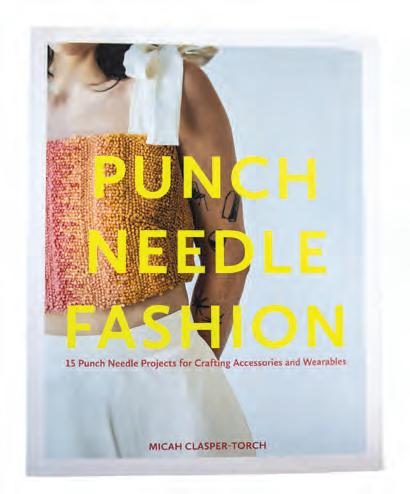
Punch Needle Fashion: 15 Punch Needle Projects for Crafting Accessories and Wearables
By Micah Clasper-Torch, Fashion Design ’09
Quadrille
Clasper-Torch has amassed a large and loyal social media following by bringing the craft of punch needle rug hooking to accessories and wearable fashions. In her debut book, she shares advice and 15 approachable projects for DIYers seeking that textured look.
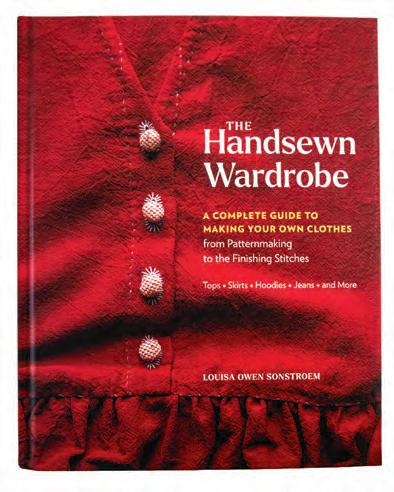
The Handsewn Wardrobe: A Complete Guide to Making Your Own Clothes from Patternmaking to the Finishing Stitches
By Louisa Owen Sonstroem, Technical Design, Fashion Design ’16
Storey
Sonstroem, a technical designer for Eileen Fisher, created this patternmaking and sewing primer to empower makers of all experience levels to craft wardrobe staples like jeans, button-down shirts, and T-shirts.
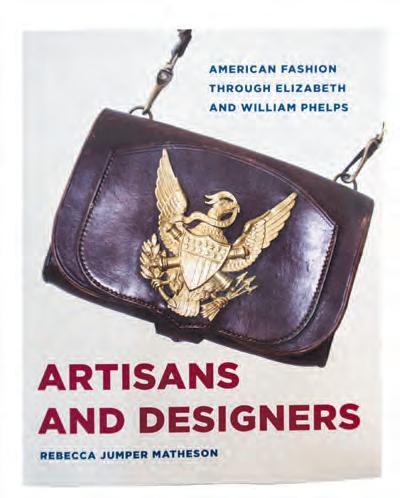
Artisans and Designers: American Fashion Through Elizabeth and William Phelps
By Rebecca Jumper Matheson, Museum Studies: Costume and Textiles ’05
The Kent State University Press
From the 1940s to the 1960s, William and Elizabeth Phelps created high-quality leather goods and women’s sportswear, much of it handcrafted. Matheson, a fashion historian and FIT faculty member, explores the husband-and-wife duo’s often-overlooked contributions to the fashion industry and employee-centered business practices.
A CAMPUS TREASURE REVEALED
PLAY SCHOOL
Who made this mysterious board game in FIT’s archive?
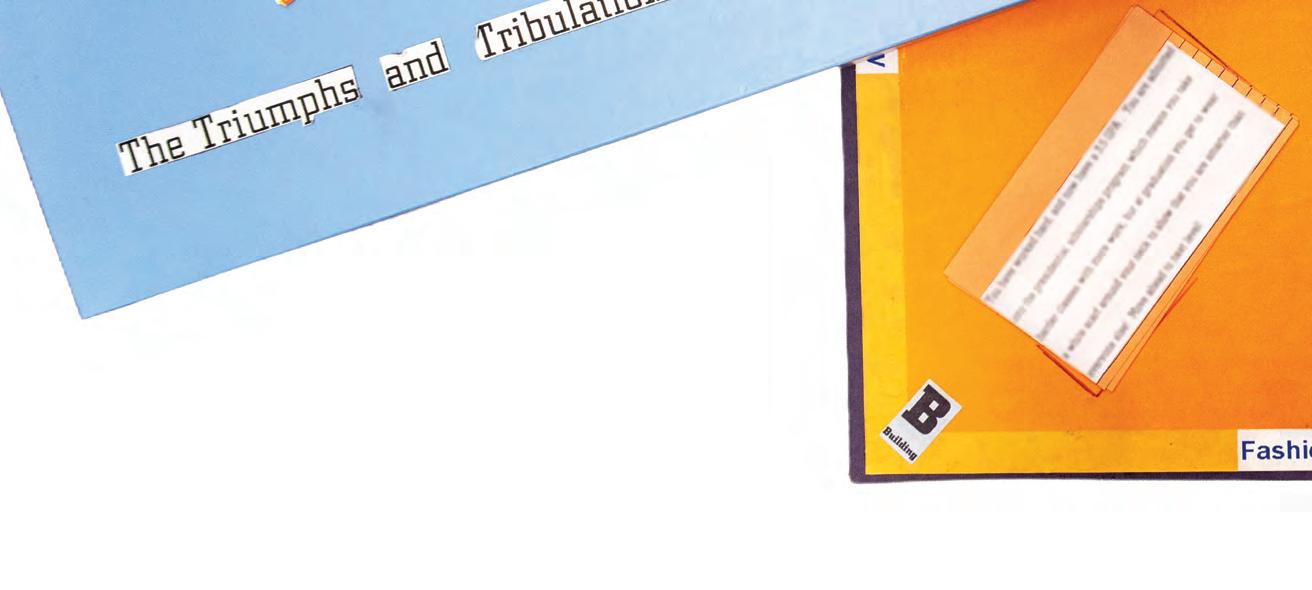
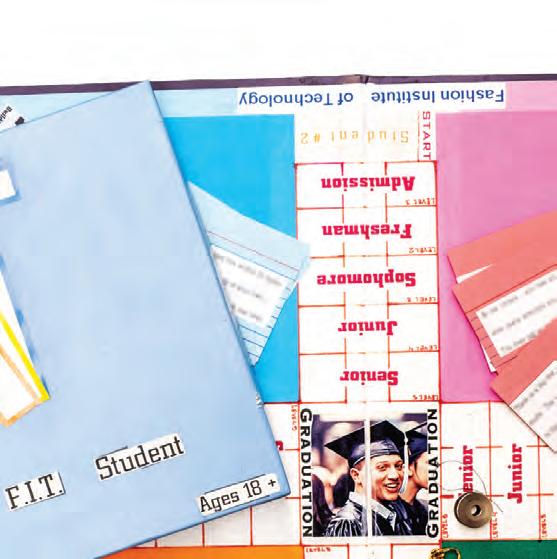
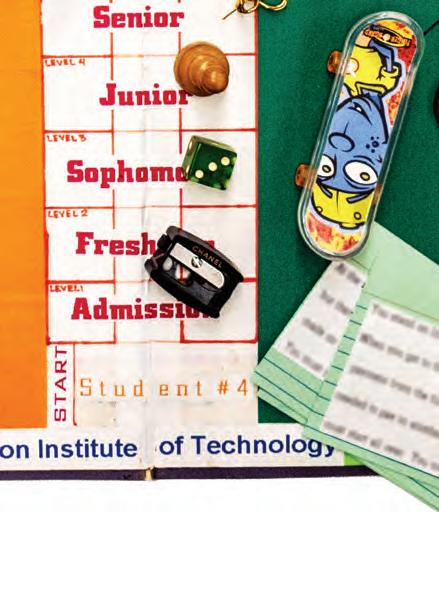
FIT’s Special Collections and FIT Archive, which houses 500,000 rare and unique works on paper, keeps detailed notes on the provenance of each item. However, this homemade board game, “The Triumphs and Tribulations of the FIT Student,” is an exception.
“I don’t know how it showed up here,” Tiffany Nixon, head of the unit, admits. “We don’t know anything about it.” What’s obvious is whoever made it knew the college very well.
Game tokens are based on majors—a Chanel eyebrow pencil sharpener for Cosmetics and Fragrance Marketing; an earring for Jewelry Design. Players progress from freshman to graduate by drawing cards: A good card? Become a Presidential Scholar and move up a level. Fail to register for a class or get kicked off the faculty and staff elevator? Down you go.
“Cheating is aloud [sic],” the rules say, “as long as you don’t get caught!”
Recognize this game? Give us a shout at hue@fitnyc.edu. Says Nixon, “It would be amazing if somebody came forward and said, ‘I made that!’”
—J.V.
RETAIL SPOTLIGHT
INSIDE AN ALUM’S STORE
Making Scents
A trip to a candlemaking class at a Brooklyn “speakeasy”
BY WINNIE McCROY
Stepping into the Nose Best candle shop, I’m engulfed in the heady aroma of botanical room sprays, smoky smudge sticks, incense, and invigorating shower bombs. And so many candles! Arthur Ave smells of pistachio cannoli; Garden Hoe blends tomato leaf and eucalyptus—the owners delight in giving their scents cheeky names.
I had trekked to the Nose Best storefront in Bushwick to join a candlemaking class to create my own signature scent. I entered the shop through an obscured door and wandered down a mazelike hallway to a back-room “speakeasy.”
Using droppers, I mix tinctures on scent strips and choose redwood and high tide—complementary scents on the fragrance wheel.
“I feel like a mad scientist,” exclaims the woman next to me as she carefully measures and stirs tinctures in a tiny beaker. I pick a candle vessel and insert the wick. Then I pour molten soy wax and my custom scent mixture into the vessel, create a bespoke label, and wait. While the candles set, my classmates and I listen to beats and drink wine under gleaming disco balls.
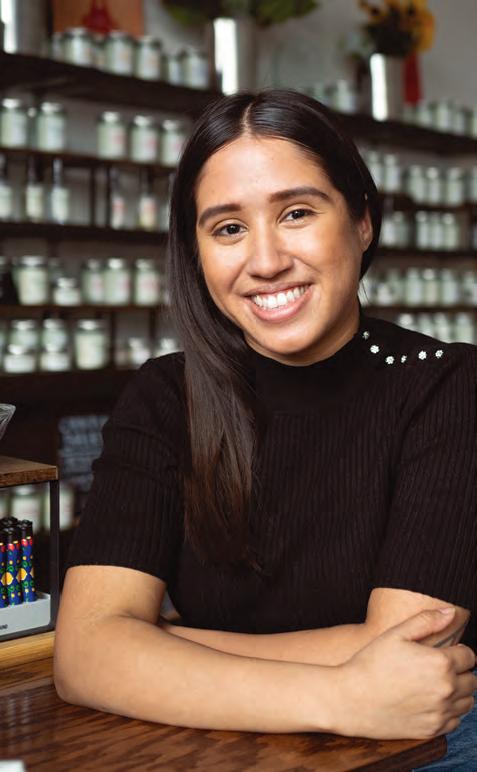
This immersive experience is the brainchild of Brittany Furnari, Advertising and Marketing the multilongtime school
Long Island and succeed in the big city—and they actually have. Four years after graduating from FIT, Furnari began selling candles online, quickly landing a coveted Urban Outfitters account. It was early in the pandemic, and customers, cloistered at home, loved the cozy candles accompanied by a cocktail recipe and Spotify playlist, curated by Abbrancati.
successful pivot a summer.
BELOW: A workshop participant mixes their own scents with
own scents droppers and beakers.
of Furnari, and Communications ’17, a new offering at the multisensory shop she opened in 2021 with bestie Cristian Abbrancati. At their high school prom, the two vowed to
escape
This year, Furnari used her marketing savvy to move the business to “the next natural thing”: candlemaking, custom perfume making, and self-guided reed diffuser workshops. It proved a wildly successful pivot after a slow summer. They’ve attracted and upstate New York, parties and corporate for companies such Nation, and Luminary. expand the store while holding tight to their core mission: “We started this to bring joy during the pandemic, and we’re still on that journey of connecting isolated people and making sure community stays alive.”
attracted guests from Connecticut and upstate New York, and hosted bachelorette and corporate team-building events for such as Checkout.com, Live Nation, and Luminary. Furnari says they plan to the store whileon that of isolated and sure
BEST SELLERS
One Nose first was
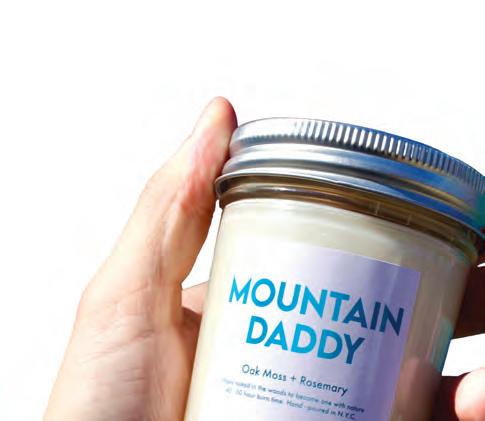
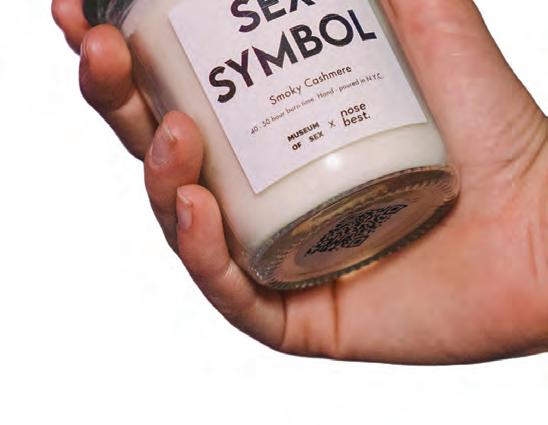
One of Nose Best’s collaborations was with the Museum of Sex, and shoppers still grab that Sex Symbol leather- and suede-scented candle o the shelves. The brand’s current bestseller is Mountain Daddy, an oakmoss and rosemary scent that went viral on TikTok, thanks to Furnari’s engaging grassroots marketing e orts.
Courtesy of portrait: Daniel
RIGHT: Brittany Furnari in the Nose Best candle shop.
Courtesy of Nose Best; Daniel Welch
ALUMNI NOTABLES
Textiles to Terroir
Coral Wang, Textile/ Surface Design ’06, weaves art and design savvy into her California wine brand
After several intense years developing prints and sourcing fabric for New York fashion companies such as Ralph Lauren and Rachel Roy, Coral Wang was burned out. The New Jersey native had always been interested in wine—her father collected California vintages—and so she sought a fresh start in the San Francisco Bay Area in 2015, working in restaurants and nurturing that interest into a full-blown passion.
After a couple of years managing wine programs for restaurants, Wang was ready for a new challenge: learning to farm grapes and make wine.
“I’ve always been extremely curious by nature,” she says, “wanting to understand how things are made and where they come from.”
In 2017, Wang landed an apprenticeship at Domaine Mamaruta, a winery nestled between the Pyrenees and the Mediterranean in the Languedoc region of southern France, which turned into a three-year immersion, living and working with owner Marc Castan, who became her mentor. In 2021, after returning to the U.S. and moving to the city of Sonoma, Wang launched her own natural wine brand, Maison des Plaisances (“house of pleasures”).
“I want to shine a fresher light on California’s noble varieties,” Wang says, like Cabernet Sauvignon and Sauvignon Blanc. “The way Napa Cabernet started out was not what we think of it today.” The early wines, she explains, were brighter in style, with lower alcohol, because winemakers typically harvested the grapes earlier in the season to retain acidity.
Working with the grape varieties that grow best in Napa Valley and Sonoma County, rather than seeking out trendy, esoteric varieties from other regions, reduces her winery’s environmental footprint. “All my fruit comes from within a few miles of the winery,” Wang explains. “My home is also minutes away, so I’m able to walk through all of the vineyards I work with every day.”
Though she says vineyard work is far from glamorous—it involves lots of solitary, physical labor—it’s what she loves most about winemaking.
Farming and fashion intersect at Maison des Plaisances. Wang designs and hand-paints her
In late 2025, she took an even bigger leap: She left her day job at another winery’s tasting room to devote her full attention to Maison des Plaisances. “I’ve only been able to give a small fraction of my time to my brand,” Wang says. “I’m so excited to give it all of my time.”
—Tina Caputo
The Costume Whisperers
Crystal Thompson, Fashion Design AAS ’93, and Michael Harrell, Fashion Design alum, bring Broadway outfits to life
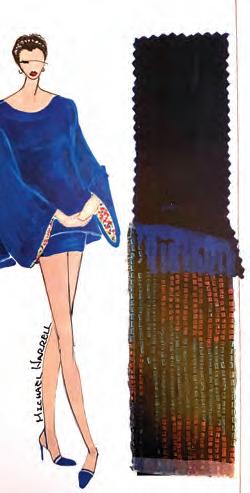
The costumes we love in Broadway shows are the product of many hands. Alumni Crystal Thompson and Michael Harrell have had long, varied, and fascinating careers as costume builders. Their job?
Translate designers’ elaborate sketches onto actors’ actual bodies—either through tailoring or by constructing complete outfits.
Thompson has fabricated costumes for many plays, including Hadestown. For that show, nominated for a Tony Award for Best Costume Design, Thompson created designer Michael Kass’ styles for The Three Fates, making custom harnesses and necklaces for the actors. Sometimes she fashions rehearsal costumes, which are particularly important when the shows make unusual demands on the performers. For The Little Mermaid, for example, she made costumes with mermaid tails so the actors could practice swishing them around while dancing on roller skates. Thompson has also created costumes for The Met Opera, including an elaborate Cinderella gown. And she’s dynamo diva Patti LuPone’s personal tailor. “She’s actually got it in her contract that I get ‘first refusal’ when she’s doing Broadway shows,” like 2024’s The Roommate with Mia Farrow, Thompson says.
own wine labels, and she’s now launching a winery-branded line of hipbut-utilitarian workwear made from vintage and deadstock fabrics. ,
Crystal Thompson built the costumes worn by the Fates in Hadestown
worked in the wardrobe department for many musicals, starting with 1994’s Sunset Boulevard, and more recently supported designer Paul Tazewell for Wicked and Hamilton. In his current stint at The Book of Mormon, Harrell collaborates with legendary costume designer Ann Roth, building and tailoring outfits for the huge cast—three white shirts with underwear for each player, with pants rigged for high-speed costume changes. He’s been on Roth’s “dream team” for 10 productions, including HBO’s The Young Pope with Jude Law, and Broadway’s A Raisin in the Sun with Denzel Washington; and he created a memorable burgundy skirt for Glenn Close in A Delicate Balance. The work requires attention to fragile egos: “Sometimes the actor will have a hard time with
what the designer had in mind, so I’ll change it,” Harrell says. “I might meet the actor in the elevator, and they might say, ‘Can I have a belt?’ or ‘My butt looks too big.’ They’ll blame everything on the costume: ‘I can’t sing; my gloves are too tight.’”
Harrell got his start in the ’80s, when a friend introduced him to Patti LaBelle backstage at her concert. “The first thing I said was, ‘Who does your clothes?’” He created fashions for her for years, including two solo shows on Broadway. The garment he designed for her 1997 Grammy Awards appearance is in the Smithsonian. Today, as an instructor in FIT’s Center for Continuing and Professional Studies, Harrell imparts hardwon wisdom: “The costume designer gets the above the line credit. The wardrobe department is toward the back of the playbill, where the writing is so small you can’t find your own name.” Still,
he loves the work. “I’m sharing in making an experience that the audience will never forget.”
—Alex Joseph
One Business After Another
Celine Fosse, Advertising and Marketing Communications ’09, gets startups off the ground
Celine Fosse has a particular talent. She helps founders position their companies for acquisition. And she knows exactly what’s on the line—because she is a founder herself. “I’ve seen the fireworks and the grief,” she says.
In 2024, Fosse founded Niimblr, a collaboration and feedback tool for digital content such as architectural renderings and marketing assets. In 2025, she led her startup to a successful acquisition. “You have to wear a million hats,” she says of being a founder.
In addition to brand marketing, scouting potential buyers, and other high-level responsibilities, she had to tackle all the administrative duties too. “I was answering customer emails myself. It was humbling, but it made me better at what I do.” Her experience in the trenches influences how other founders respond to her. “I get trusted so much more. I have my playbook and I can say, ‘This has worked for me, it can work for your baby as well.’”
Fosse learned the importance of trust early in her career, when she worked closely with ad-industry icon John McGarry at his agency McGarryBowen. “He was magic with people and built a reputation based on trust,” she recalls. “He always sent personal notes and remembered people’s stories.”
Fosse specializes in the role of “fractional” chief marketing officer (CMO). Startups bring her on as a short-term consultant to shepherd them through a highpressure and deadline-driven process. She analyzes and refines a company’s marketing and business development strategy to prepare it for its next big milestone—whether that’s a sale, an infusion of capital, or an expansion. She acknowledges that being comfortable with chaos is what has “kept her safe.”
Through all the fireworks and grief, Fosse centers the humanity of the experience: Businesses don’t actually buy anything—it’s the people behind the businesses that do.
—Vanessa Machir
designed the outfits for Patti LaBelle’s solo shows on Broadway.
Patti LaBelle images courtesy of Michael Harrell; Fosse: Jannick Børlum
Mission
Accomplished
“ The vendors know when they’re talking to somebody who knows construction.”
—angela maragni
In 2023, shortly after joining the federal government’s Defense and Logistics Agency (DLA)—which supplies the armed forces with clothing, food, and other necessary items—as a product specialist, Angela Maragni was given a special assignment. She would help create a ceremonial uniform for the Space Force, a military branch founded in 2019 to protect U.S. interests in space.
Usually, Maragni’s role involves working with domestic garment factories to maintain the fit, form, and function of dress uniforms defined by decades of design continuity, for example, the Army Green and Marine Corps Blue uniforms. But the new Space Force uniform would require extensive teamwork among multiple offices on a tight deadline.
The design, created by a separate office, specified a semifitted coat with six asymmetrically positioned buttons, representing the six military branches, on the front.
Maragni’s small team collaborated with multiple others at DLA, recommending fabrics and construction methods to translate the
drawings into beautiful, durable, and functional garments. She then worked closely with five mills and factories to produce them. This was the first ceremonial uniform to incorporate spandex, and her team had make sure the knew how to sew challenging material.
Maragni’s FIT helped immensely. garment specifications her agency uses the tech packs together as a student. knowing industry like “hook and loop” of “Velcro” and “slide fastener” instead of “zipper”—helped her develop rapport with factories.
Angela Maragni, Technical Design ’12, helped produce new ceremonial uniforms for the Space Force garments. She incorporate team to sure factories to sew this material. FIT training The garment her agency uses are like the tech she put as a student. And knowing verbiage— like “hook and instead
“The vendors know when they’re talking to somebody who
knows construction and has worked in this field,” she says. Also, FIT’s famously heavy workload helped prepare her for the project’s lightning pace. In just two years, Maragni’s team produced 600,000 items in more than 400 sizes for the
400 Space Force Guardians. The uniforms included many pieces— coats, caps, jackets, belts, trousers, skirts, etc.—graded on multiple dimensions.
she uniform graduation December, pride
When saw the Guardians in uniform at the Space Force in San Antonio last December, Maragni beamed with for her work and her country. said they really loved the new designs,” she recalls. “It was the
“They new “It definitely coolest part.” —Jonathan Vatner
Angela Maragni assisted with the fitting of the new U.S. Space Force uniform at Joint Base San AntonioLackland, Texas in November.
WHAT INSPIRESYOU?
An Unbroken Thread
Jenny Jing Zhu, Textile/Surface Design ’04
I grew up in a remote village in China. We didn’t have electricity until I was in second grade. My grandmother worked with her hands every day—cooking, sewing, and weaving on an old wooden loom. Her feet were bound to just three inches, lotus feet, but her hands were steady. When the yarn snapped, I’d get frustrated, but she would calmly tie a knot and keep going. She would tell me, “Weaving is just life. When the thread breaks, you tie a knot and keep going.”
When I was 26, I immigrated to the U.S. I remember turning on the TV and not understanding a single word. I felt like an alien on Mars. When you don’t speak the language, you can feel invisible—like a nobody. I worked as a nanny, watched a lot of PBS cooking shows, and eventually learned English.
During the financial crisis in 2008, when I was about to become a single mom to my one-year-old son, I started Lush Decor, a home textile e-commerce business. As an immigrant and a mother, I wanted my home to feel like a safe harbor—a place of belonging. I knew other women felt the same way.
I didn’t have much business experience, so I brought on a business partner. A year later, I had that sick, god-awful feeling that something was wrong. Then one day, he walked into the office and read me my termination letter. It was surreal: It was my business … and I was being fired. He told people I was on a Homeland Security watch list and that I would be deported. I felt humiliated, and I didn’t know what I had done wrong. It was one of the darkest times in my life. It felt like everything was falling apart.
I went to court, and it took almost six months to get the company back. Eventually, I grew Lush Decor into a $100 million company. We design bedding, curtains, pillows, and more in the U.S., manufacture overseas, and drop-ship directly to the customer.
Now, when I look back, I think about my grandmother. She didn’t make speeches. She didn’t call it resilience. She just kept weaving, and so did I.
—As told to Jonathan Vatner
Jenny Jing Zhu is the author of the autobiography Dream Weaver: Finding Strength and Purpose in Life’s Twists and Turns (Indigo River Publishing, 2025). A related short film with the same title premiered at the Venice Film Festival in 2024 and was screened at FIT in 2025.
The Magazine of the Fashion Institute of Technology
HUE is published three times a year by the Division of Communications and External Relations 227 West 27th Street, Room B905 New York, NY 10001-5992 (212) 217-4700
State University of New York
ALEX JOSEPH MA ’15 Chief Storyteller
JONATHAN VATNER
Editorial and Managing Director
KIM MASIBAY Editorial Associate
SMILJANA PEROS Photography Coordinator
ALEXANDER ISLEY INC.
Art Direction and Design
GOODFOLK AGENCY Web Design
HUE ONLINE hue.fitnyc.edu EMAIL hue@fitnyc.edu
Like the FIT Alumni page on Facebook and follow @FITAlumni on Instagram. Use #FITAlumni when posting.
Email the Office of Alumni Relations at alumnirelations@fitnyc.edu and let us know what you’ve been up to.
HUE is mailed to donors who give at least $25 per year to FIT. Donate now at impact.fitnyc.edu.
Also check out FIT’s official social media accounts: