
Wellness Travel 2030 Post-COVID19: A Pioneering Study
Industry Experts and Academics
predict the future of wellness tourism

This is the final report of the study on wellness travel 2030. The study is a joint initiative between Health Tourism Worldwide and the Wellness Tourism Association. The study conducted in-depth on-line interviews with 131 industry representatives (from 25 countries) and with 59 academia representatives (from 24 countries).
Health Tourism Worldwide and the Wellness Tourism Association thank every participants for their support and insights!
László Puczkó Anne Dimon
CEO & Co-founder President Health Tourism Worldwide Wellness Tourism Association laszlo@htww.life admin@wellnesstourismassociation.org
Wellness Travel 2030: Surveying Industry & Academia
The objective of this research was to identify the main global and regional trends experts may envisage in wellness-motivated travel by 2025-2030. This is the continuation of HTWW’s initial research published in 2012 titled 4WR Wellness Tourism 2020. We thought it was time to revisit the forecasts and suggestions formulated in 2012. The initial research indicated several trends and new considerations, such as new products, and highlighted significant regional differences. In this research under wellness tourism we understand the following:
Forms of tourism which aim to improve and balance all of the main domains of human life including physical, mental, emotional, occupational, intellectual and spiritual. The primary motivation for wellness travelers is to engage in preventative, proactive, lifestyleenhancing activities such as fitness, healthy eating, relaxation, rejuvenating and healing treatments. (UNWTO & ETC (2018): Exploring Health Tourism)
The data collection had two streams during the COVID19 pandemic. We interviewed parallel key representatives of:
• The academic community who have been actively researching the relationships between wellness, wellbeing and travel (59 respondents from 24 countries)
• The wellness tourism industry. These industry professional have been working in hospitality, in spas, in holistic retreats and wellness hotels and resorts (131 respondents from 25 countries)
This is the first global study on wellness travel that collects input both from the industry and from the academic field. We thank all participants for their time and opinion.

Wellness, Wellbeing & Quality of Life

Meaning of Wellness
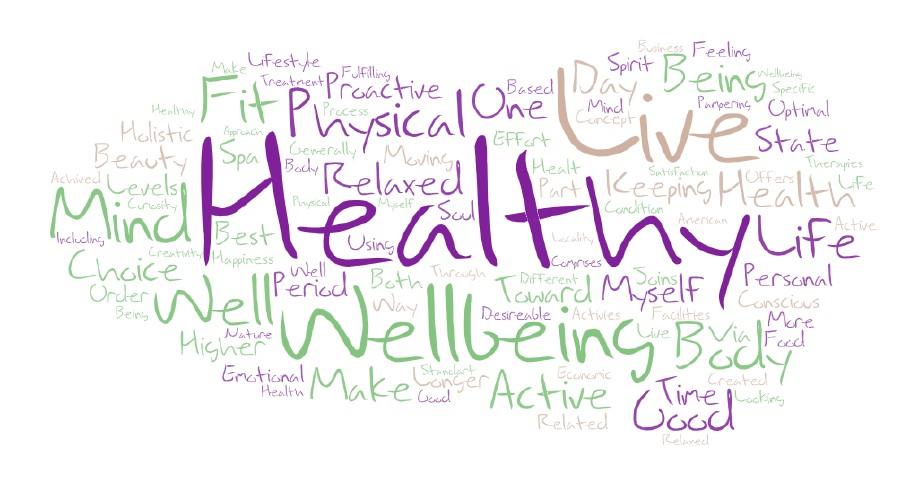
We asked the respondents to define what wellness, wellbeing and quality of life as concepts may mean to them. These three concepts have been widely used recently, but we understand that they are not synonyms.
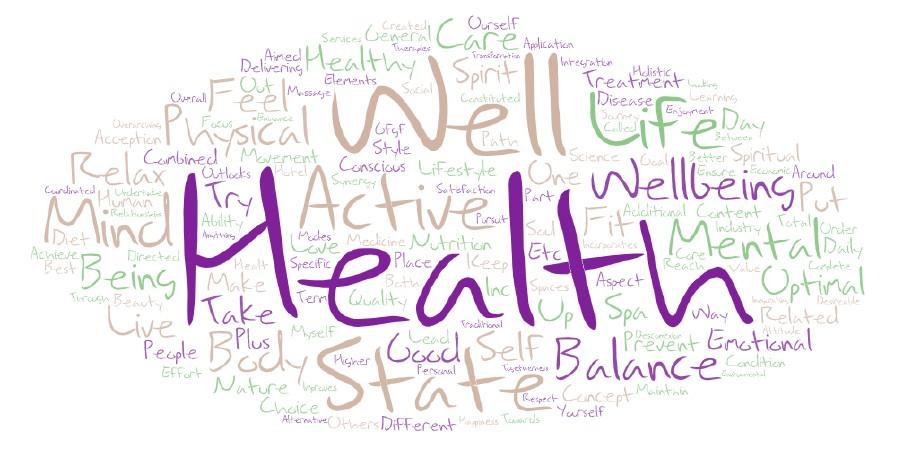
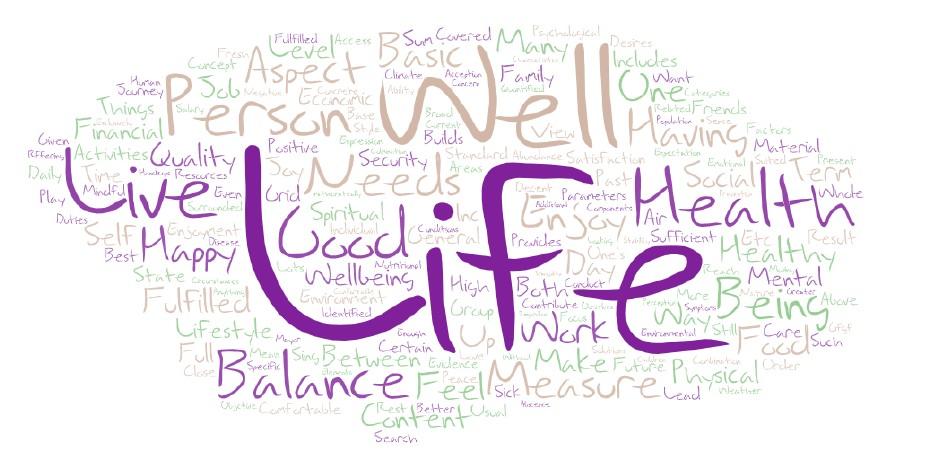
The difference between the two understandings is that one group looks at it as a static, momentarily relevant state of being, while for the other, wellness is dynamic and connected to living as a longitudinal concept. Industry respondents translated wellness as a state of health and being well, whereas to academia representatives it is closer to living healthily.
Industry & Academia
Meaning of Wellbeing
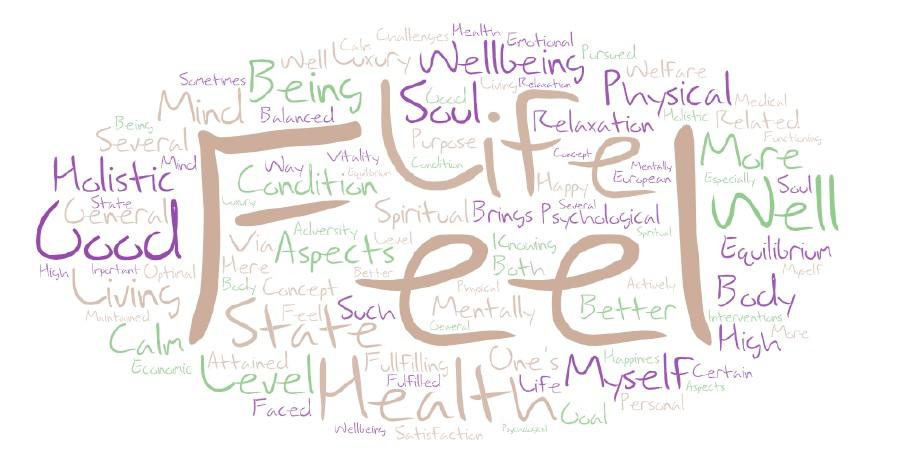
Wellbeing is a rather well defined concept. It is at the very core of social and healthcare sciences. So far it has typically been used in a scientific and academic context. Industry respondents believe that wellbeing focuses on the state of life and being well and healthy. Academia refers to the scientific interpretation of wellbeing, i.e. how anyone may feel about their lives.
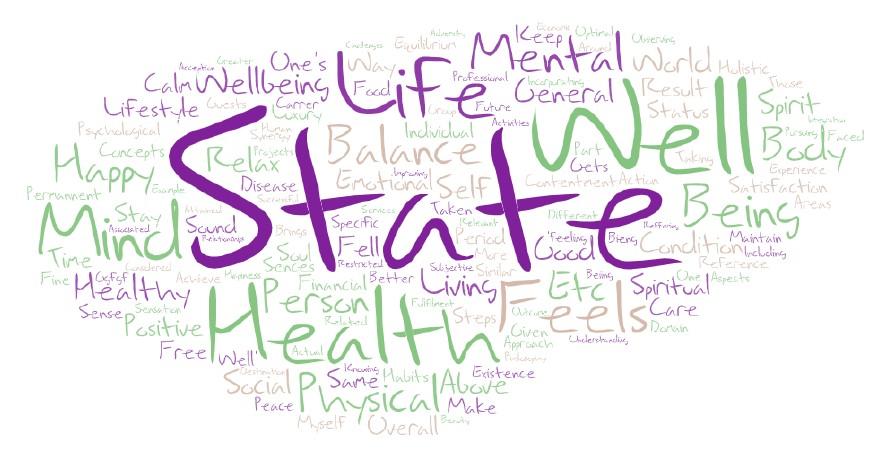
Take Home Message: Wellbeing for: • Industry: State of health • Academia: Feeling about life
Industry & Academia
Meaning of Quality of Life
Quality of life as a concept is similar to that of wellbeing. It is used in a scientific, academic context and being considered as a measure of success in policy making. Industry translated it as balance in life somewhat similarly to how the academic panel described quality of life, i.e. living life well in health and balance.
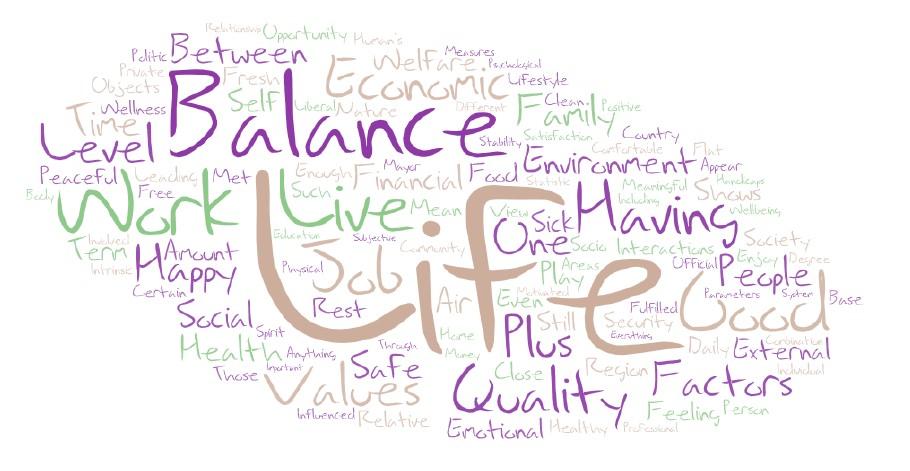
Take Home Message: Quality of life for: • Industry: Balanced life • Academia: Living life well and in good health
Industry & Academia
The Pillars of Wellness
Take Home Message: Services for Wellness Pillars:
• Industry: What is offered?
• Academia: What it does?
It is understood that wellness has six pillars:
• Physical
• Social
• Intellectual
• Occupational/Workplace
• Spiritual, and
• Emotional
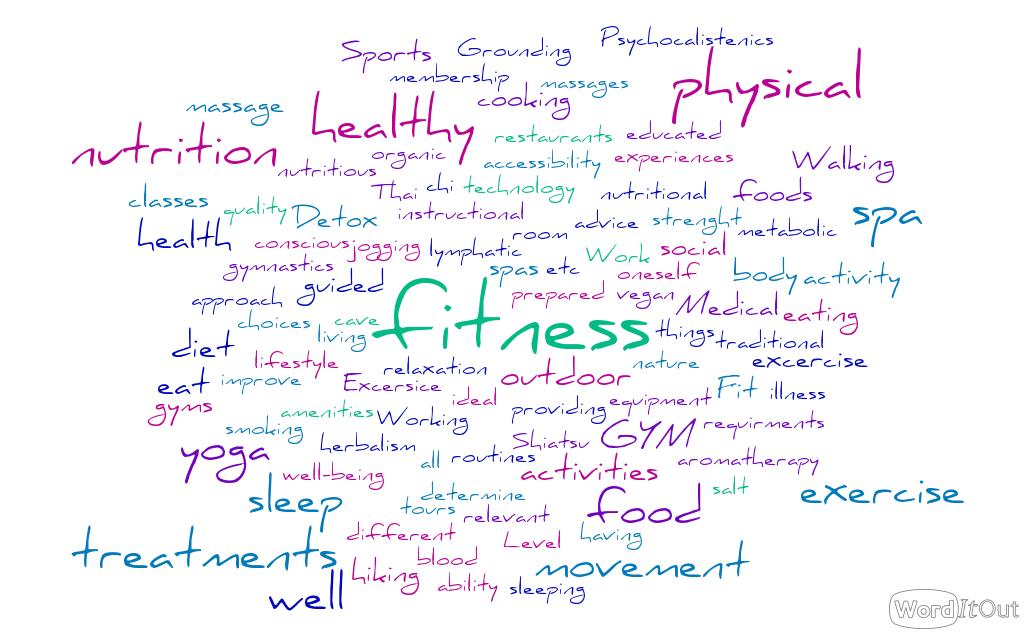
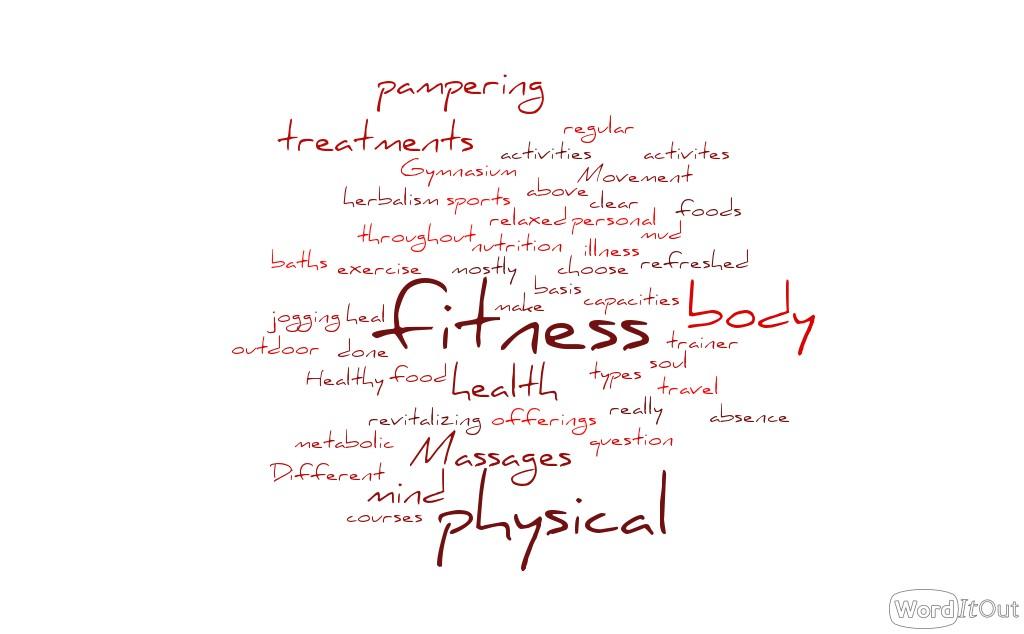
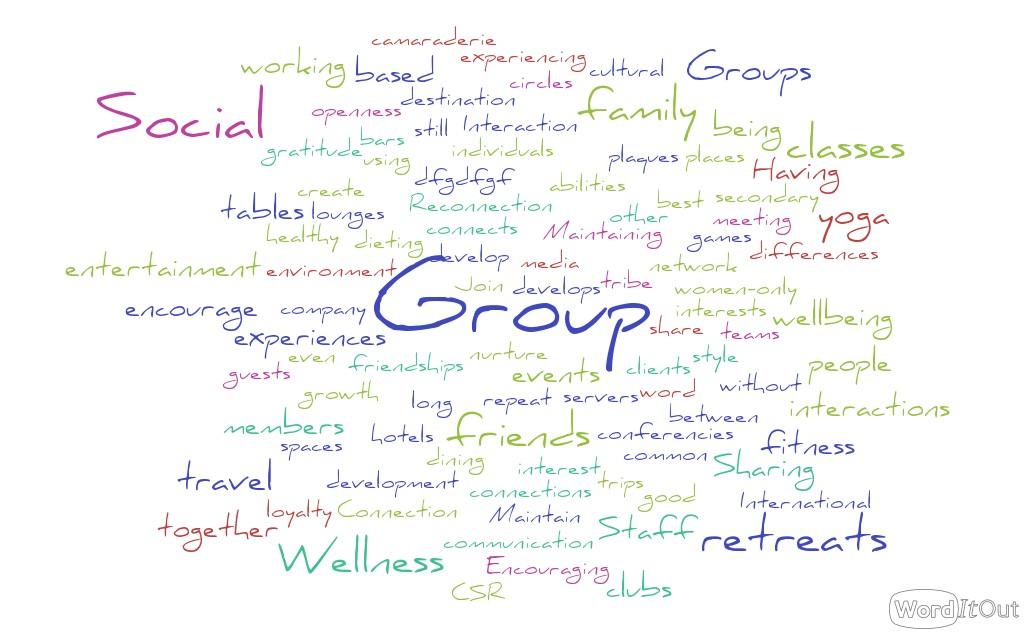
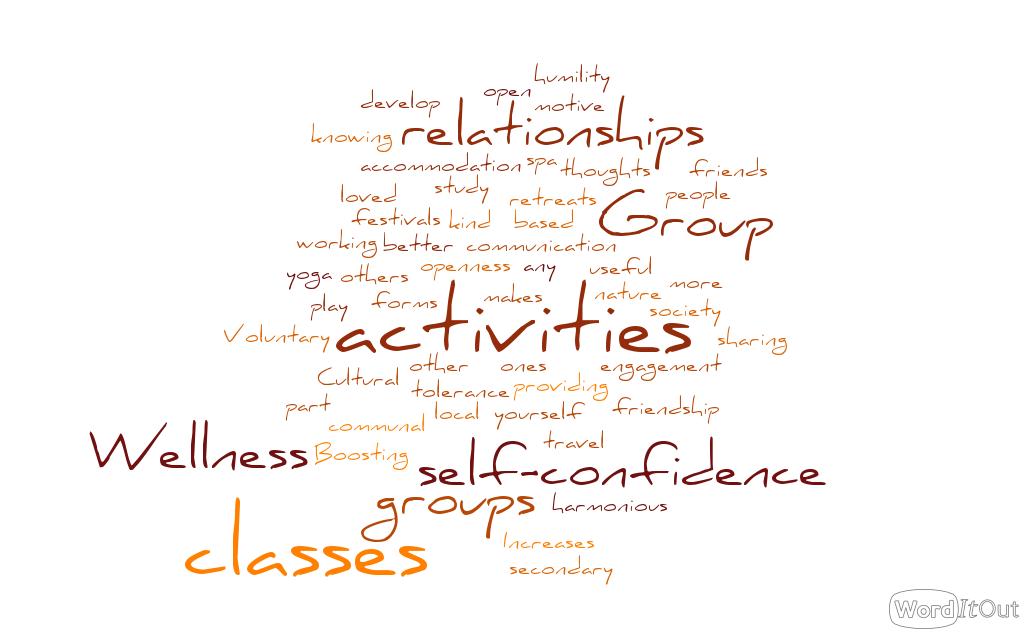
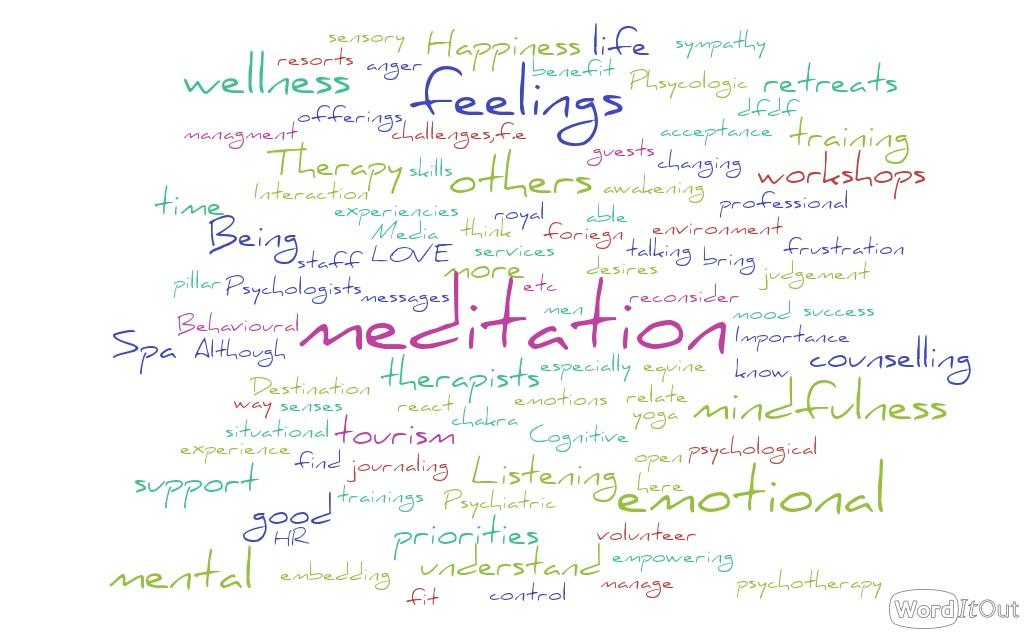
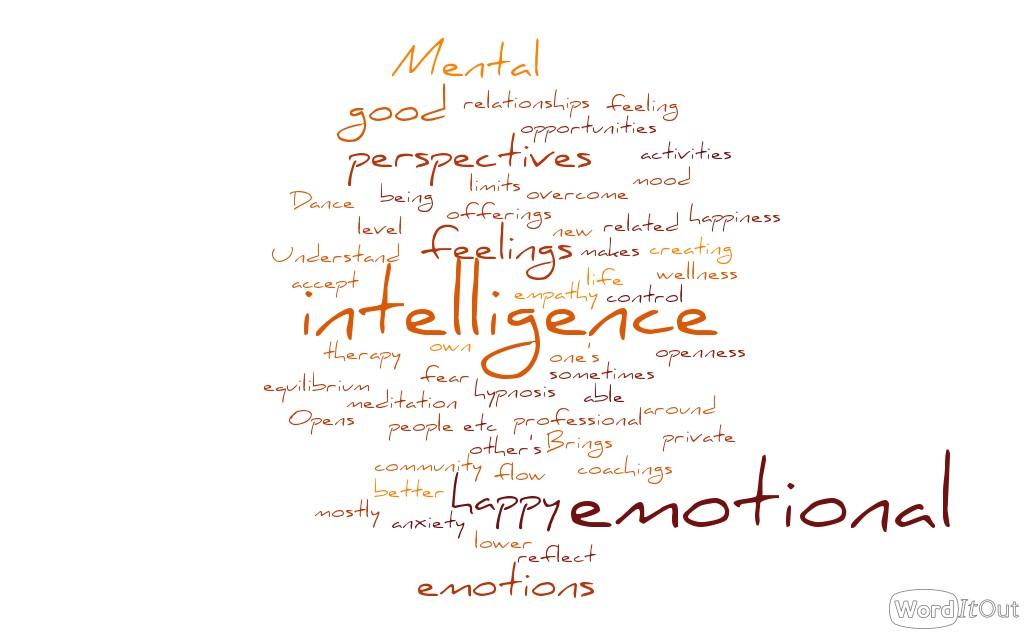
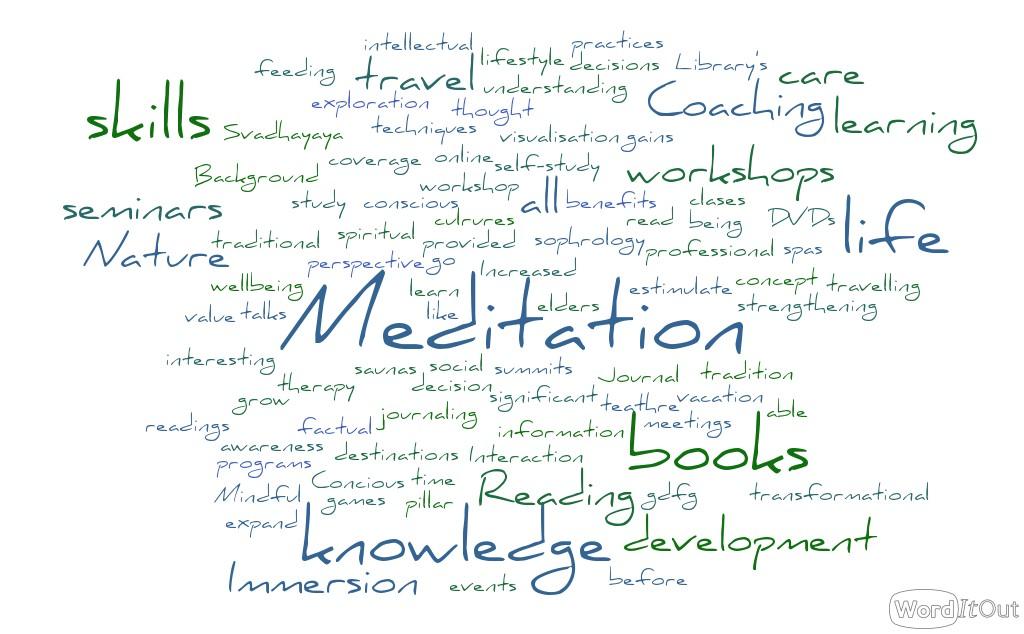
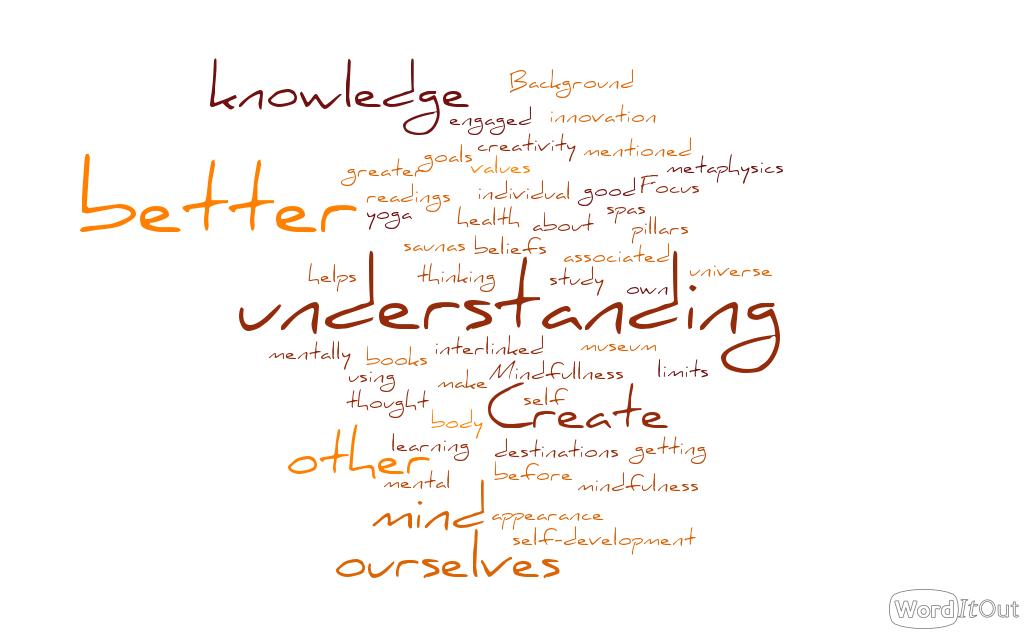
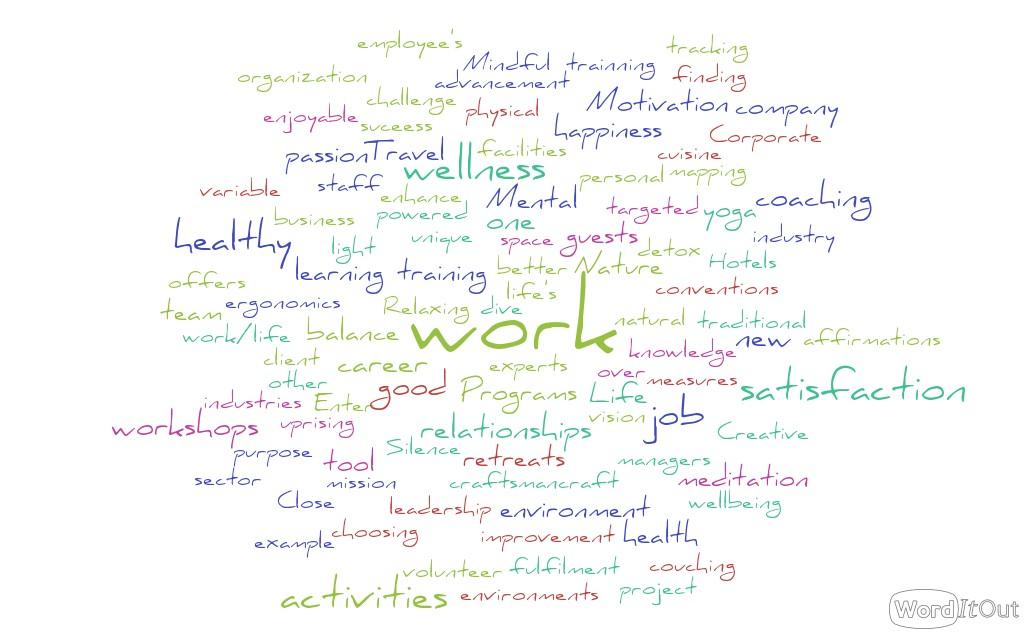
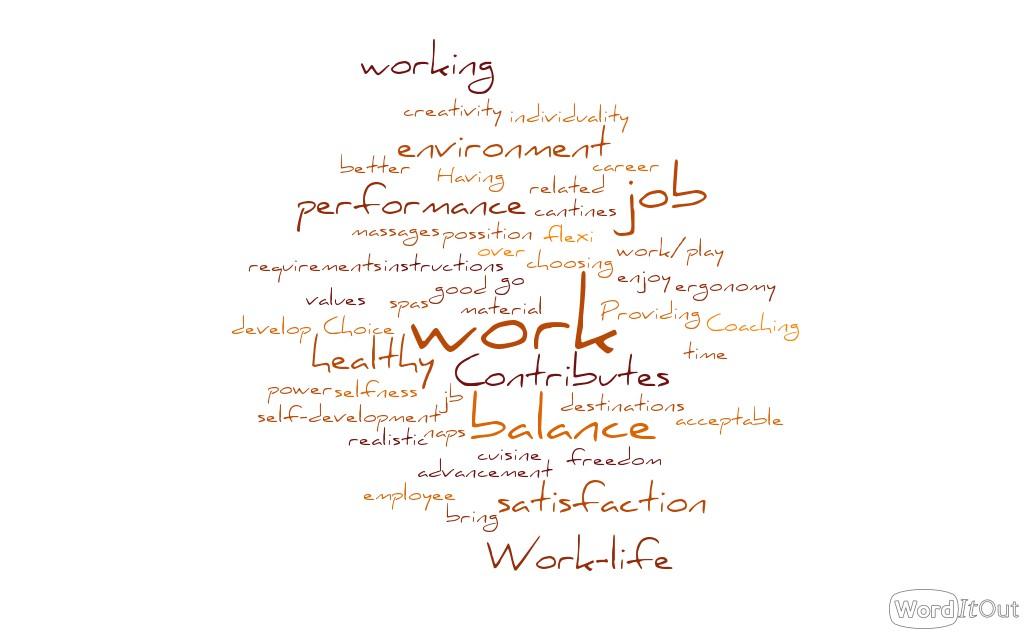
There are several sets of definitions and descriptions available for the domains, which are introduced to customers through wellness services and treatments. We asked respondents to list activities, treatments, services they believe are related to the six pillars. The major difference between the two respondent groups’ answers as we can see it from the relevant wordclouds is that:
• Industry associates the actual activities related to the pillars, i.e. what is offered, whereas
• The academic respondents looked at what the activities, treatments and services can actually do, and why these are beneficial!
Pillars of Wellness: Physical
Industry & Academia
Pillars of Wellness: Social Industry &
Academia
Pillars of Wellness: Emotional
& Academia
Pillars of Wellness: Intellectual
Industry & Academia
Pillars of Wellness: Occupational
Industry & Academia
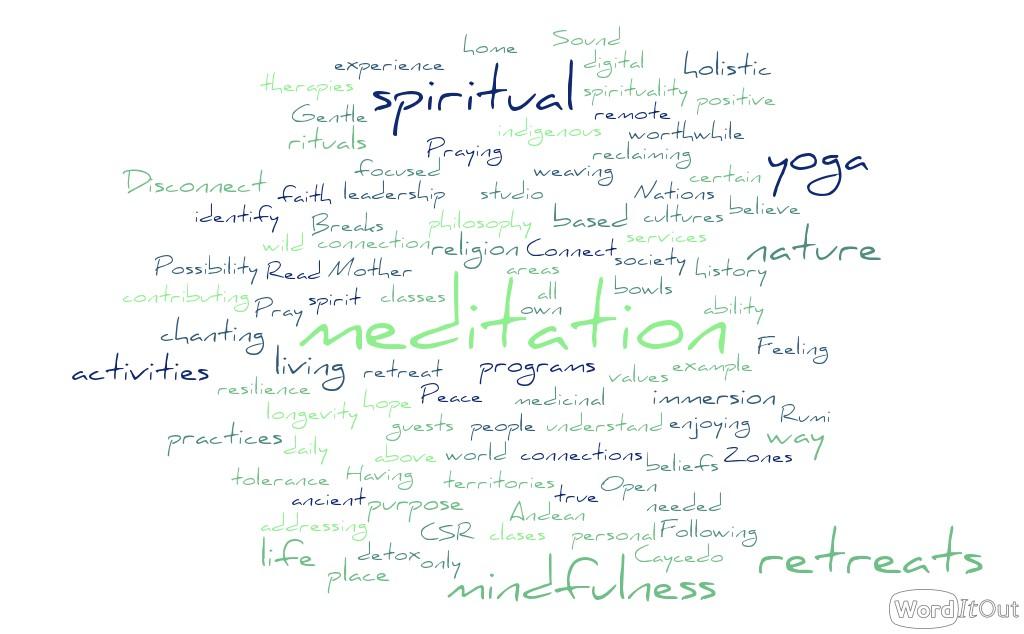
Pillars of Wellness: Spiritual Industry &
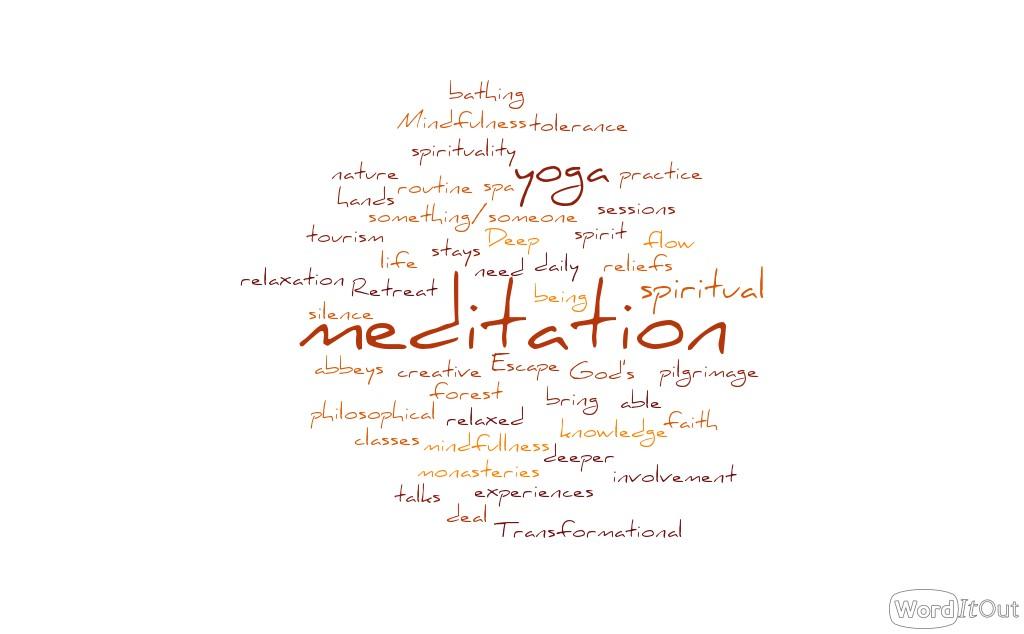
Academia
Attention to Pillars Currently
in General & in Wellness
Emotional
Occupational pillar
Academia
It is no surprise that respondents believe that the most important is the physical pillar both in general and in wellness alike. Both respondent groups agree that currently the emotional and the spiritual pillar follows the physical pillar in terms of importance.
The difference is that wellness services pay more attention to most of the pillars, except to the social domain. This observation may be supported by the operational approach to wellness and especially spa services, i.e. most of those are offered on an individual and not on a group basis.
Attention Should be Given Pillars
Take Home Message:
Attention to Wellness Pillars:
• Industry & Academia: A better balancing of all pillars is needed
It is understood that in an ideal scenario or world, the physical and emotional domain-related services, treatments and programmes should be given almost equal attention, closely followed by spirituality related offers.
It is clear that both industry and academia representatives believe that the services, treatments and programmes should apply a more balanced approach. They should pay almost equal attention to every wellness pillar.
The Triggers of Wellness
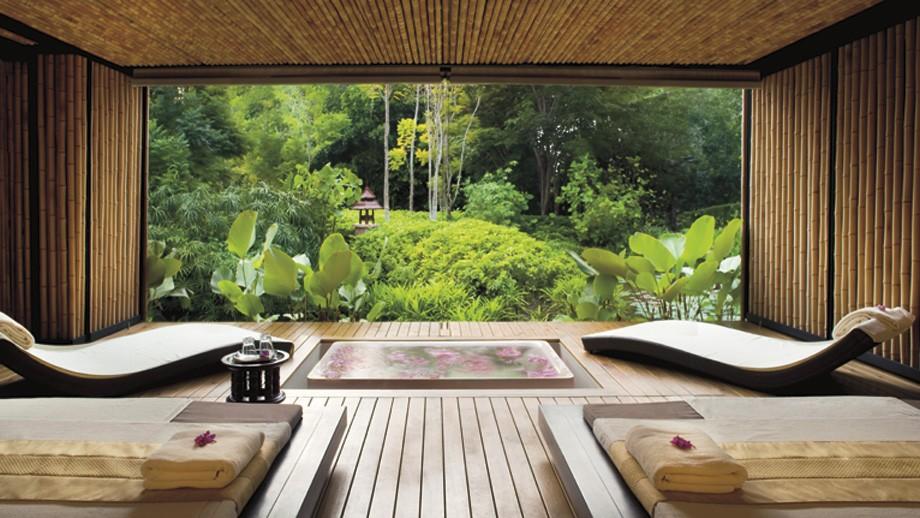
Triggers of the Demand for Wellness
Fitness
Reward self
De-stress
Recharge
Pampering
Indulgence
Rejuvenation
Flourishing
Learning
Transcendence
Prevention
Self-healing
Self-development/improvement
Belonging
Escapism
Relaxation
Take Home Message: Wellness Triggers
The research paid special attention to learning more about the triggers that generate demand for wellness and for wellness travel.
Triggers are the very foundations of any decision, therefore, it is essential for wellness travel providers and organizers to map which triggers can generate wellness travel demand.
Apart from the obvious choices such as destress or relaxation, we can see a long list of triggers that can generate demand for wellness travel.
Merging the two sets of findings could really advance service development and marketing approaches. Solving the complex task of mapping motivations and expectations would benefit from a closer cooperation between industry and academia research initiatives.
Wellness & Travel
Sites, Services & Segments
Respondents were invited to share their experiences about the role of wellness in travel decisions, preferred sites and destinations, as well as services and treatments.
The results suggest that market data and academic research about wellness travel may identify some information gaps in the market.
It seems that Europe still holds onto its leading position in generating as well as hosting wellnessfocused trips. We can also see that many other regions of the world have not yet explored their options and opportunities in wellness tourism.
Operators and developers are highly interested in knowing more about what triggers wellness travel. Our study shows that the market has proliferated, and a whole mix of triggers need to be explored by every stakeholder. This is an especially important task for new developments!

Importance of Wellness in Travel
Industry Observation
Academia Observation
Take Home Message: Wellness in Travel:
Industry & Academia: Europe leads wellness travel
• Domestic Trips
#1 Western Europe
#2 Northern Europe
#3 Central & Eastern Europe
• International Trips
#1 Central & Eastern Europe
#2 South-East Asia
#3 Western Europe
• Domestic Trips
#1 Western Europe
#2 Northern Europe
#3 Central & Eastern Europe
It is understood that wellness-motivated travel may not play a similar role in every country or region. Respondents were asked to indicate the regions where according to their knowledge and experience, wellness travel plays an important role.
• International Trips
#1 Central & Eastern Europe
#2 Western Europe
#3 South-East Asia
This was the only question where both respondent groups have almost identical answers. It appears to be clear that in most European countries, domestic wellness travel is important as well as intra-European travel.
South-East Asia is considered to be a popular region for international wellness travellers. North-America can qualify in the TOP5 regions, as well as Central-America.
Destinations need to do more about introducing their wellness offers, since respondents state that they do not know much about many regions in terms of wellness assets and offers.
Influencing Site/Country Selection
Learning about which factors may play a decisive role in the site selection process can help wellness businesses as well as destinations in fine-tuning product development, communication and sales activities.
It is no surprise that wellness treatments & services play a crucial role in the decision making. We should not forget that as we indicated on page 19, the triggers that initiate a search for and consequently the purchase of wellness trips can be multifold.
Focusing on treatment menus and service lists may not be the most effective way to achieve market advantage, especially when targeting international markets.
Story definition and story telling seem to have growing importance according to industry members.
Industry Observation
• Domestic Trips #1 Treatments & Services #2 Brand & Reputation #3 Story & Location
It is essential to note that businesses and destinations both need to differentiate how they market in the domestic and international markets.
• International Trips #1 Location & Setting
Brand & Reputation
Industry: Treatments, Location, Brand & Story • Academia: Treatments, Location & Brand
Treatments & Services
Location & Setting
Treatments & Services
Brand & Reputation
Popular Services & Treatments
Take Home Message: Popular Services & Treatments Currently:
• Industry: From nature-based services to Sports & Fitness
• Academia: From naturebased services to Therapeutic recreation
There is very little agreement between industry and academia about which services and treatments may enjoy popularity to date. Popularity refers to the intensive or increasing interest and may not be translated to sales volumes directly.
Industry representatives can base their opinion on business data, whereas researchers learn market information typically from consumer surveys. We believe that merging the two response sets tell us the whole story:
• Stage of Life makes a crucial impact on which services and treatments travellers may choose
• Natural-resource-based therapies tend to attract the older cohorts
• Younger segments show interest in rather different services from Sports & Fitness to Therapeutic Recreation, which is closely related to physical activities.
Developers and operators need to take seriously that one size does not fit all, i.e. wellness can stem from a wide variety of services and treatments.
Popularity of Services & Treatments
Post-war cohort (born before 1946)
Baby boomers (born 1946-1964)
Gen X (born 1965-1975)
Gen Y (born 1976-1995)
Gen Z (born 1996-2005)
GenAlpha (born 2006- )
Therapies based on natural resources Therapies based on natural resources Medical wellness
Medical wellness
Spiritual practices (e.g. yoga)
Sports & fitness
Therapies based on natural resources
Therapies based on natural resources
Therapeutic recreation
Sports & fitness
Therapeutic recreation
Sports & fitness
Therapeutic recreation
& Fitness Rehabilitation Massages
Therapies based on natural resources Medical wellness Massages
Nutritional and detox programmes Medical wellness
Spiritual practices (e.g. yoga) Beauty treatments
Spiritual or wellness oriented festivals
Spiritual or wellness oriented festivals
Therapies based on natural resources
Alternative treatments (e.g. colour)
Therapeutic recreation
Traditional healing approaches Rituals & ceremonies
Nutritional and detox programmes Medical wellness
Spiritual practices (e.g. yoga)
Non-invasive plastic surgery
Notes:
• Therapies based on natural resources – include thermal water/hot spring, mud/peloid, thalasso/sea/ocean-based treatments, services
• Rituals & Ceremonies – include saunas/steam sessions
• Traditional healing approaches – include Ayurveda, Traditional Chinese Medicine (TCM)
• Therapeutic Recreation – includes programmes & treatments based on physical activities aiming at the improvement of certain medical indications, e.g. attention deficit disorder, sleeping therapies, etc.
Growth of Wellness Travel
It is widely assumed that wellness travel is growing at an exponential rate. We wanted to look behind this assumption and to learn more about the driving forces and directions this may take.
We can conclude that there is a large number of facility types, as well as treatments and services that can represent growth potential.
Based on the data we can state that one-sizedoes-not-fit-all.
It is very likely that certain wellness facility types represent growth potential only in certain regions and countries. The same is true for treatments and services.
We very much suggest that developers, operators and marketers analyse market data very carefully.
Key Market Segments
Industry Opinion
Take Home Message: Key Market Segments:
Academia Opinion
#1 Couples
#2 Guests looking for healthy options
#3 Groups of Friends
#1 Couples
#2 Guests looking for healthy options
#3 Solo women
Those days have long gone when solo women were the only main market for wellness trips. Wellness experiences are now enjoyed together with partners and friends. It is rather telling that the second most important segment is those who are looking for health options and alternatives. Marketers, operators and developers need to expand their understanding and horizon about what they introduce to guests and how they do it. Almost any kind of traveller can become interested in wellness-improving healthy or healthier alternatives and options. Families as target segments are consistently in the TOP5 key segments in every region.
Having said that, the market differences are the most critical in terms of market segments interested in wellness, especially in North-America, Middle-East and the Far East.
• Industry: At least 1+1 together
• Academia: Couples & solo women
North America
Industry
#1 Solo women
Academia
#1 Guests looking for healthy options
#2 Corporate groups
#3 Couples
Middle-East
Industry
#1 Guests looking for healthy options
#2 Solo women
#3 Same-sex couples
Academia
#1 Guests looking for healthy options #2 Couples
#3 Groups of friends & Solo men
Far East
Industry
#1 Couples
#2 Families with children
#3 Groups of friends
#2 Couples
#3 Solo men
Academia
#1 Guests looking for healthy options
#2 Couples
#3 Groups of friends
Wellness Facilities with Growth Potential
In every study we ask respondents to rate which wellness facility types may represent the highest growth potential. Such information can help developers as well as operators in their future plans. We present the global as well as the regional forecasts.
Industry Opinion
#1 Resort Spas
#2 Lifestyle-oriented resorts/spas
#3 Eco spas/wellness resorts
Industry
#1s
Academia Opinion
#1 Resort Spas
#2 Medical spas/hotels/resorts
#3 Eco spas/wellness resorts
Academia #1s
• Northern Europe: Day spas Day spas & workplace wellness
• Western Europe: Medical spas/resorts Day spas & Medical spas/resorts
• Southern Europe. Thalasso spas/resorts Thalasso spas/resorts
• Central/Eastern Europe:Hot spring/thermal spas/resorts Hot spring/thermal spas/resorts
• North America: Lifestyle-oriented resorts/spas Day spas/Healthy living & coworking complexes
• Central America: Destination spas Destination spas
• South America: Adventure spas/wellness centers Adventure and eco spas/wellness centers
• Middle-East: Resort spas & Medical spas/hotels Thalasso spas/resorts
• South-East Asia: Resort spas Medical clinics
• Far East: Hot spring/thermal spas/resorts Hot spring/thermal spas/resorts
Take Home Message: Wellness Facilities:
• Industry & Academia: Regional differences make all the difference
The role of lifestyle-oriented resorts and spas has been showing constant growth ever since 2012, when we started to do our forecasts. The importance of an eco-orientation in spas and resorts appears to be equally important.
Medical treatments and services are usually indirectly related to wellness, however, the respondents suggest that the merging of wellness and medical treatments seems to be evident.
• Australia/New Zealand: Adventure spas/wellness centers Day spas
• Africa: Adventure and eco spas/wellness centers Adventure and eco spas/wellness centers
The lowest growth potential is associated with cruise ship spas, hotel spas, day spas and thalasso centers.
Wellness Treatments with Growth Potential
In every study we ask respondents to rate which wellness treatments and programmes may represent the highest growth potential.
Industry Opinion
#1 Spiritual practices
#2 Natural resources based therapies
#3 Nutrition & Detox programmes
Academia Opinion
#1 Sport & Fitness
#2 Medical wellness
#3 Nutrition & Detox programmes
Industry #1s Academia #1s
• Northern Europe: Rituals Rituals & Psychological therapies
• Western Europe: Natural resources based therapies Medical wellness & Nutrition/detox programs
• Southern Europe. Spiritual practices Massages & Therapeutic recreation
• Central/Eastern Europe:Natural resources based therapies Medical wellness & Natural resources based therapies
• North America: Psychological therapies Nutrition & detox programmes
• Central America: Massages Spiritual & wellness festivals
• South America: Medical wellness & Psychological therapies Traditional healing approaches
• Middle-East: Rituals & Traditional therapies Yoga & meditation
• South-East Asia: Natural medicine & Spiritual services Fusion treatments
• Far East: New Age programmes Beauty treatments
Take Home Message:
Wellness Facilities – Growth Potential:
• Industry: Spirituality, natural and detox therapies
• Academia: Active & detox programmes and medical wellness
The region-based analysis confirms that we have to be careful when a certain treatment, service or programme is labelled as a ‚global trend’. Overall averages often hide the regional differences which are essentially important both for domestic as well as international wellness travel management and development.
Industry representatives forecast that spiritual, nature-based and detox programmes represent high growth potential. Academic researchers note the opportunities sports, fitness, as well as medical wellness and detox progammes represent.
• Australia/New Zealand: Sport & Fitness Sport & Fitness
• Africa: Alternative therapies Traditional healing approaches
The lowest growth potential is associated with cruises, Alternative therapies, Fusion treatments and New Age.
Wellness, Spa & Travel Markets post-COVID19
Post-COVID19 Growth
It is very much expected that wellness travel as well as wellness service sales will grow rapidly postCOVID19. It is interesting to see that there is a slight difference in how the two respondent groups look at the future. Industry representatives expect the number of wellness travellers to grow more. Academia respondents assume that the overall wellness sales will grow faster, even in the case of those who would not qualify as wellness travellers.
Still, the averages may hide some rather contradictory forecasts from +100% down to -50%. It is very much suggested that development is not translated as growth everywhere!
Number of non-wellness travelers who purchase some sort of wellness service/treatment?
Average revenue per wellness guest?
Take Home Message:
Growth: • Industry: Significant growth in wellness travel • Academia: Significant growth in wellness spending
Average length of stay of of those who travel for wellness?
Number of travelers who travel for the first time for wellness?
Number of travelers who travel for wellness?
Academia
Post-COVID19 Leisure Travel vs. Wellness
One of the crucial impacts of the pandemic is that personal wellness (and health) has become a rather important topic and objective. The respondents agreed that people will look for wellnessrelated information, topics as well as products and services. The agreement with the below statements were overwhelmingly positive. How to apply such information to planning, operation and marketing? Every location, destination and business needs to identify the most fitting solutions!
They will look for GAINING BETTER UNDERSTANDING of what wellness-focused vacation/holiday can be/mean
Take Home Message: Leisure Travel & Wellness
They will THINK ABOUT taking a wellness-focused vacation/holiday within the next two years
They will plan to TAKE a wellness-focused vacation/holiday within the next two years
They will LOOK FOR wellness-improving services/options during their vacations/holidays
Wellness WILL be the focus of their next trip
Wellness COULD be the focus of their next trip
Post-COVID19 Leisure Travel will Mostly…
Since our study was completed during the COVID19 pandemic, experts could share their forecast about how they can imagine leisure travel post-pandemic.
The most positive association was regarding the growing proactivity in self-care. Both respondent groups agreed that it is not likely that travel will remain how it used to be pre-pandemic.
Travel will be curtailed due to the fear of risking financial security
Travel will be curtailed due to the fear of risking physical and mental health
Be driven by the desire to visit dream places/location one always wanted to but so far has not visited
Be driven by the desire for proactive self-care
Be driven by the desire to spend quality time with family and friends but at a different location
Be driven by the desire to explore the world NOW while it is still possible to do so.
Be driven by the desire to get away from the stresses of COVID19 defined everyday life
Stay the same in general
Post-COVID19 Leisure Travel
Bookings will …
It is quite clear from the data that our respondents believe the pandemic will have significant impact on bookings in many ways. Marketers and operators will find it difficult to plan bookings as well as cash-flow. It is also anticipated travel decisions will be made much closer to the actual date of travel.. The other impact of the pandemic manifests in the shorter distances people will travel for wellnessfocused trips.
They will make the decision far in advance of the actual date of travel
They will somewhat increase the time between the decision to book travel and the actual travel date
The time between decision to book and actual travel date will not change
They will somewhat decrease the time between the decision to travel and the actual date of travel
They will make the decision much closer to the actual date of travel
Take Home Message:
Post-COVID19 Leisure Travel will Book via…
Wellness travel has been considered as a niche product. Now, with the growing public interest in wellness, we can see that opposite ends of the spectrum can be equally successful. Travellers will look for suitable wellness programmes and destinations on their own, but parallel to that, there is a growing demand for wellness-specialised agents, too. At the same time, established wellness-focused brands may face challenge from the less mainstream properties with very focused programming.
Travellers will not change their current booking channels/approach
Instead of agents/advisors travellers will look more for the information provided by the wellness service providers directly
Travellers will look more for wellness travel specialist agents/advisors for their bookings
Travellers will not change their preference for accommodations/package
Travellers will look more to book with more well-known and established hospitality brands /packages
Travellers will look more for remote/secluded accommodations/packages
Take Home Message: Wellness Facilities:
• Industry & Academia: Specialist knowledge, information and programming means market advantage
Post-COVID19 Wellnessification

Take Home Message:
Wellness Facilities:
• Industry & Academia: Wellnessification of services is as important as wellnessfocused travel
It is understood that wellness remains to be an important motivation for travel. At the same time we also looked at how wellness can infuse any service. We asked respondents about the importance of wellness:
• To travellers for ANY reason, and
• To those traveling with wellness as the PRIME focus of the trip.
Respondents believe that the general “wellnesssification” of services will become as important as wellness travel itself.
Traveling for ANY reason
Traveling with wellness as the PRIME focus of the trip.
Remember:
There is so much more to wellness than just visiting spas!
About HTWW
Health Tourism Worldwide is a pioneering initiative which looks at leisure, lifestyle and travel from a wellbeing perspective. HTWW founders have been working with public sector representatives in supporting their planning and strategic work as well as facilitating private sector development in four continents. HTWW proudly incorporates academic rigour in every advisory, strategy making, research or feasibility assessing work. HTWW industry intelligence, disruptive and inspiring work has been used widely.
HTWW had run its visionary 4WResearch: Well What for Whom and Where from in 2012. We are proud to recognise that most of our projections were proved to be realistic and many got realised.
In this wellness tourism research project we understood that wellness tourism represents forms of tourism which aim to improve and balance all of the main domains of human life including physical, mental, emotional, occupational, intellectual and spiritual. As the research partner Wellness Tourism Association highlighted wellness tourism is a specific division of the global tourism industry that is defined by the common goal of marketing natural assets and activities primarily focused on serving the wellnessminded consumer and those who want to be.
https://htww.life
About WTA
Launched in 2018 as a U.S. based not-for-profit, privately-held, global organization, the WTA was established and designed to support and serve the growing wellness tourism industry.
The mission is clear and concise: To support and further the growth and development of the wellness tourism industry through networking, education research and communication.
The objectives are to bring clarification to the industry thru definitions and standards and as well as educate consumers and travel agents to recognize legitimate and credible wellness suppliers and operators.
Membership is open to qualifying destination marketing organizations, hotels and resorts, destination spas, tour operators, travel advisors, wellness educators and others with an interest in supporting the industry and helping shape its future and sustainability.
In celebration of its third year of operation, the WTA has partnered with The Travel Institute on a Wellness Travel Travel Specialist Course.
https://www.wellnesstourismassociation.org/