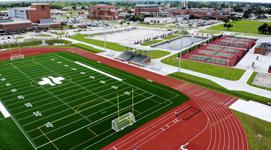
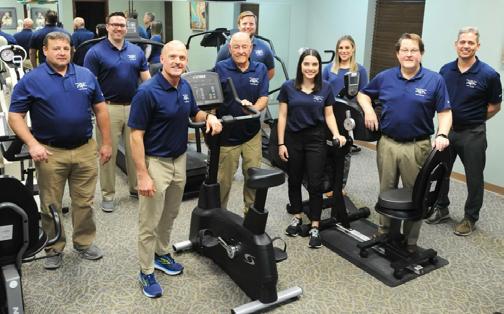
Sports Complex – Built to NCAA standards; includes a multi-purpose field with 8-lane track, tennis courts, beach volleyball and outdoor basketball court.
Fitness Center – State-of-the-art facility equipped with the latest technology and programs, aquatics, gymnasium and more; Certified and a top-ranked facility in the nation by the Medical Fitness Association; More than 1M visits since opening.
Playground & Education Initiative – Addressing childhood obesity through nutrition education and new playground equipment for numerous area elementary schools.
Sports – Keeping athletes safe by providing athletic trainers in high schools as well as Nicholls State University; Helping athletes grow and excel in sports through formation of competitive youth volleyball and swim teams.
Wellness Education – Numerous and expanding programs for individuals and families on subjects like nutrition, weight management, diabetes, CPR and more.
WellFit – Integrating wellness into clinical care to address specific health conditions like cancer, orthopaedic conditions, chronic pain and diabetes. You Deserve the Best in Health & Wellness Services, So We Built the Wellness Center
BISHOP
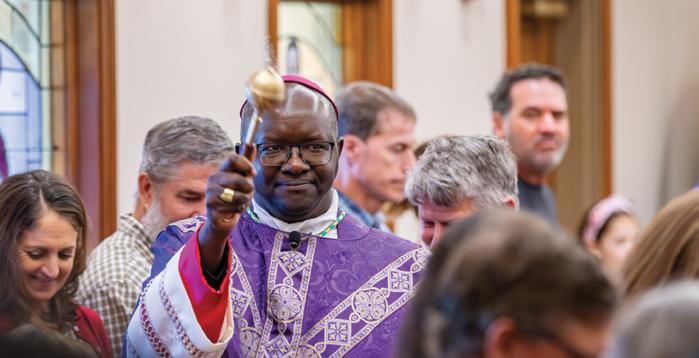
Most Rev. Simon Peter Engurait
DIRECTOR OF COMMUNICATIONS AND
Bevi Fontenot
EDITOR
Joe O’Sullivan
DESIGNER
Alaina Maiorana
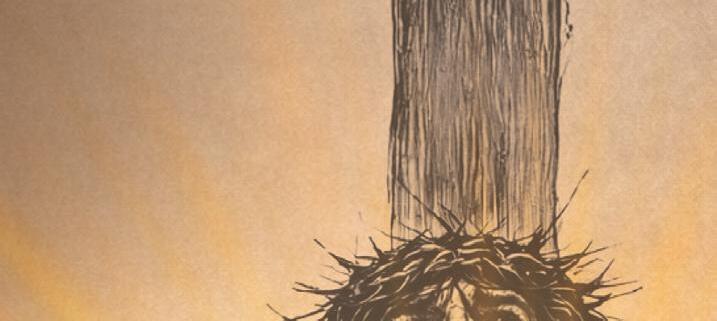
COVER
Connor Mabile
BUSINESS MANAGER
Bill Barbera
ACCOUNTING
Rebecca Thibodeaux
CONTRIBUTING
Fr. Rusty Bruce
Fr. Alex Gaudet
Jennifer Ely, OV, MTS
Fr. André Melancon
Amber Moseley
René Danos David
PHOTOGRAPHER
Serdave Duncan
bayoucatholic.org
BEYOND THE CHECKLIST BEYOND THE CHECKLIST
BISHOP SIMON PETER’S LENTEN MESSAGE
My dear brothers and sisters in Christ, Peace be with you!
Each year the Lord, in His mercy, gives us this holy season of Lent as a season of great grace and renewal. The Church calls us again to prayer, fasting, and almsgiving, not because God needs our sacrifices, but because we need to be healed and transformed by Him. Lent is God’s invitation to come home and return to Him with our whole hearts, as we hear each year at Mass on Ash Wednesday. And that is the key to avoiding the trap I am sure many of us know well: turning our Lenten practices into a checklist.
We “check the box” when Lent becomes mostly about what we give up, what we add on, or how well we are doing. But the Lord says through the prophet Joel: “Rend your hearts, not your garments” (Joel 2:13). God is not interested in the appearance of repentance; He desires the reality of it. Jesus explicitly tells his listeners in the Gospel for Ash Wednesday that they should not appear gloomy or perform these acts of prayer or almsgiving in order to be seen (cf. Matthew 6:1-6, 16-18). He wants not merely a disciplined exterior, but a surrendered heart.
So how do we make sure our Lenten practices lead to true conversion and surrender of heart?
First, we must remember what true conversion is. Conversion is not self-improvement; it is relationship. That means the purpose of every Lenten discipline is to remove what hardens the heart, numbs the soul, and pulls us away from our relationship with God so that we can better hear Him and trust Him.
Prayer is the first pillar because it re-centers our life on God. But prayer can also become “box-checking” when it is rushed, distracted, or treated like an obligation to be completed. The question we ask ourselves ought not only be, “Did I pray today?” but “Did I encounter the Lord today?” Real prayer makes space for God and trains us to listen. It also teaches us to have the courage to be honest with Him about our fears, our sins, our gratitude, our wounds, our hopes. Rather than hiding behind pious words, we come to Him with all that we have on our hearts, both good and bad. Even ten minutes of sincere prayer can convert the heart more than an hour of prayer done as a duty with the heart elsewhere.
This Lent, I encourage you to choose prayer that is simple and steady: daily Scripture, a decade of the Rosary, quiet time before the crucifix, Eucharistic adoration, or a sincere morning offering. Bring your
real life to the Lord, without filtering or holding anything back. When prayer becomes relationship, it transforms us. The heart gradually learns to turn toward God, rather than away from Him.
Fasting, the second pillar, is not a spiritual diet plan or a punishment, but rather reveals what is inside us. When we deny ourselves something legitimate—food, entertainment, comfort—we discover how quickly we grasp for substitutes. We notice our irritability, our anxieties, our cravings, our need for control. It shows us where we are not truly free.
Fasting also makes room for more. It creates an interior emptiness meant to be filled by God. “Man does not live on bread alone” (cf. Mt 4:4). When we experience hunger, whether of the body or the heart, we are invited to bring that hunger to Christ. Fasting teaches us to say, “Jesus, I want You more than I want this.” Over time, it trains the soul in freedom and trust. It strengthens the will, yes, but even more, it softens the heart.
Almsgiving is the third pillar, and it protects Lent from becoming self-centered. If prayer turns us toward God and fasting loosens our grip on ourselves, almsgiving turns us outward in love. It is more than writing a check, as important as sacrificial giving is. Almsgiving is the intentional practice of mercy. It asks: Who is near me and in need? Whose burdens can I help carry? Where have I been indifferent?
Almsgiving converts us because it allows us to imitate the heart of Christ. It breaks down the walls of apathy and keeps our penances grounded in love, because love is always concrete. Lent is not only about “me and my spiritual growth.” It is about becoming like Jesus—who pours Himself out.
As we continue in this season of liturgical renewal as a diocese, these practices should also draw us deeper into the mystery of the liturgy. The liturgy is not something we “fit in” after our personal devotions and practices. Rather, it is the source and summit of the Church’s life. In the liturgy, and particularly in the celebration of the Mass, we see Jesus Himself showing us the perfection of prayer, fasting, and almsgiving. There we learn what true love looks like: self-gift. And there we receive the grace to live what we cannot live by our own strength.
Our liturgical renewal, then, is not about aesthetics or preferences. It is about recovering the truth that worship forms us. What we celebrate shapes what we believe, and what we believe shapes how we live. Lent is the time to let the Church’s prayer teach us to pray; to let the Church’s fasting and disciplines teach us freedom; to let the Church’s charity teach us mercy; and to let the Church’s liturgy teach us adoration, reverence, and gratitude.
This Lent, I ask you to approach the liturgy with renewed intention. Arrive a bit early. Prepare your heart. Listen deeply to the readings. Enter the silence. Sing with the voice that God gave you. Make a sincere act of repentance. Offer your week—your struggles and joys—on the altar with the bread and wine. And above all, receive Jesus in Holy Communion with faith and gratitude. The most powerful Lenten resolution is not simply “I will do more,” but “I will let Christ change me.”
May our faithful God transform us all as we enter into this holy season.
“GOD IS NOT INTERESTED IN THE APPEARANCE OF REPENTANCE; HE DESIRES THE REALITY OF IT.
”
Más allá de la lista de control
Mensaje de Cuaresma del obispo Simon Peter Engurait
Queridos hermanos y hermanas en Cristo: ¡La paz sea con vosotros!
Cada año, el Señor, en su misericordia, nos concede este tiempo santo de Cuaresma como un tiempo de gran gracia y renovación. La Iglesia nos llama de nuevo a la oración, al ayuno y a la limosna, no porque Dios necesite nuestros sacrificios, sino porque nosotros necesitamos ser sanados y transformados por Él. La Cuaresma es la invitación de Dios a volver a casa y regresar a Él con todo nuestro corazón, como escuchamos cada año en la misa del Miércoles de Ceniza. Y esa es la clave para evitar la trampa que, estoy seguro, muchos de nosotros conocemos bien: convertir nuestras prácticas cuaresmales en una lista de tareas pendientes.
Marcamos la casilla cuando la Cuaresma se convierte principalmente en lo que renunciamos, lo que añadimos o lo bien que lo estamos haciendo. Pero el Señor dice a través del profeta Joel: «Rasgad vuestros corazones, no vuestras vestiduras» (Joel 2, 13). A Dios no le interesa la apariencia del arrepentimiento; Él desea la realidad del mismo. Jesús dice explícitamente a sus oyentes en el Evangelio del Miércoles de Ceniza que no deben mostrarse tristes ni realizar estos actos de oración o limosna para ser vistos (cf. Mateo 6, 1-6. 16-18). Él no quiere solo una apariencia disciplinada, sino un corazón entregado.
Entonces, ¿cómo nos aseguramos de que nuestras prácticas cuaresmales conduzcan a una verdadera conversión y entrega del corazón?
En primer lugar, debemos recordar qué es la verdadera conversión. La conversión no es una mejora personal, sino una relación. Eso significa que el propósito de toda disciplina cuaresmal es eliminar lo que endurece el corazón, adormece el alma y nos aleja de nuestra relación con Dios, para que podamos escucharlo mejor y confiar en Él.
La oración es el primer pilar porque vuelve a centrar nuestra vida en Dios. Pero la oración también puede convertirse en una «tarea más» cuando se hace con prisas, distraídos o como una obligación que hay que cumplir. La pregunta que debemos hacernos no es solo «¿he rezado hoy?», sino «¿me he encontrado con el Señor hoy?». La verdadera oración hace espacio para Dios y nos enseña a escuchar. También nos enseña a tener el valor de ser sinceros con Él acerca de nuestros miedos, nuestros pecados, nuestra gratitud, nuestras heridas y nuestras esperanzas. En lugar de escondernos detrás de palabras piadosas, acudimos a Él con todo lo que hay en nuestro corazón, tanto lo bueno como lo malo. Incluso diez minutos de oración sincera pueden convertir el corazón más que una hora de oración realizada como un deber con la mente en otra parte.
En esta Cuaresma, os animo a elegir una oración sencilla y constante: la lectura diaria de las Escrituras, una decena del rosario, un momento de silencio ante el crucifijo, la adoración eucarística o una sincera ofrenda matutina. Llevad vuestra vida real al Señor, sin filtrar ni ocultar nada. Cuando la oración se convierte en relación, nos transforma. El corazón aprende poco a poco a volverse hacia Dios, en lugar de alejarse de Él.
El ayuno, el segundo pilar, no es un plan de dieta espiritual ni un castigo, sino que revela lo que hay dentro de nosotros. Cuando nos negamos algo legítimo —comida, entretenimiento, comodidad— descubrimos lo rápido que buscamos sustitutos. Notamos nuestra irritabilidad, nuestras ansiedades, nuestros antojos, nuestra necesidad de control. Nos muestra dónde no somos verdaderamente libres.
El ayuno también deja espacio para más. Crea un vacío interior destinado a ser llenado por Dios. «No solo de pan vive el hombre» (cf. Mt 4, 4). Cuando experimentamos hambre, ya sea del cuerpo o del corazón, se nos invita a llevar esa hambre a Cristo. El ayuno nos enseña a decir: «Jesús, te quiero más a ti que a esto». Con el tiempo,
entrena al alma en la libertad y la confianza. Fortalece la voluntad, sí, pero aún más, ablanda el corazón.
La limosna es el tercer pilar, y protege a la Cuaresma de convertirse en algo egocéntrico. Si la oración nos vuelve hacia Dios y el ayuno afloja nuestro control sobre nosotros mismos, la limosna nos vuelve hacia los demás con amor. Es más que escribir un cheque, por importante que sea la ofrenda sacrificial. La limosna es la práctica intencionada de la misericordia. Nos pregunta: ¿Quién está cerca de mí y necesita ayuda? ¿A quién puedo ayudar a llevar su carga? ¿En qué he sido indiferente?
La limosna nos convierte porque nos permite imitar el corazón de Cristo. Derriba los muros de la apatía y mantiene nuestras penitencias basadas en el amor, porque el amor siempre es concreto. La Cuaresma no se trata solo de «yo y mi crecimiento espiritual». Se trata de llegar a ser como Jesús, que se entrega por completo. A medida que continuamos en esta temporada de renovación litúrgica como diócesis, estas prácticas también deberían llevarnos a profundizar en el misterio de la liturgia. La liturgia no es algo que «encajamos» después de nuestras devociones y prácticas personales. Más bien, es la fuente y la cumbre de la vida de la Iglesia. En la liturgia, y particularmente en la celebración de la misa, vemos al mismo Jesús mostrándonos la perfección de la oración, el ayuno y la limosna. Allí aprendemos cómo es el verdadero amor: la entrega de uno mismo.
Y allí recibimos la gracia para vivir lo que no podemos vivir con nuestras propias fuerzas.
Nuestra renovación litúrgica, por lo tanto, no tiene que ver con la estética o las preferencias. Se trata de recuperar la verdad de que el culto nos forma. Lo que celebramos da forma a lo que creemos, y lo que creemos da forma a cómo vivimos. La Cuaresma es el momento de dejar que la oración de la Iglesia nos enseñe a orar; de dejar que el ayuno y las disciplinas de la Iglesia nos enseñen la libertad; de dejar que la caridad de la Iglesia nos enseñe la misericordia; y de dejar que la liturgia de la Iglesia nos enseñe la adoración, la reverencia y la gratitud.
Esta Cuaresma, les pido que se acerquen a la liturgia con una intención renovada. Lleguen un poco antes. Preparen su corazón. Escuchen atentamente las lecturas. Entren en el silencio. Canten con la voz que Dios les ha dado. Hagan un acto sincero de arrepentimiento. Ofrezcan su semana —sus luchas y alegrías— en el altar con el pan y el vino. Y, sobre todo, reciban a Jesús en la Sagrada Comunión con fe y gratitud. La resolución cuaresmal más poderosa no es simplemente «haré más», sino «dejaré que Cristo me cambie».
Que nuestro Dios fiel nos transforme a todos al entrar en este tiempo santo.
Trên cả danh sách Kiểm tra
Thông điệp Mùa Chay của Đức cha Simon Peter Engurait
Anh chị em thân mến trong Đức Kitô,
Bình an của Chúa ở cùng anh chị em!
Mỗi năm, trong lòng thương xót của Ngài, Chúa ban cho chúng ta mùa Chay thánh như một mùa của sự đổi mới và ân sủng tuyệt vời. Giáo hội kêu gọi chúng ta một lần nữa cầu nguyện, ăn chay và bố thí, không phải vì Thiên
Chúa cần sự hy sinh của chúng ta, mà vì chúng ta cần
được Ngài chữa lành và biến đổi. Mùa Chay là lời mời gọi của Chúa để trở về nhà và trở lại với Ngài với tất cả con tim của chúng ta, như chúng ta nghe thấy hằng năm vào Thứ Tư Lễ Tro. Và đó là chìa khóa để tránh cái bẫy mà tôi chắc rằng nhiều người trong chúng ta biết rõ: biến các thực hành Mùa Chay của chúng ta thành một danh sách kiểm tra.
Khi Mùa Chay trở thành trọng tâm, chúng ta “đánh dấu vào ô” những gì chúng ta từ bỏ, những gì chúng ta thêm vào hoặc chúng ta đang làm tốt như thế nào. Nhưng Chúa nói qua tiên tri Giô-ên: “Hãy xé tâm hồn chứ đừng xé áo các ngươi” (Gn 2:13). Chúa không quan tâm đến bề ngoài của sự ăn năn; Ngài mong muốn thực tại của nó.
Chúa Giêsu nói rõ ràng với những người nghe trong Tin Mừng Thứ Tư Lễ Tro rằng họ không nên tỏ ra ảm đạm hoặc thực hiện những hành động cầu nguyện hoặc bố thí này, phô trương công đức để thiên hạ trông thấy (x. Mt 6:1-6, 16-18). Chúa không chỉ muốn một vẻ bên ngoài có kỷ luật, mà còn là một tâm hồn khiêm hạ.
Vậy làm thế nào để chúng ta bảo đảm rằng các thực hành
Mùa Chay của chúng ta dẫn đến sự hoán cải thực sự và tâm hồn khiêm hạ?
Trước tiên, chúng ta phải nhớ sự hoán cải thực sự là gì. Hoán cải không phải là cải thiện bản thân; đó là mối quan hệ. Điều đó có nghĩa là mục đích của mọi kỷ luật
Mùa Chay là loại bỏ những gì làm cứng lòng, tê liệt tâm hồn và kéo chúng ta ra khỏi mối quan hệ với Chúa để chúng ta có thể lắng nghe và tin cậy Ngài tốt hơn.
Cầu nguyện là cột trụ đầu tiên vì nó tập trung lại cuộc
sống của chúng ta vào Chúa. Nhưng lời cầu nguyện cũng có thể trở thành “hộp kiểm tra” khi lời cầu nguyện trở nên vội vã, bị phân tâm hoặc được coi như một bổn phận phải hoàn tất. Câu hỏi mà chúng ta tự hỏi bản thân không chỉ nên là, “Hôm nay tôi đã cầu nguyện chưa?” Nhưng “Hôm nay tôi đã gặp Chúa chưa?” Cầu nguyện thực sự tạo không gian cho Chúa hiện diện và rèn luyện chúng ta lắng nghe. Cầu nguyện cũng dạy chúng ta có can đảm để thành thật với Chúa về nỗi sợ hãi, tội lỗi, lòng biết ơn, vết thương, hy vọng của chúng ta. Thay vì bỏ đằng sau những lời nói ngoan đạo, chúng ta đến với Chúa với tất cả những gì chúng ta có trong tâm hồn, cả tốt lẫn xấu. Ngay cả mười phút cầu nguyện chân thành cũng có thể biến đổi tâm hồn nhiều hơn một giờ cầu nguyện, thực hiện như một bổn phận mà tâm hồn thì ở nơi khác.
Mùa Chay này, tôi mời gọi anh chị em chọn những lời cầu nguyện đơn giản và chân thành: đọc Kinh thánh hàng ngày, một chục Kinh Mân Côi, thời gian yên tĩnh trước tượng chịu nạn, chầu Thánh Thể hoặc một buổi sáng dâng mình chân thành. Mang cuộc sống thực sự của anh chị em đến với Chúa, mà không gạn lọc hoặc giữ lại bất cứ điều gì. Khi cầu nguyện trở thành mối quan hệ, nó sẽ biến đổi chúng ta. Tâm hồn dần dần học cách hướng về Chúa, thay vì rời xa Ngài.
Ăn chay, cột trụ thứ hai, không phải là một kế hoạch ăn kiêng thiêng liêng hay một hình phạt, mà là tiết lộ những gì bên trong chúng ta. Khi chúng ta từ chối bản thân một thứ gì đó đúng nghĩa - thực phẩm, giải trí, thoải máichúng ta phát hiện ra chúng ta nhanh chóng nắm bắt các sản phẩm thay thế. Chúng ta nhận thấy sự cáu kỉnh, lo lắng, thèm khát, nhu cầu kiểm soát của chúng ta. Nó cho chúng ta thấy nơi chúng ta không thực sự tự do.
Ăn chay cũng tạo chỗ cho sức sống thiêng liêng nhiều hơn. Nó tạo ra một sự trống rỗng bên trong có nghĩa là
được lấp đầy bởi Chúa. “Con người không sống chỉ bằng cơm bánh” (x. Mt 4:4). Khi chúng ta trải qua cơn đói, dù là về thể xác hay tâm hồn, chúng ta được mời gọi mang cơn
đói đó đến với Đức Kitô. Ăn chay dạy chúng ta nói, “Lạy Chúa Giêsu, con muốn Chúa nhiều hơn con muốn điều
này.” Theo thời gian, ăn chay rèn luyện tâm hồn về sự tự do và tin tưởng. Ăn chay củng cố ý chí, vâng, nhưng thậm chí còn hơn thế, nó làm dịu tâm hồn.
Việc bố thí là cột trụ thứ ba, và nó bảo vệ Mùa Chay khỏi trở nên tự cho mình là trung tâm. Nếu lời cầu nguyện hướng chúng ta về Chúa và việc nhịn ăn nới lỏng sự kìm kẹp của chúng ta đối với chính chúng ta, thì việc bố thí sẽ biến chúng ta ra bên ngoài trong tình yêu. Bố thí còn hơn cả việc viết một tấm ngân phiếu, quan trọng như việc hiến tế. Việc bố thí là việc thực hành lòng thương xót có chủ tâm. Sự bố thí hỏi: Ai đang ở gần tôi và đang cần gì? Tôi có thể giúp vác gánh nặng của ai đó? Sự thờ ơ của tôi ở đâu?
Việc bố thí biến đổi chúng ta vì nó cho phép chúng ta bắt chước trái tim của Đức Kitô. Bố thí phá vỡ những bức tường thờ ơ và giữ cho sự sám hối của chúng ta dựa trên tình yêu, bởi vì tình yêu luôn cụ thể. Mùa Chay không chỉ là về “tôi và sự phát triển tâm linh của tôi.” Đó là về việc trở nên giống như Chúa Giêsu - người tuôn đổ chính mình ra cho muôn dân.
Khi chúng ta tiếp tục trong mùa canh tân phụng vụ này với tư cách là một giáo phận, những thực hành này cũng sẽ thu hút chúng ta sâu đậm hơn vào mầu nhiệm của phụng vụ. Phụng vụ không phải là thứ mà chúng ta coi là “phù hợp” sau những lòng sùng kính và thực hành cá nhân của chúng ta. Thay vào đó, phụng vụ là nguồn gốc và tột đỉnh của đời sống Giáo hội. Trong phụng vụ, và đặc biệt là trong việc cử hành Thánh lễ, chúng ta thấy chính Chúa Giêsu cho chúng ta thấy sự hoàn hảo của việc cầu nguyện, ăn chay và bố thí. Ở đó, chúng ta tìm hiểu tình
yêu đích thực trông như thế nào: món quà tự tặng. Và ở đó chúng ta nhận được ân sủng để sống những gì chúng ta không thể sống bằng sức mạnh của chính mình.
Sau đó, việc canh tân phụng vụ của chúng ta không phải là về thẩm mỹ hay sở thích. Đó là về việc khôi phục sự thật rằng sự thờ phượng hình thành nên chúng ta. Những gì chúng ta tôn vinh định hướng những gì chúng ta tin tưởng, và những gì chúng ta tin tưởng định hướng cách chúng ta sống. Mùa Chay là thời gian để cho lời cầu nguyện của Giáo Hội dạy chúng ta cầu nguyện; để cho việc ăn chay và kỷ luật của Giáo Hội dạy chúng ta sự tự do; để cho lòng bác ái của Giáo Hội dạy chúng ta lòng thương xót; và để cho phụng vụ của Giáo Hội dạy chúng ta sự tôn thờ, tôn kính và lòng biết ơn.
Mùa Chay này, tôi kêu gọi anh chị em tiếp cận phụng vụ với cái nhìn mới. Đến sớm một chút. Chuẩn bị tâm hồn của anh chị em. Lắng nghe thật kỹ các bài đọc. Bước vào sự thinh lặng. Hát với giọng hát mà Chúa đã ban cho anh chị em. Hãy thực hiện một hành động ăn năn chân thành. Hãy dâng tuần lễ của anh chị em - những khó khăn và niềm vui của anh chị em - trên bàn thờ với bánh và rượu. Và trên hết, hãy đón nhận Chúa Giêsu khi Rước Lễ với niềm tin và lòng biết ơn. Quyết tâm Mùa Chay mạnh mẽ nhất không chỉ đơn giản là “Tôi sẽ làm nhiều hơn nữa”, mà là “Tôi sẽ để Chúa Kitô biến đổi tôi.”
Nguyện xin Chúa là Đấng trung thành của chúng ta biến đổi tất cả chúng ta khi chúng ta bước vào mùa thánh này.
A MESSAGE FROM OUR DIRECTOR A RETURN TO THE HEART
My friends, Lent is upon us! This sacred season invites us to slow down, look inward, and return to the heart of what we do—and why we do it. Who better to guide us on our Lenten journey than St. Augustine, whose story of conversion reminds us that, above all, it is a renewed heart that gives life to our devotion.
For St. Augustine, the “heart” is the deepest center of the human person— the place where our mind, will, memory, desire, and love come together. It is where we are our truest selves, and where we encounter our Maker. When our desire for God is reawakened, our lives begin to change from the inside out, and our practices of prayer, fasting, and almsgiving flow naturally from that renewal.
Lent is a time to examine what we love, to order those loves rightly, and to surrender whatever distracts us from God. It is also a season of reconciliation—of forgiving ourselves and healing our relationships with God and with one another. I invite you to spend time with the forgiveness meditation in this issue, a powerful way to walk in mercy. This is what “returning to the heart” looks like in practice: examining our own hearts, turning toward repentance, and being restored to unity with God.
I pray that these pages will support your journey of interior conversion this Lent. May they deepen your understanding of the “why” behind what we do in this season. With that clarity, we can celebrate this time of liturgical renewal with greater fervor and approach the Sacred Triduum with reverence, hope, and renewed faith. You may even begin to recognize Augustinian wisdom woven into your everyday life.
Through love, prayer, and the liturgy, may we all draw ever closer to the Sacred Heart of Jesus.
BEVI FONTENOT Director of Communications & Public Relations
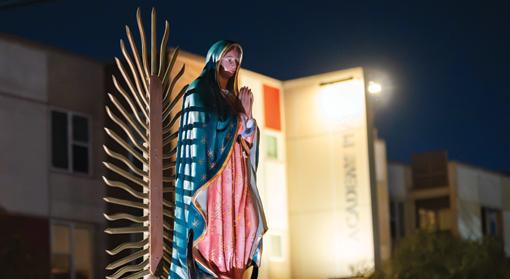
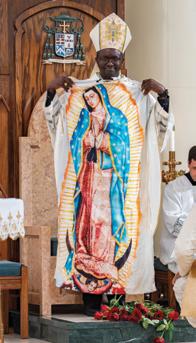
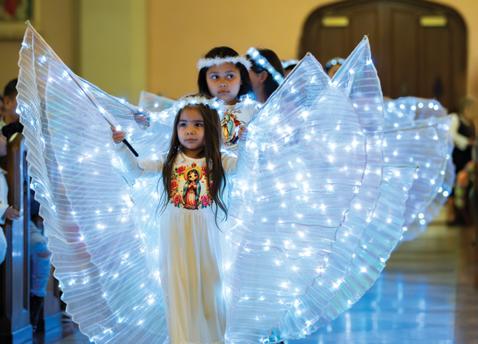
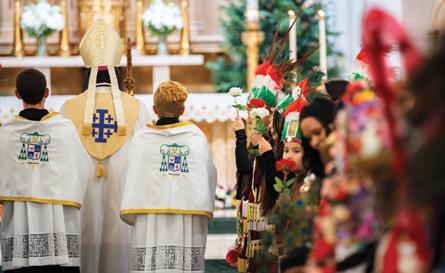
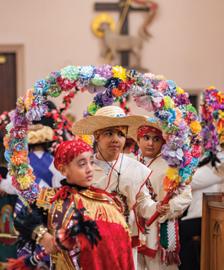
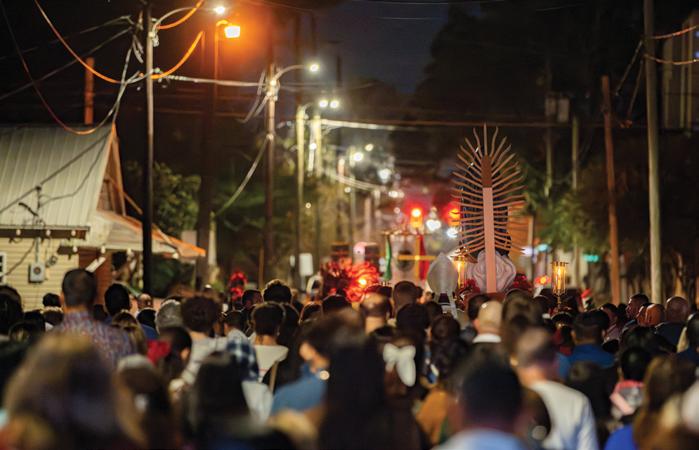
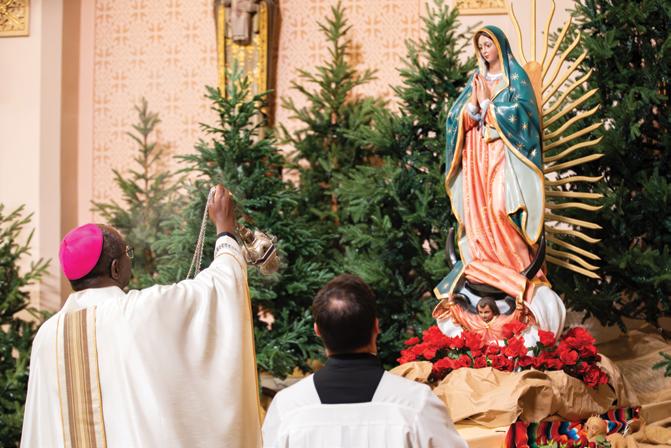
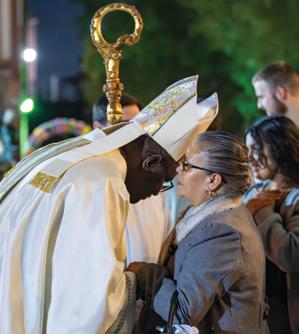
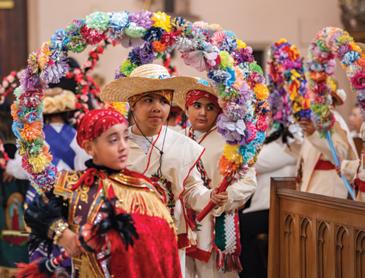
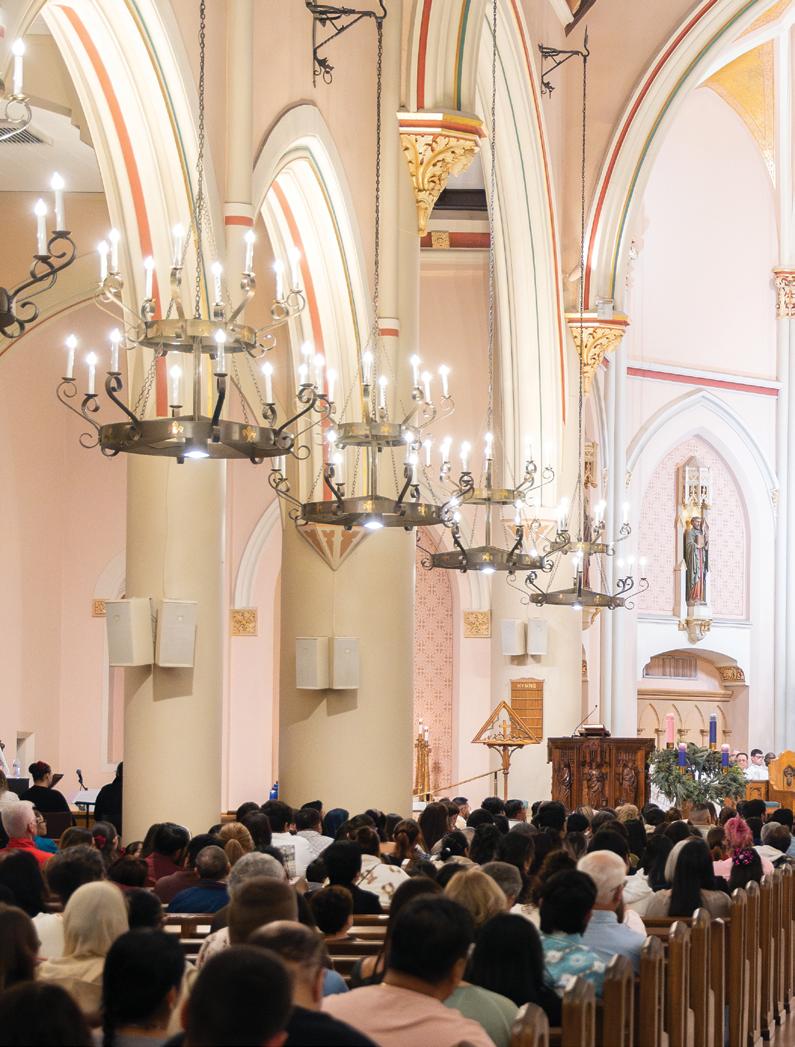
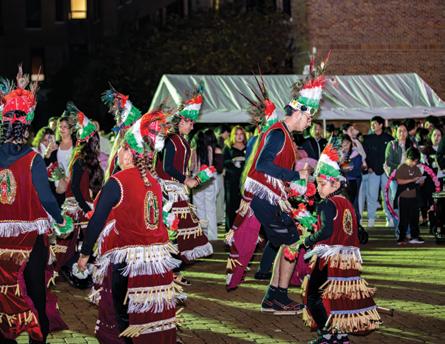
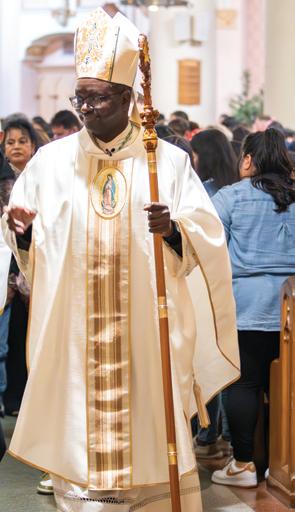
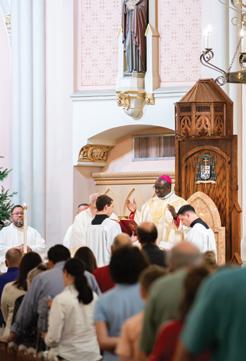
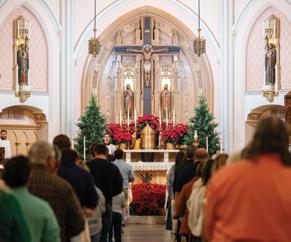
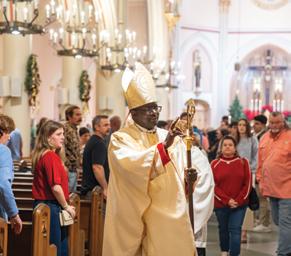
OUR LADY OF GUADALUPE PROCESSION AND MASS IN PHOTOS
OUR LADY OF GUADALUPEpray for us pray for us
A SEASON OF LITURGICAL RENEWAL THE “WHY”
FOR OUR
DIOCESE
In the life of the Church, seasons matter. Some seasons are clearly marked on the liturgical calendar—Advent, Lent, Easter—while others emerge more quietly, recognized only in hindsight as moments of grace and growth. What we are experiencing now in the Diocese of Houma-Thibodaux is one of those moments: a season of liturgical renewal.
This season did not begin as a program, a policy, or a temporary initiative. It began, rather simply, with discernment.
In his first months as our new spiritual father, Bishop Simon Peter Engurait entered deeply into prayer, listening attentively for what the Lord was asking of him as shepherd of the local Church. Like every bishop, he received not only the fullness of Holy Orders at his ordination, but also a profound responsibility: to teach, to sanctify, and to govern the people entrusted to his care. Central to that mission is the sacred liturgy—the source and summit of the Church’s life.
One of the earliest moments that shaped this season was Bishop Simon Peter’s own episcopal ordination. Many who were present recall the reverence and beauty of the liturgy that day, despite having to relocate to a gymnasium due to the large number of expected attendees. Given the limitations of our space, the faithful still responded with joy and attentiveness as we made history together.
FR. RUSTY BRUCE
is the Director of the Office of Worship and the Pastor of St. Hilary in Mathews and St. Anthony in Gheens.
In that celebration, the liturgy did what it is meant to do: it lifted hearts and minds to God and revealed something of heaven breaking into our midst.
Our bishop was deeply struck by this response, as were many others who still speak about the impact that experience had on them. He saw firsthand how beauty in the liturgy evangelizes and forms—not through explanation alone, but through experience. It became clear to him that the liturgy is not merely something we “do,” but something that does something to us as we worship God. It shapes how we believe, how we pray, and how we live as disciples of Jesus Christ.
As Bishop Simon Peter continued his discernment, he turned to the Church’s liturgical ritual books—the very texts that describe and guide the celebration of the sacraments and the public prayer of the Church. In reading them, he encountered again the Church’s vision of the bishop as the “chief steward of the mysteries of God” in the diocese. The liturgy is not incidental to episcopal ministry; it is central. Through the liturgy, the bishop gathers the Church, hands on the faith to the people of God, and forms them in holiness.
This realization marked a turning point. What began as a reflection on his own role soon expanded into a broader invitation for the entire diocese. If the liturgy forms us so profoundly, then renewing our understanding and celebration of it is not a short-term project, but a necessary and ongoing work.
The concept of a diocesan focus on liturgical renewal was first introduced to priests at our fall priest convocation, where it was warmly received and widely praised as both timely and much needed. Subsequently, the initiative was formally announced to the faithful of the diocese when Bishop Simon Peter issued his second Pastoral Letter, Inaugurating Liturgical Renewal in the Diocese of Houma-Thibodaux: Reclaiming and Renewing Our Catholic Identity. The letter was published at the beginning of Advent, the moment when the Church inaugurates a new liturgical year. Thus, what we are calling a “season of liturgical renewal” was born in the life of our diocese.
This new season is not about changing everything overnight, nor is it about criticism of the past or the present. Rather, it is about rediscovering the Church’s wisdom and allowing it to shape us anew. It is a time to ask deeper questions: Why do we celebrate the liturgy the way we do? What is God doing through these sacred signs? How does the liturgy form us as missionary disciples?
For our diocese, this renewal touches every level of parish life—from how we prepare and celebrate the sacraments, to how we train liturgical ministers, to how we foster reverence, participation, and unity in worship. It invites priests, deacons, musicians, catechists, and the lay faithful to grow together in a shared vision of the Church’s prayer.
Most importantly, this season reminds us that the liturgy belongs to the whole Church. It is not the personal possession of any individual or group, but a sacred gift we receive and hand on to the next generation. When celebrated faithfully and beautifully, the liturgy teaches us who God is and who we are as His people.
As Director of the Office of Worship, I see this season as a moment of grace—an opportunity to walk together, under the leadership of our new bishop, toward deeper unity and renewed faith. The Lord is inviting us not simply to “do liturgy better,” but to allow the liturgy to do its work more fully in us.
This is why we are entering a season, not a moment. Renewal takes time. Formation is gradual. But when rooted in prayer, guided by the Church, and shepherded by a bishop attentive to the Spirit, such a season can bear lasting fruit.
May this season of liturgical renewal draw us ever closer to Christ, who meets us each time we gather at the altar, and may it strengthen our diocese as a living and worshiping Body of Christ.
RENEWAL TAKES TIME. FORMATION IS GRADUAL. RENEWAL TIME.
MORE THAN A RITUAL
HOW TO ENTER INTO THE SEASON OF LITURGICAL RENEWAL
FR. ALEX GAUDET
is the Pastor of Christ the Redeemer Church in Thibodaux, a staff member of the Office of Worship for the Diocese of Houma-Thibodaux, and a member of the Board of Directors of the Catholic Foundation of South Louisiana.
A goal without a practical plan is going nowhere. Let’s investigate what you can do to go forward with your personal liturgical renewal. I am going to restrict myself to what will help you get more out of Sunday Mass because liturgy is expansive. There is a liturgy built around every sacrament, and the church has a daily liturgical prayer in the Divine Office. I am going to make a number of suggestions. Pick one thing to work on. When you have that down, then move on to the next. Bishop Simon Peter has given us two directions thus far: give fifteen minutes of family time to the readings for the upcoming Sunday, and pause between readings for reflection at Mass. Further, he is establishing commissions—committees of both clergy and laity—to discuss ideas for liturgical renewal. Consider joining them if you have expertise or experience to add. Meanwhile, here are some practical things ways to dive into liturgical renewal.
BEFORE MASS
If you have already incorporated the readings, I encourage you to consider what you bring to Mass. I am not referring to pre-signing your contribution check, although that is also a good practice. Instead, you should have a specific intention. These can fall into two groups. First, you have a specific outcome you want from the Lord: to get that promotion, deliver a healthy baby, convert a friend, or ensure the safety of a traveler. Second, you have a more general prayer for a specific person: my child, parent, or spouse. This should be you sometimes.
DURING MASS
Respond to the dialogue. Do not whisper “and with your spirit,” or say it in your mind. This is part of your prayer. Sing with the music, or at least be working towards greater participation with the ritual.
DURING THE READINGS
Again, our Bishop has asked us to pause between readings for reflection. Recall and think about what you have heard. What did you like? What questions do you have? What was difficult? If you have not mastered this one during Mass, practice it before Mass by reflecting on the events of your day. The hardest piece for me is forcing attention so that I recall what I heard. I repeat the words as they are being said in my mind or at a whisper. Another way to make it more memorable is to visualize the readings where possible. Use your mind to rebuild the scene as it is being described. In the power of the imagination, the Holy Spirit speaks to you.
DURING THE LITURGY OF THE EUCHARIST
I have no concrete practice, but you should reflect on the reality that the Eucharist is at the same time Jesus’ sacrifice for our salvation and His true self. The Eucharist is the source and summit of our faith. This is the renewal and ratification of your baptismal covenant with God.
AFTER MASS
Offer a prayer of thanksgiving. Thank God for the gift of this Mass. You can practice this outside of Mass by thanking the people who help you. When a good thing happens to you, thank God for it.
There are a lot of suggestions here; pick one, get good at it, and then move on to another. If you do them all at once, you will be doing a bunch of new things all at once, get tired of it, and either give up or give minimal effort. Every habit is built on repetition, so keep at it even when it feels like you are not making headway. Finally, be on the lookout for the commission and more information.
WORDS FROM ROME
QUOTES FROM POPE LEO XIV
Jesus calls us to be His friends; let us not leave this invitation unheeded. Let us welcome and care for this relationship. We will discover that our friendship with God is our salvation.
#GeneralAudience
-X Post | January 14, 2025
God, who created us without us, will not save us without us (cf. St. Augustine, Sermon 169, 11, 13). Those who do not love are not saved; they are lost. And those who do not love their brother or sister whom they see, cannot love God whom they do not see.
-”Urbi et Orbi” Message of Pope Leo XIV | Saint Peter’s Basilica | December 25, 2025
[The Church]… has been entrusted with the treasure [of faith] so that she may be ever more fully a city set on a hill… a beacon that illumines the dark nights of this world—and this not through the magnificence of her structures or the grandeur of her buildings, but through the holiness of her members.
-Homily of the Holy Father Leo XIV | Sistine Chapel | May 9, 2025
Let us not waste our time and energies chasing after appearances. Rather, let us learn from John the Baptist to remain vigilant, to love simplicity, to be sincere in our words, to live soberly, and to cultivate a depth of mind and heart. #GospelOfToday (Jn 1:29-34)
-X Post | January 18, 2025
The eternal Word of the Father… chose to come into the world in this way. Out of love, He wanted to be born of a woman and so share our humanity; out of love, He accepted poverty and rejection, identifying Himself with those who are discarded and excluded.
-Apostolic Letter | Drawing New Maps of Hope October 28, 2025
The Church is ‘mother and teacher’ not by supremacy, but through service: she accompanies the growth of freedom, taking on the mission of the Divine Master so that everyone ‘may have life, and have it abundantly’ (Jn 10:10).
-Apostolic Letter | Drawing New Maps of Hope October 28, 2025
Like a light in the darkness, the Lord lets Himself be found where we do not expect Him. He is the Holy One among sinners, who wants to dwell in our midst without keeping His distanceindeed, by taking fully upon Himself all that is human.
-X Post | January 11, 2025
THE PROFIT OF PRACTICED LOVE
FROM DISCIPLINE TO DEVOTION: GROWING IN LOVE THIS LENT
JENNIFER ELY, OV, MATS is a consecrated virgin in the Diocese of Houma-Thibodaux where she works as the Director of Discipleship Formation for Our Lady of Prompt Succor in Chackbay. She is currently completing the final stage of the License in Sacred Theology program with the Pontifical Faculty of Theology at the University of Saint Mary of the Lake.
In the world today, we often have wrong ideas about love shoved in our face. Love is equated to lust, or love is only given when deserved or earned, or love is even secondary to my work, my success, and my own personal happiness.
And yet, if Jesus is God, and God is Love, then we know exactly what love is meant to look like: it looks like giving our whole hearts to Him, even when it’s painful, even when we think we deserve to be exempt from it. Love is a choice and sometimes, it’s one of the most difficult we have to make, because we must choose it again and again every day. We watch Jesus make that choice in every word He speaks, in every action He takes. We watch Him heal His children, rebuke them, teach them, allow them to bind Him and beat Him before putting Him to death… and then we watch Him return for them. We watch Him as He rises to the Father and opens the gates of heaven to them, to us. What wondrous love is this.
“But I can’t do that,” you might be thinking. “I can’t match the love of Jesus; I can barely remember to do my fasting, to give alms, to pray more each day during Lent! I have so much that is already demanded of me, and somehow, I have to also love like Jesus? There’s no way.” And to be fair… you’d be right. We, of our own power, can’t love like Jesus does. “It is true that the creature loves less because she is less,” St. Bernard of Clairvaux tells us. However, he goes on to say, “But if she loves with her whole being, nothing is lacking where everything is given.” Whether you are someone who tends toward scrupulosity, attempting to discipline yourself “perfectly” for God, or whether you are someone who tends toward choosing the path of least resistance, St. Bernard’s words can provide the framework for how to grow in devotion through discipline.
We can’t expect to “flip a switch” and give everything in love to Jesus if we do not choose to begin in relationship. Saints are those men and women who chose to treasure a relationship with the Lord in prayer every single day. We must learn to join our fasting and prayer and our giving together, rather than separating them out into three different boxes. Fasting without prayer is simply a strange dieting practice; almsgiving without prayer is kindness devoid of devotion.
So how do we accomplish this devoted discipline? We have to first be honest with ourselves, making choices regarding fasting and almsgiving that truly challenge our earthly comfort, forcing us to rely on the Lord more fully. Once we know what those things
” “ ST. BERNARD OF CLAIRVAUX
IT IS TRUE THAT THE CREATURE LOVES LESS BECAUSE SHE IS LESS, BUT IF SHE LOVES WITH HER WHOLE BEING, NOTHING IS LACKING WHERE EVERYTHING IS GIVEN.
are—through good, holy discernment—then we can blend them with prayers of devotion, of surrender, and of longing for God’s Kingdom.
One of the best sources for prayer, particularly prayers that embody that devotion, discipline, and surrender that we truly seek during this season is the Book of Psalms. I always encourage people toward the practice of the Liturgy of the Hours, because it belongs to the whole Church; it is the prayer of the Bride to her Bridegroom, the prayer of Christ Himself, along with the entirety of His people, given to the Father (cf. Sacrosanctum Concilium, §84). However, even simply reading through the Psalms in whatever way you choose can also provide the depth of prayer we seek in this season, for “in the Psalms are expressed and interwoven with joy and suffering, the longing for God and the perception of our own unworthiness, happiness and the feeling of abandonment, trust in God and sorrowful loneliness, fullness of life and fear of death. The whole reality of the believer converges in these prayers… Since the Psalms are prayers they are expressions of the heart and of faith with which everyone can identify and in which that experience of special closeness to God—to which every human being is called—is communicated” (Pope Benedict XVI, General Audience, June 22, 2011)
If beginning something like the Liturgy of the Hours or reading through the Book of Psalms feels too overwhelming, one Psalm in particular comes to mind as a possible choice: Psalm 42. When I am hungry as I fast, hurting from the lack of whatever food I have chosen to give up, I can turn to the Lord with King David’s words on my lips: “Like the deer that yearns for running streams, so my soul is yearning for you, my God. My soul is thirsting for God, the God of my life.” When I wish I didn’t have to give up whatever alms I have chosen to give to those in need, I can cry out “Why are you cast down, my soul, why groan within me? Hope in God; I will praise him still, my savior and my God.” If I allow the words of Scripture to penetrate my daily life, soon they will come so readily that praying them will be like breathing: natural, desirable, life-giving.
This is practiced love: to give more and more each moment, choosing even when we fall to come back to our Lord in humility and try again. To make prayer as integral to our lives as the air we breathe. And the profit of such a love…well, that is Love Himself. And there is no greater treasure to be found.
Psalm 42
As the deer longs for streams of water, so my soul longs for you, O God.
My soul thirsts for God, the living God. When can I enter and see the face of God? My tears have been my bread day and night, as they ask me every day, “Where is your God?”
Those times I recall as I pour out my soul, When I would cross over to the shrine of the Mighty One, to the house of God, Amid loud cries of thanksgiving, with the multitude keeping festival. Why are you downcast, my soul; why do you groan within me?
Wait for God, for I shall again praise him, my savior and my God.
My soul is downcast within me; therefore I remember you
From the land of the Jordan and Hermon, from Mount Mizar, Deep calls to deep in the roar of your torrents, and all your waves and breakers sweep over me.
By day may the LORD send his mercy, and by night may his righteousness be with me! I will pray to the God of my life,
I will say to God, my rock: “Why do you forget me? Why must I go about mourning with the enemy oppressing me?”
It shatters my bones, when my adversaries reproach me, when they say to me every day: “Where is your God?”
Why are you downcast, my soul, why do you groan within me?
Wait for God, for I shall again praise him, my savior and my God.
RETURN TO THE HEART
A LENTEN REFLECTION ON AUGUSTINE’S CONFESSIONS
BY: BEVI FONTENOT
As the Church enters the season of Lent, we are invited once again to “rend your hearts, not your garments, and return to the Lord” (Joel 2:13). What better spiritual guide to accompany us on this journey than St. Augustine of Hippo, whose Confessions remain one of the most enduring reflections on the human heart and its longing for God. How fitting, too, that we now have an Augustinian pope—Pope Leo XIV—to remind us that Augustine’s wisdom is not only historic, but timely in today’s world.
“He is most intimately present to the human heart, but the heart has strayed from him. Return to your heart, then, you wrongdoers, and hold fast to him who made you” (Augustine, Confessions 4.12)
Augustine defines the heart in a specific way.
The heart—cor in Latin—is more than an organ essential for life; it encompasses the whole of a person—our emotions, mind, will, and memory. While society often reduces the heart to feelings
or passions, Augustine understood it as the deepest place of encounter between God and the human person.
The Catechism of the Catholic Church speaks of the heart as a dwelling place “to which [we] withdraw” or a “hidden center” (CCC 2563). What the Catechism describes as a “withdrawal,” Augustine refers to as a “return.”
Lent is precisely this movement: a return to the heart, where God already dwells and waits for us. St. John Henry Newman’s motto, Cor ad cor loquitur—“Heart speaks to heart”—captures this goal beautifully: it is only through the heart that we enter into intimate, loving dialogue with the Lord. When we withdraw, or return, to our center, we encounter communion with our loving God. Returning to the heart is indeed a return to ourselves and God—a reintegration of self and reconciliation with God. It is through this theology of the heart that we can consider
three key spiritual concepts: returning inward through recollection, downward in humility and repentance; and upward through contemplation.
To do that, let’s look at Augustine’s Confessions, which is not a typical autobiography, but more of a prayerful dialogue with God. Despite its name, this collection of writings is not a confession of sins throughout his life, but rather a “confession” of God’s mercy and love.
THE UNQUIET HEART
One of Augustine’s most famous lines captures the human condition: “You have made us for yourself, O Lord, and our heart is unquiet until it rests in you.” This translation from the original Latin by Sr. Maria Boulding may be different than the one more commonly heard, as it uses “unquiet” rather than “restless.” Augustine was a great wordsmith, so this more accurate translation is important. Augustine is not simply describing busyness or dissatisfaction, but a deeper interior noise—a spiritual dissonance that arises when the heart is divided or distant from God. Life’s distractions, both external and internal, can make this “unquiet” more familiar than ever.
A DISTRACTED HEART
In today’s world, media is within reach 24/7. It grabs our attention, influences our habits, and can isolate as well as distract. When our discipline is weak and our media access is unbridled, our hearts can become numb. We hear time and time again that an overuse of media is bad for our spiritual and mental health. However, that doesn’t mean that media is without good. God can and does work through digital storytelling to teach, inspire, and communicate the Gospel. The question is not whether to let media into our lives, it’s how to intentionally integrate it with our faith.
Lent invites us to step back from the noise and examine what truly forms us. In a culture of screens, this season calls us to be honest:
Does what I consume lead me toward truth, hope, and human dignity? Or does it pull me away from prayer, presence, and communion with God and others?
A media fast—or a thoughtful limitation—offers us a meaningful opportunity to live with more intentionality. By setting aside the platforms or content that demand our attention, we create space for silence, prayer, and a deeper awareness of God’s presence. The purpose of such a fast is not rejection, but renewal. It invites Christ into our daily habits, changing the way we live and reordering our relationship with God, ourselves, and the world around us. By freeing ourselves from unhealthy attachments, we can more fully open our hearts to God’s grace.
A RECOLLECTED HEART
In his writings, Augustine also gives special attention to memory, which plays a central role in his conversion. Our faith itself is rooted in remembrance—of God’s saving acts proclaimed in Scripture and re-presented in the liturgy. For Augustine, memory is not passive recall, but a living faculty that nourishes hope, orders our loves, and shapes our desires. It reminds us of who God has been for us and who He promises to be.
Too often, we fail to linger in the moments that can change us. We may be moved by the readings at Mass but forget our reflection by the time we get home. Augustine warns against this kind of spiritual consumption without digestion. Quoting Proverbs, he writes: “A desirable treasure finds rest in the mouth of the wise man, but a fool swallows it” (Prov. 21:20, Vetus Latina). Wisdom requires savoring—remaining with what God is doing long enough for it to take root. The more we can savor, the more we can receive.
Memories, Augustine teaches, have the power to bear fruit beyond the moment itself. We can return to those graces over and over again. Even painful memories— marked by sin, shame, or loss—can be healed when revisited in God’s presence. Healing even a single memory can reframe how we understand ourselves, our past, and our relationship with God. The memories we choose to dwell on shape the story we tell ourselves about who we are. A recollected heart allows God to reorder that story according to His truth.
THE HEART AS A BATTLEGROUND
Scripture consistently points to the heart as the center of desire and decision—the place where we “do business” with God. As the Catechism reminds us, “The heart is the place of decision… the place of encounter… the place of covenant” (CCC 2563). It is in the heart that we choose whom we will love and whom we will serve. For this reason, the Bible presents the heart as a battleground of grace: from Pharaoh’s hardened heart to the psalmist’s plea, “Create in me a clean heart, O God.” Even the prophet Joel calls not for an outward display, but for an interior return: “Return to me with your whole heart, with fasting, weeping, and mourning” (Joel 2:12).
We must remember the deeper purpose for our Lenten practices. Prayer, fasting, and almsgiving are not meant to be external checkboxes or seasonal to dos. They are meant to express an interior reality: a true repentance that pierces the heart. Our external works of penance only bear fruit when they are accompanied by an interior desire to return to the Lord.
The Catechism describes interior repentance as “a radical reorientation of our whole life, a return, a conversion to God with all our heart… with the desire and resolution to change one’s life, with hope in God’s mercy and trust in the help of his grace” (CCC 1431). Lent, then, is the season for honest examination. It is the time to ask difficult but necessary questions: Why do I do what I do? What do I truly love? What must I surrender?
Augustine knew this struggle well. Reflecting on his own turning point, he writes with striking clarity: “At once, every vain hope became worthless to me, and with a hotburning desire I longed for immortality in wisdom and began now to rise upward, so that I might return to you” (Confessions, III.4).
Augustine’s conversion did not begin with perfect behavior, but with a renewed heart, awakened to desire only God Himself. And our Lord, who never abandons us, waits for our return to heart, where He already dwells. May this Lent be for us, as we’ve learned from Augustine, a true return to the heart. “When at last I cling to you with my whole being,” he writes, “there will be no more anguish or labor for me, and my life will be alive indeed, because [it’s] filled with you” (Confessions, 10.28).
YOU. YOU HAVE MADE US FOR YOURSELF, O LORD, AND OUR HEART IS UNQUIET UNTIL IT RESTS IN YOU. YOU HAVE HAVE MADE AND HEART IS IN
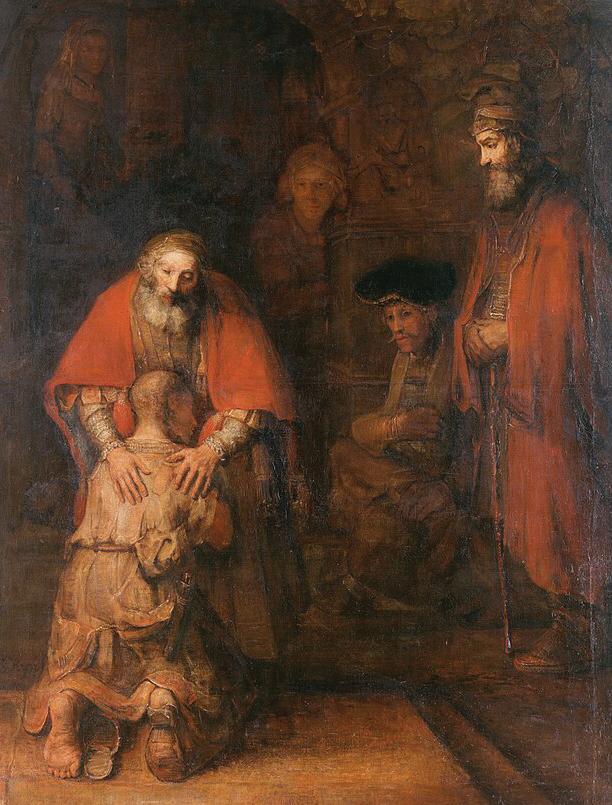
THE FATHER WELCOMES HOME
AN EXCERPT FROM THE RETURN OF THE PRODIGAL SON
BY HENRI J.M. NOUWEN
“While he was still a long way off, his father saw him [his younger son] and was moved with pity. He ran to the boy, clasped him in his arms and kissed him.
. . . his father came out and began to urge him [his elder son] to come in.”
Father and Mother
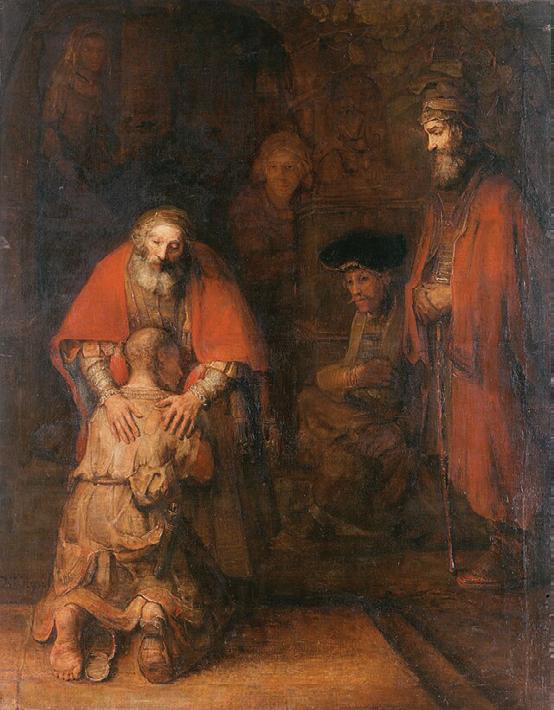
Often I have asked friends to give me their first impression of Rembrandt’s Prodigal Son. Inevitably, they point to the wise old man who forgives his son: the benevolent patriarch.
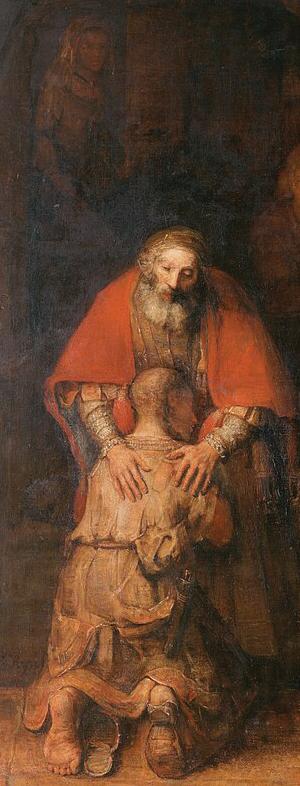
The longer I looked at “the patriarch,” the clearer it became to me that Rembrandt had done something quite different from letting God pose as the wise old head of a family. It all began with the hands. The two are quite different. The father’s left hand touching the son’s shoulder is strong and muscular. The fingers are spread out and cover a large part of the prodigal son’s shoulder and back. I can see a certain pressure, especially in the thumb. That hand seems not only to touch, but, with its strength, also to hold. Even though there is a gentleness in the way the father’s left hand touches his son, it is not without a firm grip.
How different is the father’s right hand! This hand does not hold or grasp. It is refined, soft, and very tender. The fingers are close to each other and they have an elegant quality. It lies gently upon the son’s shoulder. It wants to caress, to stroke, and to offer consolation and comfort. It is a mother’s hand.
As soon as I recognized the difference between the two hands of the father, a new world of meaning opened up for me. The Father is not simply a great patriarch. He is mother as well as father. He touches the son with a masculine hand and a feminine hand. He holds, and she caresses. He confirms and she consoles. He is, indeed, God, in whom both manhood and womanhood, fatherhood and motherhood, are fully present. That gentle caressing right hand echoes for me the words of the prophet Isaiah: “Can a woman forget her baby at the breast, feel no pity for the child she has borne? Even if these were to forget, I shall not forget you. Look, I have engraved you on the palms of my hands.”
My friend pointed out to me that the caressing feminine hand of the father parallels the bare, wounded foot of the son, while the strong masculine hand parallels the foot dressed in a sandal. Is it too much to think that the one hand protects the vulnerable side of the son, while the other hand reinforces the son’s strength and desire to get on with his life?
Then there is the great red cloak. With its warm color and its arch-like shape, it offers a welcome place where it is good to be. At first, the cloak covering the bent-over body of the father looked to me like a tent inviting the tired traveler to find some rest. But as I went on gazing at the red cloak, another image, stronger than that of a tent, came to me: the sheltering wings of the mother bird. Day and night God holds me safe, as a hen holds her chicks secure under her wings. Even more than that of a tent, the image of a vigilant mother bird’s wings expresses the safety that God offers her children. They express care, protection, a place to rest and feel safe.
As I now look again at Rembrandt’s old man bending over his returning son and touching his shoulders with his hands, I begin to see not only a father who “clasps his son in his arms,” but also a mother who caresses her child, surrounds him with the warmth of her body, and holds him against the womb from which he sprang.
Thus the “return of the prodigal son” becomes the return to God’s womb, the return to the very origins of being and again echoes Jesus’ exhortation to Nicodemus, to be reborn from above.
And this includes the elder son. Rembrandt places him at a distance, out from under the billowing cloak, at the edge of the circle of light. The elder son’s dilemma is to accept or reject that his father’s love is beyond comparisons; to dare to be loved as his father longs to love him or to insist on being loved as he feels he ought to be loved. The father knows that the choice must be the son’s, even while he waits with outstretched hands. Will the elder son be willing to kneel and be touched by the same hands that touch his younger brother? Will he be willing to be forgiven and to experience the healing presence of the father who loves him beyond compare? Luke’s story makes it very clear that the father goes out to both of his children. Not only does he run out to welcome the
younger wayward son, but he comes out also to meet the elder, dutiful son as he returns from the fields wondering what the music and dancing are all about and urges him to come in.
In Rembrandt’s painting, the elder son simply observes. It is difficult to imagine what is going on in his heart. Just as with the parable, so also with the painting, I am left with the question: How will he respond to the invitation to join the celebration?
There is no doubt—in the parable or the painting— about the father’s heart. His heart goes out to both of his sons; he loves them both; he hopes to see them together as brothers around the same table; he wants them to experience that, different as they are, they belong to the same household and are children of the same father.
As I let all of this sink in, I see how the story of the father and his lost sons powerfully affirms that it was not I who chose God, but God who first chose me. This is the great mystery of our faith. We do not choose God, God chooses us. From all eternity we are hidden “in the shadow of God’s hand” and “engraved on his palm.” Before any human being touches us, God “forms us in secret” and “textures us” in the depth of the earth, and before any human being decides about us, God “knits us together in our mother’s womb.” God loves us before any human person can show love to us. He loves us with a “first” love, an unlimited, unconditional love, wants us to be his beloved children, and tells us to become as loving as himself.
For most of my life I have struggled to find God, to know God, to love God. I have tried hard to follow the guidelines of the spiritual life—pray always, work for others, read the Scriptures—and to avoid the many temptations to dissipate myself. I have failed many times but always tried again, even when I was close to despair.
Now I wonder whether I have sufficiently realized that during all this time God has been trying to find me, to know me, and to love me. God is looking into the distance for me, trying to find me, and longing to bring me home.
Here lies hidden the great call to conversion: to look not with the eyes of my own low self-esteem, but with the eyes of God’s love.
GOD CHOOSES US. WE DO NOT CHOOSE GOD, ” “
Nerve
Nerve
Work
Lower
Neck
Herniated,
Arthritis
Inflamed,
Injuries
Shoulder,
Persistent
Pinched
Shingles
Headaches
Arm
Dr. Jimmy Ponder, Jr., MD
531-A Jefferson Terrace Blvd.
COME HOME TO CHRIST THIS LENT
WITH THE VICAR GENERAL
FR. ANDRÉ MELANCON
is the Vicar General, the Pastor of St. Bernadette Soubirous, and the Chaplain of Vandebilt Catholic High School.
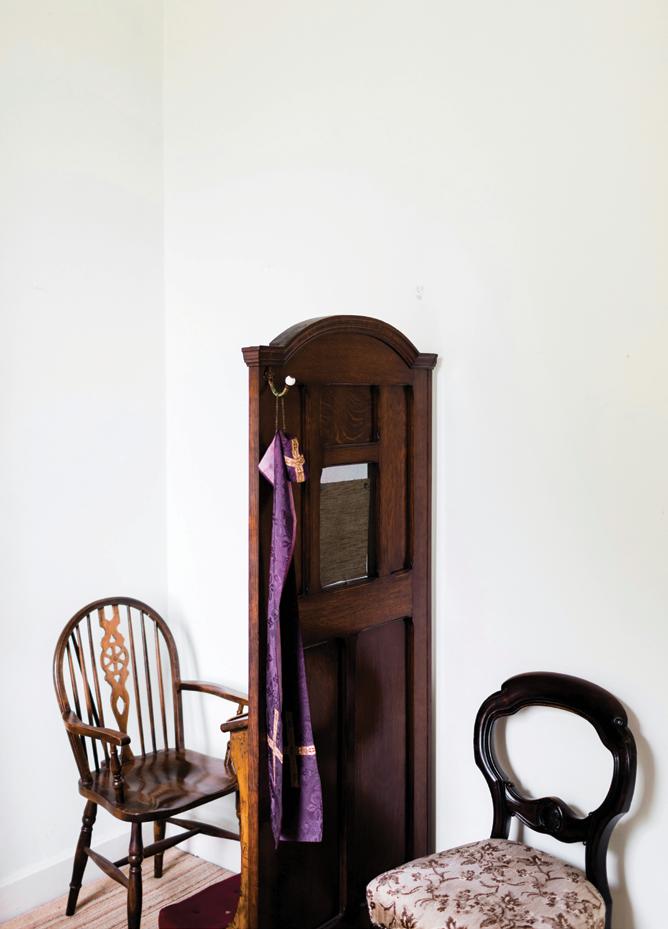
Lent is a season of return. It is a time when the Church calls us back to God, and back to the basics of Christian living. At the heart of that invitation is the call to come back to the Sacrament of Reconciliation (often called “confession”). This sacrament is a time for Catholics to come to the Lord as a sinner, to be seen and loved by Him, and to experience the freedom of His forgiveness. Yet for many Catholics, confession can feel intimidating and overwhelming. Every Lent, I am inspired by the number of Catholics who return to the sacrament after many years. Their hearts receive the courage necessary to come. It is a beautiful privilege to tell a penitent, “Welcome home.” If you are someone who has been away from the sacrament for a long time, Christ is inviting you to rediscover it as a place of peace.
Confession is not simply about listing sins or “checking a box.” It is a sacrament, an encounter with God’s grace. Confession was given to us by Jesus so that for all time, we can have access to His merciful heart. On Easter night, Jesus appeared to His disciples and said, “Whose sins you forgive are forgiven them” (Jn 20:23). In that moment, Christ entrusted the ministry of reconciliation to the Church and to Her priests. What a humbling invitation for us as priests to be instruments of God’s mercy.
What happens when we go to confession? Three things happen at once.
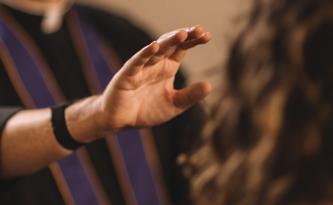
First, we are reconciled with God. Sin wounds our relationship with the Lord, even when we don’t feel it. Through the priest’s absolution, God restores us to sanctifying grace and forgives our sins completely. He lifts the burden we carry, even the ones we’ve held onto for years. With the burden gone, we are more able to live in the truth that we are unconditionally loved by God.
Second, we are reconciled with the Church. Sin never affects only us. Confession restores us to full communion with the Body of Christ and strengthens the entire Church through our humility and honesty.
Third, we are strengthened to begin again. The sacrament doesn’t just erase sin; it gives us grace to resist sin in the future. This grace strengthens the soul and will, giving us the spiritual strength needed to better resist future temptations.
COMMON QUESTIONS ABOUT CONFESSION
What would you say to someone who hasn’t been to confession in years and feels embarrassed or ashamed to come back?
First, you are not alone and you are exactly the person this sacrament is for.
Shame often convinces us that we don’t belong in the confessional anymore, that we’ve waited too long, or that we should “know better by now.” But the truth is there is no expiration date on God’s mercy. God is in the business of forgiveness. As Jesus said, “For God did not send his Son into the world to condemn the world, but that the world might be saved through him” (Jn 3:17). From a priest’s perspective, when someone says, “It’s been a long time,” the reaction is not judgment, it’s gratitude–gratitude that the person came back. Gratitude that grace is at work. Gratitude that a soul trusted God enough to take that step. If it has been years, simply say so. The priest will help guide you through the process. You don’t need perfect words or a perfect memory. What matters is a sincere heart and the desire to return. Lent is not about proving ourselves; it’s about coming home. Jesus told us that “there will be more joy in heaven over one sinner who repents than over ninetynine righteous people who have no need of repentance” (Lk 15:7). Heaven rejoices when you return.
What do priests wish people understood about the priest’s side of confession?
Many people think that a priest will be disappointed in someone who confesses their sins. In reality, priests enter the confessional very aware of their own need for mercy. As Scripture reminds us, “[The priest] himself is beset by weakness” (Hb 5:2).
Every priest is a sinner who also has to go to confession. That shared experience changes everything. We have experienced the kindness of a good confessor, and we want to be that for you. Priests do not remember most confessions. They are not shocked by what they hear. They are not comparing sins. Instead, they are focused on one thing: being an instrument of Christ’s mercy in that moment. The Seal of Confession provides absolute confidentiality. Nothing said in confession can ever be repeated or used against someone in any way. That sacred trust allows the priest to be fully present to the penitent and allows the penitent to be vulnerable with God. Many priests would say that hearing confessions is one of the most humbling and hopeful parts of their ministry. It is a privilege to witness God’s grace at work in such an intimate way.
What if someone freezes, forgets what to say, or gets emotional?
That happens more often than people realize and it is completely okay.
If you freeze, simply say so. If you forget something, the priest will help you. If you become emotional, it’s a sign that a tender place in your heart is being healed. Tears
are not a problem in the confessional; they are often a prayer.
Confession is not a performance. It is a vulnerable prayer. It is opening your heart to God. Priests are trained to help people through vulnerable moments. We will walk you through it.
If someone is afraid they’re “doing confession wrong,” what would you want them to know?
You don’t have to be perfect to come to confession— that’s the point.
There is no such thing as a “perfect confession.” What God desires is honesty, humility, and the desire to turn back toward Him. The structure of confession exists only to help us. If you’re unsure what to say, the priest will guide you. If you’re unsure whether something is a sin, you can ask. If you stumble over the Act of Contrition, the priest usually will pray it with you or give you a card so you can read it.
Confession is not about saying everything perfectly; it’s about being as honest as you can with yourself and God. By the time we walk into the confessional, God has already revealed to us in our heart what we need to confess. Once there, we simply let go of sin and shame and open our hearts to healing and mercy.
A LENTEN INVITATION
This Lent, consider confession not as an obligation to dread, but as an encounter with Jesus to embrace. Whether it’s been weeks or decades, the door is open. Mercy is waiting. And the words spoken at the end of confession will greet you: “Your sins are forgiven, go in peace.”
God is ready when you are.
from the editor:
Forgiveness is at the heart of our Lenten journey, inviting us to heal relationships with God and one another. On the next page, you will find a powerful meditation to use as a tool in walking the path to forgiveness.
THE JOURNEY OF FORGIVENESS
BY SR. MIRIAM JAMES HEIDLAND AND FR. JOHN BURNS
Uncovering the Wound
In your prayer, retell the story of when you were hurt. Pay close attention to the details and your reaction to them. Do you feel pain, sorrow, anger, resentment? How intensely? How do these emotions affect your daily life? How do you think about the person who hurt you?
Choosing a Different Way
Very likely, the one who hurt you can’t give back what they took. Insisting that they do so traps you in your negative emotions. Can you acknowledge that you have tried, but you cannot make yourself well? Are you willing to let go of the debt, rather than demand repayment? If so, ask the Lord to help you forgive.
Working on Forgiveness
In prayer, behold the life story of the person who hurt you. What was their life like growing up? When they hurt you? Ask God to show you how He sees their story. Can you see them as another person, someone who also carries pain? Ask for the gifts of understanding and compassion. Can you offer them a gift, an act of mercy? If so, pray the Prayer of Forgiveness (below).
Embracing Freedom
Notice the change as you move from demanding to forgiving. Invite Christ to show you the meaning of your suffering, which has led you to forgiveness. Offer back to Him any remaining pain; offer it for the one who hurt you, if you can. Compare the darkness of the wound to the light of forgiving. Resolve to live this way of goodness and bring light to others who are in darkness. Ask the Holy Spirit to guide you always on this way.
PRAYER OF FORGIVENESS
1. Ask the Holy Spirit to show you whom you need to forgive (could be family, a friend, an abuser, God, yourself).
2. Picture the person in front of you and pay attention to what you feel in your heart and body.
3. Make an account of the debt they owe you. (What did they take from you? How did they hurt you? It is okay to feel angry or nothing at all).
4. Imagine yourself telling them what they did to hurt you and how it has affected you.
5. Ask the Holy Spirit to reveal to you any identity lies you believe about yourself based on that incident.
6. Renounce the identity lie: “In the name of Jesus Christ, I renounce the lie that ______________.” (Ex: I am not loved or cared for, that I have to perform well to be loved, I am forgotten, etc.)
7. Announce the truth of your identity in Christ: “In the name of Jesus Christ, I announce the truth that I am seen, that I am valuable, that I am loved, etc…”
8. Bring the person with you to meet Jesus on the cross at Calvary and look at His face of care and mercy.
9. Ask Jesus to forgive the person.
10. Ask Jesus to give you the grace to forgive the person.
11. Pray a prayer of blessing for that person. Ask God to bless them and heal them on their journey.
12. Ask Jesus to seal this forgiveness and heal the wounds in your life.
FEBRUARY DAILY PRAYER
FOR PRIESTS, DEACONS, RELIGIOUS, AND SEMINARIANS
Feb 1: Bishop Simon Peter Engurait
Feb 2: Deacon Scott Beslin
Feb 3: Rev. Joey Lirette
Feb 4: Rev. Stephen Castille
Feb 5: Seminarian Cain Lambert
Feb 6: Rev. Michael Bergeron, retired
Feb 7: Rev. Jean-Marie Nsambu
Feb 8: Rev. Alex Okiror
Feb 9: Sister Caterina Maria Adalaide Curth, M.T.
Feb 10: Rev. Charles Perkins, retired
Feb 11: Rev. Joseph Pilola
Feb 12: Rev. Matthew Prosperie
Feb 13: Deacon Daniel Bascle, retired
Feb 14: Rev. Patrick Riviere
Feb 15: Very Rev. Joshua Rodrigue
Feb 16: Seminarian Michael Robichaux
Feb 17: Rev. James Rome
Feb 18: Kristin Niedbala, Consecrated Virgin
Feb 19: Rev. Robert Rogers
Feb 20: Rev. Mitchel Semar
Feb 21: Rev. Caesar Silva, retired
Feb 22: Deacon Brent Bourgeois
Feb 23: Rev. Carlos Talavera
Feb 24: Seminarian Chad Cheramie
Feb 25: Rev. Mark Toups
Feb 26: Rev. Mike Tran V.F.
Feb 27: Rev. Joseph Tregre
Feb 28: Bishop Emeritus Sam Jacobs
MARCH DAILY PRAYER
FOR PRIESTS, DEACONS, RELIGIOUS, AND SEMINARIANS
Mar 1: Bishop Simon Peter Engurait
Mar 2: Deacon Gerald Belanger, retired
Mar 3: Rev. Khoa Dang, CRM
Mar 4: Rev. Augustine Ky Truong CRM
Mar 5: Rev. Romeo (Billy) Velasco
Mar 6: Rev. Osman Escorcia
Mar 7: Rev. Jose Juarez Sandoval
Mar 8: Rev. Ronilo (Ron) Villamor
Mar 9: Rev. Davis Ahimbisibwe
Mar 10: Very Rev. Jay L. Baker, MCL, JCL
Mar 11: Rev. Michael Bergeron, retired
Mar 12: Rev. Paul Birdsall
Mar 13: Deacon Lee Crochet
Mar 14: Seminarian Cain Lambert
Mar 15: Rev. Shenan Boquet
Mar 16: Rev. Thomas R. Bouterie, retired
Mar 17: Rev. Rusty Bruce
Mar 18: Deacon Martin Dickerson, retired
Mar 19: Msgr. Frederic J. Brunet, retired
Mar 20: Rev. Stephen Castille
Mar 21: Rev. Joseph Chacko, I.M.S.
Mar 22: Sister Mary Immaculata Man Nguyen, F.M.S.R
Mar 23: Rev. Cody Chatagnier
Mar 24: Rev. Dean Danos, retired
Mar 25: Rev. Evelio (Toto) Buenaflor Jr., retired
Mar 26: Rev. Carl Collins
Mar 27: Rev. Van Constant
Mar 28: Deacon William Dunckelman
Mar 29: Rev. Domingo (Ding) Cruz, retired
Mar 30: Rev. Robert-Joel Cruz
Mar 31: Bishop Emeritus Sam Jacobs
APRIL DAILY PRAYER
FOR PRIESTS, DEACONS, RELIGIOUS, AND SEMINARIANS
Apr 1: Bishop Simon Peter Engurait
Apr 2: Very Rev. Vicente N. DeLa Cruz, MCL, JCL, V.F.
Apr 3: Seminarian Ethan Henry
Apr 4: Rev. Wilfredo Decal, retired
Apr 5: Rev. Scott Dugas, retired
Apr 6: Sister Diane Poynot, C.S.J.
Apr 7: Rev. Daniel Duplantis
Apr 8: Rev. Msgr. Cletus Egbi
Apr 9: Deacon Lloyd Duplantis, retired
Apr 10: Rev. Gregory Fratt, retired
Apr 11: Rev. Antonio Farrugia
Apr 12: Rev. Nathaniel Maria Gadalia
Apr 13: Sister Juana Eleazer Ramirez, M.C.S.H.
Apr 14: Rev. Duc Bui
Apr 15: Rev. Alex Gaudet
Apr 16: Rev. Rholando (Rholly) Grecia
Apr 17: Seminarian Will Stueben
Apr 18: Rev. Varghese (Joe) Josekutty
Apr 19: Deacon Dennis Dupre, retired
Apr 20: Rev. Brice Higginbotham
Apr 21: Rev. Francis Kayaye
Apr 22: Rev. Stuart King
Apr 23: Seminarian James Silk
Apr 24: Deacon Randall Jennings
Apr 25: Rev. Thomas Kuriakose
Apr 26: Rev. Baby (Phillip) Kuruvilla
Apr 27: Rev. Brett Lapeyrouse
Apr 28: Deacon James LaJaunie, Jr.
Apr 29: Rev. Joseph Lapeyrouse
Apr 30: Bishop Emeritus Sam Jacobs
MAY DAILY PRAYER FOR PRIESTS, DEACONS, RELIGIOUS, AND SEMINARIANS
May 1: Bishop Simon Peter Engurait
May 2: Deacon Gary Lapeyrouse
May 3: Rev. Noas Kerketta
May 4: Rev. Alexis (Alex) Lazarra
May 5: Rev. Peter Tai Le
May 6: Rev. Glenn LeCompte
May 7: Seminarian Scott Beslin
May 8: Very Rev. Eric P. Leyble JCL
May 9: Rev. Joey Lirette
May 10: Very Rev. P.J. Madden, retired
May 11: Deacon Harold Fanguy, retired
May 12: Rev. Clyde Mahler, retired
May 13: Rev. Fernando Anaya Maida
May 14: Rev. John David Matherne
May 15: Sister Catherine Siracusa, O.S.B.
May 16: Very Rev. Andre’ Melancon, V.G.
May 17: Very Rev. Thankachan (John) Nambusseril, V.F.
May 18: Rev. Roch Naquin, retired
May 19: Seminarian Caleb Sylvest
May 20: Deacon James LeFevre
May 21: Rev. Ty Nguyen, retired
May 22: Rev. Jean-Marie Nsambu
May 23: Rev. Alex Okiror
May 24: Rev. Charles Perkins, retired
May 25: Rev. Joseph Pilola
May 26: Rev. Matthew Prosperie
May 27: Deacon Jesse LeCompte, retired
May 28: Rev. Patrick Riviere
May 29: Rev. Sabino (Benie) Rebosura II
May 30: Very Rev. Joshua Rodrigue
May 31: Bishop Emeritus Sam Jacobs
LITURGICAL CALENDAR
Feb 1: Fourth Sunday in Ordinary Time
Feb 2: Feast of the Presentation of the Lord
Feb 5: Memorial of St. Agatha
Feb 6: Memorial of St. Paul Miki and Companions
Feb 8: Fifth Sunday in Ordinary Time
Feb 10: Memorial of St. Scholastica
Feb 14: Memorial of Sts. Cyril and Methodius
Feb 15: Sixth Sunday in Ordinary Time
Feb 18: Ash Wednesday
Feb 22: First Sunday of Lent
Mar 1: Second Sunday of Lent
Mar 8: Third Sunday of Lent
Mar 15: Fourth Sunday of Lent
Mar 19: Solemnity of St. Joseph, Spouse of the Blessed Virgin Mary
Mar 22: Fifth Sunday of Lent
Mar 25: Solemnity of the Annunciation of the Lord
Mar 29: Palm Sunday of the Passion of the Lord
Apr 2: Holy Thursday
Apr 3: Good Friday
Apr 4: Holy Saturday
Apr 5: Easter Sunday of the Resurrection of the Lord
Apr 12: Second Sunday of Easter (Divine Mercy Sunday)
Apr 19: Third Sunday of Easter
Apr 25: Feast of St. Mark, Evangelist
Apr 26: Fourth Sunday of Easter
Apr 29: Memorial of St. Catherine of Siena
May 2: Memorial of St. Athanasius
May 10: Sixth Sunday of Easter
May 14: Feast of St. Matthias, Apostle
May 17: The Ascension of the Lord
May 24: Pentecost Sunday
May 25: Memorial of The Blessed Virgin Mary, Mother of the Church
May 26: Memorial of St. Philip Neri
May 31: Solemnity of the Most Holy Trinity
DATES FROM THE USCCB LITURGICAL CALENDAR FOR THE DIOCESES OF THE UNITED STATES OF AMERICA 2025
40 DAYS OF LENT 2026
40 Days of Lent – 2026
ASH WEDNESDAY: FEBRUARY 18, 2026 | EASTER SUNDAY: APRIL 5, 2026
Ash Wednesday: February 18, 2026 | Easter Sunday: April 5, 2026
COUNTDOWN THE JOURNEY TO EASTER! PUT AN X IN EACH BOX AS YOU LIVE LENT THROUGH PRAYER, FASTING, AND ALMSGIVING.
Countdown the journey to Easter! Put an X in each box as you live Lent through prayer, fasting, and almsgiving.
A WALK THROUGH THE TRIDUUM
HOLY THURSDAY LOVE THAT KNEELS
ON HOLY THURSDAY, CHRIST
GIVES US THE
EUCHARIST—AND
SHOWS US LOVE THAT SERVES IN THE WASHING OF THE FEET.
Holy Thursday—the Mass of the Lord’s Supper—opens the Sacred Triduum. Tonight, we step into the Upper Room with Jesus and His disciples. Here, Jesus does two things that shape the Church forever: He gives us Himself in the Eucharist, and He bends down to wash the feet of His friends.
The same Lord who places his Body and Blood into our hands also kneels at our feet. In that simple, almost startling gesture, Jesus shows us the shape of Christian love: humble, concrete, and given for the good of another.
The liturgy is more than a memory; it’s a gift we receive. Christ serves us first, nourishing and strengthening our souls that we may become more like what we receive.
As the Blessed Sacrament is processed to its place of repose, and the Church remains in reverent silence, let your prayer be simple: “Jesus, make my heart likes Yours.”
Where is Jesus asking me to kneel in love—to serve without needing credit or control?
WHAT TO WATCH FOR IN THE LITURGY
The Gloria (and the bells): While Holy Thursday marks the beginning of the Triduum, it also celebrates the Eucharist and the Priesthood as bells ring out during the Gloria. Once the Gloria ends, so do the bells—for now.
The Washing of the Feet: Christ models, then commands: “I have given you an example, that you also should do as I have done to you” (John 13:15).
The Institution of the Eucharist: Jesus gives us the means through which He will continue to share his Body and Blood with us every day throughout history: the Eucharist.
The Transfer of the Blessed Sacrament to the Altar of Repose: After communion, the Eucharist is processed to its place of repose, echoing the Lord’s walk into the night. Adoration of the Blessed Sacrament continues until midnight.
GOOD FRIDAY LOVE THAT REMAINS
ON GOOD FRIDAY, THE CHURCH STANDS AT THE CROSS, KEEPING WATCH AS CHRIST FREELY OFFERS HIMSELF FOR THE SALVATION OF THE WORLD.
Good Friday is a day of stillness. The altars are stripped, the music is calm, and the mood is somber. A grave silence has settled over the Church, and the faithful gather to keep watch at the Cross.
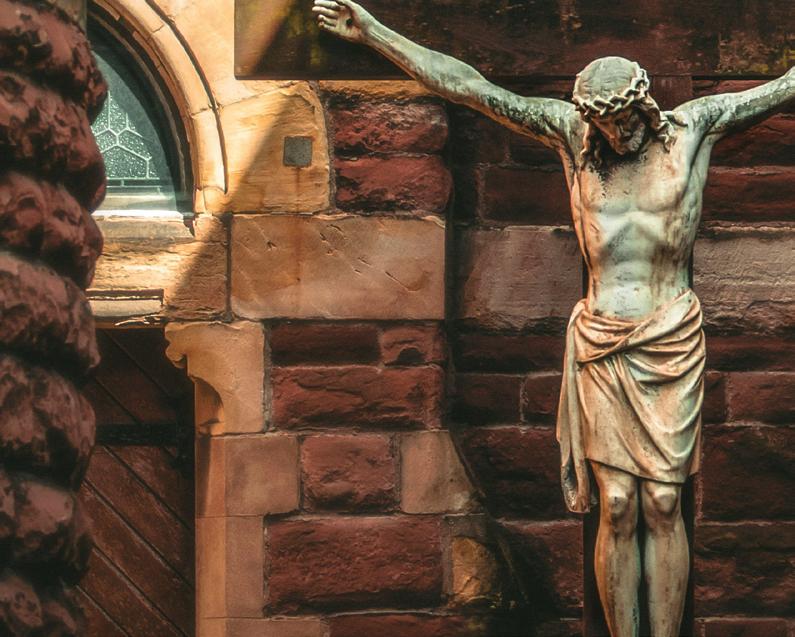
After 2,000+ years of history, the cross remains an inexhaustible mystery. It’s not something that can be rushed past, or a task that we can finish. Instead, we are called to simply remain. At the cross, Christ gives Himself completely, revealing both the cost of our salvation and the depth of God’s mercy.
The Passion may be difficult to witness, but it is not a moment to turn away. It is a moment to stay present and let the cross speak. Jesus loves us not only in word but in deed, and nowhere is His desire to walk with us—in our joys, in our sufferings—more evident than here. This year, may you encounter the special love that Jesus has for you.
What prayer do I need to bring to Jesus today at the foot of the cross?
WHAT TO WATCH FOR IN THE LITURGY
The silent entrance and bare sanctuary: There is no greeting or opening hymn, and the sanctuary is stripped of décor.
The Solemn Intercessions: An ancient, universal prayer of the Church for the whole world, with deliberate silence for personal reflection.
The Veneration of the Cross: All attendees are invited forward to venerate the Cross with a kiss, a bow, or touch.
No Mass, but Holy Communion: Communion comes from the hosts that are consecrated the day before on Holy Thursday. The liturgies of Holy Thursday, Good Friday, and the Easter Vigil form a single, unified celebration of the Triduum.
HOLY SATURDAY LOVE THAT WAITS
ON HOLY
SATURDAY, THE CHURCH WAITS IN SILENCE AT THE TOMB, TRUSTING THAT
GOD IS AT WORK EVEN WHEN ALL SEEMS LOST.
Holy Saturday is the quietest day of the liturgical year. The altar remains bare. The tabernacle stands empty. The Church does not celebrate Mass during the day, because Christ lies in the tomb—having descended to the dead—as we keep watch in silence.
It can feel unusual, like there is nothing to “do.” But that is the invitation: a different kind of holiness, one that waits. There are no instant answers or resolutions, and we can only trust when very little seems to be happening on the surface.
Yet the silence is not defeat, and it does not mean that God has stopped working. The tomb is not the end—it’s the place where ultimate victory is hidden, ready to spring.
As night falls, the Church gathers for the Easter Vigil, where new fire is kindled and the Alleluia returns! Until then, we wait—and trust.
Can I stay close to Jesus in the silence—and trust Him to work in the waiting?
WHAT TO WATCH FOR IN THE LITURGY
The absence of Mass during the day: There is no mass and no adornment—instead, there is a still silence that invites us to trust.
The empty tabernacle: A visible reminder that Jesus has died and descended as the Church keeps watch at His tomb.
The new fire (Easter Vigil): As the Church waits, a fire is lit at the Vigil mass, symbolizing the light of Christ overcoming the darkness of sin and death. The Church is filled with candlelight and the Paschal candle is lit.
STRANGER THINGS AND THE PREVAILING LIGHT
DR. AMBER MOSELEY is a wife, mother and Senior Varsity Catholic Manager for FOCUS (the Fellowship of Catholic University Students). She and her family reside in De Soto, Missouri.
Lent is a liturgical season that invites Christians into an intentional encounter with sorrow, silence, and the reality of sin and suffering. It is a time when the presence of darkness can feel particularly deafening. In these moments, we may experience a sense of abandonment or begin to believe that evil has won.
Yet as Christians, we know that darkness does not have the final word. The Paschal Mystery reveals that Christ’s death is not the end. As the Gospel of John proclaims, “The light shines in the darkness, and the darkness has not overcome it” (John 1:5). Jesus Christ—
Light Himself—enters into our human suffering and, through His Resurrection, overcomes sin and death.
Still, the reality of daily life reminds us that Christ’s victory does not immediately eliminate all experiences of darkness. Life is a pilgrimage marked by ongoing struggle. The darkness we encounter— whether grief, fear, or shame—often persists when left unacknowledged. As St. Augustine points out, sin and disordered desire thrive in concealment, while healing begins when truth is brought into the light.
Season 5 opens with the town of Hawkins fractured by deep divisions into the Upside Down, rendering the boundary between the two worlds dangerously permeable. Creatures known as demidogs move freely between worlds, and twelve children have been taken and placed under the control of Vecna—also known as Henry Creel or Mr. Whatzit—who seeks to use them to amplify his power. Max remains in a coma after Vecna took hold of her mind, an act that enabled the final gate to open and Hawkins to be torn apart. In response, the now-familiar Hawkins heroes devise a plan to save the children, defeat Vecna, and reclaim their town.
Vecna’s strategy relies upon exploiting his victims’ deepest vulnerabilities—much like the way the devil can exploit us. He preys upon unspoken fears and unresolved wounds, manipulating minds by forcing victims to confront their most devastating imaginings. Unknown to Vecna, however, he harbors a weakness of his own: a memory he refuses to face.
While Max and Holly search through Henry’s memories for an escape, they stumble upon a repressed moment from his childhood. In it, Henry encounters a scientist clutching a briefcase in an underground shaft. In a state of paranoia, the scientist believes Henry was sent to apprehend him and fires at him. Out of sheer terror, Henry retaliates, ultimately killing the man.
This memory is concealed within a cave that Henry refuses to enter. Desperate to recapture the children, he finally reenters this space, and fragments of the memory assault him, physically weakening him. Nevertheless, he presses on until he reaches the exact moment of the killing—and becomes possessed by the darkness contained within the briefcase.
Interestingly, the massively popular mystery-horror series Stranger Things offers a compelling portrayal of how unspoken fears and unresolved trauma allow darkness to grow, while honest conversation and shared vulnerability act against it. Focusing primarily on Season 5, I will explore the significance of conversations that are finally brought into the open— conversations that become necessary for confronting consuming darkness.
As I begin to break down the development of these characters, I proceed with the assumption that the reader is generally familiar with Stranger Things. That said, the show engages themes of darkness and violence, and viewers are advised to exercise discernment before watching. I write particularly to those who have been invested since the beginning.
Throughout this encounter, Will—whose consciousness has been linked to Vecna since his time in the Upside Down—invades Vecna’s mind and experiences his emotions. From within their shared consciousness, Will speaks a word of truth into Vecna’s deepest wound. As Vecna weeps over his younger self within the memory, Will declares, “You were just a kid. It used you. But you can resist it. Help us fight it!”
In this moment, Vecna is given a choice: to embrace the truth of his suffering and choose the light, or to continue clinging to the darkness that grants him power at the expense of his freedom.
PHOTO CREDIT: TEEN VOGUE
Vecna ultimately chooses the latter. Henry is so far removed from reality that he believes he needs the darkness to survive. For years, he has lived alone, isolated in the Abyss, and his decision—rooted in fear—results in his destruction. We see the cost of refusing illumination: when darkness is embraced rather than confronted, it consumes the very one who seeks to wield it.
Now, let us turn our attention to a character who chooses the way of light. Will—having also been exposed to the Mind Flayer—could have followed the same path as Vecna and succumbed to darkness. Instead, Will chooses communion and truth. Vecna exploits Will’s insecurities, feeding him lies—namely, that if his friends truly knew him, they would reject him.
Rather than allowing these lies to take hold, Will shares his fears with his friends, and they do not turn away—they remain. His act of vulnerability creates space for light to prevail and invites deeper communion. By allowing his friends to see his insecurities, Will gains the clarity and resolve needed to resist Vecna’s influence and exercise power over him, rather than the other way around.
Earlier in the season, tension also builds between Dustin and Steve through frequent arguments and growing bitterness. During one confrontation, verbal insults escalate into a physical fight. The encounter ends with
Steve walking away, convinced the relationship cannot be repaired.
Later, however, Steve initiates a moment of vulnerability by naming the true source of his anger: grief. He admits that his frustration stemmed from Dustin’s response to Eddie’s death—his emotional withdrawal from those who cared for him. Beneath Steve’s anger was loss; he missed his best friend. Unable to understand or articulate that pain, he allowed it to surface as anger instead. Dustin responds, “Yeah, I missed my best friend, too,” and the two embrace, ready to face Vecna as a united team.
By observing these character arcs in Stranger Things, the themes of Lent come sharply into focus—isolation, darkness, fear, and silence. Darkness gains its power not by its own strength, but by the absence of light. Our Christian response to darkness is not denial or avoidance, but illumination: allowing truth, grace, and communion to restore what has been obscured.
Lent calls believers to move from silence to confession, from isolation to communion, and from fear to courage. By bringing our struggles into the light—through prayer, repentance, and honest encounter—we participate in the ongoing work of redemption, trusting that the Light who conquered the tomb continues to shine within the shadows of our lives.
“
DARKNESS GAINS ITS POWER NOT BY ITS OWN STRENGTH, BUT BY THE ABSENCE OF LIGHT.”
A JOYFUL HOMECOMING
ST. CHARLES BORROMEO CHURCH REOPENS IN THIBODAUX
BY: BEVI FONTENOT
After four years and four months of extensive renovation, St. Charles Borromeo Church, located at 1985 Highway 308 in Thibodaux, joyfully reopened its doors on December 21 with a 10 a.m. Mass, church blessing, and altar dedication celebrated by Bishop Simon Peter Engurait. More than 450 parishioners and friends filled the church for the long-anticipated return.
Complete with a new roof, restored furniture, and a refurbished baptismal font, St. Charles Borromeo Catholic Church maintains its stained-glass windows and original architectural design while incorporating modern upgrades. The original altar and sanctuary furnishings were carefully repaired and restored. As part of the altar dedication, sacred relics of St. Gabriel Possenti, St. Lucy, and St. Peter—symbols of courage, holiness, and steadfast faith—were placed within the altar.
Parishioners and friends packed the church for the first Mass back. With the main church, chapel, and choir loft combined, the church has a total
capacity of 507 people. Fr. Baby “Philip” Kuruvilla, pastor since the summer of 2024, could feel the excitement as he addressed the parishioners. “Your patience, prayers, and steadfast faith have carried our parish family,” he said. “You remained hopeful when the road was long, supportive when challenges arose, and united in the belief that God would bring us back—back to our church, to our community, and to the heart of parish life.”
Many parishioners worked together in the months leading up to the reopening, forming restoration and “coming home” committees to keep the rebuilding process moving smoothly while also building awareness and anticipation for the parish’s return to church. Helen Zeringue, a lifelong parishioner who served on both committees, shared how she felt about the return. “It was a once-in-a-lifetime experience of excitement and joy,” she said. “We are finally back home.”
The church had sustained significant structural and water damage from Hurricane Ida, forcing the
parish to temporarily celebrate Mass in the Life Center using furnishings from the chapel. “We just waited,” said Zeringue. “Our patience was tested.”
Architect and lifelong parishioner Tommy Boudreaux became involved during the latter stages of the project, offering both professional expertise and personal commitment to see the job through. As an intern in the 1980s, Boudreaux had designed the original church building, making his return to the project especially meaningful. “This was truly a labor of love,” he said. “Pretty much everything but the pews was salvaged and restored. This facility is one of my favorites.”
Parishioners had hoped to return to their church in time for Christmas, but continued obstacles made the timeline uncertain. Throughout the process, Fr. Baby encouraged the community to trust in God and remain hopeful. “Everyone came together to do what they could,” he said. “I could see their anxiety and anticipation.” Reflecting on the journey, he added, “God is good all the time, and He really showed the great things He can do.”
Fr. Baby noted that celebrating the reopening during Advent—a season of hope and faith—made the moment even more meaningful for the parish. After years of waiting, the community now holds a renewed appreciation for their church and deep gratitude for the place of worship God has provided.
St. Charles Borromeo Church traces its roots to 1865, when Very Reverend Canon Charles M. Menard, along with the priests of St. Joseph Church in Thibodaux, established a mission chapel along Bayou Lafourche. Built on the Bourgeois family property and named St. Charles, the chapel gave the surrounding community its name. The mission became an official parish in 1912, with Father Albert S. Mauret appointed as its first resident pastor. In 1976, Monsignor John G. Keller assumed the pastorate, formalized the parish’s full name, and later oversaw construction of the current church building, completed in 1989
THE JUBILEE CLOSING MASS
BISHOP SIMON PETER REFLECTS ON FAITH, FAMILY, AND VIETNAM
BY: JOE O’SULLIVAN
As the Diocese of Houma-Thibodaux gathered at St. Francis de Sales Cathedral on December 28 for the Jubilee Closing Mass, Bishop Simon Peter Engurait invited the faithful to reflect not only on a holy year now drawing to a close, but on the kind of Church—and the kind of families—we are all called to become.
Providentially, the Jubilee Closing Mass just so happened to coincide with the Feast of the Holy Family, which provided the spiritual lens for Bishop Simon Peter’s homily.
At its heart was a simple but profound truth: “God’s greatest gift to us is Jesus.” Yet, Bishop Simon Peter emphasized, Jesus was not given to us in an isolated form; rather, God “gave Him to us in the context of a family.” In the Holy Family of Jesus, Mary, and Joseph, we are given an inspiration to follow—a living example for the Church and for our own families.
The readings for the day—from Sirach, the Psalms, St. Paul’s Letter to the Colossians, and the Gospel of Matthew—reinforced this vision, pointing again and again to the dignity of family life and the virtues that sustain it.
Earlier that day, Bishop Simon Peter had visited with members of the Vietnamese community at Holy Family Parish in Amelia. Drawing from that encounter, he recounted a trip he took to Vietnam the year before entering the seminary. “The thing that struck me,” Bishop Simon Peter noted, “was how you find a family living together that spans three to four generations... And yet you could see a lot of joy, a lot of ‘laugh’ in them.”
“And it’s beautiful,” he went on, “when that’s what a family means.”
At the same time, the bishop was quick to acknowledge that no family is without conflict, disagreement, or suffering. These realities are a part of every household. That is precisely why families—and the Church—must continually practice patience, forgiveness, and forbearance with one another.
“St. Paul tells us,” Bishop recalled from the readings at mass, “’to put on, as God’s chosen ones…compassion, kindness, humility, gentleness, and patience, bearing with one another and forgiving one another’” (Col 3:12-13).
These virtues, he explained, are not incidental to the life of the Church, but essential to it. Echoing the spirit of the Jubilee Year inaugurated by Pope Francis, he reminded those in attendance
that family life is what “strengthens us on our journey of faith” and “leads us to the fullness of life.”
Returning again to his experience in Vietnam, the bishop described a custom that left a lasting impression. At mealtime, families served children first, followed by the elders. In this simple act, he said, families intentionally care for “those who are most in need.” It is a custom that offers a powerful witness to the Gospel.
That witness, Bishop Simon Peter suggested, also presents a challenge—one that is often familiar in American culture. “As a nation,” he pointed out, “we are not paying enough attention to those who are elderly.” Too frequently, he continued, value is only placed on those who are in the “prime” of their life, and often those at the very beginning or very end of their lives remain ignored and overlooked.
Drawing from the book of Sirach, Bishop Simon Peter emphasized the duty to honor and care for our parents, even when age brings on frailty, repetition, or forgetfulness. One of the saddest things he hears them say is, ‘Father, I’m so worried that my children are going to put me in a home,’” he mentioned. “Parents should not have to fear that.”
If circumstances make in-home care impossible, nursing homes can become extensions of our own home. “If that happens, we go and see them every so often,” Bishop Simon Peter noted. “Then, we’ll be a blessing to them.”
Finally, Bishop Simon Peter turned to Christ himself, imagining how Jesus must have cared for St. Joseph in his old age. Though the Gospels are silent on those years, Bishop Simon Peter was sure of one thing: “He took very good care of him, just as he took care of his mama.”
Indeed, Bishop reminded us, just as Jesus was moments away from his own death, breathing his last, “he turned to his disciple and said, ‘Take care of mama!’”
In that moment, Bishop Simon Peter said, Christ gave us all a model to follow—Himself.
With the Jubilee Year now concluded, the faithful of the Diocese of Houma-Thibodaux are invited to carry its graces forward—into our homes, our parishes, and our work—by living out the virtues of self-giving love modeled by the Holy Family.
Looking ahead, the Church now turns her gaze toward the next Jubilee Year, most recently announced by Pope Leo XIV—as a year of St. Francis of Assisi, in honor of the 800th anniversary of his death—once again calling the faithful to hope and interior conversion.
LOVE THAT LASTS FOREVER LOVE THAT LASTS FOREVER
RENÉ DANOS DAVID’S ENDOWMENT STORY
“WHEN PEOPLE ASK ME WHY OUR FAMILY BELIEVES SO DEEPLY IN ENDOWMENTS, MY ANSWER IS SIMPLE. BECAUSE ENDOWMENTS TURN LOVE INTO LEGACY AND THE CATHOLIC FOUNDATION HAS HELPED ME ACCOMPLISH THAT GOAL.”
My name is René David and I serve on the Board of Directors at the Catholic Foundation of South Louisiana. For the past nine years, I have had the pleasure of being deeply involved with the Foundation, and today I now serve as Vice Chairman.
After my father’s passing, we learned he had quietly started an endowment for Catholic Charities in my mother’s name to support CCHT’s mission. My parents were big supporters of Catholic Charities because Catholic Charities gave them one of their greatest gifts: my brother and I. We were both adopted through Catholic Charities, and as their children, we felt called to carry that passion forward to honor our parents and to help ensure the stability of an organization that brings hope to so many families.
In 2018, we created an endowment that was for seminarian education—the Mary and Al Danos Foundation Seminarian Endowment. A few years before my father passed away, he discussed wanting to help pay for the education of a seminarian every year. Sadly, he died before he could fulfill that wish himself. So, as a family, we decided to establish this endowment with one
clear goal: Help not just one seminarian once— but ensure that one seminarian will always be supported. Forever.
That is the power of an endowment with the Catholic Foundation: What begins as generosity becomes a permanent ministry.
Additionally, we started a second fund that supports Catholic Charities—the Mary and Al Danos Foundation Catholic Charities Endowment.
The third fund we established is especially close to our hearts: the Sister Claire Rodrigue Endowment for tuition assistance at Holy Rosary Catholic School. When my parents adopted my brother and I through St. Vincent’s in New Orleans, one of the Sisters asked them to please consider sending their children to a Catholic school. The very next week, my father visited the only Catholic school in our area. Sister Claire was the principal at the time. My parents loved her heart, her leadership, and her devotion to her students.
My parents, Mary and Al Danos, along with John and Clara Brady and Brian and Emilie Cheramie, had helped start Friends of the Rosary, which would eventually become the Sister Claire Rodrigue Endowment. It started as a nonprofit dedicated to making sure any family who desired a Catholic education for their child could have one. Within those early years, John Brady had the foresight to set aside a portion of funds raised each year and invest them for the future. At the end of 2022, our family foundation contributed one hundred thousand dollars to formally establish the Sister Claire Rodrigue Endowment. Then, in the beginning 2023, over five hundred thousand dollars for that long-term investment that was set aside yearly, adding further to the endowment. And in just two years, this fund stands just under one million dollars, and it continues to grow. Ensuring tuition assistance not just for today — but for generations to come.
That brings me to why I share this story. Today, all three of these funds with the Catholic Foundation have grown to the point where they now work on their own—quietly and faithfully. And they all operate with the trust, transparency, and ease of working with the Catholic Foundation and its amazing staff. Our love supporting seminarians, families, and children continue year after year.
This is what I hope others will see. Endowments are not about large gifts. They are about lasting impact. They allow your faith, your values, and your love for the Church to keep giving, long after the original gift is made. They turn generosity from a moment into a ministry.
If there is one thing I encourage others to consider, it is this: Don’t just ask how you can help today. Ask how your generosity can still be helping fifty years from now. Because when we give in a way that endures, we don’t just meet needs. We build legacies of faith, hope, and love.
Our parents’ faith was deep and their desire to help others was strong. That love will not end with us. Through these endowments, our love continues to serve. Our values continue to guide. And our legacy continues to bless others in ways we may never see.
WHAT BEGINS AS GENEROSITY BECOMES A PERMANENT MINISTRY. WHAT BEGINS AS GENEROSITY BECOMES A PERMANENT MINISTRY.
Prayer Fasting Almsgiving
IN CASE YOU MISSED IT RECAPPING
EVENTS AROUND THE DIOCESE
INAUGURATION OF THE SEASON OF LITURGICAL RENEWAL
Bishop Simon Peter Engurait formally inaugurated the Season of Liturgical Renewal, a renewed diocesan commitment to reverent, faithful, and prayerful worship rooted in the Church’s liturgical tradition. This season invites clergy and faithful alike to deepen their love for the Sacred Liturgy and the Eucharist as the heart and center of our Catholic life together. Stay tuned for more developments about this special new season.
HISPANIC CULTURAL MASS | FEAST OF OUR LADY OF GUADALUPE
Our diocese celebrated the Feast Day of Our Lady of Guadalupe on Friday, December 12 with a special Mass led by our Hispanic community. The evening started with a rosary procession around the Cathedral of St. Francis de Sales followed by Mass with Bishop Simon Peter. It was a beautiful representation of the faith of our diocese and of our Hispanic ministry. Let us continue to pray for Our Lady’s intercession and protection.
ST. CHARLES BORROMEO MASS AND RE-OPENING
On Sunday, December 21, parishioners at St. Charles Borromeo in Thibodaux joyfully returned to their restored Church. Bishop Simon Peter celebrated the Mass, blessed the Church, and dedicated the altar. The Church had been undergoing renovations for over four years after being closed from the devastating impact of Hurricane Ida.
JUBILEE YEAR CLOSING MASS
The Jubilee Year Closing Mass was held on Sunday, December 28 at the Cathedral of St. Francis De Sales in Houma. Bishop Simon Peter celebrated the Mass, which coincided with the Feast of the Holy Family. Bishop’s homily reflected on the importance of family virtues.
BISHOP MARIO MEMORIAL MASS
In observance of the second anniversary of the passing of our beloved former Bishop, Mario E. Dorsonville, a Memorial Mass was held on Monday, January 19 at St. Joseph Co-Cathedral Catholic Church in Thibodaux. May we continue to pray for the repose of his soul.
MARCH FOR LIFE
Our March for Life crew embarked on their pro-life pilgrimage to Washington, DC from January 19-23! More than just a trip, it’s a spiritual retreat and a chance to take a bold stand for life alongside hundreds of thousands from across the nation. Thank you to all who went, and great work!
INAUGURAL BAYOU REGIONAL ECUMENICAL PRAYER SERVICE
In observance of Christian Unity Week, the Inaugural Bayou Regional Ecumenical Prayer Service was held at the St. Joseph Co-Cathedral in Thibodaux on Thursday, January 22. Christians from many different walks came together in unity to share readings, songs, and reflections. A new ecumenical choir, directed by Dr. John St. Marie, was also debuted.
DIOCESAN PATRONAL FEAST OF ST. FRANCIS DE SALES
On Saturday, January 24, our diocese gathered for a special diocesan Mass to celebrate the feast day of the principal patron of our diocese, St. Francis de Sales. A 16th-century French bishop, St. Francis de Sales taught that holiness is possible for everyone through patience, humility, and love. St. Francis de Sales, pray for us.
THE GRAND STORY OF GRAND ISLE | STORY NIGHT SERIES
Our Lady of the Isle Catholic Church in Grand Isle is continuing its series of Story Nights with “The Grand Story of Grand Isle.” Nights 1 and 2 were held on December 16 and January 13, respectively—but you can still catch Nights 3 and 4 on Tuesday, February 24 and
Tuesday, March 24. If you’re interested in attending, be sure to visit their Facebook page for more information!
MEN’S GATHERINGS
The “Rise Up” Men’s Conference was held at Christ the Redeemer in Thibodaux on February 28. Presentations by Bishop Simon Peter, Fr. Mark Toups, Fr. Michael Delcambre, Fr. Paul Birdsall, and Major General Hunt Downer Jr. were featured. Thanks to all the men who participated.
The St. Joseph Men’s Club held a Fatherhood Conference on January 25, a chance for fathers to discuss raising children with a foundation of faith. Coach Kyle Lasseigne and Father Mitch Semar presented. To get involved in future events, contact Cullen Buisson at cullen4lsu@ gmail.com.
THEOLOGY ON TAP
Our ministry for young professionals continues this year, holding its first gathering on Thursday, February 12. The guest speaker was Superintendent Dr. Mark Williams. Stay tuned to our social media for future events!
Check out our social media pages to find more coverage of these events and keep up with what’s to come.
AROUND THE DIOCESE
ST. JOSEPH’S ALTARS
Solemnity of St. Joseph
Thursday, March 19
Throughout our diocese, many of our churches and schools are showcasing St. Joseph altars. We invite you to visit these altars as a way to honor St. Joseph this Lent.
THE LIGHT IS ON
Diocesan-Wide Celebration of the Sacrament of Confession
Wednesday, March 25, 6 p.m. – 8 p.m.
Lent is a season of mercy—come home to the Lord through the Sacrament of Reconciliation. Confession will be available throughout the diocese during these dedicated hours and will be celebrated in all Church parishes throughout the diocese.
CHRISM MASS
Celebrating the Gift of the Priesthood
Thursday, April 2 at 10 a.m.
Cathedral of Saint Francis de Sales (Houma, LA)
At the Chrism Mass, the Sacred Oils used in the sacraments throughout the year are blessed, and our priests renew their promises of ordination in unity with the bishop and the People of God. Priests will pick up the Sacred Oils themselves after Mass.
THE SACRED TRIDUUM
Holy Thursday, Good Friday, and the Easter Vigil
April 2–5
The Sacred Triduum is the holiest time of the Church year—three days that lead us through the Lord’s Passion, Death, and Resurrection. Make time to worship, pray, and keep watch with Christ. Visit your local parish website for Mass times.
ANNUAL BISHOP’S APPEAL
Support the mission of the Church across the Diocese of Houma-Thibodaux.
Your gift directly supports key diocesan ministries— especially the formation of seminarians, the care of retired priests, and the strengthening of Catholic education and formation throughout our parishes and schools. Give today (one-time or recurring) by visiting our diocesan website at htdiocese.org.
December 26, 2025
To All Child Sexual Abuse Claimants in the Archdiocese of New Orleans:
With this letter, I express on behalf of the clergy, religious, and laity of the Archdiocese of New Orleans, my predecessors, and myself, profound regret over the tragic and inexcusable harm you have suffered at the hands of your abusers. I sincerely apologize to you for the trauma caused to you and to those close to you as a survivor of sexual abuse perpetrated by a member of the clergy, a religious sister or brother, or a lay employee or volunteer working within the Catholic Church. Sexual abuse is an inexcusable evil, and I am ashamed that you or anyone should have been sexually abused by someone working within the Catholic Church.
Please know that you are not to blame for the abuse perpetrated on you. You were and are completely innocent and did nothing to deserve the pain you have suffered because of the hideous crime of sexual abuse of a minor. The Archdiocese of New Orleans takes responsibility for the abuse you have suffered and pledges to keep children and all vulnerable people safe in our ministry.
It is my fervent hope that as we bring these Chapter 11 proceedings to a close, you will achieve some sense of peace, justice, and healing. I hold you and all survivors of abuse in prayer daily and encourage all to join me in prayer for you.
With my sincere admiration for your courage in coming forward, I am,
Sincerely yours,
Most Reverend Gregory M. Aymond Archbishop of New Orleans
Please keep in your prayers all of our catechumens and candidates who are on the journey to become fully Catholic this Easter.
ADVERTISE WITH US
Be a part of our magazine! The Bayou Catholic is always looking for valued partners. If you’re interested, reach out to us at communications@htdiocese.org.
WRITE FOR THE BAYOU CATHOLIC
The Bayou Catholic is always adding voices to the magazine. If you’re interested in writing one of our columns, send us an email at communications@htdiocese.org.
STORY IDEAS
We’d love to hear your ideas. Don’t hesitate to write to communications@htdiocese.org.
here! Join us on a journey of faith, encouragement, and hope featuring voices from the Diocese of HoumaThibodaux. Tune in on your favorite podcast platform.
FOLLOW US ON SOCIAL MEDIA
@htdiocese
@htdioceseLA Diocese of Houma-Thibodaux
At Terrebonne General Health System, we believe that health is a journey best traveled together.
As your dedicated partner in wellness for over 70 years, we are committed to providing comprehensive, compassionate care tailored to your unique needs. From preventive services, primary and specialty care, to advanced treatments, we offer a full spectrum of healthcare solutions to keep you and your family healthy.
Terrebonne is French for good earth, and Good Health here on the Good Earth sounds just right. Together, we can achieve a healthier, happier future for our community.