Volume 16 : Issue 10
TM
www.HRProfessionalsMagazine.com
SHRM Unveils HR-X Live
Employee Benefits
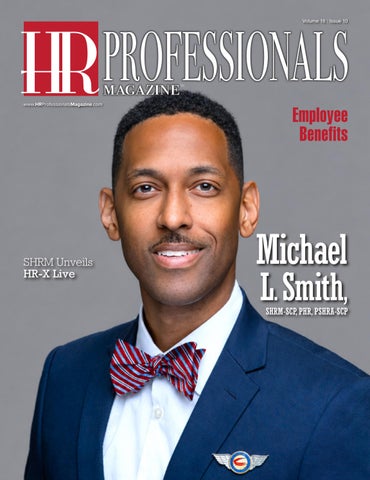
Michael
L. Smith,
SHRM-SCP, PHR, PSHRA-SCP
Worried Today’s Dream Hire May Be Tomorrow’s Nightmare?
alsify f o h ired w h t s e e g of candidat till s n informatio Even the most thorough background check can be undermined by stolen Social Security numbers, synthetic identities, and deliberately-mismatched personal information. Data Facts’ identity verification and edit-detection tools help confirm your candidate is who they claim to be. By using innovative technology and biometric data, you can be confident in your hiring decisions right from the start. Catch discrepancies early. Reduce fraud. Avoid hiring nightmares.
CHOOSE CHOOSE YOUR YOUR 2027 2027 SAILING SAILING
PROFESSIONAL PROFESSIONAL DEVELOPMENT DEVELOPMENT MEETS MEETS UNFORGETTABLE UNFORGETTABLE TRAVEL TRAVEL Three distinct cruise experiences. Outstanding HR education on every sailing. Three distinct cruise experiences. Outstanding HR education on every sailing.
MARCH 13-20, 2027 MARCH 13-20, 2027
APRIL 23-28, 2027 APRIL 23-28, 2027
MAY 14-21, 2027 MAY 14-21, 2027
HARMONY HARMONY OF OF THE THE SEAS SEAS
OASIS OASIS OF OF THE THE SEAS SEAS
VOYAGER VOYAGER OF OF THE THE SEAS SEAS
7 NIGHTS | PORT CANAVERAL 7 NIGHTS | PORT CANAVERAL San Juan, Puerto Rico | Samaná, Dominican San Juan,| Perfect Puerto Rico Dominican Republic Day |atSamaná, CocoCay, Bahamas Republic | Perfect Day at CocoCay, Bahamas
18.75 CREDITS SUBMITTED 18.75 CREDITS SUBMITTED
CONFERENCE SPEAKERS CONFERENCE SPEAKERS Jason Barrett Jason Barrett
Chrissy Bencivenga Chrissy Bencivenga Marty Bryson Marty Bryson JoDee Curtis JoDee Curtis Jacquilyn Ann Davis, CDP Jacquilyn Ann Davis, CDP Julie Doyle Julie Doyle Katrina Gooch Katrina Gooch Greg Kettner Greg Kettner Matt Kutz, PhD Matt Kutz, PhD Jason Lawson Jason Lawson David Miklas David Miklas Dr. Wendy Richard Dr. Wendy Richard Nicole Roberts Nicole Roberts Jamie Lewis Smith, PhD Jamie Lewis Smith, PhD Chad Sorenson Chad Sorenson
5 NIGHTS | FORT LAUDERDALE 5 NIGHTS | FORT LAUDERDALE Cozumel, Mexico | Perfect Day at CocoCay, Cozumel, MexicoBahamas | Perfect Day at CocoCay, Bahamas
16.75 CREDITS SUBMITTED 16.75 CREDITS SUBMITTED
CONFERENCE SPEAKERS CONFERENCE SPEAKERS Blake Babcock Blake Babcock
7 NIGHTS | SEATTLE 7 NIGHTS | SEATTLE Juneau | Skagway | Ketchikan, Alaska | Victoria, Juneau | Skagway | Ketchikan, Alaska | Victoria, British Columbia British Columbia
19.25 CREDITS SUBMITTED 19.25 CREDITS SUBMITTED
CONFERENCE SPEAKERS CONFERENCE SPEAKERS Indie Bollman Indie Bollman
Mercedes Dodd Mercedes Dodd
Mercedes Dodd Mercedes Dodd
Chris Dotson Chris Dotson
Val Grubb Val Grubb
Dr. Terah Henderson Dr. Terah Henderson
Kenston Henderson, Sr. Kenston Henderson, Sr.
Summer Jelinek Summer Jelinek
Jill Kopanis Jill Kopanis
Michael Karst Michael Karst
Shaina Lane Shaina Lane
Katrina Kibben Katrina Kibben
Michael Levin Michael Levin
Andrea Lewis Andrea Lewis
James Reid James Reid
Megan Nail Megan Nail
Karla Starr Karla Starr
Julius Richardson Julius Richardson
Casey Webster Casey Webster André Young André Young
THE THE SPEAKERS SPEAKERS ARE ARE READY. READY. YOUR YOUR CABIN CABIN IS IS WAITING. WAITING. Registration is open. Reserve your conference seat and stateroom with a Registration is open. Reserve your conference seat and stateroom with a $200 per person non-refundable deposit. $200 per person non-refundable deposit.
HRCRUISE.COM HRCRUISE.COM
SCAN TO EXPLORE SCAN TO EXPLORE Credits are being submitted to SHRM and HRCI. Speaker lineup and itinerary are subject to change. Credits are being submitted to SHRM and HRCI. Speaker lineup and itinerary are subject to change.
HR Professionals Magazine is recognized by SHRM to offer Professional Development Credits (PDCs) for SHRM-CP® or SHRM-SCP® recertification activities.
17th Annual Bringing Human Resources & Management Expertise to You
Human Re
54%
of companies are cutting compensation to fund AI. www.HRProfessionalsMagazine.com
Editor Cynthia Y. Thompson, MBA, SHRM-SCP, SPHR Publisher
The Thompson HR Firm, LLC Art Direction
Park Avenue Design Marketing and Social Media Specialist
Julie Nagem
Project Specialist
Liz Rogers
Photographer
Charles B. Thompson Webmaster
Leo Dimilo
Fall Confer Features
18 Balancing Privacy and Safety – Warning Nov. 3, 2026, Tues.Signs 3 Choose Your 2027 in the Workplace 8:00 a.m. to 4:30 p.m. Sailing 20 Making the 360 Matterat 5 a note from the editor Turning Feedback into 6 Profile of Michael L. Grant Event Better Performance Center Smith, Director of SHRM 24 Are You Prepared 1050 Union University Dr. for Arkansas State Council the Unthinkable? J.J. 7 Welcome to HR2026 – Celebrating 40 Years
Jackson, TN 38305
Keller Compliance Network
Presented by: 29 SHRM Certification THE WEST TENNESSEE SOCIE 35 SHRM Certification In coordination with: 40 Graduate with More than THE LAW F a Master’s atIRM WGUOF RAINEY, K
Saddle up and join us for the HR Rodeo Employment Law workplace issues. Through practical ses 23 R ainey Kizer Reviere & professionals, you’ll gain insights and st Bell – The Strength of avoidExperience compliance risks, and keep your o
26 NLRB Gains 3-1 30 Highlights from 19 SHRM Unveils HR-X Update: Following theRepublican Legal Trail Majority, After Hours Live!: The World’s HR LegalDisruption Settingand Stage for Majorshaping the w First HR Credentialing Trace the trailinofMemphis recent key rulings, regulations, legislation Policy Shifts September 22 Academy professionals need to know, compliance pitfalls to avoid, and practical guida 27 Bass, Berry, & Sims 25 Why Should You Go on an HR Conference When Employee It’s Time to Part Ways: Managing 31 Bass, Berry &Terminations Sims Cruise? Listens and Responds Learn how Benefits to manage one of HR’s most challenging responsibilities while mi 32 A Gift that Kicks Off the considerations before, during, and after a termination, including documentat 8 GLP-1Coverage: Holiday Season SHRM 2026 Whatthat HR Leaders common missteps can landand an employer in legal trouble. 34 SHRM Greater Business Owners Conferences Greensboro Celebrates NeedTeach to Know Empathy? A ChatGPT Experiment Fe Can Robots 80 Years of Advancing Update 9 NovoNordisk Works!better communicators? This engaging sessio Can AI actually help us become the HR Profession 12 Highlights if the SHRM 10 Onepartners Workforce. for developing empathy, emotional intelligence, an 35 SHRM Georgia serve as practice Tennessee Conference Different Priorities Executive Leadership in Knoxville, ways to incorporate AI into professional development while considering bot Team September 13-16 11 The Benefits Group – WeSaddle: do all the Lessons work! In the HR from LegalBLUEPRINT Case Studies 17 SHRM
lsify a f ho w hired t s e e t g f candida till s n informatio Contributing Writers William Brown Amy Schabacker Dufrane Mitsu Frazier Tim K. Garrett Satish Kumar Michael G. Medoro Brooke Meekins Mitsu Rothacher Michael L. Smith Steve Spurlock Sara Staley Sonya Weathers Hunter K. Yoches
Talent can be undermined by stolen Social Security numbers,
for employment I&D in Nashville, 33 As Medication Costs Put your HR judgment to the test on real-life law cases. These November 15-18 Climb, Employees workplace situations, apply legally sound practices that ke Managementrisks, navigate are Looking to HR for and 22 WTSHRM Human matched personal information. Data Facts’ identity Contact HR Professionals Magazine:
Answers and Recruiting Resources & Employment Trouble on the Range: Employee Discipline & Workplace
onfirm your candidate is whonew they By using of a special event, promotion, announcement, productclaim or service, to be. 2 Worried Today’s To submit a letter to the editor, suggest an idea for an article, notify us
Law Fall Conference in judgment to work in this interactive look at employee miscond Jackson, November 3 Dream Hire May Put Be your HR Top Educational ou can be confident in your hiring decisions right from investigations. Through a developing workplace scenario, participants will co Tomorrow’s Nightmare? or obtain information on becoming a contributor, visit our website at www.hrprofessionalsmagazine.com. We do not accept unsolicited manuscripts or articles. All manuscripts and photos must be submitted by email to Cynthia@hrprosmagazine.com. Editorial content does not necessarily reflect the opinions of the publisher, nor can the publisher be held responsible for errors.
Programs for HR
gather the facts, conduct an effective investigation, and make legally sound d rly. Reduce fraud. Avoid hiring nightmares.5 Violence Prevention Professionals HR Professionals Magazine is published every month, 12 times a year by the Thompson HR Firm, LLC. Reproduction of any photographs, articles, artwork or copy prepared by the magazine or the contributors is strictly prohibited without prior written permission of the Publisher. All information is deemed to be reliable, but not guaranteed to be accurate, and subject to change without notice. HR Professionals Magazine, its contributors or advertisers within are not responsible for misinformation, misprints, omissions or typographical errors. ©2026 The Thompson HR Firm, LLC | This publication is pledged to the spirit and letter of Equal Opportunity Law. The following is general educational information only. It is not legal advice. You need to consult with legal counsel regarding all employment law matters. This information is subject to change without notice.
4
www.HRProfessionalsMagazine.com
Conference of MidAmerica
15 HRCI One
Lunch is provided. 14 Denial Isn’t a Solution: 21 Trainery HCM 1 –Explore our showcase of HR-related exhib HR’s Role in Supporting Connected Talent REGISTRATIONPerform FEE: $199 for WTSHRM Members Recovery
HR Professionals Magazine is $249 for non-WTSHRM Members 16 You Can’t Automate 28 Going Back to School recognized by HRCI to offer Your Way Out of a Doesn’t Mean Starting professional recertification for HRCI activities. People Problem REGISTER AT: Over WTSHRM.ORG credits DEADLINE : OCTOBER 27
This program has been approved for 6 recertification credit h
a note from the editor October is Open Enrollment Month. We are excited to feature Michael L. Smith, Director of the SHRM Arkansas State Council, on our October cover. Michael was recognized by the SHRM Foundation as a 2026 Everyday Hero. In addition to serving as Director of ARSHRM, Michael serves in the United States Air National Guard as the Public Affairs Officer for the 189th Airlift Wing. He was recognized during the SHRM26 Annual Conference and Expo in Orlando. We also have some helpful articles featuring employee benefits to assist you with your 2027 employee benefits. The demand for GLP-1 coverage is increasing. Millions of Americans meet the clinical guidelines for GLP-1. See Will Brown’s article on Page 8 explaining how employers can support employee health while keeping spending under control. We welcome our new sponsor, NovoNordisk, who can assist you with providing access to treatments for your employees with obesity. Be sure to catch Will Brown’s article on Page 10, “Benefits by Generation,” which discusses the importance of knowing the needs of all your employees based on their age.
Another important part of your employee benefits plans are prescription medicines. CompareMedsRX is a smart new benefit that will help your employees reduce the cost of their prescription drugs. It is the ultimate prescription savings platform that you need to check out on Page 33. The SHRM fall conferences are in full swing across the U.S. We have the exciting highlights from the SHRM Tennessee Conference on Page 12-13 from Knoxville. Another important conference you don’t want to miss is the Violence Prevention Conference of Mid-America in Bentonville October 20-21. Register at SafeHavenSecurityGroup.com. The conference is pre-approved for SHRM and HRCI credits.
16th Annual WT SHRM HR & Employment Law Fall Conference in Jackson November 4 in Jackson
Earn 6 SHRM and HRCI recertification credits
Register @wtshrm.org
Watch for your email for notification about our complimentary webinar sponsored by Data Facts on October 8, “STOP Incivility in the Workplace,” at 2PM CT | 3 PM ET. Please mark your calendar and plan to join us. If you are not receiving our email notifications about our monthly webinars, please visit our website, www.hrprofessionalsmagazine. com., and subscribe to our digital issue to be added to our email distribution list.
The Violence Prevention Conference of Mid-America October 20-21 in Bentonville, AR
Pre-approved for SHRM and HRCI recertification credits
Register at SafeHavenSecurityGroup.com
SHRM BLUEPRINT Conference
Cynthia Y. Thompson, MBA, SHRM-SCP, SPHR cynthia@hrprosmagazine.com www.hrprofessionalsmagazine.com
November 15-18 in Nashville SHRM.org/BP26-HRP10
Violence Prevention Conference of Mid-America October 20-21 | Rogers, Arkansas Embassy Suites Northwest Arkansas-Hotel & Convention Center Workplace violence is preventable — if you know what to look for. Join security experts at the Violence Prevention Conference of Mid-America to learn how to assess threats, de-escalate situations, and protect your team.
FEATURED SPEAKERS
BROOKE BRITTAN
MONTE MILLS
SANDRA COBDEN
MIKE CALVI
Author / Retired US Army / Athletic Coach -SHRMSHRM-CP I
SHRM-SCP
RECERTIFICATION
PROVIDER L
.J
Security Expert
MIKE RUGGIERO
Law Enforcement Trainer
HR Professionals Magazine is recognized by SHRM to offer Professional Development Credits (PDCs) for SHRM-CP or SHRM-SCP recertification activities. Approved for 11 SHRM PDCs.
This program is pre-approved for 1 (PDC) for SHRM-CP® or SHRM-SCP® recertification activities.
SafeHavenSecurityGroup.com Scan QR Code to Register
Legal Counsel Litigation & Compliance
CSO, Arvest
MIKE JOHNSON
VP of Threat Assessment
www.HRProfessionalsMagazine.com
5
Michael on the cover
L. SMITH
Michael L. Smith, SHRM-SCP, PHR, PSHRA-SCP The Person Behind the Resume Time flies when you’re having fun! Just ask Michael L. Smith—HR professional, military officer, and volunteer leader—who has spent nearly two decades helping people and organizations become better. Whether he’s supporting an airport employee work through a personal issue, advising his management team, serving alongside fellow Airmen, or volunteering in his local community, Michael believes good leadership starts with a willingness to work for others. If there is one thing that ties all three parts of Michael’s career together, it’s his commitment to the people he works for.
A Career Built Around People Michael’s HR career began with a somewhat unlikely starting point: working as a hotel desk clerk while attending college. That experience gave him the opportunity to help resolve issues for guests and fellow co-workers. Assisting others in solving problems eventually sparked his interest in human resources and led him to earn a bachelor’s degree in human resources management from the University of Arkansas in Fayetteville. After working in leadership positions with America’s Car-Mart and the City of Little Rock, Michael eventually landed at Clinton National Airport (LIT). Since 2007, he has served there as Human Resources Manager, overseeing personnel functions and services for more than 180 employees. In this role Michael is responsible for benefits administration, grievance resolution, staffing, compensation, benefits and employee relations. It’s a job that has allowed him to advocate for employees and improve their work experience. Although Michael would tell you this role and his employees have given him more than he could ever give back to them. Along the way, his work has earned some pretty impressive recognition, including the Arkansas Governor’s Work-Life Balance Award, HR Professional of the Year, Best HR Practice Award, and the Air Force Achievement medal. Michael was most recently recognized as a finalist for the 2026 SHRM Foundation Everyday Hero Award. In addition to those achievements, Michael also holds HR certifications with SHRM, HRCI, and PSHRA.
The HR Guy Who Also Wears a Uniform Michael’s work doesn’t stop when he leaves the airport, military service has been another defining part of his career. As the son of an Air Force veteran, it was Michael’s father who inspired his own decision to join the Arkansas Air National Guard while in college. There he served as enlisted airmen for several years before crossing over to earn his officer commission in 2019. He currently serves as the Public Affairs Officer for 189th Airlift Wing, Little Rock AFB. 6
www.HRProfessionalsMagazine.com
Michael prides himself on having the opportunity to communicate the many accomplishments and activities of his fellow guardsmen, and the role they play in supporting their state and federal mission. He has previously deployed in support of Operations Southern Watch, Iraqi Freedom and Enduring Freedom. Michael’s time spent overseas serving our country helped him gain a better understanding of people with diverse backgrounds. This had a major influence on the way he approaches leadership, and has taught him the importance of preparation, teamwork, and accountability.
Volunteer Leader and Change Agent Michael has been an Arkansas SHRM State Council volunteer leader for more than 14 years, serving in multiple board and leadership roles. He started this journey as a member of the SHRM student chapter while he was in college. Michael would later join the Central Arkansas HR Association after graduating and relocating to Little Rock. He volunteered on the chapter’s workforce readiness committee and eventually was appointed as a chapter officer responsible for that CLA. His transition to the state council increased his opportunities to mentor emerging professionals, support training and development initiatives, and help strengthen the HR profession across the state. Through those efforts, Michael developed a reputation for being someone who genuinely enjoys connecting with people and building networks. This eventually led to Michael being elected as state council director, a role he never imagined or saw himself filling—“Serving in this position has been beyond humbling. There were so many amazing state directors who came before me and inspired me, so I want to make sure I represent them and all of our HR professionals across Arkansas with everything I have because they deserve nothing less.” Michael is looking forward to rolling out the welcome mat as the ARSHRM state council celebrates its 40th anniversary state HR conference this October 14-16, 2026, in Hot Springs.
What Keeps Him Going For Michael, the most rewarding part of his career isn’t a job title, an award, or a line on a resume. It’s knowing that something he said, someone he supported, or a problem he helped solve made a difference for another person. He is motivated by the opportunity to make workplaces better, help people succeed, and give back to the profession that has provided him with so many opportunities. That commitment has shaped the way he leads, the way he approaches challenges, and the impact he continues to make in the Arkansas HR community. Whether he’s wearing an HR badge, an Air Force uniform, or an ARSHRM name tag, Michael approaches each role with the same mindset that leadership is most meaningful when it is focused on others.
WELCOME TO TO HR2026, HR2026, CELEBRATING WELCOME CELEBRATING 40 40 YEARS YEARS Welcome to HR2026 — the Arkansas SHRM HR Conference & Expo! We are beyond excited to be here in Hot Springs, Arkansas, for three days of learning, connec;on, and professional growth. Our 2026 theme, “Level Up! The Future of HR is a Game Changer,” reflects the rapidly changing world of work and the increasingly important role HR professionals play in helping organiza;ons navigate that change. You will have opportuni;es to explore ;mely issues that impact the future of work. Our sessions will provide prac;cal insights and strategies that you can take back to your workplace and put into ac;on. Plus - our conference is approved for 14.75 recer;fica;on credit hours. This year is especially meaningful as we celebrate our conference’s 40th anniversary. For four decades, ARSHRM has brought Arkansas HR professionals together to share ideas, build rela;onships, and prepare for the challenges and opportuni;es shaping our workplaces. And we can’t think of a beOer way to celebrate than with a liOle 80s nostalgia, a lot of energy, and three days designed to be both fun and impacPul. So dance to the music when you know the song. Embrace the nostalgia. Meet someone totally rad. Reconnect with an old friend. Enjoy the entertainment. Step away from the day-to-day and experience everything this amazing conference event has to offer. Thank you to our conference planning commiOee, speakers, sponsors, exhibitors, volunteers and, most importantly, you for being part of 40 years of Arkansas SHRM history. Catch you on the flip side,
Sara Staley, SHRM-CP, PHR 2026 Conference Chair
Michael L. Smith, SHRM-SCP, PHR, PSHRA-SCP Arkansas SHRM State Council Director
www.HRProfessionalsMagazine.com
7
GLP-1 Coverage: What HR Leaders and Business Owners Need to Know GLP-1 medications such as Wegovy, Zepbound, Ozempic, and Mounjaro have quickly become one of the most talked-about topics in employee benefits. Once known primarily as diabetes medications, they are now widely recognized for helping people lose weight, improve metabolic health, and reduce serious health risks. For HR professionals and business owners, the growing popularity of these drugs raises an important question: Should your health plan cover them? Employee demand is rising fast. Millions of Americans meet the clinical guidelines for GLP-1 treatment, and prescriptions have surged in recent years. Workers are asking about these medications not only because of the potential weight-loss benefits, but because they often represent a path toward better overall health, increased energy, and reduced risk of chronic disease. In fact, some employees say access to GLP-1 coverage could influence where they choose to work. That creates a real challenge for employers trying to stay competitive while managing costs. The biggest obstacle is price. GLP-1 medications can represent a major ongoing expense for health plans, especially because they are often intended for long-term use. For employers already facing annual increases in healthcare costs, adding broad GLP-1 coverage can put additional pressure on pharmacy spend and overall premiums. Simply put, this is not a small-budget decision. However, there is another side of the equation. Healthier employees can mean lower long-term claims, fewer complications tied to obesity and diabetes, improved productivity, and stronger morale. Employees who feel supported in their health journey may also view the company more favorably, which can help with retention and recruitment. In today’s labor market, benefits still matter. The challenge is timing. Employers often absorb the cost now, while many of the long-term savings may come later. Add in the reality that some employees discontinue treatment or move to another employer, and the financial return becomes harder to predict. That is why many organizations are choosing a more strategic middle ground rather than offering unrestricted access. Common approaches include: • Covering GLP-1s only for approved medical conditions such as Type 2 diabetes or obesity that meets plan criteria • Requiring prior authorization or step therapy • Pairing coverage with wellness coaching or lifestyle support • Using HRAs or FSAs to help offset employee costs without fully adding the drugs to the medical plan These options can help employers support employee health while keeping spending under control. The bottom line for HR leaders and business owners: GLP-1s are not just a pharmacy issue—they are a workforce strategy issue. Companies that thoughtfully evaluate employee demographics, budget tolerance, recruiting goals, and long-term health trends will be in the best position to decide what makes sense for their organization. As pricing changes and new treatment options emerge, flexibility and smart planning will matter more than ever.
8
www.HRProfessionalsMagazine.com
When it comes to Obesity, support employees with The Weigh Forward EMPLOYERS PLAY AN IMPORTANT ROLE IN PROVIDING ACCESS TO TREATMENT FOR EMPLOYEES WITH OBESITY Losing weight and keeping it off is difficult because of how my body naturally responds to weight loss. Making a weight-management plan with my healthcare professional is important to me, as is having coverage for anti-obesity medication, which may help me manage my weight.
Actor portrayal.
LEARN MORE AT
NovoNordiskWorks.com Novo Nordisk is a registered trademark of Novo Nordisk A/S. © 2024 Novo Nordisk All rights reserved. US24OB00376 August 2024
OneWorkforce. Workforce.Different DifferentPriorities. Priorities. One For the the first firsttime, time,many manyworkplaces workplacesspan spanfive fivegenerations—and generations—and each may look at benefits through a very different For each may look at benefits through a very different lens.lens. A A Baby Boomer Boomernearing nearingretirement retirementmay mayplace placegreater greater value healthcare and retirement benefits, while a Gen X employee Baby value onon healthcare and retirement benefits, while a Gen X employee may be balancing work with caregiving responsibilities. Millennials and Gen Z may place more emphasis on flexibility, may be balancing work with caregiving responsibilities. Millennials and Gen Z may place more emphasis on flexibility, development opportunities, remote work or financial wellness. development opportunities, remote work or financial wellness. The takeaway takeaway for for employers employersisn’t isn’tthat thatevery everygeneration generationneeds needs a completely different benefits package. The a completely different benefits package. It’s It’s that that employees often oftenvalue valuedifferent differentparts partsofofthe thepackage package you already have. employees you already have. That makes makescommunication communicationjust justasasimportant importantasasbenefit benefit design. EAP might mean mental-health support to one That design. AnAn EAP might mean mental-health support to one employeeand andcaregiver caregiverresources resourcestotoanother. another.Flexible Flexible scheduling may help a young parent, an employee caring foraging an aging employee scheduling may help a young parent, an employee caring for an parent, or or someone someonepursuing pursuingadditional additionaleducation. education. parent, Before adding addinganother anotherbenefit, benefit,make makesure sureyour your employees understand value already sitting in front of them. Before employees understand thethe value already sitting in front of them.
10
www.HRProfessionalsMagazine.com
(615)250-3334 will@benefits.place
www.HRProfessionalsMagazine.com
11
2026
CONFERENCE & EXPO SEPTEMBER 13 -16, 2026
KNOXVILLE CONVENTION CENTER
If you're already in, here's what's going on after dark.
Need to mix in some learning, too? We’ve got you covered.
HIGHLIGHTS PHOTO CREDITS: ONE DIGITAL
Total Rewards & Employee Wellbeing
Legal & Compliance: What's Next
SUNDAY EVENING Sponsors Reception
After the first half day of travel and sessions, relax and enjoy craft beers, cocktails, bubbles, heavy hors d'oeuvres, and a live jazz trio. Reconnect with old friends, make new ones, and ease into an Incredible few days.
Talent Without Borders:
Attraction, Development & Retention Al, HR Technology & Data Analytics Employee Experience & Workplace Culture Strategic Leadership & Business Acumen for HR
MONDAY EVENING
Exhibitors Reception in the Marketplace
The exhibit hall turns into a full-blown party with games, live music, a DJ, cocktails, and a mountain of food to please everyone. Wander the booths, discover solutions you didn't know you needed, then dance like nobody from your chapter is watching. What happens in Knoxville...;-)
Conference Room Block
TUESDAY EVENING Knoxville Museum of Art
Our grand finale, just steps from the
Convention Center, sets the stage for
equal parts elegant and unforgettable - the kind of evening you'll still be talking about next year. Don't be the one back home
scrolling through everyone else's photos.
Registration and information at www.tnshrm.org 12
Register by August15 and save $200 off Last Call!
www.HRProfessionalsMagazine.com
Discounts for 5 or more from the same organization. Contact admin@tnshrm.org
Reserve your room next door to the Knoxville Convention Center at the Hilton Knoxville Downtown with our special conference room block rate of $219, and enjoy modern comfort and exceptional amenities of top-tier accommodations in the heart of downtown-all at the preferred group price.
Book early! The room block is limited, and all rooms will sell out.
WWW.TNSHRM.ORG
www.HRProfessionalsMagazine.com
13
Denial Isn’t a Solution: HR’s Role in Supporting Recovery BY AMY SCHABACKER DUFRANE
HRCI has a long history of helping human resource professionals serve as change agents in their organizations. One area of impact has been our participation in the Recovery Friendly Workplace initiative. During National Recovery Month in September, HRCI participated in several prominent events, including one at the White House, focused on advancing recovery-friendly workplaces. Established in 1989 by the Substance Abuse and Mental Health Services Administration (SAMHSA), National Recovery Month promotes evidence-based treatment and recovery practices while honoring the individuals, families, professionals, and organizations that help make recovery possible. For HR professionals, supporting employees in recovery starts with creating thoughtful policies, programs, and workplace practices that make support accessible. HR does not need to serve as a clinical expert, but it does play a key role in fostering a culture of compassion and ensuring the right resources are in place. Here are some lessons we learned during September’s events: • HR Is the Bridge Between Stigma and Support: HR has been described as the operational hub that connects employees to resources, from EAPs to structured referral programs. When it comes to substance use disorder, one HR professional described a “disclose versus discover” approach that enables HR to activate treatment options when an employee voluntarily discloses and asks for help. When discovery—such as a failed drug screen after a workplace safety violation— ensues, HR’s role is to make sure the appropriate additional pathways are pursued. • Data Is HR’s Change Agent: Substance use disorder (SUD) has a real impact on the workplace. One HR professional presented that substance use was more costly than any other behavioral health diagnosis in their organization. Understanding that this pertains only to the diagnosed members of the workforce, the potential safety and productivity risks escalate when considering those undiagnosed. Having baseline data enables HR to work with leaders to frame recovery support as a business imperative by connecting it to safety, budgets, customer experience, and revenue.
14
www.HRProfessionalsMagazine.com
• Speaking of Leadership: While HR should never be expected to counsel or treat substance use disorder, HR should be equipped to educate managers and executives on the resources available. Recovery-related resources are often “hidden” across wellness and benefits portals. Having a single destination that packages these valuable assets and making sure managers know where to point employees removes a potentially critical barrier to treatment. Cultural barriers can make it harder for employees to seek support, and HR has an important role in addressing them. While tens of millions of U.S. employees struggle with SUD, some employers assume the issue does not affect their workforce. That disconnect can create barriers, particularly if employees fear that disclosing a SUD could put their jobs at risk. Engagement surveys, medical spending data and other workforce trends can provide useful insights, but they only go so far if employees do not feel safe accessing recovery-related benefits without fear of retaliation. It’s important not to wait for perfection, whether in the programs you implement or in how employees respond to them. Use available data and ensure employees can easily find resources, as there’s an inherent urgency in many substance-use situations. Raise awareness through education and affirm the dignity and power of recovery. Being an employer of choice means creating a workplace where all employees feel supported, including those who may need substance use and recovery-related support.
Amy Schabacker Dufrane, Ed.D., SPHR, CAE, is CEO of HRCI® — where she is responsible for driving and disrupting the conversations about building highperforming, strategic HR teams. An engaging thought leader at the intersection of talent strategy and continuous learning, Dr. Dufrane is an award-winning leader and celebrated keynote speaker on the human side of successful business strategy in the 21st century.
All learning. All HRCI certification products. All for one price. $1395 Advance your HR expertise with the new Master Certificate in Human Resources—now included with HRCI ONE. Earn 96 recertification credits. No exam required. A $2,499 value.
Explore HRCI ONE
Is your hiring process highly automated and streamlined, but you’re still dealing with high turnover and not-so-great hires? Then you don’t have a process problem. You have a people problem.
• The job description doesn’t reflect the reality of the position. • A candidate has the necessary qualifications but isn’t suited to the team or the company culture.
Think of automation as a tool that creates more space for better human decision-making. High Tech Won’t Make Up for Low Touch
Hiring technology has revolutionized how organizations bring on new employees. These tools speed up hiring, improve compliance, and create a better experience for everyone involved. They are ESSENTIAL to modern hiring.
No amount of automation, no matter how innovative it is, can fix those problems. Technology can give employers better information and a more efficient way to act on it, but people still need input into the decision.
(You know there’s a “but” coming, right?)
Actionable People Problem Fixers
Use humans for judgment, context, communication, and accountability.
Even with all those advances, an efficient hiring process can still produce poor hires, personality conflicts, mismatched expectations, and employees who bail 3 months later. That’s because technology can streamline the mechanics of hiring, but it can’t replace thoughtful decisions, clear communication, realistic expectations, or strong management.
If turnover, bad hires, and workplace conflicts persist even after you’ve optimized your hiring process, look beyond the technology.
Employers need both to build a hiring process that fills positions quickly, but fills them well.
Here’s why you can’t automate your way out of a people problem. Don’t Get Us Wrong…Automation ROCKS (to a point) The right technology can eliminate repetitive administrative tasks, allow different platforms to seamlessly share information, and create a more consistent hiring process. Automation addresses questions like: How can we do this with fewer clicks and in less time? How can we make this easier, with fewer errors? Those are important questions. But they’re not the only ones that determine if an applicant will make a great hire.
• Audit recent bad hires. Look for patterns. Were expectations unclear? Were warning signs overlooked? Did managers rush the decision? • Get hiring managers on the same page. Define the skills, experience, expectations, and non-negotiables for the role before interviews begin. • Review your background screening. Are you looking at enough from the candidate? Identity verification, social media screening, drug screening, and employment verifications can help uncover information that could signal big trouble down the road. • Set realistic expectations. Give candidates an honest picture of the role, workload, team, and workplace. • Look beyond hiring. If good employees keep leaving, examine onboarding, training, management, communication, and the employee experience.
Automation Can’t Fix a People Problem
Automation can help support all these efforts. It just can’t do them for you.
You can automate a flawed process only to become more efficient at getting the wrong result.
Know Where Technology Ends and Human Judgment (Should) Begins
• A hiring manager rushes a decision because the position has been open too long. • An interviewer overlooks a concern because a candidate looks great on paper. 16
www.HRProfessionalsMagazine.com
The answer is NOT less automation. It’s knowing what areas require human attention. Use technology to handle repetitive tasks and keep the process moving. Then use the time you gain to focus on the decisions that require context and judgment.
The best hiring strategy isn’t high-tech or high touch. It’s both. Use automation for speed, consistency, organization, and efficiency.
That’s the key to addressing a people problem. Technology can give your team better information, remove administrative headaches, and keep candidates moving. But your people still have to ask the right questions, communicate expectations, recognize warning signs, make thoughtful decisions, and create a workplace where good employees want to stay. Automate everything that makes sense to automate. Just don’t expect technology to solve a people problem. Successful Hiring Still Comes Down to People A speedy hiring process isn’t much of a victory if the employee leaves three months later or completely stinks at the job. Automation removes friction and makes hiring easier to manage. But, to turn around a people problem, employers still need human touch points that add judgment and guidance to the process. Technology can perfect the process. People still determine the outcome.
Sonya Weathers National Account Executive
sweathers@datafacts.com | (901) 259-2803 Advanced Technology. Experienced People. Trusted Background Screening Results.
www.datafacts.com
CPR-260819
Every Dimension of Inclusion. One Place to Build It. This is your last chance to secure your seat at SHRM BLUEPRINT for I&D, where you’ll gain evidence-based tools, legal clarity, and actionable frameworks to build inclusive workplaces that hold up in the boardroom, the courtroom, and beyond.
Explore the full breadth of today's most pressing issues, including: • The Americans with Disabilities Act (ADA) and disability inclusion, neurodiversity, and religious diversity. • Gender and women's advancement, pregnancy, and caregiver protections. • AI, accessibility, and adverse impact.
• Employee resource groups, belonging, civility, and psychological safety. • Veterans, nontraditional talent, and global inclusion. • Legal compliance, governance, and organizational risk.
SEATS ARE LIMITED. REGISTER NOW BEFORE THIS OPPORTUNITY CLOSES! Learn more at shrm.org/BP26-HRP10
BALANCING PRIVACY AND SAFETY:
Knowing When to Act on Warning Signs in the Workplace BY STEVE SPURLOCK Human resources professionals and business leaders walk a difficult line. On one side is a legal and ethical obligation to respect employee privacy, dignity, and due process. On the other is an equally critical duty to protect employees, visitors, and the organization from foreseeable harm. Nowhere is this balance more challenging than when potential warning signs of workplace violence emerge. High profile incidents understandably capture headlines, but most workplace violence does not come without warning. Research and decades of threat assessment practice consistently show that individuals who engage in targeted violence often display observable behaviors, stressors, or communications beforehand. The challenge for HR leaders is not whether warning signs exist, but how to recognize them, evaluate them responsibly, and act in a way that is proportionate, defensible, and respectful of privacy.
Understanding What Warning Signs Really Are A common misconception is that warning signs are limited to overt threats or acts of aggression. In reality, most indicators are subtle, cumulative, and contextual. They are rarely definitive on their own. Warning signs may include escalating grievances, fixation on perceived injustices, repeated conflicts with coworkers or supervisors, significant changes in behavior or performance, emotional volatility, or statements that suggest hopelessness, desperation, or revenge. In some cases, concerning behaviors may surface during investigations, performance management, disciplinary actions, or workforce reductions, when stress and perceived loss are heightened. Importantly, these behaviors do not mean someone will become violent. Many employees experience stress, frustration, or emotional distress without posing any risk. The goal is not to label people as dangerous, but to recognize patterns that warrant support, monitoring, or intervention.
For HR leaders, BTAM provides a defensible framework that supports both safety and fairness.
Knowing When to Engage External Experts Not every situation requires outside assistance, but some clearly do. External consultants who specialize in behavioral threat assessment, de-escalation, investigations, or high risk terminations add value when internal teams face complexity, elevated risk, or potential conflicts of interest. Engaging external professionals is particularly appropriate when behaviors are escalating, when threats are explicit or implied, when terminations may trigger emotional or financial crisis, or when leadership is divided on how to proceed. Consultants bring objectivity, specialized training, and experience with similar cases across industries. They can also support planning and execution for high risk or difficult terminations. These moments are among the most dangerous points in the employment lifecycle. Careful coordination between HR, legal, security, and outside experts can significantly reduce risk while preserving dignity and respect for the individual involved.
Addressing Privacy Without Ignoring Risk Privacy concerns often cause hesitation. HR professionals rightly worry about over collecting information, violating confidentiality, or stigmatizing employees. These concerns should not be dismissed, but they should not become barriers to safety. The key is proportionality and purpose limitation. Information should be collected and shared only to the extent necessary to assess and manage risk. Access should be limited to those with a legitimate need to know. Documentation should focus on observed behaviors and credible information, not speculation or diagnoses. Organizations can further protect privacy by separating threat assessment records from general personnel files, applying clear data retention policies, and working closely with legal counsel to ensure compliance with employment and privacy laws.
This distinction is critical for maintaining trust and avoiding overreaction.
Equally important is communication. Employees should understand that reporting concerns is about care and prevention, not punishment. Clear policies that encourage reporting of concerning behavior, without fear of retaliation, help create a culture where safety and respect coexist.
When Concern Becomes a Duty to Act
De-Escalation as a Core Skill
HR professionals are often the first to hear about troubling behavior. A manager reports unsettling comments. A coworker expresses fear. An investigation reveals disturbing background information or communications. At that point, inaction can carry its own risk. The question is not whether an organization should act, but when and how. A useful rule of thumb is this: when behavior causes reasonable concern for safety, disrupts the workplace, or suggests an inability to cope with stress in a healthy way, it is time to elevate the issue beyond routine HR handling. This does not automatically mean discipline or termination. In fact, premature punitive action can escalate risk. Instead, it means engaging a structured, multidisciplinary process that allows the organization to assess risk objectively and respond appropriately. This is where Behavioral Threat Assessment and Management, or BTAM, plays a critical role.
The Role of Behavioral Threat Assessment and Management BTAM is a prevention focused, evidence-based approach that evaluates concerning behaviors to determine whether someone poses a credible risk of harm and what interventions may reduce that risk. It is not about predicting violence with certainty. It is about managing risk through informed decision making. Effective BTAM programs bring together HR, legal, security, leadership, and when appropriate, external specialists. Together, they review behaviors, stressors, access to targets or weapons, and protective factors. They ask structured questions, document findings, and recommend proportionate actions. Actions may range from supportive measures such as referrals to employee assistance programs, workload adjustments, mediation, or wellness checks, to more protective measures such as security planning, monitoring, administrative controls, or carefully managed separations. 18
www.HRProfessionalsMagazine.com
Many situations can be stabilized through early, skillful de-escalation. HR professionals and leaders who are trained to have calm, empathetic, and structured conversations can often reduce emotional intensity and restore stability. De-escalation is not about agreeing with grievances or avoiding accountability. It is about listening, setting boundaries, and connecting individuals with support before stress turns into crisis. Training managers and HR teams in de-escalation techniques is a practical investment that pays dividends in both safety and employee relations.
Building a Culture That Supports Both Safety and Trust Ultimately, balancing privacy and safety is not about choosing one over the other. It is about building systems that honor both. Organizations that succeed in this space do a few things well. They establish clear reporting pathways. They train leaders to recognize early warning signs. They implement structured threat assessment processes. They engage external experts when needed. And they communicate transparently about their commitment to employee well-being and workplace safety. For HR professionals, this work is demanding, nuanced, and deeply human. It requires judgment, compassion, and courage. But when done well, it not only reduces the risk of harm. It strengthens trust, resilience, and confidence across the organization. In an era of increasing complexity and stress, knowing when and how to act on warning signs is not just a security function. It is a core leadership responsibility.
Steve Superlock
Security Consultant SafeHaven Security Group
SHRM Unveils HR-X Live!: The World’s First HR Credentialing Academy SHRM’s new flagship annual conference replaces attendance with achievement, debuting its four-day credentialing academy in Chicago in 2027
SHRM recently announced it is retiring its long-running Annual Conference & Expo brand in favor of a bold new event: SHRM HR-X Live!, a four-day credentialing academy that will replace the traditional conference format beginning in 2027. SHRM HR-X Live! will be held June 27–30, 2027, in Chicago, Illinois, with registration opening October 5.
At the center of the new event is HR-X, SHRM›s HR Excellence Framework — a research-validated maturity model built over five years of study across more than 1,250 organizations. It identifies four dimensions that separate HR functions that actively drive the business from those that simply manage it: Talent Optimization, Organizational Impact, Functional Acceleration, and Market Discernment.
That research surfaced two findings that make the business case difficult to ignore. First, nearly 90% of organizations today operate at average or low HR maturity, meaning most HR functions remain focused on managing the business day-to-day rather than driving its performance. Second, the cost of that gap is measurable: in one industry SHRM studied, every point of improvement in HR maturity correlated with $62,000 more revenue per full-time employee. Move an organization up even one point on the maturity curve, and that impact compounds across every employee on its payroll.
SHRM HR-X Live! was built specifically to close that gap —not through general professional development, but through a live, applied credentialing experience that moves individual HR professionals, and by extension their organizations, up the HR-X maturity curve in a measurable way.
Before arriving, attendees complete a short dimension-placement questionnaire about their work – not a test – that places them into one of four dimensions and one of three levels. From there, attendees move through four days of curated learning in their dimension, culminating in a SHRM HR-X Credential. Elective experience will round out the event, giving attendees the opportunity to explore topics outside their dimension. SHRM HR-X Live! is presented by BambooHR.
“For decades, SHRM’s annual conference has been where HR professionals came together to learn, connect and exchange ideas. But the demands on HR have fundamentally changed,” said Johnny C. Taylor, Jr., SHRM-SCP, President and CEO, SHRM. “Today, HR leaders must harness AI, solve complex workforce challenges and, most importantly, demonstrate the measurable impact they have on the business. HR-X Live! is built for this new reality. It moves professional development beyond simply gaining knowledge to building capabilities, applying them in real-world situations, and proving what you can do. This is the next evolution of HR professional development, and it starts in Chicago.”
www.HRProfessionalsMagazine.com
19
Making the 360 Matter: Turning Feedback Into Better Performance BY SATISH KUMAR
The value of multi-source feedback isn’t simply hearing from more people. It’s knowing what you’re trying to learn, how to interpret what you hear, and what to do with it next.
A 360 review offers something a traditional manager review cannot: the opportunity to see how an employee’s performance and behavior are experienced across different working relationships. That can expose blind spots, but it can also reveal nuance: an employee may be highly effective in one setting and struggle in another. A strength senior leaders recognize may barely register with direct reports; a manager’s intentions may differ significantly from the impact the team experiences. Those differences are often where the most useful information lives. A 360 does not automatically produce a more accurate assessment simply because more people participate. It produces more information. Getting value from that information requires thoughtful design, careful interpretation, and, most importantly, a plan for what happens after the review. Begin With What You Want to Learn Before selecting reviewers or writing questions, clarify the 360’s purpose. Is it primarily developmental? Is it intended to provide additional evidence within a formal performance review? Is the organization using it for leadership development or succession planning? That decision affects nearly everything that follows, including the questions asked, who participates, how results are presented, and what employees are told beforehand. Reviewer selection deserves particular attention. Employees can nominate people who know their work, with managers or HR reviewing the final group to ensure a reasonable mix of perspectives. The objective is neither to assemble supporters nor to seek out critics. The goal is to include people with enough working experience with the employee to offer informed observations. The questions themselves also need context. A direct report may be well positioned to assess whether a manager delegates effectively, provides useful feedback, or creates clarity for the team. A cross-functional peer may have far more insight into collaboration and influence. Asking everyone identical questions can create the appearance of consistency while asking some reviewers to evaluate behaviors they rarely see. This is where role-specific questions can improve a 360. Performance technology can make that level of customization manageable, allowing organizations to tailor questions by role or reviewer relationship without creating an administrative burden. Don’t Let the Average Hide the Story When results arrive, it is tempting to scan for the highest and lowest scores. That may be the least interesting place to begin. Look instead at the shape of the feedback. Where is there consistency across reviewer groups? Where do experiences differ? What does the 20
www.HRProfessionalsMagazine.com
employee see differently about themselves? Are comments reinforcing a numerical pattern, or complicating it? Suppose a leader receives strong communication ratings from senior management and noticeably lower ratings from direct reports. Averaging those scores could produce an unremarkable result. Keeping the perspectives visible raises much better questions. Does the leader communicate decisions upward effectively but provide too little context downward? Are direct reports receiving information late? Does the leader adapt communication successfully with executives but not with the team? The point isn’t to decide which group has the “correct” perception. Their different experiences may be the finding. Self-versus-others differences deserve the same restraint. A gap is not proof that someone lacks self-awareness. It is a reason to explore what might be happening. A manager who believes she delegates effectively, for example, may indeed assign substantial work to her team. Her employees may still feel micromanaged because she delegates tasks while retaining most of the decision-making authority. In this case, “Improve delegation” is generic feedback. “Learn to delegate authority along with responsibility” is a development opportunity a manager can actually work with. This is why multi-source feedback still requires human judgment. Technology can aggregate results and surface patterns, but the manager and employee need to interpret those patterns in the context of the person’s role, responsibilities, and working relationships. Treat Comments as Evidence, Not Verdicts Anonymous feedback can acquire an authority it doesn’t necessarily deserve. A comment is still one person’s observation, shaped by that person’s interactions, expectations, and opportunities to observe. Managers need to help employees avoid two opposite mistakes: dismissing uncomfortable feedback because “that’s only one person’s opinion,” or treating every comment as equally significant because it appeared in a 360. Look for corroboration, specificity, and context. Does the same theme emerge independently from several people? Does the reviewer provide an observable example? Is the behavior relevant to the employee’s role? Is an isolated comment pointing to something consequential enough to explore even though no one else mentioned it? This is synthesis, not vote counting. PerformSpark, a performance management technology provider with deep expertise in multi-source feedback, recommends looking for a small number of well-supported themes rather than handing employees a collection of raw responses and expecting them to determine what matters. The goal isn’t to give equal weight to every observation. It’s to help employees identify patterns and perspectives that can drive meaningful development.
Know Where Calibration Fits 360 feedback and calibration are related, but they solve different problems. A 360 broadens the evidence available about an employee. Calibration examines how managers are applying performance standards across employees and teams. When a 360 is being used strictly for development, differences among reviewers are useful information and don’t need to be “calibrated” into agreement. When multi-source feedback contributes to a formal performance rating, however, calibration can provide an important checkpoint. HR and managers can examine whether conclusions are supported by representative evidence, whether rating standards are being applied consistently, and whether one piece of feedback is receiving disproportionate weight. Calibration isn’t about forcing ratings into a predetermined distribution. Its value is in testing the reasoning behind performance conclusions before those conclusions influence decisions such as compensation, promotion, or succession. The 360 Isn’t Finished When the Report Is
What opportunities will the employee have to practice them, and when will the manager return to the conversation? This is also where performance management technology can contribute far more than efficient survey administration. A connected system can preserve the thread from 360 feedback to an individual development plan, goals, learning activities, one-on-ones, and the next performance conversation. It can also reduce the administrative work of distributing questionnaires, tracking participation, aggregating responses, and identifying patterns, leaving HR and managers more time for the work that requires judgment and conversation. That connection matters because a 360 is ultimately not a feedback event. It is one source of evidence within a larger performance and development process. A successful 360 isn’t measured by whether the employee found the report interesting, or even whether the manager conducted a productive debrief. It is whether the employee learned something meaningful about how others experience their work, decided what was worth doing differently, and had the opportunity and support to turn that insight into a change other people could eventually see.
Perhaps the biggest mistake organizations make with 360s happens after a successful debrief. Everyone has an insightful conversation, agrees on the development opportunities, and returns to work. Three months later, little has changed. A useful 360 needs to end with choices. Of everything the employee learned, what one or two changes would have the greatest effect? What would those changes look like in practice? Who would notice?
Manage Every Learning Type in One Platform Replace disconnected learning tools with a unified platform that connects training, coaching, credentials, and outcomes for employees and customers alike.
Clients
50K+ 15K+ Users
Book a Demo
TraineryHCM.com Satish@Trainery.one
Pick your modules keep one unified platform
BUILT INSIDE TRAINERYHCM
300+
Satish Kumar, TraineryHCM
Courses
→
Trainery.ai | 800.397.5215 | Info@Trainery.ai
Learning Management System
Training Management System
Coaching Management
Credential & License Tracking
35+ Years
Scan the QR Code to Explore Trainery.ai
17th Annual
Human Resources & Fall Conference Nov. 3, 2026,Tues. 8:00 a.m. to 4:30 p.m. at
Grant Event Center 1050 Union University Dr.
Jackson, TN 38305
Presented by: THE WEST TENNESSEE SOCIETY FOR HR MANAGEMENT In coordination with: THE LAW FIRM OF RAINEY, KIZER, REVIERE & BELL, P.L.C.
Saddle up and join us for the HR Rodeo as we round up today’s key legal and workplace issues. Through practical sessions led by experienced attorneys and HR professionals, you’ll gain insights and strategies to navigate workplace challenges, avoid compliance risks, and keep your organization on the right trail.
HR Legal Update: Following the Legal Trail Trace the trail of recent key rulings, regulations, and legislation shaping the workplace. We’ll highlight what HR professionals need to know, compliance pitfalls to avoid, and practical guidance for staying on the right side of the law.
When It’s Time to Part Ways: Managing Terminations Learn how to manage one of HR’s most challenging responsibilities while minimizing legal risk. We’ll cover key considerations before, during, and after a termination, including documentation, consistency, communication, and common missteps that can land an employer in legal trouble.
Can Robots Teach Empathy? A ChatGPT Experiment Featuring: Jordyne Carmack, PhD, SHRM-SCP Can AI actually help us become better communicators? This engaging session explores how tools like ChatGPT can serve as practice partners for developing empathy, emotional intelligence, and interpersonal skills. Discover practical ways to incorporate AI into professional development while considering both its opportunities and limitations.
In the HR Saddle: Lessons from Legal Case Studies Put your HR judgment to the test on real-life employment law cases. These case studies will help you identify legal risks, navigate workplace situations, and apply legally sound practices that keep your organization on the right trail.
Trouble on the Range: Employee Discipline & Workplace Investigations Put your HR judgment to work in this interactive look at employee misconduct, discipline, and workplace investigations. Through a developing workplace scenario, participants will consider how to respond to complaints, gather the facts, conduct an effective investigation, and make legally sound disciplinary decisions.
Lunch is provided.
Explore our showcase of HR-related exhibitors.
REGISTRATION FEE:
$199 for WTSHRM Members $249 for non-WTSHRM Members
REGISTER AT:
WTSHRM.ORG
DEADLINE: OCTOBER 27
Great door prizes!
REGISTER EARLY AS SEATING IS LIMITED.
This program has been approved for 6 recertification credit hours through HRCI and SHRM.
T H E ST R E N GT H O F E X P E R I E NC E
As the issues facing employers and HR professionals become more frequent, challenging, and complex each year, you need a law firm that provides advice for your specific organization. For over 50 years, Rainey Kizer Reviere & Bell has advised businesses, non-profit organizations, and governmental agencies in all aspects of employment law. To learn how we can assist your organization, please contact us.
TENNESSEE MEMPHIS • JACKSON • NASHVILLE • CHATTANOOGA
Tennessee does not certify specialists in the area of employment law. Attorney Advertisement
raineykizer.com | 731.423.2414
Are You Prepared for the UNTHINKABLE? When seconds matter, preparation saves lives.
HR professionals play a critical role in workplace safety. When an active shooter or active threat incident occurs, preparation can make all the difference. This FREE special report provides expert guidance to help you recognize warning signs, understand attacker behaviors, and prepare employees with proven response strategies such as Avoid, Deny, Defend. You’ll also learn how to: • assess potential threats, • strengthen emergency action plans, and • support recovery efforts after an incident.
Don’t wait until an emergency exposes gaps in your preparedness. Download your FREE special report today and take the next step toward a safer workplace.
DOWNLOAD YOUR FREE REPORT
jjkellercompliancenetwork.com/FreeReport 800-327-6868
Why Should You Go on an HR Conference Cruise®?
BY MICHAEL G. MEDORO, SHRM-SCP
That time together creates a different kind of networking. You can get past the quick introductions and learn what other HR professionals are experiencing in their workplaces. Perhaps someone has found a useful approach to a challenge you are facing. Perhaps a conversation helps you see an issue from a new angle. You might meet a colleague you can call months later when you need an outside perspective. These connections are among the most lasting benefits of attending. There is also something energizing about being surrounded by people who understand your work. HR can be demanding, and its successes are not always visible to others. Spending time with peers gives you a chance to share what is working, talk honestly about what is difficult, and celebrate the work you do. You return with professional contacts, but often with a renewed sense of community as well. And yes, the setting is extraordinary. A cruise ship is a wonderful venue for a conference. The ocean views, shared meals, entertainment, and time to relax make the trip enjoyable, while the conference program gives it a clear professional purpose. A change of scenery can help you set aside your usual distractions and give fresh ideas your full attention.
The education is the reason to go. The experience is what makes it unforgettable. If you work in HR, you know that learning is part of the job. New challenges arise, familiar issues take unexpected turns, and people look to you for thoughtful answers. Professional development gives you a chance to step back from the daily demands of your role, explore innovative ideas, and return with approaches you can put to work. An HR Conference Cruise® creates that opportunity in a setting unlike a traditional conference. Start with education. The heart of an HR Conference Cruise® is its educational program. Sessions bring HR professionals together to learn from experienced speakers, consider different perspectives, and discuss issues that matter in the workplace. Whether you are looking for practical ideas to use right away or a broader view of where the profession is headed, the goal is to leave with something valuable to take home. For many attendees, recertification is part of that value. A cruise offers an engaging way to pursue recertification credits while dedicating real time to your professional growth. Instead of trying to squeeze learning into the margins of an already full calendar, you can make it a focus of your trip. The credits matter, but so does the opportunity to reflect on what you have learned and how it applies to your organization. The conversations make the learning richer. Think about the last conference session that sparked a question you did not get to ask— or an idea you wanted to talk through with someone facing a similar challenge. On an HR Conference Cruise®, the discussion does not have to end when the sessions finish. You may see a fellow attendee over coffee, reconnect at dinner, or continue a conversation while enjoying the ship.
The experience continues when the ship reaches port. Excursions and time ashore offer opportunities to explore a new place, try something different, or simply enjoy the day. You might choose an adventure with fellow attendees or spend some quiet time recharging. Either way, those moments become part of the experience you take home. They give you stories to share and another way to connect with the people you have met. One of the best parts of an HR Conference Cruise® is that the experience can be your own. Some attendees are eager to meet as many HR colleagues as possible. Others want to focus on the sessions, enjoy time with a travel companion, or find a balance of learning and relaxation. There is room for all of it. You can be fully engaged in your professional development and still take time to enjoy where you are. That combination is what makes the cruise memorable. You are investing in yourself as an HR professional, earning recertification credits, and building relationships with people who share your interests. At the same time, you are seeing extraordinary locations and enjoying a venue that makes each day feel different. The lessons and connections travel home with you; the memories do, too. A great conference should leave you with more than notes. It should give you ideas you are excited to use, people you are glad you met, and fresh energy for the work ahead. An HR Conference Cruise® offers all of that—with an ocean view.
Come for the education. Leave with so much more. Learn about upcoming sailings at hrcruise.com.
Michael G. Medoro, SHRM-SCP
President Aspect Marketing and Communications, Inc.
www.HRProfessionalsMagazine.com
25
NLRB Gains 3-1 Republican Majority, Setting Stage for Major Policy Shifts BY TIM K. GARRETT and HUNTER K. YOCHES
On August 7, James Macy, a Republican, was confirmed by the Senate to become the third Republican member of the National Labor Relations Board (NLRB or Board). David Prouty, a Democrat, was recently re-appointed by President Trump and was confirmed for another stint on the Board as well. As of August 25, both men have been officially sworn into their positions. Macy’s confirmation has brought the NLRB to four members (three Republicans, one Democrat), further cementing the Trump-backed Republican control.
Why Has the NLRB Not Changed Policy Since December 2025? Although the Board has had a Republican majority since December 2025, the Republican members have adhered to a long-standing NLRB tradition of not changing policy unless three or more members of the Board agree to such a policy change. Adhering to this tradition has delayed major policy shifts that have been expected since President Trump took office, since the Republican majority on the Board had only two members until Macy’s confirmation. With this confirmation, and the resulting three-person Republican majority, many expect major policy shifts to begin soon.
Biden-Era NLRB Decisions Most Likely to Be Overturned Numerous pending cases provide the new three-person Republican majority with the opportunity to make significant changes in NLRB law, with the following Biden-era NLRB decisions most likely to be reversed or significantly modified: · Amazon.com Services LLC – prohibiting mandatory “captive-audience” meetings, which before this decision had been allowed during union election campaigns for decades under an employer’s free speech rights. · Thryv – authorizing the NLRB to seek consequential damages, which expands possible monetary recovery by the NLRB for unfair labor practice claimants.
Tim K. Garrett, Member tgarrett@bassberry.com
Tim Garrett helps employers solve complex issues related to all aspects of labor and employment law, providing in depth counseling and developing creative solutions to underlying business issues. He is an experienced trial lawyer, defending employers of all sizes in employment litigation claims across the country. His work has ranged from defending a major university during a significant wage and hour collective action involving thousands of employees to the successful defense of a major healthcare provider in a gender discrimination / retaliation case. In addition, Tim has served as nationwide labor and employment counsel for the largest nonprofit dialysis company in the U.S.
· Cemex – instituting a new standard for bargaining orders, making it much easier for the NLRB to force employers to bargain with unions, even if based on relatively minor unfair labor practices during a union election period. · Stericycle – creating a presumption that facially neutral work rules, including for example confidentiality policies and rules that require employees’ respectful conduct or prohibit disruptive conduct in the workplace, inherently suppress workers’ rights unless the employer can show that the rule in question is necessary to advance legitimate interests and that such interests cannot be achieved by a narrower policy. · McLaren Macomb – ruling that a severance agreement with non-disparagement and/or confidentiality provisions likely violates the National Labor Relations Act (NLRA) because such terms tend to interfere with workers’ organizing rights. · Siren Retail Corp. d/b/a Starbucks – limiting employers’ statements to workers about certain potential consequences of unionization, finding that such “predictive” statements of possible negative consequences are threatening and coercive. The expectation that these Biden-era NLRB decisions will be overturned has gained steam as each was recently listed on a Memorandum issued by the NLRB’s new Republican General Counsel, Crystal Carey, as precedents she has already asked the Board to overturn or intends to challenge when the right case presents itself.
What the 3-1 NLRB Republican Majority Means for Employers The extent of policy shifts under the Trump NLRB is yet to be seen. However, at the very least, we anticipate a return to long-established precedent that took a more balanced and permissive approach to employers’ free speech rights. But it is just as likely that employers will see the proverbial pendulum swing broadly toward more employer-friendly decisions. If you have any questions about how these changes to the NLRB’s composition and priorities may impact your business, please contact the authors. 26
www.HRProfessionalsMagazine.com
Hunter K. Yoches, Associate hunter.yoches@bassberry.com
Hunter Yoches represents management in all aspects of labor and employment law and related litigation. He regularly defends employers against various claims and counsels clients on a wide range of day-to-day employment matters. Hunter has experience litigating cases and counseling clients regarding federal and state employment laws, including collective and class action litigation, contract disputes, and compliance issues. He advises clients related to wage and hour laws (such as the Fair Labor Standards Act), discrimination laws (such as the Americans with Disabilities Act, Age Discrimination in Employment Act, Family and Medical Leave Act, Title VII of the Civil Rights Act, and others), unfair labor practices (such as the National Labor Relations Act), and more, helping employers remain compliant with the constantly changing laws and regulations that impact the workplace.
GO CONFIDENTLY. Bass, Berry & Sims listens and responds with creative yet practical counsel. We stay on pace with the complex and rapidly evolving employment landscape, connecting your dynamic human resources needs to proactive strategies. Relationships, reliability, and respect – at the center of our Labor & Employment and Employee Benefits practices.
Stay up-to-date on the latest in HR Law. Visit our blog at bassberryhrlawtalk.com.
Going Back to School Doesn’t Mean Starting Over BY M ITSU FRAZIER, SENIOR VICE PRESIDENT AND EXECUTIVE DEAN, WGU SCHOOL OF BUSINESS
There is a moment in almost every HR professional’s career when experience gets you only so far.
Your Career Does Not Have to Pause.
Maybe you are ready for a bigger role, but need a degree. Maybe you want to move from HR operations into a more strategic position. Or maybe you have been in the profession long enough to realize that what worked five years ago will not necessarily work five years from now. So, you start thinking about going back to school. Then reality sets in.
WGU is entirely online, with no set class times. Students can work on their coursework when it fits their schedules and progress as quickly as they demonstrate what they know. Tuition is charged on a per-sixmonth term basis rather than per individual course, so students who can move more quickly can complete additional coursework within that term.
You already have a career. You have deadlines, meetings, family responsibilities, and a calendar that does not exactly leave room to sit in a classroom three nights a week.
This may be the biggest difference for working professionals.
That is why I think HR professionals should ask a different question about higher education. Instead of asking, “How do I fit school into my life?” ask, “What if my education were designed to fit the life I already have?”
That flexibility does not mean doing less. It means having more control over when and how you learn. For an HR professional, that could mean studying after the kids go to bed, completing coursework over the weekend, or applying something you learned in class to a challenge at work the very next day.
Your Experience Should Count.
You do not have to choose between being a professional and being a student. At WGU, you can be both.
The most effective continuing education strategy meets students where they are.
The Credential Matters, Too.
You are an HR professional. You have handled difficult employee conversations. You have recruited people in a competitive labor market. You have worked through compliance issues, managed benefits, navigated organizational change and sat at the table when business decisions affected people. You shouldn’t have to leave all that experience behind and start from scratch. That experience matters and it’s part of what you bring to what comes next. At Western Governors University (WGU), our competency-based education model is built around what you know and what you can demonstrate. Rather than progressing through a course simply because a semester has ended, students advance when they demonstrate competence. That means your professional knowledge is treated as an asset to your education, not something you have to leave at the office. For a working HR professional, this creates a more holistic experience of going back to school and cultivates a deeper sense of purpose.
Your Education Should Evolve Alongside Your Career. HR is not a profession where what you learned ten years ago can simply carry you through the next ten. Technology is changing how organizations manage talent. Data is changing how leaders make workforce decisions. Employees have different expectations about flexibility, development and the workplace itself. HR professionals of today sit at the intersection of people and business strategy. And HR is increasingly expected to understand the business, not simply the people function. Your education should reflect that reality. At WGU, our School of Business programs are designed to be timely, relevant and practical. In our human resource management programs, students build knowledge in areas such as talent management, HR technology, employment law, global HR practices and strategic leadership. The goal is not simply to earn another credential. The goal is for our students to “touch” the work. That is an important distinction for someone who is already working. The best education is not something you have to wait years to use. It should help you solve the problem sitting on your desk right now. 28
www.HRProfessionalsMagazine.com
Flexibility is important, but so is what you earn at the end. WGU’s bachelor’s degree in human resource management is aligned with the Society for Human Resource Management’s recommended HR curriculum standards. The program also aligns with the body of knowledge developed by the HR Certification Institute and prepares students for the PHR exam. Our master’s program is designed for current and aspiring HR leaders and includes areas such as talent management, HR technology, policy and procedure strategy and global HR practices. Students can also earn an HR Technology and Analytics for Decision Making certificate and pursue a SHRM specialty credential as part of the program. In other words, the education you receive is not just about preparing you for the job. It is about connecting you to the job.
Maybe Going Back to School Should Look Different. There is nothing wrong with the traditional university model. For some students, it is exactly the right fit. HR professionals, however, are not traditional students. Many are already established in their careers. They know what it means to manage competing priorities. They understand the workplace because they are living it every day. They deserve an educational model that recognizes and honors that reality. If you’re already an HR professional, you don’t need to step away from your career to advance your education. You just need an educational model that recognizes the experience you’ve already gained, accommodates the responsibilities you already have and prepares you for the work you’re going to be doing next. That is the model we have built at WGU. And we built it for you.
Mitsu Frazier
Senior Vice President and Executive Dean WGU School of Business
EXPERIENCE EARNED. EXPERTISE RECOGNIZED. SHRM Certification validates more than what you know. It demonstrates your ability to apply HR expertise, exercise sound judgment, and make an impact where it matters.
Apply your HR expertise with confidence.
CHOOSE THE CREDENTIAL THAT'S RIGHT FOR YOU. EXPLORE SHRM CERTIFICATION
APPLY TODAY AT shrm.co/getcertified
Lead HR strategy and influence business outcomes.
DISRUPTION AFTER-HOURS Tuesday, September 22, 5:00pm to 8:00pm Zen House, 831 S. Cooper St. Memphis, TN The Visionary Ten – 5 minutes each – slides auto-rotate every 15 seconds – ideas that are bold
HIGHLIGHTS
OFFICIAL MEDIA SPONSOR Join us for a premium wine tasting and wellness chair massages before and after The Visionary Ten.
A portion of each ticket sold will be donated to Agape Child & Family Services
ORGANIZERS: Back row left to right: Kelly King, Finis Parkerson, Verlinda Henning Sarita Price. Front row, left to right: Angela Lamb, Tisch McDaniel, Jennifer McClure 30
Get Your Tickets – SCAN BELOW
www.HRProfessionalsMagazine.com
SPEAKERS, THE VISIONARY TEN: Back row, left to right: Joel Frey, Jay Hoffman, Robert Wilson Front Row, left to right: Prince Tate, Andrea Shoaf, Tisch McDaniel, Jennifer McClure, Ivonne Furneaux, Kaitlin Blackwell, Joshua Tate
www.HRProfessionalsMagazine.com
31
A Gift that Kicks Off the Holiday Season It’s time to huddle up, set your holiday goals & find the perfect employee gift! The holiday season is the perfect time for management to celebrate a winning team. Successful organizations take advantage of the holidays to give gifts that say, “we appreciate your teamwork and dedication.”
Get ahead of the game & make it a success! Don’t wait until the last play of the fourth quarter. Plan early to take advantage of seasonal promotions, get organized and have plenty of time to distribute holiday gifts. Choose a gift that satisfies each team player. Give a gift that offers some flexibility so employees can enjoy it their way. Huddle the team together to celebrate. Present employee gifts during a team lunch or year-end party. Set your goals and make it an annual tradition. A yearly holiday gift gives employees something to look forward to and is an opportunity to reinforce a culture of appreciation.
Winning Play: Employees will become a Fan A holiday gift that scores big with every employee can be a challenge, especially with an increasingly diverse workforce. Employees have different traditions, unique tastes and individual preferences. A gift needs to be flexible so it can be enjoyed for Thanksgiving, Christmas, Hanukkah, Kwanzaa or any festive celebration. The best employee gifts bring people together and create holiday memories. Give employees a gift that they can enjoy with their special team. A gift that helps them kick off their family’s holiday celebrations. It’s time to pull out the playbook and find a perfect gift with a winning combination: practical and personal!
Score Big with Holiday Gift Checks For more than 38 years, Holiday Gift Checks have helped companies nationwide celebrate their employees with a winning gift. Whether they want a traditional turkey, holiday ham, ingredients for a favorite family meal, or fun desserts or platters. It is a holiday gift that every employee will enjoy for their own special celebration. Available in denominations from $5 to $50, Holiday Gift Checks can be redeemed at grocery stores nationwide for holiday favorites, allowing employees to choose what will make their holiday celebration extra special. It will be a touchdown for every employee. To learn more visit www.giftcheckprogram.com and everyone will cheer!
Winning Season: New 2026 Holiday Gift Check Enhancements Add your team logo or custom graphics- personalize by adding your company brand or style. Add a company holiday message – customize a company message and add your business name. Professional pre-crafted messages- choose from special holiday or thank-you messages. Enhanced point-of-sale technology- utilizes the latest technology for easy redemption at grocery stores. New gift check format- uses the latest laser technology for a professional presentation that eliminates the need to tear checks apart, making it easy and fast for HR teams to efficiently distribute to their team members.
The Final Score: Appreciation At the end of the day, every successful company knows that winning is about more than the scoreboard. It’s about the people behind the play, the ones who show up, work together and help move the organization forward. Because when it comes to employee appreciation, a thoughtful gift is always a winning play.
For more information about the Holiday Gift Check Program and current seasonal promotions, visit Holiday Gift Check Program at www.giftcheckprogram.com or call (630) 986-5081.
32
www.HRProfessionalsMagazine.com
As Medication Costs Climb, Employees Are Looking to HR for Answers Picture an employee standing at the pharmacy counter, phone in hand, running quick mental math while a line forms behind them, trying to decide whether this month’s prescription is worth what’s left in their account. It’s a quiet, private moment of stress that most HR teams never see, but for a growing number of employees, it’s becoming a monthly reality.
so an employee can see in seconds where their medication is actually cheapest, rather than guessing or accepting whatever number the first pharmacy quotes. For someone staring down a high deductible and a bill they weren’t expecting, that quick comparison can be the difference between an expense they can absorb and a prescription that gets put off for another paycheck.
With premiums continuing to rise, high-deductible health plans have become the norm across the workforce. As a result, employees are absorbing more of their healthcare costs directly, most noticeably at the pharmacy counter. A medication that once meant a small, predictable copay can suddenly turn into a bill they weren’t prepared for, and facing that expense month after month can take a real toll on wellbeing. For a growing number of employees, HR has become the first place they look for help with the cost, and one of the most effective, lowest lift ways to answer that call is a prescription discount program, one that puts the power to find the lowest available price directly in employees’ hands right when the cost is hitting hardest.
Employees already shop around for the best price on clothes, groceries, vehicles, and many other goods. Comparing options before buying is simply smart, and medications deserve the same approach. CompareMedsRx makes that possible, beating competitor pricing 80% of the time on the top 20 most prescribed generic drugs in the US.
This is where a tool like CompareMedsRx changes the equation. Instead of relying on a single discount card or a single network, it compares pricing across 24 different discount programs at once,
More employers are leaning on high-deductible plans to manage rising costs, which means more employees standing at the pharmacy counter running the numbers in their head. The difference between walking away with their medication and walking away without it might come down to something simple: whether someone told them this tool existed. That’s an easy thing for HR to give, and it’s the kind of thing employees don’t forget.
The Smartest Employee Benefit You’ll Ever Offer Your employees deserve affordable medications. CompareMedsRx compares prices from over 24 leading prescription discount programs, all in one easy search, so your team gets the lowest price every time on both brand name and generic medications.
No Cost FREE for employers and employees
Low Prices
The Ultimate Prescription Savings Platform CompareMedsRx.com
Save up to 85% on prescriptions by comparing prices across 24+ discount programs
Easy Onboarding SSO and white label options available
Interested in learning more? Scan the QR code to get started! www.HRProfessionalsMagazine.com
33
SHRM Greater Greensboro Celebrates 80 Years of Advancing the HR Profession City proclamation, national SHRM leadership, and recognition of longtime community leader Mae Douglas highlight anniversary celebration GREENSBORO, N.C., September 16, 2026 – SHRM Greater Greensboro celebrated 80 years of service to the human resources profession during an anniversary event held September 10 at the Greensboro-High Point Marriott Airport. The celebration brought together current and former chapter leaders, elected officials, HR professionals, business and community partners, educators, and students to recognize the organization’s history and consider the future of the profession. A central moment of the evening came when Greensboro Mayor Pro Tem Denise Roth presented a proclamation recognizing September 10, 2026, as “SHRM Greater Greensboro Day.” Roth attended on behalf of the City of Greensboro to recognize the chapter’s eight decades of service to local HR professionals, workplaces, and the broader community. “Eighty years is more than a milestone. It represents generations of HR professionals who have strengthened workplaces, supported employees, and helped shape the Greensboro community,” said James P. Grenon, SPHR, SHRM-SCP, president of SHRM Greater Greensboro and vice president of administration at Summit Credit Union. “Our responsibility now is to honor that legacy by developing the leaders and professionals who will carry this work forward.” Sean N. Woodroffe, SHRM-SCP, executive vice president and chief people, communications, and enterprise services officer at Lincoln Financial, also addressed attendees. Woodroffe, a member of the SHRM Board of Directors 34
www.HRProfessionalsMagazine.com
and its chair-elect, represented both the future of SHRM’s national leadership and a longstanding connection between Lincoln Financial’s predecessor organizations and the Greensboro chapter. Chapter records show that leaders from Jefferson Standard and Pilot Life, which later became part of Lincoln Financial, served as chapter presidents beginning in the 1950s. Woodroffe was presented with a North Carolina flag that had flown over the State Capitol in Raleigh as a symbol of support from North Carolina’s HR community as he prepares to become chair of the SHRM Board of Directors in January 2027. The chapter also honored Greensboro civic and business leader Mae Douglas with its Lifetime Achievement Award and an honorary lifetime membership. Douglas, a chapter member during the 1970s and 1980s, attended as a special guest in recognition of her extensive contributions to human resources, philanthropy, and the Greensboro community. Douglas began her local leadership career as the first administrator of the Greensboro Commission on the Status of Women and later served as executive vice president and chief people officer at Cox Communications. Her community leadership included chairing the Cone Health Board of Trustees and co-founding and serving as the lead volunteer of the Black Investments in Greensboro (BIG) Equity Fund. During the ceremony, Douglas also received a congratulatory letter from the City of Greensboro recognizing her accomplishments. She shared remarks encouraging attendees to continue serving their profession and community. The program also looked toward the chapter’s future. SHRM Greater Greensboro
announced the creation of a Student Relations Director position on its Board of Directors. The new role will bring the perspectives of students and emerging professionals directly into the chapter’s leadership while supporting stronger connections with area colleges, universities, and HR programs. The celebration concluded with a fundraiser that raised more than $300 for the SHRM Foundation, which supports HR education, scholarships, research, and professional development opportunities. Originally founded on September 10, 1946, as the Personnel Association of the Greensboro Area (PAGA), the organization later became the Human Resource Management Association of Greensboro (HRMAG) and, in 2025, adopted the name SHRM Greater Greensboro. For eight decades, the chapter has connected and developed HR professionals while supporting stronger workplaces throughout the region. About SHRM Greater Greensboro SHRM Greater Greensboro is a professional association serving human resources professionals, business leaders, educators, and students throughout the Greensboro area. The chapter provides professional development, networking, community engagement, and leadership opportunities while advancing the HR profession. For more information or to join, visit SHRMGreaterGreensboro.org and follow us on LinkedIn, Facebook, Instagram, X, Threads, and YouTube. ###
Media Contact:
Brooke Meekins, SHRM-CP
Communications & College Relations Director, SHRM Greater Greensboro P.O. Box 42054 Greensboro, NC 27425 Email: HRMAGSHRM@gmail.com
Executive Leadership Team
www.HRProfessionalsMagazine.com
35
GRADUATE WITH MORE THAN A MASTER’S Earn your master’s in HR management in a program aligned with SHRM and HRCI guidelines—and graduate with additional HR credentials. WGU’s master’s in HR management equips you with the skills and credentials to succeed. Along with your degree, you’ll earn a certificate in HR Technology and Analytics to enhance decision-making and have the opportunity to earn a SHRM Specialty Credential, strengthening your résumé before you even graduate.
Enrolling now. Scan for more information about the MSHRM and apply today.
Learn more. wgu.edu/mshrm
866.225.5948