
Are Manual Background Check Reviews Slowing Down Your Hiring Process?

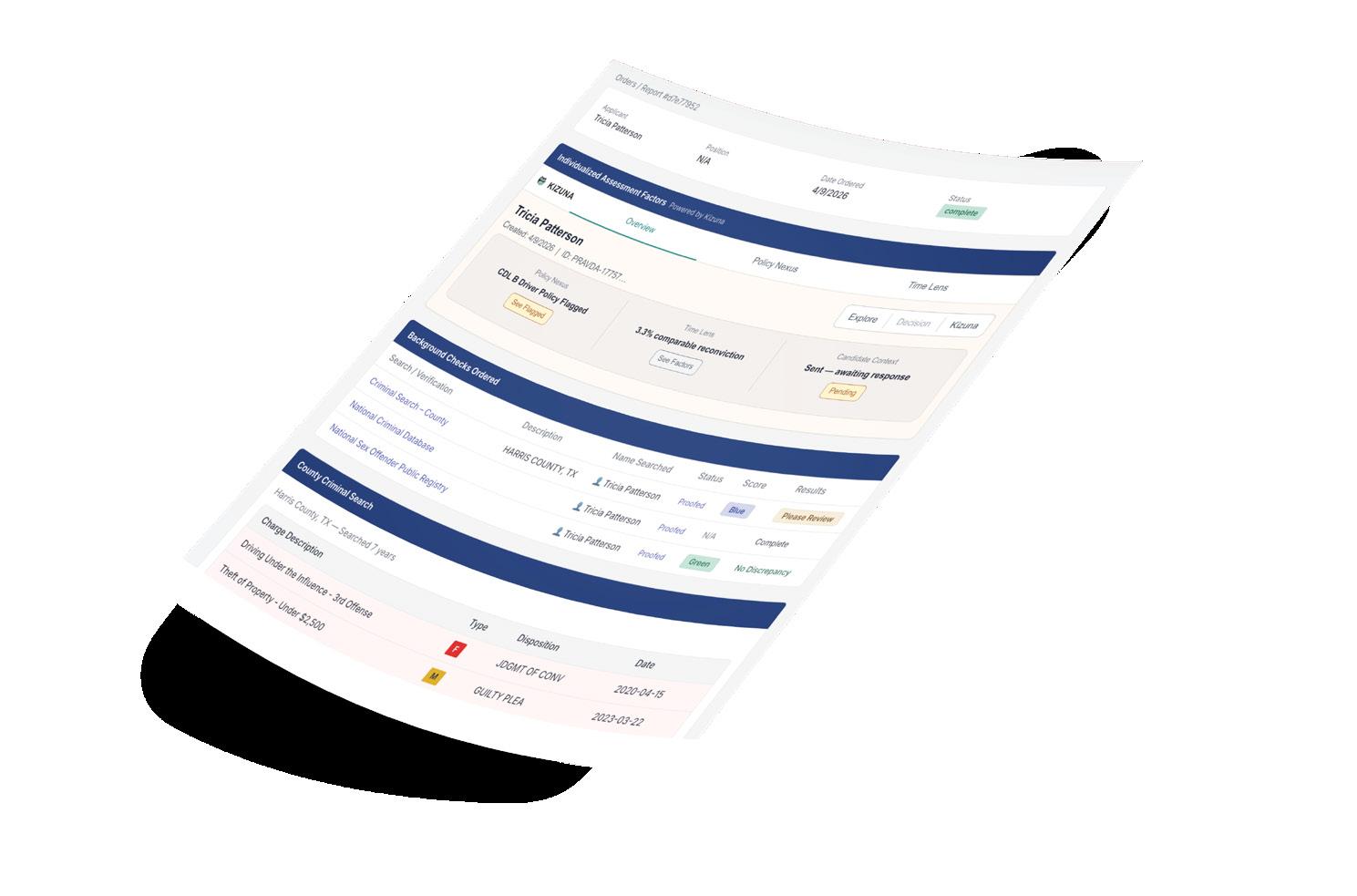

Every manual review adds time, invites risk of inconsistencies, and keeps qualified candidates waiting.
Data Facts streamlines and standardizes hiring decisions. How? By automating adjudication using your organization's hiring policies, with research-backed risk insights and audit-ready decision support—so you can hire faster with greater compliance and confidence. Faster reviews. Smarter decisions. Automated adjudication can make all the di erence in your hiring process.


Need to mix in some learning, too?
We’ve got you covered.
Total Rewards & Employee Wellbeing
Legal & Compliance: What's Next

MONDAY EVENING
Exhibitors Reception in the Marketplace
The exhibit hall turns into a full-blown party with games, live music, a DJ, cocktails, and a mountain of food to please everyone. Wander the booths, discover solutions you didn't know you needed, then dance like nobody from your chapter is watching. What happens in Knoxville...;-)

SUNDAY EVENING
Sponsors Reception
After the first half day of travel and sessions, relax and enjoy craft beers, cocktails, bubbles, heavy hors d'oeuvres, and a live jazz trio. Reconnect with old friends, make new ones, and ease into an Incredible few days.

TUESDAY EVENING
Knoxville Museum of Art
Our grand finale, just steps from the Convention Center, sets the stage for equal parts elegant and unforgettable - the kind of evening you'll still be talking about next year. Don't be the one back home scrolling through everyone else's photos.
Talent Without Borders: Attraction, Development & Retention
Al, HR Technology & Data Analytics
Employee Experience & Workplace Culture
Strategic Leadership & Business Acumen for HR

Conference Room Block
Reserve your room next door to the Knoxville Convention Center at the Hilton Knoxville Downtown with our special conference room block rate of $219, and enjoy modern comfort and exceptional amenities of top-tier accommodations in the heart of downtown-all at the preferred group price.
Book early! The room block is limited, and all rooms will sell out.


50% of frontline managers’ improvement ideas are acted on.
Editor
Marketing
William
Amy Schabacker
Debra
Robert
Mahesh
Contact HR Professionals Magazine:


ACTION STEPS FOR HEALTH & HAPPINESS

Deep sleep is vital to health
• While the body rests during sleep, the brain remains active. During deep sleep, hormones are made that:
• Promote growth and repair cells and tissues
To submit a letter to the editor, suggest an idea for an article, notify us of a special event, promotion, announcement, new product or service, or obtain information on becoming a contributor, visit our website at www.hrprofessionalsmagazine.com. We do not accept unsolicited manuscripts or articles. All manuscripts and photos must be submitted by email to Cynthia@hrprosmagazine.com. Editorial content does not necessarily reflect the opinions of the publisher, nor can the publisher be held responsible for errors.
• Fight infections
• Help the body control hunger
HR Professionals Magazine is published every month, 12 times a year by the Thompson HR Firm, LLC. Reproduction of any photographs, articles, artwork or copy prepared by the magazine or the contributors is strictly prohibited without prior written permission of the Publisher. All information is deemed to be reliable, but not guaranteed to be accurate, and subject to change without notice. HR Professionals Magazine, its contributors or advertisers within are not responsible for misinformation, misprints, omissions or typographical errors. ©2026 The Thompson HR Firm, LLC This publication is pledged to the spirit and letter of Equal Opportunity Law. The following is general educational information only. It is not legal advice. You need to consult with legal counsel regarding all employment law matters. This information is subject to change without notice.
• Most healthy adults need between seven and a half to nine hours of sleep per night to function at their best.
Dos
• Keep your bedroom quiet, dark, and comfortable.
• Have a warm cup of tea without caffeine before bedtime.
• Go to bed at the same time each night and get up at the same time each morning.
• Get some exercise during the day.
Don’ts
• Don’t sleep
• Don’t have a bedtime robs
• Don’t eat large
• Don’t watch news and social before bedtime.
Hello HR Professionals!
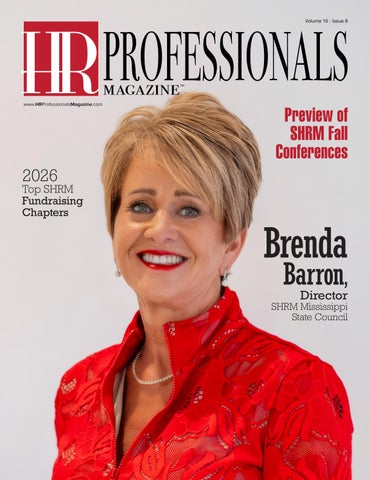
Welcome to our August issue celebrating the beginning of the SHRM fall conference season in the US! We are excited to bring you live coverage of the SHRM Mississippi Conference in Biloxi August 3-5. I know you will enjoy meeting Brenda Barron, Director of the SHRM Mississippi State Council, featured on our August cover. Read all about Brenda and her career accomplishments in her professional profile on Page 6. Next, we are traveling to Orlando for the SHRM Florida Conference August 30-September 2 at the Gaylord Hotel. I hope you caught my interview with Dana Mullins, Director of HR Florida SHRM at SHRM26 in June. ICYMI, check my LinkedIn postings! We look forward to bringing you continuing live coverage from both these excellent conferences in August.
We love highlighting the accomplishments of SHRM Chapters across the country. This month we want to congratulate the top 25 SHRM Fundraising Chapters in the U.S. Checkout page 12 to see if your Chapter is included. If not, I hope you will be inspired to make this list in 2026. As we travel across the country meeting SHRM members from the different states, we are always amazed by the creative fundraising events and the amount of money raised for the SHRM Foundation. The mission of the SHRM Foundation is to mobilize and equip HR to lead positive social change so that all talent and workplaces can prosper and thrive. Join me in congratulating these top 25 fundraising chapters!
Congratulations to Michael L. Smith, Director of Arkansas SHRM State Council, on receiving a nomination from the SHRM Foundation for the 2026 Everyday Hero Award. This national honor is presented military veterans who have successfully transitioned to civilian careers and demonstrated exceptional leadership, resilience, and measurable contributions within their organizations and community. In addition to being a volunteer, Michael is Human Resources manager for the Clinton National Airport and serves as the Public Affairs Officer for the 189th Airlift Wing, Arkansas National Guard in his military role. Michael was selected as one of the ten veterans nationwide to receive this recognition and was recognized during the SHRM26 Conference in Orlando in June. See Page 13 to read about this amazing honor for Michael.

Did you know approximately 35% of Human Resource Managers hold at least one professional credential? Would you like to be a SHRM-CP or SHRM-SCP? If you are not yet a certified HR professional, you have an excellent opportunity coming up! Our next Online SHRM Certification Exam Prep Class begins October 22. You can register on our website to join our class. The deadline to register is October 15. These classes are affordable and convenient! You can take the class from the comfort of your home on your own computer. We are proud of our 90% pass rate! Get certified! We also provide HRCI PHR | SPHR Certification Classes in August. Check our website, www.hrprofessionalsmagazine.com to register! Classes begin August 14!
Hope you are enjoying our sponsored webinars! Mark your calendar now and plan to join us for my monthly webinar sponsored by Data Facts on August 27 at 2 PM. You earn 1.00 SHRM PDC and 1.00 HRCI Business Credit. Watch your email for your invitation! If you are not receiving an invitation to our weekly webinars, you can click on “Subscriptions” on our website.

cynthia@hrprosmagazine.com
Connect with me on LinkedIn:https://www.linkedin.com/ in/cynthia-thompson-mba-shrm-scp-sphr-325b8715/ Like us on Facebook.com/HRProfessionalsMagazine
Congratulations to Martha Argueta Segarra, PHR, SHRM-CP!
RESOURCES
Martha Argueta Segarra, PHR, SHRM-CP, is an HR Analyst with the City of Coral Springs who specializes in compensation and has five years of experience in municipal human resources. After earning her PHR certification in May 2026, she quickly followed that achievement with her SHRM-CP certification in July 2026, demonstrating her dedication to continuous learning and professional growth. Martha is passionate about the human resources profession and looks forward to continuing to grow her career, deepen her expertise in compensation, and make a meaningful impact through strategic and equitable HR practices.
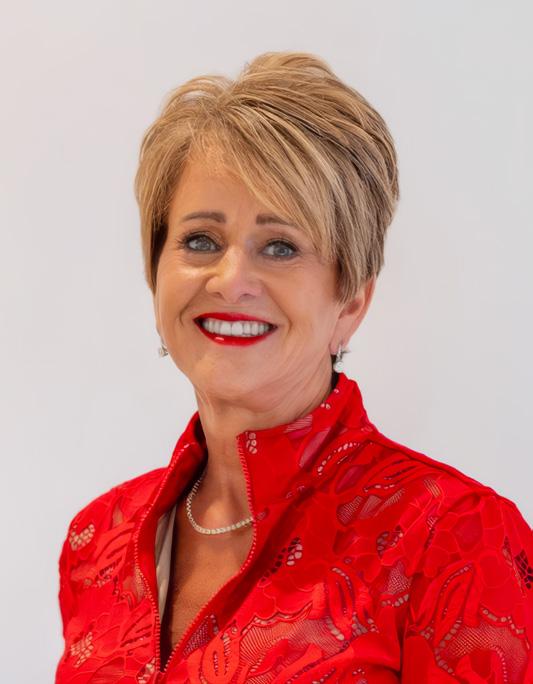
Brenda BARRON
Brenda Barron, Director Mississippi SHRM State Council President & Owner, Professional Staffing Group, LLC
For more than 25 years, Brenda Barron has helped organizations navigate one of the most critical aspects of business success—people. Throughout her career, she has partnered with business leaders to develop workforce strategies that align talent with organizational goals, strengthen operational performance, and create sustainable growth. As President and Owner of Professional Staffing Group, LLC, Barron brings a strategic human resources perspective to workforce planning, talent acquisition, compliance, and organizational development, helping employers build resilient organizations and high-performing teams.
Since founding Professional Staffing Group in 2019, Brenda has focused on delivering workforce solutions that extend beyond traditional recruiting. She works closely with employers to understand their business objectives, organizational culture, and workforce challenges before developing customized talent strategies designed to improve productivity, employee retention, and organizational performance. Her consultative approach has made her a trusted advisor to organizations navigating an increasingly competitive labor market while maintaining a strong commitment to compliance, employee engagement, and long-term workforce success.
Brenda’s leadership philosophy is rooted in the belief that people are an organization’s greatest competitive advantage. Throughout her career, she has championed hiring practices that not only identify qualified candidates but also strengthen organizational culture through strategic workforce planning, effective onboarding, leadership development, and strong partnerships between executive leadership and human resources. She believes HR is most effective when it is viewed as a strategic business partner that drives organizational performance and supports both employees and employers.
Prior to launching Professional Staffing Group, Brenda served as Vice President of Recruiting for SIMOS Insourcing Solutions, where she led a national talent acquisition organization supporting distribution and logistics operations across 12 states. Managing a team of more than 65 recruiting professionals, she directed workforce planning initiatives that successfully hired more than 30,000 employees annually while ensuring consistency, quality, and compliance across multiple markets. Her leadership included oversight of employment compliance, implementation of recruiting technology, process improvement initiatives, and the development of community partnerships that expanded diverse talent pipelines while improving hiring outcomes.
Earlier in her career, Brenda held leadership positions with EmployBridge and Ablest Staffing, where she developed expertise in organizational leadership, business development, operational management, and client partnership. Throughout each stage of her career, she has consistently demonstrated that investing in people, developing leaders, and creating strong workplace cultures produce measurable business results. Her experience spans workforce planning, organizational leadership, employee engagement, compliance, change management, process improvement, and strategic business partnership.
Beyond her professional accomplishments, Brenda is deeply committed to advancing the human resources profession through volunteer leadership. She currently serves as State Council Director for Mississippi SHRM, where she leads a statewide team of volunteer HR professionals dedicated to providing education, professional development, and networking opportunities for HR practitioners across Mississippi. Under her leadership, the annual Mississippi SHRM State Conference has experienced significant growth in both attendance and
sponsorship, attracting HR professionals and business leaders from across the region and beyond while strengthening the conference’s reputation as one of the state’s premier professional development events.
Brenda has also been instrumental in strengthening the financial sustainability of Mississippi SHRM, delivering a significant return on investment that supports educational programming and initiatives designed to elevate the HR profession throughout the state. Previously, she served as Mississippi SHRM Foundation Director, where her leadership helped position Mississippi among the nation’s Top 10 state councils in fundraising for the SHRM Foundation. Those efforts directly supported scholarships, workforce initiatives, and educational opportunities that continue to benefit HR professionals and future leaders.
In 2022, Brenda was honored with the Spirit of HR Professional Award, one of the highest recognitions bestowed by her peers within the Mississippi HR community. While she has achieved numerous professional milestones throughout her career, this recognition remains especially meaningful because it reflects the respect and appreciation of fellow HR professionals who have witnessed her unwavering commitment to serving others, mentoring emerging leaders, and advancing the profession.
Today, Brenda continues to advocate for innovative workforce strategies that help organizations adapt to evolving labor markets while creating meaningful opportunities for employees. Whether leading her organization, advising clients, or serving the HR community, she remains dedicated to strengthening workplaces through ethical leadership, strategic human resources practices, and a genuine passion for helping people and organizations achieve their full potential. n
Online HRCI PHR | SPHR Certification Prep Class
Online classes begin August 19, 2026 and will meet twice per week for 8 weeks on Monday and Wednesday evenings from 6:00 PM to 7:00 PM.
HRCP 2026 Study Materials included:
• Six Study Guides • Online practice exams for each Study Guide • 100s of Flashcards
• HRCP materials that are among the most effective study guides available and are easy to read and understand
The total cost of the HRCI PHR | SPHR Certification Prep Class is $950 plus shipping ($25.00).
You may pay by PayPal, Credit Card, or Check.
Guarantee
If you fail the exam, you may retake the class as long as you – Attend 80% of the scheduled online classes – Score 80% on all HRCP practice quizzes during the program
Deadline to register is August 14, 2026
Contact cynthia@hrprosmagazine.com OR visit our website at www.hrprofessionalsmagazine.com
About the instructor:
Cynthia Y. Thompson, MBA, SHRM-SCP, SPHR, is Publisher | Editor of HR Professionals Magazine. She is a senior human resources executive with more than thirty years of human resources experience concentrated in publicly traded companies. HR Professionals Magazine is an HR publication distributed to all HR professionals and SHRM members in the U.S.
Cynthia has an MBA and is certified as a Senior Professional in Human Resources (SPHR) by the Human Resource Certification Institute and is also certified as a Senior Certified Professional by the Society for Human Resource Management. Cynthia was appointed to serve on the Tennessee DOHR Board of Appeals by Gov. Bill Haslam in 2014.


Workplace expectations are evolving. Legal standards are shifting. Leaders are expected to create workplaces where people perform, collaborate, and thrive.
At SHRM BLUEPRINT for I&D, part of All Things Work 2026, you'll move from:
Questions → Clear direction
Build an enterprise-ready strategy grounded in today's workplace realities.
Uncertainty → Confidence
Navigate evolving legal expectations with practical guidance you can trust.
Good intentions → Business impact
Strengthen collaboration, civility, and workforce performance with strategies that drive results.
Register by August 28 to secure the best rate. Learn more at shrm.org/BP26-HRP8


GLP-1 Coverage: What HR Leaders and Business Owners Need to Know
GLP-1 medications such as Wegovy, Zepbound, Ozempic, and Mounjaro have quickly become one of the most talked-about topics in employee benefits. Once known primarily as diabetes medications, they are now widely recognized for helping people lose weight, improve metabolic health, and reduce serious health risks. For HR professionals and business owners, the growing popularity of these drugs raises an important question: Should your health plan cover them?
Employee demand is rising fast. Millions of Americans meet the clinical guidelines for GLP-1 treatment, and prescriptions have surged in recent years. Workers are asking about these medications not only because of the potential weight-loss benefits, but because they often represent a path toward better overall health, increased energy, and reduced risk of chronic disease. In fact, some employees say access to GLP-1 coverage could influence where they choose to work.
That creates a real challenge for employers trying to stay competitive while managing costs.
The biggest obstacle is price. GLP-1 medications can represent a major ongoing expense for health plans, especially because they are often intended for long-term use. For employers already facing annual increases in healthcare costs, adding broad GLP-1 coverage can put additional pressure on pharmacy spend and overall premiums. Simply put, this is not a small-budget decision.
However, there is another side of the equation. Healthier employees can mean lower long-term claims, fewer complications tied to obesity and diabetes, improved productivity, and stronger morale. Employees who feel supported in their health journey may also view the company more favorably, which can help with retention and recruitment. In today’s labor market, benefits still matter.
The challenge is timing. Employers often absorb the cost now, while many of the long-term savings may come later. Add in the reality that some employees discontinue treatment or move to another employer, and the financial return becomes harder to predict.
That is why many organizations are choosing a more strategic middle ground rather than offering unrestricted access. Common approaches include:
• Covering GLP-1s only for approved medical conditions such as Type 2 diabetes or obesity that meets plan criteria
• Requiring prior authorization or step therapy
• Pairing coverage with wellness coaching or lifestyle support
• Using HRAs or FSAs to help offset employee costs without fully adding the drugs to the medical plan
These options can help employers support employee health while keeping spending under control.
The bottom line for HR leaders and business owners: GLP-1s are not just a pharmacy issue—they are a workforce strategy issue. Companies that thoughtfully evaluate employee demographics, budget tolerance, recruiting goals, and long-term health trends will be in the best position to decide what makes sense for their organization. As pricing changes and new treatment options emerge, flexibility and smart planning will matter more than ever.


When it comes to Obesity, support employees with The Weigh Forward
EMPLOYERS PLAY AN IMPORTANT ROLE IN PROVIDING ACCESS TO TREATMENT FOR EMPLOYEES WITH OBESITY
Losing weight and keeping it off is difficult because of how my body naturally responds to weight loss. Making a weight-management plan with my healthcare professional is important to me, as is having coverage for anti-obesity medication, which may help me manage my weight.
Actor portrayal.
Top 25 Fundraising SHRM Chapters
With more than 500 SHRM chapters, the Top 25 Fundraising Chapters represent the top five percent of all SHRM chapters. These chapters have the highest yearly contributions, including gifts from the chapter plus recognition credits donated by individuals or companies on behalf of the chapter.
HR Houston
SHRM Jacksonville
Green Bay SHRM
SHRM Greater Ocala
Greater Orlando SHRM
Greater Baton Rouge SHRM
DC SHRM and Oklahoma City
HR Society (TIED)
Austin SHRM
Salt Lake SHRM
Bahamas SHRM
Northern Virginia SHRM
Tennessee Valley HR Assn
Palm Beach County SHRM
Association for
Human Resource Management
Brazos Valley SHRM
Mid-Florida SHRM
Southern New Mexico SHRM
Kern County SHRM
Central Savannah River Area SHRM
Rogue Valley SHRM
Central Oregon SHRM
Texas Bay Area SHRM
Human Resources Association of Southeast Michigan
Southeastern Pennsylvania SHR
Tri-State Human Resources Management Association
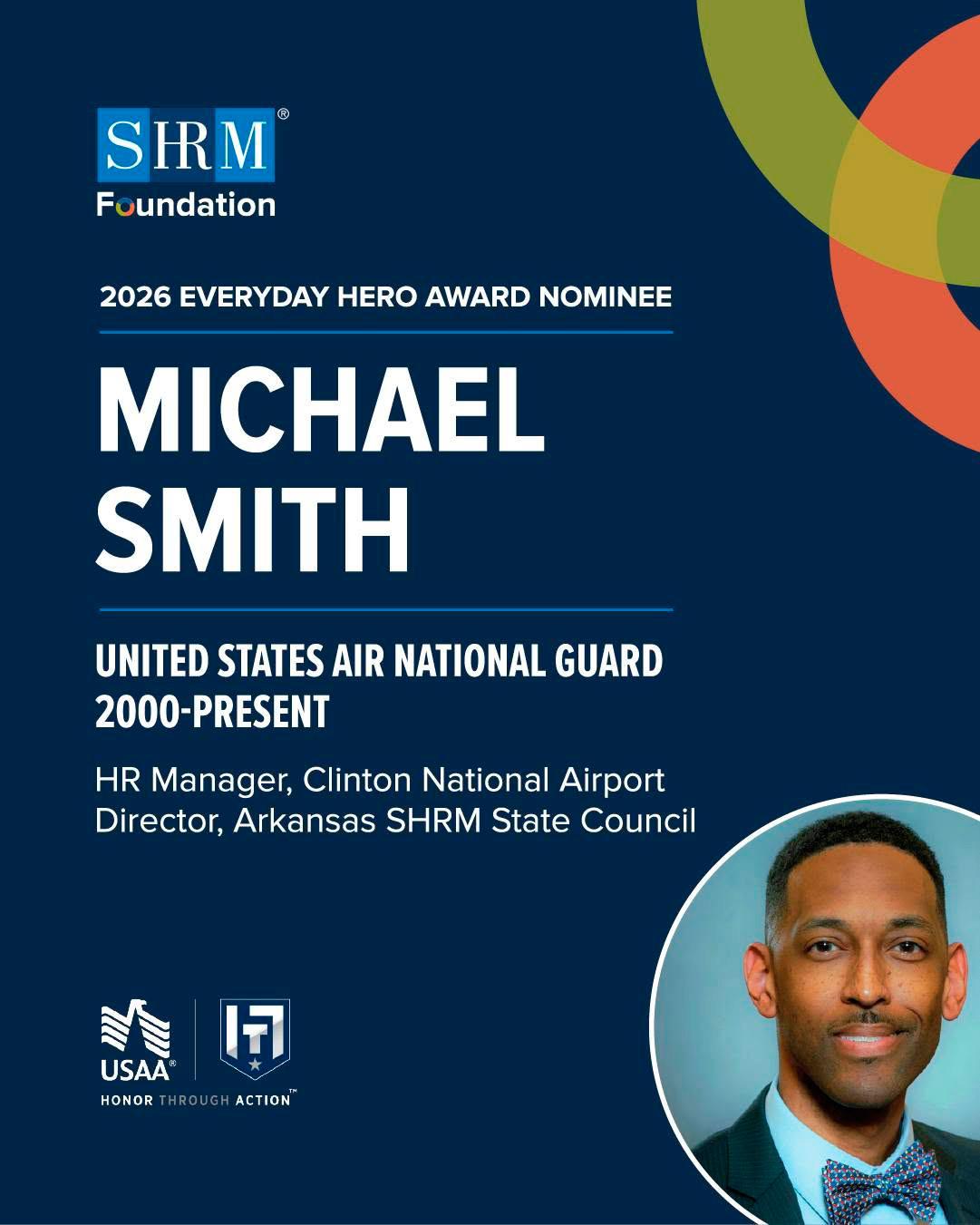
Congratulations to Michael L. Smith, ARSHRM State Council Director, on being recognized as a finalist for the 2026 SHRM Foundation Everyday Hero Award.
Presented in partnership with USAA, this national award honors military veterans who have successfully transitioned to civilian careers and demonstrate exceptional leadership, resilience and measurable contributions within their organizations and communities. In addition to being a state council volunteer leader, Michael is the Human Resources Manager for Clinton National Airport (LIT) and also serves as the Public Affairs Officer for the 189th Airlift Wing, Arkansas Air National Guard in his military role. Michael was selected as one of ten veterans nationwide to receive this recognition and was recognized during the SHRM26 Annual Conference and Expo in Orlando.

We all love to find out someone’s secret to success. Whether it is the secret recipe for awesome dishes we have had the pleasure of enjoying at our favorite restaurant, how the coach for our favorite college football team leads them to multiple championships in a row, or how our favorite business manages to have little to no turnover in its organization. It is this desire to learn how to be successful that leads us to determine ways to make adjustments to our organizations as steps to success.
In the next few paragraphs, I plan to share the secret sauce – or really not so secret, but usually forgotten – path to happy employees. In case you forgot, happy employees are not as likely to leave.
Across the country, companies are experiencing the loss of labor due to many factors. Fears due to return-to-office policies, the threat of AI replacing jobs, layoffs, and increased workloads, just to name a few, are causing some to choose to leave.
What if I told you there is a way to attract and keep great employees? What if it all hinged on how the leaders in your organization support their employees? Do you think you could do it?
I served in senior leadership roles as an HR professional for 22 years and have been serving as an academic for seven. During this time, I have watched great employees and all their knowledge walk out the door for things I believed were preventable. I felt so passionate about what it takes to keep good employees that it was the foundation of my dissertation research.
With my desire to understand the real reason behind the departures, I began to deep dive into the “why” some of my colleagues had chosen to leave and began to think
The Secret Sauce for Retention and Happy Employees
By DEBRA GATES
about ways the departures might have been prevented and the knowledge they possessed maintained within the company, versus moving with them to one of our competitors.
A couple of months ago, my colleague, Dr. Sean Wall-Carty, wrote an article for this publication titled “Permission to Pause: Fun and Realistic Ways to Support Mental Health at Work.” In the article, he discussed several ways to support mental health at work, and the most important factor, in my opinion, was leadership responsibility.
As leaders, we sometimes forget how our influence and support impact those we lead. We become so focused on what needs to be done and how we want it done that we forget these are people with lives outside of the organization that we are depending on for success. If they get worn down and burn out trying to achieve our most demanding requests, we risk losing them and their knowledge.
My doctoral research project focused on leadership support and its impact on an employee’s decision to stay with or leave a company. Leadership support is the feeling that an employee’s leaders care about them and their contribution to the organization (Al-Mahdy et al., 2022). Given that definition, what do you think I found out from my research and existing research? That’s right, the amount of support an employee receives from their leader helps to form their decision about leaving the organization (Al-Mahdy et al., 2022; Arici, 2018; Jun et al., 2023).
The challenge with this is that support means something different to each employee. So this means that leaders need to ensure that their relationship with their subordinates is so good that they know what motivates and provides support to each one.
Here is the good news: if the relationship is strong enough and the employee trusts the leader, they will feel support even if it does not exist (Al-Mahdy et al., 2022; Boamah et al., 2022).
Now that I have shared the good news about the secret sauce, you might ask how you can get it. Well, it requires training the leaders in your organization on how to shift their leadership styles from those where they are more transactional to being more peoplefocused. People-focused leadership styles focus on relationships rather than tasks, as with the transactional types of leadership styles (Baqai, 2020). Making the shift to focusing on the people and your relationships with them will foster trust and feelings of support (Lv et al., 2023; Yue et al., 2022).
Those who can make the shift will find that they have happier employees, and they will be employees who are willing to ask for permission to pause when it is needed. And when they do, they know that their leader will be caring enough to allow them to do so. That is what support looks like.
When there is support or the perception of support, you will find that you have happy, productive employees who, given the opportunity to leave, may choose to stay even if the carrot being dangled in front of them looks really good. We can’t save them all, but if you can save a few, think of what a great organization you will have now and in the future.
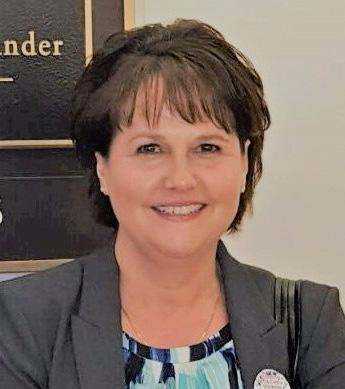
Dr. Debra S. Gates is an instructor with Western Governors University’s School of Business.

The HR Leader People Trust
certification is the recognized standard for HR professionals who lead with confidence and drive meaningful impact.
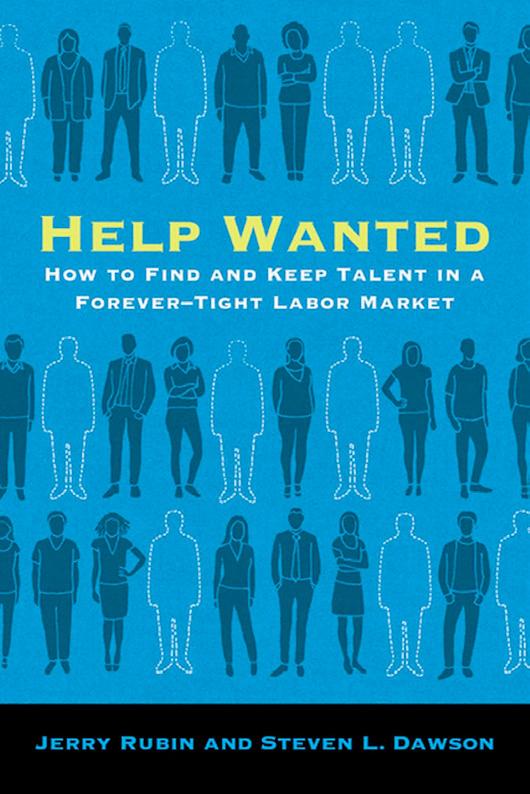
Help Wanted – How to Find and Keep Talent in a Forever-Tight Labor Market
By BOB PIPKIN
Is a “Forever-Tight Labor Market” inevitable? Jerry Rubin and Steven L. Dawson make a compelling case for inevitability in their soon-tobe-released book “Help Wanted. How to Find and Keep Talent in a Forever-Tight Labor Market.”
The authors are realists, not Debbie Downers. They didn’t describe the challenge facing HR executives then close their laptops. In “Help Wanted” they draw upon their combined 80 years of experience to offer solutions for the dual challenges of recruiting and retaining skilled workers.
In the first chapter they describe the reasons why today’s employers are having a difficult time attracting and retraining good employees. Rubin and Dawson go on to describe the structural economics that underlie their prediction of a “Forever-Tight Labor Market.”
The second chapter, titled “Change How and Whom You Hire”, contains the nucleus of the book, competing and winning the battle for talent.
Here’s my summary of the recommendations in the second chapter:
Review Your Hiring Criteria. Do your job descriptions reflect the skills and attributes needed for an advertised position or do they limit the size of your talent pool? Does the position require a college degree?
Review Your Hiring System. More than 4,000 applicant-tracking systems (ATSs) serve corporate HR departments. These systems use algorithms to advance or reject applicants, and poorly written algorithms can eliminate qualified candidates. SHRM estimates that more than half of qualified candidates are unable to make it past online ATS algorithm screenings. But wait, there’s more. A Stanford study released this June 29 found that AI-based screening tools have a basis against Black and Asian candidates.
Hiring. Rubin and Dawson recommend working to reduce bias in the in-person interview process through measures such as standardizing interview questions and involving a diverse group of managers in the interview process.
Onboarding and Support. The first several months are important for a new employee. For new hires from heretofore this is especially true. That’s why a well-planned onboarding process is important.
Changing Hiring Sources. A better description here would be “adding new hiring sources.” While supporting “who you know” networks, the authors recognize that there are limits to this approach. They recommend a structured strategy to reach potential hires who are not reached via these traditional networks. This means reaching talent through informal social networks such as churches, sports clubs, and fraternal and sororal groups.
Organizations That Offer Job Training. This category includes community and technical colleges as well as community services organizations that have training partnerships with local businesses. It also includes apprenticeship programs.
Your Own Employees. While an obvious source of talent, it is underutilized. Research has found that less than one-third of US corporate vacancies are filled from within.
The topics discussed above will have the Help Wanted reader reexamining their approach to much more than recruitment. It’s a serious book but also an approachable one. In addition to clear writing, the book is filled with case studies providing real world examples of the authors’ approach to human resources. It’s not a read and move on kind of book. Chances are you’ll find yourself turning to Help Wanted for help in tackling the challenges posed by a Forever-Tight Labor Market
Bob Pipkin
Contributing Author
bob@pipkinpr.com

Meet the 2026 National Labor Relations Board
The Board has five Members and primarily acts as a quasi-judicial body in deciding cases on the basis of formal records in administrative proceedings. Board Members are appointed by the President to 5-year terms, with Senate consent, the term of one Member expiring each year.
The 2026 Board consists of the following members:
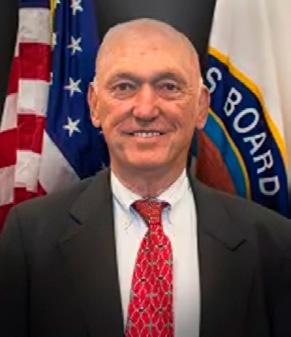
James R. Murphy, Chairman
James R. Murphy was sworn in as a Member of the National Labor Relations Board (NLRB) on January 7, 2026, for a term expiring on December 16, 2027. Mr. Murphy was designated as Chairman of the NLRB by President Trump on March 26, 2026.
Chairman Murphy returned from retirement to the Board where he had spent a distinguished career of over 47 years of service. Chairman Murphy began at the Board as a student law clerk in 1974 and served as counsel to numerous Board members over the decades. He served successive stints as Chief Counsel to former Board Members Brian Hayes, Harry Johnson, and most recently to Chairman Marvin Kaplan. Chairman Murphy received his J.D. degree from American University and his B.A. from Princeton University. He and his wife Karen have been married for over fifty years. They have three adult children and four grandchildren.
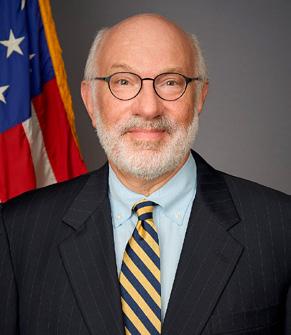
Mr. Prouty was nominated by President Biden on June 23, 2021 and confirmed by the Senate on July 28, 2021. His term will last until August 2026.
Most recently, Member Prouty served as General Counsel of Service Employee International Union (SEIU) Local 32BJ, the largest labor union for property service workers in the country with over 175,000 members. He served as General Counsel of the Major League Baseball Players Association (MLBPA) from 2013 – 2017 and as Chief Labor Counsel of the MLBPA from 2008 – 2013. Prior to June 2008, Member Prouty was General Counsel of UNITE HERE, and was General Counsel of UNITE from 2001 – 2004. Before serving as General Counsel of UNITE and UNITE HERE, Member Prouty was Southern Regional Counsel for UNITE and its predecessor union, the Amalgamated Clothing and Textile Workers Union (ACTWU), for fifteen years. He received his AB magna cum laude from Bowdoin College in Brunswick, Maine in 1980; worked as a researcher and organizer for the American Federation of State, County and Municipal Employees (AFSCME) from 1980 to 1983; and received his JD cum laude from Harvard Law School in 1986.
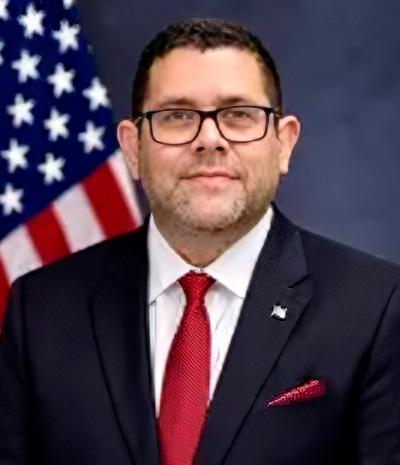
Scott A. Mayer
Scott A. Mayer was sworn in on January 7, 2026, as a Member of the National Labor Relations Board, to a term expiring on December 16, 2029.
Before joining the Board, Member Mayer served as Chief Labor Counsel for The Boeing Company, where he was responsible for traditional labor relations work, including NLRB litigation, positive employee relations training and strategy, union contract interpretation and enforcement, labor arbitrations and compliance with labor laws. Prior to Boeing, Member Mayer held in-house labor roles at Aramark, InterContinental Hotels Group (IHG) and MGM Resorts International. He also worked in the labor and employment practice groups at Morgan, Lewis & Bockius LLP and Blank Rome LLP in Philadelphia.
Mr. Mayer has been active in his community. He served as an elected School Board member for the Garnet Valley School District in Glen Mills, PA from September 2010 until his confirmation as a Board Member in December 2025.
Member Mayer is a Fellow in the College of Labor & Employment Lawyers. He is a graduate of Villanova University School of Law and Cornell University's School of Industrial & Labor Relations.
David M. Prouty
ACTION STEPS FOR HEALTH & HAPPINESS
Deep sleep is vital to health

• While the body rests during sleep, the brain remains active. During deep sleep, hormones are made that:
• Promote growth and repair cells and tissues
• Fight infections
• Help the body control hunger
• Most healthy adults need between seven and a half to nine hours of sleep per night to function at their best.

Dos
• Keep your bedroom quiet, dark, and comfortable.
• Have a warm cup of tea without caffeine before bedtime.
• Go to bed at the same time each night and get up at the same time each morning.
• Get some exercise during the day.


Don’ts
• Don’t sleep with lights or the TV on.
• Don’t have a night cap. Alcohol before bedtime robs you of deep sleep.
• Don’t eat large meals before bedtime.
• Don’t watch screens or scroll through news and social media at least one hour before bedtime.
The Scien ce of
Dreaming
A dream is a mental, emotional, and sensory experience that takes place while you are asleep. And ther e is a lot we still don’t know about this often-everyday experience. People have always been fascinated by dreams. Sleep scientists continue to study how and why they occur and what they may mean.
YOUR BRAIN WHILE DREAMING
Dreams can occur during different stages of sleep. Both REM (rapid eye movement) and non-REM sleep states can produce dreams, though dreaming during REM sleep appears more common.
Scientists have observed trends in what happens in the brain when you dream:
• The area of the brain involved with memories is more active.
• The area of the brain involved with sensory input is less active.
• Dreams that occur during REM sleep tend to be more vivid or bizarre.
• Dreams that occur during non-REM sleep tend to be more coherent and grounded
DO DREAMS HAVE MEANING?
People seek to find meaning in their dreams. Many religious and spiritual traditions tell stories of dreams being used to provide messages and guidance. However, the field of dream interpretation is inconsistent and lacks reliable information.
By studying the brain, scientists have developed theories about the purpose of dreams, which may include:
• To build and consolidate memories
• To process and manage emotions
• To replay and analyze events, though often in distorted form
• To mentally “clean up” and reorganize

TYPES OF DREAMS
• Vivid dreams: The content may be particularly vivid and clear, feeling very real to the dreamer.
• Lucid dreams: The dreamer is aware that they are experiencing a dream.
• Recurring dreams: There is repeated imagery that appears in multiple dreams.
• Bad dreams: This refers to any dream that contains upsetting or negative content.
• Nightmares: These are different from bad dreams. Nightmares are so upsetting that they wake a person from sleep.
The Pursuit of Fulfillment in HR Careers
Preparedness, purpose, relevance, and support are the strongest drivers.
By AMY SCHABACKER DUFRANE
Every HR professional knows compensation is only one piece of the employee engagement puzzle. Long-term retention relies on professional development and career progression, especially the opportunity to develop new skills.
So, it was no surprise to HRCI that HR professionals who feel prepared, supported, and valued are significantly more likely to thrive in their careers. From our annual State of HR report, we know that a subset of HR professionals—those we call “HR evangelists”—stand out for their enthusiasm and commitment to the field: they’re likely to recommend HR as a career and unlikely to consider leaving it. In that report, 37% of respondents (more than 1,600 people) met these criteria. Our latest report, The Secret Ingredients of Workplace Fulfillment, takes a closer look at what drives fulfillment for this group, and finds that opportunities for growth matter far more than perks and compensation.
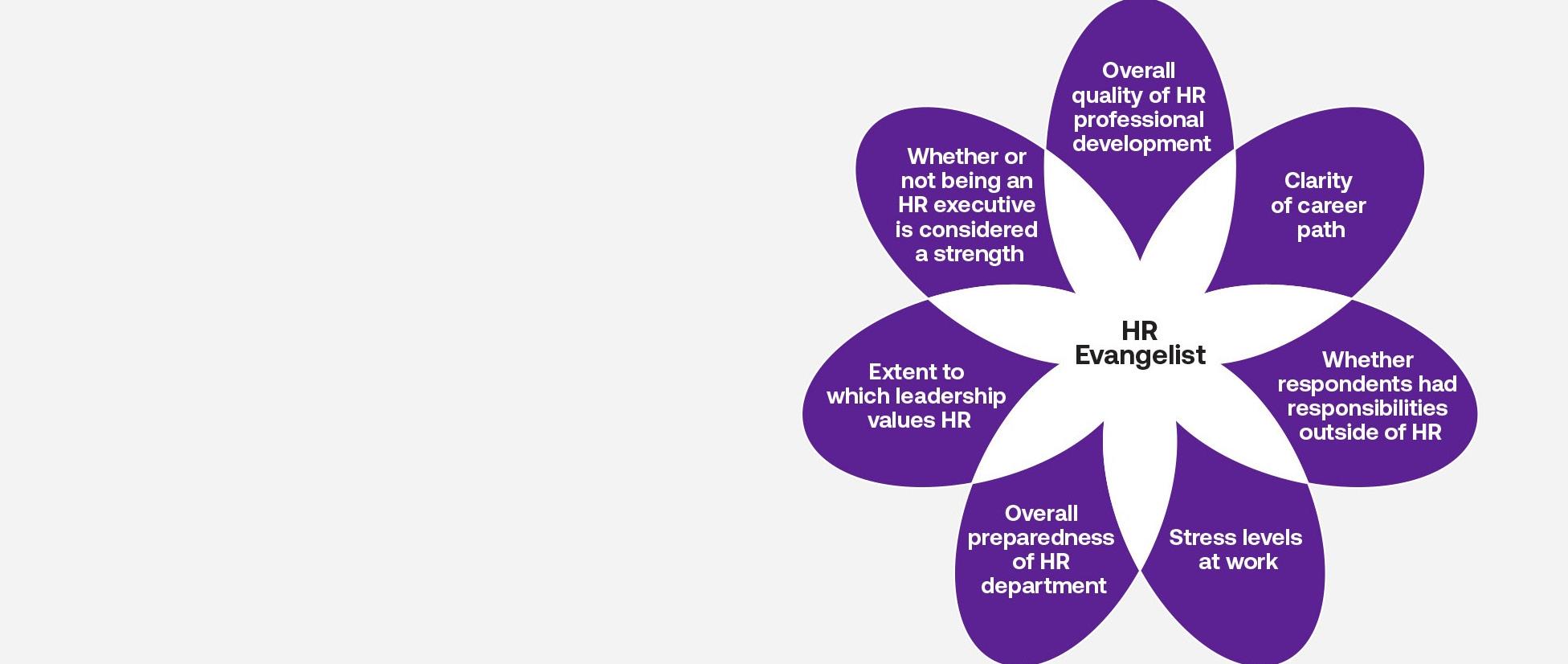
According to our research, there are unifying characteristics among HR Evangelists. They feel their team is completely prepared for work. Their department feels secure or is growing. And they oversee a team. HR professionals who manage others are significantly more likely to be evangelists than those who do not. To offer leaders guidance, we took our research a step further, identifying seven variables that organizations can realistically address that meaningfully drive HR evangelism.
Preparedness, purpose, relevance, and support are the strongest drivers. To build on that, we measured:
§ Overall quality of HR professional development
§ Clarity of career path
§ Whether respondents had responsibilities outside of HR
§ Stress levels at work
§ Overall preparedness of HR department
§ Extent to which leadership values HR
§ Whether or not being an HR executive is considered a strength
Feeling prepared is a determining factor for highly content HR professionals. When surveyed, 57% of HR Evangelists rated their HR department as completely prepared. Having a purposeful career path also received high marks, with 61% of HR Evangelists stating their professional journey is clear. An interesting side note is that only 15% of respondents said they have a clear career path and are in a role entirely focused on HR. Some things never change, as HR is often the first department others turn to.
When HR is valued by leadership, it can function strategically, as validated by 52% of our respondents. With increased stress levels — 40% of HR professionals cite stress levels as extreme or high— supporting your HR function in both words and deeds can reduce work stress and increase HR evangelism in the organization.
Looking at these four drivers of HR leadership, it’s evident why professional development is so critical. It is a lever that every HR professional can use throughout their career to ensure resilience and agility, regardless of the environment
Idiomatically speaking, this is the tip of the iceberg. You’ll find the full report illuminating and informative. Please drop by our website at hrci. org to download your complimentary copy of the research.

Amy Schabacker Dufrane, Ed.D., SPHR, CAE, is CEO of HRCI® — where she is responsible for driving and disrupting the conversations about building highperforming, strategic HR teams. An engaging thought leader at the intersection of talent strategy and continuous learning, Dr. Dufrane is an award-winning leader and celebrated keynote speaker on the human side of successful business strategy in the 21st century.

Get ready for HRx 2026, where you’ll refill your skills, empower your practice, and get a fresh dose of inspiration for the year ahead.
We will be celebrating our 54th Annual Ohio Human Resource Conference once again at Kalahari in Sandusky, OH.
Inspiring Keynotes
delivering fresh perspective & practical insights
Breakout Sessions with actionable strategies you can actually utilize
Exhibit Hall featuring tools, technology, and trusted HR partners
Networking and fun with peers across the HR community
Tuesday - Thursday September 22-24, 2026
Kalahari Resort | Sandusky, OH


DISRUPTION AFTER-HOURS
Tuesday, September 22, 5:00pm to 8:00pm
Zen House, 831 S. Cooper St. Memphis, TN
The Visionary Ten – 5 minutes each – slides auto-rotate every 15 seconds – ideas that are bold
Join us for a premium wine tasting and wellness chair massages before and after The Visionary Ten.

OFFICIAL MEDIA SPONSOR










Today’s employers want to hire qualified candidates while protecting their organizations, remaining compliant, and treating applicants fairly. Big ask, right? Yet even with the best intentions, inconsistency can creep in to create unnecessary risk.
When different reviewers interpret the same background information differently, or when hiring decisions rely too heavily on personal judgment rather than established criteria, organizations may expose themselves to compliance issues, legal challenges, and damage to their reputation.
Every hiring decision carries significant responsibility. Consistency is an essential part of making them fair and defensible.
“Inconsistency Creep” in
Hiring
Rarely do organizations intentionally apply different standards to different candidates. It usually happens when small differences in how candidates are evaluated accumulate over time. Left unchecked, these inconsistencies can undermine an otherwise strong hiring process and make it difficult to demonstrate that decisions are fair, objective, and job-related.
Human judgment. One hiring manager may view a misdemeanor conviction as unrelated to the position, while another sees it as disqualifying. One recruiter may carefully evaluate the context surrounding a criminal record, while another focuses only on the offense itself. Even something as simple as reviewing background reports at the end of a tiring, busy day can influence how they interpret the information.
Lack of a written hiring process. Without standardized review criteria, hiring decisions often become dependent on individual experience, comfort level, or personal judgment rather than consistent organizational policy.
Different interpretations of background check details. Incomplete reviews can also create problems. Important details like the age of an offense, evidence of rehabilitation, or whether the issue is relevant to the position may be overlooked. In these situations, two candidates with similar backgrounds may receive very different outcomes, not because of company policy, but because of inconsistent interpretation.
The Fallout from Inconsistent Hiring
Big problems can stem from inconsistent hiring processes. No, they probably won’t be visible at first, but will cause three distinct issues if they go on indefinitely.
Discrimination litigation. Decisions not based on clearly defined job-related criteria may increase exposure to discrimination claims under Title VII of the Civil Rights Act and guidance issued by the Equal Employment Opportunity Commission (EEOC). If an employer can’t demonstrate that similar situations were evaluated consistently, defending hiring decisions becomes much more difficult.
Poor hiring outcomes. Qualified candidates may be rejected unnecessarily, while applicants who don’t meet established standards may move forward. This can cause higher turnover, additional recruiting costs, lost productivity, and avoidable disruptions within the workplace.
Tarnished employer reputation. Candidates frequently share their experiences online. Perceptions of unfair treatment can quickly spread through review sites and social media. An arbitrary hiring process can damage the employer brand and make it more difficult to attract future talent.
Fighting Inconsistency Creep with a Strong Hiring Framework
Bringing high-quality new employees into your organization requires a plan that’s laid out on the front end. Here are several ways organizations can be more consistent:
ü Develop clear, job-related hiring criteria. Establish written guidelines that define how background information will be evaluated for each position based on business necessity, legal requirements, and job responsibilities.
ü Train (and re-train) hiring managers regularly. Ensure everyone involved in hiring understands company policies, EEOC guidance, and best practices for evaluating background information consistently.
ü Standardize the review process. Create repeatable workflows that evaluate candidates using the same criteria, regardless of who conducts the review.
ü Use automation where appropriate. Technology can help reduce manual interpretation, support consistent policy application, and provide documentation that helps explain hiring decisions.
ü Audit hiring decisions periodically. Reviewing hiring outcomes can uncover inconsistencies and identify training opportunities.
ü Discourage “gut feeling” hiring decisions. While experience and intuition have value, hiring decisions should be based on documented, job-related criteria rather than personal impressions or assumptions.
ü Document the reasoning behind hiring decisions. Keeping a clear record of how background information was evaluated and why a decision was made promotes consistency and provides valuable support if a hiring decision is ever questioned.
Protect Your Organization from the Risk Inconsistent Hiring Practices Cause
Inconsistency slowly creeps into your hiring process through small differences in interpretation, undocumented judgment calls, and processes that vary across reviewer or location. Over time, those gaps can expose an organization to significant risks like poor hires, rejected qualified candidates, compliance concerns, and reputational damage.
A strong hiring framework helps close them. Clear job-related criteria, trained decision-makers, standardized workflows, appropriate automation, and well-documented reasoning create a manageable, defensible process. Just as importantly, consistency helps ensure every candidate is evaluated by the same fair and relevant standards.
Data Facts |
Don’t Just Adopt AI, Lead It
Earn the SHRM AI+HI Specialty Credential at Skills Accelerator, part of All Things Work 2026, Nov. 15-18 in Nashville.
Work through real HR scenarios, learn when AI accelerates better decisions — and when human judgment matters most — and leave with practical skills you can put to work immediately.
With the SHRM AI+HI Specialty Credential, you’ll:
Identify & Analyze
Explore AI use cases across HR functions and the organization.
Translate AI into Results
Turn AI capabilities into measurable business outcomes.
Earn & Advance
Earn 30 PDCs, a SHRM Specialty Credential badge, and a certificate of completion.
Build Your Plan
Create a customized, ethical implementation plan for your organization.
Collaborate & Lead Strengthen cross-functional collaboration with technical teams.

Enroll at Skills Accelerator,
SHRM Research Finds Strategic Learning and Development Drives Stronger Workforce Readiness
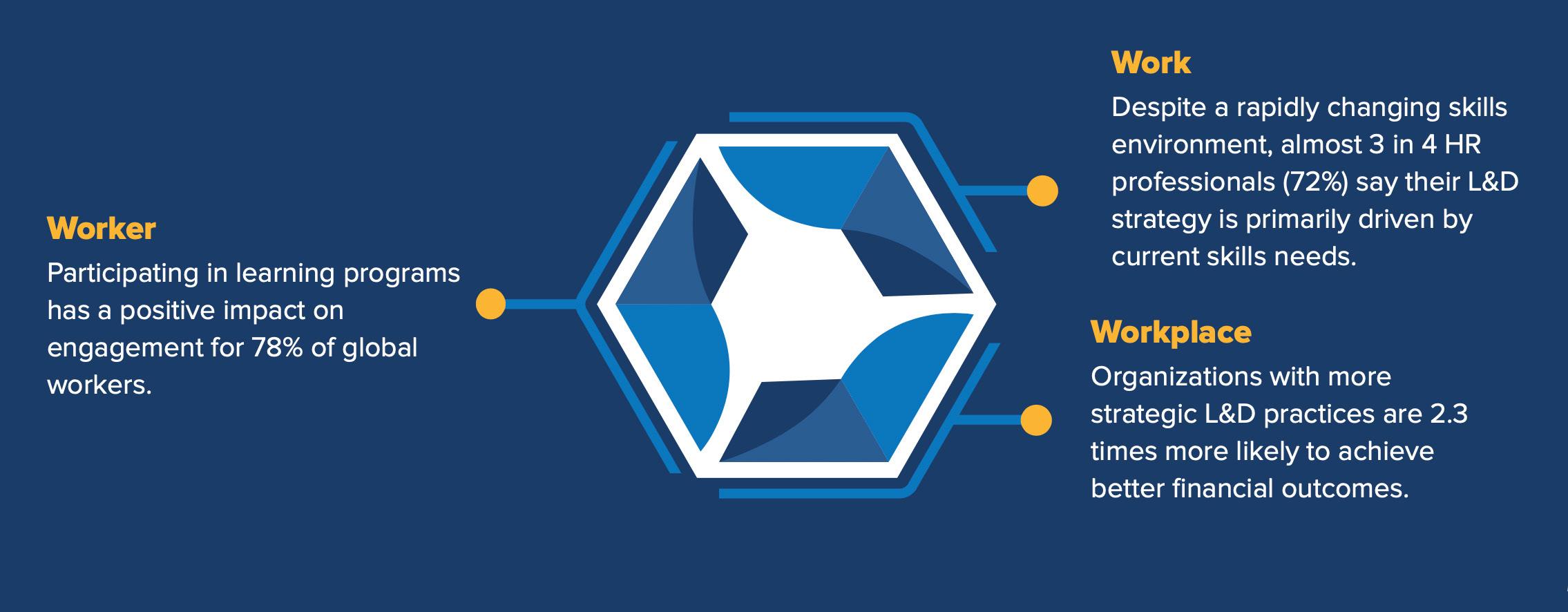
SHRM recently released Skills (R)evolution: Preparing Employees for Tomorrow’s Jobs, research revealing that organizations with strategic learning and development (L&D) practices report stronger workforce readiness, employee engagement, and business outcomes. Building on SHRM’s ongoing research into the evolving skills landscape, the report introduces the Skills Strategist model, identifying the characteristics and practices that distinguish organizations best positioned to prepare employees for the future of work.
Key Findings:
• 72% of HR professionals said their organization’s L&D strategy is primarily driven by skills employees need within the next one to two years, while only 4% reported focusing primarily on long-term skills needs.
• 78% of global workers whose organizations offer L&D programs said participating in those programs positively impacts their workplace engagement.
• Organizations identified as Skills Strategists were more than 2.5 times as likely to report that their learning initiatives effectively fill workforce skills gaps compared to most organizations.
• Skills Strategists were more than five times as likely to report stronger employee engagement and organizational culture than other organizations.
• Skills Strategists also reported stronger financial and nonfinancial business outcomes.
“Strong learning and development strategies do more than help employees grow — they strengthen the entire organization,” said James Atkinson, vice president of thought leadership at SHRM. “Our research shows that organizations taking a strategic approach to workforce development are better positioned to close skills gaps, improve engagement, and drive stronger business outcomes. That’s a powerful reminder that investing in people remains one of the smartest investments an organization can make.”
The report identifies Skills Strategists as organizations that take a more consistent and strategic approach to L&D. These organizations stand out in how they align L&D to business priorities, assess current and future skills needs, design and deliver learning experiences that are relevant and accessible, and use systems and processes that support a more effective L&D function. Compared with other organizations, Skills Strategists reported stronger workforce readiness, better employee engagement, healthier organizational cultures, and improved business performance.
The findings also point to several L&D practices associated with stronger organizational outcomes, including personalizing learning to employee needs, introducing new learning pathways when needs arise, ensuring senior leaders visibly promote L&D, and establishing clear guidelines for the use of AI in learning.


T HE S TREN G T H OF EXPER I E N C E
As the issues facing employers and HR professionals become more frequent, challenging, and complex each year, you need a law firm that provides advice for your specific organization.
For over 50 years, Rainey Kizer Reviere & Bell has advised businesses, non-profit organizations, and governmental agencies in all aspects of employment law.
To learn how we can assist your organization, please contact us.

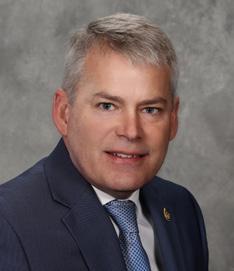
The Strategic Partnership Between HR and Security
Why Human Resources Plays a Critical Role in Building Safer, More Resilient Organizations
By BOBBY JORDAN
Intoday’s workplace, the traditional silos between employees, management, security, and external stakeholders are no longer effective. The risks are more complex, interconnected, and human-centered than ever before. Workplace violence, insider threats, employee mental health crises, cyber vulnerabilities, harassment concerns, and operational disruptions rarely exist in isolation. They often emerge through behavioral, cultural, and organizational factors that require a coordinated response across multiple departments.
As organizations navigate these evolving challenges, one partnership has become increasingly important: the partnership between Human Resources and Security.
Historically, HR and Security have operated within separate functions. HR focused on people, culture, and employee relations, while Security focused on physical protection, investigations, and incident response. Today’s risk environment demands a different approach. Organizations that effectively integrate HR and Security are better positioned to identify concerns early, support employees proactively, and respond effectively when issues arise.
At its core, this partnership is built on trust.
Employees are often the first to observe concerning behaviors, escalating conflicts, signs of distress, or potential policy violations. Whether the concern involves workplace misconduct, a struggling employee, a threat of violence, or a significant personal crisis, employees are far
more likely to report concerns when they trust the systems and people responsible for addressing them.
HR professionals play a vital role in fostering that trust. Through employee relations, wellness initiatives, conflict resolution, and leadership development, HR creates an environment where employees feel heard, supported, and psychologically safe. When Security and HR work collaboratively, employees gain confidence that concerns will be handled fairly, respectfully, and appropriately.
This trust-based approach strengthens an organization’s ability to identify and address risks before they escalate. Partnerships help to ensure these indicators are not ignored, minimized, or lost in poor communication channels.
Moving Beyond a Reactive Model
One of the most significant shifts occurring across organizations today is the movement away from reactive security programs toward prevention-focused strategies.
Many workplace incidents are preceded by observable warning signs, including behavioral changes, interpersonal conflicts, expressions of hopelessness, policy violations, threats, or escalating stressors. While these indicators may be visible to managers, coworkers, or HR professionals, they can easily be overlooked when departments operate independently.
Effective HR-Security partnerships create structured pathways for communication,
information sharing, and coordinated intervention. Rather than waiting for a crisis to occur, organizations can assess concerns earlier, engage appropriate resources, and develop supportive solutions that address underlying issues.
In many cases, the goal is not discipline or enforcement. It is intervention, support, and risk reduction.
This may include connecting employees with Employee Assistance Programs (EAPs), facilitating workplace accommodations, addressing conflicts through mediation, providing leadership coaching, or conducting threat assessments when appropriate. By working together, HR and Security help organizations balance employee well-being with organizational safety.
Supporting a Diverse and Evolving Workforce
Modern workplaces are increasingly diverse, bringing together employees from different generations, cultures, backgrounds, and life experiences. Perspectives on authority, privacy, reporting concerns, and workplace safety can vary significantly across employee populations.
HR professionals are uniquely positioned to help organizations understand these differences and ensure security-related policies are implemented with fairness, transparency, and respect.
When employees believe workplace safety initiatives are developed with consideration
“The most effective workplace safety programs are not imposed on employees— they are built with employees in mind.”
for their experiences and concerns, they are more likely to engage with those programs and support organizational objectives. Inclusive safety strategies not only improve compliance but also strengthen employee trust and organizational culture.
The most effective workplace safety programs are not imposed on employees— they are built with employees in mind.
The Value of External Partnerships
Strong internal partnerships are essential, but organizational resilience also depends on external relationships.
Organizations benefit significantly from established partnerships with law enforcement agencies, behavioral health professionals, emergency management teams, legal counsel, and community resources. These relationships create opportunities for collaborative planning, training, crisis exercises, and threat management discussions long before an emergency occurs.
When a critical incident arises, organizations that have invested in these relationships are able to respond more quickly and effectively. Communication channels are already established, expectations are understood, and decision-makers are familiar with one another’s roles and capabilities.
For HR leaders, these partnerships provide valuable resources that can support employee well-being, workplace investigations, crisis response efforts, and post-incident recovery.
Building Organizational Resilience Together
Resilient organizations do not rely solely on policies, technology, or security measures to protect their people. They cultivate cultures where employees feel responsible for one another, leaders communicate openly, and departments work collaboratively to address emerging risks.
The partnership between HR and Security sits at the center of that effort.
When these functions align around shared goals—protecting people, supporting employees, mitigating risk, and strengthening organizational culture— organizations become more capable of identifying concerns early, responding effectively to challenges, and maintaining business continuity during times of uncertainty.
Workplace safety is no longer solely a security responsibility, nor is employee well-being solely an HR responsibility. Both are organizational responsibilities that require collaboration, communication, and trust.
For today’s HR leaders, partnering with Security is not simply a best practice. It is a strategic investment in organizational resilience, employee well-being, and long-term business success.
Violence Prevention Conference of Mid-America






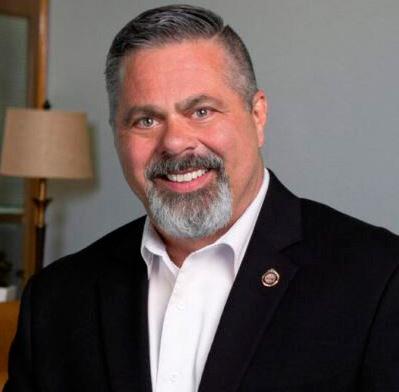
BROOKE BRITTAN
Tennessee Joins List of States Rewriting Rules on Non-Compete Agreements:
What Employers Need to Know
By ROBERT HORTON and VICTORIA KLINE
Restrictive covenant legislation is growing in popularity across the United States. Tennessee, a state long regarded as business-friendly, is among the list of states creating statutory definitions of what is reasonable for non-compete agreements.
Other states with recent legislative non-compete developments include Virginia, Washington, Utah, and South Dakota. The current state effort to develop restrictions coincides with increasing federal enforcement actions against companies that impose blanket restrictions on workers.
Tennessee Draws a Line: House Bill 1034
Tennessee has long been regarded as an employer-friendly state, making it all the more notable that its legislature has now chosen to impose meaningful guardrails on postemployment restrictions. However, the guardrails are generally consistent with the current Tennessee common law regarding non-compete agreements and will provide more certainty for the parties entering into such agreements. House Bill 1034 passed through the General Assembly with bipartisan support and is expected to be signed by Governor Lee, with an effective date of July 1, 2026. The legislation does two things: sets parameters for what will be presumed as “reasonable” time durations for non-competes, and sets a compensation floor that employees must receive before a non-compete agreement may be enforced against them.
Limitations on Temporal Reasonableness
House Bill 1034 creates a system of rebuttable presumptions governing the permissible duration of restrictive covenants. A court must presume reasonable a duration of the longer of five (5) years or less, or a period equal to the time during which payments are made to the owner or seller, in the case of a restrictive covenant sought to be enforced against the owner or seller of all or a material part of any of the following:
1. The assets of a business, professional practice, or other commercial enterprise
2. The shares of a corporation
3. A partnership interest
4. A membership interest in a limited liability company
5. Any other equity interest or right to receive profits in a business, professional practice, or other commercial enterprise
A duration of two years or less following the termination of an employment or independent contractor relationship that is unconnected with such transactions will be presumed to be reasonable. Similarly, in the absence of one of the foregoing transactions, a duration of three years or less measured from the date of termination of the business relationship will be presumed to be reasonable in the case of a restrictive covenant sought to be enforced against a current or former distributor, dealer, franchisee, lessee of real or personal property, or licensee of a trademark, trade dress, or service mark.
$70,000 Income Floor
Perhaps more consequentially, House Bill 1034 erects a compensation floor: employers may not “require, request, or enforce a non-compete against an employee whose annualized compensation is less than [$70,000].” “Annualized compensation” means “the total compensation an employee earns from the[ir] employer, including wages, salary, commissions, nondiscretionary bonuses, and other forms of remuneration, calculated on an annualized basis.” Agreements that violate this rule are void on their face.
Employers will retain full use of confidentiality agreements, client or customer non-solicitation agreements, and employee non-solicitation provisions, all of which remain enforceable so long as they are reasonable in scope and otherwise in compliance with the law.
Assuming House Bill 1034 is signed as expected, these new rules apply to proceedings occurring and agreements entered into, renewed, or amended, on or after July 1, 2026.
Other Noteworthy State Developments
Tennessee is not the only state that has seen recent legislative changes relating to non-compete agreements.
· Washington. Washington state already has existing state legislation restricting the use of non-competes to high-income employees and other narrow circumstances. On March 23, 2026, House Bill 1155 was signed into law, banning non-compete agreements between employers and employees or independent contractors, effective June 30, 2027. Exceptions are carved out of the new law for non-competes related to the sale of a business or franchise agreements.
· Utah. Utah’s existing legislation limits postemployment non-compete agreements to one (1) year. On March 24, 2026, House Bill 270, the Healthcare Worker Post-Employment Amendments, was signed into law, banning new non-compete agreements for a broad array of specified healthcare workers, including doctors, advanced practice nurses, dentists, therapists, counselors, and others, effective May 6, 2026. The law provides limited exceptions for workers whose jobs do not utilize their healthcare license, non-compete clauses in reasonable severance agreements mutually and freely agreed upon in good faith at or after the time of termination, and non-compete agreements in connection with the sale of a business if the restricted person receives value for the sale.
· Virginia. Virginia already bans non-compete agreements for non-exempt and low-wage employees. Effective July 1, 2026, non-compete agreements will also be unenforceable against employees who are discharged without cause and do not receive severance benefits or other monetary payment, pursuant to Senate Bill 170, which was signed into law on April 13, 2026. For an employee who is terminated for cause, no severance benefits are required for the enforcement of a non-compete.
· South Dakota. House Bill 1180 was signed into law on March 12, 2026, expressly permitting agreements that prevent a selling owner from competing in the same business within the entity’s specific geographic area for up to three (3) years after the transfer.
Many other states have pending legislation related to non-compete agreements, including but not limited to New Hampshire, New York, Vermont, and Indiana.
The FTC’s Targeted Actions Against Overbroad Non-Compete Agreements
The latest illustration of the FTC’s campaign against overly broad non-compete agreements came on April 15, 2026, when the FTC secured a proposed consent order against Rollins, Inc., one of the country’s largest pest-control operators, barring the company from enforcing non-competes against more than 18,000 current and former employees. The FTC’s statement reasoned that the non-competes were overbroad in part because Rollins’ methods were publicly accessible online, most of its workforce consisted of technicians without meaningful exposure to proprietary information, and narrowly drawn non-solicitation clauses would have adequately protected any customer-relationship interests.
Key Takeaways for Employers
Employers that regularly renew non-compete agreements should ascertain whether there is state legislation banning or limiting non-competes entered into after a certain date, such as in Tennessee and Utah, in which case, the employer may want to cease agreement renewal in those states.
Employers entering into new non-compete agreements should ensure that temporal and geographical restrictions are within a “reasonable” scope as defined by applicable state legislation or case law. Non-compete agreements for employees exceeding two years or exceeding the geographic scope where the employee actually worked deserve special review for legal compliance.
Employers should limit the use of non-compete agreements to appropriate roles for which a legitimate protectable interest arises and use the least restrictive contract terms that can reasonably provide protection for such interests.

As chair of the firm’s Labor & Employment Practice Group, Bob Horton represents management in all areas of labor and employment law. Bob’s practice consists primarily of counseling clients regarding employment issues and defending companies against all manner of employment claims throughout the U.S.

Tori Kline represents employers in a range of labor and employment law matters, focusing her practice on issues arising throughout the course of mergers and acquisitions. Tori has experience advising clients on non-compete laws, drafting and negotiating employment agreements, and employment-related due diligence within the context of a transaction.

GO CONFIDENTLY.
Bass, Berry & Sims listens and responds with creative yet practical counsel. We stay on pace with the complex and rapidly evolving employment landscape, connecting your dynamic human resources needs to proactive strategies.
Relationships, reliability, and respect – at the center of our Labor & Employment and Employee Benefits practices.
Stay up-to-date on the latest in HR Law. Visit our blog at bassberryhrlawtalk.com.
Centered to deliver. bassberry.com
Robert Horton
Victoria Kline
Your Compensation Program Is Only as Strong as Your Job Descriptions
By MAHESH KUMAR
Every HR leader has one. The job description says one thing, while everyone in the organization knows the role has become something completely different.
It didn’t happen because anyone was careless. It happened because organizations are living systems. Teams grow. Priorities shift. Technology changes. Departments reorganize. Employees take on projects that become permanent responsibilities. Before long, the role has evolved while the document describing it remains frozen in time.
Most of us smile when we stumble across one of these “historical artifacts.” Then compensation planning begins.
Suddenly, that outdated job description isn’t just an old document. It’s being used to evaluate a position, benchmark market pay, assign a salary grade, support a promotion, or answer questions about pay equity. HR is left trying to explain why the paperwork and reality no longer match.
That’s because job descriptions aren’t simply hiring documents. They’re organizational documents. Recruiting may be where they begin, but compensation, career development, succession planning, workforce planning, and pay transparency all depend on them long after a position has been filled.
Organizations Evolve; Job Descriptions Should Too
Somewhere in almost every organization is a folder labeled “Current Job Descriptions.” It’s a hopeful name. Whether the contents are actually current is another conversation.
When job descriptions fall behind, compensation eventually does too. If the description of the job no longer reflects the job itself, every decision built on that foundation becomes more difficult. Questions about salary grades, market pricing, promotions, and pay equity become harder to answer because they all begin with the same assumption: the job description accurately reflects the work. When it doesn’t, HR spends valuable time defending decisions instead of making them.
Four Questions Every Job Description Should Answer
The goal isn’t to create longer job descriptions. It’s to create more useful ones.
When reviewing a role, ask four simple questions:
1. What knowledge and experience does the position genuinely require? Clearly separate minimum qualifications from preferred qualifications.
2. What decisions can the role make independently? Replace vague statements like “uses sound judgment” with specific decision-making authority.
3. What is the role accountable for? Document budget responsibility, team size, operational impact, approval authority, or other measurable outcomes.
4. What working conditions are part of the role? Travel, scheduling expectations, physical demands, and environmental factors all contribute to understanding the position.
Notice what these questions have in common. They describe the work as it exists today, not as it existed when someone first wrote the job description.
Precision Builds Confidence
One of the simplest ways to strengthen a job description is to focus less on activities and more on outcomes.
Compare these two statements: “Supports compensation activities across the organization.” Versus: “Analyzes market pricing for more than 120 positions across three business units, develops salary recommendations for leadership review, and independently approves off-cycle salary adjustments within established authority limits.”
The difference isn’t length. It’s clarity. Specific language reduces interpretation, leading to more consistent job evaluations, stronger salary grade decisions, and greater confidence in the compensation process.
Build Job Descriptions as Part of Your Job Architecture
One of the healthiest habits HR can establish is defining when a job description deserves another look. A reorganization. New reporting relationships. Additional budget authority. Expanded leadership responsibilities. Significant technology changes. Any meaningful shift in a role should trigger a review of both the job description and its evaluated grade.
Think of it as preventive maintenance. Most compensation issues don’t appear overnight. They develop gradually as roles evolve, while documentation stands still.
More importantly, recognize what a job description really represents. Every job description becomes part of your organization’s job architecture. Together, they define how work is organized, how roles relate to one another, where career paths develop, and how salary grades are assigned. When those descriptions accurately reflect the scope and value of each role, compensation decisions become more consistent, career progression becomes clearer, and pay conversations become easier to explain.
Organizations will always evolve. The HR teams that stay ahead of that change aren’t simply updating documents. They’re maintaining the foundation that supports every compensation decision that follows.
That’s why the real question isn’t whether your job descriptions are current. It’s whether they’re strong enough to support the job architecture and compensation program your organization is building.
Mahesh Kumar, Managing Director, TraineryHCM™ mkumar@TraineryHCM.com












































































More Than a Holiday Gift: Deliver a Festive Celebration

This holiday season, help employees bring their family together. The holidays are not remembered because of what is under the tree, they are remembered because of who is gathered around the table. They are remembered for grandparents sharing family recipes, children helping bake holiday cookies, neighbors stopping by for dinner, and loved ones reconnecting over a favorite meal. Memories that last a lifetime.
For employers, the holiday season presents a unique opportunity to say “thank you” in a way that truly matters. While company merchandise or generic gift cards may be appreciated, the most meaningful gifts are those that help employees celebrate with the people they love. That is why small family-owned businesses and large Fortune 500 companies have been choosing Holiday Gift Checks for over 38 years. Holiday Gift Check Program helps employers give something far greater than a holiday present. A gift that gives families the opportunity to gather around the table, celebrate family traditions and create those lasting memories.
A Corporate Gift That will be Appreciated by Every Employee
Every employee celebrates differently. Some prepare a traditional Thanksgiving turkey, others serve a holiday ham, seafood, or a favorite family recipe passed down through generations. Holiday Gift Checks give employees the flexibility to celebrate in the way that means the most to them. Redeem at grocery stores nationwide for the foods that transform a meal into a cherished family holiday celebration.
This year, Holiday Gift Checks have been enhanced to provide an even more memorable gift:
· Add your company logo or custom graphic, creating a personalized gift that reflects your organization’s identity and commitment to employee appreciation.
· Personalized company message and seasonal greeting to thank employees for their dedication throughout the year. Need inspiration? Choose a professionally written appreciation and thank-you message crafted specifically for employee recognition.
· Individual check format makes holiday distribution faster and more convenient than ever before.
· High-resolution laser printing delivers an exceptional quality and a polished gift presentation that employees will immediately recognize as something special.
A Simple Holiday Gift That Builds a Stronger Workplace
Employee recognition has never been more important. When employees feel appreciated, they are more engaged, more loyal, and more connected to their organization. A thoughtful holiday gift communicates something every employee wants to hear, “Your hard work mattered and we appreciate everything you do.”
To learn more visit Holiday Gift Check Program


Preparation for What HR Demands Next
Enroll in SHRM Certification Prep+ at Skills Accelerator, part of All Things Work 2026. Build the exam readiness needed to earn SHRM certification and strengthen your HR expertise and credibility.
LEARN WITH PURPOSE WHY TAKE CERTIFICATION PREP+ AT SKILLS ACCELERATOR?
Instructor-led preparation focused on earning your SHRM-CP® or certification SHRM-SCP®.
IMMERSE YOURSELF
Step away from daily demands and dedicate time to your professional growth.
Build your confidence to earn SHRM certification and strengthen your impact at work.



KeynoteMorris Morrison
DISRUPT YOURSELF: Driving Change To Create Growth & Opportunities!
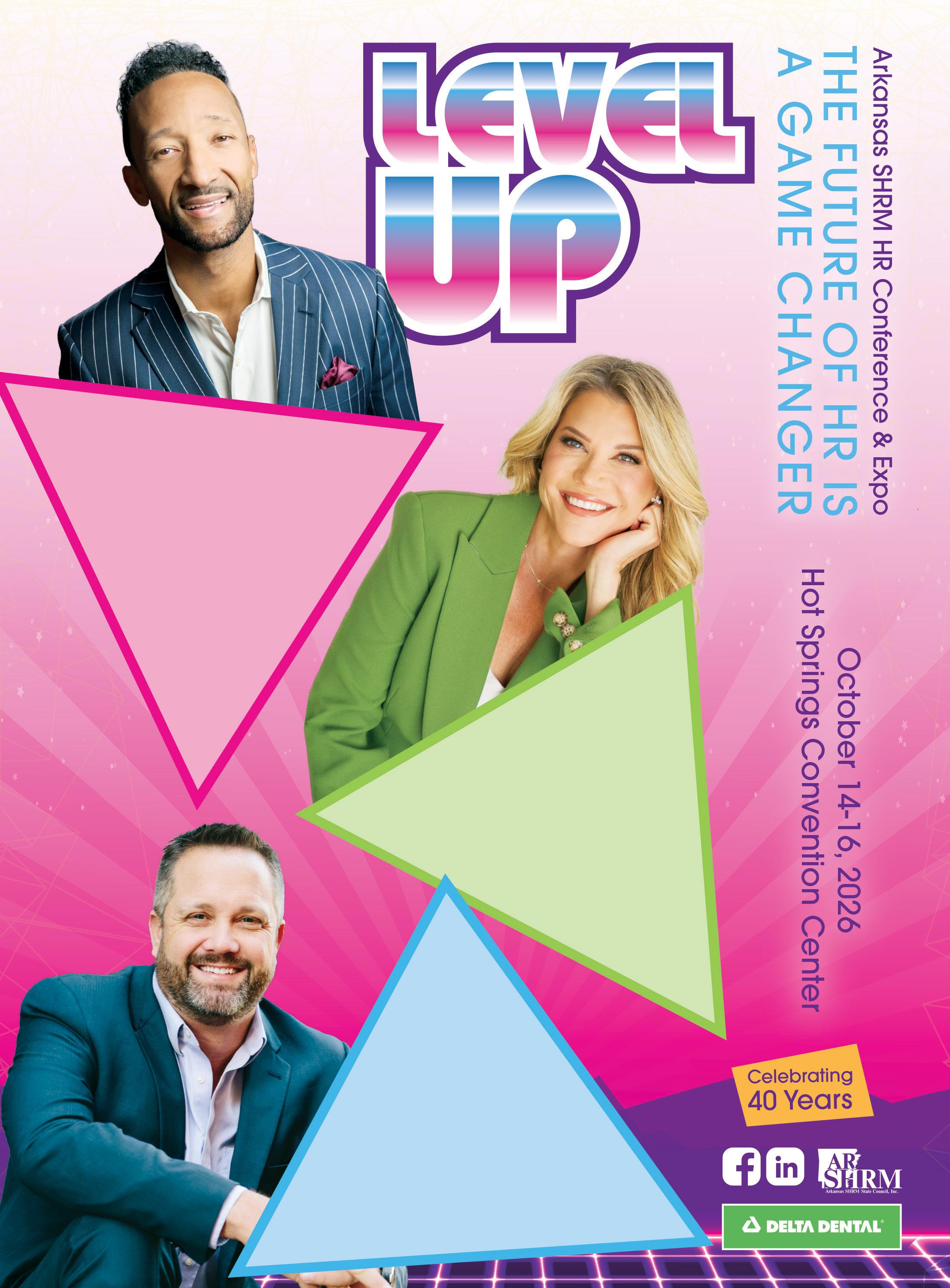
Keynote SusanDrumm BuildingHighPerformance TeamsThroughthe Enneagram
Keynote Chad Porter Inspiring A Better You
Meet the Alabama SHRM Leadership Team



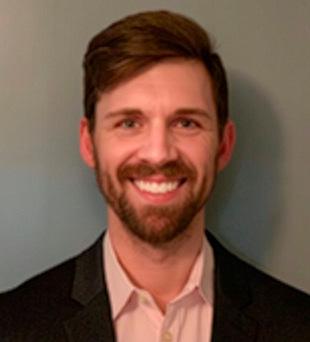
Andrea Lewis Director
Joshua Bracken Business Manager
Chanell Daniel Secretary
Mallory Watkins Director-Elect
GRADUATE WITH MORE THAN A MASTER’S



Earn your master’s in HR management in a program aligned with SHRM and HRCI guidelines—and graduate with additional HR credentials.
WGU’s master’s in HR management equips you with the skills and credentials to succeed. Along with your degree, you’ll earn a certificate in HR Technology and Analytics to enhance decision-making and have the opportunity to earn a SHRM Specialty Credential, strengthening your résumé before you even graduate.




Enrolling now. Scan for more information about the MSHRM and apply today.