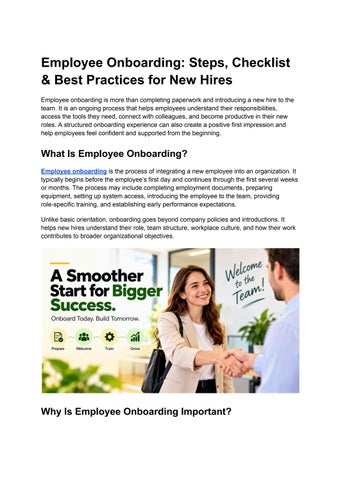
Employee Onboarding: Steps, Checklist & Best Practices for New Hires Employee onboarding is more than completing paperwork and introducing a new hire to the team. It is an ongoing process that helps employees understand their responsibilities, access the tools they need, connect with colleagues, and become productive in their new roles. A structured onboarding experience can also create a positive first impression and help employees feel confident and supported from the beginning.
What Is Employee Onboarding? Employee onboarding is the process of integrating a new employee into an organization. It typically begins before the employee’s first day and continues through the first several weeks or months. The process may include completing employment documents, preparing equipment, setting up system access, introducing the employee to the team, providing role-specific training, and establishing early performance expectations. Unlike basic orientation, onboarding goes beyond company policies and introductions. It helps new hires understand their role, team structure, workplace culture, and how their work contributes to broader organizational objectives.
Why Is Employee Onboarding Important?
A well-organized onboarding process can make the transition into a new role much easier. New employees often have questions about processes, responsibilities, tools, and workplace expectations. Providing the right information at the right time reduces confusion and helps them settle into their roles. Employee onboarding can also support employee engagement and productivity. When employees understand what is expected of them and have access to the necessary resources, they can begin contributing more effectively. Regular communication during the early stages also gives HR teams and managers opportunities to identify challenges and provide timely support. For organizations growing their workforce, maintaining a consistent onboarding process becomes especially important. A repeatable approach ensures that every new hire receives the essential information, resources, and support they need.
Key Employee Onboarding Process Steps A successful onboarding process can be organized into several practical stages: 1. Pre-boarding: Complete contracts, collect required information, and share important instructions before the employee’s first day. 2. Day-one preparation: Ensure that the employee has the necessary equipment, email account, software access, and workspace ready. 3. Welcome and introductions: Introduce the new hire to team members and explain company culture, policies, communication channels, and workplace procedures. 4. Role-specific training: Provide training on job responsibilities, tools, workflows, and processes relevant to the employee’s position. 5. Early check-ins: Schedule regular conversations during the first few weeks to answer questions, gather feedback, and address potential challenges. 6. 30-60-90 day goals: Establish measurable milestones that help employees understand priorities and track their progress over time.
Employee Onboarding Checklist Using an employee onboarding checklist can help HR teams maintain consistency and avoid missing important tasks. A basic checklist may include: ● ● ● ● ● ●
Offer letter and employment documents completed Employee information collected Email and system accounts created Equipment and workspace prepared Company handbook and policies shared Team introductions completed
● ● ● ●
Role-specific training scheduled First-week check-in arranged 30-60-90 day goals documented Buddy or mentor assigned
Organizations can make this process easier to manage by using an employee management system to organize employee information, workflows, documents, and onboarding activities in one centralized platform.
Common Onboarding Mistakes to Avoid Several common mistakes can reduce the effectiveness of onboarding. Treating onboarding as a single-day activity may leave employees without sufficient support after their first day. Providing too much information at once can also overwhelm new hires. Other issues include unclear job expectations, insufficient follow-up, and inconsistent onboarding procedures between departments. Creating a structured process with scheduled check-ins and clearly defined responsibilities can help address these challenges.
Conclusion Effective employee onboarding provides new hires with the information, resources, training, and support needed to transition successfully into their roles. From pre-boarding preparation to 30-60-90 day milestones, each stage contributes to a more organized employee experience. By combining clear processes with an employee management system, organizations can make onboarding more consistent, track important tasks, reduce administrative work, and create a smoother experience for both HR teams and new employees.