25: APRIL 2026
HQM investigates: What the C gradings tell us about fire safety issues in social housing
Focus on the person: Resident-friendly approaches to 'no access' issues
12-page Evidence special
“

25: APRIL 2026
HQM investigates: What the C gradings tell us about fire safety issues in social housing
Focus on the person: Resident-friendly approaches to 'no access' issues
12-page Evidence special
“
The Resolution Foundation's Lindsay Judge on Labour's housing performance
14 July 2026 – Virtual 16 July 2026 – The View, London
Rapid regulatory change, economic uncertainty and emerging technologies – this year’s HQN annual conference explores evolving expectations, sector resilience and future innovation. We’re bringing senior housing professionals together to share best practice, assess risk and prepare organisations for what’s next.
Held over two days, the first will be a virtual event and the second an opportunity to get together with colleagues at our central London venue, The View.
Confirmed speakers include:
• Vicky Spratt, Housing Correspondent for The Independent and author of Tenants – The People on the Frontline of Britain’s Housing Emergency
• Richard Blakeway, Housing Ombudsman
• Will Perry, Director of Strategy, Regulator of Social Housing
• Ben Marshall, Research Director, Ipsos
• Annalisa Howson, Joint Assistant Director, Housing Services, Guildford Borough Council.
Plus, we’ll have the grand final of this year’s Housing’s Next Generation competition.
For more information and to book your place, visit www.hqnetwork.co.uk/events




10 'No access'
Neil Merrick reports on organisations that are investing in more resident-focused approaches to overcoming ‘no access’ issues
14 Lindsay Judge interview
Jon Land talks to the Resolution Foundation's Research Director
20 Fire safety failures
Keith Cooper investigates a worrying trend of fire safety failures among organisations with C3 and C4 gradings
The latest research and analysis – in plain English
Along with the latest housing research from leading academics, in this edition of Evidence we welcome our new editor, Gareth Young.
Design:
Published four times a year. All rights reserved. Reproduction in whole or in part without written permission is strictly prohibited.

“Their heart is in the right place” is a telling phrase pulled from our interview this month with Resolution Foundation director Lindsay Judge. She is, of course, talking about Labour’s housing policy performance after nearly two years in government.
While you might think at face value it’s a positive verdict, the reality is that, like many policy areas, housing has posed some very specific challenges that the government is finding difficult to unpick.
Far from the shit show so often portrayed on a daily basis by the media – and not helped by the regular, self-inflicted disasters plaguing key Labour personalities (not least Keir Starmer) – there are signs that the government is serious in its attempts to introduce policies that will make a genuine difference to people’s lives.
As Lindsay suggests, however, good intentions don’t always mean you’ll end up with the right result and it’s fair to say its efforts on housing are floundering because it's trying to do too much, in too little time, with nowhere near enough money.
Just as social housing providers are forced to decide between investing in bringing (often poor quality) existing stock up to scratch or building new homes, the government has had to make its own choice on what areas of housing are the most important to focus on.
And while the Resolution Foundation gives Labour “close to top marks” for funding the new £39 billion affordable homes programme, it means other crucial aspects of housing are ignored or kicked into the long grass. The government will argue differently, but the 2035 deadline for the new Decent Homes Standard suits both landlords and ministers because there isn’t the money to deliver anything like the investment that’s required. But even more depressing is the abject failure to address the temporary accommodation crisis, which we've learned in the last week has been a factor in the death of more than 100 children over the last six years.
It remains to be seen if the government will step up on some of these key issues in the next three years, but the danger is it will run out of time before delivering any of its key housing goals, including the much-trumpeted target of delivering 1.5 million new homes by the end of the next parliament.

Jon Land Editor, HQM
Jonathan Walters will be an excellent new chief at the Regulator of Social Housing (RSH). One of his many fine attributes is that he goes into the job with his eyes wide open. There will not be the dreaded ‘getting to know you’ waste of time we see so often.
But it's one heck of an in-tray.
Private equity has made a pig’s ear of water. For years, the promoters of private equity have promised a wall of money for housing. If we don’t watch out that will turn into a vale of tears. Keeping a sharp eye on these players, and doing a stronger job than Ofwat, will be a task and a half. At the moment some are doing better in housing than others.
Given the poor state of UK finances, it’s a case of any port in a storm – so the government will want the cash from private equity without the catastrophes.
In an ideal world this would be an easy dilemma to avoid. If our existing landlords were in fine fettle it would be unnecessary to take the risk with new players. For better or worse the RSH keeps a close eye on association finances. So, we know from their quarterly surveys that the books aren't in good shape. This walks us into all sorts of traps.
with devastating consequences. Right now we’ve got 176,000 children parked in temporary accommodation. That’s no way to live and an allparty parliamentary group has linked it to the deaths of over 100 children.
Who’d want to lead the RSH? The stakes are far too high. If landlords stint on repairs there's the risk of another tragedy like Grenfell. But if we don’t build then babies will die.

How has it come to this? We are in the midst of the poorest quality elections of all time. The biggest idea is to cap food prices. And the SNP blatantly nicked that from Count Binface with his heroic efforts to make croissants affordable.
As I go around all I hear in local campaigns are endless gripes about potholes. Yes, they are a danger. But compared to kids dying in hovels? It’s got so bad I was thinking of calling for military rule. But then I remembered we don’t have much of an army left. So, we are stuck with what we’ve got – as the old cartoon says: “Well if you knows of a better ’ole, go to it.”
There will be a temptation to seek out innovative sources of finance. Is it time to bring back our old friend creative accounting? Many of us are still unpicking the PFI. Marry in haste, repent at leisure!
Faced with this, the RSH does the only thing it can really do and urges associations to make trade-offs. That’s what you say when there are no good choices.
The regulator has told landlords to survey all their homes to identify what needs fixing. As you would expect this leads to big bills.
At the same time homelessness is growing,
The idea of trading off repairs versus building is plain wrong. We must do both. In and of itself the RSH cannot fix this. The one and only answer is government funding. Better that it comes now in a calm rational way than in a panic after another tragedy. How much of a tragedy do we need to galvanise the British state these days?

Alistair McIntosh, Chief Executive, HQN
Cassette tapes are back and so are inspections. But what C rating will you get from the RSH?


We all know what the inspectors are looking for. They want to see hard evidence of:
• An up-to-date stock condition survey
• A business plan that shows when the works from the survey will be done
• Accurate data on Decent Homes and safety compliance
• Listening to and acting on the views of tenants
• Outcomes being delivered for tenants.
“Throughout the [inspection] process we found HQN’s team to be very professional and knowledgeable. They provided invaluable challenge in a supportive way that helped us focus on what was most important, as well as useful guidance and advice based on their experience and understanding of the inspection process”
Laura Giles, Director of Strategy, Barnet Homes
Leading councillors, or the board, must prove that they have put in place a regime for meeting the Consumer Standards and have oversight of this. How robust is your governance? That’s what the RSH wants to know.
The Consumer Standards cover all your dealings with tenants across all of your homes. It’s a broad agenda to say the least. Often you don’t have enough cash to do all that you need to do. So, it’s far from easy to pass this test. But your leaders will want to get the best rating that they can.
“HQN has been invaluable in supporting the council’s improvement journey, resulting in the C1 ratings achieved in April 2026. From the initial setup through to the final report, HQN consultants demonstrated clarity, approachability, and genuine engagement. Crucially, they provided constructive challenge to our thinking, understanding, and evidence: embodying the role of a true critical friend”
Davina
Howes, Executive Director of Communities and Housing, Norwich City Council

“Achieving our recent C1 judgement marks a significant milestone for Guildford Borough Council and HQN’s support has been a key part of that journey. The mock inspection provided a highly realistic and constructive experience, giving us valuable assurance while also identifying areas where we could strengthen our approach. Their professional yet approachable style made them a pleasure to work with throughout”
Meena Lota, Housing Insight and Improvement Senior Specialist, Guildford Borough Council
HQN is working with 50+ landlords on consumer regulation. We can help you to:
• Pin down exactly where you sit versus the Standards today
• Put together a Specific Measurable Achievable Relevant Time-bound (SMART) improvement plan
• Improve your C rating.
HQN can provide tailored support including:
• Briefings for leading councillors, board members and officers
• Authoritative reviews of all services with indicative C ratings
• Assessing the documents and presentations you give to the RSH
• Help with self-referrals and voluntary undertakings
• Deep dives into specific areas
• Reviews of compliance with the Rent Standard
• Support with improvement work.
“HQN has significantly supported BCP Homes in undertaking a comprehensive self‑assessment against the consumer standards last year. They have been a valuable critical friend throughout our improvement journey. BCP Homes received a C1 consumer rating 12 months after our work started with HQN and I would not hesitate to recommend [them] to other organisations seeking meaningful support”
Kelly Deane, Director of Housing and Public Protection Wellbeing,
BCP Council
For more information, please contact Anna Pattison at anna.pattison@hqnetwork.co.uk or call 01904 557150
By Nicola Lambe, Head of Specialist Services, Stonewater
When headlines share progress for domestic abuse survivors, it’s tempting to assume the problem is being solved. New refuges, improved pathways and partnership working all sound encouraging, and indeed, they are. But scratch beneath the surface and a more complex picture emerges, one that reminds us that safe accommodation isn’t just about roofs and referrals, but about long-term work to improve access, dignity and long-term recovery.
The Safe Haven by the Sea: One Year On report, coproduced by Stonewater and Brighton & Hove City Council, does exactly that. It revisits what’s changed since the original 2024 study and, crucially, what hasn’t.
On the whole the story is positive. More survivors are being supported, specialist advice is increasingly embedded in housing teams and risk assessments for temporary accommodation now routinely involve domestic
abuse expertise. This has reduced unsafe placements and enabled earlier, more informed interventions for people facing complex situations.
Perhaps most striking is who’s being reached. The report shows increased support for survivors from groups historically underserved by housing systems: disabled survivors, LGBTQ+ people and those from Black and minoritised communities. This matters because the original research found that while accommodation technically existed, it often failed those who didn’t “fit the model”: survivors placed far from their networks, re-traumatised in shared settings or excluded altogether due to rigid eligibility criteria.
Progress has been driven by structural change rather than goodwill alone. Dedicated refuge champions, children’s workers and specialist roles in housing teams have helped translate policy into practice. When expertise sits alongside allocation and homelessness teams, domestic abuse becomes part of everyday housing decision-making rather than an afterthought or a late referral. This is a lesson that feels transferable well beyond Brighton & Hove.

But what Safe Haven by the Sea also provides is honesty about what remains unresolved, reflecting the wider challenges facing domestic abuse services nationally.
Older women continue to appear repeatedly in survivor testimony as a group falling through gaps. Many report feeling invisible, caught between domestic abuse services and housing pathways that aren’t designed around ageing, long-term health
needs or social isolation. Even well-intentioned systems can struggle to offer suitable options, and without dedicated pathways, older survivors risk either returning to unsafe situations or remaining in accommodation that doesn’t support recovery.
Children’s experiences present another uncomfortable reality. While the sector increasingly recognises children as survivors in their own right, funding for children’s workers and therapeutic support remains inconsistent. Practitioners know that the impact of abuse doesn’t end when a family reaches safety, but resources often do. Without sustainable investment, services are left rationing support rather than responding to need.
From a provider perspective, the report also highlights the importance of accountability and continuous improvement. Stonewater’s recent Leading Lights accreditation offers recognition of the forward momentum of domestic abuse services but is equally important because it required scrutiny of policies, staff confidence, governance and multi-agency working. Accreditation frameworks, when
“Progress has been driven by structural change rather than goodwill alone. Dedicated refuge champions, children’s workers and specialist roles in housing teams have helped translate policy into practice”
done well, can push organisations to examine how practice operates in reality and to strengthen it further, so survivors experience support that not just works in principle, but also in practice.
The expansion of these specialist domestic abuse services into more areas, along with longer-term contracts and partnerships, such as Stonewater’s recently extended contract with Central Bedfordshire Council, brings both opportunity and responsibility. This new contract will see increased children’s support provision and further therapeutic interventions for both women and children, demonstrating that domestic abuse services work best when they are locally rooted, shaped by lived experience and designed in collaboration.
So, what sits behind the headline of progress? A picture of learning, improving and collaborating more effectively than before, but one of a sector still wrestling with structural constraints. Safe accommodation isn’t simply about unit numbers or compliance with statutory duties. It’s about whether survivors can access housing that feels safe, appropriate and supportive of healing.
The challenge now is to resist complacency. Marginalised survivors and children affected by abuse must not remain peripheral to service design. As safe housing and specialist support providers, alongside local authorities, commissioners, policymakers and national partners, we all share responsibility for responding to the issues this report highlights. These challenges are complex and national, and addressing them will require coordinated action across funding, policy and service design, not solutions delivered in silos.


As pressure mounts on housing providers to better understand the condition of their properties and respond faster to hazards in the home, organisations are investing in innovative and more resident-focused approaches to overcoming ‘no access’ issues. Neil Merrick reports.
Gaining timely access to tenants’ homes has never been more important for social landlords.
There are gas and electrical checks to carry out, routine maintenance and the need to comply with Awaab’s Law. Regulators, on the other hand, are urging landlords to recognise the people behind the door – not just the need to carry out repairs.
But what if the people behind the door prefer not to know the landlord? Every year, cases of ‘no access’ cost the sector millions of pounds. In 2024, the Association of Safety and Compliance Professionals estimated that the cost of failed attempts to carry out gas inspections alone easily exceeds £50 million per year.
Research last year by HQN showed just 40% of social landlords have a definition of ‘no access’, with fewer measuring the scale of the challenge. More encouragingly, some housing associations and local authorities are taking creative steps to tackle the problem.
These include cultivating better relations with tenants, avoiding multiple visits for different reasons and offering appointments at more convenient times. Equally, landlords are also warning tenants of the consequences if they don’t open their doors to contractors and other staff.
On the back of the HQN research, A2Dominion got in touch to tell us about its decision to set up a new team of compliance engagement officers to tackle a problem that the association estimates costs it more than £1m per year.
Located in its property directorate, the four officers have begun working alongside its housing, legal, compliance and repairs team, to co-ordinate efforts to get into hard-to-access homes.
Tania Emery, building safety director at A2Dominon, says the association is keen to hear residents’ point of view and review how it communicates with them. At present, residents are notified of visits by letter, and must ring the housing association if the time offered is inconvenient. Switching to WhatsApp or text messages is among the options being considered.
A2Dominion has problems gaining entry to 2-3% of its 38,000 homes, though trials last year of evening and weekend appointments for electrical safety checks led to fewer failed visits. “We’re working with residents to look at how the process appears from their perspective,” she adds.
By law, social landlords must service gas
boilers and fittings every 12 months. From next month [May], electrical safety checks will need be carried out at least every five years, though checks for new tenancies became mandatory last November.
Under Awaab’s Law, serious hazards such as damp and mould must be investigated within 10 working days. This will be extended to other hazards, including excess cold or heat and fire safety, later this year. Yet some landlords say they can still encounter problems accessing homes after a tenant complains of damp and mould.
Tenants argue they cannot always be expected to be at home for an appointment, especially if this means missing work. And they become frustrated when landlords line up multiple visits for different reasons in a short space of time.
“We’re increasing our presence in neighbourhoods, spending more time in people’s homes, looking at the individual as a whole, understanding the barriers they face and working with them to address those issues”
Jude Laidlaw-Magee, tenancy sustainment service manager, St Leger Homes
Arm’s length management organisations are reporting ‘access fatigue’ among some tenants, says Lisa Birchall, head of policy at the National Federation of ALMOs, which commissioned the HQN research.
“Landlords need to go into more properties more frequently due to the changing regulatory environment,” she says. “[But] they aren’t always able to tie things together, so that they can go in for different reasons at the same time. This is something our members are working on.”
Tenants may be unwilling to allow access to their home due to rent arrears, or other disputes with their landlord. Some are afraid they will be criticised for the conditions inside, including hoarding.
The HQN research found that, with most landlords wanting to avoid expensive legal action, there's “a cultural shift” towards more empathetic relationships with tenants.
In February, St Leger Homes introduced a new tenancy agreement for the 20,000 properties it manages for Doncaster Council. While this is
explicit about tenants’ responsibilities around access for compliance checks and safety, it also recognises the right of tenants to privacy and the fact that, on occasions, they are within their rights not to grant entry.
Dawn Martin has spent much of the past year going in and out of tenants’ homes. As Dacorum Borough Council’s first lead officer for access, she is responsible for reducing the number of times contractors and staff fail to gain entry to a property while winning over the confidence and respect of tenants.
Martin’s appointment came after the council, in Hertfordshire, vowed to alter the narrative around ‘no access’ and focus on the person behind the door.
As part of a newly created safe homes team, she works with other internal teams, such as community safety and tenancy sustainment, as well as external agencies, including adult social care and mental health.
Ricky Lang, Dacorum’s deputy assistant director of property, says the issue of accessing council homes became starker when the council began carrying out electrical checks ahead of this becoming a legal requirement [see main article].
“It’s not about pushing the door in or saving money. It’s about trying to engage with tenants and achieving better building and resident safety”
Ricky Lang, deputy assistant director of property, Dacorum Borough Council
While access is only a problem at 1%-2% of Dacorum’s 10,000 homes, the cost adds up. “We were losing money because contractors were making appointments and then turning up when tenants were not in,” adds Lang. “We were wasting money on aborted calls.”
Martin’s appointment as lead officer for access means the council can co-ordinate its operations with services such as social care, while tenants are given a single point of contact. On occasions, she attends visits at the homes of more vulnerable tenants, including women who may be wary of being alone with male contractors.
At the end of February, the council did not have a single case of non-compliance. The new approach also allows for improved data and record keeping, including reviewing how information on households is used by the council.
Lang stresses that Dacorum is still willing to take legal action where needs be but prefers to work with tenants and see the bigger picture. “It’s not about pushing the door in or saving money,” he says. “It’s about trying to engage with tenants and achieving better building and resident safety.”
Jude Laidlaw-Magee, St Leger’s tenancy sustainment service manager, says the ALMO is keen to look into why some tenants are reluctant to open their doors to contractors or St Leger staff. Letters have been updated to reduce terminology and make it clear which firm of contractors will undertake each visit.
It also sees the value of developing better relations with tenants, including three-yearly ‘keep in touch’ visits and the wider support that it offers tenants and other people in Doncaster with job training, CV writing and financial advice.
A new access team, consisting of a leader and three officers, looks at individual tenancies to see where the ALMO can extend assistance. “A tenant who sees us as an organisation that can help them is more likely to help us carry out work,” says Laidlaw-Magee.
Last year, in a report on cases of severe maladministration surrounding repairs and maintenance, the Housing Ombudsman urged social landlords to see “the person behind the repair”, rather than fixating on properties. References to ‘stock’ should be avoided, while “human-centred services that treat residents
HQN’s ‘no access’ research was commissioned by the National Federation of ALMOs (NFA), Councils with ALMOs Group (CWAG), the Local Government Association (LGA), the Chartered Institute of Housing (CIH) and the Association of Retained Council Housing (ARCH). HQN is holding an event Opening the Door – finding resident-friendly solutions to ‘no access’ on 12 May.
with respect and dignity is recommended,” said the report.
A consultation by the Regulator of Social Housing over a new tenant satisfaction measure (TSM) covering electrical safety checks closed in March.
Nic Bliss, director of the Stop Social Housing Stigma campaign, says some landlords have lost contact with tenants and need to show them more respect. Blanket letters stating a landlord will be in the area during the next week and needs access for a stock condition survey are unlikely to gain a positive response, he says.
“Landlords need to re-engage with their tenants and make them feel they understand their concerns and explain what they are trying to do,” says Bliss.
Back at A2Dominion, all its new compliance engagement officers have backgrounds in housing. Three are female, meaning they can be on hand if any female residents are concerned about male contractors being in their home. “They understand the customers,” says Tania Emery.
A2Dominion isn't the first housing association to adopt this approach. In December, L&Q set up a team to support access for essential safety checks, including fire risk assessments, as well as liaising with residents in communities. Its work will soon expand to cover damp and mould.
Robin Nower, L&Q’s director of building compliance, says such conversations can make a real difference in building trust. “There isn’t a one-size-fits-all solution,” he adds. “What works best is a flexible, resident-led approach that recognises different needs and avoids unnecessary escalation.”
It's not just social landlords that are increasing pressure on tenants to allow access to their homes. In January, the Electrical Safety Roundtable, a trade body, launched the ‘Let Me In’ campaign, ahead of safety checks becoming mandatory for all social housing this spring.
Despite the change in approach to gaining access, court action cannot be ruled out of the picture completely. In the case of Awaab’s Law, HQN’s research found many landlords feel the government created confusion by not specifying the legal routes they should take where a tenant fails to provide access. Landlords, it said, feel ‘trapped’ by legal and regulatory requirements placed on them and the “ponderous court system”.
Last year, Bromley County Court blocked an attempt by Southern Housing to gain entry for a
“There isn’t a one-size-fits-all solution. What works best is a flexible, residentled approach that recognises different needs and avoids unnecessary escalation”
Robin Nower, director of building compliance, L&Q
gas safety check. As the tenant had an assured tenancy, the judge ruled the association didn't have the power to enter the property without permission.
In a more recent case, not involving Southern, the judge ruled against a tenant, suggesting landlords have the right to enter a property. As both judgements were non-binding, Southern says they make little practical difference to the association and that it continues to seek injunctions where needs be.
But landlords also stress they want to avoid legal action at all costs and anything that smooths relations with tenants is advantageous. This approach is likely to benefit landlords and tenants more widely, especially where tenants face financial and other problems, and perhaps view any type of authority or intrusion with mistrust.
“The legal process can take time, and so there are rarely quick wins,” says Jude Laidlaw Magee at St Leger Homes. “That’s why we’re increasing our presence in neighbourhoods, spending more time in people’s homes, looking at the individual as a whole, understanding the barriers they face and working with them to address those issues.”
How landlords can reduce access problems –what the HQN research tells us
• Create a culture of support and empathy towards tenants that acknowledges individual circumstances
• Adopt a blame-free term for failing to gain access to homes that can be used by residents, staff and contractors
• Be clear with tenants about their responsibilities to grant a landlord and any contractors access and the consequences of not doing so
• Streamline visits wherever possible
• Create a single database of information on each property and residents
• Focus on persistent and complex cases using flexibility and the ‘human touch’.

With the Labour government nearly two years into its five-year term, we thought it would be a good time to mark their performance so far on housing and the cost-of-living. And who better to compile the report than Lindsay Judge, Research Director at leading think-tank the Resolution Foundation. Jon Land asks the questions.

Jon Land (JL): Based on your research, just how bad is it out there currently?
Lindsay Judge (LJ): That’s a big question, isn’t it? But let me try and break it down into pieces. The first thing to say is obviously the last 15 years has been absolutely dismal for living standards for just about everyone. But, of course, if you’re at the lower end of the income distribution, it feels worse than it does if you’re at the top end.
If we want to be a little bit more positive, we can look forward to this fiscal year (2026-27), there’s actually a little bit of a turning point for low-income people. And there’s two – potentially three – things driving that.
The first is that unemployment is relatively low. It’s not so much for young people, but I mean, on the whole, we have a fairly buoyant employment rate in the UK. And over the last 15 years, that’s been the sort of positive story in that lots of people who we would have previously classed as marginal in the labour market, have found work.
The next positive part of the story is that the National Minimum Wage is still on an upward trajectory. And there’s a fairly hefty increase this year of 4.1%.
point to council tax as a bill that really causes them a lot of distress, not least because they often don’t feel they’re getting good value for money from it.
Obviously, we’ve also got the war in the Middle East, and that’s brought huge uncertainty to the outlook. The two items in the costs basket that we think it’s most likely to affect are obviously energy and, in the longer term, food prices.
With energy, in the short term, you might say it doesn’t really matter because we’re going into summer and we’ve got the price cap, which will be in place until July. But I think it’s undoubtable that the price cap will need to move up in July. And, of course, we’re all looking to the autumn.
“We’ve done a fair amount of research on housing quality and the social rented sector is, amazingly, considering the horror stories you hear quite regularly, the best performing tenure”
There’s also the gradual convergence of youth rates with the adult rates. So, that’s good for young people.
And then the third thing is that there’s obviously some progress on benefits this year. I do think we shouldn’t underplay this. This is a real turning point in that we’ve got the uprating of Universal Credit standard allowance for the first time in 15 years.
And let’s not forget the 500,000 children who live in households which were hit by the two-child benefit cap and that’s obviously been scrapped. So, there have been some good policy choices that have been made that are about supporting incomes of those at the bottom.
So, that’s a good news nugget in what’s generally a broader story of misery. If you look at the cost side, you’ve got really challenging downward pressures.
The first one to highlight is council tax and we know that bills are going up by 5% this year. Council tax is a regressive tax in that it hits those at the bottom more than the top. And that’s really serious, I think. When we’ve done qualitative work in the past, it’s surprising how much people
On food prices, we need to consider two things. One is that it’s spring. So, if you’re a farmer in the northern hemisphere, you’re planting your crops and you’re wanting to put fertiliser on them. And we know that fertiliser is obviously in short supply. But the second thing we know from looking at the past evidence is that it takes time for the increases to come through. So, we may not see food prices going up this year, but we may see it next year.
It’s worth noting that energy and food make up a bigger share of a lower income household’s consumption basket than it does for a higher income person. So, those two things really matter for low-income families.
I think there’ll be a big debate going into the autumn budget about whether there’s more that the government needs to do for low-income families. Anyway, I told you this is a complicated question. I haven’t even mentioned housing yet!
JL: How does housing tie into all of this?
LJ: We all know that housing is the biggest consumption item that almost every household has. I mean, that may not be true if you own your home outright, but largely speaking, for the majority of the population, it’s the number one biggest expense. And it’s obviously the expense we all prioritise because if you don’t pay your housing costs, you become homeless.
We know that rents of both stripes, social and private, are still increasing above inflation rates. With social rents, that’s policy-driven with the CPI plus 1% increase every year. With private rents, it’s just a function of the market. And I’m sure you’ve
“You can think of shared ownership as being a way of buying yourself a permanent social rent tenancy. That sort of aligns with the fact that we don’t see many people staircasing. In some ways, it’s a way of just ensuring yourself a good home for however long you want to stay in it”
seen the charts that we and others draw that show this really incredible spike in private rental inflation coming out of Covid, which endured for quite a long time, I think, probably because it takes a long time for tenancies to turn over.
We’re now seeing that come back down a bit and begin to stabilise, but it’s clear that private rents have been outpacing prices overall for a significant period of time. And again, if you’re focusing on lower-income families, someone might say, well, it doesn’t really matter because they get housing benefit or the housing element of Universal Credit. And that’s true. But we also know there’s a significant share of social renters who aren’t in receipt of housing benefit.
At the Resolution Foundation, it’s the private renters that we particularly worry about from a living standards point of view, because local housing allowance (LHA) remains frozen at the October 2024 rate and rents have increased much faster since that point of re-pegging. In fact, we’re close to the point where rents have diverged away from the peg to such an extent that it’s becoming untenable.
But, of course, that’s the average, right? And we know that housing markets are local and that means there are people in particular areas who are really at the sharp end of that.
For as long as I’ve worked at Resolution Foundation, housing costs have been such a drag on living standards. We see that over and over again, even when we’ve got periods of income growth because wages just can’t keep up. It leaves people chasing their tails because of their housing costs.
I know your interest isn’t in homeowners, but we shouldn’t forget all the people who’ve got mortgages who are looking down the barrel of a gun with rising interest rates again. So, there’s no doubt housing costs are a huge stress for people generally.
We did a really interesting piece of work a couple of years ago, looking at how our housing costs compare to other countries on a likefor-like basis. So, we were looking at the cost per square metre and other factors. And the UK really stands as an outlier. It’s clear that lots of other countries have problems with their housing markets and experience lots of the same issues that we experience in the UK, but on a cost basis, we do seem atypical.
JL: Do you think social landlords could be doing more to support their tenants?
LJ: It’s not something we’ve done a lot of research on. But I do spend quite a lot of time with people who are running employment support programmes via housing associations. What’s interesting is that as a housing association you have two things at your fingertips. One is you’ve got an easy way to communicate with people – you should know your residents, you know people’s addresses, you have contact with them for other reasons too. And the second thing is that kind of capacity to work and build relationships in a small geographic area. And we know that both of those things are really important, particularly in employment support practice but wider support as well.
So, I think housing associations sit in the kind of privileged position potentially for delivering effective employment support. And there’s obviously lots of examples where they do great work in this area. I think there’s two caveats I would make, and again, not necessarily from our research, but from just observation.
I remember I was presenting at the board of a housing association once and then had the privilege of sitting and listening to the rest of the meeting. People were talking about their employment support programmes and their benefit support programmes and their debt reduction programmes, etc. And one member of the board said, “isn’t our raison d’etre to build houses?”. So, I think there’s that tension about a housing association’s purpose. Is it to build houses or is to support people?
JL: That leads me on to your thoughts on social housing progress generally, particularly under the current Labour government. How do you feel things are going in terms of delivery, legislation and regulation?
LJ: Well, it’s going to be one of those reports with multiple pages. I’d give them reasonably close to top marks on putting their money where the mouth is. So, obviously the funding of the affordable homes programme with the £39 billion was really welcome.
We’ve got a chart that shows that’s the highest annual spend on subsidised housing since, I
think, 2011-2012. It’s not quite back up to those levels, but it’s getting there.
And I think that that recognition is important, especially in fiscally constrained times.
Alongside that, there was the commitment, which I know has been somewhat watered down in London, that 60% of the build would be social rent. Those two things feel important. And I think we should give credit where it’s due.
On the question around regulation and quality, we’ve done a fair amount of research on housing quality and the social rented sector is, amazingly, considering the horror stories you hear quite regularly, the best performing tenure.
Of course, that doesn’t excuse all these examples of appalling conditions and terrible health impacts that we hear about. But poorquality housing is something the government is looking to address, and I do feel like their heart is in the right place.
They’ve seized the right policy issues. But change is hard to affect in a lot of these areas. And the devil is always going to be in the detail, isn’t it, about how you actually implement these things, how you follow through on them, how you adapt if they’re not working.
Take the Renters’ Rights Act. Our focus on that one has been more on the private renters than the social renter side, but the thing we’re really thinking about at the moment is how will local authorities be able to enforce the new provisions around the act? Because there’s no point in having something on the statute book if there’s no enforcement capacity. And there’s no point in having enforcement if there’s no capacity to rectify.
And I think that’s a statement that could be
applied to the social rented sector too. I hear from people in the social rented sector about how challenging the post-Grenfell remediation programme has been and that’s obviously absorbed a lot of capacity. I think we just have to be realistic about some of this stuff.
A lot of the issues in housing are very long term. And it’s about thinking, what does progress look like? I guess that leads me to the point that housing policy doesn’t work very well on a parliamentary timetable, does it? Because five years is nothing in the housing world. And it feels so important to create cross-party consensus around some programmes and some interventions. There’s got to be some kind of settlement on housing that endures across parliaments, because otherwise it’s just this constant ‘old wine in new bottles’ situation, where endless efforts to launch fancy new programmes are actually just old programmes dressed up.
JL: Which brings me nicely to shared ownership which, as you know, has been around across a number of different governments and parliamentary terms. But it’s a difficult tenure, isn’t it? It comes with its own problems, but it’s still in play and the government still trying to make it work.
LJ: Yes, it’s one of those things that on paper looks great, but the reality of it is often very different. I don’t need to tell you what the problems are, Jon, but we don’t see many people staircasing. It’s really challenging when you try to sell. People are stung by these service charges that they didn’t expect, and they’re often quite steep. So, the gloss has come off it to a certain extent. But there’s clearly a segment of the population who it works for. Someone told me many years ago, which I found really interesting, is that you can think of shared ownership as being a way of buying yourself a permanent social rent tenancy. That sort of aligns with the fact that we don’t see many people staircasing. In some ways, it’s a way of just ensuring yourself a good home for however long you want to stay in it. Perhaps if we think about it and talk about it in those terms, it makes a bit more sense. It would also reframe how we market it.

I’d also revert back to the point about the 60% social rent commitment. It feels so different from previous governments where so much of the housing


Assessing Britain’s falling birth rate since the early 2010s

spend, if not all of it, was on shared ownership and affordable rent.
Despite the criticism, it feels like the right thing to carry on with shared ownership as part of the tenure mix. And in some cases, it also helps housing associations balance the books. But I don’t think history will show that shared ownership has proven to be a silver bullet!
JL: The Resolution Foundation has recently done some research on housing affordability that suggested there was a link to people’s decisions around raising a family. Can you tell us about that?
LJ: That piece of work was looking at declining fertility rates overall, and the reasons behind it. One of the main ones is that so many more women go into higher education these days, and we know that that defers the decision to have a baby. But housing has also been problematic. We were quite careful with our words in this report, because it tends to be more qualitative evidence, that people think having a stable home, an independent home, is a priority before they have children.
But, then, I always think about my parents who married in the 1960s. The idea of having their own home was a pipe dream really but they still had children. And people do have children regardless of where they live, so we have to be a bit careful of making a direct link.
But it was certainly the case that when we looked at the number of young people who are still living with their parents, which, of course, has gone up quite considerably over time, it could potentially be an element of that declining birth rate.
I’m going to read you what the report said: “The number of non-graduates (and that’s important because that’s what the study focused on) who haven’t gone to university, in their mid to late 20s, living with parents has doubled over the last 25 years. This might pose a significant barrier to starting a family. Of the overall rise in the proportion of non-graduate women in their late 20s without a dependent child over the past decade, two-fifths is associated with the shift of living with parents.” It’s kind of logical, isn’t it?
We’ve done some work in the past showing how difficult it is to get on the housing ladder as a single person today and how having two incomes is really important. But living independently is a part of the young adulthood experience. So, coupling up and living together is a key marker in the life course and it’s happening later. And obviously this is important in terms of creating a family. I’m picking my words carefully here! It’s worth saying that the number of families with dependent children living in the private rented sector has increased massively over time. And it’s one of the reasons why it needs to be reformed so that it’s not just regarded as a transitory tenure. For lots of people, it’s probably the tenure that they’re going to live in for all of their lives. Currently, it’s less than ideal to be a child in the private rented sector.
JL: In terms of housing and the cost of living. What policies would the Resolution Foundation like to see?
LJ: Our number one ask on housing at the moment is to relink LHA to actual rents and make that a stable settlement. We wrote a paper last year which pointed out that, in the Treasury and OBR figures, Universal Credit would be uprated every year. So, when that happens, it’s not a spend, it’s just an assumption. Currently, the assumption
“At the Resolution Foundation, it’s the private renters that we particularly worry about from a living standards point of view, because local housing allowance (LHA) remains frozen at the October 2024 rate and rents have increased much faster since that point of re-pegging”
embedded on LHA at the moment is that it will be frozen. So, when it’s uprated, it’s classed as a spend. And I think that’s really problematic. We’ll definitely be pushing for changes on that in the run up to the budget.
We were delighted about the two-child cap being removed. But we should remember the benefit cap is still in place and it isn’t uprated very often. That becomes more painful for families affected by it and draws more people into it over time. It’s an irrational policy and very damaging for lots of people.
What else? We did a piece of work that showed how housebuilding is critical for growth – but in two ways. It creates a lot of jobs, and it generates value in the economy, but it’s also important in terms of getting the economy going, especially in places outside of London. We want Birmingham, we want Manchester, we want Leeds to be successful cities. And some of the problems that they have around housing is the need for a bigger workforce. You want to build at scale in the right places – but how do we do that?
One of the questions we’re puzzling about is whether it’s plausible to expect the private sector to deliver the homes we need? Completely rationally, housebuilders are companies, they’re not charities, and build out to an absorption point and then they stop building and then and they build somewhere else. I don’t think we should kick them for that because they have a board to report to and they are profit maximisers and that’s their nature. But if that’s the case, can we expect them to kind of ratchet up to the levels that are required to hit the 300,000 a year target?
I think there’s two potential answers. One is,
yes, they could build better and bigger and faster. And the regulatory framework needs to change to try and ensure this happens. The other is, no, they can’t. They’re private sector companies, they’re price sensitive, they’re not going to take those risks, in which case the answer has got to be there needs to be more investment on the public housing side.
On housing quality, we did an interesting paper last year on housing and ethnicity and part of it looked at housing costs to income ratios. Lo and behold, every single ethnic minority group paid more of their income on housing than white British. But why is that? So, we went through the whole rigmarole of looking at whether they had better or bigger or higher quality houses. But no, they didn’t. We didn’t come up with a chapter and verse conclusion to the reasons, but we do think solving lots of these wider housing problems would have a disproportionately positive effect on ethnic minority families.
We’ve asked the housing select committee to carry out an investigation to see if the reasons behind it are discriminatory. Things like whether there’s a smaller pool of housing available to people from ethnic minorities and they end up having to pay over the odds? The committee was very interested in the report, but it hasn’t picked it up yet.
There’s no doubt that housing issues are widespread but certain groups are undoubtedly hit harder – young, old, ethnic minorities. These are the groups at the sharp end, and it feels like there should be real political energy from any government to try and address these problems.
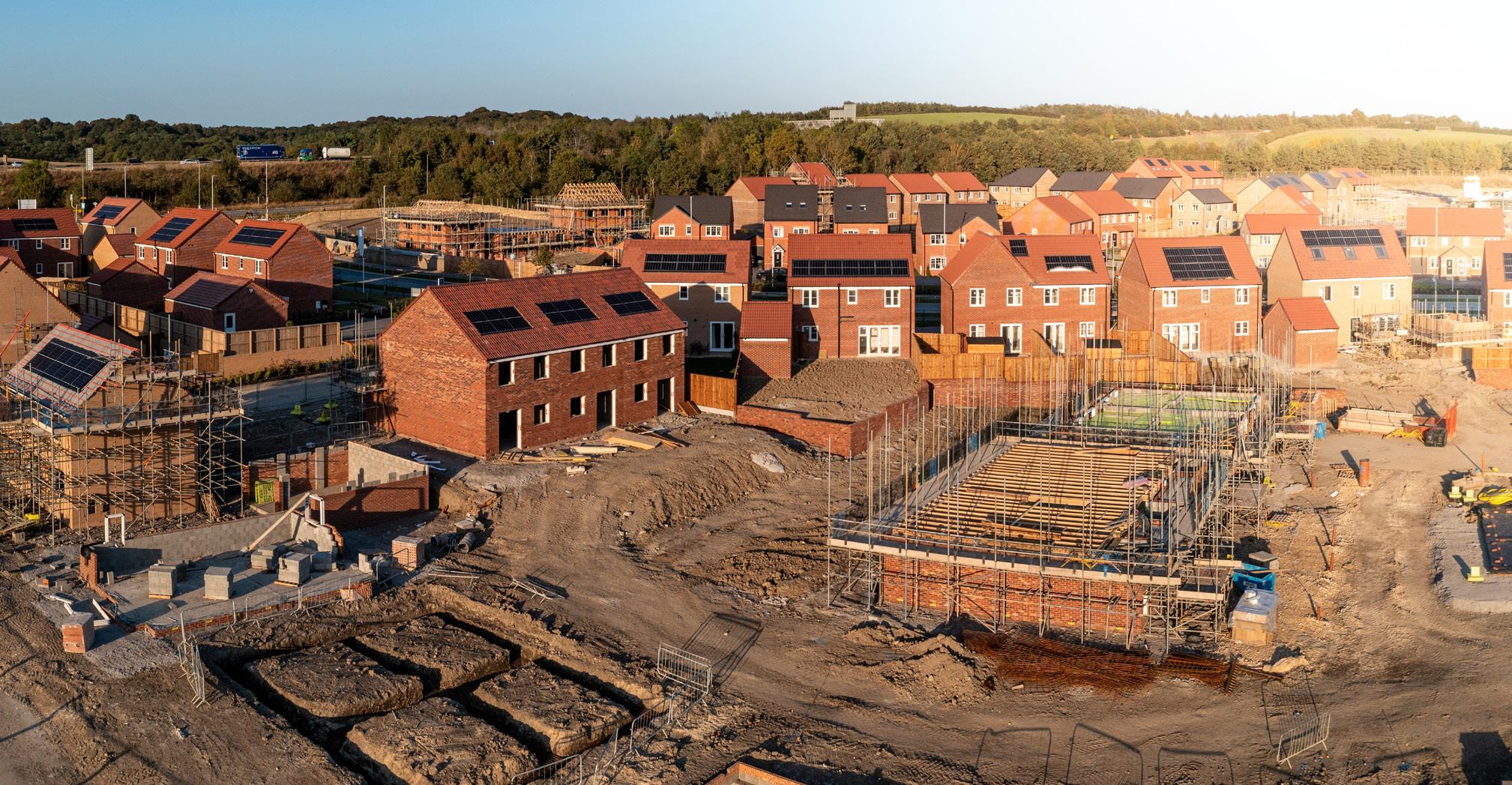

Analysis of the Regulator of Social Housing’s regulatory judgements shows a worrying trend of fire safety failures among organisations with C3 and C4 gradings. In his latest investigation, Keith Cooper delves into the issues uncovered by inspection and what organisations are doing to address them.

“Residents need to be reassured that an effective system is in place to maintain the safety of their homes.” So said Dame Judith Hackitt, in plain and simple terms, in her first report into the Grenfell Tower fire of June 2017, which killed 72 people.
Just over eight years on from this recommendation, first made six months after the fire, HQM has examined just how far social landlords have come in meeting this goal by analysing two years of checks on so-called ‘consumer’ compliance by the Regulator of Social Housing (RSH).
We’ve found growing evidence that Dame Hackitt’s recommendation hasn’t been followed by a significant number of housing providers.
This is despite it being echoed almost every year following the fire in multiple heavyweight reports, in parliament by the regulator, and by many others, before it was enshrined finally as a legal requirement in the Social Housing (Regulation) Act 2023. This paved the way for the new consumer regulatory regime which came into effect in April the following year.
As recently as February this year, the RSH reported another local authority’s “failure to meet [its] legal and regulatory requirements in relation to electrical and fire safety”. The City of London Corporation, which owns and manages 1,900 homes in central London, most of them located in other authorities, had more than 1,000 fire safety remedial actions which were overdue, including a number of high-risk ones uncompleted after more than a year.
The City of London isn’t alone. It’s just the latest in a growing number of councils and housing associations which have been found to simply not know whether their tenants are safe in their own homes. Since the RSH began checking on fire safety it’s found “large numbers” of outstanding fire safety works in some social landlords, it told HQM.
To find out how wide these fire safety failures are spread we’ve examined the 48 regulatory judgements issued between July 2024 and February 2026. Over this period, the RSH has issued seven C4 judgements. Six of these flag fire safety shortfalls dating back to 2012. Overdue fire safety remedial actions were also found in just under half (19) of the 41 C3 judgments.
Octavia Housing was one of the first landlords to be checked under the new regulatory regime.
In July 2024, it was found to have 1,200 medium or high-risk fire safety remedial actions that were overdue after a serious fire in one of its properties that January. Octavia Housing has since become a subsidiary of Abri, a large Hampshire-based association.
The same month Bristol City Council was found to have some 3,000 fire remedial actions outstanding, with the RSH having “low confidence in its data management relating to fire safety” and was unable to prove that most of the smoke alarms in its homes met regulatory requirements, according to its regulatory judgement. A report into the “root cause” of its failings the next year found Bristol had “not prioritised” efforts to comply with consumer regulations – which include fire safety checks – “until shortly before proactive consumer regulation was introduced” in April 2024.
“Some people are looking at C3s in the wrong way: they think it’s good enough. But other authorities have moved heaven and earth to get there. C3s can be an absolute triumph or varnish over complacency”
Alistair McIntosh, chief executive, HQN
Months later, in October, the London Borough of Newham was found to have more than 9,000 overdue fire safety remedial actions, most of them for more than a year and most classed as high risk, its regulatory report found. Reports probing its failures to date have pointed out problems relating to “low data maturity”, a “lack of ownership”, “high turnover of senior managers” and “key posts being left vacant for lengthy periods”. Its councillors had been presented with “inaccurate, missing and misleading data” and reports numbering “hundreds of pages”, creating a risk that “key details, facts and figures are overlooked”, among many other findings.
We’ve also found multiple instances where shortfalls on fire safety uncovered in inspections turn out to be even more concerning after further scrutiny.
Newham Council discovered a “substantial omission…of data on smoke and carbon monoxide alarms” and that “smoke alarms in non-gas properties weren’t inspected” in probes launched since its 2024 judgement. Bristol Council found that far more of its smoke alarms were non-compliant with regulations than the regulator found after introducing a “more robust assessment” according to its council papers this year.
The small West Sussex district authority
Arun was found to have “nearly 1,000” fire risk assessment remedial actions overdue at its inspection in July 2025. A more in-depth assessment this January found a backlog of 1,717, including “life-critical actions related to fire doors, compartmentation, emergency lighting and signage”, in its housing blocks, a report commissioned by the 3,500-home council found.
Angela Holden, director of regulatory engagement at the RSH, told HQM it was not unusual for “diagnostic works” following inspections to uncover more problems. “A local authority looks at its systems, processes and data. They ask themselves: what else do we need to know? Sometimes this can lead to things looking worse before they get better but that doesn’t happen in every case,” she adds. “But just because they discover something else during this period, we won’t always penalise them for that. The intention is to work with them and solve the substance of an issue.”
The regulator is more concerned when landlords don’t disclose these new findings of failure, Ms Holden indicates. “We have had a small number of landlords not tell us things because it’s bad news. When that does happen, we might see it in a data submission, or information being sent through the landlord’s governance structures. We want to work with landlords in an open and transparent way, and it would be better if we don’t have to pick these things up in council papers.”
The RSH has also at times had to issue stern warnings to councils which it considers are taking too long to address fire safety shortalls.
Arun Council was warned in a letter from the RSH in December 2025, four months after being informed of its C4 judgement: “We’re not receiving evidence to demonstrate that Arun is making adequate progress to ensure
remedial actions are addressed in a timely manner to ensure tenant safety.” “It’s concerning that the number of overdue remedial actions has increased and dates for completion have not been confirmed,” the letter adds. It’s plan for improvement had taken “several months to progress” as it was waiting for a council committee to sign it off. This wasn’t due to meet until January 2026, the letter adds.
Ms Holden says some local authorities have “struggled in the initial stages of getting their improvement plans going” and that governance requirements and infrequent council meetings could slow the approval of improvement plans. “But it shouldn’t stop landlords from getting on and resolving problems or developing an improvement plan to do so,” she told HQM. “For local authorities with poor-quality or limited data on the condition of their homes or health and safety checks, there’s very little stopping them from getting on and doing that work in advance of an improvement plan being agreed.”
HQN director Damian Roche, who advises several councils which failed to meet consumer standards on fire safety, has seen a “real diversity” of responses to the new regime. “Some organisations have been taking consumer regulation really seriously; others with C4s seem oblivious to the process and their role within it,” he adds. “I’ve had the impression that they didn’t have a clue about it until the Regulator of Social Housing arrived.”
Mr Roche puts this apparent malaise down to housing often playing “second, third or fourth fiddle” to more pressing priorities in councils, such as social care. “Social housing also affects a small proportion of some local authority’s populations,” he adds. “If you want to be cynical, it isn’t an election winner unless your ward is very heavily populated with local authority housing.”
HQN chief executive Alistair McIntosh points to an enduring perception that fires with as many fatalities as Grenfell Tower are “extremely rare”. “People still talk about building safety rules being completely onerous and that they could
“We’ve had a small number of landlords not tell us things because it’s bad news. When that does happen, we might see it in a data submission, or information being sent through the landlord’s governance structures. We want to work with landlords in an open and transparent way, and it would be better if we don’t have to pick these things up in council papers”
Angela Holden, director of regulatory engagement, Regulator of Social Housing
“Some organisations have been taking consumer regulation really seriously; others with C4s seem oblivious to the process and their role within it.
I’ve had the impression that they didn’t have a clue about it until the Regulator of Social Housing arrived”
Damian Roche, director, HQN

Firefighters attend a fire in a tower block in
use that money to keep people out of temporary accommodation. But it isn’t a question of either/ or.”
Mr McIntosh says he’s even heard it said that a C3 judgement is the “going rate” for local authorities. “Some people are looking at C3s in the wrong way: they think it’s good enough. But other authorities have moved heaven and earth to get there. C3s can be an absolute triumph or varnish over complacency.”
Ms Holden says the RSH was aware that the perceived severity of a C3 or C4 grade might diminish the more it gave them out but hadn’t encountered “casual attitudes“ from councils or housing associations. “We think it’s important to call it as we see it and to be consistent in our grading approach across all landlords”, she adds. “We have had constructive engagement… and seen real desire to put things right.”
Two of the local authorities we examined indepth say they now take their first safety failings seriously.
Arun Council says it had responded to “evolving national policy” following the Grenfell Tower fire. “While the council undertook a number of fire safety activities during this period, it’s clear from the regulator’s judgement that these actions weren’t sufficiently comprehensive, coordinated or consistently embedded to meet the required standards,” a spokesperson adds. “The council acknowledges that it fell short of the standards expected by residents and the Regulator of Social Housing.”
The West Sussex authority had now established
a “comprehensive housing improvement programme with a particular focus on resident safety and regulatory compliance”, she says. “Given the scale and complexity of issues, this programme will run over the medium term (up to 24 months), with resident safety actions prioritised and accelerated where possible.”
Bristol Council said it had in December hit the first milestone of the ‘housing consumer standards improvement strategy’ it published in May 2025, just under a year on from its regulatory judgement. This milestone “concentrated on getting the right policies, procedures and systems in place,” says Barry Parsons, chair of Bristol’s Homes and Housing Committee. “Our homes and housing service has a new senior management team in place and we’ve introduced a new housing management system and published a new resident engagement strategy for building safety. All of these provide the basis for making impactful and long-lasting changes.”
Newham Council didn’t respond to our request for comment. It was, however, quick to admit that its C4 judgement was a “damning indictment” of its housing services and promised “urgent improvements” whose progress can be tracked in council papers. And its new housing director started in December 2025 with a “simple priority”, according to his introduction on the council’s website: “To make sure your home is safe, in good condition, and a place where you can feel comfortable and proud to live.”
Coming more than eight years after Dame Hackitt’s similarly simple call for resident safety, tenants in Newham and elsewhere might be excused for a touch of scepticism, however well intentioned his pledge may be.

Sponsored by


In January’s edition of Evidence, editor Janis Bright, who’s brought together fascinating and insightful content for the last 13 years, announced her retirement.
In May this year, I’ll officially be joining HQN, and part of my role will be to step into Janis’s role – and very big shoes I have to fill. I’ve been an avid reader of the magazine, and Evidence, over my years in housing research and I’m delighted to be stepping into this role and continuing to share the brilliant work that’s taking place both nationally and internationally.
The evidence presented in this issue sits against a rapidly evolving housing landscape across the UK, shaped by ambitious reform alongside persistent structural pressures. Recent policy developments, including the extension of the Decent Homes Standard to the private rented sector and wider reforms under the Renters’ Rights Act, signal a shift toward a unified baseline of housing quality, although long implementation timelines and ongoing affordability challenges continue to raise concerns for tenants.
At the same time, social housing providers are navigating growing expectations around data, digitalisation and the ethical use of emerging technologies such as artificial intelligence, while responding to entrenched inequalities in housing outcomes for diverse communities. In Scotland, legislative change and electoral debate are placing
renewed emphasis on homelessness prevention and tenant protections, even as housing pressures intensify.
Across the UK, rising demand, constrained supply and questions around allocation practices continue to intersect with wider social issues – from ageing populations and minority ethnic housing experiences to the links between housing insecurity, health and social harm. Together, these developments underline the central role of evidence in informing policy, practice and innovation in a sector facing both transformation and sustained challenge. And while these articles published here are varied in their content and focus, there are many common themes running through them, including demonstrating how important it is to be considering evidence in many different ways, including that derived from research, from meaningful engagement with people who understand first-hand what the various different dimensions of housing challenges we’re focusing on, and what we can learn from good practice that’s taking place in our sector where policy or wider structural issues might be creating barriers and sustained inequalities. This issue continues to highlight the breadth of research into housing that exists, and quite how broad our remit is within the housing world.
Gareth Young Editor, Evidence

By Kenneth Gibb, University of Glasgow/ UK Collaborative Centre for Housing Evidence (CaCHE)
Housing features strongly across the six manifestos that have been published. That’s not surprising: the Scottish government has nationally declared a housing emergency and the government last autumn produced an action plan which includes a four-year plan to spend £4.9bn, if re-elected, to
build social and affordable homes. Fourteen of Scotland’s 32 councils, more than half of the population, have also declared emergencies, often to do with being unable to meet housing demand or to be compliant with the specific statutory meeting of homelessness need.
The last parliamentary term has also seen much housing policy activity, including a widely welcomed long-term strategy, Housing to 2040, which was ambitious and wideranging, but in practice hard to implement. There were also unanticipated deep cuts to the capital budget for

new affordable supply, the long journey to the delivery of the Housing Act at the end of 2025 (covering extending homelessness prevention and proposing new rent control areas with exemptions for affordable rent and build to rent). 2025 also saw the publication of new estimates of affordable housing need (co-authored by CaCHE) suggesting increases of 50% for the next parliament compared to 2021-26. Scotland also had a rent freeze followed by caps of 3% and then 6% on existing private tenancies from 2022-24. While ostensibly helping private tenants during the cost-of-living crisis, it also led to rents shooting up in the uncontrolled new tenancy sector, reduced housing mobility and deterred investment in build to rent.
The SNP have embraced the UK government’s plan for a high value council tax surcharge (or mansion tax) and will launch their own if re-elected. They also brought in the IFS to examine council tax revaluation (the first since 1991) and other possible modest reforms. However, the chances of anything material happening still seem on balance unlikely.
CaCHE produced a document in December about how evidence on housing might shape the new government’s priorities (Gibb and James, 2025). Its main arguments were clustered around four areas: rebooting the affordable supply programme; tax reform and governance innovation, calling for a national housing and land delivery agency; land market and planning and infrastructure reform; and sharper focus on homelessness prevention, improving homelessness outcomes and investing in housing support. The paper also defended Scotland’s strong homelessness rights.
There has been a flurry of government proposals, should they be re-elected: a month after our evidence manifesto the government announced a new national housing agency (More Homes Scotland). They are consulting on accelerating housing supply with planning permission. We’ve seen the proposed return of the First Home Fund (£10,000 interest free equity loans to first time buyers). They propose a first refusal of purchase to sitting tenants when a landlord sells up. They want to progress tenement reform to create ownership associations, among several proposals.
The other five major parties have now launched their manifestos:
• Labour: 125,000 new build total requirements over five years, a dedicated housing bank proposal, planning reforms, help for tenants to save up for deposits (through affordable rent for working families), alongside a homelessness delivery unit to eradicate rough sleeping.
• Conservatives: will abolish LBTT, reverse rent controls, deregulate building regulations, stop the building safety levy system, redirect net zero funding to housebuilding and associated infrastructure, and create a brownfield development fund. They support a preventative approach to homelessness and would implement the ‘ask and act’ provisions of the new act.
• Greens: they want to build more homes, especially social and affordable, and provide a list of ideas to promote
housing quality and housing’s net zero contribution, as well as policies to support eradicating homelessness. Striking policies include help for councils to reject new purpose-built student housing, social landlords to have first right of refusal on former RTB properties that come to market, and a statutory target to eradicate homelessness by 2040.
• Reform: includes the populist and controversial return to local connection for homelessness applications to “restore community cohesion”. They also want to use pension funds to fund social housing and to reverse the regulation of the PRS for all new tenancies. Reform will also phase out LBTT and join it up with business rates as an annual property tax (but nothing on the future of council tax other than to waive current planned increases). They also propose a rent to buy model for young people and, overall, building 15,000 homes a year for the life of the parliament.
• Lib Dems: will replace Housing to 2040 with a new datadriven holistic housing strategy. They have a series of homelessness initiatives such as a guarantee for young people and a greater focus on prevention. They will also build 125,000 homes including 10,000 for key workers and want to develop a series of net-zero new towns.
Taking them together there’s considerable party crossover in terms of their proposals, but we also see divisions which reflect different positions along a pragmatic v ideological spectrum, as well as some quite well-developed versus other quite high-level ideas. There are also one or two leftfield proposals, including some pretty odd ones as well. What’s not being talked about and what might be more developed? Whole system – seems to be code for all tenure and a nod to the multilevel governance challenges of a devolved Britain, where devolved nations don’t ‘own’ the fiscal framework or key benefits like local housing allowance. From what I see and have heard in the ongoing debates and hustings, I’ve not uncovered evidence that any of them are really serious about thinking in systems, or actually working through what it means to be genuinely preventative and deal with the specifics of housing and homeless systems.

How data-driven, explainable AI is enabling housing providers to move from broad assumptions to targeted, evidencebased retrofit strategies.



By Dr Shamaila Iram, Senior Lecturer in Computer Science, Prof. Phil Brown, Professor of Housing and Communities, and Dr Claire McCamley, Research Fellow in Healthy Housing.
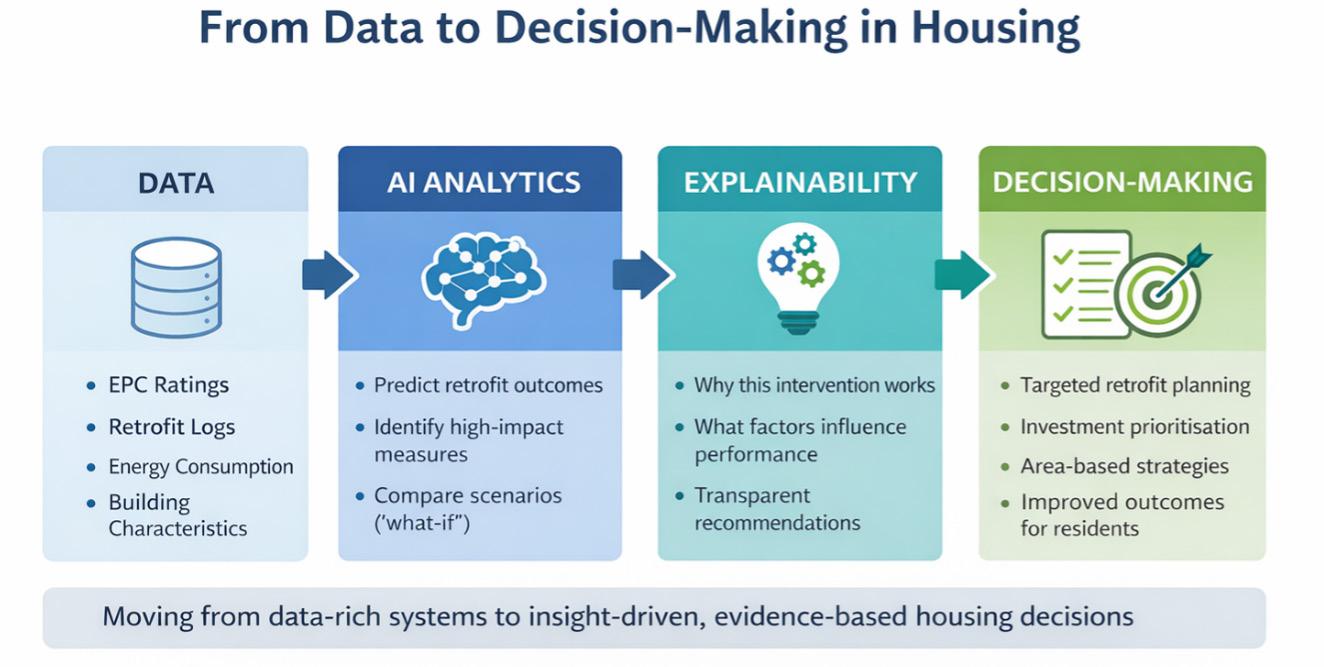
Artificial intelligence (AI) is moving into mainstream use across the housing sector. Some providers are actively experimenting with new tools, while others remain cautious about cost, capability and risk. Alongside this, there’s growing recognition that AI can support more effective service delivery, particularly where large volumes of data already exist but remain underused. Retrofit planning is one such area, where the challenge is no longer data availability but how to translate it into clear, defensible decisions.
The housing sector faces a growing challenge: improving energy efficiency, reducing carbon emissions and delivering better outcomes for residents, often with limited resources. While large volumes of housing data now exist, many providers still struggle to translate that data into clear, actionable decisions.
Traditional approaches to retrofit planning rely heavily on averages, such as energy savings, EPC improvements and standardised interventions applied across housing stock. In practice, properties vary significantly in age, design, condition and use, and many organisations have found that one-size-fits-all strategies rarely deliver optimal outcomes.
Our recent analysis of over 2,400 UK homes with preand post-retrofit data highlights this challenge. Some interventions, such as solar photovoltaic systems with battery storage, deliver strong improvements in energy performance, while others produce more modest gains. The effectiveness of any measure depends heavily on the specific characteristics of the property, reinforcing the need to understand performance at property and portfolio level rather than relying on aggregated assumptions.
AI is increasingly being used to address this gap by identifying patterns across large datasets and supporting more informed choices.
This means moving beyond static reports towards interactive decision-support platforms that combine housing data, predictive modelling and visual analytics. High-priority properties can be identified with greater
precision and intervention strategies compared with before implementation, and ‘what-if’ scenarios tested prior to committing investment. Data shifts from a reporting function to a tool that actively shapes strategy.
One of the most important findings from our recent work is the importance of data quality. In several cases, properties appeared to perform worse after retrofit. Deeper analysis showed that around 74% of these cases were due to inaccurate baseline data rather than actual performance issues.
This has significant implications, as poor data quality can lead to misinterpretation of outcomes, the undervaluing of successful interventions and ineffective investment decisions. For housing providers, this points to a more fundamental shift: data must be treated as critical infrastructure that underpins decision-making, assurance and investment. This requires attention to baseline accuracy, consistent data standards and the capability to interrogate anomalies.
To respond to these challenges, AI-driven platforms are emerging that integrate data, analytics and user interaction into a single decision-making environment. These tools enable housing professionals to filter properties by age, type and energy profile, identify where specific measures are most effective, detect underperformance, and plan interventions at property and community scales. In practice, this supports more targeted approaches and more efficient area-based retrofit strategies. The evidence also points to the value of combining measures, with the strongest performance gains seen where fabric improvements are integrated with low-carbon technologies.
Building trust remains a central challenge in the adoption of AI within housing, particularly where decisions carry direct implications for investment, asset performance and residents’ lived experience. Transparency sits at the core of this. Explainable AI addresses this by making the logic of decisions visible, showing how conclusions are reached and enabling users to understand and interrogate the reasoning behind recommendations. This stands in contrast to ‘blackbox’ systems, where the basis of decisions is not readily accessible. In practice, this enables housing professionals to assess proposed interventions, weigh trade-offs between cost, carbon and comfort, and maintain oversight
of decision-making processes. Over time, this supports stronger confidence in data-driven approaches and more accountable and defensible investment decisions.
For housing providers, the shift towards AI-driven decision support has clear implications. Investment can be targeted more precisely, directing resources to where they deliver the greatest impact. Decision-making becomes more robust, with data actively shaping strategy. Delivery can also be scaled more effectively, allowing organisations to move from isolated retrofit projects to coordinated, portfoliowide planning.
Conclusion
The future of housing retrofit will be shaped by how effectively data is structured, validated and used in practice. Combining AI, visual analytics and explainability allows housing providers to target interventions where they will have the greatest effect, supporting more efficient use of resources, stronger outcomes for residents and a credible pathway towards low-carbon housing at scale. The most effective strategies will connect technical intelligence with people-centred delivery, helping providers decarbonise at scale while maintaining resident trust and improving outcomes.

By Francesca Albanese, Crisis
There’s critical shortage of social housing across the UK. This is most acute in England where we’re losing more homes for social rent than we’re building. Last year we saw a net loss of nearly 4,000 social rented homes against a backdrop of rising homelessness. There are record levels of households trapped in temporary accommodation and rough sleeping continues to rise, trends which are driven by a shortage of genuinely affordable homes. Given the current shortfall in supply, how we distribute the available social homes has never been more important. Recent research by Crisis conducted with Heriot-Watt University and the UK Collaborative Centre for Housing
Evidence has further shone a light on current housing association allocations practices.
The research shows the huge pressures the housing system is under, particularly for households on low incomes and landlords delivering homes at social rent. Facing inadequate overall supply, housing associations likened managing and prioritising access to social housing to rearranging the deckchairs on the Titanic. Almost three-quarters (71%) of responding housing associations in England felt that they faced a challenge of available properties not matching demand from applicants under the current choice-based lettings system. Some felt the scale of housing need in their area was so overwhelming that they were no longer sure that an allocations system could “meaningfully prioritise” between applicants.
The research demonstrated the difficulties people on the lowest incomes face in accessing social housing, as housing associations are forced to exclude applicants on the basis of their income. Around a third of responding English housing associations said that pre-tenancy affordability checks often brought to light new information which led to an offer of housing being deemed unsuitable for an applicant. Nearly a quarter of responding housing associations (24%) also said that households below a certain income threshold are sometimes excluded from the housing register from which they receive applications for social housing lettings.

The result is that some applicants aren’t considered for a social home due to fears the offer is unsuitable and they won’t be able to sustain tenancies due to low incomes or insecure finances. But there are very few options for people if they cannot access social homes and that puts extra pressure on the ever-increasing temporary accommodation bill.
We know there are huge challenges facing the housing association sector. The ongoing impact of welfare reform was a significant contributing factor in making these decisions. Restrictions to housing benefit and the benefit cap meant housing associations have needed to conduct more affordability checks. The reduction in availability of in-tenancy support has also made it harder to address support needs and tenancy sustainment.
Compounding these concerns is rises in land and building costs alongside trying to bring existing stock up to new efficiency standards.
But there are areas of good practice that show what can be achieved. Where common allocations policies and/or a common housing register existed across local authorities and social landlords there were more efficient ways to allocate homes. Further, a Scottish-style system could
significantly improve allocations to homeless households. While a quarter of English housing associations reported often refusing nominations from the local authority because the offer was ‘unsuitable’, this was reported by only 6% of Scottish housing associations.
A key difference between England and Scotland is the mandatory nature of ‘Section 5’ nominations, which requires Scottish housing associations to rehouse statutorily homeless households referred to them by local authorities within a “reasonable period” unless they have a “good reason” not to do so. The recently published National Plan to End Homelessness is considering all levers to require social landlords to rehouse homeless households “including legislating if necessary”. This could make a large difference to accessing homes now.
Whilst there remain structural factors that must be tackled – more investment and minimum targets for social rent homes and tackling the welfare deficit – we must ensure the very system that was set up to help people most in need doesn’t continue to exclude people facing homelessness.
The research was conducted with Ben Sanders, Suzanne Fitzpatrick, Michael Allard and Garrett Grainger

Professor

By Dr Mahmoud Alsaeed, Research Associate, Cambridge Centre for Housing and Planning Research, University of Cambridge, and
Gemma Burgess, Director, Cambridge Centre for Housing and Planning Research, University of Cambridge.
Across the social housing sector, under-occupancy and overcrowding are often treated as separate issues, with one framed as inefficiency and the other as acute need. However, our study at the Cambridge Centre for Housing and Planning Research, conducted in collaboration with Places for People, shows that both conditions are interconnected outcomes of a single systemic imbalance. They arise from a persistent mismatch between household needs and the size, type and distribution of housing stock. The issue is therefore not just about space, but about how
effectively the system aligns people and homes across the life course.
The imbalance beneath the numbers
Current occupancy patterns expose a clear structural tension. Family-sized homes, defined by the number of bedrooms available, are frequently under-occupied, while demand for appropriately sized housing continues to grow. The 2021 Census and the ONS 2023 datasets show that more than 397,000 households in England and Wales were living in overcrowded homes, compared to over 1.4 million under-occupied homes. Notably, these under-occupied homes alone account for nearly one-third of the 4.2 million units in the social housing stock (Figure 1).
At the local authority level, this imbalance isn’t confined to London, where overcrowding is most acute. Across areas such as Birmingham, St Helens, County Durham, Sheffield, and Manchester, both conditions coexist at scale. This suggests not simply a shortage of homes, but limited mobility within the existing housing portfolio to match households to appropriately sized homes (Figure 2).
The consequences are significant. Waiting lists in some areas extend to 25 years, while reliance on temporary accommodation continues to rise. By 2025, over 131,000 households were in temporary accommodation, including 22,700 in emergency provision, such as bed-and-breakfast accommodation. Nearly 170,000 children are currently living in temporary accommodation in England, highlighting the human cost of this imbalance (Ministry of Housing Community and Local Government, 2025).
Inside the system: What practitioners know
Through a round table discussion, stakeholders across the sector consistently emphasised that neither condition
could be understood through metrics alone. Practitioners, housing providers and community organisations point to a deeper structural misalignment between housing stock and household needs.
For many households, particularly older residents, remaining in a larger home isn’t simply a matter of choice. What policy defines as under-occupation is often experienced as an appropriate and necessary use of space. Spare rooms are used for storage, hosting family or adapting to changing needs, revealing a clear disconnect between technical definitions and lived experience.
At the same time, overcrowding reflects constrained access rather than preference. Households are navigating affordability pressures, limited housing supply and restricted mobility pathways within the system.
There’s a strong agreement that rightsizing must be reframed. Rather than a policy tool focused on downsizing, it should be understood as a supported and voluntary process, grounded in trust, personalised engagement and sensitivity to life-course transitions.
The frictions in the system
The study also identified a set of interconnected barriers that constrain households’ ability and willingness to rightsize:
• Mismatch between policy definitions and lived experience, where additional rooms are seen as necessary rather than surplus
• Affordability and financial risks, including higher costs associated with moving
• Emotional attachment, social ties, health, accessibility and care considerations, especially for vulnerable households
• Limited supply of suitable homes, restricting viable relocation options
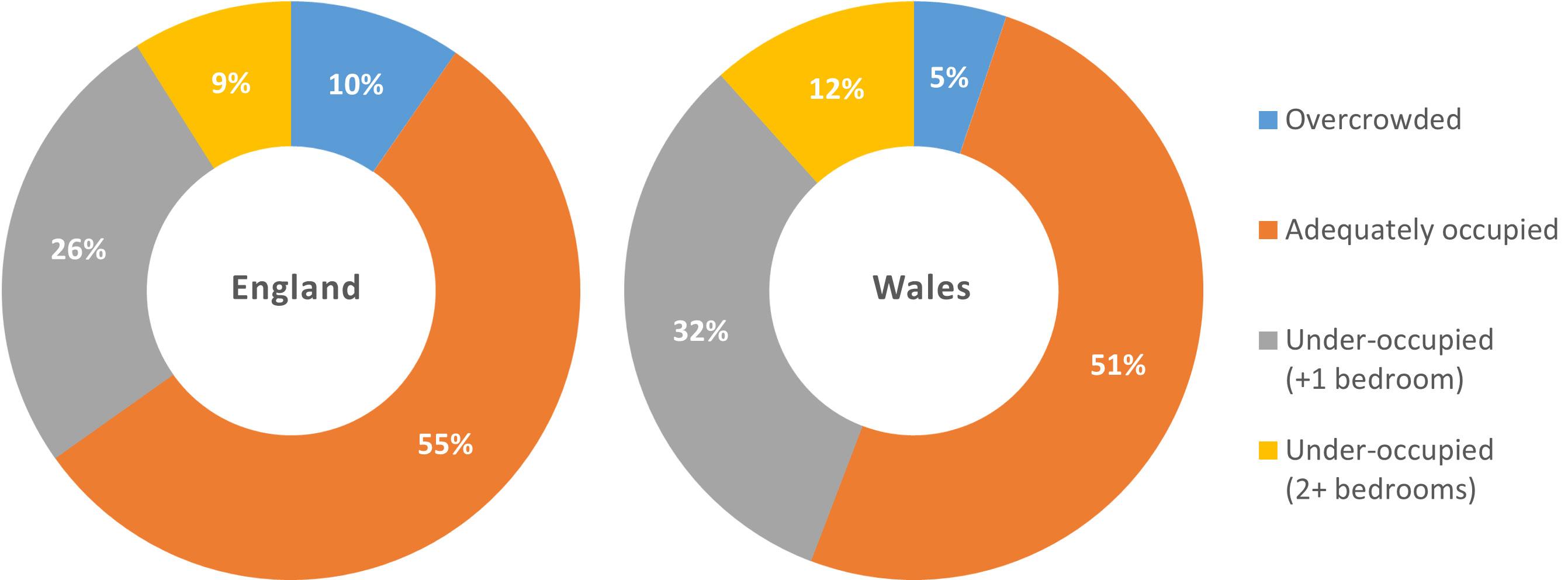
• Data, funding and engagement challenges, which constrain implementation and delivery.
Together, these barriers highlight that rightsizing isn’t a behavioural issue, but a systemic one.
The limits of a simplistic narrative
While the data reveal clear system-level imbalances, there’s a risk in treating rightsizing as a uniform solution. Housing typologies, demographic characteristics, data accuracy and availability, and allocation policies all shape how these patterns emerge locally. Without recognising this complexity, interventions risk overlooking the lived realities of households and the uneven distribution of need.
Addressing under-occupancy and overcrowding requires a shift from reactive interventions towards a coordinated, rightsizing-centred approach. This means optimising existing stock through supported mobility and chain lettings pathways that are voluntary, personalised and grounded in trust. It also requires stronger data systems to match households and homes better, incentives aligned with real financial and social costs, and consistent definitions and monitoring practices across the sector. Crucially, rightsizing shouldn’t be framed as a loss, but as an enabling process, supported by high-quality housing options and communitybased approaches.
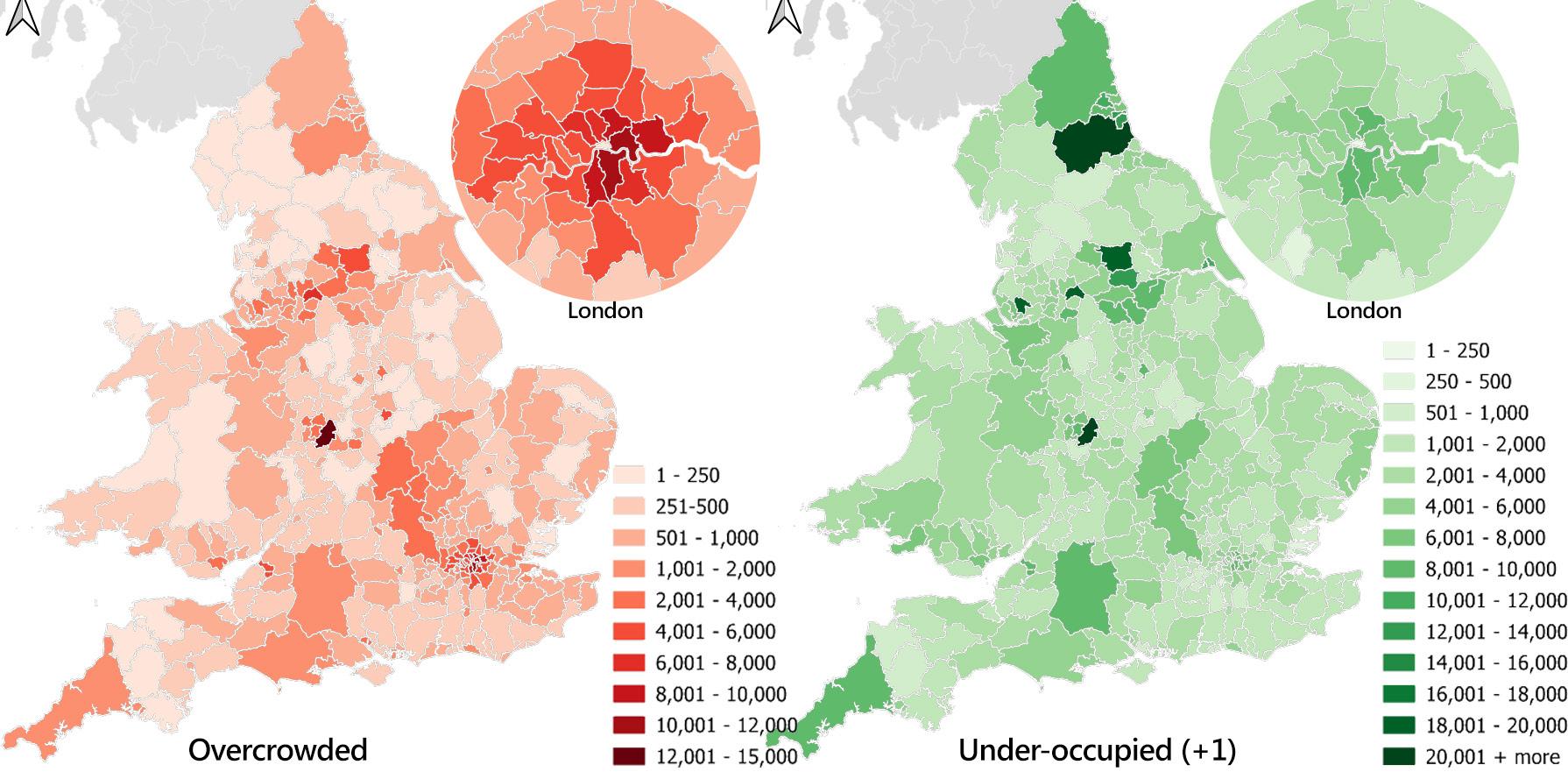

By Dr Manik Gopinath, Senior Lecturer in Ageing, The Open University
England is home to a growing, ethnically diverse older population. Yet we know remarkably little about minority older adults’ experiences of housing.
The Amar bari, amar jibon (My Home, My Life) study set out to make this visible, co-producing research with 76 older Bangladeshi adults, ‘probins’ in Bengali , aged 50 and over, living across four East London boroughs. The age cut-off of 50 reflects shorter healthy life expectancy and earlier exit from paid employment among Bangladeshi communities.
Having arrived from an agricultural region of Bangladesh in response to demand for unskilled labour from the 1950s onwards, they are now reaching older age in significant numbers for the first time. Not only are Bangladeshi communities among the most housing-deprived groups in England, but nearly four in 10 live in social housing. This article reports on probins’ experiences in general needs social housing.
Profile of probins in general needs social housing
Probins are concentrated in older purpose-built flats and maisonettes, stock pre-dating contemporary accessibility
standards. Nearly all report multimorbidity, including cardiovascular, diabetes and musculoskeletal conditions. The vast majority live in inter- or multigenerational households in housing designed for nuclear families. Inadequate spaces and facilities impact probins who spend most time at home the hardest. Single shared bathrooms create particular difficulties for health and water-based faith practice given they are practising Muslims.
“The room I stay in [...] one corner on the side is always wet and it’s so cold [...]. Mostly I stay in the sitting [...] but in the sitting room you can’t always lie down […] laying on the settee bed the pain in my back, so many types of pain” – female probin
Probins describe poor housing conditions, including recurring damp and mould, poor ventilation, structural disrepair and outdated facilities, but very few report satisfaction with repairs. Requests are frequently ignored, significantly delayed, sometimes over two years, or completed to poor standard with problems recurring. Some self-fund repairs due to long waiting times only to find landlords subsequently refuse responsibility when problems recurred.
“It’s been two years. We’re continuously getting appointments from [landlord] and they are not coming. These windows you can see. If you sit hear, feels like the wind is washing your legs. It’s so cold! All day we keep heating on; 12/13 hours heating is on still the house is not getting warm enough[...] we never paid so much bill in my life [...]” – male probin
Digital exclusion and the closure of local offices have removed accessible reporting routes. Probins face constant pressure to use online services which disproportionately affects those lacking independent internet access or knowledge of how to use it, and limited English. The withdrawal of housing inspectors/onsite staff adds to a pervasive feeling that agencies neither care nor wish to help. Poor housing conditions together with repair neglect exacerbate pre-existing health problems, affect sleep and mental wellbeing.
“Before, [...] you’ll at least have the housing inspector[...]. He’ll look at it and he’ll make a proper report. People over the phone, first of all it’s the navigation system. Press one for that, press two for that, and you’re just going round and they just want to send you direct to the online” – male probin
“I sometimes say, what will happen if we stop paying rent? They will take it to court. But they don’t see our problems. I think this is a big problem” – female probin
Adaptations: High need, low uptake
Unmet need for minor and major adaptations is high, yet many probins haven’t pursued them despite widespread mobility and health conditions. Water-based toileting practices common among Bangladeshi and other South Asian communities make standard UK bathroom provision particularly inadequate.
“We [probin and spouse] have to struggle to get into the shower. They didn’t give it. I told them [landlord]. They don’t bother” – male probin
Some probins are simply unaware of home adaptations. Where they do reach out, experiences are often discouraging. Many in housing association tenancies find landlords either withhold consent or never respond at all. Several stop persisting. Deterred by poor repair experiences, landlord distrust, language barriers and reluctance to impose on adult children, many simply make do.
“I informed them [for adaptations]. They said they will have to inform to the council. Where and what we should do, they don’t let us know” – male probin
Stock condition surveys assess buildings, not the people in them. They don’t capture whether housing conditions affect tenants’ health and wellbeing. Standard adaptation assessments and DFG-funded programmes are similarly not designed with water-based hygiene practices in mind.
The RSH Consumer Standards and Awaab’s Law are a step in the right direction, recognising housing as key to health and wellbeing. But all rely on effective communication and engagement with tenants. Our research tells a different story. Intersectional disadvantages of language, digital exclusion, tenure and age combine with unresponsive systems to produce silent acceptance rather than active engagement. If services become hard to reach, needs are likely to go unreported.
Our findings also suggest that sheltered accommodation is largely unknown to this group and not a preferred option as currently configured. Asset management and retrofitting initiatives must prioritise accessible, adaptable stock. An ageing housing stock serving an ageing population with complex health needs makes this urgent.
This research with older Bangladeshi tenants offers a glimpse into a deeper diversity within general needs social housing. Regulatory measures shouldn’t become mere compliance tools; they should become the basis for genuinely knowing tenants, their needs, and how to engage with them effectively.
Link to the research summary and report
Link to the project website Amar bari, amar jibon[my home, my life]

By Dr Michael Marshall, Research Associate in Quantitative Analysis and Geographic Information Systems, School of Geography and Planning, University of Sheffield.
Improving the quality of England’s rental homes is an important societal objective. Poor-quality and cold housing is a major health risk, associated with accidents in the home, increased blood pressure and asthma. A key legislative mechanism to improve conditions for renters is the Decent Homes Standard. The standard specifies mandatory minimum conditions in the social rented sector, including that homes are in a reasonable state of repair, are free from serious health and safety hazards, and have effective insulation and heating. In 2025, the government committed to extending the standard to the private rented sector (PRS) – the tenure with the highest percentage of Decent Homes failures – by passing the Renters’ Rights Act. The government also has plans to update the standard as it was last updated in 2006. More stringent standards in relation to energy efficiency and the presence of damp and mould will come into effect, in both rental sectors, by 2035.
The scale of the challenge to improve conditions for renters is significant. Estimates suggest that 45% of social rented homes, and 48% of PRS homes, would currently fail the updated standard. But it’s important to remember that the first standard was ultimately in service to a Decent Homes programme that sought to address underinvestment in social housing. Between 2001 and 2008, local authority landlords installed 810,000 new kitchens, 610,000 new bathrooms, and over 1 million new central heating systems. The standard helped direct action, but the success of the programme was contingent upon the extent to which social landlords effectively coordinated stakeholders, managed contractors and communicated with tenants.
The importance of translating a legislative standard into action might seem obvious. But it highlights how challenging implementation of the Decent Homes Standard will be in the PRS. The majority of PRS landlords own only one to a handful of properties. Research suggests many PRS landlords are unclear over their legislative obligations while adopting an ad hoc approach to maintenance. And these issues are compounded by a lack of reliable, granular data on the condition of PRS properties. As such, extending the Decent Homes Standard to the PRS requires coordinating and communicating with a disparate group of stakeholders, while working with limited information.
It’s in this context that, over the past year, a research project at the University of Sheffield has sought to improve the quality and transparency of data on conditions in the PRS. The output of the research is the Non-Decent Index (NDI) – a freely available dataset that identifies areas where a high proportion of homes are expected to fail the (current) Decent Homes Standard. The NDI will be published in May 2026.
Constructing the NDI involved two stages. Firstly, using national datasets the research identified the factors associated with Decent Homes failure. Risk factors include housing type, energy efficiency rating, heating source, property age and tenure. Areas where there’s a concentration of key risk factors were subsequently identified as potential hotspots of non-decency. This stage of the research demonstrated that non-decent homes come in multiple forms. It’s common for poorer quality PRS housing to be concentrated in urban areas. But there are also significant numbers of rural properties expected to fail the Decent Homes Standard – for instance, where they are off the gas grid (see map of Northumberland).
The second research stage was to validate the NDI. This involved working with local authority PRS enforcement teams to ensure the NDI agreed with their local knowledge.
Local authorities provided data from their inspections of PRS housing and qualitative feedback on the NDI. The validation stage found the NDI was highly effective in identifying concentrated areas of Decent Homes failure. In one area identified as a potential hotspot of non-decency by the NDI, local authority inspections found that 85% of PRS properties weren’t legally compliant with housing standards.
Participants in the research suggested several potential uses of the NDI. These included targeting communications to landlords and tenants, directing inspections activity, and identifying areas where landlords will be required by the local authority to acquire a license. The NDI, therefore, has the potential to be a strategic tool for allocating resources and targeting interventions as England’s rental housing is brought up to modern standards of decency.
For more information on the NDI, please contact michael. marshall2@sheffield.ac.uk


By
Dr Santokh Gill, Senior Lecturer in Housing Studies, MSc Housing Leadership Programme (Distance Learning), University of Huddersfield (Department of Social and Psychological Sciences).
Housing sits at the heart of integration. It shapes health, wellbeing and, crucially, a sense of belonging. This is especially true for refugees, whose sense of place maybe fractured, dislocated and informed by trauma. However, currently in the UK, migration, and therefore migrants themselves, are framed increasingly as a threat to be managed, prevented and disrupted. The populist discourse conjures narratives of ‘us and them’, where the ‘other’, if tolerated, is expected to adapt and ‘fit-in’ and be grateful for what they are given in terms of accommodation, whilst simultaneously trying to navigate successive barriers around employment, opportunities, community and belonging. As is well documented, refugees face significant and multiple inequalities, and this is especially evident in the context of housing and accommodation. Whilst access to housing can be empowering for refugees, offering safety, dignity and stability, it can also reinforce inequalities. Tragic cases like that of Awaab Ishak and the tragedy of Grenfell exposed how far housing conditions reflect wider racial injustice and systemic inequalities. Research consistently shows racial and ethnic disparities in housing outcomes, mirroring patterns we see in health and criminal justice. Long-standing problems in the labour market and welfare system and immigration rules deepen these inequalities for racialised minorities. Unequal housing costs and policies such as ‘No Recourse to Public Funds’ add further barriers. All of this is unfolding in an increasingly polarised climate.
In post-Brexit Britain, there’s increased evidence of social division, Islamophobia and hostility towards migrants. As economic pressures grow linked to the cost-of-living crisis and lack of secure work, public frustration is often redirected at the most vulnerable in our society: refugees and migrants (a narrative seen many times over in history). Housing becomes a flashpoint for these tensions, with slogans like “British homes for British people” carrying clear racialised meanings. This is the social context in which we undertook our three-year research project on refugee housing pathways in Yorkshire and the Humber, in partnership with Migration Yorkshire.
Our project involved more than 70 people from refugee backgrounds who had arrived over the last 30 years, as well as including third-country nationals from Hong Kong. We also spoke with over 100 stakeholders across strategic and frontline roles who work with refugees, particularly in housing. Using a housing pathways approach, we traced people’s routes into the UK, through the asylum system and through settlement schemes. Our research examined their experiences of housing, education, employment, English language learning and interactions with support agencies. We mapped housing moves, turning points and moments of support or crisis.
A clear pattern emerged, with how and when refugees arrive being a crucial factor. Those who gain refugee status via the asylum system are far more likely to face homelessness. The 28-day ‘move on’ period after a positive decision is wholly inadequate, leaving many people sofa surfing, in temporary accommodation or sleeping rough. By contrast, refugees arriving through formal resettlement schemes tended to move into more stable housing more quickly. They received more structured, tailored support and historically benefited from greater availability of social
housing in certain areas. Instability was far more common among those on the asylum route. Intersectional factors – race, gender, sexuality, trauma and English language proficiency – also shaped people’s housing journeys and access to support. Some participants still have not secured long-term accommodation and have experienced homelessness, stigma and long periods in emergency housing. Yet despite these challenges, refugees consistently demonstrated resilience, empathy and a strong desire to help others.
Our research highlighted the sharp rise in homelessness among new refugees, especially since 2023. Faster asylum decisions without additional support have pushed more people into precarious situations. Whilst the wider housing crisis with high rents and shortages of affordable and safe homes affects everyone, refugees, unfamiliar with processes face extra hurdles, such as a lack of guarantors or references, bias linked to Right to Rent checks, delays in Universal Credit and local housing allowance caps. Where outcomes were positive, certain factors were always present: stable and affordable housing (usually social housing); a key worker to guide people; opportunities
to learn English; support to get skills recognised; as well as help from community and third sector organisations and other refugees. These elements build confidence and guard against homelessness.
But the system remains inconsistent and unequal. Refugees on settlement schemes receive structured help and planned housing; those coming through the asylum system face short deadlines and minimal support. This imbalance is unnecessary and fundamentally unfair.
This sits within a broader politics of racialisation, where some groups are framed as more or less ‘deserving’. New immigration rules and earned settlement proposals risk increasing homelessness and deepening uncertainty. Many migrants fear that seeking help could jeopardise their status, fears I recognise from my own upbringing, where a packed suitcase stayed ready ‘just in case. It’s painful to see these anxieties resurfacing for the next generation.
Our research aimed to bring these realities to the forefront and challenge the growing hostility embedded in policy and public debate. If housing is truly central to integration, then ensuring fairness, stability and dignity for refugees must be a national priority.
Gambling harms in LGBTQ+ communities: Why it matters, and how Recover with Pride is changing the landscape

By Ben Howard, Gambling Harms Service Manager, Switchboard
Gambling is often framed as an individual issue, but the evidence is now unequivocal: for LGBTQ+ communities, gambling harm is shaped by structural inequality, minority stress and gaps in culturally competent support. A growing body of UK research makes clear that this isn’t a niche concern: it’s a public health issue that demands a systemic response. This blog brings together the latest findings from the University of Brighton, Bournemouth University and national survey data to explain why LGBTQ+ people face unique risks, how gambling becomes entangled with identity, stigma and coping, and why Recover with Pride exists to fill a critical gap in the UK’s support landscape.
What the research shows: A snapshot of gambling in LGBTQ+ communities
Across multiple studies, LGBTQ+ people report similar or slightly lower gambling participation than heterosexual and cisgender peers, but higher levels of harm.
• 18% of LGBTQ+ people who gamble experience some level of gambling-related problems, compared with 15% of heterosexual/cisgender people
• Bisexual men and LGBTQ+ people from ethnic minority backgrounds show particularly elevated risk (PGSI 1+ at 24–25%)
• Trans and non-binary people are more than twice as likely to gamble due to feeling depressed or anxious (9% vs 4%)
• Qualitative interviews reveal gambling is frequently used to escape minority stress, discrimination and identityrelated distress, with participants describing it as “a distraction from things I was going through” and “a way to escape who I was”.
These patterns aren’t random; they reflect the broader health inequalities LGBTQ+ people face.
Why LGBTQ+ people experience unique risk factors
1. Minority stress and identity concealment LGBTQ+ individuals often navigate chronic stressors, discrimination, microaggressions, exclusion and the emotional labour of hiding identity. Many participants described gambling to “switch off” from these pressures or to cope with shame and isolation.
2. Hostile or exclusionary gambling environments Offline gambling spaces were widely described as hyper-
masculine, heteronormative and unsafe, pushing LGBTQ+ people toward online gambling, where harm escalates more quickly.
3. Barriers to affirming support
Many LGBTQ+ people fear judgement, bias or being outed when seeking help. Some were told to “go elsewhere,” or found mainstream services culturally incompetent or unsafe.
4. Intersectional pressures
Neurodivergence, disability, migration, racism and poverty compound vulnerability. Participants emphasised needing support “that understood how it all intertwined”.
5. Financial pressures linked to LGBTQ+ life
For some trans participants, gambling was tied to the costs of transition or long NHS waiting lists, creating a dangerous cycle of hope and harm.

Why gambling must be treated as a public health issue
The research is clear: gambling harm isn’t simply about individual behaviour. It’s shaped by:
• Structural discrimination
• Commercial determinants of harm
• Lack of culturally competent services
• Widespread normalisation and accessibility of gambling products.
A public health approach recognises that prevention, early intervention and systemic reform are essential, especially for communities already facing health inequalities.
Recover with Pride: A community-led response to a systemic gap
Recover with Pride is the UK’s first dedicated LGBTQ+ gambling harm prevention and recovery service, coproduced with people who have lived experience. It exists because LGBTQ+ people repeatedly told researchers that they needed:
• Identity-affirming, trauma-informed support
• Peer-led spaces where they feel safe
• Services that understand intersectional realities
• Visible LGBTQ+ inclusion in gambling harm pathways.
What makes Recover with Pride different?
• Lived experience leadership at every level
• Peer-led coaching delivered by LGBTQ+ recovery coaches
• Trauma-informed, culturally competent practice
• National online access for safety and reach
• Partnerships with NHS, public health and academia
• A mission to shift systems, not just support individuals.
This isn’t just a service, it’s a movement for dignity, inclusion and systemic change.
If you’re struggling: Self-referral opens 5 May
From 5 May, LGBTQ+ people across the UK can self-refer for free, confidential support via the Switchboard website: https://www.switchboard.org.uk/ Navigate to the Recover with Pride section.
Whether you’re worried about your gambling, feeling isolated or unsure where to start, you’ll be met with compassion, dignity and LGBTQ+ affirming support.
Training, talks and professional conversations
Contact Ben Howard, Service Manager: ben.howard@ switchboard.org.uk if you’re a professional, organisation or community group wanting:
• LGBTQ+ gambling harm awareness training
• A deeper conversation about the service
• Support to build inclusive pathways.
Closing thought
The research is unequivocal: LGBTQ+ people are navigating gambling harms shaped by stigma, exclusion and systemic inequality, but they are also calling for solutions rooted in community, dignity and lived experience. Recover with Pride is here to answer that call.
Evidence editor: Gareth Young
www.hqnetwork.co.uk
email: evidence@hqnetwork.co.uk

Neil Merrick reports on a housing association that's agreeing section 106 deals ahead of builders putting spades in the ground.

Towards the end of last year, the first shared owners began moving into homes at Victoria Riverside, a multi-millionpound development in central Manchester.
The 128 shared ownership apartments, owned by L&Q and partly funded by Homes England, make up one fifth of the 634 apartments, townhouses and maisonettes in what's advertised as Manchester’s “emerging Red Bank neighbourhood”.
Built by international property company Far East Consortium (FEC) in conjunction with Manchester City Council, the new development will ultimately consist of three towers. It's part of the Victoria North urban regeneration project, which is due to see 15,000 homes built over the next 20 years and was named in March as one of seven ‘next generation’ new towns
The shared ownership apartments are in the 18-storey City View Tower, the smallest of the three blocks at Victoria Riverside, and were purchased by L&Q through a section 106 agreement reached four years ago.
Residents, says the association, are assured that any defects within the first two years are dealt with “promptly and smoothly”.
During the past few years, the number of housing associations and other registered providers buying homes through the section 106 system has fallen dramatically.
According to the government and private builders, thousands of homes intended for social rent, shared ownership and other ‘affordable’ tenures await buyers, meaning the developments they are part of have stalled. If no association or local authority steps forward, the homes could be sold on the private market instead.
how better collaboration with housebuilders might work, preferably starting at the pre-planning or land acquisition stages.
Many associations, said the report, decline to purchase section 106 homes because of concerns over tenure, size, location and specification. “Housing associations aren't buying them because of issues with the product and service,” says Ben Townsend, director of new business at L&Q.
As well as taking joint decisions over specifications and components, affordable housing providers were urged to visit sites once construction gets underway.
The alternative, adds Townsend, is associations taking the risk of homes being built to lower standards and, consequently, residents moving into properties that need further work or repairs.
What difference does early collaboration make in practice?
For developments such as Victoria Riverside, L&Q insists upon minimum space standards and a defect liability period (DLP) of two years, as well as affordable service charges.
The shared ownership apartments at City View Tower meet the nationally described space standard, while a twoyear DLP, as recommended by the National House Building Council, brings shared owners into line with homeowners.
“Strong strategically aligned partnerships deliver results for everyone. Developers gain certainty, housing associations take on homes with confidence, and residents get better services and value for money”
Ben Townsend, director of new business, L&Q
A ‘roadmap’ published in January by the Ministry of Housing, Communities and Local Government set out a range of options for tackling the problem, including change of tenure where no RP is found by early June. The government also called for earlier collaboration between developers, RPs and planning authorities, supported by a standardised template for section 106 deals.
How do housing associations see the picture?
L&Q agrees it's better to be involved in developments from the start, ensuring affordable homes are more attractive to potential residents and avoiding the need for housebuilders to seek buyers at a later stage.
Last year, a report by L&Q for the G15 group looked at
Service charges can easily become a bone of contention with shared owners and can put off some people from buying a home on this basis, especially in dense urban developments, says Townsend.
To avoid later challenges, this means making them affordable, transparent and value for money.
At Victoria Riverside, L&Q has tried to ensure the tower block was designed in a way to minimise charges, including easy-to-maintain service areas, robust external building fabric, and green areas proportionate to the number of residents.
Early collaboration doesn't only benefit housing associations and their residents. It also provides assurances to developers, which can proceed in the knowledge they have a buyer for their section 106 homes.
“Generally speaking, we work with partners that we’ve got a good relationship with and aligned strategic objectives,” says Townsend. “It’s done at an early stage so that we can influence parts of the development.”
What difference does a joint venture make to section 106 agreements?
At Victoria Riverside, L&Q is a preferred partner to a joint venture between developer FEC and Manchester City
Council.
L&Q is also involved in developments elsewhere in England that are joint ventures between the association and private builders. Here it applies the same principles to the affordable homes built under section 106 deals.
At Beaulieu on the outskirts of Chelmsford in Essex, a development that began 15 years ago as a joint venture with Countryside (now part of the Vistry Group) will eventually see about 3,600 homes built, with 27.5% for shared ownership or affordable rent.
Part of Chelmsford Garden Community, the scheme includes two new schools, parks and open spaces, and a new railway station.
About 4,000 homes are being built at Beam Park in East London, including 520 for Barking and Dagenham Council Half those built for the council are for affordable rent, with the remainder for market rent.
According to Townsend, L&Q adopts the same approach to all section 106 deals even though, in the case of a joint venture, the association effectively buys the affordable homes from itself. “The affordable homes must be built to the correct standards and should have the right design, quality and customer service,” he says.
How do developers see the early involvement of affordable housing providers?
Kevin Delve, managing director for Vistry East London, said early engagement with L&Q over the section 106 agreement at Beam Park was critical to meeting planning and delivery goals.
“Aligning on tenure mix, quality standards and delivery approach at an early stage provided clarity and certainty, supporting a scheme that is deliverable and focused on long term outcomes for residents,” he said.
Is this a blueprint for the rest of the sector?
In effect, housing associations such as L&Q are laying down red lines when it comes to affordable homes built through section 106 agreements.
Early involvement in the development process should, in theory, make section 106 homes more attractive to shared owners and tenants, while private builders avoid the hassle of selling the homes to associations and other RPs later, possibly at lower prices.
“Strong strategically aligned partnerships deliver results for everyone,” says Townsend. “Developers gain certainty, housing associations take on homes with confidence, and residents get better services and
value for money.”
Early collaboration also increases the likelihood of communities where standards are consistent across all tenures. “Every resident is treated the same and receives the same high level of service, no matter how they access their home,” he adds.
Sue Phillips, founder of Shared Ownership Resources, welcomes the approach L&Q is taking but says: "It's hard to understand why social housing providers ever signed up to section 106 deals where they have no control, and limited influence, over costs charged onto financially vulnerable shared ownership households.
She adds: “Consequently, we welcome sector-led initiatives at the pre-planning or acquisition stage to drive down long-term costs for entrants to the shared ownership scheme."
That said, Shared Ownership Resources is calling for wider reforms of both section 106 and the way shared ownership is regulated.
"Section 106 reform shouldn't be reliant on a piecemeal, voluntary approach. Rather, the government and the Regulator of Social Housing should widen their focus from demand and access to include requirements to improve the likelihood of good long-term affordability outcomes for shared owners,” Phillips adds.
“Such measures should include: a 24-month defects period (commencing on completion) in order that shared owners benefit from the same protections as any other newbuild homebuyer; adoption of the Shared Ownership Code and, specifically, the service charge information document (SCID); new Tenant Satisfaction Measures to assess shared owners' ongoing satisfaction with the affordability of their home; and not awarding C1 ratings where shared owner overall satisfaction rates are below a specified benchmark (say 60%).”


By Richard Blakeway, the Housing Ombudsman
In recent months I’ve been asked whether mould was a ‘grey rhino’ event. In risk management speak, this is the opposite of the ‘black swan’: a visible problem overlooked.
The answer is yes. And faulty roofs, windows, overheating or loss of heating could replace damp and mould as a primary driver of severe maladministration within the next 12 months.
Of course, these repairs could cause mould, but crucially they may also relate to other hazards. Which brings us to phase 2 of Awaab’s Law.
Our latest learning from severe maladministration report considers these other hazards. There’s an elderly woman reporting sewerage leaks 20 times over nine years. A disabled resident without heating and hot water for six years.
Another resident with unsafe drinking water for eight months and someone else was exposed to lead paint. In some cases, residents report living cost pressures caused by higher energy bills.
Most social homes are free of these hazards. But this fact makes the experiences of these residents even more shocking. Stepping back, four themes characterise cases involving hazards:
• Culture and people
• Process and policy
• Systems and data
• Governance and oversight.
Cultural issues must sit behind at least some cases. Excessive time lapsed without the right thing being done or escalations to the right person. Other issues include people stretch, competency and silos at work.
Processes aren’t followed, either because they are unclear, inadequate, lacking quality assurance or yet to embed. Individual circumstances are overlooked, communication haphazard, multiple surveys commissioned without progress being
made, works schedules more limited than expert advice proposes, and no evidence of temporary moves being considered. A lack of resources may underpin each.
Policy weaknesses can also lead to the wrong process. I have concerns phase 1 of Awaab’s Law could’ve created some false comfort landlords are prepared.
Many landlords talk confidently of meeting their obligations under the law. What’s this based on? How robust is the data? How has the board scrutinised it?
Where multiple hazards are present in a single home, the assessment will be more complex. Complexity requires clarity and agility in decision-making, often absent in these cases.
System issues include poor data or system integration. This leads to a reliance on workarounds and institutional knowledge. It too can contribute to poor communication. Which raises governance issues. In some cases, we’ve ordered a root cause analysis. Where we didn’t, what did the board do? Did it challenge the reliability of its data against the reality of some resident experiences? Is the improvement plan on track and producing the results expected? And what about those cultural issues?
This may feel a little bleak. But it’s meant as a reality check. Awaab’s Law is a process not an event and we’re still at the start of it. Phase 2 is a wholly different prospect to what was required last October.
To many landlords’ credit, more innovation and resource is going into those four areas, but this may not be universal or sustained, given other competing pressures. More resources are planned by some landlords specifically for damp and mould, which is positive. But what about other emerging issues?
Many landlords missed the ‘grey rhino’ of damp and mould. We must make sure we don’t do so again with other warning signs.

Rob Gershon, Associate, HQN
Last week, the Secretary of State for the Ministry of Housing, Communities and Local Government wrote this letter to the Chair of the Board of the Regulator of Social Housing, Bernadette Conroy, and its incoming chief executive, Jonathan Walters, who will be familiar to any regulatorwatchers as previously having been the department’s deputy chief executive under departing leader Fiona MacGregor, and its director of strategy.
The announcement of the new appointment also included mention of the government’s often-stated goal of building, baby, building. Sometimes it feels a bit like they spend more time talking about building more homes than actually pulling the policy levers that would realistically lead to the construction of the social rent homes the country needs, rather than all the other unaffordable tenures that many places could do without.
homes. It’s not quite the same meal as the Reform housing spokesperson who said we should put aside safety concerns to build, baby, build, but it shares some of the same flavour.
In directing the regulator to focus on homebuilding, the letter feels the need to say out loud “this should be achieved while of course continuing to hold providers to account for delivering high-quality and safe homes and services”. There’s at least a recognition that what has actually been happening within the social housing sector is that some landlords have retreated from new builds because they don’t have the resources to provide these at the same time as doing the remedial work on a long list of quality and repairs issues that keep coming up again, and again (and again) at the Housing Ombudsman and elsewhere.
The letter also risks showing a broad ignorance of what the government’s own departments are for. After the Grenfell Tower Fire, the Homes and Communities Agency was deliberately split into two separate parts to avoid exactly the kind of conflict of interest within government that contributed to the conditions necessary for the fire to take place.
“The tenants I spoke to seem unclear on what the Tenant Satisfaction Measures are actually for. They certainly don’t provide us with the ability to compare landlords that we were promised”
There’s a possibility that the letter is just another tiny political stunt, making just enough noise to make it seem like the government hasn’t forgotten about housing supply, while all around us the lack of social rent homes drags individuals and families into entrenched poverty, affecting people’s chances of getting and holding down a job, settling down to start families or businesses, while effectively performing the unpaid care the government relies on in the absence of having any kind of policy to deal with the social care system at all.
There are several key elements of the letter which cause concern. The first is best highlighted in the last paragraph, a kind of quiet justification for putting aside tenants, their safety or their concerns in favour of building any kind of
Promoting and facilitating the building of more housing became the job of Homes England, and the long process that led to the Regulation of Social Housing Act ended up giving the RSH a new remit and new powers to rebalance the relationship between landlords and tenants.
Except it hasn’t.
I recently had the privilege of spending a day with tenants from all over the country, some of whom have been doing involved tenant stuff for years and some who’ve never done it, and one of the points that kept coming up from the policy nerd tenants was that they don’t think the new regulatory regime has enough teeth. The consumer standards are a ‘good idea’, but the regulator rarely seems to use its new powers beyond giving the occasional council a C4. The tenants I spoke to seem unclear on what the Tenant Satisfaction Measures are actually for. They certainly don’t provide us with the ability to compare landlords that we were promised.
Attempting to repurpose the regulator to focus its resources on the job Homes England should be doing feels like it risks treading a familiar and dangerous path.
Can you help your residents and neighbourhood nature, to thrive?
The National Trust has launched a nationwide rollout of its Sky Gardening Challenge. This campaign, support package and competition encourages people in flats and apartments to green their balconies and window boxes, for nature and their own wellbeing. The Challenge can help residents feel more connected to nature, boost wellbeing, learn new skills and build pride in their community.
Residents who sign up will receive:
– Free seeds, posted to their home
– A new ‘Growing guide for small spaces’
– Inspiration and tips via a regular newsletter
– Information about the competition launching in June
– Access to online and in-person guidance






Housing providers like you can play a key role in the Challenge’s success by promoting this opportunity to their residents. That’s why we’re pleased to invite you to register for our ready-to-use partner communications pack.




Scan the QR code to register your interest by 1 June and receive the communications pack, or to find out more about the project, visit nationaltrust.org.uk/sky-gardening-challenge
General enquiries: skygardeningchallenge@nationaltrust.org.uk.









Name: Talhah Rehman
Job title: Property Surveyor
Company: Mount Green Housing Association
Employee since: 2024
Location, location, location: Woking
Previous employment: Stonewater graduate
Talhah Rehman joined Mount Green Housing Association in 2024 as a Property Surveyor. Before doing so, he completed the graduate programme at Stonewater, where he gained experience across housing and property services, helping him build the foundation for his current surveying role.
Talhah is responsible for property inspections, overseeing responsive repairs and contractor variations, and supports the management of complaint-related works to ensure properties are maintained to a high standard.
I start the week by checking my emails to help me plan my to-do list for the week and prioritise tasks. Then at 9:30am, I attend the weekly virtual Property Services team meeting.

After the meeting, I log into the Gilmartins contractor portal to review any variations submitted for repairs (Gilmartins is one of our external maintenance contractors). I then look to assess the scope of works and either approve or decline them, depending on whether they are justified requests or not.
If I have any property inspections booked, I visit the resident’s property, assess the issue and prepare a detailed report, which I send to the relevant colleagues or contractors for further action. This is an important part of my role, being able to meet residents face to face and understand how we can support them with any repairs issues that they’re experiencing. This will often be the first staff member that they’ve spoken to since they reported their repair, so it’s important to be friendly and reassuring when I visit them in their homes.

On Tuesdays, I attend the weekly complaints meeting with Gilmartins and the internal repairs team. These meetings ensure that complaint-related repairs are being progressed within target timescales. This also allows us to address any outstanding issues directly with the contractor and look to see how these can be resolved.
Where complaint repairs have been completed, I arrange post-repair inspections with residents to ensure the works have been carried out to our expected standard. Having a maintenance issue in your home can be distressing, so this is an essential part of the process to ensure that the resident feels listened to. In-person assessments also help provide reassurance to the resident that the repair has been properly carried out.
I start my morning by responding to and checking any new emails that have come through overnight.
If any property inspections are scheduled, I’ll attend residents’ homes to assess the reported issues and prepare reports for the appropriate teams. These visits help me to get a clear picture of what needs to be done and which teams and individuals are best suited to fix the problem. It also gives the resident a chance to ask any questions about the repairs process and get an understanding of exactly what will be taking place.
Later in the day, I review new variations on the Gilmartins portal, as repair requests are continuously submitted. Frequent reviewing helps me to stay on top of the repairs, making sure nothing gets missed. It helps me to determine the urgency of the repairs that are coming through. Prompt approval or rejection also helps prevent any delays in completing works.
Throughout the rest of my day, I monitor emails for updates from contractors and colleagues.
I typically use this day to focus on follow-up actions from earlier in the week. This can range from reviewing outstanding inspection reports to responding to contractor queries and ensuring approved variations have been progressed. It’s important that I keep on top of my tasks constantly, so that the repairs process is as smooth and seamless as possible, minimising any setbacks for residents. I may sometimes carry out additional home inspections, particularly for more detailed or complex cases that require extra time on site. I also liaise with contractors and colleagues to resolve any issues that could delay works.

Maintenance issues are always a core focus for housing associations and can often be one of the main contributors to poor TSM results and general resident dissatisfaction, so it’s really important to me that we avoid delays unless absolutely necessary, to make residents feel prioritised.
Friday is generally focused on closing off any actions before the weekend starts. I review any outstanding variations on the contractor portal to avoid increased wait times for residents.
After I’ve done this, I then follow up on the live repairs, check progress on complaint-related works and ensure any urgent matters are escalated where necessary.
If inspections are booked, I attend these and complete reports promptly so works can be arranged without any delay. Before finishing up for the week, I review my emails and task list to ensure priorities for the following week are clear.
There’s plenty of skills that you need to master to be a good property surveyor – patience, persistence, good listening skills, and the ability to be highly organised and juggle multiple moving projects. While it can sometimes feel like just another day at work for us, the person that’s contacting you might be feeling worried or frustrated about an issue in their home. For them, that’s their safe space, so it’s important for me to do as much as I can to get the repair resolved as quickly and efficiently as possible, while ensuring the quality of works means that hopefully they won’t have to be in touch about a repeat of the issue. It’s fulfilling to know that, every day, I’m doing my bit to help resolve issues for residents and that I’ve helped make sure that they’ve got a comfortable place to come home to.
Pride in place Honeycomb Group
For LGBTQ+ History Month, the housing and support provider announced that it’s signed up to the LGBTQ+ Housing Pledge.


Vivid vision Salix Homes
The housing association has launched a new three-year corporate plan, setting out its ambitions to deliver safe, sustainable and high-quality homes and services that make a real difference to people’s lives.
Recipe for success Stonewater
Residents from four of the social landlord’s retirement living schemes in Bedford came together to celebrate culture, heritage and community through a new cookbook created in partnership with The Higgins Bedford art gallery and museum.



Grand designs Housing 21
Residents of the specialist housing association have helped to design a new cohousing scheme in Lozells, including the development of the project’s multifaith room.

Dressed to impress Unity Homes
The BME housing association sponsored two community gatherings in Leeds, which brought together more than 130 women to celebrate International Women’s Day through storytelling, culture and shared experience.


Silver celebrations Cottsway
The social landlord marked the near completion of its new affordable housing development, Brize Meadow in West Oxfordshire, and also celebrated its 25th anniversary.
If you’d like to be featured In the Frame, please email your pictures to max.salsbury@ hqnetwork.co.uk
Director, Fuza Ltd
1. What do you do for fun?
Run in the hills.
2. You have the power to change one thing about the social housing sector: what would it be?
The relationship between UK government and how the UK provides decent homes that people can afford. I see systemic disconnects between policy and practice, between customers and organisations, between governance and strategy. I don’t know exactly what ‘good’ would look like, but I don’t think we’re doing it well at the moment.
3. What advice would you give to someone starting on their AI journey?
Focus on the outcome you’re trying to achieve. AI, like a smartphone, can be an enabler or not. Clarity on the right problem to solve can help you find the right tool for the job – don’t just lurch towards AI.
4. Who’s your favourite author, and why?
George Orwell. I first read his work in my formative teenage years, and it shaped a lot of my worldview at the time. Tolkien is a close second, another fantastic world-builder.
5. What’s the strangest thing you’ve ever experienced?
This is a bit too difficult to explain, but in the pub I realised that not everyone can think in 10- or 11-dimensional spaces. That was the moment I realised my brain is wired differently than many other people’s. It’s a weird place to be, especially now that I’m more aware of it, and it often makes me think about how different individuals perceive the same objective reality.

6. What are your three favourite albums?
Boston Manor: Sundiver. They’re an up and coming band from Blackpool, check them out!
Rise Against: Appeal to Reason. Good ol’ pop-punk.
Oliver! (1994 London Palladium Cast Recording). My primary-school-age kids are so into musicals it’s unreal.
7. Proudest achievement?
Getting new rules for Manchester Statistical Society, the oldest surviving statistical society in the world where I’m a trustee. I’m proud of this because it took such long, sustained effort, and because of what that has unlocked in terms of faster charitable delivery.
8. A world without music or a world without literature – and why?
Music, I couldn’t cope without the escapism nor the knowledge transfer enabled by books.
9. Favourite place in the world?
I don’t want to tell you in case it gets too busy! But in the mountains.
10. You can resurrect anyone from history and talk to them for an hour: who, and why?
I think probably Isaac Newton. I’d love to see what he makes of modern mathematics.
11. Favourite film or TV series?
I guess The Matrix plays into the stereotype!
12. Favourite food? Mapo tofu!
13. Most embarrassing moment?
This week? Messing up my diary so I wasn’t at home to celebrate my wife’s birthday.
14. If you could do any job in the world, what would you do?
It’s clichéd, but I absolutely love what I do and the people I work with. It was a lot of effort to construct a fulfilling portfolio career, especially one so varied, but totally worth it. We only have at best 4,000 weeks on earth, we should already be spending it doing what we love.
15. What makes for a good life?
I’m a believer in science, so I guess autonomy, mastery, purpose and social connectedness. Would you like me to explore how to apply some of these principles to a specific area of your life, like career or daily habits?
Just kidding, I didn’t use Gen AI for any of this except that last sentence.


By Hannah Fearn, freelance journalist
specialising in social affairs
With politics in turmoil, we must keep making the case for housing
When I first suggested the topic of this column back in February, Westminster was in turmoil. The chances of Keir Starmer retaining the keys to Number 10 after May’s local elections were slipping by the hour.
For posterity, I then made a silly prediction on a podcast that he’d be gone after the Gorton and Denton by-election. It was obvious Labour would lose that vote, after all – but then came two eventualities that were much less predictable.
Firstly, the size of the Green triumph in Greater Manchester, which left Labour wondering how to respond. The anti-Reform vote is clearly highly motivated, which could still reward a more stable Labour. That focused some minds. Then came Trump’s Iranian onslaught, the ramifications of which are already with us domestically. Oil prices are shooting up and interest rates are expected to follow.
“The worst thing housing leaders can do now is assume that the argument for investment and focus has been won. It was, for a while, but the job never ends”
For once, Starmer can’t immediately be blamed for this. Perhaps more importantly, a global crisis plays to one of his few strengths. As many commentators have already observed, his delicate handling of a ludicrous military engagement with neither purpose nor endgame has been in lockstep with British public opinion, and his presence on the world stage meets with general approval too.
At the risk of saying something else naive and exposing, there will be big losses in the upcoming elections but it’s now unlikely they’ll be the end of Starmer. Less than a month ago that seemed impossible. Which is a reminder that I really was onto something when I suggested I should write about what housing can do to protect itself while politics resembles a washing machine on the spin setting.
When Labour were elected, social housing was a primary agenda item for cabinet. The deputy prime minister had a long-standing relationship and good understanding of the sector, and personal lived experience of how important social housing is. Things have changed. Not only the people, but the priorities too.
The personnel shift matters: new housing secretary Steve Reed signed up to the same ambitions on major housebuilding delivery but has so far placed much less emphasis on social landlords’ roles. His relationships are much closer with developers. There’s a lot of backroom lobbying going on. Reed’s focus is still on getting the new start numbers to match up to Labour’s promises, but there’s a less obvious place for social provision as part of that. The sector’s funding may have been allocated, but there’s a sense that its influence is now waning.
Worse is the distraction of global conflict, which is tearing government eyes away from the domestic job of building stronger, sustainable communities. Other budgets – defence, in particular – are now at the forefront of Westminster debate. Housing is slipping down the rankings, no longer a top five election issue for voters.
The worst thing housing leaders can do now is assume that the argument for investment and focus has been won. It was, for a while, but the job never ends. The case has to be made again, and again, and again. Every interaction with politicians and policymakers is another chance to remind them of the huge value that investment in social housing confers, of how stable and affordable housing is linked to better outcomes in every single social indicator.
Although eyes are elsewhere now, there are reasons to be hopeful. James Murray, London’s former deputy mayor for housing, is now the chancellor’s right-hand man. He may be a future chancellor himself.
I interviewed Murray in 2012, when he was an Islington councillor with a special interest in housing. The challenge today isn’t only to get Labour’s mind back on your work right now; it’s to convince the future government officials you meet that, when they finally sit at the cabinet table, they really need to have your back.
–make sure you’re investing in
Our outstanding team of training professionals are ready to bring you the highest quality training sessions. With over 200 different topics covered, we have you and your organisation’s interests at heart.
• Sign up to our public training, which covers a range of key issues – from technical ones to soft skills
• Looking for a more tailored approach for a number of your staff? Book an in-house session and get real value for money
• Want something longer term? We’ve a range of qualified coaches and mentors
• All our courses now have certificates included. This means the hours of training you complete can go towards your professional development. Your people are your most important


For more information, please contact training@hqnetwork.co.uk, call 01904 557150 or visit www.hqnetwork.co.uk