As the industry’s leading publication for over two decades, we want to remind you all that we are more than just another magazine; WE are the nexus of commerce for the counterculture marketplace; headshops, smoke shops, vape shops, adult novelties, and dispensaries. Both publisher and platform, HQ exists to facilitate the continued evolution of a once-marginalized industry now on the cusp of legitimization. As a publisher, we are your advocate and your advisor, your continual stream of all information that matters to you; from product knowledge, to business insights, to how it all fits into the panorama of the bigger world. As a platform, we are your connection. We are the bullhorn, the billboard, and the bridge; the perfect bullseye of your target market. And as this industry continues to come into its own and navigate the coming seismic shifts in the landscape, we’ll be the light to guide its steps.
President Account Executives
Nicole Gilmer
Monica Frésquez monica@headquest.com
C: (505) 489-3285
Marc Toretzky sales@headquest.com
C: (213) 304-3751
Calvin Brown calvin@headquest.com (505) 375-0582 PUBLISHED BY
HQ Magazine, the industry’s longest-running publication, remains committed to serving the smoke shop community. With an unwavering dedication to delivering award-winning content, and relevant news and providing insight into the latest and greatest industry products, HQ will continue to seek out the best way to reach as many subscribers as possible.
With HQ’s recent acquisition, the tides are turning and we know that YOU are ready for something new, something BIG. If you are looking for an upgraded experience, join HQ’s Elite membership program by scanning the QR code below. With each membership, you will receive HQ Magazine each month with no service interruptions, free access to HQ’s digital magazine, exclusive offers from our advertisers, and periodic sample boxes from the industry’s most trusted brands.
Upgrade your experience today!
Casey Patterson
Rachael Schoellen
Therese Galati accounting@headquest.com
Matt Weeks
Jimmy Wohl Joe Reefer
Emily Long
Karen Maina
We welcome feedback! If you have any questions, comments or concerns, please email us at marketing@headquest.com.
HEADQUEST INTERNATIONAL LLC. assumes no responsibility for contents herein. Opinions expressed in articles are strictly those of the writer.
Published monthly by HeadQuest Magazine, PO BOX 13363, Toledo, Ohio, 43613. Send address change requests (please include information from the shipping label) to the address above, call 505-275-6049, or email subscriptions@headquest.com
Printed in the USA on recycled paper with vegetable-based inks.
BEWARE! HQ has no affiliates or outside sales team. Any business or person contacting you and acting as an HQ Representative or claiming affiliation with HQ Publications is unlawfully misrepresenting himself or herself. Please contact marketing@ headquest.com if you are approached by any such entity.
lung, tongue, and SKIN
How I Learned the Most Efficient Way to Take CBD
why is michigan's cannabis revenue dropping?
building the BESt
How the MJBizcon Gets Made
Staff your shop and build your tribe women in cannabis Aubrey Amatelli
high risk, high cash
The Banking Struggles of Legal Cannabis
shop of the month Amnesia Dispensary
party nuts
Lung, Tongue, and Skin
How I learned the most efficient way to take CBD.
BY JIMMY WOHL
“Yeah, it’s weed,” she said, leaning against the side of the food-truck window at a busy corner in Queens.
“Really, like it’ll get me high?” I said.
“Yeah, it’ll get you high.”
“Ok, I’ll take one lollipop.”
“That’ll be ten bucks.”
I handed her a $10 bill and felt elated. That was my first legal cannabis purchase. It was 2018.
I went home and told my girlfriend, who, after Googling the name of the business I bought it from, told me that, yes, it was technically weed. But it was CBD. She started laughing, telling me I had been ripped off.
CBD?
“But she said it was weed!” I said. My girlfriend explained that CBD comes from hemp, which is part of the cannabis plant, but it’s not THC.
Like many of us who knew little to nothing about the marijuana we’d been smoking, 2018 was a watershed year. The Farm Bill, passed by a conservative US Congress with the then-and-now president, legalized hemp products under 0.3% dry weight. This meant that all sorts of clever ways of selling products derived from the cannabis plant were in the offing.
I’d kinda’ sorta’ heard of CBD before, but didn’t pay attention. I’d been to California and seen the legal dispensaries, and even been to a medical one years earlier. But I wasn’t curious about the details. That seemed like a thing for people who were a little too into it. Not me.
I also kinda’ sorta learned that CBD was a cannabinoid, or whatever. It wasn’t marijuana, but I could feel something from it. I started seeing CBD products everywhere: drinks, gummies, creams, vapes. But I was already over 40 and had a sense that I didn’t need to know that much about it. If everyone was making and buying it in legit-looking stores, it seemed safe enough. So I’d just pick up a CBD thing from a bodega or head shop every now and then. Maybe it’d make me relax. Even if it was a placebo, it felt fun to try.
During the pandemic, I got a job as a writer for a cannabis company. This coincided with THC becoming recreational in New York. Among my tasks at the company, I had to write educational articles and know how cannabis worked.
I was busy promoting many products that mixed THC and CBD. This seemed good, like it was making a healthy, balanced meal. I learned that CBD can mitigate the intense effects of THC while still enjoying its benefits. I finally found out what a cannabinoid was, noting that CBD was part of the cannabis plant, like THC. And lesser-known cannabinoids like CBN, CBG, CBC, and THCV were emerging in new products.
But I still didn’t understand why, with all these products available, why some seemed to work better than others.
I’d been trying CBD drinks for a while, hoping to get a light buzz from them. And maybe I…did? But if I’m asking the question, then I probably wasn’t. What was happening?
I asked a friend of mine, a psychiatrist who runs a neuroscience lab. She told me about something called the first-pass effect.
The first-pass effect is when something you swallow passes through your liver and changes. In most instances, it’s a good thing; it tends to purify foods, drinks, and drugs.
In this case, CBD, when you eat it or drink it, it passes through your liver and becomes weaker. Which means that if you eat a gummy or drink a beverage with CBD, you’re getting a lot less of it in your bloodstream than you think.
On the other hand, if you inhale CBD with flower or a vape, put it under your tongue like with a tincture, or use it on your skin, like with a patch or cream, the absorption is much higher. It doesn’t go through your liver—it goes more right into your bloodstream. You will get more of the effects you were hoping for based on how much you took.
But this is different for other cannabinoids, particularly THC.
Ever notice how stoned you get from gummies, brownies, and other edibles? Yup, that’s THC passing through your liver and becoming more powerful. Which means, as they advise, when
exploring edibles, you should start low (dose) and go slow. The THC you swallow tends to lead to a longer, more bang-foryour-dosage-buck high. But if you choose to stick to smoking, vaping, tincturing, or using transdermals, you’ll still get plenty high. The feeling may just come and go more quickly.
I’ve deliberately avoided using any scientific jargon here. You can easily look all this up and go deeper—and I hope you do. It’s interesting stuff. I wanted to give you the gist of what my friend told me, plus what I’ve researched. You’ll also learn that among the different modes of administration (smoking, eating, vaping, etc.), your experience with either CBD or THC can vary based on the product as well as your own body chemistry. When it comes to how cannabis products hit us, we’re all special snowflakes.
Now, when I buy my weed, I know what I’m getting. I look for a nice mix of THC and CBD, or some other cannabinoids I want to try. I’m aware that the balance of each one matters. If it’s edible, the THC will get boosted, and the CBD will be diminished. But with new absorption technologies, some of that is being mitigated as well. I suggest researching products before you try them.
When you do, you will be less likely to just take someone’s word for it. You’ll be in the know. And when you unwrap your new cannabis product, the only surprises should be good ones.
9.3G
10% off retail first time orders! Scan QR Code to get started.
Staff Your Shop And Build Your Tribe
BY KAREN MAINA
Your shop is not only a smoke shop; It's also a hangout spot and a community hub. It is a place where the regulars know your staff by name, and your staff knows what the regulars need. That's the secret sauce that the big-box chains can't replicate, and it starts with who you put behind the counter.
A well-staffed smoke shop is an operational strategy, but it's also a community. In lean economic times, that community is what keeps the lights on. When people feel like your shop is their spot, they don't stop coming in when money's tight. They prioritize it.
It all starts with hiring.
Get the Right People From the Start
Start by thinking about who usually walks through your door every day. Investigate your customer base and make sure it's reflected behind the counter.
If your core customer base is a middle-aged wellness crowd, perhaps yoga enthusiasts or health-conscious professionals, you need at least one staff member who genuinely belongs to that world and speaks their language. If your regulars are young skaters or sneakerheads, same deal. People buy from people they relate to; it's human nature.
Second, think about security. Smoke shops deal in cashheavy environments with high-value inventory. You need at least one staff member who can handle a situation calmly and confidently if things get uncomfortable. Someone with the presence to de-escalate before something small becomes something big.
Beyond that, you're looking for a short list of qualities. First, product curiosity, do they actually care what's on your shelves? Second, a good conversation game, and are they able to read different kinds of customers and shift their energy accordingly. Compliance awareness is critical as they need to card every single person without getting sloppy on a busy Friday. And fourth, trustworthiness. You're handing someone access to your cash, your inventory, and your reputation every single shift.
It is important to check references, run background checks, and always trust your gut on character.
10 Interview Questions Worth Asking
1. What do you personally use or enjoy from a smoke shop and why?
2. Tell me about a time you had to handle a difficult or uncomfortable customer interaction.
3. How would you explain the difference between two similar products to someone who knows nothing about either?
4. A customer asks for something you don't carry. What do you do?
5. How do you stay current on trends or new products in an industry you care about?
6. Walk me through how you'd handle someone who seems underage but insists they have an ID on the way.
7. What does excellent customer service actually look like to you?
8. You disagree with how a coworker handled something. How do you handle that?
9. What would make this feel like more than just a job to you?
10. What's the last thing you got genuinely curious about and went deep on?
Train Like Your Reputation Depends on It (It Does)
We work in an industry where misinformation runs rampant, from bad advice about battery safety and wrong info on cannabinoid effects to shaky ID compliance. Well-trained staff protects your customers and your license at the same time.
The single best training investment you can make is handson product testing. Let your staff try the things they're selling. When a new vape, hemp product, or glass piece comes in, your team learns about it firsthand. The difference between staff who've actually used something and staff who've only read the packaging is immediately obvious to customers who know their stuff.
Run regular workshops. Bring in a brand rep when a new line drops. Do a 20-minute team huddle when regulations shift. Cover new devices before they hit the floor. Keep these tight and useful.
On the customer side, train for personalization. Teach them to offer personalized recommendations based on what customers tell them. This means learning active listening and how to ask the right questions to get to the core of the customer's need and communicate back helpful information that can help the client make a decision.
Culture is an Operations Decision
The vibe in your shop is built through hiring, training, and the way you run your team every single day. If you want customers to feel welcome, especially first-timers who might be nervous or new to the scene, your staff needs to be approachable, patient, and genuinely helpful without being condescending.
A well-staffed smoke shop is an operational strategy, but it's also a community. In lean economic times, that community is what keeps the lights on.
The best-run shops treat their staff like insiders. When a new product line comes in, the staff knows first. When something in the business is shifting, staff hears it from you. This creates a sense of belonging that is a huge reason why good people stay in small shops instead of bouncing to higher-paying chain gigs.
Pay Them Like You Mean It
High turnover in retail is expensive, especially in a specialty environment where good product knowledge takes months to build. The math on paying slightly better than the competition usually works out in your favor once you factor in rehiring and retraining costs.
Beyond wages, consider performance bonuses tied to customer retention metrics or upsell rates, flexible scheduling for your part-timers, and a staff product education budget. Let them buy and try new inventory at a discount. A staff that knows your products from personal experience sells them a hundred times better.
women in cannabis
Aubrey Amatelli
BY EMILY LONG
Aubrey Amatelli wants to help dispensaries and cannabis retailers navigate one of the toughest parts of the industry: money. When the company she worked for right out of grad school was acquired by JPMorgan, Aubrey entered the complex world of payments and has stayed there for her entire career. After a decade of rising through the ranks at one of the most esteemed financial institutions in the world and learning everything she could, Aubrey left JP Morgan to be the CFO of a smaller fintech company, where she was the only woman in the C-Suite or the board. When she got sick of being in the “boy’s club” and dealing with toxic leadership, she left to start her own company (born and raised in Silicon Valley, she’s always had a passion for startups). Enter PayRio.
As the first payment provider focused exclusively on alternative medicines, PayRio works with hundreds of dispensaries across the country to solve the ever-irksome question of legal digital payments in a world where cannabis is legalized in many states but not yet at the federal level. Aubrey founded PayRio to address the lack of payment infrastructure in alternative medicine spaces that is both reliable and compliant within one of the most complex and highly regulated sectors.
“It’s a full-circle moment to be able to take my big bank institutional knowledge and bring it to the world of cannabis,”
Aubrey says. She’d been involved in the cannabis business in an ancillary way since 2010, when she met her children’s father, who was a home grower in Santa Cruz at the time. With him and other friends, Aubrey saw firsthand how deeply the whole cannabis industry struggled with the credit and debit dilemmas in an increasingly cashless world. With PayRio, she was finally able to apply a decade’s worth of financial expertise to an industry that desperately needed her help.
Aubrey affectionately refers to PayRio as her fourth child, but not in the way other out-of-touch tech founders might. As a CEO and a single mom, Aubrey is compassionate, empathetic, and kind regardless of what hat she’s wearing. “I lead with my heart,” she says. “I’m always going heart-first.”
In fact, she built PayRio with fellow mothers in mind. “One of my missions when I started PayRio was I wanted a safe place for women to work and grow in their careers,” Aubrey says. Today, PayRio’s tight-knit employee base is over 80% women, 50% of whom are stay-at-home moms. Both the fintech and cannabis industries are still dominated by male leaders, and Aubrey wants to change that. “It still needs work,” she says. “There are so many amazing female groups, but we’re still such a minority in the cannabis space.”
PEACH POPS
But along with being an empathetic leader, Aubrey is also a savvy businesswoman. She’s currently building Energy Payments as a sister company alongside PayRio that supports CBD products and ecommerce without touching cannabis directly. While PayRio started as a solution for dispensaries, they’ve recently expanded into a B2B credit card and ACH solution that comes with a QuickBooks plug-in, born of other cannabis brands’ clear need for an easier, more streamlined way to collect payments from dispensaries. While Aubrey might be a bit more pessimistic about her ability to change the cannabis industry as a whole, she’s certainly doing her part.
As if being a single mom and fintech CEO didn’t keep her busy enough, Aubrey also serves as the chair of the Banking and Financial Committee for the National Cannabis Industry Association (NCIA), where she helps shape the future of financial access in cannabis and attends lobby days on Capitol Hill to advocate for federal legalization. She’s also on the advisory board of Colorado-based non-profit Moms on Mushrooms (MOM), an organization that promotes safe microdosing with a special emphasis on responsible use for mothers.
“One of my missions when I started PayRio was I wanted a safe place for women to work and grow in their careers”
Aubrey herself is three years sober from alcohol, choosing to rely wholly on plant medicines now. Her favorite nightly ritual is smoking a joint and stargazing in her front yard from her new hammock chair after her kids go to sleep. Right now, her flower of choice is the organic, sun-grown Pink Jesus sativa from Sonoma Hill Farms. When she wants a gummy, she reaches for her Space Gem tins. “The owner Wendy [Baker] does an incredible job,” Aubrey says. Along with Aubrey herself, both brands are local to Northern California.
Why is Michigan’s Cannabis Revenue Dropping?
BY JOE REEFER
Despite the fact that Michiganders have been enjoying medical and recreational cannabis within the state for quite some time now, Michigan’s cannabis industry saw a 16% decline in revenue from December 2025 to January 2026. But why the sudden decrease?
As it turns out, several factors are driving the loss of revenue throughout the state—including an increased wholesale tax, rising prices across the board, and a rough winter (even by Michigan’s standards).
The Increasing Cost of Doing Business
For many, the new year is often a time of self-reflection, change, and optimism. In Michigan, however, the start of 2026 also marked the introduction of a new 24% wholesale cannabis tax. While analysts suggest the new tax could bring in upwards of $400 million within the first year alone, many cannabis users don’t share their enthusiasm.
While businesses are technically responsible for paying the new tax, the increased product cost is ultimately passed down to the consumer. But now that the numbers are starting to trickle in, we can see that consumers are hesitant to pay increased prices at the counter. Revenue for Michigan’s cannabis industry fell drastically from $269.2 million in December 2025 to $226.4 million in January 2026. However, the industry as a whole is still raking in millions, a decrease of 16% from one month to the next cannot be ignored.
This decrease in revenue is already resulting in widespread dispensary layoffs and, in extreme cases, permanent business closures. Although some of this activity could be chalked up to overcrowding, as there has been a large number of dispensaries opening up across the state within a few short years, it’s easy to see how such a sharp decrease in revenue could be a concern for shops that are
already competing amongst each other for their share of the local customer base.
But Michigan’s 24% wholesale cannabis tax isn’t the only factor behind the sudden decline in revenue. Some of it is a result of overall decreased consumer spending.
Consumers are Feeling the Pinch
Dispensaries and head shops aren’t the only businesses seeing below-average revenue, and Michigan isn’t the only state that’s experiencing a reduction in consumer spending. According to the latest studies, spending growth in the U.S. has dropped to 0.8%, the lowest rate since the COVID pandemic in 2020.
Much of this is a direct result of inflation driven by exorbitant energy costs, surging fuel prices, and rising food costs. When you consider that the inflation rate is continuing to climb in early 2026, rising from 2.4% in February to 3.3% in March, it’s safe to say these trends will continue for some time.
Unfortunately, luxury and recreational budgets are often the first to get cut when consumers start to feel the pinch. And with many dispensaries in the state already raising their prices, the choice to cut back is made that much easier for casual customers.
Instead of quitting outright, however, some users will undoubtedly migrate back to the streets and their blackmarket connections. While dispensaries are subject to numerous fees and taxes, including the new wholesale cannabis tax, black-market dealers operate without such strict regulations.
Purchasing cannabis from a street-level dealer includes some inherent risks of its own, of course, including the
potential for contaminants, misleading potency, and other safety hazards. Still, it’s a risk that some might be willing to take to save a few bucks on their favorite recreational activity.
Land of the Ice and Snow
The 2025-2026 winter season was exceptionally rough for many areas in Michigan. Some cities, particularly those in Michigan’s Upper Peninsula, saw up to 90 inches of extra snow on top of their normal 100 to 180 inches. While many cities in the southernmost Lower Peninsula maintained average snowfall totals, some regions in mid-Michigan saw 12 to 24 extra inches of snow.
Although most Michiganders are perfectly capable of driving in a little bit of ice and snow, the 2025-2026 winter season was enough to keep even the most seasoned drivers at home. Since many were reduced to traveling only when necessary, those weekly or monthly trips to the local dispensary were often postponed. Not only did this leave many cannabis users going without, but it also meant that local dispensaries saw fewer customers during this time.
Combine that with rising prices, both from Michigan’s new wholesale cannabis tax and from increased inflation across
the board, and it’s easy to see how the state’s residents were spending less on recreational activities—including recreational cannabis—during the 2025-2026 winter season.
Now that winter is behind us, however, Michiganders will certainly be enjoying more time outdoors. Whether this leads customers back to their local dispensaries remains to be seen. Still, if it does, the inclement weather may have had an even bigger impact on Michigan’s declining cannabis revenue than we first thought.
A Trifecta of Misfortune
It’s easy to blame the decreasing revenue on the state’s new wholesale cannabis tax. Still, it was only one of several factors that combined to create a trifecta of misfortune for Michigan residents during the 2025-2026 winter season. The summer months will be the true test of Michigan’s new wholesale cannabis tax. Still, if dispensaries don’t start to recoup their losses quickly, it might be time to re-evaluate the wholesale cannabis tax and its long-term effect on Michigan’s cannabis market.
High Risk, High Cash
The Banking Struggles of Legal Cannabis
BY JOE REEFER
State-sanctioned medical and recreational cannabis programs benefit the average user in many ways. Still, they remain a double-edged sword for dispensary owners, greenhouse growers, and others who earn their living from the cannabis industry. There are plenty of profits to be had, sure, but how exactly are you expected to secure your cash or process electronic transactions when banks refuse to work with you?
That is the question faced by many in the cannabis industry today, and, unfortunately, it does not really have a clear answer. While the U.S. government recently began the process to reschedule cannabis from Schedule I to Schedule III, the transition might not do much to ease the concerns of banks and other financial institutions once it’s all said and done. Even if it does have an effect, there’s still no telling how much time it will take until we start to see a difference.
A Legal Industry That’s Still Operating in the Dark
It’s been 30 years since California residents voted to pass the Compassionate Use Act, aka Proposition 215, to modernize the state-level medical cannabis movement, and many other states soon followed suit. The recreational cannabis movement is much younger, but it’s gained a lot of traction in several states over the past few years.
Although it’s still illegal on a federal level, individual medical
and recreational laws have effectively legalized cannabis for millions of users across many different states. Nonetheless, most banks and financial institutions still refuse to work with businesses in the cannabis industry. Citing the fact that cannabis remains federally illegal, many banks, which must obey U.S. laws and regulations, still see cannabis-related profits as being gained through unlawful means.
It’s a short-sighted point of view that undermines the entire concept of state-level cannabis regulation, and it does nothing but push businesses into conditions similar to blackmarket operations of the past.
Not only is this model incredibly inefficient when it comes to taxation, financial transparency, and regulatory oversight, but it can be downright dangerous. Reverting back to blackmarket operations increases the risk of theft and violent crime. Moreover, it erases decades of progress that have been made for the various medical and recreational cannabis programs that are currently in place across the country.
Reform Efforts and the Slow Pace of Change
We are making strides in the right direction—even if they are few and far between. A bipartisan bill, originally known as the Secure and Fair Enforcement (SAFE) Banking Act, and, more recently, the Secure and Fair Enforcement Regulation (SAFER) Banking Act, was approved by the U.S. Financial Services Committee in 2019 and by the U.S. Senate Banking
Committee in 2023. Unfortunately, the SAFER Banking Act is still awaiting a full Senate floor vote as of 2026.
According to a letter written by the coalition, retail cannabis sales in the U.S. exceeded $30 billion in 2024 alone. The cannabis industry currently comprises nearly half a million jobs across the country, and no less than 21 states are actively collecting tax revenues from cannabis-related businesses. But most of these businesses are still prohibited from using banks and other financial institutions.
While the SAFER Banking Act certainly improves the perception and investment potential of retail cannabis, some are concerned that the act wouldn’t do enough to fully resolve the current banking barriers faced by businesses in the cannabis industry.
The Rise of Alternative Finance
It’s an unfortunate reality that most large banks and financial institutions refuse to work with businesses in the cannabis industry, but it’s not entirely unexpected. After all, the U.S. government hasn’t really been receptive to cannabis cultivation, sales, or possession in years past. However, some business owners are finding their saving grace in smaller banks and specialized credit unions.
Salal Credit Union, for example, was one of the first financial institutions to come to the aid of the cannabis industry all the way back in 2014. Credit Union 1, the preferred banking partner of The Chamber of Cannabis, offers employee direct deposit, financing, cash pick-up/delivery, and much more. Finally, Honor Credit Union, based out of Michigan, has been serving the cannabis industry with checking accounts, debit cards, online banking, and other business services since 2019.
Although credit unions are a great option for cannabis professionals who don’t have anywhere else to turn, they do have some drawbacks when compared to traditional banking— including higher fees and interest rates, limited access to financial services, and a stricter compliance burden.
What’s in Store for the Future of Counterculture Banking?
Despite the growing mainstream acceptance of the cannabis industry as a whole, many business owners are still finding themselves excluded from the modern financial services that benefit other businesses in the United States.
Although some are optimistic about the changes that might come from the upcoming rescheduling of cannabis within the U.S., others see it as nothing more than a demonstrative act that won’t actually achieve much of anything. Either way, it’s still a long road to full-on legalization, and, as a result, financial institutions will still be able to pick and choose who they want to work with for years to come.
Michigan Attorney General Dana Nessel, who recently joined a bipartisan coalition in support of the SAFER Banking Act, was recently quoted as saying: “By reducing the risk of crime and improving tax compliance through access to regulated financial services, the SAFER Banking Act has the ability to enhance both public safety and transparency. With billions in revenue, giving cannabis businesses a secure place to bank isn’t just smart policy –it’s common sense.”
How Compassion Gave an Independent Dispensary its Edge
BY MATT WEEKS
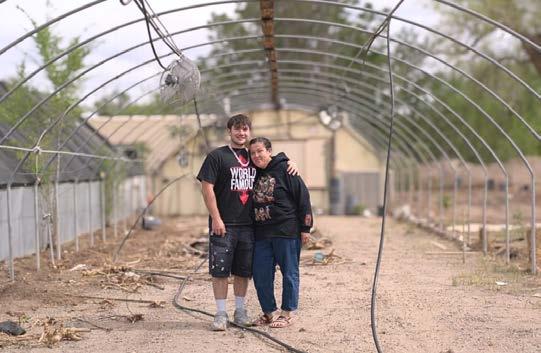
To understand why the independent dispensary Amnesia has succeeded in the most oversaturated market in the nation, head to its bathroom.
Inside, there’s material that changes lives. Owner Julietta Neas stocks the stalls with information on where to find free meals and mental health treatment, numbers to call if you’re experiencing suicidal ideation, and places that can help those caught in violent domestic situations.
“I was a social worker for 11 years, and this is kind of the same thing,” she says. “Once you’re a social worker, you carry it no matter where you go. We’re all human, and humans have needs.”
Many stores claim to care about their customers; few have this level of compassion. It’s what drives her to operate the only Latina-owned dispensary in Albuquerque, and what makes Amnesia unique.
Better Than an MBA
Since recreational sales began in April 2022, dispensaries have exploded in New Mexico. The Regulation and Licensing Department has issued more than 3,070 licenses for a state with 2.1 million people. That means the state has roughly five times as many dispensaries per capita as Colorado, and the boom happened in one-third the time. To complicate matters, New Mexico doesn’t have the kind of residency requirements or social justice mandates that other states do. Anyone, including non-residents, can open a shop. In that kind of environment, independents don’t stand much of a chance. They have to compete against veterans from outside with more experience and big money behind them.
Amnesia survives by paying close attention to both the details of the market and its customers.
“I knew that I wanted to make it affordable to the common person. That's something that I was seeing in the market, that it wasn't affordable for everybody, so I knew that that's the way that I was going to go about it,” Neas says. “My stores are known for their affordability, and I always advocate for my customers.”
“I think that our products need to be high in quality. I noticed that a lot of the medical clientele are people who are on fixed incomes, and this is their medication—and it's not like it's covered by insurance. So what they're able to afford is not necessarily the best, and to me, it was really important that they'd be able to afford high-quality medication. Many of my customers are on Social Security, a lot of them are disabled, a lot have cancer, I could go on and on. I saw that, and I thought, ‘How is this fair? How can we make it fair? How can everybody get what they need?”
Although she was trained as a social worker, Neas is a shrewd businesswoman. Just six months after starting Amnesia, she opened a second location. A third and fourth soon followed—she bought out two independent stores that cratered under the competition. Unable to secure a loan for a weed business, Neas sold her house and moved in with her sister, Julianna, who’s also her business partner. The added retail space gave Neas leverage to negotiate with vendors and secure lower prices for her customers.
She attributes her business acumen to a hard-charging immigrant work ethic. Neas moved to the U.S. with her mother and two siblings from Mexico at age 9. By 13, Neas had a job bussing tables at a restaurant, and she hasn’t stopped working since. To this day, she’s at her stores every day, doing everything from scrubbing toilets to managing the till.
“We moved here for the American Dream,” she says. “But I started realizing that the American Dream is working really
hard and overworking yourself if you want to get anywhere. And it’s becoming less and less manageable. But also, I think it's fun. I'm like, give me more hell because the more hell you give me, the more stubborn I become. And then we just got a farm, so we're going to start farming as well. So I've been working hard at that farm, and I'm sunburned, and I'm tired, but I think that in the end it'll be worth it.”
People First
Neas understands that she’s in the people business. So she treats everyone right, starting with her staff. Her workers earn good money and get daily support from their boss. Neas believes that if she treats her employees well, they will, in turn, extend that kindness to customers.
“One of my main things is to always be friendly and to realize that we don't know what people are coming in with,” she says. “We don't know what they've been through or what they're going through. You're gonna have people that come in, and they're super fun, and then you're gonna have people that come in, and they're grouchy. And the grouchy ones, you don't know if they haven't had their medicine, or they've been throwing up all night, or they have nausea because they have cancer. You never know what people are going through. And
so that's like our main thing is to be kind to everybody that walks in that door.”
But even that’s not enough. She’s also accessible to both her staff and her customers nearly 24/7.
“When you walk into my stores, there's a sign that says, ‘Where Complaints are Compliments,’ and it has my phone number. Anyone can call me directly,” Neas says. “And they do. I've gotten more complaints than compliments, but I've gotten nice things, too. People will tell me that an employee did great or that our bud tenders are so knowledgeable, little things like that.”
Facing the firehose of customer feedback makes her better at her job, she says. She’s not afraid of criticism.
“When I first wanted to do this, everybody thought that I was nuts. But here we are, you know? I mean, and everybody was like, ‘What are you going to do? What if you don't make it?’ And to me, you either give it your all or you don't. I told them – relax, I was a social worker. I know where to get free food. I'll be fine.”
Building the Best
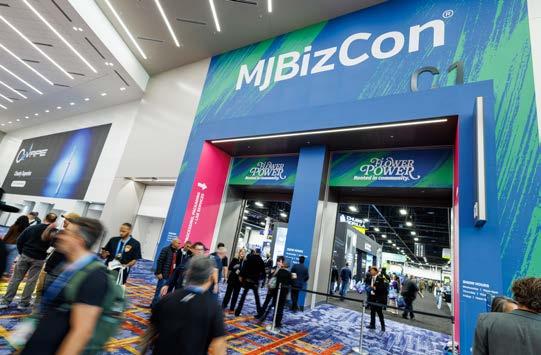
How the MJBizCon Gets Made
BY MATT WEEKS
There’s a paradox to business conferences. The best ones manage to swing from buttoned down to wildly unscripted—sometimes seconds apart. For attendees, it’s the combination of personal connections and professional development that makes regular trips to conferences worthwhile. And in an industry like this one, pulling that off is harder than it looks.
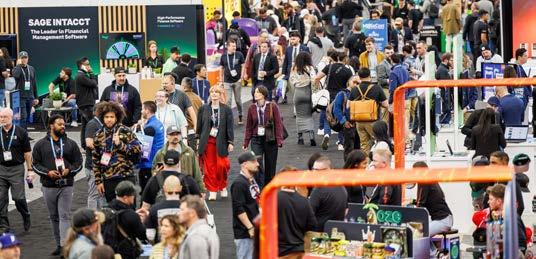
Which is exactly why MJBIzCon stands out. Its schedule, every attendee’s primary means of navigating the conference, is packed. Organizers expect 20,000 attendees to browse more than 800 exhibitor spaces, listen to over 70 hours of educational content, and mingle at 100 networking events.
But if simply attending the conference requires planning, setting it up is a Herculean task, says Harrison Radie, vice president of sales at MJBiz.
“Producing this show is a massive undertaking, but it’s driven by a passionate team that genuinely cares about the industry and the community we serve,” he says. “Each year we focus on evolving MJBizCon to provide more value for cannabis professionals at every stage of their career.”
Radie and the team work 12 months a year to ensure that each event tops the prior one. This time, they’re introducing certification programs that will educate and credential workers across pertinent areas, like product development, operations, strategy, and more. For example, Luvbuds
University will teach a “LUVTENDER Certification” course that provides practical information on customer discovery, suggestive selling, upselling, and cross-selling for current and hopeful bud tenders. Or, at a more administrative level, PBC offers both a Level I and Level II certificate in cannabis banking and compliance.
“Beyond certifications, we’re also introducing several new initiatives this year, including earlier registration with longer, lower-cost pricing windows, a new content stage on the Expo Floor, additional states joining our MJBowl competition [an annual ranking of the Most Valuable Products from each location], and a few major surprises we’ll be unveiling this summer,” says Radie.
Changing with the Times
Nearly as soon as cleaners sweep the last bits of detritus from the floors of the Las Vegas Convention Center, Radie and colleagues begin outlining plans for the next event. They go over what worked well, what was missing, and what could be expanded to fit the needs of the industry better.
“As the industry has matured, the event has increasingly focused on delivering year-over-year value, introducing new education formats, deeper networking opportunities, and specialized initiatives designed to support a more sophisticated and competitive market,” Radie says. “One of the most exciting developments this year is the introduction of certification programs, which give attendees tangible
credentials and skills they can apply immediately in their businesses.”
For a different kind of niche education, the conference has expanded its popular State Takeovers series, which hyperfocuses on the quirks and regulations that concern specific locations and demographics.
“Cannabis markets vary dramatically by state due to different regulatory frameworks and economic conditions. State Takeovers allow attendees to engage in conversations specific to their local market while also learning from others navigating similar challenges,” Radie says. “It quickly became one of the most engaging networking experiences at the show.”
Niche concerns have come to be a core concern in the cannabis space. And while the conference emphasizes the international and national connections that growers, retailers, and manufacturers can make happen, its focus on bringing together smaller communities has intensified to keep up with the times. After a successful pilot of the State Takeovers concept in 2023, organizers have put effort into increasing its impact every year since.
“Last year, we expanded the initiative to include community groups such as Jews in Weed and Cannabis Noire, bringing additional perspective and voices into the conversation,” Radie says. “This year, we are adding additional state meetups, including Oregon and South Dakota.”
Origin Story
Conferences aren’t organic things that spring to life while no one’s paying attention. But even by traditional standards, the journey that brought MJBizCon to life is far from ordinary.
In 2011, following the initial rapid spread of medicinal marijuana laws in the U.S., a group of entrepreneurs in Denver founded MJBiz as a B2B news outlet covering the legal cannabis industry. It aimed to become the nation’s central hub for credible, useful information to help the industry grow.
The following year, Colorado legalized recreational usage, and, capitalizing on the momentum, the first MJBizCon welcomed 400 guests to its home city.
“Since then, it’s grown alongside the industry itself,” Radie says. “What started as a relatively small gathering of pioneers has evolved into a global business platform attracting tens of thousands of professionals from across the cannabis supply chain.”
Now that organizers expect an audience 50 times greater than at their first conference, the event has to change. As everyone from industry veterans to fresh-out-of-college hopefuls treks to Vegas, the team behind MJBizCon works to ensure that professionals at all levels can find relevant, useful information.
“For newcomers, programs like the Know Before You Go Webinar and the First Timers Networking Event help attendees navigate the conference and connect with peers who are also new to the industry,” Radie says. “For more experienced professionals, MJBizCon offers curated networking opportunities, invite-only gatherings for senior leaders, and a hosted buyer and matchmaking program that connect based on specific business needs. Whether someone is entering the cannabis industry for the first time or has been building businesses for a decade, MJBizCon creates opportunities to learn, connect, and grow.”