As the industry’s leading publication for over two decades, we want to remind you all that we are more than just another magazine; WE are the nexus of commerce for the counterculture marketplace; headshops, smoke shops, vape shops, adult novelties, and dispensaries. Both publisher and platform, HQ exists to facilitate the continued evolution of a once-marginalized industry now on the cusp of legitimization. As a publisher, we are your advocate and your advisor, your continual stream of all information that matters to you; from product knowledge, to business insights, to how it all fits into the panorama of the bigger world. As a platform, we are your connection. We are the bullhorn, the billboard, and the bridge; the perfect bullseye of your target market. And as this industry continues to come into its own and navigate the coming seismic shifts in the landscape, we’ll be the light to guide its steps.
President Account Executives
Nicole Gilmer
Calvin Brown calvin@headquest.com (505) 375-0582 PUBLISHED BY
Creative Director
Monica Frésquez monica@headquest.com
C: (505) 489-3285
Marc Toretzky sales@headquest.com C: (213) 304-3751
@hq-international-llc
HQ Experience
HQ Magazine, the industry’s longest-running publication, remains committed to serving the smoke shop community. With an unwavering dedication to delivering award-winning content, and relevant news and providing insight into the latest and greatest industry products, HQ will continue to seek out the best way to reach as many subscribers as possible.
With HQ’s recent acquisition, the tides are turning and we know that YOU are ready for something new, something BIG. If you are looking for an upgraded experience, join HQ’s Elite membership program by scanning the QR code below. With each membership, you will receive HQ Magazine each month with no service interruptions, free access to HQ’s digital magazine, exclusive offers from our advertisers, and periodic sample boxes from the industry’s most trusted brands.
Upgrade your experience today!
Contributing Writers
Brandon Frawley brandon@frawleycreative.com
Casey Patterson
Rachael Schoellen
Therese Galati accounting@headquest.com
Matt Weeks
Jimmy Wohl Joe Reefer
Emily Long
Karen Maina
We welcome feedback! If you have any questions, comments or concerns, please email us at marketing@headquest.com.
HEADQUEST INTERNATIONAL LLC. assumes no responsibility for contents herein. Opinions expressed in articles are strictly those of the writer.
Published monthly by HeadQuest Magazine, PO BOX 13363, Toledo, Ohio, 43613. Send address change requests (please include information from the shipping label) to the address above, call 505-275-6049, or email subscriptions@headquest.com
Printed in the USA on recycled paper with vegetable-based inks.
BEWARE! HQ has no affiliates or outside sales team. Any business or person contacting you and acting as an HQ Representative or claiming affiliation with HQ Publications is unlawfully misrepresenting himself or herself. Please contact marketing@ headquest.com if you are approached by any such entity.
FRAGILE MARKETS
NEED STURDY SECURITY
BY JIMMY WOHL
You’ve chosen to work in a gray area.
You sell products that contain cannabis or cannabis-adjacent substances as well as accessories that can be used to consume it. And while that area has become less gray—you can see rays of sunlight peeking through—the skies are still cloudy. THC remains a Schedule 1 substance, even as medical marijuana has migrated to Schedule 3.
So how do you stay safe, protecting your business from unnecessary hassles or worse? Hopefully, by now you’ve already been doing the right things. But it’s always good to remind yourself of ways to ensure your company's continuity or get it off the ground safely if you’re just starting out.
Gatekeep by age
This is an easy one. Make sure your website(s) ask people to verify they’re over 18 or 21, depending on what you sell and where you’re selling it. And at the door of your store or dispensary, have a staff member stationed there to ask for an ID. This will ensure you’ve done your due diligence should any legal troubles befall you. It’s a small price to pay for peace of mind.
Scan to be sure
Speaking of checking ID, verification is crucial to your success, and it’s so easy to do. Make sure when you check an ID at the door, you scan the driver’s license or other legal
form of identification. It’s the most efficient way to avoid underage sales, and it keeps a record of who has entered your shop in case you get audited for compliance.
Shield the industry
Reputation matters. Our industry started out in the counterculture, which was a feature that came with its fair share of bugs. It attracted a range of people, from those who just wanted to enjoy cannabis or whatever they could pick up at a smoke shop to others with more problematic behaviors.
Now that legalization has taken off, cannabis and head shop products are becoming part of the mainstream. They need to come off as “normal,” for better or worse. Think of the alcohol industry; it has been folded into acceptability for the average person, even if they don’t drink. No one drives by a bar, a liquor store, or a wine shop and feels a frisson of edginess.
So stay off the government’s radar. When it comes to compliance, be boring. And when laws and regulations change, update your business right away. Make it easy for the enforcers, and (hopefully) they’ll make it easy for you.
Another way to protect the industry is to teach customers how to enjoy products sustainably. You want people sharing good experiences, not bad ones. For example, if you’re a cannabis dispensary, teaching new customers to start low and go slow is a great way to build trust and make it more likely you’ll get positive reviews.
Smarten your staff
How well have you trained your workers? Educating them is a huge step in keeping our industry safe. The people that work for you are the tip of the spear when it comes to informing customers. The more they know about products, laws, and responsible sales practices, the more you can sleep well at night knowing your business is in good hands. As our industry matures, so must the conversation with customers. Giving the people who pay our salaries informed recommendations builds trust with the community. And it also encourages a culture of safety and responsibility within the shop.
Create community
In the end, you want to be a good citizen. A positive force in your neighborhood. A net-plus that people see as a valuable addition to their community. When you establish your shop as a responsible member of society, it builds trust. When you support local initiatives to promote safe consumption and teach people about cannabis, you let people know you are reliable. And building relationships with local law enforcement and regulators keeps your footing solid.
And that sturdy standing is what will keep our industry safe and strong.
The people that work for you are the tip of the spear when it comes to informing customers.
The more they know about products, laws, and responsible sales practices, the more you can sleep well at night knowing your business is in good hands.
party nuts
Ed Quest
What Retailers Wish They Knew When They Opened Their First Shop
BY EMILY LONG
Running a cannabis business is notoriously complicated. For dispensaries, complex compliance burdens permeate every facet of the business, from zoning and licensing to marketing and payments. Whether you’ve been in the cannabis space for mere months or multiple decades, you’ve likely run into drawn-out approval processes, supply chain headaches, or constantly changing regulation that makes compliance challenging, not to mention the other micro and macroeconomic factors that plague all small business owners.
To put it mildly, the cannabis industry doesn’t go easy on anyone, particularly newcomers. Starting a new business is always fraught with challenges. Still, as more states legalize marijuana while the federal government refuses to do so, the cannabis landscape continues to shift almost on a daily basis. This makes it a particularly difficult sector to grow and thrive in, especially considering the average cost of opening a dispensary is over $700,000.
Here’s what industry veterans and business owners wish they knew when they were first getting started.
Relationships really are everything
As cliché as it sounds, a good business starts with good relationships. In the cannabis industry, it’s particularly important to establish strong, trustworthy relationships with both suppliers and vendors at different points along the supply chain. Good relationships with cultivators and manufacturers ensure you have a steady supply of quality product, keeping your shelves stocked and your customers happy. Establishing consistency in quality and price—along with prompt payments to suppliers and growers—will benefit everyone, including both you and your customers.
To ensure any inventory on the floor remains high quality, inspect it manually upon delivery and conduct regular audits. By logging every product by lot/batch number and tracking it meticulously, you not only stay on top of trends and know what’s popular but also ensure compliance, including secure disposal procedures. Investing in temperature-control solutions, airtight storage containers, and UV light protection also keeps cannabis products fresher for longer, ensuring the product isn’t wasted.
Crucially, these supplier relationships also serve as a safety net and help dispensaries weather inevitable supply chain hiccups when they happen. Industry events like MJBizCon and other conferences can offer great spaces for networking and relationship building, and online B2B marketplaces like LeafLink connect brands with businesses for wholesale stocking.
Hire good people and train them well
Even though dispensaries and headshops operate in a specialized and highly regulated space, general business best practices still apply. Business owners should hire responsible and trustworthy employees who are personable, friendly, and smart. In the cannabis industry, budtenders not only need to have product-specific knowledge and expertise, but they also need to stay up-to-date on compliance protocols in a constantly evolving and intentionally confusing regulatory landscape.
As your first line of defense against compliance issues, employees need to be able to do more than recommend their favorite products. When hiring, look for candidates with previous retail experience, and beyond sales experience, make sure they are personable and helpful, offering a tailored
customer shopping experience that is thoughtful, seamless, and educational. All staff should receive training on both products and compliance and become masters of both. As you understand the nuances of state-specific compliance laws, you also need to stay current on local law, since municipalities and counties can often set their own differing standards.
Mango Cannabis is a small, family business operating across Oklahoma, Michigan, New Mexico, and New York. Mango’s co-founder and chief operating officer, Mike Khemmoro, told MJBizDaily that if he could do it again, he would’ve started building the team's talent earlier “to accommodate expansion in a more manageable way.” Other dispensaries strongly recommend a soft launch before the store’s grand opening, which builds in buffer time to work through operational kinks, ensures staff are fully trained and confident in a lower-pressure environment, and allows for a smoother customer experience upon opening to the general public.
Don’t reinvent the wheel
Unlike in the early days of recreational legalization, there are now abundant resources to help new cannabis retailers get started. Featured in our Women in Cannabis column, Aubrey Amatelli built PayRio specifically to help cannabis businesses manage payments in a heavily regulated and convoluted landscape. Industry-specific point-of-sale devices and other software now allow dispensaries to accept cards and
streamline the payment process in ways that were previously not possible.
Similarly, there are customer relationship management (CRM) platforms designed by and for cannabis businesses to track sales, customer engagement, and compliance all in one place. For dispensaries and other B2C retailers, it’s essential that your chosen CRM integrates directly with your POS system so you can log every customer transaction automatically, helping with inventory management as well as state and local compliance tracking. CRM software can also help businesses manage email and SMS marketing, establish customer loyalty programs, and run personalized promotions.
While it may be more costly up front, building the infrastructure first will make your life exponentially easier down the line, seasoned retailers say. Doing everything by the book from the beginning and investing in industry-specific solutions upfront allows businesses to scale more seamlessly. “It is easier to fly the plane if you are not trying to build it at the same time,” Mango’s Khemmoro says.
3 - CT BLISTER
PER DISPLAY
9.3G
10% off retail first time orders! Scan QR Code to get started.
The Rise of Wellness Smoke Shops
BY KAREN MAINA
When you walk into a smoke shop today, you might notice the glass cases that once held rolling papers and blunt wraps now display CBD tinctures, functional mushroom capsules, kava elixirs, and hemp-infused sparkling water. The staff might talk to you about terpene profiles, cortisol levels, and a new vape line.
It is definitely not your grandfather's tobacco counter, and it is not quite the head shop of the counterculture era either. The modern smoke shop has evolved into a curated wellness boutique that blends alternative lifestyles and mainstream wellness culture.
The Sober-Curious Movement
Sober is cool now. According to NCSolutions, nearly half of all Americans, 49% to be exact, planned to drink less in 2025, representing a 44% increase from 2023. Among Gen Z, 61% reported plans to cut back, a 53% year-over-year jump.
Hemp-derived THC beverages, kava elixirs, kratom shots, and CBD-infused sparkling waters have become the go-to alternatives for consumers who want a shift in consciousness or relaxation without alcohol. The kratom and kava beverage market, for example, was estimated at $500 million in 2025 and is projected to hit $1.8 billion by 2033. Things are getting very sober!
Botanicals are Stepping in Where Pharmaceuticals Step Back
There is also a parallel retreat from conventional pharmaceuticals for everyday concerns such as stress, sleep disruption, chronic pain, and brain fog. Consumers increasingly want solutions that are natural and holistic.
Functional mushrooms like lion's mane for cognitive clarity, reishi for stress and immune support, and cordyceps for energy and endurance have made a journey from health food store specialty to standard smoke shop shelf.
Meanwhile, natural CBD extracts continue to anchor the plant-based wellness aisle, with CBD products now described as a retail staple for those seeking non-pharmaceutical support for anxiety, inflammation, and sleep.
It is important to note that customers today demand information on sourcing and production. Shops that can provide this transparency will build lasting loyalty, which will be economic proof.
Harm Reduction
While some consumers want to quit tobacco, others want a safer way to smoke. The harm reduction category has
exploded, anchored by two product types that are changing the nicotine aisle: advanced vaping devices and spitless oral nicotine pouches.
Brands like Zyn, Velo, and On! have normalized the pouch format with a mainstream audience that values convenience and discretion. In January 2025, the FDA formally authorized marketing for 20 ZYN products, lending institutional legitimacy to a category that smoke shops have carried for years.
Dry herb vaporizers and next-generation pod systems round out the harm-reduction shelf, offering combustion-free alternatives to customers who are not ready to quit.
Who is Walking Into These Stores Now?
Previously, smoke shops carried a specific social charge; they were a place for insiders and a clear sign of the oh-so-cool rebellion.
The person walking through the door of a wellness smoke shop in 2026 may be a yoga practitioner, a night-shift nurse winding down, a college student exploring alternatives to drinking, or a retiree curious about CBD for joint pain.
It seems the counterculture is no longer just the counterculture. It has undeniably become the culture.
Gen Z and Millennials are driving a sweeping cultural shift away from alcohol and toward alternative forms of relaxation, wellness, and social ritual.
Younger consumers arrive far more educated than previous generations. They ask about cannabinoids and terpenes. They research effects before they shop. They seek products that align with their structured self-care routine.
You need to invest in clean, aesthetic store design, knowledgeable staff, clearly labeled products, and educational displays that make them accessible to the new consumer who has sprung up.
What a Wellness Smoke Shop Must Carry
At its core is a strong functional beverage offering. THCinfused drinks, kava seltzers, kratom shots, and CBD tonics. Complementing this are mocktail mixers and cannabisinspired aperitifs, allowing customers to keep the ritual of drinking without alcohol.
Beyond beverages, stock plant-based supplements like CBD tinctures, kava, kratom, ashwagandha, and sleep aids.
It seems the counterculture is no longer just the counterculture. It has undeniably become the culture.
Functional mushrooms add another layer, targeting focus, stress, energy, and immunity in fun formats like gummies and coffees.
For everyday use, low-dose edibles and mints provide discreet, functional benefits such as focus, calm, or sleep support.
Finally, premium glass and ritual accessories remain essential for elevating the experience and preserving the cultural roots of smoke shops while aligning with a more intentional, wellness-driven lifestyle.
Is This a Passing Trend or a Permanent Reinvention?
Wellness trends seem to come up and pass every few years. However, this does not seem to be the case with smoke shops.
The U.S. smoke shop and tobacco accessories market hit $112.82 billion in 2024 and is projected to surpass $180 billion by 2030. This is a compound annual growth rate of 8.15%. The accessories segment alone stood at $72.5 billion in 2025 and is expected to exceed $105 billion by 2035.
An additional driver of this growth is the expanding product array sold by smoke shops. Delta-8 and Delta-10 products, CBD edibles, hemp-derived beverages, nicotine-free vape lines, kratom blends, and functional mushroom products have all found a home on these shelves. There has been a gradual but permanent definition of smoke shop identities.
women in cannabis
Sula Benet and the Ancient History of Cannabis
BY EMILY LONG
Born Sara Benetowa in Warsaw, Poland, in 1903, Sula Benet may not be an immediately recognizable name in cannabis spaces today, but she should be. While she primarily studied Polish folk customs, Benet became known for her graduate thesis at the University of Warsaw, titled Hashish in Folk Customs and Beliefs. In the paper, she claims that the plant kaneh bosm—which is referenced throughout the Old Testament and Torah and often translated as “calamus”—actually refers to hemp. Benet’s theory remains both significant and highly controversial today, especially as various religious and evangelical groups continue to demonize the plant.
The word kaneh bosm appears five times in the Old Testament in the books of Exodus, the Song of Songs, Isaiah, Jeremiah, and Ezekiel. Notably, in Exodus 30:23, God instructs Moses to collect “myrrh, cinnamon, and kaneh bosm” to make a sacred anointing oil. Still, Benet points out that, as a lower-value fragrant reed, calamus would not have a place in that concoction and wouldn’t make sense. Cannabis, however, would.
In 1936, the Warsaw Society of Sciences published Hashish in Folk Customs and Beliefs, which became hotly debated among other religious scholars, lexicographers, and botanists alike. While some found Benet’s logic convincing,
others claimed that the kaneh dispute was predicated on false cognates in other languages like Sanskrit, Farsi, and Arabic. However, Benet argues that in many ancient languages, including Hebrew, the root word kan could mean either “hemp” or “reed”, which would explain the differing translations. The old Judaic religious requirement that the dead be buried in “kaneh skirts” is yet more evidence that kaneh was hemp before it was replaced by linen in garments and textiles.
Throughout the Old Testament and the Torah, the original Hebrew text talks about kaneh bosm as both an incense and an intoxicant, both important parts of religious ceremonies and celebrations. Along with the kaneh bosm debate, Benet’s research includes detailed ethnographies of Polish peasants and farmers, focusing on the different ways they used hemp for everything from food and clothing to collective rituals and psychotropics.
Hashish in Folk Customs and Beliefs earned Benet a postdoctoral scholarship to Columbia University in New York, and she moved to the United States in 1936 following the untimely and tragic death of her husband, Samuel Benet. The rest of her immediate family was killed by the Nazis in World War II.
PEACH POPS
Benet’s research faced a recent resurgence in 2020 after Israeli archaeologists discovered cannabis residue on artifacts from an ancient temple, indicating the plant was likely used in historic Judaic ceremonies. While the temple site and the artifacts in question were discovered in the 1960s, scientists only recently determined that the black organic matter found on the shrine’s limestone altars contained THC (the other residue present was from frankincense). The altars and the residues on them were shockingly well preserved, thanks to a combination of the arid desert climate and their burial.
Moreover, some religious scholars argue that the presence of cannabis indicates that ancient Jews used psychoactive materials intentionally in their worship and ceremonies. The cannabis resin also contained traces of animal dung, which helps to facilitate evaporation and promote the plant’s psychoactive properties. This particular temple at Tel Arad in the Negev Desert dates back to the eighth century BC, making it over 2,800 years old. In the paper Cannabis and Frankincense at the Judahite Shrine of Arad, authors Eran
Arie, Baruch Rosen, and Dvory Namdar agree that the use of cannabis here “had a deliberate psychoactive role,” citing that many ancient cultures frequently used plant-based hallucinogens in religious and cult ceremonies. These recent findings corroborate Benet’s earlier theories, proving that cannabis was not only present in this part of the world at that time but that it was used intentionally in religious rituals.
Whether or not kaneh bosm does in fact refer to hemp or calamus or aromatic cane or another plant entirely, Benet’s research spotlights the ancient history of plant medicine. It makes a case for cannabis having roots in various ancient rituals and civilizations. After all, in Genesis 1:29, God promises that “every seed-bearing plant on the face of the whole earth and every tree that has fruit with seed in it, they will be yours for food.” Why wouldn’t that include cannabis?
Highest Quality, Lowest Price
GUARANTEED!
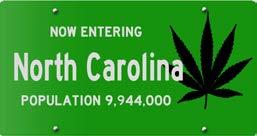
How North Carolina Could Save Us All
The Federal Cannabinoid Ban is Coming. Are the States Prepared?
BY MATT WEEKS
If the United States were ever a country based on strict adherence to the law, those days are long past. The modern game lies in devising methods to circumvent laws. It’s how the rich avoid taxes, the powerful avoid jail, and industries of all kinds bypass regulations.
The paradox is that, despite its ubiquity, it’s not easy to stay beyond the reach of the long arm of the law. Wellmoneyed, influential organizations still sometimes misjudge the political and legal playing field and have to pay up. The Sacklers (the family behind Purdue Pharma) eventually were bankrupted by the courts for their role in the opioid epidemic, and officials hit Meta with a $5 billion fine over privacy concerns.
So how can the counterculture industry, which lacks the political clout and economic power of the elite, skirt the rules? North Carolina has a plan. Senate Bill 265 might hold the answer to how smoke shops continue to operate despite the federal countdown to perma-banning cannabinoids at the end of the month.
If successful, the bill could be a model for the 30 other states without a well-regulated cannabinoid policy, essentially salvaging the nation’s smoke shops and keeping medical costs down for users who rely on cannabinoids for sleep, pain, or anxiety. It could also be a bright spot in another lackluster economy. Last year, cannabinoids were responsible for $4.4 billion in economic impact in North Carolina, according to Whitney Economics.
What’s left to discover is whether lawmakers in the Tar Heel State will allow the full Senate to vote on the bill or if they’d prefer to stay still until the feds swing the hammer.
A Short History of Nearly Everything
This problem started when President Trump signed a bill in November 2025 that ended the shutdown. One of its provisions, snuck by Sen. Mitch McConnell (R-KY), was a measure designed to close the so-called loophole in the
2018 Farm Bill that “accidentally” legalized the sales of cannabinoids like Delta 8, Delta 10, and THCA flower. Kentucky’s other Republican senator, Rand Paul, fought hard against the inclusion, but ultimately caved after ensuring that the ban wouldn’t take effect for one year, giving states a chance to prepare.
But, at true political speed, many states have waited until the last minute to mount a defense.
Under the ban, which is set to go into effect Nov. 12, such cannabinoids will be declared illegal at the federal level. The move will devastate the industry, deny over-thecounter pain medicine to millions, and crash through smalltown economies like a wrecking ball.
Unless, of course, states like North Carolina move to stop it.
The North Carolina Answer
The brilliance behind North Carolina’s SB 265, also known as the Protecting Our Community Act, lies in its practical approach to problem-solving. If it sails through the state legislature and bypasses a veto, it will take advantage of a kind of legal gentleman’s agreement that has long governed how the feds respond to state-regulated industries.
While national regulations are meant to override state laws, U.S. regulators tend to relax their oversight when it conflicts with specific state regulations. In other words, when states make their own rules, the feds leave them alone. It’s how we currently deal with marijuana and raw milk, which are both illegal nationally but can be bought and sold in states that have what the feds believe is sufficient regulatory structure in place. When states step up, the feds respect it. Importantly, the ban will only apply to states like North Carolina that don’t have robust regulations in place. Other states, such as California and Colorado, probably won’t be affected by the ban’s implementation.
But Will it Pass?
The Protecting Our Community Act has a lot going for it. For one, it was introduced with bipartisan support. Eight senators co-sponsored the bill, five Republicans and three Democrats. For another, there has so far been no meaningful public resistance to it. What’s most impressive, however, is how smartly the bill operates.
While the phrase “common sense” often gets bandied about in political circles, it’s usually a disguise for partisan thinking. SB 265, however, earns the description. If passed, the bill would ensure every cannabis product undergoes independent third-party testing, raise the purchasing age to 21, mandate that products adhere to clear labeling standards, and require all sellers, growers, and distributors of cannabis to obtain state-issued licenses. Effectively, the bill would make cannabis products safer to use, harder for teens to obtain, and more difficult for gas stations and fly-by-night operations to sell. In other words, it would professionalize the state’s industry.
The only meaningful holdup has come from a nefarious action that, unfortunately, has the power to crater the entire thing. The bill has stalled in the Senate’s Rules and Operations Committee. Before it can go to the Senate floor for a vote, it must get out of committee, but its chair, Bill
Rabon, has so far refused to schedule a committee vote, even though he’s been a champion of medical marijuana. It’s likely Rabon won’t schedule a vote until Republican Senate leadership OK’s the move.
What’s holding that up? It’s anyone’s guess.
Far-Reaching Implications
We often think of history as something that occurs slowly over many years, but it actually happens quickly, through specific moments. The 2018 Farm Bill was one historymaking moment. This federal cannabinoid ban is another.
If the bill saves North Carolina smoke shops, it will be good. But if it inspires copycat legislation in other states, it will be great. Similar responses are occurring in Georgia, Indiana, and Kentucky, while other states, such as Missouri, Virginia, and Washington state, are considering decidedly less cannabis-friendly approaches. Every bill needs help and support to push through political roadblocks. And even if they succeed, success isn’t fully guaranteed (just likely).
For an industry that doesn’t benefit from old money or a long-respected history, handling this moment correctly matters. If the federal ban lands, millions of Americans will lose a lot more than access to Delta 8.
Behind the Scenes
BY JOE REEFER
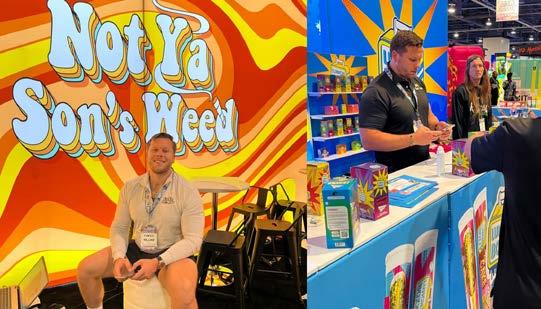
Blending traditional values with modernized, energetic branding, Not Ya Son’s Weed falls somewhere between the cannabis days of yore and today’s recreational cannabis boom. Not Ya Son’s Weed offers a variety of products— including pre-rolls, exotic flower, and gummies—that provide much-needed relief without being too overbearing.
“My business partner and I draw the line at certain points. Our gummies stop at 50 milligrams (mg) a piece,” said Cory with Not Ya Son’s Weed. “We get asked all the time if we can do stronger ones, but my thing is, you can always just eat a couple more gummies. I don’t want to create a 1,000 mg gummy and have somebody eat that because it’s small and they think it’s not going to be powerful, and then it ends up ruining their day or even their week.”
The products offered by Not Ya Son’s Weed are ideal for those who are just getting into the world of cannabis and cannabinoids, older users who want to relive their glory days, or anybody in between. We recently sat down with Cory to discuss the history of the brand, explore some of their current products, and discuss the future of cannabis products in North Carolina and throughout the United States.
A Humble Beginning
“We started in 2019 as a CBD manufacturer for something like 30 different brands in North Carolina. When Delta-8 came around, we said, ‘Hey, we keep doing this for everybody else; let’s do it for ourselves,” explained Cory.
The results were better than anyone on the team could have ever expected, but their success wasn’t exactly random. With a foot already in the door as a CBD manufacturer, the team
with Not Ya Son’s Weed had a clear mission from day one: to let the flower speak for itself.
“There was a drink when I was in college called Not Your Father’s Root Beer. So when it came to Delta-8, I was like, alright, it’s not like what I’m used to smoking, which gets me as high as can be. It’s probably what my parents would have smoked in college,” said Cory.
Instead of viewing cannabis solely as an intoxicant, Not Ya Son’s Weed focuses on every aspect of the plant, from its terpenes and flavonoids to its medicinal effects. But for Cory and his team, it’s important to keep it natural.
“We are big on being natural—from our diets to our clothing. Nature’s here for a reason, so why not let nature do its thing," said Cory.
Pre-Rolls and Beyond
“I didn't want to do just packaged flower. I wanted us to make the best pre-roll. So that kind of became our motto.”
And that’s exactly what they set out to do. With a clear plan of action, Cory relied on his personal expertise to come up with the perfect pre-roll. It wasn’t long before they became the brand’s best-selling products, and Not Ya Son’s Weed quickly started to build a reputation in the industry.
“It comes down to the smokability of it, the fullness of it. You can’t have it too tightly packaged, and you definitely can’t have it too floppy. You want an even pull throughout,” said Cory.
But, like most good businesses, Not Ya Son’s Weed would continue to expand. Their current product line includes prerolls, flower, and gummies, and they may expand further in the near future.
“I want fresh, frozen rosin in a two-gram jar, but I want it to stay compliant and I want to do it the right way. I want to take the flower, press it, squish it, and put that in a jar for consumers.”
Before they can continue to expand into other areas, however, Not Ya Son’s Weed might have some legal roadblocks to overcome.
Supporting Common Sense Cannabis Laws
Cory and the team at Not Ya Son’s Weed are active in local and national politics, too, and they’re currently lobbying against a proposed amendment to the 2018 Farm Bill that would reduce the amount of THC that’s allowed in legal products from 0.3% to just 0.4 mg. Not only would this deem many of their products illegal, but it would make it difficult for anybody to grow hemp plants in any part of the country under any circumstances.
Half a million people currently use products from Not Ya Son's Weed, but they won’t be able to continue if federal laws change in November. If you’re a resident of North Carolina,
please visit www.cbhd.news for more information on how you can support the passage of Senate Bill 265. The bill, which is supported by a lobbyist organization known as Cultivating Breakthroughs in Healthy Development (CBHD), aims to quash these new restrictions by preserving current state and federal laws for the foreseeable future.
As such, Cory and the team behind Not Ya Son’s Weed want you to contact your local representatives, tell them how important cannabis products are to you and your quality of life, and urge them to vote no on the proposed amendment to the 2018 Farm Bill. Doing so could mean the difference between continuing to use the legal products you currently enjoy or seeing them disappear from store shelves for good.
How to Find Out More About Not Ya Son’s Weed
While they might not have been around as long as some other brands, Cory and the team at Not Ya Son’s Weed are all old souls when it comes to safe and responsible cannabis consumption. To learn more about Not Ya Son’s Weed, or to explore their current line of products for yourself, check them out on social media or at www.notyasons.com today!
Productspotlight
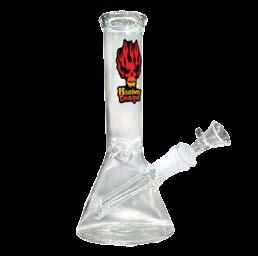
Classic Headway Glass Beaker
Keep it simple and smooth with the Classic Headway Glass Beaker. Crafted from durable 5mm glass, this 8-inch beaker features a 4.5inch diffused downstem designed to help deliver a cleaner, smoother smoking experience, while the oversized bowl piece makes packing easy.
Built for everyday use, this beaker combines straightforward function with dependable performance.
The officials came for Lance Alyas once before. In 2023, they caught him in a sting, seized his merchandise, and tossed him in jail. But just seven days later, after he invoked Hawaii's version of a Freedom of Information Act request, the whole case fell apart. Alyas was released without bail, allowed to simply walk out the door.
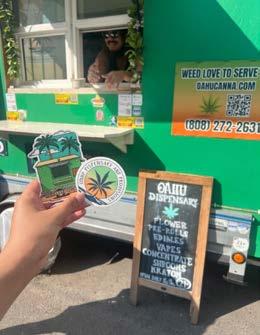
Now, he’s advocating for freedom from Hawaii’s state officials once again. Only this time, it’s not just his own freedom. As the owner of Oahu’s top-rated smoke shops, he’s fighting for everyone’s right to sell hemp products in the Aloha State.
The battle started a short time ago, when the state’s Department of Health banned the sale of intoxicating hemp products like flower and pre-rolls. The crackdown shuttered several smoke shops across the island and caused others to quit stocking hemp products altogether. But Alyas had beaten the authorities before, and he was determined to try again. So he took legal recourse and sued the state.
His contention is simple. The 2018 Farm Bill made hemp products federally legal; the state’s regulatory agency has no right to supersede it.
It’s a case that’s relevant beyond the South Pacific. As the Nov. 12 deadline for a nationwide ban on intoxicating hemp products looms, Alyas’s lawsuit is an example of state resistance. He’s asking state judges to freeze the regulation
until the ban either goes into effect or better solutions are found. If he’s successful, it’s a template that other states can use to fend off predatory agencies.
How it Started
Alyas's roots run green. Although he owns four smoke shops in Hawaii, he cut his teeth in his family's cannabis business in the Midwest. He left the Lower 48 to work at a friend’s mortgage company in Hawaii, where he quickly noticed a hole in the market that his cannabis expertise could fill.
“My family opened one of the first dispensaries in Michigan, so we were kind of pioneers in Detroit,” he said. “I worked with my uncle for probably on and off about six or seven years. That's kind of where I got all my experience and made my connections in the industry."
Three years ago, he opened a hemp delivery service, an Uber Eats of Delta 8, and built up enough profit and knowhow to open a brick-and-mortar location in May 2024. Then things got fast. He grew from one storefront to four locations across the island. His customers run the gamut from tourists hoping to mellow out a bit more and, interestingly, many of Hawaii's sworn officers.
“We have some HPD shop with us. I've delivered personally to HPD. It was a barbecue, and I was actually kind of
scared because I didn't know what was happening, but [my customer] met us at the Hawaii Cannabis Expo, and I delivered to his house a couple of times. Then one day he has me make a delivery to a Honolulu Police Department barbecue,” he said, laughing. “He said he loves the products and uses them all the time. I know at least three or four officers who shop with us. And the ones that don't shop with us heavily rely on us for camera footage. They've contacted me on multiple occasions to use it. We have a really good relationship with HPD out here."
If you find it surprising that police would be among cannabis supporters in Hawaii, you need a vacation. The state has a long history of pro-weed sentiment. It was among the first in America to legalize medical use back in 2000. It seemed to be at the forefront of the recreational debate until the momentum ground to a halt under what Alyas calls “suspicious circumstances.”
He believes the restrictions were championed by medical dispensaries that want to cut the legs out from under their competition.
“It sucks because I come from the medical cannabis world. I worked at a dispensary for years. I understand trying to eliminate competition. I don't like the way that they did it, but it's also the state, too. The state did not write the best laws. It's very unfriendly, even for medical dispensaries. I feel for them. They have to put a million-dollar, non-refundable deposit in escrow that they can't ever take out, even if they sell their license. So they're under very strict rules. I can feel for them. But also, they went about it in a shitty way.”
How it’s Going
The lawsuit, which was still being decided as of press time, has led to some unexpected revelations from Hawaiian regulators. The most significant is that the state’s argument hinges on retconning its interpretation of prior doctrine. According to the state, items like hemp flower and pre-rolls were “always illegal.” It’s an audacious argument, considering the state’s history. The truth is that Hawaii passed a smokable hemp ban in 2020, but then repealed that law through the legislature in 2023. Why it's illegal now is that the DOH quietly reinstated the ban on its own, without the will of the people or their representatives.
As anyone lucky enough to visit the islands recently can attest, cannabis use in Hawaii is widespread. Although it's only legal medically, it's hard to spend long in any public space without catching a whiff of the familiar scent.
According to a report commissioned by the state's Department of Health, people in Hawaii spend, on average, between $16.5 million and $32 million on weed per month. That includes residents and tourists shopping in both legal
and illegal markets. For hemp products like the ones Alyas is fighting to save, the total is an additional $6.8 million per month. Hemp and cannabis are popular pastimes there, not niche interests.
And most of the laws reflect that. Cannabis has been decriminalized, and the punishment for possession is light. Those caught with less than three grams face only a civil penalty. The most recent polling available shows that 58% of residents would vote in favor of legalization, and the state's governor has been consistent that he would sign any legalizing measure the state's congress advances to his desk. Alyas is fighting against the government and for the people. If he succeeds, not only will people in Hawaii have hemp. "They'll be closer to free," he said.
“It’s government overreach, making laws that are not fair and it's affecting people negatively. I want to fight against it and make sure that the politicians are doing what we paid them to do, not screw us for payment,” he said. “I just want a fair market," he said. "Let's play the game and let's see who's truly the best.”