




Lindstrom lane@potatogrower.com
ADVERTISING DIRECTOR
Rob Erickson rob.erickson@potatogrower.com
Lindstrom lane@potatogrower.com
ADVERTISING DIRECTOR
Rob Erickson rob.erickson@potatogrower.com
JULY 11-19
Maine Potato Blossom Festival
Fort Fairfield, Maine
www.mainepotatoblossomfestival.com/
JULY 15-17
Potato Sustainability Alliance Summer Symposium
Plover, Wisconsin https://potatosustainability.org/
JULY 20
Potato Grower Magazine Golf Tournament
Pinecrest Golf Course
Idaho Falls, Idaho www.potatogrower.com/golf
JULY 21-24
NPC/Potatoes USA Summer Meeting
Westin Book Cadillac Detroit, Michigan www.nationalpotatocouncil.org/
JULY 26-30
Potato Association Of America Annual Meeting
New Orleans Marriott New Orleans, Louisiana potatoassociation.org
JULY 26-29
Soil & Water Conservation Society Annual Conference
Hilton St. Louis at the Ballpark St. Louis, Missouri www.swcs.org/events
AUGUST 4-6
Minnesota Farmfest Morgan, Minnesota www.farmfest.com
AUGUST 5-6
Idaho Irrigation Equipment Association Summer Meeting Twin Falls, Idaho idahoirrigationequipmentassociation.org
AUGUST 11-13
Penn State’s Ag Progress Days
Russell E. Larson Agricultural Research Center
Pennsylvania Furnace, Pennsylvania https://agsci.psu.edu/apd
AUGUST 19
MPIC Variety Advancement & Innovation Committee Box Bin Trial Tour
Montcalm Research Center Montcalm, Michigan www.canr.msu.edu/montcalm/
AUGUST 26-27
Midwest Ag Industries Exposition
McLean County Fairgrounds Bloomington, Illinois www.ifca.com/MAGIE
SEPTEMBER 2-4
IGSA 98th Annual Convention Sun Valley Resort Sun Valley, Idaho www.idahoshippers.org
SEPTEMBER 15-17
Husker Harvest Days
Grand Island, Nebraska huskerharvestdays.com
SEPTEMBER 15-17
Big Iron Farm Show
Red River Valley Fairgrounds West Fargo, North Dakota www.bigironfarmshow.com
SEPTEMBER 15-17
Canada’s Outdoor Farm Show
Woodstock, Ontario www.outdoorfarmshow.com
SEPTEMBER 18-27
Potato Days
Boise, Idaho – Sept. 18-20
Meridian, Idaho – Sept. 25-27 https://familypotatodays.com/
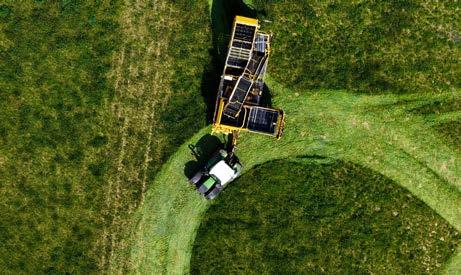
With the new intelligent trailing steering system for the ROPA Keiler 2 RK22, ROPA presents an innovative solution for the autonomous control of the potato harvester’s steering axle. The system independently regulates the steering movement and ensures that the Keiler follows the tractor precisely in track.
“Cutting corners” is consistently avoided, significantly reducing the turning radius of the tractor-harvester combination. The autonomous trailing steering system offers noticeable advantages, particularly in tight turns, on headlands, as well as during maneuvering and reversing.
The intelligent trailing steering system significantly relieves the operator and works with exceptional sensitivity and precision. The ROPA onboard computers continuously control the steering axle so that the wheels of the potato harvester follow the tractor track as accurately as possible. Compared to manual control via the mini joystick, the autonomous system enables smoother, more precise, and reproducible steering movements.
A particular highlight is the autonomous steering during reverse driving. The Keiler detects the direction of travel and actively steers into the driven curve. In doing so, the system amplifies the tractor’s steering movement, making maneuvering through tight turns significantly easier and more precise. This function provides a substantial increase in comfort, especially in confined spaces, during reversing, or when aligning the tractor-
The intelligent trailing steering system is controlled by an integrated gyroscope. This permanently detects lateral acceleration, while the steering angle is calculated in real time using the driving speed and the vehicle geometry stored in the control unit. Additional steering linkages or further mechanical or hydraulic connections are not required.
The intelligent trailing steering system is conveniently activated by simultaneously pressing the multi-function button and the steering button on the left or right control element. When entering a row, the system is deactivated via the headland start button and reactivated at the end of the row using the headland end button, provided the trailing steering system had previously been active. This allows the steering system to be seamlessly integrated into the workflow. Once activated, the system immediately takes over active steering. The intelligent trailing steering system can be activated or deactivated at any time, with the active status clearly indicated by the red illuminated steering button on both the left and right control elements.
The operator nevertheless retains full control at all times, as the autonomous system can be overridden manually whenever required and subsequently reactivated using the button combination.
Retrofit available for all ROPA Keiler 2 RK22 models.
For more information, visit www.ropamaschinenbau.de.
Itafos has announced it has entered into an amendment to its sulfuric acid supply contract with Rio Tinto, continuing its long-term relationship with its U.S. copper producer Kennecott, a key supplier of a primary raw material required to produce its phosphate products manufactured at Itafos’s Conda, Idaho, facility.
Pursuant to the amended Sulfuric Acid Supply Agreement, Itafos will continue to purchase sulfuric acid from the Kennecott mine in Utah. Under the amended agreement, the reference index price will change from the Vancouver Index to the Tampa Index from May 1, 2026 through December 31, 2029. To promote long-term value for both U.S. farming and mining industries, the parties have agreed to an adjusted sulfuric acid price until December 31, 2029 to help address significant price volatility of sulfur over the last four years.
Additional modifications to the Sulfuric Acid Supply Agreement around delivered volumes have been negotiated to provide greater flexibility for incremental supply (subject to availability). The Conda facility has historically sourced approximately 60 percent of its
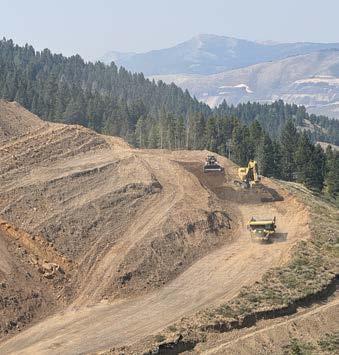
sulfuric acid requirements from Rio Tinto, and it is expected that it will purchase similar volumes under the amended Sulfuric Acid Supply Agreement. After December 31, 2029, it is expected that Itafos will continue to purchase sulfuric acid from Rio Tinto.
Itafos is a phosphate and specialty fertilizer company with businesses and projects spanning three continents, including the Idaho facility.
For more information, visit www.itafos.com.
Built on research and real‑world experience, our solutions help you preserve potato quality through storage and shipment.
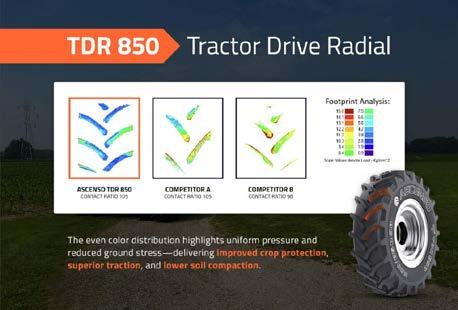
Tractor tires play a key role in field performance, soil health and efficiency during daily operations. The right agricultural tractor tires help protect soil, maintain consistent traction and perform reliably across both field and road conditions.
Compared to alternatives, Ascenso TDR 850 stands out with its balanced performance in soil tillage and field-to-road transport, helping farmers work efficiently without compromising land health.
Protecting soil structure is critical for long-term field performance. The Ascenso TDR 850 is an agricultural tire designed for maximum traction and wide footprint that offers excellent load distribution and reduces soil compaction during field operations. By spreading weight more evenly across the ground, the tire helps lower stress on the soil surface, supporting healthier soil conditions and better crop protection over time.
Controlled field testing shows that the Ascenso TDR 850 delivers a 5.3 percent larger footprint area than the top competitors. This wide tractor tire produces more uniform pressure distribution, which reduces soil compaction during repeated passes and helps maintain consistent field conditions throughout the season.
Reliable radial tire traction is essential in changing field conditions, as well as during transport between fields. The Ascenso TDR 850
is an R-1W tire suitable for long road hauls and muddy field conditions, featuring a high tread radius and optimized lug geometry that deliver consistent grip in the field while maintaining stability on the road. This balanced tread design helps reduce vibration and supports smoother handling during longer transport runs.
A built-in mud breaker improves self-cleaning performance, providing a smooth transition from field to road and offering a more controlled ride at higher speeds.
As farming equipment continues to increase in size and weight, tractor tires must support heavier loads while maintaining stable road performance.
The Ascenso TDR 850 is an agricultural tractor tire with a D speed rating that allows for higher travel speeds without sacrificing control or ride quality. This makes it especially well-suited for operations that require frequent transport between fields or extended road travel.
The Ascenso TDR 850 radial tire is engineered with higher load capacity and superior roadability, supported by optimized lug angles and lug overlap at the center of the tread. This design delivers a smoother driving experience and greater stability. Compared to other radial tractor tires, which are built primarily for general field performance, the Ascenso TDR 850 provides a more refined balance between load strength and road comfort, helping reduce vibration and operator fatigue during transport.
For more information, visit https:// ascensotiresna.com
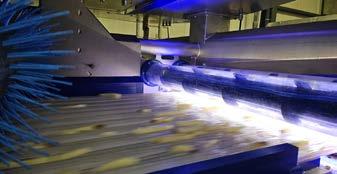
Key Technology (Key), a member of Duravant’s Food Sorting and Handling Group, introduces its new automatic defect removal system for potato strips – ADR X. ADR systems identify defects on wet potato strips and precisely trim only the affected areas so more usable product can be recovered, helping processors increase yield and maximize profitability. Now featuring enhanced multi-spectral sensing, an updated mechanical architecture and more, the next-generation ADR X delivers superior defect detection with simple operation and reliable performance in continuous, highcapacity production environments. Building upon the field-proven technology of Key’s previousgeneration ADR systems, ADR X aligns, singulates, inspects and trims both peeled and peel-on wet potato strips of various cut sizes. ADR X introduces a series of new capabilities including multichannel sensing with advanced LED lighting and strobing for accurate identification of challenging product defects such as green discoloration. Multiple images of each strip are captured under different wavelengths and combined to create clear separation between the product and background, facilitating precise trimming decisions. A true-color user interface delivers clear visualization and intuitive operation.
The newly developed ADR X design maximizes hygienic operation in wet processing environments. The system architecture eliminates activity above the product stream, reduces flat surfaces and integrates cleanin-place functionality to protect product quality, simplify cleaning and meet stringent sanitation requirements.
For more information, visit www. key.net/en/our-products/sorting/.
Sectagon for nutsedge suppression
Sectagon for sodium-sensitive crops
Sectagon for germinating weed seeds
Sectagon for soil preparation
Sectagon for metam potassium
Sectagon for metam sodium
Sectagon for Verticillium suppression
Sectagon for Phytophthora suppression
Sectagon for root-knot nematode suppression
Sectagon for high pH soils
Sectagon for calcium carbonate soils
Sectagon for nematode suppression
Sectagon for weeds
Sectagon for onions
Sectagon for carrots
Sectagon for potatoes
Sectagon for tomatoes
Sectagon for strawberries
For proven protection from the start, ask for Sectagon.

The Little Potato Company, the No. 1 little potato brand in North America, is expanding its focus in foodservice with the introduction of The Little Potato Company Food Service Solutions, a dedicated division designed to better support operators across key segments.
The move marks a significant step in the company’s continued growth, bringing added resources, visibility and expertise to the channel.
“Our focus is on creating confidence for food operators; we make it easier for operators to deliver great food, every time,” said Sanford Gleddie, EVP, Sales, Marketing and Business Development at The Little Potato Company. “Foodservice customers operators can count on consistency with Little Potatoes: reliable quality with uniform sizing, easy prep that works for all skill levels, a versatile product that works across the entire menu and year-round supply of potatoes grown by family farms across North America.”
A Little Potatoes Portfolio For Versatile Foodservice Needs
The new division will support customers across limited and full-service restaurants, retail and hospitality, with additional focus on healthcare, education, and other institutional segments over time.
The Little Potato Company’s Foodservice Solution’s portfolio includes:
• Fresh Little Potatoes in larger pack sizes (4 x 10lb bags, 25-lb cases and 50-lb cases): Little Yellows, Little Reds, Little Trios, Little Purely Purples and
The American Frozen Food Institute (AFFI) announced that Lisa Van Doren joined the association as chief of government affairs, leading AFFI’s advocacy efforts on behalf of the frozen food industry, effective March 16. In this role, Van Doren will direct AFFI’s legislative and regulatory strategy, deepen bipartisan engagement with Congress and federal agencies, oversee key coalitions and political activities, and serve as a senior advisor to AFFI leadership. She will also lead efforts to strengthen grassroots advocacy. Her work will advance science- and risk-based policies that support the growth, competitiveness and reputation of frozen foods.
Van Doren brings more than two decades of government affairs and public policy experience to AFFI. Most recently, she served as vice
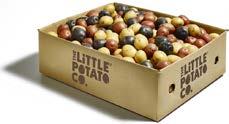
• Sous-vide products available exclusively through foodservice
Whole or sliced for efficiency, ease of use, and taste, Little Potatoes help operators reduce prep time, streamline kitchen operations, and maintain consistency across menus and dayparts. Products are consistently uniform in size, cook to the same level every time and require no peeling, helping operators manage food cost and waste. Sousvide options are ready in as little as two minutes, requiring no specialized skills or training. From package to plate, the offering helps to simplify back-of-house operations while delivering consistent flavor and presentation as a backbone for more innovative creations.
The Little Potato Company currently distributes its foodservice products through major partners including Sysco and Gordon Food Service, as well as Restaurant Depot, with continued expansion underway.
For more information, visit https://www. littlepotatoes.com/food-service/.
president and chief of staff for government affairs at the National Council of Farmer Cooperatives, where she led high-impact advocacy initiatives, managed congressional and coalition engagement, and served as lead lobbyist on priority policy issues affecting agriculture. Her career also includes senior roles with the National Corn Growers Association and on Capitol Hill, including service on the U.S. House Committee on Agriculture.
“I am thrilled to join AFFI at a time when food policy conversations are more important than ever,” said Van Doren. “Frozen foods play a critical role in meeting nutrition needs in communities across the country — providing affordable and accessible quality foods to all Americans. I look forward to working with AFFI’s members and partners to elevate that story and lead a strong, proactive advocacy agenda for the frozen food industry.” For more information, visit www.affi.org.
Huma announces the registration of SURF-MAX, a water optimizer and next-generation surfactant, for use in California, expanding its availability across key U.S. agricultural markets, including the West and Southwest. The company also reveals findings from seven-year studies that show significant improvements in water use efficiency and nutrient density.
“As growers in California, Arizona and much of the West face tightening water allocations and rising pressure to do more with less, SURF-MAX will help them make every drop count,” said Fred Nichols, Huma chief sales & marketing officer. “SURF-MAX changes how water behaves in soil. Instead of pooling, running off or sitting where roots can’t access it, water moves efficiently, reaching deeper, spreading more evenly and staying available longer.”
Results from the seven-year field studies showed SURF-MAX maintained consistent crop yields while achieving the following reductions in irrigation water: 22 percent in lettuce, 20 percent in olives, 15 percent in tomatoes and 10-30 percent in broccoli. SURFMAX is also labeled for use on blueberries, carrots, cotton, fruit trees, melons, peppers, potatoes
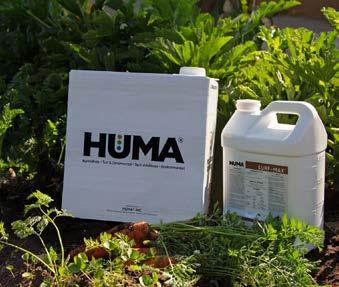
and strawberries.
“SURF-MAX essentially makes water wetter,” said Huma Agronomist Barrett Smith. “It improves how water moves through the soil, reducing runoff, increasing infiltration and delivering moisture and nutrients where roots can actually use them. The result is strong performance with less water.”
Improved nutrient density was also observed across multiple crops.
In processed tomatoes, increases included 50 percent in phosphorus,
28 percent in copper, 17 percent in manganese and 11 percent in iron. Starch increased 2.5 percent in potatoes.
Powered by Micro Carbon Technology, the foundational building block of Huma, SURFMAX is applied at very low rates, typically at one pint per acre. It is biodegradable and supports a beneficial soil ecosystem, making it a great fit for both performance and sustainability goals.
For more information, visit go.huma.us/Surf_Max.



U Of I Report: Idaho Ag’s Economic Impact Hits Record $44.5 Billion
Agriculture has an enormous impact on Idaho’s economy, responsible for a record $44.5 billion in annual sales and 17.2 percent of the state’s total economic output, according to a recent University of
Idaho report based on 2024 data.
The study, “Economic Contribution of Idaho Agribusiness 2025,” by Philip Watson, a professor in the Department of Agricultural Economics and Rural Sociology, also found agriculture employs 137,900 Idaho workers — about one in every nine jobs in the state.

The study places Idaho among the nation’s top five states for agricultural sales as a percentage of the overall economy. The calculations factor in all dollars brought into the state because of agriculture, as well as the ripple effects those dollars have on the economy. For example, purchases such as fertilizer and chemicals used to grow crops, as well as farmer’s living expenses, are part of the estimate.
Watson updates the report about every three years to document agriculture’s growth and its importance to the state’s economic vitality. He uses data from the U.S. Department of Agriculture’s National Agricultural Statistics Service, along with analysis from IMPLAN, which is a private economic impact modeling company, regarding agriculture’s linkages with other economic sectors.
“Our College of Agricultural and Life Sciences likes to take these reports to Boise when the Legislature is in session to make sure people understand the scope of agriculture in Idaho,” Watson said. “Agriculture is growing, and this is the largest contribution of agriculture into the Idaho economy in history.”
Watson’s latest estimates of agricultural sales in the state, published in February 2026, rose from $37.5 billion in 2022, when agriculture was responsible for 126,800 jobs in Idaho. However, agriculture’s percentage of the state’s total economic output has remained relatively flat — increasing by only 0.2 percent over the past three years — demonstrating that many other sectors of Idaho’s economy are also

strong and growing.
Watson’s report ranks Idaho among the top eight states in the production of 22 crop and livestock commodities — including No. 1 in potatoes, barley, alfalfa, trout and peppermint oil; No. 2 in hops; and No. 3 in sugarbeets, cheese, milk and milk cows.
“Agriculture is a very large part of the Idaho economy, and it’s connected to so many other parts of the Idaho economy,” Watson said. “It’s not just cows and plows and farms and potato chip companies. It’s woven into the economy in very deep ways.”
The report estimates the annual value of agricultural sales alone — excluding linkages to other economic sectors — at $32.7 billion, supporting 79,000 Idaho jobs.
Idaho agricultural exports to foreign countries remained steady from 2022 at about $2.8 billion. A primary reason for the lack of export growth is that Idaho’s food processing capacity has grown significantly in recent years, and a larger share of Idaho’s food commodities is now processed within the state.
“Idaho’s farm sector used to be much larger than the processing sector, and that has changed within the past five years, which is a really good thing for Idaho,” Watson said. “Rather than shipping out our raw milk and our raw potatoes, we are now capturing more of that added value in the state by processing them here. I think it’s showing a maturing agricultural industry.”




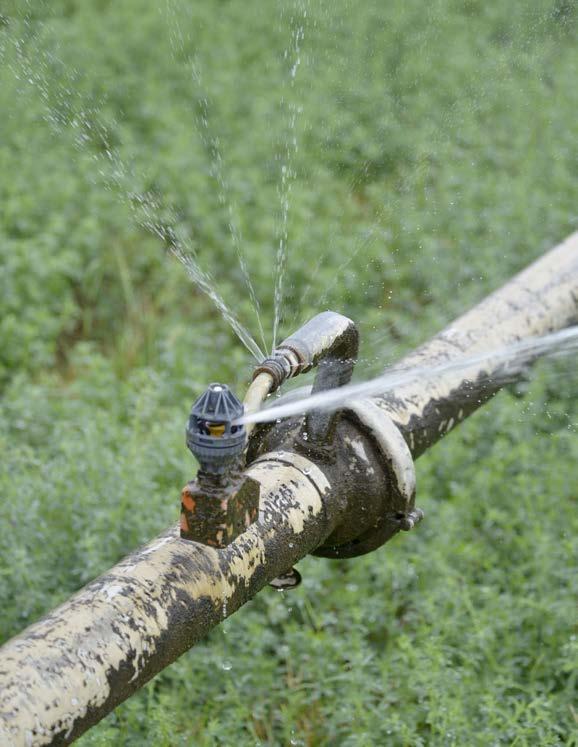
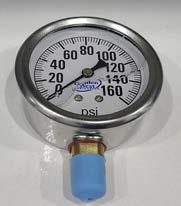
BELOW: A good pressure gauge can tell you a lot about the health of your irrigation system.
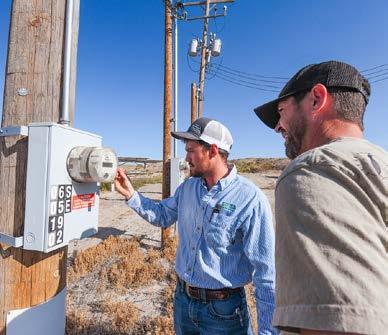
RIGHT: Idaho Power’s local ag reps can help you operate your irrigation system at the highest efficiency level possible.
Is your irrigation system operating as efficiently as you’d like?
The energy you use to run irrigation pumps is usually a large contributor to total energy use on farms. Ensuring your irrigation system is operating as efficiently as possible can reduce overall energy costs and result in water savings and better uniformity of water across the field.
By Steven Keller
Idaho Power has agricultural representatives (ag reps) who work with irrigators across southern Idaho and eastern Oregon, giving us a unique perspective into various systems and how to get the most out of them. Whether you are installing a new system or considering some upgrades to your existing one, our experience gives us broad insight into how anyone can save energy and money.
The best thing you can do to start looking at efficiency improvements is to conduct a quick “health checkup” on your system. This will give you the information you need to see what changes will be most beneficial.
• Look at the energy use (demand) of your system. The demand reading on your electric bill should be about 80 percent of your connected horsepower. If other load, such as pivots or a VFD, are connected to the meter, the demand still should be 80 percent for the entire connected horsepower load. If energy use is higher than anticipated, keep the following in mind:
o A gradual increase in use with no system
changes would indicate one or more of these: worn-out nozzles, leaks, worn-out motor bearings or pump wear.
o A sudden increase in demand could indicate large leaks or a significant problem with your pump, such as a drop in water level (well) among others.
• Get a good pressure gauge to determine your discharge pressure. Has it changed since you last measured? A high-quality oil or glycerin-filled pressure gauge on the discharge side of a pump can tell you a lot about the health of your irrigation system.
o If the operational pressure is at or close to the original design pressure, your pump is likely in good working condition.
o A sudden pressure change can indicate a clogged suction screen, mainline blowout or change in well water level (if applicable).
o A gradual decrease in pressure over time can indicate pump wear, worn nozzles or the addition of nozzles to the system, increasing flow output.
o Install a ball valve on the riser to extend pressure gauge life and to allow for removal during the winter.
o Look for variation in your crops, such as different heights or colors or “rings” in a circle or a field under a pivot. All these variations can point you to potential issues, such as plugged pivot nozzles, bad sprinkler heads, a nozzle package that was installed wrong, or unevenly worn-out nozzles and regulators.
o Check for leaks and old nozzles. This is an obvious place to start with repairs or upgrades.
1. Know your soil.
• What class (texture) is my soil (based on proportion of sand, silt and clay particles)?
• What is my soil infiltration rate and/or water holding capacity?
• When was a soil test taken?
• Do I use the shovel method to determine soil moisture or do I have moisture probes?
2. Know your crops.
• What is my crop rotation and which crop requires the most water?
• What is my crop’s rooting depth, and will it be restricted by hardpan?
• What is my crop’s evapotranspiration rate (also known as consumptive use) and water application requirements?
3. Know your irrigation system.
• Do I have a high-pressure irrigation system (hand lines, wheel lines), low pressure (center pivots) or a combination of both?
• Do I have more pressure than needed on all or part of my system?
• What is the needed pressure for the system?
• Do my pivots have end guns with booster pumps?
• Based on my crop’s water requirements and soil characteristics, what should my application rate be?
• What are my total system flow and
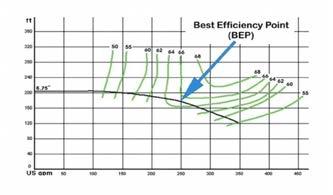
Know your pump curve and where you are operating on it. How close are you to the best efficiency point? Would a different trim or new pump increase system efficiency and reduce power usage? How long would the payback be on such an investment?
pressure requirements (elevation and system losses accounted for)?
• What is my pump designed to do (operating pressure and flow) and at that setpoint, what is its pumping efficiency? Is it sized correctly for my current system? Am I in the sweet spot for the pump or is there room for increased efficiency by operating differently? And do I know my pump curve?
• Is my mainline or other piping undersized, causing excessive friction loss resulting in increased pressure requirements at the pump?
• Would multi-pumps provide more efficient energy use?
• Is my system a good candidate for a variable frequency drive (VFD)?
4. Know how much it costs to run your system and make changes if needed.
• One hair width of nozzle wear equals an increase in water flow of up to 20 percent.
• An increase or decrease in flow/pressure effects pump efficiency.
o A 5 percent increase in pump efficiency on a pivot operating at 900 gpm at 130 ft. of head (56 psi) will decrease power costs about $250/year.
5. Look into Idaho Power programs to help improve irrigation efficiency.
If you have an irrigation system in need of repair or upgrade, Idaho Power has two options (Menu and Custom) that customers can use to receive a cash incentive and lower their energy bills. For additional information and incentive applications, visit idahopower. com/irrigation.
The custom incentive pays you an incentive for upgrades to new or existing irrigation systems based on an estimated annual reduction in energy use. For existing systems, the incentive is based on energy savings estimated by Idaho Power of your proposed modifications. For a new system, the incentive is based on installation of a system Idaho Power determines to be more energy efficient than standard. The incentive you receive is determined by the following criteria based on annual kilowatt-hour (kWh) or kilowatt (kW) savings:
• Existing System — $0.30 per annual kWh saved or $540 per kW (not to exceed 75 percent of project cost)
•New System — $0.30 per annual kWh saved (not to exceed 10 percent of project cost)
For example, if Idaho Power estimates your new, more efficient
pump will save 15,000 kWh of electricity in a typical irrigation season, you would receive an incentive for $4,500 (15,000 kWh x $0.30 = $4,500), assuming this amount does not exceed 75 percent of the project cost on an existing system or 10 percent of the cost on a new system.
Three factors influence the energy requirements of your pump system and your ability to reduce use:
• System pressure — the lower the pressure, the lower the energy use
• Elevation — the more elevation, the higher the pressure required
• Pump/motor/system efficiency — the higher the efficiency, the lower the energy cost
Examples of upgrades that may qualify for the custom incentive include reducing operating pressures, creating pressure zones, using high-efficiency pumps and motors, upgrading pipelines, installing VFDs, and reducing horsepower (hp) requirements.
The menu incentive option pays you an incentive for purchasing specific replacement parts and components for your existing irrigation system. The incentive varies by the sprinkler component or part incorporated into your sprinkler system. You simply buy the new or refurbished components and submit an application, with invoices, within one year of the purchase date.
Eligible components and their associated incentives (per item) are as follows:
• New flow-control nozzles
$5
Idaho Power has ag reps who specialize in helping irrigation customers meet their energy goals. The company loves helping customers find opportunities for efficiency improvements and are experienced in irrigation system and pump design and system audits, which are conducted free of charge for Idaho Power customers’ service points. Idaho Power can also conduct a wire to water test, which measures
the ratio of water hp (power out) to electric hp (power in). With all this information, we can provide recommendations on how you can improve pumping plant efficiency, water application, and potentially reduce your electrical costs while making better use of your water. For more information or to contact the ag rep nearest you visit idahopower.com/irrigation.
(Keller is an Idaho Power agricultural representative. He can be reached at skeller@idahopower.com.)

• New nozzles for impact, rotating or fixed head sprinklers
• New or rebuilt impact or rotating sprinkler heads
• New or rebuilt wheel line levelers
$1.50
$0.55
$1.50


$10
• New complete pivot sprinkler package (includes head, nozzle, and regulator)
• New drains for wheel lines and pivots
• New gaskets for wheel lines, hand lines, and portable main line
$4
$2



The Potato Industry's Most "Rewarding" Day!
All skill levels welcome
One free player per family/farm/operation
Each team must have a combined handicap exceeding 60
The two best players’ combined handicap must be 15 or more
Field is limited to the first 144 paid entries

Sponsored by:






















Logan Farm Equipment
(800) 279-2689
www.loganpotato.com
Logan Load Pro
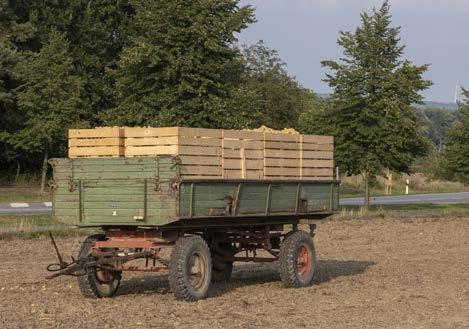
Logan’s Load Pro truck bed is designed and constructed for years of excellent performance. Its 100-inchwide body provides the largest capacity from 20 to 30 feet in length. With construction of standard carbon steel and complete stainless steel, the Load Pro is capable of meeting all your needs.
Main components such as the side door, non-door and main frame rails are one piece, providing strength and longevity. Important structural members are bolted into place, allowing twisting and torsion to happen without cracking. The beds are feature-rich and have unique advantages such as large 3-inch carry-up rollers, heavy side support ribs spaced close together, upper rear hydraulic doors, turnbuckle ratchet take-ups and more. All
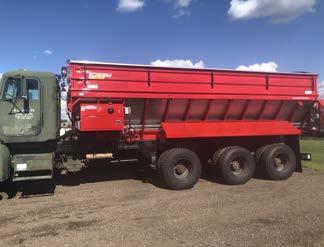
Logan equipment is sandblasted, primed and painted with a highgloss polyurethane paint that is very durable and provides years of attractive quality.
Safe-T-Pull Inc. (701) 284-6100 www.strongtruckbox.com
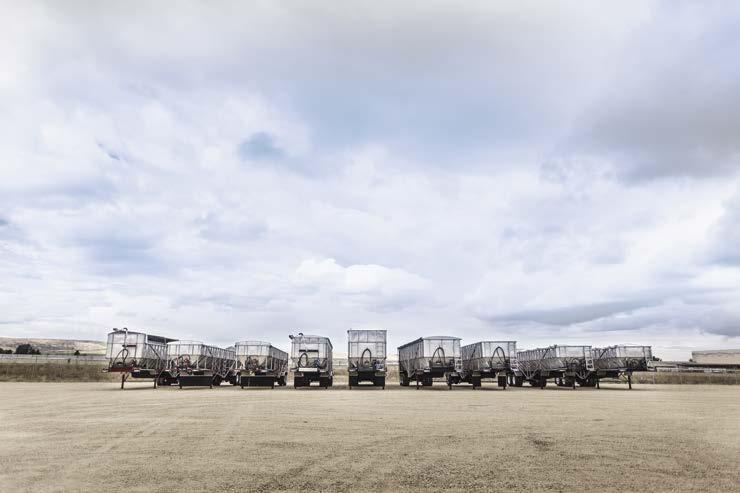
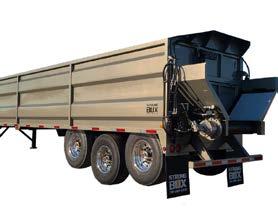
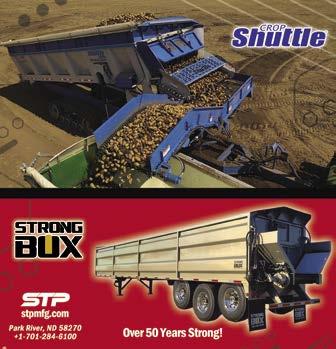
Strong Box specializes in live-bottom semitrailers and bulk beds that give growers versatility across many crops or aggregates. The new continuous belt option is still positive drive, providing a more even product flow and reducing skinning with no belt slippage. The proven plastic drag floor eliminates the hassle of replacing rollers or bearings.
Choose from Chain & Flap (available in 30-, 36- or 50-inch widths) or our positive drive continuous belts (30 inches or 36 inches). With various end gate options, sidewall heights, and custom lengths, we can build the perfect bulk box or trailer to fit every grower’s unique needs.
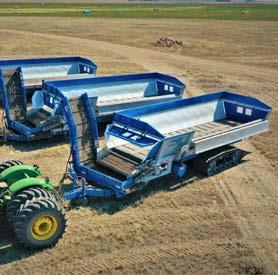
The Crop Shuttle is the largest, fastest and most versatile crop cart on the market. It is fully customizable, providing you up to an 800-bag capacity and discharge speeds of up to 400 bags per minute. The Crop Shuttle is extremely versatile, allowing operators to use it in diverse crops such as potatoes, sugarbeets, carrots, onions, red beets, cucumbers and even corn silage.
Safe-T-Pull has designed the Crop Shuttle so there is no PTO needed to power the hydraulics.
The Crop Shuttle’s patented design has minimal moving parts and changing angles, meaning less buildup of debris while using less hydraulic power. The hopper rises into the air while unloading, creating the incline needed without a separate conveyor slowing down discharge and damaging the crop.
The Crop Shuttle is fully customizable to meet any grower’s needs, and features multiple cleaning bed options that allow operators to remove tare and leave more dirt in the field.
Trinity Trailer Mfg. (800) 235-6577
www.trinitytrailer.com
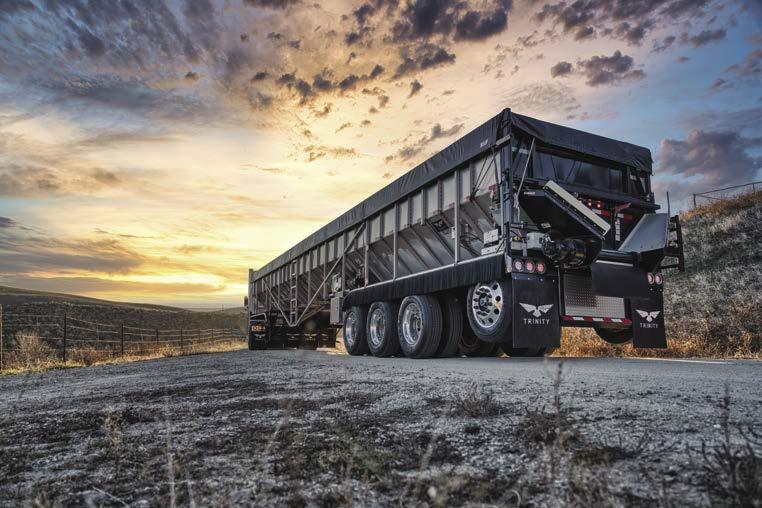
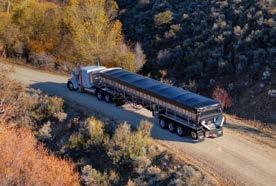
For more than 50 years, Trinity has built the original belt trailer, the Eagle Bridge. Recognized by its iconic bridge side frames, it’s engineered to flex side-to-side over uneven terrain and keep performing season after season. Built primarily from stainless steel, the Eagle Bridge is designed to last, hauling sugarbeets, potatoes and other farm commodities for the long haul.
Western Trailers (208) 344-2539
www.westerntrailer.com
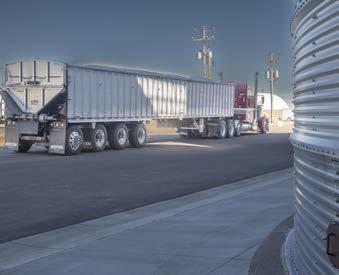
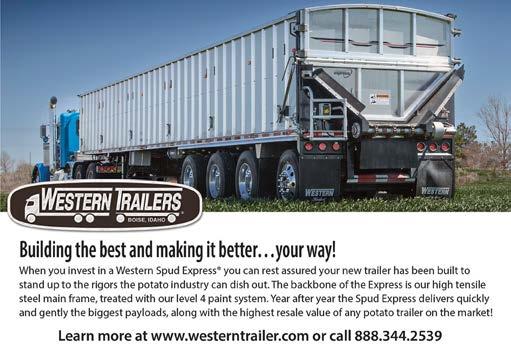
Spud Express
When you invest in the Western Spud Express you can rest assured your new trailer has been built to stand up to the rigors the potato industry can dish out. The backbone of the Express is our high tensile steel main frame, treated with our level 4 paint system. Year after year, the Spud Express delivers quickly and gently the biggest payloads, along with the highest resale value of any potato trailer on the market.
Spudnik Equipment Co. (208) 785-0480 www.spudnik.com
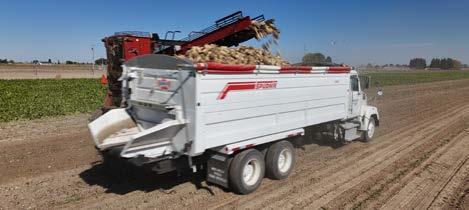
4500 Bulk Bed
Spudnik Equipment is a leading manufacturer of potato and sugarbeet equipment based in Blackfoot, ID. One of its products is the Bulk Bed. Features of this equipment include:
• Belt Width: 30 inches or 76.20 centimeters
• Belt Length: 44.2 to 56.2 feet or 13.41 to 17.07 meters
• Electric Motor Size: 7.5
29.895 feet or 7.01 to 8.84 meters
• Width: 102 inches or 259.08 centimeters
• Weight: 4800 to 5400 pounds or 2177.27 to 2449.42 kilograms
• Capacity: 320 to 410 short hundredweight or 14.51 to 18.60 metric tons
Grover’s All Wheels (208) 745-7077 www.groversallwheels.com
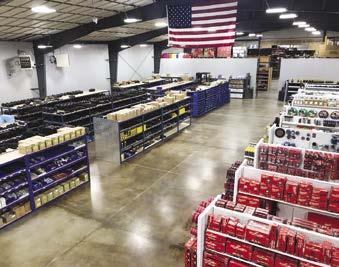
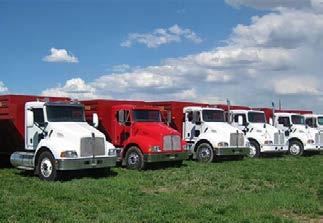
Grover’s All Wheels has served the heavyduty truck needs of its customers nationwide since 1978. Grover’s specializes in heavy-duty truck sales, service, parts and body/paint shop. The company carries a large selection of trucks and equipment and specializes in automatic trucks set up for farmers’ needs. Rigorous inspection and reconditioning ensure customers the highest standard of quality. Grover’s custom-builds trucks on site to meet growers’ work demands and also offers trucks available for seasonal lease.
Parma Company (208) 722-5116
www.parmacompany.com
The Parma multi-use combo box is a heavy-duty manure spreader that can be simply converted to forage or bulk box for year-round usage by removing the rear attachment and adding different side extension kits for silage, sugarbeets or other commodities. Three different spreader attachments are available: the horizontal beater, the compost and manure spinner unit or the vertical beater spinner. These boxes are available in truck-mounted pull-type trailer or pull-type semi-trailer configurations ranging from 16 to 30 feet.

In much of southern Idaho, rainfall alone is not enough to support consistent crop yields and quality, making irrigation one of the most important management decisions growers make each season.
As water availability becomes increasingly variable and energy costs continue to rise, understanding the strengths and limitations of different irrigation systems is becoming more important than ever.
Today, growers use a wide range of irrigation systems, including surface irrigation, wheel lines, solid set (hand-move) sprinklers and center pivots with varying sprinkler packages. Each system comes with tradeoffs in application efficiency, labor requirements, water losses and management flexibility.
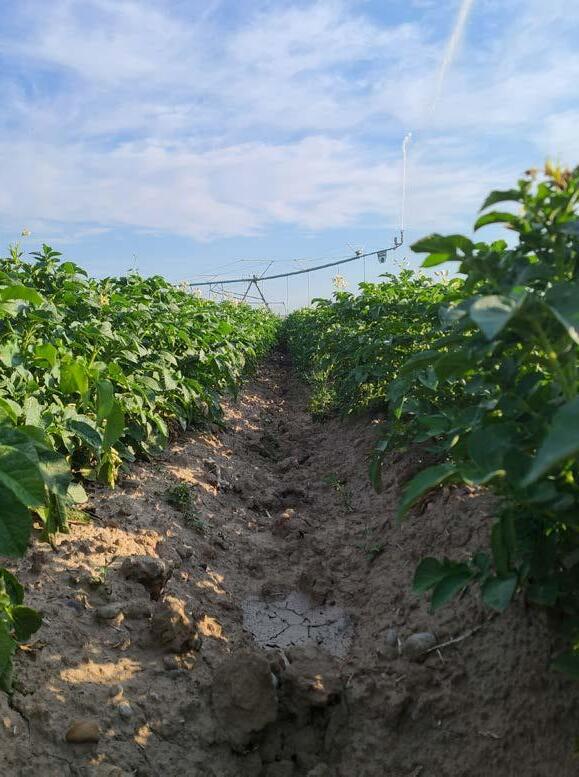
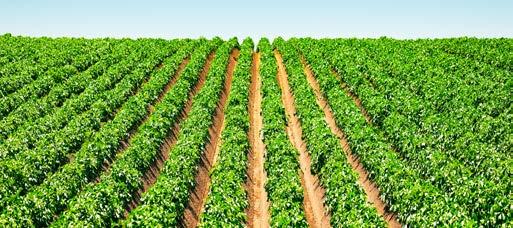
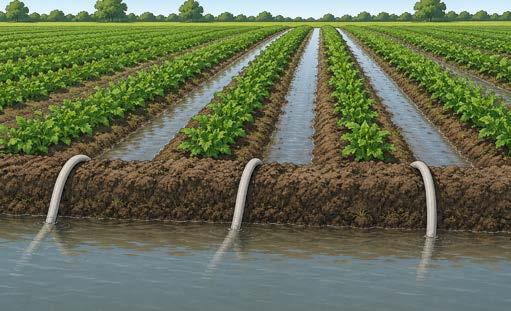
Surface irrigation, including furrow irrigation (Fig. 1), has historically been common throughout Idaho
agriculture and is still used in production systems today.
In these systems, water flows across the soil surface through furrows between crop rows.
One major advantage of surface irrigation is low energy demand. Because water is generally delivered through gravity rather than pressurized systems, pumping costs can be relatively low.
However, surface irrigation often has lower application efficiency than pressurized systems because water losses can occur through runoff and deep percolation below the crop root zone.
That said, not all “lost” water is truly lost. In areas overlying the Eastern Snake Plain Aquifer, some deep percolation contributes to aquifer recharge and later return flows. While that water may benefit the larger system, it is still unavailable to the crop during the growing season.
Surface irrigation can also present challenges with irrigation uniformity, particularly on variable slopes or
soils. Uneven water distribution can increase the risk of both water stress and excessive soil moisture, which may affect pest and disease pressure.
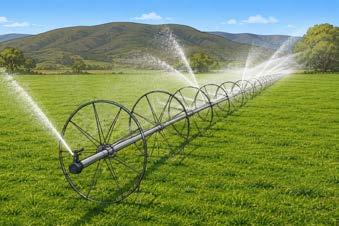
Wheel lines (Fig. 2) and solid set (Fig. 3.) sprinkler systems are common options where field size, shape or infrastructure limit pivot installation.
These systems typically provide improved irrigation uniformity compared to surface irrigation but require higher operating pressures and more labor. Wheel lines can be labor-intensive and susceptible to water losses from leaks and wind drift.
Research has shown that traditional wheel lines and handmove systems can experience substantial evaporation and drift losses under windy, arid conditions, which are not uncommon in southern Idaho. These losses increase as sprinkler height and operating pressure increase.
Solid set systems can improve management flexibility and reduce labor demands compared to wheel lines, but they still experience evaporative and wind drift losses.
Center pivots are now a common irrigation system choice in southern Idaho. Center pivots offer improved irrigation uniformity, reduced labor requirements and greater management flexibility.
However, not all pivot sprinkler packages perform equally. Common center pivot packages are discussed below.
Some pivot systems use sprinklers mounted on top of the pivot pipe (Fig. 4). While these systems provide large wetting diameters and reduced runoff concerns, they also produce substantial wind drift and evaporation losses.
Under hot, windy conditions, these systems may lose 30-40 percent of applied water before it even reaches the soil surface. In southern Idaho’s
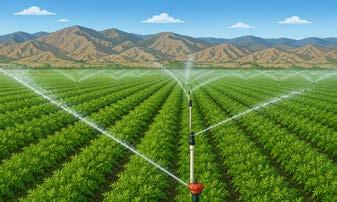
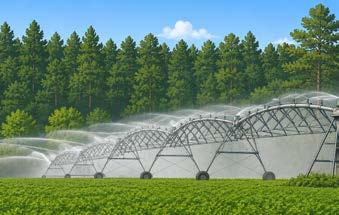
semi-arid climate, these losses can significantly reduce irrigation application efficiency.
Mid-Elevation Spray Application (MESA)
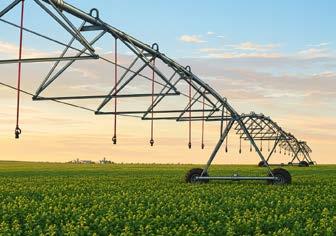
Mid-Elevation Spray Application (MESA) (Fig. 5) systems remain very common throughout southern Idaho. These systems suspend sprinklers several feet below the pivot pipeline, reducing some evaporation losses compared to top-of-pipe sprinklers.
MESA systems generally provide a strong balance between irrigation uniformity, runoff management and operational practicality. However, wind drift and evaporative losses still occur, particularly during hot days with high winds and low humidity.
Low Elevation Spray Application (LESA) and Low Energy Precision Application (LEPA)
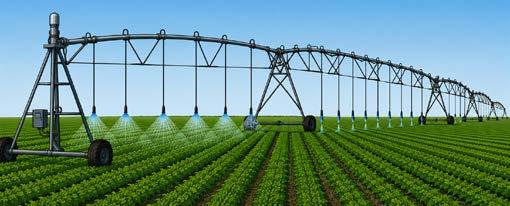
Low Elevation Spray Application (LESA) and Low Energy Precision Application (LEPA) systems (Fig. 6) position water much closer to the soil surface, greatly reducing evaporation and wind drift losses.
Research consistently shows these systems have higher irrigation application efficiency (~95 percent) when compared to traditional MESA systems (~80 percent). By reducing the distance water travels through the air, LESA and LEPA systems conserve water while also lowering pumping pressure requirements and energy costs. However, these systems require
careful management. Because water is concentrated into smaller wetted areas, runoff potential can increase on certain soils or slopes if application rates exceed infiltration capacity.
Soil type, slope, water availability, labor, energy costs, crop rotation and management goals all influence which irrigation system is the best fit for a specific field. In many cases, improving irrigation efficiency is not only about installing new equipment. Proper nozzle selection, pressure regulation, leak repair, irrigation
scheduling and soil moisture monitoring can significantly improve performance regardless of system type.
As Idaho agriculture continues adapting to changing water availability and increasing efficiency demands, irrigation modernization will likely remain a major focus. For potato growers in particular, balancing water conservation with crop productivity will continue to be a defining challenge and opportunity. (Bedwell is an Extension irrigation technology specialist with the University of Idaho in Kimberly, Idaho. She can be contacted at ebedwell@uidaho.edu.)



Kim Ward, Senior Public Relations Strategist, Michigan State University

The potatoes behind America’s potato chips are getting an upgrade.
Researchers at Michigan State University have developed five new potato varieties designed to help strengthen the U.S. chip supply by improving disease resistance, long-term storage and processing reliability.
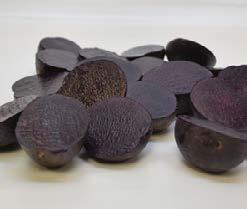
The varieties — Manistee, Mackinaw, Petoskey, Huron Chipper and Blackberry — are the result of more than two decades of breeding research led by MSU potato breeder David Douches. Together, they were created to help growers produce potatoes that can store for months, withstand disease pressure and consistently fry light and crisp — even late in the processing season.
“Potato chips are made year-round, but potatoes are harvested once a year,” said Douches, professor in MSU’s Department of Plant, Soil and Microbial Sciences. “If a variety can’t maintain quality in storage or handle disease pressure, that affects the entire supply chain.”
Michigan is widely recognized as the nation’s leading
producer of potatoes grown specifically for potato chips. Roughly 70 percent of the state’s potato crop is destined for chip processing, and industry estimates suggest that about one in four bags of potato chips eaten in the United States contains Michigan-grown potatoes. Because chip production operates year-round, storage performance is critical. Potatoes must maintain low sugar levels and structural integrity for up to eight months to ensure consistent color and flavor when fried. Breakdowns during storage can result in significant losses for growers and processors.
That’s where these five varieties come in.
• Manistee helped establish a benchmark for longterm storage, maintaining excellent chip quality deep into the processing season. Building on that foundation, newer varieties add additional layers of resilience.
• Mackinaw combines strong storage stability with resistance to potato virus Y and late blight — two major threats to potato crops worldwide.
• Petoskey produces starch-rich potatoes that fry
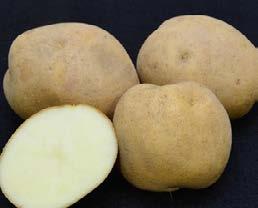
crisp and absorb less oil, while also resisting common scab and maintaining chip color in storage.
• Huron Chipper offers strong yield potential, adaptability across growing regions and improved late blight resistance.
• Blackberry, a purple-skinned and purple-fleshed variety, expands MSU’s breeding portfolio into the fresh and specialty market while carrying extreme resistance to potato virus Y.
“You can’t rely on a single variety,” Douches said. “Different climates, disease pressures and storage conditions require different strengths. Having multiple varieties spreads risk and keeps the supply stable.”
Modern potato breeding requires balancing yield, processing quality, storage life and disease resistance — traits that are often difficult to combine.
“These potatoes are about resilience,” Douches said. “Every resistance trait we build into a variety is one less vulnerability in the system.”
The varieties were evaluated through multiyear field trials in Michigan and national testing programs across major potatoproducing states. As certified seed production expands and commercial acreage increases, their impact is moving from research plots into farmers’ fields and processing plants.
“As a public university breeding program, our mission is to support the entire industry,” Douches said.
“Success means growers can stay competitive and consumers can rely on a consistent product.”
For a snack that millions of Americans reach for every day, the science behind the potato plays a larger role than most people realize.
“Potatoes may look simple,” Douches said. “But breeding them to meet modern demands is anything but.”
This research was funded by the Michigan Potato Industry Commission, the United States Department of Agriculture’s National Institute of Food and Agriculture and by Potatoes USA.

Tara Artho, Executive Director
Recently someone told me since the pandemic they can’t stand the word “unprecedented.”
It was used in every news story, interview, speech and meeting for years. I heard that word more from 2020-22 than I have in the other 40 plus years I have been alive. But there is an upside to living in an era with problems that have never before been seen. There isn’t a “correct” way to tackle the issue. You have a clean slate to try to get through the challenge before you. Now, without a template to learn from, is it likely that you will knock it out of the park on the first try? Sadly no. But you are a trailblazer. You have the opportunity to go where no one else has gone before, like they used to say on Star Trek
Oh, to be John Luke Picard on the Enterprise, facing new and exciting problems and to have a positive outcome in a mere 60 minutes. These were seen as amazing adventures, not reasons to stop moving forward through space to map a new frontier. However, as we try to navigate a landscape that many of us know very well, we are struggling. Agriculture across the board is struggling. Farms are struggling. With current market prices, weather, distribution, logistics, inputs and on and on, there are plenty of struggles to go around.
Getting through one more year seems more daunting than ever. You see it on your neighbors’ faces. You feel it in the room during meetings. Every day it seems like there is one more fire you have to put out.
I wonder if the famous space captain ever woke up and said, “This again! Can’t we just get to the space gas station without someone trying to blow us up?”
I don’t think space travel is for everyone, certainly not the faint of heart, but neither is life in agriculture. There is a reason many of us are drawn to farm life. The connection to the soil, working with our hands, being outside in the elements (for good or bad), are just a few of the reasons.
Producers are creating something where there was nothing before. Without their perseverance, other
people’s lives would drastically be impacted on a daily basis. The old saying, “You need a doctor when you are sick, but you need a farmer three times a day” comes to mind. How many other careers can even come close to that?
We are called to ag, we are called to face hard times, to work without certainty, to look at risks and say, “Yes, I can see myself succeeding.”
Producers navigated the dust bowl and the 80s farm crisis, and we WILL get through these challenging times. When we look back, the path we take might not be as we expected, but it is true that tough times make tough people.
The problems we face in ag are numerous. They do not have easy fixes and they will change the way we do business. But our great grandparents could say the same thing, and they did it without indoor plumbing. Much like exploring the final frontier in space, this industry is not for everybody.
But those who are called to it are those who ultimately will help us literally grow things BETTER. We have an opportunity here. In 100 years, our great-grandchildren will look back and say, “Wow, how did you do that?”
I wonder what people thought when they invented the first light bulb, telephone or toilet, all things that drastically changed the way we live.
Before Henry Ford invented the Model T, people were literally surrounded by an abundance of horse poop. They didn’t know what to do; they didn’t even really know what they needed to fix the issue. There were just too many people using horses, and disease was a reality. They couldn’t just tell the entire population to stay home.
Those really were unprecedented times. And we got through it. A great mind saw a challenge and the world was changed because he had to face too much horse $H!%.
Well, if you ask any producers these days, we have plenty of that. Looks like we just might be on the brink of our next Model T!
PILERS

Mike Wenkel, Vice President, Secretary/Treasurer Potato LEAF
MULTI-FACETED PROGRAM DEVELOPS TOMORROW’S INDUSTRY LEADERS
The potato industry thrives on a long-term vision that extends well past the next harvest. Families manage their land and water resources today so they can pass down strong, sustainable operations to the next generation. The Potato Leadership, Education, and Advancement Foundation, or Potato LEAF, adopts this same mindset by investing in the most valuable part of any farming business: its people.
This January marked six years of cultivating fresh leadership for the U.S. potato industry. Our core mission stands firm even as we refine our strategies to help growers navigate the shifting landscape of modern agriculture. As an evolving organization, we take pride in expanding our hands-on learning programs and sharpening our curriculum to better serve the needs of our farmers.
For 24 years, the Leadership Institute has provided an intensive 10-day immersion into the potato value chain. Participants receive professional development training that ranges from touring production facilities to engaging on policy priorities on Capitol Hill during the NPC Washington Summit.
We recognized that the true value of this leadership training comes through direct application, which led us to create the Capstone Project as a formal part of the institute in 2025.
This new initiative challenges class members to take the skills they acquire in media relations and policy analysis and use them for high-impact projects within their own operations. By integrating this capstone experience, we ensure that the lessons learned in Washington, D.C., result in practical benefits back home on the farm.
While the Leadership Institute focuses on industry
advocacy, our Leadership in the Field program emphasizes personal development through unique historical perspectives. The now annual program takes place at the Gettysburg National Military Park in Pennsylvania and utilizes the resources of that revered battlefield to facilitate experiential teaching.
We believe that the stories of ordinary people doing extraordinary things at Gettysburg offer profound lessons for modern agriculture.
The curriculum focuses on essential traits such as character, communication and strategic thinking under immense pressure. Growers also learn about humility, flexibility, resilience and accountability, which are all qualities required to manage a successful farming operation.
Past participants have described the experience as the most relatable training they have ever received because it combines historical knowledge with practical leadership growth.
Beyond the field and the future generations leading potato organizations, we also invest in those who may discover the next great breakthroughs for our industry. Each year, Potato LEAF presents a $10,000 academic scholarship to a graduate student whose research
Leadership development secures the future of the farm just as surely as healthy soil produces a crop, and we invite everyone in the industry to join us in this vital mission.
promises to benefit U.S. potato production. We select winners through an evaluation of academic excellence, leadership skills and the commercial potential of their studies. By supporting these talented individuals, we ensure that science and innovation continue to drive our industry forward.
The success of these educational programs depends entirely on the continued support of our industry partners. From the annual live auction at Potato Expo to our recurring individual and business contributors, the funds we raise help us build a foundation for a stronger, more connected U.S. potato industry.
As we look toward the next year of training under the guidance of newly elected Grower Leader Anthony Hart, we remain committed to providing the professional development necessary to stand up for potatoes.
Leadership development secures the future of the farm just as surely as healthy soil produces a crop, and we invite everyone in the industry to join us in this vital mission.
Learn more and get involved at pleaf.org.




Nick Bartelme, Global Retail Development Manager
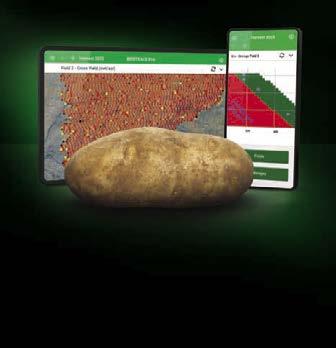
the Circana data summarized above, tracking how potatoes are performing across categories, pack sizes and variety types.
• Basket data analyses that identify which products consumers frequently purchase alongside potatoes, revealing buying patterns that retailers can use to make smarter decisions about product placement, promotions and personalized recommendations.
If you want a snapshot of potato demand in 2025, here it is: $19.9 billion in total retail sales for the calendar year and 15.3 billion pounds sold across all store segments (fresh weight equivalent), according to data compiled by Circana (IRI).
Category performance remained stable overall, with volume essentially flat (-0.5 percent) and dollar sales edged down 0.7 percent from the prior year, driven largely by a 1 percent decrease in average consumer price per pound.
The numbers tell the story of a vegetable that remains a staple for Americans, but there are shifts in consumer behavior worth understanding — and new tools to help retailers capitalize on that knowledge.
Fresh potatoes were one of two categories to post volume growth in 2025, up 1 percent for the year. The story within fresh is largely one of specialty potatoes gaining ground. Yellow, medley, petite and purple potatoes each grew more than 6 percent in volume sales, offsetting declines in russets (-0.5 percent), reds (-6.6 percent) and whites (-9.4 percent).
In dollar terms, that specialtyvariety momentum was even more pronounced. Medley potatoes led all fresh types with an 8.8 percent
increase in dollar sales, followed by purple (+8.1 percent) and yellow (+6.6 percent). Dollar sales of white potatoes fell 10.0 percent and reds declined 9.2 percent. Overall, fresh potato dollar sales declined a modest 0.3 percent, with the average price per pound for fresh potatoes falling 1.4 percent to $0.89. Pack size trends are equally notable. Smaller packs posted strong gains: 2-4 pound pack sizes grew 8.4 percent in volume, followed by 1-2 pound packs (+6.3 percent) and 8-pound packs (+5.8 percent). In contrast, larger formats decreased, including 5-pound packs (-0.8 percent), 10-pound packs (-1.0 percent), and packs greater than 10 pounds (-40.7 percent). Fresh potatoes sold in bags, single-wrapped and tray formats all increased in volume.
This shift toward smaller pack sizes appears to reflect changing consumer behavior, including smaller households and heightened attention to budget and food waste. Retail data show that potato purchase trips are increasing even as spending per trip declines, indicating potatoes are being bought more often, in smaller baskets.
Chips remain the largest potato category by fresh weight equivalent volume, though volume and dollar sales both declined 1.5 percent.
Frozen potato volume held steady (-0.1 percent). Instant and refrigerated potatoes each declined 2.6 percent in volume, though refrigerated potato dollar sales bucked the trend with a 0.4 percent increase. Deli-prepared potato sides represent a small share of total category volume (0.9 percent), but showed steady growth in both volume (+0.9 percent) and dollar sales (+2.8 percent).
On pricing, the total potato category averaged $2.31 per pound in 2025, down 1 percent year over year. Prices per pound fell for frozen (-1.9 percent), fresh (-1.4 percent), instant (-0.2 percent) and chips (-0.01 percent), while growing for refrigerated (+3.1 percent) and deliprepared sides (+1.9 percent).
Potatoes remain one of the most purchased items in the produce aisle and grocery carts with potatoes create more value for retailers than those without. Building on that advantage is why Potatoes USA provides a robust Retailer Resource Center at PotatoRetailer.com. It’s designed to make it easier for retailers and the industry professionals who supply them to find everything they need to drive even greater sales.
The hub provides access to tools, data, and support, including:
• Retail sales reports, like


• Merchandising best practices to help retailers optimize how potatoes are displayed and promoted in-store.
• Shopper profiles with consumer data relevant to the fresh potato buying experience.
• Regional retail reports with market-specific insights.
• Case studies highlighting retailers who have successfully grown potato sales in their stores.
• Toolkits with ready-to-use materials for in-store promotion and engagement.





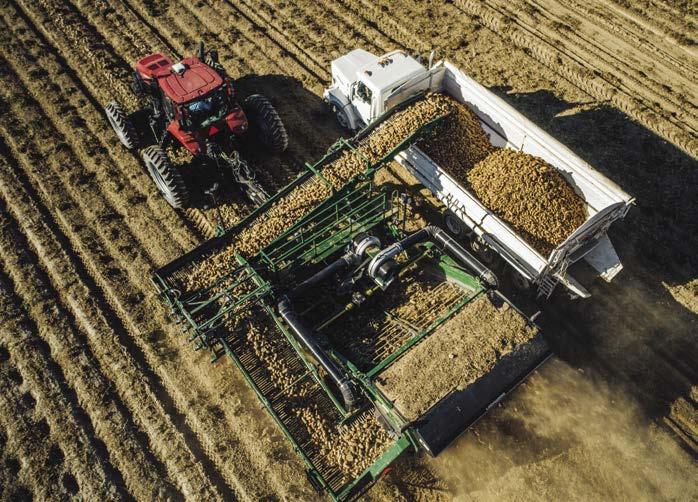
Idaho Power’s Irrigation Efficiency Rewards Program offers incentives for replacing worn or damaged equipment. It’s an opportunity to receive a cash incentive and lower your energy use. Learn more at idahopower.com/irrigation.


If you jumped off a building, landed on your head and wanted to blame someone, whose fault would it be? It can’t be the building’s fault; buildings are just innocently standing there waiting to be occupied according to their purpose.
What about the law of gravity? Without gravity’s downward force, when you jumped off the building you would have just floated in the air, no harm done. But gravity’s force was already known and you jumped anyway.
If the building didn’t do it and gravity’s force was already known, who’s to blame for the bump on your head? While this parody sounds silly, it exactly parallels the condition in which the national potato market finds itself today and points out exactly how it happened.
To align the parody with reality, replace the building with the farm and the law of gravity with the law of supply and demand. It wasn’t the farm that forced the potato producer to oversupply a market whose demand is perfectly known. It wasn’t the law of supply and demand’s fault, but a law is a law, and you cannot break a law without the threat of penalty – that’s what the word “law” means.
So, what will remedy this situation that is causing potato farm losses? Data — information — means something.
Inputting accurate data into decision making dials in optimum results. No bump on the head. In terms of potato production, utilizing United Potato Growers of America’s expansive potato-market database to make production decisions is better than tossing a coin in the air or allowing other market forces or someone else’s overproduction to dictate one’s risk/reward outcome. The latter options would make one wonder who’s risking what for whom?
Only a grower with no understanding of the marketplace would hand his hard-earned equity over to such a process. Ignorance is not an excuse; UPGA has been providing potato producers with accurate supply/

demand/price data for the past 20-plus years.
Should you find yourself outside that loop, not knowing how much to supply to produce a healthy market, a moment of deep personal introspection is in order.
Some years ago when a group of savvy potato producers formed UPGA, potato producers across North America listened to the data and showed fair returns year after year while providing consumers with ample supplies of healthy, low-cost potatoes. There are two ways to become humble enough to listen once more. One is to decide on your own to listen because it is the wise thing to do. The other is to be made humble by being brought to your knees by economic torture. Are we there yet?
Many reading this article either pulled away from UPGA’s potato-market data or never knew that such a thing existed in the first place.
Today’s potato market chaos is the result of both. Remember also that there is fair economic reward in harmonizing with the law of supply and demand, and such is entirely doable. If you choose not to align with reality, remember the saying, “Mess with the bull and you get the horns.”
Mess with the law of supply and demand and …