Ethereal Transformations
May 17, 2026
Ethereal Transformations
May 17, 2026
Since the opening of Jones Hall in 1966, millions of arts patrons have enjoyed countless musical and stage performances at the venue. Dominating an entire city block, Jones Hall features a stunning travertine marble facade, 66-foot ceilings, and a brilliantly lit grand entrance. Jones Hall is a monument to the memory of Jesse Holman Jones, a towering figure in Houston during the first half of the 20 th century.
We strive to provide the best possible auditory experience of our world-class orchestra. Noise from phones, candy wrappers, and talking is distracting to the performers on stage and those around you. Please help us make everyone’s concert enjoyable by silencing electronic devices now and remaining quiet during the performance.
The Encore Café and in-hall bars are open for Symphony performances, and food and drink will be permitted in bar areas. Food is not permitted inside the auditorium. Patrons may bring drinks into the auditorium for Bank of America POPS Series concerts and Symphony Specials. Drinks are not permitted inside the auditorium for Classical concerts.
For lost and found inquiries, please contact Patron Experience Coordinator Lien Le during the performance. She also can be reached at lien.le@houstonsymphony.org. You may contact Houston First after the performances at 832.487.7050
It’s a question we hear often! Traditionally, audiences wait to applaud until the very end of a piece, especially when it has several sections (called movements). This allows the music to flow without interruption and helps the performers stay focused. If you’re unsure, a simple cue is when the conductor lowers their arms and turns toward the audience—that’s your signal the piece has finished. That said, there’s no wrong way to show your appreciation. If the music inspires you in the moment, don’t hesitate to clap! Your enthusiasm and energy are always welcome at the Symphony.
Children ages six and up are welcome to all Classical, Bank of America POPS, and Symphony Special concerts. Children of all ages are welcome at PNC Family Series performances. Children must have a ticket for all ticketed events.
Each performance typically allows for late seating, which is scheduled in intervals and determined by the conductor. Our ushers and Patron Experience Coordinator will instruct you on when late seating is allowed.
Subscribers of five or more concerts may exchange their tickets at no cost. Tickets to Symphony Specials or single ticket purchases are ineligible for exchange or refund. If you are unable to make a performance, your ticket may be donated prior to the concert for a tax-donation receipt. Donations and exchanges may be made in person, over the phone, or online.
ESCANEE AQUÍ PARA VER TRADUCCIÓN AL ESPAÑOL

Juraj Valčuha
Music Director
Roy and Lillie Cullen Chair
FIRST VIOLIN
Yoonshin Song, Concertmaster
Max Levine Chair
Vacant, Associate Concertmaster
Ellen E. Kelley Chair
Boson Mo, Assistant Concertmaster
Qi Ming, Assistant Concertmaster Fondren Foundation Chair
Tong Yan
Ferenc Illenyi
Si-Yang Lao
Christopher Neal
Sergei Galperin
James Gikas+
Tianxu Liu+
Samuel Park+
Timothy Peters+
Arutyun Piloyan+
Teresa Wang+
SECOND VIOLIN
Vacant, Principal
Vacant, Associate Principal
Amy Semes
Annie Kuan-Yu Chen
Mihaela Frusina
Jing Zheng
Anastasia Iglesias
Tina Zhang*
Yankı Karata!
Hannah Duncan
Alexandros Sakarellos
Zubaida Azezi+
Hanna Hrybkova+
VIOLA
Joan DerHovsepian, Principal
Wei Jiang, Acting Associate Principal
Samuel Pedersen, Assistant Principal
Paul Aguilar
Sheldon Person
Fay Shapiro
Keoni Bolding
Jimmy Cunningham
Meredith Harris+
Yvonne Smith+
CELLO
Brinton Averil Smith, Principal
Janice H. and Thomas D. Barrow Chair
Christopher French, Associate Principal
Jane and Robert Cizik Chair
Anthony Kitai
Louis-Marie Fardet
Je rey Butler
Maki Kubota
Xiao Wong
Charles Seo
Jeremy Kreutz
COMMUNITY-EMBEDDED MUSICIAN
Lindsey Baggett, Violin
LIBRARIANS
Ali Verderber, Associate Librarian
Megan Fisher, Assistant Librarian
DOUBLE BASS
Robin Kesselman, Principal
Timothy Dilenschneider, Associate Principal
Steven Reineke, Principal POPS Conductor
Andrés Orozco-Estrada, Conductor Laureate
Anthony J. Maglione, Director, Houston Symphony Chorus
Gonzalo Farias, Associate Conductor
Andrew Pedersen, Assistant Principal
Eric Larson
Logan May
Burke Shaw
Donald Howey
Avery Weeks
FLUTE
Vacant, Principal
General Maurice Hirsch Chair
Matthew Roitstein,
Acting Principal
Judy Dines
Kathryn Ladner
Douglas DeVries+
PICCOLO
Kathryn Ladner
OBOE
Jonathan Fischer, Principal
Lucy Binyon Stude Chair
Anne Leek, Associate Principal
Vacant
Adam Dinitz
Pablo Moreno+
ENGLISH HORN
Adam Dinitz
Barbara and Pat McCelvey Chair
CLARINET
Mark Nuccio, Principal
Bobbie Nau Chair
Vacant, Associate Principal
Christian Schubert
Alexander Potiomkin
Ben Freimuth+
E-FLAT CLARINET
Vacant
Ben Freimuth+
BASS CLARINET
Alexander Potiomkin
BASSOON
Rian Craypo, Principal
Isaac Schultz, Associate Principal
Elise Wagner
Adam Trussell
CONTRABASSOON
Adam Trussell
STAGE PERSONNEL
Vacant, Stage Manager
José Rios, Assistant Stage Manager
Nicholas DiFonzo, Head Video Engineer
Justin Herriford, Head Audio Engineer
Connor Morrow, Head Stage Technician
Giancarlo Minotti, Audio Production Manager
HORN
William VerMeulen, Principal
Mr. and Mrs. Alexander K. McLanahan
Endowed Chair
Robert Johnson, Associate Principal
Nathan Cloeter, Assistant Principal/Utility
Ian Mayton
Barbara J. Burger Chair
Brian Mangrum
Spencer Bay+
TRUMPET
Mark Hughes, Principal
George P. and Cynthia Woods
Mitchell Chair
John Parker, Associate Principal
Robert Walp, Assistant Principal
Richard Harris
TROMBONE
Nick Plato , Principal
Bradley White, Associate Principal
Phillip Freeman
BASS TROMBONE
Phillip Freeman
TUBA
Dave Kirk, Principal
TIMPANI
Leonardo Soto, Principal
Matthew Strauss, Associate Principal
PERCUSSION
Brian Del Signore, Principal
Mark Gri th
Matthew Strauss
HARP
Allegra Lilly, Principal
KEYBOARD
Vacant, Principal
LIBRARIAN
Luke Bryson, Principal
*on leave + contracted substitute
0:18 TILSON THOMAS – Street Song (for Brass Quintet)
John Parker, trumpet
Richard Harris, trumpet
Ian Mayton, horn
Nick Plato!, trombone
Phillip Freeman, bass trombone
0:32 SCHOENBERG – Verklärte Nacht, Opus 4
Yoonshin Song, violin
Boson Mo, violin
Joan DerHovsepian, viola
Wei Jiang, viola
Christopher French, cello
Jeremy Kreutz, cello


Sunday, May 17 Jones Hall 6:30 p.m.
TILSON THOMAS
Street Song (for Brass Quintet)
This performance of Street Song is dedicated to the memory of Michael Tilson Thomas, 1944-2026.
The founding members of the Empire Brass Quintet were some of my oldest musical friends. Our meeting dates back to student days at Tanglewood in the early 1970s when we discovered that we had reverence for good notes, good tunes, and good licks, whether from organum, serialism, or bopshoowop. They commissioned and premiered Street Song and made the first recording. I’m pleased that the quintet version has found its way into brass chamber programs.
Street Song is in three continuous parts—an interweaving of three “songs.” The first song opens with a jagged downward scale suspending in the air a sweetly dissonant harmony that very slowly resolves. This moment of resolution is followed by responses of various kinds. The harmonies move between the world of the Middle Ages and the present, between East and West, and always, of course, from the perspective of 20 th century America. Overall, the movement is about starting and stopping, the moments of suspension always leading somewhere else.
The second ‘song’ is introduced by a singsong horn solo. It is followed by a simple trumpet duet, which was first written around 1972. It is folklike in character and also cadences with suspended moments of slowly resolving dissonance.
The third song is really more of a dance. It begins when the trombone slides a step higher, bringing the work into the key of F-sharp and into a jazzier swing. The harmonies here are the stacked up moments of suspension from the first two parts of the piece. By now, I hope these “dissonant” sounds actually begin to sound “consonant.” There is a
Barbara J. Burger Presenting Sponsor
TILSON THOMAS
Street Song (for Brass Quintet)
resolution, but it is the world of a musician who, after many after-hour gigs, greets the dawn. Finally, the three songs are brought together, and the work moves toward a quiet close.
Street Song is dedicated to my father Ted, who was and still is the central musical influence on my life.
—Michael Tilson Thomas
SCHOENBERG
Verklärte Nacht, Opus 4
Although Schoenberg is best remembered today for his pioneering atonal music, his early works demonstrate complete mastery of the lateRomantic style. This mastery was all the more remarkable as he was for the most part a self-taught composer. Born to a family of modest means, the young Schoenberg did not have the opportunity to attend conservatory, but instead studied music on his own. His one important teacher was Alexander Zemlinsky, who mentored Schoenberg in Vienna during the 1890s. Under Zemlinsky’s influence, in 1897 Schoenberg composed a String Quartet in D major in the style of Brahms and Dvoř ák which was well received at its first performances in 1898; not long thereafter, however, Schoenberg began to expand his stylistic palette by incorporating influences from Wagner and beyond.
In 1899, Schoenberg fell under the spell of the German poet Richard Dehmel (1863–1920), who had been tried for obscenity and blasphemy in 1897 for his controversial volume Weib und Welt (“Woman and World”). Schoenberg set several of Dehmel’s passionate poems to music as songs for voice and piano, but the most significant work Schoenberg composed in response to Dehmel’s poetry was Verklärte Nacht (Transfigured Night). Often regarded as his first masterpiece, this string sextet was inspired by an eponymous poem by Dehmel. Stylistically, it synthesizes post-Wagnerian chromatic harmonies and literary sensibilities with Brahmsian counterpoint and metrical flexibility. More personally, the sextet’s genesis coincided with the blossoming of Schoenberg’s romance with Zemlinsky’s sister, Mathilde; the two would marry in 1901.
The work’s structure follows that of the poem, beginning with a hushed opening in D minor. This corresponds with the first stanza, which can be translated in prose as “Two people walk through the bare, cold woods; the moon runs along, they gaze at it. The moon runs over tall oaks, no little cloud dulls the heavenly light, into which the black points reach.”
Agitated, tremolo strings introduce an emotionally intense second part: “A woman’s voice speaks: I bear a child, and not by you. I walk in sin alongside you. I have gone seriously astray. I believed no longer in good fortune, yet still had a great longing for a full life, for a mother’s happiness and duty; then I became reckless; horror-stricken, I let myself be taken by a stranger and even blessed myself for it. Now life has taken its revenge: now I have met you, oh, you.”
SCHOENBERG
Verklärte Nacht, Opus 4
This passage dies away, and the opening music returns, this time heavy and laden with tension: “She walks with clumsy gait. She gazes upward; the moon runs along. Her somber glance drowns in the light.”
A prominent cello solo then introduces the warmth of D major: “A man’s voice speaks: The child that you conceived, let it be no burden to your soul; oh, look how clear the universe glitters! There is a radiance about everything; you drift along with me on a cold sea, yet a special warmth glimmers from you in me, from me in you. It will transfigure the strange child, you will bear it me, from me; you have brought the radiance into me, you have made me a child myself.”
The sextet ends with the return of the opening music in D major, transfigured with delicate pizzicati, harmonics, and string crossings: “He holds her around her strong hips. Their breath mingles in the air. Two people walk through the high, clear night.”
Although Verklärte Nacht is perhaps Schoenberg’s most popular and frequently performed work today, it was initially quite controversial for both its modern style and fusion of chamber music and program music (most program music to that point had been orchestral).
Given Schoenberg’s later innovations, it is amusing that the Wiener Tonkünstlerverein initially rejected the work on the pretext that it contained a chord which could be found in no harmony textbook. Nevertheless, Verklärte Nacht remains a transfixing masterpiece from its first note to its last.
—Calvin Dotsey
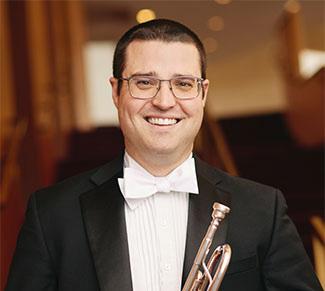
John Parker, trumpet (Tilson Thomas)
John Parker, a native of High Point, North Carolina, joined the Houston Symphony in May of 2016 as Associate Principal Trumpet.
Previously, he was Principal Trumpet with the Charlotte Symphony Orchestra, a position he attained after his undergraduate studies at the University of North Carolina at Chapel Hill (UNC). While at UNC, Parker was a recipient of the Kenan Music Scholarship and also the Frank Comfort Education Scholarship. Parker has also performed as Principal Trumpet of the Charleston Symphony, the Roanoke Symphony, and the Greensboro Symphony. He attended the Aspen Music Festival and School on a full fellowship in both 2012 and 2013 and has also performed twice as a soloist at the National Trumpet Competition.
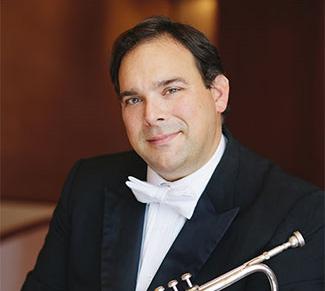
Richard Harris, trumpet (Tilson Thomas)
Richard Harris joined the Houston Symphony as second trumpet in 2018. Previously, he was a member of the Charlotte
Symphony Orchestra where he performed for eight years. In March of 2018, Harris gained the distinction of being the only musician in an American orchestra to have won auditions for each position in one orchestral trumpet section. He achieved this notable accomplishment during his tenure at the Charlotte Symphony Orchestra where he won nationally held blind auditions for the positions of Second Trumpet (2009), Associate Principal/Third Trumpet (2014), and Principal Trumpet (2018). As a soloist, Harris has performed J.S. Bach’s Brandenburg Concerto No. 2, Copland’s Quiet City, and concertos by Vivaldi, Hummel, Haydn, and Neruda. As an artist for Conn-Selmer (Vincent Bach Trumpets), he has enjoyed performing in orchestras all over the world including the Seoul Philharmonic in South Korea and the Jalisco Philharmonic in Guadalajara, Mexico. He has also performed with the Pittsburgh Symphony Orchestra, Dallas Symphony Orchestra, and Kansas City Symphony, as well as many others.
An avid educator, Harris has given masterclasses at universities and high schools across the country. Currently he serves on the faculty at Texas Tech University, and at AFA Texas. He served on the faculty at Winthrop University from 2013–18 and at UNC Charlotte from 2007–09. He also had the privilege of serving as the brass coach for the Charlotte Symphony Youth Orchestra for seven years. He strives to create a fun and relaxed atmosphere where students are encouraged
and inspired to improve their playing. His primary goal is to ensure that their love of music remains an important and positive part of their lives, even beyond the stage. Harris’s students have enjoyed successful auditions for orchestras, wind ensembles, and prestigious programs of study.
In addition to his passion for playing trumpet, Harris is a chess enthusiast. His volunteer work with inner-city schools in Charlotte allowed him to teach and run chess camps for underprivileged kids. As a master level chess player, he uses this game as a teaching tool to foster a sense of patience, sportsmanship, strategic thinking, and calm under pressure.
Harris has studied with Thomas Booth, Barbara Butler, and many others. His degrees from Texas Tech University and Southern Methodist University (SMU) gave him a strong foundation. While a student at SMU he had the honor of playing two seasons with the National Repertory Orchestra.
During his time at SMU he was hailed by the Dallas Observer as “a dream of a principal trumpet player.” Also, while a student at Texas Tech he won the concerto competition. He performed the Haydn Concerto at the Las Vegas Music Festival in 2003 as an invited soloist.
Harris was born in Lander, Wyoming, as the youngest of five siblings. Originally, he began his musical studies at age five on the cello. At age eight, he discovered his lifelong passion as he also began studying the trumpet. When he was given his first trumpet he felt instantly that it was the
instrument he couldn’t put down. In 2013, he met his wife, Angela, and they have two children between them, Edward and Eva.
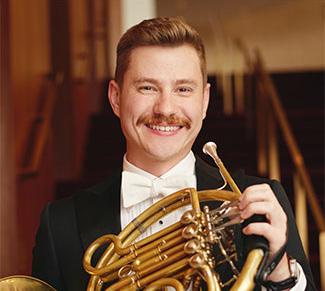
Ian Mayton, a native of Durham, North Carolina, was appointed fourth horn of the Houston Symphony by Music Director Andrés Orozco-Estrada in November 2014. Mayton has performed with the St. Paul Chamber Orchestra and the North Carolina Symphony.
After completing his Bachelor of Music degree at the University of North Carolina at Greensboro, Mayton spent a year in the Master of Music program at Rice University’s Shepherd School of Music studying with William VerMeulen.
Ian Mayton, Horn, is holder of the Barbara J. Burger Chair
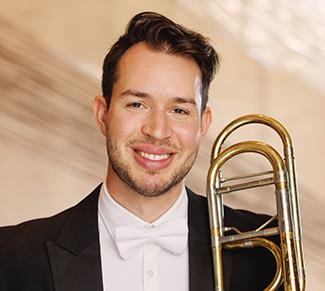
Nick Plato!, trombone (Tilson Thomas)
Nick Platoff harnesses the power of music to deliver compounding benefit to the world. He enjoys a multi-faceted career as a trombonist, composer/producer, singer, educator, conductor, and concert producer. After eight seasons as Associate Principal Trombone of the San Francisco Symphony, where he was appointed by Michael Tilson Thomas at age 23, Nick joined the Houston Symphony as Principal Trombone in September 2024.
Nick loves using music to delight, inspire, and empower audiences, and does so in a wide variety of mediums and genres as a soloist as well as in collaboration with artists like Jacob Collier, KNOWER, esperanza spalding, Common, Metallica, Steve Lacy, Sigur Ros, Nu Deco Ensemble, the New York Philharmonic, and Yo-Yo Ma. Recent highlights include conducting the Stanford Brass Ensemble on a concert which included the world premiere of his The Fanford Stanfare, composing music for Ramazan Nanayev’s film Ikigai, and producing a silly music video about spies, both of
which premiered Fall 2024. In August 2024, he toured Spain with Zirzuví, a Santa Cruz based band specializing in Sephardic music. Other proud moments include the August 2023 world premiere of his Symphony No. 1 with the San Francisco Civic Symphony, and the November 2022 release of his debut album Limousine of Creative Potential featuring songs written and recorded in his friend Joel’s limousine during the pandemic. Nick’s compositions center on themes of family, hope, mental health, and nature, and he genrehops between the symphonic world, silly-pop, bumpin’ funk bangers, heartfelt tributes, and jungle soundscape. He regularly performs as a singer-songwriter on the Sofar Sounds series.
Nick joined the faculty of the Shepherd School of Music at Rice University as Associate Professor of Trombone in September 2025. He previously served as a faculty member at Stanford University, the San Francisco Conservatory of Music Pre-College Division, and the San Francisco Symphony Youth Orchestra. As a guest educator, he has taught recently at Rice, Yale, Juilliard, the National Orchestral Institute, and Amateur Music Network. He has collaborated as video producer and co-host with his father, musicologist John Platoff, on various San Francisco Symphony online educational events as well as the Professor Platoff YouTube channel. Nick is a proud alumnus of New Haven’s Neighborhood Music School, Northwestern University, and the New World Symphony.
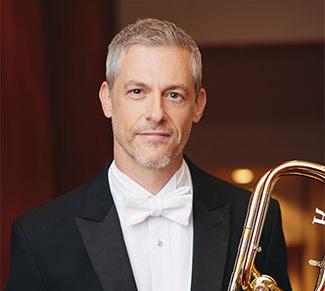
Phillip Freeman, bass trombone (Tilson Thomas)
Phillip I Freeman was appointed bass trombone of the Houston Symphony in 2007 after six seasons with the Sarasota Opera. He has also performed with the Dallas Symphony, the Grant Park Music Festival, the Houston Ballet, the Minnesota Orchestra, Orchestre symphonique de Montréal, the Sarasota Orchestra, the San Antonio Symphony, and the Utah Symphony.
A graduate of the University of Houston, Freeman received his bachelor’s degree in music, satisfying the requirements for both composition and euphonium performance. After taking up bass trombone during his senior year, he continued its study at the Manhattan School of Music and the Tanglewood Music Center.
He has taught at the Moores School of Music, the Shepherd School of Music, and the Texas Music Festival, and has presented masterclasses and recitals at Baylor, McGill, and UTSA. Freeman is a Michael Rath Trombones performing artist. phillipifreeman.com
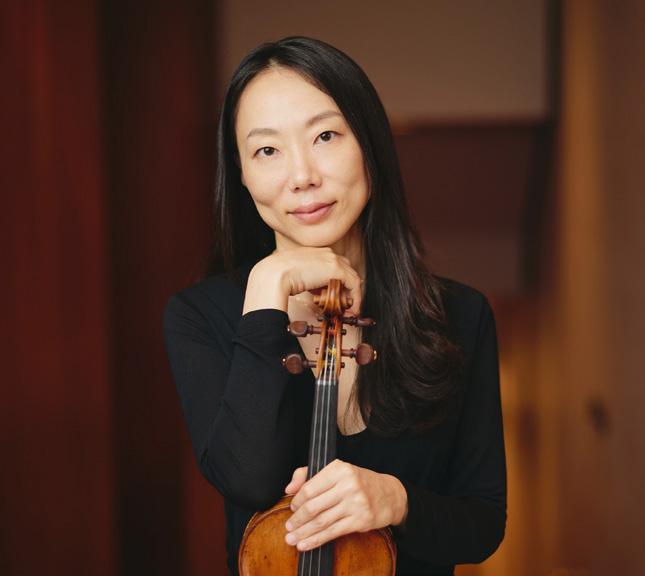
Yoonshin Song, violin (Schoenberg)
Yoonshin Song was appointed as Concertmaster of the Houston Symphony in August 2019. Prior to that, she held the same position with the Detroit Symphony Orchestra for seven seasons. In Europe, Yoonshin has served as guest concertmaster of the Budapest Festival Orchestra under Iván Fischer for several years, and she has led the Verbier Festival Chamber Orchestra under numerous top-tiered conductors, such as Sir Simon Rattle, Klaus Mäkelä, Daniel Harding, Mikhail Pletnev, and Antonio Pappano. She also served as guest concertmaster of the Pittsburgh Symphony Orchestra, the Finnish Radio Symphony Orchestra, and the KBS Symphony Orchestra.
Beyond her first chair duties, Yoonshin has performed as a soloist with many orchestras around the world, including the Houston Symphony, Budapest Festival Orchestra, Detroit Symphony Orchestra, Utah Symphony, New Mexico Philharmonic Orchestra, Bayreuth Festival Orchestra, Paul Constantinescu Philharmonic
Orchestra, Seoul Philharmonic Orchestra, and the KBS Symphony Orchestra, among many others.
She has also participated as a soloist and a chamber musician in various roles in leading music festivals, including the ones in Verbier, Lucerne, Samos, and Bayreuth in Europe; and the Marlboro, Great Lakes, and Deer Valley in the United States.
Yoonshin has earned many prestigious prizes throughout her career, including top prize awards in the Lipizer International Violin Competition, the Lipinski and Wieniawski International Violin Competition, the Henry Marteau International Violin Competition, and first prize at the Stradivarius International Competition in the United States.
She studied under the tutelage of Donald Weilerstein at the New England Conservatory and with Robert Mann, Glenn Dicterow, and Lisa Kim at the Manhattan School of Music.
Yoonshin Song, Concertmaster, is holder of the Max Levine Chair.
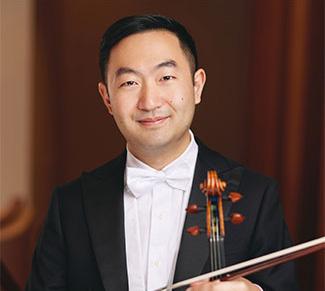
Boson Mo, violin (Schoenberg)
Winner of Third Prize at the 2013 Michael Hill International Violin Competition, Boson was named as one of Canada’s 30 under 30 Top Classical Musicians of 2015 by CBC Radio-Canada. He is a recipient of the Prix Joseph-Rouleau at the 2010 Montreal International Violin Competition as well as a top 25 candidate at the 2015 International Tchaikovsky Competition, and is a winner of Canada’s prestigious Sylva Geber Foundation Award. Additionally, he is a two-time winner of Canada Council for the Arts’ Musical Instrument Bank loan.
Mo served as Acting Assistant Concertmaster of the Vancouver Symphony Orchestra in the autumn of 2017 and is now a member of the Houston Symphony. He will forever be a student of mentors Keqiang Li and Paul Kantor, and he currently performs on a violin by MacArthur Genius Grant recipient Joseph Curtin.
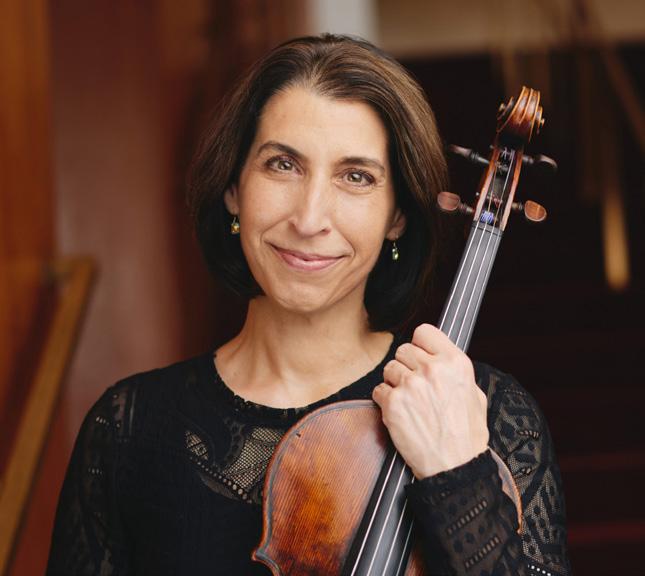
Joan DerHovsepian, viola (Schoenberg)
Joan DerHovsepian serves as Principal Viola of the Houston Symphony. She first joined as section viola hired by Christoph Eschenbach, moved to Associate Principal for 13 seasons, and was named Principal Viola with current Music Director Juraj Valčuha in 2023. She has appeared as guest principal viola with the Chicago and Cincinnati symphonies and was formerly Principal Viola of the Charleston Symphony. Recent solo performances with the Houston Symphony include Mozart’s Sinfonia Concertante with Concertmaster Yoonshin Song, Bruch’s Double Concerto with former Principal Second Violin MuChen Hsieh and Strauss’s Don Quixote with Principal Cello Brinton Smith.
In fall 2025, DerHovsepian began as violist of the Axelrod String Quartet, the quartet-in-residence at the Smithsonian Institute in Washington, D.C., playing on the museum’s collection of Nicolò Amati and Stradivari instruments. Other recent festival and chamber music performances include the Seattle Chamber Music Society,
Mainly Mozart Orchestra, Grand Teton Music Festival, Mimir Chamber Music Festival (Fort Worth, TX and Melbourne, Australia), Music in Context, Peninsula Music Festival, New Canaan Chamber Music, Fabbri Chamber Concerts, and Musica Tra Amici.
She has passionately taught the viola orchestral repertoire course at Rice University’s Shepherd School of Music for more than 20 years, coaching students to win positions in major orchestras across the US and around the world. DerHovsepian is regular guest faculty for the New World Symphony and National Orchestral Institute. She was featured as Artist-in-Residence for the American Viola Society in 2023. DerHovsepian was the violist of the award winning Everest Quartet, top prize winners at the Banff International String Quartet Competition and the Fischoff Chamber Music Competition, and she was the second place recipient of the Primrose International Viola Competition. She is a graduate of the Eastman School of Music and pursued graduate study at the Hochschule für Musik in Freiburg Germany. Her teachers have included James Dunham and Kim Kashkashian. She has studied chamber music with Michael Tree, Eugene Lehner, Joseph Silverstein, Felix Galimir, and members of the Cleveland, Emerson, and Juilliard Quartets.
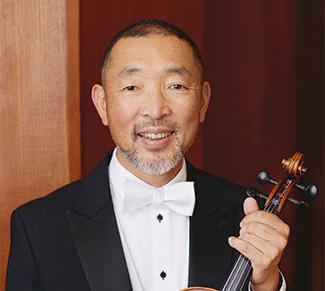
Wei Jiang, viola (Schoenberg)
Born in China, Wei Jiang began studying violin with his father at the age of five and began studying viola after being admitted to the prestigious Central Conservatory of Music in Beijing. Having graduated with the highest honor, he was subsequently offered a teaching position at the conservatory as the youngest member of the music faculty. During his five-year tenure at the Central Conservatory, Jiang was actively involved in performing both solo and chamber music and toured extensively with his string quartet in Asia and Europe. He was also a founding member of the Eclipse Ensemble, a unique performing group that showcases music by contemporary Chinese composers throughout China.
Jiang came to the United States in 1996 to further his musical training at the Oberlin Conservatory and later at the University of Maryland. In 1999, he became a member of the Houston Symphony. Jiang is also a member of the Fidelis String Quartet which performed in recital at Carnegie Hall in 2005 and toured Puerto Rico in 2006.
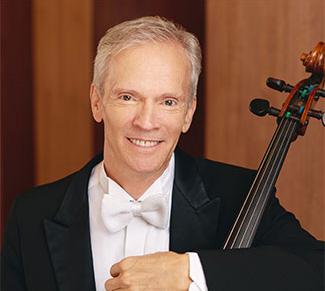
Christopher French, cello
Christopher French is the associate principal cello of the Houston Symphony. Before joining the orchestra in 1986, he held titled positions in both the Shreveport Symphony Orchestra and the Honolulu Symphony.
French is the seventh of a full octave of musical siblings. He enjoys performing with the Bad Boys of Cello, the alter ego of the Houston Symphony cello section. The Bad Boys have played in homeless shelters and elementary schools in an effort to eliminate the classist misconceptions about classical music.
French is a graduate of North Park University in Chicago, where he won the Performance Award. In addition to three concerto performances with the Houston Symphony, he has appeared on the Chamber Players series, and with Da Camera of Houston and the Greenbriar Consortium. He participates in the Mainly Mozart Festival in San Diego, Music in the Mountains in Durango, Colorado, and the Grand Teton Music Festival in Jackson Hole, Wyoming.
French teaches orchestral repertoire at Rice University.
Christopher French, Associate Principal Cello, is holder of the Jane and Robert Cizik Chair
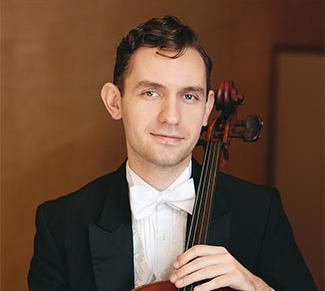
Originally from Loveland, Colorado, Jeremy Kreutz was appointed a member of the Houston Symphony in 2020 by Music Director Andrés OrozcoEstrada. Prior to joining the orchestra, he worked under conductors such as Marin Alsop, Christoph Eschenbach, David Robertson, Robert Spano, Larry Rachleff, and Valery Gergiev. His primary studies were completed with Darrett Adkins at the Oberlin Conservatory, and Desmond Hoebig at Rice University’s Shepherd School.
Kreutz has performed both domestically and abroad as an orchestral and chamber musician, including engagements with the Aspen Music Festival, Round Top Institute, National Youth Orchestra of the USA, and the Pacific Music Festival in Japan. An avid chamber musician, he
has studied with members of the Juilliard, Borromeo, Miró, Verona, and Cleveland Quartets, and was a two-time fellow at the Kneisel Hall Festival in Maine. In the summer of 2017, he was invited to perform alongside members of the International Contemporary Ensemble as part of the Ojai Festival, premiering works by Vijay Iyer and Courtney Bryan. While at Oberlin, he was featured in the premiere of Jesse Jones’s Snippet Variations, recorded for the Oberlin Music label.
Kreutz began learning the cello at age 11 in his local public school system, where his father taught the orchestral program for 30 years. He continued his studies in high school with cellist Katherine Azari. He considers community engagement an incredibly important aspect of his life, and has worked with public schools in Colorado, Ohio, Texas, and Illinois, as well as Colorado’s El Sistema program. Outside of music, he enjoys exploring Houston’s vibrant food culture and marathons of competition reality shows.