
OFFICIAL TRADE JOURNAL OF THE MICHIGAN
ASSOCIATION
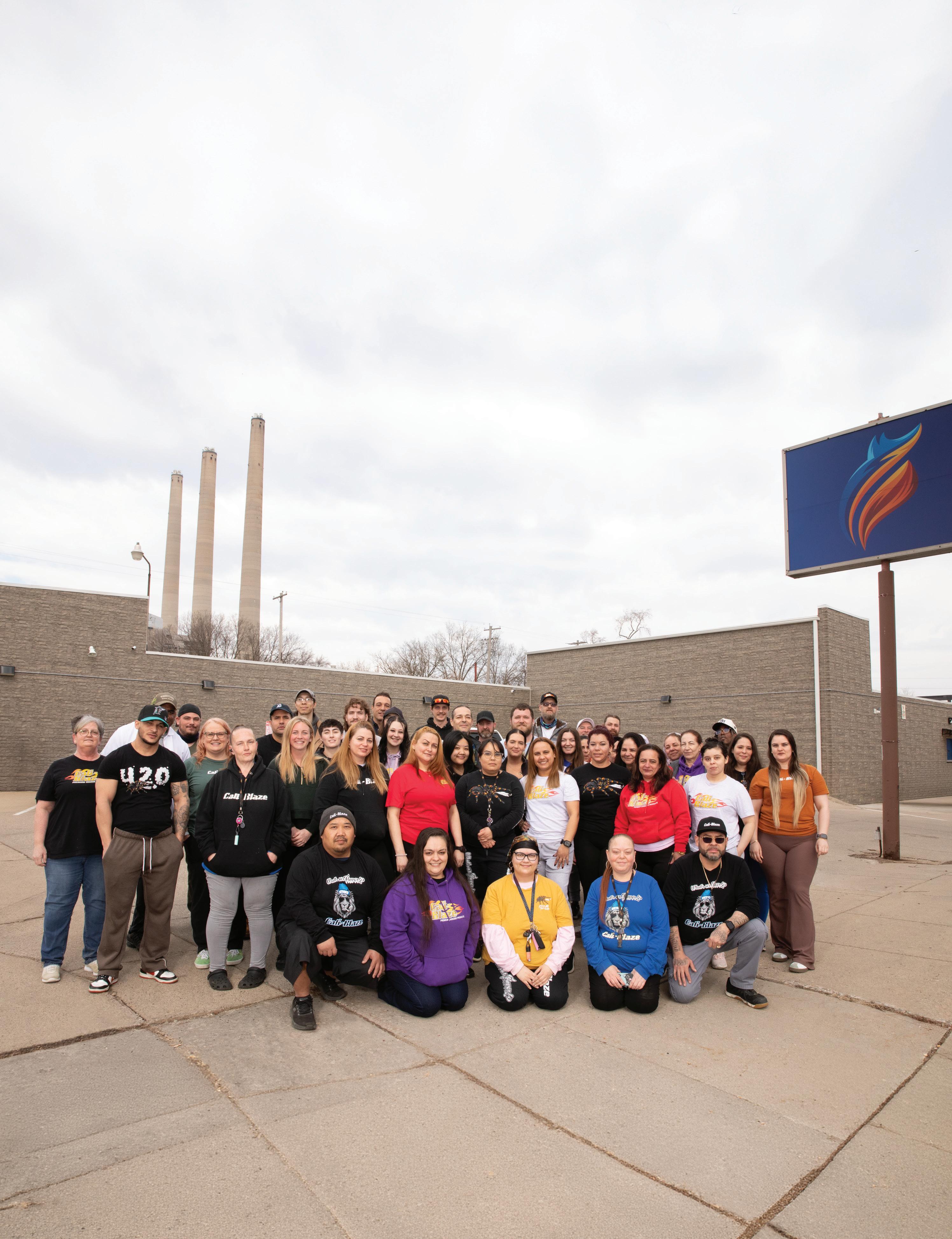
Blue Fox Brands navigates growth and a new tax reality










Business leaders in the cannabis industry say they trust the attorneys of Plunkett Cooney to help them secure and renew licenses, anticipate legal pitfalls and win in court. Grow your cannabis business with confidence. Get the Plunkett Cooney perspective.
n Business Transactions & Planning n Cannabis Law n Commercial Litigation
n Employment Law n Environmental & Energy Law n Government Relations
n License Applications & Renewals n Mergers & Acquisitions n Real Estate Transactions
n Regulatory Compliance n Trust & Estate Planning n Tax Law
ATTORNEYS & COUNSELORS ORNEYS AT LAW
J Jeffreffrey M. Sc y Schroder
Direct: (248) 594-2796
jschroder@plunkettcooney.com





Michigan’s cannabis market is evolving fast — we help you stay ahead. Oversupply. Shrinking margins. Shifting regulations. In Michigan’s competitive cannabis landscape, success isn’t just about producing great product — it’s about running a smarter business.
At Maner Costerisan, we specialize in helping cultivators, processors, dispensaries, and vertically integrated operators navigate growth, restructuring, and compliance with confidence. As longtime members of the MiCIA, we understand Michigan’s unique market challenges — and how to turn them into opportunities.
Whether you’re preparing for expansion, considering a sale, or trying to tighten operations, our team delivers:
• CFO-level guidance for multi-entity structures
• Accounting Techology and Integration with seed-to-sale and other operational software
• Cash flow forecasting and margin analysis to improve profitability
• FASB-compliant lease accounting and real-time reporting
• Support with audits
We don’t just help you grow — we help you grow wisely.



14 COVER STORY
BLAZING INTO THE FUTURE
Lansing-based manufacturer Blue Fox Brands navigates growth and a new tax reality
By Wensdy Von Buskirk
19 PLANTING HOPE
Cannabis operators and industry partners invest in their communities
By Becky Kalajian
23 POT WITH A PURPOSE
Michigan cannabis brands are turning gummies into tools supporting health By Wensdy Von Buskirk
06 LETTER FROM EXECUTIVE DIRECTOR By
Robin Schneider
08 LEGISLATIVE UPDATE By Kevin A. McKinney, MiCIA lobbyist
10 OPINION
Two state representatives share why they voted against the 24% wholesale tax on cannabis By Reps. Emily Dievendorf and Jaime Greene
12 REGULATORY AFFAIRS
Michigan’s influential role in CANNRA helps improve the industry at every level
By Patrick Dunn
27 PERSPECTIVE
LEACIF CEO Kareyna Miller discusses what licensees should know about the wholesale tax
By Patrick Dunn
30 CANNABUSINESS
Cobau Engineering provides the expertise needed to get a grow or extraction lab up and running By
Paris Giles
32 ICYMI
The 2025 MiCIA Holiday Gala brought attendees together for a glamorous evening






What a year 2026 has already shaped up to be for the cannabis industry. In April, the Department of Justice reclassified medical cannabis products from Schedule I to Schedule III, a welcome step toward federal legalization. Less welcome are the destructive effects of the 24% wholesale tax that went into effect on Jan. 1. At the MiCIA, we know Michigan licensees are struggling. That’s why in March, we filed a second lawsuit challenging the tax on the grounds that it functions as a sales tax, imposing a higher effective tax rate on consumers than is legally allowed.
The MiCIA also continues to pursue our original lawsuit. In April, the Michigan Supreme Court ordered the Court of Appeals to expedite its review of the case — a win for all of our members. We’re pleased that the Supreme Court recognizes the urgency of this matter as cannabis businesses face the consequences of this unjust tax.
aisle — share their perspectives on the tax and why they voted against it.
For some expert advice on how to navigate the new tax, we asked Kareyna Miller of LEACIF what our members need to know to stay compliant. Turn to page 27 to learn more about how to apply and track it.
While the burden of the wholesale tax is ever-present, Michigan cannabis brands haven’t stopped evolving. In this issue, we explore the innovative creations coming from gummy manufacturers, who are incorporating minor cannabinoids and botanical ingredients to target specific health and wellness effects.

Kostas Marselis of Blue Fox Brands has been a strong opponent of the tax from the beginning. Since it went into effect in January, he’s witnessed the damage it has done to many in the industry, including his own business, which manufactures top-quality infused pre-rolls and other products. Read more about the cutting-edge work he and his staff have done and how they plan to succeed under tough conditions in our cover story on page 14.
We’re grateful to also have the support of a number of state legislators. On page 10, two state representatives — on both sides of the






Read about them on page 23.
Giving back has also remained a cornerstone of our industry. From donations and grants to volunteer hours and partnerships, cannabis businesses invest in their communities, leaving them better than before. On page 19, you’ll find clever ways to get involved at any scale. Thank you to those of you who have chosen to get involved with the MiCIA. We couldn’t do what we do without your support. No matter what lies ahead, we pledge to advocate for you and our industry in every way we can. Please don’t hesitate to reach out at any time — we’re here to help you not just survive but thrive.

216 N. Chestnut St. Lansing, MI 48933 micia.org
FOLLOW US AND LIKE US
MiCIA STAFF
ROBIN SCHNEIDER Executive Director robin@micia.org
KENZIE TERPSTRA Membership Coordinator kenzie@micia.org
MICHAEL J. PATTWELL Corporation Legal Counsel mpattwell@clarkhill.com
KEVIN A. MCKINNEY Lobbyist kevin@mckinneyandassociates.net For membership inquiries, email info@micia.org
PUBLISHING PARTNER
Robin Schneider, Executive Director








GENERAL MANAGER
Ed Peabody
MANAGING EDITOR
Olivia Sedlacek
ART DIRECTOR
Mike Wagester
PRODUCTION MANAGER
Crystal Nelson
PRODUCTION ASSISTANT
Alessandra Taranta
ADVERTISING ACCOUNT EXECUTIVES
Cynthia Barnhart, Karli Brown, Donna Kassab, Mary Pantely
CONTRIBUTORS
Emily Dievendorf, Patrick Dunn, Paris Giles, Jaime Greene, Eric Hobson, Becky Kalajian, Kevin A. McKinney, Wensdy Von Buskirk, Brad Ziegler
MiCIA Magazine is published exclusively for the Michigan Cannabis Industry Association by Hour Custom Publishing, a division of Hour Media, LLC. Copyright © 2026. All rights reserved. No portion may be copied or published without the express written consent of the publisher. The views expressed in this publication are not necessarily those of the MiCIA or Hour Media.





Alex Wilson CPA, PFS

Michael Rolka CPA, CGFM



We remove obstacles so you can unleash potential.
Strict regulations. Tax implications. Security procedures. Surging competition. It all requires a trusted partner with wide capabilities and a personal, customized approach. Our Cannabis Services Group brings a wealth of experience in cannabis, agribusiness, manufacturing and retail, making us uniquely qualified to help you navigate the complexities. Let us help you thrive.
Cannabis policy bills see slow progress in the Legislature, but election season is full steam ahead
By Kevin A. McKinney
The traditional legislative spring break has concluded, and the Legislature has returned to session to begin focusing on the upcoming state budget and to work on other legislative priorities of the House and Senate majority caucuses. The session schedule prior to summer recess, and the political and fiscal realities of getting a state budget passed in an election year prior to July 1, remains challenging. The upcoming midterm elections — where the statewide elective offices of governor, secretary of state, attorney general, and U.S senator will be at stake, along with two Michigan Supreme Court positions and the entire Legislature — will be highly consequential for the cannabis industry.
The state appropriations process may be even more difficult than it was this past fall, when the compromise on the state budget included the 24% wholesale tax to help fund the local road funding package spearheaded by the governor and House speaker. This year, the speaker has announced an ambitious and controversial proposal to reduce property taxes and offset the loss of revenue by passing a sales tax on numerous services that are currently exempt. It is doubtful there is enough support in the business community or the political will to pass new taxes despite the allure of a significant reduction in property taxes. The Senate remains focused on a more modest property tax reform proposal but also on finding new revenue to offset the $1.2 billion shortfall in the state’s Medicaid budget due to federal funding reductions. The governor will take these last nine months in office and try to address unfinished legacy issues. Movement remains elusive for most policy
bills. The Senate did pass the intoxicating hemp package (Senate Bills 599-602), but it remains pending in the House Regulatory Reform Committee. The Senate also overwhelmingly passed SB 704, which would provide the needed statutory authority for the state reference lab to operate. The drafting work continues in the Senate on SBs 597 and 598 to impose statewide license caps as well as on legislation to expand the hemp beverage market safely and fairly within the cannabis regulatory system. Unsurprisingly, SB 810, which would repeal the 24% wholesale tax, remains quiet in the Senate Government Operations Committee.

The House has also been a bit slower in addressing priorities for the cannabis industry, including taking up the Senate intoxicating hemp package and giving thoughtful consideration to legislation placing caps on licenses. The House has moved on a bill authorizing the state reference lab (House Bill 4501) and two bills dealing with enforcement issues by giving the Cannabis Regulatory Agency authority for summary suspension of licenses under limited circumstances as well as giving the CRA authority to impose sanctions on businesses that are no longer currently operating the license. HB 4963, mandating cash on delivery, remains under discussion as stakeholders seek practical approaches to meet the industry’s current needs. This bill, along with bills to address possession limits for individuals as well as penalties for cultivation violations, remains pending in the House Regulatory Reform Committee. These three bills are expected to come under discussion soon. Given that these measures will require a supermajority vote to pass, the strategy under consider-
ation by House leadership is to package them up together for consideration on the House floor on a given session day based on up-to-date vote whip counts and anticipated session attendance. The stated goal remains to get these various bills through the House so that the Senate has the time to consider them prior to the long summer recess.
Most important for the cannabis industry is to be fully engaged in the upcoming elections. Now is the time to be strategic with both message and involvement. Building the MiCIA State PAC will be crucial to helping our friends in the Legislature. You cannot sit on the sidelines and expect success.
Equally important and exciting is the MiCIA’s commitment to reach out to the cannabis community and build a robust and enthusiastic group of campaign volunteers to assist campaigns with needed activities such as canvassing. The project is ongoing, and more information will be released in the coming weeks.
Finally, the MiCIA continues its work to aggressively build awareness of the devastating impact of the wholesale tax on the state’s licensed businesses and will be asking for commitments from candidates to support the repeal of the tax in the new legislative session. Such an effort to garner public commitments by candidates will be easier with a strong public education campaign along with the significant leverage that comes from both financial and volunteer support. The time is here and now to push this effort full throttle while the two critical lawsuits continue to move forward in the courts.
Success in repealing the tax and advancing any other legislative priorities to help stabilize and advance the cannabis industry in Michigan will be up to you. Please engage with the MiCIA.
Kevin A. McKinney is the lead lobbyist for the MiCIA.







In fall 2025, the Michigan Legislature passed a new 24% wholesale tax on cannabis, despite the objections of many in the industry. However, 21 representatives and 17 senators — from both parties — voted against the bill. Here, one Democratic and one Republican state representative share why they voted no on the tax.
By Rep. Emily Dievendorf
When the new year began back in January, a new 24% tax on marijuana also took effect, signed into law when the 2025-26 budget was approved. The tax was a part of a broader plan to fund our roads. I voted, with both Democrats and Republicans, against it.
I, like many of you, share the desire to fix our roads, improve our infrastructure, and harness state revenue to better provide services to Michiganders. But I also believe that asking a nascent industry to solve budget shortfalls is unwise, unfair, and irresponsible. This tax harms both the cannabis industry and consumers, which is why I voted against it.
Michigan’s marijuana industry is young and deserves clear, consistent regulatory standards to establish stability. The industry supports over 40,000 jobs and in recent years has been a leader in job creation, but the market began slowing and the sector was already struggling even before the new tax was imposed. That’s already a potential problem, as Michigan received over $331 million in revenue in fiscal year 2023-24 from its 10% adult-use cannabis excise tax and licensing fees. Adding a barrier for consumers to buy the product doesn’t help an industry that the state already counts on. We cannot push an already vulnerable industry closer to collapse by further squeezing it.
Moreover, the marijuana industry remains too unstable and unpredictable to be relied upon as a dependable source of revenue for ongoing state projects. We should instead
prioritize diversifying revenue streams to build a more resilient and stable state budget. While “pot for potholes” is a catchy slogan and the estimated $420 million in revenue the tax will raise is a rather humorous figure, the relative instability of the industry currently means that isn’t a number we can bank on — especially given that sales are likely to go down in response to the new tax. This funding plan prioritizes short-term fixes over sustainable solutions at the expense of an already burdened industry, an action I don’t support.
We cannot ignore the real impact the price increase will have on consumers. The cannabis industry exists because Michiganders voted to legalize it. This tax is regressive. It will fall hardest on our smaller cannabis businesses and low-income individuals, many of whom have supported and sustained this industry from the beginning. Beyond generating revenue for the state, this industry helps patients access medical cannabis to treat chronic pain, manage anxiety, and control certain seizure disorders. I count myself among the many Michiganders who benefit from medical cannabis. We also cannot go back to the days when limited access to cannabis sustained the black market, which made consumption unsafe and forced members of our communities to look for often unaffordable, dangerous, or inaccessible alternatives.
Instead of tapping the marijuana industry as a source of ever-increasing revenue, we need to take a longer-term view of how we

fund the state. I believe the current 24% tax will lead to price increases for the consumer, put potentially thousands of workers out of jobs, and dry up the cannabis industry as a revenue source for good. If we continue on this trajectory — continually tapping the same pot for more and more money — I fear that soon Michigan will be left in the same position it was before: too little money for too many problems. Except now, the cannabis industry won’t be strong enough to come to the rescue. Workers and business owners should not be left holding the bag or being the bank when politicians refuse to negotiate a budget thoughtfully and responsibly.
As a legislator, my responsibility is to push back against harmful taxes like this one so both small businesses in the industry and everyday Michiganders get the support they need to thrive. The bottom line is that taxation and state funding must be approached with care. A balanced, responsible, and sustainable budget is possible, and I hope the cannabis industry, and indeed Michigan as a whole, can continue to blossom long into the future.
State Rep. Emily Dievendorf, D-Lansing, serves Michigan’s 77th House District. Dievendorf is a champion for progressive policy, advocating for unhoused people, racial justice, climate action, criminal justice reform, and LGBTQIA+ and women’s rights.
The real issue here is not cannabis. It is trust. Trust that Michigan will respect the rules voters put in place. Trust that legal businesses operating in a highly regulated market will not wake up to find the deal changed overnight. Trust that lawmakers will not use one industry as a convenient answer to a broader budget problem.
I may not be from this world, but I respect what you’ve built, and I know bad policy when I see it. My vote was not about becoming a spokesperson for marijuana. It was about standing up for three things that should matter to every Michigan business owner and every voter: the rule of law, respect for what voters approved at the ballot box, and the belief that markets work better than political dealmaking at 3 a.m.
I have never approached marijuana policy casually, and I still believe there should be caution and guardrails when it comes to potency, access, and responsible regulation. But that is not the issue here. The issue here is whether Michigan will honor the framework voters approved in 2018 and whether a legal, highly regulated industry can rely on the state not to change the rules after businesses have invested, hired, complied, and built around them.
What voters approved in 2018 was pretty straightforward. Michigan voters passed the Michigan Regulation and Taxation of Marihuana Act, or MRTMA. That law imposed a 10% excise tax on adult-use sales, on top of the 6% sales tax, and it was written with an equally clear purpose: to bring marijuana commerce into a regulated market, tax it, and pull it away from the illicit market.
What Lansing did anyway was something very different. In 2025, House Bill 4951 created a new 24% wholesale tax on certain adult-use cannabis transfers, with revenue directed to the Neighborhood Road Fund. The state sold it as a major road-funding piece, projecting roughly $420 million a year. The new tax took effect on Jan. 1, 2026.
No one disputes that Michigan roads need help. They do. Desperately. I drive the same cratered pavement everyone else does. But the way we fund roads matters. And singling out one voter-regulated industry in a latenight budget deal is not a serious long-term funding model. It is a shortcut.
Here’s the quick civics break, because
By Rep. Jaime Greene
this is where people get tripped up. If the Legislature wants to amend the Michigan Constitution itself, that takes a two-thirds vote in each chamber and then a statewide vote of the people. But the 2018 marijuana law is not in the constitution. It is a voterinitiated statute. Under Article II, Section 9, of the Michigan Constitution, a law adopted by the people at the polls cannot be amended or repealed except by another vote of the people, unless the measure says otherwise, or by a three-fourths vote of the members elected to and serving in each house. That is the three-fourths rule that matters here. Supporters of the new tax say this is not really changing MRTMA at all. They say it is just a separate tax in a separate law. I understand the argument. I just do not think voters were sold that deal. Voters were told legal marijuana would be taxed at 10% at retail, plus the normal 6% sales tax. They were not told, “Don’t worry — Lansing can always pile on another 24% later and call it something else.” That is why this feels less like a clarification and more like changing the terms after the fact.
“I, Pencil,” the classic essay by Leonard Read about how even a simple pencil is really the product of a vast network of people, skills, suppliers, and markets. Cannabis is no different. This is not just growers and retailers. It is processors, testing labs, transporters, landlords, utilities, software vendors, security teams, local governments, and thousands of employees. When Lansing twists one big tax lever, it does not just move one neat number on a spreadsheet. It changes pricing, margins, hiring, investment, and consumer behavior all at once.
This tax is hitting an industry that is already operating in a tough and competitive market. Businesses are working with tight margins, lower prices, and heavy regulation, and now Lansing wants to pile on a 24% wholesale tax as if there will be no ripple effects. But of course there will be. Higher costs do not just disappear. They squeeze businesses, threaten jobs, and make it harder for the legal market to compete with the black market. And that is the part Lansing seems determined to ignore: The 2018 law was supposed to strengthen the legal market, not tax it so hard that illegal sales start looking attractive again.

So why did I vote no? Because voters were promised one tax structure, not one tax structure now and another one later. Because voter-initiated laws are supposed to mean something. Because free markets work better than 3 a.m. backroom math. And because no legal industry in Michigan should have to wonder whether success simply makes it the next convenient target.
You do not have to agree with me on every aspect of marijuana policy to see the problem here. You just have to care about the rule of law, predictable tax policy, honest governance, and a healthy Michigan economy.
And to be clear, this is not about routine cleanup. The Legislature can and should address safety issues, licensing mechanics, enforcement standards, and regulatory clarity. Every industry needs that. This is different. This is about changing the tax bargain that voters approved.
The economic problem is just as real as the constitutional one. I often think of
That is why I voted no then. And that is why I still believe this tax is wrong now.
State Rep. Jaime Greene, R-Richmond, serves Michigan’s 65th House District, which covers portions of eastern Lapeer County, western St. Clair County, and northern Macomb County. She was first elected to the House in November 2022.
Michigan’s influential role in an international association of cannabis regulators helps improve the industry at every level
By Patrick Dunn
When President Donald Trump issued an executive order late last year to reschedule marijuana from a Schedule I to a Schedule III controlled substance, the international Cannabis Regulators Association (shortened to CANNRA) leapt into action to inform cannabis industry stakeholders about the change. The next day, CANNRA released a fact sheet breaking down the industry implications and combating misinformation about the long-awaited federal policy shift.
“CANNRA and the states that participated in that were able to help set the tone to benefit licensees to say, ‘Well, here are the facts on the ground right now. Here is the reality,’” says Brian Hanna, executive director of Michigan’s Cannabis Regulatory Agency and CANNRA board member at large.
says. “We do this by fostering collaboration and coordination to identify and share best practices that safeguard public health and consumer safety but also promote equity and create regulatory certainty.”
CANNRA members meet on a regular basis to share and track best practices from their jurisdictions. In particular, topicbased committees convene regularly to
and best practices and support, we take this information back and we share information ... in Michigan so that we can come to a common understanding.”
Michigan has been involved in CANNRA since the organization’s inception in 2020, and Hanna took on a leadership role when he was elected to a board seat in 2024. Former CRA Executive Director Andrew Brisbo also served on the CANNRA board, including as president in 2021-22.

That’s just one of the recent examples of how CANNRA is helping to keep the cannabis industry informed about regulatory changes and best practices around the world, with Michigan in a leadership role. CANNRA is a nonpartisan association of government agencies that regulate cannabis and cannabinoids, including the CRA and more than 50 other U.S. agencies, as well as agencies in Albania, Canada, Malta, and the Netherlands.
“Our mission is to convene, educate, and support government jurisdictions responsible for implementing cannabis and cannabinoid policies and regulations,” Hanna
share information on more-specific areas of regulatory policy. CANNRA also hosts external educational opportunities to share information with fellow regulators and other industry stakeholders. Hanna says the organization is “vital” in advancing better cannabis regulation nationwide.
“We don’t have a lot of support from the federal level due to [cannabis’s] current classification as a Schedule I substance,” he says. “So it’s vital that we’re able to communicate with each other but also with other nations that regulate cannabis in some way, shape, or form. And through these observations and communications
“[Michigan’s] leadership has provided a unique platform to highlight the successes and regulatory approaches in the Michigan marketplace so other governments can learn from Michigan,” says CANNRA Executive Director Gillian Schauer. “It also provides opportunities for Michigan CRA staff to bring new ideas into the state from what they learn from other government approaches.”
CRA Public Relations Manager David Harns says Michigan’s leadership in CANNRA is part of the CRA’s mission “to establish Michigan as a national model for a regulatory program.”
“When you’re with CANNRA, some of the states are leading and some of the states are learning,” he says. “We’re able to do both, but we do have a really good leadership position there because Michigan is well established and well respected across the country.”
Hanna says his role at CANNRA involves setting agendas and discussion topics for
the organization’s meetings, as well as helping to organize its annual external stakeholder meeting. He says Michigan’s participation in CANNRA is fruitful for both the CRA and Michigan’s cannabis industry overall.
“We want to stimulate business growth and preserve safe consumer access to cannabis,” he says. “So learning through the successes and pathways of our fellow regulators, we’re able to take that information back to our regulatory program. And at the same time, we’re able to do the same thing for CANNRA and share our experiences in the state of Michigan. ... It’s key to us to participate, to have these opportunities to learn.”
CANNRA also helps to boost Michigan’s impact on federal regulation of cannabis. Harns says the CRA’s ability to network with high-level staff at regulatory agencies nationwide puts the agency in an influential position as federal cannabis policy shifts.
“We have members of CANNRA who are talking to the Congress and to the different levels of our federal government so that when it comes time for federal integration, if it comes time, we’ll be part of those conversations,” he says.
Looking ahead to Michigan’s next steps in CANNRA, Hanna says the new state reference lab will work with CANNRA members and other stakeholders to develop standardized testing procedures
across jurisdictions.
“That’s the desired end state, and the only way to do that is to collaborate with our stakeholders and fellow regulators in CANNRA,” he says.
Hanna is also preparing for CANNRA’s annual external stakeholder meeting June 9-10 in Oklahoma City. The meeting is an opportunity for industry stakeholders to share ideas with one another and regulators from around the world.
“We are trying to avoid an echo chamber and engage groups that have differing viewpoints to figure out how to move cannabis regulations forward,” Hanna says.
CANNRA already has members representing more than 45 states and U.S. territories as well as four other countries, and Hanna notes that the organization continues to grow. He describes it as an “outstanding” group that will continue to be an important resource for Michigan cannabis regulators, licensees, and other industry members.
“We’re proud to be part of that organization,” he says. “It’s going to be integral to cannabinoid or cannabis regulations moving forward.”
Hanna recommends that Michigan licensees and other industry members keep tabs on fact sheets and other important information released on CANNRA’s website, cann-ra.org.




Lansing-based manufacturer
Blue Fox Brands navigates growth and a new tax reality

BY WENSDY VON BUSKIRK | PHOTOS BY BRAD ZIEGLER
“I understand machines. I understand production and took this to the next level.”
—Kostas Marselis, owner of Blue Fox Brands


Since the legalization of cannabis in Michigan, Blue Fox Brands has worked to carve out a niche. The Lansingbased company manufactures Cali-Blaze infused products available in Michigan, Colorado, and Massachusetts, along with white-label products for a wide variety of brands. But like many Michigan cannabis operators, the company is now navigating a new financial reality that’s reshaping the industry.
I visit Blue Fox Brands for a tour in early spring. The headquarters is located in REO Town, a neighborhood south of downtown Lansing. As I drive through the artsy enclave filled with coffee shops, breweries, and boutiques, I spot the Blue Fox Brands sign rising up outside a building and pull up to park.
After signing in, I’m led up a stairway to a large conference room with a wall of windows overlooking the street below. The building once housed Quality Dairy, according to staff, but has been converted into a modern cannabis processing facility, complete with sleek technology, trendy furnishings, and ample security screens monitoring the action inside and out.
Owner Kostas Marselis greets me with a firm handshake.
We sit down to talk about how Blue Fox Brands was founded and where it’s headed. What Marselis really wants to discuss, though, is how Michigan’s new 24% wholesale cannabis tax is affecting not only his business but the industry as a whole.
Since the tax went into effect on Jan. 1, Michigan companies have been reeling from the fallout.
“We took a big hit here,” he says. “But I can tell you a lot of companies can’t.”
As Marselis works to position his company to survive and thrive despite challenging circumstances, he remains committed to fighting for a reversal of the tax.
“[It’s a] big disaster here in Michigan,” he says. “This has to be repealed ASAP — otherwise it’s going to be too late.”
Before we get into all that, I want to know how Blue Fox Brands came about. According to Marselis, it was his wife who first suggested the idea. When adult-use cannabis was legalized in 2018, she saw opportunity in the fledgling industry.
In 2019, Marselis flew to California to study the market. He returned ready to combine his newfound knowledge with his background in manufacturing to set up shop in Michigan, determined to differentiate himself from the competition.
“I knew I had to have a niche,” Marselis says.
He decided to focus on infused pre-roll manufacturing.
After spending 2020 laying the foundation and establishing the Blue Fox Brands identity, Marselis officially launched the company in October 2021. It emphasizes quality and value, using indoor flower, cutting-edge manufacturing techniques, and first-rate packaging to set itself apart.
Constantly seeking ways to innovate, Marselis has pioneered many production processes at his business, creating custom technology to achieve his goals.
“I understand machines,” he says. “I understand production and took this to the next level.”
As we embark on our tour of the facility, I see these machines in action. One device inserts needles into the center of each pre-roll, injecting doses with pinpoint accuracy. Others package, seal, and label products in a variety of containers, from
plastic tubes to premium glass packaging.
Alongside the technology, there’s a human touch at every step. The facility is bustling, with team members busy at work as Latin pop blasts over the speakers. Among the activity, I spot one employee hand-packing cones. Another paints concentrate on the outside of prerolls by hand. Others inspect products as they roll off the lines and box them to be shipped to more than 500 stores throughout Michigan.
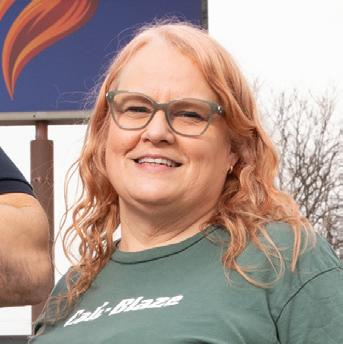
Everything is overseen by General Manager Shelly Easton, who has been with Marselis since day one.
“In every success story, there’s always somebody that is behind the scenes, and she’s one of them,” Marselis says. “She’s very positive. She keeps me going.”
Easton in turn relies on the company’s strong staff.
“We have incredible people,” Easton says. “I really boast about our turnover rate, which is next to nothing. I’m really proud of that.”
Both Easton and Marselis get emotional
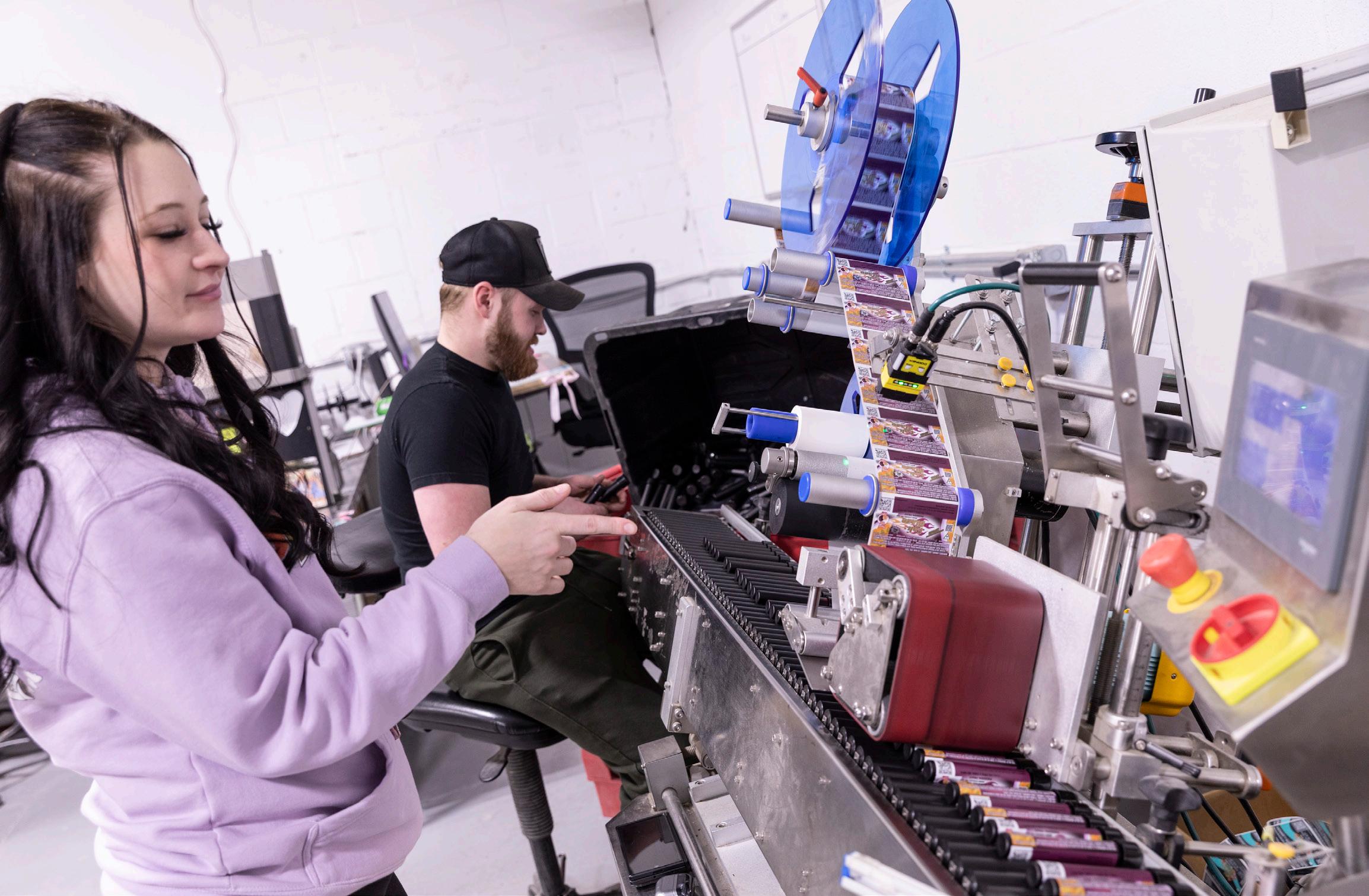



“We have incredible people. I really boast about our turnover rate, which is next to nothing. I’m really proud of that.”
—Shelly Easton, general manager at Blue Fox Brands
when they talk about the Blue Fox team, and they’re still shaken by recent layoffs, which they attribute to Michigan’s new wholesale tax.
At its peak, Blue Fox Brands produced 85,000 pre-rolls a day, according to Marselis. Today, that number hovers around 45,000 to 50,000 a day. As demand has decreased, the company has had to cut staff by close to 30%, Marselis says.
“These are good working people that we had to let go — people that have families,” Marselis says. “I’m really upset about that, but we had to do what’s right for the company in order to succeed.”
A longtime member of the MiCIA, Marselis has actively opposed the tax since it was first floated by the Michigan Legislature to help fund road repairs. He joined the MiCIA’s lobbying efforts, at one point bringing his entire staff to join a large protest at the Capitol.
“We shut down this whole production
for two days,” Marselis says. “We went out there with banners, … but it didn’t work. They still passed it.”
Marselis has seen the impact of the tax firsthand as fewer companies order white-label products from Blue Fox Brands. In the first months of 2026, sales dropped almost 16%, he says.
The leanest, smartest companies have the best chance of survival, and Marselis is determined for his to be among them.
As Marselis looks to the future, he’s honing his strategy to succeed. He has taken several steps to boost product quality and diversify offerings. He has improved distillate sourcing to avoid defective batches and invested in a state-of-the-art ethanol extraction lab to bring more production in-house, adding to the company’s existing butane extraction and distillation systems.
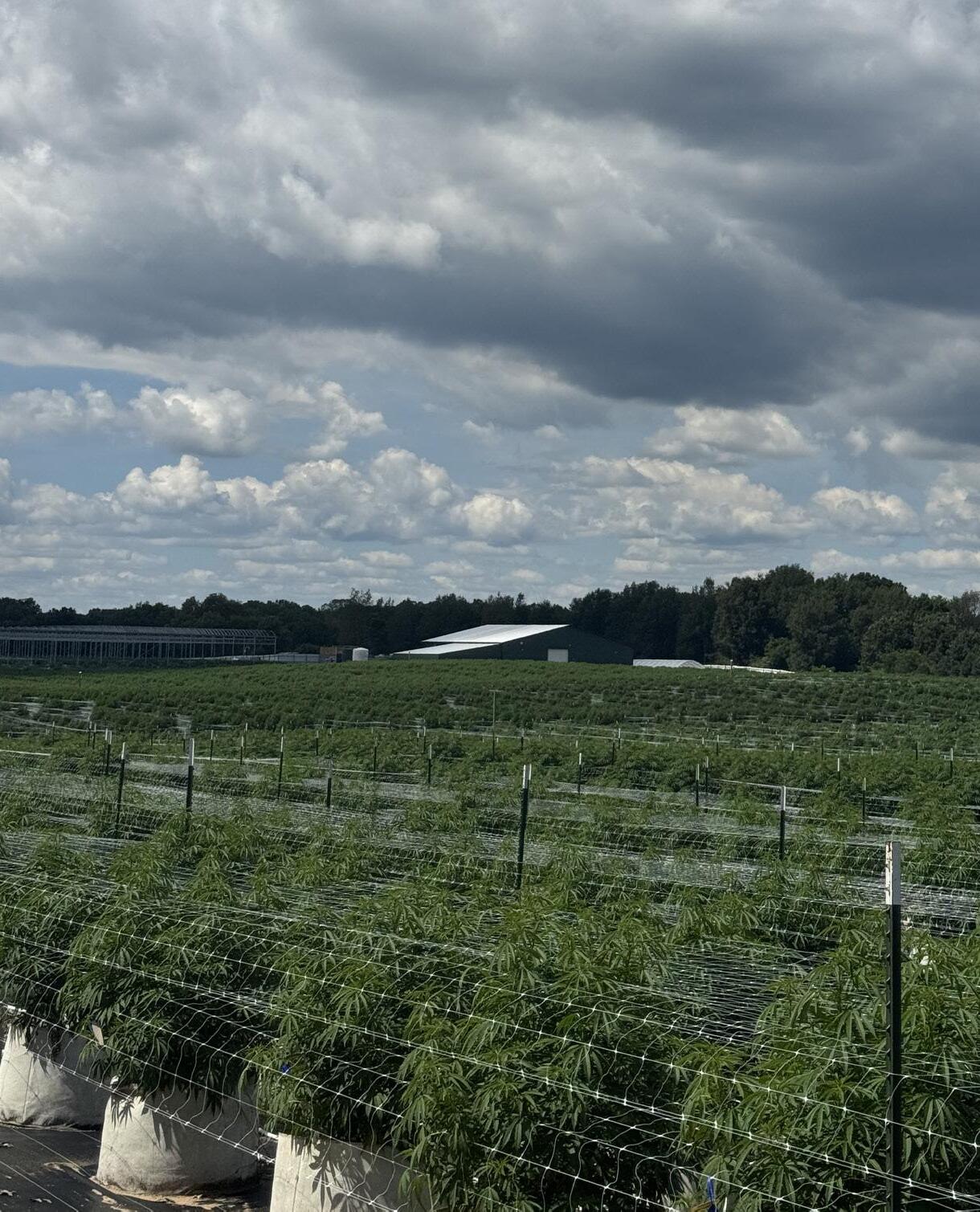
Blue Fox Brands also recently acquired a large outdoor grow in Battle Creek to generate its own flower. The company
continues to expand its operations in other states and has extended its product lines to include gummies, 510 cartridges, and infused flower.
The company has developed a sprayinfusion machine, and Marselis continues to create new technology, including a proprietary machine that promises a new pre-roll experience — one he’s not ready to reveal just yet.
Still, he wants to balance new technology with preserving staff, something that will be possible only if the state provides a level playing field for cannabis businesses. To that end, Marselis has supported lawsuits filed by the MiCIA to repeal the wholesale tax and vows to continue the fight. He urges Michigan brands, usually in competition, to unite on an issue that affects everyone.
“We’re supposed to do something good for the community, not take away from the community,” he says. “And unfortunately, they’re attacking our industry.”
BY BECKY KALAJIAN
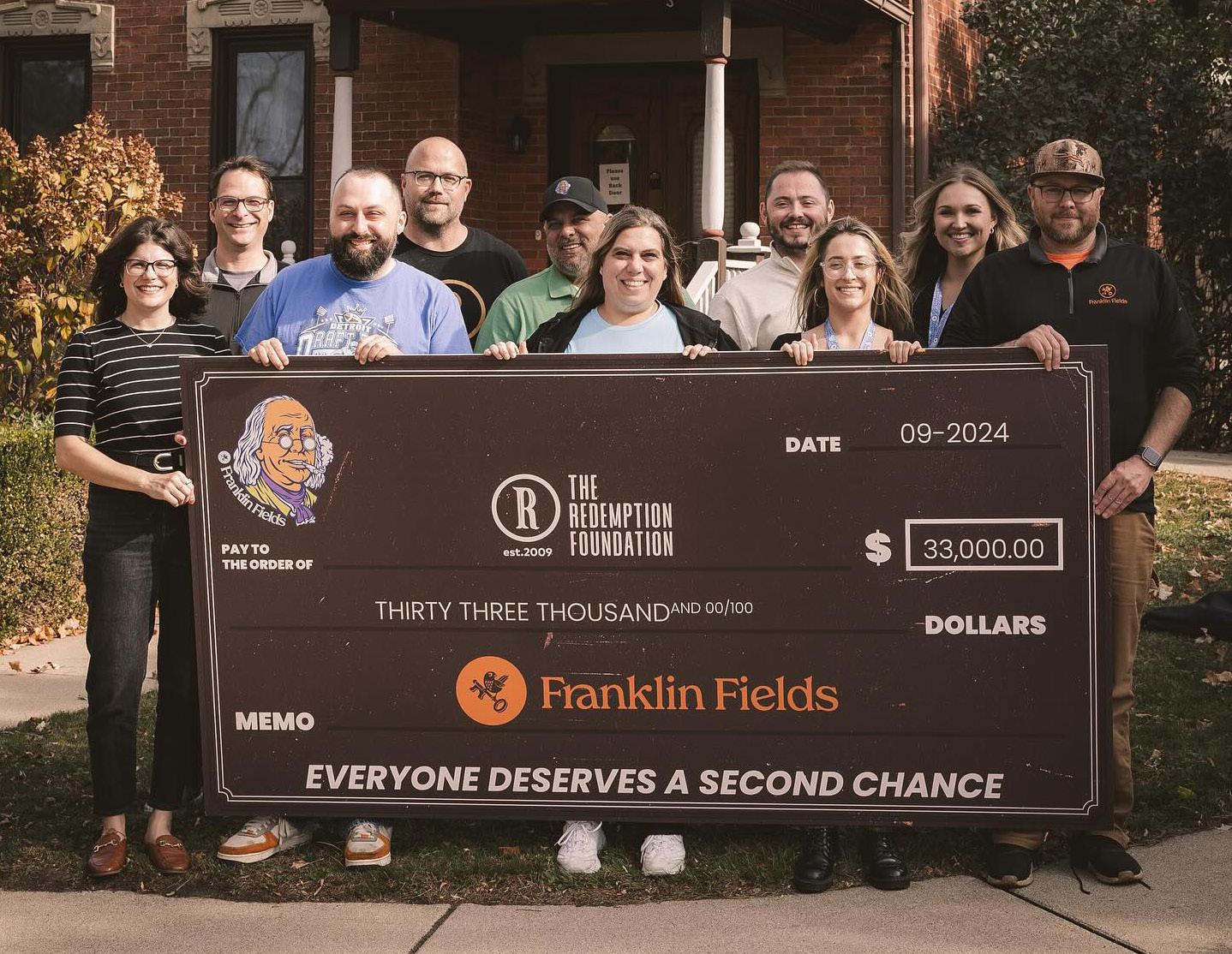
Franklin Fields donated $33,000 in September 2024 to the Redemption Foundation, which — among other things — supports individuals in federal prison for cannabis-related felonies and misdemeanors
“We get to do this, and people [are] in prison for what we’re doing. [Supporting the community is] something that should be done.”
—Ryan Basore, president of the Redemption Foundation
For many cannabis companies, community reinvestment is more than an afterthought.
Ryan Basore, president of the Redemption Foundation, says the industry itself relies on the foundation built by advocates and caregivers, and reinvestment is an extension of that mindset.
“The reason I founded the foundation was to continue helping people,” says Basore, who entered Michigan’s legal medical market in 2010. Shortly after, federal agents arrested him on cannabis-based charges; Basore served several years in
federal prison and then opened Redemption Cannabis in 2019 after being released.
The next year, Basore created his foundation, directing 10% of licensing fees from Redemption Cannabis into programs focused on restorative justice and community support.
Basore — whose experience with raids and legal battles shaped his mission — says the foundation was formed in response to others who faced the same.
“We had caregivers and patients coming to us looking for help after being raided,” Basore says.
Basore says the foundation has since given back nearly $1 million to programs devoted to those convicted of marijuanarelated felonies and misdemeanors.
The foundation’s work centers on expungement, reentry, and direct support for incarcerated individuals and their families.
“We’re finding groups doing the work and giving grants to support them,” Basore says.
He says one of the foundation’s primary efforts has been funding more than
2,000 marijuana conviction expungements in Michigan.
The organization also supports reentry programs and clemency initiatives, helping people transition back into their communities.
Its commissary program provides monthly financial support to incarcerated individuals across the country.
“In the last two years, we’ve taken care of about 200 federal inmates,” Basore says. “We’ve been putting $10,000 to $20,000 a month on their books.”
Basore adds the long-term goal is to shift resources away from incarceration support and toward reentry.
“[Success] looks like we’re done with commissary because everyone’s out of prison for weed,” he says.
At Stash Ventures, community giving through its nonprofit foundation is structured but culture driven.
Brelynn Woodrick, Higher Hopes Foundation and culture coordinator for Stash Ventures, says the company’s giving model reflects leadership priorities from the outset.
“This is just how our owner chooses to operate his business — because it’s the right thing to do,” Woodrick says.
According to Woodrick, Stash Ventures has distributed more than $400,000 in grants and donations since its founding. Employees play a central role in identifying nonprofit partners and guiding quarterly giving priorities.
“We want our employees to be donating to organizations they feel connected to,” Woodrick says.
That structure supports both external impact and internal engagement. Employees receive paid volunteer time and are encouraged to build long-term partnerships with nonprofits.
“Success is also how happy our employees are,” Woodrick says. “Are they feeling that they get to bring their soul to work? Are they feeling that they’re truly making an impact?”
Woodrick says reinvestment also supports brand credibility in a still-maturing industry.
“There’s still some taboo on legitimacy,” she says. “[Giving back] brings everybody together and makes us a business like any other.”
Basore frames the drive to give back plainly.
“We get to do this, and people [are] in prison for what we’re doing,” Basore says. “It’s something that should be done.”
Both say these efforts resonate with employees and customers.
“I’ve had people say they want to work for us because of what we do,” Basore says.
Technology has enabled the industry to do good in resourceful ways.
Dutchie offers an all-in-one technology platform for cannabis businesses that depend on point-of-sale, marketing and loyalty, and other tools. In its suite, Dutchie’s Round Up the Change program integrates donations directly into the retail checkout process, allowing customers to contribute by rounding up their purchases.
Chris Ostrowski, co-founder and chief technology officer, says the program reflects the company’s broader role in the industry.
“Operating in this industry means you have to go beyond just being a service provider,” Ostrowski says.
The platform supports organizations focused on social equity, expungement, and industry advocacy, including the Last Prisoner Project and Mission Green.
“[The customer interface] makes the program visible and easy for consumers to opt in,” Ostrowski says.
Early participation rates have been strong, with roughly 65% of customers opting in at checkout.
“The No. 1 reaction is this is a nobrainer,” Ostrowski says.
Despite the determination of those in the cannabis industry, challenges persist on both the giving and receiving ends.


“There’s still some taboo on legitimacy. [Giving back] brings everybody together and makes us a business like any other.”
—Brelynn Woodrick, Higher Hopes Foundation and culture coordinator for Stash Ventures

Woodrick says some nonprofits remain cautious about accepting cannabis-derived funding due to federal restrictions.
“That’s actually why we created a 501(c)(3) foundation,” Woodrick says.
Basore points to economic realities within the industry.
“Margins are tight,” he says. “I get why not everyone is doing it.”
Still, both emphasize that reinvestment can take multiple forms, from structured giving programs to volunteer initiatives to point-of-sale donations.
“You may not have extra funds, but you can start with volunteerism or something simple like a round-up program,” Woodrick says.
Industry leaders say sustained reinvestment will also depend on consistency as the market fluctuates.
Basore says periods of economic pressure can slow giving but should not eliminate it entirely. “I’d hate to see the work that’s being done be forgotten,” he says.
Woodrick agrees, noting that even smaller-scale efforts — whether volunteer hours, partnerships, or incremental donations — help maintain momentum.
Over time, reinvestment strategies are evolving from informal efforts to more structured, scalable models.
In fact, reinvestment is often viewed not as optional but as a defining feature of responsible cannabis business.
Woodrick points to collaboration as the next step.
“I would love for everybody to do it,” she says. “The more we partner, the bigger impact we can make.”
“Operating in this industry means you have to go beyond just being a service provider.”
Chris Ostrowski, co-founder and chief technology officer of Dutchie
Michigan cannabis brands are turning gummies into tools supporting health
BY WENSDY VON BUSKIRK

Mom Life brand gummies contain lower levels of THC alongside additional cannabinoids. The Mind Off variety includes CBN and the amino acid L-theanine.
Cannabis gummies have come a long way from the days of being simple homemade infused sweets. In Michigan’s maturing market, they’ve become one of the most innovative segments of the industry as brands experiment with targeted formulations, minor cannabinoids, and wellness-focused ingredients designed to support sleep, relaxation, and pain relief.


Edibles provide a discreet way to consume cannabis without inhaling smoke and may allow users to titrate their intake more precisely.
According to Dr. Evangelos “Evan” Litinas, a physician and cannabis researcher affiliated with Winewood Organics in Ann Arbor, dosing is central to cannabis’s ability to function as a therapeutic product.
“A medicine is by definition a dosed amount,” Litinas says. “Edibles are a very important method of administration because you can be very precise.”
Edibles also provide longer-lasting effects than inhaled cannabis because the cannabinoids are metabolized through digestion. That extended release can be particularly helpful for people seeking sustained relief from symptoms like pain or insomnia.
The science behind those benefits is still evolving. Cannabis contains more than 100 cannabinoids that interact with the body’s endocannabinoid system in unique ways. The most well-known are THC and CBD, while minor cannabinoids such as CBN, CBG, and CBC are gaining attention for their potential roles in improved sleep and inflammation reduction and other wellness applications.
This research is what’s unlocking innovation in the gummies market.

“The science is catching up to the chemistry of the plant,” Litinas says.
Companies are combining cannabinoids in different ratios and adding ingredients like vitamins and herbs to target different benefits in the health and wellness space.
“These compounds have a very powerful biological effect,” Litinas says of cannabinoids.
Gummies are increasingly designed to deliver specific effects rather than high amounts of THC.
TreeTown Cannabis, based in Ann Arbor, developed its “mood” gummy line with that philosophy in mind.
Eight flavors help consumers find the “vibe” they’re looking for, whether it’s relaxation, euphoria, or inspiration.
“We’ve always had this mood line of gummies that focused on the entourage effect,” says Allison Ireton of TreeTown.
As new cannabinoids become more commercially available, companies are experimenting with compounds that were once too expensive to incorporate into products, Ireton says.
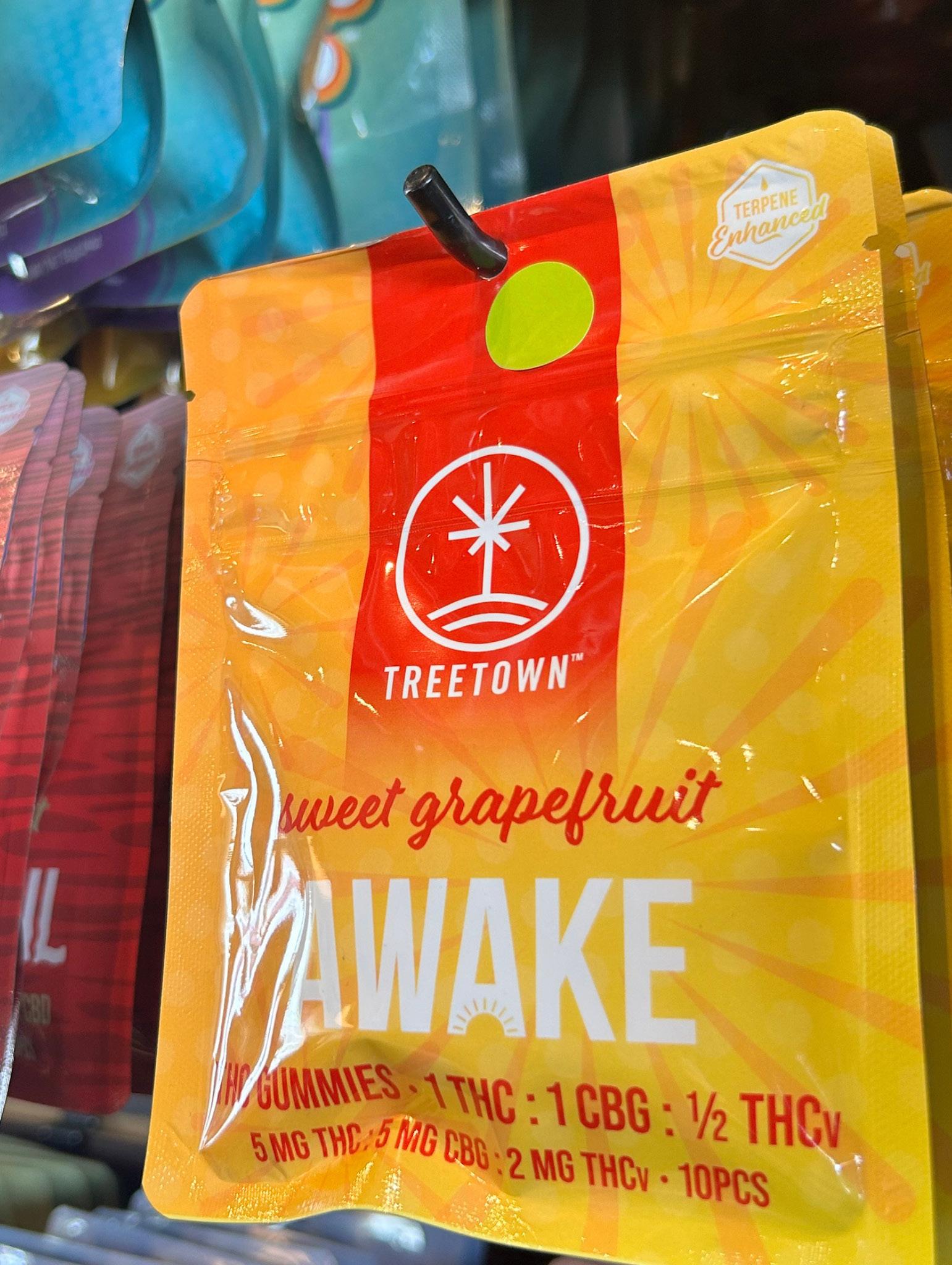
One example is THCV, found in TreeTown’s sweet grapefruit Awake blend.
“THCV gives you an uplifting feel,” says Patrick Kinney, co-owner of TreeTown. “[It] has also been known to be a bit of an appetite suppressant.”
For Ann Arbor-based brand Made by a Farmer, gummies are designed around experiences rather than simply cannabinoid levels.
“We formulate for moments — it’s not just about milligrams,” says Gene Simon, director of operations and sales.
In the national market, Made by a Farmer produces CBD gummies aimed at specific wellness outcomes, including CBD-based Unwind, CBG-based Focus, CBN-based Restfulness, and THCV- and CBDV-based Skinny V.
Each formulation adjusts cannabinoid ratios to match the intended effect.
For Michigan consumers, the brand also offers full-spectrum and solventless
“We formulate for moments — it’s not just about milligrams.”
—Gene Simon, director of operations and sales for Made by a Farmer

hash rosin gummies designed for connoisseurs seeking a more complete “whole-plant” experience.
Another emerging trend in the gummy category is the push toward cleaner ingredients.
Chris Hindo of Pure X, a processing facility based in Warren, says his company is applying standards from the natural foods movement to some of the cannabis edibles it produces for a wide range of brands.
The cannabis brand Gelato, for example, is developing a line of gummies emphasizing ingredient quality, sourcing transparency, and cleaner formulations compared with many current cannabis edibles.
“The goal of the product line is to apply better-for-you food standards to the infused category,” Hindo says.
The line uses organic inputs where possible, colors derived from fruit and plant sources rather than artificial dyes, and simpler ingredient panels with fewer additives.
The team at Gelato believes edibles will follow the same trajectory as the broader consumer packaged-goods market, where natural snacks, organic foods, and functional supplements have gained popularity.
“Consumers are increasingly dealing with food sensitivities, allergies, and diet-related health issues,” Hindo says. “At the same time, cannabis consumers are becoming more educated and ingredient-focused.”
Some brands are also experimenting with products designed for specific demographics.
In 2024, King of Budz CEO Justin Ratledge launched the Mom Life brand, a gummy line created with women in mind.
“It’s a low dose, so the target market was for soccer moms or people that don’t necessarily want the high-dose gummy,”


Ratledge says.
Packaged in Tiffany-blue pouches, the low-dose varieties combine cannabis with supplements often associated with everyday wellness. Spa Day gummies include biotin; Cycle Calm gummies contain magnesium and CBG; Girls Night gummies include vitamin B12 and CBD.

The goal is to appeal to lighter cannabis users looking for relaxation or wellness benefits without a strong intoxicating effect.
Education remains one of the biggest challenges for companies developing products aimed at health and wellness.
Many consumers still think of cannabis primarily in terms of potency rather than the broader range of cannabinoids and formulations now available.
“Unfortunately, in our industry, a lot of consumers and patients are uneducated,” Litinas says.
Yet the pace of new research suggests the category will continue to advance.
Researchers are exploring cannabinoids alongside botanical ingredients and technologies designed to improve absorption and predictability in edibles.
As science, education, and the law evolve, Michigan companies should be poised to succeed in the sophisticated gummies market.
“Slowly and steadily, we break down those walls,” Litinas says. “It will be amazing. It will be a huge, huge industry.”
A certified public accountant answers your questions about the disruptive new tax
By Patrick Dunn
The passage of Michigan’s fiscal year 2025-26 budget sent a seismic shudder through the state’s cannabis industry, as the state imposed a 24% wholesale tax on adult-use cannabis products to fund road improvements. The tax, which took effect Jan. 1, is in addition to the 10% excise tax and 6% sales tax that were already applied to adult-use cannabis sales in Michigan. It’s raised numerous questions among Michigan cannabis operators about what items are subject to the tax, who actually pays for it, and how to manage bookkeeping for it. To make sense of these matters and others, MiCIA Magazine spoke in late February with Kareyna Miller, founder and CEO of LEACIF, an Essexville-based accounting firm specializing in the cannabis industry.
This interview has been edited for length and clarity.
We’re seeing this both from the advisory side and the compliance side. The compliance side is obviously about following the guidance … that Michigan Treasury posts on their website or that’s communicated via the Cannabis Regulatory Agency. And then it’s just about tracking
the tax itself, because it went into effect at the beginning of January and there still aren’t full updates on exactly how the tax is going to be reported through Michigan Treasury Online or how to get registered for that tax [see Michigan Treasury’s “Wholesale Marijuana Tax” webpage for the latest guidance]. So all these logistical compliance things are on the radar and still being worked out by Michigan Treasury.
The advisory side has been more active. Clients know they need to be compliant, and they’ll do what they need to do in that respect, but [there are questions of how to] approach the conversation if they are on the cultivation or processing side, selling over to their retail customers. Who’s going to pay for the tax? Are they going to split it? Is it all going to be on the retailer or all going to be on the manufacturer? Conversations like that have been much more active than clients asking us about the tax and the basic questions of “What do I need to do to be compliant?”
On the retail side, customers pay the 6% sales tax and they pay the 10% excise tax. Based on how things traditionally should go for a wholesale tax, that tax is
passed on to the customer. The way the industry operates, negotiations usually will go in a retailer’s favor because companies need to get shelf space and be competitive. So up until this point, costs that maybe a retailer would traditionally pay or the buyer would traditionally pay, even like transportation, have been pushed back to the manufacturer. My personal opinion is the retailer or the buyer should always pay a tax in these situations. But we are seeing pushback there that our manufacturing clients are experiencing, where they’re either being asked to pay for all of the tax, split the tax, or reduce their prices to absorb it. So that’s the best way to answer that. But I do think it should be a buyer’s responsibility to pay that.
Because they don’t have the arm’s-length separate parties who they’re transacting with to sell their products from that manufacturing side to the retail side, the Michigan Treasury has published wholesale pricing rates that the tax needs to be applied based on. There’s a lot of debate out there on whether the prices that Michigan Treasury published are very fair and how [Treasury] calculated them. Some seem pretty inflated. So that tax is

“It is really helpful to look at the frequently asked questions that Michigan Treasury has published. That is their guidance, and they broke it down in a pretty easy, readable way. It is important to keep updated on those and look to those as the concrete guidance that is available from the state.”
—Kareyna Miller, founder and CEO of LEACIF

still due, still applies, but they’re having to base the tax amount on the average prices that Treasury publishes.
WHAT ITEMS ARE AND AREN’T SUBJECT TO THIS TAX?
Any line item on an invoice with the sale of adult-use product has to have the tax applied [if the item is related to the acquisition of the cannabis]. So that includes if you have secure transport. … Transport has been the biggest one. There’s been a lot of pushback where the buyer doesn’t think the tax has to be applied to transport if it’s on the invoice, and it does. [See Revenue Administrative Bulletin 2026-3 for more-detailed information on what does and does not fall under the 24% tax.]
HOW SHOULD OPERATORS BE RECORDING AND TRACKING THESE TAX PAYMENTS?
It’s very similar to how retailers would have been doing it for tracking sales tax and excise tax. You track it in a separate tax liability account from your sales revenue. We recommend reconciling at least monthly. If you have Metrc products and let’s say you have services or noncannabis products that you’re selling where maybe the tax doesn’t apply, make sure all that reconciliation is in place so that you’re not having that tax liability where it shouldn’t be. And then keep a separate liability account to track the accumulated tax due, because it is supposed to be remitted quarterly, so you have threemonth periods where you’re needing to track it and hold on to that cash flow so that you have it available when the remittance due date comes.
ARE THERE ANY HELPFUL TIPS OR TRICKS OPERATORS SHOULD KEEP IN MIND AS THEY NAVIGATE THIS NEW TAX?
I’ll go back to the conversations that you have with your partners along the supply chain.
This is a cost as a whole. I think everyone understands the cash flow issues that have already been there for
the industry. So just make sure to format those conversations so that the tax is being paid for in a way that is sustainable. You can’t always eat a tax or eat a cost and have that methodology be sustainable. But you also have to make sure that both sides of the transaction are happy with that transaction and it’s agreeable otherwise. You may have to have harder conversations with other members of your supply chain to be able to address this as an overall industry cost.

The other part is the compliance. Just make sure you understand exactly what should be taxed and what shouldn’t be taxed, and then have that accounting and tracking in place so you know what to set aside. You don’t want to get in debt with the state of Michigan if you don’t have to, so it is good to make sure you have that money set aside and tracked.
IS THERE ANYTHING ELSE PEOPLE SHOULD KNOW ABOUT THIS TAX?
It is really helpful to look at the frequently asked questions that Michigan Treasury has published. That is their guidance, and they broke it down in a pretty easy, readable way. It is important to keep updated on those and look to those as the concrete guidance that is available from the state.

Cobau Engineering helps cannabis cultivators and extractors move their plans from concept to fruition
By Paris Giles
The cannabis industry has no shortage of passionate proprietors, but entrepreneurs know that passion alone can’t take the place of expertise. For cannabis cultivators and extractors, the necessary expertise includes planning, designing, and maintaining facilities that operate safely and efficiently. To do that well, they may need to call in some technical help by way of an outside engineering firm.
Since 2019, Cobau Engineering, led by father-and-son team Tom and Joey Cobau, has partnered with growers and processors in and outside of Michigan, offering consultation, equipment, and project design and implementation.
Tom Cobau is a chemical engineer with decades of experience in safety and efficiency. Joey was studying business at the University of Michigan when his dad started the company.
his law practice.
Cannabis operators who may be opening new facilities or making additions or renovations to existing spaces can choose from Cobau’s suite of services. Gather expert data and guidance, let the firm help ensure regulation compliance, or partner with the team on a large-scale project — or do it all and then some.
“We have repeat clients; we go out and check up on them,” Tom says. “I think [that’s] what sets us apart. We try to be invested in our clients. … We’re starting up a number of systems for people, and they’re starting into a difficult market.”

“I was all destined to go to Wall Street and work in investment banking, but I realized, ‘Hey, this is one shot to start a business together, a family business, and make a go of it,’” says Joey, who’s now a partner and full-time employee.
Cobau Engineering has three other team members; its electrical engineer has done a bit of cannabis farming and extraction himself. And speaking of family business, the office is nestled in a particularly charming stretch of Mack Avenue in Grosse Pointe Woods, the same walk-up from which Tom’s late father ran
A lot of what Cobau Engineering does on the cultivation side centers on greenhouse climate automation as well as irrigation and water solutions. Maybe you’d like the team to help set your business up with a direct-injection fertigation machine, a system that can store nutrient recipes and automatically deliver the ideal nutrients to plants in need.
“Automate the things you can,” Joey recommends. In an industry with such tight margins, freeing up that labor is crucial and allows operators to redirect staff toward other tasks like trimming and harvesting.
To manage their irrigation systems, some clients have what Cobau likes to call the “brain room” — “because you can control everything from that room,” Joey says. “You can be on a computer and control



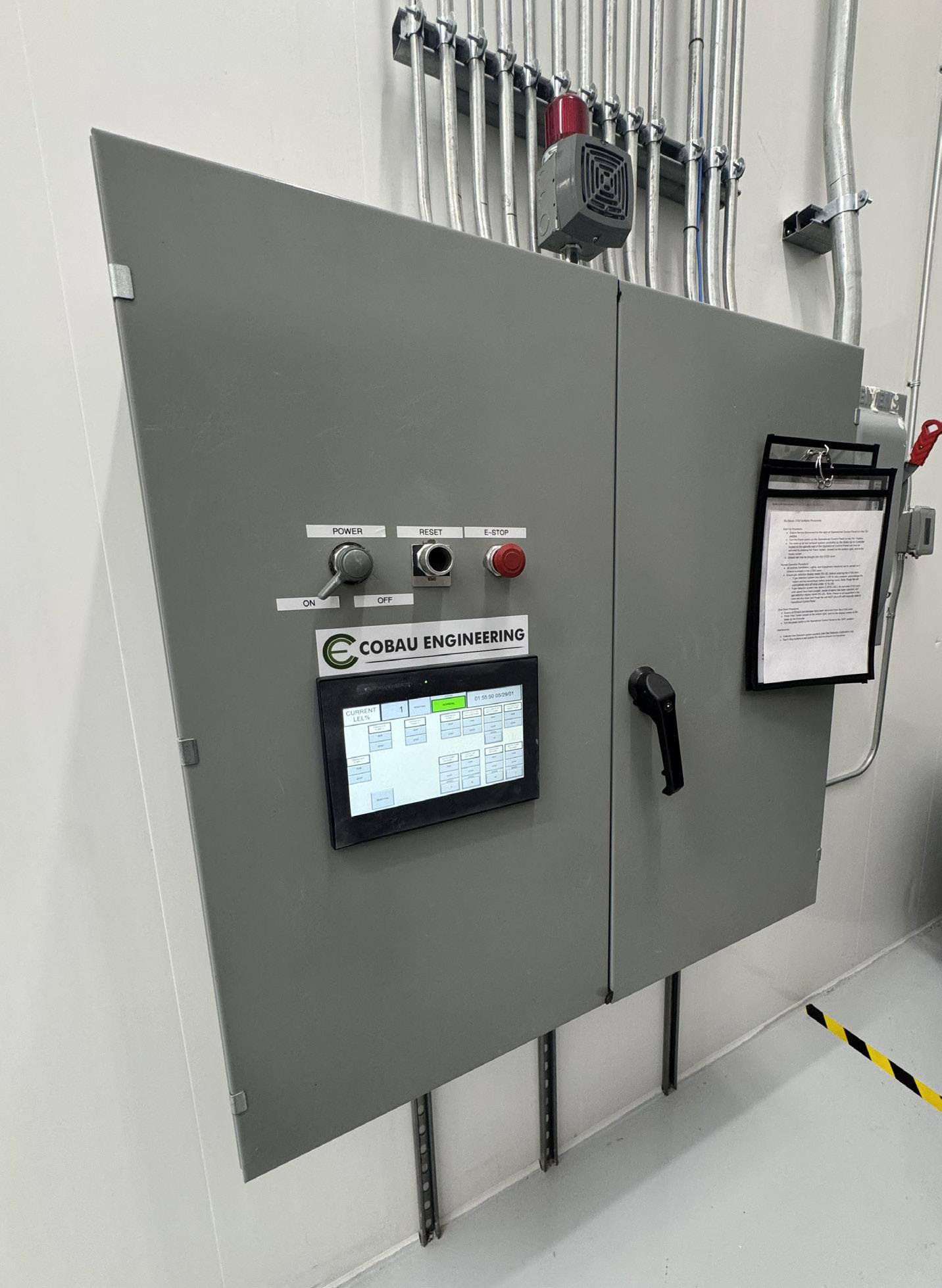

everything. You can be remote and control everything. And we think that allows them to keep a nimble, flexible team.”
The focus when it comes to extraction is typically on ventilation and fire suppression. Extractors are working with dangerous materials like ethanol and hydrocarbons such as butane.
“In the past, there were a lot of people who were extracting butane in a very unsafe way,” Tom says.
When a Cobau client erects a new extraction lab — or starts a grow — Cobau
works closely with Michigan’s Bureau of Fire Services, often acting as an expert liaison between BFS reps and cannabis operators, as both the BFS and the CRA must inspect and sign off on the lab.
“It’s tough because a lot of people who got into the cannabis market have never done this … very specialized industrial process, and it requires engineering, some extra work, [and] extra inspections from the BFS,” Joey says. “We help people get through that.” Cobau also offers staff safety training.
Motown Farms is one of Cobau’s clients. The team at Cobau recently designed and installed an automated building management system and irrigation system for a new grow facility in Detroit. When it was time to start construction, Matt Wagner, part-owner and head grower at Motown Farms, says Cobau was the natural choice.
“We interviewed a bunch of different irrigation guys, and Cobau Engineering was, in our opinion, the best,” Wagner says. “None of the other guys offered any engineered plans that we could keep onsite if anything breaks. Tom’s an engineer, and he’s very thorough.
“I love the industry, but there’s not always professionalism. These guys were super professional, which was awesome. … [They] just back up all their work.”
Joey says he notices that some other players have the tendency to gatekeep information and operate with a hush-hush attitude. Not at Cobau. The team is eager to share insider knowledge and help cannabis brands take advantage of the evolving marketplace.
“We want [our clients] to be successful; we want them to make money,” Tom says. “We want to be as inexpensive and efficient as we can.”
The annual event in Detroit brought attendees together for a glamorous evening | Photos by Eric Hobson













Take $500 off your first appointment with us. We’ll send an experienced crew to your facility to handle your harvest, bucking, trimming, or defoliating needs—no strings attached. Discover firsthand the quality, reliability, speed, and dedication that set us apart.
Contact us today and let’s discuss how our team can elevate your efficiency and profitability.