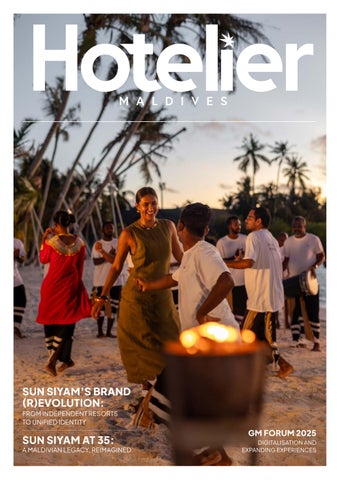
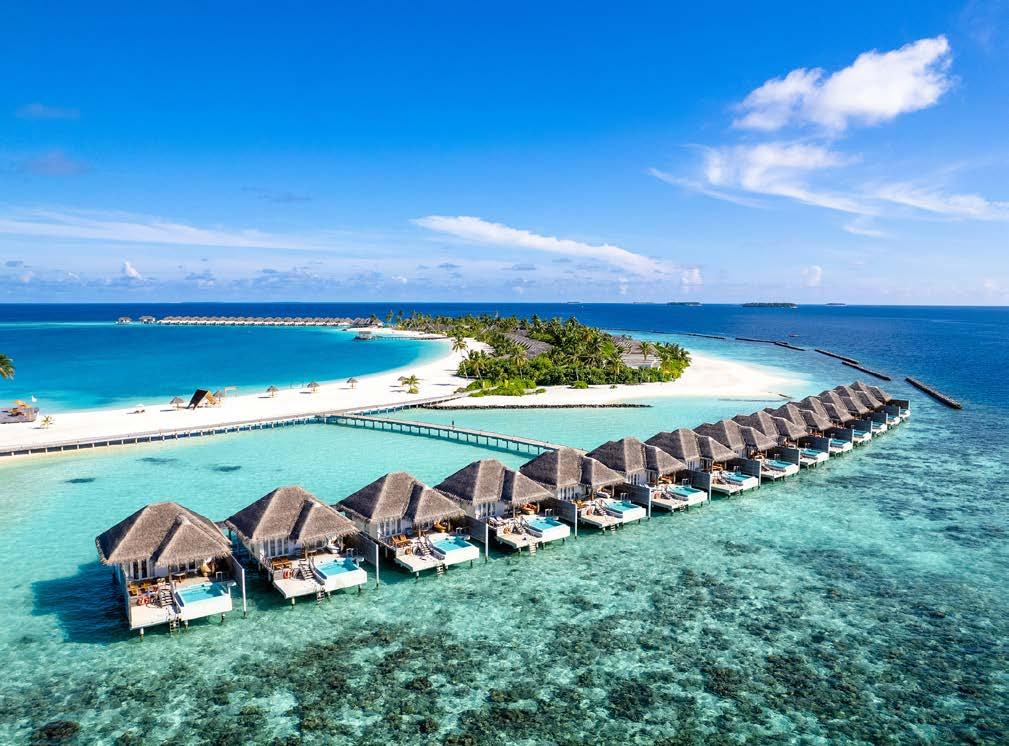
SUN SIYAM AT 35: FROM INDEPENDENT RESORTS TO UNIFIED IDENTITY
A MALDIVIAN LEGACY, REIMAGINED
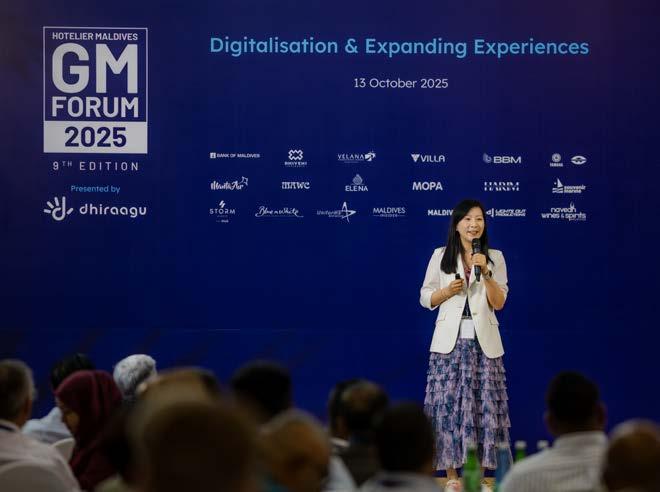
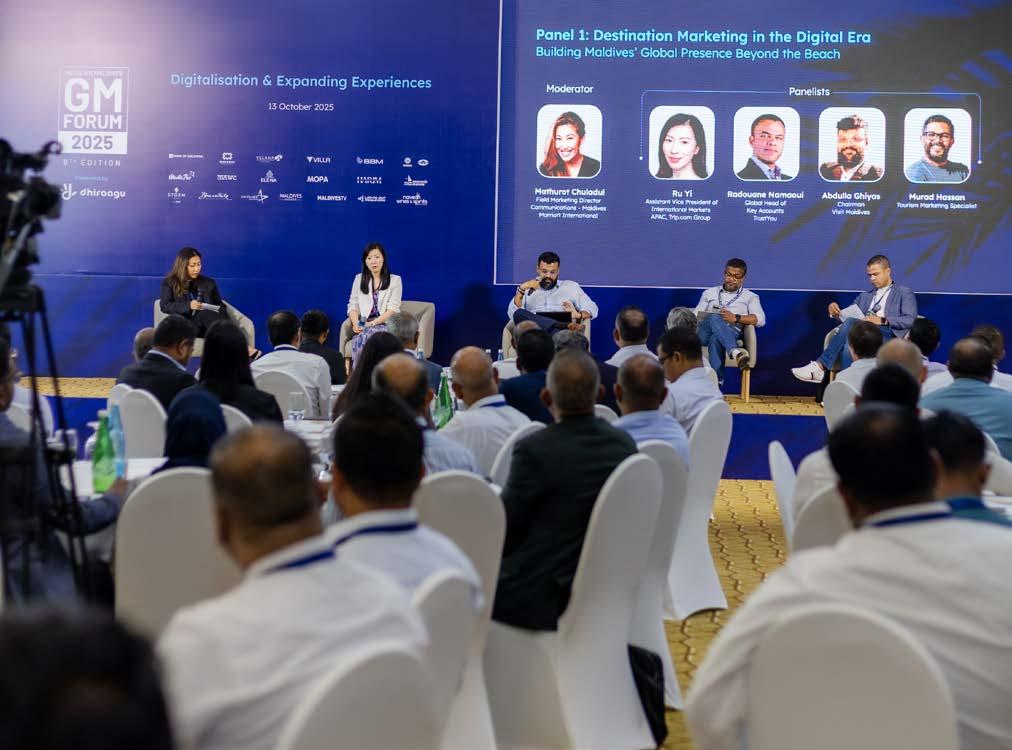
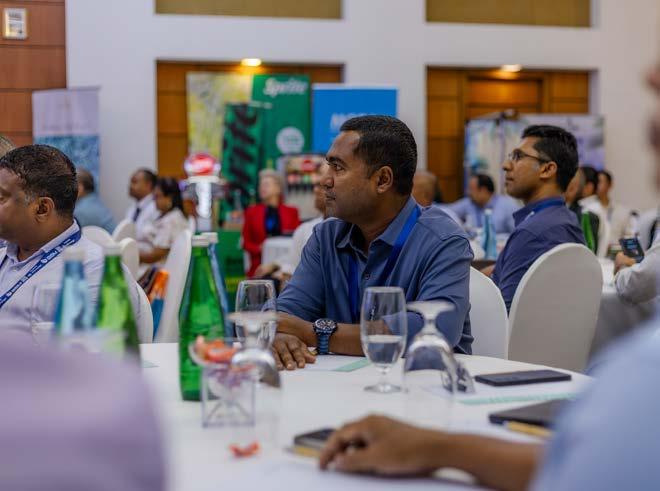
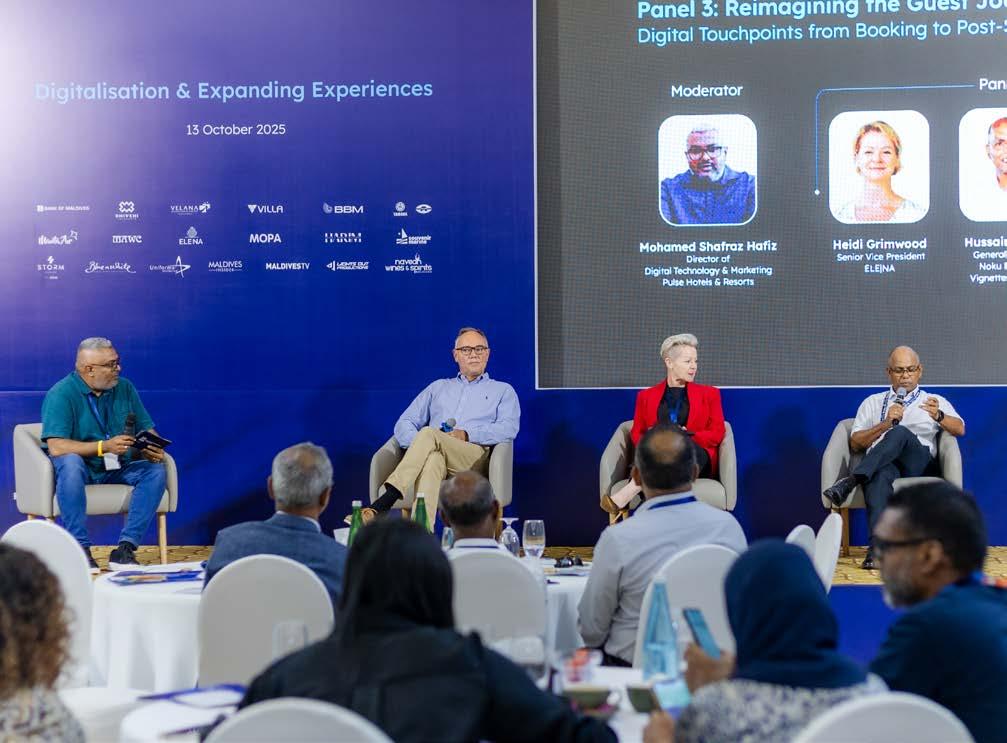
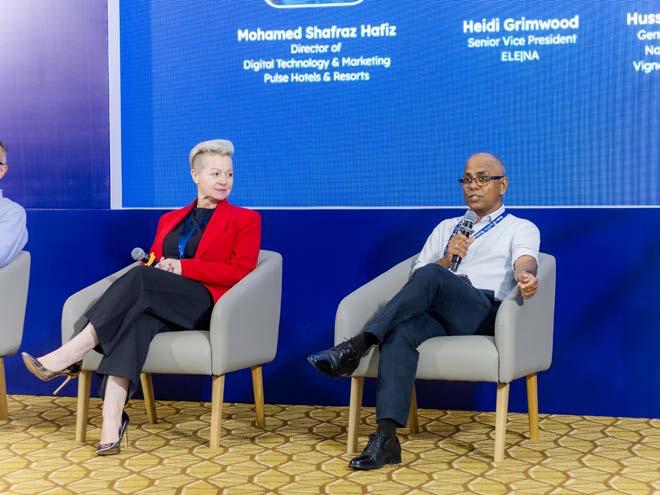
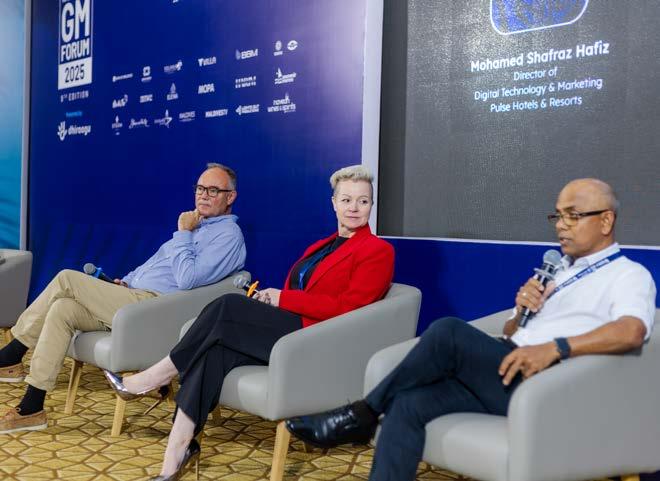
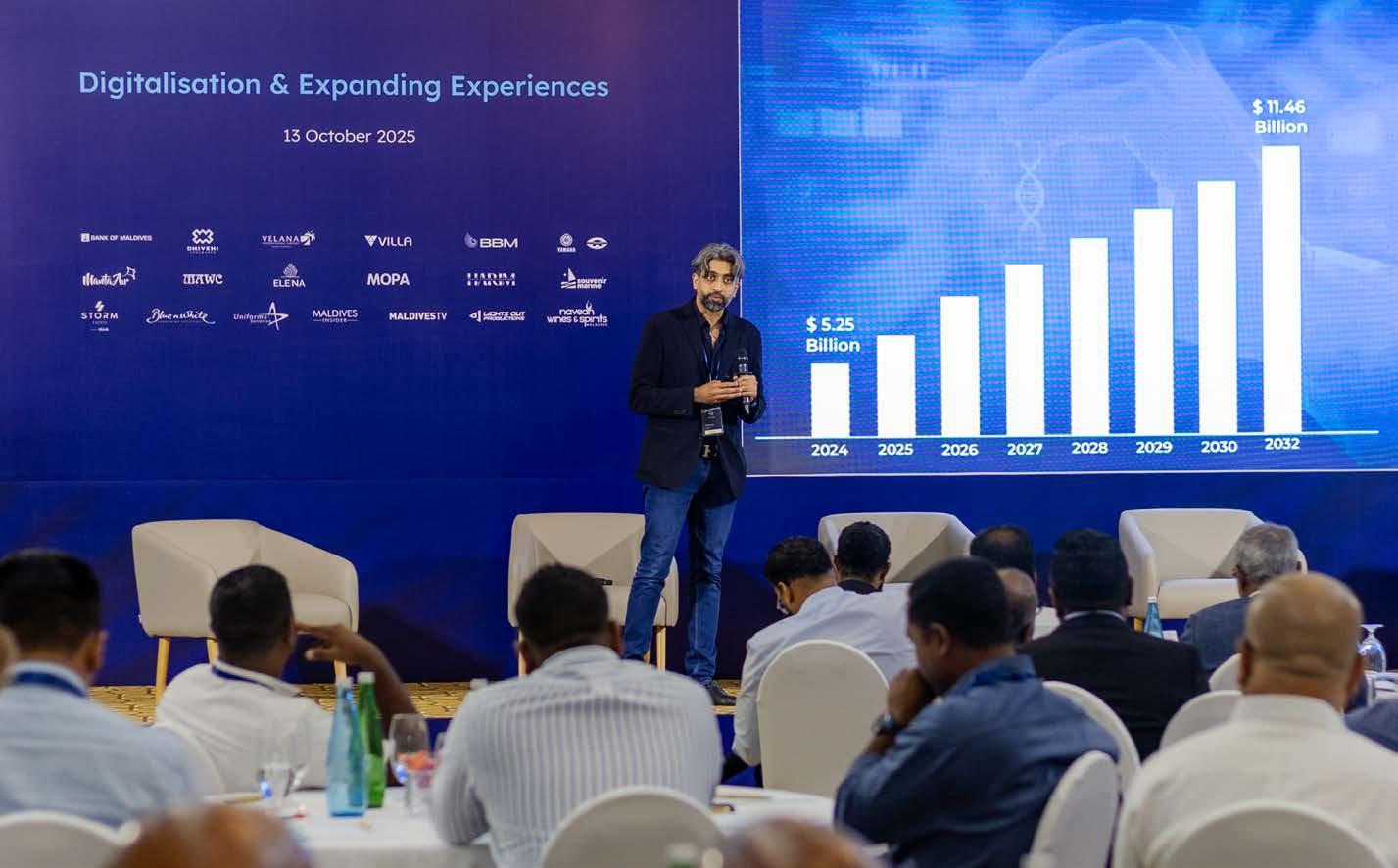
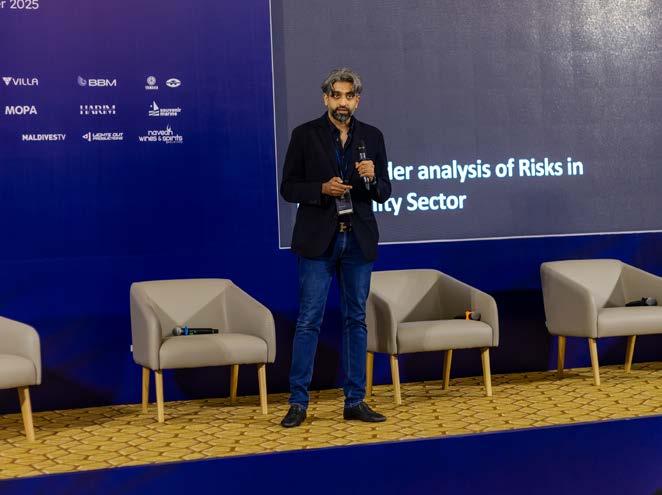
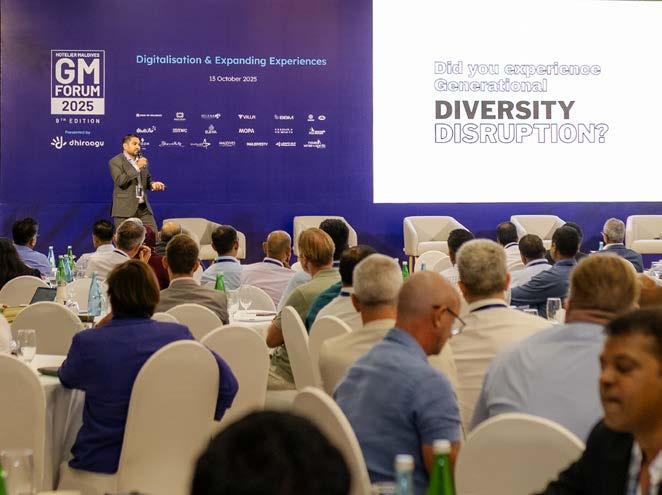
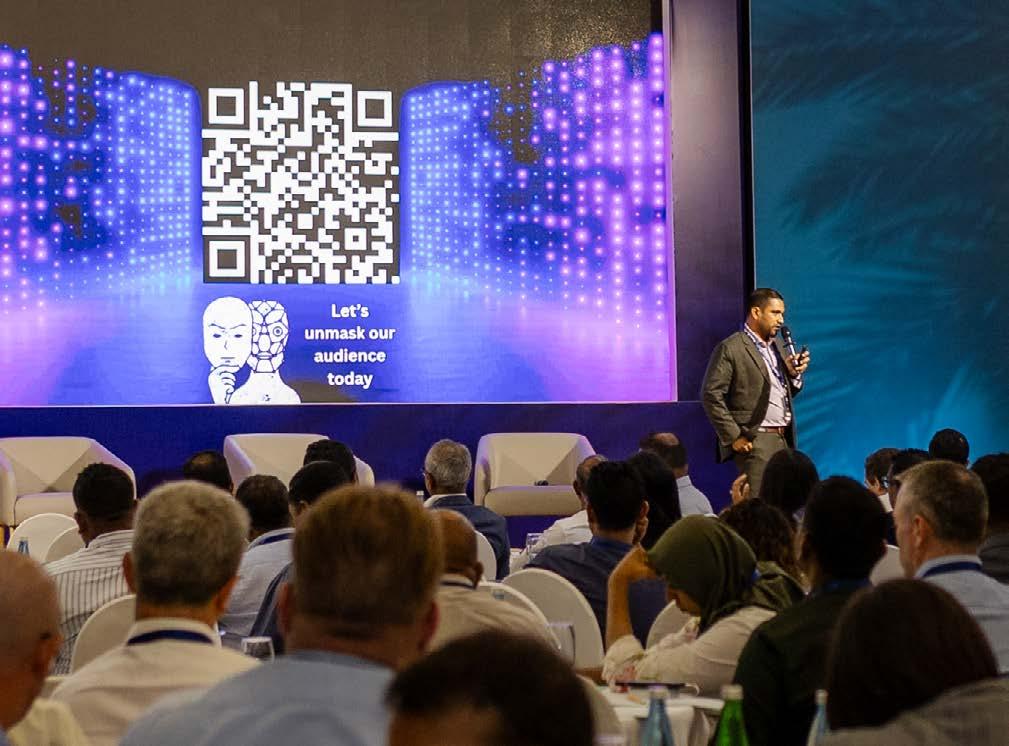
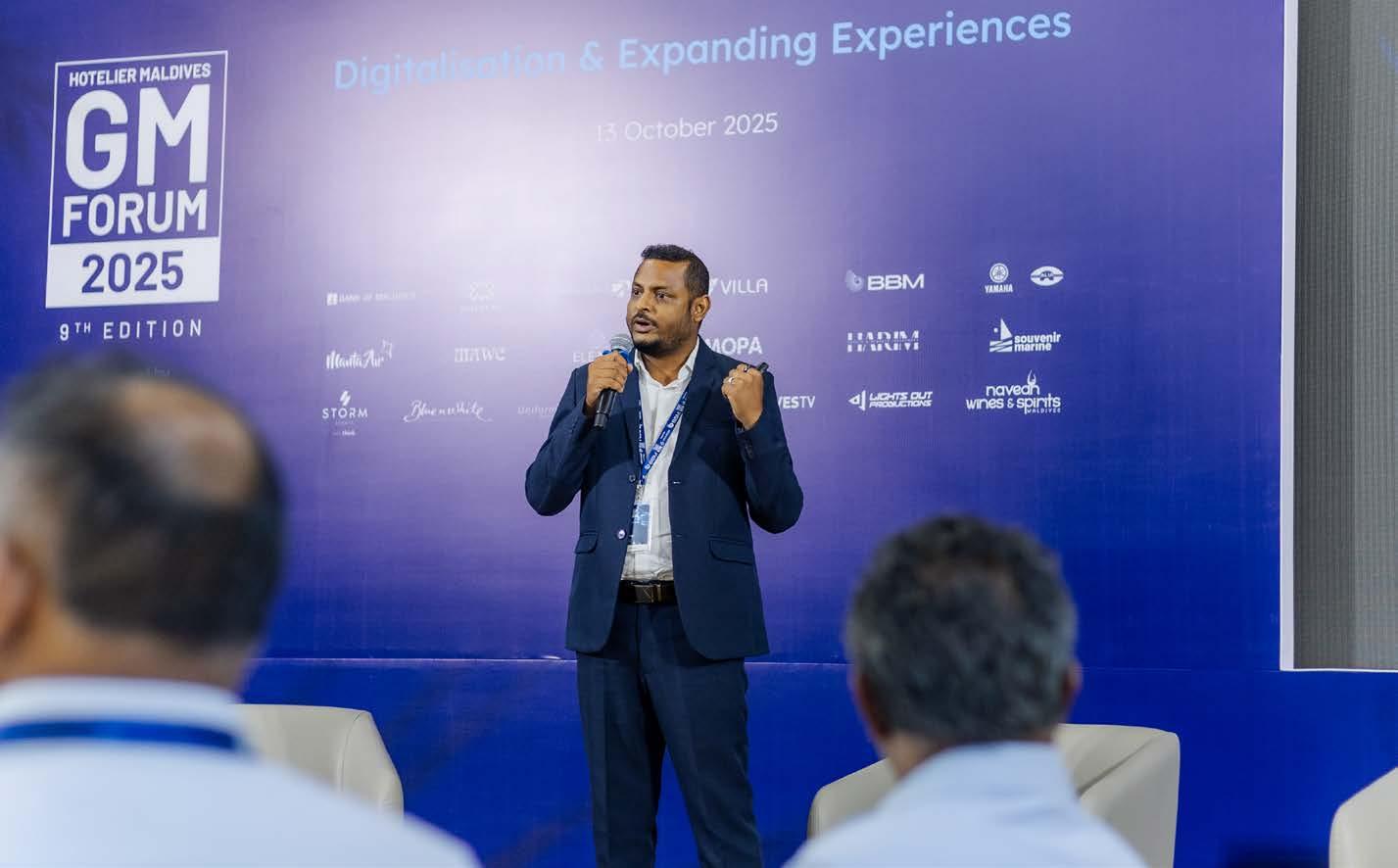
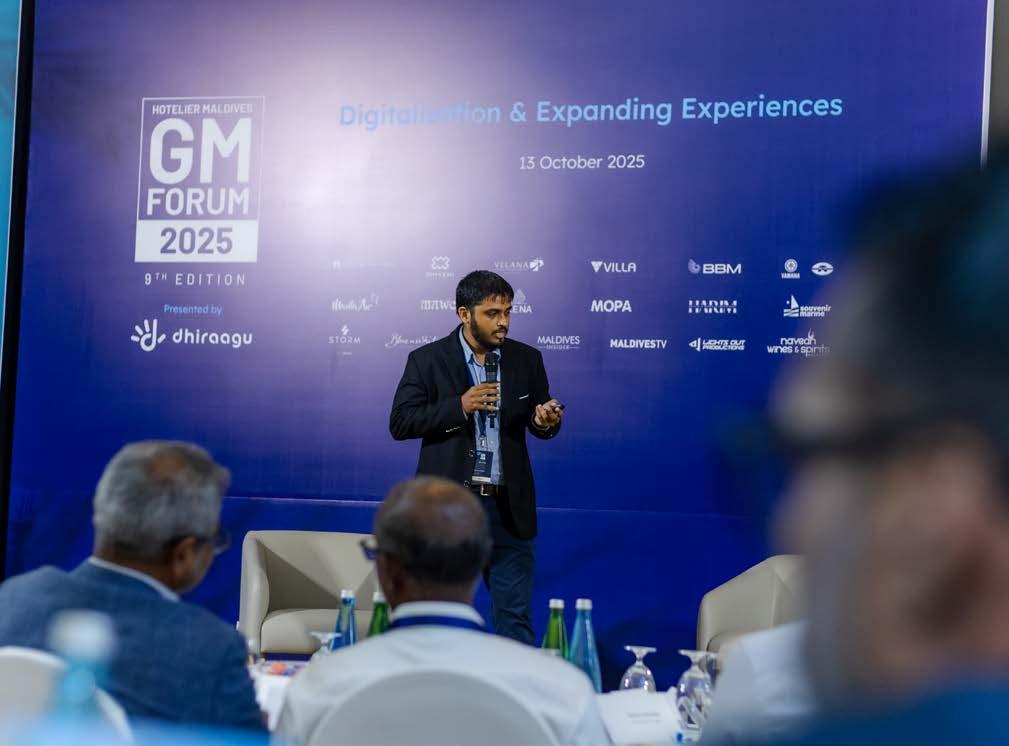
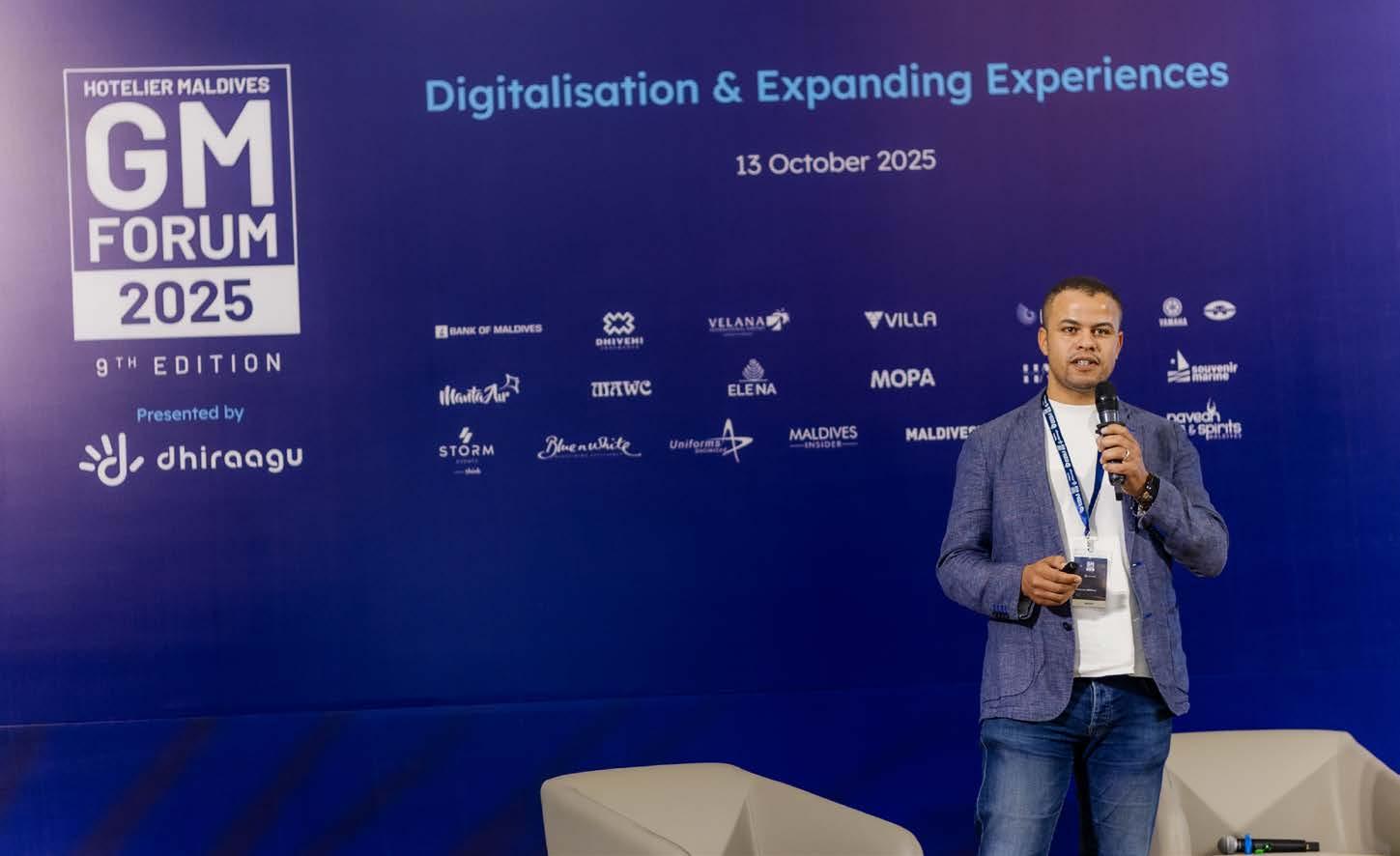
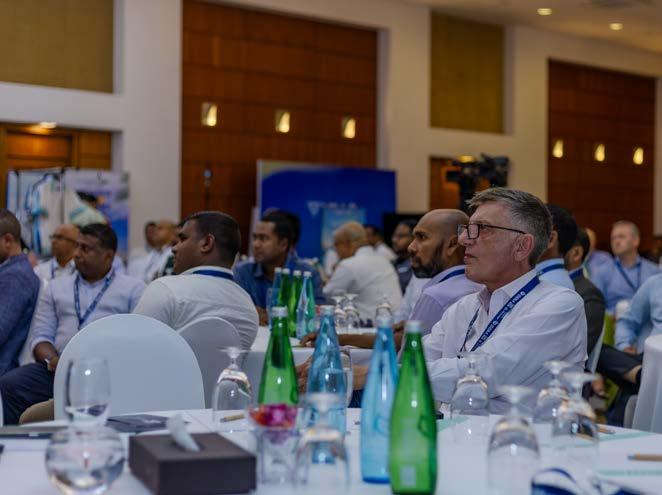
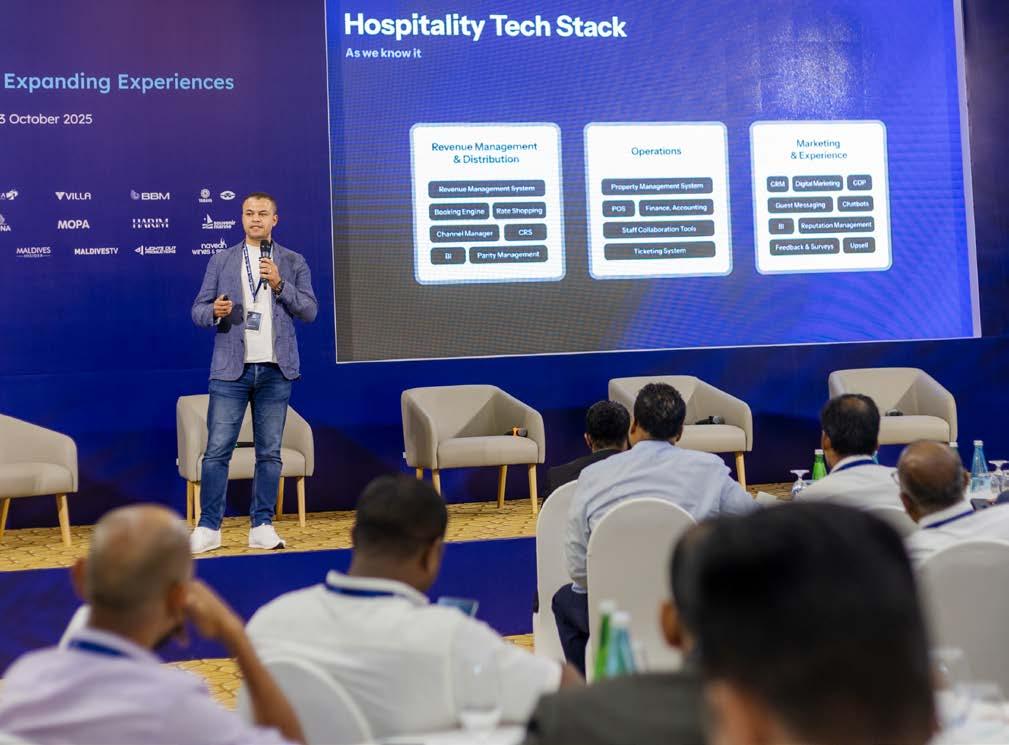
GM FORUM 2025 DIGITALISATION AND EXPANDING EXPERIENCES
HOTELIER MALDIVES
Volume 21, Issue No: 74
November/December 2025
EDITORIAL
Ismail Faseeh, Editorial Director
Ali Naafiz, Editor naafiz@hoteliermaldives.com
Ibrahim Mahudhee, Managing Editor mahudhee@hoteliermaldives.com
CONTRIBUTING WRITERS
Thoiba Riyaz, Maha Rasheed, Moobeen Jaleel, Maaish Mohamed, Mariyam Saaliya Mohamed, Malik Mohamed, Mohamed Aleem and Ibrahim Latheef
LAYOUT DESIGN
PHOTOGRAPHY
Courtesy of the respective resorts
SALES
Abdulla Nadir nadhir@hoteliermaldives.com sales@hoteliermaldives.com
PUBLISHER
Perspective Pvt. Ltd.
4th Floor, M. Kaneeru Villa, Orchid Magu, Male’, Republic of Maldives, PO Box No. 20212 +960 7246292, +960 7910858
Dear readers,
As the Maldives closes another year of growth and transformation, the hospitality sector stands at a pivotal crossroads — one where heritage and innovation converge to shape a more resilient and digitally connected future.
In this issue, we spotlight the 35-year journey of Sun Siyam Resorts — a homegrown brand that has not only redefined Maldivian hospitality but also elevated its identity through a bold brand (r)evolution. In an exclusive conversation, CEO Deepak Booneady and Deputy Managing Director Zulaikha Manik share insights into how the group’s renewed vision continues to honour its roots while embracing a new generation of travellers.
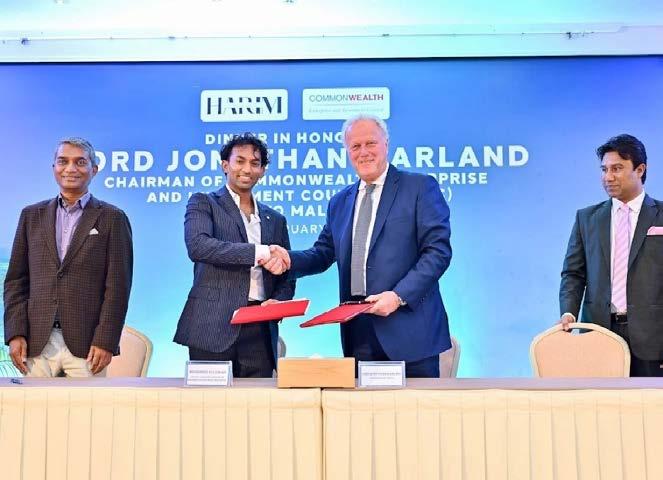
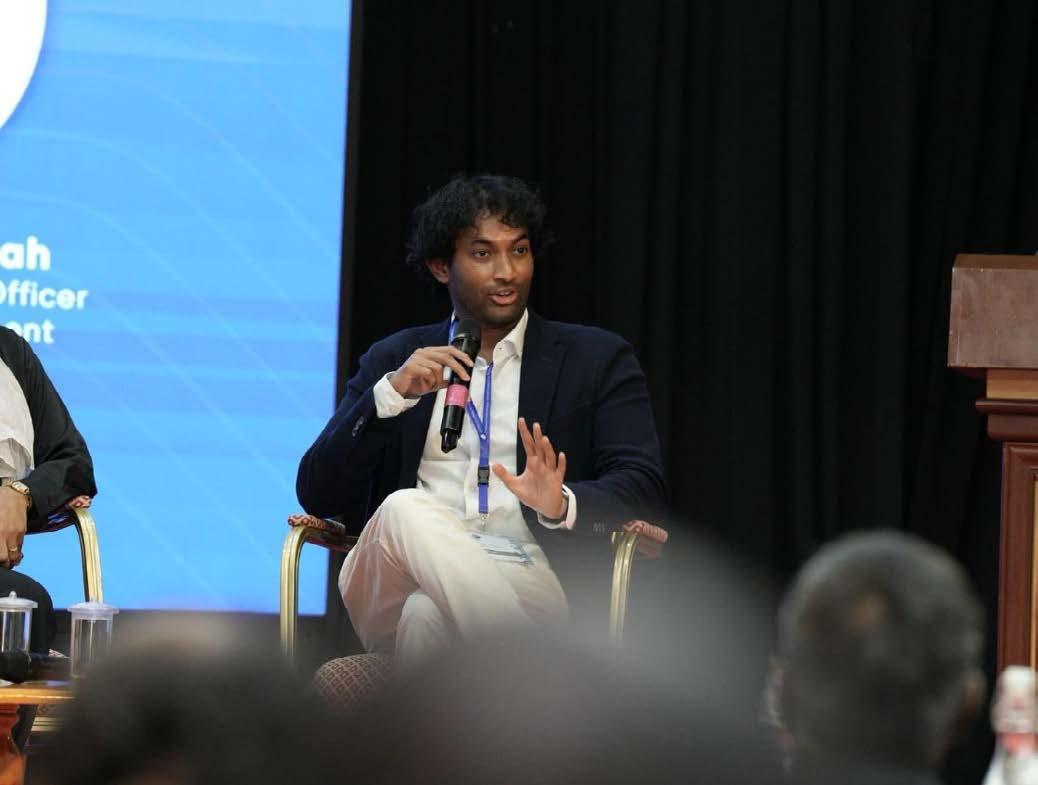
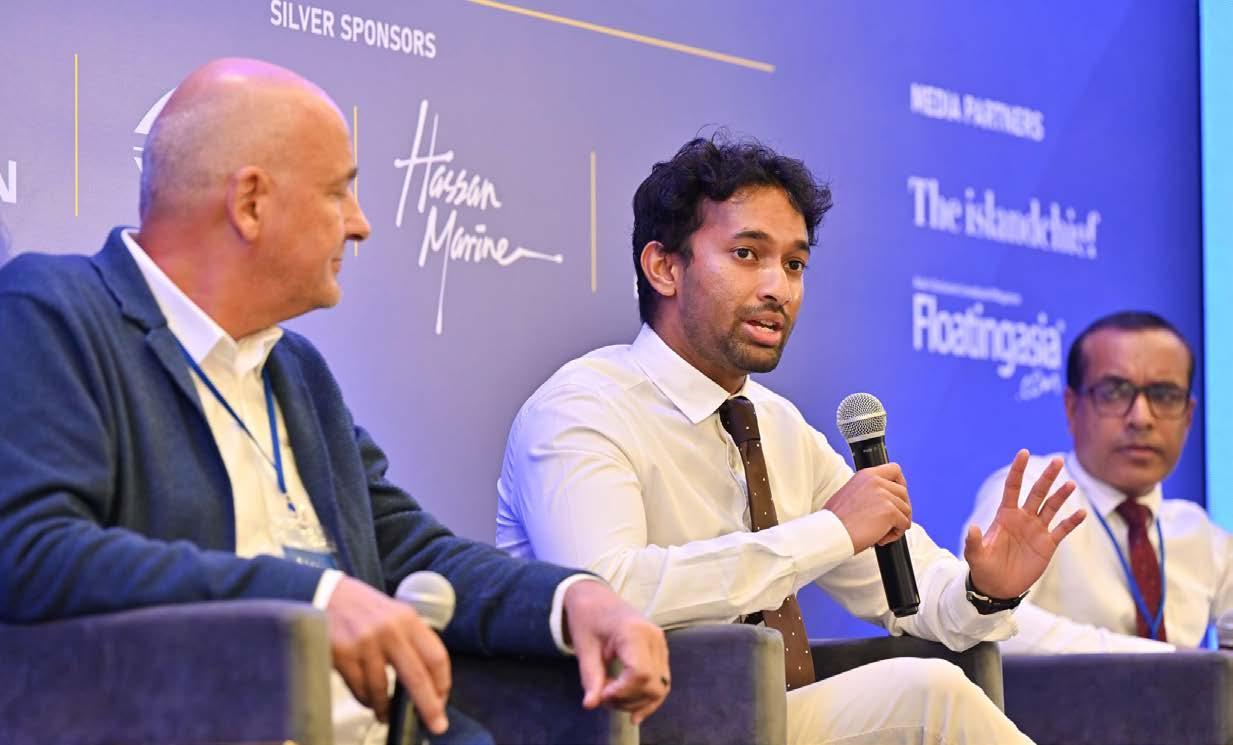
We also explore how tourism real estate is evolving from within, through a conversation with Jasim Janah of Hotels and Resorts Investment Maldives (HARIM), who reflects on how local expertise is shaping the next phase of sustainable development across the islands.
The issue revisits the 2025 Hotelier Maldives GM Forum, where government leaders, industry experts, and innovators gathered under one roof to examine how the Maldives can adapt to the digital future — from artificial intelligence and cyber security to financial innovation and human-centred leadership. Together, their voices reveal a shared call for readiness, trust, and policy stability in an increasingly complex landscape.
Beyond the boardroom, we feature stories that celebrate the spirit and people of hospitality. From Chef Taylor Shearman’s mindful approach to culinary creativity at JOALI BEING to Seema Misra’s advocacy for women in leadership at Atmosphere Core, this issue reminds us that the heart of Maldivian hospitality lies in its people — their vision, empathy, and resilience.
As 2025 draws to a close, we look ahead with optimism. The Maldives continues to evolve, balancing the preservation of its natural and cultural heritage with the possibilities of digital transformation. The stories in this issue affirm that the future of hospitality here will be defined not by scale, but by purpose.
Ali Naafiz Editor
Managing a well-living island: Graeme Freeman on balancing joyful transformation at JOALI BEING
Thousand dives and lifetime of memories: Kate and Andy’s journey with Bandos Maldives
Hidden voice, amplified: Seema Misra on shaping narratives at Atmosphere Core
Universal Resorts rebrands as VERSA, launches NIVA as cornerstone of global strategy
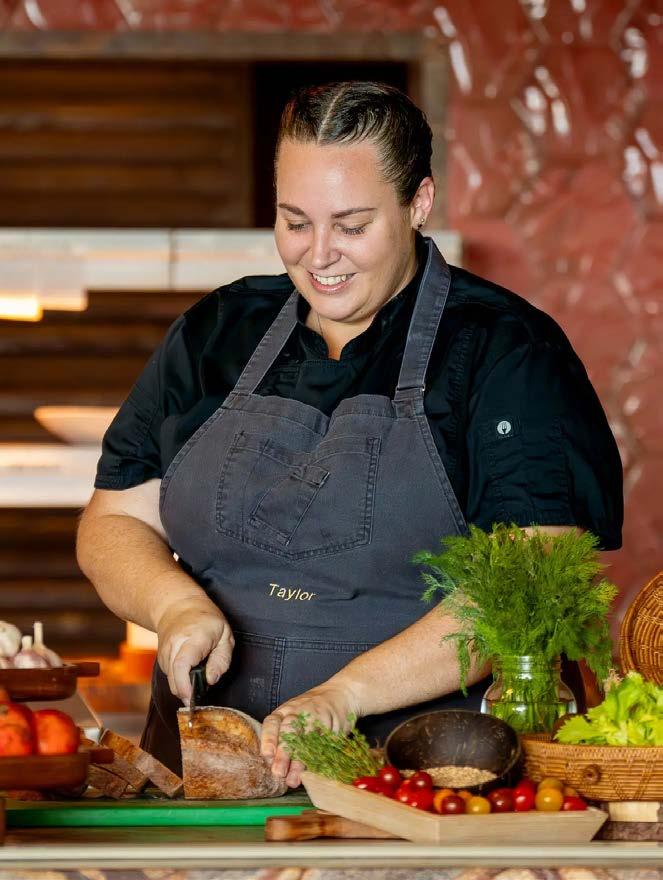
Nurturing teams, nourishing guests: Culinary vision of Taylor Shearman at JOALI BEING
Sun Siyam’s Brand (R)evolution: From independent resorts to unified identity
Sun Siyam at 35: a Maldivian legacy, reimagined
Minister Thoriq calls for greater readiness, digital adaptation in tourism at Hotelier Maldives GM Forum 2025
Hotelier Maldives GM Forum 2025 panel urges policy stability, investor confidence in tourism
Trip.com’s Ru Yi at Hotelier Maldives GM Forum 2025: AI, connection and future of travel
From hashtags to human connection: Experts at GM Forum 2025 explore how Maldives can win digital traveller
Hospitality meets humanity: Reimagining digital guest journey at GM Forum 2025
Beyon Cyber’s Abubakar Latif at GM Forum 2025: Building digital trust in Maldives’ hospitality future
Future is digital: BML’s Afrah Ahmed explores financial innovation in tourism at GM Forum 2025
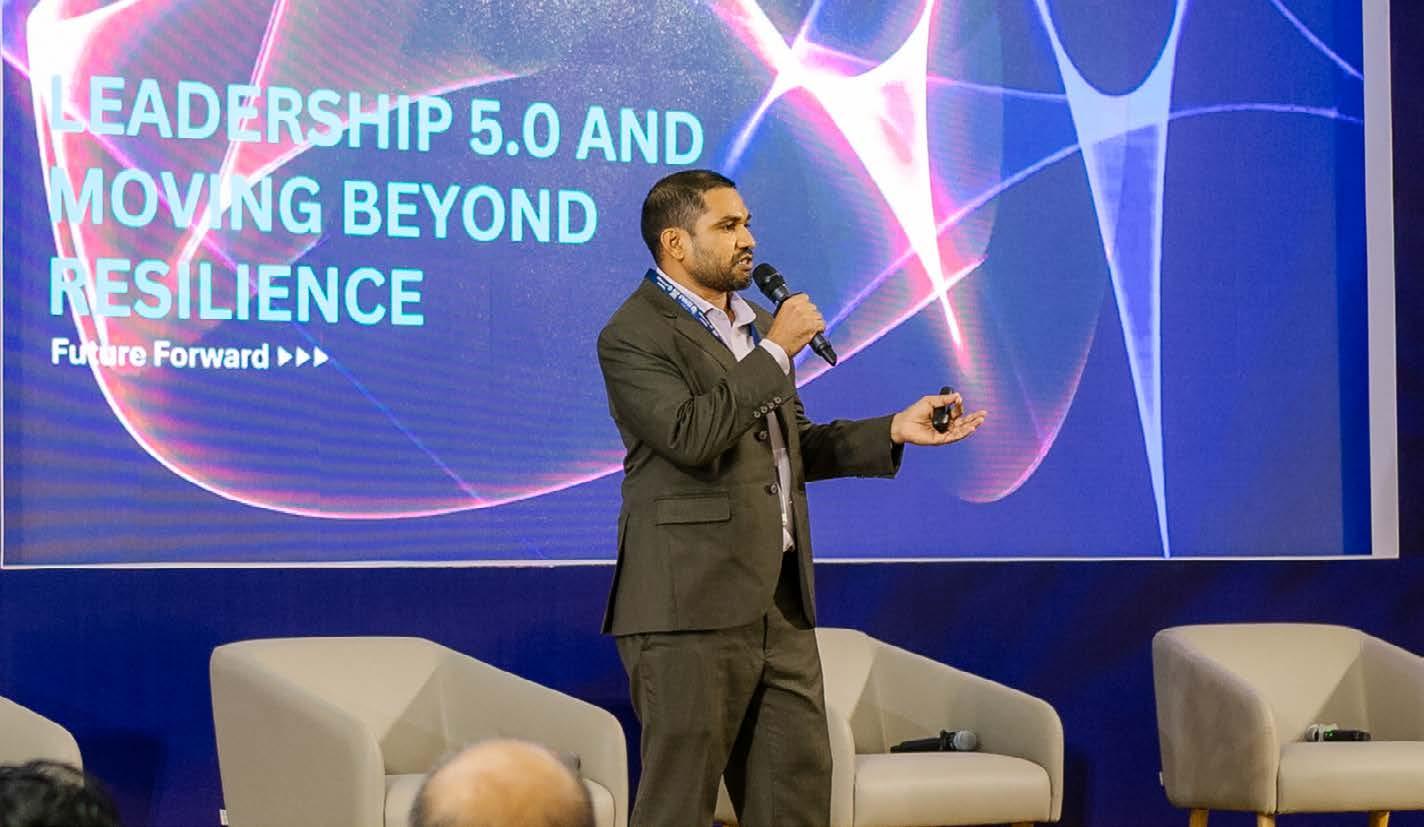
Leadership 5.0 takes stage at GM Forum 2025: Aalim Mohamed on moving beyond resilience
Dhivehi Insurance highlights emerging risk solutions at Hotelier Maldives GM Forum 2025
Unlocking loyalty via digital guest journeys: TrustYou’s Radouane Namaoui at GM Forum 2025
Reimagining Kuredhivaru: Stanislaw Pajdzinski on leading the resort’s next chapter
Building the future of tourism real estate from within
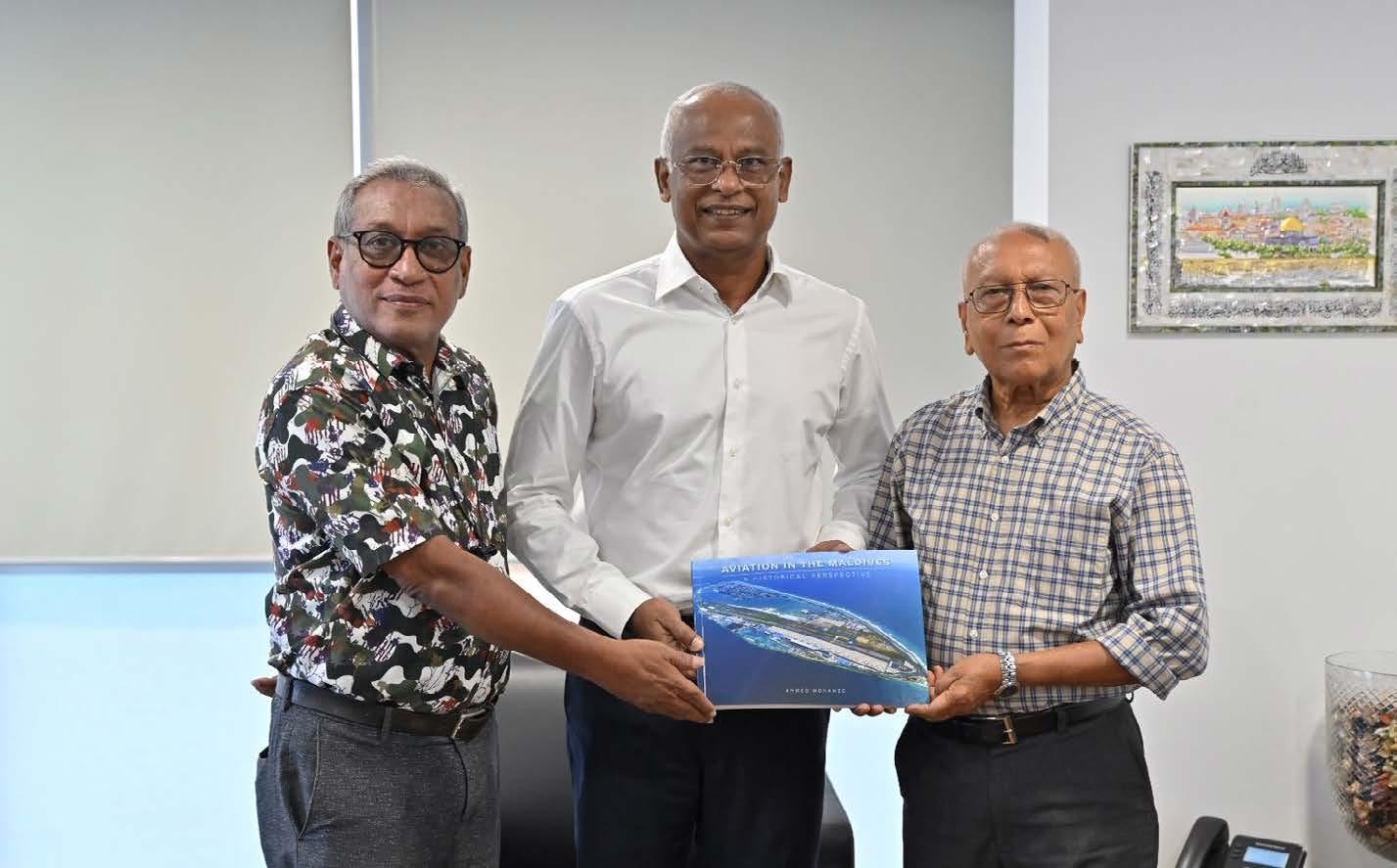
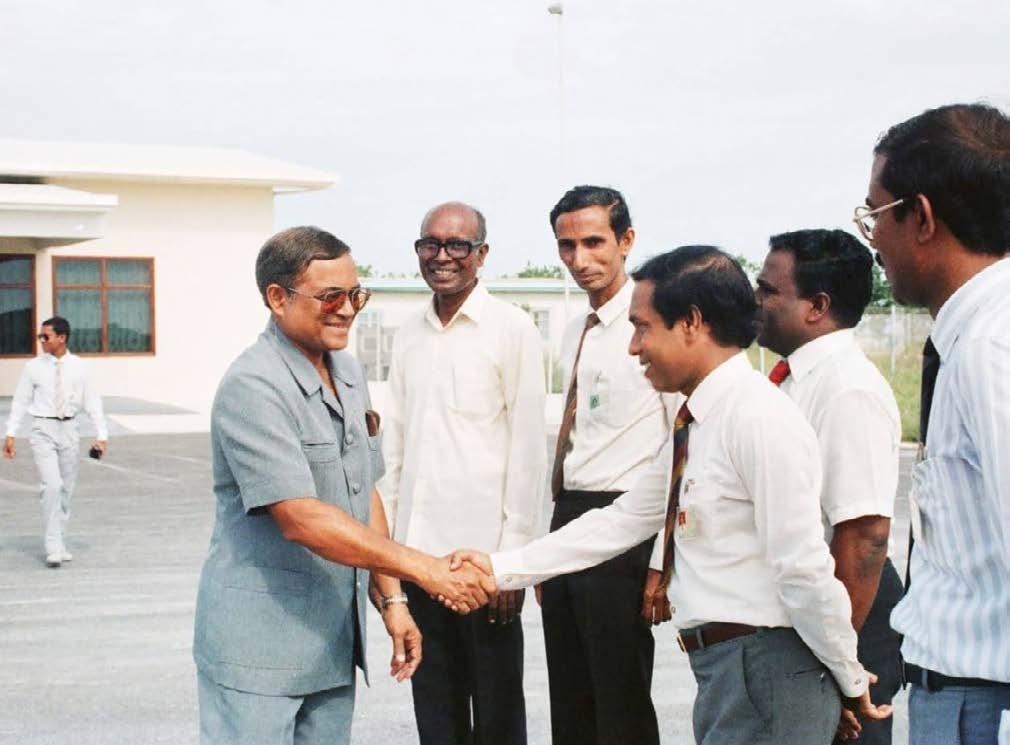
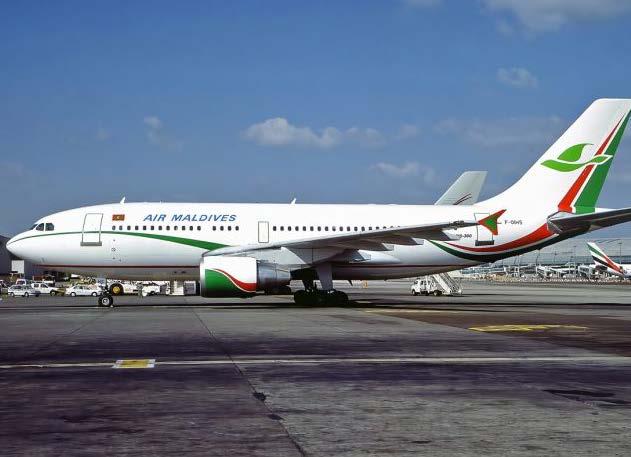
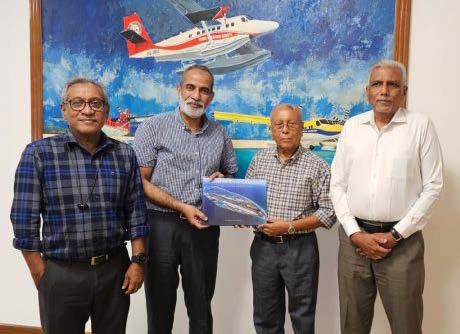
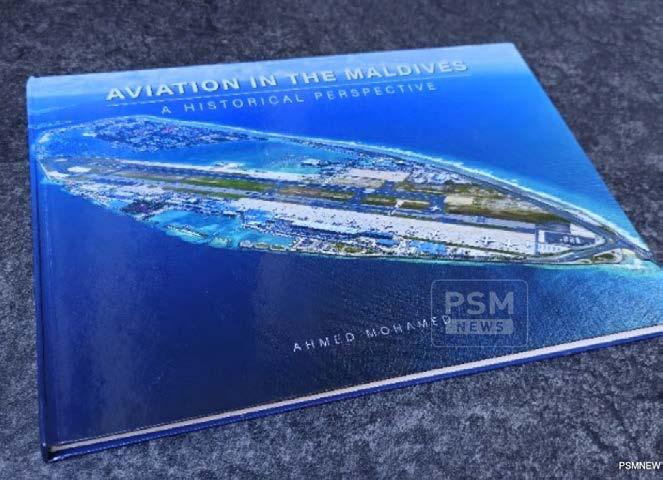
Chronicling the skies: Ahmed Mohamed’s definitive history of Maldivian aviation
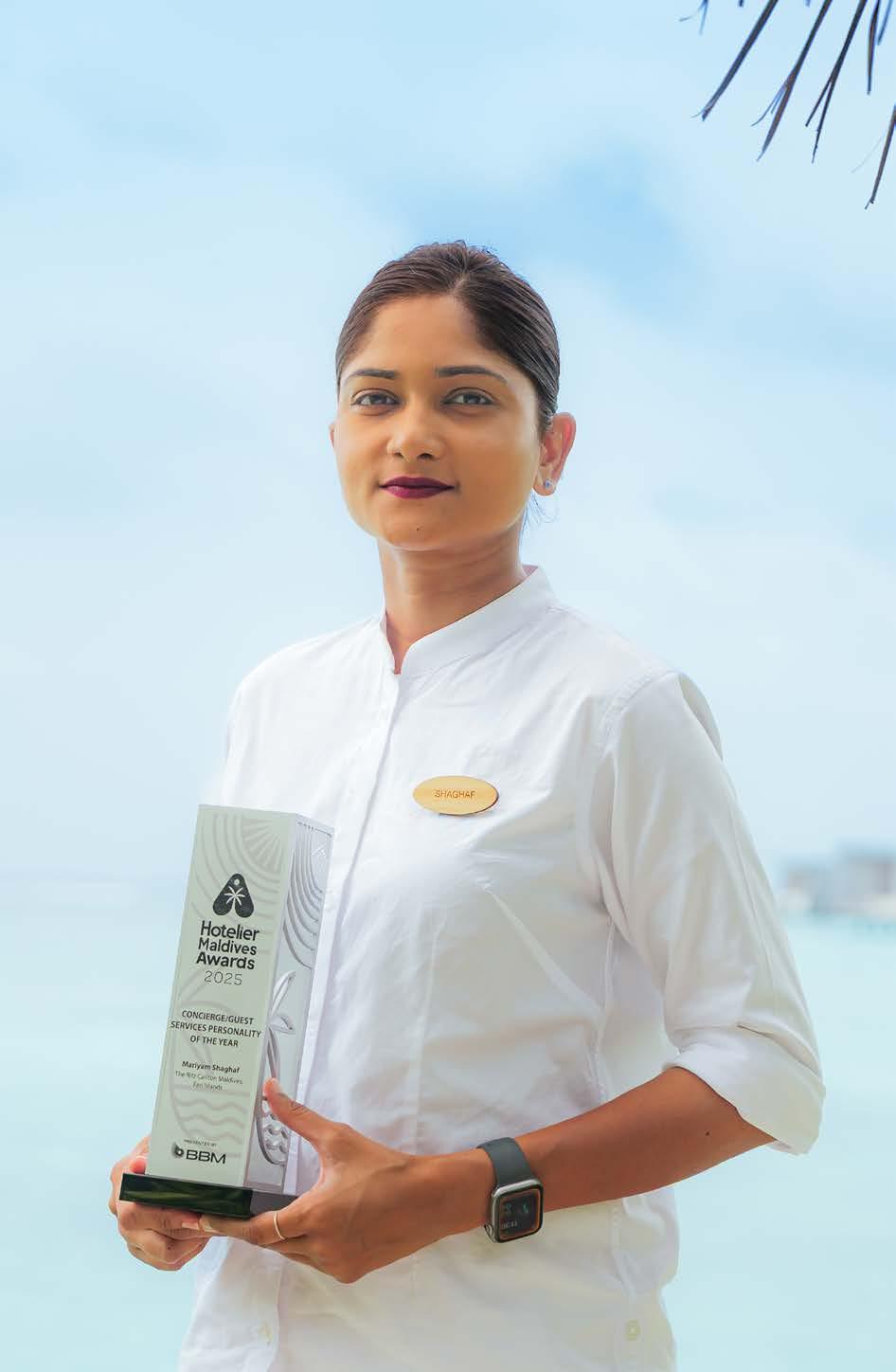
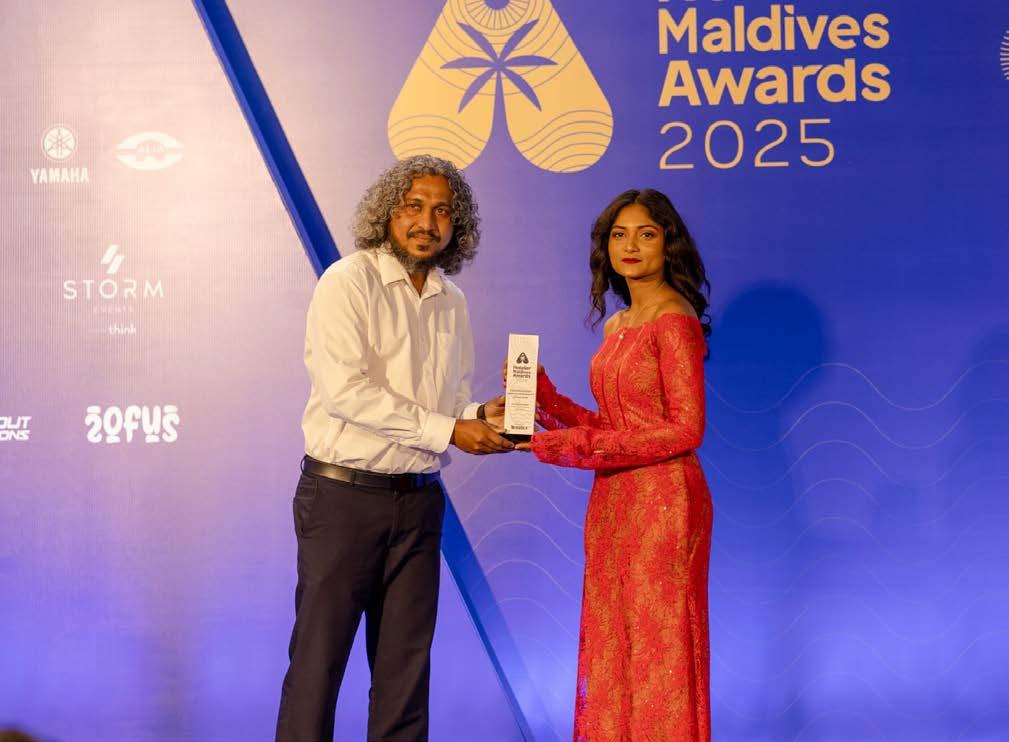
‘If a guest has to ask, the moment is already lost’: Mariyam Shaghaf’s intuitive service at The Ritz-Carlton Maldives, Fari Islands
True luxury is freedom: The Nautilus Maldives brings liberation to dining
Industry Highlights
Appointments
Managing a well-living island: Graeme Freeman on balancing joyful transformation at JOALI BEING
By Mariyam Saliya Mohamed
Graeme Freeman, General Manager of JOALI BEING, oversees a truly unique destination in the Maldives, a well-living island dedicated to guiding guests on a journey of joyful transformation. Rooted in the resort’s signature Four Pillars of Mind, Skin, Microbiome, and Energy, Freeman’s leadership blends cutting-edge science with ancient wisdom to create personalised experiences that restore balance and inspire lasting change. “Our approach is to harmonise wellbeing with the joy, beauty, and effortless luxury our guests seek,” he explains, reflecting JOALI BEING’s mission to nurture both inner and outer wellbeing in a setting of natural wonder.
Graeme explains that while JOALI BEING’s foundation rests on research and collaborations with leading experts, the real achievement lies
in translating these insights into experiences that feel accessible and effortless. “We start by meeting each guest exactly where they are in their journey. For some, this might mean an immersive programme with consultations, diagnostics, and tailored treatments. For others, it’s as simple as introducing mindful practices into everyday holiday pleasures – breathing exercises on a sunset deck, a nutrition-focused cooking class, or discovering movement through fun activities like paddleboarding or aerial yoga.” His philosophy is one of integration rather than imposition. The aim is not to take guests out of a holiday mindset but to bring wellbeing into it, ensuring that the experiences range from the sensory – a balanced meal, botanical scents, or a curated soundscape – to the immersive, such as personalised treatments or consultations.
JOALI BEING is not about rules. It’s about choice, inspiration, and celebrating life in a way that feels meaningful to each individual.
JOALI BEING General Manager Graeme Freeman. PHOTO/JOALI
At the centre of JOALI BEING’s identity are its Four Pillars: Mind, Skin, Microbiome, and Energy. For Graeme, it is not any single pillar that defines the property’s uniqueness, but the way they operate in harmony. “A guest might begin by calming the mind through sound therapy, which in turn supports energy balance. Nurturing the skin with personalised treatments is paired with nutrition that benefits the microbiome, while mindful movement restores both body and mental clarity. This interconnectedness means every touchpoint – from dining to design to daily activities –contributes to the guest’s overall sense of vitality and balance.”
While wellbeing is often perceived as serious, restrictive, or rooted in strict routines,
JOALI BEING redefines the experience with a focus on joy, discovery, and the freedom to choose. Guests are invited to embark on a personal journey, whether through immersive, transformative programmes or by weaving gentle wellbeing experiences into a relaxed beachside escape. “JOALI BEING is not about rules,” says General Manager Graeme Freeman. “It’s about choice, inspiration, and celebrating life in a way that feels meaningful to each individual.” At its heart, JOALI BEING offers the space to explore balance, with curiosity, not constraint.
The Maldives is synonymous with indulgence, but Graeme sees no contradiction between luxury and wellbeing. “We see wellbeing and indulgence as natural partners. Here, it’s not about sacrifice;
it’s about elevating pleasure through awareness, quality, and meaning.” Guests can, in his view, experience all the hallmarks of a Maldivian holiday – overwater sunsets, private beach dinners, or world-class spa rituals – while also discovering nourishment for body and mind. From fine dining presented with microbiomefriendly principles to sunrise yoga overlooking the ocean, indulgence becomes an enhanced experience rather than one compromised by wellness goals.
Behind JOALI BEING’s guestcentric philosophy lies the art of building a purpose-driven team a diverse collective of specialists that includes naturopaths, nutritionists, herbologists, and movement experts. For General Manager Graeme Freeman, recruitment goes far beyond filling
roles; it’s about aligning with a shared vision. “We’re not just hiring for a position,” he explains. “We’re inviting individuals to be part of a mission to help shape a new era of well-living in the Maldives.” At JOALI BEING, these experts are seen not merely as staff, but as co-creators in the guest journey. Their insights are woven into the fabric of the resort, nurturing a culture of collaboration, creativity, and lasting commitment.
This approach requires a leadership style that is collaborative. Graeme describes it as consultative rather than directive, recognising that wellness professionals bring strong personal philosophies as well as technical knowledge. His role is to harmonise these disciplines into a seamless guest journey.
“The challenge lies in harmonising diverse disciplines – from holistic
health to luxury service – into one cohesive guest journey. The reward is witnessing how these different skills and passions combine to create transformative experiences that no single discipline could deliver alone.”
Training is a key focus of Graeme Freeman’s leadership at JOALI BEING. The island’s signature concept of ‘Joy in Weightlessness’ is more than a slogan , it’s a lived philosophy that every team member, or Host, is encouraged to embody and express.
Onboarding immerses new staff in this ethos through direct experiences with treatments, workshops, and mindful dining. Cross-departmental learning ensures that knowledge flows freely across the property: “A chef might learn how certain ingredients support the microbiome, or a
While wellbeing is often perceived as serious, restrictive, or rooted in strict routines, JOALI BEING redefines the experience with a focus on joy, discovery, and the freedom to choose.
Arrival jetty at JOALI BEING. PHOTO/JOALI
AKTAR, the herbology centre at JOALI BEING. PHOTO/JOALI
Jadugar might explore how a sound therapy session works, so they can naturally weave these insights into guest conversations,” Graeme explains. “It’s about helping our Hosts find the joy in weightlessness for themselves, that sense of ease, balance, and uplift, so they can share it authentically with every guest, not in technical terms, but in ways that feel human and inspiring.”
Graeme’s international experience informs his outlook on the future of the Maldivian wellness market. He sees the Maldives evolving into a trendsetter in global wellness tourism, driven by its natural assets and growing investment in integrative wellness. “The challenge, and the opportunity, will be to maintain the delicate balance between cutting-edge wellness science and the effortless
indulgence the Maldives is famous for.” He anticipates an emphasis on personalisation, sustainability, and scientific innovation shaping the sector over the next five years.
The COVID-19 pandemic has accelerated changes in guest expectations, with more emphasis placed on immunity and longterm health. Graeme notes that “many of our guests now prioritise experiences that not only relax but actively strengthen their body’s defences and promote long-term vitality.” This has led JOALI BEING to integrate immune-boosting elements into its nutrition, treatments, and overall programming, ensuring the property remains relevant to the needs of the post-pandemic traveller.
Graeme envisions JOALI BEING
evolving through both science and simplicity. Partnerships with research institutions will help keep the property at the forefront of innovation, while technology will be introduced in subtle ways to support customisation and diagnostics without detracting from the island’s natural experience. At the same time, digital balance will remain a core value, encouraging guests to disconnect from devices and reconnect with nature.
Sustainability also plays a central role in Graeme’s vision, with environmental practices directly linked to guest wellbeing. Coral restoration projects, for example, both protect marine biodiversity and offer guests a participatory experience in conservation, creating what he
calls “a sense of connection, purpose, and fulfilment.”
The JOALI lifestyle brand encompasses two distinct yet complementary properties within the tranquil Raa Atoll, each offering its own unique interpretation of luxury island living. JOALI Maldives embodies the joy of creative living, where art, design, and storytelling come together to inspire playful indulgence. In contrast, JOALI BEING is devoted to the joy of well-living, offering immersive, personalised journeys rooted in wellbeing and inner balance. Together, the two destinations form a holistic sanctuary. “Guests can choose between artistic expression and mindful, joyful transformation or discover a harmonious blend of both,” says Graeme Freeman. Cross-property collaborations invite open-minded guests who seek purpose alongside pleasure to engage with creativity, while lovers of design and luxury are encouraged to explore the enriching world of wellbeing.
We see wellbeing and indulgence as natural partners. Here, it’s not about sacrifice; it’s about elevating pleasure through awareness, quality, and meaning.
Graeme
Freeman, General Manager, JOALI BEING
For Graeme, JOALI BEING represents more than a hospitality product; it is a model of how wellbeing can be seamlessly integrated into luxury travel. His vision is grounded in choice, balance, and purpose – ensuring that guests can leave not only with memories of the Maldives’ natural beauty but also with an experience that has enhanced their personal journey.
Wellbeing centre at JOALI BEING. PHOTO/JOALI
Thousand dives and lifetime of memories: Kate and Andy’s journey with Bandos Maldives
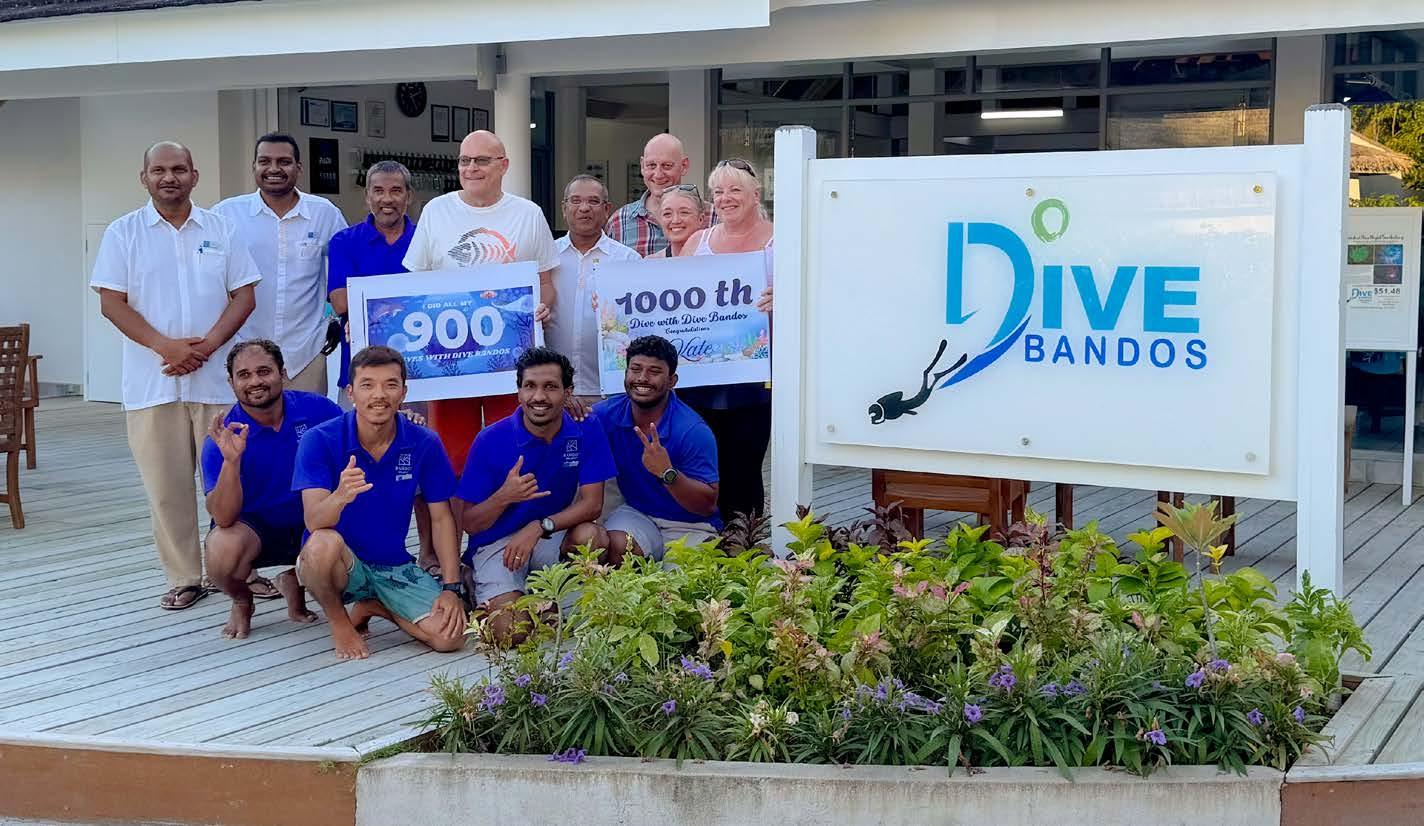
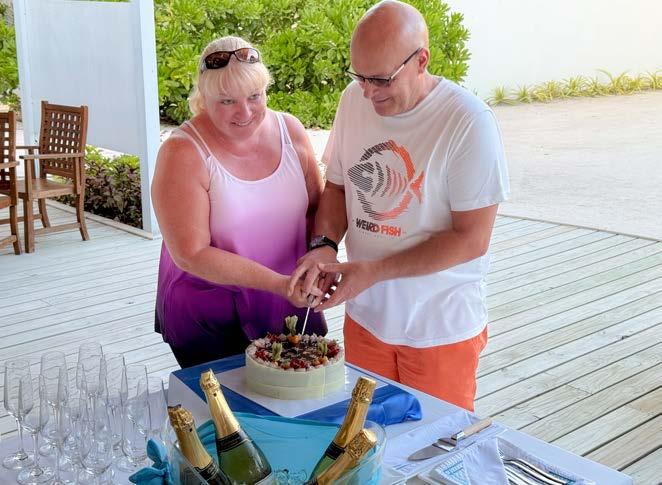
Bandos Maldives recently marked a significant milestone with two of its most loyal guests, Kate and Andy, who have shared a long-standing connection with the island.
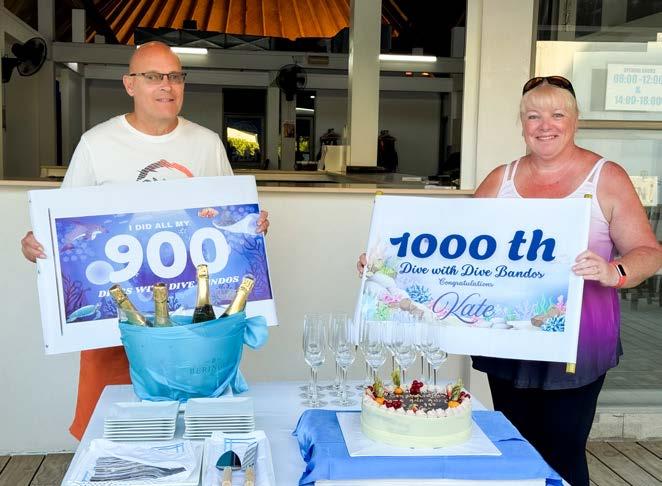
Andy achieved an impressive feat by completing his 900th dive, all undertaken with Dive Bandos.
His wife, Kate, surpassed this accomplishment by reaching her 1000th dive, with over 900 of those dives also completed
alongside the Bandos team.
The Dive Bandos team joined the couple in celebrating this memorable occasion, recognising not only their dedication to diving but also the enduring bond they have formed with the resort over the years.
Kate and Andy’s relationship with Bandos extends far beyond statistics. Having first visited the
island in 2006, they have returned every year since, making Bandos an integral part of their lives. In 2014, the couple even chose to exchange their wedding vows underwater at the resort — a unique moment that forever linked their love story with Bandos.
“Celebrating guests like Kate and Andy reminds us of what Bandos truly represents,” said Ismail Rasheed, General
Manager of Bandos Maldives.
For Bandos Maldives, moments such as these exemplify why guests continue to choose the island for both adventure and a sense of belonging. With stories like Kate and Andy’s, Bandos stands not merely as a dive destination, but as a home — both beneath and above the waves.
Kate and Andy with the Bandos dive team. PHOTO/BANDOS
Kate and Andy. PHOTO/BANDOS
Kate and Andy. PHOTO/BANDOS
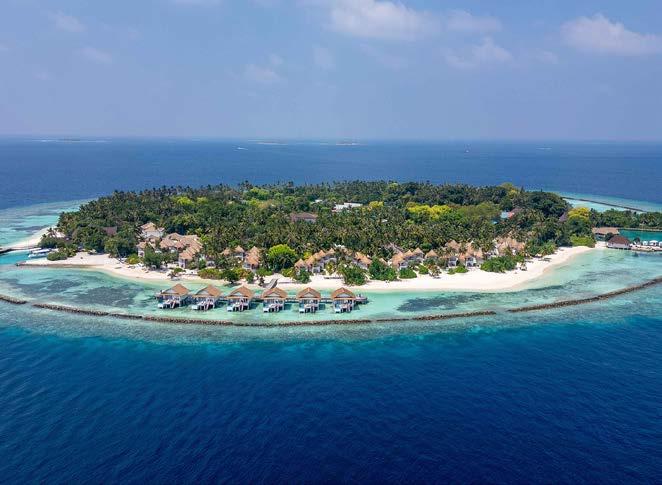
Bandos Maldives. PHOTO/BANDOS
Hidden voice, amplified: Seema Misra on shaping narratives at Atmosphere Core
By Ali Naafiz
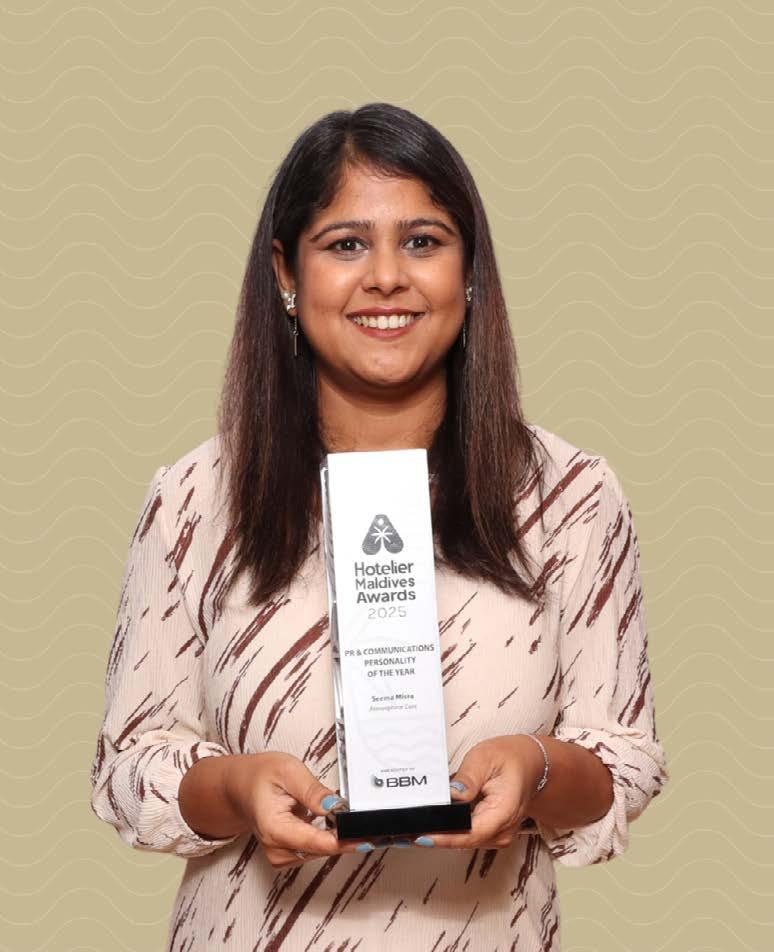
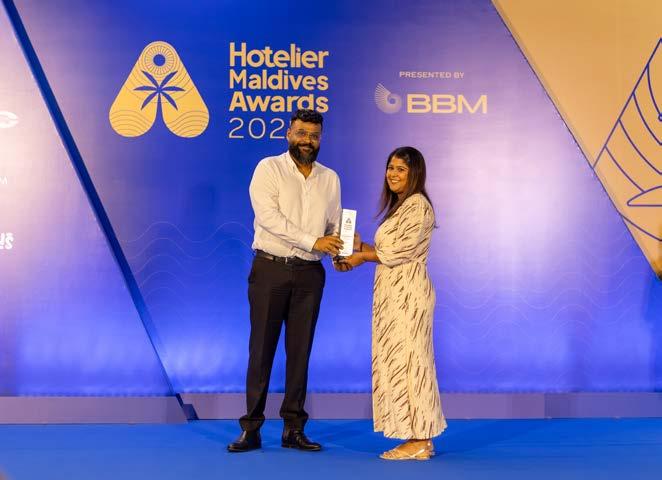
This year, the Hotelier Maldives Awards 2025 recognised Seema Misra, Assistant Director Communications at Atmosphere Core, as the ‘PR and Communications Personality of the Year’. The accolade follows five years of shaping the brand’s voice from behind the scenes. In this feature, we explore the strategy, philosophy, and journey of the professional behind one of the Maldives’ most dynamic hospitality brands.
For many in the industry, the name Seema Misra might have been one heard in passing, a signature on an email, or a contact for a press trip. Her nomination for the Hotelier Maldives Award described her as the “hidden voice of Atmosphere Core for over 5 years.” It is a description she acknowledges with a hint of amusement. “I guess the voice is hidden no more!” she remarks.
Winning the award brought a mix of emotions. “The award announcement filled me with a mix of surprise, delight and wonder,” Seema shares. “At first, I couldn’t believe it. As it slowly sank in, I was filled with gratitude for everyone who has helped me in the journey till receiving this acknowledgment.” For her, the recognition is not a solitary
achievement. “This recognition means the world to me. This isn’t just a personal honour; it’s a reflection of the collaborative spirit and relentless effort of our team at Atmosphere Core. I feel privileged to represent my team and Atmosphere Core at this prestigious platform.”
From technical communication to tropical storytelling
Seema’s path to hospitality communications was not a direct one. Her career began in the structured world of technical communication and educational content. Yet, a parallel passion for storytelling was always present, finding outlets in freelance travel blogging, illustration, and even co-managing a café in Bangalore. This blend of creative and analytical experience
At first, I couldn’t believe it. As it slowly sank in, I was filled with gratitude for everyone who has helped me in the journey till receiving this acknowledgment. Seema Misra, Assistant Director Communications, Atmosphere Core
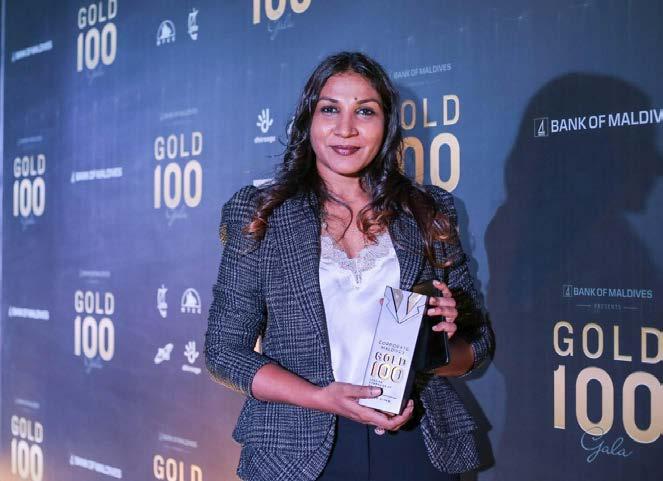
Seema with her award. PHOTO/HOTELIER MALDIVES
Seema with her award. PHOTO/HOTELIER MALDIVES
eventually led her to a point of convergence. “Somewhere along the way, I realised I wanted to blend storytelling and travel into something more meaningful,” she explains.
The opportunity to do just that came with her role at Atmosphere Core. The transition was not without its challenges. “The learning curve was steep, especially during the remote working days of the pandemic,” Seema recalls. Her journey from working remotely to being hands-on in Malé, shaping the communications strategy for a growing portfolio, has been, in her words, “a rewarding ride.”
Crafting a chorus of nine distinct voices
Atmosphere Core’s portfolio is diverse, encompassing nine
luxury island resorts, each with its own character and market position. The central task for Seema and her team is to communicate these individual identities without losing the core brand message. She rejects a monolithic approach. “With nine resorts under our umbrella, each with a distinct identity, there’s no one-size-fits-all approach,” she states. “Our job is to reflect the true spirit of each island.”
The process is one of listening and translation. “The essence of the role lies in people engagement, listening, connecting and translating those conversations into compelling narratives,” Seema says. “Whether it’s a dive instructor on an island, or feedback from a guest, everything informs the voice of the brand.” This approach allows for a nuanced
communications strategy where the unique selling points of each property are brought to the forefront. “For instance, for a sustainability-focused property, that message takes centre stage. It’s about balance: staying aligned with brand guidelines, while letting each island’s personality shine.”
To maintain this balance, the communications team relies on a structured yet flexible framework. “We follow a few thumb rules,” Seema notes. “Creating word banks, style guides, message banks, and content calendars to align efforts. Ensuring planning and collaboration within the teams goes a long way.” This internal alignment is crucial, but it is the input from the resorts themselves that provides the authenticity. “We listen to the island teams to bring their voices and stories forward,
thus celebrating the nuances.”
Cutting through the noise In a digital age saturated with travel content, achieving impactful media coverage is a significant challenge. Seema’s strategy has resulted in consistent year-onyear growth in media presence for Atmosphere Core. She attributes part of this success to the inherent appeal of the destination itself, but emphasises the need for a targeted approach. “We try to identify what makes each resort in our portfolio genuinely unique and build stories around those strengths. It’s all about authenticity and alignment.”
Building and maintaining relationships is a cornerstone of this strategy. “Working with trusted media, tailoring angles to suit diverse audiences, and ensuring that our visuals and messages remain fresh and relevant have been key,” she explains. “Strong relationships with PR agencies, journalists and a collaborative mindset have helped us secure global features, from lifestyle and diving to sustainability and design.”
A prime example of this strategy in action was the 2024 PADI Women’s Dive Award event hosted at OBLU NATURE Helengeli by SENTIDO. The resort, in partnership with TGI Maldives, was recognised with the “Outstanding Contribution to Women’s Diving” award from PADI. The event was a significant logistical undertaking that paid considerable media dividends.
“The event was a true labour of love, sparked by the creative vision of Euan Blake, our Vice President of Communications,” Seema recounts. “Months of careful
planning went into bringing the event to life.” The coordination involved close collaboration with TGI Maldives and PADI, the careful selection of media partners, and securing the attendance of key figures, including the PADI Regional Manager for the Maldives and the CEO of Visit Maldives Corporation Limited.\
The objective was twofold: to highlight Helengeli’s renowned house reef and to champion ocean advocacy through the stories of women in diving. The impact was measurable. “The result
We listen to the island teams to bring their voices and stories forward, thus celebrating the nuances.
Seema Misra, Assistant Director Communications, Atmosphere Core
Seema with colleagues from Atmosphere Core. PHOTO/HOTELIER MALDIVES
Seema with her award. PHOTO/HOTELIER MALDIVES
OBLU SELECT Lobigili. PHOTO/ATMOSPHERE
was over 25 dedicated media features, with an AVE exceeding USD 169,000, firmly positioning Helengeli island, and Maldives as a leading dive destination,” Seema reports. A key element of the press trip was its experiential nature.
“Hosting 10 journalists, eight of whom dived for the first time, allowed us to generate authentic, engaging content that resonated well beyond the event itself.”
Debut in ‘green storytelling’
Recently, Seema took on a new challenge, stepping into the role of producer and director for three short films centred on Atmosphere Core’s Green Globe certifications. It was a first for both her and the company. “I wouldn’t go that far to call myself a film director!” she says with humility. “But with a supportive team and our consistent focus on sustainability initiatives, it was not that hard – storyboarding and coordinating these short projects.”
The project’s goal was to move beyond typical corporate social responsibility messaging. “Our aim was to create appealing short visual messages that capture the essence behind our practices, and also to infuse a bit of artistic mood with creative storytelling, highlight the impact of initiatives end to end.” The inspiration, she says, came from the people implementing the sustainability practices daily. “The inspiration came from the everyday heroes on our islands, marine biologists, engineers, chefs, who are deeply committed to sustainability. We wanted to tell their stories with sincerity and soul.” The films were a new medium to convey an established commitment, reinforcing the message that “sustainability is a genuine part
of our island way of life.”
Trends and timeless lessons Looking to the future of hospitality communications in the Indian Ocean, Seema identifies several key trends. She anticipates a deeper demand for “authentic cultural connections and meaningful impact,” making purpose-led storytelling around sustainability essential. The rise of Gen-Z as a key demographic, with their digital fluency and demand for transparency, will also shape strategies.
The media landscape itself is in flux. “We also see a shift from traditional print to digital media, with journalists embracing influencer roles, and influencers increasingly recognised as credible voices in editorial spaces,” Seema observes. “And PR efforts will have to adapt to this rapidly evolving and complex digital space.” She also points to the increasing role of technology, stating that “AI and data personalisation will play a greater role in enhancing the guest journey.”
Reflecting on her own journey, Seema distils her most significant lessons into the importance of human connection. “It’s all about people,” she insists. “Build your connections. Find your workplace tribe. Care genuinely about people and nourish relationships. We grow together.” She also speaks to the importance of authenticity and adaptability: “Staying true to my natural self and values, while also embracing the work culture and adapting to the people I collaborate with. Regardless of the role, human connection and empathy are essential.”
For those aspiring to a career in the field, her advice is a call to courage. “Believe in yourself, and ask yourself, ‘What would I choose if fear wasn’t holding me back?’ The answer will often take you outside your comfort zone. And that’s where growth happens.” It is a philosophy that has clearly guided her own career, taking her from a hidden voice to an award-winning leader in her field.
Seema during a hosted dinner. PHOTO/ATMOSPHERE
OBLU SELECT Lobigili. PHOTO/ATMOSPHERE
Universal Resorts rebrands as
VERSA, launches NIVA as cornerstone of global strategy
Universal Enterprises, parent company of Universal Resorts, which pioneered Maldivian hospitality over 50 years ago, has announced the rebranding of its hotel management arm to VERSA Hospitality and simultaneously launched its new hospitality lifestyle brand, NIVA Hotels & Resorts.
This strategic shift transforms the independent family business from a respected and largely B2Bfocused resort owner and operator into a globally recognised, consumer-centric hospitality brand designed for future growth into international markets.
Ahmed Umar Maniku, Managing Director of Universal Enterprises, said: “For over five decades, we’ve operated our iconic Maldives resorts very successfully and worked closely with our tour operating partners, pioneering the very concept of Maldivian resort
life. We had a bold vision to share this extraordinary destination with the world, starting with the opening of Kurumba, the first resort in the Maldives, in 1972, and going on to create world-renowned resorts such as Baros, Kuramathi, Huvafen Fushi, Velassaru, Milaidhoo and Labriz. Now, as the global travel landscape evolves, it’s time for the group to step out, building brand recognition with our guests, partners and the wider industry.
VERSA isn’t merely a new name; it’s a strategic repositioning to unlock the full potential of our resort portfolio and position the company
for our future growth ambitions.”
This announcement coincides with the appointment of Visha Mahir, a second-generation member of the founding family and board director of Universal Enterprises, as Chief Executive Officer of VERSA Hospitality.
Visha has held a number of senior leadership positions within Universal Enterprises for the past two decades, most recently as Chief Operating Officer of Universal Resorts.
Visha Mahir, CEO of VERSA, added:
VERSA isn’t merely a new name; it’s a strategic repositioning to unlock the full potential of our resort portfolio and position the company for our future growth ambitions.
Ahmed
Umar
Maniku, Managing Director of Universal Enterprises
Baros Maldives. PHOTO/UNIVERSAL RESORTS
Kuramathi Island Resort. PHOTO/UNIVERSAL RESORTS
“It’s a privilege and genuine honour to step into this role and lead our family business into this new chapter. Our story is woven into the very fabric of this island nation. Yes, we’re recognised as innovators in Maldivian luxury hospitality, but more importantly, we’ve built our reputation on authenticity and a deep connection to our home. Our aim at VERSA is to respect that precious past, ensuring that as we expand, our heritage and heartfelt service remain at the core of everything we do.”
NIVA: the cornerstone of VERSA’s new growth strategy The creation of NIVA is central to the group’s transformation. As the new lifestyle-led hospitality brand, NIVA is positioned to be the company’s key vehicle for growth and market relevance.
Coined from the words ‘nourish’ and ‘viva’, NIVA reflects a new era of travel where emotional fulfilment takes precedence over status. It speaks to a new generation of travellers seeking genuine, unforced experiences, where the freedom to simply be nourishes life.
NIVA will unite six of Universal’s Indian Ocean properties, including the historic Kurumba in the Maldives and new destinations in the Seychelles, under one philosophy: to bring lightness back to travel. Rather than chasing curated perfection, NIVA will create spaces that allow for unplanned, unforced and unforgettable moments.
“The launch of NIVA is crucial to our evolution. It provides the common thread that links our
key properties, ensuring that no matter the location, our guests instantly recognise our core values and feel confident in the consistent level of warm and authentic service they can expect. The creation of NIVA will help us scale our unique philosophy into new markets and the brand will be the engine of our international expansion strategy,” added Mahir.
The VERSA portfolio and vision VERSA Hospitality is at the helm of the new structure, guiding the group’s direction and ambitions. The name, drawn from the word Universal, symbolises evolution: the ability to reveal new dimensions of destinations and chart a new course with a sense of timeless quality, while remaining firmly rooted in the company’s rich heritage.
The VERSA portfolio will be defined
by two distinct yet complementary divisions: NIVA, a lifestyle-led hospitality brand, and a collection of iconic standalone destinations.
NIVA Hotels & Resorts
A new lifestyle-led brand, focused on giving guests cohesive, effortless and authentic experiences, will start with a portfolio of six resorts in the Maldives and Seychelles:
• Niva Kurumba (Maldives)
• Niva Velassaru (Maldives)
• Niva Kuramathi (Maldives)
• Niva Dhigali (Maldives)
• Niva Labriz (Seychelles)
• Niva Aria (Seychelles)
– opening in 2026
THE VERSA COLLECTION – Unique and independent properties
This is a collection of distinct and acclaimed standalone destinations that Versa continues to curate,
celebrating their individual characters and histories. The collection includes iconic Maldives resorts such as Baros, Milaidhoo, Huvafen Fushi and Kandolhu, and over time will expand to include more properties worldwide.
“When we created the business, it was never just about resorts; it was always about places: what they could become and what they could mean to someone,” said Mahir.
“The name VERSA captures this idea of transformation: islands became destinations, journeys became memories and moments became part of someone’s story. From the Maldives to the wider world, Versa will continue to reveal the true character of every place in our care, sharing it with the generosity that defines our hospitality.”
As the new lifestyleled hospitality brand, NIVA is positioned to be the company’s key vehicle for growth and market relevance.
Kuramathi Island Resort. PHOTO/UNIVERSAL RESORTS
Velassaru Maldives. PHOTO/UNIVERSAL RESORTS
Nurturing teams, nourishing guests: Culinary vision of Taylor Shearman at JOALI BEING
By Mariyam Saliya Mohamed
When Taylor Shearman stepped into the role of Executive Chef at JOALI BEING in June 2024, she brought with her more than a decade of experience in kitchens across the Maldives and beyond. Having first arrived in the country in 2016, she has been part of its rapidly evolving hospitality and culinary landscape, contributing to pre-openings, shaping menus, and building strong teams. Today, at JOALI BEING, she leads with a vision that combines culinary creativity, sustainability, and a deep respect for food as an essential part of wellbeing.
“For me, food has always been more than just sustenance,” Taylor explains. “I believe food can reconnect us to nature, awaken realisation and evoke a sense of gratitude.” Unlike her previous leadership roles, including at Jumeirah Maldives, Taylor describes JOALI BEING as a place where dining transcends the usual boundaries of breakfast, lunch and dinner. Every meal is designed to align with the island’s philosophy of transformative wellness. “At
JOALI BEING, the food and dining experience is deeply intertwined with the surrounding environment, inviting guests to cultivate mindfulness and appreciation for the nourishment they are consuming. This profound connection to food and nature is what makes it different from my previous roles.”
Her approach is grounded in what she calls a “modern approach to nutrition personalised to one’s own wellbeing journey.” Menus are flexible and dynamic, designed to meet guests wherever they are.
“Each person has a unique vision of wellness. There is no single approach, so our menus remain adaptable, allowing us to meet and even exceed expectations,” she notes.
The island’s main restaurant, FLOW, features three show kitchens that reflect this diversity: B’Well, focusing on meat and poultry; Su, highlighting pescatarian dishes; and Plantae, offering vegetarian and plantbased menus. “This variety ensures
I believe food can reconnect us to nature, awaken realisation and evoke a sense of gratitude.
Taylor Shearman. PHOTO/JOALI
that every guest has options that resonate with their personal wellness aspirations,” Taylor explains. Sourcing is also central to her work. “Ingredient selection is a key focus in all that I do as a chef and as a lover of the environment. If possible, we source local. That might mean fish or lobster from Raa Atoll fishermen, Kopee Faiy or collard greens or moringa leaf from neighbouring islands, or fresh fruit from island farms. When we bring in products from abroad, we ensure our suppliers share our values and focus on ethical, environmentally responsible practices.” This balance between flexibility, locality and ethics shapes every dish that leaves her kitchen.
Taylor is no stranger to the challenges of creating culinary destinations in the Maldives. She was part of the pre-opening team
at JOALI Maldives, where she helped establish standards and introduce dishes that remain on the menus years later. “That was my first pre-opening, and it came with a sense of excitement and urgency. You see progress quickly, and the push to ‘make it happen’ is energetic. It’s rewarding to see some of those dishes still there today.” By contrast, taking the reins at JOALI BEING meant entering an established operation. “Coming into a property that is already established is a whole different ball game. There’s a team in place, and standards that have been followed for years. Any changes take time. I focused on my team first. Without them, I cannot make a kitchen run. Creating stability and then adjusting standards to enhance efficiency was the starting point. Now it’s the creative stage, where we are changing
menus and exploring new ideas.”
In the highly competitive Maldivian luxury resort sector, Taylor believes JOALI BEING’s strength lies in its integration of food and wellness. “We focus on wellbeing from the inside. Our four pillars –Microbiome, Skin, Mind and Energy – are at the forefront of all the food we produce. But wellness does not mean boring. Guests may want a nourishing dish one day and a grass-fed beef burger the next. Both are part of the experience.”
Taylor is recognised for her meticulous organisational skills, qualities she sees as essential for managing a diverse team and ensuring consistency across multiple dining outlets. are essential for managing a diverse team and ensuring consistency across multiple dining outlets.
At JOALI BEING, the food and dining experience is deeply intertwined with the surrounding environment, inviting guests to cultivate mindfulness and appreciation for the nourishment they are consuming.
Taylor Shearman, Executive Chef, JOALI BEING
Culinary highlights at JOALI BEING. PHOTO/JOALI
FLOW at JOALI BEING. PHOTO/JOALI
Destination dining at JOALI BEING. PHOTO/JOALI
Taylor Shearman. PHOTO/MARIYAM SALIYA MOHAMED
Chef Taylor Shearman
“If my team knows what is going on, my job is a lot easier. Communication is key. The more organised we are in the kitchen, the better the food will be. Having the time to put energy into what you’re making enhances the food. I don’t like to rush. Everything that comes out of my kitchen is made with heart and soul from my team.” She applies this same attention from sourcing to plating. “We thoughtfully produce the food from the very start at the sourcing stage to the end product plated for our guests.”
Taylor began her career as an apprentice chef in Australia before moving overseas, eventually
working in the Caribbean and later the Maldives. Having risen to Executive Chef by the age of 24, she knows first-hand the challenges of developing within a demanding profession. “Anyone who knows me knows I bring in a lot of young chefs to any team I work in. I didn’t always have a chef who had time for me, so I make sure I have time for my team, whether it’s for work or personal matters. Growth and development are important. Some of my team members today were interns or commis chefs when I first came to the Maldives and are now in senior positions. That’s what leadership is about – passing on knowledge and giving people
the best chance to succeed.”
Her commitment extends to creating space for women in kitchens. Currently, over one-third of the culinary team at JOALI BEING are women. “Our industry is tough, especially for women, so creating balance is important. Having women in the team brings different strengths, and together we are stronger. With both myself and my Executive Sous Chef being female, the only property in Maldives with this leadership structure, we’ve created a more empathetic and balanced team culture.”
Reflecting on her years in the Maldives, Taylor points to two
Love what you do, day in and day out. With the hours we work, you have to love it. Empathy and compassion in leadership go a long way.
Taylor Shearman, Executive Chef, JOALI BEING
significant changes: the growth of the industry itself and greater accessibility to global produce. “When I first came, it was much harder to get ingredients. Now I can almost get anything from anywhere at any time. That opens up new possibilities for creativity and guest experience.” Yet she also emphasises the need for balance in the country’s growth. “We need to be more sustainable in the way we expand. Maldives is limited in space and environment. Guests come for the reefs and the natural beauty, so growth must protect these assets and local culture.”
Asked about the most valuable lesson she has learned, Taylor replies: “Love what you do, day in and day out. With the hours we work, you have to love it. Empathy and compassion in leadership go a long way. Gone are the days of dominating, micromanaging leadership styles. Creativity is never-ending – you’re never too good to stop learning. Everyone has something to teach if you’re willing to listen.”
As luxury dining in the Maldives continues to evolve, Taylor sees wellness-focused cuisine as a permanent shift rather than a passing trend. “This is a lifestyle more people are adopting. It’s here to stay.” For her, the future lies in continuing to innovate while grounding every dish in purpose and connection. “Food should be joyful and fulfilling. It should nurture you, reconnect you with nature, and support your journey. That’s the philosophy we carry at JOALI BEING.”
Providing proven cost effective timber solutions to the Maldives
Taylor Shearman. PHOTO/JOALI
Sun Siyam’s Brand (R)evolution: From independent resorts to unified identity
By Ali Naafiz
After 35 years of growth across the Maldives and Sri Lanka, Sun Siyam has embarked on what its leadership calls a brand “(r) evolution” — a transformation that reaches far deeper than refreshed logos and a new website. It is a deliberate re-articulation of purpose, operations, and guest experience, aligning six distinct properties behind one idea: “The Home of the Maldivian Spirit.”
In doing so, the company aims to present a unified, confident, homegrown brand on the world stage while sharpening the commercial clarity that travel partners and guests expect.
Chief Executive Officer Deepak
Booneady frames the impetus as both reflective and forwardlooking. “After 35 years of growth, it became clear that Sun Siyam had evolved far beyond its visual identity,” he says. “We are no longer a collection of independent resorts; we are a unified brand with a clear purpose: to represent the true essence of Maldivian
hospitality while remaining relevant to modern travellers.”
The new brand architecture binds properties through shared values, service philosophy and operational discipline, while preserving the individuality that makes each destination unique.
Why Now: A Moment of Maturity
The Maldives of the early 1990s is not the Maldives of today. Supply, source markets and guest expectations have diversified; competitive pressure and digital discovery have intensified. In that context, Sun Siyam’s leadership regarded 35 years not as an endpoint but as an inflection point. “This (r)evolution was not about changing who we are, but about expressing it more powerfully,” says Booneady. “It was time to take everything we have built and express it through a more coherent, confident identity that celebrates both our roots and our ambition.”
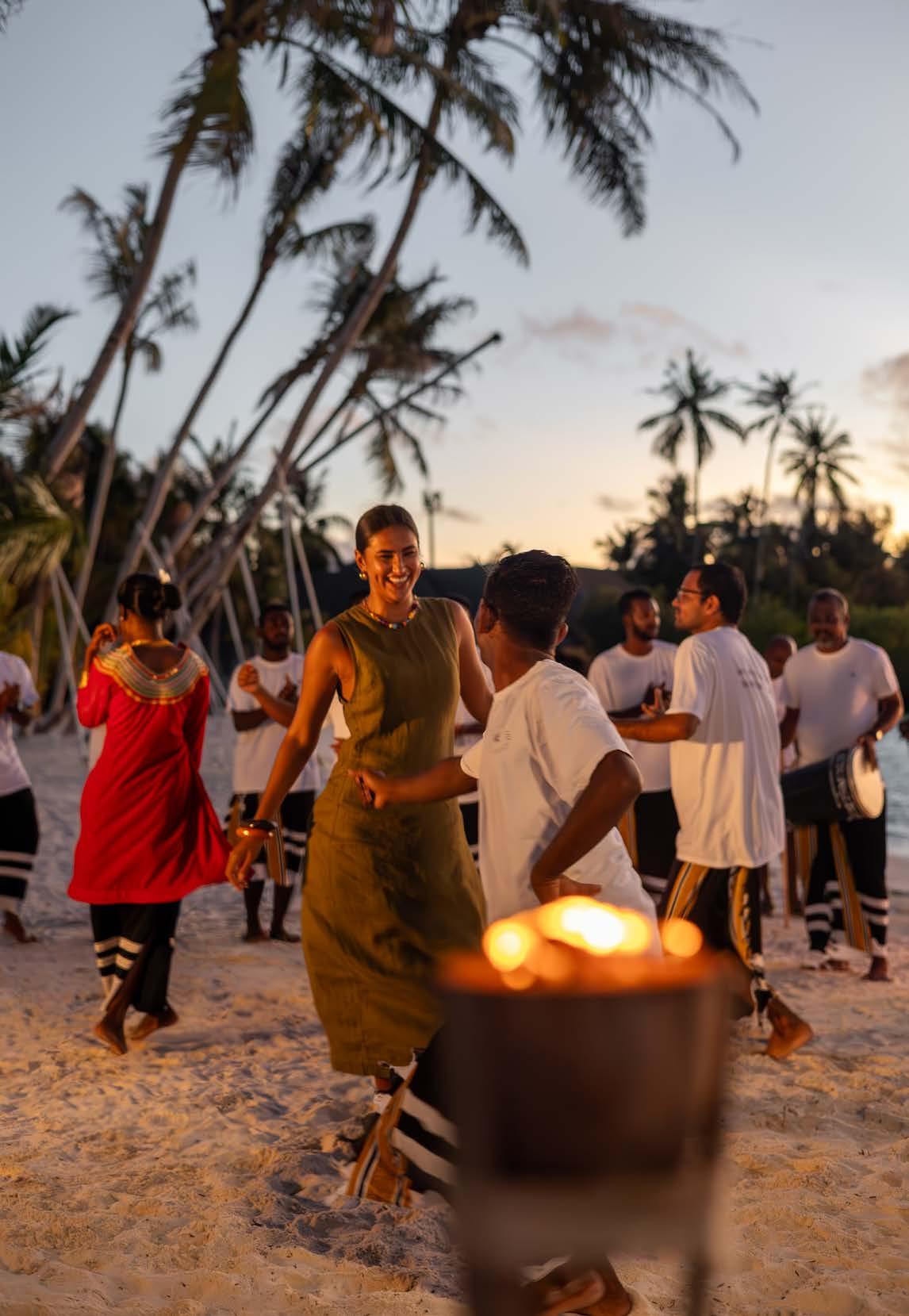
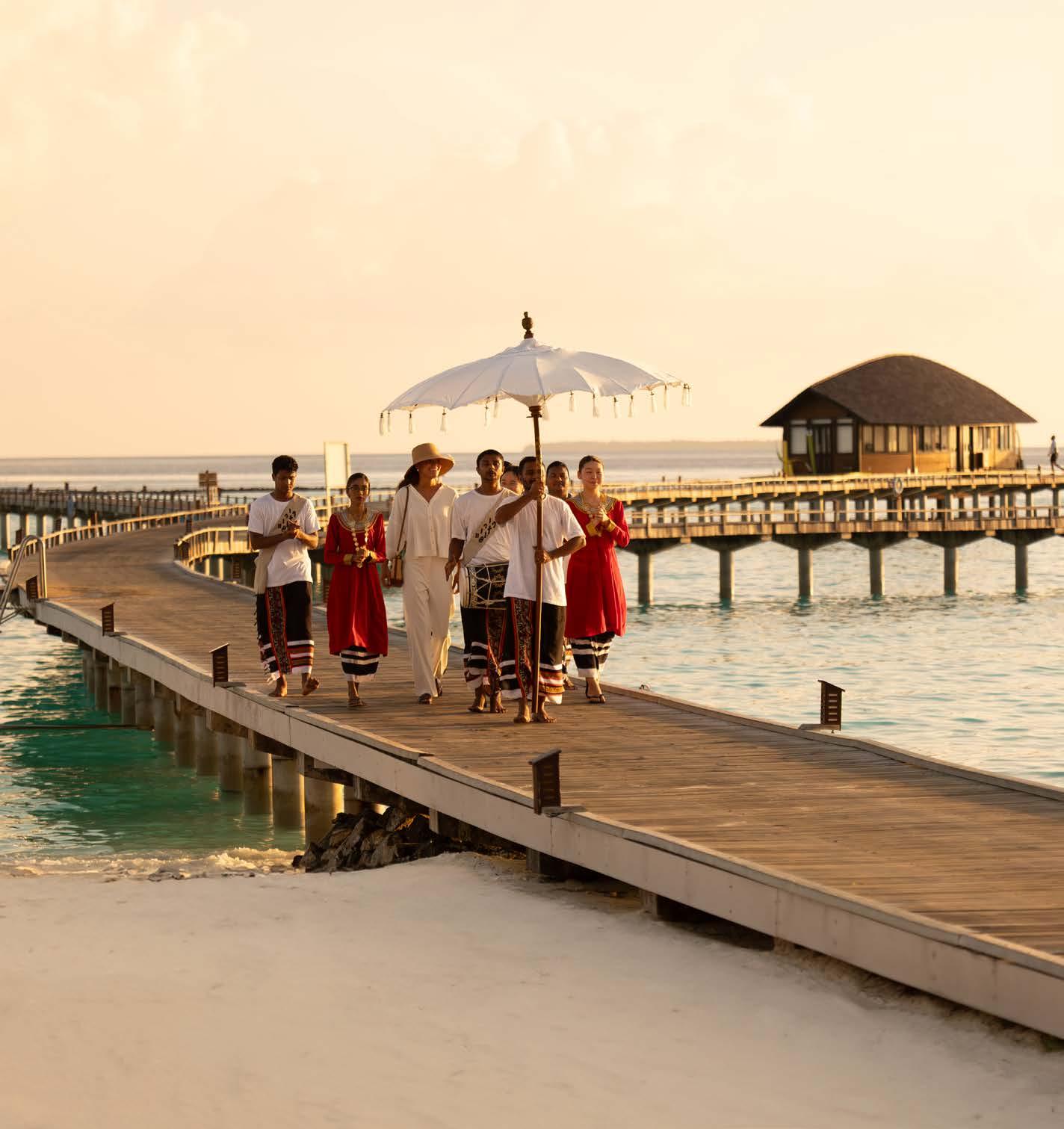
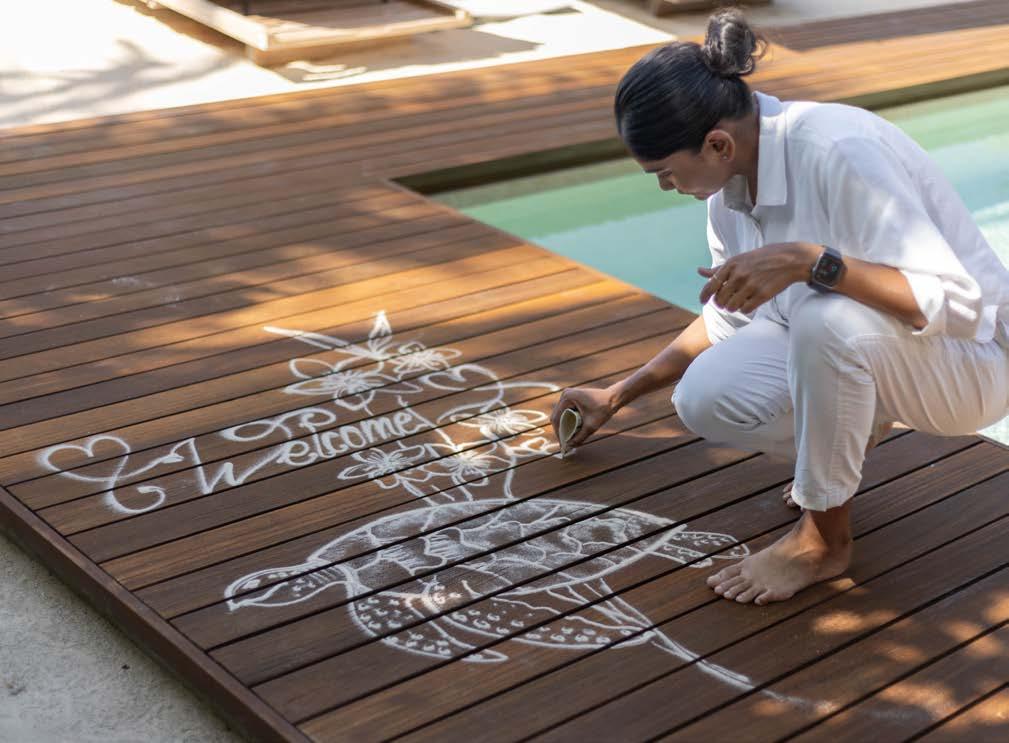
A Maldivian welcome at Sun Siyam Olhuveli. PHOTO/SUN SIYAM
The decision to unify under a single identity is, in part, a statement of maturity for a Maldivian-owned brand with global ambitions. It is also a reaffirmation of founder Ahmed Siyam Mohamed’s original vision. “Everything we do is a continuation of Mr Ahmed Siyam Mohamed’s belief in the beauty, warmth, and authenticity of the Maldivian spirit,” Booneady adds. “What began as his dream has become a legacy we are honoured to carry forward.”
From Slogan to Standard: “The Home of the Maldivian Spirit” Many resort companies speak to culture; fewer encode it into daily practice. Sun Siyam positions its
with local interpretation. “Our Sri Lankan retreat adds another beautiful layer to this narrative,” Booneady notes. “It extends the spirit of the Maldives beyond its shores, translating our brand values through a distinct local lens.”
A Portfolio with Clear Lanes: Luxury, Privé and Lifestyle
Central to the new structure is a three-tier collection that clarifies proposition by guest need-state and price-value expectation:
• Luxury Collection — anchored by Sun Siyam Iru Fushi — positions refined indulgence and timeless sophistication.
• Privé Collection — Sun Siyam Iru Veli, Sun Siyam Vilu Reef and Sun Siyam Pasikudah — focuses on barefoot intimacy, privacy and personalised experiences.
• Lifestyle Collection — Siyam World and Olhuveli — emphasises energy, connection and family-friendly fun.
anchor as operational doctrine rather than marketing copy. “‘The Home of the Maldivian Spirit’ is not a slogan — it is the heartbeat of who we are,” says Booneady. That spirit is delivered through choices that are small and cumulative: tones of voice in guest interactions; culinary cues like the scent and flavour of coconut; design gestures that mirror island rhythms; and an approach to welcome and farewell that prioritises warmth over theatre.
Crucially, the company’s Maldivian identity travels. Whether in the Maldives or at Sun Siyam Pasikudah in Sri Lanka, the promise is a consistent feeling of belonging,
external expertise and internal execution. JHAGGER&CO worked with the leadership to distil the “emotional essence” of the brand into a clear strategic platform. StudioSixty7 in London refined the creative identity and visual language so that it feels contemporary but grounded in place. Hospitality veteran Dominik Ruhl helped translate promise into practice by strengthening service and operational foundations.
Yet the CEO is explicit about where the momentum came from. “The real driving force was our own people,” he says. “From engineering and operations to PR, design and guest relations,
every department helped translate our purpose into reality.
This rebrand belongs as much to them as to anyone involved.”
In effect, Sun Siyam treated the exercise as a company-wide change programme — crossfunctional, iterative, and centred on frontline ownership.
From Brand Book to Back-of-House:
Operationalising Purpose
“Purpose-driven hospitality” is the phrase Booneady uses to explain how Sun Siyam intends to make impact and experience mutually reinforcing. Practically, it is housed in Sun Siyam Cares, the platform for environmental
action, community engagement and colleague development. Coral restoration, renewable energy roll-outs and plastic upcycling sit alongside a plant-based dining programme and the Sun Siyam Apprenticeship Programme for young Maldivians, developed with the Ministry of Higher Education.
“Purpose-driven hospitality for us means creating experiences with intent — where comfort, culture and conscience coexist,” says Booneady. “Every stay contributes to a positive impact — ensuring our hospitality not only delights in the moment but also leaves a meaningful legacy.”
The segmentation is as much an operational tool as a marketing frame. It informs labour modelling, amenities planning, F&B cadence, entertainment programming and inventory management; it also streamlines contracting conversations with tour operators and travel advisors. “Strategically, this enhances our storytelling and strengthens commercial positioning,” Booneady explains. “For guests, it simplifies choice; for partners, it makes matching property to audience more precise — while every stay still reflects the same signature warmth.”
Designed with and for Operators: How the Transformation Happened The rebrand was shaped by
It was time to take everything we have built and express it through a more coherent, confident identity that celebrates both our roots and our ambition.
Deepak Booneady Chief Executive Officer, Sun Siyam
Guests at Sun Siyam Resorts. PHOTO/SUN SIYAM
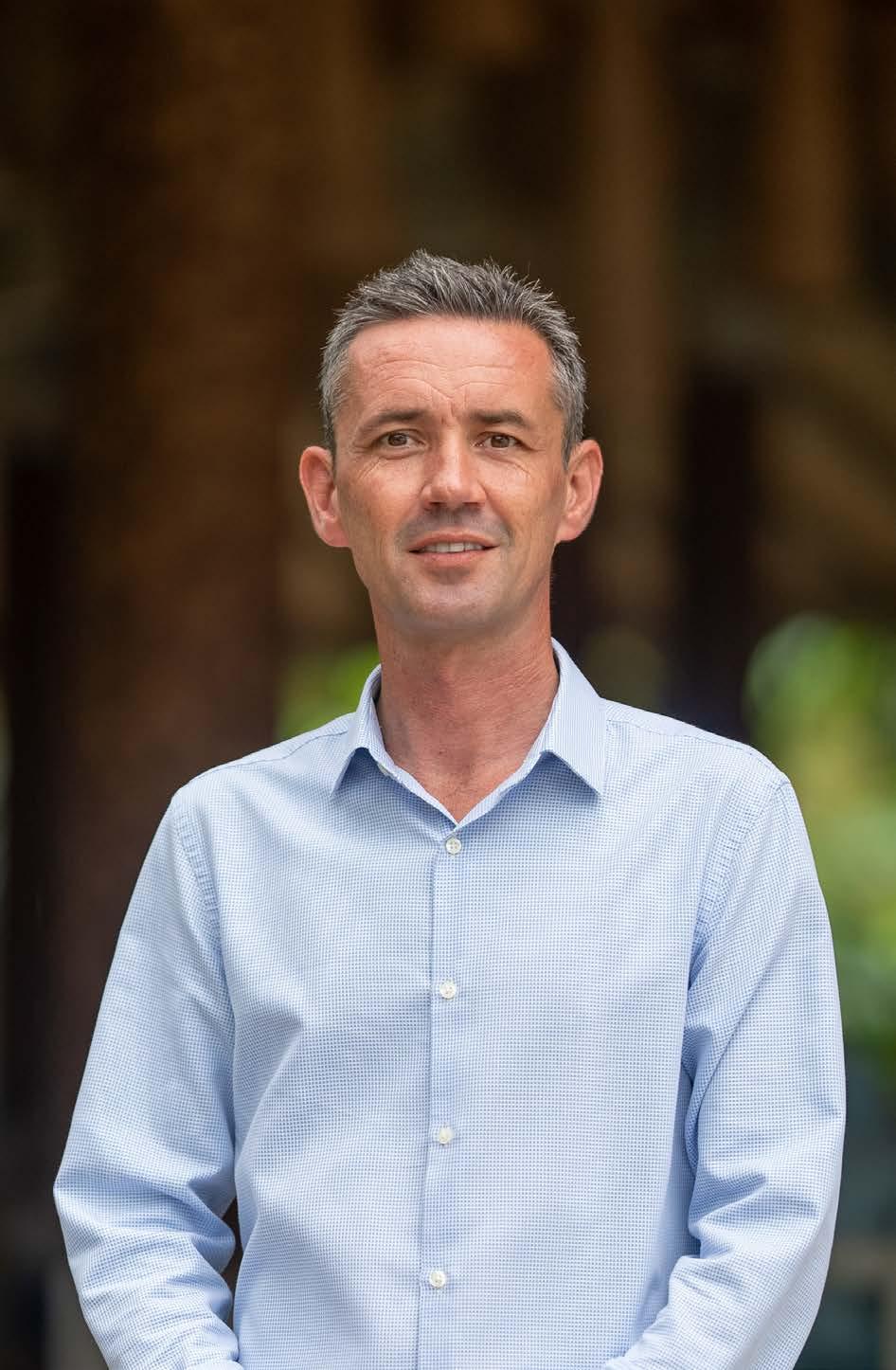
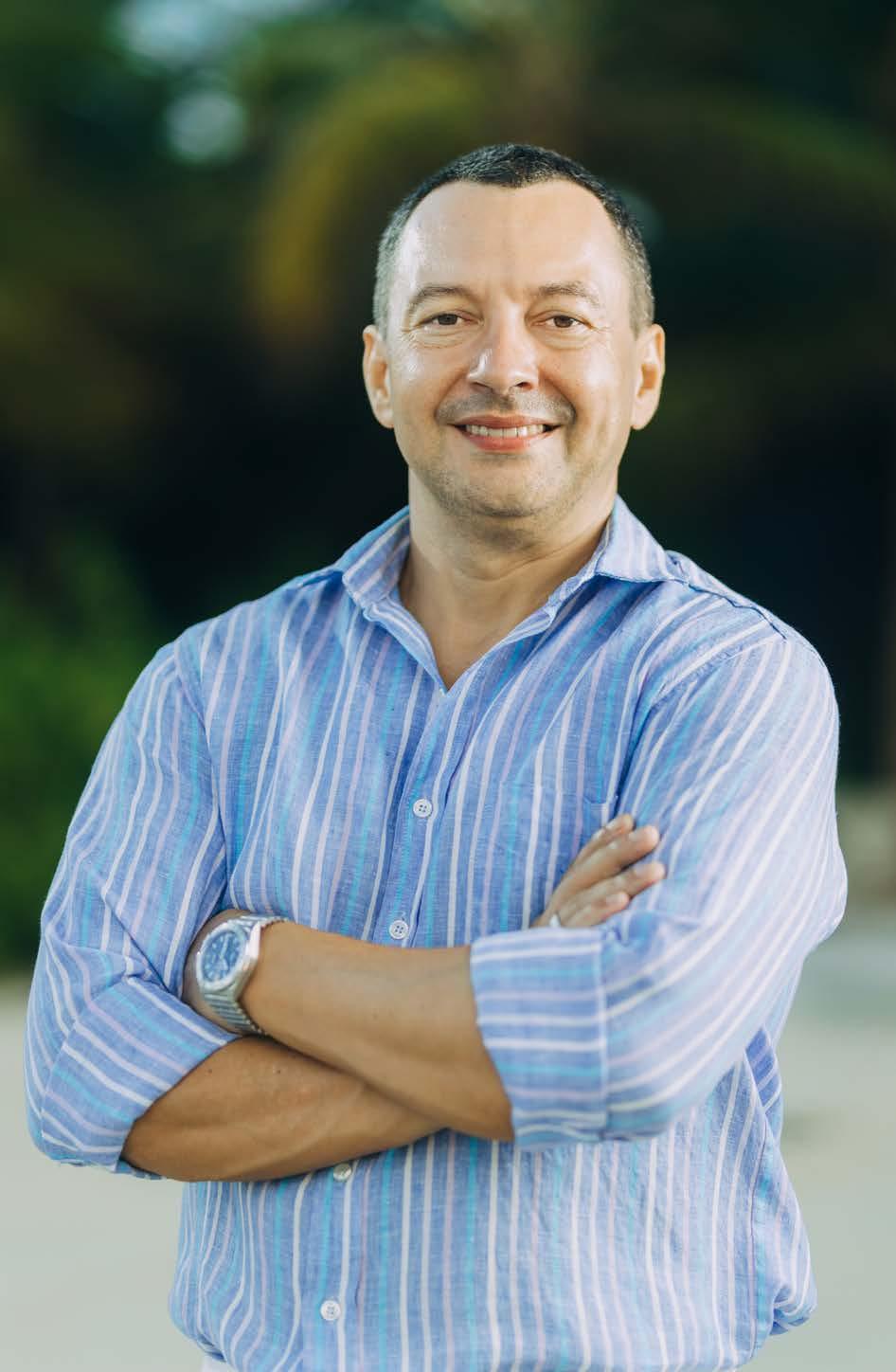
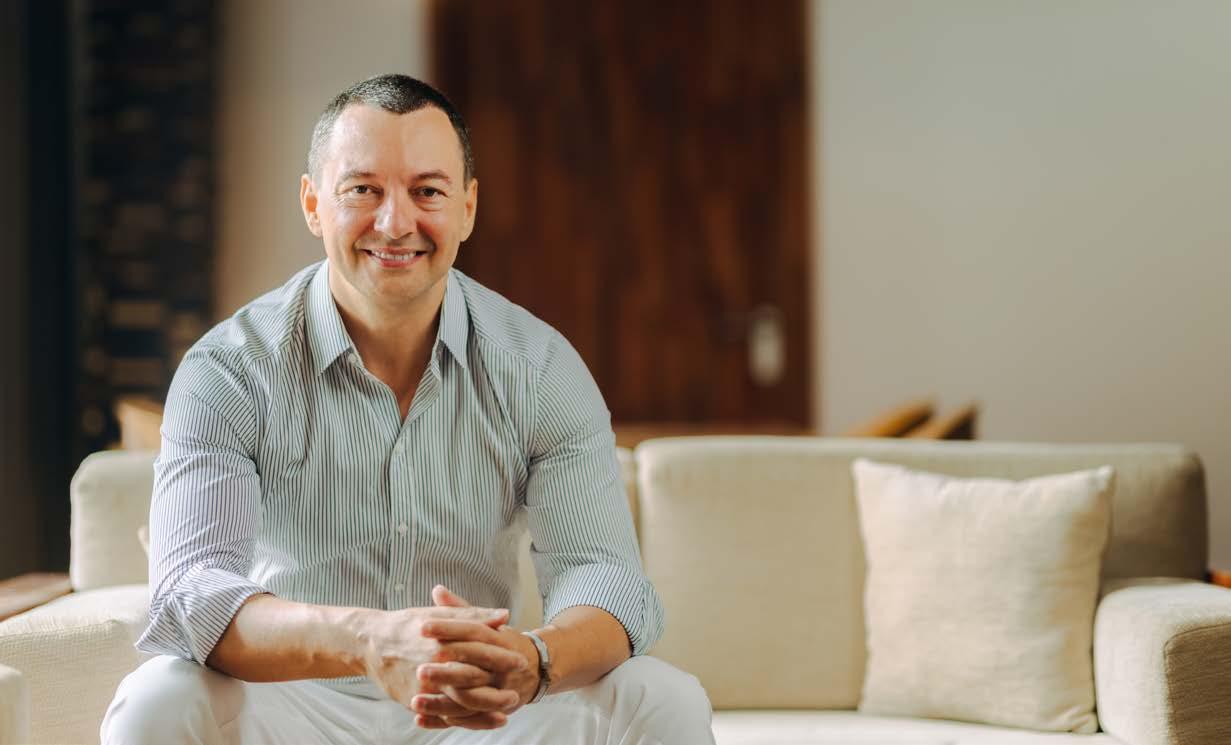
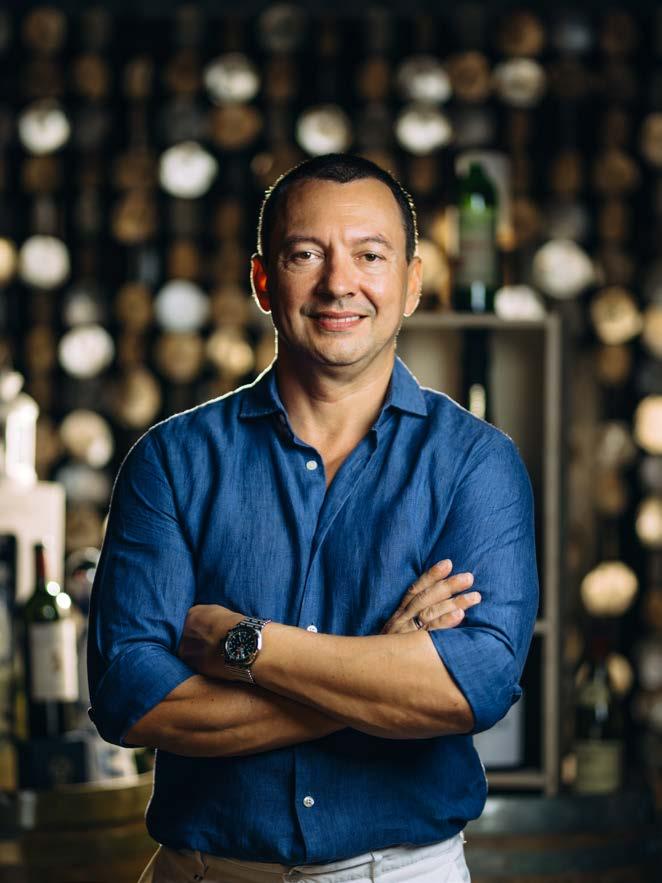
Deepak Booneady. PHOTO/SUN SIYAM
Procurement choices, waste handling, energy use and menu engineering are aligned with measurable goals; guest touchpoints are designed to invite participation rather than mere observation.
Signature Experiences: Codifying Emotion at Scale
To avoid sameness and deliver tangible differentiation, Sun Siyam has created a suite of Signature Experiences that can be deployed, adapted and iterated across resorts:
• Maldivian Roots — weekly
culinary and cultural journeys that centre local stories and flavours.
• Insta Villa — the Maldives’ first over-water photo studio.
• Sun Siyam Beach Club — a day-to-night social hub that phases from relaxed afternoons to music-led evenings.
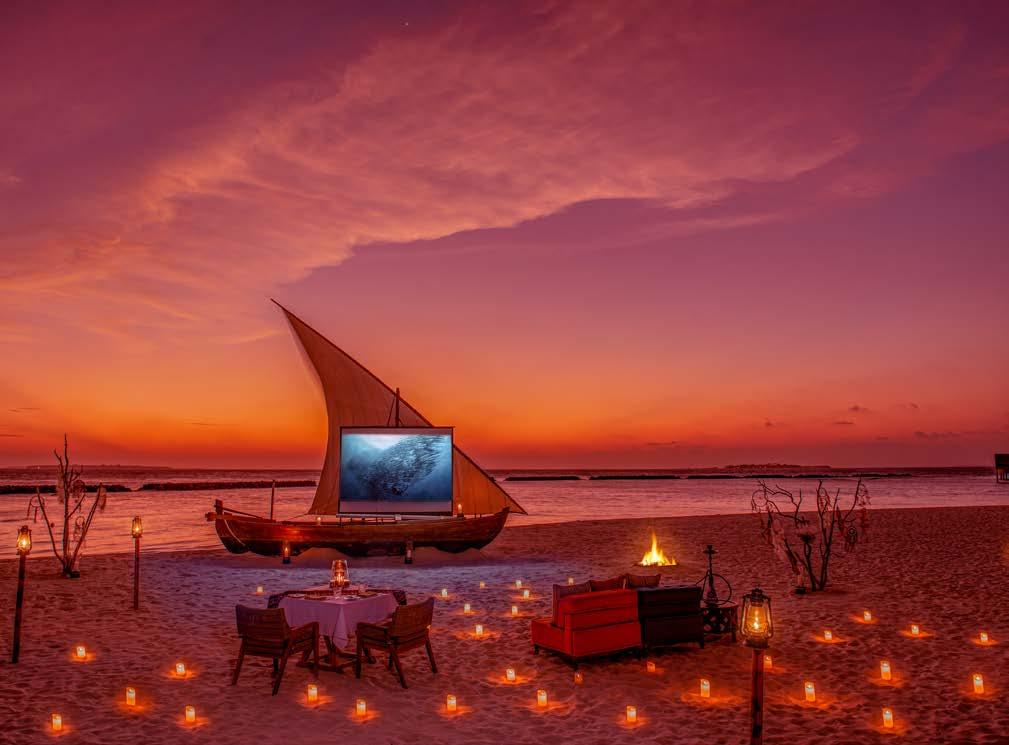
• Wow Welcome, Hidden Treasure Chests, Plant-Based Bliss dining and Cinema by Moonlight — rituals and moments designed to punctuate a stay with surprise and memory.
“These experiences were born from our desire to bring the Maldivian spirit to life in ways that go beyond the villa,” says Booneady. “They are not static; they are designed
to grow alongside guest interests and trends.” Operationally, each experience comes with a playbook — staffing patterns, mise-en-place lists, safety protocols, revenue targets and NPS markers — so that creativity sits on top of repeatable process.
People First: Training, Culture and Service Standards
company’s internal personality triad — kind-spirited, warmspirited, high-spirited — provides a behavioural shorthand that teams can recognise and use.
loops between guest insights, training and product development.
Loyalty with a Point of View: Siyam Rewards
Our new identity has given us the opportunity to reaffirm who we are at our core. It is not about changing who we are, but about expressing who we have always been, with renewed clarity and pride.
Deepak Booneady Chief Executive Officer, Sun
Siyam
Any brand reset fails without behaviour change. Sun Siyam has used the new identity to refresh performance rhythms and training content. Daily briefings, leadership modules and new-joiner induction are anchored in a simple purpose statement: We Champion Extraordinary Experiences. The
“Our new identity has given us the opportunity to reaffirm who we are at our core,” Booneady says. “It is not about changing who we are, but about expressing who we have always been, with renewed clarity and pride.”
In practice, that translates into coaching on personalisation, memory-making and guest recovery; greater empowerment at the edge to fix issues in the moment; and structured feedback
The new loyalty platform, Siyam Rewards, extends the idea of belonging beyond a single trip. Members receive tiered benefits — exclusive offers, upgrades, early check-in/late check-out — alongside curated experiences that map to travel preferences. The digital design makes earning and redemption seamless across the portfolio.
“What makes Siyam Rewards distinctive is its purpose-driven approach,” says Booneady. “Every stay contributes to Sun Siyam Cares; guests can even choose to offset their carbon footprint.” Loyalty, in other words, is being positioned not just as recognition but as shared purpose — turning repeat visits into a relationship with impact.
Consistency with Character: One Framework, Six Voices
Unifying six resorts — including one in Sri Lanka — under a single identity required a framework rigorous enough to standardise essentials and flexible enough to celebrate difference. Tone of voice, visual guidelines and guest philosophy are consistent; the staging varies by property. Siyam World leans into high-energy adventure; Iru Veli and Vilu Reef curate barefoot intimacy; Iru Fushi elevates refinement; Olhuveli majors in family connection; Pasikudah layers Maldivian spirit with Sri Lankan cultural depth.
“It was a challenge, but a rewarding one,” Booneady reflects. “Each resort has its own soul. Our task
Guests at Sun Siyam Resorts. PHOTO/SUN SIYAM
was to create a unifying framework that celebrates individuality while strengthening connection.”
Challenges and Early Wins
Rolling out a transformation across multiple islands and a neighbouring country meant complex orchestration: synchronising digital cutovers, re-skinning on-property collateral, retraining teams, and aligning distribution partners. “The real challenge was not resistance to change — our teams embraced it — but ensuring that every detail, from digital presence to on-site delivery, reflected the same renewed spirit,” says Booneady.
The early outcome, he reports, is momentum: internal pride, partner clarity and guest response. “There’s a genuine sense of excitement around what this new chapter represents,” he adds. “It feels less like a change and more like a natural evolution — the next level of who we are, expressed with greater clarity, creativity and confidence.”
Setting
the Stage for the Future of Island Travel
Sun Siyam’s thesis about the future is direct: meaning will matter more than ever. Travellers will still want turquoise lagoons and big-sky horizons; they will also ask what their holiday stands for. “The future of island travel will be defined by meaning,” Booneady says. “We see this shift as an opportunity to lead by example — combining innovation with authenticity, ensuring progress never comes at the cost of identity.”
For the company, leadership will be measured in four pillars — People, Planet, Place and Prosperity — that connect
talent pipelines and community outcomes with environmental stewardship and resilient economics. The Apprenticeship Programme channels local youth into hospitality careers; coral work and renewable projects build environmental capital; Signature Experiences protect cultural integrity by making it the product, not just the backdrop.
A Competitive Edge for the Next Decade
The refreshed brand architecture gives Sun Siyam three advantages for the years ahead:
• Sharper Relevance — by anchoring in authenticity and staging experiences that are meaning-rich and Instagrammable without being superficial.
• Operational Discipline — by translating purpose into playbooks, training and metrics that can scale while keeping service human.
• Commercial Clarity — by segmenting the portfolio so partners can sell with precision and guests can choose with confidence.
“We see three powerful forces shaping hospitality: authenticity, personalisation and responsibility,” says Booneady. “Our evolution empowers us not only to stay relevant but to lead the next era of meaningful island hospitality.”
Evolving with Heart
In the end, Sun Siyam’s (r)evolution is an alignment exercise: aligning past with future, promise with practice, culture with commerce.
It codifies what long-time guests have felt and what new audiences seek — that the most lasting luxury in the Maldives is often human: welcome, memory, belonging.
“Our goal is simple,” Booneady concludes. “To make guests feel the embrace of Maldivian hospitality — the kind that comes from the heart. As we continue to grow, that spirit remains our compass.”
Guests at Sun Siyam Resorts. PHOTO/SUN SIYAM
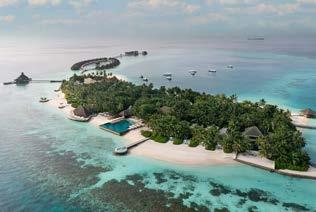
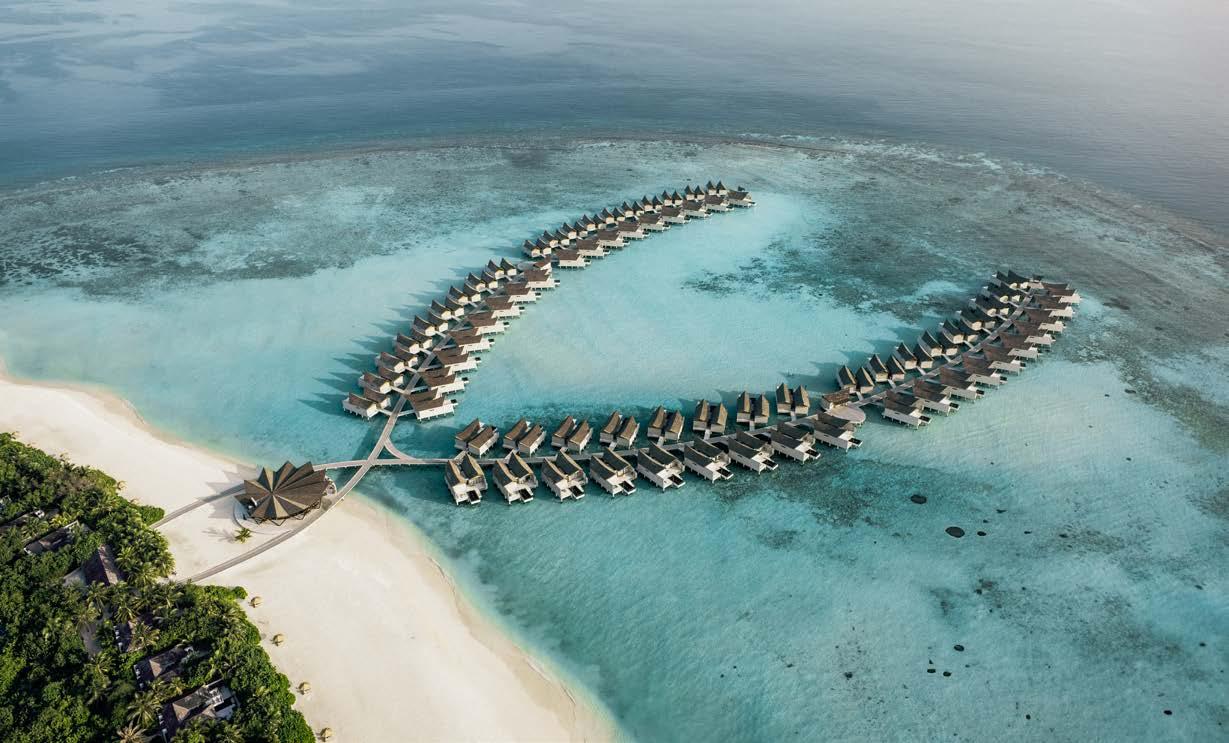
Sun Siyam Iru Fushi. PHOTO/SUN SIYAM
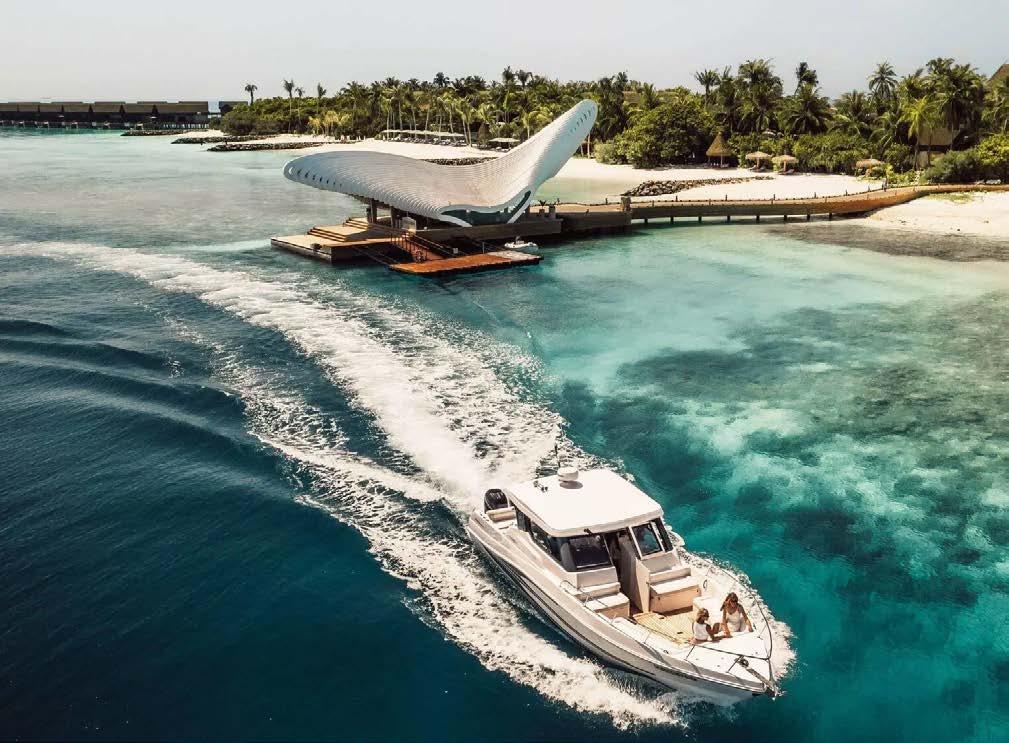
Sun Siyam Vilu Reef. PHOTO/SUN SIYAM
Sun Siyam at 35: a Maldivian legacy, reimagined
When Hon. Ahmed Siyam Mohamed first stepped into the Maldives’ nascent tourism industry in the 1980s, the country was only beginning to find its footing on the world map.
By Ali Naafiz
He saw more than lagoons and postcards. He saw home—and a simple, powerful idea: to share the warmth of the islands and the people with the world. That founding sentiment did not stay a line in a notebook. It became a way of working, a blueprint for growth, and a promise that still anchors the brand’s evolution today.
As Sun Siyam marks 35 years, the company is unveiling refreshed brand assets, a new website, and a refined portfolio architecture—changes that speak to the future without losing sight of the past. The rebrand is built around a phrase that captures the company’s enduring ethos: The Home of the Maldivian Spirit. It is both a tribute and a direction of travel, connecting guests to a living culture while modernising
how the brand is expressed across resorts, experiences and digital touchpoints.
As Group Deputy Managing Director Zulaikha Manik (Zuley) notes, “The Home of the Maldivian Spirit is both a tribute and a progression… It reflects the same values that inspired our first resort, Vilu Reef—a place where guests feel care, warmth, and belonging. It allows us to evolve while staying true to who we are.”
“When Mr Siyam founded the company, his dream was to share the warmth of the islands and the people with the world. The new identity transforms that founding sentiment into a timeless promise: a home where the Maldivian way of life is cherished, experienced, and celebrated. By positioning
itself as The Home of the Maldivian Spirit, Sun Siyam not only honours his legacy but also reinforces the emotional connection between guests, the islands, and the people who make their every stay meaningful,” she adds.
The founder’s thread Any discussion of Sun Siyam’s present begins with Mr Siyam’s beginnings. Raised among the rhythms of island life, he understood that hospitality here was more than a service standard; it was an exchange of care—an instinctive generosity expressed in how people welcome, cook, fix, guide and listen. In 1990 he launched Sun Travels, opening a pathway for Maldivians to build careers in a field then dominated by foreign operators. In 1998 he opened Vilu Reef, the
Ahmed Siyam Mohamed. PHOTO/SUN SIYAM
Sun Siyam Iru Veli. PHOTO/SUN SIYAM
group’s first resort and the place where brand values—warmth, belonging, sincerity—moved from ambition to built reality.
What makes that thread durable is the founder’s belief that business should be a force for empowerment. Over three and a half decades, Sun Siyam has invested in homegrown talent, skills training and leadership opportunities. A point of pride within the company is that its resorts are led entirely by Maldivians—a visible expression of the founder’s conviction that the people of these islands should shape how their country is experienced.
this balance of clarity and heart. After Vilu Reef (1998) set the blueprint, the 2000s brought Olhuveli and Iru Fushi, which broadened the brand’s reach from romantic getaways to multigenerational stays. In 2014, Sun Siyam Pasikudah in Sri Lanka took Maldivian hospitality across the water, demonstrating that the group’s approach—authentic warmth, a sense of belonging, attention to local context— travels well. Iru Veli followed in 2018 with a stronger emphasis on premium indulgence and an easy cadence of days defined by ocean, dining, and unhurried time.
From one resort to The House of Siyam
The new brand architecture clarifies how the portfolio meets different traveller needs while keeping every experience rooted in place. Under the umbrella of The House of Siyam, the properties are now organised into distinct collections—Luxury, Privé and Lifestyle—to help guests navigate the choice of settings, ambiences and inclusions. It is a light touch, intended less as a label than a wayfinding tool; the identity work centres on tone, storytelling and a lived promise of home.
The company’s major milestones chart an evolution guided by
way a steward will quietly fix a small inconvenience before it becomes a complaint. That temperature is not accidental. It is cultivated in how the company hires, trains and promotes, in how leaders are expected to be visible and approachable, and in how decisions weigh guest experience alongside community impact.
“The soul of Sun Siyam lives in our people. Their sincerity, their smiles, their sense of pride—it’s what gives our brand emotional depth. Even as we embrace modern design and digital innovation, our essence remains unchanged,” says Zuley.
Then came Siyam World in 2021, a pivotal step that reframed what a Maldivian resort experience could be. Its WOW! 24-Hour Premium All-Inclusive plan changed expectations of freedom and variety, while the island’s features— the Maldives’ largest floating water park, a unique horse ranch, and a breadth of dining venues— made room for play, spontaneity and community. Recognition followed: in 2025, Tripadvisor ranked Siyam World among the Top 10 Hotels in the World in its Travellers’ Choice Best of the Best; Sun Siyam Pasikudah joined the winners’ circle among the top 10% of resorts globally. The accolades matter, but mainly as markers on a longer road: a Maldivian brand growing in confidence without losing its centre.
The soul, expressed Ask long-serving team members what sets Sun Siyam apart and the answer comes back to people. The brand’s soul is its human temperature—the way a welcome feels, the way a manager knows a returning guest’s habits, the
some still rise through the open-air bathrooms of the beach villas, a small, daily reminder that design decisions have consequences.
Maldivian Roots: an experience, not a display
The brand evolution debuts a “Maldivian Roots” Signature Experience that clarifies what Sun Siyam has always tried to do: connect travellers to the living culture of the islands, not stage it as spectacle. The programme threads foodways, music, craft and story into gentle encounters—a cooking session
Internally, programmes such as the Sun Siyam Apprenticeship create ladders for young Maldivians to enter hospitality across departments—from culinary and dive operations to engineering and IT—building skills while reinforcing pride in local identity. Externally, the company’s Sun Siyam Cares framework ties sustainability and community initiatives into daily resort life: sourcing fish and produce from nearby islands; creating platforms for women entrepreneurs to sell crafts and cuisine; bringing school groups in to see behind the scenes of a modern resort operation; and—at Siyam World—operating a Plastic Upcycling Centre with CLEAN Maldives that transforms more than 10,000 kilograms of waste annually into usable items like sunbeds and planters. These are practical steps that also carry a message: the islands are not a backdrop; they are a living home to be respected.
That respect has deep roots. During the development of Vilu Reef, for example, the master plan was altered to preserve stand-out palm trees rather than fell them;
The soul of Sun Siyam lives in our people. Their sincerity, their smiles, their sense of pride—it’s what gives our brand emotional depth.
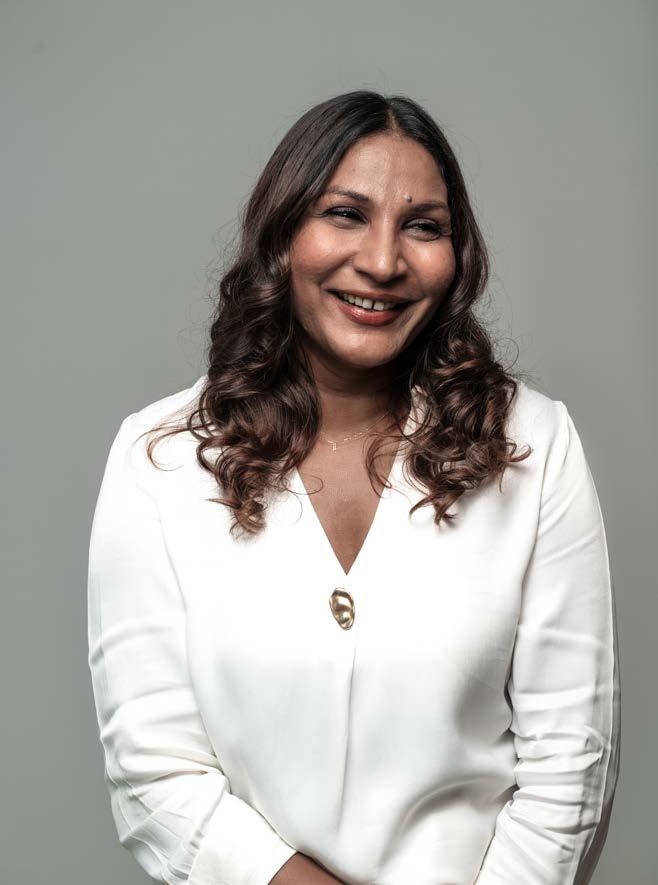
Group Deputy Managing Director Zulaikha Manik (Zuley). PHOTO/SUN SIYAM
Zulaikha Manik (Zuley), Group Deputy Managing Director, Sun Siyam
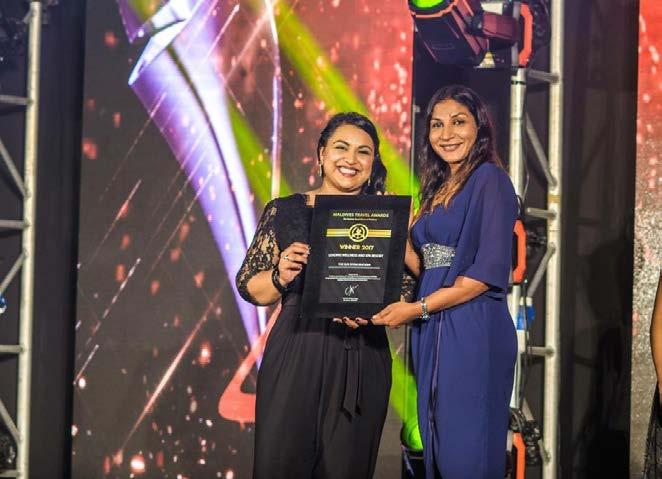
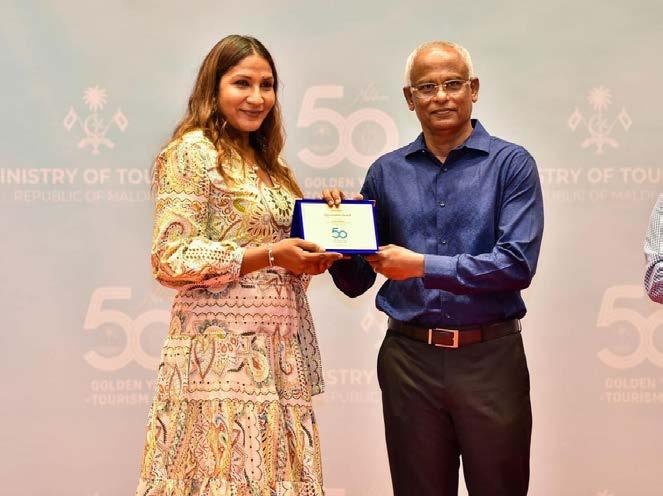
Zuley receives an award on behalf of Sun Siyam. PHOTO/SUN SIYAM
Zuley receives an award on behalf of
built on an age-old recipe; a heddhun performance explained rather than merely watched; time with artisans who weave, carve or stitch; a conversation that puts names to the stars above a night-fishing dhoni. “For us, it’s more than a curated activity. It’s a way to connect travellers to who we are—to share our stories, our music, our craftsmanship. It ensures our culture lives on in every guest’s memory,” says Zuley.
It’s not just a rebrand—it’s a moment of pride… We’ve
grown from a single resort into an internationally recognised group, but our essence remains the same. This transformation ensures we carry that essence forward for generations.
Zulaikha Manik (Zuley), Group Deputy Managing Director, Sun Siyam
For guests, it is a way to feel the place beyond the sandbank and the spa. For team members, it is a way to pass on knowledge and pride. For the brand, it is a way to encode Mr Siyam’s founding instinct—inclusion, hospitality as relationship—into a tangible offer.
Who the brand is speaking to now The Maldives will always be a byword for honeymoons and private escapes, and Sun Siyam continues to welcome couples in search of stillness. But the guest profile has broadened: families who value ease and choice; independent travellers and digital professionals who want strong connectivity alongside quiet; multi-generational groups who prize flexibility; creators who seek texture and story. The refreshed identity responds by shifting the emphasis from material luxury to emotional and cultural richness—experiences that feel grounded, spaces that foster connection, menus that mix discovery with comfort, and service that reads the moment.
Design decisions reflect that shift. Social spaces are easier to use and linger in. Dining is more varied, with clear lanes for regional comfort
food and chef-led signatures. Programming is less about a timetable and more about open invitations to join what feels right on the day. Across the portfolio, there is also a cleaner digital layer— useful in the background but never intrusive—to simplify choices and requests so that human interaction remains front and centre. “Our guests have changed, and so have we… the new identity reflects that shift—it’s about emotional luxury, cultural connection, and creating a home where everyone belongs,” Zuley explains.
A story in one Christmas turkey run
Brand values are best understood in small stories. One from the early days at Vilu Reef has become a touchstone. The resort’s first Christmas Eve gala was planned to the last detail—except the turkeys missed the supply boat and arrived on the morning of 24 December. With hours left, and no scheduled seaplanes, a small team hired a speedboat and made the threeplus-hour run to get the birds to the island in time. The guests ate under the stars, unaware. No drama, no grandstanding—just a quiet insistence on delivering what was promised. That insistence still shapes countless decisions, large and small.
Honouring the past, speaking to the next generation If the new identity feels natural, it is because it is less a pivot than a refinement. The House of Siyam gathers the portfolio under a shared story; The Home of the Maldivian Spirit articulates the promise in language that is both local and universal. The tone of voice is warmer, less formal; the visuals are confident but not loud;
the experiences are curated but unforced. For loyal guests who have been returning for years, nothing essential has changed. For new travellers—curious, creative, free-spirited—the brand now speaks more clearly to what they value. “It’s not just a rebrand— it’s a moment of pride… We’ve grown from a single resort into an internationally recognised group, but our essence remains the same. This transformation ensures we carry that essence forward for generations,” says Zuley.
For long-serving members of the Sun Siyam family, there is pride in seeing the founder’s ideas carried forward by a new generation of leaders and team members. The rebrand is not an end point but a relay—passing on a way of doing things so it stays alive and relevant.
What endures
After 35 years, Sun Siyam is still best understood through the founder’s original line. Share the warmth of the islands and the people. The rest—resort openings, accolades, category definitions— matters, but only insofar as it helps keep that line true in practice. The new identity turns the line into a home you can feel: a place where a guest is welcomed as if returning, where a young apprentice learns a craft with pride, where a palm tree is left standing, where a team will still hire a boat and race the clock to keep a promise.
That is the Maldivian spirit the brand is making a home for. And that is what the next 35 years will be built on.
Zuley receives an award on behalf of Sun Siyam. PHOTO/SUN SIYAM
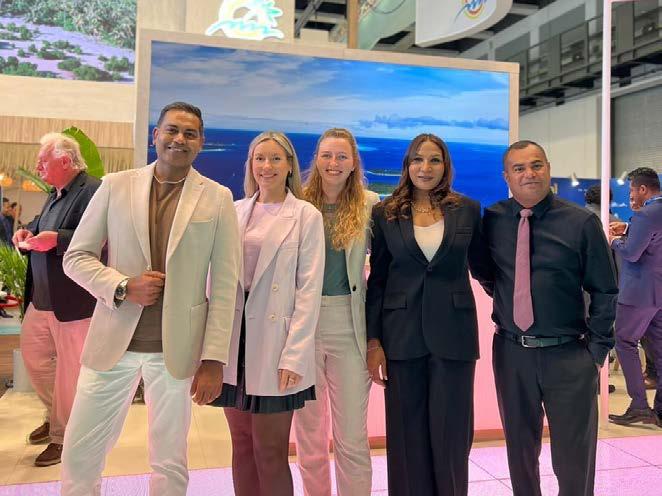
Sun Siyam team at a travel trade fair. PHOTO/SUN SIYAM
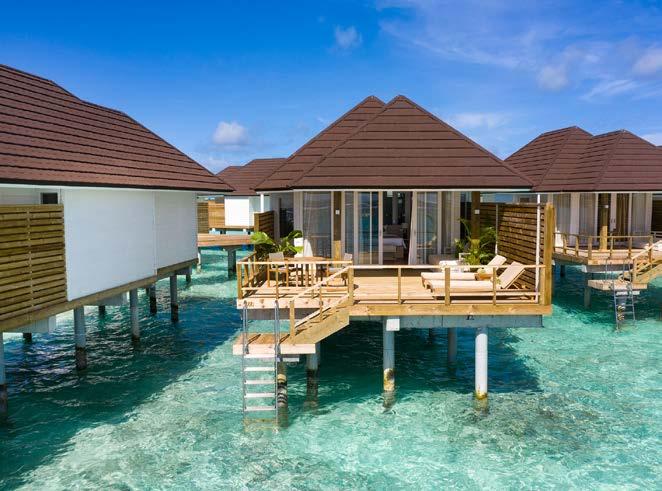
Sun Siyam Olhuveli. PHOTO/SUN SIYAM
Minister Thoriq calls for greater readiness, digital adaptation in tourism at Hotelier Maldives GM Forum 2025
By Mariyam Saliya Mohamed
Minister of Tourism and Environment Thoriq Ibrahim has urged the Maldivian hospitality industry to stay agile and forwardlooking as technology continues to reshape global travel behaviour.
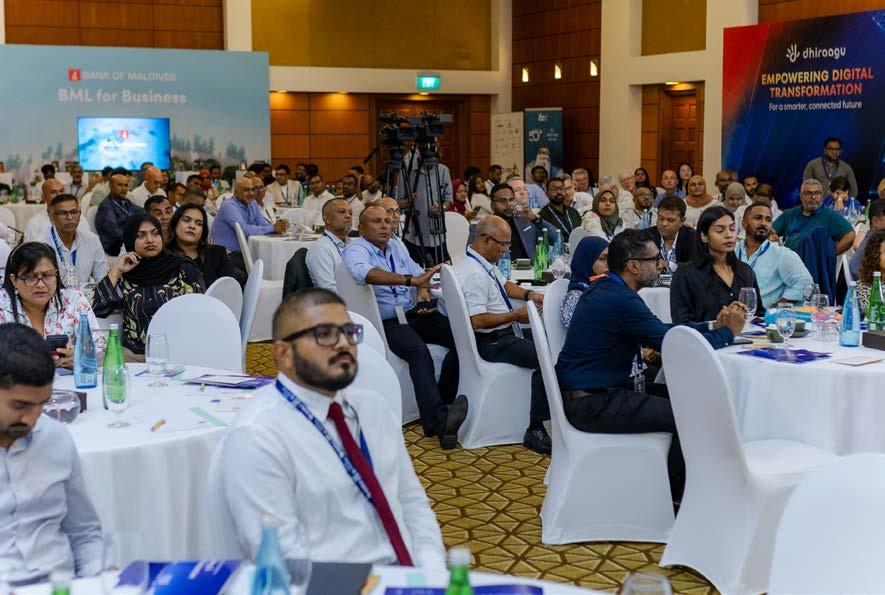
Speaking as Chief Guest at the ninth edition of the Hotelier Maldives General Managers
(GM) Forum 2025 on October 13, Minister Thoriq emphasised that the government remains committed to supporting and facilitating the industry’s priorities amid rapid change.
“The world is changing fast. And technology, faster. How visitors plan their holidays, and how they
expect their holiday to be like when they get here. We must be ready for these changes. We must be ready to harness and leverage these developments. The government remains committed and ready to support you, and facilitate your priorities,” he said. Addressing a full house of
leaders, Thoriq highlighted the GM Forum’s importance as a platform that brings together professionals who are directly responsible for maintaining the Maldives’ reputation as a premier travel destination. He acknowledged the relentless work of general managers and their teams who, through dedication and consistency, deliver worldclass service that defines the nation’s tourism identity.
The Minister stressed that sustaining this global standing requires both vision and adaptability. “Maintaining this position requires that we continue with the same spirit. It also requires that we look to the future — that we analyse and
must remain inclusive and equitable. “Digitalisation and adoption of new technologies should not come at the expense of accessibility, and full community participation,” he noted.
Before concluding, Minister Thoriq congratulated the Hotelier Maldives team for successfully convening the event and commended the participants for their ongoing contribution to the nation’s tourism success story. “I wish all of you a very constructive discussion and a great day ahead,” he said.
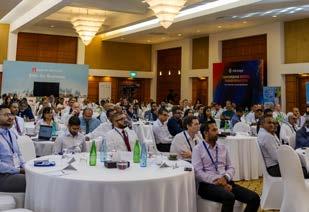
Organised by Hotelier Maldives, the annual GM Forum is the country’s leading networking and knowledge-sharing event for resort general managers and senior hospitality professionals. The 2025 edition focuses on how digitalisation is transforming guest experiences, operations, and investment in the Maldives’ luxury resort sector.
anticipate the changes, be flexible, and be prepared,” he said.
Thoriq pointed to the government’s Maldives 2.0 initiative, launched under the administration of President Dr Mohamed Muizzu, as a cornerstone of national transformation aimed at making the country more mobile, agile, and digitally empowered. He said the initiative aligns closely with this year’s GM Forum theme — Digitalisation and Expanding Experiences — and represents a shared vision between government and industry to embrace technological progress.
While encouraging the adoption of new technologies, the Minister underscored that digitalisation
The government remains committed and ready to support you, and facilitate your priorities.
Thoriq Ibrahim, Minister of Tourism and Environment
Minister Thoriq Ibrahim speaks at GM Forum 2025. PHOTO/HOTELIER MALDIVES
Hotelier Maldives GM Forum 2025 panel urges policy stability, investor confidence in tourism
By Mariyam Saliya
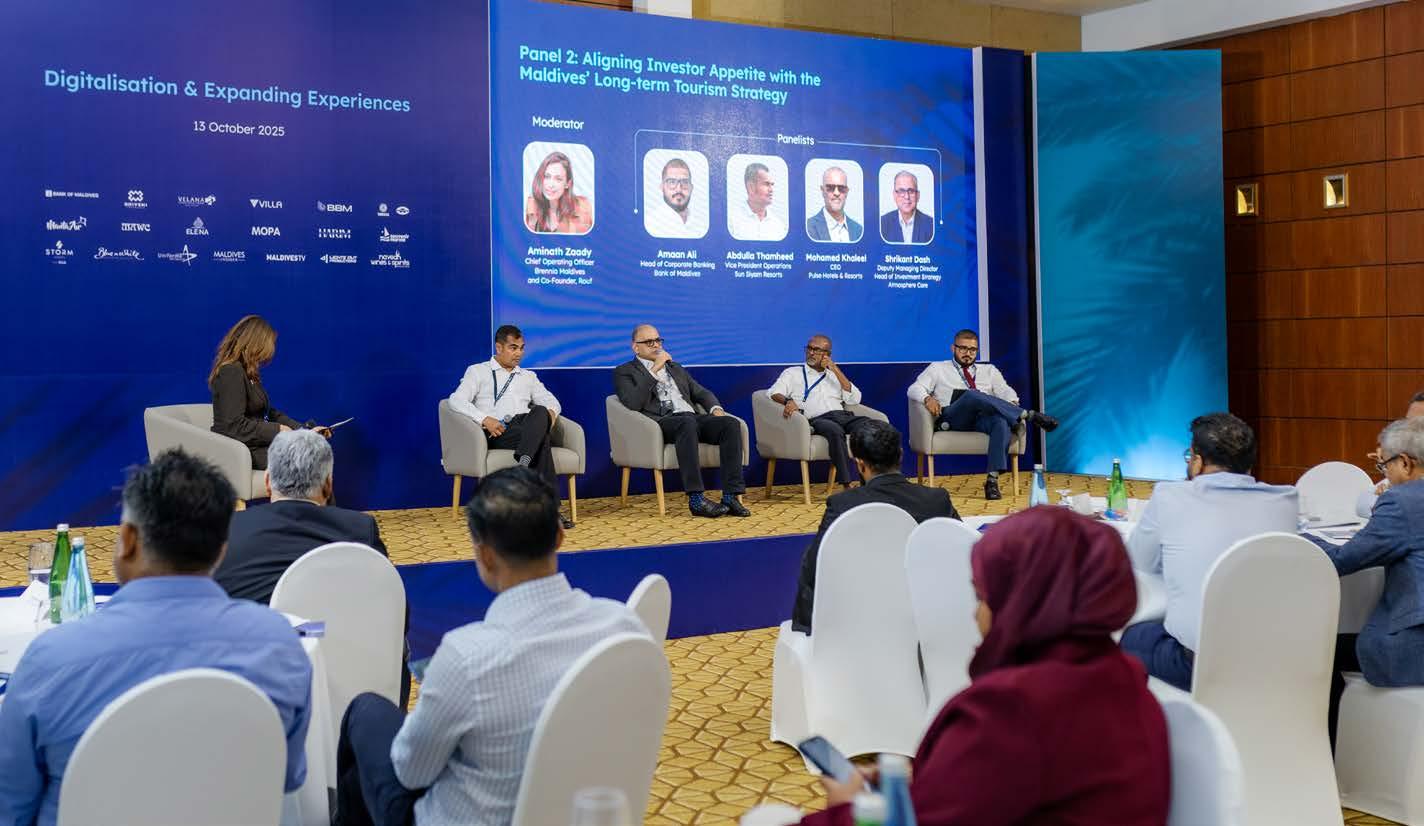
At the General Managers (GM) Forum 2025 organised by Hotelier Maldives at Kurumba Maldives on October 13, a panel discussion titled “Aligning Investor Appetite with the Maldives’ Long-Term Tourism Strategy” examined challenges in the tourism sector, including revenue performance, investment returns, and confidence in the business environment.
Diversifying Tourism Beyond the Traditional Model
During the panel, moderated by Aminath Zaady, Chief Operating Officer at Brennia Maldives, Pulse Hotels & Resorts Chief Executive Officer, Mohamed Khaleel, said the future of tourism
New policies should be introduced gradually to reduce disruption to the industry.
Shrikant Dash, Deputy Managing Director and Head of Investment Strategy, Atmosphere Core
that trust in the judiciary and consistency in legal processes were essential. “Many companies in the tourism sector are tied up in court. Without certainty and confidence in the system, investors will not come here,” he said.
Khaleel further urged greater consultation between the government and industry stakeholders when shaping tourism policies. He added that younger generations were reluctant to join the sector due to challenges in achieving work-life balance.
Need
for Gradual Policy Implementation
Atmosphere Core Deputy Managing Director and Head of Investment Strategy, Shrikant Dash, supported the call for predictability in government policies. He said that in Dubai, tax changes were announced well in advance, allowing businesses time to prepare.
required new approaches and innovation. He noted that the sector must move beyond the traditional honeymoon segment and develop new types of real estate and experiential tourism.
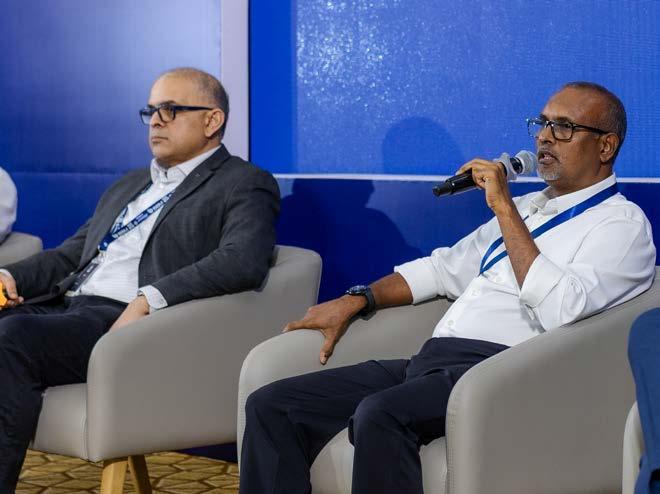
Khaleel stated that return on investment and occupancy rates had declined, with over 40 per cent of available beds currently unused. Although tourist arrivals have increased, he said the growth had not translated into proportional revenue gains.
“Investors will look at earnings, profitability, and return on investment,” Khaleel said.
He also highlighted concerns over investor confidence, stating
access to funding from local banks and said that most tourism investments over the past decade had relied on foreign financing. He suggested maintaining a long-term target of three million visitors annually, focusing on key markets such as China and India, and introducing specialised tourism segments, including medical and wellness travel.
Strengthening the Resort Offer
Sun Siyam Resorts Vice President of Operations, Abdulla Thamheed, said the Maldives needed to develop larger integrated resorts with more facilities and entertainment options to attract wider market segments. He referred to international examples where diverse offerings had driven higher visitor engagement.
“New policies should be introduced gradually to reduce disruption to the industry,” he said.
Shrikant also noted limited
All panellists agreed that consistent policies, improved legal frameworks, and joint efforts between government, businesses, and stakeholders were essential to strengthen investor confidence and sustain long-term growth in the tourism sector.
Mohamed
Panelists participate in the panel discussion. PHOTO/HOTELIER MALDIVES
Khaleel speaks during the panel discussion.
PHOTO/HOTELIER MALDIVES
Trip.com’s Ru Yi at Hotelier Maldives GM Forum 2025: AI, connection and future of travel
By Mariyam Saliya Mohamed
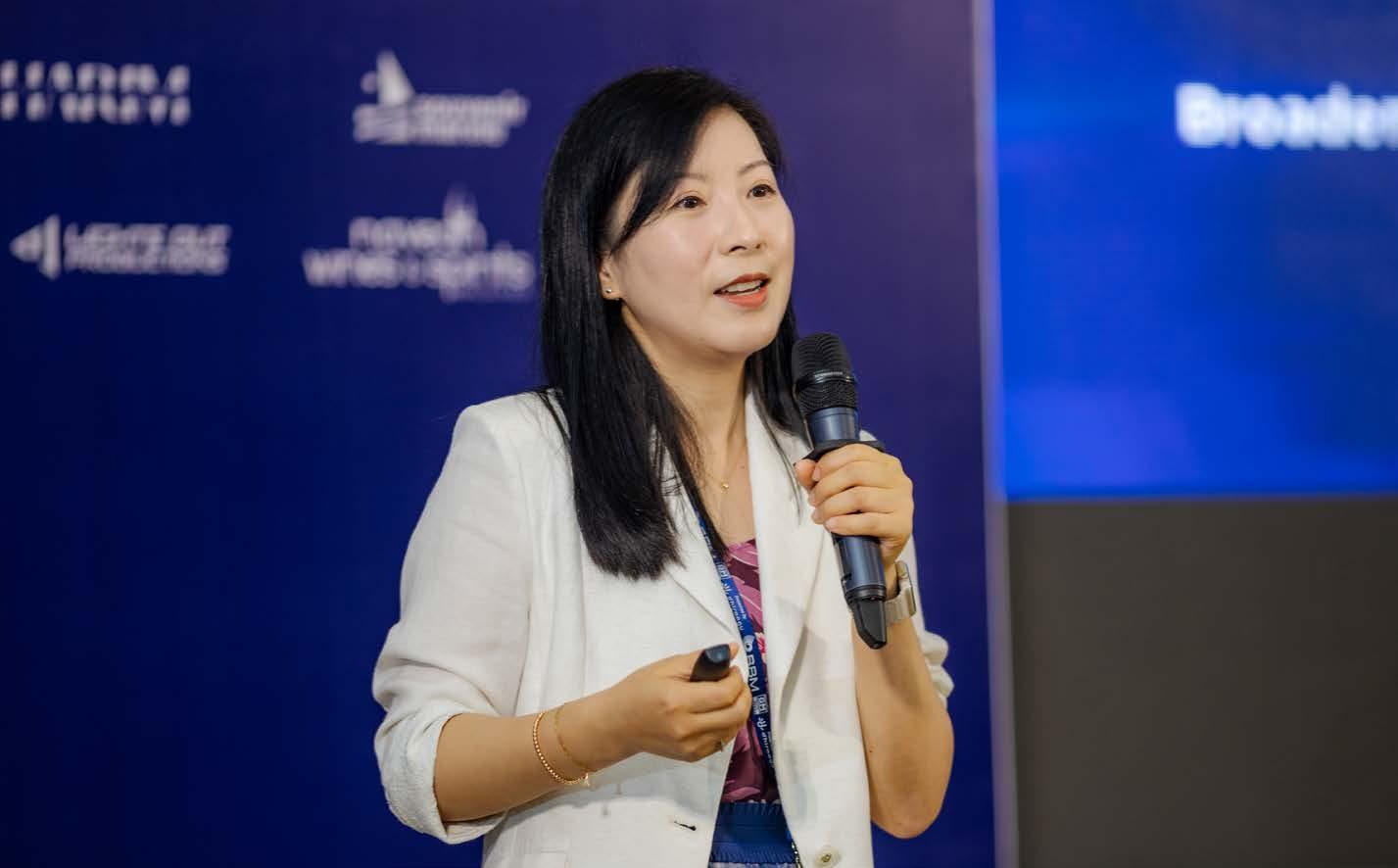
At the ninth edition of the Hotelier Maldives General Managers (GM) Forum 2025, Ru Yi, Assistant Vice President of International Markets, APAC at Trip.com Group, delivered a keynote address titled ‘Travel in the Age of Digital Transformation.’ Speaking to a hall filled with resort leaders and hospitality professionals, she explored how artificial intelligence, digital integration, and changing traveller expectations are reshaping the tourism landscape — and what this means for the Maldives as one of the world’s most sought-after destinations.
“It’s always wonderful to see so many passionate hoteliers
and industry friends gathered together,” she began. “The travel industry has always been about connection — connecting people, places, and cultures. And in today’s world, connection is empowered by technology.”
Ru Yi invited the audience to imagine what travel might look like in 2030, in an era when AI will be deeply embedded in daily life.
“Our personal assistant may no longer be on our phone — it could be part of our thoughts,” she said. She described how future travellers will rely on AI systems that can anticipate their needs by analysing patterns across social media, search behaviour, and
conversations. “AI will not only tell you what has happened in the past but also predict your next desire — when is the best time to travel, which place will best help you relax, and even coordinate with your family’s schedules automatically.”
She noted that tomorrow’s travellers will also be driven by values, not just price or convenience. “They will look not only at how much they spend but at how much they save for the planet,” she said, emphasising the growing importance of sustainability, emotional intelligence, and ethical choices in travel decisions.
Drawing on extensive research
conducted by Trip.com Group across 20,000 travellers in the Asia-Pacific region, Ru Yi shared that seamless experiences and quality customer service are the two factors most valued by modern travellers. “Our travellers appreciate a super app — one that combines everything from flights and hotels to transfers, Wi-Fi, and local activities,” she explained. Beyond convenience, travellers appreciate how integration allows them to relive and share their journeys. “They love that we can generate a yearly report showing how many countries they’ve visited, how many kilometres they’ve travelled, and even how they compare to others in their
Ru Yi delivers her keynote speech.
PHOTO/HOTELIER MALDIVES
home country. These moments of sharing create pride, loyalty, and connection,” she said.
Ru Yi explained how Trip.com’s AIdriven recommendation system, TripBest, is transforming the way travellers discover destinations.
“When people open a travel app, it’s usually to make a reservation,” she said. “But they open TikTok or Instagram whenever they have free time. So we wanted to make our app just as inspiring.” TripBest, which compiles real traveller insights and expert evaluations, offers curated recommendations across 14 categories, from luxury and family stays to cultural and culinary experiences. “Out of every 100 users visiting Trip.com, 66 view TripBest content,” she revealed. “This has contributed to a 20 percent increase in hotel traffic and a 10 percent uplift in incremental revenue for our partners. It’s a powerful tool for discovery.”
While technology drives efficiency, Ru Yi stressed that human interaction remains essential.
“We have over 13,000 employees across 18 countries providing 24/7
the Maldives, equivalent to USD 17 million in GMV.
At the same time, she reminded the audience not to overlook older travellers. “There’s still a group we cannot neglect — the silver generation,” she said. “They may not book online yet, but they have the time and means to travel. That’s why we maintain 6,500 retail outlets across smaller cities to help them transition to digital travel planning.”
support,” she said. “If a customer calls, they reach a human within 20 seconds.” She shared examples of Trip.com’s hands-on assistance — from helping travellers recover lost passports abroad to evacuating guests during natural disasters.
“During COVID-19, Trip.com was the first OTA to launch the safeguard cancellation policy. Over 90 percent of bookings were successfully cancelled with hotel partners’ support, and 95 percent of customers rebooked with us afterward. That’s how we built trust — and grew our market share for four- and five-star hotels in China beyond 70 percent.”
Discussing collaboration with hotel partners, Ru Yi highlighted how Trip.com helps properties expand their network, increase traffic, and improve conversion through innovative digital marketing.
“Celebrity endorsements are no longer as effective as they used to be,” she said. “Travellers trust KOLs and KOCs — real people sharing authentic experiences.”
She shared that livestreaming campaigns alone have generated over 11,000 bookings into
Ru Yi also introduced Trip.com’s Hotel Plus X and upcoming Hotel Plus Optional X programmes, designed to help resorts bundle experiences such as spa treatments, dining, and water activities alongside accommodation. “Soon, guests will also be able to add these experiences optionally during booking — generating higher revenue and deeper engagement,” she said. “We are not just an OTA. We are a B2B partner committed to helping you grow.”
Concluding her address, Ru Yi reflected on the company’s broader vision: “Our mission at Trip. com is to pursue the perfect trip for a better world.” Her message to the Maldivian hospitality community was clear — in an era defined by digital transformation, technology must serve as a bridge between innovation and human connection.
“Technology empowers us,” she said, “but it’s our shared passion for travel that truly connects us.”
From hashtags to human connection: Experts at GM Forum 2025 explore how Maldives can win digital traveller
By Mariyam Saliya Mohamed
Ru Yi delivers her keynote speech.
PHOTO/HOTELIER MALDIVES
Abdulla Ghiyas speaks during the panel discussion. PHOTO/HOTELIER MALDIVES
At the ninth edition of the Hotelier Maldives General Managers Forum 2025, a panel of distinguished industry leaders came together to discuss “Destination Marketing in the Digital Era: Building Maldives’ Global Presence Beyond the Beach.” The session, moderated by Mathurot Chuladul, Field Marketing Director, Communications –Maldives at Marriott International, featured panellists Ru Yi, Assistant Vice President of International Markets, APAC at Trip.com Group; Radouane Namaoui, Global Head of Key Accounts at TrustYou; Abdulla Ghiyas, Chairman of Visit Maldives; and Murad Hassan, Tourism Marketing Specialist. Together, they examined how digital transformation, storytelling, and data-driven marketing can redefine the Maldives’ global identity and sustain its competitiveness in an evolving travel landscape.
Opening the discussion, Mathurot noted that while the Maldives has long been recognised for its turquoise lagoons, overwater villas, and postcard-perfect beaches, the time has come
to look beyond the traditional image. “As global travellers’ expectations evolve, so too must the way we present the Maldives to the world,” she said. “We must showcase wellness, culture, gastronomy, sustainability, and adventure – not just the beach.”
Trip.com’s Ru Yi began by observing that the Maldives’ long-standing reputation as a once-in-a-lifetime destination was built on powerful storytelling and emotional resonance. “In my mind, I still have the impression that I need to visit this place once in my lifetime,” she said. “But after 15 years, those people who had that impression have already been here once. We want them to come back again and again.” She emphasised that the Maldives should focus on consistent messaging across platforms to reach emerging traveller segments, including students, marine enthusiasts, and eco-conscious visitors. “We need one consistent message,” she said, “and all stakeholders – from the tourism board to OTAs and creators – must keep pushing it so that it leaves a
lasting impression, especially among younger generations overwhelmed by information.”
Abdulla Ghiyas expanded on the idea of reframing the destination, describing how Visit Maldives has been shifting its narrative from “postcard imagery” to a “portfolio of experiences.” “For decades, Maldives has been about sun, sea, and sand,” he said. “But diversification is now tangible.”
He cited several initiatives under Visit Maldives, including Burunu Boma, the nation’s first sports fishing tournament that attracted global teams and strong engagement from local anglers.
“We already have ten international teams wanting to participate next year,” he said, adding that sports fishing could become a new niche for the country. He also highlighted Visit Maldives’ campaigns targeting Gen Z travellers, including collaborations with influencers such as Tess Tyler from Netflix’s One Piece, which generated record-breaking reach and engagement across social media platforms.
According to Murad, the focus today is on engagement rather than vanity metrics. “Anybody can get views,” he said. “What matters is how many saves, comments, and shares you get. Engagement has been one of our core strategies.”
He also pointed to the rise of new market segments such as MICE and superyacht tourism.
“We recently hosted one of the largest charter groups from India with over a thousand guests, and we’re working with global charter networks to position the Maldives as a superyacht destination,” he added. “These are all part of a larger effort to
move from volume-driven arrivals to value-driven revenue.”
We need the intelligence to be readily available, and the capacity to listen to the social sounds and respond.
Abdulla Ghiyas, Chairman,Visit Maldives
From a national tourism perspective, Abdulla Ghiyas stressed the importance of technology, data, and unified messaging. “The world is moving to high tech and AI, and government must come together to create an information highway,” he said.
“We need the intelligence to be readily available, and the capacity to listen to the social sounds and respond.” He cautioned that fragmented messaging from different resorts, guesthouses, and atolls could weaken the national brand if not coordinated.
“Everyone wants heads on pillows and goes out doing their own promotions in different countries. Does the tourism board have any control over the narratives? If we don’t, we’ll end
up with inconsistent images of the Maldives,” he warned. Instead, he advocated for emotional storytelling that connects people to the destination. “We have always marketed the product – the sun, sand, and sea. But we haven’t infused emotion. Emotion comes from people, culture, and our oceans.”
Radouane Namaoui provided a data-led perspective, focusing on the role of online reviews in shaping the Maldives’ “digital identity.”
“When I think of destination marketing, I think of trust,” he said. “Trust is earned through what our guests say about us – both in person and online.” He revealed that over the past two years, nearly one million reviews have been written about Maldivian properties, offering valuable insights into traveller sentiment. “If you dig
Murad Hassan speaks during the panel discussion. PHOTO/HOTELIER MALDIVES
deeper, beyond sun and sand, you find consistent mentions of gastronomy, vibe, and the warmth of the Maldivian people,” he said.
“That’s a powerful part of your identity.” He urged hoteliers and destination marketers to leverage these authentic guest voices.
“It’s not paid media anymore –it’s the voice of your guests that defines your brand,” he added.
As the discussion progressed, the panellists reflected on how digital discovery is transforming travel behaviour. “Decision-making is becoming impulsive,” Ru Yi noted. “Travellers may buy a resort voucher during a livestream without even knowing their dates, and later plan their trip around it.” She explained that platforms like Trip. com rely on AI to predict customer behaviour and personalise offers.
“Even when travellers don’t tell us they’re on a honeymoon, AI can identify patterns and anticipate preferences,” she said. “The Maldives must embrace this data-driven agility.”
In response, Radouane Namaoui emphasised that reviews and
analytics can feed into this ecosystem. “Online reviews are stories told by guests,” he said. “If we collect and analyse them effectively, they become insights that shape the next generation of marketing.”
Turning to collaboration and brand strategy, Murad Hassan highlighted Visit Maldives’ integrated campaigns and partnerships. “This year we’ve done over 30 joint campaigns with tour operators, airlines, and global brands,” he said. “Our focus is ROI and relevance – we track engagement, growth, and conversion in real time.” He pointed to high-profile collaborations such as Liverpool FC’s Penalty to Paradise campaign, which generated billions in global reach, and innovative content projects such as immersive 360-degree destination videos and largescale giveaways. “Storytelling is at the core of what we do,” he said. “We are showcasing not just a place, but a feeling.”
In the latter part of the session, the conversation turned to future
trends shaping destination marketing. “The next five years will be about data, personalisation, and immersion,” said Ru Yi. “AI is a wonderful tool, but it’s only as good as the data it has. For the Maldives to benefit, we need to ensure complete and structured data – from activities and dining to sustainability efforts – across all platforms.” Abdulla echoed this sentiment, noting that Visit Maldives has already integrated data-driven decision-making into its campaigns. “We’re using AI dashboards to monitor ROI at trade shows and exploring immersive experiences through VR and 360° storytelling,” he said.
Murad added a practical note of caution. “AI will always be as good as your data plumbing,” he said. “If you inspire travellers but don’t give them a way to act – a call to action – you lose the conversion.” He encouraged resorts and national stakeholders to prepare for an era of immersive engagement, where guests expect interactivity and personal relevance even before they arrive.
As the panel drew to a close, Mathurot reflected on the central theme uniting all perspectives. “The Maldives must continue evolving beyond sun, sand, and sea to highlight a richer, more diverse experience,” she said. “Digital platforms, data, and guest voices now shape how travellers see and choose destinations. Collaboration between government, industry, and digital partners is essential to sustain our momentum. And as technology defines the landscape, authenticity and human connection must always remain at the heart of our message.”
Hospitality meets humanity: Reimagining digital guest journey at GM Forum 2025
By Mariyam Saliya Mohamed
Hotelier Maldives GM Forum 2025.
PHOTO/HOTELIER MALDIVES
Hussain Shahid speaks during the panel discussion. PHOTO/HOTELIER MALDIVES
At the 2025 Hotelier Maldives General Managers (GM) Forum, industry leaders gathered to discuss one of the most transformative forces shaping hospitality today — the digital guest journey. Moderated by Mohamed Shafraz Hafiz, Director of Digital Technology & Marketing at Pulse Hotels & Resorts, the panel titled “Reimagining the Guest Journey: Digital Touchpoints from Booking to Post-Stay” featured an engaging conversation with Heidi Grimwood, Senior Vice President of ELE|NA; Hussain Shahid, General Manager of Noku Maldives, Vignette Collection; and Morten Junior, General Manager of Kurumba Maldives. Together, they explored how digitalisation is reshaping guest engagement, from the first online click to long after check-out, and how the human touch remains at the heart of this evolution.
Opening the discussion, Shafraz noted how “the guest journey is no longer defined only by the physical experience on the island. It begins long before arrival, often with a single click or view, and
continues long after departure through memories, reviews, and digital loyalty.” For Morten Junior, who leads one of the Maldives’ pioneering resorts, digitalisation has evolved from a novelty into an operational cornerstone.
“It’s become a very effective and crucial tool for all of us,” he said. “We can now contact and engage with the guest at the first touchpoint — something we didn’t have the possibility to do earlier. It’s unthinkable today to be successful without it.” Yet, Morten was quick to caution against overdependence. “We have to remember it’s a tool — an effective one, yes — but it must serve us, not the other way around,” he noted, emphasising that technology should enhance, not overshadow, human interaction.
We encourage direct bookings to foster relationships, not just transactions. The relationship doesn’t
end at checkout — it evolves
Hussain Shahid, General Manager, Noku Maldives
From a wellness perspective, Heidi Grimwood echoed the same sentiment. “Regardless of what technology has come out, hospitality has to remain peoplecentric,” she said. At ELE|NA, digital tools are being used to amplify personalisation rather than replace it. By integrating pre-arrival digital questionnaires, guests can complete Ayurvedic or elementbased quizzes that help tailor their spa journey before arrival.
“Guests love to know more about themselves,” Grimwood explained. “It helps us recommend treatments or wellness activities that truly suit them — and it creates an upselling opportunity without removing human engagement.” The innovation also brings operational efficiency. “If you’re digitalising consultations that take up to 30 minutes, that time can now be used with the guest — which makes both the guest and the GM happier,” she added with a smile.
For Hussain Shahid, the digital guest journey begins the moment a booking is made. “The booking stage is where the relationship actually begins — where emotions and expectations take place,” he said. At Noku Maldives, part of IHG’s Vignette Collection, digital touchpoints are designed to reflect the resort’s brand character — serene, natural, and refined. He described how cinematic imagery, personalised CRM communication, and platforms like Revinate enable a seamless pre-arrival experience. “Guests should almost feel the ocean breeze before they arrive,” he said. “We encourage direct bookings to foster relationships, not just transactions.” Shahid also highlighted the importance of emotional continuity after departure. “The relationship doesn’t end at checkout — it evolves,” he said. Through IHG’s One Rewards programme, returning guests receive personalised messages and offers, but he stressed that loyalty “is not built on points. It’s built on recognition.” Simple gestures — recalling a favourite wine or a handwritten note — are what truly build emotional equity. “That’s when technology has done its job,” he concluded. “Quietly enabling genuine hospitality.”
At Kurumba Maldives, blending legacy with innovation is a continuous balancing act.
“Kurumba has been around since 1972, so we treasure our history,” Morten said. “But we’re also embracing the new generation of travellers who expect digital connection at every stage.” He shared how long-time repeat guests — some returning for their 100th stay — are now engaged year-round through WhatsApp
and social media. “Technology allows us to stay in touch even with guests of different generations,” he noted. “They bring their children and grandchildren, creating generational loyalty.”
Heidi Grimwood proposed a counter-trend: digital detox as a new form of luxury. “Everywhere you go, people are on their phones — even on the beach or at the table,” she said. “We want to create spaces where families can disconnect, even for an hour.” ELE|NA plans to introduce digital detox hubs at its resorts, encouraging guests to reconnect with themselves and each other.
“We should be teaching people to switch off,” she added. “That’s part of wellness — not just massages and treatments, but helping people learn healthier habits.” Morten agreed, noting emerging hospitality trends that reward disconnection. “Some restaurants now give discounts if you don’t bring your mobile phone,” he said. “In the Maldives, we have the perfect setting for people to truly switch off and enjoy real family time.”
Shafraz summarised three key
trends likely to shape the Maldivian guest journey in the coming years: hyper-personalisation, leveraging predictive data to craft experiences uniquely aligned with guest preferences; emotional AI, integrating empathy-driven algorithms that understand and respond to guest moods and emotions; and GEO search, as SEO evolves, generative AI will increasingly guide direct, location-specific bookings. “Digitisation is no longer optional,” he reminded the audience. “It’s integral to creating meaningful experiences from booking to beyond departure.” Quoting Winston Churchill, he concluded, “To improve is to change. To be perfect is to change often.”
The panel underscored a simple yet profound truth: technology is transforming hospitality, but it must remain rooted in humanity. From AI-driven pre-arrival personalisation to mindful digital detox initiatives, the future of guest experience in the Maldives lies not in replacing people with machines, but in using digital tools to deepen connection, authenticity, and emotion at every touchpoint.
Hussain Shahid speaks during the panel discussion. PHOTO/HOTELIER MALDIVES
Hussain Shahid speaks during the panel discussion. PHOTO/HOTELIER MALDIVES
Beyon Cyber’s Abubakar Latif at GM Forum 2025: Building digital trust in Maldives’ hospitality future
By Mariyam Saliya Mohamed
At the 2025 Hotelier Maldives General Managers (GM) Forum, Abubakar Latif, Chief Technology Officer at Beyon Cyber and Board Member of DTS Solutions UAE, delivered a compelling reminder that the future of hospitality depends not only on innovation and guest experience — but also on digital trust. In his presentation titled “A Stakeholder Analysis of Cyber Risks in the Hospitality Industry,” Latif explored how the rapid digital transformation sweeping through tourism has brought unprecedented vulnerabilities, urging resort leaders to treat cybersecurity as a shared, strategic responsibility.
Addressing an audience of industry pioneers, policymakers, and resort executives, Latif began on a light-hearted note. “It’s my third time in the Maldives,” he said with a smile. “My daughter isn’t very happy about my visit this time because I came without her. She absolutely loves this place.” His warmth quickly gave way to a sobering message about the scale of digital exposure in one of the world’s most connected tourism industries. “We are entering an era defined by CAMRIC — Cloud, Artificial Intelligence, Mobility, Big Data, Robotics, and the Internet of Things — and tying it all together is cybersecurity,” he explained. “The challenge is not
just to innovate, but to protect.”
He reminded delegates that tourism accounts for roughly 30 percent of the Maldivian economy and employs close to 40 percent of the national workforce. “With the sector expected to double its economic contribution in the next five years, driven largely by digital experiences, we must acknowledge that every new digital touchpoint — every booking system, payment gateway, or smart lock — is also a potential point of vulnerability,” he said.
Drawing from years of cybersecurity experience across the Middle East and beyond,
The challenge is not just to innovate, but to protect.
Latif revealed how the hospitality sector has become one of the most targeted industries for cyberattacks. “One in three businesses in hospitality has experienced a data breach,” he noted. “And nearly 89 percent of those organisations were attacked again. The average cost of a breach today is around USD 3.4 million, and that doesn’t include the long-term costs of reputation loss or guest trust.”
He recounted a striking example from Austria, where a ransomware attack trapped guests inside their hotel rooms after hackers took control of the smart locking system. “That property was
attacked three times in a single year,” Latif said. “Eventually, they decided to return to traditional keys. It’s ironic — the same technology designed to improve efficiency ended up undermining guest confidence. That’s the true cost of neglecting cybersecurity.”
Latif linked these risks to the Maldives’ own Fifth Tourism Master Plan, which identifies digital transformation as a central pillar of national growth. “Goal number ten calls for 360-degree digitalisation — expanding fibre connectivity and introducing smart tourism services,” he said. “But it also recognises the need for legal frameworks to combat
Abubakar Latif delivers his presentation. PHOTO/HOTELIER MALDIVES
cybercrime and ensure safe electronic transactions. This is the right approach: transformation must rest on a secure foundation.”
He walked the audience through the evolution of major cyberattacks in the hospitality world — from global hotel chains in 2008 and 2014 losing millions of customer records, to the infamous 2018 breach that compromised over 500 million guest profiles. “These are not isolated events,” he warned. “When a hotel loses personal data — passports, credit cards, identities — it’s not something that can be recovered. Within hours, that data is replicated across the internet. The reputational damage is permanent.”
Looking ahead, Latif warned of a new era of AI-driven attacks capable of executing faster and more complex breaches. “In the past, cyberattacks unfolded over days. Now, thanks to artificial intelligence, they can begin and end in under 14 hours. In some cases, under seven minutes,” he said. “The very technology we use to improve service can also
be used to exploit us.” He cited an example of a 157-year-old British university that was forced to shut down after a ransomware attack, remarking that “it survived two world wars but couldn’t survive ransomware. That’s how real this threat has become.”
Latif outlined the growing range of risks facing modern resorts — from compromised Wi-Fi networks and hacked point-of-sale systems to manipulated smart devices and autonomous service robots.
“Imagine an intelligent machine or digital concierge that’s been hacked,” he said. “It’s not just a technical issue anymore — it becomes a safety issue. As we connect more devices and automate more services, our risk increases exponentially.”
Despite the sobering statistics, his message was not one of fear, but of preparedness. “The good news is that we can manage these risks,” he assured the audience. “The first step is awareness. People are often the weakest link. Most ransomware attacks happen because of unpatched systems or human error.” He urged resort leaders to
embed cybersecurity awareness at every level of their organisation, keep systems updated, encrypt sensitive data, limit access rights, and maintain regular backups.
“Think beyond the firewall,” he said. “In the digital age, identity and data are your true assets. Protect them.”
As his session drew to a close, Latif left the audience with a clear takeaway — that cybersecurity is now integral to guest experience and brand reputation. “In a world where digital experiences define luxury and service, trust is your ultimate differentiator,” he concluded. “Cybersecurity isn’t just about defending systems. It’s about protecting your guests, your reputation, and the promise of paradise itself.”
In the past, cyberattacks unfolded over days. Now, thanks to artificial intelligence, they can begin and end in under 14 hours. In some cases, under seven minutes.
Future is digital: BML’s Afrah Ahmed explores financial innovation in tourism at GM Forum 2025
By Mariyam Saliya Mohamed
Abubakar Latif delivers his presentation. PHOTO/HOTELIER MALDIVES
Afrah Ahmed delivers his presentation. PHOTO/HOTELIER MALDIVES
At the 2025 Hotelier Maldives General Managers (GM) Forum, Afrah Ahmed, Director of Cards at Bank of Maldives (BML), delivered a compelling presentation on “Digital Transformation in Maldives Tourism,” highlighting how innovation and technology are redefining the nation’s tourism landscape.
Addressing an audience of industry leaders, policymakers, and media representatives, Afrah began by acknowledging the central role tourism continues to play
in the Maldivian economy, while underscoring that digitalisation now drives the industry’s pulse.
“Tourism remains the lifeblood of our nation,” he said. “Yet today, it is digitalisation that gives this industry its pulse, driving innovation, efficiency, and resilience across the corners of our islands.”
He noted that today’s global travellers are “digital-first” — they dream, plan, book, and pay entirely from their phones, expecting simplicity, security, and speed.
For the Maldives, this evolution presents not a challenge but an unprecedented opportunity to enhance the guest experience, strengthen business operations, and position the country as a leader in smart and sustainable tourism.
revolutionised global outreach.
Together, we can
create a digitally empowered, environmentally conscious tourism economy that enhances the guest experience, strengthens businesses, and safeguards our paradise.
Afrah Ahmed, Director of Cards, Bank of Maldives (BML)
Afrah shared that in the first nine months of 2025 alone, more than one million transactions were processed via digital payment channels in the Maldives, representing a total value exceeding USD 1.1 billion. “This remarkable volume underscores both the growing confidence of merchants and travellers in digital solutions and our success in building a seamless, secure environment for financial transactions across the tourism industry,” he explained.
As the national bank and a key economic pillar, BML remains committed to supporting the tourism industry’s growth and sustainability. “Over the past five years, we have provided over USD 4 million in financial resources for tourism projects,” he stated. “Our resort loans portfolio now stands at USD 8 billion, supporting everything from new developments to green energy initiatives.”
He went on to highlight the bank’s ongoing collaboration with industry stakeholders, particularly through the Experience Maldives campaign, which BML has launched for the fourth time in partnership with Visit Maldives. “As the National Bank, we are delighted to play our part in reaching the 2025 goal of welcoming 2.3 million tourist arrivals,” he added, acknowledging how Visit Maldives’ digital campaigns have
Afrah also drew attention to the Tourism Insight Data Platform, a joint initiative between BML and MasterCard, which provides powerful data on visitor spending and behaviour. “This enables resorts and businesses to make informed decisions,” he said. “At the core of this digital shift stands the Bank of Maldives.”
Today, BML’s digital reach extends across every resort, atoll, and major business in the country, ensuring that every merchant can connect effortlessly with global stakeholders. “From luxury brands to locally owned guesthouses, our payment networks ensure every business is digitally linked to our POS terminals, online payment gateways, and corporate internet banking,” Afrah noted. “Guests can pay through Visa, MasterCard, Amex, UnionPay, Diners, Discover, RuPay, Apple Pay, Google Pay, Alipay Plus, and WeChat Pay — reflecting our commitment to inclusivity across all major travel markets.”
He added that BML’s merchants across e-commerce platforms now enjoy seamless digital integration for bookings and contactless checkouts. Beyond payments, however, BML’s efforts are also driving sustainability in the industry. “The Bank of Maldives now offers green financing products specifically designed to support resorts and tourism businesses investing in renewable energy, waste management, and sustainable infrastructure,” he explained. Whether reducing plastic use or introducing water and waste recycling technologies, these initiatives are, he said, “not
only good for the planet, but also create long-term opportunities and strengthen brand value.”
Afrah emphasised that digital transformation and sustainability are deeply interconnected. “Our digital connectivity, environment, and responsible tourism sector together attract modern travellers — guests who seek experiences that align with their values,” he said.
“Through digital channels, data analysis, and green financing, we are enabling resorts to meet these expectations while strengthening the Maldives’ position as a global model for sustainable tourism.”
Afrah called for continued collaboration among industry stakeholders. “This journey requires all of us,” he urged. “We must continue to collaborate, share data, best practices, and technology, bridge connectivity gaps across islands, and ensure that every business — large or small — benefits from this transformation.”
“The future of Maldivian tourism is not just about technology,” he concluded. “It is about how we digitally innovate and sustainably finance to preserve what makes us unique — our nation’s beauty, our people, and our hospitality. Together, we can create a digitally empowered, environmentally conscious tourism economy that enhances the guest experience, strengthens businesses, and safeguards our paradise.”
Afrah Ahmed delivers his presentation. PHOTO/HOTELIER MALDIVES
BML stand at GM Forum 2025. PHOTO/HOTELIER MALDIVES
Leadership 5.0 takes stage at GM Forum 2025: Aalim Mohamed on moving beyond resilience
By Mariyam Saliya Mohamed
At the Hotelier Maldives General Managers (GM) Forum 2025, Aalim Mohamed, Group Director of Human Resources at Pulse Hotels & Resorts, invited a ballroom full of GMs to stand, take three deep breaths, and reset. It was a fitting prelude to a session that asked leaders to pause, rethink longheld assumptions, and embrace a model he unveiled for the first
time: Leadership 5.0. “Everyone talks about AI and technology,” he said, “but leadership hasn’t evolved at the same pace. We’re expecting different results while doing the same things. It’s time to change the operating system.”
Aalim argued that while the world is moving through the fifth industrial revolution, hospitality
leadership still borrows tools and measures from earlier eras.
His proposed Leadership 5.0 model sets a clear vision “to redefine premium hospitality in the Maldives—purposely, digitally empowered, and consistently profitable across any global challenge.” The model rests on five pillars he believes will carry Maldivian hospitality beyond mere
resilience: strategic foresight, value-driven purpose, velocity, adaptive structure, and capability building. “Foresight is critical,” he said. “We must anticipate and innovate, not just react.”
He urged the industry to modernise how it measures progress.
Instead of relying solely on legacy KPIs, he called for indicators that reflect today’s realities: innovation cadence and time to pilot new services; psychological safety scores rather than generic engagement scores; a wellness index that captures the real business risk of poor mental health; personalisation scores from the guest’s point of view; and service-recovery speed.
“We’re in a repeat-guest market,” he noted. “The question is simple: what’s different from last year? If you can’t answer that quickly, your innovation engine is idling.”
Technology, for Aalim, is an enabler—not an end. He prioritised robust AI and data infrastructure, seamless digital collaboration tools, and truly personalised learning and development. But the keystone is culture, which he described as the organisation’s
“operating system.” He called for “a belief in augmentation, a humble leader mindset, and a culture that embraces productive failure.” In his words, “Velocity beats rigidity. Fluid operations will always outperform rigid policies when the market moves.”
A major theme of his talk was generational diversity and the patience deficit of a digital world.
“We live in an impatient world,” he observed. “Your guests don’t have patience. People browsing your website don’t have patience. If Murad said 15 seconds, it’s less than that now—three seconds.” He contrasted “traditionalists and baby boomers who could wait weeks for a letter” with digital natives conditioned by instant responses, and he challenged leaders to adjust service design, communication, and decisionmaking accordingly. “AI integration is not optional,” he said. “It’s how we meet a world that won’t wait.”
Aalim grounded his arguments in Maldivian demographics. A live poll in the room skewed heavily towards Gen X and millennial leaders, while national data show a
Foresight is critical. We must anticipate and innovate, not just react.
Aalim Mohamed, Group Director of Human Resources, Pulse Hotels & Resorts
Aalim Mohamed delivers his presentation. PHOTO/HOTELIER MALDIVES
Aalim Mohamed delivers his presentation. PHOTO/HOTELIER MALDIVES
workforce increasingly dominated by younger cohorts. “From the 2022 census, 68% of the workingage population were Gen Z and millennials,” he said. “In hospitality, that average rises to around 82%, and some public-sector samples hit 85%. By 2030, Gen Alpha will begin arriving at work.” He also pointed to a worrying decline in youth shares between the 2014 and 2022 censuses and a forecast of tens of thousands of new roles in the next five years. “We’re not creating enough manpower. If we don’t leverage AI, redefine structures and synergise teams, margins will suffer.”
That talent challenge, he argued, requires new leadership behaviours. “Millennials adapted well to Gen X and boomer styles because they were born without
tech and adopted it later,” he said. “Gen Z is different. If we use the same approach, we will struggle.” He urged leaders to replace command-and-control with clarity of purpose, coaching, and faster, more stimulating goals. “Connect every role—from backof-house to front-of-house—to value. Why does this task matter? How does it contribute to the big picture?” He cited research that “85% of executives say they know the why, but only about 15% of line-level staff do. When people know the why, motivation is around 86%; without it, it drops to roughly 44%.” The implication, he said, is unmistakable: “Purpose isn’t soft. It’s performance.”
Wellbeing, too, has moved from a “personal issue” to a board-level risk. “If 40% of a 400-person
team faces mental-health challenges, that’s not HR’s side project—it’s a business risk,” he said, noting that local clinical services report a high volume of cases originating from resorts, driven by isolation, distance from family and workload. “Leaders must build psychological safety, teach people how to ask for help, and make listening a discipline.”
He shared a favourite lesson from Nelson Mandela: learn to speak last. “There are many speaking associations,” he quipped, “but no listening association. Maybe we should start one.”
Aalim warned against “analysis paralysis” and urged practical data hygiene. “We have a black hole problem—too much data, too little decision,” he said. “Clean your data. Use AI to accelerate—
not delay—decisions.” On digital risk, he was equally direct: “Cybersecurity training is still underinvested. Every day brings a new threat. Digital hygiene must be continuous.” He added a stark reminder about privacy in an AI era: “If your CV or contact details live on social media or job portals, they are accessible. Ethical use of data is non-negotiable.”
Turning to the future of work, he referenced global findings showing rapid shifts in skill priorities and a rising automation frontier. “By 2030, overall automation could exceed 80%, with hospitality around 78%,” he said. “We’ll still need people— this is hospitality—but roles will change.” He highlighted the World Economic Forum’s skill signals: analytical thinking remains vital, while resilience, flexibility and
agility have surged from fifth to second place in just a few years; motivation and self-awareness, along with empathy and active listening, have climbed markedly.
“It mirrors what top schoolleavers in the Maldives told us last year,” he added. “They ranked motivation and self-awareness as the number-one skill. Human skills are the new hard skills.”
Capability building, in his model, is the engine that powers the other pillars. He advocated T-shaped development—deep functional mastery with broad collaboration fluency—and a shift from one-off training to ongoing, personalised learning. “Gen Z and millennials demand growth on the job,” he said. “If you don’t offer it, they will move—and they might not tell you before they do.”
The session returned, finally, to the heart of Maldivian hospitality: service. “The Maldives will retain its uniqueness,” Aalim said. “Human warmth will always matter. Leadership 5.0 doesn’t replace people—it elevates them. It aligns foresight, purpose, speed, structure and capability so we can innovate faster, care deeper and perform better.” His closing challenge to the room was simple and disarming: “Be humble. Think bold. Go beyond. The future belongs to leaders who can listen, learn and move—at the speed of the guest, with the heart of the host.”
Aalim Mohamed delivers his presentation. PHOTO/HOTELIER MALDIVES
Dhivehi Insurance highlights emerging risk solutions at Hotelier Maldives GM Forum 2025
By Mariyam Saliya Mohamed
At the 2025 Hotelier Maldives
General Managers (GM) Forum, the team from Dhivehi Insurance took the stage to highlight a topic often overshadowed by more glamorous aspects of hospitality — the vital role of insurance in safeguarding businesses against emerging risks. In their joint presentation titled “Insurance Solutions for Emerging Risks in a Maldivian Context,” Thanzeem Ahmed, Manager –Technical, and Ismail Nishan, Senior Sales Executive, underscored how a proactive, customised approach to risk management is becoming essential for the future resilience of the country’s tourism sector.
Opening the session, Nishan
thanked the industry leaders, partners, and stakeholders gathered at the forum. “This is a room full of people working tirelessly to improve our industry,” he said. “What we’re discussing today — emerging risks — are not challenges that any one party can solve alone. They require collaboration, foresight, and the right financial protection.”
Founded in 2016, Dhivehi Insurance has quickly established itself as one of the Maldives’ leading providers of specialty insurance solutions. Nishan spoke proudly of the company’s origins and leadership. “Our Chairman, Abdul Wahid Thowfeeq, and Managing
Director, Ahmed Ameel, have each spent more than three decades shaping the Maldivian insurance landscape,” he said.
“We’ve learned from them that real value lies not in selling standard policies, but in understanding our clients’ specific risks and tailoring solutions to meet them.”
He explained that “emerging risks” are not entirely new but are becoming more frequent and severe due to changing economic, environmental, and digital conditions. Dhivehi Insurance has identified five key risk areas that pose growing challenges to hospitality businesses in the Maldives — pandemics,
contractual financial losses, delays in resort startups, cybercrime, and terrorism. “These are the issues we hear most from clients,” Nishan noted. “And we believe that with the right approach, every one of them can be mitigated.”
Taking over the presentation, Thanzeem Ahmed delved deeper into each of these risks and outlined how tailored insurance products can help protect tourism businesses from their impact. Starting with cybercrime, he noted how digitalisation — while essential to modern hospitality — has introduced silent but serious vulnerabilities. “In the age of AI and interconnected systems,
Thanzeem Ahmed delivers the Dhivehi Insurance presentation. PHOTO/HOTELIER MALDIVES
Ismail Nishan delivers the Dhivehi Insurance presentation.
PHOTO/HOTELIER MALDIVES
cyberattacks are no longer loud or visible,” he explained. “They are silent, sophisticated, and aimed at your most valuable assets — your data, your revenue, and your guests’ trust.”
He shared that Dhivehi Insurance has seen Maldivian clients suffer losses exceeding USD 6 million due to cyber incidents in recent years. “Cybercriminals target guest databases, payment systems, and booking engines,” he said. “They steal personal information, lock systems for ransom, and sometimes trick finance staff into fraudulent transfers.” To counter this, he introduced Dhivehi Insurance’s Cyber Risk Insurance, which covers emergency response and investigation costs, legal expenses, income loss due to business interruption, and even ransom payments where applicable. “If your systems are breached, this policy ensures you have access to forensic IT experts, lawyers, and financial support to get your operations back online — and your reputation protected,” he said.
The discussion then turned to terrorism, a risk that, while rare, carries enormous implications for a destination like the Maldives.
“Terrorism is a global concern, and no destination is completely immune,” Thanzeem stated.
“Our Terrorism Insurance policy covers not only the physical damage and rebuilding costs but also loss of income during closures.” He explained that the policy also includes coverage for “loss of attraction” — where an attack elsewhere in the country affects tourist arrivals — and “prevention of access,” which protects against income loss when transport or access routes are temporarily blocked. “In short, this policy provides not just financial compensation, but peace of mind,” he said.
Reflecting on the lessons from recent years, Thanzeem acknowledged that the pandemic fundamentally changed how businesses view risk. “COVID-19 taught us that disruptions can come from anywhere,” he said.
“Even if your property is safe and fully operational, global
shutdowns can halt your revenue overnight.” Dhivehi Insurance’s Pandemic Cover is designed to help resorts manage such scenarios, compensating for lost income and ongoing fixed costs when operations are suspended due to public health emergencies.
“We also cover the extra expenses that come with operating safely — from health screenings and staff retraining to additional hygiene measures,” he added.
that developers and investors retain confidence even in the face of unforeseen disruptions. “It allows you to hit the reset button and recover quickly, protecting not just your property, but your financial forecasts,” he said.
The final area of concern —
Contractual Financial Losses
What we’re discussing today — emerging risks — are not challenges that any one party can solve alone. They require collaboration, foresight, and the right financial protection.
Delays in resort openings, another recurring issue in the industry, have also been addressed through a Delay in Startup policy. “This is for resorts still in development,” Thanzeem explained. “If a fire, flood, or other event causes your opening to be postponed, we cover your projected income and fixed costs.” The policy ensures
— focused on the risks faced when contractors fail to deliver on projects. “We’ve seen developers left stranded after contractors go bankrupt or abandon work midway,” Thanzeem said. Dhivehi Insurance offers Performance Bonds and Advance Payment Bonds, which provide financial guarantees for resort owners and investors. “If the contractor fails, we step in so you can recover costs and continue the project without losing momentum,” he explained. “We also pre-assess contractors before issuing a bond, so you can rest assured that those working with you have been financially vetted.”
Concluding the presentation, Nishan reminded the audience that while insurance may not be top of mind during times of success, it becomes indispensable during times of crisis. “When financial loss strikes, we’re the people who help you get back on your feet,” he said.
“That’s what Dhivehi Insurance stands for — providing stability, security, and confidence to the Maldivian hospitality industry.”
Ismail Nishan delivers the Dhivehi Insurance presentation. PHOTO/HOTELIER MALDIVES
Thanzeem Ahmed delivers the Dhivehi Insurance presentation. PHOTO/HOTELIER MALDIVES
Unlocking loyalty via digital guest journeys: TrustYou’s Radouane Namaoui at GM Forum 2025
By Mariyam Saliya Mohamed
At the 2025 Hotelier Maldives General Managers (GM) Forum, Radouane Namaoui, Global Head of Key Accounts at TrustYou, delivered an insightful presentation on “Unlocking Loyalty Through Digital Guest Journeys”, exploring how data, artificial intelligence, and personalisation are reshaping the guest experience and strengthening
hotel loyalty worldwide.
Speaking with humour and warmth, Namaoui began by connecting with the audience on a personal note, joking that he might be “half Maldivian” thanks to the Moroccan traveller Ibn Battuta’s historic ties to the islands. But the conversation quickly turned to the serious business of how
hotels can better understand and engage with guests across every stage of their journey — before, during, and after their stay.
“When we talk about the Maldives, you already have one of the strongest tourism brands in the world,” Namaoui said. “The key now is how we use what we know — and what guests are saying about
TrustYou, which has built its reputation over the past 15 years as a global leader in online reputation management, is now moving decisively into artificial intelligence and customer data platforms (CDP).
us — to make their experiences more personalised and relevant to different audiences.”
He described the three traditional stages of the guest journey: the pre-stay phase, where travellers research destinations and book their stay; the stay itself, encompassing operations, communication, and service recovery; and the post-stay phase, where feedback is gathered and loyalty nurtured. Yet, he stressed that this journey is becoming increasingly fragmented and complex, largely due to the disconnected systems used by hotels.
“Today, guests interact with multiple systems — one for
booking, another for checkin, another for communication during their stay, and yet another for feedback,” he explained.
Radouane Namaoiu delivers his presentation. PHOTO/HOTELIER MALDIVES
GM Forum 2025. PHOTO/HOTELIER MALDIVES
“They receive confirmations from no-reply emails, struggle to reach someone when they have a question, and must navigate between apps or QR codes just to get simple information. This is not the seamless journey modern travellers expect.”
TrustYou, which has built its reputation over the past 15 years as a global leader in online reputation management, is now moving decisively into artificial intelligence and customer data platforms (CDP). Namaoui explained how the company’s new “Hospitality AI” suite brings together three integrated systems — the Customer Experience Platform (CXP), Customer Data Platform (CDP), and AI Agent — to create a single, intelligent communication channel between hotels and guests.
“Our AI agent ensures 24/7 interaction with no more no-reply emails,” he said. “It integrates data from your PMS, CRM, and loyalty systems so that when a guest asks, ‘Can I bring my dog?’ or ‘Can I book my transfer?’, they get an instant, accurate response from one system. The guest doesn’t need to know or worry about the technology — it just works.”
He emphasised that this unified approach to communication and data allows hotels to deliver personalised service at scale, while also streamlining internal operations. “Guests today demand speed, efficiency, and personalisation,” he noted. “Seventy-five percent want faster responses, 86 percent are willing to pay more for a better, personalised journey, and 99 percent value efficiency above all.”
more expensive. Reviews are the third most important booking criterion after location and price. Your reputation is your revenue.”
He urged hoteliers to treat every review — positive or negative — as an opportunity for engagement and marketing. “Read and respond to all reviews. Every response is a chance to promote your hotel and build trust,” he said. “Data shows that when hotels improve their online ratings even by one percent, they gain better visibility, stronger negotiation power with partners, and higher conversion rates.”
Namaoui also shared a case study from Accor Group, which implemented TrustYou’s solutions across its 5,400 hotels. “Even in the economy and super-eco segments, reputation scores increased significantly within
Namaoui also spoke passionately about the importance of online reviews and reputation management in driving loyalty and revenue. “As hoteliers, we often don’t like reviews,” he admitted with a smile. “We do everything we can to make guests happy, and when they leave something negative, it can feel unfair. But data shows that 93 percent of all hotel reviews worldwide are positive. The problem isn’t the reviews — it’s how we use them.”
Citing TrustYou’s extensive database of over one million hotels and 1.5 million reviews processed per day, he revealed that reviews have a measurable impact on both visibility and revenue. “Ninety-five percent of travellers read reviews before they book. They are 3.9 times more likely to book a hotel with a higher rating, even if it’s
12 to 24 months,” he said. “That may sound small, but any hotelier knows how hard it is to move even half a point in ratings. The impact is real — better reputation, better bookings, better revenue.”
Concluding his session, Namaoui encouraged Maldivian hoteliers to embrace digital transformation not as a disruption, but as an opportunity to deepen human connection. “At the end of the day, technology should make hospitality more human,” he said. “AI and data aren’t replacing the human touch — they’re amplifying it, helping us understand guests better and respond faster. The journey of loyalty begins with trust, and trust begins with communication.”
At the end of the day, technology should make hospitality more human.
Radouane Namaoiu delivers his presentation. PHOTO/HOTELIER MALDIVES
Radouane Namaoui, Global Head of Key Accounts, TrustYou
Reimagining Kuredhivaru: Stanislaw Pajdzinski on leading the resort’s next chapter
By Maha Rasheed
After more than seven years of operations, Kuredhivaru Resort Maldives is preparing for one of the most exciting transitions in its history. Opened originally as Mövenpick Resort Kuredhivaru Maldives, the property is now on track to join the Ennismore lifestyle collection under the Mondrian brand in 2026.
At the forefront of this transformation is General Manager Stanislaw Pajdzinski, an energetic hotelier known for his authentic leadership style, strong operational background, and ability to build high-performing teams. With a career that began on the front lines of hospitality, Pajdzinski developed an instinctive understanding of what drives both guests and employees.
During his tenure, he has strengthened Kuredhivaru’s position
in a highly competitive market, secured sustainable growth and guest loyalty across key markets, and built a loyal guest base that reflects the resort’s evolving identity. His management style combines operational precision with creativity, elevating the experience of luxury through lifestyle, crafting an atmosphere that feels alive and inspiring for both couples and families. He focuses on what truly matters for guests staying on a remote island: authentic connection, thoughtful comfort, and the sense of being genuinely cared for.
Now, as Kuredhivaru moves towards its Mondrian chapter, Pajdzinski’s focus is clear: keep what guests already love, elevate the experience to a new level, and ensure that every detail reflects the sophistication and energy of the brand’s next evolution.
A luxury resort must start with a luxury mindset.
Stanislaw Pajdzinski. PHOTO/KUREDHIVARU
The Art of Reinvention
At Kuredhivaru, Stanislaw
Pajdzinski’s leadership is guided by one clear belief: excellence is built through people who share the same vision. His philosophy of luxury goes beyond design or amenities, it is reflected in the professionalism, empathy, and attention to detail shown by every member of his team.
He applies the same high standards that define Kuredhivaru’s guest experience to the recruitment and development of his staff. “A luxury resort must start with a luxury mindset,” he says, and that belief is visible in the way he builds teams.
Kuredhivaru is home to some of the most talented professionals in the industry, individuals chosen not only for their expertise, but for their ability to uphold and elevate the resort’s values.
Under Pajdzinski’s guidance, each department head takes ownership of the vision and translates it into daily practice. The team is deeply aligned with his standards, creating a culture where consistency, empathy, and attention to detail define success. “It’s not about control,” he adds, “it’s about trust, trusting my leaders to bring our shared vision to life.”
Guest feedback plays a central role in that process. Every comment is treated as an opportunity to learn, anticipate, and improve. The result is a resort where generosity and care are not slogans, but daily habits.
The Culinary Philosophy at Kuredhivaru
For General Manager Stanislaw Pajdzinski, gastronomy is not
just one of the resort’s pillars, it is a philosophy that reflects his leadership style. “The key to success lies in having a clear vision and passionate people who believe in it,” he says. Over the years, Pajdzinski has built a culinary team that mirrors his own passion for excellence and creativity, giving each chef the freedom to express their talent while maintaining uncompromising standards.
Kuredhivaru’s culinary concept is shaped by the latest global trends and inspired by the restaurants most loved by the resort’s guests.
Pajdzinski understands that, unlike in other destinations, guests staying on a Maldivian island rely entirely on the resort’s dining experience for the duration of their stay, often more than ten days.
“That’s why variety, authenticity, and quality are essential,” he
Sustainability
is not a slogan for us. It’s a balance between protecting nature and empowering the communities that make the Maldives what they are.
Stanislaw Pajdzinski, General Manager, Kuredhivaru Resort Maldives
explains. “Each meal must be both a discovery and a comfort, a balance between global inspiration and the familiar flavours of home.”
His own international experience and personal passion for fine dining, cultivated through years of exploring some of the world’s most celebrated restaurants, have helped him refine this approach.
Under his direction, Kuredhivaru has become known as one of the Maldives’ best culinary resorts, a place where global gastronomy meets heartfelt generosity.
Commitment to Sustainability and Community
For Stanislaw Pajdzinski, leadership also means responsibility to people, to the island, and to the ocean that sustains both. Under his guidance, Kuredhivaru has strengthened its sustainability focus with tangible actions: solar power integration, coral restoration, and continuous efforts to reduce single-use plastics.
What truly defines the resort’s approach is its connection with the surrounding islands. Local fishermen supply fresh seafood; Maldivian artisans and farmers contribute to the resort’s operations. “Sustainability is not a slogan for us,” Pajdzinski explains. “It’s a balance between protecting nature and empowering the communities that make the Maldives what they are.”
Through partnerships, cultural events, and education initiatives, Kuredhivaru ensures that guests experience the Maldives in a more authentic and responsible way. “When our guests see that their stay supports both the environment and local livelihoods, they leave with
Stanislaw Pajdzinski. PHOTO/KUREDHIVARU
Villas at Kuredhivaru. PHOTO/KUREDHIVARU
something far more meaningful than just memories,” he adds.
Investing in People – The Talent Philosophy
At the core of Pajdzinski’s leadership is his belief that a great resort is built by great people. He sees every member of his team not as staff, but as talent, individuals whose creativity and commitment define the spirit of Kuredhivaru.
“I was given opportunities early in my career, and I feel responsible to do the same for others,” he says. Guided by this philosophy, Pajdzinski has created an environment where learning and ambition go hand in hand. His
approach focuses on mentorship, cross-training, and exposure to international standards, allowing each team member to grow beyond their current role.
For the Maldivian talents, these opportunities are especially meaningful. Pajdzinski views the Maldives not only as a world-class destination but also as a cradle for the next generation of hoteliers.
“We have extraordinary people here,” he explains. “Some will build their future internationally; others will shape the future of hospitality right here at home. Both paths make me proud.”
This investment in people has
become one of the resort’s quiet strengths a culture where motivation replaces pressure, and where success is shared by everyone who contributes to it.
Looking Ahead: The Mondrian Chapter
As Kuredhivaru prepares to enter a new era under the Mondrian brand, Stanislaw Pajdzinski sees this transformation as a natural continuation of the journey he began in 2020. “It’s not about changing who we are,” he says, “but amplifying what makes this place special, its spirit, its people, and its ability to evolve.”
For Pajdzinski, the transition
Now it’s time to take Kuredhivaru to the next level to make it a destination that defines a new era of Maldivian luxury.
Stanislaw Pajdzinski, General Manager,
Kuredhivaru
Resort Maldives
to Mondrian represents more than a rebranding; it is a creative redefinition of luxury in the Maldives. His focus is on building a resort that embodies sophistication without pretense where design, culture, and emotion meet to form an experience both timeless and new.
The upcoming transformation will strengthen Kuredhivaru’s position among the top lifestyle resorts in the region, blending Mondrian’s playful energy with the authenticity that has defined the property from the beginning. “Our future is about balance,” Pajdzinski reflects. “Between bold ideas and quiet details. Between innovation and the human touch. That’s what modern luxury truly is.”
“We achieved everything possible under Mövenpick,” Pajdzinski reflects. “Now it’s time to take Kuredhivaru to the next level to make it a destination that defines a new era of Maldivian luxury.”
The transformation project is currently in its strategic and creative planning phase, with design development expected to begin in the second half of 2026. This measured timeline allows the team to maintain operational excellence while thoughtfully shaping every detail of the brand transition.
For him, this transformation is also personal. “Every chapter in my career has been about evolution with purpose. Leadership means seeing beyond the horizon and building something that lasts.”
Stanislaw Pajdzinski. PHOTO/KUREDHIVARU
Kuredhivaru. PHOTO/KUREDHIVARU
Villas at Kuredhivaru. PHOTO/KUREDHIVARU
Building the future of tourism real estate from within
Jasim Janah, Group Chief Commercial Officer at Hotels and Resorts Investment Maldives Pvt Ltd (HARIM) and head of its Project Management Consultancy division, shares how opportunities in construction and logistics can strengthen the Maldives’ economy from the ground up.
The Maldives is globally renowned for its pristine beauty and ultraluxury hospitality. Yet behind the turquoise lagoons and sandy shores lies an industry in transformation. Tourism real estate continues to offer some of the highest returns on investment worldwide, but its greatest promise may lie not only in capital flows from abroad but in unlocking the potential of Maldivians themselves.
For Jasim Janah, this is more than business – it is a mission. “Every new resort or luxury development in the Maldives is a symbol of investor confidence,” he says. “But for us at HARIM, these projects represent an opportunity for Maldivian businesses and entrepreneurs to be part of the growth story, and for me, they carry a responsibility to make sure that happens.”
As head of HARIM’s PMC division, Jasim has a vantage point over some of the country’s most ambitious real estate projects. Walking through construction sites, he doesn’t just see foundations and groyns. “I see foreign and local expertise working together, shaping the future of
our nation’s tourism industry. These aren’t just buildings rising from the sand; for me, they’re symbols of empowerment, resilience, and possibility.”
Untapped Opportunities
The construction industry, both globally and locally, is on a positive growth trajectory. From luxury resorts to urban infrastructure, demand continues to expand. Jasim believes there is immense potential for Maldivian entrepreneurs to step forward.
For us at HARIM, these projects represent an opportunity for Maldivian businesses and entrepreneurs to be part of the growth story, and for me, they carry a responsibility to make sure that happens.
Jasim Janah. PHOTO/HARIM
Jasim Janah, Group Chief Commercial Officer, HARIM
Jasim Janah speaks at an event. PHOTO/HARIM
Jasim Janah attends an event. PHOTO/HARIM
“Specialised infrastructure may at times require international expertise, but that doesn’t mean we must always lean on outsiders,” he notes. “There is vast untapped potential for Maldivians, particularly youth entrepreneurs, to seize. We have the skills, the knowledge, and the determination to benefit from this sector.”
A report facilitated by the Maldives National Association of Construction Industry highlights both the challenges and opportunities within logistics, a sector critical to delivering large-scale projects across dispersed islands. Jasim sees this as a clear call to action. “Logistics is one area where innovation and entrepreneurial energy can make a huge difference. There are openings waiting for our young entrepreneurs to claim.”
Building Capacity from Within At HARIM, local contractors are at the heart of many landmark projects now underway. Their knowledge of the islands gives them unmatched insight into the most reliable and efficient ways of working in the Maldivian context. “Local expertise often produces solutions that are more practical, cost-effective, and longlasting – approaches that reflect decades of lived experience in our unique environment,” Jasim explains. “This is where Maldivians have a true advantage, knowing not just how to build, but how to build in ways that endure.”
These collaborations ripple far beyond individual projects. They build technical expertise across engineering, architecture, and project management. Over time, this knowledge strengthens
the sector and positions Maldivian firms to compete regionally and globally.
“As a relatively young person in this industry, I am continually learning how to support and amplify that expertise,” Jasim says. “I see the potential for local entrepreneurs to leave a lasting mark on the industry’s legacy.”
A Shared Engine of Growth
Tourism real estate does more than generate profits for investors. Taxes and revenues flow back into the national economy, supporting infrastructure, public services, and community programs. For Jasim, this cycle of reinvestment shows how private ventures can evolve into shared engines of growth.
“The Maldives continues to offer some of the highest returns
Local
expertise often produces solutions that are more practical, cost-effective, and longlasting – approaches that reflect decades of lived experience in our unique environment.
Jasim Janah, Group Chief Commercial Officer, HARIM
on investment in the global market,” he affirms. “But true investor confidence is built not just on numbers, but on trust and proven results. That trust grows stronger every time Maldivian firms demonstrate their reliability, quality, and professionalism.”
For Jasim, the vision is clear: every development must leave behind more than luxury villas. “Our commitment extends beyond delivering ultra-luxury resorts. As a family business, our vision is to leave behind knowledge, opportunity, and a legacy of meaningful Maldivian contributions. That is what will define the next generation of tourism real estate in our country.”
Jasim is part of a new wave of Maldivian leaders determined to bridge global capital with local talent. His message is one of optimism and urgency: the future of the industry is being written now, and Maldivians must claim their place in it.
“For centuries, Maldivians have thrived by turning vast oceans and scarce resources into opportunity,” Jasim reflects. “That same spirit must now guide us in advancing our industries. The world is at our shores, but it is our generation that must steer the helm.”
Jasim Janah speaks at an event. PHOTO/HARIM
Jasim Janah speaks at an event. PHOTO/HARIM
Chronicling the skies: Ahmed Mohamed’s
definitive history of Maldivian aviation
For a nation of over a thousand islands scattered across the vast Indian Ocean, the story of the Maldives is inextricably linked to the story of its connection with the world. While the sea has been its lifeblood for centuries, it is the sky that has truly shaped its modern identity.
By Ali Naafiz
The roar of a jet engine, the sight of a seaplane skipping across a turquoise lagoon—these are the sounds and sights of the contemporary Maldives. Yet, the turbulent, inspiring, and often precarious history of how the nation took to the air has, until now, remained a fragmented tale. That is, until the publication of “Aviation in the Maldives,” a landmark book by industry veteran Ahmed Mohamed.
Launched in April 2024, this comprehensive work is the culmination of a three-year effort by a man who not only witnessed but actively participated in a significant chapter of the country’s
aviation saga. Ahmed Mohamed, who served for 15 years at Air Maldives and a total of 38 years in government civil service, has poured his vast insight and passion into creating a definitive chronicle of the nation’s journey into the skies. The book, spanning 12 chapters, meticulously details the evolution of aviation from the establishment of the first aerodrome in Gan during the Second World War to the complex operations of the present day.
For Mohamed, this book was a mission to preserve a vital part of the national heritage. “For years, I’ve seen the history of Maldivian aviation misrepresented
and distorted online and in social media,” he shares. “I felt a profound need to set the record straight. This book is my attempt to place our aviation story in its proper historical context, for the benefit of our aviation community and for the general public who may not know the struggles and triumphs that brought us here.”
The Author’s Journey: A Lifelong Passion Ahmed Mohamed’s connection to aviation is deeply personal and predates his professional career. It began, as he recounts, during his school days with a flight that would cement a lifelong fascination. “My fascination with aviation began
when was just a student, flying from Malé to Gan on a British Royal Air Force transport plane,” he recalls. “That experience never left me. It has been a lifelong dream to write about the rich aviation history of my country. It’s a story that is deeply reflective of my own personal experiences and the incredible journey of our nation.”
This passion, combined with his extensive professional background—which includes roles as Director of External Resources at the Ministry of Finance, Financial Controller at the President’s Office, and later as the Chairperson and Board Member at the Maldives Inland Revenue Authority (MIRA)—
gave him a unique vantage point.
He was privy to the high-level decisions, the financial intricacies, and the operational challenges that defined the nation’s airlines.
It is this insider’s perspective, balanced with meticulous research, that makes “Aviation in the Maldives” so compelling.
“Compiling this history was a threeyear journey. It involved not just my own memories from 15 years at Air Maldives, but also reaching out to pioneers and veterans of the industry,” Mohamed explains.
“Their invaluable information helped to support and shape the narrative, ensuring the story is told authentically.”
The Birth of a National Carrier: Air Maldives
The book vividly documents the ambitious, and ultimately fraught, story of the first national carrier, Air Maldives Limited. Established by the government on 1st October 1974, the airline was born out of necessity. The fledgling tourism industry, launched just two years prior, was suffering from severe capacity constraints. The only operators flying into the country from the sole transit hub of Colombo were Air Ceylon and the Sri Lanka Air Force’s Helitours. Transiting passengers often had to wait for days to secure a seat to Malé, a daunting challenge for an industry in its infancy.
Ahmed Mohamed (R) delivers a copy of his book to then President Ibrahim Mohamed Solih (C).
President Ibrahim Nasir’s government decided to take matters into its own hands. Following advice from the Commander of the Sri Lanka Air Force, the government purchased two tried-and-tested Convair 440 aircraft. The book details the acquisition of these aging planes from Caribbean United Airlines in Trinidad and Tobago. It even recounts their epic ferry flight to the region, a journey of approximately 62 flying hours that spanned from Trinidad to Florida, Boston, Gander, the Azores, Gibraltar, Cyprus, and Oman, piloted by Sri Lanka Air Force crew.
Upon arrival, the two aircraft were painted in a new livery and given names that evoked their island home: Flying Fish I and Flying Fish II. Air Maldives began scheduled operations between Malé and
Colombo on 9th October 1974, bringing immediate relief to the capacity crunch. For the first time, Maldivian women were recruited as cabin crew, undergoing training in Colombo. However, the airline had no Maldivian pilots at the time; all cockpit and technical crew were provided by the Sri Lanka Air Force under a contractual arrangement.
Despite its initial success, the carrier faced significant headwinds. The two Convair 440s were “fuel guzzling” and encountered “serious reliability issues” due to their age and sometimes inadequate maintenance. A pivotal moment came in 1976 when ICAO experts advised the government to replace the military cockpit crew with qualified civilian pilots. The airline complied, but soon entered into an ill-fated joint venture with a
Singapore-based company, Tri-9 Corporation, for maintenance and operational services. The effort to revive the ailing airline proved unsuccessful, and it flew into “further financial turbulence and mismanagement”. On 3rd May 1977, Air Maldives declared bankruptcy, bringing the short, dramatic episode of the first national carrier to an end.
A Brand Reimagined: The Domestic Era
The story of Air Maldives did not end with its bankruptcy. In a strategic move, the government decided to retain the brand name for its ticketing and ground handling services. For four years, Air Maldives existed as an airline with no aircraft.
The brand took to the skies again in 1981, this time as a domestic
My fascination with aviation began when I was just a student, flying from Malé to Gan on a British Royal Air Force transport plane. That experience never left me.
Ahmed Mohamed
operator. The government purchased a brand-new 18-seat Short SC.7 Skyvan from Belfast. This aircraft, fondly nicknamed “gonu” (puffer fish) by locals, began operations between Malé and Gan on 3rd August 1981. It marked a new chapter for the airline, focusing on connecting the atolls and supporting the decentralisation of the country.
The domestic fleet expanded in the early 1990s with the acquisition of two Dornier 228-212 aircraft, a decision driven by a pressing national security need. Following the 3rd November 1988 terrorist attack on Malé, the government sought multi-purpose aircraft capable of both passenger transport and aerial surveillance of the country’s vast territorial waters. One of the Dorniers was specially fitted with a 360-degree maritime search radar and bubble windows, and was used extensively for detecting illegal fishing activities in coordination with the National Security Service.
Turbulent Skies: Joint Ventures and Missed Opportunities The 1990s were a period of
dramatic change and instability, which Mohamed’s book captures in detail. In 1994, Air Maldives once again became an international carrier through a joint venture with Malaysian Helicopter Services (MHS). This partnership, however, led to the airline losing its lucrative 22-year monopoly on the general sales agency (GSA) business, a key source of its revenue.
The book also reveals a crucial missed opportunity that could have altered the course of Maldivian aviation. In the early 1990s, Kit Chambers, the CEO of Hummingbird Island Airways, offered to sell his business, which at the time was a strictly helicopter fleet of aircraft, to Air Maldives or enter into a joint venture. The domestic airline, which had the resources and infrastructure, rejected the offer. Chambers later sold his business to investors, and it eventually became the foundation of Trans Maldivian Airways, now the world’s largest seaplane operator. It was a golden opportunity lost.
Another ambitious plan that failed to materialise was the attempt to launch regional flights to India and
Ahmed Mohamed shakes hands with then President Maumoon Abdul Gayoom.
Aircraft operated by Air Maldives.
Sri Lanka in 1991. The airline entered into negotiations with British Aerospace to lease a BAE-146 regional jet and even paid a nonrefundable deposit of £100,000 to have the aircraft painted in Air Maldives livery. However, the government abruptly instructed the airline not to proceed, without providing a reason, leaving the project grounded.
The joint venture with MHS was itself plagued with challenges, mismanagement, and financial troubles, ultimately leading to the
airline’s final demise in 2000.
A Legacy of National Ambition “Aviation in the Maldives” goes beyond the story of Air Maldives, covering the entire saga of the nation’s carriers. It details the short-lived third national carrier, Maldives International Airline (19781979), a low-risk tripartite joint venture with Indian Airlines. It also sheds light on Maldives Airways (1984-1987), the fourth national carrier, which was a collaboration with the Palestine Liberation Organisation (PLO). These
stories of ambition, international partnerships, and frequent failure paint a vivid picture of a young nation striving to establish its place on the world map.
Ultimately, Ahmed Mohamed’s book is more than a historical record; it is a tribute to the pioneers and a lesson for the future. It underscores the critical role aviation has played in the nation’s economic and social development, particularly in underpinning its world-class tourism industry.
“Aviation has profoundly altered the lives of Maldivians,” Mohamed reflects. “We are a nation of scattered islands, and for centuries, the sea was our only connection. Today, most visitors arrive by air, and flying over our coral atolls is a unique experience that defines the modern Maldives. This book aims to capture those realities from an aviation perspective.”
With its rich detail, rare photographs, and authoritative narrative, “Aviation in the Maldives” succeeds in its mission. Ahmed Mohamed has not only set the record straight but has also gifted his country an invaluable piece of its own story, ensuring that the legacy of those who built the nation’s wings will never be forgotten.
Colorbond is a trademark brand of BlueScope Steel of Australia. It is produced with high quality steel with minimum yield strength of atleast 550mpa, which makes it superior to similar 300mpa products in the market. Colorbond brand products are backed by extensive research, advanced metalic coating and long-lasting paint technology.
Colorbond is specifically designed and developed for high corrosive environments such as Maldives. This is a green certified product with no lead in the paint system, making it 100% safe for harvesting drinking water. Products made with Colorbond material can be identified from the details below the product. Each product should contain product details along with coil number, production date and time.
Ahmed Mohamed delivers his book.
A copy of Ahmed Mohamed’s book.
‘If a guest has to ask, the moment is already lost’: Mariyam Shaghaf’s intuitive service at The Ritz-Carlton Maldives, Fari Islands
At The Ritz-Carlton Maldives, Fari Islands, where service is redefined through culture and connection, the role of Aris Meeha carries unique significance.
By Maaish Mohamed and Mariyam Saliya Mohamed
Rooted in Maldivian tradition and adapted to meet the expectations of modern luxury travelers, the Aris Meeha is more than a butler—it is a companion, a guide, and a storyteller. Mariyam Shaghaf, recently named ‘Concierge and Guest Services Personality of the Year’ at the Hotelier Maldives Awards 2025, embodies the essence of this role with quiet confidence and deep intention.
“This award is incredibly humbling,” Shaghaf says. “To me, it is more than just a title—it’s a reflection of the love, passion, and purpose that shapes every moment of being an Aris Meeha.” For her, the recognition is not about personal acclaim, but about
affirming the value of emotional intelligence and meaningful service in a hospitality landscape often focused on scale and spectacle. “It honours not just me,” she continues, “but the spirit of heartfelt service that defines our role.”
The Aris Meeha is not a conventional butler. The role draws from the history of Maldivian royal aides and integrates a philosophy of personalised connection. “We don’t just serve— we anticipate, personalise, and connect,” Shaghaf explains. “We are storytellers, sharing the beauty of Maldivian culture and forming deep, lasting relationships with our guests.” Each interaction is an opportunity to
For me, it’s about being reliable, consistent, thoughtful, and delivering what you promise.
Mariyam Shaghaf with her award. PHOTO/HOTELIER MALDIVES
build trust, to observe and learn, and to create moments that feel seamless yet resonate long after the guest has left the island.
Shaghaf’s career in hospitality began in 2013 at Cheval Blanc Randheli, where she worked as a housekeeping coordinator.
A pivotal moment arrived when she was asked to assist a visiting etiquette and protocol trainer from France. “One day, she asked me to unpack her luggage,” Shaghaf recalls. “I had never done that before, but I tried. The next day, she said I had done it well—and from that moment, she kept me by her side for all her training sessions.” The trainer saw potential in her and told her, “One day, I want you to become a butler.” That encouragement stayed with Shaghaf and set her
on a path of service anchored in empathy and precision.
Over the years, she cultivated an approach that prioritised intuition over instruction and care over routine. This philosophy now defines her work as Aris Meeha. A significant part of her role involves anticipating needs and crafting personalised moments that reflect a deep understanding of each guest. “If a guest has to ask for something,” she says, “the moment is already lost. Anticipating it is what touches their heart.”
This commitment is evident in the experiences she creates. She recalls one guest who came to the resort to propose. The couple later returned to celebrate their wedding with family and friends. “I found a photo from
their photographer and created a framed skymap that captured the stars’ alignment above The Ritz-Carlton Maldives, Fari Islands at the exact moment of their wedding,” she says. She presented the framed gift to them upon their departure. “It made them cry. They were so touched by the meaningful keepsake.”
Another moment involved a child who had stayed in several The Ritz-Carlton properties.
After the boy declared the Fari Islands as his favourite, Shaghaf created a custom The Ritz-Carlton “passport” for him. It was filled with personalised touches like his name, his interests, and the logos of other The Ritz-Carlton properties he had visited. Upon presenting it, she stamped it with The Ritz-Carlton Maldives, Fari
Islands stamp. “I asked him to get it stamped at the future The Ritz-Carlton hotels he visits so he can keep it and adore it even after he grows up,” she shares.
This award is incredibly humbling. To me, it is more than just a title— it’s a reflection of the love, passion, and purpose that shapes every moment of being an Aris Meeha.
Mariyam Shaghaf, Aris Meeha, The Ritz-Carlton Maldives
“It was such a touching moment for the family; they all loved it.”
These gestures are not born from policy or protocol but from attentiveness and observation. “I listen more than I speak,” Shaghaf notes. “I observe, I learn, and I build trust slowly but consistently.”
Her rapport with guests is based not on performance but on presence—being consistently available, emotionally aware, and sincere in her responses.
“It’s not about doing too much too soon. It’s about being there, consistently, with heart and, most importantly, being genuine.”
For Shaghaf, the qualities that define a successful Aris Meeha begin with empathy.
“You need to understand a guest’s experience from their perspective,” she explains. This requires mirroring their mood, recognising emotional cues, and responding without intrusion. Intuition, patience, and cultural awareness also play a central role.
“Some guests don’t open up right away, and it takes patience and sensitivity to earn their trust.”
Her understanding of Maldivian culture helps her guide guests beyond curated experiences. “I share stories with guests about how, during low tide, we could walk from our island to a nearby uninhabited island—catching octopuses and going on picnics when I was a kid. The guests find
Mariyam Shaghaf with her award. PHOTO/HOTELIER MALDIVES
A villa at The Ritz-Carlton Maldives, Fari Islands. PHOTO/RITZ-CARLTON
Mariyam Shaghaf
these stories very fascinating,” she says. “These are stories guests never forget, because they give them a real connection to the Maldives, beyond the resort.”
When asked about unusual or complex guest requests, Shaghaf prefers not to view them as challenges. “Some guests save for years just to visit the Maldives—it’s a dream of a lifetime,” she says. “So, to me, it’s about meeting expectations with care and grace.” She recalls a father traveling alone with his two daughters.
“Seeing their energy and love for riddles, I created a customised treasure hunt around the island with clues based on the resort. Each solved riddle earned them a voucher for meaningful gifts like hair braiding—things their father couldn’t easily offer on his own. It gave the girls a fun and
growth through global exposure. “Wherever I go, I’ll always carry the spirit of the Maldives with me.”
To those considering a career in luxury guest services, her advice is rooted in authenticity. “You have to fall in love with service first.
It’s not about the idea of luxury— it’s about the joy of creating unforgettable moments for others,” she says. “Do it because you want to, not because you have to. If you treat it like just a job, it won’t be meaningful. But if you live it with passion, that’s where the magic truly begins.”
Across her twelve years in hospitality, Shaghaf has remained grounded in a simple but powerful principle: that genuine care, delivered quietly and consistently, forms the foundation of unforgettable guest experiences.
Her journey as an Aris Meeha offers a window into a form of service that is less about being seen and more about seeing—guests, moments, and opportunities for connection.
In a world where automation and efficiency increasingly
define hospitality trends, Mariyam Shaghaf’s work is a reminder that some of the most enduring impressions are still made by people who care enough to look, to listen, and to act—without being asked.
memorable experience, and the father a rare chance to relax.”
Her approach to staying informed about resort offerings is equally intentional. “I speak regularly with different teams—whether it’s at La Locanda, the spa, or the dive centre—and I ask guests what they enjoyed,” she explains. This helps her recommend experiences that match individual preferences.
Curiosity, for her, is not just a trait—it is a method for delivering relevance in every encounter.
Shaghaf hopes to build on the foundation that brought her here.
“This award has inspired me to give more—from the heart,” she says.
“I want to guide and mentor the next generation of Aris Meehas, showing them how to serve with passion and sincerity.” She also sees opportunities for personal
It’s not about the idea of luxury—it’s about the joy of creating unforgettable moments for others.
Mariyam Shaghaf, Aris Meeha, The Ritz-Carlton Maldives
Mariyam Shaghaf at The Ritz-Carlton Maldives, Fari Islands. PHOTO/HOTELIER MALDIVES
The Ritz-Carlton Maldives, Fari Islands. PHOTO/RITZ-CARL
The Ritz-Carlton Maldives, Fari Islands. PHOTO/RITZ-CARL
Mariyam Shaghaf
True luxury is freedom: The Nautilus Maldives brings liberation to dining
Luxury travel is moving beyond service—it’s moving toward liberation. The Nautilus Maldives pioneers culinary freedom and is the world’s first resort without meal times, where chefs co-create indulgence with guests, anything, anytime, anywhere.
A Pioneer of schedule-free, personality-driven dining
The Nautilus is not just another luxury resort in the Maldives; it is rewriting the rules of fine dining. Its “Unscripted Dining” concept makes it the most liberated, guest-centric culinary experience in the world.
The Nautilus’s Chefs Are Always In
Unlike traditional luxury resorts, dining at The Nautilus isn’t bound by restaurant hours, menus or venues. Chefs serve as cocreators of indulgence, working with guests to turn moods, whims, or even Instagram posts into oneof-a-kind culinary experiences. Haute cuisine at 2 a.m., ramen by the beach at sunset, or a Michelinstyle degustation menu on a private sandbank — The Nautilus chefs deliver, as at The Nautilus, the kitchen never closes. For jet-lagged travellers, this means ultimate convenience and comfort:
The Nautilus rebels against hospitality norms: no schedules, no restrictions, no compromises.
Dining at The Nautilus Maldives. PHOTO/PULSE HOTELS
breakfast at dusk, dinner at dawn, or spontaneous midnight feasts.
Why Plan a Meal When You Can Invent It?
Culinary freedom defines The Nautilus. Guests aren’t simply dining – they are designing their own experience in real time. From lobster benedict in bed at midnight to cocktail-paired tasting menus under the stars, everything is on the table – literally. It’s a rejection of routine and predictability, elevating emotional dining as the new luxury. Guests are invited to experience food as emotional expression, with each dish crafted in the moment and shaped by imagination.
An Island Without Meal Times – Radical Hospitality for the Ultra-Individual
The Nautilus rebels against hospitality norms: no schedules, no restrictions, no compromises. Its philosophy embodies the future of ultra-luxury hospitality: total guest freedom, spontaneity, and personalised indulgence.
A Shared Vision of Culinary Freedom
“True luxury is freedom,” says Adan Gomez, General Manager of The Nautilus. “Our Unscripted Dining concept is a direct reflection of that belief. By removing the limits of time and menus, we invite our guests to experience food not as routine, but as a deeply personal journey of indulgence and expression. Today’s ultra-luxury travellers seek authenticity and individuality above all else. The Nautilus leads this shift, offering a radical departure from scripted hospitality. Every meal becomes a story co-created with the guest, a promise of spontaneity and soulful connection.”
Dining at The Nautilus Maldives. PHOTO/PULSE HOTELS
Dining at The Nautilus Maldives. PHOTO/PULSE HOTELS
Dining at The Nautilus Maldives. PHOTO/PULSE HOTELS
Dining at The Nautilus Maldives. PHOTO/PULSE HOTELS
Dining at The Nautilus Maldives. PHOTO/PULSE HOTELS
Dining at The Nautilus Maldives. PHOTO/PULSE HOTELS
Industry Highlights
Tourism growth dependent on linking airports with resorts: Afeef
Hussain Afeef (Champa Afeef), Vice Chairman of the Maldives Association of Tourism Industry (MATI) and a pioneer of the country’s tourism sector, has said that with airports being developed across the Maldives, the industry must prepare to strengthen links between airports and tourist establishments.
Speaking at a ceremony held at
Kurumba Maldives to mark Maldives Tourism Day, Afeef said transport had been the most significant challenge since the introduction of tourism.
“When tourism develops, there must be adequate staff, vehicles and seaplanes to carry tourists, and infrastructure must also be developed,” he said. “With the new airports, it will be a challenge if the transport sector is not developed in line with the expected increase in visitors.”
He noted the heavy reliance of the industry on seaplane services and emphasised the need for alternative arrangements in case operations are disrupted.
Third annual Maldives Tourism Awards honours excellence and industry pioneers
The Third Annual Maldives Tourism Awards was held on Saturday at Barceló Nasandhura Male’. The Maldives Tourism Awards was established to recognise and celebrate excellence in human resource development, community engagement, innovation, and sustainability within the Maldives tourism sector. This year, 8 establishments received
a total of 10 awards for their excellence in staff wellbeing, human resource development, community engagement, and environmental stewardship.
The ceremony also paid tribute to former minister of tourism, the late Hassan Sobir, and industry pioneer, the late Mohamed Umar Maniku for their invaluable contributions to the Maldives’ tourism development. A moment of silence was observed in their honour, remembering their legacy and service to the country.
Speaking at the Awards ceremony, Minister of Tourism and Environment Thoriq Ibrahim congratulated the
Afeef also highlighted the role of young people in shaping the future of the sector. He said youth involvement could expand guesthouse operations in different parts of the country and help increase visitor numbers.
“Young people can start businesses in their islands and provide professional services to tourists staying at guesthouses. Restaurants and diving facilities can be managed professionally. This is important for the future,” Afeef said.
He also stressed the importance of strengthening transport connections to guesthouse islands to ensure sustainable growth in the sector.
winners, and encouraged all in the tourism industry to work together to maintain Maldives position as a premier travel destination. Minister Thoriq further reiterated the government’s commitment towards the sustainable growth and development of the tourism industry. In this regard, Minister Thoriq highlighted that “from enhancing connectivity to strengthening our institutional frameworks, our goal is to provide a stable platform for the tourism industry’s continued growth and innovation”.
During the ceremony, Minister Thoriq also announced new awards for the upcoming year. These awards will recognise and celebrate efforts
towards women’s empowerment, support to local arts and crafts, and individual achievements in professional categories.
For the 2024 Awards, a total of 84 applications were received from 43 facilities, competing for 19 awards. These included five awards each for
tourist resorts, tourist hotels, tourist guesthouses, and tourist vessels, along with an Excellence Award for travel agencies, dive centres based in resorts and local islands. Applications were evaluated by 3 independent judging panels, each comprising 3 members with expertise and experience in the tourism industry.
The Maldives Tourism Awards was established in 2022, and since then, two award cycles have been successfully completed. Today’s ceremony marks the presentation of awards for 2024, the 3rd cycle, covering the period from June 2023 to May 2024.
Maldives Book of Records launched; redefines tourism via discovery, achievement
Visit Maldives has officially launched the Maldives Book of Records, a first-of-its-kind national initiative celebrating the country’s natural wonders, cultural heritage, and extraordinary achievements. Unveiled on National Tourism Day 2025, the project introduces a new way for travellers to experience the Maldives through its extremes, milestones, and remarkable stories.
The Maldives, long celebrated for its turquoise lagoons, coral reefs, and luxury hospitality, is now broadening its identity as a destination of exploration and accomplishment. Through the Book of Records, the nation is being positioned not only as a paradise of beauty but also as a stage for remarkable discoveries. The initiative will document and promote records ranging from the largest lagoon and the oldest mosque to the tallest monument and the deepest dive point in Maldivian waters. Each record becomes a story and a living invitation for travellers to see the country through fresh eyes.
For visitors, this initiative opens new
pathways of discovery. A trip to the Maldives will no longer be defined solely by sun and sand, but by the opportunity to stand at the highest monument, visit the oldest structure of worship, or dive into the most striking depths of its atolls. The Maldives Book of Records transforms exploration into a meaningful experience by blending culture, adventure, heritage, and environmental appreciation, while encouraging travel beyond resorts to local islands, historic sites, and hidden natural treasures.
More than a catalogue of facts, the Book of Records is also a call to action. Both locals and tourists will be invited to attempt and document new records in fields such as sports, marine exploration, culture, environmental sustainability, and the arts. Each successful entry will become part of the national tourism narrative, offering visitors the chance not only to witness history but also to make it.
“The Maldives Book of Records represents a new chapter in how we tell our story as a destination,” said Ibrahim Shiuree, CEO and Managing Director of Visit Maldives Corporation.
“It celebrates our diversity, our people, and our achievements, while inviting the world to experience the Maldives in ways that are inspiring, interactive, and uniquely memorable. This is tourism that connects discovery with legacy.”
The Book of Records will continue to evolve as new achievements are recognised and new stories are written. Each addition will keep the Maldives dynamic, giving visitors endless reasons to return and explore the nation’s many dimensions, from its living culture and breathtaking landscapes to its spirit of innovation and adventure.
With this bold step, Visit Maldives invites the world to discover the country not just as a destination but as a place where records are made, where history lives, and where every visitor can become part of a legacy. It celebrates our diversity, our people, and our achievements, while inviting the world to experience the Maldives in ways that are inspiring, interactive, and uniquely memorable.
Ibrahim Shiuree, CEO and Managing Director of Visit Maldives Corporation
Appointments
Nika Kim
Director of Commercial at InterContinental Maldives Maamunagau Resort
Since joining InterContinental Maldives in 2024 as Director of Sales, she has played a central role in strengthening the resort’s market presence and commercial performance. Her leadership has been key in implementing innovative revenue strategies, developing relationships with global partners, and fostering collaboration between commercial and operational teams.
Jason Kruse
Complex General Manager at Anantara Dhigu Maldives Resort, Anantara Veli Maldives Resort & Naladhu Private Island Maldives.
An accomplished hospitality professional with over 20 years of experience, Jason brings a wealth of expertise in luxury resort operations, pre-opening leadership, and turnaround strategy across the Asia-Pacific region.
Ajay Sharma
Resort Manager at Sheraton Maldives Full Moon Resort & Spa
Sheraton Maldives Full Moon Resort & Spa has announced the promotion of Ajay Sharma from Director of Operations to Resort Manager, effective September 2025. Since joining the resort in August 2024, Ajay has played a pivotal role in shaping operational excellence and enhancing guest experiences, bringing a wealth of hospitality expertise and leadership to the island.
Mohamed Nadheem
Senior Luxury Sales Manager at .Here Baa Atoll
New ultra luxury private island, .Here Baa Atoll Maldives has expanded its in-house sales team with the appointment of Mohamed Nadheem as Senior Luxury Sales Manager.
Joining from luxury travel agent Ryoko Maldives, Nadheem brings a wealth of experience in the Indian Ocean space as well as a deep understanding of luxury travel markets.
Artemasius Harefa
Wellbeing Director at Angsana Velavaru
Angsana Velavaru has announced the appointment of Artemasius Harefa, affectionately known as Arthe, as its new Wellbeing Director. With more than two decades of experience in the hospitality and wellbeing industry, Arthe brings a wealth of expertise gained across Asia and the Middle East, having held leadership positions at Banyan Tree Vabbinfaru, Angsana Saranam, Banyan Tree Al Areen, and most recently, Banyan Tree Ula.
Ali Inaz
Assistant Food & Beverage Operations Manager at The Standard, Maldives
Ali brings over a decade of hands-on experience in the hospitality industry, having previously worked with esteemed resorts including JOALI BEING, Cora Cora Maldives, and COMO Maalifushi. His career has been defined by steady growth, passion for service excellence, and meticulous attention to detail.
Spa Manager at The Standard, Maldives
The Standard, Maldives has announced the appointment of Yuni Restiti as its new Spa Manager, bringing with her extensive experience, a passion for holistic wellness, and a thoughtful approach to hospitality.
IT Manager at The Standard, Maldives
Surya joins the resort from Hyatt Hotels in Dubai, where he oversaw systems and infrastructure across multiple properties. With an extensive background in hotel technology, he brings a wealth of experience in systems integration, network management, data security, and operational support — all vital to maintaining seamless operations both behind the scenes and in guest-facing areas.
Dr Abhilash SC
Resident Wellness Practitioner at Conrad Maldives Rangali Island
Conrad Maldives Rangali Island has announced the addition of Dr Abhilash SC, a certified Yoga and Naturopathy doctor, to its growing wellness offering. With more than five years of experience across luxury resorts and healing centres in India and the Maldives, Dr Abhilash brings an intuitive, nature-inspired approach to holistic wellbeing that complements the resort’s philosophy.
Commercial
The Standard, Maldives has announced the appointment of Sonika Adlakha as Commercial Director. In this capacity, she will lead the resort’s sales, marketing, revenue management, and distribution functions, driving strategic growth and enhancing brand visibility across key markets.
Director of Sales & Marketing for UK and Europe at Lily Hotels
Lily Hotels, the owner and operator of Lily Beach Resort & Spa and Hideaway Beach Resort & Spa, has announced the appointment of Chloe Esme as Director of Sales & Marketing for the UK and Europe. With over twenty years of experience in the Maldives’ luxury hospitality sector, Chloe brings a strong foundation of expertise, deep market insight, and a genuine connection to the destination.
A Maldivian national with extensive experience in the hospitality sector, Chef Faiz joins Royal Island following his tenure overseeing multi-outlet operations across renowned island resorts and international establishments. His expertise spans menu development, kitchen brigade leadership, food cost management, and the implementation of HACCP standards.
Yuni Restiti
Surya Bhan Verma
Chloe Esme
Faiz Idrees
Sonika Adlakha
Executive Chef at Royal Island
Director at The Standard, Maldives
Direct or 1 stop
Always fly direct or maximum 1 stop to destination on all scheduled flights Total solution with seaplane & wheelbase domestic operation
Safety | at the core of our operations
Our aircrafts including seaplanes are equipped with next genera with glass cockpit safety for weather rader, traffic awareness &
ELEVATED DINING AMONG THE TREETOPS
Dine in handcrafted bamboo pods suspended above the Indian Ocean. Awarded by Elite Traveler and Wine Spectator, Terra invites you on a refined tasting journey paired with rare vintages and the island’s most captivating views.