News in sweet potato postharvest Summary of results published during 2025 Alicia Namesny SPE3 – Postharvest.biz
wwww.bibliotecahorticultura.com
2026
News in sweet potato postharvest Summary of results published during 2025
Alicia Namesny info@poscosecha.com Postharvest.biz
Contents 1. Introduction............................................................................................................................... 1 2. Addressing the challenges of postharvest disease managemebt ............................................. 1 3. Potharvest fungi and cv susceptibility....................................................................................... 2 4. Control of Rhizopus stolonifer .................................................................................................. 3 5. Citric acid to mitigate Rhizopus stolonifer incidence ................................................................ 3 6. Basis of cinnamaldehyde antifungal effects against Fusarium solani ....................................... 4 7. VOCs from Weizmania coagulans CGMCC 9951 to control Ceratocystis fimbriata .................. 5 8. Trichoderma hamatum, a new sweet potato pathogen, inhibited by magnolol ...................... 5 9. Streptomyces djakartensis strain MEPS155 inhibited spore germination and virulence of C. fimbriata ........................................................................................................................................ 6 10. Basic knowledge focused to developing molecular strategies to improve cold tolerance ..... 7 11. Potential markers in screening and breeding cold-tolerant sweetpotato varieties ............... 7 12. Postharvest properties ............................................................................................................ 8 13. Optimal temperature for processing ...................................................................................... 8 14. Coating based on sweetpotato peel, a biodegradable and sustainable option for food preservation .................................................................................................................................. 9 15. Sweetpotato market handling in North Brazil ...................................................................... 10 16. Review about sweetpotato postharvest management ......................................................... 10
This work is licensed under a Creative Commons AttributionNonCommercial-NoDerivatives 4.0 International License (CC BY-NC-ND 4.0)
Root Vegetables
1. Introduction Healthy eating has boosted the sweet potato, considered a “superfood”. This fact, along with processed products that facilitate its consumption, has transformed a traditional product into a trendy staple. Globally, the sweet potato market is valued at approximately $34.96 billion in 2025, with projected sustained growth. China, due to its land area and population, is, as with many other species, the world's leading producer. Other important producers are Uganda, Nigeria, and Tanzania, with harvests primarily for self-consumption. In the Western market, the United States (especially North Carolina) is the technical and exporting leader. The trend is toward diversification into orange-fleshed varieties, rich in betacarotene, and purple-fleshed varieties, rich in anthocyanins, which have a higher commercial value than traditional white varieties. Global exports are led by the United States; for several years now, exhibitors from that country have been a constant presence at Fruit Logistica. Egypt is also a major exporter, and the Netherlands, as with other products, is a distribution hub. Per capita consumption is growing in Europe and North America. By 2025, it is estimated that 42% of global demand will come from processed products (frozen foods, gluten-free flours, and snacks). The following are advances in postharvest handling based on papers published during 2025.
2. Addressing the challenges of postharvest disease managemebt Root crops like sugarbeet and sweetpotato possess an aggregated value that sets them apart from other crops. This aggregated value includes not only their economic importance but also their high nutritional content,which can enhance global food security. However, the economic and nutritional value of these crops is significantly compromised by post-harvest diseases, presenting major socioeconomic challenges. Postharvest diseases, caused by various fungal and bacterial pathogens, affect crops during field growth, harvest, handling, and storage. Addressing these challenges requires improving several key aspects of disease management that are often lacking in postharvest pathosystems. These aspects include but are not limited to diagnostic methodologies, cultural practices,chemical control, host resistance, and pathogen monitoring, among others. Emerging technologies and strategies from various fields offer promis-ing solutions to these challenges. In this manuscript, we review new approaches to address common challenges in postharvest diseases of sugarbeet and sweetpotato. The review by Carlos Morales et al. (2025) highlights important considerations for the implementation, modification, and creation of new approaches to maintain or increase the value of these commodities, which are threatened by postharvest diseases.
www.bibliotecahorticultura.com
1
News in sweet potato postharvest
Figure 1. Main postharvest diseases in sweetpotato production. A, Scurf caused by Monilochaetes infuscans. B, Circular spot caused by Agroathelia rolfsii. C, Fusarium root rot caused by Fusarium spp. D, Rhizopus soft rot caused by Rhizopus spp. E, Root rot caused by Penicillium spp. after chilling injury. F, Black rot caused by Ceratocystis fimbriata). G, Geotrichum sour rot caused by Geotrichum candidum. Source, C. Morales
3. Potharvest fungi and cv susceptibility Aduo, B.C. studies pathogens found in sweet potato during postharvest, in the South eastern Nigeri. agroecological zone were carried out between Isolated fungi include Botryodiplodia theobromae, Rhizopus stolonifer, Fusarium oxysporum, Penicillium citrinum, Aspergillius niger, and Trichoderma viridie. All the isolates proved pathogenic except T. viride. Of all the isolated fungal pathogens, B. theobromae had the highest percentage occurrence of 36.07% followed by R. stolonifer at 29.02%. Percentage occurrence varied (P<0.05) significantly within the locations surveyed. The more humid location - Umudike (Abia State) indicated higher incidence while the drier location – Ezillo (Ebonyi State) recorded lower fungal growth and disease incidence. The local sweet potato variety (Ex-Igbariam), gave consistently the highest disease severities when inoculated with the three major pathogens –B. theobromae, F. oxysporium, and R. stolonifer. The trend of susceptibility of the cultivars was Ex-Igbariam >UMUSP/2>UMUSPO/3.
2
www.bibliotecahorticultura.com
Root Vegetables
The deep orange fleshed cultivar (UMUSPO/3) showed the least mean internal lesion diameter (MILD) of lengths: 10.20mm, 8.60mm, 10.20mm and depths 5.20mm, 5.50mm, 6.20mm on B. thoebromae, F. oxysporium, R.stolonifer respectively. Further research is needed to explore opportunities of scaling up selection of sweet potato lines with vitamin B6 carotenoids ready to provide disease resistance in stored sweet potato in the Southeastern Nigeria.
4. Control of Rhizopus stolonifer Root rot caused by Rhizopus stolonifer significantly diminished the yield and quality of sweet potatoes. Currently, the control of root rot predominantly relies on toxic chemical pesticides, with a notable lack of effective alternative strategies. Microbial volatile organic compounds (VOCs) are regarded as an environmentally friendly and safe method for controlling postharvest diseases. The study by Abd El-Rahman F Gomaa et al. () investigated the in vitro and in vivo effects of VOCs produced by the actinobacteria Nocardiopsis dassonvillei MI-S24 strain against R. stolonifer. The results demonstrated that VOCs exhibit strong antifungal activity against various pathogenic fungi. They significantly inhibited hyphal growth (91.85 %) and spore germination of R. stolonifer while inducing morphological changes. Furthermore, during storage at 28 °C for 20 days, VOCs fumigation effectively mitigated the incidence of postharvest sweet potato root rot. It enhanced the activity of CAT, POD, SOD, PPO, and PAL enzymes by 84.62 %, 38.19 %, 47.98 %, 84.52 %, and 19.50 % respectively in sweet potatoes, safeguarded soluble sugars and starch from degradation, and preserved overall quality. Analysis of volatile components coupled with antifungal validation revealed that 2-methyl-3(methylthio) furan and 2-undecanol exhibited significant antifungal activity against R. stolonifer. Further research indicated that VOCs affected cell membrane integrity in R. stolonifer, stimulated reactive oxygen species (ROS) accumulation, reduced antioxidant enzyme activity, elevated malondialdehyde levels, induced oxidative damage, and disrupted ATP synthesis as well as TCA cycle processes by diminishing mitochondrial membrane potential alongside succinate dehydrogenase activity, ultimately leading to mitochondrial dysfunction.
5. Citric acid to mitigate Rhizopus stolonifer incidence Citric acid (CAC) is a ubiquitous, odorless, and non-toxic food additive. Soft rot, caused by the pathogen Rhizopus stolonifer, is a major postharvest disease affecting sweet potato (Ipomoea batatas (L.) Lam). The main theme of the study by Yixi Chen et al. is to determine the CAC inhibitory mechanism against Rhizopus stolonifer, the causative agent of sweet potato soft rot. To ascertain the practical applicability of CAC, both in vitro and in vivo methodologies were employed. The aim of the in vitro experiments in this study was to delineate the effects of a 0.5% (w/v) CAC solution on the growth inhibition of Rhizopus stolonifer, encompassing mycelial morphology and colony expansion.
www.bibliotecahorticultura.com
3
News in sweet potato postharvest
In vivo experiments were carried out using “Xinxiang” sweet potato varieties and the application of a 0.5% (w/v) CAC solution as a pretreatment. Specifically, the tissue treated with 0.5% CAC maintained better appearance quality and texture characteristics; peroxidase, β-1,3-glucanase, chitinase, and phenylalanine ammonia-lyase activities were enhanced. Conversely, the same treatment resulted in a downregulation of polyphenol oxidase, catalase, ascorbate peroxidase, cellulase, and polygalactosidase activities. Moreover, CAC treatment was found to maintain elevated levels of total phenolics and flavonoids within the sweet potato tissues. In summary, the study demonstrates that 0.5% CAC fortifies the resistance of sweet potato to soft rot by activating defense-related enzymes, suppressing the activity of cell wall-degrading enzymes, and promoting the accumulation of antimicrobial compounds. These results advocate for the utilization of CAC as a postharvest treatment to mitigate the incidence of sweet potato soft rot.
6. Basis of cinnamaldehyde antifungal effects against Fusarium solani Fusarium root rot, caused by Fusarium solani, is one of the major postharvest diseases of sweet potato. Cinnamaldehyde (CA), a natural product from cinnamon bark, has demonstrated promising antifungal efficacy; however, its mechanism of action, especially regarding fungal sugar metabolism, remains poorly understood, and this is the aim of Chao Pan et al. research. CA above 0.375 g L−1 inhibited F. solani mycelial growth, induced glucose deprivation, and triggered the accumulation of reserve carbohydrates (trehalose and glycogen). Moreover, CA promoted the accumulation of reactive oxygen species and hydrogen peroxide (H2O2), protein carbonylation, and DNA fragmentation, indicating that CA caused oxidative damage and led to apoptotic cell death in F. solani. Notably, CA suppressed the function of the metabolic regulator sucrose non-fermenting protein kinase 1 (Snf1) by disrupting its transcription and translation. Genetic knockout of Snf1 increased the inhibition rate of mycelial growth, amplified intracellular glucose scarcity, promoted the accumulation of reserve carbohydrates, accelerated H2O2 accumulation and protein oxidative damage, and ultimately exacerbated the extent of cell apoptosis. Complementarily, activation of Snf1 attenuated the antifungal effect of CA. Moreover, CA reduced rot incidence and better preserved nutritional quality (soluble sugars and starch), particularly in sweet potato roots infected with Snf1-deletion mutants. These findings reveal that CA exerts its antifungal effect by disrupting Snf1-mediated glucose supply and inducing oxidative stress in F. solani to control sweet potato postharvest decay. This study provides novel insights into the antifungal mechanism of plant essential oils and supports the potential application of CA as an eco-friendly preservative for controlling postharvest spoilage in carbohydrate-rich fresh produce.
4
www.bibliotecahorticultura.com
Root Vegetables
Figure 2. Targeting the Snf1 kinase by cinnamaldehyde induces glucose starvation and oxidative stress in Fusarium solani for the control of sweet potato postharvest decay
7. VOCs from Weizmania coagulans CGMCC 9951 to control Ceratocystis fimbriata The pathogenic fungus C. fimbriata causes black spot disease, which results in a hard texture and bitter taste, producing toxins that cooking cannot eliminate. This infection can reduce sweet potato yields by 60 % to 80 %, resulting in over $150 million financial losses. This study by Pingping Tian et al. aimed to assess the efficacy of Weizmannia coagulans CGMCC 9951 VOCs in inhibiting Ceratocystis fimbriata. The findings indicated that C. fimbriata was effectively inhibited both in vitro and in vivo. The GC–MS analysis revealed that the VOCs primarily consist of Benzyl alcohol, Eugenol, Isoamyl acetate, Linalool, and Benzothiazole. Among these, Linalool and Benzothiazole exhibited the most significant inhibitory effects against C. fimbriata. Sweet potatoes treated with VOCs exhibited a significant decrease in the size and depth of black spots. Transcriptome analysis and fluorescence microscopy demonstrated that VOCs could substantially down-regulate the expression of genes associated with spore germination, cell wall integrity, DNA replication and repair, and pathogenicity. These results suggest that W. coagulans CGMCC 9951 VOCs effectively inhibit C. fimbriata and protect postharvest sweet potatoes.
8. Trichoderma hamatum, a new sweet potato pathogen, inhibited by magnolol In the study by Guanxing Peng et al., a highly pathogenic fungal strain was isolated from infected sweet potato storage roots. Through morphological and molecular characterization, the strain was identified as Trichoderma hamatum, representing the first report of this species as a sweet potato pathogen.
www.bibliotecahorticultura.com
5
News in sweet potato postharvest
The botanical compound magnolol exhibited a strong antifungal activity against T. hamatum, demonstrating an excellent protective efficacy against the pathogen-induced disease. Electron microscopy analyses indicated that magnolol could effectively disrupt ultrastructure of T. hamatum. Transcriptomic analyses revealed multiple biological pathways modulated by magnolol. In particular, magnolol could damage the cell membrane integrity of T. hamatum and disturb its energy metabolism.
9. Streptomyces djakartensis strain MEPS155 inhibited spore germination and virulence of C. fimbriata Sweetpotato (Ipomoea batatas (L.) Lam.) is threatened by black rot disease caused by the fungus Ceratocystis fimbriata during both growth and postharvest stages. Streptomyces species found in the rhizosphere soil of plants are promising biocontrol agents capable of inhibiting plant pathogens through diverse mechanisms. In the study by Yongjing Zhang et al., Streptomyces djakartensis strain MEPS155 was shown to reduce the biomass of C. fimbriata, inhibit spore germination, compromise its cell wall and membrane integrity, disrupt mitochondrial function, and lower the pathogenicity. Additionally, transcriptomic analysis of C. fimbriata treated with strain MEPS155 revealed significant down-regulation of genes related to pathogenicity, cellular composition, and energy production, particularly within the mitogen-activated protein kinase (MAPK) signaling pathway, steroid biosynthesis and tricarboxylic acid cycle pathways, aligning with the phenotypic findings. The significantly down-regulated gene CfsteA (PHH54671) in the MAPK pathway was knockout through genetic transformation to obtain the mutants (ΔCfsteA). The mutants ΔCfsteA exhibited altered biomass, decreased conidial number and germination, damaged cell wall integrity, and reduced pathogenicity. These findings indicated that CfsteA was an important target gene for preventing and controlling sweetpotato black rot. This study provided potential strategies for managing sweetpotato black rot and inspired new insights into the pathogenic mechanisms of C. fimbriata.
6
www.bibliotecahorticultura.com
Root Vegetables
Figure 3. Graphical summary of the effect of the MEPS155 strain of Streptomyces djakartensis on Ceratocystis fimbriata
10. Basic knowledge focused to developing molecular strategies to improve cold tolerance Chilling injury (CI) significantly affects the postharvest storage of sweet potato (Ipomoea batatas Lam.), leading to quality deterioration and substantial economic losses. The study by Wanying Ge et al. aimed to elucidate the molecular basis of CI with a focus on respiration and energy metabolism under cold storage. Physiological and enzymatic analyses revealed disruptions in energy homeostasis and metabolic adjustments, including altered activities of respiratory enzymes and increased reliance on alternative respiration pathways. RNA-seq analysis identified differentially expressed genes (DEGs) involved in key metabolic pathways, including mitochondrial respiration, photosynthesis suppression, and proteasomemediated protein turnover. Weighted gene co-expression network analysis (WGCNA) and gene set enrichment analysis (GSEA) highlighted transcriptional networks and hub genes, including aquaporin PIP2–7, anther specific proteins, VQ protein, and a NF-YB transcription factor, associated with CI progression. These data provide promising targets for developing molecular strategies to improve cold tolerance, thereby extending the shelf life of sweet potatoes and minimizing postharvest losses.
11. Potential markers in screening and breeding cold-tolerant sweetpotato varieties Chilling injury (CI) is a significant factor in postharvest loss in sweetpotato. The study by Shuqian Zhou et al. evaluated the cold tolerance of Guangshu 87, Yanshu 25, and Xinxiang sweetpotato varieties stored at 4 °C for 35 days.
www.bibliotecahorticultura.com
7
News in sweet potato postharvest
The assessment was based on reactive oxygen species (ROS) metabolism, antioxidant enzymes activities, ATP level, and alternative oxidase (AOX) expression. Guangshu 87 demonstrated higher cold tolerance than Xinxiang and Yanshu 25, as indicated by the lower CI index. During cold storage, Guangshu 87 had significantly lower ROS accumulation, MDA content, and relative electrolyte leakage (REL), which correlated with its higher catalase (CAT) and ascorbate peroxidase (APX) activities. Moreover, Guangshu 87 exhibited 3–5 times higher transcript levels of IbAOX1a and IbAOX1b than Xinxiang and Yanshu 25 during storage at 4 °C. Guangshu 87 also maintained higher free proline and ATP contents compared to the chillingsensitive Xinxiang and Yanshu 25. Therefore, antioxidant enzyme activity, ATP content, and the transcript level of AOX may serve as potential markers in screening and breeding cold-tolerant sweetpotato varieties.
Figure 4. Resumen gráfico del trabajo para obtener marcadores potenciales para la selección de boniato tolerante al frío
12. Postharvest properties The study by Ajari et al. (X) investigated the effects of cooking, sun-drying and storage on the proximate properties of sweet potato tubers using standard analytical methods. The processing resulted in weight loss (7.26 - 26.43%), colour alterations (from creamy white or yellow to white or greyish white), and texture modifications. Proximate analyses revealed variations in dry matter (92.73 - 97.56%), ash (2.44 - 7.27%), moisture (0.16 - 0.28%), crude fat (5.40 - 8.74%), crude protein (13.44 - 2.80%), carbohydrate (73.06 - 84.81%) as well as a significant difference (p>0.05) in the energy values of the samples.
13. Optimal temperature for processing Unstable quality of processed sweet potato products due to unclear postharvest saccharification conditions in China, is the object of the study by Xie Hongyu et al.
8
www.bibliotecahorticultura.com
Root Vegetables
The cultivar Yanshu No. 25 was used as the experimental material, the differences in starch content, sugar components, sensory and texture characteristics of fresh and roasted sweet potatoes under different storage temperature and time. The results showed that compared with freshly harvested sweet potatoes, the starch contents of the fresh sweet potatoes stored under different storage conditions decreased whilst their sugar contents increased, among them, the reducing sugar content increased significantly (by 37.39%) with the fructose content being the highest after storage at 12 °C for 21 d. The contents of glucose, fructose, sucrose and maltose of the roasted sweet potatoes after being stored at 12 °C for 12 d increased by 11.90%, 17.76%, 64.72% and 3.67%, respectively, compared with the sweet potatoes roasted straightly after harvest (the control group). The sweetness coefficient (0.75) and Brix value (31.80 °Brix) of the roasted sweet potatoes after being stored at 12 °C for 12 d were also significantly higher than those of the control (0.72, 25.20 °Bx) and other experimental groups (0.65~0.76, 18.80~29.50 °Brix). The results of sensory evaluation and texture characteristics showed that the roasted sweet potatoes under such treatment conditions exhibited a flavor essentially the same as that of the control, and had the highest sweetness response value (7.50), relatively high umami response value (6.70) and lower hardness (840.80 g). In conclusion, a storage at 12 °C for 12 d was identified as the optimal conditions for saccharification sweet potatoes during postharvest.
14. Coating based on sweetpotato peel, a biodegradable and sustainable option for food preservation The effectiveness of edible nanocoatings derived from sweetpotato (SP)-peel nanomaterial (sNM) as a novel approach to prolonging the shelf life of several sweet/red-potato cultivars was examined in the work by Ragab Abouzeid et al. The nanocoating formulations were prepared using two concentrations of sodium alginate (SA,1 and 2 wt%), both with and without calcium chloride as a crosslinking agent. These formulations were then assessed for their effects on the postharvest quality of selected potato roots during storage. Rheological analysis of the sNM-SA formulations demonstrated that crosslinked coatings had markedly increased viscosity and gel strength, forming a stable semi-permeable barrier that effectively controlled moisture loss and gas exchange. The uncoated potato roots demonstrated the greater weight losses, reaching 3.5 % for Beauregard SP, 6.5 % for Bonita SP and 3.5 % for red potatoes, by the end of the 30-day storage duration.
The crosslinked coatings significantly reduced weight losses, below 2.0 % for Beauregard SP, 4.0 % for Bonita SP, and 1.5 % for red potatoes. The respiration rates were higher in the uncoated samples, reaching 18–20 mL CO₂/kg·h in sweet potatoes and 7 mL CO₂/kg·h in red potatoes.
www.bibliotecahorticultura.com
9
News in sweet potato postharvest
The crosslinked formulations showed the most significant impact on decreasing respiration rates, sustaining CO₂ levels below 12 mL CO₂/kg·h for Beauregard SP, 13 mL CO₂/kg·h for Bonita SP, and 5 mL CO₂/kg·h for red potatoes. The results indicate that the crosslinked sNM-SA coatings improve postharvest quality, diminish metabolic activity, and prolong the shelf life of root vegetables, presenting a viable biodegradable and sustainable option for food preservation.
15. Sweetpotato market handling in North Brazil Tony Tonny Nascimento Gomes et al. did the analysis of the sweet potato trade chain in Boa Vista, Roraima, north of Brazil. The results showed that the potatoes are predominantly transported in 20 kg plastic bags with good palletization and adequate labelling, according to Embrapa recommendations, ensuring traceability and minimizing losses in the logistics chain. However, it was found that 89% of traders were unaware of the existence of products derived from sweet potato processing, such as chips and flours, indicating a low level of local processing. This study suggests that the adoption of more efficient post-harvest practices, such as the use of perforated plastic bags as an alternative for producers and traders who use other types of packaging, ensuring proper traceability and handling, and expanding knowledge about the processing potential of sweet potatoes, could improve product quality and expand market opportunities in Boa Vista.
16. Review about sweetpotato postharvest management The review by Rusheng Hu,Yin Liu & Zhaofeng Meng synthesizes research on optimal storage conditions, cultivar-specific tolerance, and related quality changes. It also summarizes preservation techniques used in sweetpotato storage and evaluates their impacts on quality and food safety, along with their limitations. Although storage technology is advancing toward green, intelligent, and integrated solutions, challenges such as chemical residues, high facility costs, and variability in storage tolerance among cultivars remain unresolved. The mechanisms of synergistic effects among preservation techniques remain unclear and need further study. Future research should focus on promoting green preservation techniques, breeding storage-tolerant cultivars, and integrating full supply-chain technologies. To achieve efficient storage and sustainable development, the combination of natural preservatives with physical control methods and the development of low-energy storage facilities may become key priorities, supporting the breeding and commercialization of new sweetpotato cultivars. For large-scale, long-term storage, finding cost-effective solutions for film-coating and biological preservation remains a significant challenge. However, in the near future, synergistic applications of diverse preservation technologies may enable efficient and affordable sweetpotato storage, ensuring both commercial feasibility and quality control.
10
www.bibliotecahorticultura.com
Root Vegetables
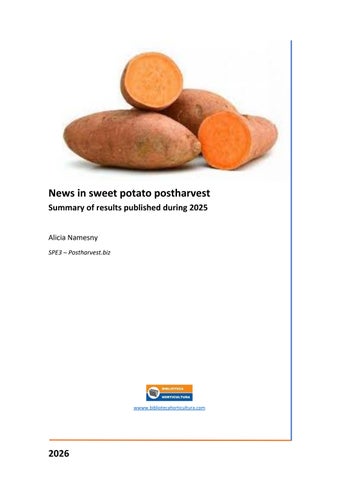
Main picture is by Nusan, https://nusannutricion.com/boniato-o-patata/
Sources Abd El-Rahman F Gomaa, Jing Tao, Sun-Yan Liang, Jia-Qi Liu, Si Yang, Xiao-Qiong Shi, Mohamed H. El-Sayed, Ke Xing, Sheng Qin. (2025). Biocontrol of postharvest soft rot caused by Rhizopus stolonifer in sweet potatoes using volatile organic compounds from actinomycete Nocardiopsis dassonvillei MI-S24. Food Control, Volume 176, 111359. https://doi.org/10.1016/j.foodcont.2025.111359 Aduo, Bruno Chudy. (2025). Post harvest fungal deterioration of sweet potato (Ipomoea batatas (L.) Lam.) elite varieties in South Eastern Nigeria. MSI Journal of Multidisciplinary Research (MSIJMR), Volume: 2, Issue: 6. https://zenodo.org/records/15760610 Ajari, O. I.; Ajewole, A. E.; & Onu, G. C. (2025). Effects of pre-storage treatments on the physicochemical and proximate properties of sweet potato (Ipomoea batata) tubers Entomology and Agronomy Studies (BJEAS) Vol. 9 No. 1. https://doi.org/10.70382/bjeas.v9i1.019 Chao Pan, Fajuan Wang, Yanzi Chu, Yahui Xue, Yan Ye, Kunlong Yang, Jinfeng Hua, Ling Shen, Jun Tian. (2026). Targeting the Snf1 kinase by cinnamaldehyde induces glucose starvation and oxidative stress in Fusarium solani for the control of sweet potato postharvest decay. Postharvest Biology and Technology, Volume 234, 114116. https://doi.org/10.1016/j.postharvbio.2025.114116 Gemini, información sobre producción y comercio Guanxing Peng, Weizhen Wang, Xianhui Yin, Youhua Long, Haidong Wang, Xiang Chen, Yanting Sun, Yun Li, Xiaohui Li, Hang Yang. (X). Bioactivity and Mechanisms of Botanical Fungicide Magnolol against Trichoderma hamatum as a Novel Pathogen of Sweet Potato. Journal of Agricultural and Food Chemistry, Vol 73/Issue 22 https://pubs.acs.org/doi/abs/10.1021/acs.jafc.5c02331 Morales, Carlos, Kelly Avila, Usha Bhatta, Malick Bill, Collins Bugingo, Maria Camila BuitragoAcosta, Hunter Collins, Sandesh Dangi, L. E. Hanson, Carly Hendershot, Shyam L. Kandel, J. Mascarenhas, R. Naegele, C. H. Parada-Rojas, S. Pethybridge, Kirsten Pollok, Lindsey Thiessen, J. Willbur, and L. M. Quesada-Ocampo Bittersweet Challenges: Postharvest Disease Management in Sugarbeet and Sweetpotato Plant Disease 2025 109:12, 2457-2472 https://doi.org/10.1094/PDIS-10-24-2214-FE https://apsjournals.apsnet.org/doi/epdf/10.1094/PDIS-10-24-2214-FE Pingping Tian, Yuanyuan Mi, Jia Xu, Ying Wu, Lina Zhao, Shanshan Tie, Jie Zhang, Qiuxia Fan, Shaobin Gu. (2025). Antifungal activity of volatile organic compounds produced by Weizmannia coagulans CGMCC 9951 on Ceratocystis fimbriata in postharvest sweet
www.bibliotecahorticultura.com
11
News in sweet potato postharvest
potatoes and its potential biocontrol. International Journal of Food Microbiology, Volume 440, 11128. https://doi.org/10.1016/j.ijfoodmicro.2025.111281 Ragab Abouzeid, Mohamed Abd El-Aal, Meen Sung Koo, David H. Picha, Qinglin Wu (2025). Sustainable sweetpotato peel-based nanocoatings reinforced with sodium alginate: enhancing shelf life and reducing postharvest losses in agricultural produce. International Journal of Biological Macromolecules, Volume 322, Part 3, 146673. https://doi.org/10.1016/j.ijbiomac.2025.146673 Rusheng Hu, Yin Liu & Zhaofeng Meng. (X). Preservation of Sweetpotato in Postharvest Handling, transportation, and Storage: A Review. Food Reviews International, 1–43. https://doi.org/10.1080/87559129.2025.2525425 Shuqian Zhou, Qian Zhou, He Zhang, Yongxin Li, Ruihua Bai, Huqing Yang (2025). Postharvest physiological characteristics in tuberous roots of three sweetpotato varieties with varying cold tolerance. Scientia Horticulturae, Volume 341, 114011 https://doi.org/10.1016/j.scienta.2025.114011 Tony Tonny Nascimento Gomes, Wismith Silva de Andrade, Ozimar de Lima Coutinho, Lucas Larth Gruberio Macellaro Thomé, Mateus Barros Medeiros Assunção, Thiago Schoeffel Rodrigues Neto, Leandro Timoni Buchdid Camargo Neves (2025). Analysis of the Sweet Potato Trade Chain in Boa Vista, Roraima: postharvest and marketing dynamics Revista Agro@mbiente On-line, v. 19, e8314. https://revista.ufrr.br/agroambiente http://dx.doi.org/10.18227/1982-8470ragro.v19i00.8314 Wanying Ge, Qian Zhou, Zhuohui Meng, Jihui Gao, Gang Chen, Yongxin Li, Huqing Yang. (2025). Breath of the chill: Transcriptomic exploration of respiration and energy metabolism in sweet potato roots during cold storage. Postharvest Biology and Technology, Volume 224, June 2025, 113483. https://doi.org/10.1016/j.postharvbio.2025.113483 Xie Hongyu, Sun Hongnan, Ma Mengmei, Mu Taihua. (2025). Comparison of Saccharification Effect of Post-harvest Sweet Potatoes under Storages at Different Temperatures and for Different Time Periods. Modern Food Science & Technology, Vol 41, Issue 4, p286 10.13982/j.mfst.1673-9078.2025.4.0326 Yixi Chen, Linjiang Pang1, Jiacheng Bai1, Wenbao Yu, Yueming Zhu, Melvin Sidikie George, Zunfu Lv & Guoquan Lu (2025). Exploring the Impact of Citric Acid on Mitigating Sweet Potato Soft Rot and Enhancing Postharvest Quality. Agriculture, 15(2), 215. https://doi.org/10.3390/agriculture15020215 Yongjing Zhang, Xiaoying Cao, Changgen Li, Hao Cong, Yujie Chen, Qiao Liu, Yiming Wang, Hailan Fu, Jiluan Zhang, Jihong Jiang, Ludan Li. (2025). Postharvest biocontrol ability and antagonistic mechanism of Streptomyces djakartensis MEPS155 against Ceratocystis fimbriata in sweetpotato. Postharvest Biology and Technology, Volume 229, 113709. https://doi.org/10.1016/j.postharvbio.2025.113709
12
www.bibliotecahorticultura.com
ESPECIALISTES EN SERVEIS PER A LA PRODUCCIÓ EDITORIAL, SL Doctor Manuel Candela 26, 11ª 46021 VALENCIA – ESPAÑA Tel.: +34-649 48 56 77 / info@poscosecha.com NIF: B-43458744
www.poscosecha.com www.postharvest.biz www.bibliotecahorticultura.com www.tecnologiahorticola.com www.actualfruveg.com