Alicia Namesny Postharvest.biz

wwww.bibliotecahorticultura.com

Alicia Namesny Postharvest.biz
wwww.bibliotecahorticultura.com
Onions are a cornerstone of global agriculture and gastronomy, with worldwide production around 85-90 million tons annually.
India and China account for almost 50% of global production, followed by the United States, Egypt, and Turkey.
The Netherlands is the world's largest exporter by volume, closely followed by India and Spain. Export growth is observed from countries like Egypt and Peru, which are gaining market share in Europe during the off-season months (when there is no local harvest).
In recent years (2024-2026), the onion industry has faced climatic challenges that have caused price fluctuations, but Spain remains a key player, especially in the European market.
Spain is the leading producer in the European Union in terms of value and quality, standing out for its long-life varieties (kernel onions) and the growing demand for sweet onions. The cultivated area exceeds 23,300 hectares, and national production ranges from 1.2 to 1.5 million tons annually, although the 2024/25 season saw a slight decrease of 3% due to high temperatures and drought in the main producing regions.
The heart of production is Castilla-La Mancha, accounting for 60% of the national total and boasting a Protected Geographical Indication (PGI), Cebolla de La Mancha (La Mancha Onion), which has gone from certifying less than one million kilos to more than 50 million in just three years.
Spain is a net exporter, with foreign sales reaching €663 million in 2025. Germany is the main buyer, followed by the United Kingdom, France, and Italy.
Spain imports approximately €169 million (2025), primarily from Peru, the Netherlands, and Egypt, to fill stock gaps between harvests.
National consumption in Spain is 6 to 7.5 kg of onions per year, 48% of which are purchased in supermarkets. Sweet and red onions are the fastest growing in popularity.
The following are advances in post-harvest handling based on papers published during 2025, with a clear predominance of those related to processed garlic.
2. Review about nutritional benefits, post-harvest challenges, and innovative preservation strategies of onions
Onions (Allium cepa L.), one of the most widely grown and consumed vegetables worldwide, are prized for their distinct flavor, health advantages, and active ingredients. The significance of onions in the Allium family and their use in various cuisines are examined in detail in the review by Kunle Obafemi Akinwotu1 & Hezekiah Adekanmi Adeniran.
Along with potential drawbacks, the review also discusses the benefits found in onions, such as essential vitamins, minerals, and antioxidants.
The difficulties of cultivating onions and managing them after harvest are covered in the review, with particular attention paid to spoiling, microbes, and the negative social and economic impacts of onion waste.
It also looks at contemporary processing techniques that assist cut waste and increase the shelf life of onions, such as drying, freezing, and producing value-added products.
A variety of preservation procedures, ranging from more recent ones like cold plasma treatment and nanotechnology to more conventional ones like pickling and drying, are also examined.
Lastly, the study examines both traditional and modern onion storage techniques. To increase onion output, decrease waste, and create a more sustainable global supply chain, it emphasizes the necessity of integrating old and new technologies.
The paper is available in a complete form in the references.
The Red Onion of Tropea Calabria IGP is one of the most prestigious Italian products. Regarding the post-harvest processing of this product, the type of mechanical equipment used plays an important role. Generally, spring onions are processed in mechanical installations that use large quantities of water to wash, cut, and partially peel them simultaneously.
These machines typically feature shearing knives that cut both the roots and the leaves, two pairs of rotating brushing rollers that peel the onions, and special sprayers that wash them at the same time.
At the end of this process, the water can cause problems for the onions as it may stagnate in the cuts, spoiling them and reducing their shelf life. A solution to this problem is a newly developed system that uses compressed air instead of water to wash the onions. The system was investigated by Matteo Sbaglia, Lorenzo M. Abenavoli & Bruno Bernardi.
Vidyashree Dundappa Malakai et al. (the only 2024 article reviewed) tested efficacy of ozone fumigation on physical and quality attributes of onion cv. Nasik Red.
Onions were fumigated with varying concentrations of ozone in airtight LDPE (Low Density Poly Ethylene) containers for specific duration followed by 2 hours exposure to atmospheric air to dissipate residual ozone. The treated onions were stored and examined for about 3 months.
Among treatments, the onions treated with a lesser ozone concentration (3637.2µl L-1 ozone per 10 minutes) demonstrated superior results including significant reduction in physiological loss in weight, sprouting, rotting, black mold incidence with the highest percentage of marketable bulbs.
These findings suggest that controlled ozone fumigation, particularly at lower concentration effectively preserve the onions quality during storage, offering promising post harvest management strategy.
5. Preservation of fresh cut onions using 0.05% sodium
The study by Priyanka, A. et al.evaluated the effectiveness of sodium benzoate and potassium metabisulfite in preserving fresh-peeled onions stored at 4°C for 21 days.
Five treatments were applied: control (no preservative; T0), 0.05% sodium benzoate (T1), 0.1% sodium benzoate (T2), 0.01% potassium metabisulfite (T3), and 0.08% potassium metabisulfite (T4).
Samples were vacuum-packed and assessed periodically for physicochemical properties (pH, weight loss, total soluble solids [TSS], texture, and firmness), microbial load (total plate count [TPC], E. coli, and lactic acid bacteria), and sensory attributes.
Results showed that T1 (0.05% sodium benzoate) was most effective in maintaining quality, with higher firmness, TSS, and titratable acidity (TA), and the lowest weight loss.
All treatments exhibited increasing TSS, TA, and weight loss, while pH and firmness declined over time.
T1 also recorded the lowest TPC, and E. coli and lactic acid bacteria were absent in all samples.
Sensory evaluation rated T1 highest in overall acceptability.
These findings suggest that 0.05% sodium benzoate effectively preserves the quality and extends the shelf-life of vacuum-packed fresh-peeled onions for up to 21 days under refrigerated conditions.
(*) Sodium benzoate is the food additive code E 211
6. Current scenarios in onion postharvest management in India
Onion (Allium cepa L.) is an economically important bulbous crop and finds applications as food, flavor, and nutraceutical ingredient. The health benefits associated with onions can be attributed to the presence of organosulphur compounds, polyphenols, and prebiotics.
India is one of the largest producers of onion and contributes to nearly 25% of the world’s production.
Onion is highly perishable and susceptible to post-harvest losses such as rotting, sprouting, and weight loss, which combinedly contribute to nearly 23% - 25% of total crop loss in India. This can be attributed to weather abnormalities and a paucity of effective storage systems (cold storage) leading to crop loss and subsequently high degree of price volatility.
Apart from existing technologies, novel techniques such as ozonation, gamma irradiation, and cold plasma have been considered for the decontamination of onions and enhancement of the shelf life.
The paper by Kalit Sharma et al. involves a comprehensive review of the nutraceutical properties of onions and various techniques involved in onion harvesting and storage along with the discussion of factors affecting their shelf life.
Further, the authors compiled information on the existing and novel techniques that are currently explored for enhancing the shelf life and value addition of onions and reviewed the impact of processing on the nutritional quality of onions.
Valorization of wastes generated from onion processing for the production of high-value products such as nutraceuticals and biofuels would enhance the sustainability of the industry.
Further integration of volatilomics for the detection of spoilage and contamination in onions would augment real-time quality control and reduce post-harvest losses and stabilize the price volatility.
The study by Subhashree Sahu et al. investigates the post-harvest losses, the determinants, the status of know-how and adoption of the PHM, postharvest management, practices and associated constraints in onion and potato value chains in India, along with the interventions required to mitigate these losses.
Data collected from 240 farmers (120 onion and 120 potato) revealed significant gaps between knowledge and adoption of recommended post-harvest management (PHM) practices.
While a majority of farmers demonstrated awareness of best practices, such as improved cultivars, irrigation systems, and proper storage techniques, actual adoption rates were hindered by factors such as unavailability of resources, high costs, and limited access to market intelligence.
The analysis found significant post-harvest losses, with 58.33% of onion farmers and 63.33% of potato farmers experiencing high losses. Post-harvest losses in both crops were primarily attributed to inadequate storage facilities, improper curing methods, and inefficiencies in grading and sorting.
The study identified that farm size had no significant effect on potato losses, unlike onions, due to differences in harvesting techniques and storage methods.
Knowledge levels, crop variety, timely labour availability, and training on Good Management Practices (GMPs) were significant determinants of the level of post-harvest losses. In onions, training had a greater impact on reducing losses, given the crop's requirement for more complex post-harvest handling, such as curing and sorting.
The study identified several critical interventions, with 94% of respondents prioritizing community storage facilities at the local level.
Other key recommendations included establishing automatic weather stations, enhancing capacity-building programs, and implementing commodity-specific processing centres to add value to surplus produce.
Furthermore, the need for robust market information systems and government interventions, such as setting minimum support prices (MSP) and offering financial support for PHM infrastructure, was strongly emphasized.
The findings underscore the importance of a multi-faceted approach involving technical, infrastructural, marketing, and financial solutions to reduce post-harvest losses, improve farmer livelihoods, and ensure food security.
These results provide valuable insights for policymakers, agricultural extension services, and stakeholders in the agricultural value chain.
8. Characterization of 3 onion pathogens, Penicillium spp., Fusarium spp., and Colletotrichum spp in India
Ratnaprabha, Amaresh Y.S. et al. isolated three post harvest fungal pathogens, Penicillium spp., Fusarium spp., and Colletotrichum spp.from infected onion bulb samples collected during a survey in seven districts of Kalyana Karnataka.
Pathogenicity testswereconductedfollowingKoch’spostulates,Morphologicalcharacterization revealed septate, hyaline hyphae in all pathogens, with Fusarium spp. Producing falcate macro conidia. Colletotrichum spp. cylindrical conidia containing oil globules and Penicillium s pp.produced globe-shaped conidia in chains.
Cultural studies showed maximum colony diameter for all pathogens on Potato dextrose agar with Fusarium spp. (89.76 mm), Colletotrichum spp. (89.40 mm) and Penicillium spp. (90.00mm). Potato dextrose agar and Richard’s agar supported abundant sporulation for Fusariumspp. and Colletotrichumspp.while Penicillium spp. sporulated best on Potato dextrose agar. Colony colour, growth pattern and sporulation varied across media, with potato dextrose agar generally supporting highest growth and pigment development.
The results confirm the pathogenic potential and cultural preferences of these fungal species.
The study by Estifhane T. Lagmay assessed the economic viability and adoption potential of onion dehydrator and granulator machines among small-scale farmers in Occidental Mindoro.
A cost-benefit analysis was conducted using quantitative survey data from farmers in San Jose and Magsaysay, and secondary data from machine developers.
Results showed strong support for the technology (mean = 3.86, SD = 0.33), with benefits including reduced post-harvest losses, extended shelf life, and increased profitability.
Demographic factors had no significant effect on perceptions. Financial analysis projected a peak ROI of 383% (2014–2029), confirming economic feasibility.
The machines are also user-friendly, requiring minimal training.
The study recommends capacity building, financial support, consumer education, and policy initiatives to sustain adoption and impact.
The study by Mohammed Bukar Yunusa, Lawan Garba Abubakar, Gambo Bala investigates the impact of varying storage conditions specifically temperature and relative humidity on the postharvest quality of Dadin-kowa red onions.
Onions were stored under combinations of three temperature levels (25, 30, and 35°C) and three relative humidity levels (60, 65, and 70%) for 8 weeks. The parameters evaluated were weight loss, rottenness percentage, and total soluble solids (TSS).
Results indicate that higher temperatures significantly increase weight loss and rottenness, while higher humidity tends to reduce weight loss but may increase spoilage risk at elevated temperatures. TSS values remained relatively stable across treatments. The findings suggest that moderate humidity (65%) and lower temperature (25°C) offer optimal storage conditions for minimizing postharvest losses in onions.
This study demonstrates how affordable, sensor-based storage systems can reduce onion postharvest losses and support food security initiatives in sub-Saharan Africa.
Onion (Allium cepa L.) production in Ethiopia is highly seasonal, while consumption remains year-round, creating critical mismatches between supply and demand. The crop’s perishability and limited storage capacity force farmers to sell quickly at low prices, driving market gluts and substantial postharvest losses.
The stuy by Yebirzaf Yeshiwas et al. examines the determinants of onion production and postharvest losses along the supply chain in northwestern Ethiopia.
Multiple linear regression models, validated for multicollinearity (VIF < 10) and heteroscedasticity (Breusch–Pagan test), revealed that male household headship (β = 1.561, p < 0.05), hybrid seed access (β = 4.40, p < 0.05), and land allocation (β = 16.49, p < 0.01) significantly increased production (R2 = 0.901).
Conversely, education (β = −0.51 to −0.31, p < 0.1) and cooperative membership (β = −0.906, p < 0.1) reduced postharvest losses, whereas land size (β = 4.30, p < 0.01), future price expectations (β = 2.17–4.20, p < 0.1), and purchase volume (β = 1.55–4.43, p < 0.01 at wholesale) amplified them.
These results highlight persistent gender disparities, input access gaps, and systemic storage constraints. Policy priorities include scaling hybrid varieties, upgrading storage technologies, strengthening cooperatives, and providing targeted capacity building and enhancing supply chain efficiency. Strengthening these areas will be pivotal for advancing sustainable food security and rural income resilience.
12. Fungal species affecting onions during postharvest in Nigeria
Post-harvest fungal spoilage of onions contributes to significant global economic and food security losses, with up to 30% of harvested bulbs lost annually in developing regions.
Fahad Alkasim et al. conducted a study to isolate fungal species responsible for the spoilage of onions sold at Kafin Hausa Market, Jigawa State, Nigeria.
A total of 37 fungal isolates were obtained from 12 samples collected across 3 stations (A, B, and C). Result from the determination of frequency of occurrence show that, fungus with the highest frequency was Aspergillus niger (40.54%), followed by Alternaria alternata (16.22%), Rhizopus stolonifer (13.51%), Fusarium oxysporum (10.81%), Aspergillus flavus (8.11%), Penicillium digitatum (8.11%), and Aspergillus fumigatus (2.70%) with frequencies differing significantly across sampling stations (p < 0.05).
This finding provides the first empirical documentation of onion spoilage fungi in the Kafin Hausa region of Jigawa state, Nigeria, identifying A. niger as the primary contaminant, and suggests the urgency of improved post-harvest practices (e.g., temperature-controlled storage) to mitigate losses.
13. Postharvest loses in onion (and pepper) in Nigeria
Effect of harvest on pathogenic and non-pathogenic losses of onion and pepper grown in yobe state
The postharvest losses of pepper and onion have been estimated to be 42% annual global harvest in developing countries. The study by Sani Abba Nasidi aimed to isolate, identity and characterize pathogenic and nonpathogenic post-harvest loss of fruit and vegetable due to fungal infection in Fune, Yunusari and Bade area (Nigeria).
A total 273 colonies were isolated during the research. The species of fungi isolated were identified as Aspergillus niger, Aspergillus flavus, penicillium, S. cerevisiae. The incidence in Yunusari and Bade is higher than in Fune.
14. Calcined oyster shell powder, 4% to 6%, maintained the overall quality of green onions under refrigeration
Calcined oyster shell powder (COSP), a natural antibacterial agent derived from marine waste, was used in the study by Wen-Chien Lu et al. to treat postharvest green onions (Allium fistulosum), which are susceptible to microbial contamination during the washing process after harvesting.
The green onions were dipped in COSP solutions of varying concentrations (0%, 2%, 4%, 6%, and 8%).
This study investigated the effects of COSP treatment on the physicochemical properties and microbial activities of green onions.
Compared to untreated green onions, COSP-treated green onions exhibited an extended shelf life to 28 days, evidenced by reduced weight loss by up to 9.84%, reduced the total bacterial count by up to 1.20 Log₁₀ CFU/g, stabilized pH level (5.28 ± 0.38–6.06 ± 0.20), preserved chlorophyll a and b content (0.40 ± 0.01–0.46 ± 0.01 and 0.17 ± 0.003–0.22 ± 0.007, respectively), enhanced antioxidant activity (DPPH scavenging activity up to 12.47%, ABTS value up to 82.94%), and better color appearance.
Furthermore, COSP treatment was effective in preserving allicin (35.03 ± 0.77–45.07 ± 2.37%) content and inhibiting the degradation of cycloalliin (13.58 ± 0.08–16.48 ± 0.15 g/kg dry weight) and methiin (17.14 ± 0.10–19.41 ± 0.47 g/kg dry weight) in green onions, thereby preserving their fresh aroma.
This study offers a novel postharvest preservation method for green onions using marine wastederived COSP dipping, which helps reduce the loss of quality in postharvest products.
La Environmental contamination in agricultural environments is a major contributor to the presence of antibiotic-resistant (AR) bacteria in raw, plant-based foods, creating significant public health concerns (Geldreich et al, 1971).
Common vectors of AR pathogens include soil, water, and manure-based fertilizers, which can contaminate both the surfaces and internal tissues of produce, complicating decontamination efforts.
Green onions, widely consumed raw, and also frequently used in fermented foods like kimchi and usually consumed raw as well, have been implicated in foodborne illness outbreaks due to bacterial contamination.
The study by Gaur, Kritika investigates the efficacy of a 0.2% electrolyzed water solution in reducing bacterial contamination on green onions.
We hypothesize that post-harvest treatment with electrolyzed water will significantly reduce the prevalence of AR bacteria on green onions compared to untreated controls.
Store- bought green onions were treated with electrolyzed water under controlled laboratory conditions simulating typical post-harvest sanitation procedures. Following treatment, samples were plated on selective media to assess bacterial presence and abundance, both with and without sanitizer treatments. Polymerase chain reaction (PCR) amplification and 16S rRNA gene sequencing were employed to further characterize representative bacterial colonies.
The effectiveness of electrolyzed water was assessed based on microbial reduction, identifying its potential for minimizing contamination on fresh produce. This study aims to provide valuable insights into effective sanitization strategies for reducing AR bacteria in raw produce, offering evidence to inform food safety protocols for both the food industry and consumers. Ultimately, these findings will contribute to mitigating public health risks associated with antibiotic-resistant pathogens in the food supply.
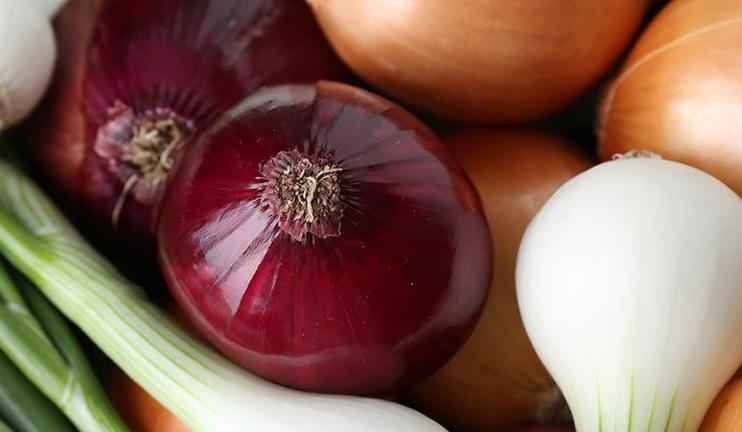
Main picture, https://www.calfruitos.com/es/blog/tipo-de-cebollas-usos-y-propiedades-289
References
Estifhane T. Lagmay
Economic Viability of Onion Dehydrator and Granulator Machine for Small-Scale Farmers in Occidental Mindoro: Cost-Benefit Analysis
EAJMR, East Asian Journal of Mutidisciplinary Research, Vol. 4 No. 6 (2025): June 2025
https://mtiformosapublisher.org/index.php/eajmr/index https://doi.org/10.55927/eajmr.v4i6.182
Fahad Alkasim, Abdulrazak Mohammed Hussain, Tijjani Mustapha, Ibrahim Danazumi Abdul Isolation and Identification of Fungal Species Associated with Post-harvest Spoilage of Onions (Allium cepa) in the Kafin Hausa Market, Jigawa State, Nigeria
March 2025UMYU Scientifica 4(1):86-091
DOI:10.56919/usci.2541.009
https://www.researchgate.net/publication/390877996_Isolation_and_Identification_o f_Fungal_Species_Associated_with_Postharvest_Spoilage_of_Onions_Allium_cepa_in_the_Kafin_Hausa_Market_Jigawa_State _Nigeria
Gaur, Kritika
Post-Harvest Safety Enhancement: Combatting Antibiotic-Resistant Pathogens on Retail Fresh Green Onions
Thesis, The Ohio State University
https://kb.osu.edu/handle/1811/105777
Gemini, General information
Kalit Sharma, Manoj S Aroor, Sampa Das, Birinchi Bora, Mahesh Gupta, Vidyashankar Srivatsan
Comprehensive review on the current scenarios in onion processing and addressing the grand onion challenge of India
Scientia Horticulturae, Volume 345, 1 April 2025, 114152
https://doi.org/10.1016/j.scienta.2025.114152
https://www.sciencedirect.com/science/article/pii/S0304423825002018
Kunle Obafemi Akinwotu1 & Hezekiah Adekanmi Adeniran
Nutritional benefits, post-harvest challenges, and innovative preservation strategies of onions (Allium cepa L.): A comprehensive review
Food Sci. Preserv. 2025; 32(3):423-444
DOI: https://doi.org/10.11002/fsp.2025.32.3.423
https://www.ekosfop.or.kr/archive/view_article?pid=kjfp-32-3-423
Matteo Sbaglia, Lorenzo M. Abenavoli & Bruno Bernardi (2025).
Making Post-harvest More Efficient: Prototyping an Air Treatment Plant for PGI ‘Cipolla Rossa di Tropea Calabria’ Spring Onions. In: Carbone, G., Quaglia, G. (eds) Proceedings of I4SDG Workshop 2025 - IFToMM for Sustainable Development Goals. I4SDG 2025. Mechanisms and Machine Science, vol 179. Springer, Cham.
https://doi.org/10.1007/978-3-031-91151-4_67
https://link.springer.com/chapter/10.1007/978-3-031-91151-4_67
Mohammed Bukar Yunusa, Lawan Garba Abubakar, Gambo Bala
Design and evaluation of a smart microclimate storage system for reducing postharvest losses in onion
Research Square, posted November 2025
https://www.researchsquare.com/article/rs-7925926/v1
DOI: https://doi.org/10.21203/rs.3.rs-7925926/v1
Priyanka A., Karthika S., Hema K., Usha Antony
Postharvest Shelf-Life Assessment of Treated Fresh-Cut Onions Under Vacuum Packaging
Madras Agricultural Journal, Volume 112, December(10-12), Pages: 95 – 103
https://www.masujournal.org/view_journal.php?id=677
DOI: https://doi.org/10.29321/MAJ.10.9D1242
Ratnaprabha, Amaresh Y.S., Yenjerappa S.T., Gowdar S.B, Arunkumar H.
Morpho-Cultural Characterization of Post-Harvest Fungal Pathogens of Onion.
Journal of Experimental Agriculture International, 2025, 47 (10), pp.600-608. ⟨hal05329910⟩
https://hal.science/hal-05329910/
Subhashree Sahu, J. P. Sharma, R. R. Burman, Reshma Gills & Satyapriya Mitigating Post-Harvest Losses in Onion and Potato for Sustainable Food Systems
Int J Adv Eng Sci Appl Math 17, 366–380 (2025).
https://doi.org/10.1007/s12572-025-00415-9
Sani Abba Nasidi
Effect of harvest on pathogenic and non-pathogenic losses of onion and pepper grown in Yobe state
Fane-Fane International Multidisciplinary Jorunal, Vol. 9 No. No.2 SEPTEMBER (2025): This is the second Issue of Volume 9.
https://fimjournal.com/index.php/fimj/EditorialPolicy
Vidyashree Dundappa Malakai, Jameel Jhalegar, Viresh Mallayya Hiremath, Noorulla Haveri
Effect of Post-harvest Ozone Fumigation on Storage of Onion
December 2024 Journal of Advances in Biology & Biotechnology 27(12):643-652
DOI:10.9734/jabb/2024/v27i121812
https://www.researchgate.net/publication/387433331_Effect_of_Postharvest_Ozone_Fumigation_on_Storage_of_Onion
Wen-Chien Lu, Chien-Shan Chiu, Yung-Jia Chan, Po-Yuan Chiang, Song-Yang Zhuang, Yu-Chen Li, Zeng-Chin Liang, Amanda Tresiliana Mulio & Po-Hsien Li
Sustainability of calcined oyster shell powder as a natural preservative for postharvest green onion (Allium fistulosum).
Chem. Biol. Technol. Agric. 12, 74 (2025).
https://doi.org/10.1186/s40538-025-00779-x
https://link.springer.com/article/10.1186/s40538-025-00779-x
Yebirzaf Yeshiwas, Esubalew Tadele, Enyew Adgo, Melkamu Alemayehu
Heterogeneous production constraints and postharvest losses in onion farming: evidence from Northwest Ethiopia
Front. Sustain., 18 December 2025, Sec. Sustainable Supply Chain Management, Volume 6 - 2025
https://doi.org/10.3389/frsus.2025.1697487
https://www.frontiersin.org/journals/sustainability/articles/10.3389/frsus.2025.16974
87/full

ESPECIALISTES EN SERVEIS PER A LA PRODUCCIÓ EDITORIAL, SL
Doctor Manuel Candela 26, 11ª 46021 VALENCIA – ESPAÑA
Tel.: +34-649 48 56 77 / info@poscosecha.com NIF: B-43458744
www.poscosecha.com www.postharvest.biz www.bibliotecahorticultura.com www.tecnologiahorticola.com www.actualfruveg.com