A Chemist’s top tips for choosing a chemical suit 8 When Old Man Winter arrives, TRYM gets ready for work 12
Enthusiastic judges give praise on this year’s best photos 16
Højnæsvej
Editor
René
Executive editors
Jacob
Torsten Mathias Augustsen
Contact
Authors Sune Feldthusen Husted, Irene Olsen and Troels Leth
Design
Print
Published
Subscribe/unsubscribe:
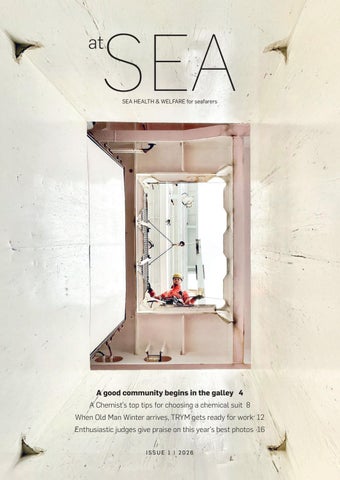
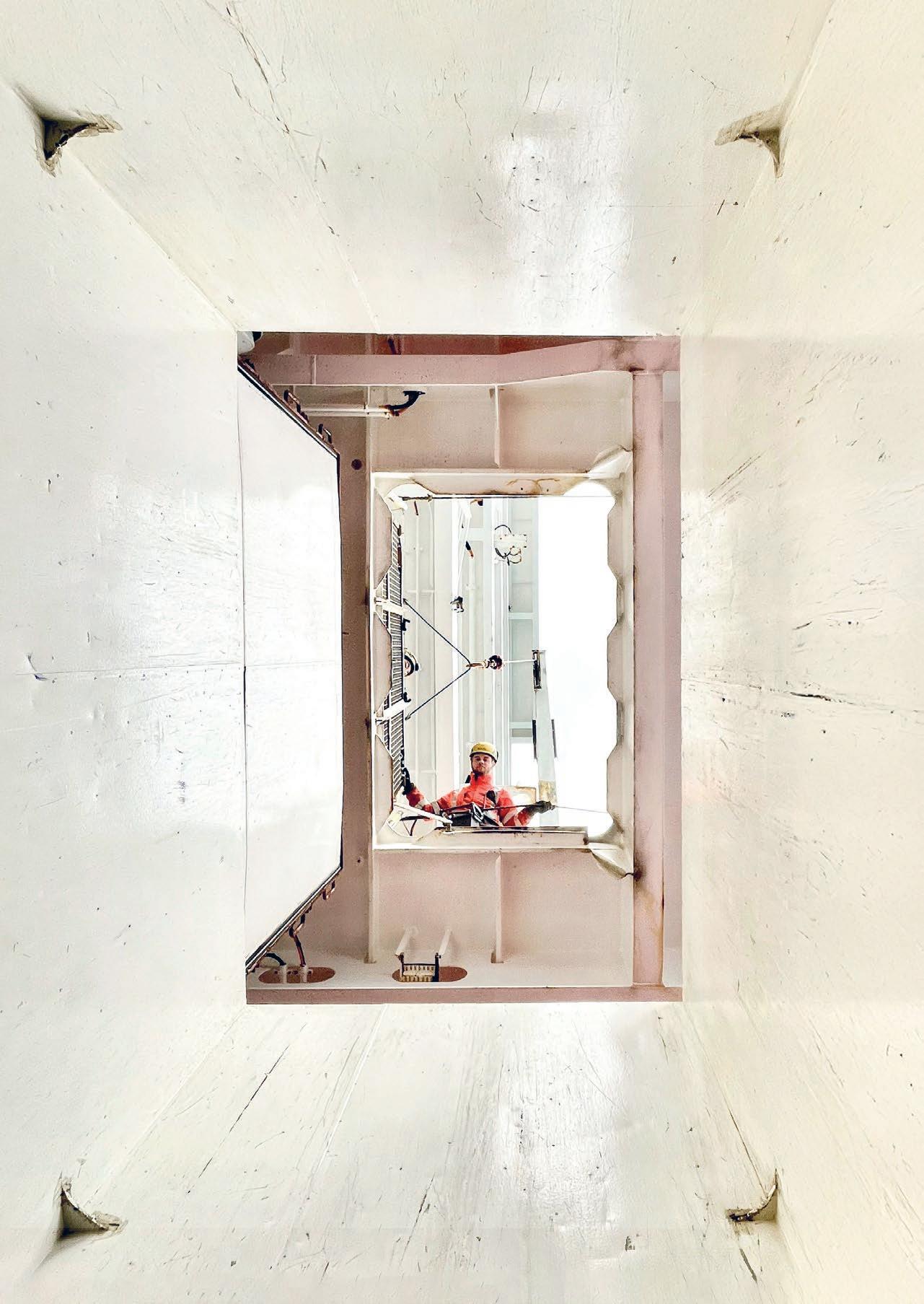
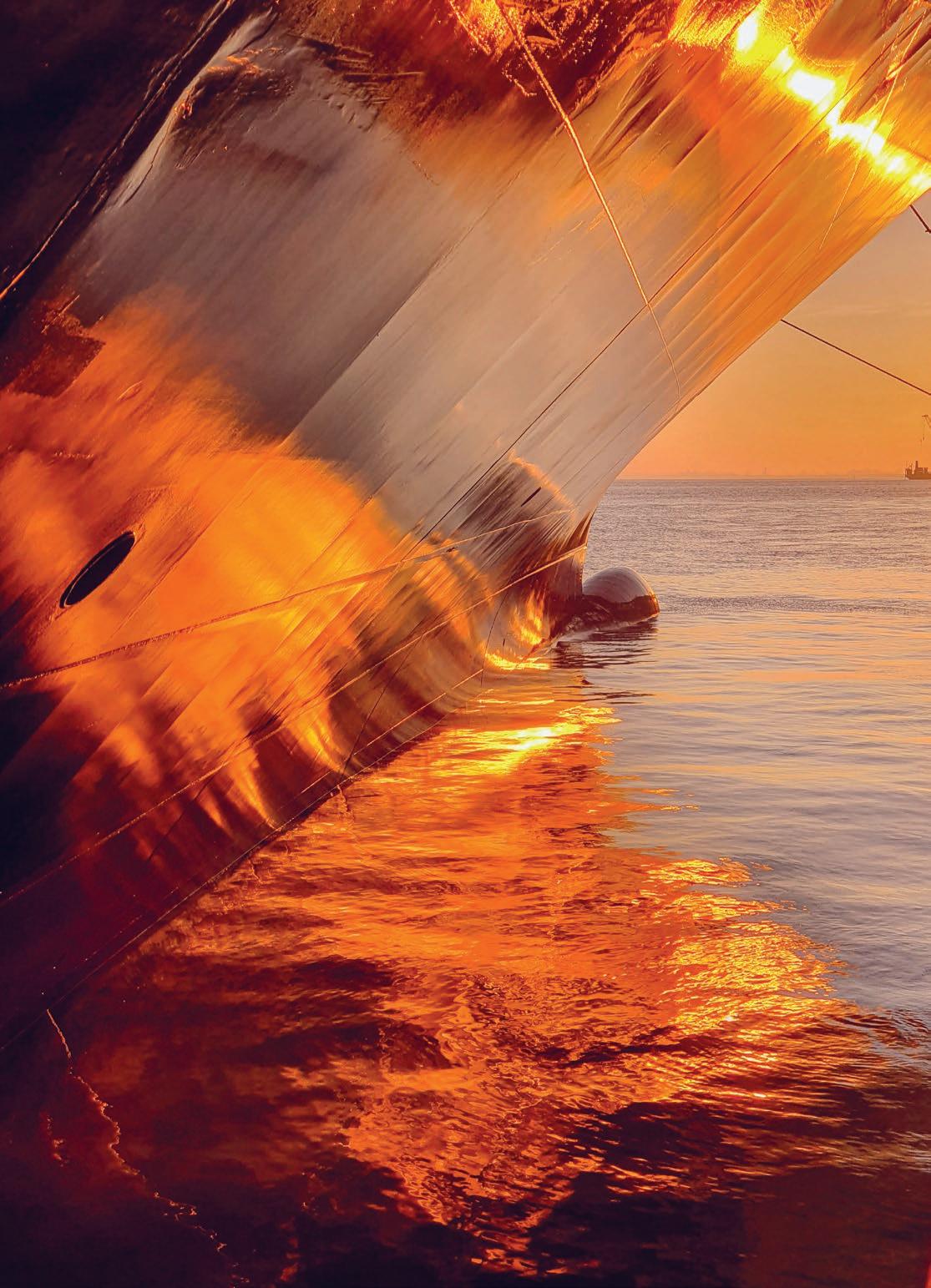
Front cover: Esben Sandberg Fræer
Photo: Sebastian Wnuk
Photo: Format
Photo: SHW
Photo: Poul Hansen
Photo: SHW
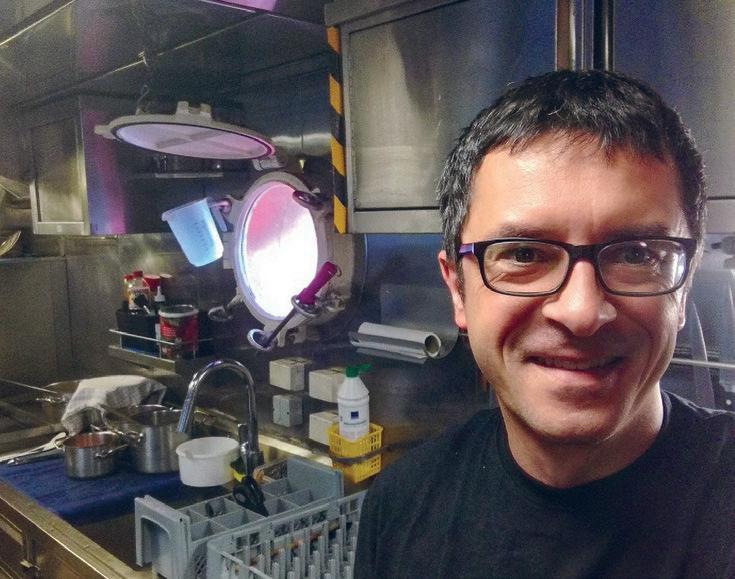
“I don’t just feed the crew – I build well-being”
For the ship’s cook, Sebastian Wnuk, working in the galley is a mission. With a focus on healthy food, respect for differences, and small daily details, he creates energy, motivation, and a sense of community on board.
The day starts early in the galley.
Before most of the crew is awake, Sebastian Wnuk is already at work. The oven is on, and the smell of freshly baked bread slowly spreads through the vessel.
“I like to wake the crew up with fresh, homemade bread,” he says. “It gives them a good start to the day – and adds a bit of color to a life that can otherwise feel a little grey and repetitive sometimes.”
Sebastian is the cook on board ESVAGT CASSIOPEIA. But in his own words, he is more than just a cook.
By Troels Leth, SEA HEALTH & WELFARE
“I actively work with health and well-being on board. At some point, you realize you are in many ways responsible for keeping the spirit and well-being at the highest possible level.”
It’s all about the right fuel
Sebastian leans on a simple truth: “If people are hungry, they get irritated. In Poland, we say: The one who’s hungry is always angry.”
So, for him, it’s all about giving his crew members the right fuel every day.
“You can feed people just to keep them alive. Or you can prepare food that keeps
them alive, happy, and motivated to work. That’s what I aim for.”
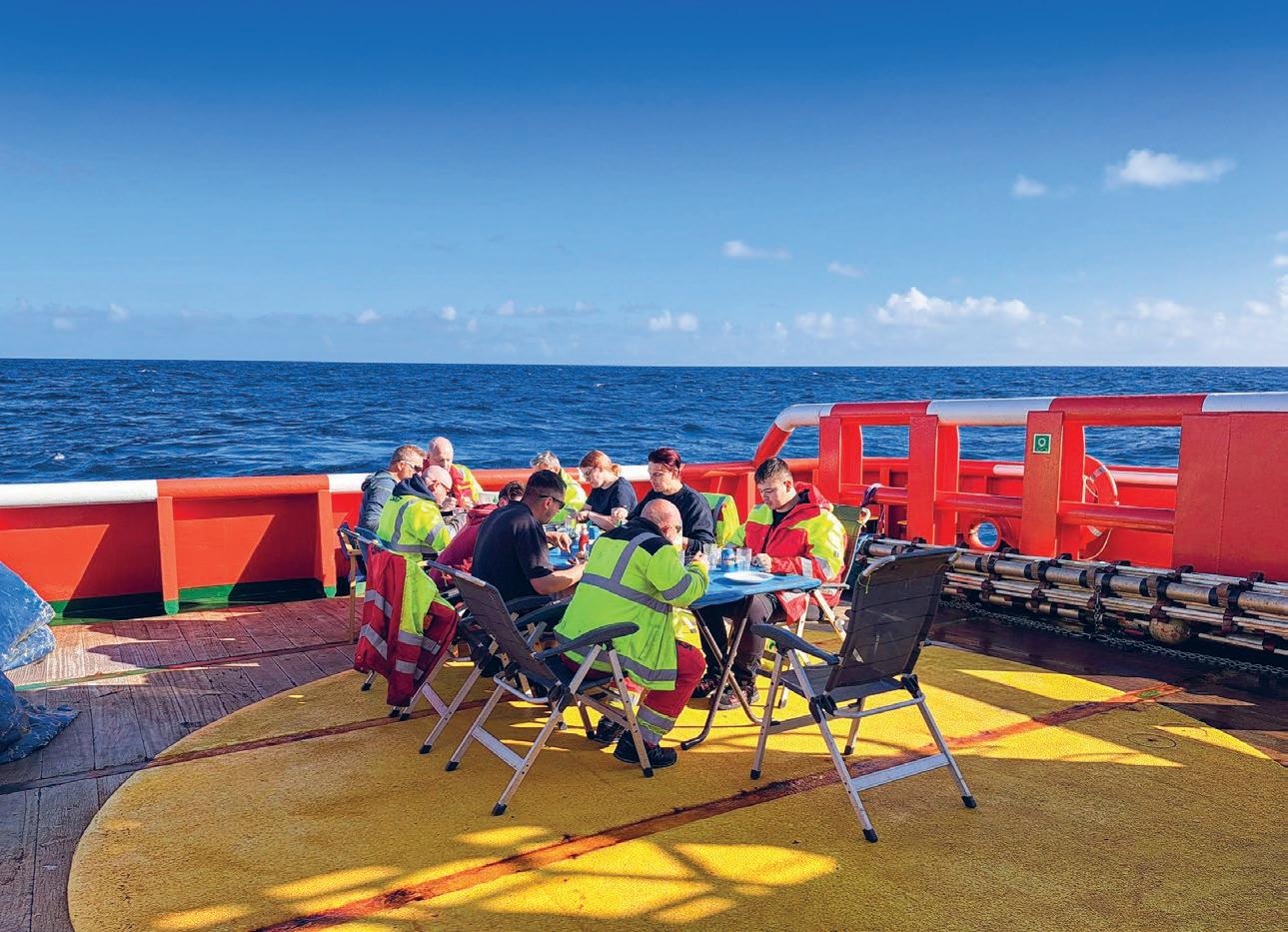
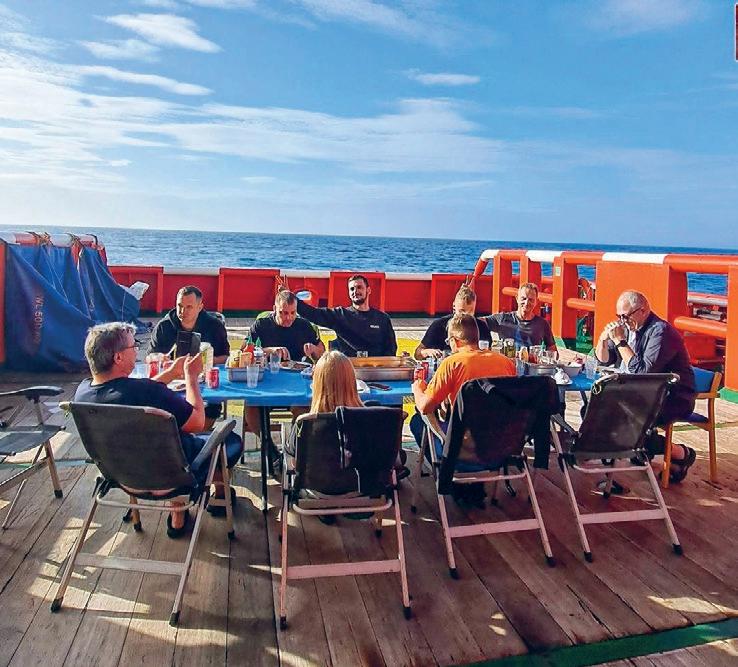
Food plays a central role at sea. It creates structure in the day and becomes something to look forward to – especially when you are far away from home.
“Good food creates a friendly atmosphere. It helps people get through those days spent away from their families.”
Different cultures and expectations can present challenges
But it doesn’t come without challenges.
Sebastian is well aware that cooking for an
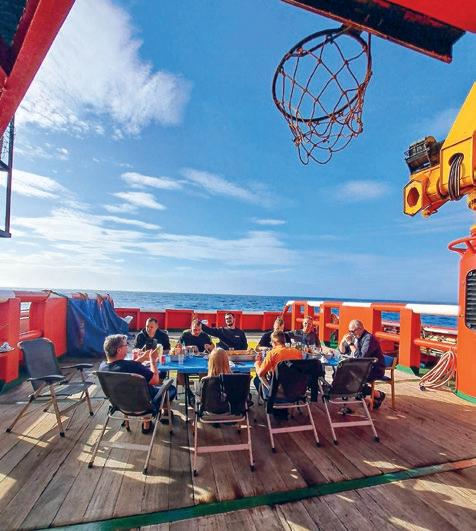
Good food creates a friendly atmosphere and strengthens the bonds between crew members, says the ship’s cook, Sebastian Wnuk.
Photo: Sebastian Wnuk
international crew requires flexibility and understanding. Culture, habits, and religion all play a role – and expectations differ.
“One person prefers potatoes and pork; another prefers rice and chicken. You have to listen to people and respect their habits.”
He knows it’s impossible to satisfy everyone all the time.
“But you can try. I often prepare more than one dish so people can choose. As long as they have a choice, life feels easier.”
Prioritize variation – avoid shortcuts But choice alone isn’t enough for Sebastian. Variation is key to his cooking philosophy.
“If people can tell what day it is just by looking at the food, then I’m doing something wrong,” he says with a smile.
Instead, he focuses on creativity, colorful vegetables, and healthy cooking methods. Pre-prepared meals are avoided whenever possible.
“Make the dishes yourself. It tastes better, and people can see that you care. No shortcuts.”
He also pays attention to presentation –sometimes displaying the daily menu so the crew knows what to expect.
“Some people like to know in advance. Others prefer a surprise. There should be room for both.”
“I’m not trying to promote myself; it’s my philosophy. I want my work to be a spark of joy – something that can start a greater sense of well-being and mental comfort for everyone on board.”
The cook’s work goes beyond the galley
Sebastian makes it a priority to spend time with the crew, joins activities, and takes part in life on board.
“Relationships matter. Trust matters. People need to know they can rely on you. I would describe it as a process. You build
well-being step by step. One day at a time. One meal at a time. One ‘thank you’ at a time.”
And those small words matter.
“Sometimes a simple ‘thank you’ is worth more than money.”
Sebastian has been told more than once that his role is important – and one comment has stayed with him:
“Someone once said I’m like a mother on board, taking care of the crew. Of course, there’s something in it,” he says with a smile. “I can’t be a father for the crew, because the master on board is always a father for all of us.
For Sebastian, this is simply how he sees his work.
“I’m not trying to promote myself; it’s my philosophy. I want my work to be a spark of joy – something that can start a greater sense of well-being and mental comfort for everyone on board.”
In the end, the goal is simple: To make life at sea a little better for everyone.
busy in the galley, Sebastian Wnuk makes it a priority to spend time with his colleagues on board—including during joint safety drills.
When Sebastian Wnuk prepares meals for his crew, he focuses on variety and motivation.
Photo: Sebastian Wnuk.
When he’s not
Photo: Sebastian Wnuk.
Healthy food is not a luxury, but essential for well-being on board
Life at sea places special demands on both body and mind. When the workplace, home, and leisure time merge into a few square meters, food becomes more than just a meal—it becomes a focal point for well-being, energy, and community. That is why there is a good reason to place greater emphasis on healthy eating in the maritime sector.
By Troels Leth, SEA HEALTH & WELFARE
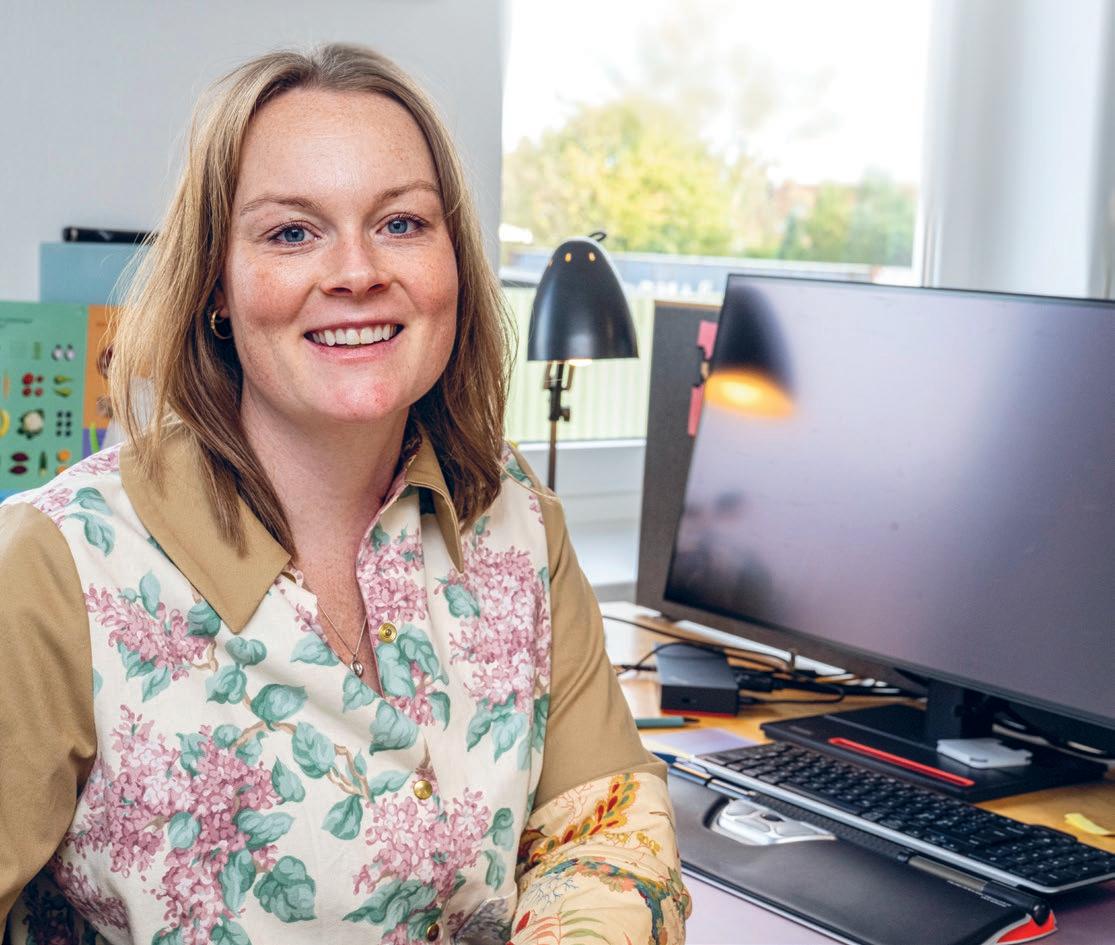
“If the crew and the cook can talk openly and respectfully about their preferences regarding the food, we’ve already come a long way in terms of both well-being and health. Creating a culture where it’s legitimate to talk about diet and well-being is therefore an important step for both shipping companies and ship management,” emphasizes Pernille Nordstrand Sass-Nielsen.
Photo: Sisse Stroyer
The quality and variety of the food served to seafarers, once they have signed on to their ships, should be a priority for shipping companies and ship management. Nutritious, well-prepared, and varied meals play a major role in well-being on board, as there is no alternative to galley food.
“Food on board isn’t just fuel—it’s a crucial part of well-being, community, and quality of life at sea. The crew can’t just choose something else—the meals in the mess hall are the only option. That’s precisely why it’s crucial that both expertise and care are put into the food,” says health promotion consultant Pernille Nordstrand Sass-Nielsen from SEA HEALTH & WELFARE.
The latest report from the Seafarers Happiness Index, covering the fourth quarter of 2025, notes that many seafarers report limited variety in the food on board and an overabundance of high-calorie, ready-made meals. Quality and variety remain key issues on ships, even though overall satisfaction with “Food Quality” has risen from 7.29 to 7.40 on a scale of 1 to 10.
Health starts with dialogue
Health isn’t just about calories and nutrients. It’s also about sustainability, quality, and the consideration that goes into each meal. An important—but often overlooked—factor is the dialogue on board.
Many crew members and cooks feel there is no natural forum for them to speak openly about their food preferences. This can make it difficult to offer suggestions or constructive criticism, and for the chef to get the crew talking about the food, even when everyone on board intends to improve daily life on the ship.
“If the crew and the cook can talk openly and respectfully about their preferences regarding the food, we’ve already come a long way in terms of both well-being and health. Creating a culture where it’s legitimate to talk about diet and well-being is therefore an important step for both shipping companies and ship management,” emphasizes Pernille Nordstrand Sass-Nielsen.
The galley as the engine of health
The variety, colors, textures, and quality of the food play a far greater role for the crew than one might think. It will therefore have a significant impact if shipping companies and ship management give greater recognition to the cooks’ role on board and the conditions under which they work.
“The cooks deserve to be valued, and if they have access to the necessary resources and professional development, they can significantly improve the health and well-being of the entire crew through the galley. When you’re away from home, it means a lot to feel that the food is prepared with care and heart," says Pernille Nordstrand
Community – for the cook, too
Despite their key role, cooks often find themselves on the outside of the onboard community because their work schedules do not align with the rest of the crew’s rhythm. This can affect both job satisfaction and well-being.
“That’s why it’s important for the cook— whenever possible—to participate in social activities. When everyone feels part of
Food isn’t just something you eat. It helps shape daily life, the community, and the experience of life at sea.
the community, it not only strengthens individuals but also improves the atmosphere throughout the ship. At the same time, we shouldn’t underestimate the value of recognition. A simple ‘thank you for the meal’ can make a noticeable difference on a busy workday,” says Pernille Nordstrand Sass-Nielsen.
Ultimately, food isn’t just something you eat. It helps shape daily life, the community, and the experience of life at sea.
“Healthy eating at sea is therefore not just the chef’s responsibility—it’s a shared responsibility of the entire crew and the shipping company. When you invest in quality ingredients, skills, and communication, the payoff is better well-being, greater job satisfaction, and increased efficiency,” says Pernille Nordstrand Sass-Nielsen.
Reach out to Pernille
Feel free to contact Pernille by email pvn@shw.dk if you have inquiries regarding health and well-being.
Photo: Sebastian Wnuk
Chemical suits. Choosing the right type
A chemical protective suit is not just any suit. The challenge is that there are different types of chemical protective suits, each suited to different tasks and chemical types. Unfortunately, it is often hard to tell from the safety data sheet which type of chemical protective suit should be worn. We focus on this issue in this article.
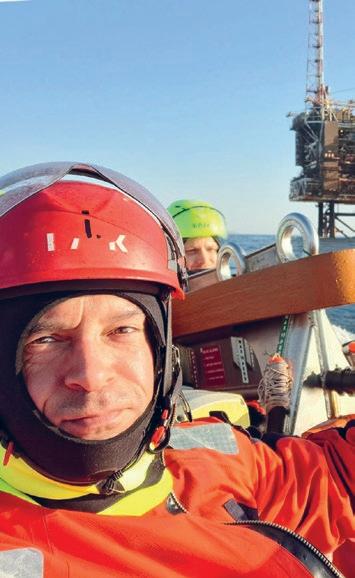
By Sune Feldthusen Husted, chemist and occupational health and safety consultant, SEA HEALTH & WELFARE.
Once a workplace instruction has been finalized and passed through the ship’s safety organization, you may sometimes find yourself in a situation where the personal protective equipment (PPE) chart specifies that a chemical protective suit must be worn but does not specify exactly which type of suit is required.
Reading Section 8 of the safety data sheet about exposure controls and personal protective equipment won’t necessarily clarify things for you. Phrases such as “Use chemical-resistant protective suit/disposable suit” or “Personnel should wear antistatic workwear made of natural or synthetic
PERSONAL PROTECTION EQUIPMENT
fibers” do not make it any easier to choose the right chemical suit.
You might gain a little more clarity when using a product with a code number. In addition, you’ll learn whether the chemical suit should have a hood or not.
Several regulations specify which personal protective equipment to use with chemicals. The safety data sheet may not tell you exactly what you need to know. Contact SHW for advice and guidance. (Illustration: Kailow)
You can’t make an omelet without breaking an egg
Other times, you might read that “Skin protection must be used if spills cannot be avoided.” There are indications that this wording is so deliberately vague that most people choose not to protect themselves. For whoever on board has the courage to admit that they don’t always paint within the lines?
The many stains on the paint shop deck don’t appear by themselves, and the paint splatters on the boiler suit are seen by many as a badge of honor. A more honest assessment would probably be to acknowledge that you can’t make an omelet without breaking an egg.
So, what should your chemical suit be able to handle?
The chemical protective suit must be able to protect you from the chemicals you’re working with for the duration of the job, or until you can change into a new, unused suit. But nothing more than that.
Is there such a thing as a universal chemical suit? The short answer is no. But if you look specifically at the maritime industry and consider the tasks seafarers perform, as well as the chemical products listed in SHW’s chemical database, you can come
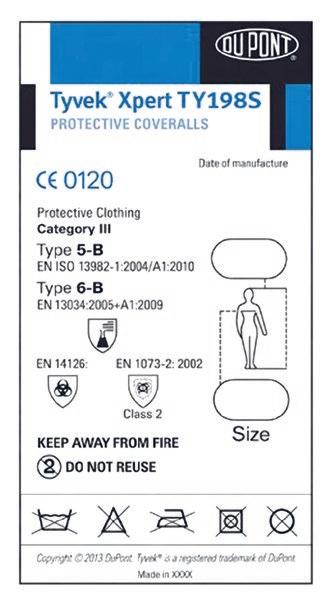
To the untrained eye, a product description can seem confusing. Here is an example of a chemical protective suit that can safeguard you during most tasks involving chemical and biological products at sea. Note specifically that it says DO NOT REUSE. Chemical suits are rarely suitable for reuse, so you should be cautious if you are offered or asked to wear a suit that has been opened by others.
(Source: DUPONT)
If you have any questions about chemicals and personal protective equipment—such as chemical suits—please feel free to contact Sune Feldthusen Husted by email at sun@shw.dk
surprisingly close to a universal chemical protective suit for use on ships.
On rare occasions, tasks on board may require protection at a level that apparently only a spacesuit can provide. In such cases, it is relevant to ask yourself and the shipping company whether such clearly high-risk tasks should be handled by more specialized personnel, such as those found at a shipyard.
Chapter VII of “Notices A” from the Danish Maritime Authority states that personal protective equipment must comply with the Danish Working Environment Authority’s current executive order on safety requirements. In practice, this means that the PPE you purchase and use must meet the requirements of Danish Executive Order No. 210 of March 14, 2018, and the European PPE Regulation (Regulation (EU) 2016/425).
The Danish executive order sets out supplementary requirements, but the key message is that the PPE must comply with the European PPE Regulation. Here is a brief overview:
The PPE Regulation is divided into three categories. Category III is the highest PPE category for protective equipment designed to protect against very serious risks, includ-
ing harmful substances and mixtures that may pose a health hazard.
Six different suit types
When discussing chemical protective suits, it is important to distinguish between category and type. Category III indicates the level of risk the protective equipment is designed to protect against. Suit types 1 through 6, however, mention the specific chemical exposure the suit is intended to keep out. This classification does not originate from the regulation itself but from the standards for chemical protective suits.
In practice, this means that:
• Type 1 is the heavy, gas-tight solution intended for the most hazardous situations
• Type 2 is an air-supplied, non-gas-tight suit with internal positive pressure, which reduces the risk of dust, liquids, and vapors penetrating the suit as long as the positive pressure is maintained
• Type 3 is for powerful pressurized liquid jets
• Type 4 is for liquid spray.
• Type 5 is for hazardous solid particles such as dust.
• Type 6 is for limited protection against light spray, fine mist, and small splashes.
Continued on page 10
Photo: Sisse Stroyer
The suit type suitable for most chemical work on board is often certified according to two standards: EN ISO 13982-1 for Type 5 and EN 13034 for Type 6. This is a combination suit that provides limited protection against liquid chemicals in the form of light spray, fine mist, and small, accidental splashes, as well as against airborne solid particles.
Sometimes you’ll notice a ‘B’ is added to the types, like Type 6B. This indicates the suit is
also certified to protect against infectious agents and biological hazards.
The most challenging chemical work at sea often involves removing rust and working with epoxy-based paints. A Type 5-B/6-B suit is a good choice for an all-around chemical suit, especially if the work may also involve contact with wastewater or other biological hazards.
Practice makes perfect
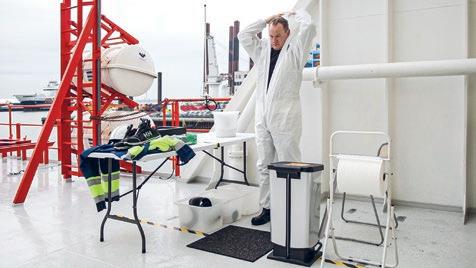
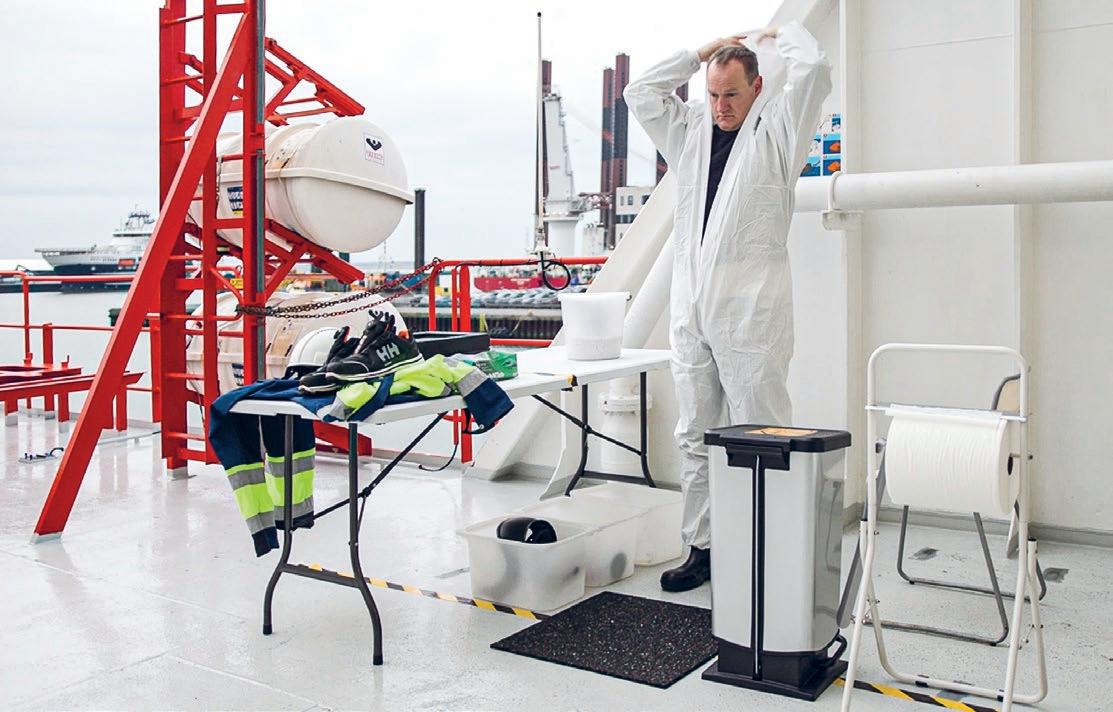
Be sure to practice putting on and taking off personal protective equipment, including the correct order for putting it on, before you actually start using it. You are especially at risk of getting chemicals on yourself when removing the suit.
Always remove your used chemical protective suit in a restricted area and keep a suitable waste bin available. It is poor practice to move around the ship while wearing a used chemical suit.
"You must use exactly the personal protective equipment necessary to perform the task. No more, no less."
You should wear protective sleeves over the suit. Spills typically occur on the hands and forearms, and it is much easier and cheaper to replace gloves and sleeve protectors than to replace an entire suit.
If you wear your boiler suit under the chemical protective suit, consider using a chemical suit that is one or two sizes too large. This gives you a little more freedom of movement.
Photo: Format
The standard EN13034 for type 6 does not specify minimum breakthrough times, unlike, for example, chemical gloves. Breakthrough times and permeation data are instead covered by another standard, ISO 6529, and may be relevant if you are working with particularly problematic chemicals or are at risk of prolonged contact. In very common chemical work at sea, however, the focus will often be more practical: Change your chemical suit immediately if you notice a spill on it, if it becomes damaged, or if the workplace instructions or the manufacturer’s guidelines require it.
If, contrary to expectations, you’ve ended up with a lot of spills on your suit, the floor, or your coworkers, it might be a good idea to reevaluate your technique and workflow rather than increasing your PPE level. Just because you and your coworker are wearing the proper PPE it doesn’t mean you should be a slob.
The chemical suit is just one of several protective measures
Just as with a chemical protective suit, your choice of PPE—such as gloves, eye protection, and, in many cases, respiratory protection—must also be appropriate for the specific task. You must use exactly the personal protective equipment necessary to perform the task. No more, no less.
It is important to conduct a thorough and realistic risk assessment based on the STOP principle. It is worth remembering that it is not necessarily safer to use protective equipment that provides greater protection than necessary, simply because of a precautionary principle. Using too much PPE restricts your freedom of movement and increases the risk of unintended incidents.
You are always welcome to contact SEA HEALTH & WELFARE with any questions about chemicals and PPE.
Discover beautiful Denmark with a holiday home for Seafarers
Did you know that as a seafarer, you can rent three wonderful vacation homes in Denmark at a great price?
A lottery has been held among applicants for a vacation home in 2026. There are still weeks available — including during the summer vacation period — so check the calendar at shw.dk/ferieboliger.
Available weeks are allocated on a first-come, first-served basis. We have two beautiful North Sea summer houses at Holmsland Klit and Skallerup Klit, respectively, as well as a waterfront home in Sandvig on idyllic Bornholm. Book your vacation week directly at shw.dk or send an email to feriebolig@shw.dk
• Vacation home at Holmsland Klit, West Jutland
• Vacation home at Skallerup Klit, North Jutland
• Vacation home in Sandvig, Bornholm
Allinge
Holmsland Klit
Skallerup Klit
Powerful tug broke the ice
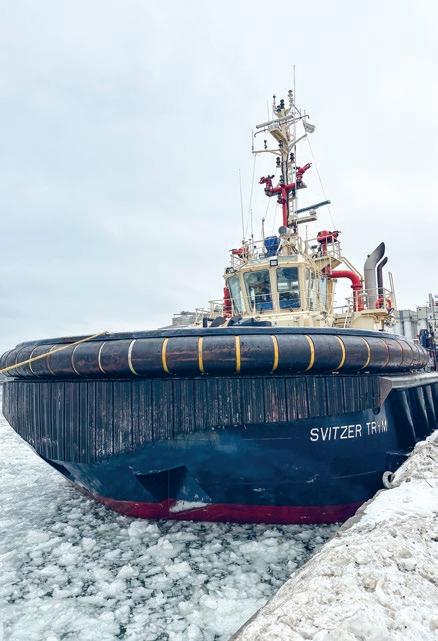
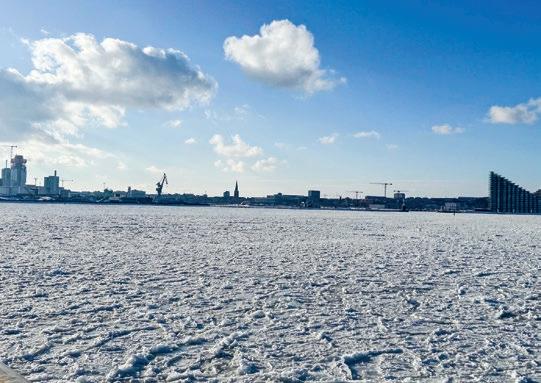
On January 2, 2026, and for the two months that followed, bitter winter cold and a persistent easterly wind made it difficult for cargo ships to dock at the Port of Aarhus. To supplement the port’s own tugs and help keep the harbor basins open, the port chartered the tug SVITZER TRYM to ensure port operations. It was a task out of the ordinary, the crew members on board told SEA HEALTH & WELFARE when we visited one day in February.
By Troels Leth, SEA HEALTH & WELFARE
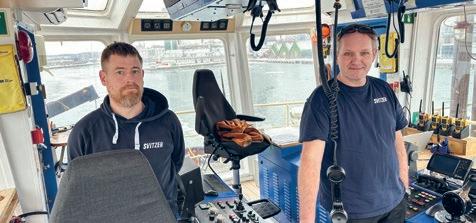
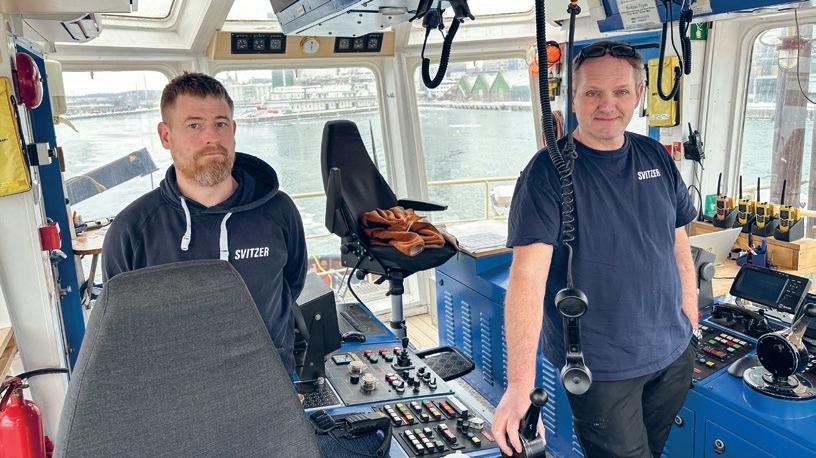
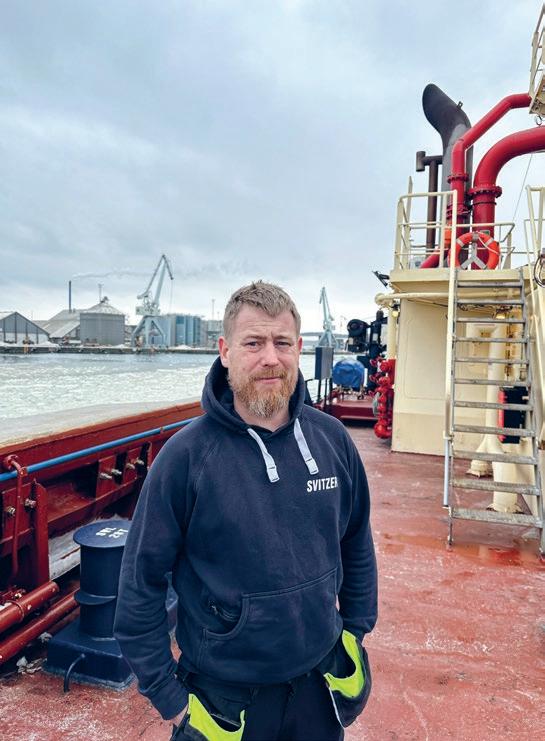
Jacob and Anders are the mate and captain, respectively, of the SVITZER TRYM. Normally, the ship’s crew handles towing assignments all over Denmark and along the Swedish west coast, but the winter weather brought a welcome break from the crew’s routine. From early January to late February, they served as icebreakers to keep the Port of Århus open.
“It’s not often we get to sail in ice. It’s been quite a few years since the last time,” says Anders.
Their assignment in the Port of Århus on the east coast of the Jutland peninsula is characterized by unpredictability. The arrival times of cargo ships are always tentative, and delays often occur.
“But we’re used to that from our regular duties. We factor it in and make sure everyone gets their rest periods on board. But we also sometimes find the job a bit tough. For example, when it’s very windy or if there’s high water and a lot of ice,” explains Anders.
Jacob adds, “We can really feel in our bodies that there’s a lot of work to be done here.
When I get home, I can sleep for a day or two. But that’s also part of the job. If we don’t get the job done, the ice can quickly block a harbor and force the ships elsewhere.”
Both the captain and the first mate have sailed on liner routes. “It’s more fun here on the TRYM; it’s hands-on, and there’s a lot of running up and down. And it’s easier to steer a ship like this than a big container ship,” says Jacob.
SVITZER TRYM is an ice-strengthened multipurpose tugboat with large towing winches. The primary task of the tugboat is to tow larger ships in and out of ports, but they can also perform many other functions.
For example, SVITZER TRYM can also be part of the fire response team in ports where tankers are moored when it is required that a vessel like TRYM be nearby. TRYM is equipped with powerful water cannons and firefighting equipment that can be loaned to crews on other ships if necessary.
Photo: SHW
Photo: SHW
The cold and ice don’t affect a tugboat like the SVITZER TRYM, but the winter weather creates a backlog in the ship’s maintenance.
“Because of the weather, we can’t work outdoors as much as we usually do. But we can’t avoid a lot of ice building up on the deck, which has to be chiseled off. We have to keep the ship seaworthy, after all. It’s a pain to remove the ice, and there can be a lot of it. The ship’s assistants handle that task really well, but I’d like to see the winter weather come to an end soon,” says Jacob.
The winter of 2026 was unusually harsh in Denmark. January and February were marked by heavy snowfall and persistent cold, causing harbors and inland waterways to freeze over. The government activated the Danish icebreaking response, in which shipping companies assist with tasks of great public value by ensuring access for ferries and ships in vulnerable waters.
Danish ports hired tugboats to keep harbor basins open for ship traffic. For example, the Port of Aarhus chartered the tugboat SVITZER TRYM to provide additional capacity and relieve the port’s own icebreaking tugboats, Aros and Hermes.
Part of the task also involves escorting pilots to cargo ships, such as bulk carriers carrying biomass, heading to the Studstrup power plant north of Aarhus.
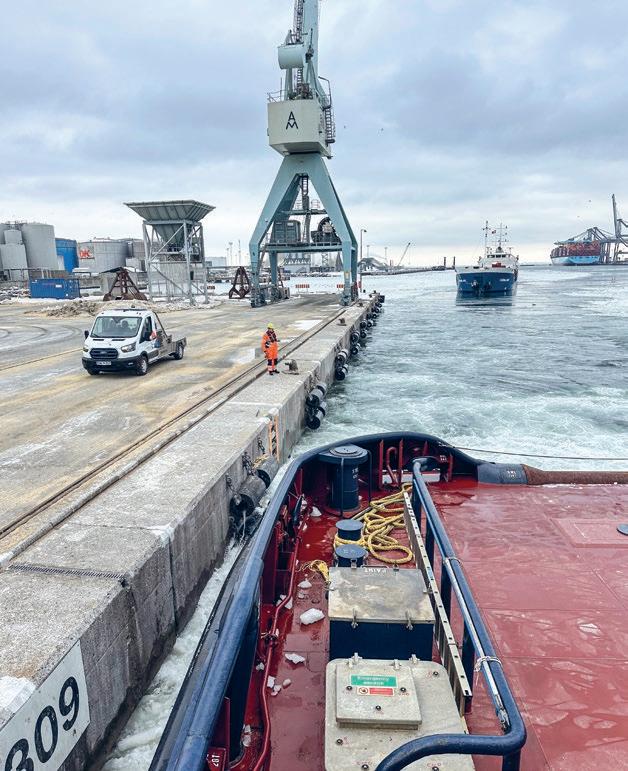
TRYM is in close communication with the Port of Aarhus about ships that arrive and encounter ice-related challenges. Most larger cargo ships and ferries can break through the ice on their own, but when ice floes accumulate between the ship and the quay, they can prevent the ship from docking close to the quay. To solve this problem, TRYM sails in front of the ship as it approaches the quay and uses its thrusters to push the ice floes away from the quay and into the harbor basin.
Photo: Kristian Langkilde
Photo: SHW
Photo: SHW
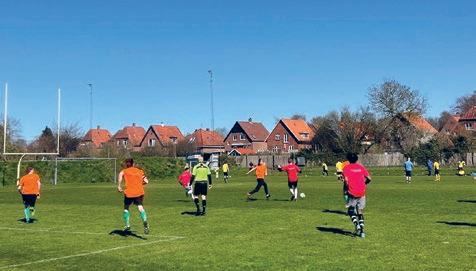
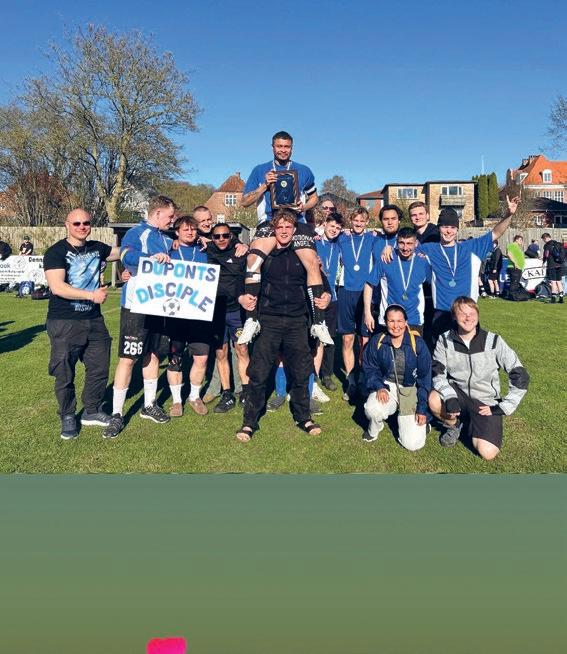
A dramatic football final pitted Disciples against Water buffaloes
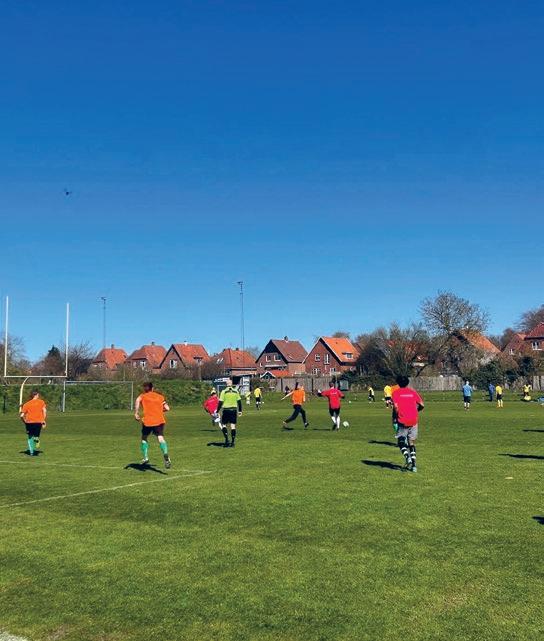
Normally, students at Danish maritime schools focus on their education and careers. On Tuesday, April 21, however, their attention turned to something far more downto-earth—the traditional Maritime Football Tournament in Svendborg, Denmark.
About 100 students donned shorts and football boots and competed for the trophy and glory at the Maritime Football Tournament in Svendborg, organized by SEA HEALTH & WELFARE.
A total of 10 teams had signed up—seven from SIMAC and three from Svendborg Søfartsskole. Thus, extra rivalry was guar-
anteed among the city’s renowned maritime schools.
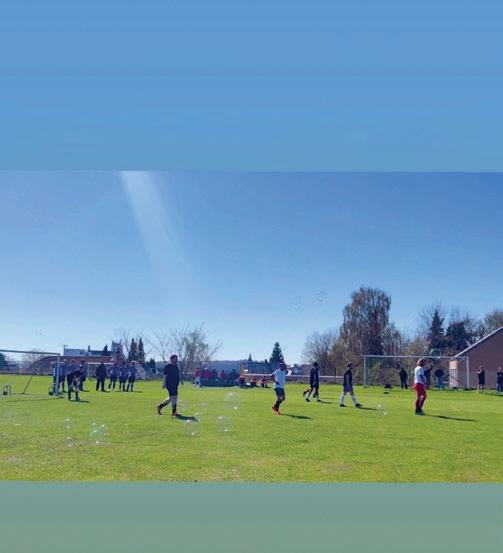
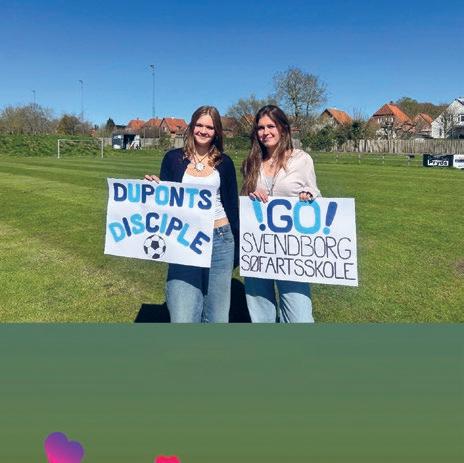
Spring had finally arrived in Denmark, and on the football fields high above the port city, spirits were high among players and spectators. Particularly noticeable was the team Dupont’s Disciples from Svendborg Søfartsskole, whose supporters brought signs and soap bubbles to create a lively atmosphere and show their support.
The ten teams were divided into two groups, with the winners advancing to the final while the runners-up competed for the bronze.
The first match has been kicked off
The two finalists, The Wild Water Buffaloes and Dupont’s Disciples, had deservedly won their respective groups, setting the stage for an exciting final between two strong teams, not least because they each represented their own maritime school.
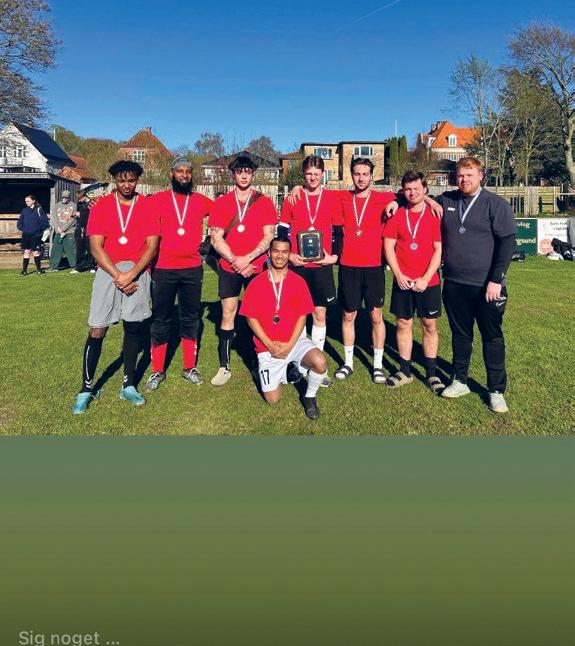
The final ended with a 2-1 victory for the Disciples, who deservedly claimed the title of Maritime Soccer champions.
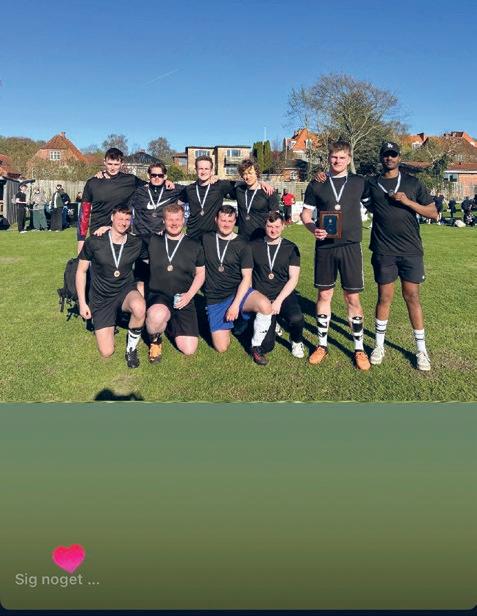
The bronze medals went to FC Seasick.
Good weather and a great atmosphere
Mark your calendars
1. place went to Duponts Disciples
2. place went to Water buffaloes 3.placewenttoFCSeasick
The next Maritime Football tournament will be held on September 15, 2026, also at FC Kurant’s fields in Svendborg.
Registration is open at shw.dk/fodbold, and the deadline is September 9.
Teams just need to bring their football boots, shin guards, and fresh legs — we’ll take care of the rest.
Maritime schools, ships, and shipping companies can field as many teams as they like. A team consists of seven players plus 2–3 substitutes. Feel free to bring spectators — they create a great atmosphere and give the players on the field a boost.
Read more and register your team on our website: shw.dk/fodbold
We look forward to seeing you at Maritime Soccer in Svendborg. There’s plenty of cheering
Greenland was well represented in the Photo Competition for Seafarers
In 2025, seafarers on Danish-flagged ships submitted fewer photos to the photo competition.
However, according to the judges, this had no effect on the quality of the submitted photos.
“This year’s selection of photos is better than last year’s. There are lots of great photos from Greenland,” said the judging panel, which includes photographer Olle Thorup, former photography teacher Jens Kostrup, and chief mate Kim Eggers from ROYAL ARCTIC LINE.
By Irene Olsen, librarian and head of the Photo Competition for Seafarers
This year, 38 seafarers submitted 187 photos for the judges’ evaluation. The judges select winners in three categories: Life on Board, Nature, and The Maritime Environment, and the best of them also wins Photo of the Year. In addition, the judges select the ‘Joker’, i.e., one photo they believe stands out from all the rest.
“One of the criteria we used to select this year’s winners is whether the viewer can imagine the story behind the photo. If you can’t place a photo in your own world, it doesn’t matter. When you look at this year’s winning photos, you become interested in what happened before and after,” the judges said in their joint statement.
The photo competition has begun Throughout 2026, seafarers on Danishflagged ships can participate in this year’s photo competition. If you occasionally take photos on board your ship, you can also submit your best photos and participate in the photo competition.
Rules for participation
• All seafarers on Danish-flagged ships can participate
• Maximum 15 photos per person per year
• Photos must be no more than two years old
• Submit photos in the highest possible resolution
• Submitted photos must not have been used in a commercial context.
How to participate
Send your photos to photo@shw.dk with the following information in the email:
• Photo title
• Where the photo was taken
• Your name and job title on board
• The name of your ship
• Attach the photo. It must not be inserted in the text field.
Read more
Read more about the photo competition at shw.dk under Welfare
We share all submitted photos with the Danish Maritime Fund and UFDS, our partner in the Nordic Photo Competition. They use the photos on their website and social media.
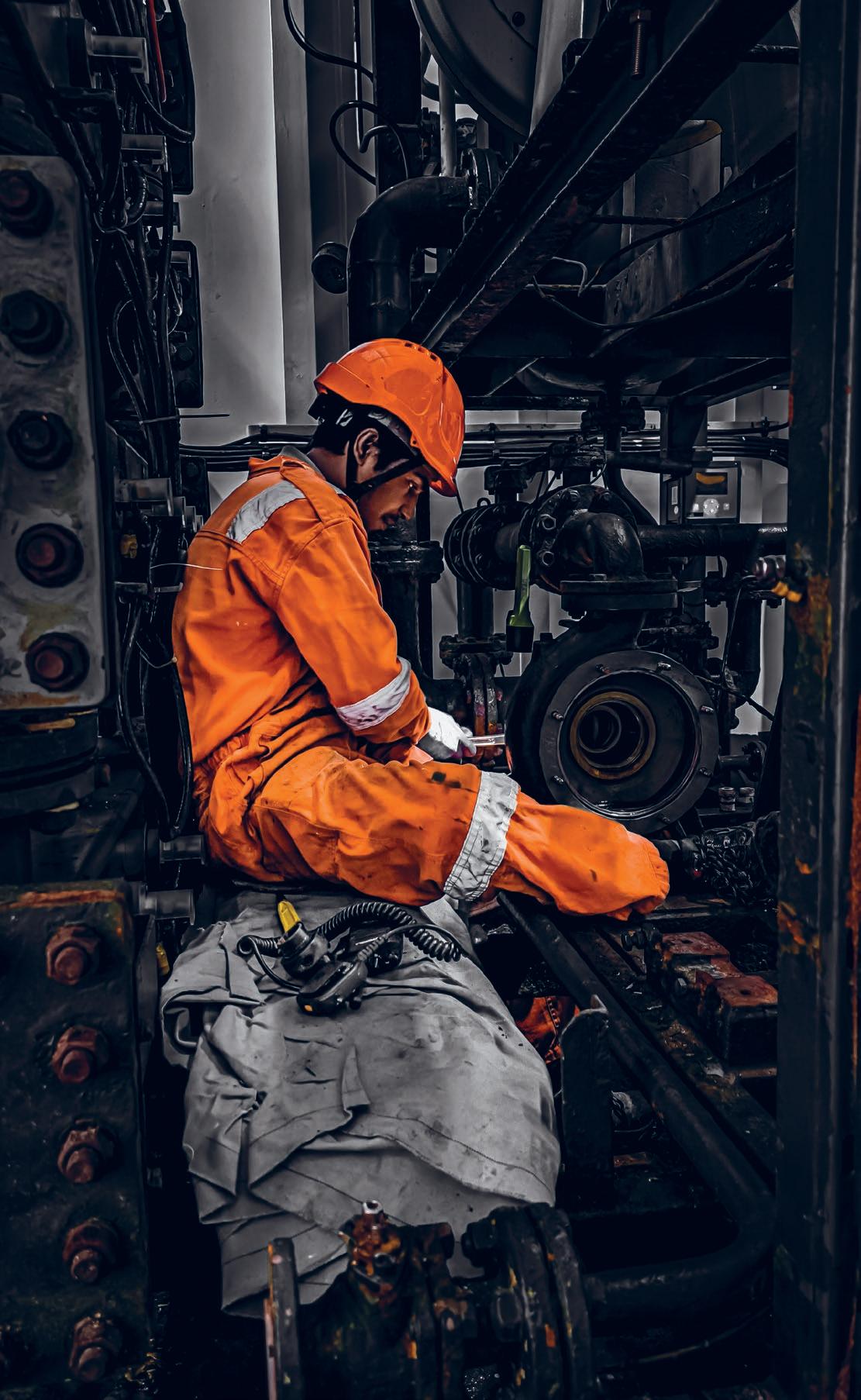
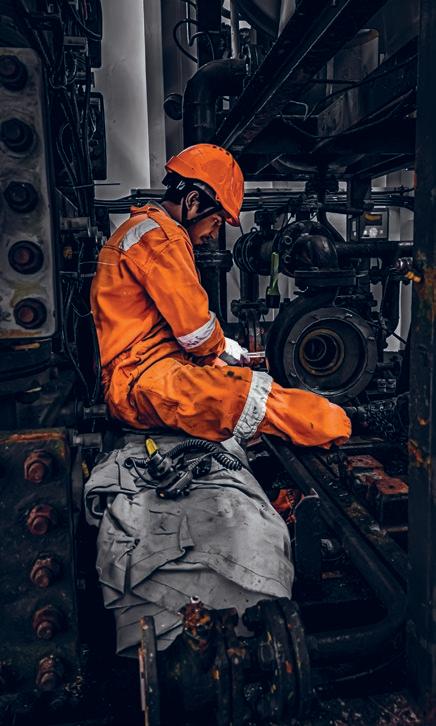
Winner of Photo of the Year and winner in the Life on Board category
’The Man’
The photo was taken by electrician Jmaurr Go, TORM DULCE.
WANT TO SHARE THE MOMENT
Where was your photo taken?
“I took the photo inside the ballast water treatment systems room of TORM DULCE. I took the photo when I noticed this man’s eagerness to help fix the pump.”
Did you expect to win a prize?
“I honestly didn’t expect to win; I just wanted to share what I saw in that moment.”
How often do you take pictures?
“I love taking photos with my Xiaomi 13T Pro camera. I take photos as often as I can.”
Statement from the judges
”With ‘The Man,’ we visit the engine room. There is something wrong with the mechanics. Does he look it up in a manual or call the
chief engineer? The orange boiler suit and black interior provide a dramatic contrast. The highlighted nuts on the left side of the image emphasize size.
The radio lying on the floor adds to the sense of drama without exaggeration.”
Prize: A gift worth DKK 4,000 sponsored by The Danish Maritime Fund.
Photography highlights of the year
Winner of Photo of the Year and winner in the Life on Board category
’The Man’
The photo was taken by electrician Jmaurr Go, TORM DULCE..
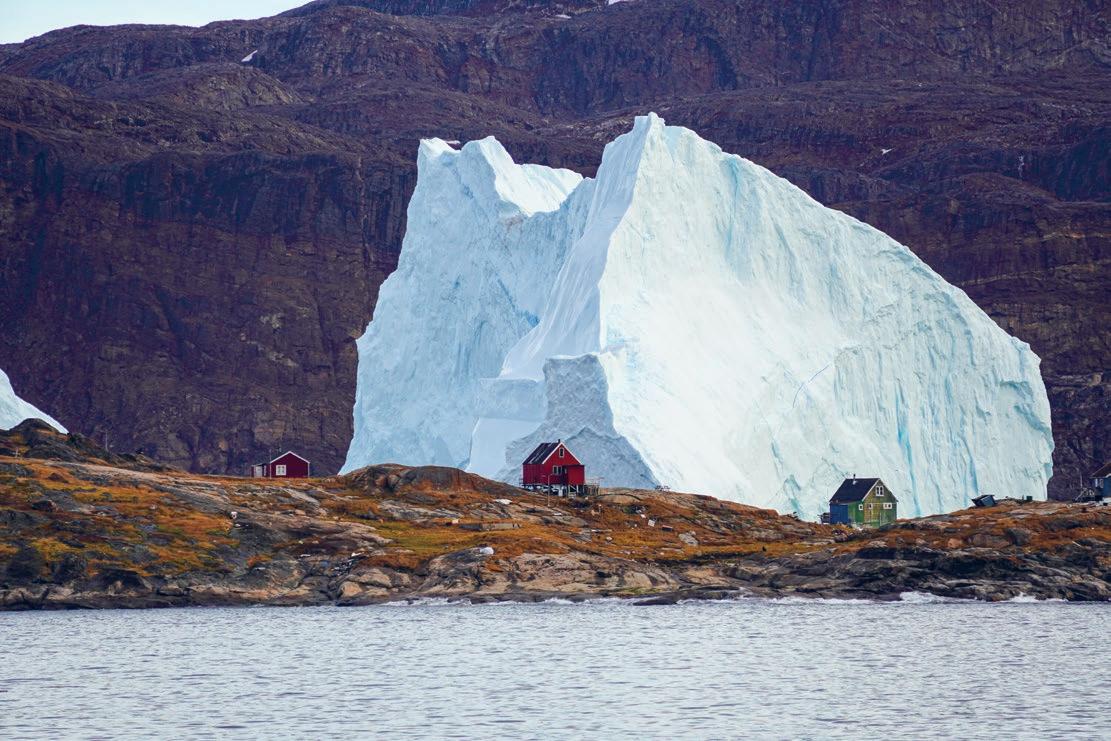
Winner in the Nature category: ’Ice House, Tassiussaq’
The photo was taken by Mark Dalgaard Nielsen
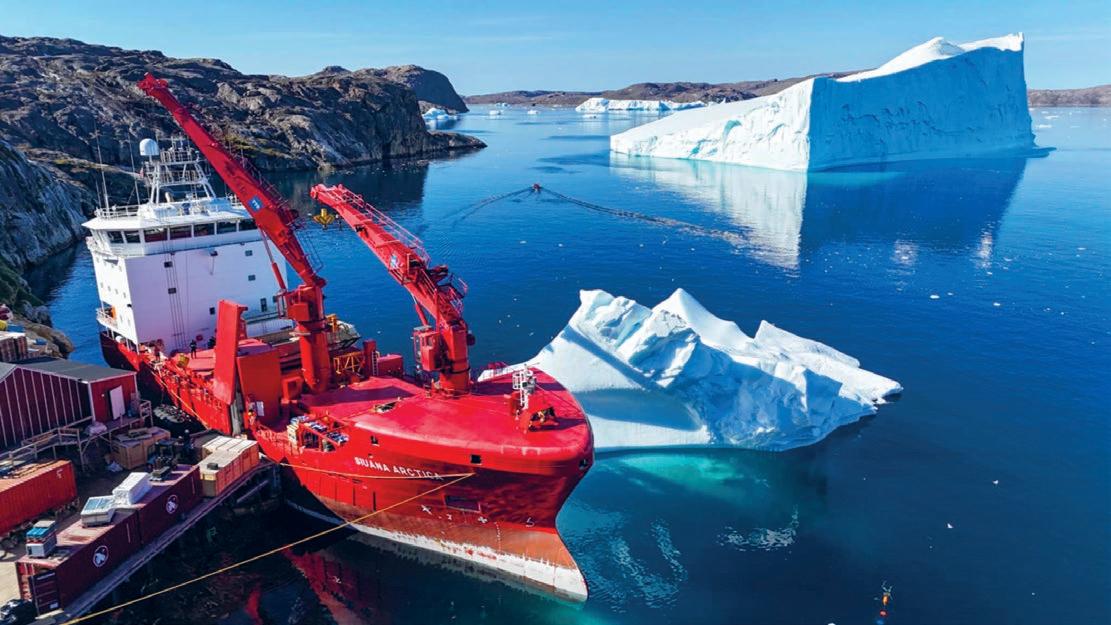
Winner in the Maritime Environment category ’SIUANA ARCTICA in Innaarsuit’’
The photo was taken by Poul Hansen
Winner in the Nature category
’Ice House, Tassiussaq’
The photo was taken by Chief Officer Mark Dalgaard Nielsen, ORASULA.
Statement from the judges
“The image is a fantastic example of the encounter between humans and nature. The dimensions are violent and frightening, but very descriptive for viewers without much knowledge of Greenlandic nature and life in the Arctic.”
Prize: A gift worth DKK 1,000.
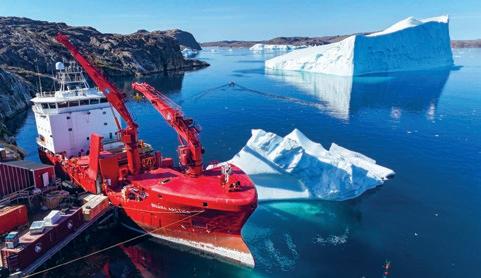
Winner in the Maritime Environment category
’SIUANA ARCTICA in Innaarsuit’
The photo was taken by Master Poul Hansen, SIUANA ARCTICA.
NOT SOMETHING YOU SEE EVERY DAY
Where was your photo taken?
“I took the photo near Innaarsuit, Greenland. On this day, the crew took several photos from the ship. It is not an everyday occurrence for us to be moored when there is such a large iceberg just outside the village.”
Did you expect to win a prize? “No.”
How often do you take photos?
“Very often. I use my cell phone and, sometimes, the ship’s drone.”
Statement from the judges
“Ahead, in front, forward. The image is a good example of transportation in Greenland and the challenges it entails. Very good contrasting colors and good composition. The left side shows man’s ability to face nature, which stands untouched on the right.”
Prize: A gift worth DKK 1,000.
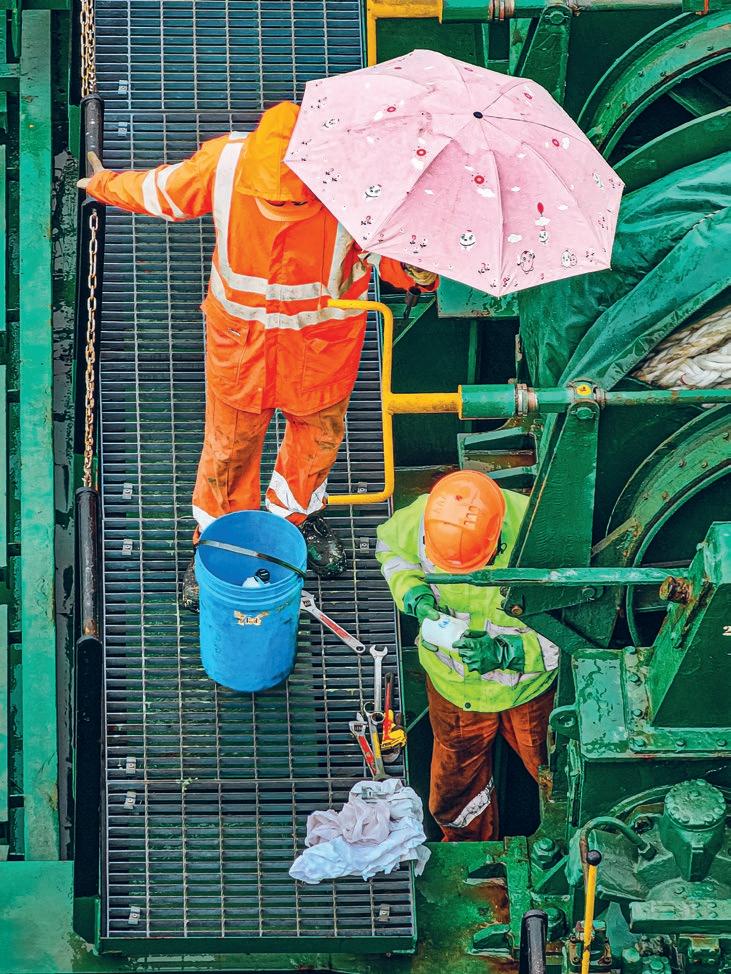
’The Joker’ ’Pink Umbrella’
The photo was taken by electrician Jmaurr Go, TORM DULCE.
WINNING WAS A SURPRISE
Where was your photo taken?
“I took the photo on deck by the mid-mooring station. It was a rare sight: two crew members working together, with one holding a pink umbrella. It was the first time I ever saw this on board.”
Did you expect to win a prize?
“The photograph of this rare moment was too good to keep for myself, but I didn’t expect to win.”
How often do you take photos?
“I take a lot of photos, and I mean a lot, even in my work. I use my Nikon A1000 camera.”
Statement from the judges
“Life at sea can be messy... “Pink umbrella” is a wonderful example of this. The colors are messy, the tools are messy, and it’s all topped off with a pink umbrella, it couldn’t be less maritime. But first and foremost, life at sea is characterized by camaraderie and cooperation.”
Prize: A gift worth DKK 500.
Winner in the ’The Joker’ category ’Pink Umbrella’
The photo was taken by Jmaurr Go
1st Place: Nordic Photo Competition 2025
With his photograph “The Rib in the Snow,” taken off the west coast of Greenland, AB Gerner Rasmussen of the
won this year’s Nordic photography competition for seafarers.
IRENA ARCTICA
Danish success in the Nordic Photo Contest
Every year, photography competitions are held in Norway, Sweden, Finland, Iceland, and Denmark. Once the national winners have been selected, each country submits its 15 best photos to the joint Nordic Photo Contest for seafarers, which is hosted in rotation by one of the countries.
Denmark hosted the selection of winners for the 2025 edition, and the appointed judges were Werner Karrasch, a photographer and filmmaker at the Viking Ship Museum in Roskilde, and Søren Zeuth, a documentary filmmaker and portrait photographer.
Judging the total of 75 photos submitted from the participating countries was no easy task, the pair of judges point out.
“It has been both difficult and exciting. The photographic standard is very high. Many of the photographers have taken a stance on their subject and gone to great lengths to capture the moment or find the best composition. It was a challenge to select the final winners, as there were so many good photos, and several photos were added and removed throughout the process.”
Prizes are awarded for the five best photos. This year’s prize sponsors are UFDS in Denmark (first place), Sjöfartstidningen in Sweden, the Norwegian Sjöfartsdirektoratet, Félag skipstjórnarmanna in Iceland, and Finnlines in Finland.
Read more about the photo competition on shw.dk under Welfare
2nd Place
’The Man’
The photo was taken by electrician Jmaurr Go, TORM DULCE, Denmark.
The photo also won the Danish Photo Competitions’ Photo of the Year and won the Life on board category.
Statement from the judges
“We see a lot of complicated machinery. We see a small man sitting in the middle of a big machine. The iron is orange, and so is his boiler suit. The rest are almost black-andwhite. Good work in Photoshop.”
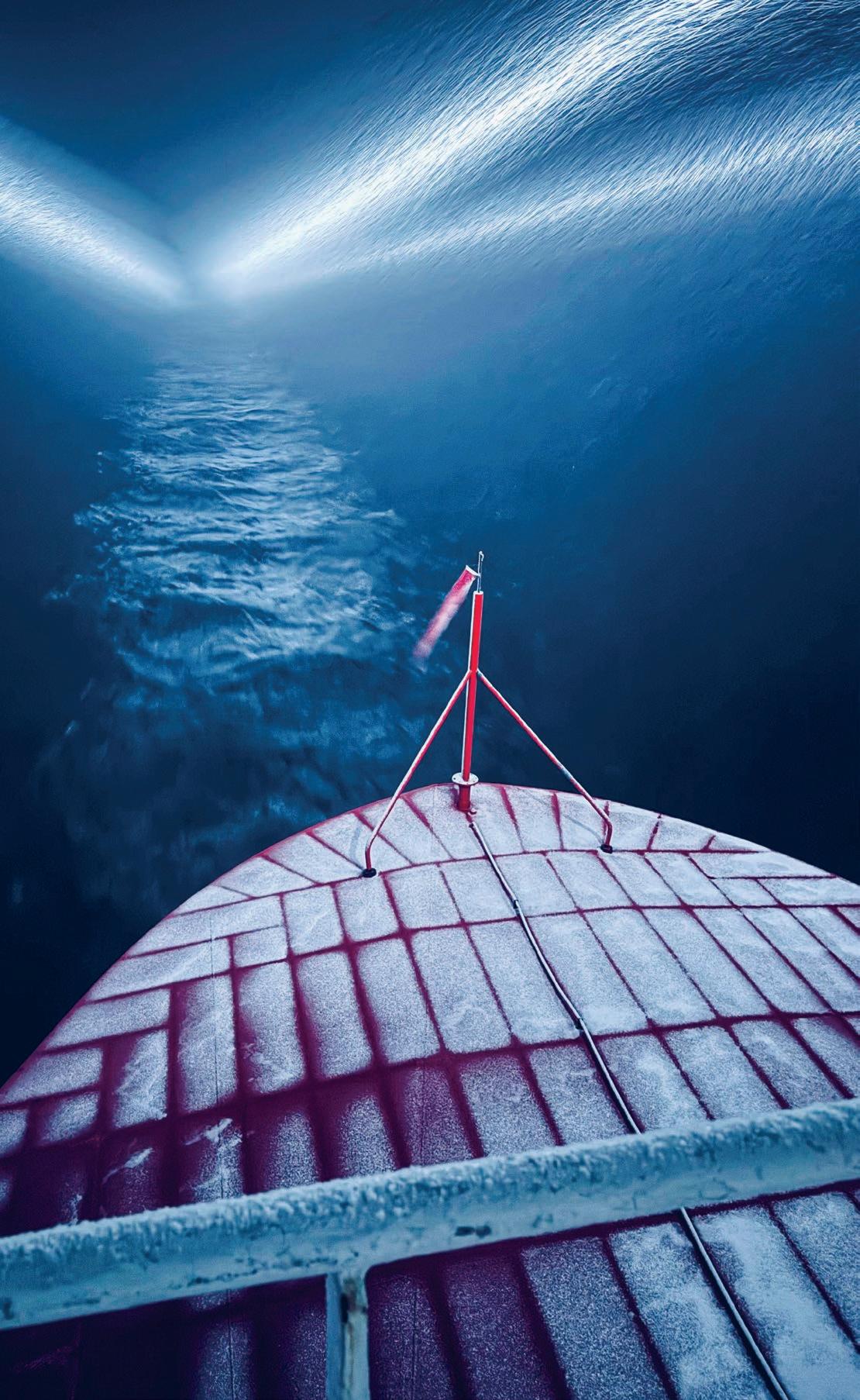
1st Place: Nordic Photo Competition 2025
’The Rib in the snow’
The photo was taken by AB Gerner Rasmussen, IRENA ARCTICA, Greenland.
HAPPY TO
SHARE EXPERIENCES
Where was your photo taken?
“The photo was taken outside Nuuk, Greenland, as the first snow began to fall. We were on our way to Paamiut that day. I take pictures every day, and I have always had a flair for photography.”
Did you expect to win a prize?
“No, but I like to share my experiences through photos, so I post them on Facebook every week when I’m out sailing.”
What type of camera do you use?
“For the past five years, I’ve been taking photos with my cell phone. When I started working for the shipping company almost 10 years ago, I had a real camera with two lenses, but it was too much to carry when traveling back and forth from Denmark. I discovered that cell phone cameras per-
formed well in terms of image quality, and eventually, I left the camera at home.”
Statement from the judges
“We like the colors, the red and blue colors, and the spotlight with the blowing snow. They are abstract lines photographed at the right angle. It is as if the light catches or saves the ship.”
2nd Place
’The Man’ The photo was taken by Jmaurr Go
3rd Place ’Morning Sun, Cuxhaven, Germany’
The photo was taken by Jeppe Halkjær Pedersen
3rd Place
’Morning Sun, Cuxhaven, Germany’
The photo was taken by Captain Jeppe Halkjær Pedersen, MAGNOLIA SEAWAYS, Denmark
SOMETIMES YOU JUST KNOW
Where was your photo taken?
“I took the photo on the quay in Cuxhaven, Germany, one early December morning. I don’t actually take many photos, but sometimes you just know that there’s a great motive. I had that feeling that morning on the quay in Cuxhaven, so I had to take some photos.”
Did you expect to win a prize?
“I could see it was a good photo, but I didn’t expect to win anything. This is the first time I’ve participated in the photo contest.”
What type of camera do you use?
“I took the photo with my Samsung Galaxy phone, as that was what I had to hand.”
Statement from the judges
”A very nice photo, almost abstract. You can observe the photo from many angles. The
reflection is very fine. You see a sunset, but you don’t see the sun. And that is important.”
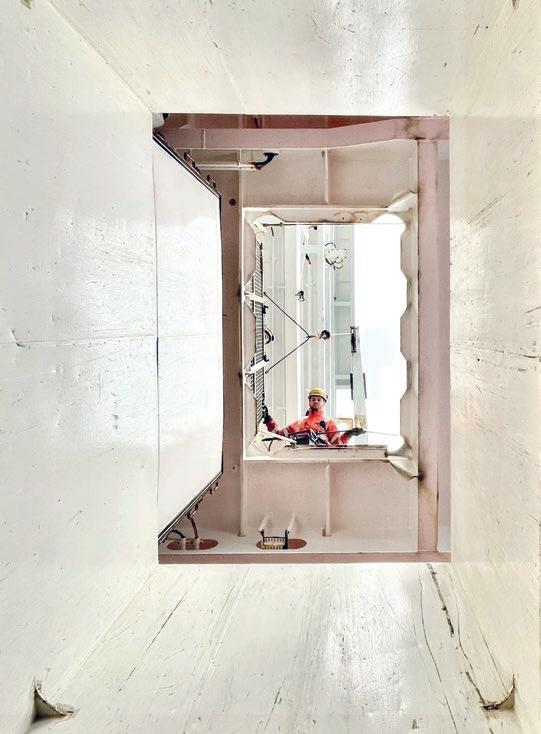
4th Place
’Look up!’
The photo was taken by Second Engineer Esben Sandberg Fræer, MALIK ARCTICA, Denmark
RECOGNITION IS WONDERFUL
Where was your photo taken?
“The photo was taken through the stern hatches during preparations for a bunkering operation in Northeast Greenland. I took the photo because I thought the angle was cool and unconventional, which would make for a good graphic composition. My colleague Karl, who is standing a few decks up, breaks up the gray tones and the graphic pattern, making it more interesting.”
Did you expect to win a prize?
“No, I never expect to win any awards for my photos, but it has happened a few times now, and it’s always nice to get recognition for your work.”
How often do you take pictures?
“I take pictures very often, but on some trips I’m so busy that I don’t get around to it much. I mostly take photos with my little Olympus E-PL7. It’s an M4/3 camera, and I often experiment with various old lenses I find at flea markets and the like. For snapshots, I almost always use my cell phone, which I usually have in my pocket.”
Statement from the judges
”A graphic, nice composition. The person is not so important. The special angle takes us to another place on the ship.”
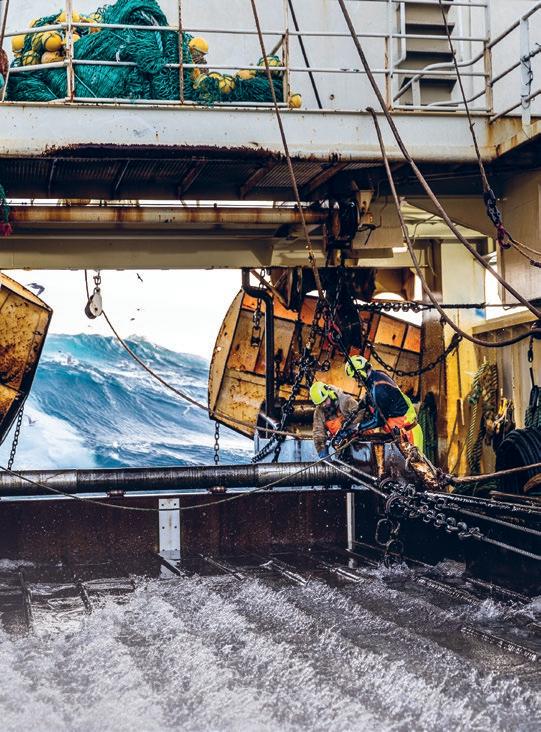
5th
Place
‘What catch are we getting?’
The photo was taken by AB Stefán Þór Friðriksson, sterntrawler HRAFN SVEINBJARNARSON, Iceland.
Statement from the judges
”A dramatic photo. Good composition. The framing and cropping of the photo are good. It is very dynamic. It shows hard, daily working life on board the ship.”
5th
4th Place ’Look up!’
The photo was taken by Esben Sandberg Fræer,
Place ‘What catch are we getting?’
The photo was taken by Stefán Þór Friðriksson
What would you like to read on your ship?
On World Book Day, held annually on April 23, UNESCO is highlighting books and the joy of reading. It is a special day that the Seafarers’ Library has embraced.
In 2026, the Seafarers’ Library will make an even greater effort to purchase the books that seafarers themselves say they want to read, whether in print or in digital format.
Librarian Irene Olsen, therefore, encourages all avid readers at sea to write to her if they want a fresh selection of books in the ship’s library.
“I hope even more people will send me an email with their requests. If you read electronic books in Libby, you can also easily use the ‘Notify Me’ button,” says Irene Olsen.
The librarian herself finds that every book she has read in recent years has inspired her to choose the next one.
“I’ve had the joy of reading a brand-new book which inspired me to read a classic, and vice versa,” she says.
How to get a library card
Send an email to: Bibliotek@shw.dk
Include the following information:
• Name
• Personal email address
• A personal 4-digit PIN code
• Name of the ship that you are signed on
• Shipping Company
The Librarian’s Tips for Great Reading Experiences
Here is a selection of some of Irene Olsen’s favorite books from recent years, along with a brief explanation of why she recommends them.
The
Alchemist
By Paulo Coelho
A beautiful book about traveling and finding your way home again. It’s a book that often stays with you long after you’ve finished reading it.
The Bluest Eye
By Toni Morrison
A novel about poverty and prejudice, wasted lives, and human cruelty, written in beautiful, poetic language. The book is a truly rewarding read.
The Safekeep
By Yael van der Wouden
A beautiful, quiet, and deeply sensual book, but also one that explores the hidden consequences of omissions and of war.
Accidents
happen and other stories
By FH Batacan
A very powerful collection of short stories. Each short story offers plenty to think about, so it’s hard to read more than one a day. I was particularly blown away by “Door 59” and “Comforter of the Afflicted.”
The
Memory Police
By Yoko Ogawa
I was drawn to the book’s title when I saw a young woman reading it on a flight home from our Welfare Club in Brielle near Rotterdam.
The story takes place on an island where things are disappearing—both physically and from people’s consciousness—and people simply live with it. A dystopian novel that really gets you thinking.
Volatile Memory
By Seth Haddon
A beautiful and surprising book full of love and devotion, despite being set in a dark, futuristic world where only the strong survive. It’s a book that stays with you for a long time. I found it while browsing the titles I’ve bought at a seafarer’s request.
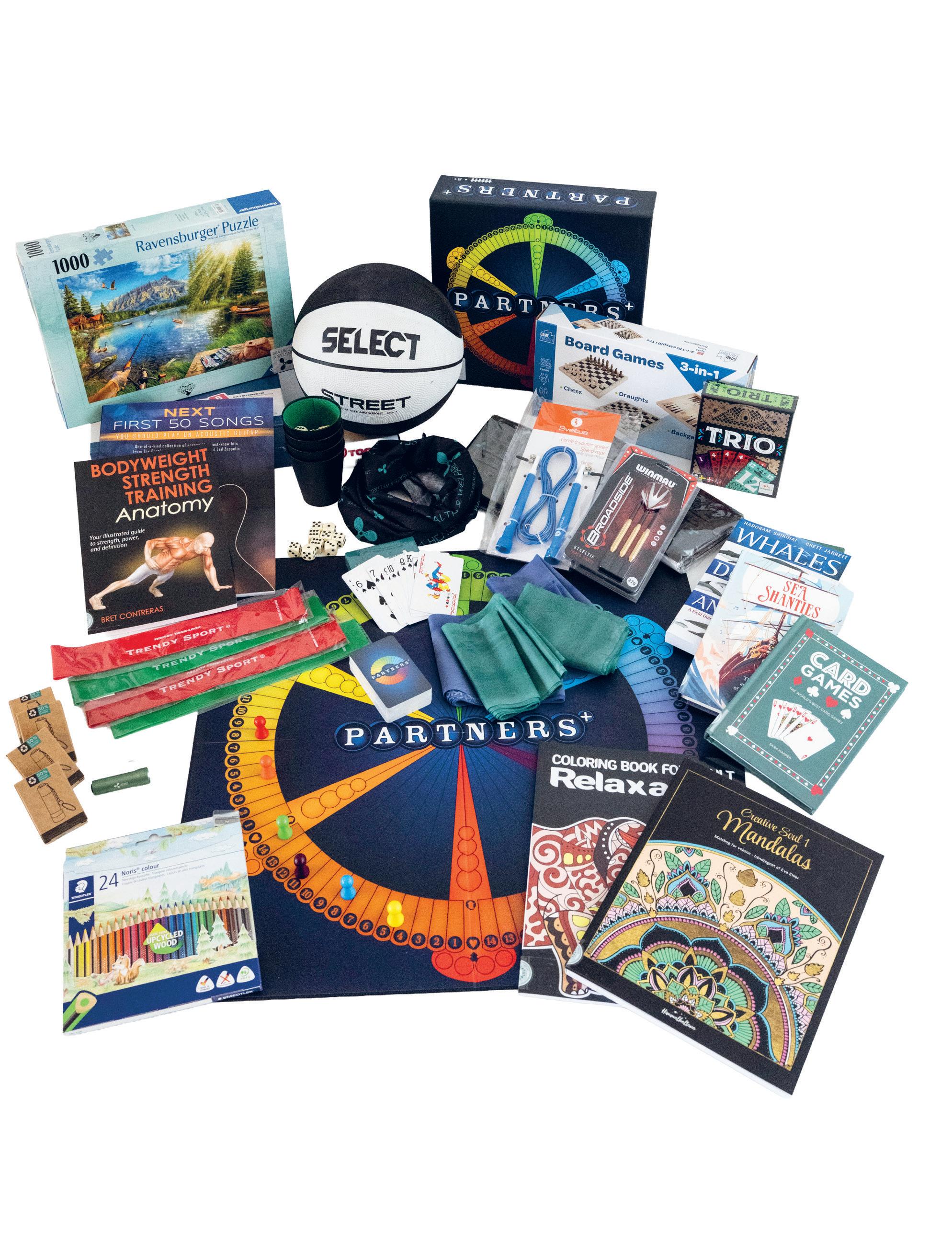
SEA HEALTH & WELFARE offers ships and shipping companies the opportunity to order a free Welfare Box for crews on Danish-flagged ships, to support team spirit through shared leisure activities.
STRENGTHEN TEAM SPIRIT ON BOARD WITH A FREE WELFARE BOX
Starter pack for welfare and team spirit on board.
The Welfare Box contains, among other things, a selection of exercise rubber bands, board games, puzzles, and hobby books on topics such as music and crafts.
HOW TO ORDER A WELFARE BOX
Ordering a free Welfare Box is easy.
Send an email to info@shw.dk and provide the following information:
– Name of the ship and number of crew members
– Exact delivery address
– Name and email address of contact person.
Please note: Three years after receiving a Welfare Box, a ship can submit another order.
SEA HEALTH & WELFARE works to promote the welfare and safety of seafarers at sea. Read more at shw.dk