Hop
Arts-powered research in action
Spring 2026
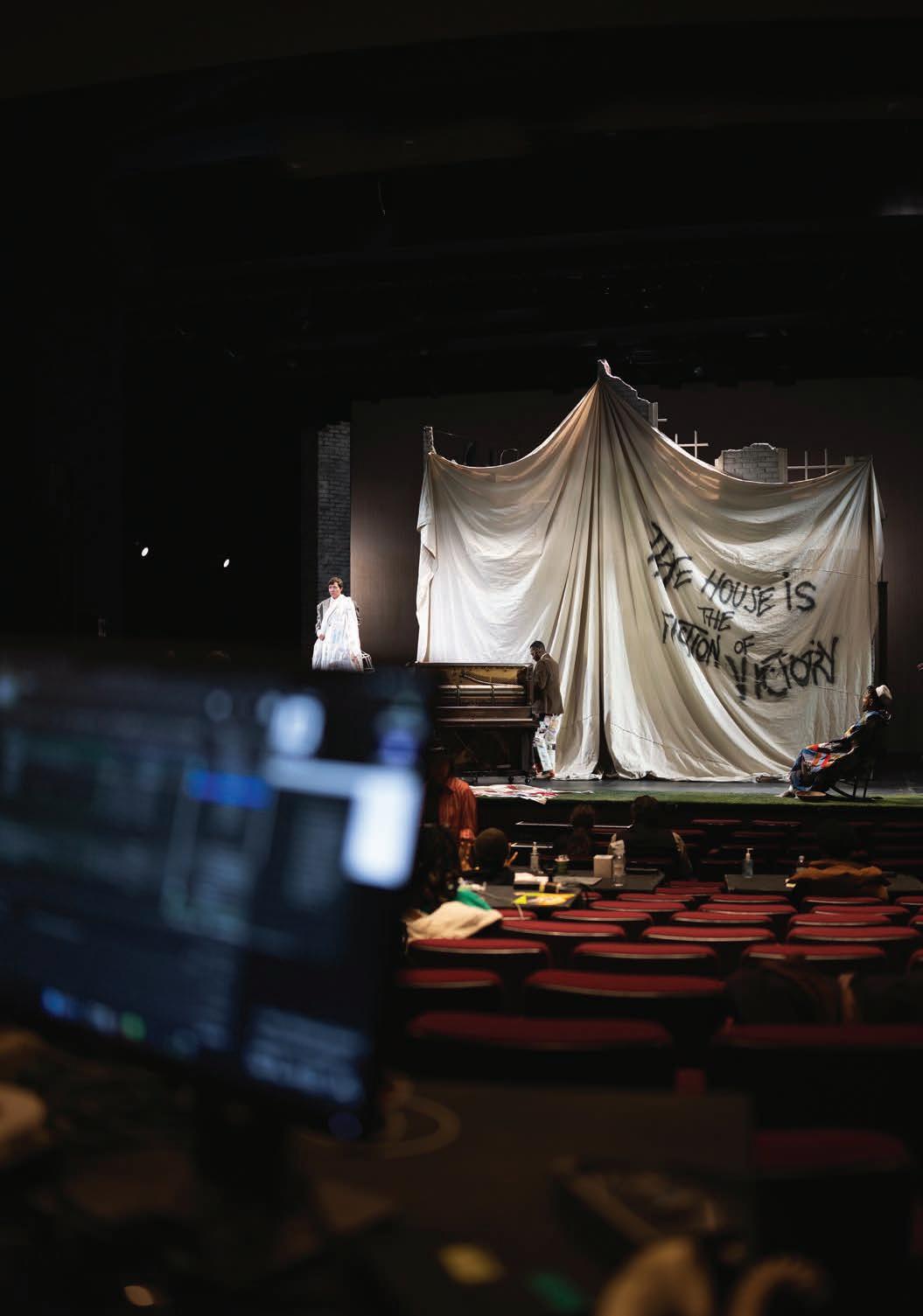
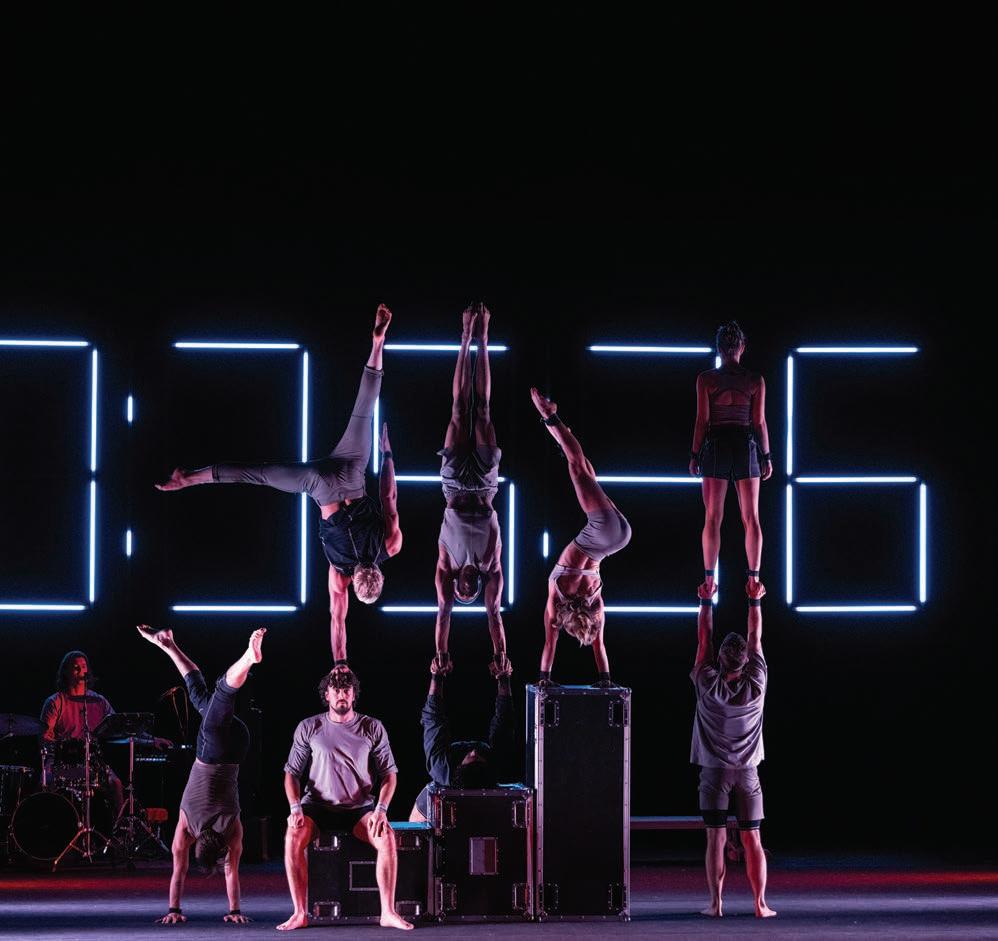
Members of the TEAM put the final touches on Reconstructing during rehearsals
at the Hop, where the work was developed and presented.
Photo by Katie Lenhart
Spring 2026
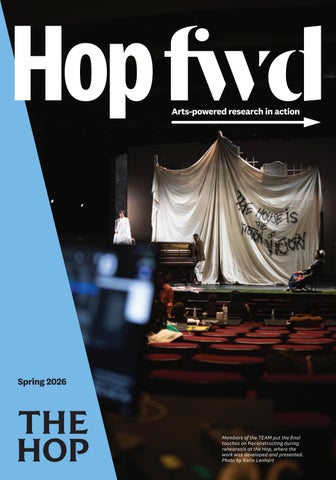
Members of the TEAM put the final touches on Reconstructing during rehearsals
Mary Lou Aleskie Howard Gilman ’44 Executive Director
Arts are essential to our communities and the world. There is no question. It has been proven time and time again in many ways. The arts build resilience, strengthen civic life and advance dialogue. International arts partnerships connect us to our global communities and cultures creating a vibrant ecosystem that reminds us of our collective humanity. Cultural diplomacy and the arts are intrinsic to communication across differences. These skills are more essential than ever, given the divisiveness we are living with today.
Now is the time to act to ensure basic freedoms of creative expression, preservation of heritage and ability to advance global connections through arts and culture. This sounds like a daunting effort but we have historic and current models to look to for inspiration and direction.
The founding of UNESCO post-WWII remains the most successful ongoing model for sustaining the international arts community. UNESCO and its projects have triggered a proliferation of global public, private and governmental agencies focused on the overall UN
condition by amplifying the importance of cultural diplomacy and the arts.
As an agency with its own constitution, it has prioritized through a series of declarations the protection, freedom and mobility of artists as fundamental human rights. It recognizes artistic expression as an act of courage that must be defended. The work of its members is grounded in the agreement that protecting artistic freedom and supporting culture are essential for building a more just and sustainable world.
While domestic networks today may be shattering, what remains are the people—the people we serve; the people we partner with; and the people we support as we look to the future.
mission of security and peace with specific attention to education, sciences and cultural preservation. In short, for more than 80 years this UN agency has been addressing the advancement of the human
Representatives of country members to UNESCO are typically Ministers of Culture.
The US was a founding member, but without a Minister of Culture in our governmental structure and with shifting political views across administrations, the US struggles to translate UNESCO’s policies and achievements into commitment and action.
To fill in the gaps, the US has relied on globally engaged private foundations like Ford and Mellon; partnerships with NGOs like the British Council and other international agencies; and representatives across US commissions and agencies all coordinated through a presidentially
appointed Ambassador and the US State Department. This distributive model worked well in the mid to late 20th century, promoting international artistic exchange, expanding US cultural diplomacy and amplifying American culture around the world.
At the same time, multi-national networks of arts leaders, such as the International Society for the Performing Arts, connect professionals to foster global artistic collaboration and expand access to artists worldwide.
Yet as our investments and support from US governmental agencies, private sector and large foundations are redirected towards issues of global turmoil, the US sustainability of our artistic commitment worldwide has been deprioritized and weakened.
The UN’s founding nations emerging from war in 1945 recognized arts, sciences, education and culture as necessary to rebuilding and advancing a broken world. While domestic networks today may be shattering, what remains are the people—the people we serve; the people we partner with; and the people we support as we look to the future.
Dartmouth is a place where innovation, creative thinking, dialogue and empathy intersect to give us hope and opportunity for a better tomorrow. Universities are global institutions where knowledge moves freely across borders. What new strategies can be considered now in support of global sustainability and the arts?
The Hopkins Center has begun building pathways to international arts partnerships that are sustainable and collaborative. A few examples to consider…
The Mexican Repertoire Initiative supports musical exchange, commissions new compositions and creates platforms for sharing dynamic new works by Mexican composers. In just three years, the initiative has commissioned over 20 new works and grown to include a
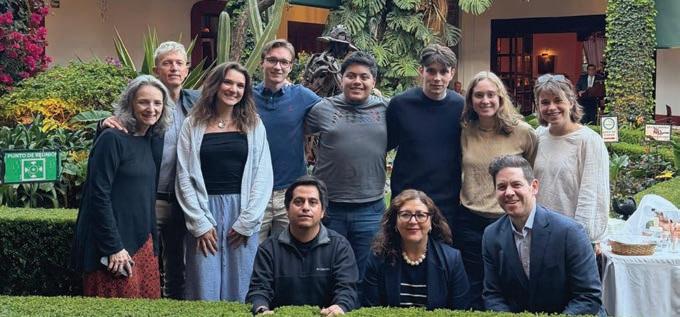
Aleskie, Director of Bands Brian Messier and Dartmouth students with composer Gabriela Ortiz in Mexico as part of the Mexican Repertoire Initiative
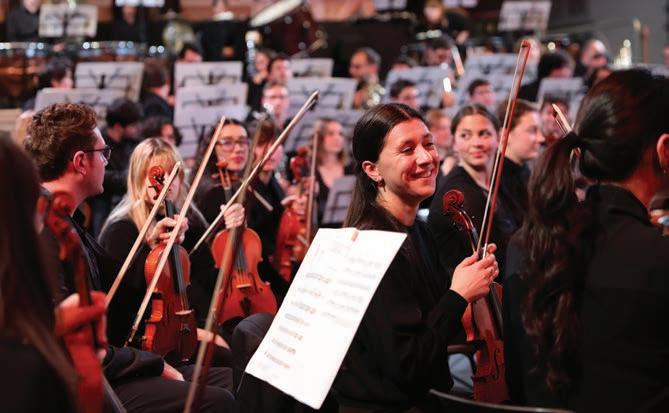
network of over 90 US and Mexican institutions where they have been performed. In collaboration with the National Autonomous University of Mexico (UNAM), this initiative had a meaningful impact for renowned as well as emerging composers, and for students and faculty alike in both institutions.
Through an ongoing partnership with Tuscan conservatories, Dartmouth ensembles perform and co-create abroad in collaborative projects that began with the Conservatorio di Siena and have since expanded regionally, with growing connections across Italy. This collaboration fosters exchange and performance among Italian conservatory students alongside Dartmouth liberal arts students.
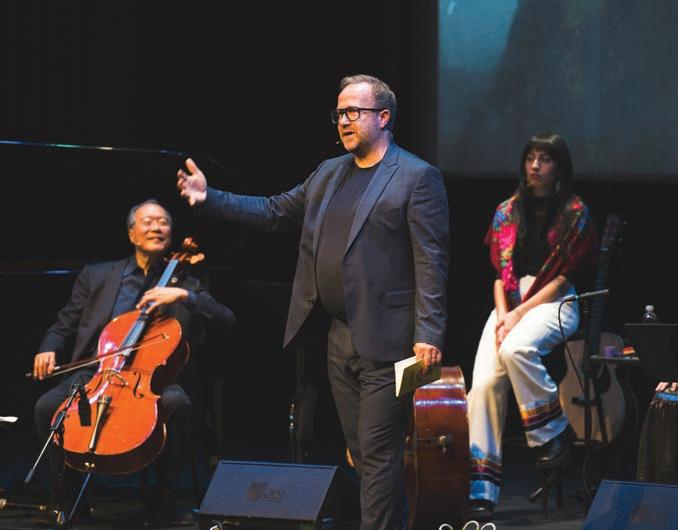
We Are Water, created with renowned cellist Yo-Yo Ma, Indigenous artists and
Icelandic author and poet Andri Snær Magnason, explores urgent questions: what is our relationship to water, and can art contribute to the sustainability of our planet? Understanding our connection to the natural world through the various backgrounds and traditions is part of the answer.
The result is not just a series of performances, but a united force of scholars, artists, students, and community members committed to ongoing action and creative expression made for and by people.
In We Are Water, a collaboration with world-renowned cellist Yo-Yo Ma and Indigenous artists, Icelandic poet and author Andri Snær Magnason shares stories blending myth and science to reveal how glaciers are melting away.
Photo by Katie Lenhart
By Samantha Lazar Curator of Academic Programming
As the Hop’s Curator of Academic Programming, I’m constantly on the hunt for performances that live at the nexus of the arts and academia. Often such performances are found readymade, already complete and ready to present on our stages, ripe for students and scholars to absorb, ponder and dissect. But occasionally a show comes along that is still in development—or maybe it’s just the germ of an idea—and its creators need time and the resources of a university like Dartmouth to help the work grow and blossom.
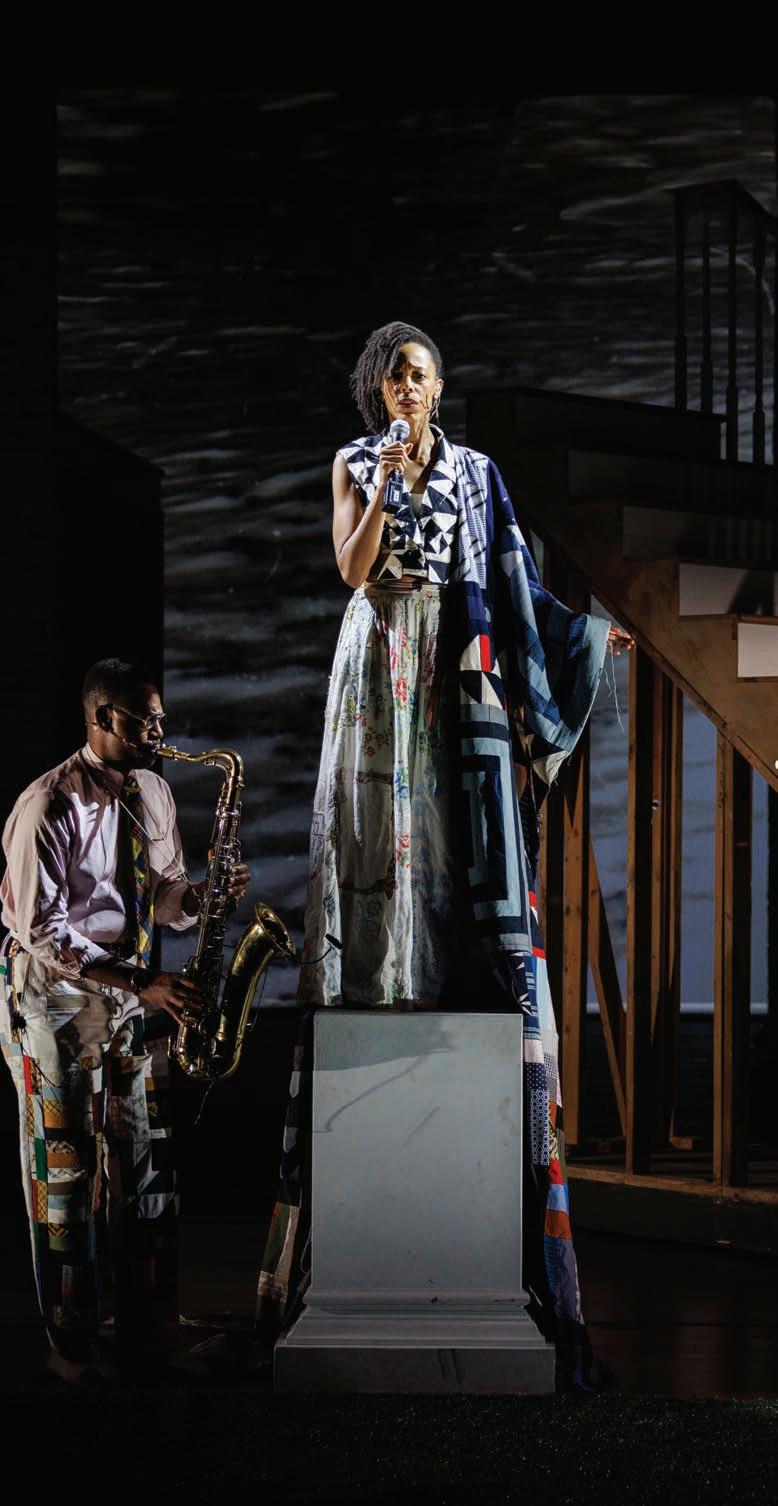
Reconstructing by the TEAM, a Brooklyn-based, internationallyrenowned experimental theater company, is one of these shows that developed its roots in Dartmouth’s fertile soil. The ensemble of creators, including Tony award-winning director Rachel Chavkin, knew the topics they wanted to explore and were in the early stages of their development process when they arrived at the Hop in January of 2020 for an intensive weeklong residency to advance their thinking about the project they were then calling Reconstruction: Still Working But the Devil May Be Inside.
They set up shop in a Hop rehearsal room and spent hours talking, brainstorming, improvising, writing, meeting with theater students and other visiting artists to discuss their unique devising process, and sharing what they’d created so far. They also had essential meetings on their agenda: discussions that can only happen on a college campus. In addition to visits to the special collections in Rauner, they sat down to speak with scholars and delve into the history of race relations and slavery in our region and even on our campus.
Two professors in particular were foundational for the work.
Professor Trica Keaton, an interdisciplinary social scientist who specializes in what it has meant throughout history to be racialized-as-black and non-black, and Professor Deborah King, a sociologist and co-founder of the Dartmouth & Slavery Project. That project, a collaboration with Dartmouth’s Libraries, challenges the commonly held notion of a “free” North versus a “slave” South by examining the lives of enslaved and free Black persons in New England. It critiques complex attitudes toward slavery, emancipation, abolition and colonization, and uncloaks Dartmouth’s complicity with and profits from the institution of slavery. The faculty members deepened the work’s historical grounding, with King also serving as a key point of inspiration for the character of the professor in the play.
Shortly after the TEAM left Dartmouth at the end of their residency, the world was shuttered by the COVID pandemic, which
complicated the already long and laborious development process for their new work of theater. Fast forward to today: the play is finally complete, and Dartmouth alumna Emma Orme ’15 is the company’s Producing Director. After a premiere at New York City’s Under the Radar Festival, the Hop presented it this April. Now, beyond helping the artists develop their work, Dartmouth hosted the finished piece and set the stage with rich interplay among scholars and courses, and campus resources offered contextualization for audiences.
This play’s performance has been surrounded by the fullness of what Dartmouth can offer: Professor King (now emeritus) was joined by new Professor Nicole Maskiell, who specializes in the history of slavery in the Northeast, to hold a panel discussion with artists supported by Dartmouth Dialogues. Over 15 Dartmouth classes attended the show as part of their coursework, spanning departments that include Theater and African & African American Studies, but also range to History, Native American and
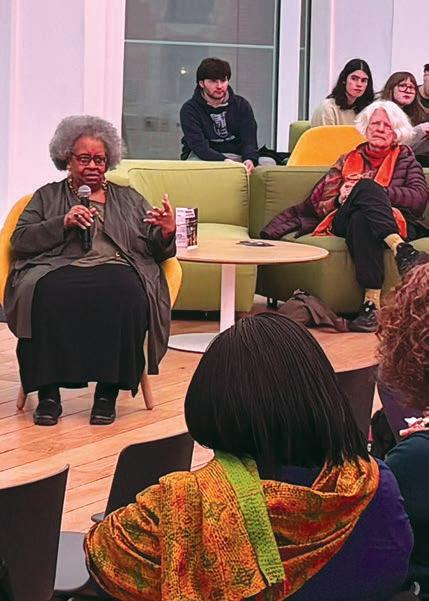
Indigenous Studies, Sociology, Psychology and the Masters of Liberal Studies program. The artists visited classes, hosted discussions with playwrights and theater majors, and participated in public pre-show talks and post-show debriefs. The performance also intertwined with other initiatives on campus, such as the Hood’s concurrent exhibit Inhabiting Historical Time: Slavery and its Afterlives.
It has been deeply satisfying for me to see this play come full circle from its incubation here six years ago to its acclaimed NYC premiere and now its return to the new Hopkins Center. Art and academia feed each other—from the historical research and the scholars that were pivotal to art’s development, to the play, in turn, offering students and audiences new ways to engage with the topics studied in our classrooms and explored in our libraries. Reconstructing is a perfect example of the arts and the academy intertwining and uplifting each other.
By Asmaa Abdallah Communications Manager
Any historian will tell you that without the past, we can’t understand ourselves. The same is true of the arts. While contemporary culture is interesting in all its various manifestations, even the most experimental or cutting-edge forms of culture did not come out of nothing. But not all art forms have made it into the present intact. Some forms disappear as the tools, customs and social contexts they require have fallen away.
Thankfully, a slew of artists today are turning to these endangered or forgotten forms of art and injecting new life into them.
One such artist is Alessandro Sciarroni, choreographer,
Montgomery Fellow and Leslie Center Humanities Institute visitor who brings his project Save the Last Dance for Me to the Hop this spring. Although he received one of the most prestigious honors in the field, the Golden Lion for Lifetime Achievement in Dance by the Venice Biennale in 2019, Sciarroni considers himself to be an artist, engaged very deeply with questions around movement and origin.
“Much of his work takes its starting point from an old or ancient practice, in some cases, on the verge of extinction,” says Michael Wyatt, professor of English and Comparative Literature. “In a sense, Sciarroni’s work is conceived as a process of
translating from one form, at a specific historical moment or place, into another.” Like any good translation, it is never literal; Sciarroni often injects his own creative DNA into each project.
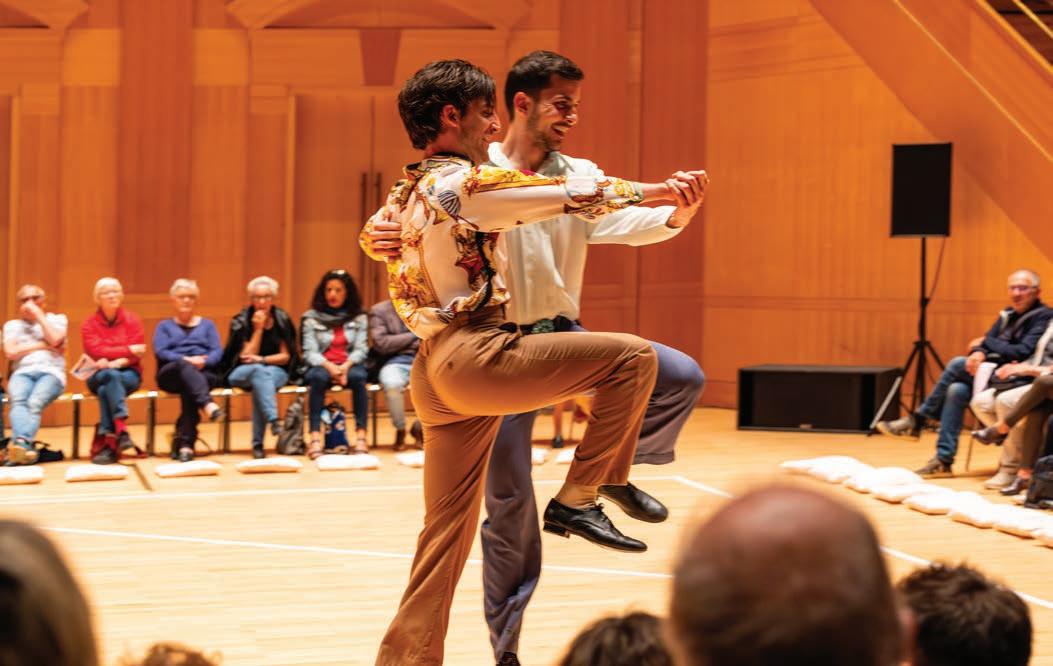
Save the Last Dance for Me draws from a fast-paced social dance performed between men in communities outside Bologna, Italy. The steps require an enormous amount of attention and concentration from the two dancers. By the time Sciarroni encountered it, the dance was no longer being performed at any social occasions, but survived only in the memory of a few older people who had danced it. He spent time in these communities and over time, they helped him
to learn the steps. “By doing that, and by spending time with them, he entered into the culture in which this dance had been created, and which existed for 70 or 80 years,” said Wyatt. “He transformed it, he translated it into something very much his own.”
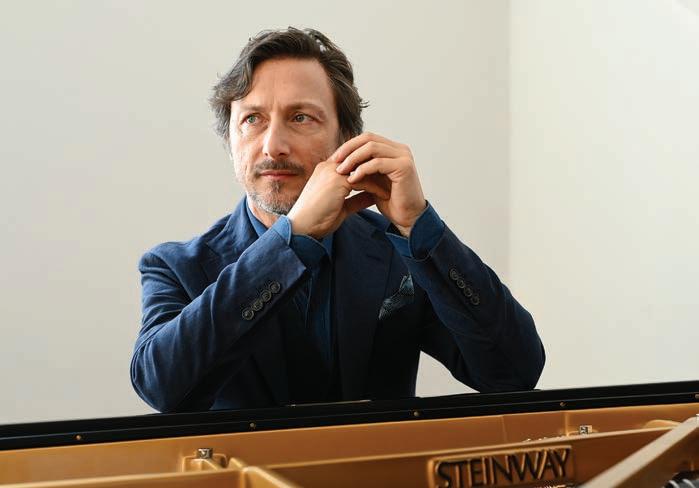
A similar process of translation unfolds in music. Acclaimed pianist and Leslie Center Humanities Institute visitor Francesco Libetta has long engaged with the layered histories embedded in classical repertoire. At the age of 21, he performed Leopold Godowsky’s 53 Studies on Chopin’s Études in Milan Conservatory’s principal hall— a formidable undertaking that garnered him critical acclaim.
Frédéric Chopin’s etudes were written to help young pianists develop the dexterity required for increasingly complex 19th-century piano compositions. A hundred years after Chopin, Godowsky revisited these works, responding to Chopin’s original pieces as well as to the evolution of the piano as an instrument. His studies place more technical emphasis on the left hand—up until Beethoven, most piano literature was written for the right hand—in his 260 pages of complicated piano music.
Now largely overlooked, Godowsky’s cycle can be seen as a translation of Chopin’s etudes.
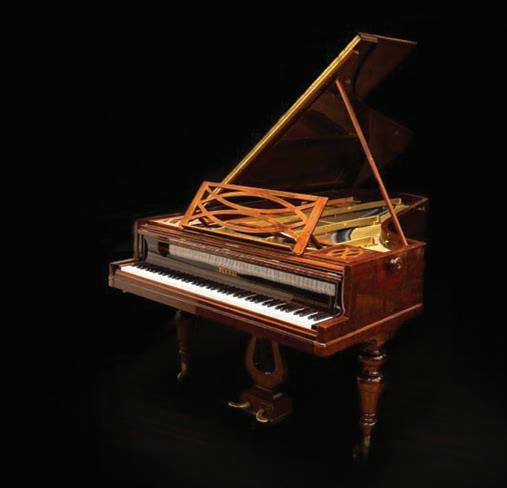
At the Hop, Libetta will present Chopin’s original works alongside Godowsky’s intricate reimaginings using the instruments for which they were written. Essentially, the program presents a translation side by side with its source, as interpreted by Libetta, a third layer in an ongoing dialogue across time.
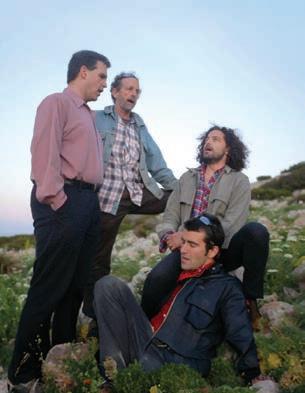
Artistic translations can also cross national boundaries. The New England-based Tenores de Aterúe, who performed at the Hop last spring, is the only ensemble outside of Sardinia dedicated to singing cantu a tenore, a distinctive form of Sardinian folk singing characterized by guttural singing, intricate overtones and impeccable rhythmic precision. After performing casually, they went viral and were invited to perform in Sardinia itself, where the tradition originates.
Across these different practices, artists have engaged other art forms through reinterpretation or translation. Audiences, too, seem to respond to this. Whether it is the opportunity to encounter unfamiliar aesthetics, to glimpse different ways of life or to recognize connections across time and place, these works offer something that contemporary forms alone cannot.
By Abigail Byrne ’28
2025/26 Hop Fellow
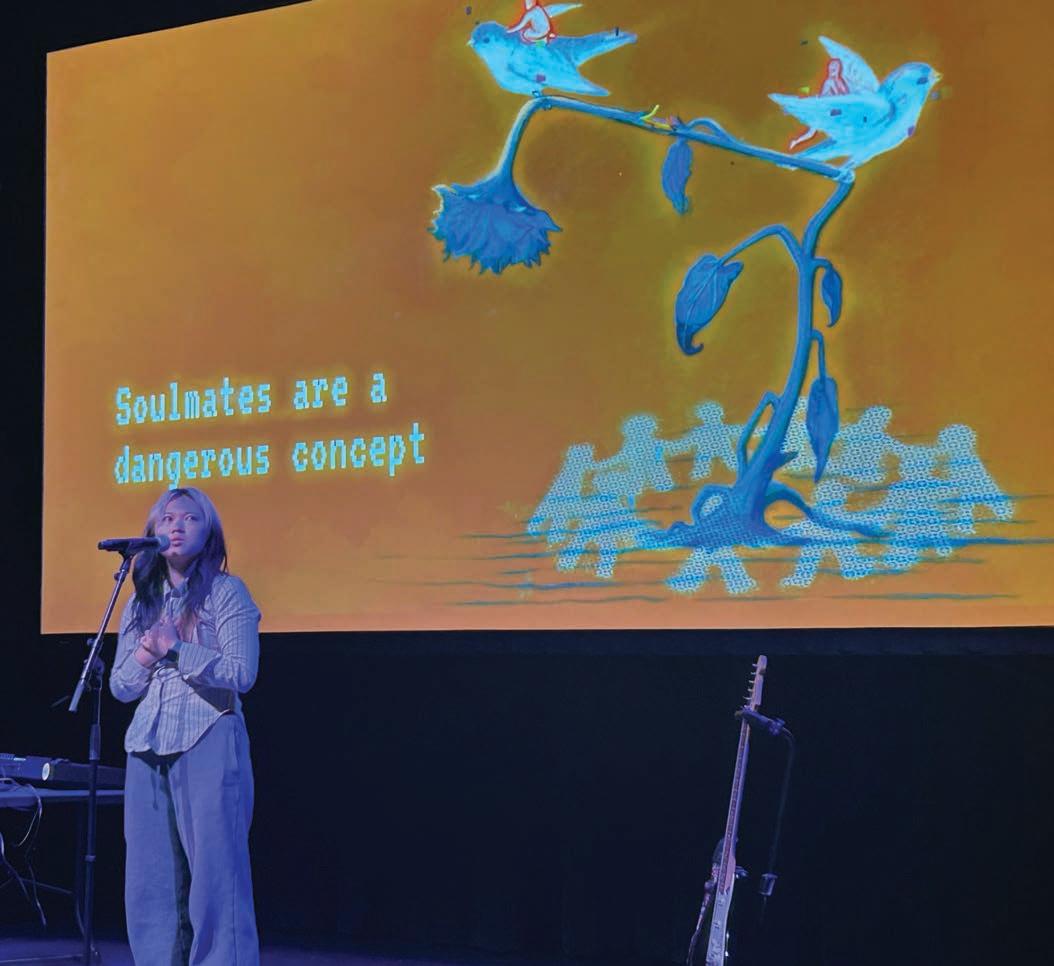
Last year, Hermia Miaoxuan Huang ’26 was the first student performer in the Hop’s new Daryl Roth Studio Theater, presenting her work titled Cyber Folksongs for Digital Nomads: A Sound Ethnography. Developed through the Hop’s Arts Integration Initiative, which supports interdisciplinary art projects by students and faculty, Huang’s performance marked the culmination of a year’s worth of effort. It featured original vocals, live guitar and keyboard, and projected visuals, bringing together digital humanities, geography and music into one creative work.
“I have a very strong urge to keep moving, and like to think of myself as someone who is not bound by any structure,” Huang said. That became
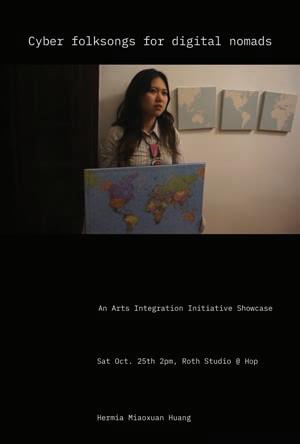
the focus of her project: digital nomads, or individuals who work remotely and frequently move locations.
To explore the emotional complexities of this lifestyle, Huang combined digital research with a practice of ethnography in which she interviewed digital nomads in various cities, alongside her music production. She wrote six songs on themes ranging from digital infrastructure to the potential loneliness of a more transitory way of living. Huang also touched on the privilege required to enable a nomadic life, noting that “there are certain types of people who get to cross borders and certain types of people who get to find remote work.”
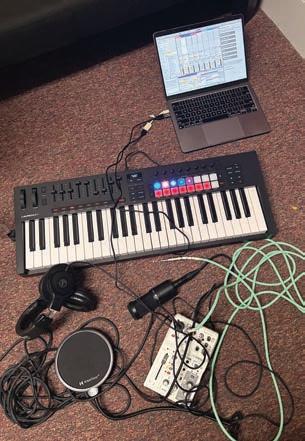
In her compositions, Huang drew on her background in Chinese folk music and electronic music. While Huang described the music production process as a “more solitary effort,” she emphasized how it was also communal in its coalescence of various perspectives
from both the digital nomads she interviewed and other artists around her. “A lot of the lyrics are actually taken from interview excerpts,” she said.
Support from the Arts Integration Initiative played a key role in bringing the project to life. Funding allowed Huang to purchase music production equipment and conduct her ethnographic research, while the guidelines of the grant helped shape her vision and pushed her to a more integrative approach. “I definitely took a lot of inspiration from past grant proposals, and the process of applying helped me generate a lot of ideas,” Huang said.
The performance last fall was both educational and validating for Huang. She learned important behind-the-scenes skills for putting on live performances, such as the use of audio equipment, and expanded her network of artistic connections during rehearsals. Additionally, the professionalism of the production and performance helped Huang feel more confident in her status as an artist and composer.
Looking back on the experience, Huang is aware of the personal growth it sparked. The deadline of the showcase encouraged her to refine her ideas, collaborate with others and feel more confident in her finished product.
Huang has served on the Arts Integration Initiative’s selection committee for the latest round of projects. “I’m just really, really glad that this initiative exists,” she said. “The platform of this whole initiative, and the process of having my proposal on the Hop website, participating in a fully produced showcase, and having additional exposure with the grant has really helped me establish my confidence as an artist.”
Huang’s project explores the emotional complexities of this lifestyle through original vocals, live guitar and keyboard, and projected visuals. Photos courtesy of the artist
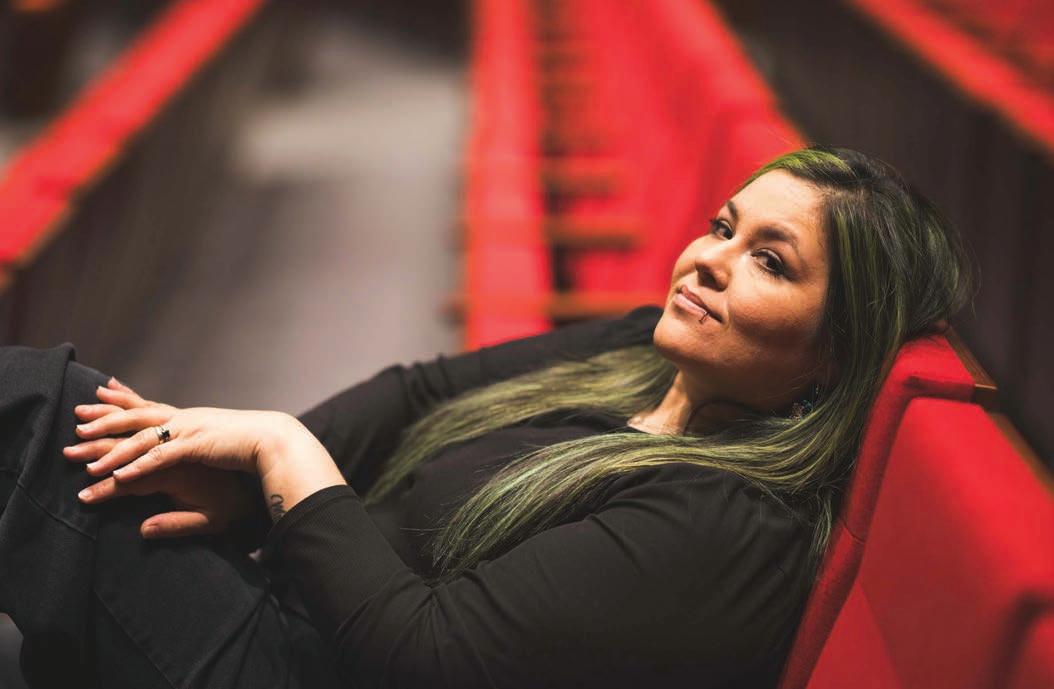
By Michael Bodel Director of External Affairs
A discussion with composer Nubia Jaime Donjuan—whose work has been commissioned and presented through the Mexican Repertoire Initiative—leading up to the premiere of Danzón No. 3 “The Lone Pine” by the Dartmouth College Wind Ensemble at their winter performance.
Let’s talk about your philosophy as a composer—where do you begin?
In Nature, always. We’re part of it— human beings and everything to do with our social spheres. You know, trees have their own language, and so do animals and every other species.
So rhythm and sound have their origins in nature, and color does too. In music, “color” is similar to the timbre of each instrument. What do people say about the cello—that it sounds like a swan song right before it dies. It’s the same with other instruments. Take the flute—it’s a little bird. There are many composers who create music by pulling from nature.
We’re all part of the planet’s original design, so nature is always the place we have to start from.
So, in fact, you’re trying to compose an ecological work.
Yes, and I’ve always loved trees. My mom tells me that even when I was a little girl, I used to say the flowers were laughing with me. There are composers who’ve written about celebrations, war, peace—all sorts of things—but the heart of music always comes back to nature. There’s just no music without it.
Take Holst’s The Planets, for example—the piece we’re about to listen to this evening.
What was the inspiration for “The Lone Pine,” your new work that we are about to enjoy?
Brian suggested I write my third danzón for wind band using the Dartmouth emblem as inspiration. I was so nervous about it because
it’s a lot to take on—it’s a huge responsibility.
All over the world, pines crop up in so many places—in Europe, America, even as far away as Asia. So I asked myself, “How are we going to bring this Lone Pine to life? We need to make something that, from far away, answers it.”
I knew I had to write a lament, or a melody that says, “Ah, I’m all alone.” I’m not talking about human suffering or anything like that; it’s just that feeling of being far away. It has to call out, so that other people can hear.
Then it hit me that the farthest place from here is the Southern Cone— places like Argentina and Chile. There’s a rhythm I really love called cueca in Chile. It’s so interesting; those Chileans eventually came to Mexico, to Oaxaca, and they spread that style and that color until it became the chilena oaxaqueña
I’m also really inspired by the style of son huasteco—which is super Mexican—especially with those chord progressions. So I thought, “Okay, if this lone pine is going to sing loud enough to be heard, it’s got to be heard all the way in Chile, Argentina, and beyond.”
What do you hear in Mexican wind band music? Are there common themes or threads that characterize the works being created by Mexican composers nowadays?
Concert bands are still quite rare in Mexico. So, this initiative that has come out of Dartmouth has allowed us to really think of wind band as an instrument. There are very few of us writing for the concert band, but we all share a common goal—we are exploring and drawing from the traditions of Mexican popular music.
For example, Omar [Arellano Osorio] creates music rooted in the region where he lives—Morelos, Tierra Caliente. And Roy [Martínez Torres] loves cumbia; he is from the central part of the country. My land is northern polka. I don’t actually write polkas, but I love Cuban music—mambo and cha-cha-cha.
Ultimately, what we all have in common is that we are scratching the surface of traditional Mexican music, pulling from those roots to bring them into the world of concert music.
It seems to me that you all are on the frontier of creating new connections. What’s next for you?
I want to keep writing. I want to write a work for choir and wind band. My academic background is actually as an opera singer. I have several commissions from universities in Mexico, in Belgium, and another in Strasbourg—but those are all for orchestra.
It’s here in the United States where I’ve been able to work more with wind bands, and I would love to specialize in being a composer for wind band. That doesn’t mean I don’t
I owe my whole life to the orchestra. In Mexico, it’s much easier to get a work premiered or to get a commission for orchestras.
But the truth is, people who play in wind bands are more fun than those who play strings. It’s a secret—and I’m a cellist! I don’t know, but that’s the way it is!
Read the original conversation in Spanish
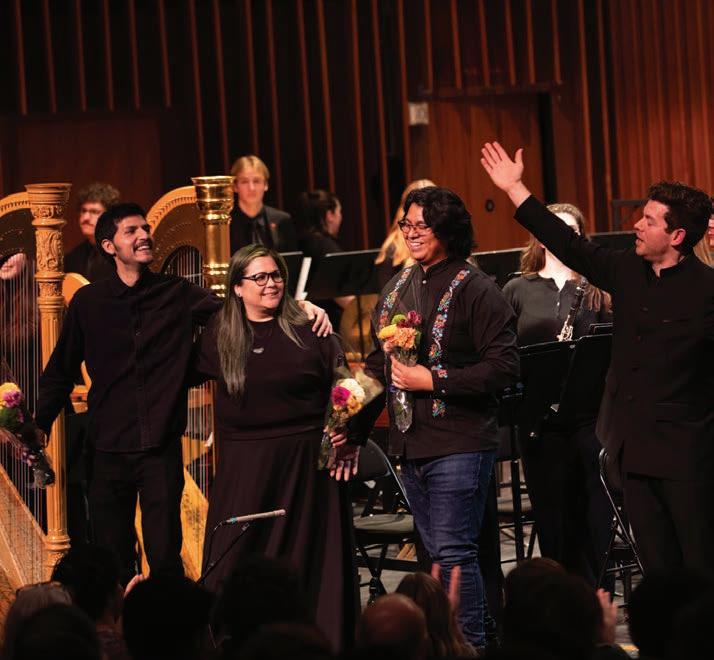
Founded in 2022, the Mexican Repertoire Initiative at Dartmouth aims to create, support and expand the reach of new repertoire by Mexican composers through international partnership and educational exchange.
By Sophia Jiang ’28
Silent films were never truly silent, and today they are making a comeback with live music that reimagines them for a new audience.
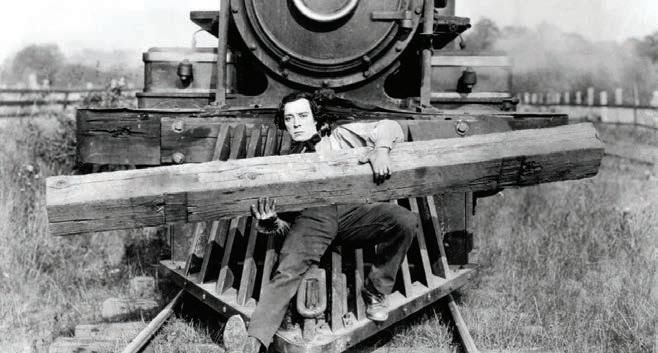
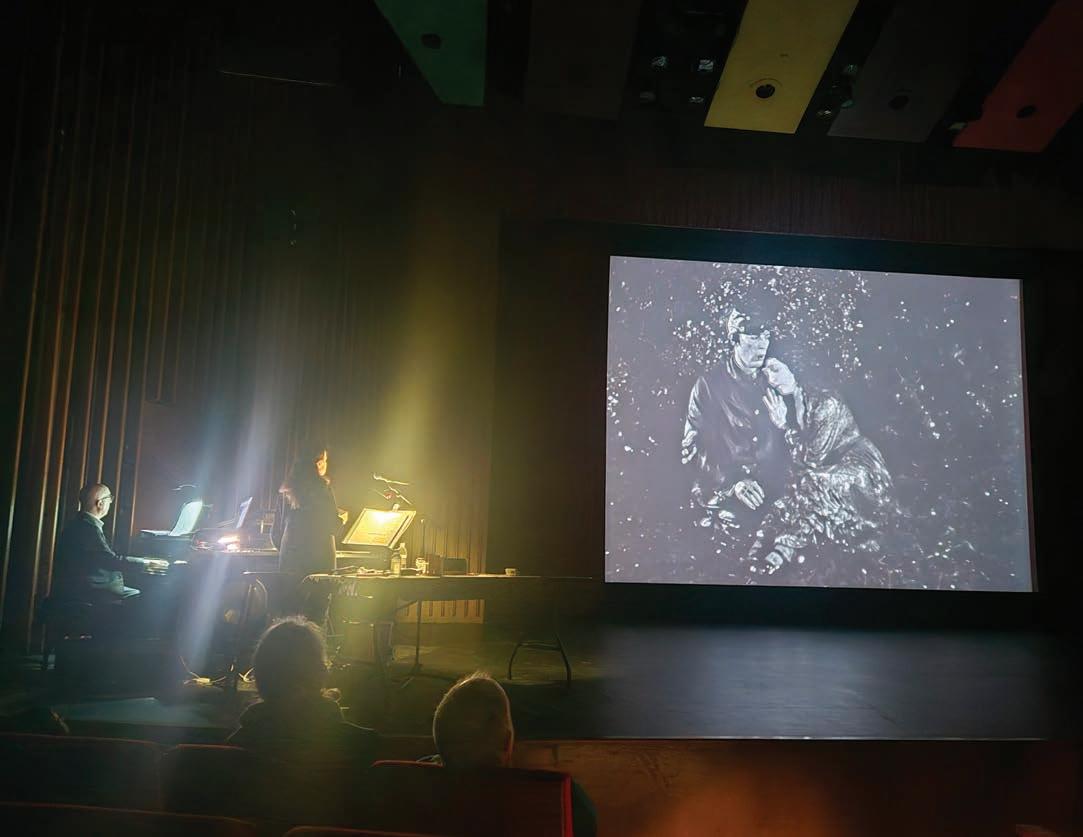
That revival was on display on a recent Sunday afternoon when an audience of all ages filed into Spaulding auditorium to experience the Hopkins Center’s screening of Buster Keaton’s The General, starring Keaton himself as Confederate train engineer Johnnie Gray and Marion Mack as his lover. The 1926 Civil War comedy was accompanied live with improvisation from pianist Donald Sosin and civil-war tunes from singer Joanna Seaton, who also tended to the sound effects.
When the title sequence unfolded, a lively grand piano introduction marched in from the left side of the stage. As the opening scene illustrated a train cruising down its tracks, the music too gained steam, and Seaton, selecting a slide whistle among her table of assorted instruments, simulated the sound of the train whistle.
This was one out of many cleverly placed sound effects, very necessary for a film laden with cannon explosions and falling objects. As the camera pans to a photograph of Johnnie’s lover, Seaton seamlessly transitions into a rendition of Stephen Foster’s I Will Be True to Thee, among other Civil War anthems.
Although there are silent film music archives available from institutes around the world, the duo composed their own music for The General, as well as other films, to fit the movie’s themes. “It is more fun to write instrumental music that works exactly with the film rather than a cut-and-paste library score that sets a mood without being really tailored to the moment-by-moment action,” says Sosin.
The same goes for songs—if there is an existing song appropriate for the film, they will use it, but if there isn’t, they will write it themselves. Seaton’s approach to pairing scenes with songs starts with identifying the moments when the character seemed as if they weren’t able to talk anymore, then they would have to sing.
Meanwhile, to score a film, Sosin starts by watching the film in silence and jotting down musical ideas as they come. “At some point,” Sosin says, “I make a list of important events… then I start to write two- to five-minute cues.” If he is improvising live, he has pages of themes that he uses as guidelines for the performance, which changes in detail from screening to screening.
Since silent film music often disappears or gets reinvented over time, the medium opens doors to infinite possibilities, bringing fresh sound to old footage. So, that February afternoon in Spaulding, the audience heard one of many interpretations to a film that, like many other silents, has been constantly renewed by live music since its first release.
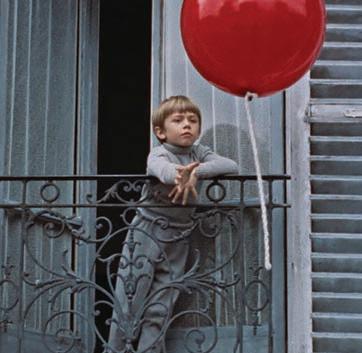
According to the Hop’s Director of Programming Initiatives Johanna Evans, interest in silent films has surged. The Hop typically plays one to two silent films a year and the audience has grown from what used to be 12 to 50 people into the hundreds—200 for The General, 400 for Nosferatu and another 100 or so for The Red Balloon and The Phantom of the Opera. “People want to see [silent films] on the big screen and experience that sense of cinema together.”
Outside of Dartmouth, Sosin too has noticed a rising interest in silent films since the 90s, as access through VHS, DVD, Blu-Ray and streaming has grown. In addition, festivals such as Le Giornate del Cinema Muto and San Francisco Silent Film Festival help give the medium exposure to the public. Sosin marks the PBS series The Silent Years, which began in 1971, as a landmark in the revival of silents in this country.
Silent film is a sophisticated medium, stemming from the craft of the filmmaker themself.
Dartmouth Film Professor Joanna Rapf, who specializes in silent films, reflected on the great lengths that Keaton went to get the artistic vision, from his camera setups to his outlook on the
world—one that spins misperception into comedic gags to reveal deeper meanings in our society. “He was such a good filmmaker and meticulous [too]— the realism of [his films] are extraordinary,” she said. From the original filmmaking to the music that composers make today, it is this particular precision that sets silents apart from contemporary films, in which “so much emotional and narrative content is transmitted without any spoken words,” as Sosin puts it. He adds, “silent films by their very nature demand that the viewer really pay attention to what is on the screen, rather than depending on dialogue for information.”
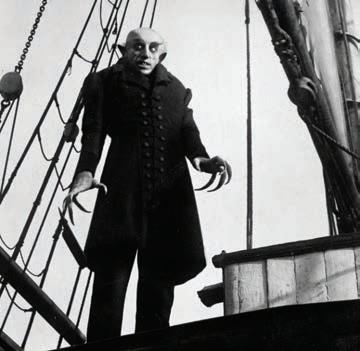
Perhaps this is why silent films are experiencing a resurgence in viewership. They require a certain dedication to the happenings on screen and the music that brings it to life with every viewing, allowing silent films to connect to audiences in ways that contemporary films cannot.
By Michael Bodel Director of External Affairs
Dance at Dartmouth has been a story of resilience, resourcefulness and the verve of students inspired to move and create community any way they could. Like a succulent that grows miraculously in the cracks to full flowering, Dartmouth dancers have rehearsed in makeshift spaces, linked arms with the local community, lunged into the opportunities presented by visiting companies, and latched onto programs that could offer the art form support. Now dance springs forth from the sprung floors of the new Hop, which supports more student work and interdisciplinary opportunities for learning through dance. Looking beyond the heralded founding of Pilobolus at Dartmouth— again at the beauty that has grown in the cracks—we find powerful stories of alumni who have made rich lives in dance.
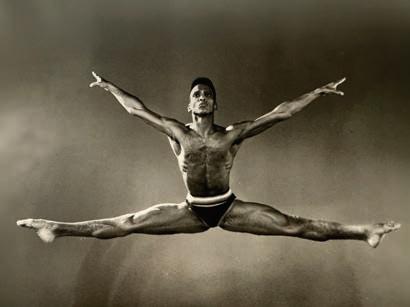
One of these unexpected pathways was forged by Stephen Rooks ‘77, who now chairs the Department of Dance and creates as the Resident Choreographer at Vassar College. For Rooks, the journey to becoming a consummate dance artist and educator began not in a studio, but in the Music Department. He was a voracious musician, pursuing everything from classical music in Vienna to free-form improvisation with the pioneering Bill Cole. However, his path changed forever when friends invited him to
attend a sold-out performance by the Dance Theatre of Harlem at the Hop. He didn’t even want to go. Then, glued to his seat, Rooks was enthralled by the beauty and athleticism of the choreography and moved by the predominantly African American company. He left the theater feeling transformed—it was a world he never knew existed.
Despite the lack of a formal dance program, Rooks got moving. He found a vibrant, creative home within the Black Underground Theater and Arts Association (BUTAA), which then rehearsed in the auditorium of Webster Hall. His dedication earned him the very first BUTAA award in dance. He soaked up masterclasses with dancers like Marguerite de Anguera, and “bled his heart out” during a psychiatrylike session with legendary dance critic Selma Jeanne Cohen, who was visiting campus. Faced with his hemming and hawing over the career he envisioned in music versus his newfound excitement for dance, Cohen raised her hand to stop him. “Once the dance bug bites,” she warned, “it never goes away.”
Rooks worked at it. Following graduation, he moved to New York City and began taking night classes, which led to him earning a full scholarship to the Alvin Ailey School. There his training accelerated from 5 to 18 classes a week. Nearly 50
a
We’re piecing together the rich tapestry, so please share! Stay tuned for more in a series of stories about the decades of dance here at Dartmouth.
years later, Rooks remains a fierce advocate for a rigorous dance technique and training programs. Eventually, he secured a spot touring with the iconic Alvin Ailey Repertory Ensemble. He went on to perform for nearly a decade as a principal dancer in the Martha Graham Company and to set choreographic works on troupes from Hubbard Street Dance in Chicago to Sumeet Nagdev Dance Arts in Mumbai.
The initial springboard for this ebullient and impressive career in dance was not a fulsome dance program or cohort of fellow dancers. It was the gritty and adventurous vibe of the Black Underground Theater. It was a chance encounter with a dance company that spoke to his identity as a rigorous student and a Black man. It was a liberal arts environment that allowed a wide-eyed student to pivot—as he then went on to do on stages across the world—from music to a form that moved him more than he could ever ignore.
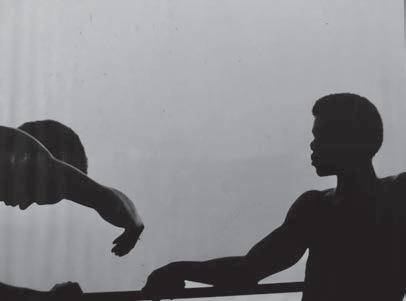
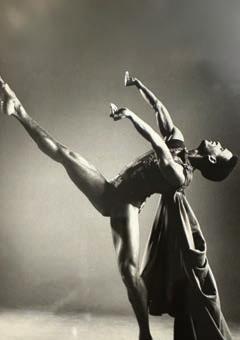

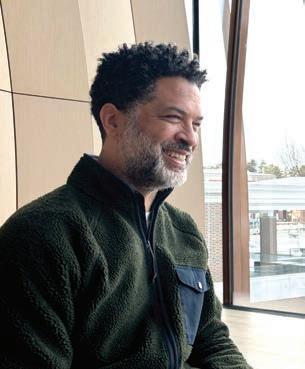
“Watching people dismiss [history] constantly and not just in music or jazz... is tragic. I try to model the behavior for the generations that come behind and that it’s OK to have a point of view about something that’s happened in the past.”
Jason Moran
This spring, we’re proud to be partnering with NHPR on a new collaboration bringing the voices of our artists beyond the stage and onto the airwaves.
Through a series of conversations, select Hop artists reflect on their creative processes, their inspiration and the stories behind what you see on stage. You’ll also hear music from their live performances at the Hop.
Catch episodes as they air on NHPR & ClassicalNH.

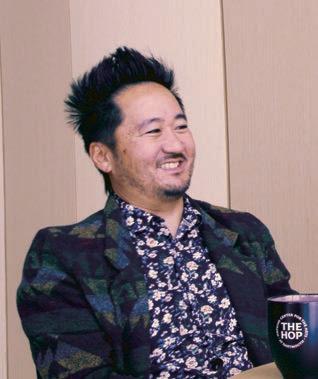
“When AI mimicry started to scare a lot of artists, it gave me more confidence in valuing human creativity. If it’s not made by a human, then it doesn’t have the vulnerability or intimacy that I think is what makes art so vibrant.”
Kishi Bashi
Or tune in anytime on the Hop’s YouTube Channel.
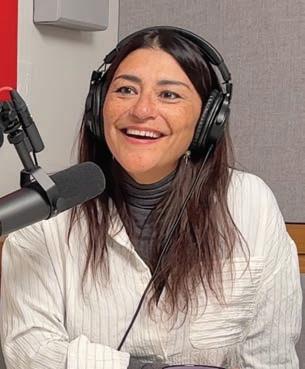
“When Indigenous people start to express themselves, it could come out in any form. We have to be free. We’re all creators. Creating is like being in touch with your spirit and spirituality.”
Elisapie
6241 Hinman
5/26 Bentley & Backstage Circle Members
5/28 C atalyst Circle Members
6/2 Connector & Cultivator Members
6/4 Dartmouth College Employees & Students
6/9 Explorer Members & General Public
Abigail Byrne ’28 2025/26 Hop Fellow
Sophia Jiang ’28 Editorial
’44