KING GEORGE WHITING Tips for catching more this winter. DRY AGEING How to dry age your fish at home.
WINTER IN THE SOUTH It’s better fishing than you think.
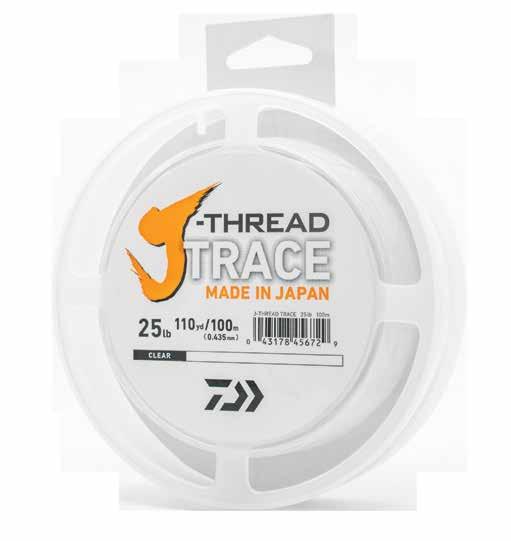
DAIWA’S NEW J-THREAD TRACE
HIGH STRENGTH PERFECT STRETCH
HIGH KNOT STRENGTH
ABRASION RESISTANT
You're only as strong as your weakest link, so fish with confidence with new J-Thread Trace. Designed to handle the rigors of fishing in Australia, J-Thread Trace was developed and made in Japan to the highest quality standards.
The new J-Thread Trace is an all-purpose nylon monofilament trace featuring a tough, abrasion resistant formula with great shock absorption. J-Thread Trace is tough, a hard outer shell will prevent premature wear against sharp reef and rocks, ensuring your catch makes it to the boat. A good trace is the last line of defence, so make sure what you choose is up to the task.
Available in sizes ranging from 20-130lb, J-Thread Trace is the perfect choice for all hard-fighting fresh or saltwater applications. Be a strong leader, with J-Thread Trace.
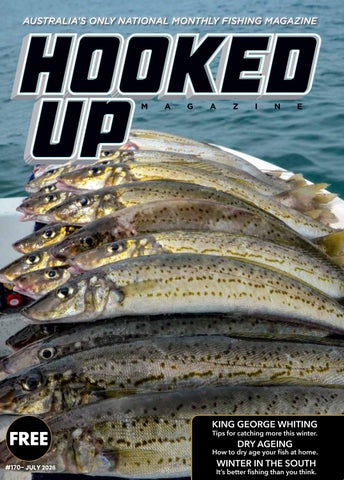
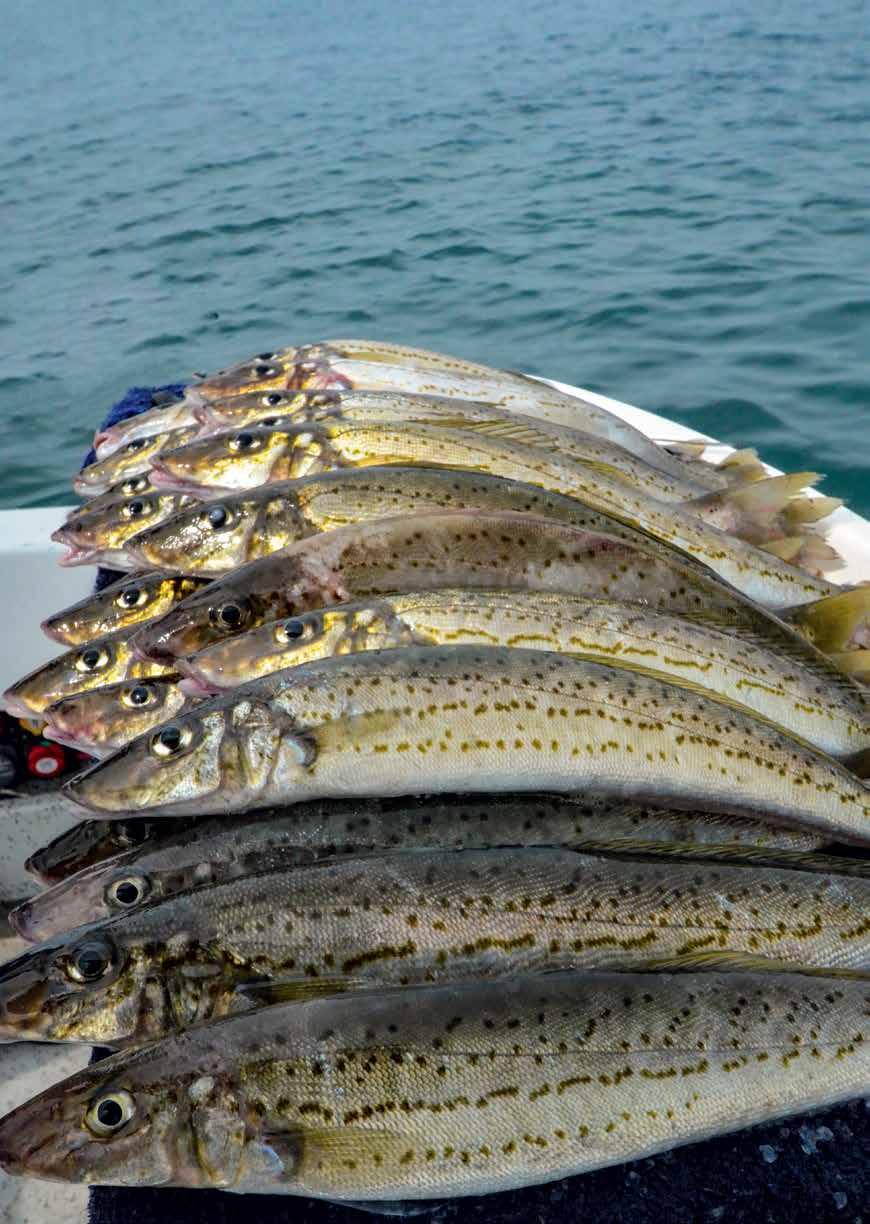
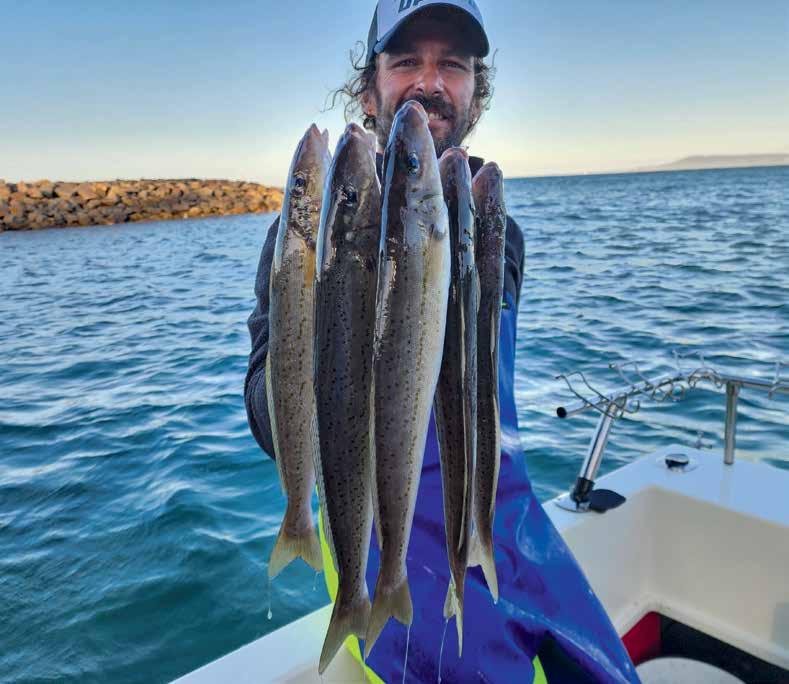
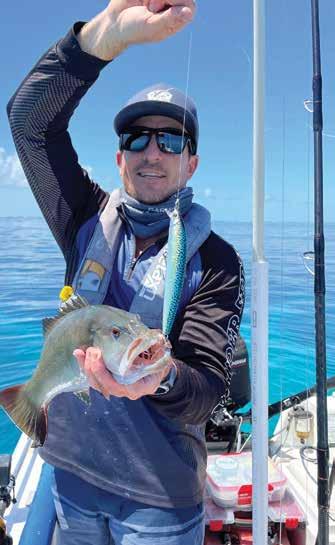
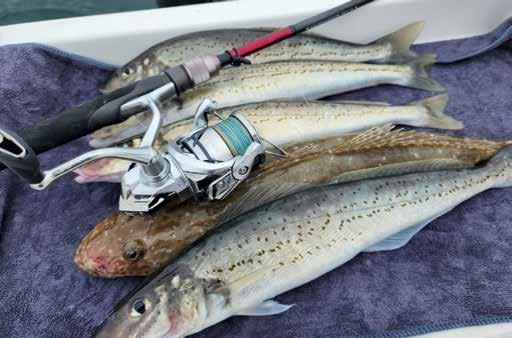
ON THE COVER: A bag of king George whiting ready to head home for a fillet and feed.
HARDEN UP
There’s something about the peak of winter that really tests your commitment as an angler. The days are short, the mornings bite hard, and down south you feel every bit of it. Victoria, Tasmania and South Australia cop winter properly, but the fishing can be seriously rewarding for those willing to not be soft and get on the water.
That’s where we start this issue, with a look at winter fishing in the south and the species worth targeting when the temperature drops. It’s easy to write winter off as a quiet period, but some of the best fishing of the year happens right now. From bread-and-butter species through to serious cold-water targets, there are plenty of options if you understand where to look, how to approach it and what to expect.
We also take a deep dive into dry ageing fish. Winter produces some outstanding table fish, and dry ageing is becoming one of the most interesting ways to treat them before they hit the plate. It’s not about complicating things for the sake of it; it’s about improving texture, flavour and the overall eating experience. In this issue, we break the process down step by step, showing how it can be done properly at home and why more anglers are starting to look at fish preparation differently.
To finish, we focus on one of Australia’s most popular fisheries and the most popular table fish: King George whiting in Port Phillip Bay. It’s a huge fishery, but that doesn’t mean success is guaranteed. Finding fish, understanding the ground, choosing the right bait and rigging, and knowing when to move can make all the difference. This feature lays out how to go about putting a proper bag together in the bay.
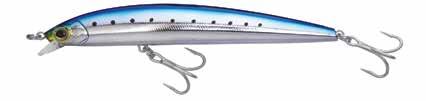
On the gear front, we review the new Yamashita Live Search Shallow and the MC Lures Mogul, two very different products with plenty of relevance for southern anglers.
Winter might be cold, but it’s far from quiet. Don’t be soft, get out there.
Be excellent to each other. .
Kosta Linardos Editor In Chief
CONTRIBUTORS
Dean Linardos, Jason Linardos, Sammy Leys, Eddie Fisher, Theo Doukas, Jonah Yick
ADVERTISING info@hookedup.com.au
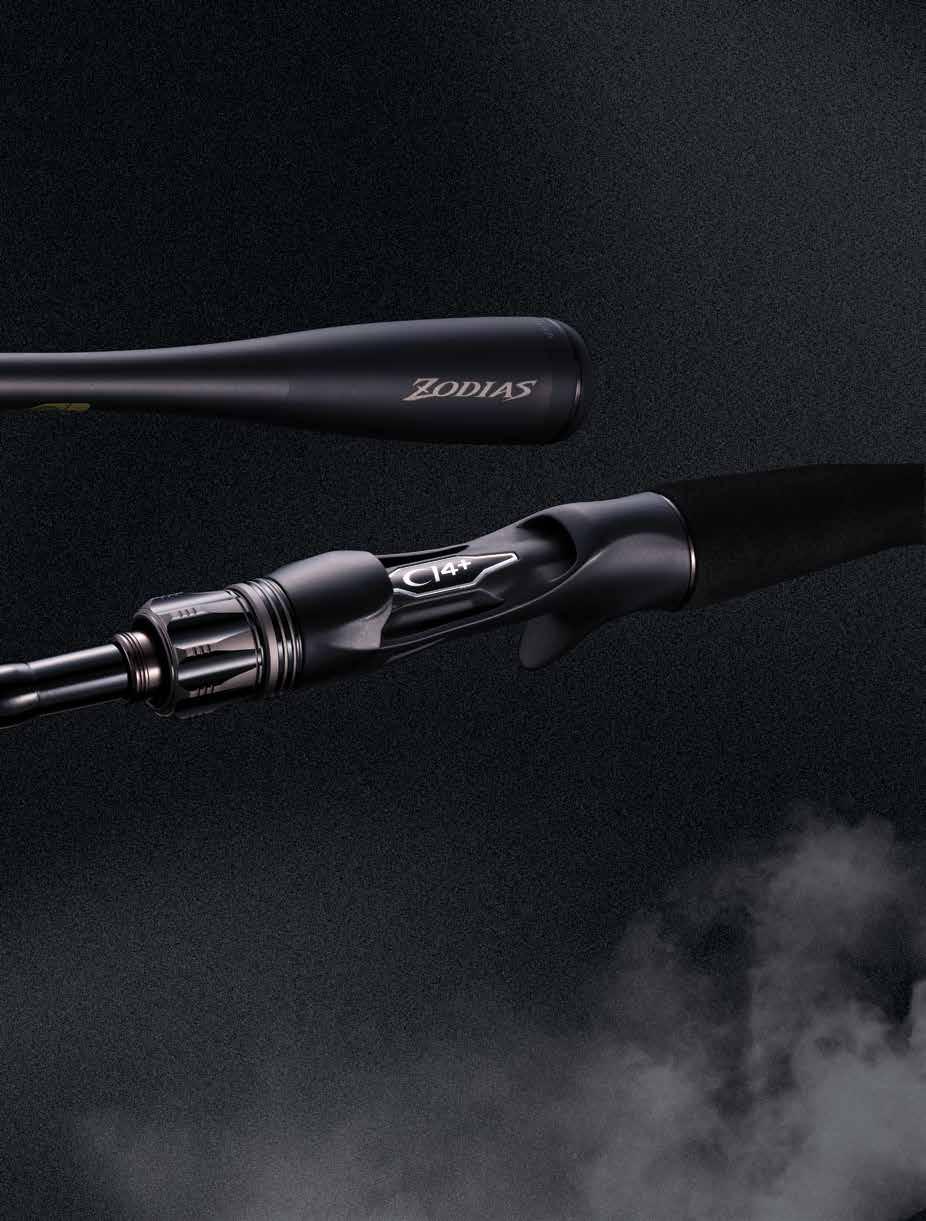
THE NEXT EVOLUTION OF ZODIAS
Zodias returns with an expanded 17-model lineup, refreshed cosmetics and the same proven performance that has made it one of Shimano’s most popular rod series.
Featuring Hi-Power X blanks, Carbon Monocoque grips, CI4+ reel seats and Fuji K Alconite guides, Zodias delivers crisp actions, enhanced sensitivity and technique-specific options that consistently perform at an accessible price point.
Shimano.Fish
BUCCA TRICK SHAD 2.5 BFS
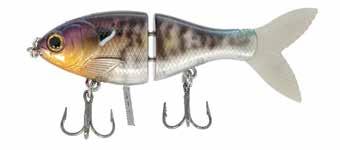
Designed by renowned swimbait creator Mike Bucca, the Trick Shad 2.5” BFS brings big glide bait appeal to light tackle fishing. Perfectly sized for bream, bass and trout, this compact swimbait delivers an enticing side-to-side action with minimal rod input, making it incredibly easy to fish. It can be worked with subtle twitches to create an erratic glide or simply slow rolled for a natural swimming action that imitates a small baitfish. Weighing 3/16oz and featuring a slow-sinking design, the Trick Shad 2.5” BFS is an exciting option for anglers looking to target wary fish with something different. The range now includes 2.5”, 4”, 6” and 8” models. ejtodd.com.au
SHIMANO NEXAVE FJ
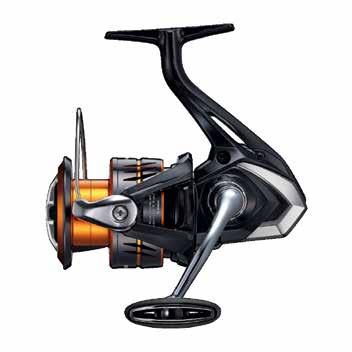
Shimano’s popular Nexave range has been updated with a host of premium technologies, delivering outstanding value for anglers chasing a reliable reel without the premium price tag. Available in sizes from 1000 through to C5000, the Nexave FJ is suited to both freshwater and saltwater applications. Features include Shimano’s Anti-Twist Fin technology to help reduce line loops and tangles, along with SilentDrive and G-Free Body technologies for smoother operation and improved balance. An anti-reverse switch also returns, providing a feature still favoured by many anglers. The result is a versatile, affordable spinning reel packed with proven Shimano innovation.
shimanofish.com.au
ADUSTA A-PEN 68
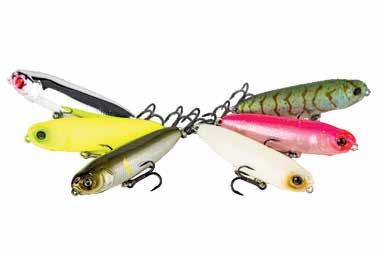
The Adusta A-PEN 68 delivers the proven casting performance, distinctive one-knock sound and enticing surface action of the popular A-PEN series in a compact 68mm package. Completely redesigned to balance casting distance, action and sound, the downsized pencil bait remains easy to fish on both baitcasting and spin tackle while perfectly matching smaller baitfish. Fitted with saltwater-ready BKK hooks straight from the packet, the A-PEN 68 is equally at home in estuaries, rivers and inshore waters, making it a versatile topwater option for anglers chasing aggressive surface-feeding predators. gladiatortackle.com.au
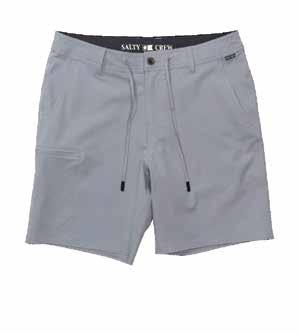
SALTY CREW TRANSOM TECH SHORT
Designed for life on the water, the Salty Crew Transom Tech Short combines lightweight durability with all-day comfort. The recycled polyester and elastane fabric features four-way stretch and quick-dry performance, while multiple pockets, including a dedicated plier and phone pocket, keep essential gear close at hand. A 19-inch outseam, adjustable drawcord and secure zip fly complete a practical fishing short built for long days on the boat.
salty-crew.com.au
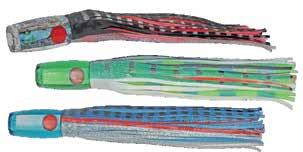
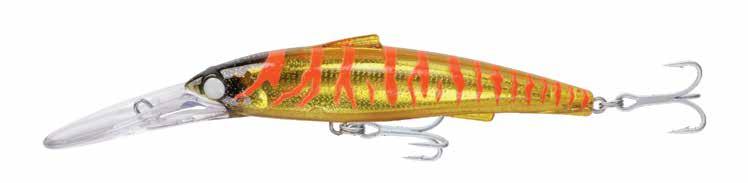
M c LURES MOGUL 9
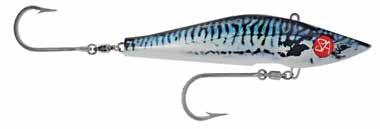
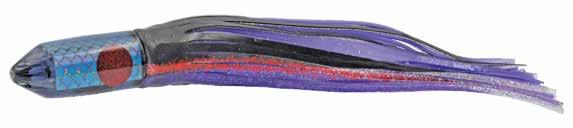
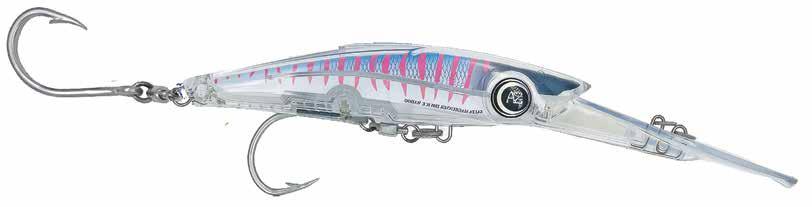
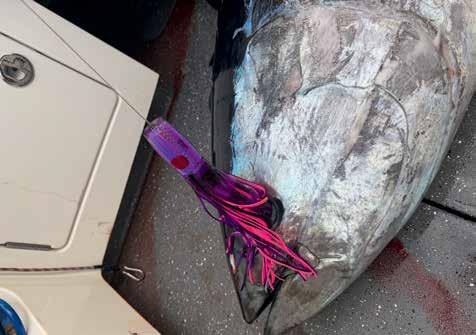
Designed in Australia, the McLures Mogul 9in is a deeprunning, heavy cup-faced skirted lure built for serious blue-water trolling. The cup-faced head features four jet holes to create a strong bubble trail, helping the lure stand out in a range of sea conditions and trolling positions. Resin heads are finished with Red Crystal 3D eyes and matched to skirt combinations that include UV over-skirts and McLures’ exclusive Luminite under-skirts that glow in the dark. Measuring 11.5in overall with a 9in skirt and weighing 165gm, the Mogul 9in is available in 12 colours for marlin and tuna.
finaticalfisherman.com.au
DAIWA DOUBLE CLUTCH MONSTER TUNE
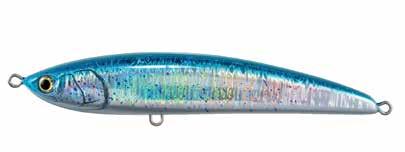
MARIA LEGATO
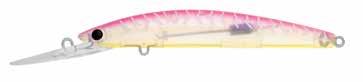
The Maria Legato is a unique stickbait designed to excel not only with traditional jerk-and-pause retrieves, but also when wound at speed. Swimming just below the surface, it produces a sharp flashing action that imitates a fleeing baitfish, while the lure’s distinctive dimpled body generates subtle irregular slides that can trigger aggressive reaction strikes. A magnetic weight transfer system helps maintain a near-horizontal swimming posture, reducing the chance of the lure blowing out or surfacing after a missed strike. By remaining in the fish’s field of vision for longer, the Legato encourages valuable follow-up bites, making it an excellent option for pelagic predators and other aggressive surface-feeding species.
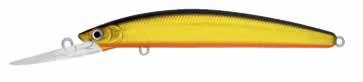
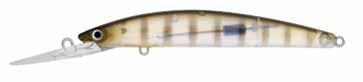
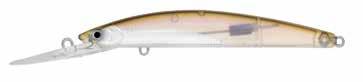
The legendary Daiwa Double Clutch has built a reputation as one of Australia’s most effective suspending jerkbaits, and the new Monster Tune version is purpose-built for anglers chasing harder-fighting fish. Measuring 95mm and weighing 9g, it has been strengthened throughout with heavy-duty BKK Fang 4X trebles, making it ideal for barramundi, mangrove jack and Australian bass. Daiwa’s Silent Gravity Oscillation System delivers exceptional casting distance, while the tungsten weight transfer creates an aggressive darting action from the first twitch. Quiet in operation but deadly in the water, the Double Clutch Monster Tune is available in six colours and ready to fish straight from the packet. daiwafishing.com.au
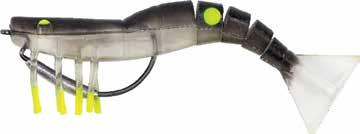
SAMAKI LIVE SHRIMP 127
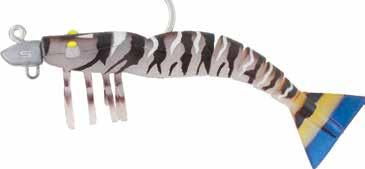
Already a proven performer, the Samaki Live Shrimp 127 now gives anglers even more versatility with three prerigged configurations designed to suit a wide range of fishing situations. Its segmented tail and finely tuned swimming legs produce an incredibly lifelike prawn action, while a builtin rattle and glowing eyes provide extra attraction in dirty water and low-light conditions. Constructed from super-tough Kevlar-reinforced TPE for exceptional durability, it’s available rigged weedless on a weighted worm hook, with a 3/8oz jighead for shallow water or a 1.5oz jighead for deeper presentations, allowing anglers to fish straight from the pack.
samaki.com.au
VANFOOK
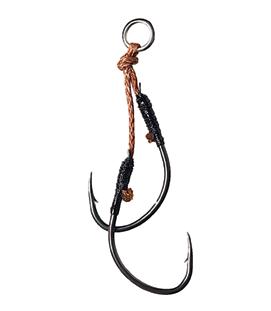
TWIN DANCER ASSIST HOOKS
Small changes can make a big difference to hook-up rates, and the Vanfook Twin Dancer assist hooks are designed to do exactly that. Ideal for blades, chatterbaits, small jigs and topwater lures, these premium Japanese-made assists feature ultra-sharp black fine-wire hooks that penetrate with minimal pressure. The twin assist cords are deliberately set at different lengths to reduce tangles while increasing the chances of a solid hook-up from any angle. Each pair is connected to a strong solid ring, making them quick and easy to fit to your favourite lures. Available in Medium Wire and Medium Heavy Wire options in L, LL, 3L and 4L sizes. ejtodd.com.au
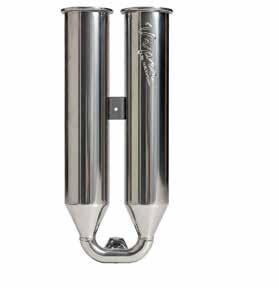
VIPER PRO SERIES LIVE BAIT TWIN SLIMY TUBES
The Viper Pro Series Live Bait Twin Slimy Tube System is designed around clean installation, solid mounting and keeping baits healthy. Tested in a transom-mounted setup, the concealed throughtransom inlet immediately stands out, allowing plumbing to run inside the boat for a tidy, factory-style finish that avoids external clutter and can be connected directly to a deck wash. On the water, a single inlet feeds both 316 stainless steel tubes, delivering consistent flow that keeps slimy mackerel, garfish and similar baits active without excess turbulence. The tube design allows baits to swim naturally while rigged, helping reduce tangles when trolling and turning. A smart, well-engineered system that delivers both performance and a clean look.
bellmarine.com.au
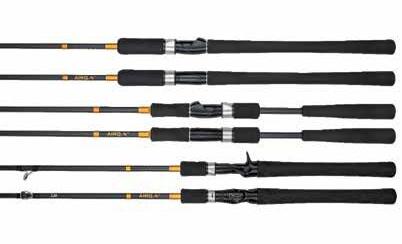
DAIWA 26 AIRD X
Daiwa’s popular Aird X range has been completely refreshed for 2026, delivering lightweight performance and excellent value for anglers looking for a dependable all-round rod. Built on high-strength HDS graphite carbon blanks, the new series balances sensitivity and power to suit a wide variety of Australian fishing techniques. Fuji guides provide smooth line management and long-term reliability, while Daiwa’s newly designed reel seat improves ergonomics for greater comfort during long sessions on the water. Available in a carefully selected range of spin and baitcast models, the 26 Aird X is designed to cover everything from estuary lure fishing through to heavier inshore applications.
daiwafishing.com.au
TACKLE HOUSE BLUE OCEAN K TEN
The Tackle House Blue Ocean K-Ten Sinking Works is a 140mm, 51g offshore jerkbait built in Japan for tuna, kingfish and Spanish mackerel. Tungsten weights and a magnetic weight transfer system maximise casting distance while maintaining a consistent swimming action. A 1.6mm laser-cut, one-piece through-wire harness delivers exceptional strength under heavy drag pressures, while premium Owner ST46 trebles complete the package. Combining the characteristics of a popper, stickbait and metal slug, the Blue Ocean is a versatile lure for serious offshore anglers.
gladiatortackle.com.au
SAMAKI PACEMAKER – BARREL READY
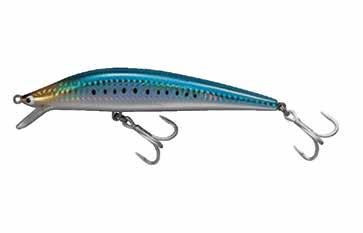
With southern bluefin tuna season in full swing, having a lure that can handle long hours in the spread is critical. The Samaki Pacemaker has been purpose-built for anglers chasing barrel tuna, combining a refined head shape with a versatile action that performs across a wide trolling speed range. While happy at lower speeds, the Pacemaker really shines around the six-knot mark, where it produces a consistent swimming action designed to attract big pelagic predators. Built tough with a one-piece stainless welded wire-through construction, heavy-duty split rings and VMC 3X Perma Steel trebles, it is ready for the brutal strikes and extended battles that come with targeting giant bluefin. Available in proven baitfish patterns including Slimy Mackerel, Redbait and Mullet as well as Samaki’s highly original fish catching patterns Disco, Golden Carrot and Space Jam. If there is a baitfish you want to imitate or a colour that you need in the spread, the Pacemaker range has it.
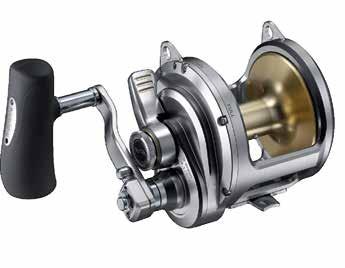
SHIMANO TALICA 40A & 50A
Shimano’s legendary Talica range has expanded with the introduction of the new 40A and 50A, giving serious offshore anglers two purposebuilt options for 24kg to 37kg game fishing. Featuring Shimano’s proven two-speed transmission, the reels deliver up to 30kg of drag pressure through an advanced dual-plate drag system while remaining remarkably easy to crank under load. Drop into low gear at the push of a button and the Talica develops immense lifting power for stubborn barrel tuna, marlin and swordfish. Packed with premium features including a Hagane body, Infinity Drive, X-Protect and an even louder strike clicker, the new Talicas are built for anglers chasing the biggest fish in the ocean
shimanofish.com.au
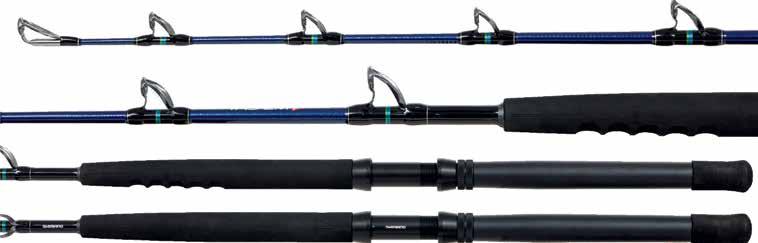
SHIMANO TAG-EM RODS
Game fishing no longer needs to be reserved for anglers with unlimited budgets, and Shimano’s TAG-EM rod range proves exactly that. Designed to deliver dependable offshore performance at an affordable price, the range features durable E-Glass blanks matched with quality Fuji SiNII guides or oversized PacBay roller guides, depending on the model. With ten models available, TAG-EM rods are built to tackle everything from barrel southern bluefin tuna and marlin through to kingfish, sharks and even swordfish. Ergonomic butts and contoured foregrips provide comfort during long fights, while the proven actions deliver the lifting power needed when serious bluewater fish are on the line. shimanofish.com.au
YO-ZURI 3DB 1.5
SQUAREBILL
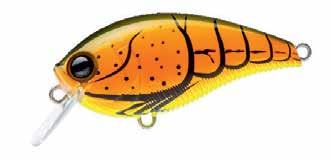
The Yo-Zuri 3DB 1.5 Squarebill is built for anglers who love covering water and provoking aggressive reaction bites around heavy structure. Its distinctive square bill is designed to crash through timber, rock and weed edges, deflecting cleanly off obstacles where predatory fish are waiting to ambush passing prey. Measuring 60mm and weighing 14g, it casts exceptionally well on both spin and baitcast tackle, while its buoyant ABS body and internationally patented Internal 3D Prism Finish deliver flash, durability and fish-attracting appeal. Fitted with premium black nickel trebles and available in six proven colours, the 3DB 1.5 Squarebill is an outstanding search lure for anglers targeting reaction strikes. tacspo.com.au
SALTA MAGDIVER
The Salta MagDiver 10in is a high-speed trolling lure designed for targeting wahoo, mackerel and tuna. Featuring a patented design, the lure is built to run straight and below the surface at speeds up to 20 knots, while remaining stable through turns and propwash. A key feature is the HookMag system, which holds the front hook in a stinger position during trolling before releasing on the strike, reducing tangles and improving hook-up rates. Constructed from durable ABS with a through-wire build, the MagDiver is fitted with premium hardware including Mustad 10/0 hooks and heavy-duty swivels. At 360gm, it is available in six colours.
finaticalfisherman.com.au
SALTY CREW OMAKASE MW HOOD
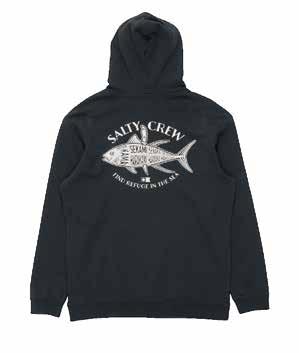
Perfect for cool mornings at the boat ramp or relaxing after a day on the water, the Salty Crew Omakase MW Hood is made from 300gsm brushed cotton/ polyester fleece for warmth and comfort. Featuring a two-piece hood, kangaroo pocket, rib-knit cuffs and hem, it delivers a classic fit with eye-catching screenprinted artwork on the front and back. It’s an ideal layer for the cooler months. salty-crew.com.au
DAIWA SENSOR SANDSTORM
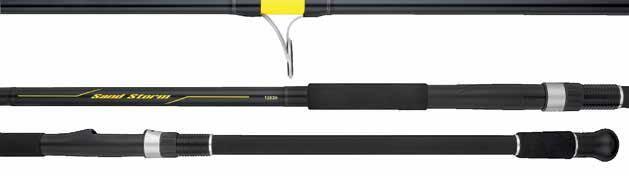
The new Daiwa Sensor Sandstorm continues to raise the benchmark for value-packed surf rods, combining premium blank technology with quality components to deliver impressive performance from the beach, rocks and estuaries. Built on Daiwa’s lightweight HVF Nanoplus carbon blanks with X45 construction, the range offers an outstanding balance of power, sensitivity and durability. Fuji reel seats and Fuji Stainless Steel Alconite guides provide long-term reliability in harsh saltwater conditions, while seven purpose-built models cover everything from light estuary fishing through to spinning for pelagics and other hardfighting species from the surf and rocks. daiwafishing.com.au
samaki.com.au
YO-ZURI 3DR-X CRANK
The Yo-Zuri 3DR-X Crank DD50F is designed to get down quickly and stay in the strike zone, making it an excellent choice for probing deep rock walls, submerged timber, bridge pylons and drop-offs. Diving to around three metres almost immediately, the floating crankbait can also be worked along the bottom where its durable bib deflects off structure to trigger aggressive reaction bites. Built from tough ABS resin, it features Yo-Zuri’s internationally patented Internal 3D Prism Finish, holographic eyes and premium black nickel trebles. Available in six proven colours, the DD50F is a versatile deep diver for anglers targeting everything from bass to barra.
STRIKE PRO ASTRO VIBE 35
GAN CRAFT X AIMS JOINTED CLAW SHIFT 113
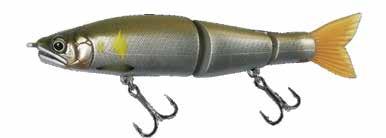
The legendary Gan Craft Jointed Claw family continues to evolve with the new Shift 113 AIMS Crossover, a collaboration between Gan Craft and renowned Japanese saltwater lure specialists AIMS. Designed by Gan Craft’s Takanori Hiraiwa, the 113mm Shift retains the signature S-shaped swimming action of the Jointed Claw series while adding an enticing “Ghost Action” on ultra-slow retrieves. Built around Gan Craft’s patent-pending ROM Damper Joint, it can also be worked aggressively with a fast retrieve to produce an erratic, fleeing baitfish action. Premium hardware, a replaceable silicone tail and AIMS-inspired tuning make this a standout glide bait for Australian barra, mangrove jack, mulloway and other hard-fighting estuary predators.
gladiatortackle.com.au
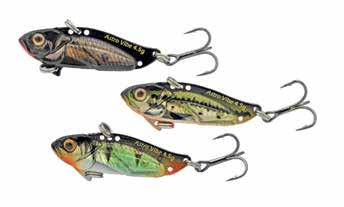
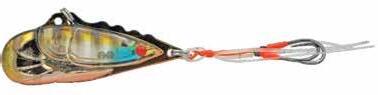
Strike Pro has released a new smaller version of the highly popular Astro Vibe 45.This new size is outstanding for more finesse situations. The Astro Vibe 35 incorporates a Polycarbonate Belly with small in-built rattles. It also allows for a transparent finish to be achieved in a metal blade and the belly section is UV for added attraction. The Astro Vibe 35 is 3.5cm long, weighs 5g and is available in 8 dynamite colours. They are superb on Bream, Bass, Estuary Perch, Flathead and Redfin and are certain to be a hit this year. finaticalfisherman.com.au
SAMAKI REDIC DS80 NEW COLOURS
The Samaki Redic DS80 has earned a reputation as one of Australia’s most trusted suspending hardbodies for barramundi and estuary fishing, and it’s about to become even more versatile with eight new colours arriving in August 2026. Designed in Australia and built from premium ABS with reinforced supersonic-welded construction, the DS80 is renowned for its strength, premium hardware and precision suspending action that keeps the lure in the strike zone longer. Proven in tournaments and by everyday anglers alike, the expanded colour range gives anglers even more options to match changing water clarity, baitfish and conditions. daiwafishing.com.au
WINTER WHITING
With Western Port whiting proving tough this season, Port Phillip Bay has become the go-to option for anglers prepared to fish precise ground, good tides and the right rigs.
WORDS & IMAGES: KOSTA LINARDOS
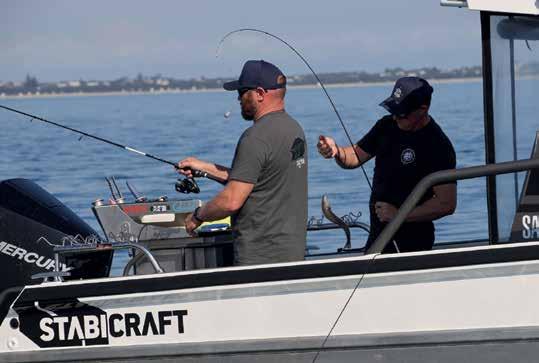
Theo Doukas with a handful of big Port Phillip whiting.
Western Port has always been one of Victoria’s great King George whiting fisheries, but this season has tested even the most experienced anglers. For many, it has been one of the toughest Western Port whiting seasons in memory. The fish have been patchy, the bite windows short and the reliable marks have not produced with the consistency most expect. There are plenty of theories as to why.
One of the more common explanations being discussed is high salinity, but whatever the cause, the result has been the same: a lot of anglers who would normally spend their season in Western Port have shifted their attention back towards Port Phillip Bay.
That does not mean Port Phillip is easy. Whiting are still whiting. They can be here one tide and gone the next, they can bite hard for 20 minutes then disappear, and they will punish sloppy anchoring, poor bait and over-heavy rigs. However, if you get the basics right, Port Phillip gives you a very real chance of putting together a feed.
The best areas to focus on are generally in the southern half of the bay. On the eastern side, the stretch from Rosebud down through Rye, Blairgowrie, Sorrento and Portsea has long been productive. On the western side, St Leonards down to Queenscliff offers plenty of good ground. Mud Island and the surrounding weed patches are also prime whiting territory, particularly where broken weed, sand holes and current all come together.
The key is not simply finding weed. It is finding the edges, gaps and broken bottom where whiting can move through and feed.
Anchoring
One of the biggest differences between catching the odd whiting and catching consistent numbers is anchoring. It is not enough to be roughly in the area. You need to position the boat so your baits are landing where the fish are likely to feed. The best ground is often broken weed with clean sand holes scattered through it.
Whiting move through these areas picking up worms, small crustaceans and shellfish, so your aim is to cast baits into those gaps rather than burying them in thick weed. This means taking the time to sound around before you drop the pick. Look for broken bottom, not endless weed and not featureless sand. Once you find
the right mix, anchor so the boat sits upcurrent of the ground you want to fish. Your casts should then land back into the sand holes and weed edges.
A few metres can make a difference. If your baits are constantly fouling in weed, move. If you are sitting too far off the edge and only fishing clean sand, move. Whiting fishing rewards precision.
Fish the Flow
Whiting respond well to current. In Port Phillip, the best bite periods often come when there is enough water movement to stir the bottom, carry scent and get fish feeding confidently. Dead water can be hard work. You might still pick up the odd fish, but the better sessions usually happen when the tide is pushing. The trick is to fish enough flow to switch the whiting on without making it impossible to hold bottom.
This is where rig and sinker choice matter. Use the lightest sinker you can get away with. If you are dragging bottom too quickly, go heavier. If your rig is pinned like a brick and looks unnatural, go lighter. The bait should sit naturally in the current, not spin, drag or sit lifeless. When the flow is right, whiting often feed aggressively. When it drops away, they can shut down fast. That is the time to either wait for the next push or move and find fish that are still active.
Use Good Bait
Good bait is non-negotiable. Whiting are not always fussy, but when the fishing
is tough, average bait quickly becomes a problem.
Pipi, mussel, squid and fresh strips of calamari all work. The best bait is firm enough to stay on the hook but soft enough to move naturally. Small, neat baits usually outperform big lumps. Whiting have small mouths, and a bait that is too large can lead to missed bites and stolen offerings.
Thread the bait properly onto the hook so the point remains exposed. The bait should sit straight, not bunched up into a ball. If pickers are bad, squid or tougher strips can help. If the fish are feeding gently, softer baits like mussel or pipi can be the difference.
Berley also helps, especially in Port Phillip. You do not need to unload half the ocean into the water. A steady, controlled trail is better. The aim is to create interest and hold fish around the boat, not feed them. Crushed shell, pellets and small pieces of bait can all work, but keep it consistent and don’t overdo it.
The Whiting Rig
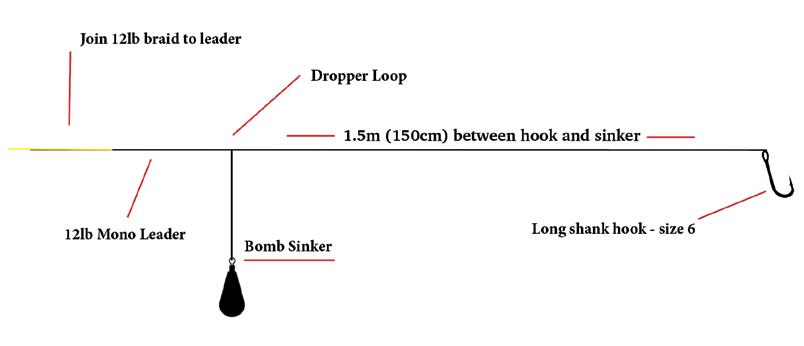
The paternoster remains one of the most effective whiting rigs because it is simple, adjustable and presents a bait well in current.
For most Port Phillip whiting fishing, run the sinker from a dropper loop with the hook below it on a long leader. The important detail is distance. Keep the hook around 1.5m from the sinker. This
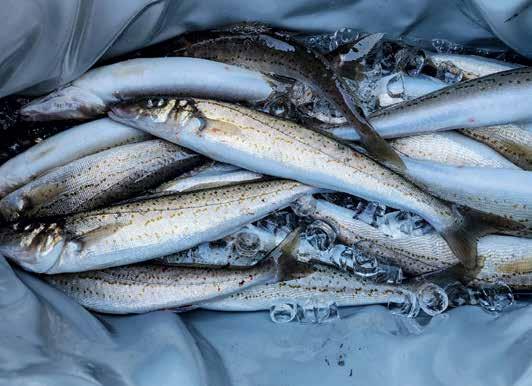
Keeping your whiting in an ice slurry will retain flavour and texture.
gets the bait away from the weight and allows it to waft naturally in the current. That separation matters. Whiting can be cautious, especially in clear water or shallow ground. A bait sitting too close to a sinker can look unnatural and cost you bites.
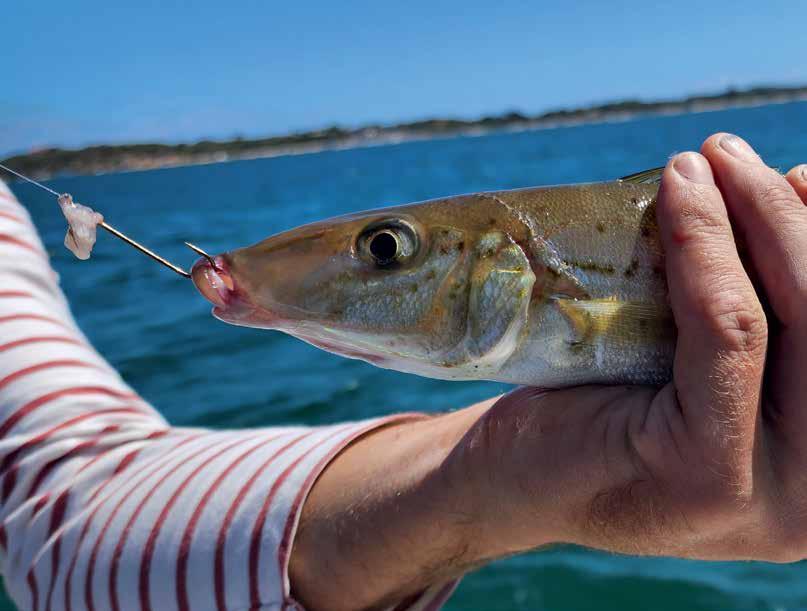
Longshank hooks are popular because they suit baits like pipi, mussel and squid, and they make unhooking fish easier. Size 6 is a reliable all-round choice, but you can go slightly smaller or larger depending on bait size and fish behaviour.
Hold the rod where possible. Whiting bites can be sharp and fast, but they can also be subtle. A rod left bouncing in the holder will still catch fish, but you will miss more bites than you should. Stay in contact with the rig, feel the bite and strike with a short, controlled lift rather than a huge swing.
Fast Tide and Deeper Water
When the current really starts to push, or when fishing deeper water, the standard long-leader setup can become harder to manage. In that situation, reverse the rig.
Put the sinker at the bottom and run the hook above it. Shorten the leader to around 75cm. This setup is better for dropping straight below the boat or fishing in heavier flow where a long trailing bait becomes messy.
A small circle hook in size 6 is a good choice for this style of fishing. Rather than striking hard, let the fish load the rod and lift steadily. This helps the hook find the corner of the mouth and reduces pulled hooks.
Pre-made whiting rigs can also be useful here. Rigs such as Black Magic Whiting Snatchers and Hayabusa whiting rigs include small flashers, beads and attractors that are hard to replicate neatly at home. They can be very effective when the water is moving or when fish need a little extra encouragement.
Attractants Help
Small details can make a difference with whiting. Beads, red tubing and subtle flash can all help draw attention to the bait.
Red has long been a popular colour for whiting rigs. Some anglers use a short length of red tube above the hook, others use small beads, and many use both.
The key is moderation. You are trying to add attraction, not turn the rig into a Christmas decoration.
A few small beads or a hook-length piece of tubing is enough. In clear water or on pressured fish, too much hardware can work against you.
Don’t
Waste the Tide
One of the biggest mistakes is sitting too long. If you have good bait, good berley, good ground and the tide is moving, you should at least see some signs of life. If the bites stop completely, move. That does not always mean running kilometres away. Sometimes a move of 50m or 100m is enough to find another patch of sand holes or a better edge of weed.
Whiting often travel in small groups. You might catch five or six quickly, then nothing. When that happens, give the spot a little time, refresh the berley trail, then make a call. If it stays dead, shift. The best whiting anglers are not always the ones with secret marks. They are the ones who keep making small, smart adjustments until they find feeding fish.
After over 25 years of whiting fishing the author has settled on the Daiichi long shank as his hook of choice.
Get the Simple Things Right
This year has reminded plenty of anglers that King George whiting are never guaranteed. When Western Port is firing, it can make whiting fishing feel easy. When it is not, every part of the system matters.
There is a common misconception that King George whiting are a summer species, but that has more to do with angler participation than actual availability. In Victoria, many anglers spend spring and early summer focused on snapper, then shift their attention to whiting once the snapper season starts to taper off around December.
That creates the impression that whiting are a warm-weather target, when in reality they remain very accessible through winter.
In fact, winter can produce some excellent whiting fishing. The fish are often of a better average size, the numbers can be just as good as they are in summer, and there are often more weather windows than people realise. Cold mornings can put anglers off, but winter regularly delivers those glass-calm days where the bay lies flat, the boat traffic is low and you can fish the right ground properly. The cold does not stop the whiting from feeding. If anything, the quieter conditions and reduced pressure can work in your favour.
The same rules still apply: find broken weed and sand holes, fish the tide, use good bait, berley consistently and move when the bite slows. Do that, and winter whiting can be every bit as productive as summer fishing, often with better-quality fish.
Light spin outfits and sensitive rod tips make a big difference when detecting subtle whiting bites and fishing finesse rigs.
Whiting have small, soft mouths, so neat baits, fine hooks and controlled strikes.
DRY AGEING
Dry ageing fish at home challenges the old “fresh is best” rule, giving anglers better texture, deeper flavour and far more flexibility from catch to plate.
WORDS & IMAGES: JONAH YICK
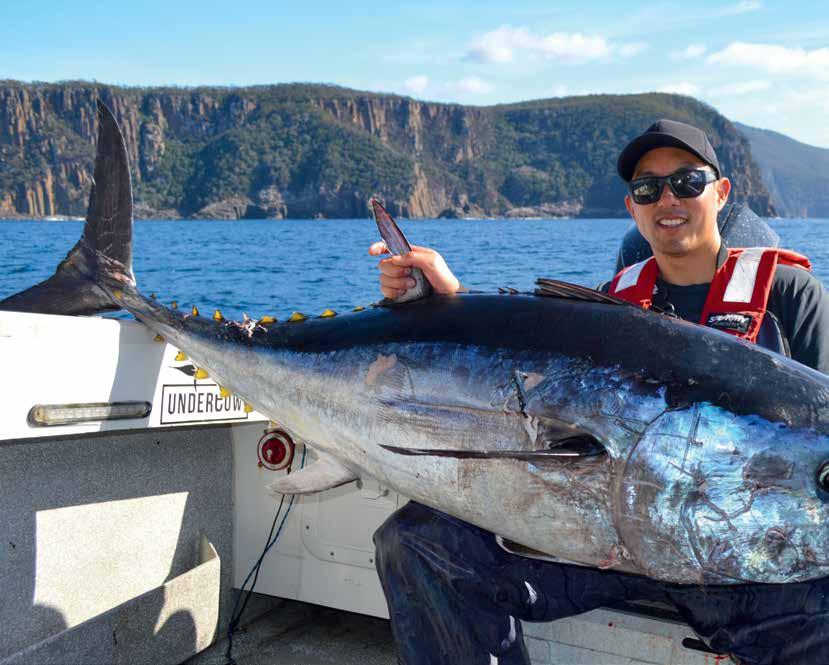
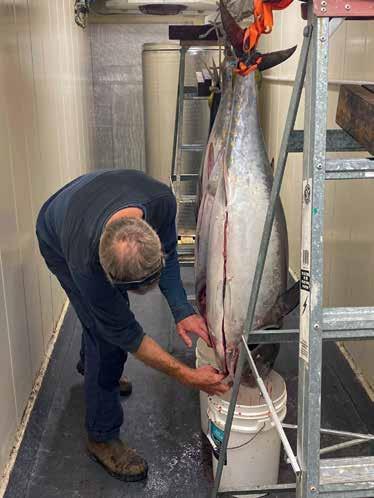
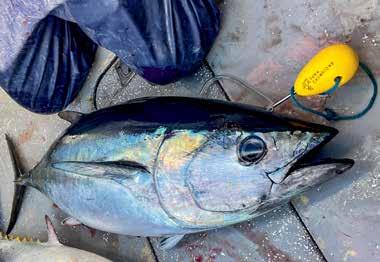
A beautiful 80kg southern bluefin tuna which was bled, gilled and gutted shortly after capture, then hung in a cool room for three days before butchering.
For years, the phrase “fresh is best” has been deeply ingrained in how we approach seafood—especially fish.
It’s an idea built on good intentions: reduce the risk of spoilage, avoid unpleasant odours, and enjoy fish at its peak. Like many others, I subscribed to this way of thinking without question.
That changed a few years ago after reading The Whole Fish Cookbook by celebrated seafood chef Josh Niland. His approach, treating fish more like red meat and focusing on dryness rather than constant washing, completely reshaped my process. Since then, dry ageing has become a staple in how I handle the fish I catch.
The results speak for themselves: deeper flavour, improved texture, longer shelf life, amazing presentation, and a far better end product.
Even better, it’s something any fisher or seafood enthusiast can do at home with minimal setup.
A New Perspective on Freshness
Dry ageing fish is a simple concept. Rather than rushing to fillet and consume your catch, the fish is kept whole and stored in a controlled, dry environment for several days. During this time, natural enzymes begin breaking down muscle fibres, improving tenderness while developing a richer, more savoury flavour.
At the same time, moisture slowly evaporates from the fish. This concentration enhances taste while also producing a dry exterior that cooks beautifully—particularly if you enjoy crispy skin. Perhaps one of the most practical advantages, however, is flexibility.
After a long day on the water, there’s no immediate pressure to process your fish. Instead, you can hang it (or them) to age and deal with properly a few days later, once the boat and all the other gear is cleaned and packed away.
Obviously this may not be possible if you’ve caught large amounts of fish, but if this is the case you can pick a small number of select fish to dry age instead.
From Capture to Cooler
The dry ageing process starts the moment the fish is landed. Proper handling at this stage is critical to achieving a high-quality result later.
Immediately after capture, the fish should be dispatched humanely. This can be done with a firm blow to the head between the eyes or by using the Japanese technique iki jime, where the brain is quickly spiked. This method reduces stress and prevents unnecessary muscle movement, preserving the quality of the flesh. Bleeding is the next step. For most species, cutting the gill filaments is sufficient, while larger fish like tuna are best bled near the pectoral fin where the main artery runs. Removing as much blood as possible contributes significantly to flavour and shelf life.
For tuna in particular, removing the gills and internal organs as soon as possible is essential. These fish retain heat, and lowering their internal temperature quickly makes a noticeable difference. For other species, gutting can wait until later, but it must be completed before aging begins. Once these steps have been completed, the fish should be kept chilled in an ice slurry until you return home. One key principle at this point is simple: don’t fillet the fish yet.
Why Whole Fish Matters
Dry ageing is most effective when the fish is kept whole, or as a trunk if the head needs to be removed. This helps protect the flesh from excessive drying while preventing exposure to moisture and bacteria.
Filleting too early introduces problems. Exposed flesh tends to “sweat”, especially if placed directly on a surface such as
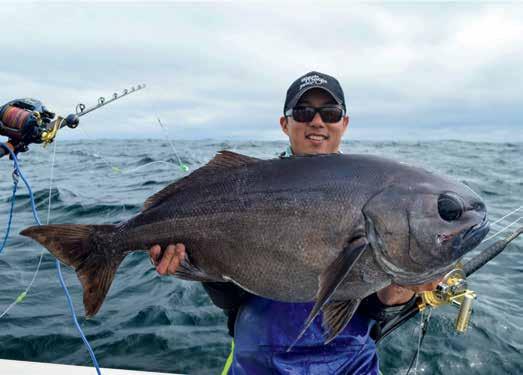
Blue eye is an amazing table fish that improves with dry ageing.
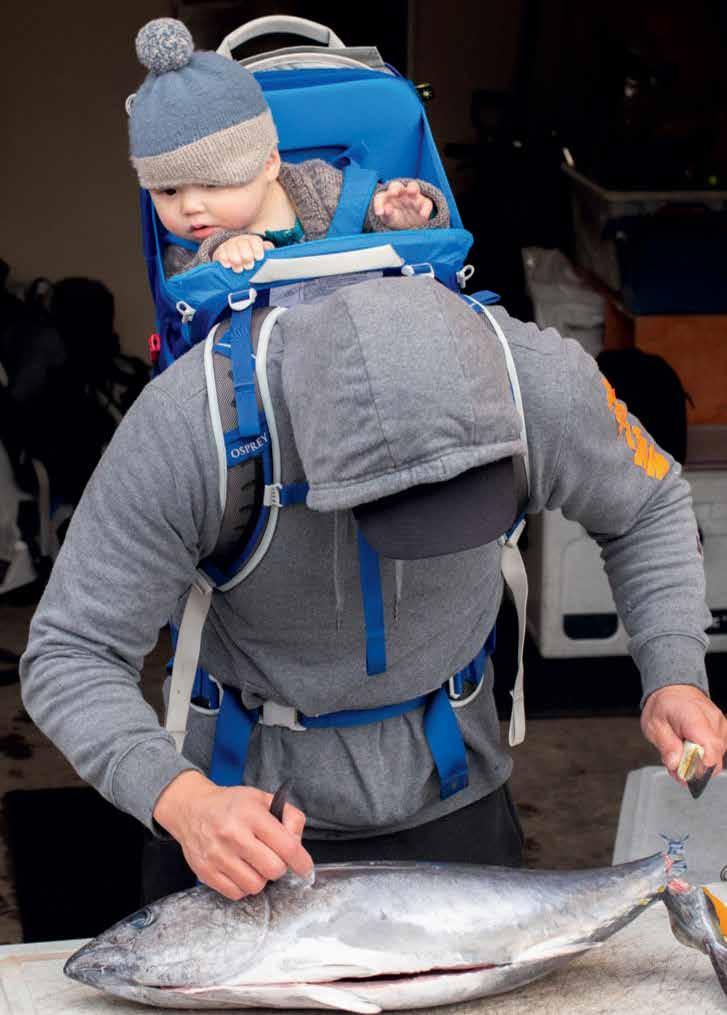
Invest in a good knife, a good sharpener and learn how to sharpen it. It’s a crucial part of the process
a plate or a container and left for a few days. If fish is left in its own liquid for even a short period, it accelerates decomposition and produces that familiar “fishy” smell people try to avoid. If you try to hang the fillet to dry age you will be limited to a just a few days, as the exposed flesh will end up drying to the point it will end up being tough and hard, like jerky.
Keeping the fish intact avoids all of this and allows the aging process to work as intended.
Setting Up at Home
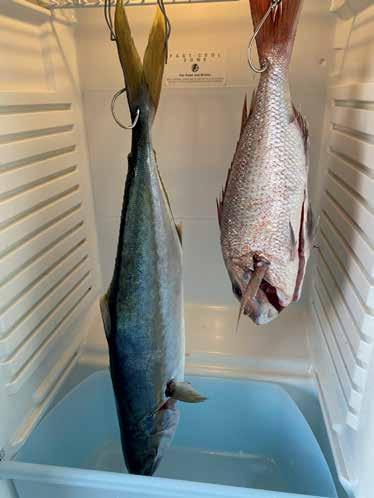
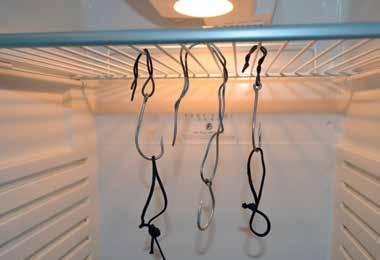
A standard upright fridge can easily be converted into a dry ageing cabinet. By removing most of the shelves and leaving a top rack for hanging, you create a simple and effective setup. Fish can be hung upside down by the tail using either a wire hanging hook or a loop of twine. I’ve made my own crude hanging hooks using fencing wire and conventional fish hooks. Smaller fish with strong tail wrists and thick skin can be hooked directly, while heavier fish species or fish with thin tail wrists are better suited to being lassoed to prevent
tearing. Before hanging, the fish should be thoroughly cleaned. The gills and guts must be removed, the cavity carefully wiped dry, and the exterior patted down to remove excess moisture. If you plan to eat the skin, scaling should be done beforehand.
Once hung, the fish should not be touching any surfaces, however if the head is resting on the ground its not a deal breaker. This allows air to circulate freely and prevents moisture from collecting. Placing a tray or bucket underneath will catch any liquid that drains during the process.
Temperature is crucial—ideally, the fridge should sit at or below 2°C. Under these conditions, most fish can be aged for three to five days.
During this time, the outside will begin to dry and firm up, sometimes appearing slightly shrivelled. While it might look unappealing, this is exactly what you want. If you decide you want a taste test or want to cook up a portion of the fish before the dry aging process is complete, there is no harm in cutting a section
away from the frame, but leave the remaining fish to continue aging.
Working with Larger Fish
When dealing with larger species that won’t fit in a standard fridge, a cool room becomes necessary. I am lucky enough to have access to a walk-in cool room through a friend, along with a forklift for easy transportation into it! With enough space and proper temperature control, even large fish like barrel bluefin tuna or swordfish can be dry aged whole. I have managed to dry age whole swordfish and bluefin tuna up to 160kg in weight.
The Payoff
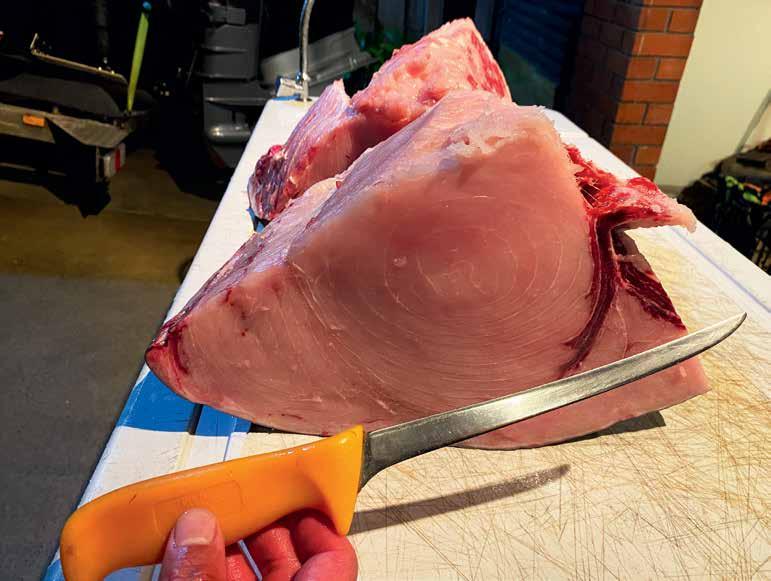
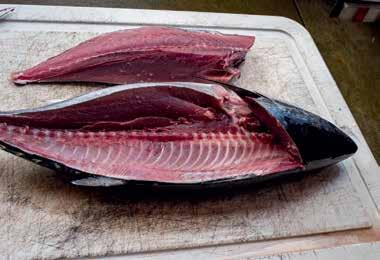
Once the aging period is complete, the fish is ready to be processed. Cutting through the dry outer layer should reveal firm, moist flesh beneath—clean, vibrant, and highly presentable.
The improvement in both flavour and texture is immediate, whether the fish is eaten raw or cooked.
There is one rule here that cannot be ignored: never wash the fillets
Introducing water at this stage undermines the entire process by promoting bacterial growth, accelerating oxidation, and dulling both flavour and appearance.
If any blood or residue is present, it’s best removed with paper towel or gently scraped away with a knife.
Storing the Finished Product
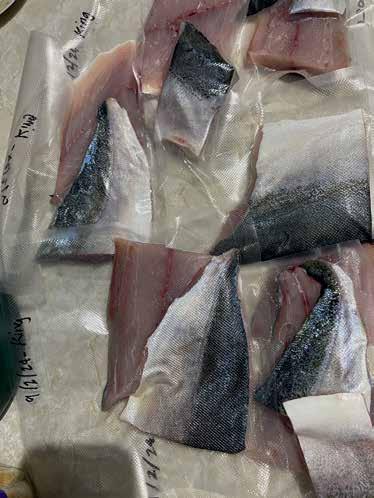
Fresh portions are best kept in the fridge uncovered or lightly protected, allowing them to remain dry. Placing the fish skin-side down on a wire rack, with paper towel underneath, helps manage any residual moisture and maintains quality for several more days.
For longer storage, vacuum sealing portions before freezing preserves both texture and flavour remarkably well for most fish species.
Best Species to Try
While the technique works well across many types of fish, it is particularly effective with species such as tuna, kingfish, mackerel, snapper, barramundi, and trevally.
A Different Way to Think About Fish
Dry aging challenges the long-held belief that fish must be eaten as soon as possible. With the right handling and conditions, allowing time becomes an advantage rather than a risk. It’s a method that not only improves the final product but also makes the entire process—from catch to plate—more practical and rewarding.
Teach them young.
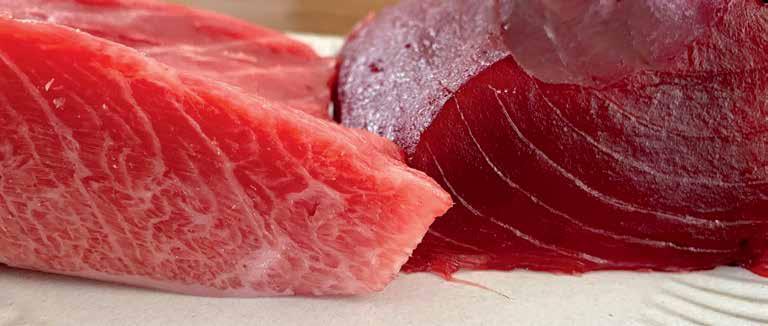
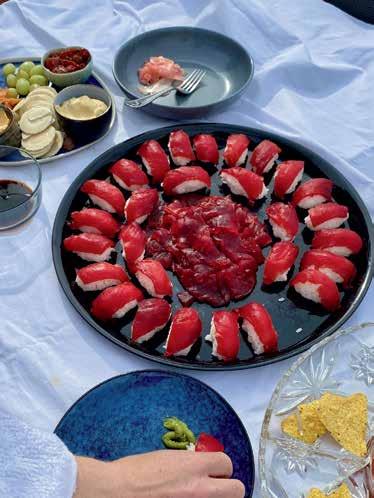
Dry aged flesh from a bluefin tuna takes on an amazing flavour.
A standard fridge with all the racks removed apart from the top rack is a great way for dry ageing fish up to 20kg in size. Bigger fish may need the heads removed to fit in it, but all other fish can/should be hung whole.
I’ve made some crude hanging hooks using fencing wire and standard fish hooks, as well as some twine loops for lassoing the tail if preferred. Older fridges with racks rather than glass shelves are required for hanging and can be picked up quite cheap on the second hand market.
Dry aging whole fish over 20kg in size poses its own set of logistical difficulties as far as finding a refrigerator big enough to hold it, although you can remove the head to save on space. Luckily for me, I have access to a walk in cool room which so far has worked well for hanging fish whole up to 160kg in size.
Dry aging works well on a wide range of fish species, but in particular bigger, fattier fish species like southern bluefin tuna are ideal. When you fillet a dry aged fish the meat should be moist and firm, with little to no blood or odour.
MADE IN JAPAN
NY TOUGH-FLEXX
High grade nylon leader for the ocean’s biggest fish.
50m | 130lb -240lb / 30m | 270lb -330lb
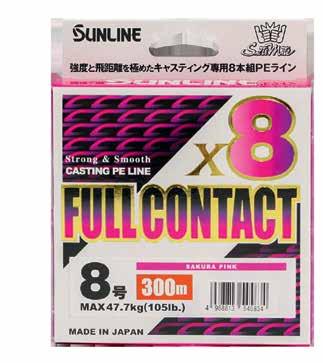
FULL CONTACT X8
8-strand PE line specially designed for casting with extreme strength and distance.
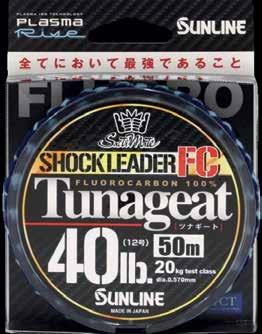
TUNAGEAT FC SHOCK LEADER
100% fluorocarbon shock leader for ultimate shock & abrasion resistance.
50m | 14lb - 50lb / 30m | 60lb - 100lb
300m PE4 - PE12
Before the dry ageing process starts, all fish captured should be treated well to ensure the best possible condition of the meat. This means careful handling, dispatching the fish quickly and then bled, gutted, and kept cold from the moment of capture.
Dry aging fish greatly improves the flavour , texture, taste, and even the presentation of the meat, especially when eating raw as sashimi or any sushi-related dishes.
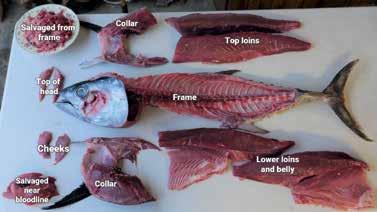
When harvesting fish, the goal should be to use as much of the fish as possible. The loins, belly, collars, cheeks and meat left on the frame are all valuable eating, and with a quality sharp knife you can recover far more than just the main fillets.
Dry aged fish is not just a benefit when eating fish raw it greatly improves the shelf life of the meat which is great for either cooking the fish fresh or for vacuum sealing for consumption at a later date.
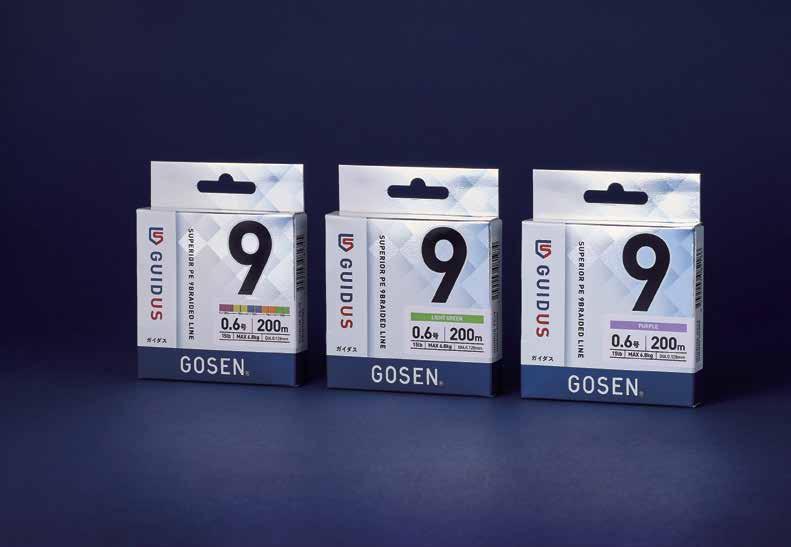
Premium Japanese braid engineered for anglers demanding maximum performance across a wide range of inshore fishing applications.
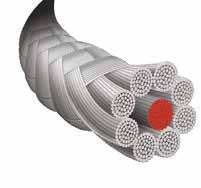
• Advanced 9-strand construction with a core strand and outer 8-strand shell
• Smooth, round profile for longer casts and reduced guide friction
• Available in PE0.5 to PE4
• 150m, 200m and 300m spool options
• Colours: Light Green, Multi Colour and Purple sales@gladiatortackle.com.au
A SOUTHERN WINTER
Vic, Tas and SA still have plenty to offer if you’re prepared to rug up and fish smarter.
WORDS: KOSTA LINARDOS IMAGES: A FULL CREW
Are you a fisherman, or are you just someone who goes fishing when everything is easy? If you sit in the second camp, you can probably put this magazine down, find a doona, pour a hot chocolate and start scrolling holidays somewhere warm.
This one is for the anglers who don’t pack the boat away just because the temperature drops. The southern states do not stop producing fish in winter; you just need to work harder, dress smarter and accept that comfort isn’t always part of the deal. This is when the good anglers get separated from the casuals. The ramps are quieter, the fish are still there, the days feel earned and some of the best sessions happen when most people are hiding inside. Here’s a run through the species still worth chasing across Victoria, Tasmania and South Australia, with winter tactics that will keep you fishing instead of counting the days until spring. For more detailed how-to pieces on any of these species, jump on the Hooked Up website where we’ve covered them properly.
Snapper
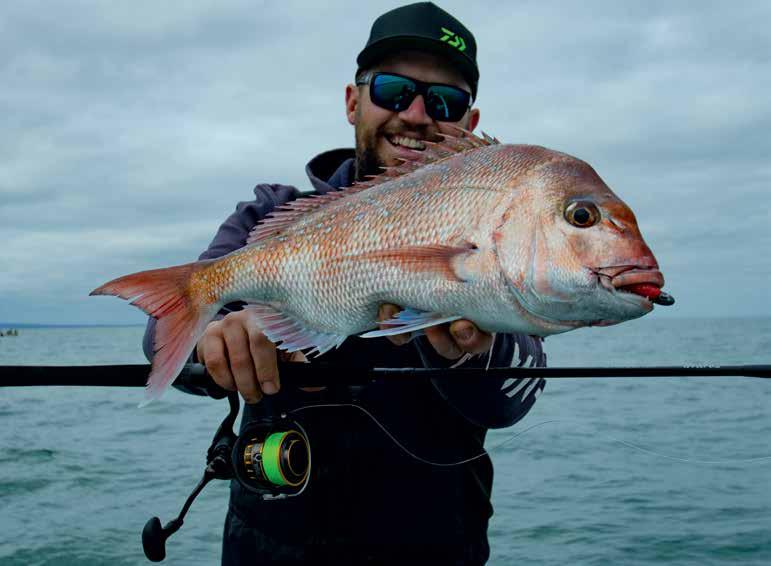
Peak snapper season has trained a whole generation of anglers to believe they only have a short window to catch a red. October, November and December are great, no argument there, but they are not the only months worth fishing. Snapper are still available through winter in Western Port, Port Phillip Bay and South Australia’s gulfs and metro grounds. While you won’t get those silly hot bites or the same numbers, you can still find proper fish. It’s also not true that winter is only about little pinkies on shallow reef. The bigger fish are still an option, but they demand better timing, better bait and patience. In winter they get moody, sit deeper and won’t chase rubbish bait around like an angry spring fish might. Fresh bait is critical. If you can’t catch it yourself, buy it from the market or a bait supplier you trust. Don’t waste a winter session with freezer-burnt bait.
The first adjustment is to stop being lazy with tides and moons. In winter, a “that’ll do” plan usually won’t do at all. Fish the incoming and outgoing tides, watch the moon phases and don’t be afraid to fish
into the dark. A few days either side of the new or full moon can be the difference between a dead session and one good bite that makes the whole trip. Dawn and dusk matter, too, so sleeping in because it’s cold or pulling the pick before last light is not helping you. Use your sounder properly. Don’t just drop the anchor where you caught them last November and hope history repeats. Find bait, find marks and put your baits where the fish are now. Land-based snapper are possible through winter, particularly after a blow, but again, the same rules apply. Fish the windows, match the tides and make sure you’re giving yourself the best chance rather than just turning up and hoping.
Because the fish can be slower and more cautious in cold water, you can miss bites if you fish the same way you do in peak season. They might mouth a bait, move off slowly or sit there without really eating it. Free spool is your friend. A baitrunner style reel is ideal, but an open bail arm works if you’re paying attention. I’d also put the circle hooks away for this fishing and run snelled suicide hooks, then be patient enough to let the fish
Winter snapper are still there for anglers prepared to fish the right windows, move often and stay patient.
move off before striking. Don’t swing the moment the rod tip bumps, because the bait may just be sitting in its mouth. Going lighter on leader can also be a big help, so try dropping to 25lb fluorocarbon.
Whiting
Whiting are one of the best winter options across the south, with Port Phillip, Western Port, South Australia’s gulfs and plenty of sheltered coastal grounds producing good fish and good numbers.
Unlike snapper, you don’t always need a horrible early start, although you still need to take tides seriously. A berley cage under the boat is essential if you want to bring fish to you and keep them interested. Fresh squid, pipis and mussels will always make life easier than tired bait, and you want to be casting onto good weedy ground or the edges of it. Don’t sit there for an hour telling yourself they’ll come. If nothing happens after 25 minutes, move. If they bite and then shut down, move again or adjust. Winter whiting windows can be short, so have different sinker sizes ready and change with depth and current. The angler who constantly adjusts rigs and anchor position usually out-fishes the one waiting for luck.
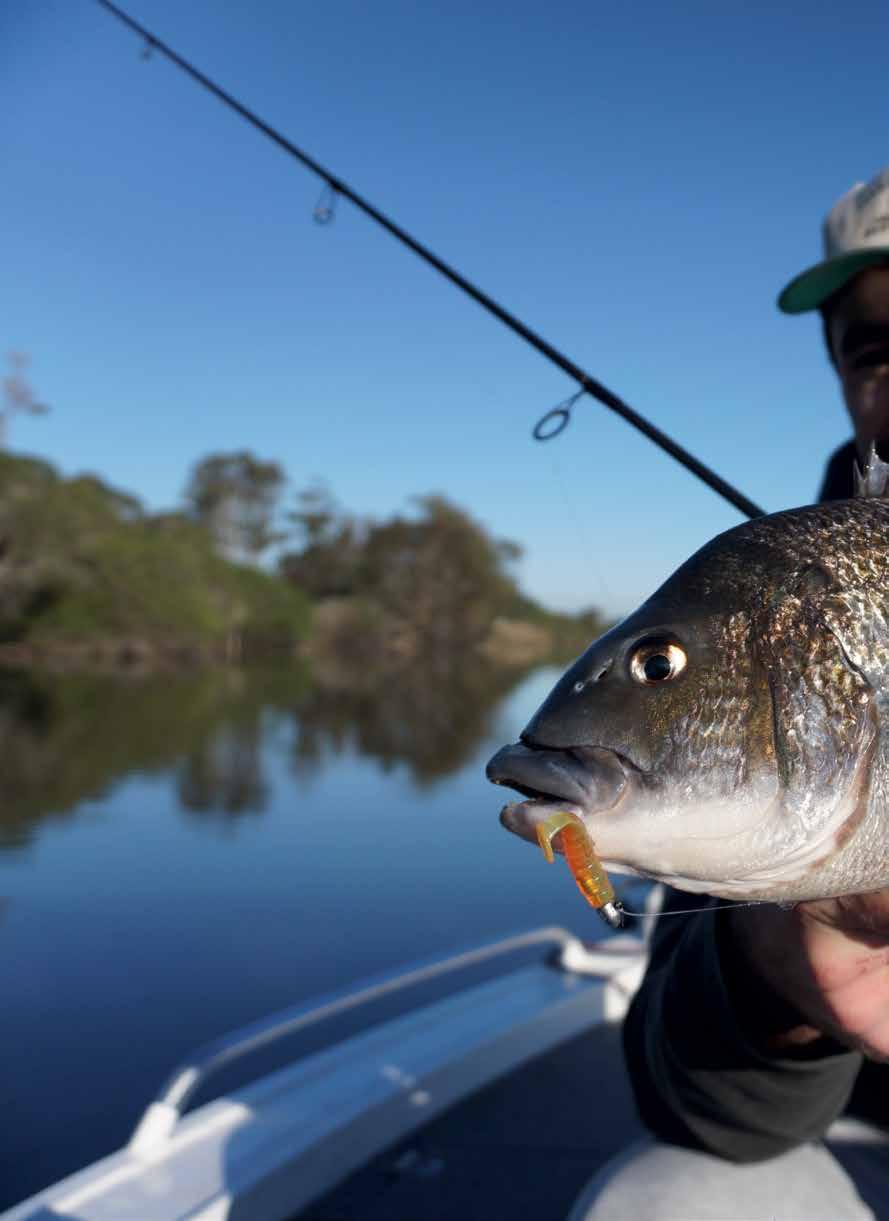
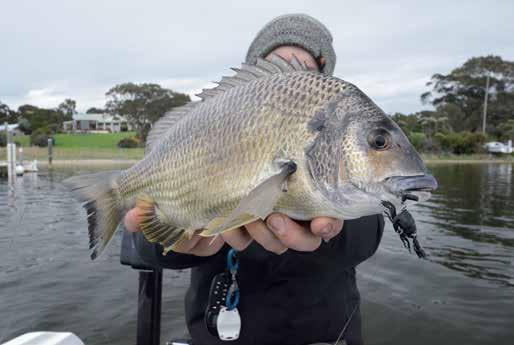
Bream/Estuary Perch
Heading for a winter weekend on the southern estuaries is still one of the better ways to get away and find fish. Victoria, Tasmania and South Australia have amazing estuary systems that fish well if you slow down and read the water. You can’t always fish them like you would in summer. A lot of fish move
away from the flats and settle into deeper water, so vibes, soft plastics and deep diving hard-bodies become the tools to lean on. Dropping leader size makes a big difference. In winter I rarely go heavier than 6lb fluorocarbon for this style of fishing, and at times I’ll go lighter again. Use your sounder to find fish holding over deeper weed, and if you have side imaging, use it to pick apart snags and edges where bream will sit tight. if you’re fishing snags, bump up the leader but otherwise keep it light.
The bonus with getting away from major cities is that winter accommodation is usually easier and cheaper, and the drive or ferry trip can feel like part of the adventure. The systems are beautiful, the sport fishing is excellent and, if you have
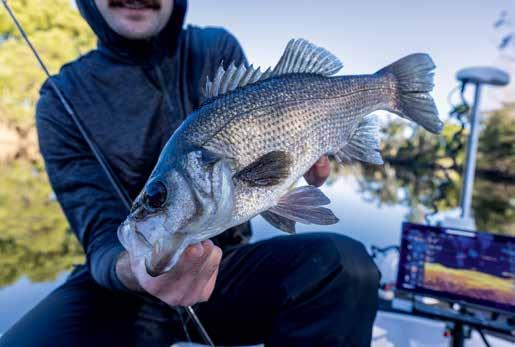
Perch often sit deeper and tighter to structure so dont be afraid to lose a few lures.
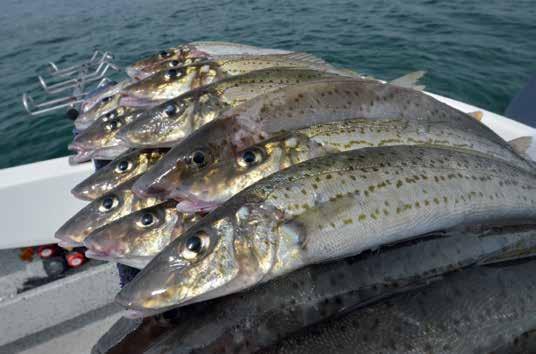
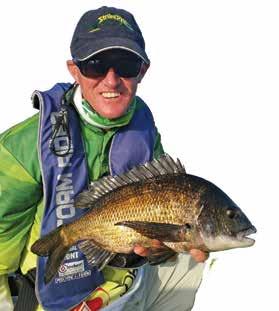
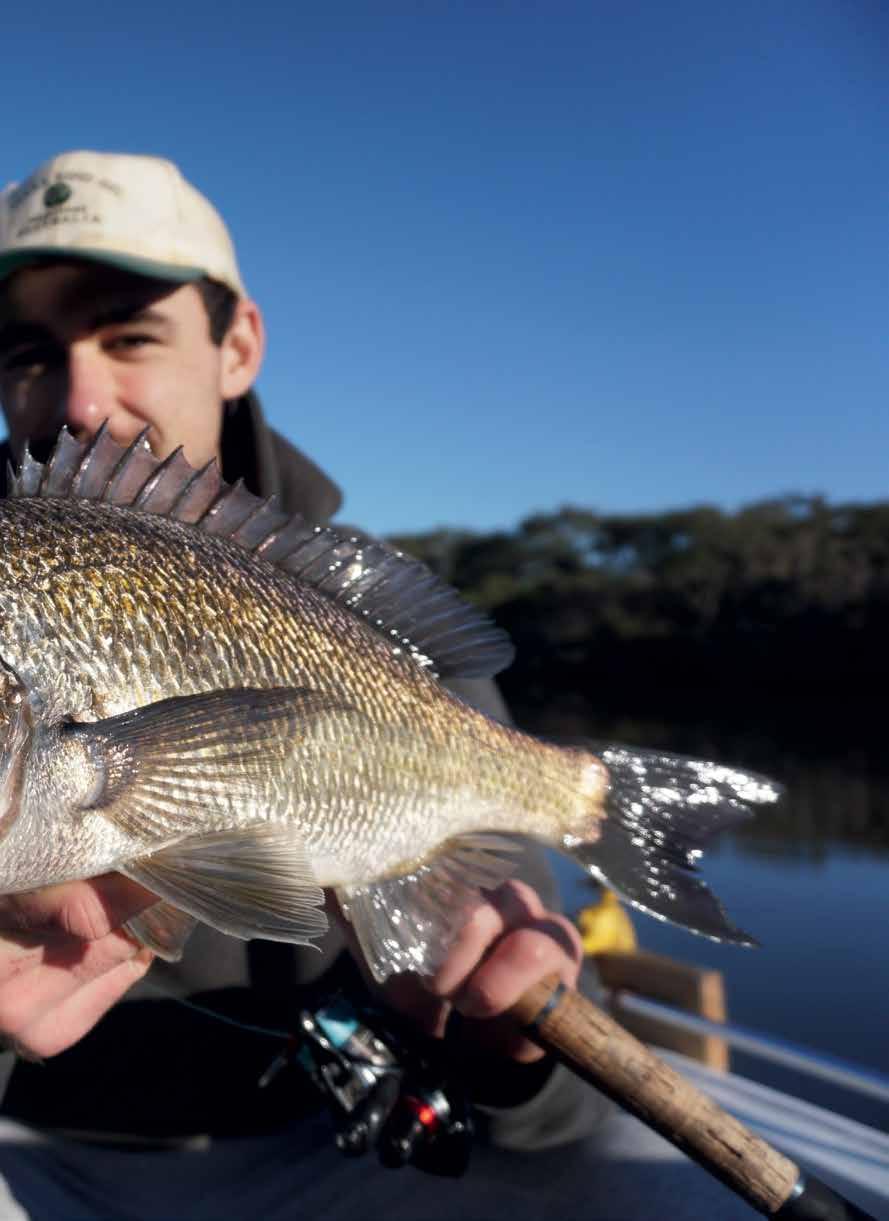
Whiting are often bigger and in great numbers through winter.
kids with you, there is plenty of simple bait fishing to keep them busy. They also offer a heap of land-based options.
Garfish
They might not pull like a kingfish, but garfish are excellent eating and a perfect winter target when you want a feed without making life too hard. One of the biggest mistakes anglers make is fishing too deep or too far from the edge. Gars often hold in big numbers close to shore, which means land-based anglers can sometimes embarrass boats. If it looks like squid and whiting country, especially broken weed with clean sand nearby, there’s every chance gars will be nearby.
Fish light, run a steady berley trail and use a nice long leader. In the clear winter water, stealth and presentation matter, so don’t go clumsy. If you can see fish or know they’re in the trail but they won’t commit, slowly draw the float back toward you. That tiny bit of movement is often enough to switch them on.
Trout
The rivers might be closed in some areas, but that is not a reason to forget about trout. Victoria and Tasmania both have outstanding lake fishing, and South Australia has stocked water and cool country options to keep keen anglers interested. Winter can actually be one of the better times to chase trout if you dress properly and stop whinging about your hands. You can walk the banks and cast lures, and that will catch fish, but my winter preference is to troll. Pack some food, bring a thermos, buy some Tassie
Devils and Wonder Wobblers, spread them behind the boat and enjoy it. It’s a relaxed way to cover water, find active edges and produce good fish if you stay patient and keep checking lure depth.
Squid
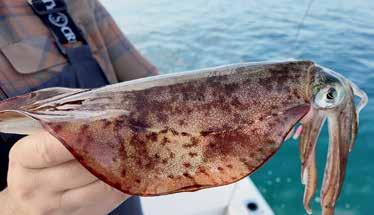
Squid are available right through winter across the south, inshore, offshore and through the major bays and sheltered coastal waters. Western Port is generally the more consistent Victorian option for big models, although you need to deal with hard-running tide, kelp, wind and fast water. Port Phillip remains a brilliant squid fishery year-round and winter doesn’t change that, while Tasmania and South Australia both have exceptional clear-water squid options when weather allows. You’ll find them along inshore reefs, weed beds and broken ground,
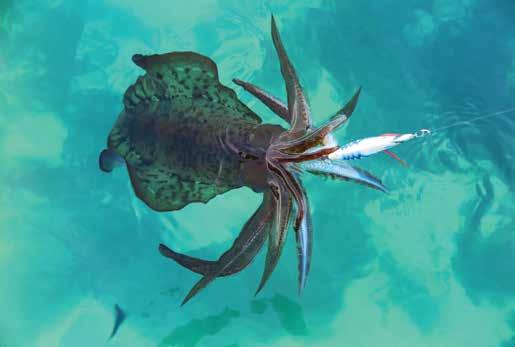
Squid remain accessible through winter with great numbers about.
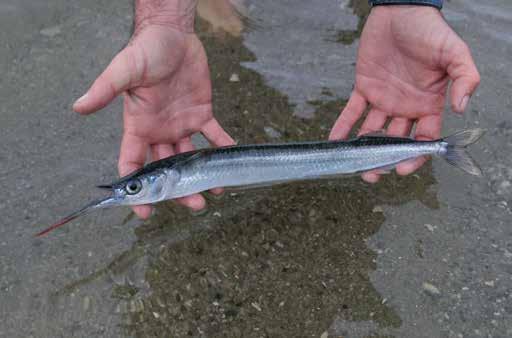
Garfish are a simple, reliable winter target and an amazing table fish.
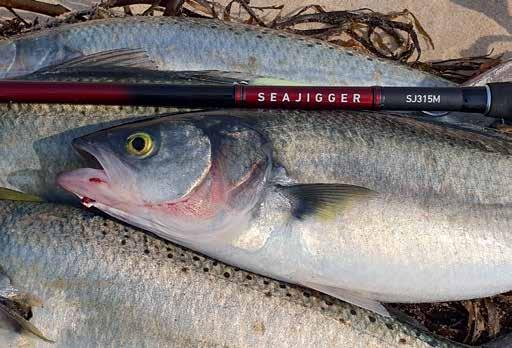
Australian salmon are a prime winter target with this season being exceptional.
so keep moving until you hit a patch. Don’t buy into the idea that winter only produces small squid either. If you want the bigger models, head offshore and fish the better weed beds and reef and don’t be shy with jig size. A 3.5, 4.0 or even 4.5 jig can be exactly what a big squid wants.
Australian Salmon
Australian salmon are a staple of southern winter fishing for good reason. In the bays and offshore they can appear at any time, pushing bait to the surface and turning the water white. When they’re fired up, you can almost throw a spanner into the boil and get hit, but if they’re fussy or boat-shy, keep the boat away and make long casts. Trolling can work if you know fish are in the area, but don’t tow lures around blindly for hours because you heard someone caught one last week.
Piers, jetties and breakwalls around the bays are all worth a look for landbased salmon, but the surf beaches are where this winter fishery really shines. From the Victorian coast through South Australia and around Tasmania, there is a huge run of ocean beach that produces salmon through the colder months, and some of them can be proper shoulderstretchers.
Bait and a surf popper will catch fish, but
keep moving if you don’t get a bite fairly quickly. Casting metal slugs is more active, more fun and often more effective because you can walk the beach, cover water and stay with the schools.
Southern Bluefin Tuna
Southern bluefin tuna are a great reason to stay switched on through winter in the southern states, and this year has been an absolute standout. If there was ever a season to make the effort, watch the reports and get yourself in position, this is it. You don’t always need a giant boat, a tower and a rocket launcher full of Tiagras to be in the game either. When the fish push close and the weather lines up, plenty of anglers in well-set-up trailer boats can get a genuine shot.
Portland, Port MacDonnell, the west coast of Tasmania and plenty of southern ports can suddenly become very interesting when the tuna are within reach. There have been good numbers of school fish around, the ever-present chance of a barrel, and this season has also produced plenty of mid-sized fish in that 50–80kg range, which are serious tuna by anyone’s measure. They are big enough to test gear, crews and boat handling, but still realistic targets for anglers who are prepared.
Trolling remains the most reliable way to cover water and find fish, whether you’re pulling skirted lures, hardbodies or a mixed spread. However, there are also times when casting becomes a real option, especially when tuna are feeding high, pushing bait or showing on the surface. Stickbaits, poppers, metals and sinking minnows all have their place when the fish are up and active. The key is to stay ready. Watch reports, talk to people you trust and pay attention to the bite windows. Don’t under-gun yourself or cut corners with knots, leaders, hooks or terminals. Even school fish will punish poor gear, and a surprise bigger fish can turn a casual troll into a long, brutal fight very quickly..
Get on the Water
Yes, winter is cold. Yes, you might get wet. No, that is not an excuse to stop fishing. Victoria, Tasmania and South Australia have ridiculous winter fishing on offer, across salt and freshwater, and the summer chaos is gone. No Christmas parties, no barbecues every weekend and fewer people clogging the ramps. Put on the right gear, pack a spare jumper, pick the right windows and go fishing.
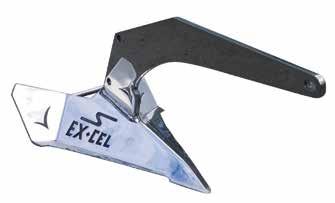
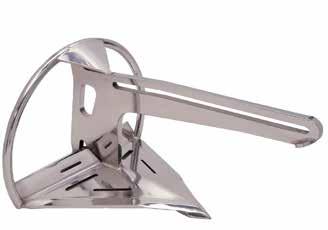
TWO WORLD LEADING ANCHOR DESIGNS
SUPER SARCA
SARCA EXCEL
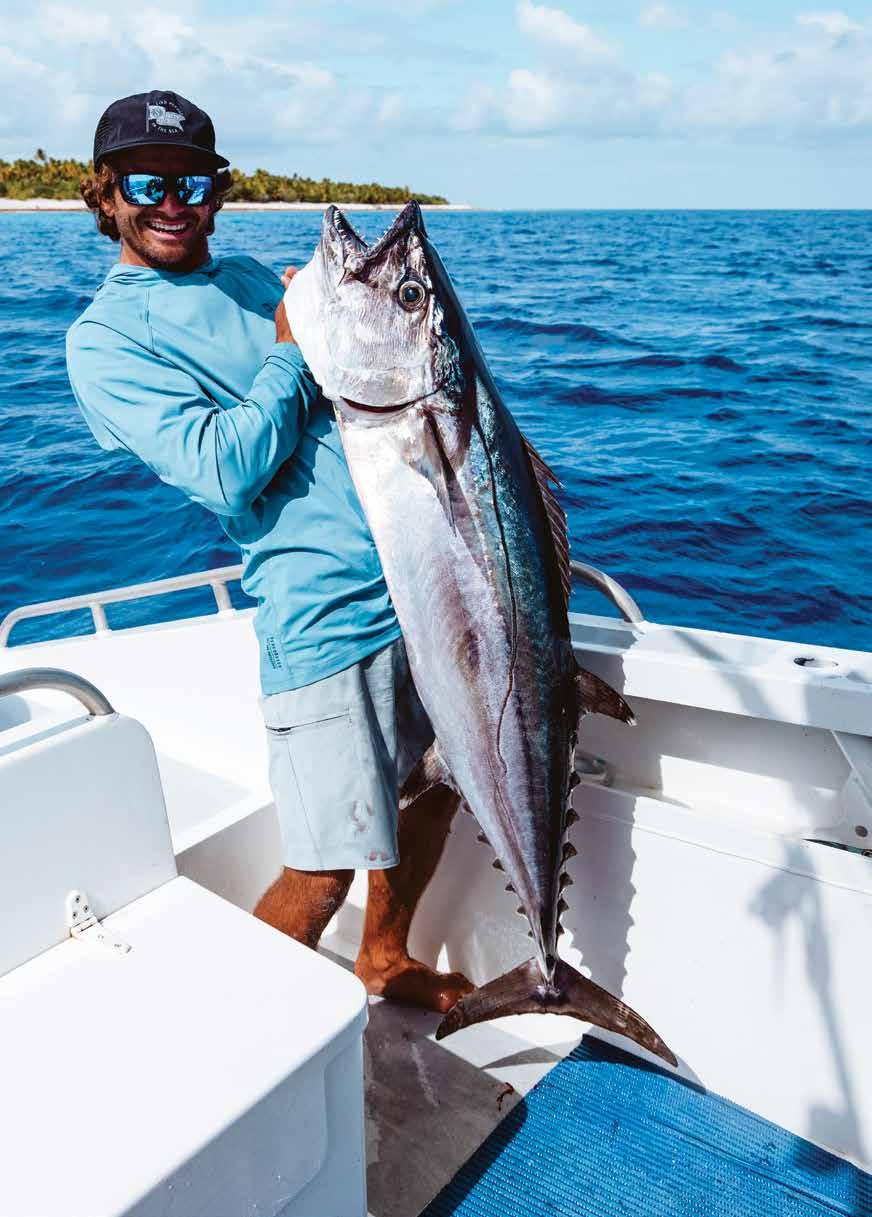
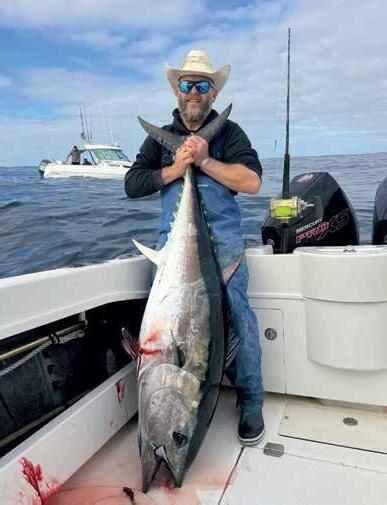
Southern bluefin have been a standout this season, with school fish, mid-sized models and genuine barrel chances all in the mix.
When Kosta (Hooked Up’s editor) handed me a McLures Mogul 9in and told me to give it a run, I will admit I did not know a great deal about the brand. I had not asked what it cost, and Kosta never mentioned the price. I just looked at the lure, gave it the usual once-over, and thought: this thing looks pretty good. That is often how it starts with new gear. You do not always know the story behind it. You just look at the shape, the finish, the rigging potential and the overall build, then decide whether it deserves a spot in the spread. On this occasion I was heading out chasing barrel tuna, so it was not exactly a casual test. When you are launching out of Port Phillip Heads, burning fuel in an Edencraft 255 Formula and putting a full day into looking for big southern bluefin, there is no point cutting corners. I have always believed that if you are going to spend serious money getting offshore, you may as well run tackle
you trust. Cheap gear that does not swim properly, does not hold together, or does not give you confidence has no place behind the boat when the fish of the season might be the next bite. The funny thing with the McLures Mogul, though, is that while it comes in at a very good price for the quality (at $80 it’s about $30 less than comparable models), it did not look or behave like a cheaper lure. It looked like something that belonged in the spread.
The plan for the day was to run a mix of skirts and hardbodies while searching for tuna. We had a five-lure spread out, and the other lures were all well-known names. Big brands. Proven brands. Some of them were almost twice the purchase price of the McLures. The Mogul was not being given an easy test among unknown competition. It was swimming alongside gear that had already earned its reputation.
Early in the day we found some fish,
but after that things went quiet. Very quiet. We covered ground, moved a fair distance away from Port Phillip Heads, and kept working. Anyone who has spent enough time tuna fishing knows that feeling. You can be around life one minute and then spend hours wondering whether you are in the wrong water, running the wrong direction, or just waiting for the ocean to give you another chance.
Eventually, we started heading back. By that stage we were pretty much straight out the front of the Heads, maybe only a kilometre or so out, and almost ready to call it. Instead of pulling the gear in straight away, we decided to blind troll our way back. It was one of those “we may as well” decisions. No great strategy. No hot bite. Just lures in the water for the final run home. About ten minutes later, the Mogul got eaten.
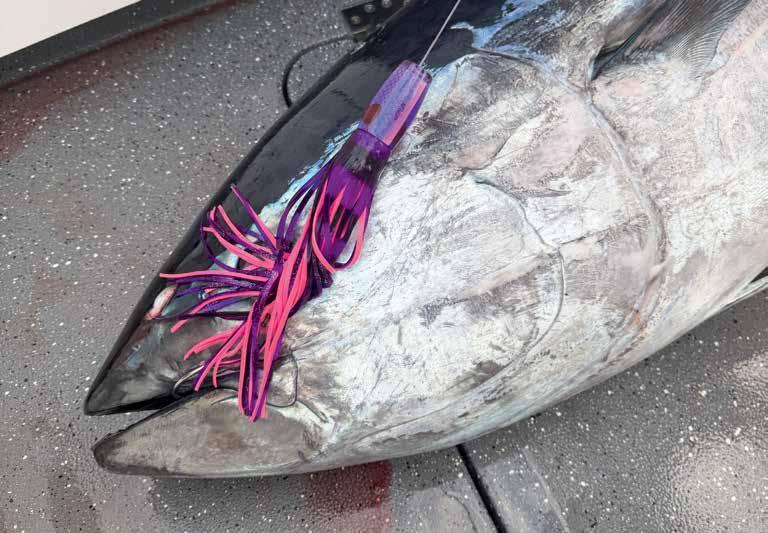
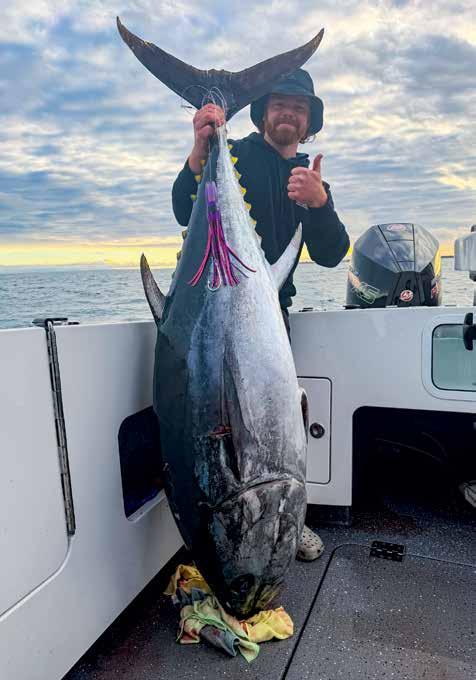
The fish was a proper barrel, estimated
at around 110 kilos, and the most interesting part was not just that it ate the Mogul. It was that it picked that lure out of the spread. There were four other lures back there, all proven, all from recognised brands, and the tuna chose the Mogul..
That says something.
This season there had been a lot of talk about heavy bullet-style lures for tuna. Lures without a huge amount of action, but with plenty of weight and the ability to be trolled fast. They have their place, and plenty of people have confidence in them.
The Mogul is a more traditional style of lure. It has a deep-running, heavy cup-faced head, four jet holes to create a strong bubble trail, and a skirted profile that gives it a lot of presence in the water.
We were trolling at around six knots, so not especially fast, and the lure swam beautifully. That was one of the things that impressed me most. It was not erratic in a bad way. It held its position, worked cleanly, pushed water and left a strong bubble trail. Some lures look great in your hand but fall apart once they are in the water. This one did the opposite. The more I watched it, the more confidence I had in it.
The setup was not a traditional tuna trolling outfit either. I was running a Shimano Talica 25 with 24 kilo monofilament topshotted over 80 pound braid, finished with 150 pound leader. It is closer to my marlin gear than a dedicated tuna trolling setup, but it handled the fish fine. Experience helps, but the gear still has to do its job, and in this case everything came together. The lure itself is a serious blue-water offering. The Mogul measures 11.5 inches overall, carries a 9 inch skirt and weighs 165
grams. It has a resin head, Red Crystal 3D eyes, UV over-skirts and McLures’ Luminite glow under-skirts. Those features all sound good on paper, but the important part is what happens behind the boat. On the day, it ran properly, looked right, and then got picked out by a big tuna.
That is the only test that really matters. What impressed me most was the valueto-performance side of it. This was not the most expensive lure in the spread. It was not the best-known name in the spread. But when a 110 kilo tuna had five options, it chose the Mogul. That does not mean it will always be the magic lure, because fishing does not work that way, but it absolutely earned its spot.
I will definitely be running it again.
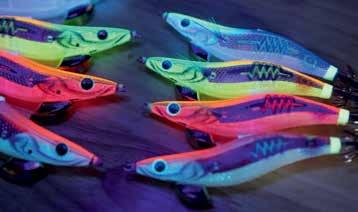
YAMASHITA EGI-OH SEARCH SHALLOW
Words & Images: Kosta Linardos | Distributed by: EJ Todd| Web: ejtodd.com.au
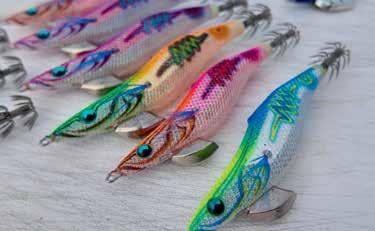
I have been using Yamashita’s EGI-OH Search range since it first came out, and I still rate it as one of the best squid jig series ever made. It has always had a way of finding squid when other jigs are not getting the same attention.
The appeal was simple. Yamashita built a jig that combined visual, sonic and action-based attraction in one package. The 490 Glow, tuned Search Rattle, good fall posture, strong darting action and later upgrades to bodies, colours and sinker designs kept the range evolving without losing what made it effective.
The latest shallow models are another interesting addition. The name “Shallow” will make many anglers think they are only for land-based use in skinny water. That is partly true. It sinks slower, hangs in the strike zone longer and lets you work the jig without constantly fouling the bottom.
That slower sink rate matters. Squid jigs are always a balance between water depth, current, drift speed, jig weight
and time in the zone. In fast current, a heavier jig is often better because it gets down and holds position. In slower current or shallower water, a lighter or shallow-tuned jig can look more natural. You will never perfectly match a prawn or baitfish, but you can get closer.
The shallow EGI-OH Search models weigh less and sink slower than the standard versions, so you have to fish them properly. From a boat, especially in Port Phillip Bay, you cannot just tie one on and expect it to work everywhere. In six, seven or eight metres with hard current, the jig may take too long to get down. In some cases, the boat will drift back over the jig before it reaches the bottom. And with squid fishing, the jig really needs to be getting to the bottom.
That does not make them shore-only jigs. After testing them properly, I think they are going to be a permanent part of my boat-based squid setup. The best use I found was not necessarily as my main casting jig, although they can be used that way in the right conditions. Where
they came into their own was sitting out the back as a trailing jig while I worked a more traditional jig with the drift.
If the current is not running too hard, the shallow jig will sink a metre or two, maybe three, and then hover and pulse behind the boat. It is not being ripped along or ploughing into the bottom. It is just sitting there, wobbling, flashing, rattling and giving off subtle appeal. On the day we tested them properly, that presentation was extremely effective.
We were fishing in around seven metres. The water was clear, the weather was stable, but the day was dull and overcast. We also had a fog whiteout. In those conditions, the UV Neon Bright body, 490 Glow, foil flash, Strobe Fin and 600Hz Search Rattle helped the jig stand out and pull squid in from a distance.
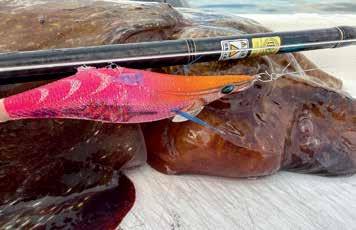
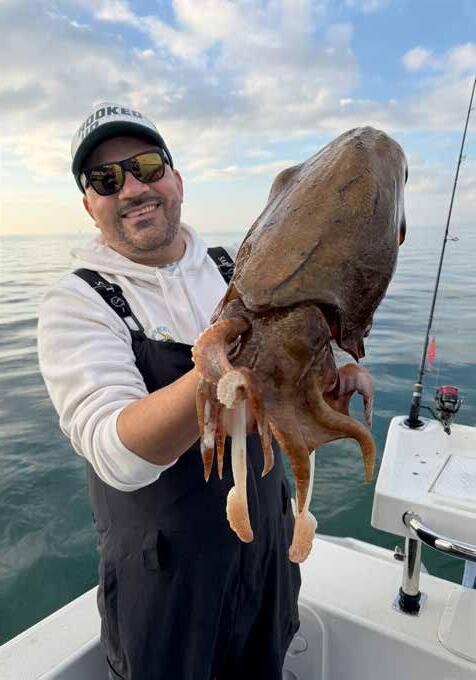
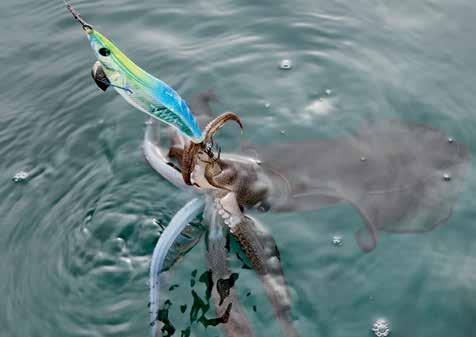
The results were hard to ignore. We caught around 15 or 16 squid for the session, and I reckon about 10 came on the EGI-OH Search Shallow models
trailing out the back. I was actively casting and working jigs in front of the boat, yet the shallow jigs behind us were doing most of the damage.
We caught solid squid, smaller squid and some big cuttlefish, which showed the appeal was not limited to one class of animal. They were simply finding the jig and committing to it.
The new Neon Bright bodies are a major part of the appeal. Yamashita has designed them around different UV reflection colours, with blue, green and red options to suit different conditions. Blue is strong in clear water, green suits dirtier or greener water, and red is excellent around low-light periods. Add the foil strip and Strobe Fin, and the jig gives off plenty of visual signal without looking clumsy.
The other thing Yamashita gets right is posture. These jigs sink beautifully. A jig that falls nose-down, rolls too much, spins or behaves unnaturally can lose its appeal quickly. The Search Shallow models fall with a balanced, controlled posture, and when left trailing behind the boat they have a really nice hovering presence. They look alive without being overworked.
For land-based anglers, they are an easy recommendation. If you are fishing shallow piers, weed beds, calm bays, reef edges or slow-current areas, these jigs give you more hang time and reduce snagging. They are especially useful when squid are following but not committing, because that slower fall gives them more time attack.
For boat anglers, they are more situational, but still valuable. I would happily use them in anything up to around eight metres, provided the current and drift speed allowed it. In deeper water, strong current or offshore areas where you are fishing 10, 12 or 15 metres, I would rather use a standard or deeper-sinking jig.
That is the biggest takeaway. The EGI-OH Search Shallow is not just a shallow-water land-based jig. It is a specialist tool, and when used in the right situation, it can be deadly. For land-based anglers, they are a must-have. For boat anglers fishing eight metres or less, they are absolutely worth carrying, especially as a trailing jig while another is being actively worked..