LIGHTEN UP
You’re probably fishing too heavy. BACK TO THE 80’S Cubing for bluefin tuna.
TESTED & REVIEWED
Lowrance Recon
TIMBER THUGS
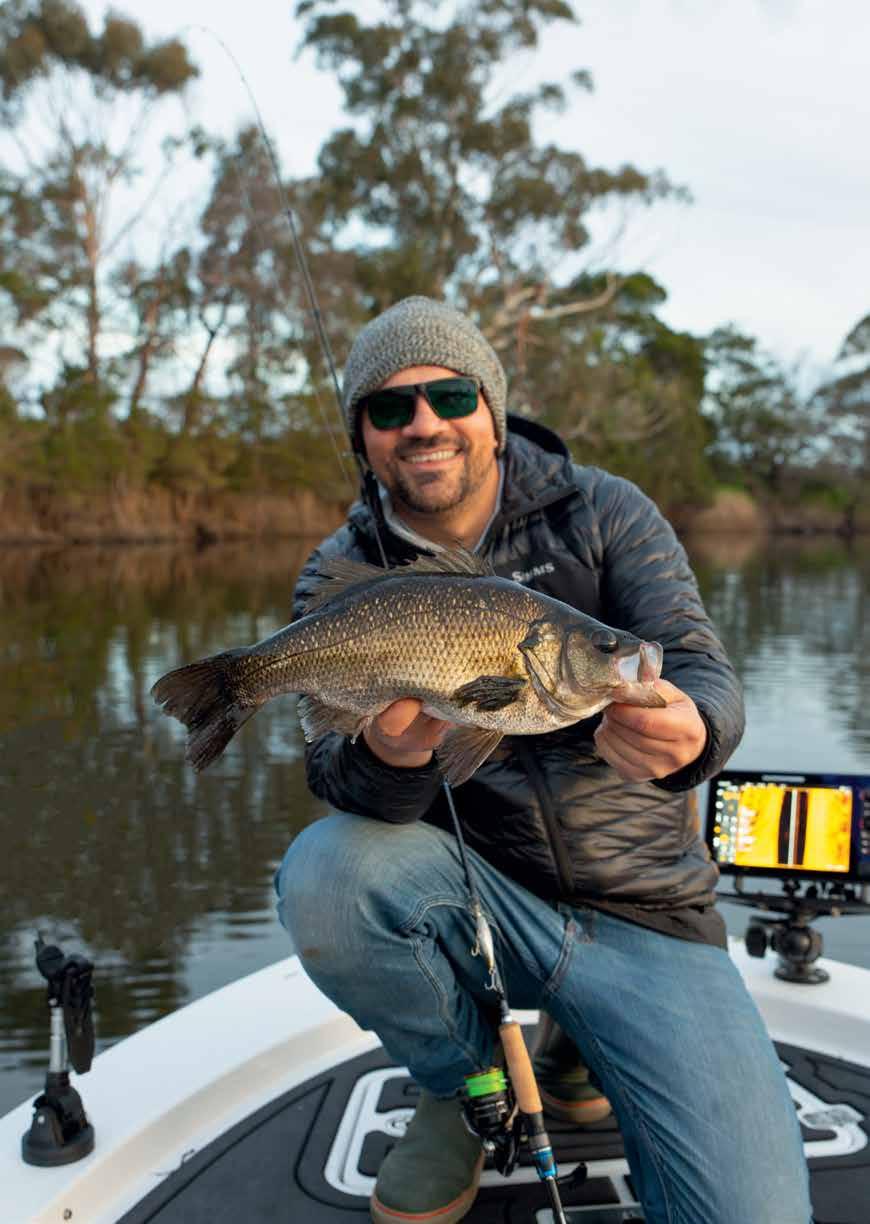
Big EPs and bream in structure are prime targets leading into winter.
FREE
LIGHTEN UP
You’re probably fishing too heavy. BACK TO THE 80’S Cubing for bluefin tuna.
TESTED & REVIEWED
Lowrance Recon
Big EPs and bream in structure are prime targets leading into winter.

[ Trou
• Dual bearing support to the pinion gear
• Smooth and quiet rotation
• High torque and power [

• Reduced diameter and weight

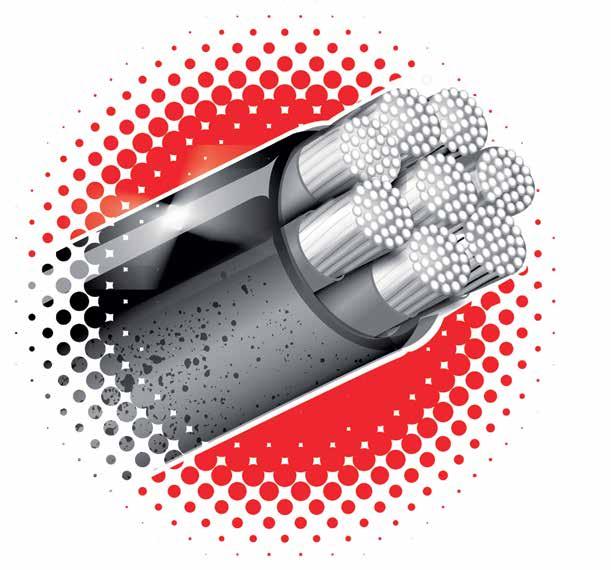
• 4-Strand braid
• Great for baitcasters
• Excellent knot strength
• Delivers the line smoothly.
• Hollow tubular design
• Strong Aluminium construction
• Low inertia start-up
• Highly responsive rotation

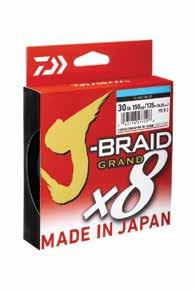
• 8-Strand braid

• New IZANAS material

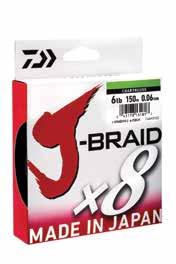
• 8-Strand braid
• Great for spinning reels
• Long casting

• One piece Aluminium construction
• Full metal body
• Increased gear diameter
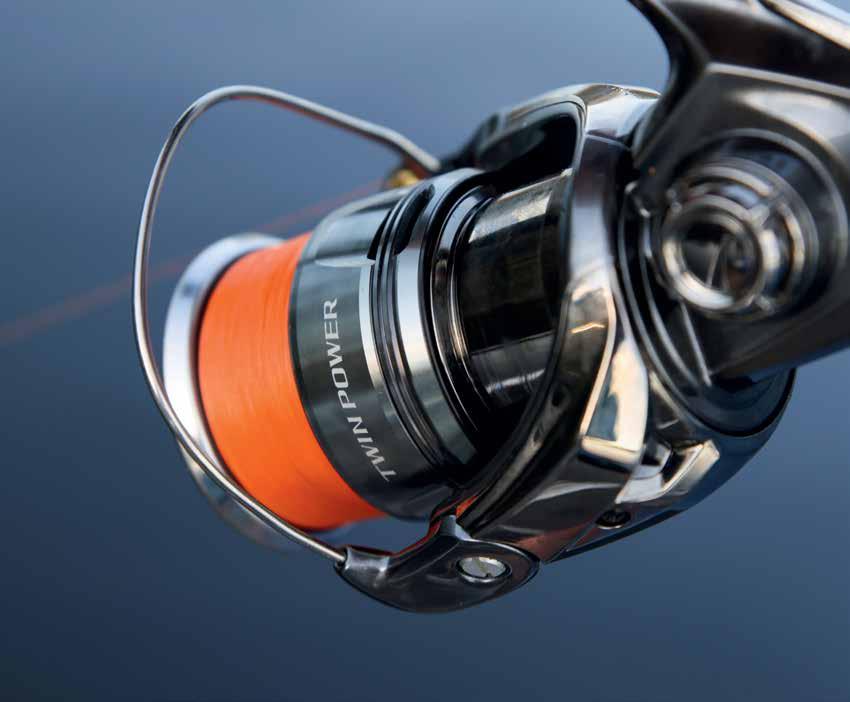
Built upon the formidable foundations of 24 CERTATE LT, the new 24 CERTATE HD features full Aluminium Construction to further strength and durability. AIRDRIVE DESIGN decreases winding resistance whilst maintaining power in the front unit. The new Aluminium




AIRDRIVE ROTOR is what sets it apart from 24 CERTATE LT, making the 26 CERTATE HD the ultimate HD light tackle reel to battle against Australia’s harsh conditions.
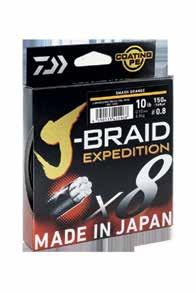
• New Coating PE technology


• 4-times more abrasion resistance

• Excellent knot strength

• High pitch weave construction


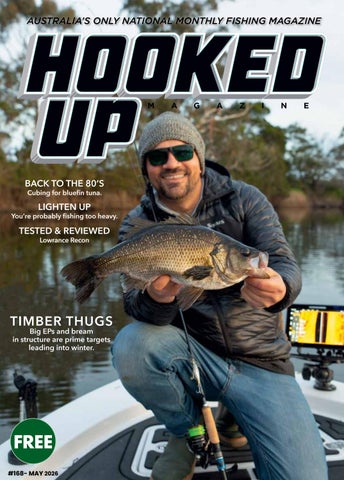
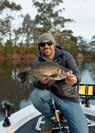
ON THE COVER: Kosta Linardos with a solid EP pulled from a thick snag.
Welcome to the May issue of Hooked Up Magazine.
We’re now well into late autumn, and the fishing is starting to change. The mornings are cooler, the crowds have thinned and the bite can take a little more thought. It’s a great time of year to slow down, refine your approach and pay attention to the little one percenters that make a difference.
This issue has a strong focus on fishing smarter as things get tougher. We look at cubing for southern bluefin tuna, an old-school technique that still works incredibly well when fish aren’t keen to chase lures, along with the small adjustments that can help you stay connected when the bite gets harder.
In the estuaries, we’re chasing timber thugs, with bream and estuary perch holding tight in the snags. It’s close-quarters fishing where good casts, the right gear and a bit of patience can make all the difference.
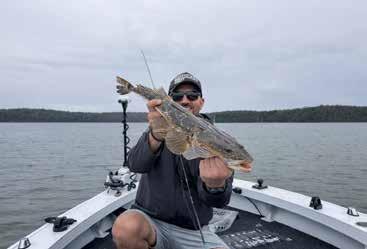
We also review the new Lowrance Recon electric motor, which I’ve been using around Mallacoota while chasing flathead and mulloway. Electric motors are now a huge part of modern lure fishing, and this one brings plenty to the table.
Hope you enjoy the issue.
Kosta Linardos- Editor In Chief
info@hookedup.com.au

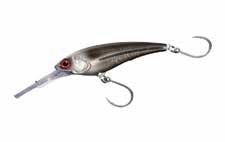
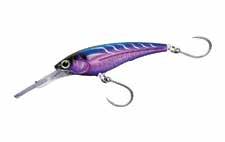
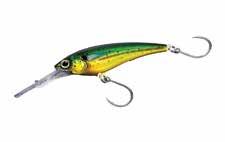
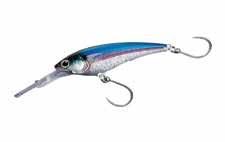

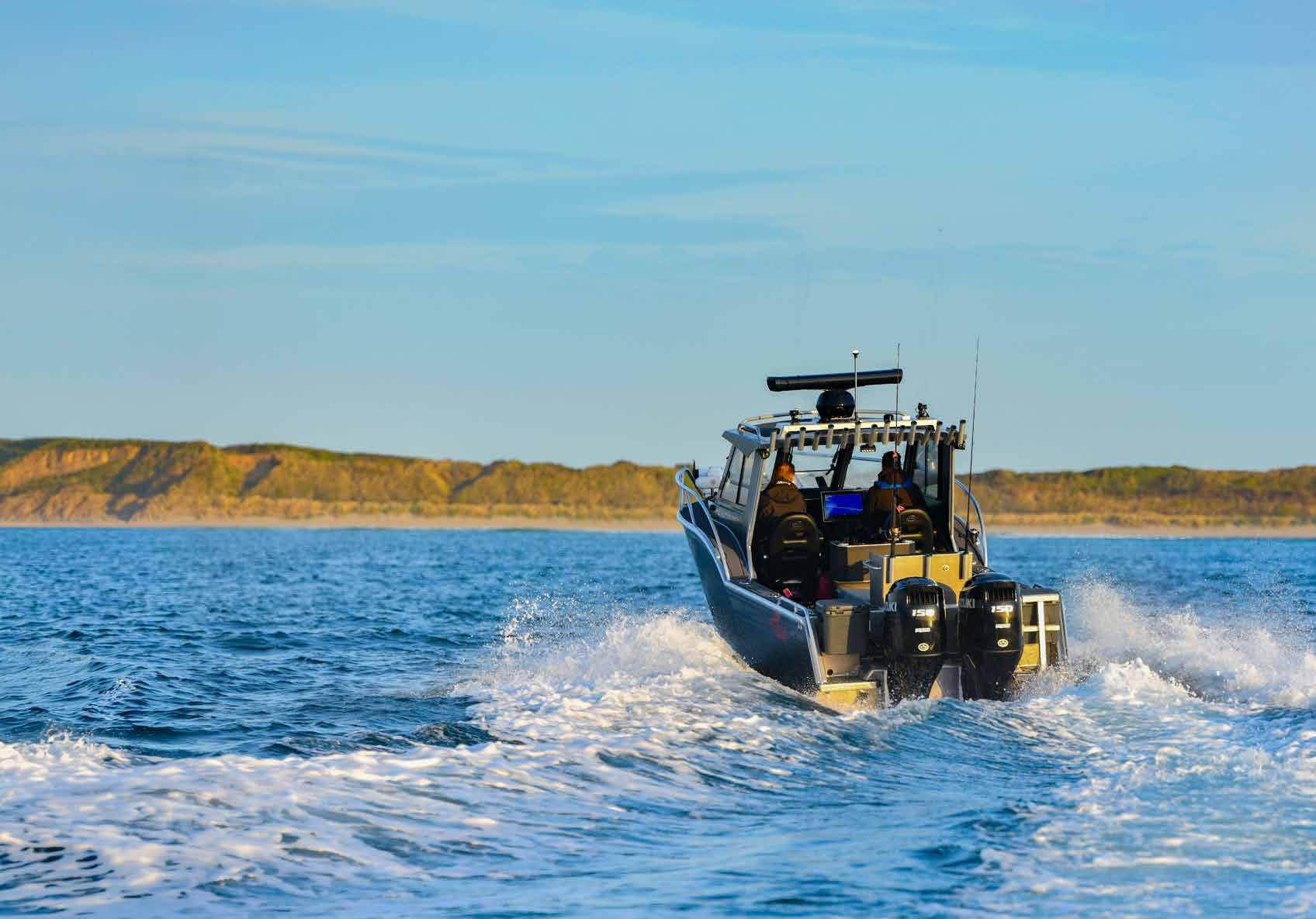
World-renowned reliability, fuel efficiency and cutting-edge innovation
Upgrade your current rig with the latest Suzuki power. Expertly matched & professionally installed.
Backed by a team that lives and breathes boating. Before, during and after the sale.
Experts in marine fitouts with high quality workmanship and expertise for your boat.
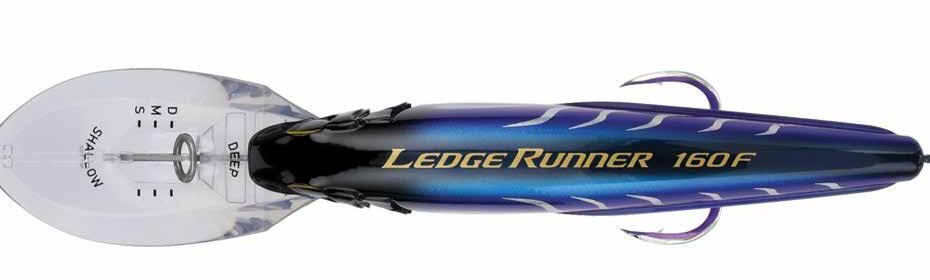
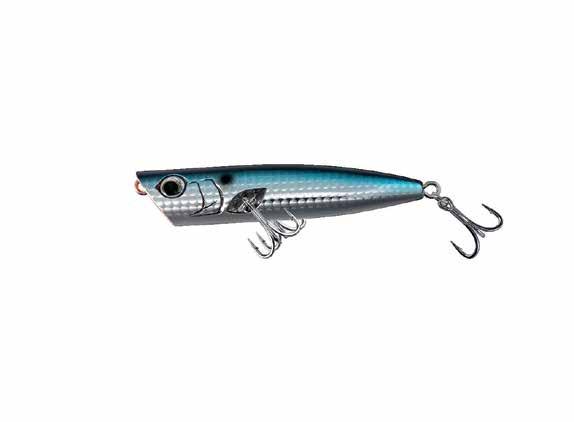
The Maria BIGRO SS95 is a topwater lure designed to reduce missed surface strikes in rough, wave-affected conditions. Instead of a traditional belly hook, it features Maria’s Claw Hook system with hooks positioned on both side flanks, keeping one hook close to vertical during the lure’s rolling action to improve hook-ups on surface bites. A slow-sinking, horizontal posture prevents the lure from skipping across the surface and helps it stay in the strike zone longer. On a straight retrieve, the BIGRO SS95 produces a controlled wobble and roll with no rod work required. A large internal steel ball and magnetic weight-transfer system provide excellent long-distance castability. Measuring 95 mm and weighing 18 gm, it is fitted with #6 trebles and available in glow and standard colours.
ejtodd.com.au
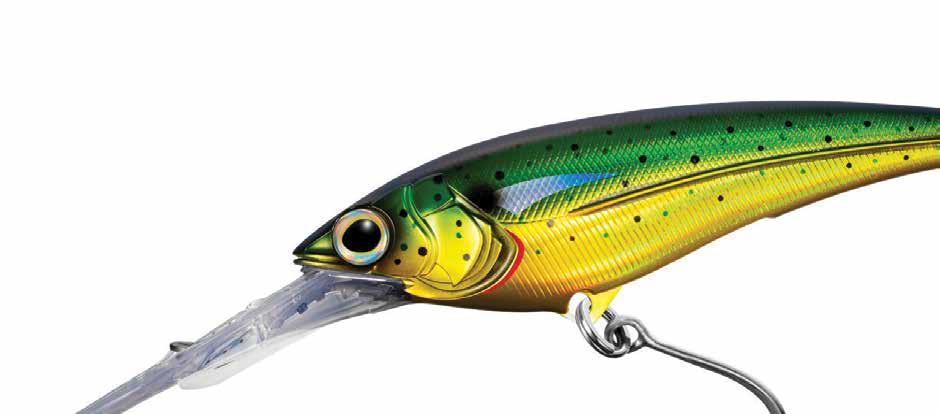
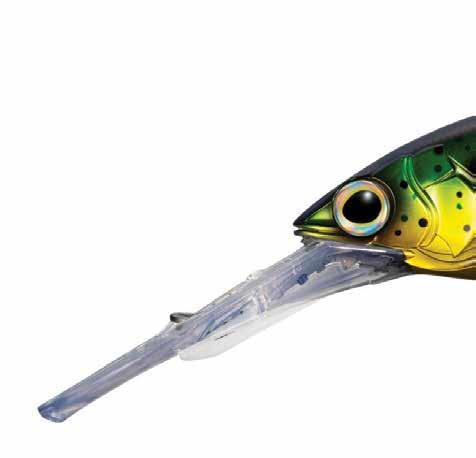
The HMKL Shad 65 is designed to perform in tough, highly pressured conditions, delivering a refined action with improved casting and stability compared to traditional shad plugs. Built to dive deeper while maintaining the same compact profile as the SR model, it reaches depths of up to around 3m on light line, making it ideal for working edges and deeper structure. The balanced design reduces rollouts and improves tracking, even when retrieved slowly or through light weed. It’s a smart option for anglers needing a small-profile crankbait that can reach fish holding deeper in clear or pressured water.
fishcraft.com.au



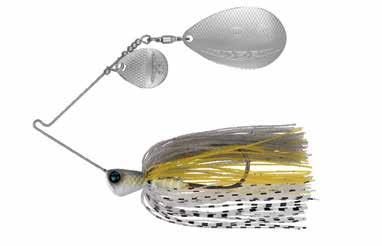
dirty or low-light conditions, offered in 3/8 oz and 1/2 oz sizes. The Steez Cover Chatter runs a thin high-frequency blade and fibre weed guard for snag resistance, with hand-tied skirts and sizes of 1/4 oz and 3/8 oz. Perfect for bass, yellowbelly, and sooty grunter nationwide..
daiwafishing.com.au
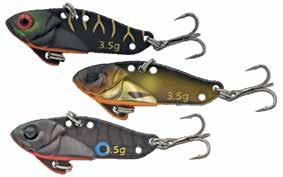
Strike Pro has released a compact version of its popular Cyber Vibe range, designed to deliver big performance in a small package. The Cyber Vibe 30 retains the same design as its larger counterparts, featuring three top tow points and two rear tow points, allowing up to six different actions. At 30mm and 3.5gm, it’s ideal for working shallow flats, cockle beds and around structure like poles. This versatile little lure is well suited to bream, estuary perch, bass and redfin, and is available in six proven colours.
jurofishing.com

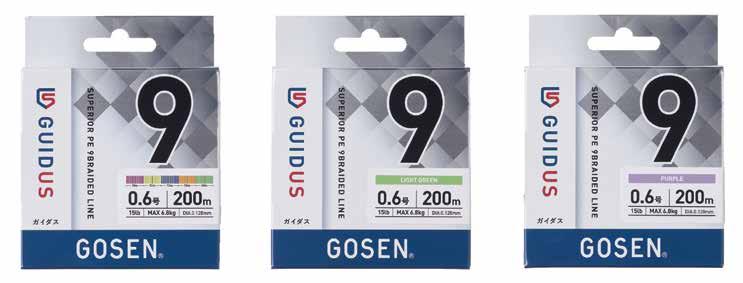
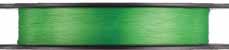
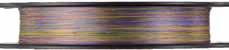
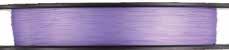
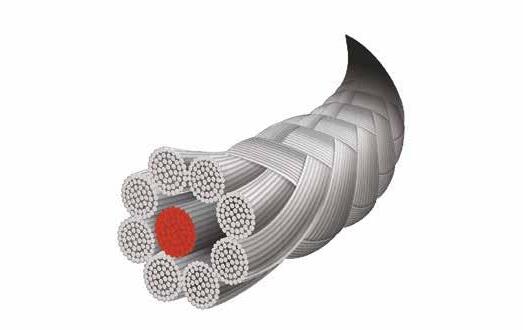
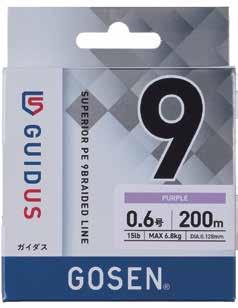
The new Gosen Guidus PE X9 is a high-end braided line designed to deliver exceptional balance between strength, sensitivity and durability. Built using a unique 9-strand construction, it features a core strand with an outer 8-strand shell, providing improved shock absorption and long-term performance compared to traditional braids. This advanced structure results in a smoother, rounder profile for better casting distance and reduced friction through the guides. Developed by Gosen’s longstanding fibre technology expertise, the Guidus range is available from PE0.5 through to PE4 and comes in spool lengths of 150m, 200m and 300m. There are three colour options to suit different applications with Gosen’s classic light green, a new multi colour option and the all new purple. It’s a premium braid built for anglers chasing performance across a wide range of techniques.
gladiatortackle.com.au
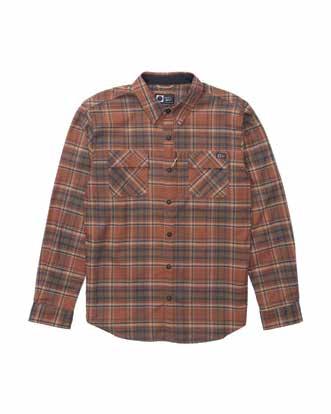
The Salty Crew Fathom Long Sleeve Tech Flannel in Russet is made from yarn-dyed check fabric with a comfortable relaxed fit. Built from a 50% cotton, 47% polyester and 3% spandex mid-weight twill with DWR coating, it features a contrast ripstop collar stand, dual chest pockets, a zippered welt pocket and snap buttons through the front and pockets. Available in sizes S to XXXL.
salty-crew.com.au
The Yo-Zuri Hydro Minnow Long Cast is designed for anglers needing maximum casting distance when targeting fish from the beach, rocks or boat. Built with a highly effective weight transfer system, it casts exceptionally well even into headwinds, while the tough ABS resin body stands up to hard strikes. It features a tight wiggling action and runs at 60–90cm, making it ideal for tuna, mackerel, GTs and mulloway. Available in 150mm (34gm) and 170mm (48gm) sizes, with a range of proven colours including the popular black/purple.
tacspo.com.au
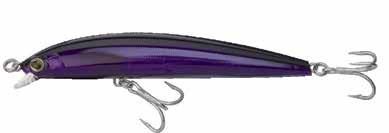
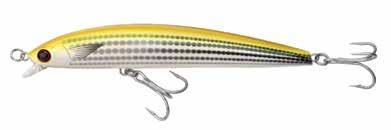
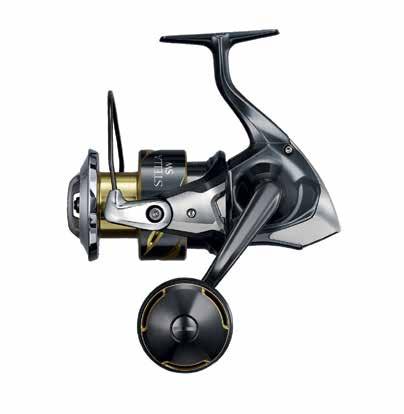
Shimano has expanded the Stella SWD range with the addition of 4000XG, 5000HG, 5000XG, 6000HG and 6000XG models, giving anglers more options across inshore and offshore applications. All models feature Shimano’s InfinityLoop, Anti-Twist Fin and InfinityXross technologies for improved line lay, casting performance and durability. The 4000–6000 sizes now include a 5mm longer handle for added cranking power, along with CI4+ handle knobs, while larger models retain the proven egg-shaped knob design. Drag systems vary across the range, with selected models featuring Tough Drag, and Shimano is backing the release with a free three-year servicing plan. shimanofish.com.au
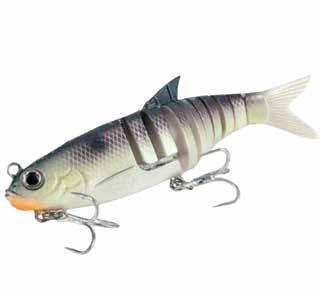

The Molix Swim Shad 115 is a compact, pre-rigged soft swimbait designed for tough bite conditions and pressured fish. Built specifically for Australian waters, it combines a supple body and paddle tail that deliver a tight roll and strong tail thump, even on a slow retrieve. An Aussie-spec heavy-gauge hook and internal weighting keep the lure tracking straight across a wide range of speeds, making it ideal for working edges, drains and structure. The realistic baitfish profile and detailed finish help hold fish in close and convert follows into strikes. At 115 mm and 20 gm, it offers a versatile profile suited to barramundi, threadfin salmon, mangrove jack, mulloway and big flathead in estuaries, rivers and impoundments.
ejtodd.com.au
The Samaki Monarch Spin is built for anglers chasing a balance of performance and value, featuring a lightweight yet rigid CarbonCore body and rotor to maintain gear alignment under load. Inside, FusionGear delivers smooth, consistent cranking, while the sealed carbon fibre drag system provides reliable stopping power. A direct-drive screw-in handle offers instant connection and stability, paired with a comfortable cushioned grip for extended use. With stainless sealed bearings and a corrosion-resistant main shaft, it’s suited to both salt and freshwater applications. With an RRP of $129.95, it’s a durable, all-round option.
samaki.com.au
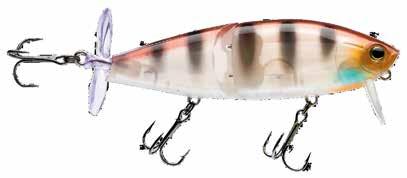
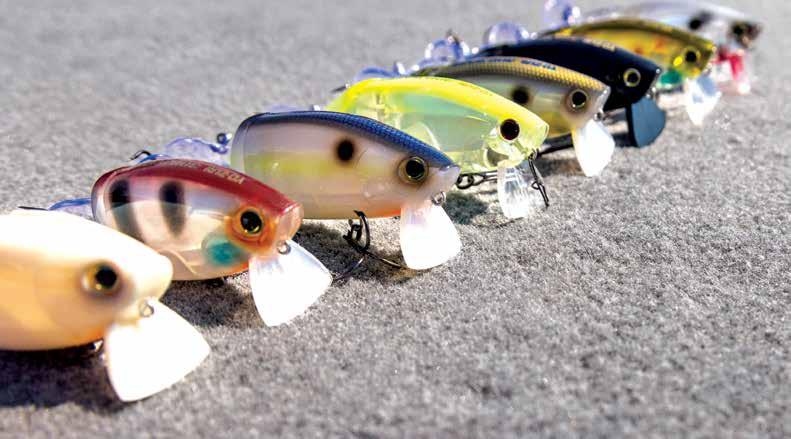
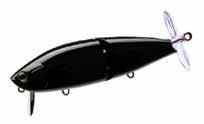
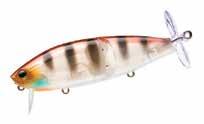
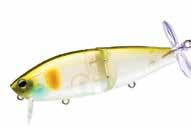
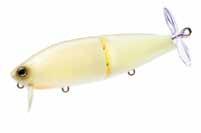
The Yo Zuri 3DB Wake Prop is a floating, single-jointed hardbody that combines a wake bait with a topwater prop bait for maximum surface disruption. Its vertical bib creates a strong waking action, while the oversized rear prop produces noise and splash to imitate distressed baitfish. Built from durable ABS resin, it performs across a range of retrieves and features 3D prism finish, internal painted details and realistic eyes. Available in 85mm (7/8oz) and 105mm (1oz) sizes, it’s ideal for bass, cod and flathead in both fresh and saltwater.
tacspo.com.au
Make room in the tacklebox, you’re going to want these in your line up.
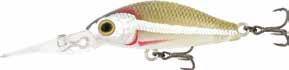
REDIC 40LC | JERKBAIT
MS40LC: 2.7g | 40mm | 1m | Decoy Y-S25 DS40LC: 3.3g | 40mm | 2m | Decoy Y-S25
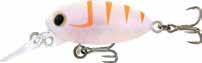
REDIC BEETLE BUG | CRANKBAIT
SF32: 32mm | 2.7g | 0.8-1m | Decoy Y-S25 MF32: 32mm | 3.1g | 1.5m | Decoy Y-S25
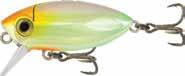
REDIC FOOTY BUG F40 | WAKEBAIT 40mm | 4.8g | 1.0m | Decoy Y-S25
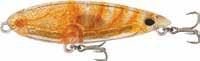
REDIC FALL PRAWN 40 | SINKING STICKBAIT 40mm | 2.8g | Sinking | Decoy Y-S25

REDIC SKIPPING PRAWN 75 | TOPWATER 75mm | 5.9g | Topwater | Decoy Y-S25 + twin assist


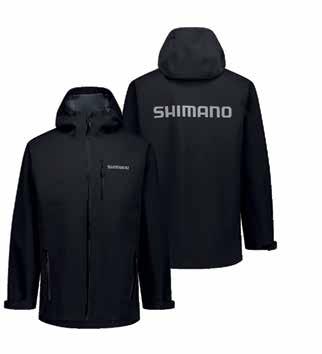
The Shimano Limitless Outer Waterproof Jacket is designed for anglers needing reliable protection from the elements without sacrificing comfort. Made from breathable, windproof polyester, it offers water-repellent performance suitable for year-round use, either as a standalone jacket or part of a layering system. A relaxed, functional design allows easy movement on the water, while zippered pockets provide secure storage for essentials like phones and keys. With a clean, modern look, it transitions easily off the water as well. Available in sizes S to 3XL, with an RRP of $270 and in stores from 2026.
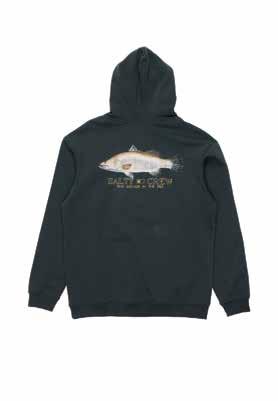
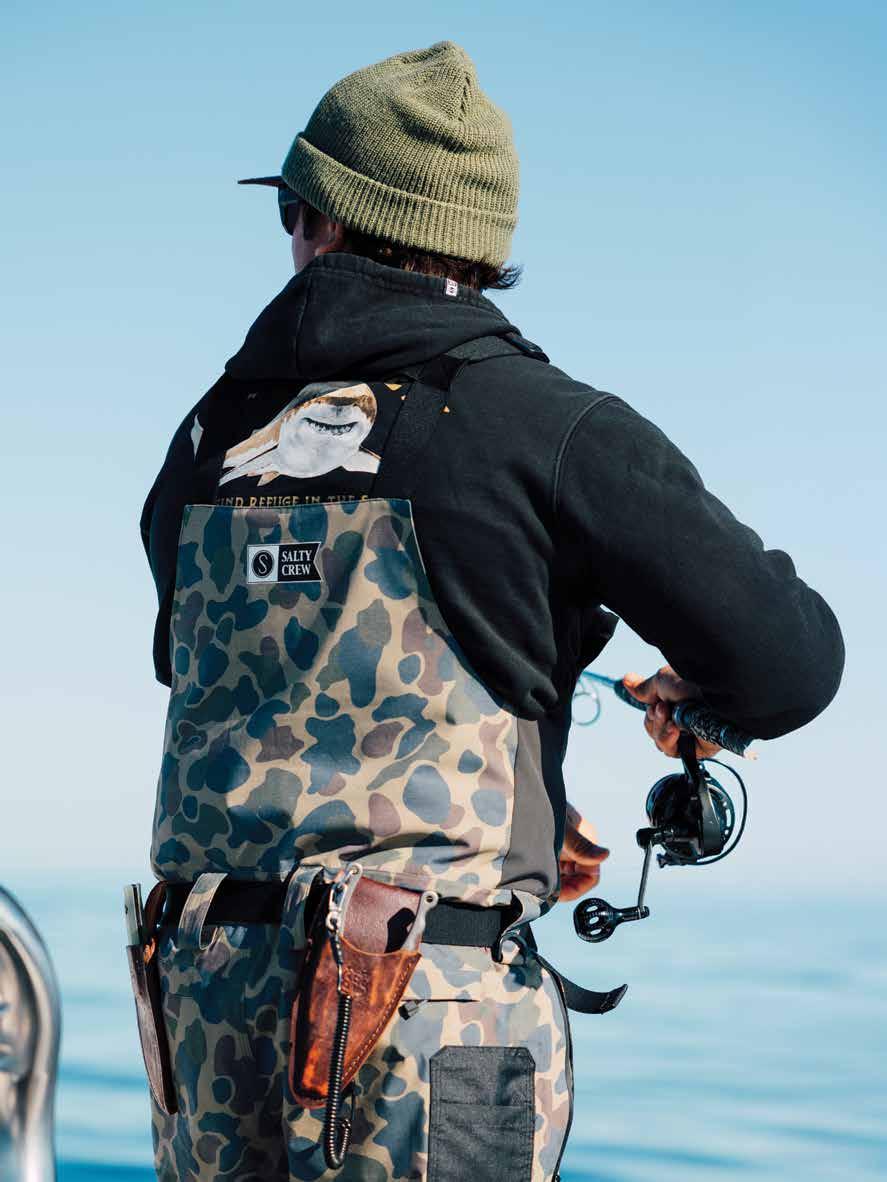
The Salty Crew Barra Hood in Coal is built from mid-weight cotton/polyester brushed fleece, weighing in at 380gsm for warmth and comfort. It features a two-piece hood with encased drawcord, rib-knit cuffs and hem, a self-fabric kangaroo pocket and Salty Crew clamp label at the hood opening. Finished with digitally printed front and back graphics, it’s available in sizes S to XXXL. salty-crew.com.au
Daiwa’s DR Minnow range of trout lures receives a facelift and a fresh look with the introduction to the SilverCreek family. The new SilverCreek DR Minnow II boasts 3 models within the range, a 42mm and 50mm sinking minnow perfect for fast flowing streams and rivers, and a 70mm floating minnow targeting the larger water looking for that big bite. A host of new colours in the range, all purpose designed for Australian conditions make the new DR Minnow II one of the most well-crafted trout lure ranges available. Fitted with BKK Spear 21SS treble hooks straight out of the pack means you can get straight into the action. daiwafishing.com.au
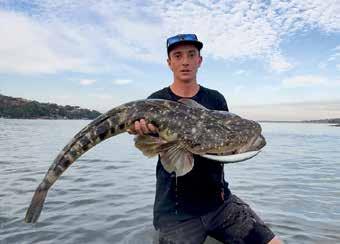
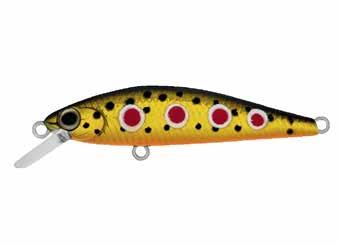
It’s not often, if ever, that we print reader captures, but this one was too good to ignore. Keen dusky flathead angler Liam Page recently landed a cracking 105cm fish in the Port Hacking River, NSW, doing it on a homemade bent-style timber lure he calls the LTT. A special capture on multiple levels, not only for the size of the fish but also for the fact it was taken on a self-made lure, proving once again the rewards of putting in the time both on and off the water. This fish is a true unicorn and when you add in that it was on a home made lure and topwater, its extra special. Well done, Liam!
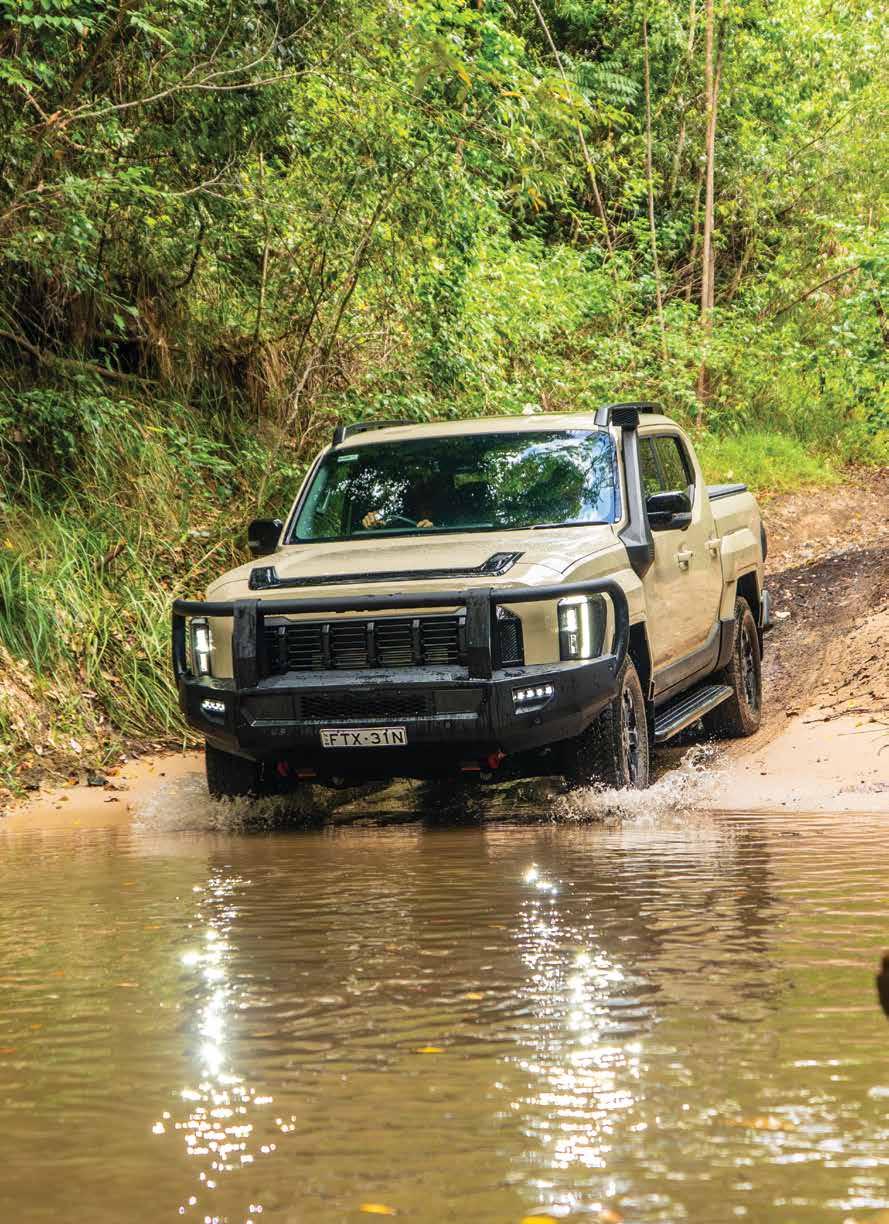
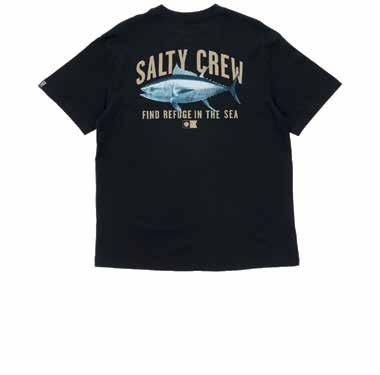
The Salty Crew Bitmap Classic SS Tee in Black is made from soft spun cotton jersey, weighing in at 180gsm for an easy everyday fit. It features a rib-knit neckband, Salty Crew branded trim on the sleeve and digitally printed front and back graphics. Available in sizes S to XXXL salty-crew.com.au
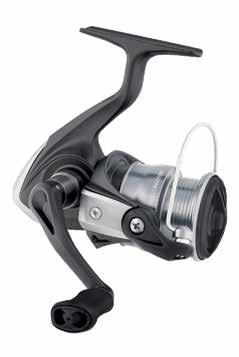
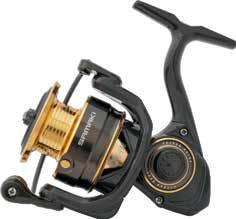
The new 26 Crossfire LT delivers proven Daiwa performance in a lightweight, easy to use spinning reel built for everyday fishing. Designed around Daiwa’s Light and Tough concept, the Crossfire LT features a compact, durable body that is comfortable to handle and well suited to anglers getting started or those after a dependable allrounder. A smooth Airdrive Rotor reduces winding effort, while the LC ABS spool improves casting distance and line control. Inside, Tough Digigear constructed from zinc provides reliable power transfer and smooth operation under load. The ATD Type L drag offers consistent, controlled pressure during the fight, helping anglers stay in control when it matters. Available in 2000, 2500, 4000 and 5000 sizes, the 26 Crossfire LT covers a wide range of freshwater and saltwater applications. daiwafishing.com.au
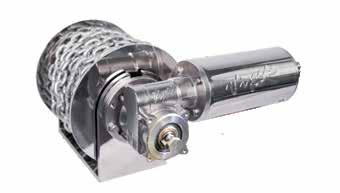
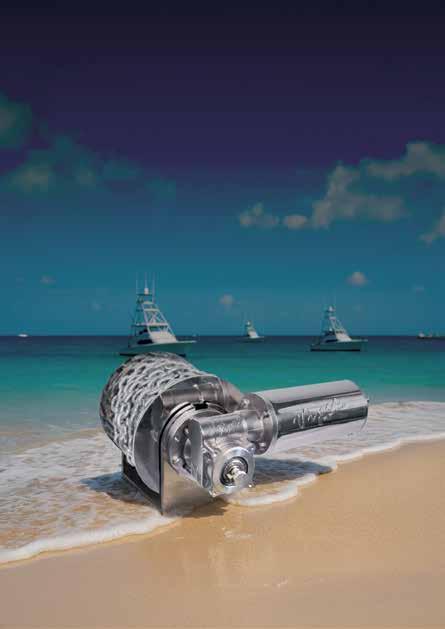
The Viper Pro Series 1000W Micro is designed to deliver maximum power in a compact footprint, making it ideal for boats where space is limited. Unlike many smaller winches, it retains full commercial-grade construction, built from 5/8mm 316 marine-grade stainless steel with an IP68-rated submersible motor and gearbox. A 28mm solid stainless shaft with triple bearing support and a fully welded 8mm housing bracket ensure smooth, reliable operation. Running a 1000W 12V motor, it achieves fall rates of 40–45m/min and retrieval of 36–40m/min. Suited to boats from 4–8m, it also features an emergency release and five-year warranty. bellmarine.com.au
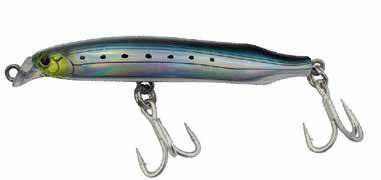
The Tackle House Bezel is designed for situations where pelagic fish are feeding on smaller bait and a subtle, fast-moving presentation is required. This jig minnow needs no fancy rod work, simply cast into the action and wind, making it ideal when fish are busting up and you need to get a lure into the zone quickly. After hitting the water, the Bezel falls with a forwardleaning posture and a slight tremble, then swims with a highly stable wobbling roll even at high retrieve speeds. Strength is built in with a 1.2mm 3D laser-cut through-wire harness, fixed weight construction, and heavy-duty Owner ST66 trebles and split rings. Primarily aimed at school tuna, the Bezel is a reliable option for all pelagic species. Available in 100m/36g and 120mm/48g.
gladiatortackle.com.au

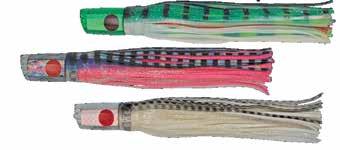
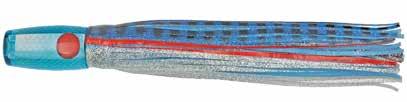
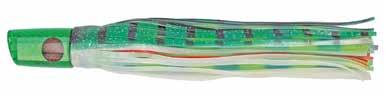
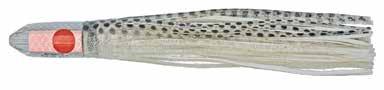
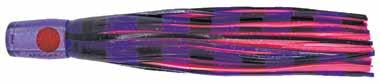
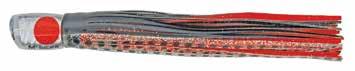
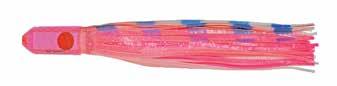
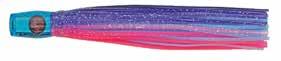
McLures has released new models for 2025 with the Trailblazer, a slant-headed lure designed to deliver increased action and versatility in the spread. It swims left, right and down while popping and splashing, with four jet holes creating a strong bubble trail. Best run on the leading edge of a wave or from a short rigger, it’s well suited to highspeed pelagics. Featuring UV over skirts, a Luminite glow underskirt, red crystal 3D eyes and keel weighting for consistent tracking, the 9.5” overall length lure has an 8” skirt and weighs 110gm. Available in 12 colours. jurofishing.com
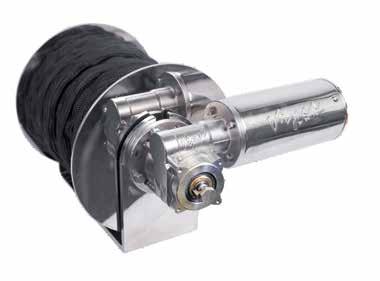
The Viper Pro Series 1000W Rapid is built for speed and efficiency, delivering fast deployment and retrieval for offshore fishing, reef hopping and repeat anchoring. Designed as a high-performance workhorse, it features heavy-duty construction using 5/8mm 316 marine-grade stainless steel, along with an IP68-rated submersible motor and gearbox. A 28mm solid stainless shaft with triple bearing support and a fully welded 8mm housing bracket ensure reliable operation and reduced rope jams. Powered by a 1000W 12V motor, it achieves fall rates of 40–45m/min and retrieval of 36–40m/min, and suits boats from 5–10m. Includes emergency release and five-year warranty. bellmarine.com.au
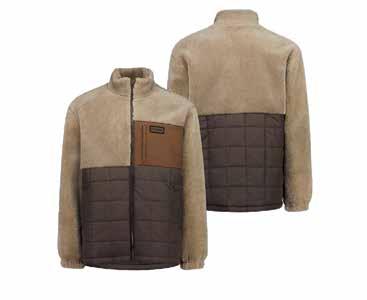
Built for cold mornings and cooler days on the water, the Shimano Coastal Fleece Sherpa Jacket delivers warmth without excess bulk. Designed with a relaxed fit, it allows easy movement whether casting, hauling gear or moving around the boat. The soft fleece construction helps retain heat while remaining comfortable for all-day wear, making it a solid option through the colder months. Available in sizes S to 3XL, it carries an RRP of $179 and is expected in stores in 2026. shimanofish.com.au
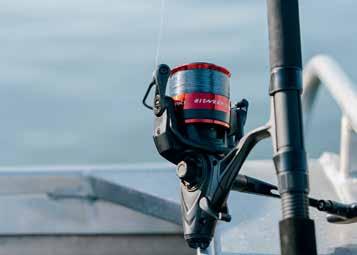
The Samaki Hit N Run bait fishing combos are designed to allow fish to take the bait with minimal resistance, improving hook-up rates for a cleaner and more secure connection. Built for a wide range of bait fishing applications, these combos feature smooth operation and a sensitive integrated solid tip for detecting subtle bites. Available in 7’ light 4–7kg and 7’ medium 6–8kg options, they include 3+1 stainless ball bearings and a double anodised aluminium spool. With an RRP of $129.95, they offer a wellbalanced and affordable bait fishing setup. samaki.com.au


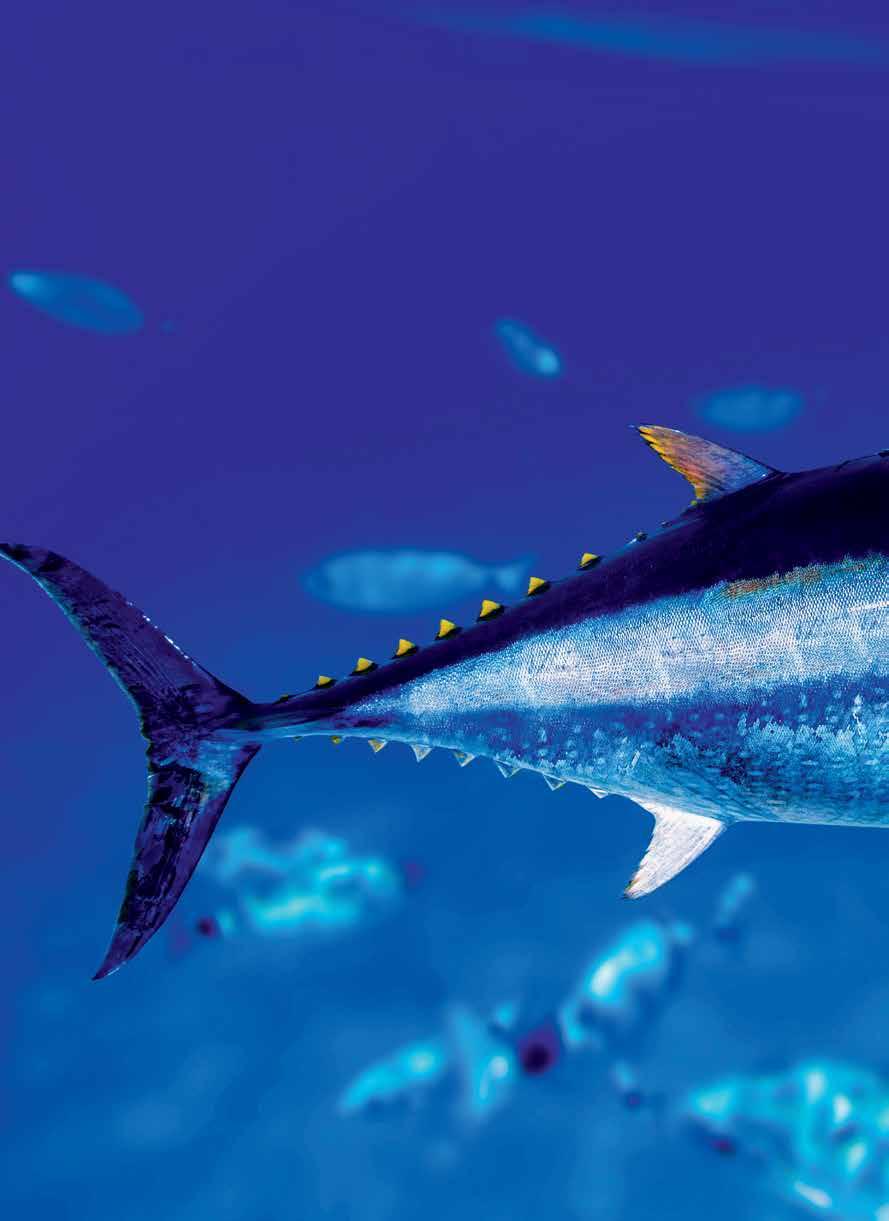
Cubing is an old-school technique that still holds up today. When tuna are sitting mid-water or ignoring lures, a steady trail of pilchard cubes can bring them right to the boat and switch them on. Simple, effective, and well worth revisiting.
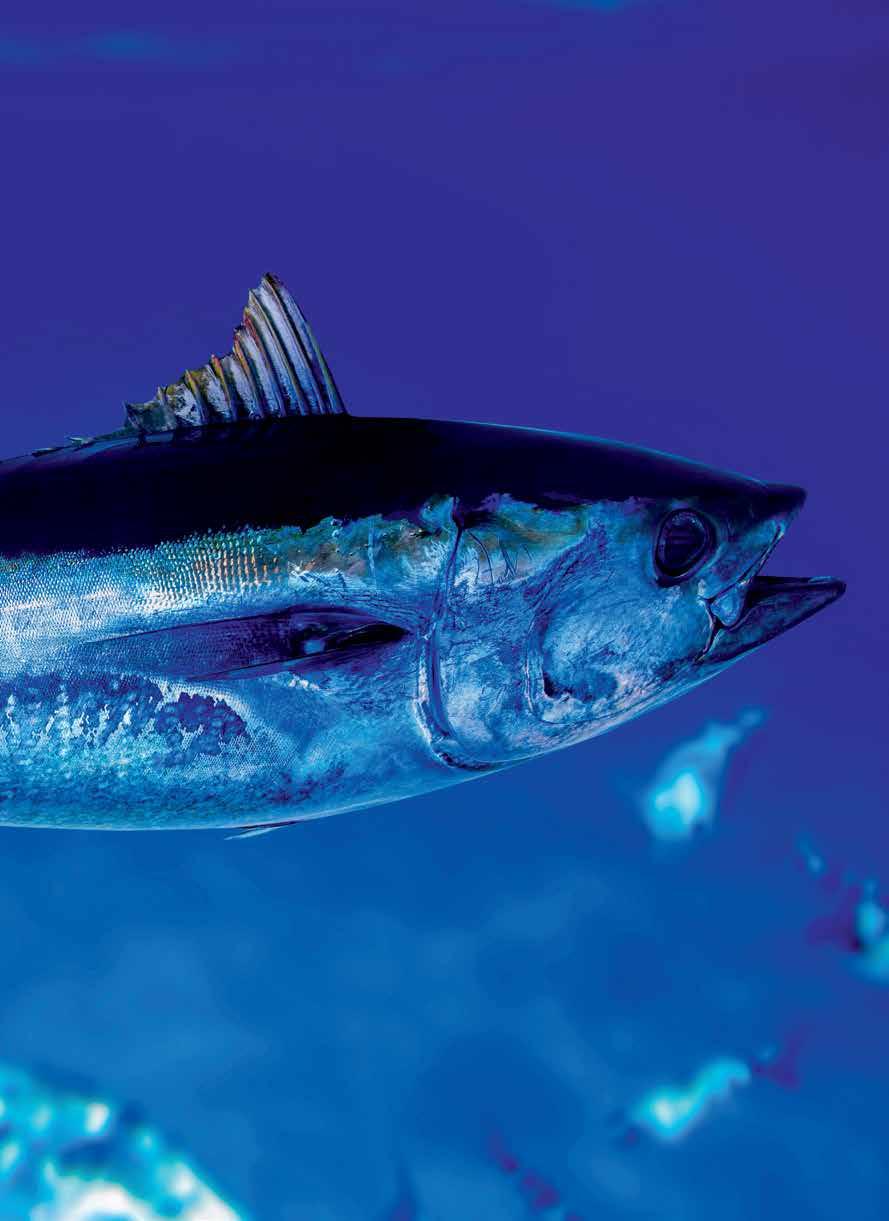
There’s something about old techniques that never really die. They just sit quietly in the background, waiting for the right moment to come back into play. Cubing for southern bluefin tuna is exactly that. It’s an approach that dates back decades, something that was almost standard practice through the 70s and 80s, before high-speed trolling and modern lure technology took over. But when the fish stop behaving how you want them to, when they sit mid-water and ignore everything you throw at them, cubing is still one of the most effective ways to turn a tough day into a memorable one.
With the resurgence of southern bluefin numbers in recent seasons, particularly those solid medium-sized fish, more anglers are finding themselves in situations
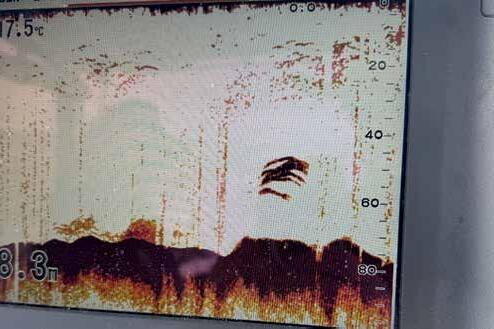
where tuna are present but not committing. You mark them clearly on the sounder, often sitting well up in the water column, but they won’t touch a spread of lures.
That’s where cubing comes back into its own.
On this particular day, the fish were easy to find. Sounder marks lit up at around 70 metres of water, with the bulk of the tuna holding at roughly 35 metres down. Classic mid-water behaviour.
They weren’t busting up on the surface, and they weren’t pinned hard on the bottom either. Just cruising, relaxed, and not especially interested in chasing anything moving too quickly.
Rather than persist with lures and burn time, the decision was made early to switch tactics.
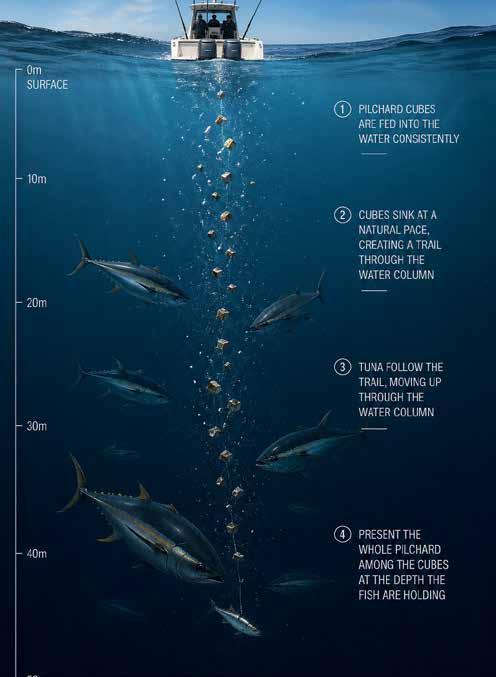
Cubing is simple in theory, but the execution needs to be spot on. It starts with pilchards, and plenty of them. You’re not just feeding fish here, you’re building a consistent berley trail that mimics a natural food source sinking through the water column. The key is consistency. Same size cubes, same pace, and most importantly, no breaks in the trail.
Pilchards are cut into small, even cubes and fed into the water steadily. Not dumped in handfuls, not thrown sporadically, but introduced at a rhythm that matches their natural sink rate. As each cube disappears from view, another follows. Then another. Then another. It’s repetitive, almost hypnotic, but that consistency is what draws fish up through the water.
Once the trail is established, it becomes a conveyor belt of food drifting down-current. Tuna move into it, tracking the cubes as they fall, becoming more confident as the stream continues uninterrupted.
And that’s the critical part. The trail must never stop.
A minimum of four 1kg blocks of pilchards is a good starting point, but realistically, you want more on board. If you’re not marking fish initially and you’re relying on cubing to bring them to you, you could easily go through ten blocks in a session. On this day, because the fish were already located on the sounder, less was needed, but the rule didn’t change. Once you start, you don’t stop.
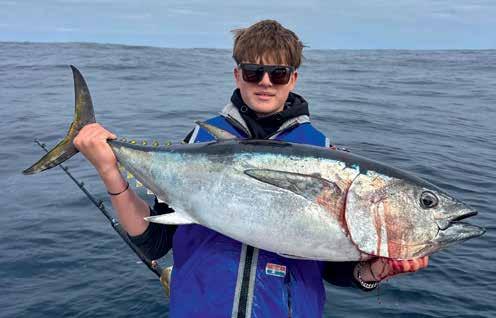

Random cubing or letting the trail die off is one of the quickest ways to lose fish. They drift away just as easily as they come in.
As the cubes sink and the fish begin to respond, you’ll often see a shift in behaviour. Initially, bites might come deeper, around that 35-metre mark where the tuna were first holding. But as the trail builds and confidence grows, the fish start to rise. Slowly at first, then more aggressively. Before long, they can be right behind the boat, sitting just out of sight, following the stream of cubes almost to the surface.
That’s when things get interesting.
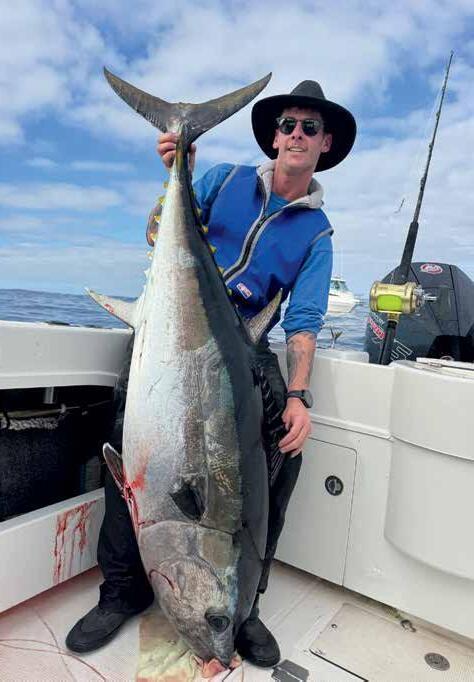
Fishing a whole pilchard among the cubes is the next step, and this is where restraint is important. There’s no need to overcomplicate it. Don’t bury the hook deep inside the bait or try to make it look unnatural. A simple, well-presented pilchard is all that’s required. It should sink at the same rate as the cubes around it, blending in perfectly with the trail. Tackle plays a bigger role here than many realise. While braid has its place in many styles of fishing, cubing isn’t one of them. Braid is too buoyant. It doesn’t allow the bait to sink naturally, and that subtle difference is enough to turn wary tuna away.

Monofilament, on the other hand, is close to neutral in the water. It sinks slowly and behaves far more like the cubes themselves.
Fishing 24kg line, often scale-tested closer to 8kg for consistency and sport, provides the right balance. It’s strong enough to handle powerful tuna, yet forgiving enough to allow a natural presentation.
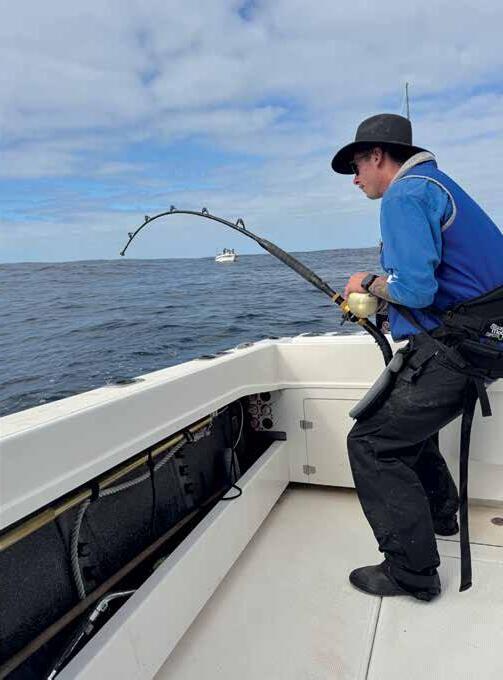
Rods are another nod to the old school approach. Short-stroker fibreglass rods are ideal here. They’re soft, forgiving, and perfectly suited to the vertical nature of the fight that follows. When a big tuna circles deep under the boat, those rods come into
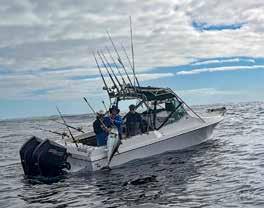
their own, absorbing lunges and keeping constant pressure without pulling hooks.
In this case, the gear had serious history behind it. Custom-built 24kg Calstar rods, crafted back in 1989, still doing exactly what they were designed to do. There’s something fitting about using that kind of tackle for a technique like cubing. It connects you to the roots of the method, and proves that good gear, like good techniques, stands the test of time.
Deploying the bait is as important as preparing it. The reel is set to free spool, with the ratchet engaged. That way, when a fish takes the bait, you don’t risk overruns or backlash as line peels off under pressure. It’s a simple setup, but it works.
From there, it becomes a tactile process. Sitting on the gunwale, feeding line out by hand, feeling every movement as the bait sinks. Counting it down, metre by metre, staying in tune with where the fish are holding. It’s hands-on fishing in its purest form.
When the bite comes, it’s rarely subtle. The ratchet ticks, then screams. Line accelerates off the spool as the tuna commits, often at the same depth you’ve been marking them. At 35 metres early on, then progressively shallower as the session builds. There’s no need for a big strike with circle hooks. Let the fish load up, engage the drag smoothly, and the hook finds its place.
From there, it’s a brutal, vertical contest.
Big tuna hooked this way tend to fight differently to those taken on lures. There’s less of the high-speed surface run and more stubborn, dogged power. They circle deep, using their weight and strength to stay down. This is where the short-stroker rods shine. The softer action allows you to work the fish patiently, gaining line when you can, holding when you need to.
It’s physical, methodical fishing. Up and down. Lift and wind. No shortcuts.


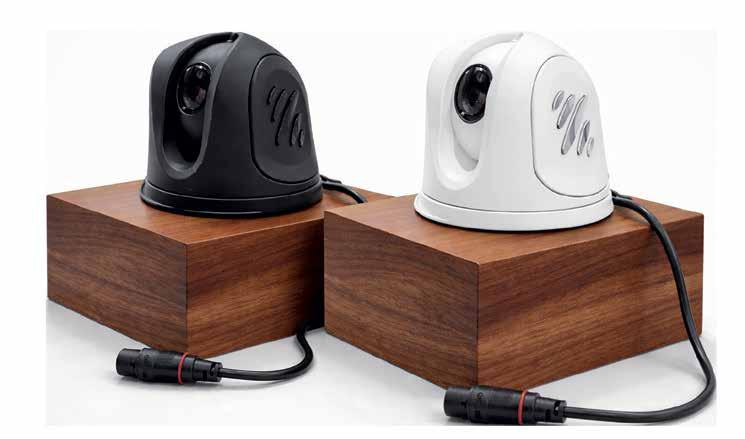
The Ulysses Nano C is a high-performance marine camera delivering 4K full-colour vision in ultra low-light conditions — adapting automatically from day to night. Compatible with Simrad, Lowrance, Raymarine and Garmin.
Cubing isn’t just effective, it’s engaging. You’re constantly involved. Managing the trail, feeding cubes, monitoring the sounder, adjusting depth, and staying ready for the bite. It’s a far cry from setting a spread and waiting for a rod to go off. Every fish feels earned.
What stands out most is how adaptable the method is. Tuna habits change. Conditions vary. Some days they’ll climb all over lures, other days they won’t look at them. Being able to switch to a technique like cubing gives you options. It keeps you in the game when others might struggle.
It also brings a different kind of satisfaction. There’s something rewarding about out-thinking the fish, about going back to a technique that’s been proven over decades and making it work again in modern conditions.
For anglers used to lighter tackle, particularly those coming from a snapper background, cubing for tuna can feel like stepping up a level. The gear is heavier, the fish are stronger, and the fights are longer. But the principles remain familiar. Presentation, patience, and attention to detail.
In many ways, it’s just a scaled-up version of what we already do.
The biggest takeaway is simple. Don’t overlook the old methods. Just because they’re not as widely talked about or don’t feature in the latest tackle catalogues doesn’t mean they’ve lost their effectiveness. If anything, they can be even more powerful now, precisely because fewer anglers are using them.
Cubing for southern bluefin tuna is a perfect example. It’s not flashy. It’s not fast-paced. But when the conditions line up and the fish aren’t cooperating, it can turn a frustrating session into one of the most rewarding styles of tuna fishing you’ll experience.
And once you’ve done it properly, sat there feeding a steady trail, watching fish rise on the sounder, and hearing that ratchet scream as a tuna commits, you’ll understand why it’s stood the test of time. It’s simple. It’s effective. And it’s a hell of a lot of fun.



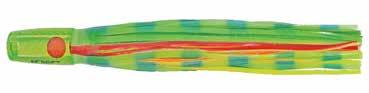
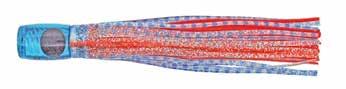

• Selected Skirts are UV ACTIVATED
• Exclusive McLures “LUMINITE” Underskirts (Vibrant Glows in the Dark)
• Exclusive 3D “RED CRYSTAL” Eyes (Light Reflective)
• Keel Balanced for perfect swimming action!
• Near Indestructible Hard Resin Heads

Using the lightest line and leader possible for the species your targeting will allow for better presentation and more strikes.
Going lighter is still one of the simplest ways to catch more fish — and better fish.
WORDS: ADAM HEWSON IMAGES : A FULL CREW
When most anglers start out with lures, the results can be pretty inconsistent. It’s not like bait fishing where you can soak something and wait it out. Lure fishing demands more — more time, more casts, more thought. It can be frustrating early on, and it’s usually at that point people start looking for some kind of secret.
New lure. Different colour Change retrieve. But more often than not, the issue isn’t what you’re throwing — it’s what’s tied to it.
Line class is one of the biggest limiting factors I see, especially with newer anglers. It’s almost always too heavy. And it’s an easy fix. Fish lighter. It sounds simple, but it changes everything.
Any experienced angler knows that lighter line increases your strike rate. That’s not opinion — it’s proven over time. But it’s not just about getting more bites. It’s about getting better quality bites as well.
At its core, fishing is about presentation. You’re trying to make something artificial look real enough to eat. Every part of your setup works against that — hooks, hardware, leader, line — it all adds something unnatural into the water. If we could present a lure with no line attached, we would. That’s the ideal. So the goal is to minimise everything between you and the fish. Lighter line does exactly that.
Even the best modern lines aren’t invisible. Fluorocarbon is better than mono in terms of light refraction, and braid has its advantages, but nothing disappears completely. Fish are highly tuned to their environment. They feel pressure changes, see subtle movement, and pick up on things that don’t look right.
Heavier line creates more drag. It pushes water. It vibrates. It collects debris. All of that adds up.
There’s also a strong argument — and one that makes a lot of sense when you think about it — that a fish’s lateral line is picking up on your line moving through the water. A thicker, tighter line under load can behave almost like a guitar string, transmitting vibration as it moves. That unnatural signal travels through the water column and can be enough to put wary fish off before they even see
the lure.
Drop your line class and you reduce all of it — less visibility, less disturbance, less vibration, better presentation. It’s not one big change, it’s a series of small improvements that stack together.
And that’s what gets you more eats.
There’s a common belief that the fish only sees the leader, so the mainline doesn’t matter as much. That’s not really the case.
If your main line looks wrong or behaves unnaturally, you’ve already lost your chance before the lure even enters the picture.
Lighter mainline means better casting distance and better accuracy as well. That’s a big advantage, especially when you’re targeting fish that require precise placement — tight structure, shallow flats, cruising fish.
It also allows your lure to perform properly in the water column. Heavier line creates more resistance as the lure moves, which can hold it up in the water. Lighter line cuts through with less drag, allowing diving lures to reach their intended depth and soft plastics to sink more naturally and stay in the strike zone longer.
You get further casts, quieter entries, better depth control, and better overall presentation. It all adds up.
If there’s one place you really don’t want to overdo it, it’s your leader.
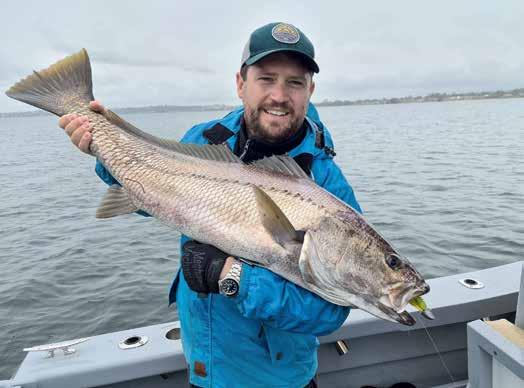
It’s the closest part of your setup to the fish, and it has the biggest impact on how your bait or lure behaves in the water. A heavy leader can kill the action of a lure, especially smaller presentations. It also stands out more than you think.
Lighter leaders allow everything to move more naturally. Soft plastics sink better. Hardbodies swim more freely. Surface lures sit right.
Again, it comes back to resistance. The less material you have working against the lure, the better it performs.
It’s not just about visibility — it’s about behaviour.
That said, there’s always a balance. Structure, abrasion, and the species you’re targeting all come into play. But most anglers err too far on the side of caution and end up hurting their chances.
You don’t need to go heavy straight away. Start light and adjust if you have to.
Going lighter isn’t perfect. There are downsides.
Abrasion resistance is the big one. Fishing around rocks, oysters, timber or reef, you’re always at risk. Big fish will test your setup, and sometimes you’ll lose them.
That’s part of it.
But you’ll also find that with good technique, you can land far bigger fish than you’d expect on light gear. Smooth drag, controlled pressure, and using the
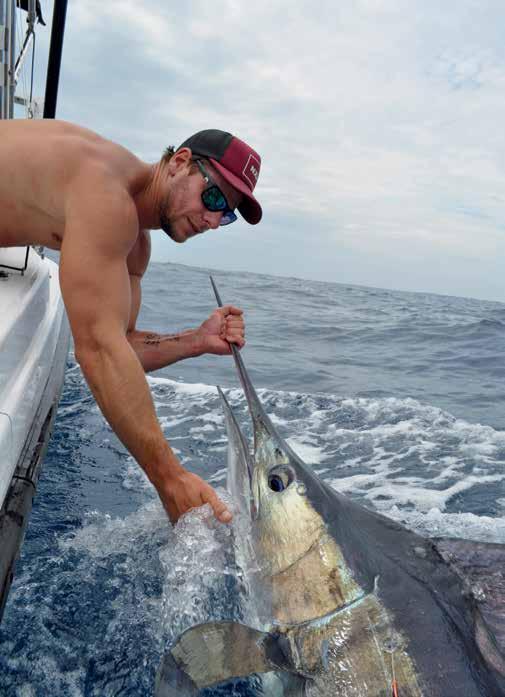
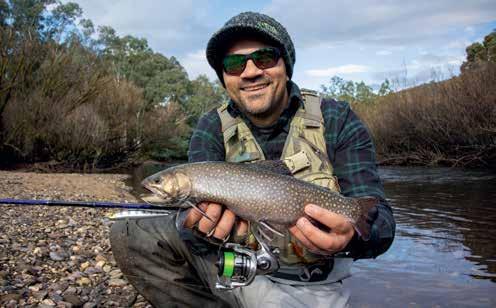
rod properly makes a huge difference. The other issue is line management. Light braid in particular can be prone to wind knots if you’re not paying attention. Poor line pairing makes it worse.
Mainline and leader need to work together. If they’re too far apart in diameter, you’ll run into problems — casting issues, knot failures, tangles. It’s not just about breaking strain. Diameter matters more.
A light braid tied to a heavy leader creates inconsistency as it moves through the guides. The thicker leader slows everything down, the braid catches up, and you end up with a mess.
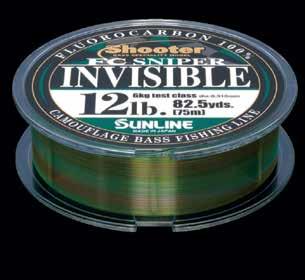
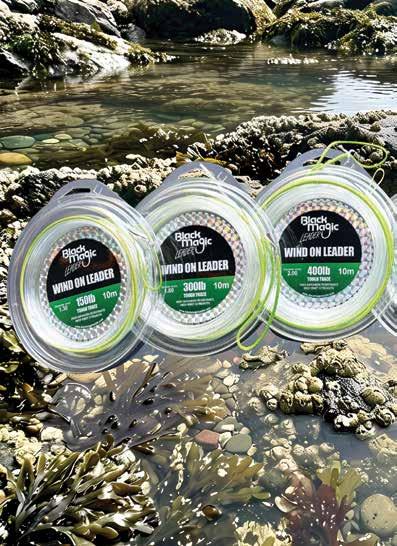
High grade fluorocarbon built for pressured fish.
75m | 2lb -20lb

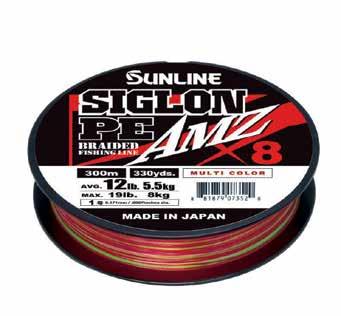
Tighter woven braid for distance, sensitivity and durability.
300m PE0.8 -PE8 | 150m PE0.5 -PE3
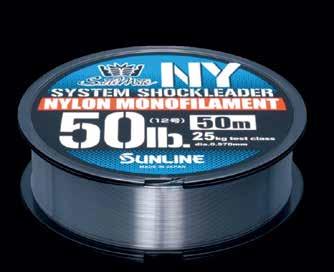
Purpose built shock leader for power and protection.
50m | 4lb - 150lb
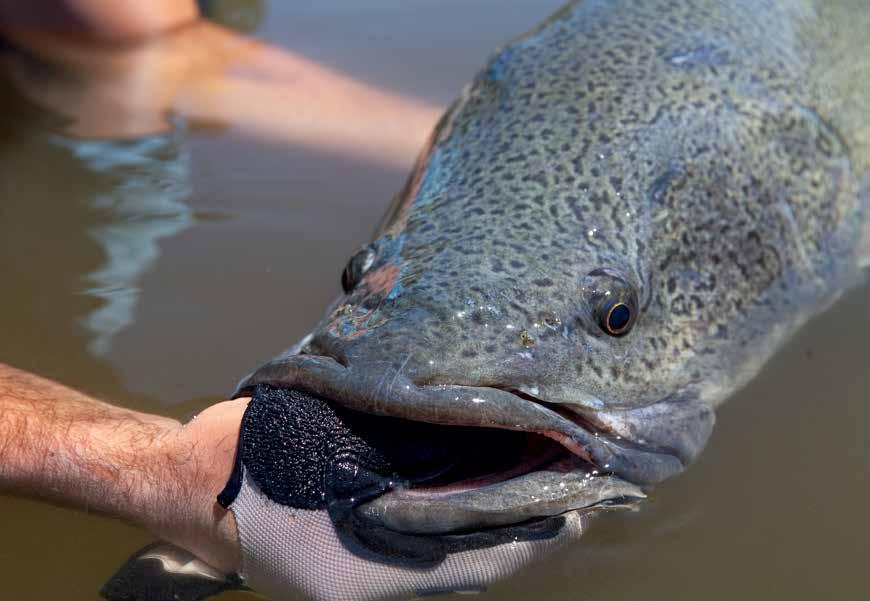
Cod is a species where anglers often fish far heavier than they need to.
Keep things balanced.
As a rough guide, if you’re fishing 4lb braid, you can comfortably run leaders from around 2lb up to about 10–12lb depending on the situation. Step up to 15lb braid and you’re looking at 10–20lb leader.
It doesn’t need to be exact, but it needs to make sense.
When everything flows properly, casting improves, knots hold better, and your whole setup feels smoother.
HOW LIGHT IS TOO LIGHT?
This is where most people get nervous. There’s always that thought of the big one — the fish you might lose if you go too light. And that’s fair. It happens. But what most anglers don’t realise is how many fish they’re not even getting a shot at because they’re fishing too heavy.
There are anglers consistently catching big flathead on 3lb braid and 2–4lb leaders. Sounds ridiculous until you see it happen. They lose a few, sure, but they hook far more than those fishing heavier gear in the same water.
That’s the trade.
If you’re unsure, start light and work your way up gradually if needed. Don’t jump from 4lb straight to 20lb because you lost one fish. Small increments are the key.
For most estuary work, I’ll run 4lb braid as a baseline. It covers a lot of situations and gives you the best mix of casting distance, sensitivity and stealth. For bream and whiting, I’ll drop the leader down to around 3–4lb. For flathead and perch, I’ll bump that up to 6–8lb.
When things step up — snapper, kingfish, inshore work — I’ll move to 15lb braid with 15–20lb leader.
Offshore, chasing tuna and bigger fish, I’ll step up again to around 30lb braid with 40–60lb leader.
None of it is ultra-light, but it’s not overkill either. It’s about using just enough to get the job done without compromising presentation.
Once you commit to fishing lighter, the difference is obvious.
You’ll cast further. You’ll present better. Your lure will work properly and get to the depth it’s designed for. And most importantly, you’ll get more bites.
The surprising part is you’ll often land bigger fish as well.
It goes against what most people think, but it makes sense when you break it down. Better presentation means more confident fish. More confident fish means better hook-ups.
You’ll still lose a few. Everyone does. But you’ll gain far more than you lose.
Fishing lighter isn’t a trick or a shortcut. It’s just understanding how fish behave and adjusting your setup to suit..
Yes, you’ll get busted off sometimes. Yes, you’ll question it when a good fish wins. But most of the time, you’ll be hooked up when others aren’t.
And that’s the difference.



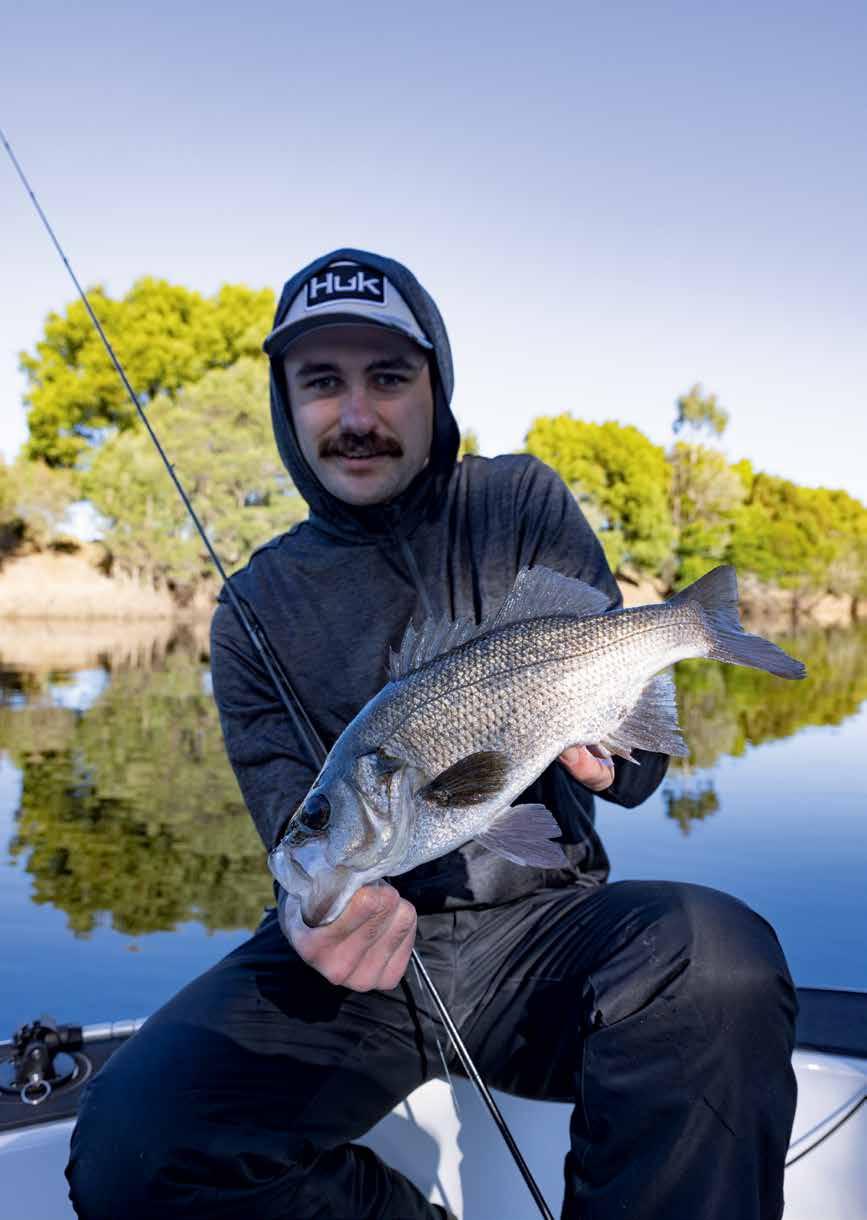

While it’s not quite winter yet, now is the time to start planning for it. We’ve had our first cold snaps, morning fog whiteouts, and the estuary systems have had a good flush of rain. These changes have some dramatic effects on these systems. This is a time when keen lure anglers shift their focus from species such as dusky flathead to estuary perch and bream.
Winter doesn’t mean the fish disappear — it just means they change. If anything, it’s one of the most rewarding times of the year to target estuary perch, with big bream often coming along as a bycatch when you’re fishing the same water. The crowds disappear, the waterways quieten down, and the fish become far more predictable if you’re willing to adjust your approach.
Cold water slows everything down, particularly for bream.
Bream don’t feed as aggressively and are far less likely to chase down a fastmoving lure. Instead, they hold tighter to structure, conserve energy, and feed opportunistically. Estuary perch, on the other hand, remain an active target through winter and will still hit a wellpresented lure hard, particularly around low light and overcast conditions. This is where most anglers come unstuck. They fish the same way they do in summer — covering water quickly,
fishing fast, and expecting reaction bites.
In winter, that approach will leave you wondering where all the fish have gone. They’re still there. You just need to slow down and fish smarter.
Clearer water also plays a big role. Fish become more cautious, more aware of noise and movement, and far less forgiving of poor presentation. Stealth, long leaders, and accurate casting aren’t optional — they’re essential.
No matter the season, structure is everything.
Edges, snags, pontoons, moorings, fallen timber — they all hold fish. The difference in winter is that fish tend to sit tighter and often slightly deeper within that structure.
Heavy structure becomes even more important. Open, featureless banks that might fish well in summer become far less productive unless there’s something breaking up the bottom — weed, rock, timber or depth change.
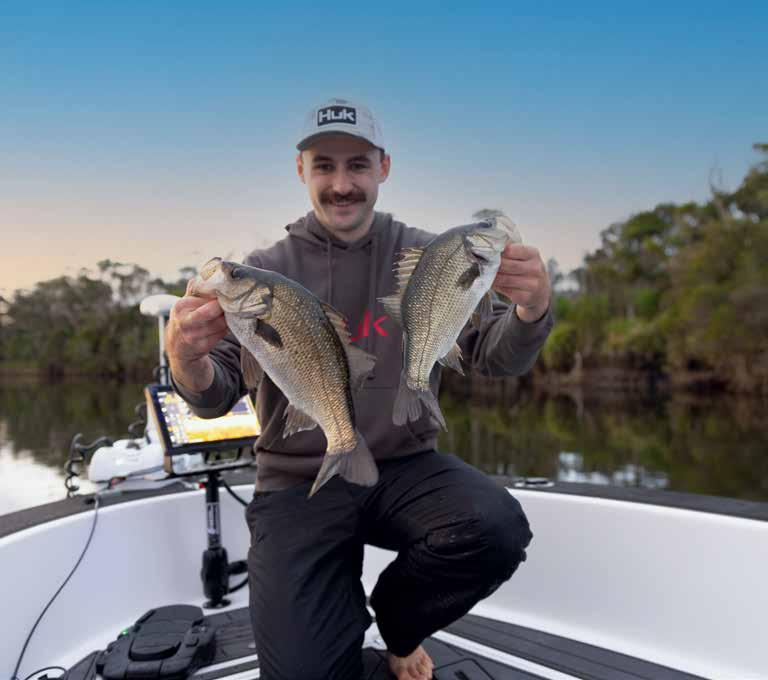
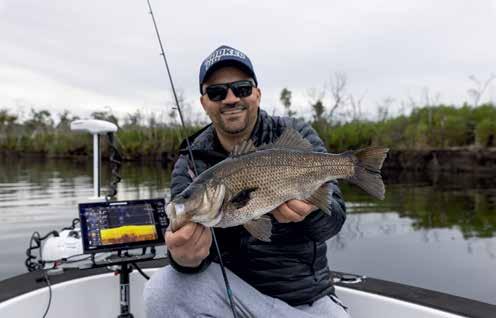
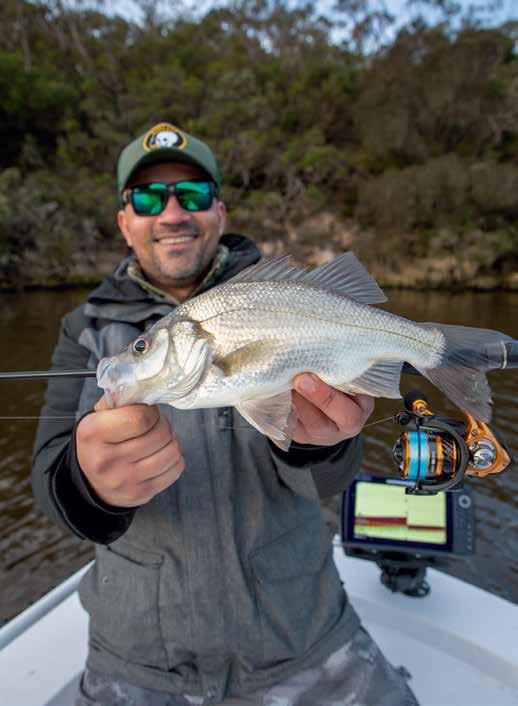
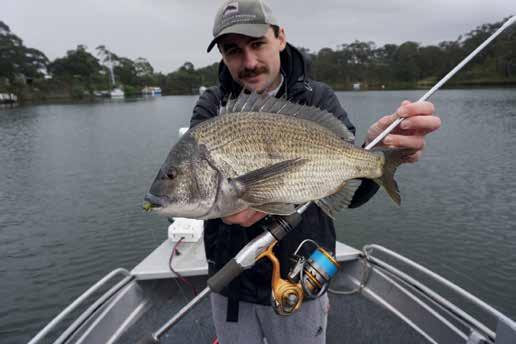
For estuary perch, this is where they really come into their own, sitting hard up against the nastiest snags you can find and ambushing anything that comes past. Big bream behave differently, but they’re often sitting in the same areas, holding tight and feeding less aggressively. When you’re targeting perch in this structure, it’s very common to pick up quality bream as bycatch.
Don’t
That means your casting needs to be on point. You’re not fishing near the snag — you’re fishing in it. Hence why we called this story Timber Thugs.
Both these species will run back for cover and cut you off faster than you can adjust your drag. So it’s important, when targeting these fish in structure, you bump up to 8lb fluorocarbon leaders, tie at least a rod length and a half, and be ready to turn that fish’s head and get it out. This makes it fun and exciting fishing, where you’ll have line peeling off your reel and you work quickly to get the fish out into some safer and deeper water.
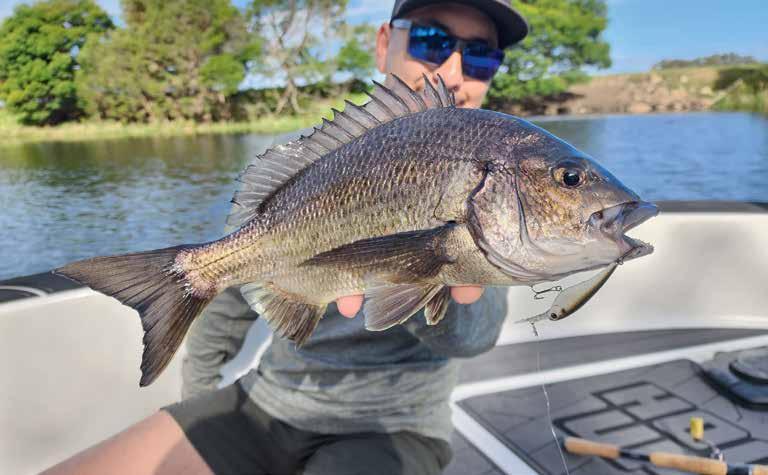
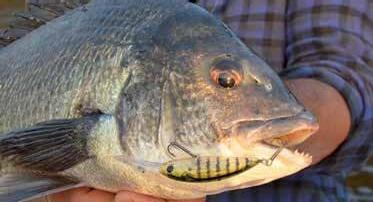
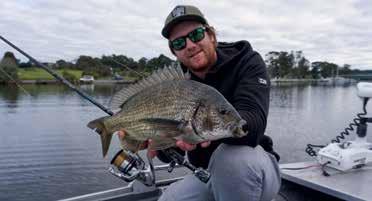
On the other side of the coin is deep water. One of the biggest shifts in winter is how important deeper water becomes. Bream in particular will often school up in deeper sections of the system — 2.5m and beyond — and hold there for long periods.
These areas might look like nothing. Wide, open expanses of water that most anglers drive straight over. But they can hold huge numbers of fish.
Finding them is the challenge.
Sounders become critical here. Once you locate fish, you can work them with plastics, vibes or even slowly rolled hardbodies. Larger lure profiles often work
surprisingly well in this situation, as fish in deeper water are less easily spooked and can detect them from further away.
Perch will also use these areas at times, particularly when moving through systems, but more often than not you’ll find them relating tighter to structure than bream.
Not all structure is obvious. Secondary edges — those sharper drop-offs beyond the initial bank — are classic winter holding zones for bream.
These are areas where the depth changes more dramatically after a gradual slope, and they often act as ambush points, particularly on a falling tide. Fish sit there waiting for food to be pushed down
off the banks and into deeper water.
They’re easy to miss if you’re not paying attention to your sounder, but once you find them, they can be incredibly productive.
While deeper water plays a big role, don’t write off the shallows entirely. Weed flats can still hold quality fish through winter, particularly where there are sand pockets, subtle depressions, or wind lanes concentrating bait.
The key here is understanding that the weed itself is the structure.
Prawns, shrimp and baitfish live in and around it, and bream patrol these areas looking for an easy feed. Even a small
patch of sand among the weed can be a hotspot.
Perch will also move through these areas, particularly when feeding, but again, it’s common to encounter bream as the dominant species here, with perch mixed in. Wind actually helps in this scenario. It creates drift, breaks up the surface, and makes fish less wary. It also pushes food into lanes and edges, concentrating activity.
If there’s one species that really shines in winter, it’s estuary perch.
While many anglers associate estuary fishing with summer, winter is when perch really come into their own. They move towards river mouths to spawn, often in groups, and can be found holding around snags, weed beds and deeper sections of the system.
Unlike bream, perch are far more aggressive in these conditions and will happily hit a well-presented lure, even in cold water. They’re also more likely to sit higher in the water column, particularly on overcast days.
The downside? They fight dirty. Hook a decent perch near structure and you’ve got seconds to turn its head before it buries you. That’s why heavier leaders and strong drag settings are often needed, even when fishing relatively light gear.
And more often than not, when you’re fishing this way for perch, you’ll find a few big bream mixed in, sitting tighter and feeding more cautiously.
Winter is all about subtlety, particularly when it comes to bream, but the same lures will still tempt perch.
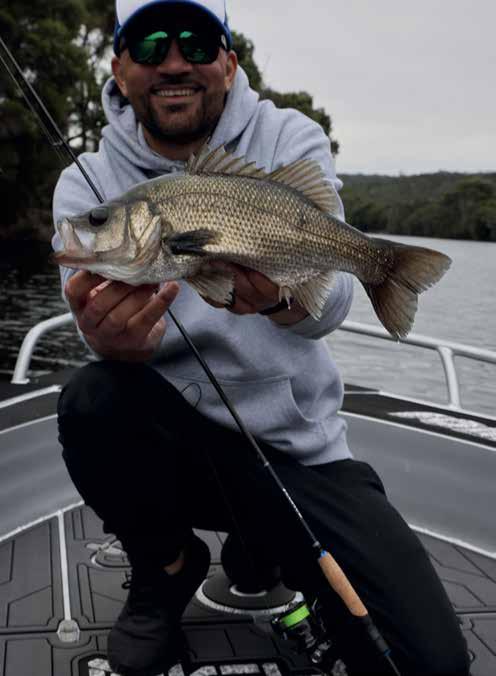
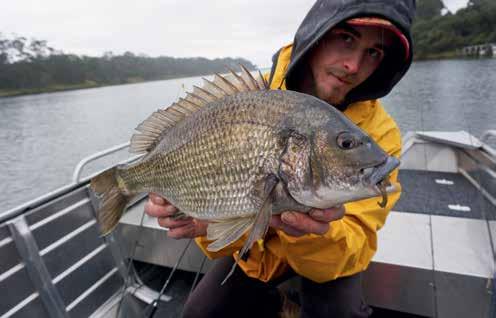
Lures that have natural movement on the drop are key. Curl tail grubs, small paddle tails and prawn imitations all work well because they create action without needing much angler input.
That first drop is critical. Often the bite comes as the lure sinks, not during the retrieve.
For bream, vibes, blades and small plastics are go-to options in deeper water. For perch, plastics, jerkbaits and small swimbaits all have their place, often fished a little more aggressively around structure.
Hard-bodies still work, particularly suspending jerkbaits. A simple twitchtwitch-pause retrieve can be deadly, especially when fish are reluctant to commit. And don’t be afraid to go a little bigger in deeper water. Bigger profiles can


stand out more and draw attention from fish holding off the bottom.
If there’s one thing that consistently separates good winter anglers from average ones, it’s attention to detail. Everything matters.
Approach quietly. Avoid sudden noise. Take your time positioning the boat. Fish lighter leaders where possible.
Even small improvements — better lure presentation, smoother retrieves, quieter movement — can dramatically increase your catch rate.
Winter fishing is often a game of inches.
If you want a system that showcases everything winter bream and perch fishing has to offer, Bemm River is right up there. This East Gippsland system offers a mix of lake, river and estuary fishing, with both species readily available.
In winter, the deeper sections of the lake hold schooling bream, while the river snags produce quality perch and bream for those willing to put in the work.
It’s also a great example of how conditions — such as whether the mouth is open or closed — can completely change how a system fishes.
On the other side of the state in the west is Nelson and the Glenelg River, another epic system that holds great numbers of big bream and perch. They’re both systems I visit regularly through winter when the local bays don’t have too much to offer in the way of lure fishing. There are closer places to Melbourne you can visit for both these species, but these two systems hold lots of fish and big fish and provide structure, rock walls, flats, bridges and pontoons. These are awesome places to fish and if you’re keen on an inexpensive trip away chasing some timber thugs then both are highly recommended.
Winter fishing isn’t about numbers It’s about quality, consistency, and understanding how fish behave when conditions change.
The anglers who embrace it quickly realise that it’s not a shutdown period — it’s just a different style of fishing. One that rewards patience, precision, and a bit of thought that rewards you with big fish and memorable sessions.



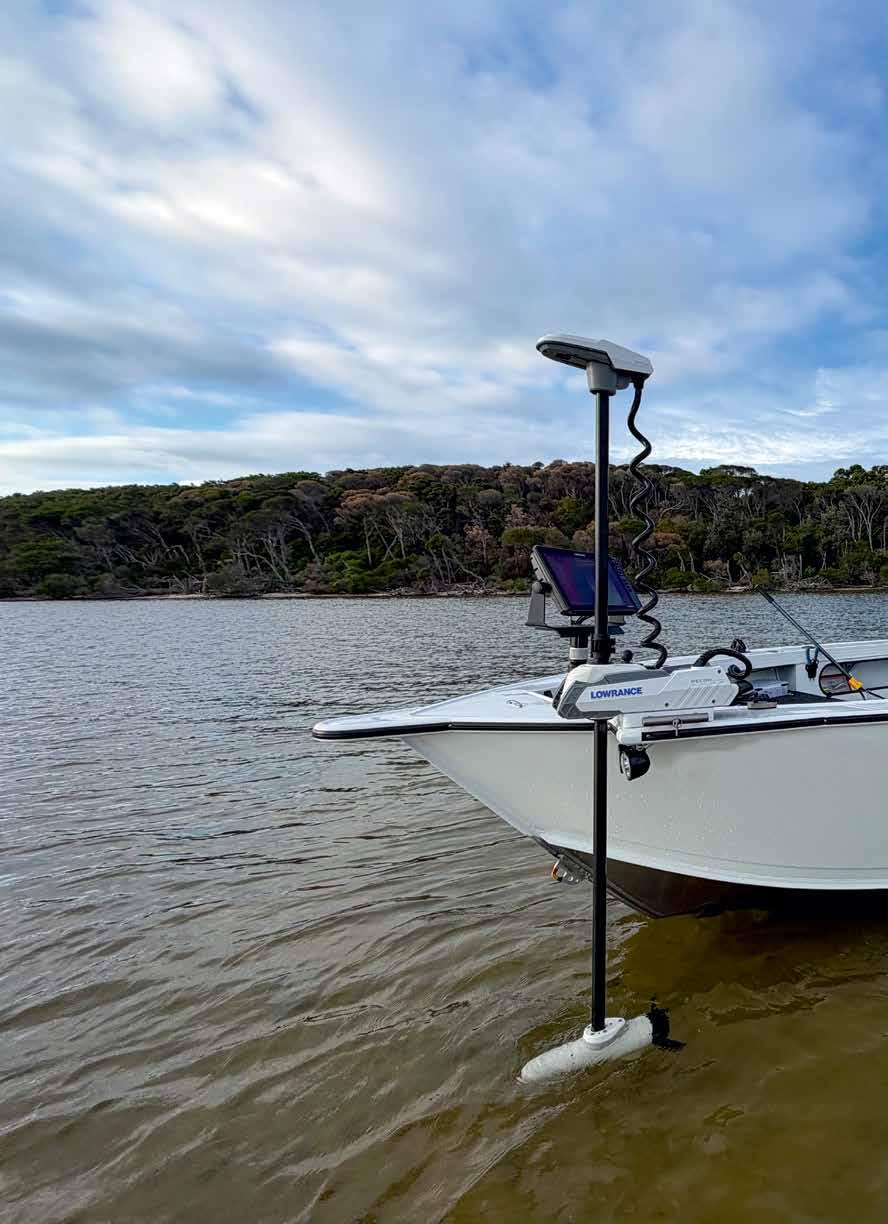
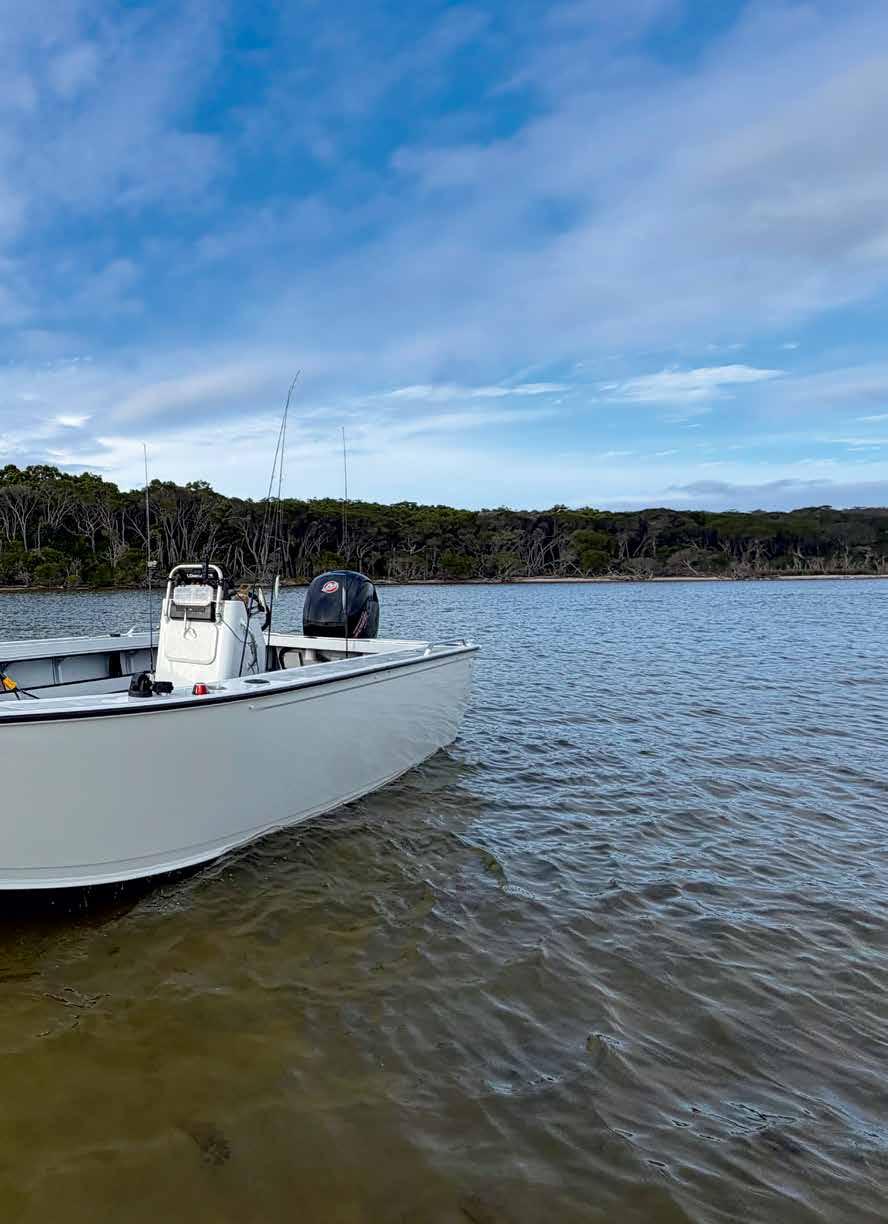
The new Lowrance Recon is a big step forward for anglers already running Lowrance or Simrad electronics. With full integration, wireless control and a focus on precision boat handling, it’s more than just an electric motor. After putting it through its paces chasing flathead and mulloway at Mallacoota, here’s how it stacks up on the water.
Words & Images: Kosta Linardos
Distributed By: Lowrance Australia – Web: lowrance.com
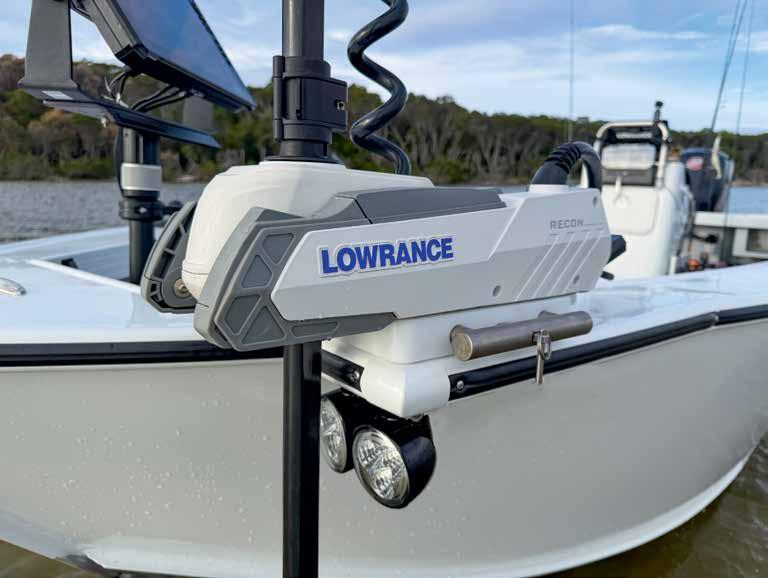
The Recon is a compact and stylish looking unit that’s been designed for fisherman. It’s ergonomic and easy to operate.

Size: 72inch - Power: 36v
Thrust: 115lb - Weight: 30kg
Motor Type: Brushless Price: $6899
Target Species: Dusky Flathead/Mulloway
Location: Mallacoota Inlet
Features used: Anchor, Auto Pilot, Heading Lock and Course Lock.
Controls: Hand remote, foot pedal & Lowrance HDS Pro
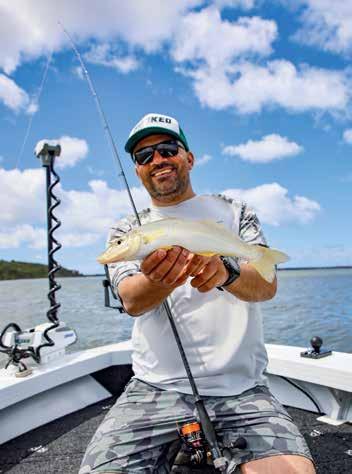
Electric motors have always been a core part of modern lure fishing. Whether you’re working edges for bream, holding on a reef, or creeping along a flat chasing flathead, they’ve gone from a luxury to an essential bit of kit. Over time, as sounders and motors began to integrate, things stepped up again. Spotlock replaced anchors, GPS control improved boat positioning, and suddenly anglers had a level of precision that just wasn’t possible before.
But for a long time, if you were running Lowrance or Simrad electronics, you were missing that full integration. That gap is now well and truly closed with the release of the Recon electric motor.
I’ve been running a Lowrance Recon on my Stacer 589 Crossfire, paired with twin HDS Pro units – a 12 at the helm and a 16 up front – along with ActiveTarget 2. It’s a fully integrated system, and after putting it through a proper workout chasing flathead and mulloway up at Mallacoota, I’ve got a pretty good handle on what it does well.
FIRST IMPRESSIONS
The unit I’m running is the 24/36V model with a 72inch shaft, which gives you flexibility depending on how you want to rig your boat. It’s available in multiple shaft lengths to suit different hulls, and once it’s mounted, it feels solid and well thought out straight away. One of the big things that stands out with the Recon is the build quality. It’s a brushless motor, which means it’s quieter, more efficient, and requires less maintenance than older brushed designs. On the water, that translates to stealth – something that matters more than people realise, especially in shallow estuary systems where fish are easily spooked.
I’ve given it a proper test too. Fishing the flats at Mallacoota, the motor has copped its fair share of bumps on sand, timber and the odd rock, and it’s handled it without any issues. It feels robust, not fragile, which is exactly what you want when you’re fishing hard and not babying your gear.
When at anchor for fishing purposes or just changing lures, the Recon is precise and quiet and uses minimal power to hold position.
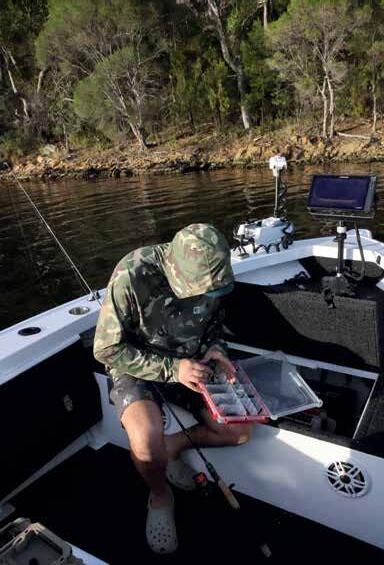
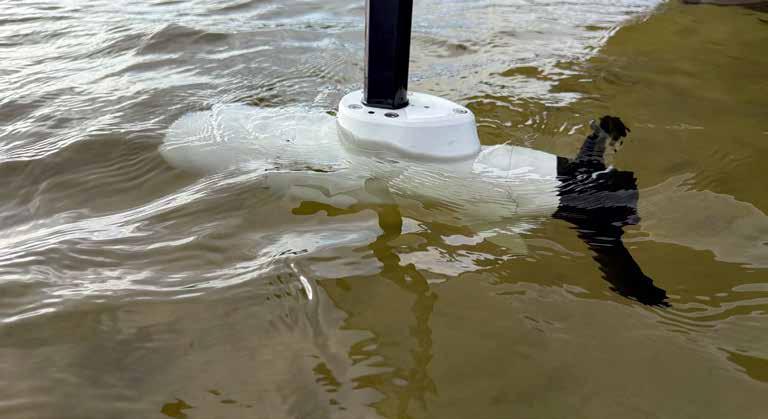
The brushless motor is quiet, power efficient and robust.
The integration between the Recon and the HDS Pro units is excellent. It greatly enhances your fishing experince by keeping things simple.
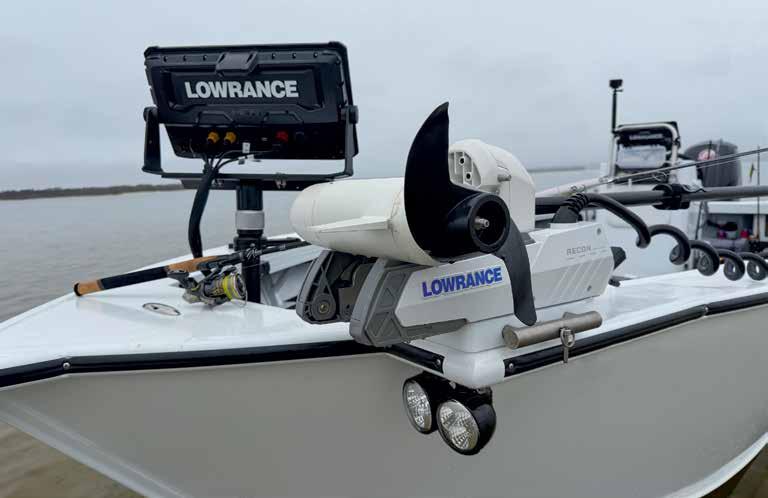
This is where the Recon really separates itself. If you’re already running Lowrance, particularly the HDS Pro units, the integration is seamless. The motor links straight into your system, and everything is controlled through the screen. It’s clean, simple, and easy to use.
The autopilot function is a standout. I spent a fair bit of time bait fishing for mulloway at night in Mallacoota, and this is where it really shines. In the dark, on a new moon, being able to select a waypoint and have the motor drive you straight onto it is a game changer. You can control your speed, adjust your heading, and fine-tune everything from the screen. There’s no guesswork, no messing around – it just does what you tell it to do. It makes moving between spots effortless and lets you focus on fishing instead of driving the boat. For lure fishing, particularly on the flats, it’s just as valuable. You can set a track, repeat a drift, or follow a contour. Once you find a productive line, you can run it again and again without fighting wind or current. That alone saves time and keeps you in the strike zone longer.
The handheld remote is another area where the Recon gets it right. It’s light, ergonomic, and easy to use. The buttons are well laid out, and navigating through the menus is straightforward. It doesn’t feel clunky or overcomplicated, which is important when you’re trying to make quick adjustments while fishing. One of the big wins for me is that it runs on standard AA batteries. It sounds simple, but it’s a huge advantage. There’s no charging cables to forget, no downtime waiting for it to
recharge, and no stress about it going flat mid-session. I use it from the helm and love the rear buttons and customisation options. It integrates with various sonar features such as Active Target.
The wireless foot pedal is something I didn’t realise I’d appreciate as much as I do.
Traditionally, foot pedals are fixed to the bow, wired into the motor, and you’re stuck using them in that position. The Recon changes that completely.
Because it’s wireless, you can move it anywhere on the deck. That might not sound like a big deal, but in real-world fishing it makes a huge difference. Boats don’t always sit perfectly straight – especially when you’re drifting. More often than not, you’re sitting sideways to the wind or current.
Being able to reposition the pedal so it’s directly in front of you, rather than having to stand up at the bow, is a big advantage. It keeps you comfortable and lets you stay focused on your casting.
I’ve been using it a lot when drifting edges for flathead. You can just bump the motor forward or back to stay in the right depth without overcorrecting. It’s subtle control, but it keeps you in that perfect zone.
There’s also an optional add-on section that gives you left and right buttons instead of the traditional pedal-style steering. Personally, I prefer this. It feels more precise and gives you better control, particularly when making small adjustments.
The pedal itself is quick to connect, and it goes into a sleep mode when not in use to save battery. A simple press wakes it
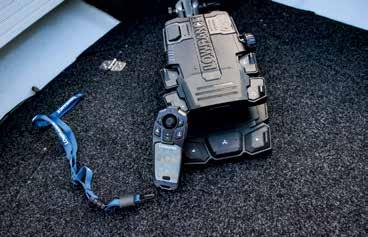
back up, and you’re good to go. Like the remote, it runs on AA batteries, which keeps things simple and reliable. You can also customise the buttons to suit your preferences, and it comes with stickers so you can label everything clearly. It’s a small detail, but it shows that some thought has gone into how people actually use the product.
Power consumption is always a big talking point with electric motors, and the Recon does well here.
Running it on an Enerdrive 36V system, I’ve been getting around three full days of heavy use without needing to recharge. That’s a mix of drifting, spot-locking, and travelling between spots, so it’s not exactly light use. The efficiency comes down to that brushless design. It draws less power while still delivering strong thrust, which means longer run times and less stress on your battery system.
There are a few smaller features that really add to the overall experience. One I like is the blue indicator light on the motor head. When the prop is spinning, the light is on. It sounds simple, but at very low speeds it can sometimes be hard to tell if the motor is actually engaged. This removes any guesswork. There’s also a prop icon on the display, so between the two you always know what the motor is doing.
The interface on the HDS Pro gives you access to different steering patterns as well – things like circles or U-turns. They’re handy in certain situations, but where I find the real value is in being able to record and repeat tracks. Once you dial in a productive drift or path, the motor can follow it exactly,
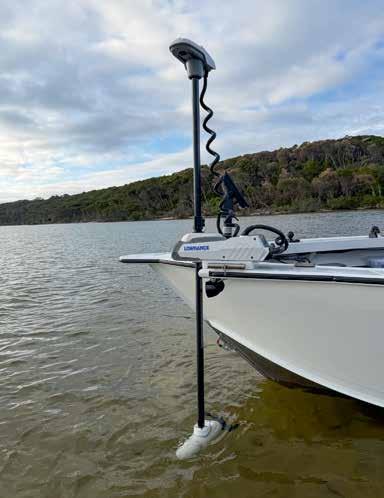
which keeps you fishing efficiently.
Another big tick for the Recon is the focus on serviceability. Parts are readily available, and the design allows for user servicing where needed. That’s a big deal, particularly for anglers who use their gear hard and don’t want long downtime waiting on repairs.
It’s clear Lowrance has thought about the long-term ownership side of things, not just the initial sale.
All the features in the world don’t mean much if the motor doesn’t perform, but on the water the Recon delivers.
It’s quiet, responsive, and powerful. Whether you’re holding position in current, creeping along a flat, or moving between spots, it does exactly what you need it to do.
For me, most of the use has been in estuaries and rivers, and it’s been excellent in that environment. Precise boat control, minimal noise, and seamless integration with the electronics make a real difference.
It’s also worth mentioning that it just looks good. That might not matter to everyone, but if you take pride in your boat, it’s a nice bonus.
If you’re already running Lowrance or Simrad electronics, the Recon is an easy recommendation.
The integration alone makes it worthwhile, but when you add in the build quality, battery efficiency, wireless control options, and overall performance, it’s a very complete package.
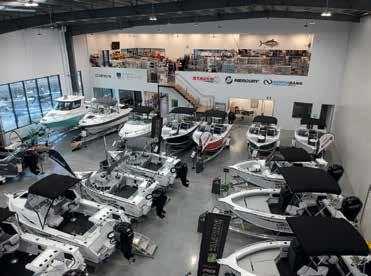
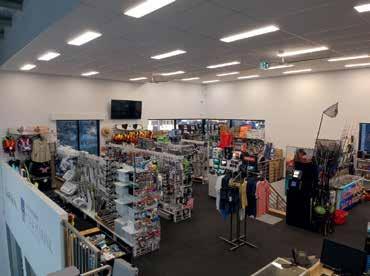
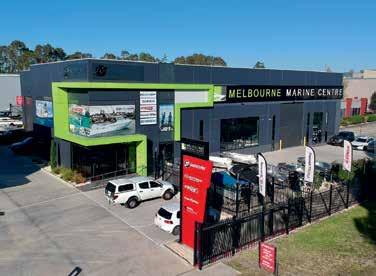
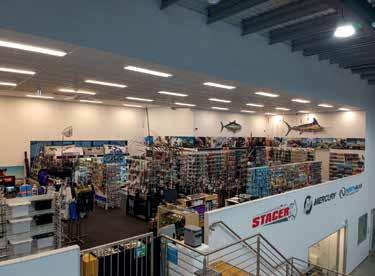
Melbourne Marine Centre is a true one-stop destination for boaters who want quality gear, expert advice and professional service under one roof. As authorised dealers for Stacer and Northbank boats and Mercury outboards, the team can match you with the right package whether you’re upgrading or starting fresh. Inside the full showroom you’ll find leading marine electronics from Garmin, Simrad & Lowrance along with an extensive range of boating parts and accessories to suit every setup. There’s also a well-stocked fishing tackle store, plus a six-bay workshop offering servicing on all makes and models and everything from fitting new electronics through to complete custom boat fit-outs