5 NEW JAPANESE MADE REELS TROLLING FOR SPANISH MACK DEEP DROPPING FOR BLUE-EYE CHOOSING OVERHEADS
3 NEW LURES TESTED




5 NEW JAPANESE MADE REELS TROLLING FOR SPANISH MACK DEEP DROPPING FOR BLUE-EYE CHOOSING OVERHEADS
3 NEW LURES TESTED
In my role as the publisher of Hooked Up, I’m in constant communication with anglers from all corners of the country. Fishing conversations dominate my day, engaging with both seasoned and novice anglers alike. What I consistently observe is a tendency among anglers to resist evolving their approach. While this resistance may stem from arrogance in some cases, more often, it arises from perceived levels of success.
Consider this scenario: You engage in snapper fishing once a week over a month, employing a specific technique that yields success on two sessions, a moderate outcome on one, and fails entirely on another occasion. During the challenging days, it’s easy to attribute the lack of success to factors like weather or tides, and sometimes, this explanation is entirely valid. On the successful days, the familiar technique delivers five fish, leaving you content.
However, what if a slight or even complete departure from your usual approach could have doubled your catch rate or resulted in larger fish? The potential for significantly better outcomes on your good days is often overlooked. I’ve found that exceptional anglers don’t settle for an average successful session; instead, they strive for more. This pursuit is driven by a willingness to experiment, a hunger for knowledge, and a readiness to adapt their techniques.
Many anglers aim to replicate or surpass their personal best or outdo their fishing mates without realising they might be fishing well below their true potential. The essence here is that fishing is a dynamic activity, continually evolving. New techniques aren’t mere passing fads designed to sell more tackle; they are pathways to expanding your skill set. By embracing innovation, you enhance your capabilities as a fisherman, increasing your success in catching more and larger fish across diverse locations and weather conditions.
If the sole allure of fishing were merely the enjoyment of being outdoors, we might as well take up hiking. The key lies in continuous learning — read more, watch more, inquire more — and, most importantly, be unafraid to evolve.
Kosta Linardos. Editor-in-Chief
CONTRIBUTORS
Adam Hewson, Oliver Wood, Jonah Yick, Sammy Leys, Colby Lesko, David Sloane
info@hookedup.com.au

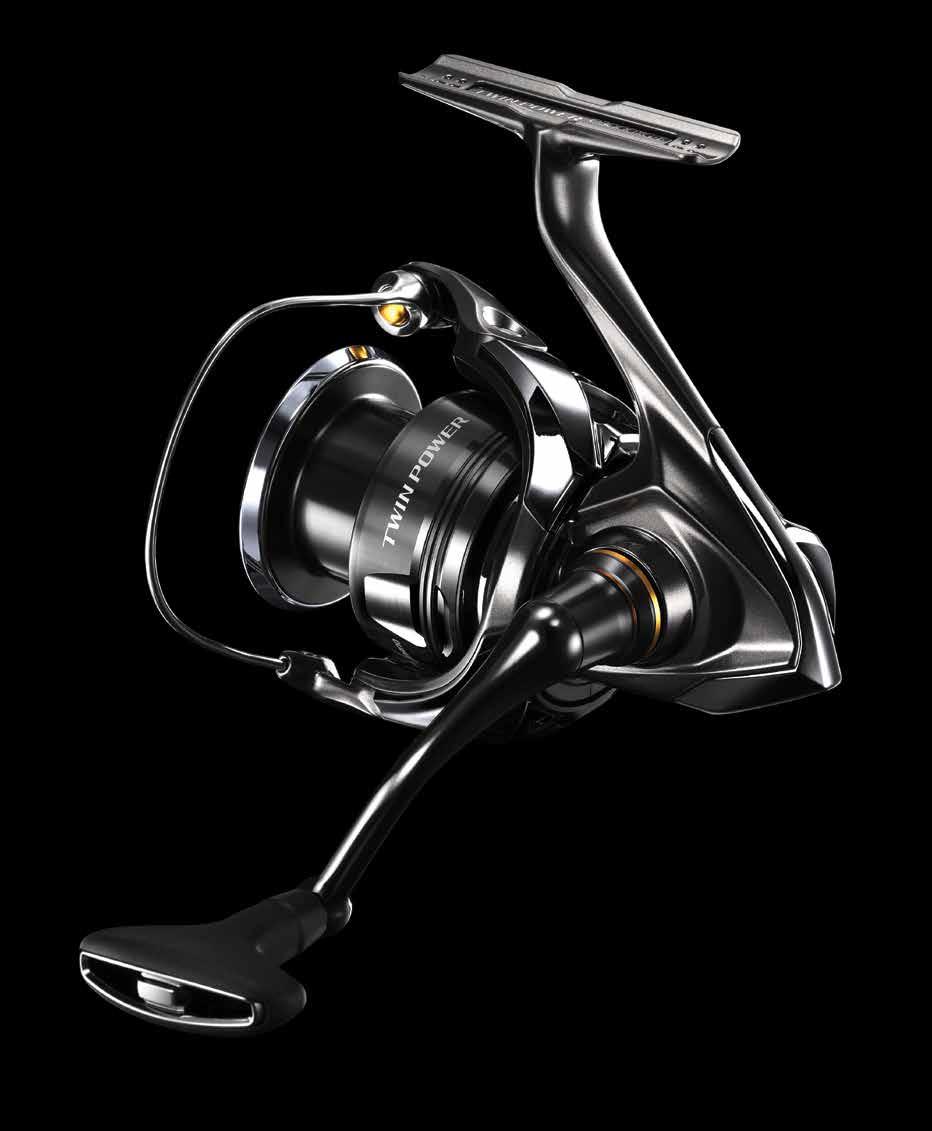
TWIN POWER HAS EPITOMISED STRENGTH FOR OVER THREE DECADES.
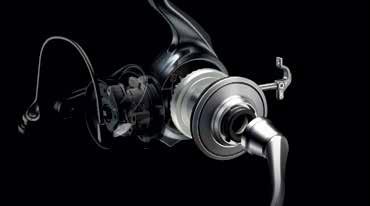
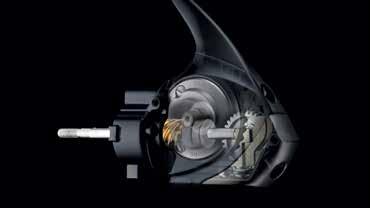
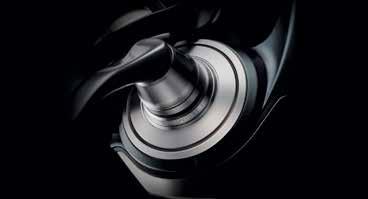
Utilising metal for both the body and the rotor the new Twin Power FE series is a reel designed for big fish and deserving of the word “power” in its name. The cutting-edge features that have made Twin Power so popular remain with the addition of five new technologies taken straight from the Stella FK series. INFINITYXROSS, INFINITYLOOP, INFINITYDRIVE, DURACROSS and ANTI TWIST FIN make this Shimano’s strongest, longest lasting Twin Power ever. The all-new Twin Power FE series provides consistent reliable performance in the most challenging conditions.
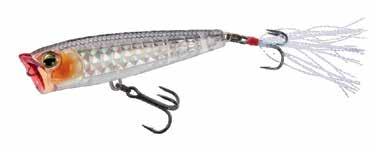
Yo-Zuri’s 3DR-X Popper features internationally patented 3D internal prism scale finishes that sends off light in all directions. This is a compact 65mm popper that even entry level anglers can fish with using a pop and stop or walking action. It features multiple rattles and ultra sharp black nickel hooks and is available in 6 colours. Its slender design and tail weight make this lure ideal for casting for Whiting, Bream and Bass. Weighing 6 grams in total this lure is designed to float tail down in the water for instant action on retrieval and improved hook up rate.
tacspo.com.au
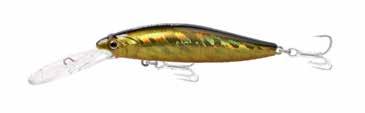
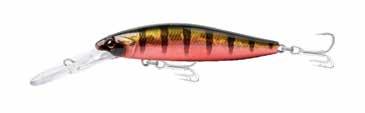
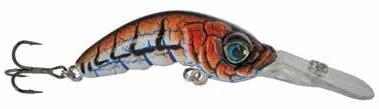
Samaki has added a new model to the extremely popular Redic series- the Redic Jerkbait MS90. This medium diving suspending jerkbait, weighing 16.3g and diving to 1.5 feet, retains the responsive and enticing action the Redic series has become known for but with a suspending buoancy. The Redic Jerkbait MS90 is engineered with top-tier materials, featuring premium ABS construction and supersonic welding technology for durability in challenging environments. Designed to excel in action and strength, it caters to diverse fishing preferences, targeting species such as barramundi, mangrove jack, jewfish and flathead.
samaki.com.au
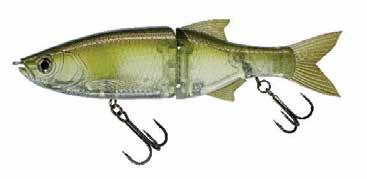
The Molix Glidebait 130 Slow Sinking produces a wide S-shaped action on a slow retrieve and can be twitched erratically to create enticing side-toside darting action. Featuring realistic dorsal, tail, and pectoral fins made from soft plastic materials, these slow-sinking glide baits provide fish with an approachable mid-size profile and give anglers the ability to impart full 180-degrees turns. Armed with two razor-sharp and ultra-strong treble hooks attached to swiveling hook hangers, the Molix Glide Bait 130 prevents large fish from locking up the split rings to gain leverage and throw the lure during the fight. The perfect tool for big predator hunting, the Molix Glide Bait 130 Slow Sinking attracts curious fish with custom 3D eyes and realistic foragematching colour patterns, and a special UV coating that offers long-lasting durability.
ejtodd.com.au
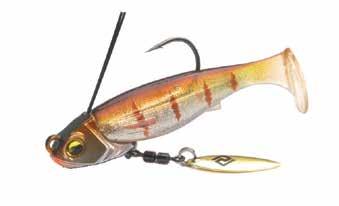
Raid Headswimmer Libero is a jig head type ultra-compact swimbait developed for use in severe cold weather. The head equipped with a brush guard is designed to catch fish firmly on the bottom and prevent from falling over. Headswimmer Libero is effective in winter areas where hard bottom, dead weeds and fallen leaves accumulate, and where lipless crankbaits and metal vibrations, which are often used in the cold season, get caught on roots. The small body is equipped with a large tail and a tiny blade on the head. A small body packed with a heap of action makes it the perfect lure in the colder seasons. The tail, which acts nimbly regardless of retrieve speed, attracts fish on the fall and when dragging along the bottom. It can be used in a variety of ways, such as lift-and-fall and dragging on the bottom, as well as mid-range swimming, so it turns on the bite from all angles, even for difficult fish in the winter season. Available in 4in at both 5g and 7g and 5in at 10g and 14g. Made in Japan.
vivafishing.com.au
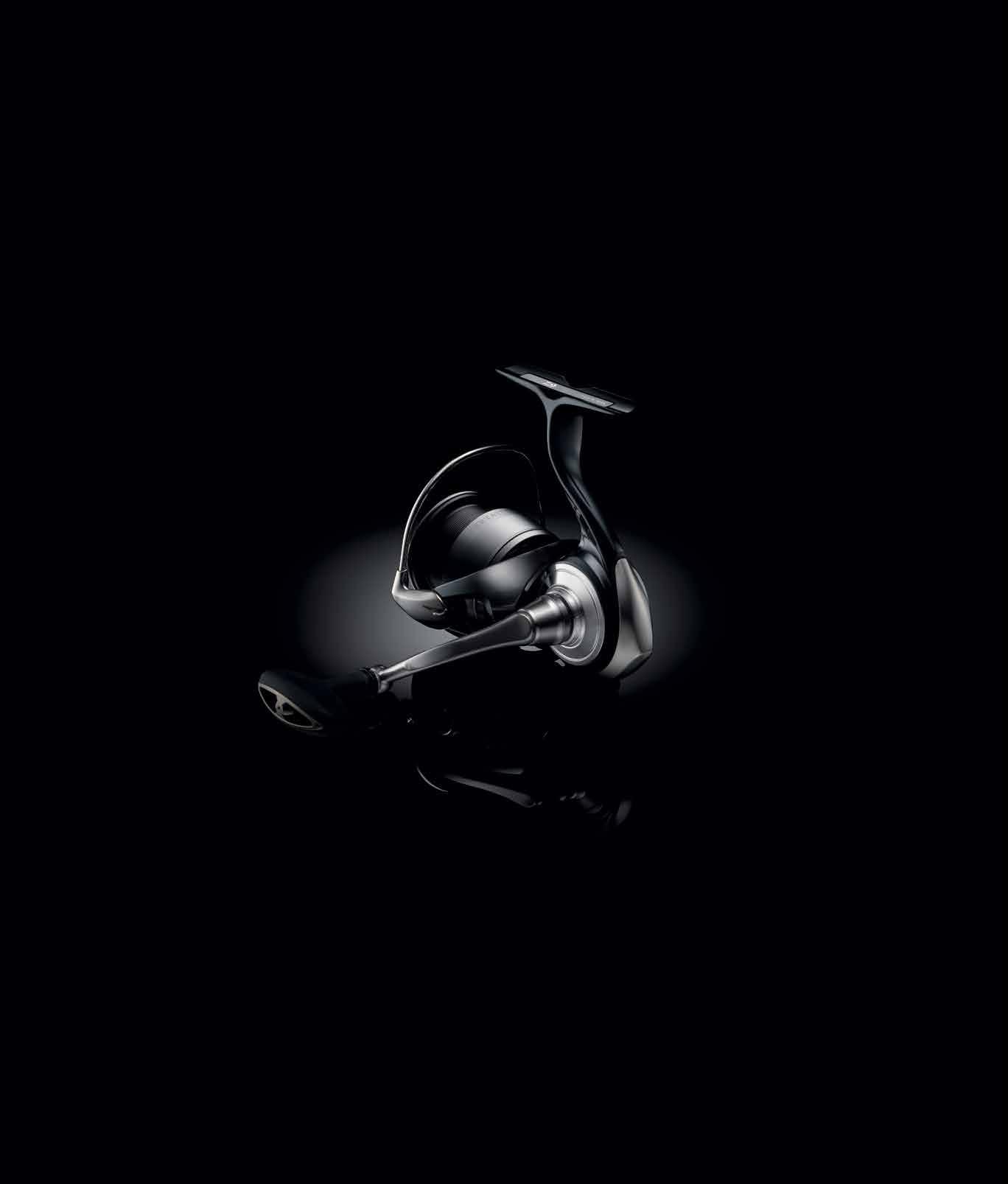
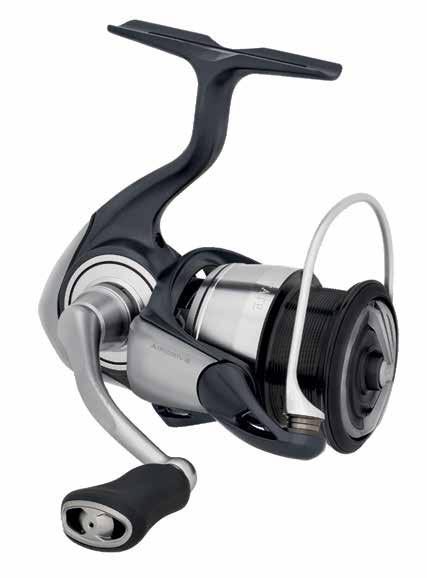
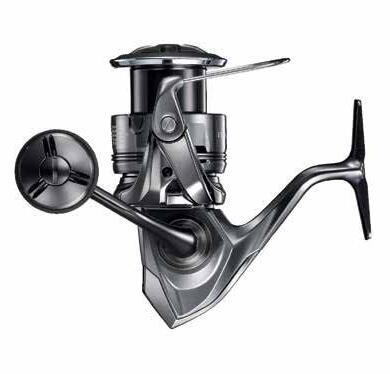
Be strong, No limit. 24 Certate’s new catch phrase perfectly embodies the next generation of Daiwa’s iconic and much-loved flagship reel. Now equipped with Daiwa’s latest spin reel design concept, Airdrive Design, Certate is more refined than ever, and ready to take on the challenge of Australia’s hardest fighting fish.
The cornerstone of Certate’s reputation is a solid aluminium body construction. 24 Certate features a single-piece Monocoque (MQ) body that is over 20% more rigid than its competitors. The rigid and robust body construction empowers the angler in tough situations, ensuring no loss of efficiency from the gearing due to unwanted body flex.
24 Certate’s Tough Digigear Duralumin drive gear sports a new surface treatment process first debuted in 22 Exist, that significantly increases gear durability, maintaining that buttery smooth feeling for longer. The result is a Certate that is stronger and more refined, than those before it.
These two technologies synergise beautifully to make 24 Certate one of the highest power-to-size ratio reels Daiwa has ever produced. The 24 Certate features a roll call of new improvements, enhancements in design that will elevate your angling experience and increase the reel’s lifespan.
The water-resistant rubber gasket underneath the handle has been redesigned and has further improved the water resistance of the reel. While the drag click plate located underneath the spool is now a composite material to enhance the audible drag sound, delivering the angler a more pronounced drag sound during the heat of battle. The 5000 size models in the range come factory equipped with a high-durability carbon drag stack, providing the angler with enhance drag power and longevity.
As usual, all the Daiwa technology you’ve come to know and love is packed into 24 Certate, with Magseal present in both the rotor and line roller (non FC models), while Twistbuster III, ATD Type-L drags (2000-4000) and ABS Longcast spool designs combined to deliver unmatched line control and unmatched casting performance.
Available in sizes ranging from 2000 - 5000 and in a host of various spool depth and gear ratio combinations there is sure to be a 24 Certate to suit your fishing style.
daiwafishing.com.au
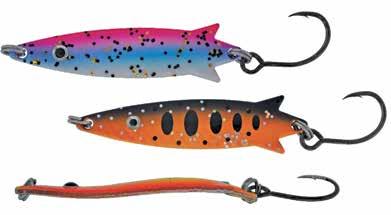
The Bushranger Toby Spoon is an all-time classic favourite lure in freshwater. It is now being offered with some outstanding new fish catching colour schemes. This lure has an enticing swaying action that fish find very appealing. The Toby Spoon has been rigged with a black nickel Single In-Line hook that helps stop the fish from throwing the hooks. The Bushranger Toby spoon is 9grams in weight comes in 5 brilliant colours and is dynamite on all Salmonoid species and Australian Salmon.
jurofishing.com
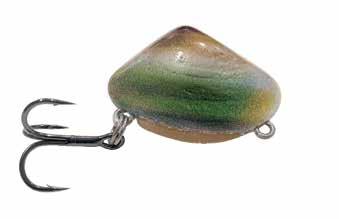
The Clamer is a unique hardbody pipi imitation that is perfect for targeting a huge array of fresh and saltwater species. It can be retrieved in a variety of ways allowing it to be fished at various depths and in different waters. It can be used on a slow retrieve like a crank bait or as a vibration lure with a unique fall action as it flutters down. The Clamer is straight through wired and fitted with quality rings and ultra-sharp finesse treble hooks. The Clamer has been designed so it visually appears slightly open (but its internally sealed) with soft plastic material imitating part of the lip muscle protruding out which adds extra action as well as a visual attractant. Asakura have also included an internal rattle to provide a sonic attribute. There are 12 unique colours imitating mussel, oyster, pipi, clam and more. The Clamer is designed right here in Australia and made in Japan.
vivafishing.com.au
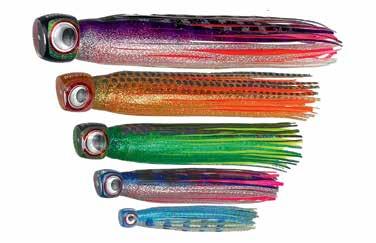
The Quasi series has performance characteristics unknown in other lure designs. The stout head design incorporates an oversized 10 degree sliced face that produces a huge bubble trail over a range of speeds from 5 - 9 knots. This extremely dynamic lure is best suited to the short corner position in the pattern but also performs well when fished from the outriggers. The Quasi is both a marlin lure, and an outstanding tuna lure in its smaller sizes. There are six sizes available in the Quasi series. The largest in the range is the gigantic XOS Quasi, ideal for targeting the biggest of fish on tackle built for the task, down to the Quasi #5, a lure that performs amazingly well.
meridiantackle.com.au
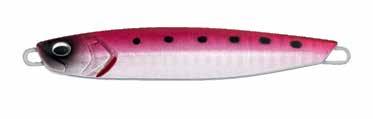
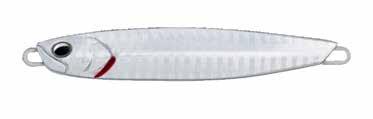
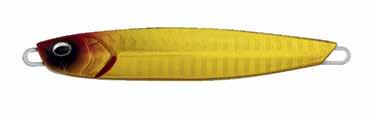
Jig loving anglers are in for a treat in 2024. Daiwa’s OT (Over There) jig is a casting-specific metal slug that has been developed specifically for Australia, with hooks and colours that are sure to get every serious slugger excited. Available in four weights (20g, 30g, 40g, 60g) OT jig caters to the most popular and sought after sizes. Whether you’re throwing at fussy tuna schools in Hervey Bay or trying to reach those salmon schools off the beach in WA, Daiwa’s OT jig will have a size to suit. Available in five high-quality colours, the finish on OT jig is outstanding, just what you’d expect of a premium deep-water or slow pitch jig. Perfectly matched to Daiwa’s large range of shore-casting and surf reels, OT jig is a great option for your next shore-casting or slugging adventure.
daiwafishing.com.au
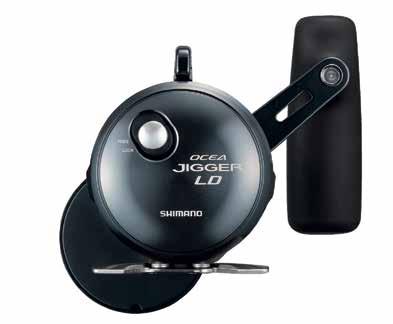
Designed for the enthusiast angler seeking the ultimate challenge, this reel introduces a ground breaking 30% reduction in rotational torque, courtesy of the innovative double-drag structure. Say goodbye to the limitations of conventional lever drags and embrace a new era of control and power. Unleash the Ocea Jigger LD in the pursuit of giants like Kingfish and Nannygai. This reel not only meets but exceeds the demands of battling large fish, offering a maximum drag of 20 kg an extraordinary force in such a compact body. The Ocea Jigger LD outperforms even larger reels, ensuring a seamless fishing experience. Dive into the meticulous design philosophy, where weight reduction meets rigidity and durability. The drive gear sheds 12g, and the handle knob’s 12% increase enhances operability while maintaining a lightweight profile. The Ocea Jigger LD is crafted for comfortable gripping and handling, embodying the essence of precision jigging. Customization takes centre stage with the Ocea Jigger LD. The interchangeable drag cams allow anglers to tailor the reel to their preferences, smoothly transitioning between drag forces for various fishing scenarios. From battling giants in deep seas to targeting mid-depth table fish that need to be pulled from their home, this reel adapts effortlessly. Join the league of jigging enthusiasts who have embraced the Ocea Jigger LD as more than a reel but an art form. Conquer giants, master the depths, and redefine your jigging experience with the Ocea Jigger
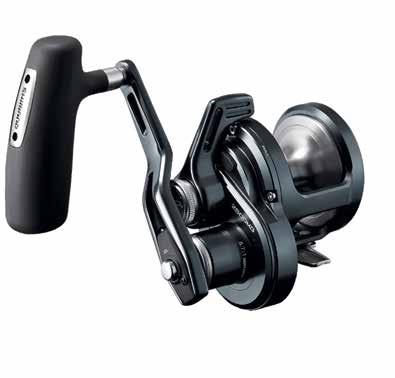
Shimano proudly unveils the Twin Power FE series. The Twin Power name has been a byword for strength and durability in the realm of fishing reels for over three decades. Crafted with a robust metal body and rotor, this reel is specifically designed to conquer the challenges posed by Australia’s most formidable fish. Building on the legacy of the acclaimed Twin Power line, the FE series introduces five cutting edge features adopted from the Stella FK series. The Infinityxross, Infinityloop, Infinitydrive, Duracross, and Anti Twist Fin technologies redefine the angler’s experience, ensuring the reels performance and longevity. Shimano proudly declares this as their strongest and longest lasting Twin Power reel ever. Anglers can expect unparalleled strength, precision, and durability, making the Twin Power FE series the ultimate companion for those seeking to conquer the waters and tackle Australia’s hardest fighting sportfish. Elevate your angling prowess with the re-evolution of power, the Twin Power FE.
shimanofish.com.au
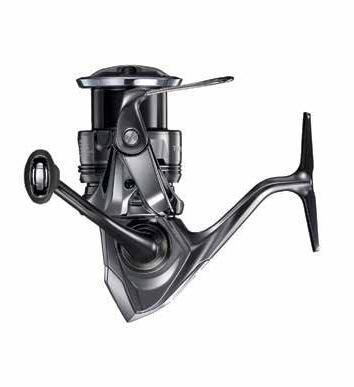
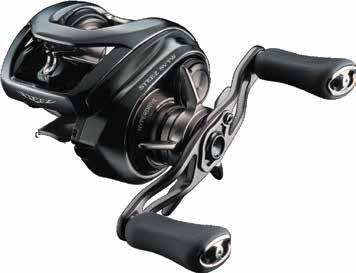
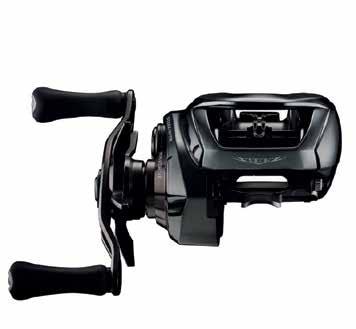
Steez has a rich history in the Daiwa family as the premium flagship brand of bass fishing equipment, and a new year welcomes a new reel with the 24 Steez debuting Ultimate Casting Design. To achieve Ultimate Casting Design Daiwa have aligned four key elements, each developed to their limit and for ultimate performance. Developing and perfecting one element was not enough, it took all parts acting together to bring Ultimate Casting Design to life. The four pillars of Ultimate Casting Design are Ultimate Casting Brake (Magforce + Variable Inductor), Ultimate Casting Line Guide (TWS T-Wing System), Ultimate Casting Zero Adjust (Zero Adjuster) and Ultimate Casting Spool (G1 Dualumin spool). When all four of these are harmonized, the imagination of perfect casting performance is realised.
Daiwa’s advancements of a completely non-contact electromagnetic braking system have been under development since the introduction of Magforce braking over 20 years ago. By creating a completely non-contact structure it eliminates all friction and therefore is not easily affected by outside factors such as moisture or humidity. The adaptation of a two-stage variable inductor which is controlled by the spool’s rotation means performance for lightweight lures, versatility or super long casting can be achieved with Ultimate Casting Brake.
While Ultimate Casting Design headlines the design of the new 24 Steez, the new super reel features many of Daiwa finest and most loved technologies with Hyperdrive Design, UTD Drag, Infinite Ant-Reverse, Hyperdrive Digigear, and CRBB bearings delivering classic Steez strength, refinement and performance. 24 Steez is the most advanced and well-rounded Steez ever created. The realization of Ultimate Casting Design has created a new benchmark in design and a new era in casting performance.
daiwafishing.com.au
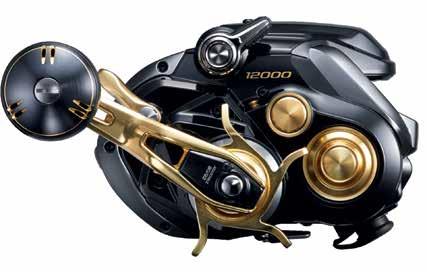
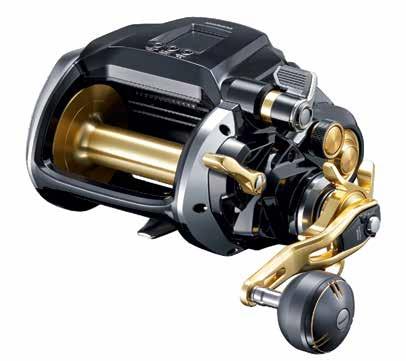
The Beastmaster MD 12000 is Shimano’s most powerful and largest electric reel ever, created to deliver the overwhelming power and speed needed to catch big fish in deep water. Giga-Max Motor, with 2.5 times the motor torque and 38 kg of practical winding endurance. The drive power that combines overwhelming speed and power is supported by a reinforced gear system that incorporates Shimano’s superior durability and attention to detail. The drag force, which is the decisive factor in a fight with an ultra-large fish, reaches an astonishing 43 kg, making it Shimano’s most powerful ever for reeling in huge fish with unparalleled power. The Hagane body, a highly rigid metal body, houses this astonishing power. The body is protected from heat generated by the drag section by means of a heat dissipation system, enabling the angler to fight for long periods of time. The 80/92 mm long handle makes it easy to reel in the fish when fishing near the boat’s edge. An info screen displays sub surface data in real time in colour, essential for catching the moment when you encounter a big fish. The strongest and largest ever Shimano power rod. The MD12000, a “true beast” boasting power and speed never before experienced, marks a new chapter in big game and deep-sea fishing.
shimanofish.com.au


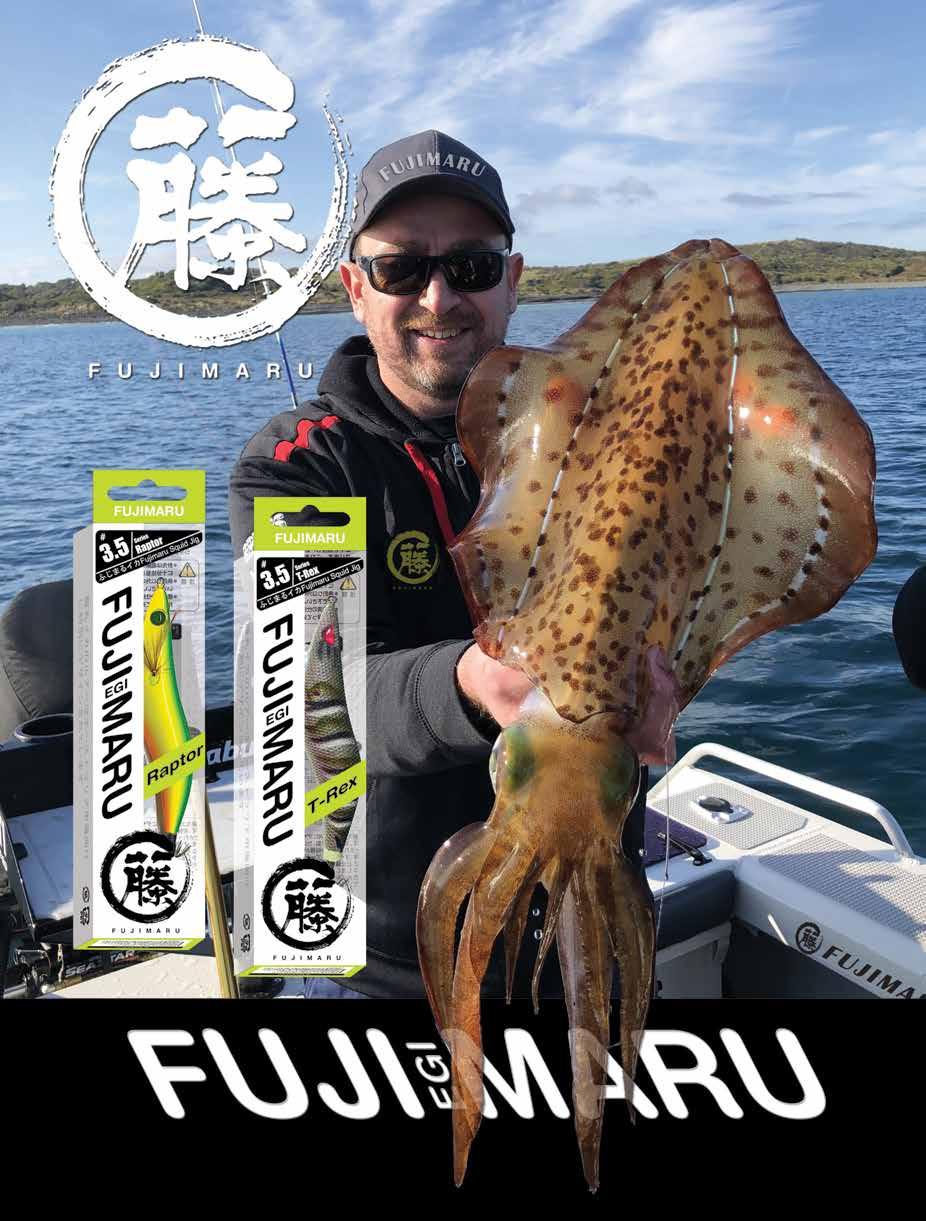
The Head Start Diver is a quick rig system designed for rigging garfish, dead baits and the product specific designed Chewy-Hoo soft plastic (26.6cm). Its unique ‘through eye’ locking system results in faster rigging and a natural swimming action both at surface and depth. Available in both a diving and surface design, moulded from tough and durable polycarbonate material this American made product is available in 7 enticing colours and can be trolled up to 6 knots. Suitable for all pelagic species. Spare bead chains and hooks are available. tacspo.com.au
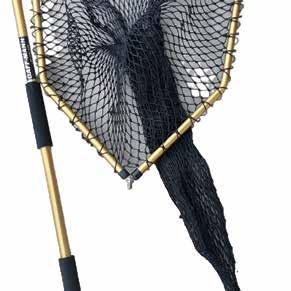
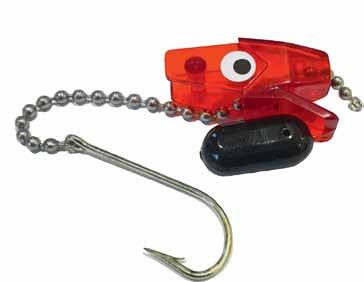
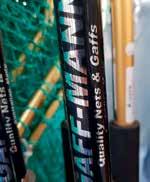
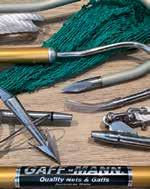
Introducing the Gaff-Mann Heavy duty landing net. Hand crafted with precision in Australia, this net is specially designed for the challenges of heavy-duty fishing. The head is anodized inside and out, using structural grade aluminium for maximum strength and corrosion resistance, ensuring longevity in the harshest marine environments. The structural-grade aluminium handle, measuring 1010mm, is fully marine anodized. This fishing net boasts a remarkable capacity, effortlessly handling up to 40kg, and is also used by commercial salmon farmers in Tasmania. This landing net is ideal for landing extra-large gummy sharks, school sharks, snapper, kingfish and more. There are 2 models in the range, starting with the GAF0007N 500 x 500 x 800mm the next model up is the GAF0089N 600 x 670 x 1200mm, providing ample space for a variety of catches. The mesh is heavy duty ensures durability and reliability in every fishing expedition. The detachable gaff head, measuring 8mm x 75mm, adds versatility to your fishing gear, allowing you to adapt to different situations with ease. Handmade with meticulous attention to detail, this Australian-designed product reflects the commitment to quality that defines the Gaff-Mann brand. Longer handles lengths of 1210mm and 1410mm are available as an optional extra.
gaffmann.com.au
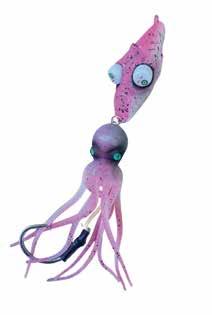
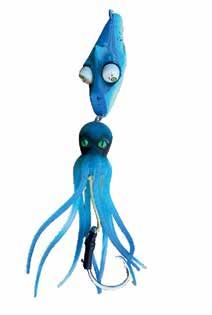
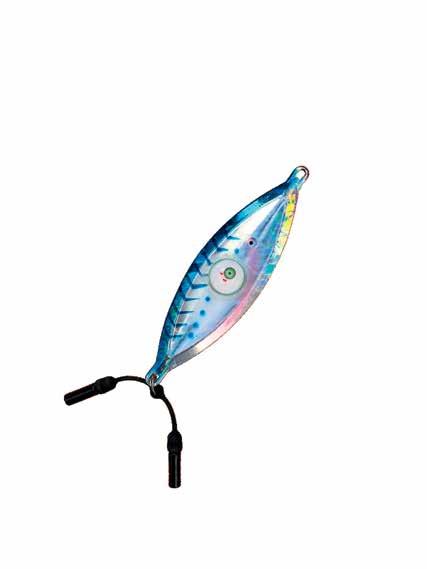
The Glowbite Crazy Eyes lure is a revolutionary new design for deep drops. Weighing in at 700 grams, this lure features two blue flashing lights that illuminate the hook and lure skirt. Water activated and lasting more than 70 hours in the water, the lights mimic the luminous blue glow that is emitted by many deep water prey species and they take your deep water fishing to the next level! Crazy Eyes lures also have a built in fish scent dispenser with patented shut off mechanism. Fill this with your favourite fish attractant and watch your bite rate soar as a mini berley trail is slowly released behind your lure. Supplied with an ultra-tough, high stretch TPR octopus skirt and scary-sharp stainless steel hook. Replacement hooks and skirts are also sold separately. Available in lumo blue or lumo pink with matching luminous octopus skirts. glowbite.com.au
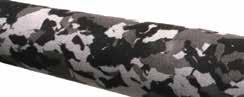
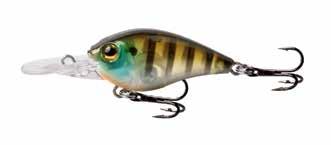
The Fishcraft B-Cranky 46M is a versatile mid-depth crankbait designed for targeting various species like bream, Australian bass, and more. With a tight, fast vibrating action and a 2m running depth, it’s ideal for fishing deeper sand flats, edges, drop-offs, and structures. Weighing 7 grams and measuring 46mm, it’s an ultra-light tackle finesse bait. The lure comes in custom finishes such as Camo, Running Prawn, Spotted Prawn, and others, covering diverse saltwater and freshwater conditions. Constructed with hi-impact ABS, it features a fish-attracting rattle and stainless steel split rings. Each lure is tuned to swim straight out of the box, providing anglers with an effective and adaptable fishing solution. fishcraft.com.au


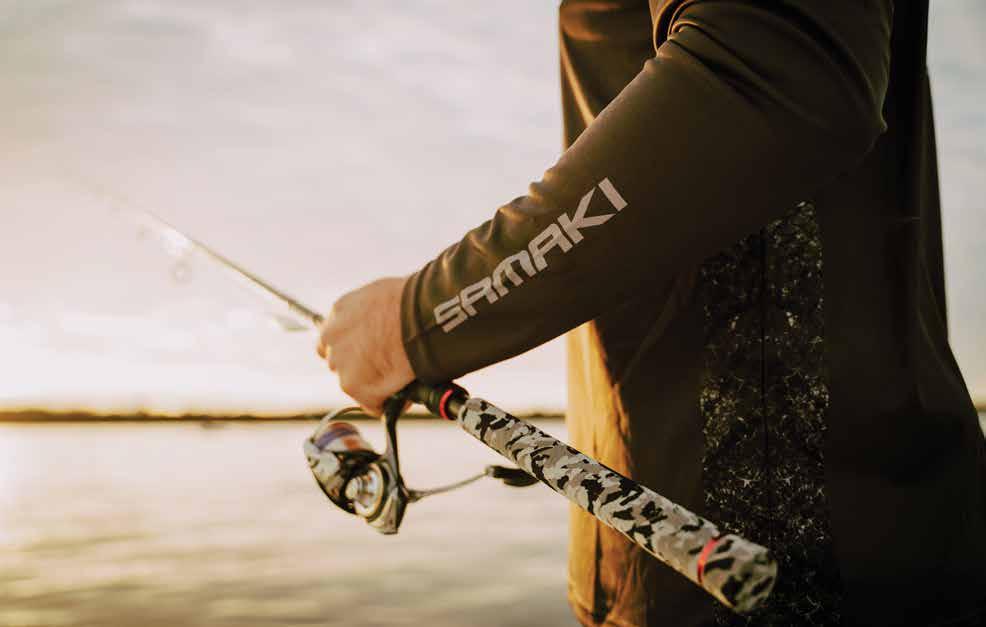



















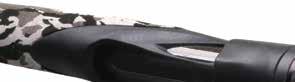


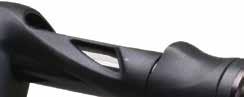

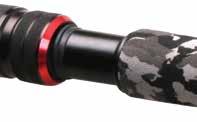



While slow pitch is a technique invented in Japan, there were never rods designed to handle the huge kingfish, dogtooth tuna and hapuka we encounter in our southern waters. Jig Star saw this gap in the market and developed a range of slow pitch rods that could handle heavy slow pitch jigs, deep water and big fish. The range features traditional light rods from PE0.8 through to heavy rods at PE5. The Slow Jerk rods are available in four one-piece models and four two-piece models and feature high quality Toray Graphite Blanks, Fuji TCS Reel Seats, Fuji ‘K’ Frame Alconite Guides and custom componentry. The two-piece models all feature a spiral guide train and the section sleeve is in the top of the foregrip on the rod. Each rod comes with a distinctively embroidered rod bag. jurofishing.com
The St. Croix Legend Tournament Bass rods that have been released in Australia have been bought into the country with one thing in mind, big baits for targeting Murray cod. These rods feature Fuji SK2 Skeleton reel seat for reduced weight and sensitivity with high grade cork handles. These rods also feature St.Croix’s Grasp Handle that aids with grip for pitching swimbaits and gives more control on the retrieve. The guide train features Fuji K-Series tangle free guides with Alconite rings. The rods are all handcrafted in the U.S.A. and come with St.Croix’s 15-year Unconditional Warranty. There are two big bait models in the range capable of casting up to 8oz. jurofishing.com
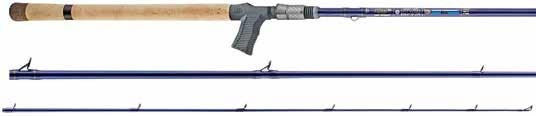
The Murasame Barra X designed by Queensland angler Caine Goward has been built to meet the demands of anglers who require a rod with both power and sensitivity. Its sleek design and feel make it stand out in the crowd, while its strength and performance make it a popular choice. The Murasame Barra X is a 7’2”, two-piece rod with a Medium/Fast action, perfect for a wide variety of fishing techniques. It has a rating of 10-20lb, making it suitable for various fishing environments, from freshwater to saltwater. vivafishing.com.au

The Samaki Zing Xtreme V3 seamlessly transitions from conquering estuaries and dams to mastering inshore reef adventures. Boasting top-tier components, including Fuji K Alconite Guides for precision casting, Japanese Toray Carbon Fibre for unmatched strength and sensitivity, and Fuji reel seats. Whether you’re exploring local waters or chasing elusive trophies, the Zing Xtreme V3 is designed to surpass expectations. Elevate your angling experience and embrace the freedom to target a diverse range of species.
samaki.com.au

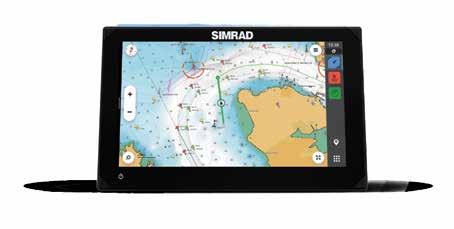
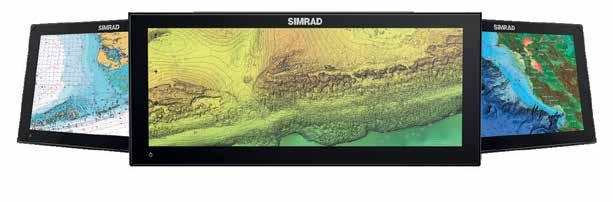
Simrad Yachting have introduced the NSX Ultrawide, the world’s first fully-featured ultrawide marine display. Delivering all the benefits of dual screens in one place, the new NSX Ultrawide is up to 63% wider than the NSX and provides a more streamlined and immersive experience resulting in an elevated dash aesthetic that unlocks new possibilities and a superior charting experience. Available in 12-inch and 15-inch screen sizes, the NSX ULTRAWIDE is a versatile premium solution for both large vessels and small to mid-size centre consoles. Boaters can upgrade their helm to a simpler and more premium display with its revolutionary aspect ratio that provides better functionality with perfectly optimized full page applications and application splits, as well as uninterrupted data flows that are easier to digest. Boaters can also create truly unique dashboards, combining multiple NSX ULTRAWIDE displays to best fit their needs. With ease-of-use at its core, the NSX platform was designed to feel instantly familiar to create a seamless experience on the water. navico.com.au
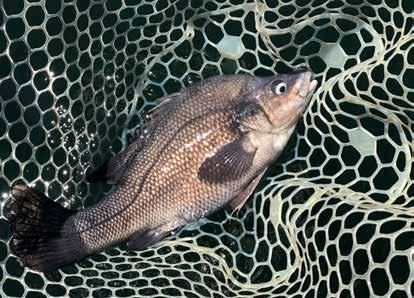
Efforts to protect Macquarie perch are being bolstered with the endangered species given protected status, banning their take by recreational fishers from two remaining Victorian waterways. Victorian Fisheries Authority (VFA) CEO Travis Dowling said take of the native fish, commonly known as ‘Maccas’, had been prohibited as part of an effort to give wild populations the best chance to be re-established. Previously Macquarie perch had a bag limit of 1 in Lake Dartmouth, which is home to an active breeding population of the fish, and a bag limit of 2 in Upper Coliban Reservoir. In 2023 the VFA began a three-year partnership worth $3.7 million led by the Federal and Victorian governments to crack the code on how to reliably breed Macquarie perch in captivity. The project is being supported by a range of government, university and community organisations and research partners. It will examine nutrition, hormones, the timing of breeding and more to understand how to consistently produce fingerlings for stocking. Since 2022, the VFA’s Snobs Creek hatchery has produced more than 185,000 Macquarie perch that have been stocked into Victorian waters to establish populations both old and new – with more to come this summer. vfa.vic.gov.au
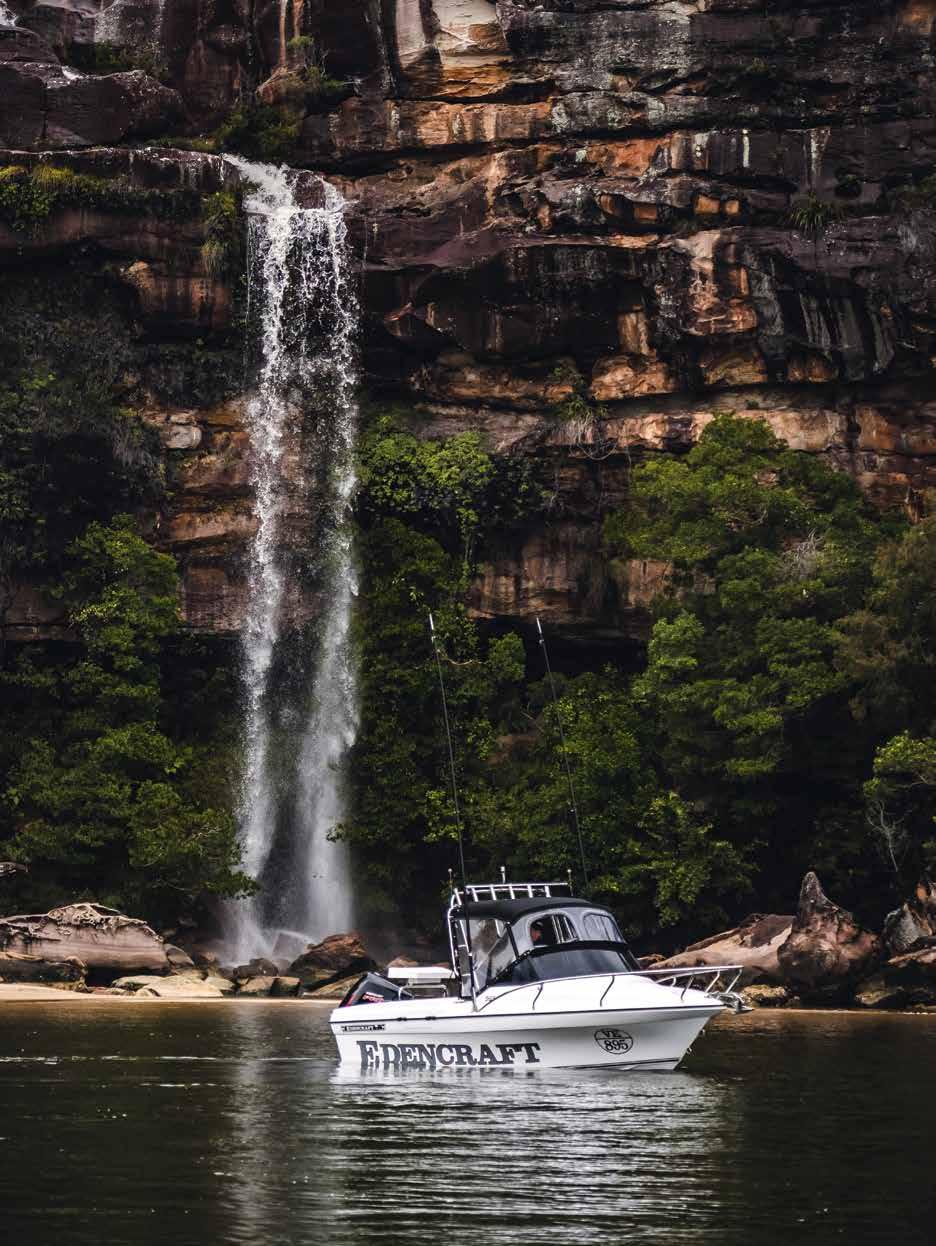
Edencraft Creative, a family-owned business operating out of Geelong, is poised to lead Australian manufacturing into a new era with the launch of their largescale CMS 5-Axis CNC machine. Capable of handling projects as large as 15.5m x 5m x 3m, this machining centre is the culmination of years of aeronautical and marine research and development. The synergistic combination of structural integrity and flexible digital solutions results in the highest level of machining speeds, precise finishes, significant increases in productivity, and proven reliability. From the tiniest component to the grandeur of a 50foot boat, Edencraft’s new centre’s capabilities span the entire spectrum of manufacturing needs. The team at Edencraft have already developed the plugs and subsequently the moulds for every component required to manufacture the new Edencraft 255 Formula that is already in production. Edencraft Creative intends to specialise in plug and mould making for fibreglass construction projects and welcome the opportunity for other manufacturers to seek their services to enhance their manufacturing capabilities. edencraft.com.au

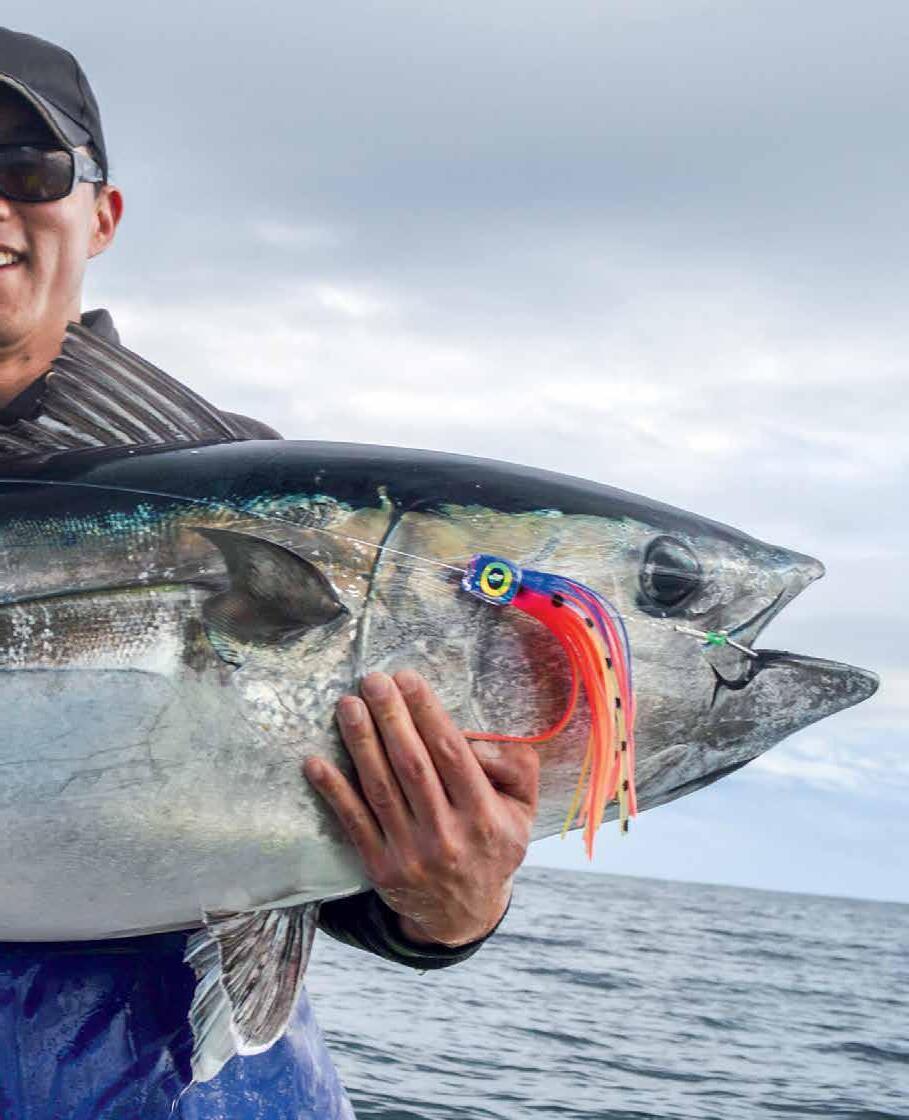
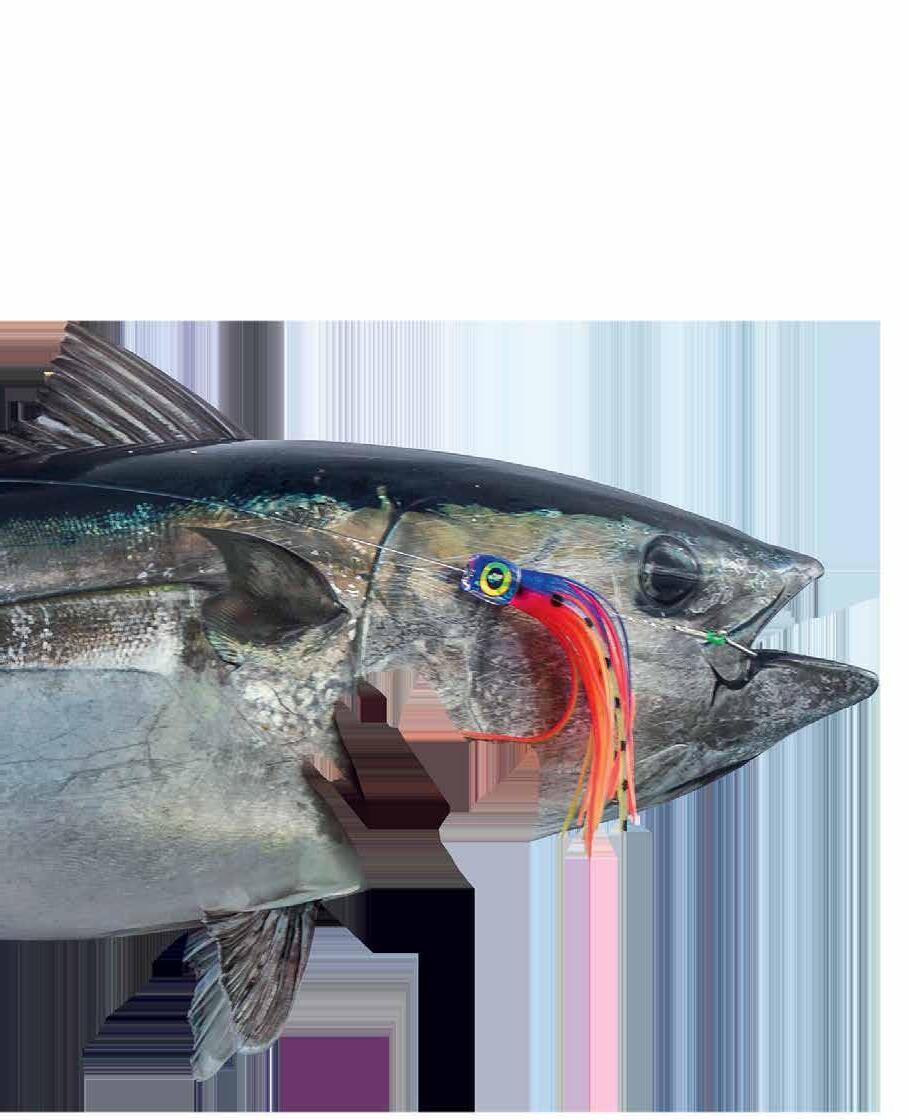
Skirted lures are an effective way of targeting tuna. Our XT and jet head lures are a proven choice for SBTs. Our range of head shapes and lure sizes are ideal for catching schoolies right through to barrels, and other pelagic species.
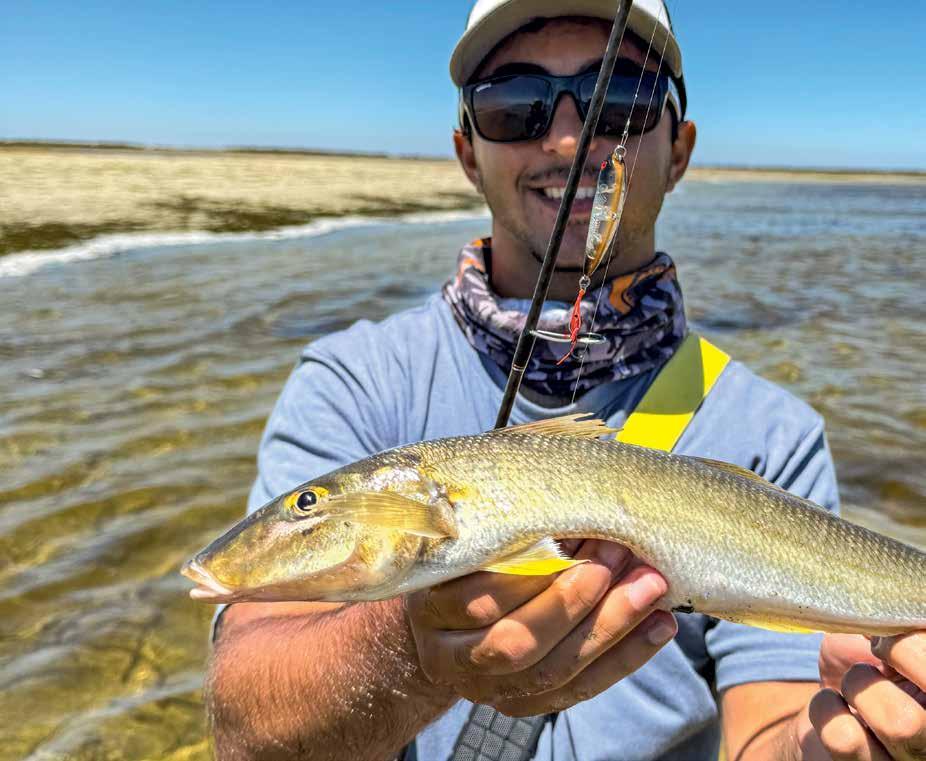
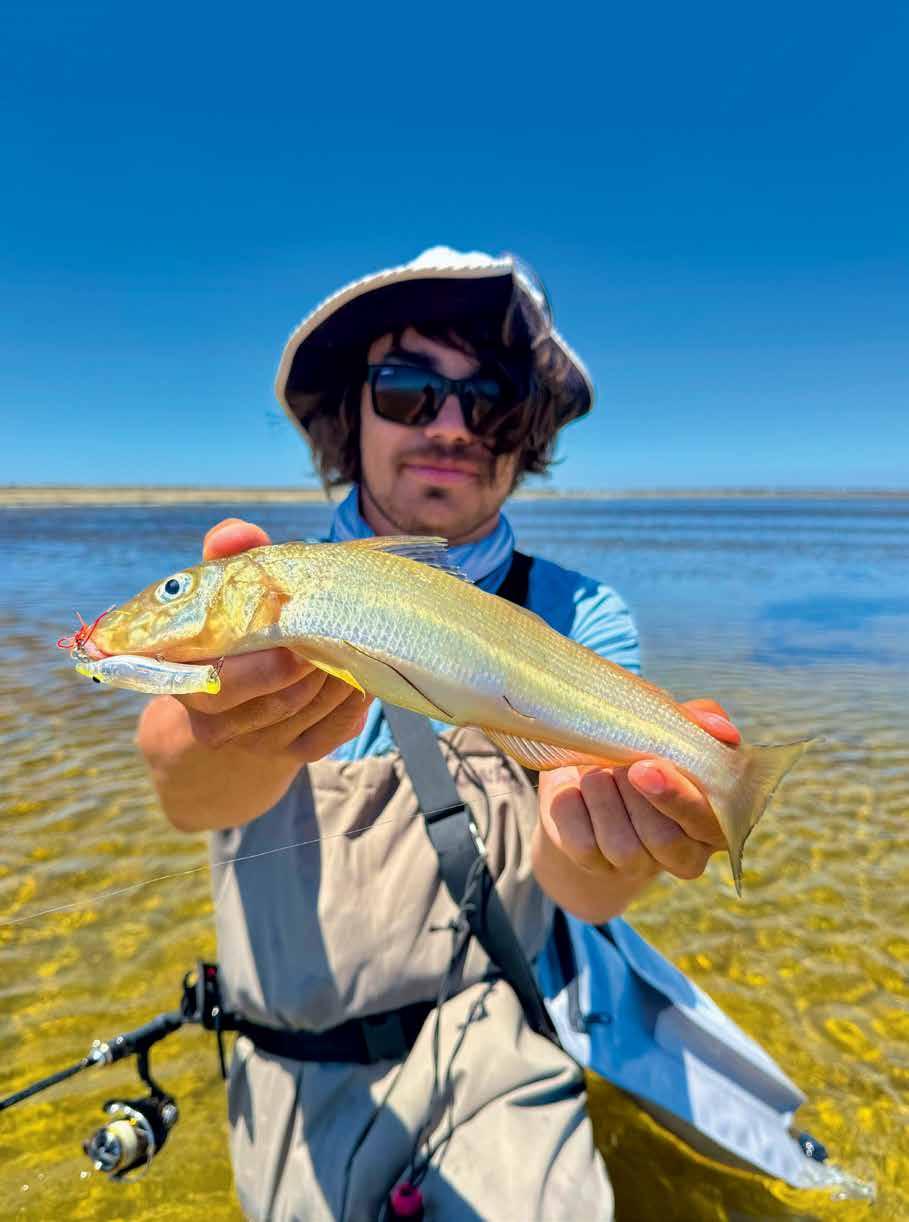
‘Walking the dog’ with topwater lures is the perfect way to tackle this feisty foe on the tidal flats
Words & Images: Oliver Wood
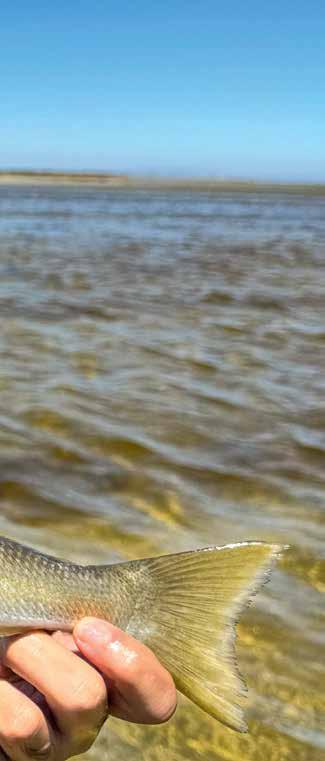
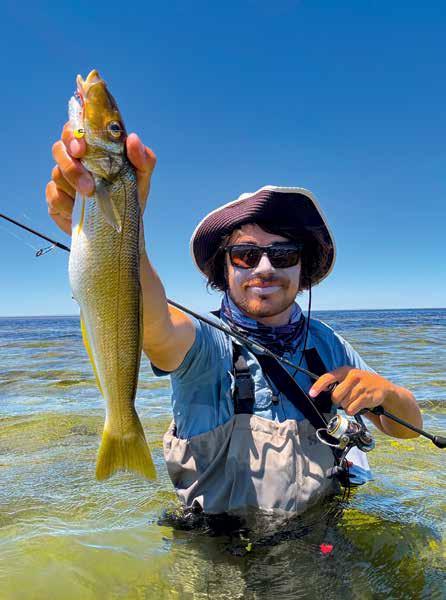
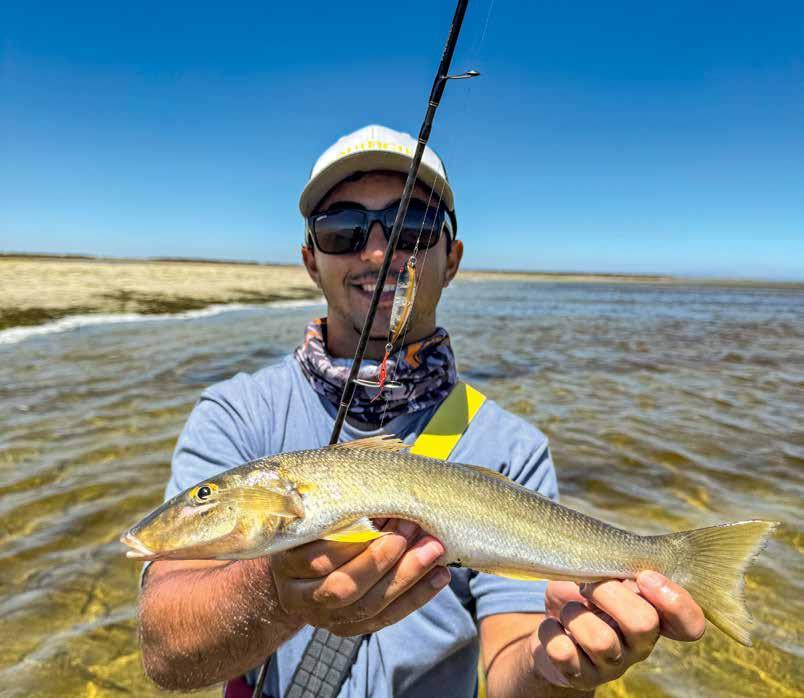
Yellowfin whiting are a fiery smaller cousin to the prized King George, but what these fish lack in size they make up for with their aggressive, punchy attitude. Traditionally, bait fishing using worms, clickers and cockles has been the most popular method of targeting these fantastic pocket rockets. However, fishing surface lures on the flats has rivalled the popularity of traditional methods. With summer now in full swing, there is no better time to target these fish, with the sun and warmer waters firing up their feeding habits.
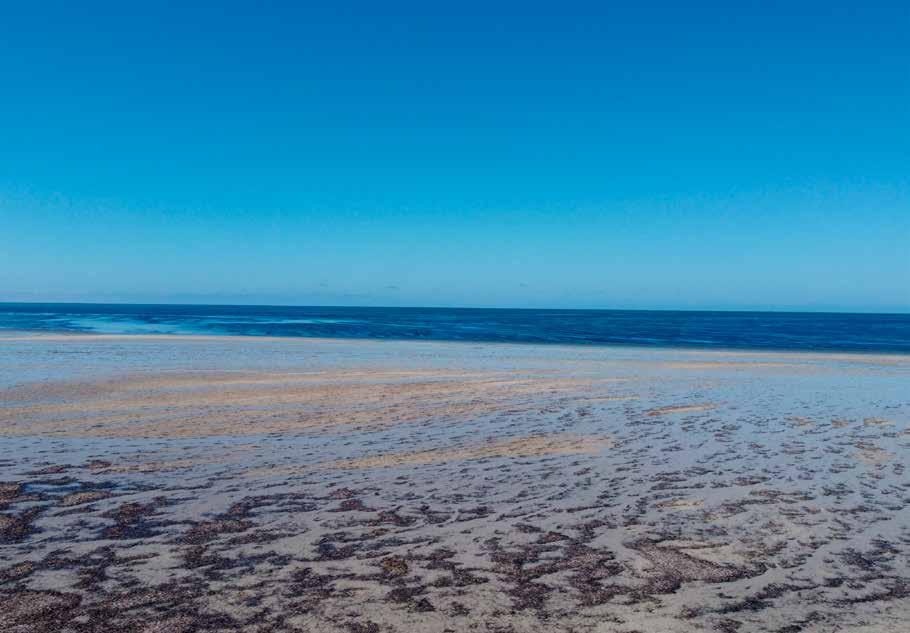
The tidal flats are vast and to the untrained eye they may seem lifeless, but they offer a dynamic ecosystem where yellowfin hunt during the flood tide. The fresh seawater travels in through channels or drains, and these are the arteries of the flats. Yellowfin whiting use these channels as highways, gliding effortlessly with the flow in search of
freshly flooded areas looking for any morsels.
Most of my catches on the flats come from these channels and the sandy eddies alongside, so locating these channels will be the key to having success. When stalking the flats keep your eyes peeled for bass yabby beds. This is a crucial element that can often mean the difference between catching or not. These little tasty morsels often live in softer, mud-like sand and yellowfin absolutely love them. If you find these beds, yellowfin will often not be far away. If these beds are located alongside channels or in eddies, they are the perfect spot to find congregations of feeding fish.
Don’t be afraid to cast the shallows as I have caught these fish in ankle-deep water. Often, I will see unsuspecting anglers spook schools of these fish completely unaware of these whiting in the shallows. The first cast I make when fishing these locations is along the shallows, working my way out slowly to deeper waters.
While bait is the easiest way of targeting these fish, I have found it interesting how the larger fish tend to be the ones caught on topwater lures and my anecdotal observations have some scientific backing. According to a study conducted in Western Australia, a yellowfin’s diet changes as it grows. Smaller fish are found with a higher stomach content of worms and bivalves and larger fish have a higher concentration of smaller shrimp and prawns, which is exactly what a topwater lure is mimicking.
Much like every style of lure on the market, the light tackle surface lure scene is jampacked with hundreds of different brands and
models. I have found colour and opacity are crucial elements that will influence a whiting’s willingness to strike, and see-through lures with splashes of natural colours are supereffective. Clear lures with bright accents are an effective pattern when the fish are ultraaggressive. Matching these lure colours to the overall colour of the water will give you an ultra-realistic presentation that the yellowfin absolutely love. For example, in more tannic, yellow-tinted waters I would throw a predominantly clear, yellow-tinted lure. For less tannic, clear water I would choose a clearer-coloured jig with brighter accents.
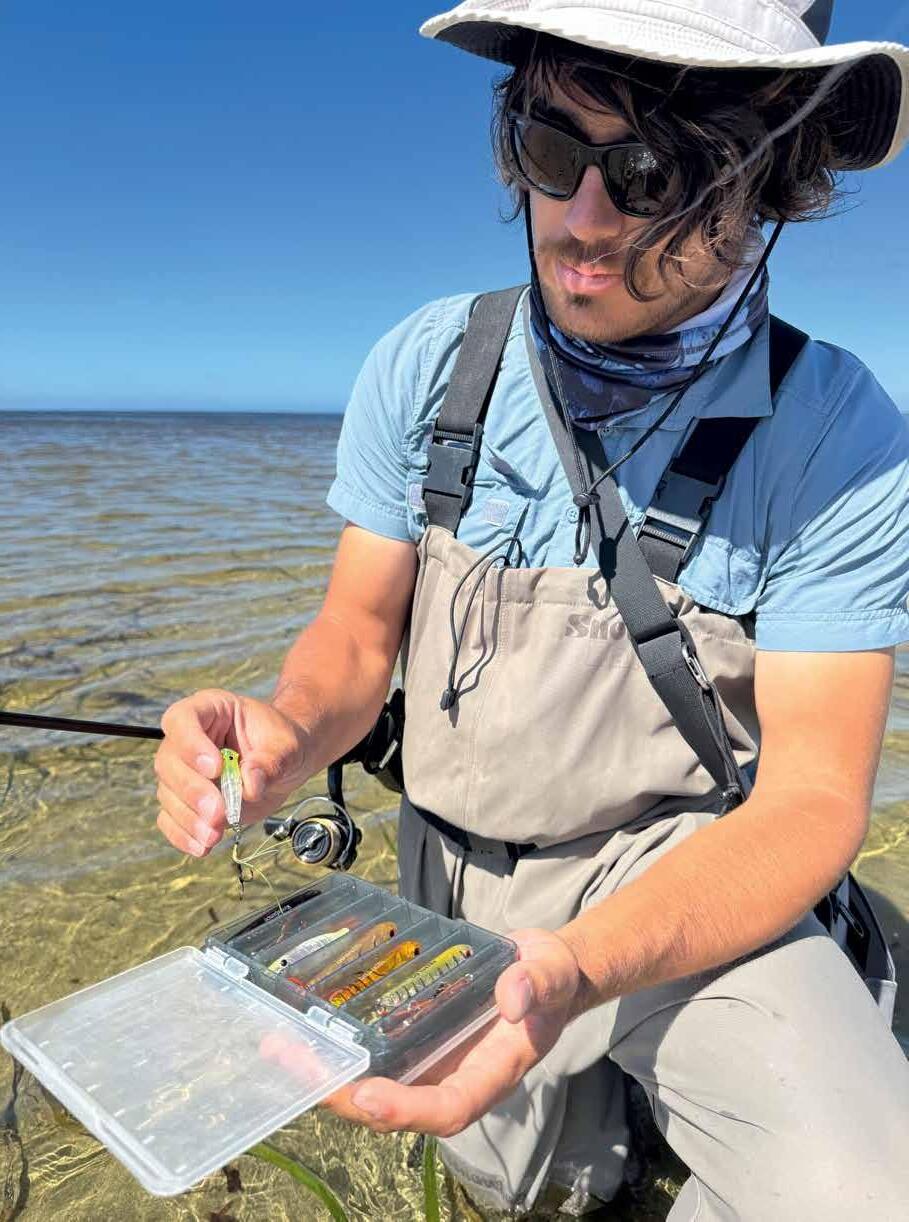
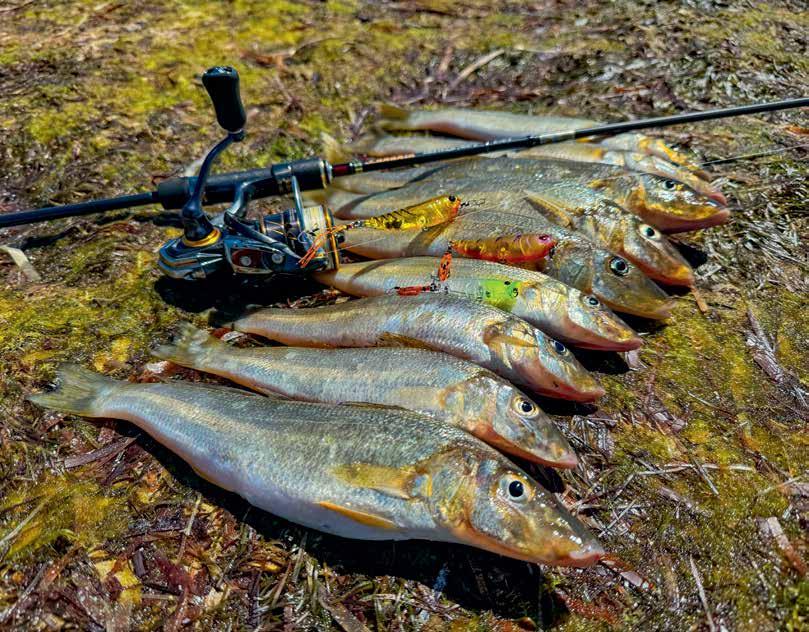
Action is obviously extremely important and small topwater lures designed to present with a walk-the-dog action are highly effective. Some of my favourite lures are Bassday Sugapens, Daiwa Slippery Dogs, Tackle House Resistance Cronuts and my personal all-time favourite, the Gladiator Kozami.
I also have great success casting micro poppers. When I was learning how to chase these fish on topwater, I had plenty of early success using small poppers due to their slightly easier workability. I have found incredible success on chartreuse-headed poppers, with my two favourites being the Gladiator Smash Popper in colour 000 and the Tackle House Shores Popper in Chartreuse Head. Generally speaking, the larger the cup face on the head of the popper, the more ‘bloop’ you will get and the easier it will be to get the desired sound and action. I found this much easier than the walk-the-dog technique when I was starting out and that transferred into landing some nice specimens right away. Finding that early success is crucial for beginner anglers, so I strongly recommend starting with poppers.
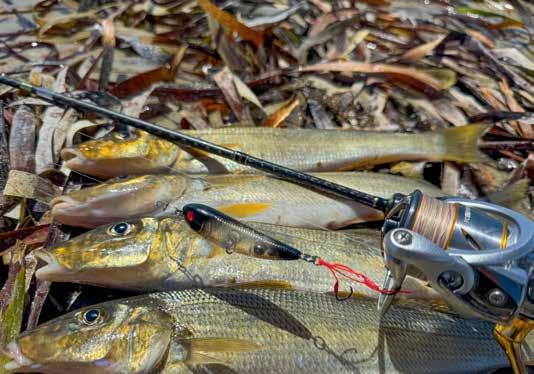
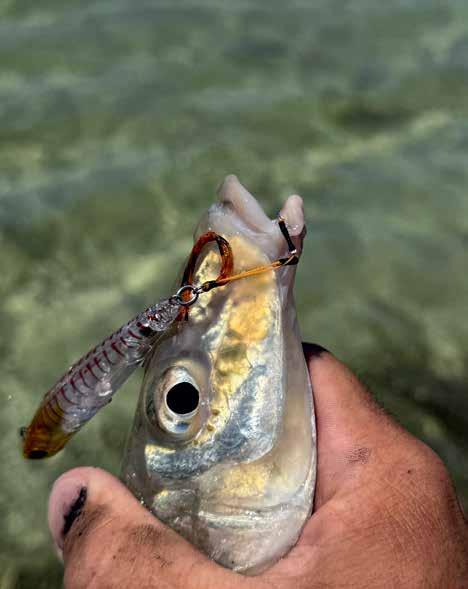
Another important consideration is the use of assist hooks as they hook more fish than trebles. I would also recommend taking the front treble and split ring off as they can often tangle with your assists. Not only do assists provide a better hook-up rate but they also imitate prawn legs, which whiting will often attack first.
The walk-the-dog technique involves many quick twitches of the rod tip while slowly retrieving line. This should get your stick bait dancing from side to side, gaining the highest level of appeal to any hungry yellowfin. Increasing your retrieval speed when you see fish following can be a great tip to help increase your success rate.
The popping technique is slightly easier – it involves a similar speed of line retrieval, but a lot less twitching of the rod. I have found the ideal twitch speed to be around two or three bloops a second.
In this finesse form of fishing, a slight twitch of the rod is all that is needed to get a nice bloop and splash. If you find your lure is skipping across the surface, your twitches are too strong. Interestingly, I have found that if you see a fish rise and start chasing your popper you should increase your retrieval speed to entice the bite. Yellowfin have extremely keen eyesight so it is important to keep your lure moving as any pause will cause a trailing fish to lose interest. This also applies for any extended pauses on your poppers.
As with every form of fishing, there is a rod and reel out there designed to suit your budget. With so many options out there, it can be intimidating or even confusing choosing a set-up that is right for you.
In general, a topwater rod designed for yellowfin will be anywhere from 6ft through to 8ft. They will also feature quite a punchy, stiff tip, which is important when working your lures. I have found the shorter rods to
be more user-friendly towards beginners who are learning the walk-the-dog technique. The longer the rod, the more difficult working the lure correctly becomes. However, anglers will enjoy the added casting distance, which is ideal for the flats, especially when the fish are skittish.
A happy medium for me is a rod between 6ft 6in and 6ft 10in that combines ease of technique and castability. The rod you choose should ideally be light and comfortable to you as you are often casting and retrieving for hours. As with all rods on the market, the more money you spend, the higher the quality, with the main differences coming with the overall weight and action of the rod.
In the case of topwater fishing, I enjoy a nice smooth, hardy reel with good line lay and good line uptake. I have found either a 1000 or 2000-size reel is ideal with a high gear ratio and spooled with a high-quality braid in PE 0.3 to 0.5.




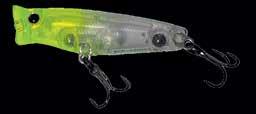
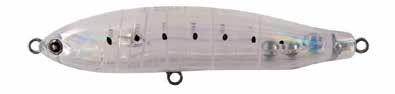
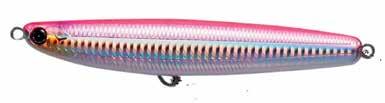
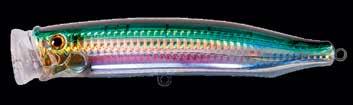




www.gladiatortackle.com.au Contact Feed Popper 175mm/74g, 150mm/60g, 135mm/45g, 120mm/30g,100mm/21g


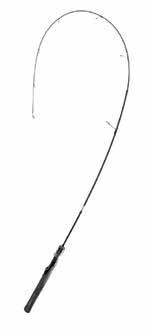
We are giving away $1000 worth of Insalt fishing gear every month for the biggest or best capture on an Insalt Finesse Explorer or Estuary Explorer rod voted by our followers.
To enter your catch just post your photo and tag us on Facebook In-Salt Fishing and/or Instagram @insalt_fishing and use the hashtag #insaltnoodlerod
Please note: Video evidence will be required if you are the winner!
We don’t sell Insalt rods to the public so check your local tackle store for our products.
Terms and conditions
1. You can enter as many times as you like but once you enter a catch it can not be entered again in another month.
2. Only these rods can be used in the comp Insalt finesse explorer 5’6 spin, 6’6 spin and 5’6 overhead or our previous model Estuary Explorer.
3. Insalt will provide nominations at the end of each month. The winner is voted by the public.
4. The prize is voted on the biggest or best catch.
5. Anglers can use line above the recommended rod 1-3kg rating but it’s not recommended and will forfeit warranties
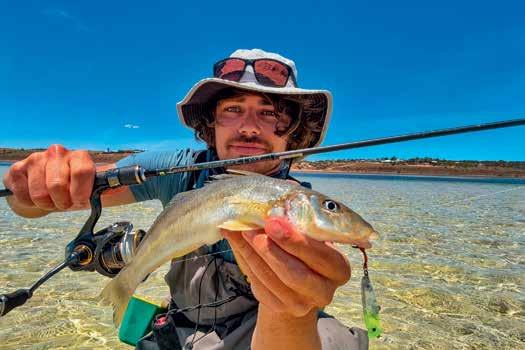
What leader you choose is also an important choice when targeting yellowfin whiting. I tend to bounce between the 4lb and 6lb leaders, finding fantastic success with the Seaguar range of premium leaders, specifically the Premium Max Shock Leader, my all-time favourite.
On my topwater set-up, I run the Gosen 8 ply Answer Eging braid in PE 0.5 to an FG knot with the Seaguar Premium MAX leader in 5lb.
The thrill and exhilaration of the topwater bite is second to none, making it some of the most rewarding fishing I have done in recent years. With some time, effort and consideration you will fall in love with topwater yellowfin fishing and all of its ups and downs.
There is no better time than now to cast a line in our awesome flats and estuary systems and enjoy some of the best fishing and scenery this amazing country has to offer.

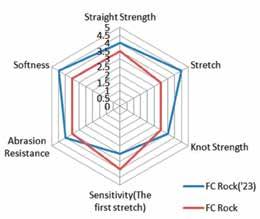
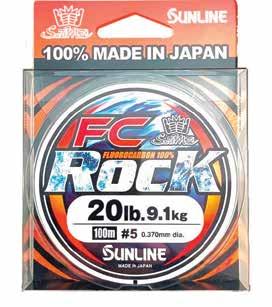
Sunline’s all-new FC Rock is a 100% fluorocarbon leader material that features stability, abrasion resistance, clarity and the tenacity to endure in all fishing conditions.
Improved abrasion resistance and tensile tenacity will keep you connected in the harshest underwater environments and on the toughest fish.


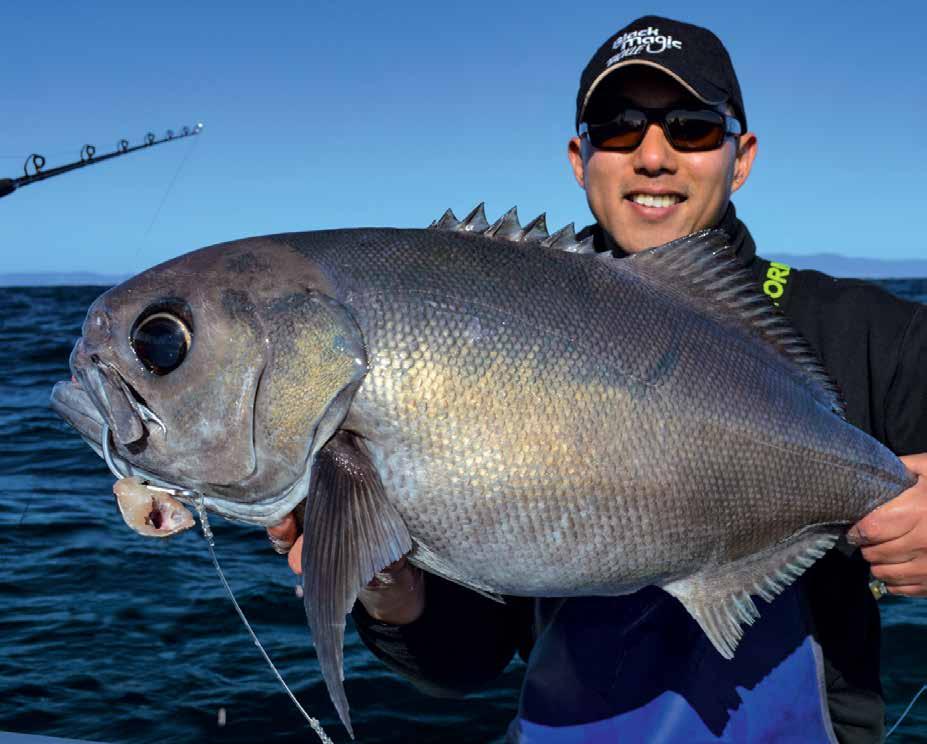
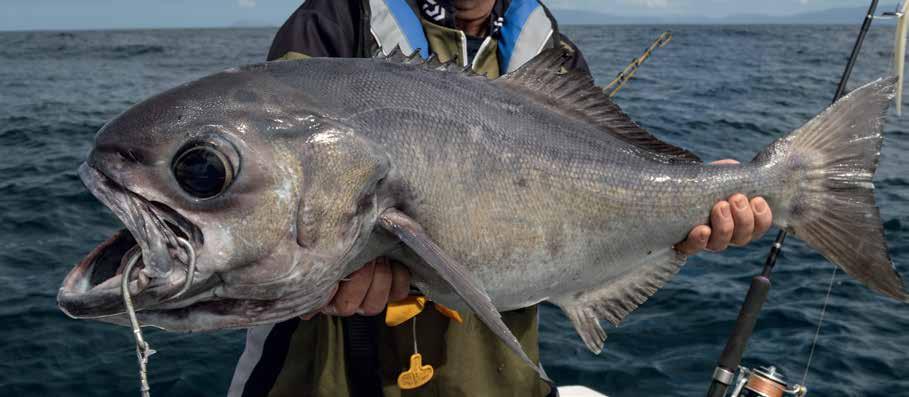
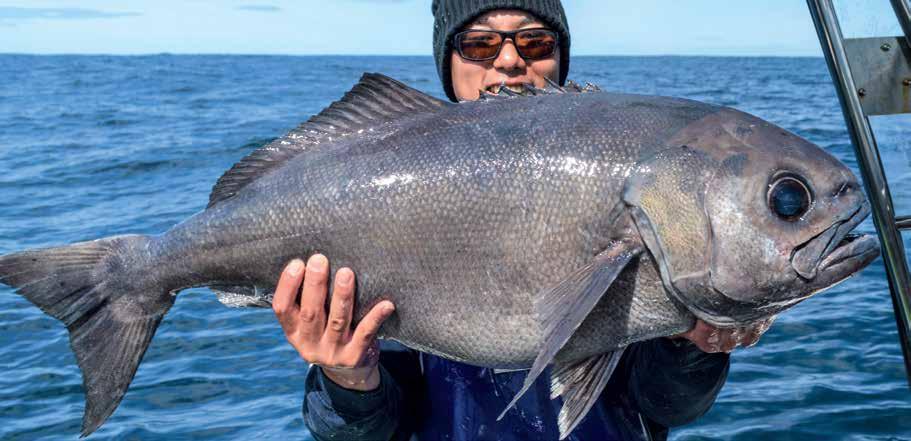
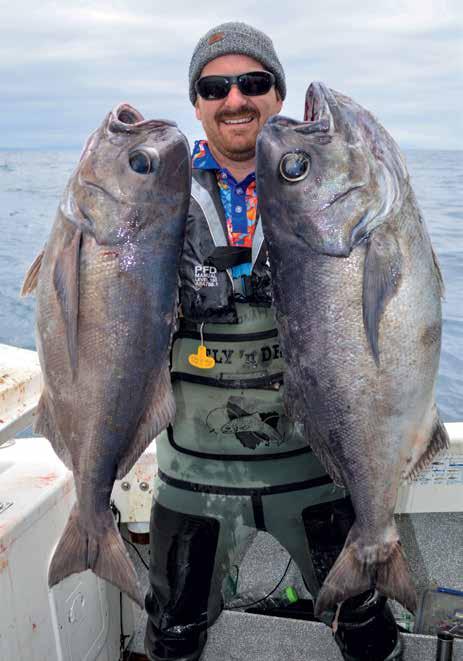
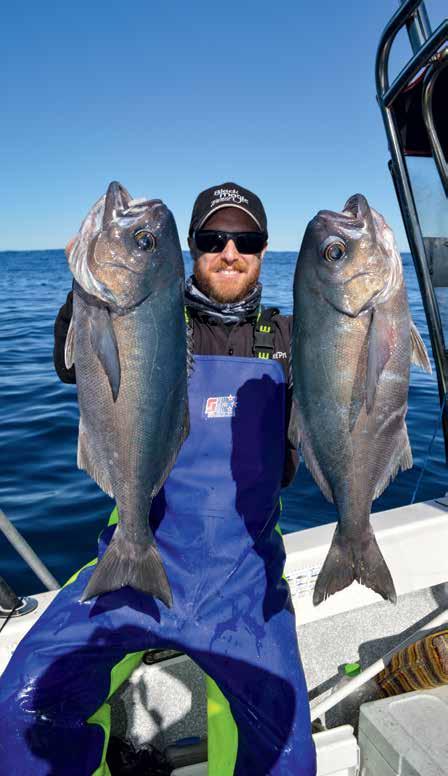
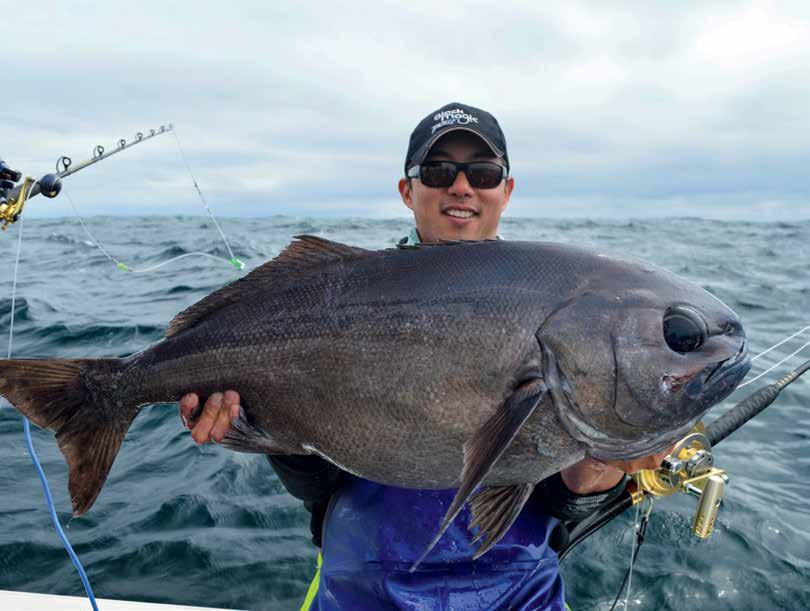
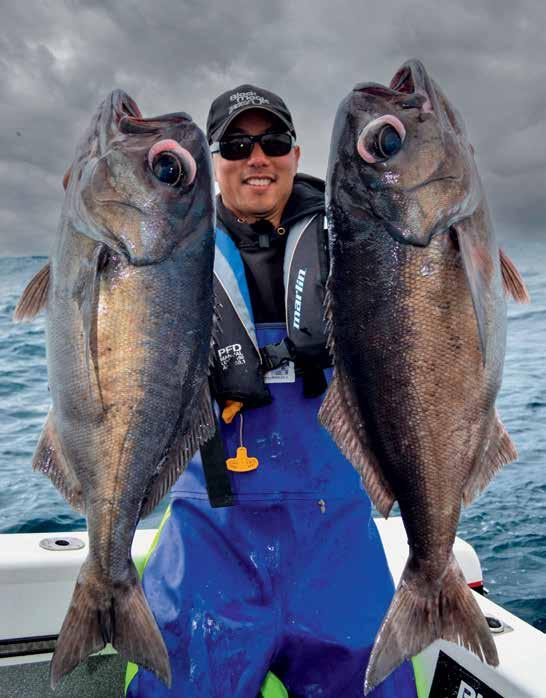
In the past 10 years deep drop fishing among recreational anglers has grown in popularity, in line with the development of more fuelefficient boat motors, better electronics, and more affordable electric reels. In southern Australia, one of the most sought-after deepsea species is the blue-eye trevalla. Blue-eye are generally found over the continental shelf edge, and are distributed from the southern half of Western Australia, all through South Australia, Victoria, New South Wales, southern Queensland and Tasmania. They are opportunistic feeders and will consume a range of small fish, molluscs, squid and crustaceans. However, their main prey item is a pelagic tunicate known as a pyrosome, which essentially resembles a cross between a jellyfish and a sponge. This organism can be found in large numbers floating around in the mid-water column. This is important information to note, which will be covered in more detail further on in the article. The bite and fight of a blue eye trevalla is generally unmistakable compared to many of the other bottom-dwelling species, with aggressive knocks that eventually result in the rod loading up, and then consistent thuds. They will generally continue to head-shake all the way to the surface, until the last 30 metres when they usually begin to float due to barotrauma.
Although blue-eye trevalla can live in depths from 40m to 1500m, they are more commonly found from 350m to 550m. The most important thing when targeting blue eye trevalla is to look for hard edges, ledges and structure. To gain insight into where to find these features, it is important to acquire a bathymetric chart application, either on your phone or your GPS plotter. With this you can start to have a few trial drops, even
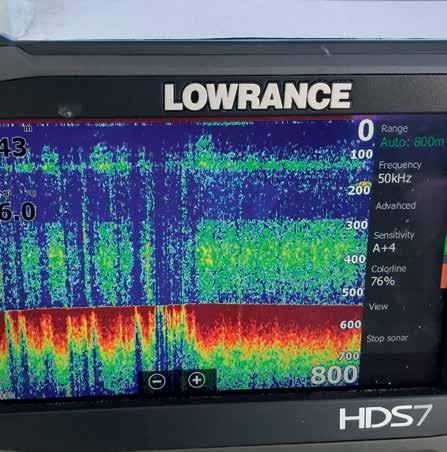
without reading the bottom. However, also having a sounder suitable for these depths is a big advantage, as it allows you to mark bait and fish. At a minimum, you should pick a transducer able to read depths up to 550m while at rest. A 600w transducer that can operate at 50khz will do the job, though many fishers who are serious about deep sea fishing will opt for a 1kw transducer, which is able to operate at an even lower frequency. Not only does this give you better picture quality when reading the bottom, it can also read the bottom when the boat is travelling at higher speeds.
Before you head out fishing, it is worth spending some time on dry land to work out exactly where you plan to drop. Do this by inspecting your bathymetric chart application and start looking for areas of interest on the continental shelf. Look for the area of ground closest to the boat ramp you plan to launch from, then start to inspect the contour lines. Look for kinks, sharp bends in the lines on the shelf slope, canyons (multiple circles), and/ or contour lines that are close together then begin to space out. All these features signify a ledge or hard bottom, which could indicate bait-holding structure, which in turn could potentially attract blue-eye trevalla. Mark any suitable structure in this depth range. Now when you head out to fish these marks, take note of the species you catch, if any. Gemfish and imperador/alfonsino will prefer the hard edge of ledges and drop-offs, so you know you are fishing the right area if you catch these species. Other species such as pink ling, blue grenadier and ribaldo cod congregate over the flatter, muddier substrate. You will begin to see these patterns when you drift around different areas of the continental slope.
Although there is no strict season when to target blue-eye trevalla, the catch rates appear
to be most productive from November until April, with the peak time during the summer months. However, I have caught them yearround, and at times the bigger challenge is lining up favourable weather to access the offshore grounds.
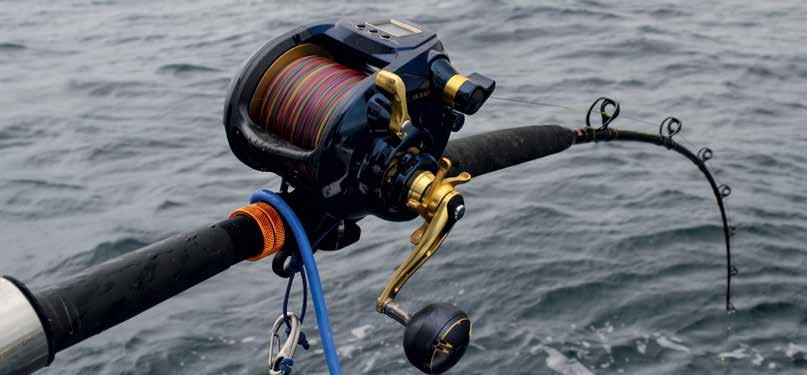
If you are serious about targeting blue-eye trevalla, an electric reel is essential. Buy yourself the best electric reel you can afford, because as with most other tackle, you get what you pay for. It is no fun winding up fish manually from 500m when the motor dies, especially if you are on a hot bite (speaking from experience). Depending on how your boat is set up, you can either use a bent or straight butt, with bent butts being most popular as the rods present horizontally when put in the gunwale rod holders. Most importantly, ensure the rod has a sensitive tip but plenty of strength back towards the reel, as bite detection is imperative when fishing at these depths. I like to use rods with a moderate to slow action, which means that the rod can ‘shock-absorb’ the hard-fighting thuds of a blue-eye trevalla being pulled from the bottom, which is especially important in
sloppy or rough conditions when the boat is rolling and pitching around. A rod that is too stiff will result in fish being lost on the way up, through tearing the hook out of the fish.
In Tasmanian waters, you are allowed a maximum of five hooks per outfit, and the rigs for these can consist of either a main monofilament stem with individual monofilament snoods, which can be clipped on and off, or a three-way swivel connection with the five snoods permanently attached to the rig.
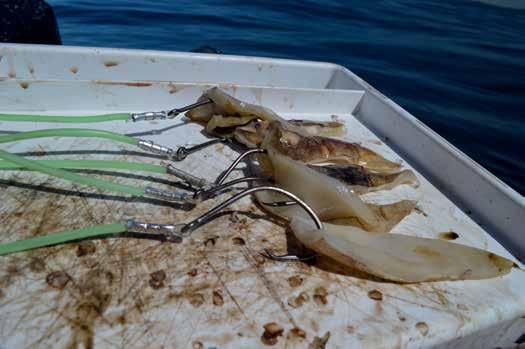
I prefer to use the 8/0 and 10/0 Black Magic Tackle KLT circle hooks, but if targeting big blue-eye trevalla I will use a larger hook around 16/0 size. Blue-eye trevalla have a relatively large mouth and can swallow surprisingly big baits. A mixture of oily fish and ‘tough’ baits are good for blue-eye.
When looking at your depth sounder, bait or fish will appear either as a ‘furry’ layer over the bottom, or you may see a thick band in mid-water or just above the bottom, which can be anywhere from 50 to 300m thick. This
layer is known as the deep-scattering layer, or the scatter layer, and is an accumulation of various organisms that can include lanternfish, squid, hydrozoans and pelagic tunicates. All these organisms are sought-after prey items for blue-eye trevalla, therefore seeing a thick scatter layer on your sounder is a very good sign. However, this does not necessarily mean you are guaranteed to catch fish, as sometimes the predators are not present or simply not willing to take a bait. At times it is worth having a prospective drop even if there are no signs of life present on the sounder. When dropping your baits down, be aware that your reel line counter will always show more line out than the depth you are fishing, due to the excess belly in the water. To reduce the belly as much as possible, ensure you use an appropriately sized sinker for the conditions, and reverse back on the line if needed so it drops as vertically as possible.
The main thing to note when chasing blue-eye trevalla is that they will commonly feed up in the water column, sometimes 100m to 200m off the bottom. So don’t be afraid to wind your baits up higher if you aren’t getting any hits hard on the substrate.
NO GIMMICKS NO FALSE PROMISES JUST TOUGH AUSSIE TRAILERS THE BEST BED FOR YOUR BOAT!
If the current or wind is strong, you’ll need to continue to back up on the bait to stay in contact with the bottom. It is also useful to let line out frequently. However, if you are catching fish in the mid-water scatter layer, reversing is not as essential as you can allow the bait to drift up in the water column. By using these principles, it is possible to target blue-eye trevalla effectively even in average conditions, in wind speeds up to 15 knots, though it won’t be overly comfortable.
WHEN TO START THE RETRIEVE.
The hardest part when fishing for blue-eye trevalla can be interpreting the bites and knowing when to start the retrieve. It is difficult to know whether one set of bites is from an individual fish, or multiple fish attacking the baits. To set the hook on a set of bites I will retrieve at high speed for a few seconds, then stop the bait. If I get more bites, I’ll repeat this process. Eventually I will make the call to wind everything up, but be careful not to wait too long as you could
lose the fish you’ve initially hooked, rather than loading up on more fish on the line. If you want to prospect more of the bottom you are fishing in, simply take longer drifts, and make note of what species you catch at stages of the drift. If you label the marks on your plotter by species, you will soon have a good pattern of species/structure in that particular area of the continental slope.
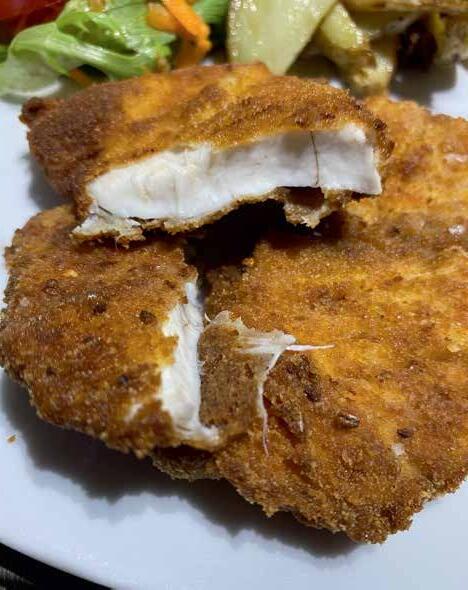
Deep-dropping and chasing blue-eye trevalla is highly addictive once you get the hang of it, and after tasting them I guarantee it will get you back on the water wanting more! There is nothing you can’t do with the meat of a blue-eye trevalla. It is suited to frying, baking, steaming, roasting and even eating raw, sashimi-style. Given the going rate for blue-eye trevalla can be anywhere from $40 to $60 per kg, when you hit pay dirt and come back with a haul of fish it will make you the envy of any seafood lover.

Since 1973 Strike Pro has built a huge following Worldwide on their ability to produce the highest quality lures available. Strike Pro’s continual Research Development, and superior quality manufacturing have earned the brand an awesome reputation within the angling community. In the past 10 years or so, Strike Pro have grown immensely, covering a wide range of products to now include Reels, Hard Body Lures, Soft Plastics, Braids and much more!
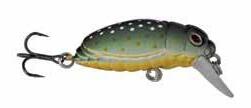
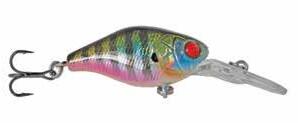
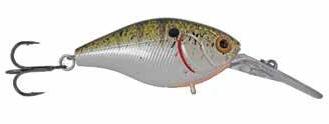
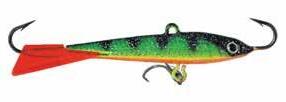

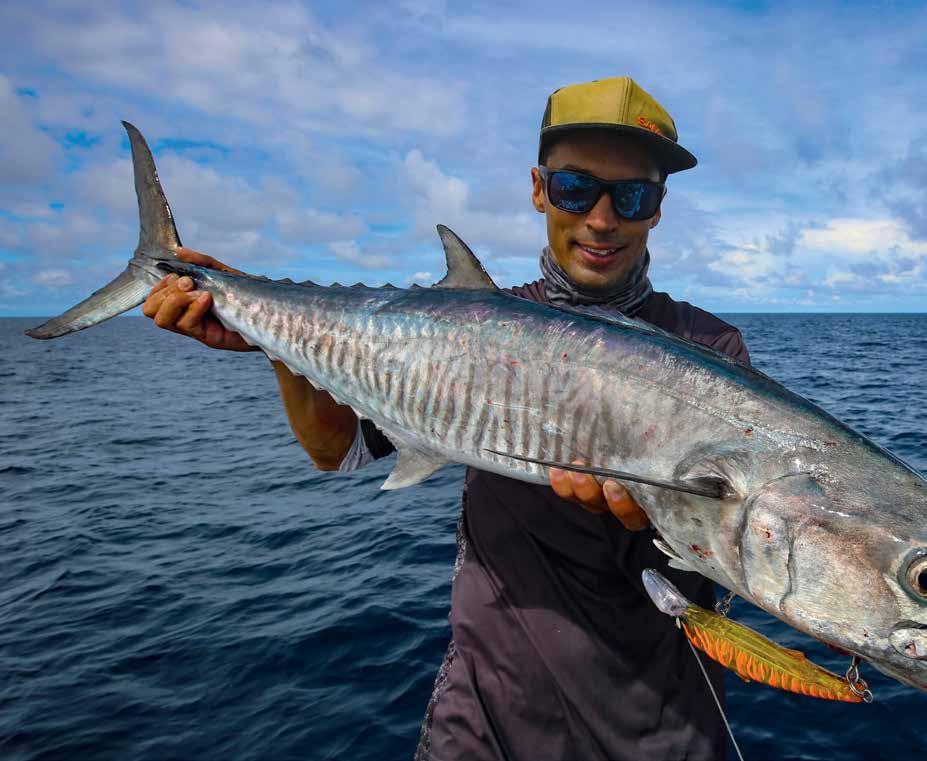
This go-to method can be used with lures or baits to tempt the biggest mackerel species in our waters
Words & Images: Colby Lesko
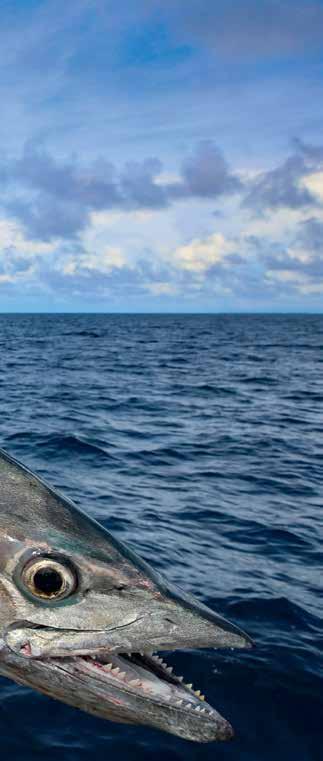
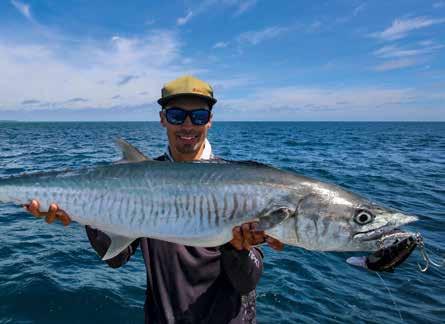
Trolling for Spanish mackerel is an extremely popular style of fishing in Northern Australian and there wouldn’t be too many keen anglers that haven’t given it a go over the years. Spanish mackerel are an excellent table fish, they have a blistering first few runs and fishing for them is a lot of fun. When trolling, it’s sometimes as easy as throwing a couple of lures out the back and driving around but other times it requires a more strategic approach. I’ve been lucky enough to spend some time trolling for mackerel over the years both commercially and recreationally with great success. I’d happily say trolling is by far the most effective technique to catch mackerel – it allows you to cover large amounts of water and search for fish while your lures and baits are in the strike zone 100 per cent of the time.
numbers from northern NSW all the way around the top of northern Australia to Western Australia. The southern reaches of their range is seasonal with the warmer currents, but the general distribution areas are great year-round fisheries. There are now closed seasons for mackerel in different states so check your local rules and regulations before heading out.
Spanish mackerel are found inshore on the coast all the way out to the edge of the continental shelf. Due to the mackerel’s pelagic nature, they will follow the baitfish and food as it moves about our coastal systems. Therefore, fishing where the bait is congregating is the best spot to start – any place where you notice large amounts of bait fish on the sounder, flying fish jumping out of the water, fusilier schools rippling on the surface or sea birds bombing into baitfish is a great start. Combine these bait-rich areas with a large drop-off, a sand bar or some heavy structure such as a reef edge, edge of the continental shelf, headlands or channel edges and you’re off to a great start.
Areas of high current and tidal flow are also great spots where mackerel will reside. Once you hook one, work over the same area again or look for areas of similar features nearby. Mackerel mark up well on the sounder and will often be seen as midwater squiggles in schools around the bait-rich areas or pressure points.
Spanish mackerel generally feed on bait close to the surface, making them a great target for trolling. Skirted lures, diving minnows, spoons, stickbaits and dead and live baits are all great options for trolling for mackerel. By trolling at speeds between 3 and 9 knots
(depending on your spread) you can cover lots of water effectively as you search for fish. Trolling a good spread of lures or baits around reef edges and drop-offs is the best tactic available to bag out on some quality Spanish.
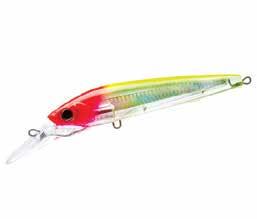
Diving minnows are my favourite as they are easy to manage (as opposed to skirted lures and baits) and they catch fish. Diving minnows such as the Samaki Pacemaker troll best at 6 to 8 knots and come at a variety of diving depths. I like to run one deep diver that can dive around 8 metres then a shallower diver along with it that runs about 4 metres. Once I find what depth of water the fish are biting at, I add more lures at this diving depth into the spread.
A three-rod spread is simple and easy to manage. I have one going out the back to clean water then two in closer out of either corner of the boat. I generally run these corner rods only 15 to 20m behind the boat and the longer lure 40m or so behind the boat. This gives you a three-lure spread that’s tangle-free but presents enough lures to attract mackerel into your spread.
You can add more lures into your spread, but this does get harder to manage once you hook a fish. You can run trebles or singles on the diving minnows, and most swim well with both. You will hook and land more fish with treble hooks, but single hooks are stronger when targeting big fish and make for an easier release. The best points about the diving minnows are that they are extremely easy to use, swim a variety of depths, swim a variety of speeds and are cheap.
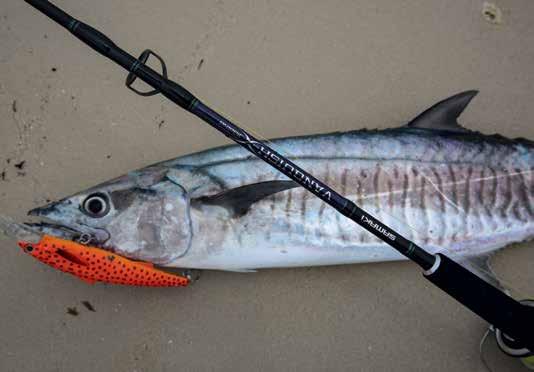
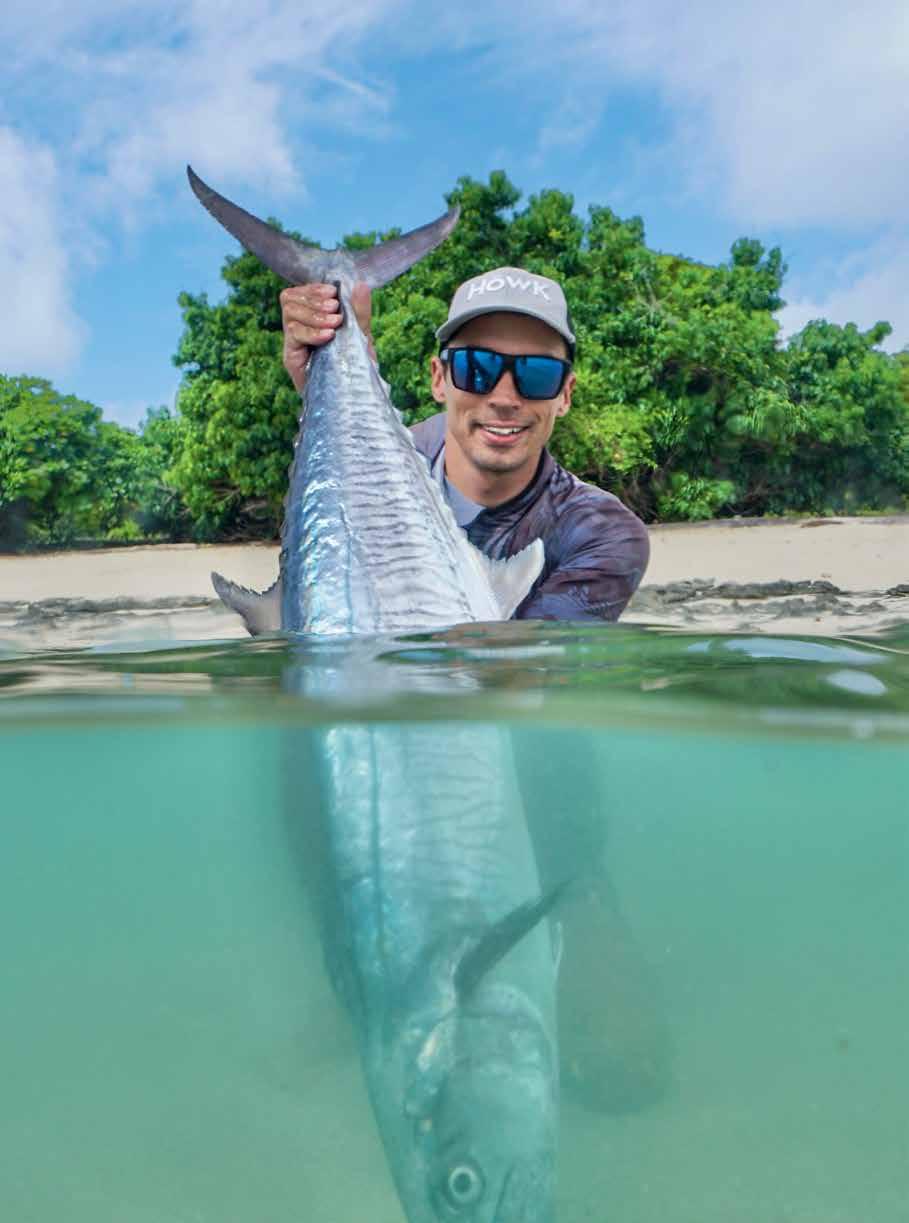
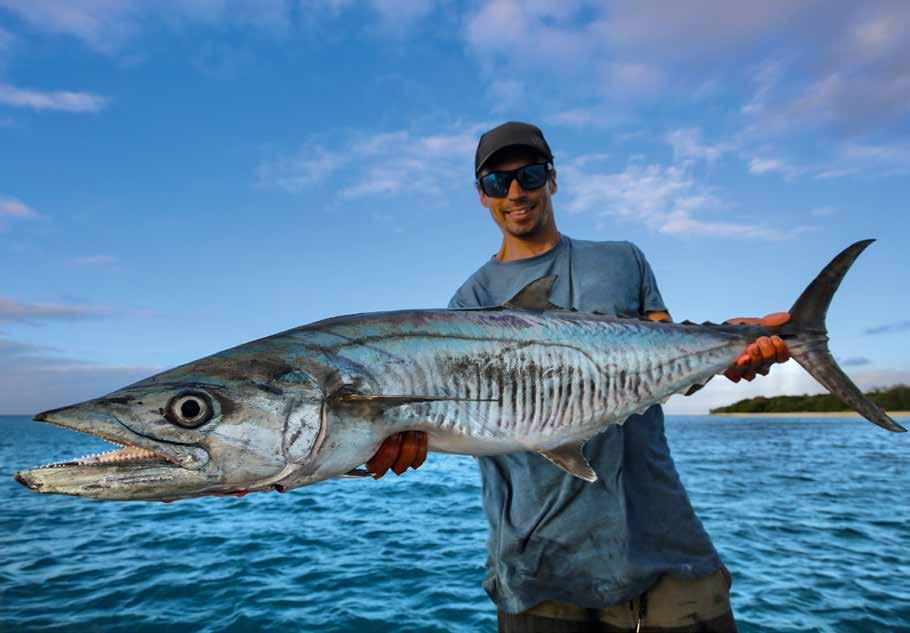
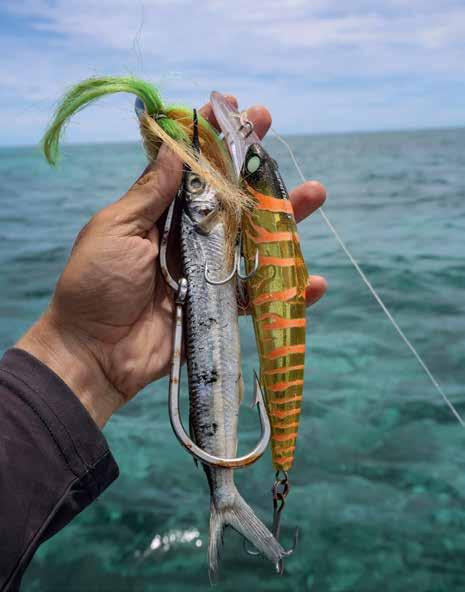
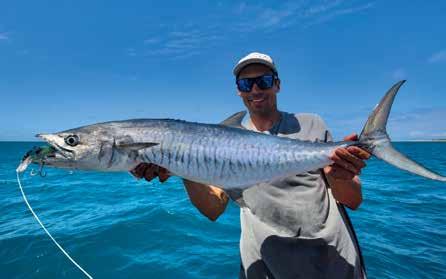
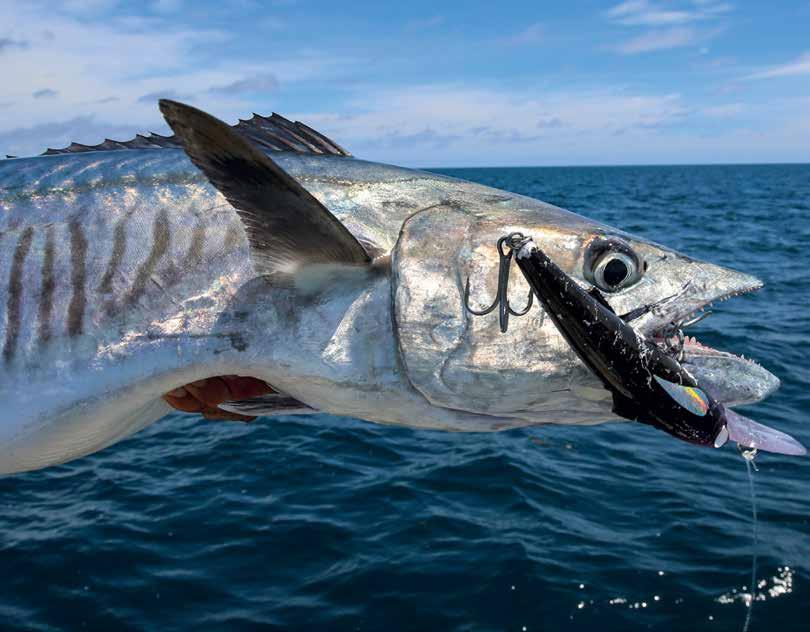
Skirted lures will be readily eaten by mackerel but are not widely trolled as they are quickly chewed up and destroyed by a mackerel’s sharp teeth. Better and more commonly trolled options are metal or plastic spoons and stickbaits. These options are all surface running lures that are great for active fish in shallow or dirty water, and widely used in the far north of Australia where the fish see fewer lures and are easier to fool. These lures are cheap and take an absolute beating, can be used to catch fish after fish, and rarely get destroyed by a mackerel’s teeth. The downsides of these surface lures is they work only the surface layer of water and don’t seem to work well on fussy or highly pressured fish.
When trolling baits for Spanish mackerel there are three different styles I have used with success. The first is trolling garfish behind a skirted weight. These work much the same as a skirt but are more lifelike as they
have the smell and feel of real garfish. These rigs can be trolled very fast and are used widely by commercial mackerel fishermen as they’re so effective.
The second option is troll live baits such as slimy mackerel or yakkas slowly around the area the mackerel are holding. Live baits can usually only be trolled slowly at 2 to 4 knots but work extremely well on fussy fish. You can attach a sinker in front of your live bait and this will allow it to sink to depth depending on your troll speed. You can bridle-rig your live bait onto a live bait hook or circle hook on a wire leader. A short piece of wire 10 or 15cm long attached to a stinger hook is also very handy for hooking the fast-snipping mackerel. This hook can just be left free swinging around the live bait or attached into its back. These slow-trolled live baits are the number one best option if you find mackerel but can’t get them to take a trolled lure. The third bait-trolling option is to troll swimming dead baits. You can rig wolf herring, yakkas or slimy mackerel to swim when trolled at speed. This takes a little more technique and prior
trip prep but is another great option for fussy fish. By using hooks, sinkers, bait needles and thread, you can sew the baits onto the weighted hooks so they swim well and stay on the hook. This requires some trial-anderror rigging techniques and is a tactic for more experienced anglers. Baits are a great option when you know the mackerel are in the area but are finding it hard to get a bite. Baits work well in clear water and with highly pressured fish such as those on the southern edges of their range. The downside of bait trolling is that it takes planning and bait collection, which isn’t really needed for many of the northern fisheries.
If you are trolling for mackerel, single-strand wire leaders are essential. A short 30cm wire attached to a swivel is more than enough to save your lures and baits being snipped off by a mackerel’s razor-sharp teeth. In saying that, if I think I’m a good chance of trolling up some other species of fish while fishing for mackerel I may troll my lures just on
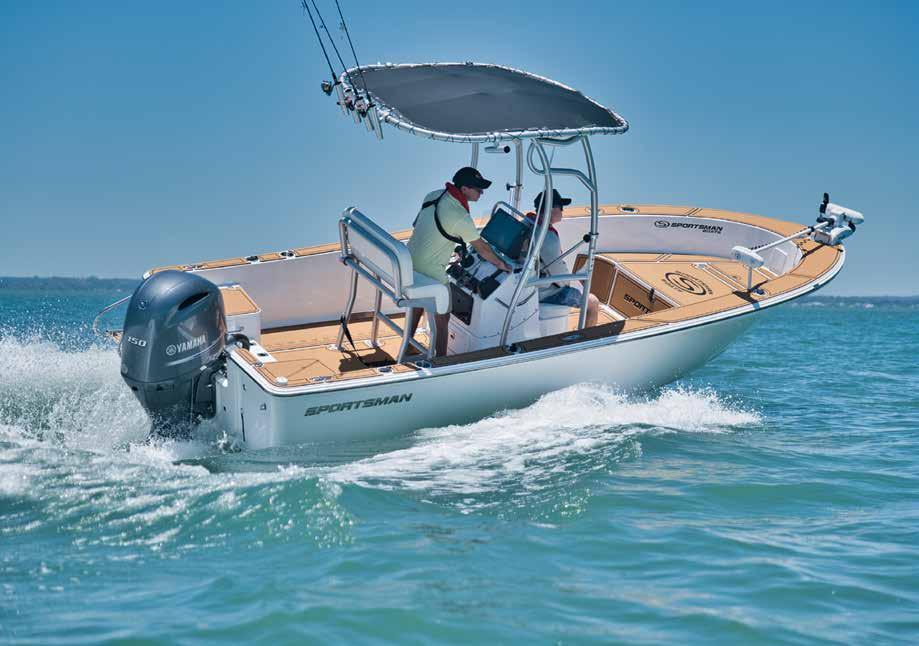

Australia’s favourite centre console: the Sportsman Reef Series. The perfect blend of stylish looks, a soft ride, outstanding stability and 360 degree fishability. Handmade in Melbourne using only the finest composite materials. Options include a casting deck extension and Yamaha power options of 115, 130 and 150hp. Visit your local Sportsman dealer today and take one for a water test. The 19 Reef is now available built in survey. We also offer the 17 Reef Centre Concole and 17 Reef Side Console.
VIC DEALER
R & M Marine
5 Jennings Ct Capel Sound, VIC 3939
NTH QLD DEALER
Reef Marine
26 Prospect St Mackay, Qld 4740
NSW DEALER
Hunts Marine
259 West St Carlton, NSW 2218
WA DEALER
Seabow Marine
Phone: 0413 119 051
cam@sportsmanboats.
STH-EAST QLD DEALER
Stones Corner Marine
117 Old Cleveland Rd
Stones Corner, Qld 4120
NT/SA DEALER
Seabow Marine
Phone: 0413 119 051
cam@sportsmanboats.com.au

150lb leader. You do lose a few lures due to bite-offs, but I still land at least 60 per cent of mackerel. So, it’s really up to you and the situation you’re fishing.
WITH 150LB LEADER YOU DO LOSE A FEW LURES DUE TO BITEOFFS, BUT I STILL LAND AT LEAST 60 PER CENT OF MACKEREL. SO, IT’S REALLY UP TO YOU AND THE SITUATION YOU’RE FISHING.
The perfect trolling outfits for mackerel are 6ft overhead trolling rods (not bait rods or jigging rods) in the 10 to 15kg range matched with 12-20-sized overhead lever drag reels. If you don’t want to buy trolling-specific outfits, spin rods and jigging rods rated in the 15kg line class will work but they’re never as good.
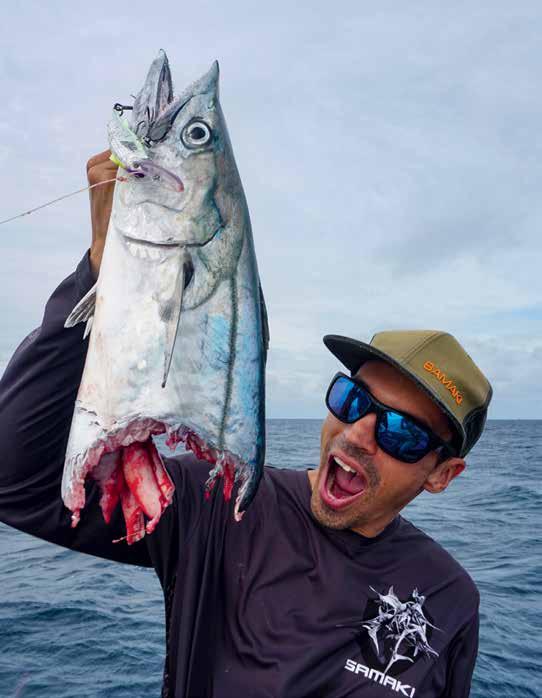
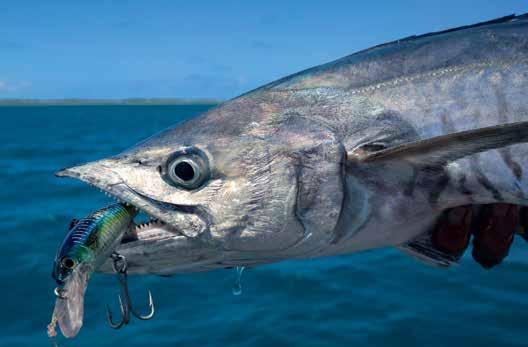
I have my reels spooled with 50lb braid and 150lb long leaders attached with an FG knot. I use a 3-wrap uni knot to attach the lure or bait. You can set your drag fairly light for mackerel as they hit with such speed, they usually hook themselves well and are not dirty fighters. Mackerel are extremely susceptible to being sharked so it pays to get the fish in as fast as possible and if you’re fishing in a sharky area you may need to tighten the drag right up.
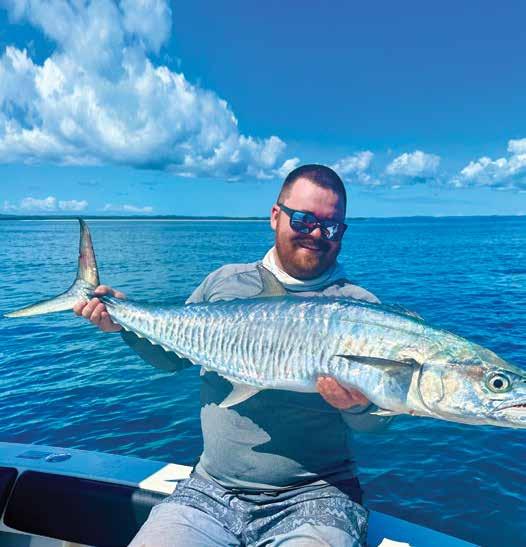
Spanish mackerel are a prime eating fish and once bled and iced properly you will end up with some prime white eating flesh. This article has focused specifically on the most sought-after mackerel species, the Spanish mackerel. These fish grow biggest of the mackerel species and are often regarded as the best eating. However, these trolling tactics will work on all species of mackerel found in northern Australia, so pick yourself a good spread of lures or baits to suit your local waterways and head out.



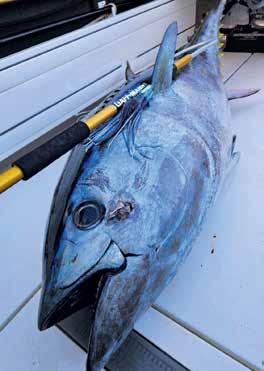



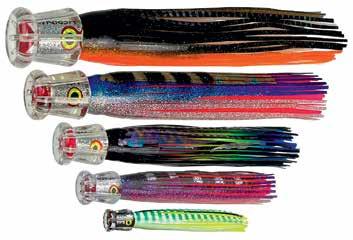
The Salt Shaker series consists of a range of five straight running, weighted jets of a very unique design. The head encompasses a huge, dished face with a series of jet holes through the head, exiting to the outside of the skirts. A reduced section immediately behind the face of the lure causes a pressure differential to be formed along the head, which in turn creates a huge bubble envelope that encapsulate the whole lure and then disperses into an extremely long smoke trail. The Salt Shaker will handle any water conditions and has a wide range of operational speeds that makes it the ideal lure for covering a large area at either normal or high speed. With a speed range from 6 - 16 knots, your options are as broad as your imagination.
Healthy stocks of school bluefin tuna and kingfish call for the right game-fishing set-up
Here in Victoria and across the south coast of the country we have seen a resurgence in our light tackle game fisheries, with school bluefin tuna and kingfish in great numbers and accessible to a wider range of anglers. It’s some of the best fishing we have seen since the early 1960s. A whole new generation of anglers are entering the world of light tackle game fishing, and this requires new rods and reels to handle the demands of this method.
Most anglers new to light tackle game fishing are repurposing spin outfits previously used for gummy sharks and snapper. This is fine when you’re starting out, but you’ll quickly learn that trolling or live baiting with spin gear isn’t ideal. Many assume because the charter boats do it that it’s an effective outfit, but they do it for ease of customer use with a clientele that are often beginners. Any angler experienced in trolling, live baiting or jigging will be able to tell you the merits of overhead outfits.
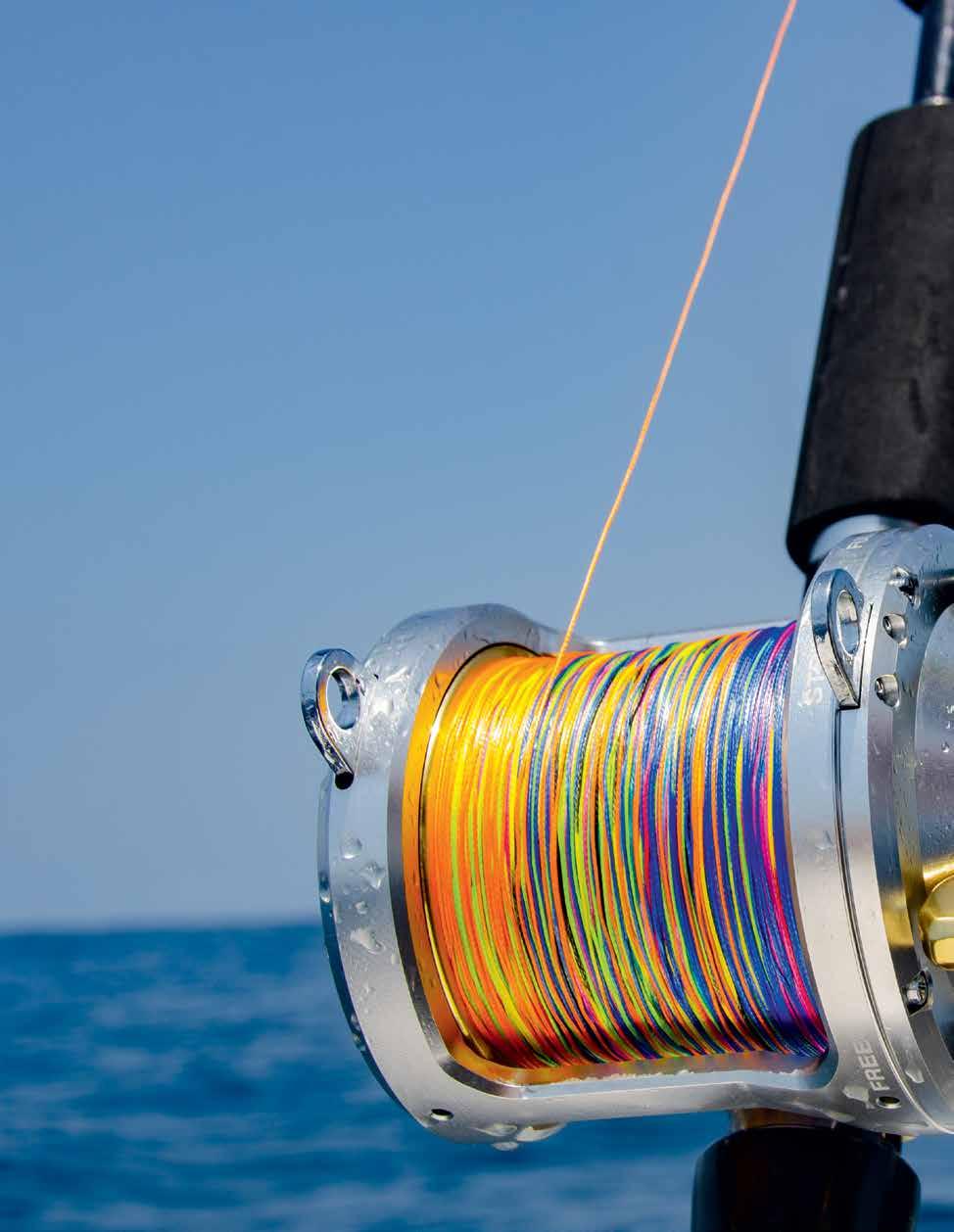
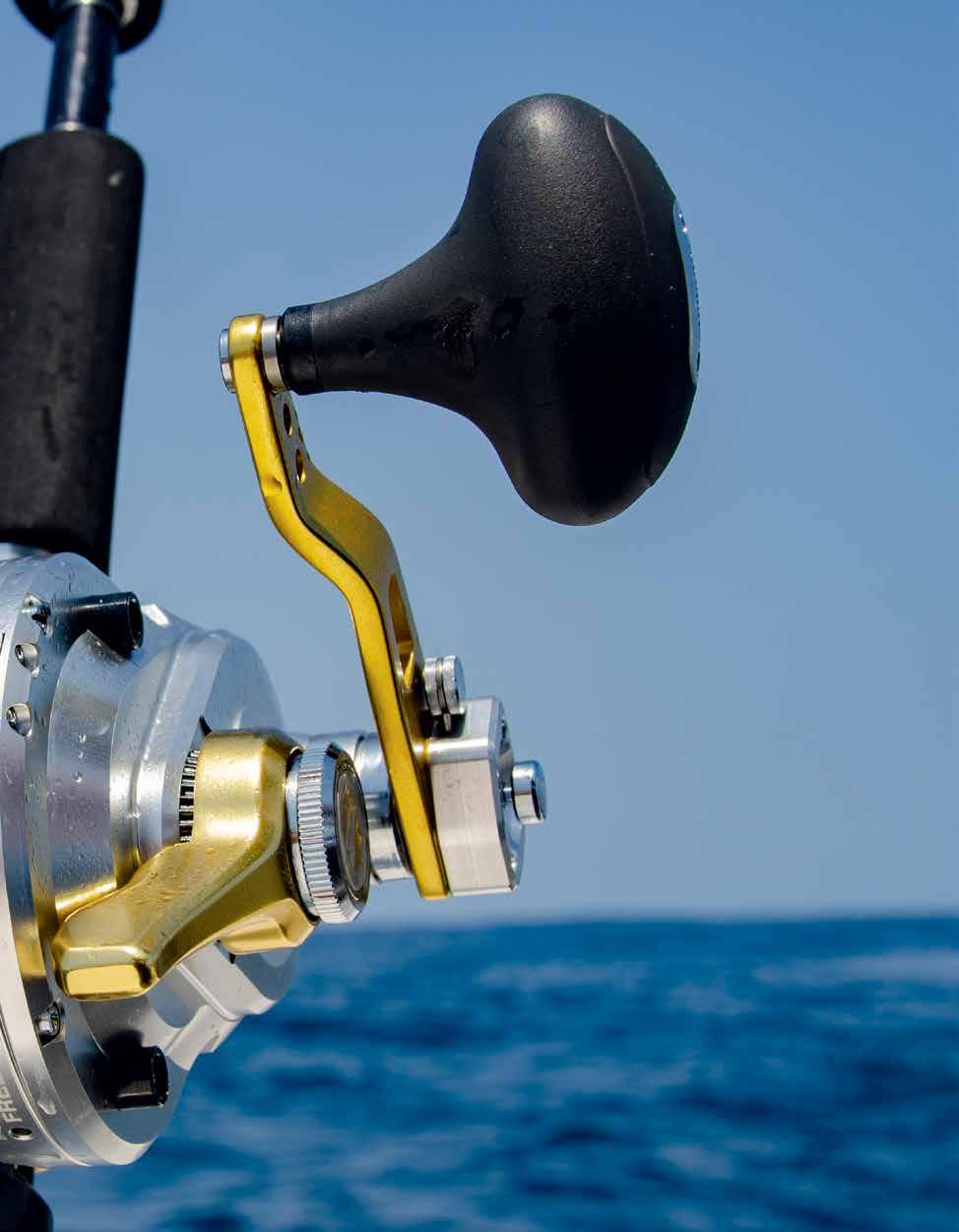
Yes, you can troll or live bait with any reel, but it won’t give you optimal performance. You want a dedicated trolling rod paired with a nice lever drag reel. The lever drag will help you set and retain your desired setting without any guesswork. It allows you to deploy your lures with ease and maintain tension as you let them out, whereas on a spin reel you need to open the bail to deploy line and then flip the bail over, which isn’t a smooth process at speed and when a rod is under load it can cause your lure to jump and create blow-outs and tangles. It’s the same for deploying a live bait – the lever drag allows you to deploy the bait with full control, then you can easily change running depth in a controlled manner and reset the drag pressure with ease.
Overhead outfits also sit far better in your rod holders and the reels have loud ratchets so you can hear when you get a strike. If trolling or live baiting with braid – which many
modern anglers now do – it’s important you tie a long shock leader (around eight metres) to both absorb shock, and if lines cross it may prevent the braided lines cutting each other off. Overhead reels hold these long shock leaders far more efficiently than spin reels.
The other huge point is that fighting fish with overhead gear and lever drag is far more comfortable on bigger fish and offers you greater and faster control of your drag system. At first it may seem clunky and you’ll feel uncoordinated, but you’ll quickly get used to it and it will naturally improve your fighting technique, leading to more strikes, better hook-ups and more fish landed.
When targeting school tuna and large kingfish, overhead lever drag reels in Shimano size 12 and 16 or Daiwa 35 and 40 are ideal. You could go smaller with Shimano 10 and Saltiga 20 but if that 60kg tuna comes along it might be a little small.
Your recreational fishing licence fees have helped put 95,000 Little Angler Kits into the hands of Victorian primary school children, ensuring the next generation gets hooked on fishing!

Each kit includes a fishing rod, reel with line, carry bag and a tackle box containing hooks, swivels, sinkers and a lure.
Children also receive a Little Anglers’ Guide to Fishing booklet that explains the basics - knots, rigs, casting and commonly encountered fish species. There’s even a YouTube playlist of instructional videos to show the kids all they need to know to wet a line.
Distribution of kits is now complete and delivers on a State Government commitment as part of its $96 million investment to further improve fishing, boating, piers and aquaculture.
We look forward to seeing plenty of photographs on social media this summer of smiling kids proudly showing off their first fish!
Learn more at www.vfa.vic.gov.au/littleanglerkit
So now we know why overhead reels are better, let’s understand the correct rod to use.
To the untrained eye, overhead rods may all look the same, but there are distinct differences between jigging rods, trolling rods and bottom bouncing rods. The focus of this article is light game tackle rods in the 10-20kg line class.
Back in the day almost all game rods from 3kg through 67kg featured roller guides, but with today’s modern guides suited to thin braided lines, roller guides aren’t necessary with tackle in this line class. This makes your rod a lot more versatile.
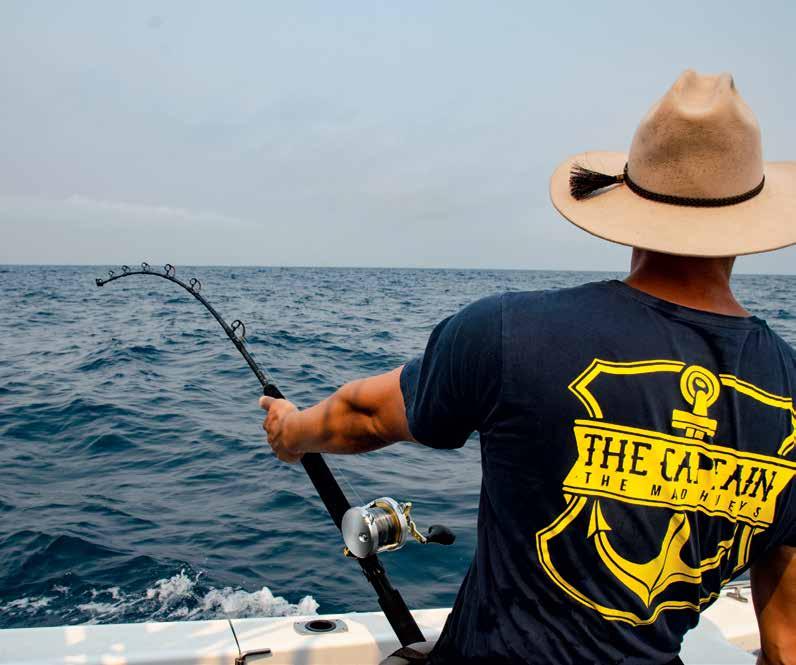
A trolling rod will have a short butt with a gimbal butt fitting to secure it in the rod holder or a gimbal belt. The rod is designed to fight off the hip (or pelvis area with a gimbal belt) and the short butt makes it easier to fight the fish as your arms aren’t reaching up and out as far. A trolling rod will have a more
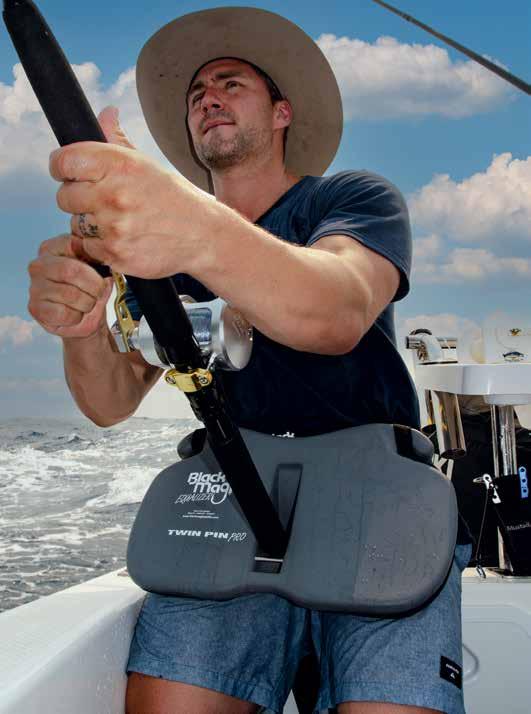
robust reel seat, often metal, with locking nuts to house the larger lever drag reels and don’t feature a trigger grip. Jigging and bottom bouncing rods have longer butts for tucking up under the arm and often feature a trigger grip. Jigging rods will be short and stiff (generally less than 6ft) while bottom bouncing rods will be more forgiving in the tip and longer (generally 6ft 5in to 7ft).
Here at Hooked Up we totally understand budget constraints, and if you’re using your old spin gear for trolling or jigging and that’s what works for you, that’s fine. But if you’re looking to refine your outfits for a dedicated purpose and increase your strike, hook up and landing rate, choosing the appropriate outfit will yield you far better results.

ST.Croix Rods have been handcrafting the Best Rods on Earth® for the past 75 years manufacturing rods in North America. We strive to offer the most advanced Rods using the finest materials and give the angler a true angling experience! Our passion is your passion and that’s why we offer the Gold Standard in Rod Warranties with our rods coming with an ‘Unconditional’ 15 or 5 Year Warranty! (See our website at www.jurofishing.com for








Words & Images: Sam Leys
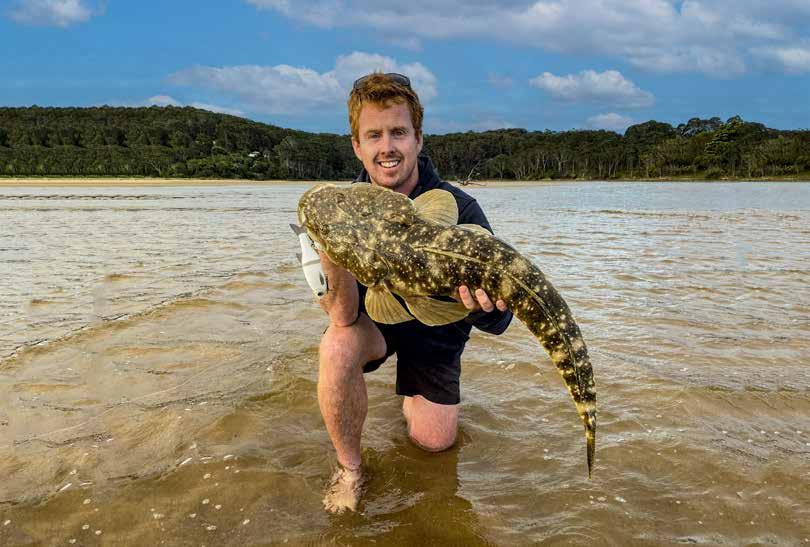
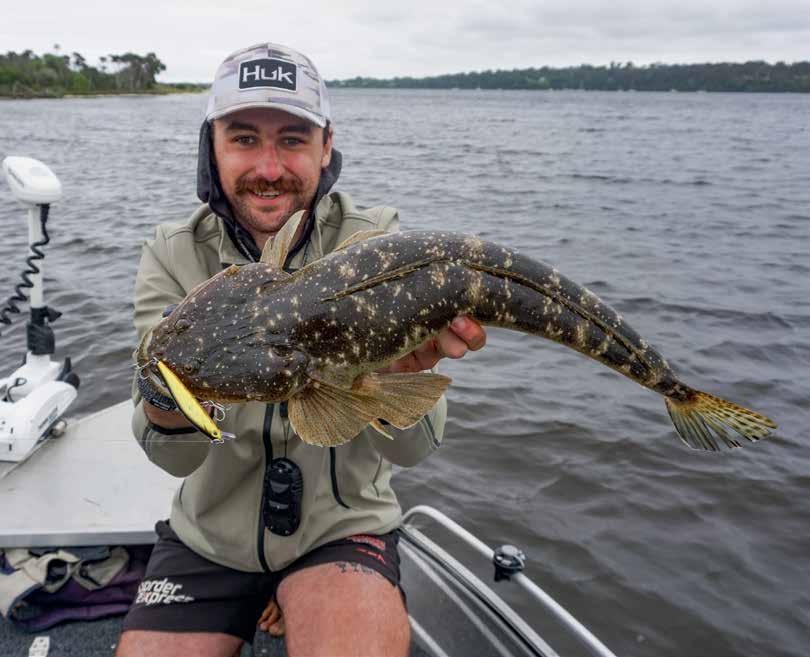
In the realm of Australian fishing, pursuing trophy-sized flathead with lures has evolved into one of the most popular angling styles. While large soft plastics, swimbaits and glidebaits are all now flathead staples, my preference still leans toward using shallow-diving jerkbaits. Among the plethora of options available, the Samaki Redic SF90 stands out for its exceptional success rate, durability and price.
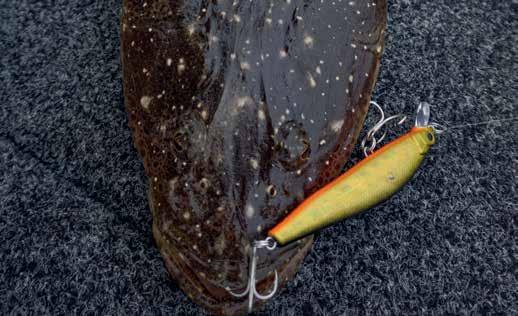
The Redic SF90 is a 90mm slow-floating jerkbait that weighs 11g. It’s fitted with BKK 4X trebles and split rings and has been designed specifically for Australian anglers targeting flathead, mangrove jack, mulloway, barra and trout. With a diving depth of 0.8m it’s perfect for working shallow flats and rivers. The addition of a sliding magnetic cast weight is a great feature that proved invaluable when the wind got up, aiding both casting distance and accuracy.
I’ve recently spent a lot of time targeting big flathead over shallow flats and without doubt working 90mm to 110mm jerkbaits has proved to be the most effective technique. When I say shallow, I mean water of less than a metre. In this time, I have found some key things about the jerkbaits that work best – flathead are for more responsive to lures with a rattle, and in this shallower water natural colours and golds work best. Suprisingly, there aren’t many jerkbaits on the market
in this size range with a rattle and that suspend or slow float.
The other thing I have learned is that not all jerkbaits are made equal. I have broken the bibs off a few expensive jerkbaits by aggressively twitching them into the sandy bottom, and while the designers of some of these lures probably didn’t design them for this purpose, it’s a technique that is often unavoidable in shallow water and it’s also highly effective. As the lure kicks up the sand, it attracts fish.
During my testing, I focused on two distinct colour variations in the Samaki range: Gold Assassin and Ayu. The Redic demonstrated an irresistible rolling action when twitched, perfectly imitating small garfish that are abundant in the system I was fishing and making it visually appealing for flathead to strike.
However, what truly set the Redic apart on a particular day was its ability to suspend. While it’s a a slow-floater, I was using an upgraded heavier split ring on the front and 25lb fluorocarbon leader which is what got the Redic to suspend even in saltwater. In windy conditions, where fishing floating lures on a long pause became challenging, the Redic’s suspending capability proved to be a game-changer.
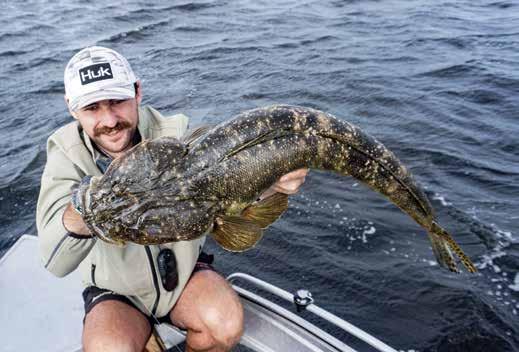
After a productive day on the water, landing 10 flathead ranging between 60 and 80cm, the Redic SF90’s durability was notably impressive. The ABS materials and supersonic welding employed by Samaki ensured the lure held up exceptionally well, the bib while scuffed never cracked and I now have great confidence during intense battles with a potential fish of a lifetime.
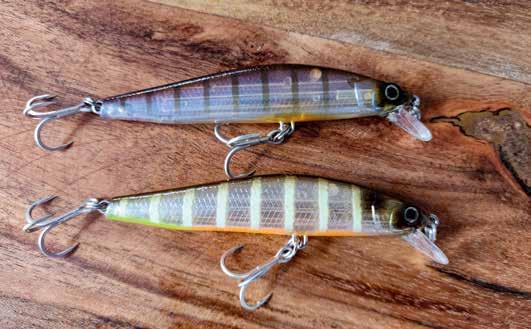
What’s most impressive about this lure is the price – at around $22 it’s $8 to $15 cheaper than comparable lures on the market and the colour range is great.
In conclusion, the Samaki Redic SF90 has earned its place as an exceptional jerkbait for flathead in my tackle box. The lure’s size, coupled with its effortless action and loud rattle, makes it an excellent choice for those targeting trophy-sized flathead. The combination of thoughtful design, durability and on-the-water performance solidifies the Redic SF90 as a reliable and effective jerkbait for anglers targeting flathead, mulloway, big trout and jacks.
Distributed By: Bluefish Imports Web: samaki.com.au
Words & Images: Colby Lesko
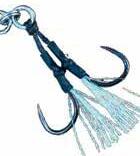
The new Glowbite jigs out of New Zealand are certainly the most feature packed I have ever seen. They feature water-activated flashing lights, rattle chambers and scent-dispersing cavities. It’s a lot of tech packed into your normal metal jigs. I was sent two styles from what’s a fairly extensive range for a new and small company – a kabura jig as well as a slow-pitch jig.
Both styles are extremely popular and will catch a range of fish species. I tested these jigs in far north Queensland where
a range of pelagic and bottom species are found.
The Jack Flash is shaped like a standard leaf-shaped slow-pitch jig and was the first to get tied on. I worked the Jack Flash from the bottom all the way up to the surface, targeting areas where I know pelagic fish hang out. These jigs were quickly eaten by pelagics such as trevally and Spanish mackerel.
While they do possess great features such as a strobing light, rattle chambers and
scent-dispenser cavities, they also have a great action and quality hooks and assists. I noted that the strobing of the light as the jig sinks seems to really draw the midwater fish in on the drop. This wasn’t good for the jig supply and these jigs were quickly bitten off by Spanish mackerel on the drop after landing a few trevallies on them. They seemed like a great jig for targeting pelagic fish, just not when there’s lots of toothy mackerel around. These are centre-weighted jigs and produce a good flutter on the drop.
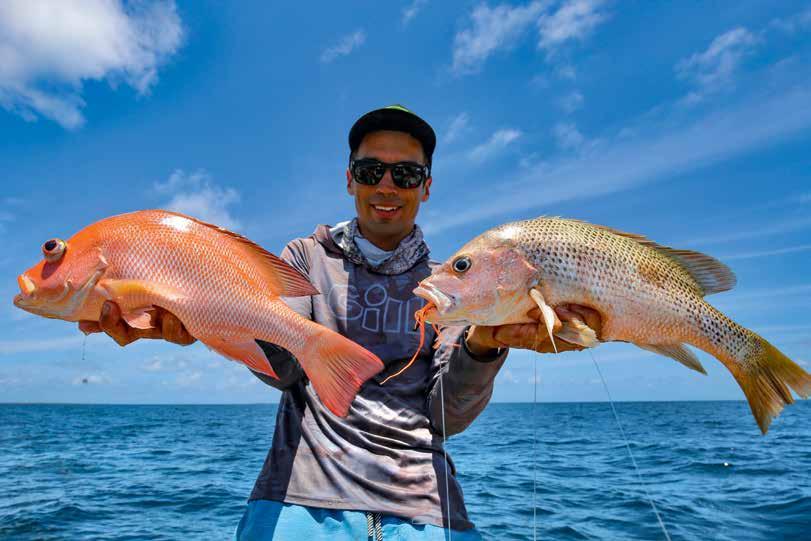
Next up was the Grumpy Fish – a kabura sliding weight jig – and with these I planned to target reef fish by working them in the bottom third of the water column. These jigs were also quickly picked up by a variety of bottom fish such as emperor, fingermark snapper and nannygai. I’m not sure if it’s the flashing light or rattle chambers but they certainly attracted fish quickly. I caught a range of nice reef fish on the jigs and everything held up well.
The jigs come fitted with Owner assist hooks that are up to the task of most reef fish and mid sized pelagics but if targeting trophy fish or really large pelagics, you may want to upgrade. I’m not sure how much volume the rattle chambers emit through the water, but again, the jigs were very effective. It’s a great and innovative concept if the fish can detect it and regardless, they do add even more action to the jigs.
The finishes and paint jobs on the jigs are great and were fairly wear-resistant. The flashing lights built into the jigs are fixed into a plastic eye that is glued and recessed into the jigs. These lights are water-activated and flash a range of colours. These worked every time when exposed to water and stayed glued in place after multiple fish – the Glow Bite website claims the battery will last 70 hours, which is impressive.
On some of the jigs the lights kept flashing, but I noted that if you gave the two activating pins a wipe it turned them off. Further testing showed that fish slime would keep them flashing and it just needed a wipe.
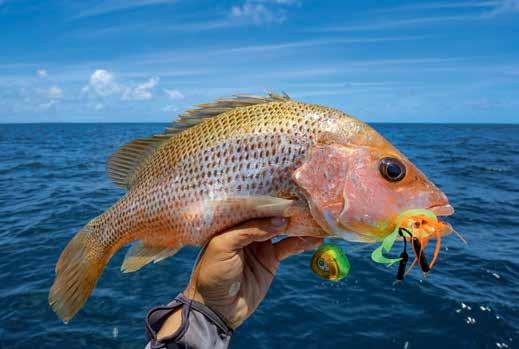
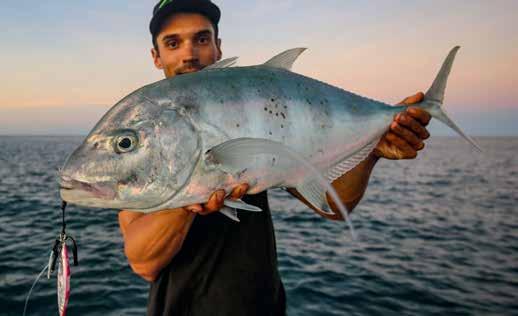
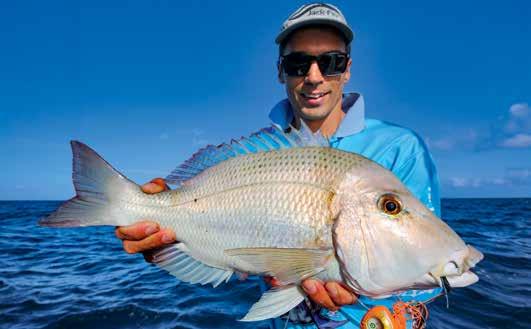
All in all, these are highly effective jigs with technology and design that provides an extra edge. I think they could be amazing for some deep-water species such as pearl perch and trevalla in 100m-plus of water where light is limited. At around $15-$20 they are very well priced so the added benefit of lights and sound in deep or dirty water has to be a win. I’m looking forward to further testing on different species at greater depths.
If you’re into trying something new, give them a go, they are priced very well for what you get and they certainly catch fish.
TESTED & REVIEWED
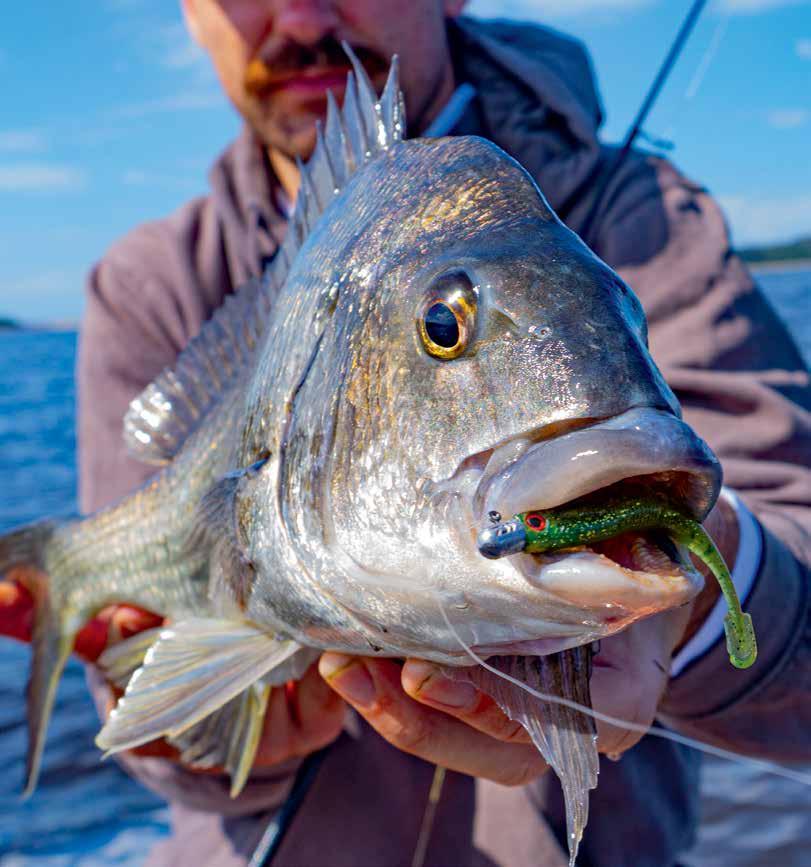
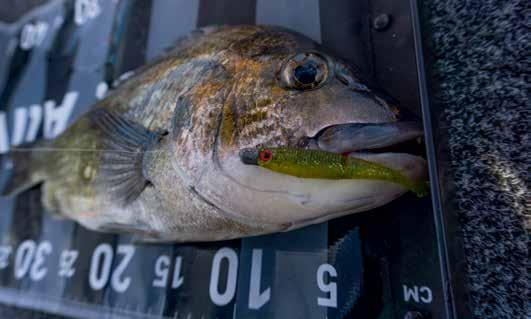
Flick baits were once the king of fish imitations but have lost the limelight to the classic paddle tail over recent years, so I was interested to see a new take on this profile. The Bait Junkie 2.95” Flick features a shovel tail design, which is its most notable feature. Rather than dual forks on the tail, one side is a spoon-like design that adds a subtle yet effective dimension to its movement in the water.
Crafted from Bait Junkie’s Elastomax material, durability is outstanding, withstanding various testing conditions and multiple fish without showing signs of wear. While the Flick was designed for working over shallow weed flats, it surprisingly translated well to deeper settings of 3 to 4 metres.
During field testing, a 1/16oz jighead with a size 2 hook proved a suitable set-up. The lure glides smoothly during descent, presenting a lifelike motion that bream (the test target species) found very appealing. Working along steep weed edges yielded consistent results, particularly during the sinking phase of the lure. Employing long, probing casts along drop-offs and maintaining a tight line post-cast were highly effective strategies.
The shovel tail design, coupled with the buoyancy of the Elastomax, contributed to a prolonged hang time in the strike zone. This unique aspect of the lure distinguishes it from heavier and denser plastics in the market, making it highly appealing to bream and most likely all river and estuarine species.
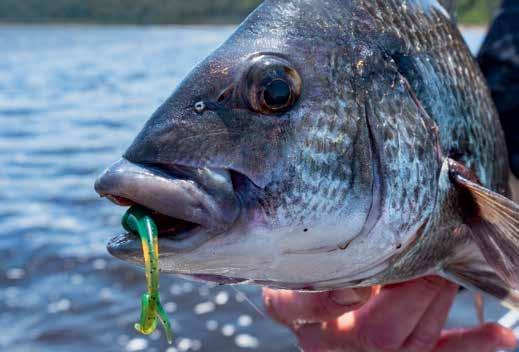
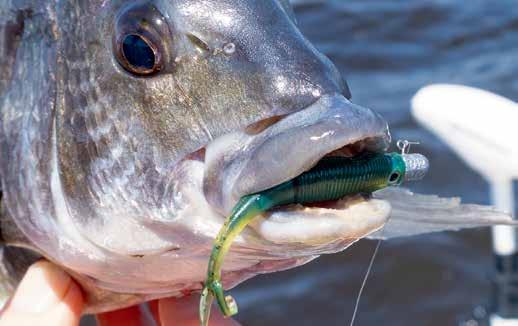
The Flick comes in a great range of colours designed specifically for Australian species. The two stand-outs through the extensive testing period were Olive Oil (53) and a new colour launched with Flick Minnow, Red Herring (58).
While I was somewhat initially reserved about the Flick, it proved a highly effective lure, landing multiple big bream in single sessions and I can confidently say it is the best new soft plastic on the market and one that will become a mainstay in my lure bag. Regular readers will recall how much I loved and continue to use the Risky Critter, I believe this is equally as good, albeit a very different profile.
In summary, the Daiwa Bait Junkie Flick showcases thoughtful design elements and performance characteristics. Its versatility, durability and buoyancy make it a reliable and highly effective option for anglers wanting a small-profile fish imitation.
Distributed By: Daiwa Australia
Web: daiwafishing.com.au
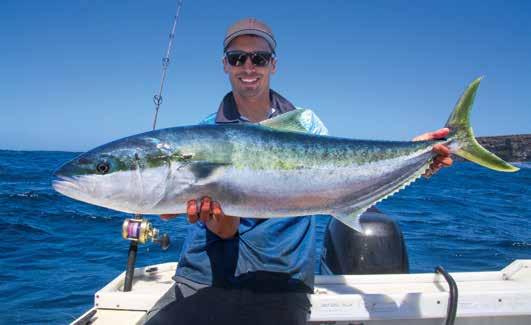
Where are you based and what style of fishing are you into? I’m based just out of Melbourne on the Mornington Peninsula which gives me great access to both of Melbourne’s bays and offshore. I consider myself an all-round salt water fisherman chasing most species available in Victoria waters during their migration seasons.
What are your favourite species and locations to hit up in January?
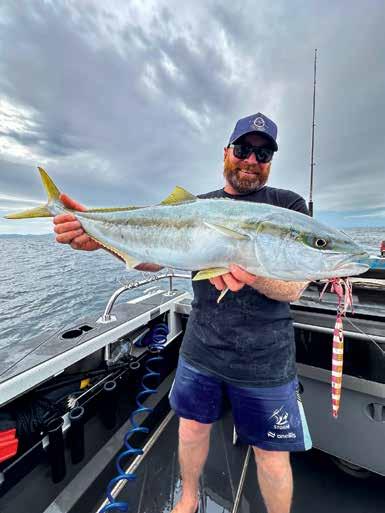
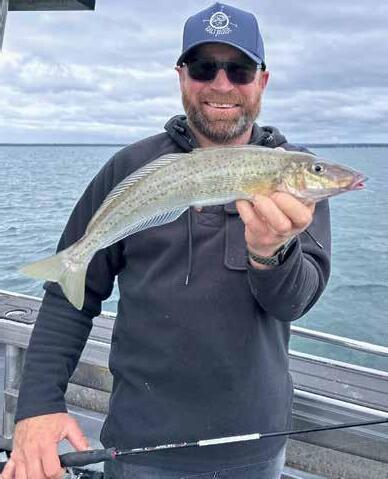
If the winds up and I’m stuck fishing in the bays such as Port Phillip and Westernport I like targeting King George whiting. When I can get offshore, I enjoy chasing school bluefin tuna but if it’s warm, calm and with a little swell I love nothing more than chasing kingfish.
What boat, engine and electronics are you running?
A Stabicraft 2250 Ultra Centre Cabin with a Mercury DSI 300hp V8. I run Simrad electronics- twin NSS Evo 3 16in and a single Evo 3 7in. I then have a Go7 for engine data and it’s all linked with a S5100 booster and auto pilot which fully integrates with the Mercury. I have a Hella Marine lighting package with everything from cabin lighting, cockpit strip lighting, underwater transom lights and light bars.
What’s some new tackle that you’ve been loving?
The Black Pete Bridal Buddy. It’s a new live bait rigging system where you connect dacron to a small plastic arrow head that locks into the baits mouth. It’s very quick to rig a live bait, the fish swims freely, the hook ups are secure, and I love the ability to get baits back into the water quicker when a hot bite is on. It’s been a game changer for targeting kingfish which are renowned to switch on and off from a hot bite in a matter of minutes.
What are your top 5 favourite lures for summer?
Vexed Whiting Bottom Weights: they provide a fun and effective way to catch whiting while still bait fishing.
Zip Baits Monsoon Breaker 130: It’s a sinking stick bait with a small profile that casts a mile, it’s great for school tuna and kings. Majorcraft Jigpara: They have a great action that doesn’t have to be overworked for kings.
Halco Crazy Deep: They have made up two new custom colours for me that will be very good on the school tuna, they’re named Pinky and Goldylock West Coast Poppers F40: it’s a 170mm stickbait in a pilchard pattern for working slowly through sunning schools of tuna and kings.
Do you have any cool fishing trips planned?
I’m hoping to do a few days island hopping between Wilsons Prom and Flinders Island chasing big kingfish.
Is there a species you haven’t caught that you’d love to catch?
A large amberjack and a PNG black bass.
What’s a location you’d love to fish?
Papua New Guinea for black bass.
What is your most memorable capture?
There have been many but a 32kg kingfish off a 5.2m centre console beach launching off the Kapiti coast in New Zealand is one my most memorable.
Where can people follow you online outside of Hooked Up?
Instagram – saltguide Facebook – saltguide Web – www.saltguide.com.au
Thanks, Gawaine!


Take it everywhere, do everything...