
E. coli disruption using NanoGenizer-30K
1.Experimental Method
The samples were maintained at a temperature of -4°C through the utilization of a cooling circulation pump, H30Z-RT& H10Z-RT, and a heat exchanger. Homogenize the temperature-controlled E. coli using the NanoGenizer for 3-5 times.
2.Disruption Rate Test Method
2.1 Viable Bacteria Counting Method
1)Centrifuge the E. coli fermentation broth cultured for 24 hours at 4000rpm for 15 minutes, discard the supernatant, and resuspend it in buffer.
2)Take 100uL of an appropriate dilution and apply it to a plate containing ampicillin and chloramphenicol for viable bacteria counting.
3)Divide the remaining bacterial solution into two portions and subject them to homogenization for 3 times and 5 times using a pressure of 15000psi.
4)After homogenization, take 100uL of each bacterial solution, appropriately dilute it, coat plates containing ampicillin and chloramphenicol, and count the viable bacteria.
2.2 Protein Extraction Method
Firstly, the bacteria underwent homogenization for 3 times and 5 times, respectively, using a pressure of 15,000 psi. Secondly, the homogenate was centrifuged at 11,000-13,000 rpm for 15 minutes, and the supernatant was collected for protein extraction, followed by the determination of protein content.
3.Experimental results
3.1 Comparison of appearance after homogenization
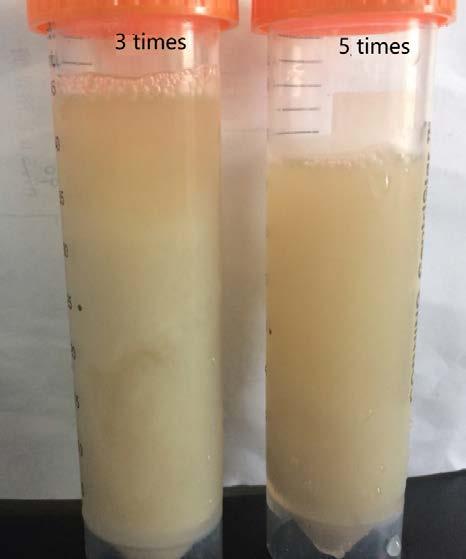
After homogenizing 3 times, there were numerous flocculent particles in the bacterial solution, and a layering phenomenon occurred. There is suspicion that the homogenization was not thorough enough, and bacterial fragments are relatively large. After homogenizing 5 times, the solution appeared more uniform.
3.2 Pre-homogenization counting results
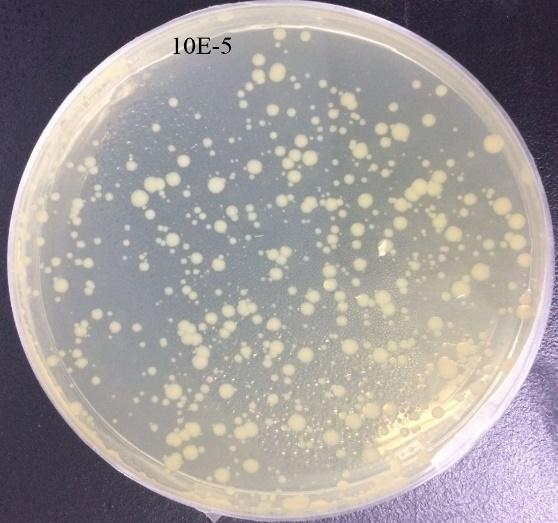
After diluting the bacterial solution 103 times, approximately 500 individual colonies were observed, allowing an estimation of the concentration of Escherichia coli in the bacterial solution to be around 5x10⁸ /mL.
3.3 Counting results after homogenization 3 times
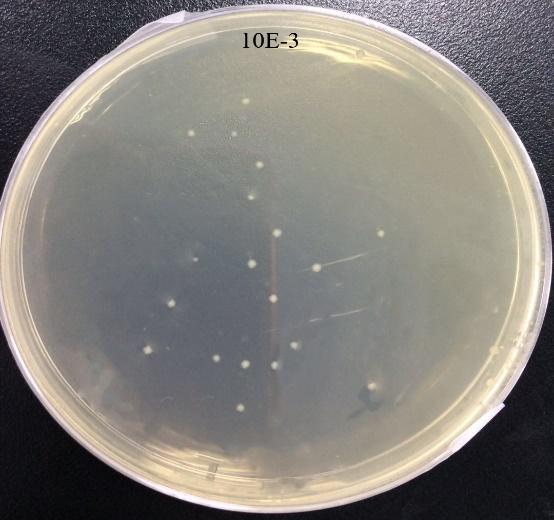
After diluting the bacterial solution 103 times, approximately 20 individual colonies were observed, allowing an estimation of the concentration of Escherichia coli in the bacterial solution to be around 2x10⁴ /mL.
3.4After homogenizing 5 times, no viable bacteria were detected
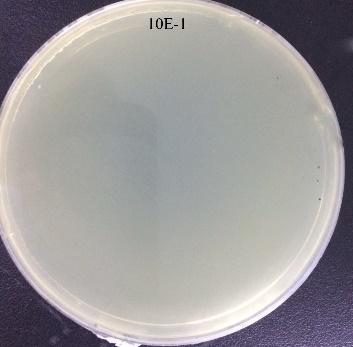
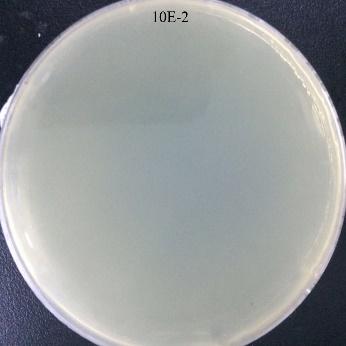
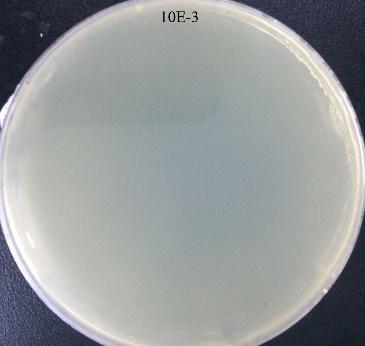
After diluting the bacterial solution 10 times, 102 times, and 103 times following the fifth homogenization, no colonies were observed.
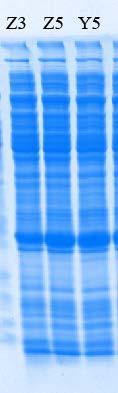
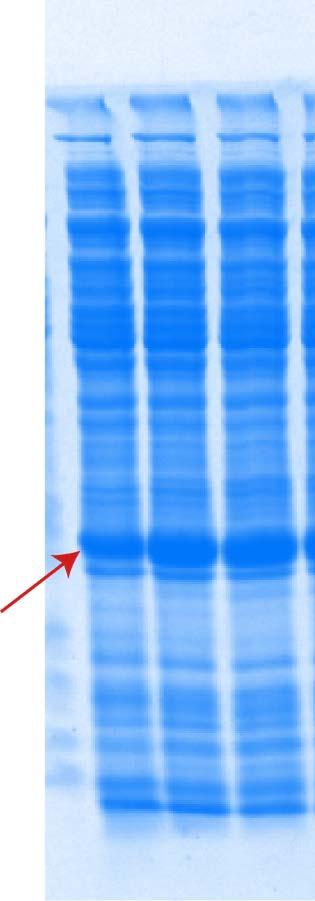
3.5 Protein extraction test results for homogenization 3 times and 5 times. The figure below shows the detected proteins for using Z-type to homogenize 3 times, using Z-type to homogenize 5 times, and usingY-type to homogenize 5 times. From the graph, it can be observed that whether homogenized 3 times or 5 times, proteins from the bacteria can be successfully extracted, and the results are quite similar. For our project, homogenization 5 times yields better results, possibly because
breaking the bacteria into smaller fragments makes protein extraction easier.
4.Conclusion
1) The disruption rate (viable bacteria counting method) after homogenization 3 times exceeds 99.99%.
2) The disruption rate (viable bacteria counting method) after homogenization 5 times is 100%.
3) The protein extraction yield is consistent for both homogenization 3 times and 5 times.